
Most welding jacket roundups are written for fabricators who weld eight hours a day in a ventilated shop. This one is written for the person who welds a gate hinge on a Saturday, then a bracket the following month, in a one-car garage with the door down and the fan off. That changes the decision in three ways: heat is the first complaint, not the last, certified flame resistance matters more than leather brand prestige, and paying pro-shop money for a jacket that sits in a corner eleven months a year makes no sense.
We compared ten of the highest-rated welding jackets available for hobby and weekend work, pulled the material specs, pocket layouts, and certification claims straight from the manufacturers, and read through thousands of buyer reviews to sort out where each one actually holds up. The short version: most hobby welders should start with 9 oz. flame-resistant cotton, step up to split cowhide leather when the spatter gets heavy, and never buy an uncertified jacket no matter what the listing claims.
If you are still choosing a machine for the same garage, our beginner welding machine guide covers the process choices that pair with the jackets below, and our MIG vs TIG comparison helps you work out how much heat the job will throw at your arms.
Table of Contents
What is the best welding jacket for a hobby welder?
The best welding jacket for a hobby welder is a certified 9 oz. flame-resistant cotton jacket for MIG and TIG work on thin-gauge steel, and a split cowhide leather jacket once you start stick or flux-core welding where spatter is heavier. Look for ASTM D6413 compliance, snapping wrist cuffs, and a stand-up welder’s collar. You do not need a pro-grade coat to weld safely a few hours a month.
That is the rule the rest of this guide unpacks: material follows process, certification follows the label, and fit decides whether you will actually keep the jacket on during a July welding session.
Top 3 Picks for Hobby Welders (October 2026)
Black Stallion FN9-30C
- 9 oz. FR cotton
- Leather-reinforced snaps
- Welder's collar
- Scribe and inside pocket

Lincoln Electric K2985
- ASTM D6413 FR cotton
- Anti-static coating
- Adjustable snap cuffs
- 50-wash FR life

QeeLink Split Cowhide Coat
- Heavy-duty split cowhide
- Kevlar thread
- Riveted stress points
- Four pockets
All 10 Welding Jackets Compared in 2026
| Product | Specifications | Action |
|---|---|---|
| Black Stallion FN9-30C 9oz FR Cotton |
|
Check Latest Price |
| Lincoln Electric K2985 Premium FR Cotton |
|
Check Latest Price |
| QeeLink Split Cowhide Leather Jacket |
|
Check Latest Price |
 Lincoln Electric Black FR Cloth Jacket Lincoln Electric Black FR Cloth Jacket |
|
Check Latest Price |
 YESWELDER Leather Welding Jacket YESWELDER Leather Welding Jacket |
|
Check Latest Price |
 Lincoln Electric Traditional Split Leather Sleeved Lincoln Electric Traditional Split Leather Sleeved |
|
Check Latest Price |
 Revco Black Stallion BXRB9C Contoured Revco Black Stallion BXRB9C Contoured |
|
Check Latest Price |
 Miller Classic Cloth Welding Jacket Miller Classic Cloth Welding Jacket |
|
Check Latest Price |
 Ironcat FR Treated Cotton Sateen Jacket Ironcat FR Treated Cotton Sateen Jacket |
|
Check Latest Price |
 MAGID SparkGuard FR Cotton Sateen Jacket MAGID SparkGuard FR Cotton Sateen Jacket |
|
Check Latest Price |
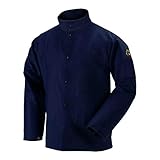
1. Black Stallion FN9-30C 9oz FR Cotton Jacket – Best All-Round Pick
Black Stallion FN9-30C 30″ 9oz. Navy FR Cotton Welding Jacket, Large
9 oz. FR treated cotton
Welder's collar
6 leather-reinforced snaps
Scribe and inside pocket
Pros
- Lightweight 9 oz cotton that stays cool in a warm garage
- Tall welder's collar blocks arc rays and sparks
- Leather-reinforced snaps including cuff snaps
- Plenty of size options in the range
Cons
- 9 oz cotton is thin against heavy slag and overhead stick
- 30 inch length is short for some torsos
- Runs loose so size down for a regular fit
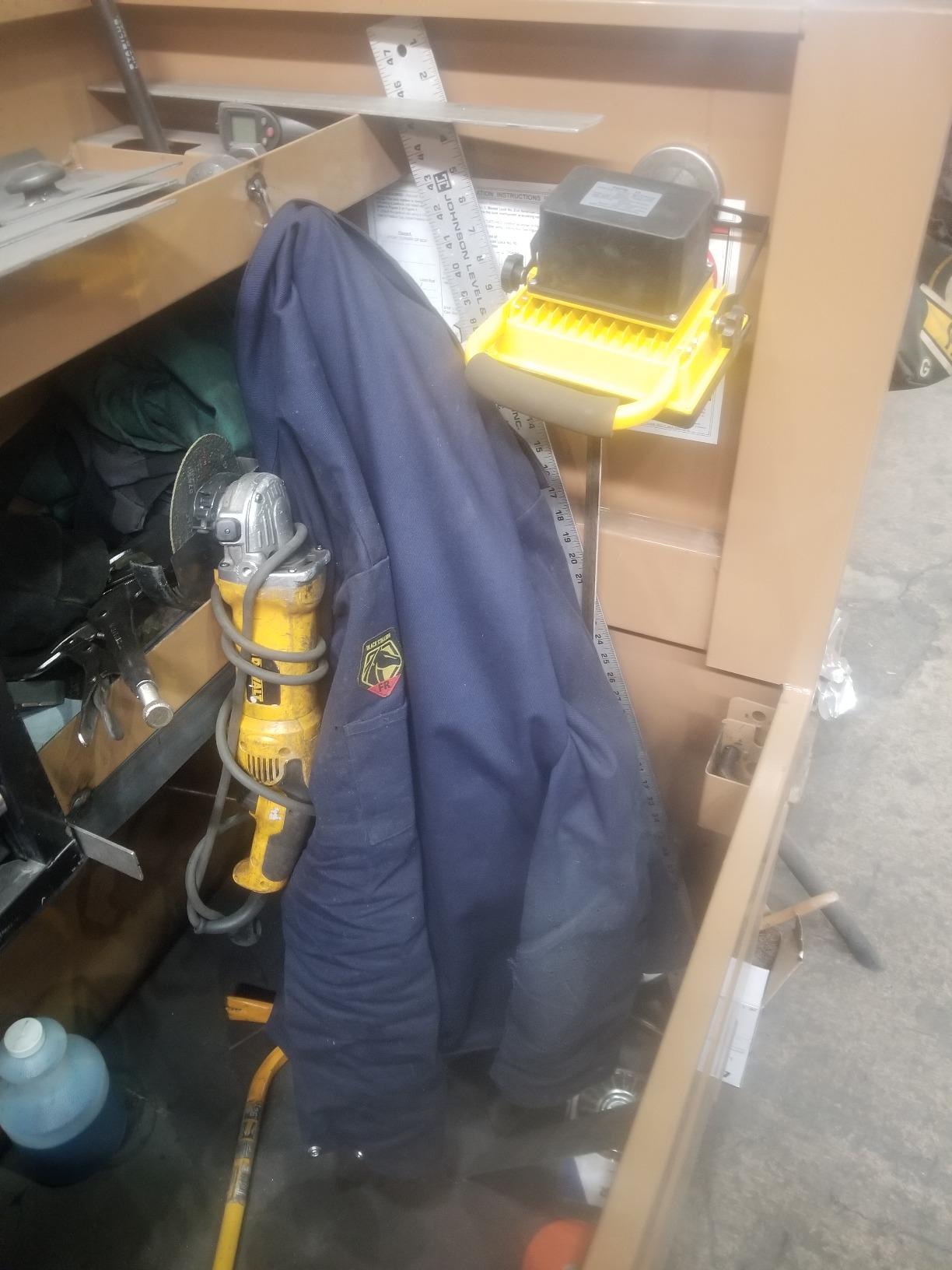
The Black Stallion FN9-30C is the jacket we recommend to most hobby welders without hesitation. It is a 30 inch jacket in 9 oz. flame-resistant treated cotton with a welder’s collar, six snap buttons with leather reinforcement on every snap, and a scribe pocket built for pencils, soapstone, and paint markers.
What makes it our top pick is not any single feature. It is that the three things that actually decide whether a jacket gets worn all summer, weight, neck coverage, and cuff closure, are all handled well in a garment light enough for a garage with no ventilation.
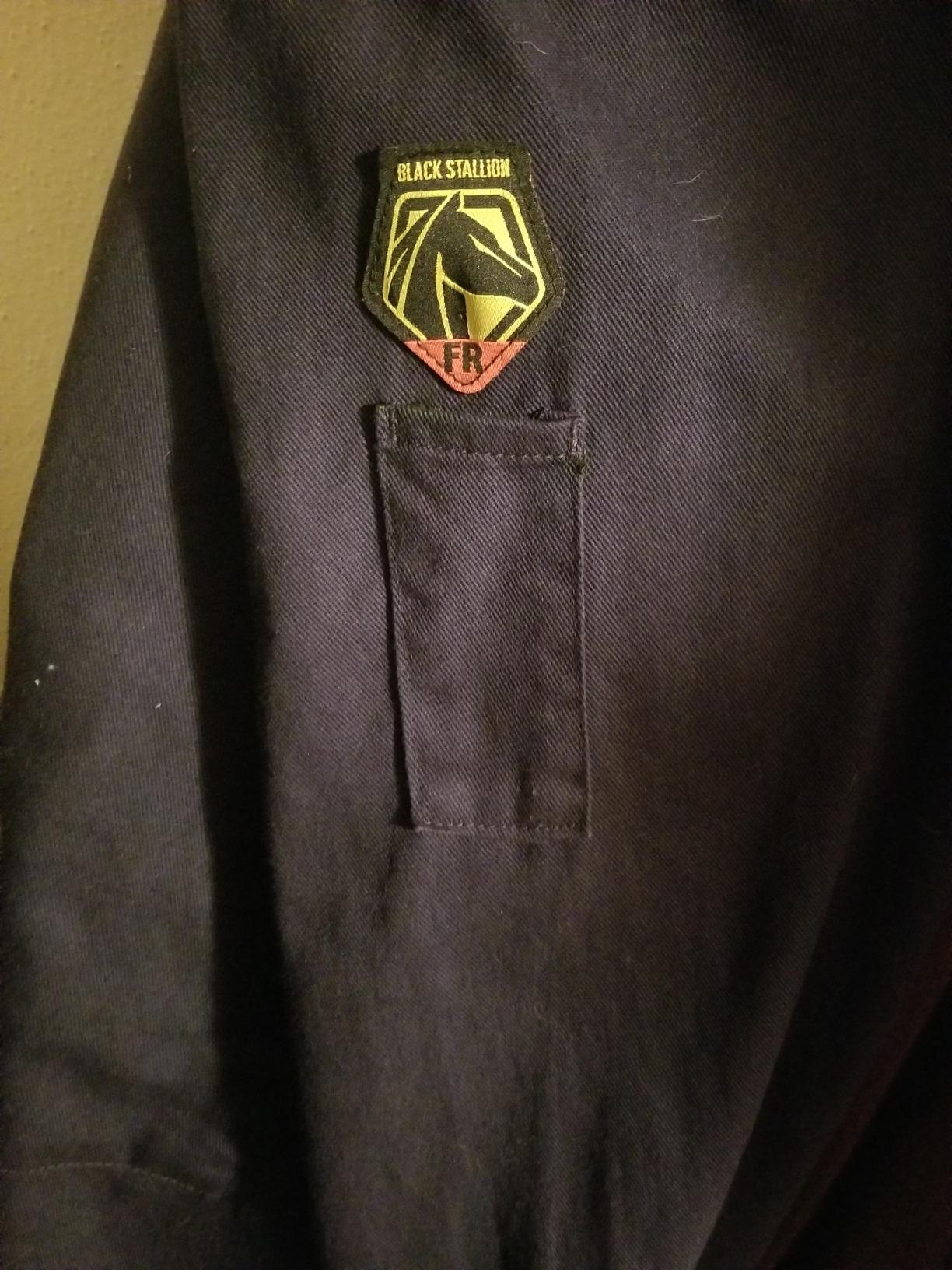
The leather-reinforced cuff snaps are a detail most budget jackets skip, and they matter more than they sound. Sparks do not burn you on the shoulder, they burn you at the gap between glove and sleeve, and a snapped cuff closes that gap.
The scribe pocket is the other quiet win. Every hobby welder ends up with a soapstone, a couple of electrodes, and a marker in their hands at the same time, and this is one of the few jackets in the set with a dedicated sleeve pocket for them.
What you need to know before buying
Know the fabric weight. At 9 oz this is a light-to-medium duty layer, and buyers consistently report that heavier slag and overhead stick work can burn through it. For MIG and TIG on thin-gauge steel, that is exactly the right weight.
Also plan for a loose cut. The sizing runs large and roomy, so if you want a regular fit or are layering over a sweatshirt, consider sizing down. Multiple sizes run from small through 3X in the range.
Where it falls short
The 30 inch length is on the short side. If you weld seated, work at a bench for long stretches, or want the jacket to cover more of your hips, some owners wish it were longer.
It is also not a heavy spatter jacket. Overhead stick welding, torch work, and grinding are the situations where this one gives up first, and that is the argument for moving up to leather later rather than a flaw in the design.
2. Lincoln Electric K2985 Premium FR Cotton Jacket – Best Value
Lincoln Electric unisex adult Traditional FR Cloth Jacket, Black, X-Large US
ASTM D6413 9 oz. FR cotton
Anti-static coating
Adjustable snap cuffs
Flip-up collar
Pros
- Breathable FR cotton that stays comfortable in a hot shop
- Chrome-plated snaps that adjust tight at the wrist
- Flip-up collar shields the neck from arc rays
- FR holds through 50 commercial washes
- Runs true to size with room for a sweatshirt
Cons
- Light cotton burns through under heavy or overhead work
- Black fabric shows shop dust readily
- Only one interior pocket and no scribe pocket
The Lincoln Electric K2985 is the one to buy if you want a named brand with a printed compliance standard on the spec sheet and a wash cycle limit you can trust. It is ASTM D6413 compliant 9 oz. flame-resistant black cotton with an anti-static coating, chrome-plated snaps at the cuffs, and a flip-up neck-protection collar.
The 50 commercial wash claim is the part that matters for a hobby welder. You can put this in with shop laundry or wash it at home regularly without worrying that the treatment is gone, which removes the main objection people have to FR cotton.
Reviewers consistently frame this as an excellent light-to-medium duty jacket, comfortable through full days in hot conditions and effective against UV rays and flying slag in garage and fab-shop work. Several reviews explicitly rate it as unsuited to heavy overhead welding.
How it fits a weekend welder
Fit is the strongest part of the review history here. Owners say it runs true to size with enough room to wear a sweatshirt underneath, which is exactly what you want if your garage drops below 60 degrees in February.
The adjustable chrome-plated snap cuffs seal the wrist and forearm, and the flip-up collar is a genuinely useful feature for TIG work where you are leaning into the arc and the back of your neck is exposed.
What to watch out for
Pocket layout is thin. One large interior pocket and nothing on the outside means you are carrying your soapstone in a pocket you have already welded spatter into.
Black FR cotton shows everything. It is the least appealing jacket in the set to wear in bright outdoor sun, though indoors it is the one that hides soot best. And as with any 9 oz cotton jacket, heavy slag and overhead positions will find its limits.
3. QeeLink Split Cowhide Leather Welding Jacket – Best Budget Leather
Leather Welding Work Jacket by QeeLink – Flame-Resistant Heavy Duty Split Cowhide Leather (Medium)
Heavy-duty split cowhide leather
Kevlar thread
Corrosion-resistant rivets
Four pockets
Pros
- Thick split cowhide for spark spatter and slag protection
- Kevlar stitching with riveted stress points
- Four pockets including two sleeve soapstone holders
- Adjustable neck cuffs and waist block debris
- Brown leather hides spatter and soot
Cons
- Runs noticeably large
- size down or shorten the sleeves
- Full leather is heavy in hot weather
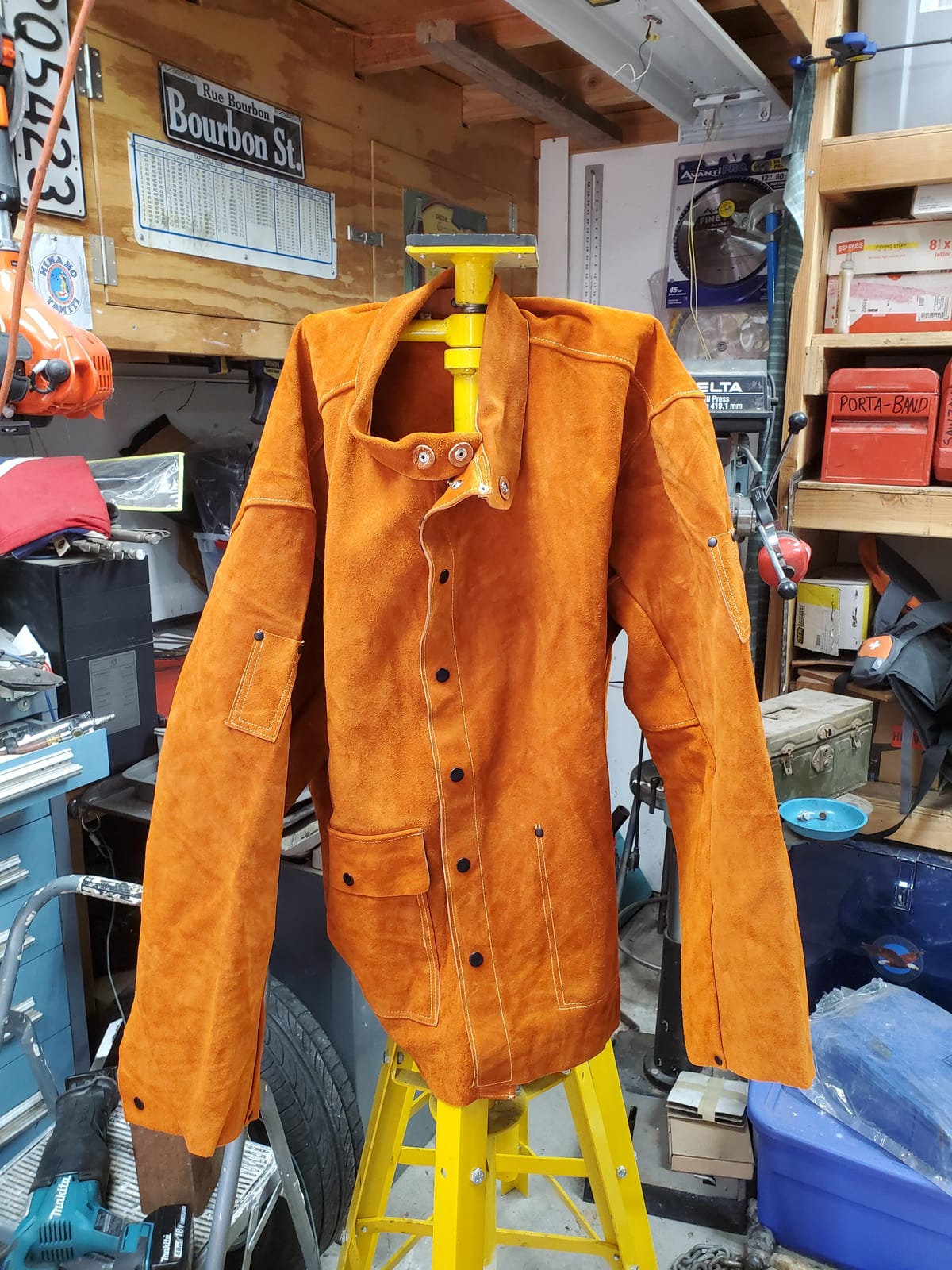
The QeeLink split cowhide jacket is the value route into leather protection. It is heavy-duty split cowhide sewn with heat-resistant US Kevlar thread, with corrosion-resistant rivets placed in the high-stress areas, and it comes in at 4.41 pounds.
Owners treat it as a solid budget alternative to the premium leather brands, and the praise is consistent: thickness, stitching, and value. For a hobby welder moving up from cotton to leather, it does everything you need without a pro-shop invoice.

The four-pocket layout is unusually generous for a leather jacket. There is a large inside pocket, a large outside pocket, and two sleeve soapstone pockets, one per sleeve, which solves the pocket problem that trips up most of the cotton jackets in this guide.
Adjustable neck, cuffs, and waist matter as much as the leather here. A jacket that closes at all three points keeps sparks from tracking along a seam, and the adjustability means one jacket can work over a t-shirt in July and a hoodie in January.
Why this leather and not a cheaper jacket
Split cowhide is the outer hide split away from the flesh side, which is why it is thinner and lighter than full grain. That is a feature for a hobby welder, because the protection rating for sparks and spatter is still high while the weight stays manageable.
The manufacturer also lists it for blacksmithing, gas welding, torch work, and automotive repair, so if your hobby drifts from arc welding to cutting torch or fabrication work, the same jacket covers it.
Where buyers get frustrated
Sizing is the recurring theme. It runs noticeably large across the chest and sleeves, and the most common advice in reviews is to size down or have the sleeves altered, which is a real chore for a first leather jacket.
Leather smell on arrival is mentioned by several reviewers and takes a few wears to fade. And in a hot garage, full leather is noticeably less breathable than the cotton options, so this is a winter and cool-weather jacket for most people.
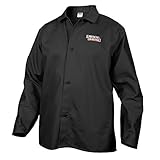
4. Lincoln Electric Black Flame-Resistant Cloth Jacket – Best Daily Driver
Lincoln Electric KH808L Black Large Flame-Resistant Cloth Welding Jacket
9 oz. FR cotton
Breathable body
Snap sleeve cuffs
Inside pocket
Pros
- Lightweight 9 oz FR cotton comfortable through full days
- Black color hides soot and spatter
- Snap sleeves form a fitted cuff
- Machine washable and holds up without burn holes
- Generous cut suits larger builds
Cons
- No exterior chest pocket for pens or soapstone
- Runs slightly small for larger wearers
- Light cotton is not for heavy overhead welding
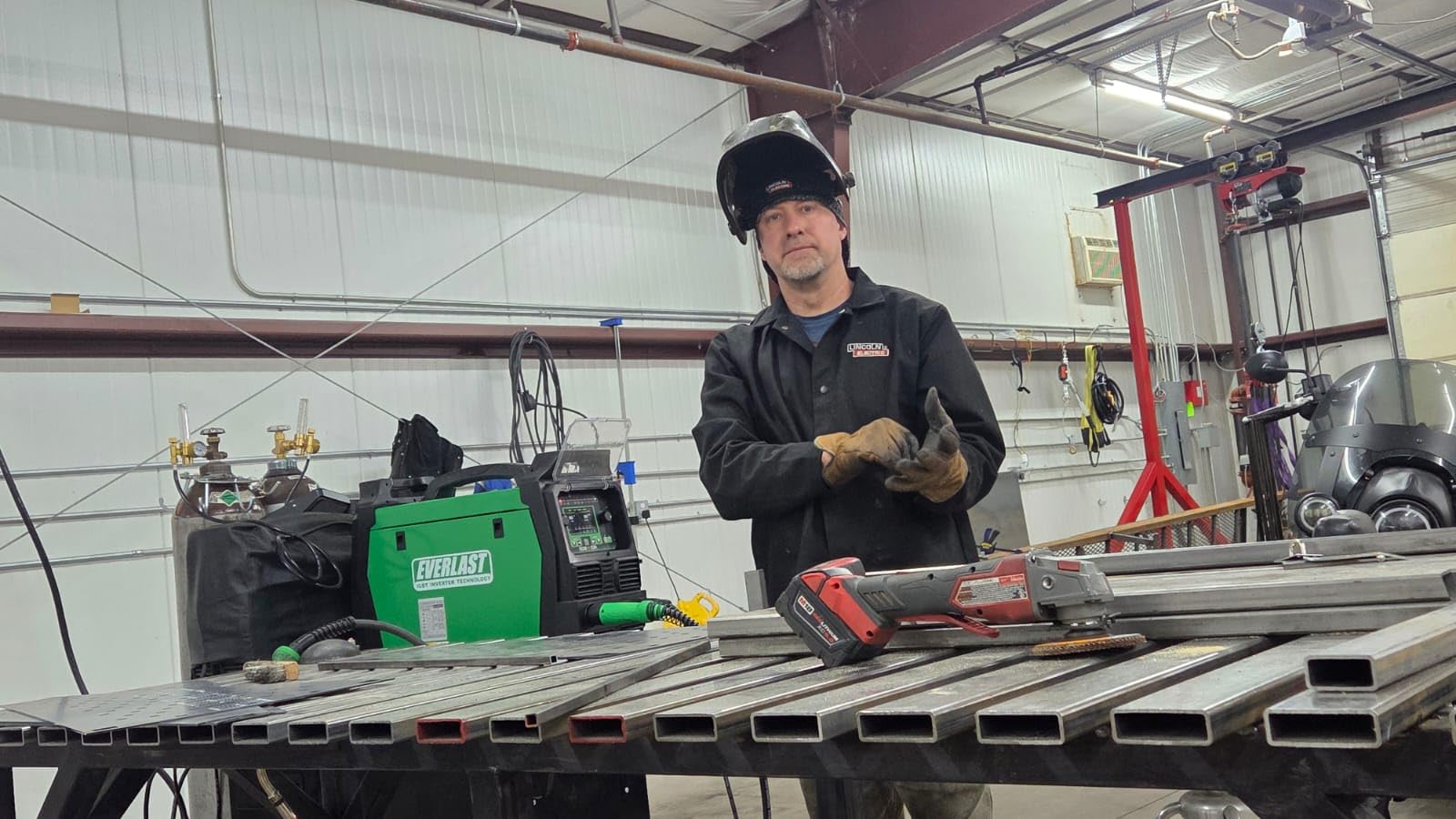
The Lincoln Electric KH808L black cloth jacket is the one most people end up keeping for years. It is 9 oz. flame-resistant breathable cotton with snap sleeves that form a fitted cuff and an inside left pocket for protected storage.
Buyers report no burn holes after 20 plus hours of welding, good airflow, and easy laundering. That durability record is what separates a daily driver from a jacket that gets retired after one summer.
It covers arms and torso from spatter and heat, which is the entire job description of a welding jacket, and the black color is doing real work there. Nothing shows soot the way black does, and nobody has to think about what their jacket looks like after a day of grinding.
The snap sleeve cuffs are worth pointing out because the sleeve snaps pull in rather than pushing out, so they stay closed over your gloves as you move your arms into position.
Where this one beats the Black Stallion
It is the more forgiving cut. Reviews note the fit is generous enough for larger builds, and the sleeve cuffs are self-adjusting rather than fixed, so you do not have to choose between snapping them shut and moving your arms.
It is also the simplest jacket here. No collar mechanism, no rivets, no leather anything except what the body needs, which means less to fail and nothing to condition.
Where it loses
The single most requested feature it does not have is an exterior chest or sleeve pocket for soapstone and markers. It has one inside pocket and nothing you can reach without taking the jacket off.
A minority of owners also find it runs slightly small and recommend sizing up, and it is a light cotton layer, so heavy overhead welding and heavy grinding will shorten its life.
5. YESWELDER Leather Welding Jacket – Best for Cutting and Fabrication
YESWELDER Leather Welding Jacket
100% leather with cotton lining
Stand-up collar
Kevlar stitching
Six pockets
Pros
- Thick sturdy leather for sparks heat and slag
- Moisture-wicking cotton lining stays comfortable
- Kevlar double stitching and copper-plated buttons
- Six pockets including a tool pocket
- Thickness comparable to premium leather brands
Cons
- No sleeve soapstone holder is the top complaint
- Sizing is inconsistent between body types
- Leather odor on arrival
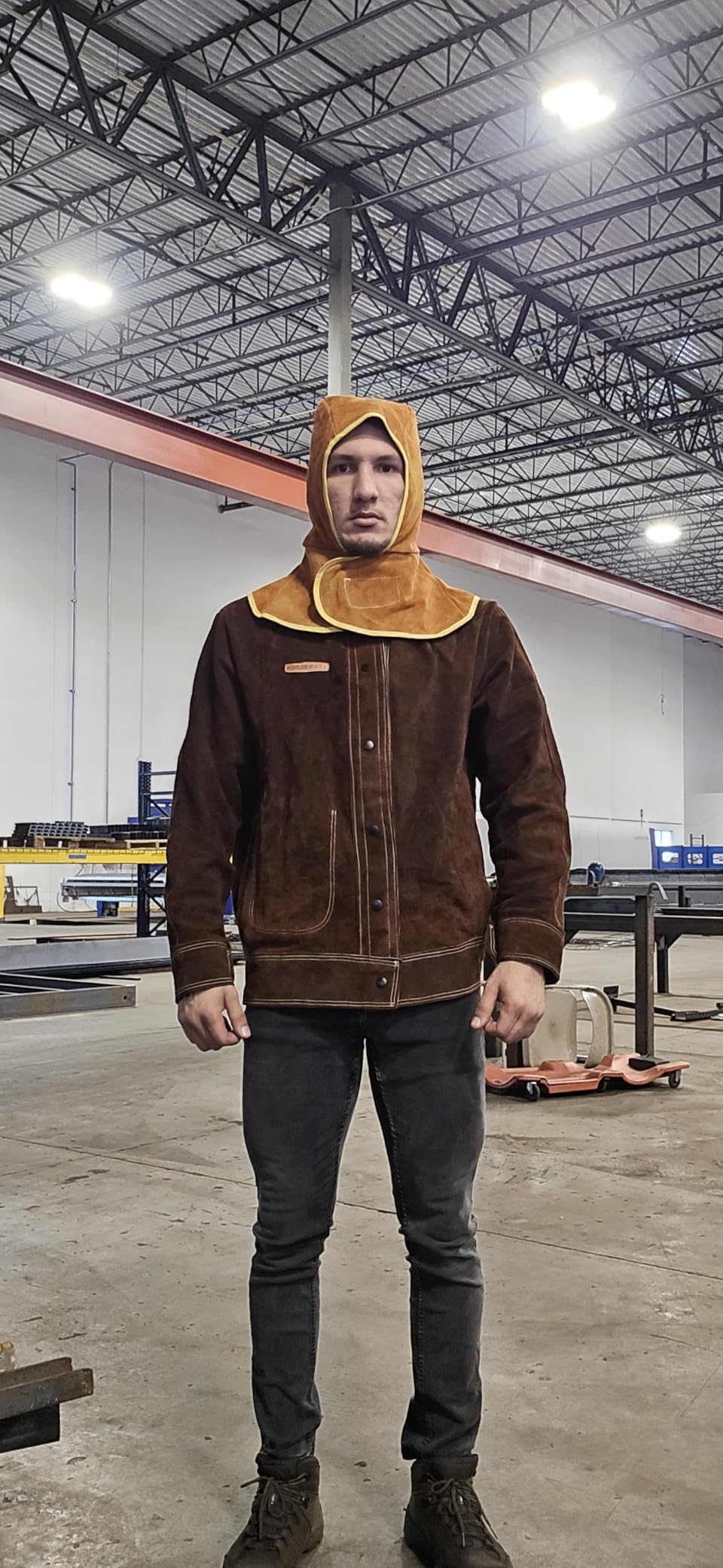
The YESWELDER leather jacket is a heavier, thicker take on the same idea as the QeeLink, and it is the one to look at if your hobby has started including I-beam cutting or structural work. It is 100 percent leather with a cotton lining, a band stand-up collar, and Kevlar double stitching with copper-plated buttons.
Buyers see this as a strong value leather work coat, thick enough for cutting I-beams and general fabrication. Several use it as a motorcycle jacket too, which tells you how heavy and durable the hide is.
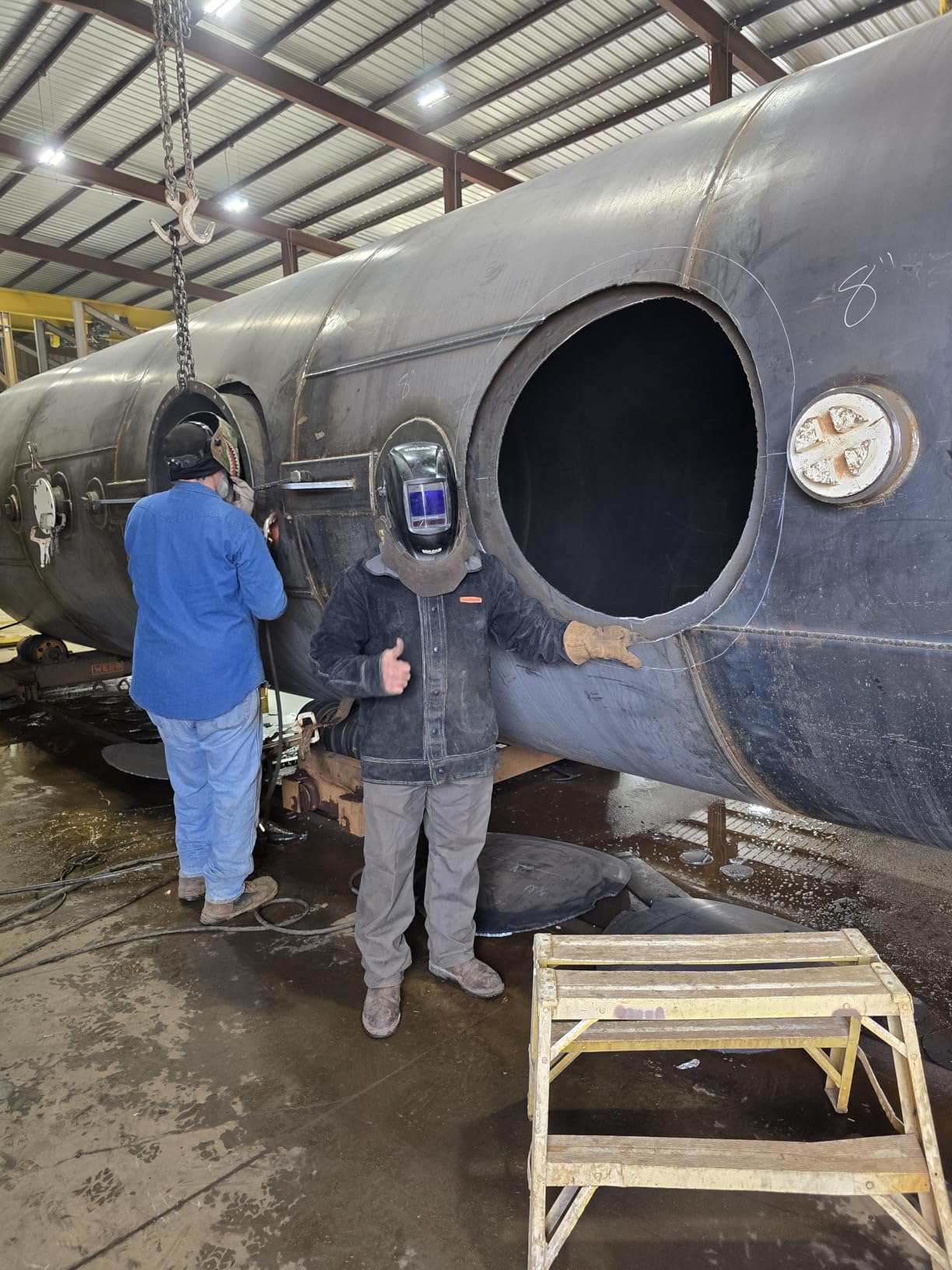
The cotton lining is the detail that separates it from the unlined leather options. It is described as breathable and moisture-wicking, and on a full Saturday of fabrication that is the difference between a jacket you keep on and one you strip off after twenty minutes.
Six pockets including a dedicated tool pocket for sharp objects give it the most storage of any jacket in this roundup, which matters if you are carrying a soapstone, a marker, a chisel, and pliers.
Choosing between the two leather jackets
Both the YESWELDER and the QeeLink are heavy-duty split cowhide with Kevlar stitching. The differences are lining, pockets, and closure. The YESWELDER is lined and has a zipper plus snap closure, the QeeLink is unlined and uses snaps with an adjustable waist.
So lined and more pockets against unlined and adjustable at the waist. In a hot garage the cotton lining is the more important of those two features for comfort.
What buyers complain about
The most common complaint is the missing sleeve soapstone holder. This jacket has six pockets but none of them is on a sleeve, which is where you need it when both hands are on the gun.
Fit is inconsistent. Many buyers size down for a non-bulky look, while a small number of large-framed buyers find even XL too small. Add a strong leather odor on arrival and you have a jacket that rewards trying it on before committing.
6. Lincoln Electric Traditional Split Leather Sleeved Jacket – Best for Overhead Work
Lincoln Electric unisex adult Traditional Split Leather Sleeved Welding Jacket, Black, Medium US
Split cowhide leather sleeves
ASTM D6413 FR cotton body
Adjustable snap cuffs
Flip-up collar
Pros
- Leather sleeves cover the most abrasion-prone area
- One owner logged a 60-hour work week with no burn-through
- Sleeve length suits tall wearers from 6 foot to 6 foot 3
- Rugged snaps and solid stitching
- Comfortable in a garage
Cons
- Body length stops around the belt with no tall option
- Sleeves can run long on some body types
- No exterior pocket for soapstone or markers
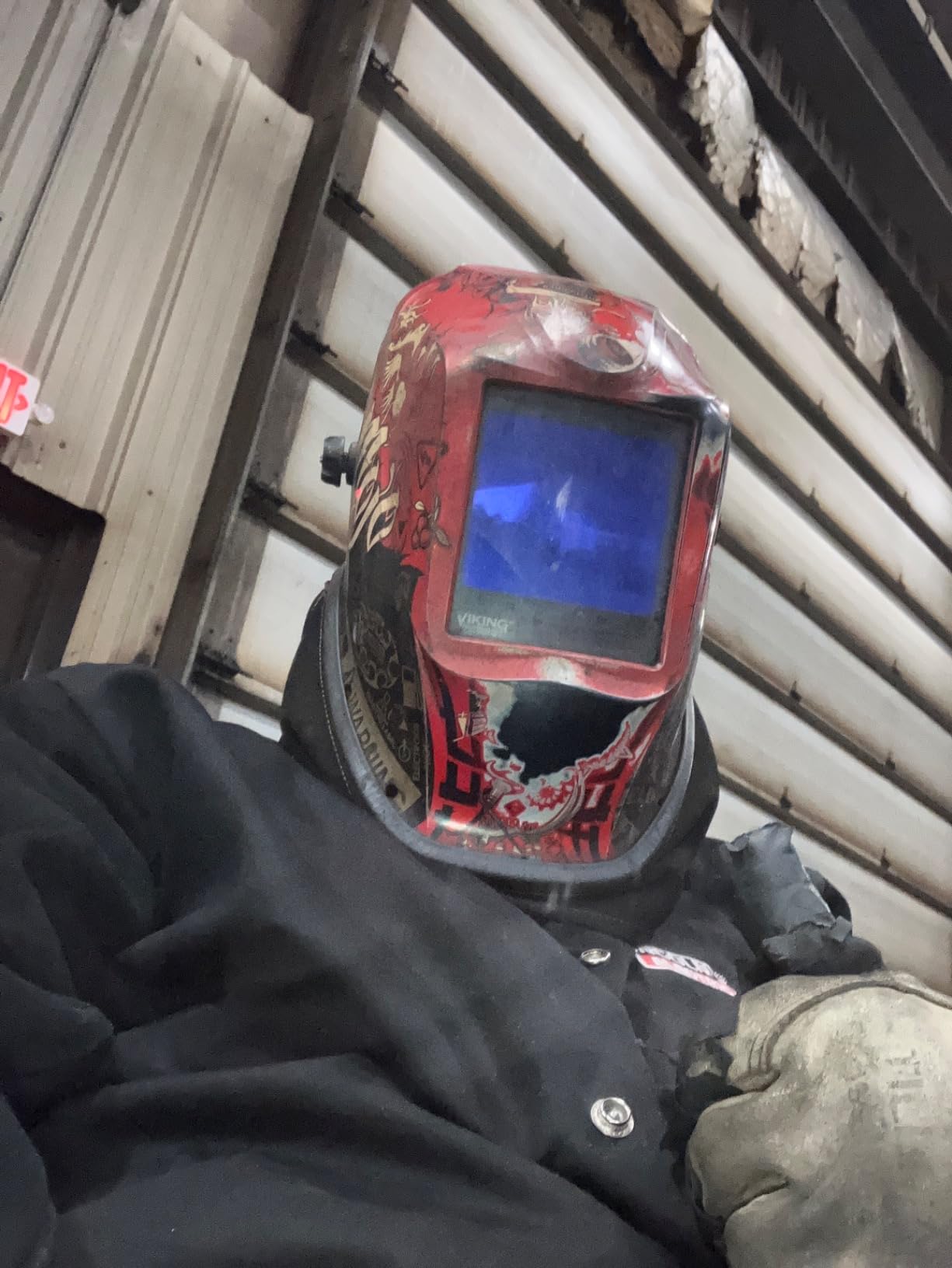
The Lincoln Electric K3106 is the highest-rated jacket in this roundup at 4.7 stars, and it is the model professional fabricators use daily. The construction is a hybrid: split cowhide leather sleeves over an ASTM D6413 compliant 9 oz. flame-resistant cotton body with an anti-static coating.
That combination is the single smartest design in the guide. The arms take the abrasion and spatter, the torso keeps certified cotton coverage, and you get a lighter jacket than full leather without giving up the part that burns first.
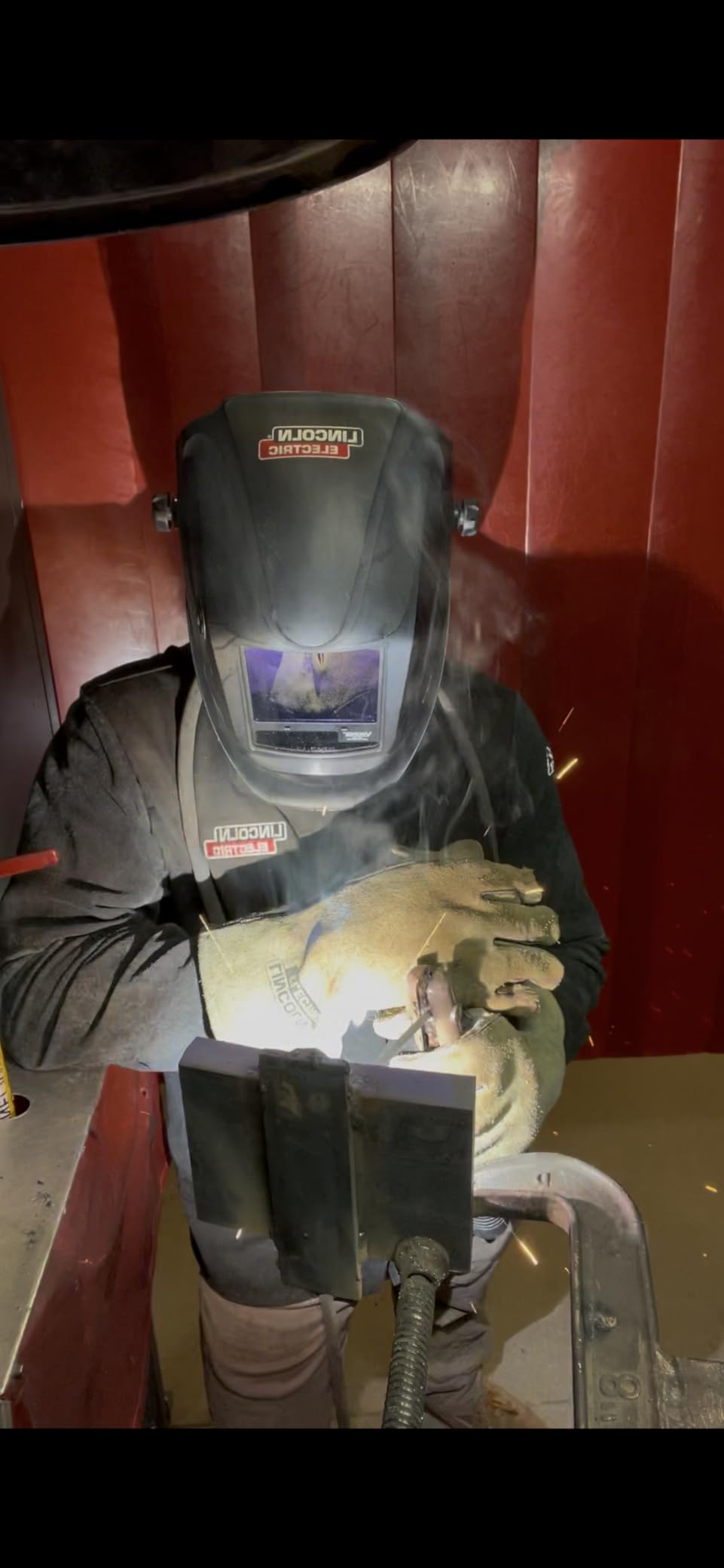
One owner logged a 60-hour work week with no burn-through. For a hobby welder, that is the relevant benchmark, because it means the jacket will still be there five years from now if you buy one that does not have to be replaced.
Sleeve length is called out specifically as accurate for tall wearers between 6 foot and 6 foot 3, which is unusual in a category full of jackets with sleeves that stop at the wrist bone.
When this hybrid is the right call
Overhead welding is where light cotton jackets burn through and where full leather becomes unbearable. Leather sleeves handle the falling spatter, the cotton torso breathes, and chrome-plated adjustable snap cuffs close the gap at your wrists.
It is also comfortable enough not to overheat in a garage, which is the reason it earns a place on a list scoped to hobby welders rather than only to fabricators.
The trade-offs
Body length stops around the belt and there is no tall option for extra coverage, so seated work can leave a gap at the lower back.
It is heavier than any all-cotton jacket in the set and has one large inside pocket with no exterior pocket for soapstone, scribe tools, or spare rods. Check for plastic flame sleeve emblems on any version you consider, since those can melt.
7. Revco Black Stallion BXRB9C Contoured FR Cotton Jacket – Best for Hot Shops
Revco Black Stallion (BXRB9C) BSX 9 oz Contoured Flame-Resistant Cotton Welding Jacket, Welder’s Collar, Dual Scribe Pockets, Leather-Reinforced Snaps, X-Large, Royal Blue
9 oz. treated cotton and denim
Extended 32 inch length
Waist straps
Dual scribe pockets
Pros
- Chemically treated 9 oz cotton resists ignition and slows flame spread
- Raised welder's collar blocks sparks and slag
- Extended length and adjustable waist give real torso coverage
- Dual scribe pockets plus two inside pockets
- Marked for extreme-heat environments
Cons
- Mid-weight cotton still burns through with heavy slag
- Contoured cut is snug across the chest for some builds
- Hand wash only
The Revco BXRB9C is the one in this roundup explicitly listed for extreme-heat shop environments, and it is a 9 oz. chemically treated cotton and denim jacket with a raised welder’s collar, an extended 32 inch front length, and adjustable waist straps with two snap positions.
The waist straps are the feature no other jacket in this guide has. Snap them closed and the jacket stops riding up when you reach overhead, which means the collar stays where it is and the coverage does not shift with you.
Pocket layout is the second reason to like it: dual scribe sleeve pockets plus a left inside pocket and a zippered right inside pocket. That is four separate storage points, and the zip on one of them is unusual at this weight.
It is also one of the lighter jackets here at 1.7 pounds, and the royal blue colour makes it far easier to spot than the sea of black and brown in any shared shop space.
What makes a contoured cut different
A contoured cut is shaped through the body rather than cut as a straight box, so it follows your shoulders and tapers at the waist. It looks less like a welder and moves more freely, and the raised collar with adjustable snap options gives you the choice of collar up or collar open between passes.
For a hobby welder who also wants to wear the jacket to the hardware store, that matters more than it would for someone welding in a dedicated shop all week.
The limitation
It is still 9 oz cotton, so it is a mid-duty layer. Buyers consistently describe it as best for MIG, TIG, and fab-shop spatter rather than heavy overhead welding.
The contoured fit is snug across the chest for some builds, and care is hand wash only. Both are worth knowing before you order.
8. Miller Classic Cloth Welding Jacket – Best for TIG Welding
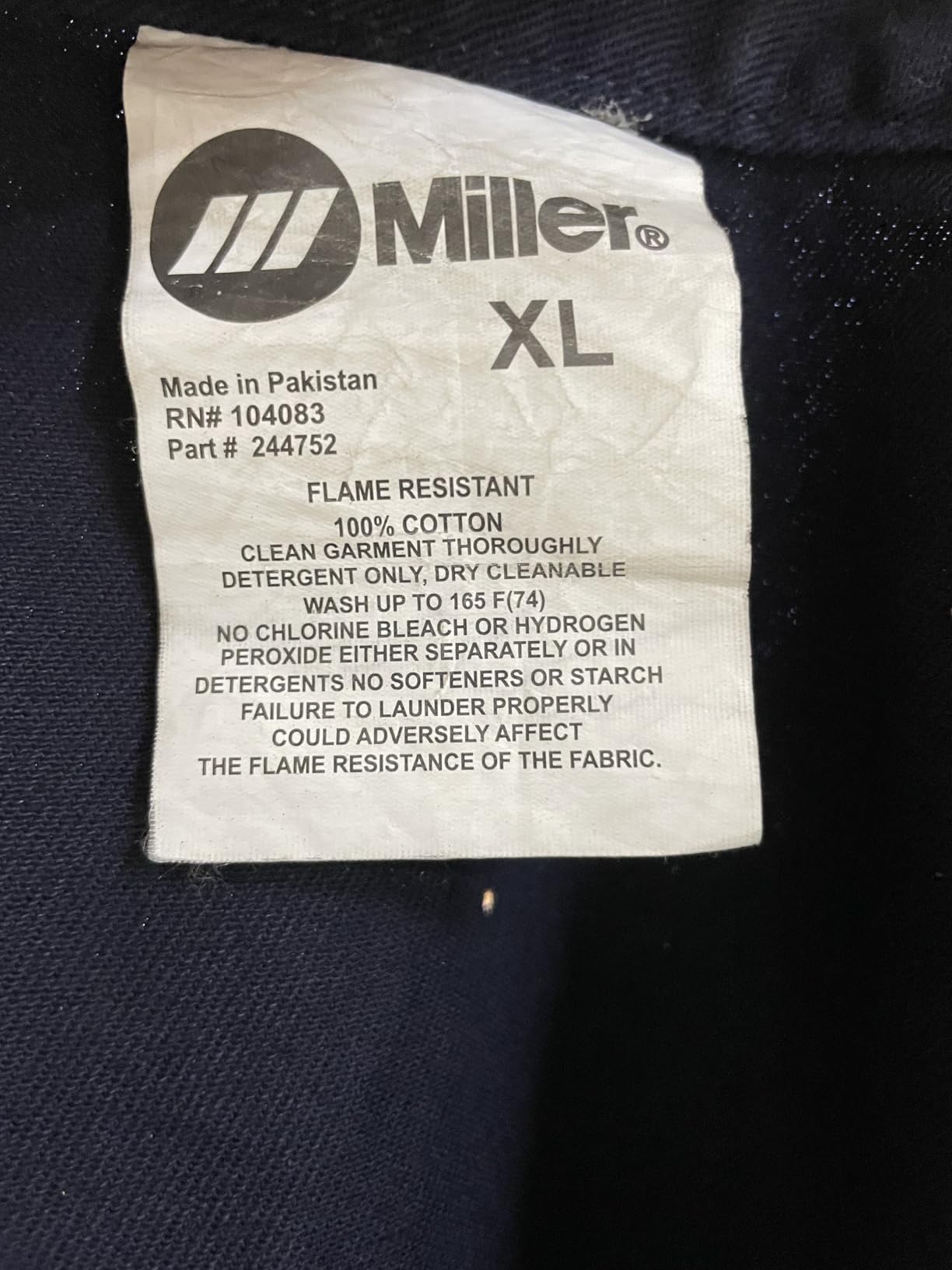
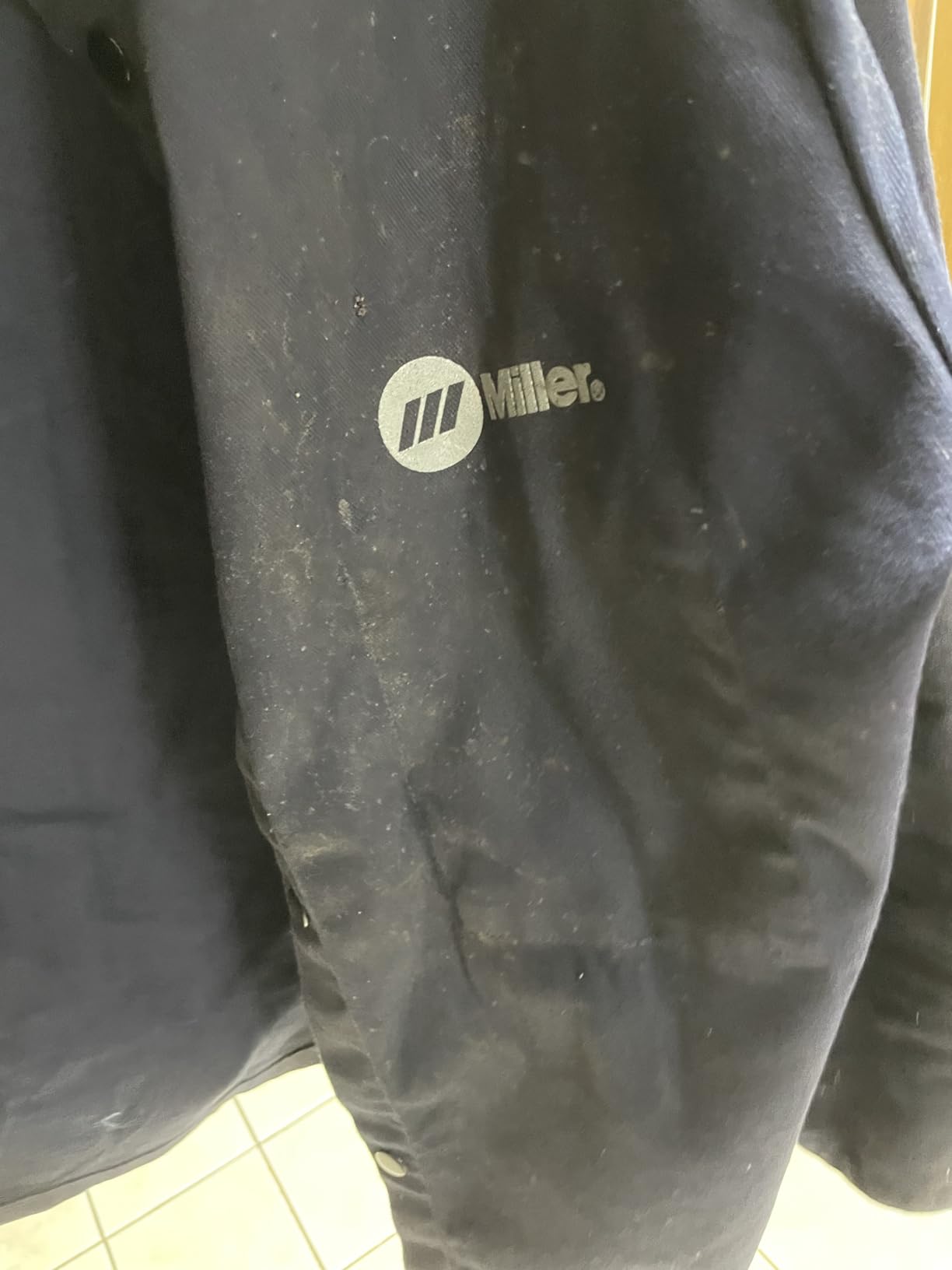
Miller Classic Cloth Welding Jacket, 9oz Navy Cotton, XL, Flame Resistant
Pre-shrunk 9 oz. FR cotton
Barracuda stand-up collar
Five snaps with fold-in sleeve snaps
1.5 pounds
Pros
- Very lightweight and breathable for TIG and grinding
- Folds down small enough to pack in a welding hood
- Snaps are tight and hold well
- Stand-up collar opens and closes easily
- Reinforced stitching with no loose seams
Cons
- Thin cotton lets larger spatter burn small holes
- Heavy grinding or overhead stick work wears it out fast
- No exterior scribe or soapstone pocket
The Miller Classic Cloth jacket is the lightest and most breathable pick here at 1.5 pounds, and hobby welders consistently recommend it for TIG, grinding, and light stick work. It is pre-shrunk 9 oz. cotton with a Barracuda-style stand-up collar and five snap buttons.
The fold-in sleeve snaps are the mechanism to understand. They pull the sleeve in and hold it against your wrist rather than standing off from the arm, which is why the fit stays sealed through TIG work where you are constantly repositioning your hands.
It folds down small enough to pack inside a welding hood or a tool bag. For someone who welds in a shared space or a rented bay, that is a real practical advantage over a jacket that only fits in a van.
It also looks like an everyday jacket. Owners mention wearing it around customers without it looking out of place, which is a good quality of life in a hobby shop that shares space with other household uses.
Why TIG welders gravitate to it
TIG is low spatter, low radiant heat, and maximum arc eye protection demands. A thin jacket that does not trap radiant heat is genuinely the right tool for that process, and this one is described as lightweight and breathable for exactly those surroundings.
The sizing is also unusually transparent. The XL is listed at 54 inch chest, 20 inch shoulders, 34 inch sleeves, and 30 inch torso length, so you can measure a jacket you already own and know what you are ordering.
What it cannot do
Thin cotton allows bigger sparks and spatter to burn through and leave small holes. Heavy grinding or heavy overhead stick welding wears it out quickly, and buyers wanting that capability are pointed toward leather.
There is no exterior scribe or soapstone pocket, just an inside pocket, and care is hand wash only.
9. Ironcat FR Treated Cotton Sateen Jacket – Most Versatile
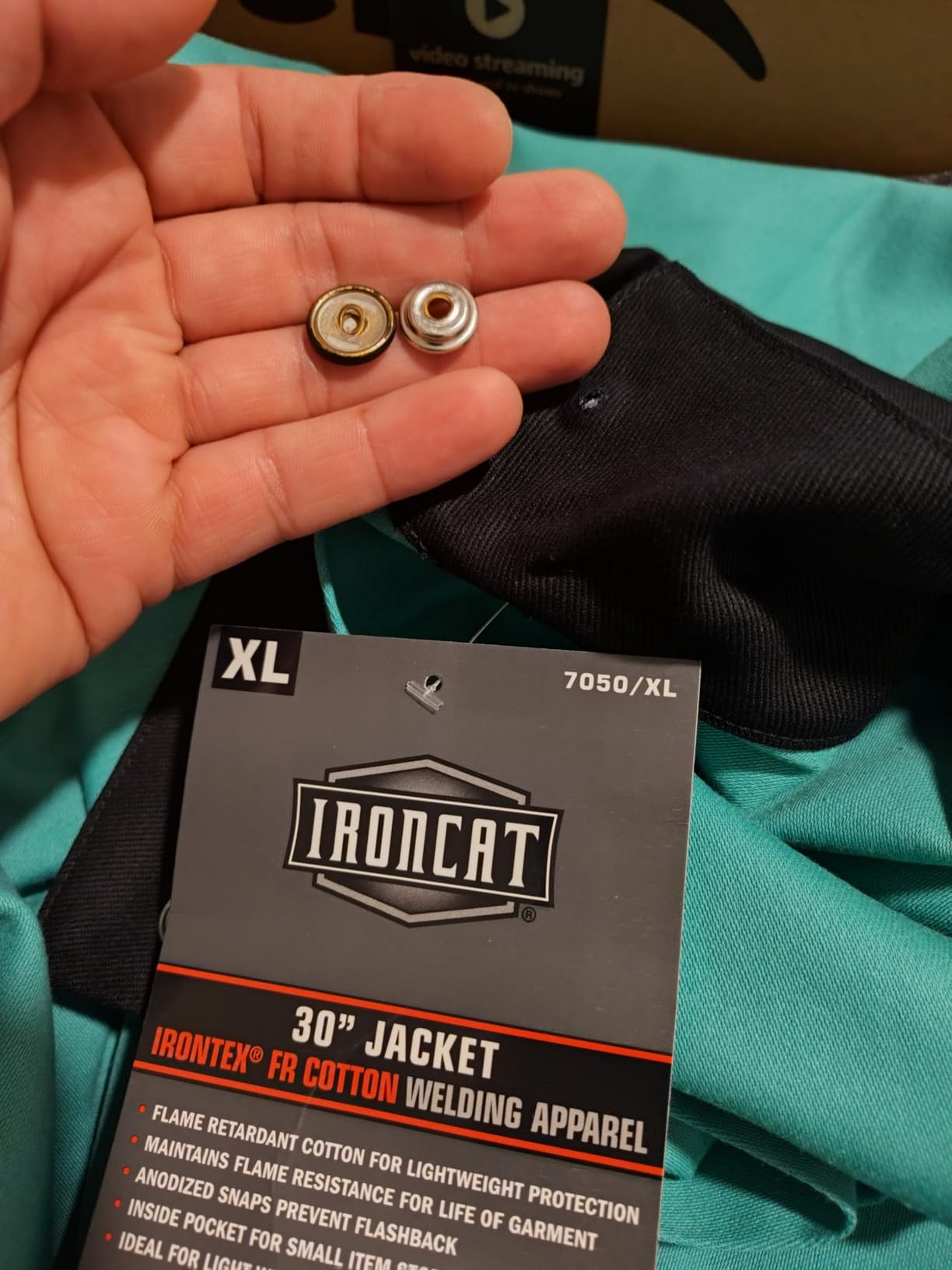
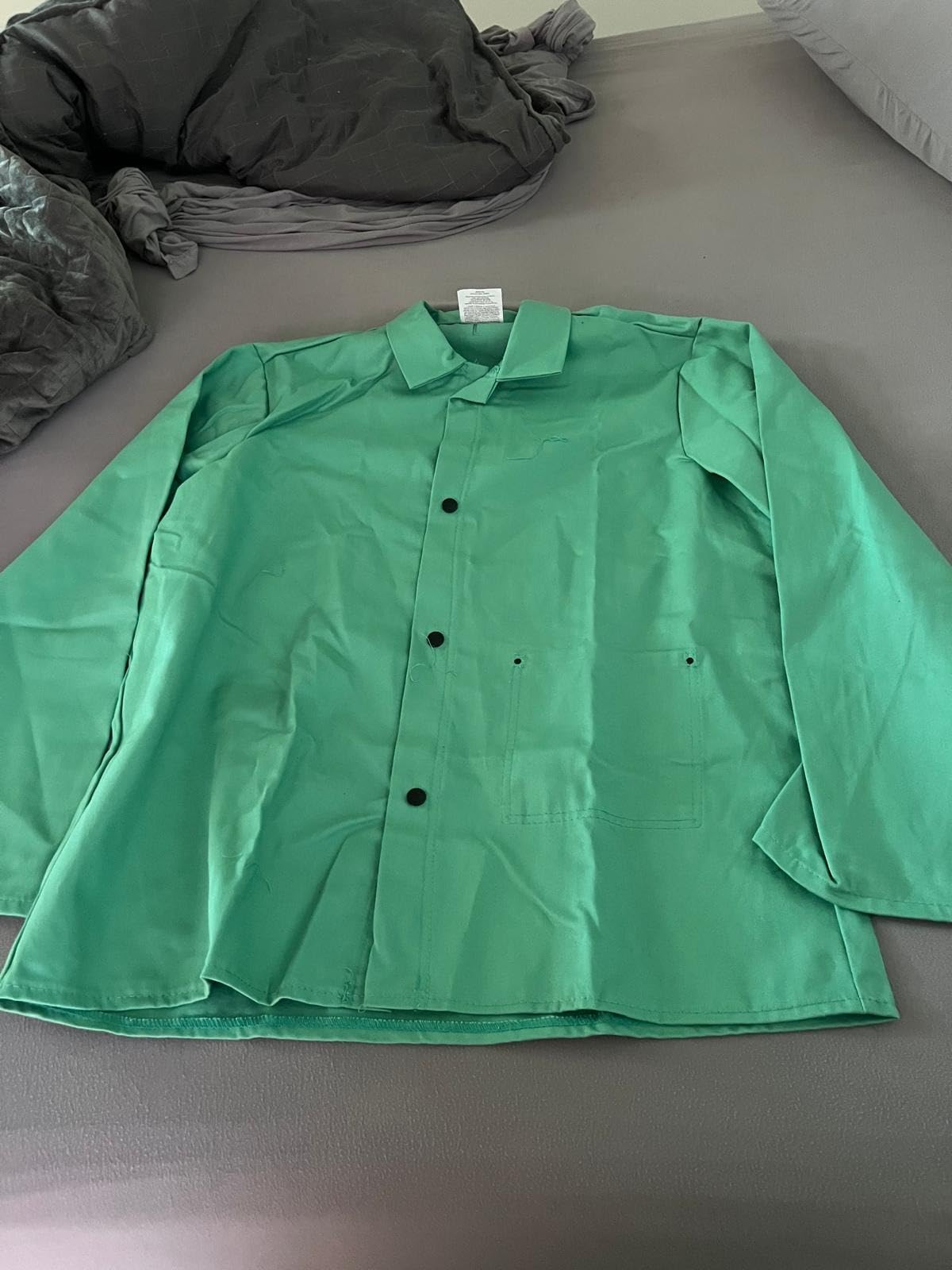
Ironcat FR Treated Cotton Sateen Jacket, 9 oz., Anodized Snaps, Interior Pocket, Pop-up Welders Collar, Scribe Pocket, Green, X-Large (7050/XL)
9 oz. FR cotton sateen
Pop-up welder's collar
Leather-reinforced snaps
Scribe pocket
Pros
- Entry-level jacket that still stops sparks and light flame
- Pop-up collar keeps sparks out of the helmet opening
- Interior lower pocket and scribe pocket
- Anodized snaps resist corrosion and flashback
- Wide size and colour range
Cons
- Inside elbow areas wear through from trapped weld slag
- Some units arrived with a defective front snap
- Fabric can burn through under heavier sparks
The Ironcat FR Treated Cotton Sateen jacket sits at the entry level of this roundup, and buyers confirm it protects skin and clothing from sparks and light flame exposure at a fraction of leather pricing. It is 9 oz. FR-treated cotton sateen with anodized snaps that have leather reinforcement.
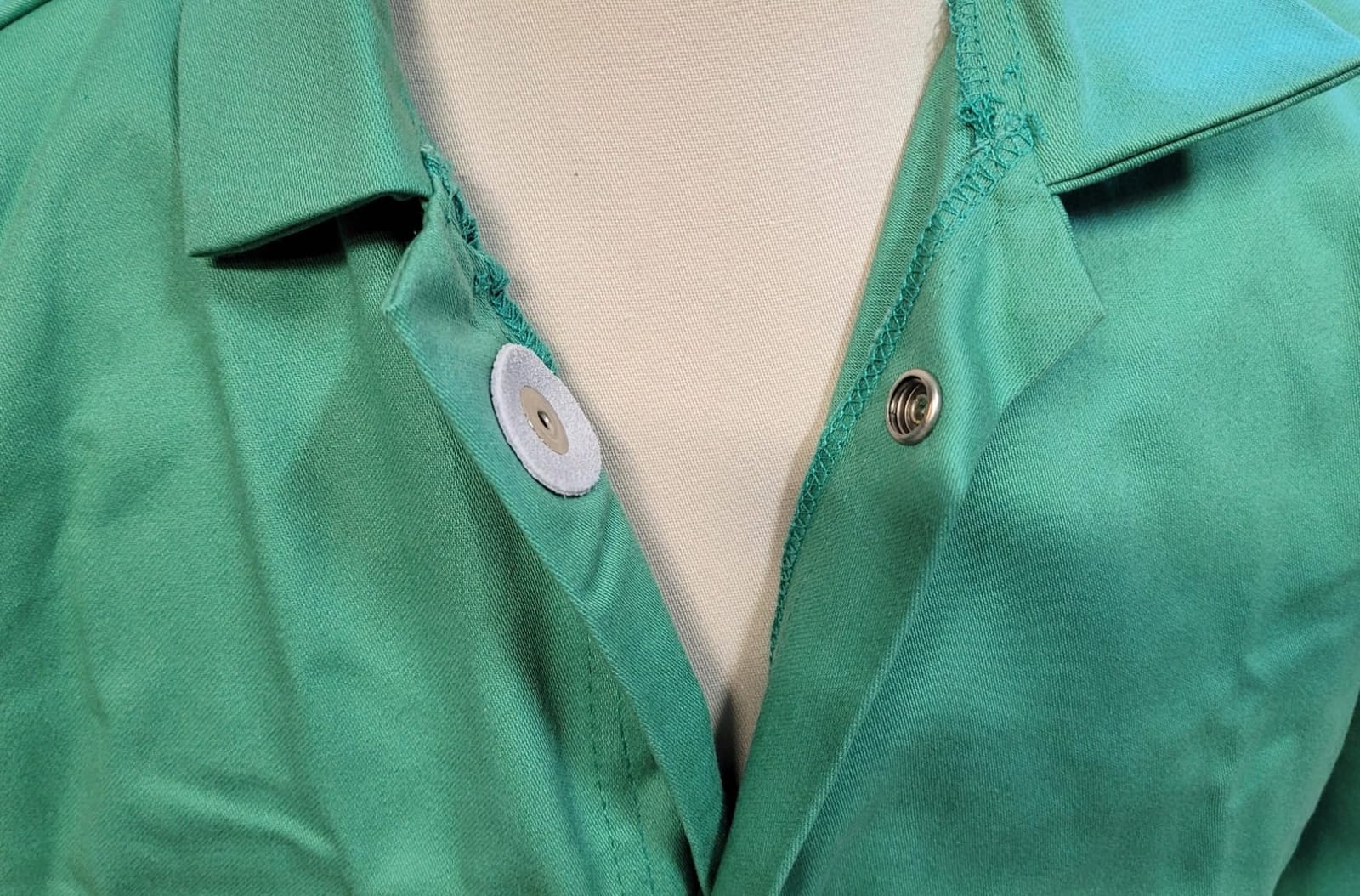
The pop-up welder’s collar with snap closure is the feature owners single out most. It closes off the neck opening, which is exactly where sparks travel when you are welding with your helmet down and looking up through the hood.
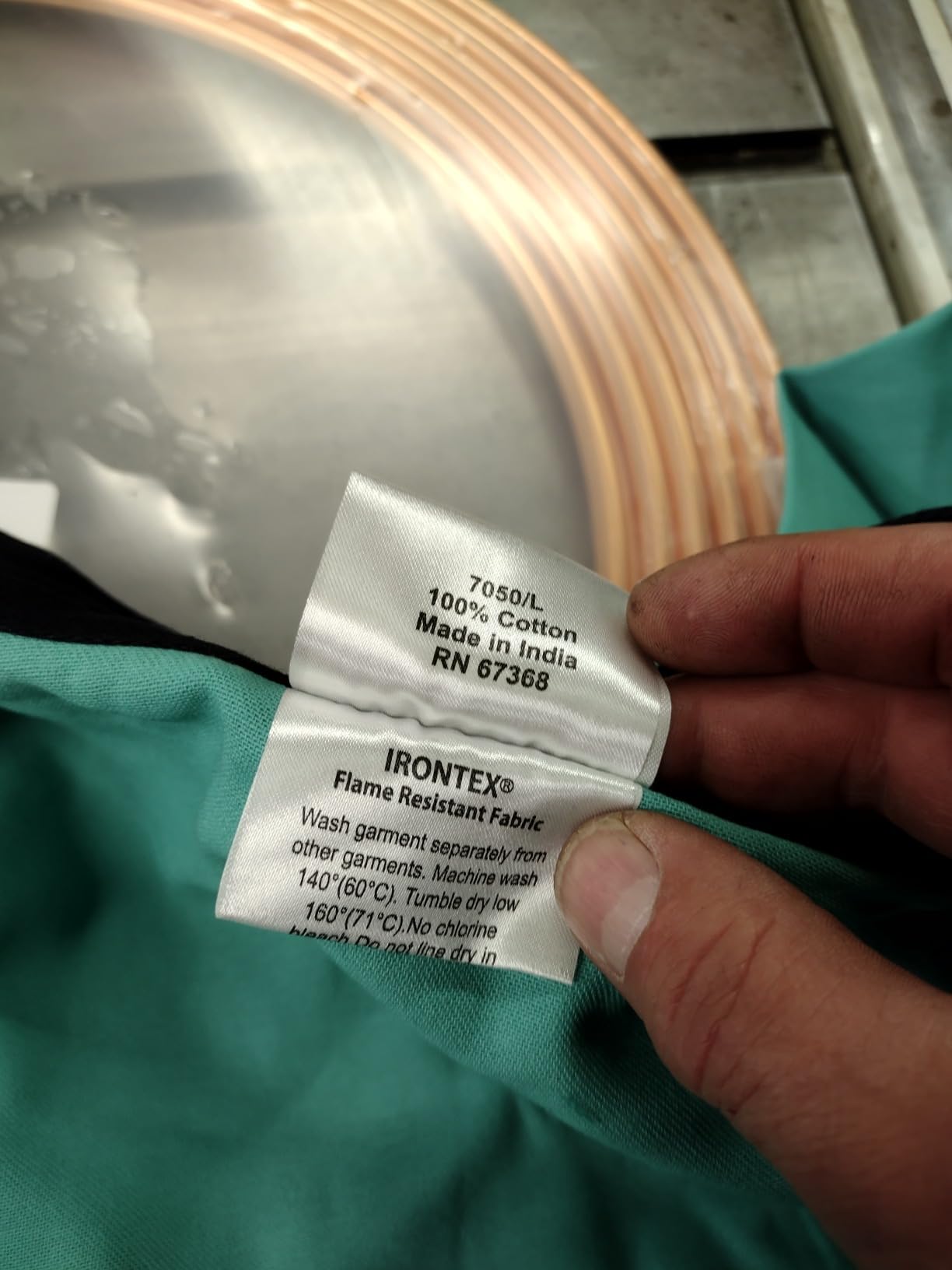
The anodized snap finish is not a marketing flourish. Leather-reinforced anodized snaps resist corrosion and resist flashback, and snapped hardware that survives repeated heat cycles is one of the reasons a cheap jacket outlasts a more expensive one.
It is also the most colour-flexible jacket here, offered in green, navy, black, royal, red, and orange, with size runs from small through 5X in several colourways.
What a tight budget should and should not buy
What you get for very little is real protection against light flame and sparks, a working scribe pocket, an interior lower pocket, and a collar that actually closes. That is a legitimate starter kit for someone who welds thin-gauge mild steel a few times a month.
What you give up is thickness. 9 oz cotton sateen is at the light end of the range, and buyers note burn-through under heavier sparks.
The durability issue to plan around
The standout weakness is the inside elbow area, which wears through and tears from trapped weld slag. If you weld in the same position for hours, inspect that seam before you find out the hard way.
Quality variance also shows up, with some units arriving with a defective front snap, and there is a strong treatment odour on arrival that fades after airing out. It runs large, so buyers recommend sizing up.
10. MAGID SparkGuard FR Cotton Sateen Jacket – Best for Flux-Core Work
MAGID SparkGuard Flame Resistant Green Welding Jacket | 1 Jacket | 9 oz. Lightweight 100% Cotton Sateen | ASTM D6413 | Men’s | 1830 | Breathable Spark & Heat Protection PPE | PVC-Free
9 oz. 100% cotton sateen
ASTM D6413-99
PVC-free
FR through 50+ washes
Pros
- Lighter than leather and less fatiguing on long sessions
- FR treatment survives 50+ industrial washes without re-treating
- Good protection for flux-core sparks
- Breathable enough for hot work
- High-visibility green makes PPE compliance obvious
Cons
- Cotton gradually deteriorates from repeated heat and radiation
- Only semi-breathable compared with heavier workwear
- Runs about one size small for some buyers
The MAGID SparkGuard is a 9 oz. 100% cotton sateen jacket that meets ASTM D6413-99 and is PVC-free, and it is the only one in this roundup that leads with a published compliance standard and a wash endurance claim in the same breath. The FR treatment holds through 50 plus industrial washes with no re-treating.
Buyers who want to avoid the weight of leather consistently praise it for protection-to-weight ratio, washability, and visibility. The manufacturer describes it as delivering leather-equivalent flame protection at a fraction of the weight.
Leather-reinforced non-reflective metal snaps on the placket and wrists are a sensible detail. Non-reflective matters more than it sounds, because a shiny snap in your peripheral vision while your hood is down is a distraction you do not need.
At 1.21 pounds it is the second lightest jacket here, and the set-in snap-closure sleeves with a 30 inch length give you the spark coverage without the bulk.
Why it suits flux-core specifically
Flux-core produces a lot of spatter for its arc size, and the honest reason this jacket works for it is that cotton sateen at 9 oz with set-in snap sleeves covers the torso and wrists where that spatter lands, while staying light enough to keep on through a full FCAW pass.
It is also available in packs of 1, 2, 4, 6, and 12, which is a buying consideration if you are outfitting a small crew or a training class rather than just yourself.
The honest limitation
FR cotton has a finite life. Buyers repeat that the fabric weakens with sustained heat and radiation exposure and needs periodic replacement, which is the argument for moving to leather if your welding volume grows.
Some buyers find it runs about a size small, it is only semi-breathable against heavier workwear, and there is one riveted inside left breast pocket and nothing else.
How to Choose a Welding Jacket: Material by Process
Matching material to your welding process
Start with the process you will use most, because it decides the material almost on its own.
MIG on thin-gauge mild steel is light spatter and moderate radiant heat, which is 9 oz. flame-resistant cotton territory. TIG is even lighter spatter, so a thin breathable cotton jacket is the correct answer and full leather is simply wrong for the job.
Stick and flux-core throw heavier spatter and more radiant heat, particularly out of position, and that is where split cowhide leather earns its weight. Overhead work sits in between, which is why a hybrid with leather sleeves over an FR cotton body is the sweet spot many fabricators land on.
Blacksmithing and cutting torch work add radiant heat and open flame to the mix, and that pushes the decision firmly toward a heavy leather coat.
Flame-resistant is not fireproof
This is the most misunderstood term in the category. Flame-resistant means the fabric will not contribute to a fire and will self-extinguish, charring rather than continuing to burn when it is removed from a flame source.
Fireproof would mean it cannot burn at all, which no garment achieves. A correctly rated FR jacket reduces ignition and slows flame spread. It does not make you fireproof, and a burn-through hole is a burn-through hole.
The practical consequence for a hobby welder is that coverage beats thickness. Sparks and molten metal enter through open cuffs, an open front, and gaps at the collar, so snapping your cuffs and wearing the collar up does more for your safety than a heavier fabric ever will.
What the safety standards actually mean
ASTM D6413 is the vertical flame resistance test for protective apparel, and it is the standard printed on the spec sheets of the Lincoln Electric, Revco, and MAGID jackets in this guide. NFPA 2112 is the standard for flame-resistant clothing for protection of industrial personnel against short-duration thermal exposures from fire.
ATPV, or arc thermal protective value, is measured in calories per square centimetre, and it is the number most industrial retailers lead with. Higher is better, and for arc welding in enclosed spaces it is the number that matters most.
None of the ten jackets here publish an ATPV figure in the specifications we reviewed, so treat any ATPV claim from a marketplace listing with suspicion unless the manufacturer confirms it. Our Miller vs Lincoln Electric comparison covers how the two brands differ on equipment documentation if you want the broader picture on trusting brand specs.
Welding jackets for hot-weather garage work
Heat is the number one complaint in every welding forum thread we found, and the answer is a decision rule rather than a brand.
In a warm garage, 9 oz. FR cotton is the correct choice. It does not block radiant heat the way leather does, which means your body can still shed heat, and the Miller Classic Cloth and Lincoln Electric cloth jackets are the two lightest options in this roundup.
There is a counterintuitive argument for leather that one forum user made well. If the outside air is hotter than your skin, leather blocking radiant heat can actually leave you cooler than a thin shirt, because the heat is coming at you from every direction rather than radiating off your own body.
The real garage solution is layering by season, and it is what experienced hobby welders do. Cotton in the summer, leather in the winter, and a leather apron over regular clothing in between is a widely recommended compromise that saves your clothes from spatter, with the acknowledged drawback that it is hot.
Budget tiers for hobby welders
The cheapest tier covers the Ironcat and MAGID jackets, both certified 9 oz. cotton sateen with leather-reinforced snaps and a pop-up or lay-down collar. If you weld thin-gauge steel a few times a month, this tier is genuinely sufficient and you are not buying a toy.
The middle tier is where most hobby welders land. The Black Stallion FN9-30C, Revco BXRB9C, Miller Classic Cloth, and Lincoln Electric cloth jackets all sit here, adding scribe pockets, longer lengths, better collars, and named-brand support.
The top tier is split cowhide leather, the QeeLink and YESWELDER, plus the Lincoln Electric K3106 hybrid. This is the tier to buy when you are moving to stick, flux-core, or fabrication work, and it is where a jacket that lasts a decade starts to make sense.
Brands worth knowing
Black Stallion is Black Stallion, owned by Revco, and it is repeatedly recommended by name on welding forums for hybrid FR and cowhide coats. Tillman is the brand welders most consistently describe as top notch without qualification.
Lincoln Electric and Miller are the two names most hobby welders encounter first, and both build jackets that are lighter and more breathable than the fabricator-leaning options, which is usually a good match for a garage. Revco covers the mid-weight treated cotton and leather space.
On the value end, QeeLink, YESWELDER, and Ironcat deliver most of the same protection for less money, with less consistency in sizing.
Sizing and Fit: How to Buy a Welding Jacket That Works
Fit is where most returnable jackets come from, and the review data in this roundup is unusually consistent about it: brands disagree with each other.
Measure a jacket you already own rather than trusting the size label. The Miller Classic Cloth publishes its full garment measurements, and copying the chest, shoulder, sleeve, and torso numbers onto a jacket that already fits you is the most reliable method available.
Decide your layering before your size. If you will wear a hoodie underneath in winter, size up. If you want the jacket to close over a t-shirt and stay close to the body, take the smaller option.
Watch the direction of the error. The Black Stallion FN9-30C, Ironcat, and QeeLink all run large, and buyers recommend sizing down or altering sleeves. The Lincoln Electric KH808L, Revco contoured jacket, and MAGID run small or snug, and buyers recommend sizing up.
Sleeve length is the most commonly misjudged number. The Lincoln Electric K3106 is called out for accurate sleeve length on tall wearers, while several leather jackets need alteration. If you are above six feet, check sleeve measurements before ordering rather than after.
Body length matters if you weld seated. The K3106 stops around the belt with no tall option, and the Black Stallion 30 inch length is short for some torsos. Longer coverage costs nothing in weight.
Caring for Leather and FR Cotton Welding Jackets
Leather and treated cotton are maintained in completely different ways, and using the wrong method shortens the life of the jacket.
For split cowhide leather, wipe spatter off before it soaks in, then condition the hide a few times a year with a leather conditioner. Unconditioned leather stiffens and cracks, which is the single most common complaint from owners of jackets that were not treated after purchase.
Expect a strong leather smell on arrival from any new cowhide jacket, including the QeeLink and the YESWELDER. It fades with wear. Washing a leather jacket is generally the wrong move; hand cleaning is the accepted approach for the models in this guide.
For FR cotton, the rules are the reverse. Machine washing is fine and expected, and the Lincoln Electric K2985 is rated for 50 commercial washes while maintaining its flame resistance, and the MAGID SparkGuard holds its treatment through 50 plus industrial washes.
Do not re-treat or dry clean FR cotton, and check the label before you wash anything. The Miller Classic Cloth, Revco BXRB9C, YESWELDER, and Lincoln Electric K3106 are all listed as hand wash only.
Finally, plan for replacement. FR cotton has a finite life and weakens with repeated heat and radiation exposure, so inspect it periodically for thin spots and burn holes. A leather jacket conditioned regularly is more likely to last a working lifetime, and hobbyists on hobby-machinist.com describe heavy leather jackets that lasted 30 years and more.
Frequently Asked Questions
Do you really need a welding jacket if you only weld occasionally?
Yes, for any arc welding. Sparks and molten spatter reach temperatures that burn through ordinary clothing in seconds, and they do not care how often you weld. What you can skip is a pro-grade leather coat. A certified 9 oz. flame-resistant cotton jacket is genuinely sufficient for a few hours of MIG or TIG work per month on thin-gauge mild steel.
What is the best welding jacket for hot weather?
A lightweight 9 oz. flame-resistant cotton jacket is the right answer, because it does not trap radiant heat the way leather does. The Miller Classic Cloth at 1.5 pounds and the Lincoln Electric cloth jacket are the lightest options we reviewed. Seasonally rotating between cotton in summer and leather in winter is what experienced hobby welders tend to settle into.
Is cotton or leather better for welding?
Cotton is better for MIG and TIG, grinding, and any hot-weather work, because it breathes and is light. Leather is better for stick, flux-core, out-of-position, and overhead work, where heavier spatter and more radiant heat justify the weight. A hybrid with split cowhide sleeves over an FR cotton torso is the compromise most fabricators choose for overhead work.
Are welding jackets fireproof?
No. Flame-resistant means the fabric will not contribute to a fire and will self-extinguish, charring rather than continuing to burn when removed from a flame source. Fireproof would mean it cannot burn at all, which no garment achieves. Coverage matters as much as material, so keep cuffs snapped and the collar up.
How long does a welding jacket last?
A conditioned split cowhide leather jacket can last decades, and hobby welders report heavy leather jackets that lasted 30 years and more. FR cotton has a finite life and weakens with repeated heat and radiation exposure, so it needs periodic inspection and eventual replacement. Washable FR cotton rated for 50 industrial washes refers to laundering, not to how long it stays protective on the arc.
Can you machine wash a welding jacket?
It depends entirely on the material and the label. FR cotton jackets rated for commercial washing, such as the Lincoln Electric K2985 and the MAGID SparkGuard, can be machine washed. Leather jackets and any jacket labelled hand wash only should not go in a machine. Never re-treat or dry clean FR cotton, as both can damage the flame-resistant finish.
What size welding jacket should I buy?
Measure a jacket that already fits you rather than trusting the size label, since brands disagree about sizing and many run large or small. Decide your layering first and size up if you will wear a hoodie underneath. If you are over six feet, check sleeve length carefully, and add length rather than shortening, since long sleeves can be altered and short ones cannot.
What are the top welding jacket brands?
Black Stallion and Revco are repeatedly recommended by name on welding forums, Tillman is widely regarded as consistently top notch, and Lincoln Electric and Miller cover the mainstream hobby range. For value, QeeLink, YESWELDER, and Ironcat deliver most of the same protection for less money, with less consistent sizing between them.
Final Verdict: The Best Welding Jackets for Hobby Welders
For most people reading this, the best welding jackets for hobby welders list starts with the Black Stallion FN9-30C. It is light enough for a garage in July, tall enough at the collar to stop arc rays, sealed at the cuffs, and it carries a scribe pocket so your soapstone is where you left it. Add the Lincoln Electric K2985 if you want a printed ASTM D6413 compliance claim and a jacket rated for 50 commercial washes, and move to the Lincoln Electric K3106 hybrid when your work turns to stick, flux-core, and overhead passes.
Whichever one you order, the details that protect you are the boring ones: snaps closed at the wrist, collar up, sleeves long enough, and certification on the label rather than a guess. If you are still working out your process, our MIG vs TIG breakdown will help you match the jacket to the machine.