

If you want one box that turns a laptop, a game console or a streaming box into a serious headphone setup, the Fosi Audio Q4 is the safest first buy and the one we would put on a desk today. For a single step up in both power and flexibility, the FiiO K11 is harder to argue with, and the FiiO K13 R2R covers the balanced-output end of the market.
That is the short answer to the best headphone amps for home listening question. This guide covers ten amplifiers we researched in depth, from tiny desktop boxes to a balanced tube hybrid, and it is written specifically for a listening chair at home rather than for a commute.
A headphone amplifier is a small box that takes a line-level signal and provides enough clean voltage and current to drive your headphones properly, so they reach full volume without straining, distorting or colouring what you hear. A DAC does the job before it: it turns a digital file into an analog signal. Standalone amps skip the DAC step, combo units do both in a single chassis.
Before you read further, the honest truth: most people do not need an amp. If you listen at moderate volume to easy-to-drive headphones from a decent source, adding one will do very little. The picks below earn their place for the setups where an amp genuinely changes the result, and we say plainly who should skip each one. If you are still choosing headphones, our headphone brand guide is a better place to start.
Top 3 Headphone Amps for Home Listening in 2026

Fosi Audio Q4
- Built-in 24-bit/192kHz DAC
- USB optical and coaxial inputs
- Drives 16 to 200 ohm headphones
- Metal case with tone knobs
All 10 Headphone Amps at a Glance in 2026
| Product | Specifications | Action |
|---|---|---|
| Fosi Audio Q4 |
|
Check Latest Price |
 Fosi Audio K5 Pro Fosi Audio K5 Pro |
|
Check Latest Price |
 Douk Audio P1 Tube Preamp Douk Audio P1 Tube Preamp |
|
Check Latest Price |
 FiiO K11 FiiO K11 |
|
Check Latest Price |
 Douk Audio U3 Douk Audio U3 |
|
Check Latest Price |
 Fosi Audio P3 Tube Preamp Fosi Audio P3 Tube Preamp |
|
Check Latest Price |
 Monolith Liquid Spark Monolith Liquid Spark |
|
Check Latest Price |
 FiiO K13 R2R FiiO K13 R2R |
|
Check Latest Price |
 Apos Gremlin Apos Gremlin |
|
Check Latest Price |
 Douk Audio U10 Douk Audio U10 |
|
Check Latest Price |
Every amp above takes a line-level signal and adds power. What separates them is topology, output power into your specific headphone impedance, whether a DAC is built in, and what the outputs are wired for. The table is the fastest way to narrow the field; the reviews below explain who each one actually suits.
Do you actually need a headphone amp?
Headphone amplifiers are worth it when your current source runs out of headroom, when your headphones have high impedance or low sensitivity, or when you listen quietly on a laptop and the drivers never reach their full sweep. They are not worth it when a phone or laptop already drives your headphones comfortably at the volume you use.
In practice, the amp earns its keep in three situations:
Your headphone is 300 ohm or higher, or a low-sensitivity planar magnetic, and the source volume wheel is already near the top.
You listen at low volume, where the built-in jack struggles and the headphone never opens up fully.
Your source adds audible hiss or noise, so you are turning the volume up to compensate and losing dynamics.
And in two situations it clearly does not: with easy-to-drive dynamic headphones or in-ear monitors from a clean source, and when the real weakness is the headphone rather than the electronics. Community listening threads on r/headphones and head-fi.org repeat the same line we do, that a good amp should be transparent rather than coloured. If your current pair is a mass-market wireless set and you suspect the tuning is the problem, the honest answer may be a different headphone altogether, which is where our guide to Bose alternatives comes in.
It is also worth saying what an amp is not. If you want louder speech from a television for someone who struggles with dialogue, our guide to TV listening devices solves that problem far more cheaply than any amplifier on this page.
1. Fosi Audio Q4 – The Best Desktop DAC Amp for Most Home Setups
Fosi Audio Q4 DAC Headphone Amp for PC, Desktop Digital to Analog Audio Converter for Home Stereo Amplifier and Powered Speakers, PC-USB/Optical/Coaxial Inputs, 3.5mm Headphone/RCA Outputs
24-bit/192kHz DAC
Drives 16 to 200 ohm
3.5mm and RCA outputs
430 g metal case
Pros
- Plug-and-play with no driver installation
- Drives headphones from 16 to 200 ohm
- Bass and treble knobs plus a smooth metal volume control
- Full metal enclosure with rubber feet
- USB optical and coaxial cables included
Cons
- Audible hiss that is worse on low-impedance headphones
- Only a 3.5mm headphone jack with no quarter-inch option
- Volume knob doubles as the power button
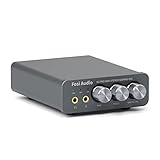
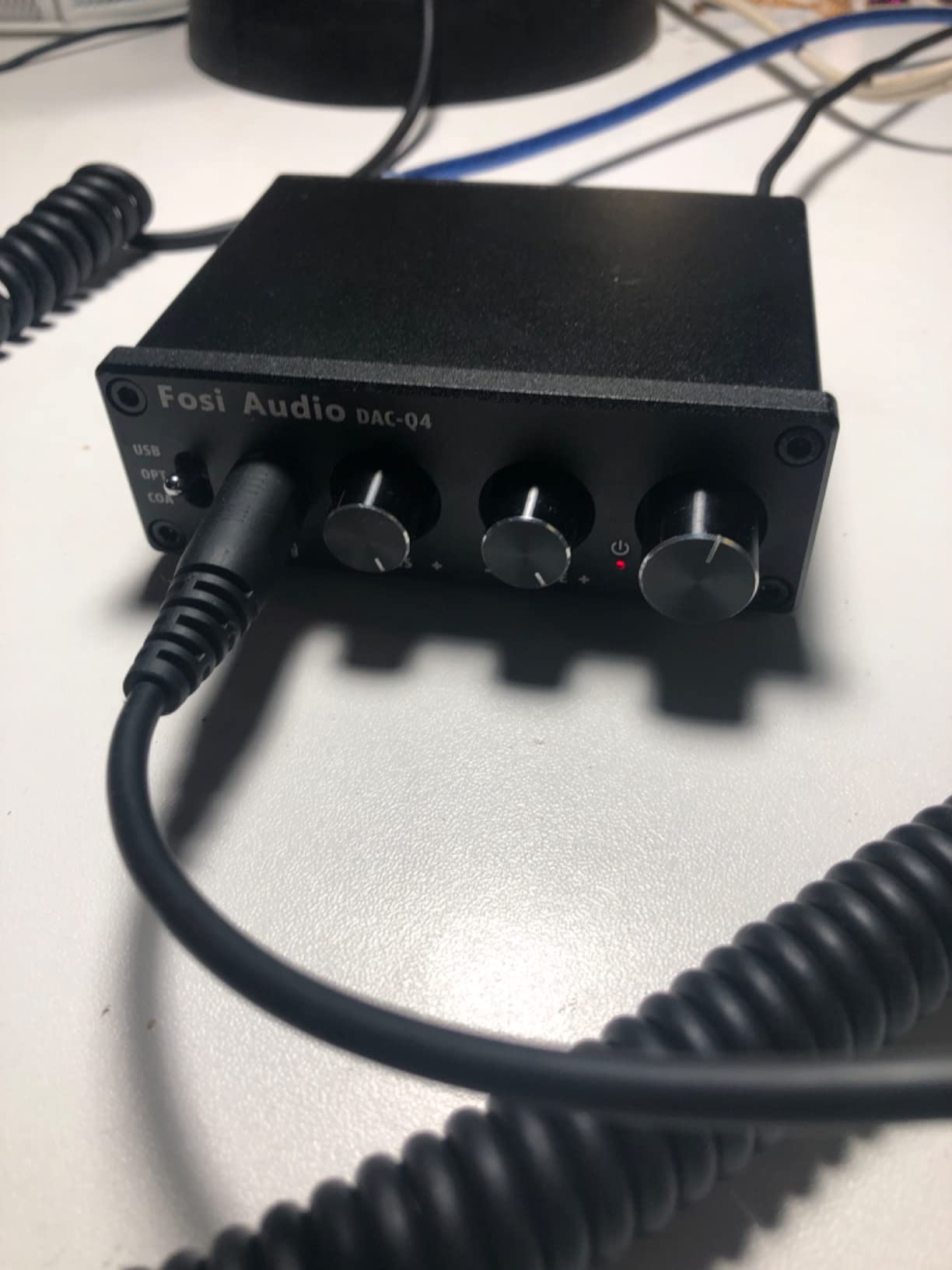
The Q4 is the box we keep recommending to people moving from onboard sound to something they actually control. It takes USB, optical or coaxial digital audio, converts it internally, and drives a headphone or feeds a pair of powered speakers through the RCA outputs. Nothing about the setup is fiddly.
With 3342 ratings averaging 4.4, it is the most widely used amp in this list by a wide margin, and owner reports describe a warm, full presentation with good separation. The physical bass and treble knobs are the feature people mention most, because they make it easy to correct a bright headset or a thin laptop feed without software.

It is rated for headphones from 16 to 200 ohm, which covers easy-to-drive dynamic models and most mid-range planars comfortably. High-impedance headphones above that range are where it starts to feel short, and the noise floor becomes easier to hear on low-impedance loads and very sensitive in-ears.
One detail trips up a lot of owners: the volume control also acts as the power switch, so your level resets every time you power cycle. Reviewers also note the hiss tends to show up more in one channel than the other. Neither ruins the box, but both are worth knowing before you buy.
What the Q4 pairs well with
Gaming headsets, everyday dynamic headphones and powered desktop speakers in the same room. If your headphone has a USB port or a detachable cable and a 3.5mm plug, this is the least complicated way to get real volume control and tone adjustment at a desk.
It also works as the front end for a 2.0 or 2.1 speaker system, since the RCA outputs carry the volume-controlled signal straight to an active amplifier or powered monitors.
Where the Q4 falls short
There is no quarter-inch headphone output, so many full-size headphones need an adapter. In-ear monitor users will hear the noise floor long before they run out of volume, and anyone with 300 ohm or 600 ohm headphones should look at a stronger stage.
This is a sub-flagship box, and reviewers are candid that it stops short of dedicated solid-state amps well above it in outright sound quality. Its value is the feature set and the price, not flagship refinement.
2. Fosi Audio K5 Pro – Best Amp for a Gaming and Listening Desk
Fosi Audio K5 Pro Gaming DAC Headphone Amp, HiFi Headphone Amplifier 1000mw
NE5532 stage
1000mW at 16 ohm
80mW at 300 ohm
USB Type C optical coaxial
Pros
- Drives 16 to 300 ohm headphones with ample power
- Physical bass and treble knobs with centre detents
- 3.5mm microphone input for voice chat
- All-aluminium chassis with solid knobs
- Single-cable USB Type C power and audio
Cons
- Only mini-jack headphone output
- No midrange control between bass and treble
- USB can pick up computer electrical noise when driving powered speakers
The K5 Pro is the successor to the Q4 and adds the feature gamers care about most: a 3.5mm microphone input on the front, so voice chat no longer forces you back to motherboard audio. That single port is why it sits at number two for many desks.
Measured output runs from 1000mW into 16 ohm down to 80mW into 300 ohm, with distortion listed at 0.003 percent and signal to noise at 110dB or better. That spread means it handles everything from a gaming headset to a 300 ohm dynamic without straining, which is a wider range than the Q4 above it.
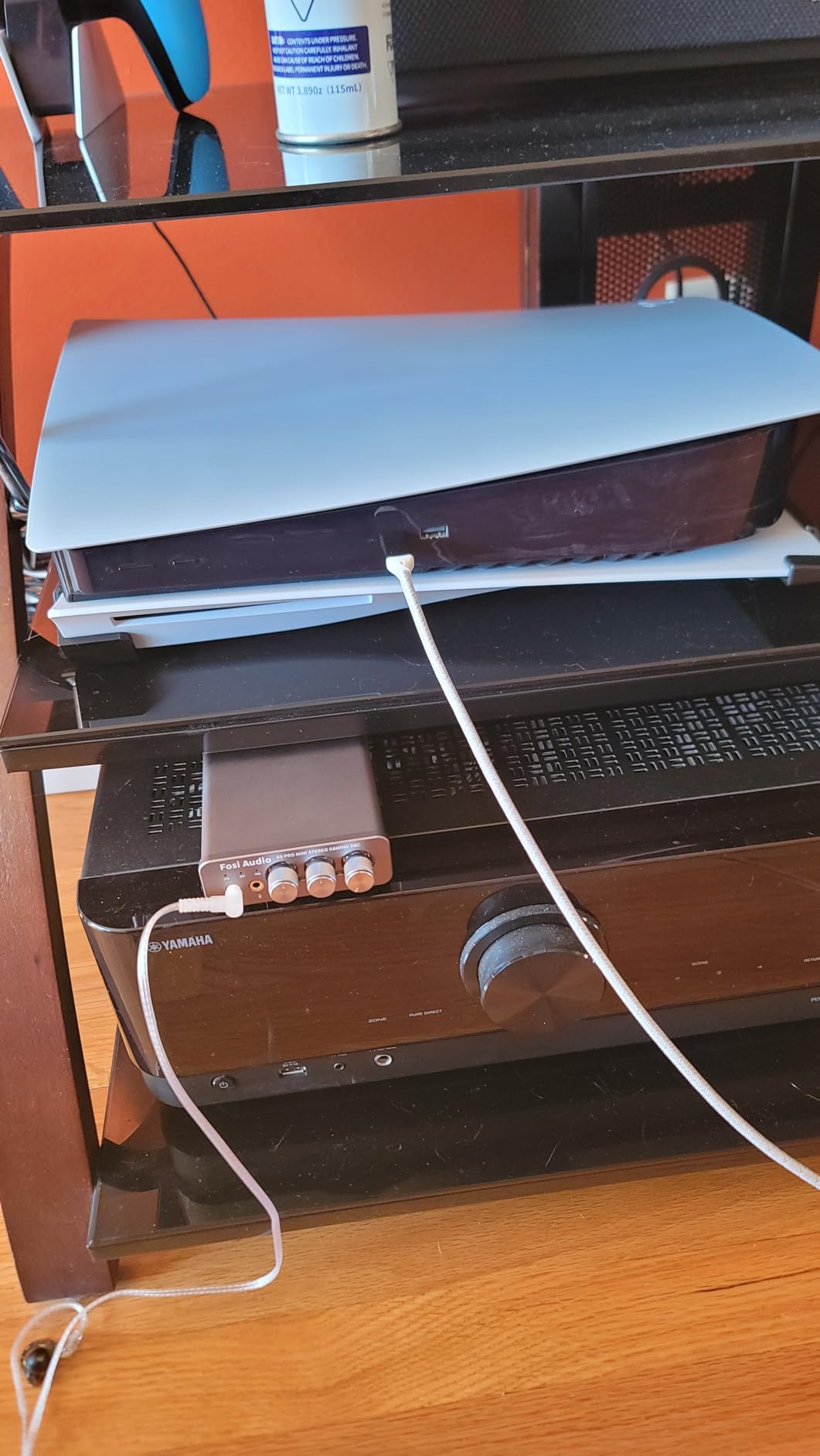
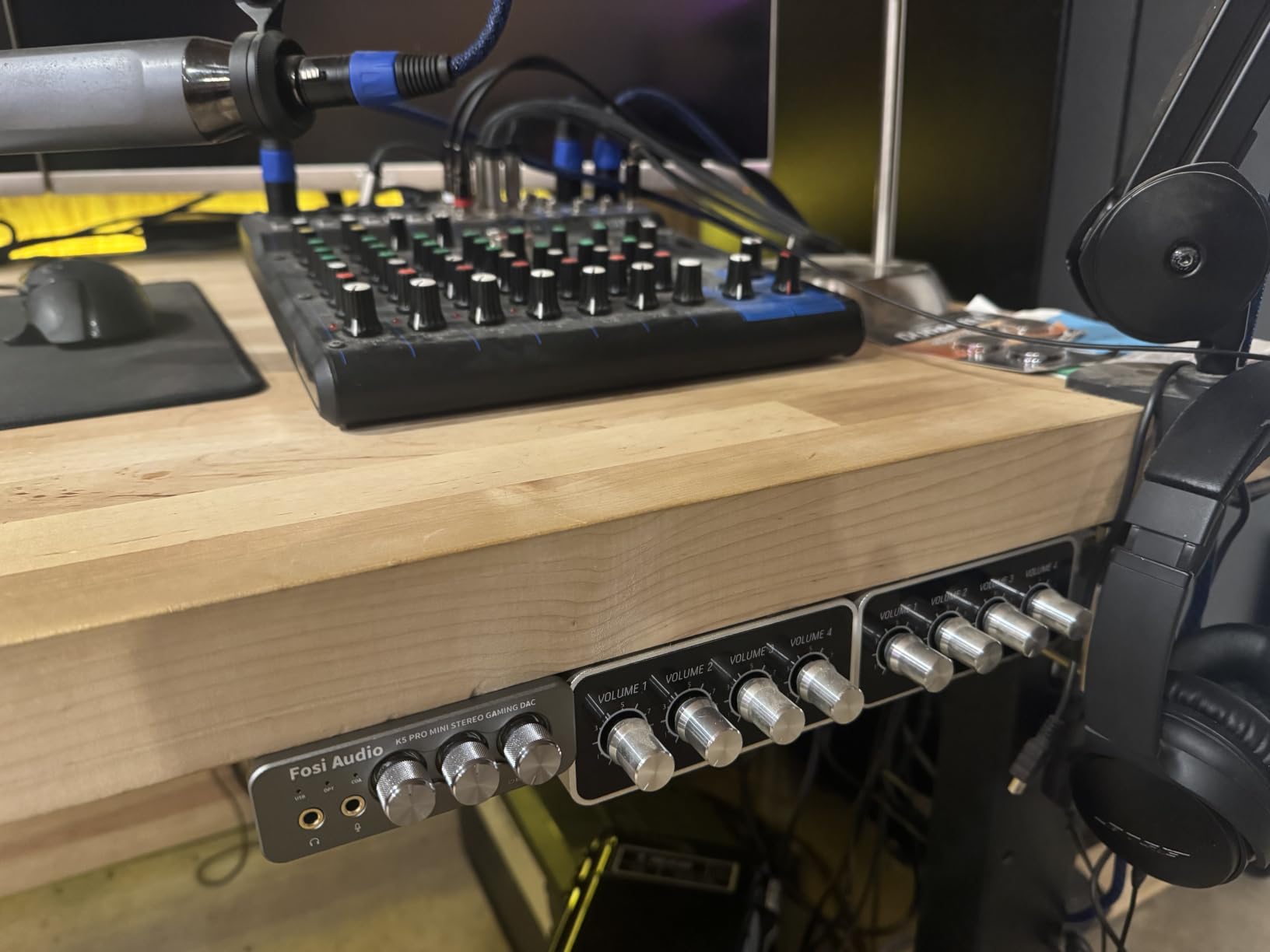
Build quality is the quiet strength here. The aluminium chassis and the detented tone knobs feel a step above the price bracket, and the 2-in-1 USB Type C cable carries both power and audio so the desk stays tidy. Reviewers with 1781 ratings averaging 4.3 regularly call it the best value in the mini desktop category.
Two caveats come up repeatedly in owner feedback. Driving powered speakers from the RCA outputs over a PC USB connection can pick up electrical noise from a high-power GPU, and the combined volume and power knob is often mistaken for a dead unit the first time you use it.
What the K5 Pro pairs well with
A mixed-use desk: a gaming headset in the day, a mid-range planar or 300 ohm dynamic in the evening. The detented bass and treble controls make switching between a bass-heavy game headset and a neutral headphone painless, and the mic port keeps chat working.
It is also a sensible second box for a PS5 or Mac that has no convenient audio path, since the Type C, optical and coaxial inputs cover most sources.
Where the K5 Pro falls short
There is no quarter-inch output, so full-size headphones need an adapter again. The tone controls stop at bass and treble, with nothing for the midrange where most corrective work actually happens.
Sensitive in-ear monitors can reveal white noise at high volume, and anyone planning to run this as the only headphone amp for a household with several pairs should note the single headphone jack.
3. Douk Audio P1 – Best for a Tube Preamp That Also Does Bluetooth
Douk Audio Bluetooth Tube Preamp: HiFi Stereo Preamplifier Receiver | Headphone Amp | USB DAC | Tone Control for Home Theater, Desktop Listening (P1)
JAN5725 tubes
160mW for 32 to 300 ohm
USB DAC and Bluetooth 5.0
Tone bypass switch
Pros
- Warm musical tube tone with good separation
- Works as preamp USB DAC Bluetooth receiver and headphone amp
- Tone controls bypass fully for a flat source
- Build quality and knob feel exceed expectations
- Tubes are user replaceable and inexpensive
Cons
- Shallow 3.5mm jack that many cables do not fully seat
- No quarter-inch headphone output and no optical input
- Supplied tubes are sometimes faulty and need replacing
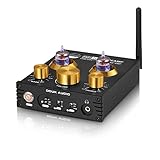
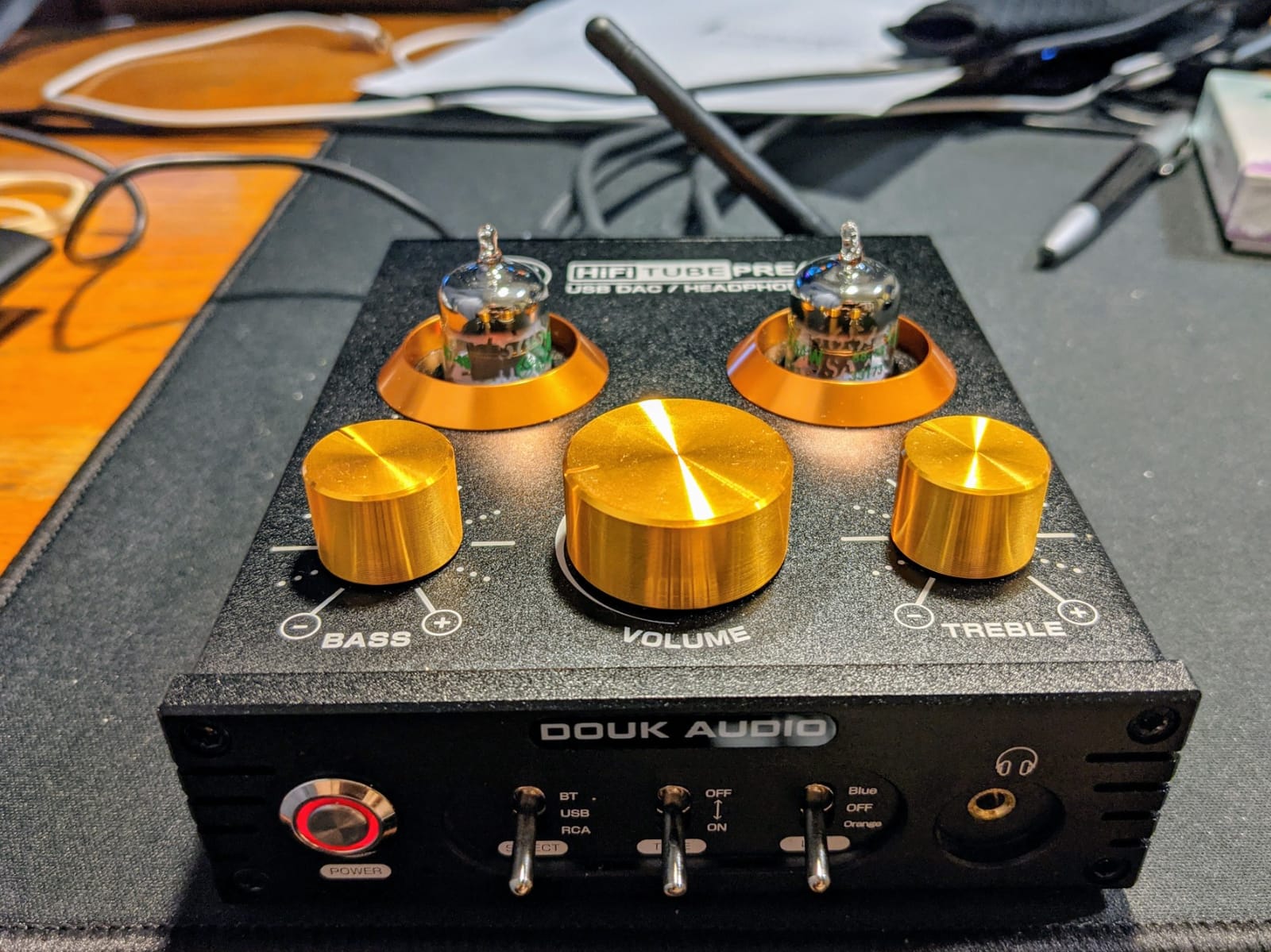
The P1 is a hybrid rather than a pure tube amp: a JAN5725 tube preamp stage feeding a NE5532 headphone section. That combination gives it the warm, dimensional presentation tube listeners want while keeping the noise floor and pricing of a solid-state design.
It is also the most versatile box in this roundup. The same chassis works as a USB DAC, a Bluetooth 5.0 receiver with aptX-HD, a stereo preamp for powered speakers, and a headphone amp with switchable plus or minus 6dB tone controls. For a household that wants one box to do several jobs, that is unusual value.
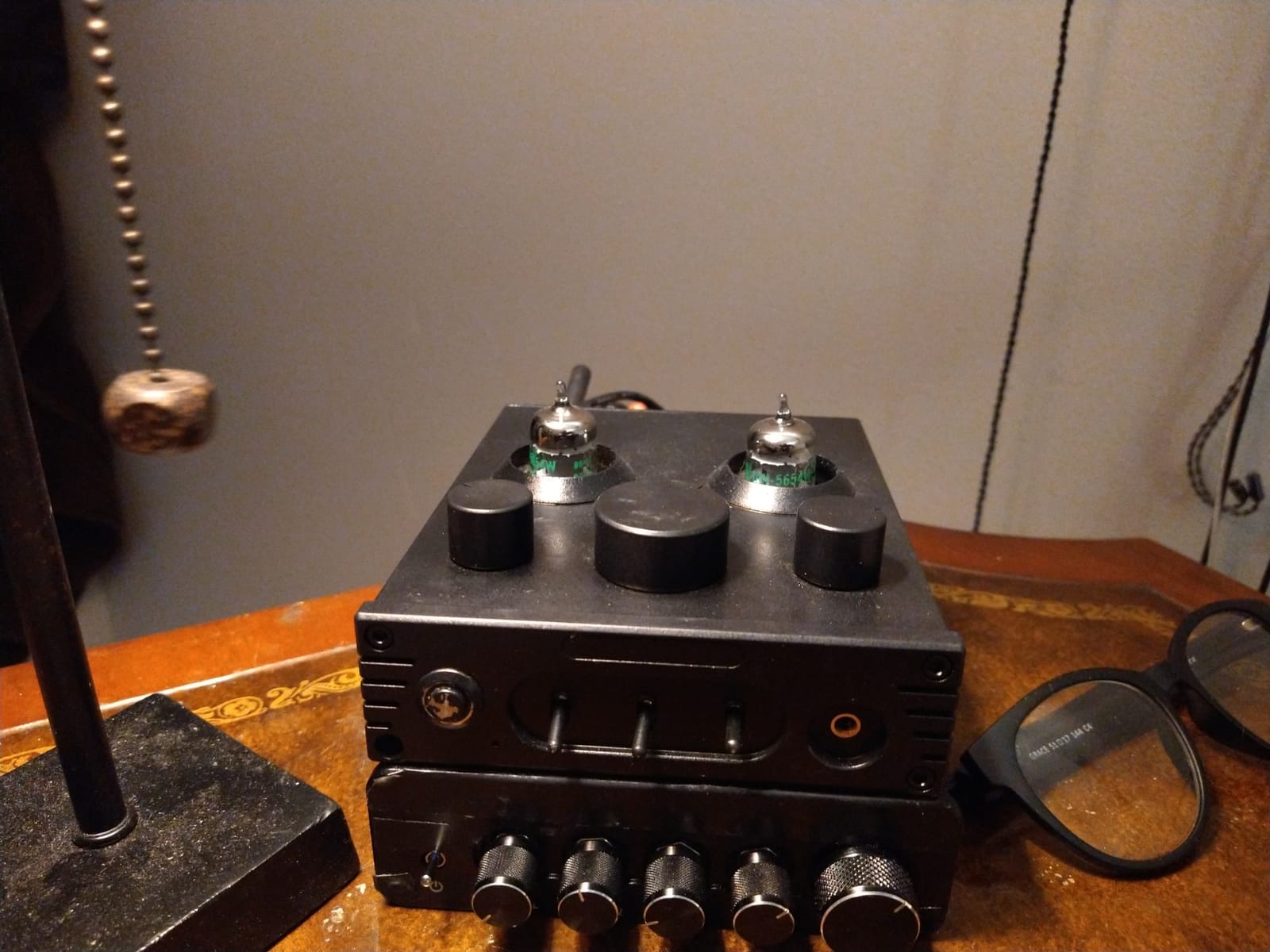
Output is listed at 160mW for headphones between 32 and 300 ohm, so it suits mid-range dynamics and many planars but is not the choice for 600 ohm cans. The tone bypass switch lets you switch to a genuinely flat signal when you want to hear the recording rather than the voicing.
The most reported problem is mechanical rather than electrical. The 3.5mm jack is shallow, and many cables only partially seat, producing one-sided playback or static until you wiggle the plug. Owners generally solve it with a 3.5mm to quarter-inch adapter.
What the P1 pairs well with
Powered desktop speakers first, since the preamp role is where this design is happiest. It also works well with warm-sounding mid-range dynamic headphones, where the tube stage flatters rather than fights the tuning.
A Bluetooth phone or laptop source is a natural pairing, and the included tubes are cheap and easy to swap if you want to change the character later.
Where the P1 falls short
Skip it for 600 ohm headphones or for in-ear monitor users, since the power and noise behaviour are wrong for both. There is no optical input and no quarter-inch output, which limits how it fits into an existing system.
The built-in DAC is unremarkable next to a dedicated external one, so if you already own a good DAC this is a headphone and preamp box rather than a complete solution.
4. FiiO K11 – Best Value Amp with a Balanced Output
FiiO K11 DAC and Headphone Amplifier for Home Audio or PC, 6.35mm and Balanced 4.4mm, RCA, Coaxial, Optical, 1400mW, 384kHz/24Bit DSD256 (Silver)
1400mW output
8 to 350 ohm range
4.4mm balanced and 6.35mm
Silver aluminium body
Pros
- 1400mW output drives high-impedance and planar headphones
- 4.4mm balanced output for cleaner detail
- 384kHz/24-bit PCM and DSD256 decoding
- VA display shows sample rate volume and gain
- Compact aluminium body with reliable plug and play operation
Cons
- Digital filter presets change the character noticeably
- No automatic impedance detection so high-impedance cans need high gain set manually
- No balanced input for true balanced comparisons
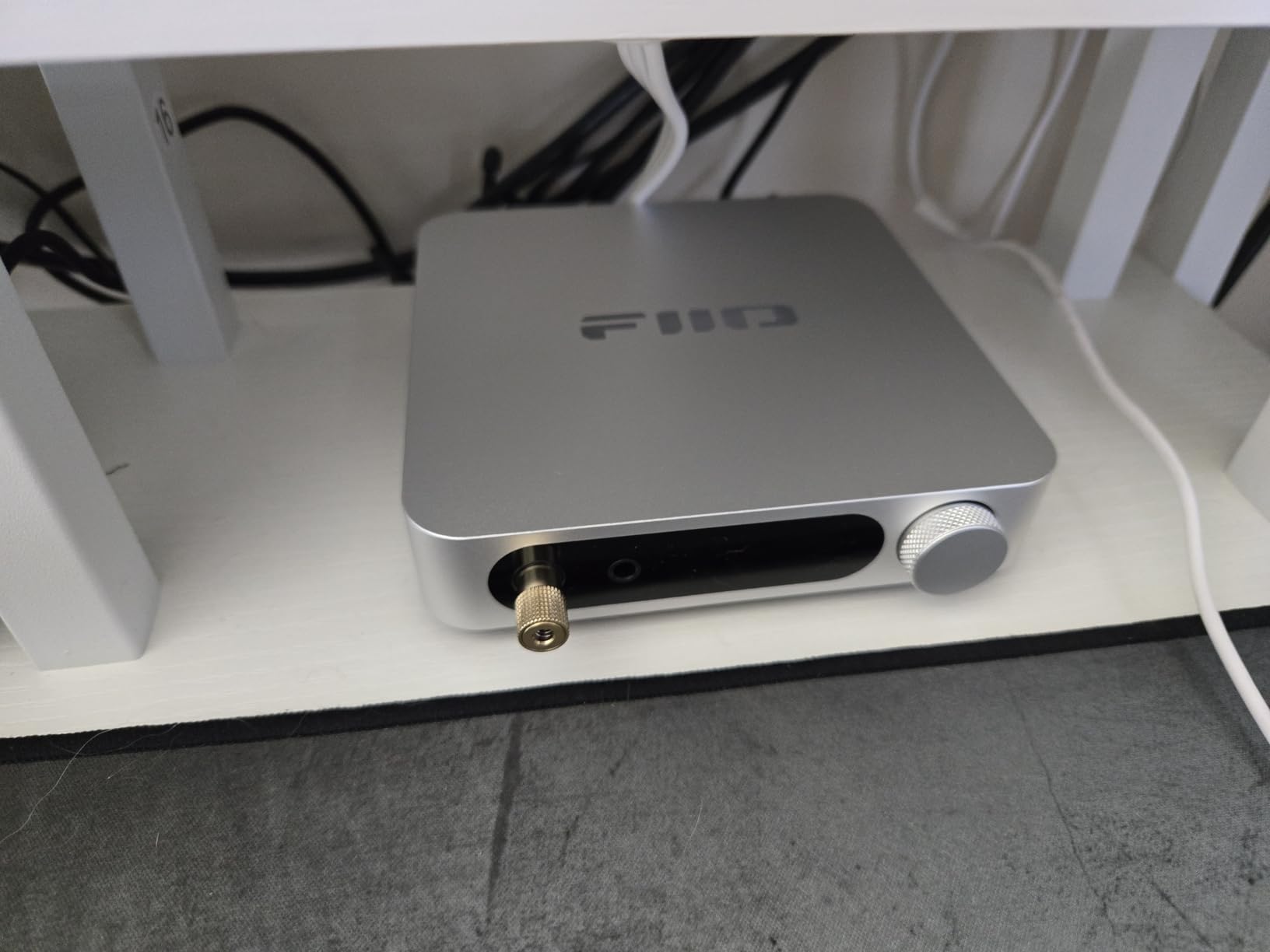
The K11 is the strongest all-round argument in this roundup. It combines a real high-resolution DAC, 1400mW of output, a 4.4mm balanced headphone jack and a 6.35mm single-ended jack, plus RCA and coaxial line outputs, in a chassis small enough to disappear on a desk.
At 755 ratings averaging 4.6, owner feedback is unusually positive for the category. Reviewers describe it as an easy entry into balanced desktop audio, with enough power for demanding planars and a level of detail that outclasses onboard sound and older dedicated cards.
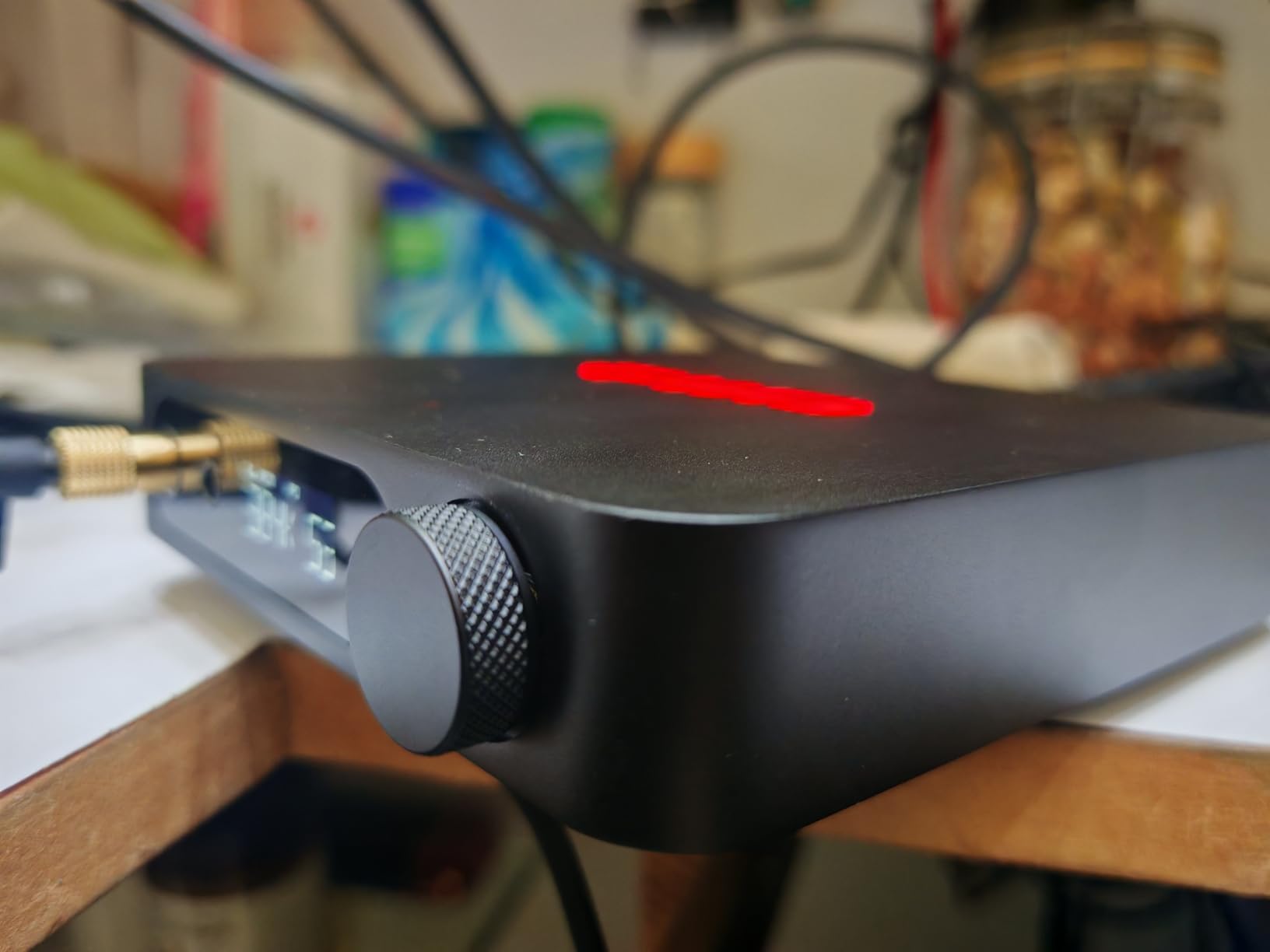
Technical highlights include a CS43198 DAC with support for 384kHz/24-bit PCM and DSD256, and a high-definition display that shows sample rate, volume, gain and output mode at a glance. The output is recommended for headphones from 8 to 350 ohm, which is a wider window than most competitors here.
Two learning curves are worth flagging. The digital filter presets alter the character audibly, and many users end up running the bypass filter instead. There is also no automatic impedance detection, so with 300 ohm headphones you need to set high gain yourself.
What the K11 pairs well with
Balanced-capable headphones over 4.4mm, particularly sensitive planars where the balanced path reduces audible noise. It also drives 300 ohm dynamics such as the Sennheiser HD 600 class without turning the volume up.
Because it includes RCA line outputs, it can front powered speakers, and the switchable output mode makes moving between headphone and speaker listening straightforward.
Where the K11 falls short
It has no balanced input, so a fully balanced signal chain from a separate DAC is not possible. The menu system takes an evening to learn, and owners on desktop PC report that ASIO output needs a driver install.
Skip it for 600 ohm headphones, which sit outside its stated range, and for in-ear monitor users who will hear the noise floor at low levels.
5. Douk Audio U3 – Best Amp for Driving High-Impedance Headphones on a Budget
Douk Audio U3 Headphone Amps, Mini Hi-Fi Amplifier for Home Desktop PC 6.35mm / 3.5mm Headsets, Class A, RCA Input, DC 5V
Up to 1300mW class A
TI NE5532 with pluggable socket
6.35mm and 3.5mm jacks
5V DC supply
Pros
- Plenty of clean power for high-impedance headphones
- Pluggable op-amp socket for upgrades
- Runs from a simple 5V supply
- Very low noise floor with a clean linear source
- Volume knob with tactile detents
Cons
- No RCA line outputs for powered speakers
- RCA input only so a 3.5mm source needs an adapter
- Not shielded so nearby wireless transmitters can inject interference
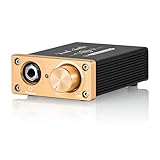
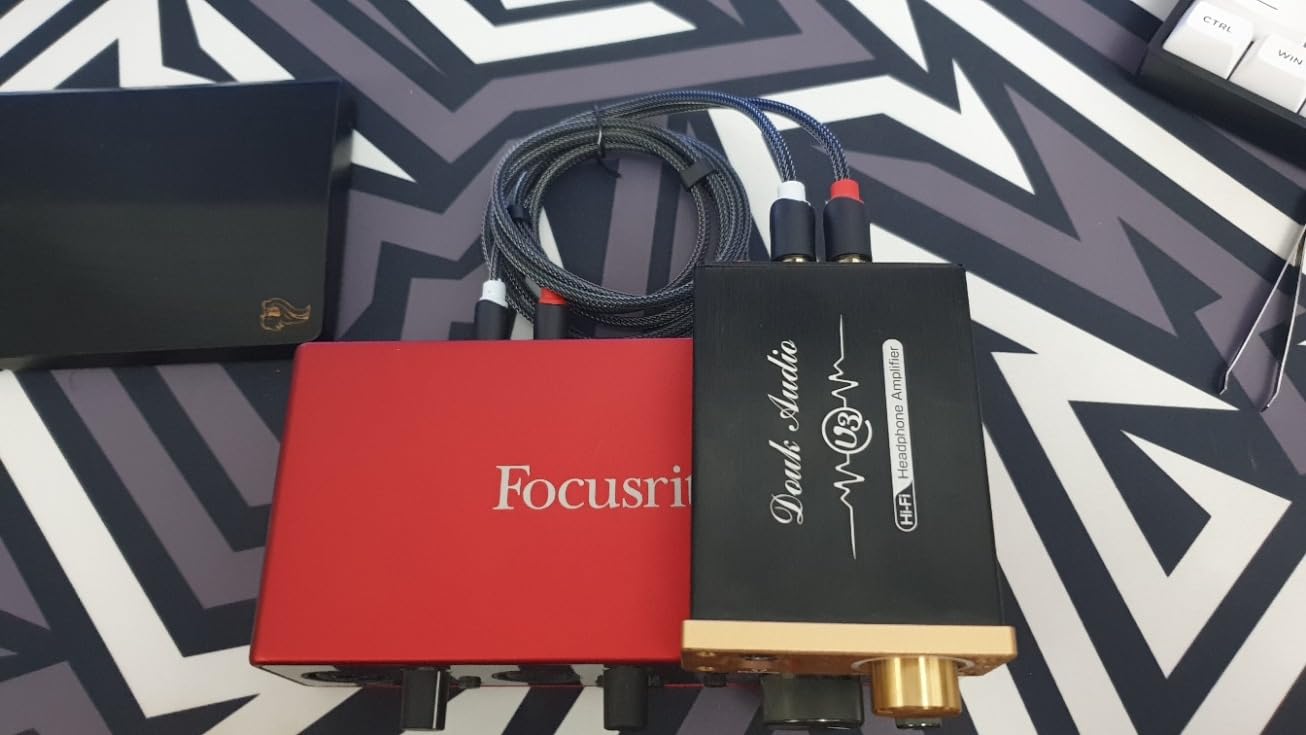
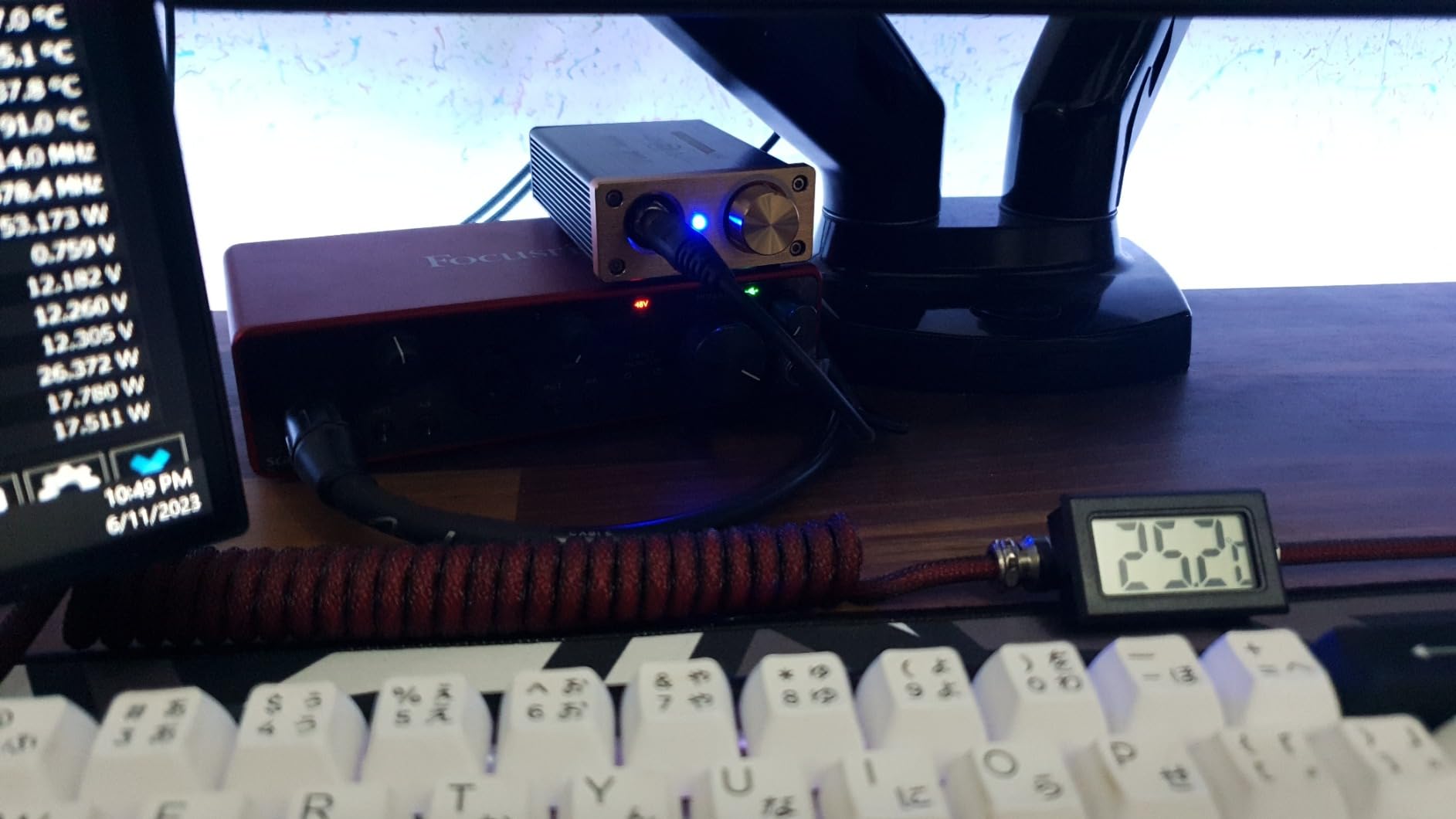
The U3 is the value pick for anyone who has already discovered that their 300 ohm headphones will not get loud on a laptop. It delivers up to 1300mW from a class A output stage built around the original TI NE5532 op-amp, and reviewers specifically name the HD580, HD600, HD650, K701, K702, DT880 and Grado RS1e as loads it handles well.
What makes it interesting is the pluggable op-amp socket. You can swap the amplification chip later and change the signature, which turns a cheap box into a small hobby. It also runs from any clean 5V supply, including a USB charger or a battery pack.
At 863 ratings averaging 4.3, the recurring owner comment is that this outperforms amplifiers costing several times more, with precise imaging, an open presentation and a warm but uncoloured signature. Several reviewers note the sound improves after some burn-in time.
Keep it away from Bluetooth and Wi-Fi transmitters. The circuit is not properly shielded, and owners report interference when a wireless dongle sits near the enclosure. Channel imbalance is also noticeable at the very bottom of the volume range.
What the U3 pairs well with
Classic high-impedance dynamic headphones in the 250 to 300 ohm range that need voltage rather than current. It is a natural first tube-stage-free step up from a phone or laptop for anyone moving to an HD600-class pair.
The 6.35mm jack means full-size headphones connect without an adapter, which solves the problem that holds back several cheaper boxes in this list.
Where the U3 falls short
There are no line outputs, so it cannot drive powered speakers directly. With an RCA-only input, a 3.5mm source needs an adapter, and the power supply is not included, which means you should use a clean 5V source away from a computer USB port.
It is also a headphone-only device. Anyone wanting a preamp for speakers should look at the P1 or P3 instead.
6. Fosi Audio P3 – Best for Warm Tube Sound and Wireless Listening
Fosi Audio P3 Tube Preamp Headphone Amplifier Home Audio Preamplifier Mini Vacuum Pre Amp Receiver with Bluetooth aptX LL HD Bass Treble Tone Controls for HiFi Stereo Active Speakers with RCA AUX Jack
54V tube preamp circuit
Bluetooth 5.1 aptX HD and LL
Up to 250mW
16 to 300 ohm
Pros
- Warm rich tube character with clear highs and full mids
- Works as preamp Bluetooth receiver and headphone amp
- Tone controls have centre detents for true tone defeat
- Can build a 2.1 system with active speakers and a subwoofer
- 12V supply and vacuum tubes included in the box
Cons
- Modest headphone output compared with solid-state desktop amps
- Only a 3.5mm headphone jack
- Tubes must be hand installed after removing the copper rings
- No USB or optical inputs
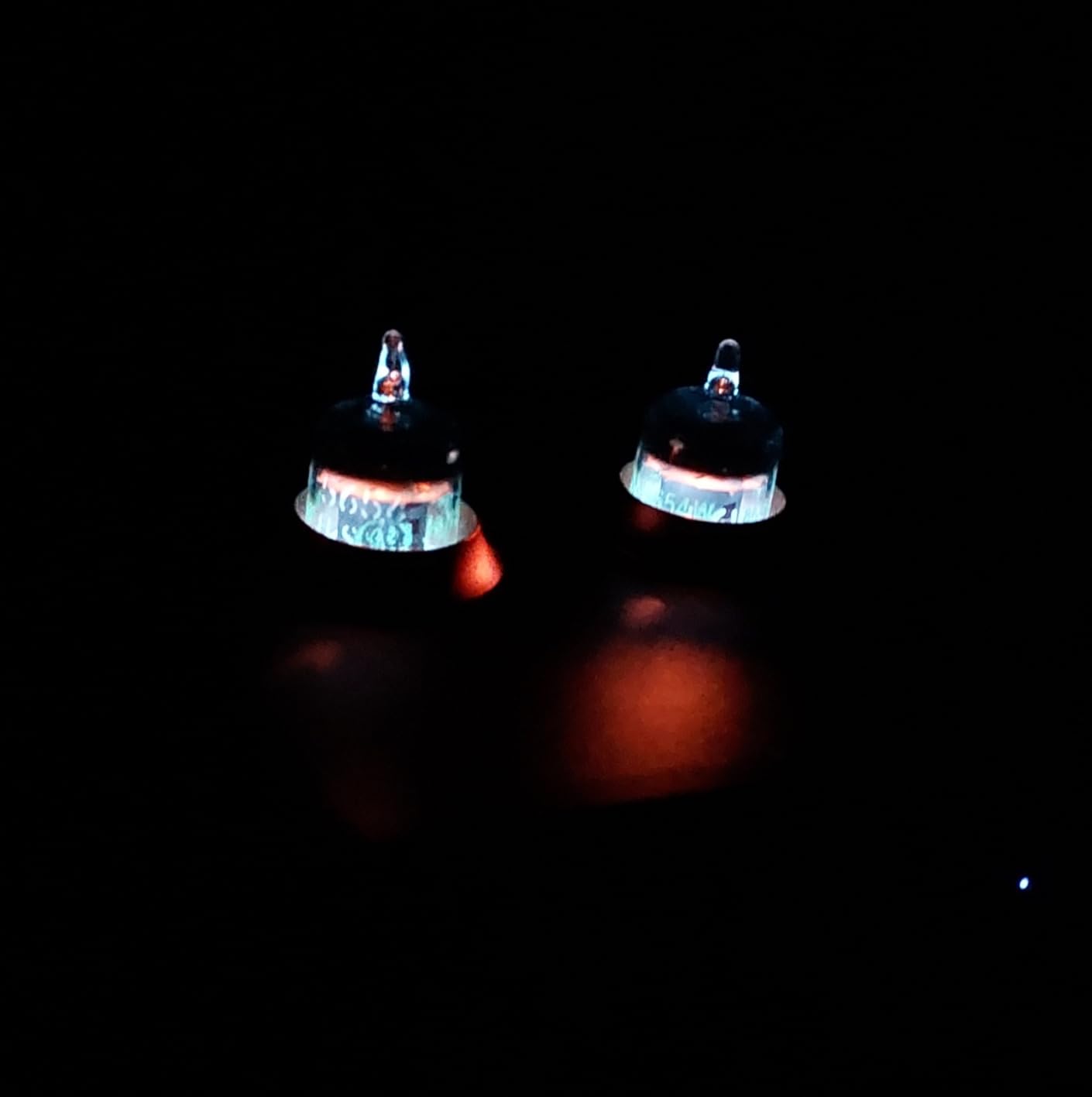
The P3 is a true tube preamp with the circuitry elevated to 54V so the tubes operate well away from their limits. Owners describe the result as warm and rich, with clear highs, full mids and bass that stays rhythmic rather than loose. At 552 ratings averaging 4.5, it is one of the better-regarded boxes at this tier.
Its distinguishing feature is codec support. The Bluetooth 5.1 module uses a Qualcomm QCC3031 chip with both aptX HD and aptX LL, which is unusual at this level and makes wireless playback from a phone noticeably better than a standard SBC connection.

Signal figures are listed at up to 103dB signal to noise and 95dB crosstalk, with ELNA audiophile-grade capacitors and an A-taper potentiometer. The tone controls detach fully at centre, so you get a flat signal when you want one rather than a slightly coloured default.
The headphone stage is the compromise. Output is up to 250mW for 16 to 300 ohm headphones, which is modest beside the solid-state boxes here, and there is no quarter-inch output. You also have to fit the tubes yourself after removing the copper rings.
What the P3 pairs well with
Active speakers and a subwoofer, where the preamp role is the priority and a 2.1 system is the goal. It is a good fit for a living room or kitchen setup driven from a phone over Bluetooth.
It also suits warm, smooth headphones, since the tube voicing is most at home with a bright or analytical pair that needs softening.
Where the P3 falls short
Skip it for demanding 300 ohm dynamics or low-sensitivity planars, where the headphone stage runs out of power first. There are no USB or optical inputs, so a digital source needs Bluetooth or an external DAC feeding the RCA input.
The tube stage also means warm-up time and eventual tube replacement, neither of which suits a listener who wants to switch on and listen immediately.
7. Monolith Liquid Spark – Best Amp to Pair with a Separate DAC
Monolith 133304 Liquid Spark Headphone Amplifier – by Alex Cavalli with RCA Input, Single 1/4 Output 1.3Watt@50R, 108Db
1.3W into 50 ohm
DC-coupled signal path
Single quarter-inch output
Preamp RCA outputs
Pros
- Clean detailed relaxed sound with good separation
- Enough power for 250 ohm and 600 ohm loads
- Preamp RCA outputs driven by the volume pot
- All-metal chassis with a solid volume knob
- Essentially silent between tracks
Cons
- Needs roughly 100 hours of burn-in before full potential
- Runs warm and needs desk clearance
- Channel imbalance in the bottom quarter of the volume range
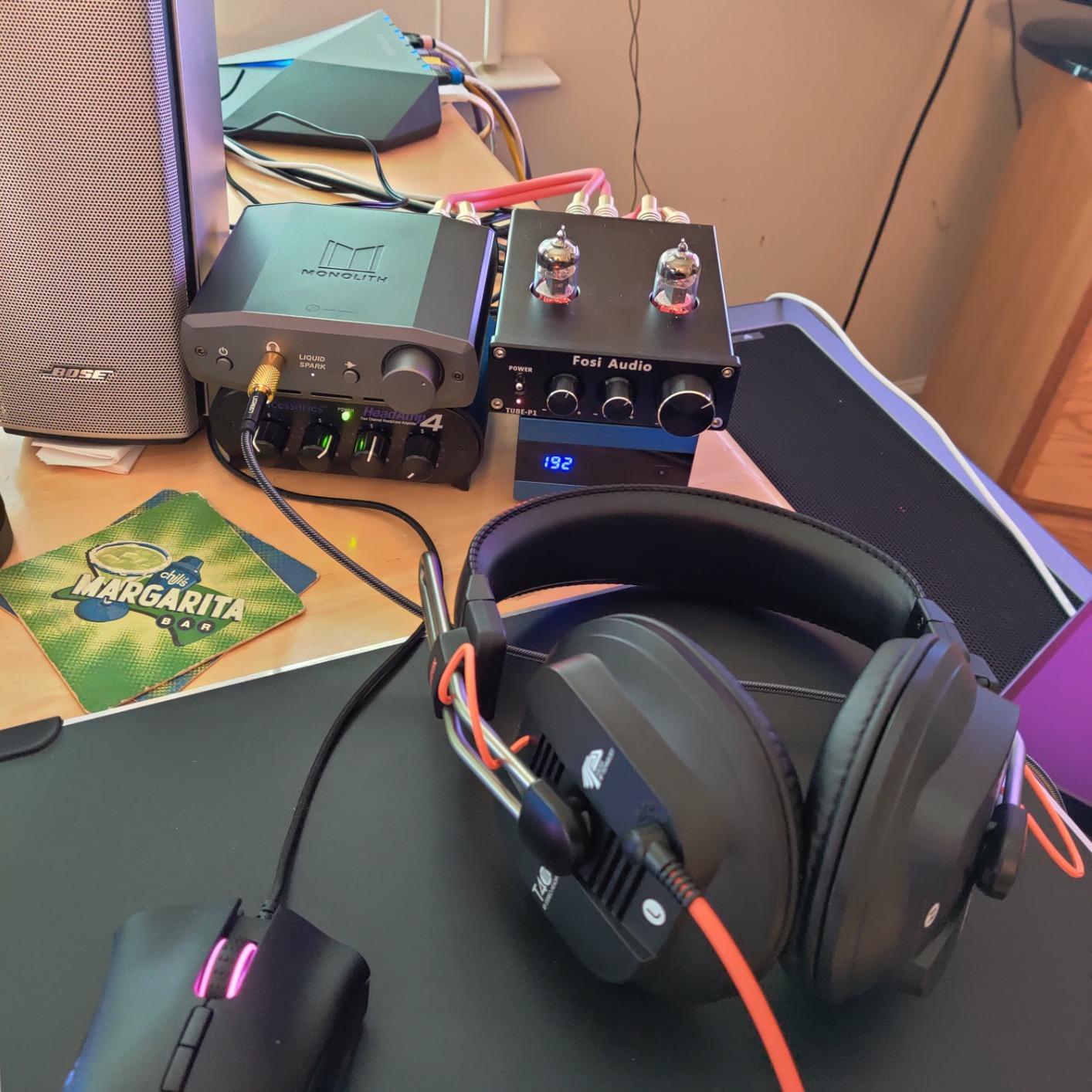
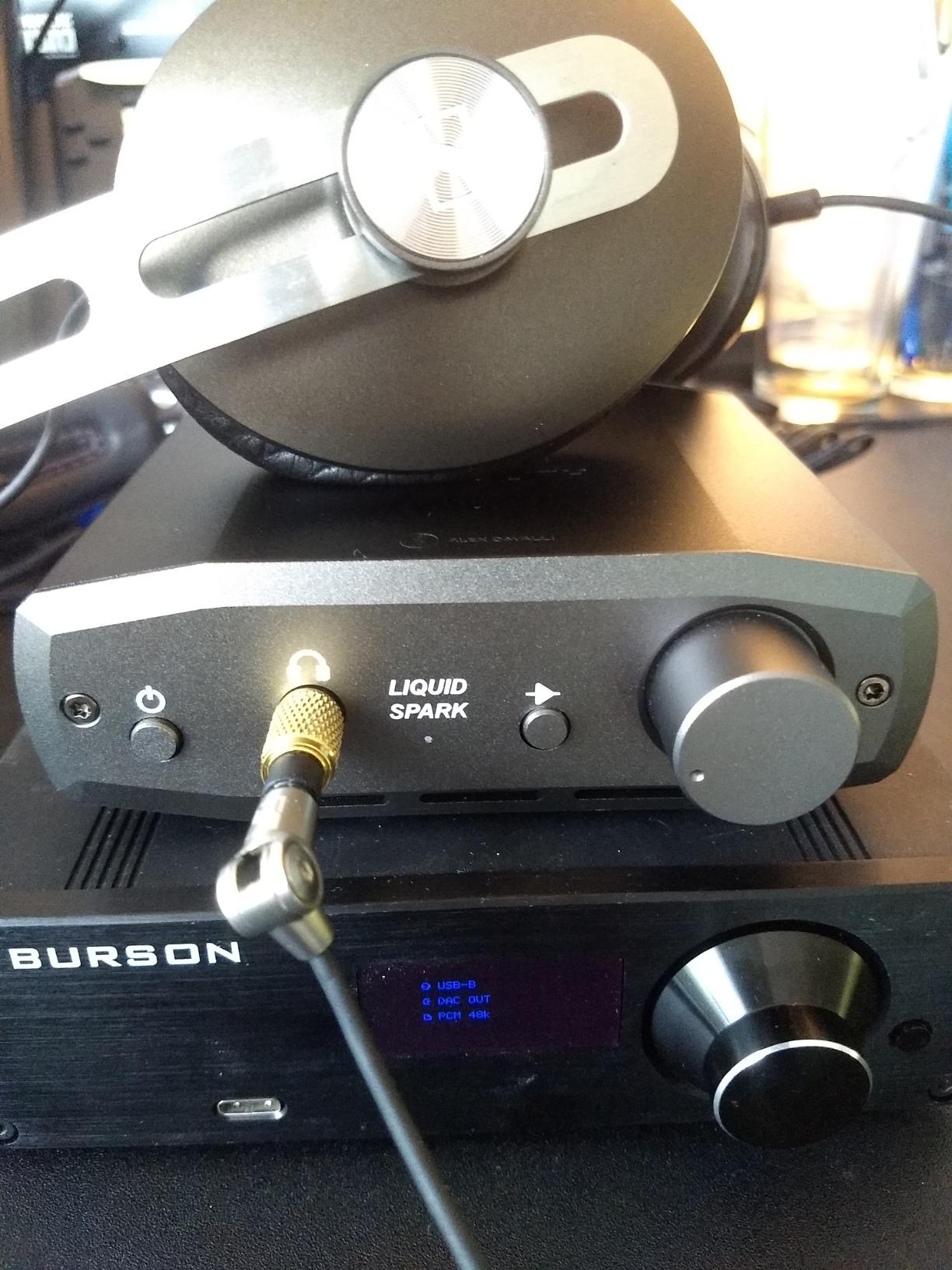
If you already own a good DAC, or plan to buy one, the Liquid Spark is the amp that respects the split. It takes RCA line input only, puts out 1.3W into 50 ohm, and offers preamp RCA outputs controlled by the volume pot so the same box can drive powered speakers.
The design is old-fashioned in a good way. It is DC-coupled from input to output with no capacitors in the signal path, uses laser-matched low-noise JFETs on the differential input stage, and small MOSFETs for output power. Reviewers put it up against dedicated solid-state amps costing far more.
Owners with 375 ratings averaging 4.4 describe the sound as detailed and transparent yet relaxed, with excellent separation and airy highs. Several specifically mention enough power for 250 ohm Fostex and 600 ohm Tin HiFi models, which puts it in a different class from the smaller boxes above.
Two patience tests come up. Reviewers report needing roughly 100 hours of burn-in before it reaches full potential, and the chassis runs warm enough to need clearance on a desk. There is also measurable channel imbalance below about a quarter of the volume range.
What the Liquid Spark pairs well with
A separate DAC in a two-box desktop system, which is the arrangement its design assumes. The single quarter-inch output suits full-size headphones directly with no adapter, including 600 ohm models.
It also works as a preamp for powered speakers from a single source, and its measured noise and distortion figures sit comfortably below audibility at normal listening levels.
Where the Liquid Spark falls short
It is an amplifier only, with no USB, optical or Bluetooth input, so budget for a DAC. The burn-in requirement is a genuine annoyance if you want an instant verdict, and some owners have reported random signal cut-outs and a red indicator light.
It also runs too warm for a closed shelf, and the silk-screened front panel print and non-gripping rubber feet are quality-of-life complaints that matter less than they sound.
8. FiiO K13 R2R – Best Amp for Balanced Output and Room Correction
FiiO K13 R2R Desktop DAC & Headphone Amp, High-Fidelity 24Bit R2R DAC, Powerful 2400mW Output, LDAC Bluetooth Streaming, Dual Power Supply, 10-Band PEQ, Balanced XLR & RCA Audio Output (Black)
2400mW output
24-bit R2R DAC
XLR and 4.4mm outputs
10-band PEQ with Auto EQ
Pros
- R2R architecture gives a warm organic non-fatiguing presentation
- 2400mW output drives demanding 300 ohm headphones and planars
- 10-band parametric EQ with presets and Auto EQ
- Balanced XLR plus dual RCA line outs and 4.4mm headphone outs
- LDAC Bluetooth 5.4 streaming
Cons
- Remote feels cheap and its buttons are loud and clicky
- Small display that is hard to read beyond a few feet
- EQ must be set through the app or a web interface that needs a login each time
The K13 R2R is the most capable amplifier in this roundup and the most expensive. Its DAC is a fully differential 24-bit R2R design built from 192 ultra-precise 0.1 percent thin-film resistors with 30ppm temperature drift, and the amplifier stage delivers up to 2400mW. That power figure is what lets it drive demanding 300 ohm headphones and low-sensitivity planars without strain.
Owners consistently describe the presentation as warm, musical and fatigue-free, and several view it as a value alternative to reference DACs costing several times more. It supports PCM 384kHz/32-bit and DSD256, with non-oversampling and oversampled modes for people who enjoy comparing the two.
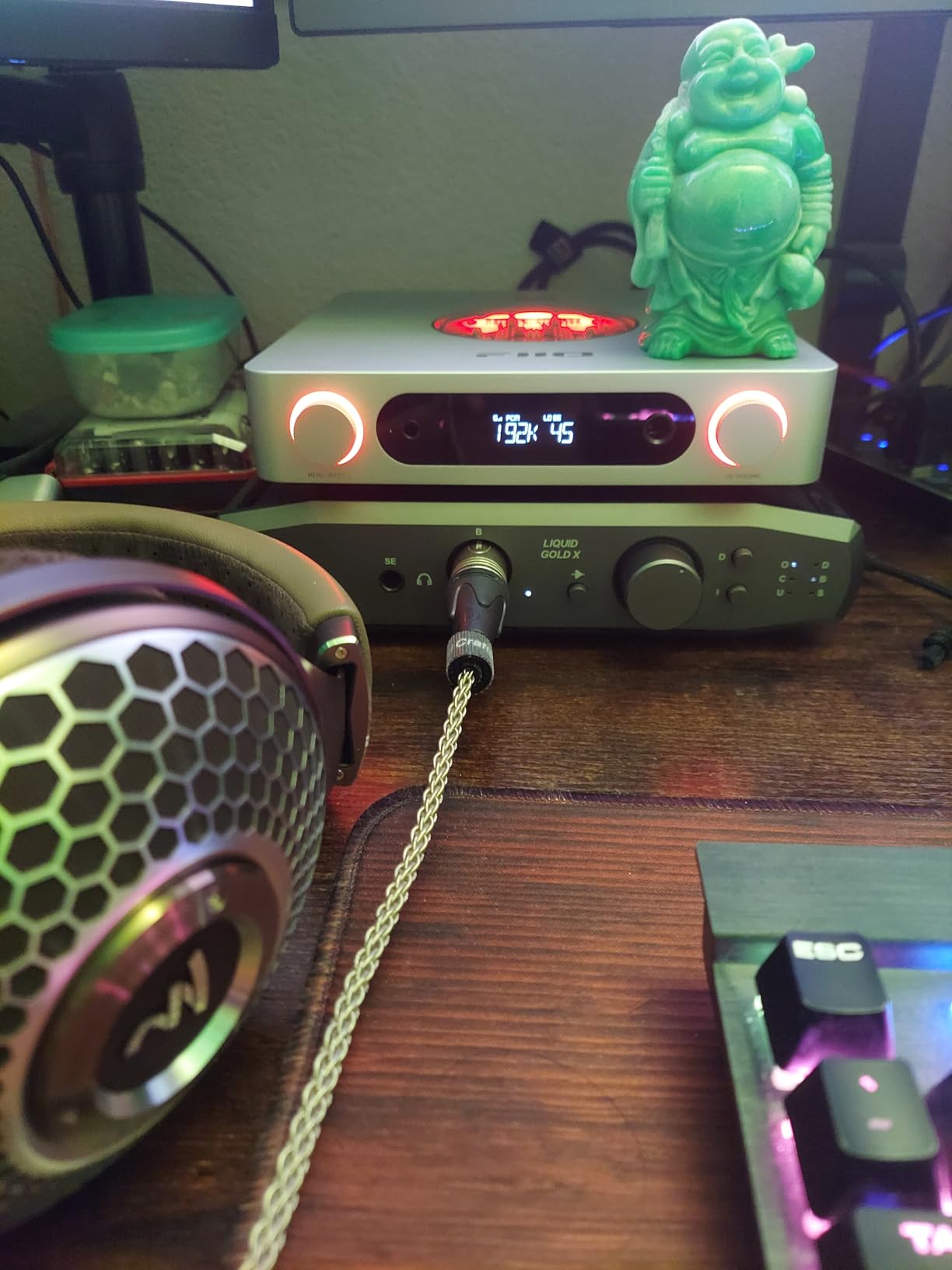
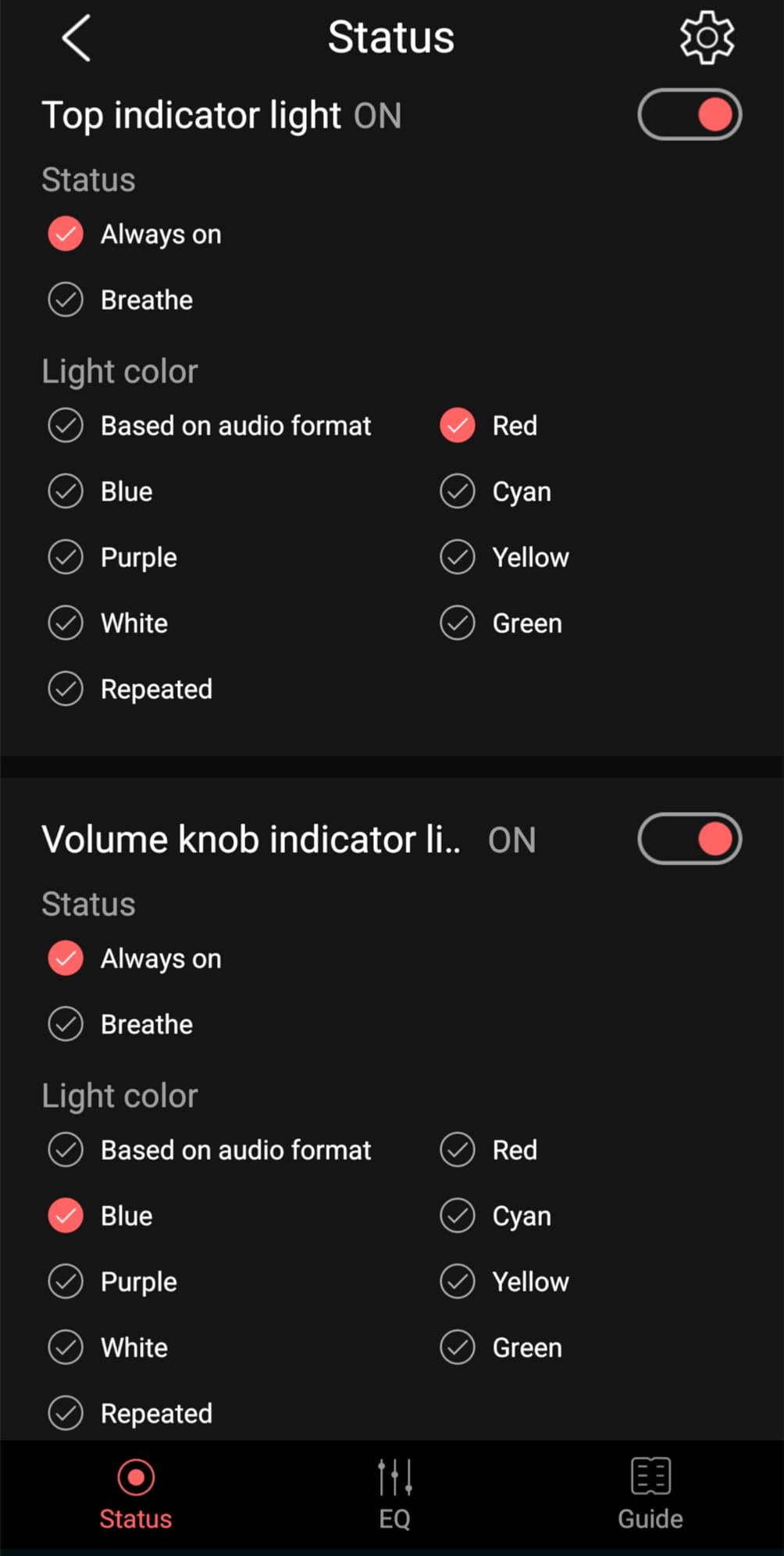
The feature that sets it apart is the 10-band high-precision parametric EQ with app, web and Auto EQ control. You can correct a headphone’s peaks properly rather than reaching for a single tone knob, which is the single most useful tool in this list for anyone with a difficult headphone.
Connections are the widest here: balanced XLR and dual RCA line outputs, 4.4mm balanced and 6.35mm single-ended headphone outputs, and Bluetooth 5.4 with LDAC for cable-free streaming. The aluminium chassis has a glass top window and configurable lighting.
What the K13 R2R pairs well with
Bright or analytical headphones that fatigue easily, since the R2R warmth and the parametric EQ work in the same direction. It is also the right choice for a household that wants a genuinely balanced chain, with XLR line out feeding a balanced power amplifier.
With 2400mW on tap, it handles 300 ohm dynamics and demanding planars with headroom to spare, and it is comfortable in a room at low volume where smaller amps would have nothing left to give.
Where the K13 R2R falls short
The remote is a real weak point. Buttons are loud, resistant and clicky, and the line-out button bypasses volume entirely, so an accidental press sends a full-level signal to an external amplifier. The display is small and hard to read from a listening chair across the room.
Configuring the EQ means an app or a web interface that asks you to log in each time, and the R2R warmth is the wrong match for a reference-leaning listener who wants maximum neutrality. Some users also report intermittent static blips over USB with certain hosts.
9. Apos Gremlin – Best First Tube Amp for Balanced Listening
Apos Gremlin Headphone Amp Headphone Tube Amplifier,Class A Balanced Tube Amp,Replaceable Tubes 12au7,6922/XLR,4.4mm Balanced Interface.Amp for HiFi Desktop Speakers,Loved By Audio Enthusiasts
Class A balanced hybrid
1250mW per channel
XLR and 4.4mm in and out
12AU7 tubes included
Pros
- Fully balanced class A tube hybrid at a low entry price
- 1250mW per channel drives demanding planars
- Matched Ray CORE tubes included and tube rolling is straightforward
- Wide deep soundstage with a smooth musical midrange
- Balanced inputs and outputs minimise noise
Cons
- Struggles with very high-impedance headphones at maximum gain
- Requires XLR or 4.4mm adapters from a single-ended source
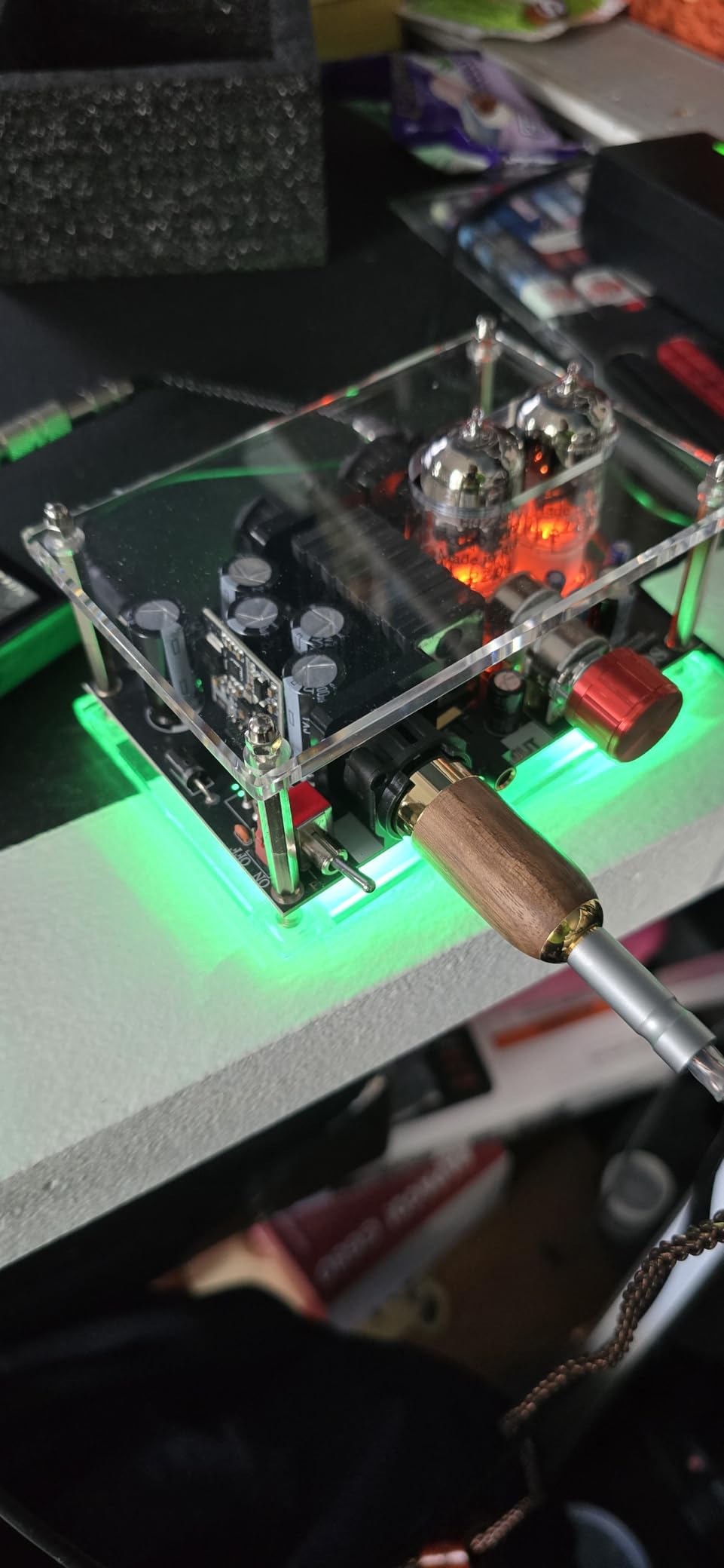
- Green LED under the tube sockets is distracting in a dark room
The Gremlin is a fully balanced class A hybrid: transistor precision in the output stage with a vacuum tube preamp for harmonic character. It delivers 1250mW per channel, which is enough to drive demanding planars such as the Dan Clark Audio Noire X and HIFIMAN Ananda, according to owner reports.
Its review count is small, at 68 ratings, so treat the 4.8 average as an early signal rather than a settled reputation. What those buyers agree on is that the midrange is smooth and musical, the soundstage is wide and deep, and the tube-rolling hobby that opens up is genuinely enjoyable.
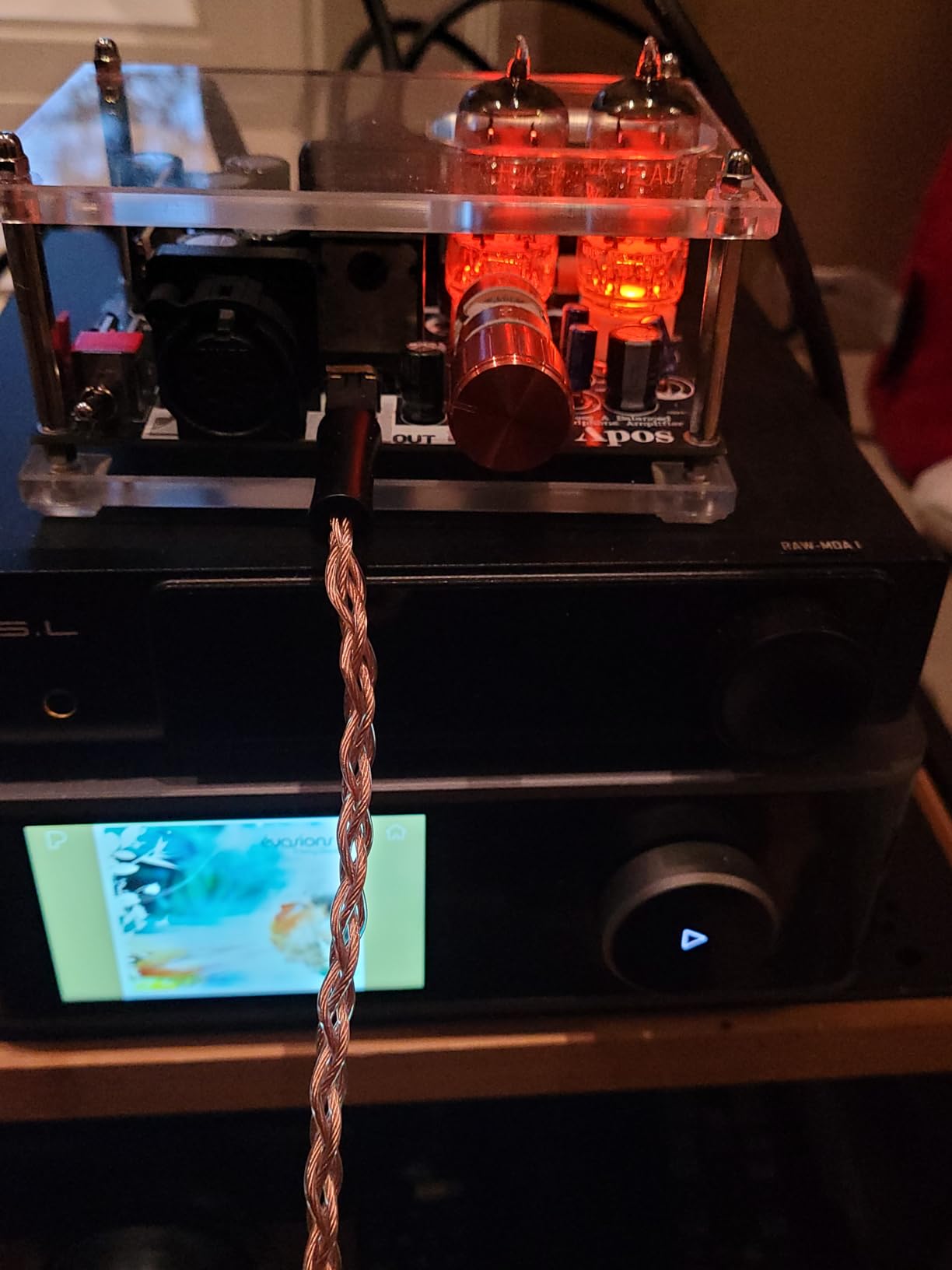
A matched pair of Ray CORE 12AU7 tubes is included, and the design accepts any 12AU7 or 6922 tube, new or vintage, for easy swapping. The balanced topology is the practical headline: XLR and 4.4mm balanced inputs and outputs reduce hum and buzz in a way single-ended designs cannot.
The manufacturer recommends about five minutes of warm-up and advises a six-hour burn-in for the full effect, and owners report 15 to 30 minutes before the sound settles into its best shape. That is a real commitment compared with a solid-state box.
What the Gremlin pairs well with
Balanced headphones on 4.4mm or four-pin XLR, and mid-range planars that appreciate a warmer midrange. It is also a natural first tube amp for someone who wants the tube experience without a large floor-standing chassis.
The palm-sized case makes it easy to move between a desk and a living room, and it can front desktop speakers as well as drive headphones.
Where the Gremlin falls short
It struggles with very high-impedance models such as the ATH-R70X even at maximum gain, so 600 ohm headphones are not the target. Running it from a single-ended source needs XLR or 4.4mm adapters, which adds friction to the simplest setups.
Some owners find the sound more neutral than classically warm even after tube rolling, which can disappoint anyone buying specifically for tube warmth. The green LED under the tube sockets is also bright in a dark room.
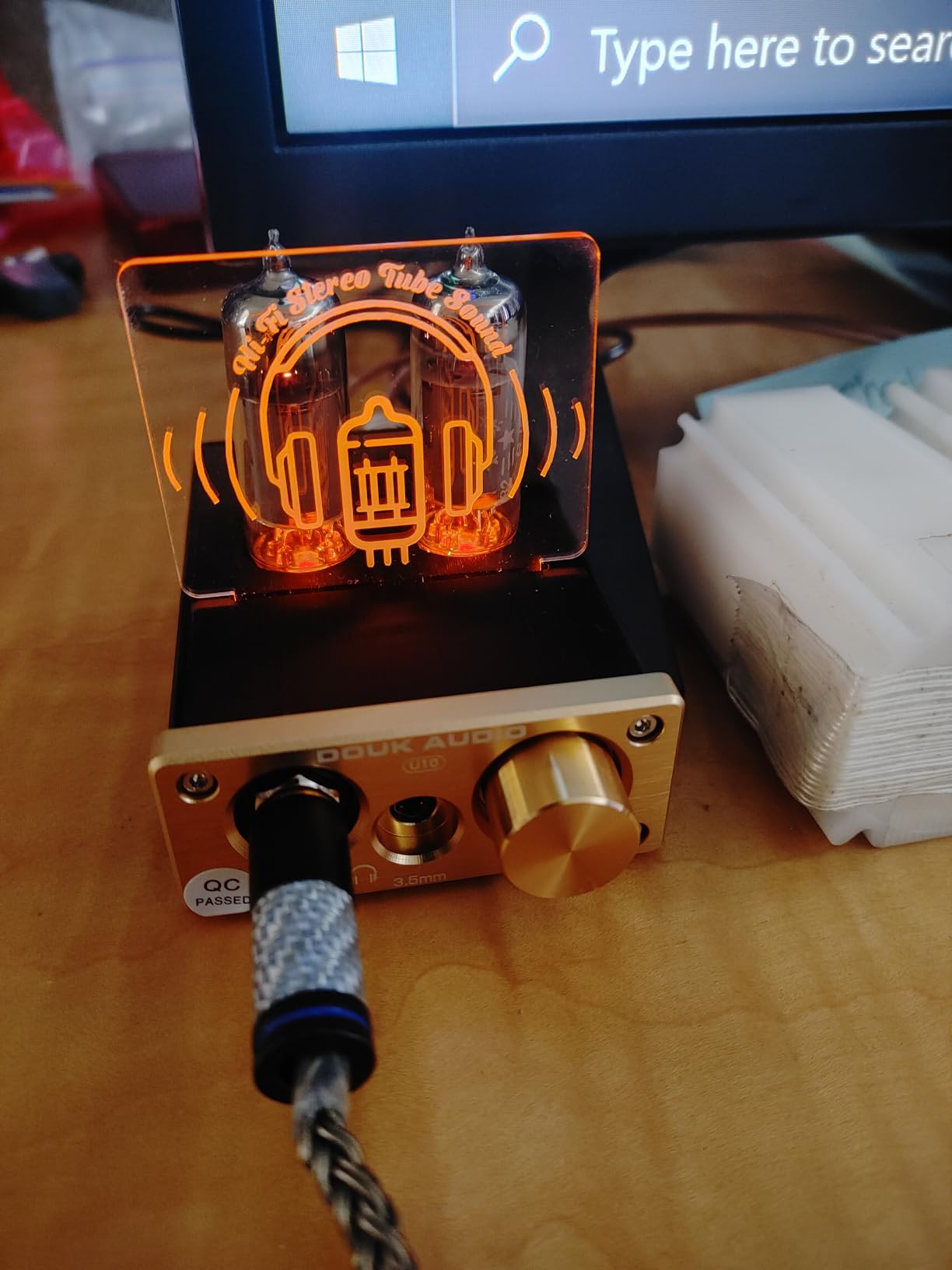
10. Douk Audio U10 – Best Amp for 600 Ohm Headphones on a Small Budget
Douk Audio U10 Mini Tube Headphone Amplifier HIFI Stereo Preamp for Home Speaker
Up to 1100mW
18 to 600 ohm
24V boost from 5V source
Two 6A2 tubes fitted
Pros
- 1100mW output covers 18 to 600 ohm headphones
- Built-in 24V boost circuit gives a silent background
- Pluggable tubes and op-amps for easy customisation
- Dual 3.5mm and 6.35mm headphone jacks
- All-metal shielded case with ceramic tube socket
Cons
- Requires an external 5V/2A or better power adapter that is not included
- Higher share of one-star reviews from faulty tube or solder issues
- Do not connect the 3.5mm and RCA inputs at the same time
The U10 is unusual in this roundup because it covers 18 to 600 ohm, a range most compact amps abandon at 300 ohm. Its two 6A2 tubes sit in front of a boost circuit that runs the internal supply at 24V from a single 5V input, which is how it gets that reach while staying compact.
Tube and op-amp positions are both pluggable, so you can change the character without buying a new amp. It also works as a stereo preamp for home speakers, and the inputs and outputs are wired in parallel so both headphone jacks can be used alongside the RCA connections.
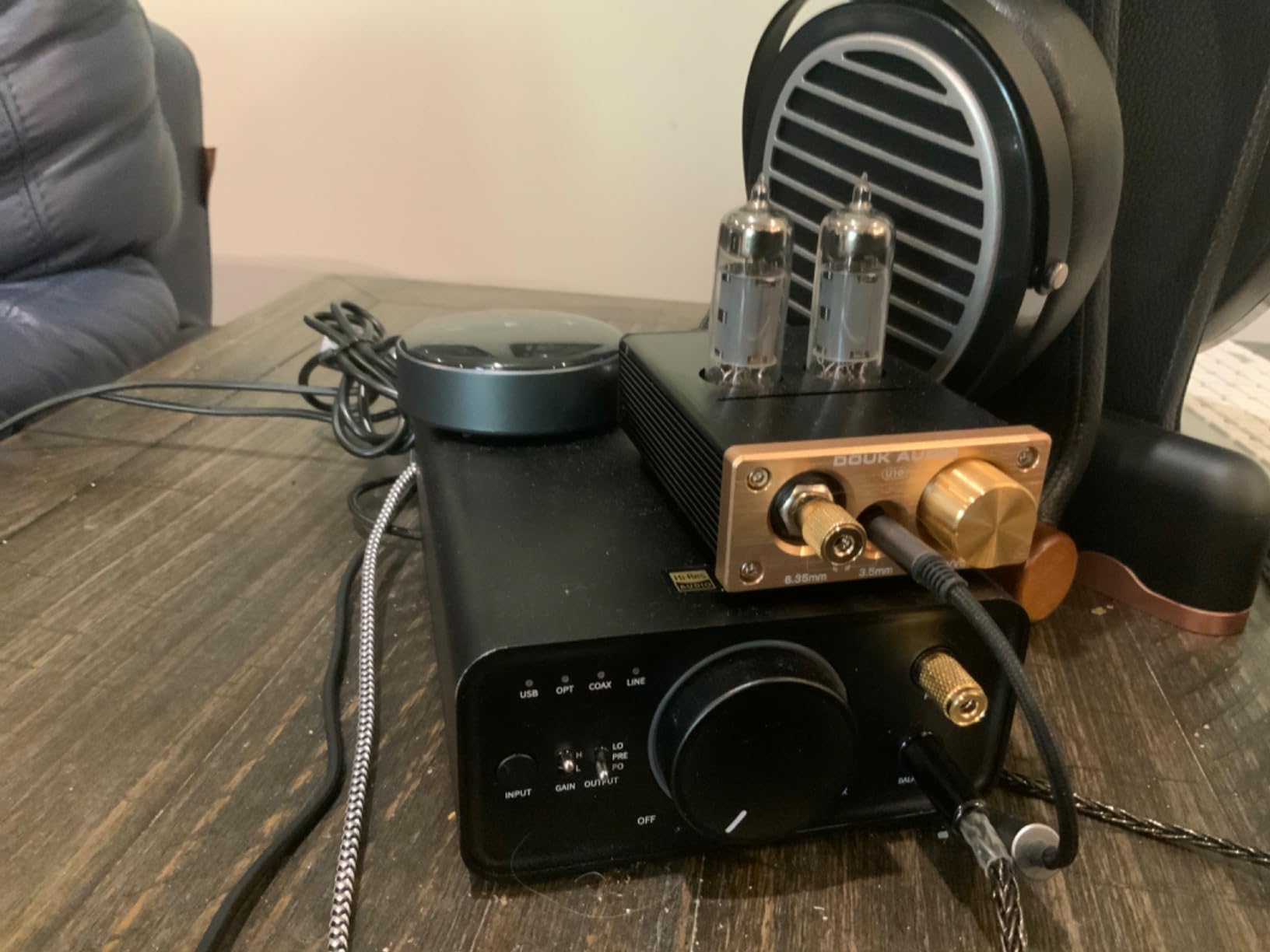
Owners rate the background as silent for the money, with high purity and transparency, and the shielded all-metal case with a ceramic tube socket is better specified than the price suggests. The tube character is described as warm, natural and mellow.
Two practical notes. The 5V power adapter is not included, and you need a clean supply of 2A or better for the boost circuit to work properly. Its 4.2 average across 137 ratings includes a 10 percent one-star share, mostly units arriving with faulty tubes or soldering, so keep the return window in mind.
What the U10 pairs well with
600 ohm and high-impedance dynamic headphones on a tight budget, which is the one use case nothing else here covers. It suits a first serious headphone in the 300 to 600 ohm range that the average desktop amp cannot drive properly.
Warm-sounding headphones will suit the 6A2 tube voicing, and the preamp function makes it useful with bookshelf speakers as well as cans.
Where the U10 falls short
It is not the choice for in-ear monitors, where the noise floor is exposed at low volume, or for very low-impedance planars that need current rather than voltage. The missing power supply is an extra purchase and an extra thing to get wrong.
Never connect the 3.5mm and RCA inputs at the same time or the signals mix, and the higher failure rate makes it a riskier buy than the solid-state options above.
How to choose a headphone amp for home listening in 2026
Standalone amp or DAC and amp combo?
A combo unit integrates the converter and the amplifier in one box, which means one cable from your computer, one power supply and a smaller footprint. It is the right answer for most people building a first home setup, and six of the ten amps here are combos.
A standalone amp assumes you already have a line-level source. That could be a dedicated DAC, an existing amplifier with a preamp output, or a streamer. It is the better answer if you want to change one part at a time, and if your DAC is already good, replacing it adds nothing.
One diagnostic separates the two. If the improvement you want is more volume and more control, you need a better amplifier. If the improvement you want is less noise, a cleaner signal and high-resolution decoding, you need a better converter. Buying an amp to fix a DAC problem, or the reverse, is the most common wasted upgrade in this hobby.
How much power do you actually need?
Sensitivity matters more than impedance, and that is the point most spec sheets bury. The figure that decides your power requirement is efficiency in dB per milliwatt: the lower the number, the louder the headphone for a given amount of power. A 96 dB/mW headphone and a 102 dB/mW headphone differ by roughly ten times the power for the same perceived loudness, regardless of their impedance figures.
Impedance still matters, but as a factor on top of that. Low-impedance headphones need current, and they are the ones most likely to distort or change frequency response on an amp with high output impedance. High-impedance headphones need voltage, and they are the ones that will not get loud on a weak source.
Owner experience on community forums is consistent on this point. Users with easy-to-drive headphones report hearing no meaningful difference, sometimes reporting that a more expensive amp sounds worse. Owners of hard-to-drive planars and 300 to 600 ohm dynamics report a real improvement in dynamics, bass impact and control once the power is there.
What output impedance and the one-eighth rule mean
Output impedance is the amp’s own impedance, and it forms a divider with your headphone’s impedance. The widely used guideline is the one-eighth rule: keep the amplifier’s output impedance below one eighth of the headphone’s rated impedance, so the divider is at worst a fraction of a decibel. Put another way, a 32 ohm headphone wants an amp well under 4 ohm, and a 600 ohm headphone wants an amp under 75 ohm.
Frequency-dependent impedance makes spec sheets unreliable. A headphone rated at 600 ohm can spike well above that at certain frequencies, which is why a nominal figure does not guarantee an amp can drive a given pair. The practical check is simple: if you can reach a comfortable volume with headroom left on the dial, the amp is adequate.
Solid state or tube: what actually changes
Solid-state amplifiers are quieter, more compact, run cool and need no maintenance. They are the safer recommendation for most home listening, and they are what we would put in a bedroom or a study.
Tube and hybrid designs add harmonic character, a wider soundstage for some listeners, and a hands-on element through tube rolling. They also run hot, produce more noise, warm up gradually, and eventually need new tubes. Class A operation in either topology costs power and heat, which is a real problem on a closed shelf.
The community consensus, and ours, is that an amp should be transparent. Unlike a guitar amp, where tube warmth is the goal, headphone listeners overwhelmingly describe a coloured amp as a mistake rather than a feature. Buy a tube amp for the experience of running it, not because it sounds more exciting. Instrument users chasing that voicing for a keyboard instead should read our keyboard amp guide, which is a very different design brief.
Balanced and single ended outputs, and why the cable has to match
A single-ended output carries the signal on one conductor with ground as the return. A balanced output carries the same signal on two conductors in opposition, which cancels interference and doubles the available voltage swing for a given supply.
The rule people break constantly: the cable and the connection have to match. Plugging a single-ended 3.5mm or 6.35mm cable into a 4.4mm balanced socket, or a balanced cable into a single-ended jack, gives you a downgraded connection rather than the benefit you paid for. Check the jack and the cable before you conclude that balanced output made no difference.
Only two of the amps here offer a genuine balanced chain, and only the FiiO K13 R2R offers balanced inputs and outputs together. If a fully balanced signal path matters to you, that is the box.
Setting up an amp for home listening
Gain staging and volume discipline
Set the gain switch to match your headphone before you listen. Low gain for in-ear monitors and low-impedance dynamics, high gain for 300 and 600 ohm headphones. Then set the source volume so that your normal listening level sits in the middle of the amp’s range, not at either end.
This is the single most useful habit in the whole hobby, and it is the one people skip. Running the pot wide open with the wrong gain wastes headroom, invites channel imbalance at the bottom of the range, and gives you less fine control at the volume you actually use.
Placement, cables and multiple headphones
Give the amp airflow, especially the tube and class A models, and keep it away from a closed cabinet wall. Where interference is possible, such as with the unshielded U3, keep wireless transmitters and dongles physically apart and run a clean linear supply where the design calls for one.
Almost none of these boxes offers two headphone outputs, which matters more in a shared home than the spec sheet suggests. If two people listen at the same desk, budget for either a passive splitter, which degrades both channels, or a second amp. Splitters are fine for easy-to-drive headphones and poor for anything demanding.
One cable note that saves real money: if an amp has only a 3.5mm jack and your headphones terminate in quarter-inch, buy a proper 3.5mm to 6.35mm adapter rather than a multi-size loose adapter chain. The shallow sockets on some of these boxes, including the Douk P1, need a well-fitting adapter to seat correctly.
Tube amp safety and maintenance for home use
Tube amplifiers run hot by design, and that heat is a genuine safety consideration in a home rather than a technical footnote. Apos Gremlin owners are advised to allow roughly five minutes of warm-up, and manufacturers commonly suggest a multi-hour burn-in before judging the sound. Keep the chassis clear of a closed shelf and out of a small cabinet.
The tubes themselves are fragile and reach temperatures that can burn, so keep the unit out of reach of small children and curious pets, and unplug it before changing tubes. Always let it cool first.
Tube rolling is the fun part and the reason many people buy into this category. The Apos Gremlin accepts any 12AU7 or 6922 tube and includes a matched pair of Ray CORE 12AU7s, while the Douk units use pluggable 6A2 or JAN5725 tubes. Swapping a matched pair of known-good tubes is a low-risk experiment, and matching new tubes by brand and date helps keep the channel balance steady.
Keep a spare set of tubes and expect to replace them eventually. If a unit in this category arrives with a faulty tube, the one-star reviews on the Douk models are a reminder to test the headphone output early and keep your return window open.
Frequently Asked Questions
Are headphone amplifiers worth it?
They are worth it when your source runs out of headroom, your headphones are high-impedance or low-sensitivity, or you listen at low volume. They are not worth it when easy-to-drive headphones already play loudly and cleanly from a decent source.
Do headphone amps make a difference?
When the source is struggling, yes. A weak laptop jack compresses the sound and caps your volume, so the headphone never reaches its full potential. With a capable source and easy-to-drive headphones, the difference is small or inaudible.
What is the best amp for high-impedance headphones?
For 300 to 600 ohm headphones you need voltage, so look for high-gain stages and plenty of power. The FiiO K11 covers 8 to 350 ohm, the FiiO K13 R2R delivers 2400mW, and the Douk U10 covers 18 to 600 ohm.
Do I need a separate DAC if I have a DAC and amp combo?
Usually not. A combo does the conversion and the amplification in one chassis, which is simpler and tidier. Buy a separate DAC only if you want to upgrade the converter independently or need a converter the combo does not offer.
Can an amp damage my headphones?
Not in normal use. Headphones are passive and simply stop moving when the signal stops. A poor match shows up as distortion or uneven frequency response at moderate volume, not as physical damage.
Is a headphone amp useful for in-ear monitors?
Rarely. In-ear monitors are low-impedance and highly sensitive, so they expose the noise floor of an amp rather than needing its power. For very low-sensitivity in-ears, a portable dongle with a clean output is a better match.
Tube or solid state headphone amp for home listening?
Solid state is quieter, cooler and lower maintenance, which makes it the safer home choice. A tube or hybrid amp adds harmonic character and a hands-on element, but it runs hot, warms up gradually and needs tubes replaced over time.
The best headphone amps for home listening, one last time
If you buy only one amplifier for a home listening setup in 2026, choose the Fosi Audio Q4. It handles the most common sources, drives a wide range of headphones, and gives you tone control and powered-speaker flexibility in the smallest sensible box.
Move up to the FiiO K11 when you want a balanced 4.4mm output and a real high-resolution DAC inside the same chassis, and to the FiiO K13 R2R when you want 2400mW, balanced line outputs and parametric EQ for a difficult headphone. For 600 ohm cans on a budget, the Douk U10 is the only one here that reaches that range, and for a first tube experience the Apos Gremlin is the most complete.
Before you spend anything, check whether your current source already plays your headphones loudly and cleanly. If it does, keep the money and start with the headphones themselves.