
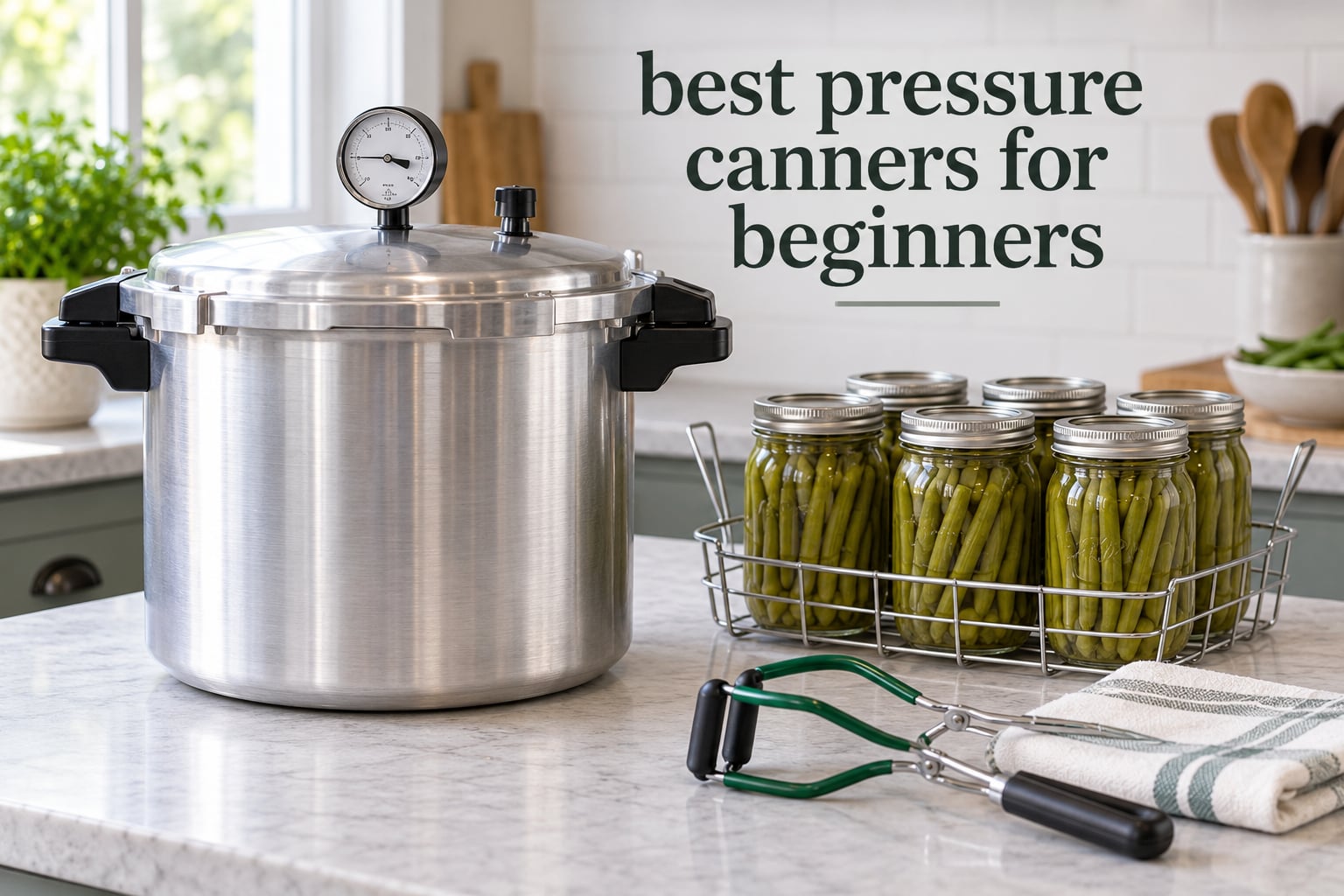
Pressure canning is not the same as pressure cooking, and the difference is the whole reason most beginners hesitate. A pressure cooker is built to soften beans in twenty minutes; a pressure canner is built to hold 10 to 11 PSI for the better part of an hour, which is what destroys the Clostridium botulinum spores that make low-acid vegetables, meats, poultry, seafood, soups and dried beans unsafe in a boiling-water canner.
That is why picking the right unit matters more than it does for almost any other kitchen purchase. The best pressure canners for beginners are not the smallest, cheapest or fanciest options on the shelf. They are the ones that reach and hold the correct pressure, fit a standard quart jar upright, include a canning rack, and come with a way to keep the gauge honest over the next ten years.
We compared ten stovetop and electric pressure canners across dial and weighted pressure systems, checking capacity, jar fit, gauge type, weight, stove compatibility and warranty. Two of the ten have more than 9,000 reviews each; two sit near 800. The spread in long-term evidence is as telling as the spread in ratings.
Updated for 2026. Every figure below comes from the product documentation and owner reviews for that specific model. When we describe a failure mode, it is one that owners of that unit actually report.
Top 3 Picks for the Best Pressure Canners for Beginners in 2026

Presto 01781 23-Quart
- Dial gauge across the full processing range
- Doubles as a boiling-water canner
- 7 quarts per load
- 12-year limited warranty

All American 915 15.5-Quart
- Gasket-free metal-to-metal seal
- Steam gauge and machined regulator weight
- Holds about 10 pint or 7 quart jars
- Made in the USA

All American 925 25-Quart
- Gasket-free metal-to-metal seal
- About 19 pint or 7 quart jars per load
- Double-thickness wear edges
- 12.25 inch square footprint
The Presto 01781 takes the overall slot because it is the only unit here with both the largest review history by a wide margin and a dial gauge that covers the whole processing range. The All American 915 carries the highest rating in the set and the only gasket-free seal. The 25-quart 925 is the same idea with room for roughly 19 pints per load.
Why You Need a Pressure Canner, Not a Pressure Cooker
A boiling-water canner holds food at 212 F, which is enough for jams, pickles, fruit and tomatoes because those foods sit below pH 4.6 and are naturally acidic. Everything above that threshold — green beans, corn, beets, carrots, asparagus, green peas, dried beans, meat, poultry, fish, soups and stocks — needs sustained pressure to be safe.
The USDA’s Complete Guide to Home Canning only publishes validated processing times for equipment that meets four specific requirements: a dial or weighted gauge, a 16 to 22 quart capacity range, an internal volume large enough for four quart jars standing upright, and a canning rack. That last requirement is where a lot of small cookers fall down.
If quart jars cannot stand upright inside the pot, the USDA’s published processing times do not apply to it, and you cannot safely improvise a substitute. Several 6-quart and 8-quart electric multi-cookers appear in searches for this reason, and the honest answer is that a person who wants to can low-acid food should start at 16 quarts.
On the forums, the recurring beginner worry is not about USDA rules at all. It is fear of an explosion, usually borrowed from stories about stovetop pressure cookers. In r/Canning, experienced canners point out that a pressure canner holds far less pressure than a cooker, that the venting step is what clears air from the pot, and that a canner is one of the more heavily engineered pots in a kitchen. Once that lands, the fear usually goes away.
For high-acid food only, you do not need this kind of pot at all. Our picks for the best water bath canners and the best steam canners cover that half of the shelf.
All 10 Pressure Canners Compared Side by Side in 2026
| Product | Specifications | Action |
|---|---|---|
| Presto 01781 23-Quart Pressure Canner and Cooker |
|
Check Latest Price |
 Presto 01784 23-Quart Induction Compatible Pressure Canner Presto 01784 23-Quart Induction Compatible Pressure Canner |
|
Check Latest Price |
 Presto 02152 17-Quart Digital Pressure Canner Presto 02152 17-Quart Digital Pressure Canner |
|
Check Latest Price |
 T-Fal 22-Quart Aluminum Pressure Canner T-Fal 22-Quart Aluminum Pressure Canner |
|
Check Latest Price |
 NESCO NPC-9 9.5-Quart Smart Electric Pressure Canner NESCO NPC-9 9.5-Quart Smart Electric Pressure Canner |
|
Check Latest Price |
| All American 915 15.5-Quart Pressure Cooker/Canner |
|
Check Latest Price |
 Granite Ware 20-Quart Pressure Canner/Cooker/Steamer Granite Ware 20-Quart Pressure Canner/Cooker/Steamer |
|
Check Latest Price |
| All American 925 25-Quart Pressure Cooker/Canner |
|
Check Latest Price |
 WantJoin 23-Quart Aluminum Pressure Pot WantJoin 23-Quart Aluminum Pressure Pot |
|
Check Latest Price |
 Barton 22-Quart Pressure Canner Barton 22-Quart Pressure Canner |
|
Check Latest Price |
Two entries deserve a flag before the individual reviews. The WantJoin and the Barton are listed as pressure cookers or cooking pots with canning language attached, and neither carries USDA-validated canning guidance in its documentation. They are here because owners use them, not because the paperwork supports them.
1. Presto 01781 23-Quart Pressure Canner and Cooker – the one most beginners buy
Presto 01781 23-Quart Pressure Canner and Cooker
23 quart polished aluminum
Deluxe dial gauge
26 half-pints, 20 pints or 7 quarts
12 pounds empty
Pros
- USDA-recommended pressure canning method for vegetables and meats and poultry and seafood
- Doubles as a boiling-water canner and large pressure cooker
- Warp-resistant heavy-gauge aluminum heats fast and evenly
- Capacity for 26 half-pints and 20 pints or 7 quarts
- Includes canning rack and 76-page instruction and recipe book
- 12-year limited warranty
Cons
- Not induction compatible
- Aluminum body discolors with acidic foods such as tomatoes and vinegar
- Heavy and bulky to lift when full
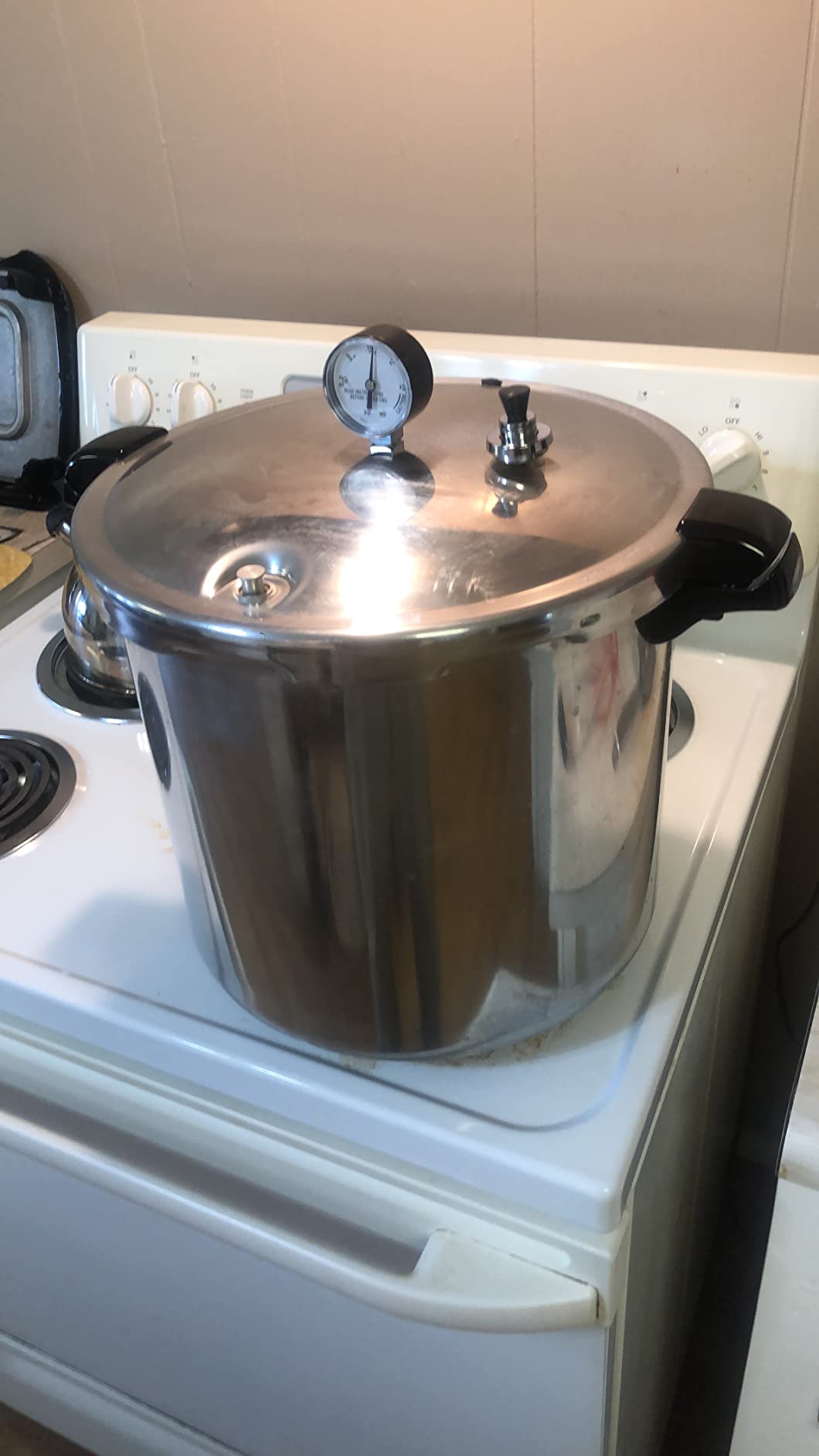
This is the canner that r/Canning keeps recommending to nervous first-timers, and the review numbers back that up: 4.8 stars across more than 20,000 ratings, with 88 percent of those being five-star. That is the deepest owner history of any unit in this guide by an order of magnitude, which matters because canner problems tend to surface in season two, not season one.
The deluxe dial gauge spans the full processing pressure range rather than a narrow band, so it still gives you a usable reading above 1,000 feet. Each load takes 26 half-pints, 20 pints or 7 quarts, and the canning and cooking rack is in the box alongside a 76-page instruction and recipe book that doubles as the first-batch walkthrough.
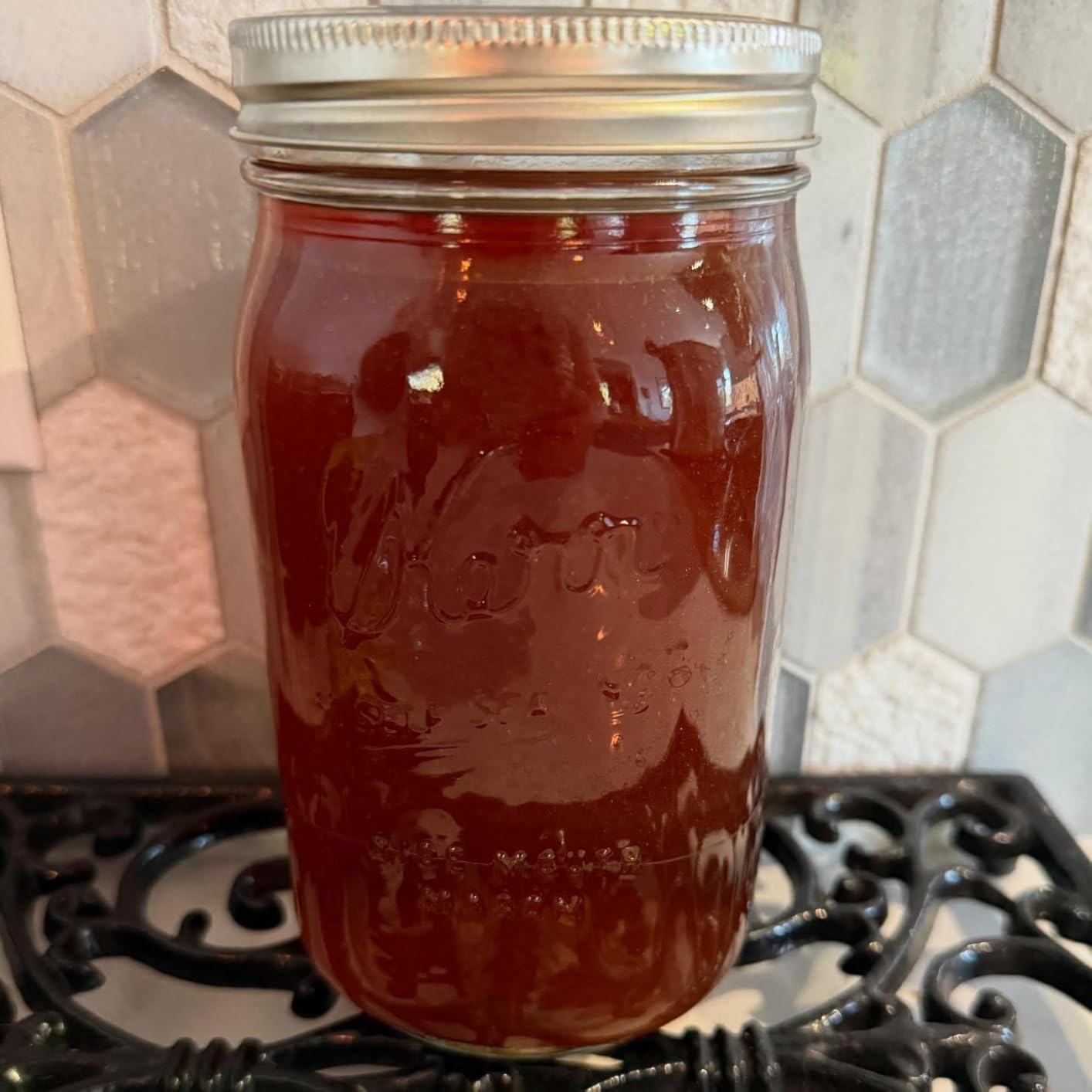
Owners also use it as a large-capacity pressure cooker and as a boiling-water canner for jams, jellies, pickles and salsa, which makes it three tools for one pot. It measures 15.5 by 17.5 by 13.5 inches, sits at 12 pounds empty and works on both regular and smooth-top ranges.
Who it suits
A beginner canner working with one stove burner, a household that wants full quart-jar loads, and anyone who plans to buy exactly one pot. The 12-year limited warranty is the longest in this roundup, and the company has made these since the early 1900s, so replacement racks and gauges are easy to find.
It also handles a first batch of green beans or pinto beans without any change to your technique. Load, add water, vent, pressurize, time, cool naturally. The heat control on a smooth-top takes practice but nothing else about the process is unusual.
Where it frustrates people
The aluminum body reacts to acidic food. Owners report discoloration and pitting after tomato or vinegar recipes, which is a strong argument for keeping this pot for low-acid work and moving jams and pickles to a separate vessel.
A full 23-quart canner is genuinely heavy, and the shape makes it awkward to lift onto and off the burner. If you canner alone, plan for two hands and a clear counter. It is also not induction compatible, which is exactly why the next model exists.
2. Presto 01784 23-Quart Induction Compatible Pressure Canner – same canner, modern cooktop
Presto 01784 23-Quart Induction Compatible Pressure Canner
23 liter capacity with stainless clad base
Induction, gas, electric and smooth-top
Same 7 quart load as the 01781
12-year limited warranty
Pros
- Stainless steel-clad base works on induction and gas and electric and smooth-top ranges
- Same USDA-recommended canning performance as the classic 01781
- Air vent and cover lock block opening until pressure is safely reduced
- Doubles as a boiling-water canner and pressure cooker
- Room for 7 quarts or 20 pints or 26 half-pints
Cons
- Heavier than the non-induction 01781
- Aluminum body still reacts with acidic foods
- Heat control on the stovetop still takes practice
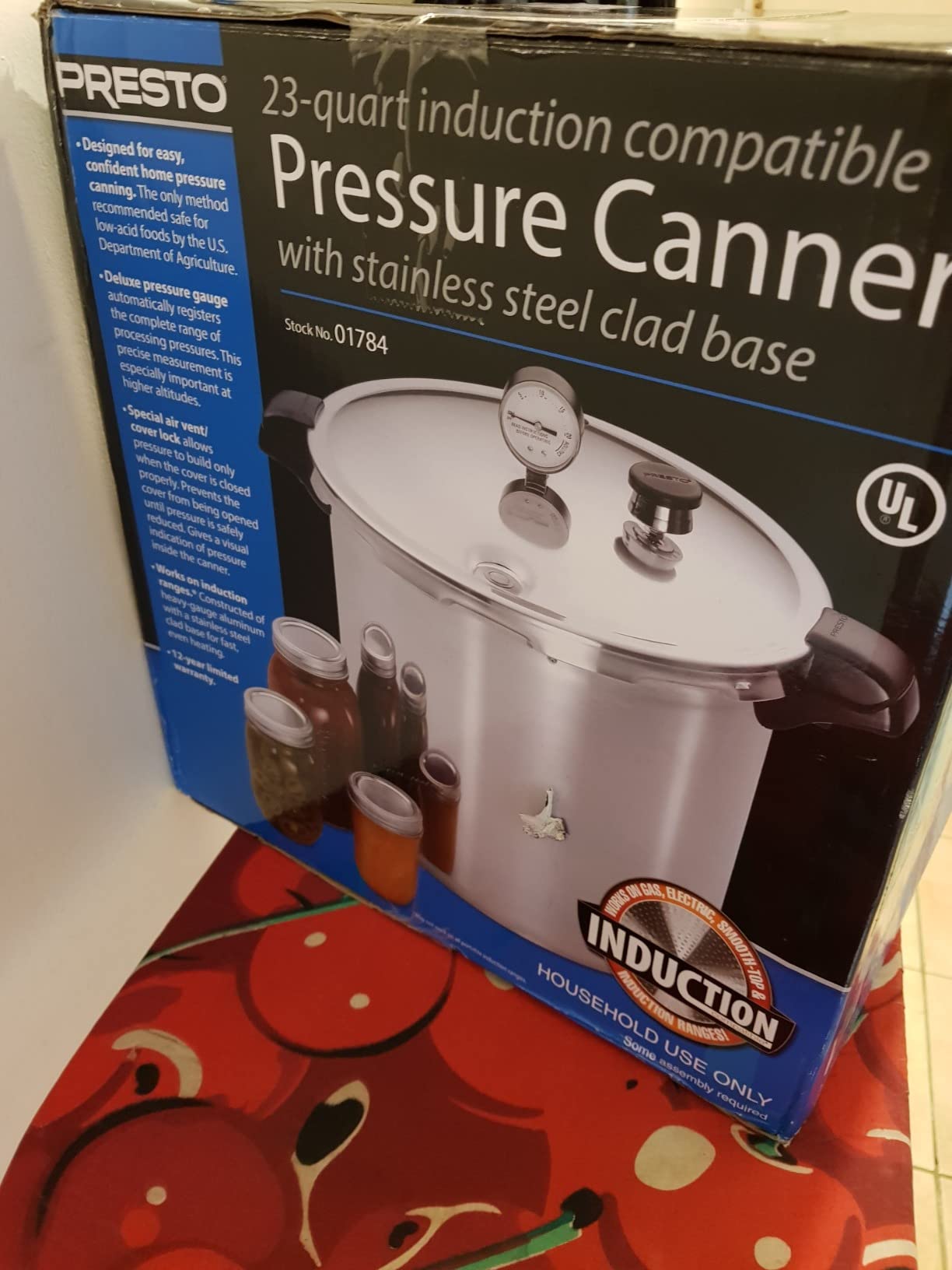
If your kitchen has an induction cooktop, this is the Presto to buy and there is no close second in the aluminum category. The 01784 wraps the same war-resistant aluminum body in a stainless steel-clad base that a magnetic cooktop will actually detect. It also runs on gas, electric coil and smooth-top, so one purchase covers a stove change.
Everything else is deliberately familiar. Same 7-quart, 20-pint or 26-half-pint load. Same 12-year limited warranty. Same deluxe dial gauge behaviour. Owners report 4.8 stars across more than 5,500 ratings with the same 88 percent five-star share as the 01781, which tells you the induction base changes compatibility without changing the canning result.

The air vent and cover lock are the safety story here. Pressure only begins to build once the cover is fully closed, and the lid cannot be opened until the compressed air has been exhausted, which removes the single most common way beginners hurt themselves.
Who it suits
Newlyweds and older couples who just installed an induction range, anyone cooking on a smooth-top glass ceramic unit, and households that plan to move. Two smaller canners on our site cover the lower-pressure side of the shelf: a 9.5-quart electric model and a 20-quart stovetop unit.
For high altitude canners, the identical dial gauge reads across the whole processing range, so this works above 1,000 feet with the same adjustments you would make on the 01781.
Where it frustrates people
The clad base adds weight, and the listed weight is 5.67 kg against 12 pounds for the standard model. On a loaded 23-quart canner that difference is noticeable when you are lowering it onto a hot burner.
The aluminum body still reacts to tomatoes and vinegar, so the induction upgrade solves one problem and leaves the acidic-food limitation in place. Budget for a separate pot for high-acid batches.
3. Presto 02152 17-Quart Digital Pressure Canner – automation without heat guessing
Presto 02152 17-Quart Digital Pressure Canner
17 quart stainless steel body
1485 watts
Automated temperature-sensor canning
24.3 pounds
Pros
- Automated canning with a temperature sensor that holds the required temperature
- No altitude pressure adjustments needed
- Extra-tall chamber accepts quart jars for pressure and boiling-water canning
- LED digital display plus control knob walk through each step
- Stainless steel resists corrosion better than aluminum
Cons
- Smaller batch than the 22 and 23-quart models
- Weighs 24.3 pounds
- Widest rating spread of the Presto group
- Highest 1-star share in the Presto line at 5 percent
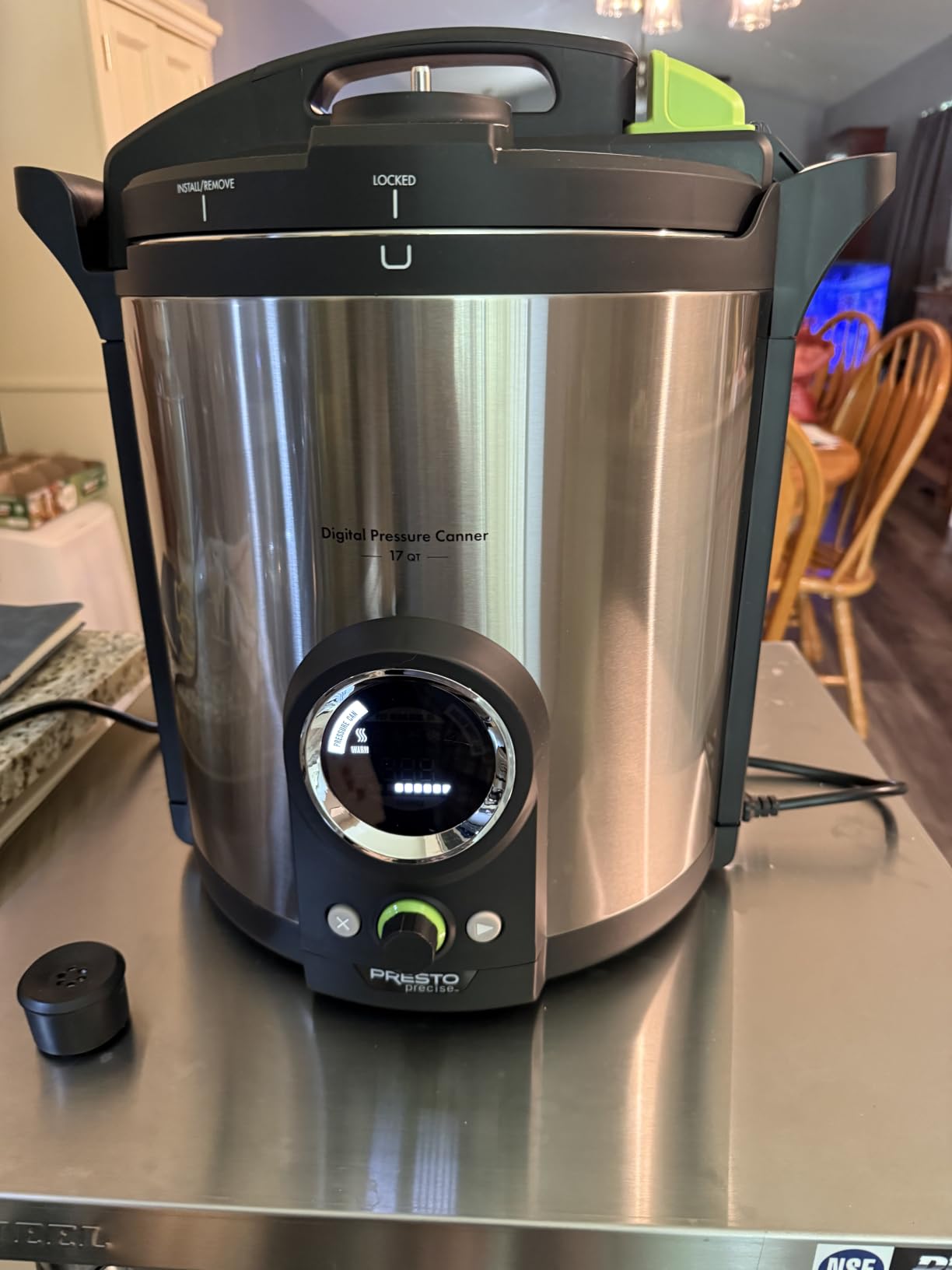
This is the most interesting canner in the guide for a first-time buyer who is nervous about heat. An internal temperature sensor handles the canning process, and the control knob and LED display walk you through each stage instead of leaving you to read a needle and judge a flame. You set it and it holds the temperature the method requires.
It is also the only stovetop-style canner here that makes no altitude adjustment at all, which removes the single most common source of confusion for people who live above 1,000 feet. That is not a trick; the automation manages pressure rather than relying on your burner.
Owners rate it 4.6 across more than 5,700 ratings, with 84 percent five-star. That is a step below the two aluminum Prestos, and the gap shows up mostly in one place: batch size. The 17-quart chamber is extra-tall so quart jars stand upright, but the total load is smaller than the 22- and 23-quart bodies.
Who it suits
Canners at elevation, households that want a set-and-forget canning cycle, and anyone who prefers a stainless steel body that will not pit from acidic food. The stainless steel construction is a genuine long-term advantage if you plan to move beyond vegetables eventually.
For a first batch, a few jars of green beans in this unit is a good way to learn a full cycle without managing a seven-quart load on the same day you learn the process.
Where it frustrates people
Fewer jars per load means more heat-up and cool-down cycles for the same harvest. If you put up forty quarts of corn in a season, you will spend noticeably more time than you would with a 23-quart aluminum canner.
At 24.3 pounds it is among the heaviest bodies here, and you give up all manual heat control. Some owners who want to run a canner as a pressure cooker report that the fixed canning cycle does not suit every recipe.
4. T-Fal 22-Quart Aluminum Pressure Canner – dial-selected weights, generous batch
T-fal 22-Quart Aluminum Pressure Canner, 3 PSI Settings, Home Canning, Includes Racks & Canning Guide, Large Capacity, Pressure & Water Bath Canning for Vegetables, Meats, Seafood & Fruits, Silver
22 quart polished aluminum
Weighted dial with 3 PSI settings
24 half-pints or 7 quarts
Two racks included
Pros
- Dial-selected pressure weight removes the guesswork of which weight to add
- Holds 24 half-pints
- 16 wide-mouth pints
- 18 pints or 7 quarts
- Two canning racks and a step-by-step canning guide in the box
- Locking lid plus steam release valve plus easy-to-read gauge
- New canners report no jar failures
Cons
- Some owners report the unit auto-vents before full pressure
- Steam can leak around the handle and the gasket may need reseating
- Aluminum discolors after first use
- One-year warranty is the shortest here
The T-Fal solves a specific beginner problem: not knowing which weight to use. Instead of hunting for the correct jiggler, a built-in dial selects one of three PSI settings. That single feature removes the most common early-season error, and the enclosed design means there is no loose weight to lose down a drain.
Capacity is generous, with room for 24 half-pints, 16 wide-mouth pints, 18 pints or 7 quarts. Two racks and a step-by-step canning guide come in the box, and the canner doubles as a boiling-water vessel for high-acid batches. It is rated for gas and electric coil cooktops.
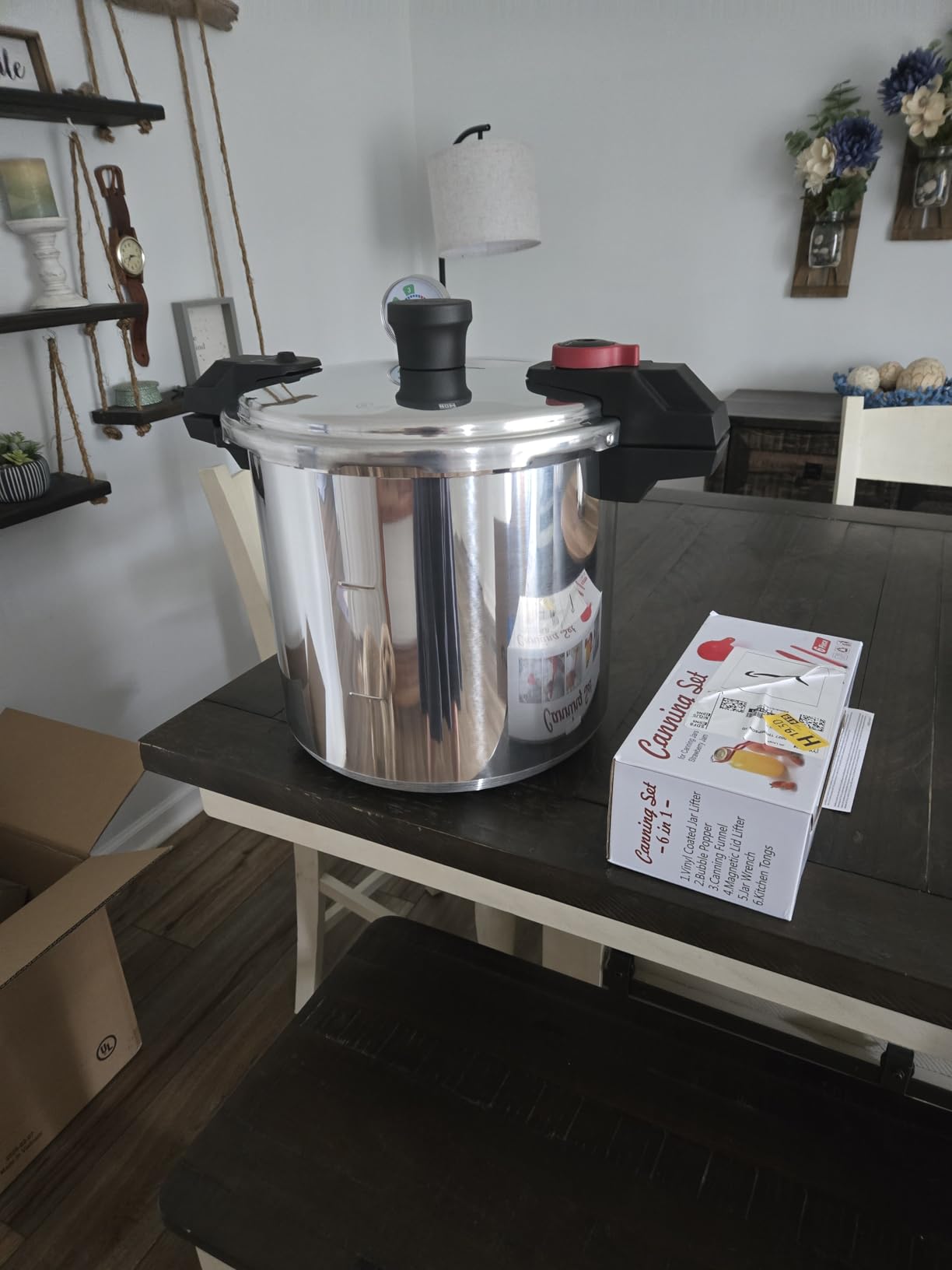
At 4.4 stars across nearly 6,800 ratings with 74 percent five-star, this is the most polarised canner we tested. First-time canners frequently describe it as the easiest unit on the market, while the negative reviews concentrate hard on pressure accuracy, the pressure indicator button, handle steam leaks and thin documentation.
Who it suits
Someone who wants a weighted system without handling loose weights, and who is willing to learn a burner. If the idea of matching a weight to a recipe feels like one decision too many, the dial removes it entirely.
It is also a reasonable second pot for a household that has decided to keep acidic batches separate from low-acid ones, since the same body handles both food types.
Where it frustrates people
Several owners report the canner releasing pressure before it reaches the full setting, which means you need the burner turned higher than you expect for longer than the manual suggests. If you are new to stovetop canning, that is a real barrier.
Steam escaping at the handle and a gasket that needs reseating are the other recurring complaints, and the one-year warranty is the shortest in this roundup. Some buyers also found the guide’s binding had failed by the time it arrived.
5. NESCO NPC-9 9.5-Quart Smart Electric Pressure Canner – the small-batch electric option
NESCO NPC‑9 Smart Electric Pressure Canner and Cooker for Home Food Preservation, 9.5‑Quart Stainless Steel with Digital Controls
9.5 quart stainless steel exterior
1000 watts
Four cooking modes
Altitude valve included
Pros
- Electric operation removes the stovetop heat-guessing game
- Pressure cook
- slow cook
- steam and water bath modes in one appliance
- Safety lock lid
- automatic float valve and pressure regulation system
- Removable 9.5-quart nonstick inner pot with canning and steam racks
- Runs cooler than a stovetop water-bath pot
Cons
- Only 4 quart or 5 pint jars at a time
- You must stay nearby until it comes up to pressure
- Instructions are wordy
- Startup and alarm sounds startle some users
The NESCO NPC-9 is the pick for a one or two person household, or for anyone who has never wanted to manage a flame next to a pot of boiling water. Automatic pressure and temperature regulation means you set a program instead of watching a needle, and the owner reviews describe almost exactly that benefit: less heat anxiety.
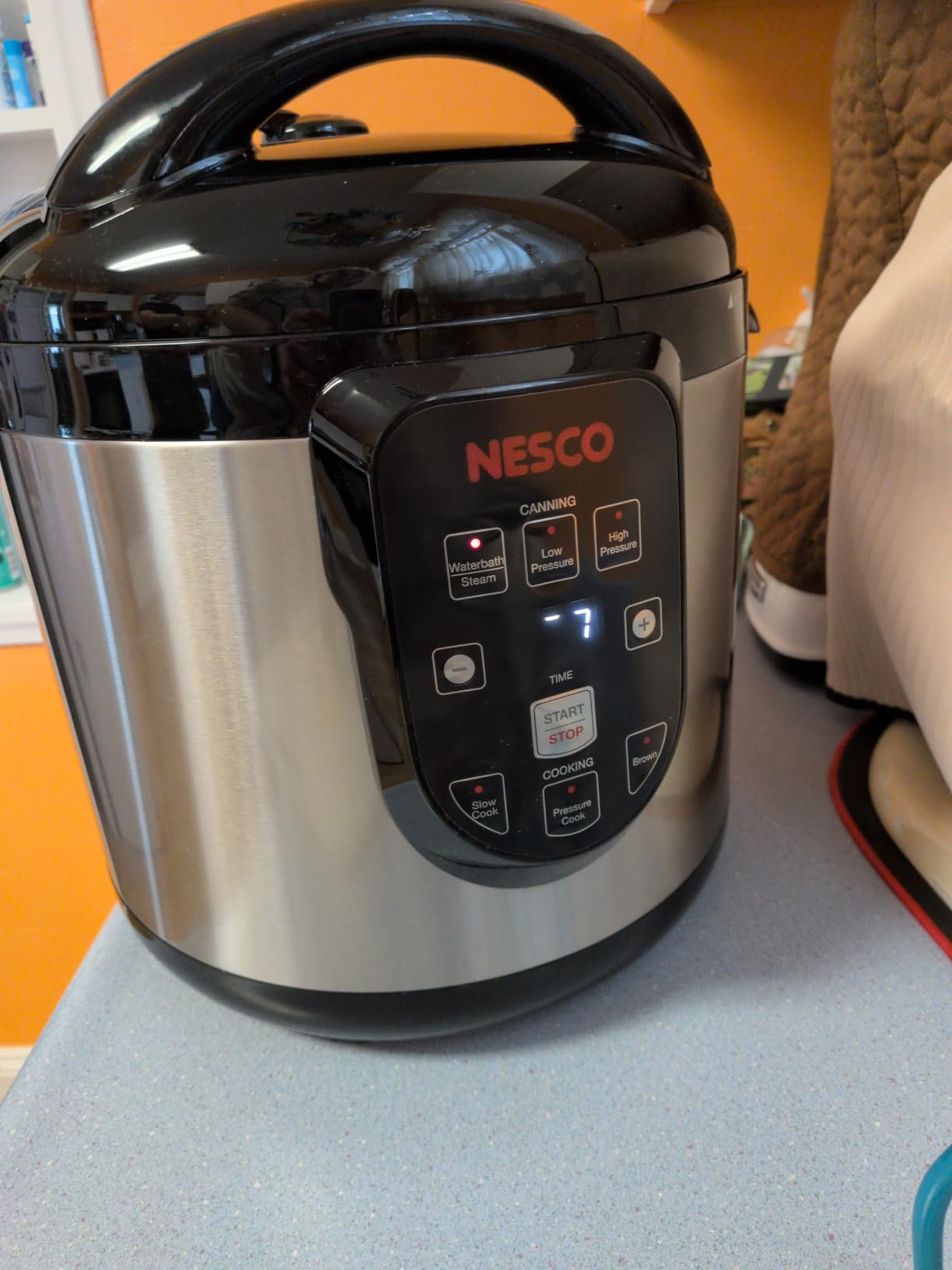
It runs four modes — pressure cook, slow cook, steam and water bath — with a digital display, preset programs and a timer. The removable 9.5-quart nonstick inner pot comes with a canning rack, a steam rack and a condensation catcher, and both a standard and a high-altitude limiting valve are included, which is unusual at this size.
Owners rate it 4.7 across more than 3,300 ratings with 86 percent five-star, and the dominant theme in reviews is fear reduction. People who had avoided stovetop pressure canners because of stories about exploding cookers report that they now can with confidence. Many also mention that it runs cooler than a stovetop water-bath pot, which matters in July.
Who it suits
Apartment kitchens, dorm rooms, off-grid households and single-person or couple households preserving a few jars at a time. The 4-quart or 5-pint load is a sensible weekly rhythm rather than a harvest-day event.
Because it needs no stovetop, it is the one canner on this list that works in a kitchen with only a hotplate. If you have been comparing multi-cookers, this is the version built for food preservation rather than adapted to it.
Where it frustrates people
The batch is small, and wide-mouth pint jars are close to impossible to lift out of a deep chamber by hand. You will want a jar lifter and a good grip, and the handling complaint is consistent across reviews.
It is not a walk-away appliance. You need to stay nearby until it comes up to pressure, and the instructions take some reading. For a big garden harvest, none of this matters, but for someone canning four jars of beans it is exactly the right scale.
6. All American 915 15.5-Quart Pressure Cooker/Canner – gasket-free metal seal
All American 1930: 15.5qt Pressure Cooker/Canner (The 915) – Exclusive Metal-to-Metal Sealing System – Easy to Open & Close – Suitable for Gas, Electric, or Flat Top Stoves – Made in the USA
14.67 liter cast aluminum
No gasket to replace
About 10 pint or 7 quart jars
18 pounds empty
Pros
- Highest rated canner in this roundup at 4.9 with 93 percent five-star
- Gasket-free metal-to-metal seal means no rubber part to replace or test
- Precision-machined regulator weight and easy-to-read steam gauge
- Thick industrial-grade aluminum owners describe as built like a tank
- Made in the USA with a printed manual doubling as a cookbook
Cons
- 18 pounds empty
- so it must be filled and emptied on the stovetop
- Six wing nuts must be tightened in a star pattern
- Vapor lock at zero pressure can occur
- Aluminum reacts with acidic foods and takes on mineral buildup
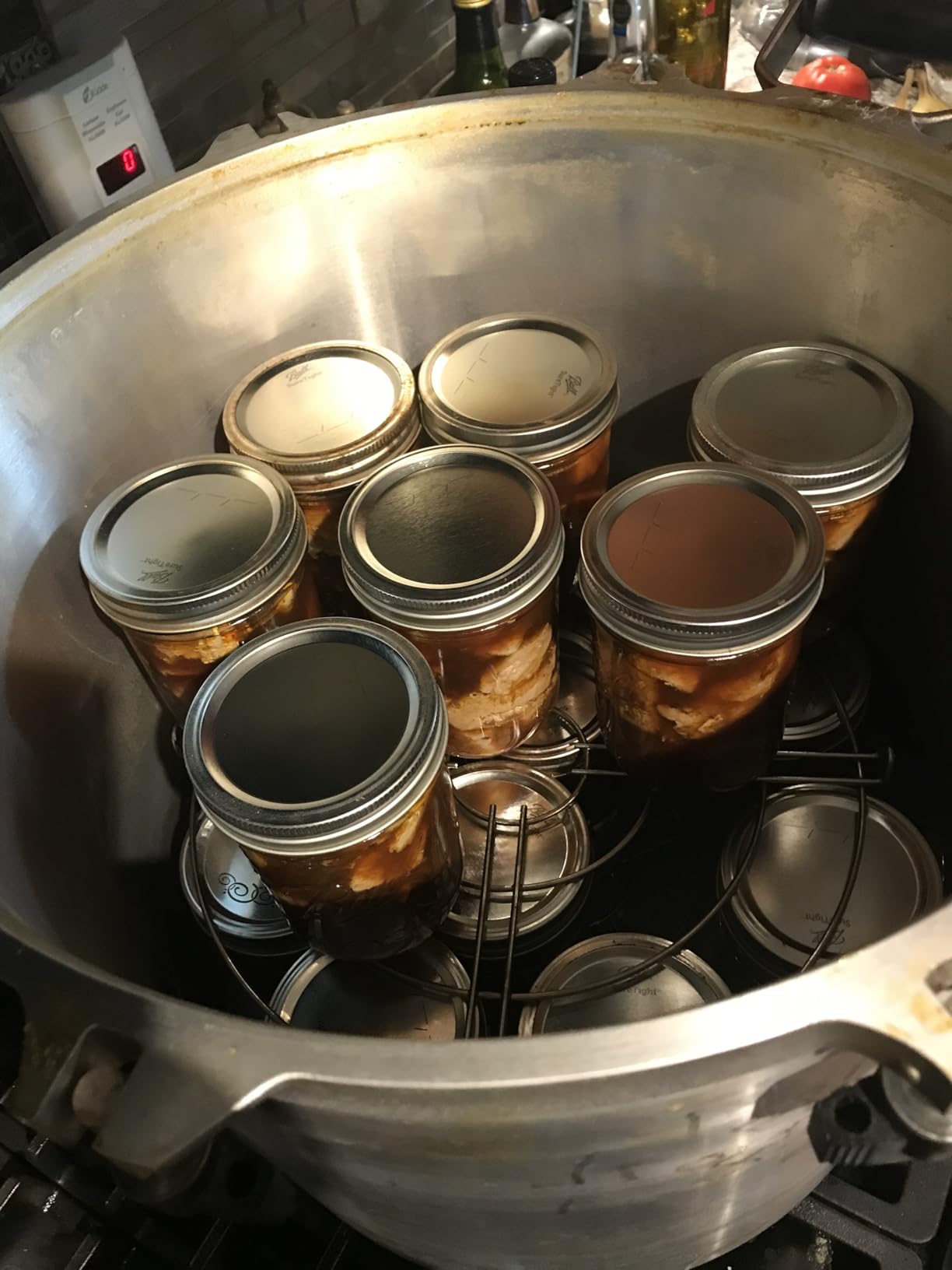
The All American 915 carries the highest rating of anything we tested — 4.9 stars with 93 percent five-star across nearly 9,800 ratings — and it earns that with one feature above all others: a gasket-free metal-to-metal sealing system. There is no rubber ring to stretch, clean, replace or wonder about. That removes the single wear part that eventually forces a replacement on every other canner here.
It is also machined rather than stamped. The regulator weight is precision-machined, the steam gauge is easy to read at arm’s length from a stove, and the aluminum is thick enough that owners describe the pot as built like a tank. It holds roughly 10 pints or 7 quarts and works on gas, electric and flat-top stoves.
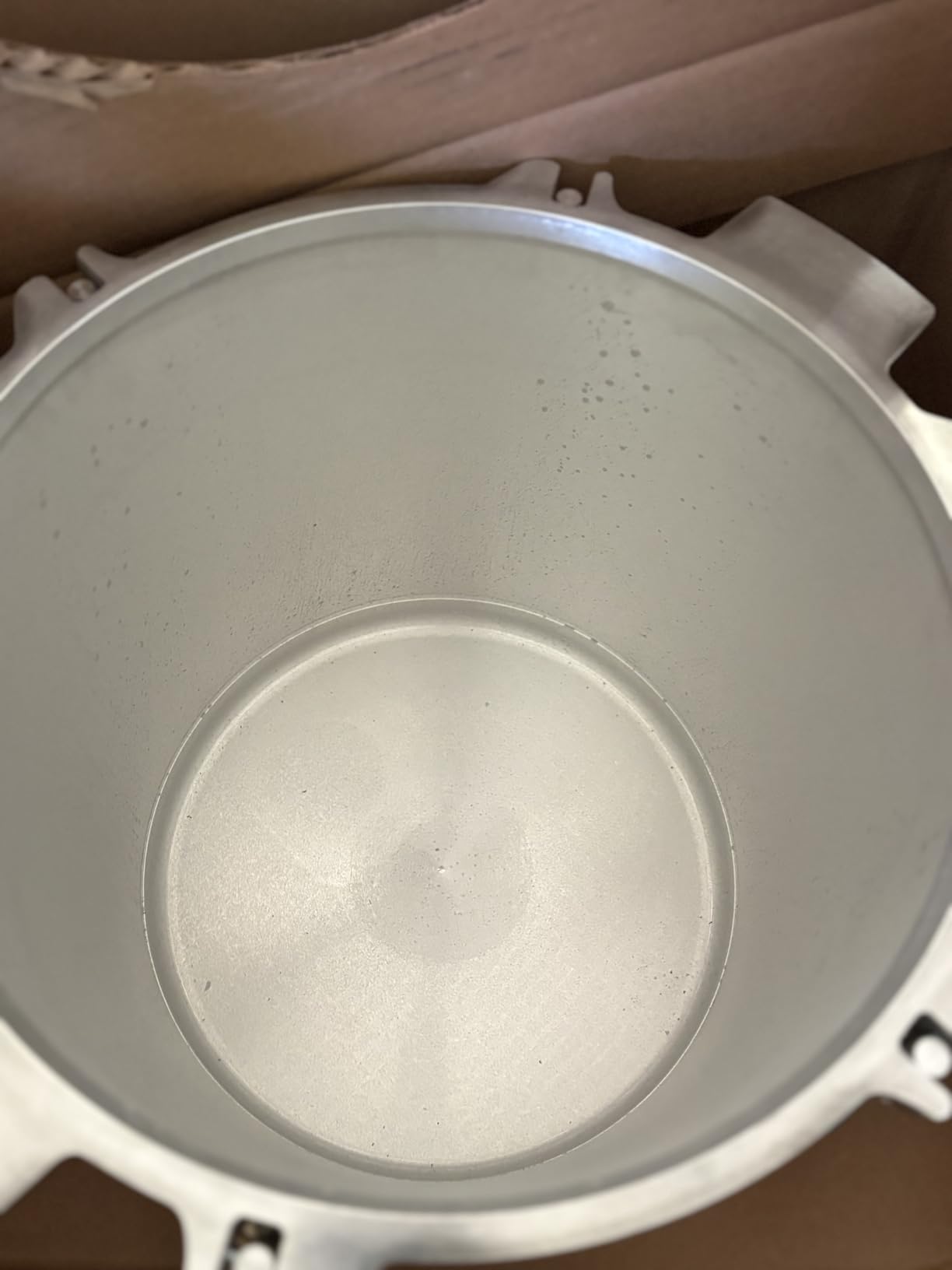
Long-form reviews from people canning thousands of jars a year describe decades of service, and the manufacturer provides canning service, replacement parts, manual reprints and free safety labels from a family-owned foundry in Wisconsin. That support network is part of what you are buying here.
Who it suits
Canners who intend to keep a canner for twenty years rather than five, and anyone tired of ordering gaskets. If you already own a rubber-sealed aluminum canner and it needs a new ring, this is often the moment to stop repairing.
The printed manual doubles as a cookbook covering meats, pressure cooking and even metal canning, which makes the learning curve shorter for a beginner who reads carefully.
Where it frustrates people
At 18 pounds empty and considerably more when loaded, it has to be filled and emptied on the stovetop. Plan your counter space and your lifting path before the first batch, not during it.
The six wing nuts must be tightened in a star pattern for an even seal, and beginners get this wrong on the first use. A vapor lock at zero pressure can also occur; owners report that a flat screwdriver wrapped in a cloth frees it. The 15.5-quart size also does not stack pints the way the larger All American does.
7. Granite Ware 20-Quart Pressure Canner/Cooker/Steamer – the lightest full-size body
Granite Ware Pressure Canner/Cooker/Steamer, 20-Quart
20 quart hard-anodized aluminum
Adjustable regulator at 5, 10 and 15 PSI
Cooker and steamer functions
10.5 pounds empty
Pros
- Heavy-gauge hard-anodized aluminum resists rust and staining
- Three-piece adjustable regulator calibrated at 5
- 10 and 15 PSI
- Pressure canner
- pressure cooker and steamer in one pot
- Lightest full-size canner in this roundup at 10.5 pounds
- Only 20-quart option here that also steams
Cons
- Smallest review base here at roughly 800 ratings
- No induction compatibility
- Rubber gasket seal requires periodic replacement
- Build is lighter than the Presto and All American aluminum canners
At 10.5 pounds empty, this is the lightest full-size canner we tested and the difference is substantial next to an 18-pound All American or a 24-pound one. If lifting a loaded pot onto a burner is the part that stops you, weight is a legitimate reason to choose this model.
The hard-anodized aluminum body will not rust or stain, and the nonstick finish makes cleanup simpler. A three-piece adjustable regulator calibrated at 5, 10 and 15 PSI gives you the full range of settings in one accessory, and the pot performs three jobs: pressure canner, pressure cooker and steam canner. The 20-quart capacity sits in the middle of this group.
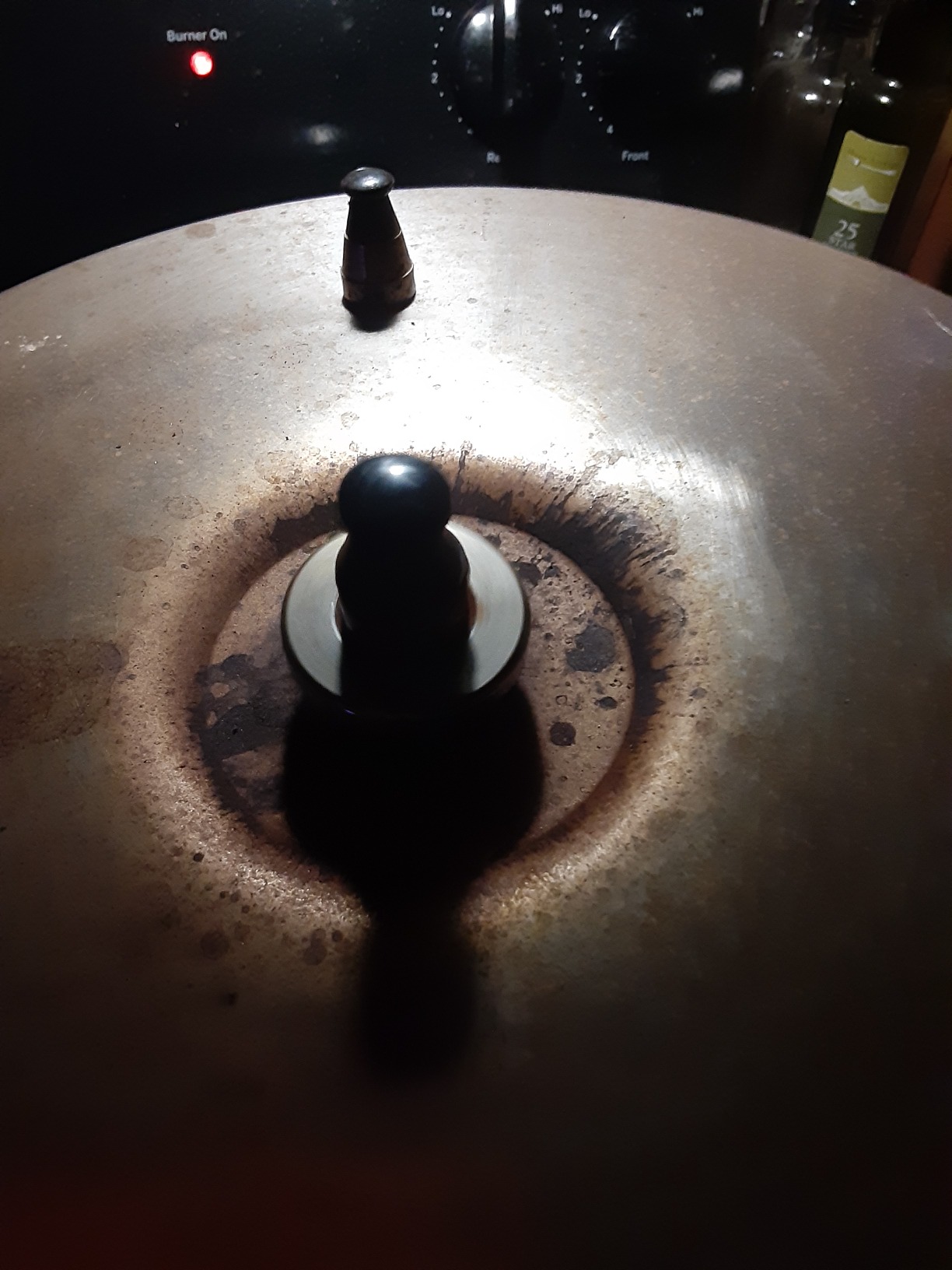
Owners rate it 4.6 with 81 percent five-star, but the sample is roughly 800 ratings — the smallest in the guide. That is the honest trade-off here: you are getting a well-built pot with far less long-term history than the Prestos or All Americans carry.
Who it suits
Anyone who canners alone, has back or grip issues, or simply does not want to wrestle with a 20-plus-pound pot of boiling water. The tri-function design also means it earns its counter space on days you are not canning.
It is a good second canner for a household that wants one pot for steaming vegetables and one for pressure work, and the adjustable regulator covers weighted-style processing across three pressure levels.
Where it frustrates people
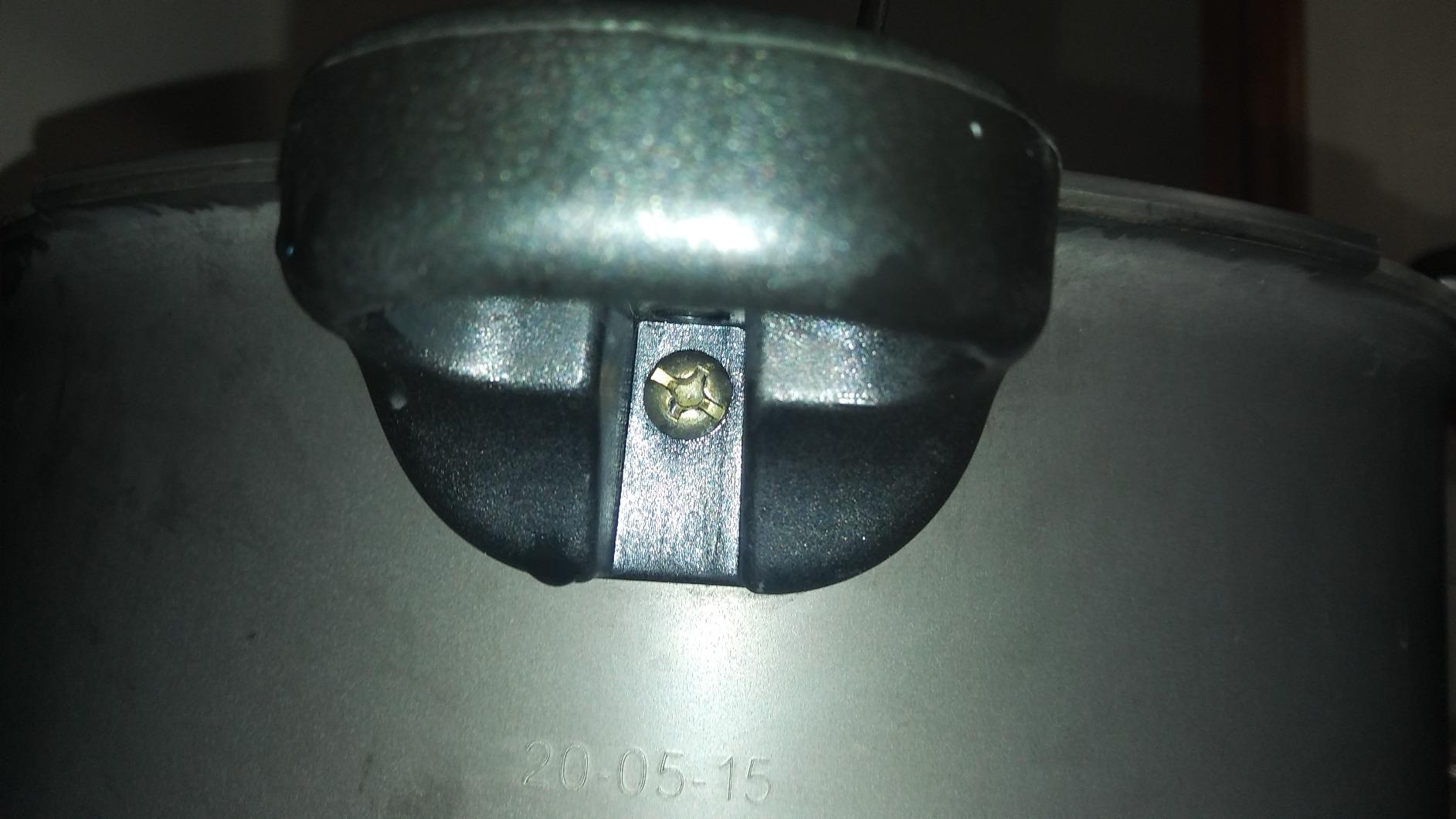
It uses a conventional rubber gasket, which is the part most likely to need replacing and the reason owners suggest checking it periodically. A gasket that is not seated correctly can leak steam.
There is no induction compatibility, and roughly 800 ratings is thin evidence for a purchase intended to last a decade. If you want a canner that disappears into weekly cooking, this is the one. If you want field history, look at the units with five-figure review counts.
8. All American 925 25-Quart Pressure Cooker/Canner – the largest here, built to last
All American 1930: 25qt Pressure Cooker/Canner (The 925) – Exclusive Metal-to-Metal Sealing System – Easy to Open & Close – Suitable for Gas, Electric, or Flat Top Stoves – Made in the USA
23.66 liter cast aluminum
No gasket to replace
About 19 pint or 7 quart jars
24 pounds empty
Pros
- Same 4.9 rating and 93 percent five-star share as the 915 from nearly 10000 reviews
- Gasket-free precision-machined metal-to-metal seal
- About 19 pint or 7 quart jars per load
- Heavy industrial-grade castings with double-thickness edges
- US parts and manual reprints and safety labels and servicing available
Cons
- 24 pounds empty
- heaviest canner in this roundup
- Long heat-up and cool-down times
- Six wing nuts tightened in a star pattern
- Aluminum pits with acidic foods
The 925 is the same design philosophy as the 915 in a much larger body, and it carries an identical 4.9 rating with a 93 percent five-star share from nearly 9,800 ratings. Owners call it the top of the canner range, and the reason is the same gasket-free precision-machined seal plus castings thick enough to describe as industrial grade.
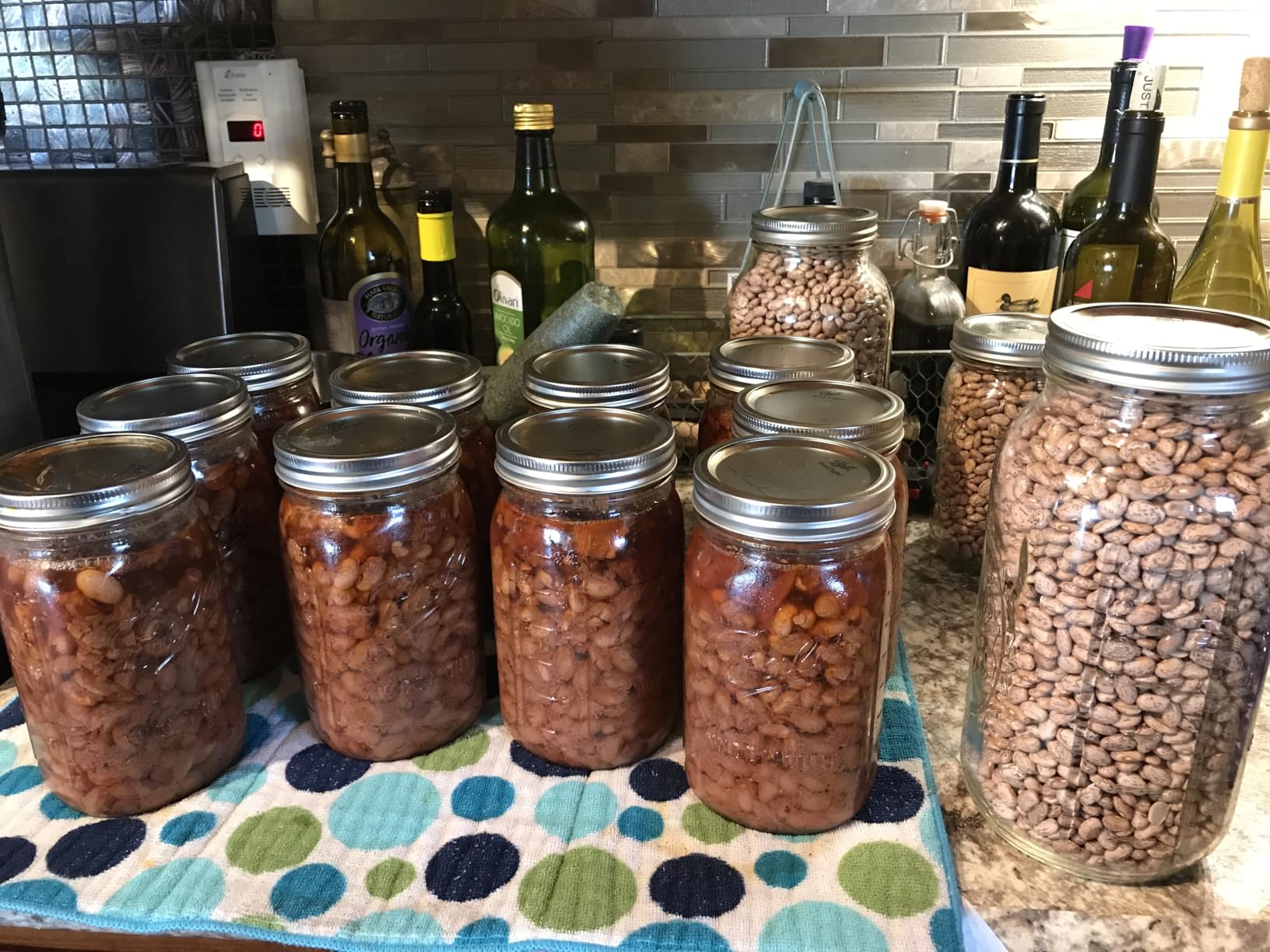
The payoff is capacity. It holds about 19 pints or 7 quarts per load, so a full harvest day runs in far fewer cycles than a 15.5-quart body. Double-thickness edges sit at the highest wear points, and the phenolic top handle is built for the same service life as the pot.
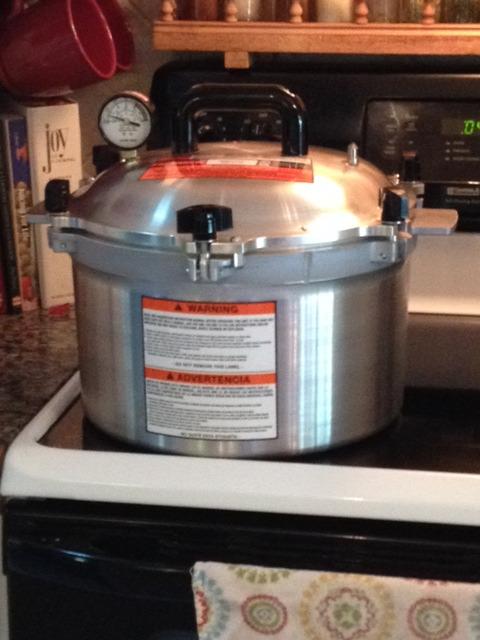
It is the most expensive canner we tested, and it is also the heaviest at 24 pounds empty. Jars have to be loaded and unloaded on the stovetop itself. The mass also means a slow heat-up and a slow cool-down, and cooling naturally is a required step, not an optional one.
Who it suits
Serious home food preservers, families putting up fifty or more jars a season, and anyone willing to canner on the stove rather than in batches at a counter. The manufacturer backs it with US parts, servicing and manual reprints, which matters at this service life.
If you already own a 15.5-quart All American and keep hitting the batch ceiling, this is the natural upgrade rather than a second pot.
Where it frustrates people
The weight is the whole complaint. Twenty-four pounds empty becomes something close to unmanageable when it is full, and owners with limited upper-body strength routinely pass on it for that reason alone.
Six wing nuts need a star pattern for an even seal, and vapor lock can occur at zero pressure just as on the smaller model. The aluminum body also pits with tomatoes and vinegar, so plan a separate vessel for acidic batches.
9. WantJoin 23-Quart Aluminum Pressure Pot – large capacity on a small budget
Wantjoin Aluminum Pressure Cooker 23Qt Pressure Canner, Pressure Pot with Pressure Control for Home Kitchen or Restraurant, Commercial Pressure Cooker with Gauge
23 quart aluminum body
Induction compatible composite base
1000 watts
Six safety protections
Pros
- Least expensive full-size canner in this roundup
- Thickened composite base works on gas and induction stovetops
- Six safety protections including automatic lock and pressure limiting valve
- Large 23-quart capacity for home or light restaurant batch cooking
- Uncoated scratch-resistant food-grade aluminum body with storage bag
Cons
- Listed as a pressure cooker rather than a canning-validated unit
- Lowest rating here at 4.3 with a 9 percent one-star share
- No documentation on high-altitude pressure adjustment
- Manual stovetop heat control only
This is the budget entry, and the honest framing matters: it is a large-capacity pressure cooker with canning language in the listing, not a unit whose documentation carries USDA-validated canning times. Read the manual before you plan a low-acid batch, and treat the canning guidance in the product data as thin.
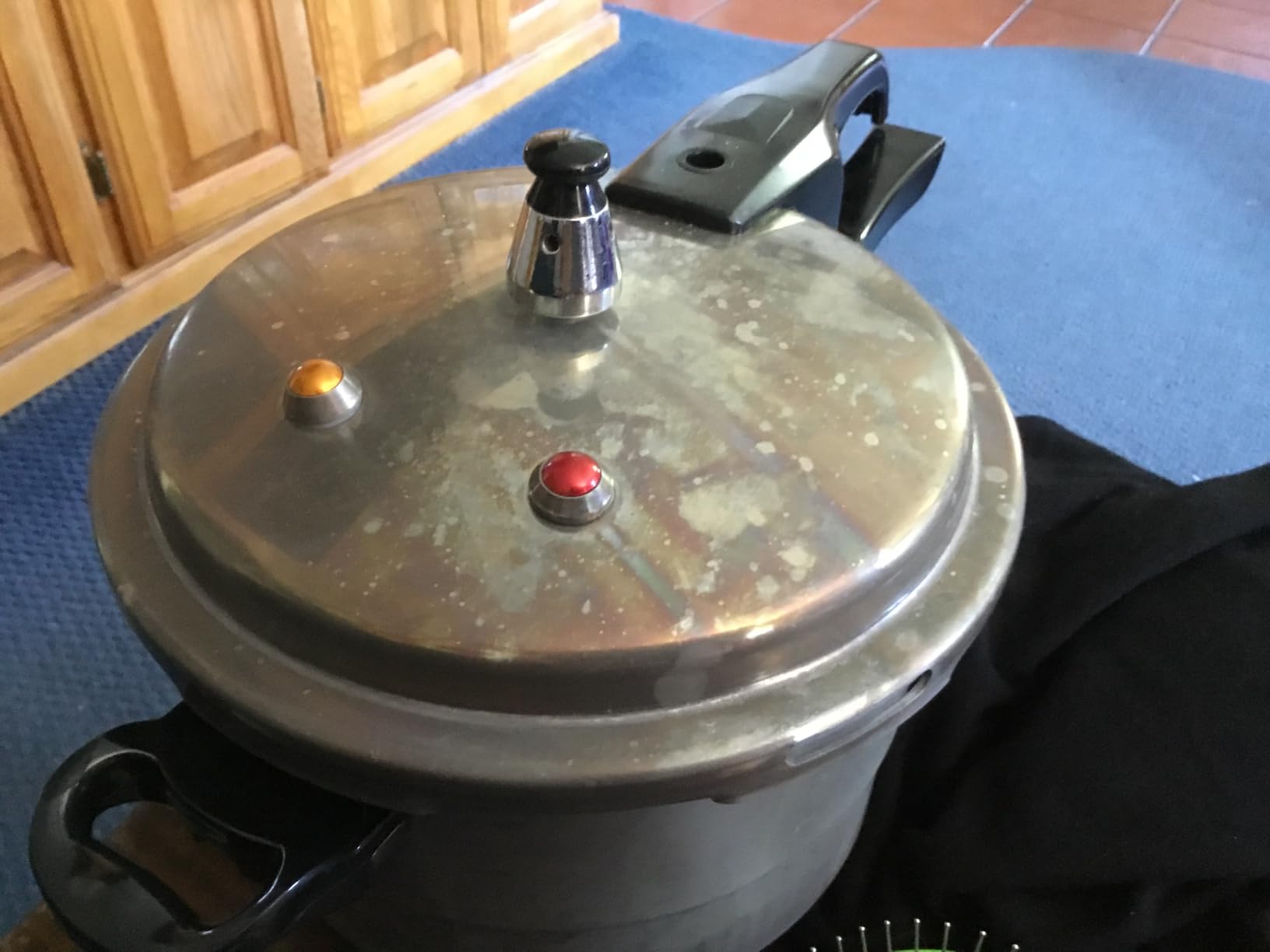
What it does offer is capacity and hardware. The 23-quart body takes a full load, the thickened composite base works on both gas and induction stovetops, and the safety package lists six protections: automatic lock, check valve, pressure limiting valve, safety valve, alarm valve and an anti-blocking cover.
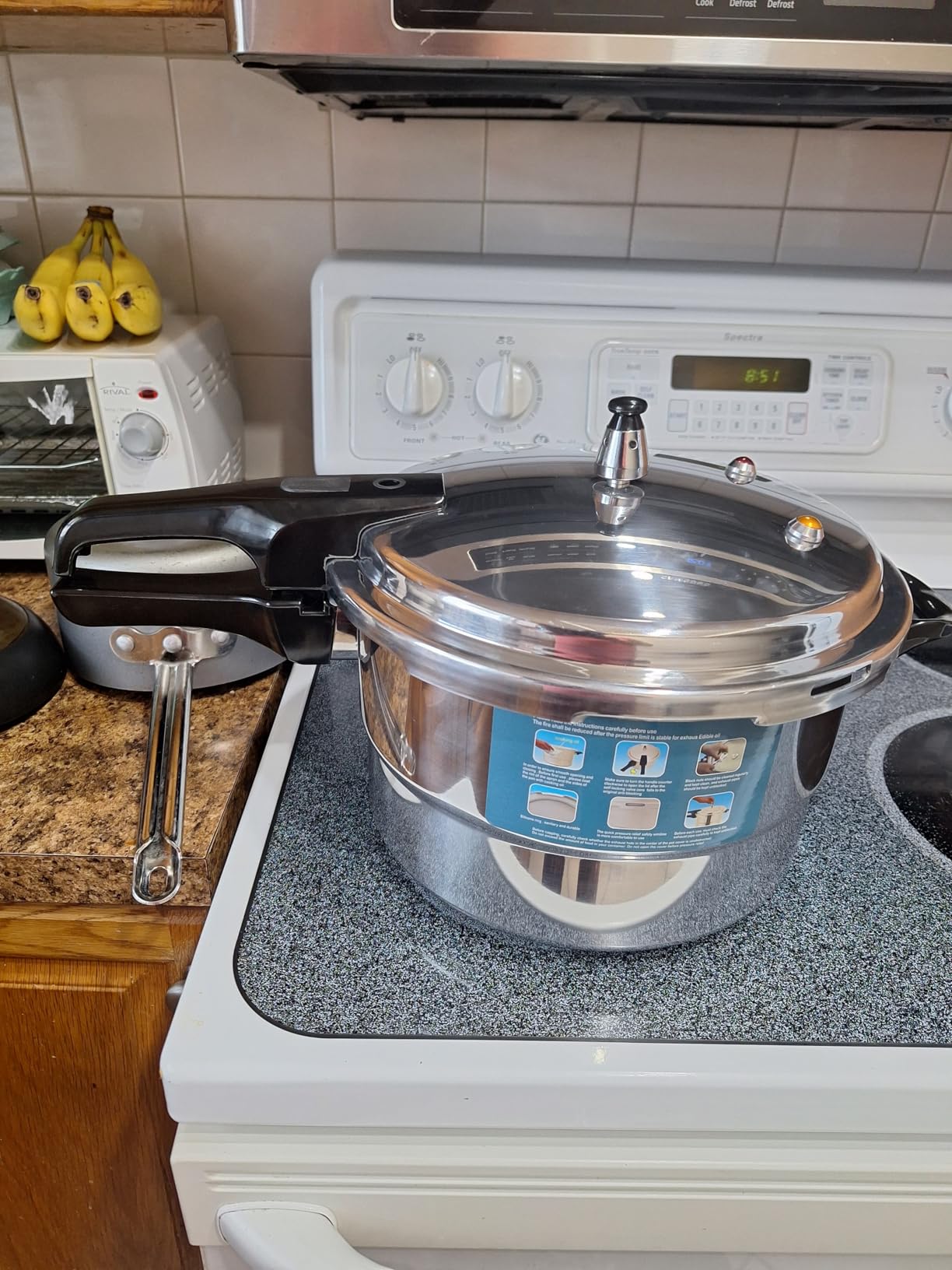
Owners rate it 4.3 with 71 percent five-star on roughly 780 ratings, and they mostly describe it as a value pressure cooker for large-batch cooking. The reservations that come up are pressure consistency, build finish and the absence of canning-specific guidance.
Who it suits
Canners on a tight budget who are willing to verify pressure with an independent instrument rather than trusting the built-in gauge, and people who want a big pot for batch cooking who will buy a separate certified canner for actual food preservation.
The induction-capable base at this capacity is genuinely useful, and the uncoated aluminum will not flake a nonstick coating if you scratch it.
Where it frustrates people
The documentation gap is the real problem. There is no high-altitude pressure adjustment guidance, and the listing markets the pot as a pressure cooker, so there is no validated processing timetable to follow.
Pressure control is entirely manual, which means the same heat-reading skills the T-Fal owners complain about apply here with less documentation to fall back on. For a first low-acid batch, we would rather you start with a unit whose manual was written for canning.
10. Barton 22-Quart Pressure Canner – a readable dial on four stovetop types
Barton Pressure Canner Release Valve Aluminum Canning Pot Cooker Pot Stove Top with Pressure Gauge Instant Fast Cooking Pot Stewing Locking System (22 Quarts) Meat, Poultry & Vegetables
22 liter aluminum body
Pressure release 13 PSI plus or minus 5 percent
24 half-pints or 7 quarts
12.9 pounds
Pros
- Readably pressure dial gauge that matters at high altitude
- 22-quart batch holds 24 half-pints
- 16 wide-mouth pints
- 18 pints or 7 quarts
- Spring safety device prevents pressurizing before the lid is closed
- Safety lock cover valve blocks opening until compressed air is exhausted
- Works on gas
- electric
- induction and ceramic stovetops
Cons
- Lowest rating in the set at 4.2 with a 12 percent one-star share
- 13 PSI plus or minus 5 percent release is wider than a 15 PSI processing spec
- Aluminum body can pit with acidic foods
- Fewer reviews than the Presto and All American models
The Barton’s selling point is its gauge. Owners single out the dial as clearly readable, which is exactly what you want at 3,000 feet when the difference between 10 and 11 PSI matters and the stove is hissing. It also runs on gas, electric, induction and ceramic stovetops, the broadest compatibility here.
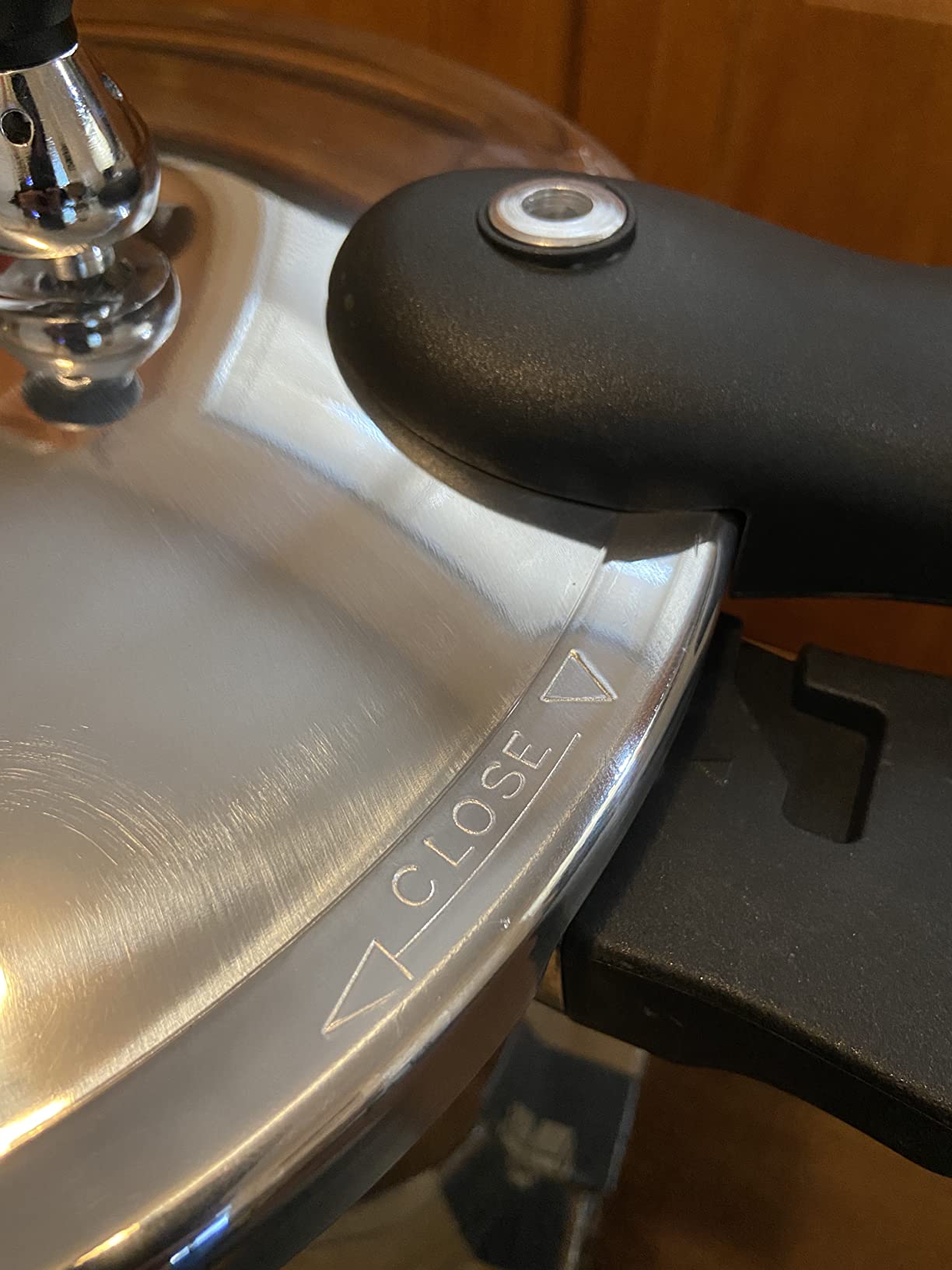
Capacity is right at the useful middle, with room for 24 half-pints, 16 wide-mouth pints, 18 pints or 7 quarts. The safety hardware is thorough: a spring device that will not pressurize before the lid is fully closed, a sure-locking lid, and a safety lock cover valve that only releases once compressed air is fully exhausted.
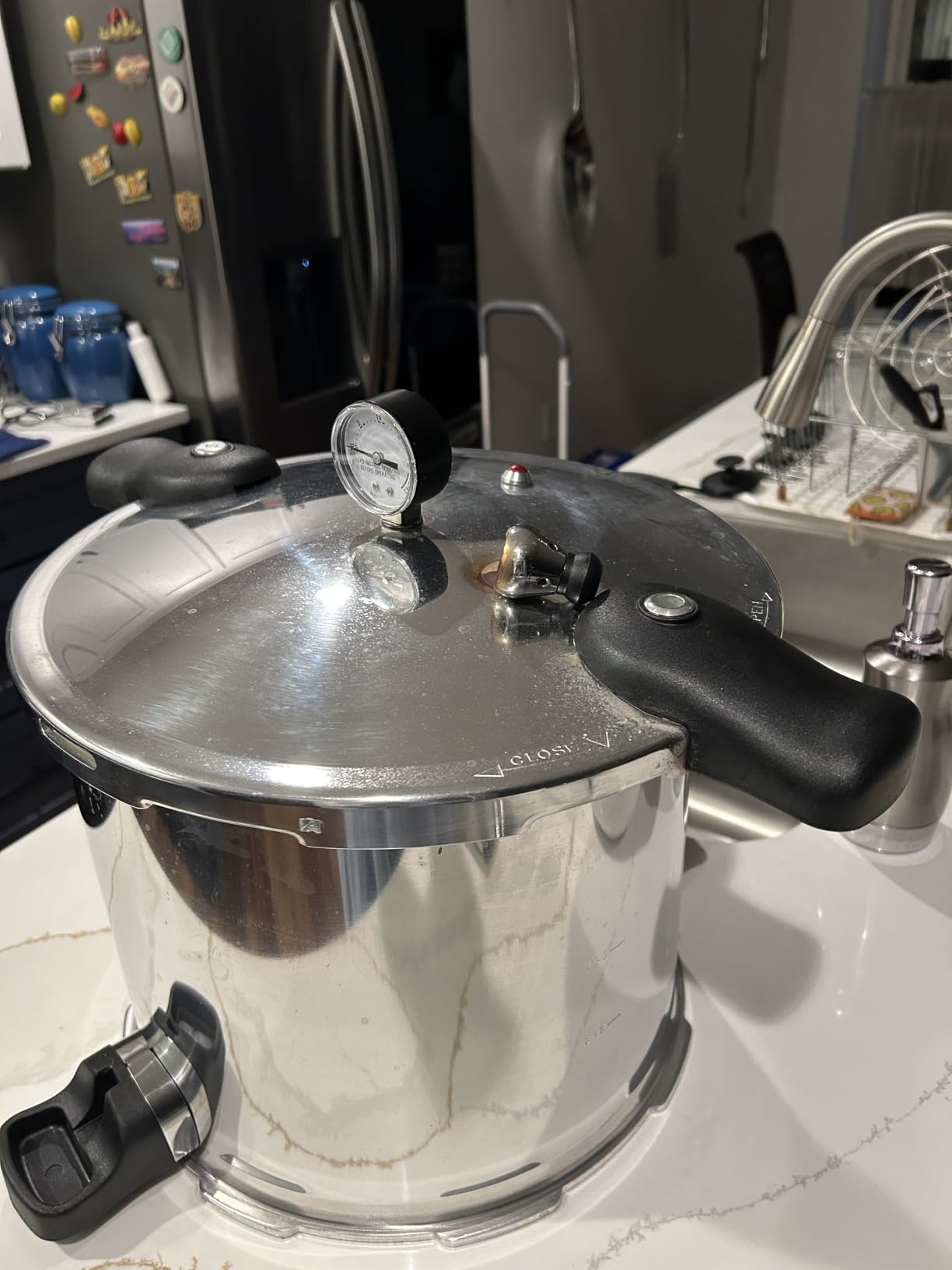
At 4.2 stars with 70 percent five-star and a 12 percent one-star share, it ties for the lowest rating in this guide. Buyers who want a gauge rather than loose weights appreciate the readability, but the low scores trace to pressure consistency and long-term durability doubts compared with the heavier cast aluminum brands.
Who it suits
Canners at altitude who want a gauge they can actually read, households with unusual cooktops such as ceramic, and buyers who want full size on a smaller outlay than the Presto.
The locking behaviour is among the most cautious described by owners of any unit here, which may reassure anyone who has been avoiding pressure equipment.
Where it frustrates people
The published pressure release is 13 PSI with a plus or minus 5 percent tolerance, which is a wider band than a true 15 PSI processing specification. That is the core reason for the lower ratings, and it is a real difference when a timetable depends on precise pressure.
The aluminum body also pits with acidic food, and at roughly 1,700 ratings there is less field history than the Prestos or All Americans carry.
Dial Gauge vs Weighted Gauge: Which One Should You Buy?
A dial gauge shows you the pressure inside the pot so you can hold it in the 10 to 11 PSI processing band, and a weighted gauge — the jiggler — does that job mechanically. If pressure is all you want, a weighted canner with the correct weight is genuinely easier to run, because there is nothing to read and nothing to adjust beyond your heat.
The trade-off is precision and altitude. A weighted system holds a fixed pressure determined by the weight, so above 1,000 feet you change the weight rather than the dial. A dial system lets you adjust for elevation, but it also needs to be checked: the gauge is a spring and a needle that drift over years, and if it reads low you will process food at a temperature that is too cool.
Get it tested once a year through your county extension office, which is the service most beginners have never heard of. Many extension offices test pressure canner gauges at no charge or for a small fee, and the same visit is a good moment to ask about altitude adjustments for your exact elevation.
Across the forums, weighted-gauge users consistently report less anxiety because there is nothing to monitor beyond the jiggle. The mirror image of that is dial owners who would rather not deal with an annual calibration appointment. Our Presto versus Mirro comparison covers the two approaches as they appear in practice, our All American versus Presto head-to-head weighs the two heaviest-duty brands, and our broader pressure canner roundup looks at the canners that use each system.
Altitude and PSI: What Changes When You Live Higher
Boiling water pressure drops with elevation, so a canner that reaches 10 to 11 PSI at sea level may sit below the required pressure high in the mountains. The National Center for Home Food Preservation publishes adjusted guidance by elevation band, and this is the single most important table to know before your first batch.
At 0 to 1,000 feet, use the standard figure from your chosen method — typically 10 to 11 PSI on a dial gauge, or a 15 PSI weighted regulator.
At 1,001 to 3,000 feet, dial gauge canners process at 11 PSI and weighted canners at 15 PSI.
At 3,001 to 6,000 feet, dial gauge processing rises to 12 PSI while the weighted setting stays at 15 PSI.
Above 6,000 feet the weighted setting climbs to 18 PSI, and above 8,000 feet it goes to 19 PSI. This is exactly the kind of detail that causes overprocessing confusion: the same canner needs a different weight, and the same gauge needs a different number, depending on how high your kitchen sits.
If altitude adjustment is going to complicate your first season, note that the Presto 02152 handles it automatically, and the NESCO NPC-9 ships with a high-altitude limiting valve in the box.
What You Need Beyond the Canner for Your First Season
The canner is the smallest part of the outlay. A workable first-season kit needs canning jars in the sizes your chosen method specifies, matching two-piece lids, a jar lifter, a wide-mouth funnel, canning salt for water-bath work, and clean towels. A second rack lets you process two canners back to back on the same burner.
Buy jars by the case rather than the single. Half-pint and pint jars are the usual entry point for a small household; quart jars only make sense if your canner runs seven per load.
Add a wide-mouth funnel, a bubble remover and a clean damp rag for the jar rims. Rim cleanliness is what determines whether a flat seals, and it is a far cheaper variable than a ruined jar.
Budget for a replacement gasket on any rubber-sealed model within the first few years, and for an annual gauge test on any dial model. A metal-to-metal canner like either All American skips that line item entirely, which is a real argument for spending more up front.
For your first batch, choose something forgiving. Green beans and pinto beans both have well-documented processing times and both teach the full cycle without an unusual number of steps.
What Not to Buy: Five Safety Mistakes to Avoid
First, do not buy a canner too small for quart jars. If quart jars cannot stand upright inside the pot, the USDA’s published processing times do not apply to it. Many 6-quart multi-cookers are marketed for canning; several experienced canners on r/Canning point out that safe processing times have not been determined for those sizes.
Second, skip off-brand marketplace listings that call a pressure cooker a canner. A unit with no canning rack, no validated timetable and no manufacturer support is a food-safety problem, not a bargain.
Third, never buy a used canner without fitting a new gasket. Rubber perishes, and several owners on the forums report rescuing old canners this way — but only with the gasket replaced, the gauge tested and the rack replaced if it is missing.
Fourth, check that a canning rack is included. Jars must never touch the bottom of the canner or sit directly against the wall; the rack is what keeps circulation moving underneath them.
Fifth, do not ignore the gauge. A dial that has never been tested is an assumption, and an assumption is what botulism cases are built on. The CDC’s guidance on home botulism is blunt about the fact that low-acid food requires verified pressure for a verified length of time.
That last point is also the honest limit of any listicle. This guide compares manufacturers’ published specifications and owner reports, but no ranking replaces following the processing time in the USDA guide or the Ball Blue Book for the specific food in your jar.
Frequently Asked Questions
What is the easiest canning system for beginners?
The easiest system is a stovetop dial-gauge pressure canner in the 16 to 22 quart range that holds four quart jars upright and includes a canning rack. A weighted-gauge canner is easier still to run because the weight sets pressure for you, but a dial canner is easier to adjust for altitude. Most beginners start with green beans or dried beans because both have well-documented processing times.
Do I need a pressure canner or can I use a pressure cooker?
A pressure cooker is not a pressure canner. Cookers are tested for short cooking cycles and most lack a canning rack, a pressure gauge and enough internal volume for four quart jars standing upright. Because quart jars must stand upright, the USDA’s published processing times do not apply to small multi-cookers. If you want to preserve low-acid food, use a unit sold and documented as a pressure canner.
Can jars touch the side of a pressure canner?
No. Jars should sit on a canning rack or divider plate and not touch the canner walls, the lid, or each other in a way that blocks circulation. Direct contact with the canner bottom can cause jar failure, and touching the wall or lid can make the jars clink together and chip. The rack also keeps jars from touching the canning water.
What weight should I use on my pressure canner?
At 0 to 1,000 feet, use a 15 PSI weighted regulator for low-acid foods. From 1,001 to 6,000 feet, 15 PSI still applies. Above 6,000 feet the required weight rises to 18 PSI, and above 8,000 feet it rises to 19 PSI. Dial-gauge canners use lower figures at the same elevations, which is why dial and weighted systems are not interchangeable at altitude.
Which electric pressure canner is best for canning?
Among the units here, the NESCO NPC-9 is the most clearly built for canning, with dedicated canning mode, a canning rack, automatic pressure regulation and a high-altitude limiting valve. The Presto 02152 digital canner automates temperature-based canning and needs no altitude adjustment, but it holds fewer jars per load. Choose based on batch size, since electric canners in this group process far fewer jars than a 23-quart stovetop canner.
What pressure is required for canning low-acid foods?
At 0 to 1,000 feet, low-acid foods are processed at 10 to 11 PSI on a dial-gauge canner, or with a 15 PSI weighted regulator. The requirement rises with elevation: 11 PSI on a dial from 1,001 to 3,000 feet, 12 PSI from 3,001 to 6,000 feet, and higher weights for weighted systems above 6,000 feet.
Do pressure canner gauges need to be calibrated?
Dial gauges should be tested once a year, and many county extension offices run a testing service, often free or for a small fee. Weighted gauges need no calibration because they set pressure mechanically. Metal-to-metal sealed canners still benefit from an annual check of the safety valve and the steam gauge.
How long does a pressure canner last?
It depends on the material and the seal. Cast aluminum models with a gasket-free metal-to-metal sealing system, such as the All American 915 and 925, are built for decades and have no rubber wear part to replace. Rubber-sealed aluminum canners last as long as you replace their gaskets, which owners commonly report doing every few years of regular use.
The Bottom Line
The best pressure canners for beginners come down to one of three shapes. Buy the Presto 01781 23-Quart if you want the deepest owner history, a full-range dial gauge and a 12-year warranty with no altitude complexity. Buy the All American 915 if you would rather own a canner with no gasket to replace and intend to keep it for decades. Buy the NESCO NPC-9 if a handful of jars at a time and no stovetop flame is your actual need.
Whichever you choose, buy a canner, not a pressure cooker, and check that quart jars stand upright inside it. Buy a canning rack if one is not in the box, and get the dial tested before your first low-acid batch. Everything else in this guide is a preference between good pots — those two steps are about botulism.
Start with green beans. You will learn the vent, the pressure, the timer and the cool-down on a food that forgives mistakes, and by the time you reach corn, meat or stock you will already know the rhythm of the process.