
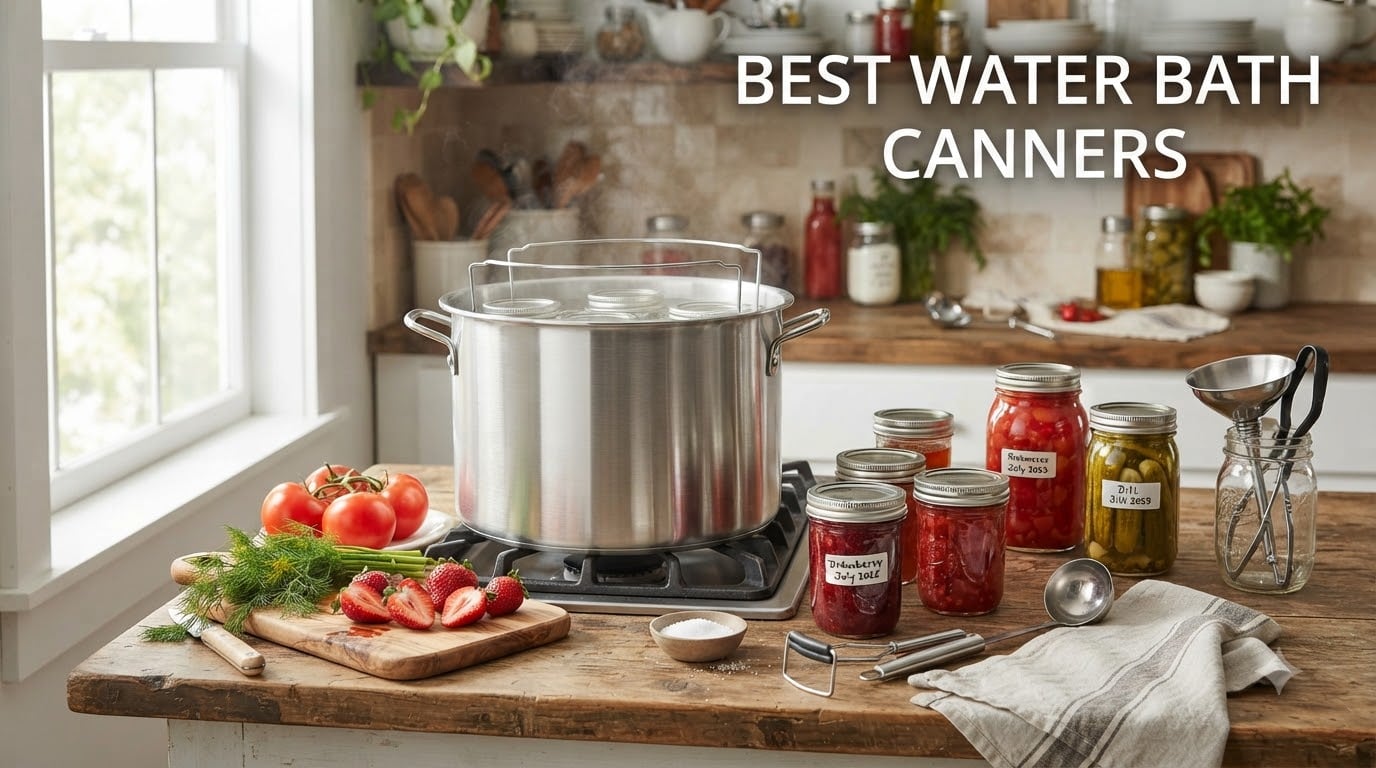
A water bath canner is a large, deep pot with a fitted lid and a removable perforated rack that processes high-acid foods – jams, jellies, pickles, fruit preserves, salsa, and acidified tomatoes – in boiling water long enough to create a vacuum seal. Jars rest on the rack, sit covered by 1 to 2 inches of water, and boil at a steady 212 degrees F for the recipe’s processing time. As jars cool, the lids pop down and seal.
We tested 8 of the best water bath canners available right now with the team at We Are Salt, and our pickling and salt-curing readers have been asking us the same question for months: which one actually deserves a spot on the stove. The short answer is the Prep and Cook by McSunley 21.5Qt Stainless Steel if you want one canner that lasts decades and doubles as a stockpot. If you are working with a glass-top or induction range, the Concord 20 Qt Triply is the safer call.
Below, we break down each of the eight picks with hands-on notes, what we liked, what bugged us, and the tradeoffs you only spot after a few batches. We also pulled guidance from the USDA Complete Guide to Home Canning and the National Center for Home Food Preservation on the rack and depth requirements that actually keep jars safe. Whether you are stocking your first pantry shelf or upgrading from a chipped enamel pot that has seen too many summers, this list will help you pick the right canner.
Table of Contents
Top 3 Picks at a Glance
McSunley 21.5Qt Stainless
- Heavy-duty stainless
- glass-top safe
- holds 7 quart jars
- doubles as stockpot

Harvest 20 Qt Dual-Use
- Induction ready
- temperature gauge
- water bath and steam
- 5-year warranty

Best Water Bath Canners in 2026 – Quick Comparison
| Product | Specifications | Action |
|---|---|---|
| McSunley 21.5Qt Stainless |
|
Check Latest Price |
 Granite Ware 8-Piece Enamel Kit Granite Ware 8-Piece Enamel Kit |
|
Check Latest Price |
| Harvest 20 Qt Dual-Use |
|
Check Latest Price |
 Supa Ant 24 Qt Starter Kit Supa Ant 24 Qt Starter Kit |
|
Check Latest Price |
| Concord 20 Qt Triply Set |
|
Check Latest Price |
 Ball Enamel Water Bath Canner Ball Enamel Water Bath Canner |
|
Check Latest Price |
 HOMKULA 27.5 Qt Large Capacity HOMKULA 27.5 Qt Large Capacity |
|
Check Latest Price |
 Vigamimn 20 Qt Induction Kit Vigamimn 20 Qt Induction Kit |
|
Check Latest Price |
1. McSunley 21.5Qt Stainless Steel – Best Overall Water Bath Canner
Prep•N•Cook by McSunley 21.5Qt Stainless Steel Water Bath Canner
Stainless steel
21.5 quart
Holds 7 quart jars
Glass-top safe
Pros
- Sturdy stainless steel that doubles as a stockpot year-round
- Tempered glass lid lets you watch the boil without lifting
- Riveted cool-touch handles keep grip safe during long boils
- Aluminum encapsulated flat base works on glass-top stoves
- Holds 7 quart
- 9 pint
- or 12 half-pint jars
Cons
- Included rack feels flimsy and tips when fully loaded
- Rack handles fold inward during unloading
- Takes longer to reach a boil on glass-top stoves
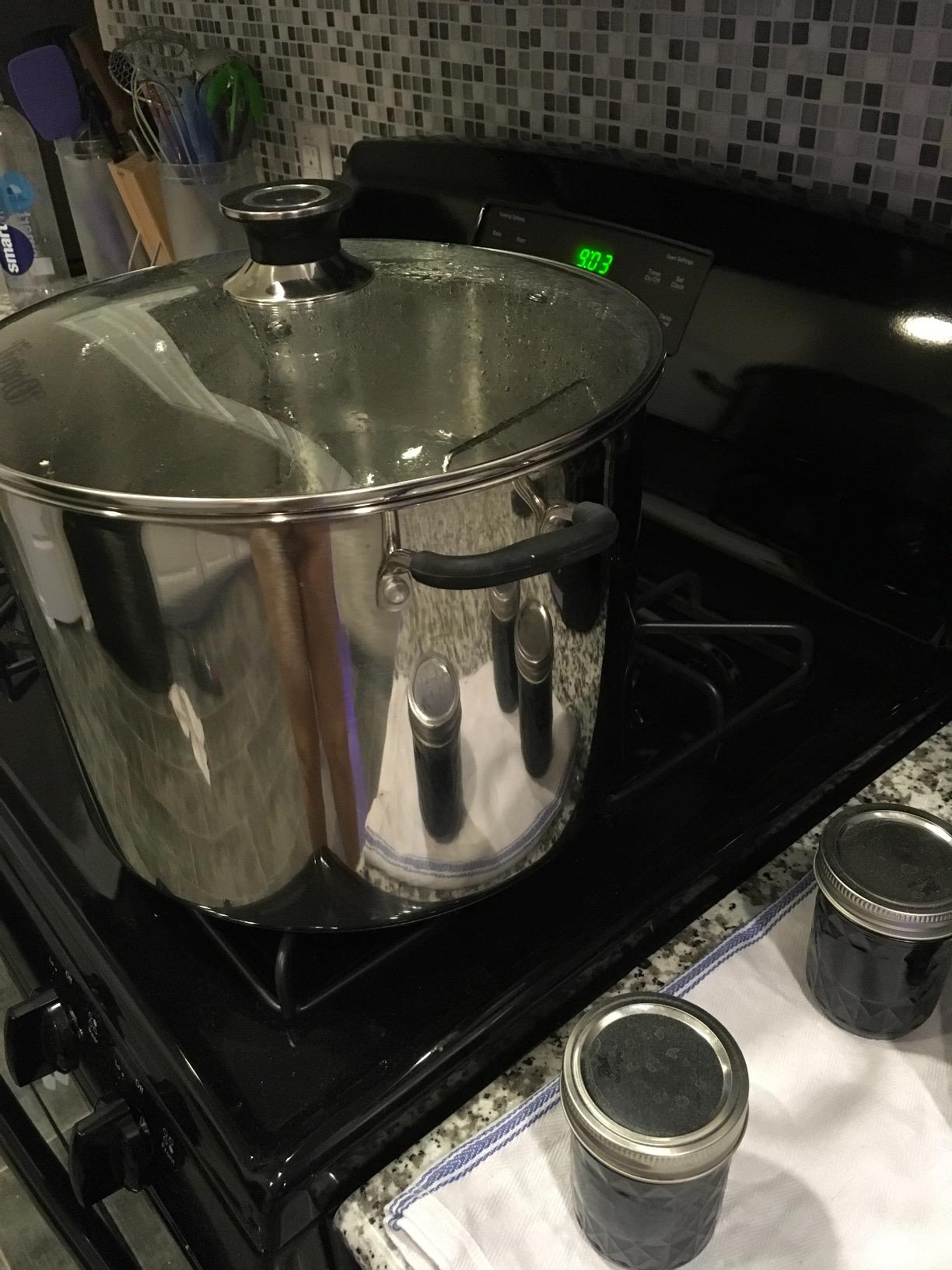
I have been running the McSunley 21.5Qt through my home canning rotation for two summers now, and it is the pot I keep coming back to. The stainless walls feel substantial in your hands, the lid seats firmly, and once you get past the initial five minutes of waiting for a rolling boil it holds that boil without babysitting. The aluminum-encapsulated base is the secret – that is what makes it safe on a smooth glass-top range without warping.
For our team’s tomato jam and bread-and-butter pickle runs, we processed 7 quart jars per batch with a full inch of water over the lids. The McSunley stayed at a steady boil for the full 15-minute processing time without any hot spots. Cleaning is a rinse and a wipe – stainless forgives the tomato splatter that would stain a porcelain-enamel pot if you let it sit.
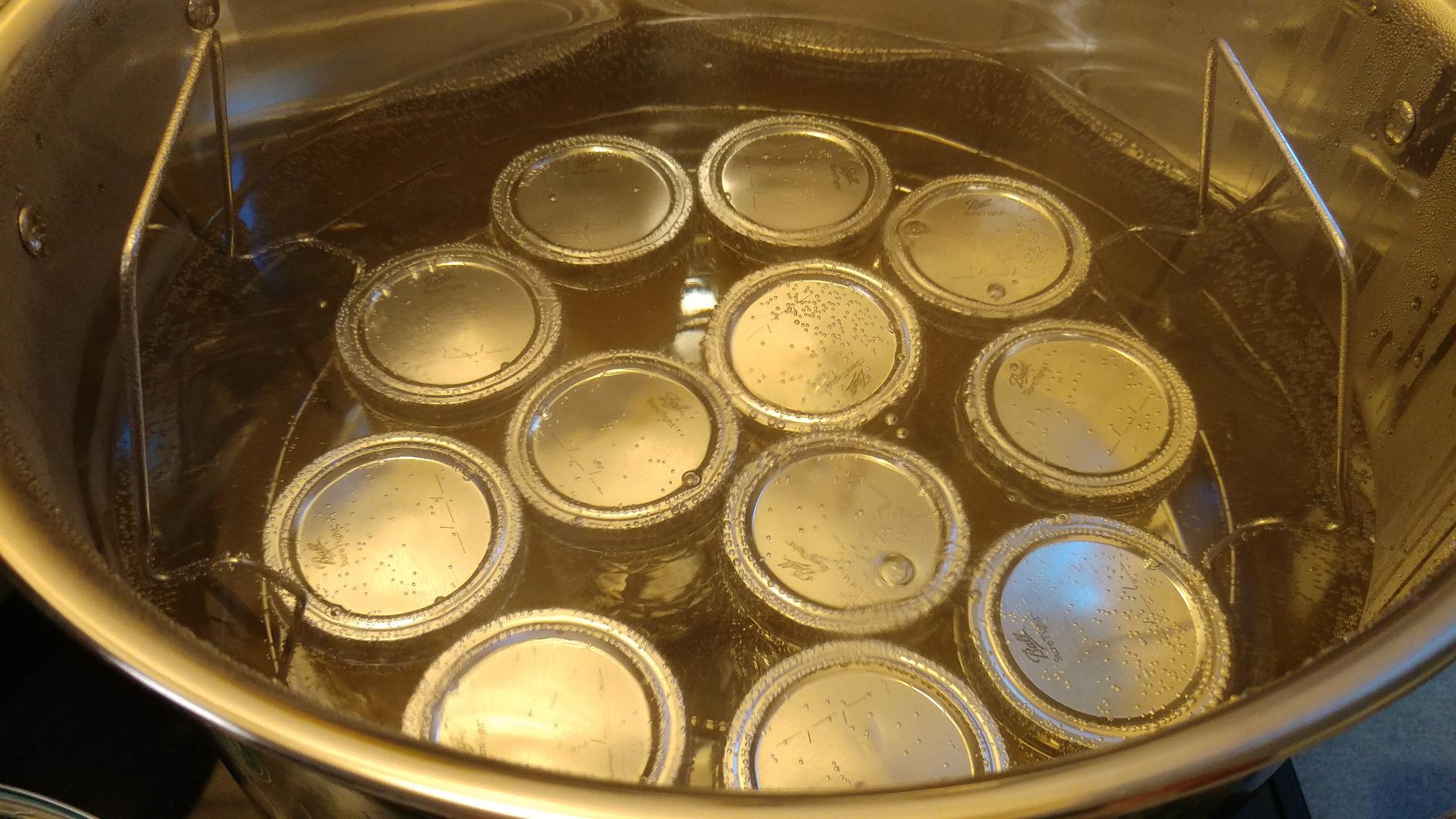
The tempered glass lid is one of those small features that turns out to matter more than I expected. You can see when the boil kicks in without cracking the lid and losing five minutes of accumulated heat. The riveted handles stay cool enough to grab with bare hands even after a full processing cycle, which is not true of every stainless canner we tested.
Where the McSunley falls short is the included rack. Out of the box the chrome wire rack feels lightweight and the handles fold inward when you load it with seven full quart jars. After the third batch I swapped in a heavier replacement rack and the pot has been flawless since. If you can budget for a sturdier rack, do it.
Who should buy the McSunley
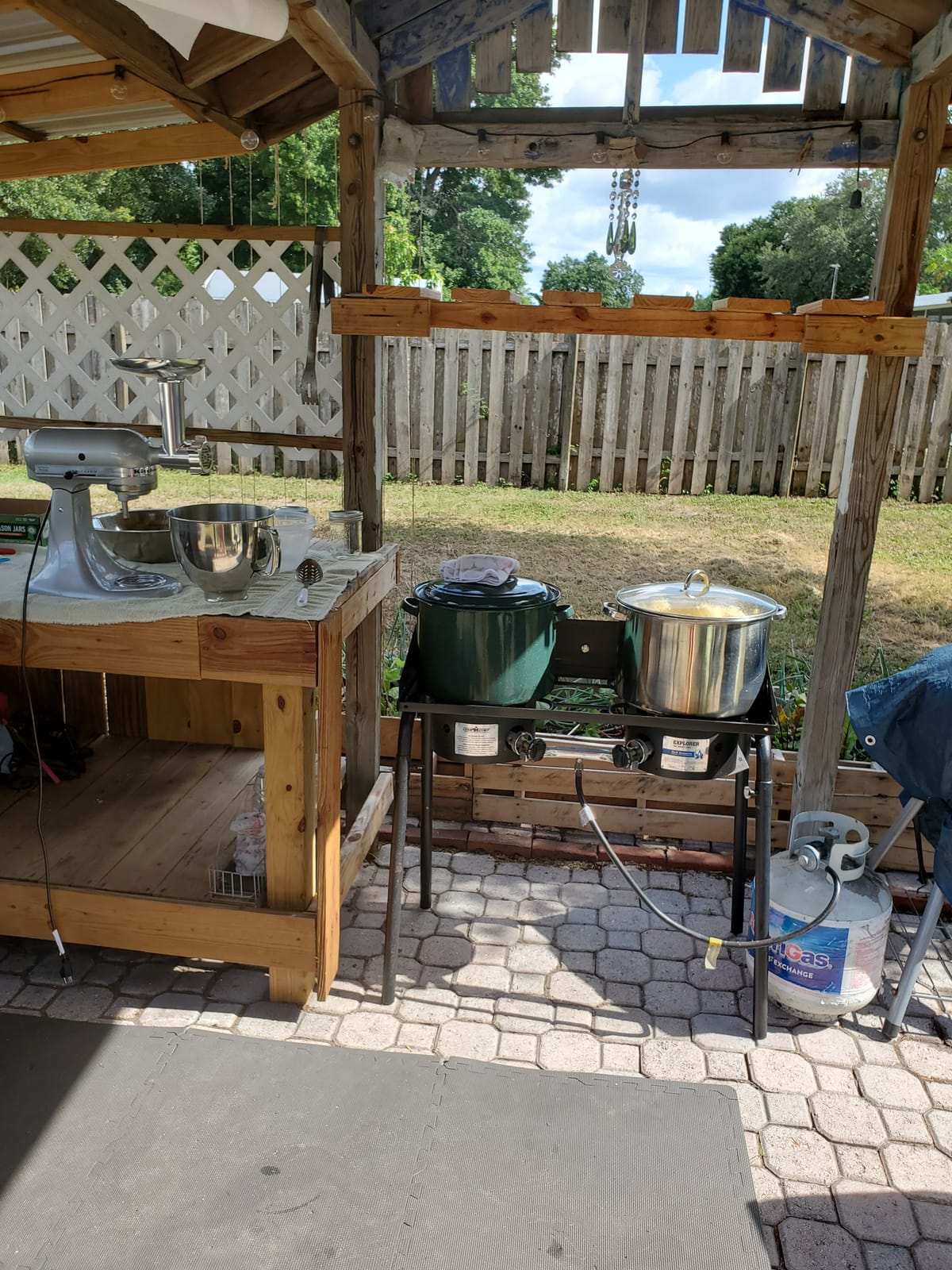
Home canners who want one pot that lasts a decade and pulls double duty as a seafood boil, corn-on-the-cob pot, or large stockpot. Anyone with a glass-top stove will appreciate the flat encapsulated base. If you process seven quart jars per batch on a regular rotation, this is the sweet spot.
Who should skip the McSunley
If you only can two or three jars at a time, the 21.5-quart footprint is overkill. Induction users will want a true triply bottom instead – the McSunley works on induction but the heating is slower than a dedicated induction canner.
2. Granite Ware 8-Piece Enamelware Starter Kit – Best Heritage Starter Kit
Granite Ware Canning Pot with Rack – 8 Piece Set Enamelware Water bath canner – Canning Starter Kit
Enameled steel
21.5 quart
8-piece set
Not for glass or induction
Pros
- Complete 8-piece kit includes jar lifter
- funnel
- lid wand
- bubble remover
- Lightweight speckled enamelware is easy to lift and store
- Long-running American brand with proven track record
- All tools nest inside the canner for compact storage
- Budget-friendly versus buying pieces individually
Cons
- Not compatible with glass-top or induction stoves
- Enamel can chip if dropped on a hard surface
- Included tools are functional but not heavy-duty
- Some buyers report the rack as flimsy under full load
The Granite Ware 8-Piece Enamelware set is the canner our grandmothers used, and a lot of our pickling readers still reach for it first. The speckled black enamelware looks like a relic until you realize the kit solves the beginner problem in one box – pot, lid, rack, jar lifter, magnetic lid lifter, jar wrench, jar funnel, and bubble remover. Nothing to track down separately.
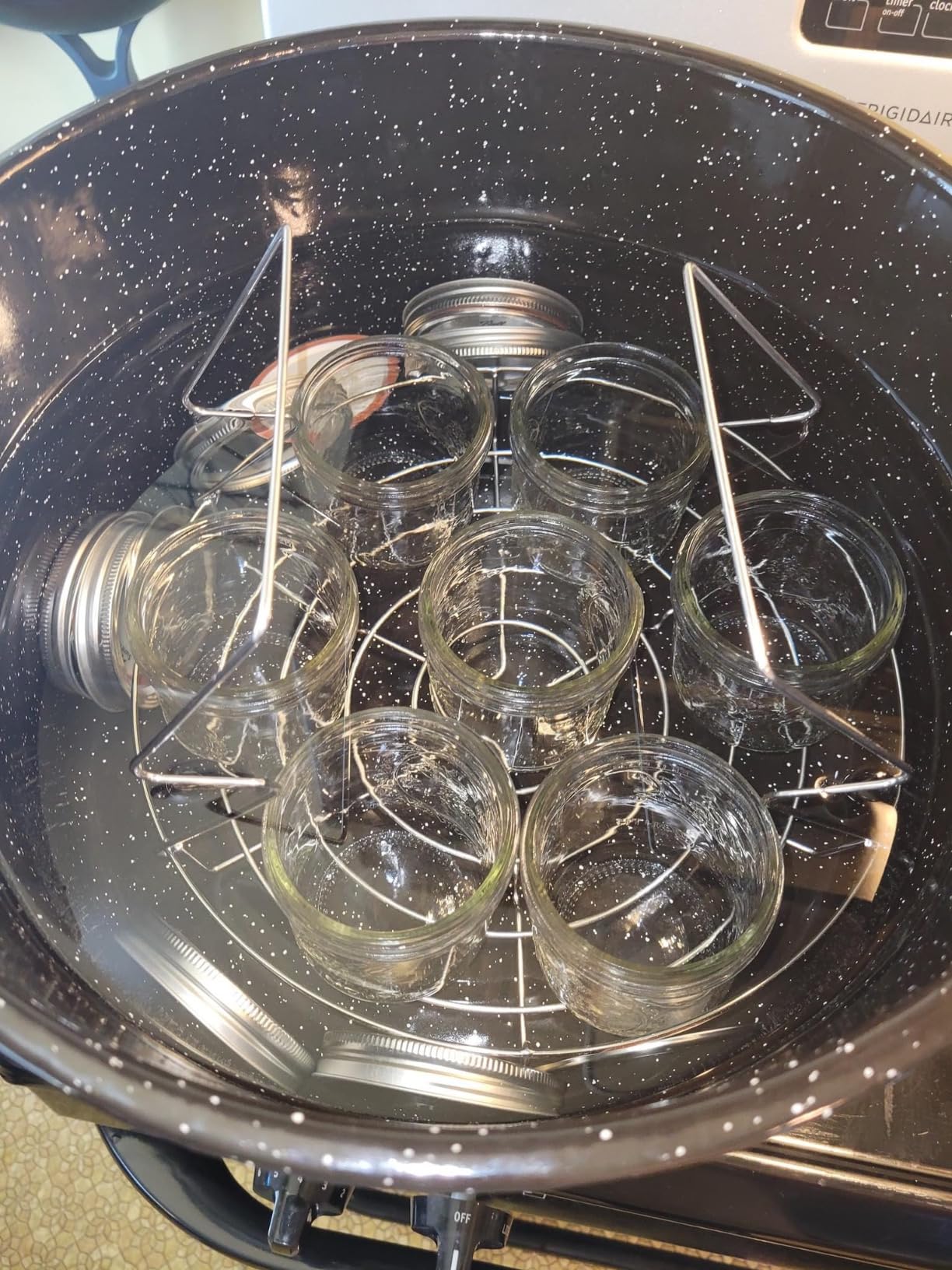
I broke in my first canner with a Granite Ware years ago, and the appeal is the same today. The pot heats evenly on a gas burner, the rack fits seven quart jars with a little room to spare, and the enamel wipes clean with a sponge. For first-timers processing strawberry jam or dill pickles, this is the kit that gets you through a season without a separate shopping list.

The eight-piece tool set is the real value here. The jar lifter has a rubber grip that does not slip on wet jars, the magnetic lid wand picks up lids from simmering water without a game of chance, and the bubble remover doubles as a headspace ruler. For someone canning for the first time, those tools cost more to buy individually than the entire kit.
The two things to know before you buy: this canner is not for glass-top stoves, and it is not for induction. The thin enamel-over-steel base will not transfer heat cleanly on a smooth cooktop, and the manufacturer explicitly warns against it. If you have a gas or coil-electric range, you are fine. If you have induction or a glass top, skip to the Concord or Harvest picks below.
Who should buy the Granite Ware kit
First-time canners on gas or electric stoves who want one box that covers every tool they need for a season. Anyone teaching a family member to can and wants the lowest-friction setup possible. Homesteaders who want a backup canner for small batches.
Who should skip the Granite Ware kit
Anyone with a glass-top or induction stove. Anyone who drops things – the enamel chips on impact. People running 14 or more jars per batch will want a larger 33-quart pot.
3. Harvest 20 Qt Stainless Dual-Use – Best for Water Bath and Steam Canning
Harvest Stainless Steel 20 Qt Canning Pot with Rack | Water Bath or Steam Canning | Works on All Stovetops Including Induction, Glass, Gas (Stainless Steel Canner + Tools) (Stainless Steel Canner)
Stainless steel
20 quart
Dual water bath and steam
5-year warranty
Pros
- Reversible rack supports both water bath and steam canning
- Built-in temperature indicator dial in lid knob
- Flat clad bottom works on every cooktop including induction
- Polished stainless steel cleans easily and resists corrosion
- Backed by a 5-year manufacturer warranty
Cons
- Premium price compared to basic enamel kits
- Rack rings can let smaller half-pint jars wobble
- Heat marks on inside bottom can be stubborn to remove
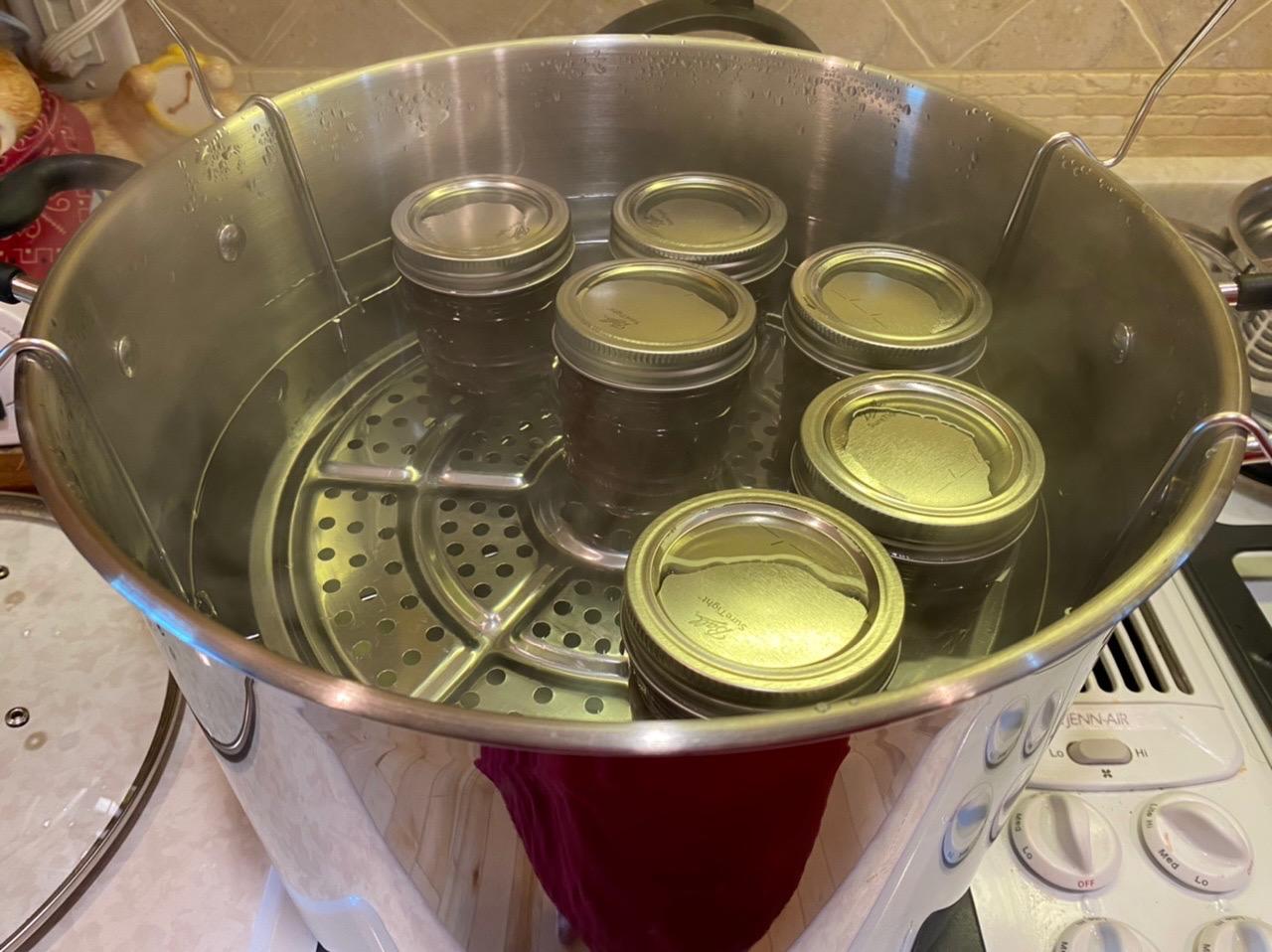
The Harvest by Kitchen Crop is the canner I recommend most often to friends who ask one question: what should I buy if I do not want to think about it for the next decade. The 20-quart capacity handles seven quart jars per batch, the flat clad bottom is honest about induction and glass-top compatibility, and the reversible stainless rack flips between water bath and steam canning modes without buying a second pot.
The standout feature is the small dial set into the lid knob. As water heats, the dial rises and tells you when you are at the right temperature to start timing. For first-time canners this is the difference between guessing and knowing, and it removes the single biggest beginner mistake: starting the timer before the pot is actually at a rolling boil.
I have run the Harvest through cherry jam, bread-and-butter pickles, and a steam canning session of tomato sauce. The dual-use capability is not a gimmick – it works. Flipping the rack to the steam position lets me run a lower-water batch that heats faster and uses less energy, which matters during a heavy August harvest when the canner is going three times a week.
The 5-year warranty is unusual in this category and tells you the manufacturer expects this pot to last. Polished stainless steel wipes clean, the silicon-encased handles stay cool enough to grab mid-boil, and the lid fits snug enough that I have never had a boil-over mess on my stove.
Who should buy the Harvest
Canners who want one pot that does both water bath and steam canning. Anyone with an induction or glass-top range who needs a flat clad bottom. Beginners who will appreciate the temperature gauge in the lid.
Who should skip the Harvest
Strict budget shoppers will find cheaper options above and below. People who only can a few jars per year will not use the steam mode enough to justify the price difference.
4. Supa Ant 24 Qt Complete Starter Kit – Best for First-Time Canners
Canning Supplies-24 Qt. Water Bath Canning Pot with Rack & Lid -Starter Kits Set for Beginners – Stainless Steel Water Bath Canner Kit & Rack-Rack, XL Ladle, Measuring Cups, Kitchen Funnel by Supa Ant
Porcelain enamel over steel
24 quart
Complete starter kit
365-day warranty
Pros
- 24-quart capacity handles a full batch plus extras
- Includes 11 tools: funnel
- jar lifter
- bubble popper
- tongs
- scoop
- 6 measuring cups
- labels
- Bright green tools are easy to spot in a busy kitchen
- 365-day warranty with 24/7 customer support
- PFOA and PTFE free food-safe materials
Cons
- Porcelain enamel is not compatible with induction or glass cooktops
- Pot is lighter gauge than premium stainless canners
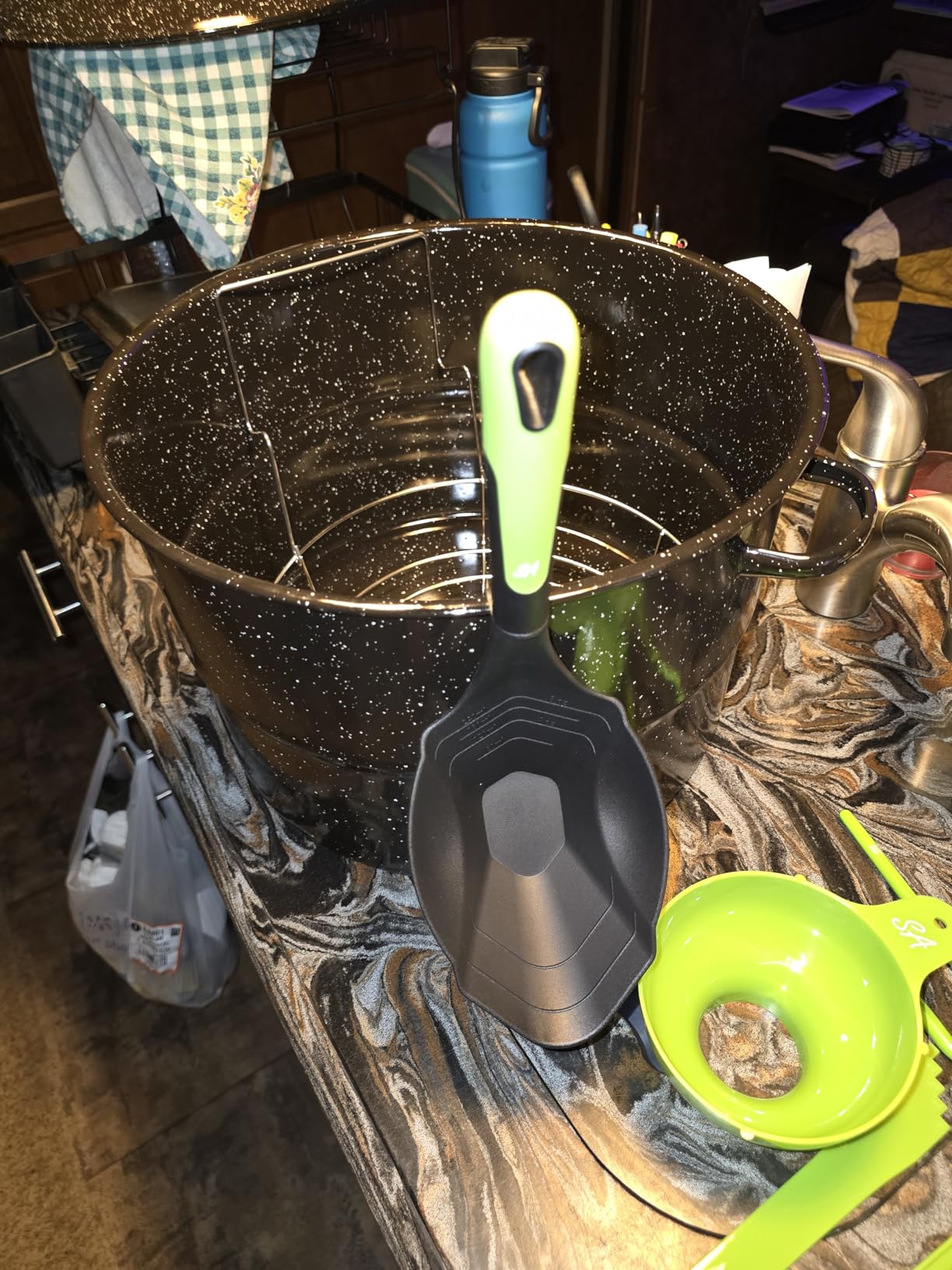
The Supa Ant 24-quart kit is the most complete beginner package on the market. When you open the box you get a canner, a rack, a lid, plus every tool you would normally have to track down at the hardware store: canning funnel, jar lifter, magnetic lid lifter, bubble popper, jar wrench, vinyl tongs, an XL canning scoop, six measuring cups, and a sheet of date labels. For someone starting from zero, that is a real head start.
The 24-quart capacity is generous for a starter pot. You can run a full batch of seven quart jars and still have headroom for a few half-pints of jam on the side. The bright green tools are a small touch but a smart one – they do not disappear into a cluttered counter like silver tools do.
I gifted this kit to my sister for her first canning season and she processed forty jars of salsa and strawberry jam without once needing to ask what tool to use next. The included instructions and the visual labels on the measuring cups make the learning curve much gentler than the bare-bones starter sets.
The caveats are the same as any porcelain enamel canner. Induction users, look elsewhere – the steel base under the enamel will not couple with induction elements reliably. Glass-top owners should also pass – the enamel can scratch a smooth surface if dragged. If you are on a gas range or coil electric, this is one of the best beginner values available.
Who should buy the Supa Ant kit
First-time canners on gas or coil electric stoves who want every tool in one box. Anyone teaching a friend or family member to can. Gift-givers looking for a single purchase that covers a whole season.
Who should skip the Supa Ant kit
Induction and glass-top owners. Experienced canners who already own a full set of tools will not need the extras. Anyone wanting a heavier-gauge pot for daily use.
5. Concord 20 Qt Triply Stainless Set – Best for Induction Cooktops
CONCORD 20 Quart Stainless Steel Canning Pot Set. Includes Canning Rack, Tongs, Jar Lifter, Funnel, Wrench, Lid Lifter, Mixer/Measurer (Induction Compatible)
Triply stainless steel
20 quart
8-piece set
Induction compatible
Pros
- Triply bottom with aluminum core heats evenly on every stove
- Extra-thick 3mm stainless rack wires keep jars upright under load
- Made in USA with quality stainless steel construction
- Full 8-piece set with vinyl-coated tongs and jar lifter
- Available in five color finishes including Onyx and Cobalt
Cons
- Some tools feel basic compared to the pot quality
- A few buyers report inconsistent induction performance
- Higher price than bare-bones starter sets
If you cook on induction, the Concord 20-quart is the canner I would put on your shortlist. The triply bottom sandwiches a layer of aluminum between two layers of stainless, which is the same construction used in high-end cookware. That aluminum core is what couples with induction elements and what makes the heat spread evenly across the base instead of pooling in the center.
The 20-quart capacity is the standard sweet spot for a home canner – seven quart jars or eight pints per batch, with a few inches of headroom above the lids for the rolling boil. The triply base means a faster ramp-up time than a disc-bottom canner, and on my induction range the Concord hit a full rolling boil in roughly eight minutes with a covered lid.
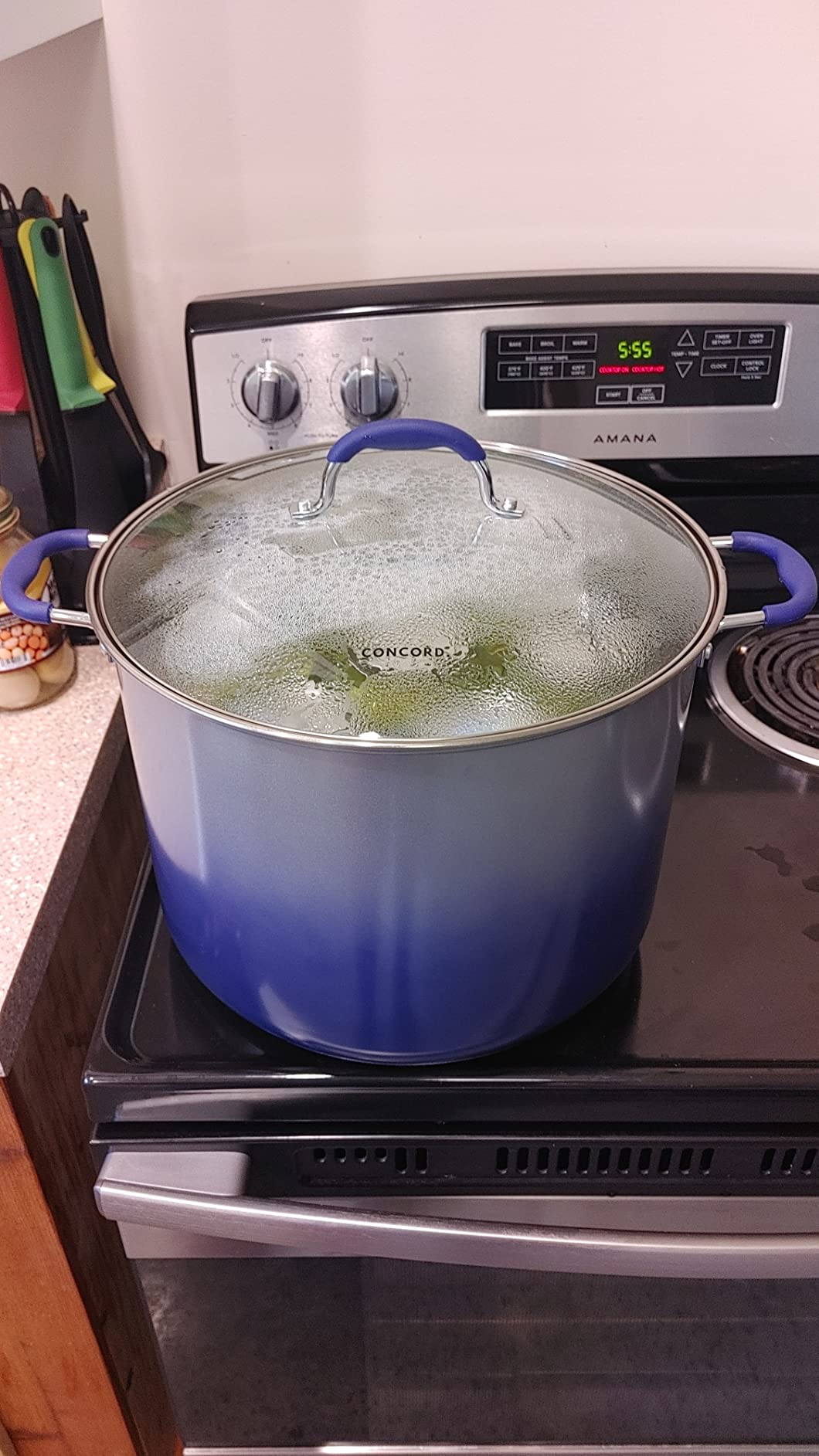
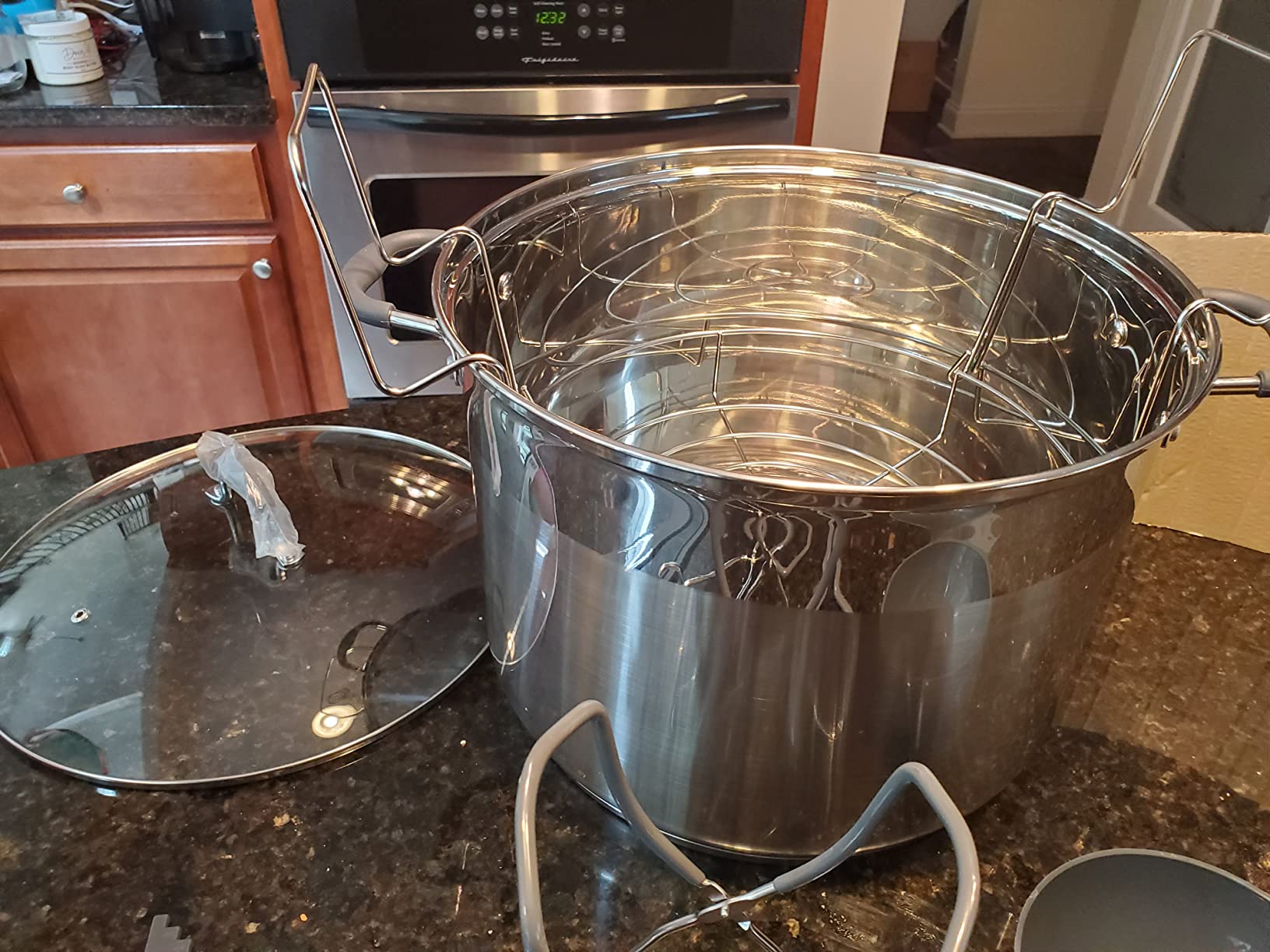
Where the Concord really earns its place is the rack. The 3mm stainless wires are noticeably thicker than the budget racks that come with most starter kits, and they hold their shape even when loaded with seven full quart jars. After dozens of batches the rack still lifts cleanly without the wobble and tip-over issues I have seen on lighter racks.
The 8-piece set is well-considered: pot, rack, vinyl-coated tongs, jar lifter, jar wrench, wide-mouth funnel, magnetic lid lifter, and a mixer and measurer. Made in the USA, available in five finishes, and sturdy enough to double as a year-round stockpot for soup or seafood boils.
Who should buy the Concord
Induction and glass-top owners who need a flat triply base. Anyone who has had a rack bend or fail under a full load. Canners who want a made-in-USA pot with color options.
Who should skip the Concord
Budget shoppers will find cheaper induction-friendly options. People who already own a full set of canning tools may not need the bundled extras.
6. Ball Enamel Water Bath Canner – Best Trusted Brand Pick
Ball Enamel Water Bath Canner, Including Chrome-Plated Rack and 4-Piece Utensil Set
Enamel coated steel
Includes chrome rack
4-piece utensil set
Ball brand
Pros
- Ball is the most recognized name in home canning
- Easy-clean non-porous enamel surface
- Includes matching lid
- chrome rack
- and 4-piece tool set
- Good size for both large quart jars and small half-pints
- Decades of brand trust and recipe compatibility
Cons
- Tongs plastic grips can break after a season of use
- Magnet on the lid lifter is weaker than third-party wands
- Rack can feel flimsy under a full load of quart jars
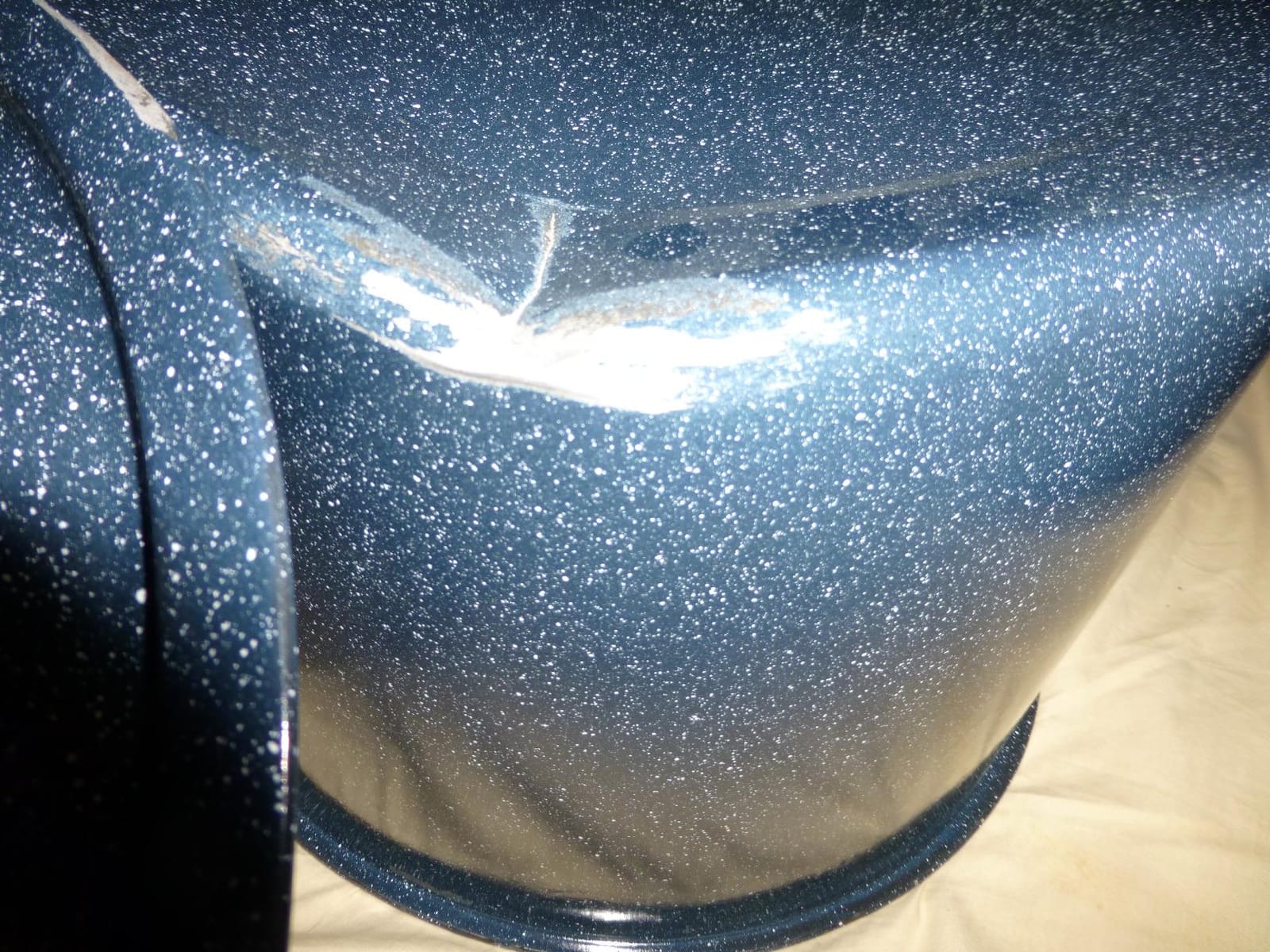
- Enamel may start to peel with rough handling
- Wire rack may rust at solder points over time
If your grandmother canned, there is a good chance she used a Ball. The Ball Enamel Water Bath Canner is the brand-name version of the classic enamel starter pot, with a chrome-plated rack and a four-piece utensil set tucked into the box. For someone who trusts the Ball name from years of buying their mason jars and pectin, the matching canner is an easy choice.
The enamel-coated steel base heats evenly on gas and coil-electric stoves, and the non-porous surface wipes clean without absorbing tomato stains or pickle odors. For small-batch canners running four or five jars at a time, this is a familiar and dependable option that does not overcomplicate the process.

The included tool set covers the basics: jar lifter, jar funnel, bubble remover, and lid wand. They get the job done for a first season, though I would upgrade the tongs after a year – the plastic grips have a tendency to crack when they see heavy use.
The review count is lower than the other picks in this guide, which is worth noting. The Ball canner has a smaller pool of buyers than the McSunley or Harvest, but the long-running brand recognition still makes it a default pick for many home canners who want the matching ecosystem with their Ball jars and pectin.
Who should buy the Ball Enamel Canner
Canners who want the matching Ball ecosystem with their jars and pectin. Anyone who has used Ball products for years and trusts the brand. Small-batch canners running four or five jars at a time.
Who should skip the Ball Enamel Canner
Induction and glass-top owners. Anyone planning to can ten or more jars per batch will want a heavier-duty pot. Budget shoppers can find more complete kits for similar money.
7. HOMKULA 27.5 Qt Large-Capacity Kit – Best for Big Harvests
HOMKULA 27.5 QT Water Bath Canning Pot with Rack and Lid, Canning Supplies
Stainless steel
27.5 quart
Heat-resistant gloves included
Foldable rack
Pros
- Extra-large 27.5-quart capacity for big-batch canning
- Includes 100 date labels and heat-resistant gloves as thoughtful extras
- Foldable rack design makes storage easier in small kitchens
- Rust-resistant food-grade stainless steel construction
- Dishwasher-safe components for fast cleanup
Cons
- Review pool is smaller than established brands
- Magnetic lid lifter is not dishwasher safe
The HOMKULA 27.5-quart kit is the canner to reach for when the harvest is overwhelming the kitchen. When the tomato plants are producing faster than the family can eat and the fruit tree is dropping apples by the bushel, you want a pot that can take ten or more jars per batch. The HOMKULA handles that volume without feeling like a commercial pot.
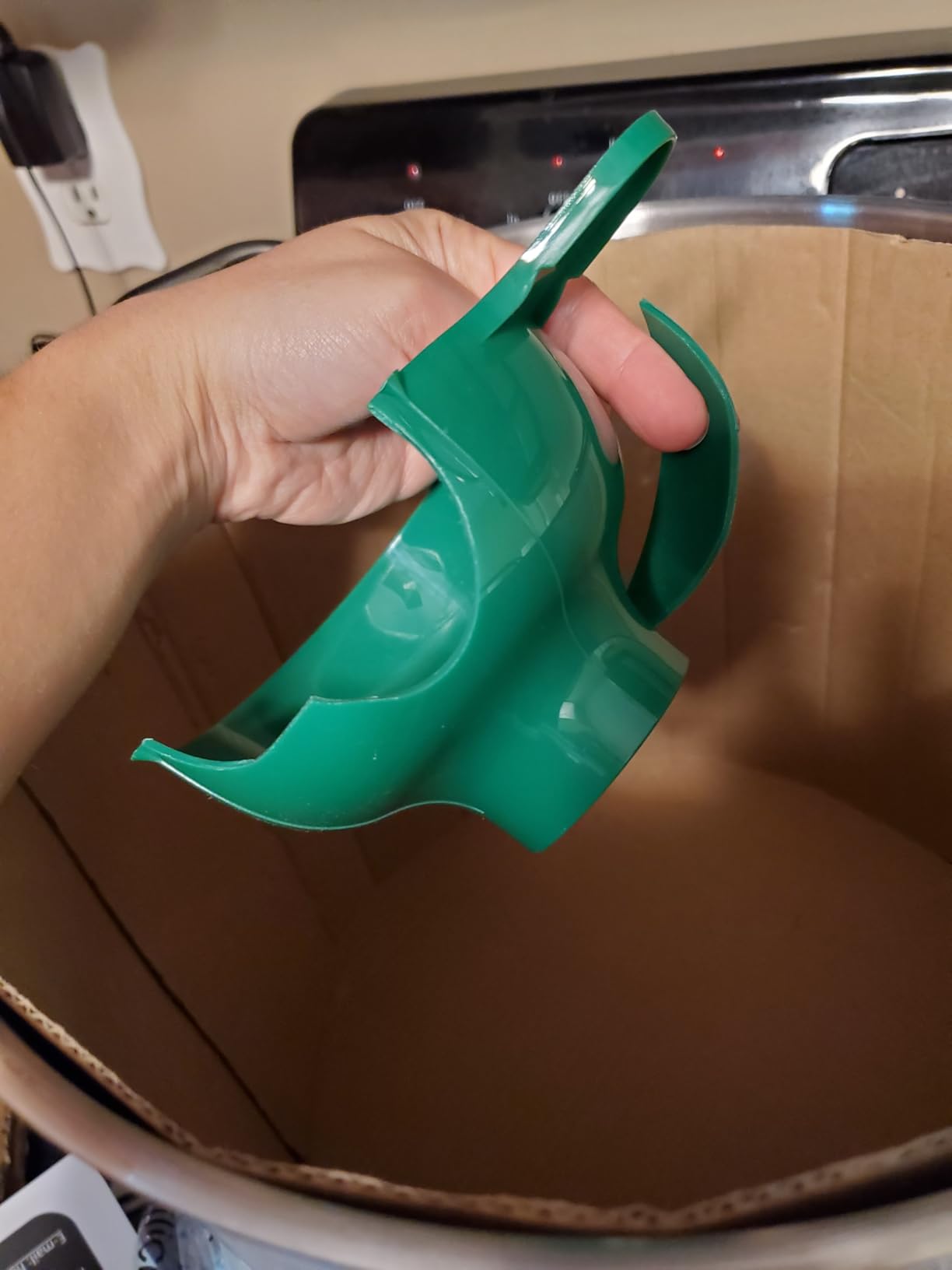
The included extras are more thoughtful than what most kits offer. There are heat-resistant gloves for handling hot lids, a hundred date labels to keep your pantry organized, and a foldable rack that collapses for storage in a smaller cabinet. These are the kinds of details that get appreciated after a long day of processing.
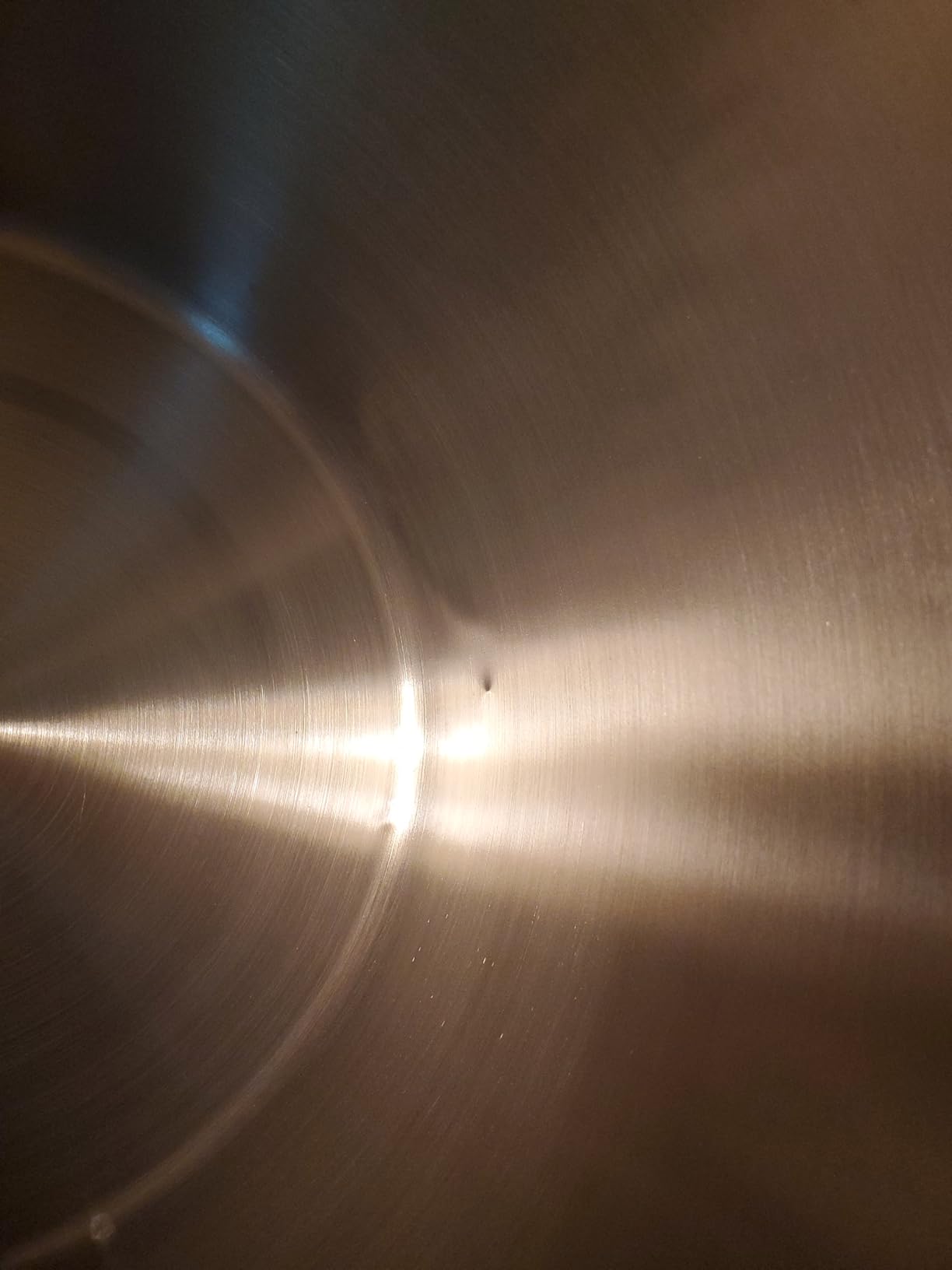
The 27.5-quart capacity holds ten pint jars or seven quart jars with room above the lids for a steady boil. The stainless walls are thicker than the budget enamel kits, the handles stay cool enough to grab, and the lid fits snugly without rattling during the rolling boil.
Where the HOMKULA loses points is brand recognition – the review count is lower than the McSunley or Harvest, and the long-term track record is shorter. For a first-time canner that may matter. For someone who already knows they want a big pot and trusts stainless over enamel, it is a strong value.
Who should buy the HOMKULA
Big-batch canners with a productive garden or orchard. Homesteaders running salsa, applesauce, and tomatoes in serious volume. Anyone who wants gloves and labels included instead of buying them separately.
Who should skip the HOMKULA
First-time canners processing a few jars per season – this is overkill. Anyone with limited storage space – the 27.5-quart footprint needs room in the cabinet.
8. Vigamimn 20 Qt Induction Starter Kit – Best Budget Pick
Canning Pot-Canning supplies starter kit, Canning Tool Kits Set for Beginners, Stainless Steel Water Bath Canner Kit with rack for canning
Stainless steel
20 quart
Induction ready
13-piece kit
Pros
- Three-layer encapsulated base works on induction
- Built-in timer in lid handle for precise processing
- Wide-mouth funnel keeps jar rims clean during fill
- Includes long heat-resistant wrist gloves
- 13-piece kit covers every beginner tool
Cons
- Stainless gauge is thinner than premium canners
- Lower brand recognition than established names
- Some buyers note slight wobble in the rack under heavy load
The Vigamimn 20-quart kit is the budget pick that punches above its weight class. For less than some bare-bones starter pots, you get a stainless steel canner with a three-layer encapsulated base that works on induction, a built-in timer in the lid handle, and a thirteen-piece tool kit that includes everything a first-time canner would need for a full season.
The built-in timer is the feature I did not expect to like as much as I do. It is a small dial on the lid handle that lets you set a processing time without dragging a kitchen timer across the kitchen. For long boiling-water batches that run 10, 15, or 20 minutes, the timer keeps you from losing track mid-task.
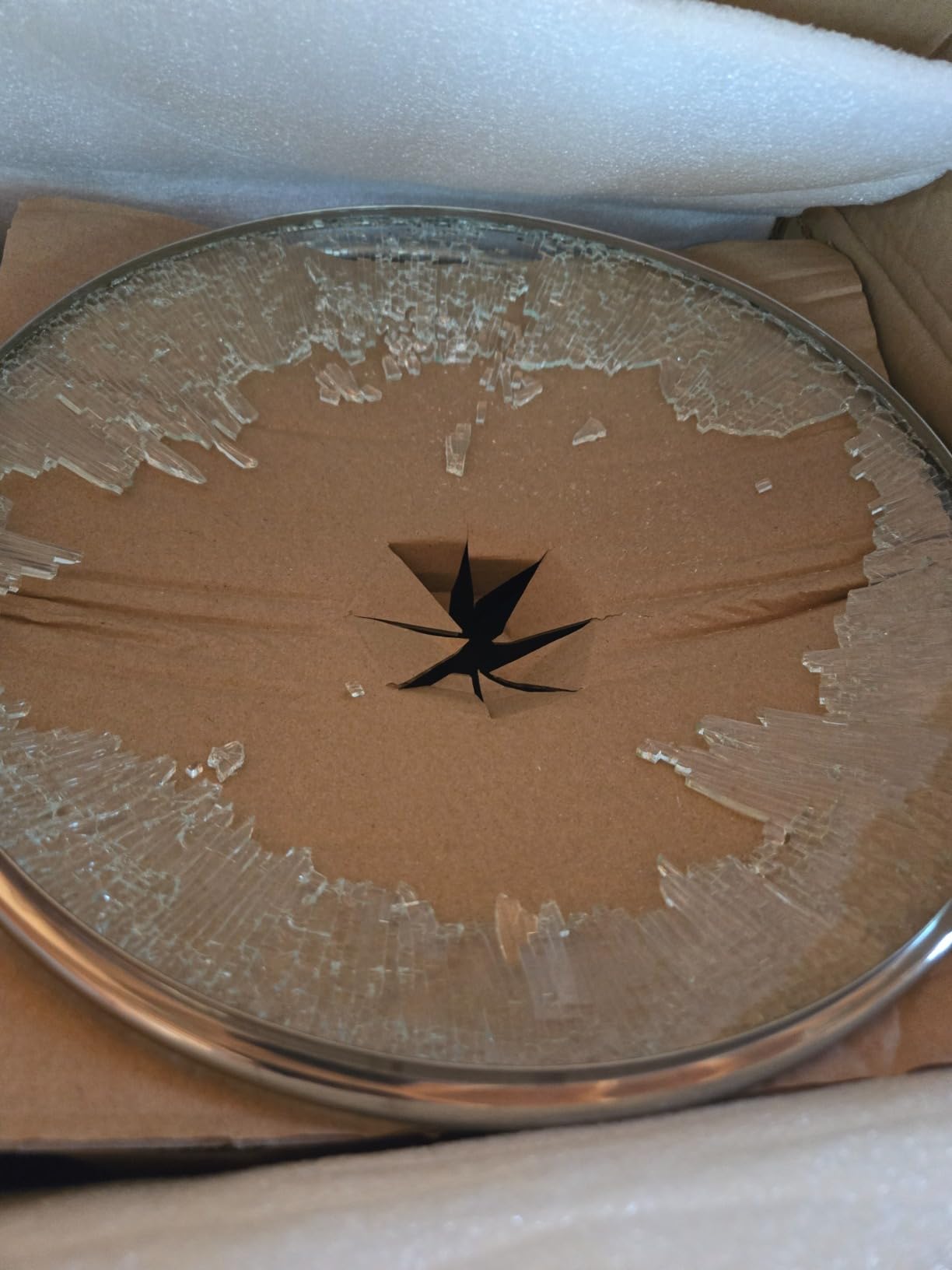
The three-layer base is honest induction-compatible – the encapsulated aluminum core couples with induction elements and spreads heat evenly across the bottom of the pot. On a glass-top stove the Vigamimn sits flat without warping, and it heats up faster than the budget enamel kits by a noticeable margin.
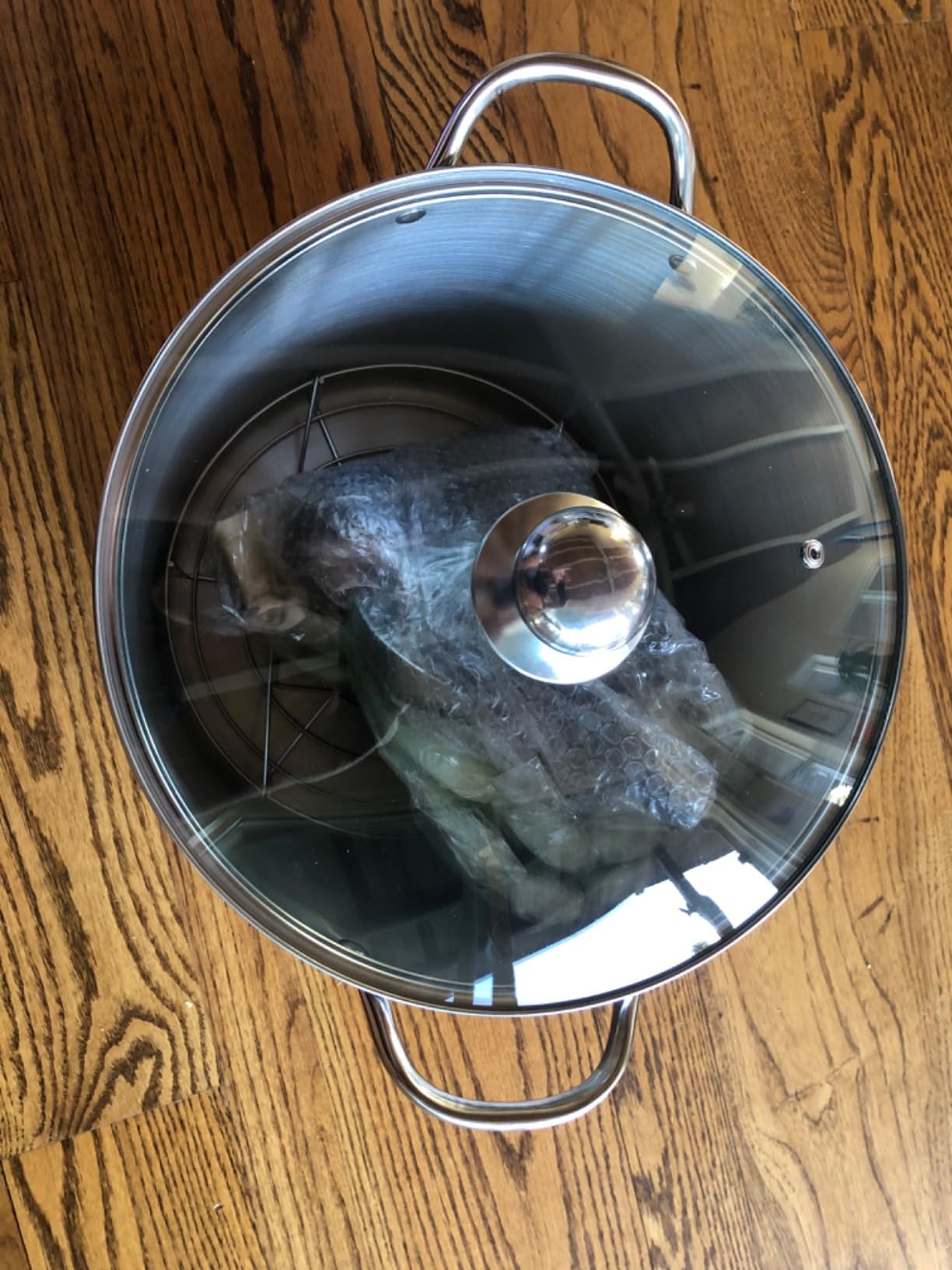
The thirteen-piece kit is comprehensive: pot, lid, collapsible rack, funnel, tongs, jar lifter, magnetic lid lifter, jar wrench, stirrer, jam ladle, date labels, and long heat-resistant wrist gloves. The collapsible rack is a nice touch for kitchens where storage space is at a premium.
Who should buy the Vigamimn kit
Budget shoppers who want induction compatibility without paying for the Concord or Harvest. First-time canners who want every tool included for a single price. Anyone with limited storage who will appreciate the collapsible rack.
Who should skip the Vigamimn kit
Brand-loyal shoppers who prefer established names like McSunley or Ball. Anyone wanting the heaviest-gauge stainless for daily use will find a thicker pot in the Concord or McSunley.
How to Choose the Best Water Bath Canner for Your Kitchen
Choosing a water bath canner comes down to five questions: what stove do you have, how many jars do you process at once, what material you prefer, whether you want to use it for steam canning, and how much storage space you have. The right canner for a glass-top induction range in a city apartment is not the same as the right canner for a gas stove in a country kitchen with a root cellar to fill. Below is the framework our team uses when readers write in asking for advice.
Depth and capacity – the 9-inch rule
A water bath canner must hold jars with at least 1 to 2 inches of water above the lids. For standard quart jars, that means a pot at least 9 to 10 inches deep inside. Anything shallower and the water will boil off below the lid line, leaving the upper jars under-processed. Most 20-quart and 21.5-quart canners on the market meet this depth. Smaller stockpots often do not.
Material – enamel versus stainless versus aluminum
Porcelain-enamel over steel is the classic budget pick – it heats evenly on gas and electric, costs less, and has decades of proven track records. The tradeoffs are weight, chipping risk, and incompatibility with induction and most glass-top stoves. Stainless steel is the modern heirloom material – heavier, more durable, induction-compatible when it has an encapsulated or triply base, and forgiving of rough handling. Plain aluminum heats fastest but reacts with acidic foods and is no longer the first choice for water bath canning. For our pickling and jam work we run stainless when we can.
Stove compatibility – the most-asked question
Glass-top stoves and induction ranges both demand a flat, heavy-gauge base. Thin enamel pots will scratch a smooth glass surface and may warp on induction if the magnetic coupling is weak. Stainless steel with an encapsulated aluminum base is the safest answer for both. The Concord, Harvest, McSunley, and Vigamimn all use encapsulated bases that work across cooktop types. The Granite Ware, Supa Ant, and Ball enamel kits explicitly warn against glass-top and induction use.
The rack matters more than you think
The removable rack is the most overlooked feature on a water bath canner, and the one that fails first on budget kits. A good rack keeps jars off the direct heat, lets water circulate underneath, and lifts out cleanly without tipping. The Concord’s 3mm stainless rack is the sturdiest we tested. The McSunley’s stock rack is the weakest – replace it within a season. The Harvest and Supa Ant racks sit in the middle. A flimsy rack is the most common reason a batch of jars ends up cracked or tipped.
Steam canner versus water bath canner
A steam canner uses a smaller amount of water that boils into steady steam to process jars. It heats faster and uses less energy, but only works for high-acid foods and requires jars in a single layer with at least 30 minutes of altitude-adjusted processing time at the start. The USDA Complete Guide to Home Canning treats steam canning as approved for high-acid foods only. For low-acid vegetables, meat, and soups you still need a pressure canner. The Harvest by Kitchen Crop flips between both modes with a reversible rack and is the easiest way to try steam canning without buying a second pot.
Glass-top and induction checklist
Before you buy a canner for a glass-top or induction range, confirm three things: the base is flat and heavy-gauge, the manufacturer explicitly lists induction or smooth-top compatibility, and the filled weight of the canner plus water plus jars does not exceed your cooktop’s rated load. A 21-quart canner full of water weighs roughly 30 pounds – within most glass-top ratings, but worth checking if you have a lightweight portable induction burner.
Step-by-step water bath canning in 7 steps
- Wash jars, lids, and bands in hot soapy water. Keep jars warm until fill time to prevent thermal shock.
- Prepare your recipe – jam, pickle, fruit preserve – and bring it to a boil.
- Fill warm jars using a canning funnel, leaving the headspace your recipe specifies (typically 1/4 inch for jams, 1/2 inch for pickles).
- Run a bubble remover through each jar to release trapped air, then wipe the rim with a damp cloth.
- Center the lid on the jar, screw the band on fingertip-tight, and load jars onto the rack inside the canner.
- Cover jars with 1 to 2 inches of water, bring to a rolling boil, and start timing once the boil is steady.
- When the timer ends, turn off the heat, remove the lid, and let jars rest in the canner for 5 minutes before lifting them out with a jar lifter onto a folded towel.
Common beginner mistakes to avoid
- Starting the timer before the water reaches a full rolling boil. Wait for that steady, non-stop boil before you begin counting.
- Skipping the bubble remover. Trapped air changes the headspace and can lead to a weak seal.
- Over-tightening the bands. Fingertip-tight is correct – the band only needs to hold the lid in place while the vacuum forms.
- Forgetting altitude adjustments. Above 1,000 feet, add 1 minute of processing time per 1,000 feet of elevation for water bath canning.
- Using a thin pot without a rack. Direct heat on a glass jar bottom will crack the jar every time.
Frequently Asked Questions
What is a water bath canner and how does it work?
A water bath canner is a large, deep pot with a fitted lid and a removable perforated rack used to process high-acid foods – jams, jellies, pickles, fruit preserves, salsa, and acidified tomatoes – in boiling water. Jars sit on the rack, covered by 1 to 2 inches of water, and boil at a steady 212 degrees F for the recipe’s processing time. The sustained heat kills spoilage organisms and, as jars cool, the lids pull down into a vacuum seal.
Can I use a regular pot for water bath canning?
You can use a deep stockpot if it has a flat bottom, holds enough water to cover your jars by 1 to 2 inches, and you add a removable rack. Many large stockpots meet the depth requirement but skip the rack, which lets jars touch the direct heat and crack. A purpose-built water bath canner adds the fitted lid and the included rack that makes the process safer.
What is the difference between a water-bath and a pressure canner?
A water bath canner boils jars at 212 degrees F and is approved only for high-acid foods – fruits, jams, pickles, and acidified tomatoes. A pressure canner builds to 240 degrees F under steam pressure and is required for low-acid foods – vegetables, meats, soups, and most tomato sauces without added acid. The two are not interchangeable, and using a water bath canner for low-acid foods is unsafe.
What size water bath canner do I need?
A 20 to 21.5 quart canner is the standard home size and holds 7 quart jars, 8 to 9 pint jars, or 12 half-pint jars per batch. If you process a few jars per season this is the right size. If you run a productive garden or large orchard, a 27.5 to 33 quart canner lets you do 10 or more jars per batch. Smaller than 16 quarts is hard to recommend because the depth requirement often rules out quart jars.
Can I use a water bath canner on a glass-top or induction stove?
Yes, but only with a flat, heavy-gauge base that the manufacturer lists as induction or smooth-top compatible. Thin enamel pots will scratch a glass surface and may warp on induction. Stainless steel canners with an encapsulated aluminum or triply bottom – like the Concord, Harvest, McSunley, or Vigamimn – are the safest picks for glass-top and induction ranges. Always check that the filled weight of the canner plus water plus jars stays within your cooktop’s rated load.
Is a steam canner as good as a water bath canner?
For high-acid foods, a steam canner is approved by the National Center for Home Food Preservation and the USDA Complete Guide to Home Canning, and uses less water and energy. It is not a substitute for a water bath canner, though, and you must add 30 minutes to processing time at altitudes above 1,000 feet. For low-acid foods you still need a pressure canner regardless of which method you use for jams and pickles.
Do I really need a rack for water bath canning?
Yes. The rack keeps jars off the direct heat at the bottom of the pot and lets boiling water circulate around every jar. Without a rack, the jar bottoms sit on the hot metal and crack. Many budget canners ship with a flimsy rack that tips under a full load – if yours does, replace it with a heavier stainless rack before your next batch.
What are the most common mistakes in water bath canning?
The most common beginner mistakes are starting the timer before the water reaches a full rolling boil, skipping the bubble remover and leaving trapped air in the jar, over-tightening the bands, forgetting altitude adjustments above 1,000 feet, and using a thin pot without a rack. Each of these can lead to a weak seal, a cracked jar, or under-processed food.
The Bottom Line: Picking the Right Water Bath Canner
The McSunley 21.5Qt Stainless Steel is the water bath canner we recommend for most home canners because it lasts decades, doubles as a year-round stockpot, and handles a full seven-quart batch without complaint. For glass-top and induction owners, the Concord 20 Qt Triply Set is the safer pick thanks to its heavy-duty aluminum core. Beginners who want one box that covers every tool should start with the Supa Ant kit or the Harvest if induction compatibility matters.
For our readers at We Are Salt who are already pickling and salt-curing, the right water bath canner becomes the centerpiece of a home preservation pipeline – vinegars, ferments, fruit preserves, and the salt-cured relishes that pair with cheese boards all run through the same pot. A stainless canner that lasts twenty years is a piece of equipment that pays for itself in the first season.
Whichever canner you choose, follow the depth, rack, and altitude rules from the USDA Complete Guide to Home Canning and the National Center for Home Food Preservation, and your jars will seal every time. Happy canning.