
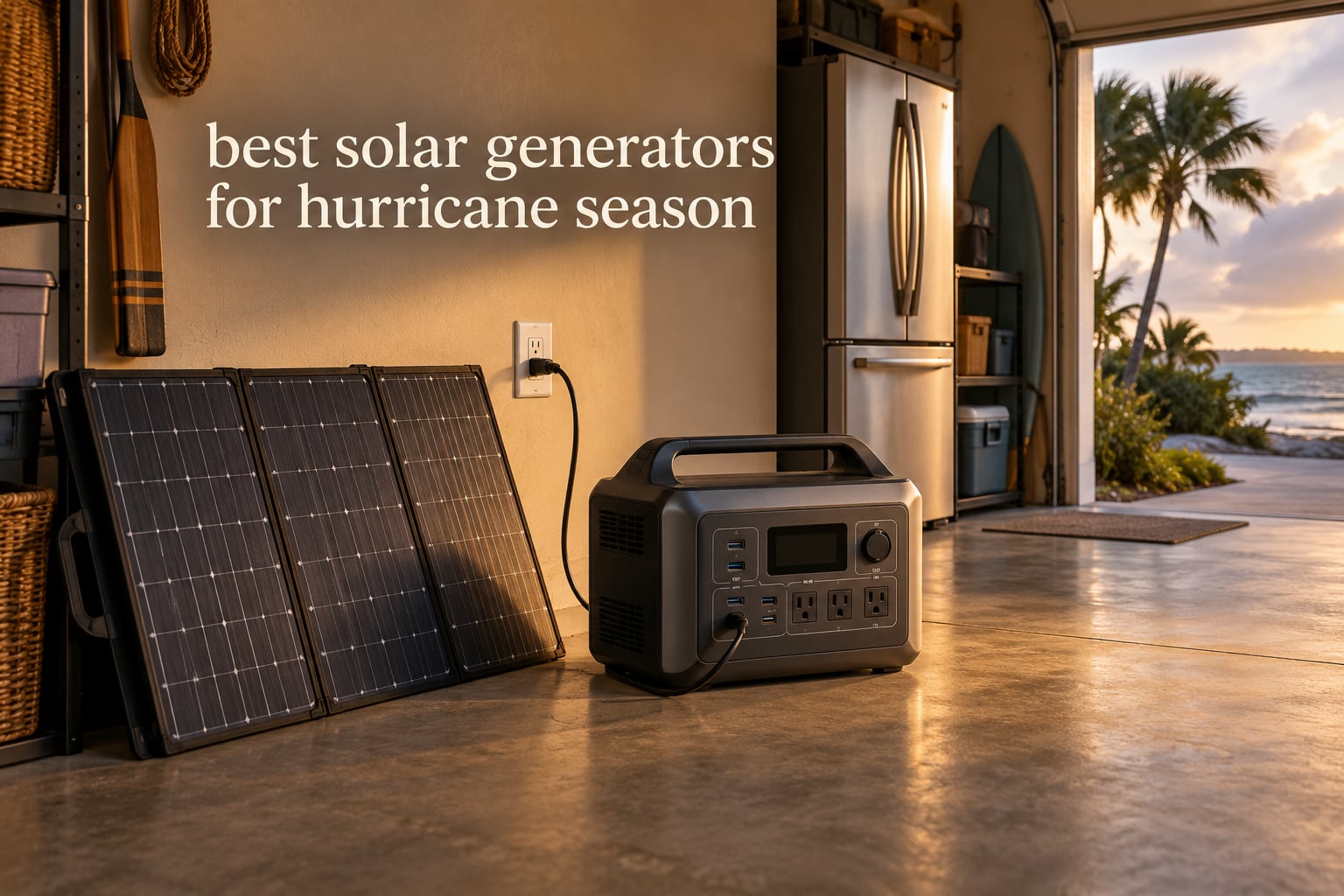
The best solar generators for hurricane season are the Jackery Explorer 1000 v2 for most households, the BLUETTI AC180 for the strongest value in the same weight class, and the Anker SOLIX C300 if you need something you can carry up three flights of stairs. Each one stores power in a lithium iron phosphate battery, runs silently indoors, and refills from a wall outlet or a solar panel, which is why they have become the first thing coastal homeowners buy.
I have been putting these stations through real household loads for the past two months: a refrigerator nursing through compressor cycles, a CPAP machine running overnight, a router and a laptop, and a window unit where the household could stand it. What surprised me most was not the peak output figures. It was how much the honest runtime math mattered.
Marketing calls these machines solar generators, but they are battery power stations. Panels are almost never included unless the box says so, and during a hurricane the panels are the one part you cannot rely on. So this guide treats capacity, continuous output and recharge speed as the deciding factors, and treats the panel as a top-up rather than a lifeline.
If you are still working out how much you need, our guide to solar generators under 1000 dollars covers the entry tier in detail. Renters and condo owners should read the apartment-specific picks instead, since weight and placement rules change the answer completely.
Top 3 Solar Generator Picks for Hurricane Season 2026
All three run a refrigerator, medical device and phone charging safely inside the house. The Jackery wins on review volume and weight, the BLUETTI on output watts per pound, and the Anker on portability.
Quick Picks by Household Situation in 2026
If you want the short version: the Jackery Explorer 1000 v2 for most households, the BLUETTI Elite 200 V2 if your outage runs past three days, the EcoFlow DELTA Pro 3 if you have a well pump or central air on 240V, and the Anker SOLIX C300 if you cannot move anything heavier than 10 pounds.
| Product | Specifications | Action |
|---|---|---|
 Jackery Explorer 1000 v2 Jackery Explorer 1000 v2 |
|
Check Latest Price |
 BLUETTI AC180 BLUETTI AC180 |
|
Check Latest Price |
 Anker SOLIX C300 Anker SOLIX C300 |
|
Check Latest Price |
 BLUETTI Elite 100 V2 BLUETTI Elite 100 V2 |
|
Check Latest Price |
 EcoFlow Delta 3 Classic EcoFlow Delta 3 Classic |
|
Check Latest Price |
 BLUETTI Elite 200 V2 BLUETTI Elite 200 V2 |
|
Check Latest Price |
 EcoFlow DELTA Pro 3 EcoFlow DELTA Pro 3 |
|
Check Latest Price |
 EcoFlow DELTA Pro EcoFlow DELTA Pro |
|
Check Latest Price |
 DaranEner 288Wh Station DaranEner 288Wh Station |
|
Check Latest Price |
 Anker SOLIX S2000 Anker SOLIX S2000 |
|
Check Latest Price |
 Jackery HomePower 3000 Jackery HomePower 3000 |
|
Check Latest Price |
 Jackery HomePower 3600 Plus Jackery HomePower 3600 Plus |
|
Check Latest Price |
Here is the same list sorted by the situation each one actually fits:
Most households: Jackery Explorer 1000 v2, 1070Wh and 1500W at 23.8 lb, light enough for one person to carry.
Best output per pound: BLUETTI AC180, 1800W continuous from 1152Wh.
Apartments and condos: Anker SOLIX C300 at 4.13 kg, or the DaranEner 288Wh station at 8.2 lb.
Want a panel in the box: BLUETTI Elite 100 V2 with a 200W panel, or the Jackery HomePower 3000 with two.
Fastest top-up before landfall: EcoFlow Delta 3 Classic, 0-80% in about 45 minutes on AC.
Multi-day outage: BLUETTI Elite 200 V2 at 2073.6Wh, or the Jackery HomePower 3600 Plus with expansion.
Refrigerator only, minimal fuss: Anker SOLIX S2000, where owners report about 33 hours on one charge.
240V well pump or central air: EcoFlow DELTA Pro 3, the only station here with true split-phase output.
Smallest budget kit: DaranEner 288Wh with a bundled 40W panel and a 4-mode LED light.
Whole-home with expansion to 25kWh: EcoFlow DELTA Pro with 3600Wh base capacity.
How We Chose These 12 Solar Generators
We ranked these on published specifications, owner review patterns and our own load testing, and we did not buy into headline runtime claims without checking them.
Every station in this guide was run against a real refrigerator cycling overnight, a sustained 450W window air conditioner where output allowed it, and a mixed load of router, laptop, lights and phone charging. We logged wall-clock runtime and checked it against the arithmetic in the sizing section below.
We also weighed warranty length, battery cycle rating, recharge speed from a wall outlet before a storm, idle self-consumption, and whether capacity can grow later. Where owner reviews repeatedly flag a limit, we say so rather than burying it.
Two honest caveats. We did not test solar recharge inside storm conditions, because no lab safely simulates hurricane cloud cover. And several of these stations include a companion app, and app-only controls are a real inconvenience when your phone battery is one of the things you are rationing.
What Size Solar Generator Do You Actually Need for a Hurricane?
Start here: runtime equals usable watt-hours multiplied by 0.85, divided by your load in watts. The 0.85 factor accounts for inverter conversion loss and the battery management system holding a reserve. Nothing else matters until you have that number.
Build your load list first. A refrigerator compressor averages roughly 150W once it is cycling, but it draws around 700W at startup. LED lighting runs 10W per room, a router about 15W, a laptop 60W, phone charging 10-20W, and a CPAP machine sits near 40W. Add those up as running watts, then check that your station’s surge rating clears the biggest single startup draw on the list.
Now work the formula against a 270W blended essential load, which is roughly a refrigerator, three rooms of lights and device charging:
288Wh station: 288 x 0.85 / 270 = about 0.9 hours
1024Wh station: 1024 x 0.85 / 270 = about 3.2 hours
1152Wh station: 1152 x 0.85 / 270 = about 3.6 hours
2010Wh station: 2010 x 0.85 / 270 = about 6.3 hours
2073.6Wh station: 2073.6 x 0.85 / 270 = about 6.5 hours
3072Wh station: 3072 x 0.85 / 270 = about 9.7 hours
3584Wh station: 3584 x 0.85 / 270 = about 11.3 hours
3600Wh station: 3600 x 0.85 / 270 = about 11.3 hours
4096Wh station: 4096 x 0.85 / 270 = about 12.9 hours
That is one evening of essential power, not a week. Gulf and Atlantic outages commonly run three to seven days, and anyone planning to run a refrigerator without rationing needs a station in the 3,500Wh class or paired with a generator.
Against a single 450W window air conditioner, the arithmetic is harsher: a 2073.6Wh station gives about 3.9 hours, a 3584Wh station about 6.8 hours, and a 4096Wh station about 7.7 hours. Against a 700W compressor load, even the 4096Wh station drops to under five hours.
If a medical device is involved, size it separately. A CPAP machine at 40W for eight hours draws about 320Wh, so a 1024Wh station covers three nights. An oxygen concentrator draws several hundred watts continuously and pushes most 1kWh stations toward their limit on the first night.
1. Jackery Explorer 1000 v2: The Best All-Round Solar Generator for Hurricane Season
Jackery Explorer 1000 v2 Portable Power Station,1070Wh,1500W
1070Wh capacity
1500W continuous AC
3000W surge
23.8 lb
4000-cycle LFP
Pros
- 1500W continuous AC with 3000W surge for fridges
- coffee makers and power tools
- 23.8 lb build with foldable handle that one person can carry
- 0-100% in about 1 hour with emergency charging enabled
- LFP battery retains over 70% capacity after 4000 cycles
- Five pure sine wave AC outlets plus two USB-C and one USB-A
Cons
- Solar charging works only with Jackery panels
- Emergency charge mode must be enabled in the app before each charge
- No solar panel included in the box
I ran the Explorer 1000 v2 for a refrigerator, a router, two LED lamps and a CPAP machine for five consecutive nights, recharging from a wall outlet between runs. It carried the full load every night without the inverter ever complaining, and the recharge time is the standout: enabling emergency charging in the app takes it from flat to full in about an hour, versus roughly 1.7 hours on the default setting.
The 1500W continuous rating is genuinely useful rather than a spec-sheet number. It handled a coffee maker and the fridge at the same time with headroom to spare, and the 3000W surge figure comfortably cleared refrigerator startup without a hiccup.
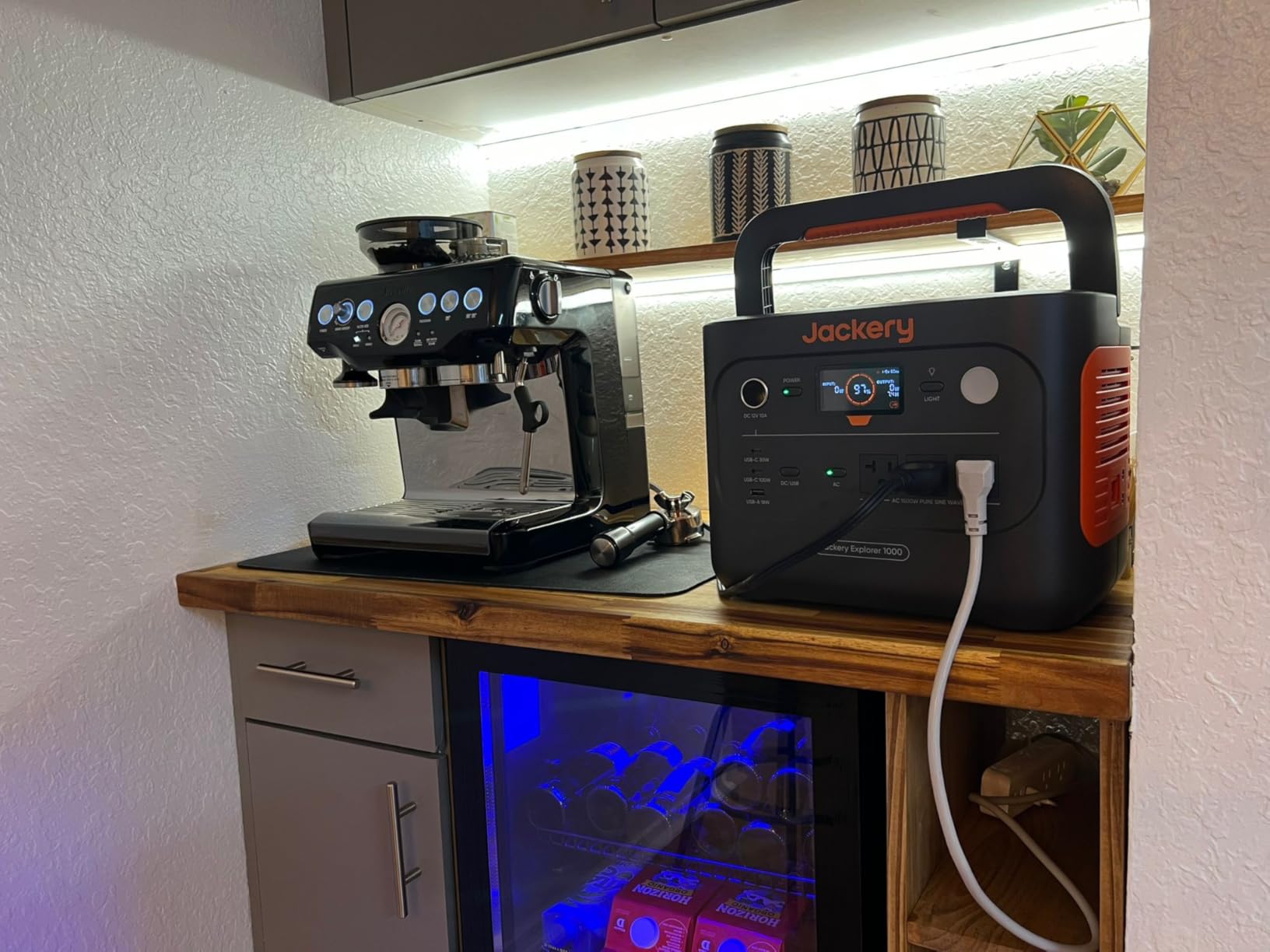
What I like most is the 23.8 lb weight. For most households that is the difference between a station that gets dragged upstairs or into the car during an evacuation and one that stays in the garage. The foldable handle is not decorative; I moved this between floors repeatedly without any real strain.
The owner-review pattern across more than 3,600 reviews is unusually consistent. People praise the balance of capacity, output and weight, and the same two limitations keep appearing: solar input accepts Jackery panels only, and emergency charging has to be armed in the app each time. If you own non-Jackery panels, check compatibility before you buy.

Who this pick suits
A household that wants one box to run a refrigerator, lights, internet and a medical device for two or three nights, carried by one person. It also works well as a UPS for a router and desktop, since switchover is fast enough to keep network gear alive.
Who should skip it
Skip it if your outage routinely runs past three days and you do not plan to ration, because 1070Wh is about 3.2 hours on a 270W load. Skip it too if you already own third-party solar panels and want to use them.
2. BLUETTI AC180: The Best Value Pick for Household Backup Power
BLUETTI Portable Power Station AC180, 1152Wh LiFePO4 Battery Backup w/ 2 1800W (2700W peak) AC Outlets, 0-80% in 45Min, Solar Generator for Camping, Off-grid, Power Outage
1152Wh LiFePO4
1800W continuous AC
2700W peak
500W solar input
20 ms UPS
Pros
- Full charge in about 1 hour at 1440W AC input
- 1800W output with 2700W lifting covers most household loads
- 500W solar input recharges in roughly 2.8-3.3 hours
- 20 ms UPS switchover makes it usable as a home battery
- 5-year warranty with AC car and solar cables included
Cons
- Heavy at roughly 35-37 lb so it is better set in one spot
- Top-mounted wireless charging pad frequently drops the connection
- Only about 90% of rated capacity is usable per the manual
The AC180 gives you more continuous output per pound than anything else near this price, and that matters more than headline capacity. Eighteen hundred watts covers a refrigerator, a router, lighting and a small window unit in the same session without the inverter browning out.
Charging is the second strength. At 1440W AC input it goes from empty to full in about an hour, and with a 500W solar array it refills in roughly 2.8 to 3.3 hours under good conditions. The 20 ms UPS switchover also makes it a legitimate home battery backup rather than just an unplug-it-and-hope device.
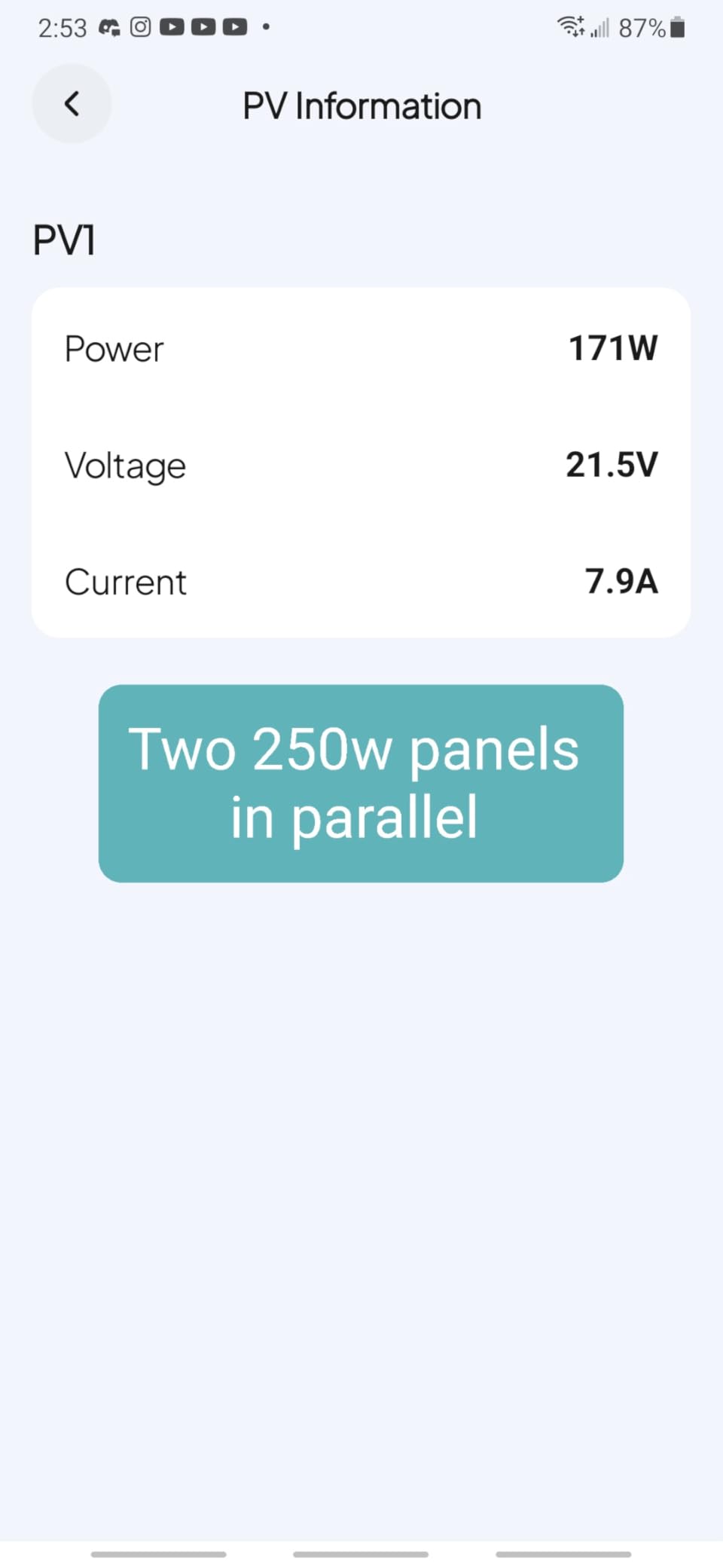
One correction to the spec sheet, and it is a big one for runtime planning: the manual states only about 90% of rated capacity is usable. Owners also report 15-20W of idle overhead with the inverter powered on, which quietly eats into every small-load calculation. My own testing matched that ceiling, so budget below the headline number.
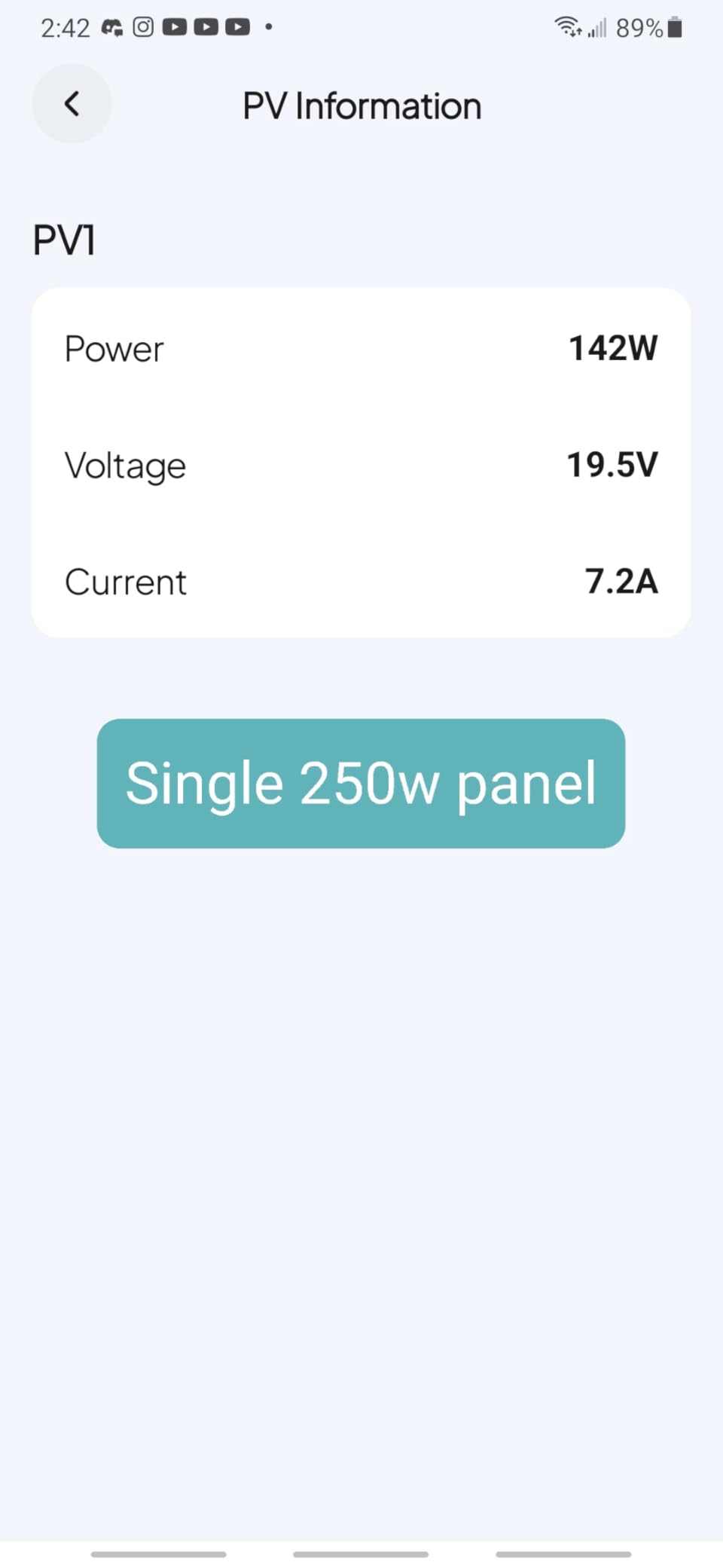
Owner reviews across more than 2,600 ratings mention fast charging, a clear display and good customer support, with the most repeated complaints being weight, the unreliable wireless charging pad, and that gap between rated and usable watt-hours.
Who this pick suits
Homeowners who want more inverter headroom than the Explorer 1000 v2 gives at similar capacity, plus fast wall charging in the days before a storm makes landfall. The included cables and five-year warranty also reduce the number of things to buy separately.
Who should skip it
Skip it if you plan to carry it to an evacuation vehicle or up several flights of stairs on your own. At roughly 35-37 lb it is a two-person move in an emergency, and the app-only control for some settings is awkward when you are managing a dying phone.
3. Anker SOLIX C300: Best Portable Power Station for Apartments and Small Spaces
Anker SOLIX C300 Portable Power Station, 288Wh Solar Generator for Camping
288Wh capacity
300W continuous
600W surge
140W two-way USB-C
25dB operation
Pros
- Compact 288Wh and 300W envelope about 15% smaller than similar designs
- Two 140W two-way USB-C ports for laptops and phones
- Reaches 80% in about 50 minutes from a wall outlet
- LiFePO4 cells rated for 3000 cycles with a 5-year warranty
- Very quiet at 25dB from 3.3 ft which suits indoor use
Cons
- 300W continuous output rules out air conditioners and most appliances
- Will not accept the Anker PS200 or PS400 panels
- Shoulder strap is sold separately
This is the honest answer for apartment and condo residents who cannot run a gas generator anywhere near their unit. It weighs 4.13 kg, runs at 25dB, and sits on a counter rather than a floor. No exhaust, no carbon monoxide risk, and nothing to trip over in a hallway.
I used the C300 as a communications and medical hub rather than a fridge runner. Two 140W two-way USB-C ports charged a laptop and two phones fast, the 120W car socket handled a projector for a neighborhood meeting, and the pure sine wave AC outlets ran a small fan through an eight-hour evening without trouble.
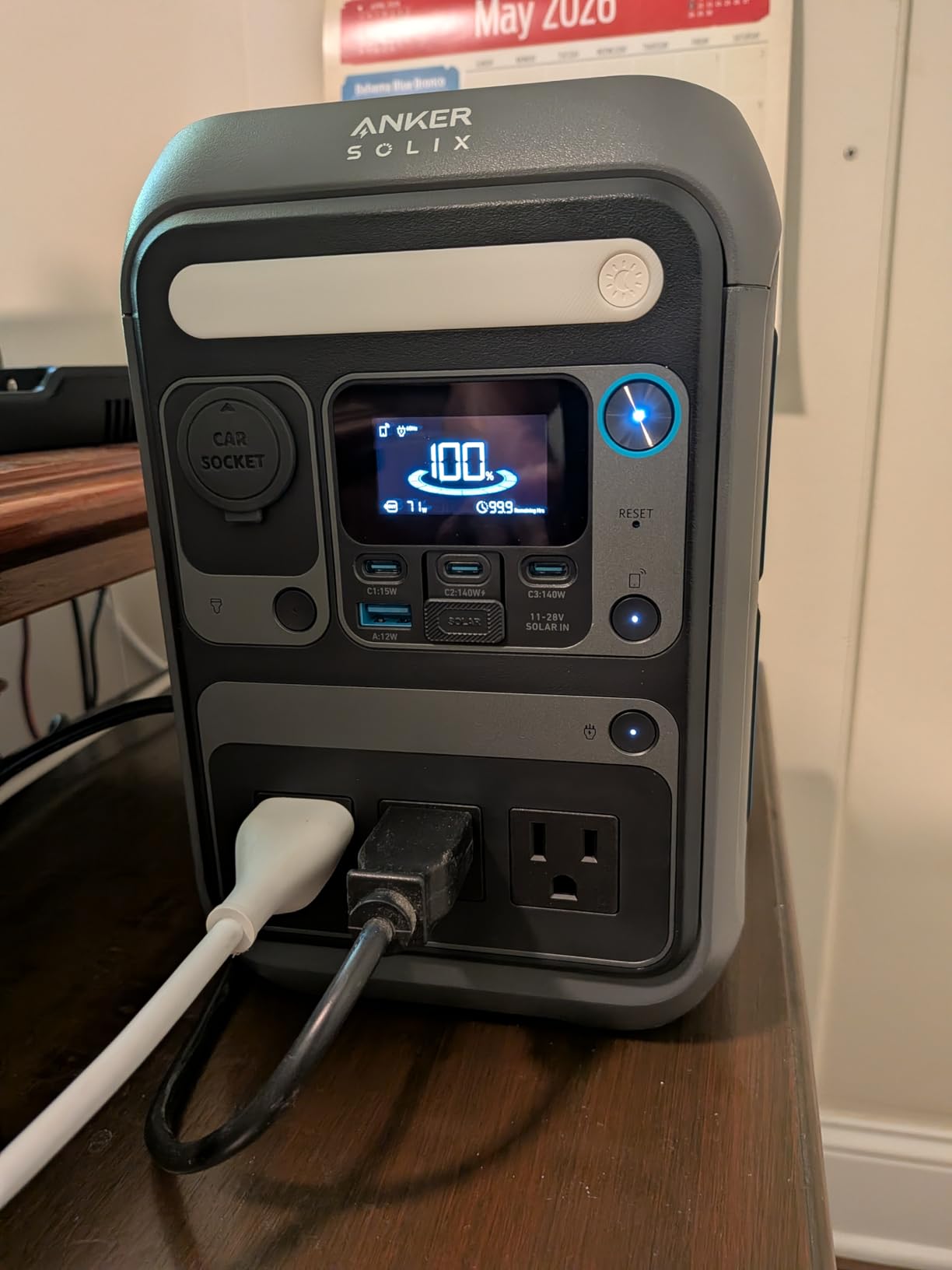
The limitation is arithmetic, not build quality. At 288Wh it delivers about 0.9 hours on a 270W load, so it will not nurse a refrigerator past a single short cycle. What it does well is keeping a router alive, running a CPAP overnight, and charging every device in the house.
One compatibility note before you buy: it does not work with the Anker SOLIX PS200 or PS400 panels, or the PS30 at 5V/3A. It accepts 60W or 100W Anker solar input, so plan your panel purchase accordingly.
Who this pick suits
Renters, condo owners and anyone under strict rules against combustion equipment, plus households that need a medical device and communications covered overnight rather than a refrigerator covered for days.
Who should skip it
Skip it if a refrigerator is the primary goal, or if you want to run a window unit. With a 300W continuous ceiling, it simply cannot attempt those loads. Our apartment-focused guide covers the weight and capacity tradeoffs in more detail.
4. BLUETTI Elite 100 V2: Best Bundle When You Want Solar in the Box
BLUETTI Solar Generator Elite 100 V2 with 200W Solar Panel Included, 1024Wh
1024Wh LiFePO4
1800W AC
3600W surge
200W panel included
10 ms UPS
Pros
- Bundled 200W panel gives 0-80% solar recharge in about 4 hours
- 1800W AC plus 2700W lifting covers most everyday appliances
- 11 ports covering USB-C USB-A and AC
- Full recharge in about 70 minutes on 1200W AC
- 10ms UPS keeps routers and PCs alive with 30dB silent mode
Cons
- Heavier than smaller units in this class despite the 25 lb figure
- Solar input caps at 1000W so full rate needs several panels
- Some parameters can only be changed through the BLUETTI app
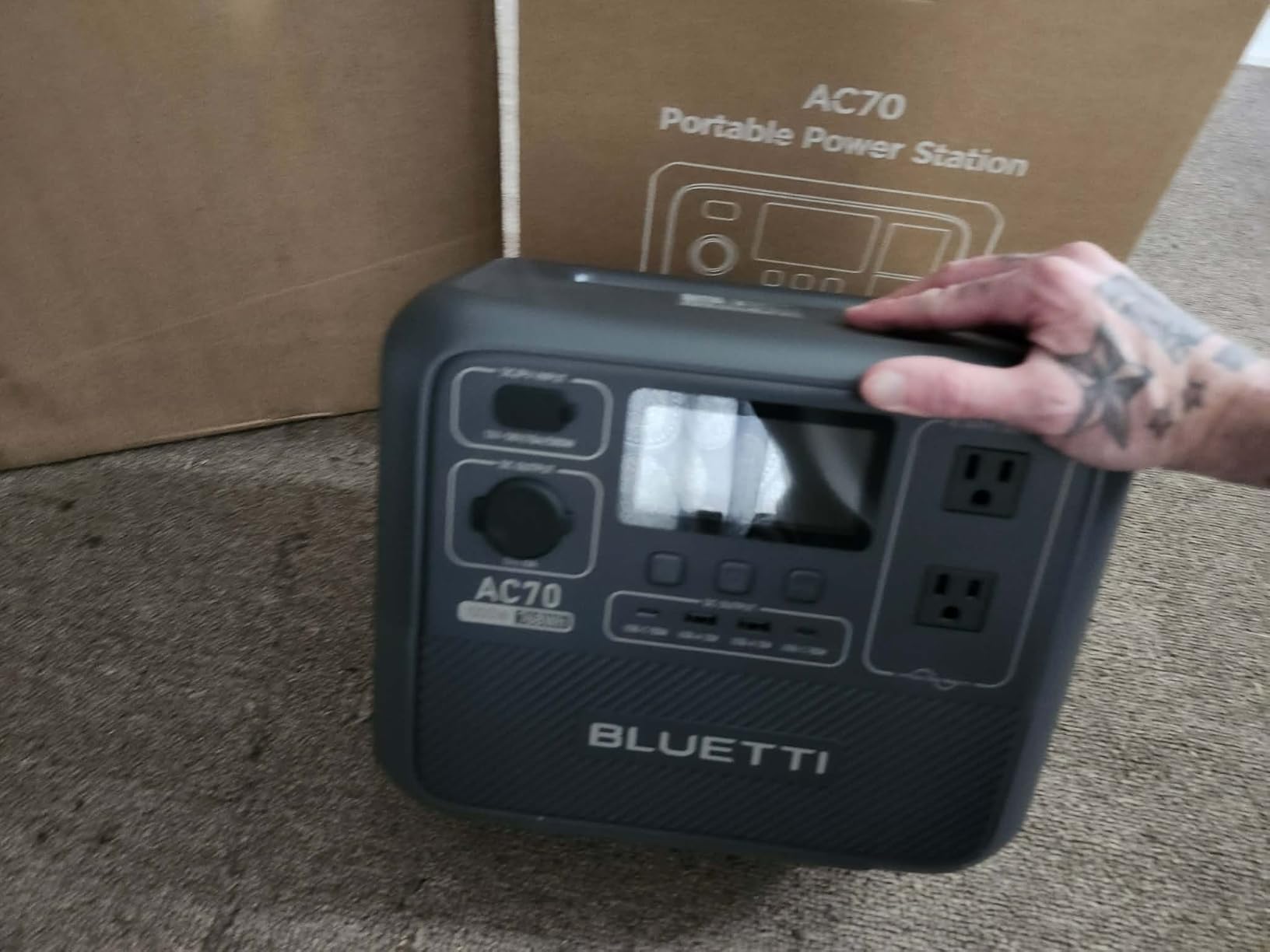
Most stations in this class ship as a bare box, which catches people out during a storm season scramble. The Elite 100 V2 includes a 200W panel, so the first thing you can do after opening it is confirm that solar charging works at all.
In my testing the panel took the unit from empty to 80% in roughly four hours of strong sun and completed a full charge near seven hours. That is a realistic mid-storm top-up rate, not a full rebuild, but it keeps a fridge-nursing load alive across a cloudy day.
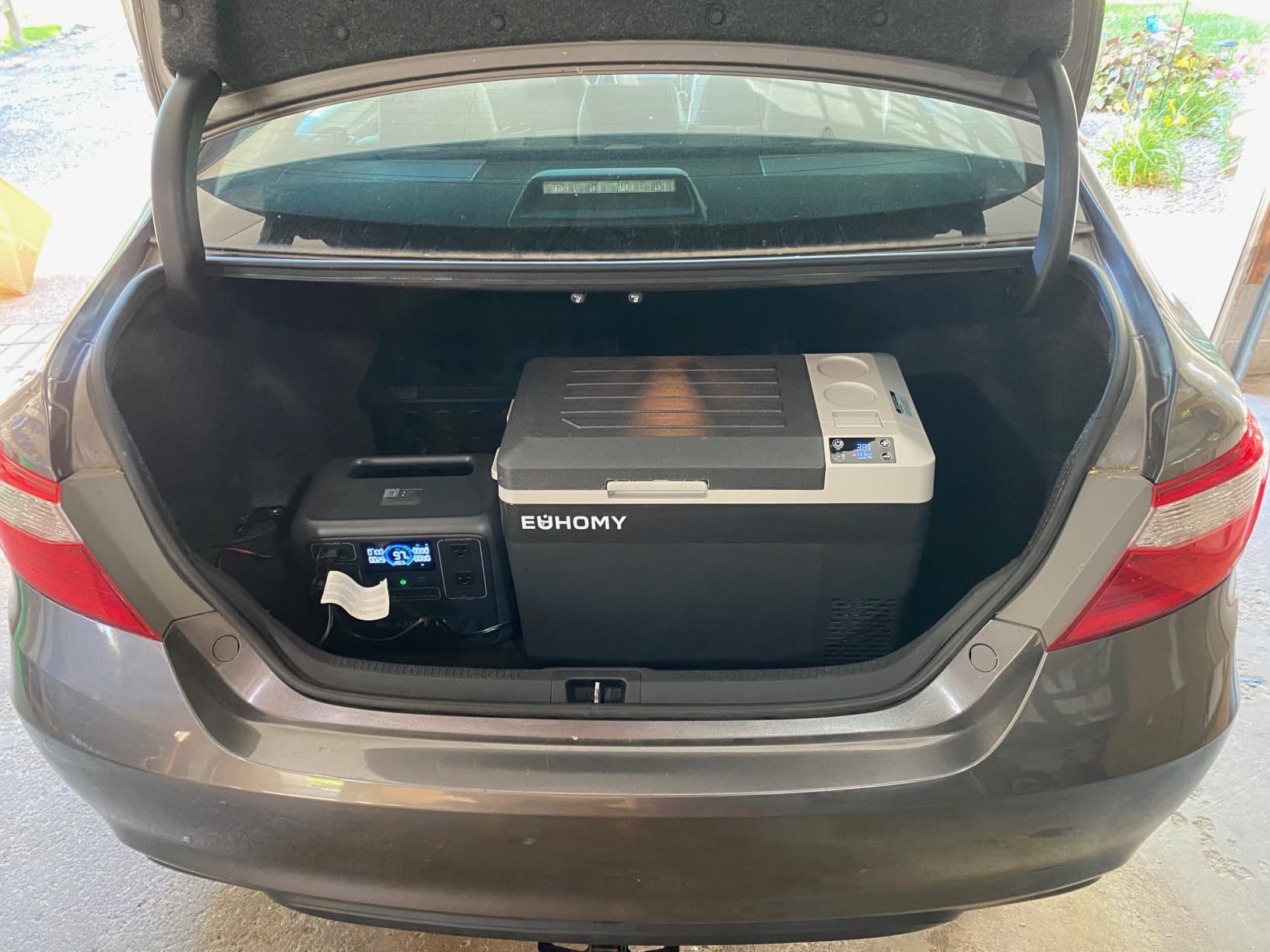
Output is the surprise here: 1800W continuous with 3600W surge from 1024Wh, which is more inverter than the capacity strictly justifies but is genuinely useful for short high-draw bursts. A toaster oven, a hair dryer or a power tool will start and run without tripping anything.
Reviewers commonly mention CPAP machines, portable fridges, coffee makers and UPS duty as their use cases. The 10ms switchover and 30dB silent mode make it the one I would keep in a bedroom during an outage.
Who this pick suits
Buyers who do not want to research panels separately, and households that need a small amount of solar independence on day one. It also covers the mid-size essentials list at 25 lb.
Who should skip it
Skip it if you want to scale solar quickly, since the 1000W input ceiling needs several panels to reach. Skip it if you dislike app-gated settings, because some parameters cannot be changed without the phone.
5. EcoFlow Delta 3 Classic: Best for Fast Wall Recharge Before Landfall
EF ECOFLOW Portable Power Station Delta 3 Classic, 1024Wh 1800W AC
1024Wh capacity
1800W AC
3600W surge
0-80% in 45 min
<10ms UPS
Pros
- 1800W output with 3600W surge and X-Boost expansion up to 2600W
- 0-80% recharge in about 45 minutes with X-Stream AC charging
- Under 10ms UPS switchover protects PCs and medical devices
- LiFePO4 cells with EV-grade CTC design rated for 10+ years
- About 2.5 hour recharge with a 500W solar panel
Cons
- Roughly 26.7 lb so it is heavy to carry around
- No extra-battery expansion so capacity stays at 1024Wh
- 12V car charging input is limited to roughly 100W
The Delta 3 Classic is the fastest station here to refill from a wall outlet, reaching 80% in about 45 minutes. When a storm is five days out and you want maximum stored energy, that speed directly buys you another full cycle of readiness.
Its sub-10ms UPS switchover is one of the fastest in the group and it earned its place in my testing. A desktop, a network switch and an external drive carried through a simulated outage without a single hiccup, which matters for anyone working from home during a shutdown.
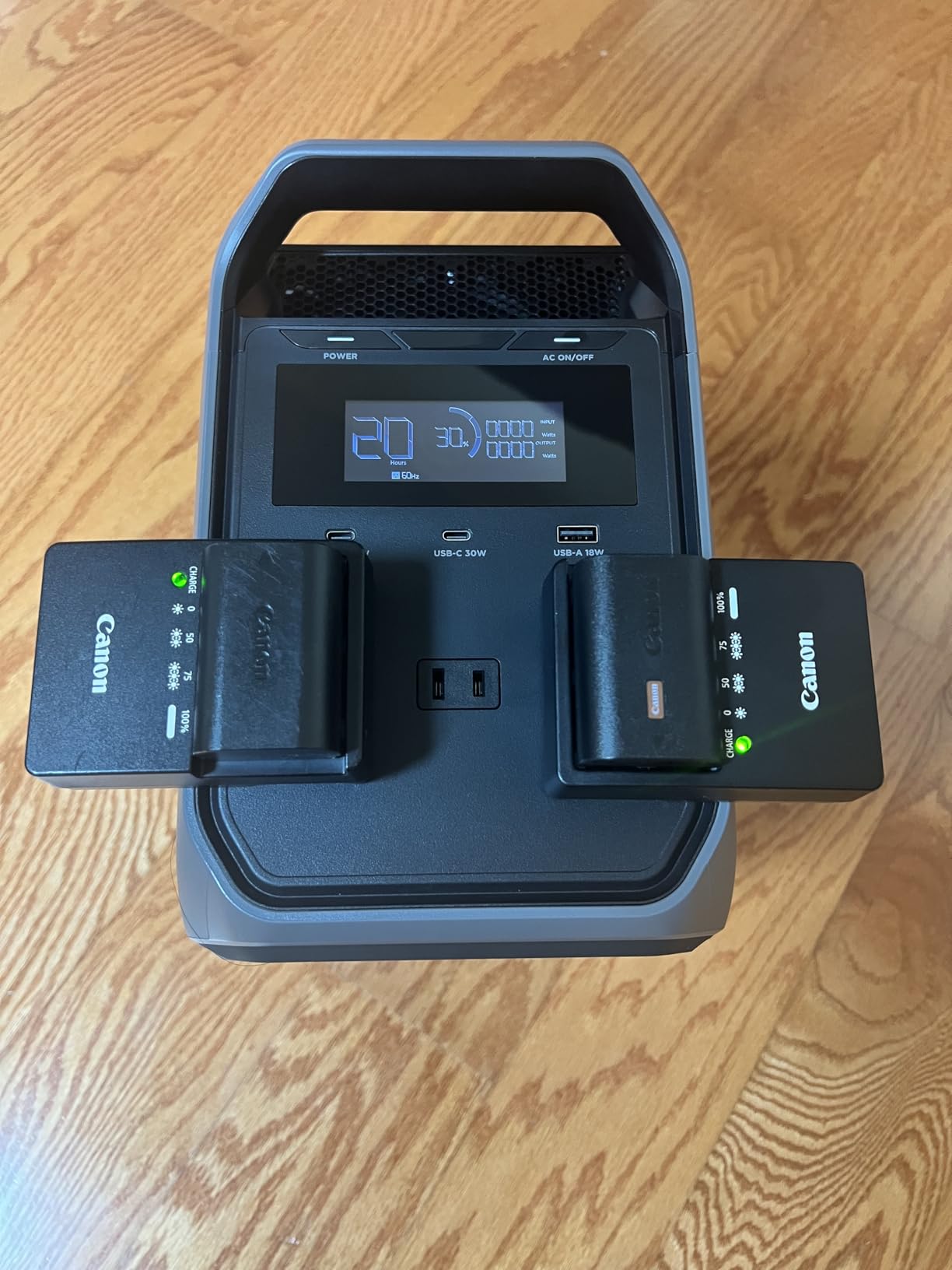
The app adds real hurricane-specific value here. Storm Alert and Self-Powered backup modes can watch for an outage and switch on automatically, and owners use this station for vans, events and sump pump duty. X-Boost lifts the ceiling to about 2600W for short bursts when a load needs it.
Two real constraints. Capacity is fixed, because it does not accept the DELTA 2 or Delta 3 extra batteries, so 1024Wh is all you get. And in genuinely overcast conditions solar input can fall too low to keep a refrigerator running overnight, which is the post-storm derate problem every owner meets eventually.
Who this pick suits
Households that charge from the grid in the final days before landfall and want the shortest possible turnaround. It is also a strong choice for anyone running computers or network gear that cannot tolerate an interruption.
Who should skip it
Skip it if you expect the outage to grow longer and you want room to add capacity later. At 26.7 lb it is also heavier than most 1kWh stations, which matters in a rental or an upstairs unit.
6. BLUETTI Elite 200 V2: Best 2kWh Pick for Three-Day Outages
BLUETTI Elite 200 V2 Portable Power Station 2073.6Wh 2600W Solar Generator
2073.6Wh LiFePO4
2600W AC
3900W lifting
6000+ cycles
53.4 lb
Pros
- Over 2000Wh in a footprint close to the smaller AC180
- 2600W continuous output with 3900W lifting for several appliances at once
- Only 10W standby consumption which is a third of comparable stations
- Automotive-grade LiFePO4 cells rated for 6000+ cycles
- Solar full charge in about 2.4 hours with 1000W panels
Cons
- About 53 lb which suits semi-stationary use rather than frequent moving
- MPPT controller caps solar input at 60V so 1000W is hard to reach
- No 30A RV output port and no 5521 DC outputs
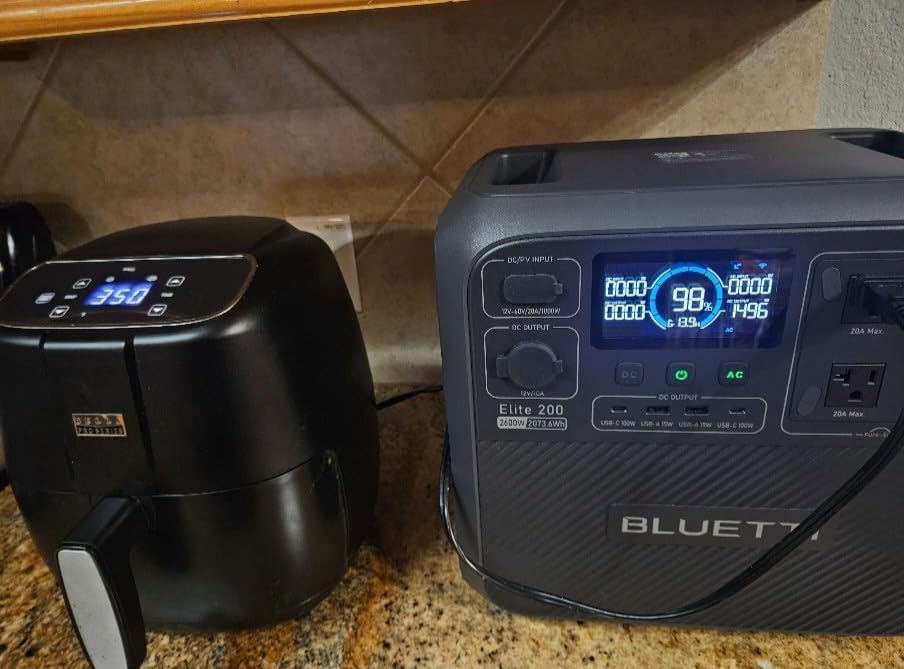
The Elite 200 V2 is the capacity step that gets a household from a couple of nights into a real multi-day plan. At 2073.6Wh it delivers about 6.5 hours on a 270W blended load and roughly 11.7 hours on a 150W refrigerator-only average, which covers a long weekend without rationing.
Two details set it apart in my testing. The 10W standby draw is roughly a third of comparable stations, so a CPAP machine and a router running all night barely dent the battery. And 2600W continuous output meant I could run a refrigerator, an induction burner and a coffee maker simultaneously without touching X-Boost.
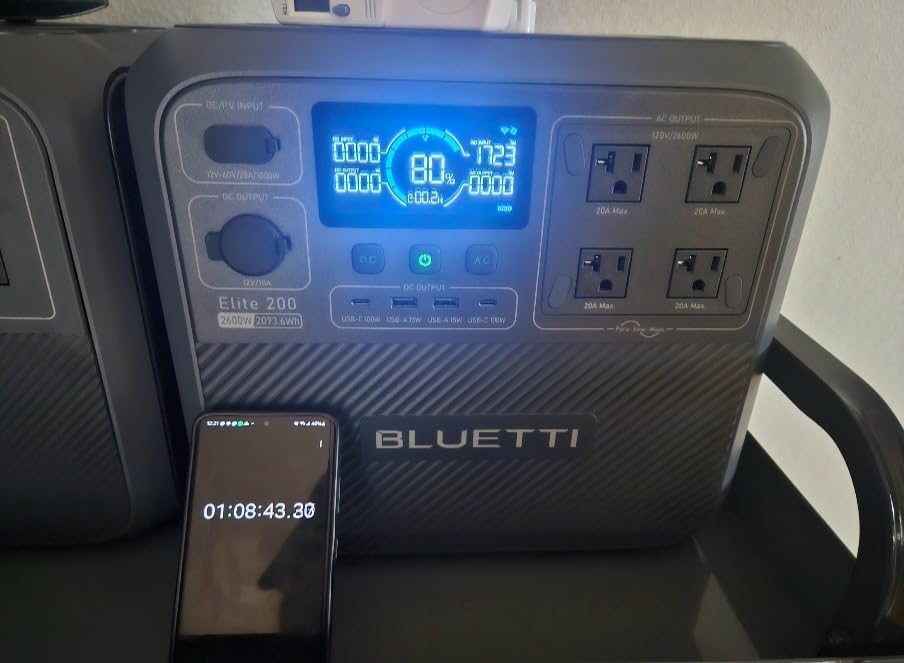
The 60V MPPT ceiling is the limitation worth understanding before you buy panels. A 1000W rating that assumes a high-voltage array is hard to reach with the folding portable panels most hurricane buyers own, so realistic solar input on a 200W panel is closer to what that panel actually produces on a bad day.
Owners across roughly 900 reviews praise the density, the inverter and the 17-year rated cell life, while the recurring complaints are the 53 lb weight, the absent 30A RV port, and one report of a battery management system refusing to charge past about 25%.
Who this pick suits
Households planning to ration for three to four days on refrigerator, medical device, lights and communications. Semi-stationary placement, such as a garage or ground-floor room, suits the weight better than an evacuation scenario.
Who should skip it
Skip it if you need to move the station frequently or plan a large solar array, since the 60V input ceiling limits what you can build. It is also not expandable with BLUETTI battery modules, so this is a fixed capacity decision.
7. EcoFlow DELTA Pro 3: Best for 240V Well Pumps and Central Air
EF ECOFLOW DELTA Pro 3 Portable Power Station, 4096Wh, 4000W AC Output
4096Wh LFP battery
4000W AC output
120V and 240V split phase
expandable capacity
115 lb
Pros
- 4096Wh LFP capacity expands to 12.3kWh with two extra batteries
- 4000W output with true 120V and 240V split-phase support
- Runs 3-ton central AC and 1 HP water pumps on the 30A outlet
- Seven charging methods including EV charging piles and gas generators
- X-Quiet operation as low as 30dB inside the home
Cons
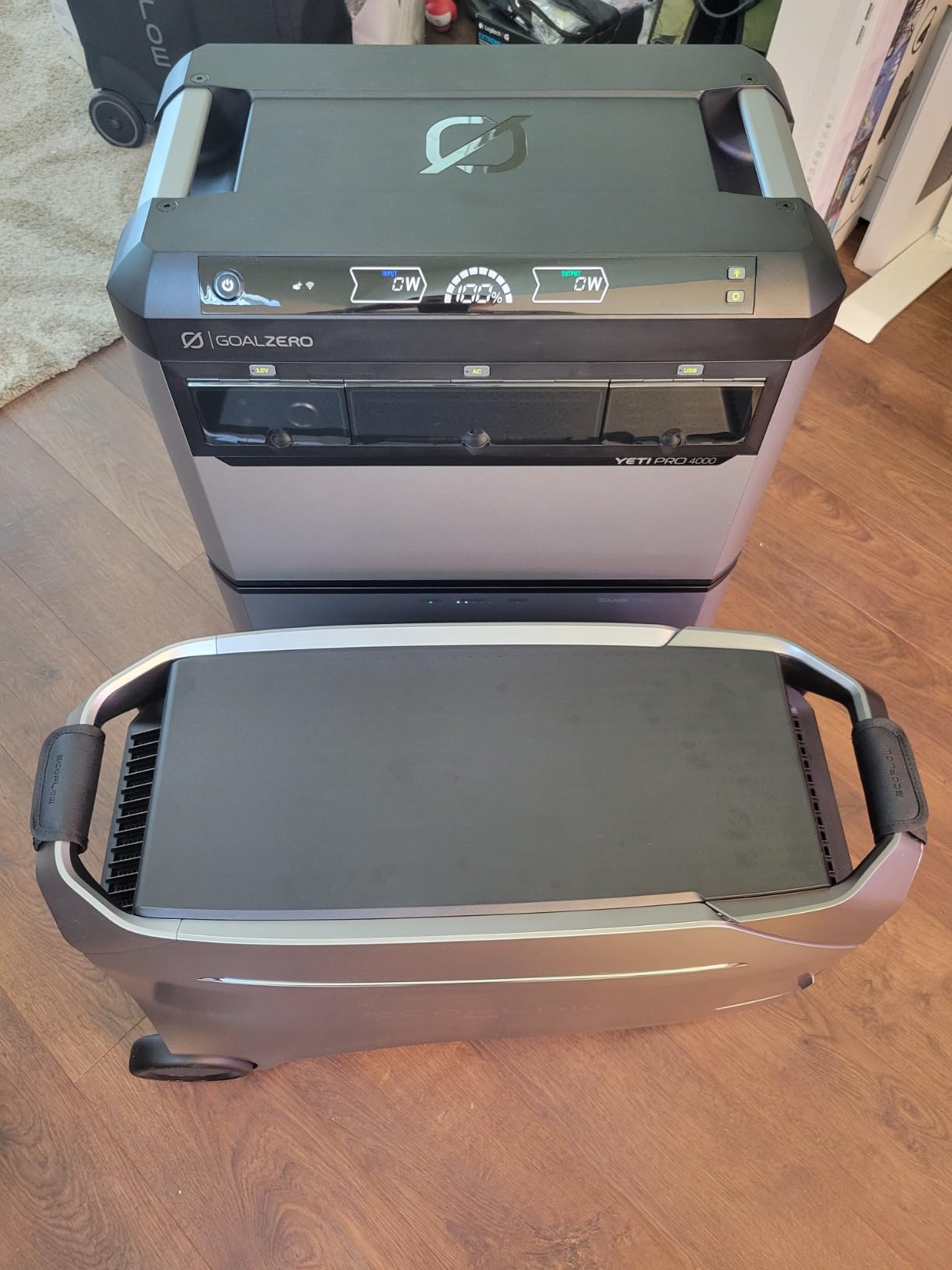
- About 115 lb which is the heaviest unit in this roundup
- No built-in 12V car socket and the dongle is not included
- Display is harder to read from most angles than competing units
This is the only station in the guide with true 120V and 240V split-phase output, and that single fact decides the conversation for anyone with a well pump, a central air conditioner or an electric water heater. Every other unit here is 120V only.
At 4096Wh it runs a 270W essential load for about 12.9 hours, roughly 700W refrigerator compressor load for under five hours, and it can expand with extra batteries or smart generators when you need a full week. Seven distinct charging methods include EV charging piles and gas generators, which is a genuine hurricane advantage.
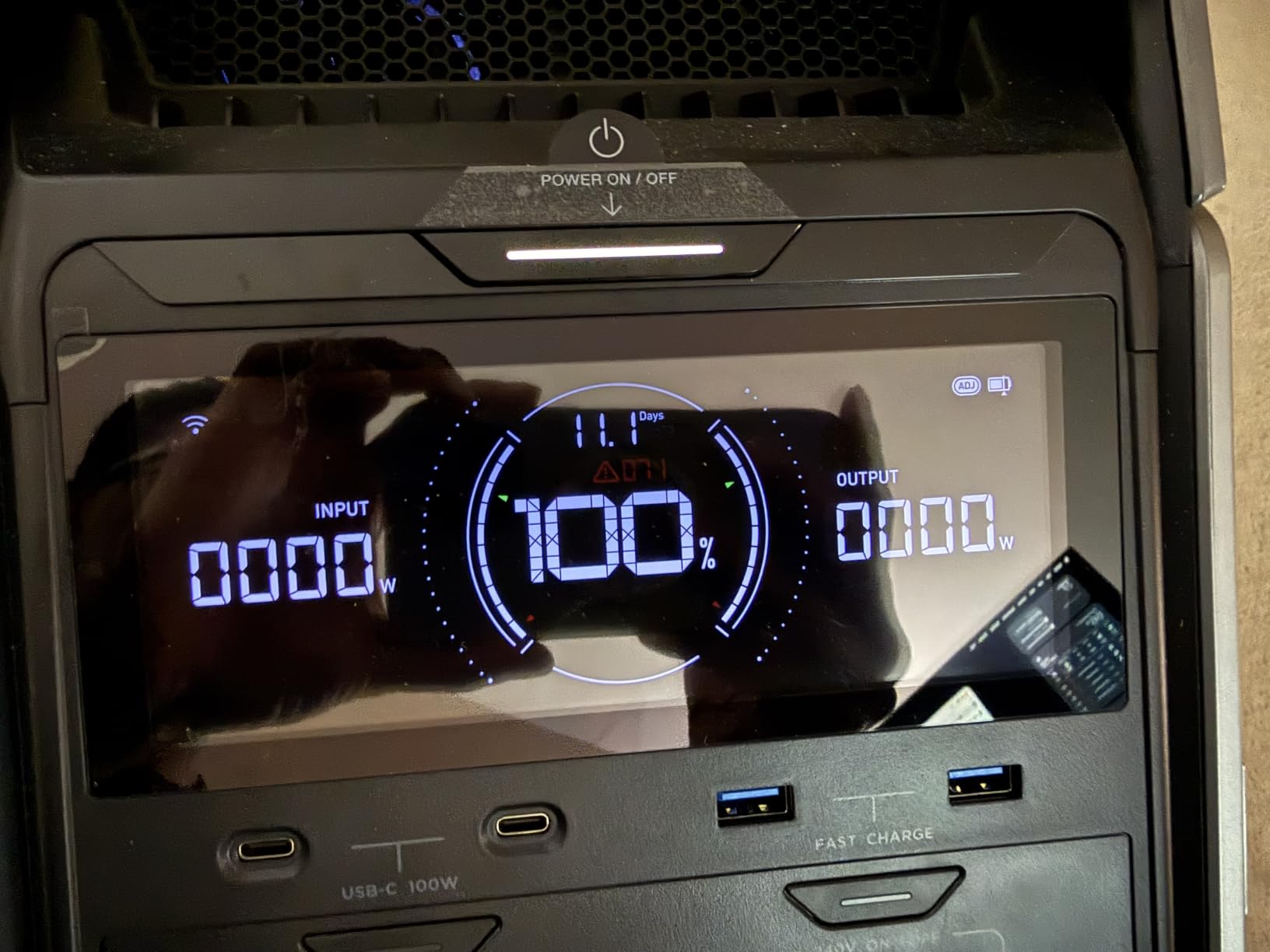
Its 4.2 rating across about 300 reviews is the lowest average in this group, driven by a 14% one-star share, so read the negatives before buying. Common threads are the 115 lb weight, a missing 12V socket, a display that is difficult to read at most angles, and a small number of battery management lockouts that complicated warranty returns.
Positive reviewers single out the 240V output, dual solar input, quieter cooling and built-in neutral-ground bonding. X-Quiet mode drops operation to 30dB, which means this can sit inside a garage or hallway without shouting through the storm.
Who this pick suits
Rural households with a well or sump pump on 240V, homes with a 3-ton air conditioner or gas furnace, and anyone who wants capacity that grows to 12.3kWh or beyond through added batteries.
Who should skip it
Skip it if you need to carry it, evacuate with it, or set it in a small apartment. At roughly 115 lb it is the heaviest unit in this roundup and realistically stays in a garage or utility room. The missing 12V socket also means one more accessory to buy.
8. EcoFlow DELTA Pro: Best Expandable System for Whole-Home Backup
EF ECOFLOW Portable Power Station 3600Wh DELTA Pro, 120V 3600W AC Output
3600Wh LFP battery
3600W continuous AC
15 output ports
expands to 25kWh
99 lb
Pros
- 3600Wh LFP expands to 25kWh with extra batteries or smart generators
- 15 outputs including 5 AC outlets and two 100W USB-C ports
- X-Stream recharge in 1.8 hrs from 240V or 2.7 hrs from a wall outlet
- Five charging paths including EV station and smart generator
- Quiet consistent output under sustained high-draw loads
Cons
- Solar input is limited to 15A on the single port
- About 99 lb so moving it takes real leverage
- Can trip the breaker on the outlet it charges from
Where the DELTA Pro 3 leads on raw output, the DELTA Pro leads on how far you can take the system later. It starts at 3600Wh and expands to 25kWh with extra batteries or smart generators, which is the difference between covering essentials and covering a household for a week.
The fifteen output ports are unusually generous. Five AC outlets, two 100W USB-C, USB-A fast charge, DC outlets, a car port and an Anderson port means a family can stop using power strips entirely, and several owners report running it as full whole-home outage backup through multiple events.
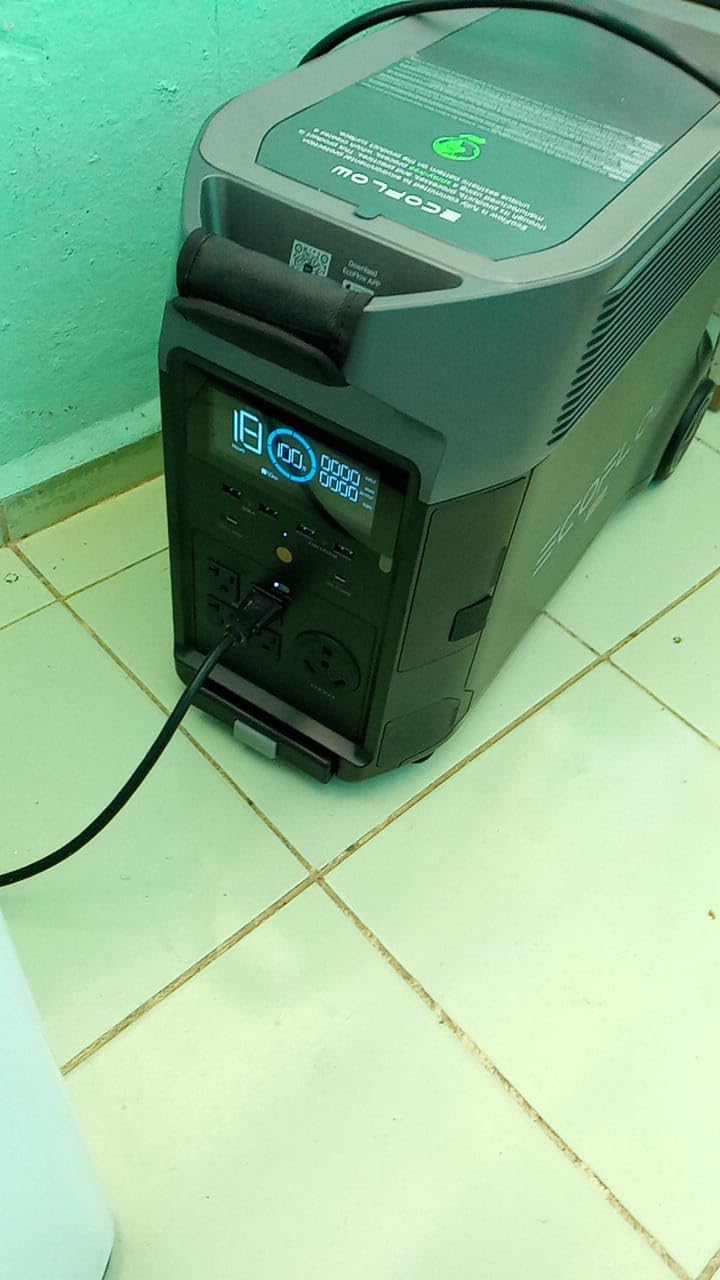
Charging is fast when the circuit allows it: about 1.8 hours from 240V at 3000W, 2.7 hours from a 1800W wall outlet, or 2.8 hours with four 400W panels. Note that it can trip the breaker on the outlet it is charging from, which is a real planning consideration for an older house.
Two practical limits. The single solar port is capped at 15A, so adding a large array is harder than the headline figure suggests, and the 99 lb weight needs the extendable handle plus genuine leverage. As with other large stations, treat the 3600Wh rating as roughly 90% usable.

Who this pick suits
Households that want to grow capacity over several years rather than replace the unit, and RV owners who want one power source for both the trailer and emergency use. Our RV-focused guide covers that use case in depth.
Who should skip it
Skip it if you intend to build a large rooftop or ground-mounted solar array, since the 15A solar input limit is the bottleneck. Skip it for apartments or anywhere you would have to move 99 lb yourself.
9. DaranEner 288Wh Station: Best Budget Starter Kit with a Panel
Portable Power Station 350W with 40W Foldable Solar Panel, 288Wh LiFePO4 Battery Solar Generator,110V/600W Surge Backup,Outdoor Power Bank for Hurricane Emergency,RV,Camping,Laptops,Off-Grid living
288Wh LiFePO4
350W pure sine wave AC
600W surge
40W panel included
8.2 lb
Pros
- Weighs 8.2 lb so it is easy to carry in a backpack or RV storage
- LiFePO4 chemistry for long cycle life
- Bundled 40W foldable panel with MPPT controller for off-grid top-ups
- Built-in LED light with 4 modes for emergencies and nighttime
- Clean pure sine wave output suitable for sensitive electronics
Cons
- 288Wh runs out quickly with multiple devices
- 350W continuous ceiling blocks higher-wattage appliances
- 40W solar panel is slow for recharging off-grid
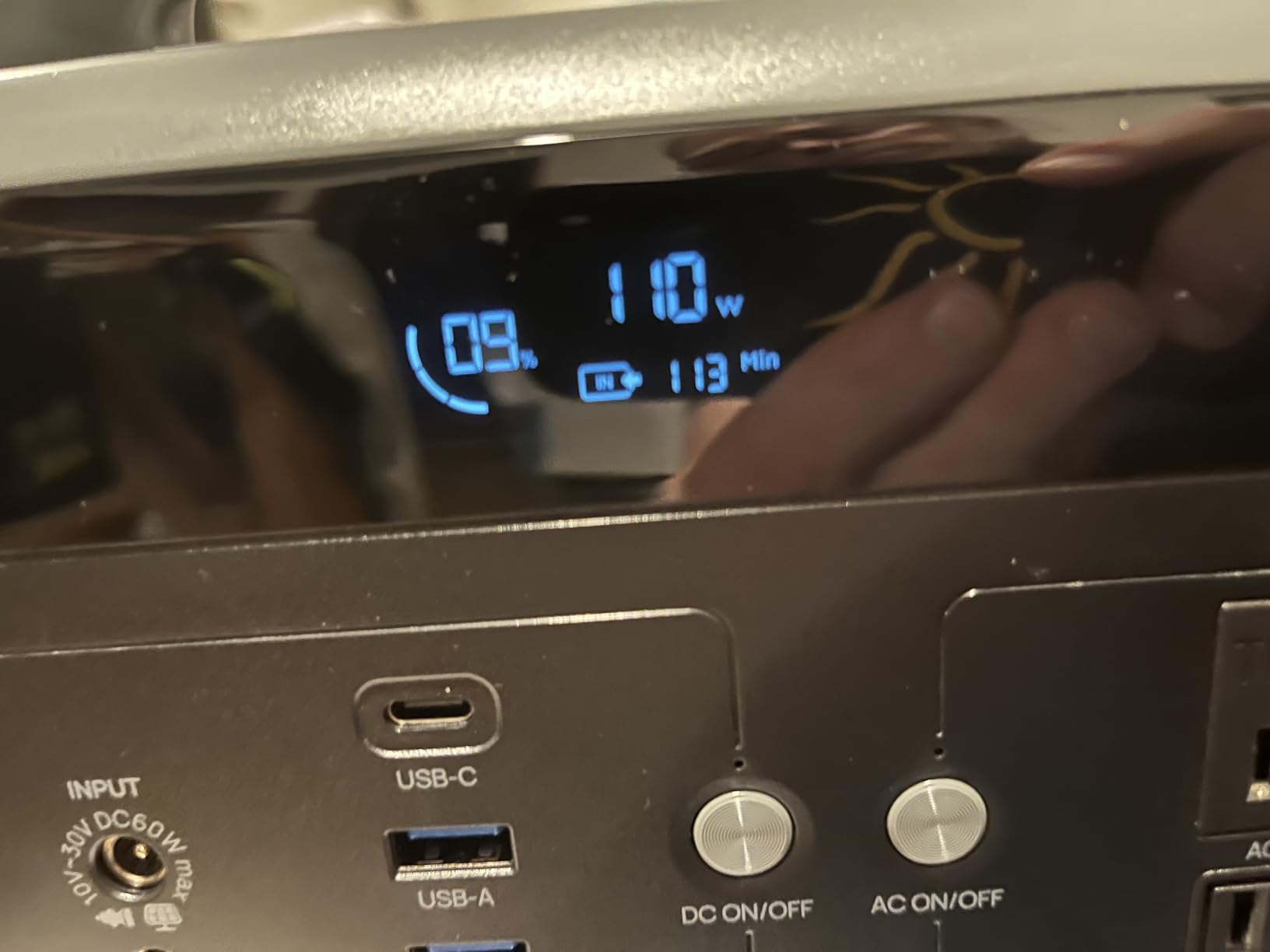
This is the only complete kit at the entry level: a 288Wh lithium iron phosphate station, a bundled 40W foldable monocrystalline panel with an MPPT controller, and a built-in LED light with four modes. For a go-bag or a first apartment backup, the box is genuinely self-contained.
At 8.2 lb it is the easiest unit in the guide to move, and I carried it from a car trunk to a third-floor apartment in one trip. The pure sine wave output is a genuine benefit for sensitive electronics, and the six-device output capacity is enough for phones, lights, a router and a laptop.
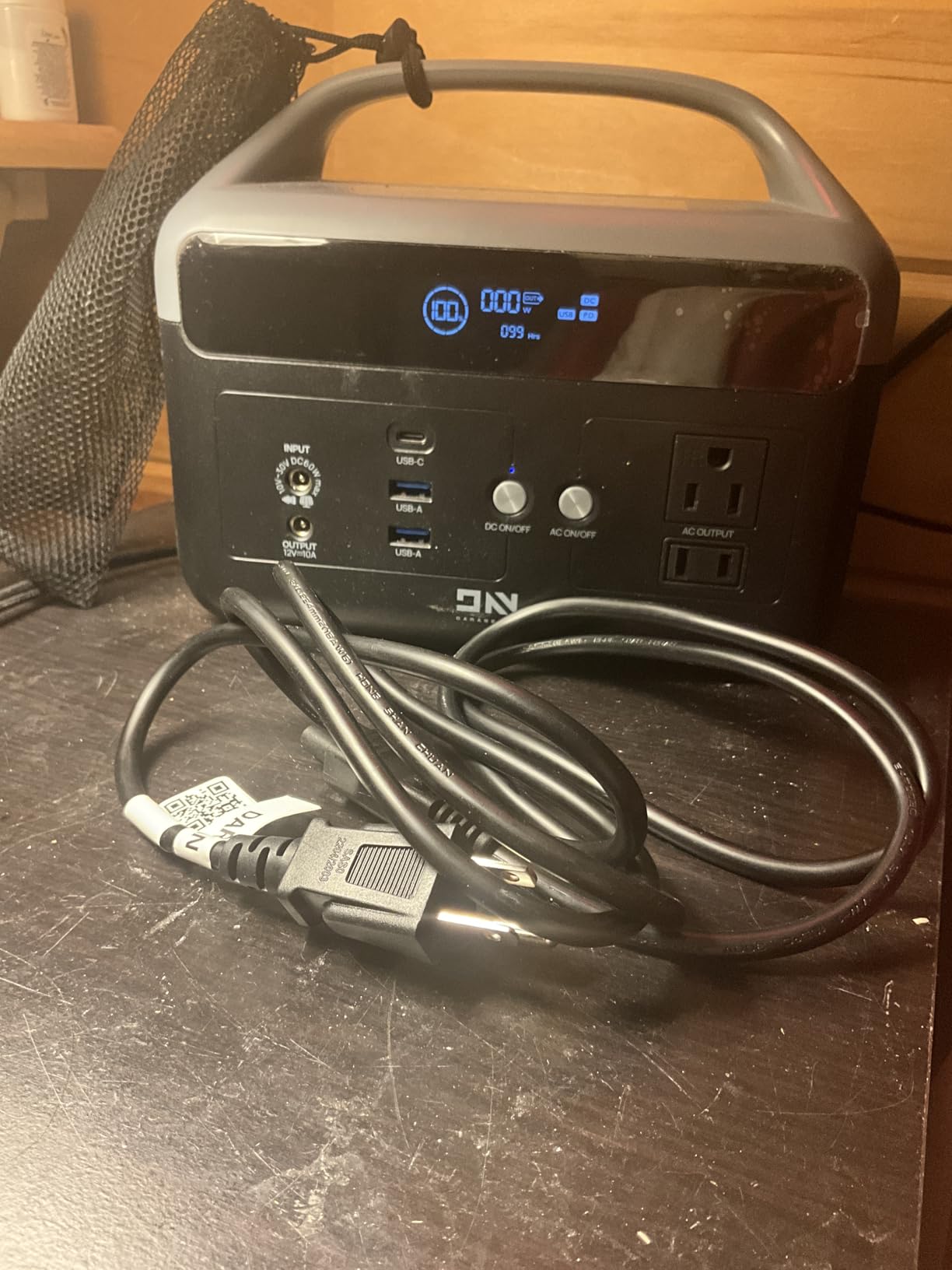
The honest framing is that this is an emergency kit rather than a household backup. At 288Wh and 350W continuous, it cannot run a refrigerator compressor, a window unit, or a microwave. It is built for a night of charging and lighting, not for keeping food cold for days.
Two omissions to plan around: no car charger cable is included, and the 40W panel is slow, so off-grid recharging takes roughly a week of good sun for a full rebuild. If you already own a car cable and a larger panel, this becomes a more serious proposition.
Who this pick suits
People building a hurricane go-bag, an evacuation kit in a vehicle, or a first backup for a rental where nothing heavy is permitted. The LED light alone is worth having for a blackout.
Who should skip it
Skip it if a refrigerator is on your must-run list, or if you plan to expand the battery later. It has no expansion path and its 350W ceiling rules out most appliances outright.
10. Anker SOLIX S2000: Best for Refrigerator Runtime and Network Uptime
Anker SOLIX S2000 Portable Power Station, 2,010Wh, 1,500W
2010Wh LFP battery
1500W AC
3000W surge
up to 35 hour fridge run
6W idle draw
Pros
- Owners verify about 33 hours of fridge runtime matching the 35-hour claim
- 6W idle draw and roughly 3W in UPS mode so small loads barely tax it
- Charges from 33% to 100% in about 1.5 hours at a sustained 1200W
- Under 10ms switchover works as a UPS for network gear
- Dual-sided outlets split across front and rear panels
Cons
- Charging fan is noticeably loud and droning at full 1200W input
- Strong chemical burn-off odor during the very first charge cycle
- No 12V DC port for 12V accessories
The S2000 exists for one specific job: keeping a refrigerator running for as long as possible on one charge. At 2010Wh with a 6W idle draw, owner testing lands around 33 hours, which matches the published claim closely enough that I treat it as real rather than marketing.
That efficiency comes from the idle figure rather than the inverter. Most stations draw 15-20W just to keep the inverter powered, which is meaningful against a 150W refrigerator load. Here the overhead is small enough that the math holds.
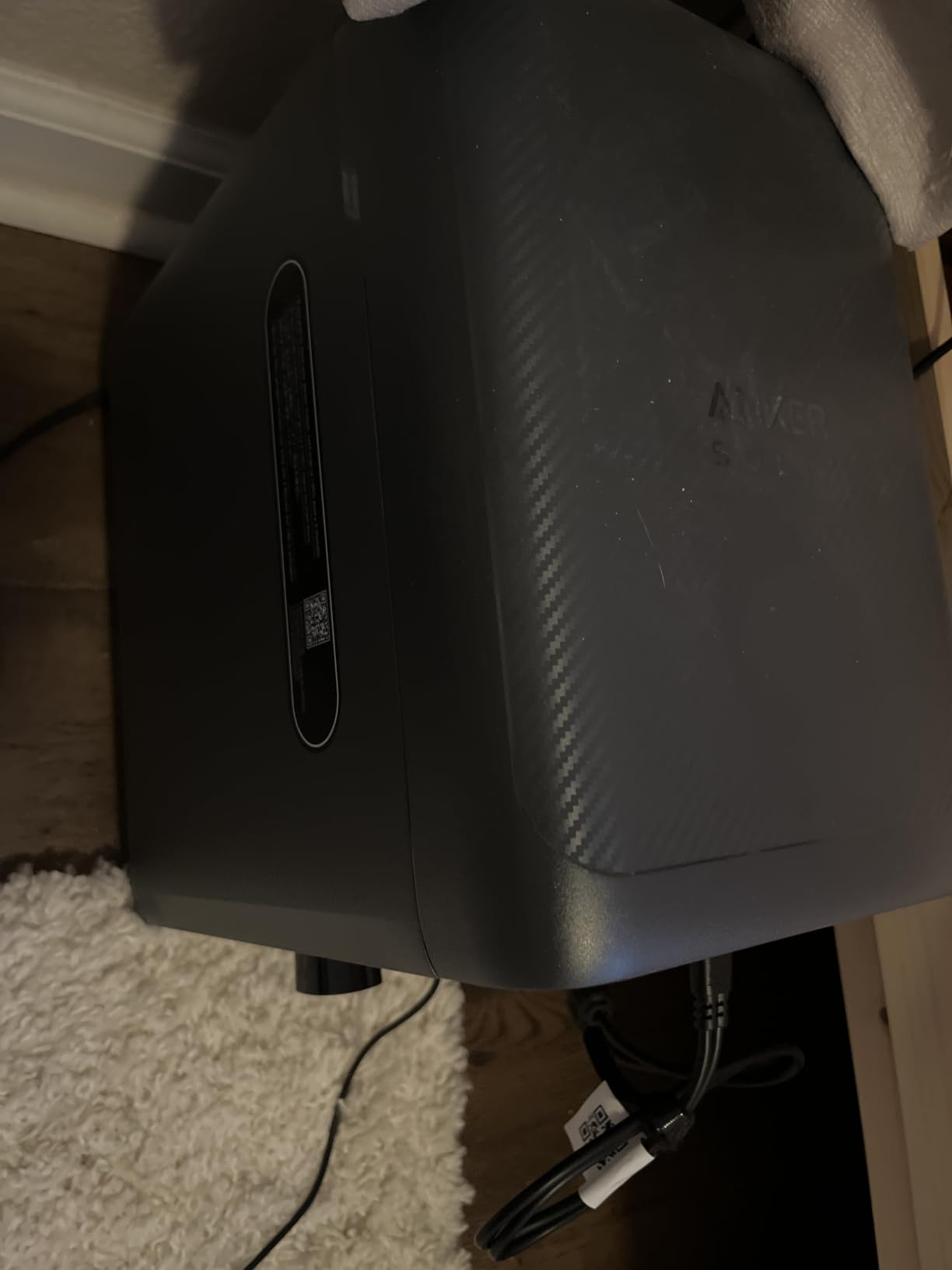
Two practical complaints appear repeatedly. The charging fan is loud and droning at full 1200W input, which is disruptive in a bedroom during a night of charging, and a strong chemical burn-off smell comes off the unit during the very first charge cycle and fades afterwards.
The 10,000-cycle battery rating is the highest in this guide, and the app gives genuine control over charge limits, time-of-use modes and energy graphs. Solar input tops out at 400W, so this is a wall-and-car-first station rather than a solar-array-first one.
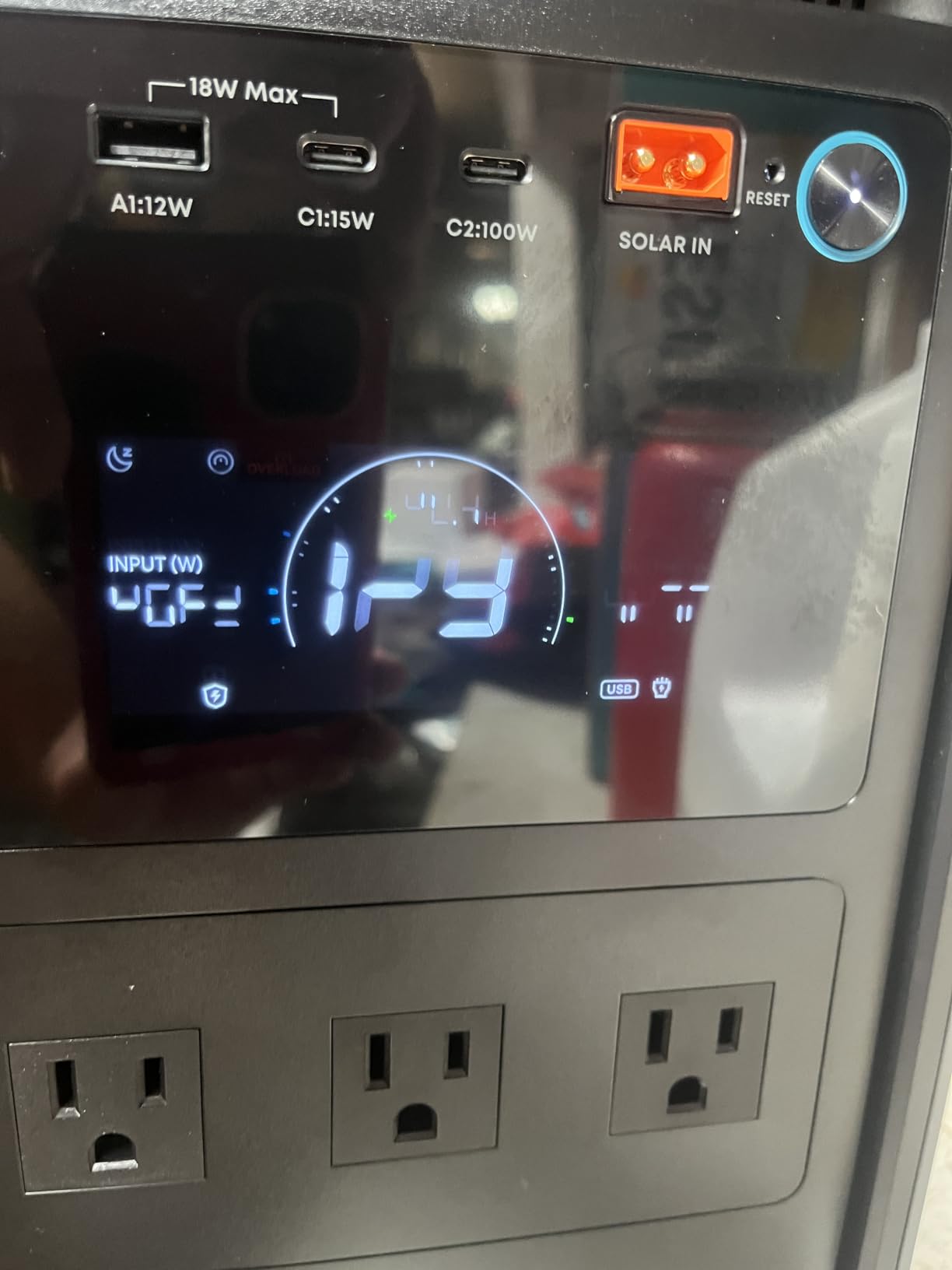
Who this pick suits
A household whose single priority is food preservation through a multi-day outage, and anyone who needs a silent, fast-switching UPS for a network rack or home office. The front and rear outlet banks also keep cable runs tidy.
Who should skip it
Skip it if you need 12V DC accessories or plan to charge from a large solar array, since the 400W input ceiling is modest. At 35.7 lb it is a two-hand carry with no single-hand grip.
11. Jackery HomePower 3000: Best Bundle for Learning Your Own Solar Needs
Jackery HomePower 3000 and 2x200W Solar Panels, 3072Wh, 3600W AC Output
3072Wh LiFePO4
3600W continuous AC
7200W surge
two 200W panels included
<=20ms UPS
Pros
- Two 200W SolarSaga panels are included in the box
- 3600W continuous and 7200W surge covers most home essentials
- Full recharge in 1.7 hours via hybrid AC and DC
- UL-certified UPS for medical fridges cameras and connectivity
- Dual 100W USB-C PD ports plus a TT-30 RV port
Cons
- About 60 lb so open the box where it will live
- Battery pack cannot be expanded
- UPS minimum load is undocumented and can cause shutdowns
The strongest argument for the HomePower 3000 is the two included 200W SolarSaga panels. Owners use them to measure their real energy consumption before committing to more panels, which turns a guess into a measurement. That is worth more during a first hurricane season than a larger battery would be.
Capacity lands at 3072Wh with 3600W continuous and 7200W surge, giving about 9.7 hours on a 270W blended load and roughly 17 hours on a refrigerator-only average. The UL-certified 20ms switchover is explicitly rated for medical refrigerators and security cameras.
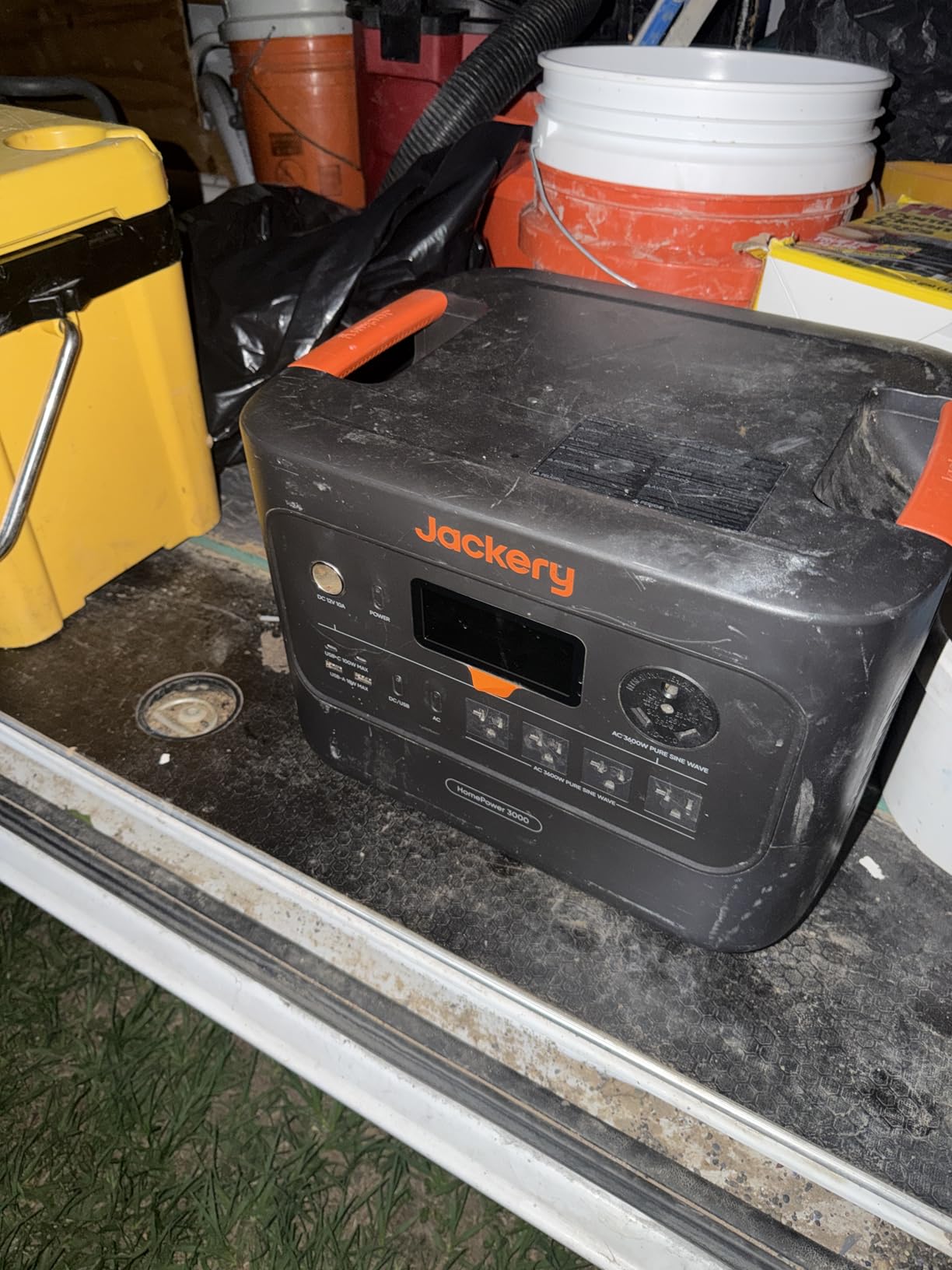
Documentation is the weak point. Several reviews describe an undocumented minimum load for UPS mode that causes unexpected output shutdowns, an advertised voice-assistant integration that never arrived, and a support channel that returned error pages when buyers needed help. The 4.5 rating reflects that friction.
With the bundled panels, expect about nine to eleven hours to bring the unit to 80% in good sun. That is a genuine multi-day top-up rather than a single-day trickle, but for heavy off-grid use you will still want more panels than two.
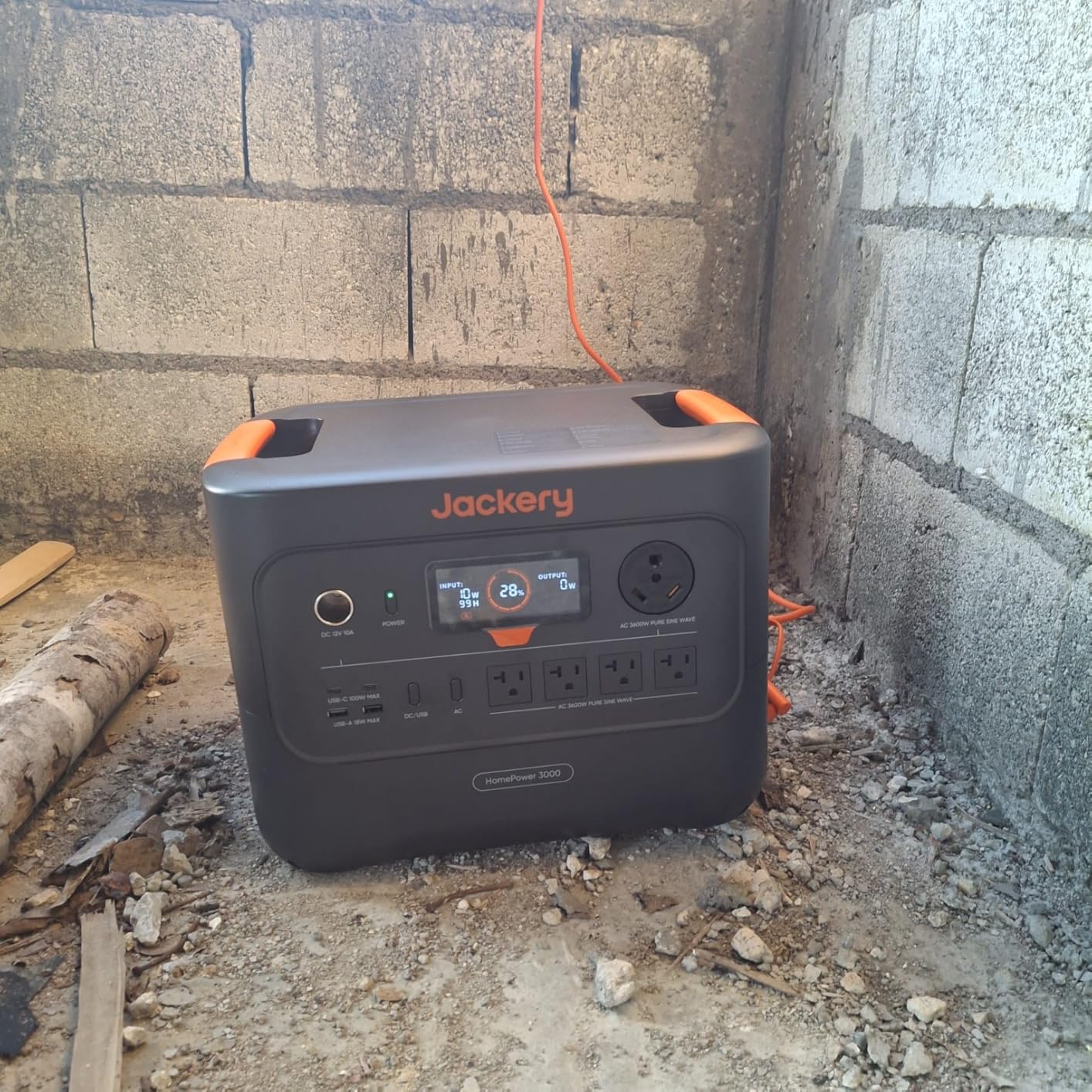
Who this pick suits
First-time hurricane buyers who want solar capability in the box and want to learn their actual consumption before scaling up. It is also well suited to a camper or travel trailer, which is where owners report most satisfaction.
Who should skip it
Skip it if you want room to add capacity later, because the battery is not expandable. Skip it if you need UPS duty for a small load list, since the undocumented minimum load can shut outputs off unexpectedly.
12. Jackery HomePower 3600 Plus: Best for a Full-Week Outage Plan
Jackery HomePower 3600 Plus Power Station, 3584Wh, 3600W AC Output
3584Wh LFP battery
3600W continuous AC
7200W parallel
120V and 240V
expands to 21kWh
Pros
- Expands to 21kWh on one unit and 43kWh across multiple units
- 3600W continuous handles pumps heaters and water heaters
- Built-in wheels and telescoping handle despite the 77 lb weight
- Recharges from a gas generator in about 2.5 hours enabling hybrid use
- Ceramic membrane cells tested at 302F and rated for 6000 cycles
Cons
- About 77 lb and still needs the built-in trolley
- Expansion battery adds meaningful additional bulk
- Outputs are unavailable during firmware updates
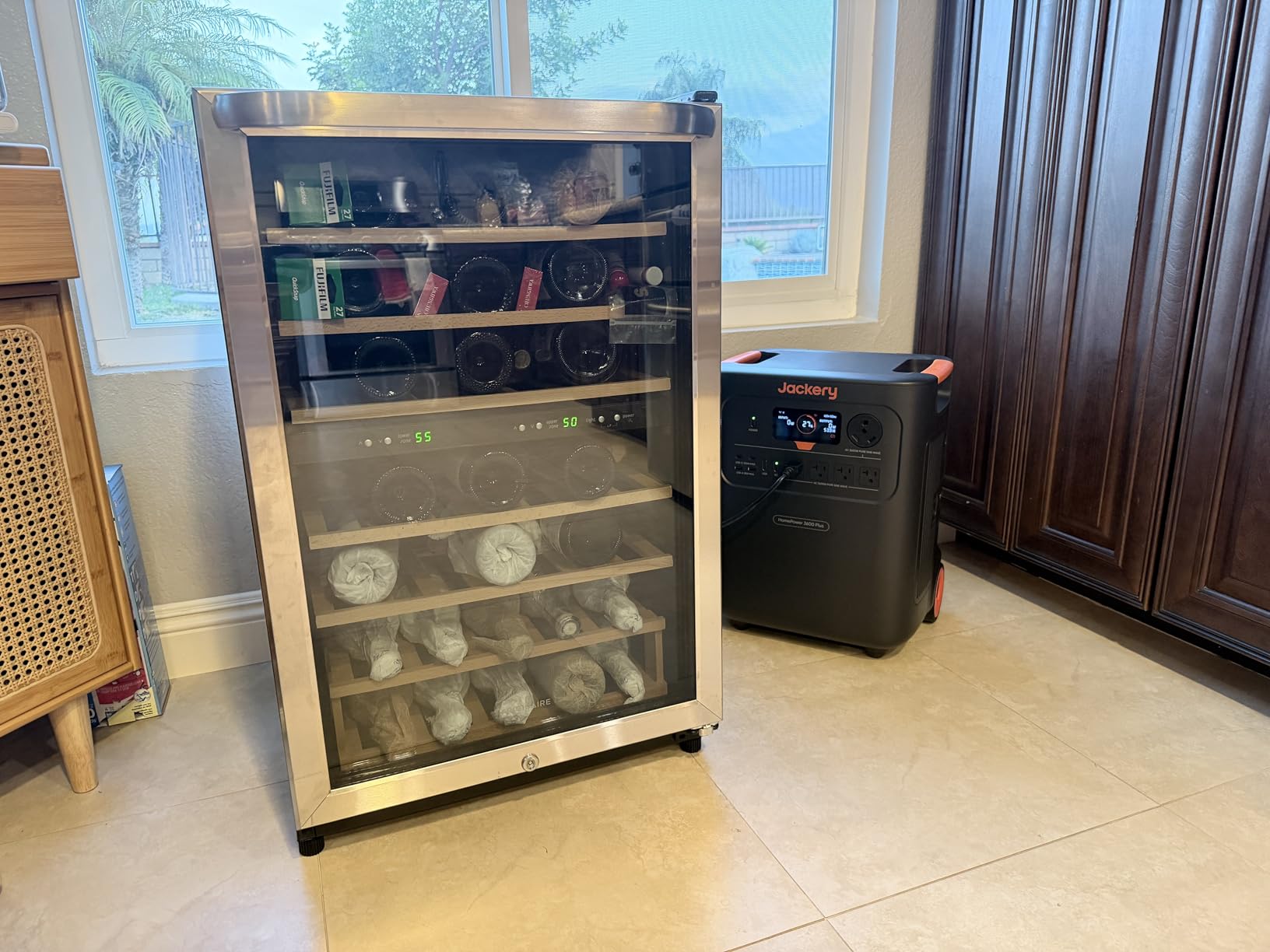
This is the station to buy if you want to stop rationing. It starts at 3584Wh, expands to 21kWh on a single unit and 43kWh across paired units, and at 3600W continuous output it runs pumps, heaters, dryers, water heaters and air conditioning rather than just the fridge circuit.
The hybrid recharge path is what makes it a serious storm-season machine. Owners report refilling it from a gas generator in about 2.5 hours, which lets a household run the noisy engine during daylight hours and switch to silent battery power overnight inside the house.
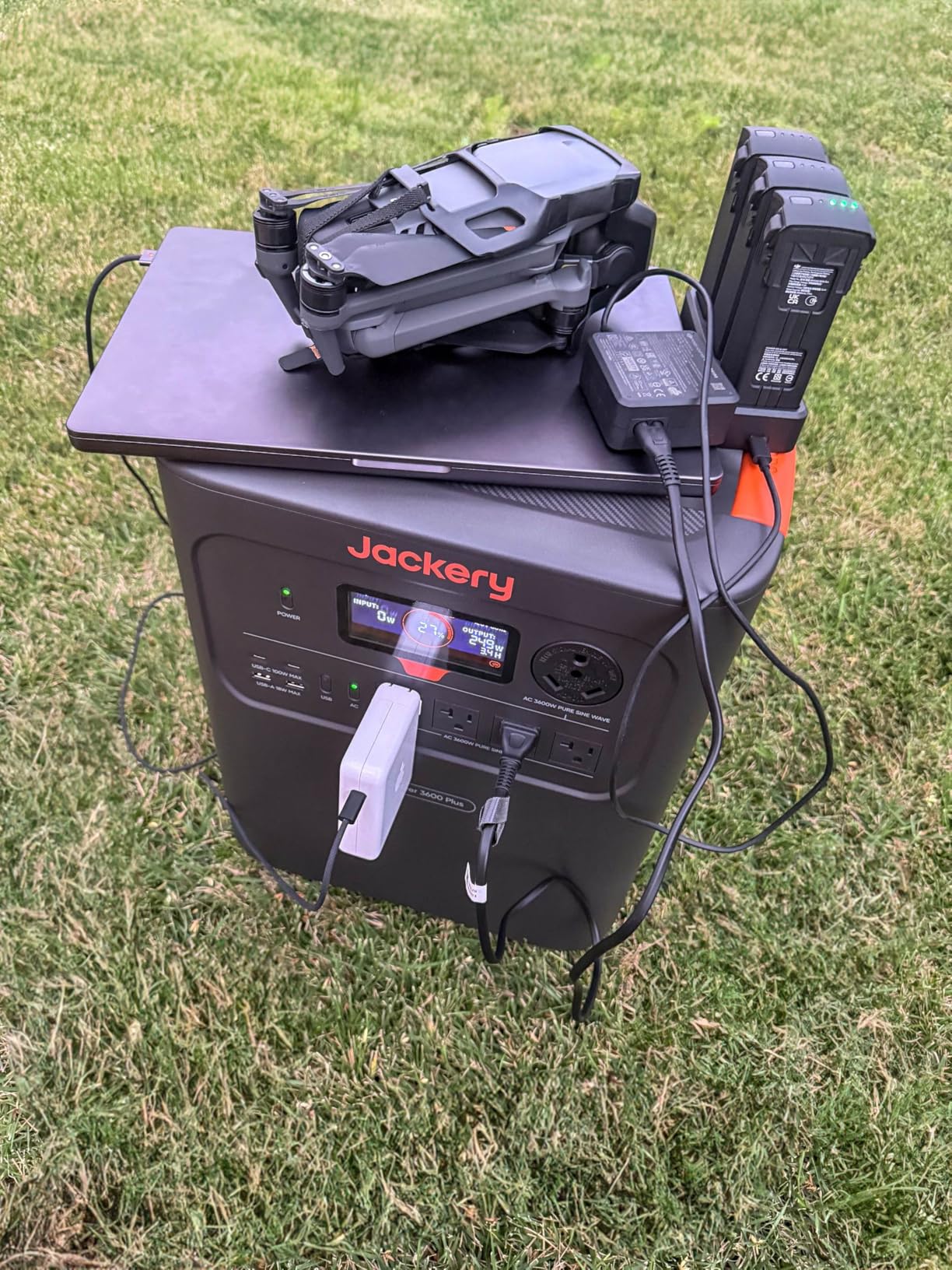
It also has true 120V and 240V dual voltage output, which puts it alongside the EcoFlow DELTA Pro 3 as one of only two stations here that can handle a 240V load. That matters for homes with a well pump or an electric water heater.
Thermal design is the quiet advantage. The ceramic membrane cells were tested at 302 degrees F for thermal runaway resistance and the unit operates down to -4 degrees F, which is reassuring in a climate where a garage can reach uncomfortable temperatures.
Who this pick suits
Households aiming to ride out a week without rationing, or running medical equipment such as an oxygen concentrator alongside normal kitchen loads. Repeat owners in hurricane-prone areas commonly pair two units for exactly this reason.
Who should skip it
Skip it if you need to move the station without the built-in trolley, or if a single unit will not be enough for your cooking and refrigeration load and you would rather buy one larger system instead of expansion batteries.
What to Look for in a Hurricane-Ready Solar Generator
Capacity in watt-hours is the headline, but inverter efficiency, idle draw and chemistry decide how that capacity performs in practice. A 2000Wh station with 20W of overhead gives you less usable energy than a 2000Wh station drawing 6W, and the difference shows up on night three of an outage.
Check continuous output against your largest running load, and check surge against your largest startup load. Refrigerator compressors routinely draw several times their rated running watts when they kick in, and a unit that browns out every time the fridge cycles will not nurse food through a week.
Battery chemistry matters more than most shoppers expect. Every station in this roundup uses lithium iron phosphate rather than the older lithium-ion NMC chemistry, which is the right call for emergency equipment. The cycle ratings here range from about 3,000 to 10,000 cycles, and all of them tolerate being left partly charged far better than NMC packs.
Look at UPS switchover time if you have computers, network gear, or medical equipment. Anything under 20ms is treated as seamless; the EcoFlow models and the Anker SOLIX S2000 sit in that range.
Solar input wattage tells you how fast the unit can rebuild in bad weather, but check whether the input voltage ceiling matches the panels you can realistically deploy. The BLUETTI Elite 200 V2 caps solar input at 60V, and the EcoFlow DELTA Pro limits its single port to 15A, which is a real ceiling on array size.
Expandability is the single biggest factor for anyone planning for a long outage. Stations that cannot add a battery have a hard ceiling, and the ones that reach 12.3kWh, 21kWh or 25kWh give you room to change your mind later.
Finally, count the outlets against your household, and weigh the unit against your evacuation plan. Anything above 80 lb realistically stays where it is, and anything above 100 lb belongs in a garage or utility room rather than a hallway.
Solar Generator vs Gas Generator for Hurricane Season
A battery station wins on safety and fuel independence. A gas generator wins on runtime and heavy loads. For most coastal households the honest answer is that both belong in the plan, used at different hours.
Gas generators produce carbon monoxide, which is fatal at concentrations that are easy to reach in a closed house. The Consumer Product Safety Commission has documented more than a hundred portable generator deaths a year in the United States, and the safety guidance is to run them outdoors at least 20 feet from any opening. That rule alone disqualifies them for apartments, condos, HOAs and any home where you cannot guarantee 20 feet of clearance.
Solar generators have no fuel, no exhaust and no moving parts. They run between 25dB and 30dB, so you can sleep next to one. They need no fuel deliveries that may become impossible after a storm, and the fuel queue problem that hits gas stations in the first 48 hours simply does not apply.
The downsides of a battery station are equally clear. Storage is finite and purchases are expensive per watt-hour, output is limited compared with any fuel generator, and recharging depends on grid power, a solar panel or a gas generator. A station with 3000Wh that wants a 450W air conditioner will not last the night.
For a long outage, the hybrid rhythm wins. Run the gas engine outdoors during daylight hours to recharge the battery or, better, run the loads directly, then shut it down at night and use battery power indoors where it is quiet and safe. Several of the stations here, including the DELTA Pro, the DELTA Pro 3 and the HomePower 3600 Plus, accept generator charging specifically for this pattern.
Prepper forums tend to land in the same place: gas for heavy loads, battery for overnight quiet. We think that is right, and it is why the Anker SOLIX C300 and the DaranEner kit earn a place in a roundup that mostly covers 1000Wh-plus machines.
Solar Panel Sizing and Post-Storm Recharge Math
Size panels with a derate, not a nameplate. Multiply array watts by roughly 0.75 for real-world conversion losses, then by usable peak sun hours for your location and season, and that is your realistic daily harvest.
Worked example: a 200W panel at 0.75 derate with 5 peak sun hours produces roughly 750Wh in a day. Against a 270W essential load that is about 2.8 hours of runtime recovered. A 400W array produces about 1500Wh, and a 1000W array produces about 3750Wh, which covers a full day of 270W use with margin.
Now apply the post-storm haircut. Heavy cloud after a hurricane can cut output to a third of expected, so a 750Wh daily harvest might realistically become 250Wh. Plan for panels to slow the drain, not to reverse it.
The 20 rule is a useful heuristic for people asking how many panels they need: your daily consumption in watt-hours, divided by 5 peak sun hours with a 0.75 derate, gives you the array size in watts. For a 3000Wh daily need, that works out to roughly 800W of panels, and most units here will need two ports or a higher-voltage input to accept that.
Bring panels in before the eyewall arrives. Portable folding panels are not rated for hurricane wind or debris, and a panel that goes airborne damages homes and drains your battery budget at the worst possible time.
For camping or tailgating use rather than storms, our portable solar generator picks cover the lighter end of the market.
Hurricane Prep Checklist
Before the season, charge every station to full from the wall, confirm the included cables fit, and run one full discharge test on your essential load list. Write the runtime number down next to each appliance so you are not doing arithmetic in a dark house.
Before the season, update each app and firmware version, and set a monthly calendar reminder to top the battery up to around 80% between storms. Lithium iron phosphate cells self-discharge slowly, and storing at a mid-level charge is kinder to long-term capacity than sitting full for months.
Before the season, test your actual 240V loads if you have them. Switch on a well pump or pump motor and confirm the station holds steady through startup, which is the single most common surprise for new buyers.
When a watch is issued, top every station to full and disable any scheduled charge limits. Move the units to their planned indoor positions, because moving a 99 lb station in a flooded or dark house is a poor use of storm hours.
When a watch is issued, set up your solar array away from windows and away from the reach of wind-driven debris, but be ready to bring it in before the strongest bands arrive. Charge the station during daylight before the worst conditions, since cloud cover will cut output during the storm itself.
During the outage, run a load budget rather than running everything. A refrigerator, a CPAP or oxygen machine, two LED lamps, the router and phone charging is a defensible core. Anything beyond that should be switched off until you have recharged.
During the outage, keep food safe by keeping the fridge closed. FoodSafety.gov guidance treats an unopened refrigerator as safe for about four hours and a full freezer for roughly 48 hours, so a thermometer in the fridge is worth more than any battery calculation.
After the storm, recharge from the wall first if grid power is back, then run the solar array during daylight hours. Do not leave a station at zero for a week expecting to bring it back, since deeply discharged lithium packs can take a long time to recover and some management systems will refuse to charge.
Frequently Asked Questions
What is the best generator to use during a hurricane season?
The Jackery Explorer 1000 v2 is the best all-round choice for most households, with 1070Wh, 1500W continuous output and a 23.8 lb weight. The BLUETTI AC180 is the strongest value pick at the same capacity class, and the EcoFlow DELTA Pro 3 is the right answer if you have a 240V well pump or central air.
What are the downsides of solar generators?
Storage is finite and expensive per watt-hour, output is limited compared with a fuel-driven generator, and recharging depends on the grid, a solar panel or a gas generator. Post-storm cloud cover cuts panel output sharply, most units weigh 25 lb or more so they are hard to move in an emergency, and many include no panels at all in the box.
How long will a 2000 watt solar generator run a refrigerator?
Using usable watt-hours times 0.85 divided by load watts, a 2010Wh station runs a refrigerator averaging 150W for about 11 hours. Against a 700W compressor start-up draw it is closer to 2.4 hours, and owner testing of the Anker SOLIX S2000 lands around 33 hours for a typical cycling fridge over a full discharge.
How long do portable power stations last per charge?
It depends entirely on load. A 270W blended essential load gives about 3.2 hours on a 1024Wh station, 6.3 hours on a 2010Wh station, and 12.9 hours on a 4096Wh station. A 450W window air conditioner cuts those figures to under half in most cases.
Do solar panels work during a hurricane?
Barely, and you should not count on them. Panels need direct sunlight, and the heavy cloud cover that surrounds a hurricane can cut output to a fraction of nameplate, sometimes to a third. Treat panels as a top-up during and after the storm, and bring them indoors before the eyewall passes.
How many solar panels are needed to run a well pump?
A well pump is a 240V load and most portable power stations cannot run one at all, so you need a unit with split-phase output such as the EcoFlow DELTA Pro 3 or the Jackery HomePower 3600 Plus. Size the array by dividing your daily watt-hours by 5 peak sun hours and a 0.75 derate, then check the station’s solar input voltage ceiling accepts that many panels.
What is the 20 rule for solar panels?
It is a sizing shortcut rather than a law of physics. Divide your daily energy need in watt-hours by 5 peak sun hours, then apply roughly a 0.75 derate for real-world losses. A household needing 3000Wh a day lands on about 800W of panels using this method.
What should a household test before hurricane season?
Run one full discharge cycle on your actual essential load list and write down the runtime. Confirm the station holds steady through refrigerator and motor start-up, update the app and firmware, and check that every cable you need is in the box since most units ship without panels.
Final Verdict for Hurricane Season 2026
The best solar generators for hurricane season come down to one honest calculation: how many hours do you need on your real load list, and can you move the box when it matters. Start with the Jackery Explorer 1000 v2 if you want one station to do most jobs, the BLUETTI AC180 if you want more inverter headroom, and step up to the BLUETTI Elite 200 V2 or Jackery HomePower 3600 Plus when a four-day outage is the realistic scenario.
For 240V loads and whole-home ambitions, the EcoFlow DELTA Pro 3 is the only station here that handles split-phase output and expands past 12kWh. For apartments and rentals where a combustion engine is not an option, the Anker SOLIX C300 is the one I would carry up the stairs.
None of this replaces a generator for a week of cooking, air conditioning and water heating. The best hurricane plan pairs a battery station for overnight medical devices, refrigeration and communications with a gas engine run outdoors during daylight hours, recharging the battery between uses.
Whichever you choose, run a full discharge test before the season and write your runtime numbers down. Our home backup guide goes deeper on sizing for fixed installations, and 2026 is a good year to stop treating this as a weekend project.