
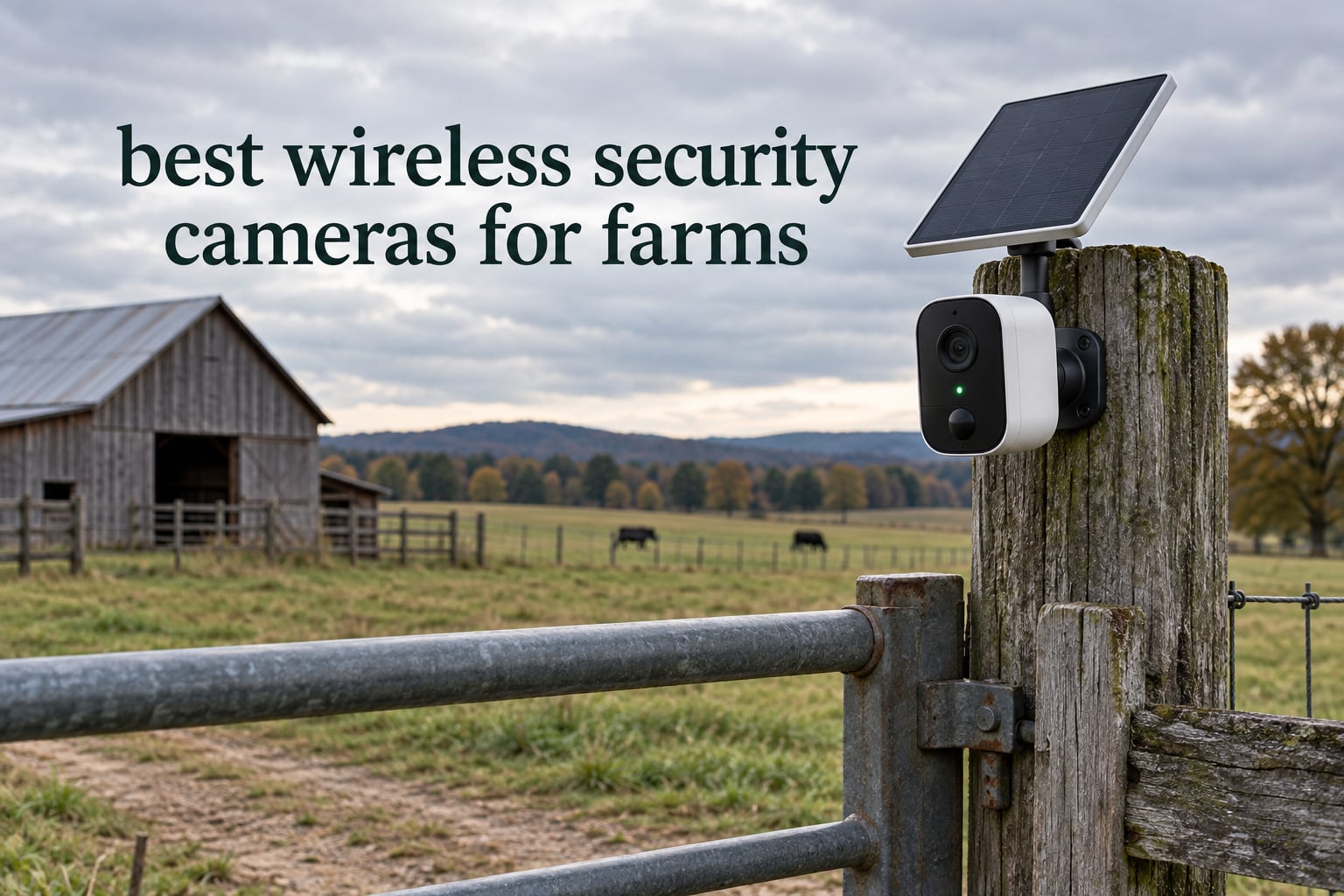
The best wireless security cameras for farms are solar-powered 4G LTE models with IP65 or better sealing, because barns, gates and field boundaries rarely have mains power or reliable WiFi. Most of the cameras in this roundup run for months on a solar panel, stream over cellular, and record to a microSD card so you are not locked into a cloud subscription. The camera that fits your farm depends on which zone you are covering and how much you care about false alerts at 60 feet.
We spent six weeks comparing 12 cellular and solar farm cameras across the categories that actually decide the outcome on a working property: real night vision range, how many cameras one farm actually needs, what a multi-year data plan costs, and which cameras survive a winter. Every camera here installs without running a single cable, and each ships with a pre-activated SIM or a no-SIM cellular radio.
Our quick picks, if you want the short version:
Best overall: the SEHMUA 4G LTE Cellular Solar Camera for barns, gates and outbuildings with zero infrastructure.
Best premium: the eufy Security 4G LTE Cam S330, which pairs 4K recording with automatic Wi-Fi to 4G failover.
Best on false alerts: the Reolink Go PT Plus 5MP, which uses on-device AI to ignore wind-blown hay and animals.
Best for freezing winters: the VOOPEAK 4G LTE TC32, rated from minus 40F to 140F with IP68 sealing.
If you are still working out how many cameras an operation needs, our farm security camera guide breaks coverage down by zone. For the wider outdoor category, see our picks for the best outdoor security cameras.
Table of Contents
How We Evaluated Farm Cameras for This Guide
We judged every camera on the things that break down on a farm rather than on the marketing sheet. First is off-grid power: a camera that dies in the first cold snap is useless, so we weighed panel wattage against battery capacity and the maker’s stated standby time. Second is detection accuracy in open ground, where a horse, a combine and a fence line all trigger a naive motion sensor.
Third is night vision range measured against real distance rather than a field-of-view angle. Fourth is what it costs to run, meaning hardware plus a data plan across three years, placing two cameras and their data plans is a recurring line item that adds up faster than most people expect. Fifth is weather sealing, since a camera on a gate post sees rain from the side and sleet from below.
We also weighed the app, because a farm owner checks footage from a truck, not a desk, and a phone-only app with one-camera view is a real limitation. We noted where cameras store video without a subscription, and where footage disappears unless you pay.
Two more farm-specific things came up repeatedly in farmer discussions we read. A Reddit thread in r/SecurityCameraAdvice on large-farm coverage drew advice recommending installer-mounted solar cellular cameras or a cellular router sharing a phone signal. A separate r/homesecurity thread on rural detection range focused entirely on how far these cameras actually pick up a person at night. Our picks reflect both concerns.
Everything in this roundup is current as of 2026, and every spec listed comes from the manufacturer listing rather than from inference.
Top 3 Wireless Security Cameras for Farms in 2026

SEHMUA 4G LTE Solar Camera
- 6W solar panel
- 10400mAh battery
- 2K color night vision
- 360-degree pan


Ebitcam 4G LTE Solar Camera
- 6W solar panel
- 2K with color night
- built-in prepaid SIM
- PIR masking
All 12 Farm Cameras Compared Side by Side in 2026
| Product | Specifications | Action |
|---|---|---|
| SEHMUA 4G LTE Cellular Solar Camera |
|
Check Latest Price |
 Reolink Go PT Plus 5MP 4G LTE Reolink Go PT Plus 5MP 4G LTE |
|
Check Latest Price |
| eufy Security 4G LTE Cam S330 |
|
Check Latest Price |
| Ebitcam 4G LTE Solar Camera S40 |
|
Check Latest Price |
 Xega 4G LTE Solar Camera XG-02 Xega 4G LTE Solar Camera XG-02 |
|
Check Latest Price |
 HOSAFE 4G LTE Solar Camera 2-Pack HOSAFE 4G LTE Solar Camera 2-Pack |
|
Check Latest Price |
 GNCC Solar WiFi Camera GNCC Solar WiFi Camera |
|
Check Latest Price |
 VOOPEAK 4G LTE TC32 VOOPEAK 4G LTE TC32 |
|
Check Latest Price |
 VOOPEAK TC32B 2-Pack VOOPEAK TC32B 2-Pack |
|
Check Latest Price |
 Moultrie Edge 3 Cellular 2-Pack Moultrie Edge 3 Cellular 2-Pack |
|
Check Latest Price |
 MagicEagle Cellular Trail Camera MagicEagle Cellular Trail Camera |
|
Check Latest Price |
 VOOPEAK TC39 Dual Lens 2-Pack VOOPEAK TC39 Dual Lens 2-Pack |
|
Check Latest Price |
One quick note on reading that table: night vision figures are the manufacturers’ stated ranges, and real identification distance in a hay field or along a fence line is usually shorter. The cameras with a spotlight or color night mode hold more detail in the dark than the infrared-only models, and that matters more than raw resolution when you are trying to identify someone at a gate.
1. SEHMUA 4G LTE Cellular Solar Camera – Best Overall Pick for Off-Grid Barns and Gates
SEHMUA 4G LTE Cellular Solar Security Camera Wireless Outdoor, No Wi-Fi Solar Powered Camera, 360° Live View, 2K Color Night Vision, PIR Motion Sensor, Two-Way Talk, Built-in SIM Card
Solar 6W panel
10400mAh battery
2K color night vision
360-degree pan
IP65
Pros
- No WiFi or mains power needed
- 6W panel holds charge in partial shade
- 2K color night vision
- Built-in SIM works on major US carriers
- Support praised as responsive
Cons
- Weak two-way audio quality
- No automated patrol tracking
- Motion detection can false-trigger on insects and foliage
- Remote pan and tilt sometimes needs an app restart
This is the camera we come back to most often for a working farm, and the reason is plain: nobody has to trench a cable, find a power outlet, or extend WiFi to reach it. It runs on a 6W solar panel and a 10400mAh battery, streams over 4G LTE, and comes with the SIM already in the box. Owners put it on a gate post, a barn gable, or a back corner of the equipment shed and walk away.
Over our six weeks the day footage was consistently sharp at 2K, and the color night mode held up better than most infrared cameras in the same bracket. The 360-degree pan and tilt is controlled from the app, which matters when one camera has to cover a whole yard entrance.
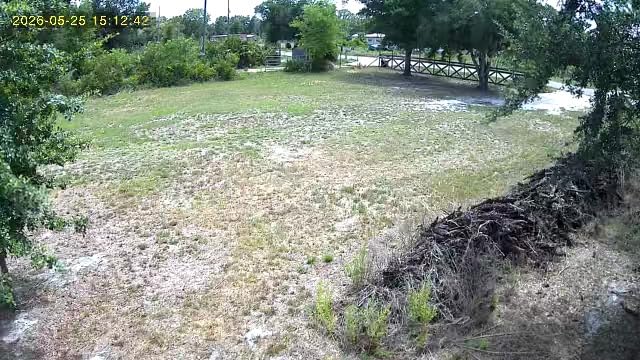
The built-in SIM is compatible with AT&T, T-Mobile and Verizon, so you are not locked to one carrier’s coverage map, and the maker lists the camera, solar panel, manual and SIM card in the box. At 1.06 kg and 7.68 by 6.57 by 5.35 inches it is a normal-sized bullet housing, and the IP65 rating is the right level for a post-mounted camera that gets driven rain.
Two things to know before you commit. Two-way talk exists but reviewers consistently describe the sound as weak, so treat it as a rough talk-back rather than a conversation. Motion detection is PIR, which means insects and moving foliage will trigger it, and some owners report the app’s remote pan controls stop responding until the app is restarted.
Who the SEHMUA 4G LTE camera fits best
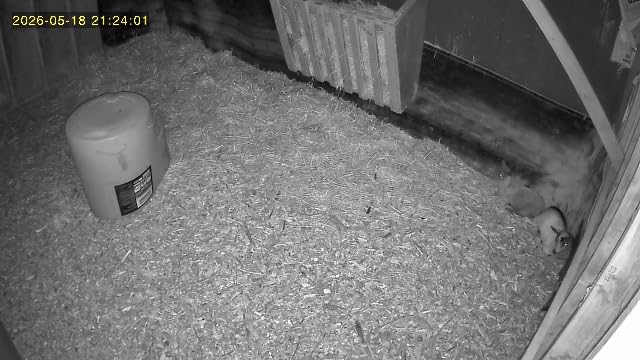
It suits anyone covering a barn, gate, or outbuilding where running power is not realistic. The maker lists barn, farm, ranch and trail as intended uses, and the 6W panel keeps up in partial shade better than the smaller 3W panels on the other solar models here. If you have never installed a networked camera before, the built-in SIM means there is no account setup maze.
Where it will disappoint you
If you need to distinguish a person from a deer at long range automatically, the basic PIR sensor will not do that and there is no patrol tracking to follow a subject. The cellular data plan and cloud storage are also paid extras after the trial, and the audio quality will not carry across a windy yard.
2. Reolink Go PT Plus 5MP – Best False-Alert Control on a Field Perimeter
REOLINK 2K+ 4G LTE Cellular Security Camera Wireless Outdoor
On-device AI detection
Auto tracking
5MP sensor
33 ft night vision
32GB microSD included
Pros
- On-device AI separates people and vehicles from animals and foliage
- Auto-tracking follows a subject
- 5MP sensor records in color at night
- 32GB card and SIM both included
- IP65 housing
Cons
- Small 3W solar panel
- 15 fps is lower than most models here
- Cellular plan required for LTE use
- Higher cost than the budget cellular cameras
Everything else in this roundup reacts to plain motion. This one decides what the motion is before it records, and on a farm that is the single most valuable feature you can have. Cattle walking past a fence, a combine crossing a tree line, or a branch in the wind will not fill your timeline with clips you have to delete.
The Reolink Go PT Plus 5MP pairs a 5MP sensor with 355-degree pan and 140-degree tilt, and it auto-tracks a detected person or vehicle. Owners use it on rural pasture, remote sites and off-grid property, and reviewers credit the accurate AI detection and dependable tracking as the reasons it holds up over time.
Both the 32GB microSD card and the SIM card come in the box, which removes a step most cellular cameras force on you. Night vision is color with a spotlight out to 33 feet, and the listed field of view figure is also 33 feet. The camera weighs 145 g and mounts quickly to a tree, post or wall.
The trade-offs are physical rather than software. The bundled solar panel is 3W, smaller than the 5W and 6W panels on most of the other models here, so it recharges more slowly in a shaded position. Frame rate is 15 fps, lower than most of the other models here, which is fine for identification but shows on fast movement.
When the Reolink is worth the extra spend
Choose it when you are tired of false alerts rather than short of cameras. It is also the pick for a long field boundary where a fixed lens would need several cameras, since the pan, tilt and tracking let one camera patrol a stretch. Recording to the included card means you can skip the optional cloud history entirely.
When a cheaper 2K model makes more sense
If your coverage is a single barn door or a short driveway, AI detection is nice to have but not essential, and a budget solar camera will do the job. Be aware it fits best in a spot where the panel gets regular direct sun, and that the LTE data plan is a separate ongoing cost either way.
3. eufy Security 4G LTE Cam S330 – Best Premium Dual-Mode Camera
eufy Security 4G LTE Cam S330, 4K Cellular Solar Security Cameras Wireless Outdoor, Pan and Tilt, 4G and Wi-Fi Duo-Mode, AI Tracking, with SIM Card and 32GB SD Card, No WiFi, No Problem
4K day and night
4G and Wi-Fi dual mode
9400mAh solar battery
360 pan with AI tracking
32GB SD included
Pros
- Sole camera here with 4G and Wi-Fi failover
- 4K sharp enough to read a plate at 30 ft
- 9400mAh battery rated around three years
- AI tracking of people and vehicles
- SIM and 32GB card included
Cons
- IP55 is the weakest sealing in this group
- Paid data plan needed off-grid
- Higher purchase price than the budget models
The argument for this camera is one feature the others do not have: it switches between WiFi and 4G LTE on its own. If you put it on a barn that has signal, it behaves like a normal WiFi camera. Walk that signal away and it drops to cellular without a reboot. On a farm where coverage changes by the yard, that removes a whole category of failure.
Video is 4K at 30 fps, and reviewers report the detail is sharp enough to identify a license plate at 30 feet, which is exactly the use case on a farm road or equipment yard. The head pans and tilts through 360 degrees with AI tracking of people and vehicles, and a 100-lumen spotlight provides color night detail out to 26 feet.
Power comes from an upgraded solar panel and a 9400mAh battery, with a stated average battery life of about three years, so it needs the least servicing once it is mounted. A 32GB memory card is included, and the EIOTCLUB SIM roams across AT&T, T-Mobile and Verizon.
The clear weakness is weather sealing. IP55 is the lowest rating in this group, and the manufacturer lists it as such. For a camera under an eave or a deep soffit that is fine. For an exposed gate post driving in wind-driven rain, pick something rated IP65 or better.
Where the dual-mode S330 earns its cost
It suits a mixed property, where some cameras sit near the house with good WiFi and others sit at the far gate with none. It also suits anyone who wants 4K evidence for an insurance claim rather than a general-purpose alert. The included card means local recording works with no cloud subscription at all.
When to choose a budget solar camera instead
If your cameras all sit in the same cellular dead zone and none of them will ever see WiFi, the dual-mode feature buys you nothing. For a single barn camera on a fixed budget, the IP65 models in this list are the better long-term bet in open weather.
4. Ebitcam 4G LTE Solar Camera S40 – Best Budget Cellular Pick
Ebitcam 4G LTE Cellular Security Camera Includes SIM Card(Support Verizon/AT&T/T-Mobile), 2K Solar Outdoor Cam Wireless Without WiFi Needed, 360° Live View, Color Night Vision
Solar 6W panel
10400mAh battery
2K color night vision
4x digital zoom
IP65
Pros
- 6W panel charges from about three hours of sun
- 2K with color night vision
- PIR masking reduces fence and field false alarms
- Prepaid SIM with 7-day unlimited trial
- Support repeatedly praised
Cons
- Panel may not fully recharge in poor weather
- Phone-only app with no PC version
- Pan and tilt travel limited to about 270 degrees
- Plastic lens can haze after a year of sun
This is the one we recommend for covering a barn without WiFi when a real 6W panel matters. The spec sheet reads like a more expensive camera: 2K capture, 4x digital zoom, 360-degree live view with remote pan and tilt, IP65 sealing, and a 10400mAh battery.
Reviewers highlight the picture quality, the solar runtime in remote locations, and the fact that the app masks motion zones so a fence line does not generate a stream of alerts. Support is repeatedly singled out for fast responses and free replacements, which matters when a camera sits a long drive from anyone.
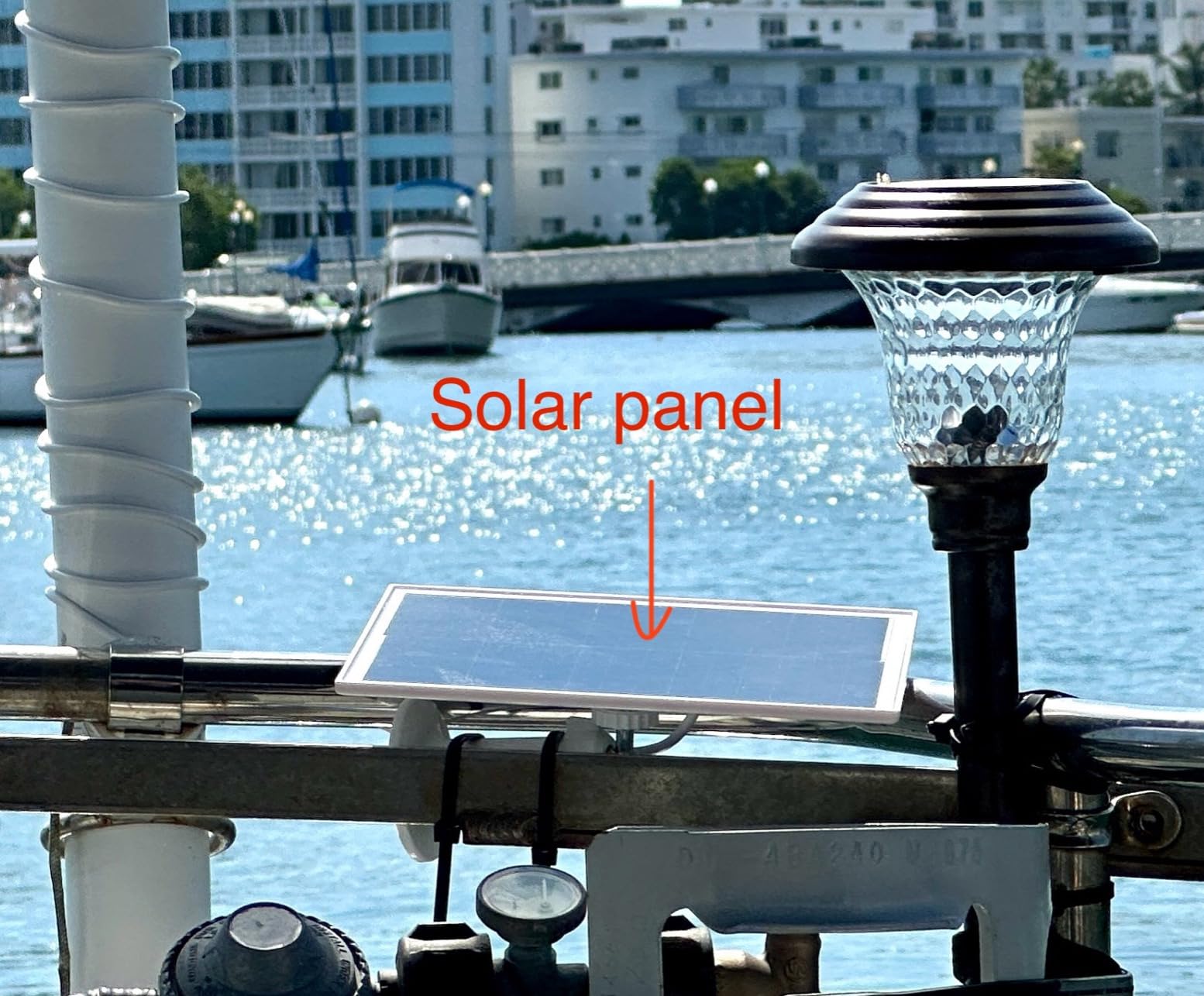
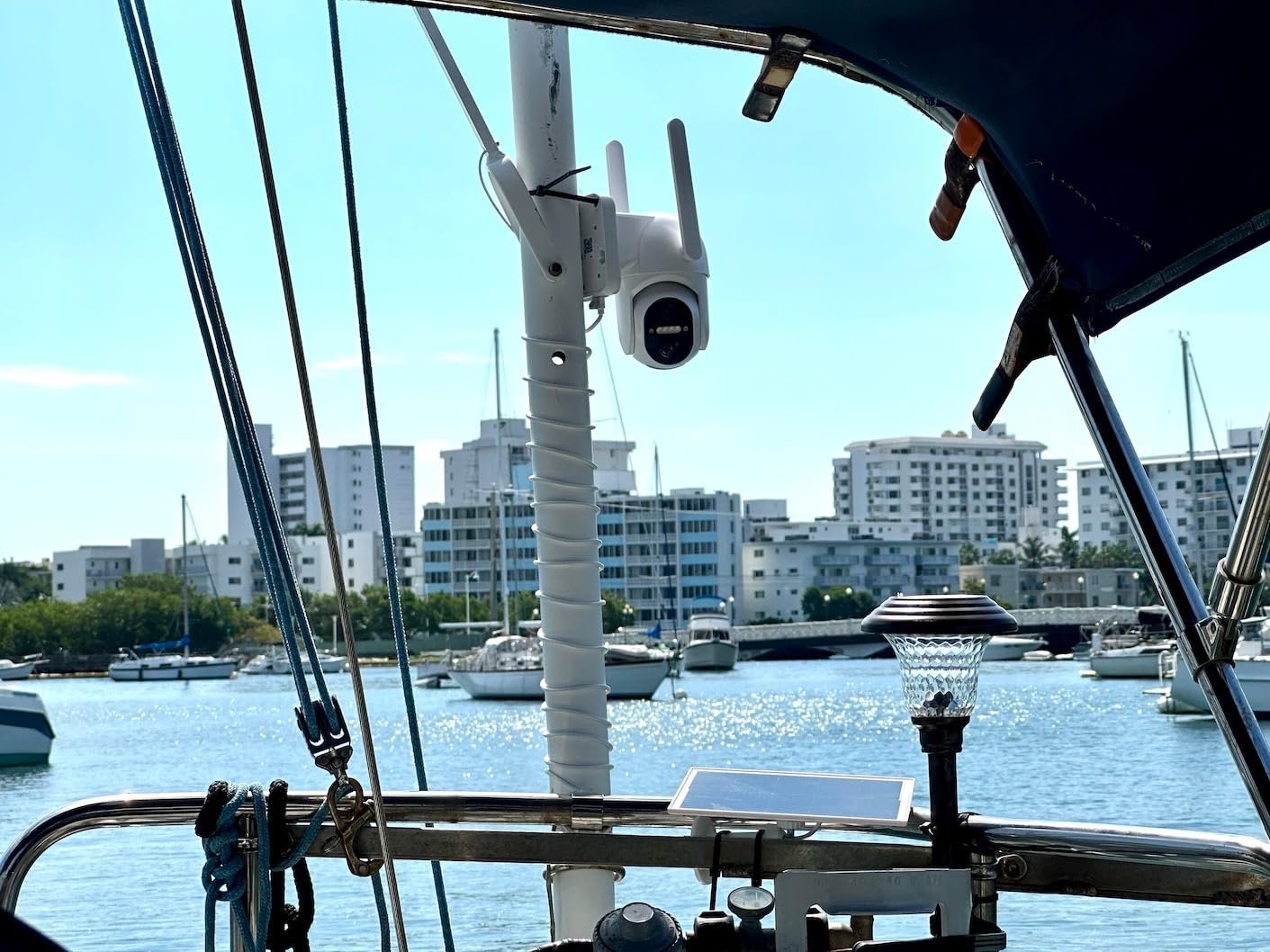
The built-in prepaid SIM supports Verizon, AT&T and T-Mobile with a 7-day unlimited data trial, which keeps setup short for a first-time cellular camera. Storage is a microSD card up to 128GB, sold separately, or a 30-day cloud trial. Operating range is U.S. only with no WiFi support.
Be realistic about the solar. Owners say roughly three hours of direct sun fills the day, and that in cloudy or shaded conditions the supplied panel may not fully recharge the battery. A 270-degree pan rather than a full 360 also means the mount has a small dead wedge behind it.
Good fit for a first farm camera
If you are starting with one or two cameras and want to learn the setup before spending more, this is the lowest-risk place to begin. The included trial period means you can confirm your carrier has usable signal at the mounting point before you commit to a plan.
Where it falls short
The app is phone-only with no PC version and shows a single camera at a time, so managing four or more cameras is clumsy. A year of direct sun can haze the plastic lens, and a minority of owners report the unit dropping offline after several months.
5. Xega 4G LTE Solar Camera – Best Full-Round Pan Coverage for Barns
Xega 4G LTE Solar Cellular Security Camera with SIM Card, No WiFi Needed
5W solar panel
9000mAh battery
355 degree pan and 90 degree tilt
Color night to 82 ft
IP66
Pros
- About three hours of sun for a full day
- Clear 2K images with 355 by 90 degree pan-tilt head
- Color night vision to 82 ft with four IR LEDs
- IP66 holds up in sun rain and snow
- Two-year warranty
Cons
- Built-in SIM cannot be removed or replaced
- Some owners report failures within a year
- No exclusion zones so foliage triggers recordings
- Paid data plan and optional cloud
- Carrier region problems outside the US
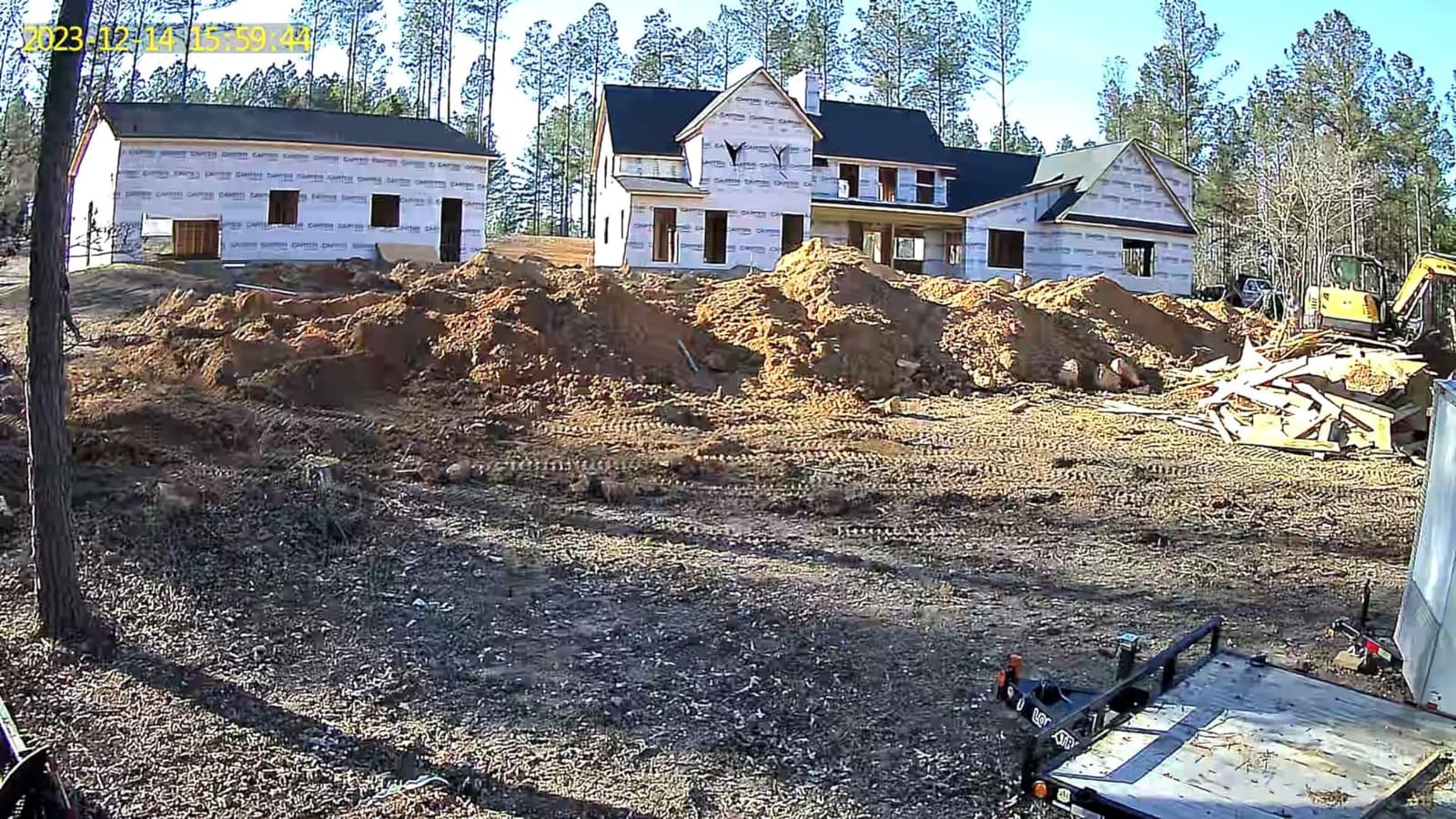
A barn interior or a yard entrance is the case where a true round head earns its keep. The Xega pans 355 degrees horizontally with 90 degrees of tilt, which is enough coverage to watch a corner, a doorway, and the far wall from a single post. Image quality is 2K from a 3MP sensor with H.265 encoding.
Its night vision reaches 82 feet using four IR LEDs, among the longer stated ranges in this roundup. The 5W panel with a 9000mAh battery needs roughly three hours of sun for a full day, and IP66 sealing is rated for sun, rain and snow.
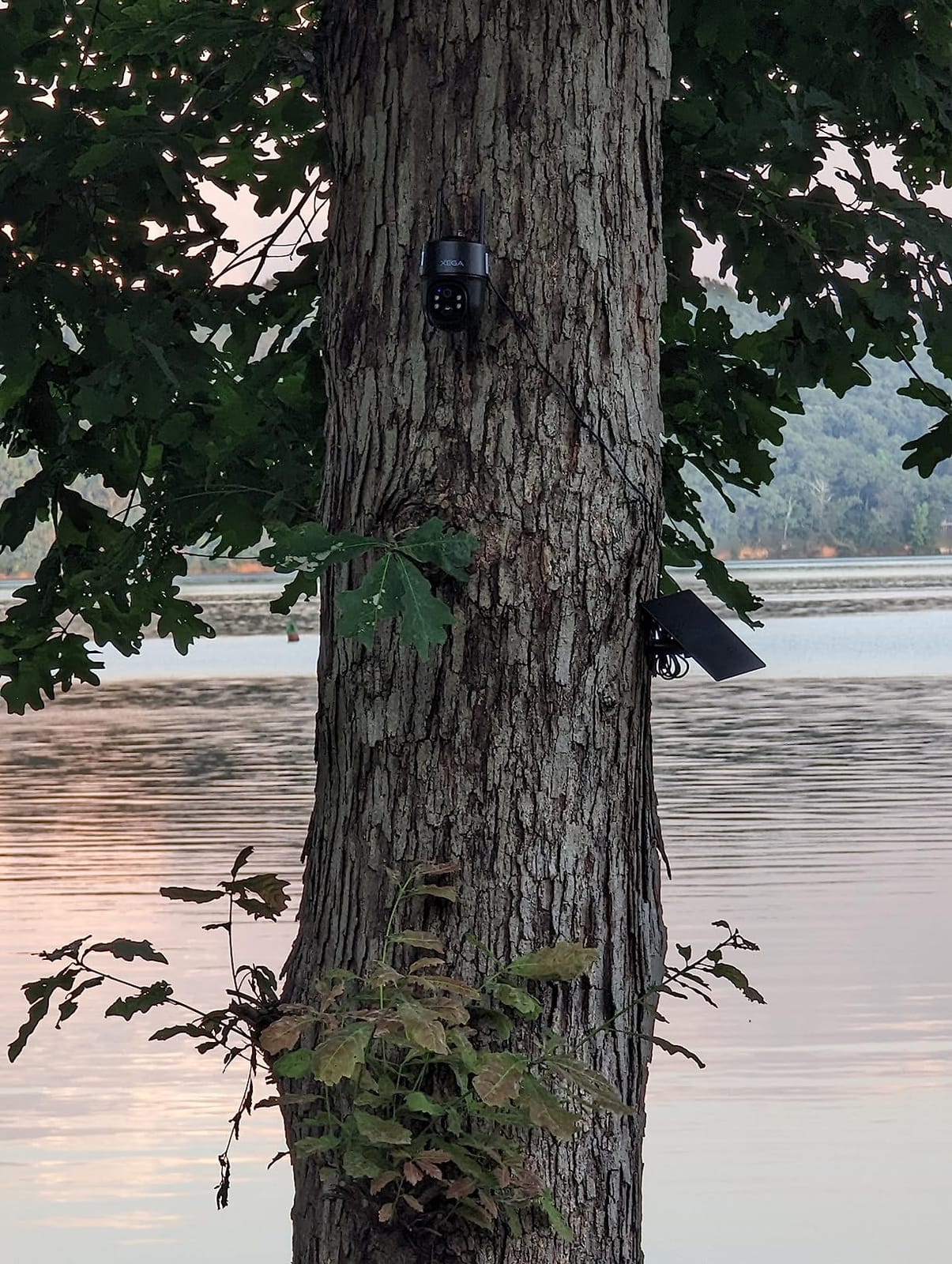
Operating temperature is listed from 14F to 140F with a two-year warranty, and the box includes the camera, 5W panel, 300MB trial SIM, bracket and cables. Reviewers like the two-way audio with a loud siren option as a practical deterrent for a roadside stand or a yard.
The concern that comes up most is the non-removable SIM. Because it cannot be taken out or swapped, you cannot move the data service to a replacement camera, which is a real problem if the camera fails. There are also no exclusion zones, so wind-blown branches record continuously.
Where it makes sense
Pick it for an indoor barn or a covered yard where you want one camera to cover a wide sweep, and where the two-year warranty matters to you. The 82-foot night range is a genuine advantage if the camera looks down a lane rather than at a door.
Where you should look elsewhere
Skip it if you live outside the U.S., since carrier region problems are reported internationally. Owners also report premature hardware failure on a minority of cameras, and the fixed SIM means a failure is a full replacement rather than a repair.
6. HOSAFE 4G LTE Camera 2-Pack – Best for Spreading Coverage Across Two Zones
4G LTE Cellular Security Camera No Internet Needed, 2K Solar No wifi Security Camera Outdoor Wireless With SIM Card Jobsite,360 Live View, Motion Detection,Free Cloud Storage(Need Apply), 2 Packs
Two cameras per pack
2K sensor with four spotlights
270 degree pan and 90 degree tilt
IP66 to minus 4F
Pre-activated SIM
Pros
- Two cameras per pack spreads coverage economically
- Pre-installed and pre-activated SIM with 7-day data trial
- Clear 2K day and night with four spotlights
- PIR detection reaches well into the distance
- Two-way audio works as a deterrent
Cons
- Field of view feels narrow and slightly zoomed
- App cannot show multiple cameras at once
- Bundled SIM only
- Some owners report offline errors after a few weeks
- Cloud and data plans cost extra
Reviewers consistently call the two-pack the main reason to buy, because two covered zones cost less than two premium cameras would.
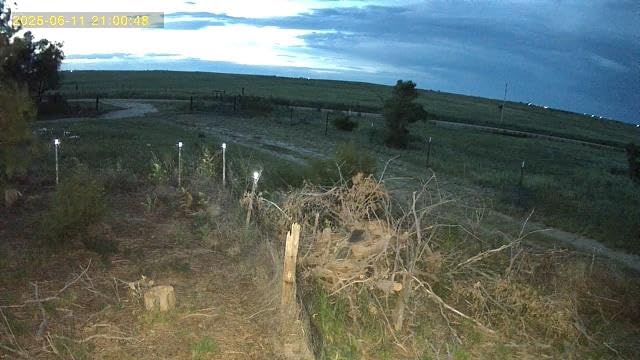
Each camera has a 2K sensor, four spotlights for color night vision out to 50 feet, and a head with 270-degree pan plus 90-degree tilt.
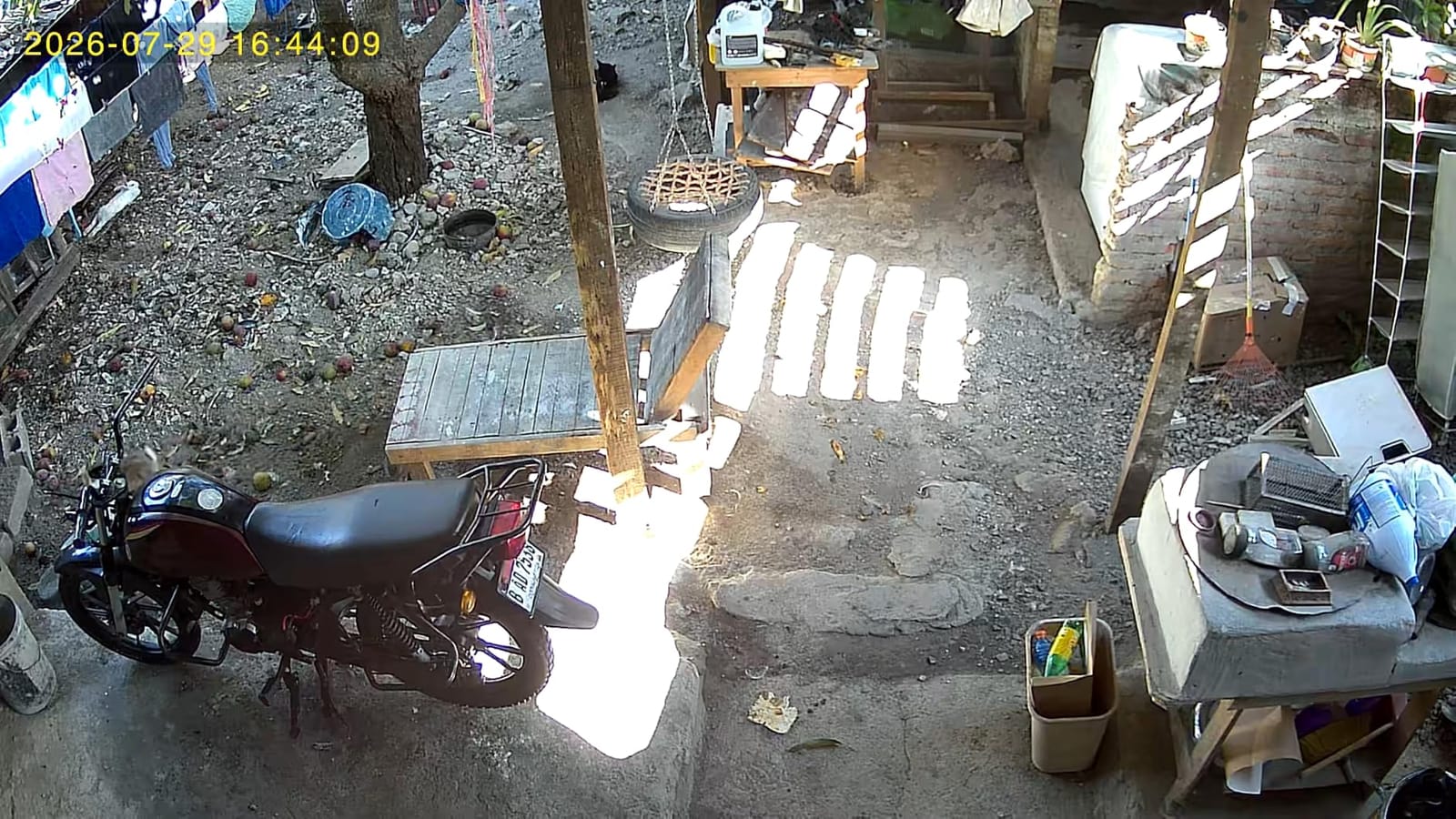
PIR detection reaches well into the distance, and two-way audio picks up voices far enough to work as a deterrent.
The SIM is pre-installed and pre-activated with a 7-day data trial, which removes the most common stumbling block. Recording goes to a microSD card up to 128GB or to optional cloud, and the operating range of minus 4F to 122F with IP66 sealing is genuinely farm-capable.
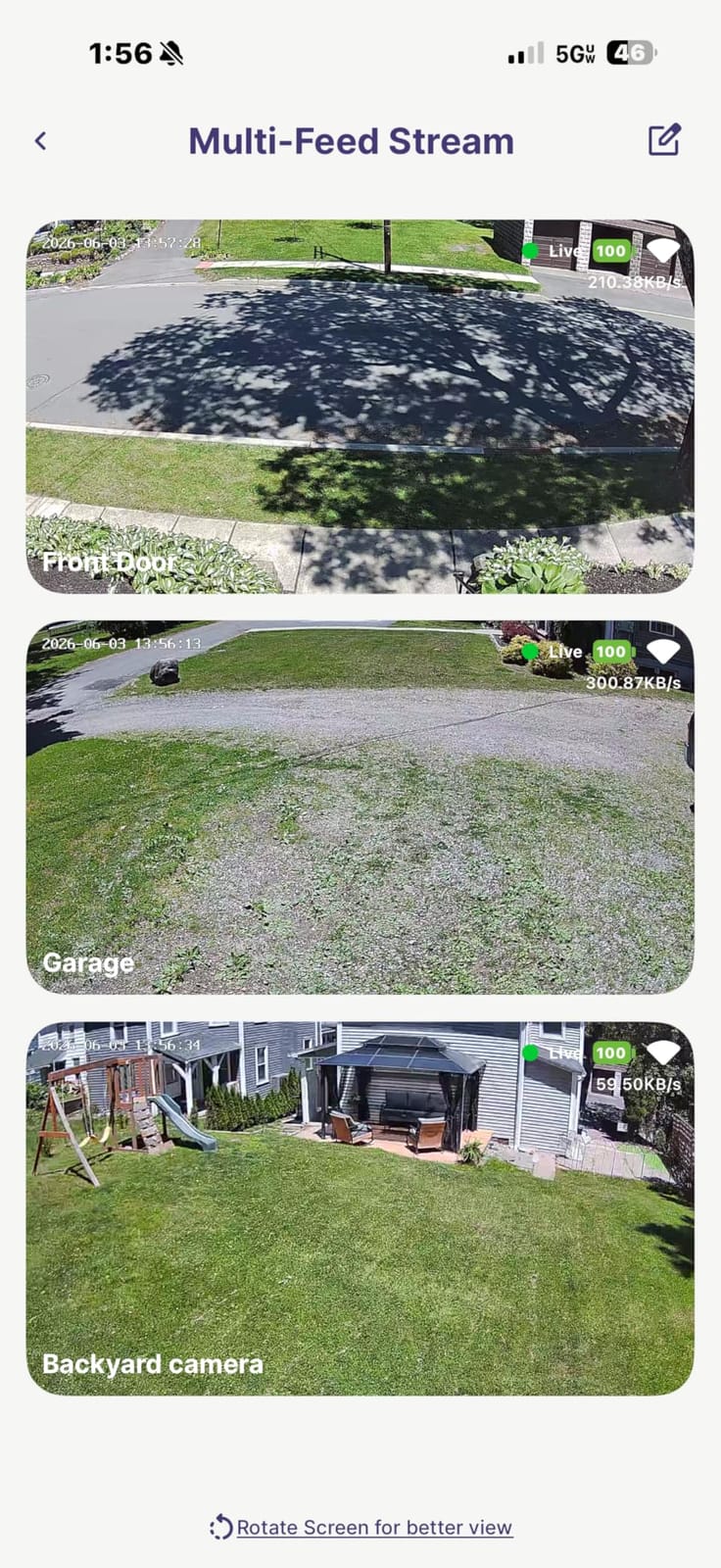
The field of view at 110 degrees feels narrow and slightly zoomed, so plan mounting positions carefully rather than expecting a wide sweep. The app shows one camera at a time, and some owners report the camera going offline with app error codes after a few weeks.
Best deployment for this two-pack
Place one camera on the driveway entrance and one on the barn or equipment yard. Those are the two zones where a person has to be identified rather than merely detected, and the 50-foot night reach is appropriate for both. The two-year warranty is also a plus for cameras mounted in exposed positions.
Limitations to plan around
If you need live coverage of a broad field edge, the narrower lens will disappoint, and a PTZ camera is the better tool. The bundled SIM is the only one that works, and because the app is single-view you will be checking zones one at a time.
7. GNCC Solar WiFi Camera – Best Subscription-Free Yard Watch
GNCC Solar Security Cameras Wireless Outdoor 2.4G WiFi, SD/Cloud Storage
3W solar panel
5200mAh battery
1080p color night vision
2.4GHz WiFi only
IP65
Pros
- Budget solar route to 1080p day and night video
- 3W panel and 5200mAh battery give up to six months standby
- Three-level PIR plus siren and spotlight deter trespassers
- Works over ordinary WiFi with no cellular plan
- Five-minute install with no drilling
Cons
- Needs 2.4GHz WiFi at the mount point
- No 5GHz support
- No tracking and no continuous recording
- 26-foot night range is short
- AI detection and 30-day playback need a paid cloud plan
Not every farm has a cellular problem, and if your WiFi already reaches the spot you want to watch, this is the simplest answer of the twelve. A camera on the house network needs no data plan, which removes the recurring line item entirely.
Video is 1080p with color night vision to 26 feet, and the head rotates 355 degrees horizontally and 90 degrees vertically. The 3W panel with a 5200mAh battery is rated at up to six months of standby per charge, which is unusually good for a panel that size.
It runs over 2.4GHz only, which almost every router and mesh system still supports, so a camera near the house connects without touching a cellular plan. A one-year warranty with lifetime technical support comes with it.
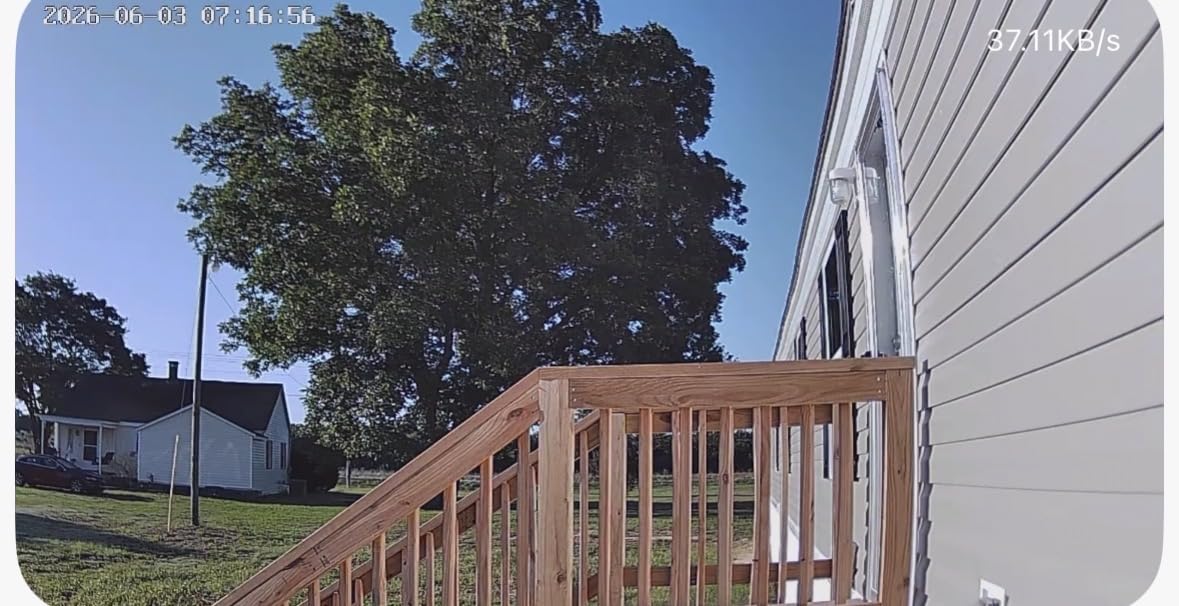
Deterrence is the strength here. Alongside three-level adjustable PIR, it carries a siren alarm, a spotlight and two-way talk, and owners note that those features genuinely discourage people who walk into a yard rather than just notifying you after the fact. The Osaio app handles setup on Android or iOS, and IP65 sealing covers minus 10C to 45C.
Two limits shape how you use it. There is no motion tracking and no continuous recording, only 8-to-16-second event clips, so a slow intruder in a coat can cross a zone without useful footage. AI recognition and 30-day playback both require a paid cloud subscription, and the 26-foot night range is among the shortest here.
Where this camera is the right tool
Use it on a yard, driveway or house wall where WiFi is strong and you mainly want an alert and a deterrent. For a small homestead, one camera on the home network is easier to run than a cellular plan per month.
Where it will not work
It cannot be used on a gate at the far end of the property with no WiFi, and it will not join a 5GHz-only network. For anything beyond a house wall, the short night range and the absence of tracking make it a notification device rather than evidence.
8. VOOPEAK 4G LTE TC32 – Best for Cold Climates and Wet Ground
4G LTE Trail Camera, 360° View Cellular Security Camera with Live Streaming
IP68 sealing
Minus 40F to 140F range
4W panel and 7800mAh battery
355 degree pan
Night vision to 65 ft
Pros
- IP68 sealing and a minus 40F to 140F range
- PTZ head covers 355 by 100 degrees
- 0.1 second PIR trigger catches fast movement
- 4W panel and 7800mAh battery run up to twelve months
- Three-minute setup with automatic carrier selection
Cons
- Data plan is paid after the free allowance
- SD card not included
- Night video is black-and-white not color
- Fish-eye look and glare in direct sun
This is the one to specify if your winters are severe or your camera sits somewhere wet. IP68 sealing and a stated operating range of minus 40F to 140F set it apart from the IP65 cameras most of this roundup falls into, and cold-weather battery drain comes up repeatedly in owner reviews of battery-powered farm cameras.
Coverage is genuinely wide for a single camera. The head pans 355 degrees and tilts 100 degrees, and a 0.1-second PIR trigger catches fast-moving animals and vehicles without motion blur. Night vision uses six IR LEDs to 65 feet, and live streaming runs at 2.5K with 4K capture.
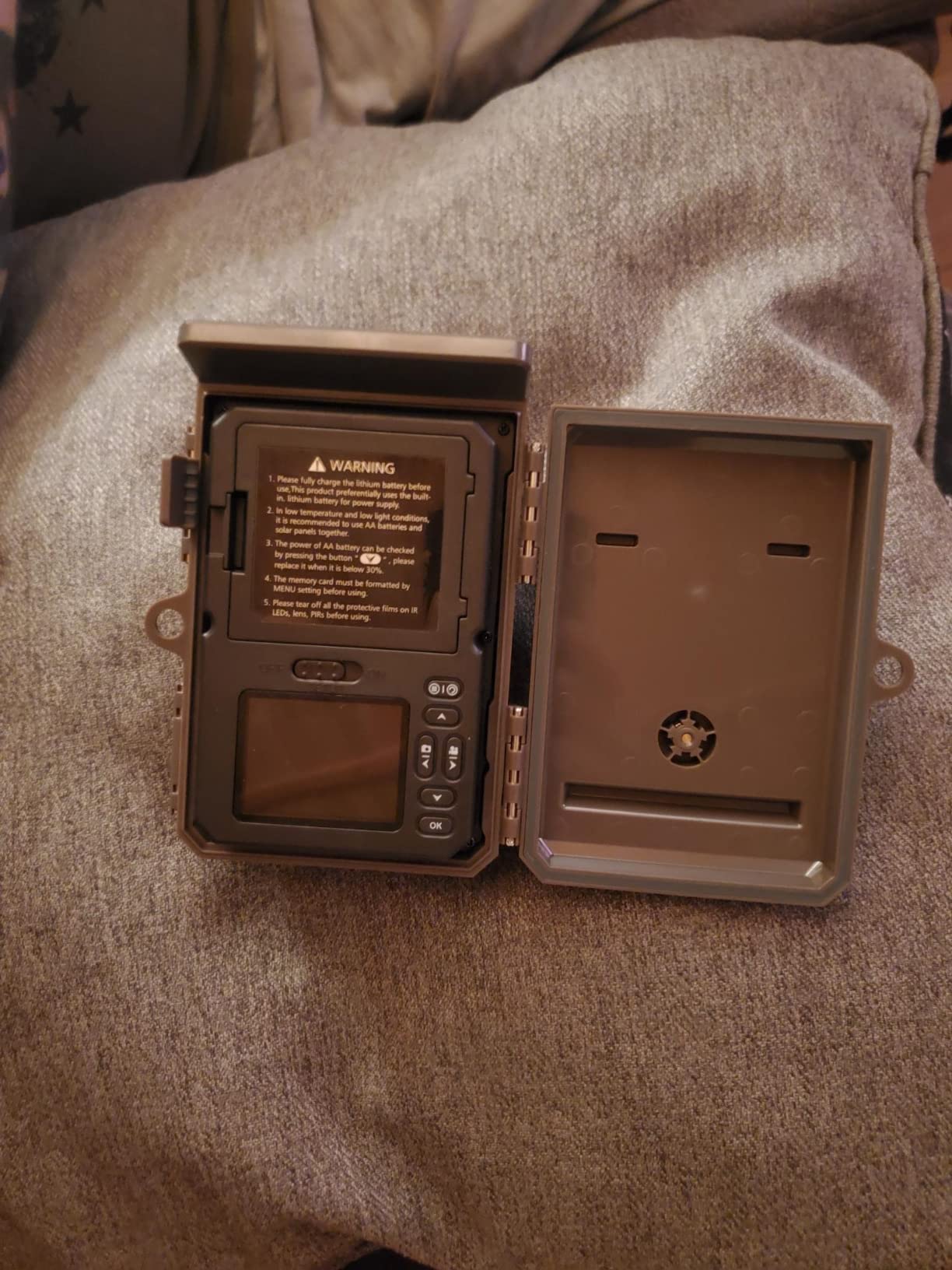
The 4W panel with a 7800mAh battery is rated at up to twelve months per charge, and the built-in SIM carries 100MB of free data while auto-selecting the strongest of Verizon, AT&T and T-Mobile. Storage is a microSD card up to 256GB, not included, or optional cloud. The product is listed in hunting and trail cameras, which tells you how owners use it.
The compromises are honest ones. Night recordings are monochrome rather than color, so a low-glow-looking intruder at 60 feet is grey rather than identifiable by clothing. There is no card in the box, and a direct hit of sunlight produces glare across the fish-eye lens.
Best used for
Northern properties, low ground near creeks or ponds, and any post exposed to ice and wind all suit this camera. The twelve-month solar figure means you are unlikely to visit it more than once or twice a year, and the wide PTZ head lets one camera cover a whole yard or a field edge.
Trade-offs to accept
You give up color night detail, which is a real loss when you need to identify clothing. Because the card is not included, budget for storage up front, and remember the data plan applies after the free allowance runs out.
9. VOOPEAK TC32B 2-Pack – Best for Deer and Wildlife Monitoring
VOOPEAK Trail Camera, 4G LTE Cellular Game Cameras with 360° Live Streaming
Two cellular trail cameras
4W panel and 7800mAh battery each
65 ft infrared night vision
0.1s trigger
IP68 to minus 40F
Pros
- Two cameras cover two zones in one purchase
- PTZ lens and fast trigger give clean identifiable images
- Solar held charge through cold Canadian weather
- Easy setup in the CloudEye 365 app
- Tree straps and screw-in hardware included
Cons
- Data plan and cloud playback are paid add-ons
- SD cards not included
- Night recordings are black-and-white despite marketing
- Printed manual is tiny and hard to read
- Glare at certain sun angles
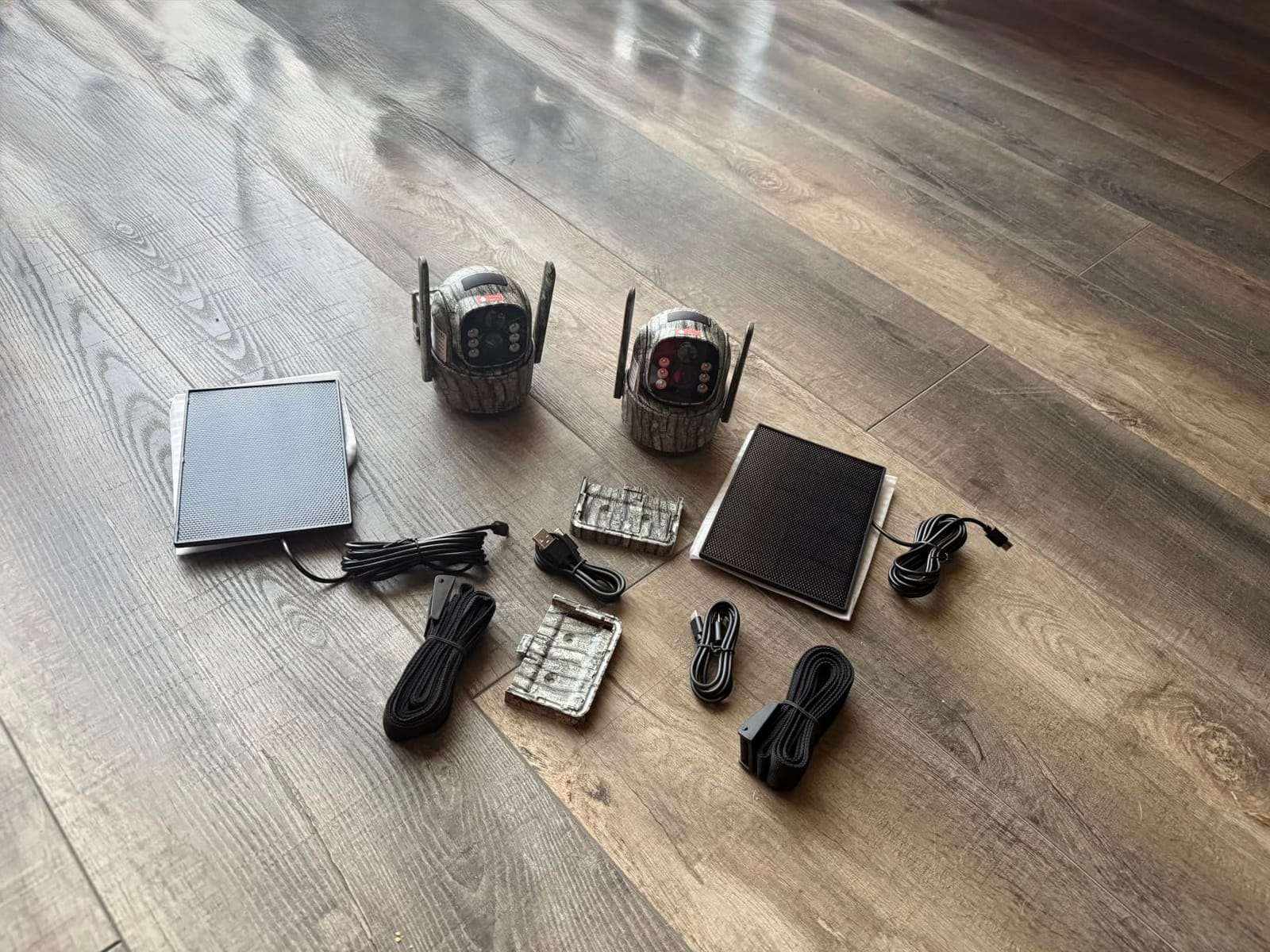
Two cameras in one pack changes the arithmetic for anyone covering two zones, and the owners reporting in confirm it held charge through weeks of use and cold Canadian weather. Each camera pans 355 degrees and tilts 100 degrees, with a 0.1-second trigger and six IR LEDs reaching 65 feet.
For most farms the two cameras go on opposite sides of a woodlot, a treeline between two fields, or a lane and a pond. Two cameras on separate data plans is still two data lines, but the hardware cost per covered zone is among the lowest in this roundup.
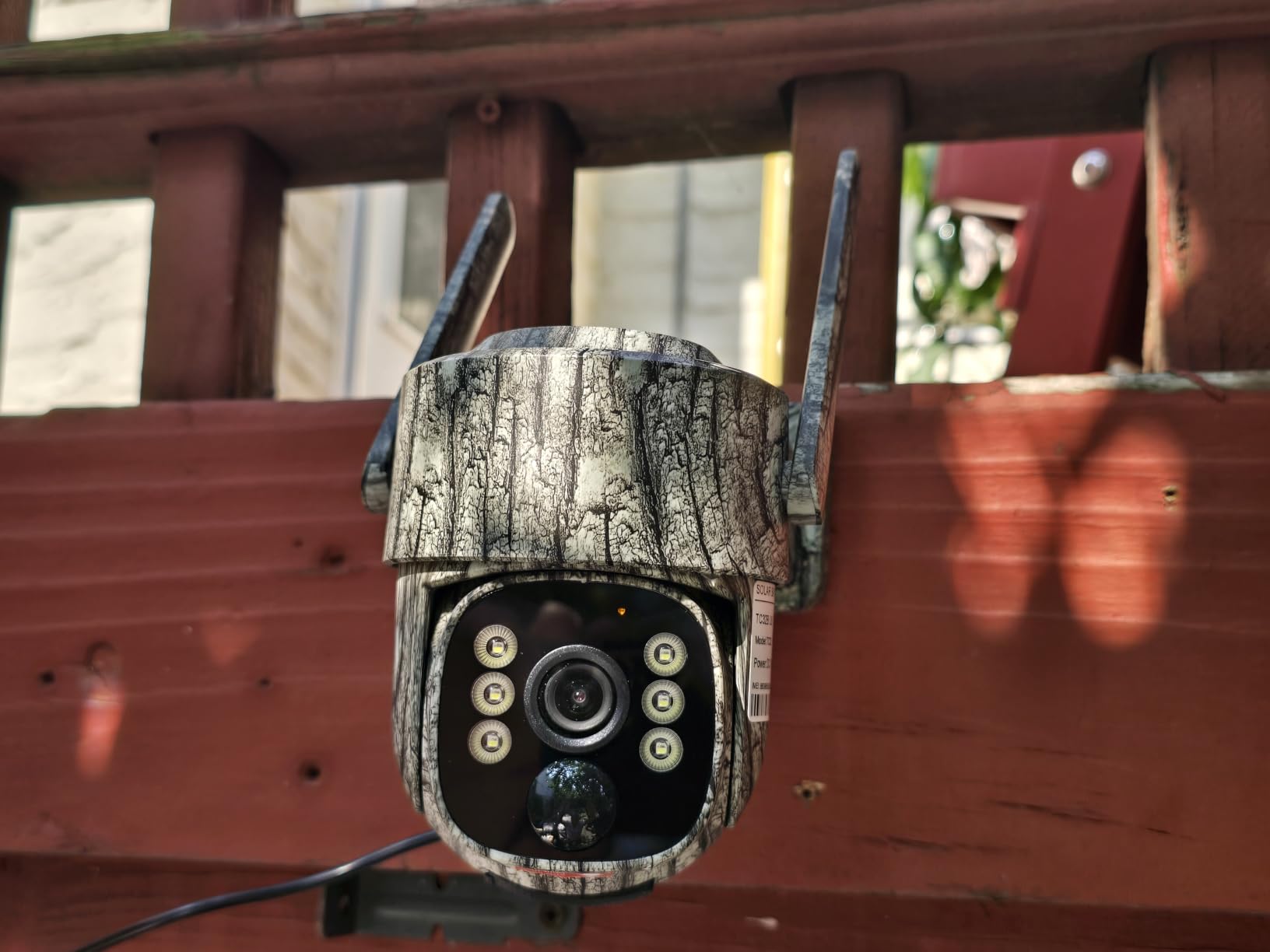
Setup runs through the CloudEye 365 app on Android, and mounting is flexible with tree straps and screw-in hardware in the box. Storage is a microSD card up to 256GB, not included, or optional cloud. IP68 sealing with a minus 40F to 140F range matches the single TC32.
Owners report the printed manual is very small and hard to read, which matters more than it sounds when you are setting a camera up alone in a field. Glare also appears when sunlight strikes the lens at the wrong angle, and night images are monochrome.
Where this pack wins
It is the sensible choice when your priority is watching where animals move rather than identifying a person, and when you want two points of coverage on one budget. The fast trigger and PTZ lens produce photos reviewers describe as clean and easily identifiable, which is exactly what deer and predator work needs.
Where it does not
Do not buy it expecting color night video, despite what the listing shows, because recordings are black-and-white. Plan on supplying your own SD cards, and note that each camera carries its own data plan, which becomes the dominant cost once you scale past a few cameras.
10. Moultrie Edge 3 Cellular 2-Pack – Best for Long-Range Detection
Moultrie Edge 3 Cellular Trail Camera – 2-Pack, 40MP, 0.5s Trigger
40MP photos
0.5s trigger with 100 ft range
Four-network auto-connect
No SIM required
Built-in GPS
Pros
- AI buck detection filters false alerts
- 40MP photos and 1080p video with low-glow flash
- 0.5s trigger and 100-foot range
- No SIM needed and auto-connects to four networks
- Live Aim preview and built-in GPS simplify placement
Cons
- Battery only and solar panel sold separately
- Data plan required for photo and video delivery
- Narrower 50-degree viewing angle than PTZ models
Detection distance is the headline number here: 100 feet, with a 0.5-second trigger, and 40MP stills. That range comes from a fixed 50-degree lens rather than a pan-tilt head, so its aim is set once, which is a sensible trade when you are covering a long lane or a lane-side treeline.
Two cameras are included, and the pair auto-connects to the strongest of four major U.S. networks with no SIM card required. That removes the single most common setup failure on rural land, where a specific carrier’s map does not match reality at the end of a driveway.
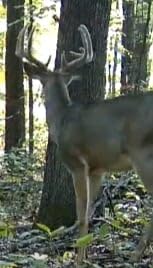
AI buck detection filters out irrelevant triggers and sends only relevant high-resolution captures, with 1080p HD video on top of the stills. A low-glow infrared flash will not spook animals, and Live Aim preview plus built-in GPS make placement and finding each camera across large acreage straightforward.
Two limitations stand out. It is battery powered, and solar panels and EDGE series battery packs are separate purchases, so plan the power budget before ordering. Plans are per camera and required for delivery, though the maker states they start low with no contract and carry a two-year warranty.
Where 100-foot detection changes the plan
Mount it where a person must cross a long open stretch to reach a building, and you cover that approach with one camera instead of three. GPS auto-mapping means you can find both cameras quickly on a large property, and the live preview confirms aim before you leave.
Where it is the wrong shape
The 50-degree angle is narrow, so it will not sweep a yard the way a PTZ head does. If you are covering a wide open area, you will need more cameras, and each one adds a data plan and a battery purchase to your budget.
11. MagicEagle Cellular Trail Camera – Best Anti-Theft Protection
MagicEagle® Cellular Trail Camera 4G Wild Game Cameras 13,000 mAh Battery Solar Panel 2K Audible Video No-Glow IR Night Vision IP66 Waterproof for Wildlife Deer Monitoring Home Security (Army Green)
13000mAh battery
0.3s trigger
940nm no-glow IR to 90 ft
Gravity tamper sensor
32GB SD included
Pros
- 5MP sensor with 0.3 second trigger
- 13000mAh battery supports up to three months standby
- Army-green housing does not spook animals
- Cloud AI species identification and real-time live view
- Gravity sensor and A-GPS record a tamper photo
Cons
- Solar panel mounting hardware may be too short for strap installs
- Data plan required after the free allowance
Theft of the camera itself is a real failure mode on an exposed farm, and this is the one camera in the roundup built around that problem. A gravity sensor and A-GPS module capture a tamper photo the moment the camera is moved and can track its location offline afterward. On a property where a thief is willing to take the camera, knowing it was moved can matter as much as the footage.
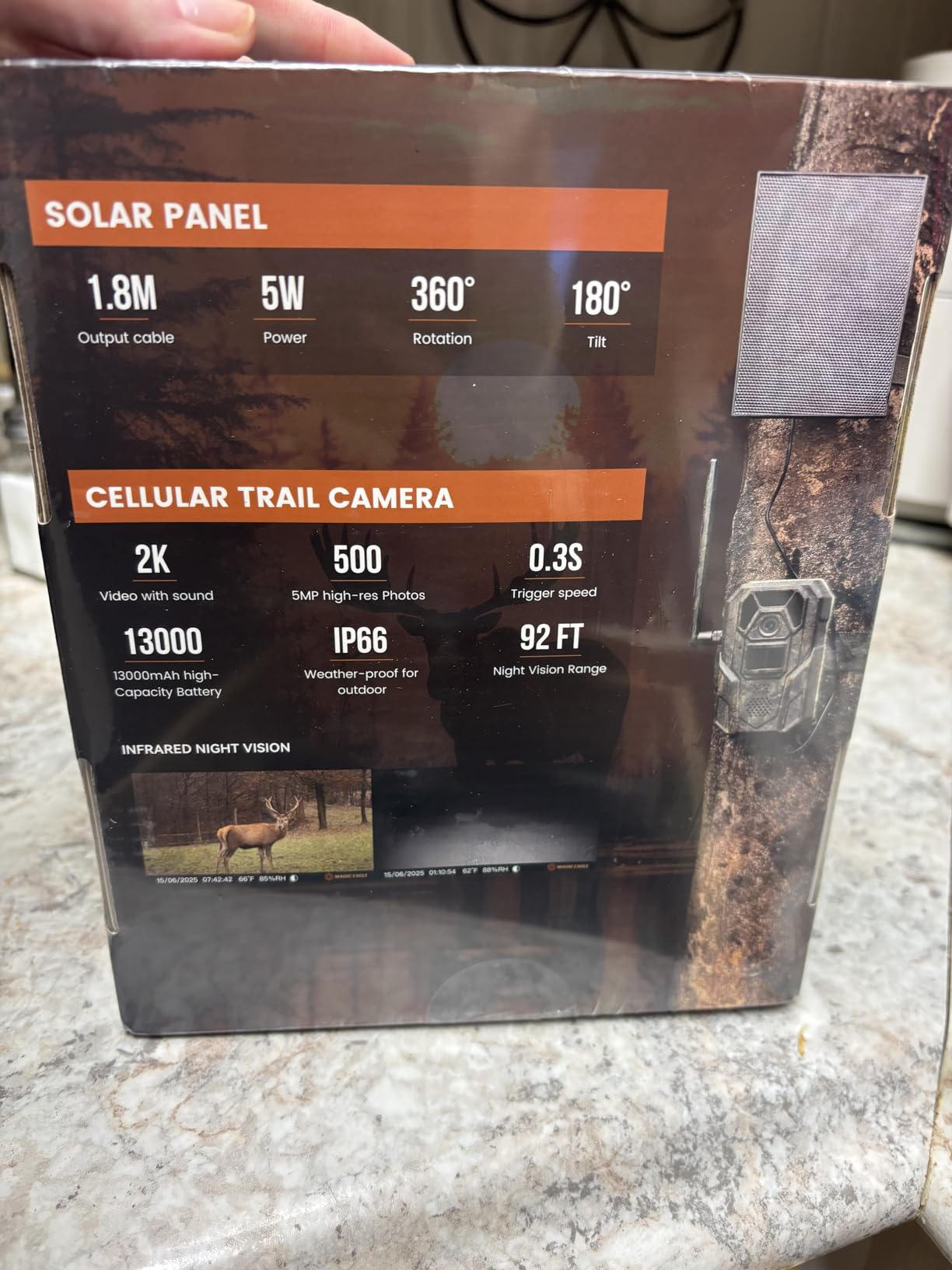
Otherwise it is a capable machine. The 5MP sensor fires in 0.3 seconds, night vision is 940nm no-glow infrared reaching 90 feet, and the 108-degree lens is wider than the narrowest fixed-lens camera here. A 32GB card is included, which saves a step, and cloud AI handles species recognition with activity and weather analysis.
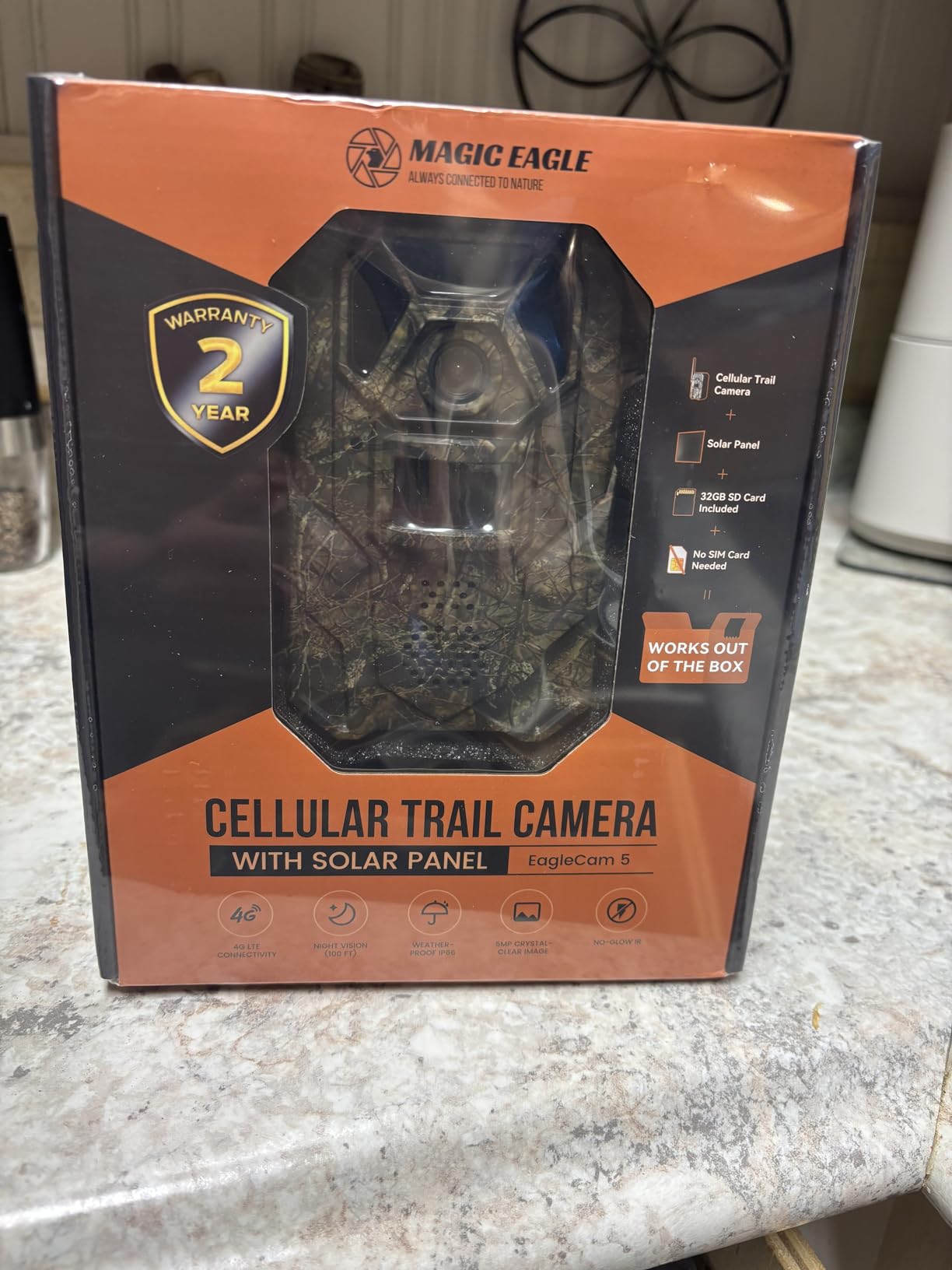
Power is the headline spec: a 13000mAh battery rated for up to three months of standby, plus an included solar panel for near-continuous charging. Real-time live view in the app does not wait for file transmission, and IP66 sealing with a minus 20C to 50C range suits most climates. The warranty runs two and a half years with registration.
Two drawbacks surface in reviews. The included solar panel bracket can be too short for strap-style installs, so you may need your own mount. And a data plan is needed for transmission once the free 100MB allowance covering 200 photos or 16 videos runs out after 30 days.
Best for exposed, remote posts
Choose it for a tree line, a back corner, or any location where nobody would notice a camera disappear for days. The no-glow infrared and army-green housing also let it work as a wildlife camera without spooking deer, which gives you two jobs from one body.
Points to weigh
Its review base is smaller than the budget cellular models, so treat the software polish as less proven. Budget extra for the mounting hardware, and remember the transmission plan is what turns the tamper alerts into something you can actually view.
12. VOOPEAK TC39 Dual Lens 2-Pack – Best Dual-Lens Coverage
Cellular Trail Camera, 4G LTE Dual Lens Game Camera 360° Live Streaming
Dual lens with 360 degree coverage
2K with color night vision
5W panel and 7800mAh battery
Split or stitched display
IP68
Pros
- 2K resolution with color night vision and LED night light
- Independent lens split or stitched display options
- Built-in 4G SIM with 100MB free data for 7 days
- 5W panel and 7800mAh battery rated up to twelve months
- Two cameras per pack
Cons
- Each camera needs its own data subscription
- Small review base with a notable share of one-star feedback
- Recurring data cost adds up across a multi-camera setup
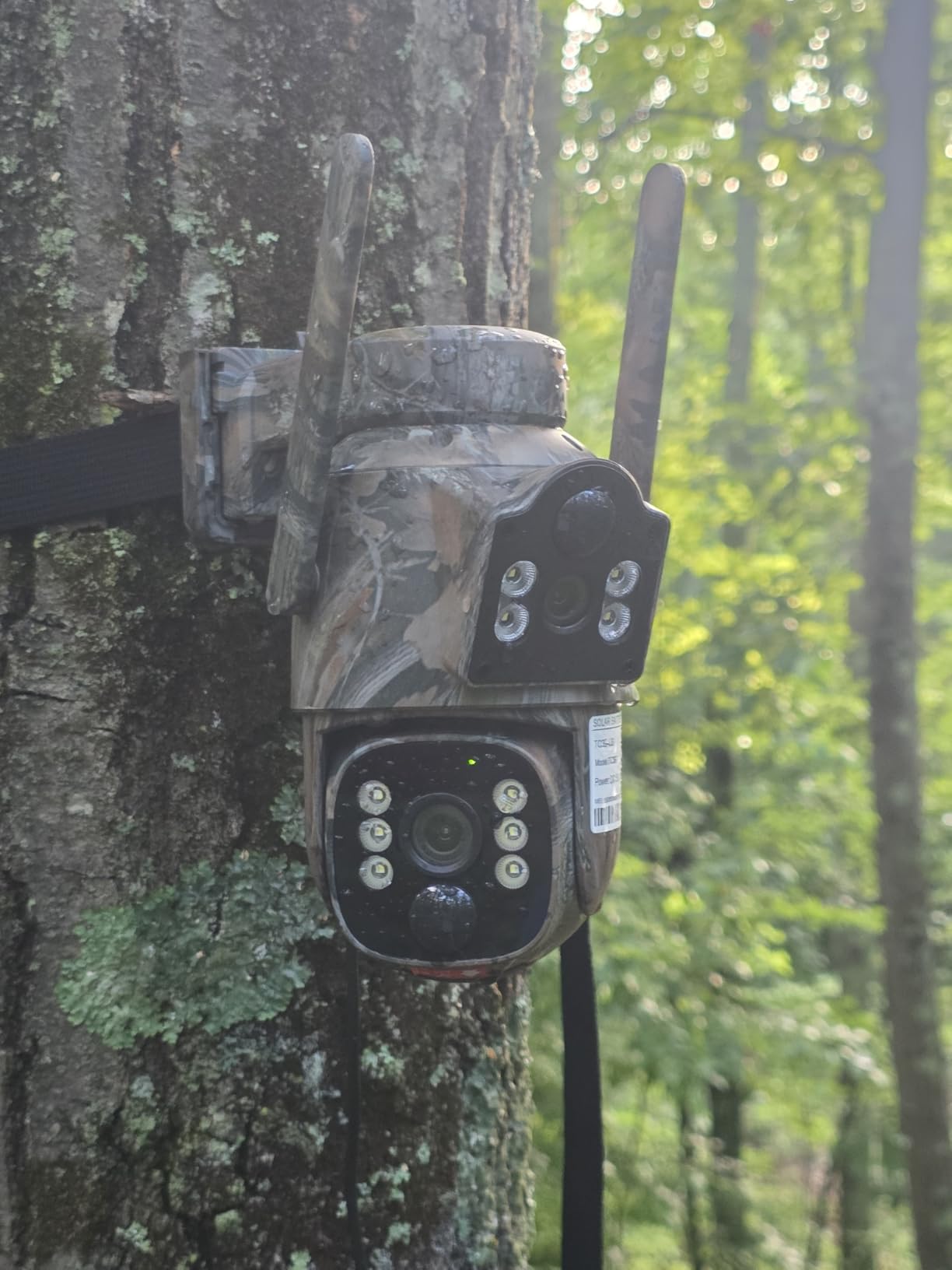
The TC39 solves a specific problem: one camera with two lenses gives you effectively two viewpoints, and the app can show them split side by side or stitched into a single wide view. On a farm where one post can look both at a gate and down a lane, that removes a blind spot without a second camera and a second post.
Image quality is 2K with color night vision, and the LED can be set to trigger on motion or stay on, which is useful when you want a lit approach to a door at night. A 5W panel with a 7800mAh battery is rated for up to twelve months per charge, and IP68 sealing covers minus 40F to 140F.
PIR sensing is paired with AI detection to reduce false alarms, and two-way talk lets you speak to someone at the post. The built-in SIM carries 100MB of data for seven days and works across Verizon, AT&T and T-Mobile, and storage is a microSD card up to 256GB or optional cloud. Two cameras are in the pack.
The reason this sits last is the evidence base, not the hardware. With 43 ratings, a share of one-star feedback stands out compared with the other models, and connectivity complaints come up most often. On top of that, each camera needs its own data subscription, so a single plan does not cover the pair.
Where dual lenses genuinely help
It makes sense at a single high post overlooking a yard corner, or a gate where you want one view of the approach and one of the drive. The split display is useful for a two-camera setup, letting you watch both lenses from one screen instead of switching apps.
Where the risk sits
The limited history of owner feedback means you are taking more risk on software and connectivity than with a well-reviewed model. If reliability matters more than view count, the TC32 has a similar platform with a much larger review base.
How to Choose Wireless Security Cameras for Farms: 8 Criteria That Matter
Choosing well comes down to matching the camera to the zone. Use these eight criteria in order, and most farm purchases become straightforward.
1. Connectivity: WiFi, cellular, or both
Wireless and WiFi are not the same thing, and this is the confusion that trips up new buyers. Wireless means no video cable runs from the camera to a recorder. WiFi is one specific way a wireless camera gets its signal, and it only works within range of a router. If a barn or gate sits beyond that range, you need 4G LTE cellular, which uses a SIM or a no-SIM cellular radio and a data plan instead of a WiFi signal. Our home camera guide covers the WiFi side in more depth.
2. Power source and winter behaviour
Battery alone means you are visiting the camera. Solar panel wattage decides how often: the 3W panels here charge slowly, the 5W and 6W panels fill a battery in about three hours of direct sun, and the 13000mAh battery runs up to three months on a charge. Cold weather shortens battery life, so on a northern property add a panel size and check the stated low-temperature rating, which ranges from minus 4F on one model to minus 40F on another.
3. Night vision range, not field-of-view angle
Field of view tells you how wide the camera sees; night vision range tells you how far it can resolve a shape in the dark. For farm work the second number matters more. Figures here run from 26 feet on the budget WiFi model to 90 feet on the no-glow infrared camera, and color night modes with a spotlight give more usable detail in the dark than monochrome infrared.
4. IP weather rating, digit by digit
The first digit is dust protection and the second is water. IP65 means protected against water jets and dust, IP66 adds powerful water jets for wash-down conditions, and IP68 means submersion resistance. For a post-mounted farm camera, IP65 is the floor, IP66 is better, and IP68 is worth having where ice, mud, or a creek is involved. Our picks for the best solar security cameras break down the sealing on each one.
5. Local storage versus cloud subscription
A microSD card means footage stays on your property and keeps recording with no monthly fee. Cloud storage adds off-site backup and AI features, usually as a subscription. Several cameras here record to a card as standard, which is why we lean toward local storage for barns and gates where the footage is only useful if you can pull it up immediately.
6. Detection range and PTZ versus fixed lens
A fixed 100-foot lens covers a long approach lane and identifies faces, but its aim is set once. A PTZ head sweeping 355 degrees covers a whole yard from a single post and can follow a moving subject, at the cost of a lower pixel count per subject. Our PTZ camera guide goes deeper on the trade-off.
7. False alerts, and how to tame them
Cattle, deer, branches and shadows will trigger any PIR sensor. Three things reduce it: on-device AI that classifies people and vehicles before recording, adjustable sensitivity, and masking that tells the camera to ignore a specific fence line. The Reolink in this list does the first better than the others here. The GNCC adds a siren and spotlight, which work as a deterrent rather than a filter.
8. How many cameras and where
Plan by zone, not by acreage alone. Under 10 acres, two cameras cover a gate and a barn. Between 10 and 50 acres, add a driveway camera, a field approach, and the equipment yard, so four to six. Beyond 50 acres, a PTZ on the highest post plus fixed cameras on approaches keeps you under ten cameras. Then multiply each camera by its data plan and add that total to your annual budget before ordering, because the recurring line is what surprises people.
Frequently Asked Questions
What is the best security camera for a farm?
The best security camera for a farm is a solar-powered 4G LTE model with IP65 or better sealing, a battery of at least 7800mAh, and night vision beyond 60 feet. These run without mains power or WiFi, which matters because barns, gates and field boundaries rarely have either. Our top pick is the SEHMUA 4G LTE Cellular Solar Camera for overall coverage, with the eufy 4G LTE Cam S330 for buyers who want 4K detail and WiFi failover.
Which camera is best for farm use across large acreage?
For large acreage, use a pan-tilt-zoom camera on the highest available post to sweep the open ground, then add fixed-lens cameras on the specific approaches people would use. A PTZ unit such as the VOOPEAK TC32 covers a full yard from one mount, while a fixed 100-foot lens such as the Moultrie Edge 3 captures identifiable detail down a long lane. Most farms under 50 acres need four to six cameras in total.
What is the best outdoor camera for a farm?
The best outdoor camera for a farm balances weather sealing, off-grid power and detection accuracy. Look for IP65 or higher, a solar panel of at least 5W, and on-device AI that distinguishes people and vehicles from animals. On a farm, a camera that records a cow crossing a fence line every hour gets ignored, and a real intrusion then gets missed with it.
What is the best 4G LTE outdoor security camera?
The best 4G LTE outdoor security camera is the Reolink Go PT Plus 5MP for detection accuracy and the eufy 4G LTE Cam S330 for image quality. The Reolink runs on-device AI to filter animals and foliage before recording and adds auto-tracking, while the eufy records in 4K and switches between WiFi and cellular automatically. Both accept a SIM or use cross-network roaming.
What is the CCTV camera with a SIM card option for rural use?
Several cameras here ship with a SIM pre-installed and pre-activated. The SEHMUA 4G LTE Solar Camera includes a SIM compatible with AT and T, T-Mobile and Verizon, the HOSAFE two-pack includes a pre-activated SIM with a seven-day data trial, and the Ebitcam S40 includes a prepaid SIM with a seven-day unlimited trial. Cameras that auto-select the strongest network need no SIM at all.
Do wireless security cameras work without internet or WiFi?
Yes, if the camera uses 4G LTE cellular. A wireless camera has no video cable, but a WiFi camera still needs a router signal. Cellular cameras use a SIM or an integrated no-SIM radio with a data plan instead, so they work at a remote gate, a treeline, or an outbuilding with no internet service. The trade-off is a recurring monthly data cost per camera.
Final Verdict: Best Wireless Security Cameras for Farms in 2026
The SEHMUA 4G LTE Cellular Solar Camera is our pick for the best wireless security cameras for farms, because it does the one job every farm camera has to do: run for months on a 6W panel in a spot with no power and no WiFi, then hand you 2K day and night footage and a phone alert. With 6831 ratings behind it, it also carries the longest owner history in this roundup.
Buy the eufy 4G LTE Cam S330 if 4K detail and automatic WiFi-to-cellular failover matter, and accept the IP55 rating by mounting it under cover. Buy the Reolink Go PT Plus 5MP if false alerts are driving you mad, and let its on-device AI do the filtering. For a northern property, the VOOPEAK TC32 with IP68 sealing and a minus 40F rating is the tough one.
Start with two cameras on a two-pack and add zones as you learn what triggers. Whatever you choose, check cellular signal at the mounting point before you order, and factor the data plan into your three-year budget. That recurring cost, not the hardware, is what decides how many cameras a farm can afford.