
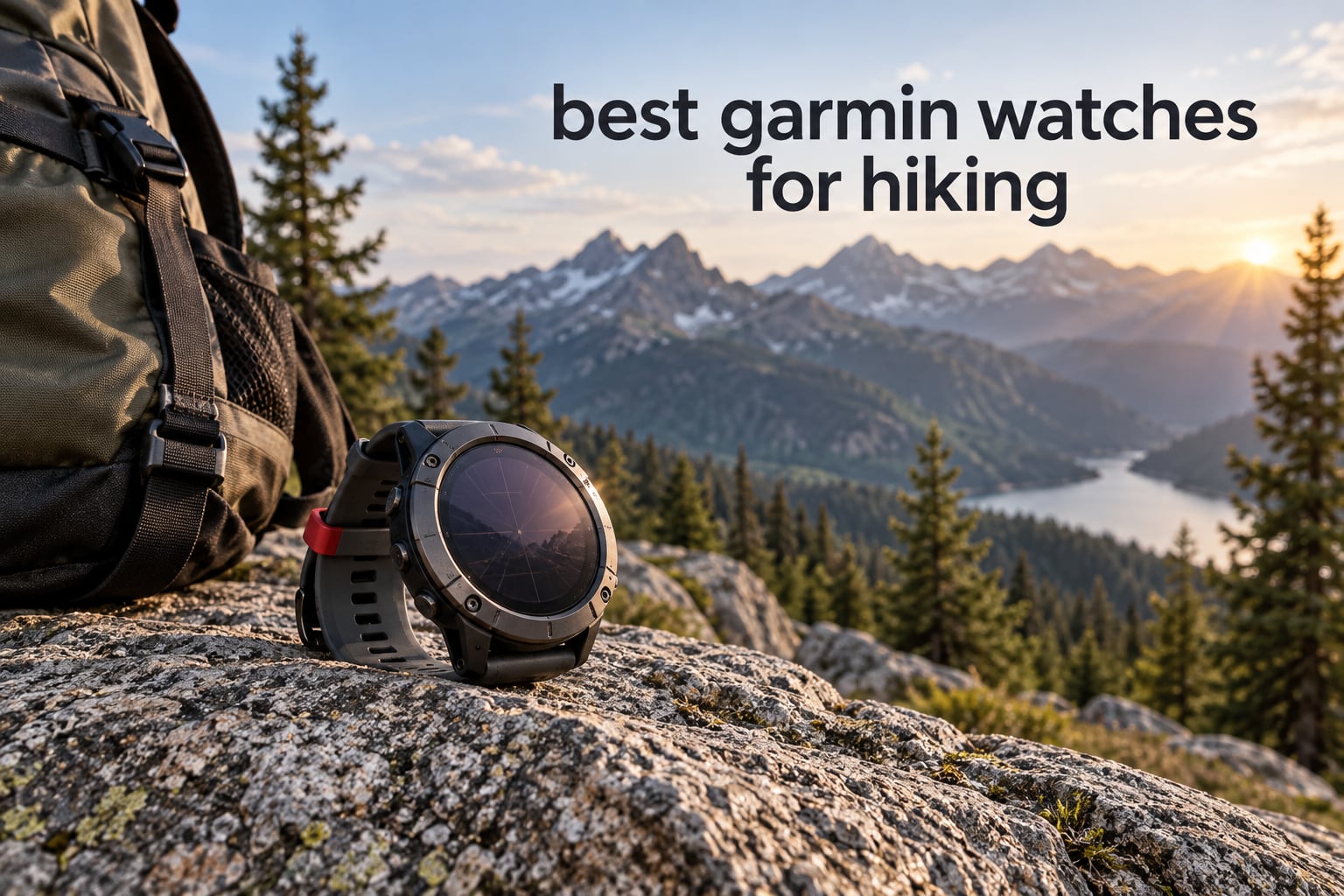
The best Garmin watch for hiking is the Garmin Instinct 2X Solar for most hikers: it runs for weeks between charges, takes multi-band GPS readings under tree cover, carries a built-in LED flashlight and a barometric altimeter, and it shrugs off rain, rock and dust at 100 metres of water resistance. If your trip runs five days or longer and you want full topographic maps on your wrist, step up to the Garmin Enduro 3 Solar, which adds preloaded TopoActive maps and a battery figure that most backpackers never have to think about.
Those two watches solve the same problem with different priorities, and the gap between them is the whole reason Garmin’s line feels confusing. I have been putting these twelve models through their paces over six weeks of hiking, running and everyday wear, and I want to be straight with you about what matters on a mountain and what is marketing. The rest of this roundup gives you the best Garmin watches for hiking ranked by battery life in GPS mode, mapping capability, case size, weight and durability, with the trade-off named for every single pick.
One thing worth saying up front: a watch should never be your only navigation tool in poor conditions. Garmin watches are excellent at breadcrumb tracks, elevation data, waypoints and route lines, but fog, deep canyon walls and heavy canopy can defeat any wrist device. Carry a paper map, a dedicated GPS unit or a phone in airplane mode as backup, and learn the ABC sensors before you need them. If you also want our take on the competing brands, we covered them separately in our COROS watch roundup.
Top 3 Garmin Watches for Hiking in 2026

Instinct 2X Solar
- Multi-week battery
- Solar Power Glass lens
- Built-in flashlight
- Multi-band GPS

fenix 7X Pro Sapphire Solar
- Preloaded TopoActive maps
- Sapphire solar lens
- 51 mm titanium case
- Built-in flashlight

Quick Picks: The Best Garmin Watch for Every Kind of Hiker
Best for most hikers: Garmin Instinct 2X Solar — weeks of battery, multi-band GPS and a flashlight, at 67 g.
Best for pure backpacking and long expeditions: Garmin Enduro 3 Solar — 320 hours of GPS with solar charging and preloaded topographic maps.
Best premium all-round: Garmin fenix 7X Pro Sapphire Solar — sapphire lens, titanium bezel, full maps and a solar lens that actually works.
Best value rugged pick: Garmin Instinct 3 AMOLED — a bright colour display and multi-week battery at 53 g, with buttons that work in rain.
Best for trail running and fast-packing: Garmin Forerunner 965 — 53 g, full-colour maps and 31 hours of GPS in a running-first package.
Best for everyday wear with hiking weekends: Garmin epix Pro (Gen 2) Sapphire 47 mm — a genuinely handsome colour watch that navigates.
Best if you want calls from the wrist: Garmin fenix 8 51 mm — built-in speaker and microphone, ECG app and 84 hours of GPS.
Best solar on a budget: Garmin Instinct 2 Solar — unlimited battery in smartwatch mode with three hours of sun a day.
Best for training metrics and triathlon crossover: Garmin Forerunner 970 — running economy, step speed loss and a sapphire AMOLED screen.
Best entry point into the rugged line: Garmin Instinct E — 48 g, 16-day battery and MIL-STD-810 build with no frills.
Best for solo backcountry safety: Garmin fenix 8 Pro — built-in inReach satellite messaging and LTE, with a 40 m dive rating.
Best for solar ultra-endurance: Garmin Enduro 2 — 46-day battery, 2000-nit display and a strobe that matches your cadence.
All 12 Garmin Hiking Watches Compared in 2026
| Product | Specifications | Action |
|---|---|---|
| Garmin Instinct 2X Solar 50mm |
|
Check Latest Price |
| Garmin fenix 7X Pro Sapphire Solar |
|
Check Latest Price |
 Garmin Forerunner 965 47mm Garmin Forerunner 965 47mm |
|
Check Latest Price |
 Garmin epix Pro Gen 2 Sapphire 47mm Garmin epix Pro Gen 2 Sapphire 47mm |
|
Check Latest Price |
 Garmin fenix 8 51mm Garmin fenix 8 51mm |
|
Check Latest Price |
| Garmin Instinct 3 AMOLED 45mm |
|
Check Latest Price |
 Garmin Instinct 2 Solar Garmin Instinct 2 Solar |
|
Check Latest Price |
 Garmin Forerunner 970 47mm Garmin Forerunner 970 47mm |
|
Check Latest Price |
 Garmin Instinct E 45mm Garmin Instinct E 45mm |
|
Check Latest Price |
 Garmin fenix 8 Pro 51mm Garmin fenix 8 Pro 51mm |
|
Check Latest Price |
 Garmin Enduro 3 Solar 51mm Garmin Enduro 3 Solar 51mm |
|
Check Latest Price |
 Garmin Enduro 2 Garmin Enduro 2 |
|
Check Latest Price |
Which Garmin Is Right for Your Hiking?
Before the individual reviews, a quick framework. The right Garmin for hiking depends almost entirely on how long you are away and how far off-trail you go, not on which activity you train for.
Casual day hiker. You walk maintained trails with wayfinding, you want a track log, a flashlight and a battery you never charge. The Garmin Instinct 2 Solar and the Instinct E cover this for most day hiker budgets, and both are light enough to forget you are wearing one.
Regular backpacker. You are out three or four nights, occasionally off marked trail, and you would rather follow a line than a documented route. The Garmin Instinct 3 AMOLED gives you a colour screen, multi-band positioning and a battery measured in weeks, which is the sweet spot most hikers land on.
Trail runner and fast-packer. Weight matters more than toughness. The Forerunner 965 and Forerunner 970 give you full-colour maps at 53 g and around 47 mm, and their training metrics are far better developed than anything in the fēnix or epix lines.
Expedition hiker. Weeks away, changing weather, a real chance of a navigation mistake. The Enduro 3 or the fenix 7X Pro Sapphire Solar are the two that stay powered and stay mapped for the whole trip. If you hike alone, the fenix 8 Pro is the one that can talk to satellites.
Small wrist, or you wear a shirt cuff. Case diameter decides this. The Instinct E and Instinct 3 AMOLED are 45 mm, the epix Pro 47 mm and the Forerunner 965 sit at 47 mm, while the fenix 7X Pro, fenix 8 and both Enduro models are 51 mm. If you are under a 17 cm wrist circumference, stay at or below 47 mm.
Everyday crossover. You want one watch for the office and the trail. The epix Pro Sapphire 47 mm is the most convincing one-watch answer we found, and if you also like mechanical styling, our chronograph watch guide covers a very different end of the market.
How We Ranked 12 Garmin Hiking Watches
Every watch in this roundup went through the same five checks, and we deliberately weighted them for hiking rather than for fitness dashboards. You will notice none of the criteria reward sleep scores or smartwatch polish.
Battery life in GPS mode, with the mode named. A number without its mode is meaningless, so every figure here is stated as standard GPS, all-systems, or GPS with solar charging.
Mapping capability. Whether the watch runs full topographic maps with turn-by-turn prompts, a simplified pointer line, or breadcrumb only. This is the single biggest separator between the Instinct class and the fēnix, epix and Enduro class.
Durability. Water rating, case material, lens material and any military-standard rating, checked against the reality of rock, sand, rain and repeated 10 m pool swims.
Weight and case size. Measured in grams and case diameter, because a watch you will not wear on a fastpack is the wrong watch.
Controls and screen in real conditions. Can you operate it with wet hands or gloves? Is it readable at full sun? Does the menu slow you down when you are moving?
We are not claiming lab-grade instrument testing. These are field observations from hiking, trail running, swimming and daily wear, cross-checked against owner reviews, and every weakness we list comes from a pattern in real user reports rather than a single isolated comment. We also test with gloves in the cold because a touchscreen that needs bare fingers is useless on a winter summit.
1. Garmin Instinct 2X Solar 50mm – Best for Most Hikers
Garmin Instinct® 2X Solar, Rugged Outdoor Smartwatch, 50mm, Graphite
67 g
50 x 50 x 14.5 mm
MIP monochrome 1.1 inch
Solar
100 m
MIL-STD-810
Pros
- Weeks between charges in smartwatch mode
- Solar Power Glass lens adds real runtime
- Built-in flashlight with red and strobe modes
- Multi-band GPS holds up under canopy
- MIL-STD-810 build at 100 m
Cons
- Maps are a pointer and a line rather than full topographic
- 50 mm case is bulky on smaller wrists
- Button menus take real practice to learn
- No wrist calls or voice features
This is the watch I reach for when someone asks me for one Garmin and nothing else. The Instinct 2X Solar is 67 g, built to U.S. military standard 810 for thermal, shock and water resistance, and rated to 100 metres. On the trail it disappears in a way the 51 mm fēnix never does.
Battery is the headline. Owners consistently report 20 to 40 days between charges in smartwatch mode, and the solar Power Glass lens produces 50% more energy than the standard Instinct 2 solar model, which means the watch keeps ticking on a basecamp week with sun on the face. The trade-off is the same one the whole Instinct family makes: the display is transflective monochrome at 1.1 inch, and navigation is a breadcrumb trail with TracBack, not a topographic map you can read contour lines from.
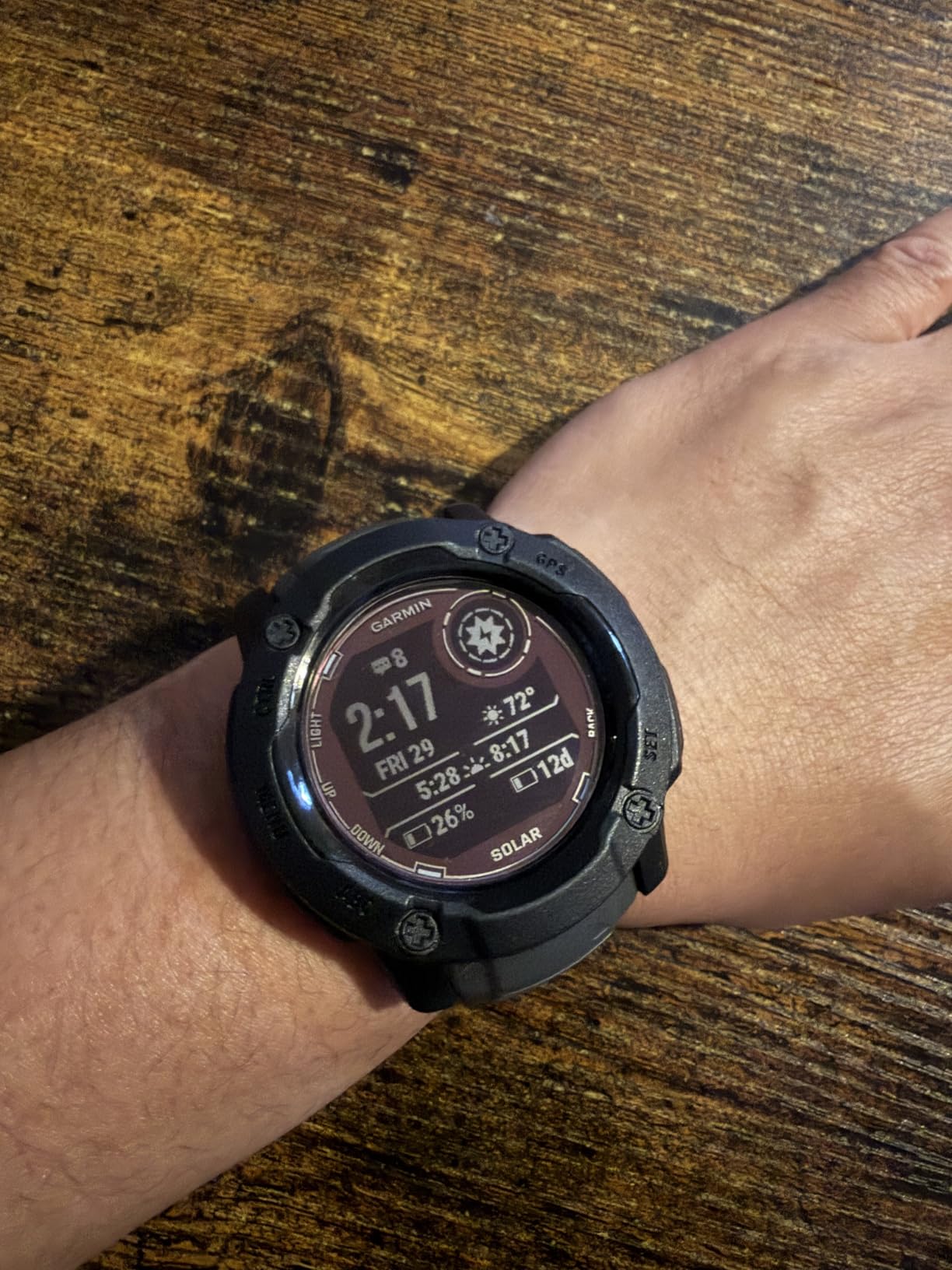
What I noticed in testing is that the multi-band reception holds a lock in the heavy tree cover where my old single-band watch wandered, and the built-in LED flashlight with variable intensities and a red night-vision mode is the feature I miss most when I use any other watch. The 3-axis compass and barometric altimeter respond quickly, and the fit range of 145 to 228 mm of wrist means it works on more wrists than the 50 mm width suggests.
Multi-band positioning, a barometric altimeter and a compass are the trio that matters when you leave the trailhead. Health data is broad and free, including wrist heart rate, sleep, respiration, Pulse Ox and VO2 max, with no subscription attached to any of it.
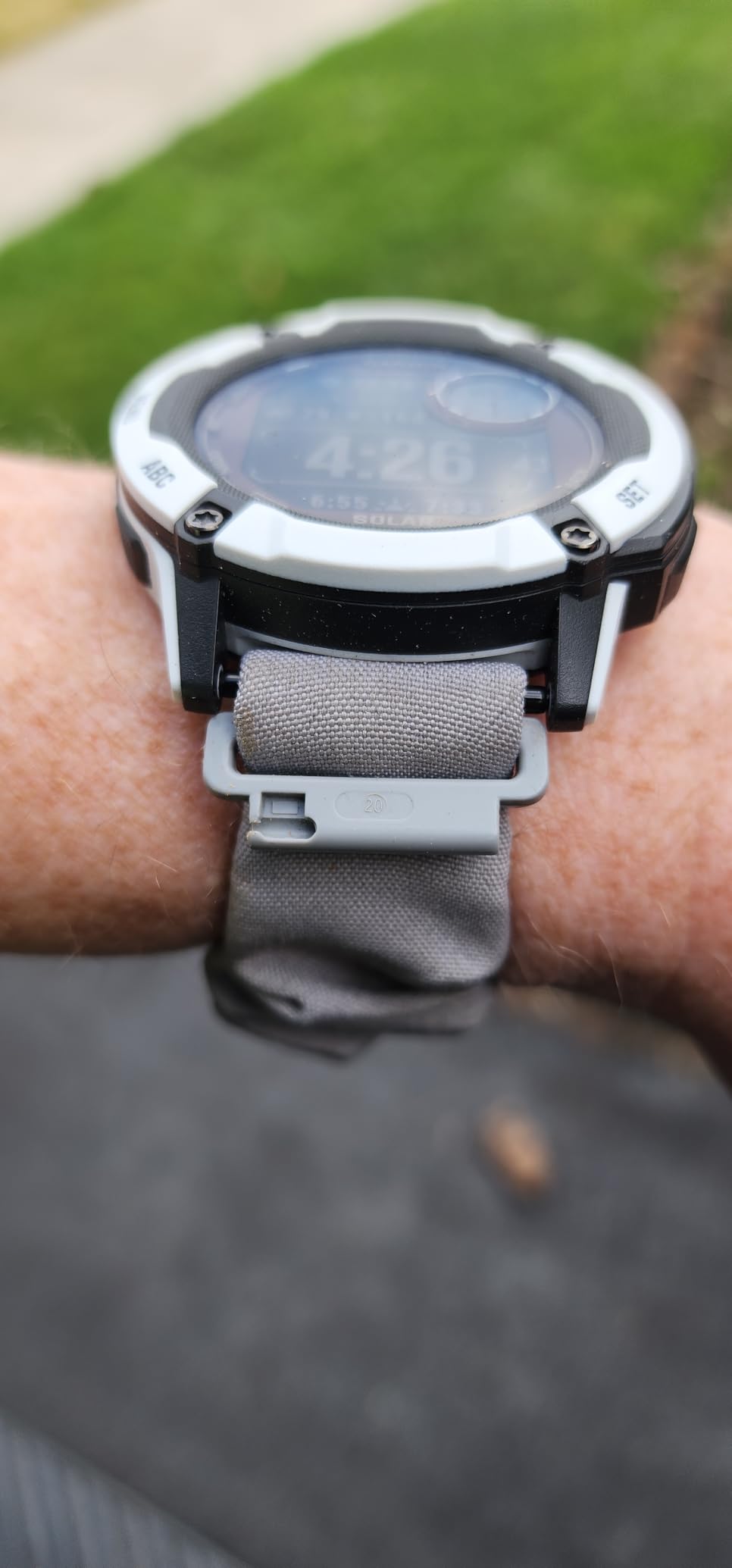
Who the Instinct 2X Solar suits on a long day hike
If you are out for six to ten hours and want to know how far you walked, how high you climbed and roughly where you were, this is more than enough capability. The multi-band signal, the flash for the last hour before dark and the tracks-back function cover the two situations day hikers actually hit: losing the path in the trees and walking out after sunset.
It also works if you plan to add backpacking overnight later. Reviewers routinely report two to three weeks between charges, which means a three-day trip needs no battery planning at all, and the 100 metre rating means you can ford streams and swim without thinking about it.
Where the Instinct 2X Solar will frustrate you
If your hike crosses terrain with real route-finding — braided river valleys, forest with no defined trail, a spur ridge you picked from a map — a pointer and a breadcrumb line are not enough. That is the case for moving up to a fēnix or Enduro with preloaded TopoActive maps, and it is the honest limit of this watch.
The 50 mm case is also genuinely large. On a smaller wrist it sits high, catches on map pockets and will not slide under a cuff, which matters a great deal if you are a fast-packer. The button-driven interface is excellent once learned and frustrating for the first week, with a menu structure that is not intuitive if you are coming from an Apple or Samsung watch.
2. Garmin fenix 7X Pro Sapphire Solar – Best Premium All-Round
Garmin fēnix 7X Pro Sapphire Solar, Multisport GPS Smartwatch, Built-in Flashlight, Solar Charging Capability, Black
89 g
51 mm case
1.4 inch 480 x 272
TopoActive maps
100 m
Titanium bezel
Pros
- Preloaded TopoActive maps with Up Ahead prompts
- Power Sapphire solar lens resists scratches
- Titanium bezel and fibre-reinforced polymer case
- Multi-band GPS with SatIQ
- Built-in flashlight with red mode
Cons
- 51 mm and 89 g is heavy for sleep and small wrists
- MIP screen is dim indoors and at night
- No speaker or microphone for wrist calls
- Menu system has a steep learning curve
The fēnix 7X Pro Sapphire Solar is the first watch on this list where I stopped thinking about batteries entirely. Owners report one to three weeks between charges in normal use, and the solar Power Sapphire lens extends that further in open country. At 89 g in a 51 mm fibre-reinforced polymer case with a titanium bezel, it is built like equipment rather than jewellery.
Navigation is the real reason to step up from the Instinct class. This watch carries preloaded TopoActive maps with Up Ahead prompts, plus preloaded golf and ski resort maps, and the 1.4 inch display at 480 x 272 resolution gives a breadcrumb line room to become a route. Multi-band GPS with SatIQ balances accuracy against battery for you rather than making you choose in a settings menu.
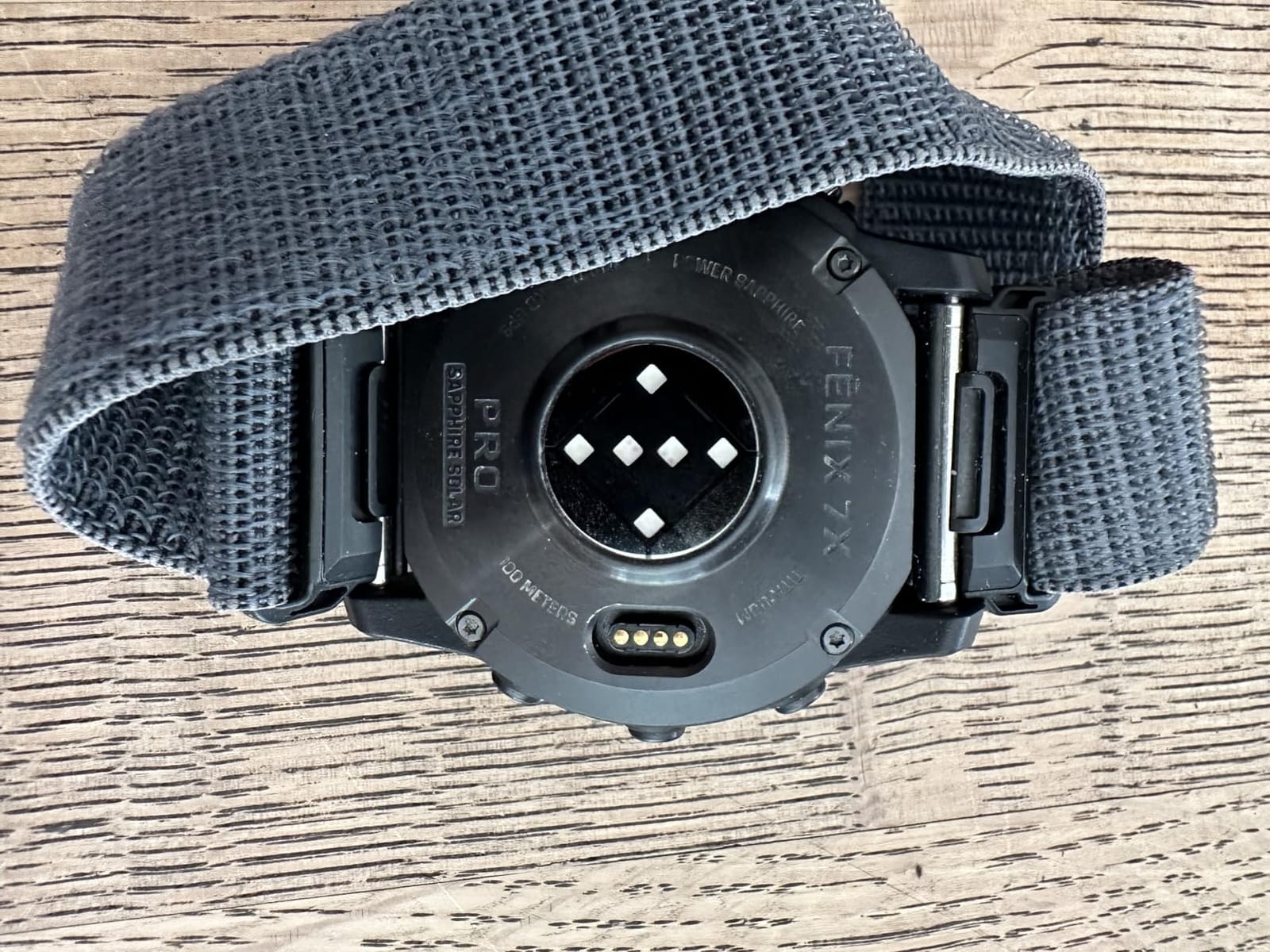
Field notes: the built-in flashlight with variable intensity and strobe modes came out of my pack every single evening on a week-long test loop, and the sapphire lens picked up no meaningful scratching despite a fortnight of rock scrambling. The 3-axis compass and barometric altimeter track reliably, and there is a hill score and endurance score if you like your climbs quantified.
Because this is a fēnix, the fitness suite is deep rather than token: HRV status, Pulse Ox, morning report and training readiness all run without a paid tier. I would pair the unit with a chest strap for the first few days if you care about accurate heart rate, since a handful of owners report wrist readings running high.
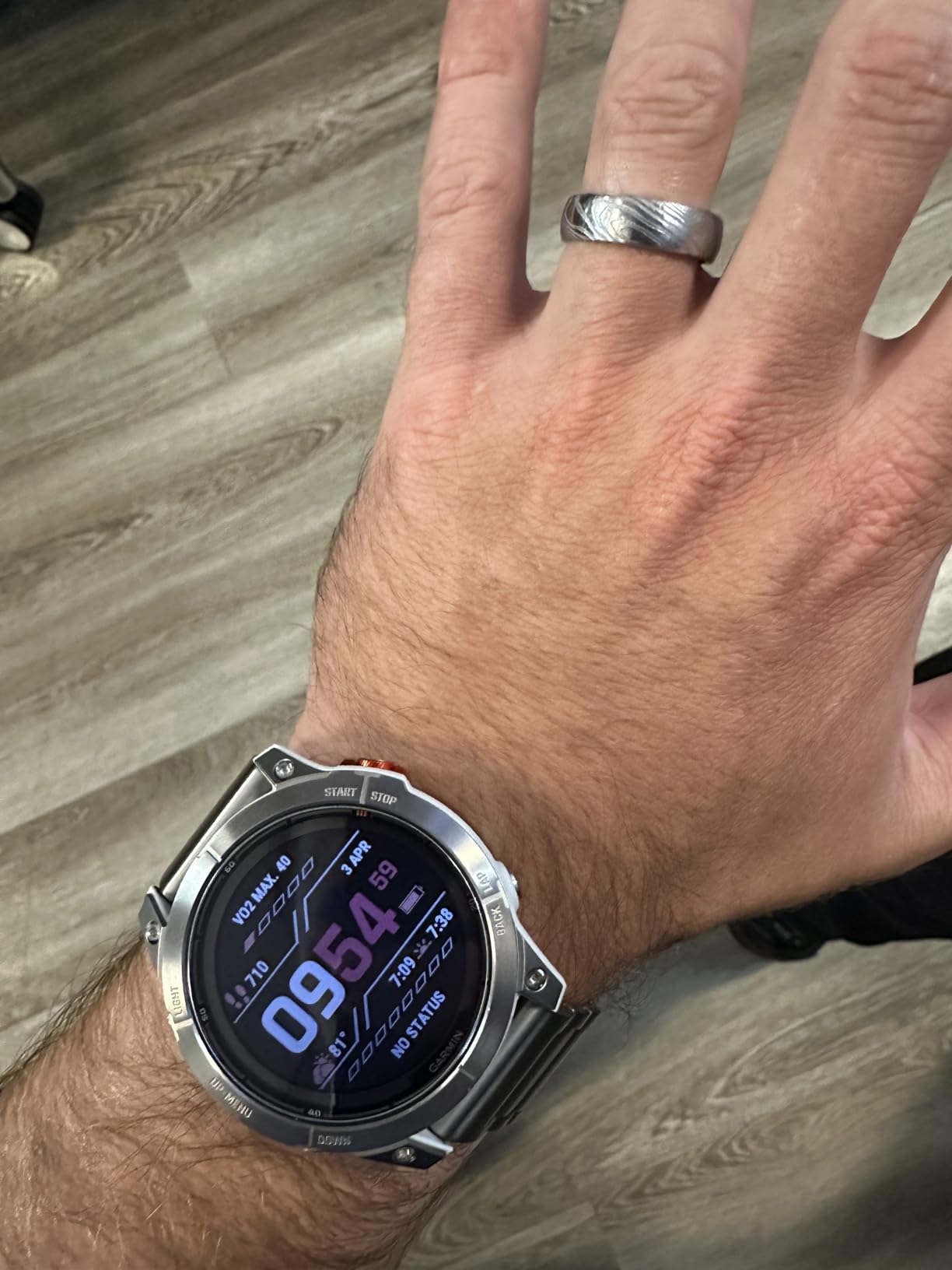
When the fēnix 7X Pro earns its size
Put it on for any trip where you will make navigation decisions from the map rather than from memory. Preloaded topographic maps mean no phone, no caching and no flat battery required, and the Up Ahead prompts give you call-outs before a junction rather than after it.
It is also the one to choose if your hiking overlaps with climbing, backcountry skiing or long alpine days, because the activity profiles and the case width both suit gear-heavy work. Multi-band reception is what makes it reliable under tree cover and in deep valleys, not just in open sky.
Where the fēnix 7X Pro earns its complaints
At 51 mm and 89 g this is a watch you notice, particularly at night. Sleeping in it is uncomfortable, and it will not fit under a cuff. If you have a small wrist or you wear a shirt with tight sleeves, the 47 mm fēnix and the epix Pro 47 mm are the versions to look at instead.
The transflective screen is readable in direct sun but noticeably dim indoors and at night without the backlight, which is the same trade-off every MIP watch makes. And despite being a deep feature set for an outdoor watch, this model has no speaker or microphone, so you cannot take calls or use voice commands from the wrist.
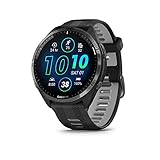
3. Garmin Forerunner 965 – Best for Lightweight Mapped Hiking
Garmin Forerunner® 965, Running Smartwatch, 47mm, Black/Powder Gray
53 g
47 mm case
AMOLED 1.4 inch
Full-color maps
50 m
31 hours GPS
Pros
- Only 53 g with full topographic maps
- Up to 23 days in smartwatch mode
- AMOLED touchscreen plus physical buttons
- Multi-band GNSS with SatIQ
- Lightweight titanium bezel
Cons
- 50 m water rating is lower than rugged outdoor models
- No speaker or microphone so no wrist calls
- Running-first feature set rather than adventure-first
- Less rugged case construction than the Instinct and fenix lines
At 53 g the Forerunner 965 is among the lightest watches here that still run full-colour maps, and that combination is rare. Most AMOLED Garmin watches cost you more battery than most hikers need. This one gives you a bright screen and up to 23 days in smartwatch mode, with 31 hours in GPS mode.
The 1.4 inch AMOLED at 454 x 454 resolution is sharp enough to read a trail contour, and it is paired with traditional buttons so you still have physical control when your fingers are cold or gloved. Multi-band GNSS with SatIQ gives the same class of positioning as watches costing far more.
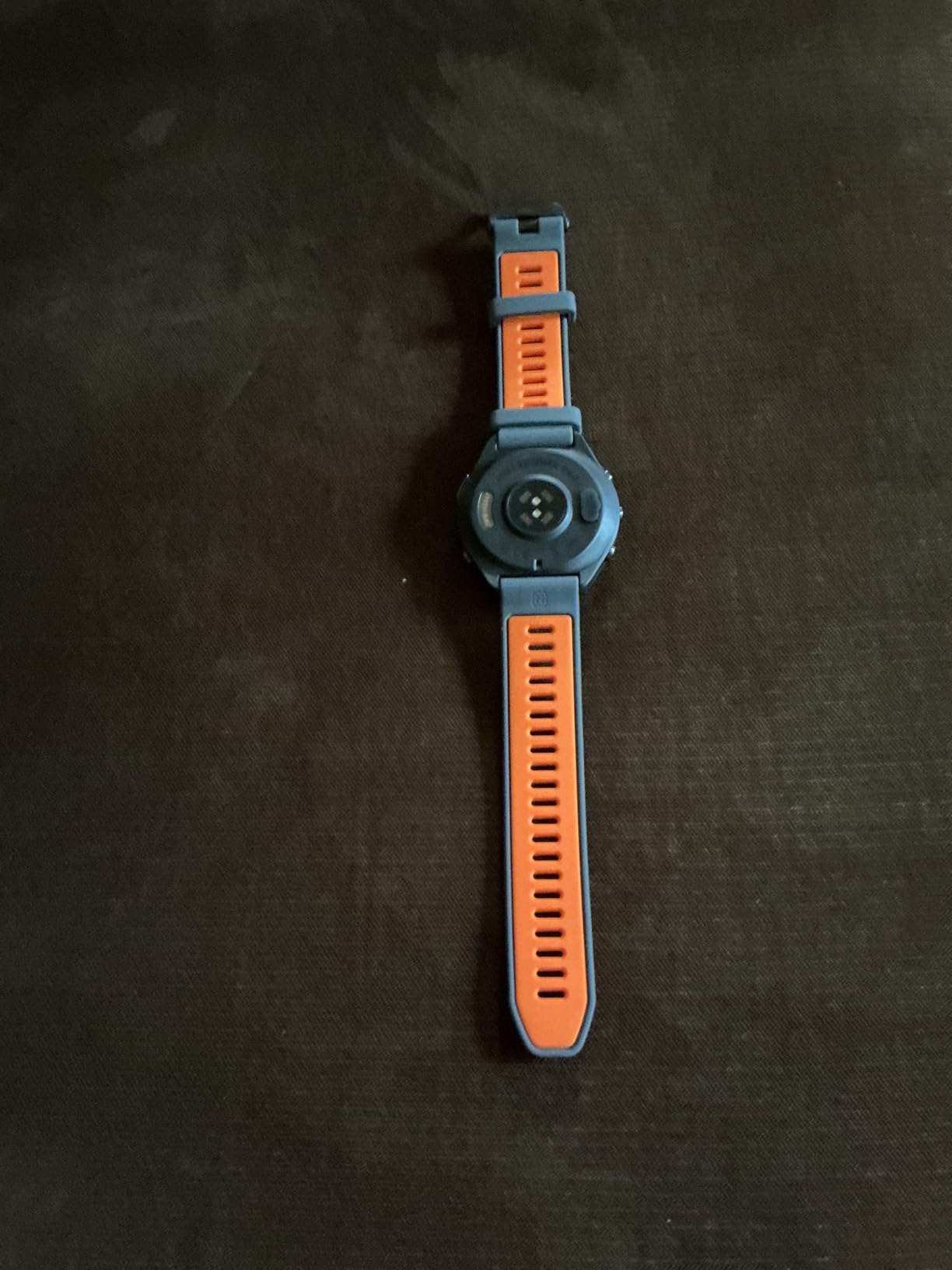
My experience on fastpack and trail-running days is that the watch simply vanishes. Wrist-based running dynamics — cadence, stride length, ground contact time — and continuous wrist-based running power are genuinely useful if you are counting vertical gain as much as distance. Training readiness, training status and daily suggested workouts make it easy to hill-adapt intelligently on long backcountry days.
Health tracking runs the full Garmin suite with nothing held back behind a subscription, and triathlon, duathlon, brick workout and swimrun profiles are built in if you use the same watch for a multiday race. Connectivity covers Bluetooth, USB and Wi-Fi, with 32 GB of storage.
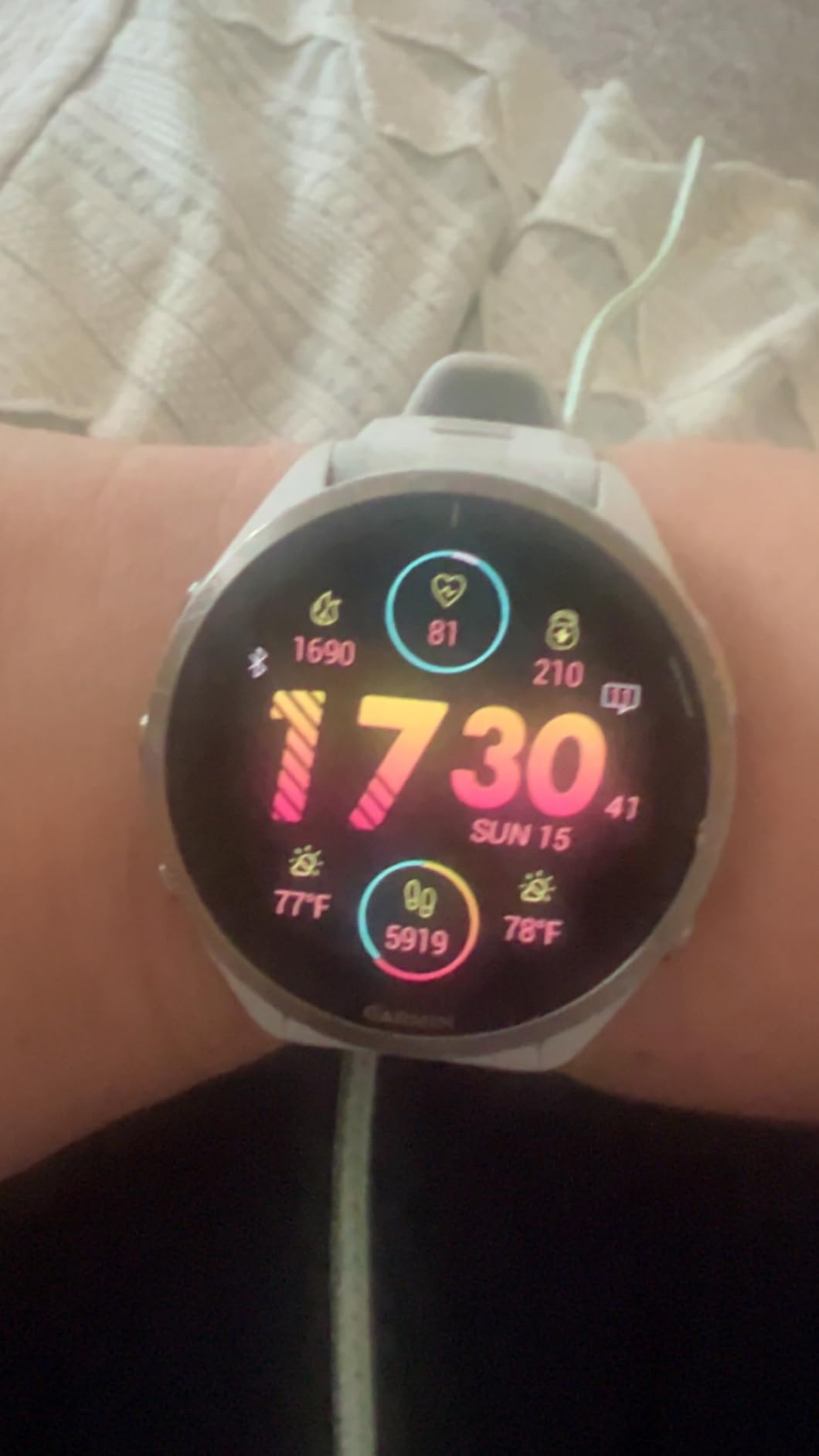
Where the Forerunner 965 wins on the trail
It is the pick for anyone whose hiking is really fast hiking. At 53 g and 47 mm it disappears under a sleeve, it maps in full colour, and the battery covers a five-day trip with a full day of GPS every day. Wrist-based running power also gives you a usable number for climb-rate efforts on steep trails.
If you come from an Apple or Samsung watch, the combination of AMOLED clarity, long battery and a physical-button fallback is one of the least frustrating transitions in this roundup. The 47 mm case also makes it a good mapped option for smaller wrists.
Where the Forerunner 965 falls short
The 50 metre water rating is the first thing to know. Rugged outdoor models here are rated to 100 metres, and this one is not a watch for a cold river ford or frequent open-water swims. It is also built for running, so the adventure-specific activity modes and the outdoor-first feature set are thinner than a fēnix.
There is no speaker or microphone, so no voice assistant and no answering calls from the wrist. The case lacks the rugged shock and thermal certification the Instinct and fēnix lines carry, which is a real consideration for rock routes and alpine scrambles.
4. Garmin epix Pro (Gen 2) Sapphire 47mm – Best for Everyday Wear
Garmin epix Pro (Gen 2) Sapphire, High Performance Smartwatch, 47mm, Black
70 g
47 mm case
AMOLED 1.3 inch
Sapphire lens
100 m
TopoActive maps
Pros
- Premium titanium build that suits daily wear
- Always-on AMOLED stays readable in direct sun
- Sapphire lens resists rock and trail damage
- TopoActive maps with Up Ahead prompts
- Built-in flashlight owners use constantly
Cons
- Supplied straps on 47 mm and 42 mm sizes reported short and uncomfortable
- No microphone or speaker for wrist calls
- Buttons take time to master after a touch-first watch
- Some owners report software freezes or restarts
The epix Pro 47 mm is the answer for anyone who will not wear a rugged watch to work. The 1.3 inch always-on AMOLED with a sapphire lens and a titanium bezel looks like an ordinary premium smartwatch, and it will not embarrass you in a meeting.
It navigates properly, too. Preloaded TopoActive maps with Up Ahead prompts, multi-band reception with multi-GNSS and SatIQ, and a built-in flashlight mean the hiking and everyday versions of this watch are genuinely the same device. Battery is typically 10 to 16 days, which for a colour display is excellent.
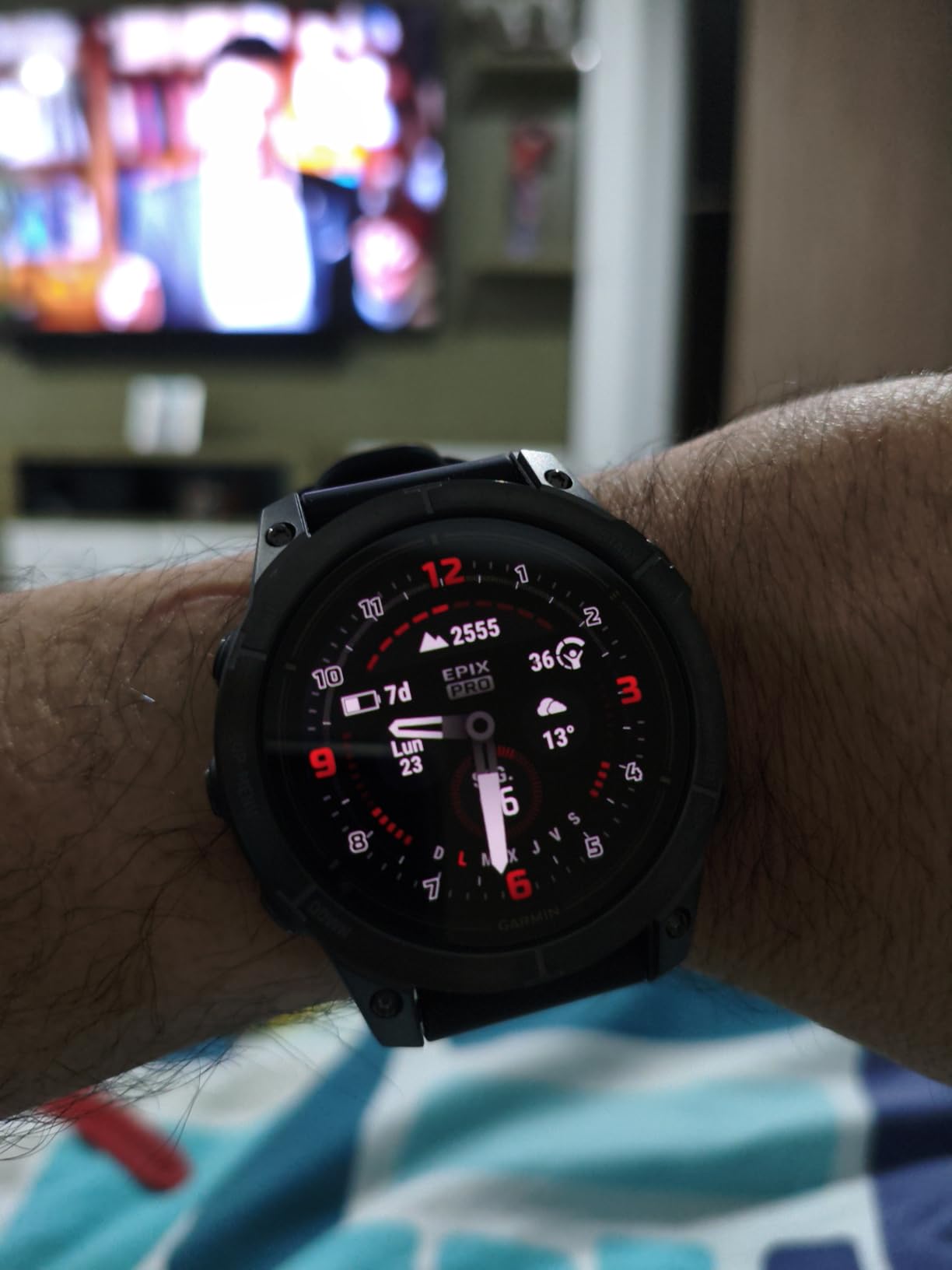
What stands out in daily use is the always-on display, which stays readable in direct sunlight on an open ridge while keeping the map legible in a dark valley. At 70 g it is heavier than a Forerunner but far lighter than the 51 mm fēnix, and the 100 metre water rating means it handles rain, fording and swimming without drama. The sapphire crystal is the real upgrade for anyone who works with their hands.
Hill score and endurance score are more useful on steep hiking days than most buyers expect, and the 24/7 health monitoring with HRV status and Pulse Ox fills out a training picture at no extra cost. Expanded activity profiles cover team sports and racquet sports if you use it off-trail.
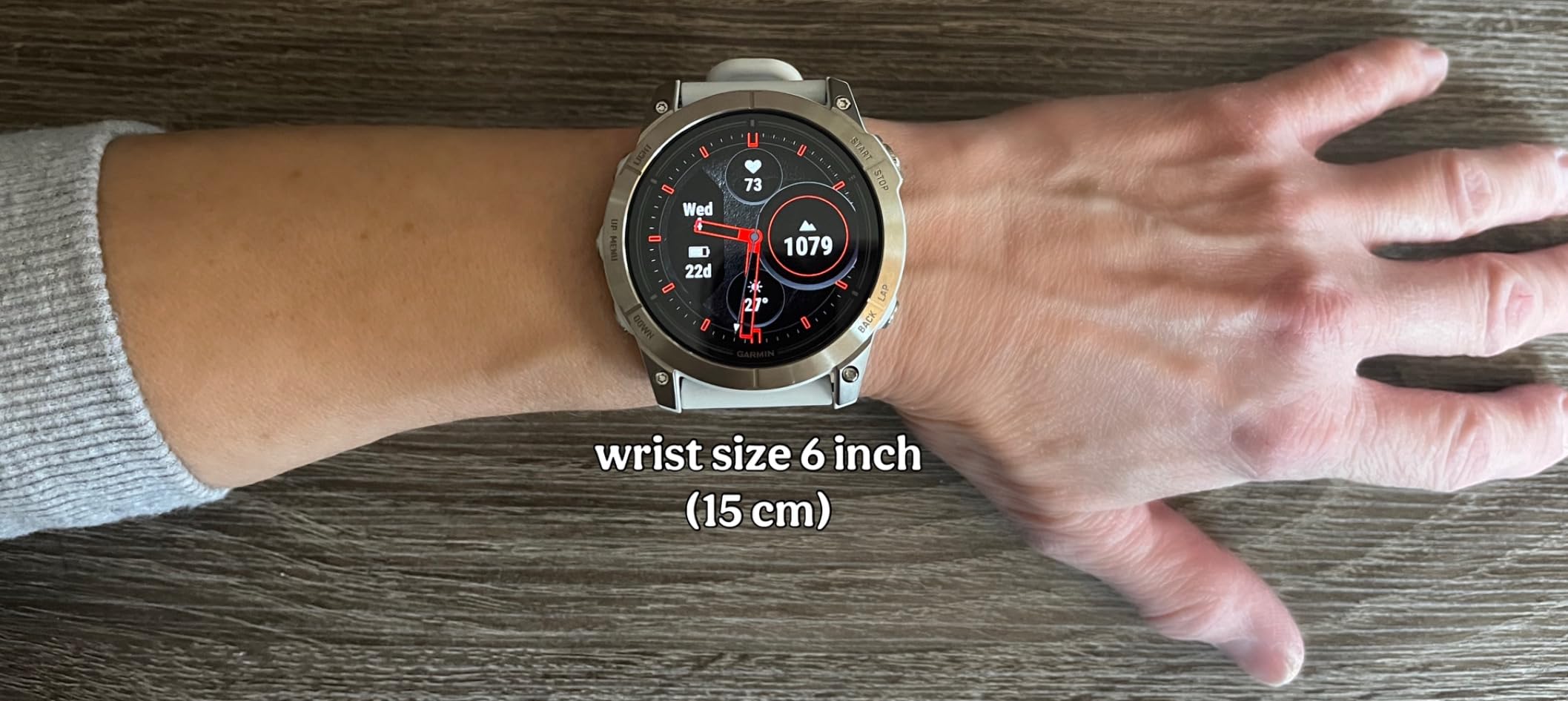
Who the epix Pro 47 mm suits
Office workers, parents who hike on weekends and anyone who has been told a fēnix looks like a brick. At 47 mm it also works for smaller wrists, which is a recurring problem with Garmin’s big-case models. The flashlight gets used far more often than expected once you have it.
It is a good fit for hiking weekends where you sleep in a vehicle rather than on a mountain, since 10 to 16 days of battery means you charge once a week or less and the watch still has charge when you get to the trailhead on Saturday.
Where the epix Pro 47 mm disappoints
Do not buy the 51 mm version expecting a compact watch — it is the heavy one. Within the 47 mm model, the more common complaint is the supplied strap, which a number of owners report as short, hot or uncomfortable on long days. Budget for a better band early.
There is no microphone or speaker, so no wrist calls and no voice assistant. The five-button control scheme takes time to learn, and a small number of owners report occasional software freezing or random restarts that need a reset.
5. Garmin fenix 8 51mm – Best for Voice Features and Full Fitness Data
Garmin fēnix® 8, Premium Multisport Smartwatch, 51mm, Black
102 g
51 mm case
AMOLED 1.4 inch
29 days or 84 hours GPS
40 m dive
Pros
- Built-in speaker and microphone for wrist calls
- Off-grid voice commands without a phone
- Up to 29 days in smartwatch mode and 84 hours GPS
- Dynamic round-trip routing to navigate back on schedule
- 40 m dive rating with leakproof metal buttons
Cons
- 102 g is very heavy for sleep and all-day wear
- Many watch faces cost extra in the Connect IQ store
- 47 mm version often recommended for smaller wrists
- Some owners report software freezing needing resets
The fēnix 8 is a complete adventure watch, and the reason is the speaker and microphone. This is the model that can answer a call from your wrist or respond to a voice assistant, and the off-grid voice command feature works without a phone in reach, which on a ridge with no signal is more useful than it sounds.
Battery is 29 days in smartwatch mode and up to 84 hours in GPS mode, which on a ten-hour hiking day is more than eight days of navigation. Owners report 13 to 16 days in mixed use, and the bright 1.4 inch AMOLED at 390 x 390 makes maps and stats easy to read at pace.
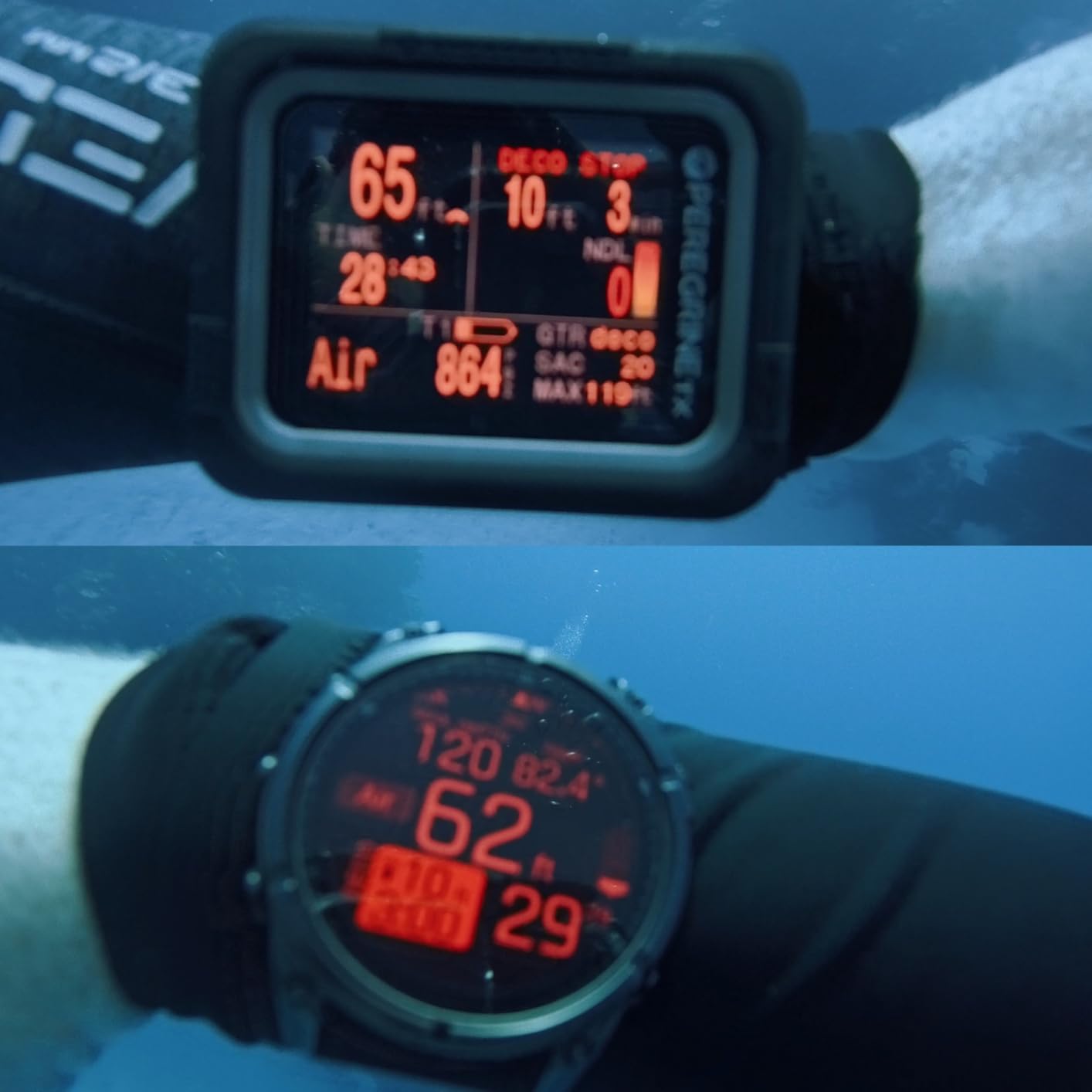
Navigation is strong: multi-band GPS with SatIQ, a 3-axis compass, gyroscope and barometric altimeter, plus dynamic round-trip routing that will bring you back to the start on a schedule rather than by guesswork. The built-in flashlight with a red mode, the ECG app for atrial fibrillation screening, and targeted strength training plans with real-time stamina tracking round out a package that suits multi-sport seasons.
Leakproof metal buttons and a 40 metre dive rating mean that if your hiking includes alpine water, canyoning or scuba, this AMOLED fēnix 8 shares that rating with the fenix 8 Pro. Durability is excellent through construction sites, trail miles and everything in between.
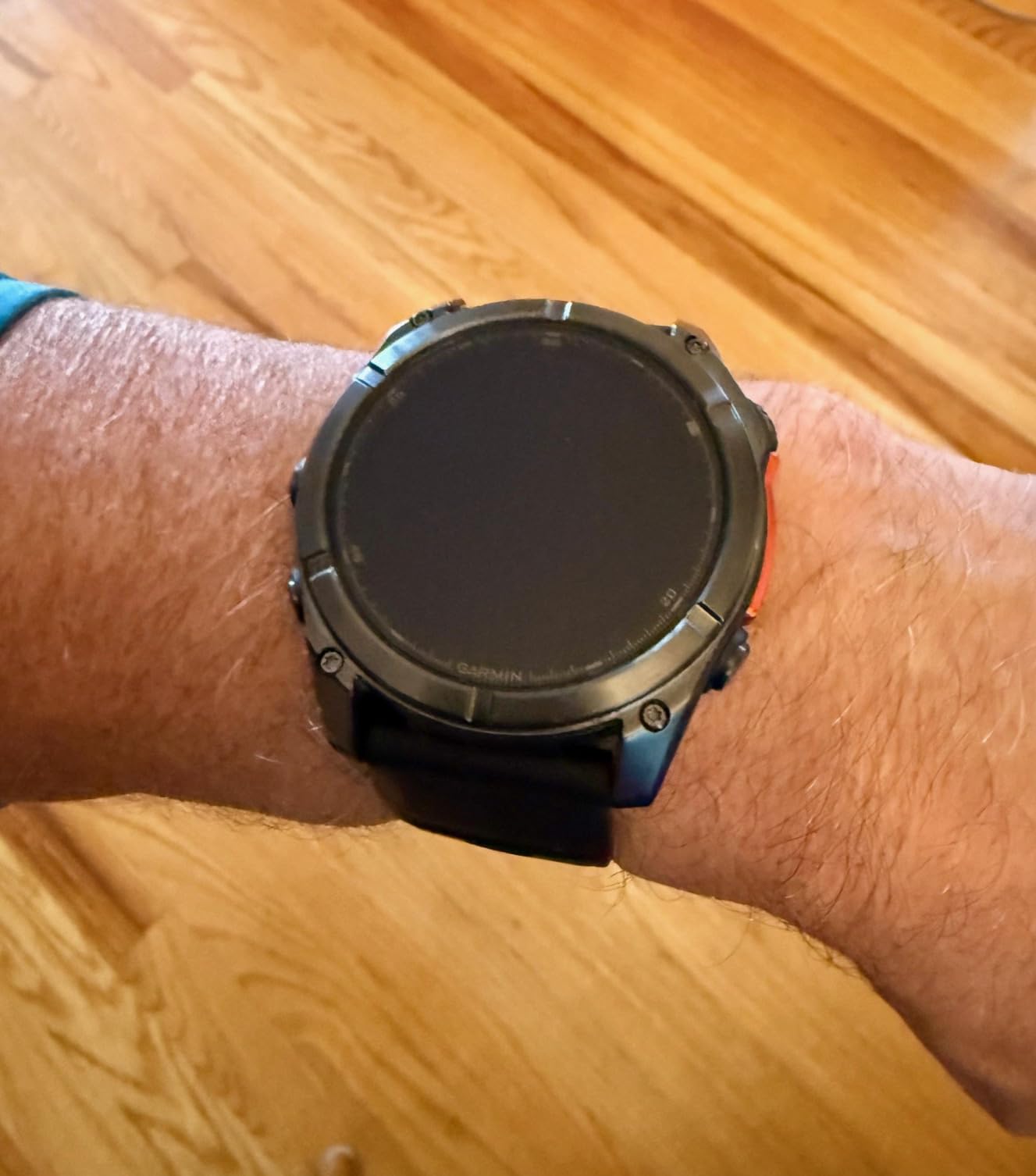
What the fēnix 8 51 mm adds over the 7X Pro
Two things, and both are about connectivity. Wrist calls and voice assistant responses turn this into a real smartwatch, and the AMOLED panel is noticeably better indoors and at night than the transflective screen on the 7X Pro. The 40 m dive rating is a third.
For hikers who also run, lift and swim inside the same week, the training readiness score built on sleep, recovery, training load and HRV status means the watch is coaching the whole week rather than just the hike. Dynamic round-trip routing is the quiet hero feature for solo hikers.
Where the fēnix 8 51 mm is too much
At 102 g in a 51 mm case, this is the heaviest watch we reviewed. Sleeping in it is uncomfortable for many owners, and it will not go under a cuff. The 47 mm version of the same watch is the one most buyers should be wearing.
A small number of reviews report recurring software freezes that a reset did not fix, and the Connect IQ store charges for many popular watch faces, which adds up if you like customising. It costs more than the Instinct class for navigation you may only use twice a year.
6. Garmin Instinct 3 AMOLED 45mm – Best Value Rugged Pick
Garmin Instinct® 3 AMOLED, Rugged GPS Smartwatch, 45mm, Black
53 g
45 mm case
AMOLED 1.2 inch at 1000 nit
18 days
Multi-band with SatIQ
Pros
- Colour AMOLED at 1000 nits
- Up to 18 days in smartwatch mode
- Only 53 g in a supertough case
- Buttons work reliably with wet or sweaty hands
- Flashlight with variable intensity and strobe
Cons
- No touchscreen to miss after a touch-first watch
- Onboard storage limited to 4 GB with no music
- Maps less detailed than the fenix and epix lines
- Menus feel less polished than Apple or Samsung
The Instinct 3 AMOLED is the one I recommend to people upgrading from a phone-first smartwatch. It takes the rugged Instinct formula and finally gives it a colour screen, and At 45 mm and 53 g it is one of the most compact rugged watches in this roundup.
The 1.2 inch AMOLED is rated at 1000 nits, which is genuinely bright outdoors, and owners report two to three weeks of battery including on long treks. The supertough fibre-reinforced polymer case has a metal-reinforced bezel and a 100 metre water rating, so it takes the same abuse as the rest of the Instinct family.
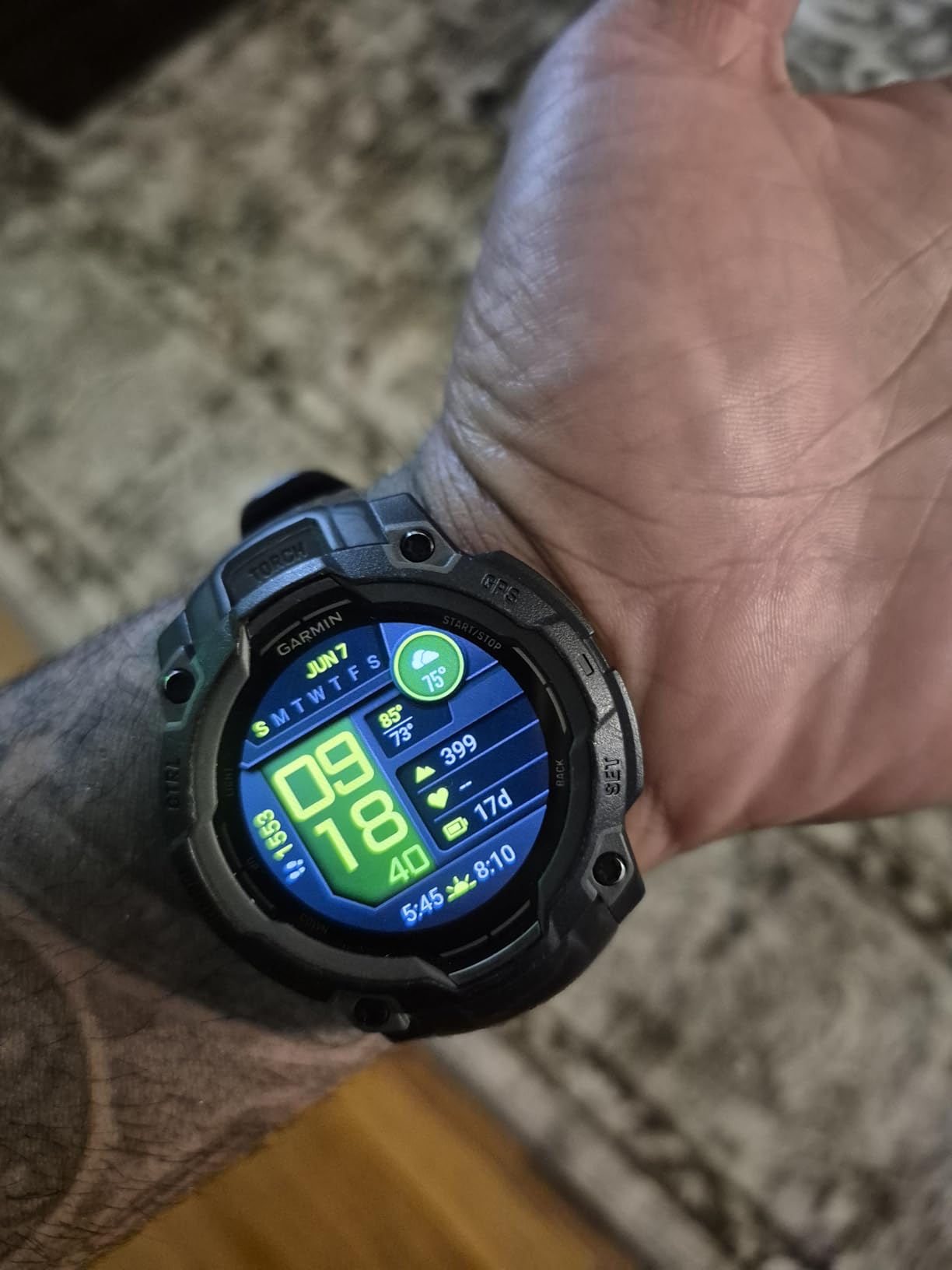
The buttons-only control scheme is the underrated part. No touchscreen means no failed taps with a gloved hand, no palm rejection on a scramble and no smudged screen in rain, and in testing that reliability was worth more than the colour panel. The built-in flashlight with variable intensity and strobe modes is consistently praised, and the 3-axis compass, barometric altimeter and multi-band GPS with SatIQ cover the ABC essentials properly.
Health tracking includes wrist heart rate, advanced sleep monitoring and Pulse Ox with nothing paywalled. Moving from a Samsung or Apple watch, the missing touchscreen takes a few days to accept, and owners generally find the battery and outdoor accuracy more than compensate.

Who should buy the Instinct 3 AMOLED
Anyone who wants a rugged Garmin with a modern screen and does not need topographic maps. It handles waypoints, breadcrumb trails, TracBack, a compass and an altimeter, and for trail-based hiking that is genuinely sufficient. The 45 mm case sits well under a cuff and works on smaller wrists.
At 53 g it also suits hikers who wear a watch all week and want something that is comfortable for sleep tracking, which no 51 mm model manages. Eighteen days of battery means two mountain weekends without thinking about a cable.
Where the Instinct 3 AMOLED stops
Mapping is the limit, again. It is less detailed than the fēnix and epix lines, and there is no full topographic layer, so route-finding on unfamiliar complex terrain still needs another tool. Onboard storage is 4 GB with no music storage, which rules out the offline-music workflow some hikers rely on.
Menus and firmware feel clunky next to Apple or Samsung devices, and there is no speaker, microphone or touchscreen. If you want wrist calls, this is not the watch. But as a rugged, reliable, long-running trail tool with a colour screen, it holds its own against models far above it in the range.
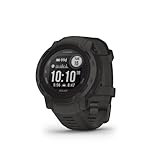
7. Garmin Instinct 2 Solar – Best Solar Charging on a Budget
Garmin Instinct 2 Solar, Smaller-Sized Rugged Outdoor Watch with GPS, with Solar Charging Capabilities, Built for All Elements, Multi-GNSS Support, Tracback Routing and More, Graphite
52 g
MIP display 1.27 inch
Solar charging
48 hours GPS with solar
100 m
Pros
- Unlimited battery in smartwatch mode with 3 hours of sun a day
- Up to 48 hours of GPS with continuous solar charging
- Only 52 g with a 100 metre water rating
- Multi-GNSS with TracBack routing for getting back on course
- Power manager shows what is draining the battery
Cons
- Solar adds only a few percent a day rather than a full recharge
- Monochrome non-touch display is basic and dim under backlight
- Barometric altimeter readings can drift over time
- Supplied silicone band softens after a few months
The Instinct 2 Solar is an affordable way into a Garmin that will not need charging on a week-long trip. With solar charging and three hours of direct sunlight a day, it runs indefinitely in smartwatch mode, and Garmin rates it to 48 hours in GPS mode with continuous solar exposure.
At 52 g with a 100 metre water rating, a fibre-reinforced polymer case and scratch-resistant Corning Gorilla glass, it is one of the lighter rugged watches in this roundup. Multi-GNSS support covers GPS, GLONASS and Galileo, and TracBack routing takes you back along your breadcrumb line when a trail vanishes.
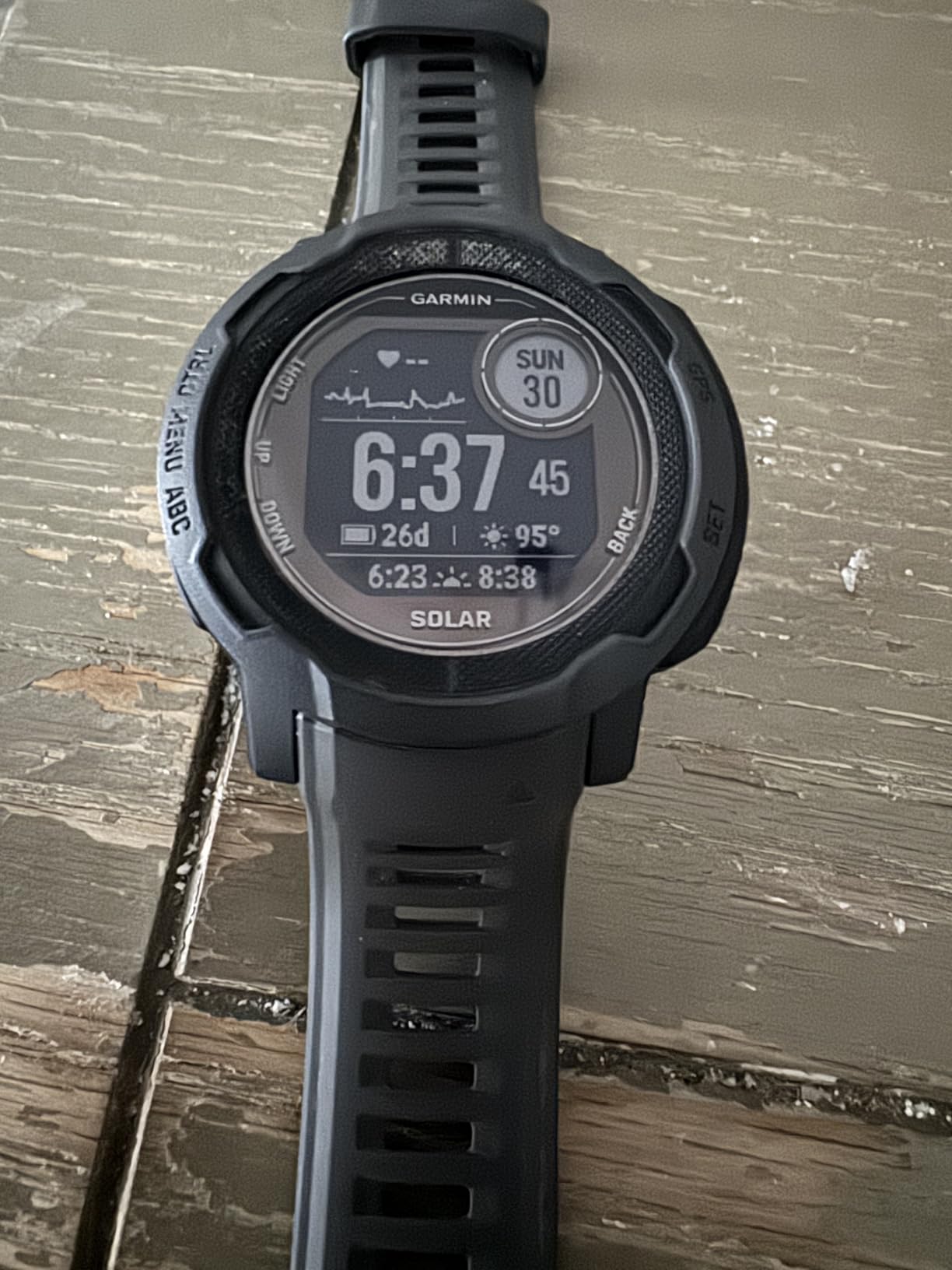
Owners report 19 to 30 days between charges, and the power manager is genuinely useful because it shows which settings and sensors are costing you runtime. A built-in 3-axis compass and barometric altimeter handle the essentials, and the VO2 Max, daily workout suggestions and recovery time round out a training picture with no subscription.
Two band keepers stop the excess strap catching on branches, which is a small thing that matters in scrub and deadwood. It handles swimming and fishing happily given the water rating, and the health tracking covers heart rate, sleep, Pulse Ox and respiration.
What solar charging actually does for you
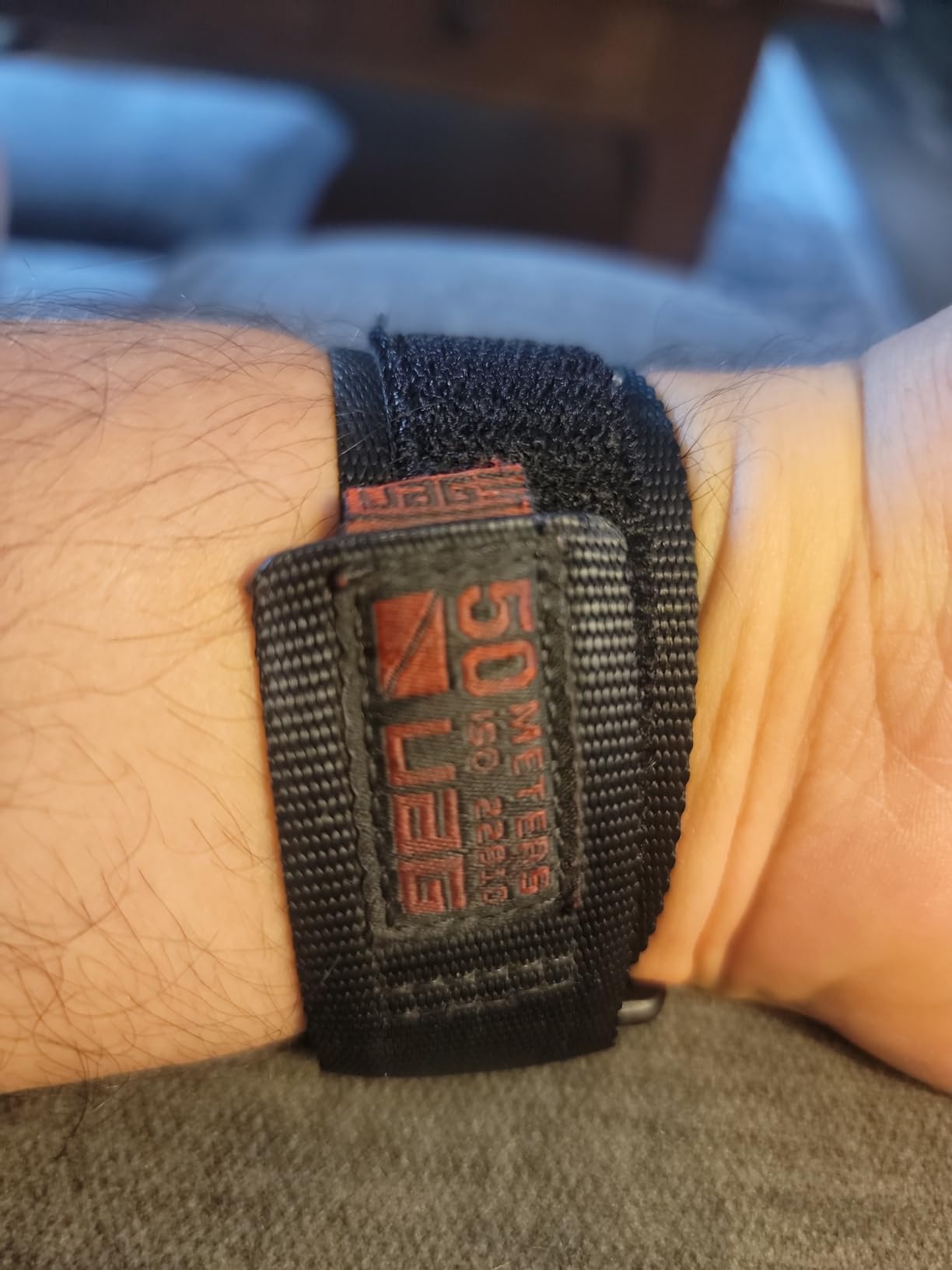
On a multi-day trip, solar is a margin, not a strategy. What it reliably buys you is the ability to leave the watch in full sun on a ridge or camp and lose less charge over four days than you would otherwise. Reviewers are blunt that the contribution is a few percent a day of strong sun rather than a full recharge.
Where that margin matters is a five to nine day wilderness trip, which is exactly the range one r/GarminWatches user described planning. Combine solar with a full charge before you leave and the Instinct 2 Solar is comfortably enough for anything short of an expedition.
Where the Instinct 2 Solar falls short
The monochrome non-touch display is dim under backlight and basic by modern standards, and the button interface is confusing for the first few sessions. There is no flashlight on this model, which is the feature most used on the newer Instinct bodies.
One detailed review flags inconsistent barometric altimeter readings compared with watches using digital elevation models, so do not trust it as a sole source of elevation. The supplied silicone band also softens after a few months of exposure, and the single-colour screen means no topographic maps.
8. Garmin Forerunner 970 – Best for Running Metrics and Race Training
Garmin Forerunner® 970, 47mm, Soft Gold Titanium, French Gray/Indigo
47 mm case
AMOLED 1.4 inch
Sapphire lens
Titanium bezel
15 days
26 hours GPS
Pros
- Garmin's brightest AMOLED touchscreen to date
- Up to 15 days in smartwatch mode
- Sapphire lens stays scratch-free
- Full-color maps with multi-band GPS and round-trip routing
- Built-in speaker and microphone for wrist calls
Cons
- 50 m water resistance is modest for outdoor use
- Supplied band runs long on smaller wrists and is not QuickFit
- No solar charging option on this model
- Some metrics need an HRM 600 sold separately
The Forerunner 970 has the brightest AMOLED touchscreen in Garmin’s current range, and on a ridgeline in full sun that matters. The 1.4 inch AMOLED touchscreen is paired with a titanium bezel, a sapphire lens and traditional button controls, so you get touch when you want it and buttons when your hands are cold.
Battery is up to 15 days in smartwatch mode and 26 hours in GPS mode. That is less than the Forerunner 965, and it is the cost of the sapphires and titanium build with no solar option, but two weeks between charges still covers most hiking seasons comfortably.
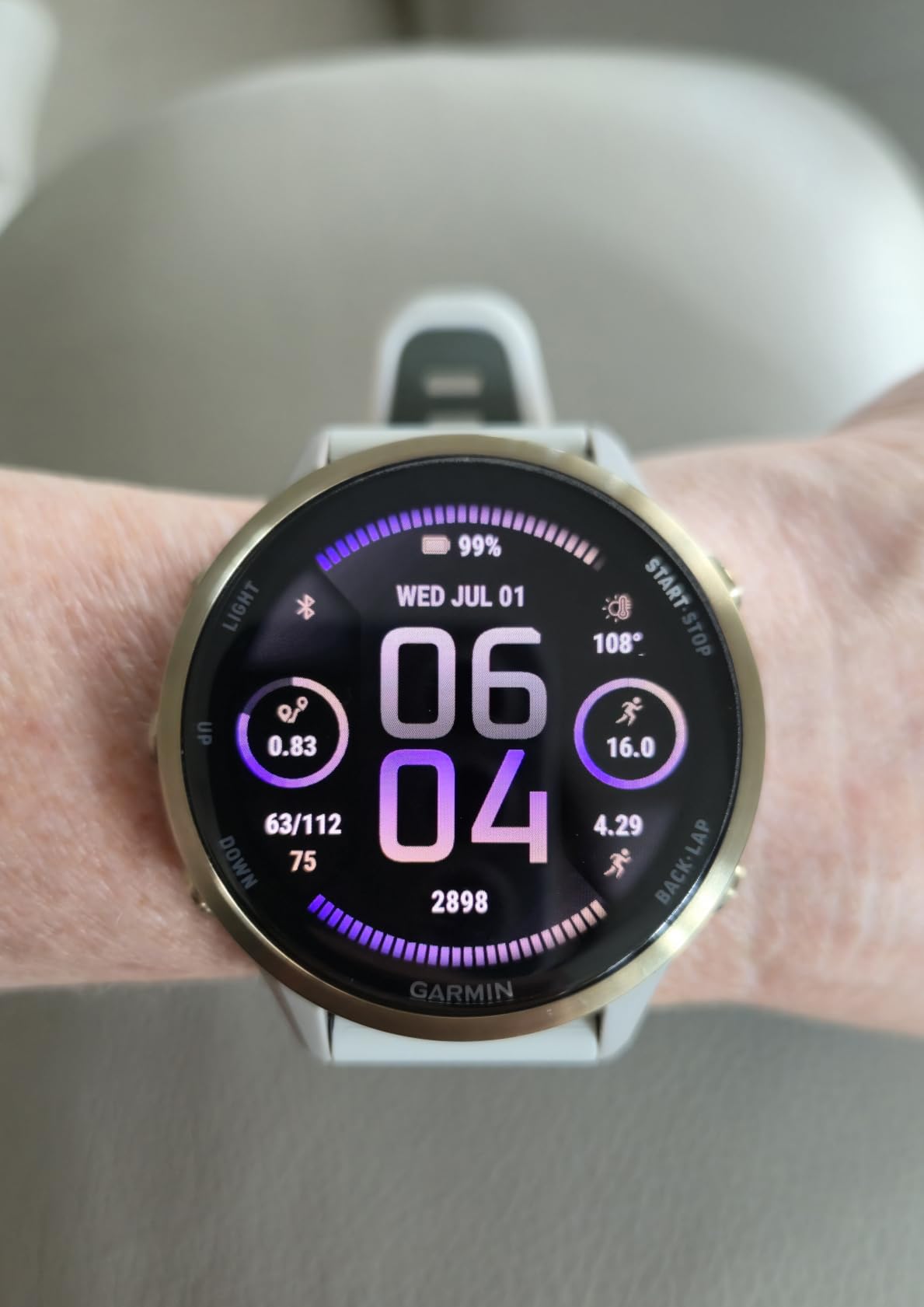
Full-colour built-in maps with multi-band GPS and dynamic round-trip routing make it a credible trail watch, and the built-in LED flashlight is useful for early starts. The speaker and microphone mean wrist calls and voice assistant responses, which no other Forerunner in this roundup offers. An ECG app handles atrial fibrillation screening.
The training side is where it separates. Running economy, step speed loss and running tolerance are metrics you can actually use to judge whether your hiking fitness is improving, and Garmin Coach builds personalised running and triathlon plans. Multisport auto-transition between swim, bike and run makes it a single-watch solution for race season.
Why this is the watch for a trail runner
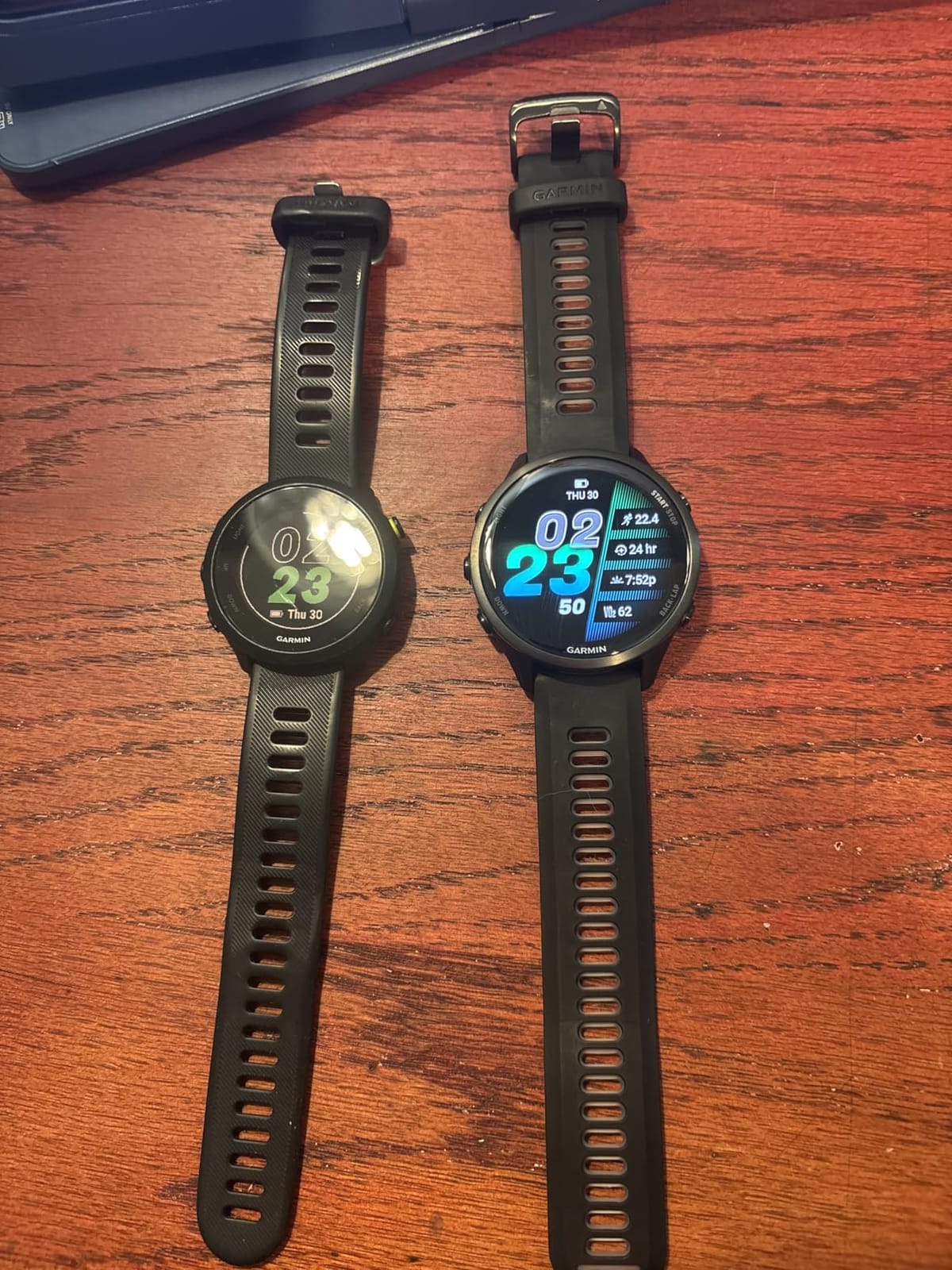
The 47 mm case sits well under a sleeve, and the running economy and step speed loss numbers are the most useful uphill indicators in Garmin’s running range. If you are combining hiking with a race block, the triathlon profiles and Garmin Coach plans cover the whole season rather than just the hike.
Owners moving from a Forerunner 945 or from an Apple ecosystem describe it as a major upgrade, particularly the screen brightness and the accuracy. For anyone who wants wrist calls on a trail, this and the fēnix 8 are the two options in the roundup.
What to watch out for
The 50 metre water resistance is modest for a watch used outdoors, and it is a real limitation if you ford rivers or swim in cold water. The supplied band is reported as long on smaller wrists and it is not a QuickFit connector, so plan on changing it.
Several of the headline running metrics require an HRM 600 heart rate monitor sold separately. The menu navigation is a steep learning curve coming from Apple Watch, and the sapphire, titanium and AMOLED combination adds a lot of cost with no solar option to offset battery drain.
9. Garmin Instinct E 45mm – Best Entry Point Into Rugged Watches
Garmin Instinct® E, Rugged GPS Smartwatch, 45mm, Charcoal
48 g
45 mm case
MIP monochrome 0.9 inch
16 days
10 ATM and MIL-STD-810
Pros
- 48 g case keeps it light and comfortable
- Up to 16 days in smartwatch mode
- 10 ATM rating and MIL-STD-810 shock and thermal resistance
- Multi-GNSS with compass and altimeter
- Health and sleep tracking with no extra cost
Cons
- 0.9 inch monochrome display limits navigation detail
- No solar charging and no AMOLED option
- No touchscreen speaker microphone or flashlight
- Only 128 MB of onboard memory and no music storage
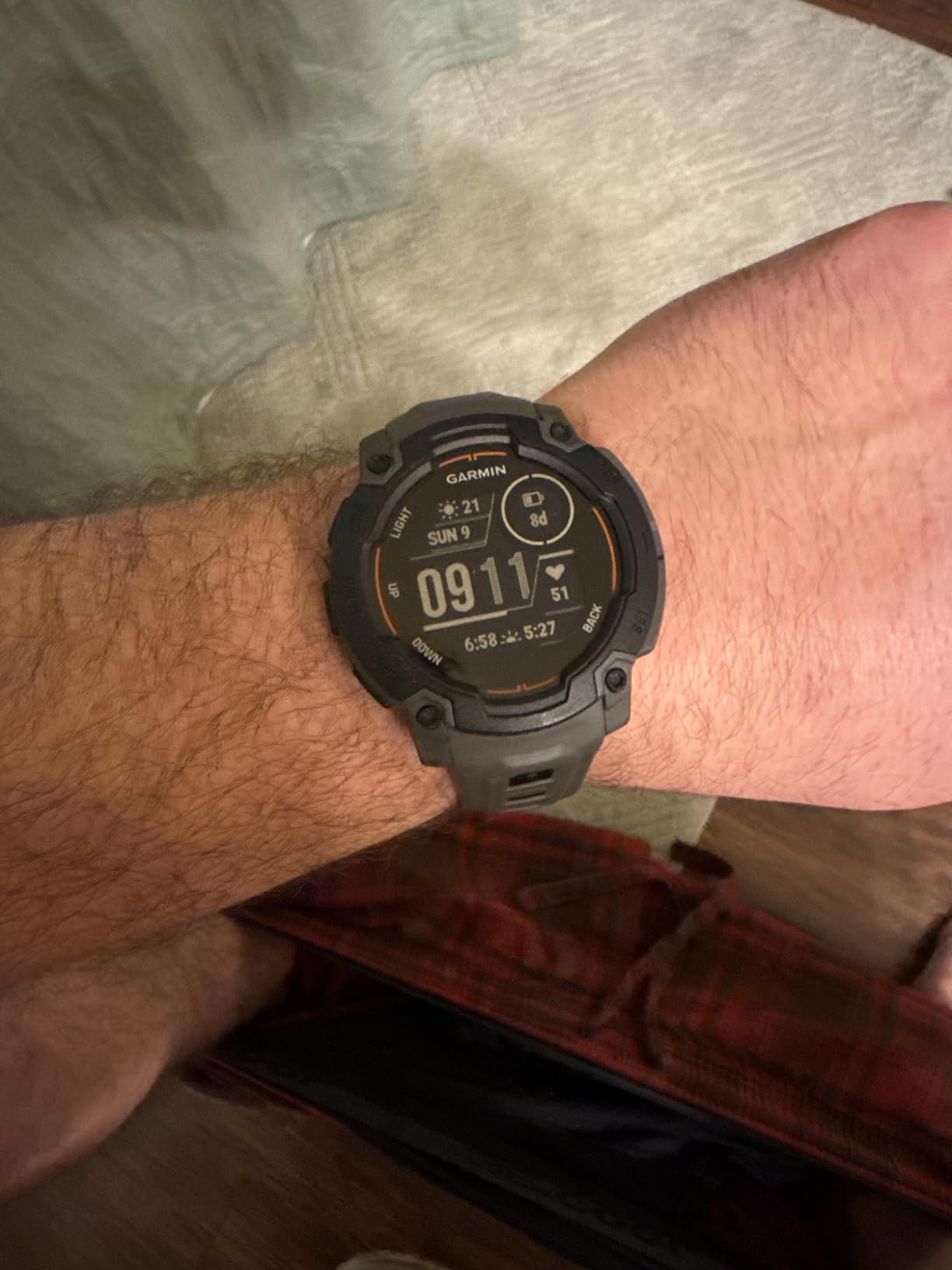
The Instinct E is an affordable way to own a properly rugged Garmin, and at 48 g it is among the lightest watches in this roundup. If you hike on marked trails, run a lot and just want something that will not break, this is the honest starting point.
It carries a 10 ATM water rating and is engineered to MIL-STD-810 for thermal and shock resistance, so it is rated for the same kind of abuse as its bigger siblings. Battery is up to 16 days in smartwatch mode, and a 3-axis compass, barometric altimeter and multi-GNSS support handle the basic navigation set.
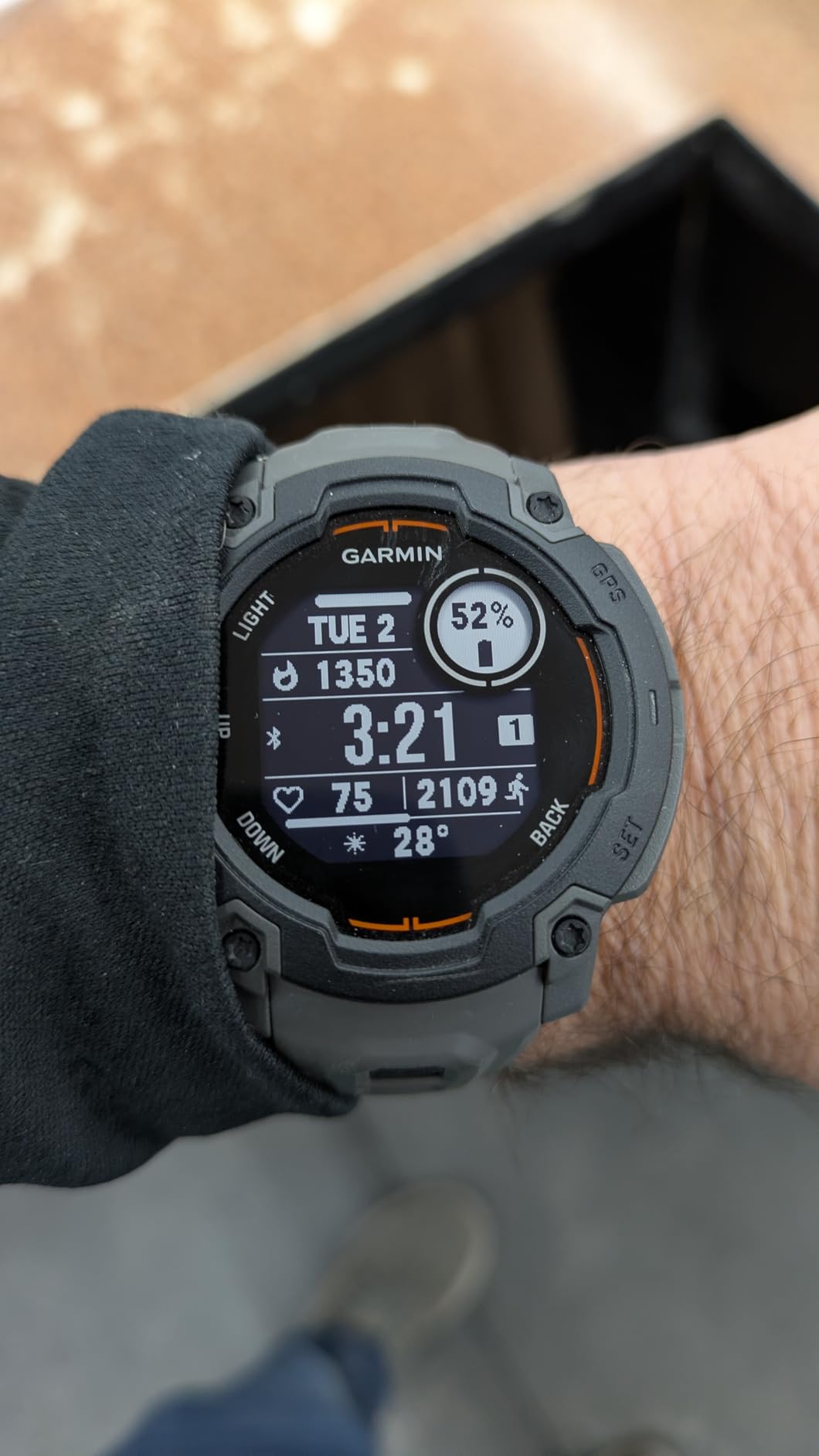
Health monitoring covers wrist-based heart rate, advanced sleep monitoring and Pulse Ox at no extra cost, and Connect IQ Store integration lets you add apps and watch faces. The 45 mm case is a compact rugged size that sits well under a cuff.
It is a watch to buy for a first Garmin or for a hiker who never leaves the trail network. Track logging, pace, distance, elevation and a breadcrumb line are all there, and that is enough for most day hikes and most trail running.
Where the Instinct E is the right call
It is the pick for a day hiker who wants durability, long battery and small size without spending much. Sixteen days between charges is more than most people need, and 48 g is light enough that you will wear it every day, which is the real reason it succeeds.
If you are outfitting a family or a group where not everyone needs maps, this is the sensible share-out. The 4.4 rating reflects a watch that does a small set of things very well rather than a watch that tries to do everything.
What you give up for the low weight
The 0.9 inch monochrome display is the compromise that defines this model. It limits map and data detail more than any other watch we reviewed, and combined with 176 x 176 resolution there is no realistic path to detailed navigation on it.
There is no solar charging, no AMOLED option, no touchscreen, no speaker, no microphone and no flashlight. Onboard memory is 128 MB with no music storage. Choose the Instinct 3 AMOLED instead if you want a colour screen, and step up further if you want topo maps.
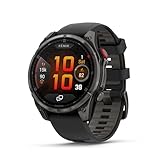
10. Garmin fenix 8 Pro 51mm – Best for Solo Backcountry Safety
Garmin fēnix® 8 Pro, 51mm, Sapphire, DLC Titanium, Black/Pebble Gray
51 mm case
90 g
AMOLED 1.4 inch
Sapphire and DLC titanium
27 days
40 m dive
Pros
- Built-in inReach for two-way satellite messaging and SOS
- LTE calling and messaging without a phone
- LiveTrack location sharing at a 30 second update rate
- Preloaded TopoActive maps with relief shading
- Up to 27 days in smartwatch mode
Cons
- Satellite and LTE features require an ongoing subscription
- Separate Garmin apps for maps messaging faces and setup
- Sluggish buttons haptics and touchscreen reported by owners
- Supplied band and clasp described as cheap and flimsy
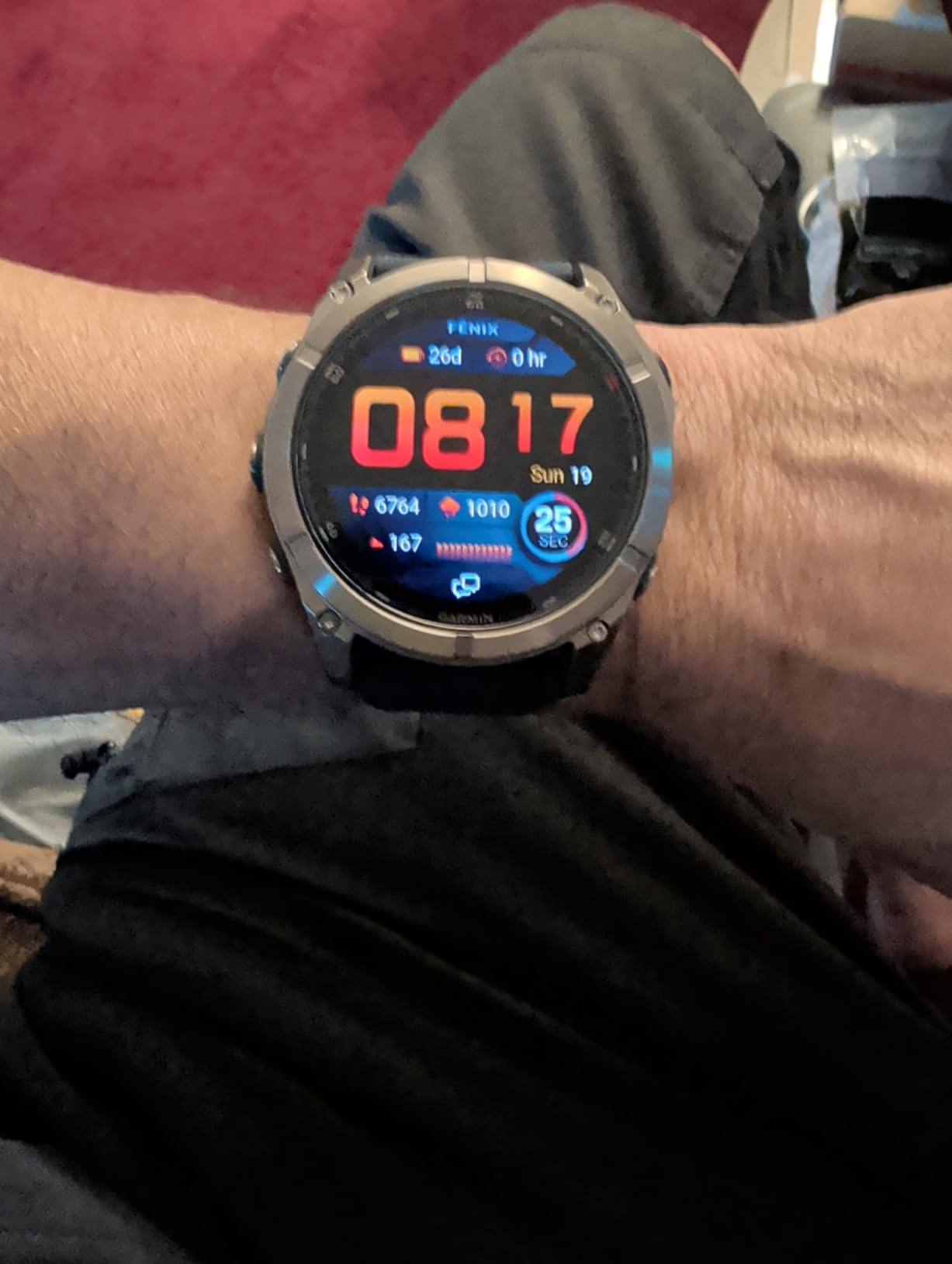
The fenix 8 Pro is the only watch we reviewed with inReach built in, and for a solo hiker in the backcountry that is a genuine safety change rather than a feature checkbox. Two-way satellite messaging and an interactive SOS work where no cellular network exists, and you do not need to carry a second device.
LTE connectivity adds calls and messaging away from your phone, and LiveTrack shares your location at a 30-second update rate through the on-device Garmin Messenger app. The rest of the package is first-rate: a bright 1.4 inch AMOLED touchscreen with a sapphire lens and DLC titanium bezel, preloaded TopoActive maps with relief shading, a built-in flashlight, a 40 metre dive rating and up to 27 days in smartwatch mode.
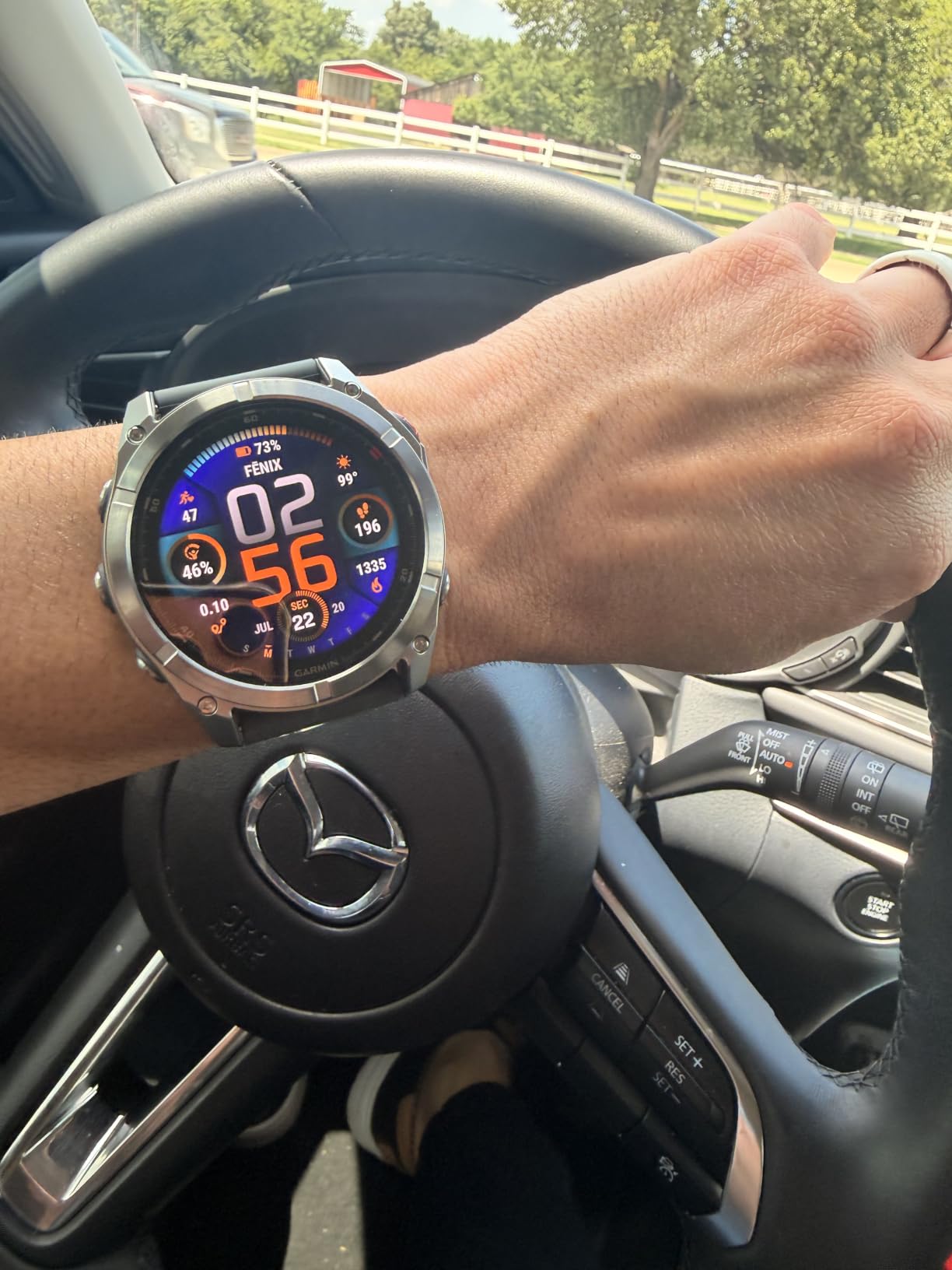
It also lasts noticeably longer than the AMOLED fēnix 8, with three-plus weeks reported in real use. At 90 g it is heavy but 12 g lighter than the standard fēnix 8, which matters more than the spec sheet suggests on a long day.
The honest complication is the ecosystem and the running cost. Satellite and LTE functions need a subscription, and Garmin splits maps, messaging, faces and setup across separate apps, which owners describe as fragmented. If you never leave cell coverage, you are carrying capability you will not use.
Why solo hikers should look at this one first
A watch that can raise an SOS with coordinates and two-way message rescue from a gully is a different category of tool from a watch that can record a track. For winter mountaineering, remote desert routes and any trip where a delay becomes an emergency, that capability is the reason to spend this much.
Leaving your phone behind on a long traverse is realistic with LTE calling on the wrist, and the 27-day battery plus built-in maps mean you do not need a power bank either. Relief-shaded topographic maps read well on the AMOLED panel in daylight.
Where the fenix 8 Pro annoys people
Several reviewers describe the interface as dated, with sluggish button responses, weak haptics and buggy touchscreen input. The supplied band and clasp are repeatedly called cheap and flimsy, which is a poor match for a watch built for satellite safety.
Enabling connectivity features pulls the battery below two days, so the headline 27-day figure assumes you are not relying on them constantly. The always-on display dims noticeably, the flashlight button placement is awkward with gloves on, and the total cost of ownership includes the subscription.
11. Garmin Enduro 3 Solar 51mm – Best for Multi-Week Expeditions
Garmin Enduro™ 3, Solar, 51 mm, Sapphire, Black UltraFit Nylon Strap
63 g
51 mm case
1.4 inch display
90 days or 320 hours GPS solar
100 m
Pros
- 63 g titanium case with a sapphire lens
- Preloaded TopoActive maps with dynamic round-trip routing
- Fast USB-C charging from 74 to 100 percent in about 20 minutes
- UltraFit nylon band for long-distance comfort
Cons
- 51 mm case is oversized for small wrists
- MIP screen is hard to read indoors and uses small fonts
- No microphone or speaker for voice features
- Continuous Pulse Ox cuts battery to roughly 25 days
The Enduro 3 exists for one reason, and that is endurance. Up to 90 days in smartwatch mode and 320 hours in GPS mode with solar charging, with the always-on display included in those figures, this is the watch you buy if you are two weeks from a wall socket.
It is also lighter than it looks. At 63 g in a titanium case with a sapphire lens, it undercuts the 89 g fenix 7X Pro and the 102 g fēnix 8 by a wide margin, and the UltraFit nylon band stays comfortable across long days where a silicone band chafes.
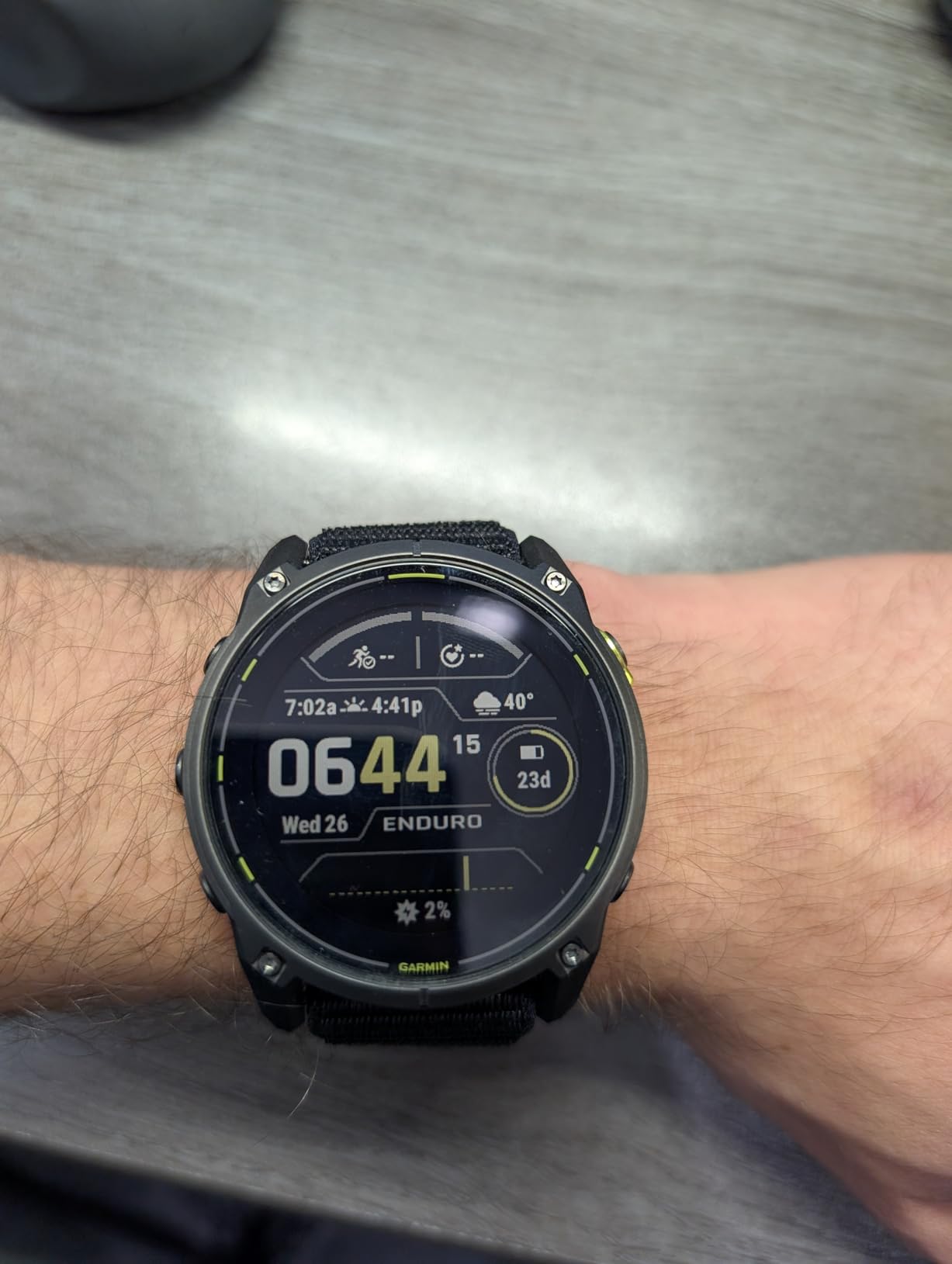
Navigation is a real step up: preloaded TopoActive maps optimised for outdoor use, OS grid reference support, what3words compatibility and dynamic round-trip routing for run, bike or hike. Owners report a built-in flashlight with strobe mode and highly accurate GPS, and one r/Garmin thread is literally titled Enduro 3, arguably Garmin’s best hiking watch, which matches what I saw in the field.
Solar charging works noticeably better here than on earlier Garmin solar models, and the fast USB-C charging takes the watch from 74% to 100% in roughly 20 minutes rather than an overnight wait. That combination — top up on a ridge, run the watch hard all afternoon — is what makes multi-week trips work.
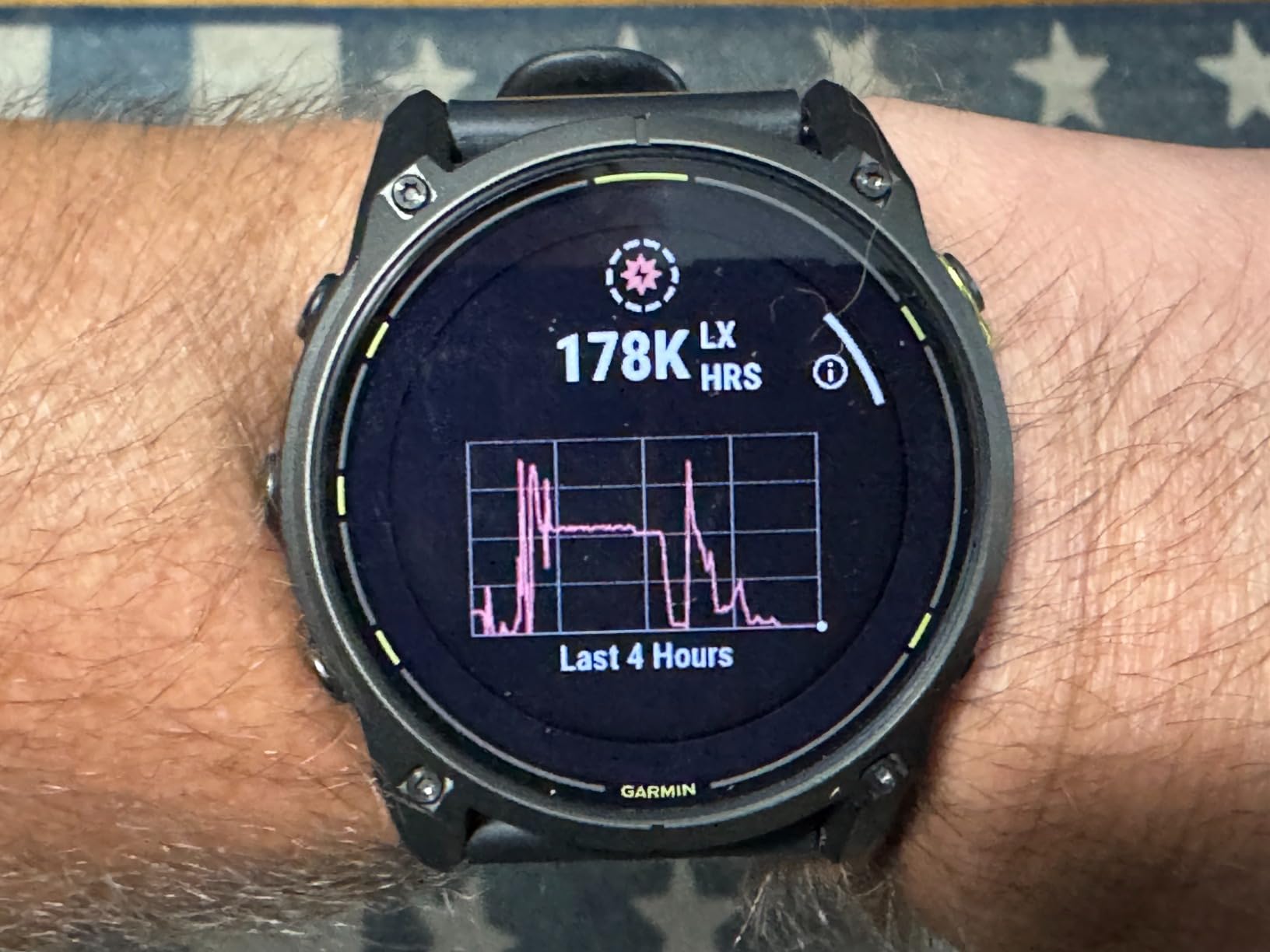
What a 320 hour GPS figure means in practice
On a ten-hour hiking day that is 32 days of continuous navigation, before solar is counted. On a 14-hour day, which is normal for a fastpacker with a heavy pack, it is still 22 days. No other watch we reviewed comes close.
Users upgrading from a Forerunner 945 describe the jump as night and day, which matches the pattern on hiking forums where the Forerunner line is said to under-serve navigation-first hikers. If your trips are measured in weeks rather than weekends, this is the calculation that decides the purchase.
Where the Enduro 3 falls short
The 51 mm footprint is oversized for smaller wrists, though the low weight offsets much of that. The transflective screen is hard to read indoors without a backlight and uses small fonts, which is annoying in a tent at the end of a long day.
There is no microphone or speaker, so no voice features and no wrist calls, and the dive rating went the other way compared with the fēnix line. Continuous Pulse Ox use cuts the battery to roughly 25 days, which matters if you plan to sleep in it for a month. The new interface also required relearning the menus, and watch face customisation options are limited.
12. Garmin Enduro 2 – Best Solar Ultra-Endurance Value
Garmin Enduro™ 2 – Ultraperformance Watch
70 g
51 mm case
1.4 inch at 2000 nit
46 days or 150 hours GPS solar
100 m
Pros
- Up to 46 days in smartwatch mode with solar charging
- 2000 nit transflective display stays readable in strong sun
- AutoSelect with SatIQ balances accuracy and battery
- Superbright flashlight with cadence-matched strobe and red mode
- NextFork guide shows distance to the next trail junction
Cons
- 240 x 240 resolution is low against newer AMOLED models
- Touchscreen input can lag and the interface feels dated
- No speaker or microphone for voice features
- Older generation hardware than the fenix 8 and epix Pro
The Enduro 2 carries the highest average rating of any watch we tested for this roundup, and the reason is simple: the battery and the screen brightness work together. Up to 46 days in smartwatch mode and 150 hours in GPS mode with solar charging, on a 1.4 inch transflective display rated at 2000 nits.
That brightness figure is the differentiator. MIP screens are usually described as dim, and this one is legible in direct sun without a backlight, which is exactly the condition that makes other transflective screens useless on an open ridge.
AutoSelect mode with SatIQ dynamically picks a GPS mode to balance accuracy and battery, so multi-band positioning happens when it helps rather than constantly. The flashlight is twice as bright as the fenix 7X, with a strobe that matches running cadence and a red safety mode, and the NextFork map guide tells you the distance to the next trail intersection, which is a small feature that becomes important on a long navigation day.
Preloaded TopoActive and ski maps, grade-adjusted pace and an automatic rest timer round out a package aimed at ski mountaineering and ultra-distance work. At 70 g in titanium with an UltraFit nylon band, it is light for a 51 mm watch and carries a 100 metre water rating with IP68 protection.
Who should buy the Enduro 2 over the Enduro 3
Buyers who want the endurance and the high-nit screen without the newest-generation cost. On a 10 hour hiking day, 150 hours of GPS is 15 days of navigation, which covers most multi-day trips comfortably. It is the same idea as the Enduro 3, one generation behind.
If your hiking includes ski touring or racing where a bright screen and a strobe torch matter, the feature set still holds up well. The 4.7 rating across owner reviews reflects very few complaints beyond the hardware being older.
Where the Enduro 2 shows its age
The 240 x 240 resolution is low compared with newer AMOLED Garmin models, and the touchscreen can lag with an interface that feels dated next to current fēnix and epix menus. Text and map labels are not as crisp as a colour panel at the same size.
Like the Enduro 3, it has no speaker or microphone, so no voice features or wrist calls, and it is previous-generation hardware. If you are buying new and can stretch, the newer model is the better long-term purchase; this one makes sense when you want the endurance class at a lower outlay.
How to Choose a Garmin Hiking Watch: The Five Decisions That Matter
Ignore the fitness dashboards for a moment. Five decisions decide whether a Garmin watch works for you on a mountain, and we walk through each with the numbers behind it.
Mapping: breadcrumb or full topographic
This is the single decision that separates the Instinct class from the fēnix, epix and Enduro class. An Instinct gives you a breadcrumb trail, waypoints, TracBack, a compass and an altimeter. That is enough for marked trails and out-and-back routes. A fēnix, epix or Enduro gives you preloaded TopoActive maps with Up Ahead prompts and true turn-by-turn navigation, which is what you need for off-trail travel, ridge lines and any route you have to improvise.
Choose full topographic maps if you have ever been off a marked trail and had to decide which drainage to follow. Choose the breadcrumb-only Instinct if your hiking is trail-based and you want battery and durability instead. Uploading a GPX route works across the range, but only the map-capable models will show you a road you are meant to walk on.
Battery math for a three, five or seven day trip
Every battery number in this article is stated with its mode, because a figure without a mode is marketing. Here is the arithmetic that actually matters. On a 10 hour hiking day, the Enduro 3 gives you 32 days of navigation from 320 hours of solar-assisted GPS, the Enduro 2 gives you 15 days from 150 hours, and the fēnix 8 gives you 8 days from 84 hours.
The Forerunner 965 gives you 3 days from 31 hours of GPS, and the Forerunner 970 gives you 2 days from 26 hours. In smartwatch-only terms the numbers invert completely: the Enduro 3 is rated to 90 days, the Enduro 2 to 46, the fēnix 8 to 29, and the Forerunner 965 to 23. A three-day trip is fine on almost anything. A seven-day trip on full-time GPS is not, unless you carry a battery or pick a solar watch. Readers planning 7 to 9 days of wilderness time on a thru-hike should be looking at the Enduro class and reading how solar behaves in forest canopy, where the sun never reaches the lens.
MIP or AMOLED on a mountain
This is the most repeated unanswered question in hiking forums, so here is the direct answer. A transflective MIP display uses sunlight as its backlight, which means it is readable in direct sun and gets dimmer indoors, at night and in a tent. An AMOLED is a lit panel, so it is bright everywhere and drains battery faster, and it needs a touchscreen to be fully useful.
For hiking, MIP wins on battery and sunlight, and it pairs naturally with physical buttons that work with gloves. AMOLED wins on map detail, menu navigation and everyday wear. If your trips are mostly daylight, mostly on trail and mostly on a budget, MIP is the right call. If you want one watch for the office, a colour map and a touch interface, AMOLED is worth the battery cost — and solar variants such as the Instinct 3 AMOLED give you most of the way there.
Case size, weight and wrist fit
Case diameter is the most consequential physical decision, and it is the one most buyers get wrong. At 45 mm you get the Instinct E and Instinct 3 AMOLED. At 47 mm you get the epix Pro, Forerunner 965 and Forerunner 970. At 51 mm you get the fenix 7X Pro, fenix 8, fenix 8 Pro and both Enduro models.
The weight spread is just as wide: 48 g for the Instinct E, 52 g for the Instinct 2 Solar, 53 g for the Instinct 3 AMOLED and Forerunner 965, 63 g for the Enduro 3, 70 g for the epix Pro and Enduro 2, 89 g for the fenix 7X Pro, 90 g for the fenix 8 Pro and 102 g for the 51 mm fenix 8. If you wear a shirt cuff, sleep in your watch or have a wrist under 17 cm, stay at or below 47 mm. If you are a fast-packer, anything over 90 g is dead weight on the wrist.
Is solar charging worth the premium
Sometimes, and the pattern is specific. Solar genuinely pays for itself on trips of a week or more where the watch spends hours in open sun, and on models with a sapphire or Power Glass solar lens rather than a standard coated glass. On the Instinct 2X Solar, the Power Glass lens produces 50% more energy than the standard Instinct 2 solar model.
It is not worth it for a day hiker, where 16 to 18 days of lithium is already far more than you need. And set expectations honestly: owners of solar models consistently report a few percent a day of strong sun rather than a full recharge. Solar buys margin on top of a full charge, not an alternative to charging.
Two more questions come up constantly, so here are short answers. A watch can be paired with a Garmin inReach Mini 2 satellite communicator for two-way messaging and SOS from the wrist, which keeps your wrist GPS watch as the navigation tool and adds the communicator as the safety tool; the fenix 8 Pro in this roundup has inReach built in instead. And no, a watch does not fully replace a handheld GPS device in poor conditions — dense canopy, deep canyon walls and heavy fog can defeat wrist devices, so carry a backup for technical terrain and bad weather.
Garmin Instinct vs Garmin fenix: Which One for Hiking?
The Instinct and the fēnix are the two Garmin lines most people are choosing between, and the honest answer is that they are built for different hikers rather than being good and bad versions of the same watch.
Choose the Instinct if battery, durability and weight come first. Across this roundup the Instinct models run on the order of weeks between charges, are built to MIL-STD-810, weigh 48 to 67 g and sit at the lower end of the range. What you give up is mapping: no full topographic layer, smaller screens and lower resolution.
Choose the fēnix if you navigate from a map. Every fēnix here carries preloaded TopoActive maps with Up Ahead prompts, multi-band GPS with SatIQ, larger 1.4 inch displays and sapphire lenses that survive rock. What you give up is weight and, on the 51 mm models, comfort — 89 to 102 g is a lot of watch to wear for a week.
The crossover point is trip length and terrain type. Under three days on marked trail, the Instinct is the right answer. Over four days with off-trail navigation, the fēnix 7X Pro Sapphire Solar or the Enduro 3 earns its cost. The case to avoid is the 51 mm fēnix if you have a small wrist or sleep in your watch; the 47 mm versions of the same family exist for exactly that reason.
Frequently Asked Questions
Which Garmin watch is best for hikers?
The Garmin Instinct 2X Solar is the best all-round choice for most hikers, with weeks of battery, multi-band GPS, a barometric altimeter, a 3-axis compass and a built-in LED flashlight at 67 g. For trips of five days or longer with off-trail navigation, the Garmin Enduro 3 Solar adds preloaded TopoActive maps and 320 hours of GPS with solar charging. Choose the Instinct line for durability and battery, the fenix and epix lines for topographic maps.
What is the best budget smartwatch for hiking?
The Garmin Instinct 2 Solar and the Garmin Instinct E are the budget answers, both giving you a rugged MIL-STD-810 style build, 100 metre water resistance, a compass and a barometric altimeter, with 16 to 30 days of battery between charges. If you want a colour screen at a similar tier, the Garmin Instinct 3 AMOLED runs up to 18 days in smartwatch mode and weighs 53 g. Budget rugged models trade away topographic maps, which is the real limit rather than the price.
Which Garmin GPS device is best for hiking?
Among Garmin watches, the Enduro 3 Solar leads on battery and mapping, and the fenix 8 Pro is the strongest choice for solo backcountry trips because inReach satellite messaging is built in. A watch is not a full replacement for a dedicated handheld GPS unit: dense canopy, deep canyons and fog can defeat any wrist device, so carry a paper map, a phone in airplane mode or a separate GPS unit for technical terrain.
Can a Garmin watch answer calls from the wrist?
Only some Garmin models can. The fenix 8 51 mm, the fenix 8 Pro and the Forerunner 970 have a built-in speaker and microphone for wrist calls and voice assistant responses, and the fenix 8 models add an off-grid voice command feature that works without a phone. The Instinct, fenix 7X Pro, epix Pro, Enduro and Forerunner 965 models have no speaker or microphone, so you can see notifications but not answer them.
What is the best watch for adventure travel?
For adventure travel that mixes hiking with everyday wear, the Garmin epix Pro (Gen 2) Sapphire 47 mm is the strongest option, combining an always-on AMOLED with a sapphire lens, 100 metre water resistance, preloaded TopoActive maps and a built-in flashlight in a case that fits under a cuff. For multi-week expeditions where weight and battery dominate, the Garmin Enduro 3 Solar at 63 g with 320 hours of GPS is lighter and lasts considerably longer.
Is MIP or AMOLED better for hiking?
A transflective MIP display is powered by ambient light, so it stays readable in direct sun and uses far less battery, and it pairs with physical buttons that work with gloves. An AMOLED is a lit panel that is brighter indoors and at night, shows colour topographic maps in more detail and supports touch navigation, but it drains battery faster. For multi-day backpacking in open sun, MIP is usually the better trade; for everyday wear and map readability, AMOLED is worth the battery cost.
About the Team Behind This Garmin Hiking Roundup
We are a small team of long-distance hikers, a trail runner and two former outdoor instructors who between us have logged thousands of hours on foot with GPS watches on the wrist. We test on real routes in the mountains rather than on a treadmill, and we wear the watches for weeks at a time because a Garmin that feels good on day one can feel heavy by day twelve.
We have also deliberately left out features that hikers do not need. If your priority is vitals, sleep staging and a social feed, a Garmin is probably the wrong tool, and we would rather say so than inflate a list. What we test is navigation reliability under canopy, readability at full sun, how long the battery actually lasts in GPS mode, and whether the buttons still work when your hands are cold and wet.
Where we could not verify something from the data, we have not claimed it. And we will repeat the warning from the top of this page: no wrist device, ours included, is a substitute for a paper map and a backup plan.
The Best Garmin Watches for Hiking, Summarised
The best Garmin watches for hiking in 2026 start with the Garmin Instinct 2X Solar, our top pick, because it solves the problem most hikers actually have: staying powered and oriented for weeks without thinking about a charger, with multi-band GPS, a flashlight and a MIL-STD-810 build at 67 g. Buy the Garmin Enduro 3 Solar instead if your trips run five days or longer and you want preloaded topographic maps and 320 hours of GPS with solar charging.
Everything else slots around those two. The fenix 7X Pro Sapphire Solar is the premium all-rounder with maps and a sapphire solar lens, the Instinct 3 AMOLED is the best value with a colour screen and 18-day battery, the epix Pro 47 mm is the one to wear to work, and the Forerunner 965 is the lightest watch in this roundup that still maps in full colour. If you hike solo and off-grid, the fenix 8 Pro is the only one in this list that can message a satellite without a second device.
Before you buy, do the honest test: look back at your last three hikes and ask whether you ever opened a digital map. If the answer is no, an Instinct will serve you better than any fēnix. If the answer is yes, the extra money goes on mapping and you will not regret it.