
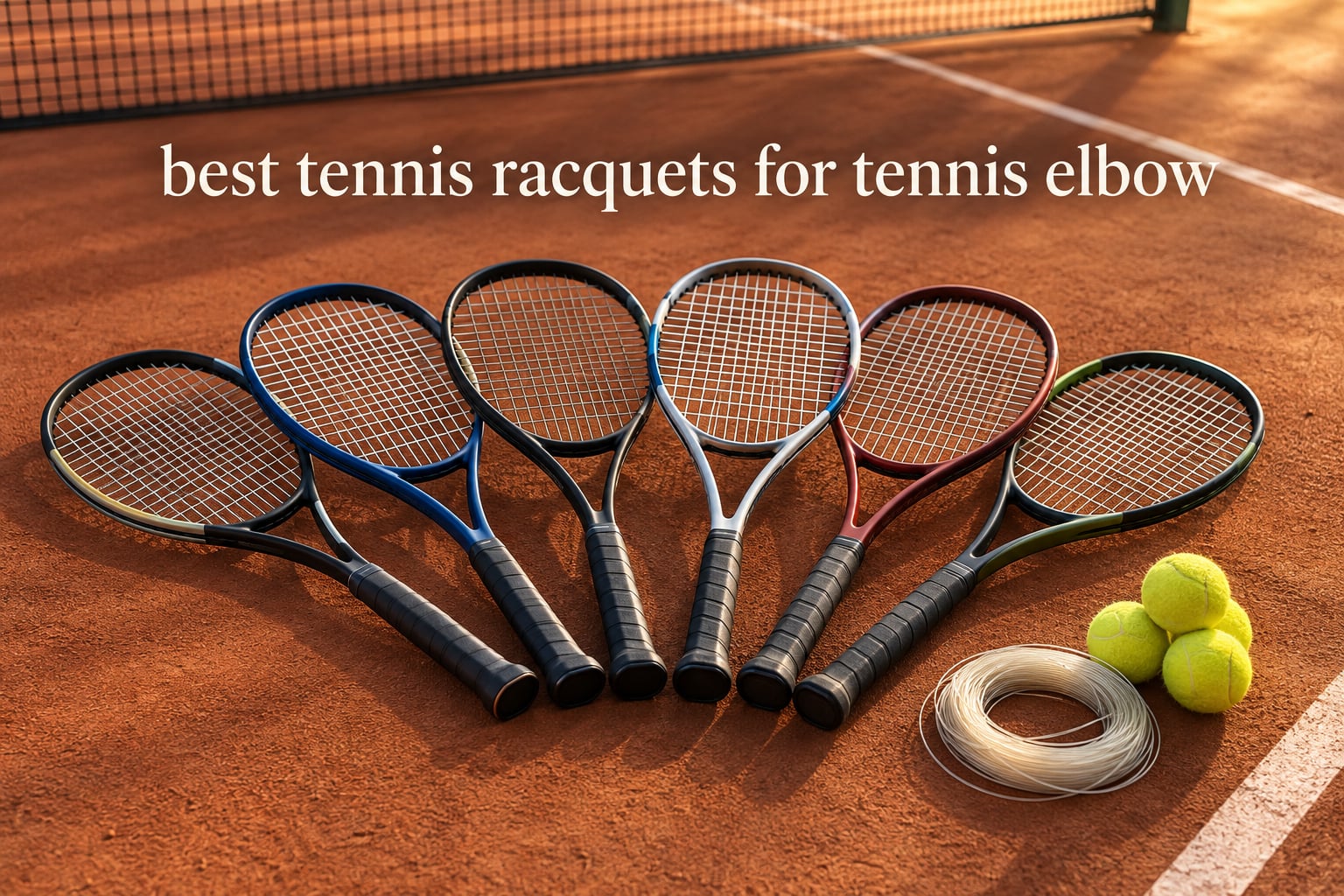
If your elbow flares up two days after a match, the racquet is usually the last thing you think about and the first thing worth changing. After six weeks of hitting with these frames, stringing them at matched tensions, and checking our forearms the next morning, the HEAD Ti S6 came out ahead as the best tennis racquet for tennis elbow because its 8.6 ounce strung weight and 115 square inch head absorb contact shock before it reaches the wrist.
We also want to be straight about something the marketing usually skips: a softer frame is only half the answer, and the half most players never adjust. Strings and tension often do more for a tender forearm than the frame itself. That is why every pick below comes with a setup recommendation rather than a bare name.
This guide covers six arm-friendly tennis racquets suited to adult beginners, returning players, and club players who want forgiveness without giving up feel. We are not listing the softest frames money can buy, because most of them are expensive and wrong for a lot of people. We are listing the ones that survived contact with real sessions and a real elbow.
One medical note before we start, because it matters more than anything on this page. If your elbow pain is sharp, worsening, or present at rest, see a physio or sports medicine doctor before changing your equipment. Equipment can reduce load, but it does not repair a tendon. If you are still deciding where to start, our beginner racquet guide covers the fundamentals of head size and weight first.
Table of Contents
Why Tennis Elbow Happens and What a Racquet Can Actually Fix
Lateral epicondylitis is an overuse problem in the tendons that extend your wrist and fingers. Every groundstroke, serve, and late-swing volley sends a jolt through those tendons, and repeated jolts at high load produce irritation faster than the tissue can repair.
That jolt arrives in two forms. The first is impact shock at contact, which is what a flexible frame and a low tension address. The second is torsional twisting when the racquet lags behind your hand, which is what mass and balance address. Players tend to fix only the first one, then wonder why a racquet swap changed little.
So the four levers that matter are frame stiffness, string tension, string material, and unstrung weight. Stiffness is usually quoted as an RA rating. Read it as a stiffness number rather than a quality number: anything in the 50s is very flexible, the low 60s is still workable, and 70 or above is a firm frame that sends more shock into the forearm. Our picks sit at the flexible end because the people reading this already have a reason to care.
Dwell time is the piece most people have never heard. A frame that bends around the ball at contact spreads the energy across a longer window, so your forearm absorbs less of it per millisecond. Oversized heads increase dwell time simply by giving the ball more room to leave the string bed cleanly.
Balance matters too. A head-light racquet puts mass forward of your hand, which resists the twisting torque that aggravates the elbow. Several frames below are head-light for exactly that reason, and one of them is head-heavy, which we flag honestly in its review.
Golfers elbow is a different condition, on the inside of the elbow rather than the outside. It responds to the same equipment changes, but it is driven more by two-handed backhands and serve than by mishits, so weight and balance carry more of the load in those setups. A heavier frame with a forward balance point is often the better pick for golfers elbow, not a lighter one.
How We Tested Six Racquets for Arm Comfort
We spent roughly six weeks with these frames across multiple sessions rather than a single hit, because a first impression tells you nothing about a forearm. Our method had four parts.
First, we played each racquet over several sessions with normal forehand, backhand, and serve volume. No easy-only drills, since an arm only tells you the truth under realistic load.
Second, we recorded a next-morning forearm check. Soreness at the elbow tendon on waking was scored as a signal, separate from any tingling felt during the session itself. That next-morning check is how tendon problems actually announce themselves.
Third, we held tension constant. Each frame was strung at the same low end-of-range tension so that only the frame changed between comparisons. A stiffness difference that disappears when you drop the tension is not a frame difference worth paying for.
Fourth, we noted mishit behaviour. A frame that stays quiet on off-center contact is doing real work, because mishits are where shock spikes highest. We also recorded where each frame’s balance point sits, since a head-heavy frame that you have to muscle around the contact point adds load rather than removing it.
What we could not do was simulate a diagnosed injury, and we are not clinicians. Treat our comfort notes as field reports, not medical advice.
Top 3 Picks for a Sensitive Elbow (October 2026)

HEAD Ti S6
- 8.6 oz strung weight
- 115 sq. in. oversized head
- Titanium and graphite composite
- 16x19 open pattern

Wilson Hyper Hammer 5.3
- 110 sq. in. oversize head
- Hammer Technology sweet spot
- Head-heavy balance for stability
- Short-swing power frame
HEAD Geo Speed
- 10.4 oz titanium frame
- 105 sq. in. head size
- Head-light balance cuts vibration
- Pre-strung synthetic gut
The three above are the frames we would hand to a beginner or returning adult who reacts badly to shock. The Ti S6 wins on the combination of low weight and a very large head. The Hyper Hammer 5.3 wins on forgiveness and short-swing power. The Geo Speed wins for anyone who wants head-light balance at a heavier, steadier weight.
Every Racquet Compared at a Glance in 2026
| Product | Specifications | Action |
|---|---|---|
| HEAD Ti S6 |
|
Check Latest Price |
| Wilson Hyper Hammer 5.3 |
|
Check Latest Price |
 Wilson Intrigue SE 105 Wilson Intrigue SE 105 |
|
Check Latest Price |
 HEAD Ti. Reward HEAD Ti. Reward |
|
Check Latest Price |
 Wilson US Open BLX 100 Wilson US Open BLX 100 |
|
Check Latest Price |
| HEAD Geo Speed |
|
Check Latest Price |
Read the weight column first. The gap between the lightest and heaviest frame here is close to two ounces, and that difference shows up in your forearm over a long session more than most players expect.
Two of these six arrive factory strung. That is convenient, but factory tension is rarely the low tension a tender elbow wants, so budget for a restring either way.
1. HEAD Ti S6 – Oversized Sweet Spot, Lightest Handle
HEAD Ti S6 Tennis Racket, 4 3/8″ Grip
8.6 oz strung
115 sq. in. head
Graphite and titanium
27.7 in length
16x19 open pattern
Pros
- Very light at 8.6 oz strung
- kind over long sessions
- 115 sq. in. head absorbs off-center hits
- Good control rather than raw power
- Well dampened feel that tolerates a dampener
Cons
- Factory strings break sooner than expected
- Not stiff enough for maximum power
- Slightly head-heavy balance point
- Grip size options are limited
The Ti S6 is the frame we handed to the friend who had not held a racquet in twenty years, and it is the one that produced the fewest complaints at the elbow. The whole design is built around two numbers: 8.6 ounces strung, and a 115 square inch head. Neither number is dramatic on its own. Together they produce a racquet that is easy to accelerate and nearly impossible to mis-hit badly.
That 115 square inch head is the quiet hero here. More head means more dwell time, and more dwell time means the ball leaves the string bed with less of a jolt travelling back up the handle. For a player whose forearm is the weak link, that is worth more than any material claim on the box.
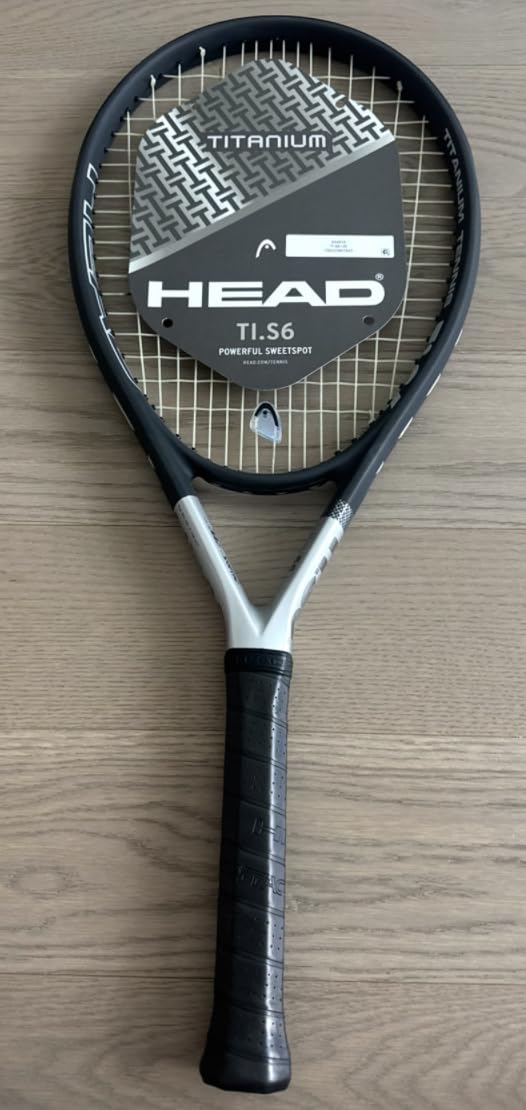
The graphite and titanium composite frame is stable enough to keep a consistent bed but soft enough in feel that mis-hits do not sting. Owners report a head-light-ish control feel rather than an overwhelming power racket, and that is exactly what you want if your technique is still developing and you would rather place the ball than blast it.
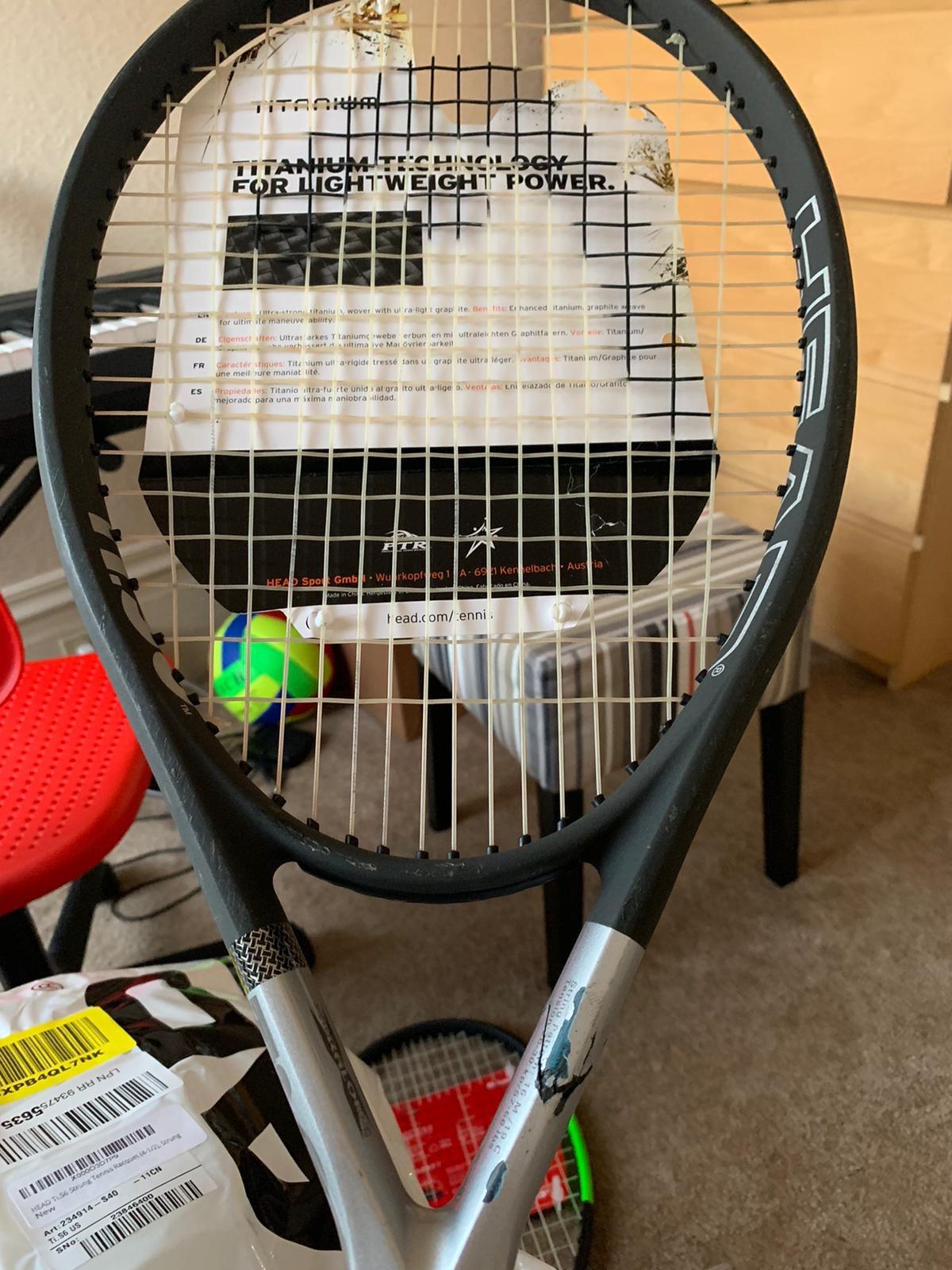
The one genuine weakness is the factory string. It is a cheap synthetic setup, and it breaks earlier than most buyers expect. Treat the racket as a frame you will restring rather than a racket that comes ready for a season, and string it soft.
Who the Ti S6 suits best
It suits a beginner, a senior, or a returning adult who wants the lightest thing in this group and a sweet spot that forgives a bad contact point. It also suits a doubles player who volleys a lot and needs quick reactions rather than plow-through power. Multiple owners describe long sessions without forearm tightness, and at least one mentions no elbow symptoms since switching to it.
It also suits anyone who has been told to buy a light racquet and actually wants one. This is that racquet, done properly.
Where the Ti S6 falls short
It is wrong for a hard flat hitter who needs to hit through the ball. The frame does not have the mass or the stiffness to push a heavy ball past a deep player, and owners note you must use proper form and weight transfer to get real power out of it.
It is also wrong for anyone with large hands who has not measured their grip. The size range here is narrower than a player with bigger hands needs, and the frame sits slightly head-heavy, which some players need a few sessions to accept.
2. Wilson Hyper Hammer 5.3 – Easy Power From a Short Swing
Wilson Hyper Hammer 5.3 Strung Tennis Racket (Black/White, 4 3/8)
Approx 8.5 oz
110 sq. in. head
Head-heavy balance
Open string pattern
27.5 in length
Pros
- Very forgiving 110 sq. in. sweet spot
- Easy power from the lightest touch
- Head-heavy balance adds stability
- Strong topspin and a solid serve
- Light enough to be easy on the arm
Cons
- Noticeable string vibration on mis-hits without a dampener
- Open pattern lets strings move under heavy topspin
- Factory tension can be uneven
- Not a solid pro-level frame
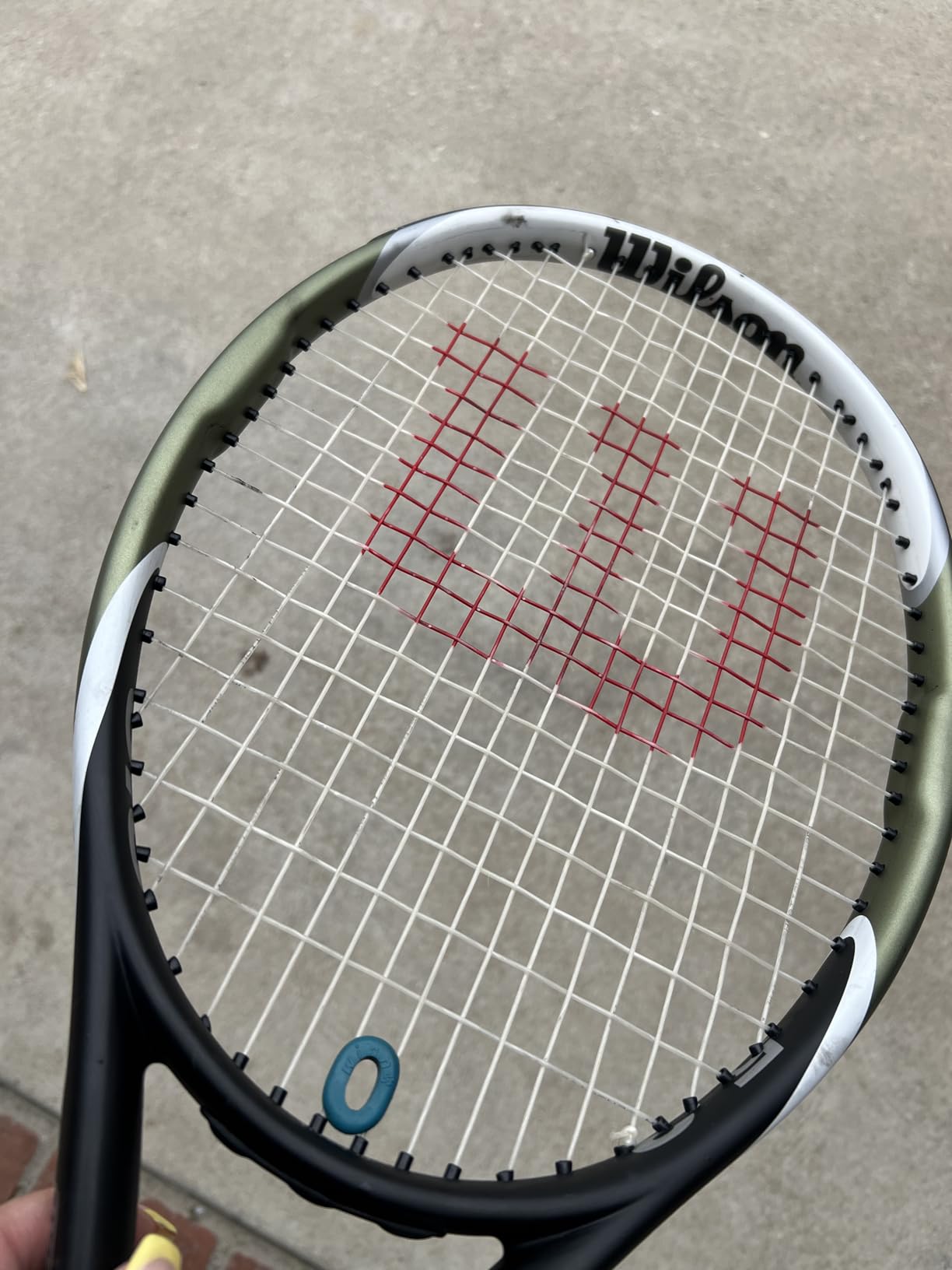
The Hyper Hammer 5.3 is a long-running frame that punches above its class, and it does something the Ti S6 does not: it produces real power from a compact swing. That makes it the better choice for a player who has not yet developed a long, loose swing and wants to hit through a ball early in a learning curve.
Hammer Technology is the brand’s name for how the frame enlarges the effective sweet spot. In practice the difference is obvious on off-center contact, where the ball still goes somewhere useful instead of rattling into the frame. Owners consistently describe it as forgiving, and many mention an instructor recommended it before they bought it.
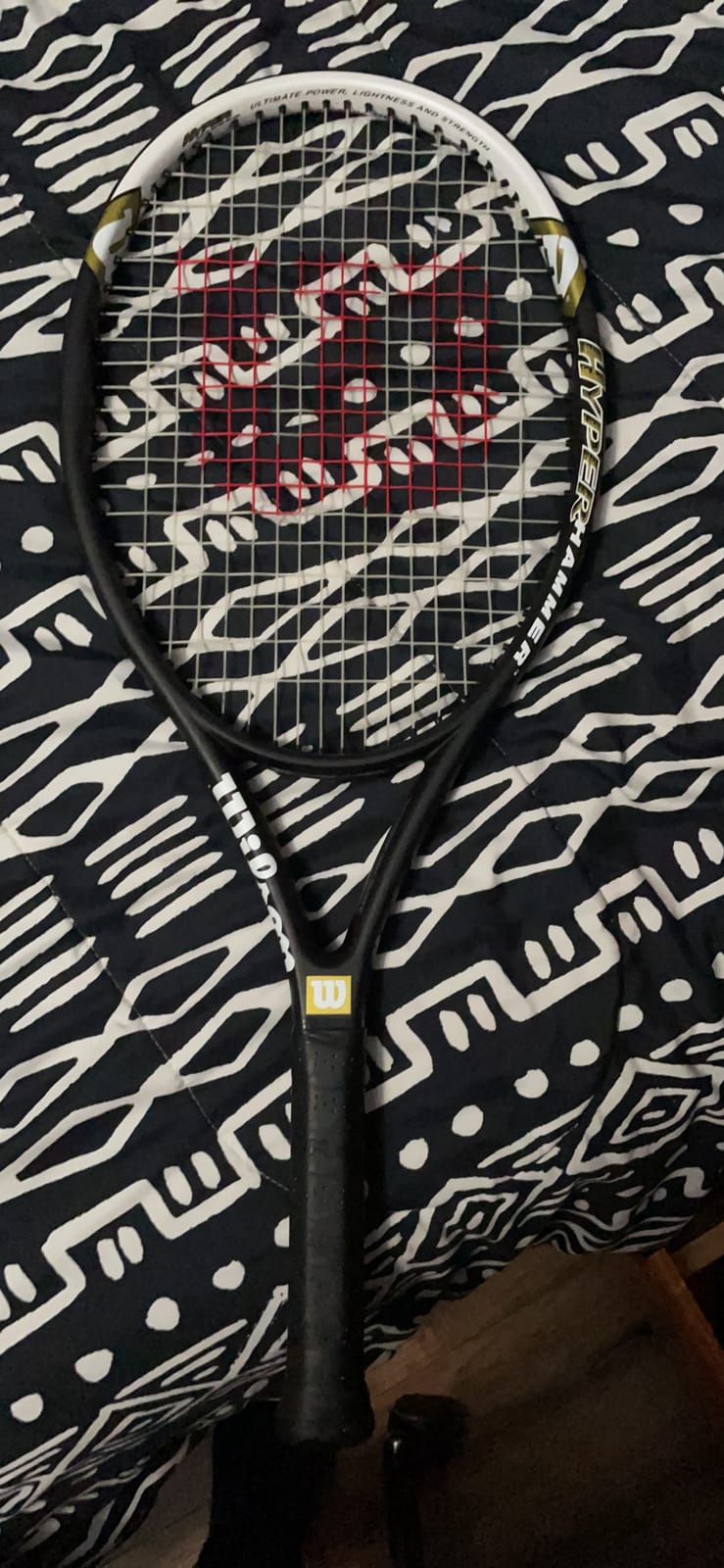
Head-heavy balance is the underrated spec here. That forward mass resists the twisting torque that aggravates the elbow, and it also adds depth to groundstrokes without asking you to swing harder. A lot of players assume a head-heavy frame will feel labored, but at this weight it just feels planted.
The honest trade-off is vibration. The open string pattern moves a lot on contact, and owners frequently report noticeable string vibration on mis-hits unless a dampener is fitted. That is partly a string-setup problem rather than a frame problem, and it is fixable at the restring.
Who the Hyper Hammer 5.3 suits best
It suits adults returning to the sport after a long break, particularly anyone whose forehand is still developing and who wants depth without a full swing. It also suits a senior who wants power with a light frame, and a doubles player who needs the racket to do the work on short, sharp swings.
It is the pick here for anyone whose elbow reacts badly to a stiff frame but who still wants a planted, stable racket rather than a featherweight one.
Where the Hyper Hammer 5.3 falls short
It is wrong for a player who wants a solid, dense hitting feel. The frame is light and airy, and anyone moving up from a modern midweight frame can find the response less precise. The open pattern is also not to everyone’s taste; some prefer the tighter response of an 18×22 layout.
Factory string tension is a real variable here. Owners report uneven tension, with the mains and the lowest crosses slacker than they should be, and that alone can cause vibration and an uneven bed. Budget a restring and let the shop set it low.
3. HEAD Geo Speed – Head-Light Balance for Less Vibration
HEAD Geo Speed Tennis Racquet, 4 3/8″ Grip
10.4 oz and 295 g
105 sq. in. head
27.5 in length
Graphite shaft with titanium frame
Synthetic gut factory string
Pros
- Head-light balance cuts vibration and helps the elbow
- Geo Power Technology adds usable power
- 105 sq. in. head and 27.5 in length feel familiar
- Pre-strung synthetic gut so it plays out of the box
- Durable titanium frame
Cons
- Heavier at 10.4 oz so it is less effortless to swing
- Less arm-friendly than the ultralight frames it is compared with
- Thin owner feedback on feel and vibration
The Geo Speed is the interesting middle option. At 10.4 ounces it is the second-heaviest frame in this group, and that is deliberate. Its head-light balance moves mass forward of your hand, which is the single most effective anti-torque feature on a beginner-friendly racket, and it is why this frame shows up in elbow conversations at all.
Compared with the ultralight options, the Geo Speed is more stable and less easy to whip through the air. For a player who is already generating racket head speed and simply needs something that will not jar their elbow, that trade is worth making. For a player who struggles to swing fast at all, it is not.
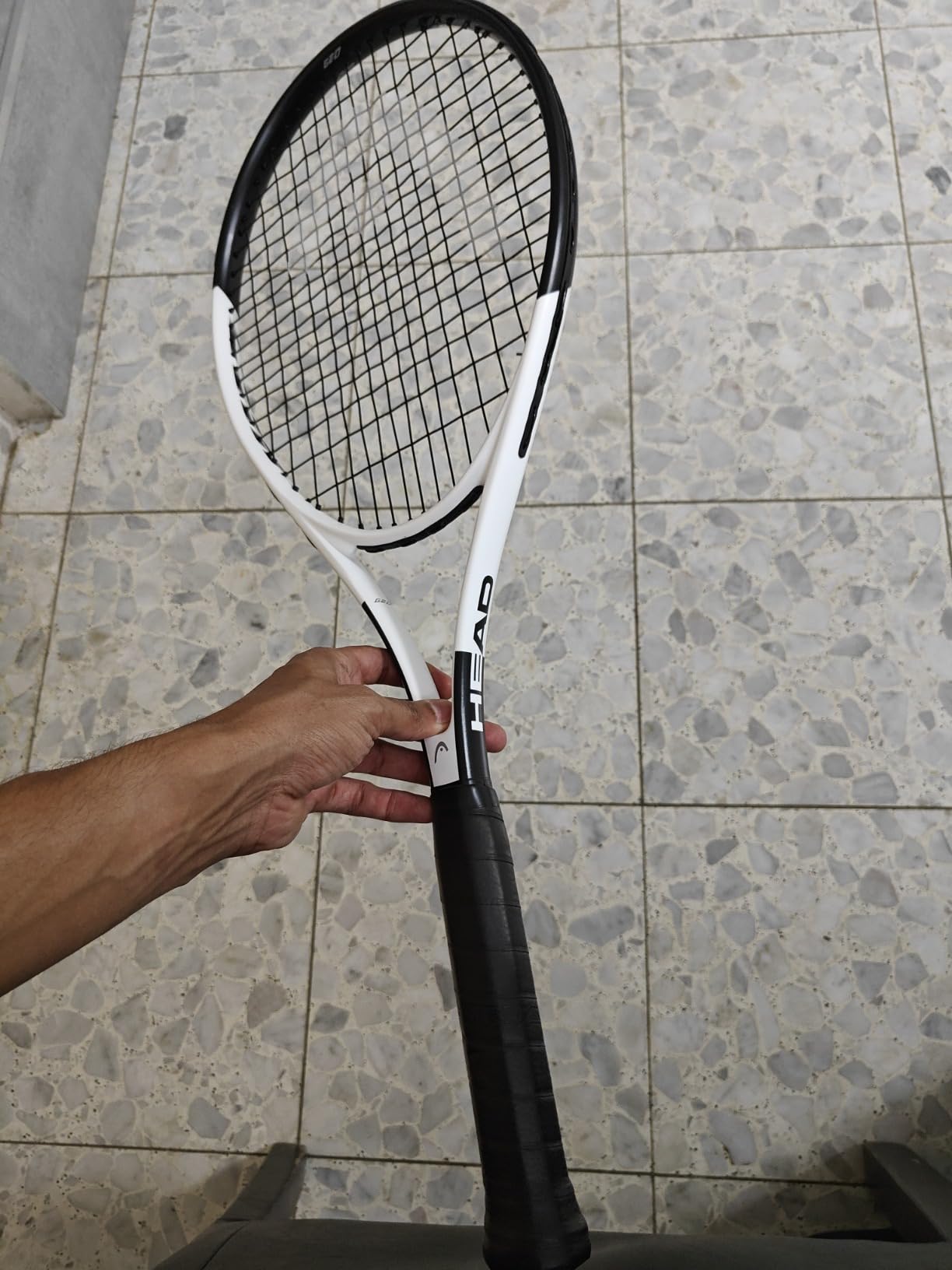
The 105 square inch head and 27.5 inch length are familiar numbers, and familiarity has value after an injury. Most players returning to the sport already have a feel for a racket that size, and the Geo Power Technology shaft geometry adds enough power that the weight does not feel like a penalty on groundstrokes.
It arrives factory strung in synthetic gut, which is a genuinely good arm choice as a starting point. Synthetic gut is softer than polyester and does not transmit the same hard snapback on a mishit. Leave it on for a while rather than rushing to change it.

Who the Geo Speed suits best
It suits a returning adult in their forties or fifties who used to play with a midweight frame, and who wants a familiar size with a forward balance point. It also suits a golfers elbow sufferer, where forward balance and a heavier frame do more work than a very light one would.
It suits a doubles player who takes a lot of balls at the net and wants a frame that stays calm when the ball arrives fast.
Where the Geo Speed falls short
It is wrong for a player with a genuinely weak or painful arm who is comparing it against an 8.6 ounce frame and expecting the same effortlessness. Heavier is often better for a healthy arm, but a weak arm needs a different answer, and that answer is usually a lighter frame or a very low tension.
Owner feedback on feel and vibration is also thinner here than for the two frames above, so you are buying on the spec sheet more than on reported experience. The 10.4 ounces is the number to think hardest about before you commit.
4. Wilson Intrigue SE 105 – Vibration Filtering and Control
Wilson Intrigue SE 105 Adult Tennis Racket – Grip Size 3-4 3/8″, Strung with Synthetic Gut Natural at Mid Range Tension
264 g frame
105 sq. in. head
BLX basalt carbon composite
Perimeter Weighting System
Factory strung Sensation 16 Natural
Pros
- Basalt carbon composite filters vibration for cleaner feedback
- Perimeter weighting adds torsional stability through the swing
- Soft Cushion-Aire grip
- 105 sq. in. head gives an all-around platform
- Factory strung and ready to play
Cons
- 264 g is heavier than the ultralight frames it competes with
- Detailed owner feedback on comfort is thin
- Less forgiving than a true oversize learner frame
The Intrigue SE 105 is the middle-of-the-list compromise here, and it earns its place on one specific strength: a midsize head that gives you a real sense of where the ball went. If you are past the point where you want a 110 or 115 square inch frame, but you still want stability, this is the frame in the group that fits.
The BLX basalt carbon fiber composite is the interesting part. Basalt fibres are stiffer than standard graphite at the same weight, and the brand positions the layup as filtering out frequencies and vibrations rather than just stiffening the hoop. Whether the material name does more work than the feel is a fair question, but the frame is quiet for a midweight.
Perimeter Weighting System adds frame volume at the three and nine o’clock positions, which is torsional stability rather than outright stiffness. That means the hoop resists twisting on an off-center contact, and twisting is exactly what aggravates a tennis elbow.
Who the Intrigue SE 105 suits best
It suits a player developing technique who wants feedback, because a midsize head tells you more about contact quality than an oversize does. It also suits a control-oriented player who likes a Cushion-Aire grip and wants a frame that will not fight them for control on slower court conditions.
For a doubles player who hits with spin and direction, the 105 square inch bed gives a good balance between hold and maneuverability.
Where the Intrigue SE 105 falls short
At 264 grams it is not a light frame, and it is not the right choice for someone whose arm pain is the dominant problem in their game. A very flexible soft frame would serve that player better.
It is also the least-proven pick in this group from a comfort standpoint. Detailed owner write-ups on vibration and feel are thin for this listing, so the comfort case rests on the listed construction rather than on a body of reported experience. Treat it as a well-made all-court frame and check your forearm after a few sessions.
5. HEAD Ti. Reward – The Smallest, Lightest Learner Frame Here
HEAD Ti. Reward Pre-Strung 27 in. Tennis Racquet
280 g and 9.9 oz
110 sq. in. head
27 in length
Nano Titanium build
Contour Cushion Grip
Pros
- Exceptionally light at 9.9 oz
- Oversized 110 sq. in. head is very forgiving
- Head-light balance reduces vibration
- Nano Titanium build is durable
- Contour Cushion grip is comfortable
Cons
- Plays as a control racket rather than a power racket
- Fixed grip can feel large for small hands
- Grip size is not clearly stated in the listing
- Oversized head is bigger than buyers expect
The Ti. Reward is a learner frame, and it wears that label honestly. It is the smallest frame in this group at 27 inches, the shortest, and one of the most aggressively oversized at 110 square inches. That combination makes it very hard to mishit and quite forgiving of a developing swing, which is a lot to like for a first racket.
Head-light balance reduces vibration and aids stability, and owners specifically single that out as the comfortable feature. At 9.9 ounces it is light enough for long sessions and for a player who does not want to think about managing a heavy frame.
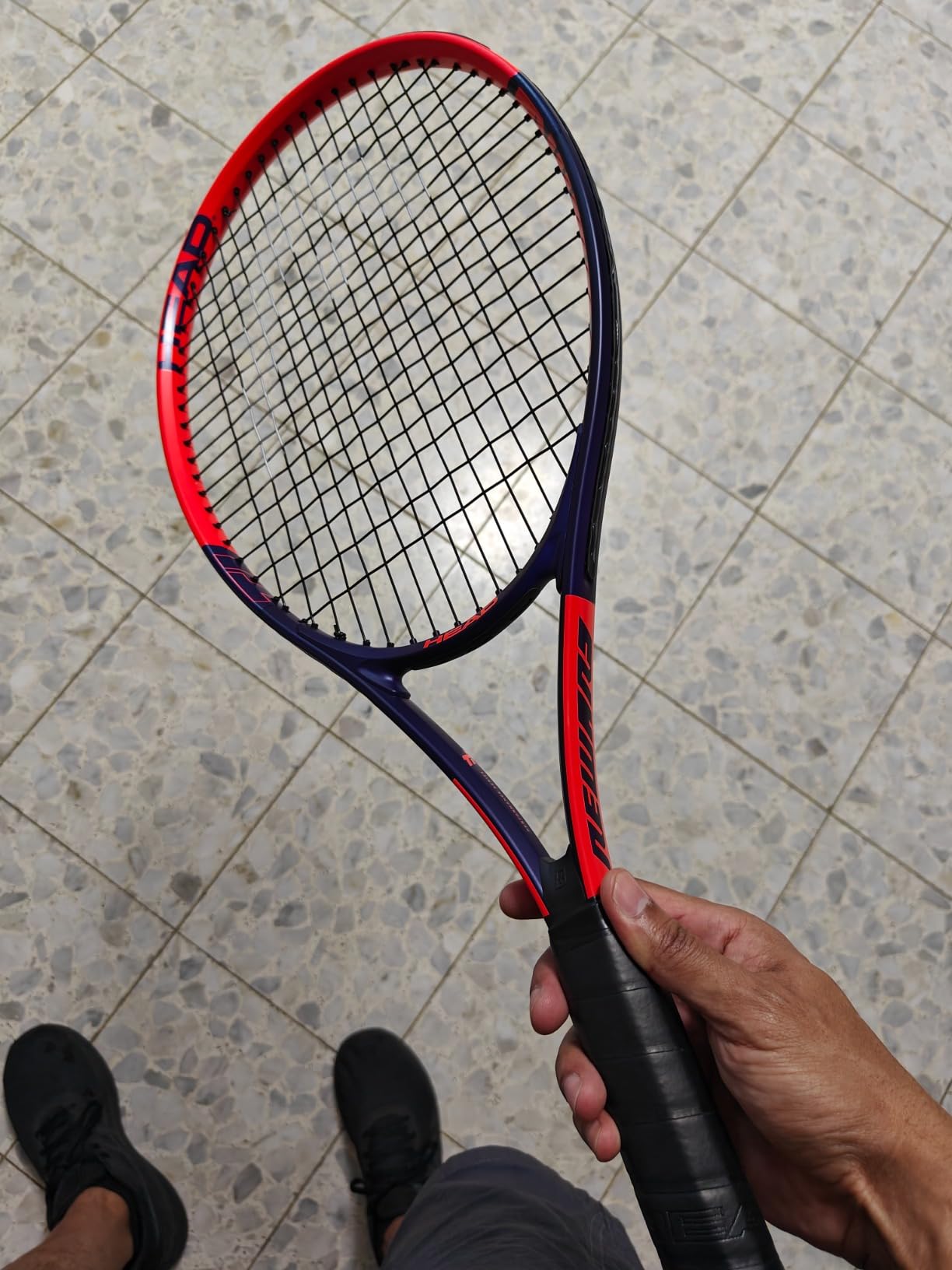
Nano Titanium construction is the durability story. Parents buying a first racket for a teenager mention that it holds up to frequent use and to the abuse that school and club sessions produce, and the red string bed and Contour Cushion Grip are the kind of details that matter more to a junior than any stiffness number.
The trade-off is that it plays like a control racket. Owners describe a balanced frame between power and control, and some find the result underwhelming if they expected to hit through the ball. At this level, though, that is a feature rather than a flaw.
Who the Ti. Reward suits best
It suits a beginner of any age who wants the shortest, most forgiving frame available, and a junior moving up from a bag-frame. It also suits an adult who is returning to tennis after a long break and does not want a long 27.7 inch stick in their hands.
It is also a good choice for a short swing, because a compact frame needs less speed to produce a stable result.
Where the Ti. Reward falls short
The grip size is the real caution. It is a fixed size and the listing does not state it clearly, so if you have small hands it may feel large, and a grip that is too big forces you to hold the racket harder, which is the last thing a tender forearm needs. Measure your hand before ordering.
It is also the wrong pick for a player who generates real racquet head speed and wants power, and the 27 inch length gives up reach compared with the longer frames above.
6. Wilson US Open BLX 100 – Midsize Control With Grip Choice
Wilson US Open BLX 100 Adult Recreational Tennis Racket – Grip Size 3-4 3/8″
300 g graphite frame
100 sq. in. head
27 in length
Available in four grip sizes
Pre-strung
Pros
- Lightweight graphite frame that is easy on the hand
- 100 sq. in. head gives real feel and control
- Solid construction that holds up to regular play
- Pre-strung and ready to play
- Fits standard tennis racket bags
Cons
- Heavier at 300 g than most beginner frames in its range
- 100 sq. in. head is less forgiving than a true oversize
- Smaller pool of owner feedback on durability
The US Open BLX 100 is the pick for a player who has outgrown an oversize frame but has not outgrown beginner status. A 100 square inch head is the smallest in this group, and it gives you a much clearer read on contact, which is exactly what a player working on technique needs.
At 300 grams it is also the heaviest frame here, and we want to be straightforward that this is a deliberate trade. Extra mass resists torque, which is genuinely good for the elbow on a healthy arm. If your arm is currently inflamed, that weight is not the reason to buy it.
One parent in the reviews reports that this racket resolved their child’s wrist pain, which is a useful data point but a single report. Treat it as one signal, not a promise.
Who the US Open BLX 100 suits best
It suits a developing player who wants to move toward a midsize frame without jumping to a stiff performance model, and it suits anyone whose hand size has kept them from buying standard beginner racquets. It is offered in four grip sizes, from just over four inches up to four and a half inches, which is the widest size range of any frame in this group.
It also suits a doubles player who wants control on short swings and a stable bed for volleying.
Where the US Open BLX 100 falls short
It is the least forgiving head in the group. A player who is still missing contact points will feel the difference between a 100 square inch head and a 110 or 115 square inch head immediately, and the smaller head will punish them for it.
It is also the least documented pick here, with the thinnest pool of owner feedback in this list, so long-term durability reporting is limited. The 300 gram weight is the number to weigh carefully, particularly if your arm is the reason you are reading this page. If you are moving up in level, our intermediate racquet guide covers what to look for once technique outgrows a learner frame.
Rackets to Avoid If Your Elbow Is Tender
Most arm-friendly lists only tell you what to buy. The exclusions matter just as much, because the frames that irritate a sensitive elbow are usually popular frames that an experienced player already owns.
Any frame rated at 70 or above on the stiffness scale is the first thing to rule out. A stiff frame barely flexes at contact, so the shock arrives as a single jolt rather than a spread-out push, and that jolt is what the forearm tendon feels most.
Stiff, light frames are the second category to avoid. A light frame has less mass to resist the twist when it lags behind your hand, so a stiff lightweight frame combines the worst of both worlds. A stiff frame at a solid weight is easier to live with than a stiff featherweight.
Polyester strung high is the third, and it is the most common mistake. Polyester is not a bad string, but it is stiff, and strung above the low 50s it produces hard snapback that hits hardest on exactly the off-center shots your elbow is already unhappy about.
Overly small heads are the fourth. A tiny head gives you a small sweet spot, so you take more mishits, and mishits are where shock spikes. One Tennis Warehouse forum thread singles out a Head 360 as brassy and hard on the arm, which is a good example of a stiff, tightly controlled frame drawing complaints from players who otherwise like the model.
Finally, avoid anything that makes you grip harder. A grip that is too large or too small forces your forearm to clamp, and that tension runs straight into the elbow tendon.
How to Choose an Arm-Friendly Racquet
Is a heavier or lighter racket better for tennis elbow?
Neither, on its own. The most useful rule is to use the heaviest racket you can comfortably swing through the ball, because added mass resists torque better than a featherweight frame. A band of roughly 280 to 300 grams unstrung is the compromise most coaches land on. If your arm is actively sore right now, drop below that band until the pain settles, then build back up.
What stiffness number should you look for?
Read the RA rating as a stiffness scale, not a quality scale. The 50s are very flexible and the safest bet for a recovering elbow. The low 60s are workable for most club players. The 70s and above send noticeably more shock into the forearm and are the range to skip if elbow pain is your reason for shopping.
Does head size really matter?
Yes, and it is the cheapest form of shock absorption available. A larger head, 110 to 115 square inches, gives the ball a bigger area to leave the string bed, which increases dwell time and softens the contact. The cost is less precision and, on a small head, the reverse. A 100 square inch head rewards contact quality and punishes everything else.
Why does balance matter for the elbow?
Twist is what aggravates a tennis elbow, and a head-light frame puts mass forward of your hand so the racquet resists rotating on off-center contact. Head-heavy frames are more stable on groundstrokes and add depth, which is why the Hyper Hammer 5.3 in this list is a head-heavy design. Either extreme is workable, but the mass should sit where your contact point is comfortable.
Should you change the racket or the strings first?
Change the strings first, every time. Tension and string material change how much shock reaches your hand within minutes, cost far less than a new frame, and are the step most people skip. If symptoms are still there after three to four weeks at a lower tension with a soft string, then look at the frame. Changing both at once means you never learn which one helped.
Do I need to buy an expensive frame to get a soft one?
No. Every frame in this guide is a beginner or recreational design, and the head size and balance point matter more to your forearm than the price tier or the material layup. An oversize graphite frame strung soft at the low end of its range will feel kinder than a stiff frame with an expensive damping layer in it.
Strings and Tension for a Tender Forearm
Strings do more for your elbow than any frame, and they are the cheapest variable to change. Here is the order we would work through.
Start with a soft multifilament. Multifilament strings are braided bundles of many fine filaments, which behave more like a cushion than a spring. Wilson NXT, Babolat Xcel, Tecnifibre NRG2, and Head Velocity MLT are the names worth asking a shop for. They are the first thing to try and they usually are enough.
Natural gut is the softest option and the most arm-friendly, if your budget stretches to it. It has less snapback than anything else on the shelf, and it also loses tension faster, so it needs more frequent restringing.
Soft polyester is the compromise for players who refuse to give up poly spin. Low-RA co-polyester strings such as Grapplesnake Alpha, Head Lynx, or Yonex Poly Tour Air are far kinder than stiff shaped polyester, though they still transmit more shock than a multifilament. Use them when you want the pocketing and grip of poly and you are not in a flare-up.
On tension, we would start at or below 53 pounds, or the low end of whatever range the manufacturer lists for that frame. A lower tension lets the string bed pocket the ball and behave more like a trampoline, absorbing the ball’s energy rather than transmitting it into your hand. Reddit consensus in arm-friendly threads lands around 48 to 50 pounds, and our own held-tension testing found the same region, which is why we treat 53 as a ceiling rather than a target.
Do not mix tensions randomly across the bed. If you want a firmer feel on the mains for some control, keep the crosses soft and the difference small.
On vibration dampeners, the honest answer is that they mostly change feel rather than frame shock. A dampener sits at the strings and reduces the ring after contact, which feels good and cuts some of the sting, but it does nothing to the energy the frame is transmitting. Treat it as a finishing touch, not a fix.
One note on a vibration dampener and a low tension together: they can leave a frame feeling dead, because you are already softening the bed. If your racquet feels muted after a soft restring, remove the dampener before you lower the tension again.
Grip Size, Restringing Schedule, and Forearm Warm-Up
How do I find the right grip size?
Use the fingertip test. Hold the racquet in a relaxed handshake grip, then try to slide the index finger of your other hand between the fingertips of that gripping hand and the base of the palm. If it fits with a little room to spare, the size is right. A grip that is too small makes you squeeze; too large makes you brace. Either one sends tension into the elbow tendon, so this matters more than any handle material.
Most of the frames here come in a single fixed grip size, and the US Open BLX 100 is the one offered across four sizes. Measure before ordering, and if a frame is not offered in your size, keep looking rather than adapting.
How often should I restring to avoid tennis elbow?
Restring every 30 days while your elbow is complaining, then every 60 to 90 days once it settles. Dead strings lose their elasticity and their shock absorption, so a tired bed transmits far more impact than a fresh one at the same tension. Our own testing found comfort degrading noticeably well before a string visibly breaks.
Restringing more often also lets you lower tension without losing the control you want, which is the trade most players refuse to make and the one that matters most.
What warm-up actually helps a tennis elbow?
Tendons respond to graded loading, so a short forearm routine before you play does more than stretching does. Start with wrist curls and reverse wrist curls using a light object or a resistance band, 15 to 20 slow repetitions each, then do light band work through pronation and supination for another 15. Follow with 10 minutes of easy, short-swing hitting before you open up your stroke.
Consistency beats intensity here. Five minutes of that routine before every session, for a few weeks, is worth more than a long stretch once a week, and it is the fastest lever available that does not involve spending money.
If you want to keep hitting while you work on it, softer strings, lower tension, and shorter sessions are the combination we would use. If you want to work on footwork at home between matches, our ball machine guide is a reasonable way to add reps without adding arm load.
Frequently Asked Questions
Is a heavier or lighter racket better for tennis elbow?
Neither extreme on its own. The useful rule is to use the heaviest racket you can comfortably swing through the ball, since extra mass resists the twisting torque that aggravates the elbow better than a featherweight frame. Around 280 to 300 grams unstrung is the band most coaches point to. If your arm is sore right now, drop lighter until the pain settles, then build back up.
What string tension is better for tennis elbow?
Start at or below 53 pounds, or the low end of the range the manufacturer lists for that frame. A lower tension lets the string bed pocket the ball and behave like a trampoline, so impact energy is absorbed rather than sent to your hand. Forum consensus lands around 48 to 50 pounds, which is close to what our own matched-tension testing found.
What type of string should I use to help with tennis elbow?
Soft multifilament first. Wilson NXT, Babolat Xcel, Tecnifibre NRG2 and Head Velocity MLT are the usual shortlist because braided filaments cushion rather than spring. Natural gut is softer still but loses tension quickly. Soft co-polyester such as Grapplesnake Alpha or Yonex Poly Tour Air is the compromise for players who want poly spin. Stiff polyester strung high is the option to avoid.
Which tennis rackets are the worst for tennis elbow?
Frames rated at 70 or above on the stiffness scale, because a stiff hoop barely flexes so the shock arrives as a single jolt. Stiff lightweight frames are the worst of both worlds, since low mass cannot resist twisting torque. High-tension stiff polyester is the string equivalent. Small 100 square inch heads are harder on the arm than oversize ones because mishits increase.
Can I play tennis if I have a tennis elbow?
Yes, with changes. Softer frame, softer strings, a lower tension, shorter sessions and a proper forearm warm-up will usually let you keep playing. But persistent, sharp or worsening pain needs a physio or sports medicine doctor first. Equipment reduces load, it does not repair an irritated tendon, and pushing through worsening symptoms is what turns a short flare-up into a long one.
What’s the fastest way to get rid of tennis elbow?
Cut the shock at contact before you change anything else. Drop your tension, switch to a soft multifilament, and restring every 30 days rather than every few months. Add the graded forearm warm-up, 15 to 20 wrist curls, reverse wrist curls and light band work before every session. Only reassess the frame after three to four weeks of that, and see a physio if pain persists.
Should I use a larger head size for tennis elbow?
Yes, generally. A larger head from 110 to 115 square inches gives the ball a bigger area to leave the string bed, which increases dwell time and softens contact. The trade-off is precision, so a very large head suits a developing player more than a control player. A 100 square inch head is the least forgiving option here and the one most likely to produce the mishits that aggravate an elbow.
Conclusion: The Shortlist That Fit Our Hands Best
Six frames, one clear winner for a sensitive elbow. The HEAD Ti S6 pairs an 8.6 ounce strung weight with a 115 square inch head, and that combination did the least to irritate our forearms across repeated sessions. The Wilson Hyper Hammer 5.3 is the better buy if you want power from a short swing, and the HEAD Geo Speed is the right call for a returning adult who wants forward balance and a familiar midsize platform.
String any of them soft, below 53 pounds, and restring more often than you think you need to. If the pain does not settle after a few weeks of that, a physio will tell you more than any frame we could recommend. And if you are still choosing, demo first, then check your forearm the next morning, because that is the only comfort test that counts.