
Floorstanding speakers, also called tower speakers, are the front left and front right channels of a home theater and the highest-impact speakers you can buy for one. A matched pair of towers sets the scale of every film you watch, carries the music score and most of the effects, and needs no stand and no separate subwoofer to sound complete at moderate volume.
Our picks this year: the Polk Audio T50 takes the overall slot for dependable, expandable value, the Klipsch R-610F wins for rooms that need high output from a modest receiver, and the Polk Audio Monitor XT60 is the smartest tower to grow with if you plan a full 5.1 build later.
The one rule that matters more than any spec sheet: buy the front three speakers and a subwoofer first, then add surrounds and height speakers when budget allows. Most home theater forums converge on that advice, and it protects you from the classic mistake of buying nine cheap boxes that never sound balanced.
We spent weeks comparing the eight towers and systems on this list, judging them the way a movie room actually uses them rather than the way a music magazine does. That means dialogue intelligibility at low night-time volume, how much output a tower can hit before it strains, how well it behaves off-axis when someone sits at the end of the couch, how easily a given receiver drives it, and whether it can be topped with height speakers for Dolby Atmos. We also weighed cabinet size against room size, which is where most buyers go wrong.
Every pick on this list has published sensitivity, impedance and driver details, so you can match it to the receiver you already own before you buy. The full comparison is below, and if you would rather start smaller, our guide to the best bookshelf speakers covers the case for a smaller cabinet in a tighter room.
Table of Contents
How We Picked Floorstanding Speakers for Movie Use
We scored each tower on five criteria specific to film viewing, not just general hi-fi quality.
Dialogue intelligibility. Voices sit in the midrange, so we favoured designs where a dedicated midrange driver is not asked to double as a woofer. That is the single biggest factor in how a movie sounds.
Low-level dynamic range. Most people watch at night at reduced volume. Speakers that fall apart when you turn them down, or that lose the plot when a whisper is quiet, fail this test.
Off-axis behaviour. In a wide room, the outer seats hear the towers at an angle. Wide dispersion or a horn-loaded tweeter keeps the soundstage stable for everyone.
Amplifier load. We matched impedance and sensitivity to real receiver output. A low-sensitivity, low-impedance tower on an entry receiver is where excitement turns into distortion.
Atmos and system path. We favoured towers that can accept a matching height module or a matched center channel, because a home theater is a set, not a pair.
Before you choose a cabinet, it also helps to think about the room around it. Our guide to reclining sofas for home theaters covers seating distance, which determines how far you should sit from the front stage.
Top 3 Floorstanding Speakers for Home Theater in 2026
The three towers below are the ones we would put at the front of a mixed movie and music system right now.

Polk Audio T50 Tower
- 1-inch tweeter with 6.5-inch driver
- Dual 6.5-inch bass radiators
- 150W power handling
- Timbre-matched Polk system path
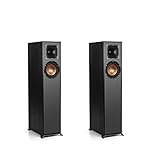
Klipsch R-610F Pair
- Sold as a matched pair
- 94 dB sensitivity
- 45 Hz to 21 kHz response
- 8-ohm impedance
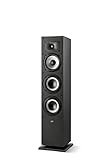
Polk Monitor XT60
- Hi-Res Audio certified
- Dolby Atmos and DTS:X compatible
- Two 6.5-inch passive radiators
- Only 20 pounds each
All 8 Picks at a Glance in 2026
Every tower below, sorted by award. Key features come straight from the manufacturer specifications for each model.
| Product | Specifications | Action |
|---|---|---|
| Polk Audio T50 |
|
Check Latest Price |
 Rockville TM150B Rockville TM150B |
|
Check Latest Price |
| Klipsch R-610F Pair |
|
Check Latest Price |
| Polk Audio Monitor XT60 |
|
Check Latest Price |
 ELAC Debut 2.0 F5.2 ELAC Debut 2.0 F5.2 |
|
Check Latest Price |
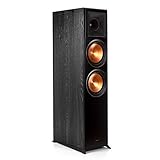 Klipsch RP-8000F Klipsch RP-8000F |
|
Check Latest Price |
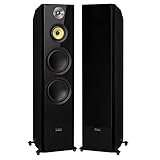 Fluance Signature HiFi Fluance Signature HiFi |
|
Check Latest Price |
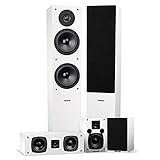 Fluance Elite 5.0 System Fluance Elite 5.0 System |
|
Check Latest Price |
1. Polk Audio T50 – Best Floorstanding Speakers for Home Theater Overall
Polk Audio T50 Home Theater Floor Standing Tower Speaker 150W, Black
1 inch tweeter
6.5 inch Dynamic Balance driver
Dual 6.5 inch bass radiators
150W power handling
6 ohm
Pros
- Dual 6.5-inch bass radiators add real low-end weight for a passive tower
- Expands into a full 5.1 Polk system with T15 surrounds and T30 center
- Balanced room-filling sound for a first home theater
- Simple speaker-wire setup works with most receivers
- Five year parts and labor warranty
Cons
- Sold as a single speaker so a front pair needs two purchases
- Modest 150W power handling limits maximum volume
- No built-in height or Dolby Atmos drivers
The T50 is the tower we recommend first to almost anyone building a home theater, and the reason is boring and reliable: it does the fundamentals well and it does not ask you to spend again immediately. A 1-inch tweeter sits above a 6.5-inch Dynamic Balance driver, and behind that sit two 6.5-inch passive bass radiators that do the low-end work without a powered amplifier.
At 20.4 pounds per cabinet and 36.25 inches tall, it is a slim, light tower that two people can move without a dolly. That matters more than people expect, because a 60-pound speaker ends up in a corner it was never meant to sit in, and a badly placed tower undoes the best of the design.
Where it earns the top slot is integration. The T50 is timbre-matched to the rest of the Polk home theater range, so the T30 center and T15 surrounds blend rather than compete with it. Forum regulars on r/hometheater repeatedly recommend buying the front three and a sub first, and this is the easiest tower to grow from that starting point.
One thing to plan around: the listing is a single speaker, so a front stage is two purchases. Factor that in before you build a budget, because it is the most common surprise in this price range.
How the T50 handles dialogue and low volumes
The dedicated 1-inch tweeter above a single midrange driver is the right shape for speech. Voices do not share cone with bass, so when an explosion fires in a film the dialogue does not get masked by the woofer working hard underneath it.
Because the bass radiators are passive rather than powered, output at low listening levels stays even. That is exactly the situation where a home theater is judged, since most people watch at night well below the levels a shop demo plays.
Where the T50 is the wrong choice
If you want real theater output for a large room, 150W power handling is the limit to plan around. It plays loud enough for a normal living room setup with a competent receiver, but it is not the tower to push to reference levels in a big dedicated theater.
It also carries no Atmos drivers, so a 5.1.2 build means adding a height module on top later. That is a normal path rather than a problem, just budget for it.
2. Rockville TM150B – Best Self-Powered All-in-One Tower
Rockville TM150B Black Powered Home Theater Tower Speakers Dual 10″ Subs
Dual 10 inch subwoofers
Six full-range drivers
Two silk dome tweeters
250W RMS and 1000W peak
Bluetooth and USB
Pros
- Self-powered so no separate amplifier or receiver is needed
- Built-in dual 10-inch subwoofers deliver bass without a separate subwoofer
- Bluetooth USB SD card and FM radio playback built in
- Karaoke mic inputs with echo control for party use
- Very high peak power figure for the size
Cons
- Lower fidelity than dedicated passive towers
- Heavy 57-pound cabinets make placement awkward
- EQ presets and LCD controls cannot replace room calibration
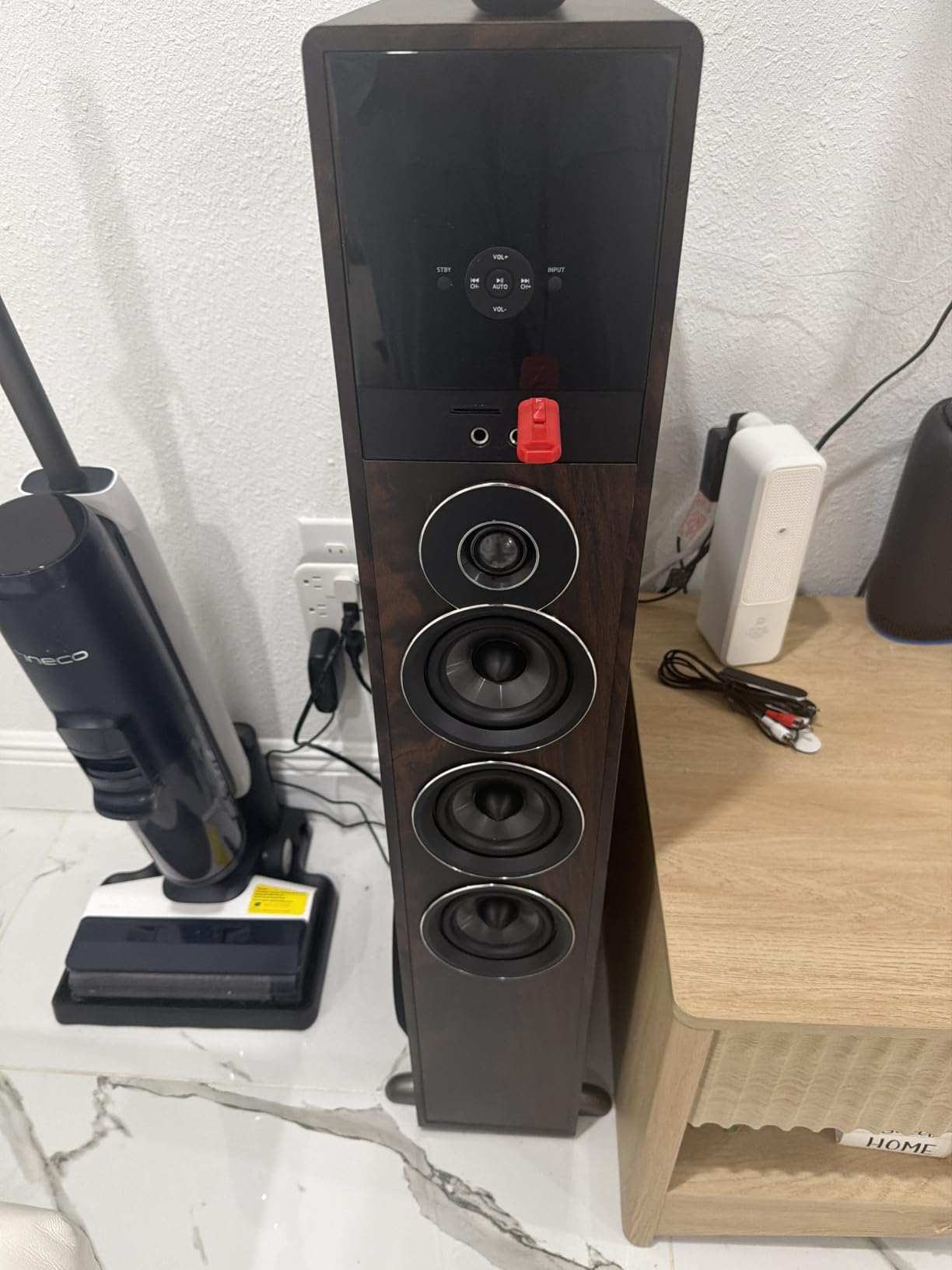
The TM150B takes a completely different approach. It is a self-powered tower with two 10-inch subwoofers built into the base, six full-range drivers, two silk dome tweeters and a glass LCD panel on the front, and it plays from Bluetooth, USB, an SD card or FM radio without any receiver at all.
For a room where running speaker wire back from a rack is impractical, or for a secondary space that needs to be loud without any system around it, that self-contained design is genuinely useful. The built-in bass means a full evening of films with a single piece of furniture in the corner.
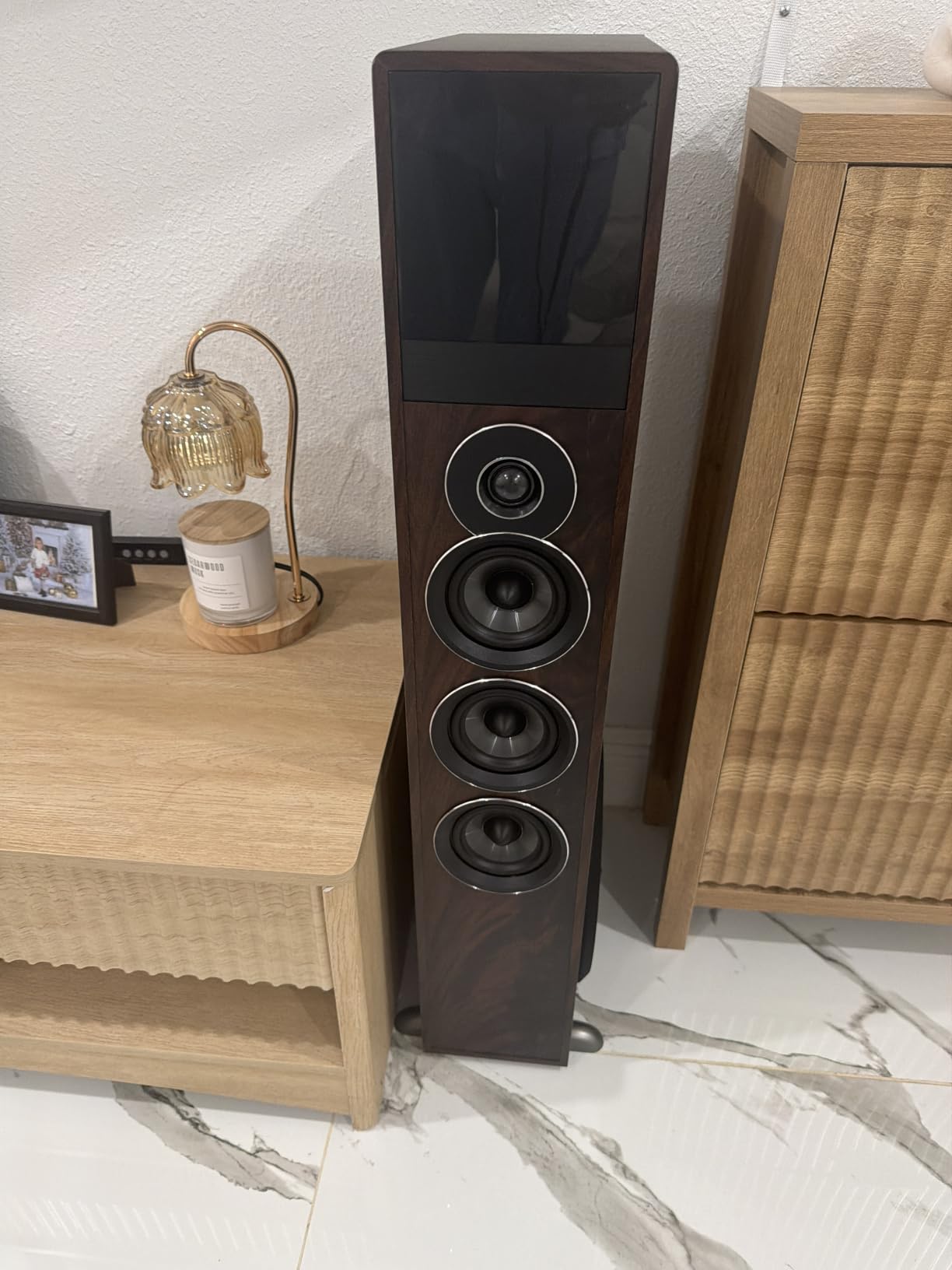
Where it falls short is refinement. With an average rating of 4.1 and a meaningful share of one-star reviews, the pattern is consistent: owners like the convenience and the sheer output, while listeners who compare it against a proper passive tower find the midrange less clean. The eight EQ presets and the on-screen display cannot replicate what a room correction system does with a real measurement microphone.
The cabinets weigh 57.4 pounds each. That is heavy enough that placement becomes a two-person job and a wall position is effectively fixed once you settle it.
Who benefits most from a self-powered tower
If you rent, live in an apartment with no in-wall cable route, or want a loud stereo system for a garage, basement or outdoor-adjacent room with no receiver nearby, self-powered is the shortest path to working sound. It also serves as a plug-and-play backup for a main system.
The two 10-inch drivers mean a separate subwoofer is optional for most film content, which on a tight budget is more money saved than any receiver upgrade would deliver.
What you give up compared with a passive tower
You give up the tonal matching that a passive system gives you. There is no way to add a matched center channel from this range later, so dialogue timbre and the front stage come from a different design philosophy.
You also give up headroom control. A built-in amplifier and preset EQ cannot be matched to a room, so in a reflective living room the balance is fixed at purchase rather than adjusted after you move the furniture.
3. Klipsch R-610F – Best Matched Pair for Louder Rooms
Klipsch Reference R-610F Floorstanding Speaker, Black, Pair
1 inch aluminum LTS horn tweeter
6.5 inch copper spun woofer
45 Hz to 21 kHz response
94 dB sensitivity
8 ohm
Pros
- Sold as a matched pair so no second purchase is needed
- 94 dB sensitivity produces high output from modest amplifier power
- Horn-loaded tweeter stays clear and present for dialogue
- Extension to roughly 45 Hz without a subwoofer
- Five year limited warranty from Klipsch
Cons
- 85W continuous power handling is modest under heavy driving
- Included plastic foot screws are low quality
- Horn-loaded treble is polarizing and may need tone adjustment
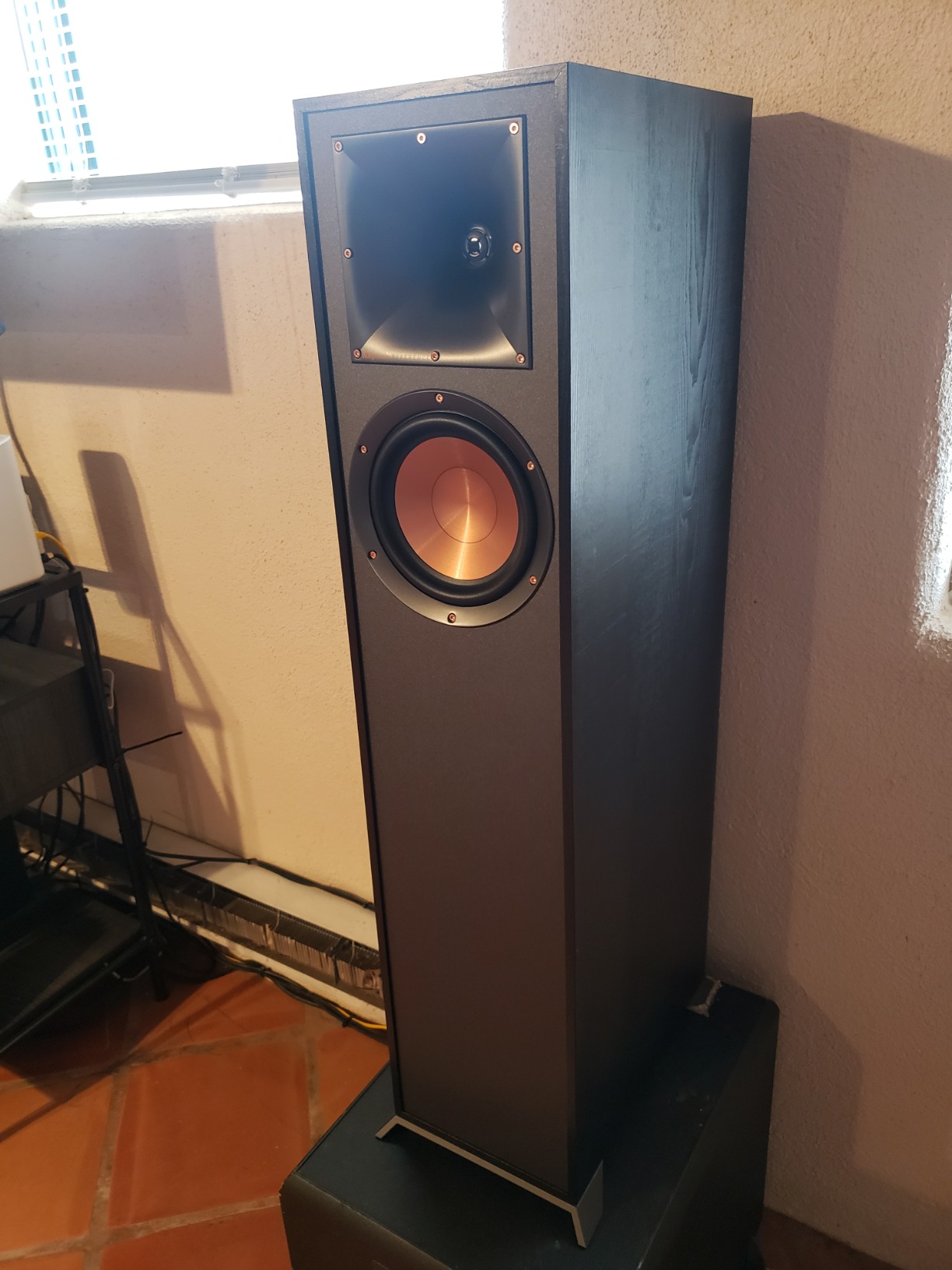
The R-610F arrives as a matched pair, which removes the single most annoying step in this category. The driver layout is a 1-inch aluminum LTS tweeter in a 90 by 90 degree Square Tractrix horn above a 6.5-inch copper spun-metal Dynamic Balance woofer, and the pair carries a 45 Hz to 21 kHz response with 94 dB sensitivity at 8 ohms.
That sensitivity figure is the number to care about if your receiver is not the strongest link in the system. At 94 dB, this is among the most efficient towers on the list, and it is why the pair is our pick for anyone who wants a genuinely loud front stage without a serious external amplifier. BudgetAudiophile threads regularly name Klipsch for exactly this reason.
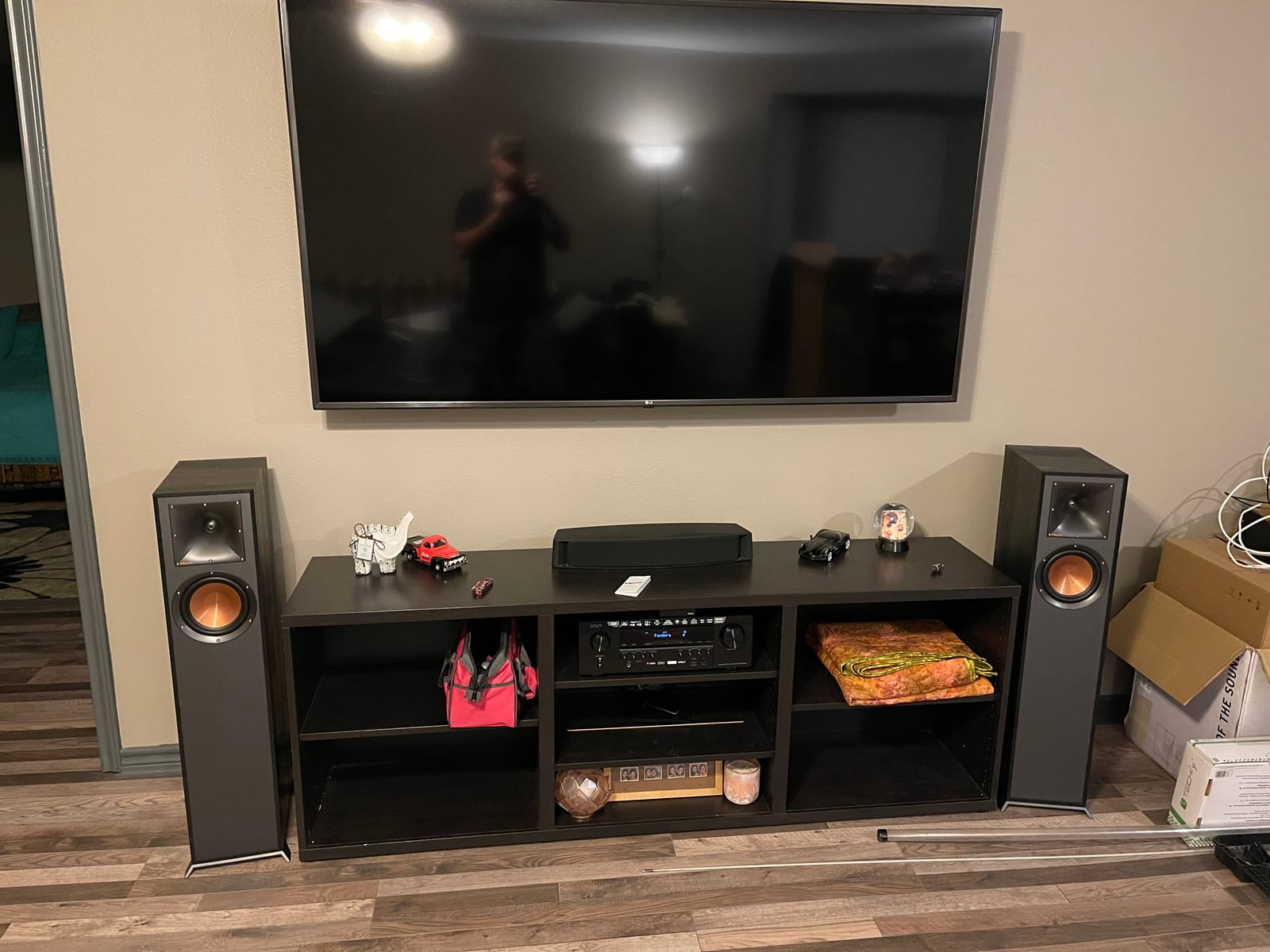
The horn tweeter is the part people argue about. Klipsch horns are famously polarizing: measured on-axis the directivity is controlled and dialogue clarity goes up, especially in a treated room, but some listeners find the same character tiring after a long session at high volume. The fix is a gentle treble cut in receiver menu, which every current receiver offers.
Reviewers also note the cabinets are substantial at 90.2 pounds per speaker, so treat the R-610F as a permanent placement rather than something to shuffle between rooms.
Why 94 dB sensitivity matters in a home theater
Sensitivity is how much output a speaker produces for a given amplifier power. Every 3 dB of sensitivity roughly halves the power needed for the same loudness, so a high-sensitivity tower reaches film-level volume on an entry receiver while a low-sensitivity tower demands a bigger amplifier.
That matters most for action films with wide dynamic range. The R-610F can play those peaks without the receiver straining, which is where less efficient designs start to compress and sound harsh.
Where the R-610F is the wrong choice
Power handling is 85W continuous and 340W peak, which is modest for a tower being pushed hard for long sessions. In a very large room, or for listeners who want reference levels, it runs out of headroom sooner than a dual 8-inch design.
The horn signature is also a real preference, not an upgrade. If you are sensitive to bright treble, test before committing, or choose a soft-dome tower such as the ELAC listed later in this roundup.
4. Polk Audio Monitor XT60 – Best Tower to Grow Into a Full System
Polk Audio Monitor XT60 Home Theater Tower Speaker (Single, Midnight Black)
1 inch tweeter
6.5 inch Dynamically Balanced woofer
Two 6.5 inch passive radiators
200W maximum output
8 ohm
Pros
- Two passive radiators give solid bass from a slim cabinet
- Hi-Res Audio certified and compatible with Dolby Atmos Auro 3D and DTS:X
- Timbre-matched across the whole Monitor XT range
- Rubber feet suit both carpet and hardwood
- Only 20 pounds per speaker
Cons
- Sold as a single speaker so a stereo pair needs two purchases
- No height drivers built in and the MXT90 module is needed for overhead effects
- 200W maximum output is modest against larger towers
The Monitor XT60 is the tower to buy when you already know a home theater is where this is going. It shares the slim, light design language of the T50 but sits in the Monitor XT range, which is built as a system: towers, bookshelf, center, height module and subwoofer all voiced to match.
Each cabinet has a 1-inch tweeter, a 6.5-inch Dynamically Balanced woofer and two 6.5-inch passive radiators, all at 8 ohms with 200W maximum output. At 20 pounds and 16.4 inches tall, it is the easiest tower on this list to place and to move when you are experimenting with position.
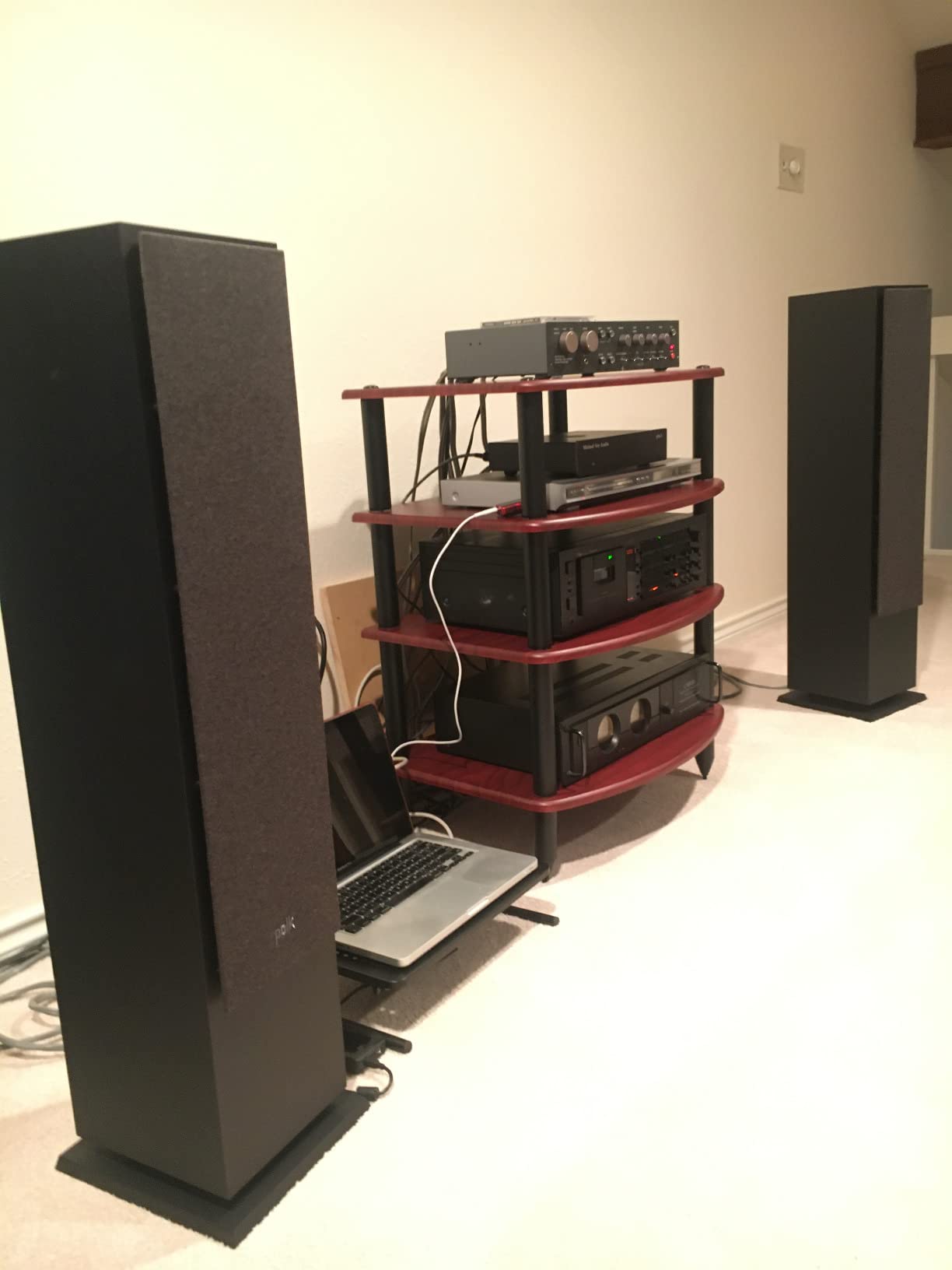
Reviewers consistently point to the smooth midrange and the room-filling bass from the twin radiators as the reasons they keep the XT60 in a mixed system. The single-speaker packaging is the most-cited drawback, and it is the same caveat as the T50: a front stage is two units.
Compatibility is broader than the specification sheet first suggests. It is Hi-Res Audio certified and works with Dolby Atmos, Auro 3D and DTS:X decoding, which means adding the MXT90 height module later creates a working 5.1.2 system from the same family.
When the Monitor XT system makes more sense than a pair of towers
If your eventual goal is 5.1 or 5.1.2, buying into a range rather than a standalone model is the difference between a matched front stage and a compromise. The centre channel is the speaker most people get wrong, and a matched one removes the tonal seam that sits exactly where dialogue lives.
Forum advice in r/hometheater is consistent on this: buy the front three and a subwoofer first, then add surrounds. The XT60 is the tower that grows with that plan rather than locking you out of it.
Where the XT60 falls short
The 200W ceiling is the practical limit. For a large dedicated theater you want headroom for reference-level action sequences, and a dual 8-inch tower gives you more before the limits of the design are reached.
It is also sold as a single speaker. If you are only after music on a small system, two towers plus a subwoofer may cost more than the same budget spent on bookshelf speakers, which is the contrarian case covered in the buying guide.
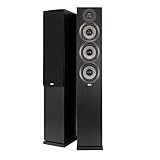
5. ELAC Debut 2.0 F5.2 – Best Neutral Tower for Movies and Music
ELAC Debut 2.0 F5.2 Floorstanding Speaker, Black (Each) – 1” Cloth Dome Tweeter & Triple 5.25” Aramid Fiber Woofers – 3-Way Bass Reflex – Up to 35,000 Hz Response
1 inch cloth dome tweeter
Three 5.25 inch aramid woofers
Up to 35,000 Hz response
6 ohm
140W maximum output
Pros
- Neutral accurate tuning suits critical music listening
- Soft cloth dome tweeter is fatigue-free over long sessions
- Three aramid-fiber woofers give fast clean mid and bass
- Thick internally braced MDF cabinet reduces vibration
- Works well with modest amplification
Cons
- Limited low-end output so a subwoofer is effectively required
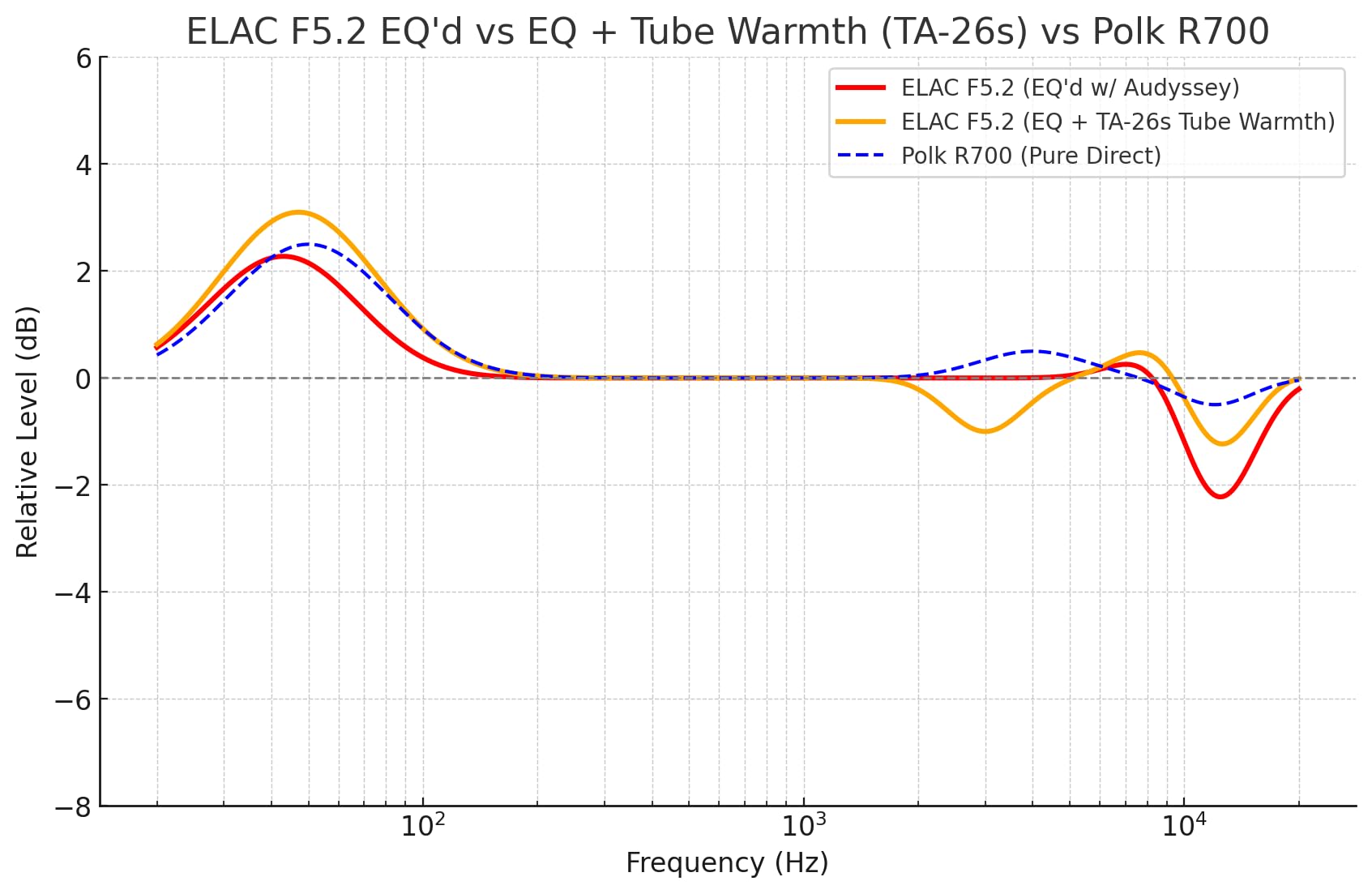
- Needs break-in and room EQ before it sounds its best
- Three year warranty is shorter than competitors
- Some units shipped out of plumb
The F5.2 is a proper three-way design, and that single fact separates it from most of this list. A 1-inch cloth dome tweeter with a waveguide on top, a dedicated midrange, and three 5.25-inch woven aramid-fiber woofers below means no cone is asked to do two jobs at once, which is the structural reason dialogue stays clean.
Response is rated up to 35,000 Hz, the thick internally braced MDF cabinet is designed to suppress vibration, and at 6 ohms with 140W maximum output it is easy to drive with a modest amplifier. For a room used for both films and albums, the neutral tuning is the reason owners call it accurate and non-fatiguing.
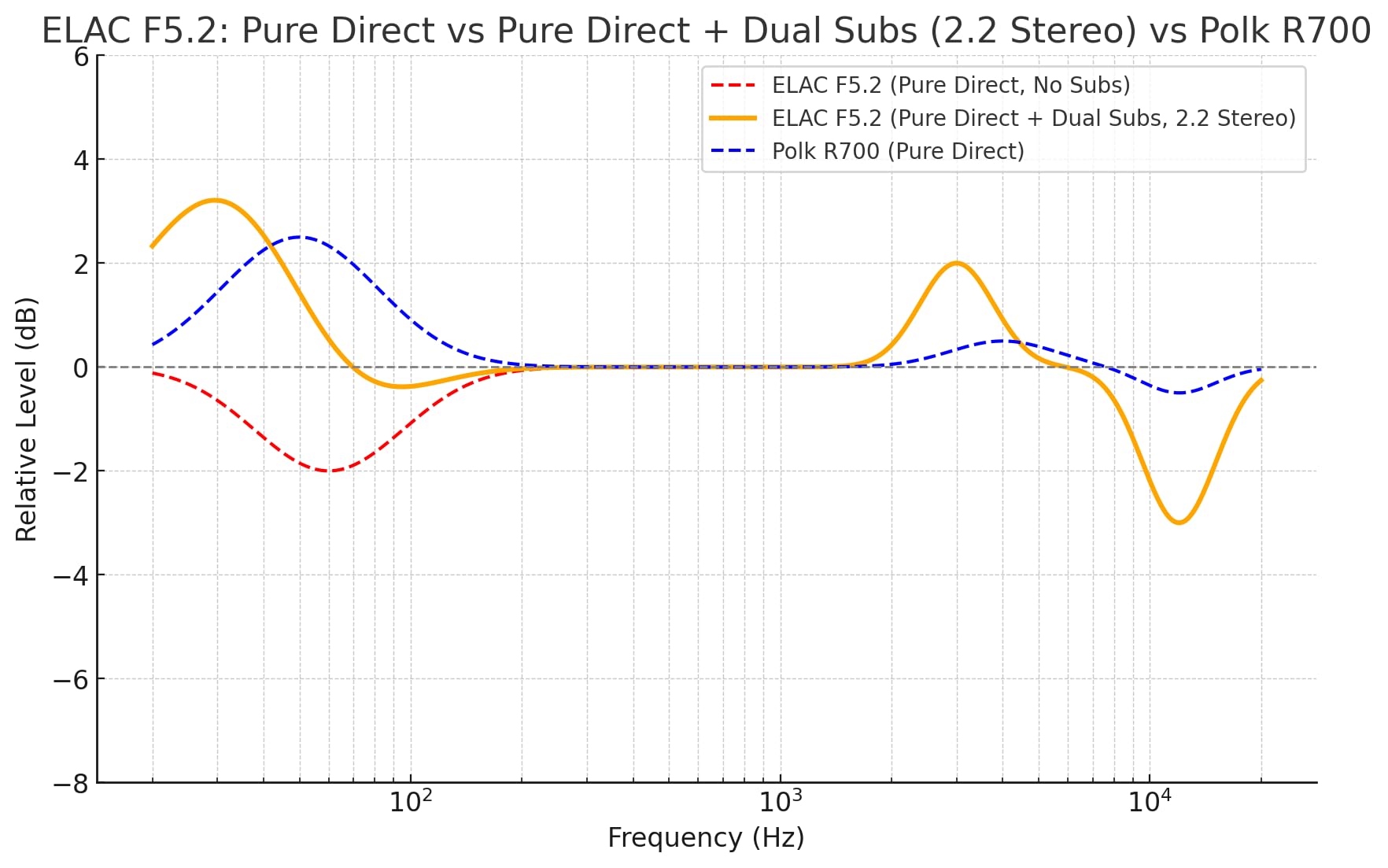
At 45.87 inches and 34.4 pounds, it is a tall cabinet that needs proper placement, and the long-term owner note is consistent: it wants break-in time and a room correction pass before it shows what it can do. Running the receiver’s calibration routine is part of getting this speaker right, not an optional extra.
It is also sold per speaker, so a front stage is two units, and the warranty is three years rather than the five offered by some of the towers on this list.
Why a 3-way layout suits a home theater front stage
In a two-way tower, the tweeter sits above one wide driver that handles both voices and bass. When a bass-heavy scene loads that driver, dialogue compression and a shift in tone are the usual result. A three-way design gives the midrange its own element, so the voice band stays stable regardless of what is happening below it.
That is why 3-way towers tend to stay composed at movie volumes in a way that 2-way designs of similar price do not.
Where the F5.2 is the wrong choice
Three 5.25-inch woofers cannot deliver much low-end output compared with a dual 8-inch tower, so a subwoofer is effectively required rather than optional. Budget for one in the same purchase cycle.
It is also the tallest cabinet on this list at nearly 46 inches. In a room with low ceilings, or where the front stage is tight against a large screen, the footprint can be a genuine constraint.
6. Klipsch RP-8000F – Best Deep Bass for Large Dedicated Rooms
Klipsch RP-8000F Reference Premiere Floorstanding Speaker – Each (Ebony)
Dual 8 inch spun copper Cerametallic woofers
1 inch titanium LTS horn tweeter
Rear-firing Tractrix port
Bi-wire and bi-amp posts
8 ohm
Pros
- Dual 8-inch woofers deliver genuinely deep powerful bass
- Horn tweeter creates a wide room-filling soundstage
- Dual binding posts allow bi-wiring or bi-amping
- Removable magnetic grille and ebony finish look premium
Cons
- Sold as a single speaker so a front pair needs two purchases
- 60 pound cabinets are heavy to move and position
- Horn-loaded treble is bright and can fatigue some listeners
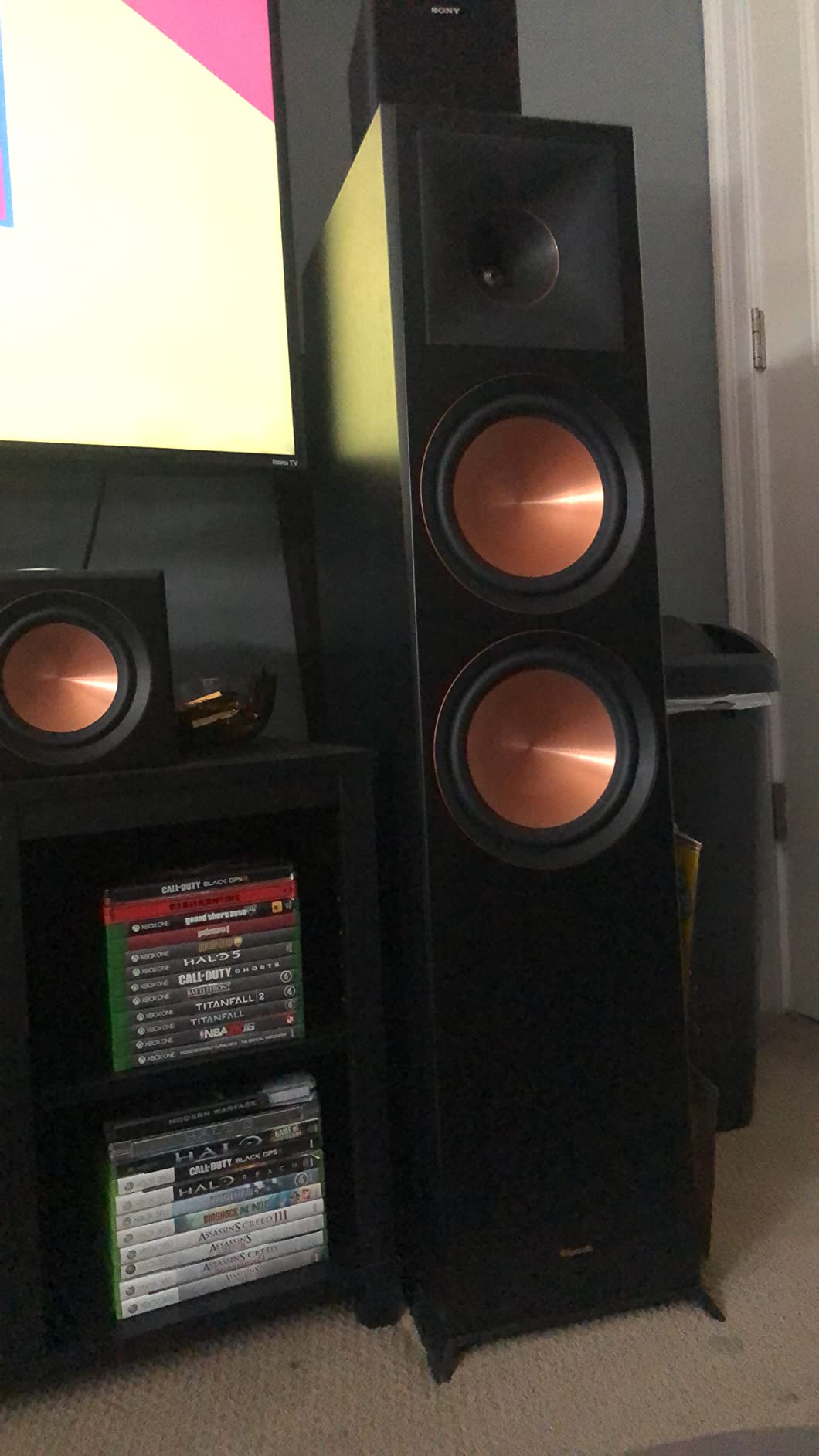
If the front stage needs to fill a large dedicated room without strain, the RP-8000F is the tower on this list built for it. Two 8-inch spun copper Cerametallic woofers sit below a 1-inch titanium LTS vented tweeter loaded into a hybrid Tractrix horn, with bass reflex tuning through a rear-firing Tractrix port.
Reviewers rate it at 4.7 stars across 250 reviews and single out the dynamic, room-filling output and the depth from the twin 8-inch drivers. For a room where the seating is well back from the screen, that combination of scale and extension is the point of the design.
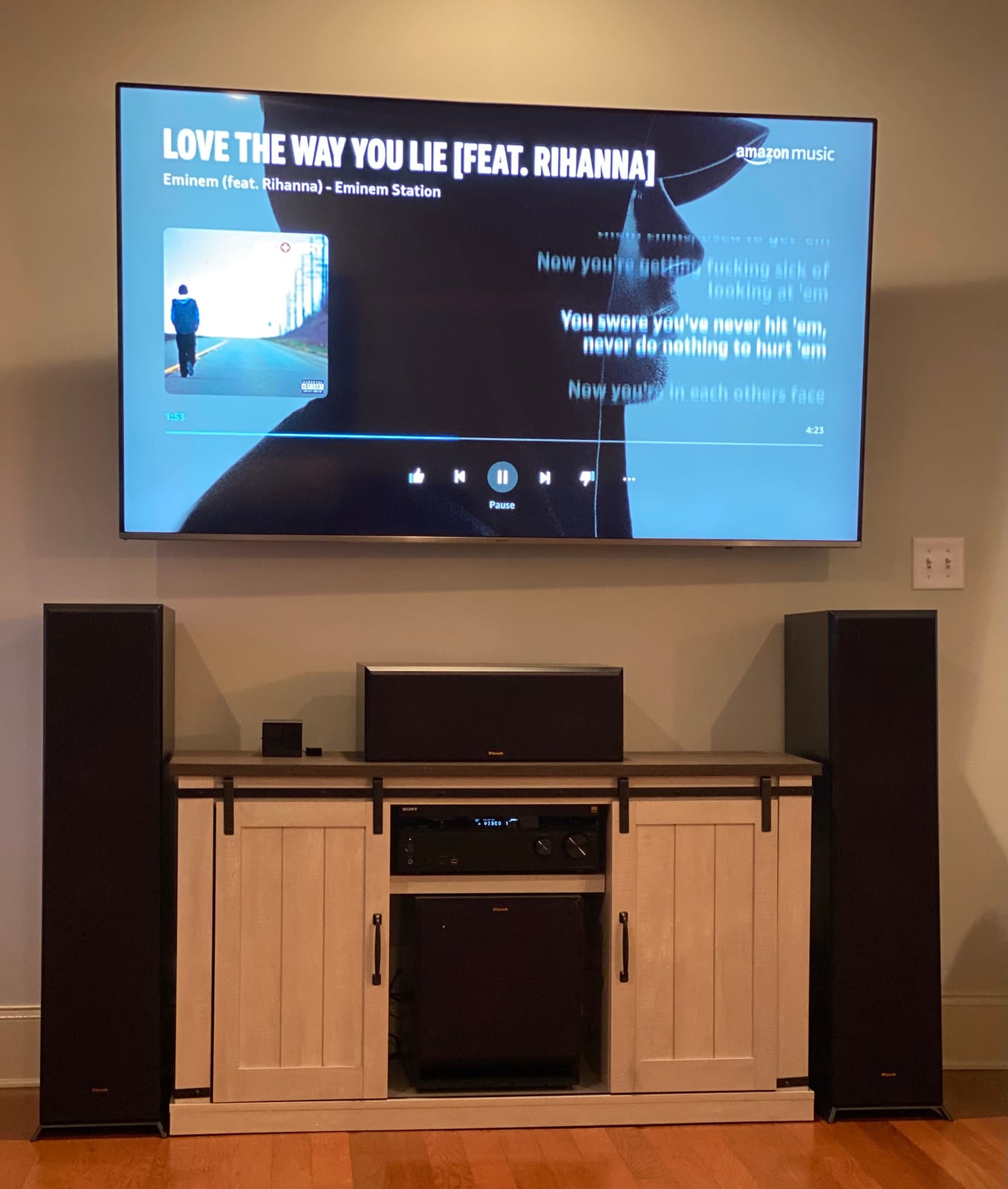
Dual binding posts give you bi-wire and bi-amp capability, which matters if your receiver supports processing an amplifier channel for a front pair. It is a modest cost in cable and a meaningful gain in flexibility, and the magnetic grille lets you run the towers on display without a visual penalty.
The trade-offs are size and tone. At 60 pounds per cabinet, these are the second-heaviest speakers here, and the same horn character that boosts dialogue presence in a treated room can read as bright to some listeners at sustained high volume.
How the dual 8-inch drivers change a movie experience
Two 8-inch cones move substantially more air than one 6.5-inch driver, which means less excursion for the same low-frequency output. Less excursion is the same thing as lower distortion, so explosions, engine rumble and score lines stay cleaner at the volumes a dedicated theater actually runs.
In a large room that energy is also what makes the front stage feel physical rather than simply audible. That sense of scale is the reason a tower exists at all.
Where the RP-8000F is the wrong choice
In a small or mid-size room, the same dual 8-inch drivers that make it powerful will excite low-frequency room modes and produce boom. If your seating is close to the front wall, this is the wrong tower regardless of how good it is in a showroom.
It is also sold as a single speaker, and the rear-firing port means it needs clearance from a back wall. Give it room to breathe rather than pushing it into a corner.
7. Fluance Signature HiFi – Best Three-Way Tower for Stereo and Theater
Fluance Signature HiFi 3-Way Floorstanding Tower Speakers with Dual 8″ Woofers for 2-Channel Stereo Listening or Home Theater System – Black Ash/Pair (HFF)
Dual 8 inch woofers
1 inch neodymium tweeter
1.4 inch chamfered baffle
3-way design
Sold as a pair
Pros
- Comes as a full matched pair with outriggers spikes and grilles
- Dual 8-inch woofers give clean deep controlled low frequency
- Three-way design with a dedicated neodymium tweeter
- Acoustically inert MDF cabinet with chamfered baffle reduces diffraction
- Lifetime parts and labor warranty from the manufacturer
Cons
- Passive design needs a capable external amplifier or receiver
- Heavy 62 lb cabinets and 47 inch height need careful placement
- Midrange is less immediately engaging than horn-loaded designs
The Fluance Signature is sold as a pair, and the box includes the things people usually buy separately: outrigger stabilisers, isolation floor spikes, magnetic grilles and a manual. That kit matters more than it sounds on hardwood or tile, where a tall narrow cabinet without spikes will resonate rather than anchor.
The design is a three-way with dual 8-inch woofers, a woven glass fibre midrange with a pointed dome that fires from the cone centre, and a 1-inch neodymium tweeter. The 1.4-inch thick chamfered MDF baffle is there to cut edge diffraction, and the manufacturer backs it with a lifetime parts and labor warranty.
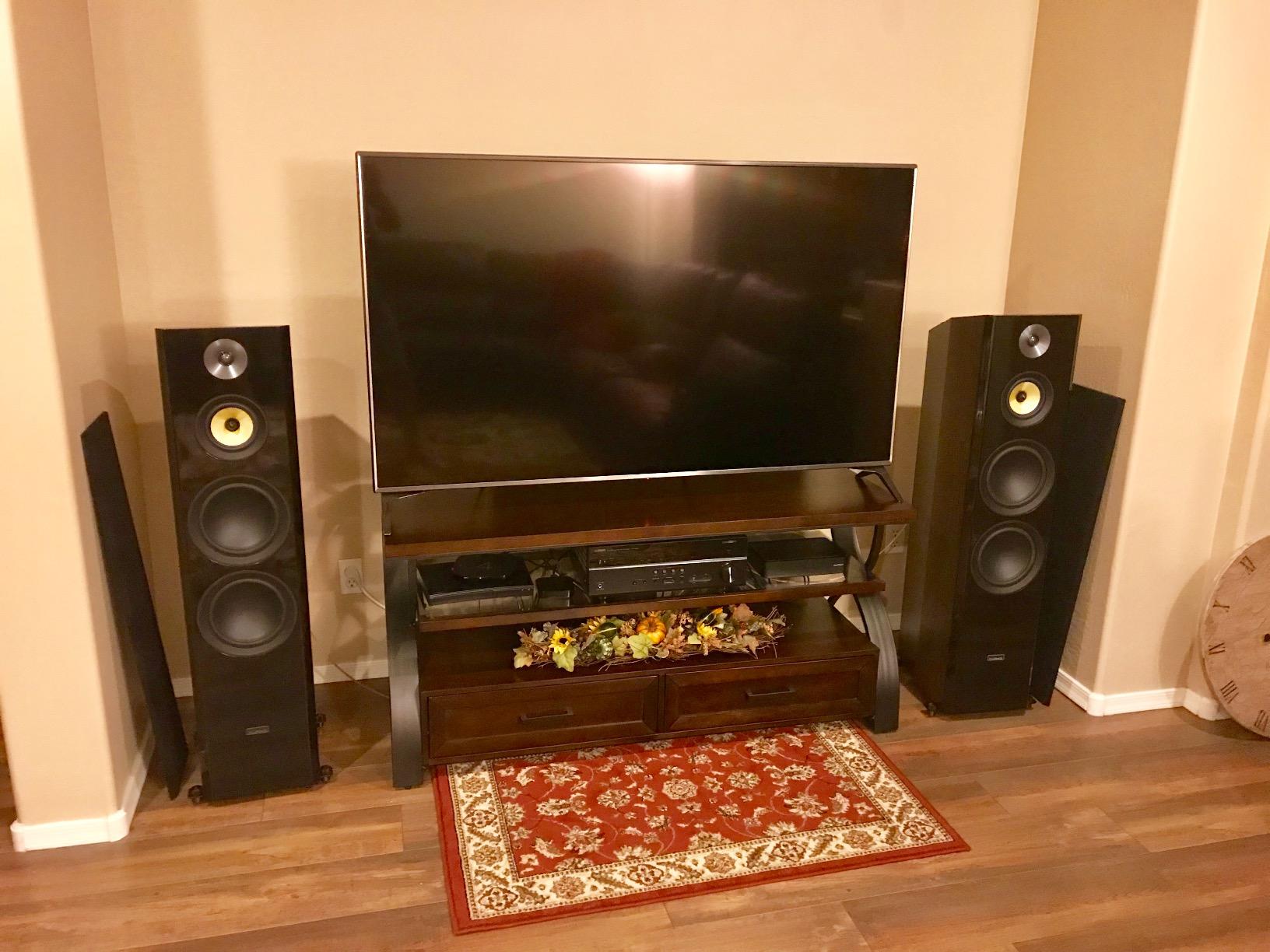
For a system that spends weekdays playing music and weekends playing films, this is the tower we would look at first. The 200W maximum output and deep clean bass from the twin 8-inch drivers mean it can anchor stereo playback with real authority, and the point-source midrange helps the soundstage stay coherent at a listening seat.
The honest caveat is that the midrange is less immediately engaging than a horn-loaded design. Listeners who prioritise impact on a demo track may prefer one of the Klipsch models, while listeners who prioritise long sessions tend to settle here.
Why point-source midrange design helps a front stage
A pointed dome at the centre of the midrange cone makes that driver behave as a single coherent source rather than a cone with an obstruction in the middle. In practice that means cleaner off-axis behaviour, which is what keeps the front stage stable when the seating is wider than a single row.
That stability is the difference between a home theater where the film feels like it happens in front of you and one where voices follow you around the room.

Where the Fluance Signature is the wrong choice
It is passive and demands a competent amplifier or receiver. Paired with an entry-level receiver, a 47-inch cabinet at 62.4 pounds per speaker will not reach the levels a movie night wants.
The size is also the constraint. At nearly four feet tall, it needs a room with ceiling clearance and a front stage with real width, and it is not a candidate for tight apartment living rooms.
8. Fluance Elite 5.0 System – Best Complete Five-Channel Package
Fluance Elite High Definition Surround Sound Home Theater 5.0 Channel Speaker System Including Floorstanding Towers, Center Channel and Rear Surround Speakers – White (SXHTBWH)
Two towers plus center and surrounds
1 inch silk dome neodymium tweeters
Dual 6.5 inch woofers in each tower
8 ohm
Lifetime warranty
Pros
- Complete 5.0 package with two towers center and two surrounds in one purchase
- Timbre-matched so all five speakers blend seamlessly
- Dual 6.5-inch woofers in the towers give solid low frequency
- Silk dome neodymium tweeters produce clear rich highs
- Engineered MDF cabinets reduce resonance and floor spikes included
Cons
- Passive system needs an AV receiver or amplifier for all five channels
- No subwoofer included so deep bass depends on your system
- Small 4-inch midrange drivers limit the largest-scale dynamics
Most of this roundup assumes you are assembling a system piece by piece. This one is already assembled: the Fluance Elite package contains two floorstanding towers, a center channel and two rear surrounds, all timbre-matched, all covered by a lifetime parts and labor warranty.
The towers use dual 6.5-inch woofers, a 4-inch poly-coated midrange with butyl rubber surrounds, and 1-inch ferrofluid-cooled neodymium silk dome tweeters. At 8 ohms and 160W maximum output, the set is an easy passive load for a mainstream receiver, and the MDF cabinets are built to limit resonance.
For someone starting from nothing in a medium room, this solves the problem buyers hit most often. r/hometheater threads ask constantly whether a full 5.1 system is worth buying as a set in the mid range, and the honest answer is that a matched set avoids the tonal mismatch that comes from mixing a tower brand with a center from another.
What you are accepting is the compromise. The 4-inch midrange drivers are the smallest here, and owners note they limit the largest-scale dynamics compared with a dedicated 3-way tower. The set is built for a consistent soundstage across five channels rather than for maximum impact from the front two.
There is also no subwoofer in the box, and it is a passive set, so you still need a receiver to drive all five channels.
When a matched 5.0 package beats building piece by piece
A matched package wins on tonal coherence. Because all five speakers were voiced together, the dialogue on the center channel sits in the same tonal space as the front stage, and the surround pans do not jump in level or colour as a film moves sound across the room.
It also wins on logistics. Five speakers, one vendor, one warranty, one return process, and no research into which center channel happens to match a tower you liked.
Where a package is the wrong approach
If you already own a capable center channel and subwoofer, a matched set is money spent twice. In that case a single pair of better towers and the existing front three will outperform the package.
It is also the least flexible option for growth. There is no matching height module path for a later Atmos upgrade, so a 5.1.2 build means sourcing height speakers from elsewhere and hoping they blend.
How to Choose Floorstanding Speakers for a Home Theater
Match the tower to the room, not to the spec sheet. Rule of thumb by seating distance: under 8 feet from the screen, a slim tower with 6.5-inch drivers is right and anything larger will excite room modes. Between 8 and 12 feet, a 6.5-inch woofer with dual radiators is the sweet spot. Beyond 12 feet in a dedicated room, dual 8-inch drivers earn their place. A 13 by 13 foot room, a common question on forums, is firmly in the middle band, which is where the T50, the XT60 and the F5.2 sit comfortably.
Read sensitivity before you fall for the driver size. Sensitivity tells you how hard a tower is to drive. At 94 dB the Klipsch R-610F is one of the most efficient designs on this list and will hit film levels on a modest receiver. Towers in the high 80s of dB need a stronger amplifier to reach the same volume, and pairing a demanding speaker with an entry receiver is the fastest route to a dull, compressed sound.
Check impedance against your receiver. 8-ohm towers are the safest universal choice. 6-ohm designs are fine on most modern receivers, but a 4-ohm tower will pull more current, run a receiver hotter and reduce headroom. Our list contains no 4-ohm designs for exactly that reason.
Treat the front three as a set. A mismatched center channel is the most common and most audible mistake in a home theater, because dialogue lives in the centre. Options are a matching center from the same brand, a phantom centre from the towers if they are identical and placed close together, or a vertical centre built as a matched pair of the same drivers as the towers.
Do not skip the subwoofer. The recurring forum consensus is that a good subwoofer improves a home theater more than an extra pair of speakers would. Even deep towers like the Fluance Signature and the Klipsch RP-8000F leave the deepest effects to a dedicated subwoofer, and effects below the tower’s range are the ones viewers feel most.
Count your towers honestly. A home theater needs two towers for the front stage. That is it. Many people buy four or six because towers are cheaper per unit than a good dedicated surround, and end up with a front stage that dominates the mix. If you want towers for surrounds, place them well back and run them lower; do not treat the front pair as expendable.
Place them properly. Start with the equilateral triangle: the towers and the listening position form three sides of equal length, so each speaker sits about as far from the listener as the pair is apart. Toe them in toward the seating until the centre image locks to the screen rather than to the speakers.
Two placement rules come up constantly and are worth defining properly. The 83% rule: start about 0.83 times the room’s shorter wall length away from the front wall, then move the seating forward to that spot. A 16-foot-wide room puts you about 13 feet back. The 38 rule: the second row should sit 38 percent of the room’s depth behind the screen, which is where a projector image stops being overwhelmed by direct light on the wall.
Height speakers belong above ear level, roughly 4 to 6 feet above the floor, angled down into the room. That height is what makes overhead effects sound like they come from the ceiling instead of from the front stage.
Decide about Atmos before you buy. There are three routes. Add-on height modules clamp to the top of an existing tower, which is the cheapest way to reach 5.1.2 and keeps the soundstage coherent, though the overhead image sits in front of the listener rather than overhead. Up-firing drivers built into the top of a tower reflect off the ceiling, which is a single-box solution that is sensitive to ceiling height and finish. Dedicated in-ceiling or on-ceiling height speakers give the most accurate overhead placement, and are the right answer in a room you can run wire into.
Consider the contrarian option. In a well-treated room, a pair of good bookshelf speakers plus a quality subwoofer can outperform a pair of towers, because the small drivers are closer to the crossover and the bass is handled by a dedicated enclosure designed for it. Towers earn their place with output, scale and the deep effects they reproduce without help. If your room is small and treated, a bookshelf system is a legitimate answer rather than a compromise, and our bookshelf speaker guide covers that build.
Think about how long this purchase lasts. Speakers are the longest-lived component in a home theater. Receivers get replaced every five to eight years, subwoofers and cables far less often, but a good pair of towers can stay in service for decades if they were built well. Used towers from a previous decade routinely outperform current entry-level models, which makes buying once seriously better value than buying twice. If you need volume in a larger space, our powered speaker picks cover a different use case entirely.
Buy the front three and a subwoofer first. Everything else on this list can wait. Surrounds, height speakers and rear channels can be added a year later, and adding them to a matched front stage produces a coherent result. Adding them around a mismatched one does not.
Frequently Asked Questions
Do I need height speakers for Dolby Atmos?
No. A 5.1 system works well and most Atmos soundtracks still play through the front stage and surrounds. Height speakers add the overhead layer, and they are the difference between sound that surrounds you and sound that appears above you. If you are buying towers now, pick ones that accept a matching height module so the upgrade stays cheap and tonally matched later.
Do tower speakers sound better than bookshelf speakers?
In most living rooms, yes, and the difference is scale rather than refinement. A tower has more cabinet volume and more drivers, so it plays film levels with less strain and produces bass that a bookshelf hands off to a subwoofer. In a small, well-treated room the gap narrows, and a quality bookshelf pair with a good subwoofer can match or beat a tower at lower volumes.
What is the 83% rule for speaker placement?
The 83% rule sets how far back your main seating should sit from the front wall. Measure the shorter wall of the room and multiply it by 0.83, then place your seats that far from the screen. A 16 foot wide room puts the seating about 13 feet back, which usually clears the front wall’s worst low-frequency reinforcement and gives the front stage room to sound full.
What is the 38 rule for speakers?
The 38 rule is mainly a projection guideline. The second row of seating should sit about 38 percent of the room’s depth behind the screen, which keeps viewers out of the brightest part of a projector image. For speaker placement it is a useful reminder to leave headroom behind the front stage rather than pushing the front seats hard against the wall.
Where is the best height to install Atmos height speakers?
Roughly 4 to 6 feet above the finished floor, above seated ear level, and angled downward into the listening area. That angle is what makes an overhead effect sound like it comes from the ceiling rather than from a box sitting on top of your front speakers. Higher than that and the effect drifts toward the ceiling; lower and it collapses into the front stage.
Do I need a subwoofer with floorstanding speakers?
Yes, for almost every home theater. Towers reproduce the low midrange well, but the deepest effects in a film usually need a dedicated subwoofer with more cabinet volume than any tower can offer. Forum consensus is consistent that a good subwoofer improves a system more than an additional pair of speakers would, so budget for one in the same purchase cycle as the front three.
Can I use floorstanding speakers as surround speakers?
You can, and many people do to save money, since a tower often costs less per unit than a good dedicated surround. The tradeoff is placement: tower surrounds need real space behind the seating, they take up floor you may not have, and a tall cabinet close to a side wall will interact badly with the room’s low frequencies. Run them noticeably quieter than the front pair.
What speakers do most commercial theaters use?
Large-format line arrays of purpose-built cinema loudspeakers, usually a horn-loaded high-frequency section over multiple low-frequency drivers, with dedicated surround and ceiling arrays. They are installed and calibrated to a room far larger than most homes. The transferable idea is the horn-loaded tweeter, which is why horn designs remain common in home towers and why they stay intelligible at high volume.
Final Verdict for Floorstanding Speakers in 2026
For most people building a home theater in 2026, the Polk Audio T50 is the best floorstanding speaker to start with, because it integrates cleanly into a matched system and stays light enough to place properly. Choose the Klipsch R-610F instead if your receiver is modest and you want real output from a matched pair, and choose the Polk Monitor XT60 if a full 5.1 or 5.1.2 build is already the plan.
Move up to the Klipsch RP-8000F or the Fluance Signature when the room is genuinely large and you want the front stage to carry effects without a subwoofer doing all the work. Pick the Fluance Elite set if you want a matched five-channel system in one decision, and the ELAC Debut 2.0 F5.2 if the same speakers need to play albums at half past nine at night.
Whatever you choose, buy the front three and a subwoofer first, run the room correction, and add surrounds and heights later. That sequence is the difference between a home theater that gets better each year and one that collects boxes.