
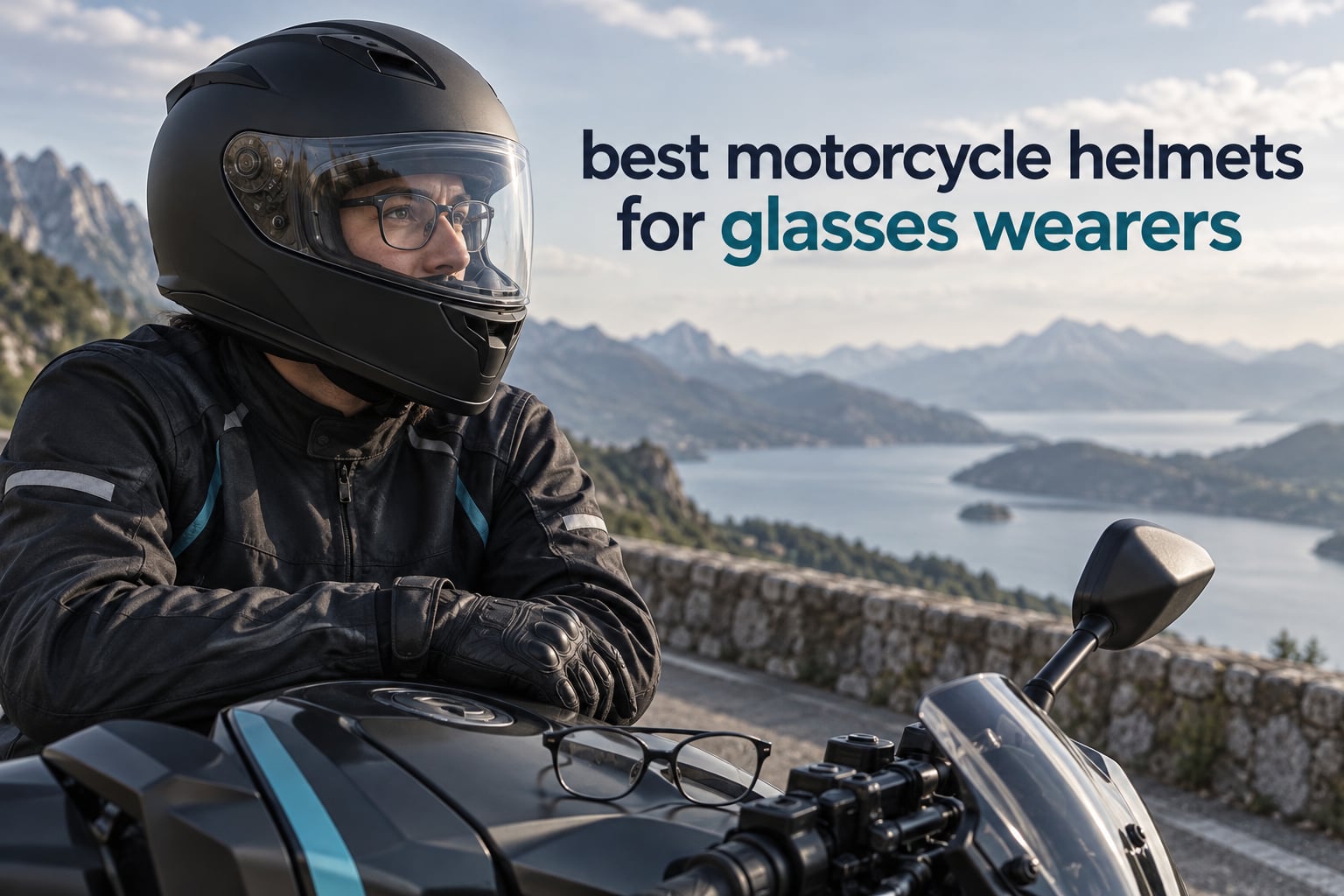
Riding in prescription glasses is not a niche problem. Roughly half of all riders wear frames, and nearly all of them have fought a helmet that trapped the arms of their glasses against their temples until they had a headache inside thirty minutes. The encouraging part is that a handful of designs genuinely accommodate eyewear, and they are not always the expensive ones.
The ILM ILM-313 is our best overall motorcycle helmet for glasses wearers because of its wide eye port, its roomy removable washable liner padding, and a quick release strap that works with gloves on. It holds a 4.5 star average across 9608 owner reviews, which is more real-world feedback on the frame fit question than any other helmet we examined.
Before the individual reviews, here is what actually separates a helmet that tolerates glasses from one that fights them. These are the six things we checked on every model below.
Eye port size – a tall, wide opening gives your frames room to sit at their natural angle instead of forcing them inward.
Eyewear channels – recessed grooves molded into the cheek and temple foam, so frame arms slide into a path rather than being pressed against bare padding.
Cheek pad design – softly contoured or no-stitch side padding is the difference between a comfortable hour and a headache by the first junction.
Modular chin bar – a flip-up front lets you settle your frames before you close the shell, so you never thread a temple arm under a closed chin bar.
Ventilation and anti-fog – airflow across your lenses stops fog forming in the first place, a problem separate from visor fog.
Internal sun visor – a drop-down tinted shield removes the need to swap sunglasses at every tunnel, which is where frames get bent.
We evaluated these eight helmets specifically on glasses compatibility rather than on spec sheets alone. That means looking at eye port clearance with frames in place, checking whether the chin bar closure touches the arms, and noting how the vent layout treats lens fogging. Riders regularly describe the same protocol on rider forums, and the best advice in the whole thread is startlingly simple: put the helmet on with your glasses already on, and if you can feel your frames within ten seconds, that helmet is not for you. We used that as our baseline test for every pick below.
For a wider look at helmets across every riding style, our guide to the best motorcycle helmets covers sport, adventure and cruiser options that this glasses-focused roundup leaves out.
Top 3 Motorcycle Helmets for Glasses Wearers in 2026
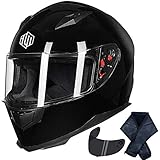
ILM ILM-313 Full Face
- Wide eye port
- Removable washable liner
- Quick release strap
- DOT FMVSS-218

GLX GX11 Compact
- Three adjustable intakes
- Four exhaust outlets
- Removable interior
- Tinted visor

Two of those three are full-face shells with tall eye ports, and one is a name-brand helmet whose snug cheek pads need a few hundred miles of break-in. The GLX GX11 is the one to pick if venting is your priority, the BELL for build quality and wind sealing, and the ILM for the sheer volume of glasses-wearer feedback behind it.
All 8 Helmets Compared for Eyeglass Comfort in 2026
| Product | Specifications | Action |
|---|---|---|
| ILM ILM-313 Full Face |
|
Check Latest Price |
| GLX GX11 Compact Full Face |
|
Check Latest Price |
| BELL Qualifier Full Face |
|
Check Latest Price |
 YEMA Modular Dual Visor YEMA Modular Dual Visor |
|
Check Latest Price |
 TRIANGLE Full Face TRIANGLE Full Face |
|
Check Latest Price |
 HAX Obsidian Dual Visor HAX Obsidian Dual Visor |
|
Check Latest Price |
 JQF Gear WS-607 JQF Gear WS-607 |
|
Check Latest Price |
 ILM 159 Modular ILM 159 Modular |
|
Check Latest Price |
Everything in this roundup is DOT FMVSS-218 certified, and every one of them can physically accept glasses. The difference between them is what happens at the temples after thirty minutes.
1. ILM ILM-313 Full Face – Best Overall for Glasses Wearers
ILM Full Face Motorcycle Street Bike Helmet with Removable Winter Neck Scarf + 2 Visors DOT Model ILM-313 (L, Gloss Black)
DOT FMVSS-218
3 lb ABS shell
Clear plus smoked visor
Removable washable liner
Pros
- Wide eye port gives frames a natural angle
- Quick release strap works with gloves
- Removable washable inner padding
- Clear and smoked visors included
- Lightweight 3 pound ABS shell
Cons
- Negligible ventilation so the visor fogs readily
- Shell scratches easily
- Sizes run small
- Some riders report a tight squeeze at the temples
The ILM-313 is the helmet we recommend first, and the reason is unglamorous: volume of evidence. At 9608 reviews it is the most thoroughly owner-tested helmet in this list, and the glasses question comes up constantly in that feedback. Most riders describe frames sitting flat, with the temple arms finding the gap between the ear padding and the shell rather than being pinched.
The eye port is the quiet hero here. It is one of the taller openings in this group, which means a pair of rectangular or round frames can sit where your optician put them instead of being levered into a narrower slot. The 3 pound ABS shell is on the light side of this group, and light matters more than people expect once you are two hours into a ride.
What you give up is refinement. Ventilation on this model is close to token, so the visor fogs readily and the airflow across your lenses is weak. That matters if you ride in stop-and-go city traffic in warm weather, and it matters even more if you rely on airflow to keep condensation off your glasses.
Sizing is the other recurring theme in reviews. This model runs small, and a number of riders advise stepping up rather than accepting the first snug size. That is a warning, not a solution: sizing up a helmet to accommodate frames weakens the protective fit, so treat it as a last resort rather than a first move.
One hardware detail deserves credit. The quick release strap is genuinely operable with gloves on, which removes a small daily irritation that most riders never think about until it is gone. It is not a glasses feature, but it is the reason this helmet works for real commuting use.
Who the ILM ILM-313 suits
This is the pick for a rider who wears glasses every single ride, does mostly short to medium distance trips, and wants a full face without thinking about the decision. A rider who already owns a solid visor solution and cares more about temple clearance than about airflow will be extremely happy here.
The bundled clear and smoked visors mean no extra purchase is needed for night riding or glare, and the removable inner padding can be washed on a normal cycle. For anyone worried about sweat and bacteria over a long summer, that matters as much as the fit does.
Where it falls short
The honest limitation is ventilation. Riders in hot climates consistently report that this shell runs warm and that the visor clouds up on humid days, and anyone whose main fogging worry is their own lenses will feel that more acutely than most.
There is also no internal sun visor, so bright commutes mean either a tinted shield or a separate pair of sunglasses that has to live in a pocket. The scratch-prone gloss finish is a minor issue but shows road grime quickly.
2. GLX GX11 Compact Full Face – Best Value for Everyday Riders
GLX GX11 Compact Full Face Motorcycle Helmet w/ Tinted Visor, DOT
DOT FMVSS 218
3.1 lb
3 intakes and 4 exhausts
Tinted visor included
Pros
- Expansive field of view suits glasses
- Well-engineered 7-port ventilation
- Interior fully removable and washable
- Tinted visor included
- Good noise level for the class
Cons
- Runs small at the top of the head
- Thick ear padding crowds earbuds
- Visor screw and coating degrade over time
- DOT certified only
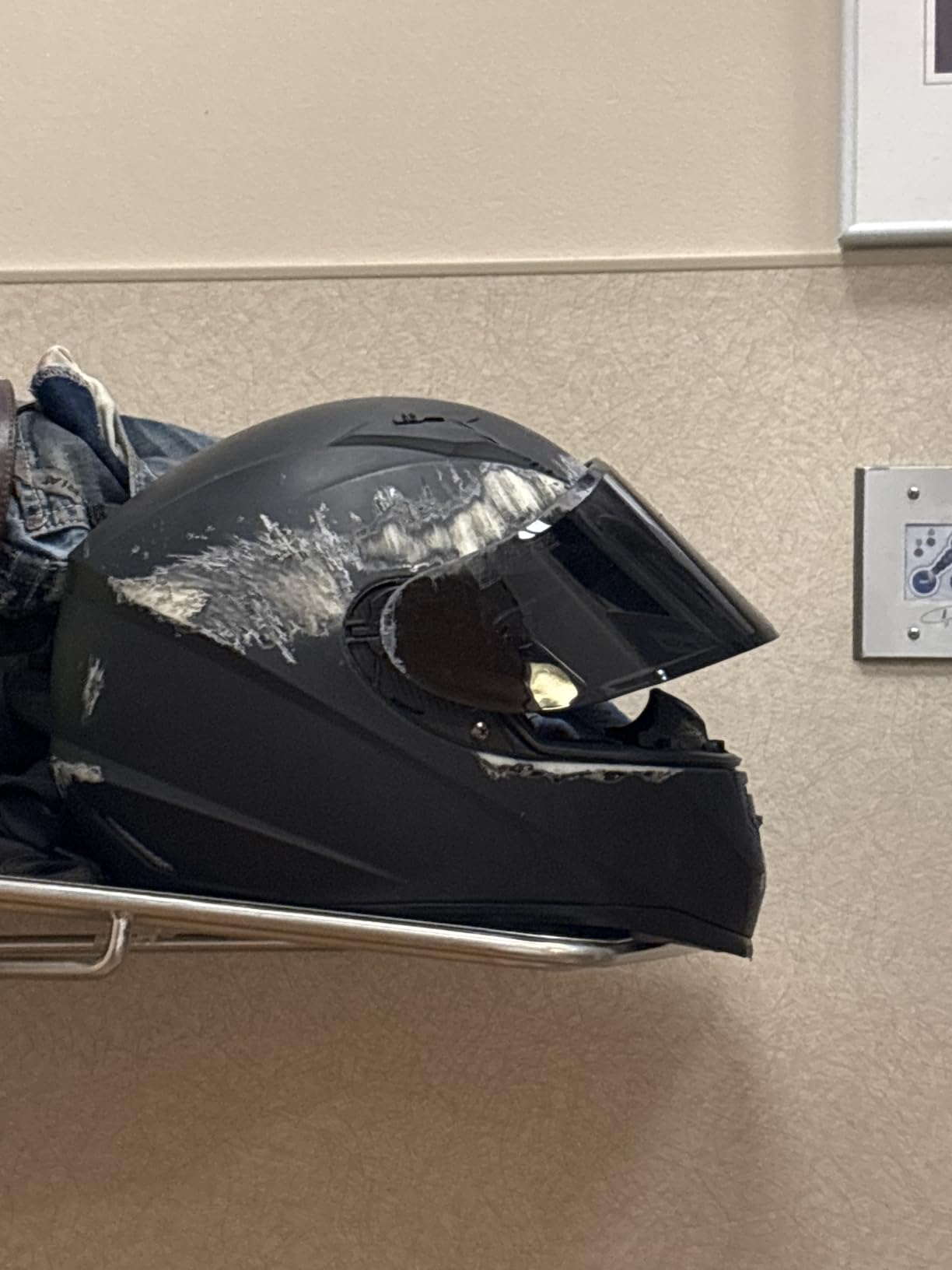
The GX11 handles the fog half of the glasses problem better than most designs at this level. Three adjustable intakes feeding four exhaust outlets is a properly engineered airflow path, and riders repeatedly mention layering prescription glasses under the shield without difficulty because the moving air keeps both the visor and the lenses clear.
That same attention to the eye port shows up in the shield shape. The expansive field of view means a forward-leaning riding position still leaves useful peripheral awareness, which is exactly the position where thick frames tend to press on the top rim. The multi-density EPS liner is multi-density by design, not marketing, and the interior comes fully out for washing.
The shield itself is reinforced with ribs for rigidity and uses a quick-change system, so a scratched or fogged shield is a two-minute swap rather than a purchase.
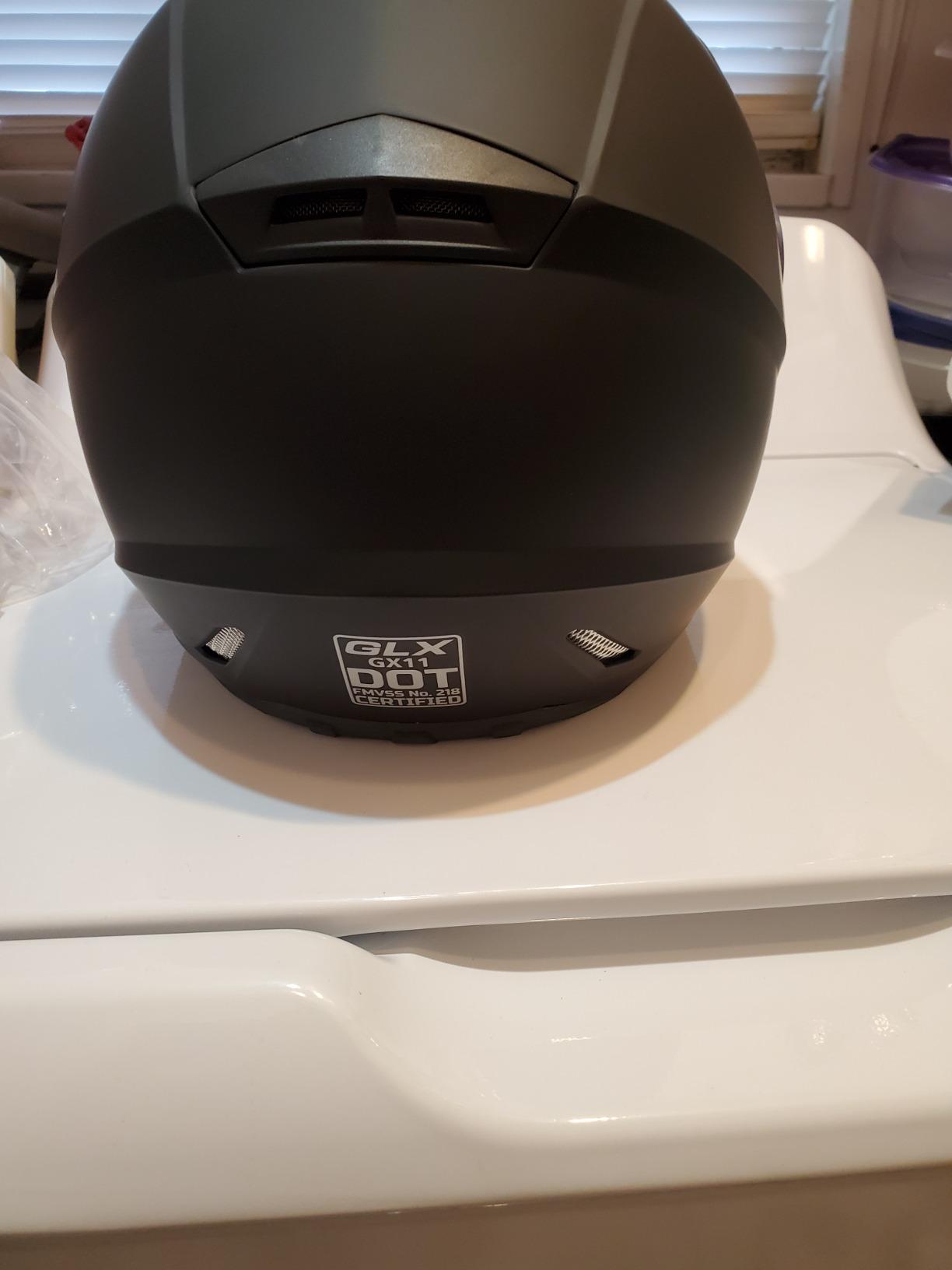
Sizing is the main warning sign. A number of riders describe a tight fit at the crown in the first few rides and recommend ordering a size up. The padding is soft, so it does settle, but the shell itself does not forgive a large head circumference as much as the listing suggests.
Two smaller issues come up often enough to mention. The ear padding is thick, which makes positioning earbuds fiddly for anyone who uses them for navigation or communication. And the visor retaining screw has a habit of loosening over months, with the shield then scratching and fogging more readily than it should.
Who the GLX GX11 suits
This is the pick for a commuter in warm weather, or any rider whose biggest complaint about their current helmet is that their glasses fog up. The vent layout is among the strongest in this group, with seven ports and a genuinely engineered airflow path.
It also suits riders who layer frames loosely, because the eye port is generous enough to accept them without adjustment. The tinted visor included in the box covers low-light and glare needs for commuting without a second purchase.
Where it falls short
For riders who depend on Bluetooth audio, the thick ear pockets are an annoyance that costs you time on every ride. If your commuting involves podcasts, navigation prompts or a comms system, budget time for repositioning the units or choose a different shell.
Certification is DOT FMVSS 218 only, with no ECE 22.06 or Snell rating, and the visor hardware has a shorter effective life than the shell. Riders covering serious distance or track days should weigh that against a higher-certified alternative.
3. BELL Qualifier Full Face – Premium Build with a Break-In Period
BELL Qualifier Full-Face Motorcycle Helmet – Matte Black, X-Large
DOT FMVSS 218
4.9 lb
NutraFog II shield
Bluetooth speaker pockets
Pros
- Strong name brand build and paint finish
- Shield ratchet holds in any position
- Generous ear space for comms units
- Little buffeting at highway speed
- Padded wind collar
Cons
- Snug cheek pads press on frames in smaller sizes
- Sizing runs small versus other brands
- A gap lets cold air onto the face
- No tinted visor included
The BELL Qualifier is the most solidly built helmet here, and the honest catch is that it is the one most likely to argue with your frames in the first few hundred miles. Several owners specifically report that snug cheek pads make glasses harder to wear, particularly in the smaller shell sizes. Once the padding breaks in, that complaint largely disappears.
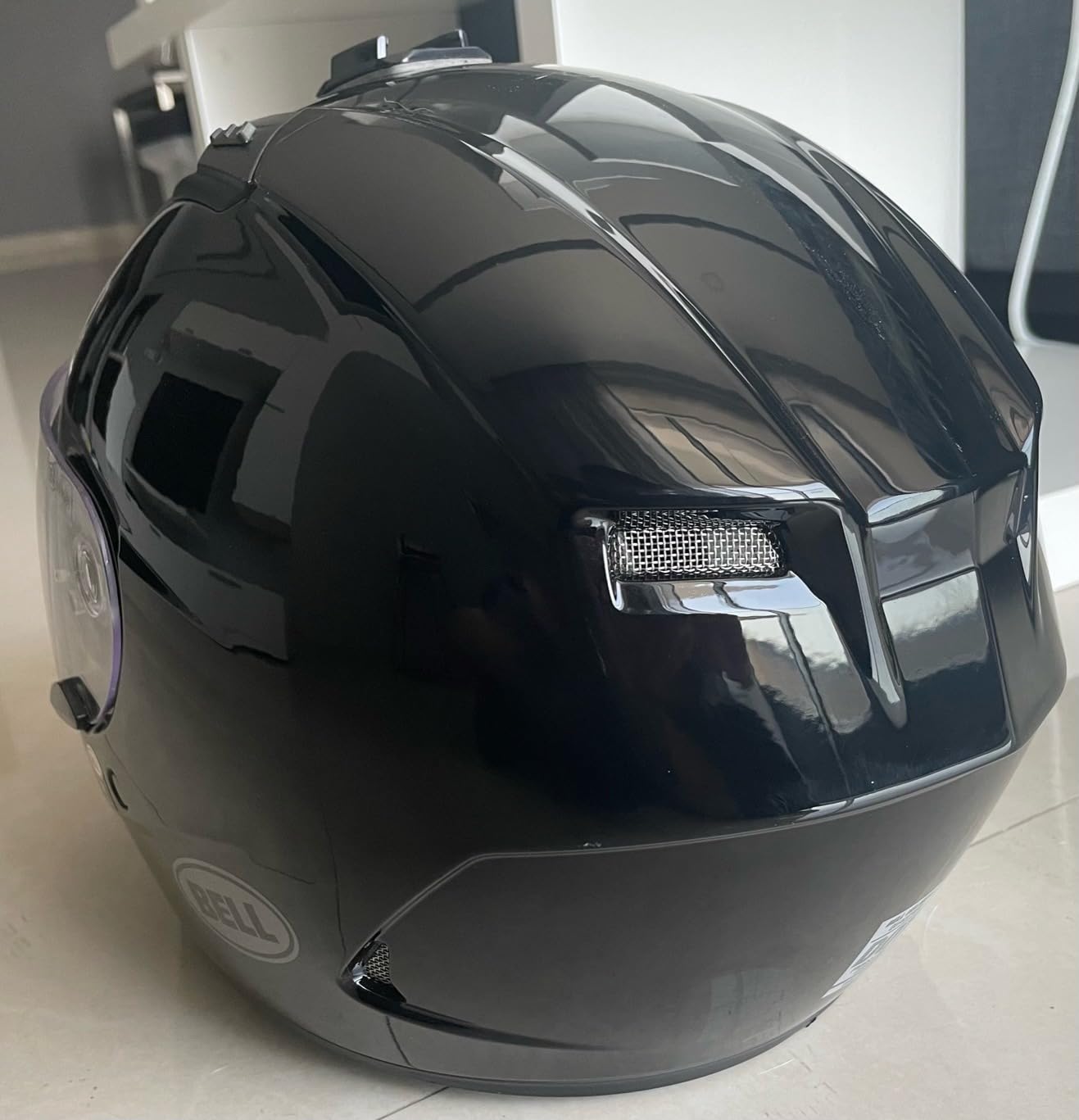
Where it clearly wins is sealing. The shield ratchet holds firmly in any position and the padded wind collar produces little to no buffeting at highway speed, which is also a wind-noise story for glasses wearers in particular. Loose frames amplify the roar of airflow around the face, and a tight seal reduces it.
The integrated speaker pockets are moulded rather than added, with enough room for a full Bluetooth system. Riders running comms on long tours single this out as a practical advantage over helmets where the units squeeze the ears.
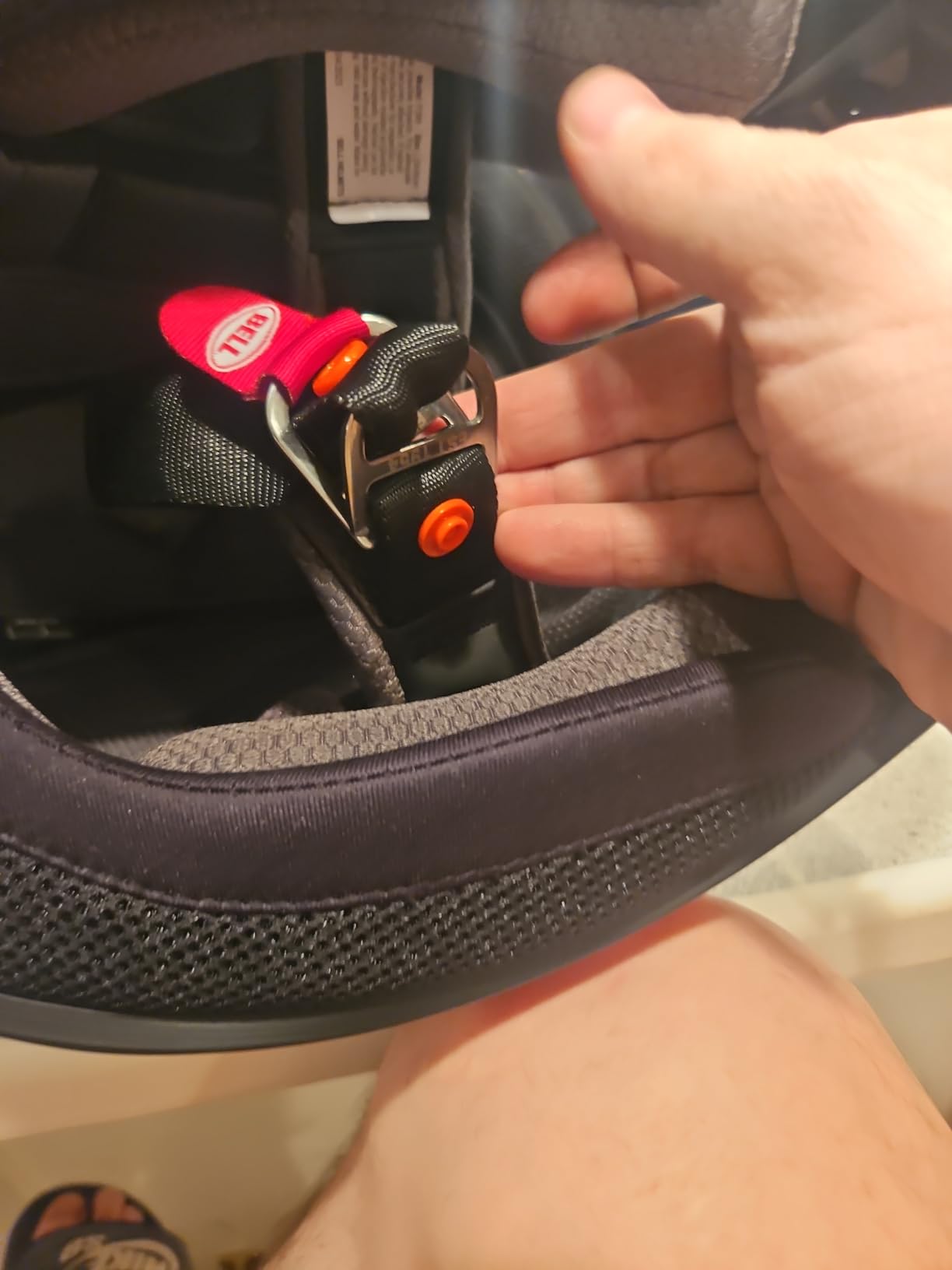
Two things keep it out of first place. The 4.9 pound weight is the heaviest in this roundup, and there is a reported gap between chin and shell that lets cold air onto the face in cool weather. Both are fine on a warm-weather bike; both are noticeable on a long winter commute.
Sizing also runs small relative to other brands, so riders commonly order a size up. Remember the caution from earlier: sizing up to fit frames trades away retention and protection, so confirm the shell fits your head shape before worrying about your frames.
Who the BELL Qualifier suits
This suits a rider who has already found their size in this shell and wants a strong finish, paint and hardware durability. It is the sensible pick for long-distance touring riders who prioritise wind sealing and quietness over low weight.
If you wear thicker acetate frames and have a long enough break-in period, the customisable interior is what makes it viable. Riders who swap cheek pads or liners to tune the fit report the biggest gains in comfort after a few thousand miles.
Where it falls short
Anyone who wants a helmet on and off between every stop will find the weight tiring on the neck, and anyone wearing thick frames in a smaller shell will feel temple pressure sooner rather than later. The no-tinted-visor situation means buying a second shield if you ride at night or in bright conditions.
Considerable wind noise is reported by some owners despite the collar, and cold air ingress around the chin is a real complaint in winter. It is a well-built option and not the most forgiving one.
4. YEMA Modular Dual Visor – Best Budget Modular for Frames
YEMA Modular Motorcycle Helmets, DOT Approved Full Face Motorcycle Helmet with with Flip Up Dual Visor for Men & Women – Street Scooter ATV E-Bike – YM-926 Black
DOT FMVSS 218
1.7 kg ABS and EPS
Flip-up chin bar
Inner smoked plus outer clear
Pros
- Chin bar removes the need to thread frames under padding
- Dual lens setup with an internal smoked visor
- Removable washable cheek pads
- Adjustable intake and exhaust vents
- Quick release strap
Cons
- Hinge design adds weight and complexity
- Cheek pads can crowd the eye port for larger frames
- Average rating of 4.4 is the lowest in the group
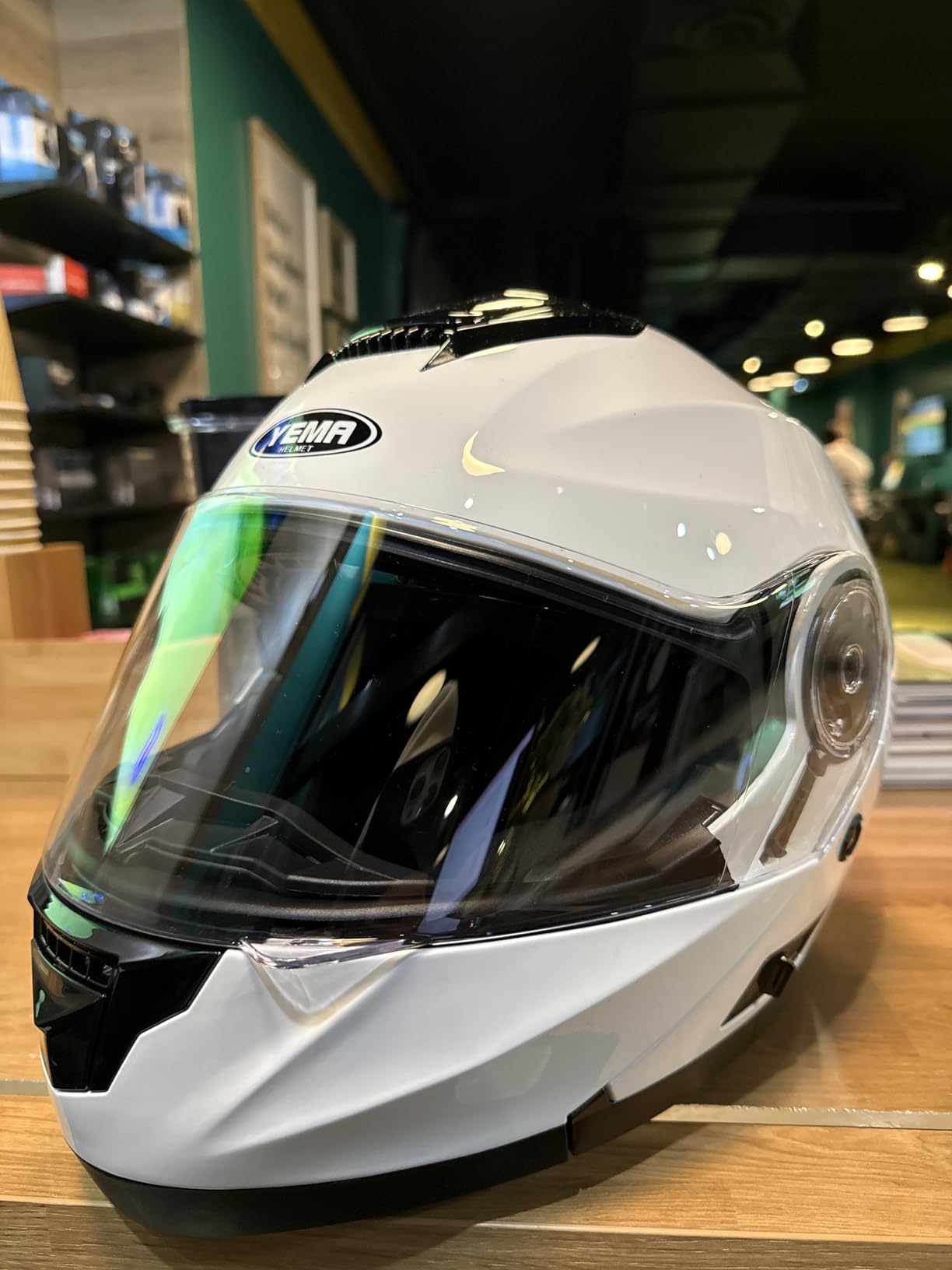
The argument for a modular helmet is entirely about the on-and-off sequence, and no other mechanism solves the problem more cleanly. With the chin bar flipped up, you can settle your glasses on your face first and then close the shell, so your temple arms are never threaded under a closed chin bar. That is the moment at which frames most often get bent or knocked out of shape.
This YEMA does the basic job of that well, with a flip-up front and a quick release strap that makes the whole operation quick. The inner smoked lens plus outer clear shield combination means you are not swapping anything when the light changes, which is where frames usually get bent.
Removable washable cheek pads let you tune the side pressure over time, and the fully adjustable intake and exhaust vents are a genuine step up from fixed-position sliders.
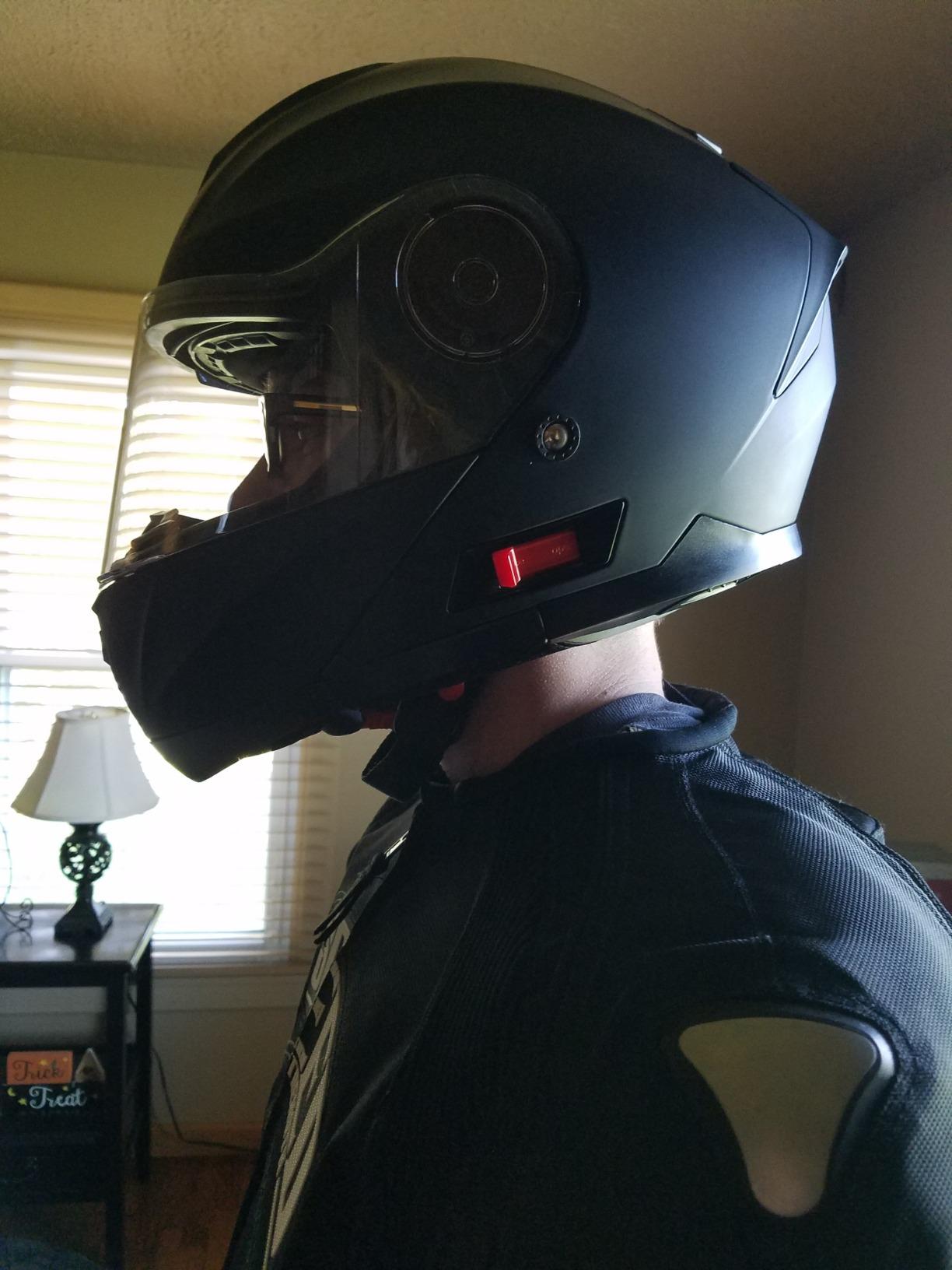
The catch is the hinge itself. A modular mechanism is inherently more mass and more complexity than a fixed full-face shell, and the 1.7 kg figure reflects that. On a long ride, the extra weight sits on the neck, and a rotating joint introduces a place for wind noise that a one-piece shell does not have.
There is also an internal contradiction to be aware of. Flipping the chin bar up solves the on-off problem but does nothing for the pressure problem while riding, and the cheek pads and inner padding can crowd the eye port for wearers with larger or thicker frames. Read the fit reviews for your frame style before choosing this over a full face.
Who the YEMA Modular suits
The ideal buyer is a rider who takes the helmet off frequently, whether that means coffee stops, work commutes with a bike in the car, or a modular habit carried over from open-face riding. For those riders, the convenience is not a luxury; it is the whole point.
It also suits anyone who wants a single helmet that covers both day and night riding without carrying a second tinted shield. The dual lens setup handles both without a swap.
Where it falls short
Riders on long highway trips will feel the neck fatigue that comes with a rotating chin bar, and anyone with a narrow head shape plus thick acetate frames will find the cheek pads are still the limiting factor. Modular does not exempt you from temple pressure once the bar is closed.
The average rating of 4.4 is among the lowest in this group, and it reflects build consistency rather than a glasses-specific flaw. If you ride a sport bike at pace, the extra mass is not the right trade.
5. TRIANGLE Full Face – Best for Switching Visors in Seconds
TRIANGLE Full Face Motorcycle Helmet DOT Approved Men Women, Street Bike
DOT FMVSS-218
2.7 lb
4 intakes and exhausts
Tool-free dual visor
Pros
- Accurate sizing across the S to XL range
- Tool-free visor swap between tinted and clear
- Removable washable moisture-wicking interior
- Visor does not fog readily
- Removable ear pieces ease comms fitting
Cons
- Basic construction with less refinement than premium brands
- DOT certified only with no ECE or Snell rating
- Some riders prefer a newer better-certified helmet long term
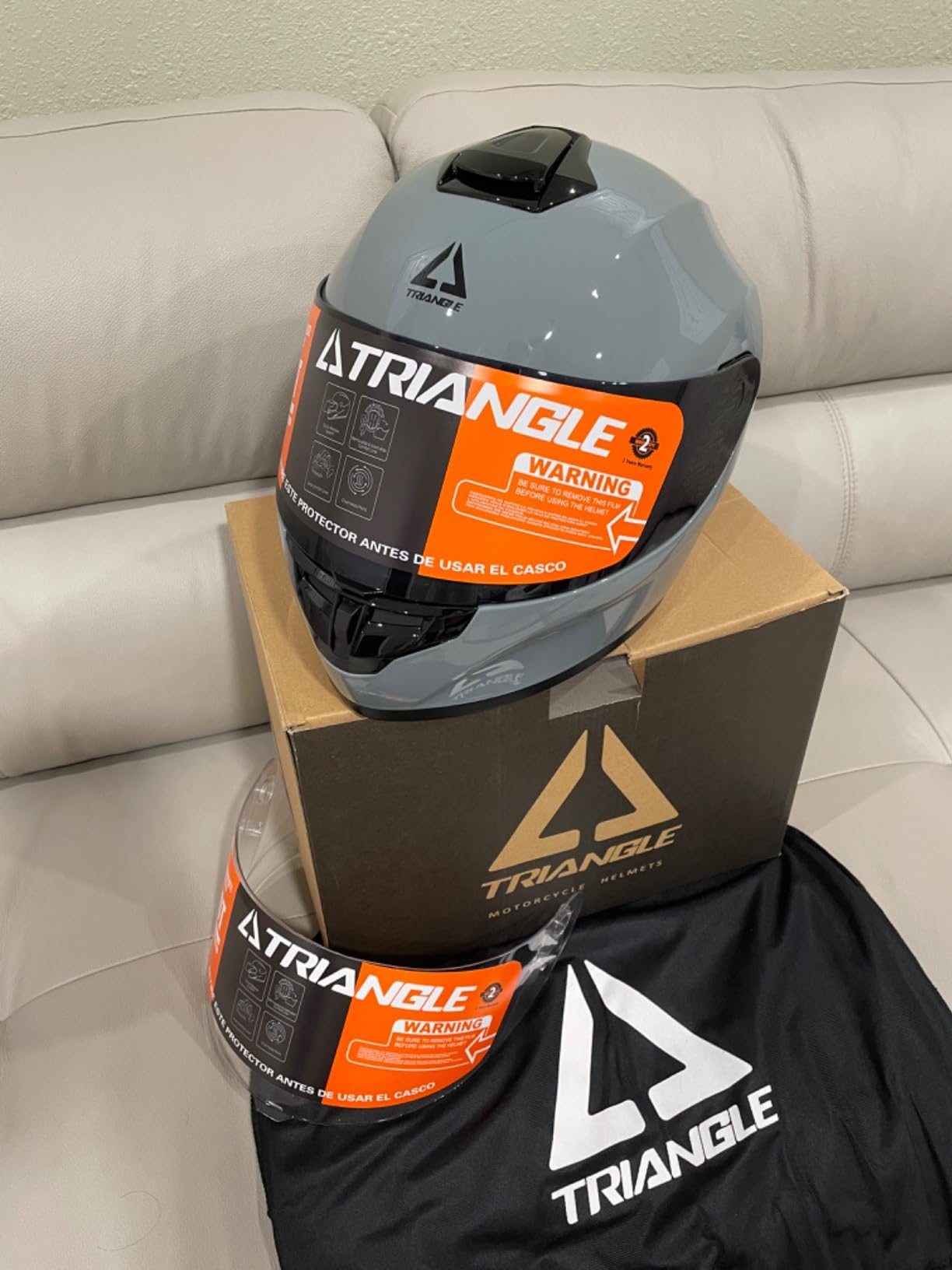
What makes the TRIANGLE distinctive is the tool-free dual visor system. A pre-installed tinted shield plus a bonus clear visor means light changes are handled by a genuine swap with no screws, no tools and no guesswork. For a glasses wearer, this removes one of the most common frame-damage moments: fumbling with a shield while holding your frames.
Four strategically placed air intakes and exhaust vents give it a decent airflow story, and owners specifically note that the visor does not fog readily. For lenses as well as the shield, that is useful in variable weather.
The interior is fully removable and machine washable with moisture-wicking sponge padding, which is the feature that decides whether a budget shell stays pleasant through a summer. Removable ear pieces also make installing a communication system straightforward, which is not true of every helmet at this level.
The frame fit here is unremarkable in a good way. Sizing is accurate across the S to XL range rather than running small, which means you are more likely to select the correct shell size on the first attempt and keep a proper protective fit rather than sizing up for room.
A carrying bag is included, which sounds minor until you own a helmet with a gloss finish. Construction is the obvious compromise: the shell and hardware are basic, and there is no ECE or Snell certification to reassure a rider who covers serious ground regularly.
Who the TRIANGLE suits
This is the pick for a rider who changes light conditions constantly, from a short morning commute through daylight to an evening return. The two-minute visor swap is more useful than it sounds when you are not carrying prescription sunglasses as a second pair.
It also suits anyone who wants a straightforward, correctly sized full face without paying for a brand name, and riders who install their own comms hardware and appreciate a helmet designed to let them do it.
Where it falls short
Riders chasing a premium feel will notice the difference in finish and hardware durability, and the DOT-only certification is a real limitation for anyone riding beyond casual street use. Longer-term buyers should weigh whether a newer, better-certified helmet is the wiser investment.
There is no internal sun visor, so bright daytime riding still means a tinted shield rather than a drop-down. And while the vent layout is good, it is not the fully adjustable system the GLX offers.
6. HAX Obsidian Dual Visor – Best Pinlock-Ready Design
HAX Obsidian Full Face Dual Visor Adult Motorcycle Helmet for Motorbike Street Bike with Pinlock Ready DOT Approved HUICHIOL M
DOT approved
2.06 kg
Pinlock-ready eye port
About 98 percent UV blocking
Pros
- The only Pinlock-ready eye port in this group
- Manufacturer states it is designed to be glasses friendly
- Clear wide-vision shield plus internal sun visor
- Hypoallergenic liner with a Bluetooth slot
- Two replacement tail fins included
Cons
- Pinlock insert not included and bought separately
- DOT certified only
- Smaller brand with a limited track record
- Graphics-heavy designs only
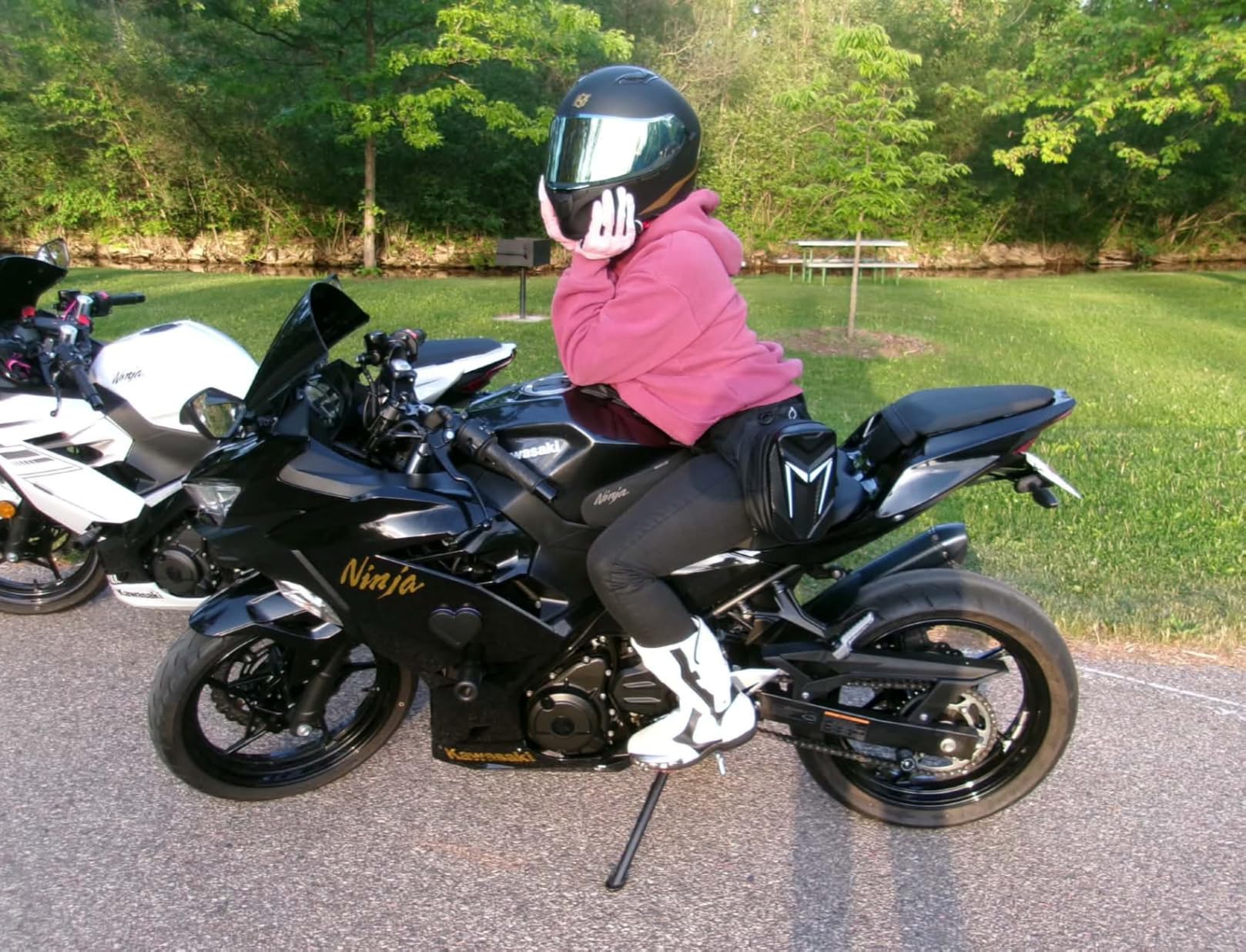
The HAX Obsidian is the only helmet in this roundup with a Pinlock-ready eye port, and it is the only one whose manufacturer explicitly describes it as glasses friendly. That combination makes it worth the extra effort to understand, because it addresses both halves of the eyewear problem in one shell.
The Pinlock-ready eye port has the tabs in place and accepts a PINLOCK 30 insert, sold separately as model DKS166. That insert is the standard anti-fog answer for the face shield, and it works. It does not stop your glasses fogging, which is a different mechanism we cover in the fog section below.
The clear wide-vision outer shield pairs with an internal sun visor, and the manufacturer rates both shields at blocking about 98 percent of ultraviolet radiation. An internal sun visor is the underrated glasses feature: it means never removing frames in a tunnel or a shaded car park, which is where arms get bent.
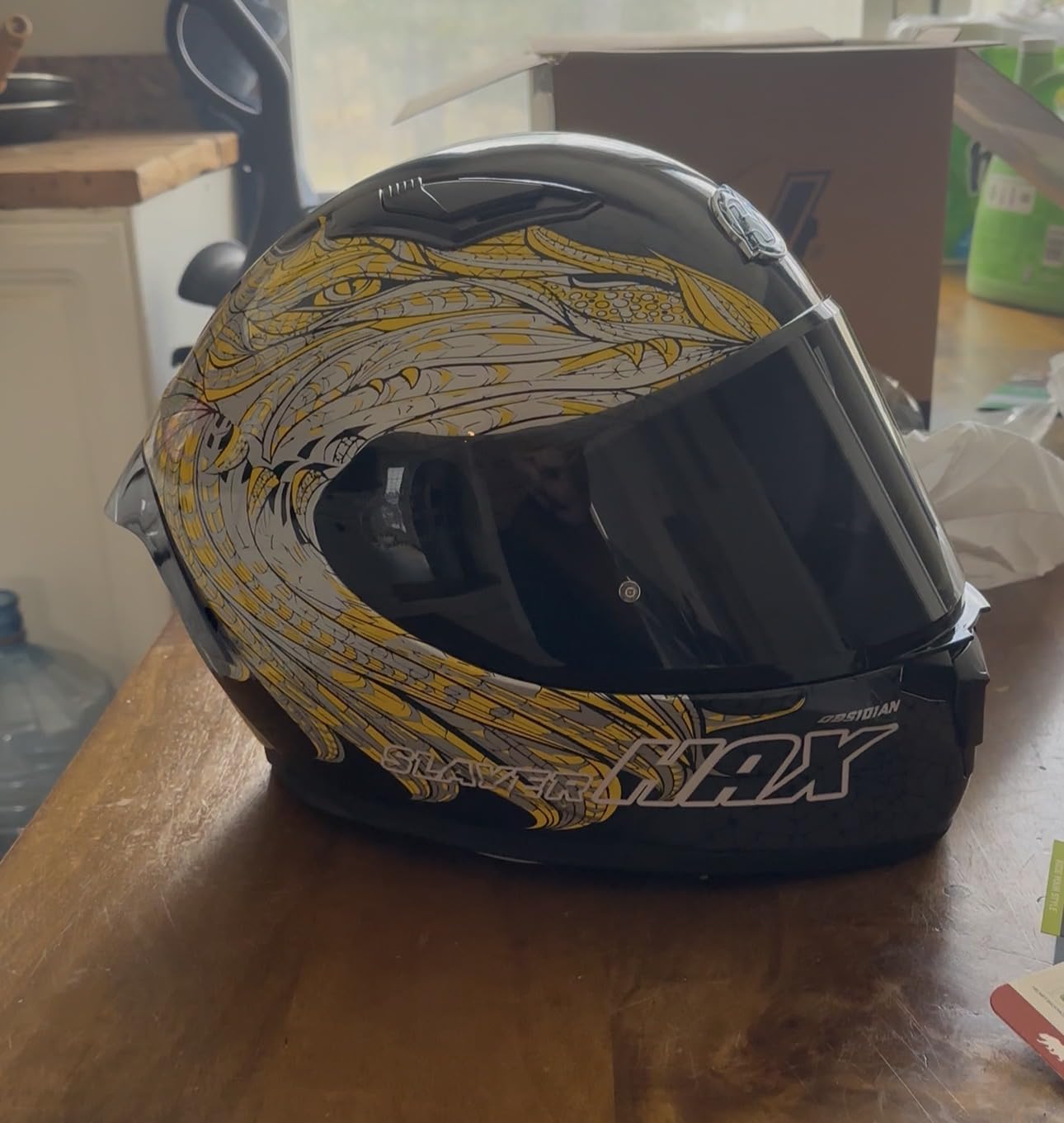
The liner is described as hypoallergenic, which is meaningful for riders who wear glasses all day and spend hours in contact with the same padding. An internal Bluetooth headset slot is moulded into the interior, and multiple vents replace stuffy air quickly.
Two replacement tail fins and a thick cloth storage bag are included, which is generous for the class. The graphics options are extensive across sizes, so the plain-shell crowd should confirm the colourway they want is offered.
Who the HAX Obsidian suits
This suits a rider whose main frustration is visor fog on cold mornings and rainy commutes, and who also wants a wide, clear eye port for frames. The Pinlock-ready eye port means the anti-fog upgrade is available later, when you decide you need it, rather than at purchase.
It also suits anyone who wants a drop-down sun visor instead of a second pair of tinted lenses. For prescription wearers, that removes an entire category of daily annoyance.
Where it falls short
You have to buy the Pinlock insert separately, so the anti-fog benefit is not in the box. Certification is DOT only, and a smaller brand means a shorter public track record, which matters for a safety product where long-term reports are valuable.
At 2.06 kg it is one of the heavier shells in this group, and the graphics-led styling is not to every taste. Riders who care about a plain finish should confirm the colourway exists first.
7. JQF Gear WS-607 – Best for Bluetooth Speaker Cutouts
JQF Gear Full Face Motorcycle Helmet WS-607 DOT Approved for Adults
DOT FMVSS 218
1.95 kg
Five shell sizes S to XXL
Removable washable liner
Pros
- Cutouts sized for a Cardo or similar speaker system
- Comfortable from first wear with low internal weight
- Visor changes in under a minute with no screws
- Five adult shell sizes available
- Good road noise isolation for the class
Cons
- Noticeable wind noise at highway speed
- Cold air leaks in around the neck
- Runs very tight and some riders find XL too small
- Dark visor unsuitable for night riding
- DOT certified only
The WS-607 earns its place for a specific and unglamorous reason: the speaker cutouts are properly sized. They are cut to take a Cardo or similar Bluetooth system without squeezing the ears, which is the exact problem riders hit when they add comms to a helmet that was not designed for them.
For a glasses rider, that comfort matters indirectly. A tight ear area forces riders to pull frames forward, and a forward-shifted frame is a frame that slides and bends. Comfort elsewhere in the helmet keeps your frames where you put them.
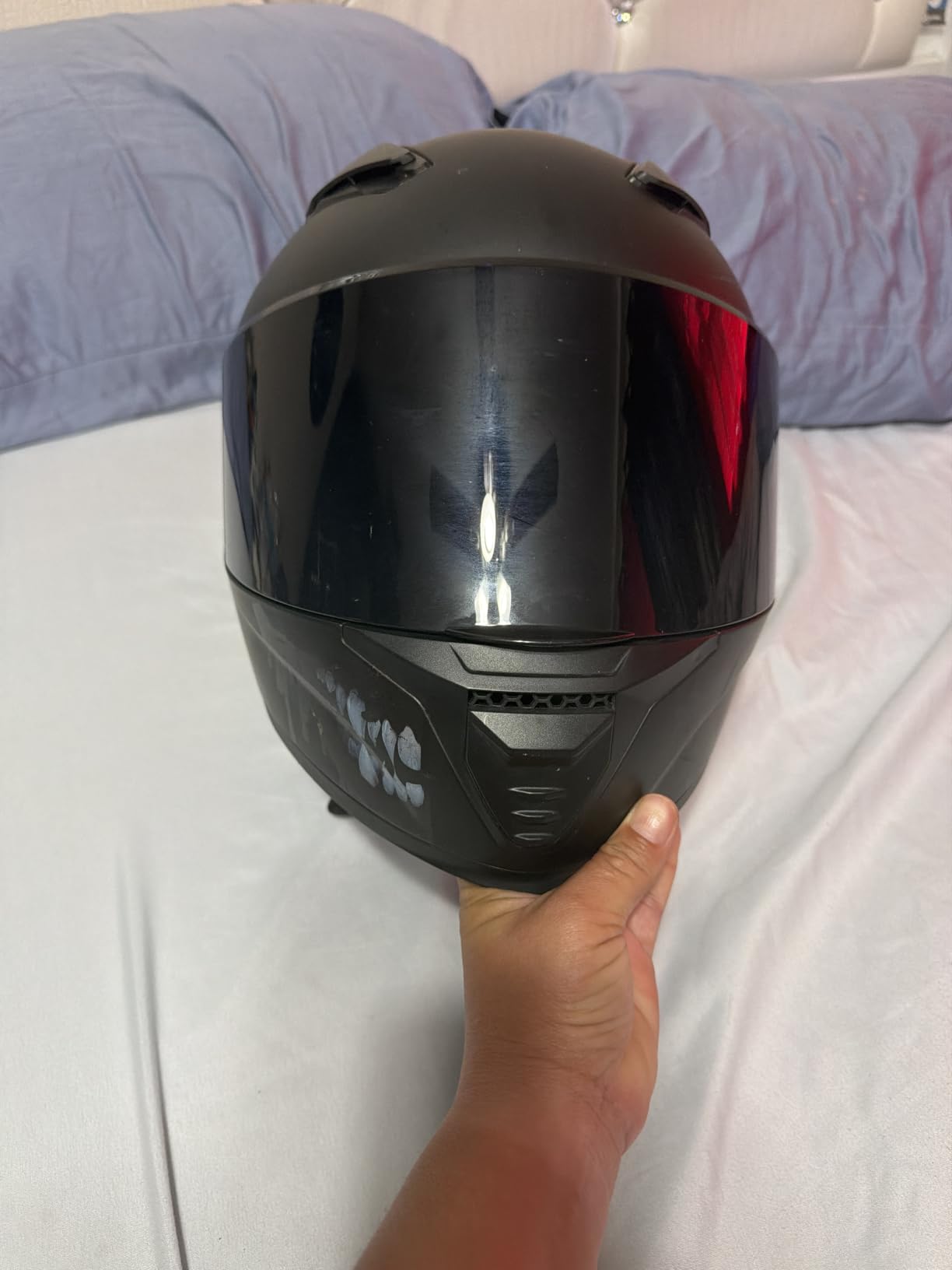
Reviewers describe it as comfortable from the moment it goes on, with low internal weight at 1.95 kg. Five adult shell sizes from S to XXL give you a real chance of landing on a correct size first time, and the visor changes in under a minute without tools.
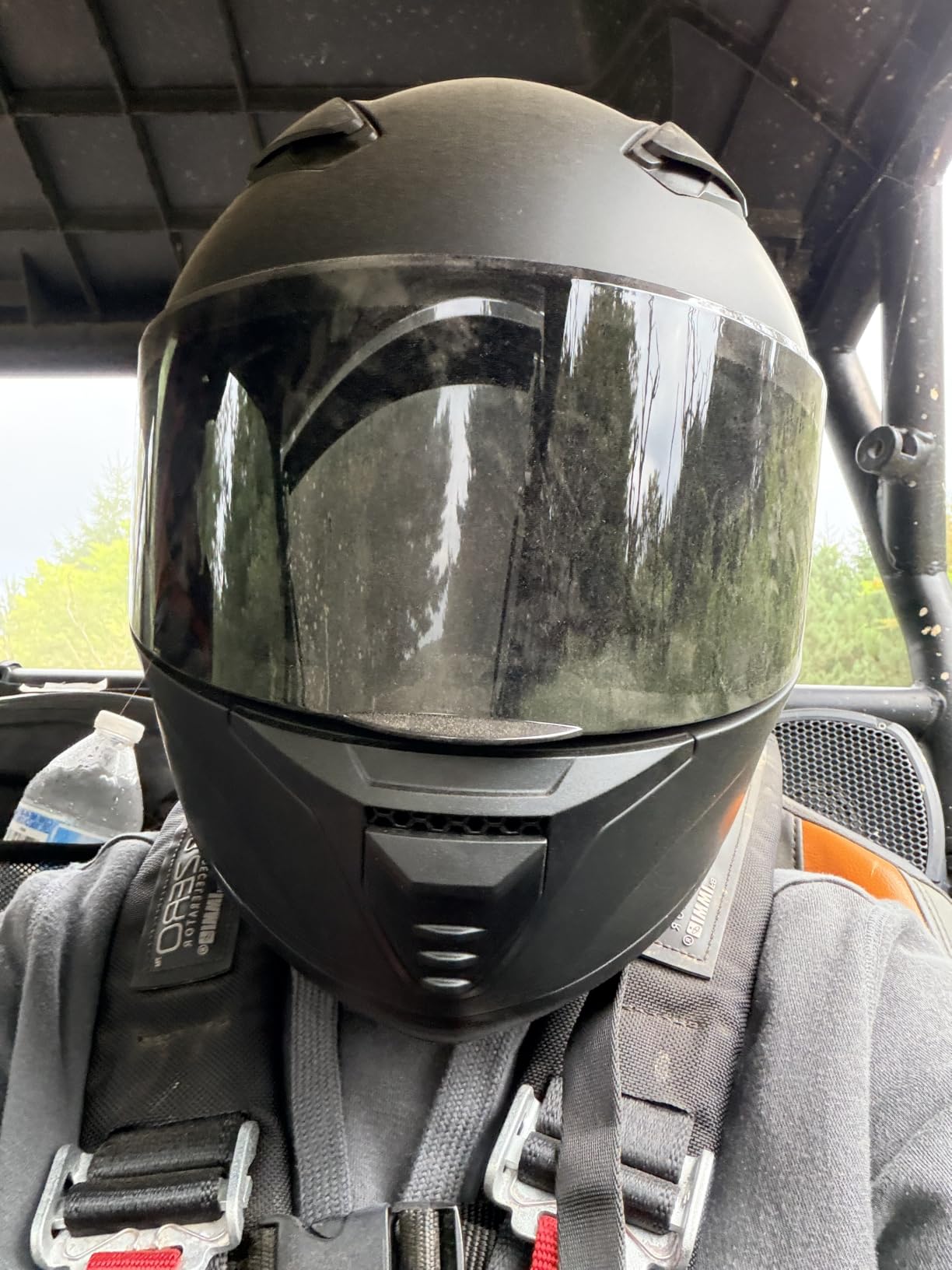
The roomy eye port gives frames a natural position, and the general verdict on glasses compatibility is positive for that reason. The multi-density EPS inside a lightweight ABS shell handles the safety side of the equation, and the liner is removable, washable and replaceable.
The dark visor version is a mixed blessing. Owners like that it is dark enough for privacy yet light enough to see out of, but it is obviously not for night riding. The clear-only option avoids the issue entirely if you ride after dark regularly.
Who the JQF Gear WS-607 suits
This is the pick for a touring or long-distance rider running a Bluetooth comms system, especially anyone who has already had ear pain from a cramped speaker pocket in a previous helmet. The multi-density EPS and low weight also make it reasonable for a first serious helmet.
Riders with larger head circumferences get five sizes to work with, which matters when a lot of shells in this class only offer four.
Where it falls short
Wind noise is the headline complaint, and it is noticeable at highway speed. For a glasses wearer this is worse than it would be otherwise, because frames without a tight seal let more of that noise around the face. Cold air leaking in around the neck is a related winter problem.
Sizing is tight. At least one rider returned an XL as too small, so measure your head circumference and use the size chart rather than guessing. The dark visor rules out night riding in that configuration, and certification is DOT only.
8. ILM 159 Modular – Best for Hot Climate Riding
ILM Adult Motorcycle Modular Full Face Helmet Flip up Dual Visor 159(Matte Black,Large)
DOT certified
1750 g
Flip-up chin bar
Inner sun visor and clear shield
Pros
- Clear glasses-friendly endorsement from owners
- Chin bar allows glasses to be fitted before closing
- Inner sun visor removes the need for sunglasses
- Sun visor operable with gloves on
- Comfortable in hot climates
Cons
- Runs noticeably large versus other ILM models
- Temple sides can still be pinched at the cheek pads
- Noisy at moderate speeds
- Upward visibility restricted with the chin bar up
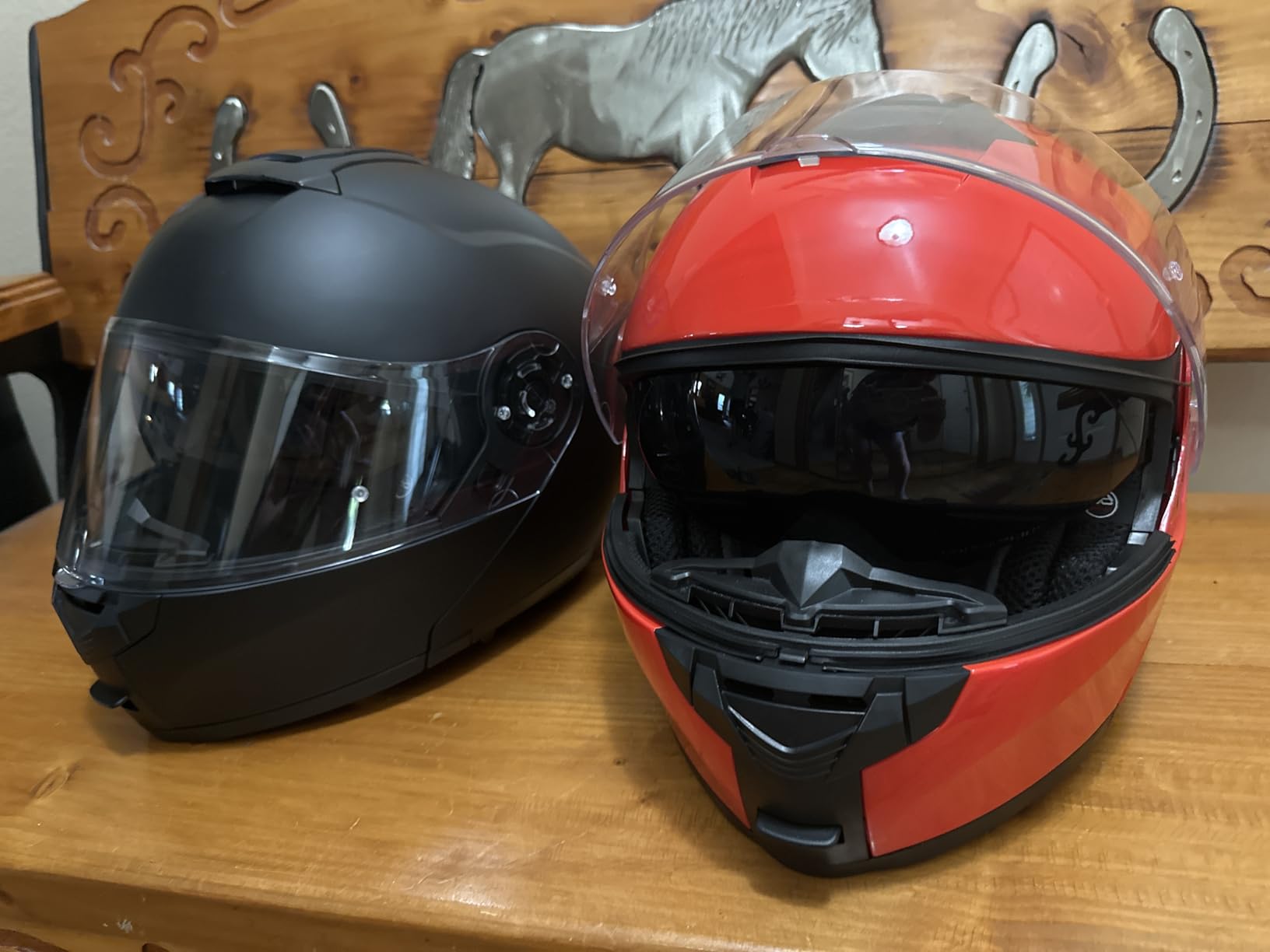
This model drew clear positive glasses-wearer feedback from owners. Multiple owners describe putting on ear plugs and glasses first, then flipping the chin bar up and sliding the helmet on, with the frames settling correctly before the bar closes. That is the on-and-off problem solved rather than worked around.
The internal dark sun visor is the other thing glasses riders mention. It removes the daily swap between clear glasses and sunglasses, and it is operable with gloves on via a switch, so you can drop it at a stop without taking your hand off the bars for long.
At 1750 g with a lightweight ABS shell and a thick, high-density fully vented EPS liner, this modular reads as a comfortable one in summer heat. The removable washable liner and cheek pad help with sweat over long days.
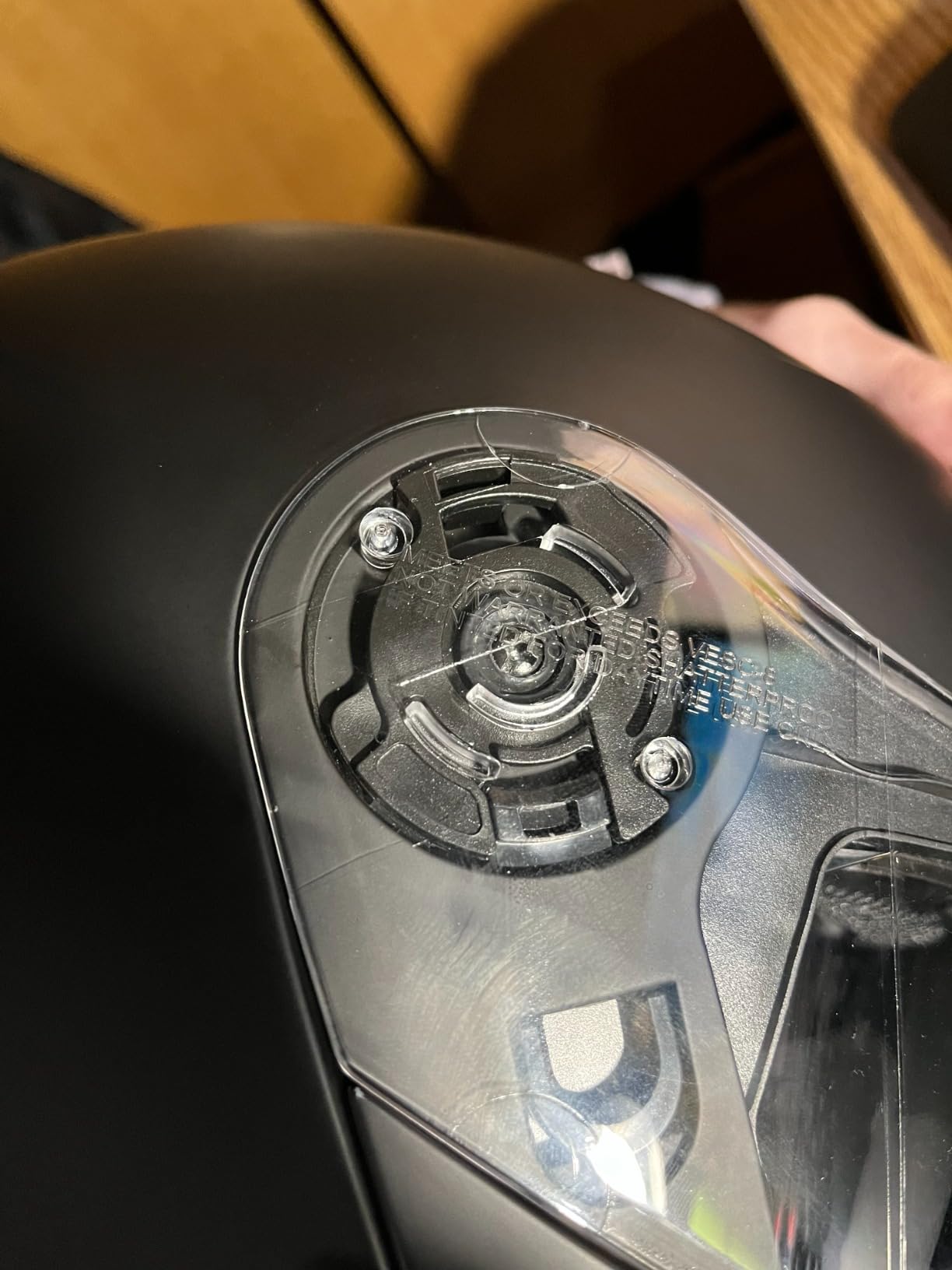
Now the honest part. This model runs noticeably large compared with other ILM helmets, and some owners report that the side temples of their glasses are still pinched at the cheek pads even in a snug fit. Modular design does not remove the pressure problem while you are riding; it only fixes the sequence of getting in and out.
It is also noisy at moderate speeds, and upward visibility is restricted while the chin bar is flipped up. If you ride with the bar up frequently, plan your stops around that limitation.
Who the ILM 159 Modular suits
This suits a rider in a hot climate who wears glasses daily, stops often, and wants a single helmet that handles day and night without swapping lenses. The fit report also suggests it works well for riders with wider head shapes who struggle with tighter shells.
Touring riders who value the internal sun visor will find the switch glove-operable and the liner washable, both of which matter on a multi-day trip.
Where it falls short
Temple pinch at the cheek pads remains a reported issue even among people who like the helmet, so thick acetate frames should be treated cautiously here. If your frames are the thick kind, test this model in person before committing.
Riders prioritising quietness will be disappointed, and the loose fit relative to other ILM models means you may need to adjust the internal padding to get the retention you want. Do not assume a large shell is a secure shell.
Why Helmets Fight Your Glasses, and What Fixes It
Temple pressure is the defining complaint, and it has one mechanical cause. Cheek pads and temple padding are contoured tightly to the head so the helmet stays secure at speed. Frame arms get trapped between that padding and your skull, and the padding wins.
Ignored, that pressure becomes a headache inside about half an hour and pulls attention away from the road. A bent or cracked frame is the milder version of the same problem. Riders on forums describe frames creaking as the chin bar closes, which is a sign the shell is physically deforming rather than the padding giving way.
Four accommodation mechanisms exist, and every helmet in this roundup uses at least one of them.
Eyewear channels or grooves – a recessed path moulded into the cheek and temple foam, so the frame arm sits in a channel rather than against compressed padding.
Temple cutouts and no-stitch zones – a gap in the liner stitching at the side of the head that frees the arm and lets it rest naturally.
Extra shell sizes – a wider range of shell sizes gives a narrow-head rider room to keep retention while leaving space for frames. Sizing up a shell is the wrong version of this; a properly fitted shell in a larger size is the right one.
A flip-up chin bar – the modular answer, letting you settle your frames before the shell closes rather than after.
Riding position is the variable nobody mentions. A sporty, forward-leaning posture presses the top of your frames against the brow padding in a way an upright cruiser position does not. If you ride leaned forward, test the helmet in that position, not standing up in a shop.
Frame Thickness Changes Everything
Thin, straight metal temples are the single biggest factor in whether a helmet works for you. Straight arms slide into helmet padding and lie flat. Curved, thick acetate frames do the opposite: they resist a straight path, so they wedge, twist and transmit every bit of pressure straight to your temple.
This is why two riders can own the same helmet and reach opposite conclusions. If your frames are slim and metal, almost anything on this list will work. If they are heavy acetate, the deciding factor becomes the eye port size and whether the cheek pads can be moved or swapped, not the vent layout or the shield type.
There is a practical test. Lay your frames face down on a flat table. If the arms lift off the surface, they are curved and will resist a helmet liner. If they sit flat, they will follow the path a channel gives them.
Frames are also worth reviewing independently of the helmet. Our dirt bike goggles guide for glasses wearers covers the eye protection side for off-road riding, and the same logic applies on the road: thin arms, a bridge that does not sit on your brow bone, and a fit that does not slide when you lean forward.
One more tip that costs nothing: bring the helmet to the optician when you order new frames. Riders who do this can be measured with the actual liner in place, and any reputable frame fitter will tell you immediately whether the temple arms will clear. Frame bending and helmet fit are one problem, not two.
Helmet Myths for Glasses Riders, Debunked
Myth: You should size up a helmet to fit your glasses. No. A shell that is too large reduces retention and weakens the protective fit you are paying for. Look for a properly fitted shell in a larger size from a range with more shell sizes, or a liner with eyewear channels or temple cutouts. Sizing up is the last option, not the first.
Myth: Only open-face helmets work with glasses. No. Open faces remove the pressure problem because there is no padding at the temples, but they give up chin and jaw protection entirely. Every full-face helmet in this roundup has owners who wear prescription frames with it and report the fit holds up on a full ride.
Myth: A Pinlock insert solves fogging. It solves visor fogging only. Your glasses fog because warm moist breath reaches your lenses and no air is moving across them. A Pinlock insert in the face shield does nothing for the lenses in your eyes. Airflow, an open breath guard and careful visor management are what address the frames.
Myth: Modular helmets are automatically better for glasses. Usually better for getting in and out, and worse once you are riding. A flip-up chin bar removes the moment where frames get bent, but adds neck weight and leaves temple pressure exactly where a full face would have it. Choose modular for on-and-off frequency, not for pressure relief.
Myth: If it fits the shop, it fits the road. Shop fitting is done standing upright and still. Add a forward lean, road vibration and airflow, and a frame that felt fine can start to press. If a store allows it, ask to sit on the bike.
Fog: the Problem Pinlock Only Half Solves
Two separate fogging problems are happening at once, and treating them the same way leaves riders disappointed. The visor fogs on its outward surface; your lenses fog on their outward surface too, but only the visor is addressed by an insert.
Open every vent you can find. Intake and exhaust controls exist to move air across the face shield and the eye area. Closed vents are the most common reason lenses fog.
Skip the breath guard and chin curtain. A rubber breath deflector sitting inches from your mouth does exactly what its name suggests. Removing or folding it away is the single biggest change most riders can make.
Crack the visor at stops. A first-position opening clears condensation fast at traffic lights, which is where fogging is most annoying and most distracting.
Use a real anti-fog product on your lenses. Sprays and wipes for spectacle lenses work better than riders expect. Apply before the ride, not during it.
Add anti-reflective coating to your next prescription. It reduces the glare that makes riders fog in the first place, and it matters more on a clear visor than the visor brand does.
For the visor only, add a Pinlock insert. This is the correct tool for shield fog, and the HAX Obsidian is the one shell here with a Pinlock-ready eye port. Buying an insert will not fix fogged glasses.
Contact lens wearers face a different issue: helmet airflow dries the lens out. Bring spare lenses and eye drops, and expect to reinsert more often than you would at a desk.
How to Stop Your Glasses Pinching in a Helmet
Put the helmet on first, then the glasses. For a full face, lift the liner opening and slide frames in from the front rather than trying to feed both at once through the eye port.
Run the ten-second test. Helmet on, glasses on, and if you can feel your frames within ten seconds, that helmet is not for you. This comes straight from rider advice on r/motorcyclegear and it is the most reliable shop test there is.
Check the temple arms, not the bridge. Pressure almost always shows up at the sides. Press gently where the arms meet the padding and watch whether the frame shifts or the arm flexes.
Close the chin bar slowly and listen. A creak from the frames means the shell is deforming against them. Open the bar and try a different shell size or a helmet with more side clearance.
Mimic your riding position. Sit forward, lean into the bars, and hold the position for a minute. Any pressure that only appears when leaned over will not go away on the road.
Move the cheek pads before you move sizes. Removable and washable cheek pads on the ILM, GLX and YEMA can be repositioned or swapped to relieve side pressure without changing shell size.
How to Choose a Helmet That Fits Your Glasses
Start with eye port, then channels. A tall, wide eye port lets frames sit at their natural angle. A moulded eyewear channel does more: it gives the temple arm a defined path. If a manufacturer names the feature, ask for it specifically rather than inferring from a wide opening.
Treat cheek pads as adjustable, not fixed. Removable and washable cheek pads matter more than they appear to. They are the part of the helmet that touches your frames, and being able to reposition or swap them is often cheaper and safer than changing shell size.
Understand the certification alphabet. Everything in this roundup is DOT FMVSS-218 certified. ECE 22.06 is the European standard and covers a broader test set, including rotational impact. Snell is a higher bar still. If you ride beyond casual street use, that difference is worth considering, though it is a separate question from glasses fit.
Get the head shape right. Most riders fall between an intermediate oval and a round oval. A correct shell shape keeps retention without needing to tighten down on the sides, which is also what stops the frame pinch. If a helmet feels right but the pads are compressing your temples, the shape is wrong, not the size.
Weigh modular against full face honestly. Modular wins for on-and-off convenience and gives a wider opening to settle frames. Full face wins on weight, wind sealing and noise. Riders who cover long distances with comms often prefer a full face with proper speaker cutouts. Our modular helmet guide and full face helmet guide both go deeper on the tradeoffs.
Consider the frames themselves. Thin metal temples, a bridge clear of the brow bone and an anti-reflective coating do more for helmet comfort than any single helmet feature. Contacts, riding-only frames, photochromic lenses and a good internal sun visor are all viable alternatives to wearing heavy frames all day.
Test in person if you can. This is a helmet. Weight, balance and pressure are physical sensations that no specification captures, and the ten-second test costs you nothing.
Frequently Asked Questions
Which motorcycle helmets are compatible with eyeglasses?
Any full-face helmet can physically accept glasses, but only some are comfortable past thirty minutes. The ones that work share specific accommodations: a tall, wide eye port, moulded eyewear channels recessed into the cheek and temple foam, temple cutouts or no-stitch liner zones, or a flip-up chin bar that lets you settle frames before closing. In our roundup the ILM ILM-313, GLX GX11 and TRIANGLE score best for fixed full faces, while the YEMA and ILM 159 modulars solve the on-and-off problem outright.
How do I keep glasses from fogging up inside a motorcycle helmet?
A Pinlock insert only clears the face shield, not your lenses, so treat the two problems separately. For your glasses: open every intake and exhaust vent, remove or fold away the breath guard and chin curtain, crack the visor to first position at stops, and use an anti-fog spray or wipe on the lenses before riding. Choose airflow that actually crosses the eye area rather than just the top of the shell, and add anti-reflective coating to your next prescription.
Which motorcycle helmets have a glasses channel?
A glasses channel, also called an eyewear groove, is a recessed path moulded into the cheek and temple foam that the frame arm slides into instead of being pressed against padding. Look for the manufacturer’s eyewear-ready or no-stitch liner description, and confirm the cheek pads are removable so side pressure can be adjusted. In this group the HAX Obsidian is explicitly marketed as glasses friendly, while the GLX GX11, TRIANGLE and JQF Gear use wide eye ports to achieve the same result.
How do I ride a motorcycle if I wear glasses?
Helmet first, then glasses, working from the front of the face opening rather than feeding both through the eye port at once. A modular helmet removes the problem entirely, since you settle your frames and then close the chin bar. Keep frames with straight, thin metal temples, use a prescription with anti-reflective coating, and if you wear contacts bring spares and eye drops because helmet airflow dries lenses quickly. Keep a spare pair and a photo of your prescription in your luggage for long trips.
Should I size up my helmet to fit my glasses?
No. A shell that is too large reduces retention and weakens the protective fit. Look for a correctly fitted shell in a larger size from a range offering more shell sizes, plus moulded eyewear channels, temple cutouts or a no-stitch liner. If a helmet is snug enough for retention but presses your temples, the head shape is probably wrong rather than the size being too small.
Are modular helmets better for glasses wearers?
Usually better for getting on and off, because the flip-up chin bar lets you settle your frames before the shell closes, and generally worse once you are riding. Modular helmets add weight on the neck, introduce a rotating joint that adds wind noise, and do nothing to reduce temple pressure while the bar is closed. Pick modular for frequency of removal, and a full face with dedicated eyewear channels for all-day comfort.
Final Verdict: Best Motorcycle Helmets for Glasses Wearers in 2026
The ILM ILM-313 wins this roundup on evidence: a 4.5 star average across 9608 reviews, a wide eye port, removable washable padding and a 3 pound shell. The GLX GX11 is the better buy if fogging is your main complaint, thanks to its seven-port vent system, and the BELL Qualifier is the strongest-built option for riders who can handle a break-in period.
For stop-start riding, the YEMA and ILM 159 modulars remove the frame-bending moment entirely. Whatever you choose, run the ten-second test before you leave the shop, and check the fit in your actual riding position.
Updated for 2026. If you want the short version, start with the ten-second test and let the helmet fail itself.