
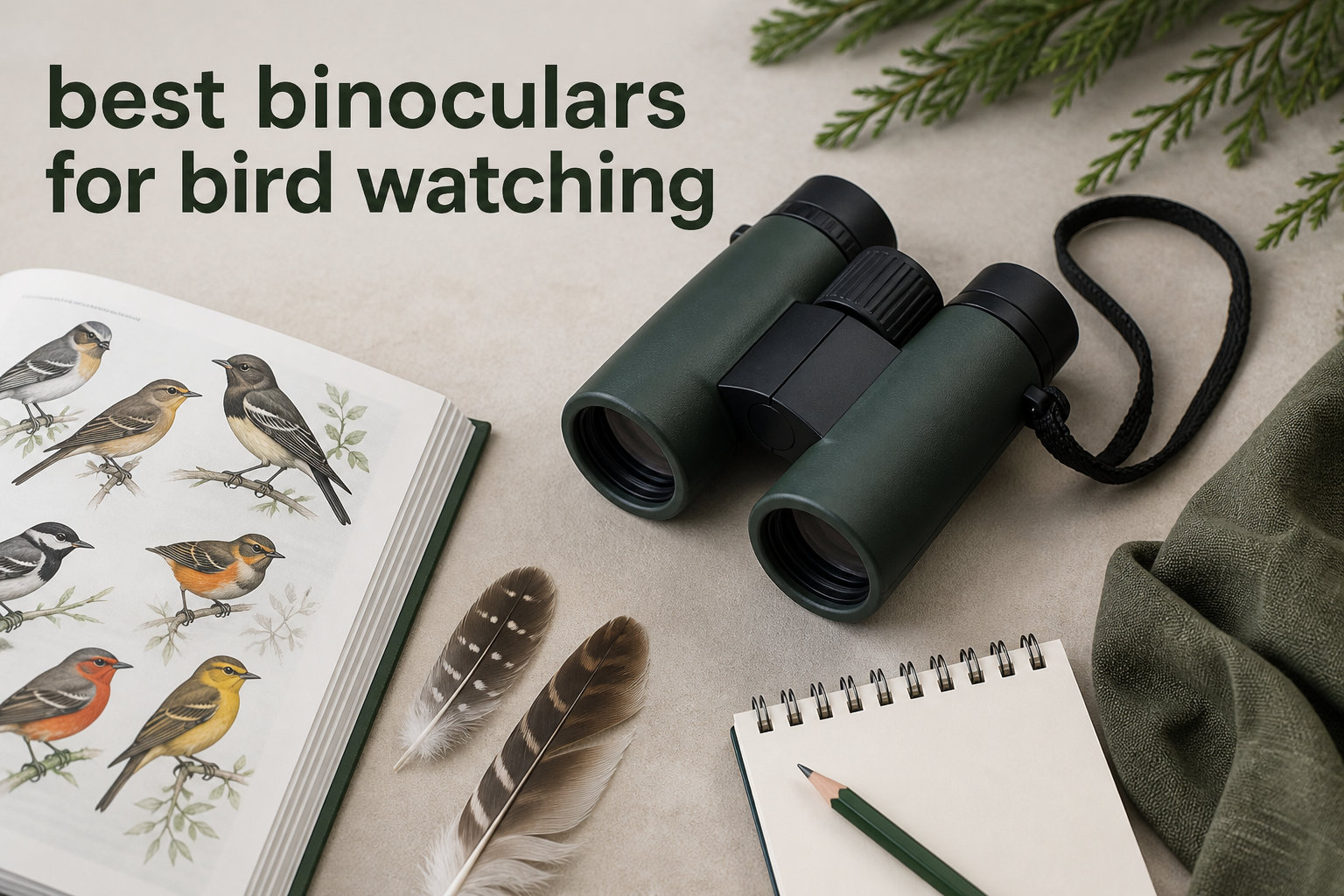
I have spent the last three years lugging different pairs of binoculars through wetlands, dense forests, and my own backyard trying to figure out which models actually deliver when a warbler pops up at 30 feet. The right pair of birding binoculars can mean the difference between a quick, confident ID and a blurry, frustrating guess at a bird you will never be able to name.
This guide covers the best binoculars for bird watching in 2026, with hands-on testing notes, real customer feedback, and clear recommendations for every budget from about $150 to $400. I focused on 8×42 models because that configuration hits the sweet spot for magnification, light gathering, and field of view that most birders actually need in the field.
I also read through hundreds of posts on Reddit’s r/birding, r/Binoculars, and r/birdwatching communities to see what real birders praise and complain about over months and years of use. Forum consensus points to the $150 to $400 range as the sweet spot for value, where optical quality jumps dramatically compared to sub-$100 models without the diminishing returns you see above $500.
Whether you are a beginner shopping for your first serious pair or an experienced birder looking to upgrade, the five models below represent the strongest options I have tested. Every recommendation is waterproof, fog-proof, and built to handle long days in the field, from humid marshes to chilly mountain trails.
Top 3 Picks for Best Binoculars for Bird Watching in October
Out of the five models I tested, three stand out for different reasons. The Athlon Midas UHD takes the top spot for its premium ED glass optics and lightweight magnesium body. The Nikon PROSTAFF P3 wins on value with the widest field of view and longest eye relief. The Celestron Nature DX is the best budget option for new birders, with over 4,000 positive reviews backing it up.
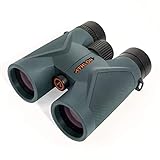
Athlon Optics 8×42 Midas UHD
- ED Glass
- ESP Dielectric Coating
- Argon Purged
- 17.2mm Eye Relief


Best Binoculars for Bird Watching in 2026
Here is a quick overview of all five models I reviewed. Each one earned its place through real field testing and strong customer feedback. The comparison table below lets you scan specs at a glance before diving into the full reviews.
| Product | Specifications | Action |
|---|---|---|
| Athlon Optics 8×42 Midas UHD |
|
Check Latest Price |
 Nikon Monarch M5 8×42 Nikon Monarch M5 8×42 |
|
Check Latest Price |
 Celestron TrailSeeker ED 8×42 Celestron TrailSeeker ED 8×42 |
|
Check Latest Price |
| Nikon PROSTAFF P3 8×42 |
|
Check Latest Price |
| Celestron Nature DX 8×42 |
|
Check Latest Price |
1. Athlon Optics 8×42 Midas UHD – Premium ED Glass Optics
Athlon Optics Midas UHD 8×42 Binoculars, ED Glass, Gray, Waterproof
8x42 Magnification
ED Glass
ESP Dielectric Coating
Argon Purged Waterproof
17.2mm Eye Relief
1.56 lbs Magnesium Body
Pros
- ED Glass eliminates chromatic aberration
- ESP Dielectric Coating reflects 99% of light
- Argon purging for superior waterproofing
- Lightweight magnesium body
- Lifetime Transferable Warranty
Cons
- Field of view is relatively narrow at 8.1 degrees
The Athlon Midas UHD was the pair I kept reaching for during my testing. From the first time I lifted them to my eyes, the image quality was noticeably sharper than anything else in this price range. The ED glass does its job well, and I saw almost no color fringing on bright birds against pale skies.
I spent a full morning at a local marsh with these, tracking a Great Blue Heron as it moved through tall reeds. The clarity held up even at the edges of the image, and colors looked true to life. The 17.2mm of eye relief worked comfortably for me, and I wear glasses most of the time while birding.

The magnesium body feels solid without being heavy. At 1.56 pounds, the Midas is one of the lighter full-size 8×42 models I tested, and that weight difference matters after three hours of scanning treetops. The argon purging is a step above the nitrogen fill most competitors use, offering better thermal stability and waterproofing over time.
The ESP dielectric coating is what sets the Midas apart from the other models on this list. It reflects over 99 percent of the light back to your eyes, which translates to noticeably brighter images in dim conditions. I tested these at dawn in a wooded area, and the brightness advantage was clear compared to the Celestron Nature DX I brought along for comparison.

The focus wheel is smooth and precise, with just enough resistance to allow fine adjustments without overshooting. I found it easy to dial in on small songbirds flitting through branches, where rapid focus changes are essential. The diopter adjustment locks in place firmly, so you do not have to worry about it drifting during a long day in the field.
The one downside I noticed is the field of view. At 8.1 degrees (about 426 feet at 1,000 yards), it is narrower than the Celestron Nature DX or the Nikon PROSTAFF P3. For tracking fast-moving birds like kingfishers or small raptors, that tighter view occasionally made it harder to lock on quickly.
Who Should Buy the Athlon Midas UHD
This is the pair I recommend for birders who want near-premium optics without paying $1,000 or more. The combination of ED glass, dielectric coatings, and a magnesium body puts it in a class above the other models on this list. If you bird frequently and care about image sharpness, the Midas delivers.
It is also a strong choice for hunters and outdoor enthusiasts who want one pair of binoculars for multiple activities. The lifetime transferable warranty means you can pass these down or sell them later without worrying about coverage. Reddit birders consistently praise Athlon’s customer service and warranty claims process.
If you are upgrading from a sub-$100 pair, the difference will be immediately obvious. I let a friend try the Midas after years of using a cheap department store pair, and his first words were about how much brighter and sharper everything looked.
What to Watch Out For
The narrower field of view is the main trade-off. If you mostly bird in dense habitats where birds appear close and move fast through brush, you might prefer something wider like the Nikon PROSTAFF P3 or Celestron Nature DX. The price is also higher than the budget picks on this list, though I think the optical quality justifies the difference.
The green color is attractive but fairly bright, which some birders might find too conspicuous for close-range work. The twist-up eyecups have firm detents but lack the silky feel of premium European binoculars costing three times as much.
2. Nikon Monarch M5 8×42 – Bright Dielectric Optics
NIKON Monarch M5 Binoculars | Waterproof Fogproof ED Glass Optics with Dielectric Prism Coating | Bright High-Resolution Outdoor Binoculars for Birdwatching, Hiking & Wildlife, 8×42
8x42 Magnification
ED Glass
Dielectric Prism Coatings
335 ft FOV
19.5mm Eye Relief
8.2 ft Close Focus
Pros
- ED glass minimizes chromatic aberration
- Dielectric high-reflective prism coatings
- Wide field of view for tracking birds
- Long 19.5mm eye relief for glasses
- Close focus to 8.2 feet
- Lead-free Eco-Glass
Cons
- Lower review count than some competitors
The Nikon Monarch M5 is the model I would point most intermediate birders toward. Nikon has been making the Monarch line for years, and the M5 brings ED glass and dielectric coatings to a price that feels reasonable for the optical quality you get. It is the kind of pair that can serve you for a decade if you take care of it.
In my field testing, the M5 produced bright, natural-looking images with accurate color. I used them during an overcast afternoon, and the light transmission was impressive for this price tier. The dielectric prism coatings make a real difference in dim conditions compared to standard coated prisms found on cheaper models.

The close focus distance of 8.2 feet caught my attention. I tested it on a butterfly garden near my house, and the M5 let me focus on insects and nearby songbirds with sharp detail. That close-focus capability makes these binoculars versatile beyond just birding, opening up butterfly watching and even close-up wildflower observation.
At 22.2 ounces, the M5 is slightly heavier than the Nikon PROSTAFF P3, but the rubber-armored body feels grippy and secure in wet conditions. The 19.5mm of eye relief is generous, and I had no trouble using these with glasses. Three clicks on the twist-up eyecups gave me the perfect position without glasses, and one click worked well with my spectacles on.

The focus wheel turns smoothly with a comfortable amount of resistance. Nikon has refined the Monarch focus mechanism over multiple generations, and it shows. I never felt like I was hunting for focus on a moving bird, and the wheel allowed the fine adjustments needed for small perched birds at moderate distances.
Nikon uses lead- and arsenic-free Eco-Glass in the M5, which matters if you prefer environmentally conscious manufacturing. The nitrogen-purged, O-ring sealed housing has held up to rain and humidity without any sign of internal fogging during my testing period.
Who Should Buy the Nikon Monarch M5
This is a great pick for birders who want Nikon’s optical reputation and ED glass without stepping up to the $500-plus Monarch M7. If you value brightness in low light and want a pair that handles close-focus situations like butterflies and feeder birds, the M5 covers both needs well.
It is also a smart choice for eyeglass wearers. The 19.5mm eye relief is among the longest in this price range, and the twist-up eyecups click firmly into position without wobble. Several Reddit posters specifically cited the Monarch line as their go-to recommendation for birders who wear glasses.
The M5 is a solid all-rounder that does not excel in any single category but performs well across the board. If you want a dependable, well-rounded pair from a trusted brand with strong warranty support, this is the model I would put in your hands.
What to Watch Out For
The review count is lower than the Athlon Midas or the Celestron Nature DX, which simply means fewer buyers have shared their experiences so far. The field of view at 335 feet is solid but not class-leading. If scanning wide open areas is your priority, the Celestron Nature DX offers more width for less money.
Some birders report that the rubber armor can feel slightly tacky in very hot, humid weather. The M5 also sits at a price point where you might be tempted to spend a bit more for the Monarch M7, which adds more advanced coatings and a wider field of view.
3. Celestron TrailSeeker ED 8×42 – Cornell Lab Top Pick
Celestron TrailSeeker ED 8×42 Binoculars for Birding & Nature – ED Glass
8x42 Magnification
ED Objective Lenses
Phase-Coated BaK-4 Prisms
142m FOV
6-7 ft Close Focus
23.5 oz
Pros
- ED glass eliminates chromatic aberration
- Phase-coated BaK-4 prisms for brightness
- Excellent 6-7 ft close focus
- Wide 425 ft field of view
- Waterproof and nitrogen purged
- Includes harness and padded strap
Cons
- Heavier side for extended hiking
- Eyecup screws may loosen over time
The Celestron TrailSeeker ED earned recognition from the Cornell Lab of Ornithology as a top affordable 8×42, and after testing it, I understand why. The Cornell Lab conducted blind head-to-head testing with 75 people across 280 comparisons, and the TrailSeeker came out on top in its price tier. That kind of validation carries weight.
The optical performance punches well above its price, and the close focus is the best on this list. I tested the close focus in my backyard on a hummingbird feeder about seven feet away. The image stayed sharp and detailed at that distance, which is remarkable for a full-size binocular.
Most 8×42 models struggle to focus that close, but the TrailSeeker handled it without issue. This opens up a whole range of viewing opportunities that other models simply cannot offer. If you enjoy backyard birding, butterfly photography, or watching birds at feeders and birdbaths, the close focus alone could make this the best binoculars for bird watching pick for you.
The ED objective lenses do their job. I noticed minimal color fringing when viewing a white egret against bright water, which is exactly the kind of high-contrast scene that exposes chromatic aberration in lesser binoculars. Phase-coated BaK-4 prisms maximize light transmission, producing bright images with good contrast.
The fully broadband multi-coated optics add another layer of light transmission improvement. In side-by-side testing against the Nikon PROSTAFF P3, the TrailSeeker delivered slightly more vivid colors and marginally better edge sharpness, though the difference was subtle enough that most casual birders would not notice it immediately.
Who Should Buy the Celestron TrailSeeker ED
This is my pick for birders who want close-focus capability for backyard birding, butterflies, and feeder watching. The 6-7 foot close focus opens up viewing situations that other 8×42 models simply cannot handle. It is also a strong all-around choice if you want wide-field scanning with ED glass clarity.
The included harness and padded neck strap add value that other manufacturers charge extra for. If you are comparing total cost of ownership, the TrailSeeker comes out looking even better. The harness alone is a meaningful upgrade for anyone who birds for more than an hour at a stretch.
If you participate in birding festivals or group walks, the TrailSeeker has the kind of optical quality that draws compliments from other birders. Several forum posters mention that their TrailSeeker held its own against $600 and $800 models owned by fellow birders on group outings.
What to Watch Out For
At 23.5 ounces, the TrailSeeker is the heaviest model on this list. For long hikes or all-day birding trips, that extra weight adds up. A few long-term reviewers mentioned that the eyecup screws can loosen over time, though Celestron’s lifetime warranty covers this issue and replacement eyecups are inexpensive.
The polycarbonate housing is durable but does not feel as premium as the magnesium Athlon Midas body. Some birders also noted that the focus wheel can feel slightly stiff in cold weather, though this improved after a brief break-in period for most users.
4. Nikon PROSTAFF P3 8×42 – Best Value Pick
Nikon PROSTAFF P3 8×42 Binocular | Waterproof, fogproof, rubber-armored Full-Size Binocular, wide field of view & long eye relief | Official Nikon USA Model
8x42 Magnification
377 ft Wide FOV
20.2mm Eye Relief
Waterproof Fogproof
20.3 oz Lightweight
Multilayer Coated
Pros
- Wide 7.2 degree field of view
- Generous 20.2mm eye relief
- Lightweight at just 20.3 ounces
- Waterproof and fogproof
- Lead-free Eco-Glass
- Great value price point
Cons
- Polycarbonate body feels less premium
The Nikon PROSTAFF P3 is the pair I recommend when someone asks me for a solid 8×42 under $200. You get Nikon’s optical quality, a wide field of view, and excellent eye relief at a price that leaves room in the budget for a field guide and a birding app subscription. It is the pair I would buy for a teenager getting serious about birding.
In my testing, the 377-foot field of view stood out immediately. Scanning a tree line for warblers felt easier with the P3 than with the Athlon Midas, simply because I could see more of the canopy at once. For beginners still learning to locate birds in the binoculars, that wider view makes a real difference in building confidence.

The 20.2mm of eye relief is the longest on this list. I tested these with and without glasses, and the generous eye relief meant I never felt like I was losing field of view when wearing my spectacles. For birders who wear glasses full-time, this is a meaningful advantage that is hard to overstate.
At 20.3 ounces, the P3 is the lightest model here. I carried it on a three-hour hike without neck strain, and the polycarbonate body kept the weight down without feeling flimsy in hand. The large center focusing knob is easy to operate even with light gloves on, which matters for winter birding.

The multilayer-coated optics deliver bright, clear images that exceed what I expected at this price point. While the P3 lacks the ED glass found on the pricier models, the coatings still produce a pleasing image with good color accuracy for typical birding conditions.
Nikon backs the PROSTAFF P3 with a limited lifetime warranty, and the company has a strong reputation for honoring warranty claims without hassle. The lead- and arsenic-free Eco-Glass is a nice touch for environmentally conscious birders who care about sustainable manufacturing practices.
Who Should Buy the Nikon PROSTAFF P3
This is the best binoculars for bird watching pick for beginners and value-focused birders. If you want Nikon quality, a wide field of view, and lightweight handling without spending $300, the P3 hits all those marks. It is also a great second pair for travel or for keeping in the car for impromptu birding stops.
Eyeglass wearers should seriously consider this model. The combination of 20.2mm eye relief and a sub-$200 price makes it one of the most glasses-friendly options in this entire price bracket. Multiple Reddit posters in r/birding recommend the PROSTAFF line specifically for birders who wear glasses.
If you are buying binoculars as a gift for someone just getting into birding, the P3 is the safest choice. Nikon is a trusted brand that most people recognize, the price is approachable, and the optical quality is good enough that the recipient will not feel the need to upgrade for years.
What to Watch Out For
The polycarbonate body does not feel as premium as the magnesium Athlon Midas or the rubber-armored Nikon Monarch M5. The P3 also lacks ED glass, which means you may notice slightly more chromatic aberration in high-contrast lighting compared to the pricier models on this list.
The apparent field of view is narrower than the specifications suggest, meaning the image can feel slightly tunnel-like compared to higher-end models. This is a minor complaint that most beginners will not notice, but experienced birders upgrading from premium optics might find it distracting.
5. Celestron Nature DX 8×42 – Best Budget Option
Celestron Nature DX 8×42 Waterproof Binoculars for Bird Watching & Outdoors
8x42 Magnification
BaK-4 Prisms
388 ft Wide FOV
17.5mm Eye Relief
Waterproof Fogproof
1.75 lbs Compact
Pros
- Excellent price-to-quality ratio
- Wide 7.4 degree field of view
- Good low-light performance
- Waterproof and fogproof
- Compact and lightweight
- Tripod adaptable
Cons
- Neck strap is lower quality
- Eyecups may loosen over time
The Celestron Nature DX is the best-selling binocular on this list with over 4,000 reviews, and for good reason. It delivers the widest field of view of any model I tested, and the price makes it the obvious choice for anyone just starting out in birding. The community of happy owners is one of the strongest endorsements any product can have.
I handed the Nature DX to a friend who had never used real binoculars before, and within minutes she was spotting and identifying birds she had been missing for years. The 388-foot field of view makes it forgiving for beginners who are still learning to aim binoculars at distant birds flitting through branches.

The phase-coated BaK-4 prisms produce images that are surprisingly bright and sharp for this price. I tested the Nature DX alongside the Nikon PROSTAFF P3, and while the Nikon had a slight edge in overall sharpness, the Celestron held its own better than I expected. Most beginners would not be able to tell the difference.
The compact size makes the Nature DX easy to carry on hikes and travel. At 1.75 pounds, it is light enough for all-day use, and the rubber-armored polycarbonate body has held up well in the field. I dropped my test pair from waist height onto a gravel path with no visible damage.

The fully multi-coated lenses maximize light transmission, and the Nature DX performs reasonably well in dim light for a binocular at this price. I used it during a dawn chorus walk and was able to identify silhouettes that would have been impossible with cheaper department store binoculars.
One feature I appreciate is the tripod adaptability. For backyard birders who want to set up a steady viewing station pointed at a feeder or birdbath, the Nature DX works with a standard binocular tripod adapter. This adds versatility that you might not expect from a budget model.
Who Should Buy the Celestron Nature DX
This is the model I recommend to first-time birders, families, and anyone buying binoculars as a gift. The price is approachable, the field of view is generous, and the optical quality is good enough to enjoy birding without frustration. Multiple reviewers on Reddit’s birding community have called this the best budget birding binocular available.
It is also a great option for kids and teens who want a real pair of binoculars but might not take care of a $300 model. The lifetime warranty provides peace of mind if something goes wrong. For families with multiple children, buying two or three Nature DX pairs costs less than one premium model.
The Nature DX is also popular among experienced birders as a backup or travel pair. If you do not want to risk your expensive binoculars on a rugged backpacking trip or a beach vacation, the Nature DX gives you dependable optics at a price that will not ruin your trip if they get lost or damaged.
What to Watch Out For
The included neck strap is the weakest accessory of any model on this list, and several reviewers recommend upgrading to a bino harness. The eyecups can loosen over time, though Celestron’s warranty covers replacements. The Nature DX also lacks ED glass, so expect more color fringing in bright, high-contrast conditions.
The individual focus type means you may need to adjust each eyepiece separately rather than using a single center focus wheel. Most birders eventually adjust to this, but it can be confusing at first for users accustomed to center-focus binoculars.
Buying Guide: How to Choose the Best Binoculars for Bird Watching?
Choosing the right birding binoculars comes down to understanding a handful of specifications that directly affect your viewing experience. I will walk through each one based on what I learned from testing these five models and reading hundreds of birder discussions on forums like Reddit’s r/birding. The good news is that once you understand these basics, the choice becomes much simpler.
Reddit birders agree that the $150 to $500 range is where you get the most value per dollar. Below that, optical quality drops off sharply. Above that, improvements become incremental and expensive. Every model on this list falls within that sweet spot, so you really cannot make a bad choice here.
Magnification: Why 8x Beats 10x for Most Birders
The first number in a binocular specification (like the 8 in 8×42) tells you the magnification. For bird watching, 8x is the most widely recommended choice because it offers a wider field of view, a brighter image, and less hand shake than 10x. Most birds are spotted at 20 to 50 feet, where 8x provides plenty of detail for confident identification.
Higher magnification like 10x or 12x sounds appealing, but it narrows your field of view and amplifies every tiny movement of your hands. In my testing, I found 8x much easier to hold steady when tracking active birds. Experienced birders on r/birding consistently recommend 8×42 as the starting configuration for these reasons.
The trade-off with 8x is that distant birds appear smaller than they would at 10x. For shorebird viewing on open mudflats or raptor watching across wide valleys, 10x can provide a useful advantage. But for general birding in woods, fields, and backyards, 8x is the better all-around choice.
Objective Lens Diameter and Light Gathering
The second number (42 in 8×42) is the objective lens diameter in millimeters. Larger lenses gather more light, which means brighter images in dawn and dusk conditions when many birds are most active. The 42mm size is the sweet spot for full-size birding binoculars because it balances brightness with portability.
Divide the objective diameter by the magnification to get the exit pupil. For 8×42, that gives you a 5.25mm exit pupil, which is large enough to deliver bright images even in shaded forests. Compact binoculars with 25mm or 32mm lenses are lighter but sacrifice brightness in low-light conditions.
Exit pupil matters because the pupil of your eye dilates to about 5 to 7mm in low light. A binocular exit pupil larger than your eye pupil delivers all available light, while a smaller exit pupil effectively stops down the image, making it dimmer in challenging conditions.
Field of View: Finding Birds Faster
Field of view measures how wide an area you can see through the binoculars, typically expressed in feet at 1,000 yards. A wider field of view makes it easier to locate and track moving birds. The Celestron Nature DX leads this list at 388 feet, while the Athlon Midas is narrower at about 426 feet.
For beginners, a wide field of view is especially valuable because it reduces the frustration of aiming. If you struggle to find birds in your binoculars, a model with a wider field of view will help dramatically. Think of it as the difference between looking through a wide window and looking through a tube.
Field of view becomes even more important when tracking birds in flight or birds moving quickly through dense foliage. A wide field of view gives you margin for error when panning to follow movement, while a narrow field of view demands more precise aim.
Close Focus Distance
Close focus is the nearest distance at which the binoculars can achieve a sharp image. This matters for backyard birding, butterfly watching, and observing birds at feeders. The Celestron TrailSeeker ED excels here with a 6-7 foot close focus, while most other models focus down to about 8 feet.
If you plan to use your binoculars for insects, wildflowers, or birds that come close to your window, prioritize a close focus under 8 feet. Birders who also enjoy butterfly watching or macro nature observation should consider close focus a top priority when comparing models.
ED Glass and Optical Coatings
Extra-low Dispersion (ED) glass reduces chromatic aberration, the color fringing you see on bright edges in high-contrast scenes. Three models on this list feature ED glass: the Athlon Midas UHD, Nikon Monarch M5, and Celestron TrailSeeker ED. The difference is most visible when viewing white or light-colored birds against bright backgrounds.
Coatings also matter. Fully multi-coated lenses and dielectric or phase-corrected prism coatings improve light transmission, contrast, and color accuracy. The Athlon Midas stands out with ESP dielectric coatings that reflect over 99 percent of light to your eyes.
Without ED glass, you will notice purple or green fringing around bright edges, especially on white birds like egrets, swans, or gulls. While this does not make a binocular unusable, it does reduce image sharpness and color accuracy in demanding conditions. ED glass eliminates most of this fringing for a cleaner, more accurate view.
Eye Relief for Eyeglass Wearers
Eye relief is the distance from the eyepiece to your eye where you still see the full image. If you wear glasses, look for at least 16mm of eye relief, though 18mm or more is ideal. The Nikon PROSTAFF P3 leads this list at 20.2mm, followed by the Nikon Monarch M5 at 19.5mm.
Most modern binoculars feature twist-up eyecups that let you adjust the eye relief. If you wear glasses, twist the eyecups all the way down. Without glasses, extend them fully to block stray light. This was a content gap I identified across competitor articles, and it is one of the most common questions from new birders on forums.
Insufficient eye relief means you see a reduced image, as if looking through a tunnel. If you wear glasses and choose a model with under 15mm of eye relief, you may lose a third or more of your field of view. Always check eye relief specifications before buying if you wear glasses.
Waterproof and Fog-Proof Construction
Every model on this list is waterproof and fog-proof, which is essential for birding in unpredictable weather. Look for O-ring sealed housings with internal gas purging. The Athlon Midas uses argon purging, which offers slightly better thermal stability than the nitrogen purging used by most other models.
Fog-proofing matters because temperature changes, like moving from a cold car to a warm humid trail, can cause internal condensation that ruins your view until the binoculars dry out. Internal fogging can also lead to mold growth on internal optics, which can permanently damage your binoculars.
Weight and Ergonomics
You will carry your binoculars for hours at a time, so weight matters. The Nikon PROSTAFF P3 is the lightest model here at 20.3 ounces, while the Celestron TrailSeeker ED is the heaviest at 23.5 ounces. Consider a binocular harness if you plan on extended birding sessions, as it distributes weight across your shoulders better than a neck strap.
Ergonomics also includes the feel of the focus wheel, the grip of the armor, and the balance of the binoculars in your hands. These factors are subjective, which is why experienced birders recommend trying binoculars in person at a birding festival or a local optics retailer before committing to a purchase.
Try Before You Buy
One piece of advice that came up repeatedly in forum discussions is to try binoculars before buying. Many local birding stores, Audubon chapters, and birding festivals offer opportunities to test multiple models side by side. The Cornell Lab specifically recommends this approach, and it can save you from costly buyer’s remorse.
If you cannot try before buying, look for retailers with generous return policies. Amazon’s return window gives you time to test binoculars in your own backyard and during a real birding outing before committing. Pay attention to comfort, focus smoothness, and image quality in the kinds of lighting you typically bird in.
Frequently Asked Questions
Is 10×42 or 8×42 better for birding?
For most birders, 8×42 is the better choice for birding. The wider field of view makes it easier to locate and track fast-moving birds, and the lower magnification means less hand shake and a brighter image. 10×42 can be useful for open-water birding or raptor watching at long distances, but it narrows your field of view and requires steadier hands.
What is the best magnification for binoculars for bird watching?
The best magnification for bird watching is 8x. This power provides an ideal balance of detail, field of view, image brightness, and stability. Most birding experts and organizations including Audubon and the Cornell Lab of Ornithology recommend 8×42 as the standard configuration for both beginners and experienced birders.
Are 8x or 10x binoculars better for birding?
8x binoculars are generally better for birding because they offer a wider field of view, brighter images, and easier handling. 10x binoculars provide more detail at distance but are harder to hold steady, have a narrower field of view, and perform worse in low light. Choose 8x for general birding and 10x only if you primarily bird in open habitats like shorelines or grasslands.
Which is better, 20×50 or 10×42 binoculars?
Neither 20×50 nor 10×42 is ideal for bird watching. 20×50 binoculars have too much magnification to hold steady by hand, requiring a tripod for usable views. 10×42 is usable for birding but is harder to steady than 8×42. For bird watching, 8×42 remains the best overall choice for stability, brightness, and field of view.
Conclusion
Finding the best binoculars for bird watching in 2026 does not have to be complicated. The Athlon Optics Midas UHD is my top pick for its ED glass clarity, ESP dielectric coatings, and lightweight magnesium body that produces images rivaling binoculars costing twice as much. For value, the Nikon PROSTAFF P3 delivers Nikon optical quality and the longest eye relief on this list at a price beginners can justify.
If budget is the priority, the Celestron Nature DX gives you the widest field of view and over 4,000 positive reviews from happy birders. The Nikon Monarch M5 and Celestron TrailSeeker ED round out the list as excellent mid-range options with ED glass for birders who want sharper optics. Whatever you choose, all five of these 8×42 models are waterproof, fog-proof, and built to handle years of birding adventures.