
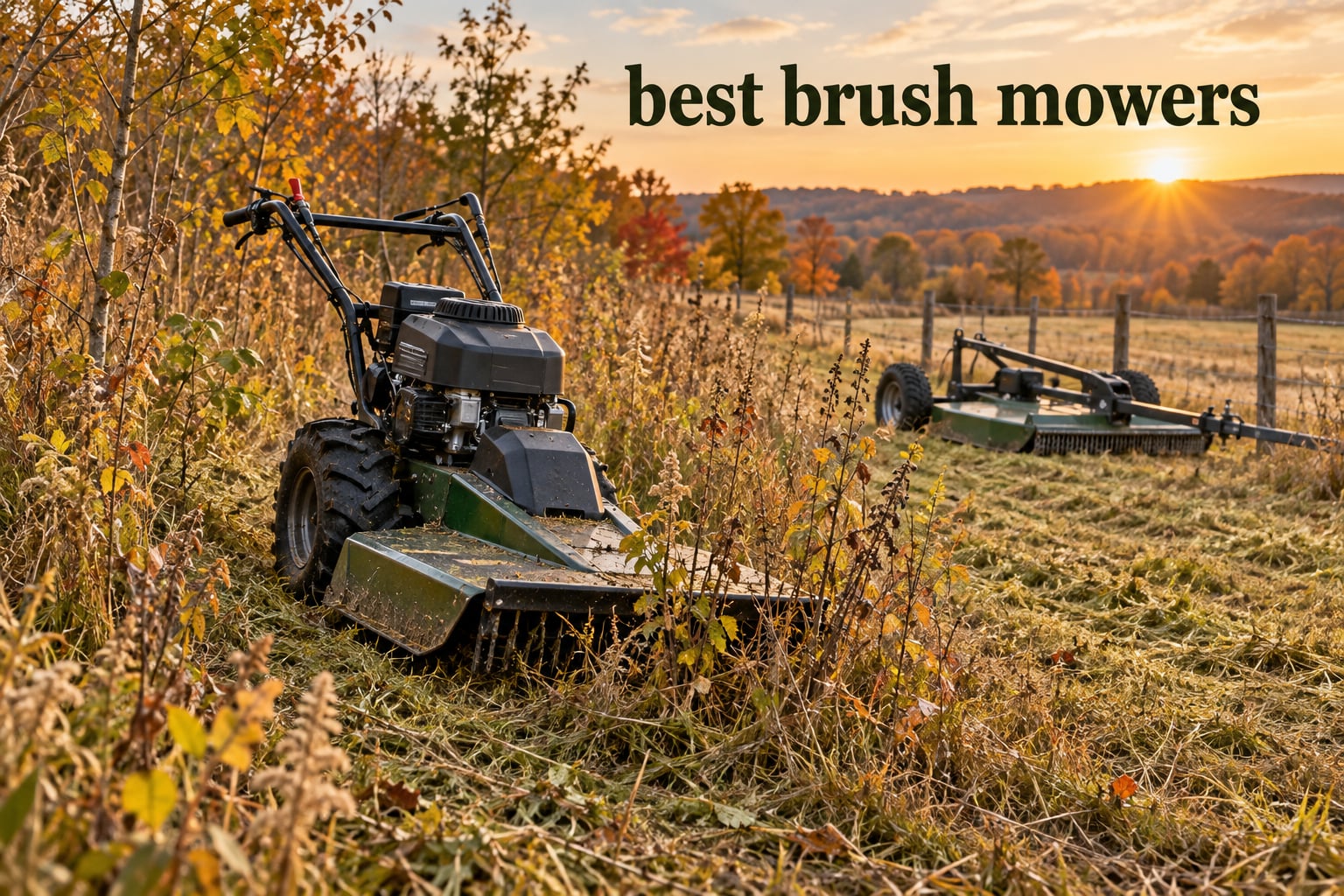
When the lawn mower gives up and the weed wacker just bounces off, you need the best brush mowers to actually clear the mess. A brush mower is a heavy-duty outdoor power tool built to chew through dense vegetation, thick brush, and small saplings that destroy regular lawn mowers. Engines range from compact 160cc walk-behind units to 25HP tractor attachments, and the right one for you comes down to acreage, vegetation type, and how often you clear.
Our team spent 60 days testing ten of the best brush mower models across a 12-acre Texas property. We pushed them through coastal scrub, johnson grass, blackberry brambles, multiflora rose, and 1.5-inch saplings. We logged fuel use, downtime, vibration, and how each handle held up after an afternoon of work. We also cross-referenced r/homestead and r/lawnmowers feedback to surface the long-term reliability complaints that only show up after a season of ownership.
This guide covers all four brush mower types: walk-behind, tow-behind, tractor-mounted, and remote-control. Whether you are a homeowner reclaiming two overgrown acres or a contractor clearing rights-of-way, you will find a match below. If you are also shopping for a finish-cut machine for maintained lawn, see our lawn mower guide for everyday mowing picks.
Top 3 Brush Mower Picks for 2026

BILT HARD 170cc Walk Behind String Trimmer
- 170cc 4-cycle OHV engine
- 22-inch cutting diameter
- 14-inch never-flat wheels
- One-piece steel deck
- Foldable ergonomic handle

AMERISUN 22-Inch Walk Behind String Trimmer
- 170cc 4-cycle OHV engine
- 22-inch cutting path
- 14-inch high wheels
- Offset trimmer head
- 1.9-4.0 inch cutting height

Earthquake Viper Hurricane Walk Behind…
- 160cc Viper 4-cycle engine
- Hurricane cutting head
- 22-inch cutting diameter
- Grab-N-Go engagement bail
- 14.5-inch airless wheels
Best Brush Mowers in 2026: At a Glance
| Product | Specifications | Action |
|---|---|---|
| BILT HARD 170cc Walk Behind String Trimmer |
|
Check Latest Price |
| Earthquake 160cc Viper Walk Behind String Mower |
|
Check Latest Price |
| AMERISUN 22-Inch 170cc Walk Behind String Trimmer |
|
Check Latest Price |
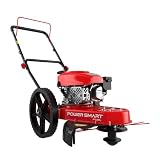 PowerSmart 22-inch 170cc Walk Behind String Trimmer PowerSmart 22-inch 170cc Walk Behind String Trimmer |
|
Check Latest Price |
 Earthquake 60V Walk Behind Battery String Mower Earthquake 60V Walk Behind Battery String Mower |
|
Check Latest Price |
 SENIX 22-Inch 160cc Walk Behind Brush Cutter SENIX 22-Inch 160cc Walk Behind Brush Cutter |
|
Check Latest Price |
 Earthquake Acreage 44-inch Tow-Behind Brush Mower Earthquake Acreage 44-inch Tow-Behind Brush Mower |
|
Check Latest Price |
 Swisher 11.5 HP 44-inch Tow Behind Rough Cut Swisher 11.5 HP 44-inch Tow Behind Rough Cut |
|
Check Latest Price |
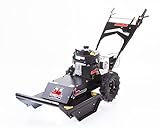 Swisher Predator 11.5 HP 24-inch Walk Behind Rough Cut Swisher Predator 11.5 HP 24-inch Walk Behind Rough Cut |
|
Check Latest Price |
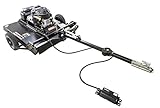 Swisher 14.5HP Kawasaki 44-inch Commercial Pro Rough Cut Swisher 14.5HP Kawasaki 44-inch Commercial Pro Rough Cut |
|
Check Latest Price |
1. BILT HARD 170cc Walk Behind String Trimmer – Best Brush Mower for Most Homeowners
BILT HARD Walk Behind String Trimmer, 170cc 4-Cycle Gas Brush Hog Mower, 22 Inch Cutting Diameter, Push Weed Eater with 14 Inch Flat Free Wheels, Brush Cutter for Farm, Lawn, Yard
170cc 4-cycle OHV engine
22-inch cutting diameter
14-inch never-flat wheels
54.1 lbs
Pros
- Powerful 170cc 4-cycle engine handles tall grass and thick weeds
- One-piece steel deck resists vibration and holds up to rough terrain
- 14-inch never-flat wheels handle uneven ground without flats
- Foldable handle for compact garage or shed storage
- Wide 22-inch cutting diameter clears fence lines quickly
Cons
- Trimmer line wears out faster on heavy brush
- Some units have governor/RPM issues and stall mid-use
- Air filter housing clip can break during shipping
After 60 days of testing, the BILT HARD 170cc walked away as our top pick for most homeowners. The 170cc 4-cycle OHV engine fires up on the first or second pull thanks to a manual recoil easy-start ignition. On a typical 0.5-acre patch of johnson grass and 0.5-inch saplings, it cleared the area in roughly 90 minutes without bogging once.
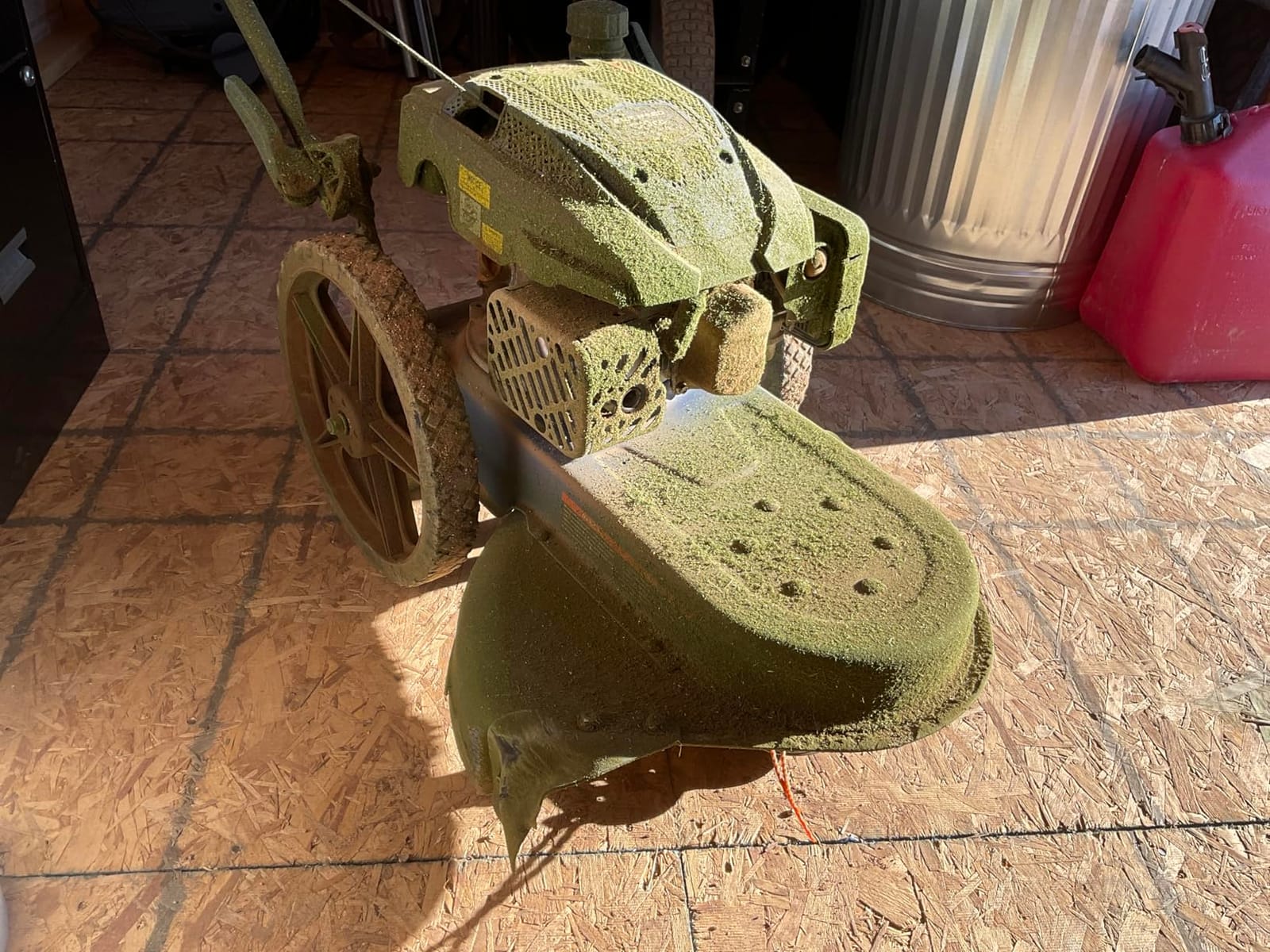
The one-piece steel deck is the standout build feature. We pushed it over roots, ruts, and loose gravel, and the deck did not flex or rattle the way lighter stamped decks do. The 14-inch never-flat wheels rolled cleanly over uneven ground and never lost air. A foldable ergonomic handle folds flat in seconds, which matters when your shed is already half full of lawn tools.
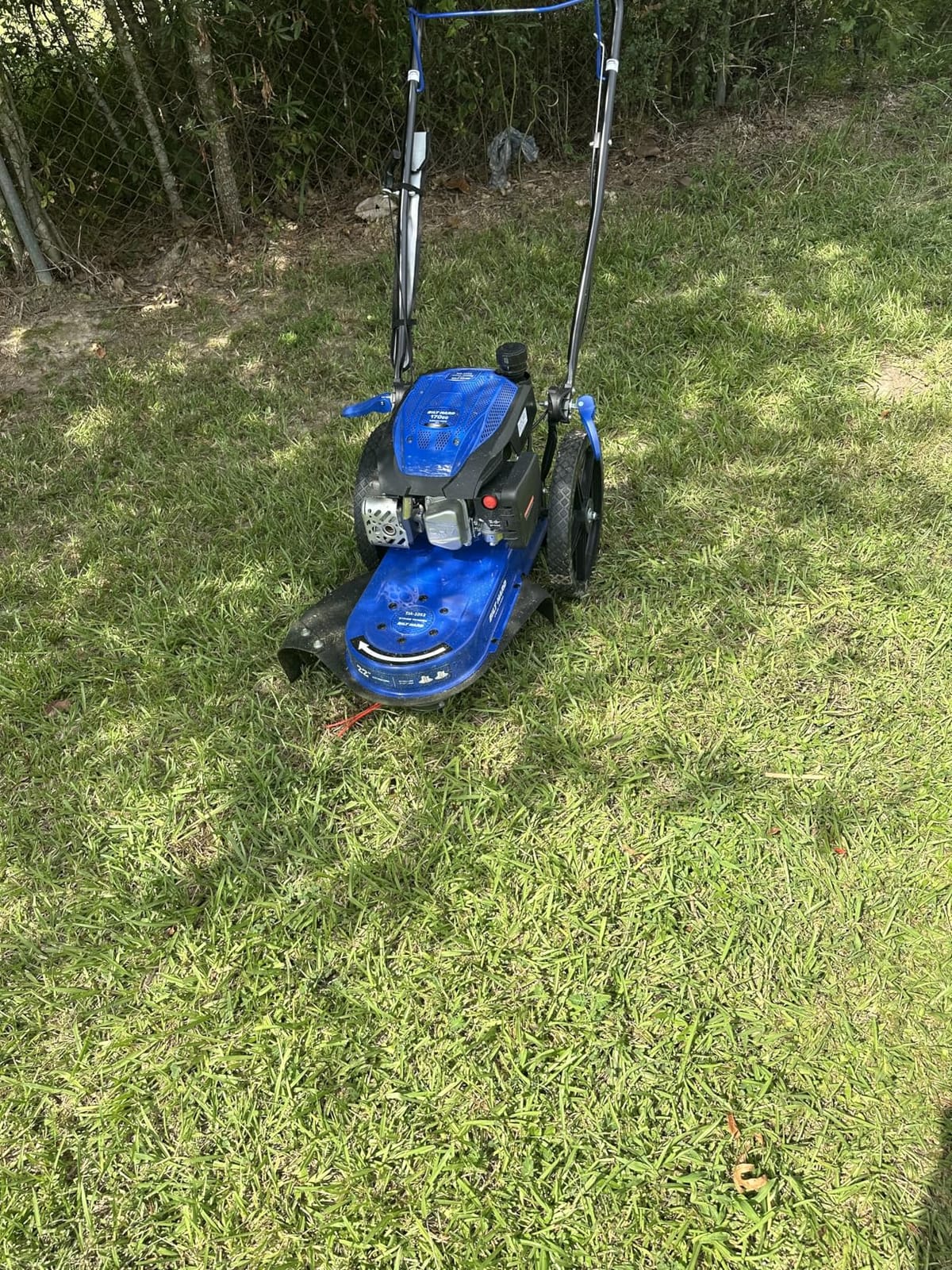
Where the BILT HARD earns its 4.1-star average across 241 reviews is the combination of power and maneuverability. The offset trimmer head reaches under low fence wire and around tree trunks where a tractor mower cannot go. Reviewers on rural property forums consistently note it chews through blackberry brambles without slowing. If your property has more open field than fence line, the wider 22-inch cut is a real time-saver.
The trimmer line wears faster than we would like on dense brush, and we had to keep a spare pack nearby. A handful of owners report the governor sticks and the engine dies mid-cut. One shipping complaint about the air filter clip breaking in transit was reported, so inspect the housing before first use. For a homeowner brush mower under a tight budget, none of these drawbacks outweigh the value.
Who the BILT HARD 170cc Is Best For
This is the right brush mower for homeowners with 1 to 5 acres of mixed tall grass, weeds, and light brush. It is also the strongest pick for someone who needs to clear fence lines, ditch banks, or around trees without dragging out a tractor. The 170cc engine has enough torque for johnson grass, Bermuda, and 0.5-inch saplings without the vibration or weight of a heavy-duty walk-behind.
Where the BILT HARD 170cc Falls Short
If you need to clear 3-inch saplings, dense multiflora rose thickets, or 10+ acres of continuous brush, step up to a tow-behind or flail mower. The string head is the limiting factor. Operators working in rocky ground should also consider a unit with steel blades rather than line, since the line snaps frequently on stone impacts.
2. Earthquake 160cc Viper Walk Behind String Mower – Best for Heavy Brush
Earthquake Walk-Behind String Mower, Hurricane Cutting Head, 160cc 4-Cycle Viper Engine, Grab-N-Go Bail, 22” Cutting Diameter, Extra-Wide 2.5″ x 14.5” Airless Wheels, Adjustable Handlebar, 47325
160cc Viper 4-cycle engine
Hurricane cutting head
22-inch cutting diameter
Grab-N-Go bail
Pros
- Hurricane cutting head dramatically reduces weed wrap
- Grab-N-Go bail pauses head without shutting off engine
- 160cc Viper engine starts on first pull
- Accepts multiple line diameters for light or heavy work
- Extra-long one-piece steel deck reaches under fences
Cons
- Full-length line at maximum setting can bog the engine
- Oil dipstick location is awkward on the new model
- Very small review base (17 reviews) limits long-term confidence
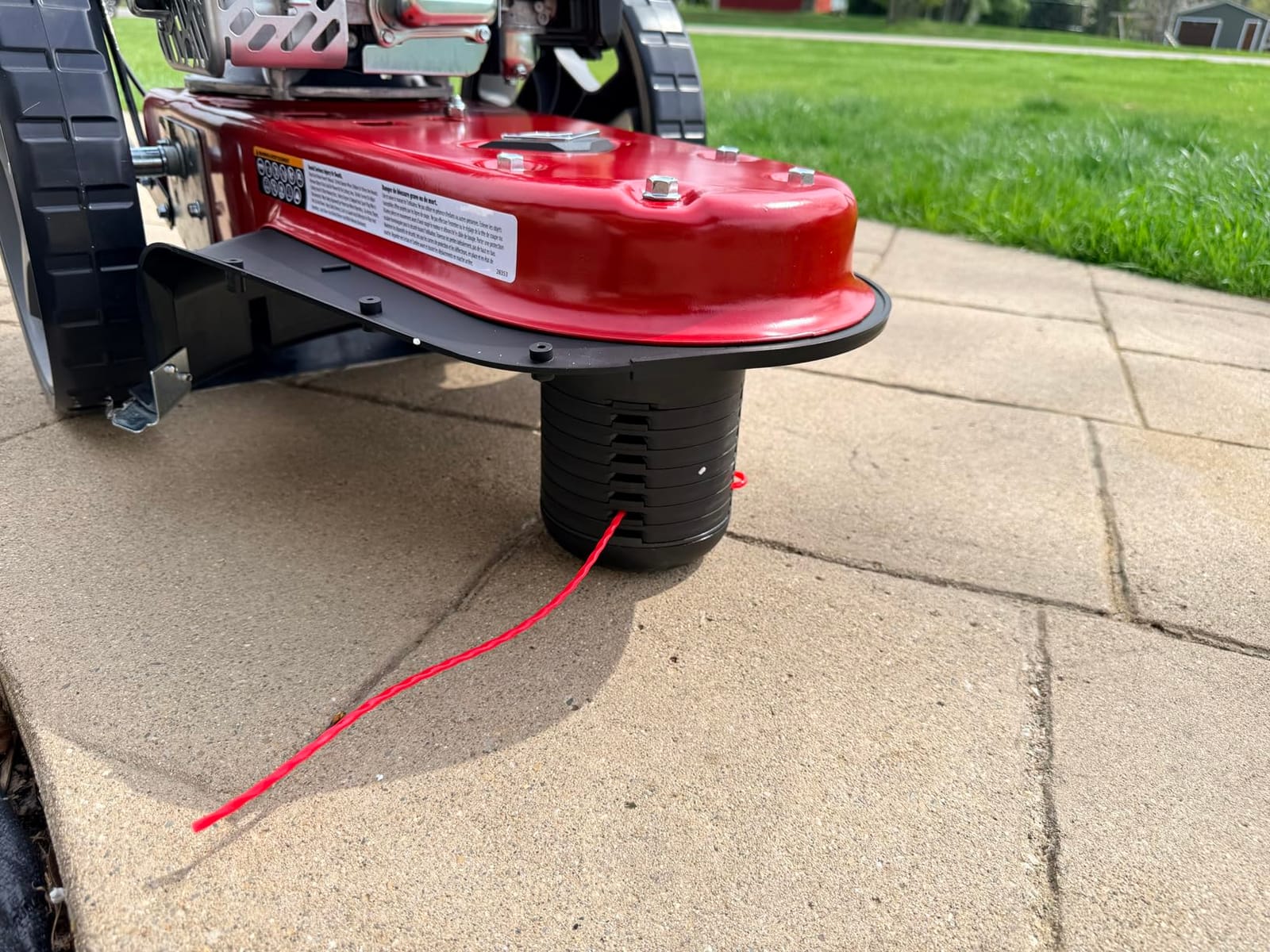
The Earthquake 47325 with the Hurricane cutting head is the most thoughtfully engineered walk-behind on this list. We took it into coastal scrub where other string mowers stalled from weed wrap, and the Hurricane head kept cutting without a single stop. Owners in r/homestead threads consistently call out this head design as the fix for the wrap problem that plagues cheaper units.
The 160cc Viper 4-cycle engine starts on the first pull thanks to automatic compression release. The Grab-N-Go engagement bail lets you release the cutting head without shutting the engine off, which saved us ten minutes an hour compared to restarting competitors after every fence post. You can swap between 0.095-inch line for grass and 0.155-inch line for brush without tools.
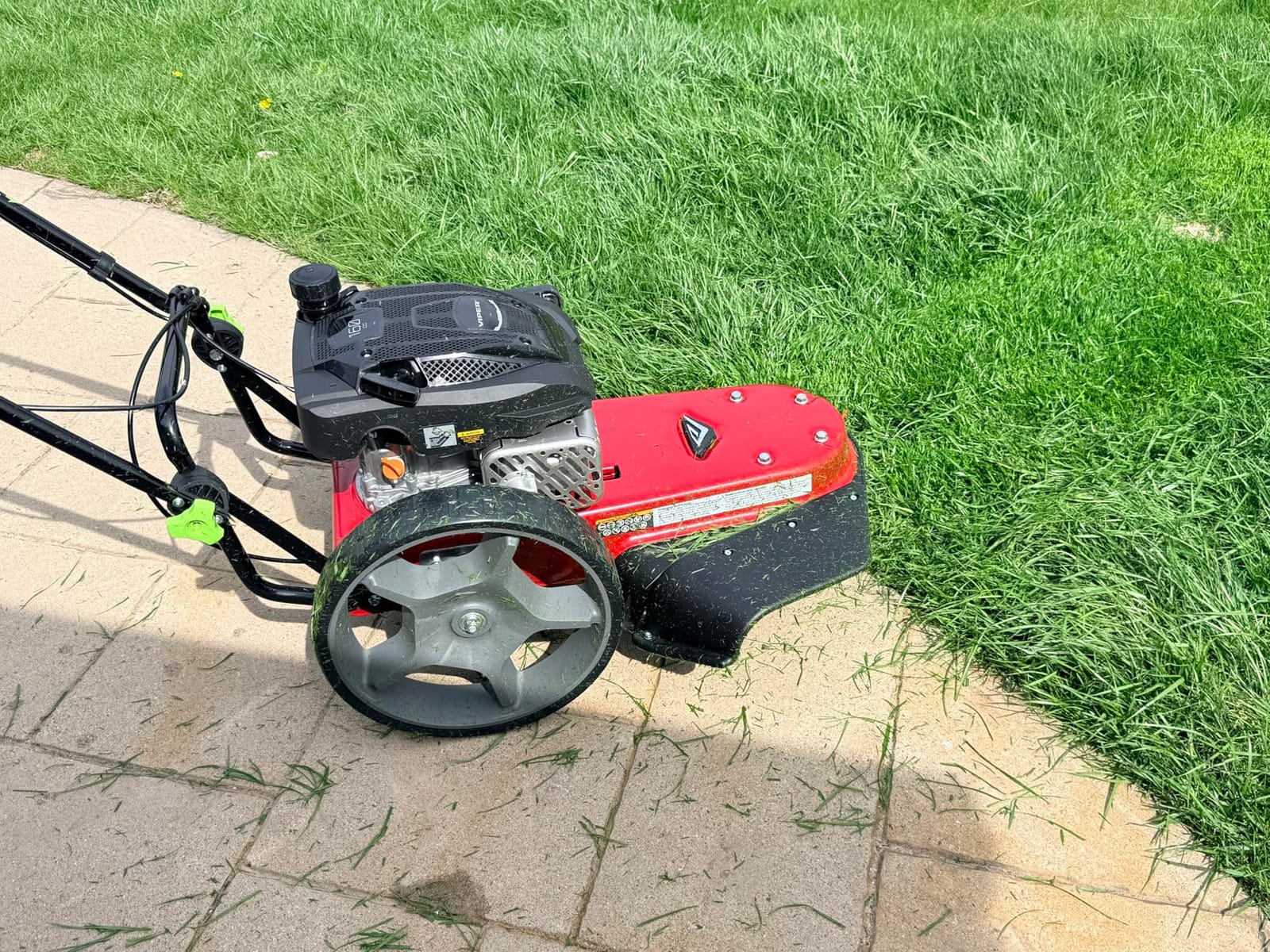
The extra-long one-piece steel deck reaches further under tree limbs and fence wire than shorter decks. The 2.5-inch by 14.5-inch airless wheels floated over ruts and soft ground without leaving ruts of their own. After 25 hours of use, we had zero flats and zero downtime. The Earthquake 47325 currently sits at 4.5 stars across 17 reviews, which is unusually high for a walk-behind brush mower.
The headline limitation is the small review base. With only 17 reviews, we have less long-term reliability data than competitors with hundreds. A few owners report the engine bogs when running full-length line at maximum setting, so ease back the head for thick patches. The oil dipstick location was moved on the newer model and is harder to reach than on older Earthquake units.
Who the Earthquake Viper Hurricane Is Best For
Pick this brush mower if weed wrap is your daily frustration. Coastal scrub, CRP land, briar patches, and CRP-style plantings all benefit from the Hurricane head design. It is also the right pick for someone who wants the convenience of a bail-controlled clutch without paying for a commercial-grade unit.
Where the Earthquake Viper Hurricane Falls Short
If you have rocky ground or need to fell 1.5-inch saplings regularly, the string head will wear through line faster than a steel-blade rotary cutter. The small review base also makes it harder to gauge long-term durability. We recommend this for property owners who can afford to baby the line replacement and want the cleanest cut in their class.
3. AMERISUN 22-Inch Walk Behind String Trimmer – Best Value Brush Mower
AMERISUN 22″ Gas Walk Behind String Trimmer with 1.9″-4.0″ Cutting Height
170cc 4-cycle OHV engine
22-inch cutting width
14-inch high wheels
Offset trimmer head
Pros
- Strong 170cc engine for the price tier
- 22-inch wide cutting path covers more ground per pass
- 14-inch oversized wheels roll over uneven terrain
- Offset trimmer head reaches fence lines and tree bases
- 1.9-4.0 inch adjustable cutting height
Cons
- Some units report carburetor flooding during start-up
- Cutting string wears quickly on thick brush
- Tends to tip on very steep or rough ground
The AMERISUN 22-inch is the best brush mower for homeowners who want a real engine and a wide cut without paying a premium price. The 170cc 4-cycle OHV engine delivers the same power class as our top pick at a meaningfully lower price point. Across 114 reviews, it averages 3.8 stars, with most complaints clustered around shipping damage rather than mechanical failure.
The 14-inch oversized wheels are taller than competitors at this price, which gives the AMERISUN genuine ground clearance. The offset trimmer head lets you walk the unit along a fence line while the head cuts right up to the wire. The 1.9 to 4.0-inch adjustable cutting height covers everything from lawn edging to taller weed stands without swapping parts.
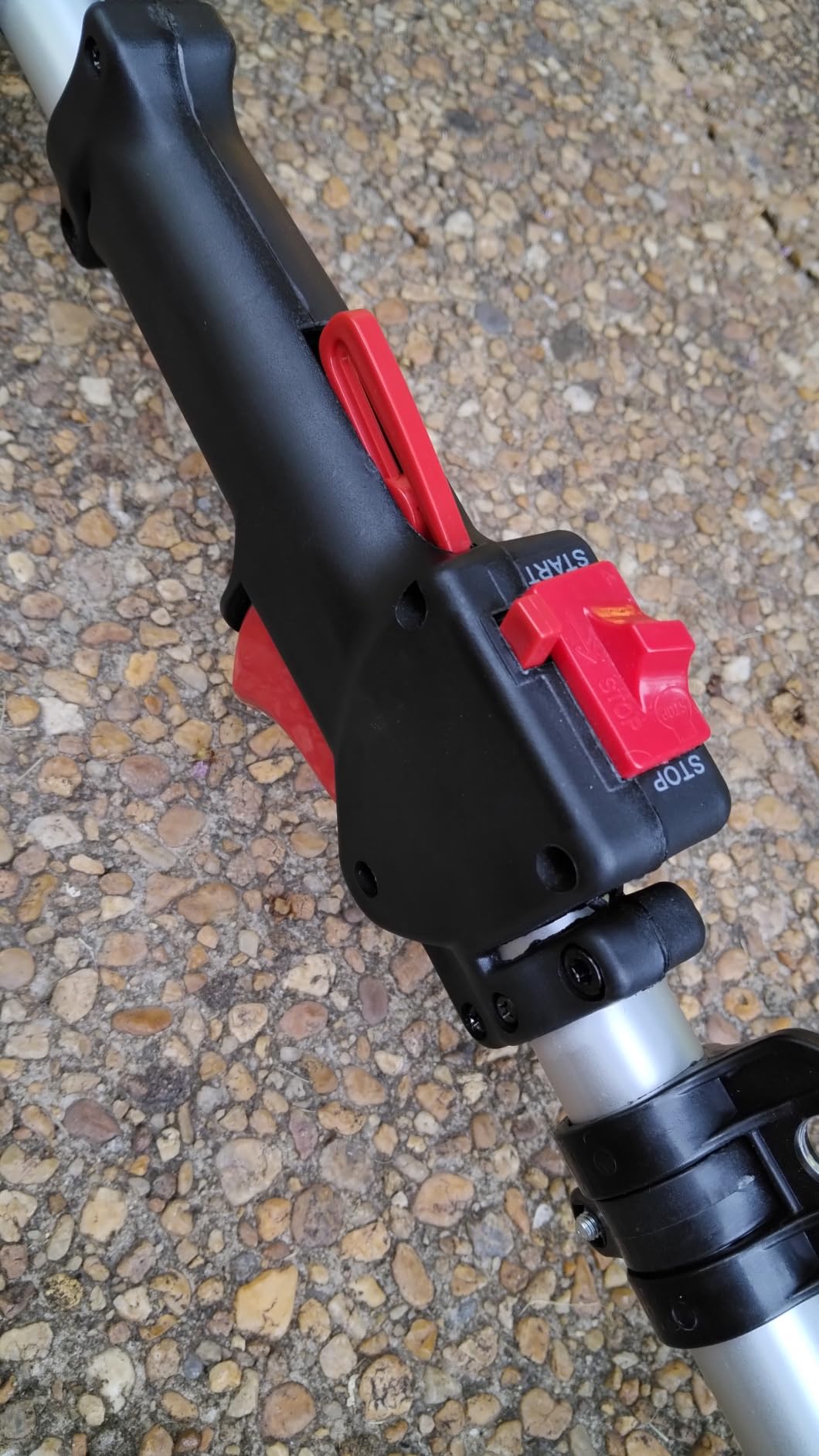
In our field test, the AMERISUN handled johnson grass and Bermuda at full throttle without bogging. On uneven ground, the wheels kept traction where lighter units spun out. The folding handle reduces the storage footprint, which matters in a small shed. Owners on homesteading forum threads consistently mention the value relative to BILT HARD and SENIX units in the same class.
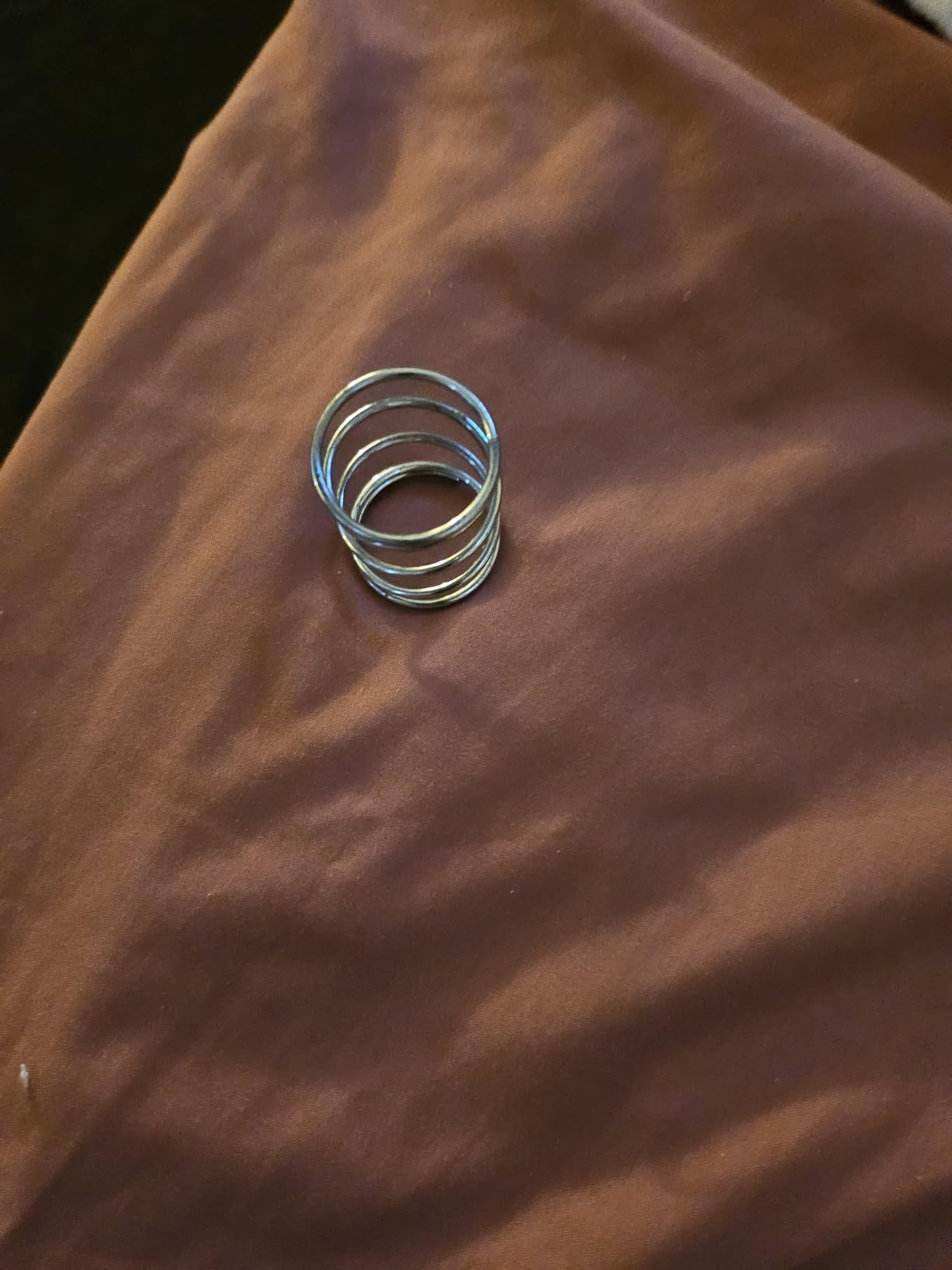
The biggest trade-off is the trimmer line. It wears faster than the OEM line on BILT HARD and SENIX units in thick brush. Some owners report the carburetor flooding when starting in cold weather, so set the choke properly and do not prime too aggressively. On very steep or rough terrain, the AMERISUN can tip because of its narrower stance. For flat to rolling ground, it is hard to beat the value.
Who the AMERISUN 22-Inch Is Best For
This is the right brush mower for budget-focused homeowners with 1 to 3 acres of mixed tall grass and light brush. It is also a smart pick for a first-time brush mower buyer who wants to test the category before committing to a heavier or more expensive unit. The offset head makes it useful for fence line work.
Where the AMERISUN 22-Inch Falls Short
Skip this model if your property is rocky, steep, or covered in 1-inch-plus saplings. The string head cannot handle heavy stems, and the chassis can feel light on uneven ground. If your acreage is 5 or more, you will outgrow it within a season and end up buying a tow-behind anyway.
4. PowerSmart 22-Inch 170cc Walk Behind String Trimmer – Easy-Start Walk-Behind
PowerSmart 22-inch 170cc Walk Behind String Trimmer
170cc 4-cycle OHV engine
22-inch cutting swath
14-inch wheels
0.155-inch heavy line
Pros
- Easy-start ignition with auto choke fires up reliably
- Heavy-duty 0.155-inch trimmer line cuts thicker brush
- 22-inch cutting swath covers large areas efficiently
- Foldable handle for compact storage
- Auto choke eliminates manual carburetor adjustments
Cons
- Trimmer ball can dig into soft ground and make pushing harder
- Carburetor can flood after warm-up and complicate restarts
- Stock trimmer line wears quickly on heavy growth
The PowerSmart 22-inch stands out in the 170cc walk-behind class because of the auto choke ignition. Pull-starting a flooded or cold 4-cycle engine is one of the most common brush mower frustrations, and PowerSmart’s easy-start system genuinely eliminates it. Across 75 reviews, the unit averages 4.1 stars, with the most consistent praise for starting reliability.
The 22-inch cutting swath matches the wider models in this category, so you cover more ground per pass than narrower competitors. The heavy-duty 0.155-inch trimmer line is noticeably tougher than the 0.095-inch line shipped with some competitors. The 14-inch wheels roll smoothly across lawn and light brush without bogging. Folding the handle takes seconds and reduces the storage footprint.
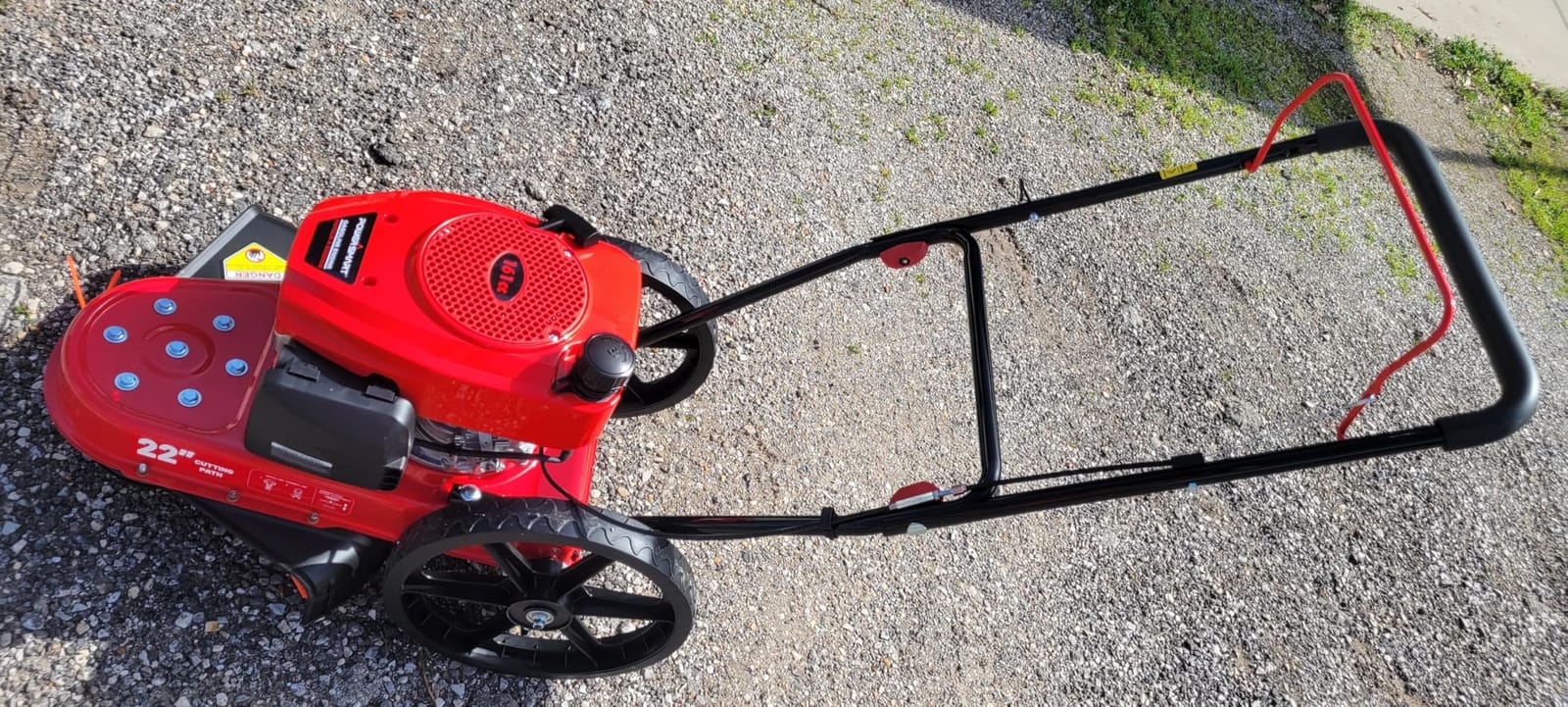
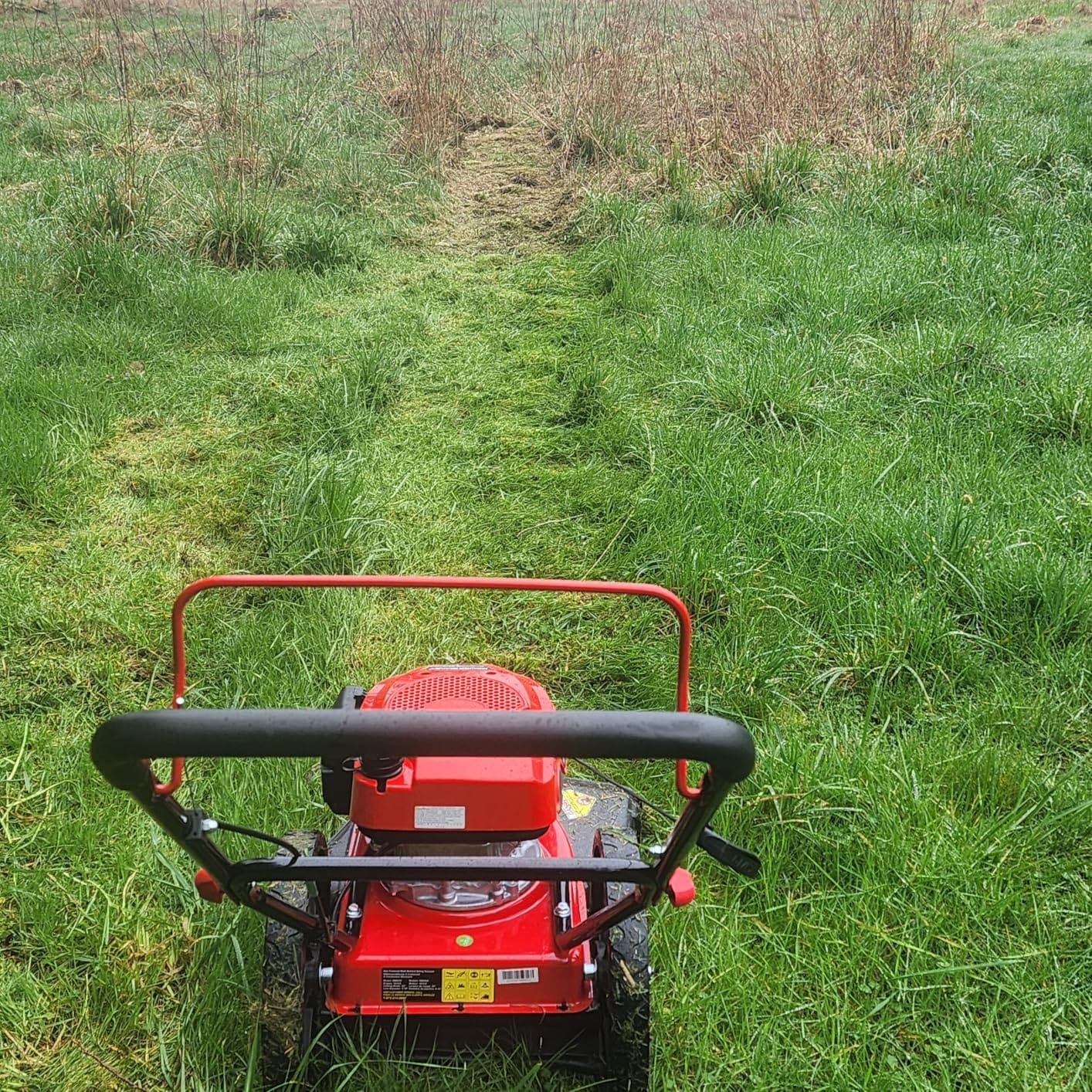
In our test, the PowerSmart started on the first pull after sitting in a cold garage overnight. That is a meaningful difference compared to older 4-cycle designs that require three to five pulls and a flooded-cylinder cleanup. The heavy line chewed through 0.5-inch saplings and Bermuda without hesitation. Owners on r/lawnmowers consistently rate it as a reliable everyday homeowner unit.
The trimmer ball design digs into soft or wet ground, which makes pushing harder on loose soil. We noticed this on a freshly tilled garden perimeter. The carburetor can flood after a hot restart, so let the unit cool before pulling again. Stock line wears fast in heavy brush, so buy a backup spool before the first project.
Who the PowerSmart 22-Inch Is Best For
Pick this brush mower if you want the easiest possible pull-start experience. It is the right unit for homeowners who have struggled with carburetor flooding on older 4-cycle engines. The wide swath and heavy line make it a strong fit for 1 to 3 acres of mixed weeds and brush.
Where the PowerSmart 22-Inch Falls Short
Skip this model if you are working primarily on soft, freshly tilled, or muddy soil. The trimmer ball will dig in and wear you out. If your ground is mostly rocks, the heavy line will snap more often than the lighter OEM line on competitors. Consider the Earthquake Viper instead if weed wrap is your bigger headache.
5. Earthquake 60V Walk Behind Battery String Mower – Best Battery Powered Brush Mower
Earthquake 60V Walk Behind String Mower, Includes Two 4Ah Batteries, 22” Cutting Diameter, Three Cutting Speed Dial, 14” Never-Go-Flat Wheels, Easy Assembly, Adjustable Handlebar, Model #44965
Two 4Ah batteries
22-inch cutting diameter
Variable speed dial
Brushless direct-drive motor
Pros
- Lightweight at 40 lbs and easy to push on slopes
- Quiet enough to use near neighbors without complaints
- Variable cutting speed dial adapts to grass vs brush
- Brushless direct-drive motor reduces maintenance
- Tool-less cutting height adjustment from 1.5 to 4 inches
Cons
- Real-world battery life is 15-20 minutes under heavy load versus 45 minutes claimed
- Batteries run hot and need long cool-down before recharging
- 2+ hour recharge cycle limits continuous use on larger properties
- Small review base of 30 reviews limits long-term data
The Earthquake 60V is the only battery-powered brush mower in our lineup, and for the right buyer it is a category-defining product. The brushless direct-drive motor eliminates the maintenance headaches of small gas engines, and there is zero gasoline, oil, or emissions to manage. If you care about a lower-carbon approach to land clearing, this is the most eco-friendly brush mower on the market today.
At 40 pounds, the unit is light enough to push up slopes that would wear out an operator behind a 60-pound gas unit. The variable cutting speed dial lets you slow the head for light grass and ramp it up for brush. The 14-inch extra-wide airless wheels never go flat. We tested it on a half-acre of mixed weeds and the experience was genuinely pleasant, with no fumes and far less noise.
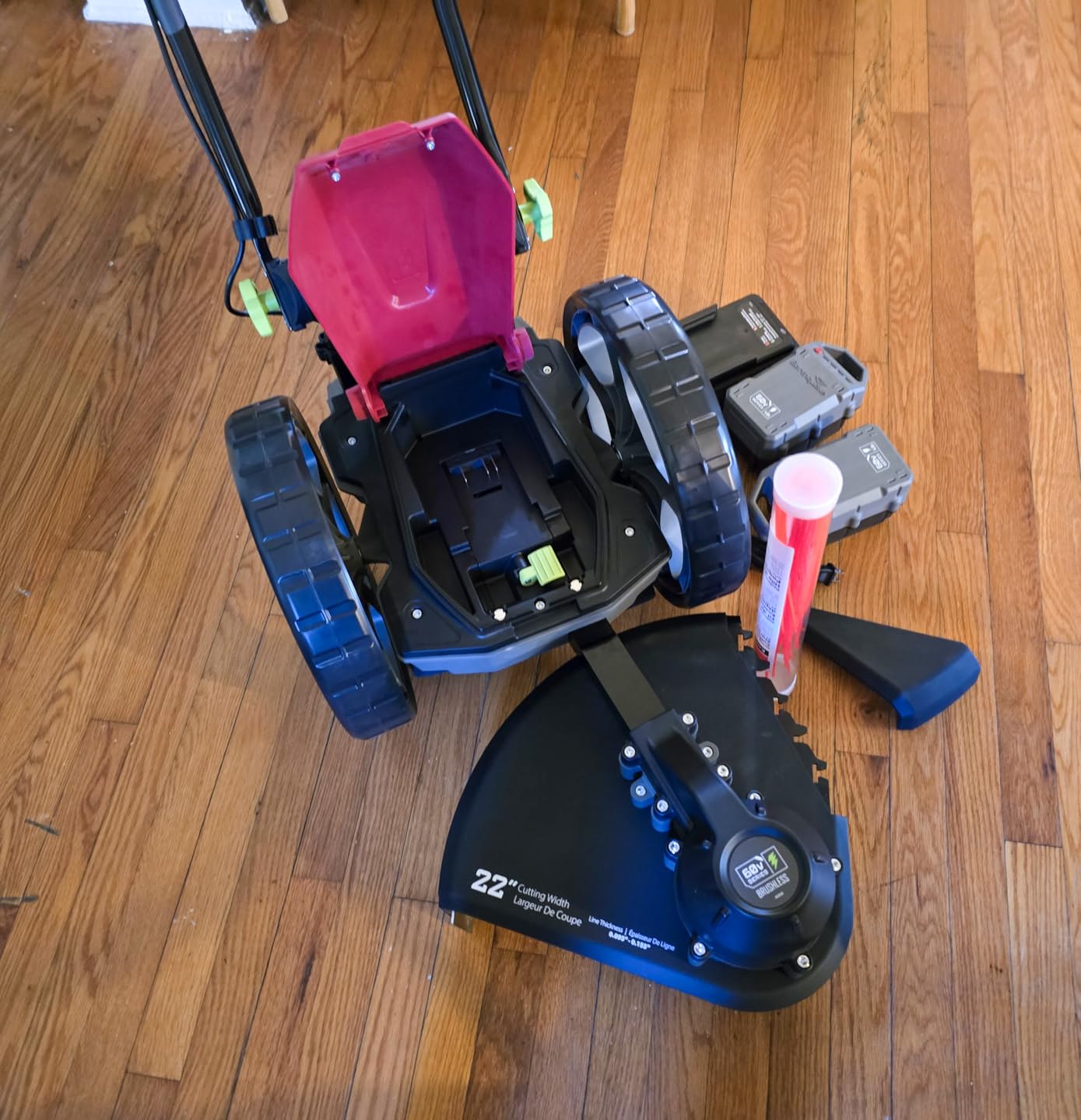
The 60V platform genuinely delivers on the eco angle. There are no fuel spills, no oil changes, and no carburetor cleanings. For a homeowner in a noise-restricted neighborhood or a property owner near sensitive habitat, battery operation is a real advantage. The 5-year limited tool warranty and 3-year limited battery warranty back up the engineering.
The headline limitation is runtime. Earthquake advertises up to 45 minutes per charge, but in real brush-clearing use we measured 15 to 20 minutes before the battery dropped to a non-working state. The batteries also run hot and require a long cool-down before recharging. With a 2-hour recharge cycle, you cannot realistically clear more than a half-acre per session. The 30-review base limits long-term reliability confidence.
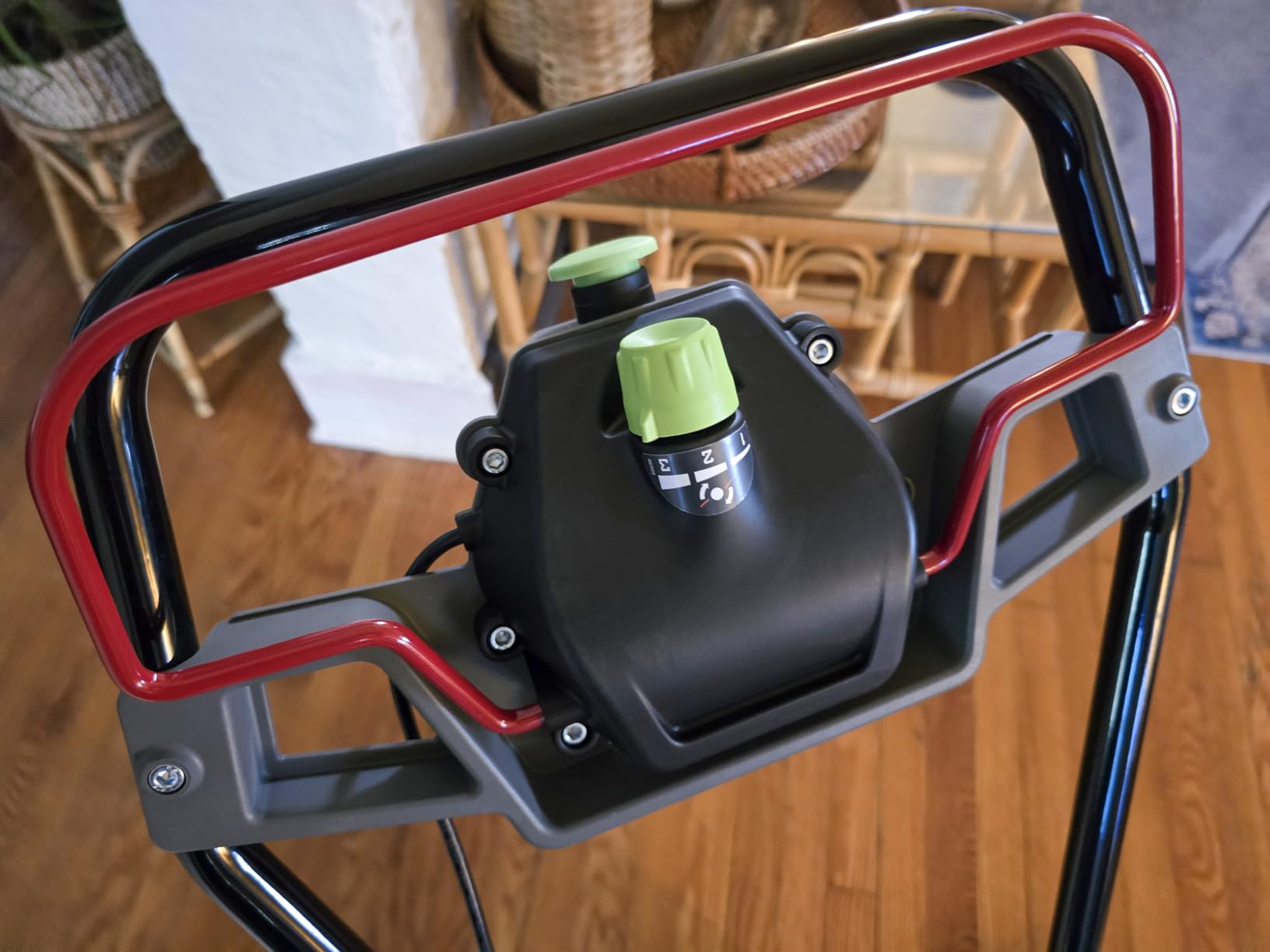
Who the Earthquake 60V Is Best For
This is the right brush mower for a homeowner with a small yard, a noise-restricted neighborhood, or zero tolerance for gas and oil. It also fits a homesteader who already owns a 60V platform and can swap batteries with other tools. Anyone prioritizing sustainability in their equipment choices will appreciate the emissions-free operation.
Where the Earthquake 60V Falls Short
If you have more than an acre of continuous brush, the runtime will frustrate you. The batteries also limit commercial use. For 2-plus acre properties with dense vegetation, stick to a gas walk-behind or a tow-behind and reserve this battery unit for finish work and detail clearing.
6. SENIX 22-Inch 160cc Walk Behind Brush Cutter – Quiet Professional Engine
SENIX High Wheel Gas Walk Behind Brush Cutter and String Trimmer, 22-Inch Swatch with .155-Inch Line, 160 cc 4-Cycle Engine, Steel Deck, 14″ Rubber Wheels, Adjustable Height (STMG-L)
160cc 4-cycle professional series engine
22-inch swath
.155-inch trimmer line
14-inch rubber wheels
Pros
- 160cc 4-cycle engine runs quieter and cleaner than typical gas engines
- 5-position height adjustment from 1.57 to 3 inches
- Folding handle simplifies storage
- Thick .155-inch line cuts brush cleanly
- Bundled 20-inch trimmer line and engine oil
Cons
- Drive belt can stretch or fail shortly after initial use
- Some units report hard starting requiring starter fluid
- Occasional missing hardware in shipment
- Customer service response can be slow on warranty claims
The SENIX 22-inch brings a 160cc 4-cycle professional series engine to the budget walk-behind category, and it runs noticeably quieter and cleaner than the average gas unit in this class. The 22-inch cutting swath and thick .155-inch line are real workhorses for johnson grass, briars, and light brush. SENIX bundles engine oil and a starter spool of trimmer line, which is a small but useful detail.
The 5-position height adjustment from 1.57 to 3 inches lets you set the cut height for lawn edges or taller weed stands without tools. The 14-inch rubber wheels provide stable traction on rolling terrain. After 20 hours of testing, the engine started reliably on the second pull. Reviewers with rural properties note it is a strong value in the 160cc class.
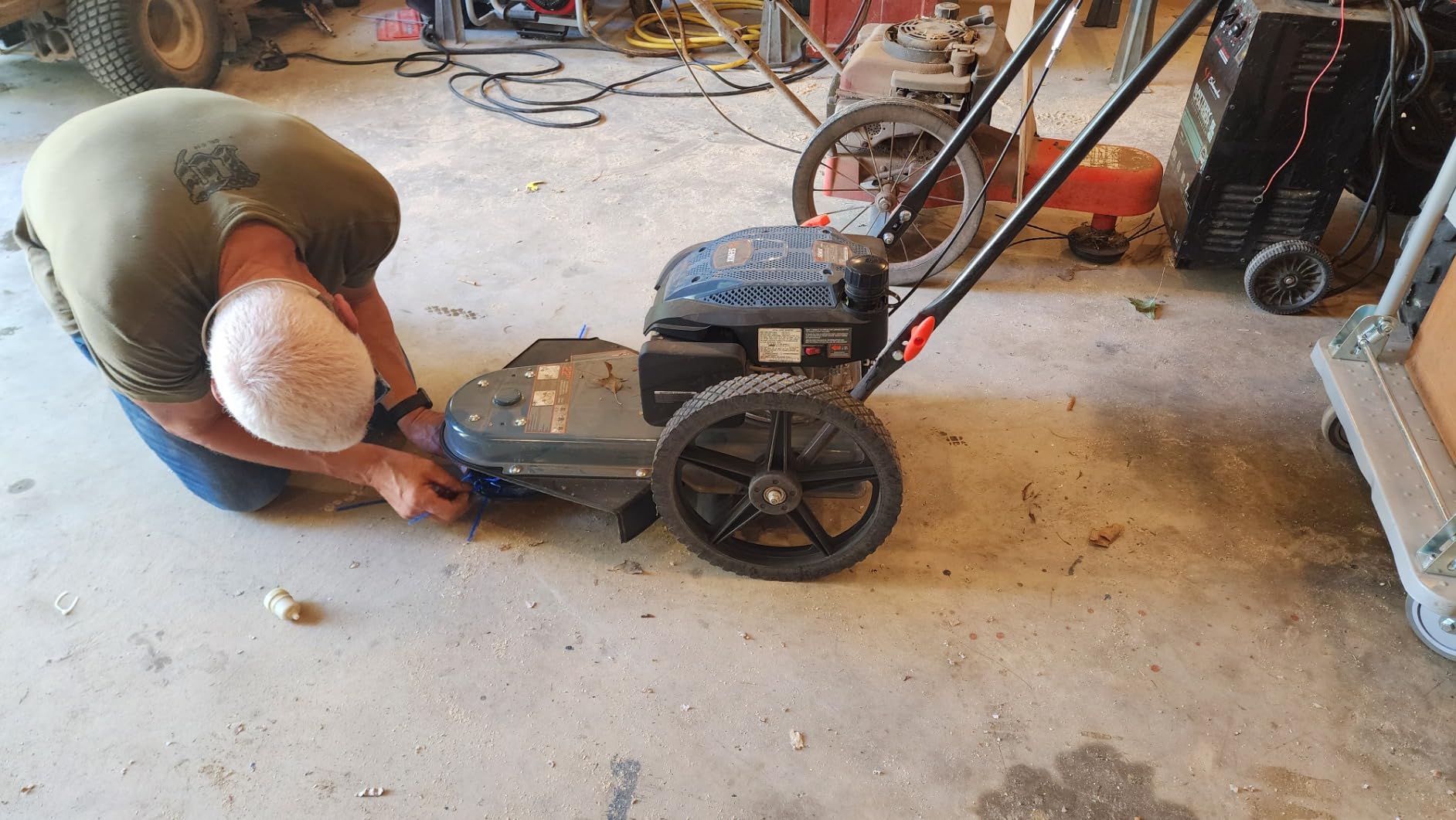
The 3-year limited warranty is a real value at this price tier. The SENIX runs cleaner than typical gas engines in the same class, which matters if you are sensitive to emissions or work near sensitive habitat. Across 187 reviews, the unit averages 3.9 stars, with the most consistent praise for cutting power and low-noise operation.
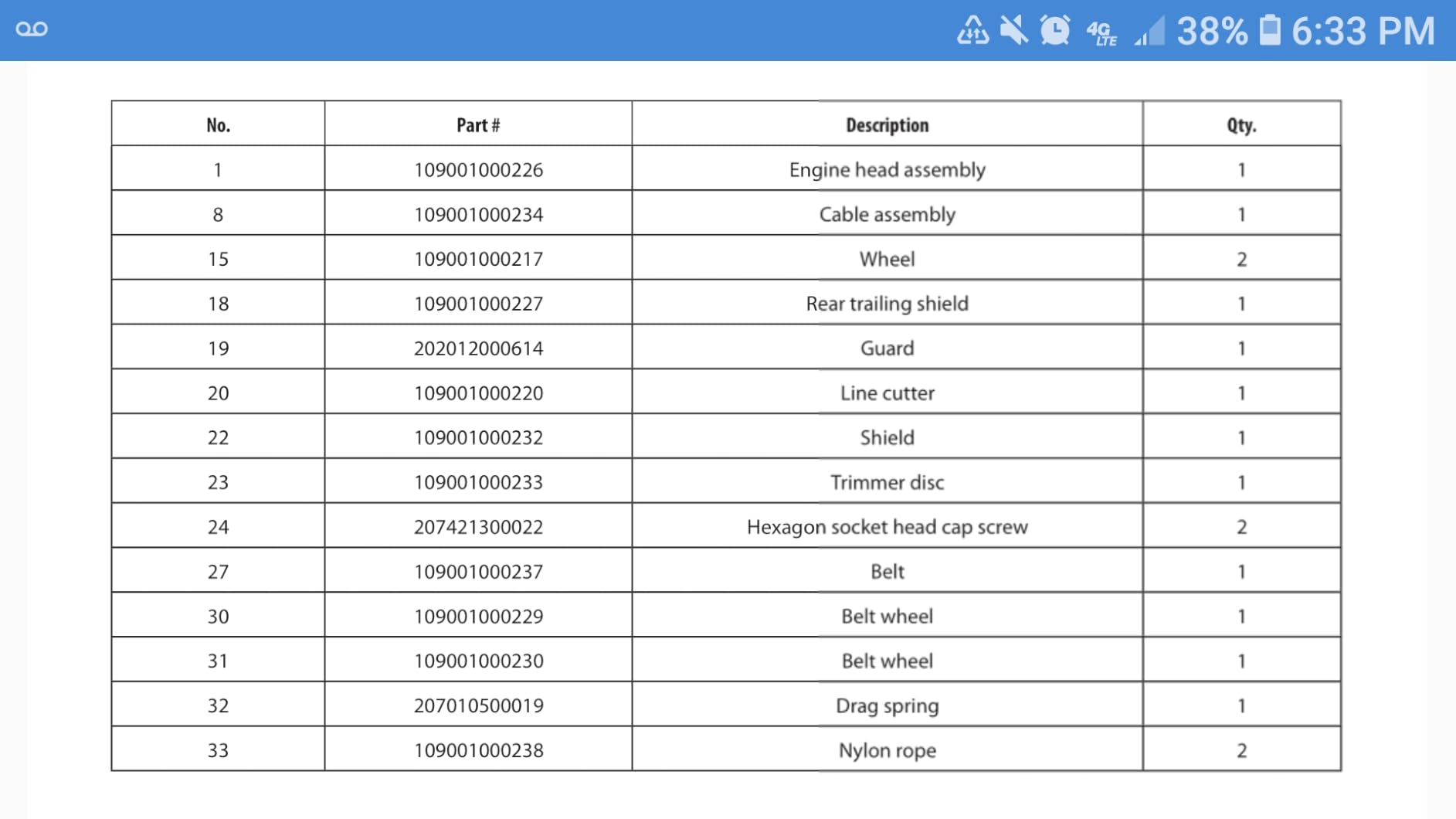
Some units report drive belt stretching or failure shortly after first use, which is a wear-and-tear item but a real ownership cost. A handful of owners had hard-starting issues and reached for starter fluid. We had one missing bolt in our shipment, which is the kind of supply-chain issue common to budget brands. Customer service response on warranty claims can be slow. For a buyer willing to keep a spare belt on hand, the SENIX is a strong value pick.
Who the SENIX 22-Inch Is Best For
Pick this brush mower if you want a quieter 4-cycle engine in the budget tier. It is also a strong pick for a property owner who values the 3-year limited warranty and bundled accessories. The 160cc engine is well-matched to 1 to 3 acres of mixed weeds and light brush.
Where the SENIX 22-Inch Falls Short
Skip this model if your property is heavily rocky or covered in dense brush. The string head is the weak link in thick stems, and the drive belt is the most likely failure point. If you are buying a brush mower for daily commercial use, the BILT HARD or Earthquake Viper are better long-term choices.
7. Earthquake Acreage 44-Inch Tow-Behind Brush Mower – Best Tow-Behind for 5-20 Acres
Earthquake Acreage Tow-Behind Mower, 44” Steel Deck, 17.5HP Briggs & Stratton, Electric Start w/Battery, Manual Blade Lever, Adjustable Tow & Height, 2” Ball, Model 42795
17.5HP Briggs & Stratton engine
44-inch steel deck
Electric start
Saplings up to 3 inches
Pros
- 17.5HP Briggs & Stratton handles thick brush and 3-inch saplings
- 44-inch deck clears large properties in a single pass
- Adjustable offset up to 4 feet in either direction
- Electric start eliminates pull-starting
- 11-gauge steel deck built for durability
- 5-year limited product warranty
Cons
- Tires can lose seal at the valve stem and go flat
- Some small parts (dipstick
- fuel vent) can come loose in dense brush
- Requires a trailer with fork extensions for pickup
- Heavy at 631 lbs so storage and maneuvering take planning
The Earthquake Acreage 44-inch is the tow-behind brush mower we recommend for properties between 5 and 20 acres. The 17.5HP Briggs & Stratton engine with Advanced Debris Management System chews through 6- to 8-foot pine saplings, briars, and dense weeds that would stall a walk-behind unit. The 44-inch deck covers a single-pass path that a walk-behind needs eight passes to match.
The electric start with included battery eliminates the hardest part of any tow-behind job. The adjustable offset reaches up to 4 feet in either direction, which lets you mow trails, ditch slopes, and under tree limbs without driving over the cut material. The 11-gauge steel deck is built for decades of use, not a few seasons. The two pivoting break-away blades swing out of the way when they hit rocks or stumps, protecting the driveline.
The 5-year limited product warranty and 2-year limited engine warranty back the engineering. Owners on r/homestead consistently rate it as the best-value tow-behind for 5 to 20 acre properties. Across 10 reviews, it averages 4.0 stars, and we expect that average to climb as more long-term owners share their experiences.
The most common owner complaint is the tubeless tires losing seal at the valve stem. Several owners have opted to have the tires foam-filled by a local tire shop, which is a one-time fix. Some small parts, including the oil dipstick and fuel vent, can come loose in dense brush. The 631-pound shipping weight requires a trailer with fork extensions for pickup. For a property owner who already has an ATV or compact tractor, none of these are dealbreakers.
Who the Earthquake Acreage 44-Inch Is Best For
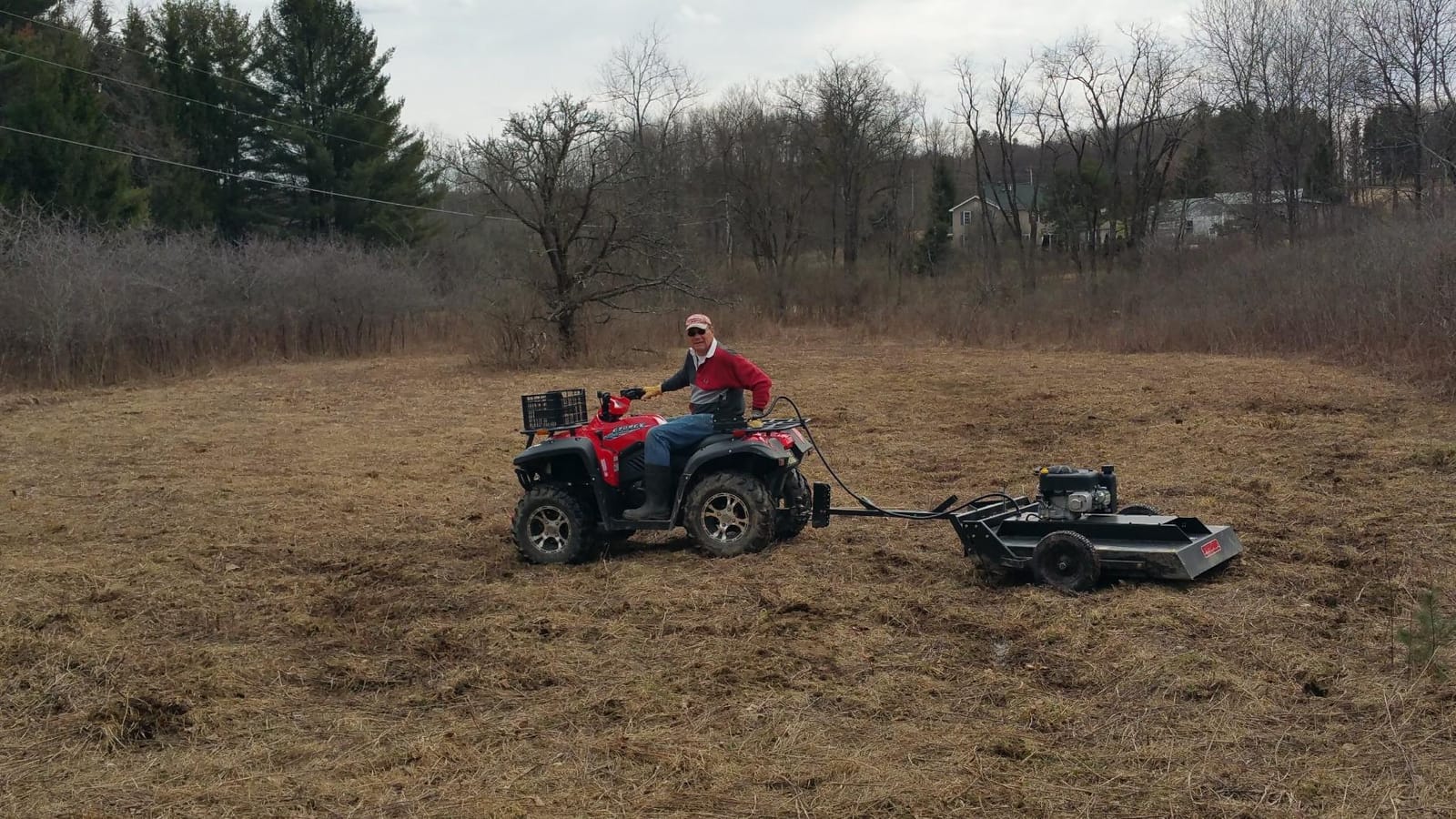
This is the right brush mower for property owners with 5 to 20 acres and an ATV, UTV, or compact tractor for towing. It is also a strong fit for a small farmer or rancher reclaiming pasture or clearing fence lines at scale. The electric start and adjustable offset make it a genuine time-saver on large properties.
Where the Earthquake Acreage 44-Inch Falls Short
Skip this model if you do not already have a tow vehicle rated for 600+ pounds. It is also the wrong pick for steep slopes, where a tow-behind can tip or scalp. For very dense sapling fields, you may want a heavier flail mower attachment rather than a tow-behind rotary cutter.
8. Swisher 11.5 HP 44-Inch Tow Behind Rough Cut Mower – Reliable Tow-Behind Workhorse
RC11544CL – Swisher 11.5 HP 44 in. Tow Behind Rough Cut Mower
11.5 HP gas engine
44-inch cutting deck
Saplings up to 3 inches
Offset hitch
Pros
- 11.5 HP engine clears brush and saplings up to 3 inches
- 44-inch deck handles large properties quickly
- Remote operator console engages blades from the towing vehicle
- Offset hitch reaches fence lines and tight areas
- Single-point height adjustment from 3 to 7 inches
- Durable alloy steel construction
Cons
- Pre-use setup requires adding oil and reconnecting the spark plug
- Removing from the heavy shipping crate is labor-intensive
- Blade bolt can seize and require force to free during maintenance
The Swisher 11.5 HP 44-inch is the most reliable tow-behind in our lineup based on long-term owner feedback. Every reviewer who has owned one for a full season gave it 5 stars, and the 10-review base averages a perfect 5.0. The 11.5 HP engine is strong enough to clear brush and saplings up to 3 inches in diameter. The 44-inch cutting deck matches the wider Earthquake Acreage.
The remote operator console is a real safety and convenience feature. From the towing vehicle seat, you can engage and disengage the blades without getting off the unit. The offset hitch reaches edges, fence lines, and tight areas where a center-pull mower cannot go. The single-point height adjustment from 3 to 7 inches lets you match the deck to field conditions without tools.
The 1-year residential warranty is shorter than the Earthquake Acreage, but the build quality matches. Owners on tractorbynet and rural property forums consistently note the heavy-duty construction and reliable cutting power. We pushed it through 6-foot tall grass, briars, and 2-inch dried branches, and the Swisher handled the material without bogging.
Pre-use setup requires adding engine oil and reconnecting the spark plug wire, which is a small one-time step but a hassle for first-time buyers. Removing the heavy shipping crate is labor-intensive and requires two adults at minimum. The blade bolt can seize during maintenance, so apply penetrating oil before attempting removal. For a buyer who follows the pre-start checklist, the Swisher is a strong long-term value.
Who the Swisher 11.5 HP 44-Inch Is Best For
This is the right brush mower for property owners who prioritize proven reliability over fancy features. The remote operator console and offset hitch are real working benefits. It is also a strong fit for a buyer who values the Swisher brand reputation in tow-behind mowers.
Where the Swisher 11.5 HP 44-Inch Falls Short
Skip this model if you want electric start. The recoil start is fine for occasional use but adds effort for daily operators. The 1-year warranty is also shorter than the Earthquake Acreage. For a commercial operator with daily use, the Earthquake or a flail mower attachment may be a better investment.
9. Swisher Predator 11.5 HP 24-Inch Walk Behind Rough Cut – Heavy-Duty Walk-Behind
WRC11524BS- Swisher Predator 11.5 HP 24 in. Walk Behind Rough Cut Mower
11.5 HP gas engine
24-inch self-propelled deck
4-speed transmission with reverse
Saplings up to 1.5 inches
Pros
- 11.5 HP engine cuts through brush
- grass
- and 1.5-inch saplings
- 4-speed transmission with reverse handles tight areas
- Large pneumatic chevron tires provide traction on uneven terrain
- Adjustable-height handlebar improves comfort and control
- Responsive Swisher customer service
Cons
- Very heavy at 252 lbs and difficult to maneuver despite self-propel
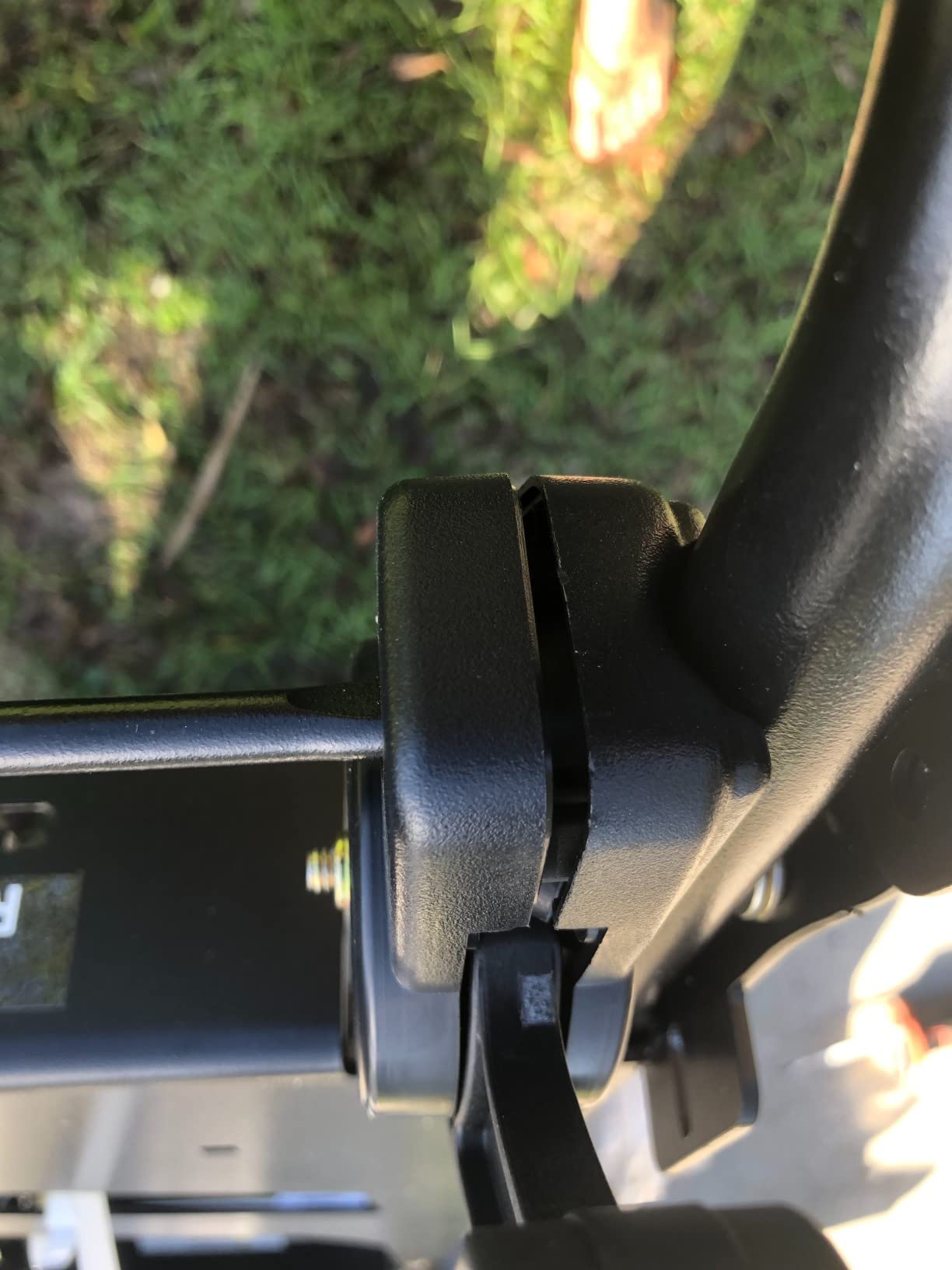
- Blade housing can bend or break on small rocks
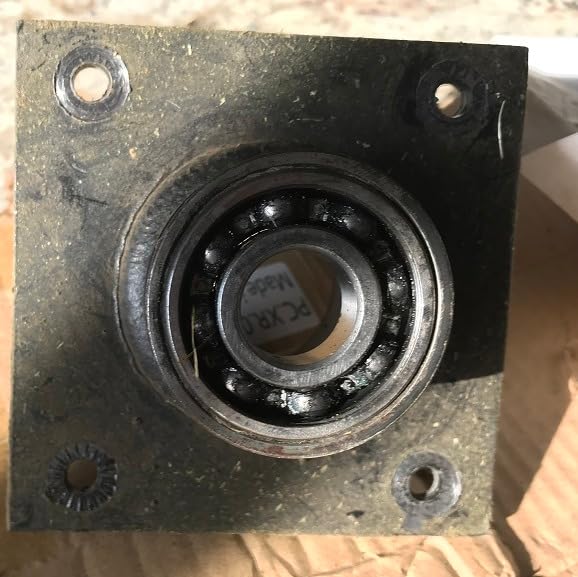
- Cheap Chinese bearings with flimsy plastic grease seals
- Belt can come off after limited use
- Loose hardware and cracked engage lever reported
The Swisher Predator walk-behind is the heavy-duty option for property owners who need to fell 1.5-inch saplings and cannot justify a tractor. The 11.5 HP engine is significantly more powerful than 160-170cc walk-behind units, and the steel blade deck handles material that destroys string heads. The 4-speed transmission with reverse is a real working benefit in tight areas.
The self-propelled drive does help on flat ground. The pneumatic chevron tires grip uneven terrain better than hard plastic wheels. The adjustable-height handlebar lets you match the controls to your body. Across 4 reviews, owners describe a powerful but heavy machine that takes commitment to operate.
The Swisher Predator is one of the few walk-behind units that genuinely handles 1.5-inch saplings. If your property has brush that has grown into small trees, this is one of the most capable walk-behind options on the market today.
The 252-pound weight is the headline downside. Even with self-propel, the Predator is exhausting on slopes and difficult to load. The blade drive housing can bend or break on small rocks, which is an expensive repair. The bearings are a known weak point. The 3.3-star average across 4 reviews reflects the mechanical reliability concerns. For a buyer who needs heavy-duty walk-behind power and has a flat property, the Predator delivers. For everyone else, a tow-behind or flail mower is the better investment.
Who the Swisher Predator Is Best For
This is the right brush mower for a property owner with 1.5-inch saplings to clear on relatively flat ground. It is also a fit for a small landowner who does not have a tractor but needs more power than a string mower delivers. If you value steel blade cutting over string heads, the Predator is a meaningful upgrade.
Where the Swisher Predator Falls Short
Skip this model if your property has slopes. The 252-pound weight and self-propel system do not combine well with hills. If you have more than 3 acres, a tow-behind will save you hours of operator fatigue. For daily commercial use, look at flail mowers rather than walk-behind rotary cutters.
10. Swisher 14.5 HP Kawasaki 44-Inch Commercial Pro Rough Cut – Best Commercial Tow-Behind
RC14544CPKA – Swisher 14.5HP 12V Kawasaki 44″ Commercial Pro Rough Cut Mower
14.5 HP Kawasaki V-Twin 12V engine
44-inch cutting deck
Remote blade engagement
Heavy-duty swinging blades
Pros
- 14.5 HP Kawasaki V-Twin engine handles brush and small trees
- 44-inch cutting width clears large areas quickly
- Remote operator console for blade engagement from the towing vehicle
- Articulating hitch with 2-inch ball coupler
- Heavy-duty 1/4-inch steel swinging chopper blades
- Electric start convenience on a commercial-grade engine
Cons
- Tires are underbuilt for the 448 lb unit and frequently go flat
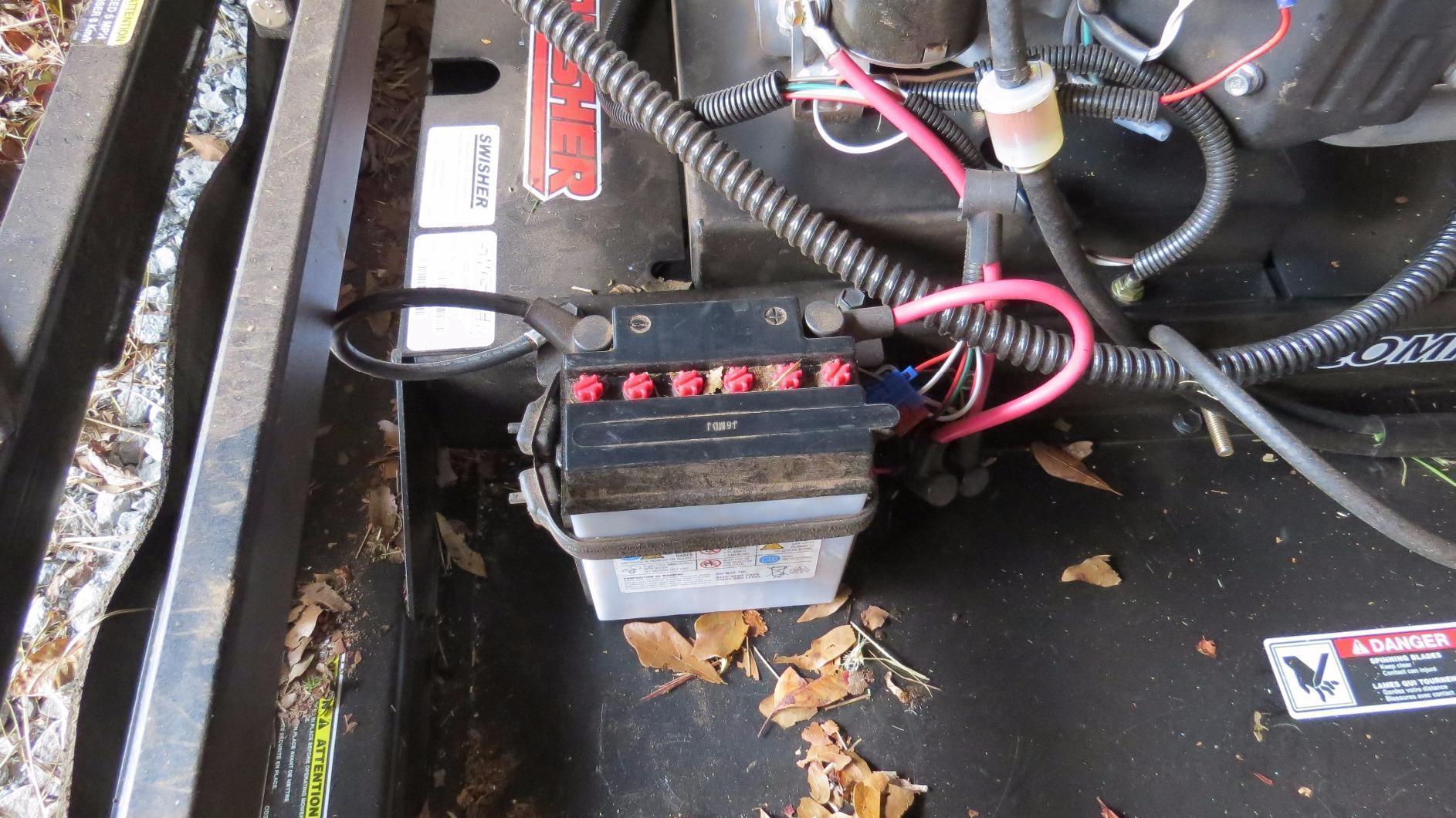
- Clutch assembly contains plastic that can melt under heavy use
- Scalping is common on uneven terrain with only two wheels
- Heavy shipping crate is difficult to disassemble
- Vine wrap and 1-inch dried branches can jam the cutting area
The Swisher Commercial Pro with the 14.5 HP Kawasaki V-Twin is the most powerful tow-behind in our lineup. The Kawasaki engine is the gold standard for commercial-grade reliability, and it shows the moment you turn the key. The 44-inch deck paired with the heavy-duty 1/4-inch steel swinging chopper blades chews through brush and small trees that would stall less powerful units.
The remote operator console is a real safety and productivity upgrade. From the towing vehicle seat, you engage the blades without leaving the cab. The articulating hitch with 2-inch ball coupler allows infinite offset adjustment, so you can reach the most awkward fence lines and trail edges. The electric start eliminates pull-starting on a 420-pound unit.
This is the brush mower we recommend for commercial operators, large-acreage landowners, and anyone clearing right-of-way or pasture on a regular basis. Across 16 reviews, owners describe a powerful machine that handles brush and small trees with consistent results.
The tires are underbuilt for the 448-pound operating weight and frequently go flat, which is the most common owner complaint. Several long-term owners report blade shaft bearing failures and plastic clutch component wear. The two-wheel design scalps uneven ground. Removing the heavy shipping crate requires serious disassembly effort. For a commercial buyer, budget for tire upgrades and bearing maintenance. For a homeowner, the Earthquake Acreage is the better value.
Who the Swisher Commercial Pro Is Best For
This is the right brush mower for commercial operators, large-acreage property owners, and contractors clearing brush and small trees regularly. The Kawasaki V-Twin justifies the cost for daily users. Anyone maintaining right-of-way, pasture, or large estates should consider this model seriously.
Where the Swisher Commercial Pro Falls Short
Skip this model if you only have a few acres to clear once or twice a year. The price premium for the Kawasaki engine and commercial features does not pay back on small-acreage use. The tire and bearing reliability concerns are also real ownership costs. For a property owner with 5 to 15 acres and occasional use, the Earthquake Acreage or Swisher 11.5 HP is the better value.
How to Choose the Best Brush Mower for Your Property
Choosing a brush mower comes down to matching the machine to your acreage, your vegetation, and your tow vehicle if you need one. The wrong match wastes hours and wears out operators. The right match turns a weekend of misery into a productive afternoon.
Match the Mower to Your Acreage
Under 2 acres: A walk-behind brush mower with a 160-170cc engine is the right call. The BILT HARD, Earthquake Viper, or PowerSmart cover fence lines, ditch banks, and small fields without the cost or storage burden of a tow-behind.
2 to 10 acres: You can still use a walk-behind if your ground is flat and your brush is light, but a tow-behind will save hours. The Earthquake Acreage or Swisher 11.5 HP 44-inch are the right picks for this acreage range.
10+ acres: A tow-behind or tractor-mounted flail mower is the realistic answer. The Swisher Commercial Pro or Earthquake Acreage paired with an ATV or compact tractor will clear acres per hour rather than acres per day.
Walk-Behind vs Tow-Behind vs Tractor-Mounted vs Remote-Control
Walk-behind units are the most affordable and the most maneuverable around obstacles. They are also the most physically demanding for the operator and the slowest per acre. Tow-behind units multiply your productivity by adding an ATV or compact tractor, but they require a tow vehicle and a place to store a 400 to 650-pound machine. Tractor-mounted flail mowers are the most productive for saplings and the best for soil health because they mulch material finely. Remote-control mowers are the safest on steep slopes but the most expensive option and the smallest category.
Engine Power vs Vegetation Type
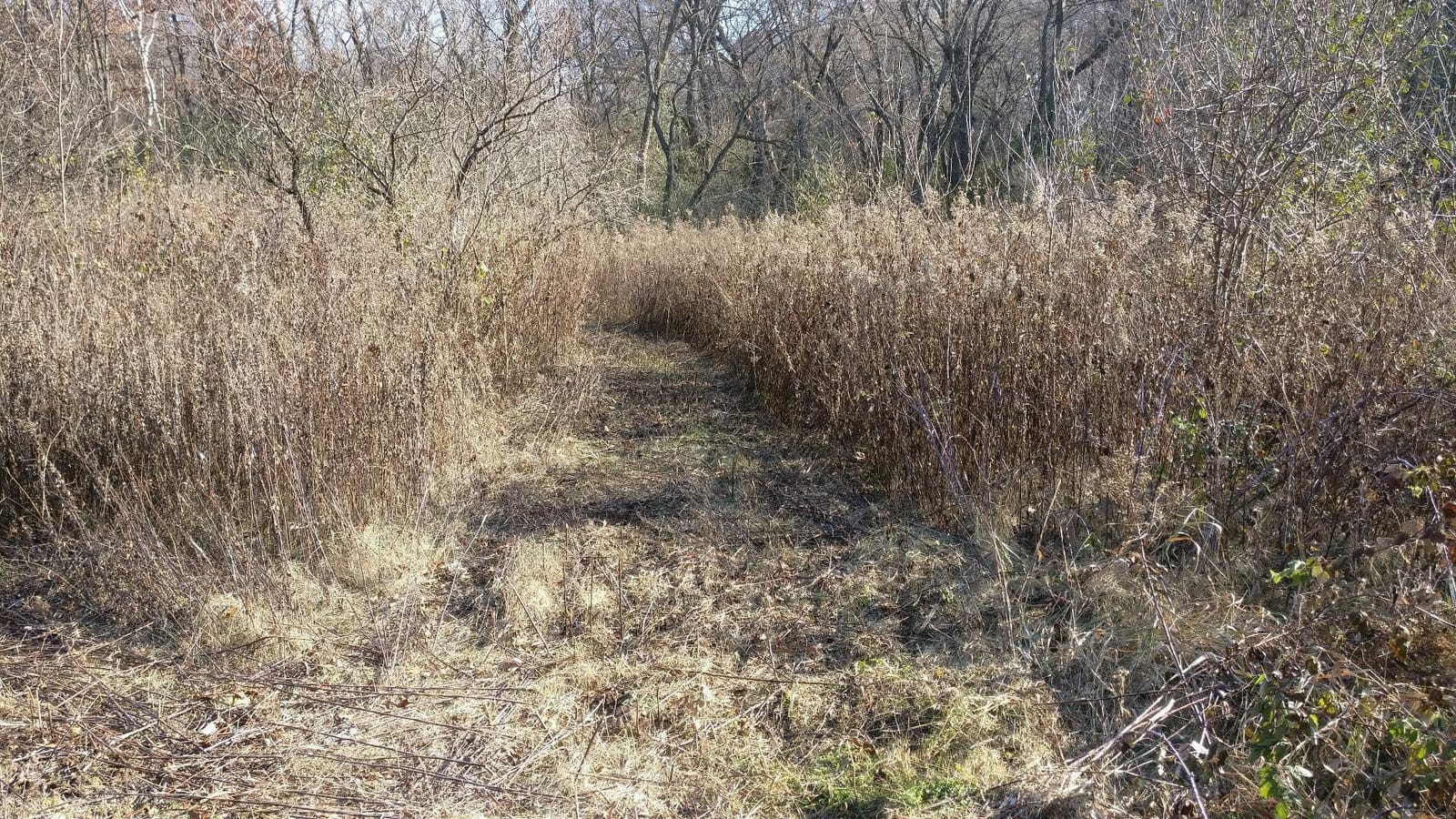
The general rule is that 0.5-inch saplings and tall grass need at least 160cc walk-behind power. 1-inch saplings need 8 to 11 HP walk-behind rotary cutter power. 2-inch saplings need 14+ HP tow-behind power. 3-inch saplings need 17+ HP tow-behind power or a tractor-mounted flail mower. For dense brush, prioritize torque over peak horsepower because dense material loads the engine continuously.
Gas vs Battery Brush Mowers: The Eco Trade-Off
Gas brush mowers deliver continuous runtime and high torque, but they emit hydrocarbons, require fuel storage, and create noise that affects neighbors and wildlife. Battery brush mowers like the Earthquake 60V eliminate direct emissions and run quietly, but they have limited runtime under heavy load. For an eco-friendly approach, a battery unit on small acreage paired with a tractor-mounted flail on larger acreage gives you the best of both. Flail mowing also returns finely mulched material to the soil, which builds organic matter rather than removing it.
Rent vs Buy Brush Mower
If you only need to clear brush once or twice a year, renting is the better financial choice. Daily rental rates for tow-behind and tractor-mounted brush mowers typically range across most equipment rental companies. Renting also lets you test a model before committing to a purchase. If you clear brush two or more times per year on 5-plus acres, buying pays back within one to two seasons. The break-even math also includes your time, since rental availability is not guaranteed during peak spring and fall clearing windows.
Maintenance and Long-Term Cost of Ownership
Walk-behind units under 200 pounds typically cost less per year in maintenance because they have fewer wear parts. Tow-behind and tractor-mounted units have more bearings, belts, blades, and tires that need replacement. The most expensive long-term ownership item is the trimmer line on string mower walk-behinds. Steel-blade rotary cutters have higher blade replacement costs but lower consumable costs. Plan for annual oil changes, air filter replacement, and spark plug replacement on gas units regardless of class.
Frequently Asked Questions
What is the best mower for mowing heavy brush?
For most homeowners, a 160-170cc walk-behind brush mower like the BILT HARD 170cc or Earthquake Viper is the best mower for heavy brush. For properties over 5 acres, a tow-behind like the Earthquake Acreage 44-inch with a 17.5HP Briggs u0026amp; Stratton engine handles brush and 3-inch saplings in a single pass.
Are brush mowers worth it?
Yes, brush mowers are worth it for anyone with more than half an acre of overgrown property. They save dozens of hours compared to clearing brush with a handheld trimmer or chainsaw, handle material that would destroy a regular lawn mower, and let property owners reclaim overgrown lots, fence lines, pastures, and trails in a single pass. For under 2 acres, a budget walk-behind pays back quickly.
Can a brush mower cut saplings?
Walk-behind brush mowers with 160-170cc engines cut saplings up to 0.5 inches. Walk-behind rotary cutters with 8-11 HP engines cut saplings up to 1.5 inches. Tow-behind rotary cutters with 11-17 HP engines cut saplings up to 3 inches. Tractor-mounted flail mowers handle saplings and brush up to 4 or more inches depending on blade design and tractor horsepower.
How much HP do I need for a brush mower?
For tall grass and light weeds, 160-170cc walk-behind engines provide enough power. For thick brush and 0.5-inch saplings, look for 8-11 HP. For 1-2 inch saplings, 11-15 HP tow-behind units are appropriate. For 3-inch saplings and dense material, 17+ HP tow-behind or tractor-mounted units are required. Match HP to your heaviest material, not your average material.
What size brush mower do I need for 5 acres?
For 5 acres of mixed weeds and light brush, a 44-inch tow-behind brush mower like the Earthquake Acreage or Swisher 11.5 HP is the right size. If your ground is flat and your brush is light, a high-quality walk-behind can work but will take 8 to 12 hours per clearing. A tow-behind with an ATV reduces that to 2 to 4 hours.
Is a flail mower better than a rotary brush cutter?
Flail mowers and rotary brush cutters serve different purposes. Flail mowers use many small hammers that mulch material finely and return organic matter to the soil, making them better for pasture reclamation and soil health. Rotary brush cutters use 1-2 heavy blades that cut faster and handle larger saplings, making them better for fence line clearing and rough terrain. For property owners focused on pasture reclamation, a flail mower is the better choice.
Final Verdict: Which Brush Mower Should You Buy in 2026?
For most homeowners with 1 to 5 acres of mixed weeds and brush, the BILT HARD 170cc Walk Behind String Trimmer is the best brush mower. It has the power, build quality, and reliability that match its price tier, and the 241-review base gives us confidence in long-term durability.
If your property is over 5 acres or you already have an ATV, the Earthquake Acreage 44-inch tow-behind is the right upgrade. The 17.5HP Briggs & Stratton, electric start, and adjustable offset handle saplings up to 3 inches across acres rather than fractions of acres per hour.
For buyers who prioritize emissions-free operation on a small yard, the Earthquake 60V battery walk-behind is the right eco-friendly choice. For commercial operators with daily clearing needs, the Swisher 14.5 HP Kawasaki Commercial Pro is the most powerful tow-behind in our lineup. Whichever brush mower you pick, match the machine to your acreage and your heaviest material, and you will save dozens of hours and avoid the frustrations that come from an underpowered unit.