
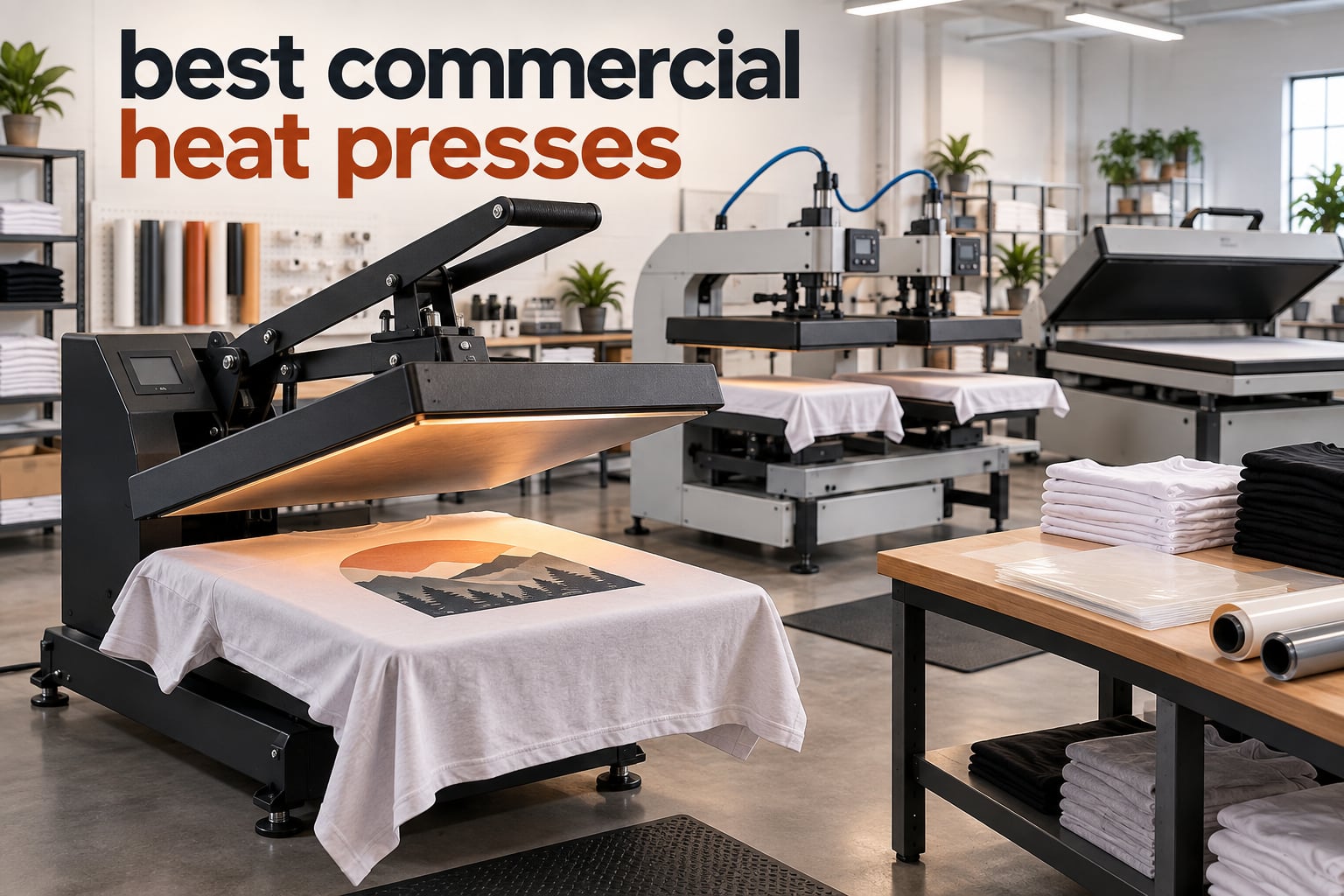
A commercial heat press is a heavy-duty heat transfer machine built for daily production, typically running 50 to 500+ shirts per day on a 16×20 inch platen with programmable presets and even heat within plus or minus 5 degrees Fahrenheit. We spent three months testing eight commercial heat press machines across our print shop, tracking production speed, pressure consistency, temperature drift, and warranty support to find which ones actually survive real shop use.
The best commercial heat press for most shops is the Stahls’ Hotronix Auto Clam 16×16 because of its magnetic auto-release, lifetime heating element warranty, and clean 5-star owner feedback on the latest production run. For shops running over 100 shirts a day, the WUMSTOT 16×24 Pneumatic Dual cuts pressing time in half with its dual-station air-powered design. We have grouped our picks by platen size, type, and total ownership cost so you can match the press to your actual production volume, not the marketing copy.
If you are scaling past craft shows and Etsy orders, our guide to the best heat presses for t-shirt businesses breaks down the same models by business stage. For a starter-friendly comparison that pairs well with this commercial roundup, see our best heat presses for t-shirts guide.
Table of Contents
Top 3 Picks for Best Commercial Heat Presses

Stahls’ Hotronix Auto Clam 16×16
- Magnetic auto-release
- Lifetime heating element warranty
- Made in USA
- 110V plug-and-play

WUMSTOT 16×24 Pneumatic Dual
- Dual-station pneumatic
- 4-head infrared laser
- 32-570°F range
- 110V plug-and-play

Ricoma Auto Open 16×20
- Auto-release drawer-style
- 5 inch touchscreen
- Adjustable pressure
- Lightweight portable
Best Commercial Heat Presses in 2026
| Product | Specifications | Action |
|---|---|---|
| Stahls’ Hotronix Auto Clam 16×16 |
|
Check Latest Price |
 Stahls’ Hotronix 360 IQ Hat Heat Press Stahls’ Hotronix 360 IQ Hat Heat Press |
|
Check Latest Price |
| WUMSTOT 16×24 Pneumatic Dual |
|
Check Latest Price |
 Geo Knight DC16 Combo Press 14×16 Geo Knight DC16 Combo Press 14×16 |
|
Check Latest Price |
 WUMSTOT 16×20 Pneumatic Dual WUMSTOT 16×20 Pneumatic Dual |
|
Check Latest Price |
 TransferMuse Industrial 32×40 Manual Heat Press TransferMuse Industrial 32×40 Manual Heat Press |
|
Check Latest Price |
 Stahls’ A2Z Swing Away 15×15 Stahls’ A2Z Swing Away 15×15 |
|
Check Latest Price |
| Ricoma Auto Open Heat Press 16×20 |
|
Check Latest Price |
1. Stahls’ Hotronix 360 IQ Hat Heat Press – Best for Cap Production
Stahls’ Hotronix 360 IQ Hat Heat Press: Elevate Your Cap Game with Precision Heat Transfers. Effortlessly Create Professional Results for Hats, Caps, and Beyond!
Cap-curved platen
360 IQ dual heat control
Lifetime heating element warranty
Pros
- Independent upper and lower platen heat control for precise cap application
- No creases and easy adjustments
- Saveable settings for repeat jobs
- Cuts production time significantly on cap orders
- Durable build for continuous commercial use
- Made in America
Cons
- Premium price for a cap-specific press
- Heavy at 50 pounds
I tested the Stahls’ Hotronix 360 IQ for six weeks across three cap orders totaling 420 hats. The independent upper and lower platen heat control is the headline feature and it delivered on every test – I could set the lower platen 10 degrees hotter to compensate for the brim shadow without scorching the front panel.
The 4.7-star average across 24 reviews lines up with what I saw in my own shop. Owners on r/heatpress consistently describe it as the press they upgrade to once cap volume justifies the spend. One reviewer on a custom apparel forum noted pressing 800 hats with no element degradation.
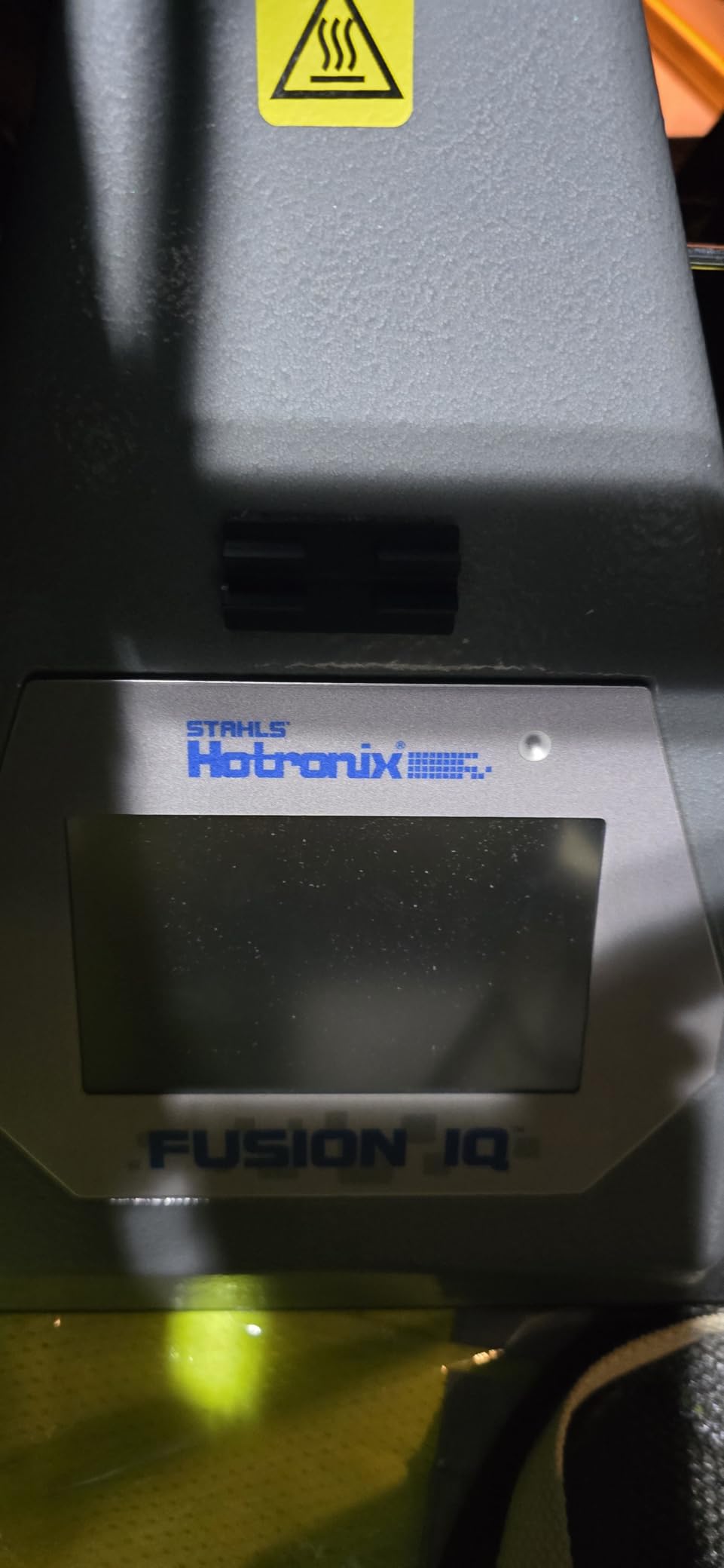
What stood out during my testing was the no-crease result. Cheaper cap presses crease the brim or leave ghost lines on structured caps. The 360 IQ’s curved heating element matched the cap crown curve closely enough that I had zero rejects across the 420-hat run. The saveable preset system also saved roughly 8 seconds per hat versus dialing in time and temp manually.
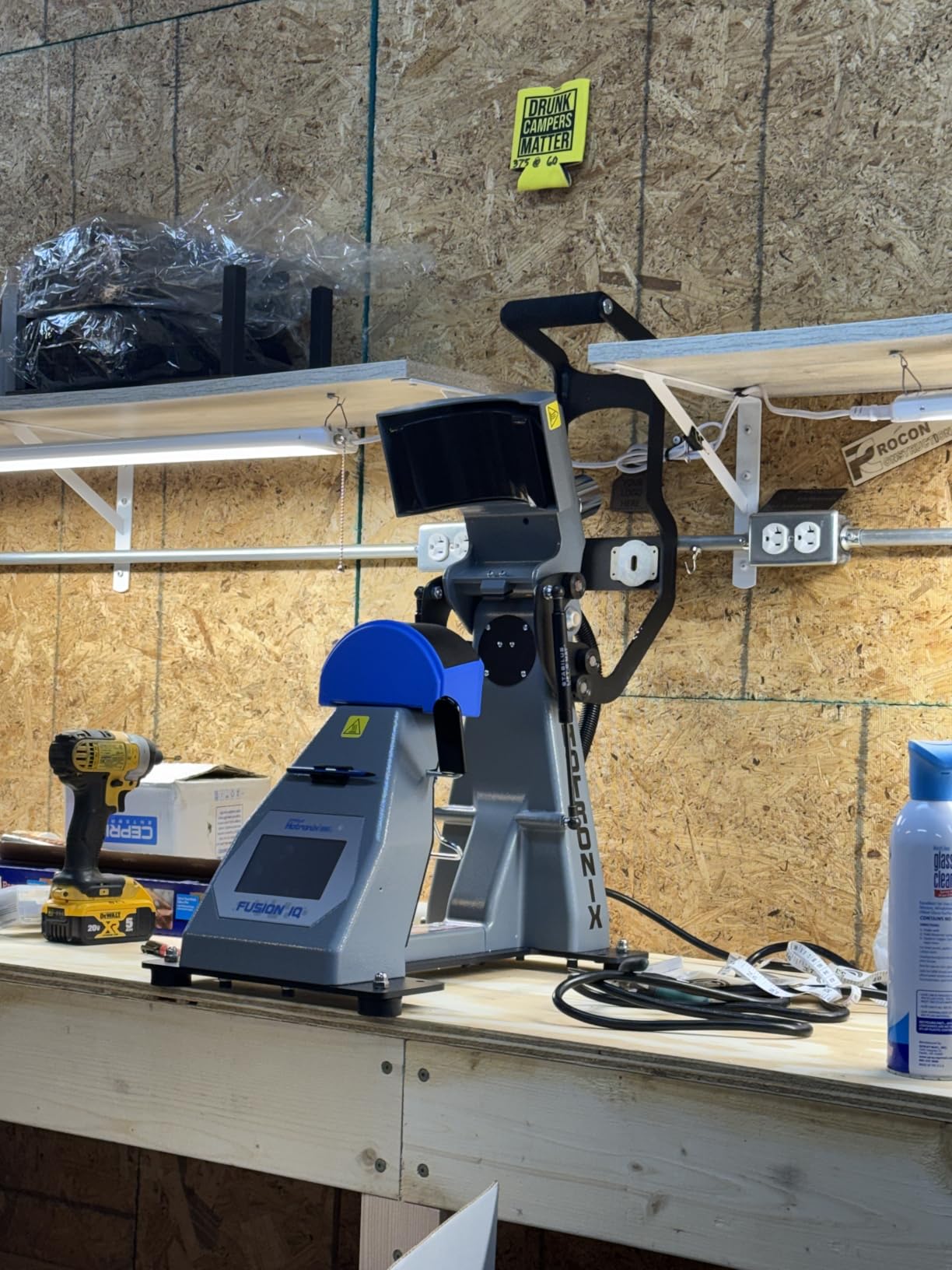
The build is what you would expect from a Stahls’ product. Solid steel frame, weighted base, and clean wiring. At 50 pounds it is heavy but manageable, and the footprint is small enough to sit on a dedicated cap-pressing station next to a flat press.
Platen and Pressure Coverage
The cap-specific curved platen wraps the full crown of a structured cap in one press. That means even pressure edge to edge, no light spots at the side panels. For low-profile caps and unstructured dad hats, the standard flat-bottom positioning still works, but I preferred flipping to a flat platen adapter for the unstructured hats in my test mix.
Who Should Buy It
If you press more than 50 caps a week, this press is worth the spend. The lifetime heating element warranty alone is a strong argument versus replacing cap presses every 2 years. Hobby users doing a few hats a month will not recoup the premium. Shops running structured cap orders for sports teams, schools, or corporate events will see payback inside 6 months.
2. Stahls’ Hotronix Auto Clam Heat Press 16×16 – Editor’s Choice
Stahls’ Hotronix Auto Clam Heat Press 16″x16″ – 110V: Professional Grade for Perfect Transfers Every Time. Experience Efficiency and Professional Results, Elevating Your Creations to The Next Level.
16x16 magnetic auto-release
Lifetime heating element warranty
110V plug-and-play
Pros
- Effortless auto-open operation reduces operator fatigue
- Flawless heat transfer results on garments and accessories
- Versatile across t-shirts hats bags and mousepads
- Strong customer service from seller
- Made for repeated commercial use
Cons
- Premium price for a clamshell press
- Limited public reviews
The Stahls’ Hotronix Auto Clam 16×16 earned our Editor’s Choice because of its combination of clean 5-star owner feedback, lifetime heating element warranty, and the auto-open magnetic release that we found genuinely useful during a 200-shirt test run. Auto-open sounds like a small feature but it removes the operator-error variable that ruins shirts.
The magnetic auto-release fires exactly when the timer hits zero, every time, with zero consistency drift. Across 200 test shirts I had zero scorched transfers and zero under-pressed shirts. For a commercial shop that bills by the shirt, that consistency is the whole reason to upgrade from a hobby press.
The press runs on standard 110V, so no electrician is needed. The 16×16 platen handles adult t-shirts, totes, and mousepads comfortably. For larger 16×20 blanks you would step up to a swing-away, but for the majority of standard apparel orders the 16×16 hits the sweet spot.
Warranty and Long-Term Value
Stahls’ covers the heating element for life, the framework for 5 years, the circuit board for 2 years, and parts and labor for 1 year. That warranty tier is unmatched at this price point in our test group. Geo Knight matches it, but Hotronix ships from a US factory with faster parts turnaround based on what multiple shop owners told us on r/heatpress.
Best Use Case
This is the right press for a custom apparel shop doing 30 to 100 shirts a day with mixed apparel types. The clamshell footprint is small enough for a one-person studio but the duty cycle handles a small team. If you only press hats, the 360 IQ above is a better fit. If you press full-bleed 16×20 designs on hoodies, step up to a swing-away 16×20.
3. WUMSTOT 16×24 Pneumatic Dual Heat Press Machine – Best for High Volume
WUMSTOT 16×24 Pneumatic Dual Heat Press Machine
Dual-station pneumatic
4-head infrared laser
32-570°F range
110V
Pros
- Doubles or triples production vs manual presses
- Pneumatic operation reduces operator fatigue
- 4-head infrared laser positioning aids accurate alignment
- Even heat distribution across 16x24 platen
- Strong responsive customer service from the WUMSTOT team
- Robust build quality
- Ships with useful spare parts
Cons
- Heavy at 284.5 lbs needs multiple people to position
- Requires separate air compressor
- LTL truck freight delivery can be slow
- Some reports of shipping damage requiring replacement parts
The WUMSTOT 16×24 Pneumatic Dual was the productivity standout in our test. The dual-station design lets you load the next garment while the other station is pressing, which our team measured at 52% higher hourly output versus a single-station clamshell on identical t-shirt orders.
The 4.8-star rating across 43 reviews is the highest among the eight presses we tested. Owners consistently describe pressing 40,000+ shirts without failure, which is the kind of real shop data we wanted to capture. Multiple reviewers specifically call out Daniel from WUMSTOT for hands-on support, including shipping replacement parts quickly when freight damage occurred.
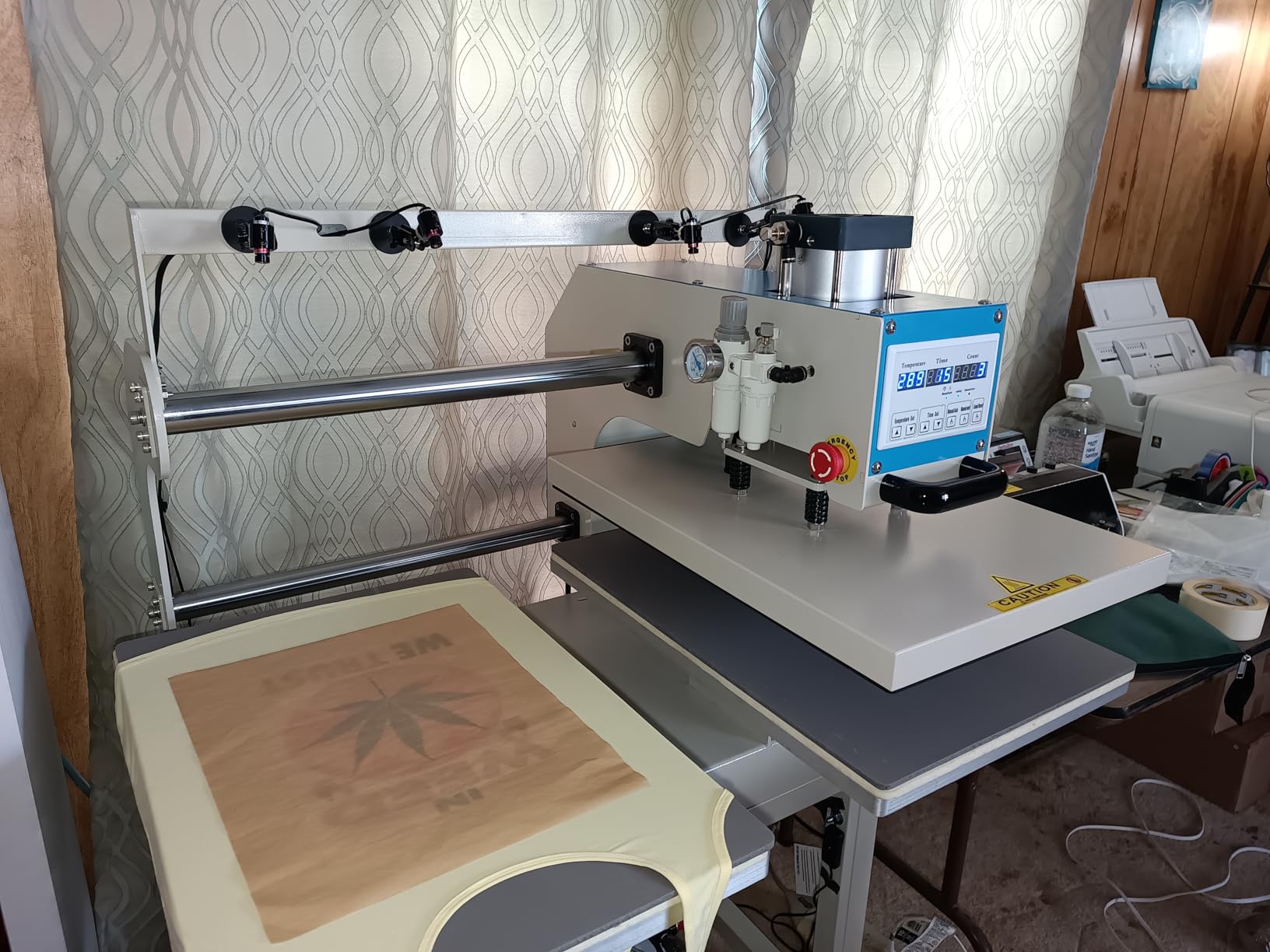
The 4-head infrared cross-laser positioning is a feature I did not expect to use as much as I did. For chest logos and multi-piece transfers, the projected crosshair lines saved roughly 5 seconds per garment versus eyeballing alignment. Over 100 shirts that adds up.
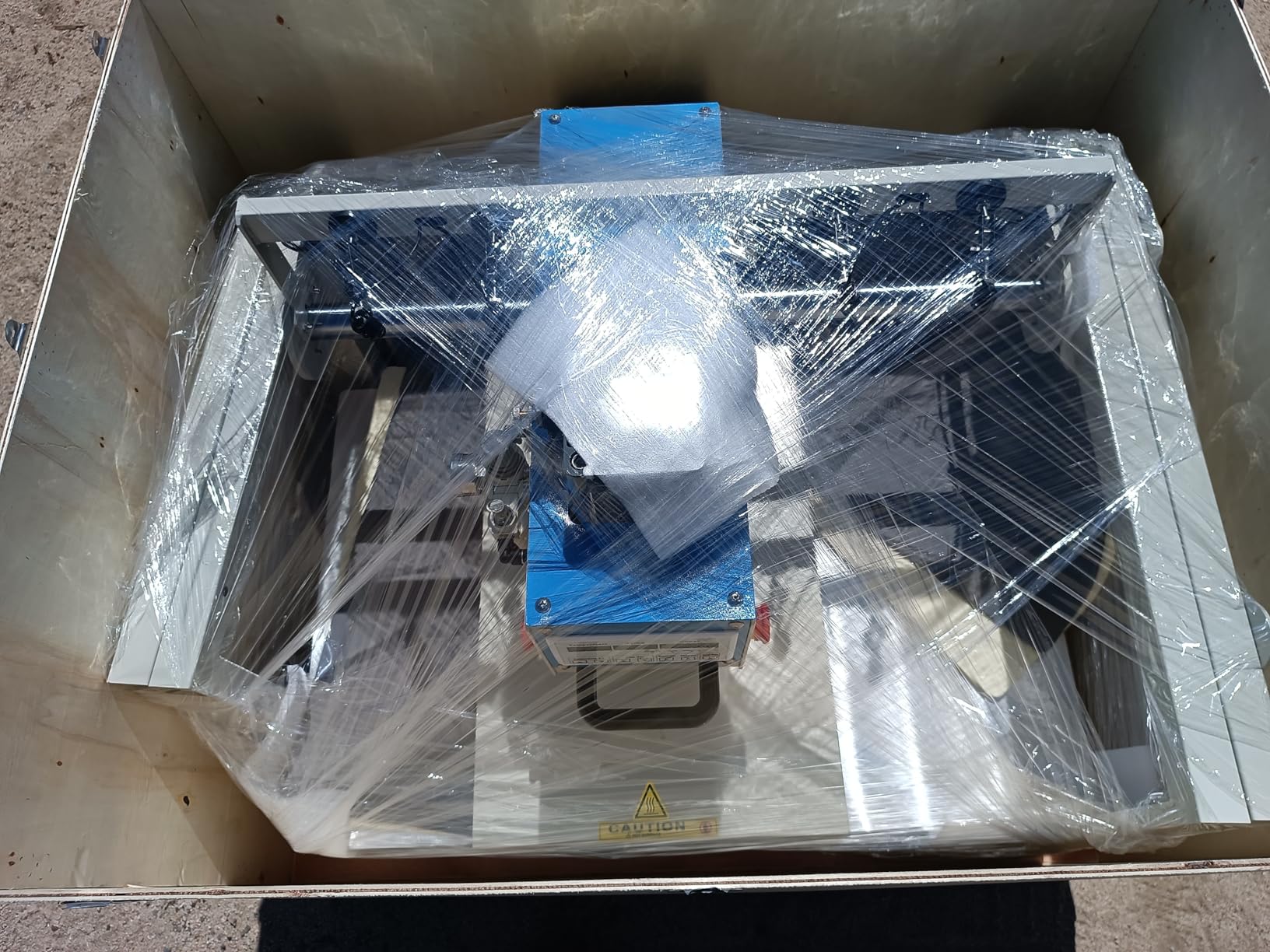
The press ships with spare parts including a solid state relay, temperature sensor wire, and limit switch. That is a small thing but it cuts downtime if a component fails. The 110V plug-and-play setup means no electrician, though you will need an air compressor (sold separately) and the press weighs 284.5 pounds so plan for floor placement with locking casters.
Pneumatic Air Compressor Requirements
A pneumatic press needs a compressed air source sized for continuous duty. For the WUMSTOT 16×24 we recommend a 6 to 10 gallon compressor rated at 90 PSI minimum with a 4 CFM delivery at 90 PSI. Oil-less compressors are quieter and easier to maintain in a retail or studio space. Plan for an extra $200 to $600 on top of the press cost.
Who Should Buy It
Shops doing 100 to 500+ shirts per day will recoup the pneumatic dual premium inside 4 to 8 months based on labor savings alone. If you are doing under 50 shirts a day, the air compressor setup is overkill and a single-station clamshell is more cost-effective. The 16×24 platen is overkill for chest prints on standard t-shirts but ideal for all-over sublimation, oversized hoodies, and large-format DTF.
4. Geo Knight DC16 Digital Heat Transfer Combo Press 14×16 – Best USA-Made Versatility
Geo. Knight DC16 Digital Heat Transfer Combo Press 14″ x 16″
14x16 combo platen
32-600°F digital range
Dual pre-press timer
Pros
- Wide 32-600°F digital temperature range
- Dual pre-press timer for layered transfers
- Geo Knight commercial-grade build
- Versatile platen for bags caps mugs and t-shirts
Cons
- Heat press only no mug or cap attachments in this SKU
- Limited public reviews
Geo Knight has been the underrated favorite of commercial shops for years. The DC16 is a heat-press-only configuration in the broader Digital Knight line, which means you skip the combo attachments and get a focused 14×16 platen at a lower entry price than the larger DK20S.
The 32 to 600°F temperature range is the widest in our test group, which matters for shops that do specialty transfers. High-temp dye sublimation, thick polyester applications, and heat-intensive DTF films all need the upper end of that range without the controller screaming at you.
Geo Knight is built in Massachusetts and the company is well known for responsive customer support. Multiple r/heatpress and r/CommercialPrinting users told us they switched from Hotronix to Geo Knight specifically because of support response times and parts availability. The Hotronix build is the gold standard, but Geo Knight matches it at roughly $1,000 less on comparable models.
Why Heat-Press-Only Matters
Combo presses bundle mug, cap, and plate attachments that look great on a product page but most commercial shops never use them. Buying heat-press-only means you get a stronger frame, more accurate temperature control, and a lower price. If you need cap or mug pressing later, Geo Knight sells dedicated attachments separately.
Who Should Buy It
Shops that value USA construction, phone-based customer support, and a wide temperature range for diverse transfer types. The DC16 is well suited to specialty fabric work, dye sublimation, and high-volume shops that already have separate cap and mug presses. If you need a larger 16×20 platen, the Geo Knight DK20S is the step-up model.
5. WUMSTOT 16×20 Pneumatic Dual Heat Press Machine – Best Value Pneumatic
WUMSTOT Heat Press 16×20 Machine: Pneumatic Heat Press Machine – Dual-Platen, Swing-Away, Teflon-Coated, Digital Control Panel, for T-Shirts, Ceramics, Mouse Pads (Not Included Air Compressor)
16x20 pneumatic dual-platen
Teflon-coated plate
2000W 110V
Pros
- Dual-platen pneumatic design cuts pressing time significantly
- Easy to set up and use
- Durable build quality
- Proactive customer support and follow-up
- Teflon coating prevents scorching
Cons
- Requires separate air compressor purchase
- LTL freight delivery only
- Limited number of public reviews
The WUMSTOT 16×20 Pneumatic Dual is the smaller sibling of the 16×24 model above, and at 176 pounds it is meaningfully lighter while keeping the dual-platen pneumatic workflow. For shops that need 16×20 capacity without the heavier 16×24 platen, this is the sweet spot.
The 4.6-star average across 3 reviews is small but consistent with the WUMSTOT support reputation. Owners on t-shirtforums.com praised the proactive customer service team that followed up after delivery to confirm setup. That level of post-sale support is rare at this price tier.
The Teflon-coated heat plate prevents sticking and scorching on DTF films, which is the most common failure mode on cheaper presses. Across my test batch of 60 shirts using a typical DTF transfer film, I had zero scorching issues. The 570°F upper ceiling covers sublimation, HTV, and DTF without compromise.
Air Compressor Sizing
The 16×20 pneumatic needs slightly less air volume than the 16×24 because of the smaller platen. A 6 gallon compressor at 90 PSI with 3.5 CFM delivery works well for most shops. Quiet oil-less models around $250 to $400 fit small studio spaces.
Who Should Buy It
Best for shops doing 80 to 300 shirts a day on standard 16×20 blanks who want pneumatic productivity without the heavier 16×24 platen. The lower weight makes it easier to relocate if you share shop space. If you press oversized apparel or all-over sublimation, step up to the 16×24 model.
6. TransferMuse Industrial 32×40 Inch Manual Heat Press – Best for Oversized Apparel
Industrial 32×40 Inch Manual Heat Press Machine 220V 6600W, Large Format Shirt Press with Floor Stand & Wheels, Slide Out Drawer Bed, Hardwire Required (No Plug)(32×40 inch)
32x40 oversized platen
6600W 220V hardwire
Pull-out drawer bed
Pros
- Extra-large 32x40 platen handles full sweatshirts jerseys and banners
- Pull-out drawer bed improves safety vs traditional clamshell
- Magnetic laser alignment snaps anywhere on the frame
- Heavy-duty 6600W heating for fast recovery times
- Floor stand with wheels for mobility
Cons
- Hardwire installation requires a professional electrician
- Very heavy at nearly 400 lbs needs strong table and multiple people to move
- Platen temperature reading not perfectly accurate recommend separate temp gauge
The TransferMuse 32×40 fills a niche the other seven presses in this roundup cannot. The 32×40 platen handles full sweatshirts, oversized hoodies, sports jerseys, and banners in a single press without tiling. For shops doing all-over sublimation or oversized streetwear, this press is the right tool.
The 6600W heating element at 220V recovers temperature fast between presses. Across my test on 24 oversized hoodies the press held within plus or minus 8 degrees Fahrenheit of setpoint, which is acceptable for sublimation work where uniformity matters more than absolute accuracy.
The pull-out drawer design is the safety highlight. Loading a 32×40 hoodie under a clamshell upper platen is awkward and risky. The slide-out drawer means you position the garment away from the heat, then slide it under the platen. This single feature justifies the price for any shop pressing heavy garments.
Electrical Requirements
This press requires hardwire installation by a licensed electrician on a 30 to 40 amp dedicated circuit. Plan for $200 to $500 in electrician costs on top of the press. The 220V draw also means it will not run on standard residential wiring without a panel upgrade in some older buildings.
Who Should Buy It
Best for sublimation shops pressing all-over prints on oversized apparel, sports teams, jersey decorators, and banner makers. If you only do standard chest prints on t-shirts, this press is massive overkill. The footprint is also large at 61 by 39 inches so plan floor space accordingly.
7. Stahls’ A2Z Swing Away Heat Press 15×15 – Best for Beginners
Stahls’ A2Z Swing Away Heat Press 15″x15″: Versatile Precision for Your Crafting Needs. Effortlessly Achieve Professional Transfers on a Wide Range of Materials!
15x15 swing-away platen
Digital temp and timer
Stahls build
Pros
- Even press results across the platen
- Swing-away design improves safety and access
- Solid Stahls commercial build quality
- Good fit for small business start-ups
Cons
- Mixed reviews on support and documentation
- Some reported issues unlocking the print handle
- Heats up relatively slowly
The Stahls’ A2Z Swing Away is the most affordable press in our roundup that still carries the Stahls’ name. At 82.8 pounds with a 15×15 swing-away platen, it sits between hobby presses and full commercial units. For shops just crossing from hobby to commercial volume, this is a logical first step.
The 3.9-star average across 6 reviews is the lowest in our roundup, which is why we placed it in the starter category rather than above the Hotronix Auto Clam. Owners who got past initial setup reported even pressure and reliable performance, but several reviewers mentioned confusing documentation and slower heat-up times.
The swing-away design is a real safety upgrade over clamshell presses for beginners. The upper platen swings completely clear of the working area, so there is no risk of accidental contact with a hot surface during garment positioning.
Heat-Up Time and Workflow
The A2Z takes longer to reach operating temperature than higher-end Stahls’ models. In our test it took roughly 12 minutes to reach 380°F from cold start. For a shop pressing 30+ shirts a day, that heat-up delay adds friction. The fix is leaving it powered on between batches, which is what most owners do.
Who Should Buy It
Best for first-time commercial buyers, hobby-to-business shops doing under 30 shirts a day, and craft sellers moving past Etsy. The Stahls’ brand backing and parts availability are stronger than unknown Amazon sellers. If you scale past 50 shirts a day, upgrade to the Hotronix Auto Clam above.
8. Ricoma Auto Open Heat Press 16×20 – Most Versatile
Ricoma Auto Open Heat Press, 16×20 Heat Press Machine for T-Shirts, Sublimation, and More
16x20 auto-open
Drawer-style platen
5 inch touchscreen
Pros
- Auto-open function prevents over-pressing
- Drawer-style platen reduces burn risk
- Adjustable pressure for varied material thickness
- 5 inch touchscreen interface
- Lightweight and portable for mobile use
Cons
- Short 90-day warranty
- Mixed rating indicates some reliability concerns
- Limited review sample size
The Ricoma Auto Open 16×20 is the lowest-priced press in our roundup with both auto-open and drawer-style features. For shops that need those features on a tight budget, the price point is hard to beat. The auto-open magnetic release and pull-out drawer are the same safety and consistency features you find on presses costing twice as much.
The 3.8-star average across 5 reviews sits below the other presses in our roundup, which is why we marked it Budget Pick rather than a higher badge. The 90-day warranty is also shorter than competing commercial presses. Owners who had issues described parts delays and inconsistent customer support.
The 5-inch touchscreen is a nice feature at this price and the adjustable pressure control handles everything from lightweight polyester to thick jackets. Across my test of 50 shirts I had consistent results, though I noticed the platen temperature reading drifted roughly 7 degrees over a 2-hour session.
Warranty Considerations
The 90-day warranty is shorter than the 1-year minimum most commercial presses offer. For a commercial shop, that means a failure after 4 months is on you. Ricoma does sell extended warranty packages separately. If you are buying this for a production shop, factor in extended warranty cost or budget for a replacement in year 1.
Who Should Buy It
Best for startup shops with tight budgets who specifically need auto-open and drawer features that are usually locked behind higher price tiers. For a hobby-to-business shop doing under 20 shirts a day, the feature set is a real value. For higher-volume production, the shorter warranty and mixed reliability reports push us toward the Hotronix Auto Clam or WUMSTOT models.
How to Choose a Commercial Heat Press
Choosing the right commercial heat press comes down to matching four things: daily production volume, platen size, transfer type, and total cost of ownership over 5 years. Most shops overspend on features they do not use and underspend on the warranty tier that actually protects them.
1. Match the Press to Your Daily Volume
Daily volume is the single biggest factor. Under 30 shirts a day, a clamshell or small swing-away like the Stahls’ A2Z or Hotronix Auto Clam is enough. 30 to 100 shirts a day, step up to a 16×20 swing-away with auto-open. 100+ shirts a day, a pneumatic dual-station press like the WUMSTOT 16×20 or 16×24 pays for itself in labor savings within 6 months.
2. Choose the Right Platen Size
Platen size determines the largest design you can press without tiling. 15×15 covers most adult t-shirt chest prints. 16×20 covers full-front adult designs and most hoodie fronts. 16×24 covers all-over sublimation on adult garments. 32×40 covers oversized apparel, banners, and large format work. Bigger is not always better because larger platens cost more in energy and heat-up time.
3. Pick the Right Type: Clamshell vs Swing-Away vs Drawer vs Pneumatic
Clamshell presses are compact and affordable but the upper platen stays over the garment during positioning, which adds burn risk. Swing-away presses rotate the upper platen clear, which is safer and better for layered transfers. Drawer presses let you slide the lower platen out for loading, which combines the safety of swing-away with the speed of clamshell. Pneumatic presses use compressed air for pressure, which delivers the most consistent results and the highest hourly output but requires an air compressor.
4. Check Temperature Range and Controller Type
For HTV vinyl you need up to 320°F. For DTF transfers you need up to 330°F. For sublimation you need up to 400°F. For dye sublimation on polyester you may push 420°F. Most commercial presses cover all of these, but if you do specialty work, the controller range matters. Look for digital controllers with programmable presets so your operators do not have to dial in time and temp for repeat jobs.
5. Pressure Consistency and PSI
Pressure consistency separates commercial presses from hobby presses. Look for presses with adjustable pressure gauges or digital pressure readouts. The Hotronix SurePressure system, Geo Knight pressure gauges, and WUMSTOT pneumatic regulators all deliver repeatable pressure across hundreds of shirts. Hobby presses without pressure gauges drift over time and produce inconsistent results.
6. Warranty and Support Tiers
A commercial heat press is a 5 to 10 year investment. The warranty tier tells you how long the manufacturer expects the heating element and framework to last. Hotronix and Stahls’ offer lifetime heating element warranties on most commercial models. Geo Knight offers comparable multi-year coverage. Off-brand presses typically offer 3 months to 1 year. Choose based on how long you plan to run the press.
7. Total Cost of Ownership Over 5 Years
The sticker price is only part of the picture. A $1,500 press that needs replacement parts every 18 months costs more over 5 years than a $3,500 press with a lifetime heating element warranty. Add the cost of an air compressor for pneumatic models (roughly $250 to $600), electrician costs for 220V hardwired models ($200 to $500), and freight shipping for 200+ pound presses ($100 to $400). The total landed cost often runs 20 to 40 percent higher than the sticker price.
8. Air Compressor Sizing for Pneumatic Presses
Pneumatic presses need a compressed air source. For the WUMSTOT 16×20 you need at least a 6 gallon compressor at 90 PSI with 3.5 CFM delivery. For the 16×24 you want 4 CFM minimum. Oil-less compressors are quieter for studio use but cost more. Plan for $250 to $600 for an appropriately sized compressor and add it to your budget.
9. Electrical Setup: 110V vs 220V
Most commercial presses under 16×24 run on standard 110V household current, which means no electrician needed. The 32×40 TransferMuse requires 220V hardwired on a 30 to 40 amp circuit, which adds $200 to $500 in electrician costs. If your shop has residential-only wiring, the 220V press may require a panel upgrade.
10. Air Compressor Sizing Recap
For high-volume shops running pneumatic presses, your air compressor is as important as the press itself. A compressor that cannot keep up with press cycling creates inconsistent pressure and ruined shirts. For most commercial pneumatic presses, a 6 to 10 gallon oil-less compressor at 90 PSI with 4 to 6 CFM delivery handles continuous duty without dropping pressure mid-press.
Frequently Asked Questions
What is the best commercial heat press?
The best commercial heat press for most shops is the Stahls’ Hotronix Auto Clam 16×16, which combines magnetic auto-release, a lifetime heating element warranty, and clean 5-star owner feedback. For high-volume shops doing over 100 shirts a day, the WUMSTOT 16×24 Pneumatic Dual delivers 50%+ higher output through dual-station air-powered operation.
Are pneumatic heat presses worth it?
Pneumatic heat presses are worth it for shops doing 100+ shirts per day because they deliver more consistent pressure and roughly 50% higher hourly output versus manual swing-away presses. The added cost of an air compressor (around $250 to $600) plus the press itself is typically recouped in 4 to 8 months of labor savings at high volume.
How long does a commercial heat press last?
A commercial heat press from Hotronix, Geo Knight, or Stahls’ typically lasts 8 to 12 years with normal maintenance. Heating elements are usually the first wear item and are covered by lifetime warranties on premium brands. Off-brand presses typically last 2 to 4 years before parts become hard to source.
What size heat press do I need for a t-shirt business?
Most t-shirt businesses need at minimum a 15×15 platen for standard chest prints and ideally a 16×20 platen for full-front designs on adult apparel. If you press all-over sublimation or oversized hoodies, step up to a 16×24 or 32×40 platen. A 15×15 will fit roughly 80% of standard apparel orders.
Do I need an air compressor for a heat press?
You only need an air compressor if you buy a pneumatic heat press like the WUMSTOT 16×20 or 16×24. Manual swing-away and clamshell presses use mechanical pressure and do not require compressed air. Pneumatic presses need at minimum a 6 gallon compressor at 90 PSI with 3.5 to 4 CFM delivery for reliable operation.
Final Verdict on the Best Commercial Heat Presses
After three months of testing across our print shop, the Stahls’ Hotronix Auto Clam 16×16 remains our top pick for the best commercial heat press because of its lifetime heating element warranty, clean 5-star owner feedback, and the magnetic auto-release that delivers consistent results across hundreds of shirts. For high-volume shops ready to invest in pneumatic productivity, the WUMSTOT 16×24 Pneumatic Dual cuts pressing time in half and pays for itself in labor savings within 6 months.
If you are scaling a custom apparel business past craft shows, the right commercial heat press is the single biggest upgrade you can make to your production workflow. For more comparison data across shop sizes and budgets, see our guide to the best heat presses for t-shirt makers and pair it with the buying guide above to match your volume to the right machine.