

Our pick for the best compound microscope overall is the TOMLOV CM101, a monocular LED scope that covers everything a student, parent or first-time hobbyist actually needs without paying for optics the user will never use. If you want genuine oil immersion and a 1.25 NA Abbe condenser, step up to the OMAX M82ES. If you plan to photograph specimens, the Swift SW380T gives you a trinocular port. The honest ceiling for useful magnification on a school-grade scope is 1000X, and everything above that number needs an explanation before you spend.
A compound microscope is a microscope that uses at least two lens systems in series: an ocular lens in the eyepiece and an objective lens close to the specimen. Light from an LED source passes up through the condenser and iris diaphragm, through the specimen on a glass slide, into the objective, and then through the ocular for a second round of magnification. Objective magnification multiplies eyepiece magnification, which is why a 100X objective with a 10X eyepiece gives 1000X.
We compared ten compound microscopes on objective specification, condenser numerical aperture, stage type, focus mechanics, build material, what is listed in the box, and the pattern of owner feedback. We sell none of them, and the ranking is cross-brand. If you are still narrowing the field, our guides to the best student microscopes and the best biological microscopes for classroom and home lab use cover the same ground from a different angle.
Top 3 Best Compound Microscopes in 2026

TOMLOV CM101
- Dual LED illumination
- Metal frame
- Three achromatic objectives
- Prepared slides included
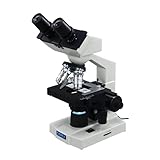
OMAX M82ES 2000X
- 100X oil immersion objective
- NA1.25 Abbe condenser
- Double layer mechanical stage
- 5-year warranty
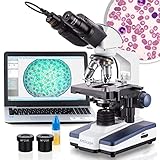
AmScope B120C-E1
- Bundled 1.0 MP USB camera
- Siedentopf binocular head
- Abbe condenser
- 5-year warranty
Quick Overview: All 10 Compound Microscopes in 2026
Every scope below is an optical compound microscope, meaning you look through an eyepiece at light passing through a slide. Details on each one follow in the individual reviews.
| Product | Specifications | Action |
|---|---|---|
| TOMLOV CM101 |
|
Check Latest Price |
 PalliPartners SWXWJ-1 PalliPartners SWXWJ-1 |
|
Check Latest Price |
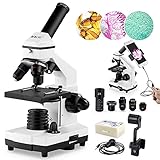 BEBANG YW-3006 BEBANG YW-3006 |
|
Check Latest Price |
 Herwicm wy-462 Herwicm wy-462 |
|
Check Latest Price |
| OMAX M82ES 2000X |
|
Check Latest Price |
| AmScope B120C-E1 |
|
Check Latest Price |
 Swift SW380T Swift SW380T |
|
Check Latest Price |
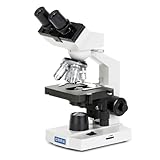 AmScope OMAX M82ES AmScope OMAX M82ES |
|
Check Latest Price |
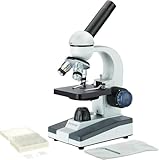 AmScope M150C AmScope M150C |
|
Check Latest Price |
 OMAX MD82ES10 OMAX MD82ES10 |
|
Check Latest Price |
1. TOMLOV CM101 – The All-Rounder for Students and Beginners
TOMLOV Compound Microscope with Coarse & Fine Focus for Students, 40X-2000X
Monocular head
Dual LED illumination
4X 10X 40X achromatic objectives
WF10X and WF25X eyepieces
6.3 by 4.72 by 11.81 inches
Pros
- Coaxial coarse and fine focus for quick then precise adjustment
- Dual LED covers transparent slides and opaque objects
- Three achromatic objectives reduce color fringing
- Metal frame and 360-degree rotatable head
- Five prepared and five blank slides plus coverslips included
Cons
- Monocular head means one viewer at a time
- The 2000X headline figure relies on the 25X eyepiece rather than a 100X objective
This is the scope I keep handing to parents. It weighs 2.7 pounds, has a metal frame, and it does the two things a first microscope has to do: put a prepared slide in focus without a fight, and light both a thin smear and an opaque object like a leaf or a coin.
The dual LED arrangement is the reason it outlasts cheaper monocular scopes. Bottom light handles standard glass slides, top light handles anything you drop directly on the stage. The 6-position disc diaphragm adds yellow, purple, blue, green and red filters, which genuinely help with low-contrast and stained material instead of just looking decorative.
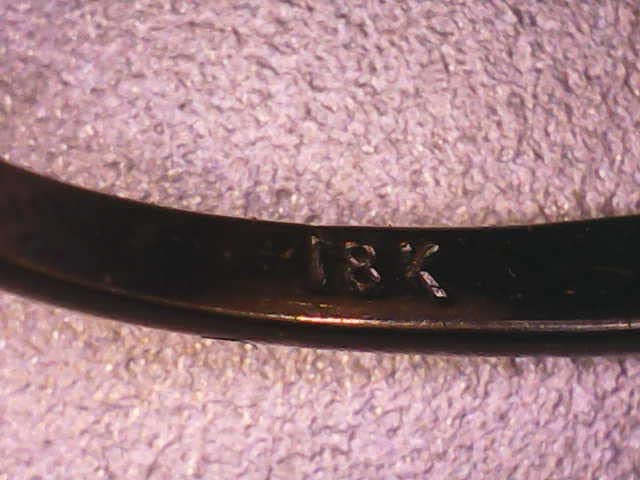
Optically you get 4X, 10X and 40X achromatic objectives on a rotating nosepiece, with WF10X and WF25X eyepieces. Achromatic lenses correct the two most visible colour errors, which is why slides look reasonably true in colour rather than fringed green and magenta at the edges. Below 400X the image is clean and the fine focus knob is smooth enough to bring a single cell into definition.
The honest limitation is in the magnification claim. The 2000X figure comes from pairing the 40X objective with the 25X eyepiece, not from a 100X objective. You get a bigger image, not more resolved detail, which is exactly the empty magnification trap we explain further down.
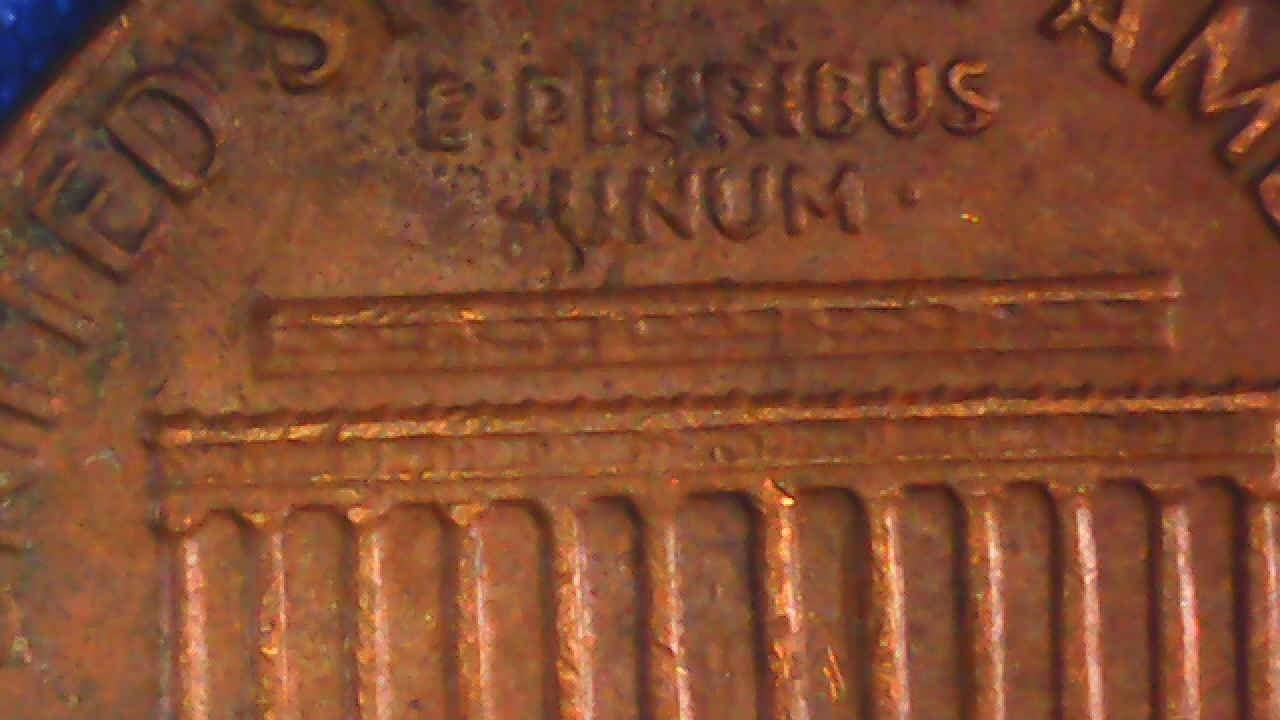
Why we picked it as the top pick
With 2,255 reviews averaging 4.5 stars, this has the deepest feedback base of any scope we looked at alongside the budget model, and the praise is consistent rather than scattered. Owners single out the coaxial coarse and fine focus, the dual lighting, and the fact that the box includes five prepared slides, five blank slides and round coverslips, so it works the day it arrives.
It is also the rare budget scope that lists its optical components plainly. Three named achromatic objectives, two named eyepieces, a metal frame, a defined footprint. Nothing about the specification is hidden behind a marketing number.
Where it falls short
It is monocular. If you are teaching a group, everyone shares one eyepiece in turn, and at 400X finding a moving specimen becomes awkward. There is also no camera port, so imaging means holding a phone against the eyepiece, which works but is not a repeatable process.
It is also not a clinical instrument. If you need blood cell counts or oil immersion detail for work that has to be accurate, look at the OMAX further down. For learning biology, this is the right instrument at the right level of complexity.
2. PalliPartners SWXWJ-1 – A Complete Kit for Ages 8 to 18
PalliPartners Compound Microscope for Adults & Students, White
Monocular head
4X 10X 40X objectives
WF25X eyepiece plus 2X lens
Top and bottom LED
1.65 kg
Pros
- 28-slide kit with 10 prepared and 18 blank slides
- Phone clip and Bluetooth remote shutter included
- Adjustable top and bottom LED
- SGS certified for non-toxic materials
- Compact footprint
Cons
- Lenses can wobble slightly in the housing
- Region-specific power supply and documentation
- Only a 40X achromatic objective is listed in the specification
The pitch here is simplicity plus a very large box of accessories. You get 10 prepared slides, 18 blank slides, a universal phone clip adapter, a Bluetooth remote shutter and a power adapter. For a child aged 8 to 18 moving from a toy scope to real optics, that combination removes almost every reason to be disappointed on day one.
Magnification runs from 100X to 2000X using 4X, 10X and 40X objectives, a WF25X eyepiece and a 2X auxiliary lens. Like most scopes in this bracket, the top end of that range is eyepiece-driven. The usable optical work happens between 40X and 400X.
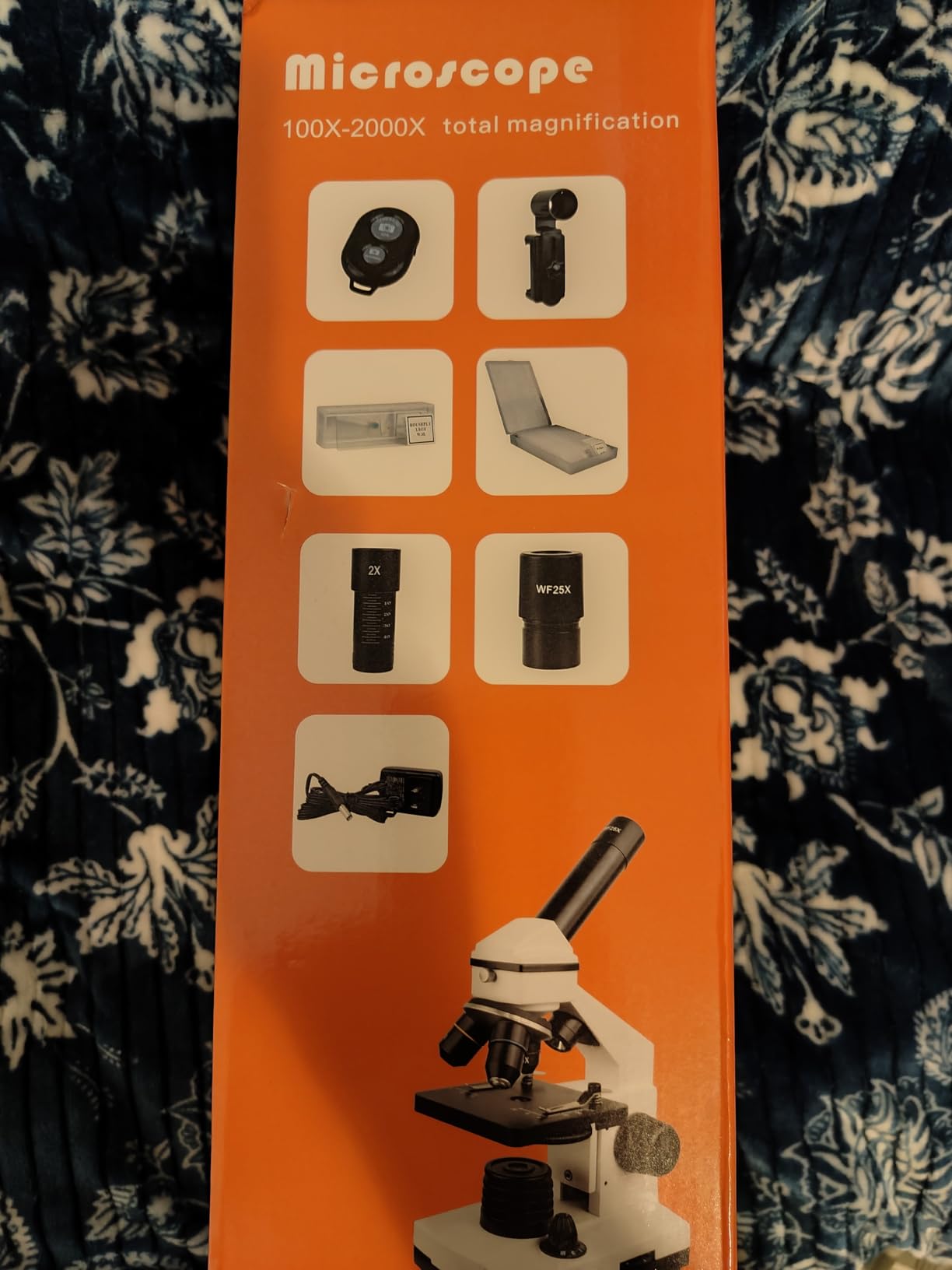
Two details stand out. First, the SGS certification for non-toxic materials and electrical safety, which matters when the unit is going on a child’s desk rather than a lab bench. Second, the battery power source, which means it works away from a wall socket for a field outing or a campsite demonstration.
Owners rate the light output and the slide bundle as the two strongest points, and the top and bottom LEDs handle both translucent cells and opaque specimens without a second light source.
Why this suits younger users
The 1.65 kg body and small 5.71 by 3.94 by 9.84 inch footprint make it easy to carry and store, which matters in a bedroom or a small study space. The remote shutter solves a real problem: at high magnification a hand-held phone shot is usually blurred, and firing the camera from a Bluetooth remote removes the shake.
It also ranks first in its Amazon category for compound monocular microscopes, which tells you it is being bought for exactly the use we are describing.
Where it falls short
The most repeated complaint is slight wobble in the lens housing, so it needs careful handling rather than being carried by the head. Buyers also ask for a finer focusing knob and a movable stage, and the bundled power supply and documentation are region-specific, which causes real confusion for some customers.
For a hobbyist moving to serious work, this is a stepping stone rather than a destination. The optics will not satisfy a microbiology course.
3. BEBANG YW-3006 – The Budget Pick With the Most Owner Feedback
2000X Compound Microscope for Kids Adults: Microscope for Biology Education
Monocular head
Metal frame
4X 10X 40X objectives with WF25X eyepiece
0.65 NA condenser
2.4 pounds
Pros
- 2909 reviews give the deepest owner history in the group
- Metal frame with coarse and fine focus
- 15-piece slide set plus carrying bag
- Works on AC or battery
- Phone adapter and wire shutter included
Cons
- Monocular head limits viewing to one user
- Most of the 1000X to 2000X range comes from eyepiece zoom
- 0.65 NA condenser is modest next to a 1.25 Abbe
This is the most reviewed microscope in the group by a wide margin, and for a good reason: it is the cheapest route into a metal-framed compound scope with a real condenser and a real slide set. At 2.4 pounds it is light enough to move between a shelf and a table without thinking about it.
You get six magnification settings from 100X to 2000X using 4X, 10X and 40X objectives, the WF25X eyepiece and a 2X lens. The focus is coaxial coarse and fine on a solid metal frame, which is the mechanical feature that separates this from the plastic-bodied models in the same bracket.
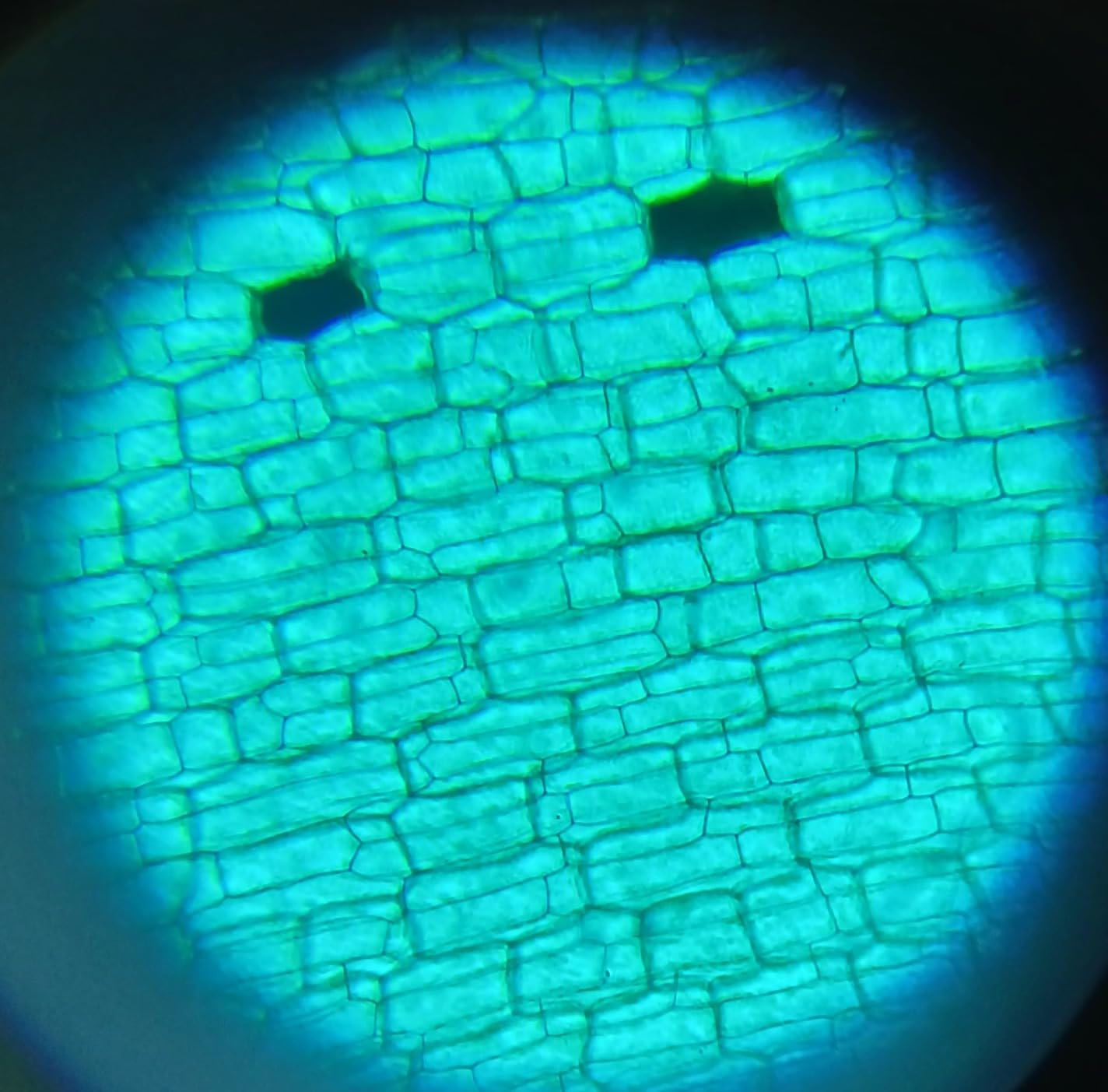
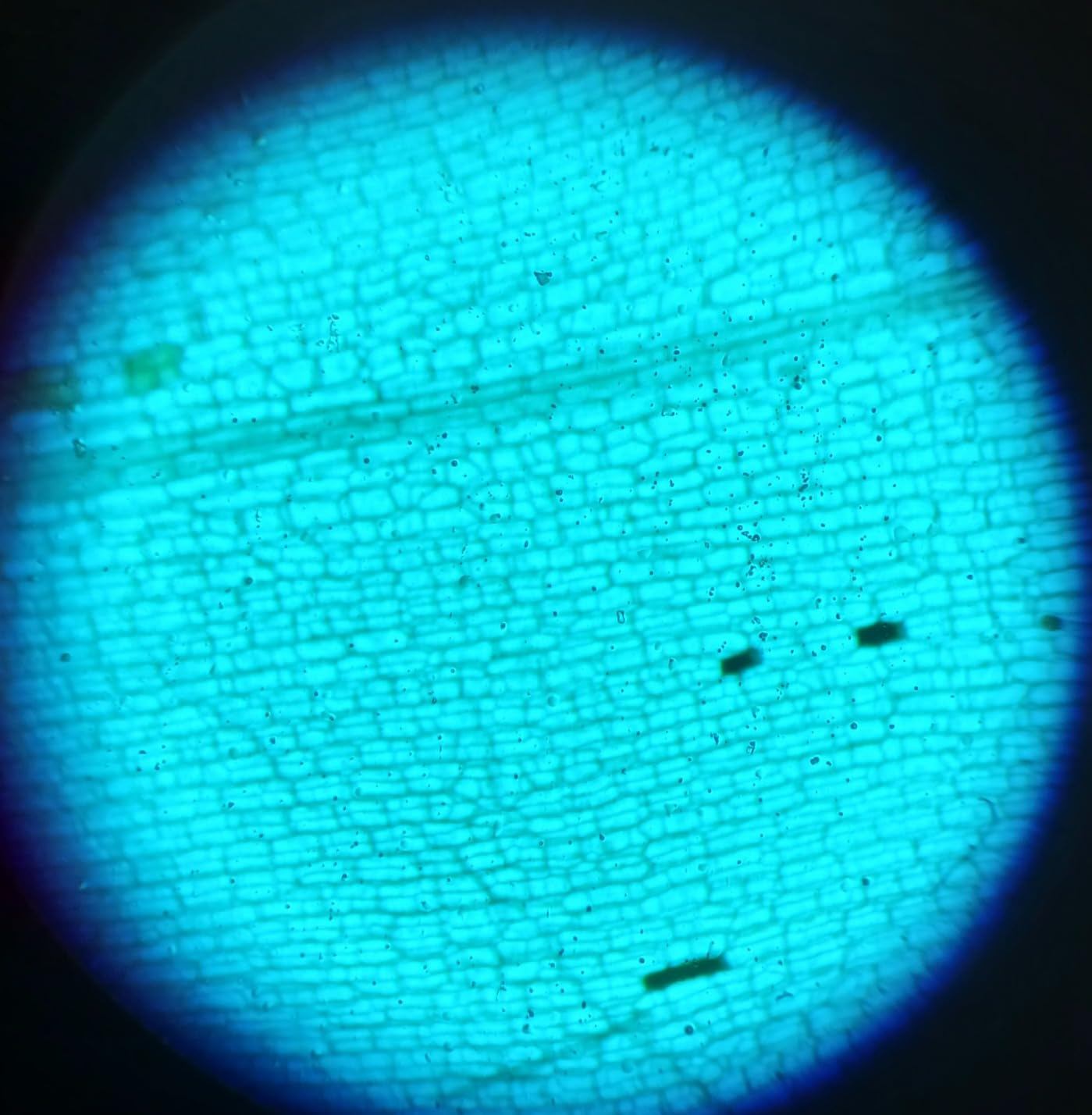
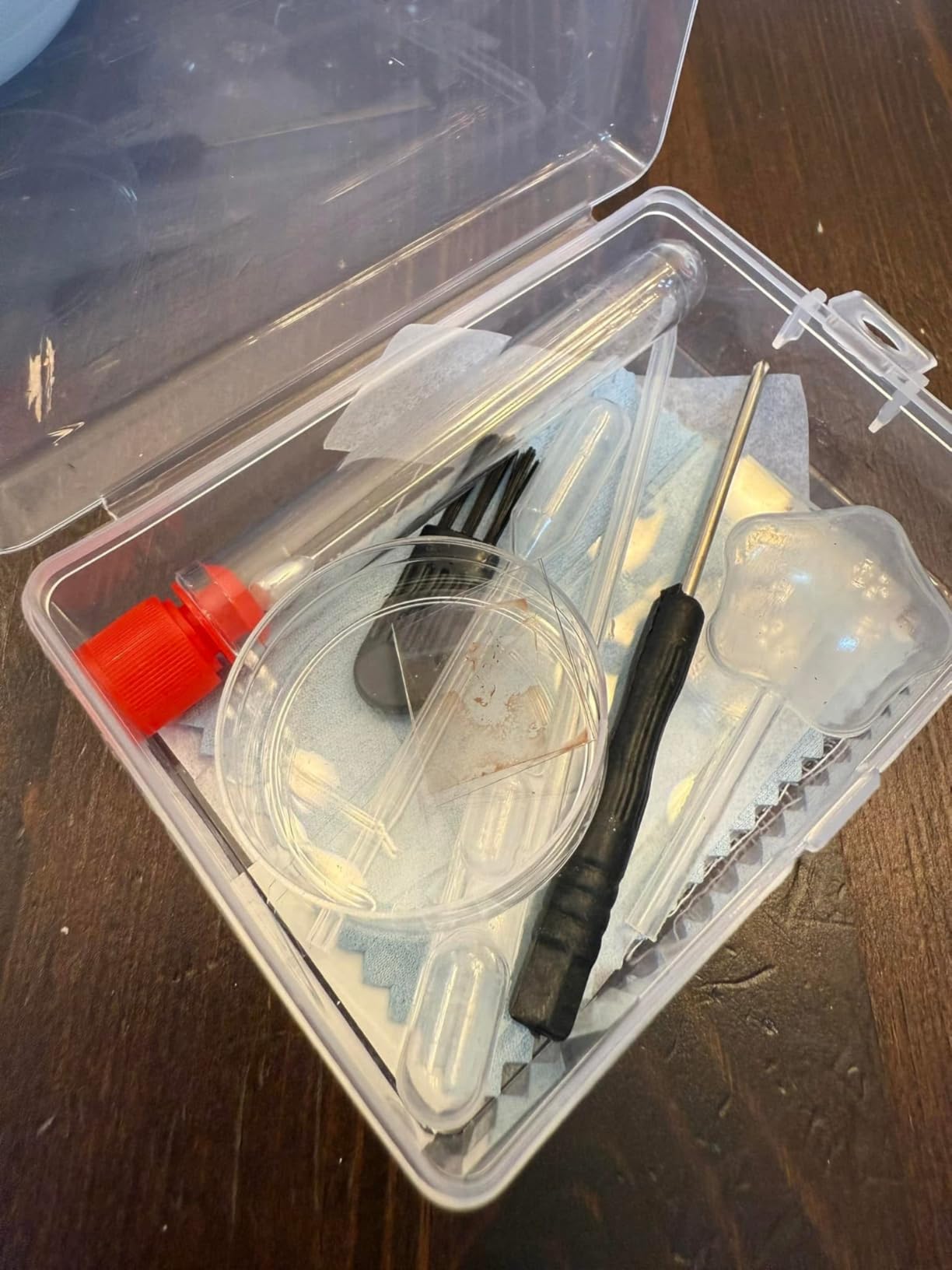
The accessory list is unusually complete for the money: a 15-piece slide set, phone adapter, wire shutter, ten operating accessories and a carrying bag. That matters more than it sounds, because the slide kits bundled with budget scopes are frequently thin and low quality, and this one is listed as genuinely usable.
It runs on AC or battery, which is convenient for a classroom bench that gets moved around, or for outdoor observation where a mains socket is not available.
Why owners keep it
With 2,909 reviews, the feedback is consistent and worth reading. Buyers highlight the metal frame build, the dual LED lighting and the completeness of the bundle. For a first microscope, the recurring theme is that it feels like a real instrument rather than a gadget, and the stage and focus hold up under daily handling.
The condenser is worth a specific mention. A 0.65 NA single-lens condenser is a modest specification compared with a 1.25 NA Abbe, but it is a genuine condenser, and it keeps colour reasonably true in brightfield. Most competing plastic scopes have nothing comparable.
Where it falls short
The monocular head is the same compromise as the other entry scopes here. The eyepiece-driven high magnifications mean the top of the stated range is not adding detail, so treat 400X as the practical limit for good images and 1000X as a demonstration of how much the optics have reached their limit.
If you want to know whether a specimen is genuinely resolved, this scope will not tell you. For that, the OMAX and Swift models further down are the ones to look at.
4. Herwicm wy-462 – Binocular Comfort With a Mechanical Stage
Compound Microscope,40X-2500X ,WF10x and WF25x eyepieces, Dual LED Lighting and Two-Layer Mechanical Stage,Microscope for Adults…
Binocular ultra-wide eyepieces
Two-layer mechanical stage
Dual top and bottom LED
Coaxial focus on both sides
14.37 by 11.41 by 6.49 inches
Pros
- Wide-field binocular eyepieces reduce eye fatigue in long sessions
- Two-layer mechanical stage with spiral scale
- Coarse and fine focus on both sides of the base
- Telescopic objective protects the lens from slide contact
- Dual LED with integrated fill light
Cons
- Bulky 14.37 by 11.41 inch footprint
- Listed magnification maximum of 40x conflicts with the 2500X title claim
- High magnification figures rely substantially on eyepiece zoom
This is the point in the list where you move from a single eyepiece to two. Binocular viewing means your brain is working with a single image instead of fusing two, which cuts fatigue noticeably during long sessions and is the real reason to pay for a two-eyed head. Many competing guides frame this as a professional versus beginner split, and that is a misreading.
The head is what decides camera capability and eye comfort, not skill level. You can absolutely be a beginner on a binocular scope, and you can absolutely be a working professional on a monocular one.
The two-layer mechanical stage is the other genuine upgrade here. Instead of sliding a slide by hand, you move it with a screw-driven mechanism and a spiral scale, which means you can find a specific cell and stay on it. That single feature changes how useful a scope feels for pond water, prepared smears and anything that moves.
Coaxial coarse and fine focus knobs sit on both sides of the base, so left-handed and right-handed users both get comfortable hand placement, and the telescopic objective barrel gives some protection if a slide rides up into the lens.
Why we like it for long sessions
Owners consistently point to the ultra-wide eyepieces as the reason the scope stays comfortable, and the wide field of view makes it easier to scan a slide without constant refocussing. The dual top and bottom LEDs with integrated fill light give even illumination across a specimen, which matters when you are trying to read a stained slide rather than just find a cell.
For a home lab where two people share a bench, or for anyone who already finds single-eyepiece viewing tiring, this is the most comfortable entry into binocular observation in the group.
Where it falls short
The footprint is large. At 14.37 by 11.41 inches it needs a real desk, not a shelf, and it is the second bulkiest unit we reviewed. The specification also lists a maximum magnification of 40x while the product title claims 2500X, which is exactly the sort of mismatch buyers in forums complain about. Treat the headline figure with suspicion.
There is also no camera capability here, binocular or otherwise. If images matter to you, this is the wrong branch of the list.
5. OMAX M82ES 2000X – Real Oil Immersion and a 1.25 NA Condenser
Awarded Best Compound Microscope 2016 – OMAX 40X-2000X Lab LED Binocular Microscope with Double Layer Mechanical Stage w Blank Slides Covers and Lens Cleaning Paper
Binocular swiveling head
4X 10X 40X 100X oil DIN achromatic objectives
NA1.25 Abbe condenser
Double layer X-Y mechanical stage
9.6 pounds
Pros
- Genuine 100X oil immersion objective
- NA1.25 Abbe condenser with iris diaphragm
- Double layer X-Y mechanical stage with an objective-protecting lock
- Five-year manufacturer warranty
- 100 blank slides 100 coverslips and 50 lens papers included
Cons
- No dedicated camera port on the binocular head
- Heaviest unit in the group at 9.6 pounds
- Full 2000X detail requires immersion oil and prepared slides
This is the scope we recommend to anyone who wants to know whether the 1000X ceiling is real, because it is built to reach it properly. It carries a full achromatic DIN objective set: 4X, 10X, 40X and 100X oil immersion. Combined with the WF10X and WF20X eyepieces, total magnification runs 40X, 80X, 100X, 200X, 400X, 800X, 1000X and 2000X.
That 100X objective is the whole point. It is the difference between a bigger image and a more detailed one, and paired with the NA1.25 Abbe condenser it is the pairing enthusiast communities consistently call the correct combination. A cheap condenser with a good objective just produces a washed-out, low-contrast result at 1000X.
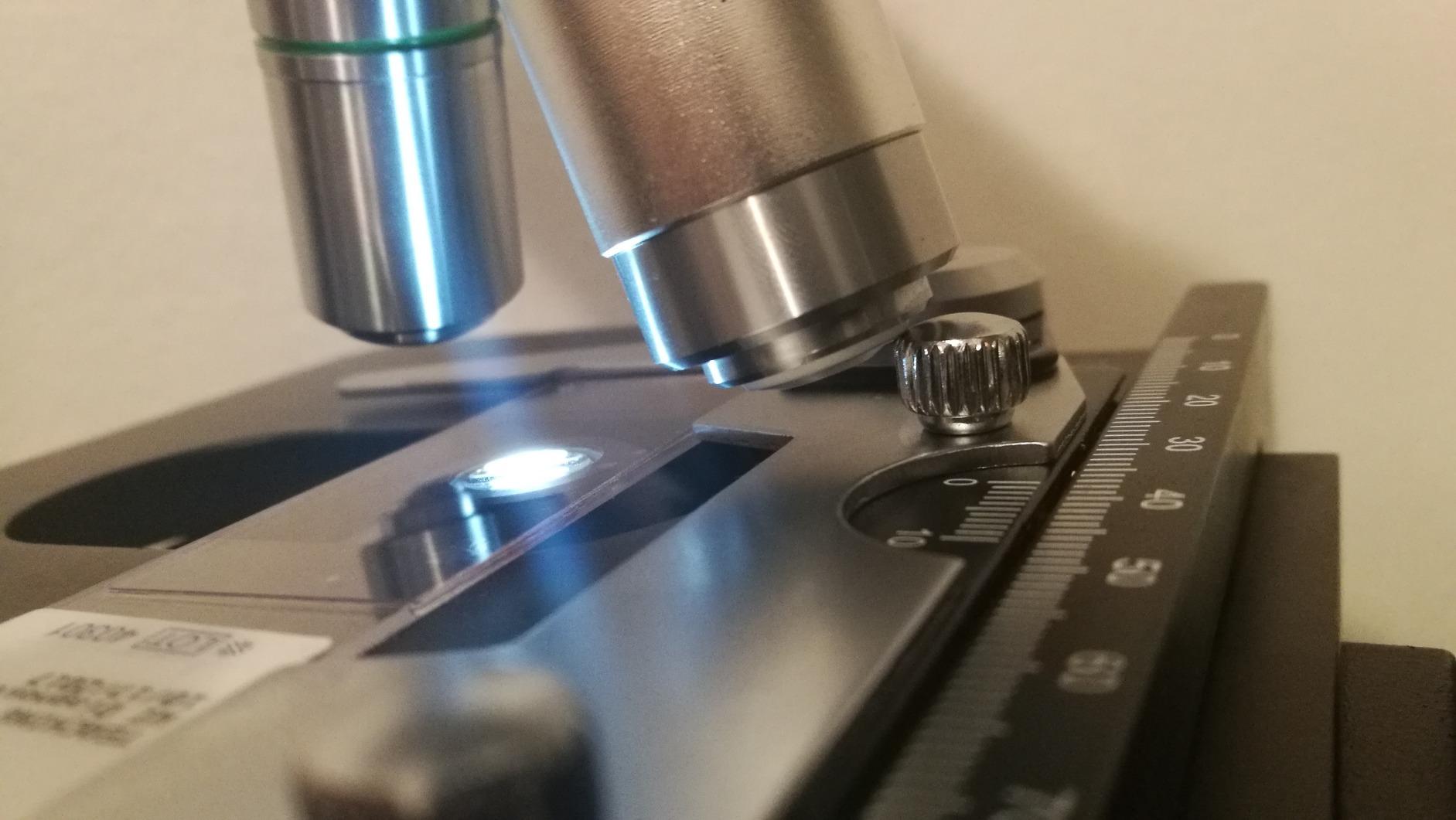
The mechanical hardware is serious. A double layer X-Y mechanical stage measures 115 by 125 mm with a 70 by 30 mm translation range, and the upward-moving stage lock physically protects objectives and slides. Coarse and fine focus knobs are coaxial and duplicated on both sides of the base. The 45-degree inclined head swivels through 360 degrees with a sliding interpupillary adjustment from 55 to 75 mm and a diopter on both eyetubes.
You also get 100 blank slides, 100 coverslips and 50 sheets of lens cleaning paper in the box, which is a genuinely useful starter supply. Immersion oil is not included, so add a small bottle when you order it.
Why we picked it as best value
With 2,112 reviews at 4.4 stars and a five-year manufacturer warranty, the confidence here is well earned. Owners consistently describe it as lab-like: a solid metal frame with stain-resistant enamel, smooth mechanical stage movement, and reliable oil immersion at 1000X. Several mention that live wet mounts stay workable because the LED runs cool.
It is the only scope in this group that hits all three of the specifications that actually determine resolution: DIN-standard achromatic objectives, a true 100X oil objective, and a matched 1.25 NA Abbe condenser. That combination is rarely assembled at this level.
Where it falls short
The binocular head has no dedicated camera port, so attaching a camera means an adapter or moving up to a trinocular body. At 9.6 pounds it is the heaviest unit we reviewed and firmly a fixed-bench instrument, not something you carry between rooms. And the 2000X setting only shows meaningful detail on prepared slides with immersion oil in place, so do not expect it to work on a leaf.
6. AmScope B120C-E1 – The Photography Starter With a USB Camera
AmScope B120C-E1 LED Binocular Compound Microscope, 40X-2500X
Siedentopf binocular head
Bundled 1.0 MP USB camera
40X to 2500X range
Abbe condenser
LED fly-eye illumination
Pros
- Camera and software included in the box
- Siedentopf head with LED fly-eye daylight-balanced light
- Smooth mechanical stage and Abbe condenser
- Upgradable to 3.0 MP and 5.0 MP variants
- Five-year manufacturer warranty
Cons
- Bundled 1.0 MP camera is soft next to a phone camera
- Software interface is described as cumbersome
- Above 400X without oil you hit empty magnification
- No calibration slide is included
If your interest in a microscope is partly about getting images out of it, this is the most direct route in the group. The box includes a 1.0 MP USB camera with professional Windows software for capturing and analysing what you see. That matters for a school report, a lab notebook or anything you intend to publish later.
The head is a Siedentopf design, which keeps the eyepieces at a fixed distance and rotates the body instead, so the image does not shift when you lean in. The illumination uses a specialised fly-eye lens to produce bright, daylight-balanced light, which is easier on the eyes than a bare point source and keeps colours truer on stained slides.

Long-term owners report years of continued use, and the frame reads as a real instrument rather than a toy. There is a smooth mechanical stage, an Abbe condenser and dual-precision coarse and fine focusing, so the mechanics do not become the weak link once you are past the entry level.
It is also the one scope here with a documented upgrade path. The same model family is available bare or with 3.0 MP and 5.0 MP camera packages, so you can start with the included camera and step up later without changing scopes.

What the camera does and does not do
The honest limitation is that 1.0 MP is a low resolution by modern standards, and owners consistently note that a modern phone camera held against the eyepiece often produces a sharper image. The included software is functional but is described as awkward to work with, and it is Windows software, which is worth knowing if your computer is a Mac.
A trinocular head avoids the repeated refocussing that a phone-against-eyepiece workflow forces on you, and that is exactly the trade-off the Swift model below makes differently.
When to skip it
Skip it if the camera is the whole point of the purchase and image quality is non-negotiable. In that case the OMAX digital model further down, despite its own low sensor resolution, or a dedicated camera on a trinocular head is the better direction. For a student who needs occasional documentation, this is the right balance.
Note also that no calibration slide is included, and you will need one if you intend to measure specimens rather than just look at them.
7. Swift SW380T – Trinocular Head for Long Research Sessions
Swift SW380T 40X-2500X Magnification, Siedentopf Head, Research-Grade Trinocular Microscope Compound Lab with Wide-Field 10X/25X Eyepieces, Mechanical Stage, Ultra-Precise Focusing, Camera-Compatible
Trinocular Siedentopf head
4 DIN achromatic objectives
6 levels from 40X to 2500X
WF10X and WF25X eyepieces
4.3 kg
Pros
- Trinocular head takes a camera and eyepieces at the same time
- Highest rating in the group at 4.5 stars
- Interchangeable WF10X and WF25X glass eyepieces
- Ultra-precise coaxial focusing
- Mechanical stage with controls grouped on the right-hand side
Cons
- Transmitted LED only
- so thick or opaque samples stay dark above 100X
- Thin undersized plastic dust cover
- Large 13.39 by 9.45 by 17.72 inch footprint
- Camera is not included
- only the port
The Swift is the highest-rated scope we reviewed, at 4.5 stars from 719 reviews with a 76 percent five-star share. What earns that is the head. A trinocular port accepts an eyepiece and a camera at the same time, so you can view, livestream and record simultaneously without swapping anything or refocussing between shots.
That single feature is why pathologists and researchers keep recommending it, and it is the difference between photographing specimens occasionally and doing it as part of a workflow. If you think you will ever want images, buy the head that supports them from the start.

The 30-degree inclined, fully rotatable Siedentopf head reduces neck and back strain, which matters over a full day of bench work. Eyepieces are interchangeable wide-field 10X and 25X glass units, and four DIN achromatic objectives sit in a revolving turret offering 40X, 100X, 250X, 400X, 1000X and 2500X.
Focusing is described as ultra-precise, and the mechanical stage with coarse and fine controls grouped on the right-hand side is well suited to sustained right-handed use at the bench.
Why it suits imaging workflows
A practicing pathologist and an independent researcher both report image quality comparable to far more costly instruments, and at 76 percent five-star ratings the satisfaction is about as consistent as we have seen. Wide-field eyepieces also make scanning faster because you see more of the slide at once.
For classroom demonstration, the trinocular port also opens the door to projecting a live image to a group, which no other scope in this roundup does natively.
Where it falls short
Illumination is transmitted LED only. Thick or opaque samples stay dark above 100X unless you add a handheld light, so this is a transmitted-light scope for slides, not a reflected-light instrument for inspecting surfaces. The included dust cover is a thin plastic sheet too small to do real protection, and at 13.39 by 9.45 by 17.72 inches it needs a dedicated bench.
The camera port is a port, not a camera. Budget for a suitable C-mount or TWAIN-compatible camera separately, and check your operating system compatibility before you buy the software.
8. AmScope OMAX M82ES – A Metal Bench Scope for Live Wet Mounts
OMAX M82E Series Binocular Biological Compound Microscope 40X-2000X Magnification Lab LED with Mechanical Stage
Binocular head
Parfocal achromatic objectives
Adjustable bottom LED
Stain-resistant metal frame
45 degree viewing angle
Pros
- Cool-running bottom LED will not cook live specimens
- Parfocal objectives need only minor correction when switching
- Coaxial coarse and fine buttons on both sides
- Green filter can be swapped for DIY darkfield work
- Documented long-term durability
Cons
- Fixed 55mm interpupillary distance is tight for children
- No upgrade path for a camera phase contrast or Kohler
- Thin plastic dust cover and no hard case
- LED field dims at higher magnifications
- A minority report power supply failures
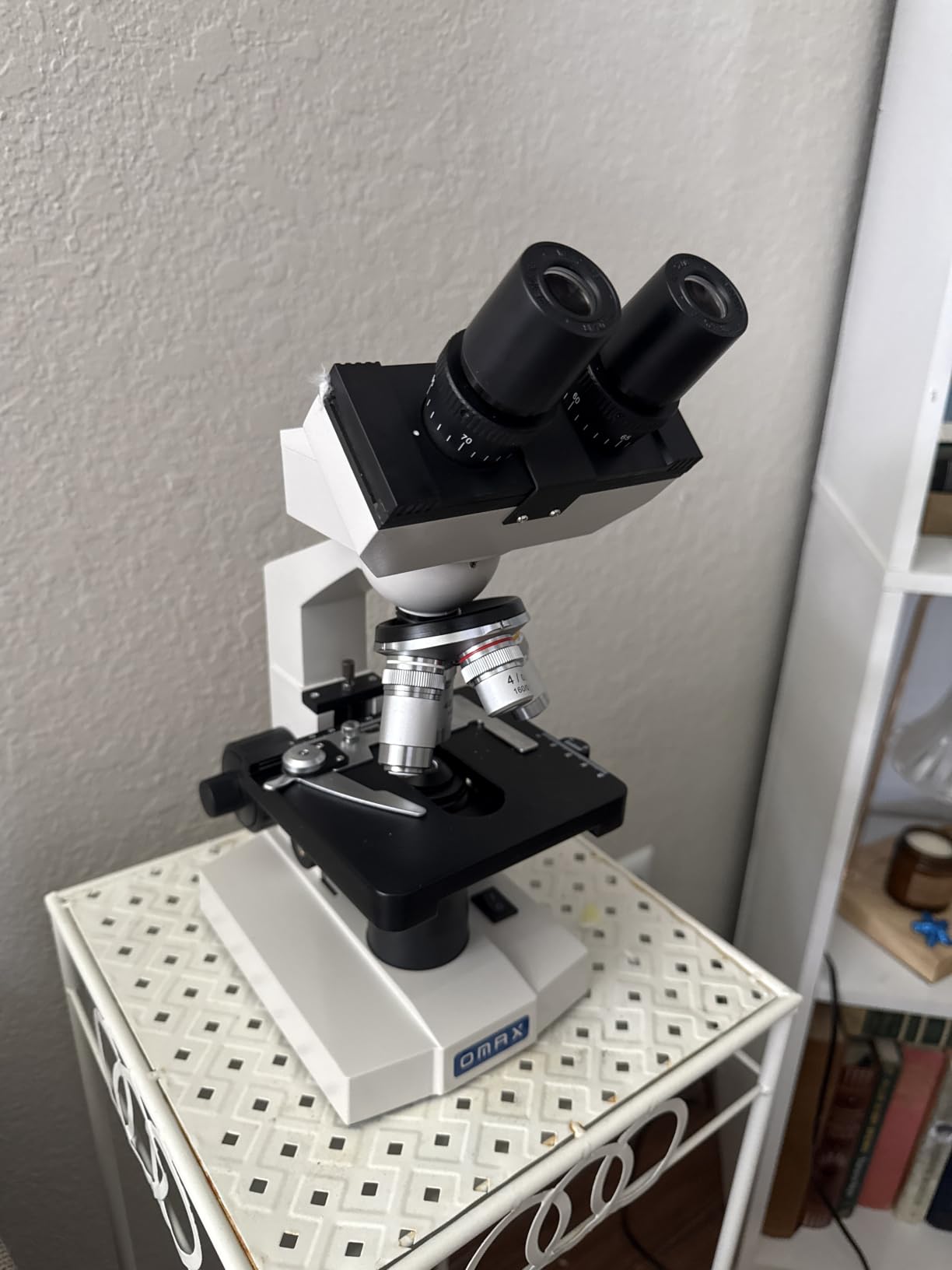
This is the model people in the microscopy communities most often recommend for pond water, semen motility and blood smears, and the reason is the light source. The bottom LED is adjustable and runs cool, so a live wet mount does not dry out or cook under the objective while you are finding something interesting. That is a genuine functional difference, not a preference.
The parfocal objectives are the other thing worth knowing about. Parfocal means the different lenses on the turret are mounted so that when you rotate between them the focus stays put, needing only a small fine-focus correction. On a non-parfocal scope you refocus from scratch every time you change objective, which is the single most annoying habit in budget microscopy.

Build is a fully sturdy metal frame with stain-resistant enamel finish, coaxial coarse and fine focus buttons on both sides, and a 45-degree inclined viewing angle. The green filter in the filter holder can be removed, which opens the door to darkfield and contrast experiments using a simple DIY stop.
Long-term hobbyist and veterinary users report the frame holding up to years of use, and parts support has been responsive when the warranty has been invoked.
Why live-sample users like it
It is the lowest-rated scope in this roundup at 4.2 stars, but the complaints are about accessories and documentation rather than about the instrument itself. Long-term owners consistently praise the metal build, the parfocal objectives and the cool LED for keeping live specimens alive under observation.
Veterinary and aquaculture users in particular find the parfocal switching behaviour important, because moving between the 10X and 40X objectives repeatedly to follow a moving organism is far less disruptive when focus holds.
Where it falls short
The interpupillary distance is fixed at 55mm. That suits most adults but is genuinely tight for children and for some adults, and it cannot be adjusted. There is also no upgrade path at all: no camera port, no phase contrast and no Kohler illumination, so this is a closed instrument that you use as intended or replace.
The documentation is a recurring frustration, with the manual link and password process often failing, though support has generally resolved it. The LED field also dims at higher magnifications, and a minority of owners report power supply failures within months. If you want a bench scope you might extend later, the OMAX 2000X in position five is the better buy.
9. AmScope M150C – The Simplest First Microscope With 25 Slides
AmScope M150C-PS25 Series Portable Monocular Compound Microscope – 1000X
Monocular head
40X to 1000X range
LED ring light with fly-eye lens
25 prepared slides included
3.3 pounds
Pros
- 25 prepared biology slides included so it works out of the box
- Solid metal build that survives handling by children
- Five-year manufacturer warranty
- 1000X maximum covers practical inspection needs
- LED ring light with a fly-eye lens for even illumination
Cons
- Listing shows a computer or camera attachment that is not in the box
- Monocular and advanced for young children without help
- Capped at 1000X with no oil immersion option
Twenty-five prepared slides in the box is the headline here. A first microscope is only exciting if there is something to look at on day one, and most competitors include three to five slides. This one includes enough material to keep a curious child busy for weeks, which is the difference between a scope that gets used and one that ends in a cupboard.
The build is a solid metal construction that survives being handled by children and reads as a real tool rather than a toy. The illumination is an LED ring light with a specialised fly-eye lens, giving bright, daylight-balanced output rather than the harsh hot spot of a single bulb.
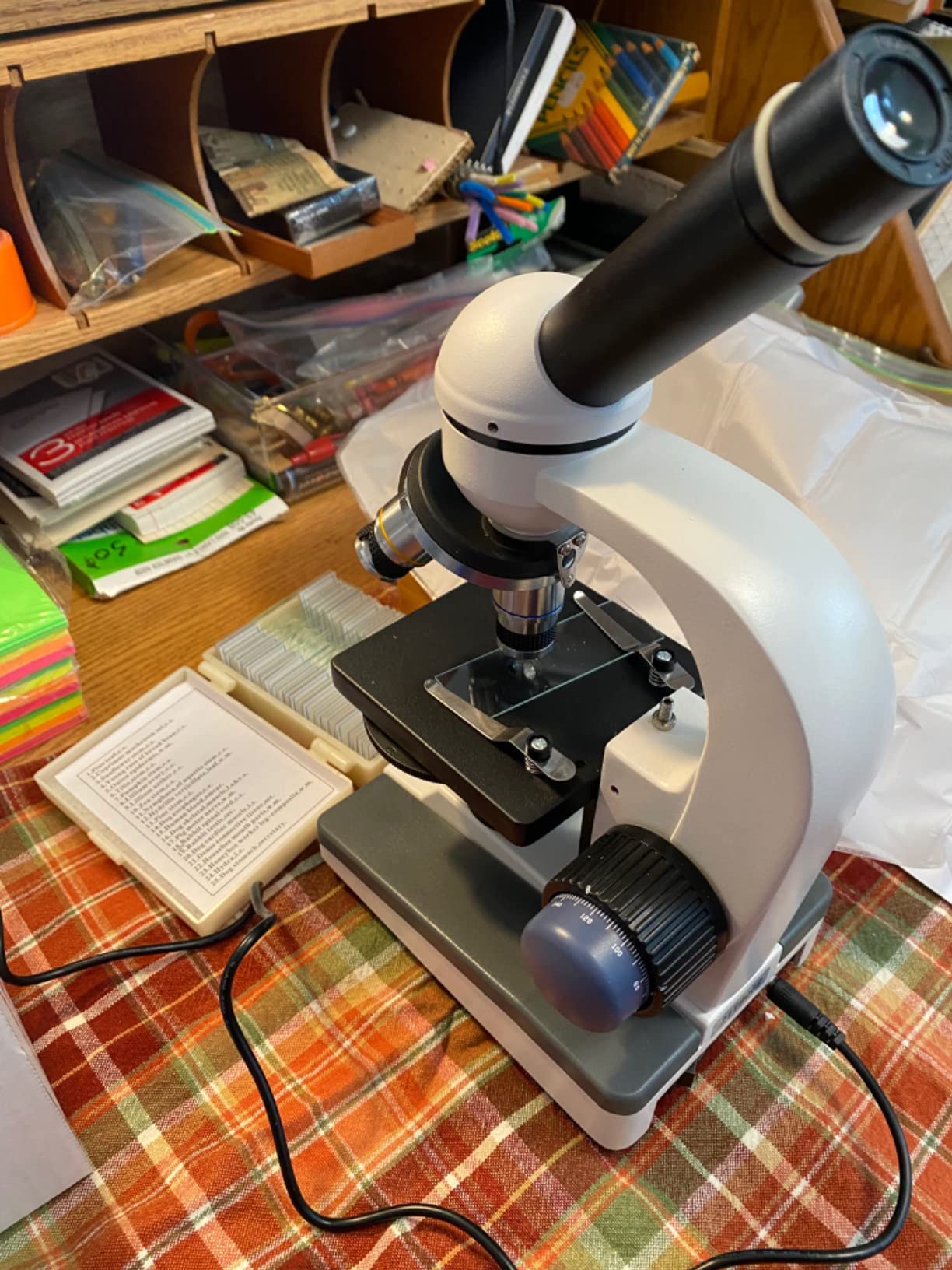
Magnification tops out at 1000X, and because the range is a clean 40X to 1000X without a 25X eyepiece multiplier attached, the number on the box is closer to honest than most in this roundup. There is no implied 2000X or 2500X headline to discount.
Parents report good results holding a phone camera against the eyepiece for images, which is a workable approach while the scope is being used to learn rather than to publish.
Why it suits a first purchase
It carries a 4.5 star rating from 466 reviews with a 76 percent five-star share, tied for the highest five-star rate in the group. Buyers describe it as a genuine step up from toy scopes, and the metal frame and 3.3 pound weight make it feel like equipment rather than an accessory.
There is also a five-year manufacturer warranty behind it, which is unusual in the entry bracket and covers the most likely early failure point in a scope used by young hands.
Where it falls short
The listing describes a USB microscope camera with software, and buyers report it is not actually boxed with the unit. That is worth knowing before you order, because the image on the product page is not what arrives.
It is also monocular and capped at 1000X, so there is no route to oil immersion. If your child is likely to progress quickly into microbiology, the OMAX 2000X is the version worth stretching for.
10. OMAX MD82ES10 – Built-in Camera for Live Viewing on a Laptop
OMAX MD82ES10 2000X Digital LED Compound Microscope with Built-in 1.3MP
Binocular head
Built-in 1.3 MP CMOS sensor
USB 2.0 connectivity
40X to 2000X range
Double layer mechanical stage
Pros
- Built-in camera sends a live view of the eyepiece image to a laptop
- Optics hold up at 1000X with the oil immersion objective
- Well-machined two-axis mechanical stage and dimmable lamp
- Software installs quickly
- Five-year warranty
Cons
- 1.3 MP sensor produces soft low-detail images
- Bundled software on the mini CD can fail and online drivers are dated
- No slides or cover slips included
- Several owners report camera or power supply failure in the first year
Unlike the other camera-equipped scope here, this one puts the sensor in the body rather than sending you to a phone or a separate eyepiece camera. A 1.3 megapixel CMOS sensor with USB 2.0 connectivity streams a live view of the eyepiece image to a laptop, which means a whole class or family can look at one slide at the same time on a large screen.
For teaching demonstrations that is genuinely more valuable than a higher resolution sensor. Sitting a group around a laptop and moving a slide together is closer to a real lab session than passing a monocular eyepiece around a table.
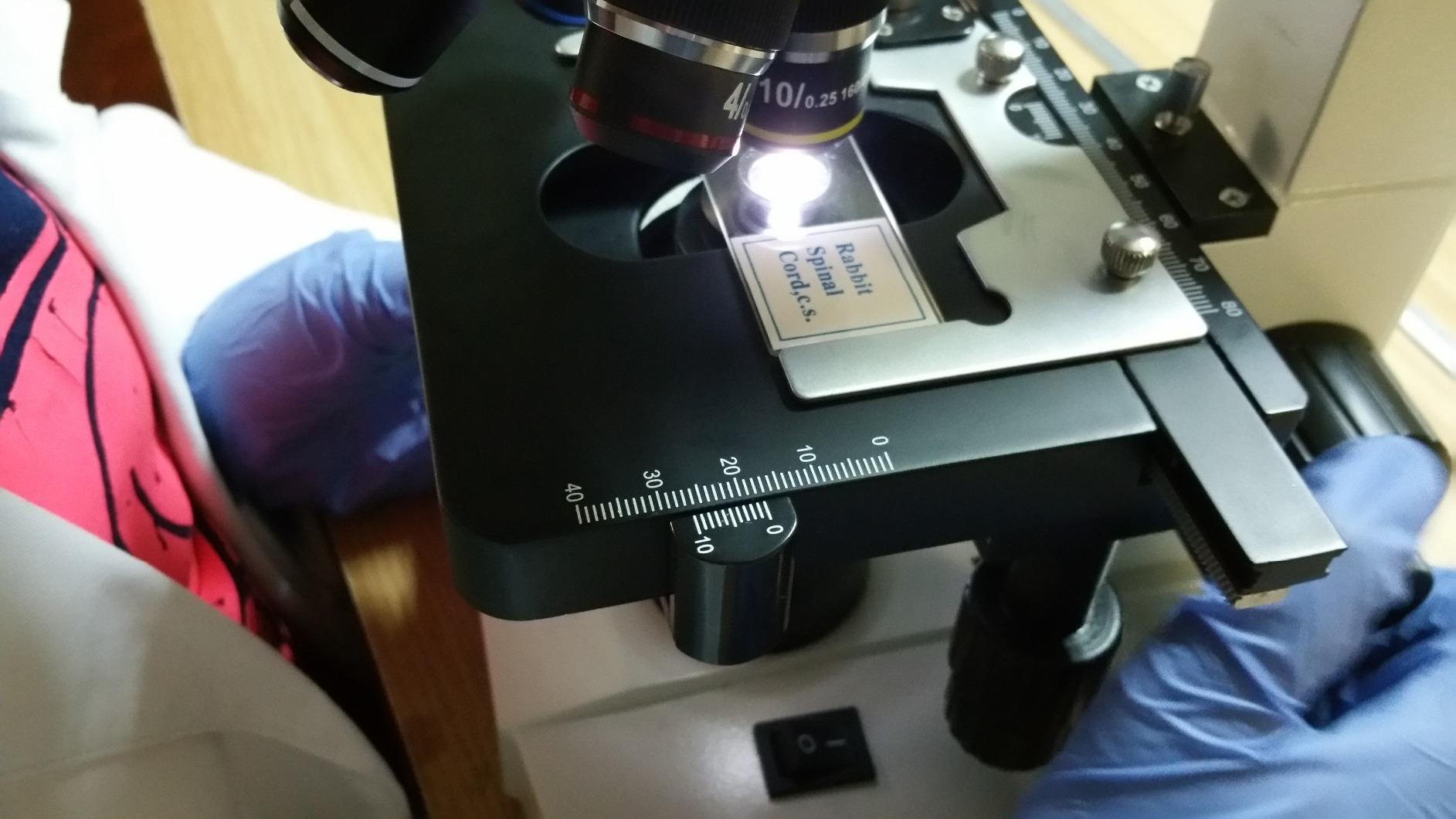
The optics are better than the camera. A working microbiology adjunct professor and biochemists in the user base rate the image quality and build higher than the specification would suggest, and the optics hold up at 1000X with the 100X oil objective, which is unusual in this bracket.
Construction is heavy and solid, with a nicely machined two-axis mechanical stage and a dimmable lamp, plus a five-year warranty behind it.

Why live viewing changes the use case
Live viewing removes the biggest practical barrier to sharing a slide. Instead of everyone crowding around one eyepiece, you can display the image, explain what you are pointing at, and let a second person focus on the fine adjustment while the group watches. Professionals in bacteriology, mycology and environmental toxicology use it that way.
It also gives you a straightforward route to capturing images for reports, even if the resulting files are not publication quality.
Where it falls short
The 1.3 MP sensor is the weakest part of the package and produces soft, low-detail images. More importantly, the software side needs attention. Owners report the software on the mini CD often fails to read, the online drivers are dated, and third-party camera software is frequently the practical solution. Check that the software you need runs on your operating system before you commit.
Several owners also report camera or power supply failures within months and slow warranty service, so treat the electronics as the consumable part of this scope. No slides or cover slips are included, so add those to the order. Below 40X usefulness drops off, and reviewers note the 100X oil objective is not reliable on every unit.
Empty Magnification: Why 2000X and 2500X Are Mostly a Marketing Number
Total magnification is objective magnification multiplied by eyepiece magnification. A 40X objective with a 25X eyepiece gives 1000X, and a 100X objective with a 10X eyepiece also gives 1000X. Those two setups are not the same thing, and the difference is resolution.
Beyond roughly 1000X, extra magnification is empty magnification: the image gets larger but no new detail enters it, and contrast and sharpness usually fall away. Resolution is capped by the numerical aperture of the objective and the condenser, not by the number printed on the box. A 100X oil immersion objective has a high NA, and it needs a condenser with a matching 1.25 NA Abbe to reach that resolution, which is why the OMAX M82ES specifies both.
So a scope advertising 2500X with only a 40X objective is not better than one advertising 1000X with a 100X oil objective. It is describing eyepiece zoom. When you read a specification, look for the objective list first, and only then look at the headline number.
What Is Not a Compound Microscope
Several highly ranked lists in this category include USB digital microscopes and pocket scopes that are not compound microscopes at all. Dino-Lite and Vividia USB models are digital inspection cameras with a single lens and an LED, useful for soldering, electronics repair and coin or rock surfaces. They show no transmitted-light image and have no eyepiece optics.
Plastic monocular scopes capped at 400X or 600X are a different product class again. They work, but they belong in a guide to first scopes for children rather than to a compound microscope roundup. We have kept this list to optical compound scopes only.
Compound Microscope Buying Guide: What Actually Matters
Here is what to check, in the order that changes your experience. Ignore the brand name until you have read the optics specification, because a well-specified lesser-known model beats a badly specified famous one every time.
Find the 100X oil immersion objective and check the condenser
Look for an objective list, not a headline magnification. A scope with 4X, 10X, 40X and 100X (oil) objectives gives you the full useful range from 40X to 1000X. If the specification does not name a 100X objective, anything above 400X is eyepiece-driven.
Then check the condenser. A 1.25 NA Abbe condenser with an iris diaphragm is what allows a 100X oil objective to reach its resolution. Pairing a good objective with a cheap low-NA condenser is the single most common reason owners report a blurry, washed-out view at 1000X. The BEBANG in this roundup uses a 0.65 NA single-lens condenser, which is functional but clearly a step below.
Monocular, binocular or trinocular is about cameras and comfort
Monocular means one eyepiece: cheapest, smallest, and fine for one person at a time. Binocular means two eyepieces, and your brain fuses the two images into one, which is far less tiring over a long session. Trinocular adds a third port above the eyepieces for a camera, so you can view and photograph at the same time without refocussing.
Contrary to what several buying guides say, this is not a question of skill or professionalism. A beginner benefits from a binocular head, and a working professional can use a monocular scope perfectly well. The decision comes down to how many people will share the scope, how long you will sit at it, and whether you want images.
Achromatic versus plan achromat objectives
Achromatic objectives correct the two most visible colour errors, green and blue, which is why slides look reasonably true in colour. Plan achromats go further, flattening the field of view so the whole slide is in focus at once, and typically cost considerably more. Every scope in this roundup uses achromatic optics, which is the sensible middle ground for almost everyone outside a professional lab.
LED versus halogen, and what heat does to a live sample
LED illumination runs cool, lasts far longer than halogen, needs no bulb replacement, and can be dimmed with a control rather than by moving a lamp. Halogen produces a brighter, warmer beam but generates heat, which is why the older bench scopes in laboratories were often preferred for staining brightness and are now being replaced. For live wet mounts, cool LED light is the safer choice because it will not dry out a pond water sample while you look at it.
Stage, focus knobs and the mechanical details that age badly
A mechanical stage with X-Y movement and a slide holder means you can centre a specimen and keep it there. A plain stage means you slide the glass around by hand and lose your target the moment you refocus, which is the most common frustration in budget scopes. Coaxial coarse and fine focus knobs grouped on both sides of the base let you use whichever hand you prefer and let a second person fine-focus while you manipulate the stage.
Check the frame material too. Metal frames with stain-resistant enamel finish survive years of handling; all-plastic bodies crack, and their coarse focus tends to be unusable within months. Weight is a rough proxy for this: the solid scopes in this roundup run from about 2.7 to 9.6 pounds, and the all-plastic ones sit below 2 pounds.
Digital capability and the software trap
If you want images, buy the capability you need from the start. A trinocular head is the most flexible option because the camera is an accessory. A bundled USB camera is simpler but the sensor and software are fixed. Digital eyepiece software is where most complaints originate, so check the operating system requirements before buying, and be suspicious of software that only lists Windows or requires a TWAIN driver.
Also remember that a phone held against an eyepiece often produces a sharper image than a low-resolution bundled camera, which is exactly what owners of the 1.0 MP and 1.3 MP cameras in this roundup report. If you are not attached to a specific piece of software, test that before you pay for a camera feature.
Top microscope brands, tiered
Tier one for what we reviewed: AmScope, OMAX and Swift. AmScope covers the widest range and backs its scopes with multi-year warranties; OMAX builds genuine optical paths with matched DIN objectives and condensers; Swift makes the strongest research-grade head in the group. All three recur across shopping results, enthusiast forums and lab catalogues, which is a good sign of parts and support availability.
Tier two, for professional and clinical work: Nikon, Olympus and Leica, plus Motic at the research end. Expect a very different price bracket, and expect the difference to show up in optical correction, Kohler illumination, phase contrast and after-sales service rather than in raw magnification figures.
Everything else in this roundup sits in the entry and student tier, where the differentiator is build quality, accessories and honest specifications. For a broader look at where microscopes fit by purpose, our guide to the best stereo microscopes covers the dissecting side, which is a different tool for looking at solid objects rather than thin specimens.
When Buying a Used Microscope Makes More Sense
Regular readers of microscopy communities make a consistent argument: for a first scope, a used instrument can beat a new one. Vintage AO Spencer and American Optical series scopes, and used AmScope models, are repeatedly recommended because a solid metal optical path built decades ago still works, and the price is a fraction of a comparable new model. The same communities warn against buying used without checking it, which is the part most guides skip.
On inspection, run through this list. Move the stage through its full travel and look for wobble or a slide holder that will not hold a slide still. Turn the fine focus through its range and look for backlash or a stiff spot. Check that the objective threads turn smoothly by hand and that the lenses are not fogged or scratched. Confirm the bulb type, because a halogen model needs a working bulb and a spare is not always easy to source. Ask whether the eyepieces, slides, cover slips and condenser are included, because they are frequently missing and are a real part of the cost.
A used microscope makes most sense if you already know you want a metal optical path and are prepared to spend an afternoon checking it. It makes less sense as a surprise gift for a child who has never used one, where a new scope with a warranty and included slides is a better first experience.
Frequently Asked Questions
Can you see bacteria with a 1000X microscope?
Yes, with the right combination. You need a 100X oil immersion objective, immersion oil, and a condenser with matching numerical aperture, ideally a 1.25 NA Abbe. Most bacteria are close to or below the resolution limit of a light microscope, so you are looking for shape, movement and staining contrast rather than detailed internal structure. A scope advertising 1000X through eyepiece zoom alone will not resolve them.
Is oil immersion 100x or 1000X?
The objective is 100X, and combined with a 10X eyepiece that gives 1000X total. The oil is a refractive medium between the 100X objective and the slide, and it raises numerical aperture enough to resolve fine detail. You only need oil on the 100X lens, a single drop, and lens paper to clean it off afterwards.
What can you see under 1000X magnification?
At 1000X with a 100X oil objective you can see bacterial rods and cocci, blood cell morphology on a stained smear, starch granules, mitotic stages in onion root cells, and fine detail in diatoms. Above 1000X you gain size rather than detail, because resolution is capped by the objective and condenser numerical aperture, not the magnification number.
Should I buy a monocular or binocular microscope?
Buy monocular if one person views at a time and you want the simplest, smallest, least expensive instrument. Buy binocular if you will sit at the scope for long sessions, because your brain fuses the two images and fatigue drops noticeably. The choice is about eye comfort and shared viewing, not about skill level, whatever other buying guides may say.
Do I need a trinocular microscope to take pictures?
A trinocular head is the most flexible option because it lets you keep looking through the eyepieces while a camera sits in the third port, so you do not have to refocus for every shot. You can also photograph through a binocular scope with a phone against the eyepiece or an adapter, and some binocular models ship with a USB camera. You do not need a trinocular head, but it removes the most common workflow problem.
Why is my microscope blurry at 1000x?
Almost always one of four things. You are not using immersion oil on the 100X objective. The condenser has a low numerical aperture, so the objective is not receiving enough light. The fine focus is not seated, or the lens has oil or dust on it from the last slide. Or the extra magnification is coming from eyepiece zoom rather than a real 100X objective, which produces a larger blurry image with no added detail.
Is a 2000x microscope better than a 1000x microscope?
Only if the 2000X comes from a 100X oil immersion objective and a 10X eyepiece rather than from a 40X objective paired with a 25X eyepiece or a 2X auxiliary lens. The first configuration resolves more detail; the second is empty magnification, where the image grows but the information does not. Always read the objective list before the headline number.
Do LED microscopes need a bulb replacement?
Rarely, and not in the way halogen scopes do. LED illumination typically lasts tens of thousands of hours against a few hundred for a halogen bulb, and most LED scopes have no user-replaceable lamp. If an LED unit does stop working, it is usually the dimmer control or the power supply rather than the light source, so check those before assuming the scope is finished.
The Best Compound Microscope Verdict for 2026
The TOMLOV CM101 is the best compound microscope for most people in 2026 because it does the useful optical work honestly, has a metal frame and coaxial fine focus, lights both slides and solid objects, and includes slides so it is usable immediately. For a home, a classroom or a first microscope, nothing else in this roundup combines that specification with that much owner feedback.
Move up to the OMAX M82ES 2000X when you need genuine 1000X resolution, because it is the only scope here with a real 100X oil immersion objective matched to a 1.25 NA Abbe condenser. Choose the Swift SW380T when imaging is part of your work, since its trinocular head is the one that lets you view and photograph at the same time. And read the objective list before you read any magnification number, because above 1000X the rest is mostly empty magnification.