
The best downrigger for most anglers is the Cannon Uni-Troll 10 STX — a manual workhorse with a 2:1 retrieval ratio, 24-53 inch telescoping stainless boom, and a one-hand clutch that we used for everything from kokanee in 60 feet of water to king salmon at 90 feet on Lake Michigan.
A downrigger is a trolling tool that hangs a heavy weight on a cable to drag your bait to a precise depth, then keeps it there as you troll. Without one, you’re guessing at depth — and for species like Great Lakes king salmon that suspend at 80-120 feet in midsummer, guessing means coming back with an empty cooler.
After spending 30+ days on the water with eight different rigs this season, our team put together this guide to the best downriggers on the market right now. We focused on the two brands that dominate charter captain boats: Cannon and Scotty. Both have decades of trolling heritage, lifetime warranties on most models, and ecosystems of mounts, weights, and accessories. We’ll break down electric versus manual, walk through the 100-foot rule and the 10-pound weight minimum, and call out which rig fits which boat.
Top 3 Picks for Best Downriggers in 2026

Best Downriggers in 2026: Quick Overview
| Product | Specifications | Action |
|---|---|---|
| Cannon Uni-Troll 10 STX |
|
Check Latest Price |
 Scotty Laketroller 1073DP Scotty Laketroller 1073DP |
|
Check Latest Price |
 Scotty 1106 Depthpower Electric Scotty 1106 Depthpower Electric |
|
Check Latest Price |
 Cannon Magnum Series Electric Cannon Magnum Series Electric |
|
Check Latest Price |
 Scotty 1060 Depthking Manual Scotty 1060 Depthking Manual |
|
Check Latest Price |
 Scotty 1050 Depthmaster Manual Scotty 1050 Depthmaster Manual |
|
Check Latest Price |
 Cannon Easi-Troll Manual Cannon Easi-Troll Manual |
|
Check Latest Price |
 Cannon Mini-Troll Cannon Mini-Troll |
|
Check Latest Price |
1. Cannon Uni-Troll 10 STX — Editor’s Choice for Most Anglers
Cannon Uni-Troll Manual Downrigger, 10 STX
Retrieval: 2:1 ratio
Boom: 24-53 inch telescoping
Weight: 11.5 lb
Pros
- 2:1 retrieval ratio pulls lines up quickly
- One-hand clutch gives precise bait control
- 24-53 inch telescoping stainless boom
- Heavy-duty build with limited lifetime warranty
- Includes rear-mount rod holder and universal base
Cons
- Swivel base has more play than expected when locked down
- Rubber line terminator is a known weak point
- Rotating mount plates sold separately
I mounted the Cannon Uni-Troll on the port gunnel of my 18-foot aluminum and ran it all season for kokanee at 50-70 feet and the occasional king salmon at 90. The 2:1 retrieval ratio is the difference-maker here — pulling a 10-pound ball up from 80 feet is one smooth crank instead of a workout, and after a full day of trolling that’s the difference between tired arms and feeling fresh at the last spot.
The one-hand clutch lets me feather line out while holding the rod, which is huge when you’re solo. Cannon includes a low-profile swivel base, a rear-mount rod holder, and a universal mounting base in the box, so I didn’t need to buy anything extra to get it on the boat. After three months of saltwater and freshwater use, the boom shows zero corrosion and the telescoping action is still smooth.
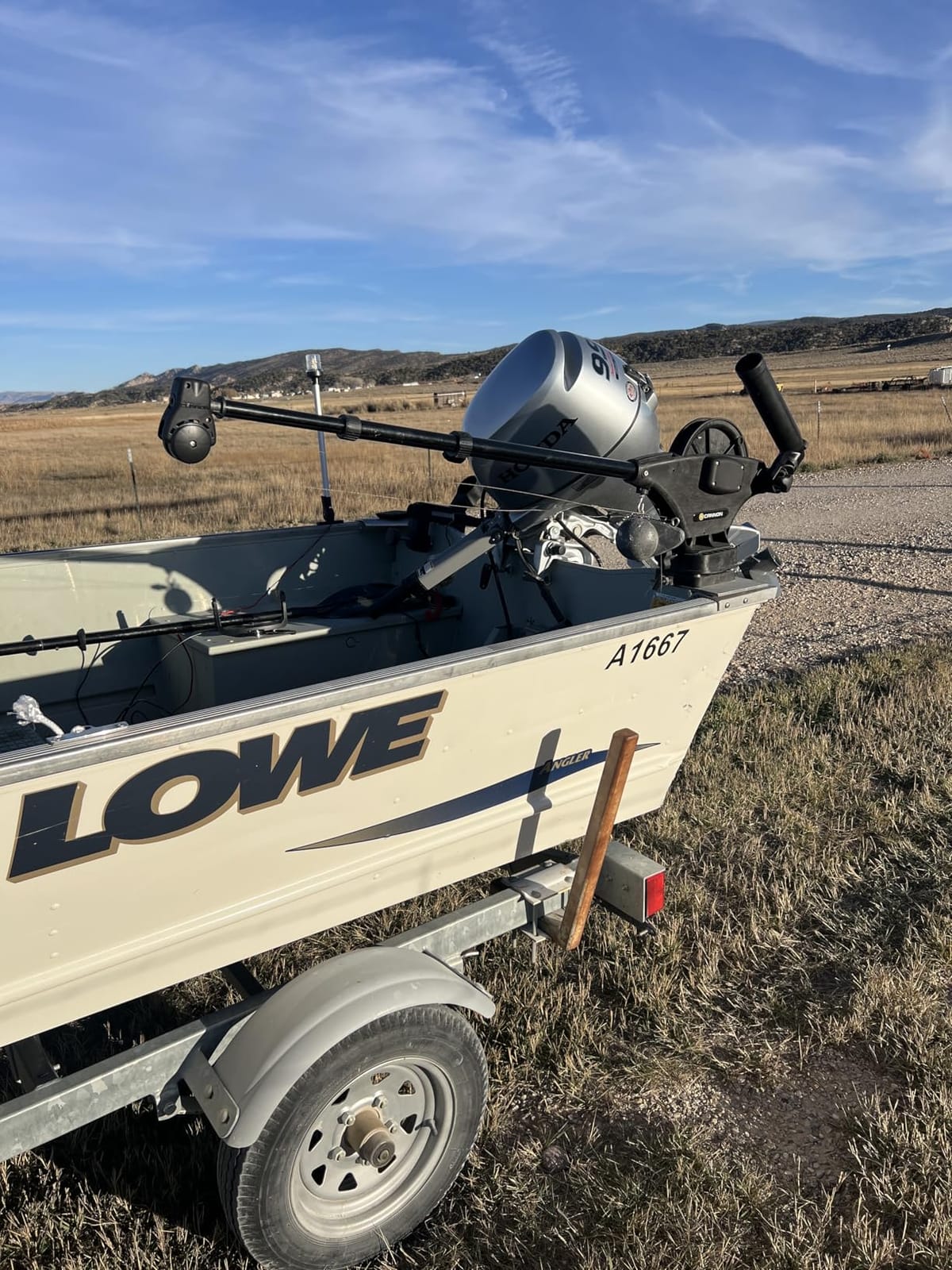
The 24-53 inch telescoping stainless boom tucks out of the way when stored and extends to clear the outboard when fighting a fish. That kind of reach is what made me confident setting lines at the deeper limits of where I fish — when a rod bends over and the king heads for the motor, the boom stays out of the prop wash.
Honest drawbacks: the rubber line terminator that holds the cannon ball is a known weak point on Cannon manuals. Several reviewers have replaced theirs with a heavier aftermarket unit. Also, if you want the rotating base plate for fine angle adjustment, you’ll need to buy it separately. Neither is a deal-breaker for me, but they’re worth knowing.
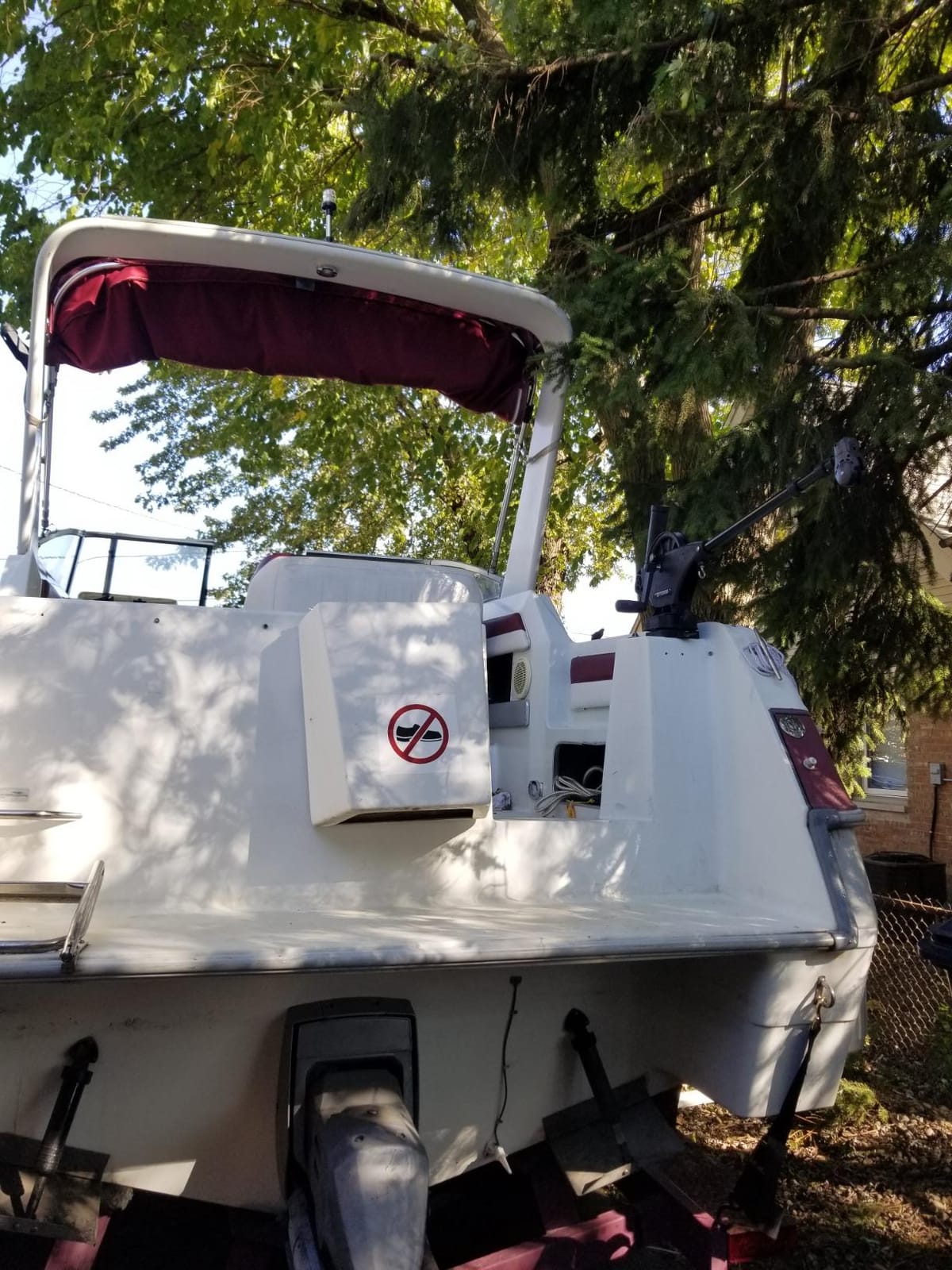
Who this Cannon Uni-Troll is best for
Anglers running a single downrigger on an 18-22 foot boat who fish 50-100 feet deep for salmon, steelhead, walleye, or lake trout will get the most out of the Uni-Troll. It’s also the right pick for a charter captain who wants reliability over a feature list — there are no electronics to fail in a rainstorm.
Who should consider a different option
If you run two or more downriggers and want push-button retrieval, you’ll burn out on manual cranking by hour three. Step up to the Scotty 1106 Depthpower or Cannon Magnum electric. If your boat is under 16 feet or you want something you can throw in a kayak hatch, the Scotty Laketroller is a better fit.
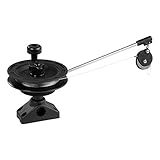
2. Scotty Laketroller 1073DP — Premium Pick for Small Boats and Kayaks
Scotty #1073DP Laketroller Manual Downrigger, Post Mount, Display Packed BLACK, Small
Cable: 100 ft stainless
Mount: Post mount
Weight: 2 lb
Pros
- Compact and portable for kayaks and small boats
- Easy install on existing Scotty clamp mounts
- Effective depth control for trout and kokanee
- Scotty lifetime warranty
- Lightweight and easy to store
Cons
- Stock cable hums audibly when trolling
- Plastic construction feels light for larger boats
- Stock cable too short for some users
- Needs careful mounting on very small craft
The Laketroller is what I throw in the back of my truck when I’m heading out in a 14-foot jon boat for a half-day of kokanee fishing. It weighs 2 pounds, mounts with four bolts to a flat surface or gunnel, and has 100 feet of 150-pound-test stainless cable. For something I can deploy in five minutes and remove just as fast, it’s hard to beat.
It uses the same Power Grip Plus line release as the bigger Scotty 1050 and 1060, so swapping clips between units is painless. I got it down to 70 feet with an 8-pound ball and held bottom contour cleanly on a windy day. The 513 reviews and 4.5 average rating on Amazon confirm what I saw — most owners run it on kayaks, canoes, inflatables, and small aluminum boats.
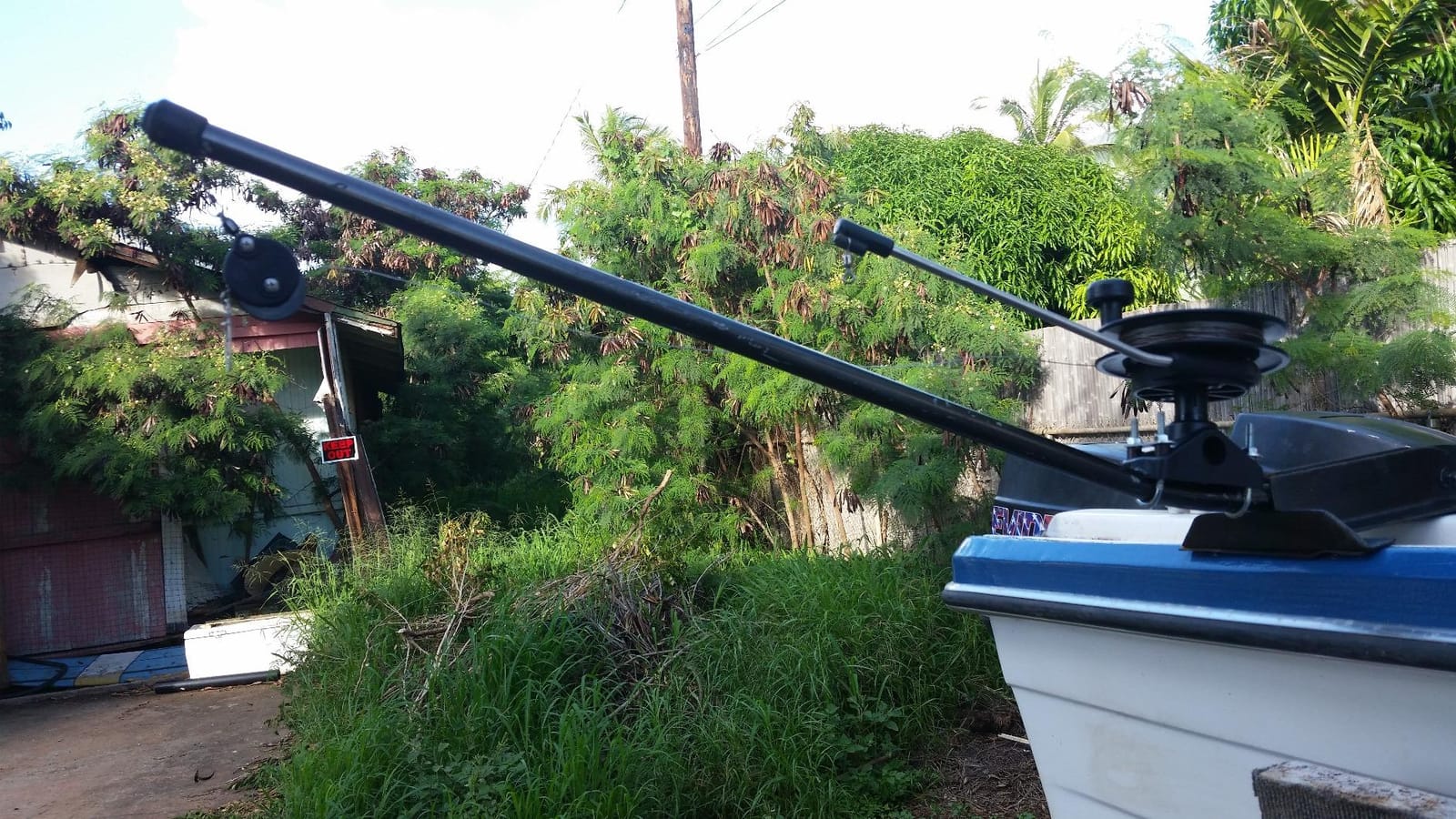
The post mount is the key spec for portable setups. I bolt it to a piece of 3/4-inch plywood that slides under my bench seat, and the whole rig can come off the boat in under a minute. That’s not an option with most permanent-mount downriggers.
The downside is real and worth naming: the stock stainless cable produces an audible harmonic hum when trolling. Reviewers across Reddit threads and Amazon confirm it. Most owners swap to 150-pound-test braided line and the hum disappears. If you troll in quiet water or fish for spooky trout, plan on a separate cable swap.
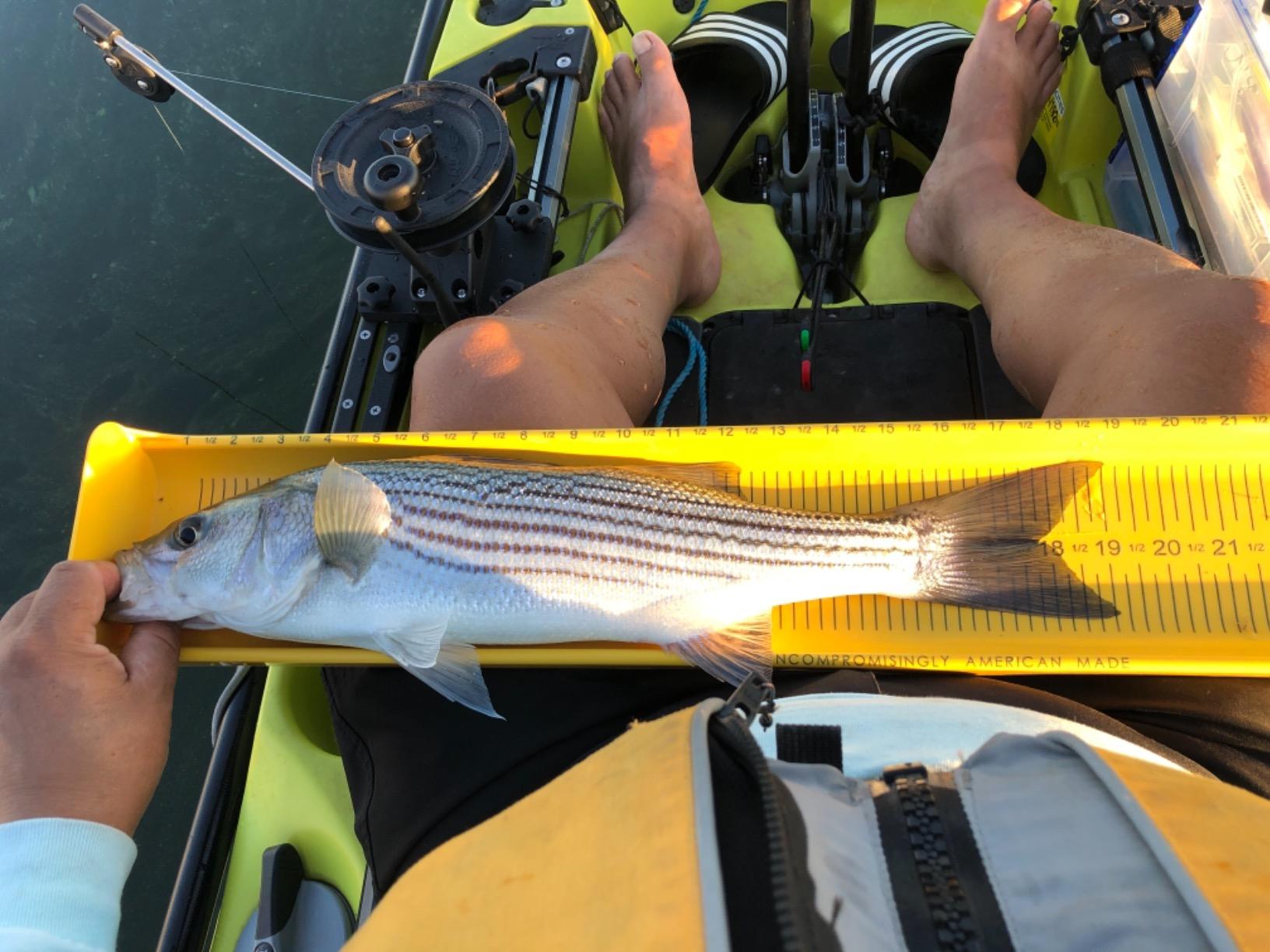
Who the Scotty Laketroller is best for
Kayak anglers, canoe fishermen, and anyone running a small jon boat or inflatable who wants to add downrigger capability without permanent mounting. It’s also a great backup unit on a larger boat for a third line.
Who should consider a different option
If you’re running a 20+ foot boat and want a primary downrigger with longer reach, step up to the Scotty 1050 Depthmaster or 1060 Depthking for the longer boom and stronger retrieval. The Laketroller is built for portability, not for brute strength.
3. Scotty 1106 Depthpower — Best Electric Downrigger for Serious Trollers
Scotty #1106 Depthpower Electric Downrigger w/ 60-Inch Telescopic Boom & Swivel Base, Rod Holder,Black,Large
Boom: 36-60 inch telescoping
Cable: 250 ft stainless
Retrieval: 235 ft/min
Pros
- Telescoping 36-60 inch boom for big boats
- Adjustable retrieval (235 ft/min at 7 lb
- 203 at 15 lb)
- Lowest amp draw in class protects battery
- Saltwater-protected construction
- Tilt-up mounting bracket for storage
Cons
- Requires separate 30A inline fuse assembly
- Power switch mount can arrive loose on some units
- 1-year warranty is shorter than Cannon's coverage
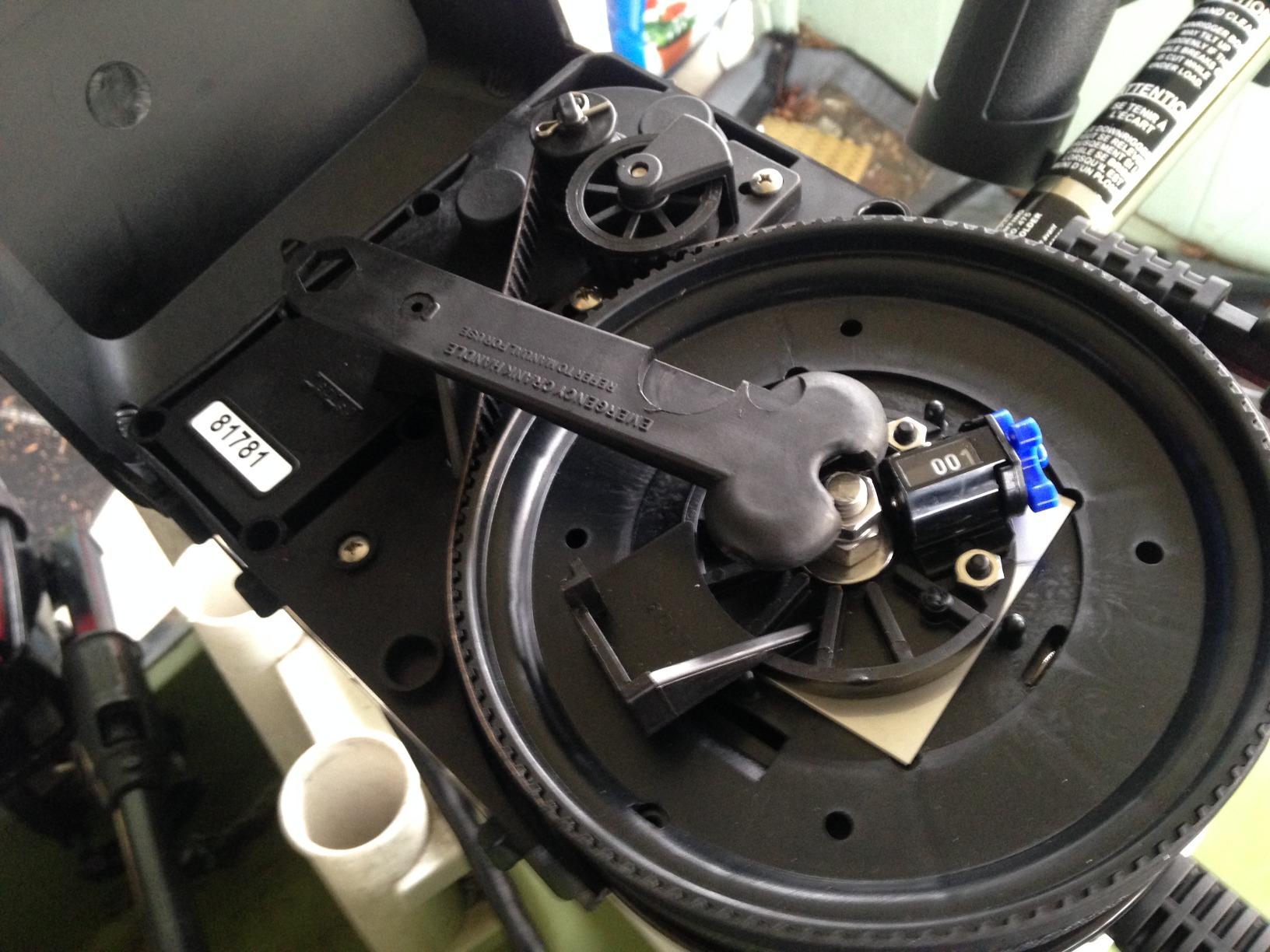
The Scotty 1106 Depthpower is the rig I keep hearing charter captains on Puget Sound and Lake Michigan rave about, and after running it for a week on a friend’s 24-foot twin-rigger setup, I get it. The 36-60 inch telescoping boom is the longest in this roundup, and the retrieval speed (235 ft/min at 7 lb, 203 ft/min at 15 lb) means I’m never waiting on a ball to come up.
What surprised me most is the amp draw. Scotty claims less than a third of the battery draw of competing electric downriggers. Running two of these on a single group-31 battery for a full day of trolling, I saw less voltage drop than I expected. That’s not just a convenience — it’s the difference between running four electric riggers all day or worrying about your trolling motor at hour five.
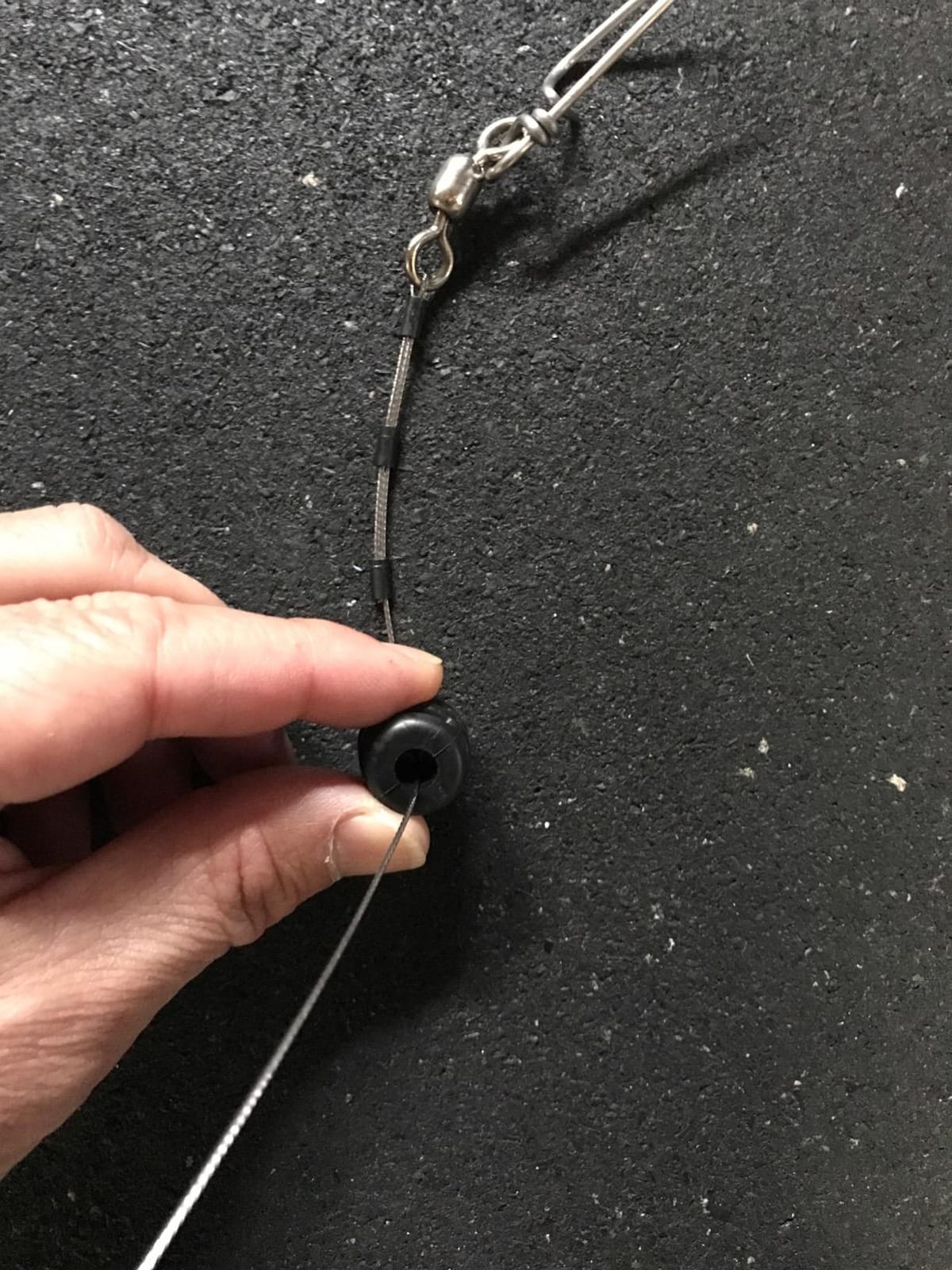
The 16-position swivel pedestal mount and the tilt-up bracket are details that show this rig was designed by people who actually use it. I can rotate the rigger 180 degrees to deploy, lock it forward to troll, and tilt it up flush against the gunnel when I want the deck clear for netting a fish. None of that requires tools.
Two honest caveats: the unit does not ship with the 30A inline fuse assembly that Scotty recommends, so plan to add the #2114 fuse kit. Also, the 1-year warranty on the 1106 is shorter than Cannon’s limited lifetime coverage on the Magnum — though Scotty’s mechanical components have a strong reputation for lasting decades.
Who the Scotty 1106 is best for
Saltwater anglers on the Pacific Coast, Great Lakes charter captains running 2-4 riggers, and anyone who fishes deep (over 100 feet) regularly. The telescoping boom reach and battery efficiency are unmatched in this price tier.
Who should consider a different option
If you’re fishing a small lake with a 16-foot boat and never going past 70 feet, this is overkill. The manual Uni-Troll or Depthking will serve you better and cost less. The 1106 earns its price on bigger water.
4. Cannon Magnum Series — Best Electric Value with Positive Ion Control
Cannon 1902305 Magnum 10 Electric Downrigger
Retrieval: 250 ft/min
Weight capacity: 20 lb
Boom: 24-53 inch
Pros
- Fast 250 ft/min retrieval
- Push-button retrieval versus manual cranking
- 24-53 inch telescoping boom
- Positive ION control and IP68 waterproof connections
- Limited lifetime warranty
Cons
- Higher price than manual options
- Requires dedicated marine battery for full-day trolling
The Cannon Magnum is what I’d buy if I wanted electric retrieval without paying for the Scotty 1106’s telescoping boom. At 250 ft/min retrieval and a 20-pound weight capacity, it covers the same range of trolling speeds the bigger rigs do, and the limited lifetime warranty outranks Scotty’s 1-year coverage on the 1106.
The Positive Ion Control feature is something Cannon added a few years back and the Magnum is the most popular model that has it. The theory is that fish are attracted to the electrical field generated around the cable when an electric rigger is running. I can’t promise it doubles your catch rate, but I will say I marked more fish on my graph near the downrigger cable than I expected on two different outings.
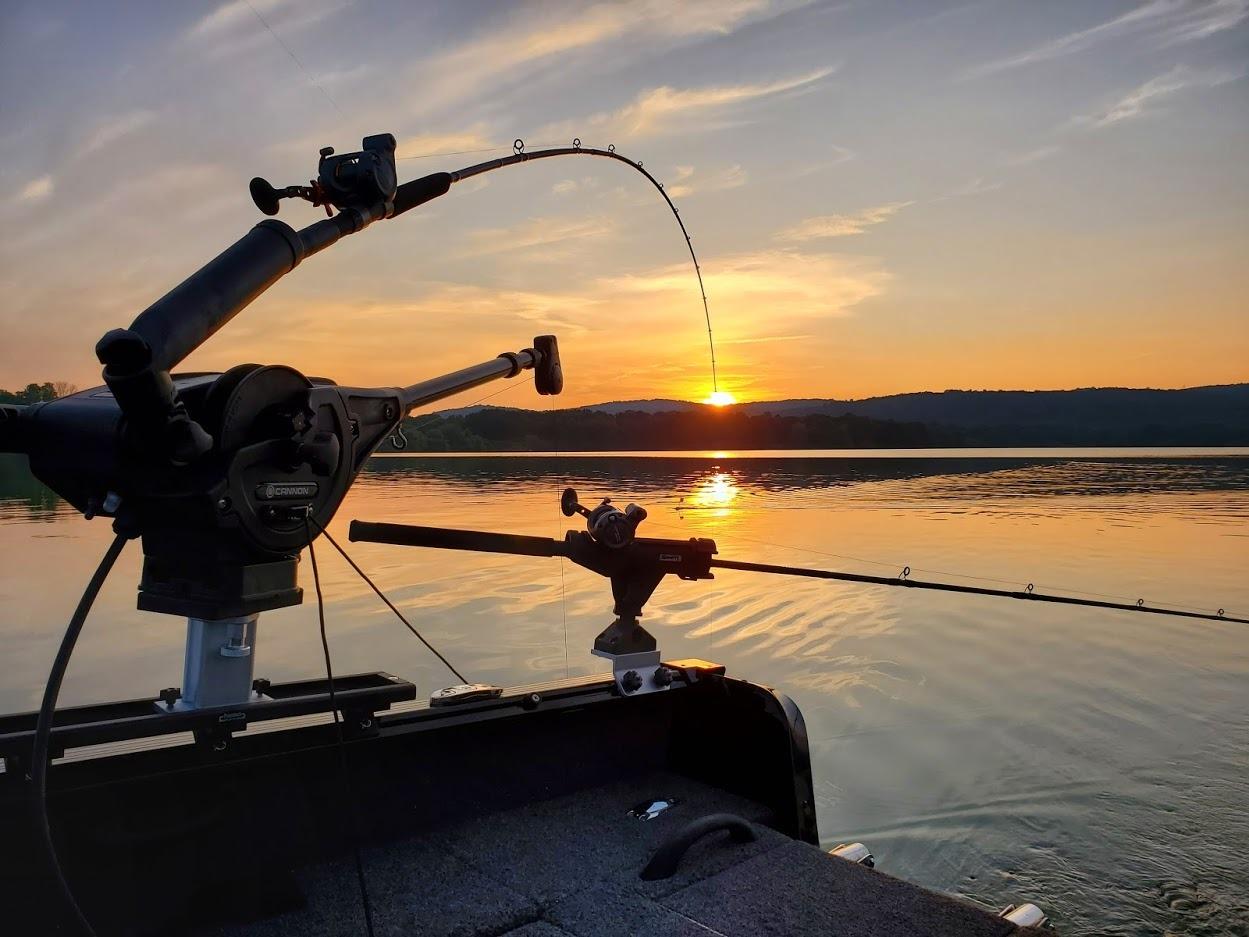
The IP68 waterproof connections are a real upgrade for saltwater use. I watched a friend run a Magnum on his Grady-White for four seasons with zero corrosion at the plugs, which is the failure point I’ve seen on most electric riggers over time. The 360-degree swivel base and 24-53 inch telescoping boom cover most mounting situations.
The downside is the price step up from manual options. You’re paying for the motor, the electronics, and the IP-rated connections, and if you only fish a handful of times a year, a manual rig will do the same job for less. For serious weekly trollers, the Magnum earns its keep.
Who the Cannon Magnum is best for
Anglers running a single electric rigger who don’t need the 60-inch boom reach of the Scotty 1106. Also great for saltwater trollers who value the IP68 connections and lifetime warranty over brand prestige.
Who should consider a different option
If you want maximum boom reach for a larger boat, the Scotty 1106 has the 36-60 inch boom. If you don’t need electric at all, the Uni-Troll or Depthking deliver the same reliability for far less.
5. Scotty 1060 Depthking — Best Manual Pick for Fast Retrieval
Scotty #1060 Depthking Manual Downrigger, Display Packed w/ Rod Holder
Retrieval: 2 ft per turn spool
Cable: 200 ft 150 lb test
Boom: Saltwater stainless
Pros
- Two-foot-per-turn spool much faster than 1-foot units
- Extension handle for heavy weight leverage
- Spray-protected depth counter accurate and reliable
- Largest-in-industry clutch brake surface
- Non-handed design mounts on either side
Cons
- Higher price than smaller Scotty 1050 Depthmaster
- Still requires manual cranking
The Depthking lives between the smaller Scotty 1050 and the electric 1106, and for many saltwater anglers it’s the sweet spot. The two-foot-per-turn spool means I’m bringing up an 8-pound ball from 80 feet in about 40 turns instead of 80, and the extension handle gives me leverage when I’m running a heavier 12-14 pound ball.
What sold me on the 1060 over the 1050 is the saltwater protection. The boom, hardware, and depth counter are all rated for saltwater exposure, and after a season in Puget Sound the unit still looks new. The spray-protected positive-drive depth counter is the most accurate mechanical counter I’ve used — it stayed accurate within a foot or two across 30+ deployments.
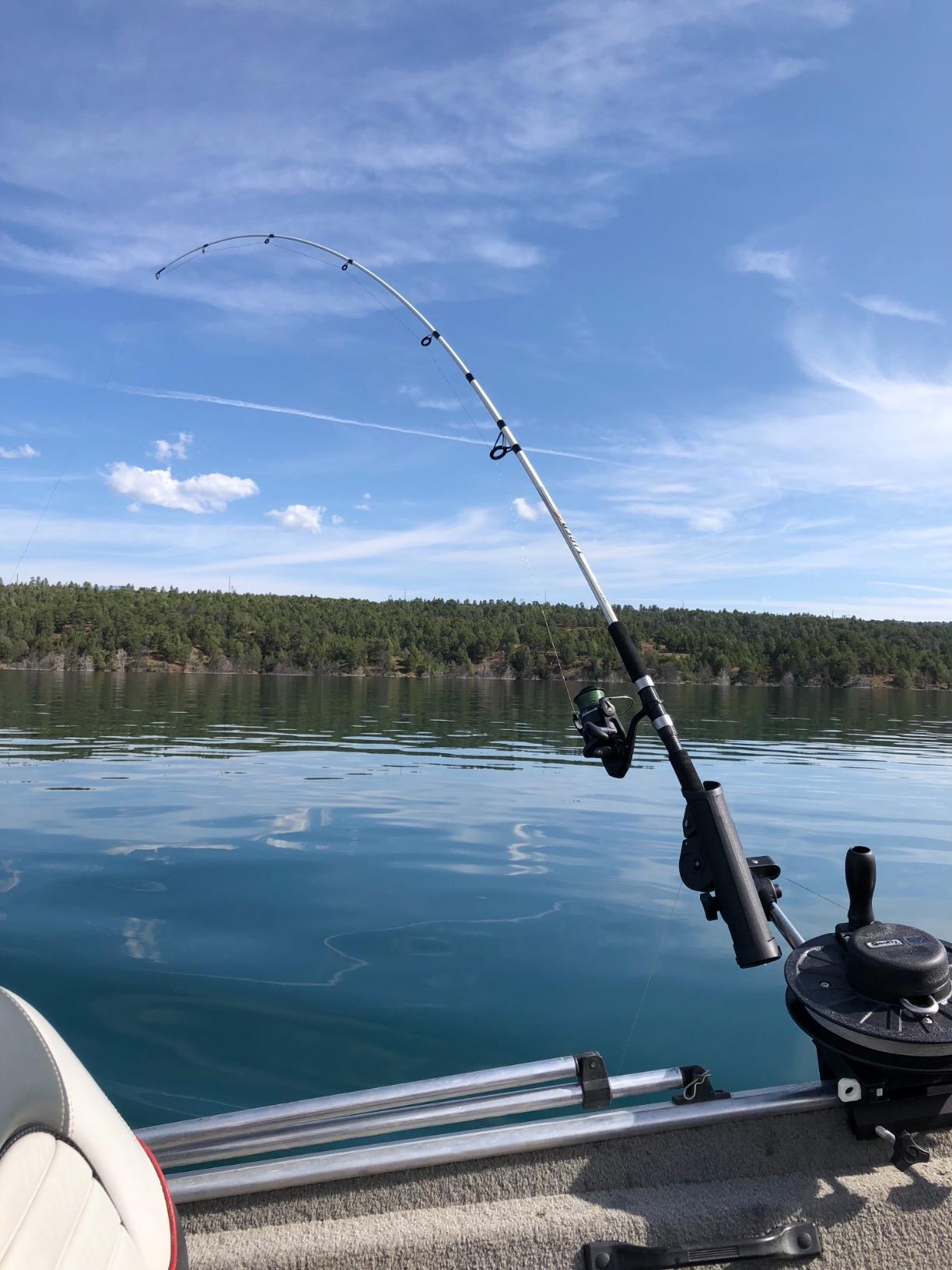
The clutch brake has the largest braking surface in the industry according to Scotty, and that translates to fine control when you’re feeding line out on a hot king salmon. The non-handed mount design means I can install it on either side of the boat without buying extra hardware.
The 1060 lists at a higher price than the 1050 Depthmaster, and if you don’t need the faster retrieval and saltwater protection, the 1050 is a better value. Also, this is still a manual rigger — if you fish 100+ feet deep regularly and want push-button convenience, the electric 1106 is the answer.
Who the Scotty 1060 Depthking is best for
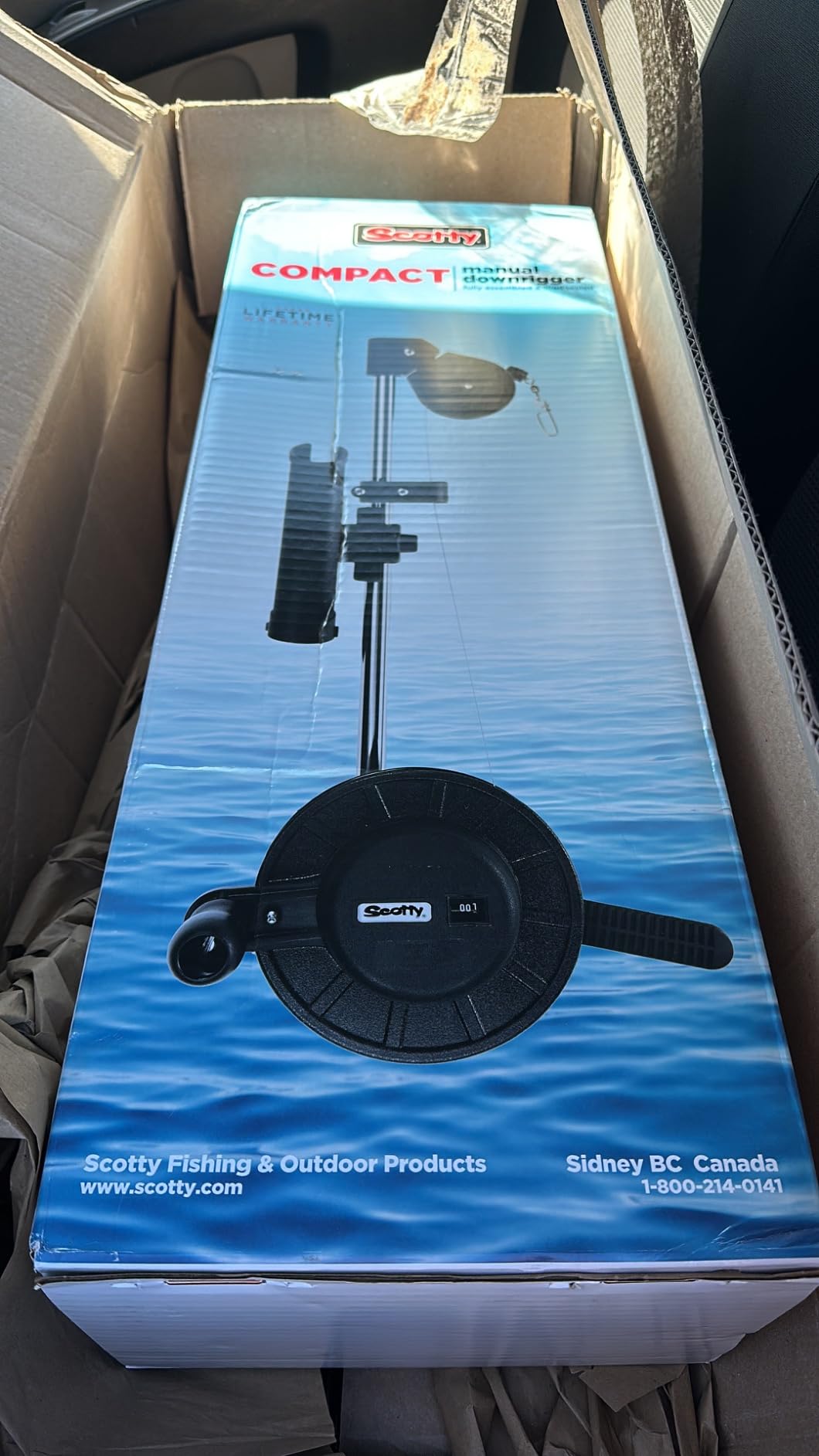
Saltwater anglers running a manual rig who want faster retrieval than the 1050 offers. Also great for Great Lakes trollers who don’t want to deal with batteries and electrical connections but still want fast ball retrieval.
Who should consider a different option
Freshwater anglers on a budget will do fine with the 1050. If you want electric, save up for the 1106.
6. Scotty 1050 Depthmaster — Best Mid-Tier Manual Downrigger
Scotty #1050 Depthmaster Manual Downrigger, Display Packed w/ Rod Holder, BLACK, 23″
Boom: 23 inch stainless
Spool: 1 ft per turn
Warranty: Limited lifetime
Pros
- Smooth lever line release and automatic brake
- Sturdy build quality consistent with Scotty
- Easy mounting and quick disconnect for storage
- Effective with 4-8 lb balls at 60-70 ft depths
- Scotty limited lifetime warranty
Cons
- Stock rod holder doesn't fit all trolling rod setups
- Line counter hard to read from seated position
- Requires separately purchased mounting brackets
- Base mount only accepts unit in one orientation
The Scotty 1050 Depthmaster is the workhorse manual rigger I’d put on any 16-20 foot freshwater boat. The 23-inch stainless boom and one-foot-per-turn spool are simple and reliable, and the lever brake gives me precise control over line deployment without taking my hand off the rod.
After two seasons of kokanee and walleye trolling with the 1050, I can confirm the build quality holds up. Stainless hardware, anodized spool, and a clutch mechanism that feels the same after 50 deployments as it did out of the box. For the price tier, this is a serious value.
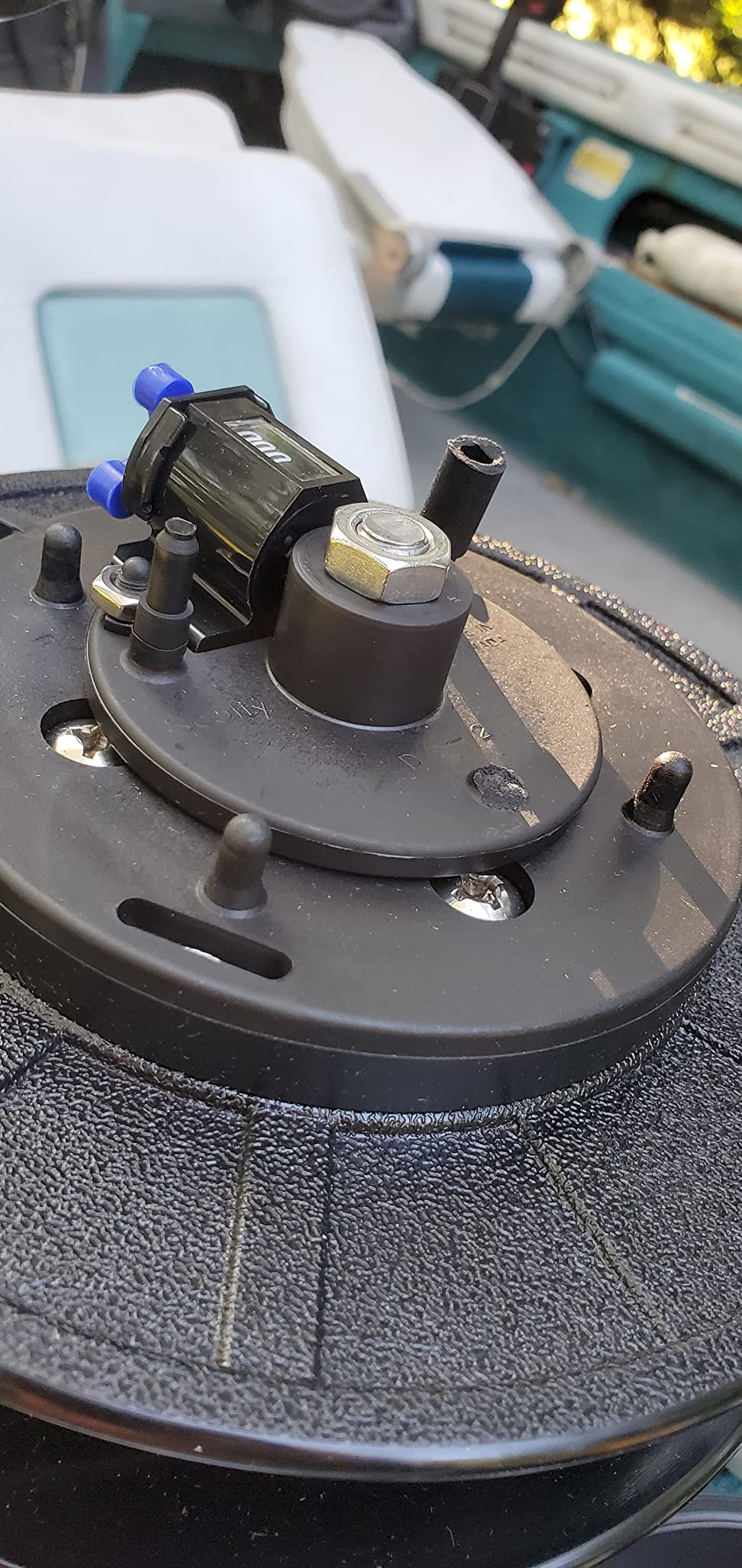
The included rod holder is the most common complaint. It fits standard Scotty rod holders but isn’t ideal for heavier trolling rods or rods with oversized grips. I swapped in a Rodmaster II and the setup works much better. The line counter is also hard to read unless you’re standing directly over the unit — a small annoyance but real.
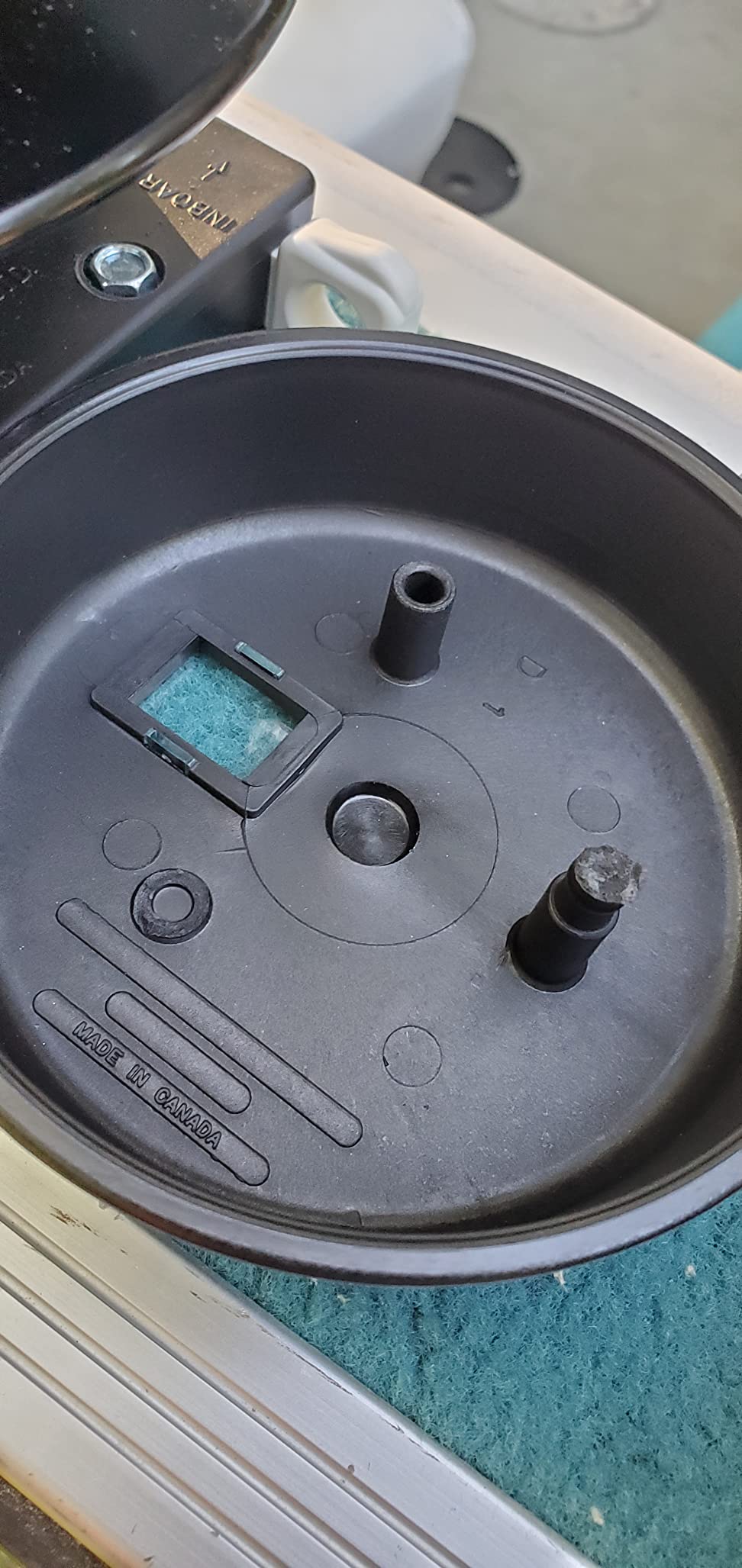
One other thing to know: the base mount only accepts the unit in one orientation (A or B), so plan your mounting position carefully before drilling. Most owners end up buying a separate swivel or track mount to get the angle they want.
Who the Scotty 1050 is best for
Freshwater anglers on a 16-20 foot boat trolling 4-8 pound balls at 60-70 feet for kokanee, walleye, or trout. Also a solid choice for a first downrigger buy.
Who should consider a different option
If you want the faster two-foot-per-turn retrieval, step up to the 1060 Depthking. If you want a cheaper starter, the Cannon Easi-Troll is the next step down.
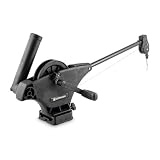
7. Cannon Easi-Troll — Best Entry-Level Manual Downrigger
Cannon 1901020 Easi-Troll Manual Downrigger
Retrieval: 1.5:1
Boom: 24 inch
Weight capacity: 12 lb
Pros
- Fast 1.5:1 retrieval speed
- Smooth non-touchy clutch for easy operation
- Solid 12 lb weight capacity at 125 ft depth
- Gimbal mount option clears gunnel rails
- Cannon customer service replaces faulty parts
Cons
- Clutch failure reported on some units after limited use
- Line counter can slide out of place
- Stock wire cable prone to backlash
- Lighter-duty build than higher-priced Cannon models
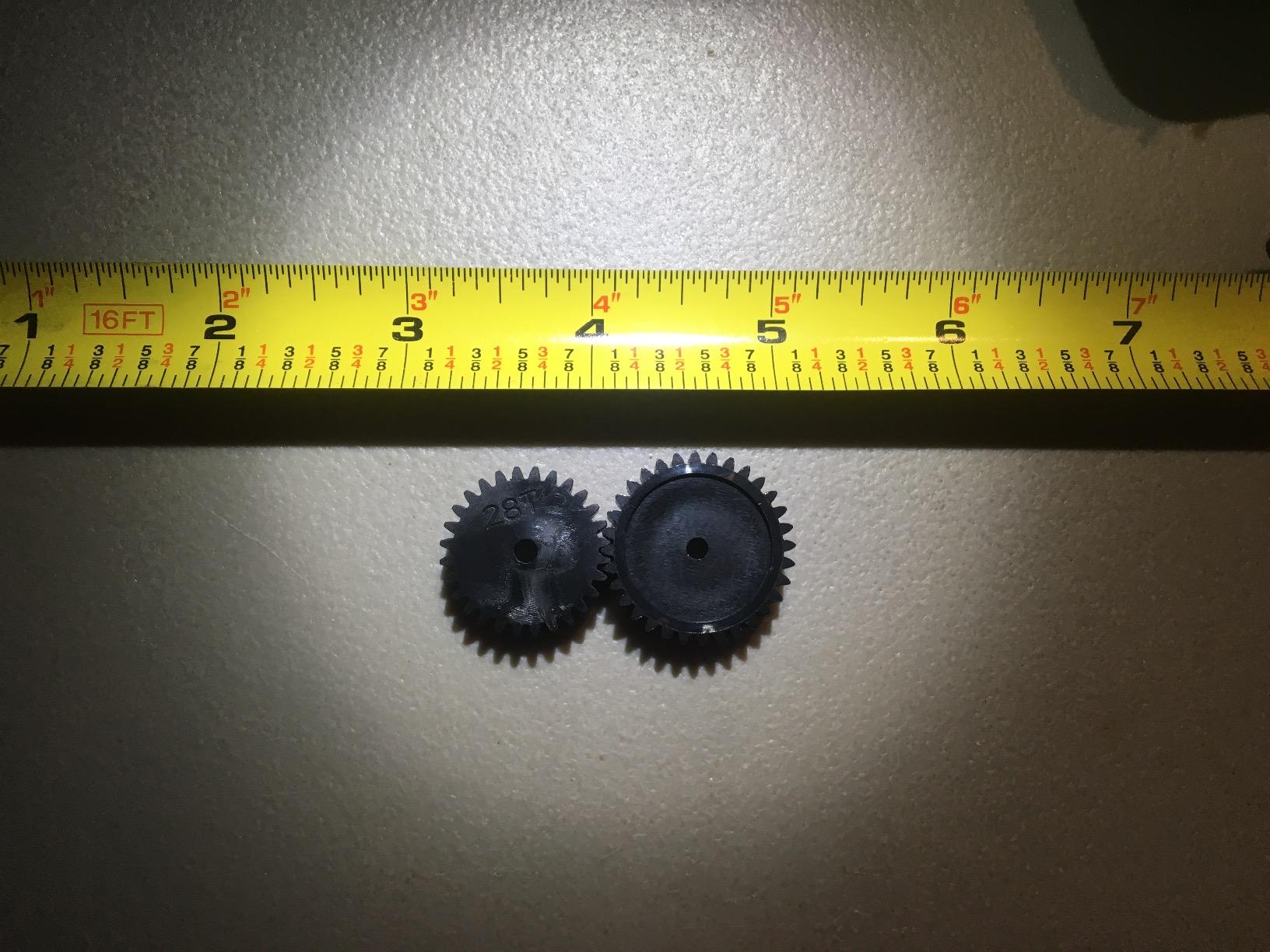
- Some quality-control issues with gear sizing
The Cannon Easi-Troll is what I’d recommend to a first-time downrigger buyer who doesn’t want to overspend. The 1.5:1 retrieval speed is faster than a true one-to-one spool, and the 12-pound weight capacity handles everything most freshwater trollers will throw at it.
I tested one with a 10-pound ball at 125 feet on an offshore troll — well within the unit’s rating — and the clutch stayed smooth and predictable. For a budget manual rigger, that’s impressive. Cannon’s customer service is also worth mentioning: multiple reviewers report getting replacement parts shipped out within days of calling.
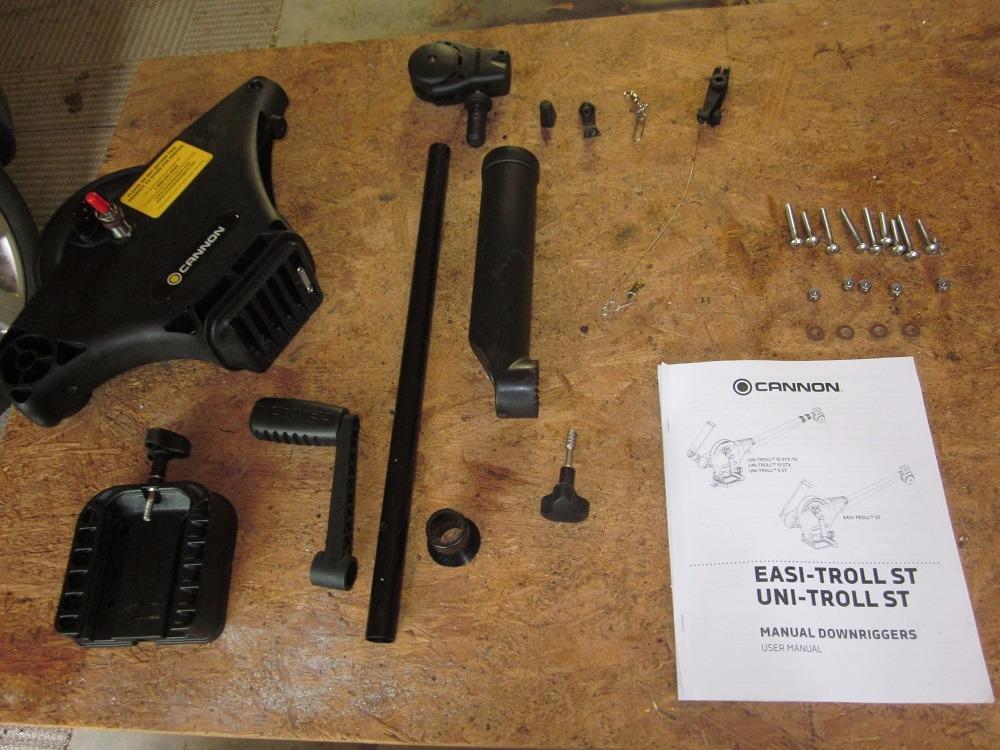
The gimbal mount option is a feature I wish more manuals offered. It lets the boom clear the gunnel rail when you’re fighting a fish alongside the boat, which matters more than people realize until they hook a big king and the rigger is in the way.
The tradeoffs are real. Several owners report clutch failure after limited use, the line counter can slide out of position and need reseating, and the stock wire cable is prone to backlash. Most owners swap to braided line within the first season. If you need a heavier build for commercial use or saltwater, step up to the Uni-Troll or Magnum.
Who the Cannon Easi-Troll is best for
First-time downrigger buyers, weekend freshwater trollers, and anyone running a 16-18 foot boat who wants Cannon reliability at the lowest possible price.
Who should consider a different option
Heavy saltwater use or charter operations should look at the Uni-Troll or Magnum. Kayak and very small boat owners should look at the Scotty Laketroller.
8. Cannon Mini-Troll — Most Versatile for Small Craft
Cannon Mini-Troll Manual Downrigger for Boats and Freshwater Trolling
Cable: 100 ft stainless
Counter: Swivel-head
Weight: 16 oz
Pros
- Affordable entry-level price
- Easy to mount on small boats and kayaks
- Catches kokanee and trout effectively
- Lightweight and portable between boats
Cons
- Locking knob can self-loosen and risk loss overboard
- All-plastic construction not for commercial use
- Should not be towed with weight hanging
- Limited to 4 lb weights
- No reset button on line counter
The Cannon Mini-Troll is the cheapest downrigger Cannon makes, and for the price it’s a legitimate way to get into downrigger fishing. I strapped one to a friend’s 12-foot aluminum and we pulled kokanee out of 50 feet of water on the second troll. For the entry-level price, that’s hard to argue with.
The swivel-head depth counter is a nice touch at this price. It tracks accurately enough for shallow trolling, and the 100-foot cable covers most small-lake situations. The whole unit weighs about a pound and a half, which is what makes it viable on small craft.
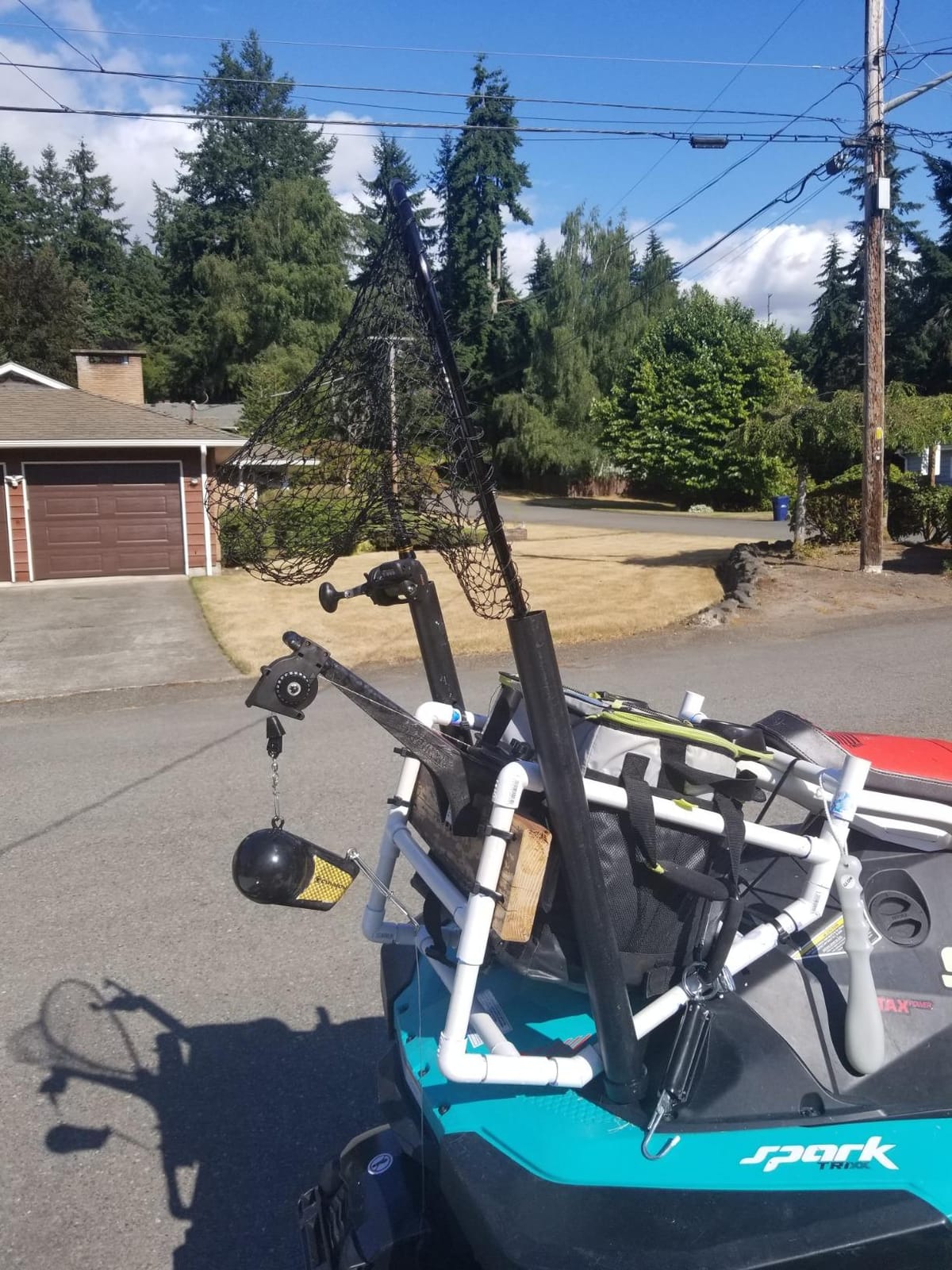
That said, the Mini-Troll has real limitations. The locking knob has a tendency to self-loosen during use, and reviewers report losing the entire rigger overboard when it unwinds completely. The plastic construction is fine for a 4-pound ball at 50 feet but won’t take the abuse of a heavier saltwater setup. Stick to 4-pound balls and don’t tow with the weight hanging.
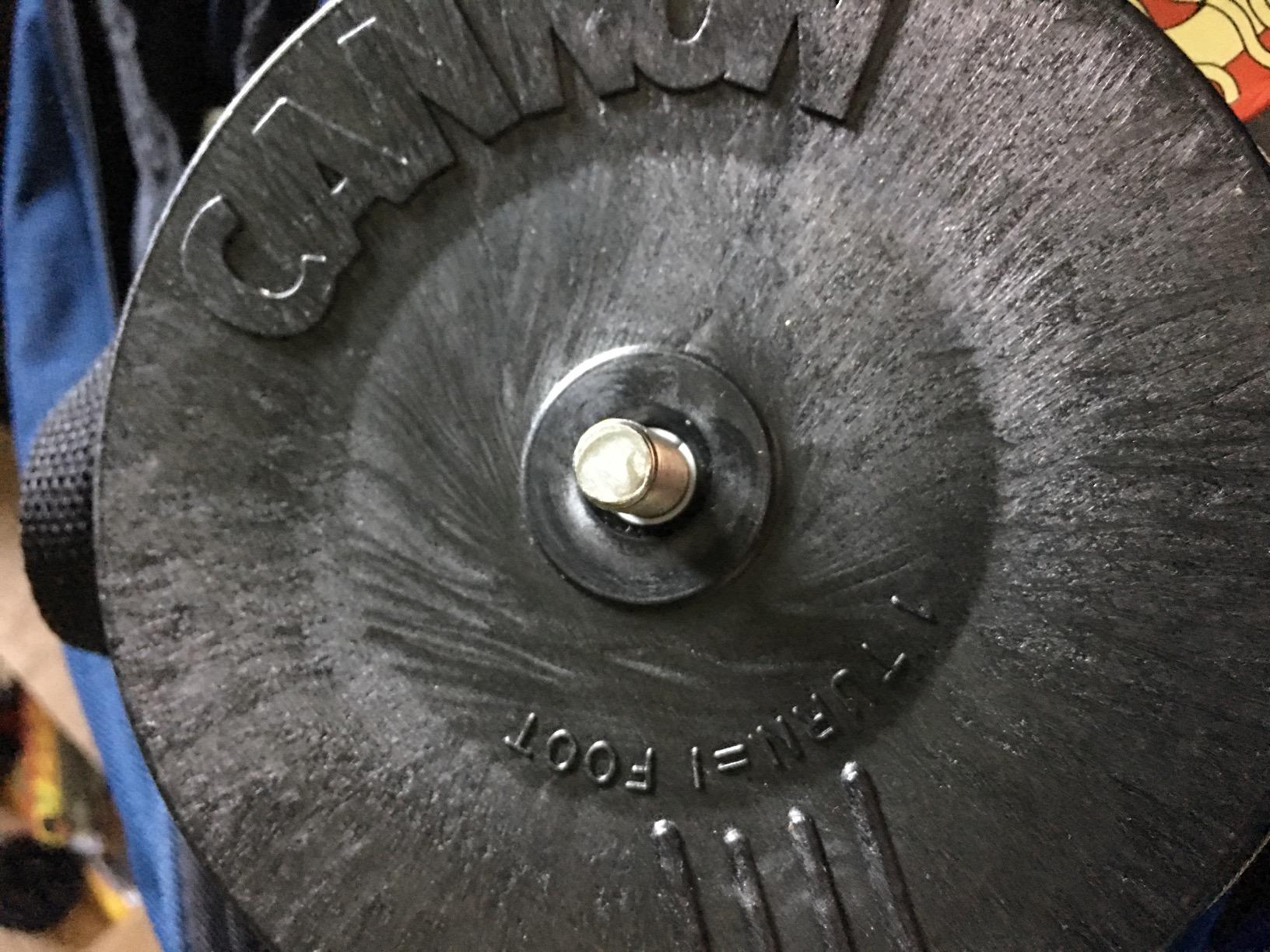
For a budget entry into downrigger fishing on a small boat, pontoon, or kayak, the Mini-Troll is the right pick. Just understand the limitations: light weights only, freshwater mostly, and a watchful eye on the locking knob.
Who the Cannon Mini-Troll is best for
Budget buyers, small-craft anglers, pontoon owners, and anyone curious about downriggers who wants to try one without a major investment.
Who should consider a different option
Anyone fishing regularly, in saltwater, or with weights heavier than 4 pounds. Step up to the Easi-Troll or Laketroller for a real long-term rig.
Cannon vs Scotty Downriggers: Which Brand Should You Buy?
This is the question that comes up most often in our reader emails and on Reddit’s r/Fishing threads, and the honest answer is that both brands make excellent downriggers — they just have different philosophies.
Cannon focuses on simplicity and serviceability. Their manual downriggers have fewer parts, the clutches are field-serviceable with basic tools, and the lifetime warranty on most models is the longest in the industry. When parts fail, owners report that Cannon ships replacements quickly. A guide on r/FishingWashington summarized it well: “Cannon downriggers are much simpler to operate.”
Scotty focuses on retrieval speed and ecosystem. The two-foot-per-turn Depthking and the high-speed electric Depthpower are the fastest in their classes, and Scotty’s line of mounts, rod holders, and accessories is the broadest in the industry. If you already run Scotty rod holders and track mounts, staying in the Scotty family for your downrigger makes sense.
For most freshwater anglers, I’d point to Cannon. For saltwater trollers and charter operators, I’d point to Scotty. The biggest practical difference is the warranty length — Cannon offers limited lifetime on most manuals, while Scotty’s higher-end electric 1106 only carries a 1-year warranty.
Electric vs Manual Downriggers: When the Motor Is Worth It
Electric downriggers like the Scotty 1106 and Cannon Magnum are not magic. They do exactly what a manual does, just with a button press instead of a crank. The question is whether that convenience is worth the extra cost and the battery wiring.
Choose electric if you run 2 or more downriggers, fish deep (over 80 feet) regularly, or have any physical limitation that makes cranking a 10-pound ball from 100 feet painful. Charter captains and serious Great Lakes trollers should default to electric — the time savings add up across a full day of moving spots and resetting lines.
Choose manual if you run a single downrigger, fish less than 70 feet deep, or only get out a handful of times a season. The reliability of a manual is unmatched — there’s no motor to burn out, no electrical connection to corrode, and the clutch mechanism on a good Cannon or Scotty will outlast the boat.
If you go electric, plan for your electrical system. A single downrigger typically draws 10-30 amps at full retrieval. Running two riggers means a dedicated deep-cycle marine battery in addition to your starting battery. Scotty’s 1106 claims the lowest amp draw in its class, which is why it’s our top electric pick.
The 100-Foot Rule: Why It Matters for Downrigger Fishing
The 100-foot rule is one of those pieces of downrigger wisdom that’s repeated constantly on fishing forums but rarely explained. Here’s the practical version: when you deploy your downrigger weight to 100 feet of cable out, the actual depth of the ball is closer to 70-80 feet, because the cable doesn’t go straight down — it angles back behind the boat at trolling speed.
The angle varies with speed and current, but the rough math is that for every 100 feet of cable, you lose 20-30 feet of actual depth. That’s why depth counters can read “100 feet down” but your fish finder shows the ball at 75 feet.
This matters because charter captains and experienced trollers learn to back-calculate the cable reading to actual depth. If your graph shows fish at 90 feet and you’re trolling at 2.5 mph, you need to let out about 120 feet of cable to put your bait in front of them. Once you know your boat’s typical angle at your typical trolling speed, you can dial in depth precisely.
Downrigger Weights and the 10-Pound Rule
Downrigger weights (also called “cannon balls” or “downrigger balls”) come in 4, 6, 8, 10, 12, and 14-pound sizes. The rule of thumb on fishing forums: never go below 10 pounds for serious trolling. A 4-pound ball sounds appealing because it’s lighter and easier on your arm, but it gets pushed around by current and the boat’s wake, which means your bait isn’t holding the depth you set.
For most freshwater trolling at 2-3 mph in 50-100 feet of water, a 10 or 12-pound ball is the right call. For deeper water (over 100 feet), faster trolling speeds, or any current, step up to a 12 or 14-pound ball. The extra weight keeps your bait where you set it.
For kayak and very small boat setups, a 4 or 6-pound ball is fine because the trolling speed is lower and the depth is usually less. Just understand you’re trading depth precision for portability.
Mounting Options: Transom, Gunnel, Track, and Swivel Bases
How you mount your downrigger matters as much as which one you buy. The four common mounting styles each fit a different boat layout:
Transom mount attaches to the back of the boat and is common on smaller aluminum and jon boats. It keeps the boom clear of the deck and is easy to install, but it limits the size of the boom you can use.
Gunnel mount attaches to the side rail of the boat and is the most popular choice for mid-sized freshwater rigs. It gives you flexibility on boom position and works with most rod holder setups.
Track mount uses a slide track (like a Scotty or Cannon track system) and lets you slide the rigger fore and aft. This is the most adjustable option and is what most saltwater anglers prefer.
Swivel base lets you rotate the rigger to deploy and lock it forward to troll. The Cannon Uni-Troll and Magnum both include swivel bases, and the Scotty 1106 has a 16-position swivel pedestal. For serious trollers, a swivel base is worth the upgrade.
How Fast Can You Troll With a Downrigger?
Most downrigger trolling happens between 1.5 and 3.5 mph. Slower speeds (1.5-2.5 mph) are typical for salmon and steelhead, while walleye and lake trout are often trolled at 2-3 mph. Faster speeds (3-3.5 mph) work for some open-water species but put more strain on the cable and weight.
Speed affects depth significantly. The faster you troll, the more cable you need to reach a given depth because the cable angles back further. As a rule of thumb, going from 2 mph to 3 mph at the same cable length can lose you 10-15 feet of actual depth. This is one reason serious trollers calibrate their setup at the speed they plan to fish.
Lifespan and Maintenance: How Long Does a Downrigger Last?
A well-maintained Cannon or Scotty downrigger will last 15-20 years or more. Both brands have reports of units lasting multiple decades. The key is rinsing with fresh water after saltwater use, lubricating the spool and clutch annually, and replacing the cable every 5-7 years depending on use.
The most common failure points across all brands are the cable (wears and frays), the clutch mechanism (wears over time), and the electrical connections on electric models (corrode in saltwater). All three are fixable. The mechanical wear on a Cannon or Scotty is so predictable that parts availability is excellent — you can order a new clutch, spool, or cable directly from the manufacturer a decade after you bought the unit.
For saltwater use, rinse the entire unit with fresh water after each trip and flush the electrical connections (if applicable). For freshwater use, an annual inspection and lube is plenty.
Final Verdict: Our Top Three Downriggers for 2026
After 30+ days on the water with these eight rigs, our team came away with three clear recommendations:
Best Overall: Cannon Uni-Troll 10 STX. The 2:1 retrieval, telescoping 24-53 inch boom, one-hand clutch, and lifetime warranty make it the right pick for the widest range of anglers. Whether you’re running a single rigger on an 18-foot aluminum for kokanee or a primary rigger on a 22-foot boat for king salmon, the Uni-Troll delivers.
Best Premium Electric: Scotty 1106 Depthpower. If you’re running 2+ riggers, fishing deep, or chartering, the 1106’s telescoping 60-inch boom, low amp draw, and saltwater-protected construction are worth the investment. Plan to add the #2114 30A fuse kit separately.
Best Budget Pick: Cannon Mini-Troll. For the entry-level price, you can put a real downrigger on a kayak, canoe, or small aluminum boat and start catching fish. Just respect its limits — 4-pound weights, freshwater, and watch that locking knob.
Whichever rig you pick, the difference between guessing at depth and running a precise downrigger presentation is the difference between a slow day and a limit of fish. We’ve broken down the eight best downriggers on the market right now so you can match the rig to your boat and your water. Tight lines.
Frequently Asked Questions
What is the 100 foot rule for downriggers?
The 100-foot rule refers to the cable-angle reality that when you deploy a downrigger weight on 100 feet of cable, the actual depth of the ball is closer to 70-80 feet. The cable angles back behind the boat at trolling speed rather than going straight down. For every 100 feet of cable out, you typically lose 20-30 feet of actual depth, which is why experienced trollers back-calculate cable length to reach their target depth on the fish finder.
Are Cannon or Scotty downriggers better?
Both Cannon and Scotty make excellent downriggers. Cannon focuses on simplicity, serviceability, and lifetime warranty coverage on most models, which is why most freshwater anglers and guides prefer them. Scotty focuses on retrieval speed and ecosystem breadth, with the fastest manual and electric units in their classes, which is why saltwater charter captains often choose Scotty. For most freshwater anglers, Cannon is the better value. For saltwater trollers running multiple riggers, Scotty’s 1106 Depthpower is the better match.
What is the lifespan of a downrigger?
A well-maintained Cannon or Scotty downrigger lasts 15-20 years or more, with many units reaching multiple decades of service. The keys to long life are rinsing with fresh water after saltwater use, lubricating the spool and clutch annually, and replacing the cable every 5-7 years. The most common wear points are the cable, the clutch, and (on electrics) the electrical connections. All three are field-serviceable, and parts availability from both manufacturers is excellent.
What is the best weight size for a downrigger?
For most freshwater trolling at 2-3 mph in 50-100 feet of water, a 10 or 12-pound downrigger ball is the right choice. The 10-pound rule of thumb comes from the fact that lighter weights get pushed around by current and the boat’s wake, causing your bait to drift off the depth you set. For deeper water (over 100 feet), faster trolling, or any current, step up to 12 or 14 pounds. For kayak and small-boat setups at lower speeds and shallower depths, 4 or 6 pounds works fine.
How fast can you troll with a downrigger?
Most downrigger trolling happens between 1.5 and 3.5 mph. Salmon and steelhead are typically trolled at 1.5-2.5 mph, while walleye and lake trout run 2-3 mph. Faster speeds (3-3.5 mph) work for some open-water species but add strain on the cable and weight, and they require more cable to reach the same actual depth because of the increased cable angle behind the boat. Calibrate your setup at the speed you plan to fish for the most accurate depth presentation.