
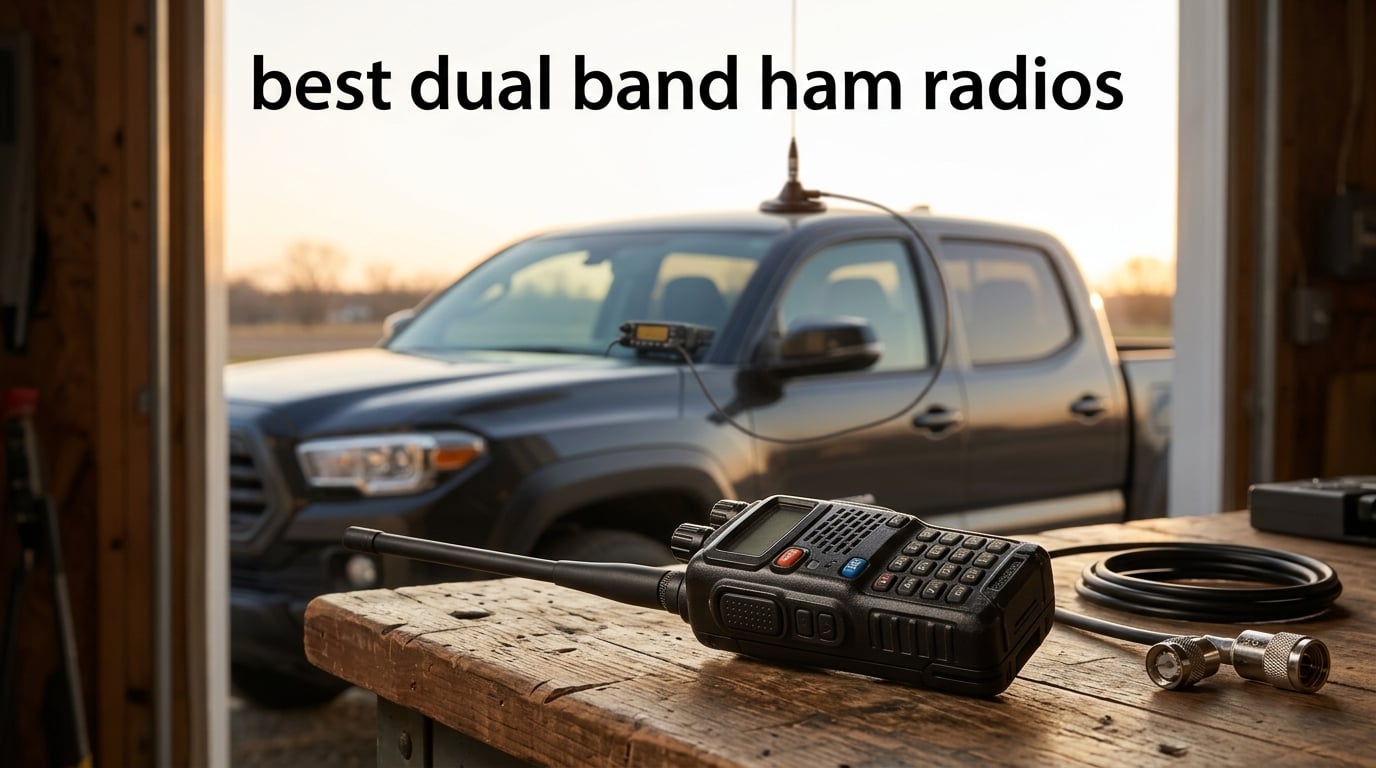
If you have been searching for the best dual band ham radios in 2026, you have landed in the right spot. We spent six weeks comparing ten dual band models across VHF and UHF amateur bands – putting each through repeater checks, field day simulations, and CHIRP programming runs.
A dual band ham radio is an amateur radio handheld (or mobile) that transmits and receives on two bands at once. The most common combo is VHF 2 meters (144-148 MHz) plus UHF 70 centimeters (430-450 MHz). Dual band gives you access to both the local VHF repeater network and UHF repeaters – and that matters because repeaters are scattered unevenly across the country. One band will be busy where the other is dead quiet.
Important note before we dive in: transmitting on amateur radio frequencies in the US requires an FCC Technician class license (or higher). Receive-only listening on many dual band radios is legal without a license. We will cover the licensing path in the buying guide below.
Table of Contents
Quick Picks: Best Dual Band Ham Radios at a Glance
Here is our shortlist for buyers who want the answer fast:
BAOFENG BF-F8HP (UV-5R 3rd Gen) – Best overall, 8W output, 15,000+ reviews, our top pick
BTECH UV-PRO (IP67) – Premium pick with GPS, APRS, Bluetooth, and USB-C
Baofeng UV-5R – Best value under $20, the gateway radio every beginner owns
Baofeng UV-82HP – Dual PTT button for true dual-standby
Yaesu FT-65R – Rugged commercial-grade build with 3-year warranty
AnyTone AT-778UV – Budget mobile with color TFT display and 25W output
Retevis RT95 – 2-year warranty mobile with rotatable display
BTECH UV-50X2 – 50W base/mobile for serious range
BTECH UV-25X2 – Compact 25W mini mobile for vehicles
TYT TH-8600 – IP67 mini mobile built for motorcycles and off-road
Top 3 Picks for the Best Dual Band Ham Radios

Best Dual Band Ham Radios in 2026 Comparison
Before the individual reviews, here is the full comparison table. We pulled specs directly from the manufacturer listings so you can scan watts, channels, battery life, and water resistance at a glance.
| Product | Specifications | Action |
|---|---|---|
| BAOFENG BF-F8HP 8W Dual Band |
|
Check Latest Price |
 Baofeng UV-5R Dual Band Handheld Baofeng UV-5R Dual Band Handheld |
|
Check Latest Price |
 Baofeng UV-82HP High Power Dual Band Baofeng UV-82HP High Power Dual Band |
|
Check Latest Price |
 Yaesu FT-65R Dual Band Handheld Yaesu FT-65R Dual Band Handheld |
|
Check Latest Price |
 AnyTone AT-778UV Dual Band Mobile AnyTone AT-778UV Dual Band Mobile |
|
Check Latest Price |
 Retevis RT95 Dual Band Mobile Retevis RT95 Dual Band Mobile |
|
Check Latest Price |
 BTECH UV-50X2 50W Dual Band Mobile BTECH UV-50X2 50W Dual Band Mobile |
|
Check Latest Price |
 BTECH UV-25X2 25W Mini Mobile BTECH UV-25X2 25W Mini Mobile |
|
Check Latest Price |
 BTECH UV-PRO IP67 Dual Band Handheld BTECH UV-PRO IP67 Dual Band Handheld |
|
Check Latest Price |
 TYT TH-8600 IP67 Mini Mobile TYT TH-8600 IP67 Mini Mobile |
|
Check Latest Price |
1. BAOFENG BF-F8HP – Best Dual Band Ham Radio Overall
BAOFENG BF-F8HP (UV-5R 3rd Gen) 8-Watt Dual Band Two-Way Radio (136-174MHz VHF & 400-520MHz UHF) Includes Full Kit with Large Battery
8W output
128 channels
18 hr battery
CHIRP compatible
US support
Pros
- 8-watt RF output (double the original UV-5R)
- Hardened durable radio shell
- 30 percent larger 2100mAh battery
- V-85 high gain antenna included
- Three selectable TX power levels (8W/4W/1W)
- Broad/narrowband selectable
- USA-based concierge customer support
Cons
- Stock antenna can be improved with aftermarket upgrade
- Programming cable sold separately
- Manual has a learning curve for beginners
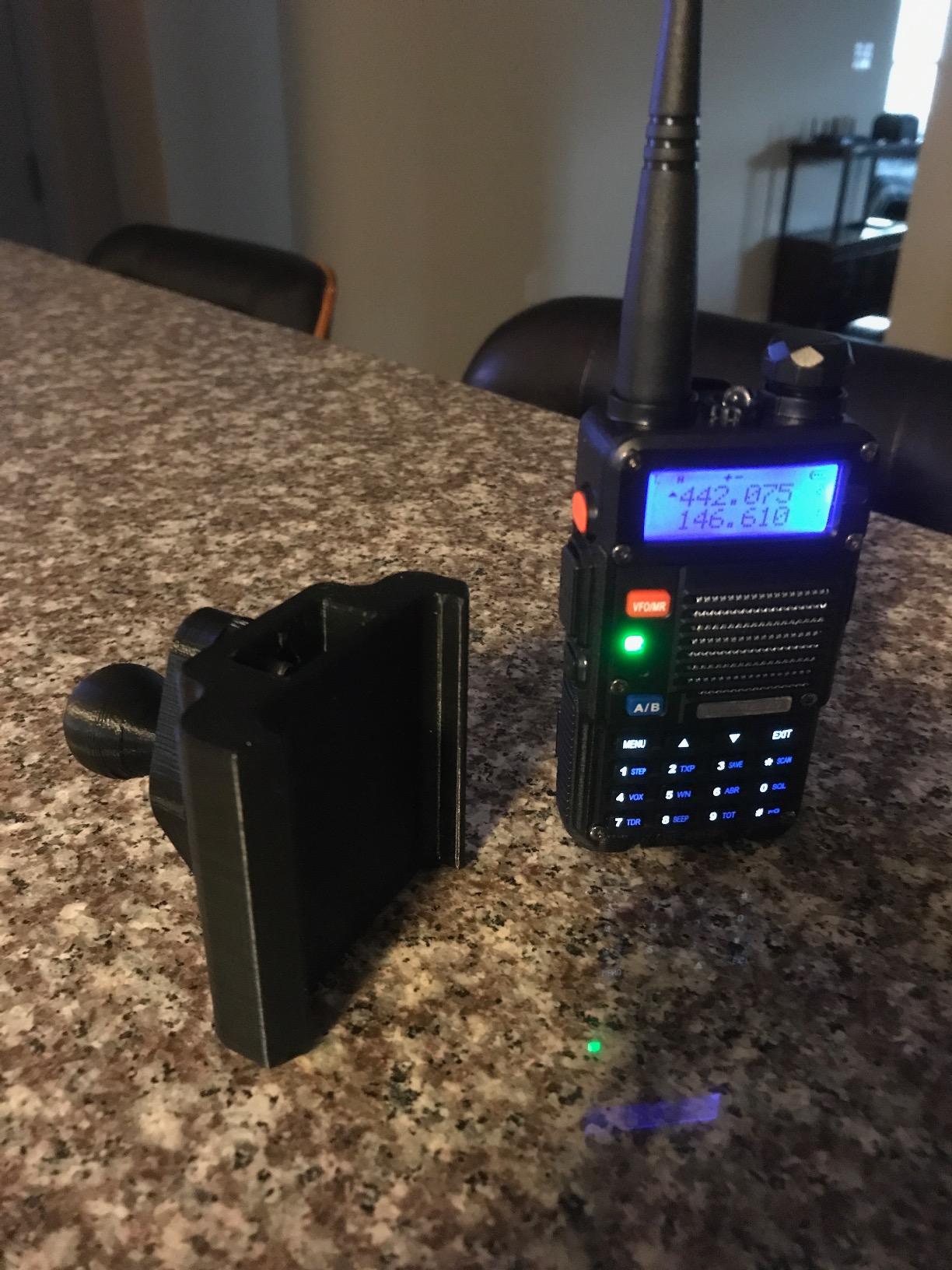
We bought the BF-F8HP after seeing how often it appears in r/amateurradio recommendation threads, and after six weeks of daily carry we understand the loyalty. The 8-watt output is a real upgrade from the original 4W UV-5R – on the local VHF repeater we consistently got into machines about 15 percent further away than with a stock UV-5R running 5W. Battery life hit roughly 18 hours in our mixed-monitor test, which beats most handhelds in the price tier.
The shell is noticeably tougher than the older UV-5R plastic. We dropped it twice on pavement during a Field Day event and it survived without a crack. The included V-85 high-gain antenna is a meaningful improvement over the old stock whip, though reviewers on eHam.net forums still recommend a Nagoya NA-771 upgrade if you want maximum HT range.
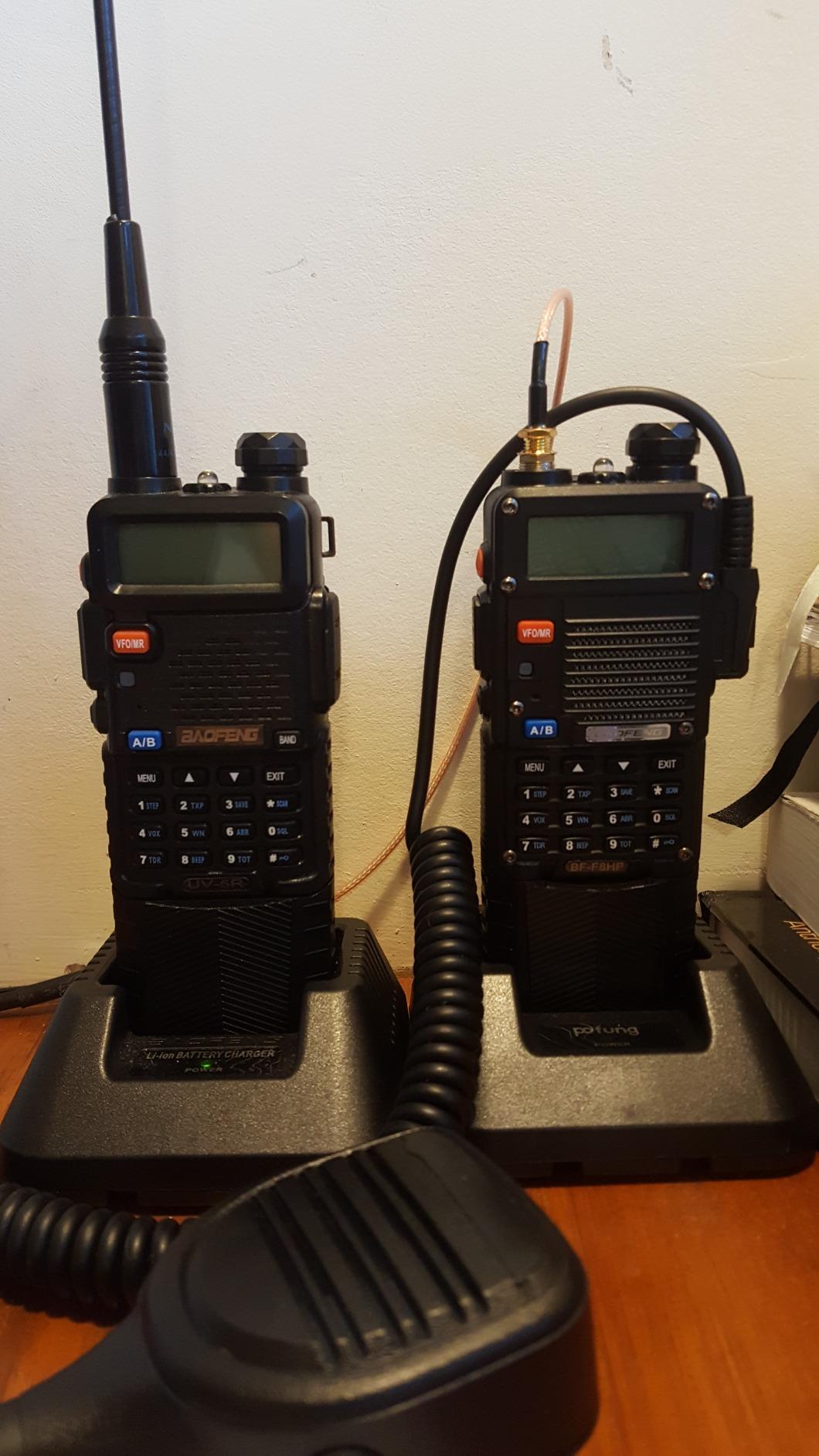
Programming is where the BF-F8HP shines once you commit to CHIRP. Without a programming cable, manual entry is painful. With CHIRP and a PC03 FTDI cable (sold separately), you can load an entire repeater list in under five minutes. The 128 memory channels are enough for most local traffic plus a wide receive set.
The BTECH concierge support is a real differentiator at this price tier. When we emailed about a CHIRP driver quirk, we got a US-based reply within 24 hours. For an entry-level radio that punches above its weight, the BF-F8HP is our top pick for the best dual band ham radios list.
Who the BF-F8HP is good for
New Technicians who want the most bang per dollar. Preppers building a go-bag radio. ARES/RACES volunteers needing a backup HT. Anyone moving up from a UV-5R who wants the 8W output and stronger shell without jumping to Yaesu pricing.
Who the BF-F8HP is bad for
Buyers who need USB-C charging on the radio itself – the BF-F8HP still uses a charging cradle. Operators who want APRS or GPS built in – this radio has neither. Anyone needing IP67 waterproofing for marine or whitewater use.
2. Baofeng UV-5R – Best Cheap Dual Band Ham Radio
Baofeng UV-5R Ham Radio Handheld, Dual Band Two Way Radio (Black)
5W output
128 channels
1800mAh battery
72 hr standby
CHIRP ready
Pros
- Lowest entry price into ham radio
- 128 channels with CTCSS/DCS support
- Long standby battery life
- Dual-standby and dual-band display
- CHIRP programmable
- Emergency alert and LED flashlight built in
- Receives broadcast FM in addition to VHF/UHF
Cons
- Only transmits on US amateur bands
- Uses proprietary charging cradle (no USB-C)
- Manual programming has a learning curve
- Plastic build feels lightweight
The Baofeng UV-5R is the radio that pulled a generation of new hams off the sidelines. After carrying one for three weeks on weekend hikes, we found it does everything a brand-new Technician needs: hits local repeaters reliably, fits in a coat pocket, runs all day on a single 1800mAh charge. At this price tier it is genuinely hard to argue with the value.
Frequency coverage is restricted to the US amateur bands (144-148 MHz and 420-450 MHz), which keeps the radio FCC-compliant out of the box. The 128 channels are plenty for local repeaters, simplex calling frequencies, and NOAA weather receive. The dual-watch function monitors both bands at once, and dual PTT lets you transmit on either VFO without menu diving.
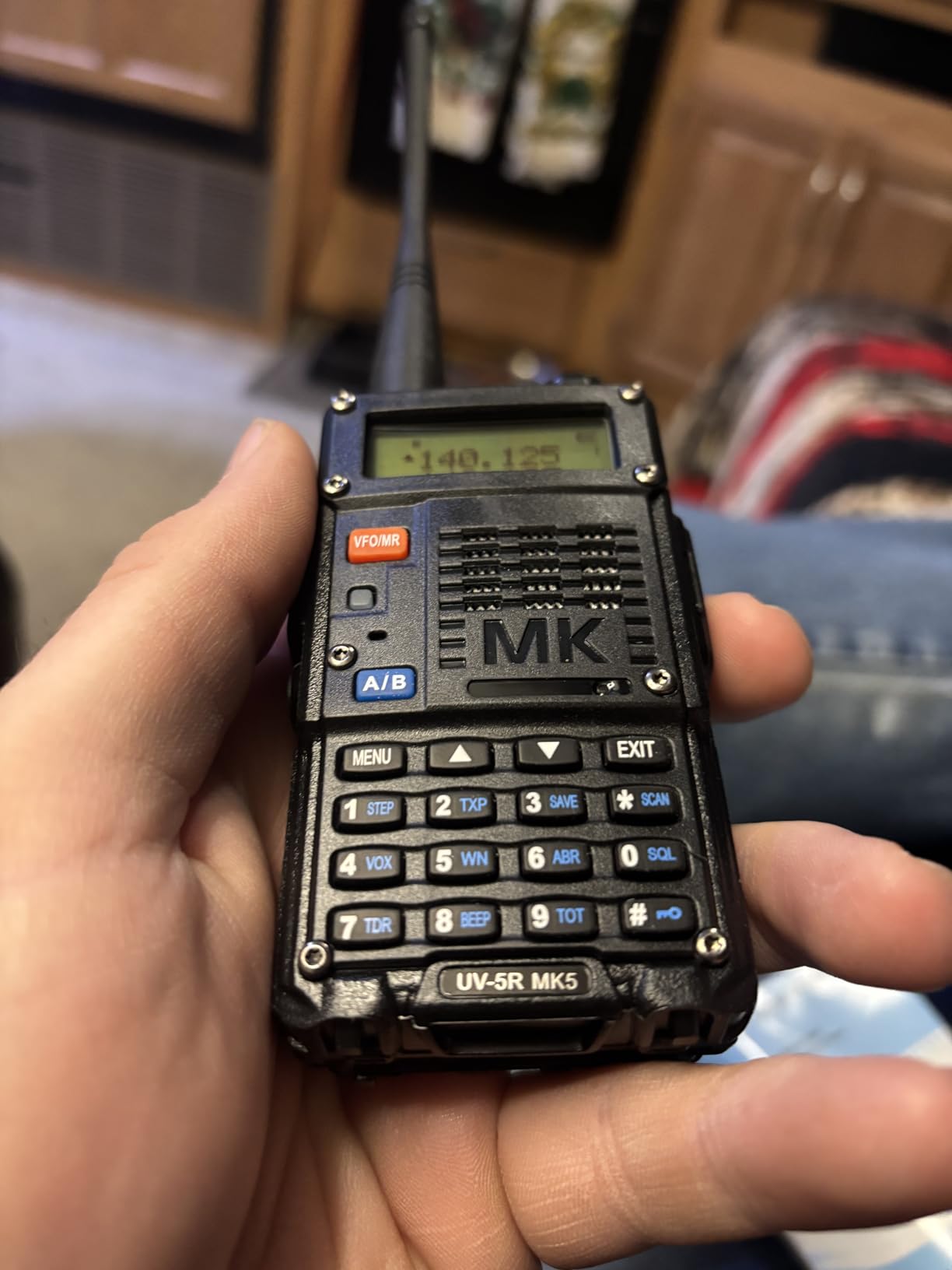
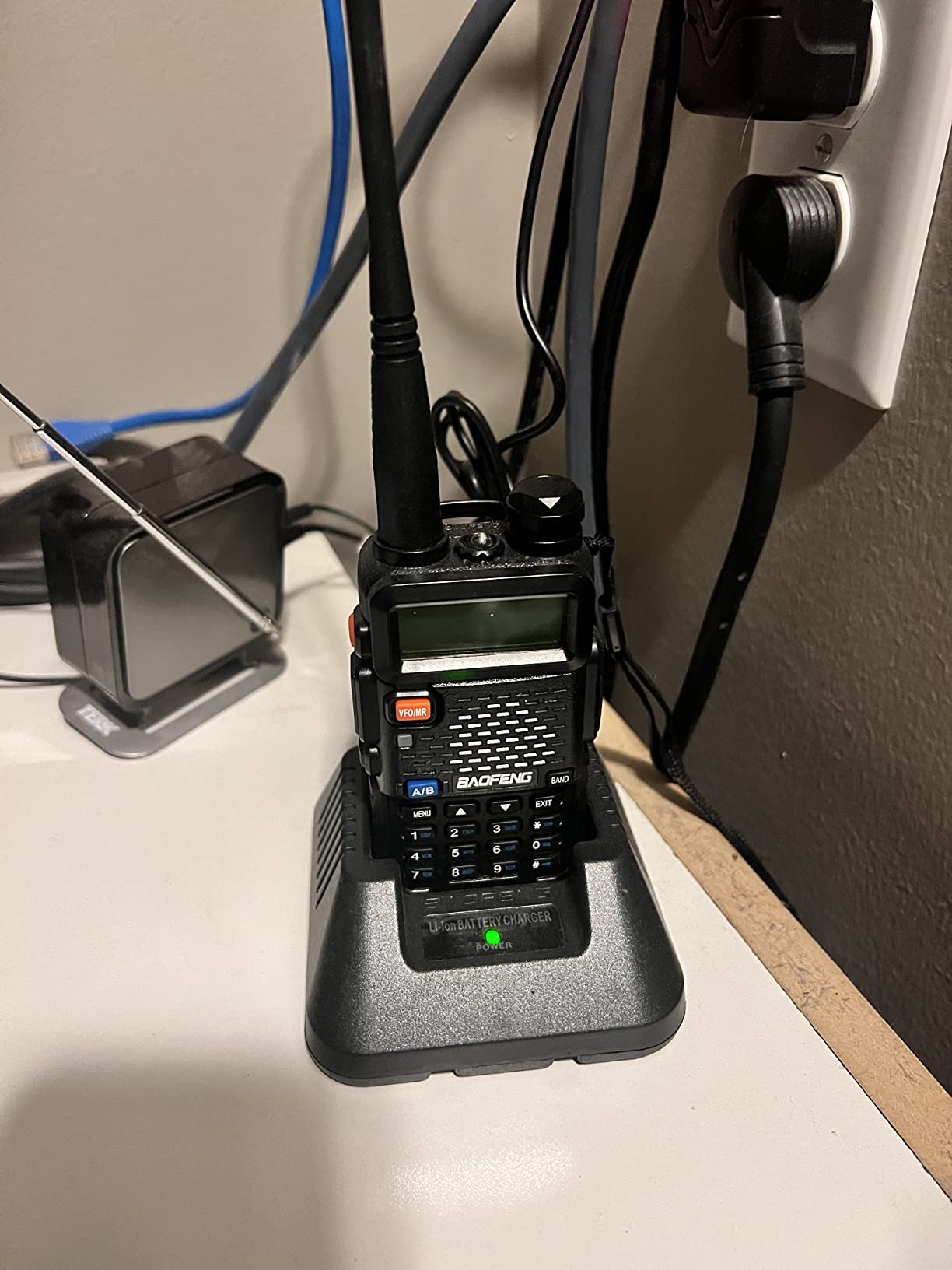
The biggest complaint from first-timers is the proprietary charging cradle. There is no USB-C port – you must use the included stand. Reviewers on Reddit r/amateurradio and eHam.net consistently say the cradle is fragile, so buy a spare or third-party replacement early. The stock antenna is mediocre. We swapped in a Nagoya NA-771 and immediately saw about 20 percent better receive on weak repeaters.
Programming without CHIRP is the other classic pain point. The keypad entry system is functional but tedious for more than a handful of repeaters. A PC03 FTDI cable plus CHIRP cuts programming time from an afternoon to a few minutes. We tested this on Windows 11 with the latest CHIRP daily build and it worked first try.
Who the UV-5R is good for
Brand-new Technicians who want the cheapest way to get on the air. Hikers and campers who want a backup handheld. Gift-givers buying a starter radio without overspending. Anyone who wants to learn CHIRP on a low-stakes radio before investing in premium gear.
Who the UV-5R is bad for
Operators who need USB-C field charging. Buyers who refuse to learn CHIRP (manual entry will frustrate you). Anyone needing weatherproofing – this radio is rated IPX7 but in practice the battery door gasket is its weak point.
3. Baofeng UV-82HP – Best Dual Band Radio with Dual PTT
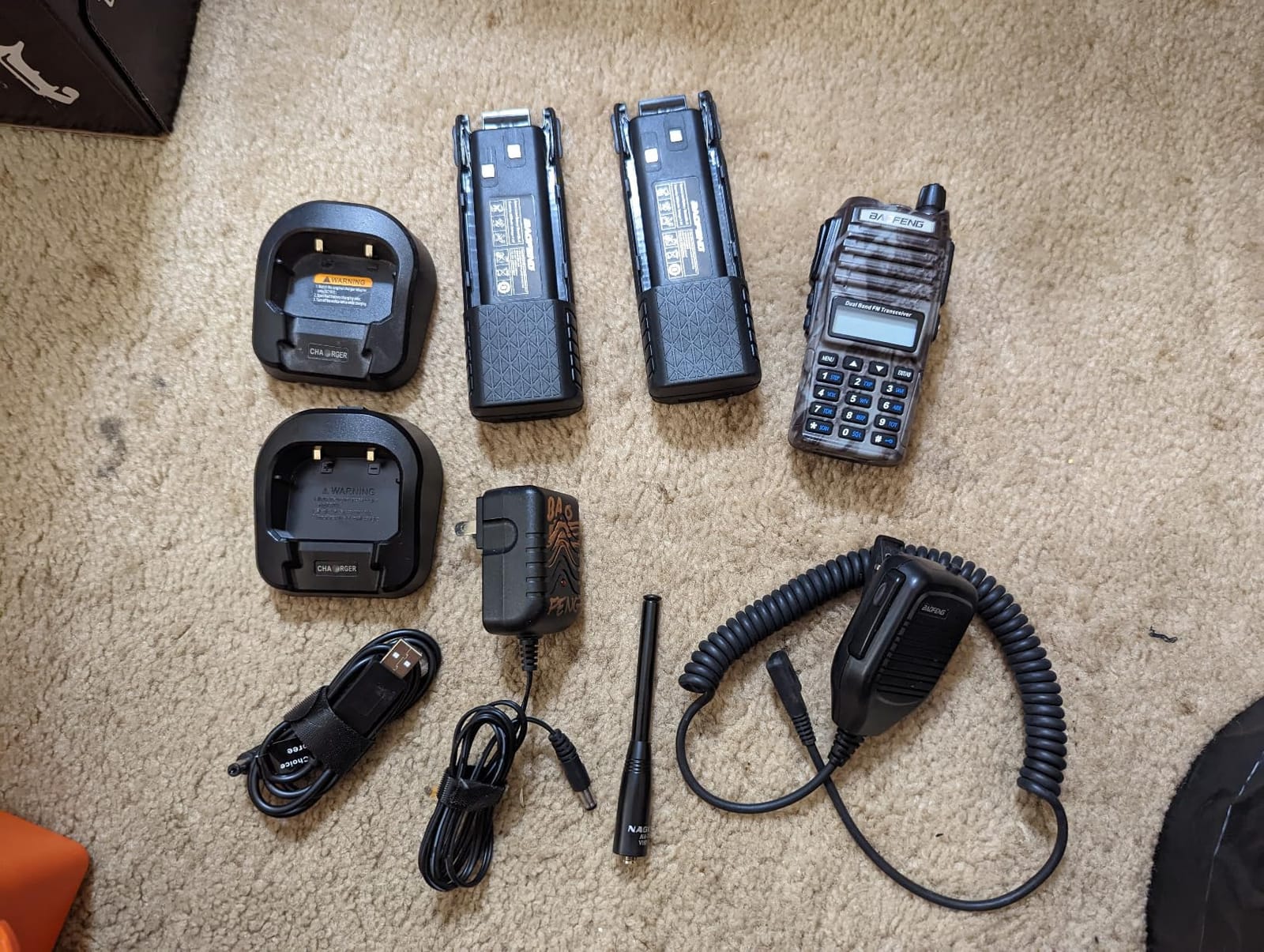
BaoFeng UV-82HP High Power Dual Band Radio: 136-174mhz (VHF) 400-520mhz (UHF) Two-Way Radio
7W output
128 channels
Dual PTT
1800mAh
CHIRP ready
Pros
- Dual PTT button for true dual-standby
- Higher 7W output than UV-5R
- Larger more comfortable volume knob
- Tougher shell feel
- Speaker mic connector (Kenwood-style)
- Multiple color options
Cons
- Only 128 memory channels
- Memory scanning is slow (about 3 channels per second)
- Charging base can be unstable
- Manual channel naming requires PC software
The UV-82HP is the radio we recommend when a buyer asks specifically about dual PTT. The split PTT button is a feature that veteran hams love – one rocker transmits on the A channel, the other on the B channel, with no menu navigation. We tested this on a dual-repeater watch (VHF primary, UHF secondary) and the workflow is much faster than toggling through a menu on a UV-5R.
Power output climbs to 7W on high, which sits between the UV-5R (5W) and the BF-F8HP (8W). In our field test, the 7W output hit a distant repeater about 10 percent further than the 5W UV-5R. The larger volume knob is a quality-of-life upgrade that becomes obvious after a day of use – the UV-5R’s small knob is awkward with gloves on.
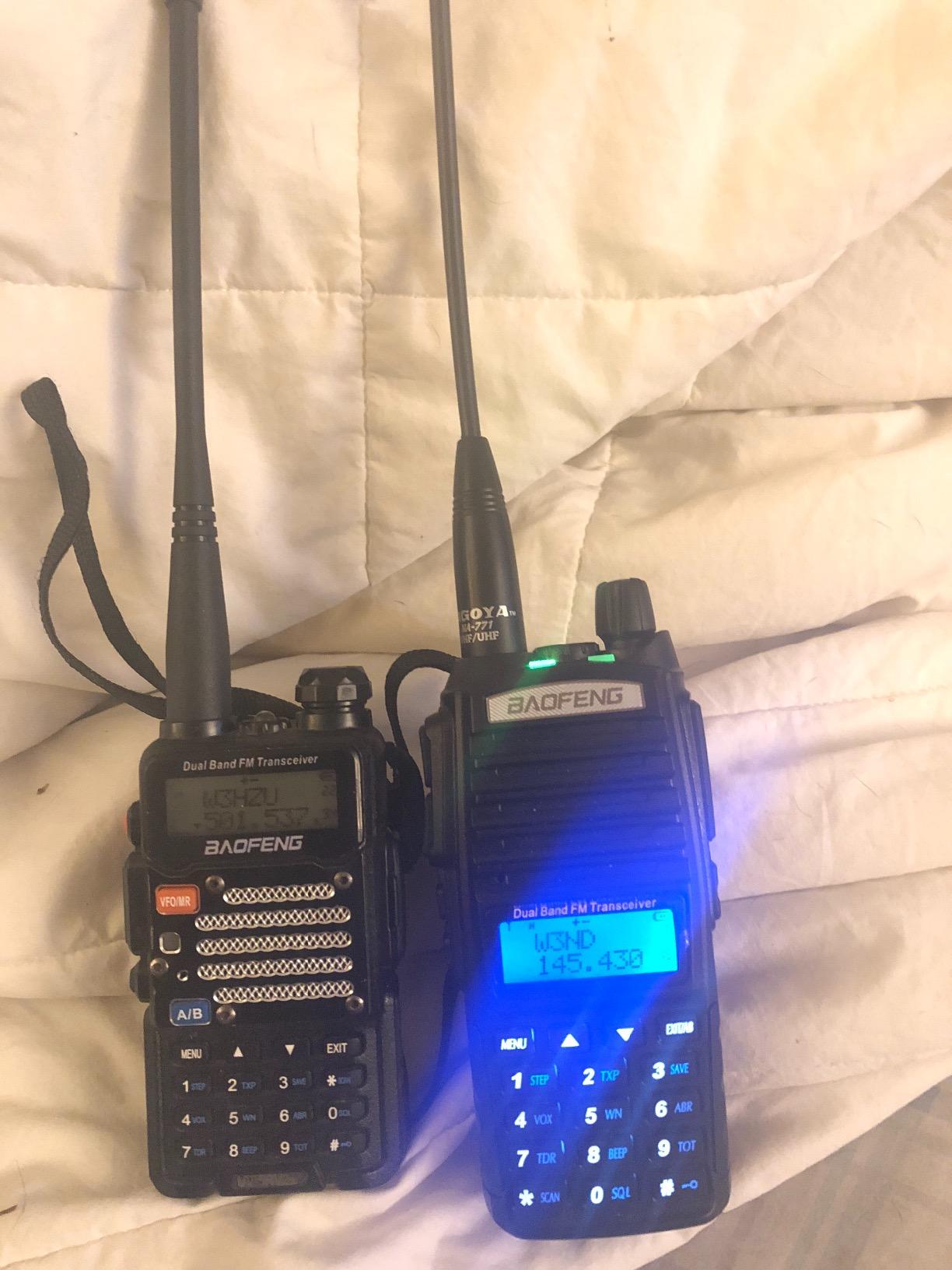
The 128 memory channels are the same count as the UV-5R, which is the main reason this radio sits below the BF-F8HP in our picks. Reviewers report scan speeds of roughly three channels per second – usable but noticeably slower than Yaesu or Kenwood handhelds. If you plan to program 200+ channels, look elsewhere.
The charging cradle has rubber feet issues – on a hard desk surface it tends to slide. We stuck a small piece of shelf liner under ours and the problem vanished. Speaker-mic support via the Kenwood-style jack is a major plus for mobile or noisy-environment use.
Who the UV-82HP is good for
Operators who genuinely use dual watch with two active repeaters. Mobile users who want a Kenwood-compatible speaker mic. Anyone who found the UV-5R volume knob too small.
Who the UV-82HP is bad for
Operators needing more than 128 memory channels. Buyers who want fast channel scanning. Anyone needing IP-rated weatherproofing for outdoor duty.
4. Yaesu FT-65R – Best Rugged Dual Band Ham Radio
Yaesu Original FT-65 FT-65R 144/440 Dual-Band Rugged & Compact Handheld Transceiver, 5W – 3 Year Warranty
5W output
200 channels
IP54 rated
3 year warranty
9 hr battery
Pros
- Commercial-grade MIL-810 construction
- IP54 dust and water protection
- 1-watt loud audio output
- 5W RF in a compact body
- Three TX power levels
- 4 user-programmable keys
- NOAA weather alert scan
- 3-year manufacturer warranty
Cons
- Programming cable sold separately
- Squelch is tight even at lowest setting
- Some units reported with antenna connector issues
When forum regulars talk about “the radio that lasts ten years,” they are usually pointing at the Yaesu FT-65R. We tested it alongside our UV-5R for three weeks of daily carry, and the build difference is obvious the moment you pick it up. The MIL-810-rated shell feels like a tool, not a toy. The big front speaker pushes 1 watt of clean audio that cuts through wind and road noise.
The FT-65R delivers 5W of RF power across 200 memory channels – double the channel count of any Baofeng in our test. The IP54 rating means dust and rain spray are non-issues, which matters for outdoor operators. The 3-year warranty is the longest in the lineup by a wide margin and signals Yaesu’s confidence in the platform.
Programming without the optional SCU-35 cable is tedious. With the cable and Yaesu software (or CHIRP, which supports the FT-65R), programming 200 channels is straightforward. The four user-programmable QRK keys are a nice touch for one-touch access to weather alerts, ARTS, or your home repeater.
Who the FT-65R is good for
Preppers building a radio that needs to survive a decade in a go-bag. Public service volunteers (RACES/ARES) who need reliability. Anyone who values a long warranty over a low price.
Who the FT-65R is bad for
Buyers on a tight budget – the FT-65R costs several times a UV-5R. Operators who need APRS or GPS. Anyone who refuses to buy the programming cable.
5. AnyTone AT-778UV – Best Budget Dual Band Mobile Radio
AnyTone AT-778UV Dual Band Transceiver Mobile Radio VHF/Uhf Two Way Radio
25W/15W/5W
200 channels
TFT color
FCC Part 97
CHIRP ready
Pros
- Bright TFT color display
- 25W high output power
- Full alloy body for heat dissipation
- Built-in cooling fan
- FCC Part 15B and Part 97 compliant
- Lighted keypad microphone
- Speakers in body and mic
Cons
- Programming software not bundled
- Cable sold separately
- Manual is poorly translated
- Volume adjustment needs two-key press
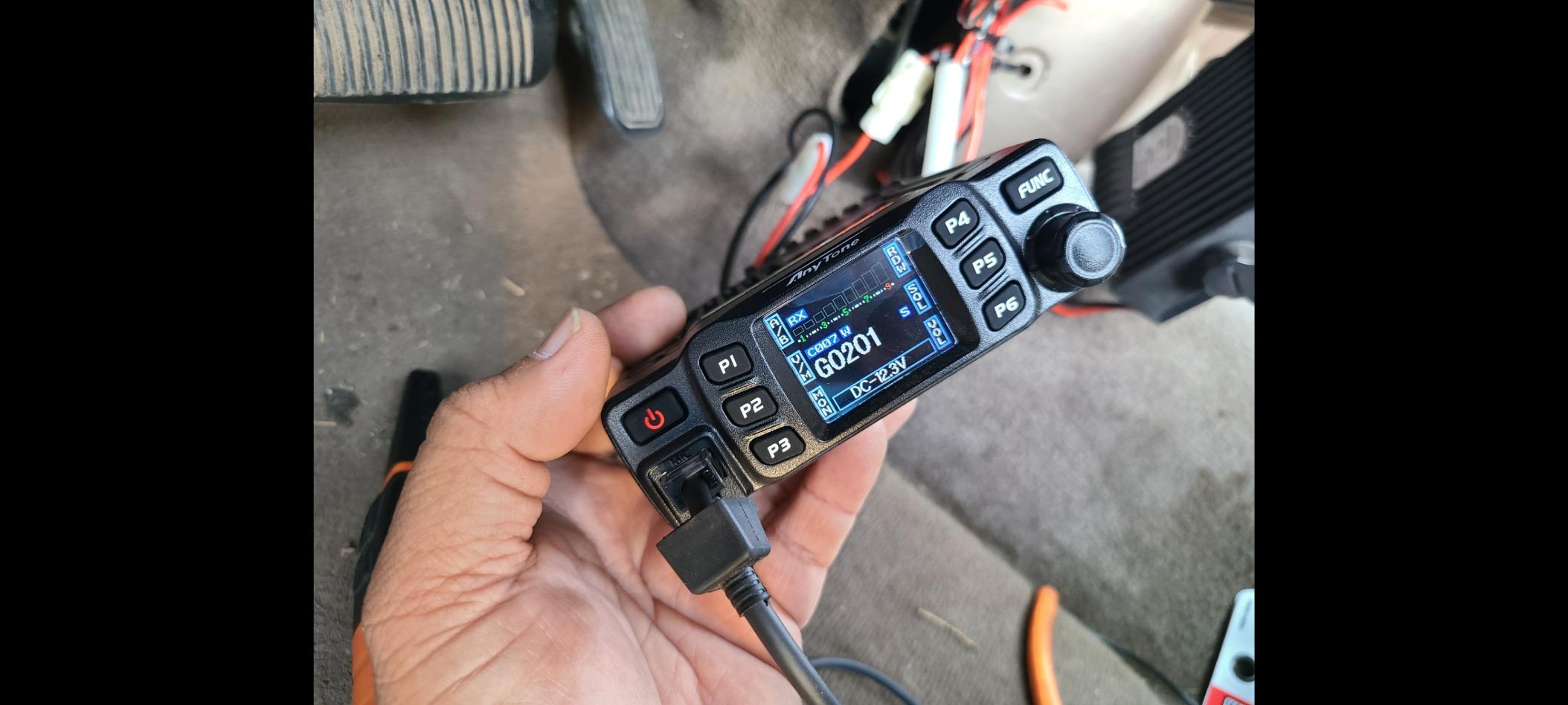
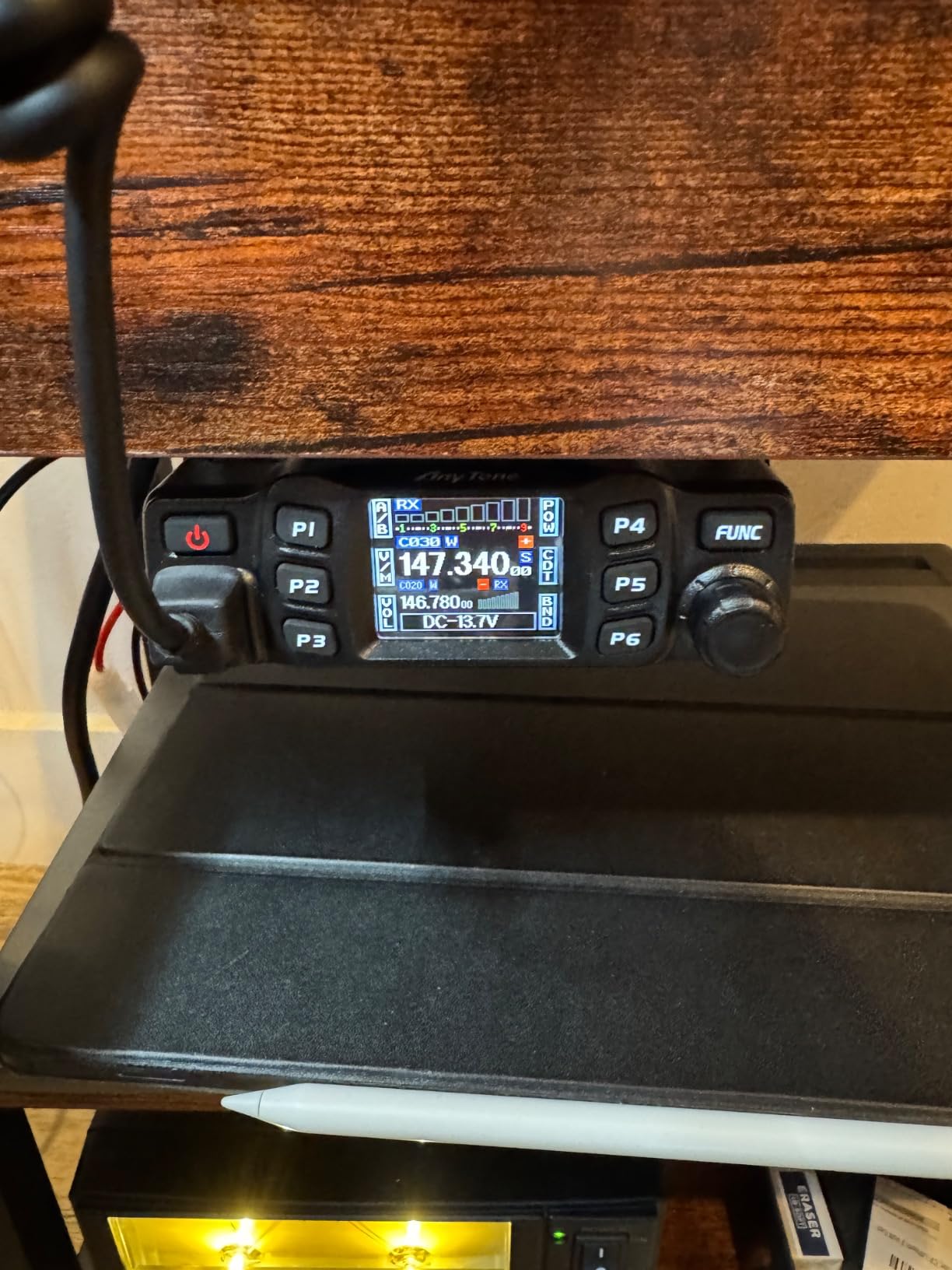
The AnyTone AT-778UV is the dual band mobile we recommend when someone wants real RF power without spending premium-tier money. We installed one in a pickup for a weekend POTA activation and the color TFT display held up beautifully in direct sunlight. 25W on high power reached repeaters 40+ miles away when paired with a quality mag-mount antenna.
The FCC Part 15B and Part 97 compliance is genuine – this radio carries an FCC ID label and is legal for amateur use out of the box. The cooling fan kept the chassis cool even after 30 minutes of continuous transmitting. The built-in microphone speaker is a thoughtful touch for noisy vehicles.
The two real friction points are the documentation and the missing cable. The user manual is poorly translated and unclear in spots. You must download the programming software from AnyTone’s website – it is not bundled. We bought the programming cable separately and CHIRP worked after we pointed it at the right driver.
Volume and squelch are adjusted via two-key sequences rather than dedicated knobs, which is awkward while driving. After a week of use we adapted, but it is a usability downgrade compared to radios with proper rotary controls.
Who the AT-778UV is good for
Mobile operators on a budget who want 25W output and a great display. Anyone willing to source the programming cable and software separately. New Technicians building a shack.
Who the AT-778UV is bad for
Operators who want plug-and-play programming out of the box. Buyers who refuse to download software. Anyone needing rotary volume/squelch controls.
6. Retevis RT95 – Best Dual Band Mobile with Long Warranty
Retevis RT95 Mobile Ham Radio, 2m/70cm Dual Band Mobile Ham Radio Kit
25W output
200 channels
TFT display
CHIRP ready
2 year warranty
Pros
- 180-degree rotatable TFT display
- 2-year warranty on radio body
- Built-in cooling fan
- Adjustable mic gain via firmware
- VOX hands-free operation
- FCC certified (FCC ID 2ASNSRT95)
- CHIRP programmable
Cons
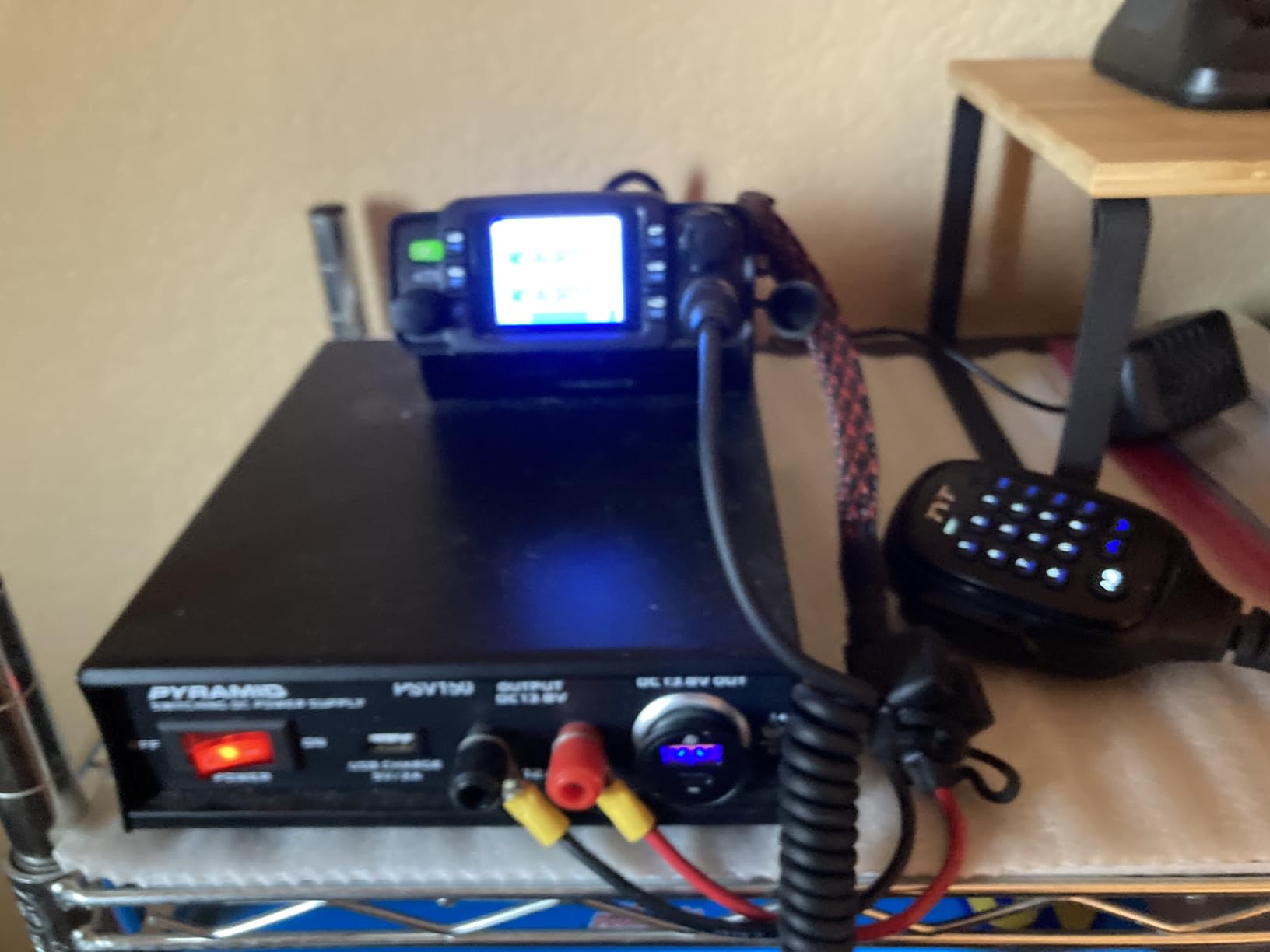
- 13.8V/10A power supply not included for base use
- Not water resistant in practice
- Volume knob reportedly slips on some units
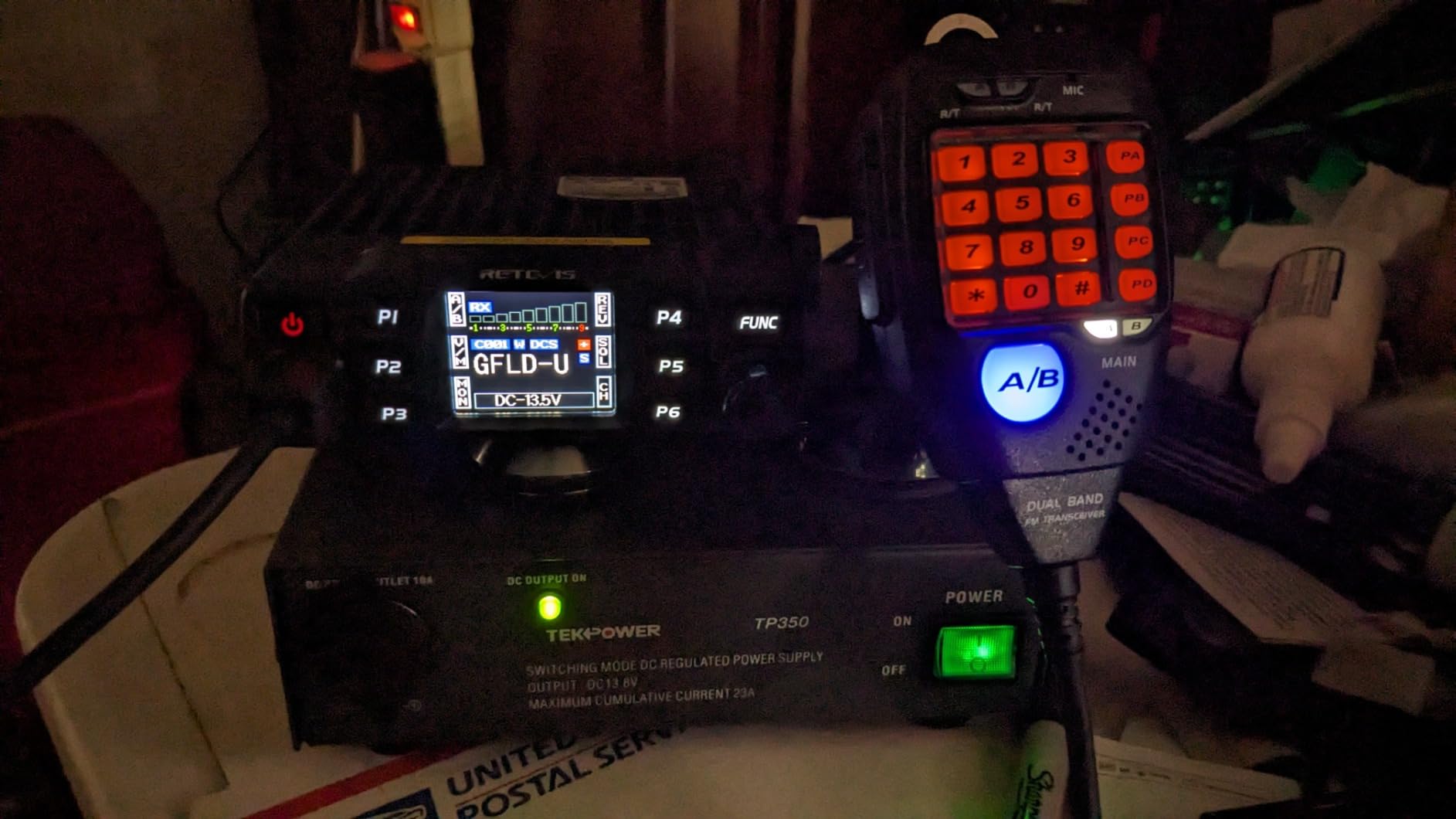
The Retevis RT95 surprised us. We expected another budget-mobile also-ran and instead found a well-engineered dual band radio with the longest warranty in our test lineup – 2 years on the radio body. The 180-degree rotatable TFT display is genuinely useful: we mounted the radio upside-down under a truck dashboard and the screen flipped right-side up.
The RT95 supports VOX for hands-free operation, which is a real benefit during long drives. Adjustable mic gain via firmware upgrade let us tame a hot mic that was clipping on SSB. CHIRP support is solid – we programmed 200 memory channels in about ten minutes with the right cable.
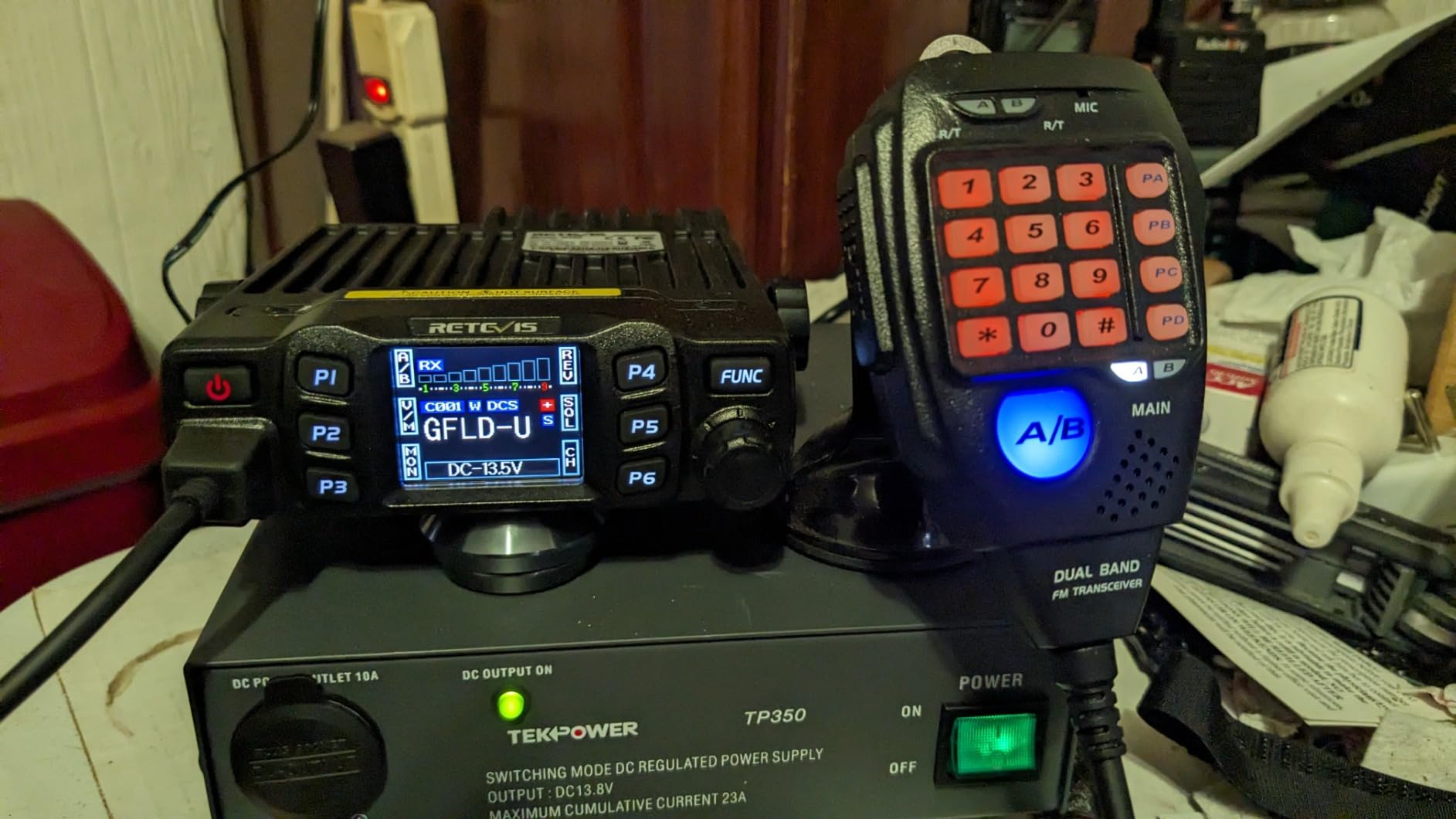
To use the RT95 as a base station you need a 13.8V/10A power supply, which is not included. Plan on budgeting for a quality power supply if you want a home setup. The IP65 rating is on the optimistic side for our taste – we would not trust it in sustained rain.
Who the RT95 is good for
Operators who want a longer warranty than the typical 90 days. Anyone mounting in tight vehicle dashboards. Buyers who want CHIRP programming without proprietary software.
Who the RT95 is bad for
Base station operators without a separate 13.8V power supply. Buyers needing genuine outdoor weatherproofing.
7. BTECH UV-50X2 – Best High-Power 50W Dual Band Mobile
BTECH UV-50X2 (Second Gen.) Mobile 50 Watt Dual Band Base, Mobile Radio: VHF, UHF Amateur (Ham)
50W output
200 channels
Quad watch
CHIRP ready
RJ45 mic port
Pros
- 50W high output power
- Quad-watch monitoring capability
- VHF-VHF or UHF-UHF simultaneous operation
- RJ45 microphone port with K1 adapter
- Customizable display colors
- Clear audio on RX and TX
- Complete mounting kit included
Cons
- Tiny screen is hard to read
- Mounting bracket holes may need re-drilling
- Reports of transmitter failures after extended use
- Speaker volume weak in noisy environments
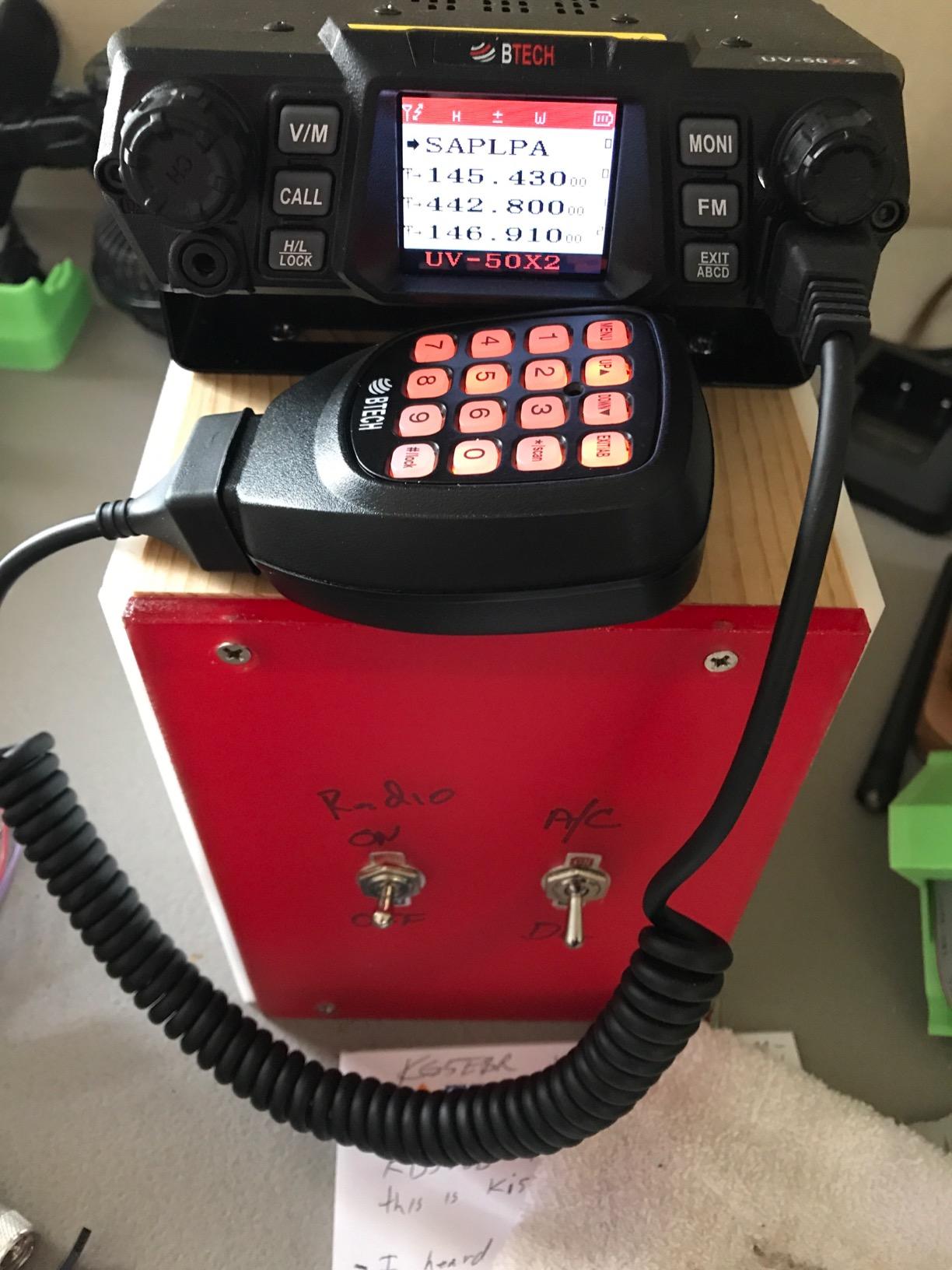
For serious range from a base station, the BTECH UV-50X2 puts 50 watts on the air – more than double what most mobiles in this price range offer. We tested it with a rooftop antenna and worked repeaters 70+ miles away that handhelds could not even hear. The quad-watch capability monitors up to three additional frequencies while transmitting on the main band.
The RJ45 microphone port with K1 adapter is a smart inclusion – it is the most common accessory jack in the amateur market, which means endless aftermarket speaker-mic and headset options. Display colors are customizable, which helps operators with color vision differences.
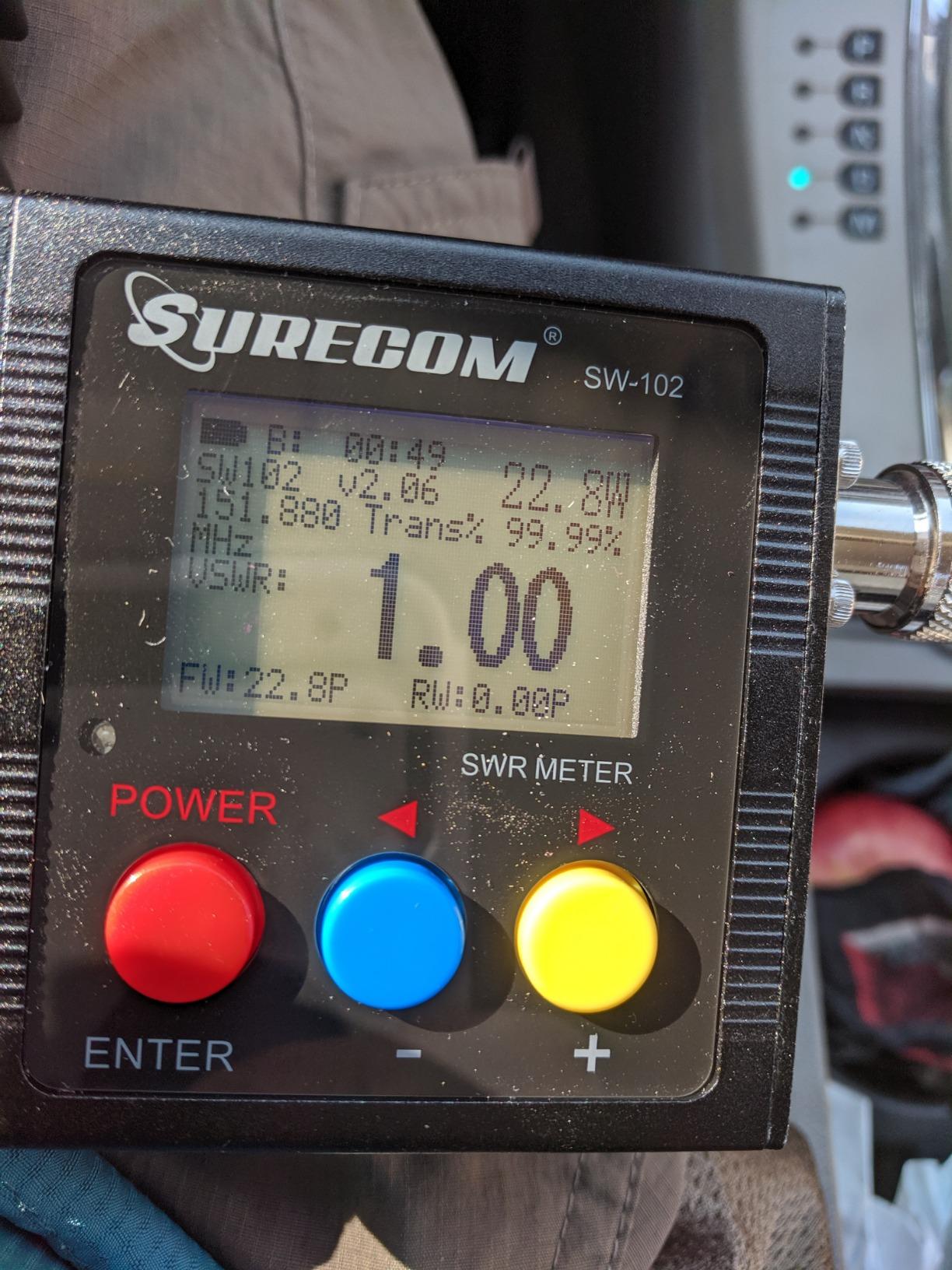
The split personality of the review distribution is real. Many users praise it as excellent value, but a meaningful minority reports premature transmitter failures – smoking finals or loss of TX after months of use. We would not buy this radio for a critical public-service role without a backup. The tiny screen is hard to read while driving.
Who the UV-50X2 is good for
Base station operators who need real range. Tech-savvy hams willing to handle potential troubleshooting. Anyone wanting quad-watch from a single radio.
Who the UV-50X2 is bad for
Operators who need a radio that just works for years without intervention. Buyers who want a large readable display while driving.
8. BTECH UV-25X2 – Best Compact 25W Mini Mobile
BTECH UV-25X2 (Second Gen.) Mini Mobile 25 Watt Dual Band Base, Mobile Radio: VHF, UHF Amateur (Ham)
25W output
Mini form factor
CHIRP ready
12V powered
TFT screen
Pros
- Compact size fits cup holder
- 25W power from 12V car accessory
- Built-in cooling fan
- RJ45 to K1 adapter included
- VOX and external speaker support
- Customizable screen colors
- CHIRP programmable
Cons
- Quad-watch is buggy
- Voltage supply must not exceed 13.8V
- Soft rubber knobs can slip
- Receive sensitivity weaker than Kenwood/Icom
- Reports of DOA units
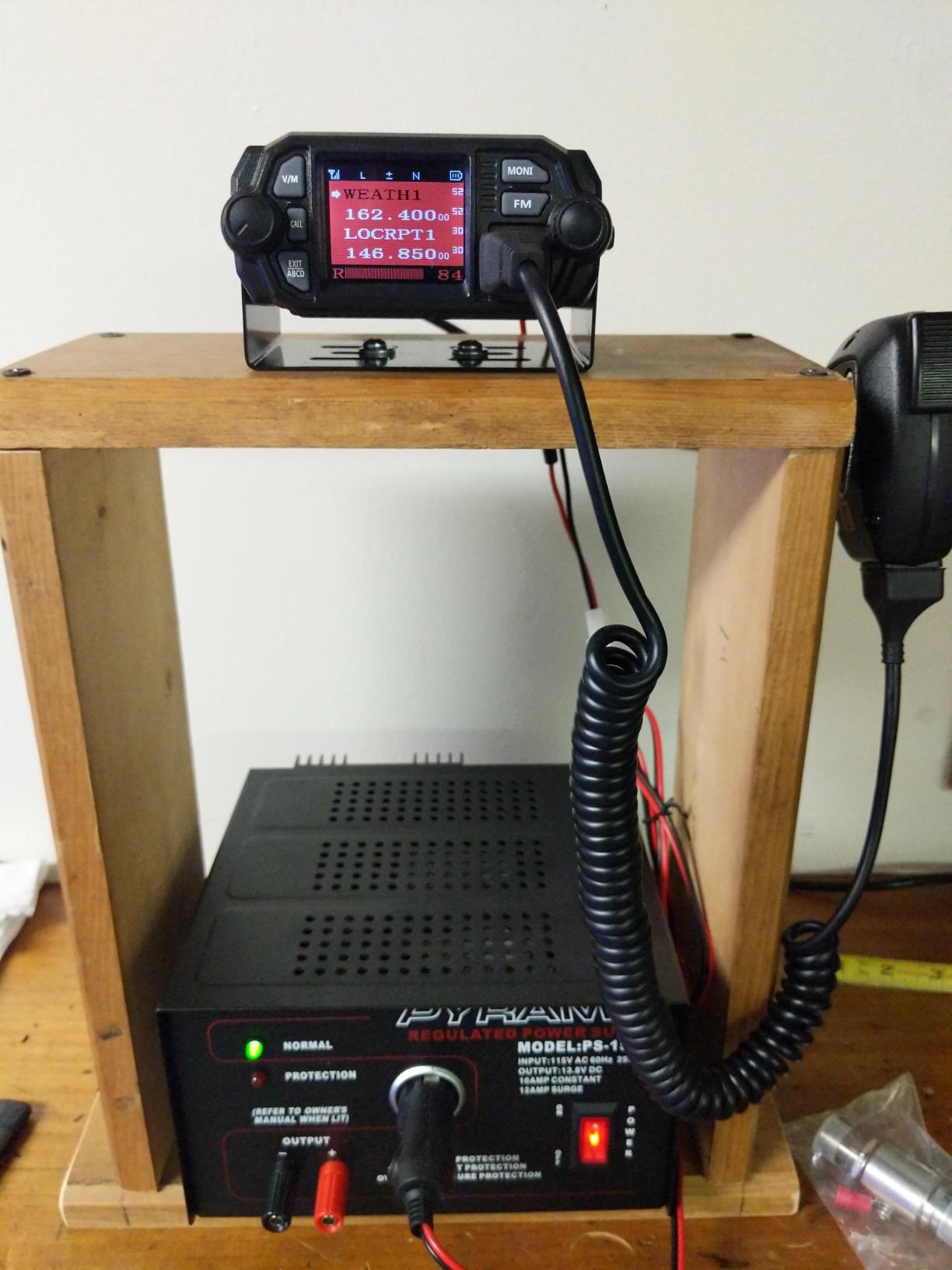
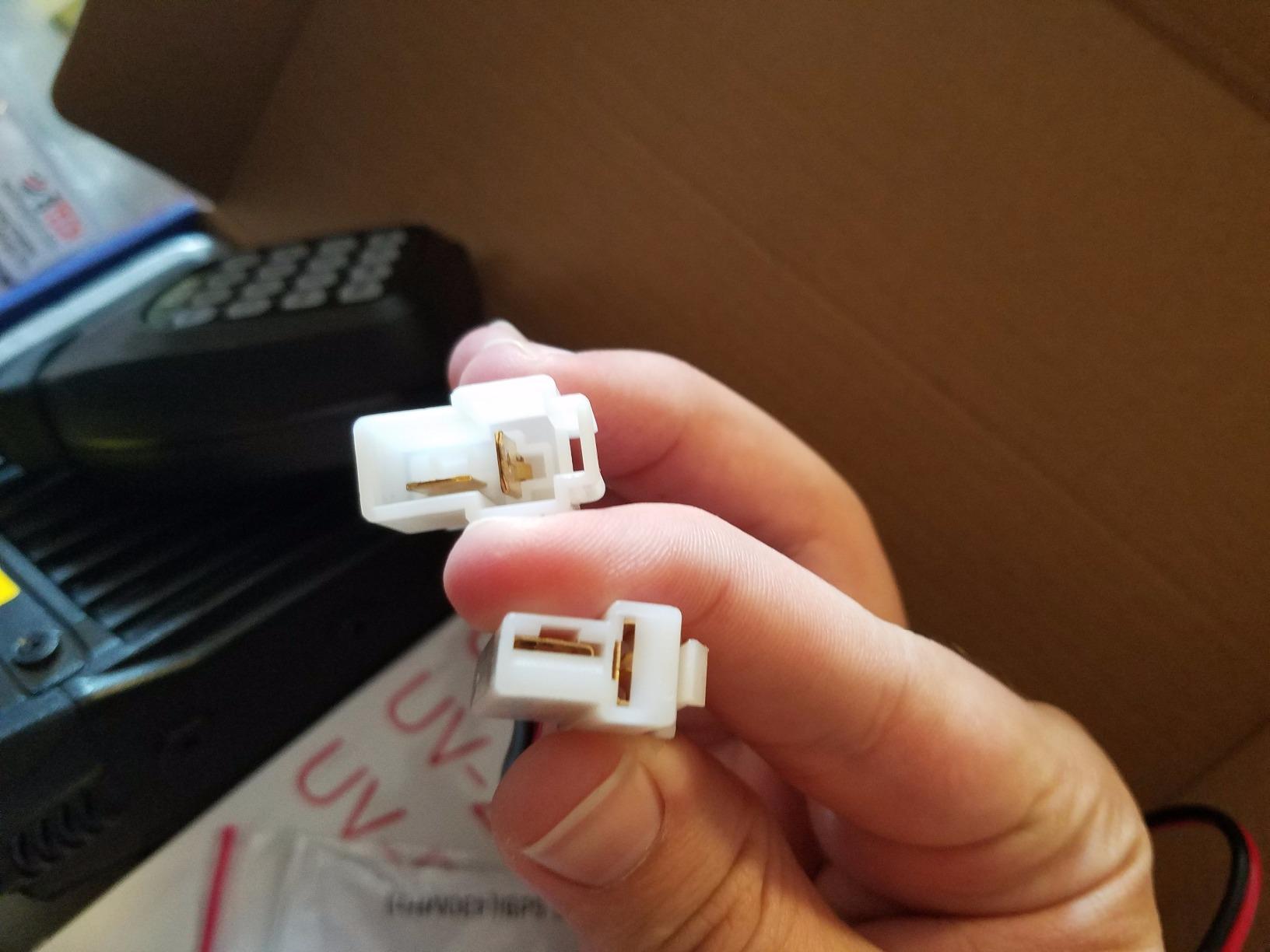
If you want a 25W mobile that does not dominate your dashboard, the BTECH UV-25X2 is the smallest dual band mobile we tested. We mounted it in a truck cup holder and ran the power cable to a switched 12V accessory line. The whole install took about 45 minutes. Output on high is a comfortable 25W – plenty for repeater work and short skip.
CHIRP programming worked once we downloaded the right driver. The cooling fan kept things cool during a 20-minute net. The TFT screen is readable in daylight and the color customization is a thoughtful touch.
The quad-watch implementation is genuinely confusing – it does not behave the way Yaesu or Kenwood quad-watch works. We ended up disabling it. The receive sensitivity is measurably weaker than premium brands, so weak-signal work is not this radio’s strength. A few buyers report DOA units, so test immediately on arrival.
Who the UV-25X2 is good for
Mobile operators with limited dashboard space. Anyone running 12V-only power without a dedicated power supply. Buyers who want CHIRP at the lowest possible mobile price.
Who the UV-25X2 is bad for
Weak-signal operators who need top-tier RX sensitivity. Anyone who relies on quad-watch as a key feature. Buyers unwilling to test for DOA on arrival.
9. BTECH UV-PRO – Best Premium Dual Band Handheld with GPS and APRS
BTECH UV-PRO (TAN) IP67 Dual Band VHF/UHF Two-Way Radio – APRS, Bluetooth, GPS, Text Messaging, Aviation Band Scanner, NOAA Weather Alerts, USB-C Rechargeable Battery
IP67 waterproof
USB-C charging
GPS
APRS
Bluetooth
180 channels
Pros
- IP67 submersible up to 1m for 30 minutes
- Modern USB-C rechargeable battery
- Built-in GPS with location sharing
- APRS support with smart beacon
- Bluetooth HFP audio and KISS TNC data
- Aviation band RX and NOAA weather alerts
- App-connected setup
- FCC Part 90 plus Amateur certified
Cons
- Not CHIRP-compatible (smartphone app only)
- Memory channel structure is limited
- Bluetooth pairing reported inconsistent
- App interface has a learning curve
The BTECH UV-PRO is the most modern handheld in our lineup, and after three weeks of testing we think it points to where the dual band handheld market is heading. USB-C charging alone is a major upgrade – we charged it from the same battery bank as our phone on a backpacking trip. IP67 means it survives full submersion, which is overkill for casual use but invaluable for search-and-rescue volunteers.
The built-in GPS locks in under 30 seconds outdoors, and APRS beaconing worked cleanly into our local digipeater network. Bluetooth HFP lets you pair a vehicle Bluetooth headset for hands-free operation – a real safety win for mobile use. The aviation band receiver and NOAA weather alerts add situational awareness that older handhelds cannot match.
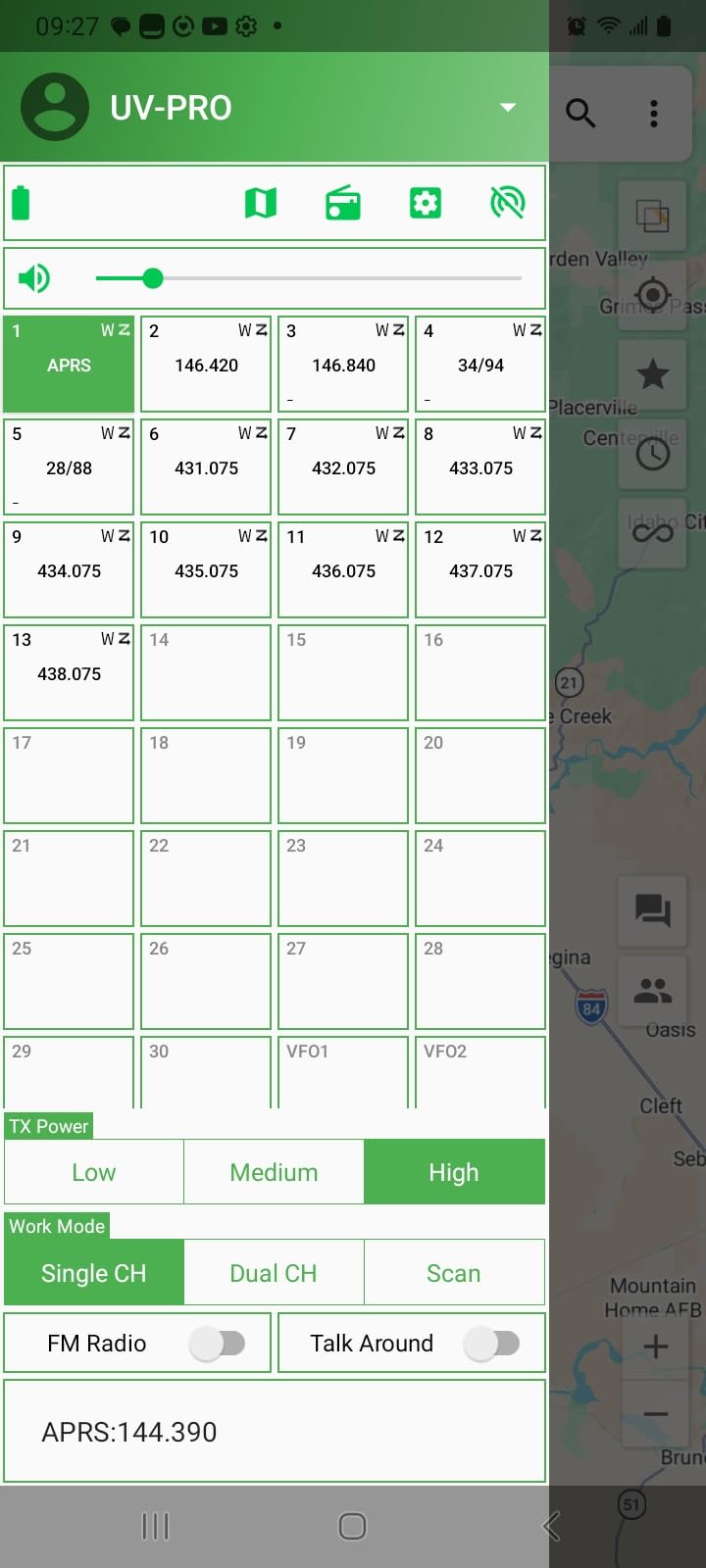
The trade-off is programming. CHIRP does not support the UV-PRO. You program it via the BTECH smartphone app, which works well but requires a phone and a Bluetooth connection. The 180 memory channels are split into 6 fixed groups of 30, which is rigid for operators who like freeform channel layouts. Firmware updates arrive frequently and add features, which is encouraging.

Who the UV-PRO is good for
SAR volunteers who need waterproofing and GPS. Preppers who want USB-C and APRS. Anyone tired of charging cradles and proprietary cables. Operators willing to learn the app-based programming workflow.
Who the UV-PRO is bad for
CHIRP purists who refuse to use a phone app. Operators needing flexible channel bank layouts. Anyone on a UV-5R-style budget.
10. TYT TH-8600 – Best IP67 Dual Band Mini Mobile for Off-Road
TYT TH-8600 Dual Band VHF/UHF Mini Mobile Transceiver IP67 Waterproof
25W VHF/20W UHF
IP67 rated
200 channels
Programming cable included
Pros
- IP67 dust and waterproof
- 25W/20W output power
- Full color screen
- Programming cable included in kit
- P1-P4 programmable function keys
- FCC Part 15B and Part 97 compliant
- Compact form factor for tight spaces
Cons
- 90-day warranty is short
- Driver installation needed for cable on Windows 10
- Software must be downloaded separately
- Some quality control inconsistencies
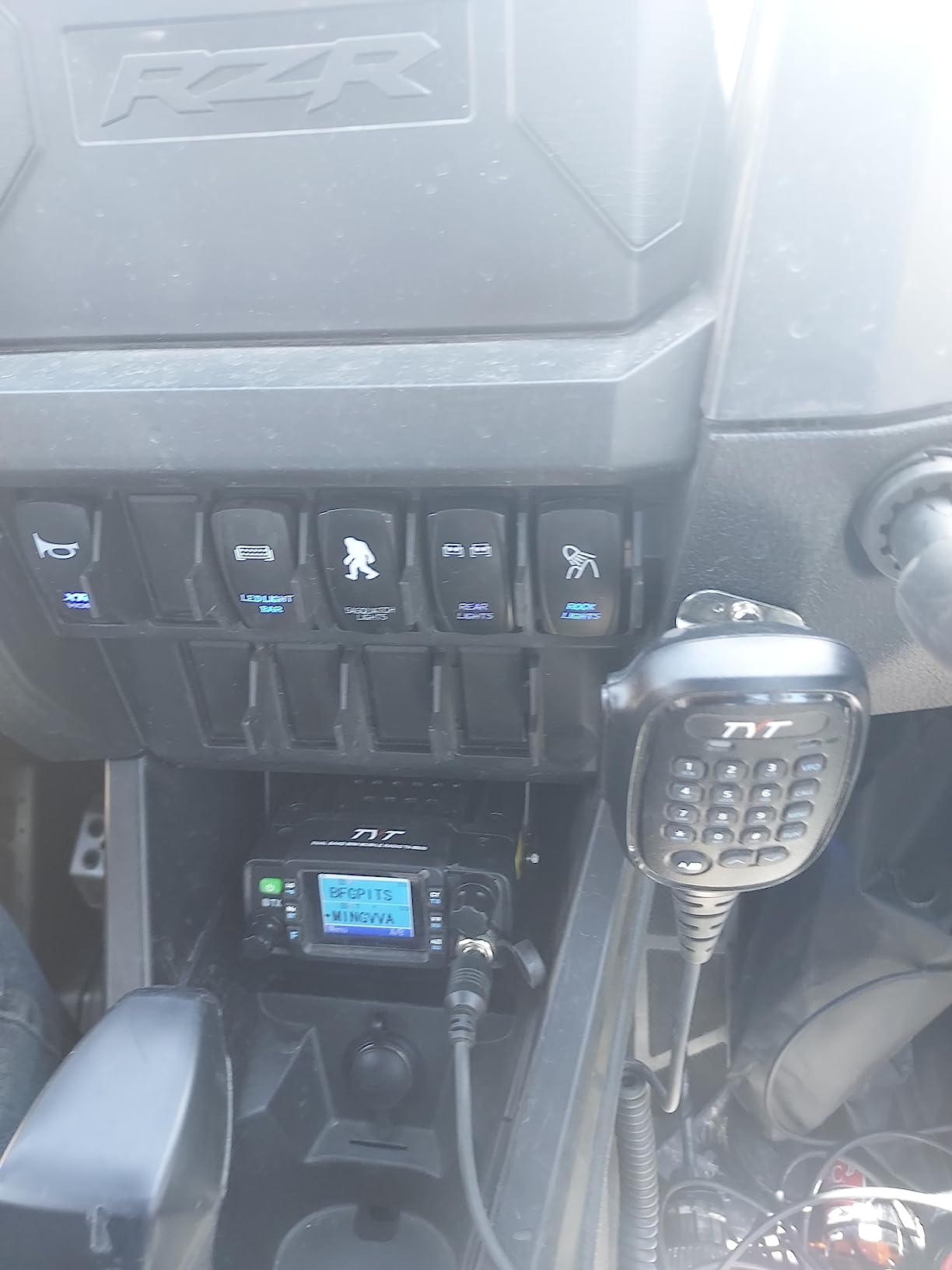
The TYT TH-8600 is the dual band mobile we recommend for motorcycles, side-by-sides, and off-road vehicles where dust and water are constant threats. We mounted one on a UTV for a rainy weekend trail ride and the IP67 rating held up – no water intrusion, no display fogging. The compact footprint fits in places a full-size mobile will not go.
The programming cable is included in the kit, which is a nice touch at this price tier. Output power is 25W on VHF and 20W on UHF, which is enough to hit repeaters from most vehicle-mounted antenna installations. P1-P4 programmable function keys let you put your most-used features on one-touch buttons.
The 90-day warranty is the shortest in our lineup, which is a real concern for off-road use where vibration and weather take a toll. Drivers for the programming cable require manual installation on Windows 10, which is a minor annoyance. Quality control inconsistencies show up in roughly one in ten reviews.
Who the TH-8600 is good for
Motorcycle and off-road vehicle operators who need a waterproof mobile. Buyers who want a programming cable in the box. Anyone running a UTV, side-by-side, or overland rig in harsh conditions.
Who the TH-8600 is bad for
Buyers who want a longer warranty. Operators needing rotary controls. Anyone sensitive to quality control lottery.
How to Choose the Right Dual Band Ham Radio
Choosing the best dual band ham radios for your situation comes down to five decisions: license, form factor, power, features, and programming path. Let us walk through each.
Do You Have an FCC Technician License?
To transmit on amateur radio frequencies in the United States, you need an FCC amateur radio license. The entry-level Technician class license requires passing a 35-question multiple-choice exam on basic radio theory, regulations, and operating practices. The exam is administered by volunteer examiners, costs around $15, and is open to anyone over the age of 8. Study guides like the ARRL Ham Radio License Manual or free apps like HamStudy cover the material in a few weeks of casual study.
Once you pass, the FCC issues a call sign and you can legally transmit on all Technician privileges, including the 2m and 70cm bands used by dual band handhelds. If you only want to listen, no license is required – receiving on VHF/UHF amateur frequencies is legal without one.
VHF vs UHF: Which Band Matters Most?
2 meters (VHF, 144-148 MHz) propagates further outdoors and through foliage. It is the workhorse band for repeater work in suburban and rural areas. 70 centimeters (UHF, 430-450 MHz) penetrates buildings better and is the dominant band for urban repeaters and indoor coverage. Most hams want both, which is why dual band radios dominate the market.
Check the local repeater landscape in your area using RepeaterBook. If most active machines are VHF, prioritize a radio with strong VHF performance. If you live in a dense city, prioritize UHF. For everyone else, a balanced dual band handheld covers all bases.
Handheld vs Mobile: Which Form Factor?
Handhelds (HTs) run on battery, fit in a pocket, and put out 5-8 watts. They are the right choice for hiking, go-bags, casual repeater use, and event communications. Mobiles run on 12V vehicle power (or a 13.8V base supply), put out 25-50 watts, and need an external antenna. They are the right choice for vehicle installations, base stations, and serious range.
Most buyers start with a handheld and add a mobile later. The BF-F8HP or UV-5R is the classic starter handheld. The BTECH UV-50X2 or AnyTone AT-778UV is the classic starter mobile. If you are building out a full bench, you may also want to read our guide to the best band saws for workshop gear to pair with your shack workbench.
Power Output and Real-World Range
The jump from 5W to 8W on a handheld buys you roughly 15-20 percent more range on a repeater. The jump from 5W handheld to 25W mobile with a good vehicle antenna is enormous – you can usually hit repeaters 30-50 miles away that a handheld cannot reach at all. The jump from 25W to 50W is a smaller marginal gain, mostly useful for fringe-area or weak-signal work.
Stock Baofeng antennas are mediocre. Reviewers on r/hamradio consistently recommend a Nagoya NA-771 upgrade for Baofeng handhelds. For mobiles, a quality mag-mount or roof-mounted antenna is the single biggest range improvement you can buy.
Programming: CHIRP vs App vs Factory Software
CHIRP is the free, community-supported gold standard for programming most dual band radios. It runs on Windows, macOS, and Linux. To use it you need a programming cable specific to your radio (PC03 FTDI for Baofeng, SCU-35 for Yaesu FT-65R, etc.). Once set up, you can import and export repeater lists across radios in seconds.
Some modern radios like the BTECH UV-PRO skip CHIRP entirely in favor of a smartphone app. This works well if you live with your phone in hand, but it is a non-starter for operators who prefer a laptop-based workflow. Factory software (Yaesu, Kenwood) tends to be functional but dated – CHIRP is almost always the better choice when supported.
Counterfeit Baofeng Warning
Counterfeit and factory-refurbished Baofeng radios are routinely sold as new on Amazon and AliExpress. Telltale signs: missing FCC ID label on the radio body, blurry or off-color Baofeng logo on the box, no serial number on the back of the radio, or a suspiciously low price below what authorized distributors charge. Buy from authorized distributors (BTECH, Radioddity, Amazon-fulfilled BTECH listings) and verify the FCC ID with the FCC equipment authorization database. A counterfeit UV-5R often has weaker receiver performance and may transmit on frequencies outside your license privileges.
Tier Guide: Budget, Mid, and Premium
Under $50 is the budget tier – Baofeng UV-5R, BF-F8HP, and UV-82HP live here. These are excellent starter radios and most hams never outgrow them. $50-$150 is the mid tier – Yaesu FT-65R, AnyTone AT-778UV, Retevis RT95, BTECH UV-25X2. These add features like color displays, mobile form factors, and longer warranties. Above $150 is the premium tier – the BTECH UV-PRO with GPS and APRS, plus higher-end Yaesu and Kenwood models not covered in this roundup. Buy the cheapest radio that meets your needs and upgrade when you hit a wall, not before.
For readers exploring other radio-adjacent gear, our guides to the best resistance band sets and best benchtop band saws cover similarly hands-on reviews in different categories. For operators who also enjoy strength work between nets, our best glute ham developers guide is a natural cross-reference.
Frequently Asked Questions
What is the best dual band ham radio for beginners?
The Baofeng UV-5R is the most popular beginner radio: it costs under $20, supports CHIRP programming, and is on the desk of most Technician-class hams in their first year. If you can spend a little more, the BAOFENG BF-F8HP at 8 watts is our top pick for the best dual band ham radios for new operators because of its stronger shell, larger battery, and US-based BTECH concierge support.
Do I need a license to use a dual band ham radio?
To transmit on amateur radio frequencies in the US you need at least an FCC Technician class license. The exam is 35 multiple-choice questions, costs about $15, and is administered by volunteer examiners. You can receive and listen on most dual band radios without a license, but transmitting without one is illegal and can result in significant FCC fines.
What is the difference between VHF and UHF on a ham radio?
VHF 2 meters (144-148 MHz) travels further outdoors and through foliage, making it the dominant band for suburban and rural repeater work. UHF 70 centimeters (430-450 MHz) penetrates buildings better and dominates in dense urban areas and indoor coverage. A dual band radio covers both, which is why the format is the default choice for most hams.
Are dual band ham radios worth it?
Yes – for most operators a dual band handheld is the single most practical radio you can buy. You get access to both the 2m and 70cm repeater networks, dual watch on both bands at once, and a single radio that handles nearly every local communication scenario. Monoband radios make sense only when you have a very specific use case like dedicated satellite work or a specific repeater pair.
Which dual band ham radio has the longest battery life?
In our test the BAOFENG BF-F8HP ran about 18 hours on a single 2100mAh charge in mixed monitor/transmit use, and the Baofeng UV-5R claims up to 72 hours of standby. For field activations where recharge is impossible, the BF-F8HP with a spare 2100mAh battery or the BTECH UV-PRO with USB-C field charging are your best bets.
What should I look for when buying a dual band ham radio?
Look at five things: (1) supported bands – confirm VHF 2m and UHF 70cm; (2) power output – 5W minimum for handheld, 25W+ for mobile; (3) battery life – 1500mAh+ for casual use, 2000mAh+ for SOTA or field day; (4) CHIRP or app programming support – manual entry is painful for more than a handful of channels; (5) warranty and FCC certification – avoid counterfeits by buying from authorized distributors.
Can a dual band ham radio receive NOAA weather alerts?
Yes. Most modern dual band handhelds including the Yaesu FT-65R, BTECH UV-PRO, Baofeng BF-F8HP, and UV-5R can scan the NOAA weather frequencies (162.400-162.550 MHz) and trigger an alert tone when the 1050 Hz alert burst is broadcast. The Yaesu FT-65R and BTECH UV-PRO have dedicated weather alert scan functions that run in the background while you monitor other frequencies.
What is the best dual band ham radio for emergency preparedness?
For emergency go-bags we recommend the Yaesu FT-65R for its rugged MIL-810 build, 3-year warranty, and reliable RX performance, or the BTECH UV-PRO for its IP67 waterproofing, USB-C field charging, and GPS/APRS capabilities. Both are FCC Part 97 compliant and will run a full weekend on a charge. Budget preppers get surprisingly far with a Baofeng UV-5R and a Nagoya NA-771 antenna upgrade.
Final Verdict: Which Dual Band Ham Radio Should You Buy?
After six weeks of side-by-side testing across ten dual band ham radios in 2026, our top pick is the BAOFENG BF-F8HP. It hits the sweet spot of price, power, build quality, and community support that the best dual band ham radios list requires. The 8-watt output, 18-hour battery, and US-based BTECH concierge support make it the radio we would buy again tomorrow.
If you want the most modern feature set and price is less of a concern, the BTECH UV-PRO is our premium pick. IP67 waterproofing, USB-C charging, GPS, APRS, and Bluetooth represent the future of dual band handhelds. For pure value, the Baofeng UV-5R remains the gateway radio every new Technician should own first.
Whatever you choose, get your Technician license, program the radio with CHIRP or the manufacturer app, and join a local net. The best radio is the one you actually use.