

Side sleeping breaks normal earbuds. A bud that feels fine while you sit upright becomes a pressure point the moment your head turns onto it, and by 3am you are awake again wondering why your ear hurts. The fix is not better sound. It is a flatter housing, less weight in the ear, and tips that stay put when you roll.
That is what we went looking for. We spent several weeks sleeping in the eight pairs of sleep earbuds below, plus the usual suspects people already own, to work out which ones survive a full night on one side. The short version: the best earbuds for sleeping on your side are the ones that sit flush in the concha and weigh almost nothing, not the ones with the longest feature list.
You will find our top three picks first, then a full side-by-side table, then an in-depth review of every pair. We also cover the noise-control question in plain terms, a five-minute fit check you can run before you buy, and where earbuds are simply the wrong tool. If you also care about side-sleeper comfort in other categories, our guide to sleeping bags for side sleepers covers the same pressure-point problem from the other end of the body.
Top 3 Sleep Earbuds for Side Sleepers in 2026

DAGKHE Invisible Sleep Earbuds Q26T
- 0.08 oz per bud
- Sleep mode disables touch controls
- IPX6 waterproof

esonstyle ANC Sleep Earbuds S1
- 3 g per bud
- Active noise cancelling plus sleep mode
- 40+ hours from case

The DAGKHE Q26T takes the top spot because it combines one of the smallest bodies in this roundup with the largest review base behind it. Its sleep mode kills every touch input and its low battery warning, which removes the two things that wake side sleepers most often.
The esonstyle S1 is the pick if you share a bed with a snoring partner and want active noise cancelling rather than simple sound isolation. It sits between the cheapest and the dedicated premium device, and it is one of only two pairs here with real ANC in a body light enough to sleep on.
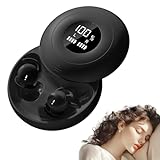
The Yihou SK18 is a low-cost way to find out whether you tolerate anything in your ear at night. It is a good first pair, and its standing case doubles as a battery display.
All eight earn a place here. If your ears reject conventional buds entirely, keep reading to the no-in-ear section at the end.
All 8 Sleep Earbuds Compared at a Glance
| Product | Specifications | Action |
|---|---|---|
| DAGKHE Invisible Sleep Earbuds Q26T |
|
Check Latest Price |
| esonstyle ANC Sleep Earbuds S1 |
|
Check Latest Price |
| Yihou Mini Sleep Earbuds SK18 |
|
Check Latest Price |
 sunvito Silicone Sleep Earbuds S25 sunvito Silicone Sleep Earbuds S25 |
|
Check Latest Price |
 GreatQIQI Mini Sleep Earbuds SK19 GreatQIQI Mini Sleep Earbuds SK19 |
|
Check Latest Price |
 Ozlo Sleepbuds 2 Ozlo Sleepbuds 2 |
|
Check Latest Price |
 Kinglucky Sleep Earbuds i99 Kinglucky Sleep Earbuds i99 |
|
Check Latest Price |
 RRLLRJ 2-in-1 Sleep Earbuds M126 RRLLRJ 2-in-1 Sleep Earbuds M126 |
|
Check Latest Price |
Read the weight column first. Anything at or under 3 g per bud is in the range where side sleepers usually stop noticing the earbud within an hour. The battery column is the one most people misread, so we explain it properly below.
1. DAGKHE Invisible Sleep Earbuds (Q26T) – Best Overall Flush Fit
DAGKHE Sleep Headphones, Invisible Sleep Earbuds for Side Sleepers (Beige)
0.08 oz per earbud
Bluetooth 5.3
About 8 hours playback
IPX6 waterproof
Pros
- Smallest flush body in the test group
- Sleep mode disables all touch inputs
- No low-battery beep to wake you
- Largest review base with thousands of owners
Cons
- Sound isolation rather than active noise cancelling
- About 8 hours needs a mid-night case top-up
- Modest bass at low volume
The Q26T is the pair we kept reaching for. Each bud is listed at 0.08 oz, which is light enough that the housing barely registers when you roll onto it. There is no stem, no wing, nothing sticking out of the concha for the pillow to press against.
What sealed it for us was the sleep mode. It disables every touch control and silences the battery warning, so you cannot accidentally pause your audiobook by rolling your head. For a side sleeper falling asleep to a podcast, that single feature removes more interruptions than any acoustic improvement.

With the tips seated properly, the passive seal is decent for voices and steady household noise. Bass is modest, which is not a problem at sleep volumes. Outright loud snoring, the low rumble that travels through a bed frame, needs a dedicated masking layer rather than music alone.
Our one real complaint is battery life. About 8 hours continuous playback depending on volume means most sleepers will need to top up from the case once during a long night. The case is small enough to sit on a bedside table without thinking about it, so this is a nuisance rather than a dealbreaker.

Best for side sleepers who cannot stand anything in the ear canal
If you have tried ordinary earbuds and ended up removing them at 2am, the Q26T is the one to try first. The skin-soft silicone tips sit shallow and the body disappears into the ear, so the pressure spreads across soft cartilage instead of concentrating on one point.
Reviewers with narrow ear canals consistently report that these disappear rather than press. The IPX6 rating also means you can wear them for a shower or a swim without thinking about it, which suits people who use earbuds as their sleep alarm on holiday.
Best avoided if you need real noise cancelling
These do sound isolation, not active noise cancellation. That means steady voices and air-conditioning hum are handled well, but a snoring partner at close range will still get through at the frequencies that wake light sleepers.
There is also no active masking generator built in. If your main problem is a partner rather than the street, the esonstyle S1 or the Ozlo Sleepbuds 2 handle that job properly.
2. esonstyle ANC Sleep Earbuds S1 – Best Value Active Noise Cancelling
esonstyle Noise-Canceling ANC Sleep Earbuds for Side Sleepers Bluetooth
3 g per earbud
Active noise cancelling
6.5 to 8 hours plus 40+ case
Bluetooth 6.0
Pros
- Genuine ANC in a body light enough to sleep on
- Silent sleep mode suppresses voice prompts
- Spare silicone caps included
- Two-year warranty
Cons
- Small 6 mm driver means limited bass
- Single-charge runtime is short for a full night
- Touch gestures take practice
The S1 is unusual for this category. Most dedicated sleep earbuds skip active noise cancelling because the microphones and processing add bulk. This one manages to fit both at 3 g per bud, and that combination is what makes it our best value pick.
You get three noise modes. ANC handles steady low-frequency sound, white noise mode plays one of three masking sounds, and a fully silent sleep mode kills every voice prompt. The silent mode is the one side sleepers use nightly, since a spoken battery warning at 4am is worse than no audio at all.

Bluetooth 6.0 gives a stable 10 to 15 metre range, and the 30.6 g charging case is genuinely pocketable. USB-C fast charging refills the case in about two hours and the buds in about an hour and a half, which matters when the case is the only thing keeping you asleep past hour six.
Runtime is 6.5 hours at 60 percent volume and 8 hours at 50 percent, with the case adding 40-plus hours. At sleep volumes you will sit closer to the eight-hour figure, which covers most nights but leaves a nine-hour sleeper needing one case top-up.

Best for shared beds with a snoring partner
ANC is the mode that matters when the noise source is close and low. It works against steady rumble far better than passive isolation alone, and the white noise mode gives you a second layer if the snoring changes pitch.
The included spare silicone caps let you fine-tune the seal, which changes how much low end gets through. A proper seal with ANC is a noticeably different experience from the same buds with a loose tip.
Best avoided if you listen to music on the commute
The 6 mm dynamic driver is small. It handles spoken word and ambient sleep audio well but bass is limited, so these are not the pair to double as your daytime music earbuds if sound quality matters to you.
Call quality is functional rather than good. If you need these for meetings during the day, keep a second pair.
3. Yihou Mini Sleep Earbuds SK18 – Most Versatile
Yihou Invisible Small Mini Sleep Earbuds Headphones Wireless Bluetooth
0.08 oz per earbud
4 hours plus 20 with case
Bluetooth 5.3
9 m range
Pros
- Peanut-sized body stays in when you roll
- No app needed for any function
- Case doubles as a display with battery readout
- Works for very small ear canals
Cons
- About 4 hours per charge and some report faster drain
- Round case does not latch so buds can be lost
- Tiny buds are easy to misplace
- Touch controls can be too sensitive
The SK18 is among the tiniest buds in this group and it ranks near the top of the Sleep Earbuds best-seller chart, which tells you how many people have found the size works. At 0.08 oz each and roughly half an inch long, there is very little to press against.
Owners with small ear canals say the same thing repeatedly: these do not poke, and several prefer them to their everyday earbuds purely because of the profile. At sleep volumes the passive seal does a reasonable job on steady indoor noise.

The case is the standout feature here. It stands upright like a small tumbler with a battery readout on the front, so you can see remaining charge without opening it. That is genuinely useful at night, when opening a case one-handed in the dark is its own small problem.
Battery life is the weak point. Four hours per charge, extended to 20 with the case, covers shorter sleepers comfortably but not an eight-hour night without a recharge. Several owners also report the case does not latch, so the buds can end up loose in a bag.

Best for testing whether you can sleep with anything in your ear
If you have never worn earbuds to bed and you are nervous about it, this is the least demanding way to find out. The stakes are low, the profile is genuinely tiny, and if it works you can move up to something with better noise handling later.
It is also a good travel pair. The 9 metre Bluetooth range is short by modern standards but more than enough for a bedside table, and the buds survive a bag being tipped over.
Best avoided if you sleep long or lose things easily
Four hours per charge is the limit to plan around. If you are a seven-hour-plus sleeper, budget for a case recharge halfway through, which means the case has to be reachable from bed.
Because the buds are so small and the case does not lock, losing one is a real risk. If that has happened to you before, pick a larger pair with a latching hinge.
4. sunvito Silicone Sleep Earbuds S25 – Best for Small Ear Canals
sunvito Sleep Earbuds Bluetooth, Silicone Sleep Earbuds for Side Sleepers
Soft silicone body
Bluetooth 6.0
6 hours plus 30 with case
400 mAh case
Pros
- Made for ear canals that reject larger buds
- Soft silicone stays comfortable all night
- Masks a snoring partner at low volume
- 400 mAh case with digital power display
Cons
- No spare ear tips supplied for size swapping
- Some owners report one-sided audio cutting out
- Limited wireless range
- Audio quality is only fair
The S25 solves a specific problem better than anything else here: ear canals that are too small for standard buds. The body is entirely soft silicone with no hard plastic edge, so even when the pillow presses it in, the surface yields instead of digging into the concha.
Its most praised use is masking a snoring partner at low volume. Owners report the low output is actually an advantage at night because it does not need to be turned up to do its job, which keeps listening levels gentle.
Battery life is 6 hours per charge with a 400 mAh case adding 30 more hours, and there is a digital power readout on the case front. Charging takes about an hour, which is quick enough for a lunchtime top-up.
Bluetooth 6.0 covers 15 metres with roughly 250 milliseconds of latency. That is fine for sleep audio and acceptable for a spoken audiobook, but it is noticeable if you try video with the sound lagging behind the picture.
Best for sensitive ears and small ear canals
If larger buds give you pain within an hour, the S25 is the pair worth trying before you give up on earbuds. The all-silicone contact surface is the reason, and it is why this model scores well above the budget tier despite a shorter feature list.
It also comes with a two-year manufacturer warranty, which is a longer commitment than most listings in this category offer.
Best avoided if you swap ear tips or demand strong wireless range
No spare tips are included. If your ears need a different size, or if wax builds up on the tips over time, you have nothing to swap in without buying tips separately.
A minority of owners report one ear occasionally cutting out, and the 15 metre range is at the lower end. Neither matters much on a bedside table, but both are drawbacks if you also want commute use.
5. GreatQIQI Mini Sleep Earbuds SK19 – Best for the Tiniest Profile
Mini Sleep Earbuds Bluetooth 6.0 Invisible Small Ear Buds for Side Sleepers
0.08 oz per earbud
Bluetooth 6.0
4 hours per charge
Case 23 g
Pros
- Very low profile at 0.08 oz
- No low-battery alerts or power beeps
- Good passive blocking with nothing playing
- Pocket-sized 23 g case
Cons
- Only about 4 hours per charge and the case holds less than advertised
- No low-battery warning so playback just stops
- Touch pause control is hard to trigger
- Thin tinny sound with weak bass
The SK19 goes the furthest on one design decision: nothing happens unless you ask for it. There are no power voice prompts, no low-battery alert and no connection chirp. For a side sleeper using these purely to block sound through the night, silence is the feature.
Reviewers with small ear canals describe these as the smallest set they have managed to keep in overnight. The skin-tone finish also stays discreet, which matters if you fall asleep on a sofa or a plane rather than in bed.

The case is 1.57 by 1.57 by 0.98 inches and weighs 23 g, so it disappears into a pocket or a laptop sleeve. Bluetooth 6.0 gives a listed 33 foot range and works with phones, laptops, consoles and car systems.
Here is the honest caveat. With no low-battery warning, playback simply stops when the charge runs out, so you need to charge before sleeping rather than react during the night. The case also charges less than the listing implies, which shortens the gap between charges further.

Best for side sleepers who hate beeps, prompts and status sounds
Every other pair here will try to tell you something at some point during the night. This one will not. If your biggest complaint about sleeping with earbuds is the announcement that woke you, that complaint disappears here.
Owners also report decent blocking even with nothing playing, which comes from the snug tip fit rather than any electronic processing.
Best avoided if you need battery warnings or bass
The silent design cuts both ways. Without a warning, a flat battery in hour four is a silent end to your night rather than a chance to charge.
Sound is thin and tinny with weak bass, which is fine for masking and white noise but unsatisfying if you fall asleep to music. Build quality also draws occasional complaints at this tier.
6. Ozlo Sleepbuds 2 – Best for Long Sleepers and Snoring Partners
Ozlo Sleepbuds® 2 – Sleep Earbuds, Snoring & Noise Masking Headphones
1.6 g per earbud
14 hours per charge
50+ sleep sounds
Four tip sizes
Pros
- Lightest bud here at 1.6 g
- 14-hour battery covers a long night without a case top-up
- Continuous sound shield tuned to snoring
- Private in-ear alarm at your own volume
Cons
- Sleep insights depend on the Ozlo app
- Smaller review base than the budget tier
- Less suitable for daytime music listening
The Ozlo is the only pair here built as a dedicated sleep device rather than a small earbud. At 1.6 g per bud it is the lightest thing we tested, and the flush silicone body is designed around the side-sleeper problem specifically.
Its sound shield runs continuously and is tuned toward low-frequency sound, which is exactly the band a snoring partner occupies. Owners report that as the main reason the product works for them, and the device is used as a sleep device rather than a music player.

Battery life is 14 hours per charge, the only pair here where a nine-hour night needs no case top-up at all. There is also a private in-ear alarm, so you can be woken without your phone screen lighting up the room or a partner hearing it.
You get four tip sizes, XS through L, plus 50-plus sleep sounds and Bluetooth streaming for music and podcasts. A sleep timer fades the audio out and then switches to masking, so you do not wake up to silence or to a podcast still playing.
The Smart Case tracks overnight noise, light and temperature, and that data feeds the sleep insights in the Ozlo app for iOS and Android. No other pair in this list records anything about your room while you sleep.

Best for long sleepers and snoring partners
If you sleep eight hours or more, or your partner snores, this is the pair that addresses the problem most directly. The 14-hour runtime and the low-frequency masking layer are not features you will find in the cheaper options.
Four tip sizes, XS through L, make a good seal easier here than on any pair with a single fixed tip. Getting the seal right matters more than almost any spec.
Best avoided if you need earbuds for daytime listening too
It is a dedicated sleep device, and that focus shows in what it gives up: general audio quality and daytime flexibility. If your plan is one pair for music, calls and sleep, this is the wrong shape of product.
Buyers treat this one as a dedicated sleep device rather than repurposed earbuds, which is how it is designed to be used. Several note that the cost is the main thing stopping them, and that is fair given what the alternatives cost.
The community record on Ozlo is mixed. Users on r/sleepheadphones have reported connectivity dropouts and cut audio on earlier Ozlo models when the case was acting as the Bluetooth bridge, so keep your bedside setup within the case’s working range.
7. Kinglucky Sleep Earbuds i99 – Best for Noise Control Under 3 g
Kinglucky Sleep Earbuds for Side Sleepers, Mini Noise Cancelling Earbuds
2.5 g per earbud
50 dB hybrid noise cancelling
7 to 10 hours plus 50 with case
Three modes
Pros
- Hybrid noise cancelling in a 2.5 g body
- Silicone contact surface survives tossing and turning
- Three modes switched by triple tap
- LED battery display on buds and case
Cons
- Some owners report poor sound quality and dropouts
- Call microphone sounds like a tunnel
- ANC mode needs the app or a gesture
The i99 pairs the largest claimed noise reduction figure in this roundup with one of the lighter bodies. It combines silicone earplug-style passive blocking with frequency-splitting processing and active noise cancelling, and the listed figure is 50 dB of hybrid cancellation in 2.5 g per bud.
That combination is unusual in this category. Several of the cheaper sleep earbuds rely on passive isolation alone, and the dedicated premium option does not claim ANC at all. This sits in between, with masking sounds on top.

The polished ultra-soft silicone surface is contoured for side sleeping, and owners report it stays put through tossing and turning better than most. Three modes, switched with a triple tap, cover Sleep, ANC Focus and Transparency.
Battery life is 7 to 10 hours per charge with 50 hours from the wireless charging case, and a 1.5 hour USB-C charge. LED indicators on both the buds and the case remove the guessing game about remaining charge.
Best for side sleepers who need real noise blocking in a small body
If you are a light sleeper near traffic, or you share a bed with someone who moves around and breathes loudly, the hybrid approach catches more low end here than a pure passive seal would. Two of the eight pairs in this roundup carry active noise cancelling, and this is the lighter of them.
The 60 professionally tuned sleep sounds with three app-saved favourites give you a masking layer when ANC alone is not enough.
Best avoided if you take calls on them
Call microphone quality is a consistent weakness, sounding like a tunnel to the other party. If you need to take phone calls, keep a separate everyday pair.
A minority of owners also report poor sound quality and repeated disconnections, and its review base is the thinnest here at 79 ratings, so there is less long-term evidence behind it.
8. RRLLRJ 2-in-1 Sleep Earbuds M126 – Best Two-in-One Set
Sleep Earbuds for Side Sleepers, 2 in 1 Mini Earbuds Wireless Bluetooth for Sleeping, Discreet in-Ear Earphones for Small Ear Canals, Noise Cancelling, Small Ear Buds for Sleep, Work, Relax(Black)
Flat sleep pair plus daily mini pair
No deep insertion
Case with battery display
Two independent sets
Pros
- Ships with a flat sleep pair and a standard mini pair
- Ultra-thin sleep bud removes pillow pressure
- Rests gently without deep insertion for sensitive ears
- Two independent pairs you can keep in separate rooms
Cons
- Flat pair can still feel bulky in very small ears
- Fit varies noticeably with ear size
- Not intended for serious music listening
This set solves a problem none of the others do. You get two genuinely independent pairs in one case: an ultra-thin flat sleep pair and a standard mini in-ear pair. Families and shared households can keep one set each without buying twice.
The sleep pair is designed to rest rather than insert. It sits shallow in the ear with no deep insertion, which suits sensitive ears and narrow canals where a deep-seated bud causes pressure deep in the canal rather than at the outer ear.
Owners of the sleep pair report no pillow pressure and a full night of playback, and the soft tips form a gentle seal that dampens ambient noise and snoring. The case has a battery display and switching between the two pairs is simple.
Fit is the honest weakness. The flat pair can still feel too large for very small ears, and how it sits varies noticeably between people. If your ears are narrow, this is a gamble even with a high rating behind it.
Best for shared homes and mixed sleep habits
Two pairs means one person can sleep with the flat set while another uses the normal mini pair for calls during the day, and you still have one at night. That solves the everyday-versus-sleep compromise that stops people buying two products.
It is also the only option here that requires no insertion at all, which suits ears that reject anything seated deep in the canal.
Best avoided if you have very small ears or want better audio
The variable fit is the biggest risk here. With only 45 ratings, there is a smaller evidence base behind it than the other picks, and the flat pair is the one most likely to disappoint narrow ears.
Audio is fine for masking, white noise and meditation tracks but not for serious music listening, and the noise reduction does not fully block surroundings.
What Actually Matters for Side Sleepers
Profile depth and weight decide whether you keep wearing a pair past week two. Everything else is secondary. Here is what we actually used when ranking these eight.
Profile depth. How far the bud sticks out of the ear matters more than any spec on the box. Under about 10 mm of protrusion is the side-sleeper threshold, because that is roughly how much your pillow compresses around your ear before it starts pressing back.
Per-bud weight. Under 5 g per earbud is the range we would target, and 3 g or less is where you stop noticing the earbud within an hour. Three of the pairs here come in at 0.08 oz, which is about 2.3 g.
Tip material. Silicone spreads pressure; memory foam spreads it better but expands over a long night and can work loose. Many side sleepers do better going one tip size smaller than usual, because a smaller tip sits shallower and deforms less against the canal wall.
Stability. Watch for ear wings or contoured silicone surfaces. Buds that rotate when you turn your head break the seal, and a broken seal means both lost blocking and sudden noise at full volume.
Battery, read honestly. Single-charge runtime is what matters for your night. The much larger number almost always includes the case, and it tells you little. The Ozlo Sleepbuds 2 at 14 hours per charge is the only pair here where a nine-hour night needs no top-up; everything else sits between 4 and 8 hours per charge.
Noise control type. Passive isolation, active noise cancelling and continuous masking are three different tools. The next section sorts them out.
ANC vs Passive Isolation vs Noise Masking: Which One You Need
Passive isolation is the seal itself. A well-fitted silicone tip blocks voices, air conditioning and general household hum, and it is the baseline every pair here relies on. It costs nothing in battery and adds no bulk.
Active noise cancelling uses microphones and processing to cancel low-frequency sound. It is what you want for steady engine noise, train rumble and a snoring partner, because those low frequencies are exactly what a passive seal struggles with. Only the esonstyle S1 and the Kinglucky i99 have it here.
Noise masking is a generated or recorded sound played continuously to cover the environment. The Ozlo pairs it with a sound shield tuned to low frequencies, the Kinglucky offers 60 sleep sounds, and the esonstyle has a three-option white noise mode. Masking works on irregular noise that ANC cannot track.
The practical rule: if your noise is steady and low, use ANC. If it is unpredictable, use masking. If your main problem is voices, a passive seal plus masking does more than either alone.
A Five-Minute Awake Pillow Fit Check
Run this before you commit to a night. It takes five minutes and catches most problems before they cost you a week of poor sleep.
1. Fit both ears separately and sit down for ten minutes. Most people have asymmetric ears, so test one and then the other on its own rather than assuming both sides fit the same way.
2. Press each bud in until the tip is fully seated, then roll your head onto that side on a real pillow. Stay there for a full minute and note where you feel pressure. A dull even warmth is fine. A specific point of pain is not.
3. Get up and walk around for a minute, then lie back down. This simulates the movement that shifts buds. Anything that rotated is now resting differently than you expect.
4. Open and close the case one-handed in low light. This is a genuine criterion, and users on r/sleepheadphones single it out as a nightly friction point that no spec sheet covers.
5. Set a 20-minute sleep timer at the volume you actually intend to use, then fall asleep. You will learn more about battery drain and comfort in 20 minutes asleep than in an hour of awake testing.
Is It Safe to Sleep With Earbuds Every Night?
Nightly use is generally fine for most healthy ears, provided volume stays low and the same ear does not take the pressure every night. World Health Organization safe-listening guidance and Cleveland Clinic advice both centre on keeping levels moderate, limiting duration at high volume, and not using headphones when your ears are already infected or blocked.
Practical rules we follow. Keep volume at or below half and use a sleep timer so the buds fade out rather than running all night at full level. Rotate ears so the same side is not compressed nightly, since that is what creates the sore spot. Clean the tips at least weekly, because wax building on a tip changes its shape and turns it into a pressure point.
Keep airflow in mind too. A sealed bud traps moisture and warmth, and for people prone to ear infections a nightly seal is worth discussing with a clinician. If you have a perforated eardrum, ear tubes, or recent ear surgery, ask first.
Our honest take: even the best sleep earbuds create mild pressure after four-plus hours on the same side. Pressure reduction is incremental, never zero. The fix that helps more than any earbud is a soft memory foam or down pillow that compresses around the ear, giving the bud somewhere to go.
When Earbuds Are the Wrong Tool
If the idea of anything in your ear rules you out, earbuds are not a fixable problem. Side sleepers in that camp tend to do well with foam or beeswax earplugs, which give passive blocking with zero profile, or a bedside speaker, which handles noise without anything in the ear at all.
Sleep headbands with flat built-in speakers are the third option. They carry audio for one person without disturbing a partner and apply no pressure to the ear canal, though they do hold speakers against the side of your head as you sleep. A pillow with an ear cutout is a fourth, and free.
The no-in-ear option wins on comfort and loses on audio quality and privacy. If your priority is blocking snoring and you would rather not wear anything at all, these are worth trying before an earbud.
Frequently Asked Questions
What are the best earbuds for sleeping on your side?
The best earbuds for sleeping on your side are ultra-low-profile models that sit flush in the ear and weigh 3 g or less per bud, such as the Ozlo Sleepbuds 2 at 1.6 g, the esonstyle S1 at 3 g with active noise cancelling, or the DAGKHE Q26T at 0.08 oz with sleep mode that disables all touch alerts. Profile depth and per-bud weight decide comfort far more than sound quality.
Which earbuds are best for side sleepers who share a bed with a snoring partner?
For snoring, choose active noise cancelling or a continuous masking layer rather than simple sound isolation. The esonstyle S1 and Kinglucky i99 have active noise cancelling in bodies light enough to sleep on, and the Ozlo Sleepbuds 2 run a continuous sound shield tuned to low-frequency partner snoring with a 14-hour battery for long nights.
What happens when you wear earbuds to sleep?
Lying on your side presses the earbud housing into the concha and cartilage of your ear, which is what causes the dull ache that wakes people up. A flatter, lighter bud with soft silicone or memory foam tips spreads that force rather than concentrating it. Wearing earbuds also seals the ear canal, which traps moisture and warmth, so cleaning tips weekly matters.
What are the downsides of using noise-cancelling earbuds for sleep?
Active noise cancelling adds microphones and processing, which usually means a slightly larger and heavier body than a pure passive sleep bud. It also uses more battery, which matters overnight. Some sleepers find constant low-frequency cancellation mildly uncomfortable after several hours, and most noise-cancelling earbuds cannot be tuned low enough for all-night sleeping comfortably.
Why were Bose sleepbuds discontinued?
Bose discontinued its dedicated Sleepbuds line because the category proved too small to sustain a mainstream audio brand, and the company chose not to keep the line running. The patents and engineering behind them ended up with Ozlo, whose Sleepbuds are built by former Bose sleep-audio engineers and use the same core approach: a barely-there 1.6 g bud that sits flush and blocks sound rather than playing music.
Can one pair of earbuds work for both daily listening and sleeping?
Yes, but you trade off comfort or sound quality. The esonstyle S1 and Kinglucky i99 double as normal Bluetooth earbuds with active noise cancelling for the commute, though their small drivers are not built for critical music listening. The Ozlo Sleepbuds 2 are sleep-only devices. If you want both jobs done properly, the RRLLRJ 2-in-1 set gives you a flat sleep pair and a standard mini pair in one case.
Conclusion: The Best Earbuds for Sleeping on Your Side
The DAGKHE Q26T is our pick for the best earbuds for sleeping on your side. It is the lightest flush-fitting option with the largest review base, and its sleep mode removes every interruption that normally wakes side sleepers.
Buy the esonstyle S1 if you share a bed with a snorer and want active noise cancelling. Buy the Ozlo Sleepbuds 2 if you sleep eight hours or more and want masking plus sleep tracking. The rest of the list covers narrower ear canals, tighter budgets, and specific noise problems.
Whatever you choose, run the five-minute pillow fit check before the first night, keep the volume at half, and rotate ears. Those three habits do more for your sleep than any spec on the box.