
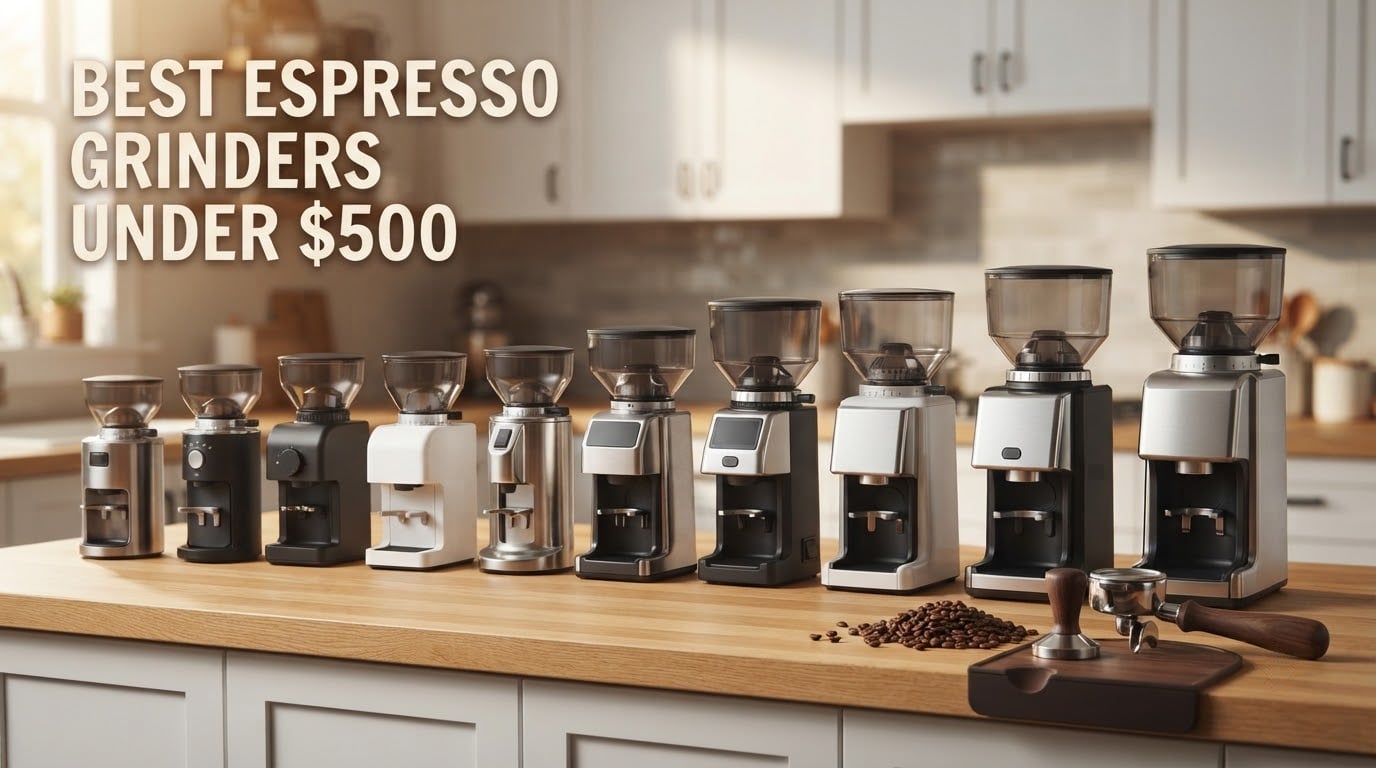
The espresso machine gets the counter space and the budget discussion, but the grinder decides whether your shots actually taste good. A mediocre grinder paired with an expensive machine still produces mediocre espresso, because grind consistency sets the particle size distribution and that dictates how water moves through the puck.
That is why nearly every home barista who upgrades their setup buys the grinder first. This roundup covers the best espresso grinders under 500 available now, and we looked at twelve electric models across that ceiling, from budget steppers to 64mm flat burr machines with stepless dials and near-zero retention.
We spent several weeks moving between these grinders, dialing the same light roast single origin on each and watching how the shots responded. We grouped the picks by what they actually do well rather than by brand, so you can match a grinder to your machine, your bean habits, and your tolerance for noise. If you also grind grain or other whole ingredients, our [grain grinder roundup](https://www.wearesalt.org/best-grain-grinders/) covers that side of the counter.
One quick note before we start. Prices on these machines move constantly with burr options and sales, so treat the 500 figure as the ceiling we aimed at rather than a fixed number. Check the current listing before you commit, because the same grinder can sit just above or below the line depending on the week.
Top 3 Best Espresso Grinders Under $500 (October 2026)
The Breville Smart Grinder Pro wins this roundup because it pairs the largest proven review base in the group with grind consistency that reviewers repeatedly compare to machines costing several times more. The Baratza Sette 270 is the fastest dialer we tested, and the Baratza Encore ESP is the cheapest path to a genuinely fine espresso grind without electronics getting in the way.

Breville Smart Grinder Pro
- 60 grind settings
- 0.2 second dosing timer
- dual portafilter cradles


Best Espresso Grinders Under $500 (October 2026)
| Product | Specifications | Action |
|---|---|---|
| Breville Smart Grinder Pro |
|
Check Latest Price |
| Baratza Sette 270 |
|
Check Latest Price |
| Baratza Encore ESP |
|
Check Latest Price |
 MiiCoffee DF64 II MiiCoffee DF64 II |
|
Check Latest Price |
 SHARDOR 64mm Flat Burr SHARDOR 64mm Flat Burr |
|
Check Latest Price |
 MOKKOM 64mm Flat Burr MOKKOM 64mm Flat Burr |
|
Check Latest Price |
 Viesimple Gen 4 Burr Grinder Viesimple Gen 4 Burr Grinder |
|
Check Latest Price |
 Eureka Mignon Notte Eureka Mignon Notte |
|
Check Latest Price |
 Eureka Mignon Silenzio Eureka Mignon Silenzio |
|
Check Latest Price |
 Fellow Opus 2 Fellow Opus 2 |
|
Check Latest Price |
 Turin SK40 Turin SK40 |
|
Check Latest Price |
 Eureka Mignon Zero Eureka Mignon Zero |
|
Check Latest Price |
Every grinder in this list uses burrs, and every one reaches espresso range. Where they differ is burr size, how precisely you can adjust, and how many stale grounds sit in the chamber after a dose.
1. Breville Smart Grinder Pro – Best Overall Espresso Grinder Under $500
Breville BCG820BTR Smart Grinder Pro, Black Truffle
60 grind settings
0.2 second dosing timer
LCD display
18oz hopper
2 year warranty
Pros
- Grind consistency reviewers compare favorably to grinders costing two to three times more
- 60 settings plus an adjustable upper burr for extra fine or coarse range
- 0.2 second timer steps substitute for a built-in scale
- Grinds into 50-54mm and 58mm portafilters with the magnetic cradle
Cons
- Motor can bind or stall mid-cycle if beans jam the burrs
- Plastic grounds container can shift or be hard to seat
- Coarsest settings stay finer than ideal for French press
More than seven thousand reviews sit behind this grinder, and that volume matters when you are buying your first espresso setup. You are not gambling on a small sample of early adopters; you are looking at years of owners describing the same repeatable results.
What stands out in that body of feedback is consistency relative to cost. Owners regularly report that the grind quality holds up next to dedicated espresso grinders at multiples of the price, which is the single reason we put it first.
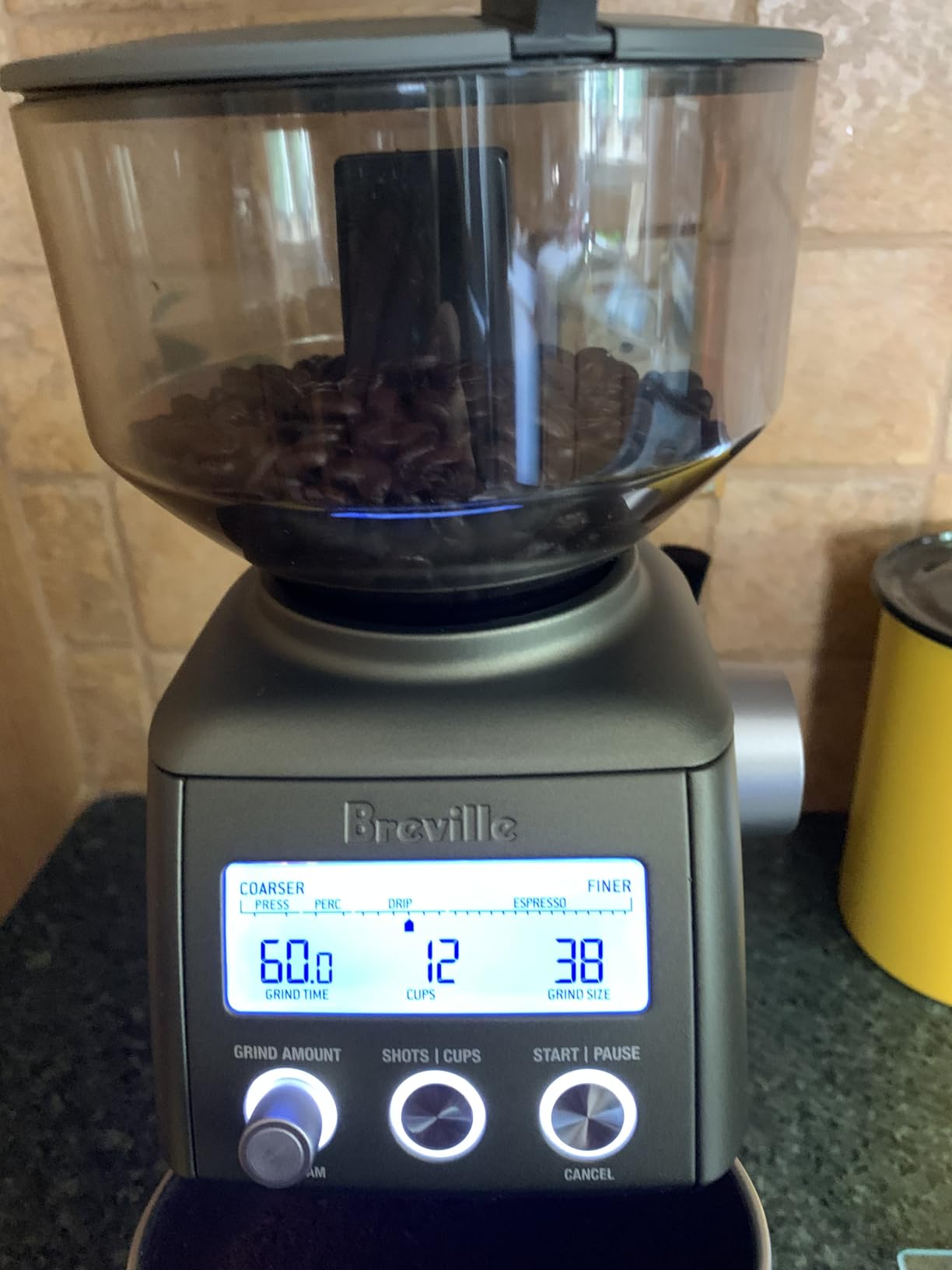
The adjustment system is stepped rather than stepless, with 60 settings and an upper burr you can move for extra range at either end. Stepped matters more here than it does on some rivals because those 60 clicks are spread thinner than most steppers, and the front dial moves in small increments under your fingers.
Dosing is handled by a digital timer with 0.2 second steps, which behaves closely enough like a scale that most owners stop weighing doses. The LCD shows grind setting, timer, and shot count, and the grinder includes cradles for both 50-54mm and 58mm portafilters.
What you should know before you buy
Check the burr jam fix before it becomes a problem. The recurring complaint is a motor that binds or stalls mid-cycle, and reviewers resolve it consistently by pausing, emptying the upper burr, and restarting. It is a ten-second fix once you know it exists, but it surprises people the first time.
Plan for a dosing funnel if your counter is tidy-minded. Grounds scatter around the base without one, and that is the most common reason people add an accessory in the first month.
Who this grinder suits
This is the right pick if you pull two to four shots a day, use non-pressurized baskets, and want one machine that also handles pour-over and drip without a second grinder on the counter. The 18oz hopper means refilling once a week rather than daily.
Skip it if your workflow is exclusively single-dosing fresh single-origin beans. A 150g hopper grinder keeps old beans behind fresh ones, and the retention figure is not as low as the dedicated single-dose machines further down this list.
2. Baratza Sette 270 – Best for Fast Dialing
Baratza Sette 270 Conical Burr Coffee Grinder
270 grind settings
3 dosing buttons
Up to 5g per second
3.2 kg
10oz capacity
Pros
- 270 grind settings split across macro and micro adjustment
- Grinds fine enough for non-pressurized prosumer espresso
- Full dose in under 15 seconds
- Modular design makes cleaning and part replacement straightforward
- Compact footprint with a convertible portafilter and bin holder
Cons
- Loud during grinding
- Time-based dosing without a built-in scale
- New burrs need a bedding-in period before settings hold
- Occasional reports of a factory wiring fault
Few grinders make adjusting feel this quick. The Sette 270 combines 270 settings with a macro and micro system, so you can swing a big change in coarse range or creep toward espresso in single small turns.
It also grinds fast, up to about 5 grams per second, which means a dose lands in under 15 seconds. That speed matters more than it sounds, because heat builds during a long grind and heat changes the grind.
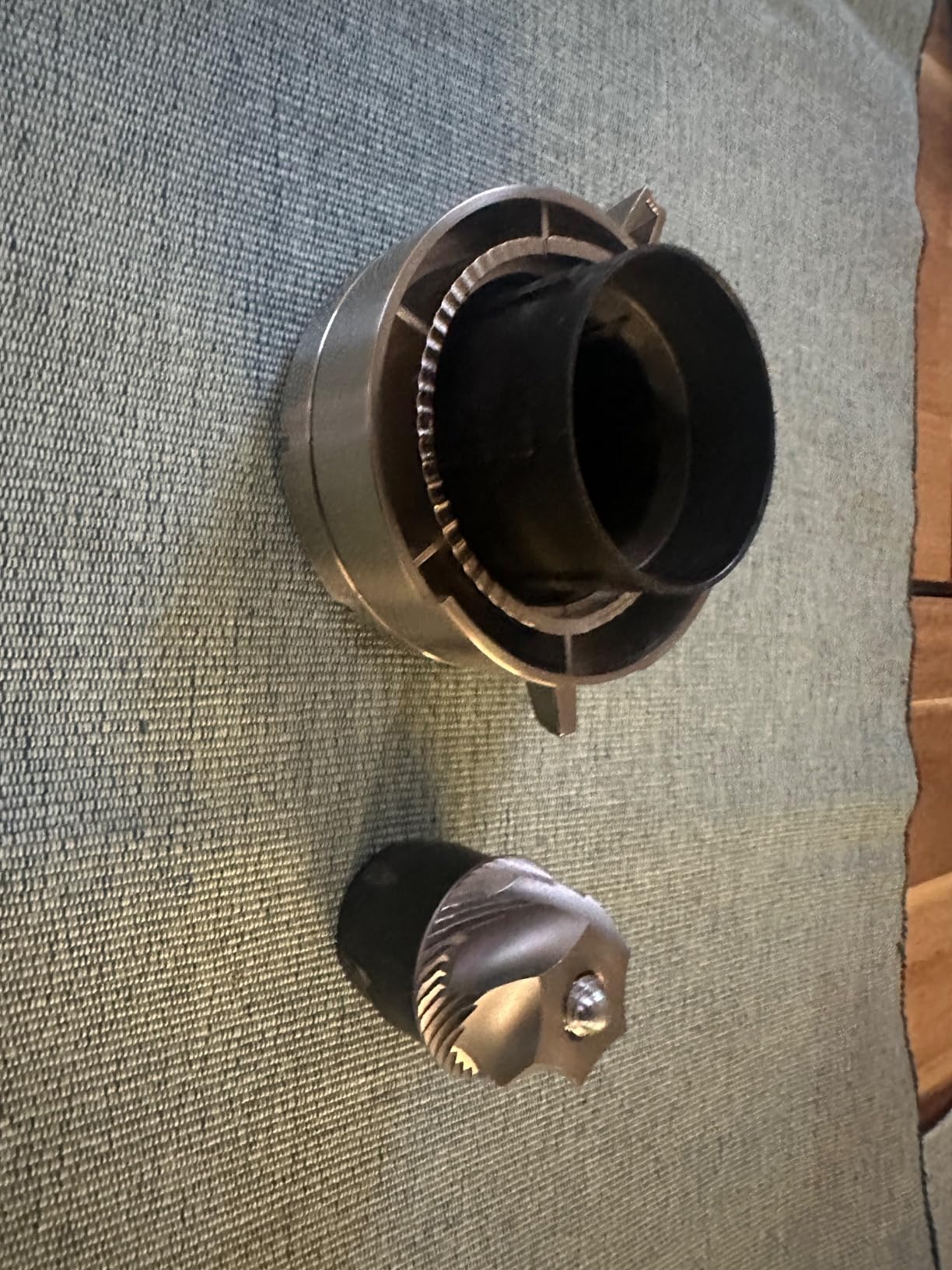
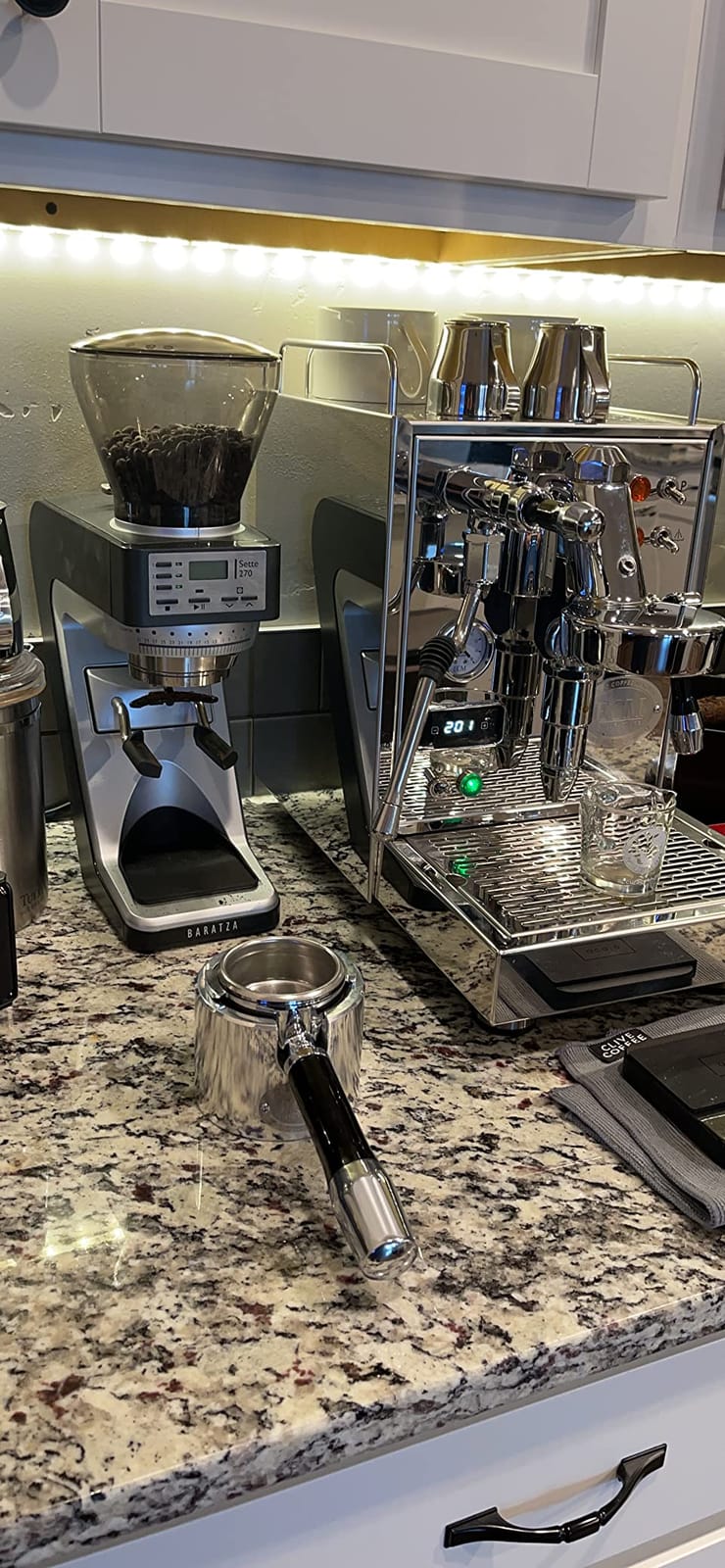
Reviewers pair it constantly with entry-level prosumer machines, and the espresso results are the most common praise point. The straight-through path keeps retention modest for a hopper machine, and the modular construction means a worn burr set or a cracked part is replaceable rather than fatal.
Three programmable dosing buttons on the front handle repeat doses once you have dialed in. Without a built-in scale on this model, dose weight varies a little run to run, so the first few shots after a grind change are approximations.
What you should know before you buy
Give the burrs a break-in period. New burrs need roughly a pound of coffee before settings hold steady, and owners who skip that step often think the grinder drifts when it is simply settling.
Noise is the loudest complaint in reviews, so if someone sleeps in the next room, test it before committing. The plastic body also draws occasional wiring fault reports, which is one reason the modular design matters here.
Who this grinder suits
Choose it if you enjoy the process of dialing in and want fine control without a manual crank. It handles espresso and finer manual-brew methods such as Aeropress and V60 from the same burr set, which makes it a strong two-machine-one-answer pick.
Choose something quieter if your household wakes early. This is a fast, enthusiastic grinder that announces itself, which is a fair trade for the adjustment range but a real one in a small apartment.
3. Baratza Encore ESP – Most Versatile
Baratza Encore ESP Coffee Grinder ZCG495BLK, Black
40mm hardened steel burrs
Micro steps 1-20 for espresso
Quick-release burrs
5.6 lb
Pros
- Consistent uniform espresso grind on a dual-range scale
- Fully mechanical with no electronics to fail
- Quick-release burr mount for tool-free cleaning
- Baratza ships replacement parts even outside warranty
- Sleeker and more compact than the original Encore
Cons
- No timed dosing so you stop the grind by hand
- Notably loud with a shrill spin-down
- On/off switch can vibrate off the body
- Burr holder collar is a known weak point that can crack
The Encore ESP is the simplest way to get out of blade-grinder coffee without spending prosumer money. Its micro range covers positions 1 through 20 specifically for espresso, sitting in front of a coarser macro range for filter methods.
The burrs are 40mm hardened alloy steel manufactured in Liechtenstein, driven by a DC motor. There is no timer and no electronics at all, which means there is nothing electronic to fail, and you stop the dose by hand or with the front pulse button.
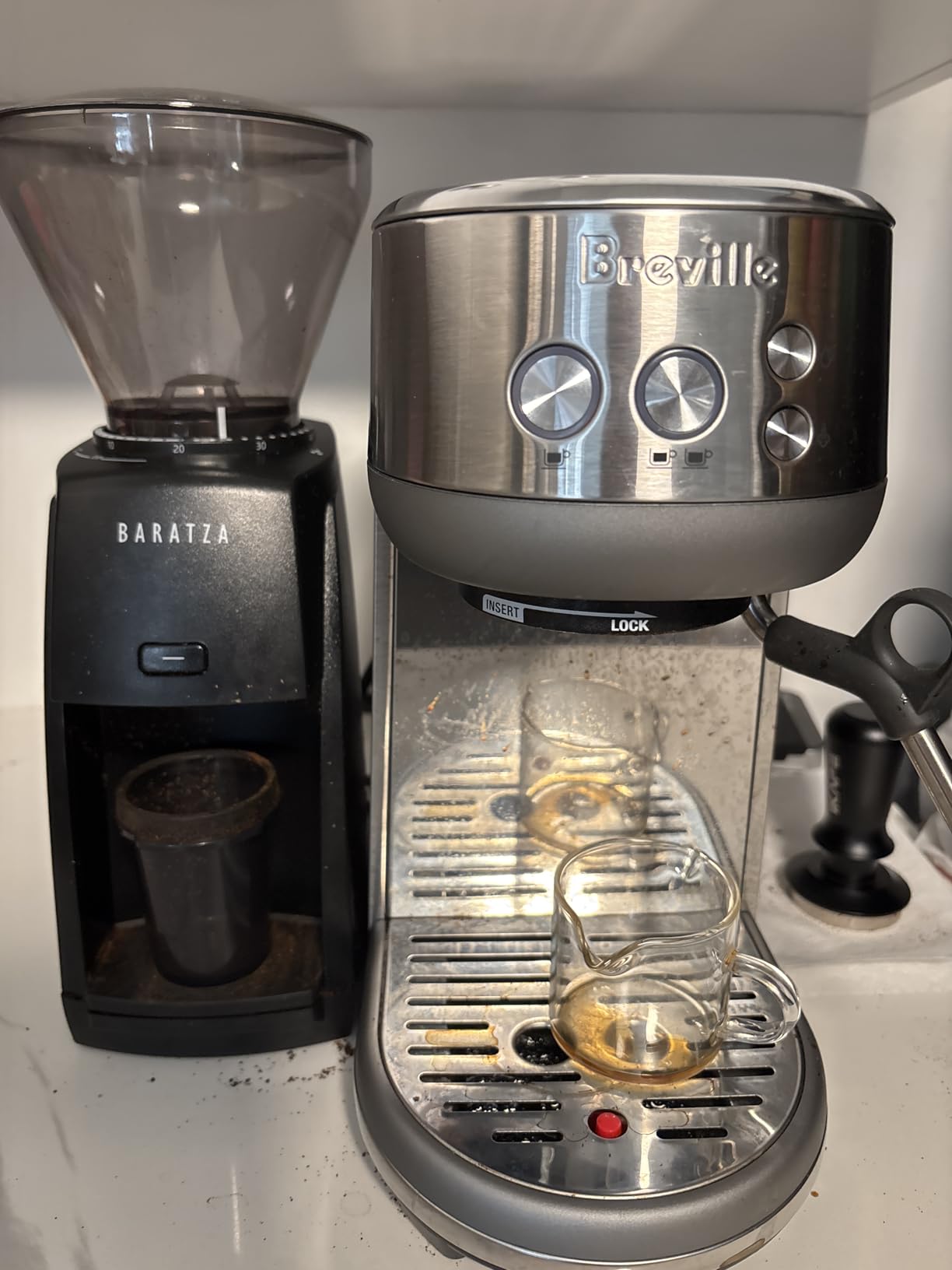
That mechanical simplicity cuts both ways. Without a timer, repeatability depends on your hand, and owners who want repeatable doses move up a tier. For someone learning to taste grind changes, though, that manual control is a feature.
Baratza’s support comes up repeatedly in reviews as a reason to buy. Owners report replacement parts shipped even outside warranty, and the quick-release burr mount means cleaning takes no tools.
What you should know before you buy
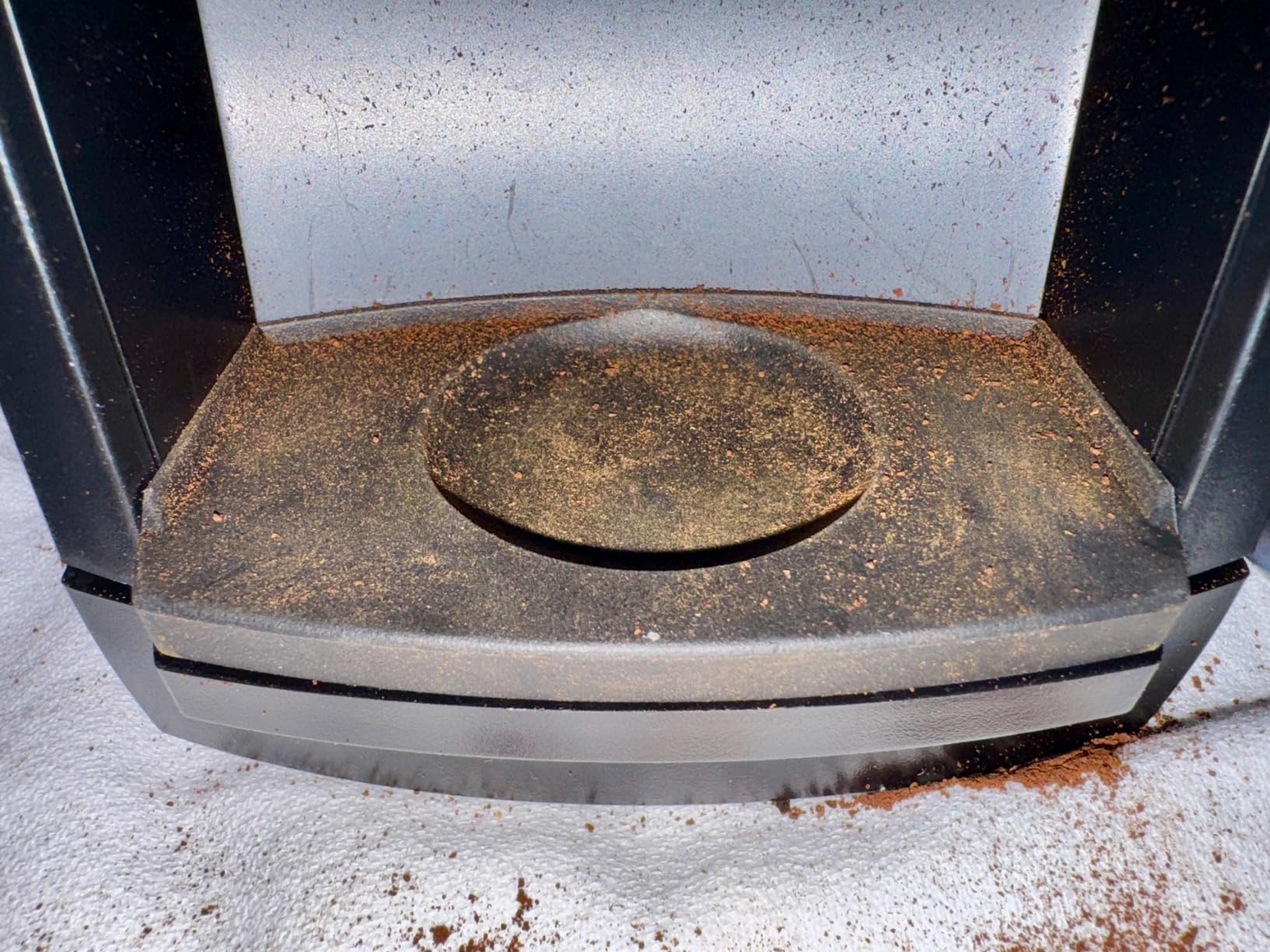
The burr holder collar is the durability weak point owners mention most. Reviews describe it as a spot that can crack, so treat it gently when removing burrs for cleaning and expect a replacement part to be part of long-term ownership.
The on/off switch with its press-and-hold feature can vibrate itself off the body during grinding, and the anti-static hopper can shift forward and spill grounds if the grinder gets pushed around.
Who this grinder suits
This fits a first espresso setup, a small kitchen, or anyone who wants a reliable burr grinder with no learning curve beyond the micro dial. It is also the most repairable machine in this list, which matters if you plan to keep it for years.
Move up if you pull more than two or three shots a day and want repeatable doses without concentrating. Timed dosing would be the single biggest upgrade this machine lacks.
4. MiiCoffee DF64 II – Best for Low Retention
MiiCoffee DF64 II Single Dosing Coffee Grinder (Black)
64mm flat burrs
Under 0.1g retention
Stepless dial
Plasma generator
15 lb
Pros
- 64mm stainless flat burrs with a broad upgrade path to SSP burr sets
- Stepless adjustment dials in espresso with high precision
- Plasma generator and anti-popcorn disc keep mess down
- 58mm aluminum dosing cup suits non-58mm portafilters
- Compact footprint for a 64mm flat burr grinder
Cons
- Single-dosing workflow wants the blow-out funnel and bellow for best results
- Included dosing cup and portafilter rest take practice to line up
Retention is the quiet killer of espresso, and this grinder attacks it directly. The DF64 II measures under 0.1 gram of retention even without bellows, which means nearly the entire dose lands in your portafilter or dosing cup.
Those 64mm stainless steel flat burrs are also upgradeable to aftermarket SSP sets, which gives this machine a path that most of the list does not have. You are buying a platform rather than a fixed spec.
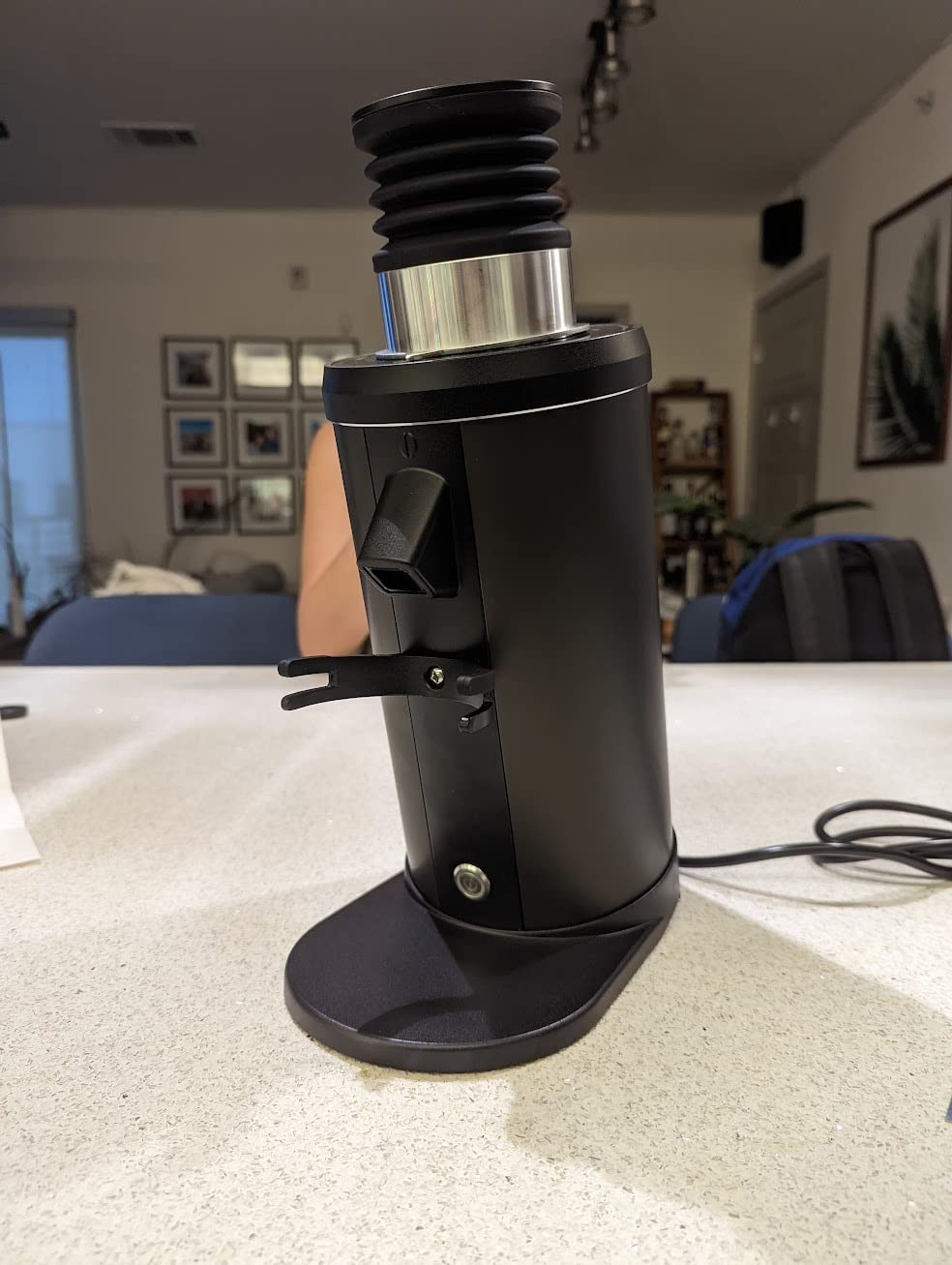
The adjustment is a chrome-wrapped stepless dial with a metal indicator, so there are no clicks to hunt between. You turn, you taste, and you adjust by feel, which is how dial-in should work at espresso range.
Static is handled by a plasma generator inside the exit chute, and an integrated anti-popcorn disc reduces the static cling that makes puck prep annoying. Reviewers frequently pair it with WDT tools and dosing funnels.
What you should know before you buy
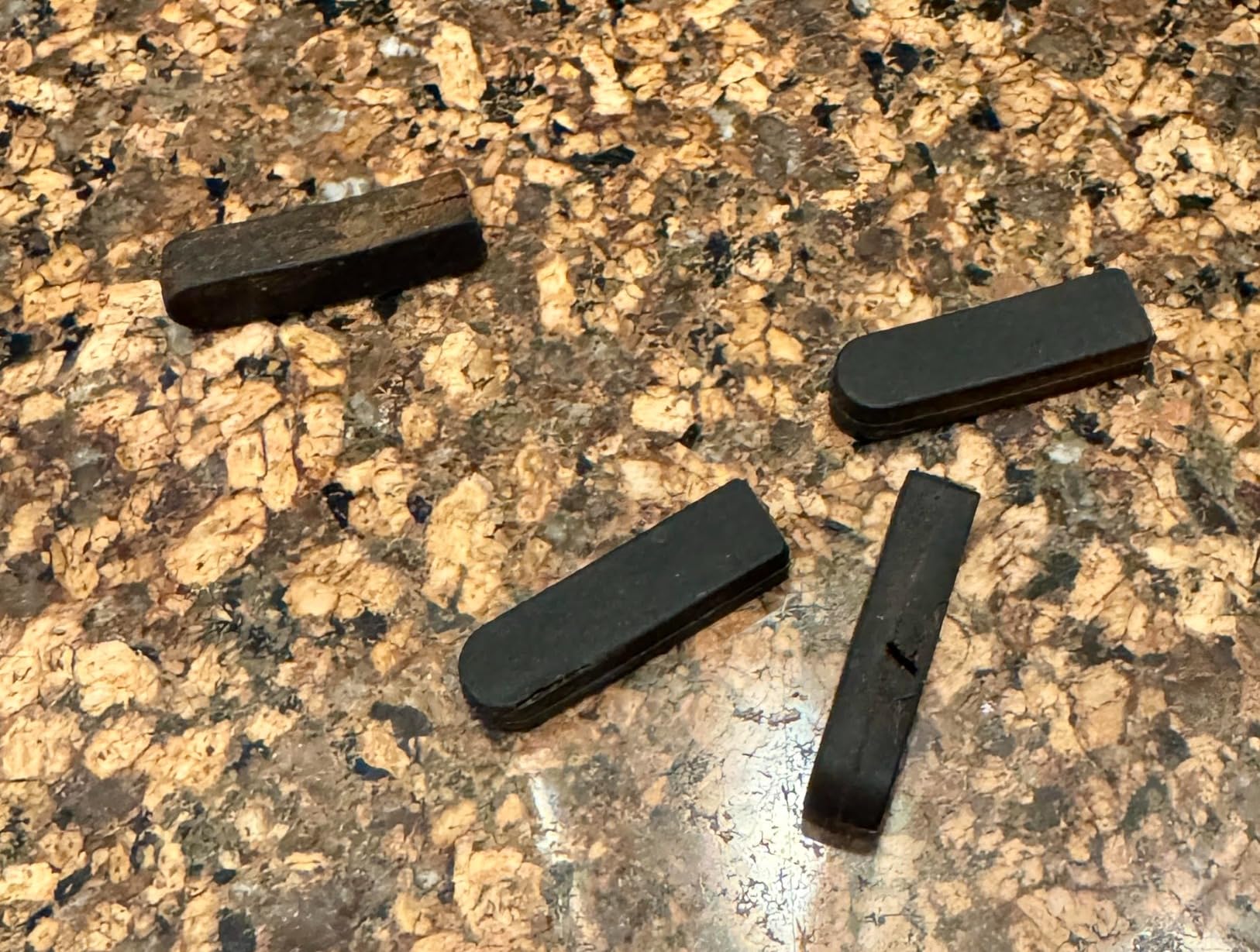
This is a single-dose machine by design, and the workflow rewards that. Owners who use the blow-out funnel and bellow get the best results, and those who skip them report less consistent dosing, so budget a few minutes to learn the alignment.
The included 58mm aluminum dosing cup is sized for non-58mm portafilters, which is a thoughtful detail if your machine uses a smaller basket. At 15 pounds it is also the heaviest machine here for the burr size.
Who this grinder suits
It fits anyone pulling shots from fresh single-origin beans and switching origins several times a week. When the next bag is a different roast level, retention this low means you are not chasing yesterday’s dose.
Skip it if you grind large volumes of filter coffee in the same session. The single-dose format is deliberately slow for batch work, and a hopper machine handles that better.
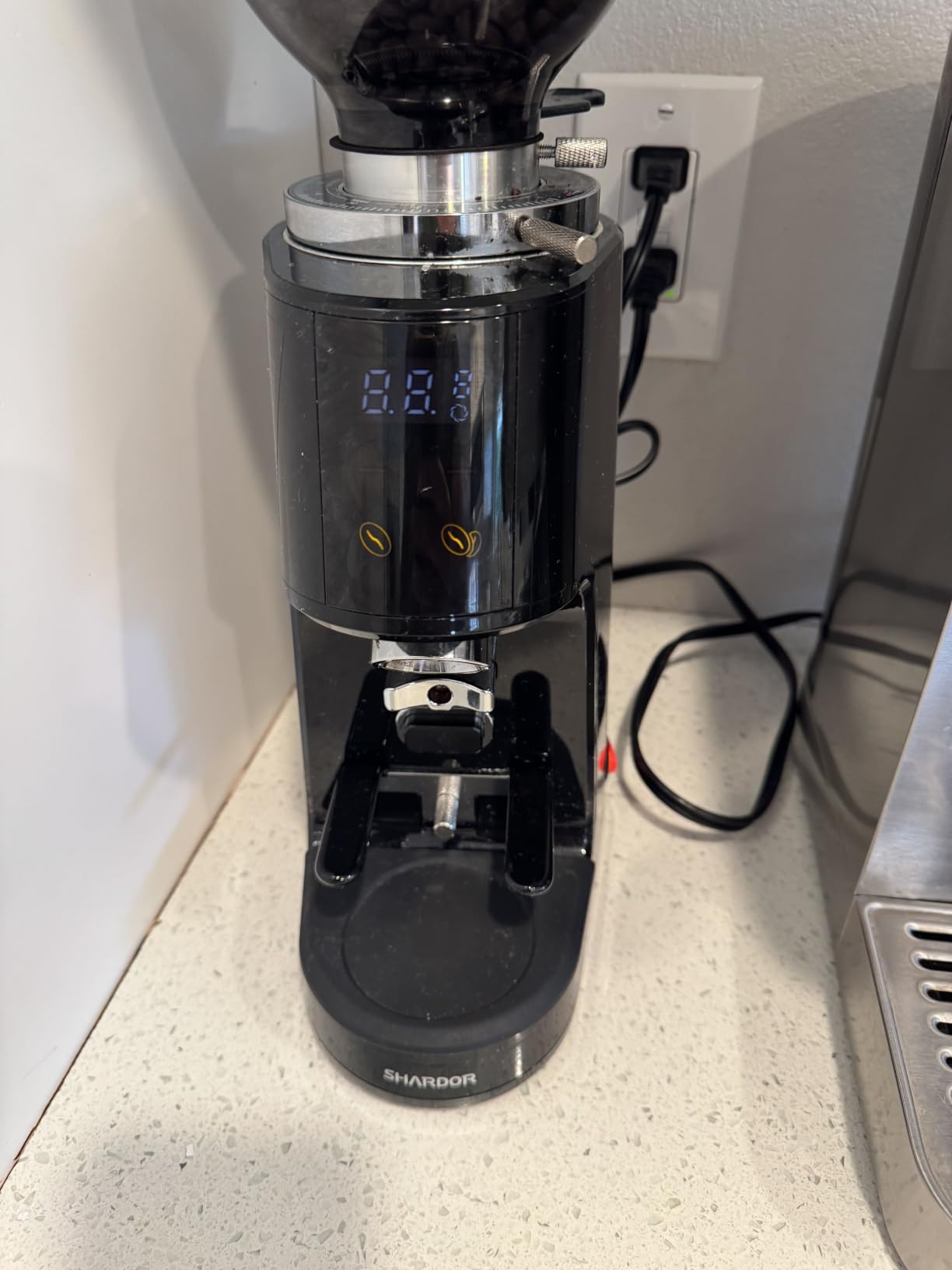
5. SHARDOR 64mm Flat Burr Grinder – Best Value Flat Burr
SHARDOR 64mm Flat Burr Coffee Grinder, 100 Settings, Anti-Static, Black
64mm flat burr set
All-metal chamber
Stepless ring
LED timer
120V only
Pros
- Grinds fine enough to choke a prosumer machine at its tightest setting
- Faster at roughly 2g per second and quieter than comparable flat burr grinders
- All-metal grinding chamber with swappable 64mm burrs
- Stepless adjustment makes espresso dial-in straightforward
- Anti-static system and stainless doser cup keep the counter tidy
Cons
- Plastic outer body feels inexpensive next to all-metal rivals
- Rubber portafilter pad does not stay in place
- Hopper gate can be misaligned and leak stray grounds
- Dial markings do not line up with true zero
Getting 64mm flat burrs at this price point is unusual, and that is why several reviewers rank this grinder above machines costing three times as much. The burr set sits in an all-metal grinding chamber that can take aftermarket replacements.
Grind speed sits around 2 grams per second, and owners comment that it runs quieter than most flat burr grinders they have owned. The stepless adjustment ring means espresso dialing happens without counting clicks.
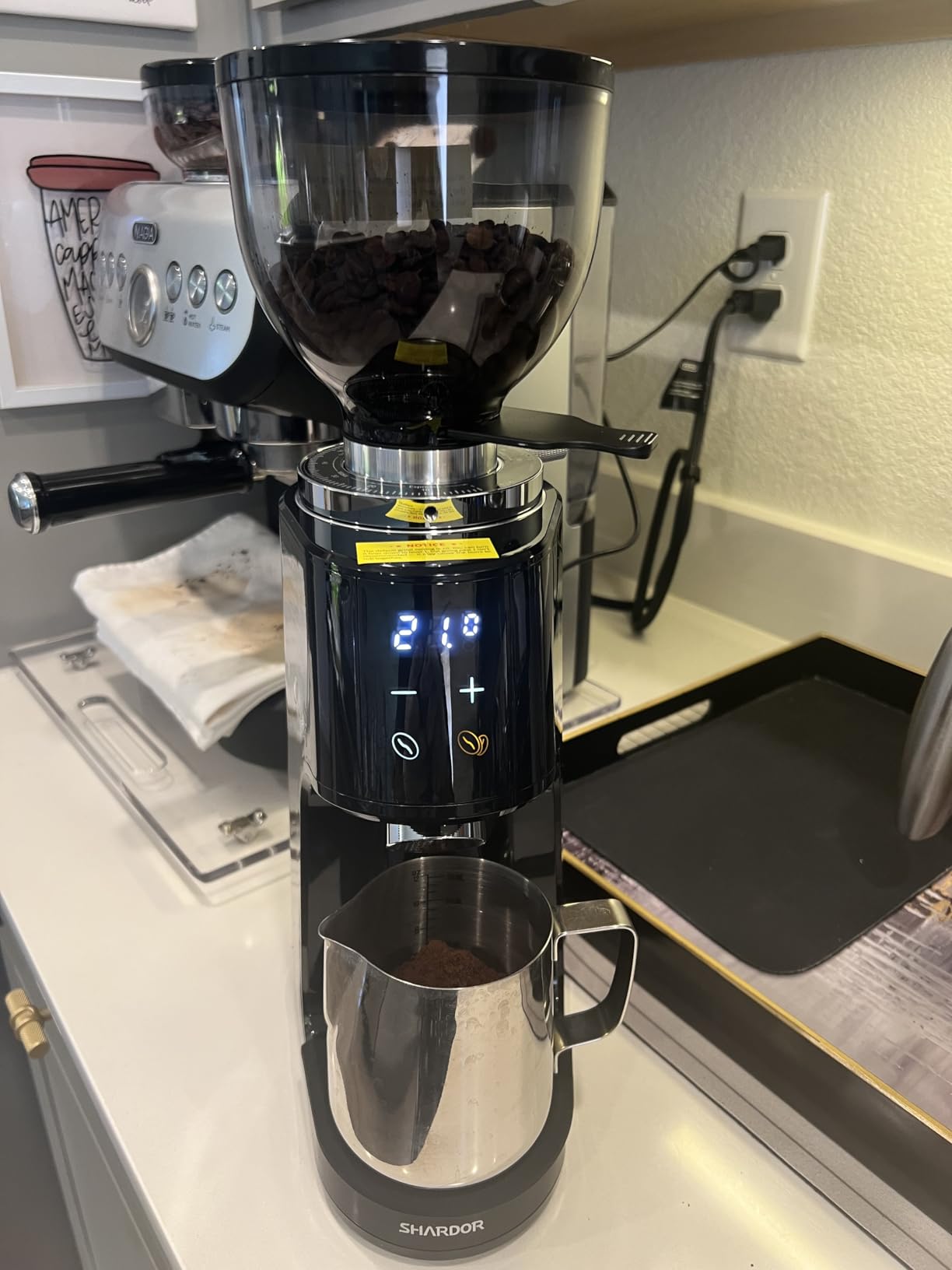
Dosing is handled by an LED display with programmable grind times down to 0.1 second, covering single, double, and continuous brews. A built-in anti-static system and a stainless doser cup keep scattered grounds to a minimum.
Expect fines-heavy output for the first pound of coffee while the burrs break in. That is normal and it settles, but it is worth knowing before you judge the flavor on day one.
What you should know before you buy
Align the burrs to a true zero when it arrives, because the dial markings do not reliably correspond to real zero. Several owners report needing this adjustment before the tightest espresso setting performs as intended.
Two smaller fixes: the rubber portafilter pad does not stay seated, and the hopper gate can be misaligned enough to leak grounds. Neither ruins the grinder, and both are easy to work around.
Who this grinder suits
This suits someone who wants flat burr quality and stepless control without a prosumer invoice. It also suits buyers who plan to swap burrs later, since the chamber accepts different 64mm sets.
It is a 120V unit, so check your outlet setup before ordering. Buyers outside North America may need to confirm voltage compatibility rather than assume it.
6. MOKKOM 64mm Flat Burr Grinder – Best Metal Build
MOKKOM 64mm Flat Burr Coffee Grinder, Espresso Grinder,100 Grind Settings
64mm flat burrs
Full stainless body
7mm brass ring
350g and bellow hoppers
0.1s timer
Pros
- Full metal chassis with a brass adjustment ring for stability
- 64mm stainless flat burrs deliver uniform particle size
- Plasma generator in the exit chute reduces static
- Two hoppers included including a 350g bulk and a bellow single-dose
- 0.1 second timer for single
- double
- top-up
- and continuous dosing
Cons
- Tall form factor takes vertical counter space
- Adjustment on a 100-mark dial still needs break-in to settle
- Some static can remain in the single-dose bellow workflow
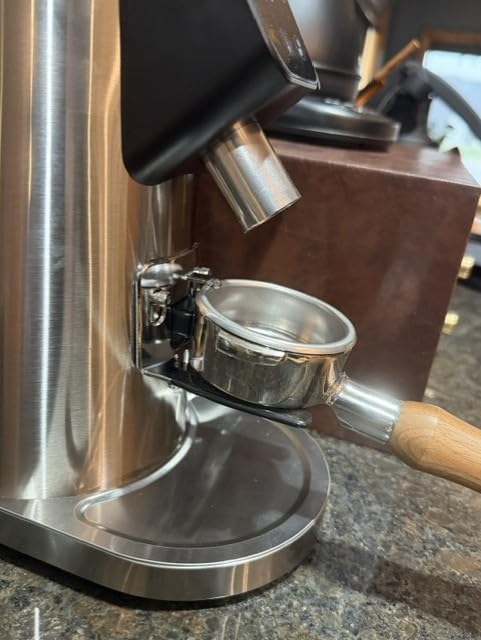
Where most grinders in this price range wrap plastic around a metal chassis, this one is metal all the way, with an aluminum alloy chamber base and a 7mm brass grind adjustment ring. Reviewers single out that ring as the reason the grind stays stable over time.
Inside sit 64mm stainless steel flat burrs with 100 settings spanning Turkish through French press and cold brew. A plasma generator in the exit chute handles static, which is the detail that keeps a flat burr grinder tidy.
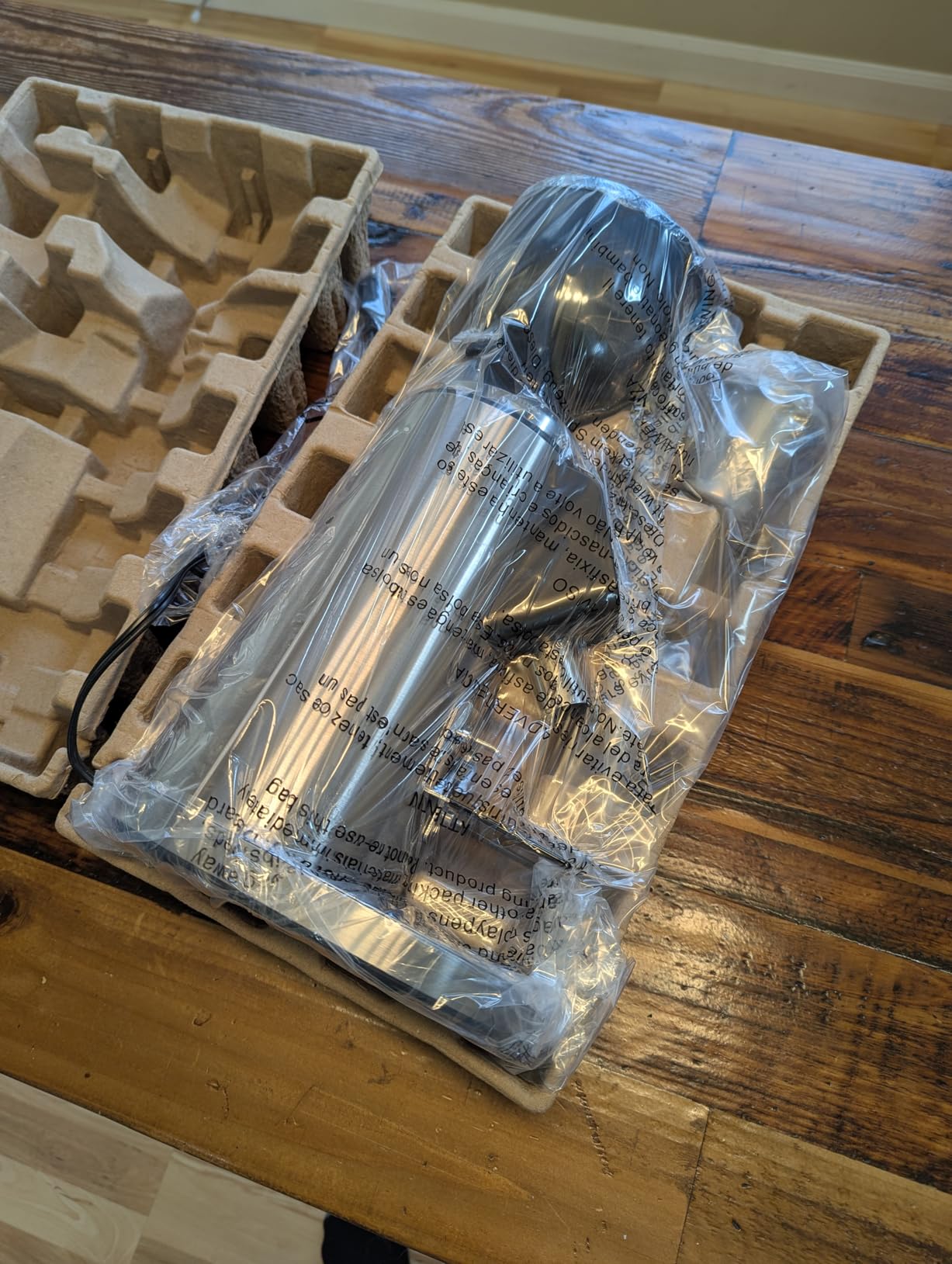
The dual hopper setup is unusual at this price. You get a 350g bulk hopper for filter work and a single-dose silicone bellow hopper for espresso, so the machine covers both without you committing to one workflow.
Timing is handled by an LED display with 0.1 second precision across single, double, top-up, and continuous modes. The upper burr, hopper, and grounds press all remove for cleaning without tools.
What you should know before you buy
Measure your vertical clearance first. This is a tall grinder, and that height is a real constraint under a low cabinet where shorter machines would fit without moving anything.
The 100-mark adjustment dial still needs a break-in period before markings map consistently to actual grind size, and a little static can survive in the bellow workflow on coarse doses.
Who this grinder suits
This is a strong fit for buyers who want one machine to cover espresso and filter, since the dual hoppers remove the usual compromise. The metal build also suits anyone who plans to keep the grinder for many years.
If counter space is the constraint, look at a compact model instead. The build quality here is the trade you make with height.
7. Viesimple Gen 4 Electric Burr Grinder – Best for Small Counters
Viesimple Gen 4 Electric Burr Coffee Grinder, Single Dose, Espresso, Black
48mm conical burr
Low-noise motor
Aluminum body
100-240V
2 year warranty
Pros
- Very quiet grinding from a low-RPM DC motor
- Compact slim footprint that fits small counters and low shelves
- Fine repeatable conical adjustment for espresso and pour-over
- Magnetic dosing cup with sealed lid and blow-out funnel
- Aluminum body with a 2 year warranty
Cons
- No timed dosing
- only a manual on and off toggle
- External power adapter brick adds clutter
- Conical burrs throw noticeable fines at coarser settings
- Small single-dose hopper capacity
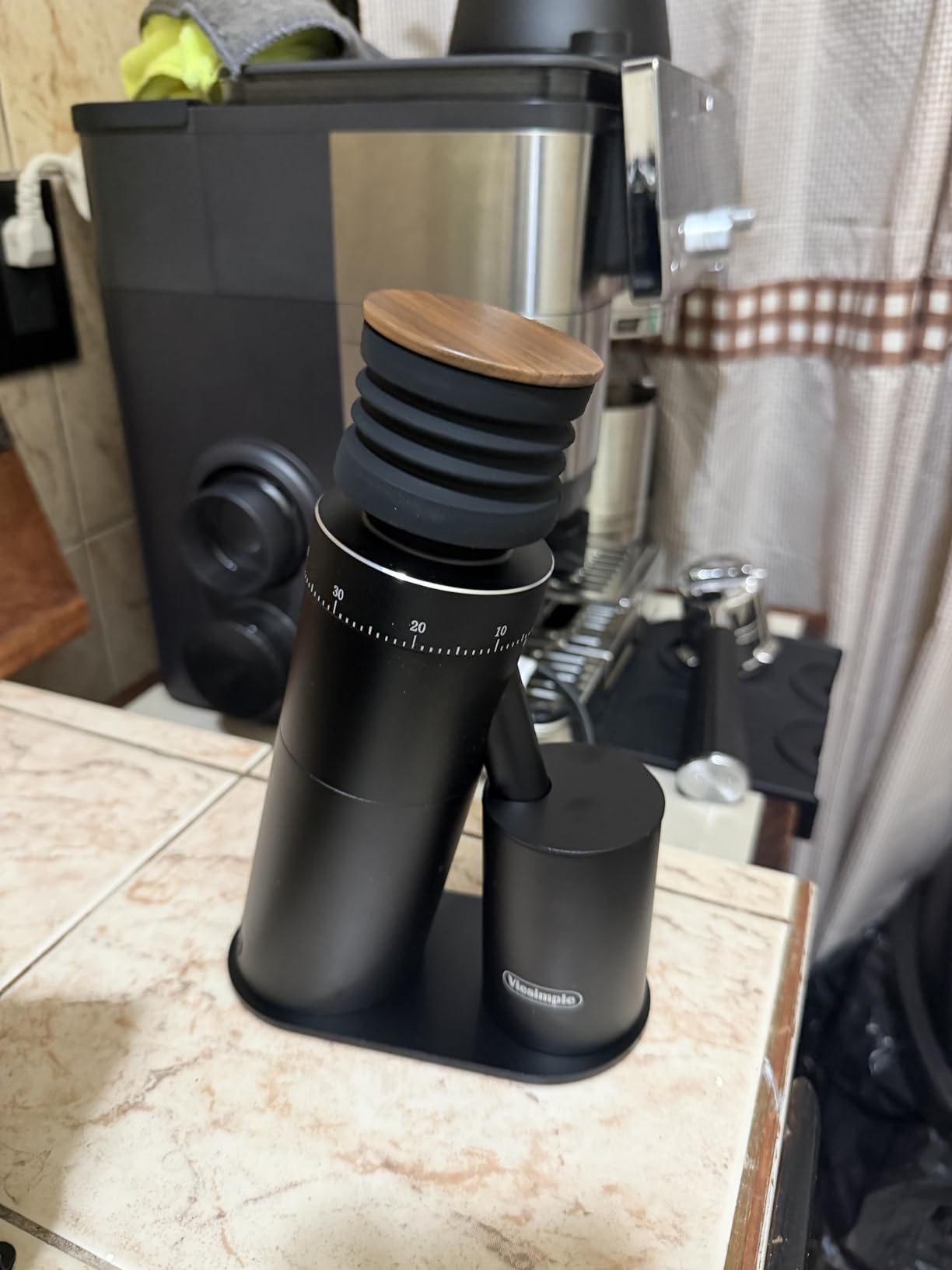
If your kitchen is small or you grind before anyone else wakes, this is the grinder to look at first. It uses a low-RPM DC motor rated under 50 decibels, which is the quietest operating claim in this roundup.
The footprint is 6 by 3 by 9 inches, so it fits beside a machine without taking a shelf. At 3.4 pounds it also moves easily, which matters when you are clearing a small bar before guests arrive.
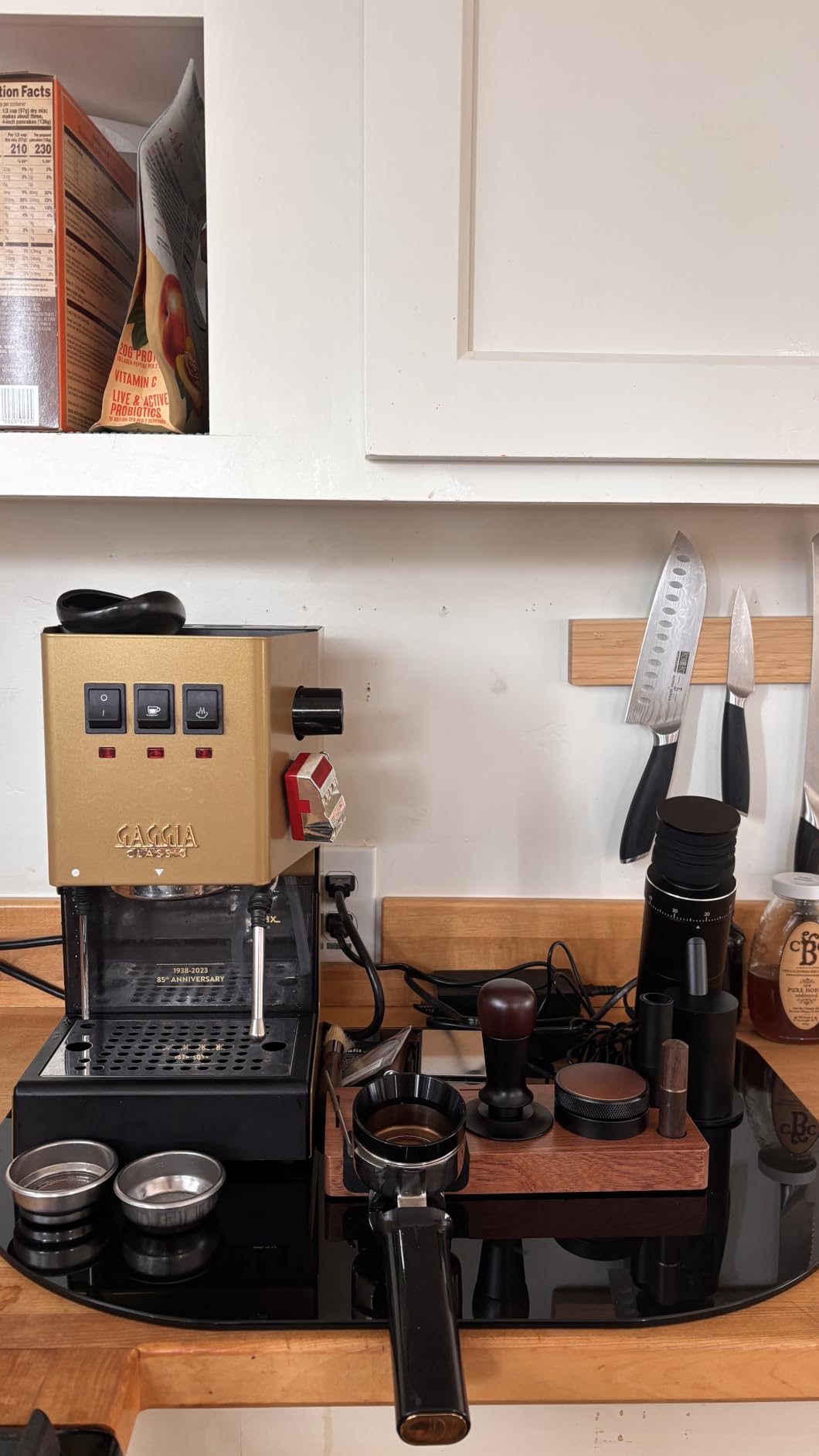
Grinding is done by a 48mm five-blade conical burr in an aluminum body, and the adjustment covers espresso through pour-over. The magnetic dosing cup with a sealed lid plus a blow-out funnel keeps mess and static down for a single-dose workflow.
Universal 100-240V voltage removes the usual travel headache, and an anti-clogging channel with a food-grade anti-static coating is a sensible detail for darker roasts that fragment more.
What you should know before you buy
There is no timer. You toggle the grinder on and off by hand, so doses depend on your timing, and anything repeatable about the grind is down to your consistency rather than the machine.
Conical burrs produce noticeable fines at coarser settings, which can make French press taste over-extracted. On espresso range the grind is fine and repeatable, but this is an espresso-first judgement, not an all-purpose one.
Who this grinder suits
This fits apartment dwellers, early risers, and anyone with limited counter space who pulls one to three shots a day. The 2 year warranty is longer than most of the grinders in this list.
If you pull more than three shots a day or want timed dosing for repeatability, spend up a tier. The silence and the footprint are the reasons to choose this one, and both are real.
8. Eureka Mignon Notte – Best for Espresso-First Design
Eureka Mignon Notte Espresso Grinder, Black
50mm espresso burrs
Bottom-burr stepless adjust
Manual dosing
ACE anti-clump
150g hopper
Pros
- Espresso-focused 50mm steel burrs with a sensitive stepless dial
- Bottom-burr adjustment keeps your setting through burr cleaning
- Sturdy matte metal case that does not shift while grinding
- ACE anti-clump system improves distribution and reduces static
- Espresso-first design that pairs well with prosumer machines
Cons
- Manual dosing only with no timed dose option
- Single-dose workflow is less convenient for multi-cup brewing
- Heavier and taller than compact alternatives
The Mignon Notte is built around espresso rather than adapted to it. Its 50mm hardened steel flat burrs are espresso-focused, and the stepless adjustment is unusually sensitive for a machine at this level.
The detail worth knowing about is the bottom-burr adjustment. Because the grind is set at the burr rather than at a collar above it, you can pull the burrs for cleaning and put them back without losing your dial-in.
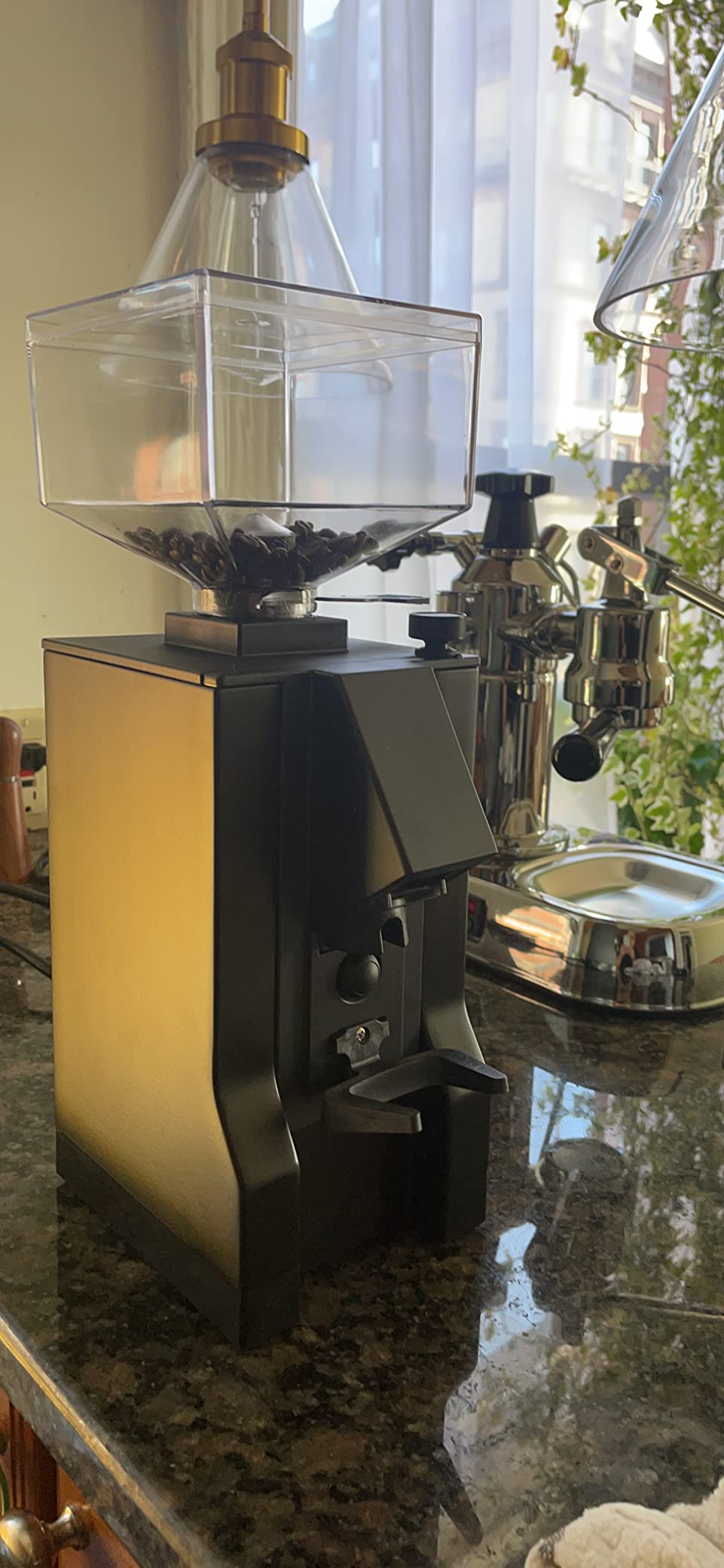
Dosing is manual, triggered by pressing in the portafilter, and the ACE anti-clump system works on distribution and static. The 150g hopper covers a decent stretch of filter work between refills.
Reviewers about four-fifths give it five stars, with the bottom-burr design as the standout. Users who want one grinder for every brew method tend to prefer the Silenzio, since the Notte is deliberately espresso-first.
What you should know before you buy
There is no timer, so doses depend on how you stop the grind. For one or two shots that is fine; for four-shot mornings it becomes the annoyance that pushes people to upgrade.
At 15.2 pounds and nearly 14 inches tall, this is a substantial counter presence for a home grinder. Measure before you commit to a corner.
Who this grinder suits
It fits the buyer who knows they will mostly pull espresso and wants the grind setting to survive cleaning. The build and finish are closer to cafe equipment than most machines in this price band.
Pass on it if your household drinks a large volume of filter coffee, since the manual workflow and espresso-tuned burrs both work against heavy batch brewing.
9. Eureka Mignon Silenzio – Best for Low Noise
Eureka Mignon Silenzio Espresso Grinder, White, 55mm
55mm hardened burrs
Stepless adjustment
Sound-insulated case
Timed dosing dial
210W
Pros
- Exceptionally quiet operation from an insulated metal case
- Stepless 55mm burrs deliver consistent low-clumping grounds
- Timed dosing gives repeatable doses once dialed in
- Heavy rock-solid build that barely moves while grinding
- Bottom-burr adjust keeps your setting through cleaning
Cons
- Messy with no included catch tray
- Higher retention than expected at around 1.5 to 2 grams
- Hidden side controls take practice
- The included portafilter fork may not fit aftermarket dosing cups
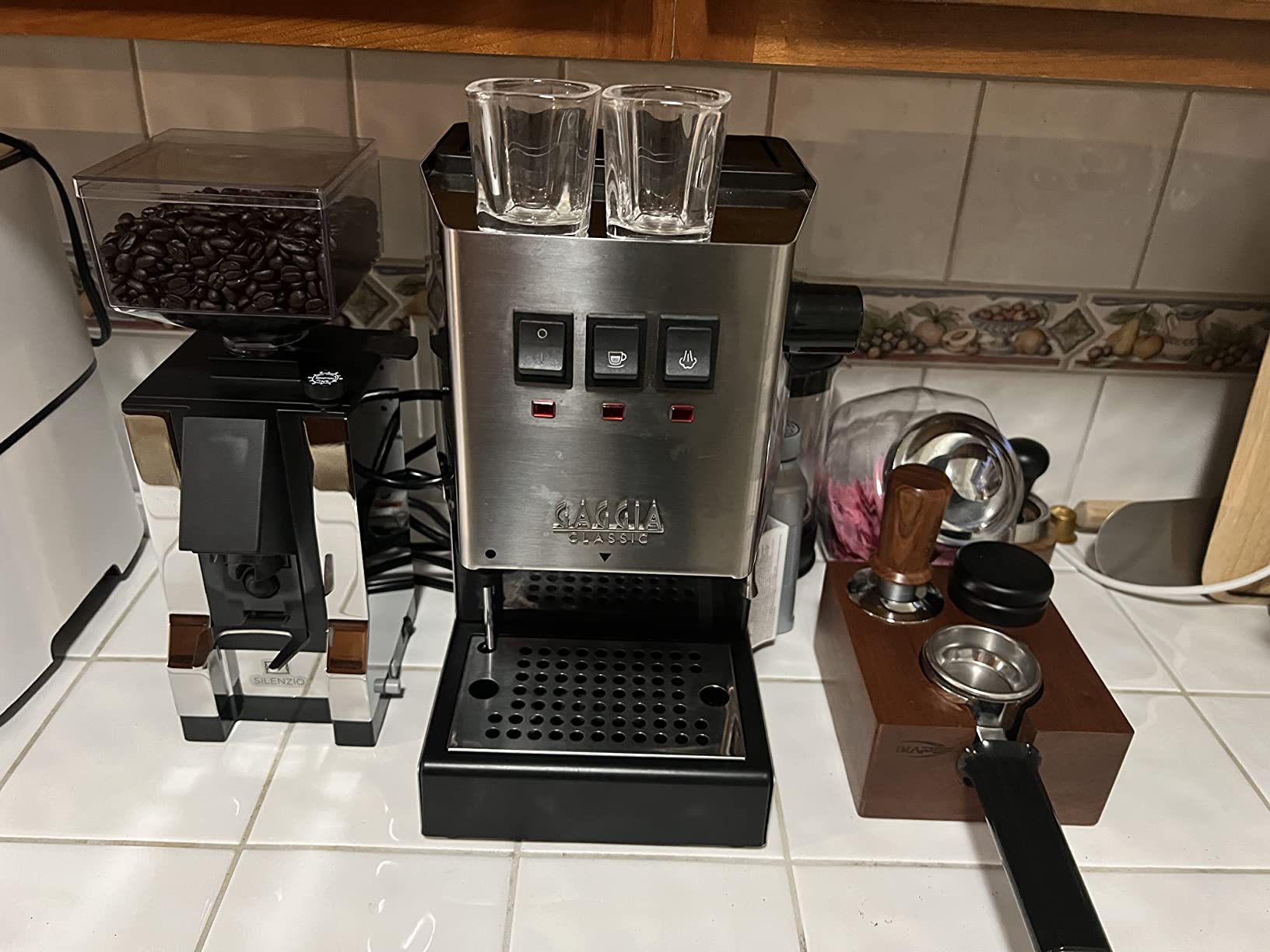
Owners of this grinder describe running it during a sleeping child’s nap or well before anyone else is up. The metal case is insulated with rubber mounts, gaskets, and internal covers, and the motor sits inside that dampened shell.
Underneath the shell are 55mm hardened steel burrs with stepless adjustment, and the same bottom-burr design as the Notte so cleaning does not cost you your setting. A side-mounted dial handles timed dosing.
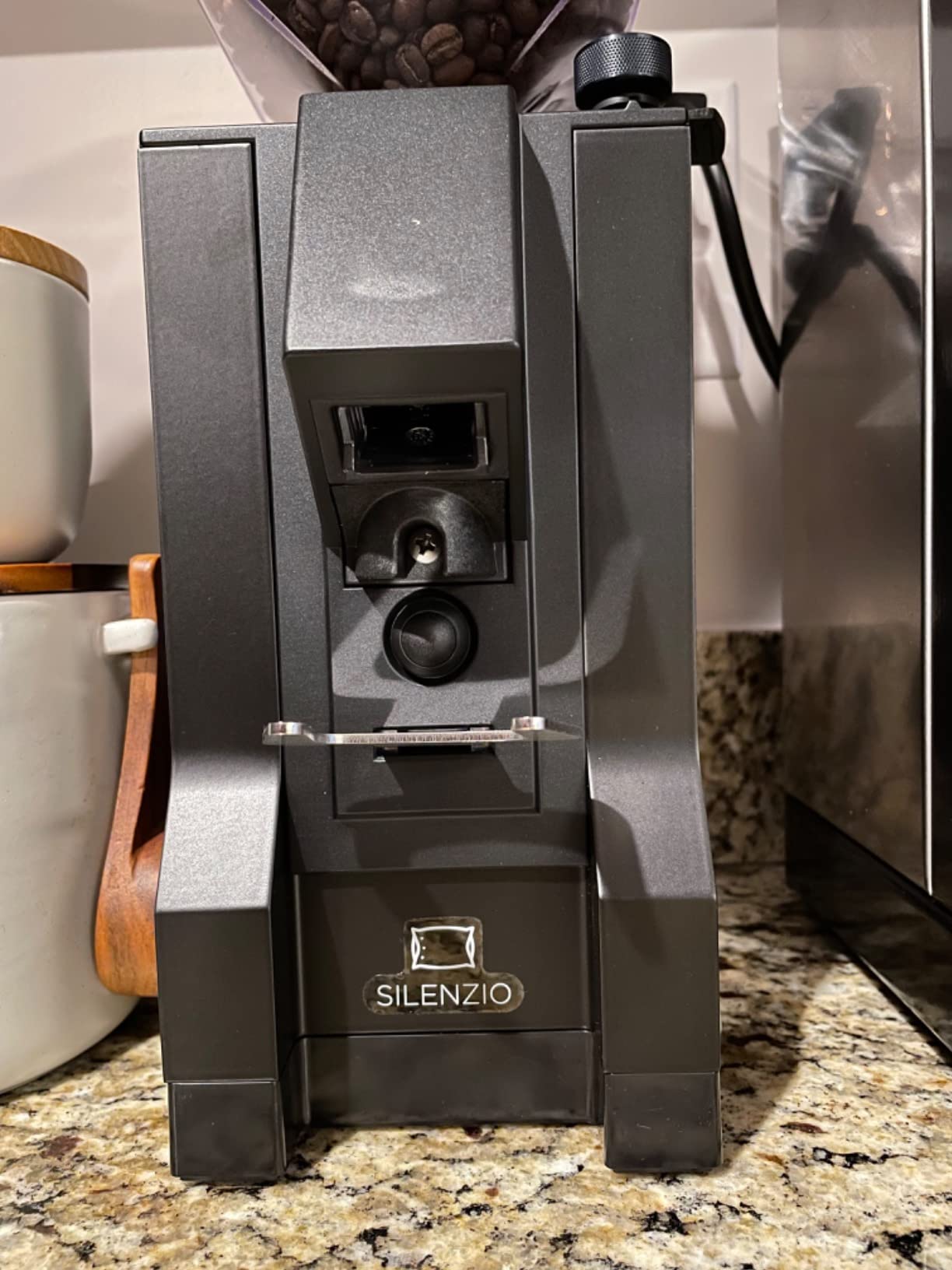
Timed dosing is the practical upgrade over manual-only models, because once you dial in, the dose repeats. The heavy build is another quiet benefit, since a machine that does not walk across the counter thumps less.
Design is Italian, and the anti-clumping system works alongside the large burrs to keep distribution steady through the shot. Reviewers rate espresso consistency after dial-in as its strongest suit.
What you should know before you buy
Retention runs around 1.5 to 2 grams in some use, higher than the single-dose machines here. That is fine within one bean and frustrating when switching, so know your bean habits first.
Two layout complaints recur: grounds spill because no catch tray is included, and the side controls take practice to find. The included portafilter fork may also not accept aftermarket dosing cups.
Who this grinder suits
This is the pick for households where noise is the deciding factor, especially early risers and shared walls. Timed dosing also makes it more practical than the Notte for people pulling several shots.
If you alternate beans constantly, the low-retention single-dose machines are the better fit. If you buy a bag and drink it down, quietness and timed dosing win.
10. Fellow Opus 2 – Best for Automatic Shutoff
Fellow Opus 2 Conical Burr Grinder – Electric Coffee Grinder for Home Use, 48 mm Burrs, Stepless Grind Adjustment, Espresso to Cold Brew Range, Anti-Static, Auto Stop, Black
48mm conical burrs
Stepless adjustment
Auto shutoff
Two magnetic catch cups
2 year warranty
Pros
- Stepless adjustment is more precise than typical stepped grinders
- Near-zero retention so nearly the whole dose comes out
- Anti-static design keeps scattered grounds to a minimum
- Automatic shutoff removes timing guesswork
- Includes a catch cup compatible with 54mm and 58mm portafilters
Cons
- Newer model with a small base of customer reviews
- 48mm burrs are smaller than the 64mm class at similar price
- Tool-free burr access still needs routine cleaning
The Opus 2 does one thing differently from most grinders here: the motor stops on its own after you press the button. You never stand over it with a timer, and you never over-grind because you got distracted.
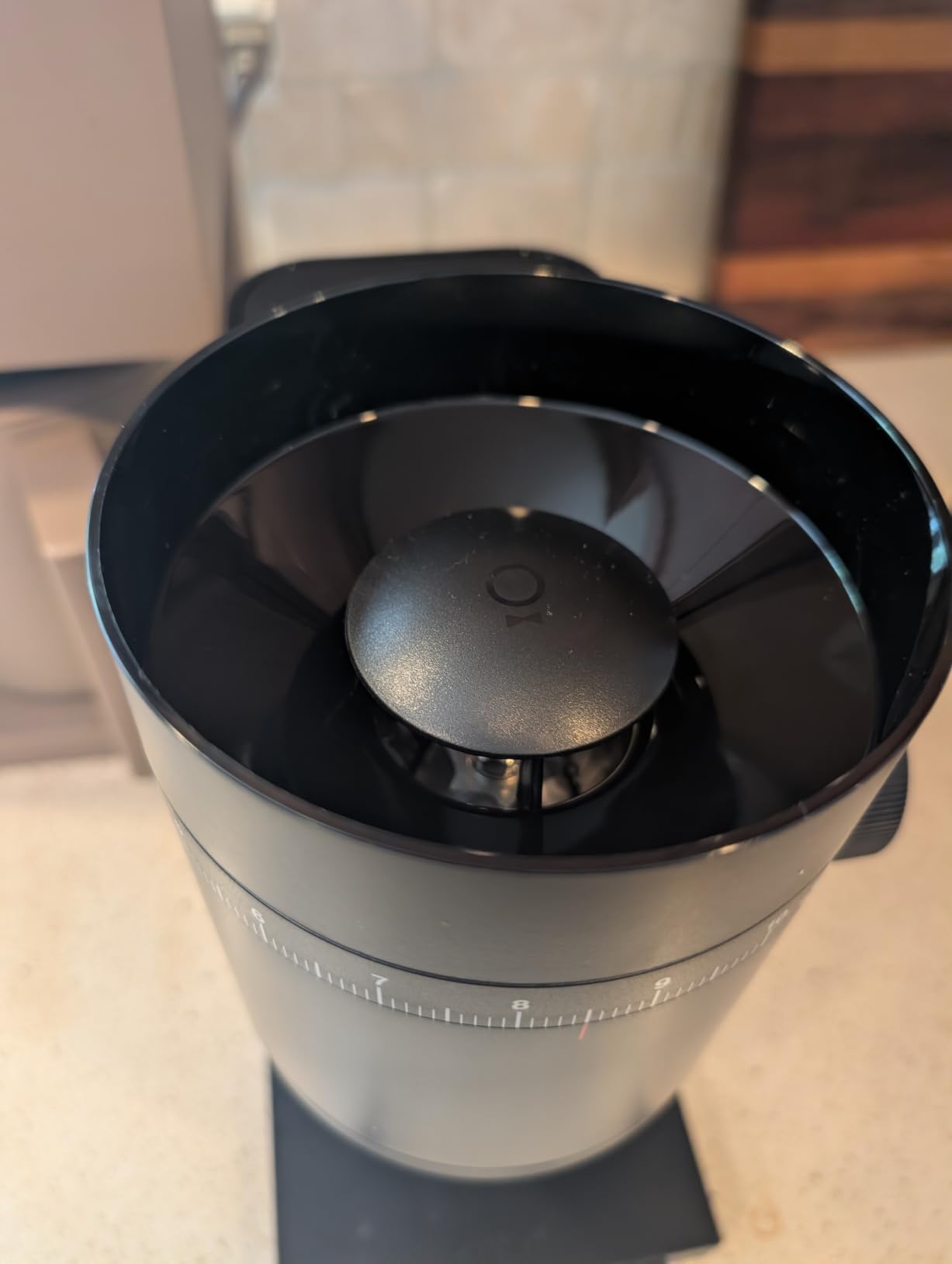
Adjustment is stepless from espresso through cold brew, and retention is near zero, so almost the entire dose lands in your cup or portafilter. Anti-static handling keeps the counter clear.
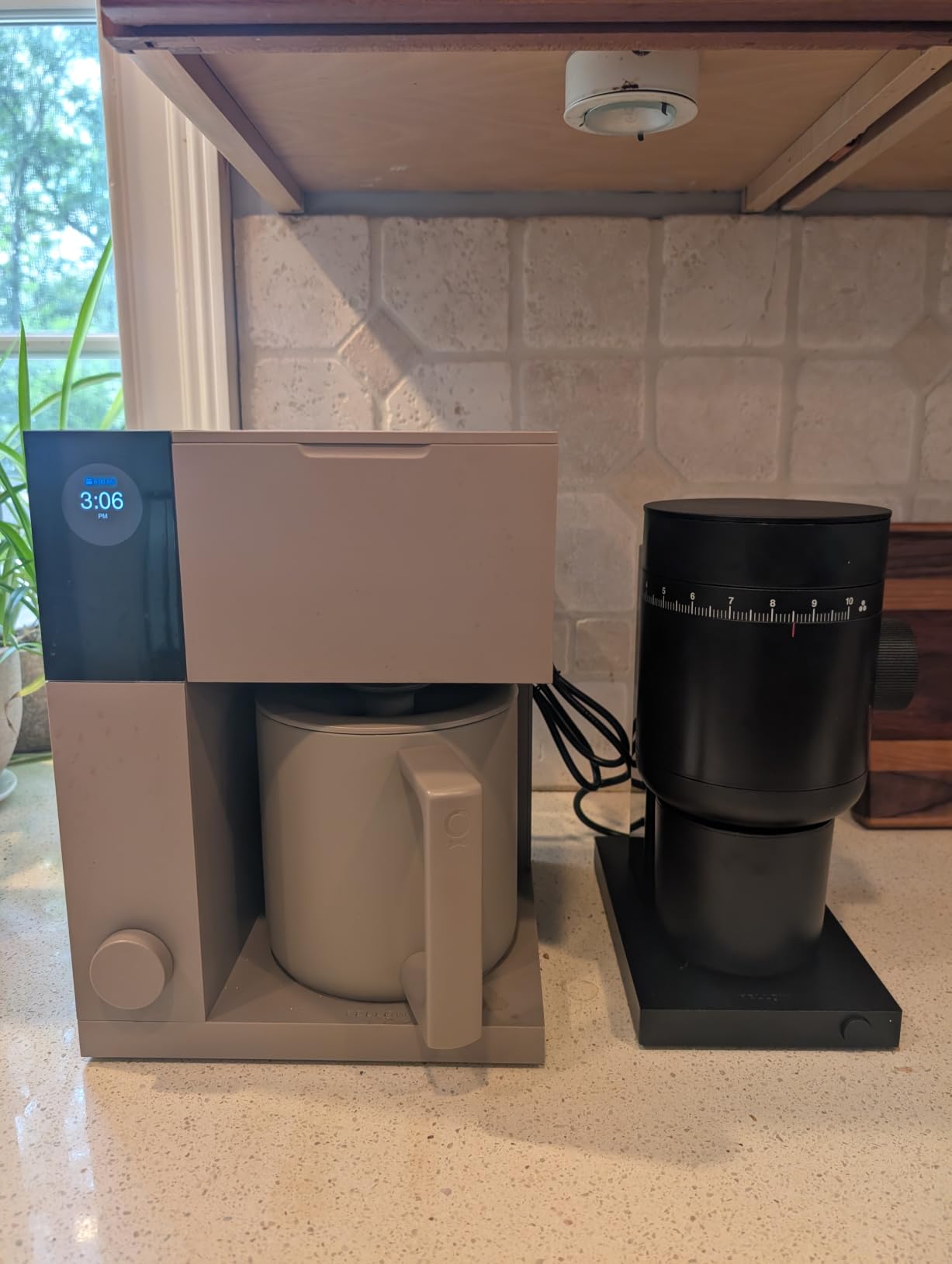
Two magnetic catch cups are included, one of which fits 54mm and 58mm portafilters. Burr access is tool-free, and there is a grind reference guide built under the lid for when you forget where you were.
The honest caveat is that this is a newer release with a much smaller review base than the established names here. Early owner feedback centers on simplicity rather than enthusiast dialing.
What you should know before you buy
The 48mm conical burr set is smaller than the 64mm class now available at similar price points. You trade raw burr size and headroom for simplicity and a compact footprint.
Tool-free burr access is convenient, but consistent results still depend on cleaning the burrs on a routine. Auto shutoff removes dosing errors, not maintenance.
Who this grinder suits
This fits someone who wants espresso and cold brew from one appliance without learning a dosing routine. Auto shutoff makes it forgiving, which pairs well with a first machine.
If you want a deep enthusiast setup with measured retention figures and a large upgrade path, the flat burr machines earlier in this list serve that goal better.
11. Turin SK40 – Best for Single-Dose Purging
Turin SK40 Single Dose Grinder | 40mm Stainless Steel Conical Burrs, Stepless Adjustment, Tilted Base, Low Retention – Black or White (Black)
40mm stainless conical burrs
Stepless dial
Tilted body with bellows
Single dose only
110V
Pros
- Stepless adjustment makes small espresso grind changes easy
- Low retention from a tilted body working with bellows
- Single-dose workflow makes switching beans painless
- Wood lid and metal hopper give it a premium feel
- Highest average rating among the grinders in this roundup
Cons
- Small 40mm burrs next to the 58-64mm class on rivals
- Single dose only with no bulk hopper option
- Very small review base limits long-term reliability data
The SK40 has the highest average rating of the twelve grinders we looked at, though it sits on a small sample of reviews. Early owner feedback centers on the stepless dial and the low retention the tilted body delivers.
Retention is handled by tilting the body so grounds fall out, combined with a rubber bellow you purge through. The result is a chamber that empties properly, which is exactly what you want when switching beans.
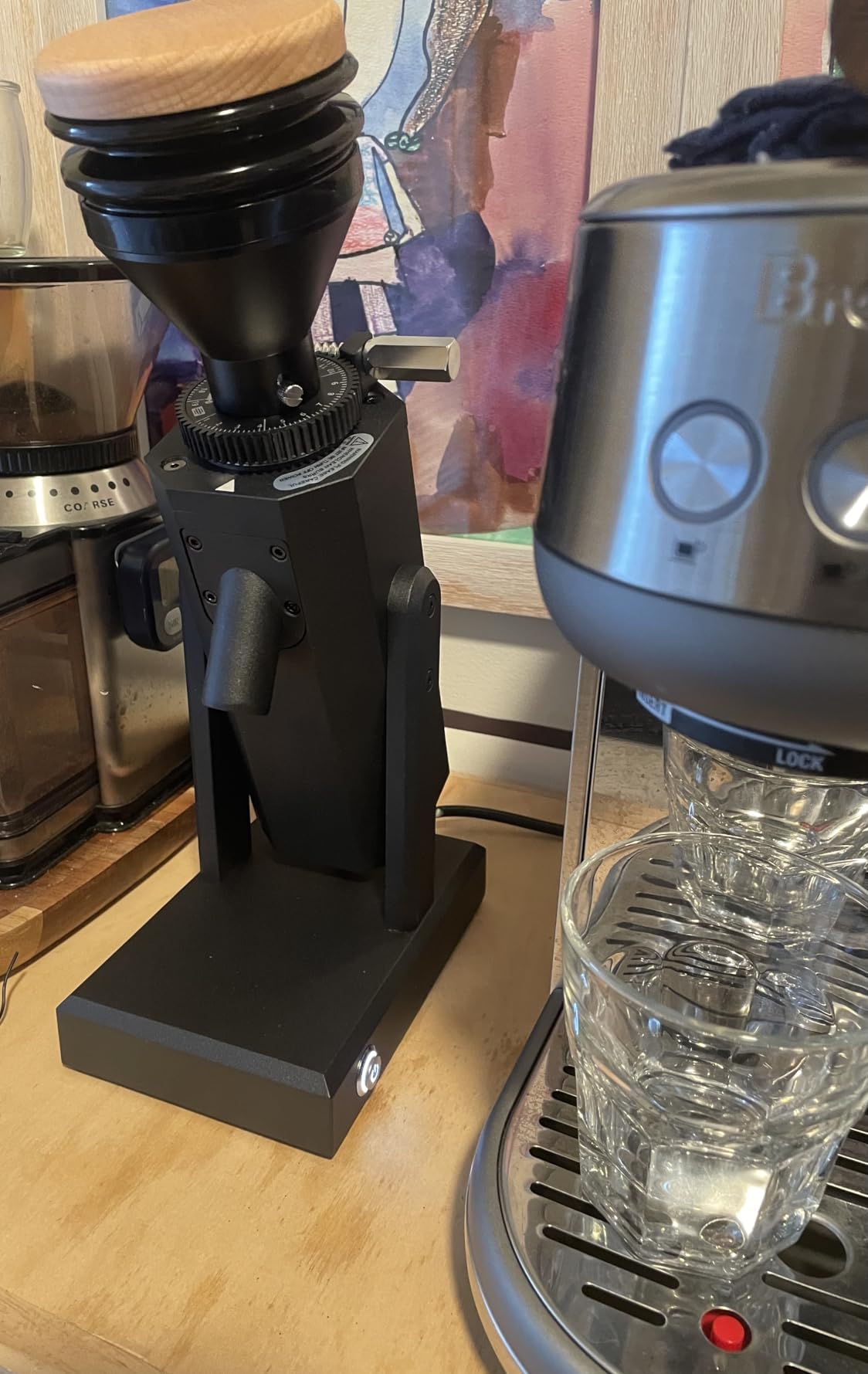
Inside are 40mm stainless steel conical burrs with stepless adjustment running the full range. Small espresso grind changes are easy to make because there are no clicks between positions.
Build details are a step above the plastic competition: an aluminum body and base, stainless steel burrs, a metal hopper, and a wood lid that reviewers mention as the first thing they noticed.
What you should know before you buy
The 40mm burrs are small next to the 58mm and 64mm machines on this list, so grind speed is not its strength. If you pull four-plus shots a day and prefer speed, look higher.
It is single dose only, with no bulk hopper option, and it runs on 110V. With only 38 reviews available, long-term durability data on this model is genuinely limited.
Who this grinder suits
This fits a small setup where every gram of retention matters and you pull one or two shots at a time. The wood lid and metal hopper make it a good-looking addition to an open counter.
Choose a larger-burr machine if speed or batch brewing is part of your routine. Choose a machine with more reviews if you want a longer ownership track record before buying.
12. Eureka Mignon Zero – Best for Italian Build
Eureka Mignon Zero Single Dose Espresso Grinder, White
55mm espresso burrs
Micrometric stepless knob
Silent Technology
Single dose to 46g
Built in Milan
Pros
- Quiet operation that suits early morning use
- Very low retention around a tenth of a gram after bellowing
- Fast consistent single-dose grinding with a simple workflow
- Solid build quality that feels built to last
- Single-dose hopper makes bean switching easy
Cons
- Stepless dial has no marked scale so you find zero yourself
- Some static with coarse grinds without an RDT
- Grounds can collect near the exit chute and fall into the housing
- One owner received a unit with misaligned burrs
This grinder is hand built in Milan around 55mm professional espresso burrs, and the whole design pushes toward quiet, fast, single-dose work. Silent Technology handles the sound output, which is a noticeable step down from an open-frame machine.
Retention lands around a tenth of a gram after you bellow the chamber out, and the blow-up hopper design is part of how that happens. Single-dose capacity runs up to 46 grams, enough for a double with headroom.
Adjustment is a micrometric stepless knob with an extra-comfort grip, and it has no marked scale. You find your zero point by feel, which some people like and others find irritating during the first week.
Owners report strong enthusiasm for build quality and low retention, with a smaller 45g dosing cup than other Mignon models uses. Several reviews stress checking burr alignment on arrival, since one buyer received a misaligned unit before getting an excellent replacement.
What you should know before you buy
Verify burr alignment as soon as it arrives. If it will not grind fine enough at zero, that is a defect rather than a setting problem, and it is worth catching early.
Coarse grinds pick up static without an RDT, and grounds can collect near the front above the exit chute and drop into the housing. Neither is serious, and both are manageable with a routine.
Who this grinder suits
This fits a buyer who values build quality and quiet single-dose workflow, and who pulls espresso almost exclusively. Low retention makes it well suited to rotating single-origin bags.
With only 33 reviews behind it, you are buying on design reputation more than volume of experience. If proven longevity matters most to you, pick an established machine with thousands of reviews instead.
How to Choose an Espresso Grinder Under $500
Burr type and burr size decide how fast and how consistent the grind is
Conical burrs funnel beans into a smaller cutting area and tend to be cheaper, quieter, and more forgiving. Flat burrs sit side by side, produce a tighter particle size distribution, and tend to produce more fines.
Burr size matters more than most buyers expect. A 40mm conical burr is fine for espresso but slow, while a 64mm flat burr cuts faster, runs cooler, and gives you more headroom when you later want to swap in aftermarket burr sets.
Below this budget you can now get 54mm to 64mm flat burrs with true stepless adjustment. That combination was not available in this price range a few years ago, which is why this tier has improved so quickly.
Stepped versus stepless adjustment, and why espresso exposes the difference
A stepped grinder offers fixed positions with a defined gap between burrs. A stepless grinder lets you move the gap continuously, so a tiny turn produces a tiny change in grind size.
Espresso punishes coarse steps because the useful range is narrow. If your two nearest settings are too fast and too slow, you end up compensating with dose or tamp, which is exactly the habit that keeps shots tasting off.
The practical test is whether you can hit a good shot without changing anything except the grind setting. Stepless grinders pass it more often, and the dual-range steppers here mitigate it by dedicating their fine clicks to espresso.
Retention and single-dose versus hopper workflow
Retention is the coffee left sitting in the grinder between doses. It goes stale, it clumps, and it throws off the next dose weight, so a low-retention grinder behaves far more predictably when you change beans.
Single-dose grinders take a measured amount of beans each time and can be purged with a bellow or blow-out tool. Hopper grinders are faster for filter work but leave old beans sitting behind fresh ones, which frustrates people who rotate origins.
A rough rule: one or two shots a day with one bean on the go suits a hopper. Several shots a day or frequent bean switching suits single dose.
Noise level is a real buying criterion, not a footnote
Flat burr grinders on high-speed motors are the loudest, and forum threads about early morning grinding and apartment living come up constantly. Owners of insulated metal machines describe running them during a nap without complaints.
If a shared wall or a sleeping household is part of your situation, weight the quiet pick higher than the spec sheet suggests. Insulation, rubber mounts, and a low-RPM motor matter more than wattage.
Why the grinder usually comes before the machine
The grinder controls particle size distribution, which controls how water moves through the puck. A better machine cannot rescue a grind that is inconsistent, and the grinder typically outlives the machine.
If you are splitting a budget, put more of it into the grinder and buy a modest machine first. A wide-open entry machine can pull excellent espresso with a good grinder, while an expensive machine with a cheap grinder produces expensive disappointment.
A short maintenance routine that protects your results
Brush the burrs and chute every week, purge single-dose chambers after each session, and run a full clean of the upper burr and chamber monthly. Grinder alignment drifts with residual oil faster than with wear.
Keep the instruction sheet for your model, because reassembly order matters on grinders with bottom-burr adjustment. Owners who take photos before disassembly report fewer mistakes.
For comparison on heavier-duty cutting tools for other jobs, our [angle grinder picks](https://www.wearesalt.org/best-angle-grinders/) cover the workshop side rather than the coffee bar.
Frequently Asked Questions
What is the best espresso grinder for the money?
The Breville Smart Grinder Pro is our pick for the money under 500. It has the largest proven review base in this roundup, 60 grind settings with an adjustable upper burr, and a 0.2 second dosing timer that behaves closely enough like a scale that most owners stop weighing doses.
What is the best inexpensive espresso grinder?
The Baratza Encore ESP is the cheapest reliable path to fine espresso. Forty millimeter hardened steel burrs and a dual-range dial put micro steps 1 through 20 dedicated to espresso, and there is no timer or electronics to complicate the workflow or fail over time.
Which espresso grinder is better for espresso, and which for everything else?
For espresso alone, a dedicated model like the Eureka Mignon Notte or the MiiCoffee DF64 II gives you flat burrs, stepless adjustment, and low retention. For one grinder covering espresso and filter, the Breville Smart Grinder Pro or the MOKKOM with dual hoppers serves both workflows.
Do I need a burr grinder for espresso?
Yes. Espresso needs repeatable control over particle size, and burr grinders are what provide it. Blade grinders produce inconsistent particle sizes shot to shot, which leads to gushing and channeling no matter how good your machine or coffee is.
Is a manual espresso grinder good enough?
A good manual espresso grinder produces excellent results and rewards you with control and silence. It is slower per shot, though, and if you pull more than about two shots a day an electric model under 500 will serve your workflow better.
Should I upgrade my espresso machine or my grinder?
Upgrade the grinder first. Grind consistency drives particle size distribution and extraction, and the machine cannot rescue an inconsistent grind. The grinder also typically outlives the machine, so your money goes further.
Our Verdict on the Best Espresso Grinders Under $500
The Breville Smart Grinder Pro takes the top spot for the best espresso grinders under 500 because it delivers proven grind consistency at a price most first-time buyers can reach, backed by more than seven thousand reviews.
Budget buyers should start at the Baratza Encore ESP, and anyone who dials in for fun should look at the Sette 270. Low-retention single-dose fans get the DF64 II, and quiet households get the Mignon Silenzio or the compact Viesimple Gen 4.
Check the current listing before you order, since burr options and sales move these machines across the 500 line. Whichever you choose, spend the time on the dial-in; the grinder only helps if you use the control it gives you.