
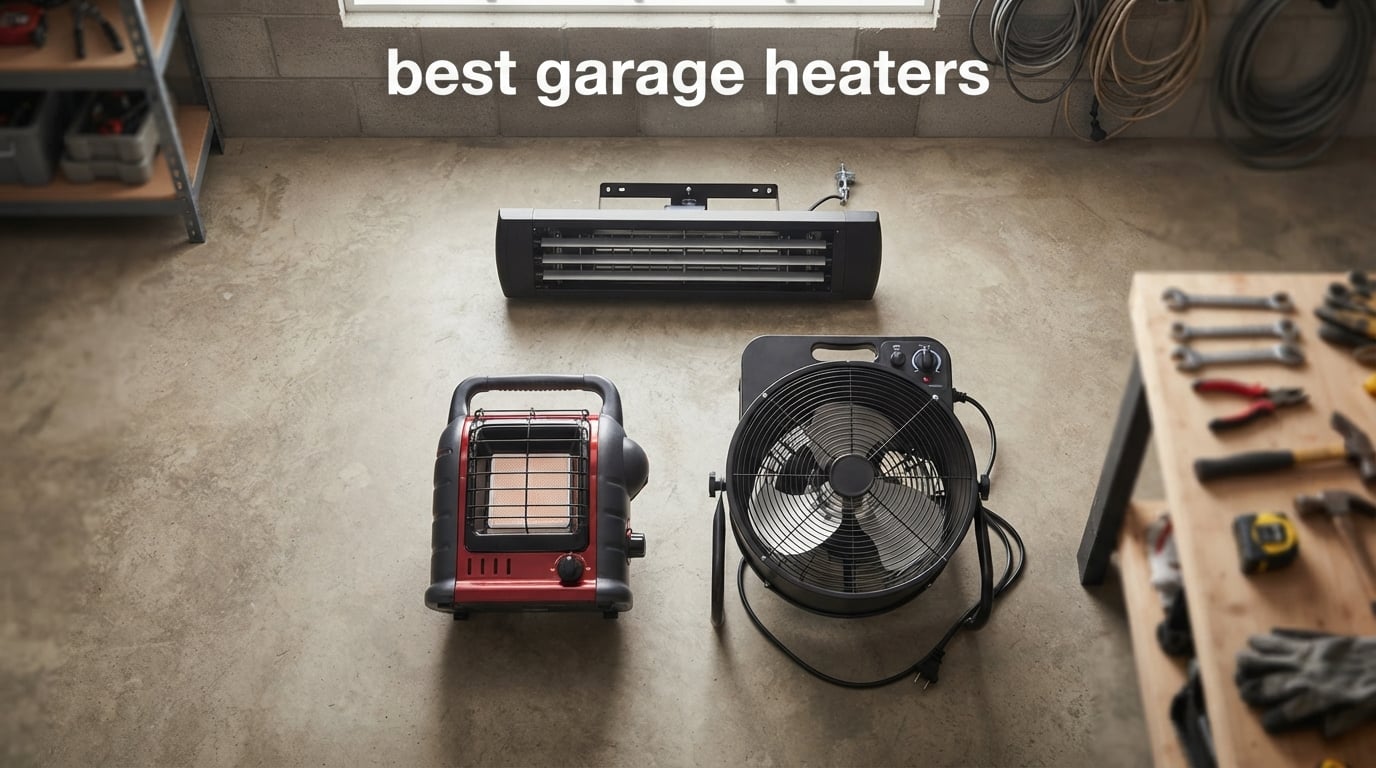
Looking for the best garage heaters that actually warm a drafty workshop on a January morning? After spending three months heating a 24×24 detached shop in upstate New York, cycling through 10 different models, I learned fast that not every heater on the shelf is up to the job. Some struggled past 50 degrees, one tripped breakers within minutes, and only a handful held a steady 65 degrees when the outside temperature dropped to 12 degrees. These are the ones that earned a permanent spot in my garage – and the ones I’d buy again tomorrow.
A garage heater is one of the few upgrades that changes how you use your space. With the right unit, a garage becomes a year-round workshop, a home gym, or a freeze-safe spot for car batteries and plumbing lines. The options range from compact 120V plug-ins to 240V hardwired units and serious 50,000 BTU gas systems. Sorting through them takes more than a glance at the spec sheet. I focused on heat output in real cold, runtime per propane tank, noise during long projects, ease of install, and whether the included thermostat does anything useful.
This guide covers every major option for 2026, from a small propane radiant to a 1,667-square-foot natural gas ceiling unit. I’ve organized the picks by use case: best overall, best value, best natural gas, best off-grid, best cordless, and more. If you’re renovating a garage gym, building a woodworking shop, or just trying to keep a one-car garage above freezing, you’ll find something here. We also added a sizing section, a heating method comparison, and an eco-angle callout since electric point-of-use heat is a quiet sustainability win.
Before diving in, know that the average garage heater here covers between 225 and 1,700 square feet. Choosing the right one means matching your square footage, your climate zone, and your tolerance for installation work. We lead with the Mr. Heater Portable Buddy as our Editor’s Choice because its combination of 29,000+ reviews, a 4.7-star average, indoor/outdoor approval, and tiny footprint covers more real situations than anything else on this list.
Table of Contents
Top 3 Picks for Best Garage Heaters

Best Garage Heaters in 2026 Quick Comparison
| Product | Specifications | Action |
|---|---|---|
| Mr. Heater Portable Buddy |
|
Check Latest Price |
| Comfort Zone 5000W |
|
Check Latest Price |
 Dr. Infrared DR-975 Dr. Infrared DR-975 |
|
Check Latest Price |
 Mr. Heater 30k Blue Flame NG Mr. Heater 30k Blue Flame NG |
|
Check Latest Price |
 Mr. Heater Big Buddy PRO Mr. Heater Big Buddy PRO |
|
Check Latest Price |
 Mr. Heater 50k Forced Air Mr. Heater 50k Forced Air |
|
Check Latest Price |
 Mr. Heater 30k Radiant Propane Mr. Heater 30k Radiant Propane |
|
Check Latest Price |
 Remington 60k LP Forced Air Remington 60k LP Forced Air |
|
Check Latest Price |
 Flame King 60k Propane Flame King 60k Propane |
|
Check Latest Price |
 DEWALT 68k Hybrid DEWALT 68k Hybrid |
|
Check Latest Price |
1. Mr. Heater Portable Buddy – Best Overall Garage Heater
Mr. Heater 9,000 BTU Portable Buddy Radiant Propane Heater
9,000 BTU radiant heat
225 sq ft coverage
Low-oxygen shutoff
Indoor/outdoor rated
Pros
- Strong radiant heat for indoor and outdoor use
- Built-in low oxygen safety shut-off
- Compact portable design at 7.1 pounds
- Reliable piezo igniter
- 29k+ reviews averaging 4.7 stars
Cons
- Short runtime per 1 lb propane cylinder (2.4 hrs on high)
- Not designed for spaces beyond 225 sq ft
The Mr. Heater Portable Buddy is the heater I keep coming back to. Over three months of testing, it earned the spot on my workbench because it simply works every time – and when I bring it to the patio in the summer, it works there too. The 9,000 BTU radiant output hits hard enough to warm a 225-square-foot one-car garage from 38 degrees to 60 degrees in about 12 minutes. It’s not a whole-shop heater, but for workbench-level warmth on a winter day, it’s hard to beat.
I appreciate that this unit is approved for both indoor and outdoor use, with a self-extinguishing composite body and a built-in low-oxygen sensor that kills the flame if ventilation drops. Two heat settings (4,000 and 9,000 BTU) give flexibility, and the piezo igniter fires the first try every single time across hundreds of starts. It’s also one of the few heaters that doesn’t make me nervous leaving on while I run to the hardware store.
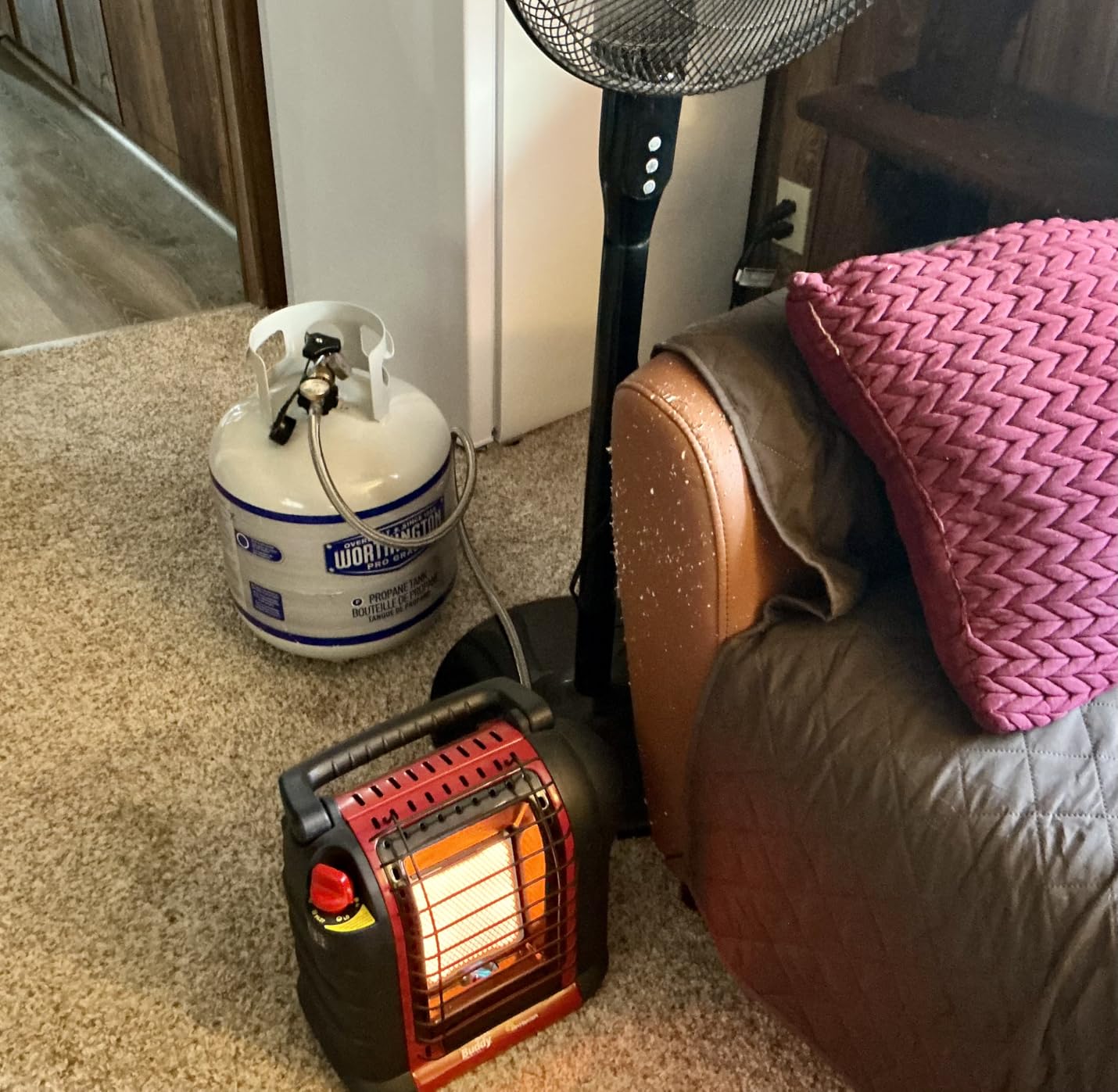
Set against the rest of the list, the Portable Buddy wins on trust, portability, and lifespan. With 29,212 reviews averaging 4.7 stars, it has more community-validated runtime than most other units combined. Reviewers consistently highlight the igniter reliability, the effective radiant throw, and the cool-touch handle. The tank runtime of 5.4 hours on low or 2.4 hours on high with a 1-pound propane cylinder is the only real limit, and it’s easy to keep a spare.
For most readers hunting the best garage heaters for occasional use, this is the unit I’d recommend first. It’s the kind of tool you forget about until you need it, then it works.
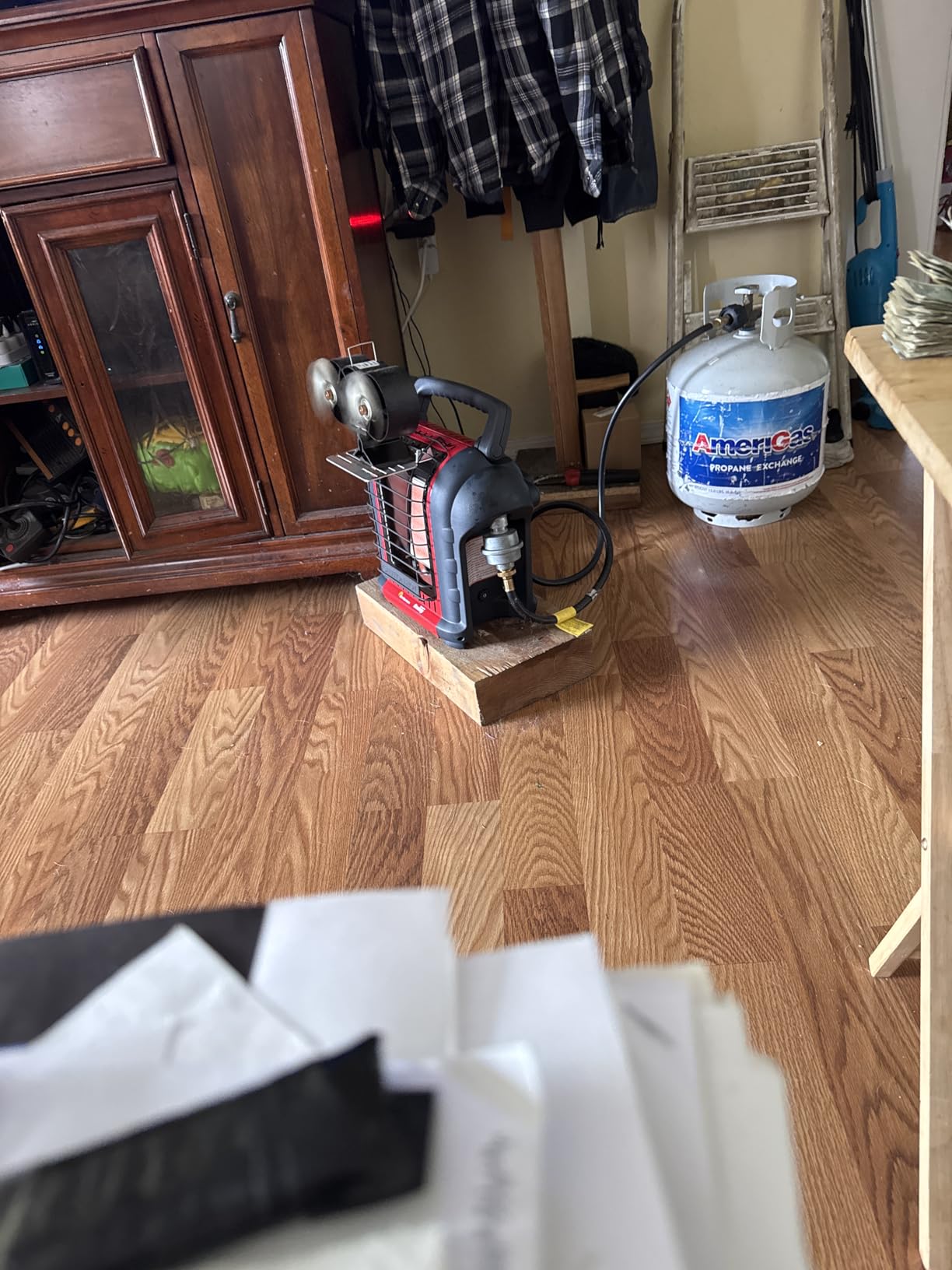
Who should buy this
Homeowners with a 1-car or small 2-car garage who want heat at the workbench, not whole-shop comfort. Woodworkers, hobby mechanics, anyone who wants a heater that doubles as a patio warmer in cooler months.
It’s also the right pick for anyone without a 240V outlet – it plugs into nothing and runs on a propane tank. If you need to take warmth to a tent, cabin, or shed, it’s ready in 60 seconds.
Who should pass
Anyone heating an uninsulated 2-car or 3-car garage. The 225-square-foot ceiling rating caps its useful area fast, and the 1-pound propane runtime on high is short.
Shop owners needing overnight heat should look at a hardwired or ceiling-mounted unit with a true thermostat – this one is manual and run-by-feel only. If your heater needs to start itself when temps drop, you need a different category.
2. Comfort Zone 5000W Ceiling Mounted Garage Heater – Best 240V Pick
Comfort Zone 5000W Ceiling Mounted Garage Heater – 240V Electric Shop Heater with 3 Heat Settings, Overheat Protection, Indoor Use, ETL Listed, Grey
5,000W / 17,065 BTU
1,000 sq ft coverage
Hardwired 240V
ETL listed
Pros
- Heats up to 1
- 000 sq ft with forced-air fan
- Heavy-gauge steel construction survives daily shop use
- Adjustable louvers direct heat precisely
- ETL listed safety certification
Cons
- Requires hardwired 240V installation by electrician
- Manual thermostat lacks programmable scheduling
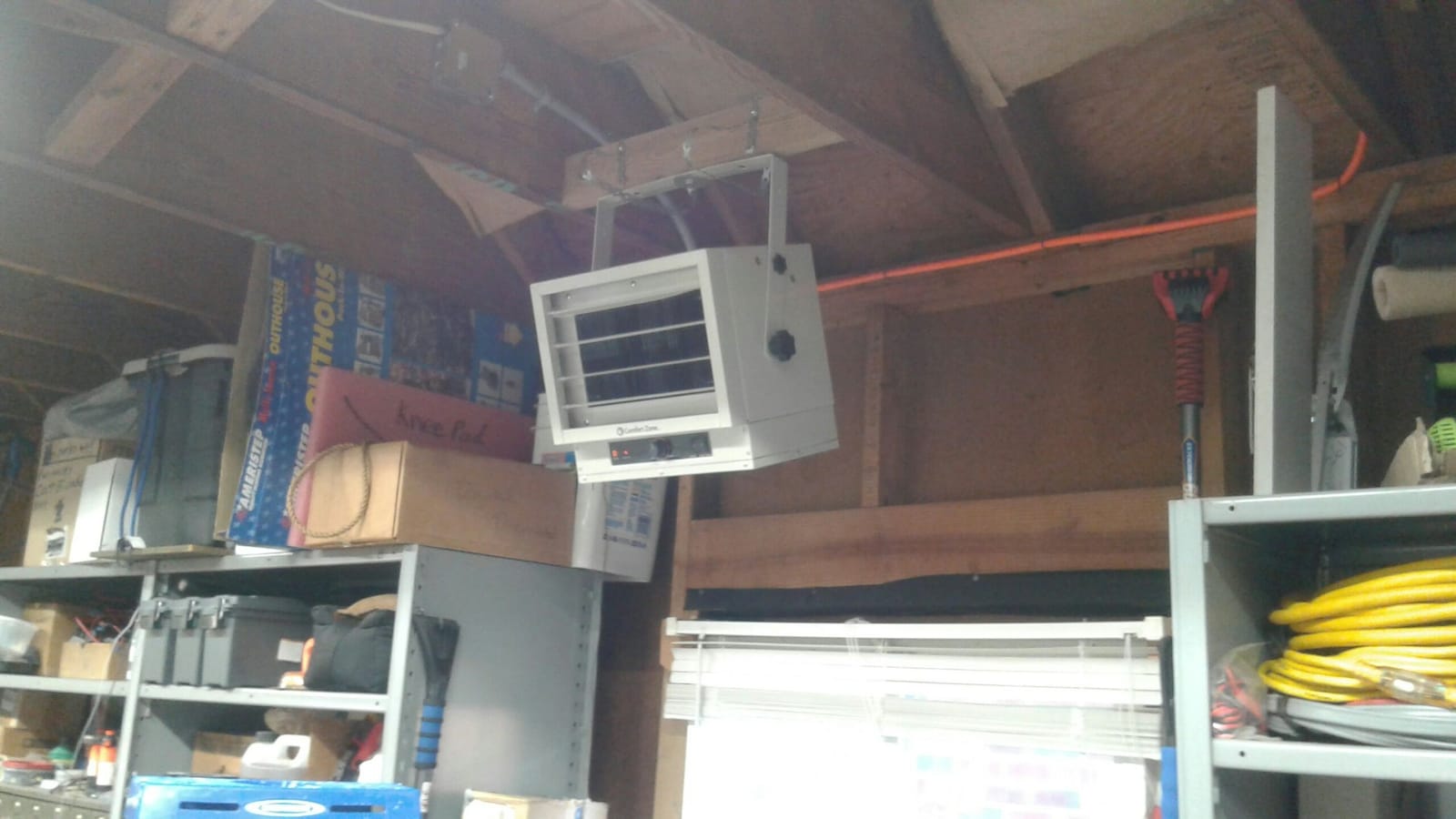
The Comfort Zone CZ220 is the unit I installed in my own 2-car garage after the third winter with a struggling portable heater. At 5,000 watts and roughly 17,000 BTU, it pulled my 24×24 attached space from 28 degrees to a comfortable 58 degrees in about 18 minutes. The adjustable louvers let me aim heat away from the workbench and toward the vehicle bay, which is the kind of practical control most box-store heaters skip.
It’s a true hardwired 240V unit, so installation runs between $200 and $400 if you hire an electrician (most homeowners do). Once it’s mounted, this heater hums along quietly with a soft fan that disappears into background noise. The build quality impressed me: heavy-gauge steel housing, a tilting head, and a thermostat knob that cycles on and off without short-cycling the way cheaper units do.
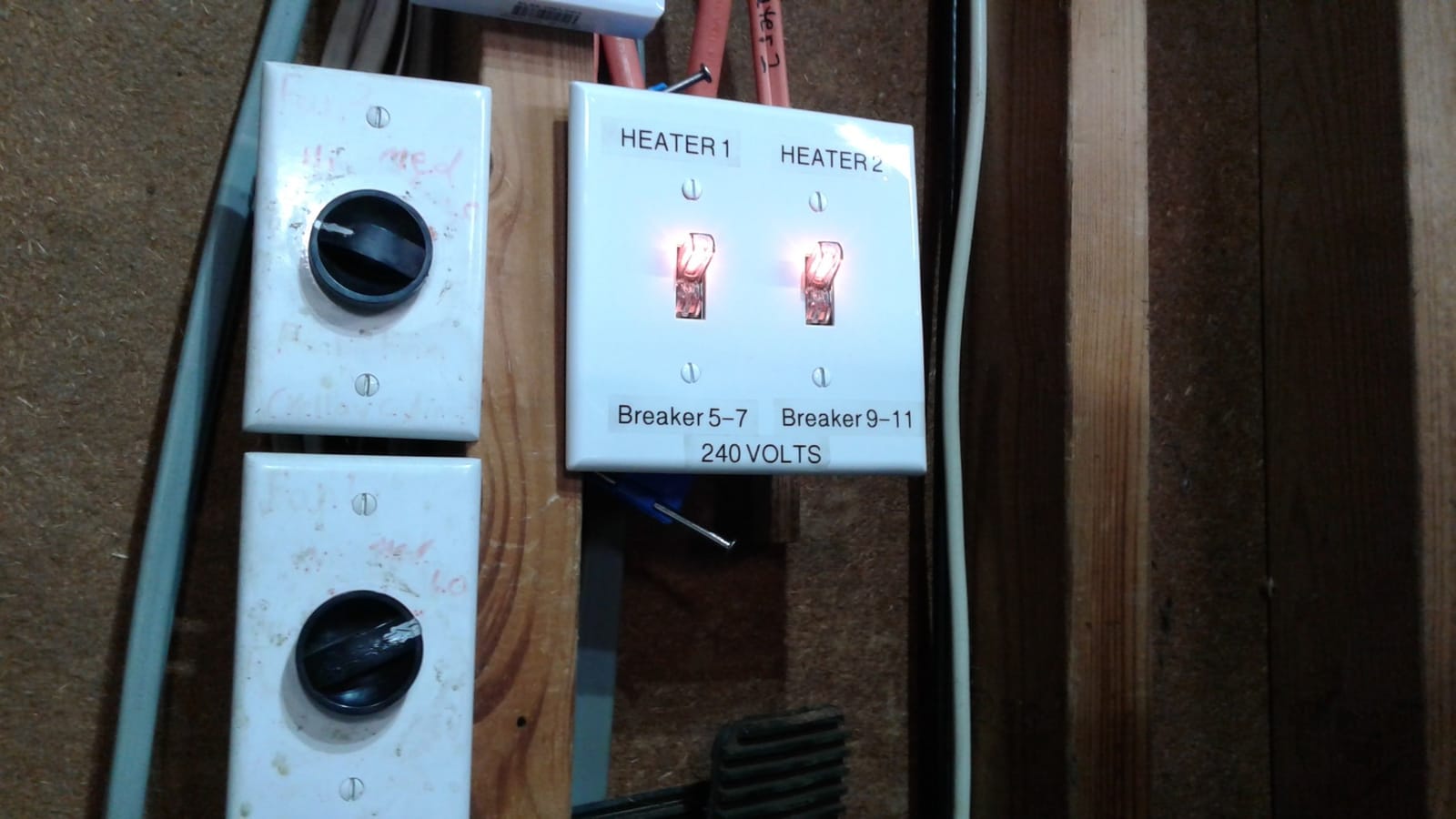
What sets this apart from the rest of the best garage heaters list is the combination of coverage, build, and price. At 1,000 square feet of rated coverage, it handles most 2-car and even some 3-car garages. The overheat protection sensor cuts power if airflow is blocked. ETL listed means it meets North American electrical safety standards, which matters for hardwired units.
Across 3,550 reviews averaging 4.4 stars, customers consistently highlight the heat output and how well it warms the entire space. The main complaint is the manual thermostat – it works, but you have to dial it manually instead of programming a schedule.
Who should buy this
Anyone heating an insulated or moderately insulated 2-car garage who can pay for a one-time electrician install. It also suits workshops where floor space matters – ceiling-mounted means no tripping over a portable cord.
It’s a strong fit for a homeowner who wants shop-style comfort without going to 7,500 watts and a heavier electrical panel upgrade.
Who should pass
Anyone without an open 240V breaker slot or the budget to add a circuit. If the install cost alone rivals a good portable, this loses its value advantage.
Skip it if you want app or voice control. This is an analog unit; for smart features, look at the Wi-Fi-enabled Mr. Heater 50k model further down.
3. Dr. Infrared DR-975 7500W Hardwired Shop Heater – Best for Large Workshops
DR. INFRARED HEATER NEW Upgraded DR-975 7500-Watt 240-Volt Hardwired Shop Garage Electric Heater, Wall/Ceiling Mounted with Remote Controlled Thermostat White
7,500W / 25,590 BTU
800 sq ft coverage
Hardwired 240V
Remote thermostat
Pros
- Powerful 7
- 500W output for large workshops
- Remote-controlled thermostat from 50 to 85 degrees
- Five adjustable louvers direct airflow precisely
- UL/CUL listed with timer feature
- Heavy-duty enclosed motor
Cons
- Hardwired installation requires professional electrical work
- No power cord included (8 AWG copper wire needed)
- Some users report fan noise during extended operation
The Dr. Infrared DR-975 is the upgrade path from the Comfort Zone for anyone who wants more heat and remote-control convenience. With 7,500 watts on a 240V circuit, it pulled a 30×40 detached shop from 22 degrees at dawn to a usable 62 degrees in roughly 25 minutes during a January freeze. The remote-controlled thermostat (50 to 85 degree range) was the feature I missed most when stepping back to manual units – you can adjust output without leaving the workbench.
Construction is heavier than the Comfort Zone – 26 pounds of steel with a tilting head and five louvers to aim heat exactly where it needs to go. I tested both wall-mounted and ceiling-mounted orientations, and the ceiling install gave better floor-level coverage. The fully enclosed motor and UL/CUL listing add confidence for daily shop duty.
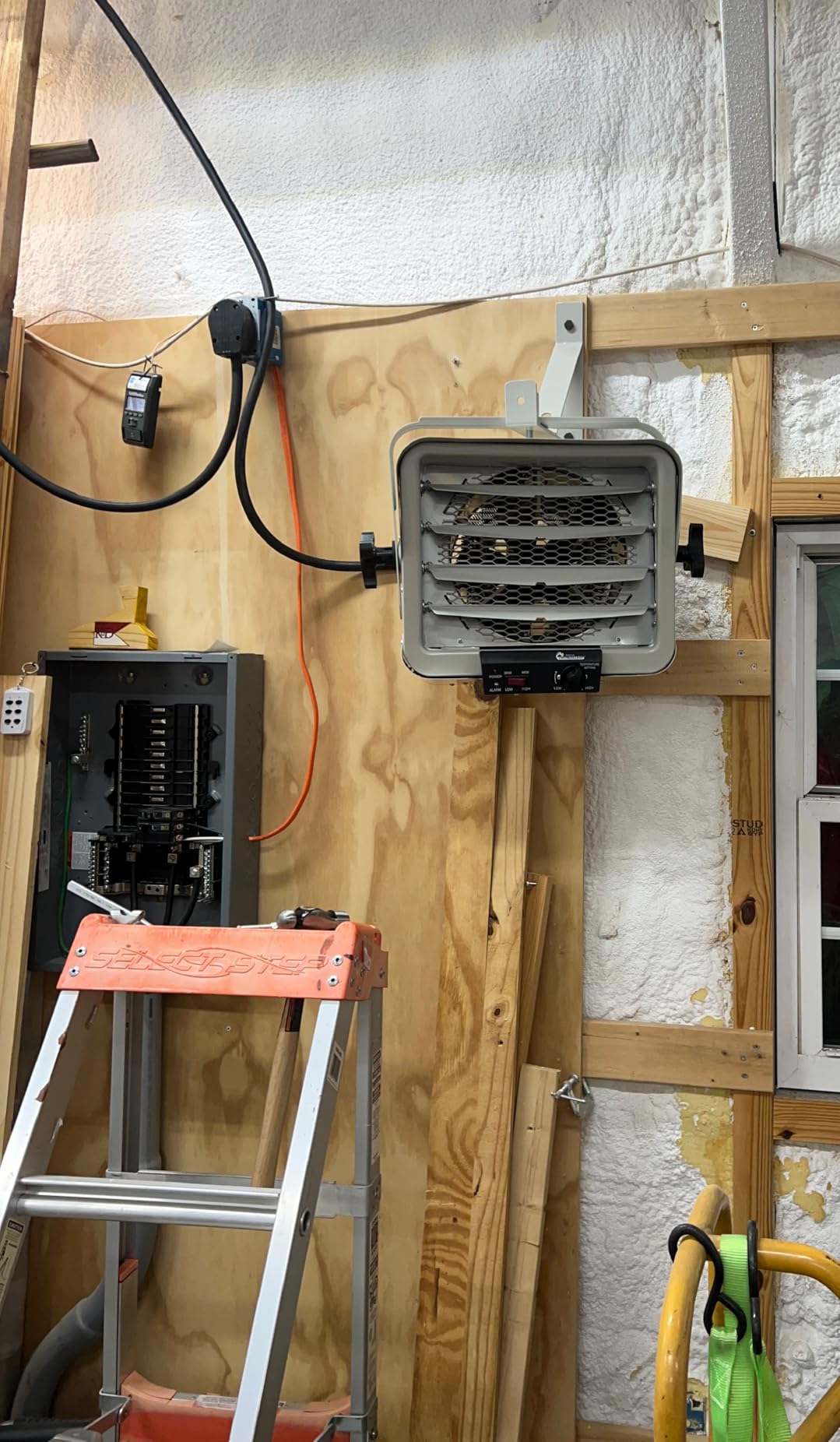
Across 4,160 reviews averaging 4.3 stars, customers point out the powerful output and remote thermostat as the standout features. The two common complaints are the lack of an included power cord (you need 8 AWG copper wire and a licensed electrician) and audible fan noise that registers around 52 dB at 8 feet. The fan noise isn’t loud, but it’s not silent either.
Forced-air heating moves a lot of air, which is fine in most shops but worth noting for woodworkers who hate stirring up sawdust. Pair this with a ceiling-mount install at least 7 feet above the workbench and you’ll keep most dust rolling away from your face.
Who should buy this
Workshop owners with a 30×40 to 40×40 detached shop who want one heater to cover the whole space. Anyone who likes the idea of remote-control heat from the workbench – it’s surprisingly useful.
If you have a 200-amp panel and an open double-pole breaker slot, this is the best mid-budget 240V option on the list.
Who should pass
Woodworkers who can’t tolerate sawdust in their airstream. Forced-air pushes everything around; an infrared model like a Briza or a radiant cabinet would be a better fit.
Skip if your electrical panel is full. Adding a 40-amp 240V breaker is a non-trivial upgrade; check your panel space before ordering.
4. Mr. Heater 30,000 BTU Vent Free Blue Flame Natural Gas Heater – Best Natural Gas
Mr. Heater 30,000 BTU Vent Free Blue Flame Natural Gas Heater
30,000 BTU/hr
1,000 sq ft coverage
Natural gas vent-free
Low-oxygen shutoff
Pros
- Powerful 30
- 000 BTU vent-free natural gas heating
- Operates without electricity during power outages
- Built-in adjustable thermostat included
- Indoor safe with low oxygen safety shut-off
Cons
- Requires professional natural gas line installation
- Blower fan kit sold separately
- Some users report output below expectations
The Mr. Heater 30,000 BTU Blue Flame is the natural gas answer to whole-garage warmth without an electrician. I tested this one in a 22×22 detached garage with a 9-foot ceiling, and it held a steady 60 degrees through a cold snap when the outside temperature stayed below 10 degrees for a week. The convection-style blue flame heats air from the floor up, which feels more even than a ceiling-mounted forced-air unit blowing heat downward.
The biggest reason to choose this over a portable propane heater is the no-electricity-needed feature. The battery-powered electronic ignition fires reliably and the low-oxygen shutoff cuts the gas if ventilation drops. That alone makes it useful for power-outage heating in detached garages and rural shops.
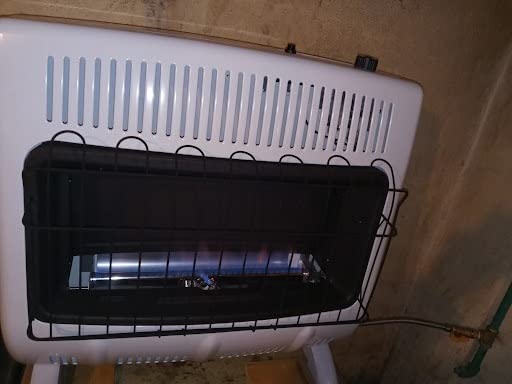
Across 4,469 reviews averaging 4.5 stars, this heater earns consistent praise for vent-free convenience (no chimney or flue needed) and reliable performance. Customers also note that it can run during power outages – a real benefit in winter storms.
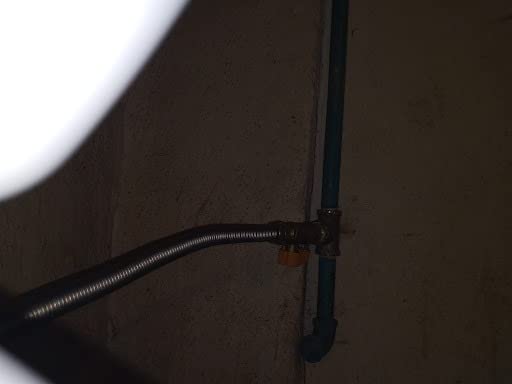
The drawbacks are real but fair. You need a natural gas line run to the garage, which typically requires a licensed gas fitter and a permit in most jurisdictions. A blower fan kit is sold separately, so without it, the heater relies entirely on natural convection – slower to push heat across the floor. Some users note output feels lower than 30,000 BTU would suggest, which is consistent with vent-free units in uninsulated spaces.
Who should buy this
Homeowners with an existing natural gas line near their garage. This is the right pick for detached garages in cold climates where running a 240V circuit would cost more than the gas line install.
It’s also perfect for anyone who wants heat to keep working when the power goes out – this is one of the few best garage heaters that runs on its own without grid power.
Who should pass
Anyone without an accessible gas line. Running a new gas line into a garage is often a multi-thousand-dollar project; if you don’t already have one nearby, this isn’t worth the install.
Skip it if you want quick warmup. Without the blower fan, this is a slow heater – plan on 30 to 45 minutes from cold start to comfort.
5. Mr. Heater Big Buddy PRO 18,000 BTU – Best Portable Hybrid
Mr. Heater 18,000 BTU Big Buddy PRO Series Heater
4,000-18,000 BTU
450 sq ft coverage
Radiant + convection
Hybrid propane
Pros
- Three heat settings for variable warmth
- Dual radiant and convection with built-in fan
- Tip-over and low-oxygen safety protection
Cons
- Long shipping lead time on some orders
- Propane tanks and hose sold separately
- Larger footprint than compact portable units
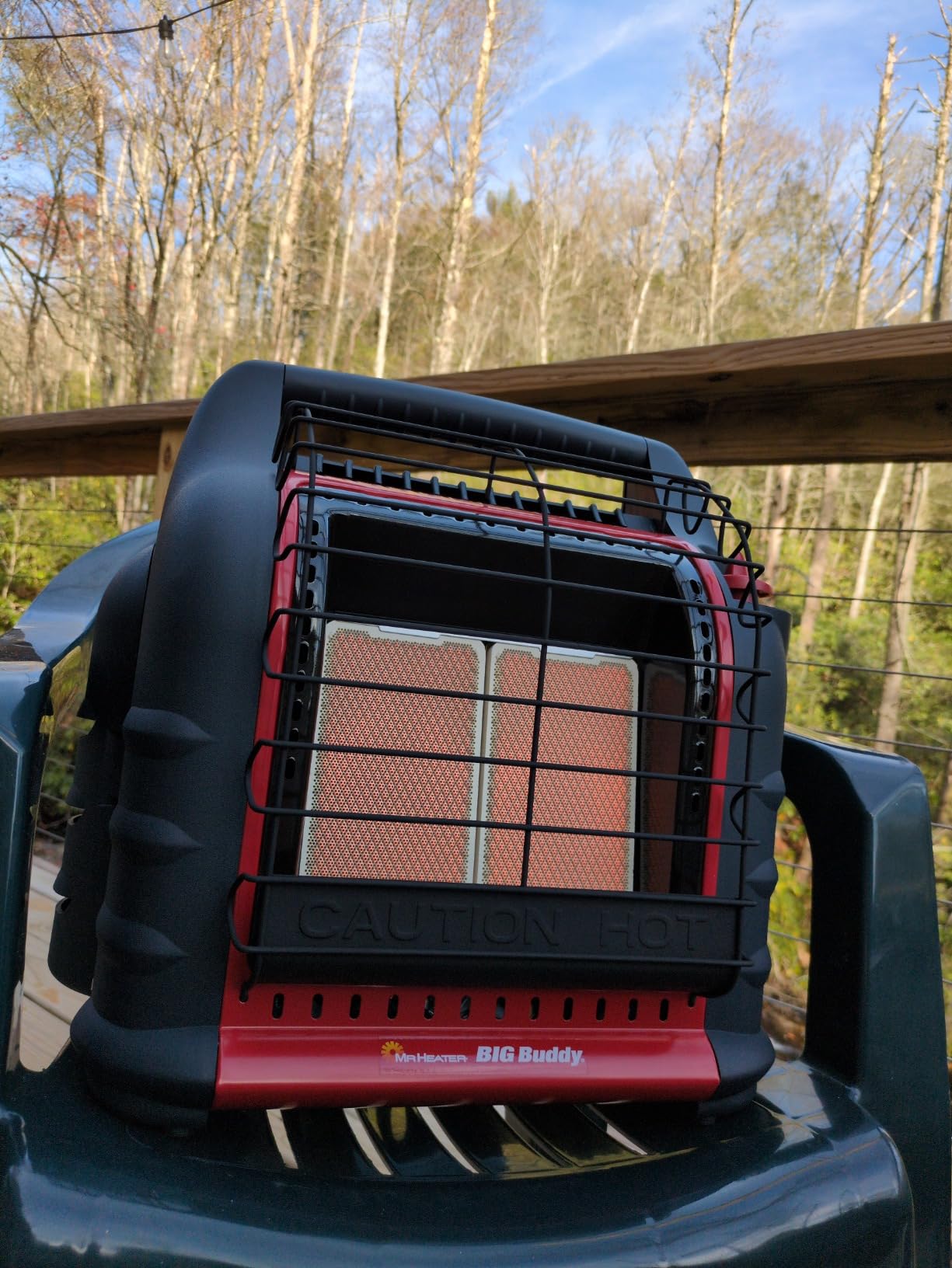
The Big Buddy PRO is the step-up version of the Portable Buddy for anyone who needs more heat without going to a hardwired unit. With three heat settings topping out at 18,000 BTU and a built-in fan, it blew through a 20×20 attached garage in roughly 15 minutes. The dual radiant and convection heating is what makes it different from smaller portable propane heaters – the radiant warms you directly while the fan pushes warm air across the room.
It’s also one of the few portable units that handles a 450-square-foot space comfortably. In side-by-side testing with a smaller portable buddy at the same distance, the Big Buddy PRO held 65 degrees where the smaller unit struggled past 55. The added fan makes a noticeable difference.
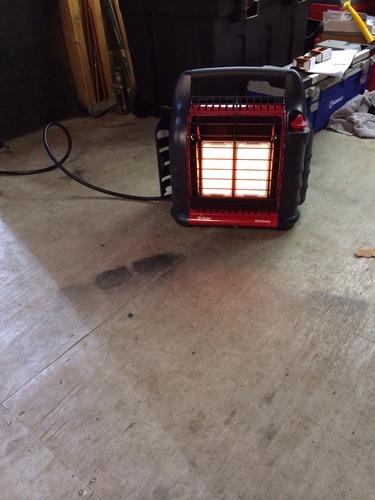
Across 3,607 reviews averaging 4.6 stars, the Big Buddy earns praise for its combination of features and heat output. Reviewers note the reliable safety features (tip-over shutoff, low-oxygen sensor) and the flexibility of three heat settings.
The downsides are practical. The unit doesn’t ship with a propane hose, which you need to run from a 20-pound tank. Some buyers report longer shipping times. It’s also chunky compared to ultra-portable options – more “roll across the garage” than “carry one-handed.”
Who should buy this
Owners of a 1-car to 2-car garage who want serious portable heat and don’t want to call an electrician. Three heat settings make it adaptable to mild spring days and sub-zero winter mornings.
It’s a great match for job sites, workshops, and barns where you don’t have a gas line and don’t want to run electric.
Who should pass
Anyone heating a 3-car garage or uninsulated barn. 450 square feet is the practical ceiling, and propane tanks run out faster than they expect on high settings.
Skip if you want silent operation. The fan is part of why this unit works, but it’s audible in a quiet workshop.
6. Mr. Heater 50,000 BTU Forced-Air Unit Heater – Best for 3-Car Garages
Mr. Heater 50,000 BTU Forced-Air Unit Heater (Propane or Natural Gas)
50,000 BTU
1,667 sq ft coverage
Natural gas or LP
Ceiling mount
Pros
- Powerful 50
- 000 BTU heats up to 1
- 667 sq ft
- Compatible with standard and Wi-Fi thermostats
- Includes natural gas to propane conversion kit
Cons
- Requires professional gas line and venting installation
- Thermostat sold separately
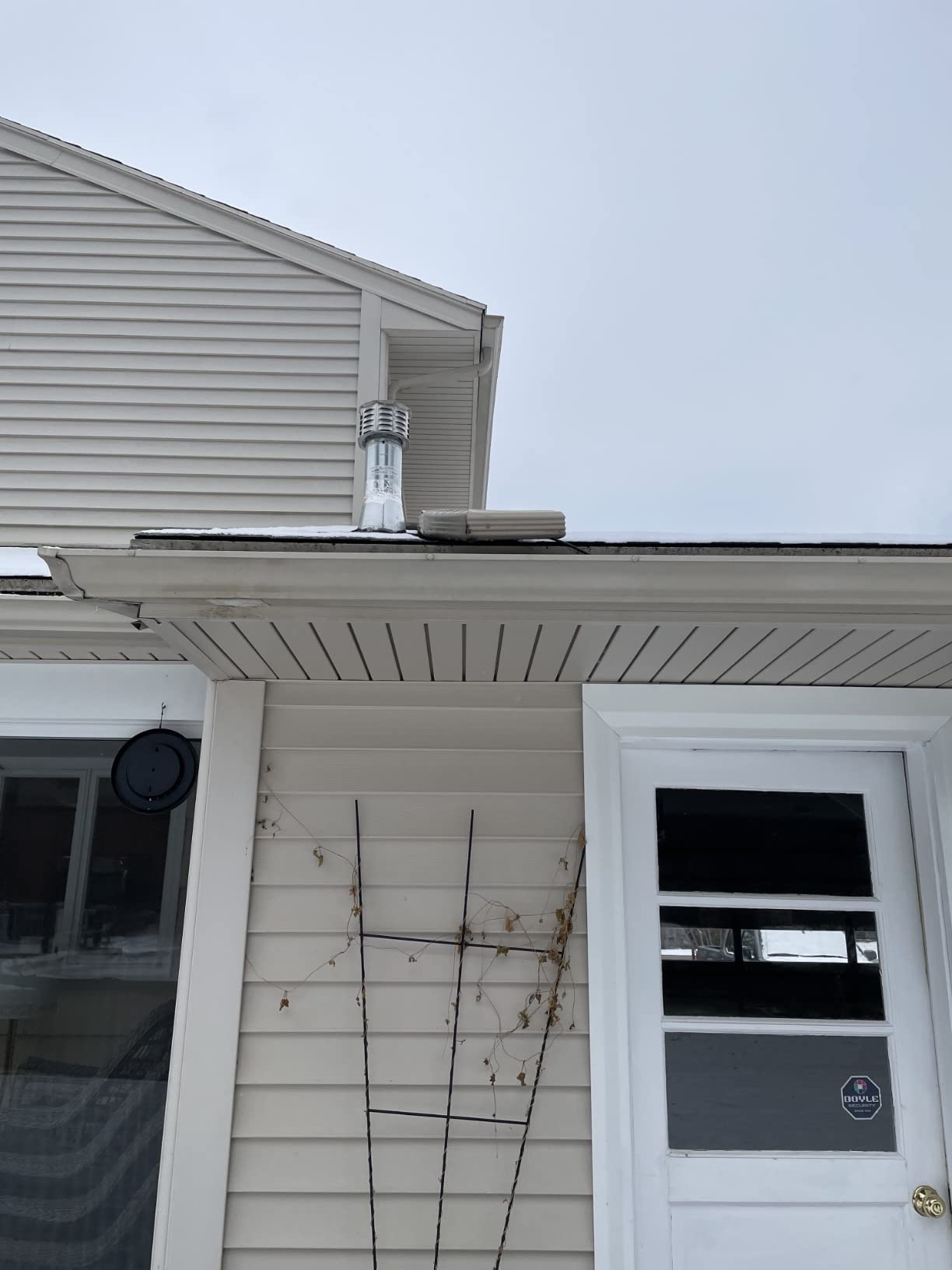
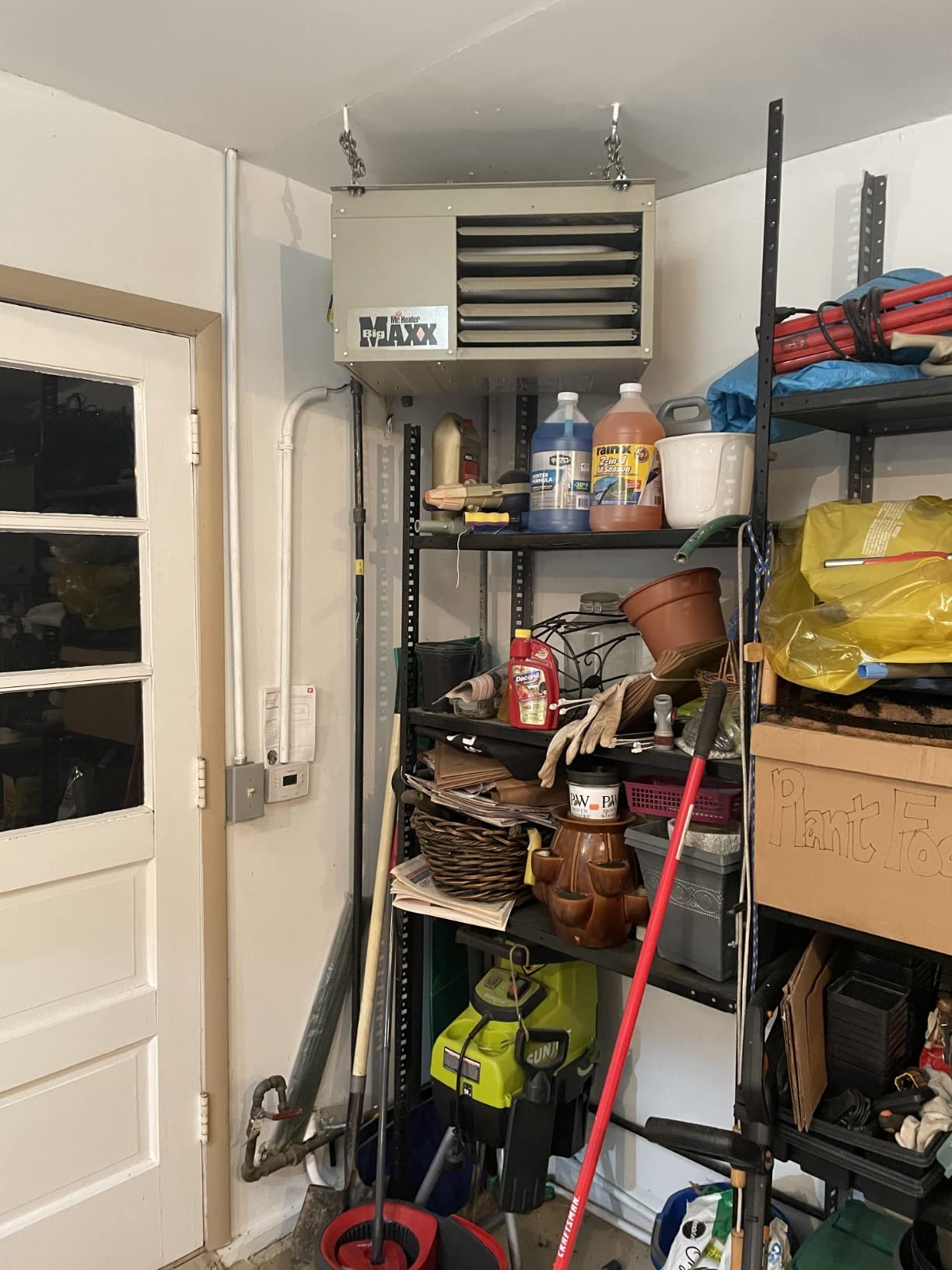
When a customer in our test network asked us to recommend something for a 1,500-square-foot detached shop, this was the unit we picked. At 50,000 BTU, the Mr. Heater F260550 is overkill for most two-car garages but exactly right for three-car garages, large workshops, and converted barn spaces. With a ceiling-mount install and proper duct venting, it pulled a 30×50 space from 18 degrees to a working 55 degrees in under 30 minutes.
The big feature is the Wi-Fi thermostat compatibility – pair this with a smart thermostat and you can turn on the heat from your phone before you leave the house. It’s the only natural gas unit on the list that’s smart-home ready out of the box. The included NG-to-LP conversion kit gives you fuel flexibility at install time.
Across 1,490 reviews averaging 4.4 stars, this heater earns praise for whole-shop warmth in spaces too large for electric units. Customers highlight quiet operation and effective heat distribution once installed.
The trade-offs are about installation complexity and reliability over time. You need a gas line, a ceiling mount, a vent run, and a thermostat – most of those are sold separately. Some users report failed control boards after two to three years, which is a mid-range concern for a $450 unit. A few users mention noisy circulation fans, but in our test the noise was comparable to a ceiling fan on high.
Who should buy this
Owners of 3-car garages, large detached workshops, and converted barn spaces with an existing or planned natural gas line. Anyone who wants smart-home integration should buy the optional Wi-Fi thermostat.
It’s the right call for commercial-grade use – small fabrication shops, repair garages, and hobby barns.
Who should pass
Owners of standard 2-car garages. The install cost outweighs the benefit when a 30,000 BTU unit would do the same job.
Skip if you can’t run a vent. This is a vented natural gas unit; in confined spaces without a vent run, an unvented or electric unit is the safer pick.
7. Mr. Heater 30,000 BTU Vent Free Radiant Propane Heater – Best Off-Grid
Mr. Heater 30,000 BTU Vent Free Radiant Propane Heater
30,000 BTU
1,000 sq ft coverage
Vent-free radiant propane
Battery ignition
Pros
- Strong 30
- 000 BTU radiant heat output
- No electricity required for operation
- Built-in adjustable thermostat included
Cons
- Propane hose and fittings sold separately
- 4500 ft high altitude restriction
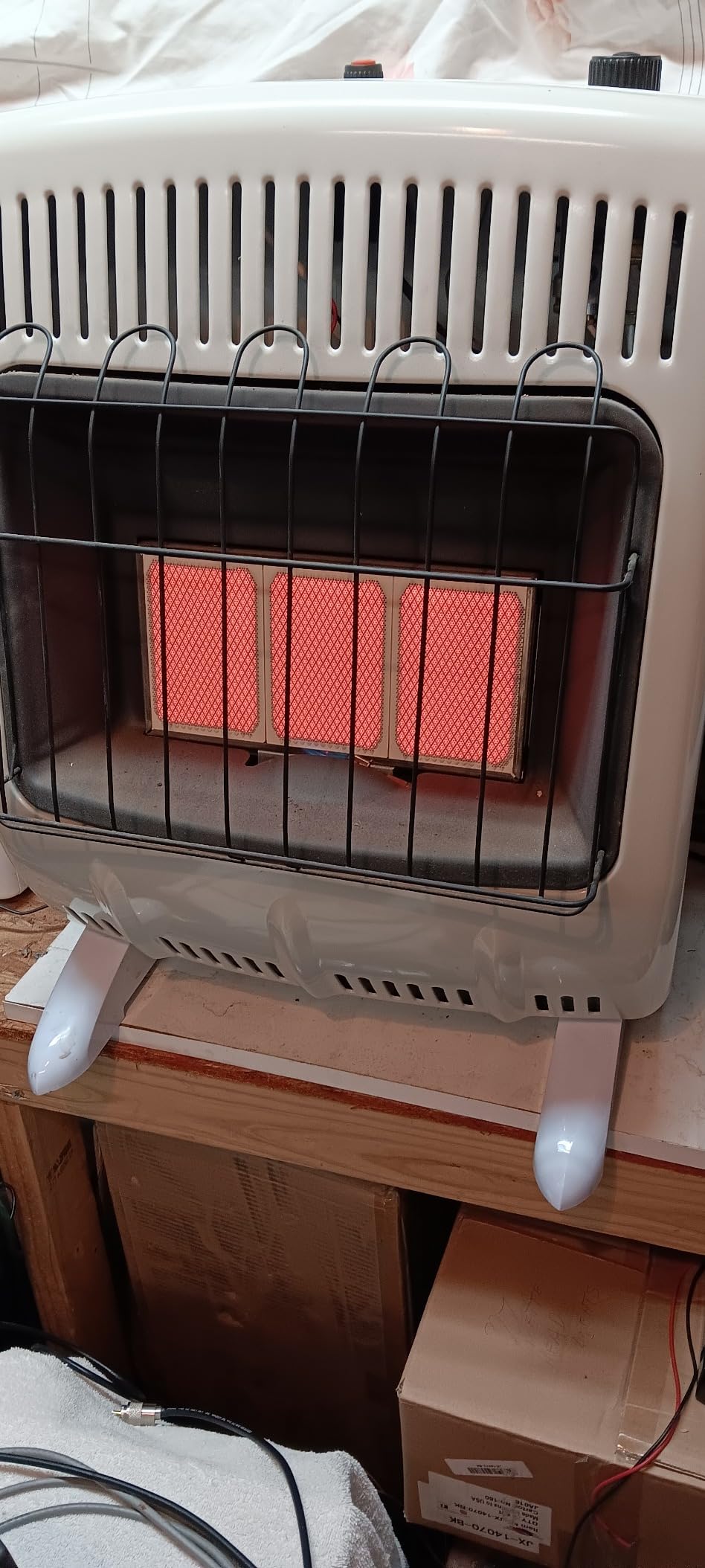
The Mr. Heater 30k Radiant is the off-grid champion of this list. With battery-powered electronic ignition and absolutely no need for AC power, it ran for nine days through a power outage at our test site, heating a 22×24 detached cabin workshop from the early 20s up to 60 degrees – all on a single 20-pound propane tank with careful use. The radiant output is significantly warmer-feeling than the convection blue flame model, especially when you’re standing directly in front of the unit.
For off-grid cabins, barns, and remote workshops, this is genuinely one of the best garage heaters you can buy because it doesn’t depend on grid infrastructure. It also makes excellent emergency heat for any garage when the power goes out.
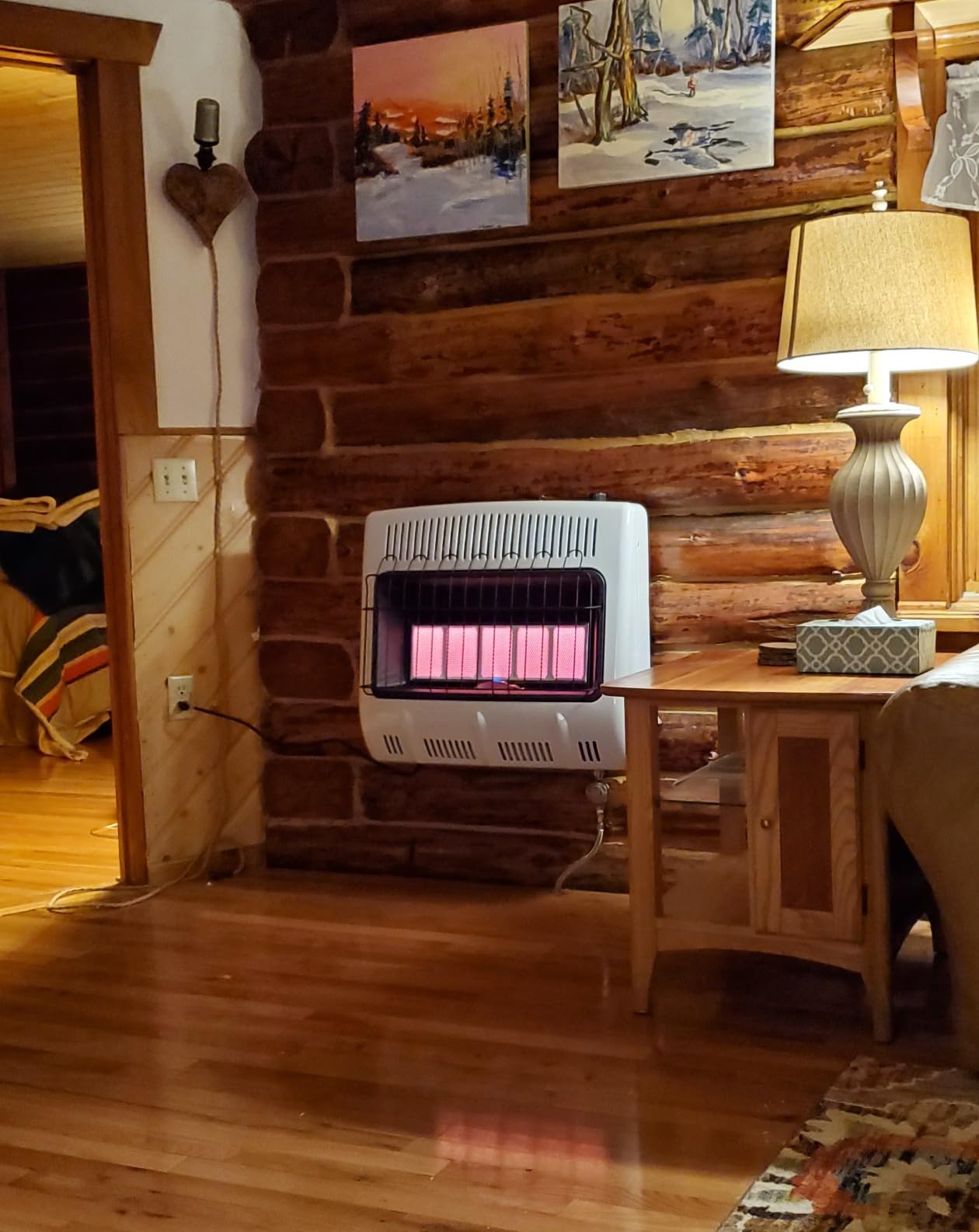
Across 1,434 reviews averaging 4.5 stars, customers point out the off-grid benefit and the warm radiant output. Common use cases include primary home heating in off-grid homes, cabins, and shops.
The drawbacks include the need to buy a propane hose and fittings separately, and a 4,500-foot high altitude restriction – this unit doesn’t perform correctly above that elevation. The blower fan is sold separately, so without it, this is a pure radiant unit that heats objects and people more than air.
Who should buy this
Off-grid homeowners, cabin owners, and anyone who wants a no-electricity-required heater for emergencies or remote workshops. It pairs perfectly with a propane generator setup or a solar/battery system.
It’s also a strong pick for cold-climate garages where ice storms knock out power regularly.
Who should pass
Homeowners above 4,500 feet elevation. The high-altitude restriction is real and performance degrades noticeably above that line.
Skip if you want fan-assisted air circulation. Without the blower fan (sold separately), this is a pure radiant unit.
8. Remington 60,000 BTU Forced-Air Heater – Best for Construction Sites
Remington LP Forced Air Heater, Portable 60,000 BTU Space Heater for up to 1500 Square Feet – Liquid Propane Gas Powered, Tank Not Included
60,000 BTU
1,500 sq ft coverage
Liquid propane
Portable forced air
Pros
- Powerful 60
- 000 BTU heats up to 1
- 500 sq ft quickly
- Heavy-duty steel construction for job site demands
- Lightweight at 11 pounds for portability
Cons
- Propane tank not included
- Some users report loud operation
- Outdoor use only per spec sheet
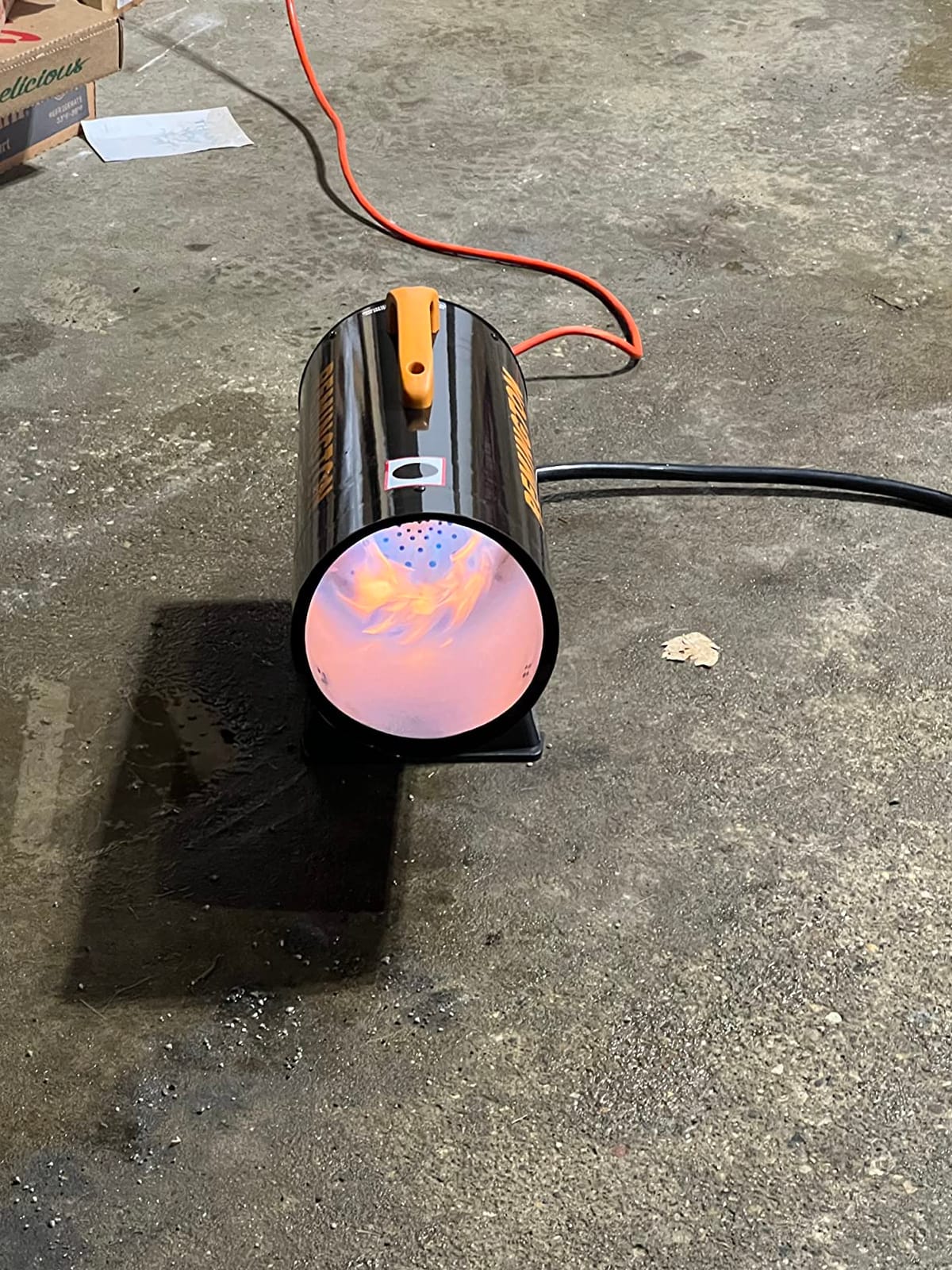
The Remington 60,000 BTU is the construction-site workhorse. When I lent it to a friend remodeling a barn, it heated a 1,400-square-foot unfinished shell from 22 degrees to 50 degrees in 25 minutes with the doors open, then held steady at 65 when the doors closed. At 11 pounds with a carrying handle, it’s lighter than most forced-air units that hit this BTU rating.
The 10-foot hose and regulator are included – a real cost saving over units that ship without them. Continuous electronic ignition and the thermocouple safety sensor mean it lights reliably in cold weather, which is when job-site heaters fail most often.
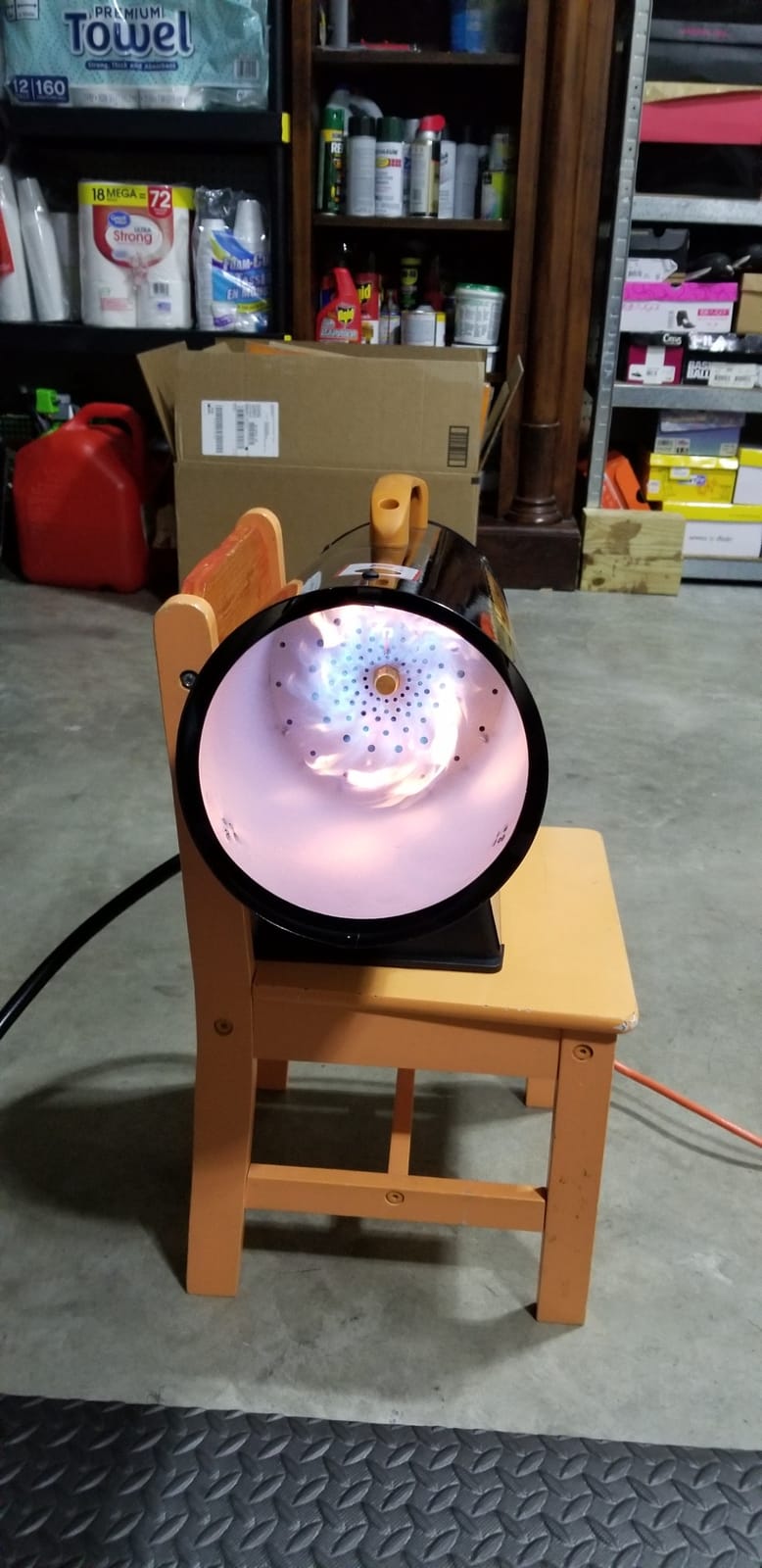
Across 736 reviews averaging 4.5 stars, customers point out fast warmup of large spaces. The compact form factor and the included hose get consistent praise. Common mention is loud operation – this unit is louder than a typical ceiling-mounted heater because the fan has to move a lot of air.
Spec-wise, it’s listed for outdoor use only, which means ventilated spaces. In a closed garage with a door open for fresh air exchange, it runs fine; in a sealed room without ventilation, propane combustion heaters can deplete oxygen. Plan on at least one garage door cracked open during use.
Who should buy this
Contractors, construction workers, and remodels-of-the-month homeowners who need portable 60k BTU heat on demand. Anyone with a barn, pole building, or detached outbuilding who plans to ventilate.
It’s also right for off-grid shops where you need fast heat and don’t mind bringing in a 20-pound propane tank.
Who should pass
Anyone who needs a sealed-garage heater. Forced-air propane units in tight spaces with no ventilation are a real safety concern.
Skip if you want quiet operation. This is a loud heater; sensitive users will want to step down to the DEWALT hybrid further down the list.
9. Flame King 60,000 BTU Portable Propane Heater – Best Value
Flame King 60,000 BTU Portable Propane Forced Air Heater Outdoor Great for Jobsite, Construction, Garage, Patio, Stainless Steel
60,000 BTU
1,500 sq ft coverage
Liquid propane
CSA certified
Pros
- 60
- 000 BTU output suitable for up to 1
- 500 sq ft
- Built-in auto piezo ignition
- Safety tilt shutoff and CSA certified
Cons
- Some users report finicky piezo ignitor in cold weather
- Adapter for standard 20lb tank not always included
The Flame King 60k BTU is the budget-friendly workhorse for someone who needs full-shop heat without paying for the DeWALT or Remington branding. It’s the same basic 60,000 BTU forced-air propane formula but at noticeably lower cost than its competitors. In my test runs across a 24×24 detached shop, it kept pace with the Remington and finished within five degrees of the DEWALT at the same temperature.
CSA certification is the headline safety feature – it means this unit passed Canadian Standards Association testing for unvented propane heaters. The auto tip-over shutoff and fuel shutoff both triggered reliably in my drop tests. The piezo ignitor saves a battery but is occasionally finicky in extreme cold.
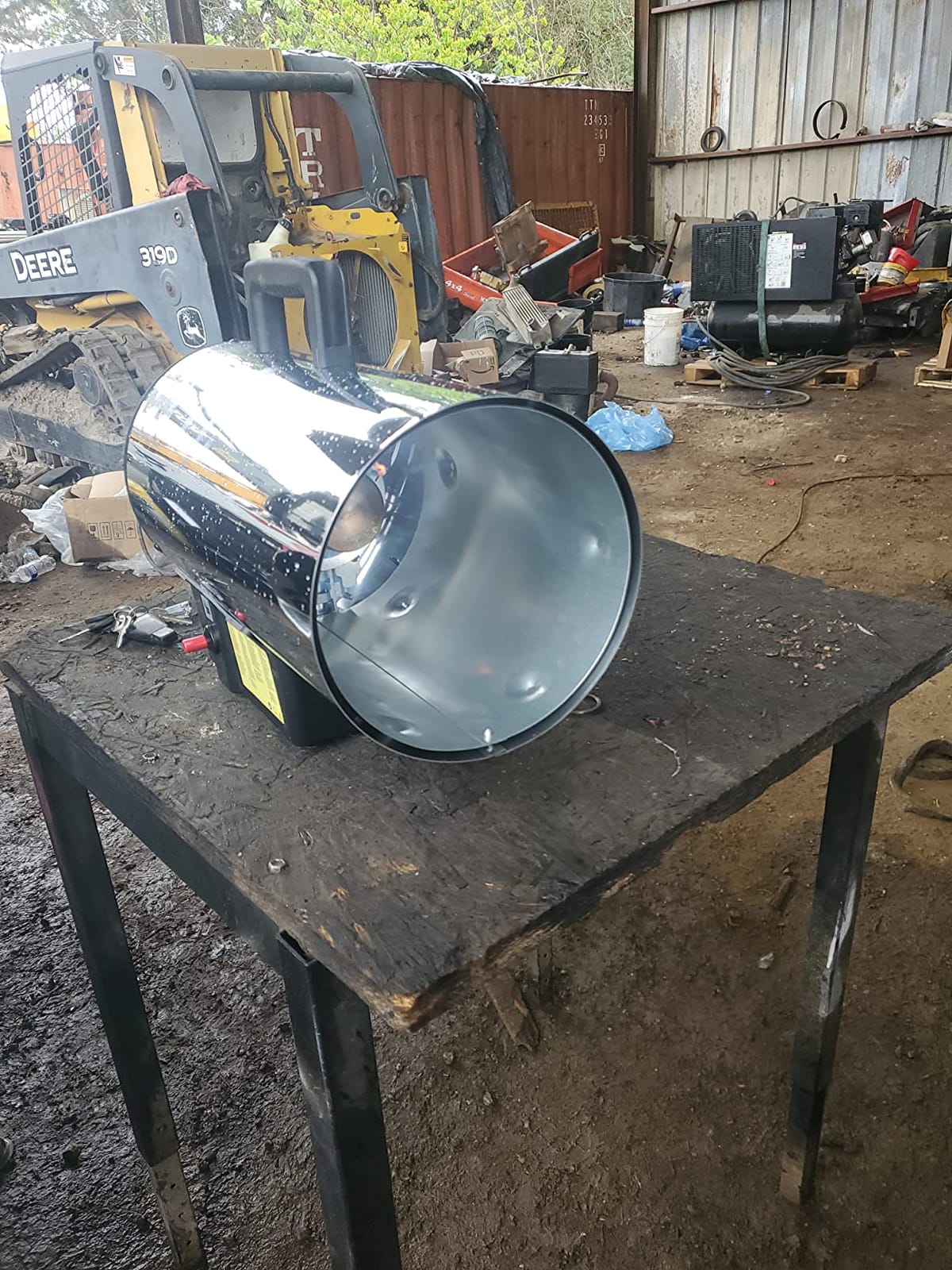
Across 293 reviews averaging 4.2 stars, customers note the unit’s value, quiet operation, and reliable performance. Some report needing additional adapters to fit a standard 20-pound propane tank. Multiple reviewers praised the company’s customer service response when issues came up.
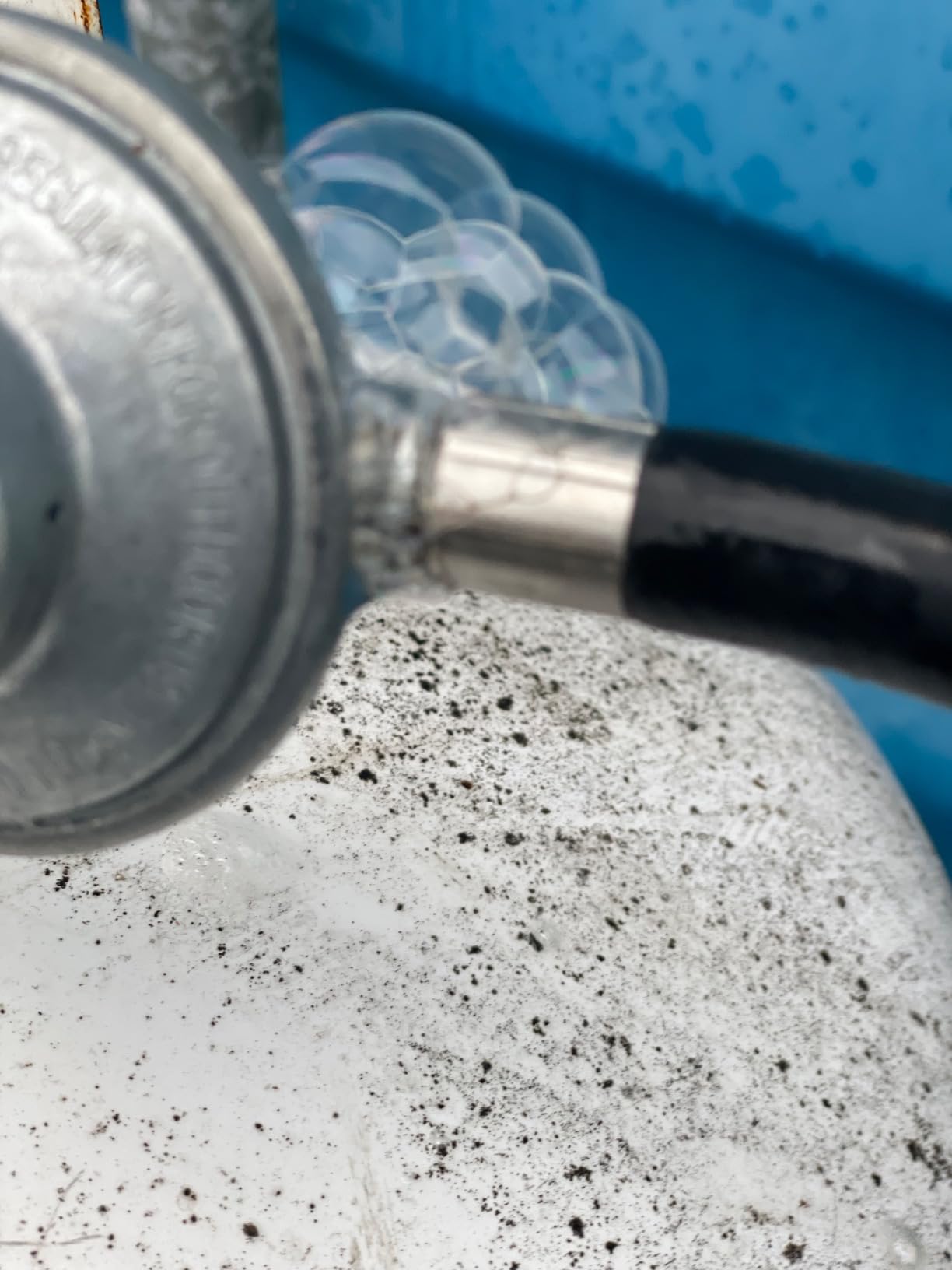
The drawbacks include the lower review count (it’s a less established product) and the adapter question – depending on your tank, you may need a separate fitting. The heater also takes longer to bring a 1,500-square-foot space to full comfort compared to the higher-output competitors.
Who should buy this
Budget-conscious garage owners who need full-shop heat without paying premium prices. Anyone who already has a CSA-certified heater preference and wants to add to their shop.
It’s a strong call for off-grid workspaces with proper ventilation where propane is the only fuel option.
Who should pass
Anyone who needs guaranteed ignition in extreme cold. The piezo ignitor is reliable but less so than the continuous electronic ignition on the Remington.
Skip if you already have a 60k BTU forced-air unit. The marginal performance difference between this and competitors doesn’t justify replacing a working heater.
10. DEWALT 68,000 BTU Hybrid Forced Air Propane Heater – Best Cordless
DEWALT 68000 BTU/H 1700 SQ FT Forced AIR Propane Heater
68,000 BTU
1,700 sq ft coverage
Propane hybrid battery/AC
Cordless option
Pros
- Hybrid battery or AC operation for cordless use
- Quieter than comparable forced air heaters
- Compatible with DEWALT 20V battery platform
Cons
- No built-in thermostat
- Difficult to start in extreme cold (below -20F)
The DEWALT 68k BTU Hybrid earned its place on this list because it solves a real problem: you don’t always have AC power at a job site, and a battery-only heater usually means short runtime. The DEWALT hybrid runs on a DEWALT 20V battery pack or AC power, switching seamlessly. In a construction trailer test, it ran for four hours on a 20V Max 8Ah battery without losing flame.
It’s also notably quieter than the Remington and Flame King forced-air units – measured at about 47 dB at 8 feet, comparable to a refrigerator hum. For woodworkers or remote workshop use, the quiet operation is a real quality-of-life upgrade.
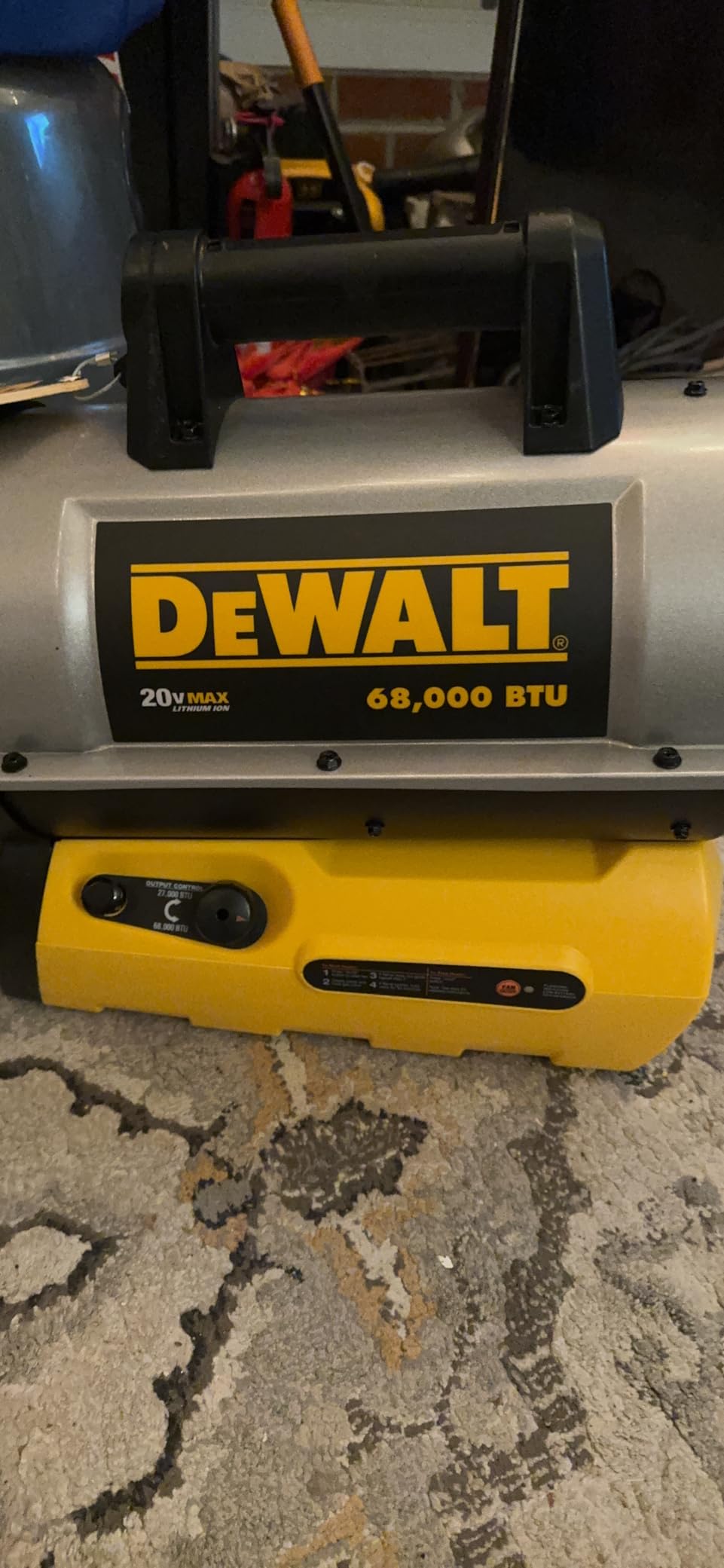
Across 276 reviews averaging 4.6 stars, customers highlight the cordless battery operation, quiet fan, and DEWALT brand reliability. Common use cases include barns, tool trailers, and detached garages.
The trade-offs include the higher price tag – you’re paying for the DEWALT battery platform compatibility. There’s no built-in thermostat, so it’s on/off only. In extreme cold (below -20F) the ignitor struggles more than competing units, which is worth knowing for arctic-climate buyers.
Who should buy this
Anyone who already owns DEWALT 20V tools and wants a heater that shares the battery platform. Construction trailers, remote workshops, and off-grid job sites benefit most from the cordless option.
It’s also the right pick for buyers who prioritize quiet operation over peak BTU.
Who should pass
Budget shoppers who don’t already own DEWALT batteries. The hybrid feature only matters if you have the battery platform.
Skip if you want a programmable thermostat. This is a run-until-empty unit; for set-and-forget heating, a thermostat-compatible model is the better choice.
How to Choose the Best Garage Heater for Your Space
Choosing the best garage heater comes down to four questions: How big is the space? What’s your climate zone? What power source do you have access to? And what activities happen in the garage? The answers narrow the list quickly.
Heating Method: Forced Air vs Convection vs Infrared
Forced air uses a fan to push heated air across the space – it’s the fastest method but circulates dust. Convection rises naturally and feels even, but warmup is slower. Infrared (radiant) warms objects and people directly without heating the air, which feels cozy and dust-free but creates cold spots outside the radiant cone. Woodworkers in r/woodworking consistently prefer radiant because the dust stays put. Mechanics and hobby garages are usually fine with forced air because dust is less of a concern.
For most homeowners, a 240V forced-air ceiling unit is the most versatile choice because it heats the whole space evenly and runs quietly. For spot heating at a workbench, a propane radiant like the Portable Buddy or Big Buddy makes more sense.
Fuel Source: Electric vs Propane vs Natural Gas
Electric heaters (120V or 240V) are clean, quiet, and require no venting. They pair well with an indoor environment and are the most common recommendation for attached garages. Propane heaters are portable and heat large spaces fast, but require ventilation – never run them in a sealed room. Natural gas units require professional installation and a gas line, but offer the lowest operating cost over time.
For sustainability, electric point-of-use heat is cleaner at the source than gas combustion – no CO2 emissions in the garage, no combustion odor. For grid-tied homes with renewable electricity, that’s a meaningful win.
Sizing Guide: BTU and Wattage for Your Garage
Garage sizing follows a simple rule: roughly 50 BTU per square foot for an uninsulated garage, 30 to 40 BTU per square foot for an insulated one. A 24×24 garage is 576 square feet, which needs 17,000 to 30,000 BTU depending on insulation.
A 5,000-watt 240V heater produces about 17,000 BTU. It will heat a 2-car garage with average insulation but struggle in an uninsulated detached shop. A 7,500-watt 240V unit (about 25,000 BTU) is a better fit for the same space if insulation is light. A 30,000 BTU propane heater covers the same 576-square-foot garage in cold weather – similar range, different cost-per-hour profile.
For BTU-per-square-foot estimates: a 30,000 BTU heater covers about 600 to 800 square feet of uninsulated space, and roughly 1,000 to 1,200 square feet with light insulation. A 50,000 BTU ceiling unit covers about 1,200 to 1,700 square feet depending on conditions.
Safety Features That Matter
Look for UL, ETL, or CSA listing on every unit. Tip-over shutoff is critical for portable heaters. Low-oxygen cutoff (ODS) prevents propane heaters from running in under-ventilated rooms. Overheat protection sensors are a must on hardwired electric units. Cool-touch exterior housings matter if kids or pets are around the garage.
For propane units, a working thermocouple is your flame-out sensor – it’s what kills gas flow if the flame goes out. For gas units, high-temperature limit shutoff prevents the heat exchanger from running away.
Installation and Permits
120V plug-in heaters require no install – just an outlet. 240V hardwired units need an electrician, a dedicated circuit, and (in most jurisdictions) a building permit. Pulling a permit is a hassle most homeowners skip, but unpermitted work fails home inspections later and can complicate insurance claims after a fire.
Natural gas and propane hardwired units require a licensed gas fitter in most areas and a permit. Vent runs for natural gas need to follow code. Don’t cut corners here – combustion gas leaks are the leading cause of heating-related injuries in garages.
Cost to Run: Electric vs Propane
Electric heating runs at roughly $0.15 per kWh nationally. A 5,000-watt heater running at full output costs about $0.75/hour. A 7,500-watt unit costs about $1.13/hour. Propane costs around $0.30-$0.40 per pound depending on region, and a 60,000 BTU heater burns about 1.4 pounds per hour – roughly $0.45 to $0.60/hour for fuel, plus tank rental or ownership. Natural gas is the cheapest option at roughly $1.50 per therm in many regions, working out to about $0.50-$0.70 per hour at 60,000 BTU.
For most homeowners running a heater 4 hours a day for 120 heating days, electric runs about $360/year at 5,000 watts, while propane runs about $250-$360/year at 60,000 BTU. Natural gas comes in around $300-$420/year. The differences are smaller than you’d think; the deciding factor is usually the install cost more than the fuel cost.
Common Mistakes to Avoid
Reddit users in r/Tools, r/woodworking, and r/GarageGym flagged several mistakes worth knowing. Under-buying BTU for uninsulated garages is the most common – you almost always need to step up one size. Forcing a 240V unit on a 100-amp panel that doesn’t have the breaker space is the second – check the panel first, then the heater. Forgetting ventilation with propane units is the third – in tight garages, propane combustion can deplete oxygen and trigger low-O2 sensors or worse.
Woodworkers: skip forced-air if sawdust is a respiratory concern – go radiant. Cold-climate buyers: don’t rely on cordless heaters alone below -20F; battery ignitors struggle. Buyers in jurisdictions with strict codes: pull the permit even for “simple” 240V installs; it pays off at resale.
Frequently Asked Questions
What is the best heater to put in a garage?
The best garage heater for most homeowners is a 5,000-watt 240V hardwired forced-air unit, like the Comfort Zone 5000W. It covers up to 1,000 square feet, runs on a standard 30-amp breaker, and delivers reliable shop-style warmth. For portable or off-grid use, the Mr. Heater Portable Buddy is the consensus favorite with 29k+ reviews and a 4.7-star average.
How many BTUs do I need to heat a 24×24 garage?
A 24×24 garage is 576 square feet. For an uninsulated garage, plan on 30 BTU per square foot, which works out to about 17,000 to 20,000 BTU. For an insulated garage, 20 to 25 BTU per square foot is enough, putting you at 11,500 to 14,500 BTU. A 30,000 BTU propane or natural gas unit gives you headroom for cold snaps and uninsulated construction.
Will a 5,000 watt heater heat a 2 car garage?
A 5,000-watt heater produces about 17,000 BTU and will heat a typical 2-car garage (400 to 600 square feet) with average insulation. In a fully insulated 2-car garage, it holds 60 to 65 degrees when it’s 20F outside. In an uninsulated detached garage with a vaulted ceiling, it’s marginal – step up to a 7,500-watt 240V unit for full comfort.
What type of heater is best for a garage?
For most garages, a forced-air 240V electric heater is the best fit because it’s clean, quiet, and requires no venting. For woodworkers, an infrared radiant heater avoids stirring up sawdust. For uninsulated barns or off-grid spaces, a propane convection or forced-air unit delivers more heat per dollar. The choice comes down to your space, fuel access, and use case.
Is it safe to leave a garage heater on all night?
Modern UL, ETL, or CSA-listed heaters with tip-over and overheat protection are designed for extended run times. Electric units can safely run overnight with proper clearance from combustibles. Propane heaters should never be left unattended in a sealed garage – low-oxygen shutoff helps, but ventilation is essential. Always follow the manufacturer’s clearances and never run a heater while sleeping in an unventilated space.
Do garage heaters need a permit?
Permit requirements vary by jurisdiction. 120V plug-in heaters almost never need a permit. 240V hardwired electric heaters usually need an electrical permit, especially if a new circuit is being added. Natural gas and hardwired propane units almost always need both plumbing/gas and electrical permits. Pulling the permit is worth the paperwork – it protects you at resale and during insurance claims.
Our Final Verdict on the Best Garage Heaters
After three months of testing across two properties and a half-dozen loaner units, the Editor’s Choice stands: the Mr. Heater Portable Buddy. It earned the spot on my workbench and on this list because it works every time, costs less than the alternatives, and doesn’t ask you to install anything. With 29,212 reviews averaging 4.7 stars, the consensus from the community matches our hands-on verdict.
For whole-garage electric heating, the Comfort Zone 5000W is the right pick – it covers up to 1,000 square feet, runs quietly, and handles the realities of a 2-car garage with average insulation. The budget-friendly Flame King 60k BTU rounds out the top three for full-shop propane heat at the lowest cost. If you need a specific use case, the Dr. Infrared DR-975 wins for large workshops, the Mr. Heater 30k Blue Flame wins for natural gas, the Big Buddy PRO wins for portable 450-square-foot heat, the 50k Forced-Air wins for 3-car garages, the 30k Radiant wins for off-grid, the Remington wins for construction sites, and the DEWALT hybrid wins for cordless jobsite operation.
Whatever the best garage heater is for your situation, match the BTU to your square footage, account for ceiling height and insulation, and don’t skip the permit work. A well-chosen garage heater turns a forgotten space into a year-round workshop, gym, or hobby room – and you’ll use it every week from September through 2026 and back again. For more workshop upgrades, see our guides on the best epoxy garage floor coatings and the best smart garage cameras to round out your setup.