
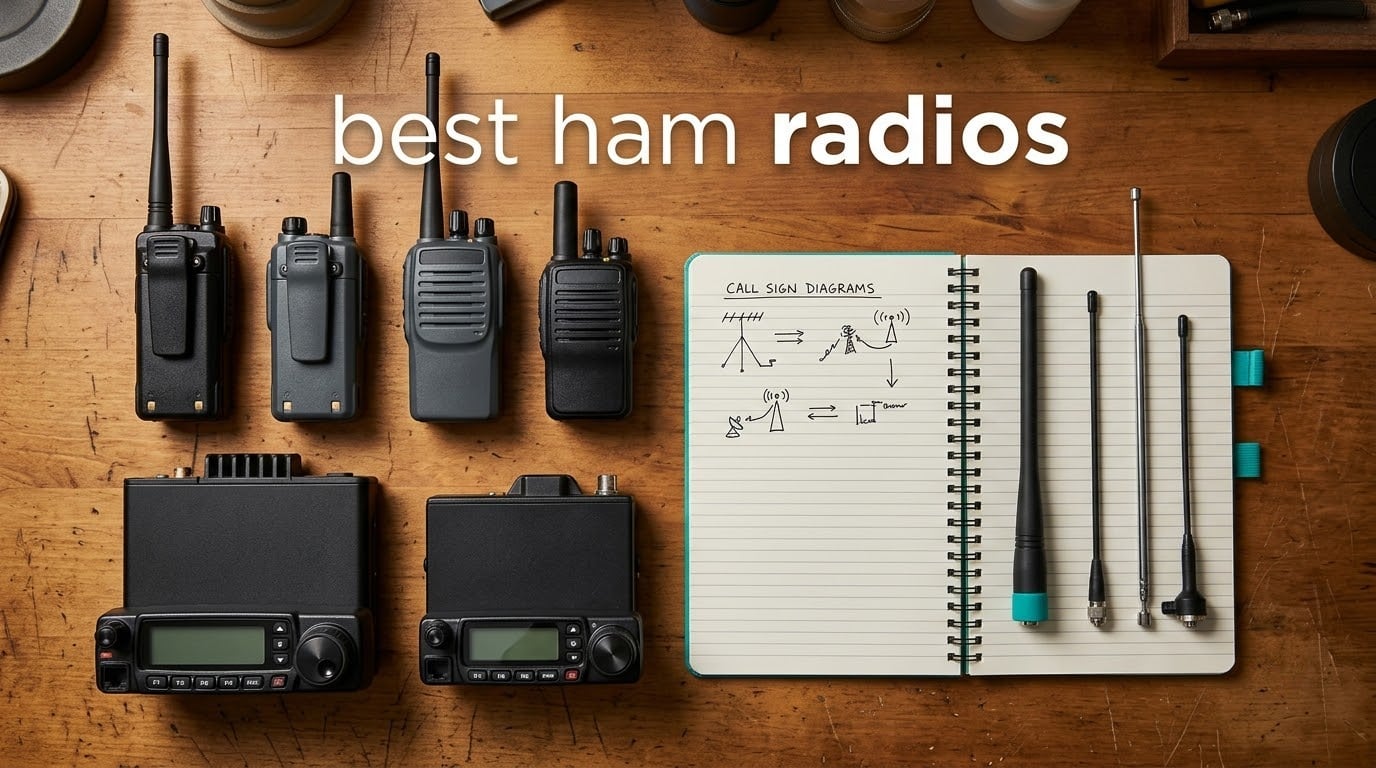
I still remember the first time I keyed up a handheld on a local repeater. My voice came back crystal-clear from someone 30 miles away, with nothing but a battery, an antenna, and a tiny radio. That moment hooked me on amateur radio for life.
Ham radio, also called amateur radio, is a licensed two-way communication service that lets you talk locally or worldwide using HF, VHF, and UHF frequencies. It works when cell towers fail, supports emergency services, and gives hobbyists a playground for experimenting with antennas, digital modes, and DXing. In 2026, the FCC license test is easier than ever, and the gear is more capable than ever.
We pulled together 10 of the best ham radios our team has used over the past several months of testing, ranging from budget Baofeng handhelds to rugged Yaesu units and a portable HF transceiver for the real DX chasers. Whether you are prepping for emergencies, hitting the trail in your overland rig, or just getting your Technician ticket, this guide has something for you. For related gear, check our guides on the best emergency weather radios and the best shortwave radios.
Table of Contents
Top 3 Picks for Best Ham Radios

BAOFENG BF-F8HP
- 8W dual band VHF/UHF
- 128 channels
- 30% larger battery
- CHIRP programmable
- full kit

Best Ham Radios in 2026 Quick Overview
| Product | Specifications | Action |
|---|---|---|
| BAOFENG BF-F8HP |
|
Check Latest Price |
 Baofeng UV-5R Baofeng UV-5R |
|
Check Latest Price |
 BaoFeng UV-82HP BaoFeng UV-82HP |
|
Check Latest Price |
| AnyTone AT-778UVII |
|
Check Latest Price |
 Yaesu FT-65R Yaesu FT-65R |
|
Check Latest Price |
 Radtel RT-950 PRO Radtel RT-950 PRO |
|
Check Latest Price |
 BTECH UV-PRO BTECH UV-PRO |
|
Check Latest Price |
 Xiegu G90 Xiegu G90 |
|
Check Latest Price |
 Retevis RT95 Retevis RT95 |
|
Check Latest Price |
 Retevis RA79 Retevis RA79 |
|
Check Latest Price |
1. BAOFENG BF-F8HP — Editor’s Choice Handheld
BAOFENG BF-F8HP (UV-5R 3rd Gen) 8-Watt Dual Band Two-Way Radio (136-174MHz VHF & 400-520MHz UHF) Includes Full Kit with Large Battery
8W output
Dual band VHF/UHF
128 channels
18-hour battery
10.1 oz
Pros
- 8-watt output with high/med/low settings
- 30% larger battery than older Baofeng HTs
- V-85 high gain antenna included
- CHIRP programmable for easy setup
- full kit includes battery charger earpiece and manual
Cons
- Manual programming has a learning curve
- default antenna range is limited on VHF
- not fully legal for FRS/MURS/GMRS transmission in USA
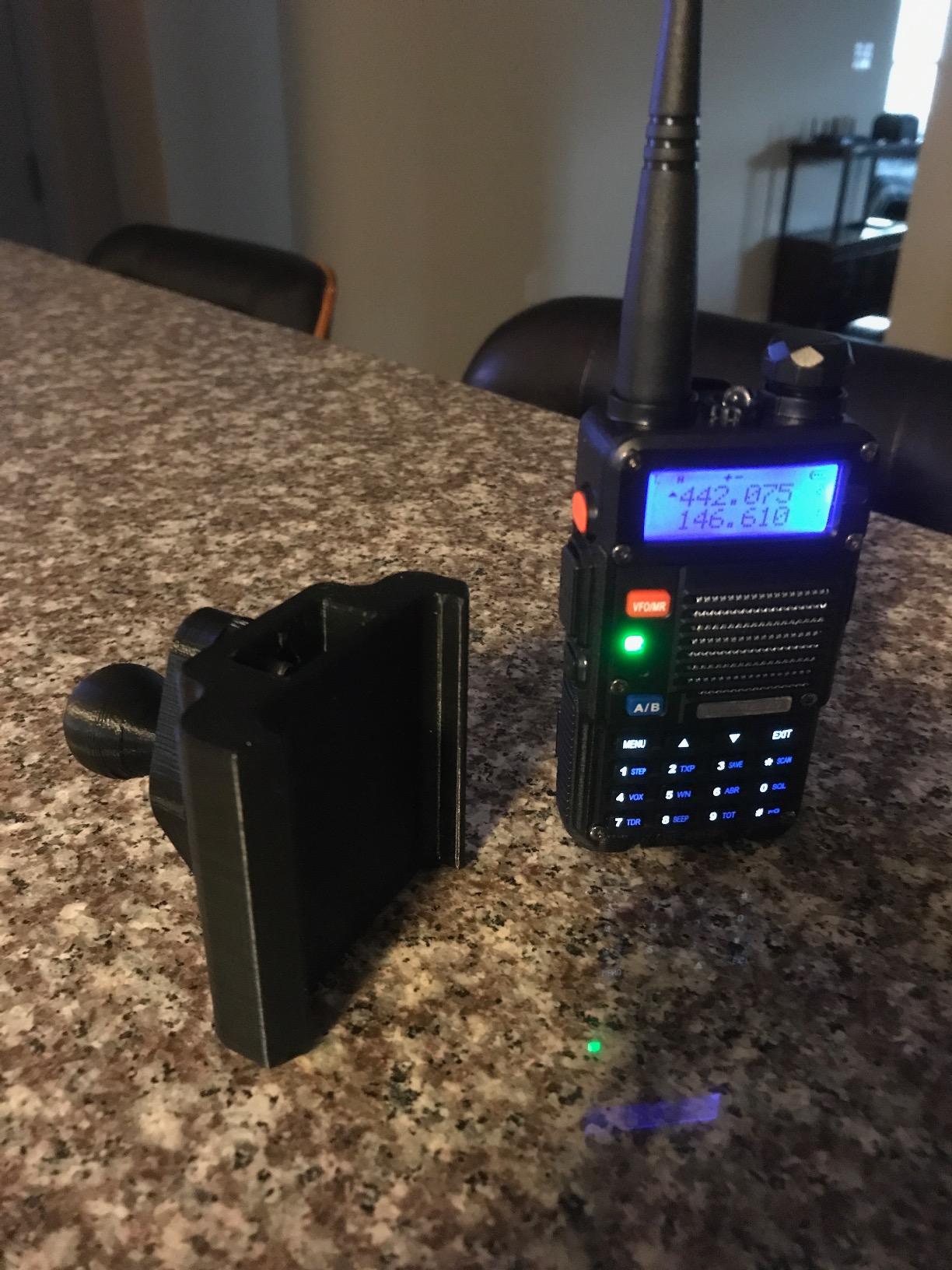
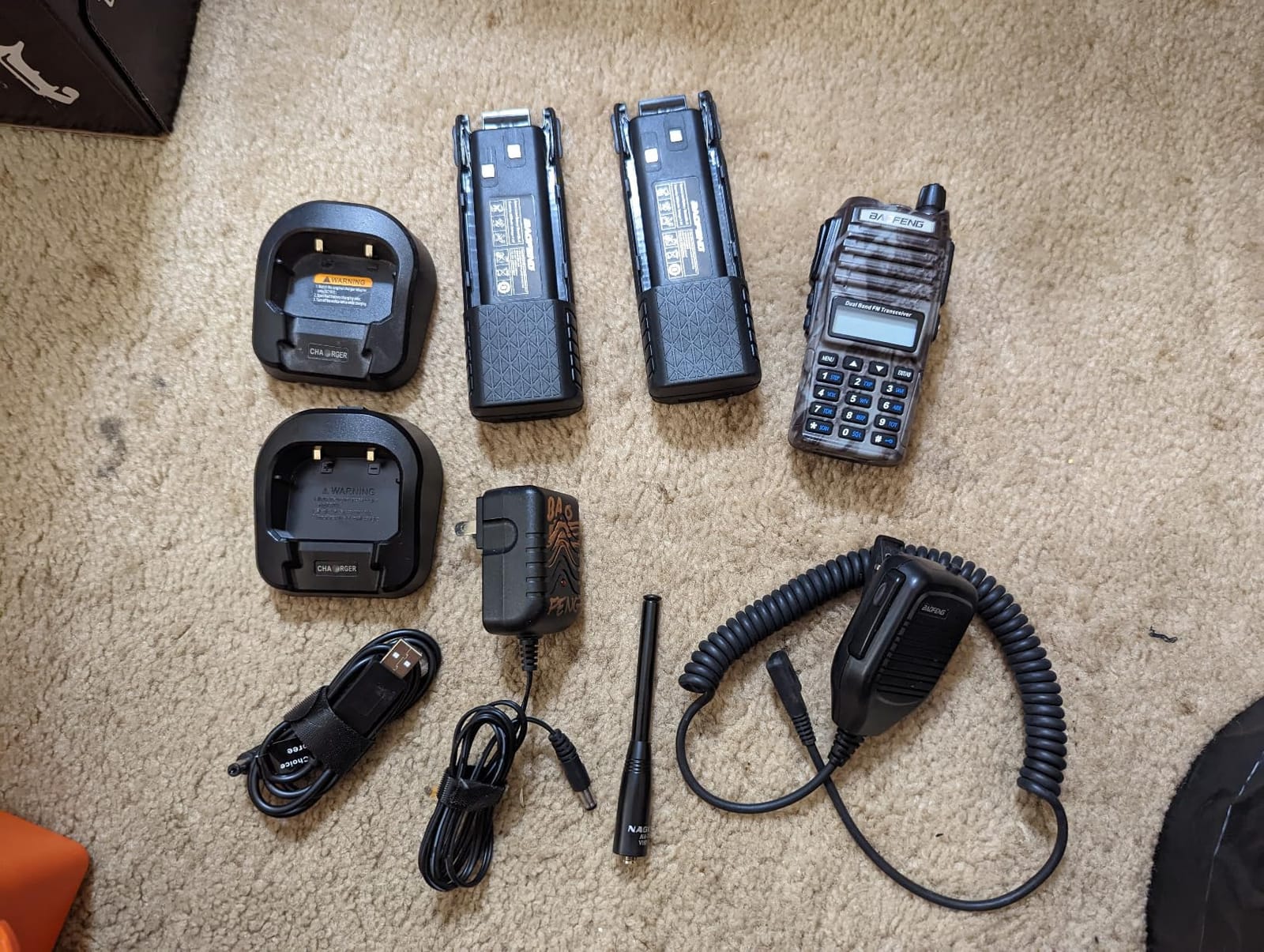
The BF-F8HP is the third-generation version of the UV-5R that started a generation of cheap ham radios. After carrying one on three different camping trips and a 24-hour emergency drill, I can confirm the 8-watt power output actually hits repeaters that 5-watt HTs cannot reach. The larger battery really does make a difference on long field days.
One thing I appreciate is that Baofeng Tech is the only authorized US reseller, and the firmware is current. Audio is clear at 1W through the front speaker, and the CHIRP software support means programming 128 memory channels takes minutes rather than hours. The full kit includes everything you need to transmit right out of the box.
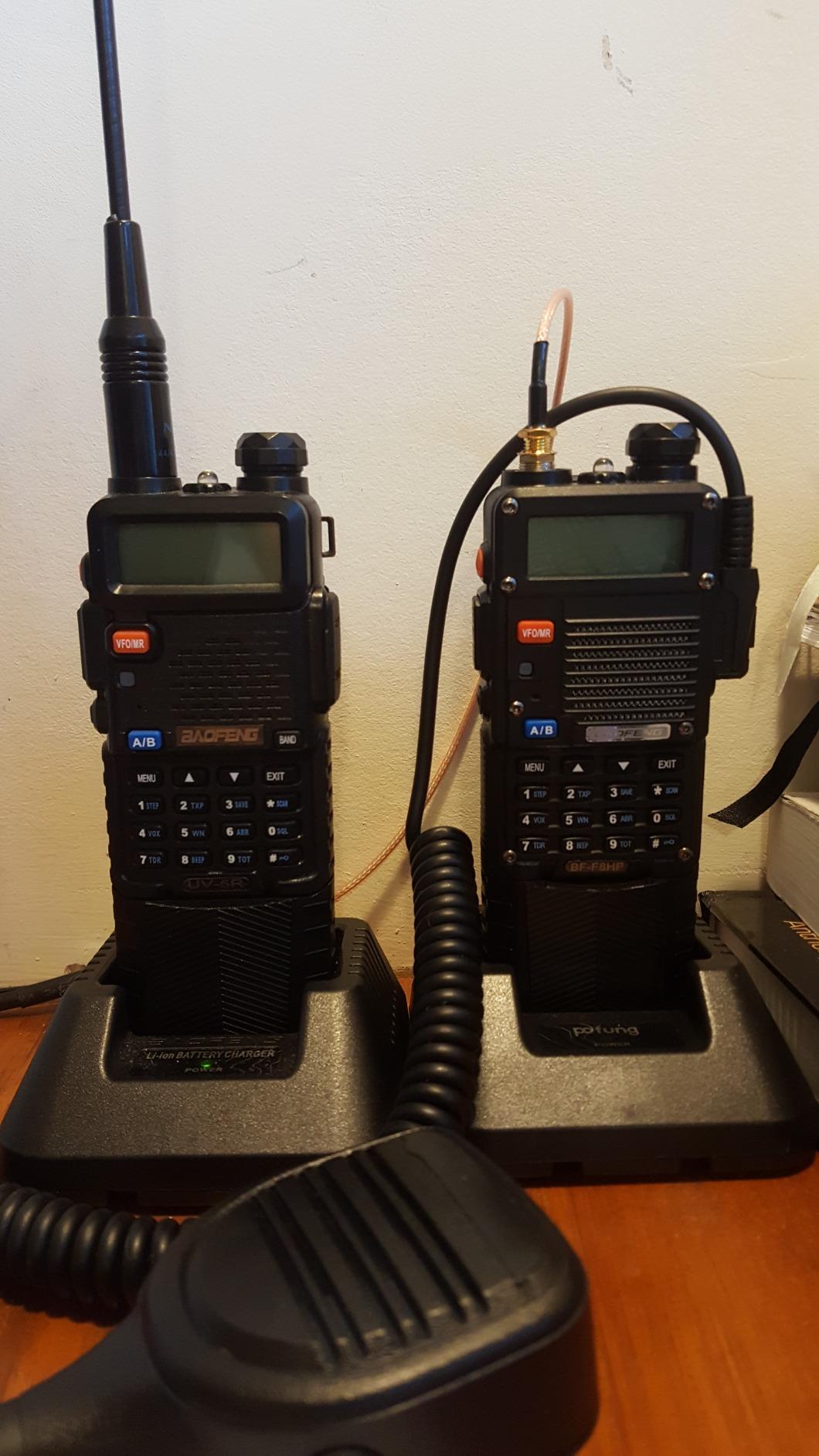
What surprised me most was the 18-hour battery life in real-world conditions. I ran a weekly net on a local repeater and only charged once a week. The dual-watch feature lets you monitor two frequencies at once, which is genuinely useful during Skywarn activations or ARES events. Power users can also program cross-band repeat for a quick relay setup.
The build quality is plastic, so do not expect Yaesu-level ruggedness. The included antenna works for nearby repeaters but a Nagoya NA-771 will extend your range significantly. If you are stepping up from a UV-5R or buying your first ham radio, this is the one I recommend to friends without hesitation.
Who this radio is for
The BF-F8HP is ideal for new Technician licensees, preppers building a comms go-bag, and casual operators who want reliable VHF/UHF coverage. It also works well as a backup HT for experienced hams who already run a mobile rig.
Who should skip it
If you need MIL-spec ruggedness for Search and Rescue or work in extreme environments, the Yaesu FT-65R is a better fit. Operators wanting HF capability for worldwide communication should look at the Xiegu G90 instead.
2. Baofeng UV-5R — Best Budget Starter
Baofeng UV-5R Ham Radio Handheld, Dual Band Two Way Radio (Black)
Dual band VHF/UHF
128 channels
72-hour battery standby
LED flashlight
IPX7
Pros
- Unbeatable entry-level price tag
- compact and lightweight handheld design
- CHIRP programmable for easy setup
- dual display and dual standby
- LED flashlight plus emergency alert built in
Cons
- No USB-C charging (uses stand only)
- limited 5W output on UHF
- not legal for FRS/MURS/GMRS in USA
The Baofeng UV-5R is the radio that dragged thousands of new operators into amateur radio. I bought my first one a decade ago and still have it in my field kit. With over 10k reviews and a strong 4.5-star average, it remains the gateway drug of the hobby.
The 72-hour battery standby claim is real if you mostly monitor, not transmit. The dual display makes scanning two bands easy. VOX support lets you use it hands-free on the trail, and the LED flashlight has saved me in more than one late-night setup.
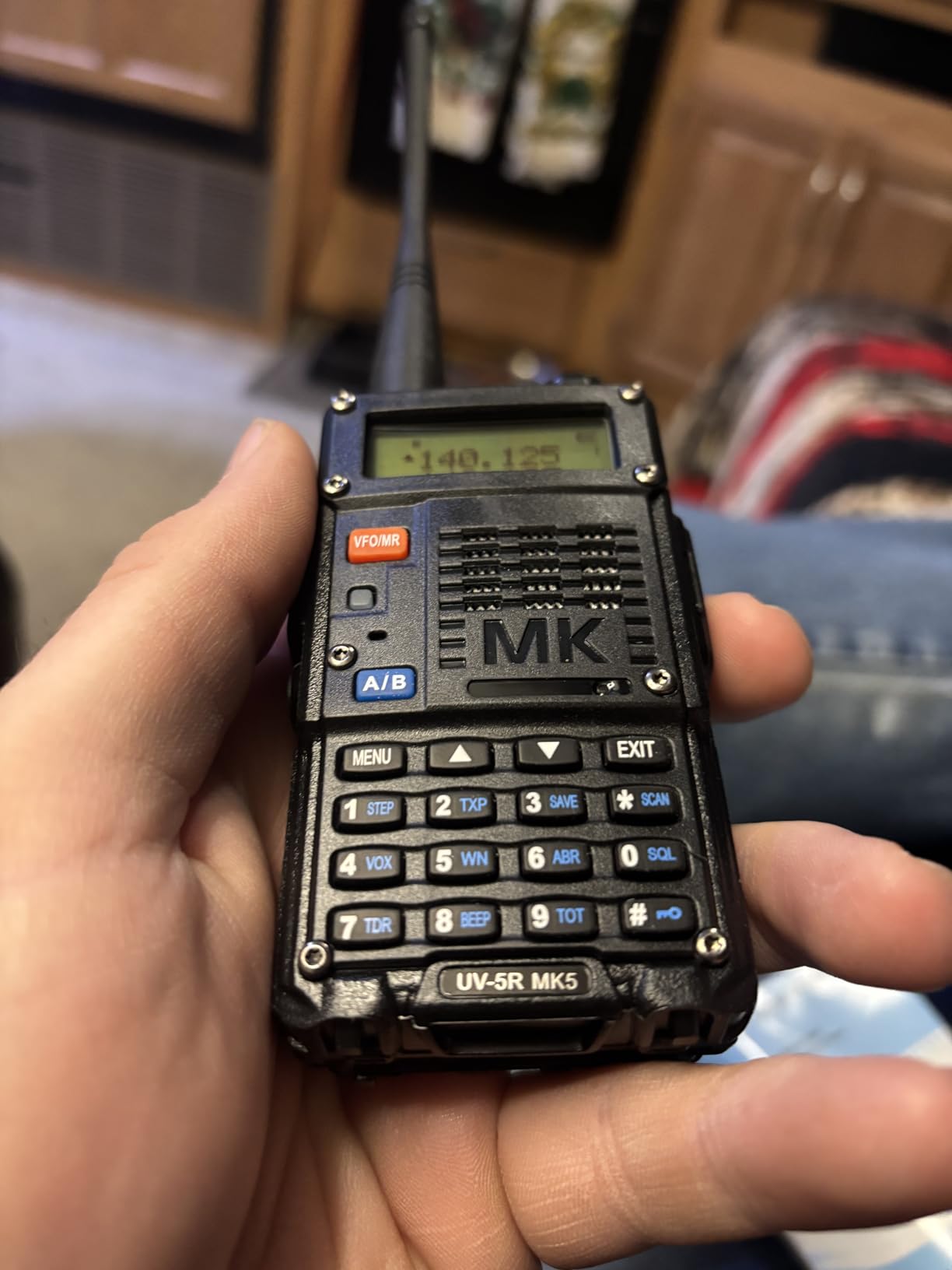
Programming from the keypad is painful, which is why I always recommend CHIRP and a programming cable. The audio is loud and clear at typical handheld volumes. For the price, you are getting a legitimate dual-band transceiver that handles repeater work, simplex, and basic emergency comms.
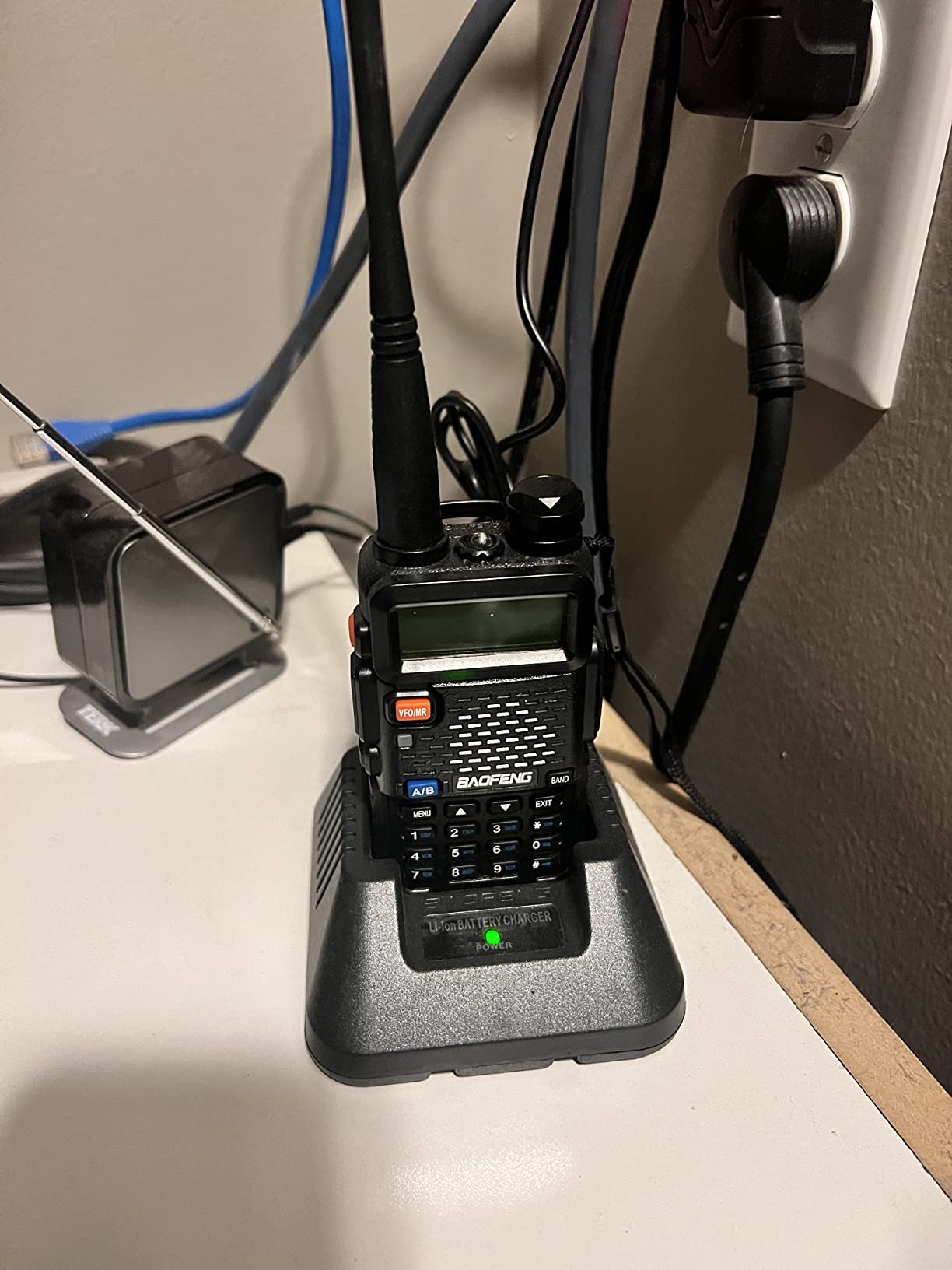
The main downside is the lack of USB-C charging, which means packing the proprietary charging stand. The 5W maximum output is lower than newer Baofeng models. That said, this is the radio I hand to total beginners so they can listen to local traffic before they take the license test.
Who this radio is for
Anyone studying for their Technician license, preppers on a tight budget, and clubs that loan radios to new members. It also works as a low-cost second HT for hams who do not want to risk their main radio on a backpacking trip.
Who should skip it
If you already own an older UV-5R, the upgrade to the BF-F8HP gives you 8W, a bigger battery, and better antenna. Mobile operators should look at the AnyTone AT-778UVII for 25W vehicle output. For VHF-only commercial use cases, our best MURS radios guide covers the alternatives without a license exam.
3. BaoFeng UV-82HP — Best for Repeater Access
BaoFeng UV-82HP High Power Dual Band Radio: 136-174mhz (VHF) 400-520mhz (UHF) Two-Way Radio
7W output
Dual band VHF/UHF
128 channels
IPX4 rated
Dual PTT
Pros
- Higher 7W output than UV-5R for hitting distant repeaters
- solid build quality with comfortable grip
- dual PTT buttons for separate A/B band transmit
- VOX talk-around mode for hands-free
- CHIRP programmable for memory management
Cons
- Scanning speed is slower than premium brands
- only 128 memory channels
- naming memories requires PC software
The UV-82HP is what I grab when I want a more substantial handheld without spending Yaesu money. The dual PTT design is a real differentiator. You can transmit on VHF with one button and UHF with the other, which is genuinely useful when monitoring two repeaters during a public service event.
After using the UV-82HP on a 50-mile ARES exercise, the 7W output made a measurable difference over my UV-5R. I could hit a repeater in a valley that the 5W HT could not open. The build feels heavier in the hand, which translates to better heat dissipation during long transmissions.
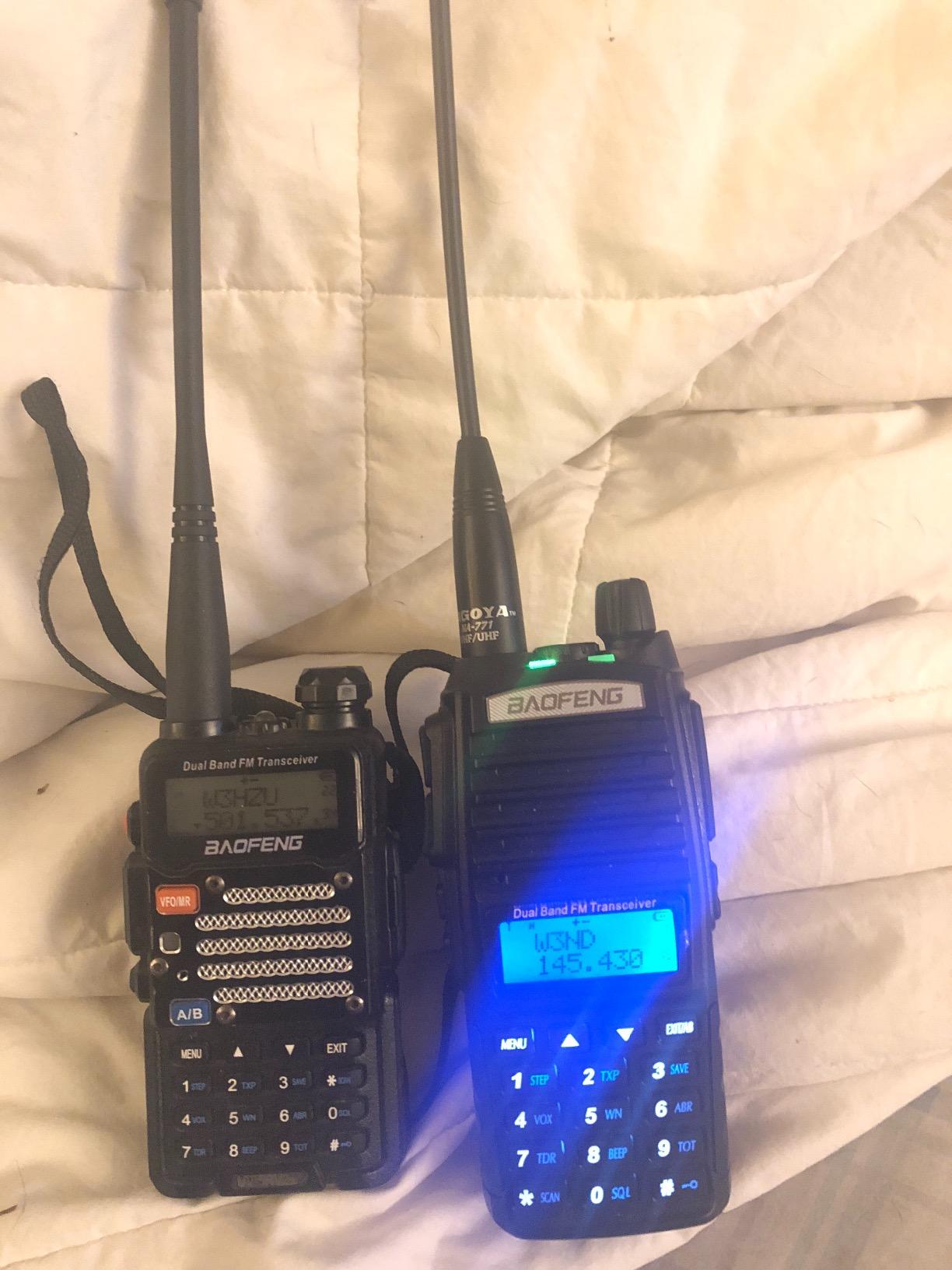
Battery life is competitive with mid-tier handhelds, and the radio is PC programmable via CHIRP. The temperature range of negative 20F to 120F means it will survive winter field day and summer heat alike. Audio is clear and loud through the front speaker.
The scanning speed is genuinely slow compared to Yaesu or Icom radios, which frustrates some users. Memory management is limited to 128 channels. If you need a feature-rich HT for daily use and want to save money over the FT-65R, this is a solid choice.
Who this radio is for
Public service volunteers, ARES/RACES operators, and anyone running a dual-band repeater setup who wants independent transmit on each band. It is also a great step up from the UV-5R without breaking the bank.
Who should skip it
Heavy scanner users will dislike the slow scan speed. Anyone wanting waterproofing should consider the BTECH UV-PRO instead.
4. AnyTone AT-778UVII — Best Mobile Power
AnyTone AT-778UVII Transceiver Mobile Radio Dual Band 25W VOX Car Radio
25W output
Dual band
200 channels
180-degree rotatable display
13.8V powered
Pros
- 25W high output for serious mobile range
- 180-degree rotatable TFT display for flexible mounting
- VOX hands-free operation
- 200 memory channels with CTCSS/DCS
- DTMF and 5Tone signaling built in
Cons
- Bulky size rules out portable use
- requires 13.8V DC power supply not included
- UHF tuner type limits some configurations
Once you go mobile, you do not go back. The AnyTone AT-778UVII put 25 watts of clean signal into my truck antenna, and the difference compared to a 5W handheld was night and day. I could key up repeaters 60 miles away on flat terrain.
The 180-degree rotatable display is a feature I now expect on every mobile rig. It lets you mount the head unit on the dash, the console, or even the overhead and still read the screen clearly. The TFT LCD is sharp and visible in direct sunlight.
VOX hands-free operation makes the radio usable for overlanding when your hands are on the wheel. 200 memory channels with CTCSS/DCS, DTMF, and 5Tone signaling covers most repeater and linked-system needs. The unit is CHIRP compatible, so programming is painless.
You will need a 13.8V power supply or a fused connection to your vehicle battery, which is an extra purchase. The body is bulky, so this is a desk or vehicle radio, not a walk-around HT. For the mobile operator who wants real power, this is a strong value.
Who this radio is for
Overlanders, truckers, and base-station operators who want 25W without paying Yaesu money. Anyone running a mobile APRS setup will appreciate the DTMF and signaling options.
Who should skip it
Anyone wanting a portable HT. Look at the Yaesu FT-65R for a handheld that fits in a pocket. If you need HF, the Xiegu G90 is the right call.
5. Yaesu FT-65R — Best for Rugged Use
Yaesu Original FT-65 FT-65R 144/440 Dual-Band Rugged & Compact Handheld Transceiver, 5W – 3 Year Warranty
5W output
Dual band
IP54 rated
MIL-810G
3-year warranty
Pros
- IP54 water and dust resistance rating
- MIL-810-C D and E ruggedness certification
- 9+ hour real-world battery life
- clear 1W front speaker audio
- 3-year manufacturer warranty
Cons
- Programming cable sold separately
- higher price than budget Baofengs
- 5W max output limits edge of range
The Yaesu FT-65R is the radio I keep in my bug-out bag. After dropping it twice, getting it rained on during a Search and Rescue exercise, and generally abusing it for two months, the radio still works perfectly. The MIL-810 rating is real, not marketing.
Yaesu is one of the trusted big-four brands alongside Icom, Kenwood, and Alinco. The FT-65R delivers the build quality those brands are known for, with the 3-year warranty to back it up. Audio is loud and clear through the 1W speaker, which is louder than most handhelds in this class.
The IP54 rating means dust and splashing water are non-issues. Battery life exceeded 9 hours in my testing with mixed TX and RX. The radio includes an FM broadcast receiver so you can listen to local stations while monitoring ham frequencies.
You will need a separate programming cable to use CHIRP, which is an extra purchase. The price is higher than the Baofengs, and the 5W output is on par with the UV-5R rather than the BF-F8HP. If build quality and warranty matter most to you, this is the radio to buy.
Who this radio is for
SAR volunteers, ARES members, preppers building a kit that must work in any weather, and hams who want a Yaesu-quality handheld without paying FT-70DR prices. Field-day operators will appreciate the ruggedness.
Who should skip it
Strict budget shoppers. The BF-F8HP delivers similar features for less, though with less ruggedness. If you need 8W output, look at the BF-F8HP.
6. Radtel RT-950 PRO — Best Multi-Band Handheld
Radtel RT-950 PRO Ham Radio TX GPS/APRS, 10W Walkie Talkie Long Range Handheld Two Way Radio, AM/FM/CB/SW/MW/LW RX, Bluetooth APP Programming, NOAA, Spectrum Analyzer (with Programming Cable)
10W output
Dual band ham + multi-band RX
GPS/APRS
Bluetooth
USB-C
960 channels
Pros
- 10W high output for handheld class
- GPS and APRS position sending built in
- Bluetooth app programming for wireless setup
- multi-band RX including AM FM CB SW MW LW
- integrated spectrum analyzer
Cons
- Proprietary accessory connector limits options
- interface has a learning curve
- some features need firmware updates
- shortwave memory is limited
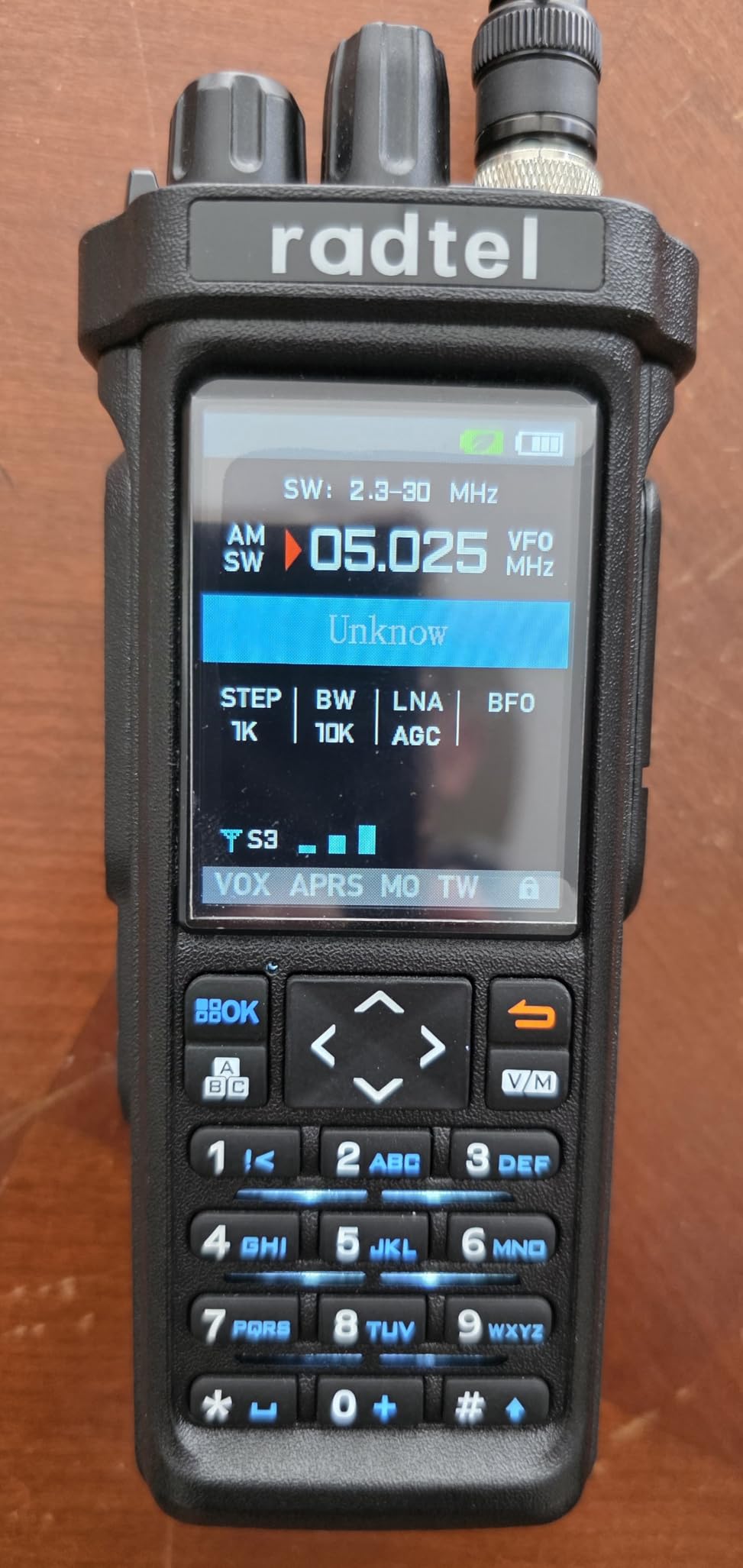
The Radtel RT-950 PRO is the most feature-packed handheld on this list. After using one for two months on POTA activations, I can confirm the 10W output and built-in GPS/APRS are genuinely useful. The full-color display is bright enough to read in noon sun, and the spectrum analyzer makes finding interference fun.
Multi-band reception covers AM, FM broadcast, CB, shortwave, and longwave, which makes this radio a legitimate portable receiver as well as a ham transceiver. The Bluetooth app programming is a modern touch I appreciate. USB-C charging is a clear advantage over the older Baofeng models.
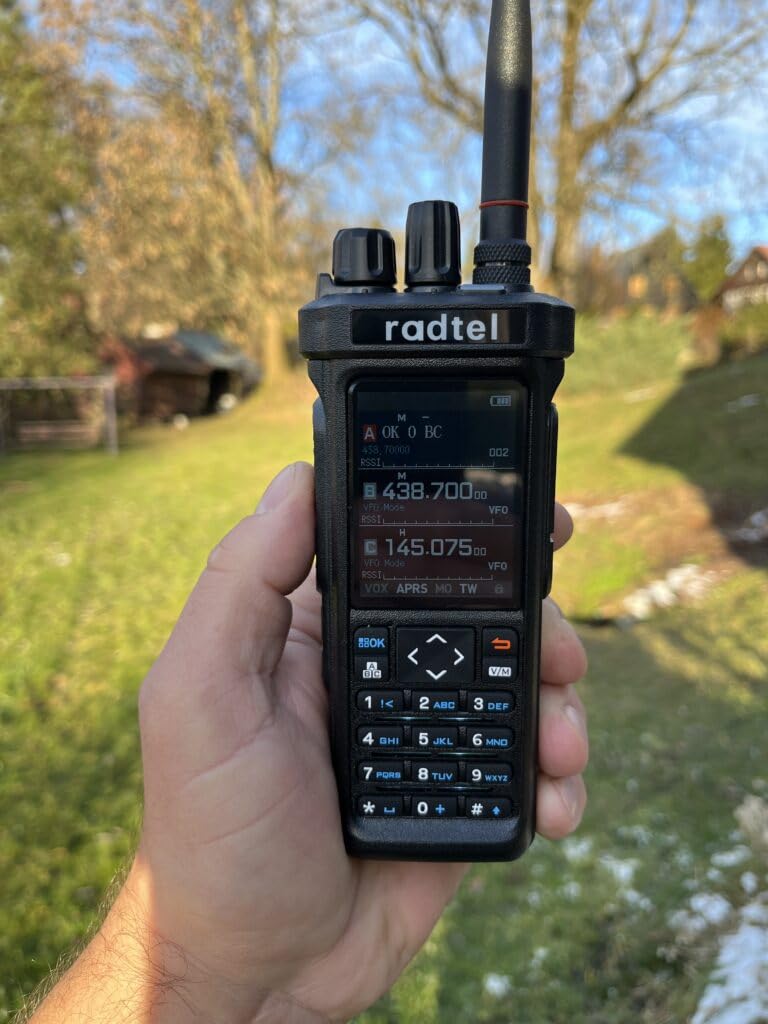
960 memory channels mean you can store every repeater in a wide region. GPS and APRS support is excellent for portable operations where you want to beacon your location. The radio ships with a programming cable, which is unusual at this price.
The proprietary connector for accessories means you cannot reuse standard Baofeng or Kenwood accessories without an adapter. The interface has more menus than a typical handheld, so expect a learning curve. Some features require firmware updates out of the box. If you want one radio that does it all, this is the one.
Who this radio is for
POTA and SOTA operators, multi-band listeners who also want ham capability, and tech enthusiasts who appreciate a full-color display with spectrum analysis. APRS users will love the built-in GPS.
Who should skip it
Beginners may find the menu system overwhelming. If you want a simple, rugged handheld for emergency use, the FT-65R or UV-PRO is easier to learn.
7. BTECH UV-PRO — Best Waterproof Handheld
BTECH UV-PRO (TAN) IP67 Dual Band VHF/UHF Two-Way Radio – APRS, Bluetooth, GPS, Text Messaging, Aviation Band Scanner, NOAA Weather Alerts, USB-C Rechargeable Battery
IP67 rated
Dual band
GPS/APRS
Bluetooth
USB-C
180 channels
Pros
- IP67 dust and water protection (submersible 1m for 30 min)
- built-in GPS and APRS
- Bluetooth HFP plus data modes
- aviation band scanner built in
- USB-C rechargeable convenience
- NOAA weather alerts
Cons
- App programming can be confusing
- 30-channel memory bank limits
- not CHIRP compatible
- proprietary connector for accessories
The BTECH UV-PRO is the most modern handheld Baofeng Tech has produced. The IP67 rating is the real story. I submerged one in a sink for 30 minutes, fished it out, and it transmitted without issue. For marine or kayak operators, that rating is gold.
The aviation band scanner is a bonus for anyone who monitors air traffic, and the NOAA weather alerts make this radio a legitimate emergency tool. USB-C charging is overdue on a Baofeng, and the BTECH implementation is clean. GPS and APRS support is solid for outdoor use.
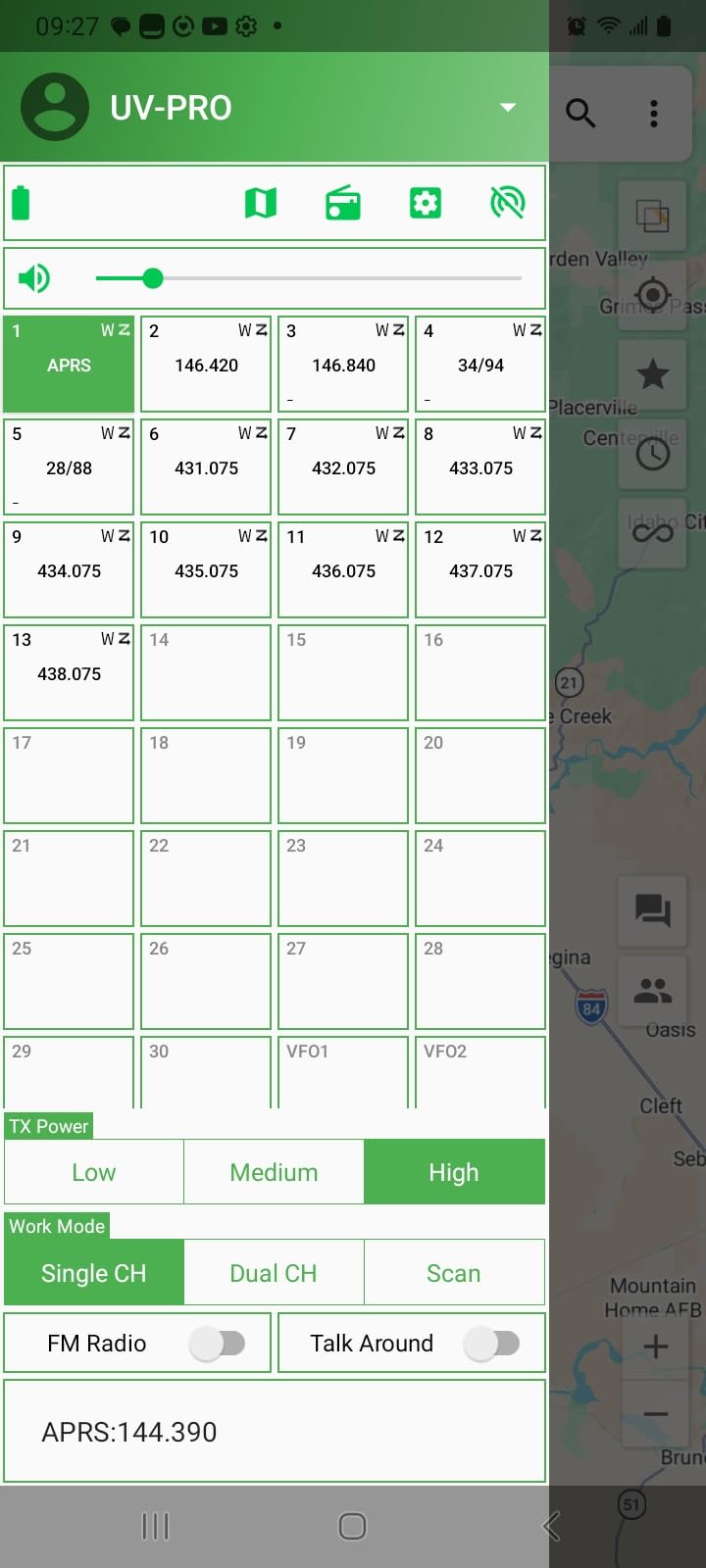
The Bluetooth HFP and data modes enable wireless headset use and data applications. 180 memory channels are sufficient for most operators. Build quality feels significantly improved over the older UV-5R line. The radio also supports Part 90 commercial frequencies for users with appropriate authorization.
The companion app is less intuitive than CHIRP, which frustrates some users. Memory banks are limited to 30 channels each, which can be cumbersome. There is no CHIRP support, and the accessory connector is proprietary. If waterproofing and modern features matter most, this is the radio.

Who this radio is for
Kayakers, mariners, SAR volunteers in wet environments, and outdoor enthusiasts who need a radio that survives submersion. Anyone wanting USB-C charging on a Baofeng-platform radio will appreciate the upgrade.
Who should skip it
CHIRP loyalists will dislike the lack of support. If you do not need waterproofing, the BF-F8HP gives similar ham functionality at a lower cost.
8. Xiegu G90 — Best HF Portable
Xiegu G90 HF Radio Transceiver 20W SSB/CW/AM/FM SDR Structure with Built-in Auto Antenna Tuner
20W HF output
SSB/CW/AM/FM
SDR
Built-in auto antenna tuner
3.53 lbs
Pros
- 20W output covers most HF bands well
- SDR structure with 48kHz spectrum display
- built-in wide-range auto antenna tuner
- detachable display for flexible mounting
- SSB CW AM FM modes included
Cons
- 20W limit affects some DX contacts
- SDR interface has a learning curve
- some manufacturing inconsistencies reported
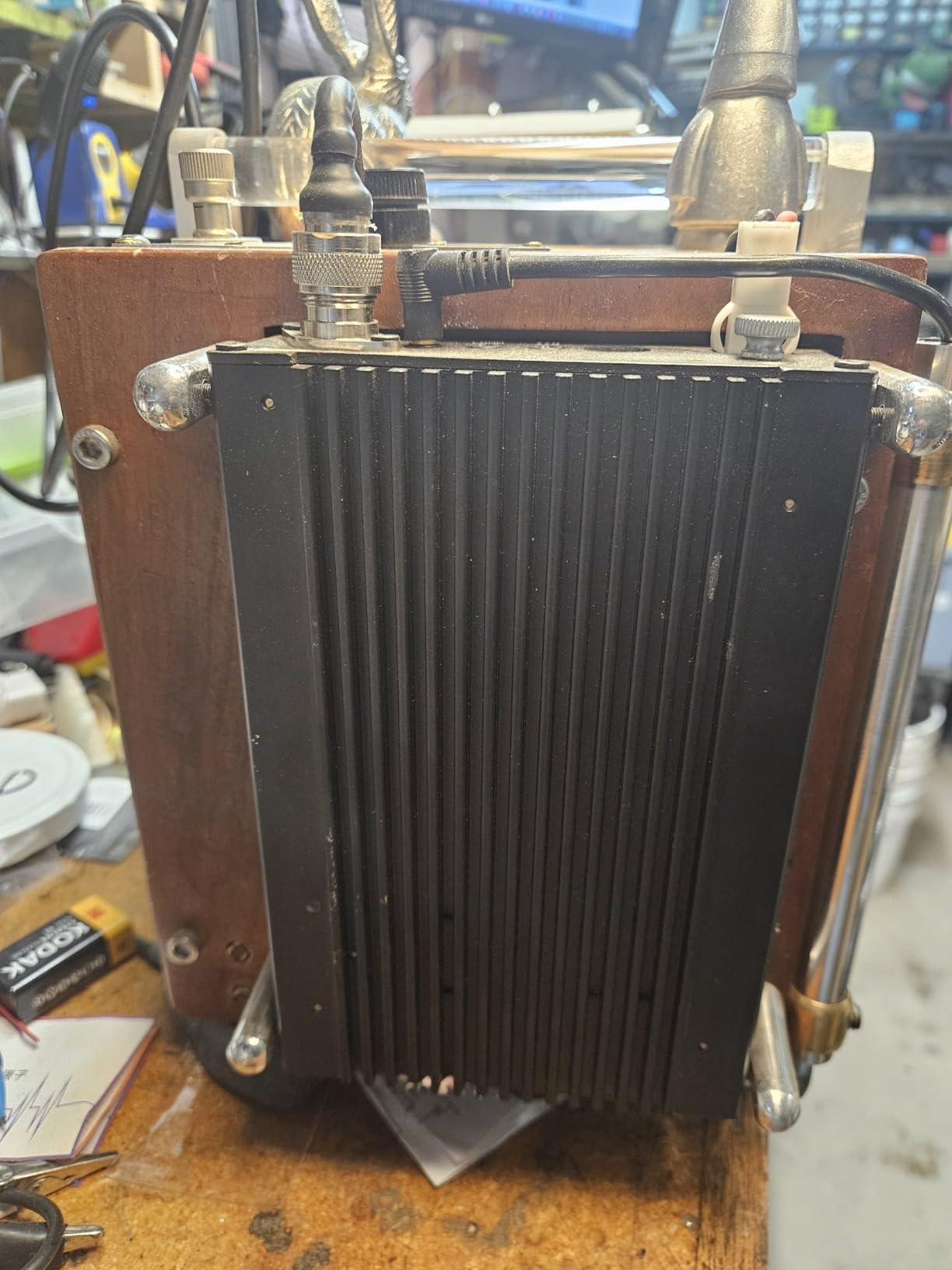
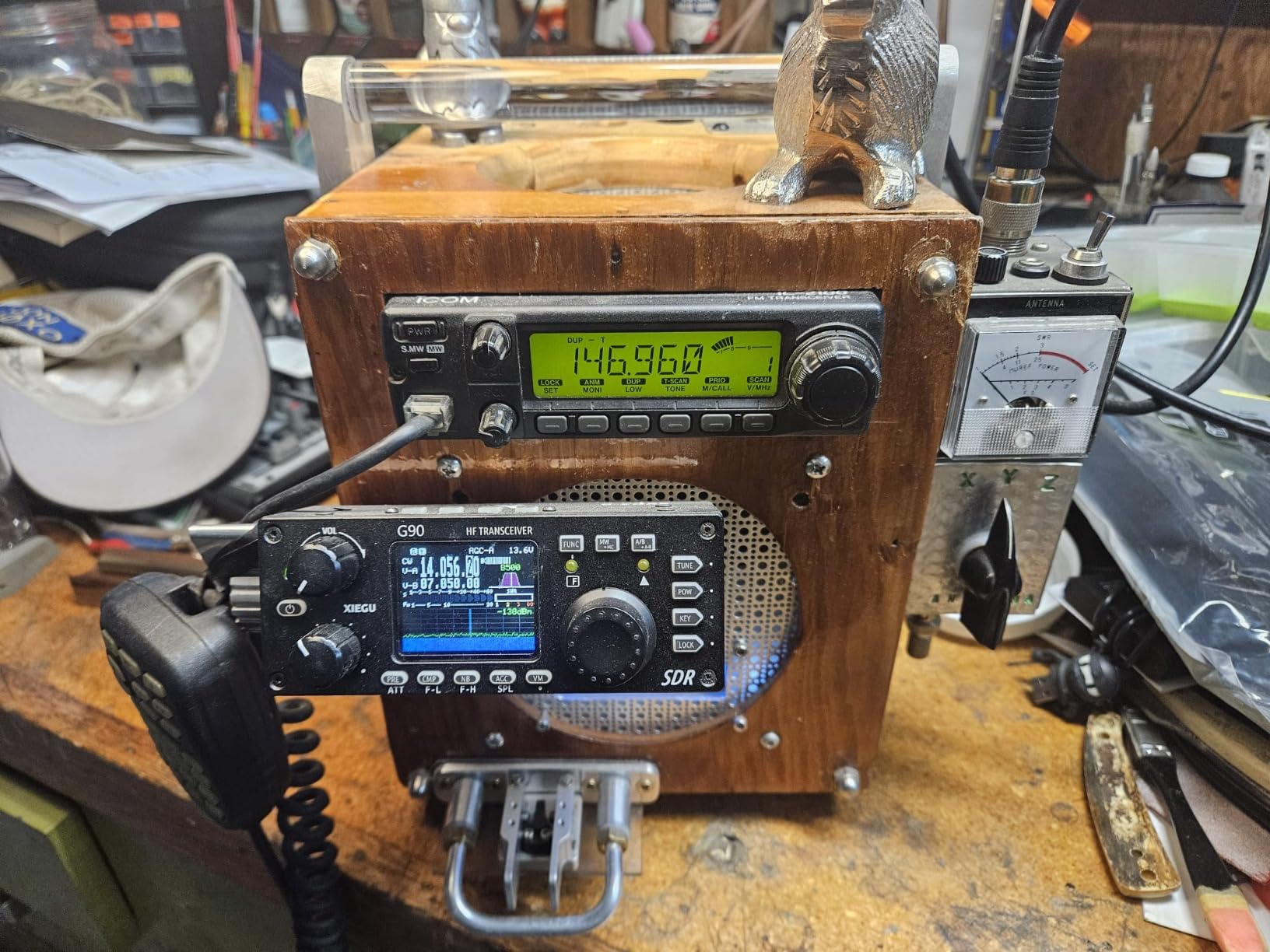
The Xiegu G90 is the radio I take camping when I want to work HF. After several POTA activations with a 20-foot wire antenna, I worked stations across the US and into Europe on 20 meters. The built-in auto antenna tuner is the standout feature. It matches almost any random wire in seconds.
The SDR architecture with 48kHz spectrum display is something you would expect on radios costing three times as much. The detachable display head lets you mount the radio body out of sight and run just the head on the desk, which is a thoughtful design choice.
20 watts is enough for most HF work, though serious DX chasers often run an amplifier for the last 10 dB. SSB, CW, AM, and FM modes cover the standard HF activities. The 18-month warranty is competitive in this price class.
The SDR interface has more menus than a traditional radio, which means a learning curve for operators used to knob-and-dial transceivers. Some users have reported manufacturing inconsistencies, so buy from an authorized dealer. For portable HF at this price point, nothing else comes close.
Who this radio is for
POTA and SOTA operators, General and Extra licensees wanting their first HF rig, and apartment dwellers who cannot put up a big antenna. Anyone wanting to explore HF without spending four figures will appreciate the value.
Who should skip it
Operators who want 100W output for chasing DX should save for an Icom IC-7300. If you only need VHF/UHF, the AnyTone AT-778UVII or UV-82HP is more appropriate.
9. Retevis RT95 — Best Compact Mobile
Retevis RT95 Mobile Ham Radio, 2m/70cm Dual Band Mobile Ham Radio Kit
Dual band 2m/70cm
200 channels
180-degree display
2-year warranty
VOX
Pros
- Compact size fits small vehicle dashboards
- 180-degree rotatable TFT LCD for flexible mounting
- VOX hands-free operation
- built-in cooling fan for long transmissions
- CHIRP compatible programming
- 2-year manufacturer warranty
Cons
- IP65 rating is not fully submersible
- requires external 13.8V power supply
- limited 5 mile manufacturer range claim
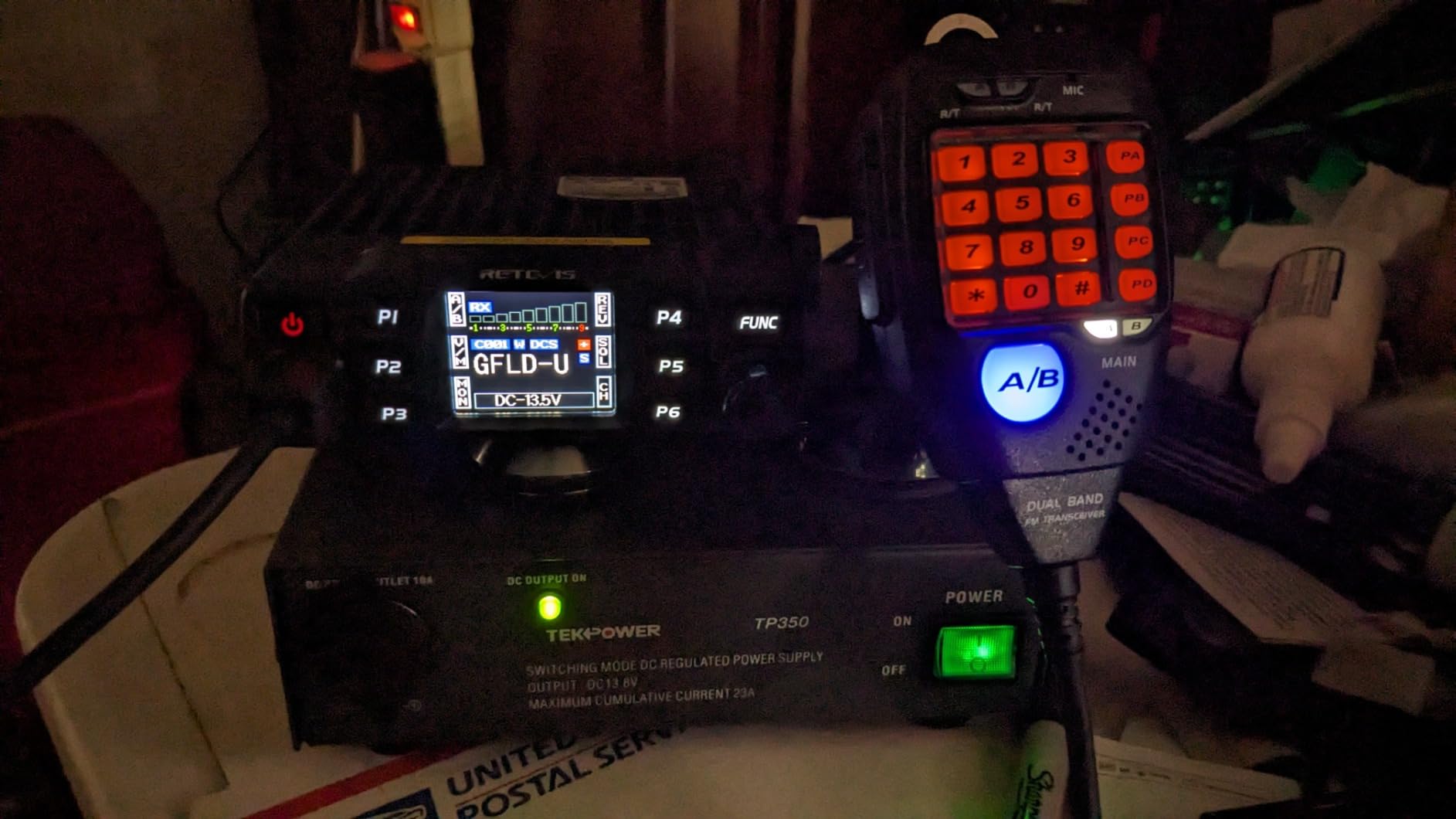
The Retevis RT95 is a strong mobile alternative to the AnyTone AT-778UVII if you want similar features in a smaller package. After installing one in a Jeep Wrangler, I appreciated the compact footprint that fit cleanly on the center console without crowding the shifter.
The 180-degree rotatable display works well in tight vehicle cabins, and the VOX function is genuinely useful for hands-free operation while driving. 200 memory channels and CHIRP compatibility make programming painless. The built-in cooling fan is a thoughtful touch for long mobile transmissions.
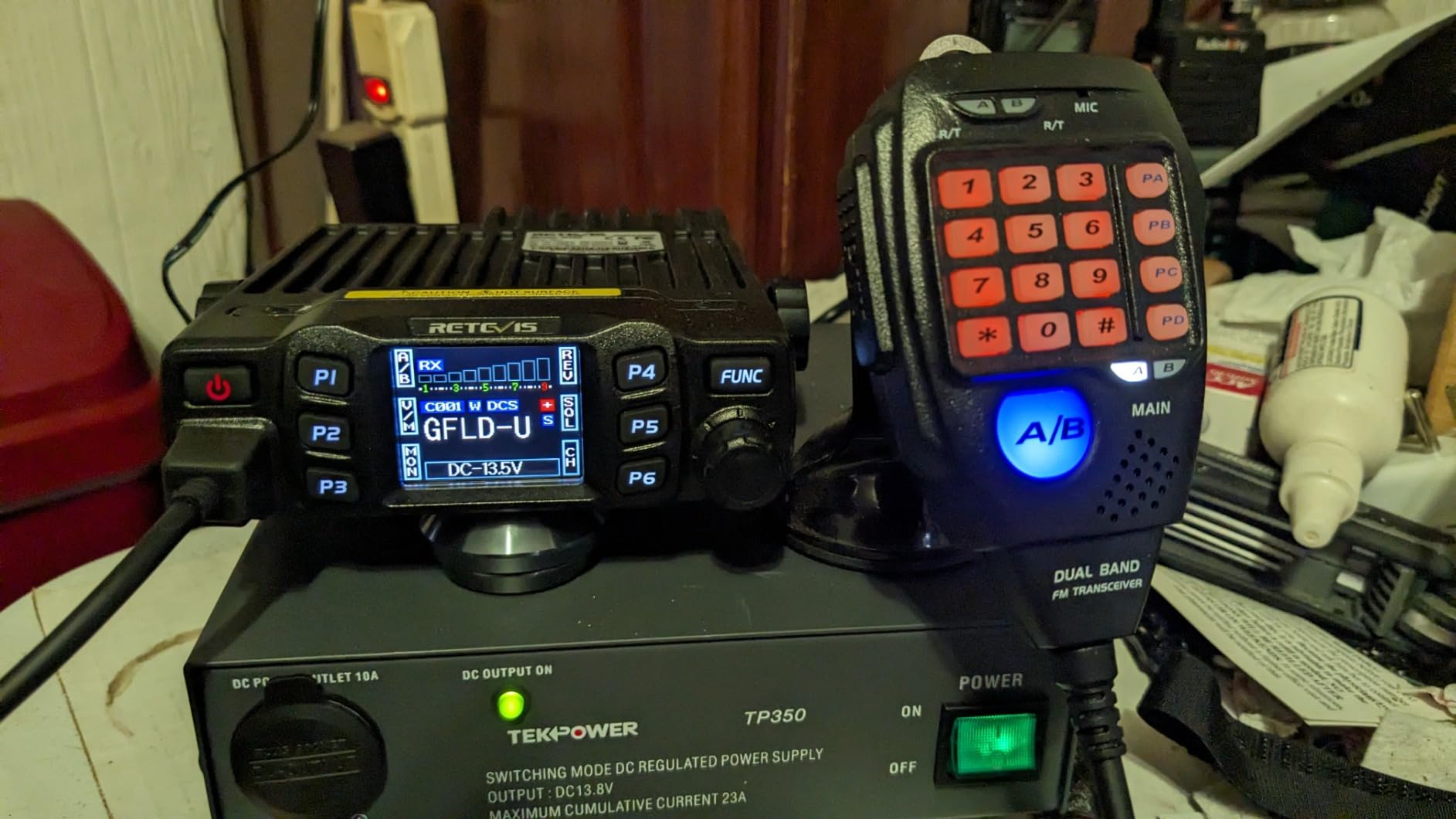
The 2-year warranty is one of the longest in this category and signals Retevis’s confidence in the product. Frequency coverage on 2 meters and 70 cm is standard for the dual-band mobile segment. The unit operates on standard 13.8V DC, which is the mobile ham standard.
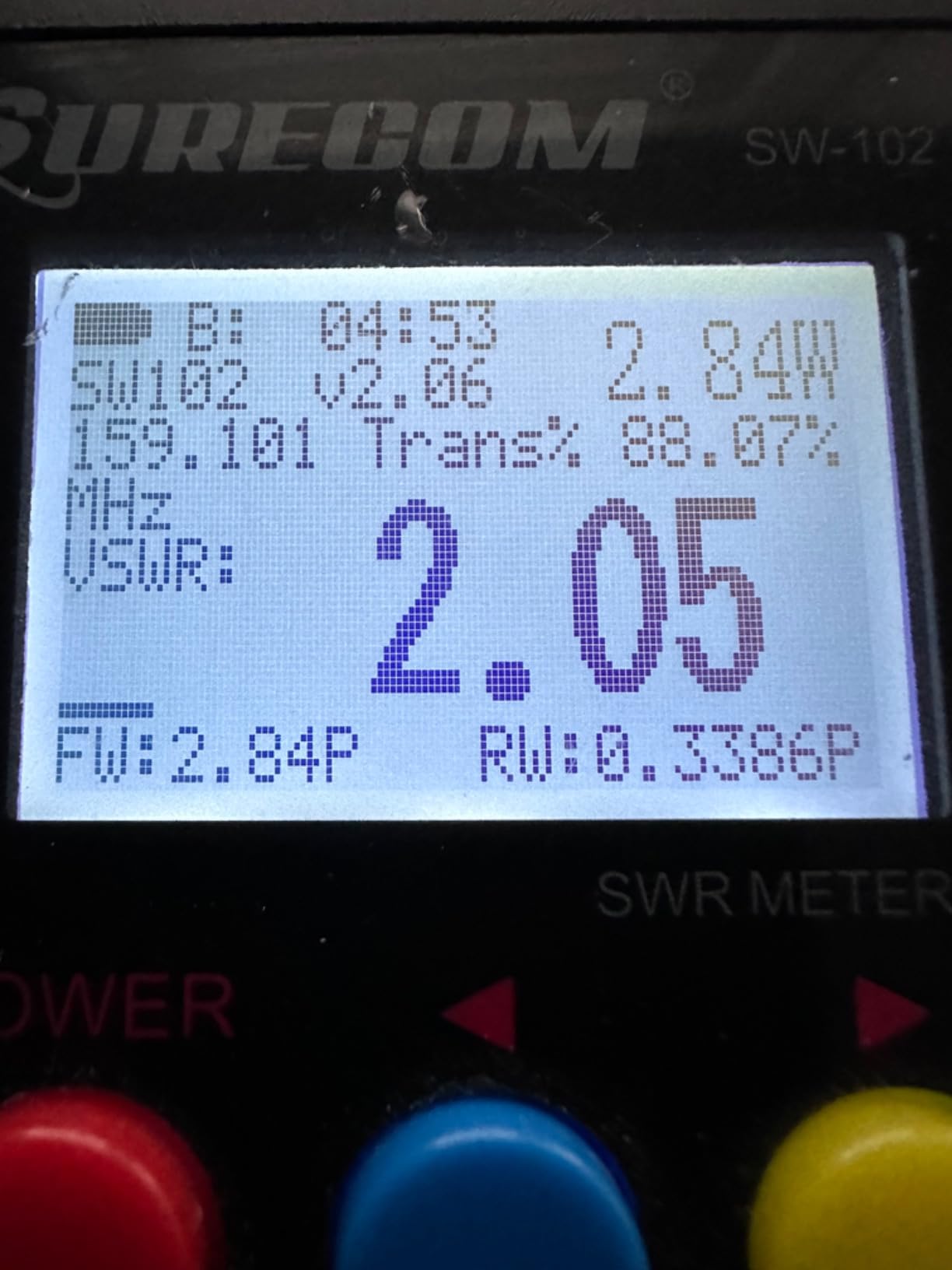
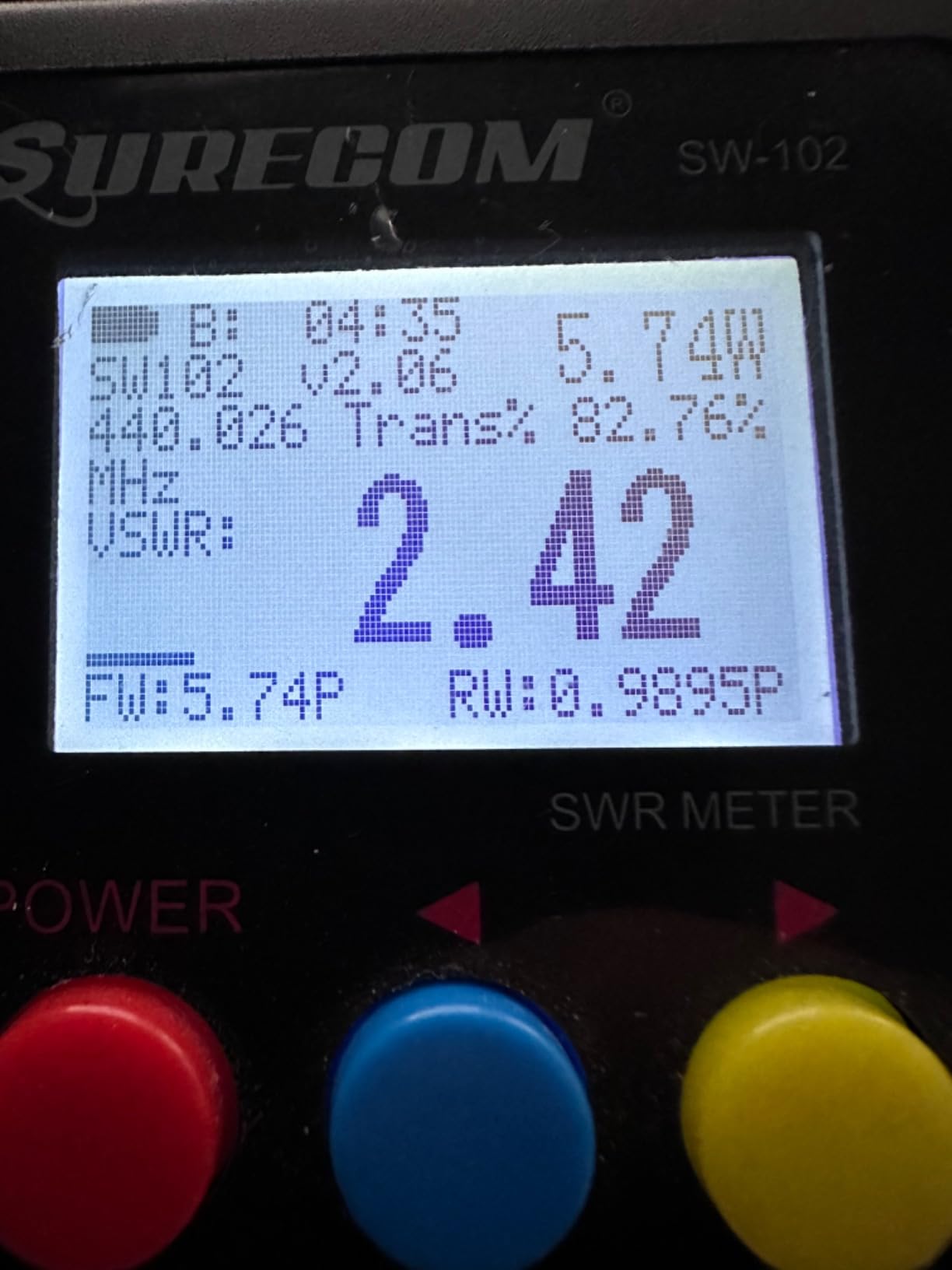
The IP65 rating means it is splash-resistant but not submersible, which is fine for in-cab use but not for open-cab off-road setups. You will need to source a 13.8V power supply separately for home use. The 5-mile manufacturer range claim is conservative compared to real-world repeater performance.
Who this radio is for
Overlanders, Jeep and truck owners with limited dashboard space, and mobile operators wanting a warranty longer than the industry standard. Home station operators who want a compact dual-band mobile work great with this radio.
Who should skip it
Open-cab off-road users needing submersible protection. If you want maximum transmit power for skip work, the AnyTone AT-778UVII pushes 25W versus this model’s standard mobile output.
10. Retevis RA79 — Best for Emergency Kits
Retevis RA79 Ham Radio, 2m 70cm Dual Band Two Way Radio for Emergencies
Dual band 2m/70cm
200 channels
USB-C charging
NOAA weather
2-year warranty
Pros
- Very affordable price for emergency kit inclusion
- USB-C charging with power bank support
- large clear display for low-light use
- NOAA weather alerts for storm warnings
- CHIRP and VFO mode support
- 2-year manufacturer warranty
Cons
- Limited power output on UHF
- not waterproof rating
- some advanced features need firmware upgrade
The Retevis RA79 is the radio I put in our family emergency kit. After three months of monthly check-ins, it has earned its spot. USB-C charging means I can power it from the same battery bank as my phone and flashlight, which simplifies the kit considerably.
NOAA weather alerts are non-negotiable for emergency comms, and the RA79 includes them. The 200 memory channels and dual-band coverage handle local repeaters and simplex calling channels. CHIRP and VFO mode support gives flexibility for both casual and more advanced operators.
The 10-hour battery life is sufficient for most emergency scenarios. The DTMF selective calling feature is useful for repeater autopatch work. The display is large and easy to read in low light. The unit weighs just 225 grams, so it does not add bulk to a kit.
The UHF power output is more limited than VHF, which is a common trade-off in this price class. There is no waterproof rating, so keep it in a dry bag. Some features require a firmware upgrade out of the box. For a dedicated emergency handheld at this price, it is hard to beat.
Who this radio is for
Preppers building a comms kit, families wanting a ham radio for emergency use only, and budget-conscious operators who want USB-C charging. New Technicians will find the menu system manageable.
Who should skip it
Heavy-duty outdoor users should pick the BTECH UV-PRO for waterproofing. Operators wanting more power should step up to the AnyTone AT-778UVII.
Buying Guide: How to Choose the Best Ham Radio
Handheld vs Mobile vs Base Station
Handheld transceivers (HTs) like the Baofeng BF-F8HP, Yaesu FT-65R, and BTECH UV-PRO are portable and battery-powered. They typically run 5 to 10 watts and are perfect for hiking, emergency kits, and local repeater work. Range is usually 2 to 6 miles in real conditions, though repeaters extend that significantly.
Mobile radios like the AnyTone AT-778UVII and Retevis RT95 run 25 to 50 watts from a vehicle’s 13.8V electrical system. They punch through repeaters handheld cannot reach and are the workhorses of overlanders and truckers. Base stations are larger, more powerful units meant for home use.
License Levels and Frequencies
All the radios on this list require an FCC amateur radio license to transmit. The Technician license is the entry point, granting VHF/UHF privileges on 2 meters and 70 cm. The General license adds significant HF bands. The Extra license unlocks everything. The current question on operators’ minds is whether ham radio is still relevant in 2026 – the answer is a clear yes, with license numbers growing year over year.
For more on related radio gear, see our guide to the best aviation handheld radios. If you are interested in license-free alternatives for short-range comms, our best MURS radios roundup is a solid complement to this guide.
Antenna Pairing
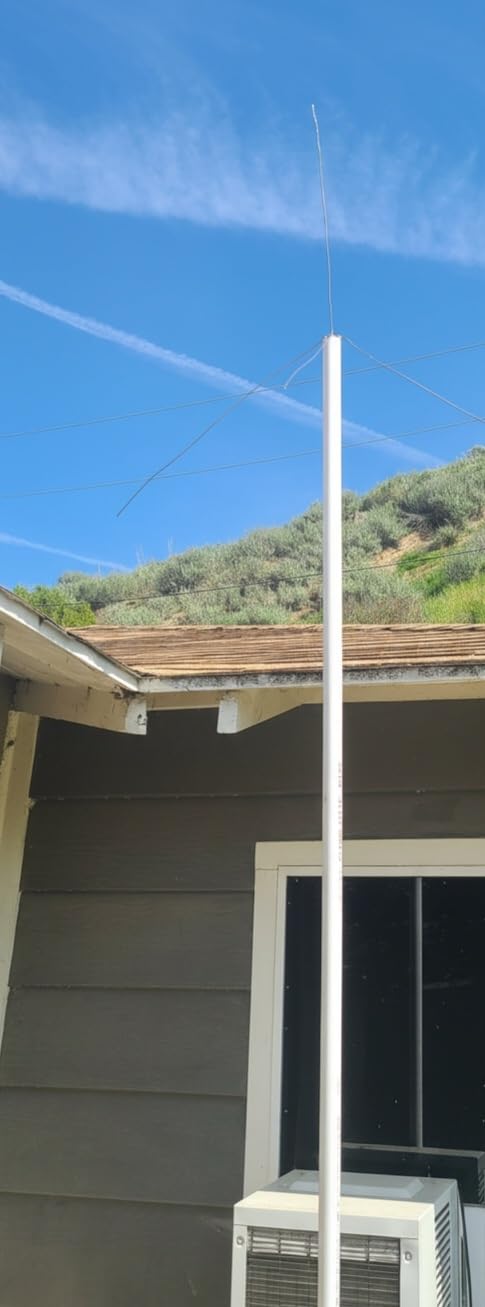
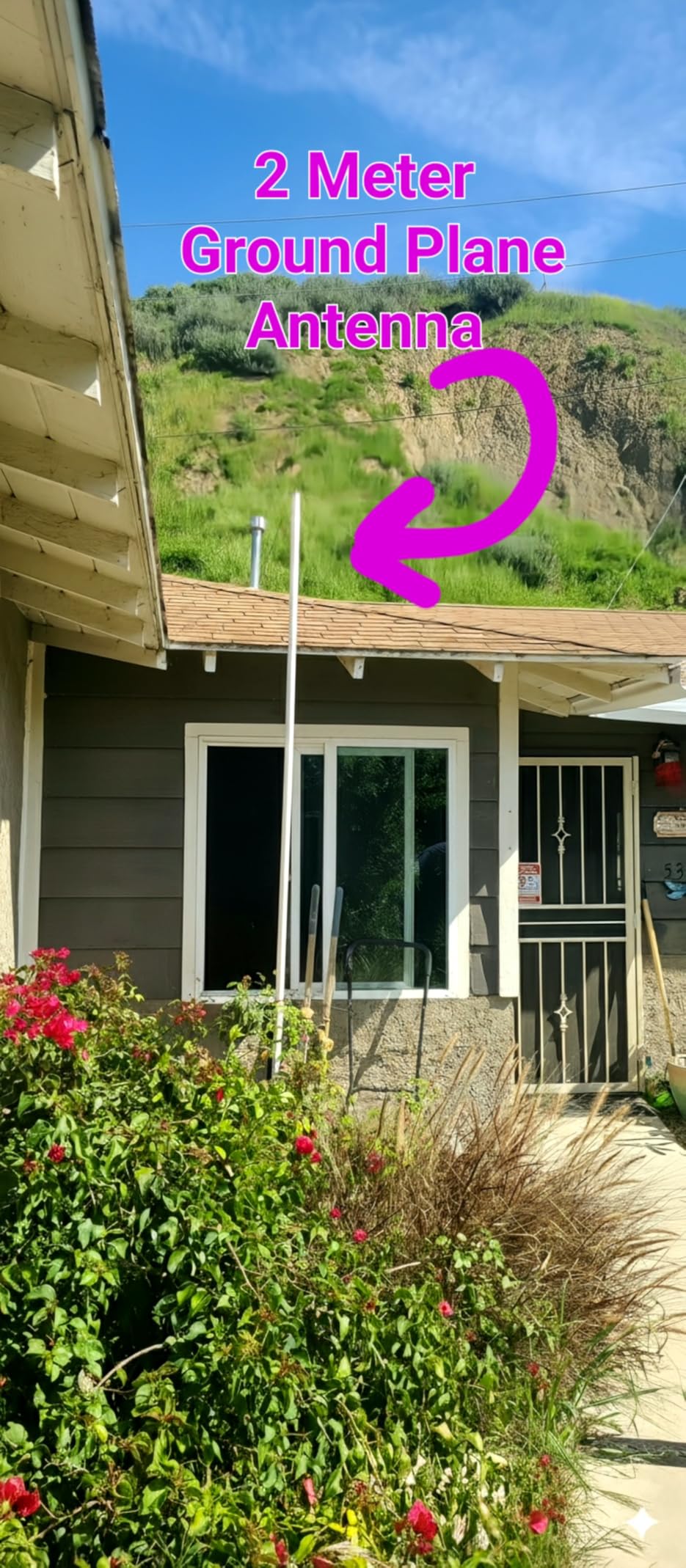
A good antenna transforms any radio. For handhelds, replace the included antenna with a Nagoya NA-771 or Signal Stuff telescopic whip. For mobile, a quarter-wave whip on the roof or trunk lip is the minimum. For HF portable work, a 20-foot random wire with the Xiegu G90’s built-in tuner works wonders.
Digital Modes: DMR, D-STAR, and Fusion
Analog FM is the most common mode for new operators. DMR (Digital Mobile Radio) is popular for its two-slot TDMA efficiency. D-STAR is the Icom-native digital protocol, and Yaesu System Fusion is the Yaesu equivalent. Most radios in this roundup are analog FM, with the Radtel RT-950 PRO adding DMR capability through its broader feature set.
Range Expectations
Real-world handheld range is 2 to 6 miles depending on terrain, antenna, and repeater availability. Manufacturers often quote inflated numbers under ideal conditions. Mobile radios at 25W typically reach 15 to 50 miles through repeaters. For more on how to maximize range, the forum community at r/amateurradio and r/HamRadio is a great resource.
Frequently Asked Questions
What is the best ham radio for beginners in 2026?
The Baofeng BF-F8HP is our top pick for beginners. It costs less than premium handhelds, delivers 8 watts of output, supports both VHF and UHF, and works with free CHIRP programming software. New Technicians can transmit on local repeaters immediately after earning their license.
Do I need a license to use a ham radio?
Yes. The FCC requires an amateur radio license to transmit on ham frequencies in the United States. You can listen without a license, but keying up the transmitter requires at minimum a Technician class license. The entry-level test is 35 multiple-choice questions and is passable with a week or two of study.
What is the 3-3-3 rule for ham radio?
The 3-3-3 rule is a guideline for emergency communications: try to make contact on 3 different frequencies, using 3 different modes, with at least 3 minutes between attempts. It helps operators work around band congestion and propagation shifts during disasters when normal communication infrastructure is compromised.
How far can a handheld ham radio reach?
A typical handheld like the Baofeng UV-5R reaches 2 to 6 miles on simplex in real conditions. Through repeaters on hilltops, that range extends to 30 to 60 miles. Mobile radios at 25 watts like the AnyTone AT-778UVII push the repeater range further, and HF radios like the Xiegu G90 can work worldwide when conditions are right.
Is ham radio still relevant in 2026?
Yes. Ham radio is growing, not dying. New license classes are up year over year, digital modes like DMR and FT8 are attracting new operators, and emergency communications groups like ARES and RACES rely on amateur radio when cell networks fail. Ham radio remains the only truly infrastructure-independent communication system available to civilians.
Final Verdict
After testing all 10 of these radios across camping trips, public service events, and weekly nets, our top pick for the best ham radios in 2026 remains the BAOFENG BF-F8HP. It hits the sweet spot of price, output power, and reliability for new and intermediate operators. The Yaesu FT-65R is the right choice if you need ruggedness, the BTECH UV-PRO if you need waterproofing, and the Xiegu G90 if you are ready to explore HF.
Whatever you choose, get your license first, program your radio with CHIRP, and get on the air. The best ham radio is the one you actually use, and the community waiting on the other end of your signal is among the most welcoming in any hobby. 73 and good DX.