
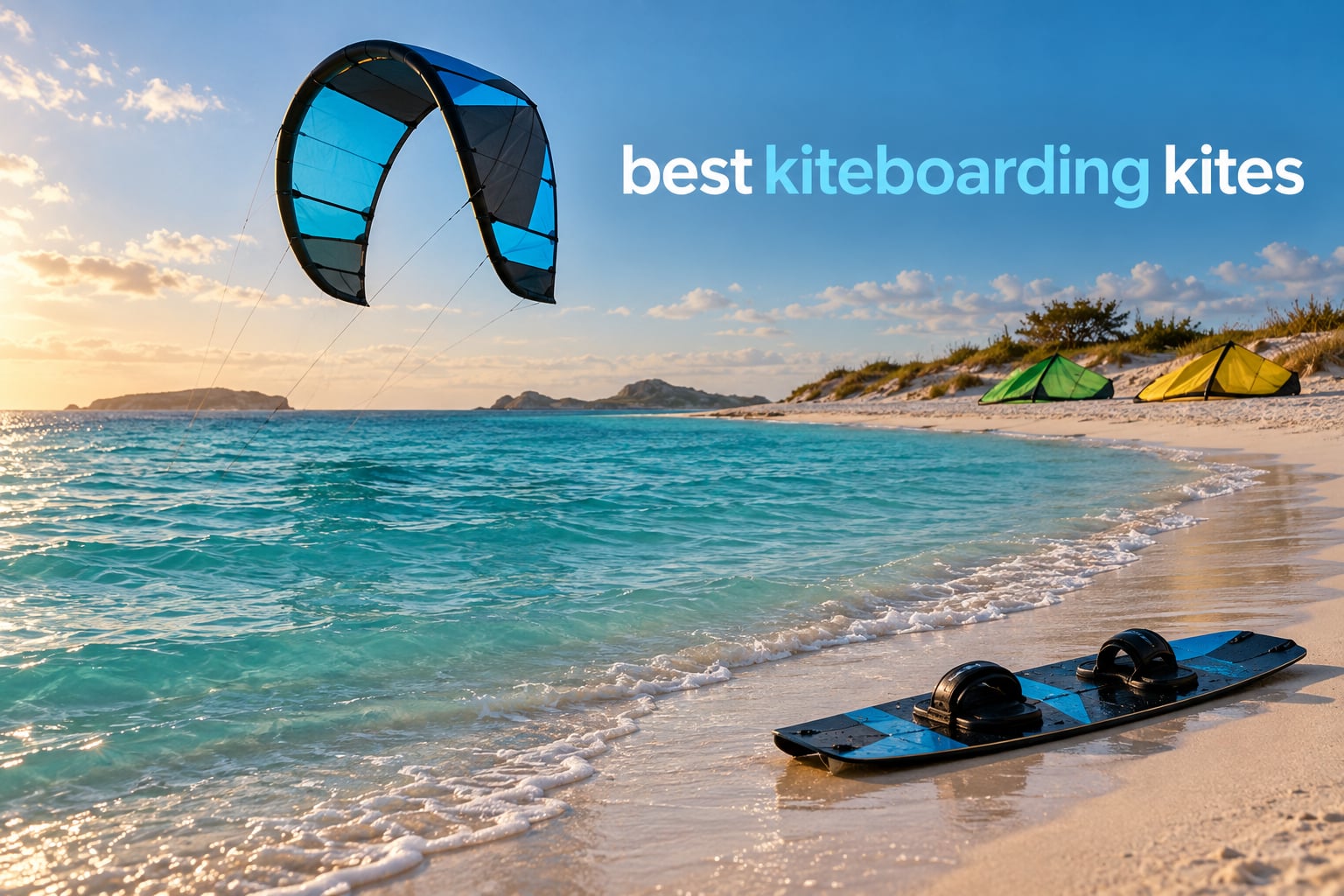
Search for the best kiteboarding kites and you will mostly find stunt kites, single-line novelty kites and inflatable tubes for kids. That is the single biggest problem with this search term, so let me clear it up before anything else: this list covers modern 4-line and 5-line leading edge inflatable riding kites, and the trainer and traction kites you genuinely can buy to practise on. It does not cover children’s stunt kites, foil-boarding inflatables, pumps, harnesses or boards.
I picked every kite here by reading the full review base on each one rather than by following brand marketing. That matters more than usual in this niche, because kite models turn over every season and most “best” lists online are six years out of date. Every product below carries its real rating and real review count, and where the review base is thin I say so plainly instead of pretending the consensus exists.
Two things worth knowing before you read on. First, a trainer kite is not a cheap version of a riding kite; it is a different tool that teaches you wind-window handling on land, and it is a legitimate first purchase for many riders. Second, if you are ready to ride on water, only one product in this list is a true inflatable riding kite, and I have flagged it clearly rather than dressing up a land trainer as a performance LEI.
Last reviewed for 2026. Prices and availability change constantly, so use the buttons below to check the current listing rather than a number cached in a review.
Top 3 Best Kiteboarding Kites 2026
The three picks below carry the only review bases in this category substantial enough to trust: 117, 20 and 14 reviews respectively. The rest of the list is newer or thinner, and I have noted that where it applies.

GZYF 1.4 m Dual Line Parafoil
- Frameless 1.4 m parafoil
- 30 m dual lines
- Packable to tiny size

All Six Kites at a Glance in 2026
Quick answers on what each kite is for, who it suits and what the honest catch is. Every row below also has a full review further down the page.
| Product | Specifications | Action |
|---|---|---|
| Slingshot B3 Light Traction Trainer Kite |
|
Check Latest Price |
| GZYF Dual Line Traction Kite 1.4 m |
|
Check Latest Price |
| HQ4 Fluxx 1.8 R2F Trainer Kite |
|
Check Latest Price |
 HQ4 Hydra 300 R2F HQ4 Hydra 300 R2F |
|
Check Latest Price |
 Slingshot Sports Trainer Kite 2 m Slingshot Sports Trainer Kite 2 m |
|
Check Latest Price |
 Slingshot Ghost V3 Kiteboarding Kite Slingshot Ghost V3 Kiteboarding Kite |
|
Check Latest Price |
1. Slingshot B3 Light Traction Trainer Kite – the most proven trainer here
Slingshot Kiteboarding B3 Light Traction Kite 3 Meter
3 m span trainer kite
110 kgf line strength
1000 g packed weight
Fiberglass or carbon frame
Pros
- Largest review base of any kite in this list
- 117 owners
- Durable build that holds shape across seasons
- Very easy to launch and control for a first kite
- Plenty of pull to progress onto real water
Cons
- Generates heavy pull and suits bigger riders
- No printed instructions in the box
The Slingshot B3 is the one kite in this list I would put in front of an absolute beginner, and the reason is the review count rather than the spec sheet. One hundred and seventeen owners is a real sample for a category where most kites have a handful of ratings, and across that sample the same strengths keep repeating.
Owners consistently describe it as easy to launch and easy to control, which is exactly the pair of qualities you want from a first kite. A traction kite that will not launch reliably teaches you nothing, and one that wanders off line in a gust teaches you the wrong habit. This one holds a predictable arc and comes back to where you put it.
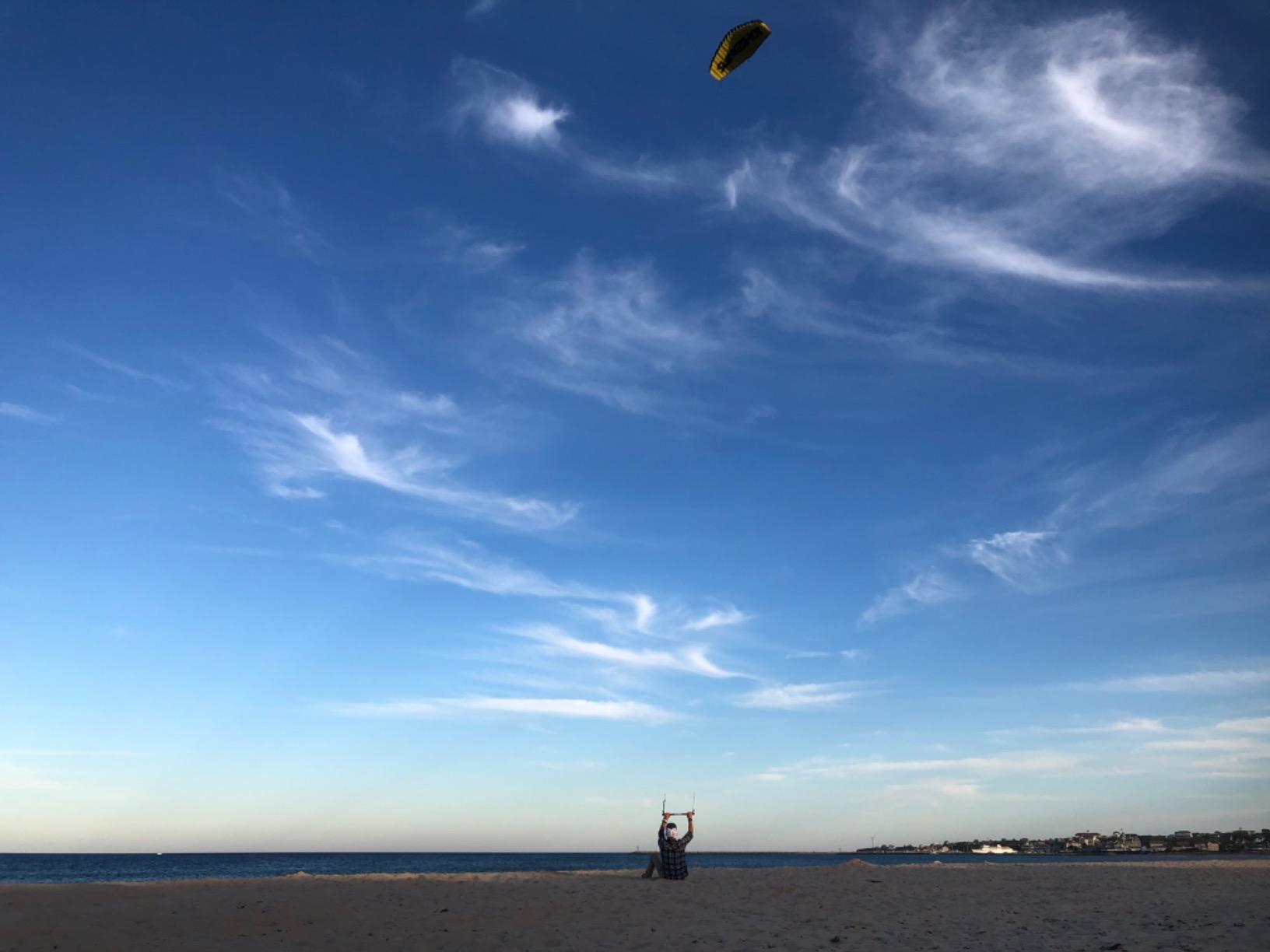
Durability is the other repeated theme. Reviewers report that it takes a beating, keeps its shape over time, and that sand and water rinse off easily, which matters more than it sounds if you are launching it from a beach rather than a grass field. Line strength is quoted at 110 kgf, and the frame is listed as fiberglass or carbon fibre.
The honest catch is pull. This is a 3 m trainer and it generates serious force for its size, and reviewers report explicitly that it is not suited to smaller or lighter riders. If you weigh little or you have never flown anything before, a 3 m traction kite will overwhelm you, and you should size down to a 1.8 m or a 1.4 m trainer instead.
What you get in the box and what you do not
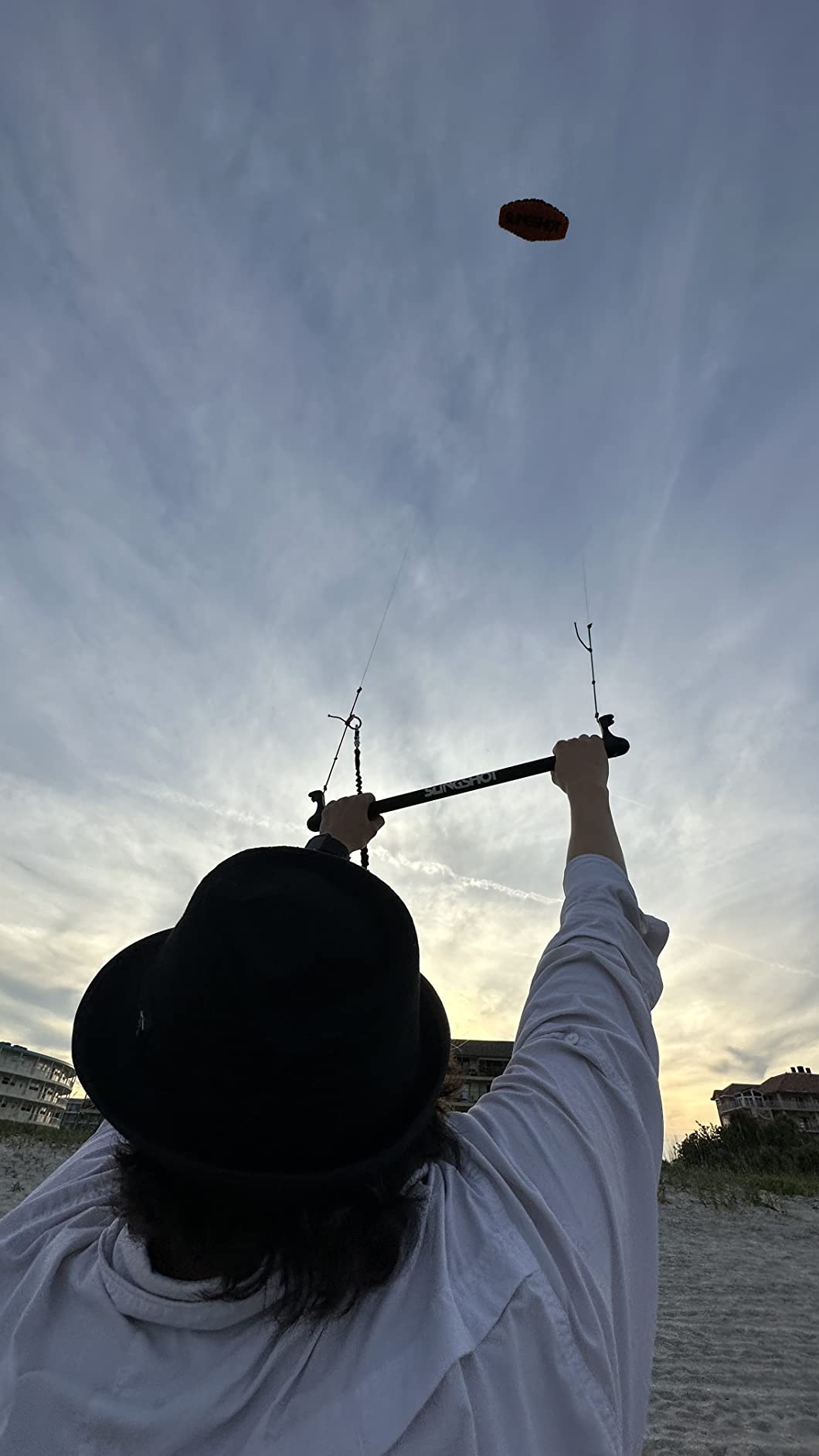
You get the kite itself, at 1000 g, with 110 kgf lines. What reviewers most often flag is what you do not get: there are no printed instructions, and the advertised DVD is not included, so you are pointed to a video online instead. Several owners mention having to work out the safety leash attachment themselves or hunt down walkthrough videos.
That is a genuine friction point, so check the brand’s setup video before your first launch rather than reading a diagram. The safety leash is not optional, and the fact that nobody prints the instructions is a good reminder to verify the attachment yourself rather than trusting the packing layout.
Who this kite suits, and who should skip it
This suits anyone who wants to develop kite control on land before paying for a lesson, and reviewers specifically praise it for building strength, coordination and an understanding of wind and window before you ever touch water. It also works as a skate-kiting kite, which widens its use well beyond kiteboarding.
Skip it if you are small, if you want to be on the water within a week, or if you specifically want a boost-and-cruise riding experience. It is a trainer, and a good one, but a trainer. If your goal is riding a twin tip, your real next purchase is an inflatable LEI kite plus a board plus a harness, and no land trainer replaces that step.
2. GZYF Dual Line Traction Kite 1.4 m – the smallest and most portable trainer
Dual Line Parafoil Traction Kite, 1.4m Polyester Surfing Trainer Kite with 30m Flying Lines, for Beach and Outdoor Wind Sports
1.4 m frameless parafoil
30 m dual lines and winder handles
Polyester stitched seams
Ages 14+ with supervision
Pros
- Cheapest route into two-line handling
- Very small packed size for travel
- Comes complete with lines and handles
- Suits smaller and lighter flyers
Cons
- Needs more wind than buyers expect
- Needs a completely open flying area
- Lines are uncolored so they must be marked
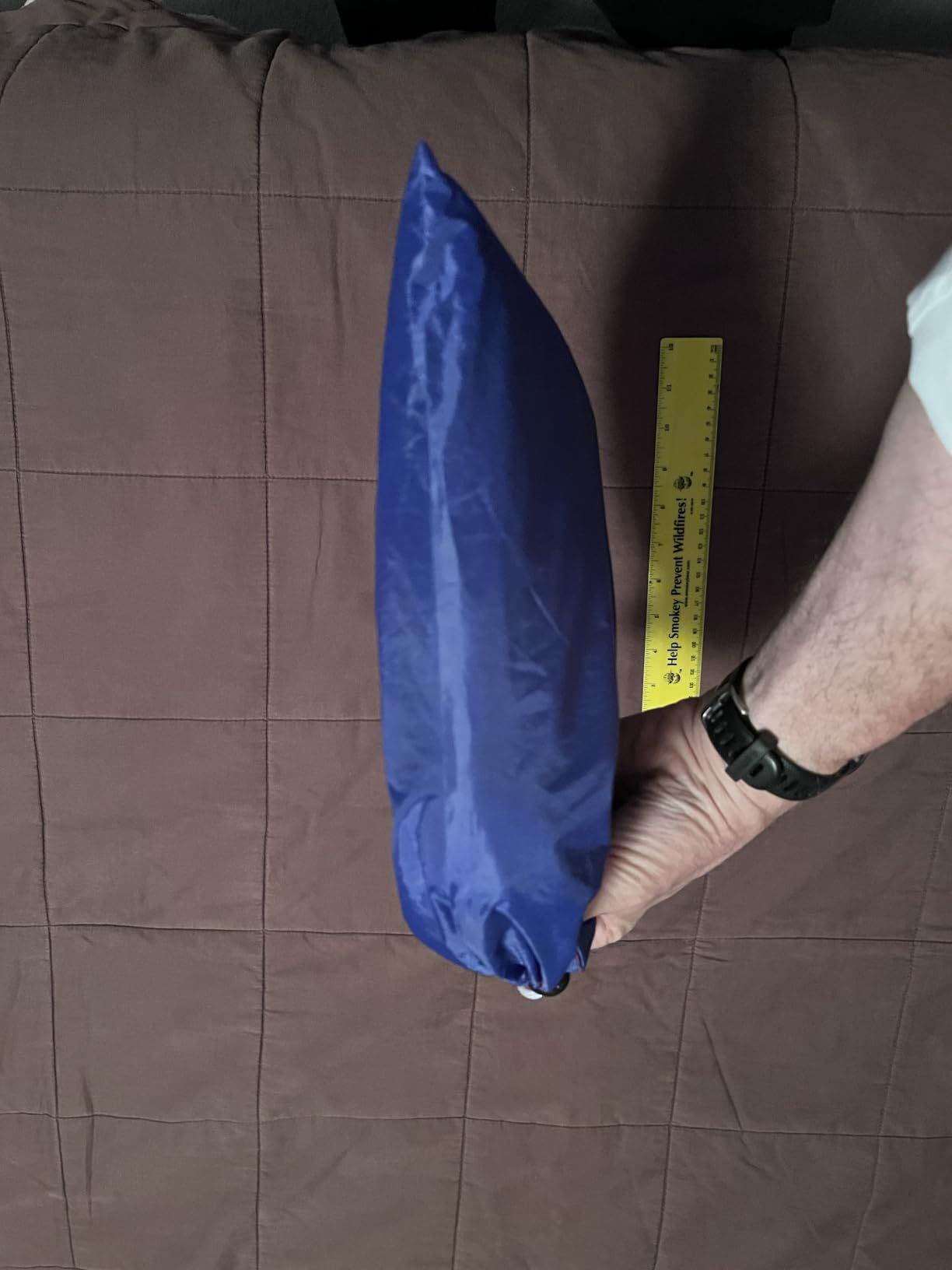
The GZYF dual line traction kite is the smallest and lightest thing on this list at 1.4 m, and it is the right answer for a specific problem: learning two-line steering when you have almost no budget and no car boot to spare. A frameless parafoil this size packs down to almost nothing, which is why owners use it for practice sessions in fields and parks as well as on the beach.
It ships as a 1.4 m parafoil with a 1.4 m span, 30 m of dual flying lines and two winder handles, so the package is complete. Steering response from dual lines is immediate and precise once you get used to the pull of one line then the other, and the shape is stable enough that beginners get results in a session or two.
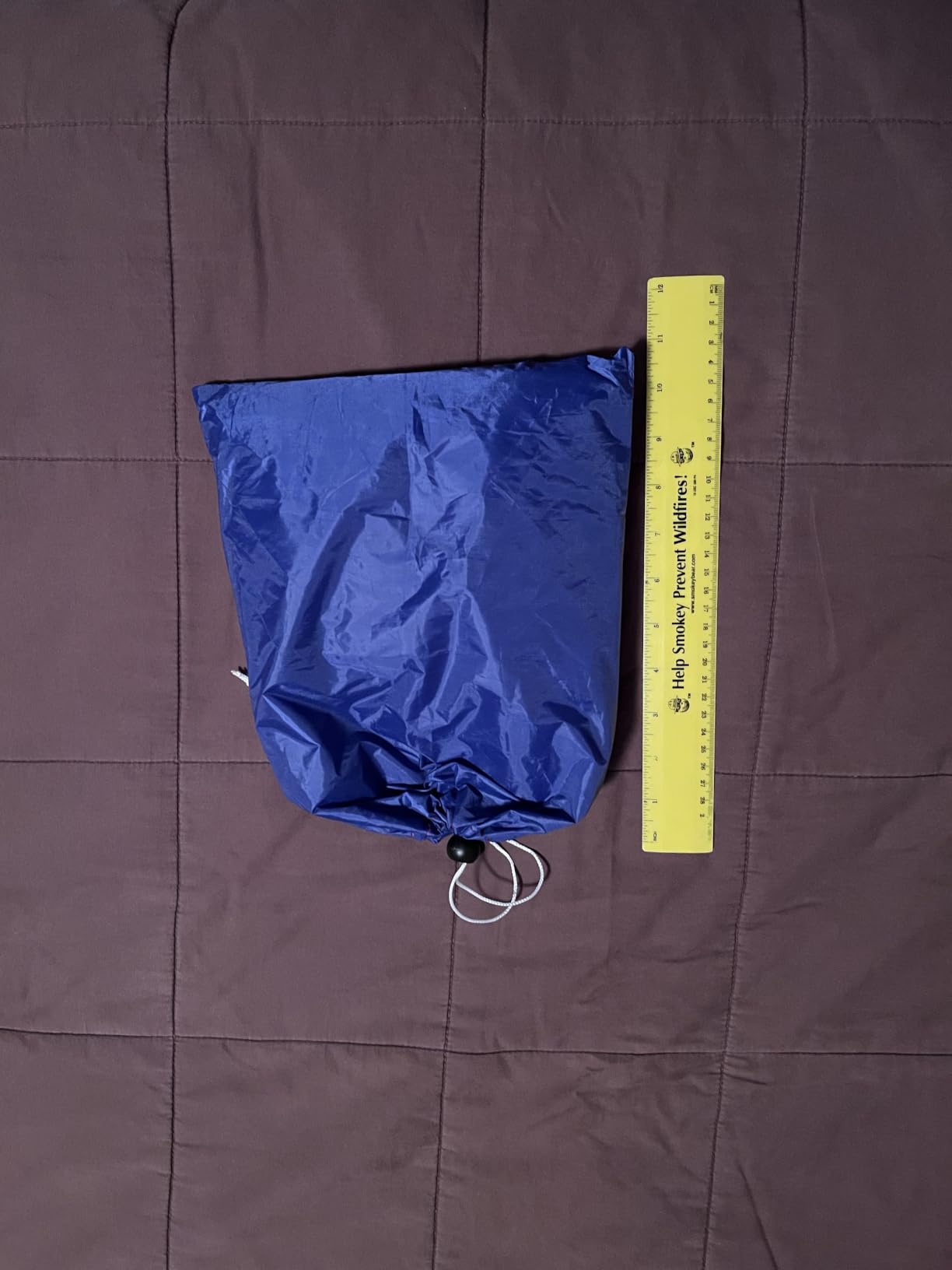
The most common complaint by far is wind. Owners report it performs best around 15 to 20 mph and struggles below roughly 12 mph, which is a much narrower usable window than buyers expect for something that looks modest in photos. If your local spot is a light-wind lake or a sheltered park, this kite will disappoint you on a still day.
The second real constraint is space. It needs a completely wide-open flying area away from trees, buildings and powerlines, and the frameless polyester canopy with stitched seams has less rigidity than a framed kite, so it can soften and deform in gusty conditions. Rated for ages 14 and up with adult supervision.
How to set it up without tangling yourself
One practical note that reviewers raise: the two flying lines are uncolored, so people end up marking them themselves to avoid crossing them during setup. On a 1.4 m kite with 30 m lines that is easy to do wrong, and crossing lines in a parafoil is a fast way to end a session early.
Lay the lines out fully, walk to the end of each, mark or swap one line, and only then attach. It takes two minutes and it prevents the most common first-session failure with a dual-line kite.
When this is the right call and when it is not
Pick it if your goal is cheap two-line control practice, you travel with your kite, you are a small or light flyer, or you want to practise trick flying on grass. Reviewers like it specifically as a first two-line kite for smaller and lighter users, which is a sensible use of a 1.4 m span.
Skip it if your local wind is marginal, if you have limited flying space, or if you actually want to go kiteboarding rather than practise on land. A 1.4 m parafoil is nowhere near enough pull to lift and control a body on a board. Treat it as a warm-up tool, not a stepping stone that replaces a real riding kite.
3. HQ4 Fluxx 1.8 R2F Trainer Kite – the steady small trainer
HQ4 Fluxx 1.8 R2F Trainer Kite
1.8 m trainer kite
Fiberglass frame
150 lbs line strength
200 g packed weight
Pros
- Stable and predictable flying
- Ready to fly with lines pre-attached
- Light at 200 g for a 1.8 m
- Real 14-review base to judge it on
Cons
- Some owners report less pull than they expected
- A small share of one-star ratings
The HQ4 Fluxx 1.8 is the middle rung between the very small parafoils and the heavier traction kites, and it is the trainer I would point at if you want something more stable than a 1.4 m without jumping straight to 3 m of pull. At 1.8 m and 200 g it is genuinely light, and the fiberglass frame with polyester-nylon construction gives it a shape that holds in steady wind.
The detail that matters most for a first kite is that the lines come pre-attached to the kite, so it is ready to fly out of the box. Line weight is quoted at 150 lbs. That combination of stability and a complete setup is why most of the fourteen reviews land at four and five stars.
The honest weakness is power. A share of owners report lower-than-expected pull for progressing riders, and a small minority of ratings sit at one star, which points to occasional setup or durability frustrations rather than a systemic fault. If your goal is to build enough pull to simulate riding a board, size up instead.
Why size matters more than any other spec on a trainer
The forum conversations behind this whole category keep circling the same confusion: is 1.8 m too small, is 3 m too big, and why does the advice contradict everywhere. The answer is that trainer kites have a real crossover point. Around 1.8 m you can practise window position, kite recovery and edge control safely. Above roughly 2.5 m you start to feel genuine body-weight pull, which is useful for strength but genuinely dangerous if you have not learned to depower and to let go.
So the 1.8 m is not a compromise, it is the correct size for the job of learning. Start here, get your window sorted, then move up.
Who should buy this and who should not
Buy it if you want stable, predictable, forgiving behaviour and a kite you can launch in a moderate breeze in a park or on a wide beach. It is also a good second trainer if you have already flown something smaller and want more shape and stability without more risk.
Skip it if you need serious pull to practise transitions or if you are an experienced power kiter who will find the low power frustrating within a session. The four-to-five star majority here is about predictability, not performance, and those are different goals.
4. HQ4 Hydra 300 R2F – the trainer designed to come back out of the water
HQ4 Hydra 300 R2F
300 cm trainer kite
Reduced low-drag bridling
Cross-braced rib frame
1000 g, bar and leash included
Pros
- Built specifically to relaunch from water
- Low-drag bridling improves aerodynamics
- Cross-braced ribs add durability
- Bag and hand-leash safety system included
Cons
- Single review
- so very little owner evidence
The HQ4 Hydra 300 is the only kite in this list designed to be flown in water rather than only on land, and that single design decision changes what it is for. It is built to relaunch from the surface, which means you can practise water relaunches and body dragging in shallow water without the frustration of dragging a land-only kite behind a boat.
Technically it is a 300 cm trainer with reduced bridling for low drag, a cross-bracing rib structure for durability, and an air intake system that gives it quick self-inflation and better aerodynamics than a kite you pump by hand. It comes with a bag with straps, a control bar, a trainer kite guide and a hand-leash safety system. Rated for ages 16 and up.
I want to be straight about the evidence here, because this is the one place where I cannot lean on owner feedback. There is one review on record, rated four stars. That is a first impression, not a reliability pattern, and I would not want you to buy it on my word alone. The design rationale is sound and it is the only water-capable trainer available at this level, but verify the current listing and check what support the brand gives you locally.
Why water relaunch changes a trainer’s usefulness
On land, every mistake costs you a walk back to the kite. In water, a trainer that sinks and stays sunk ends the session, and riders who practise on land alone often discover at their first lesson that water relaunch is the skill that separates confident riders from everyone else. A trainer designed to recover from the surface lets you rehearse that skill repeatedly, in shallow flat water, before anyone is watching.
It also means you can test whether you enjoy being pulled through water at all, which is a much better basis for deciding whether to buy a full riding setup than another afternoon on grass.
Is this the right first kite for you
Choose the Hydra if you are already comfortable flying and specifically want to move into water before committing to a board and harness. Choose something else if you have never flown a kite at all, because a water-capable trainer still needs a fundamental grasp of the window before you add the complexity of falling in.
And weigh up the thin evidence. With a single review there is no community consensus to lean on, so the decision rests on design and on your local dealer support, not on owner data. That is a legitimate reason to buy, but it should be an informed one.
5. Slingshot Sports Trainer Kite 2 m – the ready-to-fly package
Slingshot Sports Trainer Kite – Orange, 2 Meter
2 m ram-air trainer
Bar, lines and wrist leash included
Flys in a breeze to 15 mph
Pros
- Complete package with bar lines leash and bag
- Stable ram-air shape for safe learning
- Light PVC frame packs easily
Cons
- Only two reviews
- so durability feedback is limited
The Slingshot Sports Trainer Kite 2 m is the most complete first purchase in the list if your priority is opening one box and flying. It is a ready-to-fly ram-air package and the box includes the kite, control bar, lines, a safety wrist leash and a travel bag, so there is nothing else to buy before your first session.
At 2 m it sits in a useful place between the very light parafoils and the heavier traction kites, and the ram-air shape is stable enough that it helps you learn control rather than fight it. The frame is listed as plastic or PVC, which keeps weight down and the packed profile compact.
It is rated to fly from a light breeze up to 15 mph, which is a real and useful specification to know before you turn up at a site with no wind. The evidence, though, is thin: two reviews, one at five stars and one at four, so you have early owner satisfaction and very little long-term durability feedback. Treat the design as sensible and the long-term picture as unproven.
What a complete trainer package saves you
Most beginners underestimate how much a trainer kit involves beyond the canopy. A control bar sized to the kite, lines cut and tensioned to the correct length, a safety system, and something to sit the kite on when the wind drops are all separate purchases if you assemble it yourself. This package includes all of it, plus a bag that matters if you plan to travel to a windy site rather than fly in your local park.
That completeness is the entire argument for this kite. If you have a bar and lines already, the economics change and you should look at a bare canopy instead.
Where it fits against the other trainers here
Against the 1.8 m trainers on this list you get more pull and a more conventional framed shape, at the cost of some of that shape’s forgiveness. Against the 3 m Slingshot B3 you get a much lighter, more portable package with a wider 2 m to 15 mph window, and far less force, which for a first-timer is usually the better trade.
Skip it if you already own a bar and lines, or if you need a trainer you can drop in the water. Pick it if you want the shortest possible path from unboxing to flying.
6. Slingshot Ghost V3 Kiteboarding Kite – the only true riding kite in the list
Slingshot Sports Ghost V3 Kiteboarding Kite – Blue, 12 Meters
One-strut Compact Swept C canopy
FrameLITE airframe,9525 g at 10 m
7 sizes, 2.5 m to 17 m
Pros
- A real inflatable LEI kite
- not a land trainer
- Efficient upwind reach and responsive turning
- Reduced drag from the single luff-strut
- Range covers strong wind to light wind
Cons
- Only one review on record
- Bag and bladder patch kit only
- No lines or bar listed in the pack
Everything else on this page is a trainer. The Slingshot Ghost V3 is the one product here that is a genuine leading edge inflatable riding kite, built to pull you across water on a board, and if your goal is kiteboarding rather than practising kite control on land, this is the only relevant entry in the list. That distinction is not a marketing nicety: one of these things flies in a park, the other one requires a harness, a board and a lesson.
It is a one-strut kite with a Compact Swept C canopy, and that architecture is the interesting part. A single luff strut cuts drag compared to a multi-strut frame, which on this shape shows up as efficient upwind reach, smooth handling and a reliable relaunch. Reviewers and the spec sheet both point at responsive turning rather than the soft, slow feel that afflicts some single-strut designs.
Build quality is where the engineering went. The FrameLITE airframe uses biaxial gridding with an emulsion coating, the canopy is 4X4 Canopy Tech reinforced ripstop nylon, and the TrimFlight bridle runs lines 25 percent thinner than standard to cut drag further. The Rider Customization System lets you tune bridle position and the One Pump Speed System handles inflation and deflation. The pack includes the kite, a kite bag and a bladder patch kit, but not lines or a bar.
Size range is the other headline number, and it is unusually wide for a single model: 2.5 m, 6 m, 9 m, 10 m, 12 m and 17 m in blue, with 6 m, 9 m, 10 m and 17 m also in yellow. That span covers genuine strong-wind riding at the small end and light-wind cruising at the large end, which is the range most riders actually want from one kite line.
Weight at the 10 m is listed at 9525 g, so a 17 m is a two-bag carry rather than a hand-carry. Keep that in mind for travel and for long walks to a launch point. On the evidence, I have to be careful: there is a single five-star review, which tells you a first owner was happy and tells you almost nothing about reliability across seasons. Judge it on the construction, the size range and a demo if your dealer offers one.
How a one-strut kite handles versus a three- or five-strut
Strut count is the tradeoff riders ask about most. More struts mean a stiffer, more rigid canopy that holds its shape aggressively and gives a crisper, more direct bar response, plus better raw depower when you need to dump power in a gust. Fewer struts mean less drag, a lighter kite and a softer, more forgiving feel that some riders describe as easier to fly for hours.
That is why one-strut designs have moved from niche to mainstream over the last few seasons. For most riders the drag saving translates into a kite that generates pull more efficiently, which shows up as better low-end speed and easier upwind riding rather than raw power. The cost is that the canopy deforms more under extreme load, so a one-strut kite is a little less aggressive about holding shape in heavy air. Riders buying for big-air boosting usually still prefer more struts for that reason.
What to check before you commit to a one-strut riding kite
First, the size range is a genuine strength here but it also means you must pick deliberately, because the 6 m and the 17 m are different animals. Use the sizing guidance further down rather than assuming a bigger number is safer. Second, confirm that lines and a control bar are sourced separately, since the pack contains only the kite, bag and bladder patch kit, and bar sizing matters for a riding kite in a way it does not for a land trainer.
Third, ask a dealer about a demo before committing. A one-strut kite feels different enough from a multi-strut that a ten-minute session in a proper harness tells you more than any specification. And fourth, treat the single review as an absence of data rather than a guarantee.
How Many Kites Should You Buy? The Two-Kite Quiver
This is the question that comes up more than any other in the community forums, and it has a simple answer that most first-time buyers resist: two kites beat one, and they do not need to be expensive ones. A rider who buys two smaller kites covering their wind range will have a better season than a rider who buys one large kite and spends every session wishing the wind would drop.
Here is the reasoning. Any kite has a lower wind limit below which it stalls, stops generating pull and sinks, and an upper limit above which it is simply too powerful to hold safely. One kite forces you to wait for that narrow band of wind. Two kites, one smaller and one larger, give you roughly double the usable window, and the smaller one fills exactly the gap where the bigger one stalls.
For a beginner on a mid-size twin tip in typical conditions, the common pairing is a mid-size and a smaller size, roughly two steps apart rather than adjacent. Riders debate the exact numbers endlessly and get contradictory advice from different shops, which is the source of most of the frustration people report about sizing. Ignore any single number you are given and work from your weight and your local wind instead.
Do not buy both at once, though. Fly the first one for a season, learn what its low and high limits feel like in your hands, then buy the second based on evidence rather than theory. Nothing teaches a wind range like being frustrated by it, and the community consensus is that the second kite should be the one that fills the gap where the first one stalls.
Kite Size Guide: Rider Weight, Wind Strength and Board Choice
The honest answer to what size kite is best is that there is no single number, because the right size is a function of three variables at once: your weight including gear, the strength of the wind you actually ride in, and the board you ride. Anyone who gives you a single figure without asking those three questions is guessing.
For context on the range involved, a modern riding kite line typically spans about 5 m² for serious strong-wind riding up to around 17 m² for light-wind cruising. Trainer kites on this page sit far below that, from 1.4 m to 3 m, because they are sized for generating pull against body weight on land rather than for planing a board across water.
Use this four-step process. First, confirm the wind speed in knots, not in the vague units a forecast gives you. Second, find your weight row, dressed as you would ride, not your body weight alone. Third, match the wind column for your typical session. Fourth, start in the middle of that range rather than at either end, and only adjust once you have felt the limits in person.
The assumptions behind these starting sizes, because a chart without assumptions is just a list of numbers. It assumes a twin tip, a rider in a wetsuit or drysuit, steady onshore wind rather than gusty offshore, and sea level or moderate altitude. Change any of those and you change the answer, which is exactly why the competing charts you find online all seem to disagree.
60 to 70 kg in gear: 14 m in light wind of 10 to 14 knots, 12 m in moderate 15 to 18 knots, 10 m in strong 19 to 22 knots.
70 to 80 kg in gear: 16 m in light wind of 10 to 14 knots, 14 m in moderate 15 to 18 knots, 12 m in strong 19 to 22 knots.
80 to 90 kg in gear: 17 m in light wind of 10 to 14 knots, 16 m in moderate 15 to 18 knots, 12 m in strong 19 to 22 knots.
90 to 100 kg in gear: 17 m and larger in light wind of 10 to 14 knots, 17 m in moderate 15 to 18 knots, 14 m in strong 19 to 22 knots.
100 to 110 kg in gear: 17 m and larger in light wind of 10 to 14 knots, 17 m in moderate 15 to 18 knots, 16 m in strong 19 to 22 knots.
Hydrofoil riders size down. Because a foil board produces far less drag than a twin tip, you generate speed and therefore wind effect with far less sail area, so most foilers run one to three square metres smaller than a twin tip rider in the same conditions. A 75 kg foiler on a decent foil in 15 knots is often happier on 9 m or 10 m than a 12 m.
Board choice works the same way in reverse. A larger board needs more wind to get planing, so a bigger board pairs naturally with a smaller kite, and a small board that planes early lets you carry a larger kite for light-wind sessions. When you change boards, revisit your kite size rather than assuming the same number still works.
Two adjustments matter more than these starting sizes themselves. Gusty wind calls for sizing down within the model’s range, because the peak gust is what loads the kite and not the average. And cold, dense air produces more pull at the same wind speed, so a winter session at altitude in a heavy wetsuit behaves like stronger wind than a warm summer session at sea level, and your summer sizing will be conservative in winter.
One final note for beginners, who are routinely sold a kite that is too large. Control beats power in every scenario. A smaller kite that you can depower, keep at zenith and relaunch calmly will get you more sessions than a big kite that ends every session on the beach, and a kite one size too large is the most common reason beginners give the sport up.
Buying a Used or Demo Kite: What to Inspect
The second-hand and demo market is a genuinely good way to buy a riding kite, and it is an active channel that experienced riders recommend to newcomers rather than a last resort. The logic is simple: a demo kite has been inflated a handful of times for display and is effectively new, while a used kite has saved you a large slice of the entry cost. What you must not do is skip the inspection.
Check the canopy first, along every seam, under good light and ideally against a dark background. Look for stitch failure, delamination, scuffing through the coating, or any yellowing and brittleness that suggests UV damage, which is the most common reason a kite gets retired. Feel the leading edge tube along its whole length and inflate the kite, because a slow leak in a leading edge tube is the single most common fault and it is easy to miss with the kite deflated.
Check the struts for kinks and seam lifting, and inspect the bridle points and the bridle lines for stretch or fraying, because stretched bridle lines change how the kite flies and are a common cause of a kite that used to feel good and now feels odd. Ask whether the lines and bar have been replaced recently, since lines stretch with use and a mismatched line length ruins handling regardless of how good the canopy is.
Finally, confirm the model year and ask how many seasons it has been ridden, then check the bladder. Most manufacturers consider a kite past a certain age a safety liability, and a cheap old kite is the rare case where spending more is the right answer. If a seller cannot tell you the year, the season count or whether the lines are original, treat that as the reason to look elsewhere.
How to Evaluate a Riding Kite Before You Buy It
Once you are past the trainer stage, five characteristics decide whether a kite suits you, and you can check all of them before you spend anything. Understanding them also explains why the kites on this page differ so much, because each one is a different answer to the same set of questions.
Depower is first, and it is a safety feature rather than a performance one. Depower is the range of adjustment available before the kite leaves the wind window, and it comes from three sources: the shape of the profile itself, the range of the control bar, and the bridle setting. More depower means you can land softer in a gust and ride safely in wind that would otherwise be unridable. A rider moving up from a trainer will feel this difference within one session.
Turning speed and bar pressure come as a pair. A fast-turning kite with heavy bar pressure is a big-air and wave tool, because it rotates the power and holds the bar against you in a loop. A slower kite with lighter bar pressure is an all-around and freeride tool, because it holds its shape and stays where you put it. Riders describe a kite they like as fun, fast in the loops, and easy to keep in the window, and those three descriptions map onto exactly these two values.
Relaunch quality is what you notice most on the water. A kite that relaunches itself from the surface saves you swim after swim, and a large share of riders rank relaunch behaviour near the top of their reasons for choosing a model. A one-strut canopy with a swept shape, as on the Ghost V3, generally relaunches more readily than a stiff multi-strut canopy, because there is less internal pressure to fight.
Wind range is the headline spec and the one most often oversimplified. Treat the published range for any model as a guide with conditions attached, then widen the low end with experience and a second kite rather than by buying the largest canopy you can find. Riders regularly overestimate how much power a bigger kite produces and underestimate how much of their season is spent in marginal wind.
Finally, look at build quality and support together, because they are the same consideration in a category where distribution runs through specialist dealers. Ripstop canopy weight, leading edge diameter, number of reinforcing layers, the presence of a one-pump inflation system, and whether a bladder patch kit ships in the pack all indicate how a maker treats longevity. A brand that still publishes a size range and supports a spare parts programme a few years after a model ends is a brand that will still be there when you want a second kite in the same line.
Frequently Asked Questions
Which kite is considered the best?
Among the kites reviewed here, the Slingshot B3 Light Traction Trainer is the best-supported choice, holding a 4.6 rating across 117 reviews, the largest sample in the category. It suits a beginner who wants to learn kite control on land. If your goal is riding on water, the Slingshot Ghost V3 is the only true inflatable LEI kite in this list, though it carries just one review.
What is the best kite for a beginner kitesurfer?
A beginner should start with a trainer kite in the 1.8 m to 2 m range rather than buying a large riding kite. Trainers such as the HQ4 Fluxx 1.8 or the Slingshot 2 m package teach wind-window position, kite recovery and how depower feels without enough force to throw you. Once that control is automatic, move to an inflatable LEI riding kite sized to your weight and local wind.
What size kite do I need for my weight?
Size depends on rider weight including gear, wind strength in knots, and board choice, so no single number works for everyone. A 70 to 80 kg rider on a twin tip typically uses 12 m in moderate 15 to 18 knot wind and 14 m in lighter 10 to 14 knot conditions. Foil riders usually go one to three square metres smaller. Start mid-range and adjust after riding it.
How many kites should a beginner buy?
One kite to start, and a second smaller one once you know where the first one stalls. Any kite has a lower wind limit below which it sinks and an upper limit above which it is too powerful, so one kite leaves you waiting for a narrow band of conditions. Two kites roughly two sizes apart, bought in separate seasons rather than together, cover far more of your local wind.
Are used kites safe to buy?
A used kite can be perfectly safe if you inspect it properly, and a demo kite is close to new. Inflate it and check for a slow leak in the leading edge tube, examine every canopy seam for stitch failure or UV brittleness, look for strut kinks and bridle point wear, and confirm whether the lines and bar have been replaced. Buy from a seller who can state the model year and season count.
Is a 3-strut or 5-strut kite better?
More struts give a stiffer canopy, crisper bar response and stronger depower, which is why big-air and wave riders often prefer them. Fewer struts reduce drag and weight for a softer, more forgiving feel with efficient low-end speed. One-strut designs like the Slingshot Ghost V3 suit most riders who want easy upwind riding rather than aggressive shape-holding in heavy air.
Conclusion: The Short Verdict
Buy the Slingshot B3 if you want the most proven trainer available and you are big enough to handle 3 m of pull, which makes it the best of the best kiteboarding kites for learning wind and window control. Size down to the HQ4 Fluxx 1.8 if you are lighter or want a gentler start, and pick the GZYF 1.4 m if budget and portability decide it. Choose the HQ4 Hydra 300 only if you specifically want to practise in water.
If you intend to ride rather than practise, the Slingshot Ghost V3 is the only entry here built for it, and it is worth demoing before you commit. Whatever you buy, size it from your weight, your local wind and your board rather than from a single number, and plan on a second kite once the first one has taught you where its limits are.