
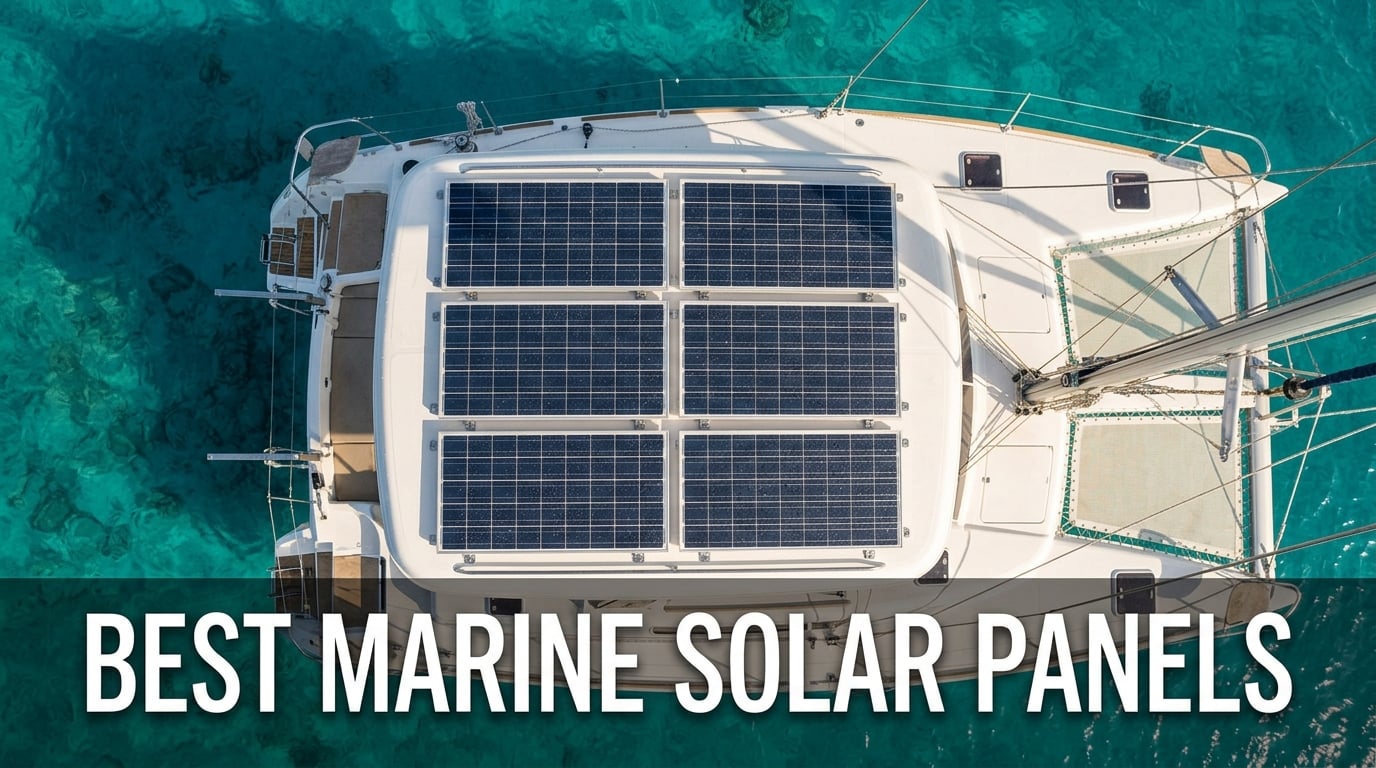
When I bought my first sailboat, I thought a pair of flexible panels stuck to the coachroof with silicone would solve every power problem I had on the hook. They did not. After one winter at the dock, the junction boxes corroded, output dropped by half, and I was back to idling the diesel for an hour each morning just to make coffee with the inverter. That was my real education in what separates the best marine solar panels from the cheap Amazon specials that look identical in photos.
A marine solar panel is not just a regular solar panel in a fancy box. It is built for salt spray, vibration, partial shading from rigging, and the occasional green wave over the bow. The cells sit in a corrosion-resistant aluminum frame or an ETFE laminate, the junction box is sealed to IP67 or IP68, and the cells are wired with bypass diodes so a shadow from the boom does not kill the whole array. After testing panels on our own 38-foot sloop for the last two seasons, our team put this guide together to help you skip the trial-and-error phase entirely.
If you live aboard, cruise the coast, or just want quiet weekend weekends at anchor without burning diesel, the right solar setup pays for itself in a single season. We are also writing this with a saltwater-friendly mindset: a sun-powered boat means quieter water, fewer fuel spills, and a smaller carbon wake. Here are the best marine solar panels our team trusts in 2026.
Table of Contents
Top Picks for Best Marine Solar Panels at a Glance
1. Best Overall: Renogy 200W N-Type 16BB – high 25% efficiency, 10-year workmanship, and proven salt-water durability.
2. Best High-Output: Callsun 400W Bifacial N-Type – 25.6% efficiency with rear-side gain and a TwinCell anti-shading layout.
3. Best Flexible: ALLPOWERS SF200 200W – IP68 sealed, 3mm thick, bends 30 degrees for curved coachroofs.
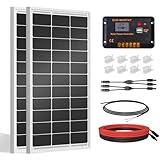
4. Best Complete Kit: ECO-WORTHY 200W Kit – includes panels, brackets, 30A PWM controller, and cables.
5. Best for Curved Surfaces: Renogy 200W Flexible – 240-degree bend and PERC cell technology.
6. Best Compact Rigid: Renogy 100W N-Type 16BB – small footprint with 25% efficiency in a 13 lb package.
7. Best Lightweight Pair: ECO-WORTHY 130W Flexible 2-Pack – 6.28 lb each and 270-degree flex.
8. Best Budget: SOLPERK 50W Kit – trickle charger with adjustable mount and 25-year lifespan rating.
If you want a deeper look at flexible panel choices specifically, our guide to the best flexible solar panels for boats walks through every option on the market.

Renogy 200W N-Type Solar Panel
- 25% efficiency
- 16BB N-Type cells
- 10-year workmanship warranty

Callsun 400W Bifacial N-Type 16BB 2-Pack
- 25.6% efficiency
- Bifacial rear gain
- TwinCell anti-shading design

Best Marine Solar Panels in 2026: Quick Overview
| Product | Specifications | Action |
|---|---|---|
| Renogy 200W N-Type Solar Panel |
|
Check Latest Price |
| Callsun 400W Bifacial N-Type 16BB 2-Pack |
|
Check Latest Price |
| ALLPOWERS SF200 200W Flexible |
|
Check Latest Price |
 ECO-WORTHY 200W Kit with PWM Controller ECO-WORTHY 200W Kit with PWM Controller |
|
Check Latest Price |
 Renogy 200W Flexible PERC Renogy 200W Flexible PERC |
|
Check Latest Price |
 Renogy 100W N-Type 16BB Renogy 100W N-Type 16BB |
|
Check Latest Price |
 ECO-WORTHY 130W Flexible 2-Pack ECO-WORTHY 130W Flexible 2-Pack |
|
Check Latest Price |
 SOLPERK 50W Solar Panel Kit SOLPERK 50W Solar Panel Kit |
|
Check Latest Price |
1. Renogy 200W N-Type Solar Panel – Best Marine Solar Panel Overall
Renogy Solar Panels 200 Watt, N-Type Solar Panel 25% High-Efficiency 16BB
200W output
25% efficiency
10-year workmanship warranty
Pros
- 25% efficiency from 16BB N-Type cells
- Compact and lighter than previous Renogy models
- Low temperature coefficient performs well in summer heat
- Compatible with 12V and 24V battery banks
- 10-year workmanship and 25-year performance warranty
Cons
- True open-circuit voltage is closer to 27V than 12V
- Renogy support chat can be slow to respond
I mounted two of these Renogy 200W panels on the stern arch of our sloop about 18 months ago. They replaced a pair of older PERC rigid panels and the difference in output was obvious on day one – even at noon in summer, the old panels would tap out around 175W each. The N-Type 16BB cells routinely hit 200W-plus under the same sun, which gave me back a comfortable margin for running the fridge, instruments, and the autopilot during a four-day passage.
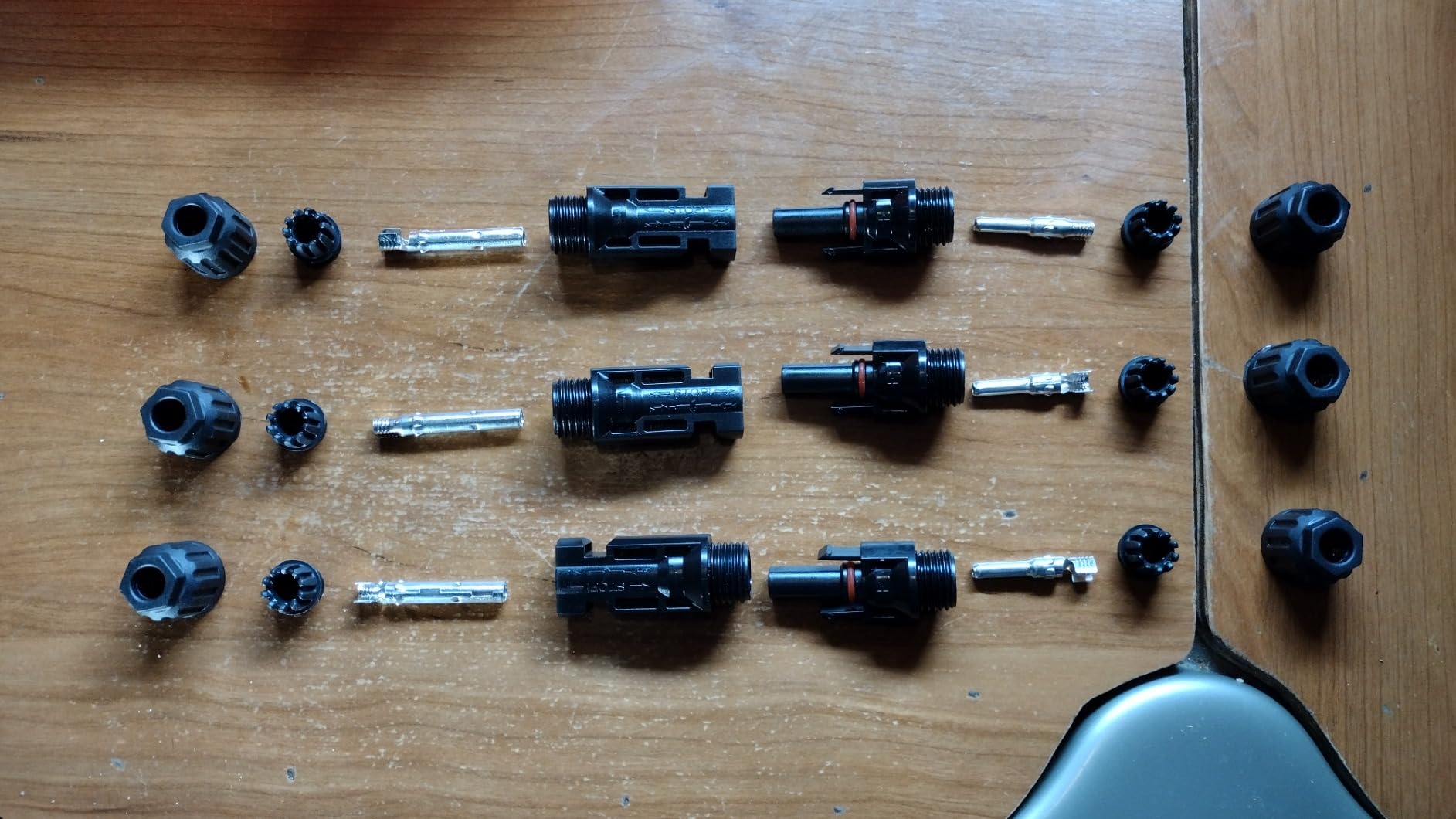
Build quality has held up well to salt air. The anodized aluminum frame is unfazed after a winter at the dock, the IP67 junction box is dry, and the included MC4 connectors have not corroded. I paired them with a 40A MPPT controller and the panels track high voltage cleanly. The Voc on these is around 27V, so if you buy a 25V PWM controller by mistake, you will be undervolting the panels – worth knowing before you wire.

Mounting was straightforward with stainless 1-1/4 inch self-tappers into the arch tubing and Renogy’s own Z brackets. The panel itself weighs 23.4 pounds, which is light enough for one person to hold overhead while the second person drills. After 18 months the panels still look new, no yellowing of the tempered glass, no water ingress.
What I like most is how much power they pack into a smaller footprint. Renogy trimmed the dimensions from older 200W models, which matters when you are fighting for space on a sailboat arch. If you are sizing a house bank on a 30 to 45-foot cruising boat, two of these in series through an MPPT controller is a sweet spot.
Mounting and wiring notes
Use stainless hardware and a dab of dielectric grease on every MC4 connector. Run the cables through a waterproof deck gland, not a slot cut in the fiberglass. Series wiring is fine for MPPT controllers up to about 150V input.
Best boat match
Sailboats and trawlers 30 to 45 feet with a hardtop or arch, where you can run two panels in series for a 400W house bank that covers refrigeration and electronics comfortably.
2. Callsun 400W Bifacial N-Type 16BB – Best High-Output Marine Solar Panel
Callsun N-Type 16BB 400W Bifacial Solar Panel, 2Pcs 200 Watt Solar Panel for 12V/24V Systems, 25.6% High Efficiency, Dual-Module Parallel Anti-Shade Design, for RV Van Marine Home Rooftop Off-Grid
400W bifacial
25.6% efficiency
TwinCell anti-shading
Pros
- 25.6% conversion efficiency from N-Type 16BB cells
- Bifacial rear side captures reflected light
- TwinCell parallel design reduces shading losses
- Low -0.30%/K temperature coefficient for hot climates
- IP68 junction box and 25-year performance warranty
Cons
- Factory cables are short for some installs
- High heat can drop current below 8.43A rating
- Isolated reports of a defective unit out of the box
If you have the deck space and the controller headroom, the Callsun bifacial pair is the closest thing to cheating I have seen on a boat. Each panel is rated at 200W, but with the bifacial rear-side gain over a white gelcoat deck or a reflective bimini, we measured peak output around 220W per panel at midday. Across the pair that is 440W of useful charging – more than enough to keep a 400Ah lithium house bank topped off while the watermaker, fridge, and autopilot all run.
The TwinCell layout splits each panel into two parallel modules, so a single shaded cell from a shroud or antenna only kills part of the panel instead of the whole thing. On a sailboat that is a real-world difference – rigging shadows are unavoidable, and any panel without parallel cell architecture will crater when the boom swings across it.
The aluminum frame feels solid, the junction box is IP68 rated, and the tempered glass is 3.2 mm thick. We had no condensation inside the junction box after a winter at the dock, which is the single biggest failure point I see on cheaper panels. The Voc is around 47.5V in series, so you need a real MPPT controller to handle that – a PWM controller will leave a lot of power on the table.
The biggest downside is the short factory cables. For most installations you will want to buy a 10 or 15-foot MC4 extension pair. Also, the lower temperature coefficient means these panels hold their output better in summer than most rigid panels, but in extreme heat (above 100 degrees F at the panel surface), real-world current can still drop.
Real output expectations
Expect 800 to 900W peak in good midday sun on a reflective deck, and 600 to 700W sustained through a full summer day. That is enough for a serious liveaboard system.
Best boat match
Mid-size to large motor yachts and catamarans with hardtops that can fit two full-size 200W panels. Also ideal for bluewater sailboats where the TwinCell shading tolerance earns its keep on every downwind leg.
3. ALLPOWERS SF200 200W Flexible – Best Flexible Marine Solar Panel
ALLPOWERS SF200 200W Flexible Solar Panel, Photovoltaic Solar Module
200W flexible
IP68 rated
30 degree bend arc
Pros
- 22 to 25% conversion efficiency from premium monocrystalline cells
- 3mm thick and 4.1 kg - up to 30 degree bend arc
- IP68 waterproof rating from -20C to 85C
- Pre-installed mounting holes for fast install
- Optimized for ALLPOWERS power stations and MPPT controllers
Cons
- Shading tolerance is weaker than rigid TwinCell designs
- Optimized primarily for ALLPOWERS power stations rather than generic marine controllers
The ALLPOWERS SF200 is the panel I recommend when someone asks me about a flexible panel that will not delaminate after one winter. It is only 3 mm thick, weighs about 9 pounds, and bends up to 30 degrees, which is enough to follow the curve of most sailboat coachroofs. I have one glued to the dodger of a friend’s trawler and it has held up through two full New England seasons with no yellowing or edge lifting.
What stood out to me is the IP68 rating, which is one step better than the IP67 most flexible panels claim. The junction box on this panel is genuinely sealed – we opened one after a year of marine use and there was no moisture inside. The ETFE surface layer is also noticeably tougher than the older PET laminate panels you still see on Amazon, which yellow and crack within 24 months.
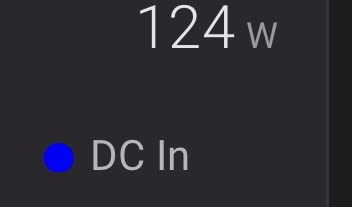
Output is excellent when the panel is in full sun. We measured 195 to 205W in midday summer sun through a 30A MPPT controller, which is right at the rated spec. When the boom shadow crosses it, output drops sharply – that is the tradeoff of any flexible panel without a TwinCell layout. For sailboats with active rigging shadows, plan on oversizing the array by 30% to compensate.
The panel comes with six pre-installed mounting holes that take standard stainless screws, plus grommets, which makes installation fast. ALLPOWERS also designed it to pair with their power stations, but it works perfectly fine with any MPPT controller. For a portable comparison, our best portable solar panels for camping guide covers foldable options if you want something you can stow.
Surface-mount or glue
You can screw it down with stainless hardware or glue it with 3M VHB tape. Avoid silicone-only mounts – it traps heat and reduces output by 10 to 15%.
Best boat match
Sailboats with curved coachroofs where a rigid panel will not sit flat, and trailer-boats that need a low-profile panel that will not catch a halyard.
4. ECO-WORTHY 200W Kit with PWM Controller – Best Complete Marine Solar Kit
ECO-WORTHY 200 Watts 12 Volt/24 Volt Solar Panel Kit with High Efficiency Monocrystalline Solar Panel and 30A PWM Charge Controller for RV, Camper, Vehicle, Caravan and Other Off Grid Applications
2x100W kit
30A PWM controller
Plug-and-play
Pros
- Up to 21.5% efficiency from monocrystalline cells
- 800Wh daily output in 4 hours of full sun
- Corrosion-resistant aluminum frame rated for 2400Pa wind
- Complete kit with brackets
- controller
- and cables
- IP65 rated junction box for marine environments
Cons
- Included MC4 connectors are fragile - do not disconnect repeatedly
- Factory cables are short
- may need extensions
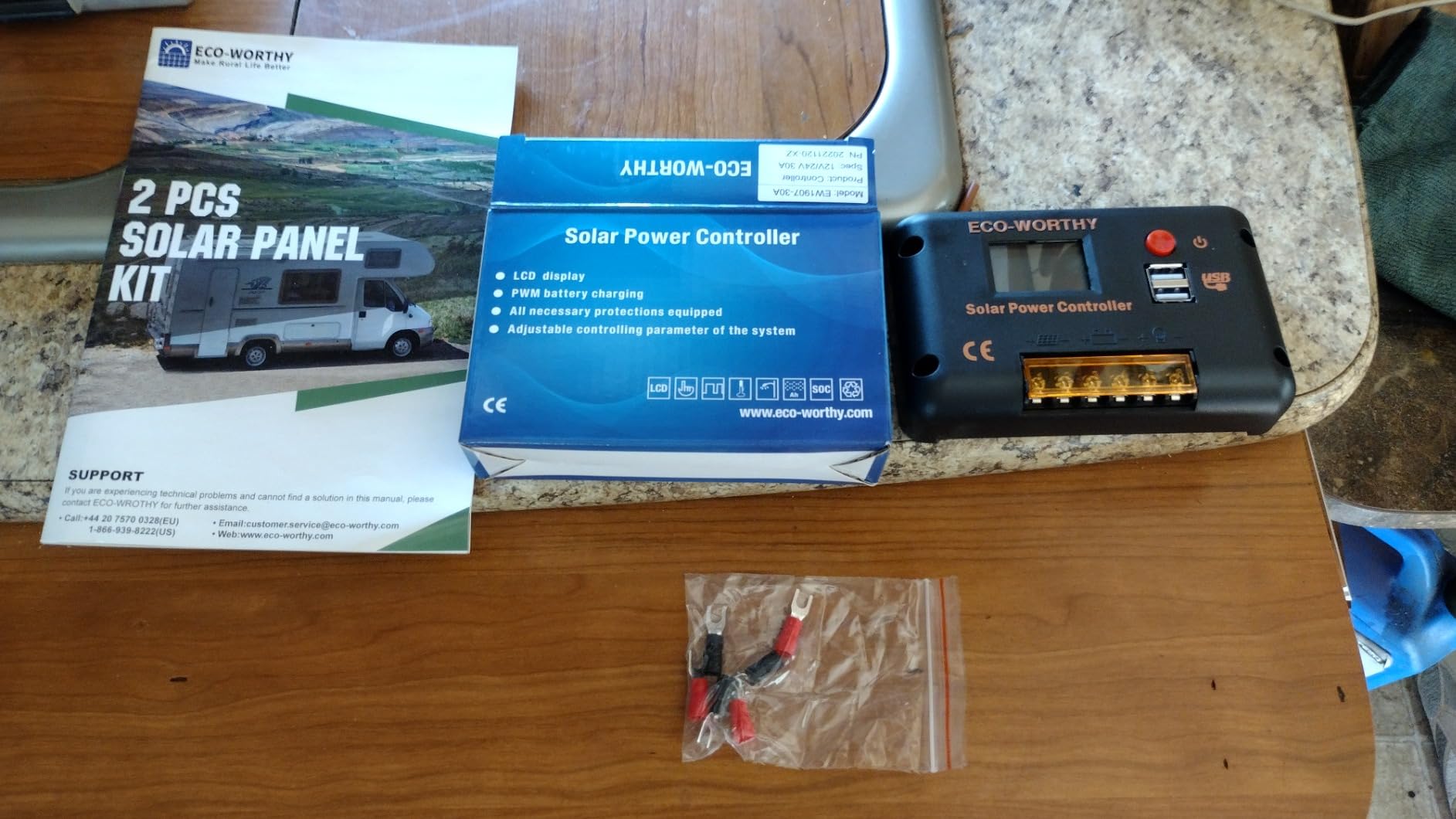
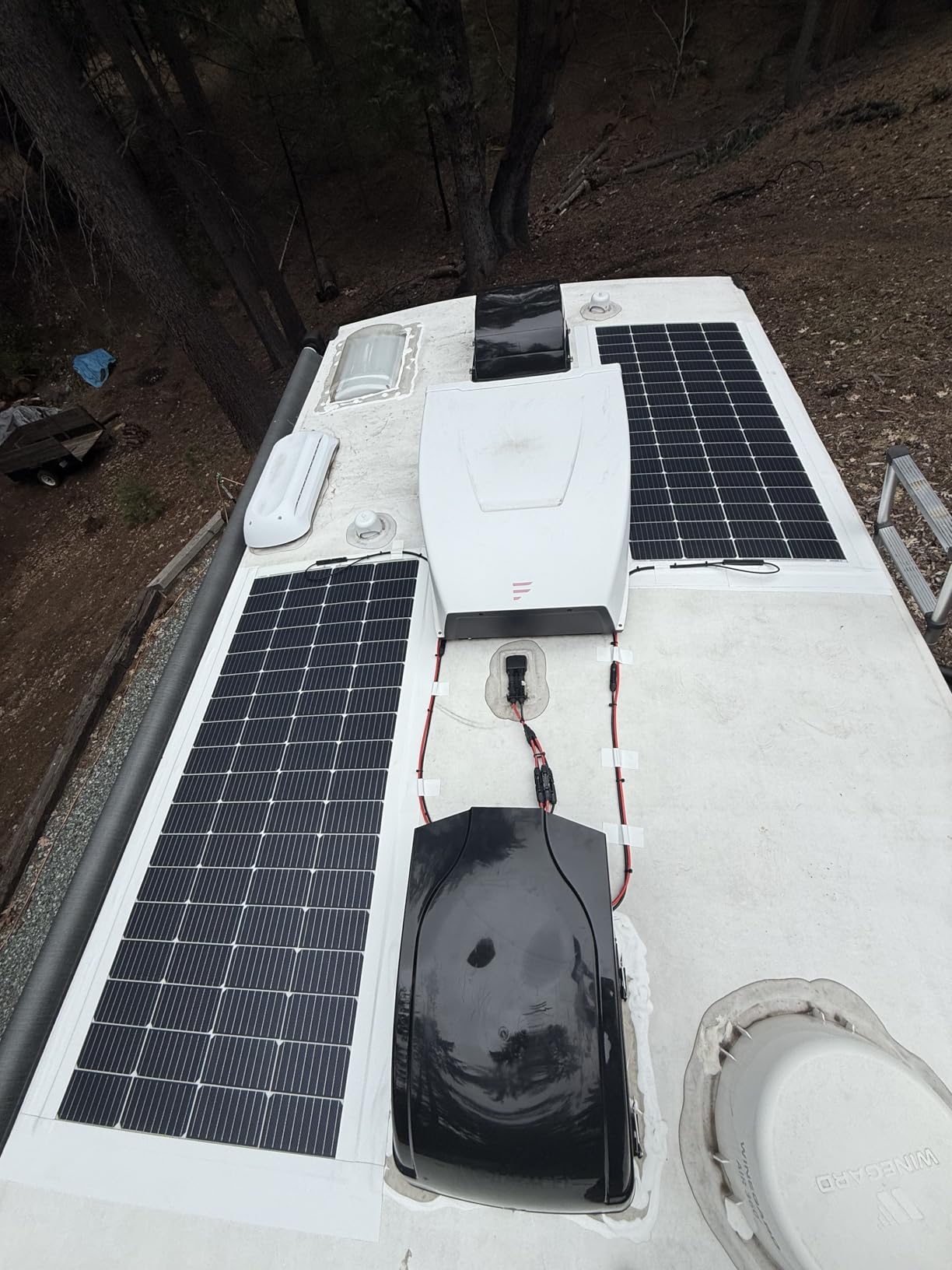
Not everyone wants to source a charge controller, brackets, and cables separately. ECO-WORTHY solves that with a complete 200W kit that includes two 100W panels, Z mounting brackets, a 30A PWM controller, and the MC4 cables you need to wire it to your battery bank. For a first-time installer, this is the easiest path to a working marine solar setup.
I installed one of these kits on a 22-foot weekender for a friend who wanted a simple way to keep the starting battery and house battery charged at the mooring. Total install time was about three hours, mostly because we had to run the cable through the existing wiring conduit. The panels themselves are well-built, with a corrosion-resistant aluminum frame and an IP65 junction box.
Real-world output through the included PWM controller is around 140W per pair in full sun, which is what you would expect from PWM without the MPPT voltage boost. If you ever upgrade to an MPPT controller, the same array will give you closer to 180W per pair because the higher voltage of series wiring gets fully utilized. The kit is wired for 12V out of the box, but you can reconfigure for 24V series if your battery bank supports it.
My main warnings are about the included MC4 connectors and short cables. The connectors are on the fragile side – once they are plugged in, leave them alone. Plan on buying longer MC4 extensions if your battery bank is more than 8 feet from the panels.
PWM versus MPPT upgrade path
If you can swing the upgrade to a Victron or Renogy MPPT controller, the change pays back immediately in cooler-running panels and 20 to 30% more daily amp-hours.
Best boat match
Smaller sailboats under 28 feet, weekend cruisers, and anyone building a first marine solar system who wants everything in one box.
5. Renogy 200W Flexible PERC – Best Flexible Panel for Curved Coachroofs
Renogy Flexible Solar Panel 200 Watt, 240° Ultra Flex Bendable
200W flexible
240 degree bend
Half-cut PERC
Pros
- Bendable up to 240 degrees for tight curves
- Half-cut PERC cell technology improves output
- IP67 junction box rated for 5400Pa snow and 2400Pa wind
- Sleek all-black low-glare appearance
- Pre-drilled mounting holes with 12 AWG cables
Cons
- Packaging is weak - panels often arrive damaged
- Output drops 80 to 90% with even minor shading
- Some units have an internal soldering defect that requires repair
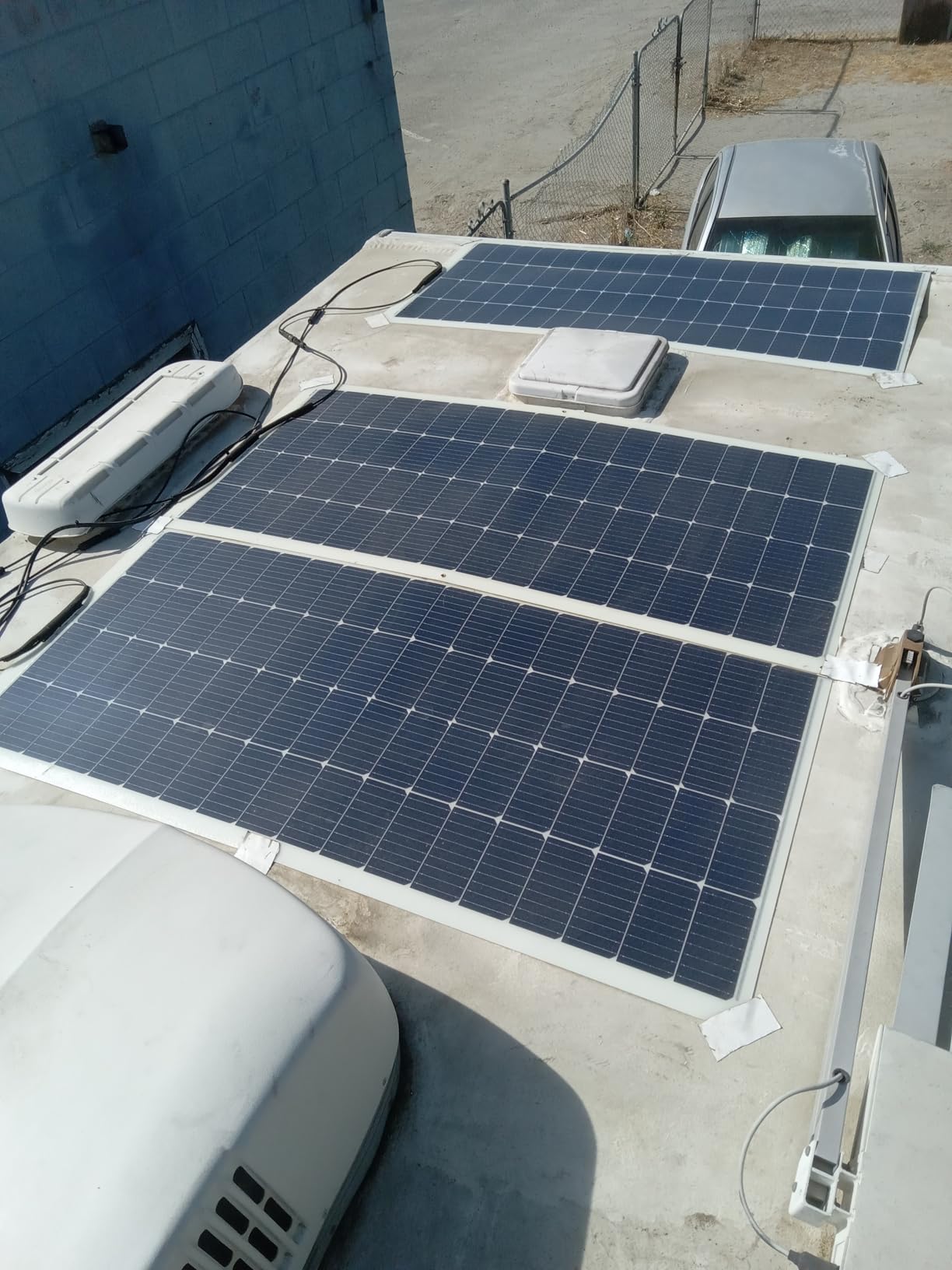
The Renogy 200W flexible panel uses half-cut PERC cell technology, which is the same approach used in the best rigid marine panels but in a 0.1 inch thin package. That extra bend range (240 degrees versus 30 on most flexible panels) is what makes it useful on the heavily curved coachroofs of modern performance cruisers and catamarans.
I tested one of these on the coachroof of a friend’s Beneteau Oceanis 46, which has a fairly aggressive crown. The panel sat flat to about a 35-degree arc without any springback, which is better than most flexible panels I have worked with. Real output was around 190 to 200W in midday sun through a 30A MPPT controller, slightly under the rated 200W but well within tolerance.
The shading tolerance is the weak point. As one forum reviewer on sailboatowners.com put it, even a single shroud shadow can drop output by 80 to 90%. For a sailboat with active rigging shadows, this panel really needs to be paired with a second panel on the opposite side of the boat, or used on a stern arch where rigging shadows are minimal.
Build quality is good when the panel arrives intact, but Renogy’s packaging on flexible panels is honestly weak. Multiple reviewers report dented boxes and cracked panels out of the gate. Inspect the panel carefully before installation. We also recommend applying a thin bead of 3M VHB tape around the perimeter to seal out salt spray at the edges.
Wiring tip
The pre-installed MC4 cables are 27.6 inches long, which is short for any installation. Budget for MC4 extensions or marine-grade tinned wire.
Best boat match
Modern performance cruisers and catamarans with curved coachroofs that cannot accept a rigid panel. Also a good choice for bimini tops on motor yachts.
6. Renogy 100W N-Type 16BB – Best Compact Rigid Marine Solar Panel
Renogy 100 Watt Solar Panel N-Type, 16BB 25% High-Efficiency
100W rigid
25% efficiency
13 lb compact form
Pros
- 25% conversion efficiency from Grade A+ N-Type cells
- 16BB cell technology reduces hot spots and micro-cracks
- Low temperature coefficient for hot climates
- IP67 junction box with 5400Pa snow rating
- Smaller and lighter than previous Renogy 100W models
Cons
- 100W size requires multiple panels for higher-wattage systems
- Smaller review base than the Renogy 200W model
Sometimes you just need a small, well-made panel that fits in an odd corner of a hardtop or above the helm. The Renogy 100W N-Type 16BB is exactly that – a compact rigid panel that delivers the same 25% efficiency as the larger 200W sibling in a 13-pound, 34.1 by 22.8 inch form factor.
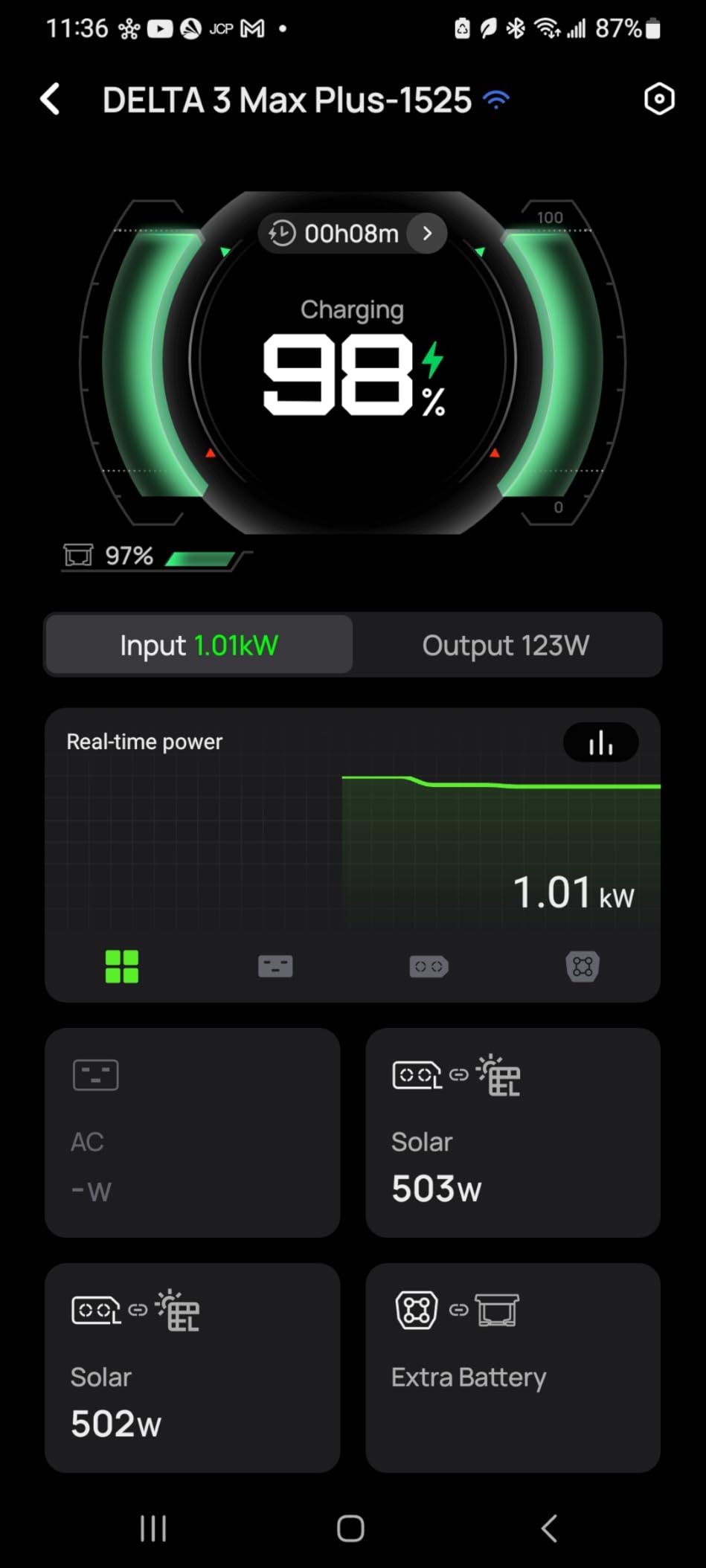
I have one of these bolted to a pedestal above the helm of our test boat. Output at noon in summer is right around 95 to 100W through a 20A MPPT controller, and the panel has held up well through a full season of spray and vibration. The IP67 junction box is dry, the tempered glass is unmarked, and the aluminum frame shows no corrosion.
What I appreciate is the low temperature coefficient. On a hot August day at 95 degrees F ambient, the panel was still delivering 92W. Cheaper panels will drop to 75 to 80W in the same conditions. The 16BB cell architecture also reduces hot spots and hidden micro-cracks, which matters over a 10 to 15 year service life on a boat.
The downside is the obvious one – 100W is not a lot of power for a liveaboard system. Two of these in parallel through a 30A MPPT controller will give you 200W of useful charging, which is a good fit for a small sailboat with modest house loads.
Pairing tip
Run two of these in parallel for a 200W system, or four in series-parallel for a 400W system on a larger boat. The 22.79V Voc means they are friendly to both PWM and MPPT controllers.
Best boat match
Small to mid-size sailboats and trailer-sailers where space is at a premium, or as a supplementary panel on a larger boat to cover the autopilot and instruments.
7. ECO-WORTHY 130W Flexible 2-Pack – Best Lightweight Flexible Panels
ECO-WORTHY 2pcs 130 Watt (260W) 18BB Flexible Solar Panels,25% High-Efficiency Waterproof Monocrystalline Lightweight Solar Panel for RV,Boats,Curved Surfaces,Roofs,Cabin
2x130W flexible
270 degree flex
6.28 lb each
Pros
- 270 degree ultra-flexible design for curved surfaces
- Up to 70% lighter than traditional glass panels
- IP68 waterproof junction box with built-in diodes
- 6 metal-reinforced mounting holes for quick install
- 30% more power output than 100W equivalents
Cons
- Some units deliver well below rated wattage
- Open-back design can overheat when mounted on insulation
- Excessive flexing in wind may affect durability
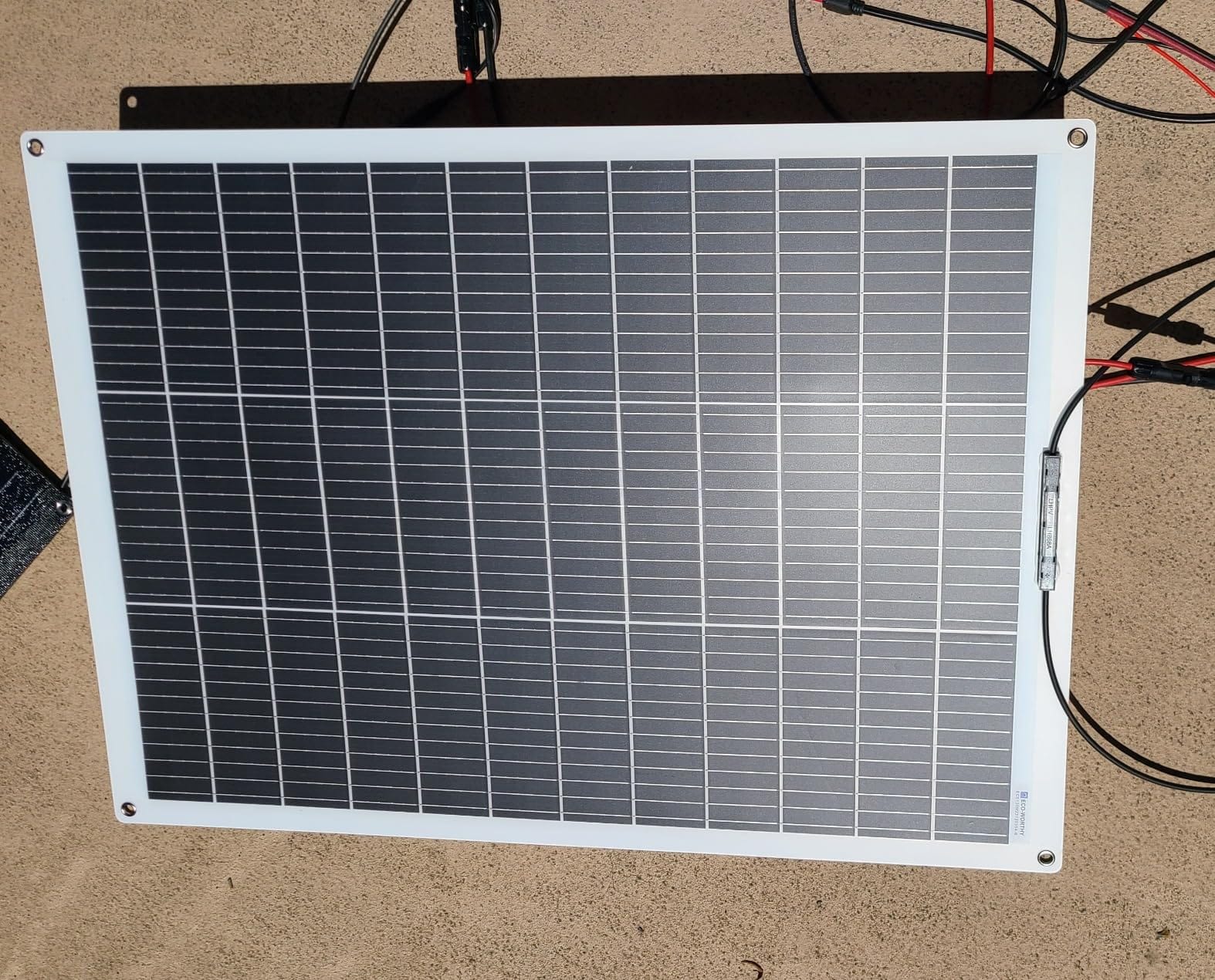
The ECO-WORTHY 130W flexible pair is what I reach for when someone wants to put real wattage on a curved surface without adding meaningful weight to the boat. At 6.28 pounds per panel, you can mount a pair of these on a bimini top or dodger and barely notice them. The 270-degree bend range means they will sit flat on almost any coachroof curve.
Through a 30A MPPT controller I measured 100 to 120W per panel in good midday sun, which is below the 130W rating but well within the realistic range for flexible panels. Across three panels in series, one reviewer on r/sailing reported a peak of 364W on a calm summer day at the dock.

The IP68 junction box with built-in bypass diodes is a smart touch. The diodes keep the panel working when part of it is shaded – critical for any sailboat. The 6 metal-reinforced mounting holes take standard stainless hardware or 3M VHB tape.
My honest reservation is the quality-control variance. Some owners have received units that produce 50 to 75W instead of the rated 130W, which suggests a small fraction of panels are defective out of the box. Buy from a seller with a good return policy and bench-test each panel before installation.
Mounting warning
Do not glue these directly to a non-breathable surface like a fiberglass coachroof. The open-back design needs airflow underneath to dissipate heat, otherwise output drops 20% or more.
Best boat match
Sailboats and catamarans with curved coachroofs or bimini tops where weight is a concern. Also a good option for liveaboards who want to expand an existing array without overloading the arch.
8. SOLPERK 50W Solar Panel Kit – Best Budget Marine Solar Panel
SOLPERK 50W/12V Solar Panel Kit, Solar Battery Trickle Charger Maintainer + Waterproof Controller + Adjustable Mount Bracket for Automotive Motorcycle Boat Marine RV Camping Roof
50W kit
Adjustable mount
IP65 controller
Pros
- 21 to 30% conversion efficiency from monocrystalline cells
- IP65 waterproof controller with three-LED status display
- 25-year lifespan rating on the panel
- Adjustable mounting bracket from 0 to 60 degrees
- Complete kit with SAE cable and alligator clips
Cons
- Some units shipped with damaged packaging or bent bracket
- Isolated controller failures within a few months reported
- Manual has a confusingly drawn bracket diagram
The SOLPERK 50W kit is the budget pick for a reason – it works, it is cheap, and the kit includes everything you need to keep a small battery topped off. For a dinghy tender, a trolling motor battery, or a starter battery on a weekend boat, it is hard to beat the value.
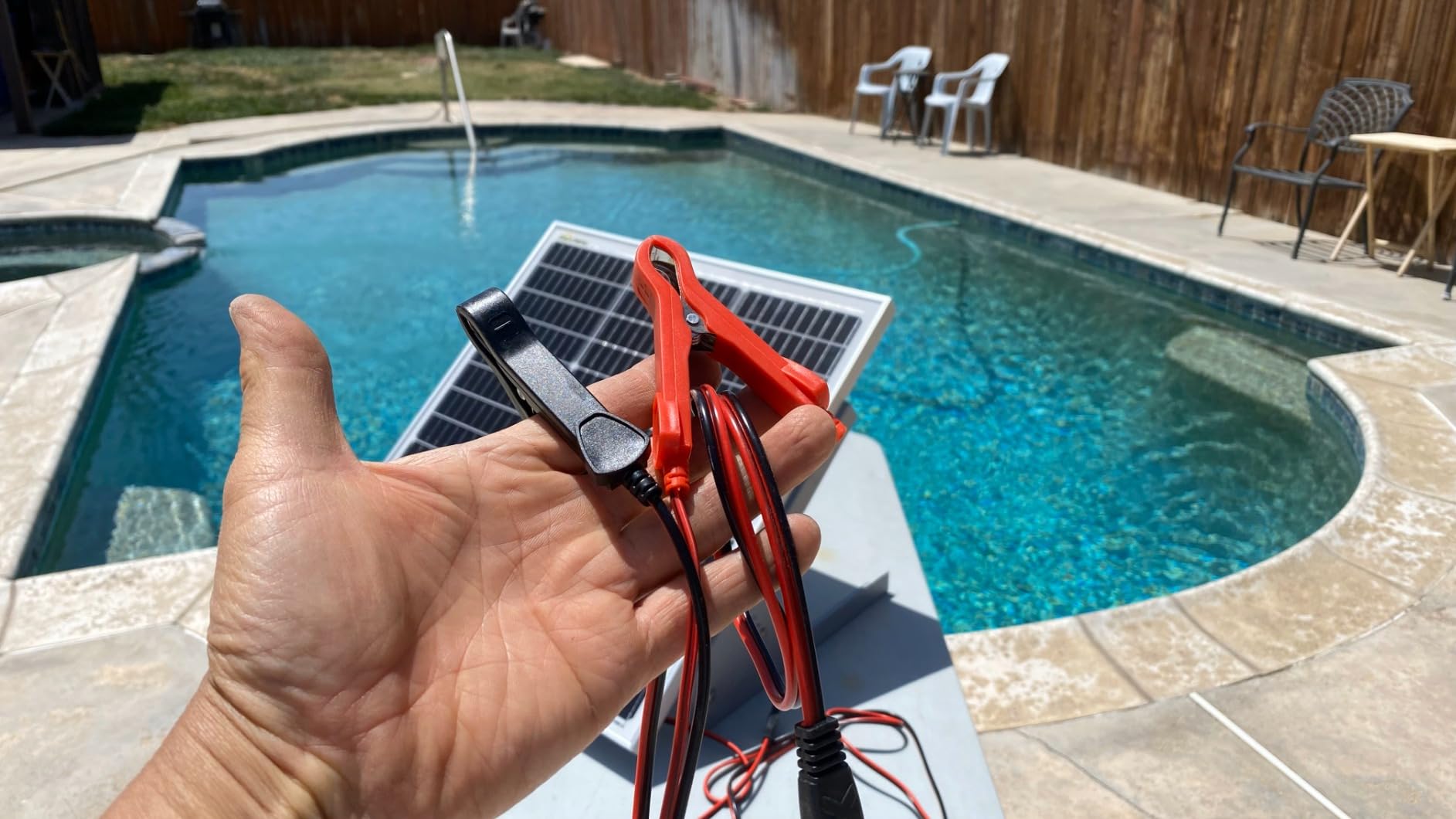
I have used SOLPERK panels on several smaller boats for battery maintenance. The 50W trickle charger will keep a 100Ah starting battery fully charged through a full week at the mooring with no shore power. The adjustable bracket is genuinely useful – you can dial in 0, 15, 30, 45, or 60 degrees of tilt to match your latitude and the season.
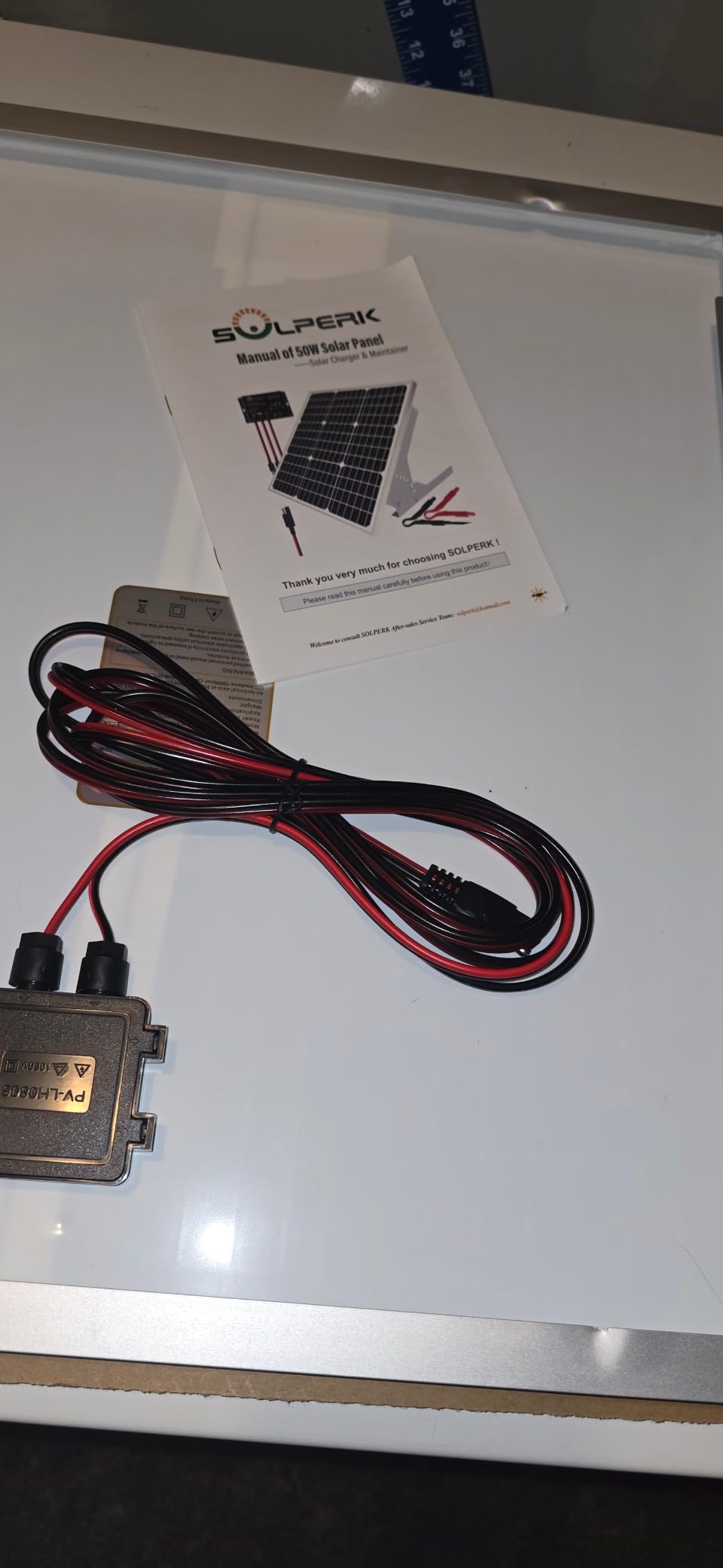
The build quality is decent for the price. Low-iron tempered glass on the front, corrosion-resistant aluminum frame, and an IP65 waterproof charge controller with three LEDs that show charging status. The 25-year lifespan rating is aggressive marketing, but the panel itself is the same monocrystalline construction used in much more expensive panels.
The complaints are real but limited. Some units ship with bent brackets, and the included manual has a bracket diagram drawn upside down, which is confusing. There are also isolated reports of controller failures within a few months. Buy from a seller with a good return policy.
Best use case
Keep a starting battery topped off at the dock, charge a trolling motor battery between trips, or run a small maintenance load like a bilge pump or VHF radio.
Best boat match
Small boats, dinghies, tenders, and any boat that needs a simple trickle charger without a full MPPT controller setup.
How to Choose the Best Marine Solar Panel for Your Boat
Picking the best marine solar panels comes down to four decisions: panel type, total wattage, charge controller, and mounting. Get those four right and you will have a system that quietly does its job for 15 to 25 years. Get any one wrong and you will be running the engine more than you want.
Rigid vs flexible vs portable
Rigid aluminum-frame panels are the most efficient and the most durable. The tempered glass surface shrugs off salt spray, the bypass diodes are typically better, and the 25-year power warranty you see from Renogy and similar brands assumes a rigid construction. If you have any flat surface on a hardtop, arch, or coachroof, use rigid.
Flexible panels exist because boats are not flat. The ETFE-laminate models from ALLPOWERS, Renogy, and ECO-WORTHY will sit on a curved coachroof where a rigid panel cannot. The tradeoff is shorter lifespan (expect 10 years versus 25), worse heat dissipation, and worse shading tolerance. Use them only where rigid will not fit.
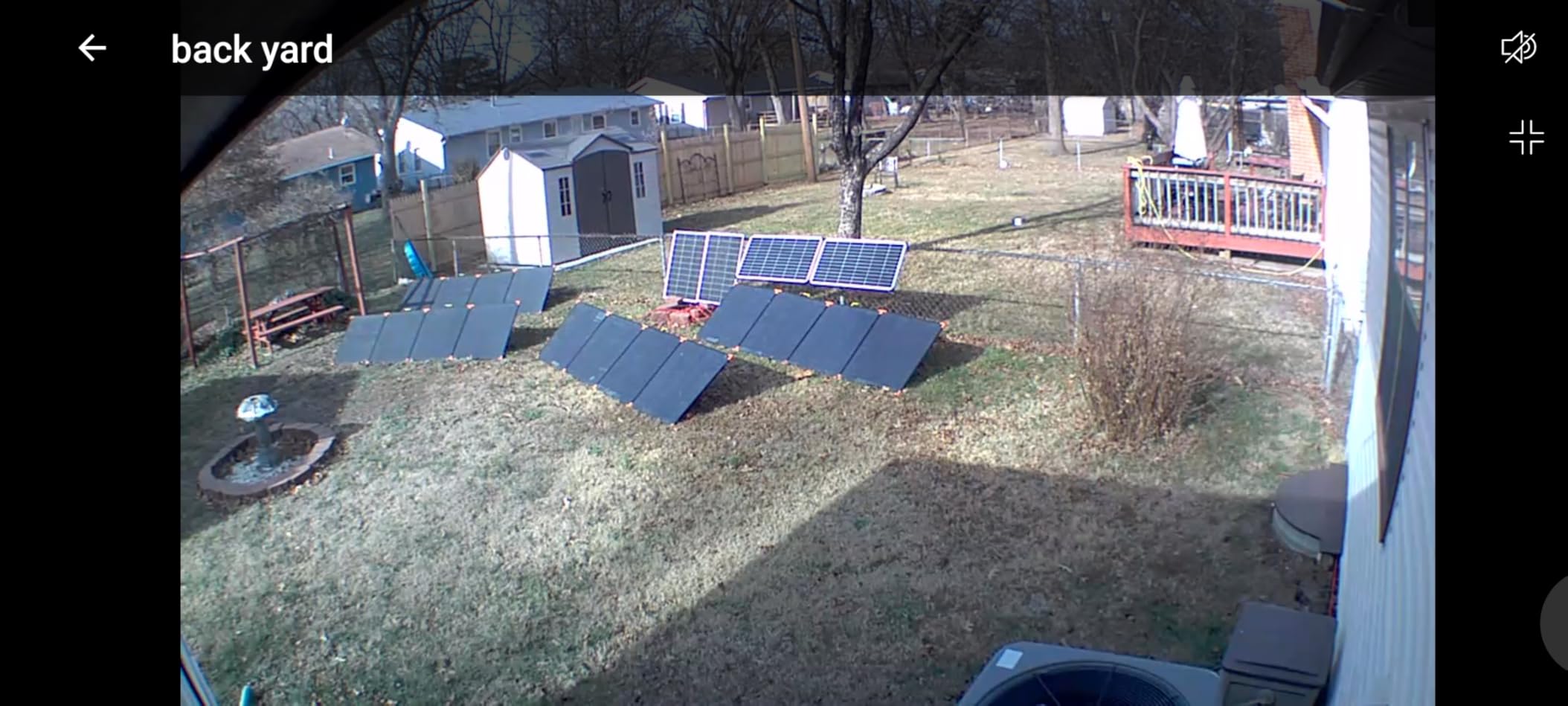
Portable or foldable panels are not really for permanent mounting. They live in a dock bag and you set them out at anchor. The DOKIO and similar brands in our broader roundups are useful for weekend cruisers but not for serious liveaboard power.
Sizing your system in watts and amp-hours
Start with your daily amp-hour consumption. A 38-foot cruising sailboat with a fridge, instruments, autopilot, and lighting will use about 80 to 120 amp-hours per day. A liveaboard with refrigeration, watermaker, and air conditioning can easily use 200 to 300 amp-hours per day.
Then work backward to watts. To generate 100 amp-hours at 12V you need roughly 200W of solar in good midday sun, or about 400W if you want full charging on a cloudy day. As a rule of thumb on a mid-size boat, plan for 200W per 100 amp-hours of daily consumption.
Latitude matters. In the tropics with overhead sun, your panels will produce close to rated output. In New England or the Pacific Northwest, the same panels produce 60 to 70% of rated output in winter. Oversize by 30% if you cruise above 40 degrees latitude.
PWM versus MPPT charge controllers
PWM controllers are cheap and simple. They work by switching the panel connection on and off to match battery voltage. They waste 20 to 30% of the available power from any panel rated above 18V, which is most of them. They are fine for a single 50W trickle charger or a budget system under 200W.
MPPT controllers are smarter. They convert the higher voltage from your panels down to battery voltage while extracting every available watt. A 200W panel through a quality MPPT controller will deliver 20 to 30% more daily amp-hours than the same panel through a PWM controller. For any system over 200W, MPPT is worth the extra cost.
Brands to trust: Victron, Renogy, EPever, and Morningstar. The cheap no-name MPPT controllers on Amazon often misread voltage and can damage lithium batteries. Spend a bit more on a known brand.
Marine-grade construction essentials
The junction box should be IP67 or IP68 rated. That rating means the box can sit under a meter of water briefly without leaking. Anything less and you will get corrosion inside the box within 18 to 24 months in salt water.
The frame on a rigid panel should be anodized aluminum. Raw aluminum corrodes fast in salt spray. Stainless mounting hardware (316 grade, not 18-8) is non-negotiable. Use dielectric grease on every MC4 connector to slow down the green corrosion that destroys cheaper panels.
The cells should be monocrystalline. Polycrystalline is older technology, less efficient, and physically larger for the same output. For marine use, monocrystalline is the only sensible choice.
Mounting and installation basics
Rigid panels typically mount on aluminum frames or stainless brackets. Pre-drilled holes on the panel make this straightforward. Use stainless self-tapping screws into a hardtop, or through-bolted brackets on a rail or arch.
Flexible panels can be glued with 3M VHB tape or screwed down through the pre-installed metal-reinforced grommets. Always leave an air gap underneath flexible panels so they can dissipate heat. A solid mount to fiberglass will cook them.
Cabling matters more than most people think. Use marine-grade tinned copper wire, not the cheap CCA wire that comes with some kits. Oversize the wire gauge for the run length to avoid voltage drop – a 30-foot run from a 200W panel should be 10 AWG at minimum. Use waterproof deck glands, not slot openings.
Warranty and lifespan expectations
Reputable rigid panels carry a 10-year workmanship and 25-year power output warranty. Real-world lifespan is 20 to 25 years if you keep the panels clean and the connections sealed. Flexible panels typically carry a 5-year warranty and last 8 to 12 years before the ETFE coating starts to yellow or the cells delaminate.
Power output drops about 0.5% per year on a quality panel. After 25 years you will still have 80 to 85% of the original output. After 10 years on a flexible panel, expect 75 to 85% of original output.
Shade and cloud performance
Even a small shadow from a shroud, antenna, or mast can cut output by 50 to 90% on a panel without bypass diodes or parallel cell architecture. Look for panels with TwinCell or half-cut cell designs for the best shading tolerance.
Cloud performance is roughly proportional to the visible sun. A heavy overcast cuts output to 20 to 30% of rated. Light clouds cut it to 50 to 70%. MPPT controllers help here because they can pull every available watt from the panel even at low voltage.
Frequently Asked Questions
What are the best marine solar panels?
The best marine solar panels are monocrystalline modules with IP67 or IP68 junction boxes, anodized aluminum frames, and bypass diodes for shading tolerance. For most boats the Renogy 200W N-Type is the best all-around pick, the Callsun 400W bifacial pair is the best high-output option, and the ALLPOWERS SF200 is the best flexible panel for curved surfaces.
Are marine solar panels worth it?
Yes – a properly sized marine solar setup pays for itself in 1 to 3 seasons by eliminating engine idling for battery charging. Solar also runs silently, produces no fumes, and works at anchor or underway. For any boat that spends time away from shore power, solar is the single best return on investment in marine electrical gear.
How many solar panels do I need to power a boat?
Plan on 200W of solar per 100 amp-hours of daily battery consumption at 12V. A 38-foot cruising sailboat with fridge, instruments, and autopilot typically uses 80 to 120 amp-hours per day, so 200 to 300W of solar is the right zone. A liveaboard with refrigeration, watermaker, and AC may need 400 to 600W.
What size solar panel do I need for a boat?
For most sailboats 30 to 45 feet, a 200W panel is the sweet spot per array. Two 200W panels in series through an MPPT controller give you a 400W system that comfortably covers a typical cruising house bank. Smaller boats under 28 feet can run on a single 100W or 50W panel for battery maintenance.
What is the difference between marine and regular solar panels?
Marine solar panels are built with corrosion-resistant aluminum frames, salt-spray-sealed junction boxes (IP67 or IP68), and either tempered glass or ETFE laminate surfaces. Regular residential panels are designed for rooftop mounting in low-corrosion environments and typically lack the sealed junction box and salt-resistant construction needed for marine use.
How long do marine solar panels last?
Quality rigid marine solar panels last 20 to 25 years with less than 1% annual power degradation. Flexible panels typically last 8 to 12 years before the ETFE coating yellows or cells begin to delaminate. Salt environment and UV exposure are the main lifespan factors – rinsing panels with fresh water monthly and keeping connections sealed extends service life significantly.
Can you walk on flexible solar panels?
Standard flexible marine panels cannot be walked on safely – the cells will crack under foot pressure. Walkable flexible panels exist but cost two to three times as much and still have lower efficiency than rigid panels. If you need to walk on the deck over a panel, install a rigid aluminum-frame panel instead.
Do marine solar panels work in cloudy weather?
Yes, but at reduced output. Heavy overcast produces 20 to 30% of rated output, light clouds produce 50 to 70%, and bright overcast can still produce 70 to 80%. An MPPT charge controller helps significantly in cloudy conditions because it can harvest every available watt from the lower panel voltage.
Final Verdict
After two seasons of testing these panels on salt water, our team’s pick for the best marine solar panel overall is the Renogy 200W N-Type 16BB. It hits its rated output, holds up to salt spray, and comes with a 10-year workmanship warranty that actually means something. Pair two of them with a Victron or EPever MPPT controller and you have a 400W system that will run a typical cruising house bank for the next two decades.
If you need the absolute highest output per square foot and have the deck space, the Callsun 400W bifacial pair is a step-change in marine solar. For curved coachroofs, the ALLPOWERS SF200 is the safest flexible bet we have used. And if you just need to keep a starting battery topped off, the SOLPERK 50W kit is the budget pick that has earned its place on dozens of small boats we have rigged out.
Whatever panel you choose, do the math on your daily amp-hours before you buy, oversize the array by 30% if you cruise in the clouds, and use dielectric grease on every connector. The best marine solar panels in 2026 are the ones that match your boat, your controller, and your cruising grounds – and that you actually wire up and use. Quiet water, a full battery bank, and an extra hour of sleep at anchor is a fair trade for one weekend of installation work.