
A MIG welder is the easiest place to start in metalwork, because the machine feeds its own electrode and keeps the arc steady while you move the gun. That is why the best MIG welders for beginners are the machines that hide the fiddly variables: synergic voltage control, a readable display, and a wire feed that does not stall when the spool gets hot. We spent weeks reading owner reviews and spec sheets across ten budget and mid-range machines for this 2026 roundup.
Our top pick is the YESWELDER 135A 3-in-1, because it is the most heavily reviewed machine in this group and the one that gets the most first-time welders to a decent bead on thin automotive metal quickly. If you already have a 220V outlet and want gas MIG capability, the bestarc 145A and the YESWELDER 160A are the stronger buys, and the Lincoln Electric 90i FC is the pick when parts support matters more than price.
This guide covers gasless flux core, gas MIG, stick and lift TIG machines in the entry-level bracket, plus what you must buy alongside the machine before your first arc. If you are still deciding between processes, our MIG vs TIG guide breaks down the difference, and 10 Best MIG Welders for Home covers the garage setup in more depth.
Top 3 Picks for Best MIG Welders for Beginners (October 2026)
YESWELDER 135A 3-in-1
- 110V gasless flux core MIG
- 135A output
- synergic control
- LED display
- 11.4 lb body
ARCCAPTAIN 130A Flux Core
- 110V gasless MIG
- stick and lift TIG
- synergic wire matching
- 2-year warranty
- 11.79 lb

TOOLIOM 135A Flux Core Kit
- 135A output
- auto voltage and wire speed
- wire and gloves included
- LCD readout
- carry handle
All 10 MIG Welders at a Glance
| Product | Specifications | Action |
|---|---|---|
| YESWELDER 135A 3-in-1 |
|
Check Latest Price |
| ARCCAPTAIN 130A Flux Core |
|
Check Latest Price |
| TOOLIOM 135A Flux Core Kit |
|
Check Latest Price |
 YESWELDER 160A Dual Voltage YESWELDER 160A Dual Voltage |
|
Check Latest Price |
 AZZUNO 130A IGBT Inverter AZZUNO 130A IGBT Inverter |
|
Check Latest Price |
 HITBOX 200A 3-in-1 HITBOX 200A 3-in-1 |
|
Check Latest Price |
 bestarc 145A Dual Voltage bestarc 145A Dual Voltage |
|
Check Latest Price |
 Lincoln Electric 90i FC Lincoln Electric 90i FC |
|
Check Latest Price |
 BILT HARD 135A 3-in-1 Kit BILT HARD 135A 3-in-1 Kit |
|
Check Latest Price |
 BESTMIG 135A Helmet Kit BESTMIG 135A Helmet Kit |
|
Check Latest Price |
1. YESWELDER 135A 3-in-1 – Best Overall MIG Welder for Beginners
YESWELDER 135A MIG Welder, 110V Flux Core Gasless MIG/Lift TIG/Stick 3-in-1
135A 110V output
Mild steel to 3/32 inch
Flux core MIG, stick and lift TIG
11.4 lb portable body
Pros
- Ready out of the box with .030 and .035 flux core wire
- Synergic voltage matching with fine trim
- Large LED display readable outdoors
- Consistent arc on thin automotive metal
- Runs on a standard 110V outlet
Cons
- Cheap spool holder and wire tensioner
- Not built for all-day production work
- Flux core mode locks voltage to wire feed speed
- Some units arrived without a power switch
This is the machine I keep coming back to for new welders, and the reason is the review volume. Nearly 3k owners have run it, which means the awkward early-life failures have already been found and reported rather than being your problem. The synergic baseline sets voltage from the wire feed speed, so a first-timer picks a wire size and gets a workable setting instead of a dial chart.
Owners consistently put it on exhaust repairs, tow bars and thin auto body panels, where burn-through is the usual beginner failure. That is exactly what the 135A rating covers: mild steel up to 3/32 inch, or about 2.5mm. Push past that and the arc gets noisy and the machine is working harder than the label intends.
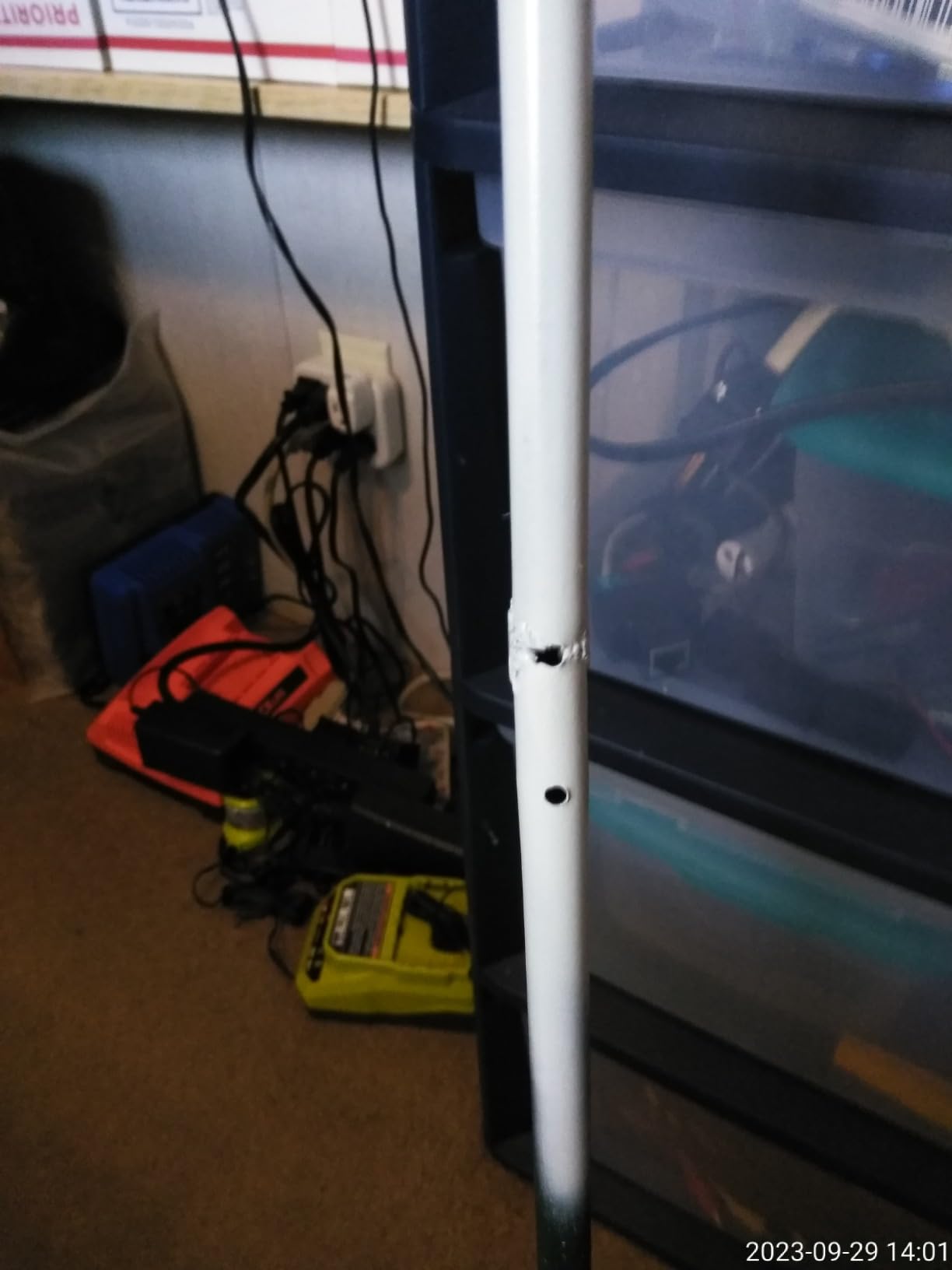
The synergic control has ±3V micro-adjustment, which is how you bring burn-through under control on thinner material. Turn the trim down, drop the wire speed, and the puddle stops tearing through. The oversized LED display showing live current is legible outside, which matters if you are welding a gate hinge in a driveway rather than at a bench.
The weaknesses are honest but minor. The included spool holder and wire tensioner are thin stamped parts, and the lift TIG torch is not in the box. In flux core mode the voltage is tied to wire feed speed with no independent manual override, so this is a MIG-first machine, not a fine-tuner’s machine.
Who this machine suits
If you are welding thin-gauge steel for the first time, this is the safest landing spot. The combination of auto voltage, a bright display and a wire feed owners describe as smooth on both .030 and .035 wire removes the three things that stall most beginners.
It also suits anyone who wants a stick and lift TIG fallback without buying a second machine. Home garage hobbyists doing exhaust, brackets and body filler work get the most out of it.
Where it falls short
Duty cycle is the limit for anyone planning production work or long seams on thick plate. This is a 110V machine rated for hobby-scale material, and it will trip or overheat on sustained heavy fabrication.
Anyone who wants gas MIG with solid wire and clean, low-spatter beads should look at a machine with a gas path and torch rather than a flux core gun. Our Miller vs Lincoln comparison covers what changes when you step up to a gas machine later.
2. ARCCAPTAIN 130A Flux Core – Best Value MIG Welder for Beginners
ARCCAPTAIN 130A Flux Core Welder MIG Welder 110V Gasless MIG Stick Lift TIG
130A 110V output
Gasless flux core MIG, stick and lift TIG
11.79 lb with strap
2-year manufacturer warranty
Pros
- Highest rated machine in this group at 4.6
- Synergic control after wire diameter selection
- Complete kit with wire
- tips
- brush and hammer
- Light 11.79 lb body with strap carry
- Over-current
- over-load and overheat protection
Cons
- Lift TIG torch sold separately
- 110V only with limited thickness capability
- Entry-level build quality on cables
The ARCCAPTAIN 130A carries the highest average rating of the ten machines here at 4.6, with more than 1.8k reviews behind it. That combination of rating and volume is unusual in this price bracket, and it is why it takes the best value slot rather than a budget label.
Synergy works differently here than on most competitors. You select the wire diameter and the machine matches current to wire feed speed automatically, which removes the biggest mental hurdle for someone who has never held a MIG gun. Adjustable current plus a 10-speed wire feed give you manual range once you outgrow that.
The box contents matter more than the spec sheet suggests. You get the MIG torch, ground clamp, electrode holder, a roll of .030 flux core wire, contact tips, a brush and hammer, so a genuine first weld is possible the day it arrives with no extra shopping.
Over-current, over-load and over-heating protection are all present, which is standard on good IGBT inverters and reassuring when you are new to what a fault indicator means. The 11.79 lb body carries by handle or shoulder strap, so it moves between the garage and a driveway job without help.
Who this machine suits
Pick this one if you want the strongest owner rating available at this level and a full kit in the box. It is a genuinely good first machine for hobby welders who will mostly touch thin and medium mild steel.
The two-year manufacturer warranty also makes it a safer bet than the one-year options in this list if you plan to keep it for several years.
Where it falls short
Being 110V-only is the structural limit. A 110V machine has less margin at its top amperage, so you hit the ceiling sooner on plate thickness than a dual-voltage unit. The lift TIG torch is a separate purchase, and the cables and consumables are entry-level parts.
If your garage already has a 220V circuit, that ceiling disappears. The Hobart vs Lincoln breakdown explains what the extra volts actually buy you in bead shape.
3. TOOLIOM 135A Flux Core Kit – Best Budget MIG Welder for Beginners
TOOLIOM 135A 110V Gasless Flux Core MIG Welder Kit with Wire and Gloves
135A 110V gasless output
Mild steel to 1/6 inch
Synergic LCD with fine trim
Wire feed 120-420 in/min
Pros
- Single-knob set-and-forget control
- Live amperage readout on a large LCD
- Auto voltage and wire speed recommendations
- Hot start and arc force reduce sticking
- Includes welding gloves and flux core wire
Cons
- Only holds a 2 lb spool
- Torch trigger has no safety lock
- Cables and ground clamp are cheap and short
- TIG torch sold separately
The TOOLIOM 135A is the machine to buy when the goal is learning rather than output. Self-taught hobbyists rate it highly because you select wire size and material thickness and the machine recommends voltage and wire speed, which is close to teaching the process rather than just selling you knobs.
That guidance is why most owners report good penetration welds inside a first session. Wire feed speed runs 120-420 in/min on .030 wire and 120-308 in/min on .035, and hot start plus arc force keep the electrode from sticking in stick mode.
The core machine is light enough to carry with one hand and the box includes a pair of welding gloves plus flux core wire, which covers two of the three things a beginner usually has to buy immediately. The large LCD reads live amperage clearly.
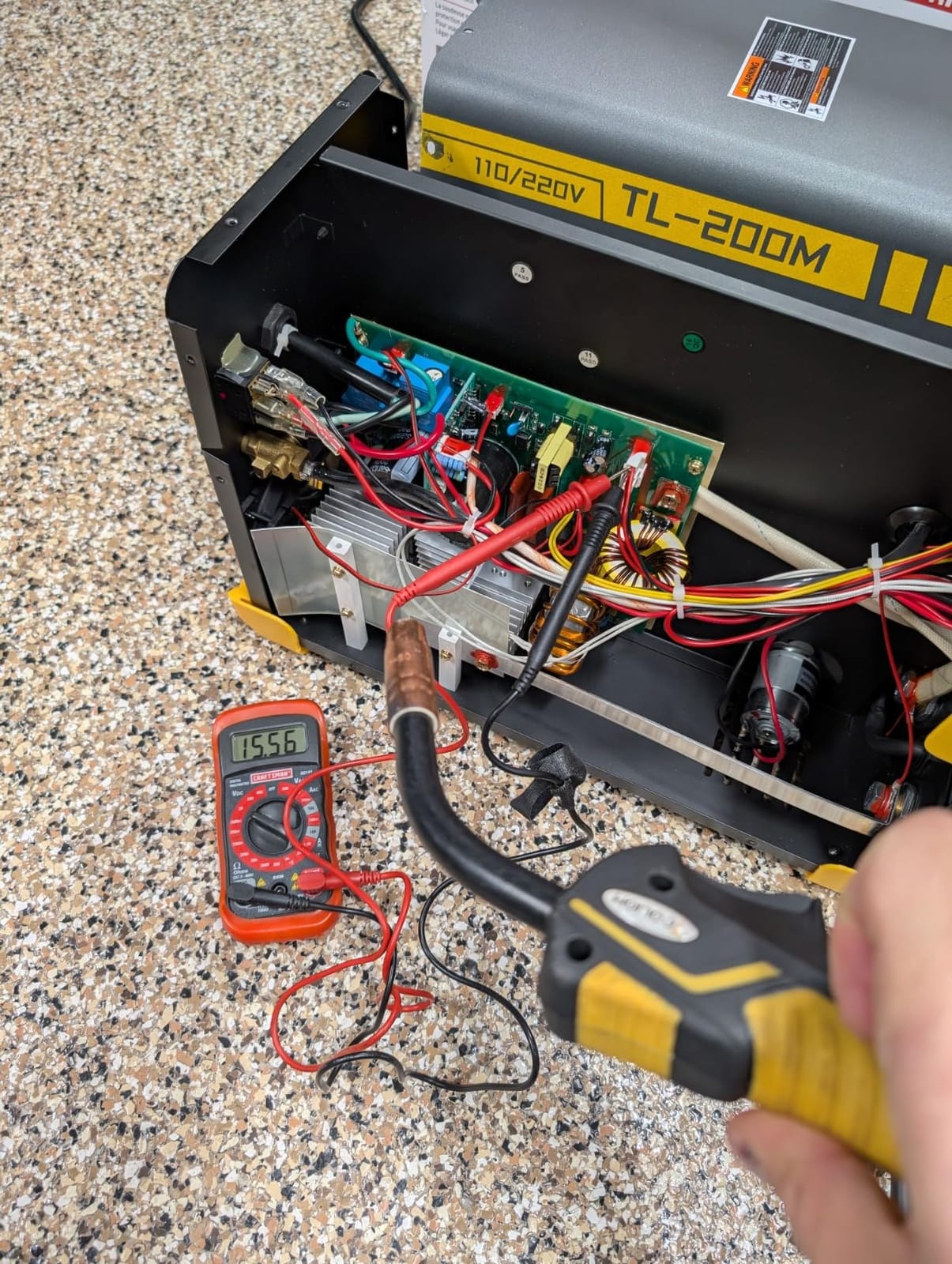
Voltage fluctuation compensation is built in, along with over-current, over-load and over-heating safeguards. That matters in a garage where a compressor or a door opener kicks on mid-arc and changes the supply.
Who this machine suits
This suits anyone who wants the shortest possible path to their first acceptable weld and has no interest in learning a settings chart. Gate hinges, brackets, small trailer frames and general household repairs are the sweet spot.
It is also the pick if you only weld an hour or two a month. The learning curves on heavier machines only pay off with frequent use.
Where it falls short
The 2 lb spool limit is the practical issue most owners flag. You will refill far more often than with a machine that takes 10 lb spools, and the small leads mean constant repositioning on anything larger than a bench-top job.
The torch trigger also lacks a safety lock, so wire can feed while you are simply carrying the gun. Detailed reviewers also note the cramped wire bay, thin ground clamp and a fragile internal board mount in transit. If you want fewer consumables headaches, the ARCCAPTAIN above is the step up.
4. YESWELDER 160A Dual Voltage – Best Dual Voltage MIG Welder for a Home Garage
YESWELDER 160A MIG Welder, 110V/220V MIG/Flux Core/Lift TIG/Stick
160A output
110V and 220V dual voltage
4-in-1 including gas MIG
2 lb and 10 lb spool ready
Pros
- 4-in-1 covering flux core
- gas MIG
- stick and lift TIG
- Dual voltage with supplied 220V-to-110V adapter
- 160A output suits automotive and fabrication work
- Synergic presets plus full manual control
- LED display and 19.4 lb carry handle design
Cons
- Needs a dedicated 220V circuit to perform
- Small panel text and washed-out display in sunlight
- Thin torch liner
- Does not run 6010 electrodes well
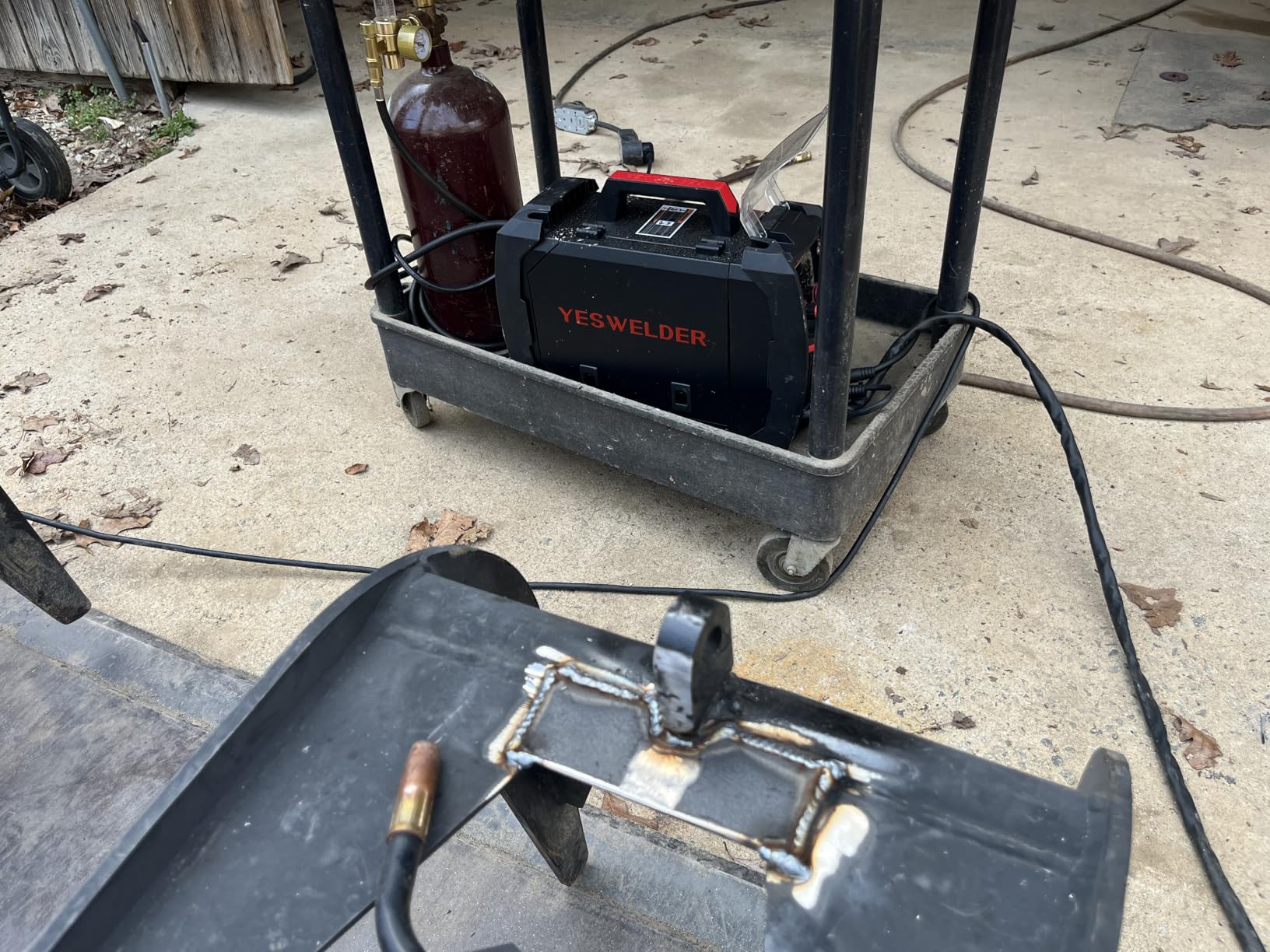
This is the first machine in the lineup that stops asking you to compromise, and long-term owners with thousands of shop hours back that up. It is the only unit here that runs gas MIG with solid wire, 4-in-1 processes, and genuine 220V capability in a package a beginner can still afford.
That combination matters because it means the machine you learn on is the machine you keep. Flux core today for a rusty gate, gas MIG with ER70S-6 next month when you want clean beads on sheet metal, stick for a fence post, lift TIG when you are ready to try thinner work.
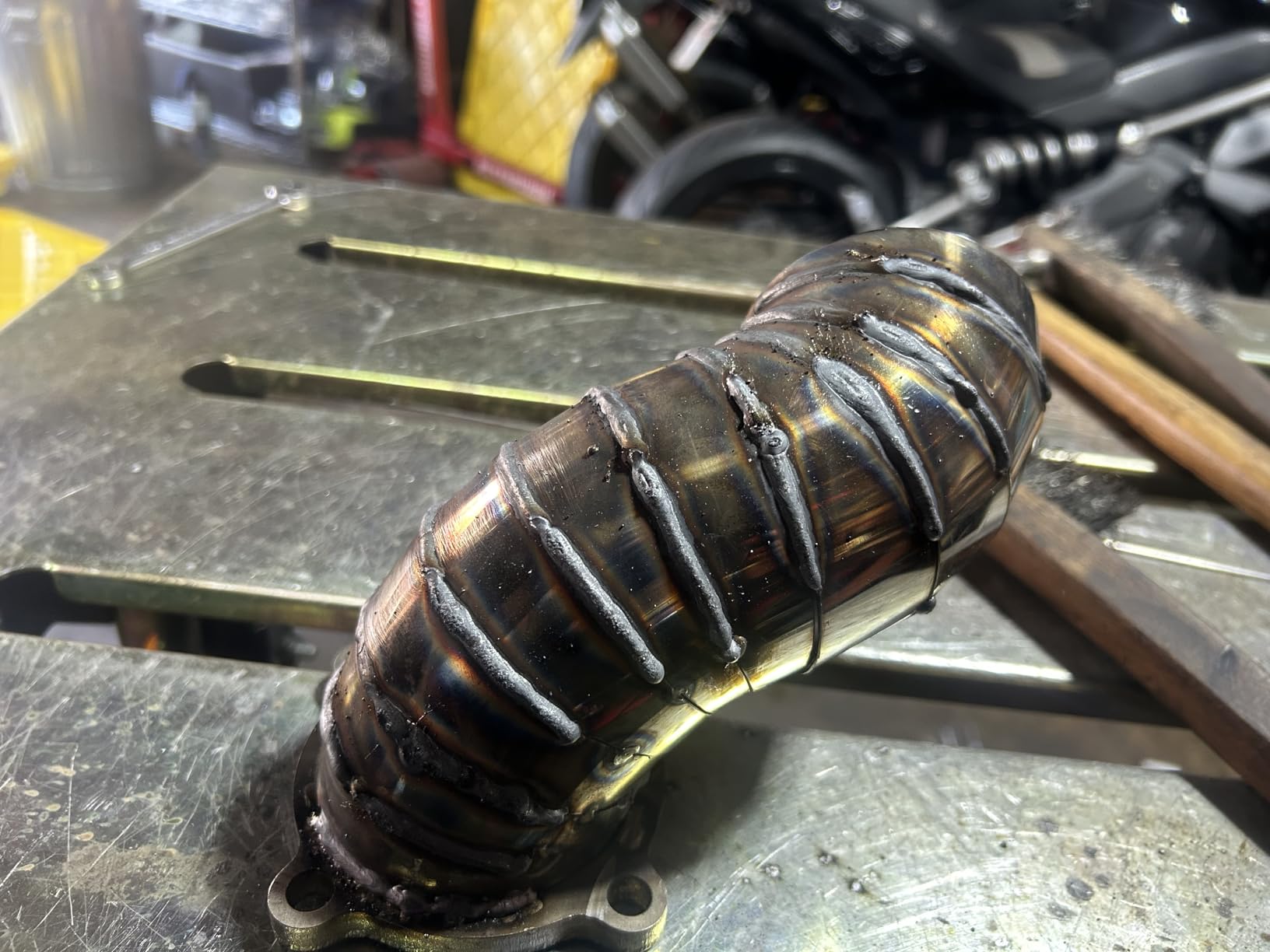
It handles both 2 lb and 10 lb spools of .030 and .035 wire, which fixes the refill treadmill that trips up smaller machines. Stick mode takes 6010, 6011, 6013 and 7018 rods, so it covers repair work as well as fabrication.
The 160A output is the number that opens up thicker jobs, and running on 220V is where that rating is actually reachable. Synergic auto-settings handle the beginner case, and manual wire speed and voltage override take over when you want control.
Who this machine suits
Buy this if you already have a 220V outlet, or you are prepared to have one installed. It is the strongest choice here for someone who intends to grow past thin-gauge hobby work into trailer, farm or shop fabrication.
It also suits anyone who wants gas MIG capability from day one without buying a separate gas-capable machine later. The 19.4 lb body and carry handle keep it portable enough for site work.
Where it falls short
The dual-voltage rating is only half the story. With the supplied adapter on 110V, output drops enough that users report tripping household breakers. Treat 220V as a requirement, not an option, and check your panel before you buy.
The panel text is very small and the display washes out in direct sunlight, which is annoying on outdoor work. Some units needed an undocumented polarity connection before they would arc, and the torch liner is thin enough to deform against a hot weld. Our Hobart vs Miller comparison covers how premium machines handle the same details better.
5. AZZUNO 130A IGBT Inverter – Best Low-Cost First MIG Welder
AZZUNO MIG Welder,Flux Core Welder Machine 110V 130Amp, Gasless MIG Welding Machine IGBT Inverter Welder Portable Wire Feed Welder (110V)
130A 110V IGBT inverter
Welds mild steel plate to 3.0mm
Holds 2.2 lb wire rolls
Overload and overheat protection
Pros
- Lowest entry cost of the machines here
- Synergic control with easy voltage and wire speed knobs
- Lightweight body with a comfortable hand grip
- Complete kit with torch
- clamp
- wire and contact tips
- Overload and overheating protection built in
Cons
- Capacity limited to roughly 3.0mm mild steel
- Accepts only 2.2 lb wire rolls
- Iron body and simplified build for light work
The AZZUNO 130A is the honest low-cost entry point, and reviewers treat it that way: a starter or occasional-use machine rather than a shop tool. At 4.5 stars with nearly 900 reviews, the sentiment is consistent, which is about as much confidence as this bracket allows.
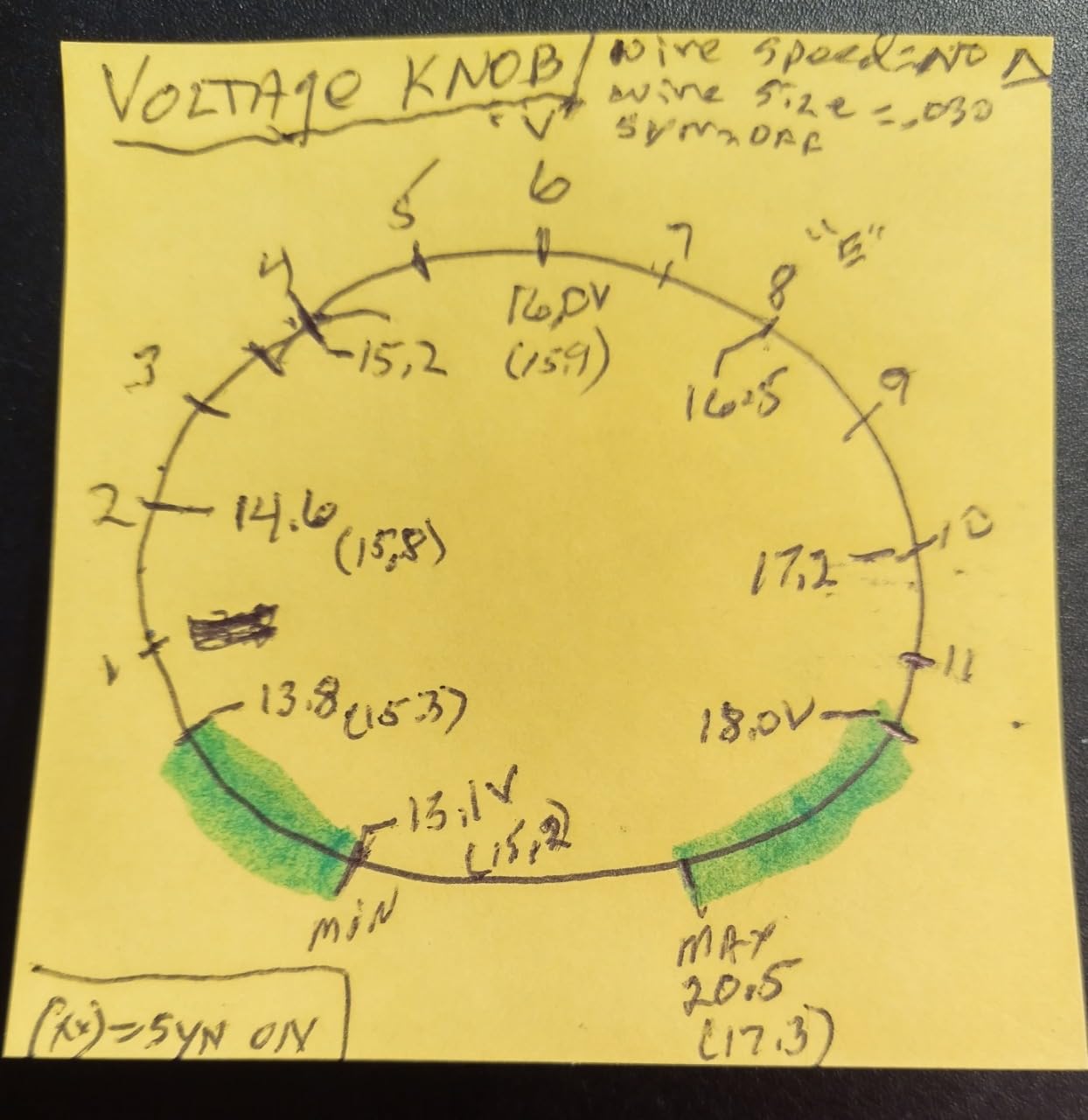
The IGBT inverter platform gives you a smoother arc than old transformer machines, and the synergic control puts voltage and wire speed on two dedicated knobs you can adjust without a reference chart. That is a meaningful advantage over single-dial designs when you are learning what those controls do.
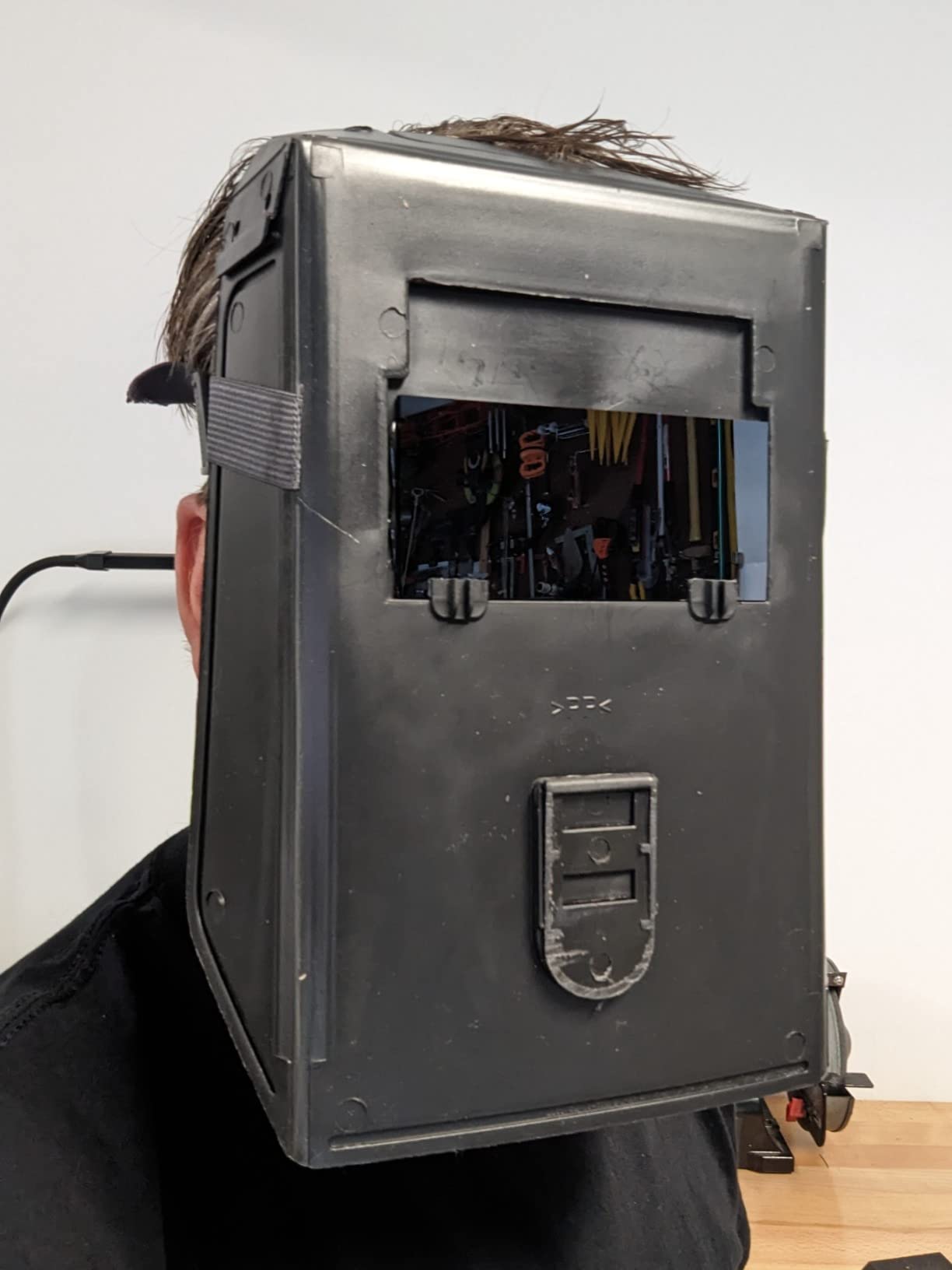
The package includes the MIG torch, ground clamp, brush and hammer, a 1 lb roll of .030 flux core wire and two contact tips. Overload and overheating protection are built in, so a beginner who pushes the machine too hard gets a protected shutdown rather than damage.
Hand grip comfort comes up repeatedly in reviews for a machine this light, which is not a small deal when you are carrying it to a job rather than working at a fixed bench.
Who this machine suits
This suits a beginner working on craft pieces, small repairs and light home DIY where material rarely exceeds 3.0mm. It is a sensible first box if you want to try welding before deciding whether to commit properly.
It also makes sense as a second machine for occasional fine work, so your primary unit is never tied up.
Where it falls short
Capacity is the hard limit. Owners consistently note that 3.0mm mild steel plate is about the ceiling, which rules out trailer frames, gate frames and anything structural.
The 2.2 lb roll size means frequent refills, and the iron body and simplified construction leave no margin for heavy work. If your projects are likely to grow past light gauge, spend up and move to the ARCCAPTAIN or TOOLIOM instead.
6. HITBOX 200A 3-in-1 – Best for Lightweight Portable Welding
HITBOX 200A MIG Welder, 110V/220V Flux Core MIG/Lift TIG/Stick 3-in-1
Rated to 200A on 110V and 220V
IGBT inverter
Welds mild steel to 4.0mm
Holds 2 lb spool
Pros
- Lightest unit in the lineup at 6.6 pounds
- IGBT inverter gives smooth welds with low spatter
- Quiet compared with transformer machines
- Dual 110V and 220V capability
- Complete package with torch
- clamps
- wire and nozzles
Cons
- Real output runs 20-30 percent below the displayed amperage
- Weak arc control with 6010
- 6011 and 7018 electrodes
- No hot start feature
- Instructions are hard to follow
- Weak ground clamp that warps quickly
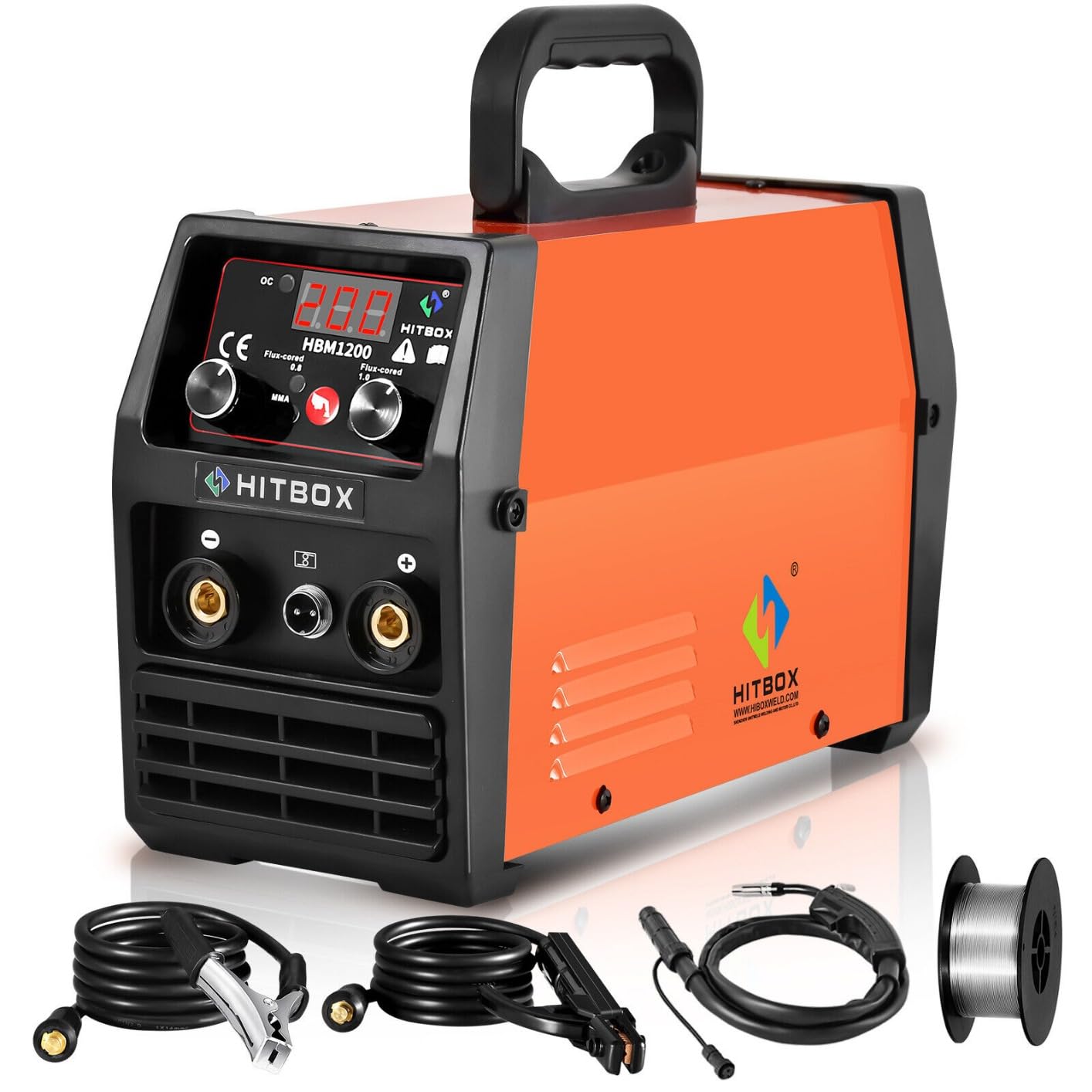
The HITBOX is the one to pick if your welding happens away from an outlet. At 6.6 pounds it is the lightest machine in this group, and DIY users replacing an old gasless unit report cleaner flux core beads and a big improvement in portability.
It covers flux core MIG, stick and lift TIG with synergic coordination between voltage and wire feed. It handles .030 and .035 flux core wire and welds mild steel up to 4.0mm, so the material ceiling here is the highest of the 110V-only machines in this list.
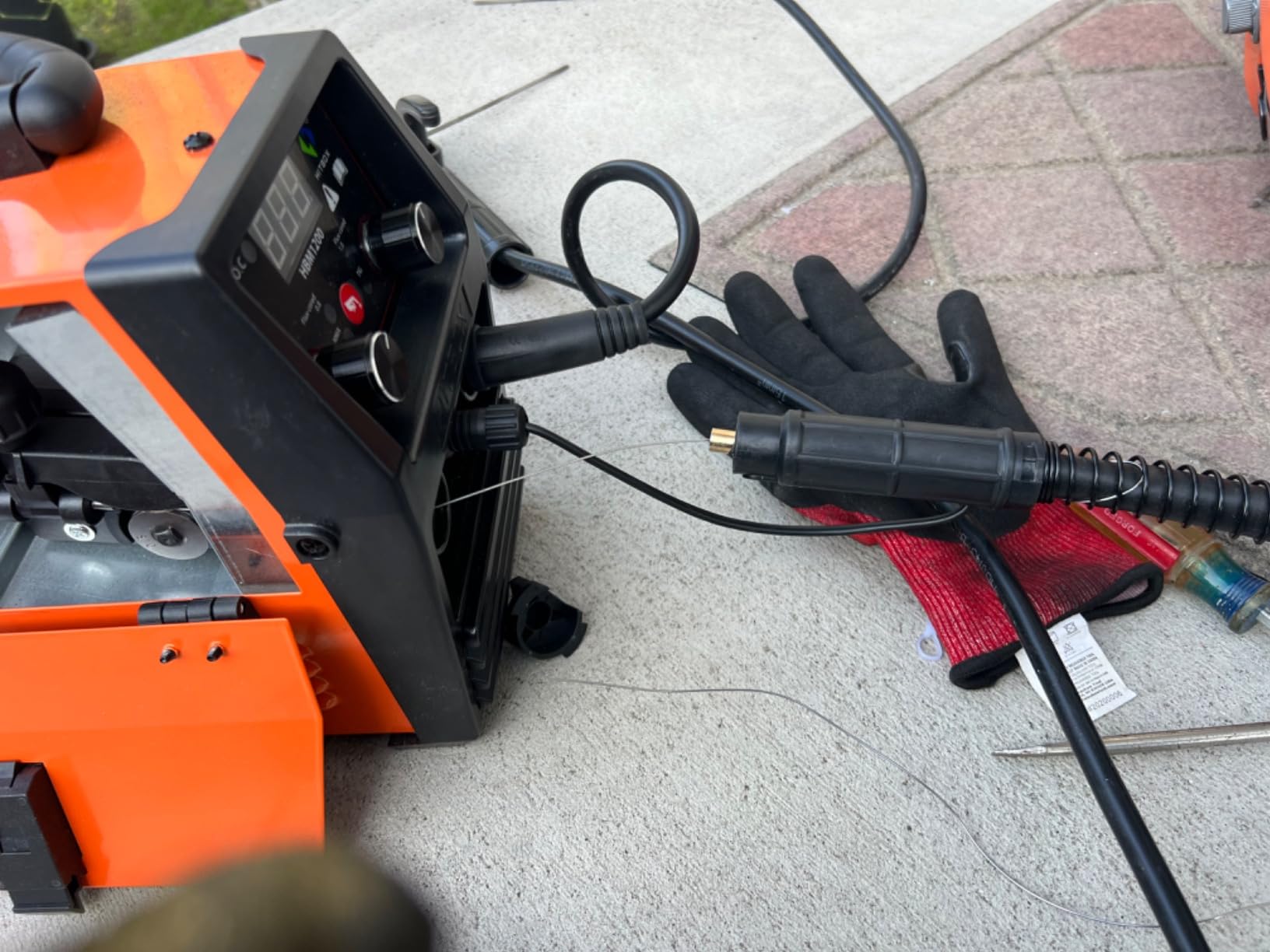
The package is complete: torch, clamps, wire, nozzles, brush and manual. Over-current, overload, over-voltage and overheat protection are all fitted, which is more coverage than most machines at this size.
IGBT inverter technology is the reason owners notice less spatter and a quieter machine than a transformer welder of the same output class, which is a real quality-of-life gain for indoor work.
Who this machine suits
This suits mobile handymen, fence and gate repair work, and anyone who needs to weld where a 220V outlet does not exist. The weight difference between this and a 27 lb cabinet machine is the whole decision.
It is also a reasonable second machine for anyone who wants a small unit dedicated to light sheet metal repair.
Where it falls short
The headline amperage is not what you get. Users who calibrated their machines found real output running 20 to 30 percent under the display, so plan for the lower figure when judging material thickness.
Stick mode struggles with 6010, 6011 and 7018 electrodes, there is no hot start, and the amp dial doubles as the wire feed control, which is confusing when you are learning. Poor instructions and limited after-sales support come up repeatedly, and the ground clamp warps quickly. Treat the MIG side as the usable part.
7. bestarc 145A Dual Voltage – Best Budget Machine That Can Do Gas MIG
Bestarc 145A MIG Welder, Flux Core/Gas MIG Stick Lift TIG Welding, 110/220V
145A 110V and 220V
Gas MIG and flux core plus stick and lift TIG
Synergic with plus or minus 3V trim
Shoulder strap included
Pros
- 4-in-1 covering gas MIG
- flux core
- lift TIG and stick
- Auto-detecting 110V and 220V with the choice shown on the panel
- Synergic control with plus or minus 3V fine trim
- Larger
- clearer LED display
- Better ground clamp and heavier gauge cable than most budget rivals
Cons
- Early units had a short 5.5 ft gun lead and V-groove drive rolls
- Spool tension spring is too tight and not adjustable
- Stick mode appears capped around 130 amps
- No gas regulator included
The bestarc 145A is the answer for anyone who wants proper gas MIG without stepping up a tier. Experienced fabricators report better-looking beads than a comparable 125A budget machine, along with a better ground clamp, heavier cable and reverse polarity capability.
It runs gas MIG, gasless flux core, lift TIG and stick, takes E71T-GS and ER70S-6 wire in .030, .035 and .040, and auto-detects whether you are on 110V or 220V and shows which on the panel. That auto-detection removes a genuine beginner mistake.
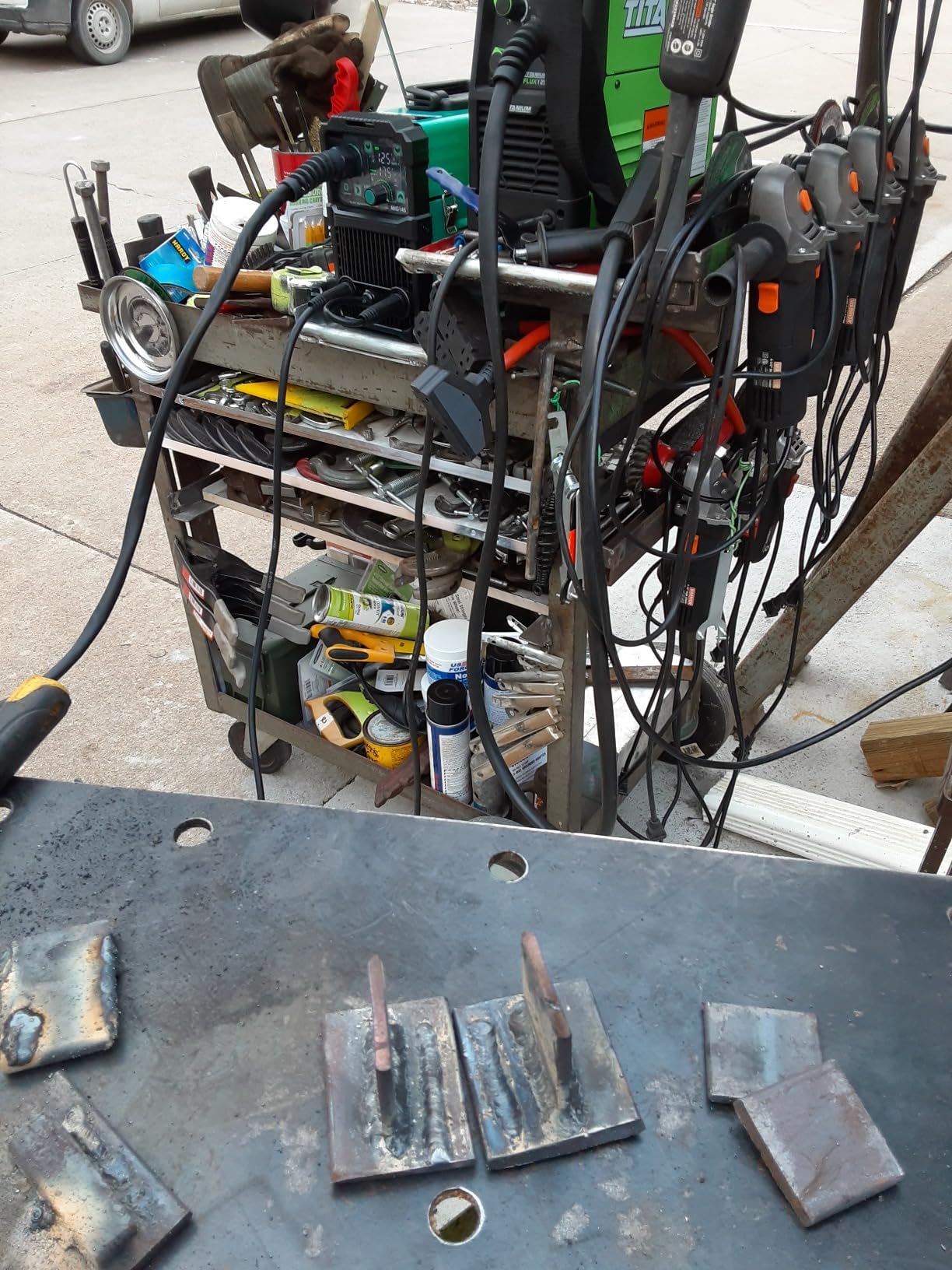
The synergic control offers plus or minus 3V fine trim, so you can tune a bead without leaving the automatic range. Voltage fluctuation compensation and over-current, over-load and over-heating protection are included.
Wire feed rollers are in the box along with a 2m gas hose, contact tips, both solid and flux core wire, a shoulder strap and the 220V-to-110V adapter. The gas regulator is the notable omission, and you will need one.
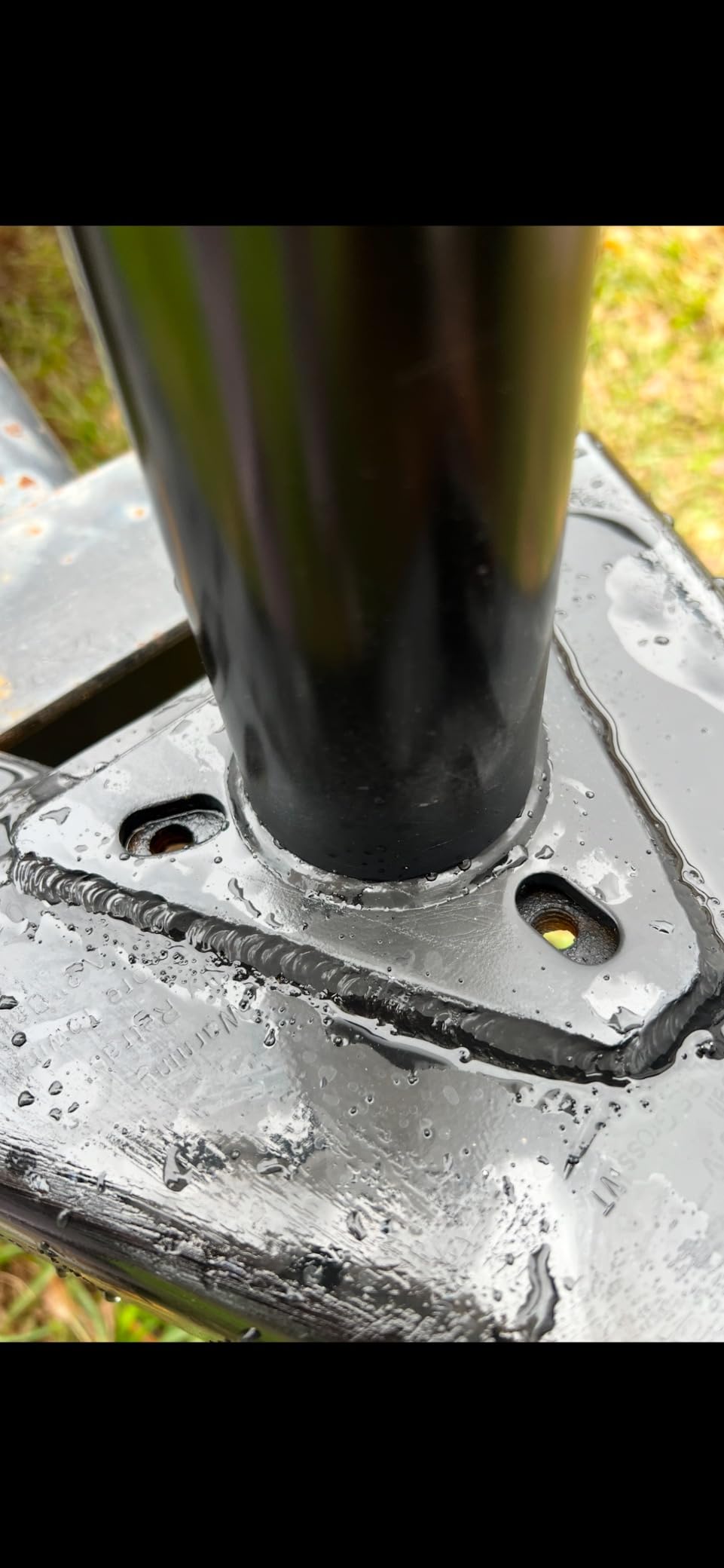
Who this machine suits
This suits beginners who want the full MIG experience with shielding gas from the start, and who expect to weld stainless or thinner material where flux core spatter is a nuisance. 13.7 lb with a strap keeps it workable for field jobs.
It also suits anyone with an existing 220V circuit who wants to learn on a machine with real headroom rather than a 110V ceiling.
Where it falls short
There is a version issue worth knowing. Early units shipped with a short 5.5 ft gun lead and only V-groove drive rolls; later 145 and 165 models include knurled rolls and a longer lead. Confirm which you are getting.
The spool tension spring is too tight and not adjustable, the manual does not explain the manual wire speed versus voltage knob, and stick mode appears capped around 130 amps. The supplied nozzle is a gas MIG push-on type rather than a flux core nozzle, and mild steel capability ranges from roughly 1/8 to 1/4 inch depending on input voltage.
8. Lincoln Electric 90i FC WELD-PAK – Best for Parts Support and Long-Term Ownership
Lincoln Electric 90i FC Flux Core Wire Feed Weld-PAK Welder, 120V Welding Machine, Portable w/Shoulder Strap, Protective Metal Case, Best for Small Jobs, K5255-1
120V flux core wire feed
Welds up to 1/4 inch
15 lb with shoulder strap
Protective metal case included
Pros
- Only 15 lb with a shoulder strap for mobile work
- Two simple knobs for wire speed and voltage with infinite voltage adjust
- Inverter power source smoother than transformer welders
- Handles thin-gauge stainless and mild steel
- Welds up to 1/4 inch with easy burn-through repair
- Metal case included for storage
- Consumables widely available
Cons
- Earth clamp bonding braid is short and works loose
- Flux core wire spatters noticeably
- No flux core wire included in the box
- Build quality lighter than premium Lincoln machines
The Lincoln 90i FC is the buy to make when you want to stop thinking about parts. At 4.7 it carries the highest rating in the lineup, and it is the only machine here from a major brand with consumables, service and support you can find in any welding supply shop.
Owners with previous Lincoln experience describe it as welding as well as the heavier 140 transformer machine at a fraction of the weight. Two knobs for wire speed and voltage, with infinite voltage adjustment, is the entire control scheme, and there is no wrong setting to find.
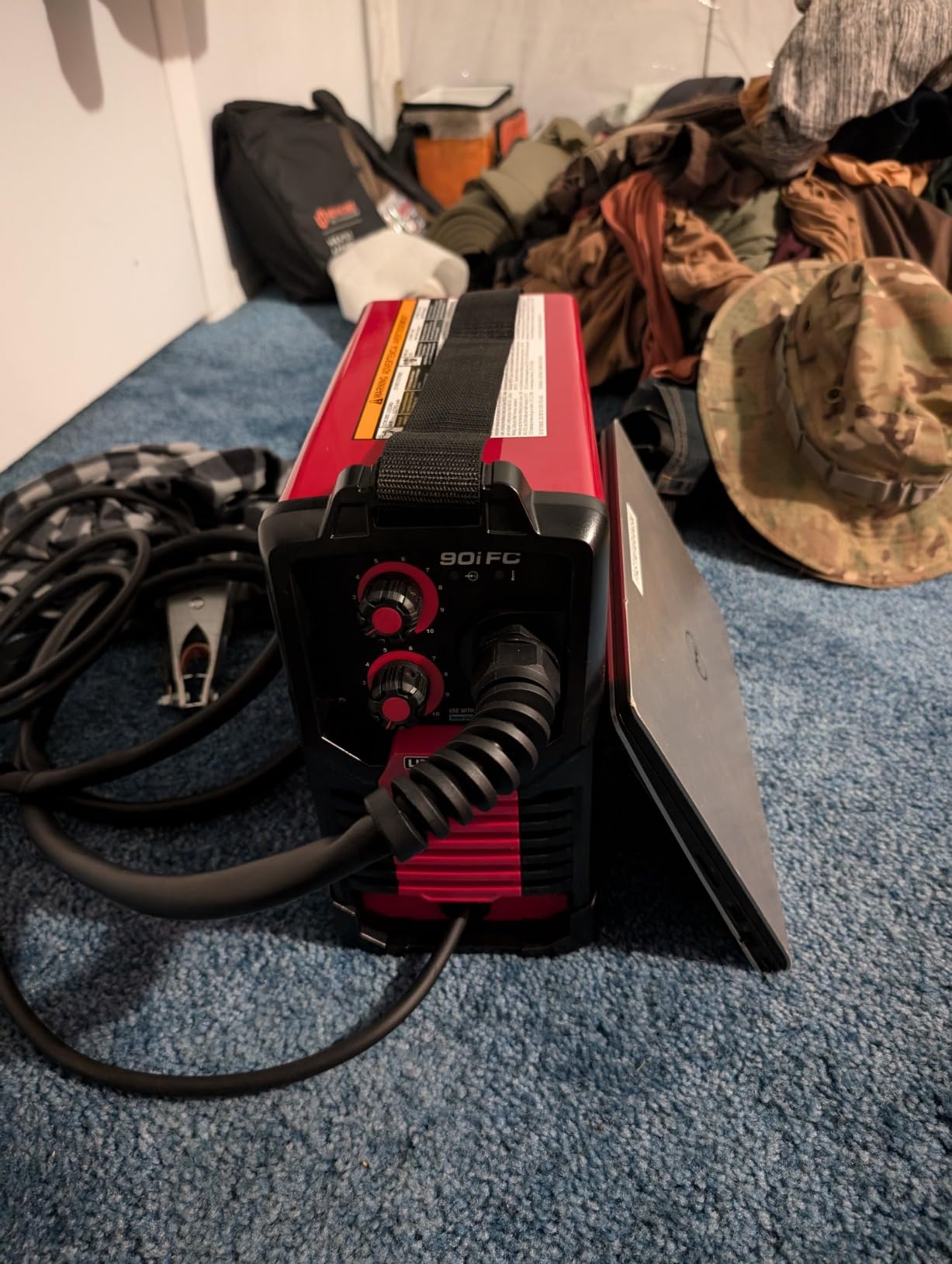
At 15 lb with a shoulder strap it moves around a vehicle easily, and the welding gun, nozzle, contact tip, work cable and clamp plus a protective metal case are all included. The case matters more than it sounds if you store it in a damp garage.
It welds thin-gauge stainless and mild steel for auto restoration and sheet metal work, and reaches up to 1/4 inch, which is genuinely useful capacity for a 120V unit. Burn-through is repaired by turning amps down and wire speed up.
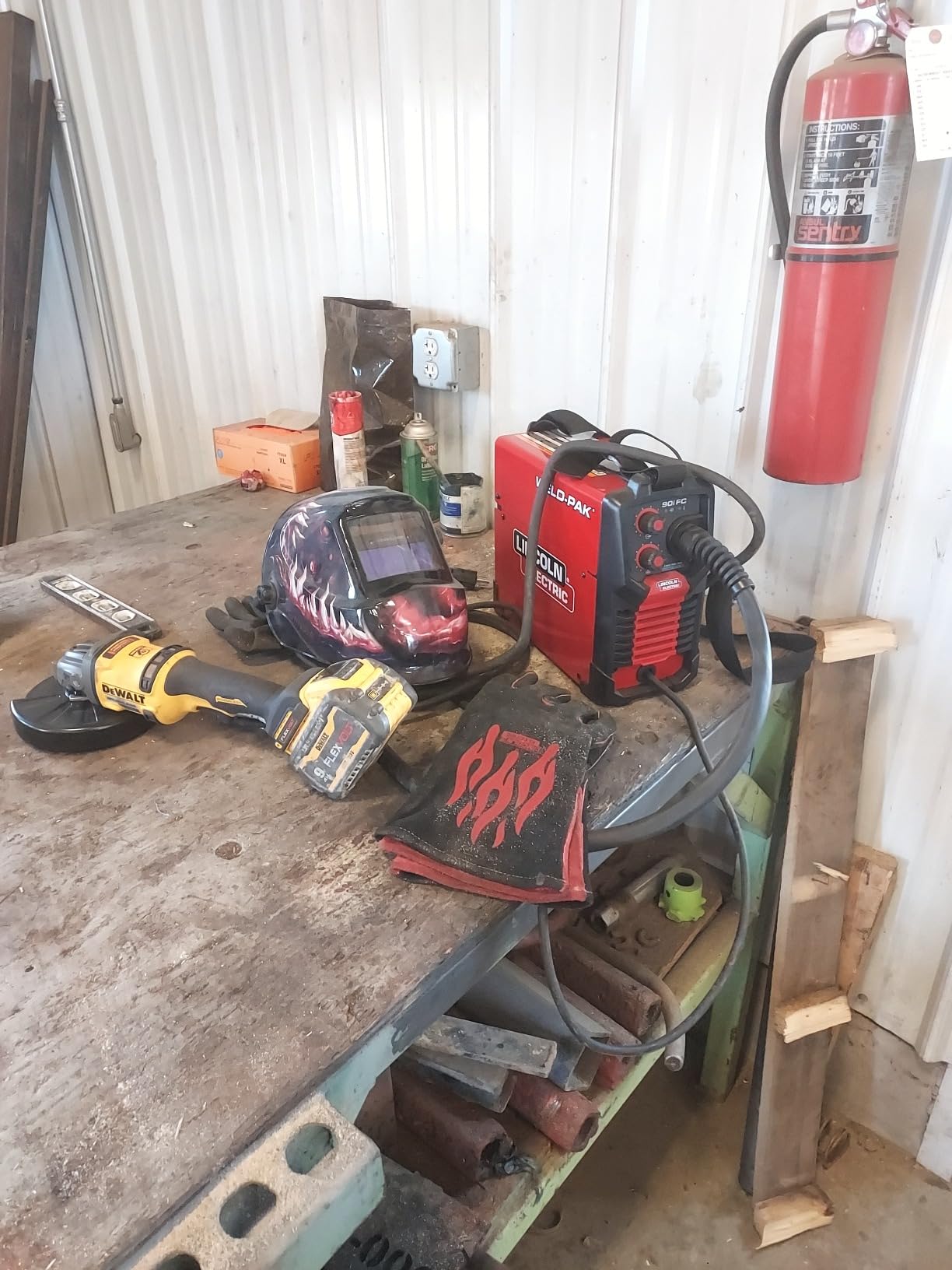
Who this machine suits
This suits beginners who want to keep the machine for a decade and not think about where to find a contact tip or a drive roller. Auto restoration and sheet metal repair are the strongest use cases in owner reports.
It is also the safest recommendation for someone who has never welded before, because two knobs leave almost nothing to configure wrong.
Where it falls short
It is flux core only. There is no gas MIG path and no lift TIG, so if your plans involve aluminium or stainless with shielding gas, this is not the machine. Flux core wire also is not included, which is one extra purchase before your first arc.
The consistent complaint is the earth clamp. The bonding braid is short and works loose after a few welds, so plan to replace it. Expected spatter is the other theme, and the build is lighter than Lincoln’s premium machines. Buyers comparing the big three should read our Miller vs Lincoln guide first.
9. BILT HARD 135A 3-in-1 – Best for Trigger Modes and Included Helmet
BILT HARD 135A 3-in-1 IGBT Inverter Welder, 110V Flux Core MIG/Lift TIG/Stick Welding Machine with Synergic Control, LED Display, 2T/4T/SPOT Modes & Full Kit (Solar Helmet)
135A 110V 3-in-1
2T/4T/SPOT trigger modes
Solar auto-darkening helmet included
LED display with error codes
Pros
- Full kit including solar auto-darkening helmet and gloves
- LED display tracking voltage
- current and wire speed live
- 2T/4T and SPOT modes for short fixes and spot welds
- Error codes with auto shutdown and fan cool-down
- Compact body roughly car-battery sized
Cons
- TIG torch not included and sold separately
- Included stick electrode clamp is weak
- Helmet darkness knob shifts during a weld
- Short wire spindle leaves the wire door open
- Accessories such as helmet and gloves are low quality
The BILT HARD 135A is unusual because the trigger modes matter. Most budget machines give you one mode, and this one offers 2T, 4T and SPOT. That gives you spot welding for tabs and fasteners, a 4T lock for long seams so you are not holding the trigger, and a standard mode for short fixes.
First-time welders consistently call the kit well packed and capable of real work such as exhaust pipes and brackets. The LED display tracks voltage, current and wire speed live, and the synergic system handles the setup for you.
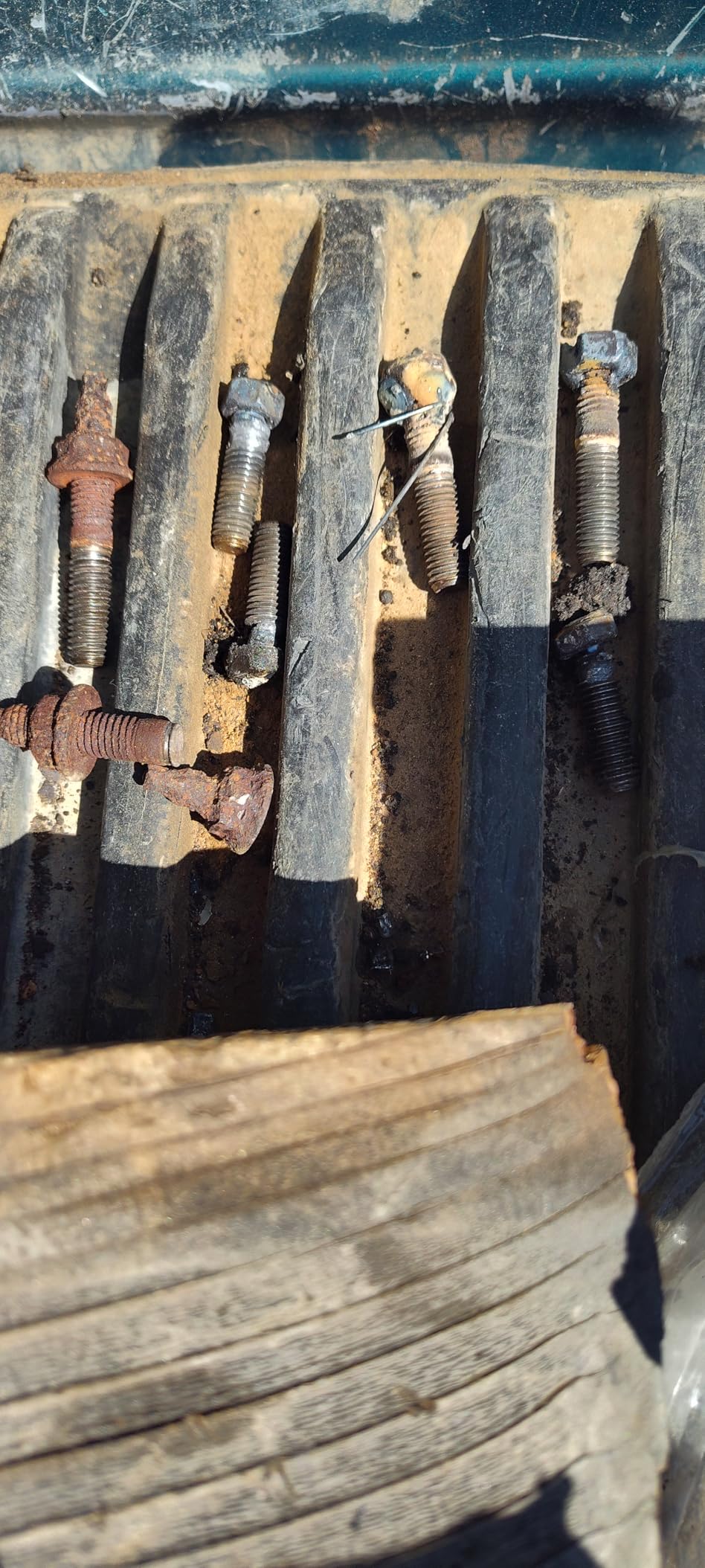
It also has dedicated controls that most competitors skip: MIG burn-back and inductance settings, plus MMA hot start, arc force and VRD. Error codes E1 for overcurrent and E2 for overheat trigger an auto shutdown and fan cool-down before a safe restart.
The box includes a solar-powered auto-darkening helmet, a 6.6 ft MIG gun with a .030 tip fitted, a 10 ft ground clamp, 2 lb of flux core wire, a spare .035 tip, brush and hammer.
Who this machine suits
This suits beginners who want the safety gear sorted in the same box and who will use the spot mode for brackets and tabs. Automotive exhaust work and general household repair are the common projects in reviews.
The IGBT inverter design runs from standard 110V outlets, and the compact body moves easily around a vehicle.
Where it falls short
The helmet is the weak link. The darkness knob turns too easily and shifts mid-weld, and the head band assembly is awkward. Gloves, chipping hammer and brush are low quality too. Budget for a proper helmet before you start, or you will be tempted to look through the arc.
The wire spindle is too short for the supplied wing nut, leaving the wire door unable to close, and the TIG torch is not included. Practical capacity tops out around 3/16 inch and the duty cycle is limiting on long jobs.
10. BESTMIG 135A Helmet Kit – Best Complete Starter Set for New Welders
BESTMIG 135A MIG Welder – 3-in-1 Flux Core Welder, MIG/Lift TIG/Stick Welding Machine – Portable IGBT Inverter – 110V with Welding Helmets and Gloves (Red Black, MIG 135A Welder)
True 135A output
Welds material up to 1/8 inch
Helmet and gloves included
10.71 lb portable inverter
Pros
- Highest sales rank of any machine in this group
- Auto-darkening helmet convertible to goggles plus leather gloves included
- Digital control auto-adjusts parameters from current settings
- Full-colour LED display with live parameters
- Handles .030 to .040 flux core wire on stainless and carbon steel
Cons
- TIG torch not included despite lift TIG being advertised
- Some orders arrived missing advertised accessories
- Output limited to about 1/8 inch material
- Customer service slow on missing-item claims
The BESTMIG 135A is the one to consider if the buyer is a gift-giver. It carries the highest sales rank in this category and a 4.6 average, and the box includes an auto-darkening helmet that converts to goggles, welding gloves, the torch, ground clamp and electrode holder.
That matters more than it sounds. A first welder who has no helmet will either skip the safety gear or try to learn through a phone screen held over the work. Including a usable one removes the most common excuse for not starting.
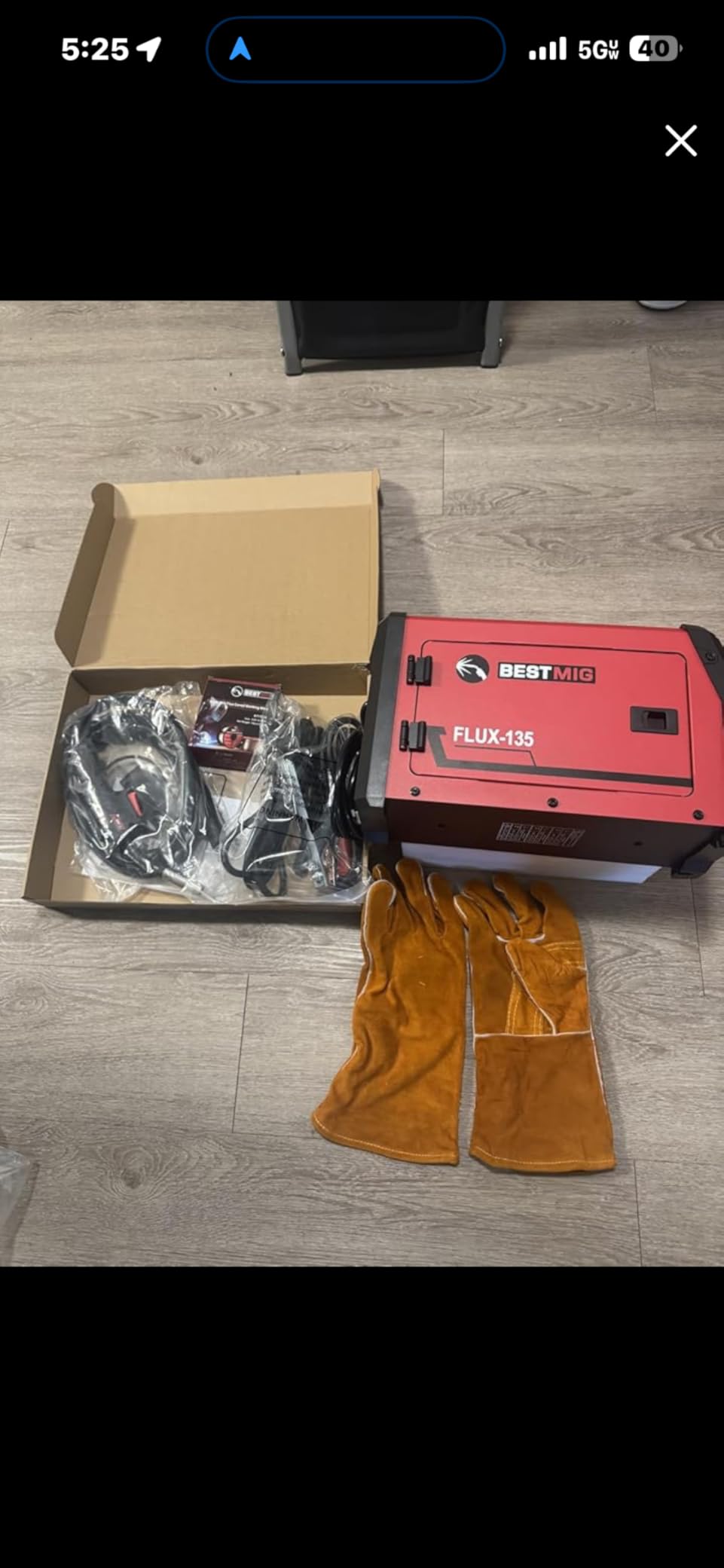
Digital control adjusts parameters automatically from the current setting you choose, and the full-colour LED display shows live welding parameters. The integrated wire feed is reported to reduce spatter compared with comparable budget machines.
It runs .030 to .040 gasless flux core wire, which covers stainless and carbon steel work as well as mild steel. The 10.71 lb body is one of the lighter units here.

Who this machine suits
This suits parents buying a first welder, hobbyists starting on stainless or thin-gauge work, and anyone who wants the full kit in one delivery. Real 135A output up to 1/8 inch is enough for exhaust brackets, boxes and light fabrication.
At 4.6 stars the owner sentiment is strongly positive for the value, particularly from buyers who expected less at this level.
Where it falls short
The advertised lift TIG mode does not come with a TIG torch, which is a fair complaint given the box otherwise aims to be complete. Output is limited to about 1/8 inch material, so it is not a trailer-frame machine.
Some orders arrived missing advertised accessories or with a flux core cable that did not fit, and customer service response on missing-item claims was reported as poor. Customers outside the US also received plugs incompatible with local outlets. Verify the full contents on arrival, and check our Hobart vs Miller comparison if you would rather buy a machine with a settled parts supply chain.
How to Choose Your First MIG Welder
110V or 220V is the first decision
A 110V machine plugs into a standard household outlet and works immediately, which is why most beginners start there. The catch is that output falls away at the top of the range, so a 140 amp 110V machine realistically tops out around 1/8 inch steel, and that figure usually assumes flux core wire.
A 220V machine needs a dedicated circuit with its own breaker, and the extra headroom shows up immediately as thicker material capability and a steadier arc on the heaviest settings. If your garage already has a 220V outlet with spare capacity, take the 220V machine. If not, a dual-voltage unit like the YESWELDER 160A or the bestarc 145A lets you start on 110V and grow later.
Our home MIG welder guide covers garage circuit considerations in more detail, and the short version is that a 220V machine with a 30A breaker is a realistic minimum for the dual-voltage units in this list.
Gas MIG or flux core, and what each costs you
Flux core wire is self-shielding, so there is no gas cylinder, no regulator and nothing to refill. That is the reason it dominates this category, and for a beginner welding rusty mild steel, gates or trailer frames, it does the job well. The trade-offs are more spatter, less control on thin material, and no aluminium without a spool gun.
Gas MIG uses solid wire with a 75/25 argon and CO2 mix. It produces cleaner, cooler beads that are far easier on thin sheet metal and stainless, and it is the process most fabricators actually use. The hidden cost is the cylinder, the regulator and the refills, plus the fact that several budget machines advertise gas MIG but ship without a regulator.
For a first machine, flux core is a reasonable start and gas MIG is where you will end up. The bestarc 145A and the YESWELDER 160A both let you do both.
What amperage actually means for your material
Amps describe how much heat and how fast you can lay metal down, not how thick a piece you can weld. A useful rule for MIG on mild steel is roughly 1 amp per 0.001 inch of material thickness, with about 1 amp per 0.001 inch per 1000 amps of wire feed speed added to that.
So a 130A machine handles around 0.13 inch, roughly 1/8 inch, and needs a voltage step up for thicker plate. A 160A machine reaches about 0.16 inch before you need multi-pass work. The claims in this list of 3/32 inch, 1/8 inch and 1/4 inch reflect different wire, voltage and pass counts, so treat them as starting points rather than guarantees.
Duty cycle, spool size and the specs people skip
Duty cycle is quoted as minutes of welding within a ten-minute window. A 30 percent rating means three minutes on, seven off. That number tells you far more about whether a machine suits a weekend hobbyist or a production shop than the marketing wattage does, and it is the first spec we would read.
Spool size is the second. A machine that holds only a 2 lb spool means frequent refills and interrupted workflow, while one that takes 10 lb spools runs a full evening of work per fill. Every machine here except the YESWELDER 160A is a small-spool unit, so budget for wire accordingly.
Finally, check the consumables situation. If the brand’s contact tips, drive rollers, nozzles and liners are available at a local supply shop, machines break and stay in service. If they are not, a failed wire drive can end your project. That is the single strongest practical reason the Lincoln 90i FC ranks so highly with owners here, and our Hobart vs Lincoln comparison goes deeper into how the big families share parts.
What to Buy Alongside Your Welder
The machine is rarely the full cost of getting started. Budget for an auto-darkening helmet, welding gloves and a jacket, a spool of flux core wire, and for any gas-capable machine a cylinder, a regulator and the fittings. A ground clamp of reasonable quality is worth replacing immediately, since it is the most common complaint across the reviews we read.
For your first arc, the sequence matters: set up ventilation and a fire blanket, connect the work clamp directly to the workpiece, load the wire through the drive rollers and the gun liner, set shielding gas if you are running gas MIG, wear your helmet, and make your first bead on scrap mild steel before touching the project.
Wire feed speed and voltage balance is where most first welds fail. If the bead stacks up in ripples, your wire is feeding faster than the puddle can absorb it, so slow the wire down or add voltage. Once those two are balanced, most beginners report the arc becomes predictable almost immediately.
Frequently Asked Questions
Are MIG welders good for beginners?
Yes. MIG welding is the most forgiving arc process because the machine feeds the wire for you and holds the arc, and it produces the least cleanup of the common processes. A machine with synergic voltage control removes most of the guesswork on the first session.
What type of welder should I buy as a beginner?
Look for an IGBT inverter with synergic control, a readable display and the processes you will actually use. A 110V gasless flux core machine is the lowest-friction start, and a dual-voltage unit lets you grow to 220V and gas MIG later without buying twice.
Which is better for beginners, flux core or MIG welding?
Flux core wins for a first machine on cost and setup: no gas cylinder, no regulator, no refills, and it handles rusty mild steel well. Gas MIG wins on bead quality, especially on thin sheet metal and stainless, but adds cylinder, regulator and refill costs. Many budget machines advertise gas MIG and ship without a regulator.
Is it better to weld with 110 or 220 volts?
A 220V machine has more headroom and reaches thicker material because output does not fall away at the top of the range. A 110V machine plugs straight into a standard outlet and suits thin-gauge work, but a 140A 110V unit realistically tops out around 1/8 inch steel. If your garage has a 220V circuit with capacity, take it.
Are Harbor Freight MIG welders any good?
Budget import machines in general can weld thin steel competently for occasional work, and owners often report less spatter from IGBT designs than old transformer welders. The recurring problems are parts availability, thin included accessories such as spool holders and ground clamps, and weak after-sales support. If consumable parts are hard to source locally, choose a brand with an established parts supply instead.
Final Verdict
The best MIG welders for beginners are not the ones with the longest feature list. Our top pick, the YESWELDER 135A 3-in-1, wins because nearly 3k owners have proven that its synergic control gets new welders to a clean bead on thin steel quickly, at the lowest complexity in this group.
If you want gas MIG and 220V capability, take the bestarc 145A or the YESWELDER 160A. If you want parts support and a decade of ownership, the Lincoln 90i FC is worth the step up. Whichever you choose, budget for the helmet, wire and gas hardware before the machine leaves the bench.
Review our 2026 picks again against your own project list, and check the latest configuration before you order.