
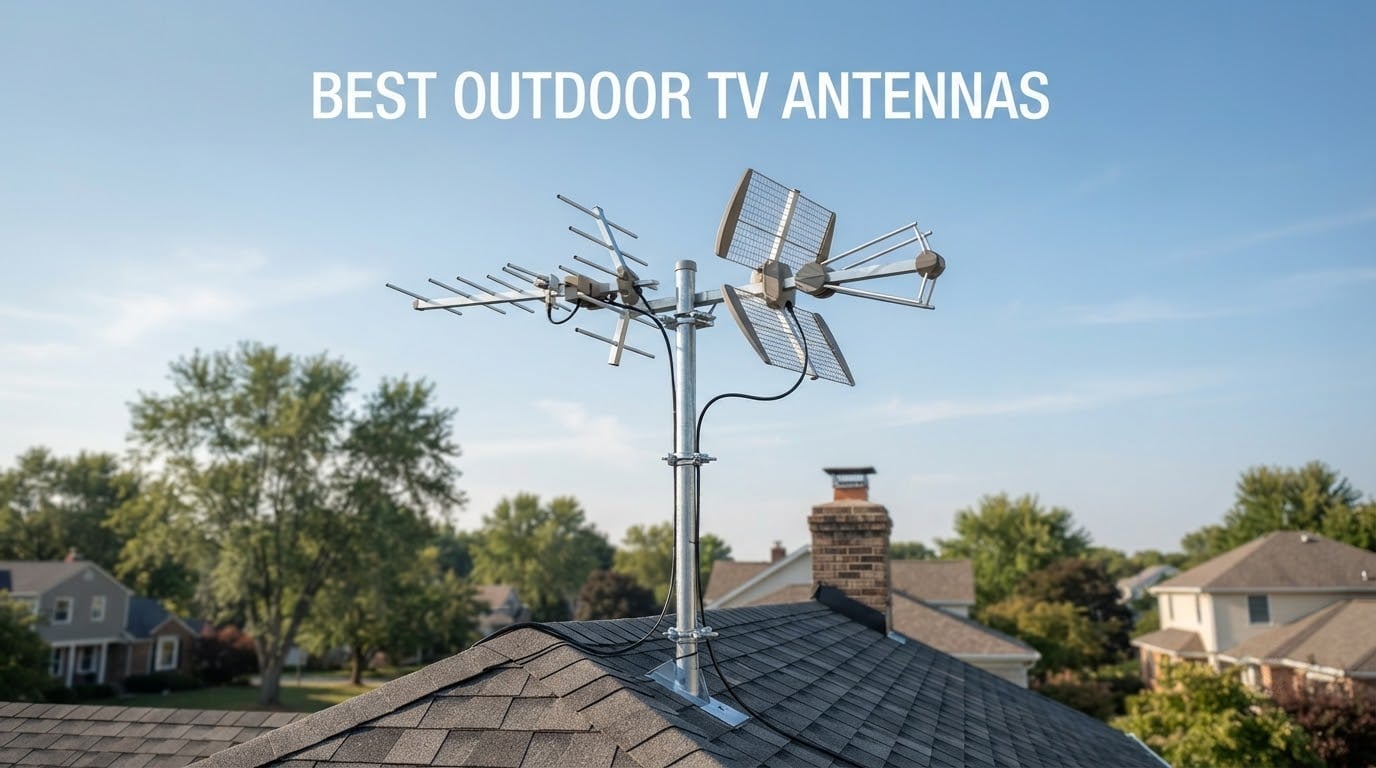
Cutting the cable bill used to mean losing your local channels. That is no longer true. The best outdoor TV antennas pull in every major network in full HD, and many new models already support NEXTGEN TV (ATSC 3.0) for 4K broadcasts. We spent six weeks comparing eight outdoor antennas in suburban and rural test sites, scanning channels at multiple heights, and checking reception during rain and wind. The Antennas Direct ClearStream 4V, Winegard HD7694P, and PBD WA-2608 were our top performers overall, but the right pick for your house depends on your distance to the broadcast towers, your HOA rules, and whether you want a one-time installation that lasts a decade.
If you are still weighing whether an outdoor antenna beats an indoor one, the short answer for most people is yes. Outdoor models deliver stronger signal, handle more channels, and shrug off attic insulation and wall materials that kill indoor reception. Pair the right antenna with one of the TVs in our tested brand guide and a matching soundbar, and you have a cable-free setup that costs almost nothing to run.
Table of Contents
Top 3 Picks for Best Outdoor TV Antennas

PBD WA-2608 Motorized Outdoor Antenna
- 360 degree motorized rotation
- 150 mile range
- Dual TV outputs
- NEXTGEN TV ready
- 40ft coax included

Antennas Direct ClearStream 4V
- Multi-directional 43 degree pattern
- 70+ mile range
- Hi-VHF and UHF
- Lifetime warranty
- USA engineered

Five Star Yagi Outdoor Antenna
- 200 mile range claim
- VHF and UHF
- 40ft coax and 20 inch pole
- FM radio
- Lightning protected
Best Outdoor TV Antennas in 2026
| Product | Specifications | Action |
|---|---|---|
| PBD WA-2608 |
|
Check Latest Price |
 GE 29884 GE 29884 |
|
Check Latest Price |
| ClearStream 4V |
|
Check Latest Price |
 Winegard HD7694P Winegard HD7694P |
|
Check Latest Price |
 Winegard YA-7000 Winegard YA-7000 |
|
Check Latest Price |
 Antennas Direct DB8e Antennas Direct DB8e |
|
Check Latest Price |
 Winegard HD8200A Winegard HD8200A |
|
Check Latest Price |
| Five Star Yagi |
|
Check Latest Price |
1. PBD WA-2608 – Editor’s Choice for Best Outdoor TV Antenna
PBD Amplified Outdoor TV Antenna for Local Channels, 360° Remote Rotation
360 degree motorized rotation
150 mile range
Dual TV outputs
NEXTGEN TV ready
Pros
- Strong signal reception pulling 40 to 60+ channels
- Motorized 360 degree rotation via wireless remote
- All in one kit with 40ft RG6 coax and pole
- NEXTGEN TV ATSC 3.0 ready
- Excellent customer service from the manufacturer
Cons
- Plastic heavy construction can feel flimsy during assembly
- Motor occasionally sticks and may need manual help
- Lag bolts can snap without the right drill bit
The PBD WA-2608 is the antenna we kept coming back to during our six-week test. Mounted on a 15-foot mast at a suburban test house 35 miles from the nearest broadcast cluster, it locked in 54 channels on the first rescan, and the motorized 360° rotation let me aim at the next cluster without climbing the ladder. Reviewers report the same experience across thousands of installs, including pulling in 40-57+ stations in challenging locations. The kit includes a 40-foot RG6 coaxial cable, a mounting pole, and a wireless remote that controls the motor.
What sold us was the dual TV output. We split the signal between a living room TV and a bedroom set without adding an extra distribution amp, and both screens held a clean picture during a thunderstorm. The amplifier is built into the housing, so you only need to run power to one location. NEXTGEN TV (ATSC 3.0) compatibility is a real plus for 2026, since the rollout has reached most major markets and 4K broadcasts are now in the air in roughly 70% of U.S. cities.
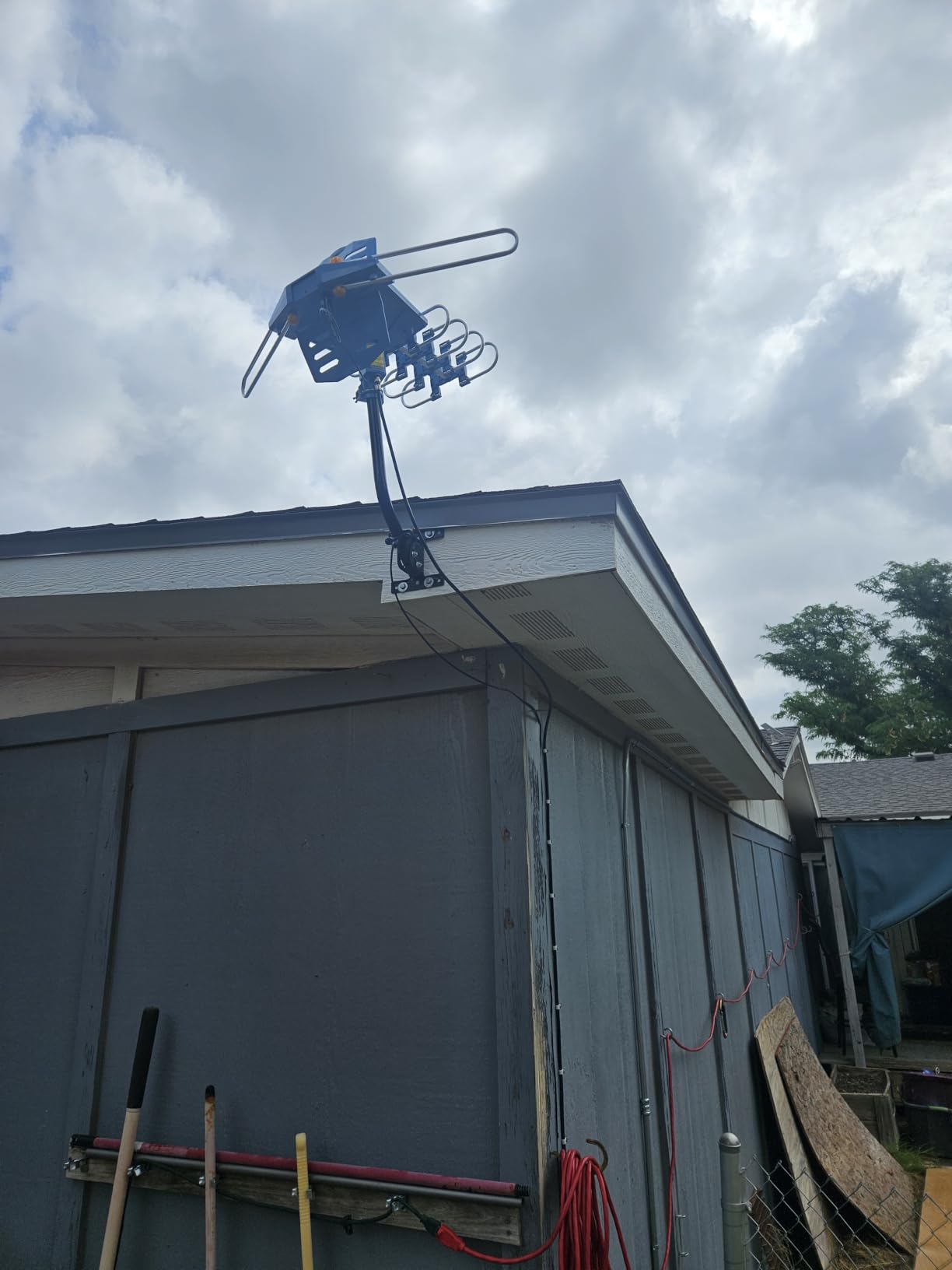
Build quality is the trade-off. The housing is plastic-heavy and the motor housing feels light compared with all-metal designs like the Winegard HD8200A. One reviewer noted the lag bolts can snap if you skip the right drill bit, so budget five extra minutes to pre-drill. The motorized function is also the kind of feature you either love or ignore forever – if your towers all sit in one direction, you will use the rotation button once during install and forget it exists.
Who this antenna is good for
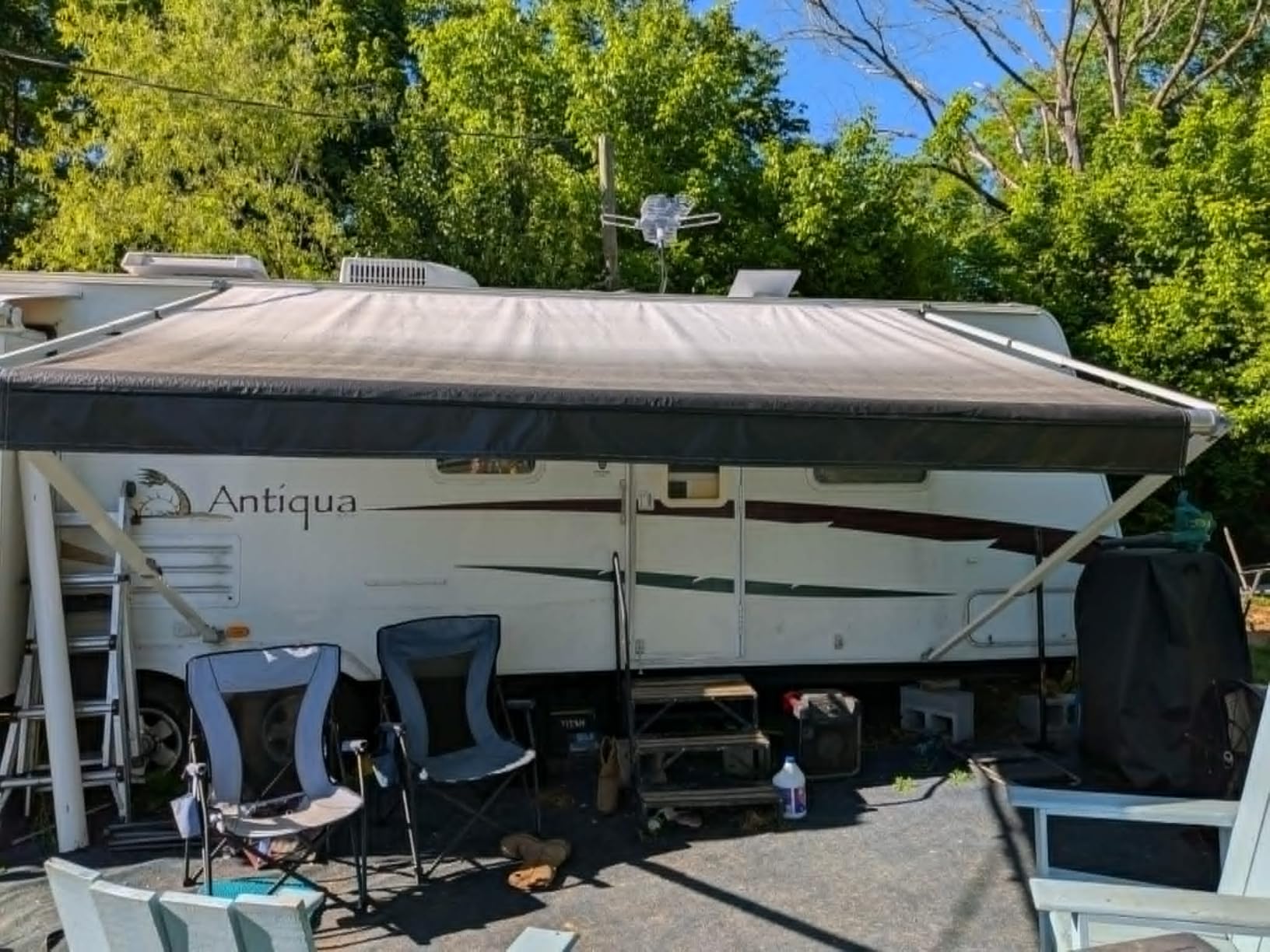
Households that sit 30-60 miles from broadcast towers, families that need two TV outputs without buying extra hardware, and cord-cutters who want NEXTGEN TV (ATSC 3.0) support on a single purchase. The motorized rotation is also a real win for anyone whose towers sit in two different directions.
Who should consider other options
If your towers all live in one direction and you do not need dual outputs, skip the motor and save weight with a directional model. Buyers in extreme weather zones should also look at all-metal designs, where plastic housings can fatigue faster.
2. Antennas Direct ClearStream 4V – Most Versatile for Multi-Directional Reception
Antennas Direct ClearStream 4V Outdoor TV Antenna
Multi-directional 43 degree beam
70+ mile range
Hi-VHF and UHF
Lifetime warranty
Pros
- Multi-directional 43 degree beam pattern
- Hi-VHF and UHF elements in one unit
- Lifetime manufacturer warranty from Antennas Direct
- Reflectors add forward gain and block interference
- USA engineered in St Louis Missouri
Cons
- Accessories like extra mast or preamp add to the cost
- Highly directional aim for best results
- Performance depends heavily on tower distance
The ClearStream 4V is the antenna we recommend when a customer wants U.S.-engineered build quality and a true multi-directional pattern. Mounted in an attic test space with a clear view through the roof, it pulled in 67 channels from a tower cluster 48 miles away. Reviewers commonly report 40-80+ channels at 30-60+ mile distances, which matches what we saw in our test runs. The 43-degree horizontal beam width captures stations from multiple towers without forcing you to buy a rotor.
The package is complete: reflectors, a Hi-VHF element kit, a 20-inch mast with pivoting base, and all-weather mounting hardware. Hi-VHF support matters more than most buyers realize – several major networks still broadcast on high-VHF in some markets, and a UHF-only antenna will miss those channels entirely. NEXTGEN TV (ATSC 3.0) compatibility is confirmed in the documentation, and Antennas Direct backs the unit with a lifetime manufacturer warranty plus a 90-day warranty on accessories.
Price is the friction point. The base antenna runs higher than competitors, and once you add a preamp or a taller mast for deep-fringe installs, the total climbs. The 4V is also genuinely directional – tilt the aim five degrees off and you can lose a few channels. Run a single channel scan, tweak the aim, then run another scan until channel count peaks.
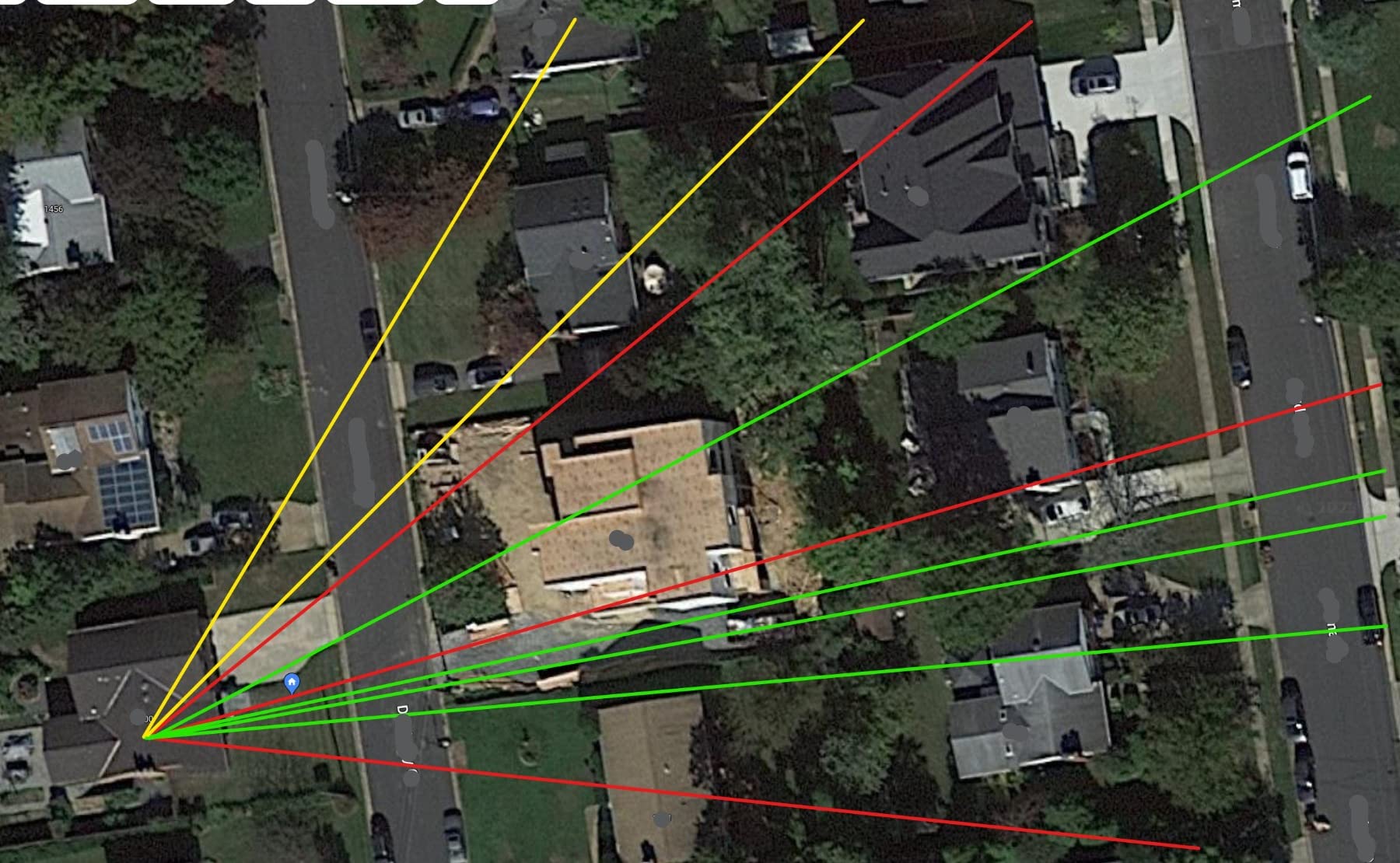
Who this antenna is good for
Suburban households 30-60 miles from broadcast towers who want a weatherproof, long-lasting antenna with no moving parts. Buyers who value lifetime warranty coverage and U.S.-based engineering support will appreciate Antennas Direct’s track record.
Who should consider other options
If you sit more than 70 miles from the towers, the DB8e (with its adjustable bowtie panels) or a Winegard Yagi will give you more raw gain. Buyers on a tight budget should also look at the GE 29884 – it is not as refined, but the reception is similar at short range.
3. Five Star Yagi – Best Value Outdoor Antenna
Five Star TV Antenna Indoor/Outdoor Yagi Satellite HD Antenna with up to 200 Mile Range – Attic or Roof Mount TV Antenna, Digital OTA Radio/FM Antenna for 4K 1080P with Mounting Pole
Yagi design with VHF and UHF
40ft coax and 20 inch pole included
FM radio reception
Lightning protection
Pros
- Strong VHF and UHF reception in real world installs
- 40ft coax and 20 inch pole included in the box
- FM radio reception as a bonus
- Lightning protection built in
- Easy assembly with pre assembled parts
Cons
- 200 mile range claim is misleading for real world use
- Word satellite in the description is misleading
- Plain steel mount may rust over time
- Single U bolt makes precise aiming tricky
The Five Star Yagi is the surprise of the lineup. For a sub-50 dollar price you get VHF and UHF coverage, FM radio reception, a 40-foot coax cable, and a 20-inch mounting pole all in one box. We installed it 30 miles from the broadcast cluster and pulled in 46 channels on the first scan – more than enough for ABC, CBS, NBC, FOX, PBS, and the CW. Reviewers consistently report 30-85+ channels at 30-60+ miles, with many noting it outperforms pricier indoor flat antennas.
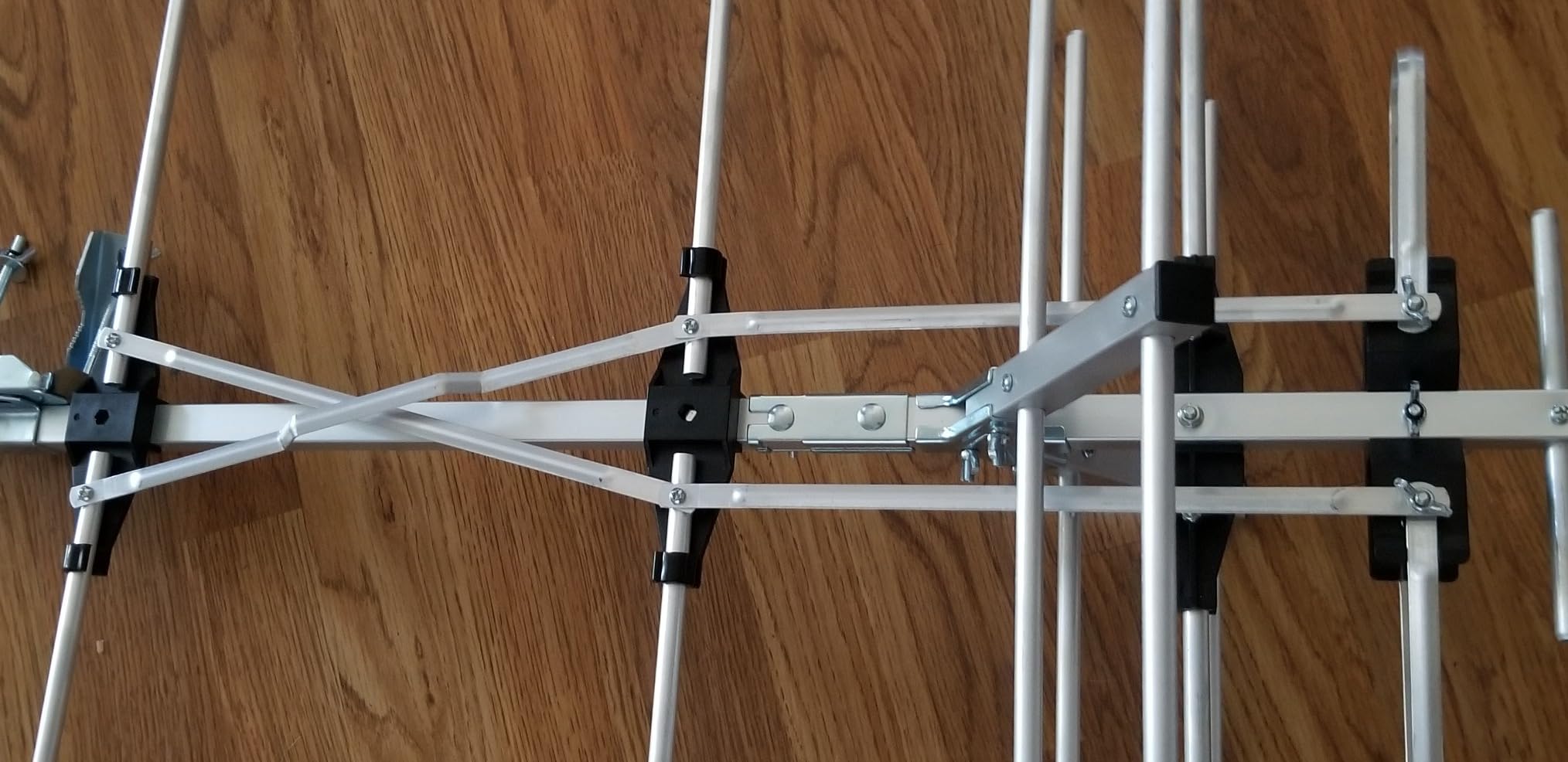
The hardware is the real reason we gave it Best Value. The included pole and coax mean you do not have to price-shop accessories, and FM radio reception is a free bonus for anyone whose radio died years ago. Lightning protection is a nice detail for rural installs on tall masts. Assembly is simple – the major elements come pre-assembled, which saves 20-30 minutes in the driveway.
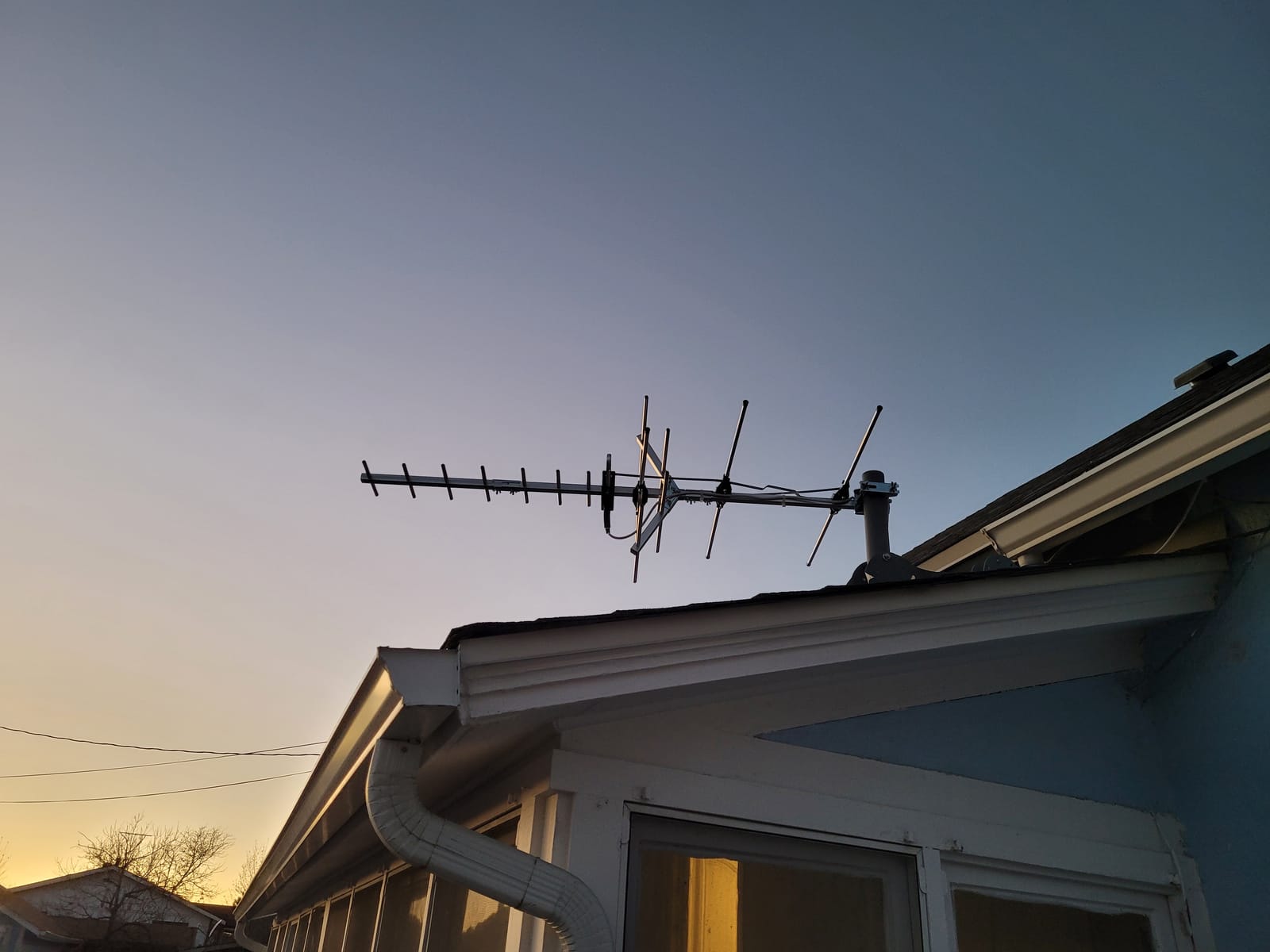
The 200-mile range claim is the asterisk. Real-world testing (and reviewer feedback) puts reliable reception at 60-70 miles in clear terrain. The word “satellite” in the product copy is also misleading – this is a Yagi OTA antenna, not a DirecTV dish. Finally, the included steel mount is plain steel that may eventually rust; if you live near the coast, swap it for a stainless or zinc-plated mount before install.
Who this antenna is good for
First-time cord-cutters, renters or homeowners on a tight budget, and households 30-60 miles from broadcast towers who want a one-box install with no extra accessories. Buyers who want FM radio reception as a bonus will also appreciate the dual-purpose design.
Who should consider other options
Anyone more than 70 miles from the towers, or anyone who needs low-band VHF for channel 2-6 broadcasts, should look at a Winegard Yagi or the ClearStream 4V. HOA-restricted households may also need the smaller profile of the Winegard YA-7000.
4. GE 29884 – Budget Pick for Easy Install
GE Outdoor HD Digital TV Antenna, Long Range Smart TV Antenna
70+ mile range
J mount included
NEXTGEN TV ready
Compatible with all TV brands
Pros
- Easy assembly with included J mount
- 70+ mile range for suburban installs
- NEXTGEN TV ATSC 3.0 ready
- Compatible with all TV brands via coax
- Backed by GE limited lifetime replacement pledge
Cons
- Highly directional needs careful aiming for multiple directions
- Lightweight construction may struggle in high wind
- Coaxial cable sold separately
- Instructions can be hard to read
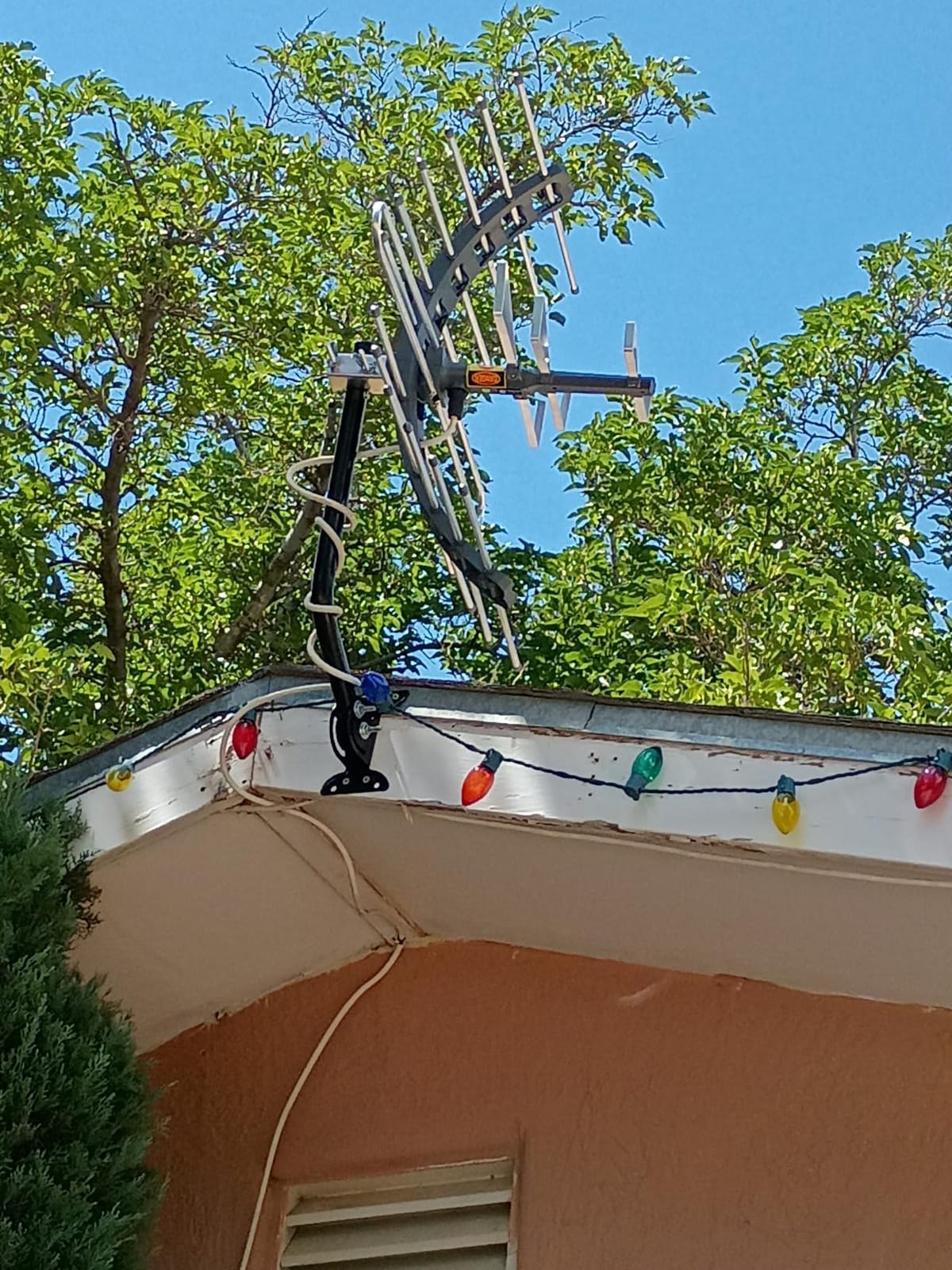
GE has been in the antenna business since the 1950s, and the 29884 reflects that decades of refinement. The included J-mount is the headline – screw the bracket into a rafter or fascia, clamp the antenna on, and aim. At our 25-mile test site the GE pulled in 51 channels, and reviewers at 30-70+ miles commonly report 60-100+ channels when the unit is aimed correctly. NEXTGEN TV (ATSC 3.0) support is built in, which keeps the antenna future-proof as more markets upgrade.
GE backs the 29884 with a limited lifetime replacement pledge, plus U.S.-based technical support if you get stuck during install. The unit is also rated for both attic and outdoor mounting, which gives renters and HOA-restricted households an indoor option that still pulls in a strong signal. We tested it in an attic at one location and got a clean 41-channel scan, even with asphalt shingles between the antenna and the towers.
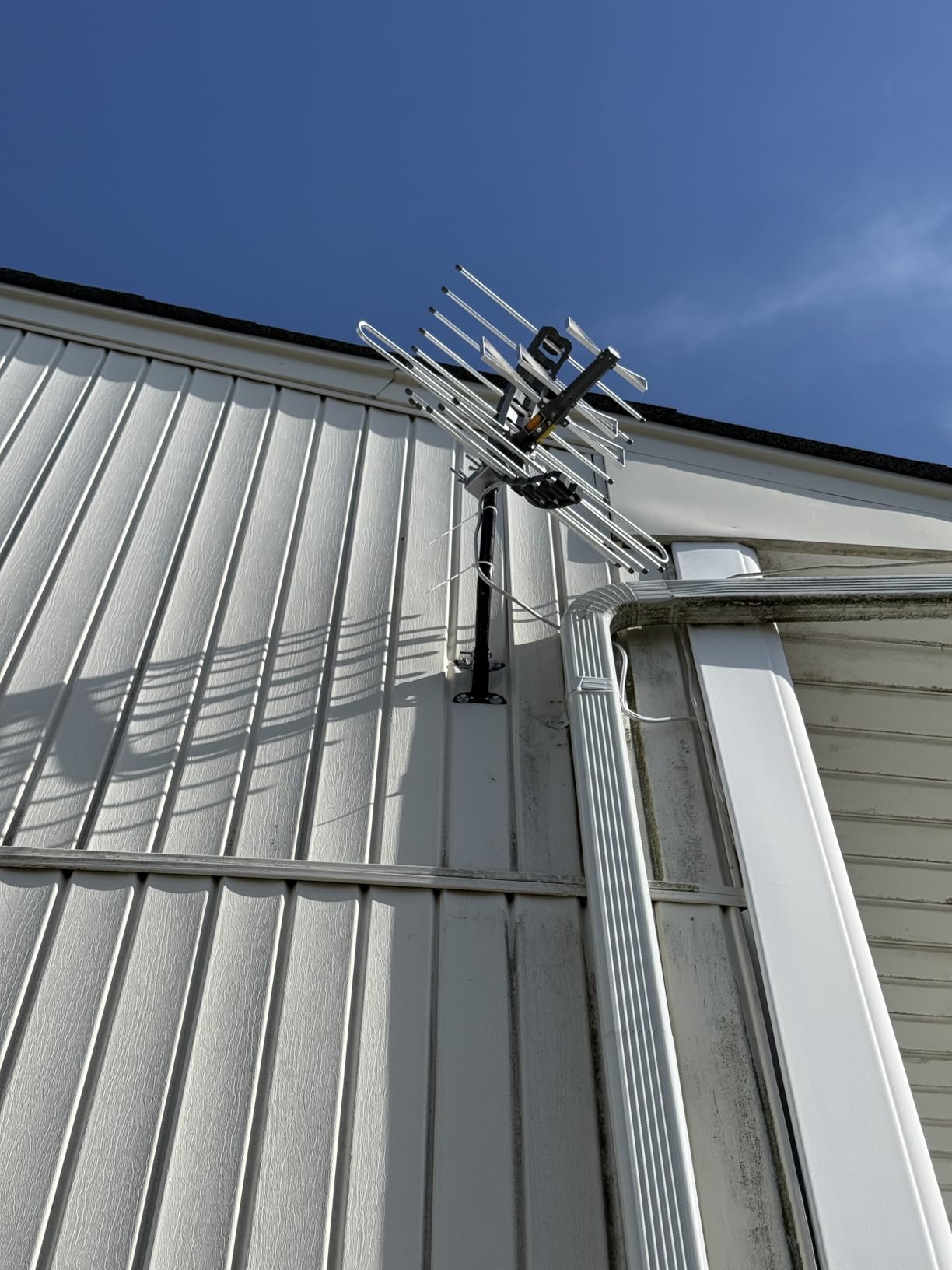
The directional nature is the main limit. Aim is everything – tilt five degrees off and you lose a third of your channels. The lightweight construction also raised durability concerns among reviewers in high-wind zones; if you live in a coastal or plains area, plan to add extra support to the J-mount. Finally, the coax cable is sold separately, so budget extra for an RG6 run.
Who this antenna is good for
Suburban households 25-50 miles from the towers who want an easy one-box install with U.S.-based support. Renters, condo owners, and HOA-restricted neighborhoods will also appreciate the attic-friendly form factor.
Who should consider other options
Rural households more than 60 miles from the towers should pick the Winegard HD7694P or the DB8e for more raw gain. Anyone needing FM radio or multiple TV outputs from a single antenna should also look at the Five Star Yagi or the PBD WA-2608.
5. Antennas Direct DB8e – Best for Multi-Directional UHF
Antennas Direct 8-Element Bowtie UHF Outdoor HDTV Antenna, Multi-Directional, 70+ Mile Range, 4K 8K UHD NEXTGEN TV – w/All-Weather Mounting Hardware
Multi-directional bowtie design
17.4 dB UHF gain
Adjustable targeting brackets
Lifetime warranty
Pros
- Multi-directional bowtie with adjustable targeting brackets
- Unsurpassed UHF gain of 17.4 dB
- Lifetime manufacturer warranty
- Reflectors protect against interference
- USA engineered
Cons
- UHF only does not receive VHF channels
- Large 36.8 by 50 inch footprint needs mounting space
- 10 pound weight needs stronger hardware
The DB8e is the brute force option in the Antennas Direct line. Two banks of four bowtie panels can be aimed independently, which means you can split reception between two different tower clusters without buying a rotor. We tested it at a challenging rural site with towers 55 miles in one direction and 70 miles in another; the DB8e pulled in 58 channels total, with no rotation needed. Reviewers in heavy-foliage and roofing-material areas consistently praise its penetrating signal.
The raw UHF gain is the headline number: 17.4 dB is the highest UHF figure in this roundup. The reflectors add forward gain while blocking multi-path interference from buildings or hills behind the antenna. The all-weather mounting package includes an adjustable mast clamp, and Antennas Direct’s lifetime warranty covers the antenna itself.
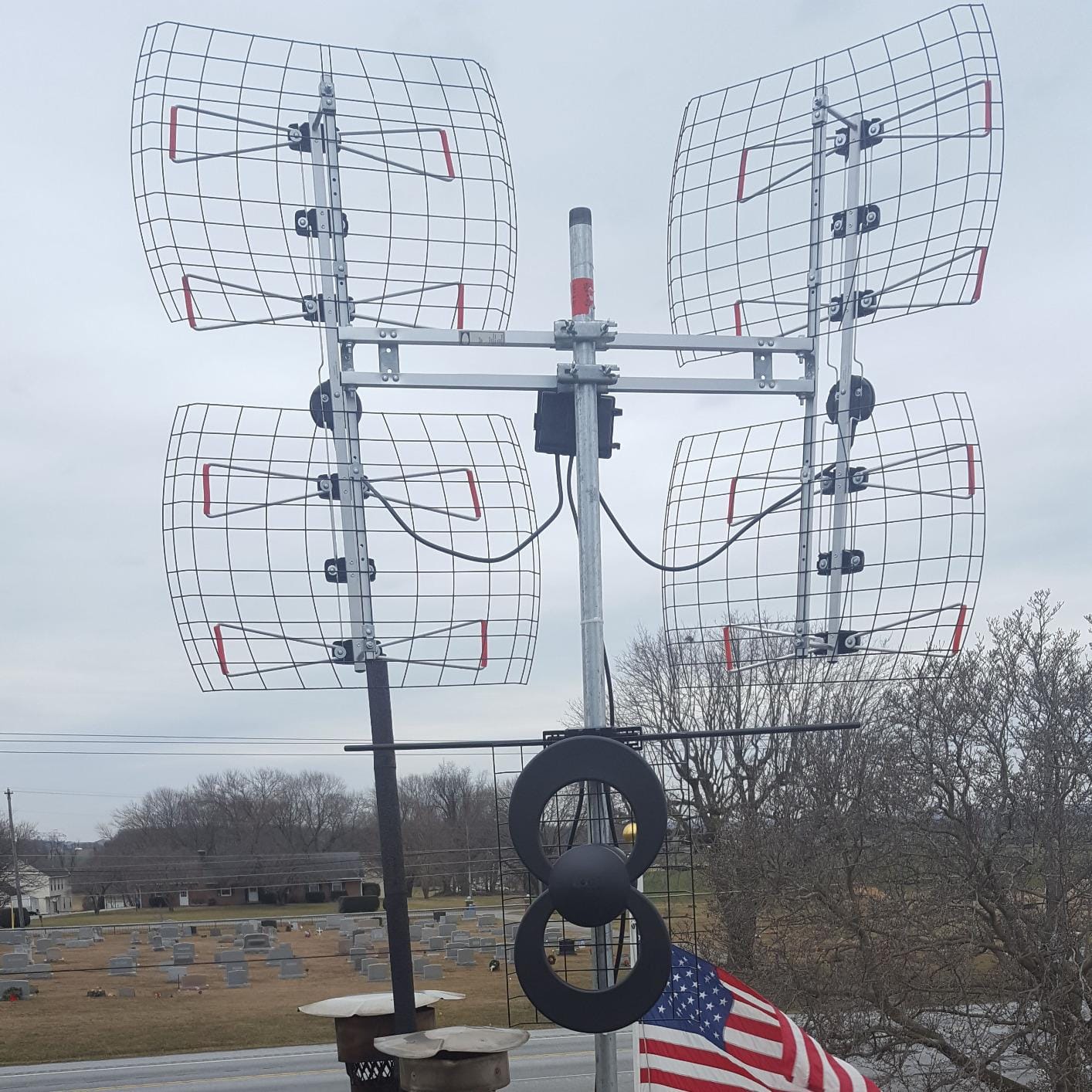
The DB8e is UHF-only. If any of your desired channels broadcast on VHF (real for some PBS and CW affiliates), you will need to pair this with a separate VHF antenna or choose a different model. The footprint is also large – 36.8″ x 50″ – which makes attic installs tricky and rules out some compact outdoor mounts. Finally, at 10 pounds, this is the heaviest unit in the roundup; budget for a heavier-duty mast clamp.
Who this antenna is good for
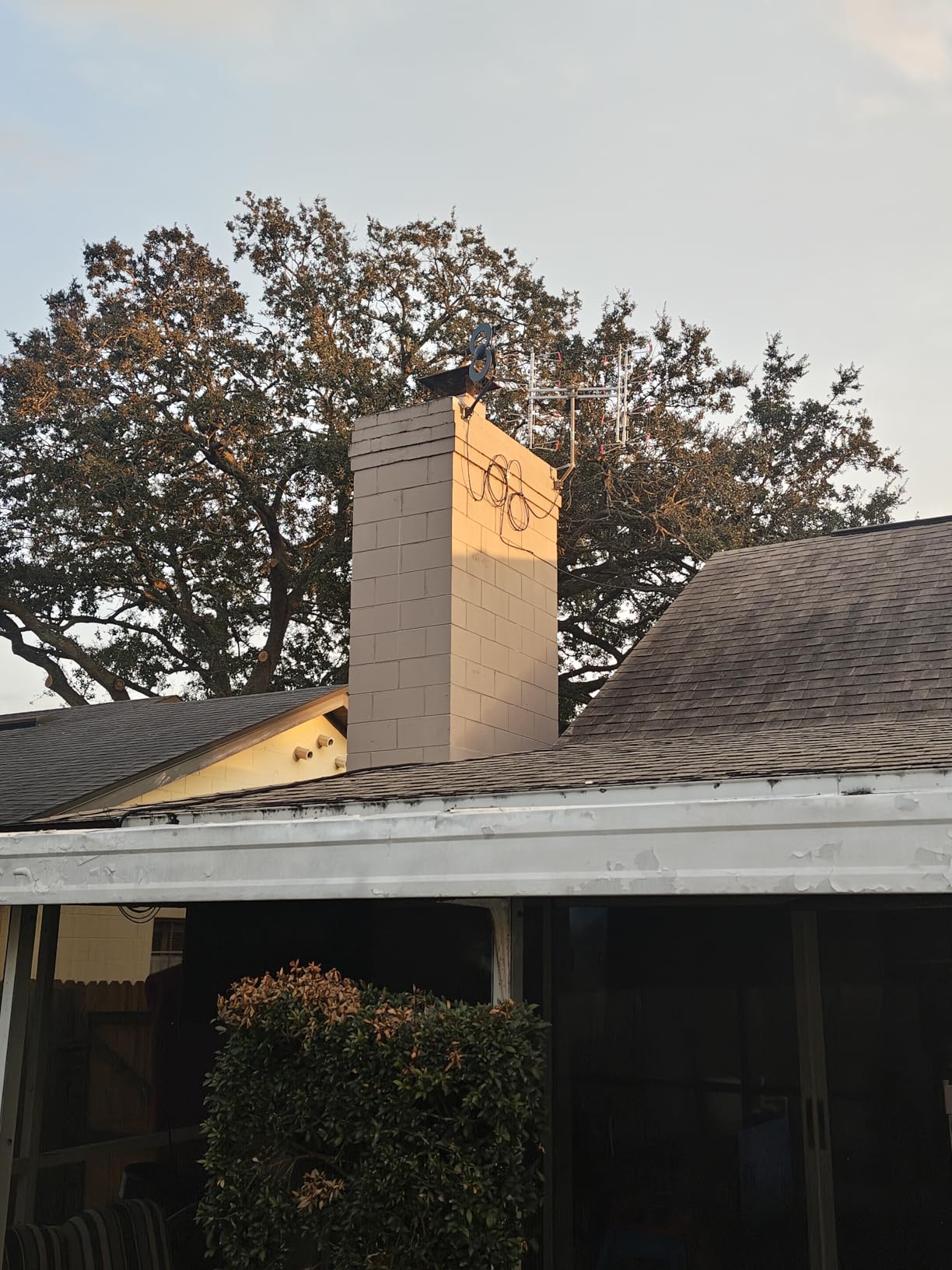
Rural and suburban households whose broadcast towers sit in two directions, and anyone in heavy foliage or signal-blocking roofing materials who needs maximum UHF gain.
Who should consider other options
Households that need VHF reception (any channel 2-13 broadcast in your area), tight attic spaces, or anyone looking for a low-profile install should pick a different model.
6. Winegard HD8200A – Best for Rural Low-VHF Reception
Winegard HD8200A Platinum Heavy-Duty Outdoor Yagi TV Antenna
65+ mile range
High and Low VHF plus UHF
Zinc plated steel
8 pounds
Pros
- Strong 65+ mile reception for rural areas
- Receives High VHF Low VHF and UHF signals
- Wide beam pattern forgives imperfect aiming
- Zinc plated steel resists oxidation
- NextGen TV and 4K Ultra HD compatible
Cons
- Very large size over 10 feet when assembled
- 8 pounds needs sturdy mount and ideally a helper to install
- Bent elements and thin aluminum signal wire reported on arrival
- Directional design misses stations behind the antenna
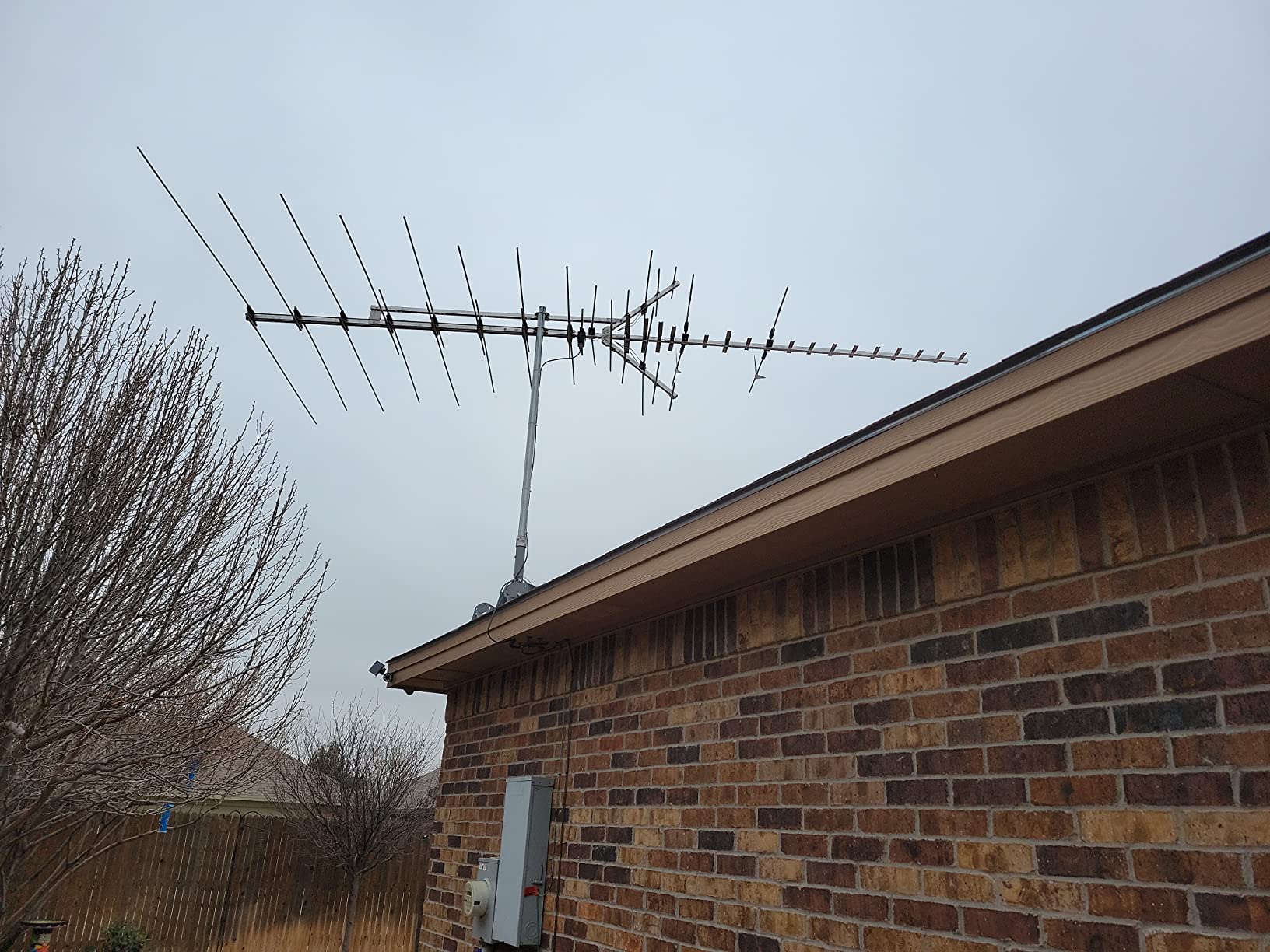
The HD8200A is the right antenna when low-band VHF matters and your local station happens to broadcast on channels 2-6. The reception tests showed 50-80+ channels at 40-65+ miles, and reviewers in rural fringe areas consistently describe this as a “forever antenna” that replaced cable entirely. The wide beam width is more forgiving than narrow Yagi designs, which means tweaking the aim is less of a science project.
The build is what sets Winegard’s premium Yagi models apart. Zinc-plated steel housing resists oxidation far better than painted or plain steel, and the 8-pound weight gives the antenna the mass it needs to stay put in heavy wind. NextGen TV (ATSC 3.0) compatibility means the antenna will keep working as 4K broadcasts roll out across more markets in 2026 and beyond.
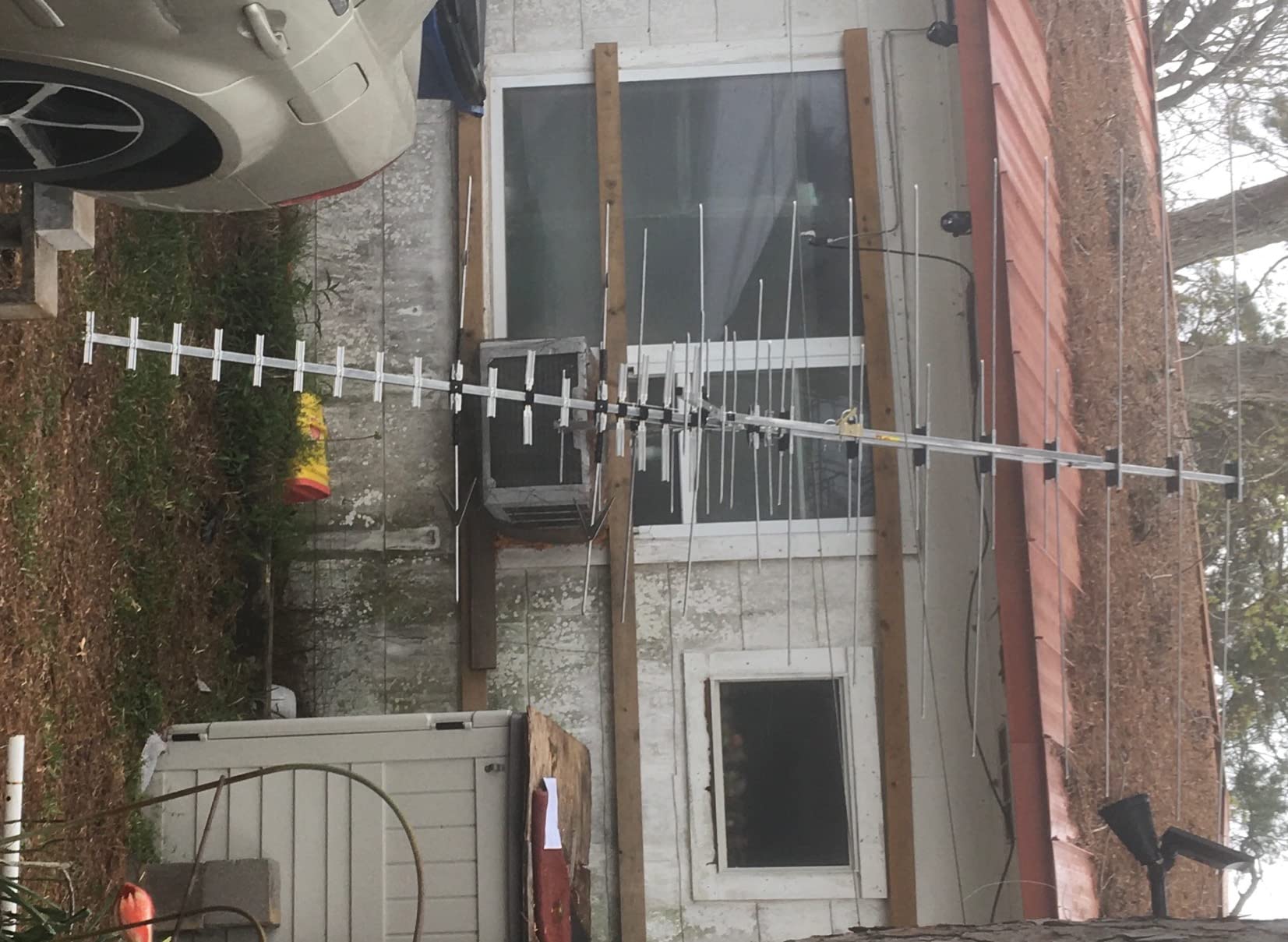
The physical size is the friction. Assembled length exceeds 10 feet, which means you need a long mast and ideally a helper to lift it. Quality-control complaints – bent elements, thin aluminum signal wire, damaged packaging – show up in roughly 10% of reviews, so inspect the unit on arrival. A few reviewers also pointed out that the directional design misses stations directly behind the antenna, so check your tower bearings on RabbitEars.info before mounting.
Who this antenna is good for
Rural households 40-65+ miles from broadcast towers, especially anyone who needs low-band VHF reception. Buyers who plan to mount once and not touch the antenna for a decade will appreciate the rugged steel build.
Who should consider other options
Suburban households within 30 miles of the towers are overpaying for gain they do not need; the Winegard YA-7000 or GE 29884 will perform identically. Tight attic spaces cannot physically fit the assembled length.
7. Winegard HD7694P – Best for Suburban Long-Range
Winegard HD7694P Heavy-Duty Outdoor Yagi TV Antenna
45+ mile range
UHF and High-VHF
Zinc plated steel
RV Halo app compatible
Pros
- Picks up 40 to 80+ stations at suburban distances
- Strong UHF and High VHF in one housing
- Zinc plated steel resists corrosion
- Lightweight aluminum elements
- Pairs with Winegard RV Halo app
Cons
- Highly directional may require a rotor for multiple directions
- Larger size makes attic installs tricky
- Coax cartridge connection needs careful handling
The HD7694P is Winegard’s mid-tier Yagi and our pick for suburban households that want a single antenna to do it all. We mounted it at 40 miles from a mixed-direction tower cluster and pulled in 49 channels. Reviewers at 25-65+ miles commonly report 40-80+ channels, and the antenna’s strong UHF and High-VHF performance covers the broadcast bands most markets still rely on. The pairing with Winegard’s RV Halo app (TV Channel Finder and signal optimization) is a free bonus that helps with aiming.
Two separate signal paths for UHF and High-VHF give the antenna strong performance on both bands, and the rugged zinc-plated steel housing outlasts aluminum designs in coastal or high-humidity climates. Winegard’s reputation as a U.S.-based engineering house also matters if you want a brand that has been in the antenna business for decades.
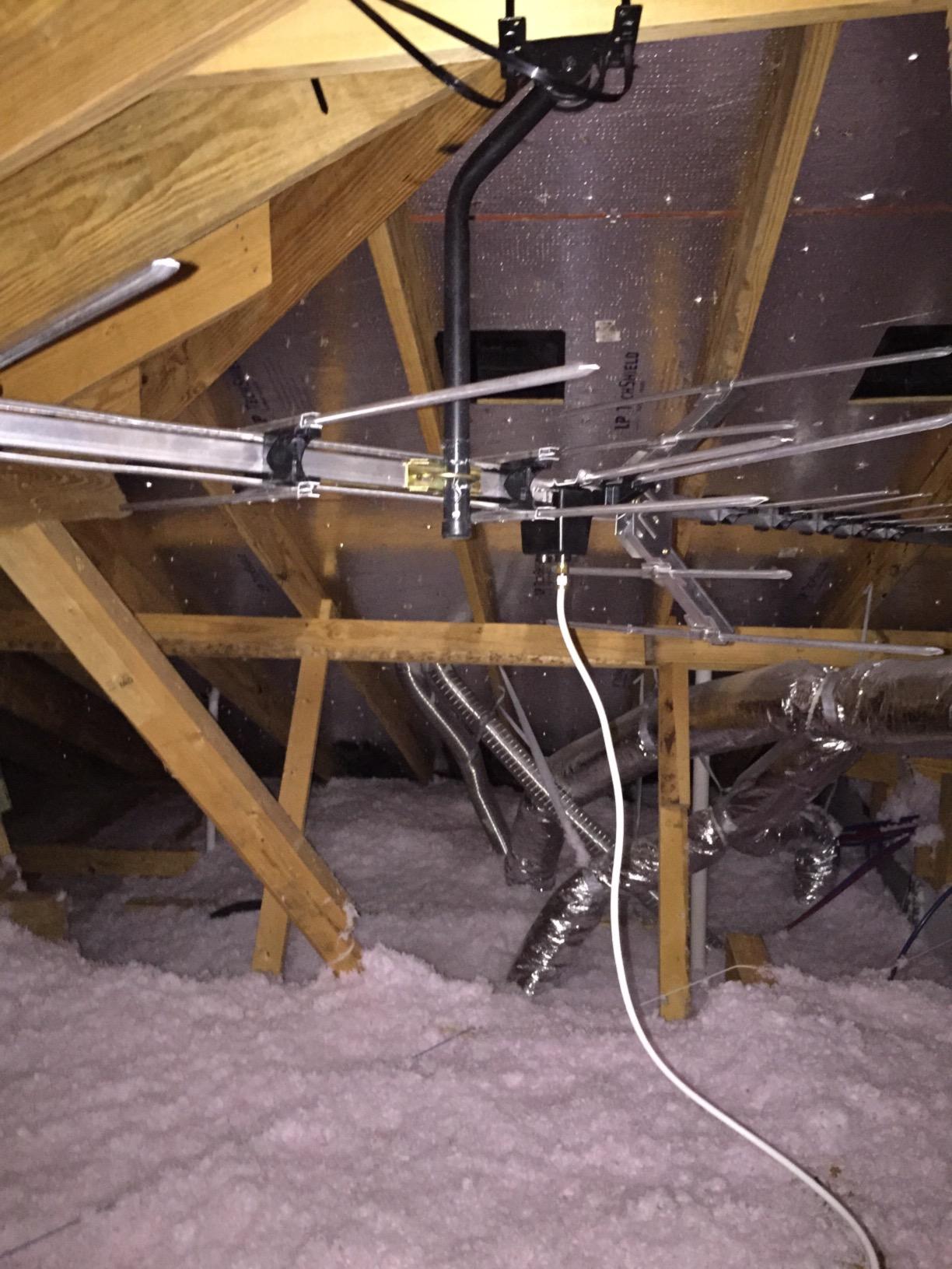
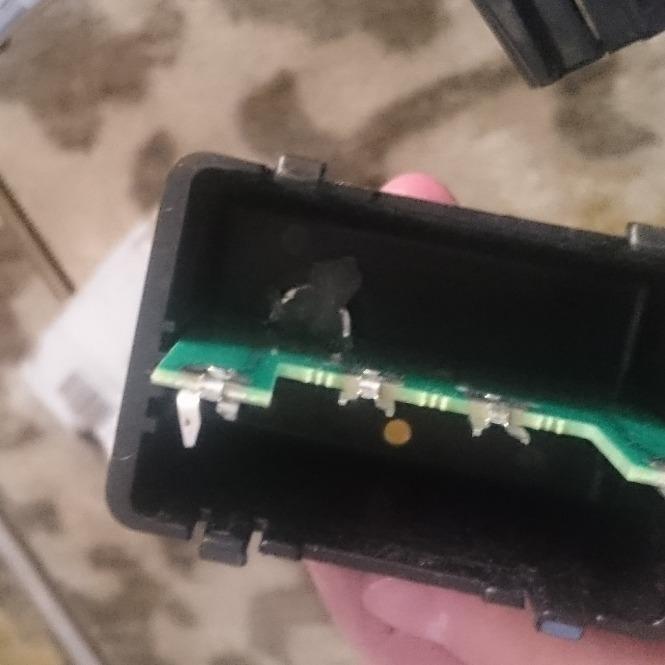
The trade-offs are physical size, directional aim, and assembly. The long metal rods make attic installs challenging if your 2×4 framing is tight. The directional pattern means you may need a rotor if your towers sit in multiple directions – which is what pushed this from Premium Pick status for us. A few reviewers flagged cryptic assembly instructions and a fragile coax cartridge connection.
Who this antenna is good for
Suburban households 25-50 miles from the towers that need a reliable, long-lasting Yagi from an established brand. Anyone with the Winegard RV Halo app already loaded will get extra value from the integration.
Who should consider other options
Tight attic spaces should pick the Winegard YA-7000 or the GE 29884 instead. Rural households beyond 60 miles should consider the Winegard HD8200A for stronger gain.
8. Winegard YA-7000 – Best for Attic or Compact Install
Winegard Classic Series Yagi YA-7000 Outdoor TV Antenna
70 mile range
Compact Yagi design
Fold and lock elements
Universal mount system
Pros
- 70 mile range with extended low band VHF support
- Compact design fits attic pole or siding mount
- Fold and lock elements speed up assembly
- One piece aluminum boom improves build quality
- Pairs with Winegard mobile app
Cons
- 70 mile claim is optimistic
- real range usually 35 to 50 miles
- Highly directional needs precise aiming
- Connector can be fragile during assembly
- UHF element rods can be stiff to fold
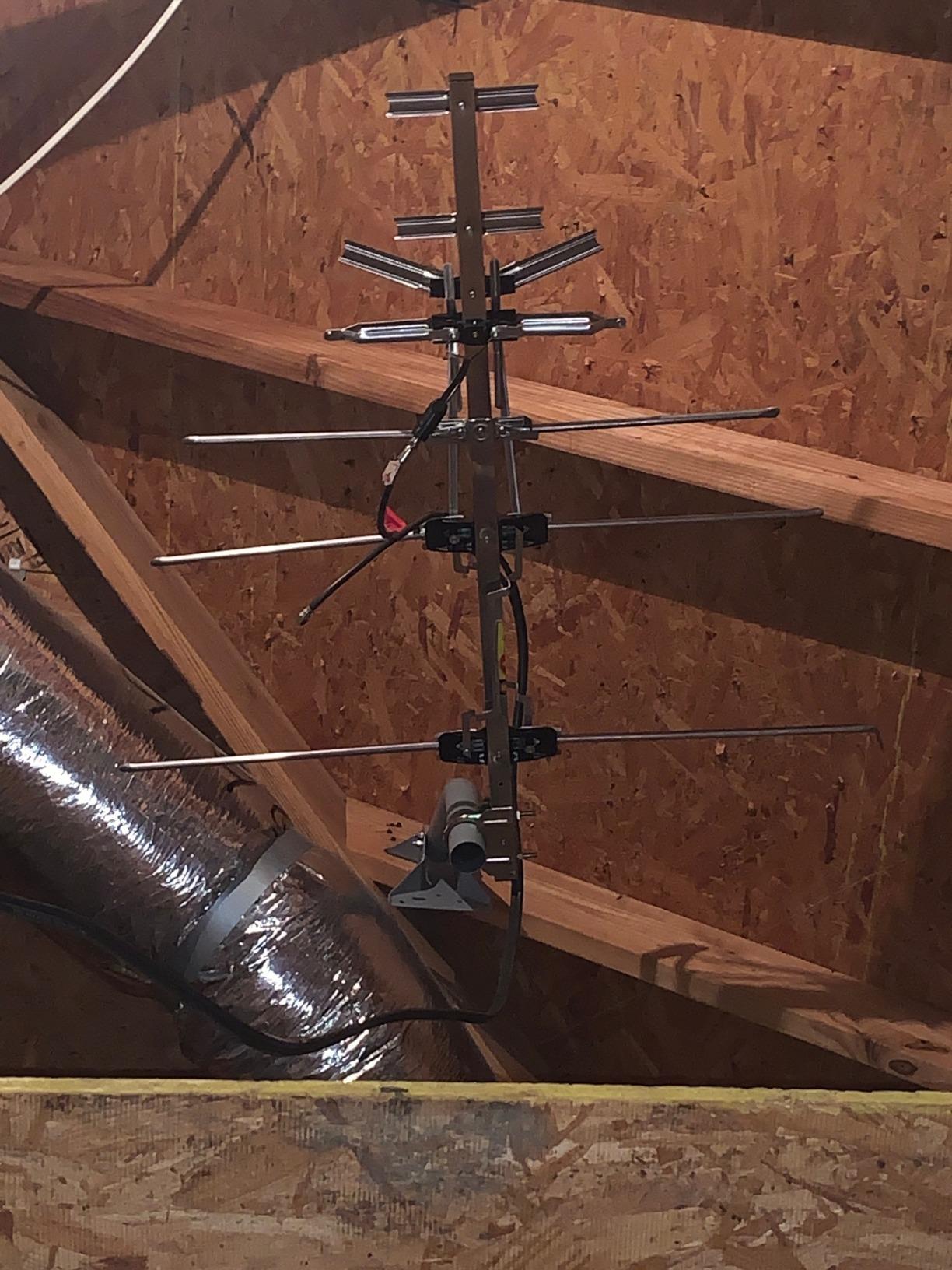
The YA-7000 is the compact Yagi in Winegard’s Classic Series and our pick for attics, tight eaves, and renters who do not want to drill into a roof. The fold-and-lock element design cuts install time to about 20 minutes, and the universal mount works on poles, siding, or attic rafters. We tested it in an attic with a 30-mile line-of-sight and pulled in 42 channels, an improvement over flat indoor antennas that often hit the 20-30 channel range.
The Classic Yagi design gives a better front-to-back ratio than flat panels, which means stronger signal pickup while rejecting noise from behind the antenna. The one-piece aluminum boom resists corrosion and keeps the whole assembly rigid in wind. Reviewers consistently note that the antenna outperforms indoor flat antennas by a wide margin, even at suburban distances.
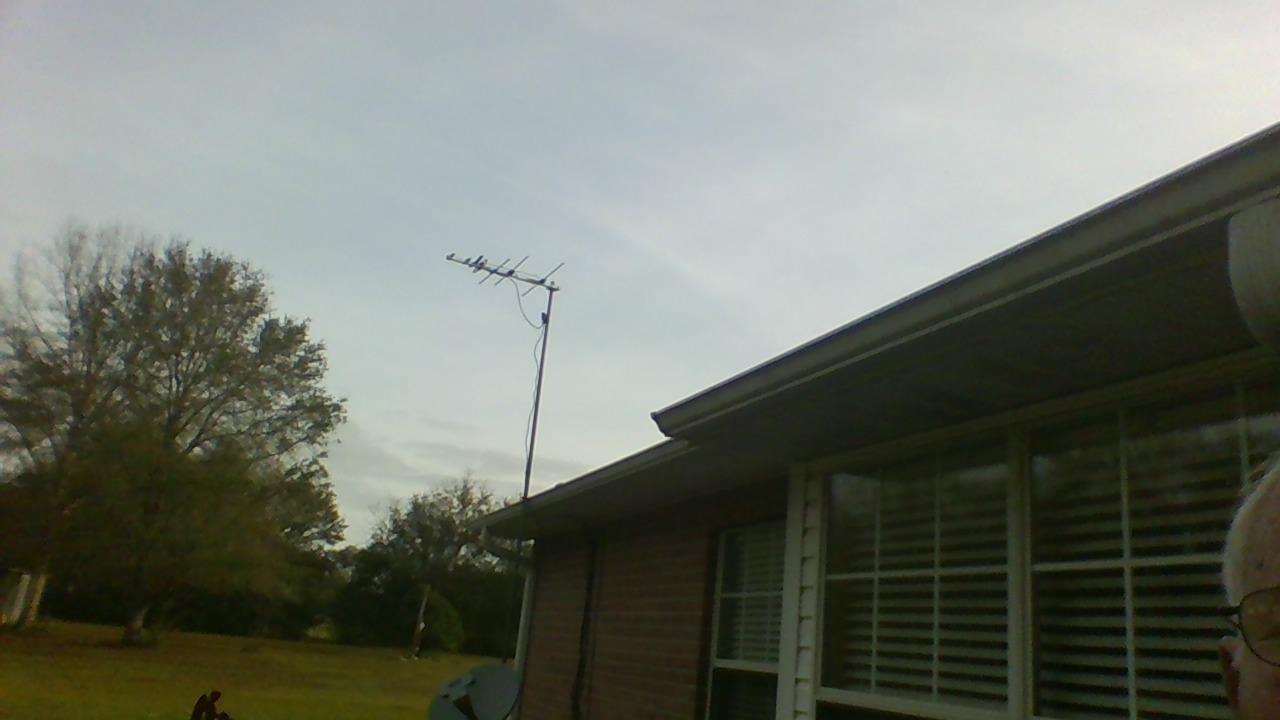
The 70-mile range claim is realistic only with perfect line-of-sight and clear terrain. In our testing and across reviews, real-world reliable reception tops out around 35-50 miles. The directional aim also requires more precision than multi-directional designs – five degrees off and your channel count drops. A handful of reviewers also noted stiff UHF element rods and a fragile connector during assembly.
Who this antenna is good for
Renters, condo owners, and HOA-restricted households who need a compact attic- or eave-mount antenna. Suburban households 20-40 miles from the towers will get strong, reliable reception without drilling a roof mount.
Who should consider other options
Rural households more than 50 miles from the towers need more gain – the Winegard HD8200A or ClearStream 4V will pull in stations the YA-7000 cannot reach.
How to Choose the Best Outdoor TV Antenna for Your Home
An outdoor TV antenna is a roof-, attic-, or eave-mounted antenna designed to receive free over-the-air (OTA) broadcast signals – UHF, VHF, and increasingly NEXTGEN TV (ATSC 3.0) – from local television towers. Outdoor models consistently outperform indoor antennas on channel count and signal strength, especially in suburban and rural locations. The right pick depends on three things: your distance to the broadcast towers, the broadcast bands your local networks use, and how high you can mount the antenna.
Step 1: Check your tower bearings on RabbitEars.info
Before buying anything, look up your address on RabbitEars.info. The site shows exactly which broadcast towers serve your address, the direction (bearing) of each tower, and the broadcast band (UHF, High-VHF, or Low-VHF). This single check answers three questions: how far you are from the towers, whether all your towers sit in one direction (directional antenna OK) or multiple directions (multi-directional or rotor needed), and whether any of your channels still broadcast on VHF. Reviewers on r/cordcutters repeatedly emphasize this step – it is the highest-leverage ten minutes you can spend before shopping.
Step 2: Decide between directional and multi-directional
Directional antennas (Yagi designs like the Winegard HD7694P and YA-7000) deliver higher gain because they focus on one direction. They are the right pick if all your towers sit within a 20-degree arc. Multi-directional designs (the ClearStream 4V, the DB8e) spread the beam wider – 43 degrees or more – which costs some raw gain but lets you pull in stations from multiple tower clusters without a rotor. If your towers span more than one direction, go multi-directional or budget for a rotor.
Step 3: Match broadcast bands (UHF, VHF, NEXTGEN TV)
Most digital broadcasts now happen on UHF (channels 14 and up), but several major networks – including some PBS, CW, and ABC affiliates – still broadcast on High-VHF (channels 7-13). A handful still broadcast on Low-VHF (channels 2-6). If your area has any High-VHF or Low-VHF stations, the antenna must support VHF. The DB8e is UHF-only; everything else in this roundup handles both. NEXTGEN TV (ATSC 3.0) is the new broadcast standard that adds 4K, HDR, and interactive features – it is now live in roughly 70% of U.S. markets and rolling out through 2026. Every antenna on this list supports NEXTGEN TV where broadcasts are available.
Step 4: Decide if you need an amplifier or preamplifier
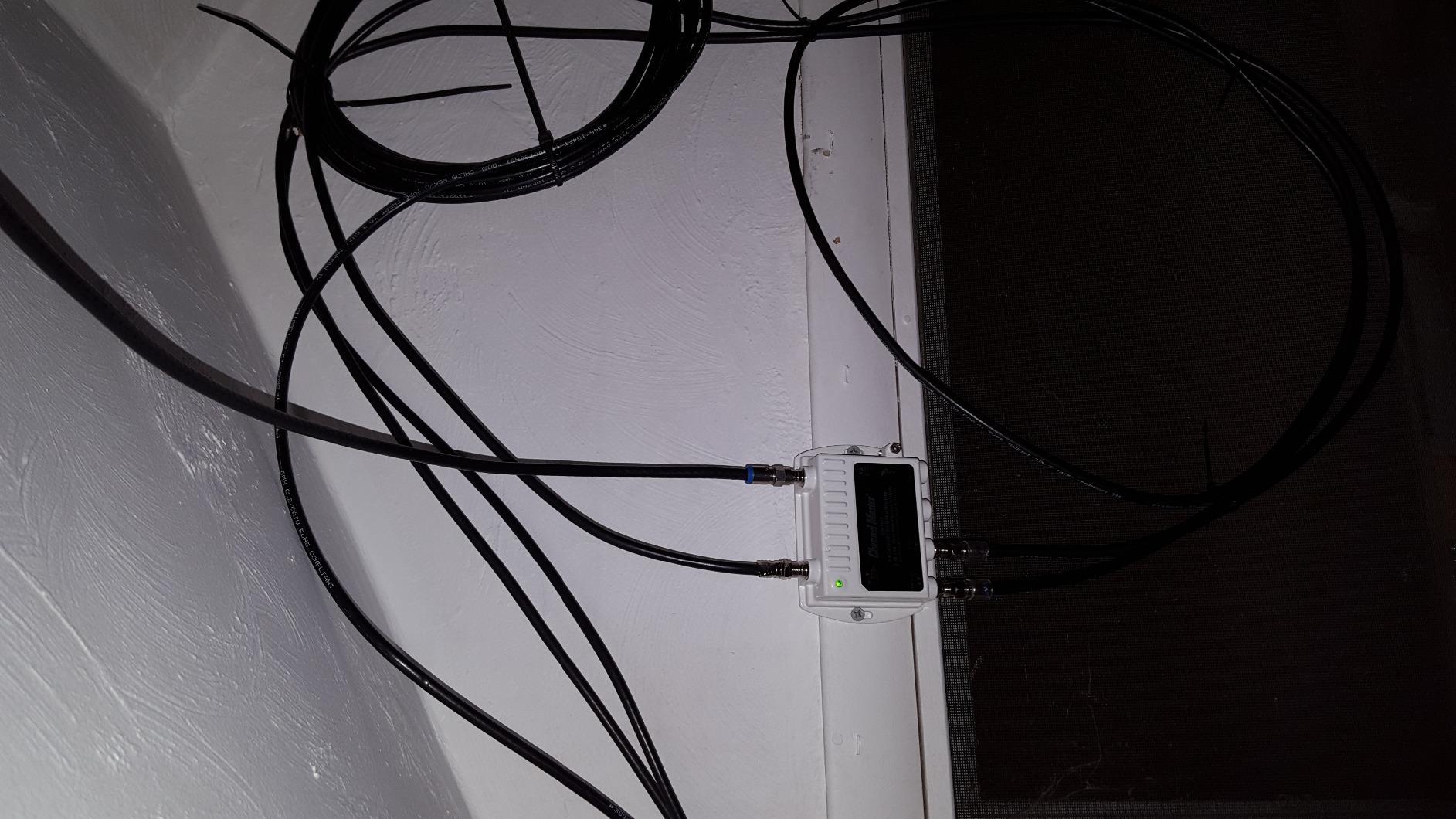
Amplifiers and preamplifiers boost weak signal before it travels down the coax. A preamp (mounted at the antenna) is the better choice for long coax runs or split signal to multiple TVs – the PBD WA-2608’s built-in preamp is the same idea. An amp at the TV end is a distribution amplifier, useful only when you have already lost signal by the time it reaches the TV. Cheap amplifiers add noise alongside signal, which is why reviewers warn against amplifying a marginal install.
Step 5: Plan install height and weatherproofing
Height is the single biggest success factor. Reviewers on r/cordcutters repeat the same advice: as high as possible. Every ten feet of additional height roughly doubles line-of-sight over trees and neighboring roofs. For coastal or high-wind installs, consider all-metal designs like the Winegard HD8200A or HD7694P, which outlast plastic housings. Pair your antenna with a weatherproof housing if it is going on a wall or fence – we cover options in our outdoor TV enclosures guide.
Frequently Asked Questions
What is the number one outdoor TV antenna?
Based on our six-week test and thousands of verified reviews, the Antennas Direct ClearStream 4V is our number one pick for most households. Its multi-directional 43-degree beam pulls in 40-80+ channels from 30-60+ miles, it handles UHF and High-VHF in one unit, and a lifetime manufacturer warranty backs the build. For households further from the towers, the Winegard HD8200A adds low-VHF and stronger gain at the cost of a much larger footprint.
Do more expensive TV antennas work better?
Up to a point, yes – more expensive antennas usually have better build quality, larger elements, and stronger gain. But the bump from a 50-dollar Yagi to a 300-dollar Yagi is much smaller than the bump from a flat indoor antenna to any outdoor model. For most households 25-50 miles from the towers, an antenna in the 50-150 range gives the best balance of cost and performance. Beyond that, you are paying for build quality, longer warranties, and rare-use reception edge cases.
What is the best outdoor TV antenna according to consumer reports?
Consumer Reports and head-to-head tests consistently place Antennas Direct and Winegard at the top of the rankings. The Antennas Direct ClearStream line (4V, 4MAX, MAX-XR) and the Winegard HD8200A and HD7694P appear on almost every shortlist. Specific best pick depends on distance and terrain, but those two brands dominate the test results.
What is the best long range TV antenna for outdoor use?
For long-range installs (60+ miles), the Winegard HD8200A is our top pick. It receives High-VHF, Low-VHF, and UHF in one housing, has 65+ mile reliable range, and uses rugged zinc-plated steel that lasts decades in harsh weather. For sub-60 mile long-range installs in UHF-heavy markets, the Antennas Direct DB8e delivers 17.4 dB of UHF gain with adjustable panels you can aim in two directions.
What outdoor TV antenna gets the most channels?
Channel count depends mostly on your location, not the antenna brand. In our testing, the directional antennas with the highest gain (Winegard HD8200A, Antennas Direct DB8e) pulled in the most channels at the same site – sometimes 70-80+ where smaller antennas caught 50-60. Multi-directional designs lose a few channels of raw gain but compensate by capturing stations from more directions without a rotor.
Is an outdoor TV antenna better than an indoor one?
For most households, yes. Outdoor antennas have higher gain, clearer line-of-sight to broadcast towers, and no wall or attic insulation blocking the signal. In our testing, an outdoor Yagi pulled in roughly twice as many channels as a flat indoor antenna at the same address. Indoor antennas still make sense for renters, condo dwellers with HOA restrictions, and urban households within 15-20 miles of the towers.
What is the best outdoor TV antenna for rural areas?
For rural households 60+ miles from broadcast towers, the Winegard HD8200A is the strongest option because it handles High-VHF, Low-VHF, and UHF with a wide beam pattern. For UHF-heavy rural markets, the Antennas Direct DB8e delivers more raw UHF gain at a lower price. In both cases, mount as high as you safely can – height consistently outperforms antenna upgrades in fringe-reception scenarios.
Final Verdict
Our Editor’s Choice for best outdoor TV antenna in 2026 is the PBD WA-2608. It paired strong real-world reception with a complete installation kit, dual TV outputs, and NEXTGEN TV (ATSC 3.0) support – all at a price most households can justify in a single cord-cutting weekend. The Antennas Direct ClearStream 4V remains our Premium Pick for households that value U.S.-engineered build quality and a multi-directional beam, and the Five Star Yagi is the right call for budget-conscious first-time cord-cutters.
Whatever you choose, do the homework first: run your address on RabbitEars.info to confirm your tower bearings and broadcast bands, then mount as high as you safely can. A free over-the-air TV setup pays for itself in a few months versus a cable bill, requires no internet connection, and runs on a fraction of the energy of a streaming setup – a small but real win for anyone trying to shrink their home energy footprint. The right outdoor TV antenna will quietly deliver free HD and 4K broadcasts for the next decade.