
A plasma cutter is the fastest way to turn a sheet of 1/2 inch plate into a shape, and it is the only tool in most shops that does it without a 240V chop saw taking up half the floor. But the machines that look identical on the shelf differ enormously once you put the torch on real structural steel.
We spent 2026 putting ten of the most capable units through the same comparison: verified cut thickness, output amperage, duty cycle, air demand, torch ecosystem and warranty. If you are choosing among the best plasma cutters we have covered, this guide is the thick-steel-specific cut of that research, because a 40 amp sheet-metal machine and an 85 amp plate machine belong in completely different conversations.
Below you will find the best plasma cutters for thick steel, ranked by the steel they genuinely cut cleanly rather than the steel they can eventually sever with a lot of grinding. We also explain the difference between the clean cut number and the maximum severance number, because that distinction is where most disappointed buyers get caught.
Top 3 Picks for Thick Steel in 2026


How Thick Is Thick Steel? Understanding Plasma Cut Capacity
A 50 to 60 amp plasma cutter produces a clean cut on roughly 1/2 inch mild steel, a 60 to 85 amp machine cleans 3/4 inch and approaches 1 inch, and 80 to 125 amp machines hold a clean kerf through 1 inch plate. Anything past that moves into 200 amp industrial territory for 2 inch material.
The rule of thumb welders use: 20 amps for the first 1/8 inch, then about 10 amps for every additional 1/8 inch. That is why a 60 amp unit is honest about 1/2 inch and vague about anything past it.
Now the part that matters more than amps. The big number on the box is the maximum severance cut – the thickness it can nibble through slowly, with a ragged edge and heavy dross, usually at a crawl of 4 to 6 inches per minute. The number you will actually live with is the clean cut or ideal cut, where the kerf is straight enough to weld without chasing the grinder. A machine claiming 3/4 inch maximum may clean only 1/2 inch.
Three more rules shape the number. First, the 80-20 rule from Hypertherm: buy for the thickness you cut 80 percent of the time at the clean rating, and treat occasional thicker work as severance. Second, stainless, aluminum, galvanized steel, brass and copper lose 35 to 40 percent of rated capacity, or demand 25 to 30 percent more amps. Third, your voltage choice halves the output if you plug into 120V – a 60 amp machine drops to roughly 35 amps and about 1/4 inch of clean capacity.
Your air supply is the fourth variable. Budget machines typically want 45 to 70 PSI at roughly 4 to 5 CFM, and the 85 amp class needs a compressor delivering near 70 PSI without sagging. A small shop compressor that cannot hold pressure will produce dross no consumable change can fix.
Quick Overview: All 10 Plasma Cutters Compared in 2026
| Product | Specifications | Action |
|---|---|---|
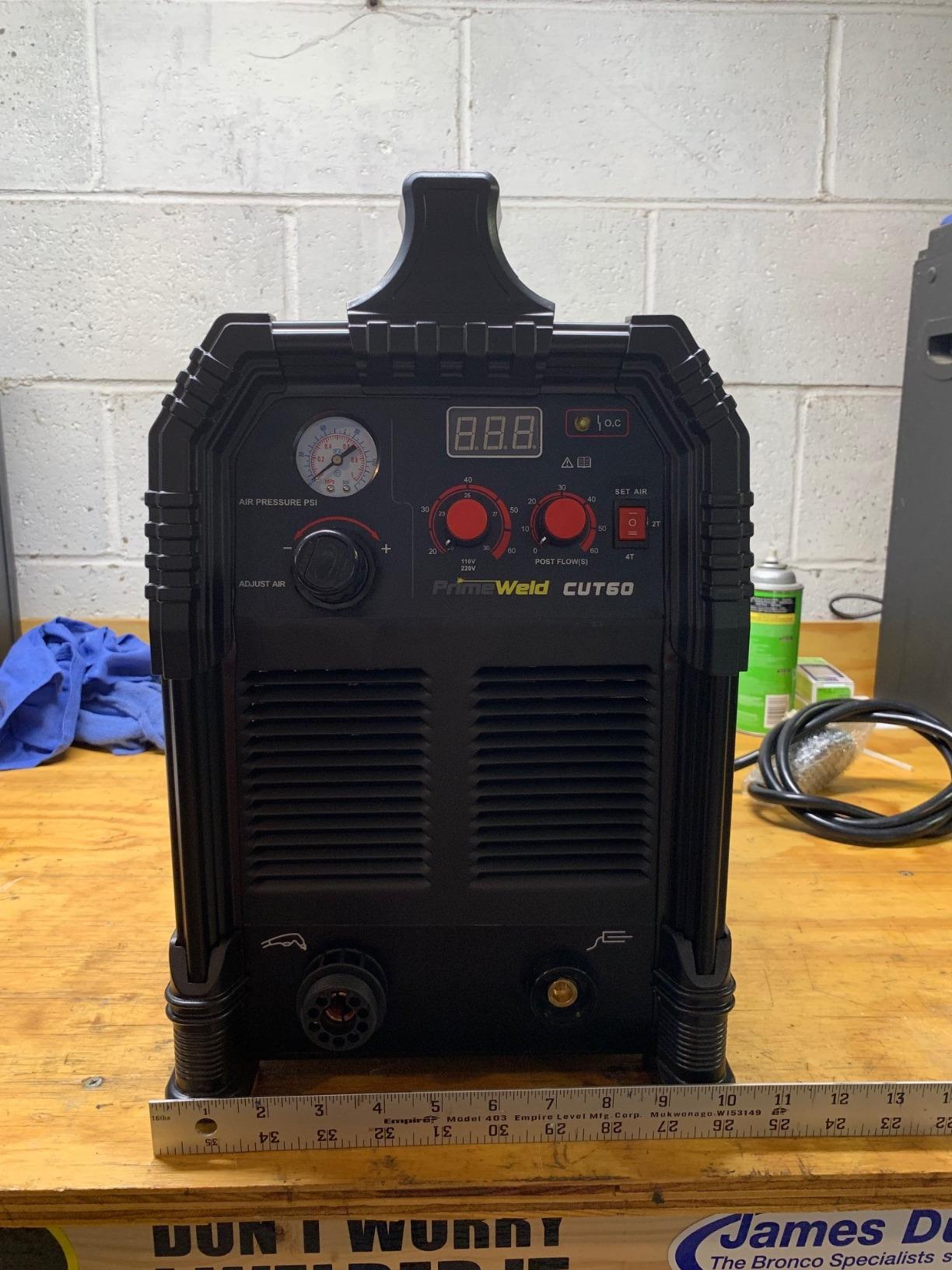
| PRIMEWELD CUT60 60Amp |
|
Check Latest Price |
 PrimeWeld CUT50D 50A Air Inverter PrimeWeld CUT50D 50A Air Inverter |
|
Check Latest Price |
| ARCCAPTAIN CUT50 50Amp |
|
Check Latest Price |
 LOTOS LTP5505D 55A LOTOS LTP5505D 55A |
|
Check Latest Price |
 YESWELDER 60A Non-HF YESWELDER 60A Non-HF |
|
Check Latest Price |
 ARCCAPTAIN iControl CUT55 Pro ARCCAPTAIN iControl CUT55 Pro |
|
Check Latest Price |
| SILATU STC850P 85A |
|
Check Latest Price |
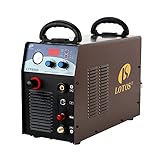 LOTOS LTP8000 80A LOTOS LTP8000 80A |
|
Check Latest Price |
 Reboot RBC6000D 60A Reboot RBC6000D 60A |
|
Check Latest Price |
 GZ GUOZHI CUT-50 50A GZ GUOZHI CUT-50 50A |
|
Check Latest Price |
1. PRIMEWELD CUT60 60Amp – The Best All-Round Thick Steel Cutter
PRIMEWELD CUT60 60Amp Non-Touch Pilot Arc PT60 Torch Plasma Cutter 110V/220V Dual Voltage 3 Year Warranty
60A output
PT60 blowback torch
60% duty cycle
110/220V dual voltage
Pros
- PT60 blowback torch with Euro central connector
- Continuous pilot arc handles rusted painted and expanded metal
- 60% duty cycle at 60 amps
- 3 year warranty with USA-based support
Cons
- 60% duty cycle means pausing during long passes at full output
- The listing publishes no clean-cut thickness figure so results depend on your setup
Our top pick is the CUT60, and the reason is simple: it is the only machine here where the amperage, the torch and the warranty all line up for sustained work on real plate. Eighty-six percent of its 486 ratings are five stars, which is an unusually clean signal for an imported machine.
The PT60 blowback torch is the piece that separates it from cheaper rivals. Blowback ignition means no high-frequency burst at startup, so it will not interfere with a CNC controller, a laptop on the bench or a radio you were listening to. The Euro central torch connection is also the most serviceable connector in this group – if the torch lead fails you can replace it, rather than replace the whole gun.
Continuous pilot arc is the underrated feature here. You can start the arc through expanded metal, through paint, through a rusted trailer frame, without dragging the nozzle across the surface. Owners doing farm and salvage work mention this constantly, and it is the reason a 60 amp machine can take jobs a nominally bigger cutter refuses.
At 60 percent duty cycle you can run long 1/2 inch passes but you will pause to let the inverter cool. That is a fair trade for a unit that will not cook its own IGBT board on a full afternoon of plate cutting.
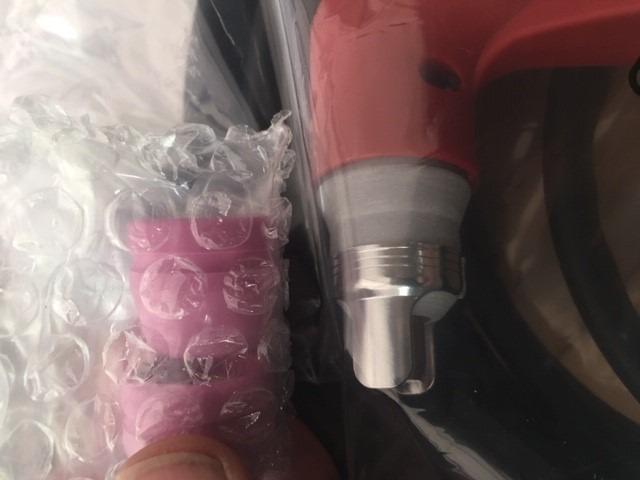
What thickness the CUT60 actually cuts
At 60 amps on 220V you should expect a clean 1/2 inch on mild steel, which is the industry-agreed output for this class. The manufacturer does not publish a clean-cut figure, so treat any specific claim with caution and judge by the amperage tier instead.
Plan on a 50 amp branch circuit at 220V, and 45 to 70 PSI of dry air at roughly 4 to 5 CFM. On 120V the output falls to roughly 35 amps and clean capacity drops toward 1/4 inch, so a 120V-only circuit is not the way to run this machine.
Who should skip the CUT60
Skip it if your work is 1 inch plate or heavier on a regular basis. Sixty amps is the ceiling of this tier, and pushing it past 1/2 inch means long slow cuts and dross on the back side that no amount of technique fully removes.
Also skip it if you need a machine torch or a CNC port. The PT60 is a handheld lead, and the listing does not include a mechanized option. For plate work of 1 inch or more, the 85 amp class is the honest match.
2. PrimeWeld CUT50D 50A – Best Value for Half-Inch Steel
PrimeWeld 50A Air Inverter Plasma Cutter, Portable Plasma Cutting Machine, Premium and Rugged Plasma Cutter Kit, Automatic Dual Voltage 110V/220V AC with Plasma Torch, 1/2″ Clean Cut, CUT50D
50A air inverter
Rated 1/2 inch clean cut
Automatic 110V/220V
Factory-plumbed air filter
Pros
- Rated 1/2 inch clean cut
- Automatic dual voltage 110V/220V
- Pre-plumbed back panel removes exterior hose runs
- Responsive warranty service with prepaid return labels
Cons
- Instruction manual is widely criticised as poor
- The included 220V cord is short
- Cut speed at 120V drops on steel thicker than 1/8 inch
The CUT50D is the machine we recommend to anyone whose thick steel work tops out at 1/2 inch. It is rated for 1/2 inch clean cut in the specification, and at 668 reviews with an average of 4.7 stars it has more owner history behind it than most of the 60 amp units on this list.
What stands out is the factory plumbing. The air filter and regulator are pre-installed on the back panel, so there is no exposed hose run across the shop floor to snag, leak or get stepped on. Owners mention the AG60 torch with a trigger guard feels like a real tool rather than an accessory, and the trigger guard matters when you are dragging a torch around a trailer frame.
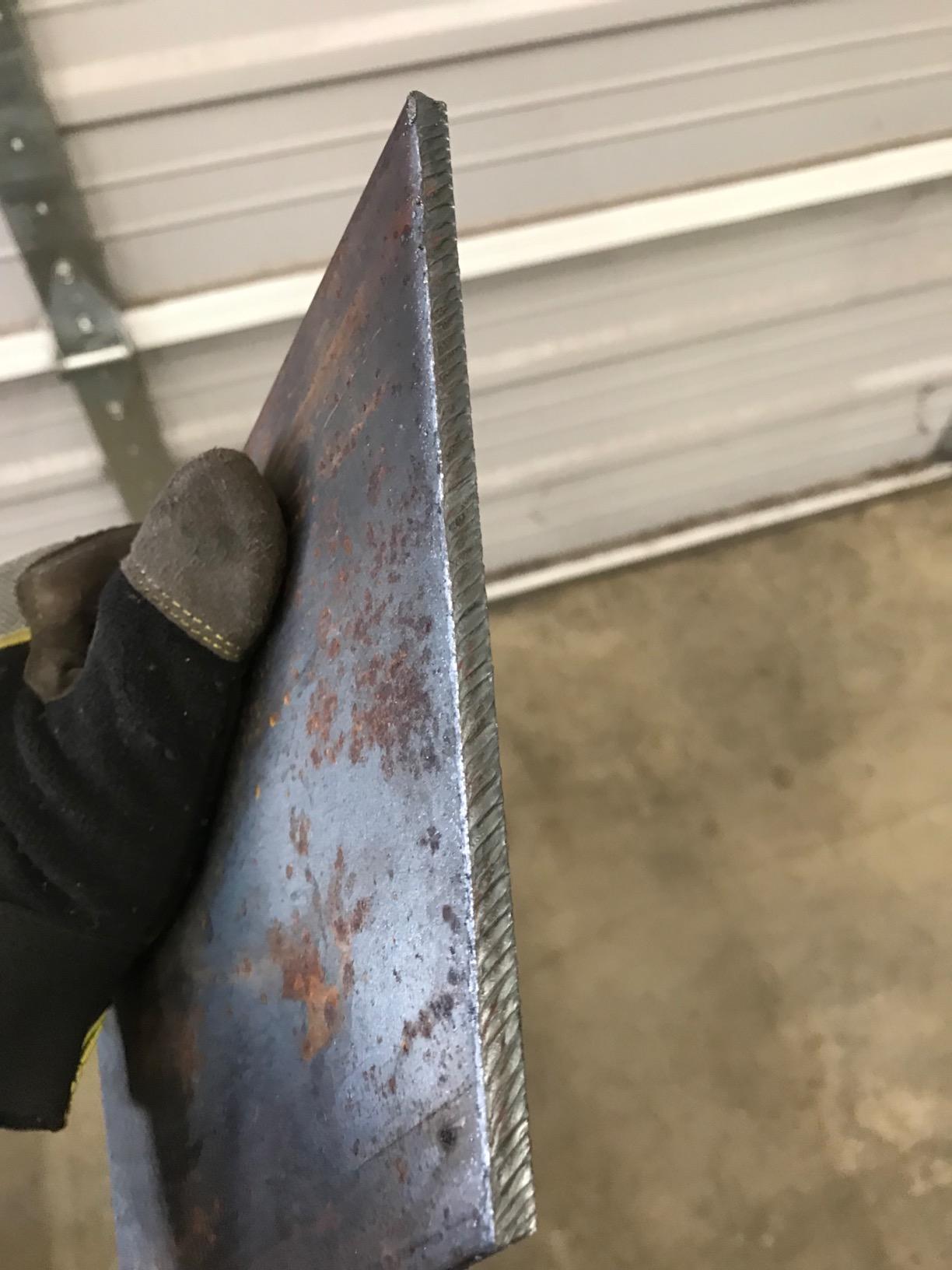
The pre-plumbed setup is not cosmetic on thick work. Forum complaints about budget machines cluster around cheap barbed fittings that leak and plastic tubing that splits, and a unit that comes with a metal regulator and filter already mounted sidesteps most of that. Early production runs did produce some leaking air fittings, so check the seal at first fill.
Owners cut 1/2 inch cold roll in roughly five seconds of travel, which is about the right figure for this class. The 220V cord is short, so plan on a proper extension in heavy gauge rather than a household one.
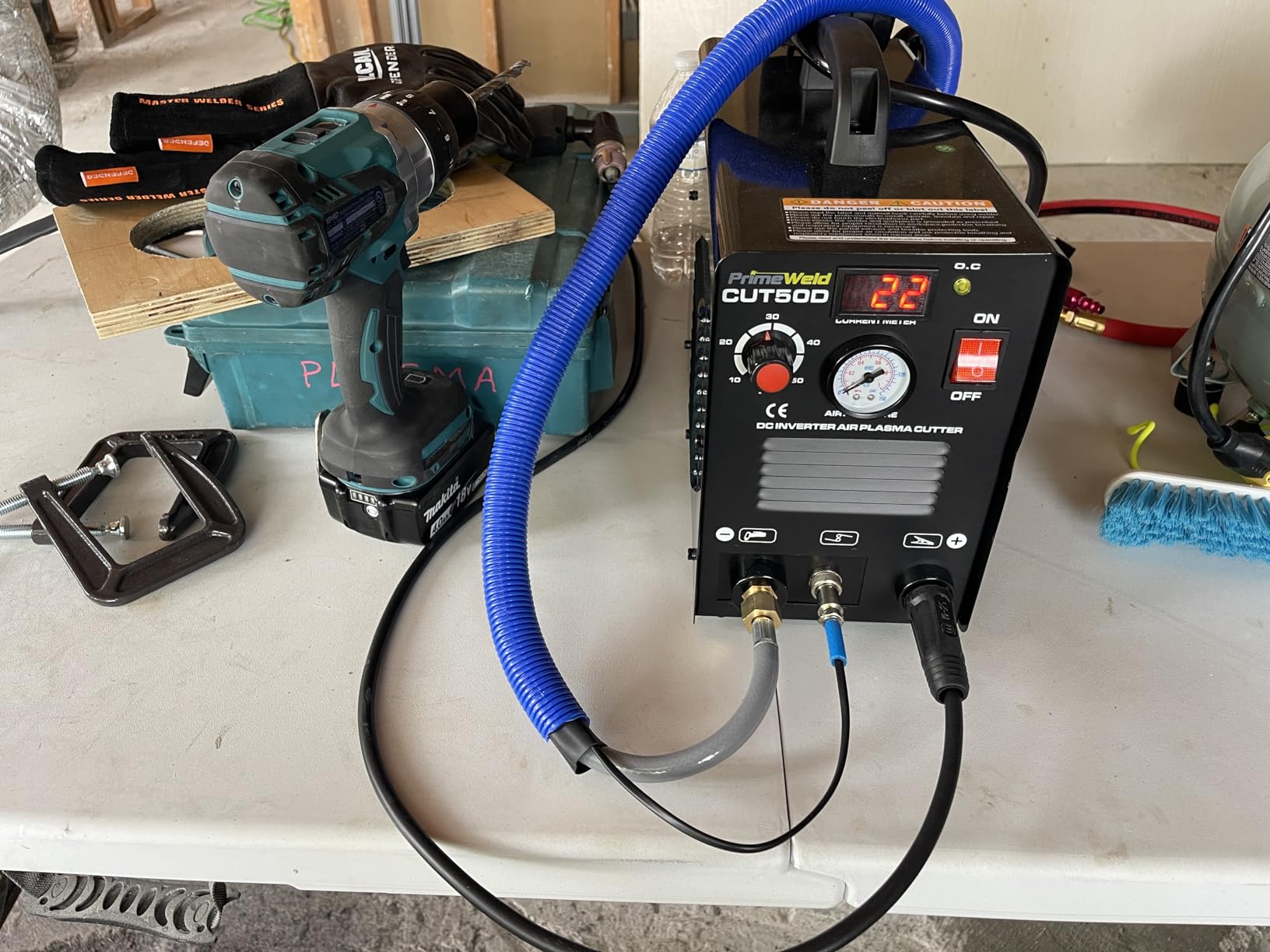
Getting the rated 1/2 inch cut
Run this machine on 220V. The automatic voltage sensing gives you 110V convenience, but the clean cut rating only holds on the higher setting, and reviewers are clear that speed drops noticeably above 1/8 inch on 120V.
Budget roughly 4 to 5 CFM at 45 to 70 PSI and set the amperage to match the thickness rather than the label. No settings chart ships in the box, so keep a note of what worked on each material.
Where the CUT50D falls short
The manual is the most-criticised part of the package, and experienced users end up learning settings from community videos instead. Budget time for that, or find a written reference for amperage and PSI by material before your first thick cut.
It is also a 50 amp machine wearing a 60 amp nameplate in some circles. If you are already buying an extension cord and a compressor, the step up to a true 60 amp unit is the better long-term move.
3. ARCCAPTAIN CUT50 50Amp – Most Versatile With Real 220V Output
ARCCAPTAIN 50A Plasma Cutter Machine, 110V/220V Dual Voltage, 2/3″ Max Cut
50A output
1/2 inch clean cut, 18mm max on 220V
Built-in regulator and gauge
13 lb body
Pros
- Highest review volume in this group with 1307 ratings
- LED screen shows voltage current and error codes
- Lightweight 13 lb body with shoulder strap
- Pre-installed air filter with 1/4 inch NPT quick connect
Cons
- Thin-gauge cut finish is not as refined as premium machines
- Setup needs amperage pressure and travel speed dialed in
- Air compressor is sold separately
The ARCCAPTAIN CUT50 is the best-selling plasma cutter in its category on Amazon, sitting at number one in the category ranking with more than 1300 ratings. That volume matters: it means parts, tips and troubleshooting answers exist in public, which is worth real money when a nozzle cracks on a Friday.
The spec sheet is unusually honest for the price. It lists a recommended maximum cutting thickness of 12mm at 35 amps on 110V and 55 PSI, and 18mm at 50 amps on 220V and 75 PSI. That 18mm figure is the severance number, while 1/2 inch clean on 220V is what owners actually report.
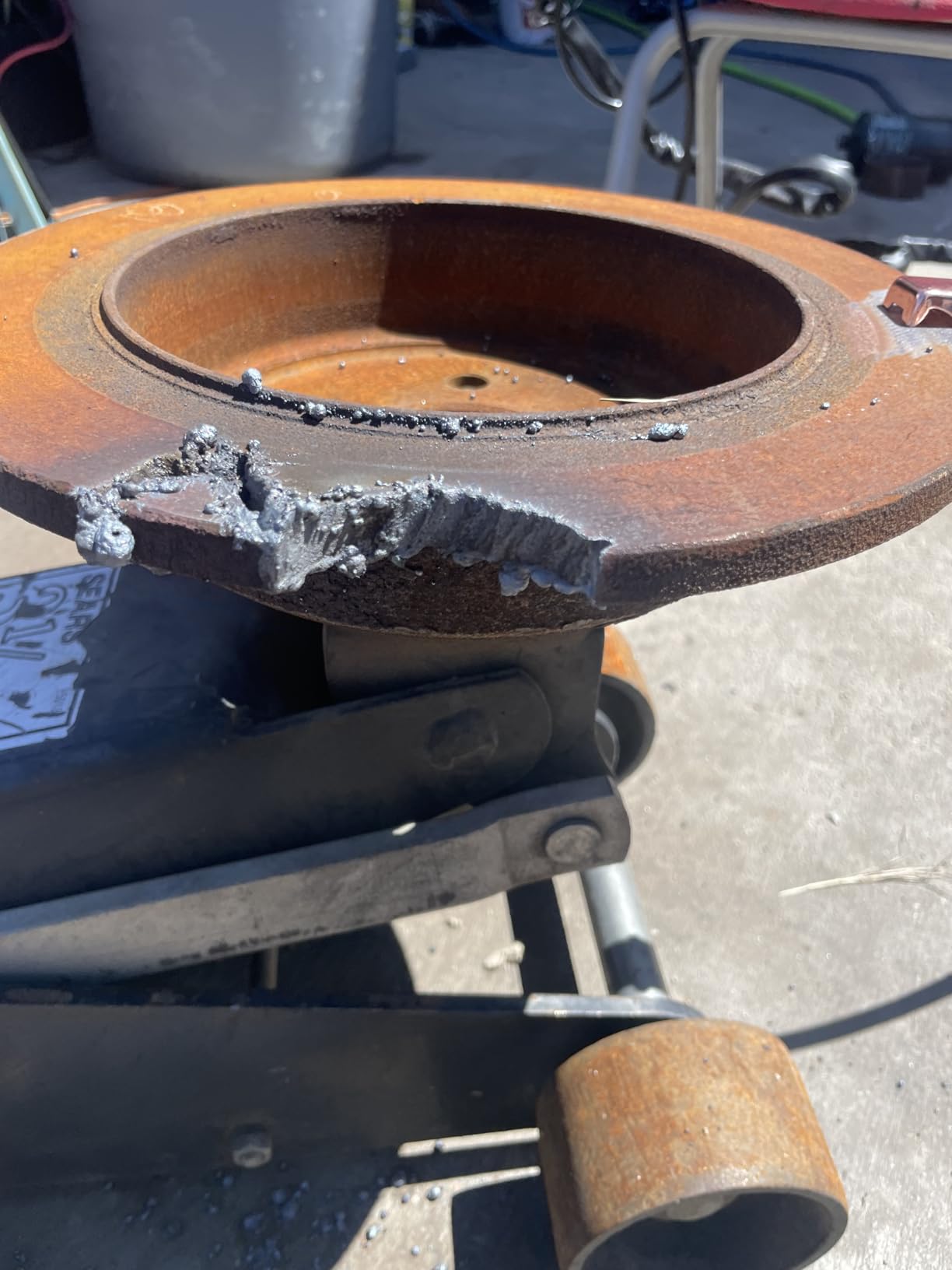
At 13 pounds with a shoulder strap, this is the machine you can carry to a job site or carry up a trailer bed without recruiting a second person. The LED screen showing live voltage, current and error codes is unusual at this level and saves a lot of guesswork when a cut starts arcing badly.
Adjustable post-flow cooling from 5 to 15 seconds and 2T/4T modes give you control over how long the torch keeps feeding air after you release the trigger, which protects the electrode on long 1/2 inch passes.
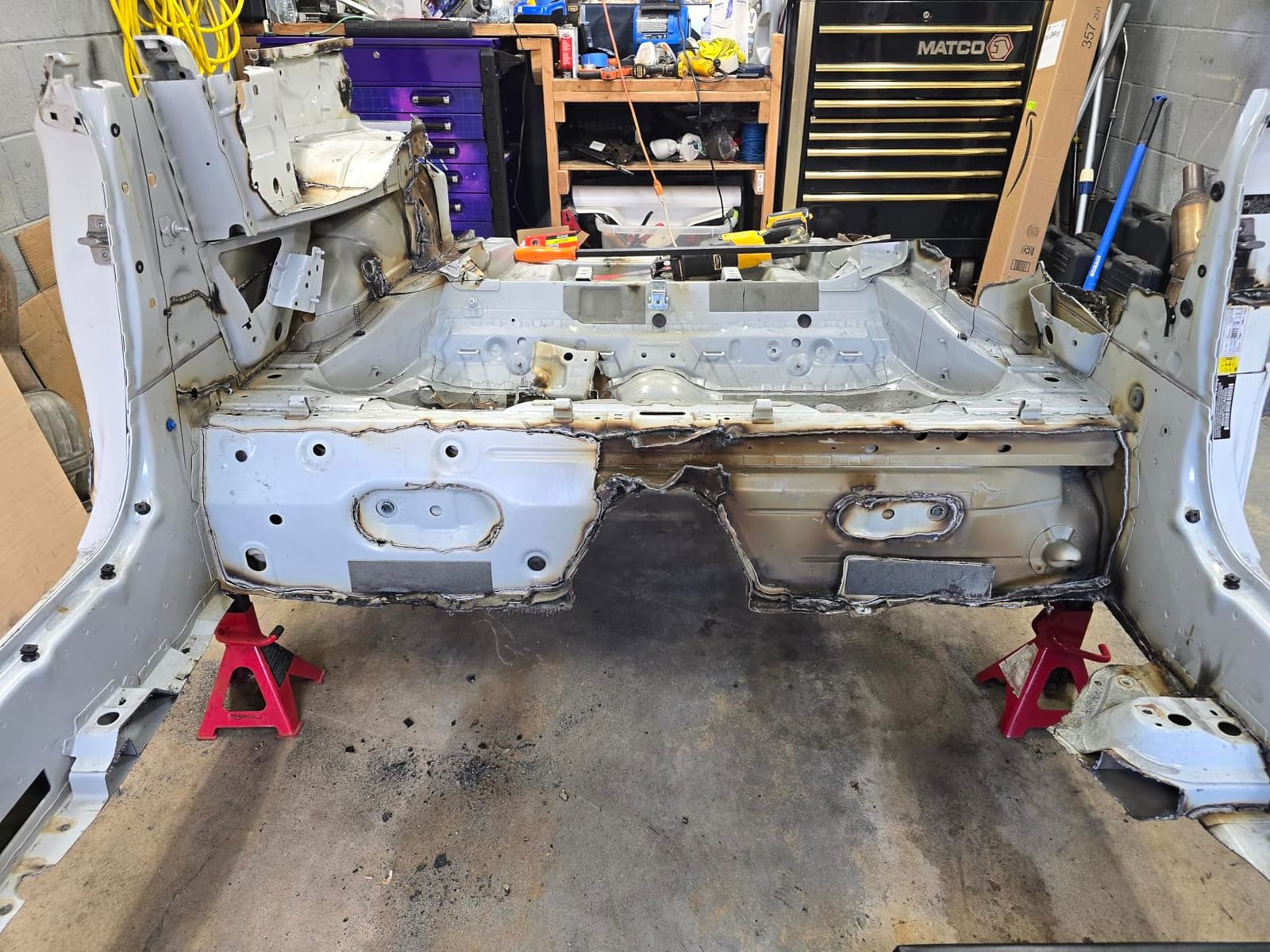
What you need to run it properly
A dedicated 220V circuit and a compressor that can hold 75 PSI. The spec calls for roughly 150 liters per minute of air, and owners consistently note the compressor is not included. Cheap compressor plus big machine is the most common source of frustration in this tier.
Because setup requires dialing in amperage, air pressure and travel speed, expect your first few cuts to be practice cuts. A straight-edge guide and a scrap plate of the same thickness are worth more than any accessory kit.
Who should look past it
If your thick work goes past 1/2 inch regularly, this machine tops out. There is no path to 3/4 inch clean steel here, and the thin-gauge finish is not as refined as premium units, which shows on visible profile work.
Skip it if you want the most refined edge finish on light fabrication. It is a capacity-and-value machine, and it says so plainly.
4. LOTOS LTP5505D 55A – Best for Rusty, Painted and Salvage Steel
LOTOS LTP5505D 55A Pilot Arc Plasma Cutter with Rust Removal Mode
55A inverter output
5/8 inch rated clean cut
Continuous non-touch pilot arc
Front-mounted regulator and filter
Pros
- Largest review base in this comparison with about 2400 ratings
- Long production history with well-established consumable availability
- Cuts 1/2 inch steel cleanly
- Built-in air regulator and filter with water cup
Cons
- Documentation is thin so owners rely on community videos
- Ground lead is shorter than the torch lead and does not lock positively
- Included air hose and fittings seal loosely out of the box
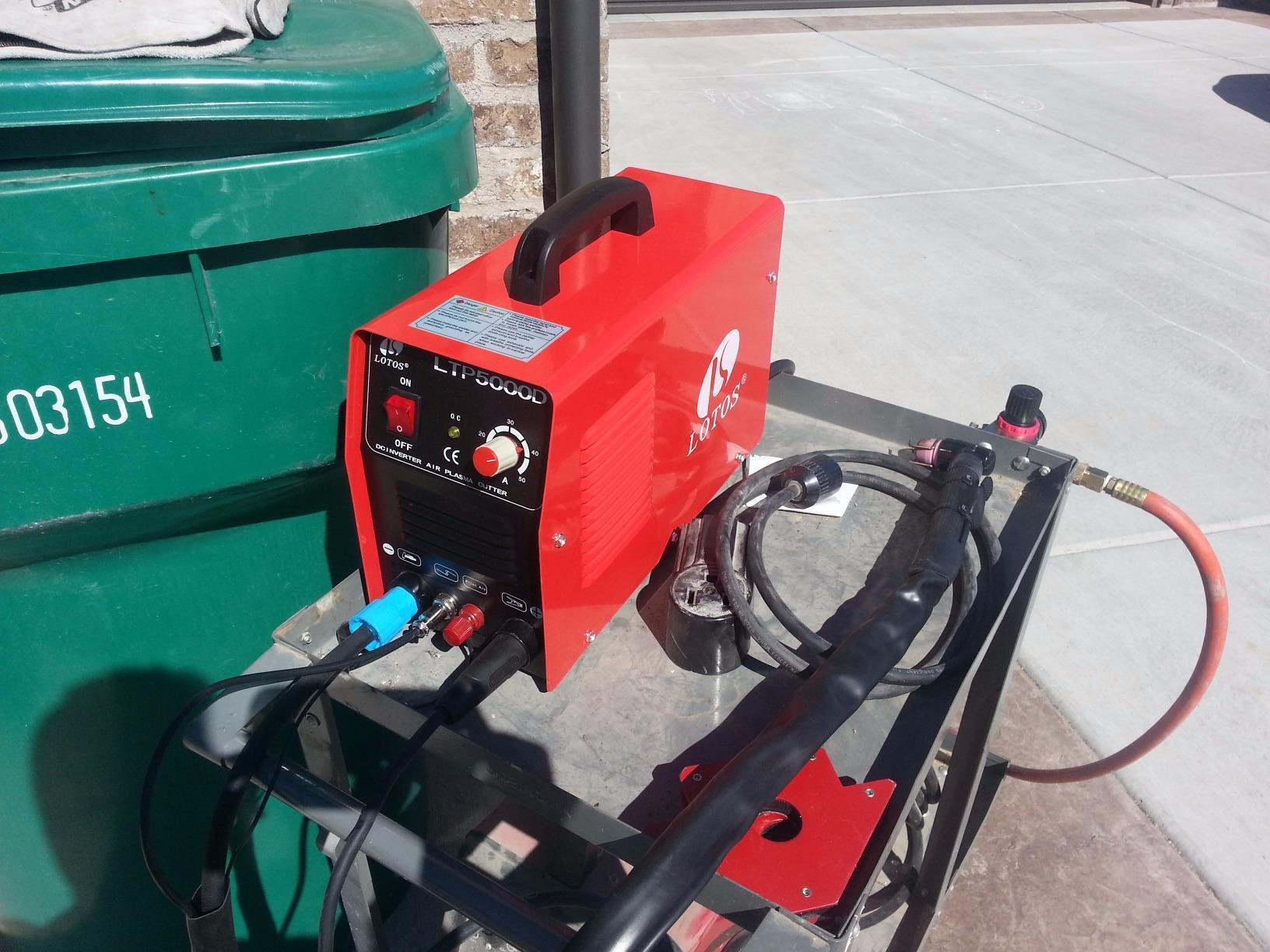
The LTP5505D has been in production since 2011, and that longevity shows up in the review history: roughly 2400 ratings, the largest base in this comparison. Fifteen years of owners means the consumable supply is settled and the operating knowledge is public rather than folklore.
Its selling feature is the rust removal mode. The torch runs a lower-output arc that cleans oxidized surface metal without stuttering, so you can start a cut on a weathered channel or a painted I-beam without chasing the surface first. Rated clean cut is 5/8 inch, which is unusually good for a 55 amp machine.
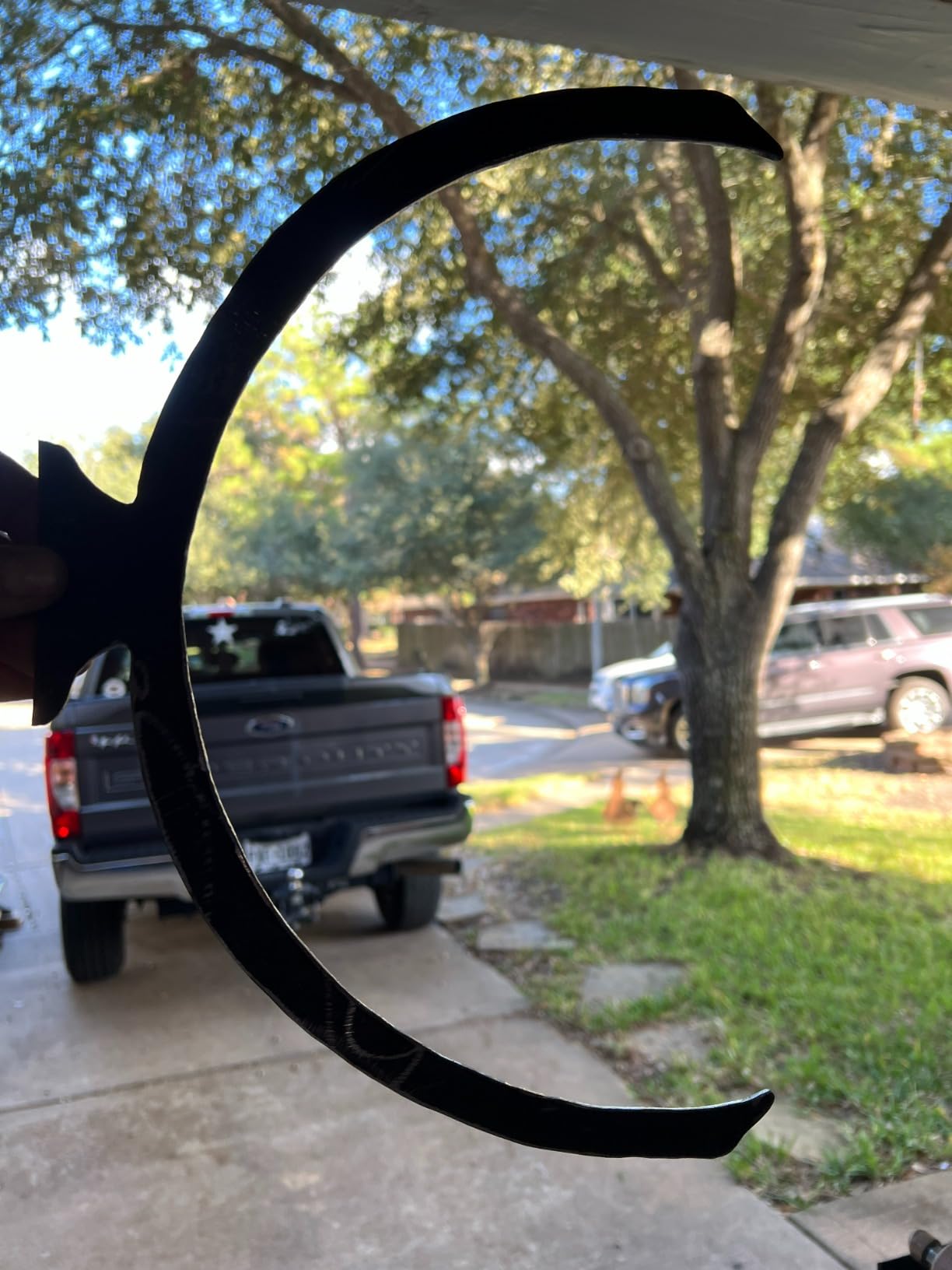
Owners cut 1/2 inch steel cleanly and 3/8 inch AR400 abrasion plate using a straight-edge guide. That AR400 result matters if you are doing trailer or agricultural work, because abrasion-resistant plate eats consumables faster than plain mild steel.
The front-mounted air regulator and filter with a water cup is a genuine convenience. The water cup catches moisture that would otherwise chew through a torch head, and at 16 pounds the unit is still carryable between the shop and the yard.
Setting expectations on the 5/8 inch rating
Owners consistently report reliable clean cuts at 1/2 inch, with 5/8 inch achievable on good material at a steady travel speed. Treat 5/8 inch as the ceiling for production work and anything thicker as severance.
Automatic dual voltage sensing handles 110V and 220V, but run it on 220V. On 120V the 55 amp nameplate does not translate into usable plate capacity.
The weak points to know about
Documentation is thin. Owners rely on community videos for operating settings, and the included consumable kits are sold in expensive multipacks, so a first-time buyer ends up sourcing tips separately anyway.
The ground lead is shorter than the torch lead and does not lock positively. On a 10-foot lead and a plate you are walking around, plan your ground clamp placement before you start.
5. YESWELDER CUT-65DS 60A – Best for CNC Tables and Sensitive Electronics
YESWELDER 60A Non-HF Plasma Cutter, Non-Torch Pilot Arc, 110/220V
Non-HF blow-back start
5/8 inch ideal at 220V
IPT40 non-touch pilot arc
ETL certified, IP21
Pros
- Non-high-frequency ignition is safe around electronics and bystanders
- Largest rated cut in the entry-level class at 63/64 inch max on 220V
- Digital display with air pressure voltage current and error codes
- ETL certified with IP21 water rating
Cons
- Only a 1 year warranty
- the shortest in this lineup
- Requires a compressed air source and adequate amperage on 110V
The YESWELDER CUT-65DS is the machine to buy if a CNC table, a laptop or sensitive shop electronics share the space with your plasma cutter. Its non-high-frequency blow-back start produces no ignition burst, which removes the interference that wrecks controllers and makes erratic arc wandering on mechanised tables.
On pure capacity it is one of the strongest machines here for the money. The manufacturer states an ideal clean cut of 5/16 inch at 110V and 5/8 inch at 220V, with maximum cuts of 1/2 inch at 110V and 63/64 inch at 220V. The 63/64 inch figure is severance, not a clean production cut.
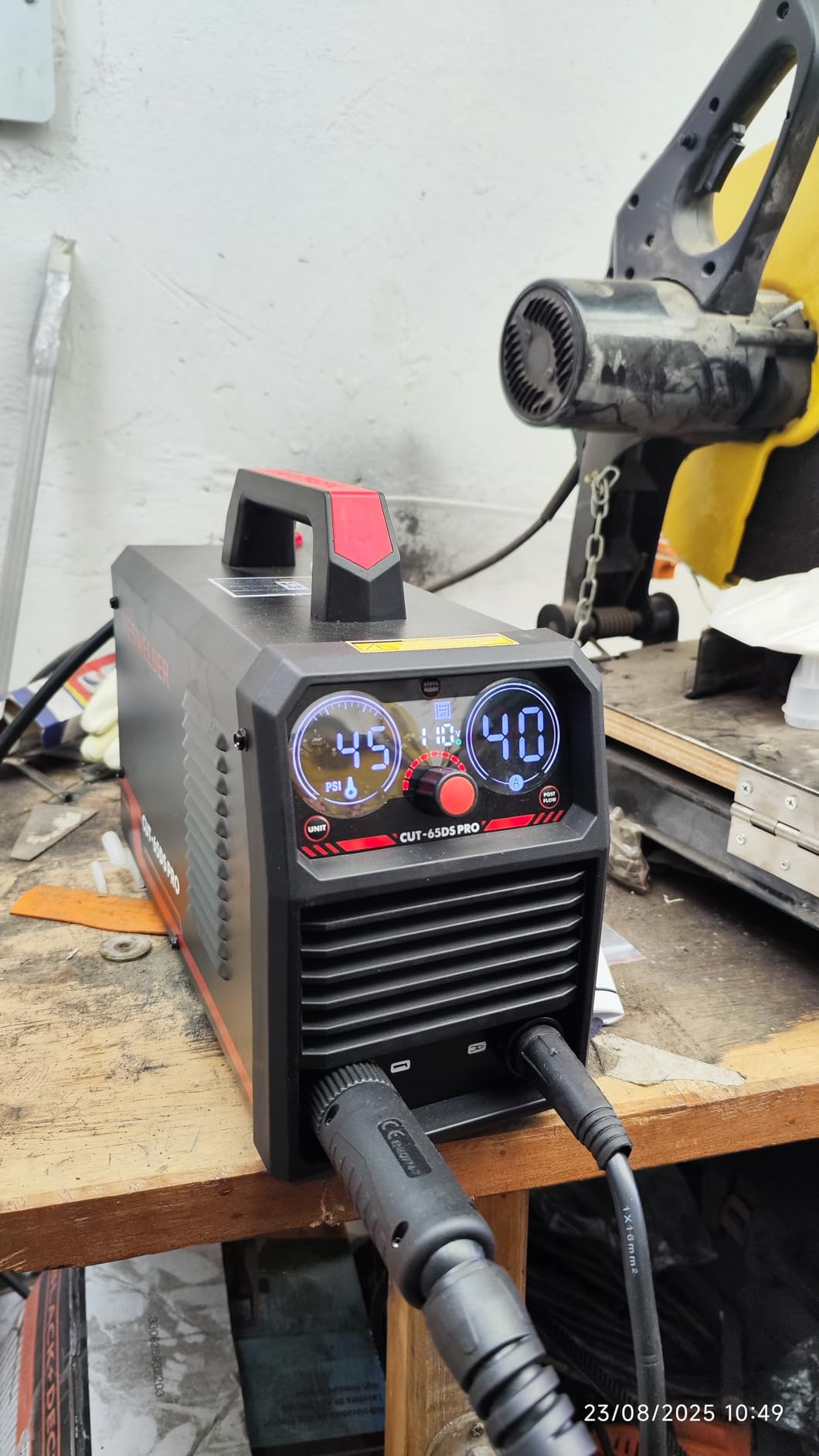
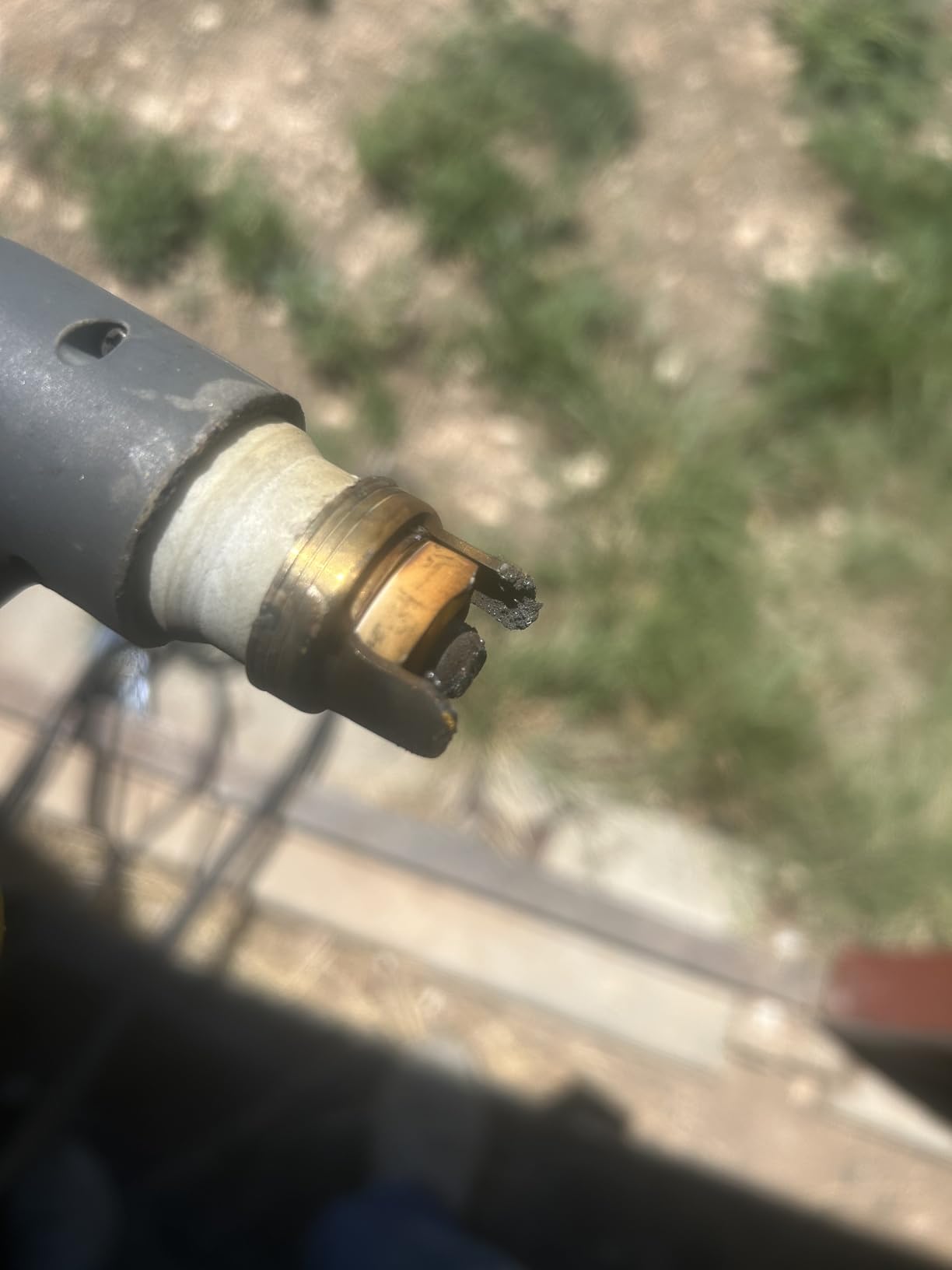
The IPT40 non-touch pilot arc torch extends consumable life on rough or painted stock because the arc transfers without the tip touching the workpiece, so you are not grinding a nozzle flat. The digital display shows air pressure, voltage and current alongside error codes, which turns most troubleshooting into reading a code.
PT, 2T and 4T functions with 5 to 20 second post-flow adjustment let you tune cooling time for the job, and the IP21 rating means it tolerates a wet shop in a way some open-frame imports do not.
What non-HF start actually buys you
High-frequency start fires a burst of radio energy at ignition. It is not dangerous, but it has been reported to knock out CNC controllers and confuse nearby electronics, and on a CNC table it can make the torch wander before the arc settles. Blow-back start avoids that entirely.
If you are not running a CNC, the benefit is milder but still real: fewer surprises with radios, laptops and variable frequency drives. It is not worth a premium on its own, but here it costs nothing extra.
The catch on the CUT-65DS
The one year warranty is the shortest here, and warranty terms on machines that run hot are worth reading closely. Compare that against the CUT60’s three years before you commit.
It also needs a compressed air source and enough amperage to be useful, and on 110V the capacity drops to about 1/2 inch maximum. Budget for a 220V circuit and a compressor that can hold pressure.
6. ARCCAPTAIN iControl CUT55 Pro 55Amp – Best for App-Controlled Setup
ARCCAPTAIN iControl CUT55 Pro Plasma Cutter Machine, 55Amp, 120V/240V
55A output
12mm quality cut, 20mm maximum
App control to 10 meters
3 year warranty
Pros
- 3 year warranty
- the longest coverage in this comparison
- App control for parameter adjustment and settings recall from 10 meters
- Intelligent post-blow sets cooling time by cutting current
- Pre-installed air regulator and filter for one-minute setup
- 10 ft torch air hose and earth clamp leads
Cons
- Heaviest 55 amp unit here at nearly 20 lb
- App feature depends on phone connectivity and adds setup complexity
- Reported cut finish is less refined than premium industrial machines
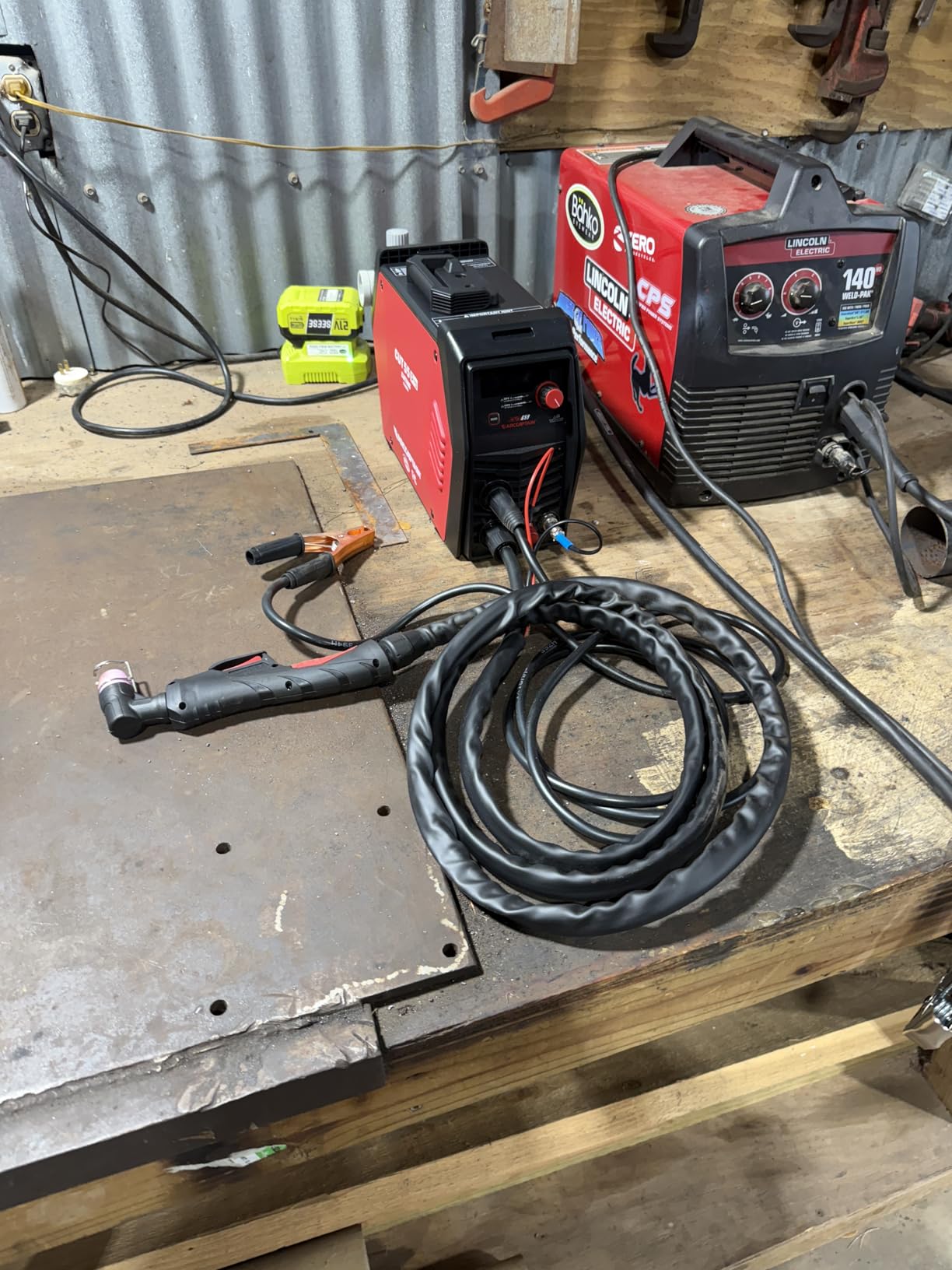
The CUT55 Pro is the feature-forward option in this lineup. You connect your phone, set amperage and post-flow from up to 10 meters away, and store a settings profile for each material. For someone who moves between the machine and the plate, that removes a lot of walking.
Capacity is 12mm quality cut with 20mm maximum, so 1/2 inch clean and roughly 3/4 inch severance on 220V. That puts it in the same band as the 50 and 55 amp machines here, not above them, so buy it for the app and the warranty rather than for thickness.
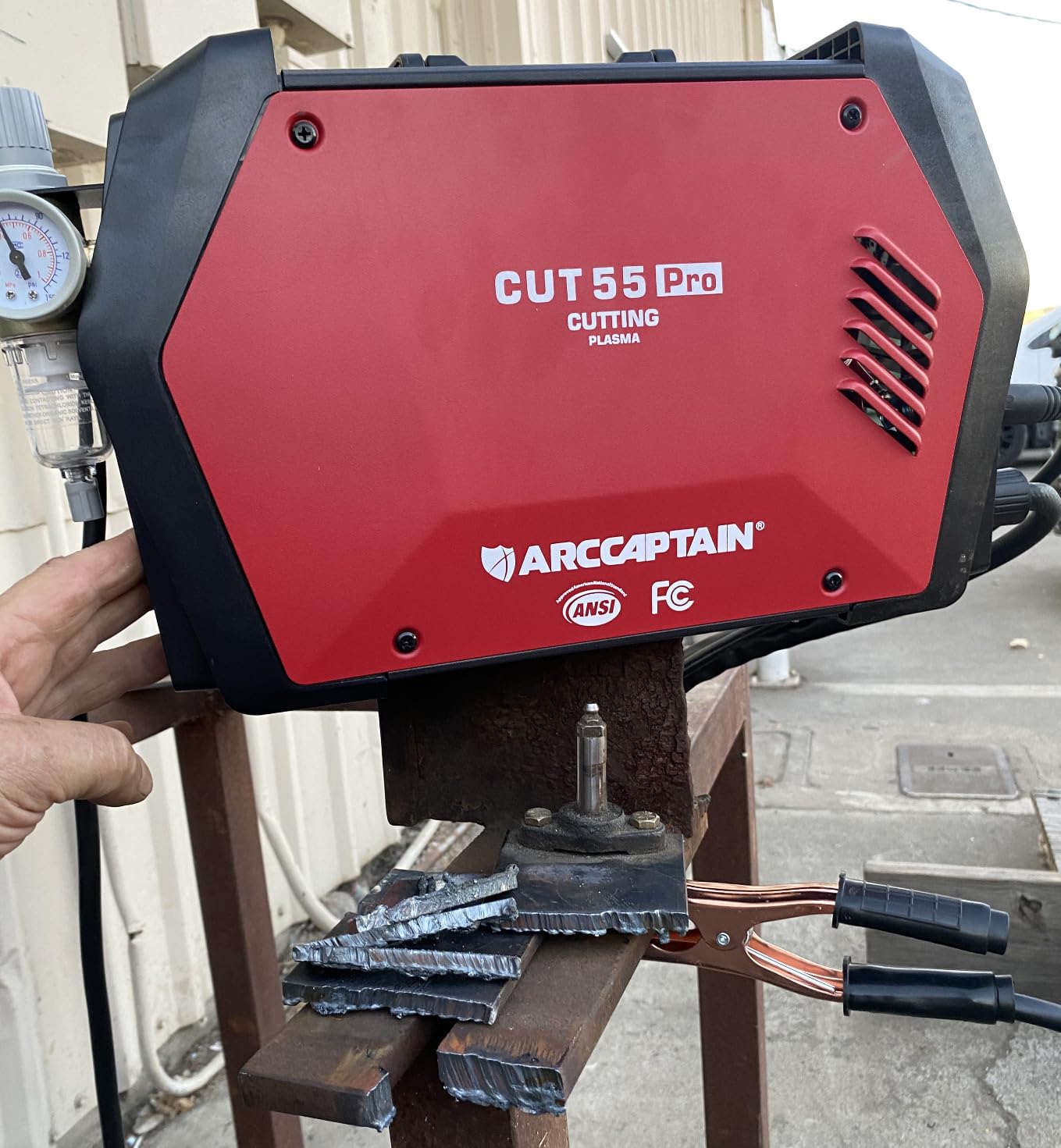
The intelligent post-blow system is the smarter feature. It scales cooling time to cutting current: 5 seconds from 20 to 34 amps, 8 seconds from 35 to 45 amps, 10 seconds from 46 to 55 amps. That is the kind of automation that extends consumable life without the operator thinking about it.
The smart fan cooling system is claimed to cut noise by 50 percent and lower failure risk by 70 percent, and the 3 year warranty with ANSI certification is the best coverage in this comparison.
When app control earns its place
It pays off if you cut several materials in a session and want repeatable settings without walking back to the panel, or if you are teaching a less experienced operator. Saving a proven profile for 1/2 inch mild steel and reusing it is genuinely useful.
It adds little if you cut one material at a time in a fixed spot. The dial does the same job when you are standing at the machine anyway.
Where it does not hold up
At 19.46 pounds it is the heaviest 55 amp machine here, and that bulk is real on a job site. The high frequency non-touch start also rules it out for anyone with electronics they care about, which is the opposite of the YESWELDER above.
The cut finish is reported as less refined than premium industrial machines, so it is a working machine for fabrication rather than a finishing machine for visible profile work.
7. SILATU STC850P 85A – Best for One Inch Steel
SILATU 85A Plasma Cutter Machine, Non-Touch Pilot Arc, 110V/220V, Large LED
85A on 220V
32mm rated cut at 85A and 70 PSI
60% duty cycle
13 ft P-80 torch
Pros
- Highest output amperage in this lineup with a 32mm rated cut on 220V
- Non-touch pilot arc starts through painted and rusted steel
- Large digital display shows pressure voltage current and fault codes
- 13 ft P-80 torch lead is longer than most rivals
- Adjustable pilot arc duration stretches consumable life
Cons
- Heavy at 24 lb which limits true portability
- Only a 1 year warranty despite the highest amperage claim
- Requires a large compressor and a 220V circuit for rated performance
The STC850P is the first machine on this list that can approach 1 inch of steel with something close to a production edge, and that is why it earns the thick-steel recommendation. The spec sheet claims 32mm at 85 amps and 70 PSI on 220V, and 15mm at 40 amps and 60 PSI on 110V.
That 32mm figure is a severance-style maximum. In practice an 85 amp machine at this class cleans 3/4 inch comfortably and 1 inch on good material at a controlled travel speed, which is roughly double the clean output of the 50 and 60 amp units above it.
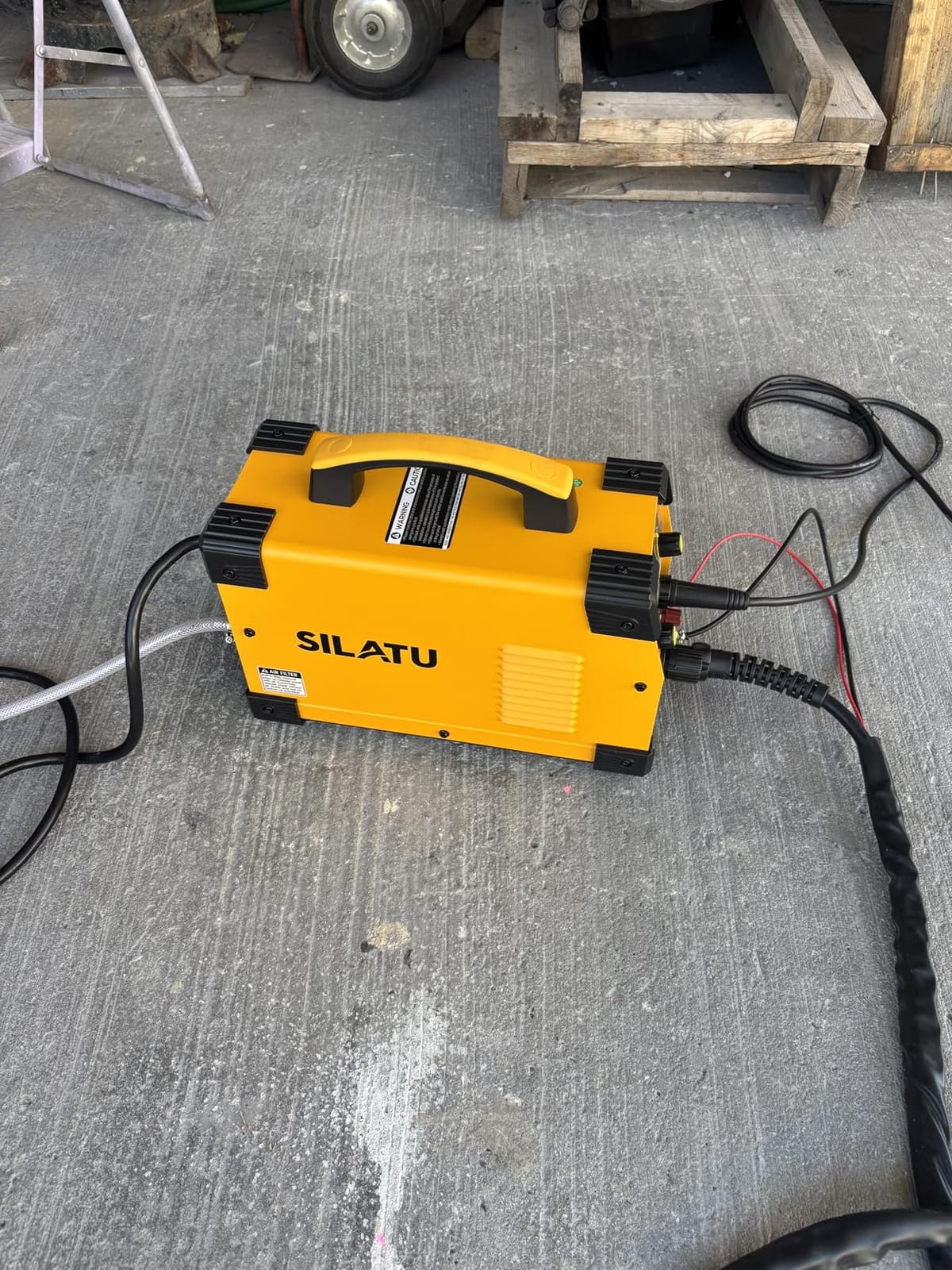
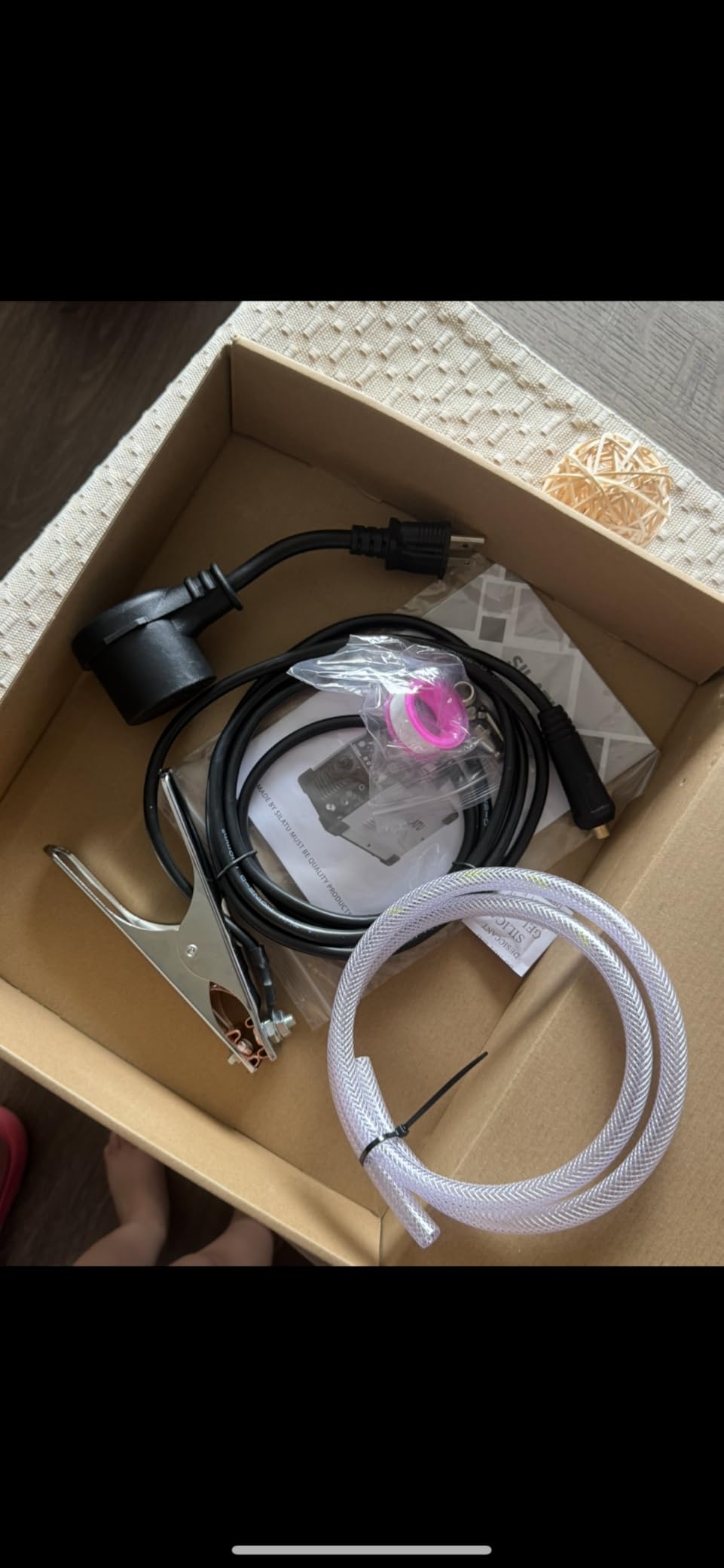
The 13 foot P-80 torch lead is longer than anything else here, and on a machine this size that length is the difference between cutting a plate in place and repeatedly dragging the machine around the work. Buyers with trade backgrounds rate the cut quality highly for straightforward setup.
Adjustable pilot arc duration from 3 to 15 seconds is a real economy feature on thick work. A long pilot burn on rusted or painted plate costs consumables, and shortening it where the material allows is free money over a year of shop use.
What the 85 amp class demands from your shop
You need a 220V circuit, a large compressor that can hold 70 PSI under load, and floor space for a 24 pound machine. At 60 percent duty cycle you can run long passes but will need to pause, so plan your cut sequence around that.
On 110V the output range is 15 to 40 amps, which is roughly a 50 amp machine wearing an 85 amp nameplate. Plug it into 240V or step down to a smaller unit honestly.
Reasons to look elsewhere
The one year warranty is a genuine concern on the hottest-running machine in this comparison. Warranty length tends to track how long the manufacturer expects the unit to be pushed, and a one year term here is thinner coverage than the 55 amp machines offer.
At 24 pounds it is not a job-site machine, the power cord is short for a shop floor unit, and the documentation is described as vague. It is a shop machine built for plate.
8. LOTOS LTP8000 80A – Best for Deep Plate and Heavy Severance
Lotos LTP8000 80 A Plasma Cutter with Pilot ARC Metal Cutter, 1 inch Clean Cut, Brown
80A output
1 inch ideal, 1-1/2 inch maximum
60% duty at 80A, 100% at 50A
240V single phase
Pros
- Deepest rated capacity in this comparison with 1 inch ideal and 1-1/2 inch maximum
- Cuts 1/2 inch and 3/4 inch steel consistently in fabricator use
- Lotos customer service arranged a full replacement for a failed unit
- Non-touch pilot arc improves cut quality on farm and fabrication work
Cons
- Heaviest unit here at 38 lb and needs a dedicated 50A 60A 240V branch circuit
- Not compatible with CNC cutting tables
- 1 inch cuts leave heavy dross when settings and travel speed are not dialed in
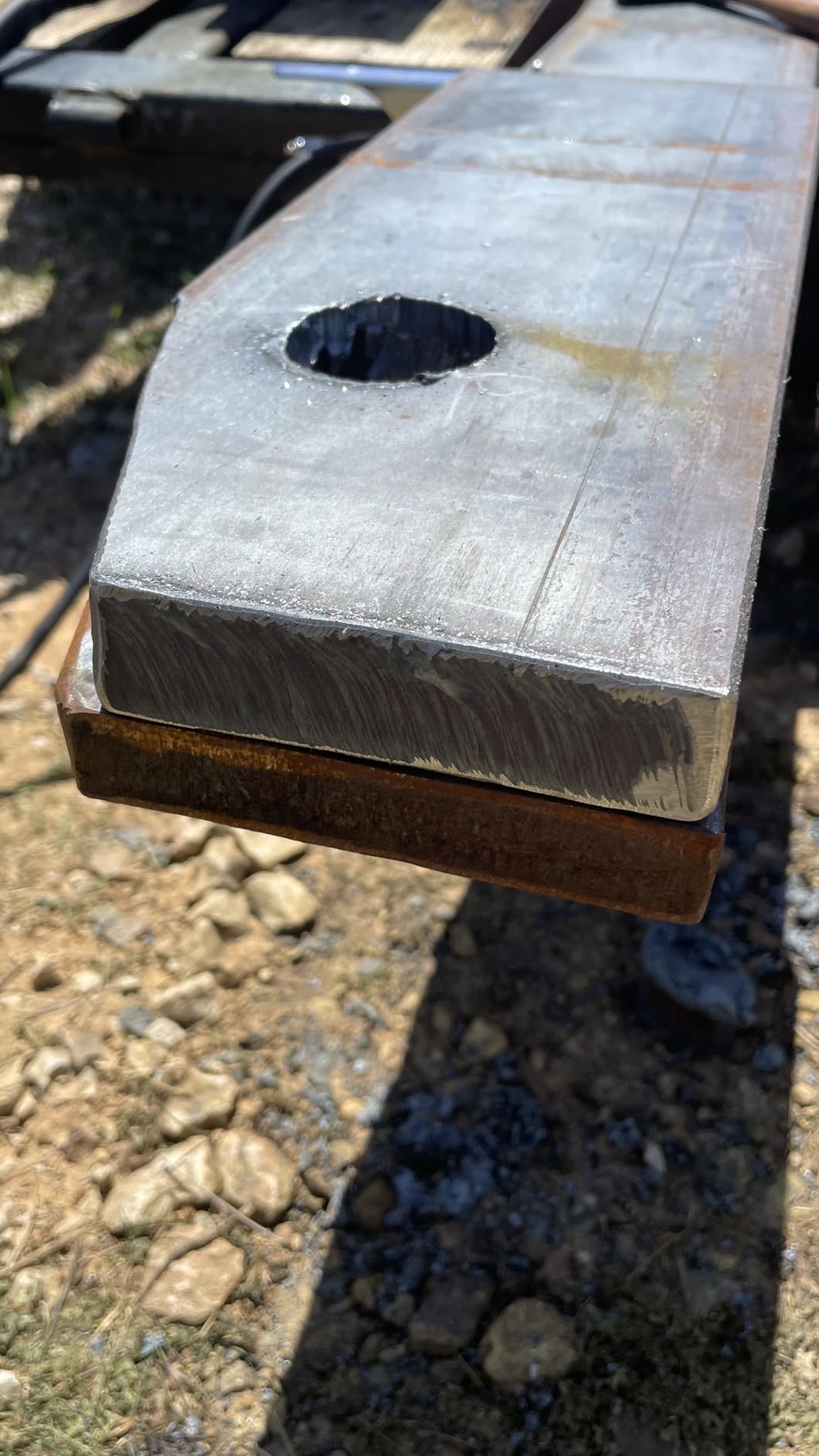
The LTP8000 is the deepest-cutting machine in this group. Rated at 1 inch ideal and 1-1/2 inch maximum, it is the pick when you occasionally need to sever heavy structural steel rather than merely cut plate cleanly. Owners using it for farm equipment and heavy fabrication rate it well above its class for 1/2 and 3/4 inch work.
The duty cycle specification is unusually informative: 60 percent at 80 amps and 100 percent at 50 amps. That gives you a documented fallback – if you need a long uninterrupted cut, drop to 50 amps and the machine runs continuously.
Input is 210 to 250V single phase on a 50 amp branch circuit with a 60 amp breaker recommended. That is a real installation requirement, not a suggestion, and it is worth confirming with an electrician before you buy rather than after.
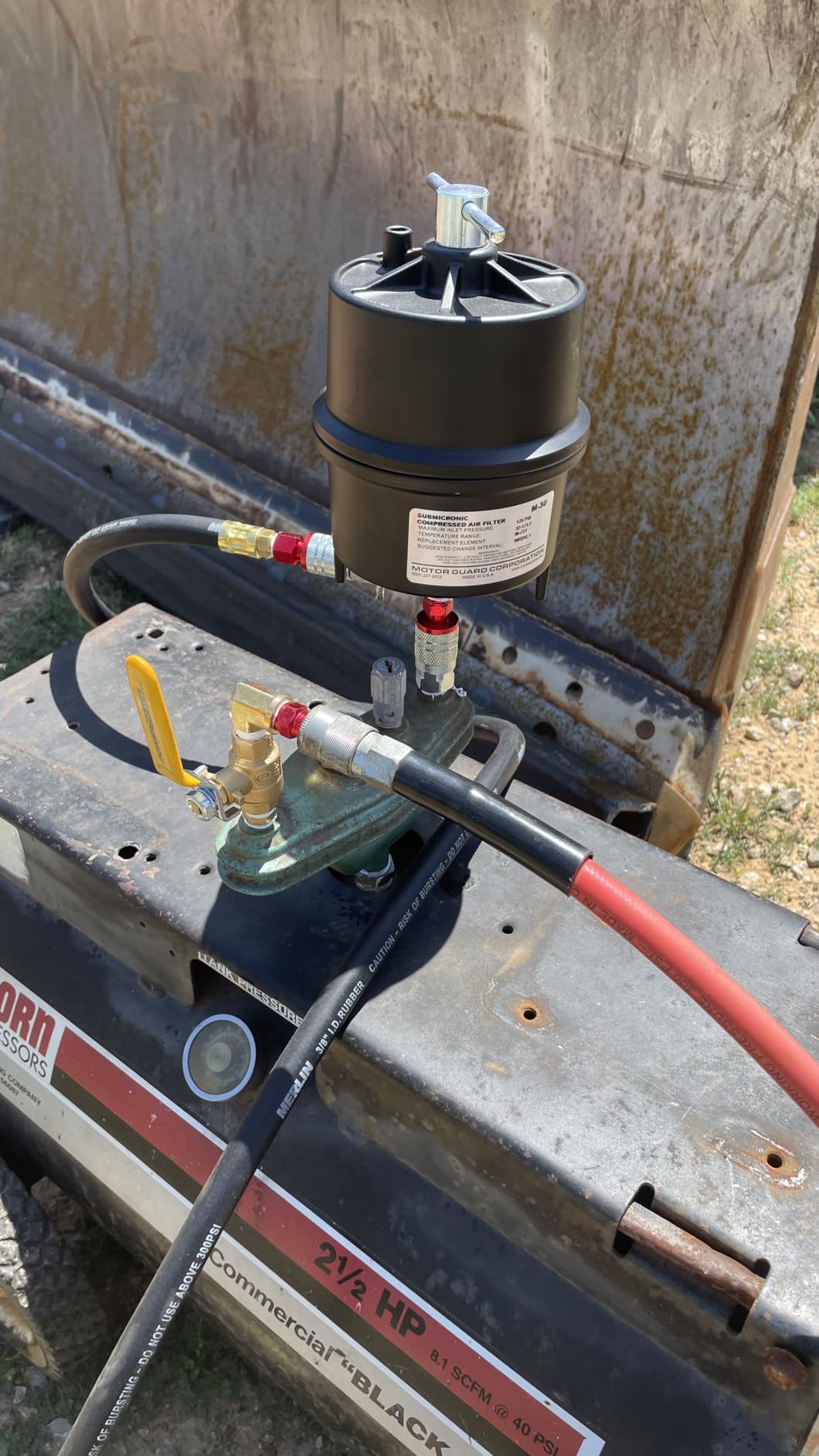
Consumables come as BCON40 and BCON90 sets, which are widely stocked, and the pre-installed NPT 1/4 inch Type-D plug with air filter regulator gets you cutting in about a minute. Customer service arranged a full replacement unit for a failed machine, which is the kind of support that matters at this amperage.
Reading the 1 inch and 1-1/2 inch numbers
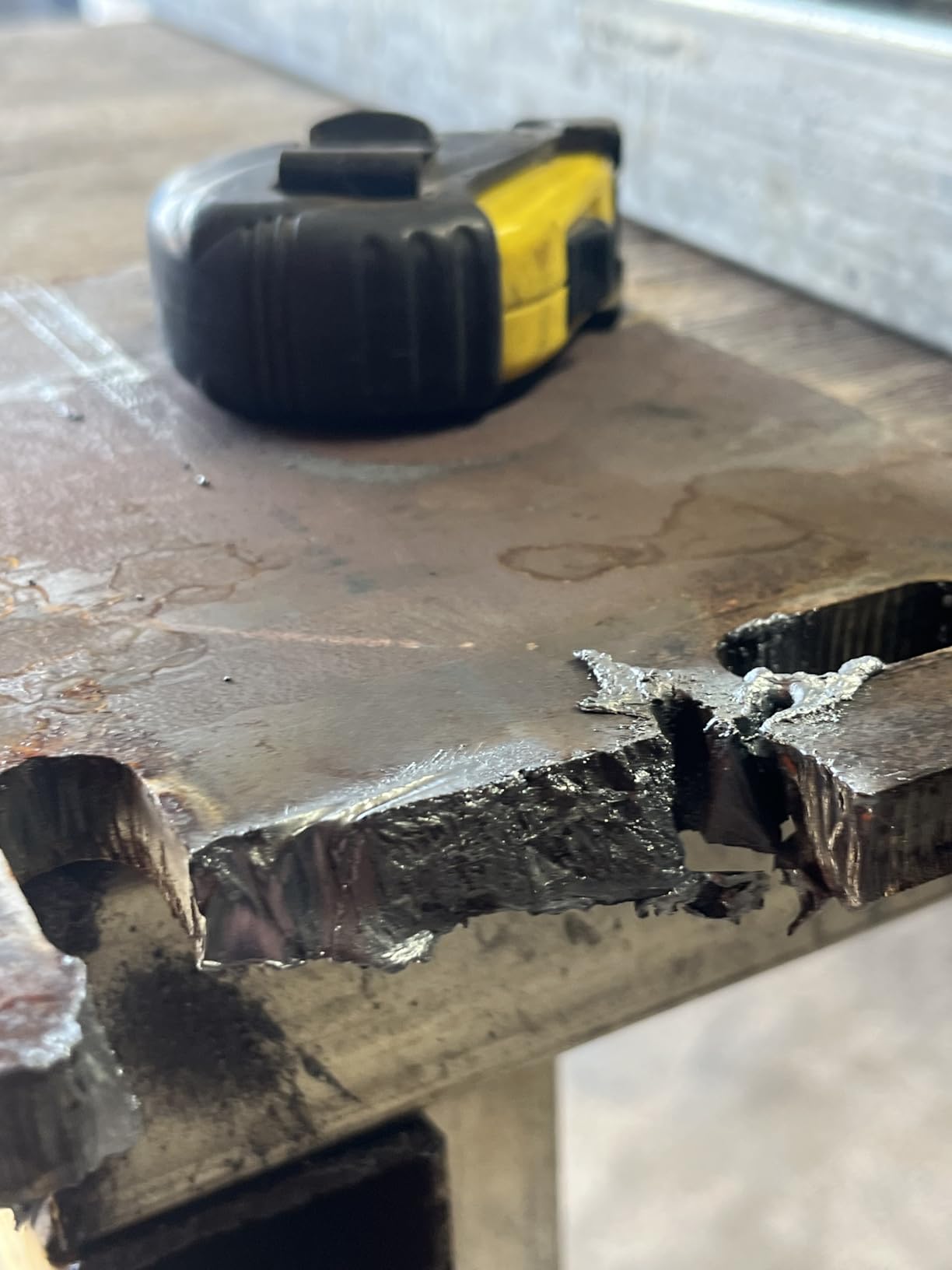
The 1 inch figure is the ideal or clean cut, and it is achievable on sound material at a controlled travel speed. The 1-1/2 inch figure is maximum severance: slow, ragged, and generally finished with a grinder afterwards. Do not plan production work around the second number.
Owners report heavy dross on 1 inch cuts when settings and travel speed are not dialed in first. Treat the first plate of a new job as a setup cut, not a product cut.
Where this machine does not fit
At 38 pounds with a dedicated 50 or 60 amp 240V branch circuit, it is a fixed shop machine. It is also not compatible with CNC cutting tables, so if mechanised cutting is on your horizon, this is the wrong platform.
It carries the lowest review count in this comparison at 116 ratings, so there is less long-term owner history here than with the 50 and 55 amp Lotos machines. Factor that against the three year warranty the brand is known for at other amperages.
9. Reboot RBC6000D 60A – Best for Garages and Job Sites
Reboot 60A Plasma Cutter Dual Voltage 120V/240V, 1/2″ Clean Cut IGBT Inverter, Portable Metal Cutting Machine with Torch & Tips – RBC6000D 2025 Upgraded (Pre-Installed Air Regulator)
60A on 240V
5/8 inch cut at 60A
8.69 lb listed body
PT31 consumables
Pros
- Lightest 60 amp machine in this comparison
- Cuts 1/4 inch steel quickly and gouges welds without difficulty
- Clear setup instructions and a simple amperage dial
- Pre-installed air regulator speeds setup
Cons
- Touch-arc variant so the torch must contact the workpiece to start
- Trips household breakers on 120V above roughly 18 to 20 amps
- Several reports of units failing to strike an arc after light use
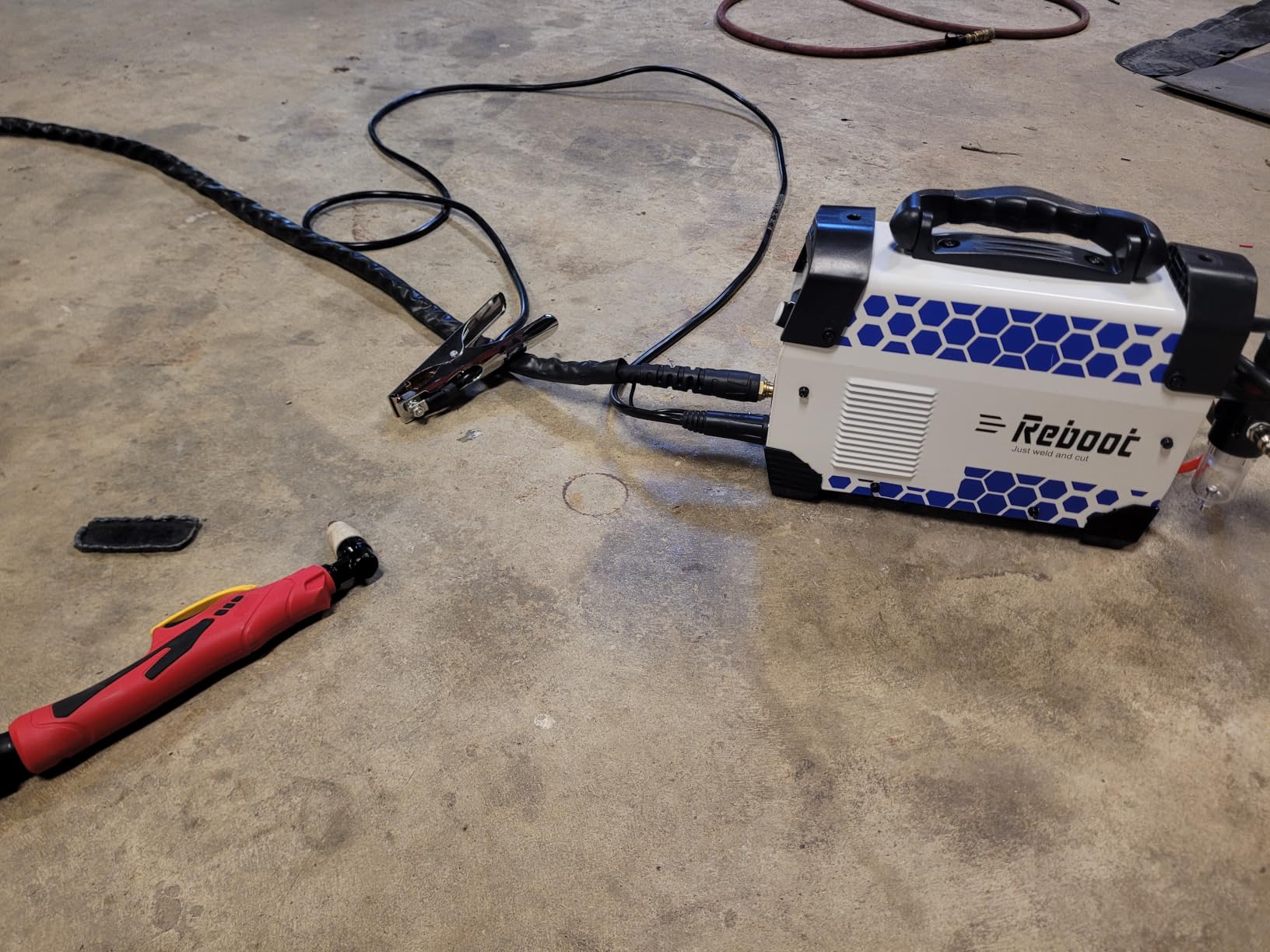
The RBC6000D is the most genuinely portable 60 amp machine here, with a listed body weight of 8.69 pounds. That figure appears alongside a different listed item weight in the specifications, but the small and compact form factor is consistently reported by owners, and it is the reason to consider this machine at all.
Capacity is 1/2 inch steel at 120V and 35 amps, and 5/8 inch at 240V and 60 amps, with air set at 70 to 75 PSI. Gouging out welds is a commonly cited use, and the 2T/4T modes make longer cuts practical.
The breaker guidance is specific and worth reading: 50 amps at 120V and 40 amps at 240V, with a 90 PSI and 60 liter per minute air supply. That is a genuinely small compressor requirement for a 60 amp machine, which is the trade that makes this unit interesting.
PT31 consumables are the most widely stocked torch platform in the hobby and garage market, so tips and electrodes are easy to replace anywhere. The pre-installed air regulator keeps setup to a couple of minutes.
What touch-arc start costs you
This is the touch-arc variant, so the torch tip must contact the workpiece to start. That is fine on flat plate and genuinely awkward on expanded metal, rusty grating, or a vertical surface where you cannot press the nozzle straight in.
It also means faster consumable wear, because the tip transfers the arc and erodes with every start. The tip roller guide is also reported to hold position poorly, so use a straight-edge guide for anything that has to be dimensionally accurate.
Reasons to step up instead
Feedback is polarised: happy beginners praise cutting speed and weight, while several owners report units failing to strike an arc after light use, and warranty claims leave shipping costs with the buyer. Both are deal-breakers for a machine you depend on for plate.
On 120V it trips household breakers above roughly 18 to 20 amps, so the full 60 amp output only exists on a 240V circuit. If you only have 120V available, this is a 20 amp toy, not a 60 amp cutter.
10. GZ GUOZHI CUT-50 50A – Best Entry Machine for Learning the Craft
GZ GUOZHI Plasma Cutter, 50 Amp Air Inverter Plasma Cut, 110V/220V Dual Voltage Digital Display IGBT Inverter Plasma Cutting Machine with 2T/4T/TEST Function
50A IGBT inverter
3/4 inch max at 220V
2T/4T/TEST functions
Digital display
Pros
- Budget pricing with an IGBT inverter and digital display
- Pilot arc starts through rough painted and rusty surfaces with minimal slag
- 1/4 inch NPT industrial D-type plug allows one-minute setup
- Overheat and overcurrent protection built in
- Rated operation down to minus 20 degrees
Cons
- Lowest rating in this comparison at 4.2 stars
- 120V performance is limited to roughly 1/4 inch at 35 amps
- Dry compressed air supply is required and not included
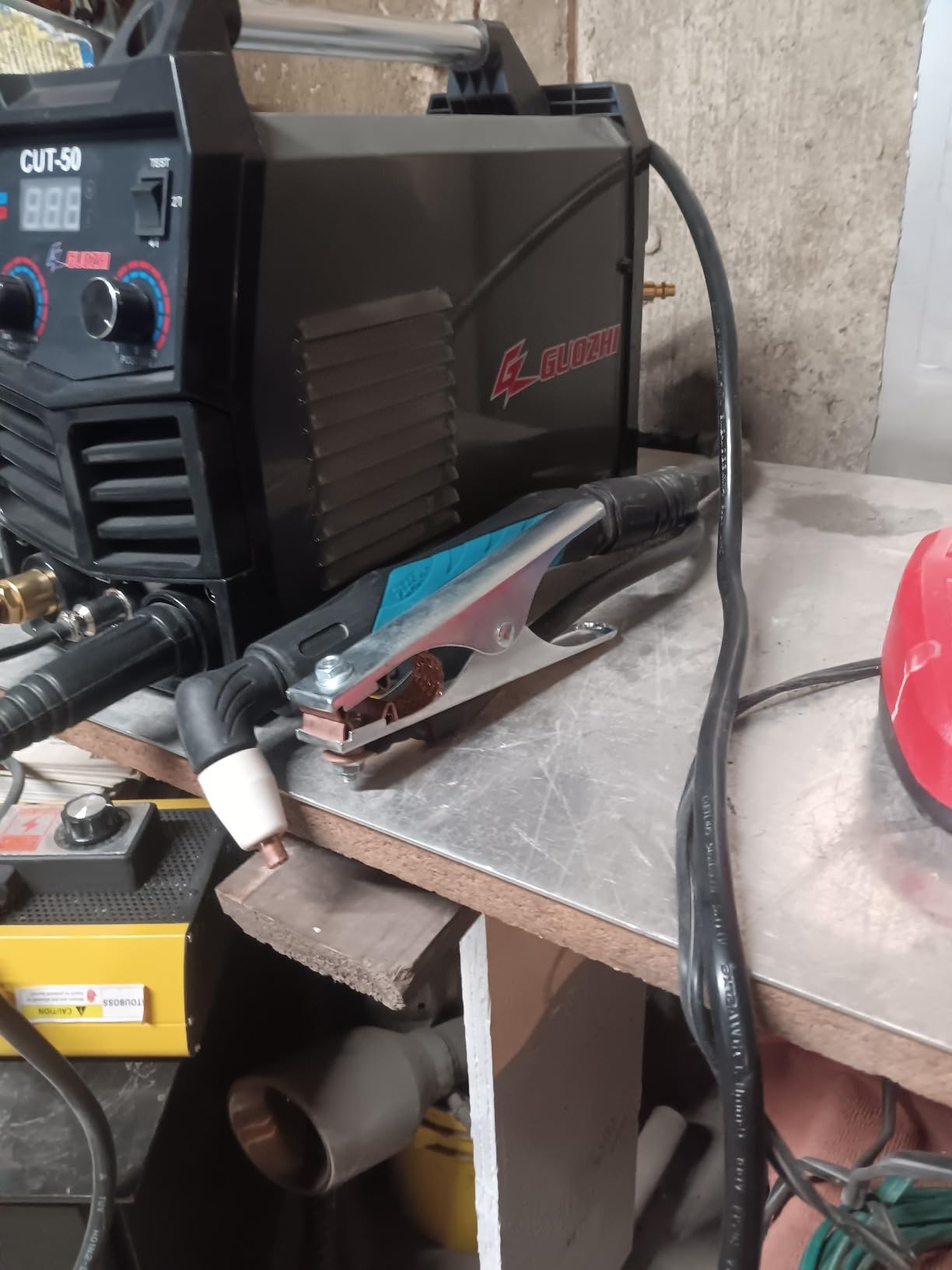
The GZ GUOZHI CUT-50 is the machine to buy if you are cutting up scrap plate for the first time and want to learn amperage, air pressure and travel speed without a large commitment. It is a genuine 50 amp IGBT inverter with a digital display and a pilot arc, not a toy.
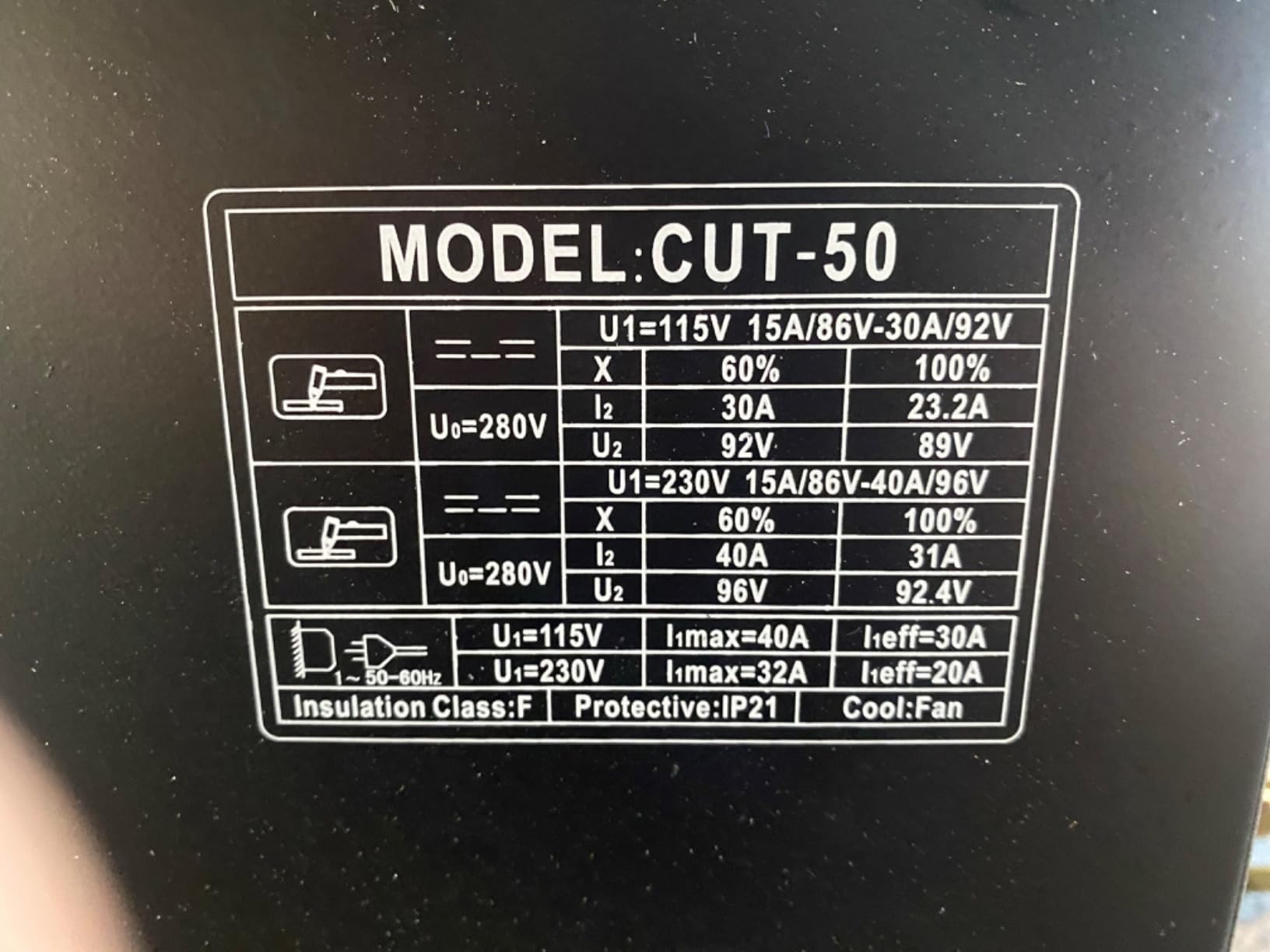
Its spec sheet lists a recommended maximum cut of 1/4 inch at 35 amps on 110V and 50 PSI, and 3/4 inch at 50 amps on 220V and 65 PSI. Read that 3/4 inch as severance – on 220V, treat 1/2 inch as your working ceiling.
Two details make it easier to learn on. The 2T, 4T and TEST function set lets you trial-fire a torch without striking the plate, and the 1/4 inch industrial D-type plug means the air connection is a single fitting instead of a hose and regulator assembly you have to build.
Overheat and overcurrent protection, plus a rating for operation down to minus 20 degrees, are sensible inclusions for a machine likely to live in a garage or a truck bed.
What the 50 amp tier really delivers
On 220V, plan for clean 1/2 inch mild steel and treat 3/4 inch as rough severance. The breaker guidance is 40 amps at 110V and 30 amps at 220V, which is manageable in most shops and a fraction of what the 80 amp machines demand.
On 120V the machine manages about 1/4 inch at 35 amps. That is enough for sheet metal and light plate, and not enough for the thick steel this guide is about.
Where the value thins out
This unit carries the lowest average rating in the comparison at 4.2 stars, with 12 percent of ratings at one star – the highest one-star share here. Owner satisfaction is the weakest in this field, and that pattern is worth respecting.
The listing data is also internally inconsistent, with a listed item weight of 19.31 pounds against a 13 pound figure in the product copy, which suggests the specification sheet was not carefully maintained. If accurate weight matters for your decision, confirm it before purchase.
Buying Guide: What Actually Matters for Thick Steel
How many amps for how much steel
Use 20 amps for the first 1/8 inch and 10 amps for every additional 1/8 inch. That gives roughly 40 amps for 1/4 inch, 60 amps for 1/2 inch, 80 amps for 3/4 inch and 100 amps for 1 inch as a minimum clean-cut figure. Buying one tier above the steel you cut most often is a reasonable hedge.
For stainless, aluminum, galvanized, brass and copper, expect 35 to 40 percent less capacity or 25 to 30 percent more amps. Aluminum in particular needs faster travel speed because its thermal conductivity pulls heat sideways and warps the plate.
120V, 220V or 240V, and breaker sizing
Almost every machine here is dual voltage, which is convenient and misleading. A 60 amp nameplate on 120V typically delivers about 35 amps, so a 60 amp machine becomes a 1/4 inch machine. For thick steel you want 220 or 240 volts and a dedicated circuit.
Work from the manual, not the marketing. The 60 amp units here call for roughly 40 to 50 amp branch circuits, and the 80 amp LTP8000 explicitly calls for a 50 amp branch circuit with a 60 amp breaker. Extension cords in thin gauge quietly kill IGBT inverter boards, so use heavy gauge cable for any run over about 20 feet.
Arc start type: touch, HF non-touch, blowback
Touch or drag start requires the torch tip to touch the workpiece, which wears consumables and will not start on expanded metal or a vertical surface. High-frequency non-touch start fires a burst of radio energy and can interfere with CNC controllers and nearby electronics. Blowback non-HF start, as on the YESWELDER CUT-65DS, gives you non-touch starting with no interference.
Choose blowback if a CNC table shares your shop. Choose any non-touch start if you cut rusty or painted material regularly. Choose touch only when portability and consumable cost are the priorities.
Compressor sizing and air quality
Budget machines want 45 to 70 PSI at roughly 4 to 5 CFM. The 85 amp class wants closer to 70 PSI under load, and one machine in this group specifies a 90 PSI and 60 liter per minute supply. A compressor that cannot hold pressure is the number one cause of dross on thick steel.
Air quality matters as much as quantity. Fit a moisture trap and drain it daily, and replace cheap barbed fittings with proper threaded connections. Owners repeatedly report that cheap fittings on included filter kits leak, and moisture in the line is the fastest way to destroy a torch head. Several machines here come with a pre-installed filter, which is a real convenience rather than a gimmick.
Dross: what causes it and how to fix it
The usual causes are worn nozzles and electrodes, insufficient air, low travel speed, too many amps for the thickness, dirty or moist air, and material thicker than the machine’s clean rating. Work through them in that order rather than swapping parts randomly.
The fix sequence that works: drop the cut height toward .06 inch, check and replace consumables, confirm air pressure and flow at the torch rather than at the compressor gauge, pierce at a slight angle and lead into the cut, then adjust travel speed until the dross stops. Cleaning the standoff cup matters too, because spatter on the cup deflects the plasma jet. Forum moderators on plasma cutting boards consistently point to cut height as the first thing to change.
Consumables and total cost of ownership
Consumables are the largest ongoing cost of any plasma cutter, and the torch ecosystem you buy into matters more than the sticker on the machine. PT31 is the cheapest and most widely stocked. AG60 and PT60 sit above it, with the PT60 built for 60 amp duty. BCON40 and BCON90 sets cover the 80 amp Lotos machine.
Oxy-fuel on the same job will cost you more time than money. If you are cutting thick steel regularly, consumable cost per hour of cutting should influence the decision more than the purchase price, because a machine that drosses and needs regrinding burns through tips twice as fast.
Used and refurbished machines
Welding forums repeatedly recommend used Miller and Hobart plasma cutters as strong value at well under half the cost of a new import, because those machines have documented capacity and widely available parts. The risk is consumable cost and the age of the torch lead, so factor a torch replacement into the budget.
The broader plasma cutter roundup on our site covers entry-level machines that sit below the thick-steel threshold entirely, which is worth checking if your real work is 1/8 to 1/4 inch material.
Frequently Asked Questions
How thick of steel can a plasma cutter cut through?
Roughly 50 to 60 amps produces a clean cut on 1/2 inch mild steel, 60 to 85 amps cleans 3/4 inch, and 80 to 125 amp machines hold a clean kerf through 1 inch plate. 200 amp industrial machines reach 2 inch. The rule of thumb is 20 amps for the first 1/8 inch and 10 amps per additional 1/8 inch. Cut capacity drops 35 to 40 percent on stainless, aluminum and galvanized steel.
What is the maximum thickness a plasma cutter can cut?
The maximum thickness printed on the box is a severance rating, not a clean cut rating. A severance cut is slow, leaves heavy dross and usually needs grinding. The number you should shop by is the clean cut or ideal cut rating. As a general guide, a 60 amp machine severs roughly 3/4 to 7/8 inch at 240V while cleaning about 1/2 inch.
How thick can a 60 amp plasma cutter cut?
A 60 amp machine running on 220 or 240 volts cleans about 1/2 inch mild steel and can sever roughly 3/4 to 7/8 inch. Plug the same machine into 120V and output falls to around 35 amps, dropping clean capacity to about 1/4 inch. That voltage difference is the single biggest reason a capable machine feels weak in a home shop.
How many amps do I need to cut 1 inch thick steel?
Plan on 100 amps minimum for a clean cut through 1 inch mild steel, and 80 to 125 amps covers the practical range. Anything lighter will only rough-cut 1 inch slowly with dross on the reverse side. You will also need a 220 or 240 volt dedicated circuit and a compressor delivering roughly 70 PSI.
Do I need 240V to run a plasma cutter?
For thick steel work, yes. Most plasma cutters here are dual voltage, but a 60 amp nameplate on 120V typically delivers only 35 amps. Heavy work needs a dedicated 220 or 240 volt branch circuit, with a 30 to 60 amp breaker depending on the machine. Check the manual for the exact figure before running any extension cord.
How to reduce dross in plasma cutting?
Lower the cut height toward .06 inch first, then check and replace worn nozzles and electrodes, confirm air pressure and flow at the torch, pierce at a slight angle and lead into the cut, and finally adjust travel speed. Dirty or moist air and too many amps for the thickness are the other common causes. Clean the standoff cup regularly, since spatter deflects the plasma jet.
The Best Plasma Cutters for Thick Steel in 2026
For most shops cutting 1/2 inch plate and the occasional 3/4 inch, the PRIMEWELD CUT60 is the pick. It pairs a 60 amp output with a blowback torch that will not interfere with your electronics, continuous pilot arc for rusty and painted material, and a three year warranty backed by US support – which is why it tops our list of the best plasma cutters for thick steel in 2026.
If your steel goes to 1 inch regularly, move up to the SILATU STC850P and accept the compressor and circuit requirements that come with it. If you need to break down heavy beams, the Lotos LTP8000 severs 1-1/2 inch, but budget a dedicated 60 amp branch circuit first.
On the other end, the PrimeWeld CUT50D and ARCCAPTAIN CUT50 both handle clean 1/2 inch work on a normal shop circuit, and the YESWELDER CUT-65DS is the one to buy if a CNC table shares your bench. Check the price on your shortlist, confirm your compressor can hold pressure at 70 PSI, and set your first plate up as a practice cut.