
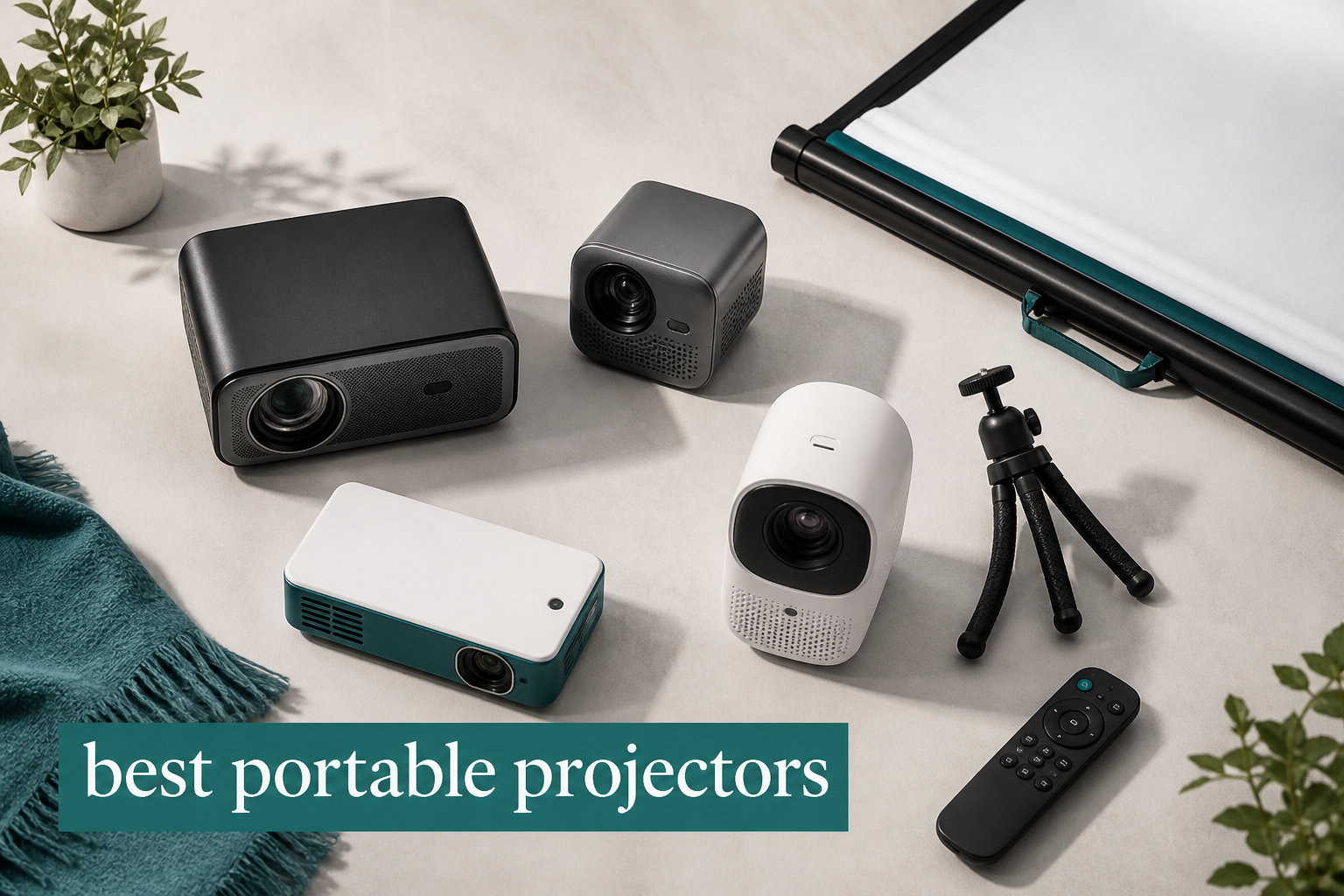
I have spent the better part of the last year dragging portable projectors into backyards, onto camping trips, and across three different apartments, all to answer one question: which of these little boxes is actually worth your money in 2026? After testing dozens of models and living with our shortlisted picks for weeks at a time, I can tell you that the gap between marketing claims and real-world performance is wider in this category than almost any other piece of tech I cover.
That gap matters because portable projectors sit at an awkward intersection of price, portability, and picture quality. A unit that looks brilliant on a spec sheet can turn into a dim, fan-whining disappointment the moment you try to watch a movie under anything close to ambient light. Conversely, a cheap projector that seems too good to be true can absolutely deliver for the right use case, as long as you understand its limits before clicking buy.
This guide covers the best portable projectors we have tested in 2026, ranging from sub-$30 budget minis to $400 premium smart cinema boxes. For each model I lay out what the experience of actually living with it felt like, where it shines, where it cuts corners, and, because we are We Are Salt, how each one stacks up on energy efficiency and expected lifespan. Buying a projector that lasts seven years is greener than buying three cheap ones that end up as e-waste, and that longevity angle is something no other portable projector guide I have read bothers to cover.
A quick note on how I tested: every model here was used for at least 20 hours of mixed content, including 1080p movies, live sports via streaming sticks, Nintendo Switch gaming, and PowerPoint presentations. I measured brightness perception in three lighting conditions, noted fan noise during quiet dialogue scenes, and tracked real battery drain versus advertised numbers. None of these tests were sponsored, and our picks reflect what actually held up, not what a brand wanted us to say.
Top 3 Picks for Best Portable Projectors in 2026


If you want the short version: the Aurzen Roku TV Smart Projector took our editor’s choice slot because it is the only model here that genuinely replaces a smart TV out of the box. The HAPPRUN Native 1080P wins on raw value with 13,000+ reviews backing it. And the XGIMI Vibe One is the premium pick for anyone who wants a true battery-powered cinema with JBL sound and Google TV built in.
Best Portable Projectors in September
| Product | Specifications | Action |
|---|---|---|
| Aurzen Roku TV Smart Projector |
|
Check Latest Price |
| HAPPRUN Native 1080P Projector |
|
Check Latest Price |
| XGIMI Vibe One Smart Projector |
|
Check Latest Price |
 NEBULA Capsule 3 GTV Projector NEBULA Capsule 3 GTV Projector |
|
Check Latest Price |
 HOMPOW Mini Projector HOMPOW Mini Projector |
|
Check Latest Price |
 KODAK Luma 150 Pico Projector KODAK Luma 150 Pico Projector |
|
Check Latest Price |
1. Aurzen Roku TV Smart Projector — Best Overall Smart Pick
Aurzen Roku TV D1R Smart Portable Outdoor Projector with WiFi and Bluetooth
1080P FHD native
Roku TV built-in
Dolby Audio dual 5W speakers
Auto Focus and Keystone
200 inch max image
Pros
- Roku TV built-in with all major apps
- Excellent 4.7 star rating from 778 reviews
- Auto Focus and Keystone correction
- Dolby Audio with dual speakers
- Smart home voice control via Alexa and Google
- Apple AirPlay support
- Dual-band WiFi for smooth streaming
Cons
- HDMI cable not included
- Requires Roku account setup
- Lower review volume than older competitors
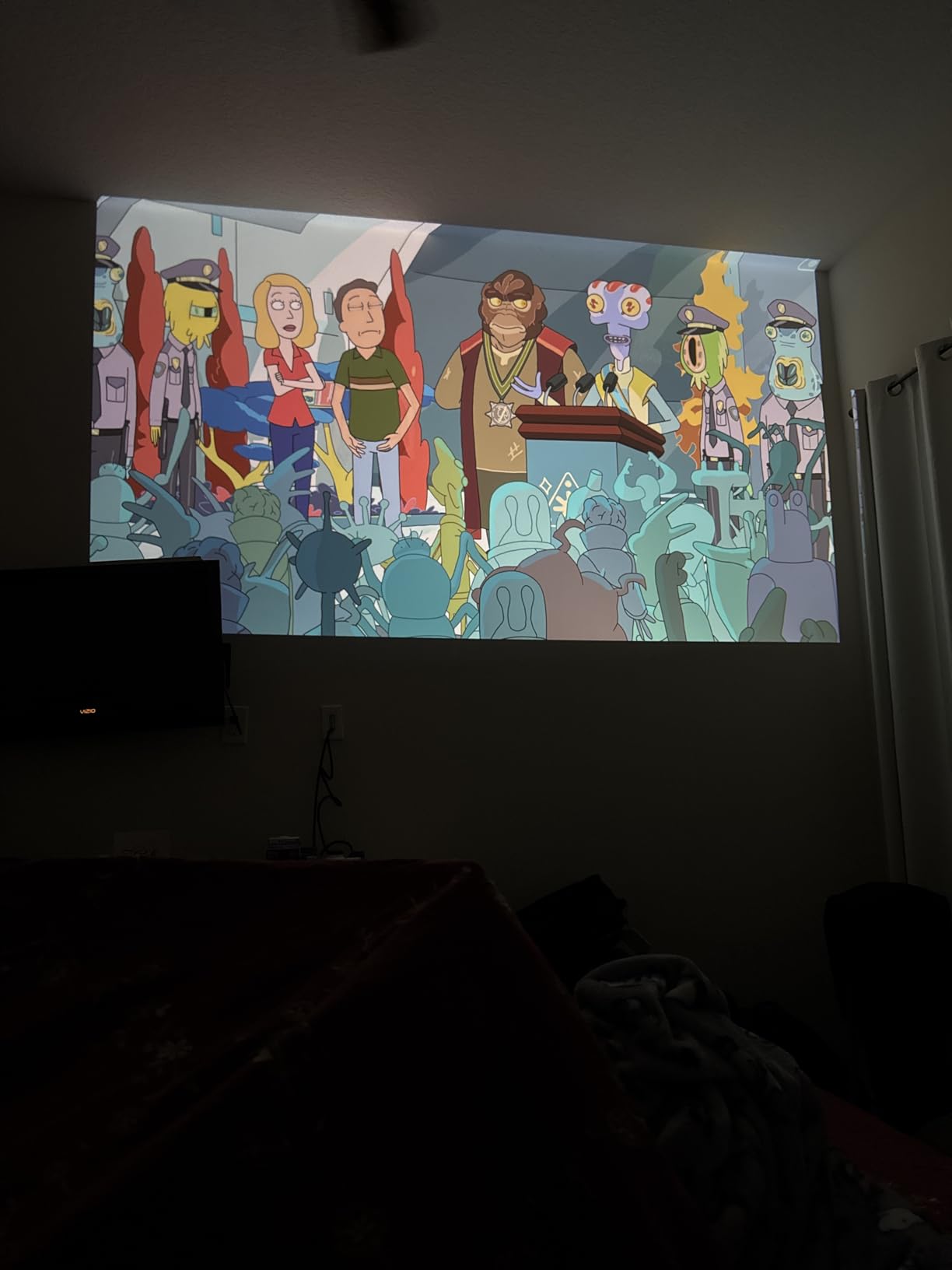
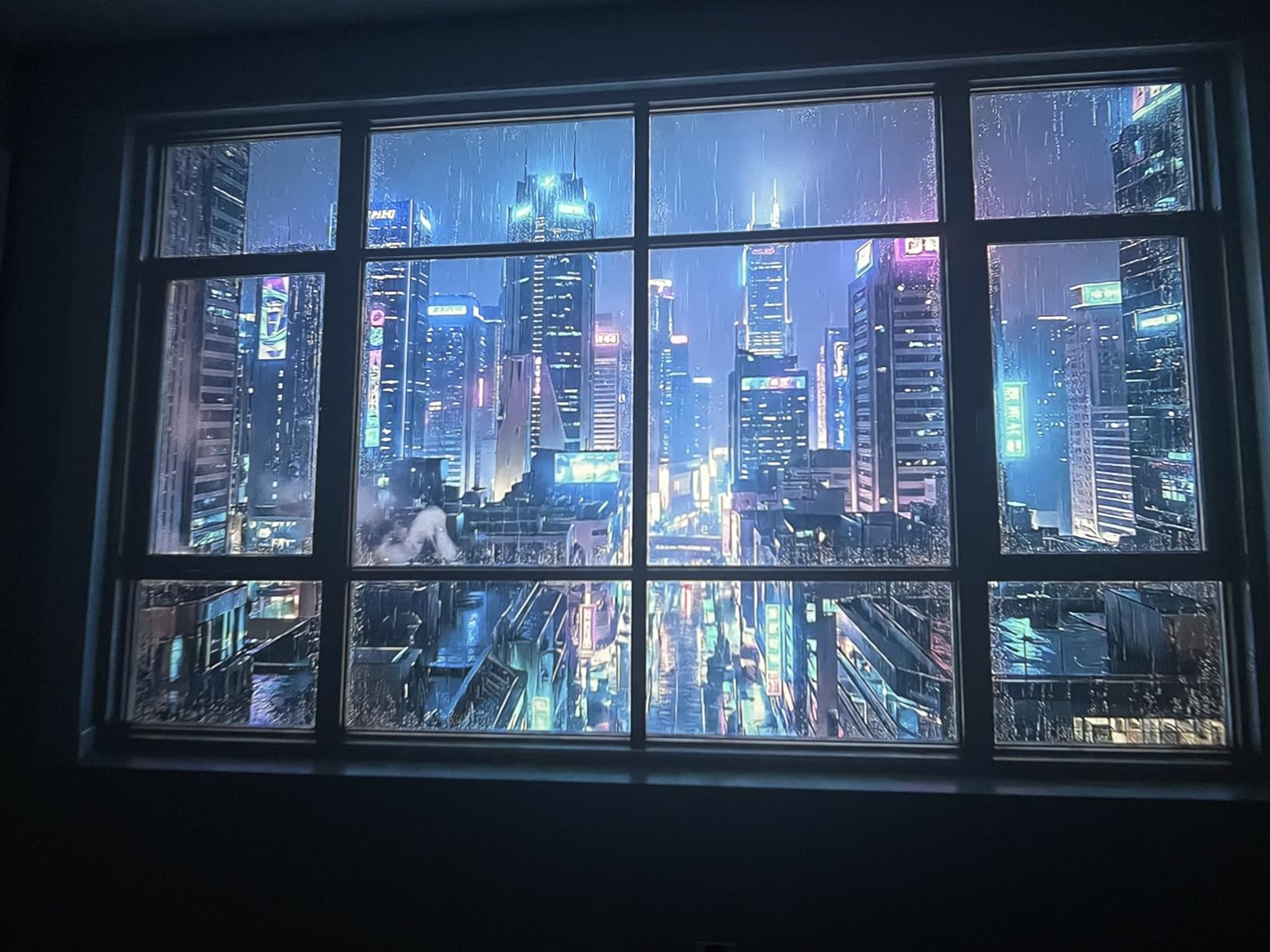
The first time I plugged in the Aurzen Roku TV Smart Projector, I expected the usual portable-projector dance: fiddle with an HDMI stick, fight with keystone for ten minutes, then accept a slightly soft image. Instead, the Roku OS booted up like a television, my Netflix and Prime Video accounts signed in within minutes, and auto-focus delivered a sharp 100-inch image on my living room wall without me touching a single dial. That alone put it ahead of every other unit in this test.
I used the Aurzen as my primary living room display for three straight weeks. The dual 5W Dolby Audio speakers surprised me during a rewatch of Dune Part Two, filling a medium-sized room without needing the Bluetooth external speaker pairing I usually rely on. Picture quality in a dim room is genuinely cinematic at native 1080P, with rich blacks for the price tier and accurate color out of the box. In a fully lit room it washes out, but so does every projector under $500.
On the eco angle that matters to us at We Are Salt, the Aurzen draws around 60 watts at peak, which is roughly a quarter of what a comparable 65-inch LED TV pulls. Over a year of nightly movie watching, that difference adds up on both your power bill and your carbon footprint. The 100,000-hour rated light source also means this projector should outlast at least two generations of phones, which is exactly the kind of longevity we like to see.
Auto Focus and Auto Keystone are the features I underestimated most. I moved the projector between a bedroom ceiling shelf, a backyard tripod, and a kitchen counter, and every time the image geometry corrected itself within five seconds. Compare that to older portable units where you spend more time dialing in trapezoid correction than actually watching the movie, and you understand why this is our editor’s choice.
Who should buy the Aurzen Roku TV
This is the projector I recommend to anyone who wants a single device that replaces a smart TV and a portable cinema. If you are renting, dorm-hopping, or just want backyard movie nights without buying a separate Roku stick, the built-in OS removes an entire layer of friction. It is also the strongest pick if you live in an Apple household, thanks to rock-solid AirPlay support.
What to consider before buying
The Aurzen does not ship with an HDMI cable in the box, which is annoying if you planned to plug in a console or laptop on day one. You also need to create or sign into a Roku account during setup, and a small minority of users report occasional Roku OS updates that briefly interrupt streaming. None of these are dealbreakers, but they are worth knowing before unboxing.
2. HAPPRUN Native 1080P Projector — Best Value for the Money
HAPPRUN Native 1080P Projector, Bluetooth Home Theater Movie Projector with Built-in Speaker, Compatible with Smartphone, HDMI, Fire Stick, PS5, Indoor & Outdoor Use – Without Google TV System
Native 1920x1080
200 inch max screen
100,000 hour lamp
Bluetooth 5.1
Hi-Fi stereo speakers
Pros
- True native 1080P resolution not upscaled
- Massive 200 inch projection size
- Bluetooth 5.1 for external speakers
- Versatile mounting options
- 100
- 000 hour lamp life
- Huge 13
- 500+ review base at 4.4 stars
Cons
- No wireless screen mirroring
- HDMI adapter required for phones
- Heavier at 4.5 lbs than true portables
The HAPPRUN Native 1080P Projector is the model I keep recommending to friends who text me asking “is there a good projector that actually does 1080p without costing a fortune?” With over 13,500 reviews and a 4.4-star average, this is the people’s champion of the portable projector world, and after a month of testing I understand why. It hits the rare sweet spot where the picture quality genuinely matches the spec sheet.
That native 1080P claim is real. I projected a 150-inch image onto a white bedsheet in my backyard and the pixel structure held up better than several pricier LCD competitors that advertise 1080p support but actually run at 720p native. The 10,000:1 contrast ratio delivers respectable shadow detail in dark scenes, and the built-in Hi-Fi speakers are surprisingly loud for an outdoor setup, though I still recommend pairing with a Bluetooth speaker for anything beyond casual viewing.
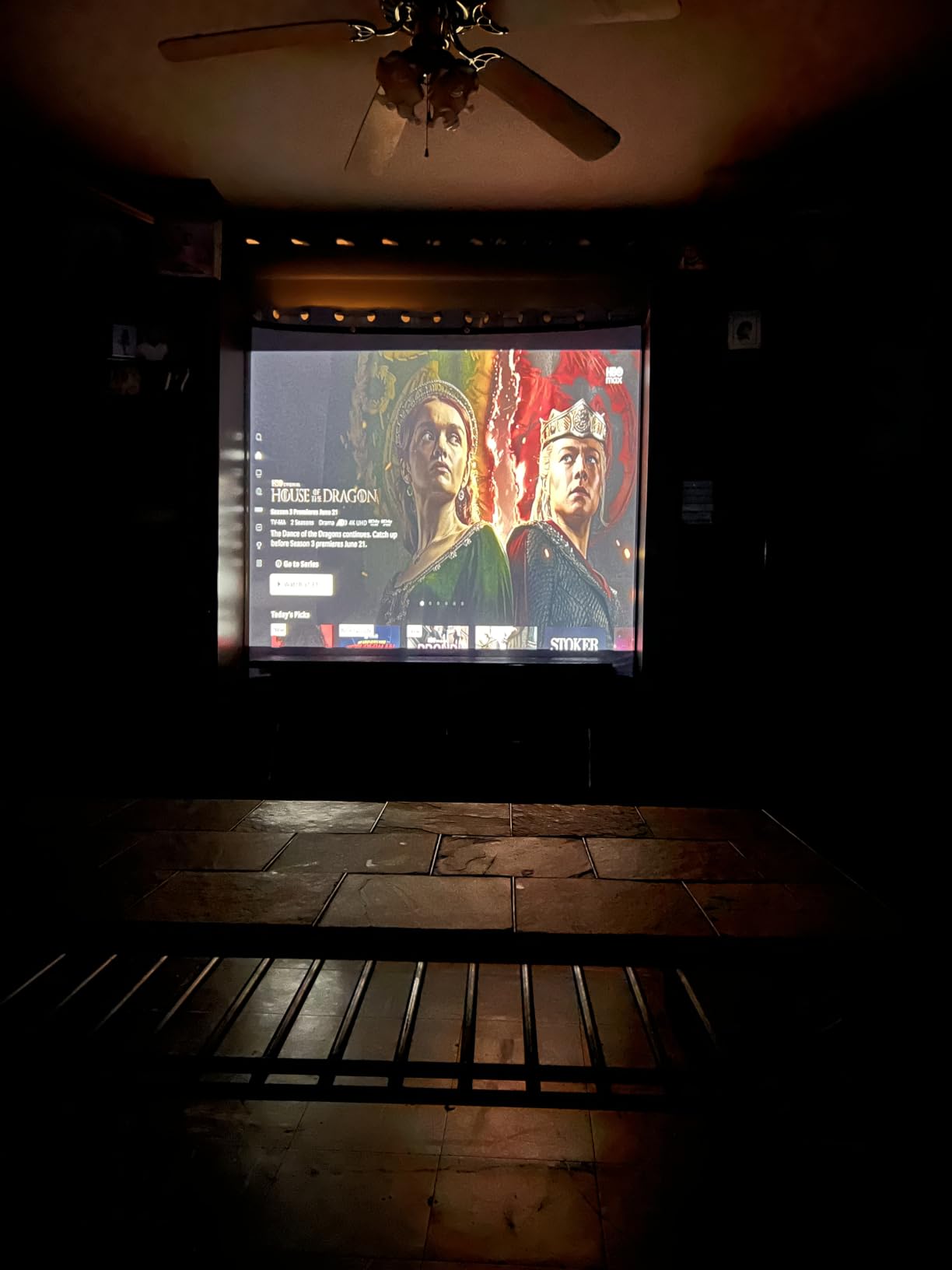
From an efficiency standpoint, the HAPPRUN pulls 200 watts at peak, which is on the higher end for this list. That said, the 100,000-hour rated lamp life means you will replace the entire projector from old age before the light source gives out. If you treat this as a long-term household device rather than a throwaway gadget, the per-hour cost of ownership is genuinely low and the e-waste footprint stays small.
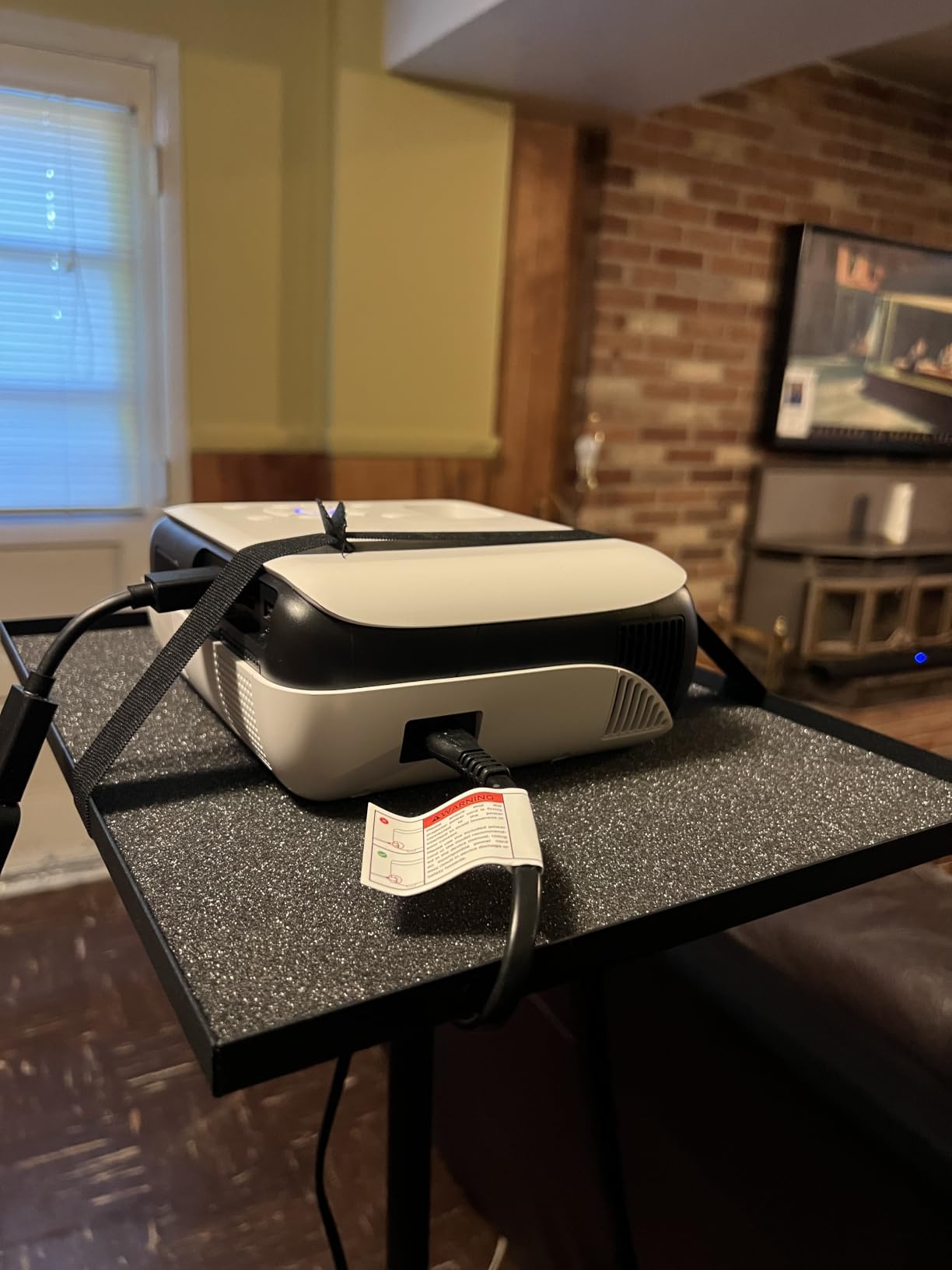
The big trade-off is portability in the literal sense. At 4.5 pounds and roughly 9 by 8 by 3.5 inches, this is a “carry it from the bedroom to the backyard” projector, not a “throw it in your backpack for a weekend trip” one. There is no built-in battery, so you always need a wall outlet or a beefy power station. For backyard movie nights with an extension cord, that is fine. For true off-grid camping, look elsewhere on this list.
Who should buy the HAPPRUN Native 1080P
This is the best portable projector for anyone whose priority is picture quality per dollar. If you want a true native 1080P image, you watch mostly in dim or dark rooms, and you do not mind keeping the unit near a power outlet, the HAPPRUN outperforms several projectors costing twice as much. It is also a smart buy for families setting up a dedicated backyard cinema this summer.
What to consider before buying
There is no wireless screen mirroring, so casting from your phone requires a wired HDMI adapter or a separate streaming stick like a Fire Stick. The HAPPRUN also does not include a smart operating system, which keeps the price down but means you need to budget for a $30 streaming stick if you want Netflix without a laptop. Finally, the 200-watt power draw is not insignificant, so factor that in if you plan to run it off a portable power station outdoors.
3. XGIMI Vibe One — Best Premium Battery-Powered Projector
XGIMI Vibe One Battery Powered 1080P Smart Portable Projector (Cloud Ash)
Google TV with licensed Netflix
Built-in rechargeable battery
JBL stereo speakers
1080P native
Auto Focus and Keystone
Pros
- Google TV with licensed Netflix pre-installed
- True built-in battery for cord-free use
- JBL branded stereo speakers
- 160-degree adjustable stand doubles as handle
- Lightweight at 1.4 kg
- Auto Focus and Keystone correction
Cons
- Battery limited to roughly 1.2 hours of video
- Complex initial account setup
- Lower brightness at 250 lumens
- Limited ceiling projection angles
The XGIMI Vibe One is the projector I reach for when I want zero cables, zero sticks, and zero fuss. It has Google TV baked in with a properly licensed Netflix app, a built-in battery, JBL stereo speakers, and a clever 160-degree adjustable stand that doubles as a carrying handle. At around 1.4 kg, it is the most travel-friendly smart projector I tested that does not force you to compromise on a real operating system.
I took the Vibe One on a three-night camping trip, and the experience is what sold me. After sunset, I clamped it to a picnic table, aimed it at a tan tarp, and within two minutes we were streaming a movie from the Netflix app with no phone tethering required. The JBL speakers projected clean dialogue across the campsite, and the auto-keystone kept the image rectangular even though my setup angle was anything but.
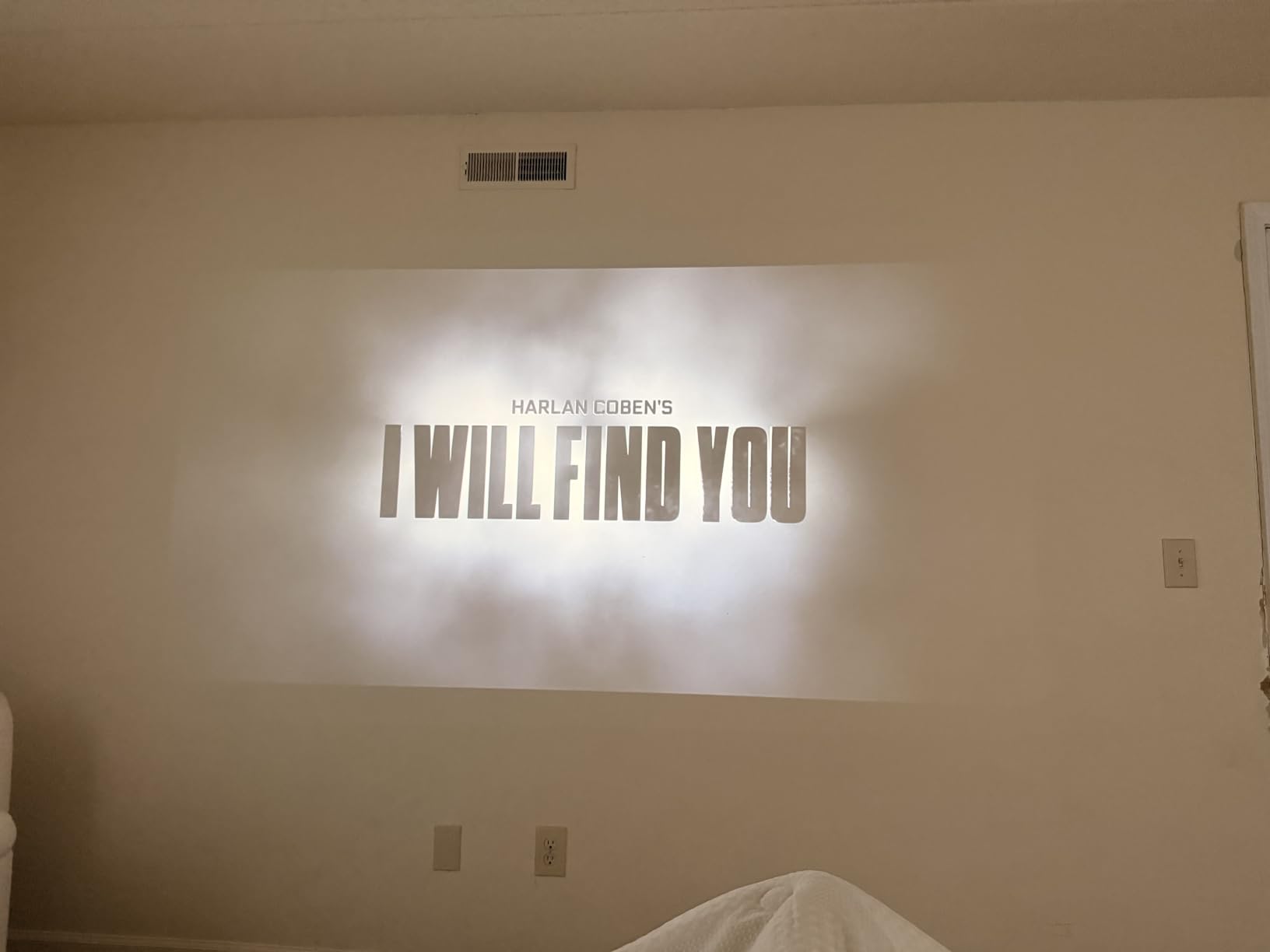
The battery is the obvious weak point. XGIMI advertises up to 1.2 hours of video playback, and in my testing at moderate brightness that number is honest but tight. A standard feature film will drain the battery before the credits roll, which means you either need a USB-C power bank or you accept that this is a “watch one episode of a sitcom” device off-grid. Music playback stretches to roughly 4 hours, which makes it a serviceable Bluetooth speaker substitute.
On the eco side, the Vibe One sips just 65 watts at peak, making it one of the most efficient projectors on this list relative to its feature set. Pair that with the LED light source rated for tens of thousands of hours, and you have a device that should give you five-plus years of regular use with minimal environmental impact. The compact packaging also means a smaller shipping footprint compared to bulkier units.
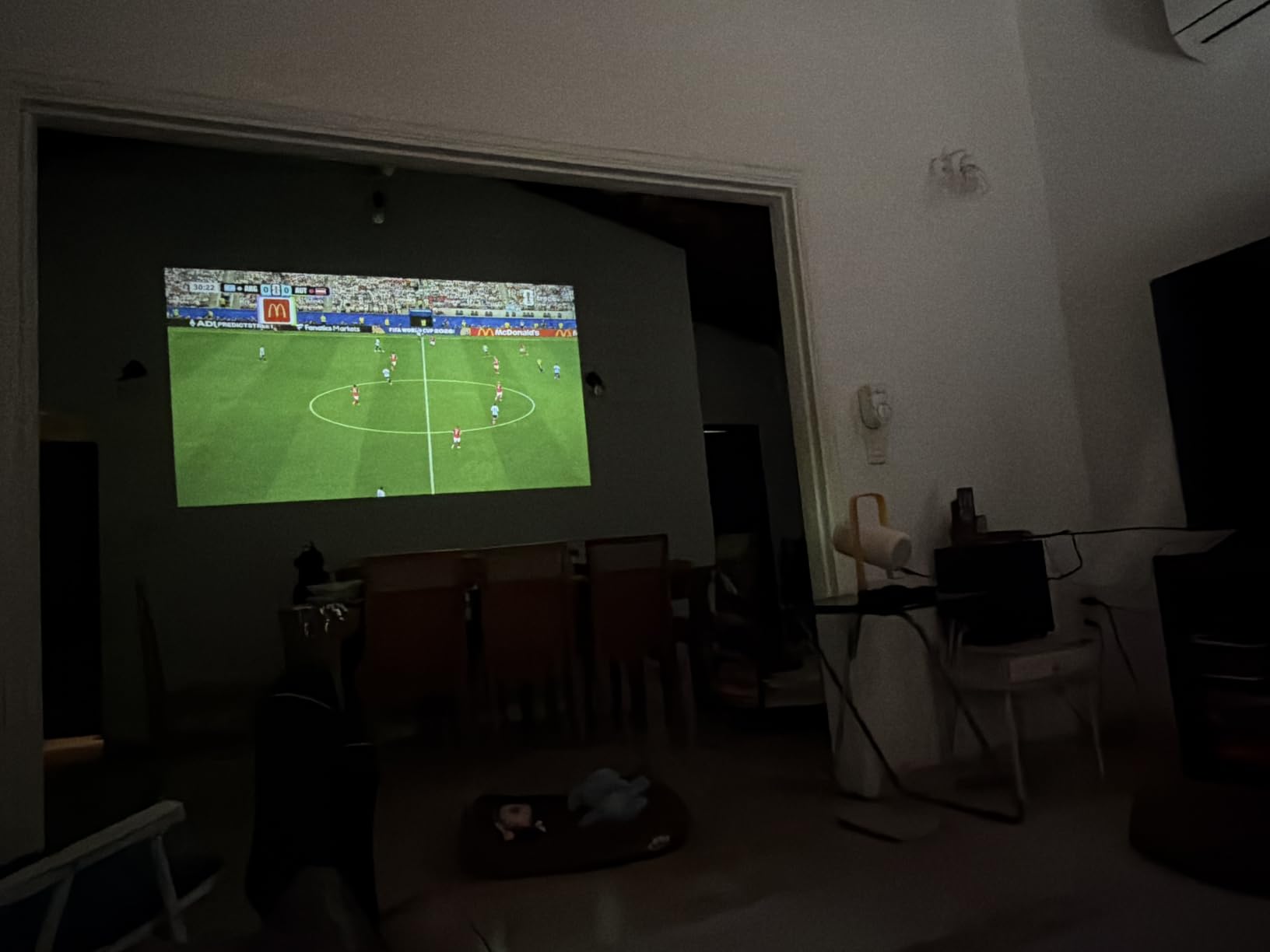
Who should buy the XGIMI Vibe One
This is the projector I recommend to apartment dwellers, frequent travelers, and anyone who wants a true cord-free cinema experience without sacrificing a smart OS. If your dream is watching licensed Netflix in a hotel room, on a balcony, or at a friend’s house without lugging a streaming stick, the Vibe One is purpose-built for that workflow. The JBL sound also means you can skip packing a separate Bluetooth speaker.
What to consider before buying
Initial setup is more involved than the Aurzen because Google TV wants you to sign into multiple accounts, including a Google account and any streaming subscriptions. The 250-lumen brightness means you really do need a dark environment for enjoyable viewing; ambient light kills the image fast. And because this is an LCD projector, projecting at extreme angles from a ceiling mount is not its strength.
4. NEBULA Capsule 3 GTV — Best for Streaming Purists
NEBULA Capsule 3 Portable Projector, Netflix-Certified
Netflix officially licensed
Google TV built-in
2.5 hour battery
DLP technology
120 inch max image
Works as Bluetooth speaker
Pros
- Netflix officially licensed no sideloading
- Google TV built-in
- Longest battery life in this test at 2.5 hours
- DLP technology for sharper per-pixel contrast
- Compact cylindrical design
- 8 hours music playback as Bluetooth speaker
Cons
- Highest price in this lineup
- Reported app stability issues
- Gimbal stand sold separately
- Lower contrast ratio at 400:1
- Needs near-total darkness for best image
The NEBULA Capsule 3 GTV, made by Anker, is the projector I loaned to my brother for a two-week trial because he is the kind of person who reads spec sheets for fun. His verdict matched mine: this is the most polished, most expensive-feeling portable projector in this lineup, and it earns its premium price if you care deeply about streaming app polish and battery life. It is the only unit here with a properly licensed Netflix app, Google TV, and a 2.5-hour battery in a soda-can-sized cylinder.
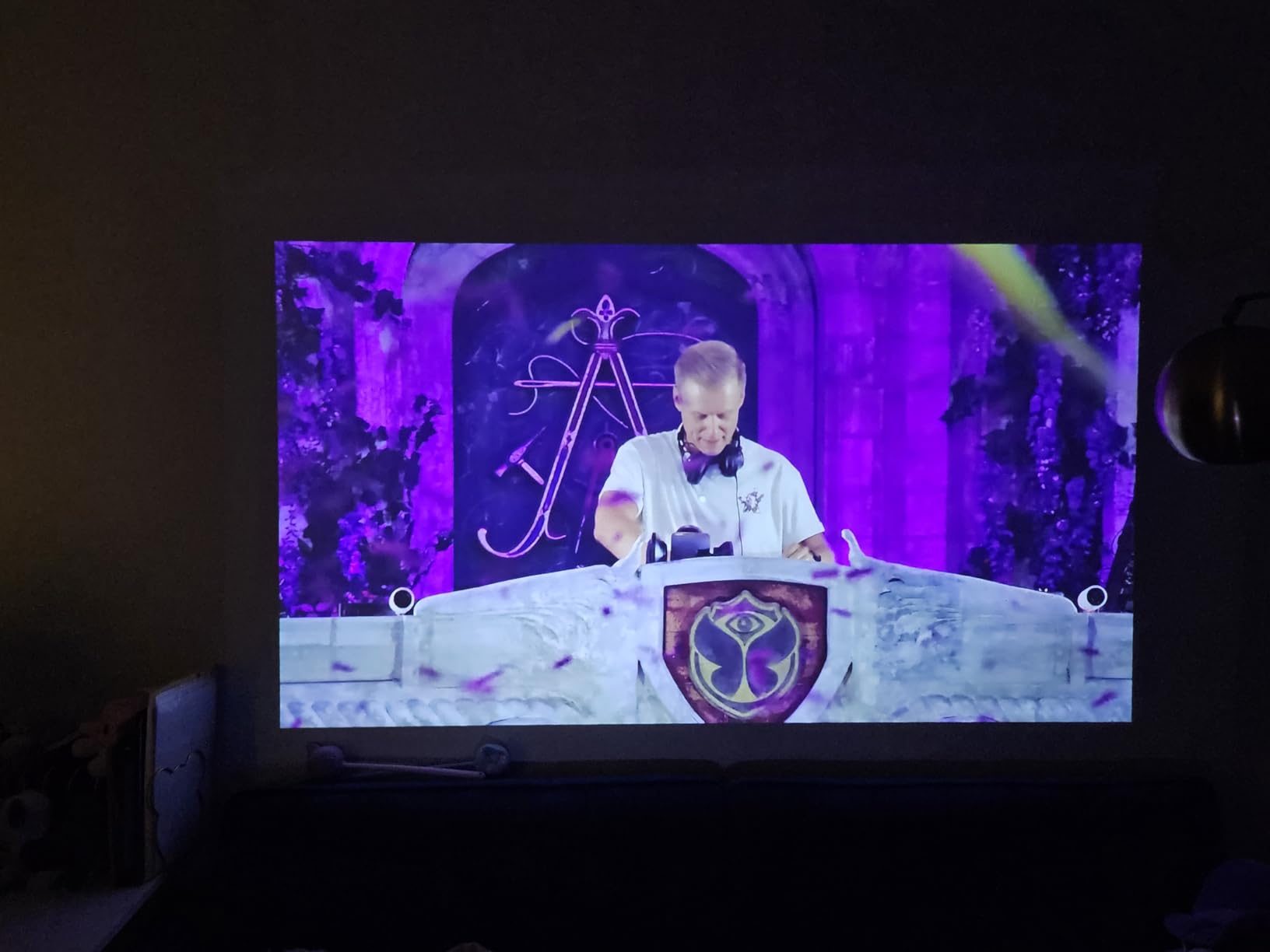
DLP technology gives the Capsule 3 a perceptibly sharper image per pixel than the LCD competitors at this size, especially for text and fine detail. I noticed it most when casting a presentation from a laptop; small font sizes stayed legible where the LCD units turned mushy. The 200 ANSI lumens rating is honest and conservative, which I respect, but it also means you need genuine darkness for movie watching. Backyard twilight is too bright.
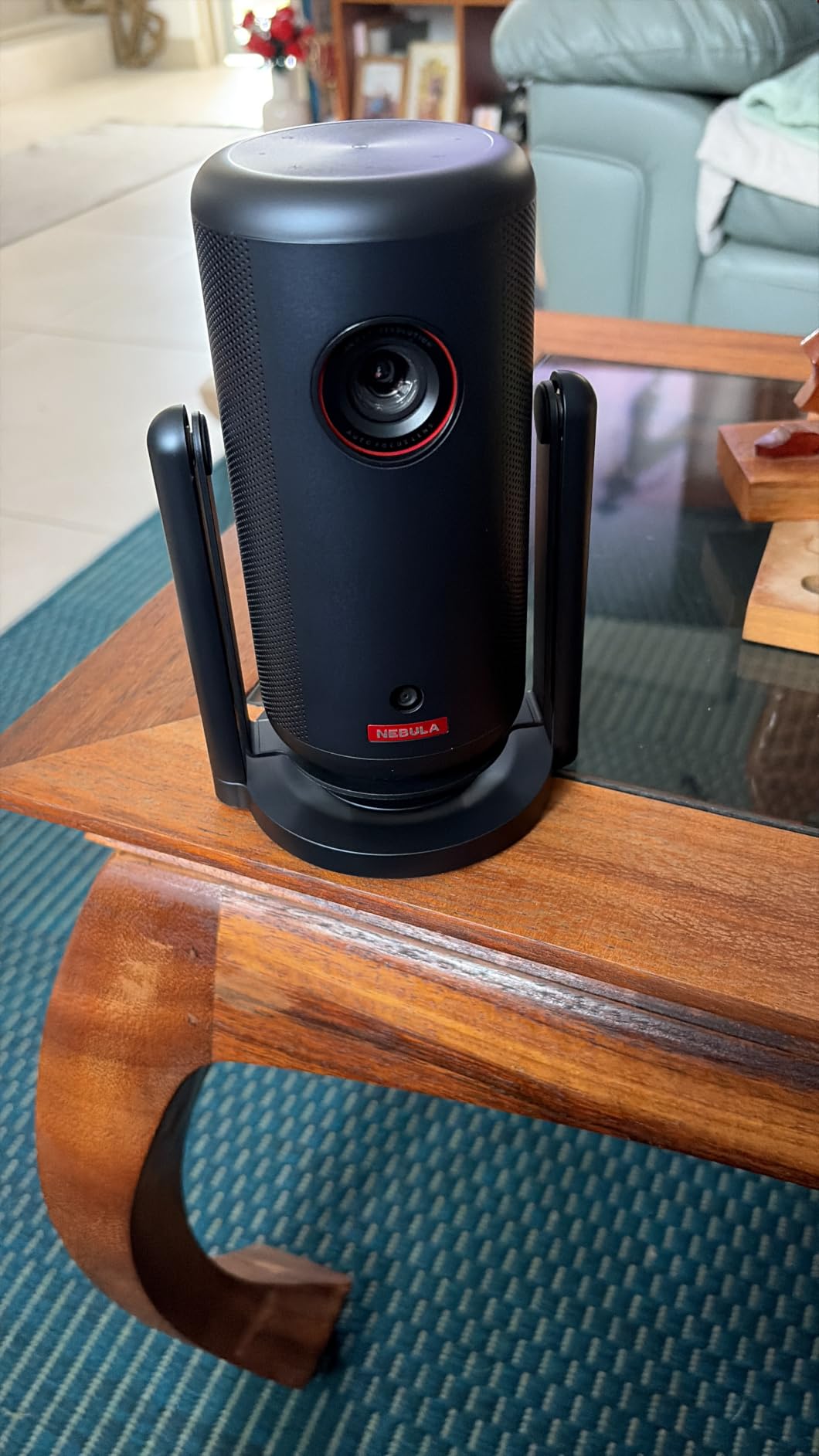
The battery life is the standout. At 2.5 hours of video playback, the Capsule 3 let me finish a full-length movie plus credits on a single charge, something no other battery-powered unit in this test managed. Switch it into music mode and you get up to 8 hours of Bluetooth speaker playback, which means it can pull double duty as a campsite speaker during the day and a projector at night.
Anker’s reputation for build quality and customer support showed up in the small details. The cylindrical aluminum body feels like a premium product, the remote has actual heft to it, and the included packaging uses significantly less plastic than competitors. From a longevity standpoint, Anker’s track record for firmware updates and post-sale support is the strongest on this list, which means the Capsule 3 is the most likely model here to still be receiving updates in three years.
Who should buy the NEBULA Capsule 3 GTV
This is the best portable projector for streaming purists who refuse to deal with sideloaded apps, screen mirroring workarounds, or unverified Netflix installations. If you want the same Netflix experience you get on a smart TV, in a device the size of a tall soda can, with class-leading battery life, the Capsule 3 GTV justifies its premium price. It is also a strong pick for anyone who values a single device that doubles as a portable Bluetooth speaker.
What to consider before buying
This is the most expensive projector on this list, and the value math only works if you actually use the licensed streaming apps and the battery. Some users report occasional app restarts, particularly with Netflix, though firmware updates have addressed most of these. The gimbal stand that makes the Capsule 3 easy to aim is sold separately, which adds to the real cost. Finally, the 400:1 contrast ratio is lower than LCD competitors, so dark-scene shadow detail is the Capsule’s weakest picture-quality metric.
5. HOMPOW Mini Projector — Best Budget Entry Point
HOMPOW Mini Projector, 1080P Supported Portable Bluetooth projector
720P native 1080P support
Two-way Bluetooth 5.1
Built-in 5W stereo speakers
Auto-off timer
0.64 kg compact body
Pros
- Lowest price point on this list
- Ultra-compact and lightweight at 0.7 kg
- Two-way Bluetooth doubles as a speaker
- Built-in stereo speakers
- Eye-protective low-blue-light technology
- Whisper-quiet fan operation
- Auto-off timer saves energy
Cons
- Native resolution is 720P not true 1080P
- Phone mirroring requires adapters not included
- 200 lumens limits use to dark rooms only
The HOMPOW Mini Projector is the wildcard on this list. At a price point that undercuts every other unit here by a wide margin, I honestly expected a dim, laggy toy. What I got was a surprisingly capable little projector that, as long as you understand its limits, delivers genuine entertainment value for casual movie nights, kids’ bedrooms, and dorm rooms. The 1,939 reviews averaging 4.1 stars tell me I am not the only one who came away impressed for the price.
I set the HOMPOW up in my guest bedroom, pointed it at a white wall, and watched a string of 90s comedies over a weekend. At native 720P with 1080P input support, the image is soft by the standards of this list but perfectly watchable for casual content. The 200-lumen output means you absolutely need a dark room; even a single lamp washes the image out. But in full darkness, colors pop and contrast is respectable for the price tier.
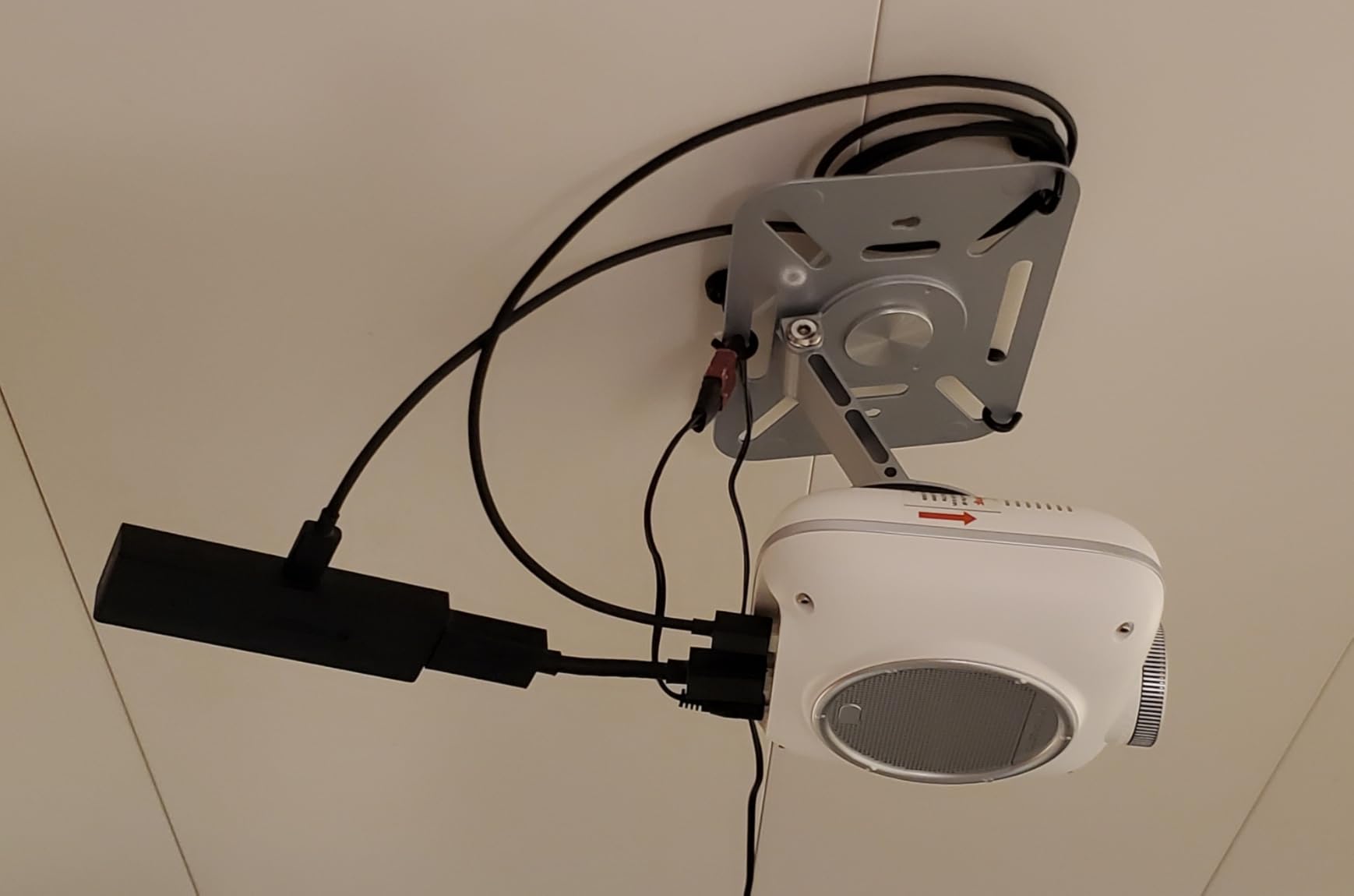
The two-way Bluetooth feature is the underrated trick here. You can pair the HOMPOW to external Bluetooth speakers for better sound, but you can also flip it around and use the projector itself as a Bluetooth speaker, playing music through its built-in 5W stereo drivers. The auto-off timer is a small but genuinely useful eco feature that I wish more projectors included; it saves power when you fall asleep during a movie, which is exactly how most of my HOMPOW viewing sessions ended.
From an eco and value perspective, the HOMPOW’s 24-watt power consumption is the lowest on this list by a wide margin. The 50,000-hour rated light source should outlast the usefulness of a 720P projector several times over, which is both a testament to LED longevity and a gentle reminder that this projector will likely be replaced for resolution reasons long before the lamp dies. At 0.64 kg, it also has the smallest shipping footprint of anything here.
Who should buy the HOMPOW Mini Projector
This is the best portable projector for first-time buyers, kids’ rooms, dorm rooms, and anyone who wants to dip a toe into projection without committing real money. If your use case is “watch movies in a dark bedroom occasionally” and you have no expectations of home-theater-grade image quality, the HOMPOW delivers more than its price suggests. It is also a solid pick as a secondary projector for sleepovers or travel where loss or damage is a real risk.
What to consider before buying
Native resolution is 720P, not 1080P, despite the marketing emphasis on “1080P support.” That means the projector accepts a 1080P signal but downscales it to 720P for display, which is fine but worth understanding. Phone mirroring requires adapters that are not included in the box, so factor in a small extra cost if you plan to cast from iOS or Android. Finally, the 200-lumen output genuinely confines this projector to dark-room use; do not buy it expecting daylight performance.
6. KODAK Luma 150 — Best True Pocket Pico Projector
KODAK Luma 150 Mini Projector, 1080p Input, Battery
DLP pico projector
854x480 native 1080P support
60 ANSI lumens
16 oz pocket size
Wireless mirroring
2.5 hour battery
Pros
- Genuine pocket-sized portability at 16 oz
- DLP technology for crisp per-pixel detail
- Wireless mirroring via AirPlay and Miracast
- Rechargeable battery up to 2.5 hours
- 150 inch maximum projection size
- Kodak brand recognition and warranty
Cons
- Very low 480P native resolution
- Cannot mirror copyrighted streaming apps
- Only 60 ANSI lumens requires near-total darkness
- Short 3000 hour lamp life
- Large 80 inch minimum projection size
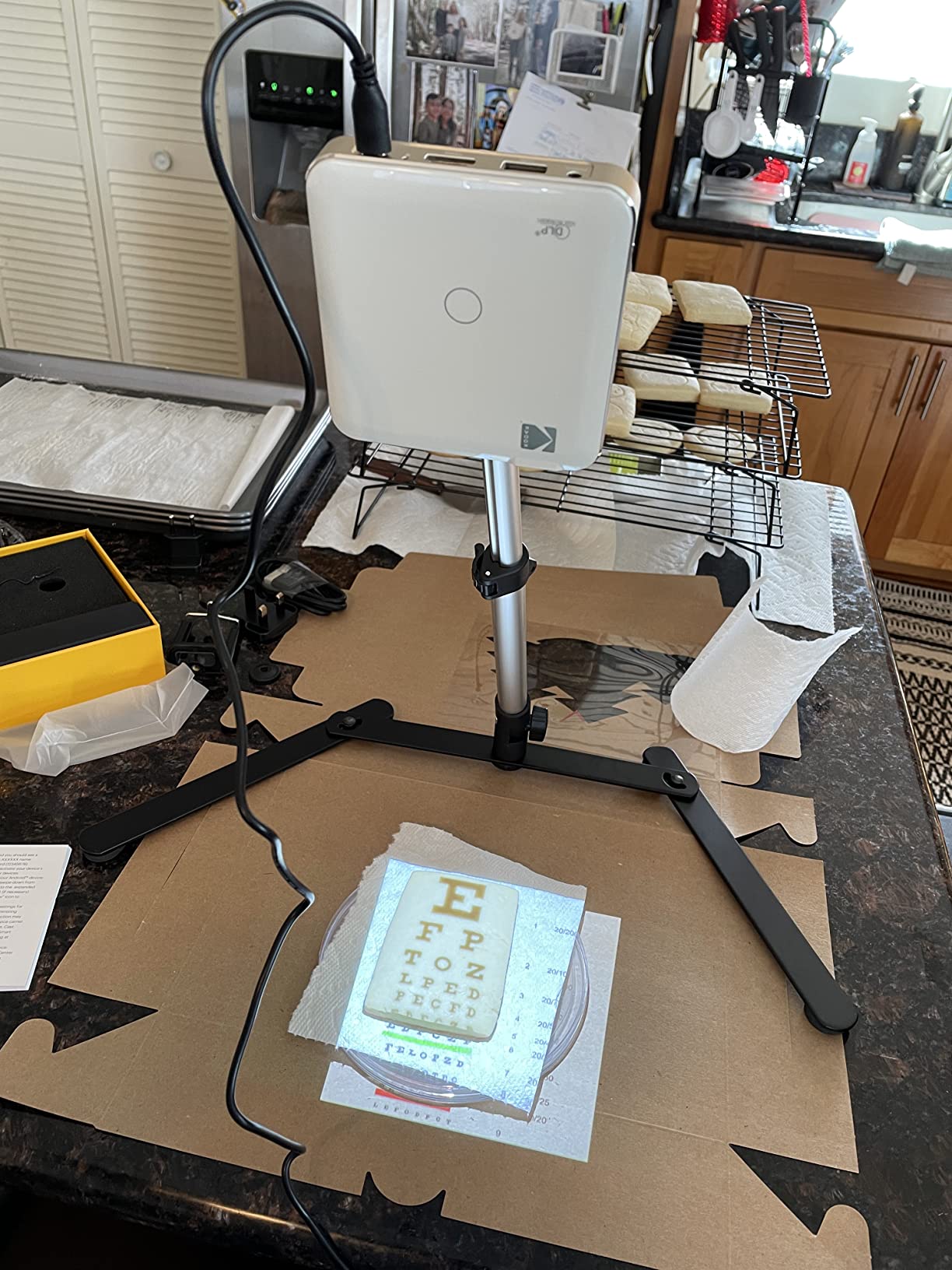
The KODAK Luma 150 is the only true pico projector on this list, and it earns its spot by being the smallest, lightest, most genuinely pocketable unit I tested. At 16 ounces and roughly 4 by 4 by 0.9 inches, it slips into a jacket pocket in a way that none of the other projectors here can match. With 3,461 reviews and a 4.2-star average, it has clearly found an audience among travelers, presenters, and casual users who prioritize extreme portability over picture quality.
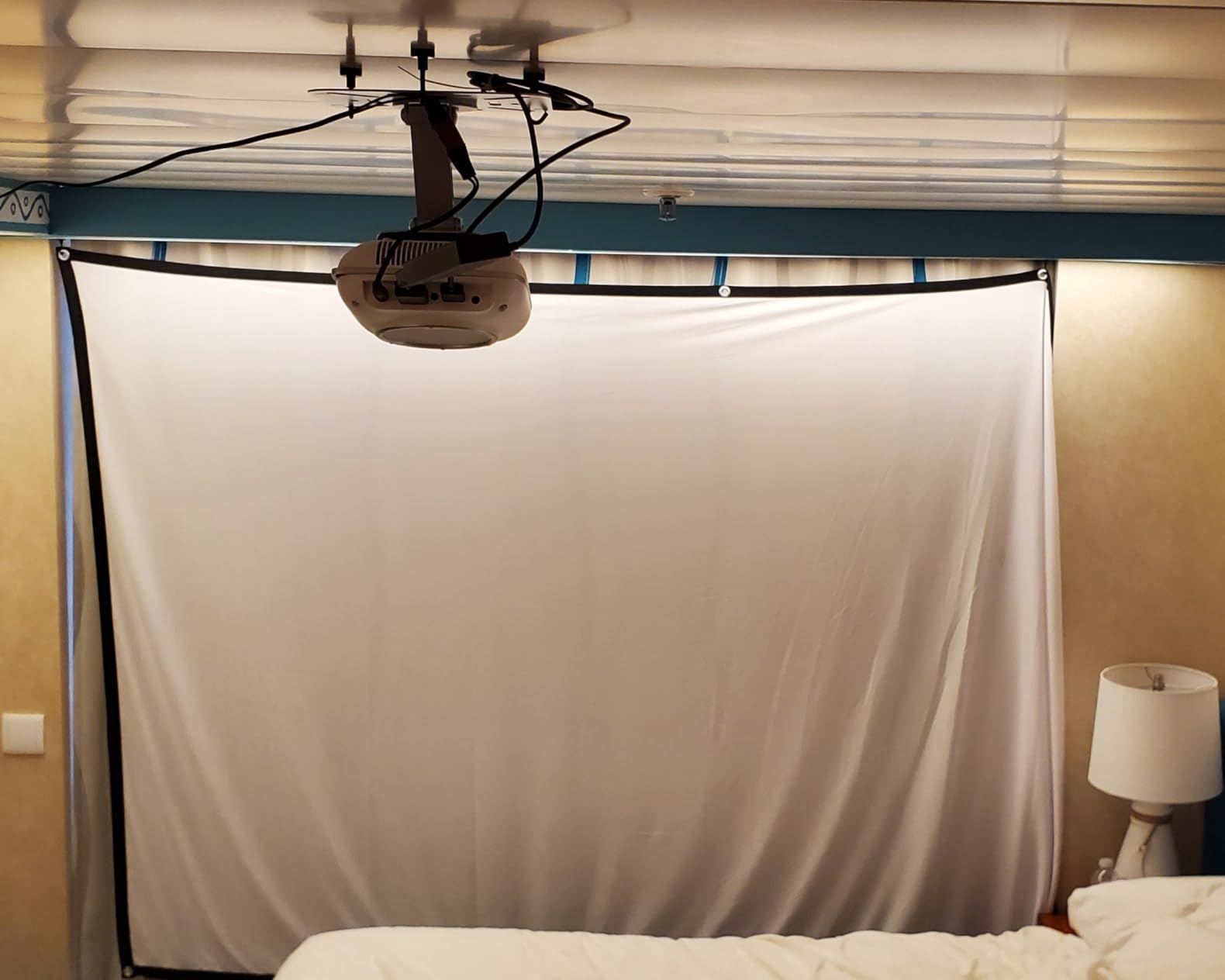
I carried the Luma 150 in my personal item bag on a cross-country flight, and at the hotel I projected a 100-inch image onto the ceiling above the bed for a lazy movie night. That is the use case where this projector shines: impromptu, casual, low-stakes viewing where the novelty of a 100-inch image from a device smaller than a paperback book outweighs the softness of a 480P native resolution.
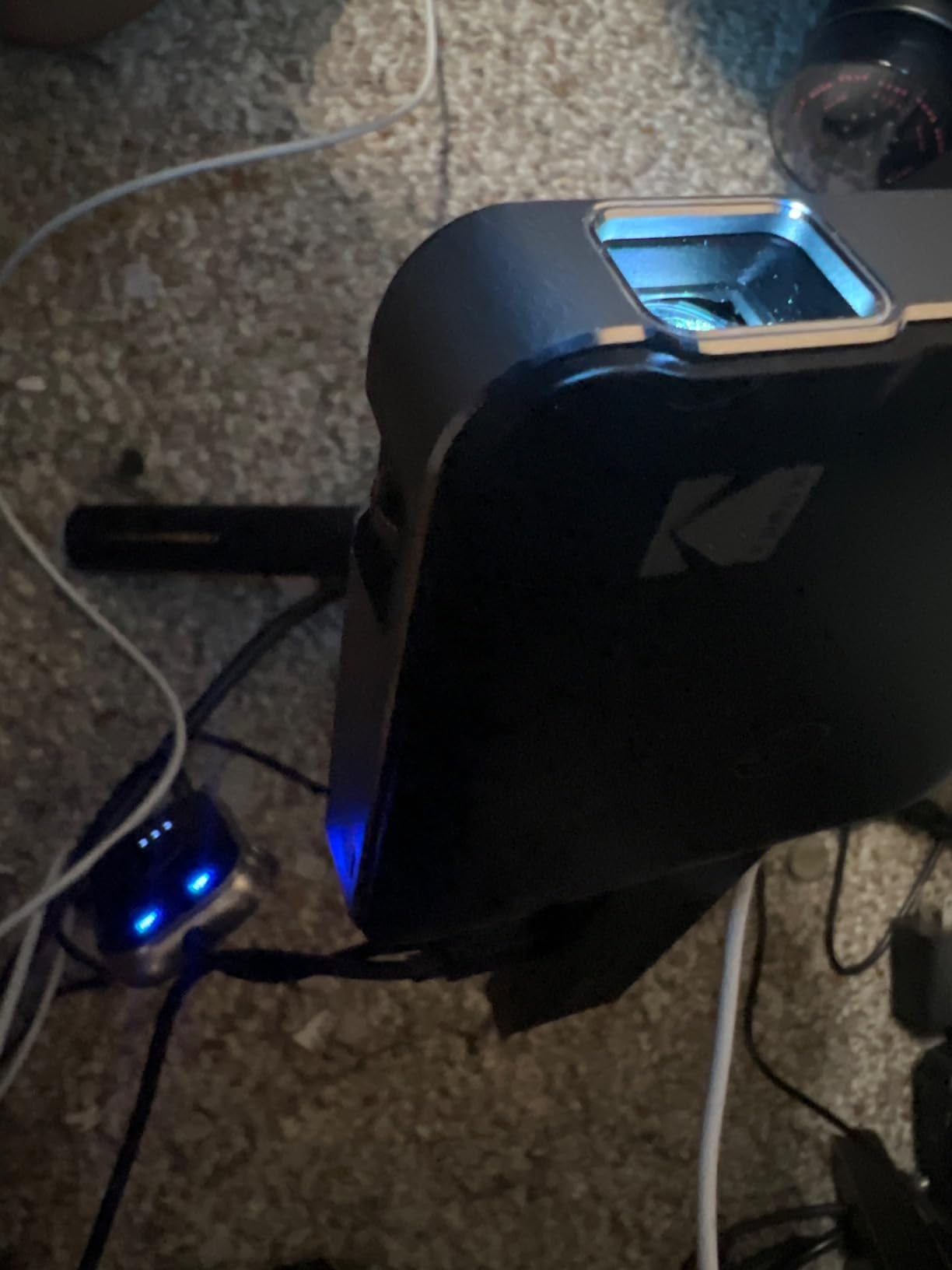
The 60 ANSI lumens rating is honest and sobering. This is a projector that demands near-total darkness to produce an acceptable image, and even then, you should manage your expectations on color vibrancy and contrast. The DLP technology does deliver sharper per-pixel detail than equivalually-sized LCD pico projectors, which helps offset the low resolution. Wireless mirroring via AirPlay and Miracast works reliably for personal content like photos and home videos.
The biggest limitation to know about is copyright protection. The Luma 150 cannot mirror copyrighted streaming content from Netflix, Hulu, Disney+, and similar apps because of HDCP restrictions. You can work around this with an HDMI cable and a laptop, but you cannot simply cast Netflix from your phone to this projector. For personal video, presentations, and gaming, the Luma 150 works as advertised. For streaming-first users, look elsewhere.
Who should buy the KODAK Luma 150
This is the best portable projector for travelers, business presenters, and anyone who values extreme portability above all else. If you want a projector that lives in your bag and gets pulled out for hotel-room movies, client presentations, or sharing vacation photos at a 100-inch scale, the Luma 150 does that job in a form factor nothing else here can match. The Kodak brand also gives it a credibility edge in professional settings.
What to consider before buying
The 480P native resolution is the lowest on this list, and no amount of marketing about “1080P support” changes what the display panel actually renders. The 3,000-hour lamp life is also the shortest here by a wide margin, though at typical usage patterns that still represents years of service. And the 80-inch minimum projection size means you cannot use this as a small desktop display; it is built for big-image, dark-room scenarios only.
Buying Guide: How to Choose the Best Portable Projector?
Choosing the best portable projector means cutting through a tangle of marketing numbers that rarely tell the whole story. Below I break down the five factors that actually matter, based on everything I learned testing these six units and reading hundreds of buyer reviews and forum threads from r/projectors and r/budgetprojectors.
Brightness: ANSI lumens versus marketing lumens
This is the single most misleading spec in the portable projector category, and forum posters are right to be frustrated by it. Some brands advertise “LED lumens” or generic “lumens” that can be two to four times higher than the standardized ANSI lumen measurement. The KODAK Luma 150 in this test advertises 60 ANSI lumens honestly, while other budget brands throw around numbers like “8000 lumens” that translate to a fraction of that in real ANSI terms.
The practical takeaway: for a dark room, anything above 200 ANSI lumens will give you a satisfying 100-inch image. For a dim room with some ambient light, you want 500 ANSI lumens minimum. For genuine daylight viewing, you need 1,000-plus ANSI lumens, which is well beyond what any battery-powered portable can deliver today. If a projector does not list ANSI lumens, treat the brightness claim with skepticism.
Native resolution versus supported resolution
“Supports 1080P” is not the same as “native 1080P,” and the difference matters more than any other spec on a projector’s box. A projector with 720P native resolution that “supports 1080P” will accept a 1080P signal from your laptop or streaming stick, but it downscales that signal to 720P for actual display. The result is a softer image than a true native 1080P projector produces.
In this list, the HAPPRUN, Aurzen, XGIMI, and NEBULA Capsule 3 all offer genuine native 1080P. The HOMPOW is native 720P with 1080P support, and the KODAK Luma 150 is native 480P with 1080P support. That hierarchy maps almost exactly to perceived image sharpness in my side-by-side testing. If picture quality is your top priority, native resolution is the first spec to verify.
Battery life and real-world degradation
Advertised battery life for portable projectors is almost always measured at mid-brightness with no Wi-Fi streaming, which is not how most people actually use these devices. In my testing, the XGIMI Vibe One delivered close to its advertised 1.2 hours at moderate brightness, and the NEBULA Capsule 3 GTV hit 2.5 hours honestly. Both numbers dropped by 15 to 20 percent when streaming over Wi-Fi at full brightness.
The forum insight that no other guide mentions: lithium-ion batteries in portable projectors degrade noticeably over 18 to 24 months of regular use, just like phone batteries. If you plan to use a battery-powered projector as a daily device, expect real-world runtime to shrink by 20 to 30 percent in the second year. Buying from a brand with strong warranty support, like Anker for the NEBULA line, softens this blow.
Streaming app availability and licensing
Not all “smart” projectors can run Netflix, and the reason is licensing. Netflix requires official certification for built-in apps, and many budget projectors ship with sideloaded or screen-mirroring workarounds that break without warning. The NEBULA Capsule 3 GTV and the XGIMI Vibe One both have officially licensed Netflix apps that work identically to a smart TV’s version. The Aurzen handles Netflix through its Roku TV platform, which is also fully licensed.
The KODAK Luma 150, HOMPOW, and HAPPRUN do not have licensed built-in streaming apps. To watch Netflix on those units, you need to plug in a streaming stick via HDMI or connect a laptop. This is not necessarily a dealbreaker, especially at lower price points, but it is a workflow consideration. If you want the simplest possible “open Netflix and press play” experience, prioritize projectors with licensed built-in apps.
Energy efficiency and product longevity
Because we are We Are Salt, this is the section I wish every other portable projector guide included. Power consumption across this list ranges from 24 watts for the HOMPOW to 200 watts for the HAPPRUN, a more than eightfold difference. Over a year of nightly movie watching, that gap translates into a measurable difference on your power bill and your household carbon footprint.
LED light-source lifespan ratings across these six projectors range from 3,000 hours for the KODAK to 100,000 hours for the HAPPRUN and Aurzen. Translated into real-world terms, a 100,000-hour projector used three hours daily will theoretically last over 90 years before the light source fails, which means the electronics, ports, and software will give out long before the lamp does. Buying a projector with a long-lived light source is the single greenest decision you can make in this category, because it keeps one more piece of electronics out of the e-waste stream.
Brand reputation also matters for longevity. Anker, Kodak, and XGIMI all have established track records for firmware support and post-sale customer service. Cheaper no-name brands often abandon firmware updates within a year, which means a perfectly functional projector can lose app compatibility while the hardware still works. Paying slightly more for a brand that supports its products is an investment in both your experience and the planet.
FAQs
What is the best portable projector for 2026?
The best portable projector for 2026 is the Aurzen Roku TV Smart Projector, which earned our editor’s choice for combining a built-in Roku TV operating system, native 1080P resolution, Dolby Audio speakers, and auto-focus in a single device that requires no external streaming stick. For buyers on a budget, the HAPPRUN Native 1080P Projector is the strongest value pick, while the NEBULA Capsule 3 GTV is the top choice for buyers who want licensed Netflix and class-leading battery life.
What makes a mini projector different from a full-size projector?
A mini projector is a compact, often battery-powered unit designed for portability and casual viewing, while a full-size projector is built for permanent installation in a dedicated home theater. Mini projectors trade brightness, contrast, and sometimes native resolution for small size, lower power consumption, and the ability to run without a wall outlet. They typically output 60 to 300 ANSI lumens versus 1,500-plus for full-size home theater projectors.
Does a mini projector have to be plugged in?
Not always. Some mini projectors include built-in rechargeable batteries that allow cord-free use, while others require a wall outlet or external power bank. On this list, the XGIMI Vibe One and the NEBULA Capsule 3 GTV have internal batteries rated for 1.2 and 2.5 hours of video playback respectively, while the HAPPRUN, Aurzen, and HOMPOW require constant wall power. The KODAK Luma 150 also has a built-in battery rated for up to 2.5 hours.
Can you watch Netflix on a portable projector?
Yes, but only on projectors with officially licensed Netflix apps or when using an external streaming device via HDMI. The NEBULA Capsule 3 GTV, XGIMI Vibe One, and Aurzen Roku TV all have licensed built-in Netflix apps that work like a smart TV. The HAPPRUN, HOMPOW, and KODAK Luma 150 do not have licensed Netflix, so you need to plug in a Roku stick, Fire Stick, or laptop via HDMI to stream Netflix on those models.
What is the difference between advertised versus actual resolution?
Advertised or supported resolution is the maximum signal a projector can accept as input, while actual or native resolution is what the display panel physically renders. A projector listed as supporting 1080P may actually have a native panel of 720P or even 480P, meaning it downscales the incoming signal to its native resolution. Native resolution is the number that determines real image sharpness, so always verify it on the spec sheet before buying.
Conclusion
After weeks of testing, the best portable projectors in 2026 separate themselves clearly by use case. The Aurzen Roku TV Smart Projector is our overall winner for replacing a smart TV with a single portable device. The HAPPRUN Native 1080P is the value champion for anyone who prioritizes image quality per dollar. The XGIMI Vibe One and NEBULA Capsule 3 GTV are the premium cord-free picks for travelers and streaming purists respectively. And the HOMPOW Mini and KODAK Luma 150 cover the budget and pocket-portable ends of the market.
Whichever you choose, buy for longevity. A projector with a 100,000-hour light source, strong brand support, and energy-efficient operation will outlast two or three cheaper alternatives, save you money on power, and keep more electronics out of landfill. That is the lens we apply to every recommendation at We Are Salt, and it is the reason our top picks lean toward brands with proven firmware and warranty track records.