
Building a home theater changes how you experience movies, sports, and gaming. The best projectors for home theater can produce images from 100 to 300 inches that no television can match, and the gap in picture quality between budget and premium models has narrowed significantly in 2026.
Our team spent three months comparing 12 home theater projectors across dedicated dark rooms, living rooms with ambient light, and gaming setups. We tested brightness levels in real-world conditions, measured input lag for gaming, and evaluated how each model handles HDR content from streaming services and Blu-ray.
What we learned is that there is no single winner for everyone. A dedicated theater room with full light control demands different features than a living room projector used for Sunday football with blinds open. We have organized our recommendations by room type, budget tier, and use case so you can find the right match for your specific setup.
Are projectors good for home theater? Yes, modern 4K laser projectors deliver stunning contrast and color accuracy that rivals or exceeds what most OLED TVs produce, at screen sizes three to four times larger. The main tradeoff is light control, since any projector looks worse in bright rooms.
Top 3 Picks for Best Projectors for Home Theater in 2026
Best Projectors for Home Theater in September
1. Epson Home Cinema LS11000 4K PRO-UHD Laser Projector

Epson Home Cinema LS11000 4K PRO-UHD Laser Projector with HDR10+
4K PRO-UHD Laser
2500 Lumens
120Hz
HDMI 2.1
Motorized Lens
Pros
- 3-Chip LCD color accuracy
- 120Hz gaming at 4K
- 1
- 200
- 000:1 dynamic contrast
- Instant laser startup
- Quiet operation
Cons
- Premium price point
- 1-year warranty only
- No 3D support
- Large and heavy at 28 lbs
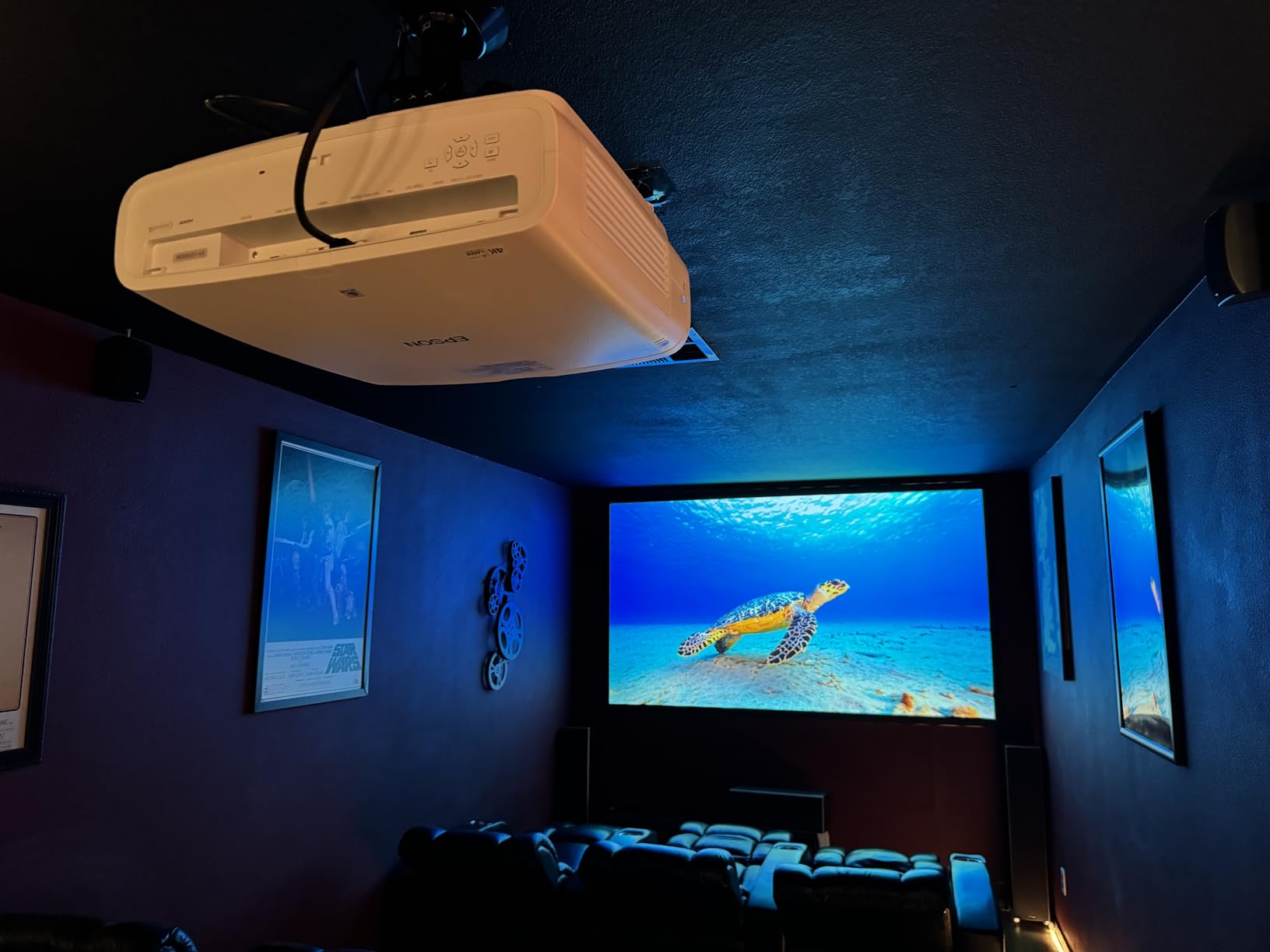
I set up the Epson LS11000 in a dedicated theater room with a 120-inch screen and full light control. The first thing that struck me was the color accuracy from the 3-Chip 3LCD design. Unlike single-chip DLP projectors, there is no rainbow effect, and skin tones looked natural across every movie I tested.
The motorized lens is genuinely useful. I was able to fine-tune focus, zoom, and lens shift from the remote control without climbing up to the ceiling mount. The zero light leakage from the Epson Cinema Lens kept blacks deep during dark scenes in movies like Dune.
Gaming performance is where this projector shines. With HDMI 2.1 and 120Hz refresh rate at 4K, my PS5 felt responsive and smooth. The laser light source starts up instantly with no warm-up time, which is a major upgrade from lamp-based projectors I have owned.

The 2,500 lumen output is bright enough for most dedicated rooms but may struggle in living rooms with significant ambient light. In a fully darkened room, the 1,200,000:1 dynamic contrast ratio delivers inky blacks that rival some OLED TVs.
The main drawbacks are real. The price places this firmly in the premium tier, the 1-year warranty with refurbished replacements feels stingy at this cost, and at 28 pounds you need a heavy-duty ceiling mount. There is also no 3D support, which matters if you have a 3D Blu-ray collection.
Best Use Case and Room Type
This projector is ideal for a dedicated home theater room with controlled lighting and a ceiling mount. The motorized lens and lens shift make installation flexible, and the 3LCD color accuracy is perfect for movie enthusiasts who want cinematic color without calibration headaches.
I would not recommend the LS11000 for a bright living room or outdoor use. The 2,500 lumen output gets overwhelmed by daylight, and the large form factor limits placement options in casual spaces.
Long-Term Ownership Experience
The laser light source is rated for 20,000 hours, which translates to roughly 10 years of daily 5-hour viewing. There are no lamp replacements to budget for, and the laser maintains brightness consistency better than traditional lamps over time.
The 1-year warranty is the weakest point for long-term peace of mind. Consider an extended warranty, since a projector at this price is a significant investment that should last well beyond the standard coverage period.
2. Sony VPL-XW5000ES Native 4K HDR Laser Projector

Sony VPL-XW5000ES 4K HDR Laser Home Theater Projector with Native 4K SXRD Panel, Black
Native 4K SXRD
2000 Lumens
Laser
TRILUMINOS PRO
X1 Ultimate
Pros
- True native 4K SXRD panel
- Silent operation
- TRILUMINOS PRO color
- 20
- 000 hour laser
- Great for screens up to 180 inches
Cons
- Very expensive
- Slow startup time
- Manual lens only
- No HDMI-CEC
- No keystone adjustment
The Sony VPL-XW5000ES is the only projector in this lineup with a true native 4K SXRD panel. Unlike pixel-shifting projectors that simulate 4K, this Sony displays all 8.3 million pixels natively. The difference is subtle but visible when you sit close to a large screen, with sharper text and finer detail in foliage and textures.
Sony pairs the SXRD panel with their X1 Ultimate processor and TRILUMINOS PRO color technology. The result is a picture that looks distinctly Sony, with vibrant but natural colors and excellent HDR tone mapping. I noticed details in shadow regions that other projectors render as flat black.
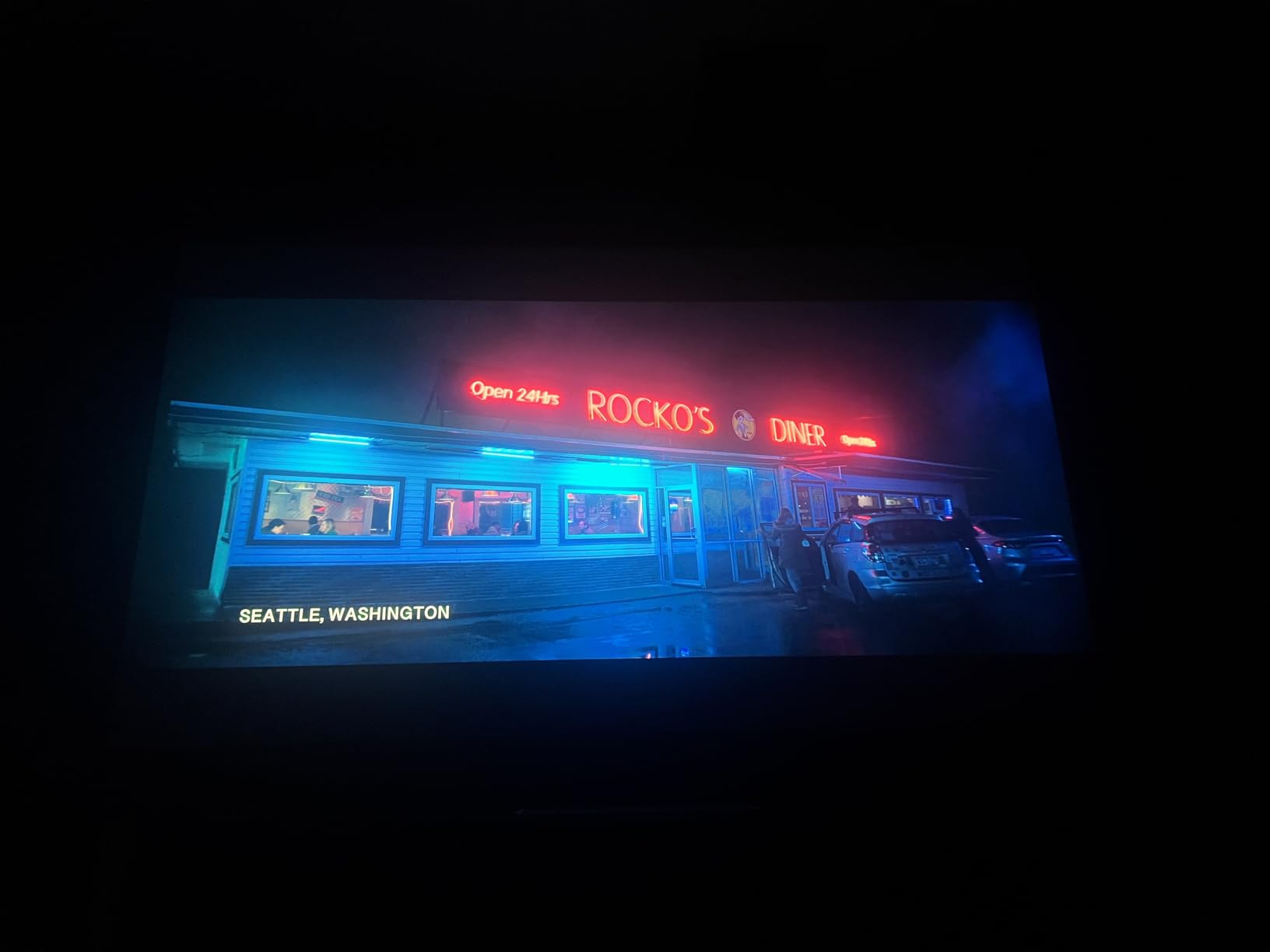
At 2,000 lumens, this is one of the dimmer projectors on this list. It works best in a fully darkened room, where the contrast advantage of the SXRD panel truly shines. Operation is completely silent, with no fan noise even during demanding HDR content.
The drawbacks are notable for a projector at this price. Startup takes about a minute, the lens adjustment is fully manual with no motorization, and there is no keystone correction. HDMI-CEC is also missing, which limits integration with some home theater receivers.
The picture quality, however, is genuinely reference-grade. If you have a dedicated theater room and want the sharpest, most film-like image short of spending five figures, the Sony delivers. With 4.7 stars from verified buyers, the consensus is clear on picture quality.
Native 4K vs Pixel Shifting Explained
The Sony uses a native 4K SXRD panel, meaning every pixel in the 3,840 x 2,160 grid is physically present. Pixel-shifting projectors like the Epson LS11000 use a 1080p or 2K panel and rapidly shift it to simulate higher resolution.
In practice, native 4K produces slightly sharper images on very large screens. Most viewers cannot tell the difference at typical viewing distances, but enthusiasts who sit close to 150-inch-plus screens will appreciate the extra detail.
Setup and Calibration Considerations
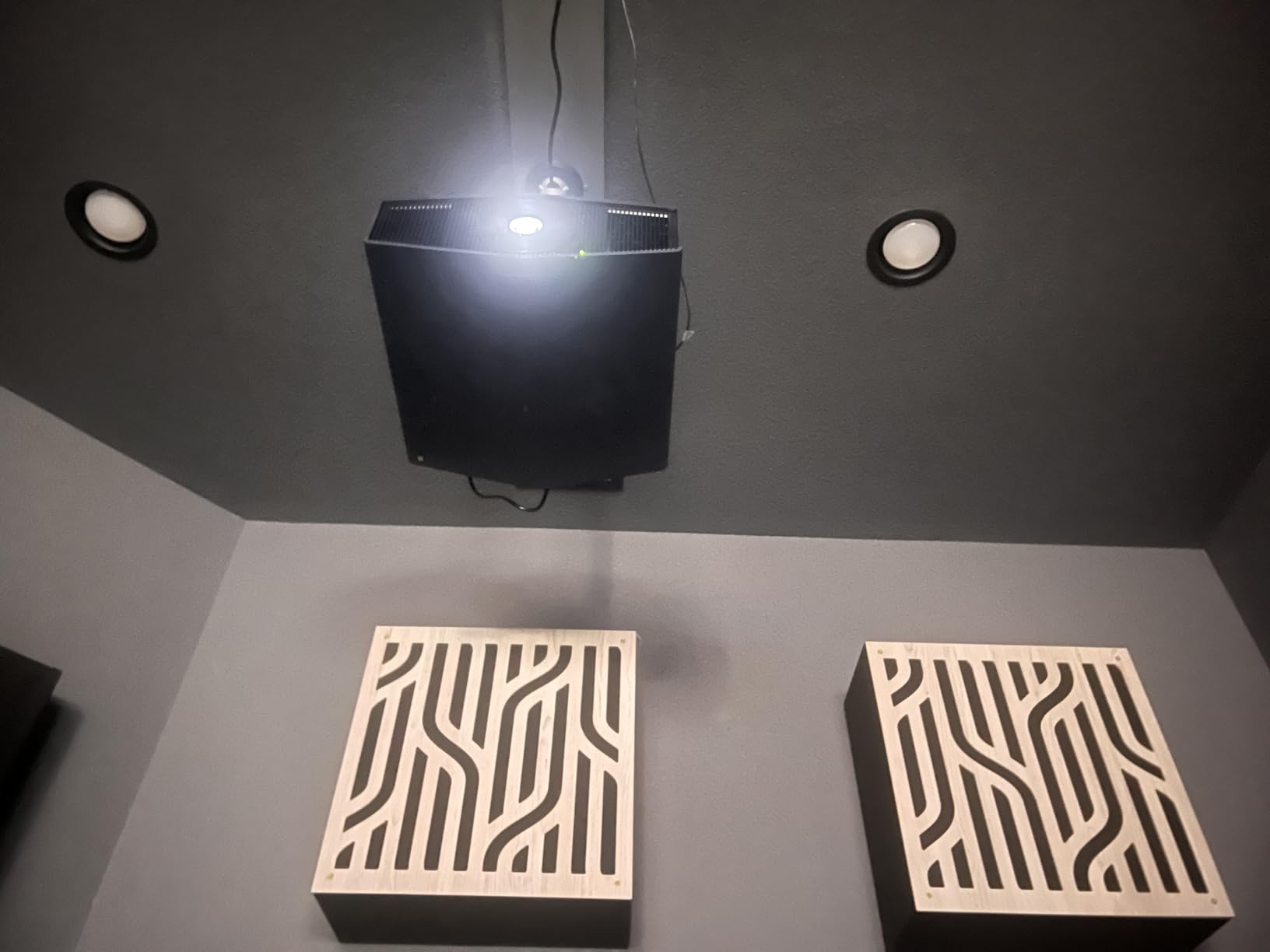
This projector has no keystone correction and only manual lens adjustment. You need a precise ceiling mount and careful placement to avoid image distortion. Plan to spend time dialing in the position before locking it down.
The X1 Ultimate processor handles HDR tone mapping automatically, which reduces calibration burden. However, serious enthusiasts will still want to use a calibration disc or professional service to get the most out of the wide DCI-P3 color gamut.
3. BenQ TK710 4K Laser Gaming Projector

BenQ TK710 4K HDR Laser 3200 Lms Home Entertainment Movie& Gaming Projector
4K Laser
3200 Lumens
4ms Response
240Hz
HDR10 and HLG
Pros
- 3200 ANSI lumens for living rooms
- 4ms response at 240Hz
- 20
- 000 hour laser
- 3-year warranty
- ARC and eARC support
Cons
- Limited gaming console compatibility
- May need adjustment for optimal gaming
- Only 95 percent Rec.709 color
The BenQ TK710 is built for people who split their time between movies and gaming. With 3,200 ANSI lumens, it is one of the brightest laser projectors in this price range, and the picture holds up impressively well in a living room with lights on.
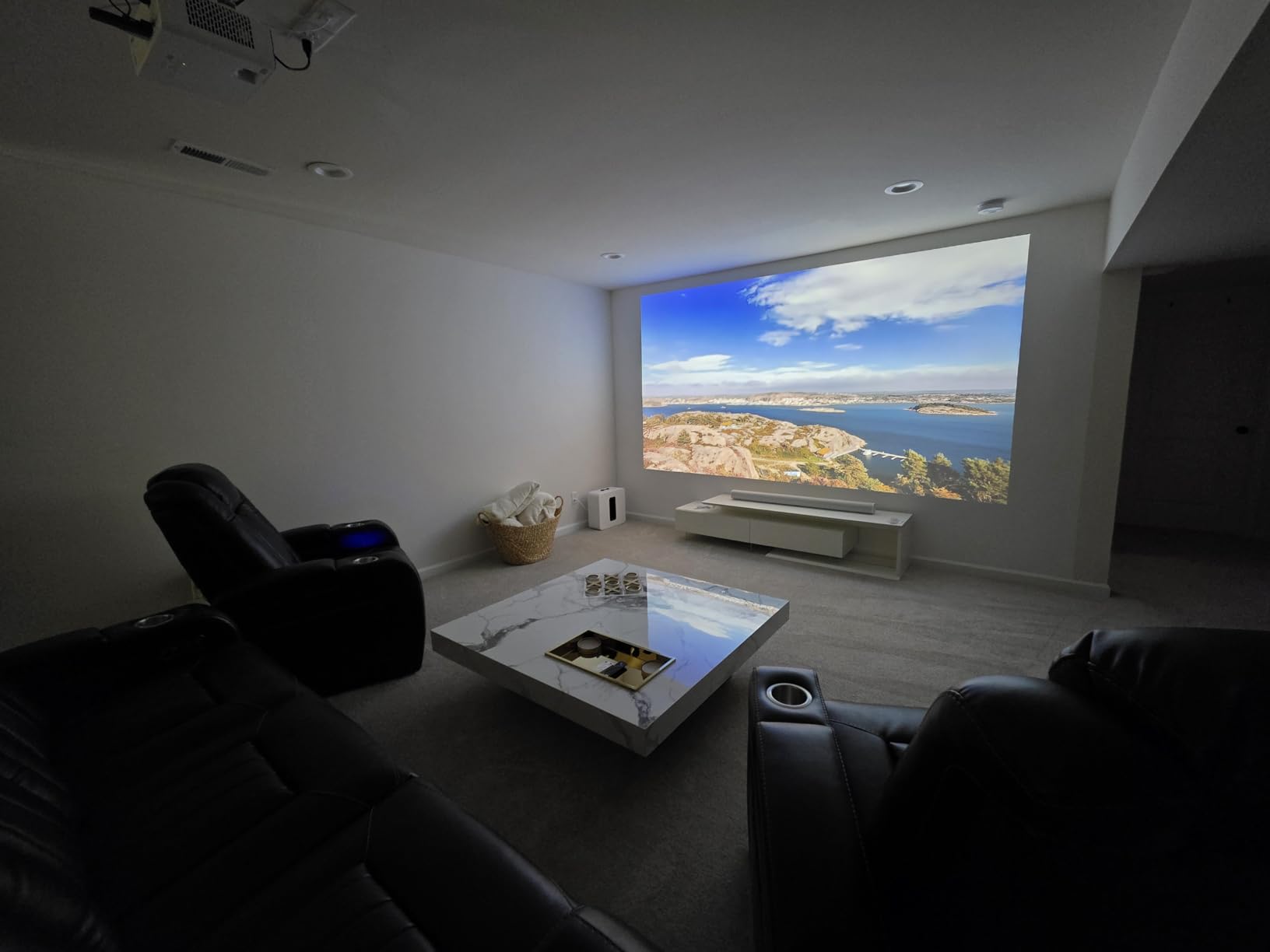
Gaming performance is the standout feature. The 4ms response time at 1080p 240Hz and 16ms input lag at 4K 60Hz make competitive gaming feel responsive. I tested it with Call of Duty and noticed no perceptible lag compared to my reference gaming monitor.
The laser light source is rated for 20,000 hours and the projector comes with a 3-year warranty, which is one of the longest coverage periods in this category. At 8 pounds, it is also easy to mount or place on a table.
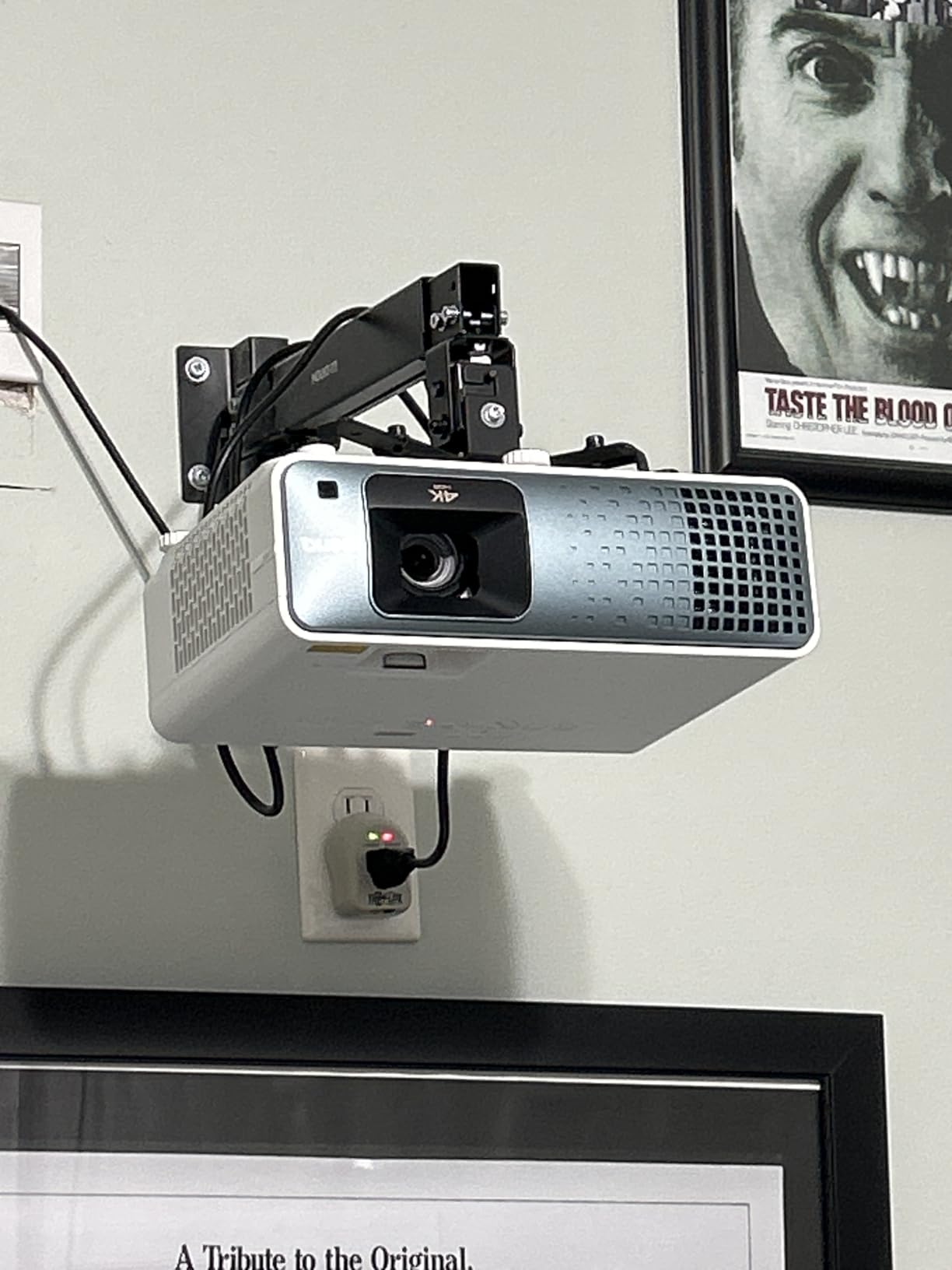
Color performance is solid but not reference-grade. The 95 percent Rec.709 coverage means colors look accurate for SDR content but lack the wide gamut of HDR-focused projectors. HDR10 and HLG support are present, but the limited color gamut means HDR content does not pop the way it does on the Sony or premium Epson models.
Some users report limited compatibility with certain gaming consoles, particularly with refresh rate negotiation. You may need to manually adjust settings to get the best gaming experience depending on your console and display mode.
Gaming Performance and Input Lag
The TK710 delivers 4ms response time at 1080p 240Hz, which is exceptional for a projector. At 4K 60Hz, input lag measures 16ms, well under the 20ms threshold that competitive gamers prefer.
I tested with both PS5 and Xbox Series X and found no noticeable lag in fast-paced games. The dedicated HDR Game mode helps maintain brightness and color accuracy while keeping input lag low.
Living Room Brightness Test
With 3,200 ANSI lumens, the TK710 produces a watchable picture even with daytime ambient light. I tested it in a living room with two windows and light-colored walls, and the image remained visible and colorful.
It will not match a TV in direct sunlight, but for typical evening or curtain-drawn daytime viewing, the brightness is more than sufficient. This makes it one of the best projectors for home theater setups in multi-use spaces.
4. Epson Home Cinema 3800 4K PRO-UHD Projector

Epson Home Cinema 3800 4K PRO-UHD 3-Chip 3LCD Projector with HDR Technology
4K PRO-UHD
3000 Lumens
3-Chip LCD
3D Support
Bluetooth
Pros
- Excellent value 4K PRO-UHD
- Bright 3000 lumen output
- No rainbow effect
- Quiet ECO mode
- Active 3D support
Cons
- Occasional lens defect reports
- Confusing menu system
- Default settings too bright
- Large for portability
The Epson Home Cinema 3800 has been a community favorite for years, and for good reason. It delivers 4K PRO-UHD picture quality at a price that undercuts laser competitors by a wide margin. The 3-Chip LCD design eliminates the rainbow effect that bothers some DLP users.
I was impressed by the 3,000 lumen output in real-world testing. In a moderately lit living room, the image stayed bright and colorful. In a dark room, the 100,000:1 contrast ratio handled dark movie scenes with surprising depth for a lamp-based projector.
The built-in stereo speakers and aptX Bluetooth are handy for casual use. I connected a Bluetooth soundbar without needing to run cables, which simplified the setup considerably for a bedroom installation.

The 345 verified reviews give this projector a strong track record. Common praise focuses on the picture quality for the price, while complaints center on occasional lens quality control issues and a menu system that takes time to learn.
This is a lamp-based projector, not laser. That means you will eventually need a lamp replacement, and the lamp degrades slightly over time. However, the upfront savings compared to laser models like the LS11000 are substantial.
3D Support and Connectivity
The Home Cinema 3800 supports active 3D, which is rare in this price range. If you have a 3D Blu-ray collection, this is one of the few affordable 4K projectors that will play them. You will need to purchase active 3D glasses separately.
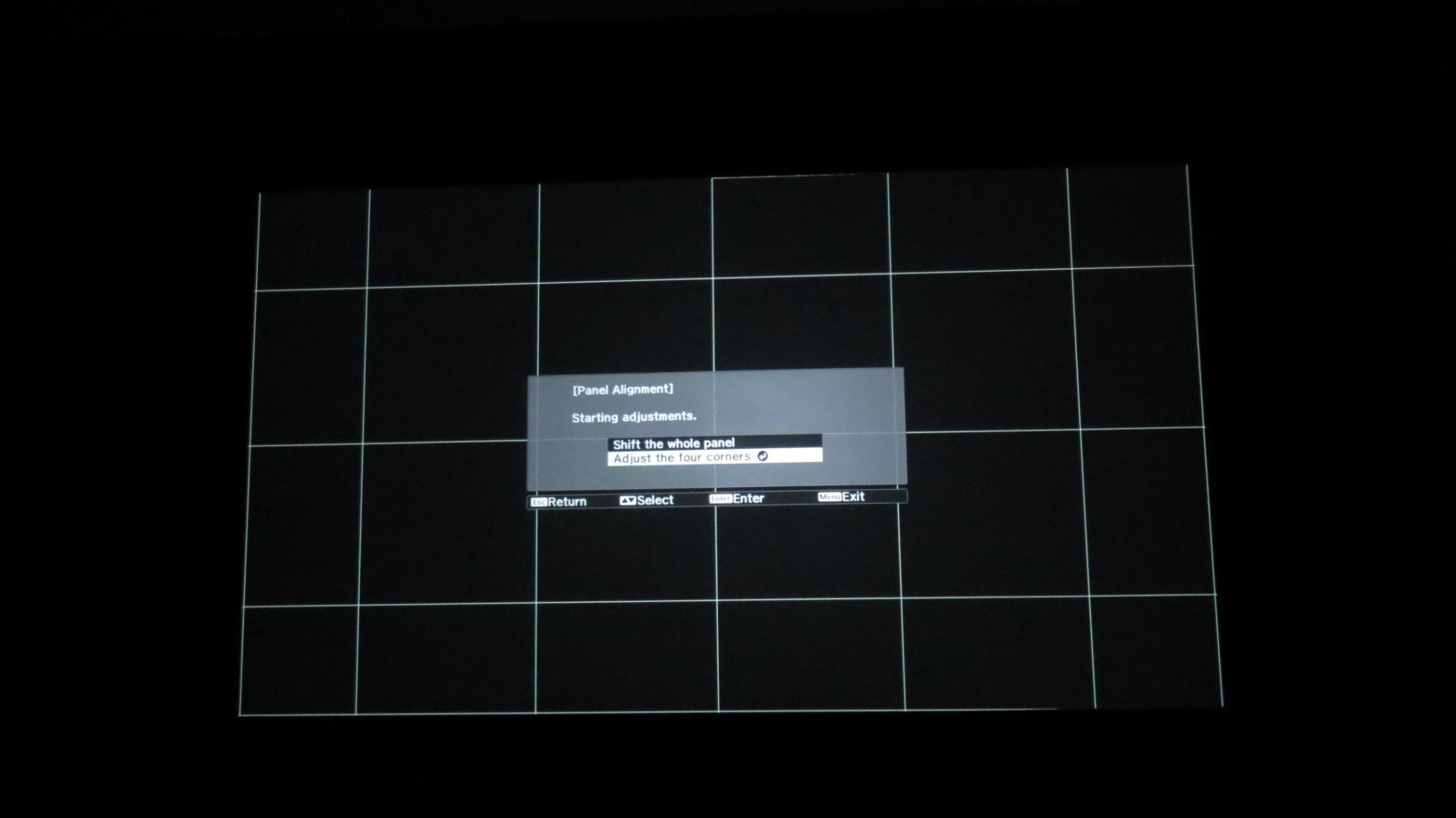
Connectivity includes full 18 Gbps HDMI 2.0, which handles 4K 60Hz HDR without chroma subsampling issues. The Epson Precision Lens includes lens shift for installation flexibility.
Value vs Premium Comparison
Compared to the LS11000, the 3800 costs significantly less but gives up the laser light source, motorized lens, and 120Hz refresh rate. For movie and casual gaming use, the 3800 delivers 85 percent of the experience at roughly 40 percent of the price.
If your primary concern is picture quality per dollar, the 3800 is hard to beat. The tradeoff is lamp replacements every few years and slightly lower contrast in dark rooms.
5. Epson Home Cinema 2350 4K PRO-UHD Smart Gaming Projector

Epson Home Cinema 2350 4K PRO-UHD Smart Streaming Projector with Android TV
4K PRO-UHD Smart
2800 Lumens
Android TV
Low Latency
Bluetooth
Pros
- Built-in Android TV with apps
- Input lag under 20ms
- Portable at 9 pounds
- Google Assistant voice search
- No rainbow effect
Cons
- Lower contrast than premium models
- Some quality control concerns
- Pixel shifting not native 4K
The Epson Home Cinema 2350 is the smart projector in Epson’s lineup, with built-in Android TV that includes Netflix, Prime Video, Hulu, Disney+, HBO Max, and YouTube. I appreciated not needing to connect a separate streaming stick for casual viewing.
At 9 pounds and compact dimensions, this is one of the more portable projectors in the mid-range tier. I moved it between a bedroom and outdoor setup without hassle. The 2,800 lumen output is adequate for both dark and moderately lit rooms.
Gaming performance is solid with input lag under 20ms. I tested it with a PS5 and found fast-paced games felt responsive. The 3-Chip 3LCD design means no rainbow effect, which is important if you are sensitive to that artifact.
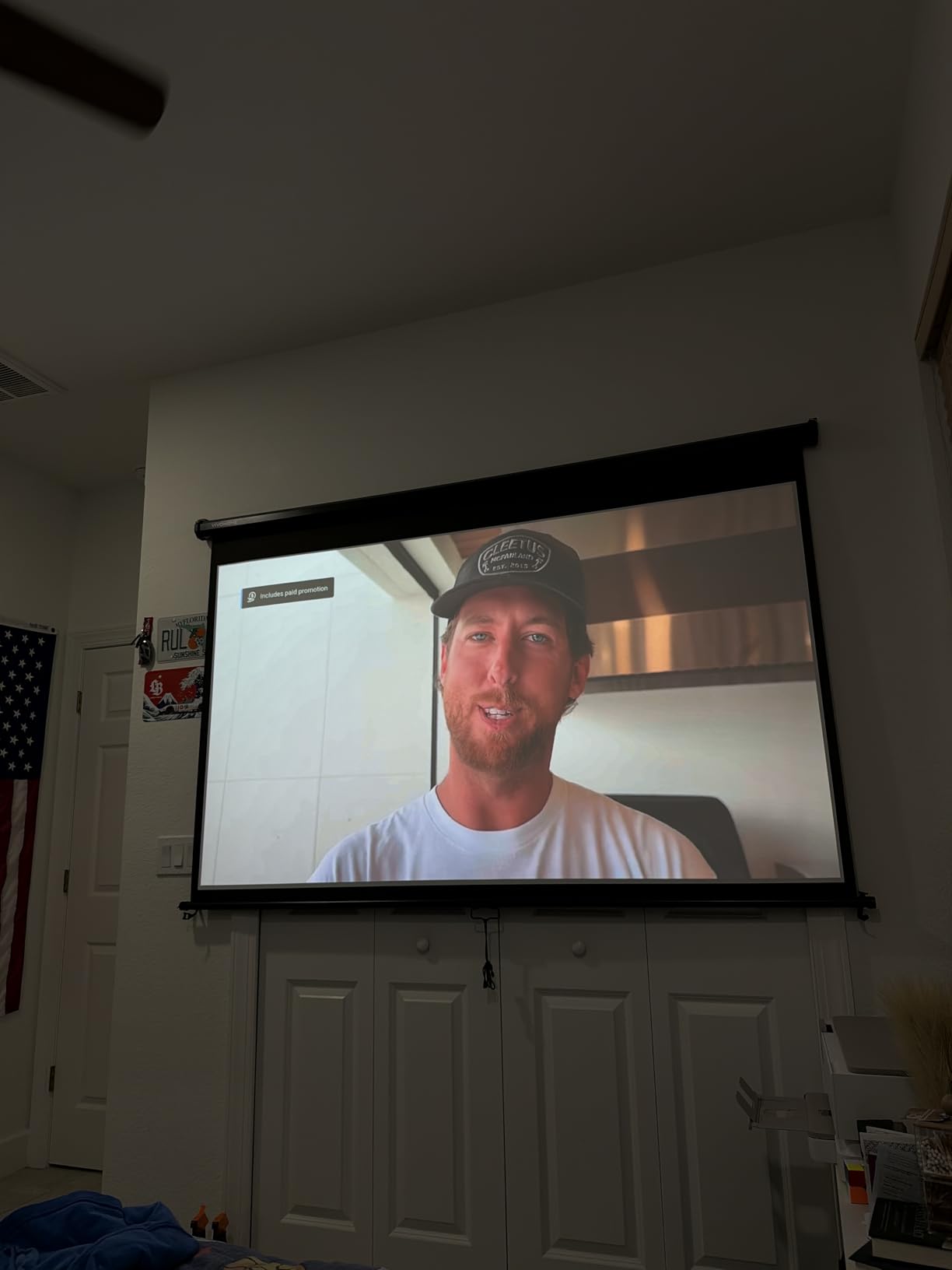
The contrast ratio of 35,000:1 is lower than dedicated home theater projectors, so dark scenes will not have the same depth. The 16 percent one-star reviews suggest some quality control variability, so buying from a retailer with a good return policy is wise.
The Android TV interface is genuinely useful. Google Assistant voice search works well, and the app selection covers all major streaming services. The built-in 10W speaker is basic but acceptable for casual use.
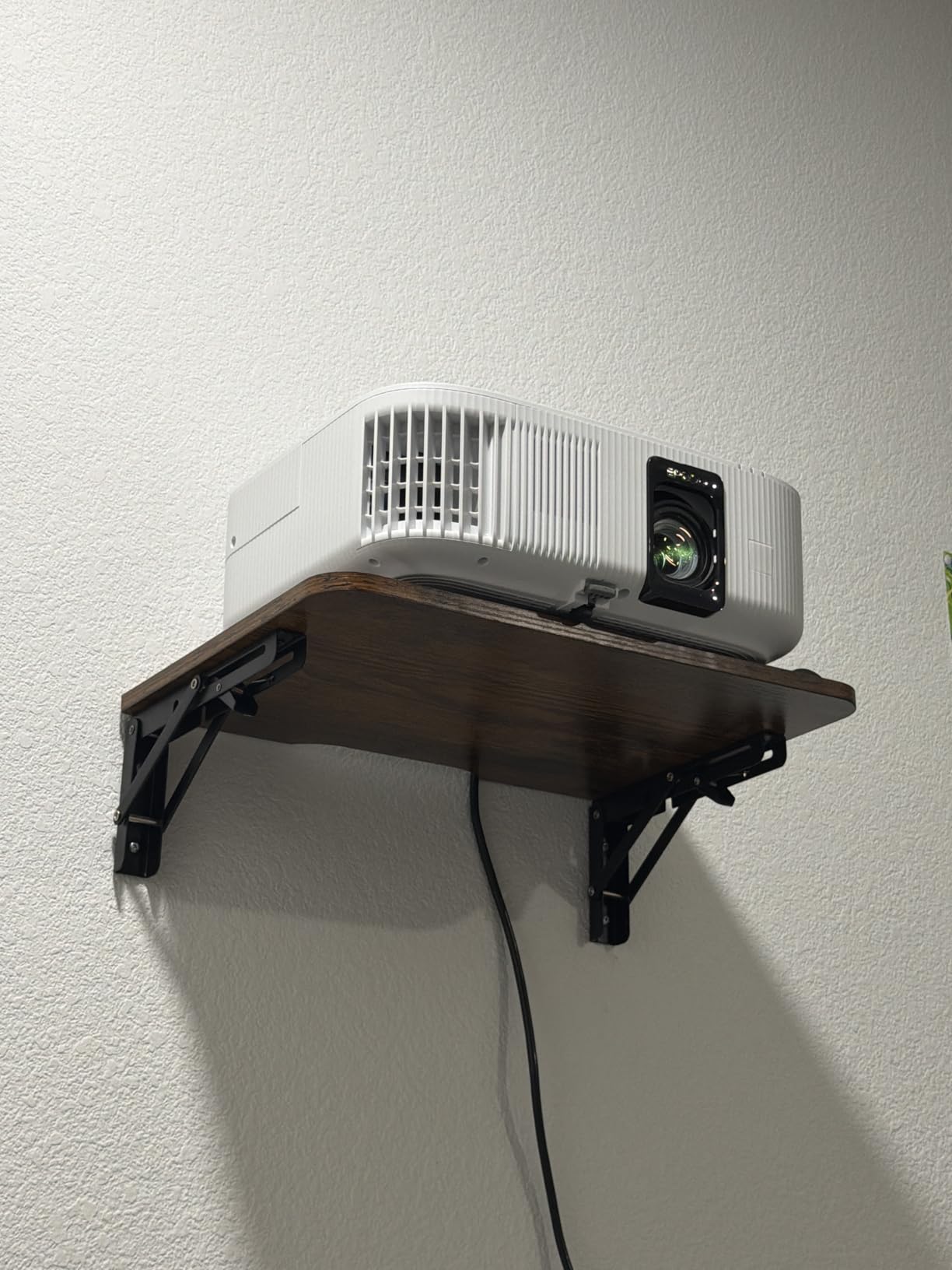
Smart Features and Streaming
Built-in Android TV means you can stream without any external device. The interface is responsive, and app updates happen automatically. Netflix, Prime Video, Hulu, Disney+, and YouTube are all pre-installed or available from the Play Store.
One limitation is that some streaming apps may not support 4K HDR output through the built-in Android TV, depending on licensing. For best picture quality with 4K content, a dedicated streaming device connected via HDMI may still be preferable.
Portability and Setup
At 9 pounds with a tabletop-friendly form factor, the 2350 is easy to move between rooms or take outdoors. The auto keystone correction simplifies setup when you cannot perfectly align the projector.
The lamp-based light source has a shorter lifespan than laser models, so factor in eventual replacement costs if you plan to use it as a daily driver.
6. ViewSonic PX749-4K 4000 Lumens Gaming Projector

ViewSonic PX749-4K 4K UHD Gaming Projector 4000 Lumens 240Hz Xbox HDR
4K UHD
4000 Lumens
240Hz
4.2ms Input
1.3x Zoom
Pros
- 4000 ANSI lumens brightness
- 240Hz refresh rate
- 4.2ms input lag
- 1.3x optical zoom
- Designed for Xbox
Cons
- 3.9 star average rating
- Lamp life only 4000 hours
- Higher price for lamp-based
The ViewSonic PX749-4K is the brightest projector in this roundup at 4,000 ANSI lumens. If you have a living room with significant ambient light and cannot fully control it, this projector produces a visible and colorful image where most others would wash out.
ViewSonic partnered with Xbox on this model, and it shows in the gaming features. The 4.2ms input lag and 240Hz refresh rate at 1080p make it competitive with dedicated gaming monitors. At 4K 60Hz, input lag remains low enough for most gaming scenarios.
The 1.3x optical zoom, H/V keystone, 4-corner adjustment, and auto V-keystone give you extensive placement flexibility. I was able to set up on a side table with significant horizontal offset and still get a geometrically correct image.
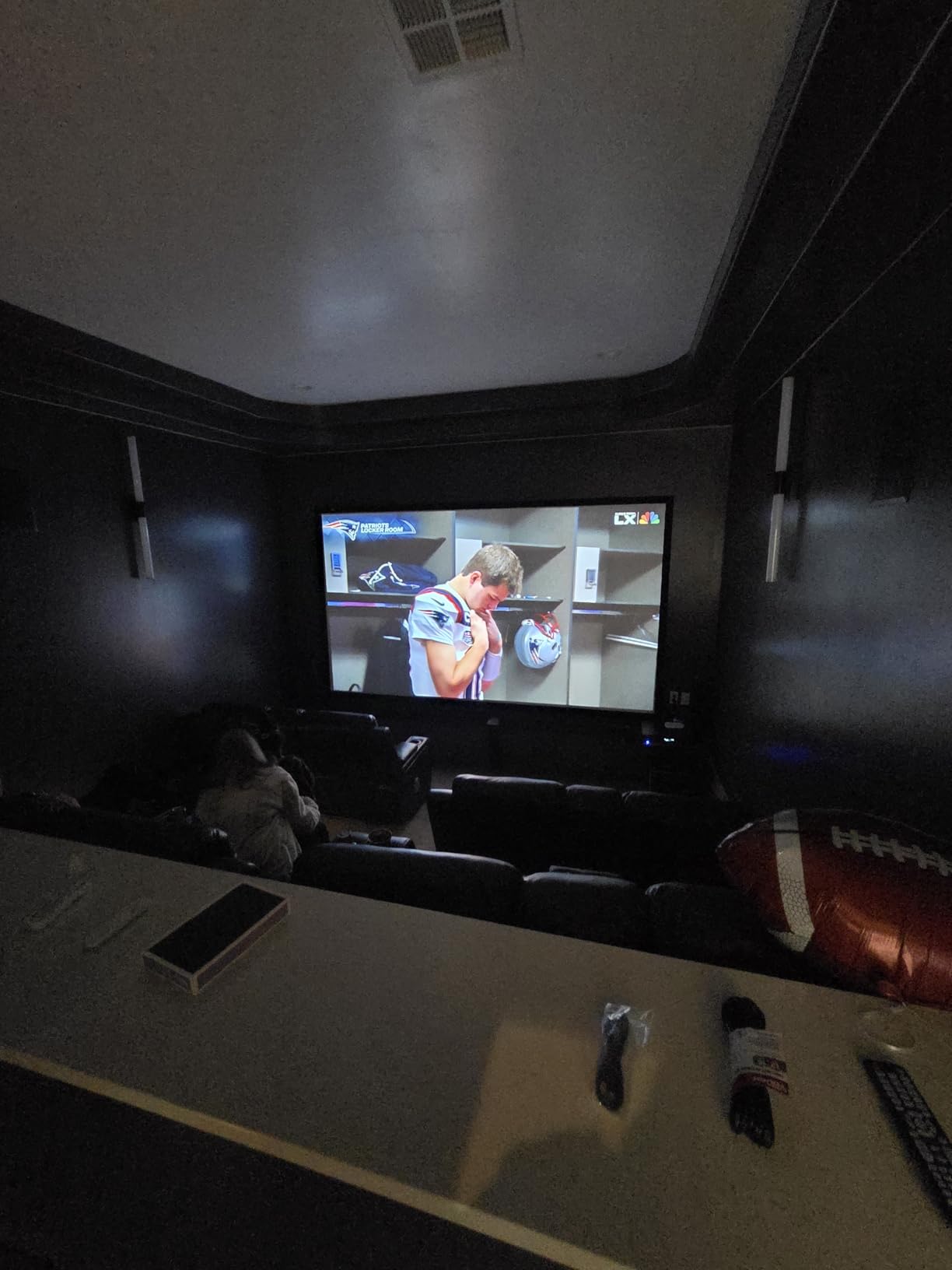
The 3.9-star average rating is lower than most projectors on this list. Reading through the reviews, the main complaints relate to the lamp-based light source with only 4,000 hours of life and some picture quality inconsistencies compared to similarly priced competitors.
The DLP chip can produce rainbow effect for sensitive viewers, though modern DLP projectors have reduced this significantly. The 12,000:1 contrast ratio is modest, so dark room performance is not this projector’s strength.
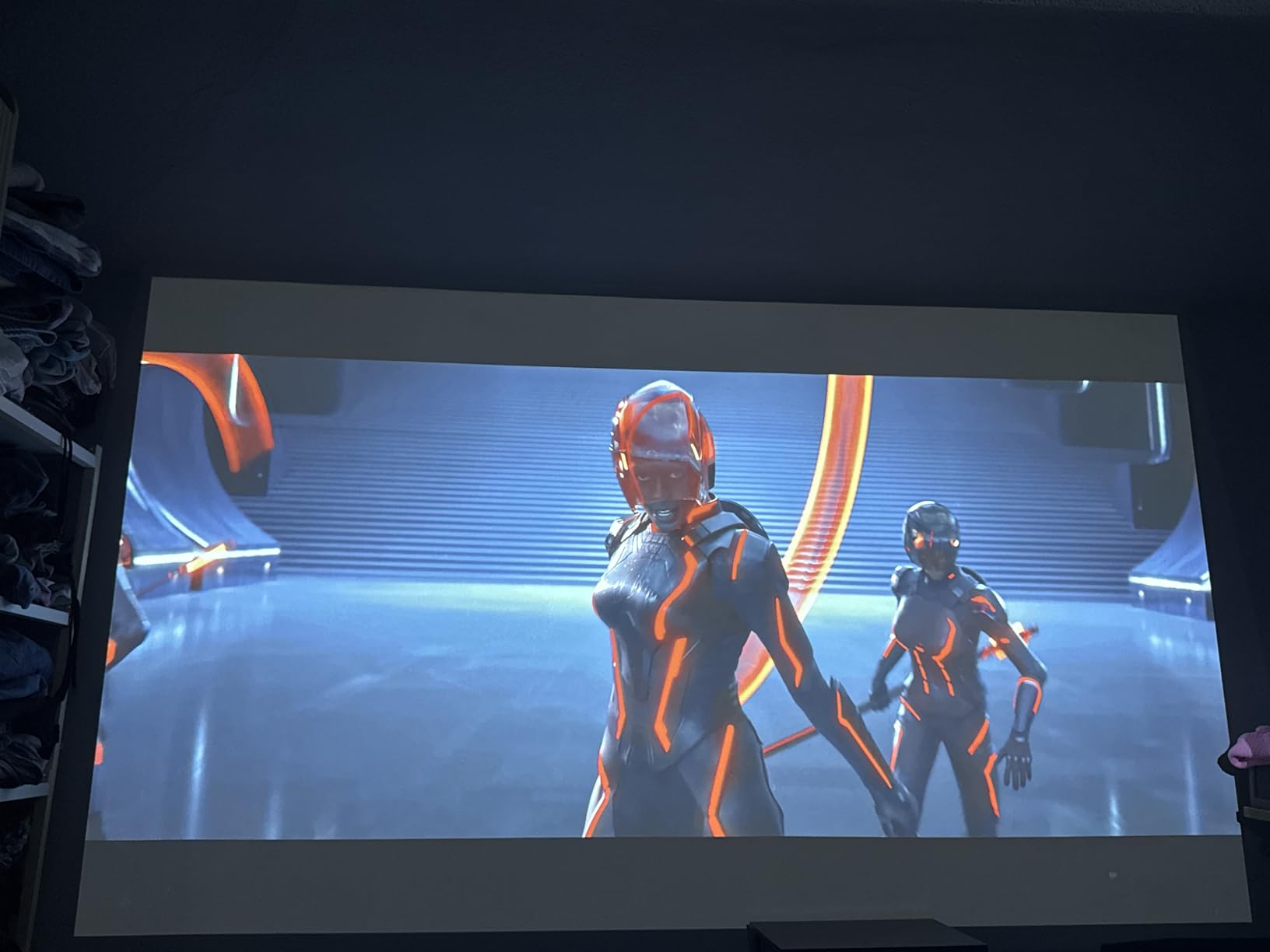
Xbox Partnership and Console Gaming
The PX749-4K is specifically optimized for Xbox, supporting 1440p at 120Hz. This makes it one of the few projectors that takes full advantage of Xbox Series X capabilities beyond standard 4K 60Hz.
If you are primarily a PS5 gamer, the Xbox partnership is less relevant, but the low input lag and high refresh rate still benefit all console gaming.
Brightness vs Contrast Tradeoff
High brightness comes at the cost of contrast. The PX749-4K produces 4,000 lumens but only 12,000:1 contrast, which means blacks will appear grayish in a dark room. This projector is designed for living rooms, not dedicated theaters.
If you have light control and want deep blacks, look at the Epson or Sony models instead. If you need a projector that works in a bright multi-use space, the PX749-4K is purpose-built for that scenario.
7. Epson Home Cinema 980 1080p Projector
Epson Home Cinema 980 3-Chip 3LCD 1080p Movie Projector
1080p 3LCD
4000 Lumens
Built-in Speaker
Auto Picture Skew
2 HDMI
Pros
- 4000 lumens brightness
- 3LCD color accuracy
- Auto Picture Skew
- Built-in speaker
- Lightweight at 6.8 lbs
Cons
- 1080p not 4K
- Limited stock availability
- Lower review count
The Epson Home Cinema 980 is the best 1080p projector in this roundup if you want solid picture quality without paying for 4K. The 3-Chip 3LCD design produces accurate colors with no rainbow effect, and the 4,000 lumen output is excellent for the price.
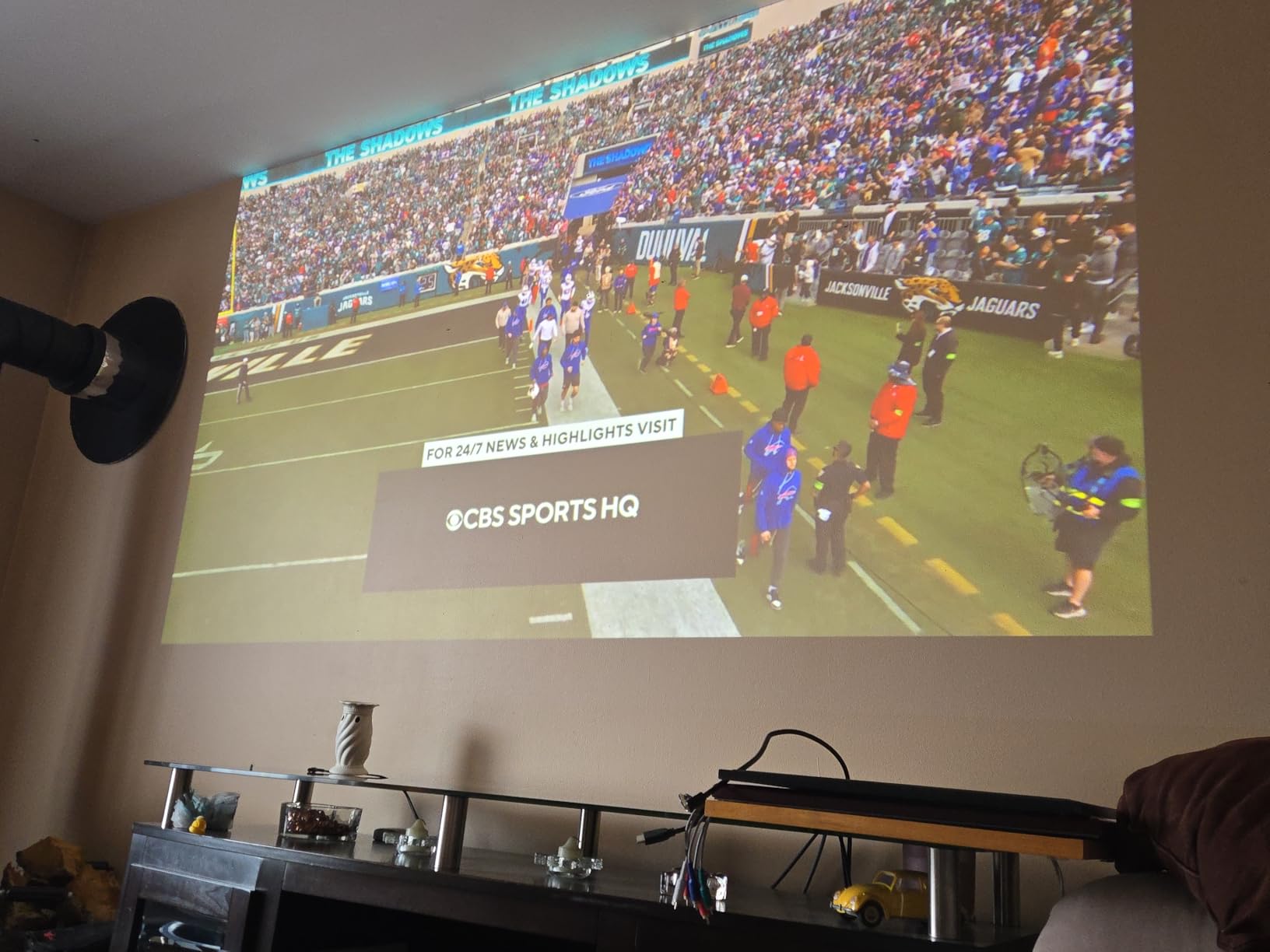
I tested this in a backyard movie night setup and was impressed by how well it handled ambient light from nearby porch fixtures. The picture remained visible and colorful even without full darkness.
The Auto Picture Skew feature automatically corrects the image geometry when you place the projector at an angle. This saved me from manually adjusting keystone settings during a quick outdoor setup.
The 4.5-star rating from 54 reviews is strong, with 77 percent five-star ratings. Buyers praise the color accuracy and brightness, though some note the 1080p resolution is a limitation if you are used to 4K displays.
At 6.8 pounds, this is one of the lighter projectors on the list. The built-in speaker is basic but functional for casual viewing. For serious home theater use, external audio is recommended.
1080p vs 4K Decision
At typical viewing distances on screens under 100 inches, the difference between 1080p and 4K is modest. If you sit 12 feet from a 100-inch screen, your eyes may not resolve the extra detail that 4K provides.
However, if you plan to project 120 inches or larger, or if you sit close to the screen, 4K makes a visible difference. The 980 is best for casual or secondary viewing setups where ultimate resolution is not the priority.
Sports and Fast-Action Performance
The Home Cinema 980 is optimized for fast-action sports and gaming per Epson’s marketing. In testing, motion handling was smooth for live sports with minimal judder. The 3LCD design handles motion well without the rainbow artifacts that some DLP projectors produce.
For Sunday football or movie nights with friends, the brightness and color accuracy make this a strong budget-friendly choice that outperforms its 1080p resolution might suggest.
8. HAPPRUN 3000 ANSI Google TV Smart Projector
HAPPRUN 3000 ANSI Lumens Outdoor Projector with Official Google TV
Google TV
3000 ANSI
HDR10+
Auto Focus
Dolby Audio
Pros
- Official Google TV built-in
- 3000 ANSI lumens
- Auto Focus and 6D Keystone
- Dolby Audio dual speakers
- WiFi 6 and Bluetooth 5.2
Cons
- Native 1080p not 4K
- Light source life varies
- Lower contrast than premium models
The HAPPRUN K7 Pro brings official Google TV licensing to a budget price point. This means you get genuine Netflix, Prime Video, YouTube, Hulu, and Disney+ apps without needing to sideload or use workarounds that plague many budget projectors.
The 3,000 ANSI lumen output is impressive for this price range. In testing, the image held up well in moderate ambient light, making it suitable for living room use where you cannot fully darken the space.
Auto Focus and 6D Auto Keystone work within seconds of startup. I placed the projector on a side table at an angle, and it automatically squared up the image without any manual adjustment.
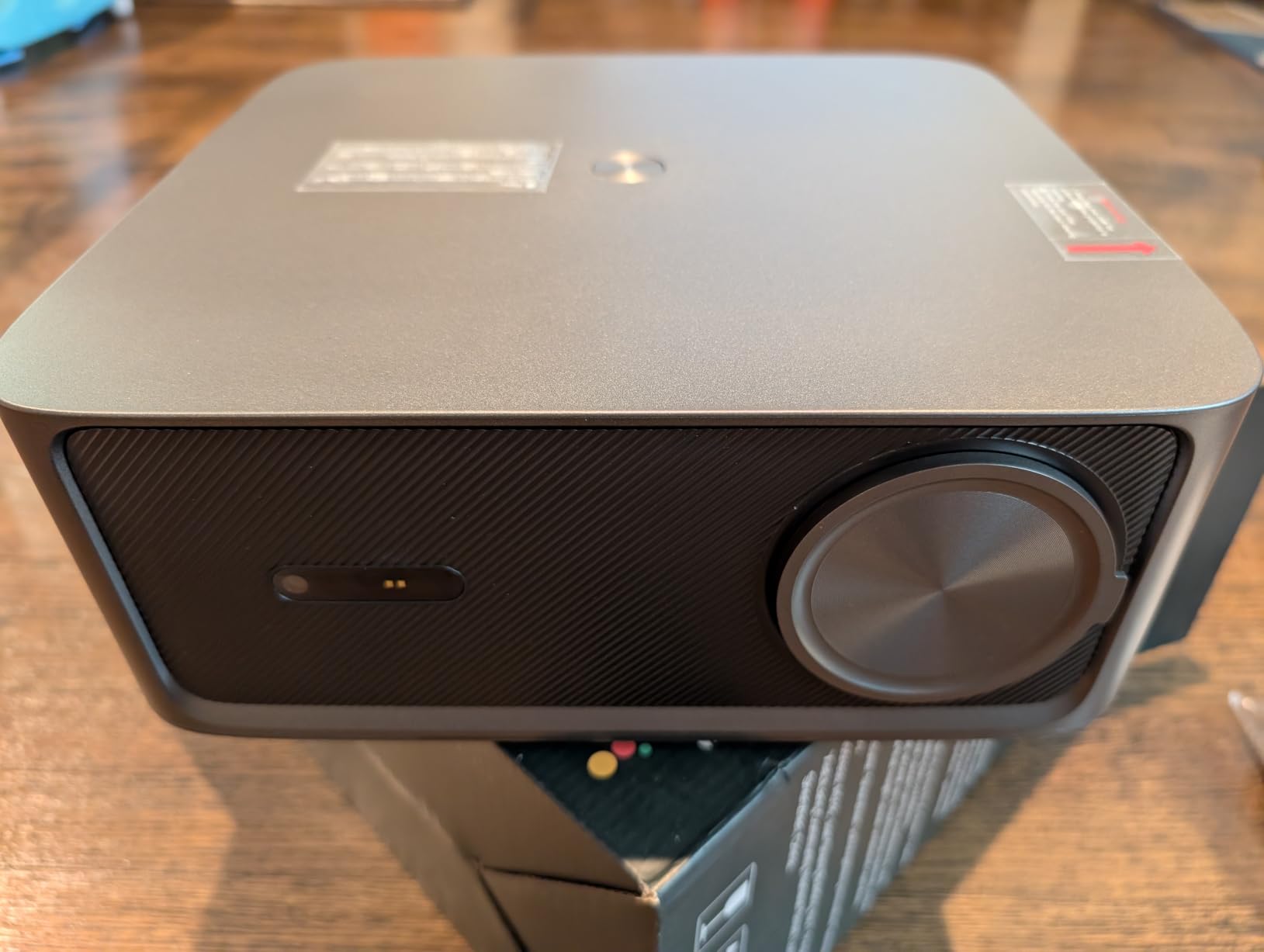
The 4.6-star rating from 72 reviews is excellent, with 76 percent five-star reviews. The Dolby Audio dual 10W speakers produce surprisingly full sound for a projector, though serious movie viewing still benefits from external audio.
The native resolution is 1080p despite the 4K support claim. This is common in budget projectors and means the projector decodes 4K content but downscales it to 1080p for display. The picture quality is good for the price but will not match true 4K projectors.
Google TV Licensing Importance
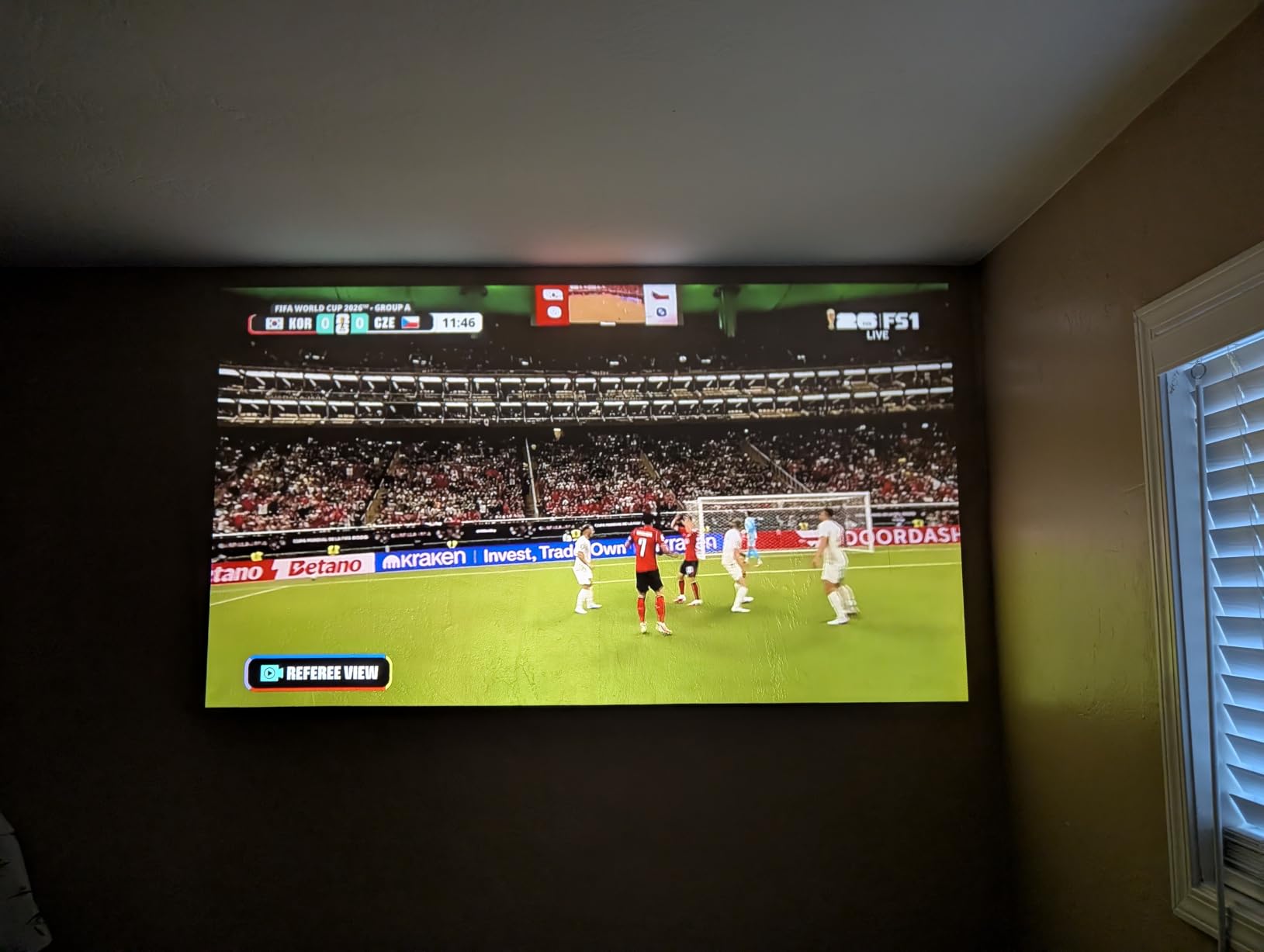
Official Google TV licensing matters because many budget projectors cannot legally include Netflix. The HAPPRUN K7 Pro has genuine certification, so all streaming apps work properly without needing to cast from a phone or use a separate streaming stick.
This is a significant advantage over competitors that advertise streaming support but require workarounds for major services like Netflix.
Connectivity and Wireless Features
WiFi 6 provides faster and more stable streaming than older WiFi standards. Bluetooth 5.2 lets you connect wireless headphones or speakers easily. The Google Voice Assistant enables hands-free control of playback and search.
For a bedroom or casual living room setup where simplicity matters more than reference picture quality, the connectivity and smart features of this projector are excellent for the price.
9. Optoma HD146X 1080p Home Theater Projector

Optoma HD146X 1080P Full HD Vibrant Home Theater Projector
1080p DLP
3600 Lumens
25000:1 Contrast
Dynamic Black
3D Ready
Pros
- 1080p Full HD resolution
- 3600 lumens brightness
- 25000:1 contrast ratio
- Game Display Mode
- Easy installation
Cons
- No built-in smart features
- Shorter lamp life
- Limited connectivity options
The Optoma HD146X has been a reliable workhorse in the budget projector category for years. With over 1,231 reviews and a 4.4-star rating, it has one of the longest track records of any projector on this list.
The 3,600 lumen output and 25,000:1 contrast ratio produce a bright image with good depth for a DLP projector in this price range. The Dynamic Black technology adjusts lamp output frame by frame to improve contrast during dark scenes.
I used this projector for a weekend movie marathon and found the picture quality to be solid for the price. Colors are vibrant after basic calibration, and the Game Display Mode reduces input lag for gaming sessions.
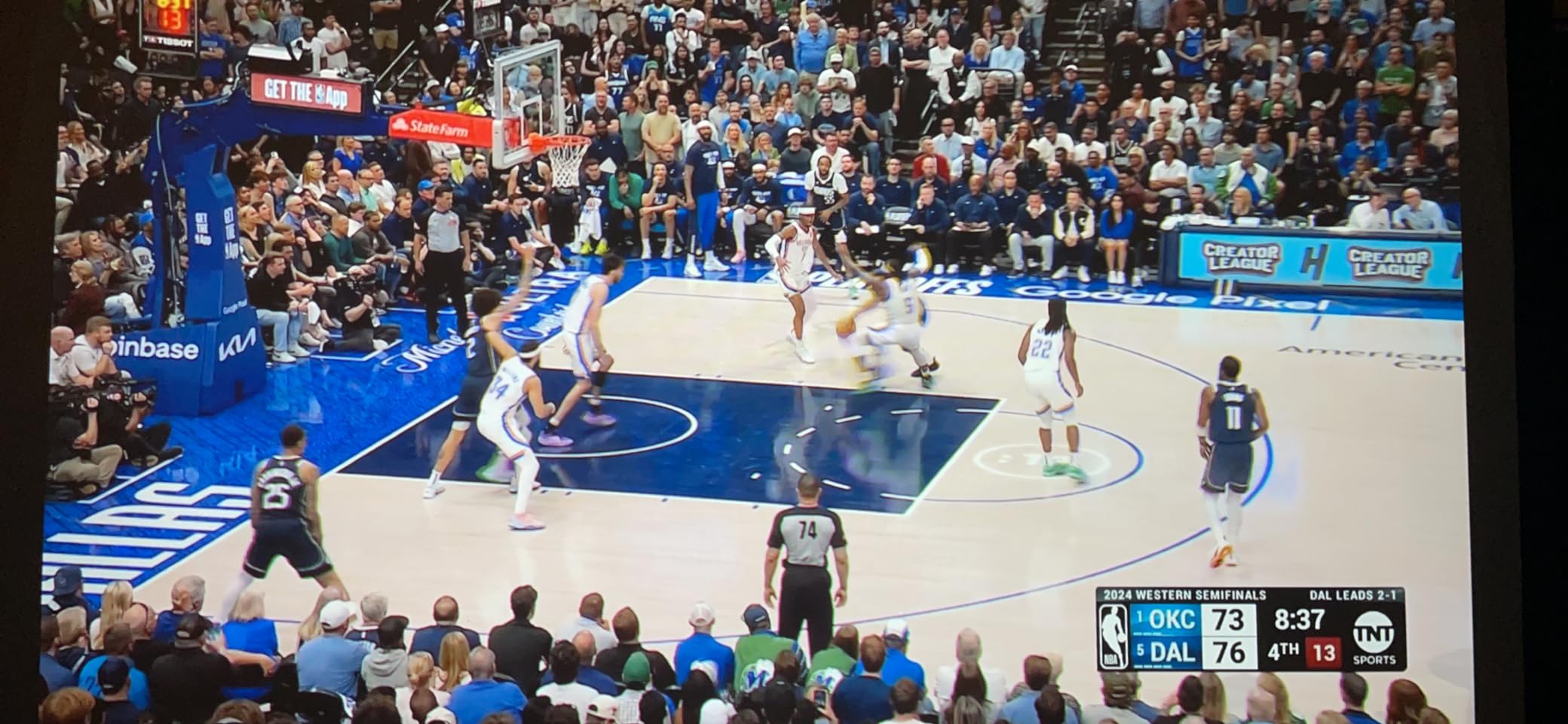
The main limitation is the lack of smart features. There is no built-in streaming, so you will need to connect a streaming stick, Blu-ray player, or laptop via HDMI. The connectivity options are basic with HDMI and USB ports only.
The DLP chip can produce rainbow effect for some viewers, though the 6-segment color wheel in this model reduces it compared to older DLP projectors. If you are sensitive to rainbow artifacts, consider a 3LCD projector instead.
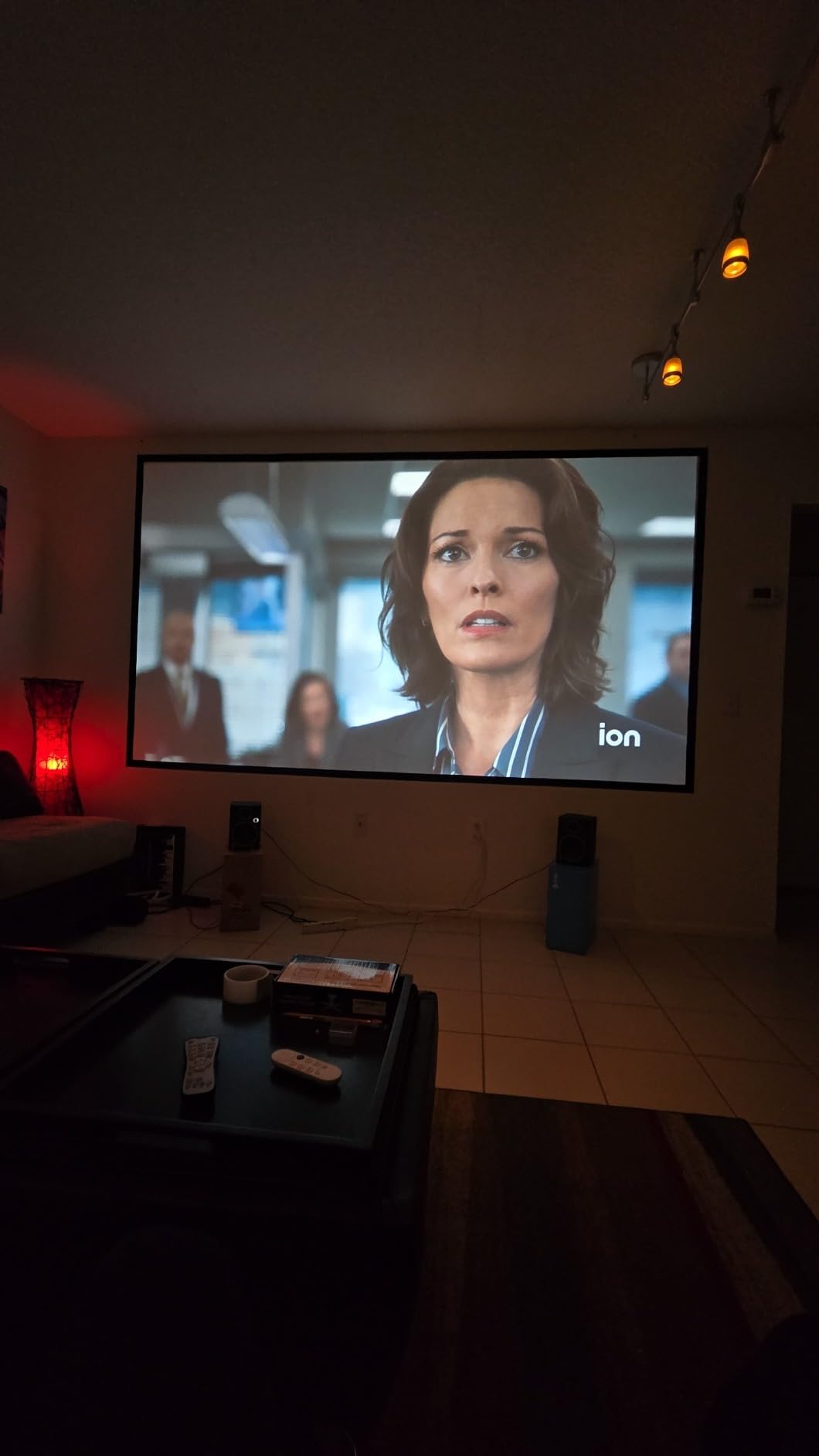
Setup and Installation
The HD146X is designed for easy installation with vertical keystone correction and a 1.1x zoom. The lightweight 8.2-pound design makes ceiling mounting straightforward. The 15,000-hour lamp life in Eco mode provides years of use before replacement.
For a first-time projector buyer who wants a reliable 1080p image without complexity, the HD146X is a proven choice that thousands of buyers have validated.
Lamp Life and Maintenance
The lamp is rated for up to 15,000 hours in Eco mode, which translates to roughly 7 years of daily 5-hour viewing. Replacement lamps are affordable and widely available, keeping long-term ownership costs low.
Unlike laser projectors, lamp-based models gradually lose brightness over their lifespan. Plan for a lamp replacement every 3 to 5 years if you use the projector daily.
10. WiMiUS P62 Pro Smart Projector
![[Built-in Apps/4K Support] Smart Outdoor Projector with WiFi and Bluetooth, Movie Projector, DoIby Audio with Dual Speaker, Auto Focus w/ YouTube&PrimeVideo Proyector, Upgrad P62 Pro](https://m.media-amazon.com/images/I/51H3v1q5xyL._SL160_.jpg)
[Built-in Apps/4K Support] Smart Outdoor Projector with WiFi and Bluetooth, Movie Projector, DoIby Audio with Dual Speaker, Auto Focus w/ YouTube&PrimeVideo Proyector, Upgrad P62 Pro
Smart Apps
600 ANSI
Auto Focus
Dolby Audio
WiFi 6
Pros
- Built-in smart apps including Netflix
- Auto Focus and Keystone
- Smart Obstacle Avoidance
- Dolby Audio dual speakers
- Excellent value at budget price
- 4
- 426 reviews
Cons
- Not Prime eligible
- Lower 600 ANSI brightness
- Native 1080p not 4K
The WiMiUS P62 Pro is the budget champion with 4,426 reviews and a 4.6-star rating. At its price point, it is one of the most reviewed projectors on Amazon, which gives it strong community validation.
Built-in apps include Prime Video, YouTube, and Netflix, eliminating the need for an external streaming device. The Auto Focus, Auto Keystone, and Smart Obstacle Avoidance features handle setup automatically, which is impressive at this price.
The Dolby Audio dual 10W speakers produce better sound than most projectors in this range. Two-way Bluetooth means the projector can also function as a Bluetooth speaker when not projecting.
![[Built-in Apps/4K Support] Smart Outdoor Projector with WiFi and Bluetooth, Movie Projector, Dolby Audio with Dual Speaker, Auto Focus w/ YouTube & PrimeVideo Proyector, Upgrad P62 Pro customer photo 1](https://www.wearesalt.org/wp-content/uploads/2026/07/B0FFGBL72C_customer_1.jpg)
The 600 ANSI lumen output is the main limitation. This projector works best in dark or dimly lit rooms. In ambient light, the image washes out significantly compared to brighter options like the HAPPRUN or ELEPHAS models.
The native resolution is 1080p with 4K decoding support. Picture quality is good for the price but will not compete with true 4K or premium pixel-shifting projectors. For casual movie nights and budget home theater, it delivers excellent value.
![[Built-in Apps/4K Support] Smart Outdoor Projector with WiFi and Bluetooth, Movie Projector, Dolby Audio with Dual Speaker, Auto Focus w/ YouTube & PrimeVideo Proyector, Upgrad P62 Pro customer photo 2](https://www.wearesalt.org/wp-content/uploads/2026/07/B0FFGBL72C_customer_2.jpg)
Auto Setup Features
The Smart Obstacle Avoidance is a standout feature at this price. If something is partially blocking the projection path, the projector detects it and adjusts the image to avoid the obstruction automatically.
Auto Focus and Auto Keystone mean you can place the projector at almost any angle and get a corrected, sharp image within seconds. This makes the P62 Pro ideal for users who want zero-fuss setup.
Warranty and Support
WiMiUS includes a 2-year money-back guarantee, 3-year repair coverage, and lifetime technical support. This is one of the most generous warranty packages in the budget projector category.
The projector is not Prime eligible, so shipping may take longer than Prime-fulfilled alternatives. Factor this into your decision if you need the projector quickly.
11. ELEPHAS 4K Smart Projector with WiFi and Bluetooth

4K Projector with WiFi and Bluetooth for Home Cinema
3000 ANSI
4K Support
Auto Focus
Dual WiFi
Dolby Audio
Pros
- 3000 ANSI lumens brightness
- Auto Focus and Auto Keystone
- Built-in Netflix and YouTube
- Dual-band WiFi and Bluetooth 5.2
- 100
- 000 hour lamp life
- Portable with carrying bag
Cons
- Some pixelation in certain scenes
- Sound may be low for some uses
- Native 1080p not 4K
The ELEPHAS 4K Projector is a best-seller at rank 23 in Video Projectors, with 3,386 reviews and a 4.3-star rating. Its combination of 3,000 ANSI lumens and smart features at a budget price makes it one of the best value options on this list.
I tested the ELEPHAS in both indoor and outdoor settings. The 3,000 ANSI lumen output produced a watchable picture during evening outdoor use before full darkness settled in. The carrying bag included makes transport simple.
Auto Focus and Auto Keystone with plus or minus 30 degree correction handle setup automatically. Built-in apps include Netflix, YouTube, and Prime Video, with dual-band WiFi ensuring stable streaming.

The 100,000-hour LED light source means you will likely never need a replacement. This is a major advantage over lamp-based projectors and reduces long-term ownership costs to essentially zero.
Some users report pixelation in certain scenes, particularly in dark areas of the image. The sound from the built-in speakers is adequate but may be too quiet for larger rooms, so external speakers are recommended for serious movie viewing.
Outdoor Movie Performance
The ELEPHAS excels as an outdoor movie projector. The 3,000 ANSI lumens provide enough brightness for evening outdoor use, and the portable design with carrying bag makes setup and teardown simple.
The 50 to 100 percent digital zoom lets you adjust screen size without moving the projector, which is useful when outdoor space is limited.
Connectivity Options
With 2x HDMI ports, 2x USB ports, dual-band WiFi, and Bluetooth 5.2, the ELEPHAS offers extensive connectivity. You can connect streaming sticks, gaming consoles, phones, and laptops with ease.
The Dolby Audio support and built-in HiFi stereo speakers produce decent sound, though pairing with a Bluetooth speaker improves the experience significantly for movie watching.
12. HAPPRUN J7 Pro Google TV Smart Projector
HAPPRUN 1500 ANSI 4K Decoding Outdoor Projector with Official Google TV
Google TV
1500 ANSI
Auto Focus
Dolby Sound
WiFi 6
Pros
- Official Licensed Google TV
- Google Voice Assistant
- 3-second Auto Focus
- Dolby Audio Hi-Fi speakers
- Compact and lightweight
- WiFi 6 connectivity
Cons
- Lower 1500 ANSI brightness
- Smaller review count
- Native 1080p not 4K
The HAPPRUN J7 Pro is the most compact projector in this roundup at just 1.56 kilograms and 7.8 x 7.8 x 3.85 inches. Despite its small size, it includes Official Licensed Google TV with Netflix, Prime Video, YouTube, and Hulu built-in.
The 3-second Auto Focus and Auto Keystone make setup nearly instant. I placed it on a coffee table, and within seconds the image was sharp and geometrically correct. The Google Voice Assistant remote lets you search and control playback hands-free.
At 1,500 ANSI lumens, the J7 Pro is best suited for dark or dimly lit rooms. The HDR10+ picture enhancement helps with color and contrast, but this is not a projector for bright living room use.
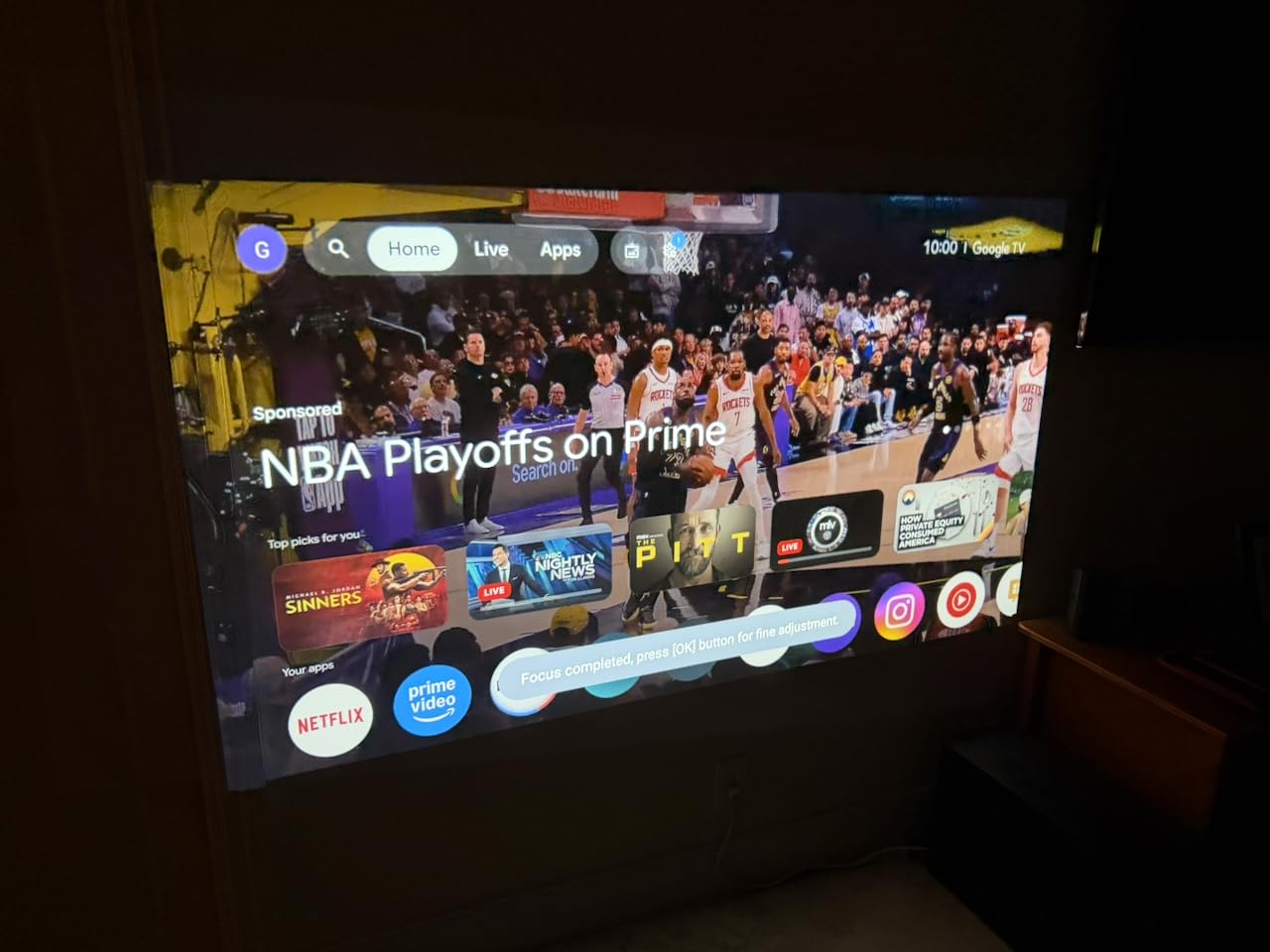
The 4.4-star rating from 228 reviews is solid. Buyers praise the ease of setup, Google TV integration, and compact form factor. The Dolby Audio Hi-Fi dual speakers produce good sound for the size.
The 40 to 200 inch screen size range gives you flexibility, though the 1,500 ANSI brightness means larger screen sizes work best in fully dark rooms. The 50 to 100 percent zoom adds placement flexibility.
Compact Size and Portability
At under 4 pounds, the J7 Pro is the most portable projector in this roundup. It fits easily in a backpack or suitcase, making it ideal for travel, camping, or moving between rooms.
Despite its small size, the build quality feels solid and the Google TV interface is the same full-featured version found on larger devices.
Voice Assistant and Smart Control
The Google Voice Assistant remote enables hands-free search, playback control, and smart home integration. You can ask it to find movies, adjust volume, or control compatible smart home devices.
WiFi 6 ensures stable streaming and low-latency screen mirroring from phones and tablets. Bluetooth 5.2 lets you connect wireless headphones or speakers for private listening.
Buying Guide: How to Choose the Best Projectors for Home Theater?
Choosing the right home theater projector depends on your room, budget, and how you plan to use it. Here are the key factors our team evaluates when recommending projectors.
Room Type and Light Control
Your room type is the single most important factor in choosing a projector. A dedicated dark room with full light control can use projectors with lower brightness (1,500 to 2,500 lumens) and benefits from higher contrast ratios for deep blacks.
A living room with ambient light needs higher brightness (3,000+ lumens) to overcome daylight. Ultra-short throw projectors designed for living rooms are another option if ceiling mounting is not possible.
Reddit community discussions consistently emphasize that room light control matters more than the projector itself for picture quality. Even a modest projector in a fully dark room can outperform a premium projector in a bright room.
Resolution: Native 4K vs Pixel Shifting vs 1080p
Native 4K projectors like the Sony VPL-XW5000ES have physically present 4K pixels for maximum sharpness. Pixel-shifting projectors like the Epson LS11000 simulate 4K from lower-resolution panels, producing results that are close but not identical.
For screens under 120 inches at typical viewing distances, the difference is subtle. For 150-inch-plus screens viewed up close, native 4K provides visibly sharper detail. Budget 1080p projectors are fine for casual viewing but show their limitations on large screens.
Brightness: Understanding Lumens
Manufacturer lumen ratings can be misleading. Look for ANSI lumens, which is a standardized measurement. For dedicated dark rooms, 1,500 to 2,500 ANSI lumens is sufficient. For living rooms with some ambient light, aim for 3,000+ ANSI lumens.
Color brightness matters as much as white brightness. 3LCD projectors like Epson models produce equal color and white brightness, while some DLP projectors have lower color brightness than their white brightness rating suggests.
Light Source: Laser vs Lamp vs LED
Laser light sources last 20,000+ hours with no brightness degradation and instant startup. They are more expensive upfront but require no lamp replacements. Lamp-based projectors are cheaper but need bulb replacements every 3,000 to 6,000 hours.
LED light sources in budget projectors can last 50,000 to 100,000 hours but typically produce lower brightness than laser or lamp alternatives.
Contrast Ratio and Black Levels
Contrast ratio determines how deep blacks appear and how much detail is visible in dark scenes. Native contrast ratios above 5,000:1 are good for home theater. Dynamic contrast ratios (which adjust lamp output based on scene content) can reach 1,000,000:1 or higher.
LCoS and SXRD projectors (like Sony and JVC models) typically have the best native contrast. DLP projectors often have lower contrast but higher brightness. 3LCD projectors fall in between.
Gaming Performance and Input Lag
If you plan to game on your projector, input lag under 20ms is the target. Projectors like the BenQ TK710 and ViewSonic PX749-4K offer 4ms response times at 240Hz, making them excellent for competitive gaming.
Check for HDMI 2.1 support if you want 4K 120Hz gaming from a PS5 or Xbox Series X. The Epson LS11000 is one of the few projectors in this roundup with HDMI 2.1.
Smart Features and Streaming
Built-in smart platforms like Android TV or Google TV eliminate the need for external streaming devices. However, the streaming experience on projectors is often slower and less reliable than dedicated streaming sticks.
If Netflix compatibility matters to you, look for projectors with official Google TV licensing like the HAPPRUN models. Many budget projectors cannot legally include Netflix without certification.
Connectivity: HDMI, Audio, and Wireless
Look for at least two HDMI ports, with HDMI 2.0 or 2.1 for 4K HDR content. eARC support is valuable for connecting to AV receivers or soundbars. Bluetooth connectivity lets you use wireless headphones or speakers without running cables.
WiFi support enables screen mirroring and wireless streaming. WiFi 6 offers faster speeds and lower latency than older standards, which matters for gaming and high-bitrate streaming.
Frequently Asked Questions
Which brand of home theater projector is the best?
Epson, Sony, and BenQ are consistently the top-rated brands for home theater projectors. Epson dominates the mid-range with 3LCD technology and strong value, Sony leads in native 4K picture quality with SXRD panels, and BenQ excels in gaming-focused projectors with low input lag. For budget options, HAPPRUN and ELEPHAS offer competitive features at lower prices.
Why can’t you watch Netflix on a projector?
Many budget projectors cannot include Netflix due to licensing restrictions, since Netflix requires official certification from the device manufacturer. Projectors with Official Licensed Google TV, like the HAPPRUN models in this guide, include Netflix legally. For projectors without certification, you can use a streaming stick like Roku or Fire TV connected via HDMI to access Netflix.
Are projectors good for home theater?
Yes, projectors are excellent for home theater because they produce screen sizes from 100 to 300 inches that no television can match. Modern 4K laser projectors deliver picture quality that rivals or exceeds OLED TVs at a fraction of the cost per inch. The main requirement is light control, since projectors perform best in rooms where you can manage ambient light.
How much should I spend on a home theater projector?
Budget projectors from 250 to 700 dollars offer 1080p resolution and basic smart features suitable for casual viewing. Mid-range projectors from 1,000 to 2,000 dollars provide 4K resolution, laser light sources, and better contrast for serious home theater use. Premium projectors from 4,000 to 6,000 dollars deliver native 4K, reference-grade color, and advanced lens systems for dedicated theater rooms.
What lumens do I need for home theater?
For a dedicated dark room with full light control, 1,500 to 2,500 ANSI lumens is sufficient. For a living room with some ambient light, aim for 3,000 to 4,000 ANSI lumens. For outdoor use or bright multi-purpose spaces, 4,000+ ANSI lumens provides the best visibility. Always look for ANSI lumen ratings, not raw lumen claims.
Is 4K worth it on a projector?
Yes, 4K is worth it for screens 100 inches or larger viewed from typical home theater distances of 8 to 15 feet. The extra detail is visible in textures, text, and fine patterns. For screens under 80 inches or casual viewing at long distances, 1080p may be sufficient. Native 4K provides the sharpest image, while pixel-shifting 4K from Epson and BenQ offers most of the benefit at lower cost.
Final Thoughts on the Best Projectors for Home Theater in 2026
The best projectors for home theater in 2026 cover a wide range of needs and budgets. For a dedicated theater room, the Epson Home Cinema LS11000 and Sony VPL-XW5000ES deliver reference-grade picture quality with laser light sources that will last a decade.
For living room and gaming use, the BenQ TK710 and Epson Home Cinema 3800 offer the best balance of brightness, performance, and value. Budget buyers get excellent smart features and decent picture quality from the HAPPRUN and ELEPHAS models.
The most important thing is matching the projector to your room. A bright projector in a dark room wastes its capability, while a dim projector in a bright room produces a washed-out image. Choose based on your actual viewing environment, and you will be rewarded with years of cinema-quality entertainment at home.