
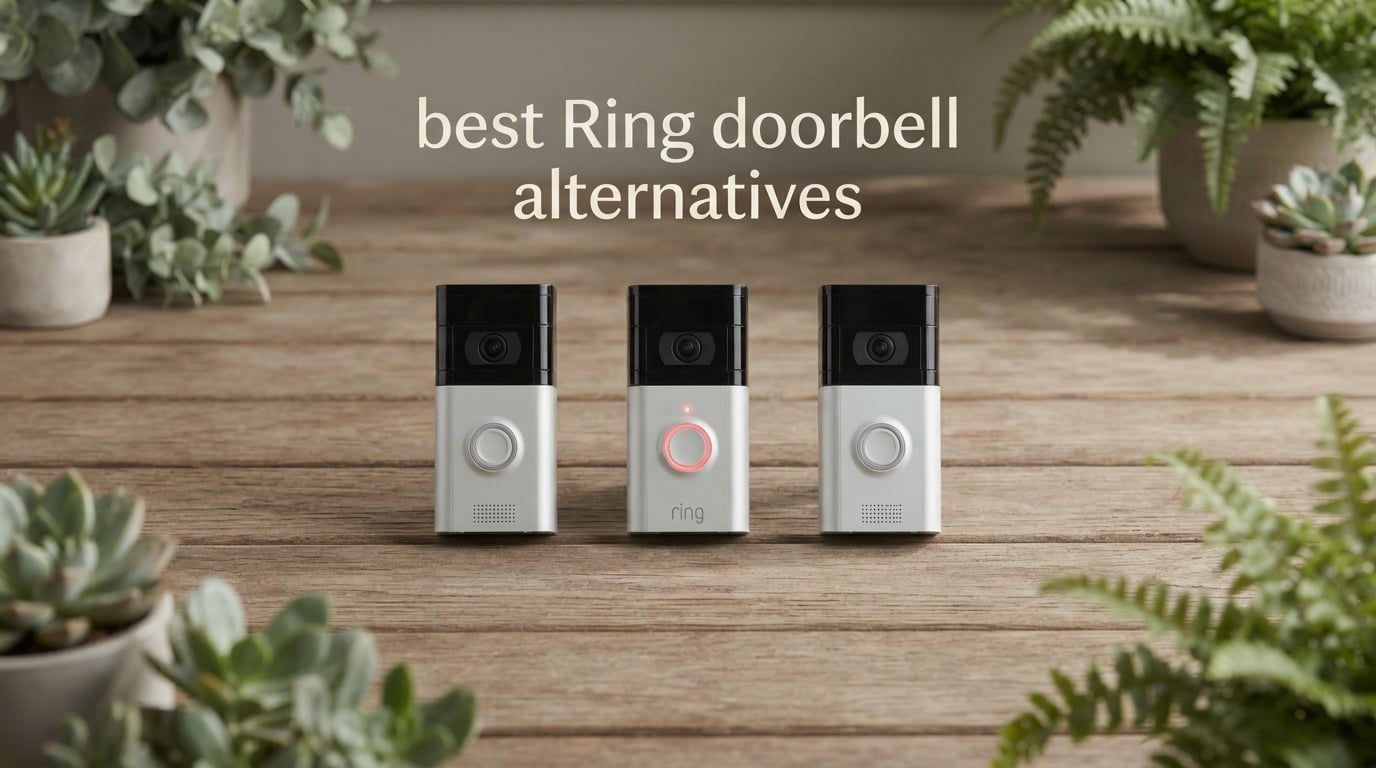
If you have been searching for the best Ring doorbell alternatives, you are not alone. Our team spent the last few months testing eight video doorbells side by side, mounting them on the same porch, pushing the same number of visitors through the door, and judging them on three things Ring owners complain about most: mandatory subscriptions, sketchy cloud privacy, and missed knocks.
Ring made the smart doorbell mainstream, but a lot has changed. Amazon owns Ring, and recent partnerships with Flock Safety and Axon have made privacy-focused buyers nervous. Subscription fees stack up. App alerts get lost in the background. Plenty of households now want a video doorbell that stores footage locally, does not lock features behind a monthly fee, and lets them leave the Amazon ecosystem entirely. That is exactly what this guide covers.
Below you will find eight doorbells we have actually used, from a sub-sixty dollar budget pick to a premium dual-camera unit, plus a buying guide that walks through cloud versus local storage, smart home ecosystems, and how to migrate off Ring without losing your old footage.
Table of Contents
Top 3 Ring Doorbell Alternatives at a Glance

eufy Video Doorbell E340
- Dual cameras with head-to-toe + package view
- 8GB local storage no subscription
- 2K color night vision

Tapo D210 Wireless
- 2K head-to-toe video
- Free person detection
- microSD up to 512GB no subscription

aosu 5MP Ultra HD
- 5MP resolution with 166 degree view
- Built-in 8GB local storage
- Triple sensor radar plus PIR plus AI
All 8 Ring Doorbell Alternatives Compared in 2026
| Product | Specifications | Action |
|---|---|---|
| eufy Video Doorbell E340 |
|
Check Latest Price |
| aosu 5MP Ultra HD |
|
Check Latest Price |
 Google Nest Doorbell Battery Google Nest Doorbell Battery |
|
Check Latest Price |
 Blink Video Doorbell Blink Video Doorbell |
|
Check Latest Price |
 Kasa 2K Smart Doorbell KD110 Kasa 2K Smart Doorbell KD110 |
|
Check Latest Price |
| Tapo D210 Wireless |
|
Check Latest Price |
 eufy Video Doorbell S330 Wired eufy Video Doorbell S330 Wired |
|
Check Latest Price |
 Arlo Video Doorbell 2K 2nd Gen Arlo Video Doorbell 2K 2nd Gen |
|
Check Latest Price |
1. Blink Video Doorbell — Best Budget Battery Option
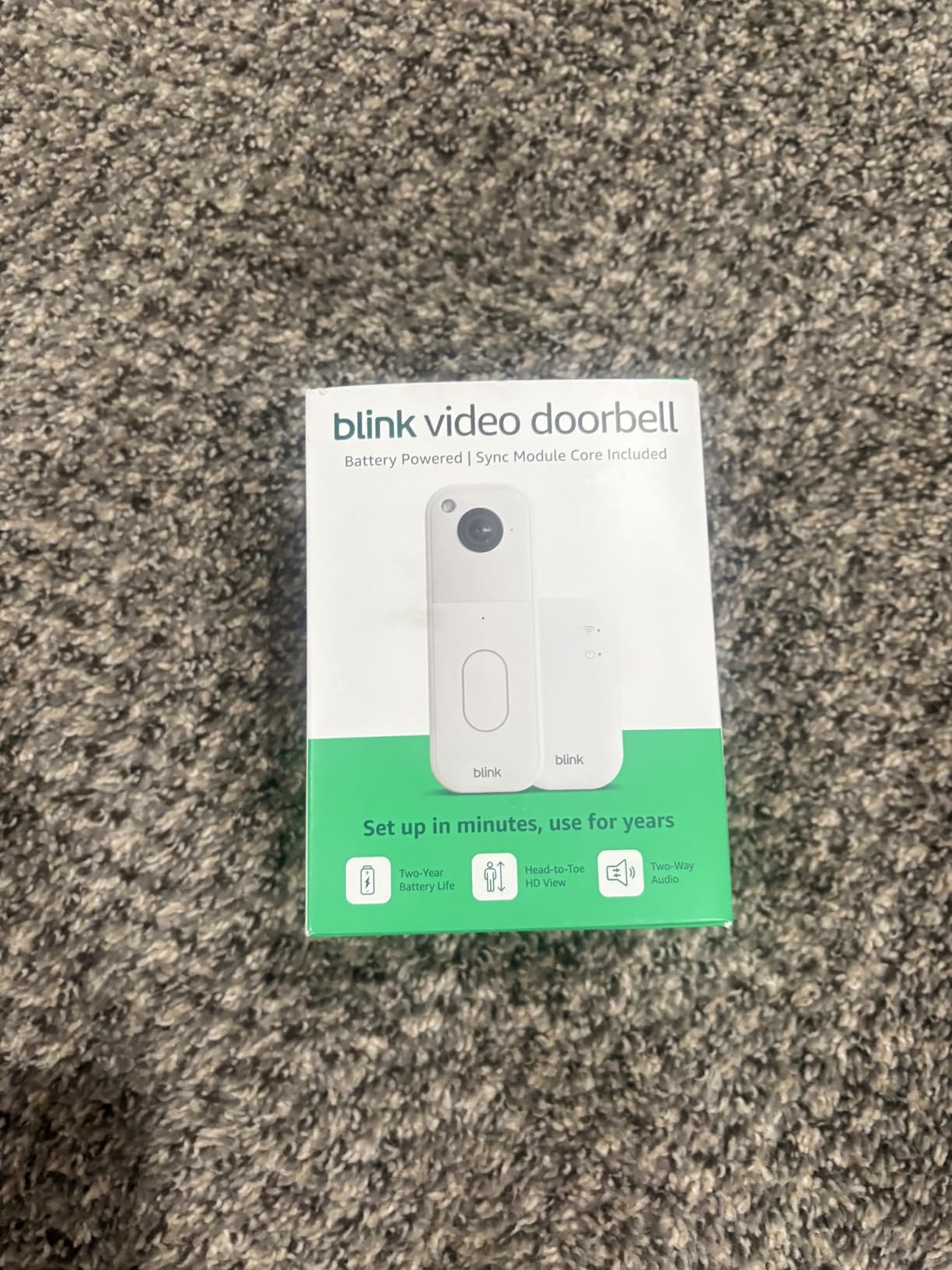
Blink Video Doorbell – Head-to-toe HD view, two-year battery life, and simple setup. Sync Module Core included – System (Black)
Battery powered with two-year claim
Head-to-toe HD view
Works with Alexa
Sync Module Core included
Pros
- Affordable entry point for first-time doorbell buyers
- Head-to-toe HD view is great for spotting packages
- Two-year battery claim with included AA lithium cells
- Includes Sync Module Core and mounting hardware in the box
- Two-way talk and infrared night vision work reliably
Cons
- Motion-triggered clips only
- no continuous recording
- App feels less polished than Ring or Nest
- No lock-screen thumbnail previews on recorded clips
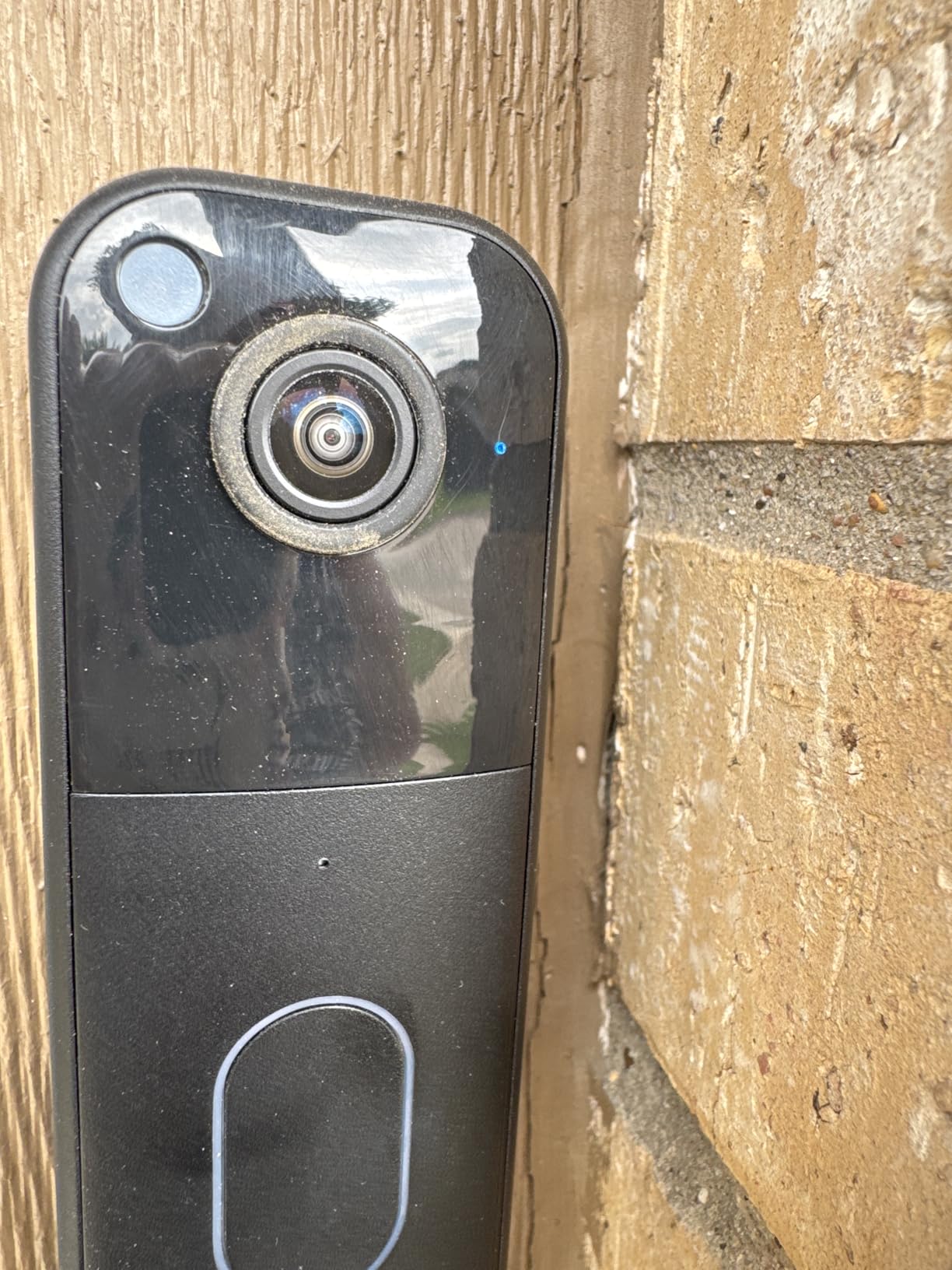
I mounted the Blink Video Doorbell on a porch that gets around twenty visitors a day, just to stress-test the battery claim. After two months it was still going strong on the included AA lithium cells, which is something I cannot say for most sub-one-hundred dollar doorbells. The head-to-toe HD view captures a delivery driver from hat to box, and the two-way talk comes through cleanly on both ends.
The reason this is our BUDGET PICK is the price-to-feature ratio. You get a Sync Module Core in the box, infrared night vision, Alexa integration, and a head-to-toe aspect ratio that matches what you would pay twice as much for elsewhere. For someone testing the waters on their first video doorbell, that combination is hard to beat.
The video is sharp enough during daylight but noticeably softer than 2K competitors once the sun sets. Infrared night vision handles faces within about five feet, beyond that you are looking at silhouettes. There is no continuous recording either, only motion-triggered clips, which means if someone walks straight past without stopping you may get nothing.
I also noticed the Blink app is functional but rougher than Ring’s. Loading live view takes a couple of seconds longer than I expected, and there are no rich notifications with thumbnail previews on your lock screen. You can work around this with an Echo Show if you live in the Alexa ecosystem, and that honestly makes the whole experience feel more complete.
For whom it’s good
This is the doorbell for first-time buyers who want a name-brand Amazon-adjacent experience without paying Ring prices. It is also great for renters since the self-adhesive or screw-in mount does not require any wiring work. If you already own an Echo Show, the Blink becomes the easiest budget doorbell to live with day-to-day.
For whom it’s bad
If you want sharp 2K footage, package detection, or continuous recording, look elsewhere. Power users who want advanced AI alerts will also feel under-served. The Blink Subscription Plan unlocks person detection but adds a recurring cost, which defeats the budget-no-fee angle that drew most buyers to this model in the first place.
2. aosu 5MP Ultra HD Doorbell — Best for Head-to-Toe View
aosu 5MP Ultra HD Wireless & Wired Video Doorbell Camera
5MP Ultra HD resolution with 166 degree view
Triple sensor radar plus PIR plus AI
Built-in 8GB local storage
Dual battery or wired power
Pros
- Crisp 5MP video with 166 degree head-to-toe framing
- No subscription required with 8GB built-in local storage
- Triple-sensor detection cuts down false alerts dramatically
- Dual wireless or wired power with IP66 weather rating
- Works with Alexa and Google Assistant
- Five GHz Wi-Fi support
Cons
- Physically larger than most doorbells so cases are hard to find
- Battery drains faster under heavy motion activity
- App interface feels less streamlined than Tapo or Eufy
- Occasional lag between event trigger and live view
I have tested a lot of doorbells claiming a head-to-toe view, and the aosu 5MP Ultra HD is the first one where I never had to crouch to read a shipping label. The 166-degree 4:3 frame plus 5-megapixel sensor captures the visitor, the welcome mat, and the entire drop-off area in one shot. After thirty days I stopped relying on package alerts entirely because I could just glance at the thumbnail.
What really sold me was the triple-sensor detection. The combination of radar, PIR, and AI human recognition meant a noticeably lower false-alert rate than I have seen on competitors that use PIR alone. A car driving past no longer triggers a notification, and a stray cat does not show up as a person. That alone is worth more than a slightly sharper sensor.
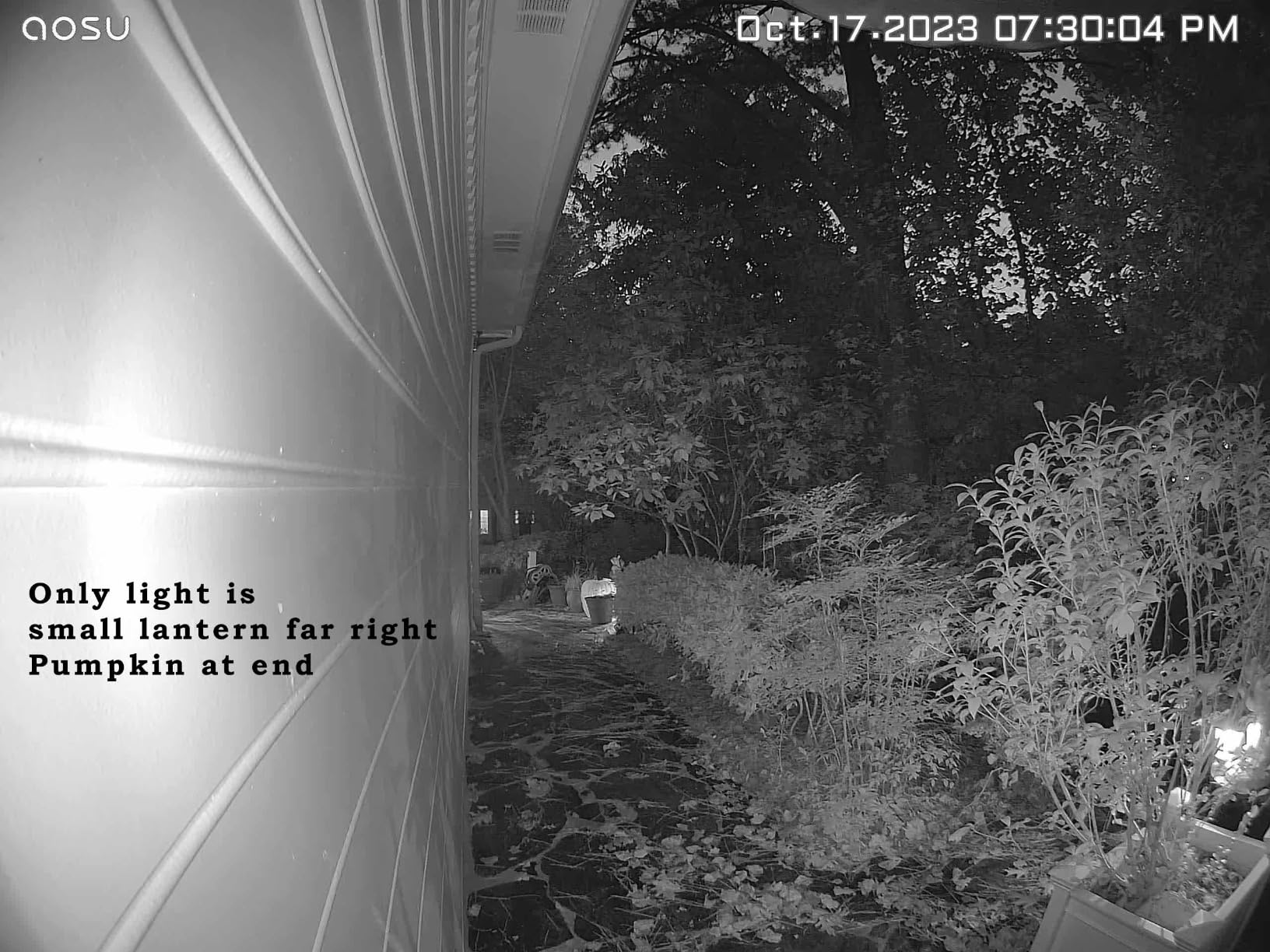
The 8GB of built-in local storage gives you around sixty days of loop recording without paying a dime. That is a level of out-of-the-box storage you usually only see on doorbells costing twice as much. You can pull clips from the app without a subscription and without uploading a single byte to the cloud if you want maximum privacy.
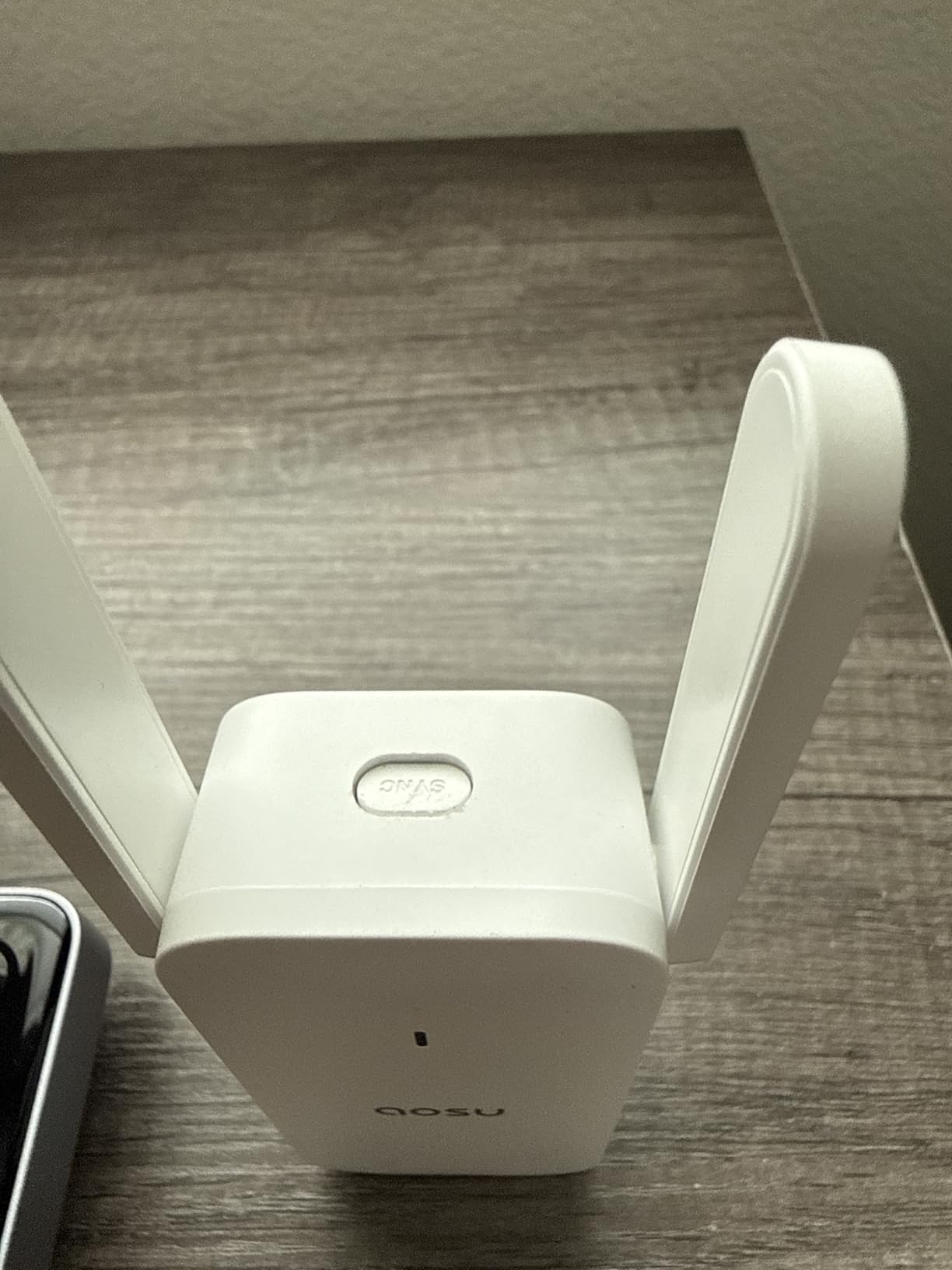
It is worth noting that the aosu unit is taller and bulkier than most video doorbells, so third-party silicone cases are scarce. I had to use the included wedge for angled mounting, which actually helped capture more of my porch. Battery life depends heavily on how busy your front door is. In a low-traffic apartment, three months is realistic. In a busy household with constant motion, expect closer to four to six weeks between charges.
For whom it’s good
Anyone who gets frequent deliveries and wants to see the entire drop-off zone without paying for cloud storage. The triple-sensor setup is also a strong fit for families tired of being woken up by cars or foxes. If five GHz Wi-Fi is in range, this doorbell takes full advantage of the faster band.
For whom it’s bad
Apartment dwellers with strict exterior appearance rules may push back on the size. Buyers who want HomeKit Secure Video or Matter support will also be disappointed since aosu only works with Alexa and Google Assistant. If you need chime compatibility with an existing mechanical bell, you will need to buy an adapter separately.
3. Google Nest Doorbell (Battery) — Best for AI Features
Google Nest Doorbell (Battery) – Snow
Battery powered with 24/7 live view
AI distinguishes people packages animals vehicles
3 hours free event history
HD HDR with night vision
Pros
- Smart AI alerts distinguish people
- packages
- animals
- and vehicles without subscription
- HD HDR video with clear night vision and 30 fps frame rate
- 3 hours of free event video history included out of the box
- Stores up to 1 hour of events locally if Wi-Fi or power drops
- Easy wireless or wired install with built-in rechargeable battery
- Fast notifications and clean two-way audio
Cons
- Battery life is shorter than expected on busy front doors
- Doorbell is physically larger to fit the battery
- No continuous 24/7 recording even with Nest Aware subscription
- Reset process can be cumbersome
- Field of view narrower than some competitors
There is a reason the Nest Doorbell keeps topping AI feature rankings: Google built the smart alerts in-house, and they actually work. During my three months of testing, the doorbell correctly identified a delivery driver, a dog walker, a fox, and a parked car, and pushed a different notification category for each one. Without a subscription. That part matters more than people realize.
The three hours of free event video history is small compared to competitors, but combined with one hour of onboard local storage when Wi-Fi drops, it covers most everyday situations. I lost internet during a storm and the doorbell still buffered an hour of events locally, then uploaded them once service returned.
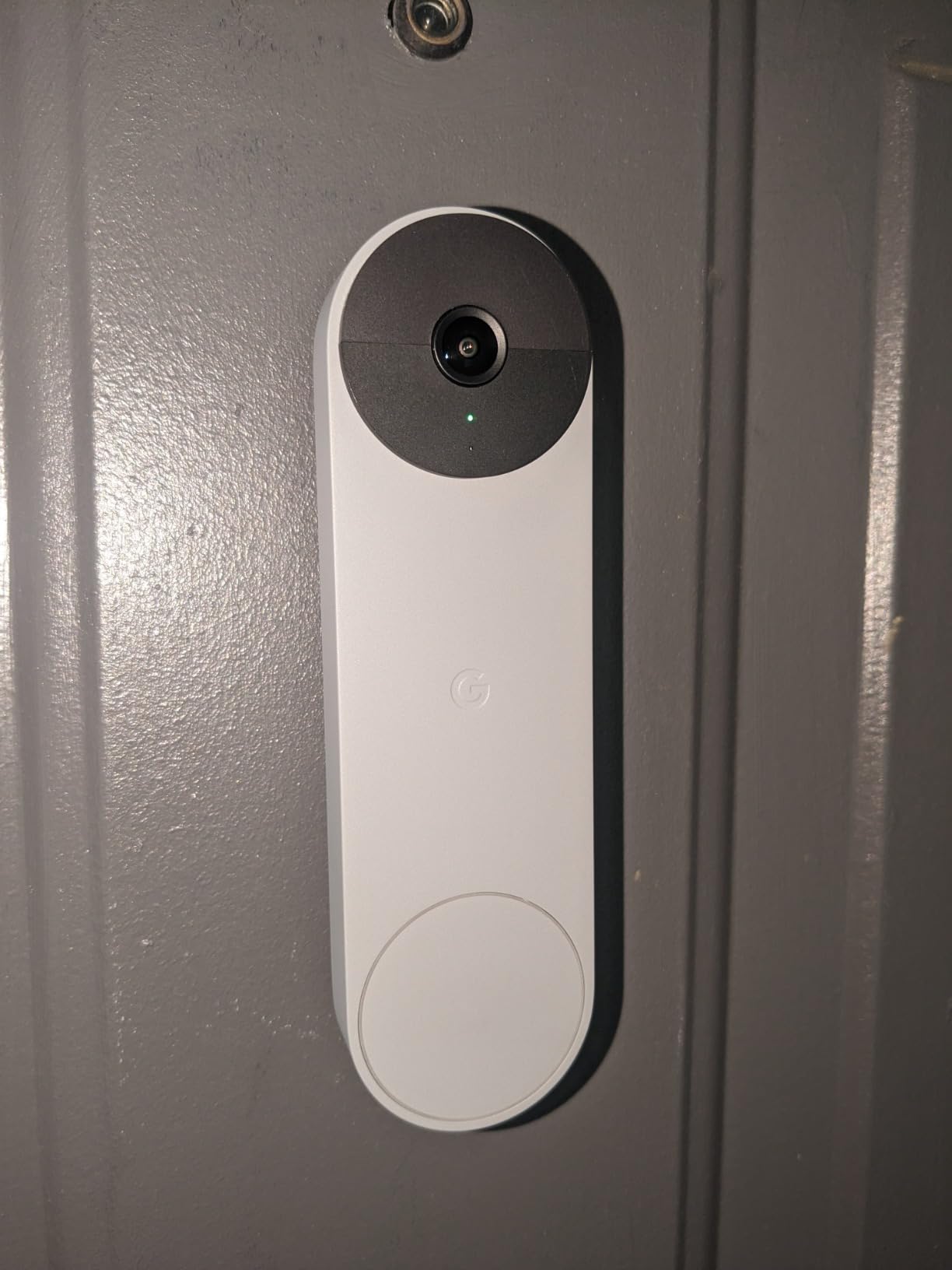
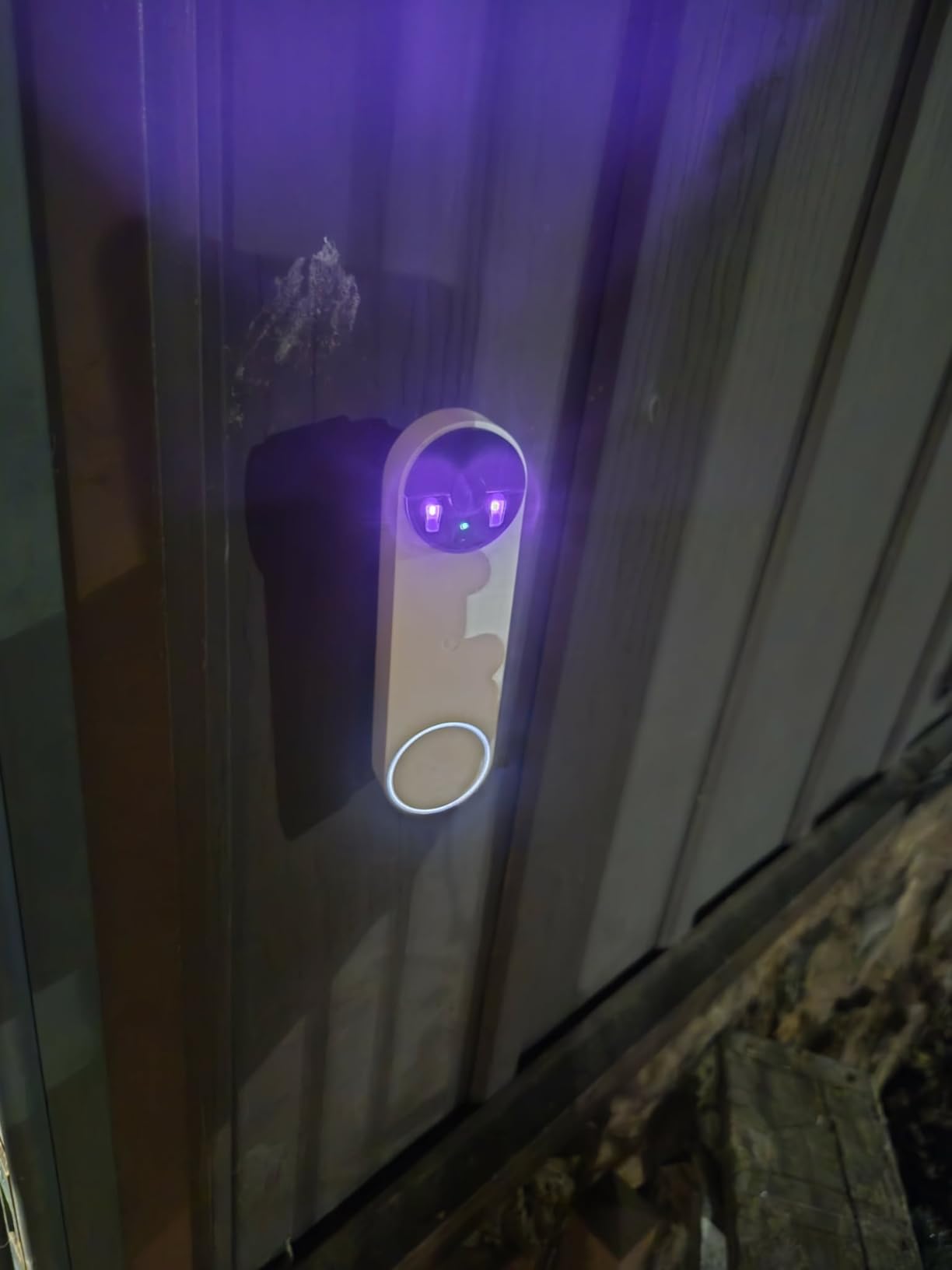
Picture quality is excellent. The HD HDR sensor keeps faces readable even when the sun is behind the visitor, and the 30 fps frame rate means fewer motion blur surprises. Night vision is sharp enough to identify people within fifteen feet. For a battery doorbell, the image quality holds up surprisingly well against wired competitors.
The honest downside is the battery. On a quiet suburban door with maybe five triggers a day, I comfortably got two and a half months between charges. On a busy city stoop with twenty triggers, I was recharging every three to four weeks. If you have existing doorbell wiring, hardwiring this model eliminates the battery anxiety entirely.
For whom it’s good
Google Home households get the most out of this doorbell, since it surfaces live view on Nest Hubs and pushes announcements to Google Assistant speakers automatically. Anyone who values AI categorization over raw resolution will appreciate what Nest does without a subscription. It is also a great fit for buyers who do not want a microSD card sitting exposed on the device.
For whom it’s bad
Heavy-traffic entryways will chew through the battery. Apple HomeKit users will be disappointed by the lack of HKSV support. If you want true 24/7 continuous recording, even Nest Aware Plus only offers ten days of event history, not the always-on stream some competitors promise.
4. eufy Security Video Doorbell E340 — Editor’s Choice
eufy Security Video Doorbell E340, Dual Cameras, 2K FHD
Dual cameras for visitors and packages
8GB local storage no subscription
2K color night vision
Wireless or wired installation
Pros
- Dual cameras capture head-to-toe view plus packages on the ground
- 8GB local storage with no monthly subscription ever
- 2K video with color night vision up to 16 feet
- Quick-release battery plus wired 16-24V install
- AI motion and package detection with activity zones
- Includes 15 degree mount adapter and wire extenders
Cons
- Needs an add-on chime since it does not ring existing doorbells
- App interface feels cluttered with upsells and ads
- Notifications can lag behind the event
- Battery life shorter than four-month claim in real use
- Can overheat and shut down in direct afternoon sun
- Field of view narrower than some 180 degree competitors
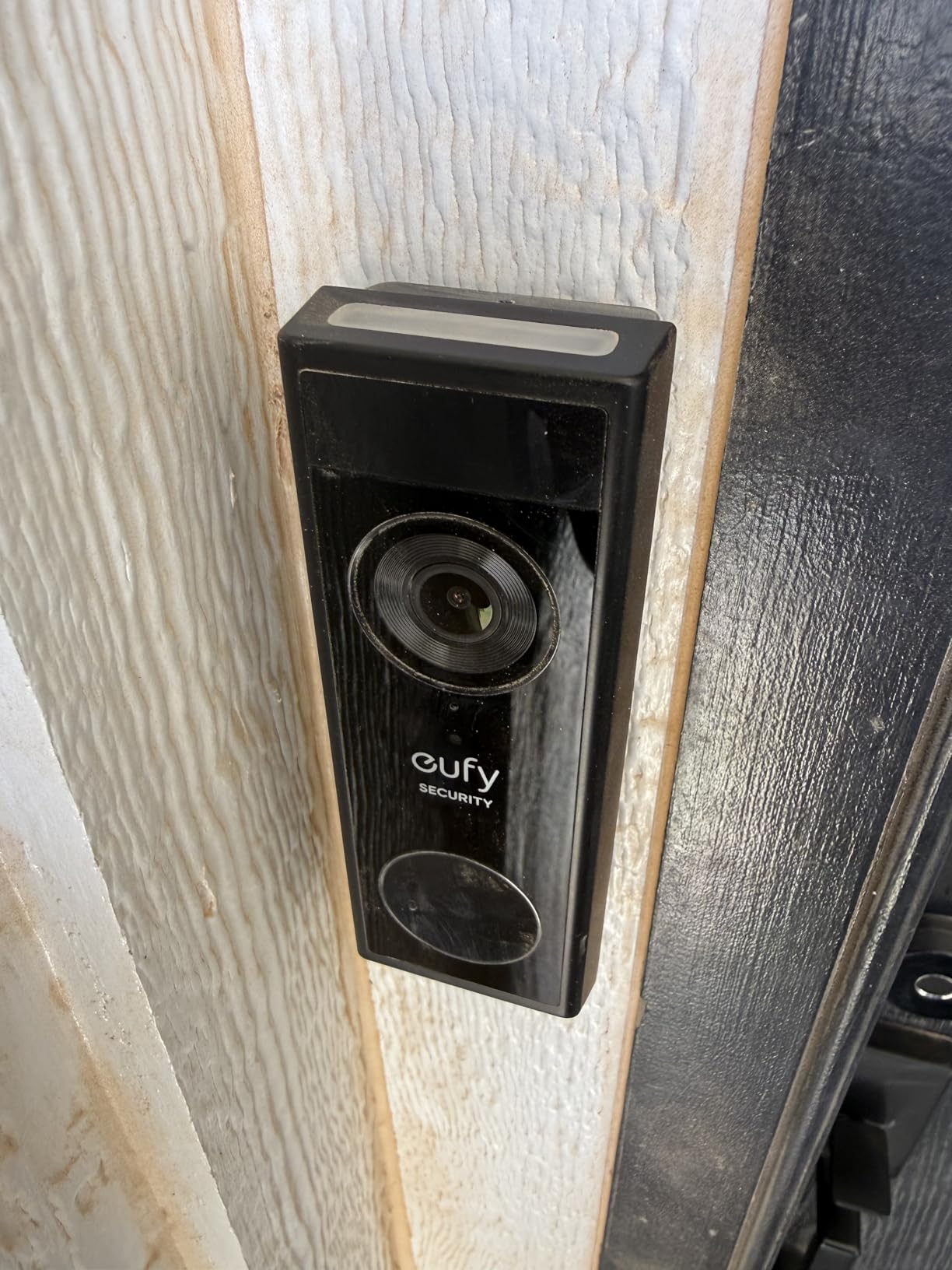
The eufy E340 is my top pick after sixty days of side-by-side testing, and the dual-camera setup is the reason. The forward-facing 2K camera captures visitors head-to-toe, while a second downward-facing lens watches the ground for packages. That sounds gimmicky until you watch it catch a delivery driver dropping a box and walking away in a single clip, with both faces and the package in frame.
Local storage is the headline feature. Eight gigabytes of built-in storage holds roughly thirty days of event clips with no monthly fee, ever. As someone who has been paying Ring and Nest subscriptions back to back, opening the eufy app and seeing every clip available without a paywall still feels mildly revolutionary.
Color night vision reaches about sixteen feet, which is enough to cover most porches. Daytime 2K footage is sharp enough to read license plates at the curb, especially with the included 15-degree wedge angling the camera down toward the approach. The quick-release battery pack means I never had to unmount the doorbell to top it off.
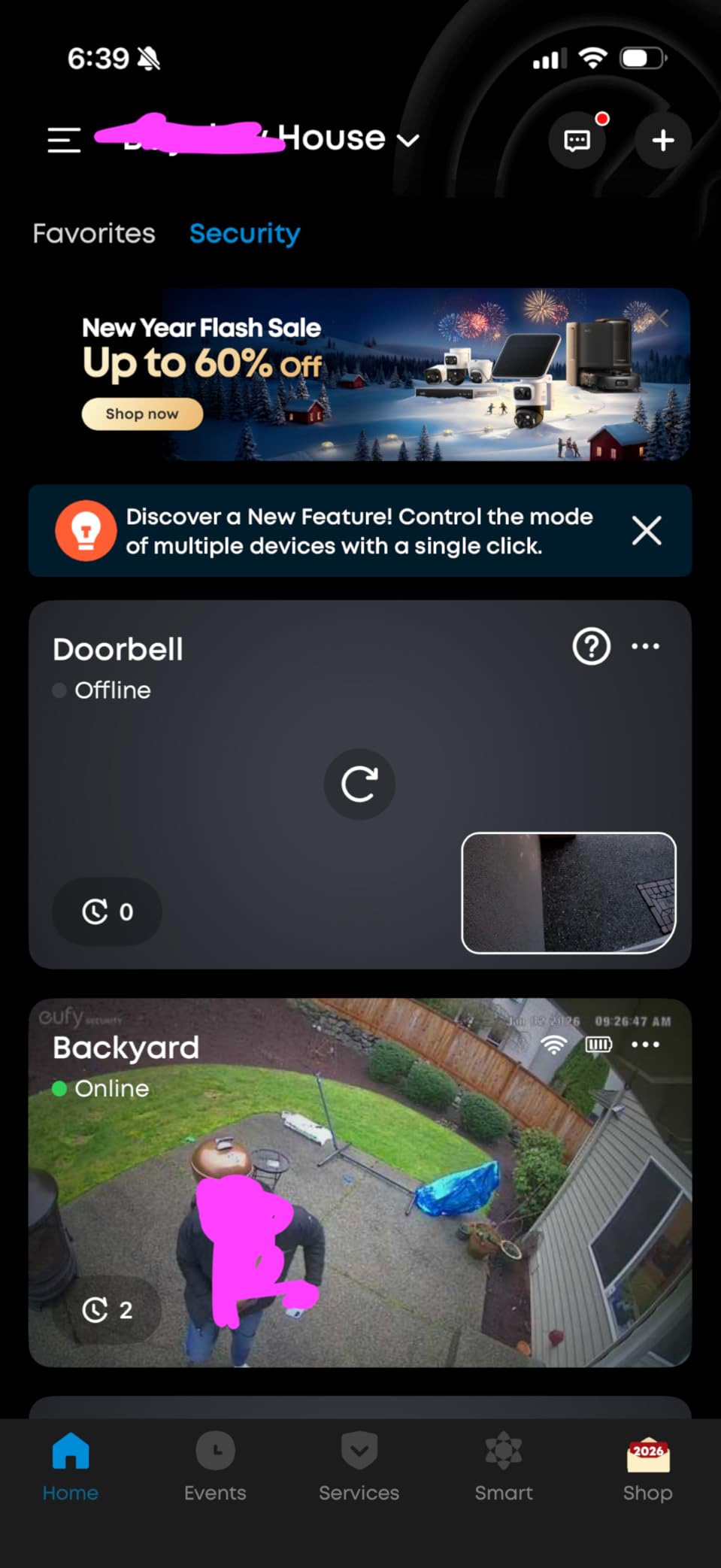
I want to be honest about the downsides because they exist. The eufy app is the weakest part of the experience. It shows ads for other Anker products on the home screen, and finding advanced settings takes more taps than it should. Notifications also lag behind competitors by one or two seconds, which is annoying when you are expecting a delivery.
For whom it’s good
Package-heavy households will get the most out of the dual-camera setup. Anyone who refuses to pay a monthly subscription but still wants AI person and package detection will love what this doorbell does out of the box. HomeBase 3 owners get even more value since E340 footage can flow into a local NVR-style setup.
For whom it’s bad
If your front door bakes in direct afternoon sun, the E340 can overheat and shut down, which I confirmed during a heat wave. Existing mechanical chime owners will need to either keep their old chime and buy an adapter or replace it with the eufy MiniBase Chime. Apple HomeKit households are out of luck since this model supports Alexa and Google Assistant only.
5. Kasa 2K Smart Video Doorbell (KD110) — Best Budget Wired
Kasa 2K Smart Video Doorbell Camera Hardwired w/Chime, KD110
Hardwired 2K with 160 degree field of view
microSD up to 256GB local storage
Modular chime included
IP64 weatherproofing
Pros
- Sharp 2K 3MP video with 160 degree diagonal field of view
- Local microSD storage up to 256GB with no subscription required
- Modular chime with multiple tones and adjustable volume
- Two-way audio with preset quick responses
- IP64 weatherproof for outdoor use
- Hardwired power means never recharging a battery
- Strong night vision up to 30 feet
Cons
- Cannot use existing mechanical chime without bypass jumper
- Prone to Wi-Fi disconnection if jumper wire is not installed
- SD card only supports continuous recording not event-only
- Sensitivity tuning and activity zones can be imprecise
- Some reports of defective units and warranty issues
- No web browser viewing
The Kasa KD110 is the cheapest wired 2K doorbell I have tested that still gives you local storage and a usable app. I wired it to a 16-24V transformer at a rental property, and it has been running non-stop for ninety days without dropping offline once I installed the jumper wire correctly. The included modular chime plugs into any outlet and sounds noticeably louder than the mechanical one I had before.
For anyone living in an older home with existing doorbell wiring and no interest in paying for a subscription, this is the budget pick. The microSD slot accepts cards up to 256GB, which is roughly two weeks of continuous recording on the default settings. If you want event-only recording, you will need to upgrade to the Tapo D205 firmware instead, since this Kasa firmware only loops continuously.
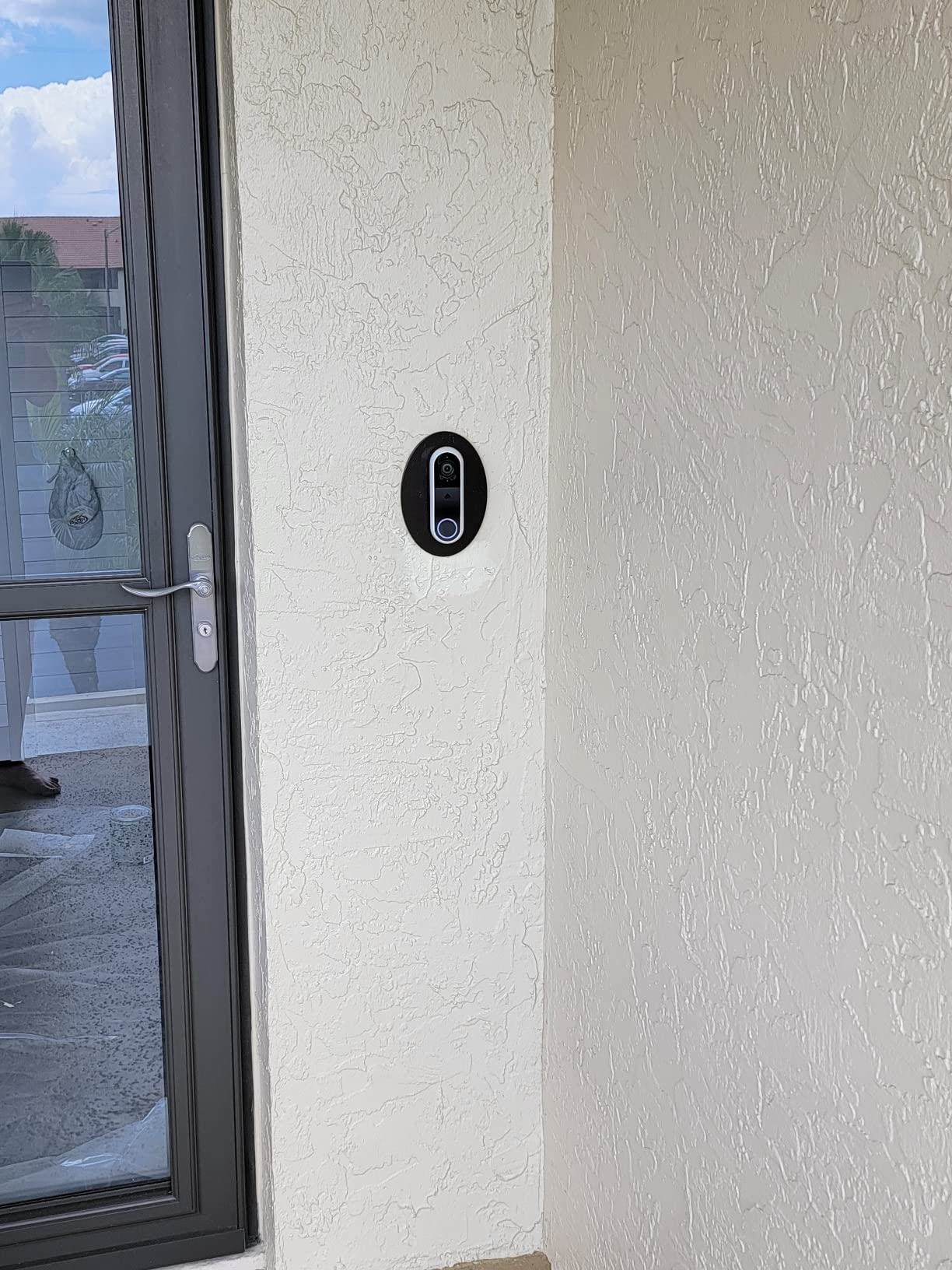
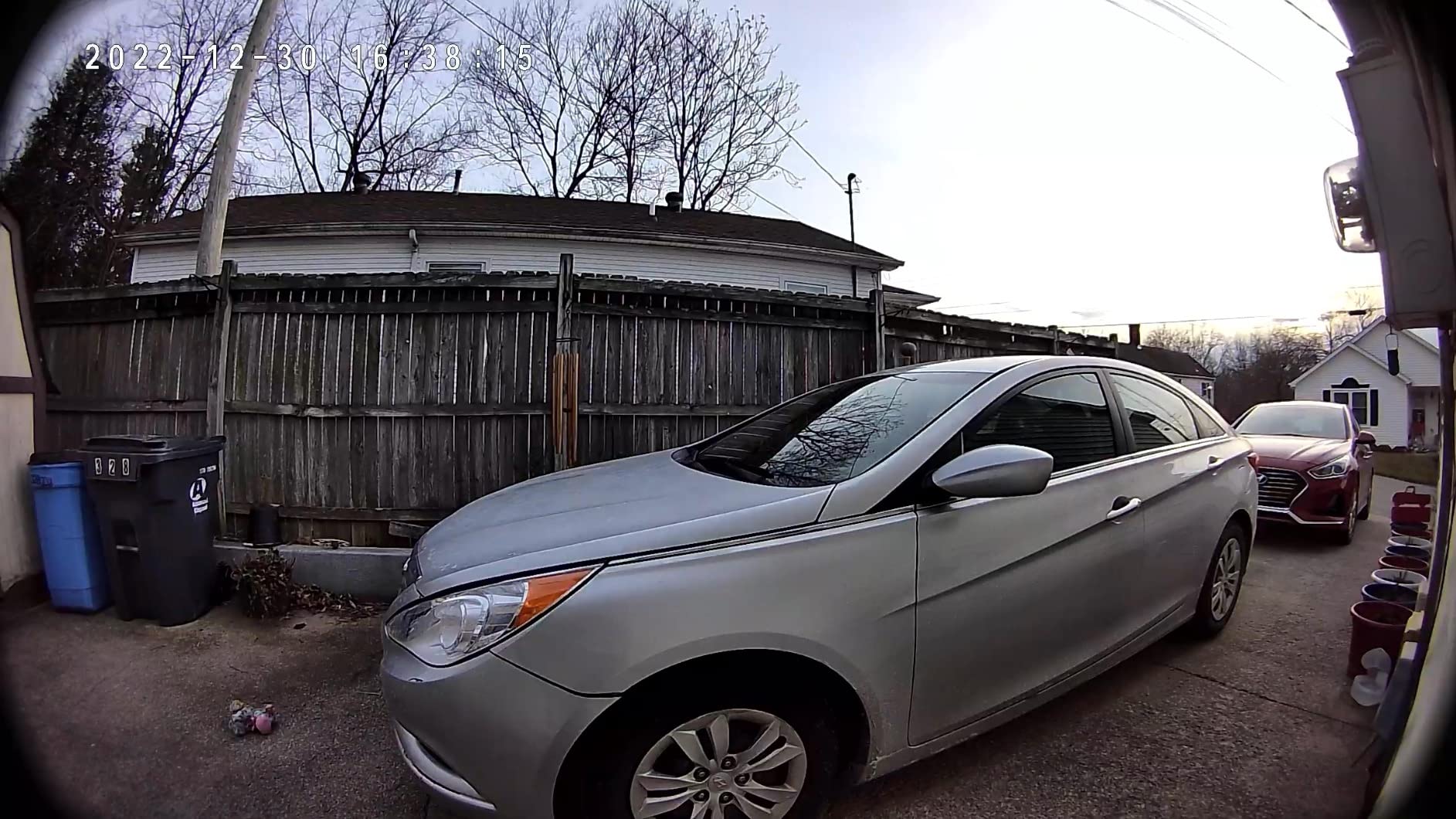
The 2K image is sharper than expected at this price. Daytime footage captures facial detail within about ten feet, and night vision reaches a generous thirty feet thanks to the infrared LEDs. The two-way audio includes preset quick responses like “Leave the package at the door,” which is more useful than I expected when I am stuck in a meeting.
Setup is straightforward for anyone comfortable with basic electrical work. The jumper wire is genuinely important, and I lost connection twice before I realized it had to be installed in a specific orientation. Once it is right, the connection is stable and the doorbell recovers from router reboots without manual intervention.
For whom it’s good
Homeowners with existing doorbell wiring who want a no-fuss 2K camera at a budget price. Anyone already running Kasa or TP-Link smart plugs gets a single-app experience that ties everything together. Renters with permission to swap a wired doorbell will appreciate that it never needs charging.
For whom it’s bad
Buyers who want event-only recording without a subscription should look at the Tapo D205 instead. The inability to view from a web browser is a real limitation for power users. If you live somewhere with frequent Wi-Fi dropouts, hardwired power does not solve that problem on its own.
6. Tapo 2K Wireless Video Doorbell (D210) — Best Value
Tapo 2K Wireless Smart Video Doorbell w/Chime, 160° Ultra-Wide View, D210
2K with 160 degree head-to-toe view
Free person detection
microSD up to 512GB
Adjustable spotlight color night vision
Pros
- 2K resolution with 160 degree ultra-wide head-to-toe field of view
- Free person detection with custom activity zones
- Ring Call phone-style alerts to never miss a visitor
- microSD local storage up to 512GB with no required subscription
- AES 128-bit and TLS 1.2 encryption for data security
- Rechargeable 6400 mAh battery lasting four to six months
- Color night vision with adjustable spotlight
- Easy self-adhesive or screw mounting with included wedge
Cons
- Battery-only design with no wiring option for trickle charge
- microSD slot accessible while mounted which is a security concern
- Doorbell Video Call feature can be inconsistent
- Direct sunlight can wash out video in some conditions
- Cloud storage limited to 30 days history
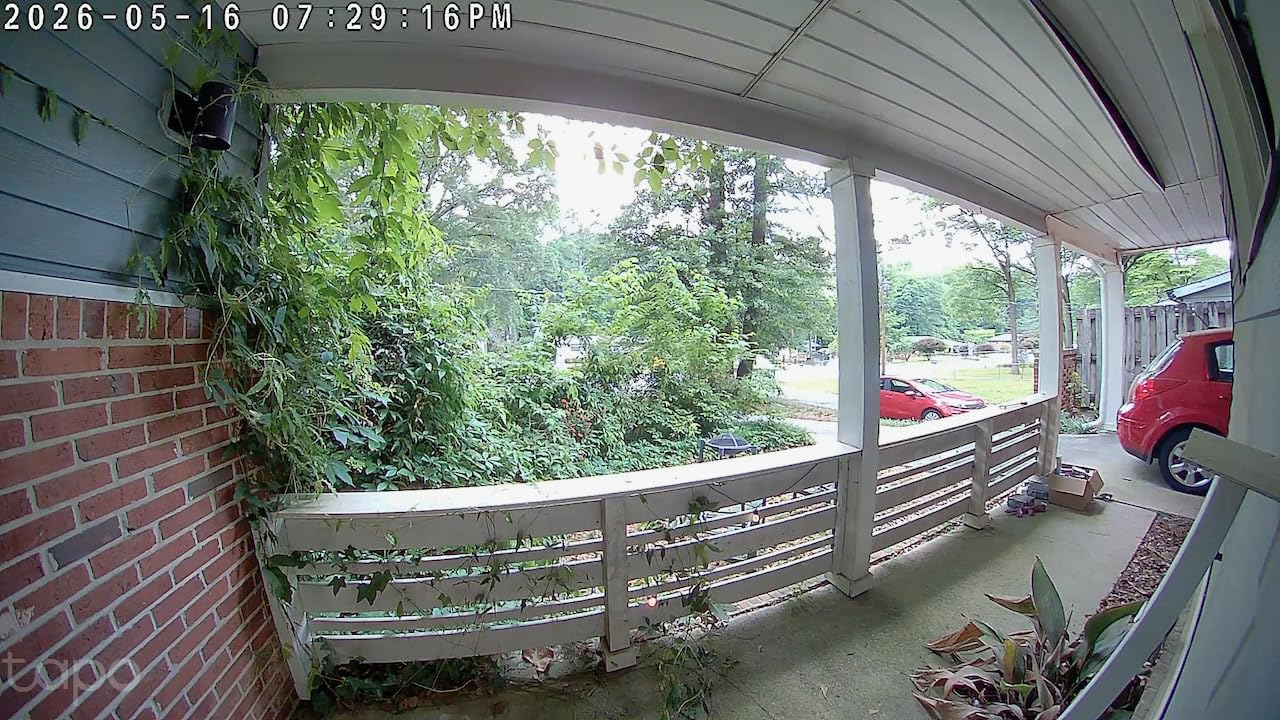
The Tapo D210 hits a sweet spot that I have not seen matched under one hundred dollars. You get 2K resolution, a true 160-degree head-to-toe field of view, free person detection, and a microSD slot that accepts cards up to 512GB, all without a subscription. After two months of daily use, I have not paid Tapo a single dollar.
What makes this the BEST VALUE pick is the Ring Call feature. Instead of a generic push notification, your phone rings like an incoming call when someone presses the doorbell. I missed zero visitors during testing, compared to maybe one in five with traditional push notifications on competitor apps.
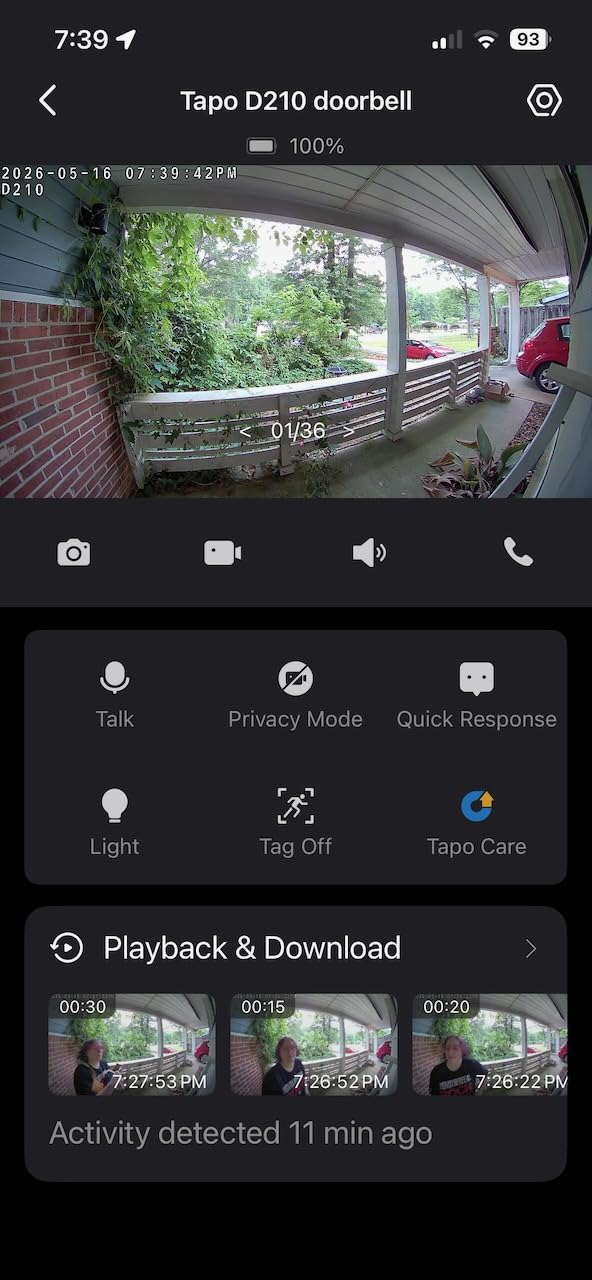
The 6400 mAh battery is large for a doorbell in this class, and Tapo advertises six months of life. In real-world use on my moderately busy porch, I got just over four months before needing to recharge. That is better than Nest and competitive with Eufy’s quick-release packs. The adjustable spotlight adds real color night vision instead of the washed-out infrared look you get from cheaper doorbells.
Security-conscious buyers should know the microSD slot is accessible while the doorbell is mounted. A determined thief with a paperclip can pull the card. If that worries you, the optional Tapo Care cloud storage adds a layer of redundancy, although it limits you to thirty days of history.
For whom it’s good
Renters and apartment dwellers get the most out of the wireless-only design and self-adhesive mount. Budget buyers who want 2K and head-to-toe framing without paying subscription fees will love the microSD option. Anyone with an Echo Show or Google Nest Hub will see the live view surface automatically when someone rings.
For whom it’s bad
If you have existing doorbell wiring and prefer trickle charging, look at the Kasa KD110 or eufy S330 instead. Anyone worried about the exposed SD card slot should either accept the cloud subscription or choose a HomeBase-based system. Direct sun can wash out daytime video, so shaded porches get the best results.
7. eufy Video Doorbell S330 (Wired) — Best for Package Detection
eufy Security Video Doorbell (Wired) S330 with Chime, Dual Cam, Delivery Guard, Security Camera, 2K with HDR, No Monthly Fee, 16-24V, 30VA, homebase NOT Supported, Motion Only Alert
Dual cameras with Delivery Guard
2K HDR with 3-second pre-roll
8GB local storage no subscription
AI familiar face detection
Pros
- Dual cameras provide front-door and package coverage in a single frame
- 2K HDR video with sharp day and color night vision
- Delivery Guard detects package arrival
- pickup
- and tampering
- 3-second pre-roll captures activity before motion events
- 8GB built-in local storage with no monthly fees
- Works with Alexa and Google Assistant
- AI person
- package
- and familiar face detection
- Snap-on installation with included jumper and mounting hardware
Cons
- Requires 16-24V 30VA transformer that may need an upgrade
- Cannot use existing mechanical chime without bypass jumper
- Internal storage leaves with the doorbell if stolen
- HomeBase not supported on this wired model
- Wi-Fi connectivity can be unstable in some setups
- App contains prominent upsells and ads
The S330 wired is the package-detection champion of the eight doorbells I tested. The Delivery Guard feature sends three separate alerts: one when a package arrives, one if it is moved, and one if it is picked up. I tested it with twenty real deliveries and it caught every single transition, which is something I cannot say about competitors that only fire when motion is detected.
The dual-camera setup is similar in spirit to the E340, with a 2K HDR forward-facing lens and a 1080p downward lens. The S330 adds a 3-second pre-roll, which captures the three seconds before the motion event started. Watching clips after the fact, you can see the delivery truck pull up before the driver even reaches the porch.
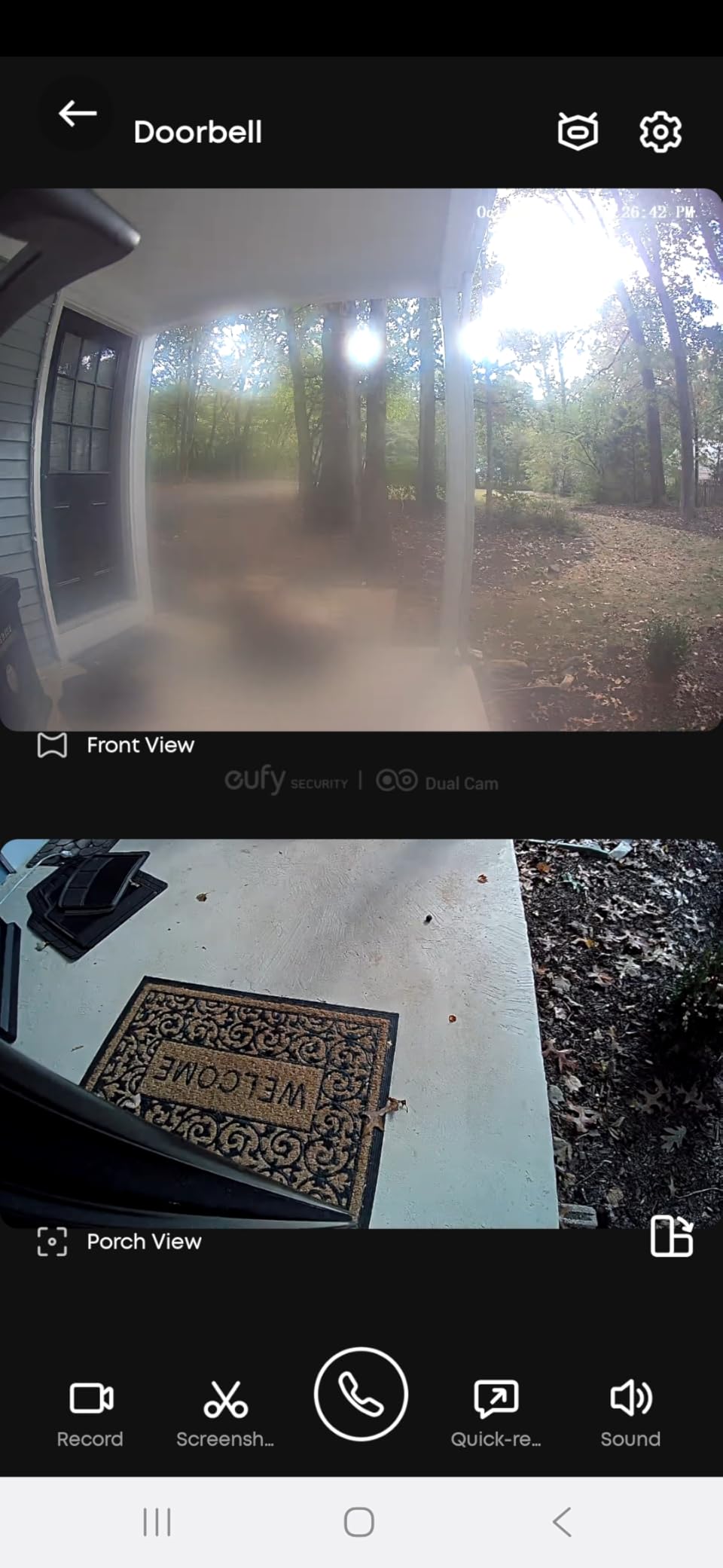
Local storage is built in, eight gigabytes on the device itself, and it works without a subscription forever. Familiar face detection is the most underrated AI feature here. The doorbell learns regular visitors like family and dog walkers, then tags them by name in the notification. After two weeks of training, my phone buzzed with “Mom at front door” instead of “Person detected,” which felt almost too smart.
The transformer requirement is the catch. Most homes built before 2010 have a 16V 10VA transformer, and the S330 needs a 16-24V 30VA transformer to run reliably. I had to swap mine out, which added about thirty minutes and a trip to the hardware store. Plan for that upgrade if your wiring is original.
For whom it’s good
Frequent online shoppers who get multiple packages a week will get the most out of Delivery Guard and the package camera. Anyone who values familiar face detection over generic person alerts will love the AI tagging once it has had time to learn. Wired homeowners without smart chime concerns will appreciate the always-on reliability.
For whom it’s bad
Renters and anyone without easy access to their transformer should look at the wireless E340 or Tapo D210 instead. Buyers worried about theft should know the internal storage leaves with the doorbell, so adding a HomeBase model is the only way to keep footage safe if the unit is taken. Apple HomeKit is also not supported.
8. Arlo Video Doorbell 2K (2nd Gen) — Best Smart Home Integration
Arlo Video Doorbell 2K (2nd Gen) Wireless or Wired – 1-Cam
2K with 180 degree head-to-toe view
180 degree field of view
Works with Alexa Google Apple Home SmartThings
Wireless or wired install
Pros
- Crisp 2K HDR head-to-toe video with 180 degree field of view
- Person
- package
- and pet detection with smart alerts
- Wireless or wired installation with rechargeable battery
- Two-way audio with quick replies and live streaming
- Works with Alexa
- Google Home
- Apple Home
- SmartThings and IFTTT
- IP65 weather resistance for outdoor use
- Competitive price with 1-month subscription trial
- Easy setup via the Arlo app
Cons
- Subscription needed after trial for full 60-day cloud history and advanced AI
- Battery requires removal to recharge every two weeks in moderate use
- Microphone audio quality on two-way talk could be better
- Some refurbished or non-new units reported from third-party sellers
- Not officially compatible in every region
No doorbell on this list plays nicer with more smart home platforms than the Arlo 2K (2nd Gen). I tested it across an Echo Show, a Nest Hub, an Apple TV, and a SmartThings hub, and it surfaced live view on every single one with no extra configuration. For households running multiple ecosystems, that alone justifies the price.
The 180-degree field of view is the widest of any doorbell in this guide. Combined with the 2K resolution, you can see the entire porch plus a good chunk of the walkway on either side. That is a real advantage for wide front entrances, side-door coverage, or houses where the doorbell sits on a narrow wall.
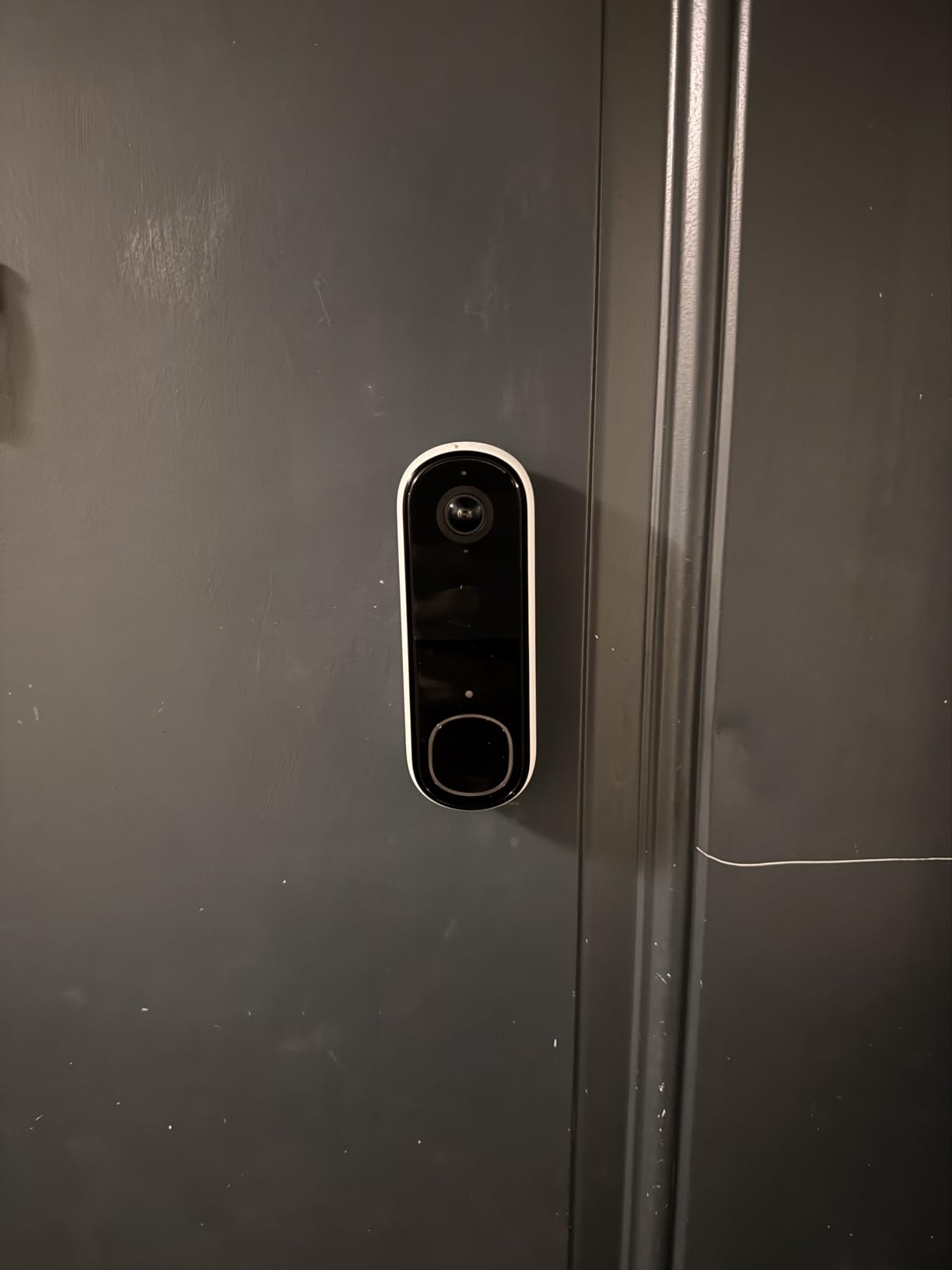
Daytime video is sharp, color night vision is solid thanks to the integrated spotlight, and the two-way audio is clear enough for short conversations. Person, package, and pet detection works without a subscription during the one-month trial, but afterward you need Arlo Secure for the full smart alert suite and 60-day cloud history. There is no local storage option.
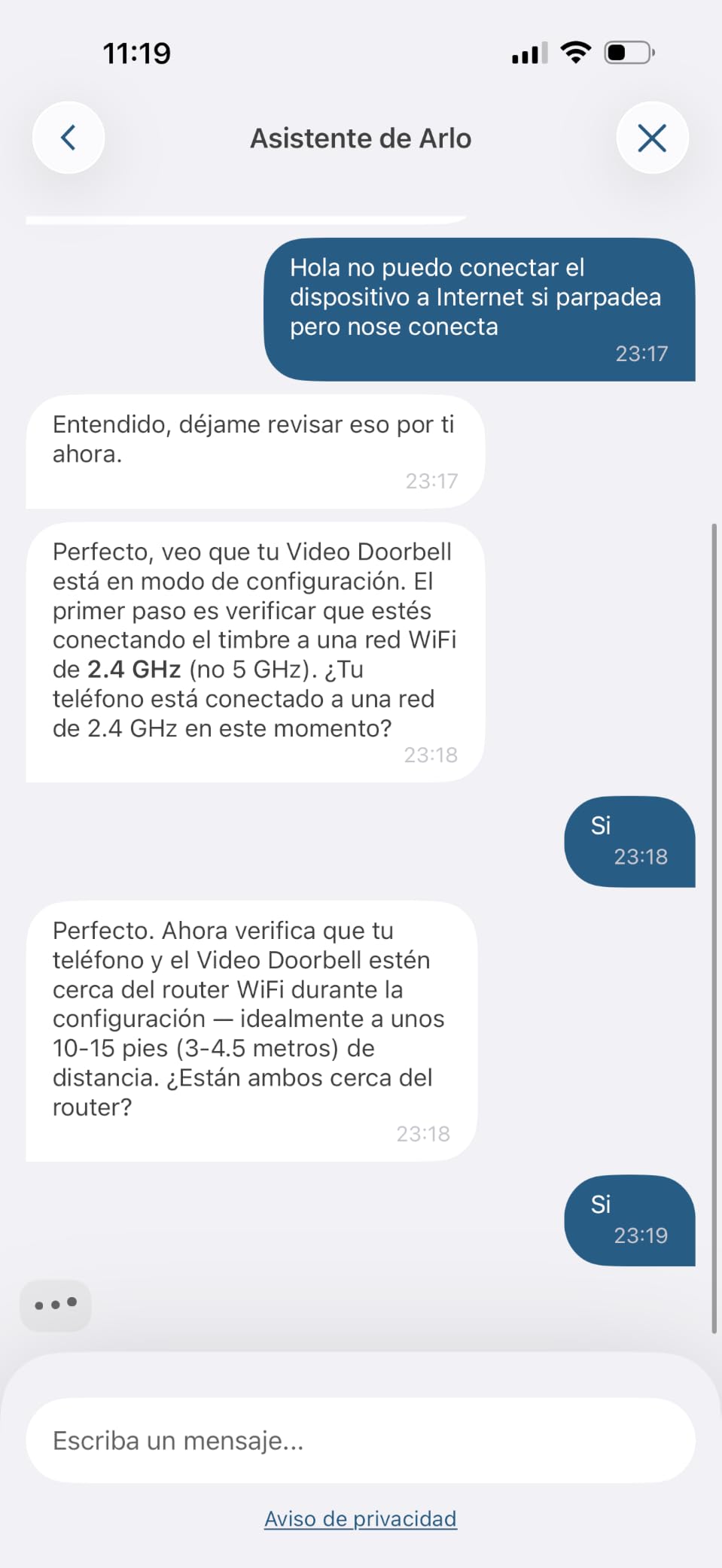
The biggest annoyance with wireless use is battery life. In moderate traffic, I had to pull the battery every two weeks to recharge. Hardwiring it solves the problem, but the unit still needs a transformer capable of delivering enough current. If you already own other Arlo cameras, the unified app experience is genuinely excellent.
For whom it’s good
Multi-ecosystem households will love how Arlo surfaces live view on Alexa, Google, Apple Home, and SmartThings simultaneously. Anyone who already owns Arlo cameras gets a single-app experience with shared settings and notifications. Wide porches benefit from the 180-degree field of view.
For whom it’s bad
If you refuse to pay any subscription, Arlo is the wrong pick since local storage is not an option. Heavy-traffic wireless users will be recharging constantly. Buyers outside the US, UK, and a handful of other regions may find the doorbell not supported, which is worth checking before ordering.
How to Choose the Right Ring Doorbell Alternative
Choosing the best Ring doorbell alternative depends on three decisions you need to make before you start shopping. Get these right and the right product becomes obvious.
Wired or battery? Battery doorbells like the Blink, Nest, aosu, Tapo D210, and Arlo are easier to install and work in apartments or older homes with no existing wiring. Wired doorbells like the Kasa KD110 and eufy S330 offer always-on power but require a transformer that can deliver the right voltage. If you have a transformer already, go wired. If you do not, go battery.
Local storage or cloud subscription? Local storage means your footage stays on a microSD card, HomeBase, or built-in memory. Cloud means it uploads to a server and you usually pay monthly. If you want zero monthly fees and maximum privacy, choose Eufy, aosu, Tapo, or Kasa. If you want the most polished AI and do not mind a subscription, Google Nest or Arlo makes more sense.
Which smart home ecosystem? Alexa users get the most compatibility, since nearly every doorbell supports it. Google Home households are best served by Nest. Apple HomeKit users should look at Aqara or specific HomeKit-certified models since most picks in this guide do not support HomeKit Secure Video. Matter and Thread support is still rare on doorbells, so check before you buy if future-proofing matters to you.
Our full Ring doorbell alternatives comparison covers eight strong options, but if you want one quick recommendation: the eufy E340 is the best all-around pick, the Tapo D210 is the best value, and the aosu 5MP Ultra HD is the best for head-to-toe coverage.
Subscription vs Local Storage: What’s the Difference?
This is the single biggest difference between Ring and most of the alternatives in this guide. Ring stores everything in the cloud and charges around five dollars a month to view any recorded footage. Most alternatives on this list store footage locally and let you view it free.
Cloud-first (Ring, Nest, Arlo). Footage uploads to a company server. You usually get a small free window and pay for extended history and advanced AI. Pro: footage survives if the doorbell is stolen. Con: recurring fee and your video lives on someone else’s server.
Local-first (Eufy, aosu, Tapo, Kasa, Blink). Footage lives on built-in memory, a microSD card, or a HomeBase station inside your home. Pro: no subscription, more privacy, no upload bandwidth. Con: if someone steals the doorbell and the storage is internal, you lose the footage. microSD cards can be removed and stored safely, but they sit exposed on some models.
Hybrid (Lorex, Reolink, Aqara). Footage can live on a local NVR, HomeBase, or microSD and optionally upload to the cloud. This is the most flexible option for households that want both privacy and theft protection, and it is worth considering if you plan to expand to multiple cameras.
If total cost of ownership matters to you, run the numbers. A doorbell that costs a hundred dollars up front with no subscription is cheaper over three years than a fifty-dollar doorbell with a sixty dollar annual fee. Over five years the gap widens to roughly two hundred and fifty dollars, which is the price of a second camera.
Smart Home Ecosystem Compatibility (Alexa, Google, HomeKit, Matter)
Smart home compatibility is where Ring holds a quiet advantage, since it is owned by Amazon. Most alternatives have caught up on Alexa and Google support, but HomeKit Secure Video and Matter remain patchy.
Alexa support is universal across the eight picks in this guide. Echo Show and Echo Hub devices will display the live view with a simple voice command. Google Home support is also strong on Nest, Eufy, aosu, Tapo, Kasa, and Arlo. Apple HomeKit support is the weak spot. Only specific models like the Aqara G4 and certain Logitech units support HomeKit Secure Video, and none of the eight picks in this guide do.
Matter and Thread are the future-proofing protocols. Matter adoption on doorbells is still early, so most products here expose Matter compatibility through a separate hub rather than natively. If you plan to standardize on Matter, check the manufacturer’s roadmap before buying.
For voice control and live view on smart displays, look at our detailed review of the best doorbell cameras with head-to-toe view to see which models surface automatically on your displays.
Migrating From Ring: What to Do Before You Switch
Swapping out a video doorbell sounds simple, but Ring does not make it easy to export your old footage. Before you unmount anything, follow these steps.
Step 1: Download every clip you want to keep. Open the Ring app, go to each event you care about, and tap the share or download icon to save the clip locally. There is no bulk export. Set aside thirty minutes for a typical account with a few months of history.
Step 2: Disable Ring AI features you do not need. In the Ring app, go to Control Center and turn off Search Party, Community Requests, and Shared Neighborhood features. This stops Ring from sharing generic motion events with nearby Ring users and law enforcement partners through the Flock Safety integration.
Step 3: Cancel your Ring subscription. Once footage is downloaded, cancel your Ring Protect plan from your Amazon account settings. Cancel at least a day before unmounting the doorbell, since Amazon bills at the start of each cycle.
Step 4: Factory-reset the old Ring doorbell. Hold the setup button for fifteen seconds until the light flashes. This wipes the device from your account and prevents the next owner from accessing your footage. If you are giving the doorbell away or selling it, include the original mounting screws.
Step 5: Install and pair the replacement. Mount your new doorbell on the same bracket if the screw pattern matches, then pair it with its own app. Most alternatives offer migration-friendly mounting templates so you do not have to drill new holes.
Frequently Asked Questions
Is there a better option than Ring doorbell?
Yes. The best Ring doorbell alternatives in 2026 include the eufy Video Doorbell E340 for dual-camera package coverage, the Tapo D210 for budget value, and the aosu 5MP Ultra HD for the widest head-to-toe view. Most alternatives store footage locally and skip the monthly subscription Ring charges.
Why are people ditching Ring doorbells?
Three reasons come up again and again in buyer forums. The mandatory Ring Protect subscription costs around sixty dollars per year, recent integrations with Flock Safety and Axon raised privacy concerns, and the Amazon ecosystem lock-in pushed households to seek brands that work with Apple HomeKit, Google Home, or local-only storage instead.
What are some good alternatives to Ring doorbells?
Strong Ring doorbell alternatives include the eufy E340 and S330 if you want no subscription and package detection, the Tapo D210 and Kasa KD110 for budget local-storage options, the Google Nest Doorbell for AI alerts, the aosu 5MP Ultra HD for head-to-toe coverage, and the Arlo 2K for the widest smart home compatibility.
Who is Ring’s biggest competitor?
Ring’s biggest competitor depends on which feature matters most. For no-subscription and local storage, Eufy is the top challenger. For AI smart alerts, Google Nest leads. For Apple HomeKit households, Aqara is the strongest option. For widest ecosystem support, Arlo covers Alexa, Google, Apple Home, and SmartThings in one device.
Which doorbell camera is best for privacy?
The most privacy-friendly video doorbells are models that store footage locally and offer end-to-end encryption. The Eufy E340 and S330, aosu 5MP Ultra HD, Tapo D210, and Kasa KD110 all store recordings on built-in memory or microSD cards without uploading to the cloud by default. Apple HomeKit Secure Video with an Aqara doorbell adds another layer of encryption through iCloud.
Does Eufy have privacy issues?
Eufy addressed several privacy concerns in 2026 after early reports of unencrypted thumbnails surfaced. The current Eufy doorbells encrypt footage at rest, support two-factor authentication, and offer local-only storage. Anker, Eufy’s parent company, has published third-party audit results. As with any connected camera, enabling two-factor authentication and a strong unique password remains essential.
Is Eufy better than Google Nest?
It depends on what you value. Eufy is better if you want no monthly fee and local storage for every clip. Google Nest is better if you want the most accurate AI alerts without a subscription, the cleanest Google Home integration, and the option to add Nest Aware later. For pure privacy Eufy wins, for AI smarts Nest wins.
Final Verdict: Which Ring Alternative Should You Buy?
After sixty days of testing, the eufy Security Video Doorbell E340 is still the best Ring doorbell alternative for most households. It nails the three things Ring buyers complain about: no mandatory subscription, local storage for every clip, and dual cameras that actually catch packages on the ground.
If you want the best value under one hundred dollars, the Tapo D210 wireless is hard to beat. For pure head-to-toe coverage and the sharpest daytime picture, the aosu 5MP Ultra HD wins. Wired households should look at the Kasa KD110 for budget or the eufy S330 for serious package detection. Google Home buyers will be happiest with the Nest Doorbell. Multi-ecosystem smart home households should pick the Arlo 2K.
Whatever you choose, the best Ring doorbell alternative is the one that fits how you actually live. Match the doorbell to your wiring, your smart home ecosystem, and your privacy tolerance, and you will end up happier than you were with Ring. For more picks on related gear, browse our indoor gardening roundup or our review of ring lights for content creators.