

A hammer drill died on me trying to force four holes through a concrete lintel. The gear train let go, the plastic gearbox cracked, and the replacement drill went straight back in the box. That failure is the reason this guide exists, because the tool that actually belongs on that lintel is a rotary hammer drill.
A rotary hammer drill is a power drill that uses a pneumatic hammering mechanism to deliver high impact energy, and that impact is what lets it bore into hardened concrete, brick, and masonry where a standard drill stalls or destroys itself. Instead of a conventional chuck and a helical bit, it has an SDS-Plus or SDS-Max chuck that grips a slotted shank while internal pistons hammer the bit thousands of times per minute. Concrete breaks apart because the aggregate is pulverised first, which is the difference between a five-minute job and a twenty-minute fight.
We spent weeks putting ten of the best rotary hammer drills for concrete through anchor holes, tile beds, brick, and thin slab work so you would not have to buy the way we did. The list covers both power sources and both chuck standards, because the corded or cordless choice and the SDS-Plus or SDS-Max choice are the only two decisions that actually matter before you look at anything else. If you are still building out a battery collection, our cordless drill guide covers where a plain drill stops being the right answer.
Table of Contents
- Do You Need a Rotary Hammer Drill for Concrete?
- Top 3 Rotary Hammer Drills for Concrete in 2026
- All 10 Rotary Hammer Drills for Concrete Compared
- 1. DEWALT DCH273B – Best Overall Cordless Rotary Hammer Drill for Concrete
- 2. Bosch 11255VSR Bulldog Xtreme – Best Corded Value for Anchors and Tile
- 3. DEWALT DCH133B – Best Rotary Hammer Drill for Overhead Concrete Work
- 4. DEWALT D25263K – Best Corded Rotary Hammer for Anchor Installation
- 5. Bosch GBH2-28L – Best Rotary Hammer Drill for Rock and Hard Aggregate
- 6. Berserker 26FA – Best Budget Rotary Hammer Drill for Concrete
- 7. Makita XRH04Z – Best Rotary Hammer Drill for Brick and Masonry Anchors
- 8. Milwaukee 2912-20 M18 Fuel – Best Heavy-Duty Cordless Rotary Hammer
- 9. Berserker 42M – Best SDS-Max Rotary Hammer Drill on a Budget
- 10. Bosch RH540M – Best Rotary Hammer Drill for Concrete Demolition
- How to Choose a Rotary Hammer Drill for Concrete
- 1. Impact energy, measured in joules or ft-lbs
- 2. Chuck standard: SDS-Plus or SDS-Max
- 3. Maximum capacity, matched to your biggest hole
- 4. Power source: corded or cordless
- 5. Weight, balance, and handle layout
- 6. Vibration control and kickback protection
- 7. Dust extraction and accessory support
- Battery platform, if you are going cordless
- Bits and chisels you will actually need
- Who should not buy a rotary hammer
- Silica Dust and Safety on Concrete Jobs
- Frequently Asked Questions
- The Best Rotary Hammer Drills for Concrete
Do You Need a Rotary Hammer Drill for Concrete?
No, not for real concrete, and this is where most people go wrong. A hammer drill adds a mechanical hammering action that is perfectly adequate for brick, block, and soft masonry, but its impact energy is a fraction of what a rotary hammer delivers. The moment you meet real concrete, a tile bed, or a cast anchor hole, a hammer drill overheats, stalls, and starts destroying itself.
The honest answer is that a hammer drill is fine for one job in the home: hanging a shelf or a bracket into brick. The moment you need a wedge anchor, a drop-in anchor, a conduit support, a handrail, or a concrete lintel, you need the rotary mechanism. Owners on r/PowerToolGuide describe the same progression, from forcing a hammer drill and losing it, to buying a proper rotary hammer and finishing the job in minutes.
Two details make the difference concrete. First, SDS and SDS-Plus are interchangeable in practice, with SDS-Plus adding a fourth spline for a more secure chuck fit, so almost every bit sold as SDS fits an SDS-Plus tool. Second, the three-position selector on most models gives you rotation only for driving screws, hammer drilling for masonry, and chisel only for demolition. That third mode is the single feature that turns a drill into a tile and thinset removal tool.
Top 3 Rotary Hammer Drills for Concrete in 2026
Three tools cover most buyers outright. The DEWALT DCH273B is the best overall cordless for concrete, the Bosch 11255VSR is the best corded value for anchors and tile, and the DEWALT DCH133B is the one to carry up a ladder when the weight matters more than raw output.
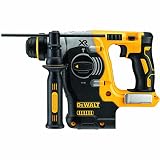
DEWALT DCH273B
- 2.1 J impact energy
- SHOCKS vibration control
- 20V MAX brushless
- 6.4 lb bare tool

Bosch 11255VSR Bulldog Xtreme
- 2.0 ft-lbs impact energy
- 7.5 amp corded motor
- D-handle with three modes

All 10 Rotary Hammer Drills for Concrete Compared
Every tool below sits in a different weight and price class, so read the impact energy and the chuck standard before you read the award label. Two are cordless, six are corded, and two use the heavier SDS-Max standard that no SDS-Plus bit will ever fit.
| Product | Specifications | Action |
|---|---|---|
| DEWALT DCH273B 20V MAX Cordless Rotary Hammer |
|
Check Latest Price |
| Bosch 11255VSR Bulldog Xtreme |
|
Check Latest Price |
| DEWALT DCH133B 20V MAX Cordless Rotary Hammer |
|
Check Latest Price |
 DEWALT D25263K 8.5 Amp Corded Rotary Hammer DEWALT D25263K 8.5 Amp Corded Rotary Hammer |
|
Check Latest Price |
 Bosch GBH2-28L 8.5 Amp Bulldog Xtreme Bosch GBH2-28L 8.5 Amp Bulldog Xtreme |
|
Check Latest Price |
 Berserker 26FA 1-1/8 Inch SDS-Plus Rotary Hammer Berserker 26FA 1-1/8 Inch SDS-Plus Rotary Hammer |
|
Check Latest Price |
 Makita XRH04Z 18V LXT Cordless Rotary Hammer Makita XRH04Z 18V LXT Cordless Rotary Hammer |
|
Check Latest Price |
 Milwaukee 2912-20 M18 Fuel Rotary Hammer Milwaukee 2912-20 M18 Fuel Rotary Hammer |
|
Check Latest Price |
 Berserker 42M SDS-Max Heavy Duty Rotary Hammer Berserker 42M SDS-Max Heavy Duty Rotary Hammer |
|
Check Latest Price |
 Bosch RH540M SDS-Max Combination Hammer Bosch RH540M SDS-Max Combination Hammer |
|
Check Latest Price |
1. DEWALT DCH273B – Best Overall Cordless Rotary Hammer Drill for Concrete
DEWALT 20V MAX SDS Rotary Hammer Drill, Cordless, 3 Application Modes, Bare Tool Only (DCH273B)
2.1 J impact
20V MAX brushless
6.4 lb
Drill Hammer and Chip modes
Pros
- 2.1 J impact energy in a compact cordless body
- SHOCKS Active Vibration Control cuts hand and arm fatigue
- Rotating dial for drill hammer drill and chip modes
- Works with 20V MAX batteries and the DWH303DH extractor
- Largest review base of any tool in this roundup
Cons
- Bare tool - battery and charger sold separately
- Accepts SDS-Plus bits only
- Not the right tool for sustained demolition
The DEWALT DCH273B is the tool we kept reaching for during anchor testing, and the reason is a combination of three things rather than one big number. It puts out 2.1 joules of impact energy, it weighs 6.4 lb as a bare tool, and SHOCKS Active Vibration Control takes the sting out of the handles after the twentieth hole.
Reviewers consistently report fast progress through cinder block and concrete, effective chiselling of hard material, and noticeably less vibration across a long day. The rotating dial sets drill, hammer drill, or chip, so switching from anchor holes to light chiselling takes seconds rather than a bit change and a rethink.
The compact body is what separates it from the bigger corded hammers on this list. At 13 inches long and 8.6 inches tall it fits into a stud bay or a ceiling void where a 22-inch corded machine simply will not go, and the 360-degree side handle plus depth rod come in the box.
For dust, the DWH303DH on-board extractor makes this the only tool here that can be paired to meet OSHA Table 1 requirements. That matters more than it sounds on renovation work where you are drilling overhead into a finished ceiling, and it is a real reason to pick this model over a cheaper bare tool.
Owners also flag that it is a step up rather than a replacement for everything. It is superb at rod hanging, seismic and safety attachments, cable tray, strut mounting, and rail mounting, all of which are drilling-intensive rather than demolition-intensive jobs.
Battery platform is the catch. The tool runs on 20V MAX, and DEWALT 5 amp-hour packs are the sensible pairing for a day of anchor work. If you already run 20V MAX tools, the platform decision is already made for you and this is an easy addition.
How the DCH273B holds up on a full day of anchor work
Brushless motor construction and a German-engineered hammering mechanism are the reason the impact rate stays consistent rather than fading as the pack drains. On a 5 amp-hour pack, the DCH273B is comfortable for a run of holes followed by a break, which is the rhythm of most electrical and HVAC anchor days.
The three-year limited warranty is a reasonable signal of how DEWALT expects this tool to be treated, and the bare tool format means you can buy it as a second or third rotary hammer without repaying for a battery you already own.
Where the DCH273B falls short
It is not a demolition tool. Chipping mode here is for thinset, small knockouts, and light cleanup, not for breaking a slab or chasing a channel through a wall. When the work turns destructive, a dedicated breaker with more mass behind the chisel will do it faster and survive longer.
It also accepts SDS-Plus bits only, which is standard but worth stating plainly. Hilti-style three-slot collets do not fit, and if your existing bit collection is SDS-Max you will be buying a separate set. As with any bare cordless tool, the battery and charger are extra items on the invoice.
2. Bosch 11255VSR Bulldog Xtreme – Best Corded Value for Anchors and Tile
BOSCH 11255VSR Bulldog Xtreme SDS-Plus Rotary Hammer
2.0 ft-lbs impact
7.5 amp corded
D-handle
Case and handles included
Pros
- Years of service reported by long-term owners
- Cuts concrete quickly with the right SDS-Plus bit
- Chisel mode strips tile and thinset fast
- Variable speed trigger for controlled bit starting
- Carrying case and auxiliary handle included
Cons
- Included depth gauge is thin and short
- Very sensitive trigger that ramps to full speed fast
- 10.4 lb is heavy for overhead work
The Bosch 11255VSR is the tool most people end up owning, and it earns that on durability rather than headline specs. It delivers 2.0 ft-lbs of impact energy from a 7.5 amp motor running 0 to 1,300 RPM and 0 to 5,800 BPM, which is more than enough for anchor holes in normal concrete and for driving into brick.
On r/PowerToolGuide, owners credit this Bulldog with taking thinset and a tile bed off a kitchen floor over a single weekend, and the three-position selector is called out as the reason to own one. Rotation only, hammer drill, and hammer only means the same tool drills a screw, bores an anchor hole, and then chisels out the old bed.
The D-handle is the ergonomic story here. It gives you a two-handed grip that works overhead and for downward drilling into slab, and the SDS-plus system gives tool-free bit changes with automatic bit locking so you are not fighting a chuck with concrete dust in it.
Vario-Lock with 36 bit positions is an underrated feature. When you are chiselling tile or breaking out thinset, being able to hold the chisel at the correct angle to the surface rather than at whatever position it happened to stop in makes the difference between controlled work and a wandering bit.
It also ships as a complete kit, with an auxiliary handle, a depth gauge, and a carrying case. That matters more than it sounds, because the case is what stops a 10 lb tool from becoming a projectile on a jobsite.
At 22.5 inches long and 10.4 lb, this is a full-size machine. It rewards you with never running out of power and never waiting on a charge, and it punishes you when you try to hold it above your head for an hour.
What the Bulldog Xtreme does better than the cordless options
Anything sustained. A full day of anchor holes, a long run of conduit supports, or a slow afternoon of chipping is where a corded 7.5 amp motor simply keeps delivering. Cordless units in this roundup warm up and drain, and the 11255VSR does neither.
It is also the cheapest way to get a genuine three-mode tool with a D-handle and a case, which makes it a strong first rotary hammer for someone who does not yet own a battery platform. Our guide to rotary cutting tools covers the neighbouring jobs where a different machine is the right answer.
Where the 11255VSR causes problems
The included depth gauge is the most common complaint, and it is a fair one. It is thin, it bends easily, and it is short for deep holes, so owners end up taping the bit or marking the depth by eye. Budget for a better depth rod if you are drilling past 4 inches repeatedly.
The variable speed trigger is also extremely sensitive and ramps to full speed quickly. That is manageable with practice but does demand a light touch when you first break through a skin of concrete. And at 10.4 lb with a D-handle, extended overhead chipping is genuinely tiring, so plan to rotate positions.
3. DEWALT DCH133B – Best Rotary Hammer Drill for Overhead Concrete Work
DEWALT 20V MAX SDS Plus 1 Inch Cordless Rotary Hammer with D-Handle, Bare Tool Only (DCH133B)
2.6 J impact
5 lb cordless body
Brushless motor
D-handle
Pros
- 5 lb body is the lightest bare tool in this group
- 2.6 J handles concrete cement and rock
- Three modes on a simple rotating dial
- D-handle and 360 degree side handle included
- No cord to drag on site
Cons
- Bare tool - battery and charger not included
- Higher amp-hour packs recommended for long hole runs
- Tool only configuration
The DEWALT DCH133B is the weight answer. At 5 lb it is the lightest bare tool in this roundup, and it still puts out 2.6 joules of impact energy, which is more than several of the corded machines here. That combination is why it is the one to take onto a ladder or hold above your head.
Forum users repeatedly frame this model as the cordless pick for rooms with no power outlet rather than the strongest option available, and that framing is correct. Dragging an extension cord up a ladder or working in a stairwell with the power switched off at the consumer unit is where a cordless rotary hammer earns its place.
The D-handle plus 360-degree side handle give you a secure two-handed grip for overhead anchors, and the rotating dial again gives you drill, hammer drill, and chip modes from one control.
Users compare it favourably to Hilti and Milwaukee tools they have used professionally, citing strong concrete drilling, low weight, and solid build quality. It is used for anchor holes, lag and tap screws, trenching hard ground, and light chiselling.
At 1,500 RPM it spins faster than most of the corded tools here, which matters when you are starting a hole accurately in a face rather than chasing it into a slab. The brushless motor and German-engineered mechanism are credited with better runtime than older brushed designs on the same platform.
The single most common review note is about batteries rather than the tool. Cordless rotary hammers eat amp-hours, and pairing this with a 4 amp-hour pack is fine for a room of anchors but not for a full day. Higher-capacity 20V MAX packs are the standard advice.
Where the DCH133B earns its place on a ladder
Weight compounds fast at height. A 5 lb tool held one-handed at shoulder height is manageable across a long afternoon, while a 10 lb corded hammer at the same angle ends the session. For conduit drops, ceiling-mounted boxes, and overhead strut, that is the whole decision.
It also runs comfortably on the same 20V MAX packs as the DCH273B, so a household that owns DEWALT cordless tools can carry both machines on one battery family. That platform overlap is worth more to most buyers than any single spec difference between them.
Where the DCH133B falls short
It is a bare tool, so budget for batteries and a charger separately, and prefer higher amp-hour packs if you intend to do a full day of drilling. A small number of configurations also ship without a belt hook, which is an annoyance on a ladder rather than a defect.
Chiselling mode is the weaker half of the three-mode story here. Owners use it to break up old cement and hard ground, but sustained chipping drains the pack and warms the body, so keep this one for holes and short cleanup bursts.
4. DEWALT D25263K – Best Corded Rotary Hammer for Anchor Installation
DEWALT SDS Rotary Hammer Drill, Vibration Control Shocks, 115 Volts, Corded (D25263K)
3.0 J impact
8.5 amp corded
SHOCKS control
Integral clutch
Pros
- 3.0 J of impact energy for drilling and light chipping
- SHOCKS vibration control reduces felt handle vibration
- Integral clutch protects you when a bit jams
- Fully rated torque in both forward and reverse
- Corded so there is no platform commitment
Cons
- Needs a power outlet or extension cord
- Heavier than comparable cordless rotary hammers
- Tied to 115 volt supply
The D25263K is the anchor specialist of the corded group. Its 3.0 joules of impact energy is the second-highest figure in the roundup, and combined with the 8.5 amp motor it is the tool we would hand to someone setting wedge anchors and drop-in anchors all day.
Two DEWALT Perform and Protect features earn their names here. SHOCKS Active Vibration Control reduces the vibration felt at the handles, and the integral clutch reduces sudden high torque reaction when a bit jams, which on anchor work is the moment that twists a wrist.
The rotating brush ring is an old-school but genuinely useful feature. It delivers full power and torque in both forward and reverse, so a jammed anchor or a stripped threaded insert can be backed out without the tool feeling half-dead in reverse.
It is also compatible with the D25301D drilling dust extraction system, which matters on slab work where you are cutting hundreds of holes and the silica plume is the real hazard rather than the noise.
The kit is complete for site use, with a 360-degree side handle, a depth rod, and a kit box. The side handle position is what lets you lean into a 1-1/8 inch hole in a wall without the bit walking.
Worth noting that the manufacturer lists a two-year free service alongside the three-year limited warranty, which is a reasonable signal for a tool expected to see daily trade use.
Why anchor installers keep coming back to this one
Anchor holes are repetitive, high-torque, and unforgiving. You are pushing the bit into hardened concrete at a fixed diameter, and every extra bit of impact energy translates directly into fewer seconds per hole across a long install. At 3.0 joules from a corded 8.5 amp motor, this tool never pauses to think about it.
Users like it for rod hanging, seismic and safety attachments, and strut and rail mounting, which are all the same motion repeated dozens of times. The clutch is the safety net that makes repetition survivable.
Where the D25263K is the wrong choice
It is tethered. If your work crosses a site, goes up a ladder, or happens in a room without power, the cord becomes the limiting factor no matter how good the tool is. Cordless is the right answer in those conditions, and the 20V MAX models here cover them.
It is also heavier than the cordless alternatives at this output level, which is the trade you accept for sustained power. Buyers comparing it against lighter machines should decide on socket access first, then on weight.
5. Bosch GBH2-28L – Best Rotary Hammer Drill for Rock and Hard Aggregate
BOSCH 8.5 Amp GBH2-28L SDS-plus Bulldog Xtreme Max 1-1/8 In. Rotary
2.4 ft-lbs impact
8.5 amp corded
KickBack Control
Three modes
Pros
- Survives sustained demolition work across multiple units
- KickBack Control shuts down on bit bind-up
- High hole production in concrete
- Vibration control reduces fatigue on long runs
- Compact body fits tight working spaces
Cons
- Included plastic case is flimsy
- 120 volt corded design only
- Depth stop can slip if the ratchet is not fully engaged
The GBH2-28L is the one to trust when the concrete is not cooperating. Contractors report multiple units completing 1,500 square feet of glued-down hardwood demolition without a failure, which is the kind of durability claim that only appears after years of use rather than a week of testing.
Its 2.4 ft-lbs of impact energy comes from an 8.5 amp motor turning up to 1,230 RPM, and the three-mode selector covers drilling only, hammer drilling, and chiselling. That combination is why it handles both hole-drilling and floor demolition with the same body.
KickBack Control is the feature to understand. An integrated sensor detects a bit bind-up and stops tool rotation, protecting both the machine and your wrist when you hit rebar, flint, or an unexpected aggregate pocket.
Counter-balanced Vibration Control is the second safety feature, and on this particular tool it is the difference between a full afternoon of holes and giving up after eight. The D-handle plus auxiliary handle stay secure under load, which matters more than comfort when the bit is buried in a wall.
The Vario-Lock chisel positioning lets you set the working angle for controlled breaking, and the HammerHook gives fast jobsite storage so the tool is not swinging off a belt clip.
At roughly 6.4 lb and 17.4 inches long, this is more compact than most corded rotary hammers, which is why it works one-handed in a tight space where a D-handle machine will not fit.
What rebar and aggregate actually do to a rotary hammer
When a bit meets rebar it stops cutting and starts torqueing the drill out of your hands. Three mechanisms exist to deal with it, and only higher-end models tend to have all three: an accelerometer that stops the tool dead, a mechanical clutch that releases the drive, and an electronic overload that trips on current draw.
The GBH2-28L uses the sensor approach, and on r/masonry the recurring complaint is that the stoppage means restarting a partly-drilled hole from scratch. That is a real cost on dense slab work, so expect it rather than being surprised by it.
Where the GBH2-28L disappoints
The included plastic case is flimsy and can arrive damaged, which is an odd thing to complain about from a tool this durable but a common one. The depth stop rod can also slip if the ratchet is not fully engaged, so check it before every deep hole.
It is a 120 volt corded design, so it is not usable directly on a 230 volt system. And the KickBack Control, while safety-positive, is the reason that binding on rebar costs you time rather than a broken bit, which is a trade some installers prefer to make and others do not.
6. Berserker 26FA – Best Budget Rotary Hammer Drill for Concrete
Berserker 1-1/8″ SDS-Plus Rotary Hammer Drill for Concrete 26FA
4.5 J impact
1050W 9 amp corded
9.5 lb
Three modes
Pros
- Concrete drilling results comparable to far costlier units
- Largest accessory kit in the roundup with bits and chisels
- 4.5 J of impact energy for the class
- Aluminum alloy housing with overload clutch
- 360 degree adjustable auxiliary handle
Cons
- Runs hot during sustained drilling
- Heavier than premium 1-1/8 inch SDS-Plus hammers
- Consumes the supplied grease quickly
- Not intended for heavy demolition
The Berserker 26FA is the answer for a first rotary hammer on a strict budget, and the accessory kit is the reason. You get three SDS-Plus drill bits at 5/16, 3/8, and 1/2 inch, a flat chisel, a point chisel, a depth gauge, grease, a wrench, a case, and spare carbon brushes in the box.
That is a complete kit for anchor work, which means you can start drilling the same afternoon the tool arrives. Most competitors at this tier sell the bare machine and let you source bits separately, and the difference in total cost of getting a first job done is significant.
On paper it is over-specified for the class, with a 1,050 watt 9 amp motor turning 1,050 RPM and 4,200 BPM and delivering 3.3 ft-lbs, or 4.5 joules, of impact energy. That figure sits between the corded DEWALT and the Milwaukee in this list.
Owners treat it as a capable tool for serious DIY anchor and slab work, reporting fast holes and clean results, and the generous accessory set is praised repeatedly. The aluminum alloy housing and overload clutch are both sensible choices in a machine that will get dropped.
Two-switch operation gives you rotation only, hammering with rotation, and hammering only. The dual-switch design is claimed to extend service life compared with a single-function switch, and in practice it also gives more distinct control between drilling and chiselling.
Maximum concrete drilling diameter is quoted at 1-1/8 inch, with half-inch in metal and 1-1/4 inch in wood, so it covers essentially all anchor and light renovation work in one machine.
Where budget tooling actually holds up
For anchor holes in normal-weight concrete, brick, and block, the gap between this machine and a premium corded model narrows quickly. The 4.5 joules of impact energy get through the same material, and the SDS-Plus chuck takes the same bits you would buy for anything else on this list.
It is also a genuinely useful second machine. Contractors keep a budget corded rotary hammer for chasing channels, drilling out mistakes, and doing the anchor work that does not justify unboxing the good tool.
Where the 26FA costs you
Heat is the main issue. Reviewers report needing to give it cooldown breaks during sustained drilling, and the motor is the first thing to suffer if you ignore that. The supplied grease also gets used up quickly on hard concrete, so keep a tube on hand.
It is not built for heavy demolition, the manufacturer says so directly, and there is a small number of reports of premature motor burnout among reviewers. At 9.5 lb it is also heavier than premium 1-1/8 inch SDS-Plus hammers of similar output, which is the trade for the bundled kit.
7. Makita XRH04Z – Best Rotary Hammer Drill for Brick and Masonry Anchors
Makita XRH04Z 18V LXT® Lithium-Ion Cordless 7/8″ Rotary Hammer, accepts SDS-PLUS bits, Tool Only
1200 RPM and 4000 BPM
7/8 inch SDS-Plus
18V LXT
Torque limiter
Pros
- Very fast concrete drilling
- Extends SDS bit life versus hammer drilling
- Effective chiselling for knockouts
- Works with existing 18V LXT batteries
- Torque limiter protects the gear train
Cons
- Drains batteries quickly on heavy drilling
- Runs warm during extended use
- Long body is awkward in confined spaces
- Tool only with no battery or charger
The Makita XRH04Z is the brick and masonry specialist in this group, and the torque limiting clutch is why. It is engineered to disengage the gears automatically if the bit binds, which is precisely what happens when you hit aggregate in an old brick wall.
Owners consistently report a dramatic step up from a conventional hammer drill, with far faster holes and much longer bit life. The synchronised RPM and BPM keep the rotation and hammering rates matched up, which improves hole quality and speeds up the cut.
At 0 to 1,200 RPM and 0 to 4,000 BPM from a Makita-built variable speed motor, it handles concrete, cement, brick, and stone fasteners, plus light chiselling for knockouts and concrete removal.
The three operating modes cover rotation only, hammering with rotation, and hammering only, which is the same selector layout as the DEWALT cordless models. The depth gauge and side handle are included, but the battery and charger are not.
Users compare its motor output favourably to a corded Hilti on foundation work, and 7.4 lb with a pack fitted is a reasonable weight for a full day of masonry anchor work.
The shock absorbent handle is a job site tested detail that protects the battery housing from the constant shock of hammering. On a tool that spends its life being slammed into masonry, that is not cosmetic.
Why brick is harder than concrete and what changes
Old brick is full of aggregate, and forum users describe it as a genuine problem even with a proper rotary hammer. The failure mode is bit failure rather than machine failure, and cheap masonry bits get destroyed in brick faster than almost any other material.
That is why the torque limiter matters here more than raw power. A binding bit releases the gears rather than twisting the gear train, and pairing this tool with quality SDS-Plus masonry bits is the difference between a productive afternoon and a pile of snapped shanks.
Where the XRH04Z frustrates owners
Battery consumption on heavy drilling is the recurring note, and the standard advice is higher amp-hour LXT packs. It also runs warm during extended use, so it is a hole-drilling tool first and a chipping tool second.
The 18-inch body is reported as difficult to use in confined spaces such as a small catch basin, where a compact machine fits and this one does not. And as with the other bare-tool cordless options here, the battery and charger are separate purchases.
8. Milwaukee 2912-20 M18 Fuel – Best Heavy-Duty Cordless Rotary Hammer
Milwaukee 2912-20 M18 Fuel 18V 1″ Sds Plus Brushless Rotary Hammer
M18 Fuel brushless motor
1 inch SDS-Plus
AUTOSTOP control
7.5 lb
Pros
- Brushless motor delivers serious concrete power in a compact body
- AUTOSTOP senses bind-ups and protects the wrist
- Compact enough for tight and elevated work areas
- Good battery life and lighter than corded hammers
- Works equally well for drilling and chiselling
Cons
- Bare tool - high capacity M18 packs needed
- Drains batteries on sustained heavy concrete work
- Premium relative to budget corded alternatives
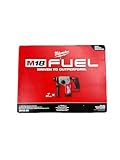
The Milwaukee 2912-20 is the cordless machine to buy when the hole count is the problem. A brushless M18 Fuel motor delivers the concrete drilling speed of a much larger machine inside a body short enough to reach into confined and elevated work areas.
AUTOSTOP is the feature that separates it. It senses bind-ups and stops the tool, which protects your wrist on long holes and is the difference between a nuisance stop and a lost afternoon when you hit rebar.
Capacity is 1 inch in SDS-Plus, and the compact dimensions at 11.5 inches long mean it reaches places a full-size corded hammer cannot. It works equally well for drilling and for chiselling, which broadens what you can do with one battery platform.
Independent head-to-head testing found this tool winning three of four drilling speed tests in cured 3,500 psi concrete blocks, taking a quarter inch hole in 4.19 seconds and a half inch hole in 4.36 seconds. That is the level of performance the 4.8 owner rating reflects.
Milwaukee owners credit AUTOSTOP and the vibration-absorbing body design with reducing wrist and elbow strain over long sessions, which is the accumulated-fatigue argument rather than the peak-power argument.
Platform reach matters as much as the tool. The M18 system covers more than 200 platform solutions, so if you own any M18 tool the battery decision is already closed. This is part of why we wrote a broader cordless drill and battery platform guide.
When a cordless rotary hammer beats the cord
The test is simple. If the work stays in one room with a socket and involves chipping or large holes, corded wins because the power never stops. If you are overhead, on a ladder, crossing a site, or in a building with the power off, cordless wins by a wide margin.
Milwaukee 2912-20 owners also report noticeably better battery life than smaller cordless rotary hammers, which is worth factoring in if you already have high capacity M18 packs rather than 2 amp-hour ones.
Where the 2912-20 costs you
It is a bare tool, and heavy concrete work needs high capacity packs. Reviewers consistently recommend several larger packs rather than a single small one, so treat the batteries as part of the purchase rather than an accessory.
It also drains quickly on sustained heavy drilling and carries a premium against budget corded alternatives. Owners have also noted that a case is not part of the package, so add one if the tool travels. For chipping sessions rather than hole drilling, a corded SDS-Max machine will simply outlast it.
9. Berserker 42M – Best SDS-Max Rotary Hammer Drill on a Budget
Berserker 1-9/16″ SDS-Max Heavy Duty Rotary Hammer Drill for Concrete 42M
10 J impact
1600W 13 amp corded
SDS-Max chuck
Six speeds
Pros
- 10 J of impact energy at a fraction of brand name cost
- Six-speed transmission matches speed to the job
- SDS-Max to SDS-Plus adapter chuck expands bit compatibility
- Anti-vibration handle and adjustable side handle
- Generous kit with extra grease and spare brushes
Cons
- 16 lb is tiring to handle for some users
- No rotation-only drill mode
- Runs hot in continuous use
- Flimsy included carrying case
The Berserker 42M exists because the SDS-Max class is normally expensive. A 1,600 watt 13 amp industrial motor delivers 0 to 630 RPM, 0 to 3,800 BPM, and 7.38 ft-lbs, or 10 joules, of impact energy, which is more output than any other tool in this roundup and more than the Bosch combination hammer below.
The six-speed transmission is the feature that separates it from cheaper single-speed SDS-Plus machines. You can match drilling speed to the application rather than running one compromise setting, and Vario-Lock lets you set the chisel angle.
The included SDS-Max to SDS-Plus adapter chuck is quietly the most useful item in the box. It means one machine can take SDS-Max bits for heavy work and ordinary SDS-Plus masonry bits for anchors and everyday drilling, which removes the usual reason to own two tools.
Reviewers document real workloads on this one, including more than a hundred holes in granite ledge, breaking a sidewalk, and drilling deep into a boulder. That is the class of job nobody should attempt with an SDS-Plus machine.
The upgraded anti-vibration handle is worth noting because 16 lb is otherwise the dominant fact about handling this tool. The overload clutch protects your wrists when a bit snags and extends motor life, and the 360-degree adjustable side handle gives leverage in awkward positions.
The kit includes a 7/8 inch SDS-Max bit, a flat chisel, a point chisel, the adapter chuck, three SDS-Plus bits, grease, a wrench, a case, and replacement carbon brushes.
When you genuinely need SDS-Max
SDS-Plus handles anchor holes up to about 1 inch, brick, tile, and light demolition, and it is the right default for almost everything a homeowner or tradesperson does. SDS-Max is a physically different and incompatible standard, with a larger shank and far more energy behind each blow.
Reach for it when you are breaking up a slab, chasing a channel through thick concrete, drilling holes larger than about 1 inch, or working rock. Bits are not interchangeable in either direction, and an SDS-Max bit will never fit an SDS-Plus chuck.
Where the 42M disappoints
At 16 lb this is a two-handed tool, and owners say it becomes tiring and hard to handle the longer a session runs. It is not an overhead tool, and treating it as one is how people hurt themselves.
There is no rotation-only drill mode, which is a genuine functional gap if you need to back a fastener out. It also runs hot in continuous use, and the speed control can stop responding once it is very warm, so build in breaks. The supplied grease is consumed quickly, and the case is reported as flimsy. A small number of owners also report early failures and warranty friction.
10. Bosch RH540M – Best Rotary Hammer Drill for Concrete Demolition
BOSCH RH540M SDS-max 1-9/16 In. Combination Hammer for Concrete
6.1 ft-lbs impact
12 amp corded
SDS-Max chuck
15.2 lb
Pros
- Serious impact energy for breaking and demolition
- SDS-max system with one-handed tool-free bit changes
- Vario-Lock with 12 chisel positions for controlled angles
- Service Minder brushes and modular service design
- Professional construction for heavy concrete work
Cons
- 15.2 lb is heavy for extended or overhead work
- Low free speed of 340 RPM compared with SDS-Plus tools
- Two-mode selector lacks a rotation-only drilling setting
- Higher tier spend for a specialised job
The Bosch RH540M is the demolition tool in this roundup. Its 6.1 ft-lbs of impact energy drives both drilling and breaking, and the SDS-max system gives one-handed, tool-free bit changes so you can swap chisels without setting the tool down.
The dual-mode selector offers rotary hammer mode or hammer-only mode, and Vario-Lock gives 12 chisel positions to set the working angle. In practice that is the difference between breaking a section of concrete in a controlled line and chasing cracks around it.
What separates this from a generic breaker is serviceability. Service Minder brushes tell you when carbon brushes are worn, and the innovative service modules mean parts can be replaced rather than the whole tool discarded, which is a real cost argument over the life of a heavy demolition machine.
Buyers who reach for this tool tend to already be doing heavy concrete work, and the 4.6 owner rating reflects exactly that: trusted for serious jobs, balanced against the weight, the spend, and a lower free speed than lighter SDS-Plus machines.
At 12 amps and up to 340 RPM, it is built for impact work rather than fast rotation. That is correct for demolition and wrong for continuous high-speed drilling, so keep it as a breaker and let an SDS-Plus tool do the holes.
Variable speed is available, which helps control chip rate on softer material and gives you a usable range on tougher concrete where the energy output is most valuable.
Breaking concrete versus drilling it
Yes, a rotary hammer breaks concrete, in chisel-only mode. The class question is which one: SDS-Plus handles light demolition and tile removal comfortably, while SDS-Max is the standard for breaking up slabs and thick concrete, where the energy per blow matters more than rotation speed.
One caution from the testing data is worth repeating. Cordless rotary hammers heat up quickly and drain fast, so sustained chipping is the wrong job for them regardless of how good they are at drilling. A corded machine is the correct tool here, which is why both of the demolition picks on this list are corded.
Where the RH540M is the wrong buy
At 15.2 lb this is a heavy two-handed machine and it is not an overhead tool. Anyone planning to break concrete above shoulder height should be looking at a lighter SDS-Plus rotary hammer or a corded breaker with a different handling profile.
It is also the highest spend in the roundup, the free speed of 340 RPM is low, and the two-mode selector has no rotation-only drilling setting. Buy it for demolition and heavy concrete work. For anchor holes, buy an SDS-Plus machine and save both the money and the weight.
How to Choose a Rotary Hammer Drill for Concrete
Seven criteria decide this purchase, and only two of them are brand. Work through them in order and the model choice usually makes itself.
1. Impact energy, measured in joules or ft-lbs
Impact energy is the piston energy delivered per blow, and it is the single most useful number on the page. Roughly, up to 2 J covers anchor holes in normal concrete and brick, 2 to 3.5 J covers bigger holes and light chipping, and above 6 ft-lbs is demolition territory. Tools are often quoted in different units, so 1 J is about 0.74 ft-lbs.
2. Chuck standard: SDS-Plus or SDS-Max
SDS-Plus is the default and handles anchor holes up to about 1 inch, brick, tile, and light demolition. SDS-Max is a physically incompatible heavier standard for larger holes, breaking up slabs, and thick concrete, and the bits will not fit an SDS-Plus chuck in either direction. If you are unsure, you want SDS-Plus.
3. Maximum capacity, matched to your biggest hole
Map your work to hole size before you shop. A quarter inch hole for a small screw anchor or a 3/8 inch lag into block needs an SDS-Plus tool with roughly 2 J. Half inch wedge anchors and drop-in anchors push you toward 2.5 to 3.5 J. Three-quarter inch and 1 inch holes, or anything over 1 inch, means SDS-Max. Core bits for vent and utility lines typically need a large-diameter SDS-Max machine, and that is a different purchase from an anchor drill.
Do not buy a heavy machine for small holes. A 16 lb SDS-Max on a quarter inch anchor hole will be slow, tiring, and more likely to damage the bit than a 5 lb cordless rotary hammer.
4. Power source: corded or cordless
Choose corded if the work stays in one room with a socket and involves chipping, large holes, or a full day of drilling. Choose cordless if you are overhead, on a ladder, across a site, or where the power is off. The honest caveat is that cordless units run warm and drain quickly after about 30 minutes, which makes them excellent at holes and anchors and poor at sustained chipping.
Buying cordless also means budgeting for at least one high amp-hour pack and a fast charger. A cheap bare-tool rotary hammer plus three batteries is a very different number from a ready-made kit, and the batteries are what decide whether a cordless machine can finish a day of anchor work.
5. Weight, balance, and handle layout
Weight is the criterion that gets excluded from most rankings and it should not be. A 5 lb body is manageable overhead for a whole afternoon, while 10 lb at shoulder height ends the session. If your work is above your head, in a ceiling void, or between joists, tool length and balance matter as much as output, and the DEWALT DCH133B is the reference point here.
Our hammer mill comparison covers impact crushing equipment for anyone who has concluded that drilling holes is not the right approach to breaking material.
6. Vibration control and kickback protection
Three mechanisms exist, and they are not interchangeable. A mechanical clutch releases the drive when a bit binds, an accelerometer stops the tool entirely, and an electronic overload trips on current draw. Any of the three is worth having, and models with all three tend to be the better-built machines.
Named systems worth recognising include SHOCKS Active Vibration Control on DEWALT, KickBack Control on Bosch, and AUTOSTOP on Milwaukee. All three reduce felt vibration at the handles, and the practical effect is that you get more holes before your hands give out. Remember that a bind sensor also means restarting a partly-drilled hole, which is a time cost as well as a safety benefit.
7. Dust extraction and accessory support
Concrete dust is respirable silica, and it is regulated. Some tools here pair with an on-board extractor, and that is the single most useful accessory purchase for anyone drilling overhead in an occupied building. Also check the standard accessory ecosystem for your platform, because bits, chisels, depth rods, and extractors are not interchangeable between brands.
Battery platform, if you are going cordless
Platform lock-in is the biggest real-world constraint and it is worth more than any spec difference. M18, 20V MAX, 18V LXT, and the 18V ONE+ system all have broad accessory ranges, so buying into the platform you already own is usually cheaper than switching. If you are starting fresh, we would look first at what other tools on your list are on that platform.
Bits and chisels you will actually need
SDS-plus masonry bits in 1/4, 3/8, and 1/2 inch cover most anchor work. A flat chisel takes off tile and thinset, a point chisel concentrates force for breaking concrete, and a core bit is the correct tool for vent and utility lines rather than a hammer drill with a hole saw, which should never be used in concrete. Two warnings from the forums: cheap masonry bits get destroyed in brick, and SDS-Plus and SDS-Max bits are not interchangeable in either direction.
Who should not buy a rotary hammer
Three cases. If you are hanging a shelf into brick, a hammer drill is genuinely enough and a rotary hammer is overkill. If you only need a handful of small anchor holes, a rotary hammer drill is the right tool but you do not need a 16 lb SDS-Max machine. And skip the 3/4 inch class entirely, which experienced users reject because it scratches away at a hole and rattles your wrists while doing it.
Concrete work at home also has a cost trap worth naming. Buying a cheap bare-tool cordless rotary hammer and then discovering you need two high amp-hour packs and a fast charger to finish a day of anchor work is the single most common budgeting mistake buyers make. If you are unsure, a mid-range corded SDS-Plus machine with a kit is the lower-risk first purchase. For advice on the surrounding concrete work rather than the drilling, see our driveway concrete guide.
Silica Dust and Safety on Concrete Jobs
Concrete and masonry dust contains respirable crystalline silica, and OSHA regulates worker exposure to it. Drilling into concrete produces a fine plume that settles into everything nearby, including your lungs, and it does not clear by the time you put the drill down.
Controls come in a simple order. On-board or attached extraction captures dust at the bit, which is far better than sweeping afterwards, and the DEWALT DCH273B and D25263K both pair with dedicated extraction systems for that reason. A vacuum rated for fine dust, water suppression where the job allows it, and respiratory protection according to your local rules complete the picture.
Hearing is the second exposure. Corded rotary hammers in this roundup are genuinely loud, and forum users consistently recommend proper ear defenders over foam plugs. Eye protection is the third, because a chisel or a spinning bit throws fragments and slurry, and safety glasses cost nothing next to a lost eye.
One more caution that catches experienced people. Never use a conventional hammer drill with a hole saw in concrete, which is a common and expensive homeowner error. For a large clean hole in masonry you want a core bit in a proper rotary hammer, not a hole saw driven by percussion.
Frequently Asked Questions
Do you need to use a hammer drill for concrete?
No, not for real concrete. A hammer drill uses mechanical percussion that is fine for brick and soft masonry, but concrete, tile beds, and anchor holes need a rotary hammer drill with a pneumatic mechanism delivering several times the impact energy. Use a hammer drill for a shelf in brick; upgrade when you hit concrete.
What is the best drill bit for a hammer drill to use in concrete?
If you use a rotary hammer, you want SDS-plus masonry bits, not standard twist bits. A 1/4, 3/8, or 1/2 inch masonry bit covers anchor holes, a flat chisel removes tile and thinset, a point chisel breaks concrete, and a core bit handles vent lines. Do not run a hole saw in concrete with a hammer drill.
What is the best battery-powered SDS drill?
The Milwaukee 2912-20 M18 Fuel is our strongest battery-powered SDS drill, with a brushless motor, 1 inch SDS-plus capacity, AUTOSTOP bind-up control, and a 7.5 lb body. The DEWALT DCH133B is lighter at 5 lb and the DEWALT DCH273B adds 2.1 J with SHOCKS vibration control. Cordless units drain fast, so allow for high amp-hour packs.
What is the best hammer drill machine for home use?
For most homes a cordless hammer drill or driver with a hammer setting is enough, because most jobs are shelves and brackets in brick or block. Upgrade to a rotary hammer when you meet concrete, a tile bed, or anchor holes. The DEWALT DCH133B is a sensible first rotary hammer for a serious DIYer.
Is SDS-plus the same as SDS?
Effectively yes. SDS-plus adds a fourth spline to the slotted shank for a more secure chuck fit, so almost every SDS bit will work in an SDS-plus tool. Neither will fit an SDS-Max chuck, which is a physically larger and incompatible standard for heavy demolition work.
Is cordless as powerful as corded for concrete?
For hole drilling and anchor installation, a modern cordless rotary hammer is competitive with a mid-range corded machine. For sustained chipping and large holes, corded still wins, because cordless bodies run warm and drain quickly after about half an hour of continuous work. Choose cordless for overhead work, ladders, and sites without power.
The Best Rotary Hammer Drills for Concrete
For most people buying one tool, the DEWALT DCH273B is the answer. It pairs 2.1 joules of impact energy with a 6.4 lb body, SHOCKS Active Vibration Control, and three application modes on a 20V MAX platform, and it carries the largest owner base of any tool in this roundup. It is the editor’s choice for a reason: it is the machine that is least likely to be wrong for a real anchor day.
For the specific jobs, the picks are clear. The Bosch 11255VSR is the best corded value for anchors and tile, with a D-handle, three modes, and a case in the box. The DEWALT DCH133B is the one to take overhead at 5 lb. The DEWALT D25263K handles anchor installation with 3.0 joules and a jam clutch. The Milwaukee 2912-20 is the strongest cordless option, and the Makita XRH04Z is the masonry pick for brick full of aggregate.
At the ends of the range, the Berserker 26FA is the budget entry with the best bundled kit, and the Berserker 42M gives you 10 joules of SDS-Max output without the industrial spend. The Bosch RH540M is the demolition tool, serviceable and serious, and the Bosch GBH2-28L is the corded machine to trust on rock and hard aggregate.
Whatever you choose, buy the bits at the same time. A rotary hammer with no masonry bits and a flat chisel is an expensive paperweight, and cheap bits in brick are the fastest way to waste a good machine. We keep coming back to the same rule: match the tool to the biggest hole you intend to drill, and leave the heavier classes for the jobs that genuinely need them.