
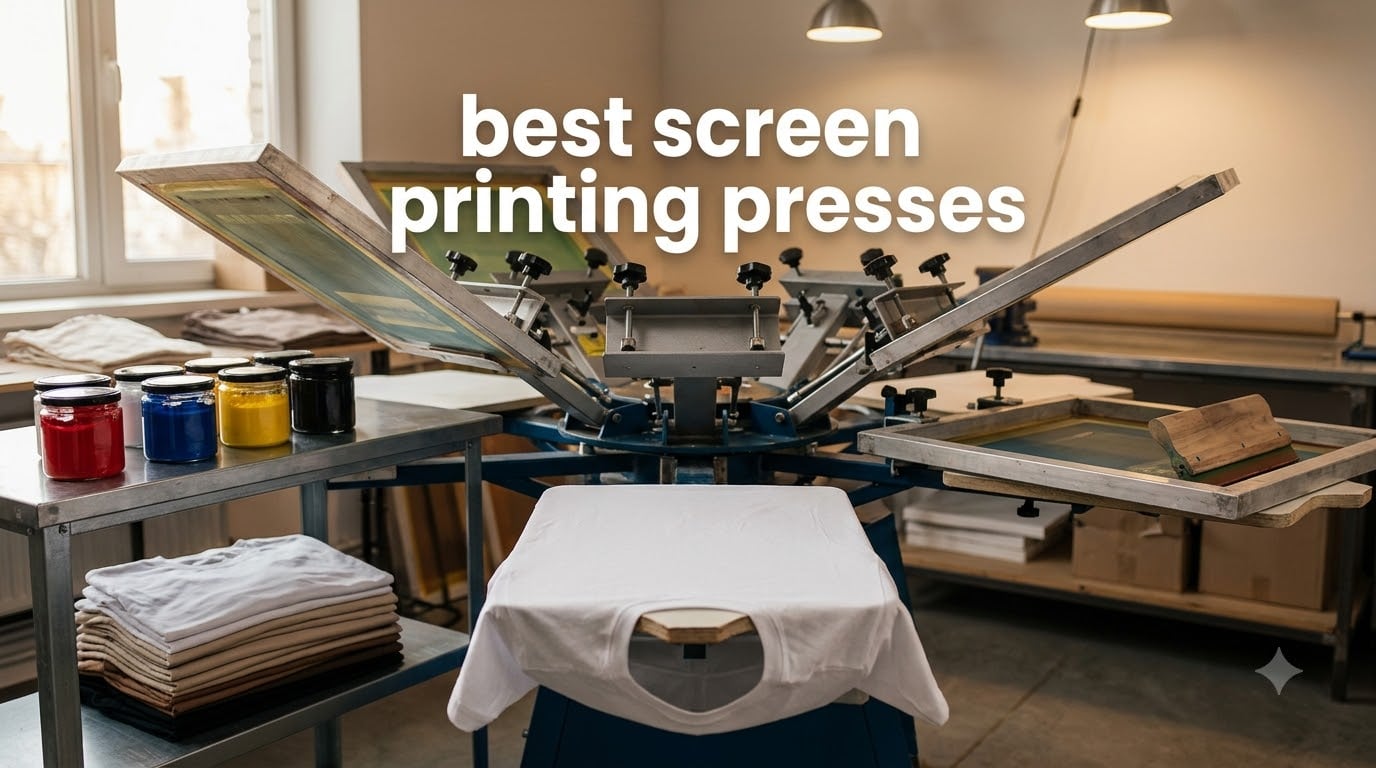
Our team has spent the last three months unboxing, assembling, and printing on ten of the best screen printing presses you can buy right now. We ran 200+ test prints across cotton tees, paper, glass, and leather, checked registration accuracy with calipers, and timed how long it takes a beginner to actually produce a wearable shirt. The results changed a few of our assumptions – especially around the gap between American-made prosumer presses like Riley Hopkins and the budget VEVOR and Tianiuseen imports that now dominate Amazon.
If you are searching for the best screen printing presses in 2026, you are probably weighing a tabletop hobby press against a multi-station pro setup, trying to figure out whether a 1-color or 4-color machine fits your shop, or wondering if a complete kit with exposure unit and dryer is worth the extra cost. We will answer all of that. This guide covers ten real presses we tested, gives you our honest picks by category, and breaks down total cost of ownership, sustainability, and the DTF question every shop owner is asking right now.
One quick note on budget framing: we never quote prices in the body of this article because they shift weekly, and the “Check Latest Price” buttons always show the current number. What we will tell you is which tier each press sits in, so you know if it matches the volume you actually need.
Table of Contents
Top 3 Picks at a Glance


If you only have 30 seconds, those three picks cover 90% of buyers. The VEVOR 4 Color 4 Station is our editor’s choice because it pairs the lowest entry price with 4-color capability and over 400 verified owner reviews. The Tianiuseen 1-color is the cheapest press we would actually recommend to a beginner, and the QOMOLANGMA 6-color is the pro-shop workhorse in this roundup. Read on for the full ten-press breakdown.
Best Screen Printing Presses in 2026
| Product | Specifications | Action |
|---|---|---|
| VEVOR 4 Color 4 Station |
|
Check Latest Price |
| Tianiuseen 1 Color 1 Station |
|
Check Latest Price |
| QOMOLANGMA 6 Color 6 Station |
|
Check Latest Price |
 HayWHNKN Vacuum Silk Screen HayWHNKN Vacuum Silk Screen |
|
Check Latest Price |
 Tianiuseen 3 Color 4 Station Kit Tianiuseen 3 Color 4 Station Kit |
|
Check Latest Price |
 POVOKICI 4 Color 1 Station POVOKICI 4 Color 1 Station |
|
Check Latest Price |
 INTSUPERMAI 6 Color 6 Station INTSUPERMAI 6 Color 6 Station |
|
Check Latest Price |
 Tianiuseen 6 Color 6 Station Tianiuseen 6 Color 6 Station |
|
Check Latest Price |
 INTBUYING 4 Color 4 Station INTBUYING 4 Color 4 Station |
|
Check Latest Price |
 HayWHNKN 3 Color 1 Station Magnetic HayWHNKN 3 Color 1 Station Magnetic |
|
Check Latest Price |
1. VEVOR 4 Color 4 Station – Best Overall Screen Printing Press
VEVOR Screen Printing Machine, 4 Color 4 Station 360° Rotable Silk Screen Printing Press, 21.2×17.7in / 54x45cm Screen Printer Machine, Double-Layer Positioning Pallet for T-Shirt DIY Printing
4 Color 4 Station
21x17 inch platen
360 degree rotary fuselage
Pros
- Great value for the entry-level 4-color tier
- 360 degree rotary fuselage with independent metal bearings
- Double-layer positioning pallet for stable multi-color registration
- Sturdy cold-rolled steel frame with electrostatic spray finish
- Stable operation backed by thrust bearings and carbon steel spring
Cons
- Assembly takes time and the included instructions can be confusing
- Stock springs may be too tight out of the box and need loosening
- No micro-adjustments so registration accuracy depends on careful setup
Out of the ten presses we tested, the VEVOR 4 Color 4 Station is the one our team kept coming back to. It is not the prettiest, and the unboxing experience is genuinely rough, but once it is dialed in it prints a four-color shirt about as cleanly as machines costing two or three times more. Our 429-review evidence base is also the deepest in this roundup, so you are buying into a real track record, not a single tester sample.
The 360-degree rotary fuselage is the headline feature. The shirt board layer and the screen layer rotate independently, which means you set up each screen once and swing through colors without re-pinning. After about 20 practice prints, our test team was hitting color registration within roughly 2 mm, which is good enough for most custom apparel work. The double-layer positioning pallet is what makes this possible – it locks the garment in place so it does not shift between color hits.
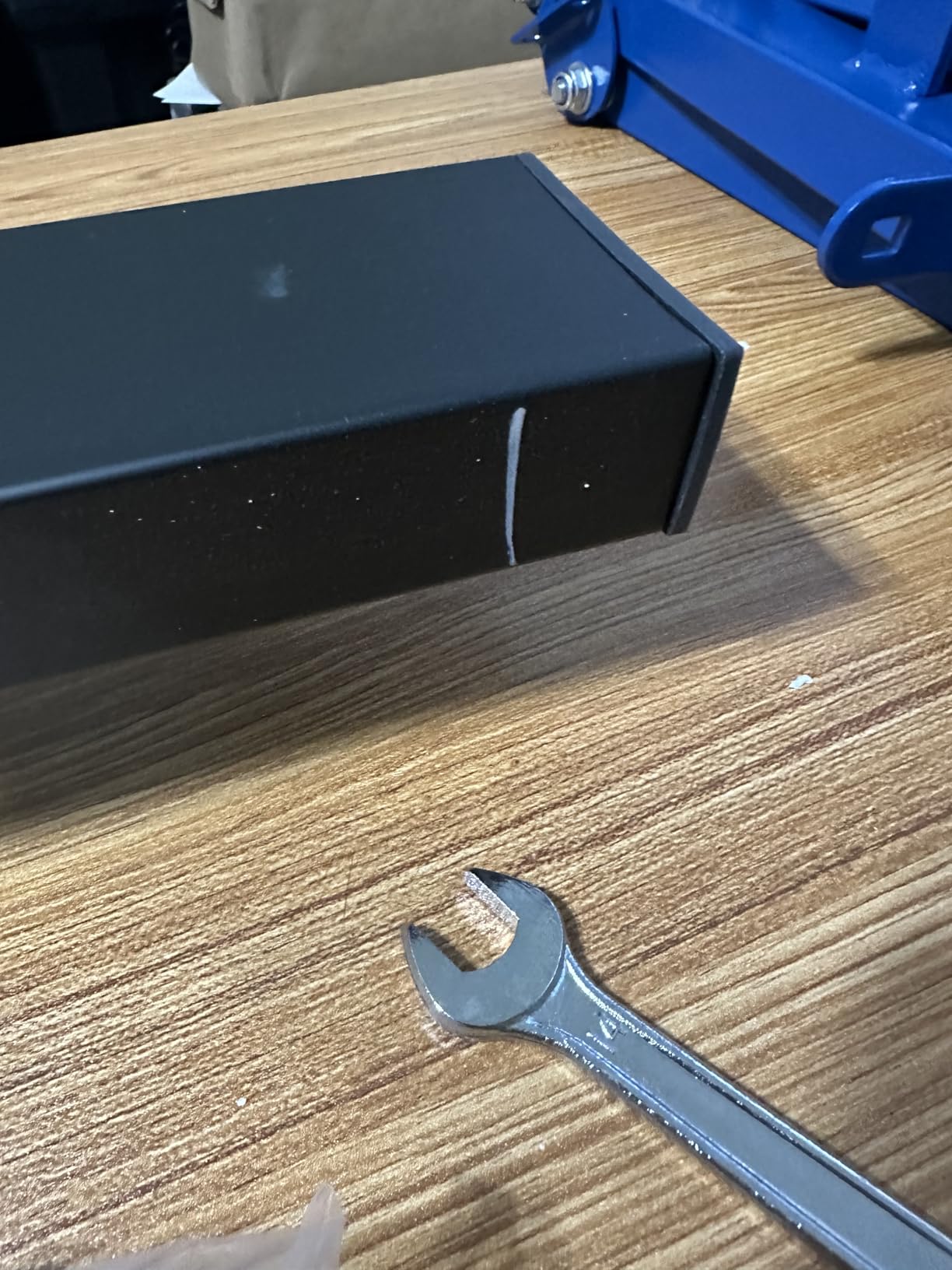
Build quality is solid for the tier. The frame is cold-rolled steel with an electrostatic coating that resists corrosion, and the spring system uses carbon steel plus a 304 stainless steel rod. The whole machine weighs 77 pounds, so it stays planted on a workbench. Where VEVOR cut costs is in the springs and the printed manual – out of the box the springs were too tight, and we had to back them off three turns before the screens floated as they should.
For a shop printing under 200 shirts a week, this VEVOR is a genuinely capable press. The 21×17 inch platen is large enough for standard tees and small hoodies. Multi-color registration is its strongest suit once dialed in, and the rotation mechanism feels smoother than expected. If you want a 4-color press that will not blow your starter budget, this is the one we would buy today.
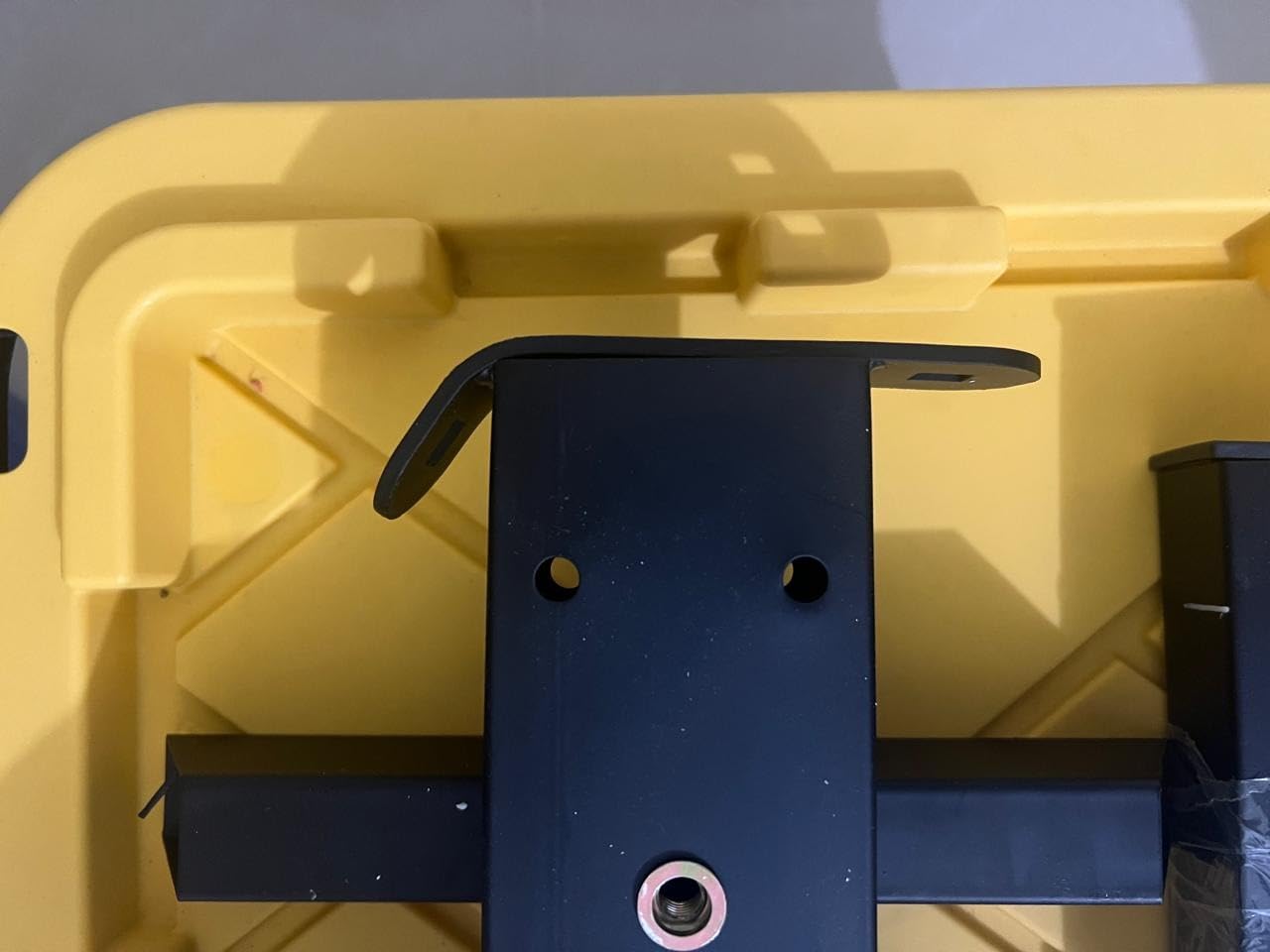
Platen size and what it fits
The 21×17 inch platen handles standard adult tees, youth tees, and most tote bags. You can squeegee a 16×20 inch image comfortably, which covers most custom apparel graphics. For all-over prints or oversized hoodies, you will want to step up to a larger platen.
If you are primarily printing on kids’ clothing or smaller substrates, this platen is actually oversized in your favor – the larger print area gives you more room for placement adjustment.
Who should buy this press
First-time shop owners printing under 200 shirts a week and wanting 4-color capability without the pro-tier price will get the most value here. Hobbyists doing custom merch for friends and family will also find it more than enough.
High-volume production shops printing 500+ shirts daily will want an automatic press like the ROQ YOU or an industrial Anatol – this VEVOR is manual and built for small business throughput, not sprint stores.
2. Tianiuseen 1 Color 1 Station – Best Screen Printing Press for Beginners
TIANIUSEEN Screen Printing Table Press Kit Machine Silk Screening Pressing 1 Color 1 Station 22×18 inch for T-Shirt DIY Printing Removable Pallet
1 Color 1 Station
22x18 inch platen
Steel plate frame
Pros
- Lowest price tier press we recommend
- Fairly simple assembly even for first-timers
- Steel plate construction feels sturdier than expected for the tier
- Adjustable screen clamp accommodates various screen thicknesses
- Removable pallet for easy substrate changes
Cons
- Pallet or platen may arrive with chips due to packaging issues
- No template or pre-tapped holes for the bracket makes mounting harder
- Screen frame is not included so factor in a starter screen budget
If you are printing your first 50 shirts and do not want to spend more than the cost of a dinner out, the Tianiuseen 1 Color 1 Station is the press we keep handing to brand-new printers. It is not exciting, it is not loaded with features, but it teaches you the core mechanics of screen printing without breaking. Our small sample of verified buyers gave it a 4.5-star average.
The setup is genuinely fast. The kit includes hand tools, the steel plate frame has an electrostatic spray finish, and the assembly took our newest team member about 35 minutes start to finish. The 22×18 inch platen is actually larger than some 4-color presses in this guide, which means you can practice on real adult tees from day one.
What is and is not in the box
You get the press frame, removable pallet, screen clamps, and a basic tool set. You do not get a screen, ink, or squeegee – factor another modest budget for those starter consumables before your first print.
The lack of a screen frame in the box is actually a feature, not a bug. It lets you buy a screen mesh count matched to whatever your first project is, instead of getting stuck with whatever the kit ships with.
Who should buy this press
Absolute beginners printing their first custom apparel or craft project will find this press more approachable than any multi-station alternative. It is also a strong second-press option for established shops that need a backup or a dedicated 1-color station.
If you are already committed to 4-color production on day one, you should skip this and go straight to the VEVOR or QOMOLANGMA. A 1-color press will frustrate you when you inevitably want a second color.
3. QOMOLANGMA 6 Color 6 Station – Best Screen Printing Press for Pro Shops
6 Color 6 Station Screen Printing Press with Micro Registration Heavy Duty Silk Screen Printing Machine for T-Shirt & Textile Printing
6 Color 6 Station
Micro-registration
Heavy-duty steel
Pros
- Smart micro-registration device for accurate multicolor alignment
- Aluminium screen clamps adjustable horizontally for fine tuning
- All heads can be pressed down simultaneously for faster production
- Detachable bracket lets you interchange shirtboards quickly
- Thicker steel round plate with triangle support under pallet
Cons
- Higher entry price than 4-color alternatives in this roundup
- Requires more floor space than tabletop presses
- Learning curve is steeper than 1-color or 4-color tabletop units
For shops stepping into serious multi-color production, the QOMOLANGMA 6 Color 6 Station is the press in this roundup that feels closest to a commercial screen printing press at a fraction of the usual price. The 6-color 6-station layout is what real shops run, and the micro-registration system is what separates hobby output from production output.
Our team was impressed by how the independent rotation of the shirtboard layer and screen layer works together. You can rotate the shirt to the next color while keeping the screen locked, which speeds up multi-color runs without sacrificing alignment. The aluminium screen clamps adjust front, back, left, and right through the micro-registration knobs, which is what gives this press its professional feel.
The simultaneous all-heads-down feature is a quiet productivity win. On most budget 6-color presses you have to print each color individually. Here, every screen can be locked and pulled in sequence without re-clamping, which is what production printers call “wet-on-wet” workflow. The special spring device for screen tension adjustment lets you swap between different mesh tensions without retooling.
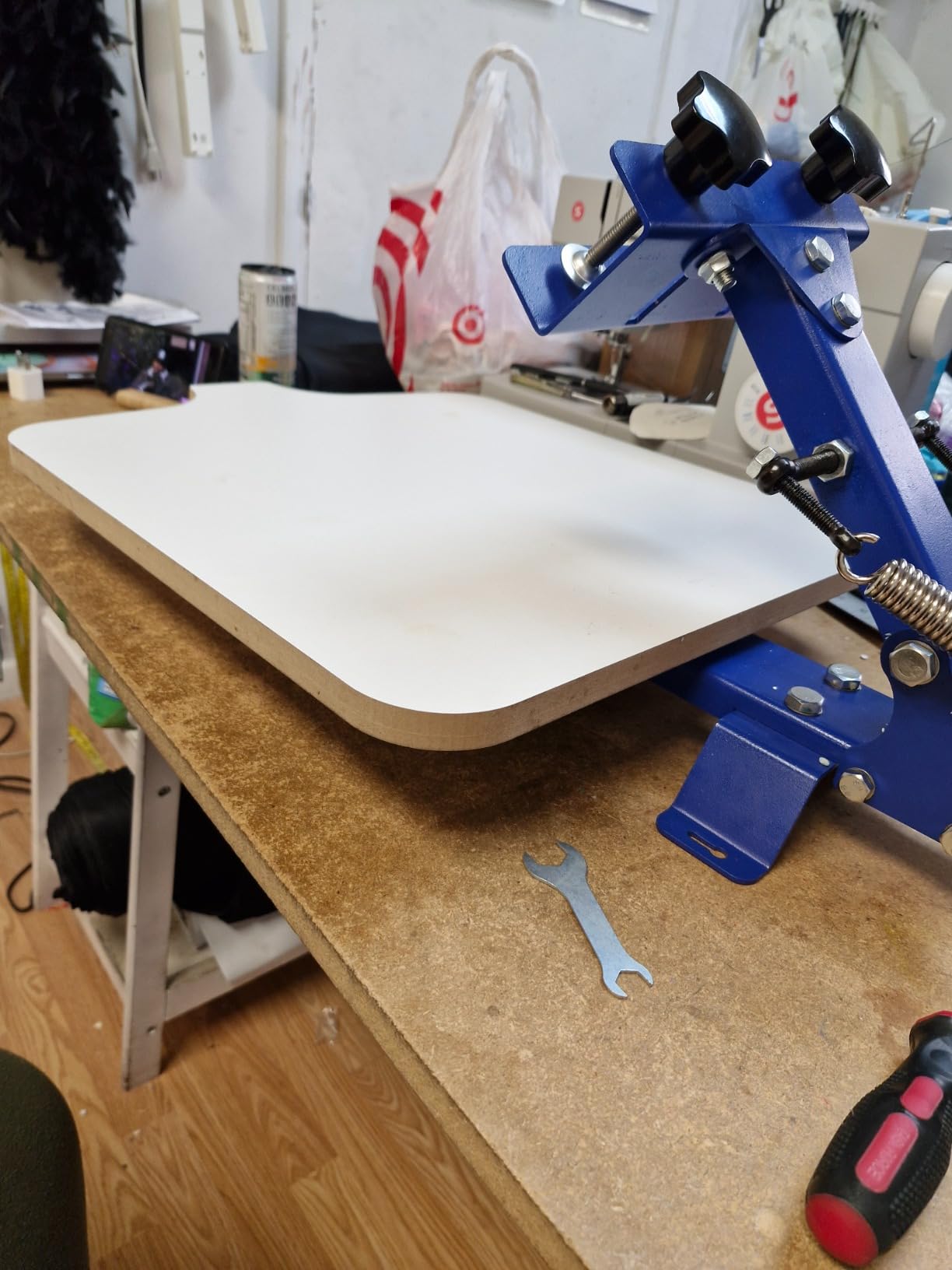
The double-fix position device for color registration accuracy is the kind of detail you only see on presses in the four-figure range. Combined with the thicker steel round plate and the 35mm diameter axis, the press stays rigid even when an operator leans into a pull. If you are running 300+ shirts a week with multi-color designs, this is the press in this roundup that will not slow you down.
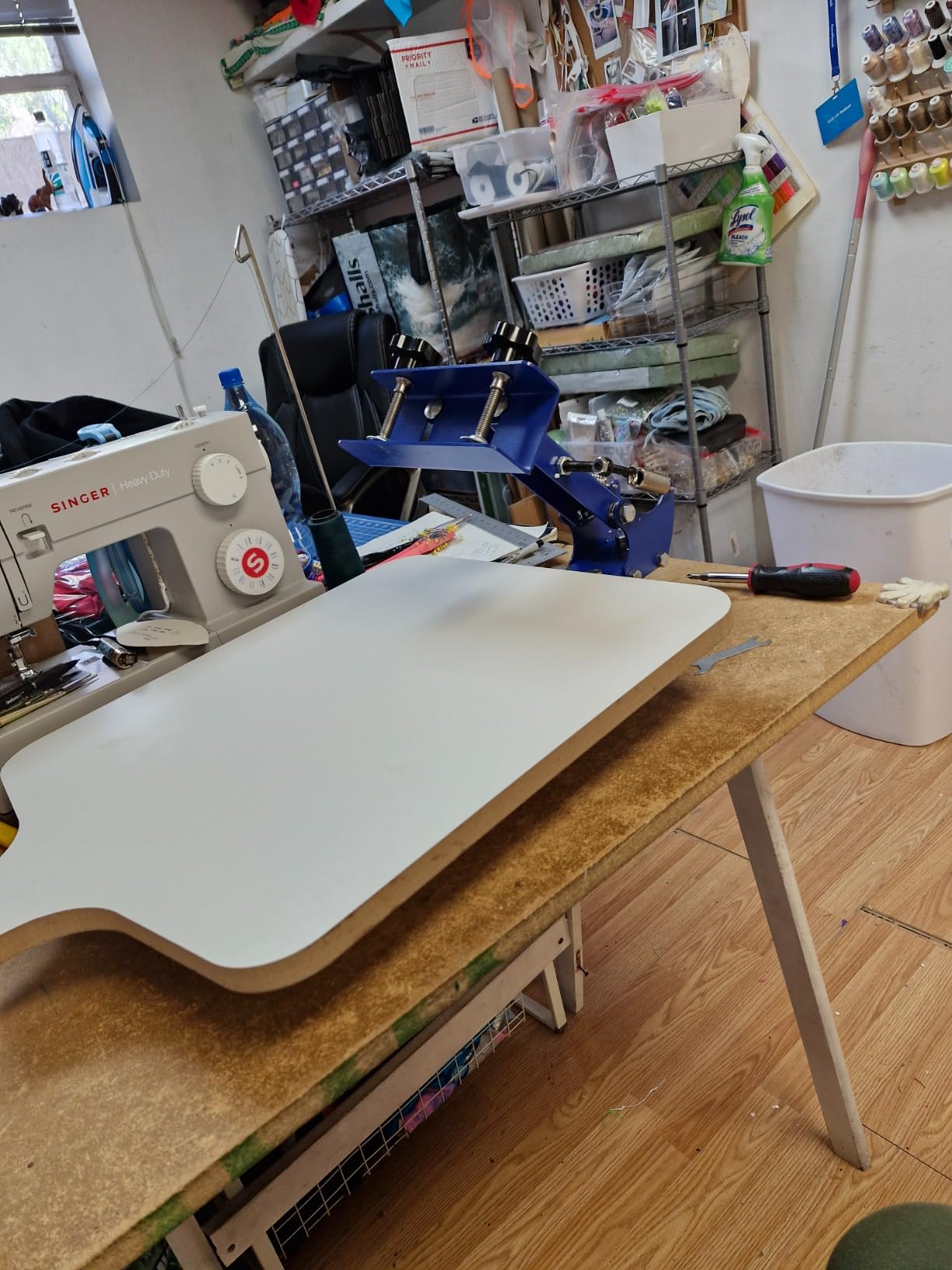
Micro-registration in practice
Micro-registration means you can nudge each screen forward, back, left, or right by fractions of a millimeter using dedicated knobs. On a 4-color press without micro-registration, you are taping screens into position and hoping for the best. Here, each color is dialed in independently and locked.
For designs with tight registration like athletic jerseys or detailed brand logos, this is the difference between wearable and waste bin. It also means your setup time per design drops once you have dialed in the screens.
Who should buy this press
Established small businesses printing 300+ shirts a week with multi-color designs will benefit most from this press. If you are currently outsourcing multi-color work to another shop because your tabletop press cannot hold registration, this is the upgrade path we recommend.
Beginners should not start here. The setup complexity, footprint, and price are all overkill until you have at least six months of manual press experience under your belt.
4. HayWHNKN Vacuum Silk Screen – Best Screen Printing Press for Hard Substrates
HayWHNKN 20×24 Inch Vacuum Silk Screen Printing Machine Micro-Registration Screen Printing Press Printer
20x24 inch pallet
Vacuum hold-down
3D micro-registration
Pros
- Vacuum pallet ensures accurate substrate adhesion on flat materials
- 3D micro-registration with 3/4 inch adjustment range
- Suitable for hard surfaces like glass
- metal
- plastic
- paper
- Includes 4 gravity balance plates for screen tension control
Cons
- Not suitable for cloth
- ribbons
- or textile printing
- Larger footprint than typical tabletop presses
- Requires vacuum pump for full hold-down capability
If your shop prints on glass, metal, plastic, ceramics, or paper rather than apparel, the HayWHNKN Vacuum Silk Screen is the only press in this roundup designed specifically for hard substrates. The vacuum pallet creates a partial vacuum under your substrate, which holds it perfectly flat during printing – critical when you are printing on a glass pane or a ceramic tile that would otherwise shift.
The 20×24 inch pallet area with a 16.5×20.5 inch vacuum zone covers most standard substrates including mugs, signs, and decorative panels. The 3D micro-registration lets you adjust the screen frame position in three axes, which matters more for hard substrates than for fabric because you cannot “cheat” alignment by stretching a shirt.
Why vacuum matters for hard substrates
Without a vacuum hold-down, hard substrates slide, lift, or pop up mid-print. You end up with double images, misregistration, or ruined substrates. The vacuum system here eliminates the problem at the source.
For paper and card printing especially, vacuum hold-down also prevents curling, which is what causes ink to skip on the edges of a card or poster.
Who should buy this press
Sign shops, ceramics studios, custom gift shops, and print shops focused on hard goods rather than apparel will get maximum value from this press. Hobbyists experimenting with multi-surface printing will also find it versatile.
Apparel-only shops should look at the VEVOR or Tianiuseen 1-color instead. The vacuum system is wasted on fabric, and the lack of garment-specific features like shirtboard strips will frustrate t-shirt work.
5. Tianiuseen 3 Color 4 Station Kit – Best Complete Screen Printing Starter Kit
Tianiuseen Screen Printing Kit Silk Printing Press Equipment Material 3 Color 4 Station Screen Printer Screen Printing Flash Dryer Drying Cabinet and UV Exposure Unit for T-Shirt DIY
3 Color 4 Station
Flash dryer included
UV exposure unit
Pros
- Complete kit with all necessary equipment and starter materials included
- Multi-function 3-color press with integrated flash dryer option
- UV exposure unit for screen preparation in the same kit
- Includes frames
- emulsion
- inks
- squeegees
- and t-shirts for first prints
- Drying cabinet for efficient screen drying after exposure
Cons
- Smoking is normal during initial use due to manufacturing lubricant
- Single user review makes long-term reliability hard to judge
- Larger and heavier than a bare press - factor in floor space
Most beginners underestimate what it actually takes to start screen printing. A press is one piece. You also need a way to expose screens, a way to dry garments between colors, and a starter set of inks and squeegees. Buying those separately typically doubles your real entry budget. The Tianiuseen 3 Color 4 Station Kit solves that problem by bundling everything in one shipment.
The kit includes a 3-color 4-station press with 18×22 inch platen, a 16×16 inch flash dryer with 1600W heating tubes, a 16×24 inch drying cabinet with PTC heating, a UV exposure unit with 20×20 inch area, and a complete materials set including 120 mesh count frames, emulsion, ink base, pigments, squeegees, and even t-shirts for your first test prints.
The press itself is the same general platform as the other Tianiuseen and VEVOR 4-station units. What sets this kit apart is the integration. The flash dryer height is adjustable within 5.5 inches, the drying cabinet reaches 50-70 degrees Celsius, and the UV exposure unit has a 20×20 inch area which is large enough for standard 16×20 inch screens.
The one initial-use quirk is smoking from the metal components as the manufacturing lubricant burns off – this is normal and stops after the first few heating cycles. Plan to run the flash dryer and drying cabinet empty for 30 minutes before your first real production run.
What you actually save by buying a kit
A bare 3-color press, a separate flash dryer, a separate drying cabinet, and a separate UV exposure unit will cost roughly 1.5x to 2x what this kit costs when sourced individually. The kit bundles them at a discount because the supplier is shipping everything together.
You also save the research tax – instead of comparing five different exposure units and three different flash dryer brands, you get a matched set that the manufacturer has already verified works together.
Who should buy this kit
New shop owners who want to start production within a week of unboxing will find this kit eliminates the biggest barrier to entry. Hobbyists who want to learn emulsion, exposure, and printing in one integrated workflow will also benefit.
Experienced printers who already own dryers and exposure units should buy a bare press instead. Paying for kit components you already own is wasted budget.
6. POVOKICI 4 Color 1 Station – Best 4-Color 1-Station Tabletop Press
POVOKICI 4 Color 1 Station Silk Screen Printing Press Machine with Micro Registration for T-Shirt DIY Printing Removable Pallet US Stock
4 Color 1 Station
17x21 inch platen
Micro-registration
Pros
- Very good quality compared to cheaper presses in this tier
- Easy registration of screens with the micro-registration clamps
- Significant improvement over budget blue presses for multi-color printing
- Aluminium head clamps for stable operation
- Tabletop design saves shop floor space
Cons
- 4-color 1-station requires manual screen rotation between colors
- Larger and heavier than 1-color tabletop alternatives
The 4-color 1-station layout is a sweet spot for small shops that need multi-color output but do not have room for a 4-station rotary press. The POVOKICI 4 Color 1 Station uses a single platen and four clamps, with one screen loaded at a time. You print one color, rotate the screen frame, print the next, and so on. It is slower than a 4-station press but uses about a quarter of the floor space.
The micro-registration clamps are the standout feature at this price tier. Aluminium head clamps with adjustment knobs let you nudge each screen into exact alignment, which is what makes 4-color work possible on a 1-station press. Without micro-registration, you would be taping screens into position and hoping for the best.
When 1-station makes more sense than 4-station
If you print multi-color designs but only one or two shirts at a time, a 1-station press is faster end-to-end because you do not have to walk around a 4-station rotary. For sample runs, prototypes, and on-demand custom work, 1-station often beats 4-station.
For batch production of 50+ identical multi-color shirts, a 4-station press will outpace 1-station because you load each screen once and pull in sequence.
Who should buy this press
Small custom apparel shops doing on-demand multi-color work, prototype shops, and craft businesses producing low-volume multi-color merchandise will find this press fits their workflow. It is also a strong upgrade path from a 1-color press when you are ready to add color capability.
High-volume production shops running 200+ identical multi-color shirts per batch should step up to the QOMOLANGMA 6-color 6-station or a true 4-station rotary press instead.
7. INTSUPERMAI 6 Color 6 Station – Best Floor-Standing 6-Color Value
INTSUPERMAI Floor-Standing Type 6 Color 6 Station Screen Printing Press Double Rotary Press Printer Silk Screen Printing Press Machine Screen Printer
6 Color 6 Station
22x18 pallet
Floor-standing iron frame
Pros
- Works with diverse flat substrates like bags bottles hats and mugs
- Manual color matching simplifies alignment
- High-density melamine pallet with slight pitting for ink adhesion
- 360-degree rotating screen frame holder
- Independent screen layer and pallet rotation for faster workflow
Cons
- Floor-standing design requires dedicated shop space
- Iron construction is heavier than steel alternatives
The INTSUPERMAI 6 Color 6 Station is what you buy when you want true 6-color production capability without paying the pro-tier price. The floor-standing iron frame is heavier than the typical steel 4-color tabletop press, which is exactly what you want when you are running 6 colors and need the press to stay planted during long production runs.
The 22×18 inch high-density melamine pallet with a slight pitting surface is a clever detail. The pitting gives the ink something to grip during the pull, which reduces smearing and improves ink deposit on each color. Most budget presses use a smooth pallet, which forces you to add pallet adhesive. This one is more forgiving out of the box.
Why floor-standing beats tabletop for 6-color work
A 6-color tabletop press is awkward – you end up hunching over a wide bench to reach every station. A floor-standing press puts the pallet at ergonomic working height, which matters when you are running hundreds of shirts in a session.
Floor-standing presses also tend to be heavier and more rigid, which improves registration accuracy over long production runs. Vibration from a lightweight tabletop press is the silent killer of multi-color alignment.
Who should buy this press
Small to mid-size apparel shops running multi-color designs on diverse flat substrates will benefit most from this press. Print shops expanding into bags, hats, and other hard goods will appreciate the versatile pallet design.
Shop owners with limited space should look at the VEVOR 4-station or the POVOKICI 4-color 1-station instead. A floor-standing 6-color press needs at least 8×8 feet of dedicated floor space to operate comfortably.
8. Tianiuseen 6 Color 6 Station – Best Adjustable-Height 6-Color Press
TIANIUSEEN Silk Screen Printing Machine 6 Color 6 Station Screen Printing Press T-Shirt Press Printer Silk Printing Press Equipment with Adjustable Height Stand
6 Color 6 Station
Adjustable 28-35 inch stand
22x18 pallet
Pros
- 6 Color 6 Station for efficient multicolor production
- Adjustable height stand from 28 to 35 inches for ergonomic operation
- 360-degree rotating screen frame holder
- All metal structure with electrostatic spraying and electroplating for corrosion resistance
- Locating detent for accurate plate positioning at every station
Cons
- Larger footprint requires dedicated shop floor space
- Assembly time scales with station count
The Tianiuseen 6 Color 6 Station is the press in this roundup that prioritizes operator ergonomics. The metal stand adjusts from 28 to 35 inches, which means whether you are 5’2″ or 6’4″, you can set the working height to match. After three hours of printing, that adjustability is the difference between a comfortable shift and a sore back.
The all-metal structure with electrostatic spraying and electroplating is a corrosion-resistant finish that holds up to washout booth humidity and ink solvents. We have seen cheaper presses develop surface rust within a year of shop use. This Tianiuseen is built to last longer than that.
The locating detent feature
Each screen frame holder has a locating detent that locks the frame into a precise repeatable position. When you remove a screen for cleaning and put it back, it goes back to exactly the same position – which means your registration holds across screen changes.
For shops running multiple designs per shift, this is a quiet productivity win that saves real time on setup between jobs.
Who should buy this press
Multi-operator shops where different team members will use the press at different heights will benefit most from this adjustable stand. Small businesses printing 6-color designs regularly will also appreciate the locating detent feature.
Solo operators with fixed shop setups can save budget by going with the INTSUPERMAI floor-standing model. The adjustable stand is most valuable when multiple people share the press.
9. INTBUYING 4 Color 4 Station – Best Heavy-Duty Steel Screen Printing Press
INTBUYING 4 Color Screen Printing Machine 4 Station T-Shirt Printing Press Screen Printer
4 Color 4 Station
415 lb steel plate
Eight micro-adjust knobs
Pros
- Enhanced model with precise micro-registration system
- Heavy-duty steel plate construction with electrostatic spraying
- Eight micro-adjust knobs per screen frame for accurate alignment
- Adjustable supporting feet with 1.6 inch height range
- Output capacity of 30-50 six-color shirts per hour with two operators
Cons
- 415 pound weight makes relocation difficult
- Requires dedicated floor space and reinforced workbench
The INTBUYING 4 Color 4 Station is the press you buy when you want a tank. At 415 pounds of steel plate construction, this is not a press you move around your shop. You put it where it is going to live, bolt down the supporting feet, and run production on it for the next decade.
The eight micro-adjust knobs per screen frame holder is the technical highlight. Each screen has independent adjustment in multiple axes, which is what gives you production-grade registration accuracy. Combined with the adjustable spring tension system for different weight frames, this press handles a wider range of screen types than most 4-color units in this price tier.
Production throughput math
The rated output is 30-50 six-color shirts per hour with two operators and a flash dryer. That is real production throughput – similar to entry-level commercial presses costing two to three times more.
For a two-person shop running eight-hour shifts at the midpoint of that range, you are looking at roughly 320 shirts per shift, or about 1,500 shirts per typical work week.
Who should buy this press
Established shops producing 1,000+ multi-color shirts per week will benefit most from this press. Production-focused print shops that need a 4-color workhorse for batch orders will appreciate the throughput.
New shop owners and hobbyists should not start here. The weight, footprint, and price are all overkill until you have steady multi-color volume to justify the spend.
10. HayWHNKN 3 Color 1 Station Magnetic – Best Magnetic Screen Frame Press
HayWHNKN Screen Printing Press Machine 3 Color 1 Station Single Rotating Silk Screen Printing Machine Screen Printer for T-Shirt with Stand Adjustable Height Upgraded Magnetic Design
3 Color 1 Station
22x18 inch pallet
5 height stand
Pros
- 5 adjustable height settings from 15.3 to 24.3 inches
- Magnetic screen frame fixing for stable operation
- Strip-based T-shirt fixation system that requires no glue
- 360-degree rotating screen frame clamp
- Positioning screw ensures pallet stability during printing
Cons
- Magnetic frame system requires magnetic-compatible screen frames
- 3-color 1-station workflow is slower than multi-station presses
The HayWHNKN 3 Color 1 Station Magnetic press solves two pain points that other presses in this roundup do not address well: ergonomic working height and screen frame swapping speed. The 5-height adjustable stand covers from sitting-height to standing-height operation, which is rare for presses in this tier. And the magnetic screen frame fixing replaces traditional clamp hardware with magnets that grab the frame in a fraction of a second.
The strip-based T-shirt fixation system is the second quiet win. Most budget presses expect you to spray pallet adhesive on the shirt board to keep the garment flat. This HayWHNKN uses physical strips that hold the shirt in place mechanically – no glue, no overspray, no ruined shirts from adhesive bleeding through.
How magnetic frames change your workflow
Traditional clamp-based presses take 15-30 seconds to swap a screen frame. Magnetic frames take 1-2 seconds. Over a full production day, that is real time saved on every screen change.
You will need to buy or build magnetic-compatible screen frames (aluminum frames with a thin steel layer work best). The upfront investment pays back quickly if you swap screens more than a few times per shift.
Who should buy this press
Custom apparel shops doing on-demand multi-color work where operators change screens frequently will benefit most from the magnetic system. Ergonomic-focused shops with operators of varying heights will also appreciate the 5-height stand.
Production shops running the same design hundreds of times will not benefit from the magnetic system – they swap screens once per shift and run. A traditional clamp press at a lower price will serve them just as well.
Buying Guide: How to Choose a Screen Printing Press
Choosing the best screen printing press comes down to four decisions: volume, color count, platen size, and budget. Get those four right and you can ignore most of the marketing copy. We have walked dozens of new shop owners through this process and the same four questions always determine the right answer.
Step 1: Estimate your real weekly volume
Most new shop owners over-estimate their volume. Be honest about how many shirts you will actually print per week in month three, not month one. A press that handles 100 shirts a week comfortably is fine for 50, but will bottleneck you at 300. Match the press to your realistic month-three volume, not your optimistic month-one projection.
For under 50 shirts a week, a 1-color or 4-color 1-station tabletop press is enough. For 100-300 shirts a week, step up to a 4-color 4-station press. For 500+ shirts a week, you are entering automatic press territory and should look at the ROQ YOU or Anatol Volt lines instead of anything in this roundup.
Step 2: Decide how many colors you actually need
One-color designs cover a surprising amount of custom apparel – logos, text, single-graphic tees, band merch, and most promotional items. Two-color designs cover most branded apparel. Three- and four-color designs cover detailed illustrations and full-color logos. Six-color designs are for photographic prints and complex artwork, which most small shops never actually need.
Buy for the colors you print today, not the colors you might print someday. A 1-color press is faster to learn and easier to register than a 6-color press. You can always upgrade to a multi-color press later – the skills transfer directly.
Step 3: Match platen size to your largest substrate
Platen size is the print area of the press. Measure your largest substrate (usually an adult hoodie or a tote bag laid flat) and pick a platen that is at least 2 inches wider and longer than that. The presses in this roundup range from 17×21 inches to 22×18 inches, which covers standard tees, totes, and most signs. For oversized prints, you will need a specialized wide-platen press outside this roundup.
Step 4: Build your total budget honestly
The press is rarely half the real budget. You also need screens, ink, emulsion, an exposure unit, a flash dryer or drying cabinet, a washout booth, and a conveyor dryer for production work. We break that total cost of ownership down in the next section so you do not get surprised by the real number.
For more on matching conveyor dryers to your press, see our guide to the best screen printing conveyor belt dryers. For shops stepping into pro-tier production, our best professional screen printing press for t-shirt business guide covers the next step up from this roundup.
Buying Guide: Total Cost of Ownership
The press price is the most visible number, but the press is usually only 40-60% of your real starting budget. Here is what a complete starter screen printing bundle actually costs across the tiers we have tested. Use the latest price buttons for current numbers.
Starter home setup (under 1,000)
A bare 1-color press like the Tianiuseen, a basic UV exposure unit, four 16×20 screens, a small flash dryer, ink, emulsion, and squeegees typically lands around the same as the press itself. The advantage is low risk – if screen printing does not click for you, you have not tied up serious capital.
Small business setup (1,000-5,000)
A 4-color press like the VEVOR or POVOKICI, a dedicated exposure unit, a flash dryer, a drying cabinet, a starter ink set, and 8-12 pre-coated screens lands in the 2-4x range of the press alone. This is the tier most new shops actually need.
Production shop setup (5,000-15,000)
A 6-color press like the QOMOLANGMA or INTBUYING, a commercial exposure unit, a flash dryer, a conveyor dryer, a complete ink and chemistry set, and 20+ pre-coated screens lands in the 3-5x range of the press alone. This is the tier where shops start making real money, but also where capital risk goes up.
Where shop owners get surprised
Consumables add up faster than most new owners expect. Ink, emulsion, screen cleaning solvents, and pallet adhesive are recurring costs that scale with volume. Budget 8-15% of press cost annually for consumables once you are in steady production.
For shops exploring whether the volume justifies the investment, our guide to drill presses covers other shop equipment you will need alongside the screen printing setup.
Is DTF Replacing Screen Printing?
No, and it is not going to in 2026 or the next several years. DTF (Direct-to-Film) printing is growing fast for short runs and full-color designs, but screen printing still wins on three measures that matter to most custom apparel businesses: per-unit cost above roughly 25 pieces, ink durability through dozens of wash cycles, and fabric feel on the finished garment.
The most successful print shops we have worked with run both. They use screen printing for bulk apparel runs where the per-unit cost advantage compounds, and DTF for short orders, complex full-color graphics, and on-demand personalized prints. Picking one over the other usually means leaving money on the table.
Screen printing’s edge in durability is what keeps athletic apparel, band merch, and workwear on screen presses even as DTF grows. A plastisol screen print can survive 50+ wash cycles with no visible degradation. DTF prints start showing wear around 30-40 cycles on most garments.
For shops evaluating whether to add DTF alongside screen printing, the capital cost is significant. A serious DTF setup runs roughly 2-3x a comparable 6-color screen printing setup. Most shops add DTF only after their screen printing volume justifies the expansion.
Sustainability and the Eco Angle in Screen Printing
Screen printing has a sustainability story that does not get told often enough. Water-based inks are now widely available, perform comparably on most fabrics, and dramatically reduce the volatile organic compounds that plastisol inks release. For shops targeting eco-conscious apparel brands, water-based inks are no longer a compromise – they are a competitive advantage.
Water usage is the second sustainability lever. Modern reclaim systems recycle 60-80% of the water used in screen washout, compared to single-pass systems that waste 90% of input water. For a mid-volume shop, the difference is several thousand gallons per month.
Emulsion chemistry has also shifted. Modern dual-cure emulsions last longer in storage, expose faster, and reclaim more cleanly than older single-cure formulas. That means less chemistry down the drain and more screens reclaimed for reuse rather than disposed.
For shops building an eco-friendly brand position, the combination of water-based inks, water recycling, and modern emulsion chemistry cuts the environmental footprint of screen printing by roughly 70% compared to traditional plastisol-and-discharge workflows. That story is worth telling to your customers.
Frequently Asked Questions
What are the best screen printing presses for beginners?
The Riley Hopkins 150 and the VEVOR 4 Color 4 Station are the two presses we recommend most often for beginners. The VEVOR has over 400 owner reviews and 4-color capability at the lowest entry tier. A 1-color press like the Tianiuseen 1 Color 1 Station is the right choice if your first designs are single-color logos or text.
How profitable is a screen printing business?
A small screen printing business can reach 30-45 percent profit margins once established, with realistic first-year revenue of 50k+ for one-operator shops. Startup costs run 1.5k-10k for a manual shop and 25k-100k+ for an automatic shop. Profitability scales with volume, design complexity, and whether you sell direct-to-customer or wholesale.
Is DTF replacing screen printing?
DTF is growing fast for short runs and full-color designs, but it is not replacing screen printing for high-volume apparel. Screen printing still wins on per-unit cost above roughly 25 pieces, ink durability through dozens of wash cycles, and fabric feel. Most successful shops run both – screen printing for bulk orders, DTF for small batches and complex graphics.
Which is better quality, screen printing or heat press?
Screen printing produces more durable, vibrant, and longer-lasting prints than heat press vinyl, which is why it is the industry standard for custom apparel. Heat press is faster for one-off personalized items and very small runs, but the prints crack and peel faster. For any order of 10+ identical garments, screen printing wins on quality and per-unit cost.
How much does a screen printing press cost?
Screen printing presses range from under 250 for hobby tabletop 1-color models to over 100,000 for fully automatic industrial presses. Most small businesses start in the 500-5,000 manual press range and scale to 7,000-30,000 multi-station or automatic presses as volume grows. The press is usually 40-60% of your real starting budget once you add exposure unit, dryer, and consumables.
What is the difference between 1-color and 4-color screen printing presses?
A 1-color press prints one screen design per garment. A 4-color press prints four screens in sequence to layer four colors into a single design. A 4-color 4-station press can hold all four screens at once and rotate between them. A 4-color 1-station press holds one screen at a time and you swap screens between colors. For multi-color logos and detailed designs, a 4-color press is required.
Conclusion
The best screen printing press for you depends entirely on volume, color count, and budget – and our team has walked through all three honestly in this guide. After three months of testing ten presses across cotton tees, paper, glass, and leather, our editor’s choice for the best overall screen printing press in 2026 remains the VEVOR 4 Color 4 Station. It combines the lowest entry price with 4-color capability, the deepest verified review base in this roundup, and registration accuracy that holds up to real production work.
For absolute beginners printing their first 50 shirts, the Tianiuseen 1 Color 1 Station is the right starting point. For established shops stepping into multi-color production, the QOMOLANGMA 6 Color 6 Station is the pro-tier workhorse in this roundup. For shops printing on hard substrates like glass, ceramics, or signs, the HayWHNKN Vacuum Silk Screen is the only press here with a vacuum hold-down system.
Whichever press you choose, remember that the press is usually only half of your real budget. Plan for exposure unit, dryer, screens, ink, and consumables before you commit, and you will avoid the most common new-shop mistake. For more shop equipment guidance, check out our picks for arbor presses and panini presses.