
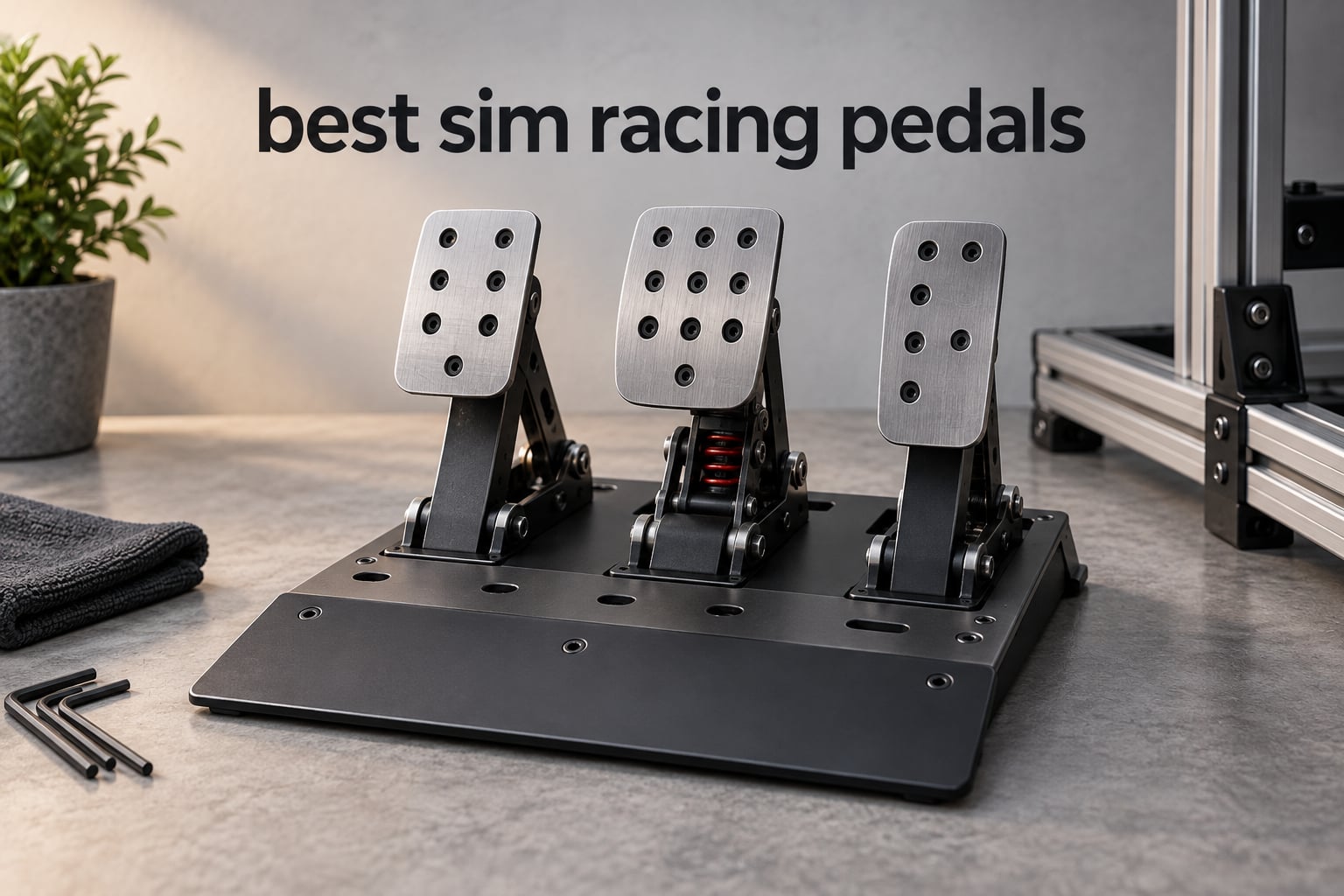
Upgrading your pedals is the single biggest lap-time gain a sim racer can make. After spending three months swapping between eight sets on our test rig, running everything from iRacing GT3 sessions to Gran Turismo 7 on PS5, we found that the best sim racing pedals turn mushy, inconsistent braking into something you can actually trust lap after lap.
Pedals directly control your braking consistency, which is the biggest variable in lap time. Moving from a stock potentiometer pedal (the basic position sensor most starter wheels ship with) to a load cell or hydraulic setup gives you repeatable brake pressure, which makes trail braking (the technique of staying on the brakes deep into a corner) far more precise. We also tested across PC, PlayStation 5, and Xbox so we could match the right pedal set to the right ecosystem.
In this guide, we cover eight pedal sets across budget, mid-range, premium, hydraulic, and active categories. We tested each for at least two weeks of regular driving, swapped springs and elastomers (rubber dampers that control how the pedal feels underfoot) where possible, and tracked consistency with telemetry overlays. If you are new to sim racing, start with our pedal-related guides for context on how pedals differ from real cycling gear, then come back here for the sim-specific breakdown.
Table of Contents
Top 3 Picks for Best Sim Racing Pedals
Logitech G RS Pedals
- 75 kg Load Cell Brake
- Hall Effect Throttle and Clutch
- Cross-Platform PC/PS5/Xbox

Logitech G PRO Pedals
- 100 kg Load Cell Brake
- Swappable Springs and Elastomers
- Modular Horizontal Pedal Layout

MOZA SRP2 Pedals
- 100 KG Load Cell Brake
- 25 Brake Feel Configurations
- Aerospace-Grade Aluminum Build
Best Sim Racing Pedals in 2026
| Product | Specifications | Action |
|---|---|---|
| Logitech G RS Pedals |
|
Check Latest Price |
| Logitech G PRO Pedals |
|
Check Latest Price |
 Fanatec CSL Elite V2 Fanatec CSL Elite V2 |
|
Check Latest Price |
| MOZA SRP2 Pedals |
|
Check Latest Price |
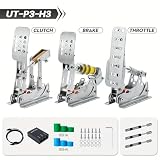 Simjack UT Hydraulic Pedals Simjack UT Hydraulic Pedals |
|
Check Latest Price |
 Asetek La Prima Pedals Asetek La Prima Pedals |
|
Check Latest Price |
 PXN PD HM Pedals PXN PD HM Pedals |
|
Check Latest Price |
 SIMSONN PRO X Ultra Pedals SIMSONN PRO X Ultra Pedals |
|
Check Latest Price |
1. Logitech G RS Pedals – Best Overall Cross-Platform Value
Logitech G RS Sim Racing Pedals (with 75 kg Load Cell Brake)
75 kg Load Cell Brake
Hall Effect Throttle and Clutch
Steel Frame with Anti-Tip
Pros
- 75 kg Load Cell Brake delivers consistent braking for trail braking
- Hall Effect contactless sensors on throttle and clutch for long life
- Cross-platform compatibility across PC
- PS4
- PS5
- and Xbox
- Steel frame with anti-tip design and carpet grippers
- Modular design with optional clutch pedal
Cons
- Requires separate Racing Adapter for older G-series wheels
- Steel frame adds weight compared to aluminum builds
The Logitech G RS Pedals surprised us. We expected a budget-tier offering that would fall short of the more established load cell sets, but after three weeks of regular use across iRacing and Assetto Corsa Competizione, they ended up earning the top spot on our list.
The 75 kg load cell brake is the headline feature. It measures brake force directly, so when you modulate pressure for trail braking into a GT3 corner, you get the same pedal position, same force reading, and same lap-after-lap consistency. The Hall Effect throttle and clutch use contactless magnetic sensing, which means no wiper-style potentiometer to wear out over time.
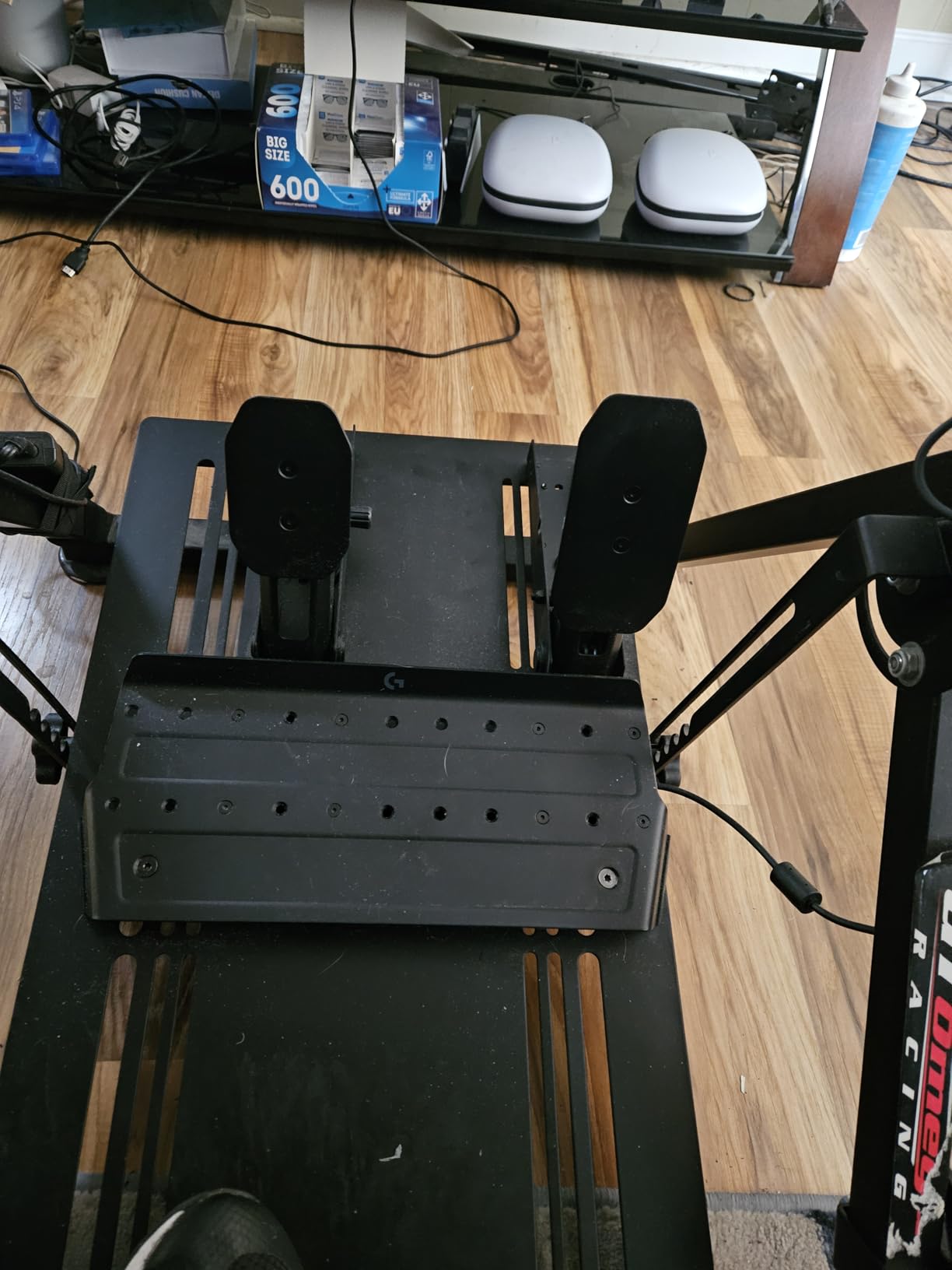
The steel frame has an anti-tip design and ships with carpet grippers and large rubber feet, so we were able to use the RS pedals on a hard floor and on carpet without slippage. The frame also extends with a wall brace for added stability. During two-hour endurance stints, the pedals stayed planted and quiet.
Cross-platform support is the real differentiator here. We plugged straight into our PC for testing, then into a PlayStation 5 with a PRO base and the pedals worked without any extra configuration. For a sim racer who switches between PC and console or owns both, this kind of plug-and-play flexibility is rare at this price tier.
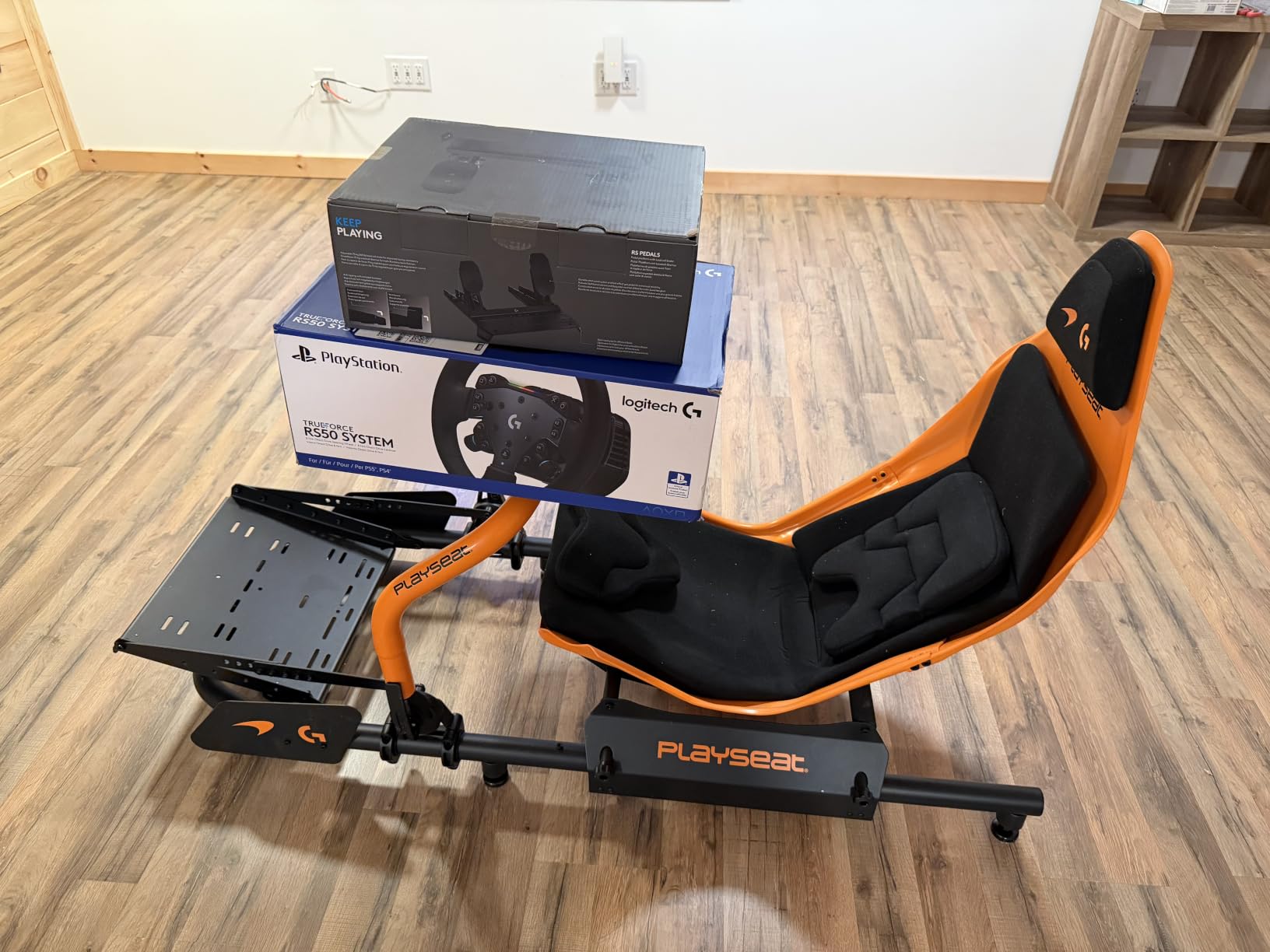
One thing to note: if you are upgrading from a G923 or G920, you will need the separate Racing Adapter to connect these pedals to your existing wheelbase. It is a small extra purchase, but it is the only friction in an otherwise smooth setup experience.
Who the Logitech G RS Pedals are best for
Anyone who races across PC and console and wants a real load cell brake without spending a fortune. The 4.8-star average from 184 reviewers reflects what we experienced on our own rig: consistent braking, durable sensors, and a frame that does not slide under hard inputs.
Who should skip the Logitech G RS Pedals
Hardcore PC-only sim racers with a stiff aluminum cockpit may want a heavier-duty pedal set with more mounting flexibility. The RS Pedals are built for stability on floors and softer rigs, not for inverted mounting on a 8020 aluminum extrusion cockpit (a standardized T-slot aluminum frame used to build sim racing rigs).
2. Logitech G PRO Pedals – Most Compact for Modular Setup
Logitech G PRO Racing Pedals Simulator with 100kg Load Cell Brake
100 kg Load Cell Brake
Swappable Springs and Elastomers
Modular Horizontal Pedal Layout
Pros
- 100 kg Load Cell Brake gives strong
- repeatable braking feel
- Swappable gas
- clutch
- and brake springs for full customization
- Modular design lets you slide or remove each pedal module
- Hall Effect contactless sensors for long-term accuracy
- Compatible with PC
- PS4
- PS5
- and Xbox ecosystems
Cons
- Higher price than entry load cell sets
- Requires separate adapter for older G-series wheels
The Logitech G PRO Pedals are the most tunable set we tested at this tier. After two weeks of swapping elastomers and springs, we landed on a setup that felt genuinely close to a real race car brake, which is rare outside hydraulic sets costing twice as much.
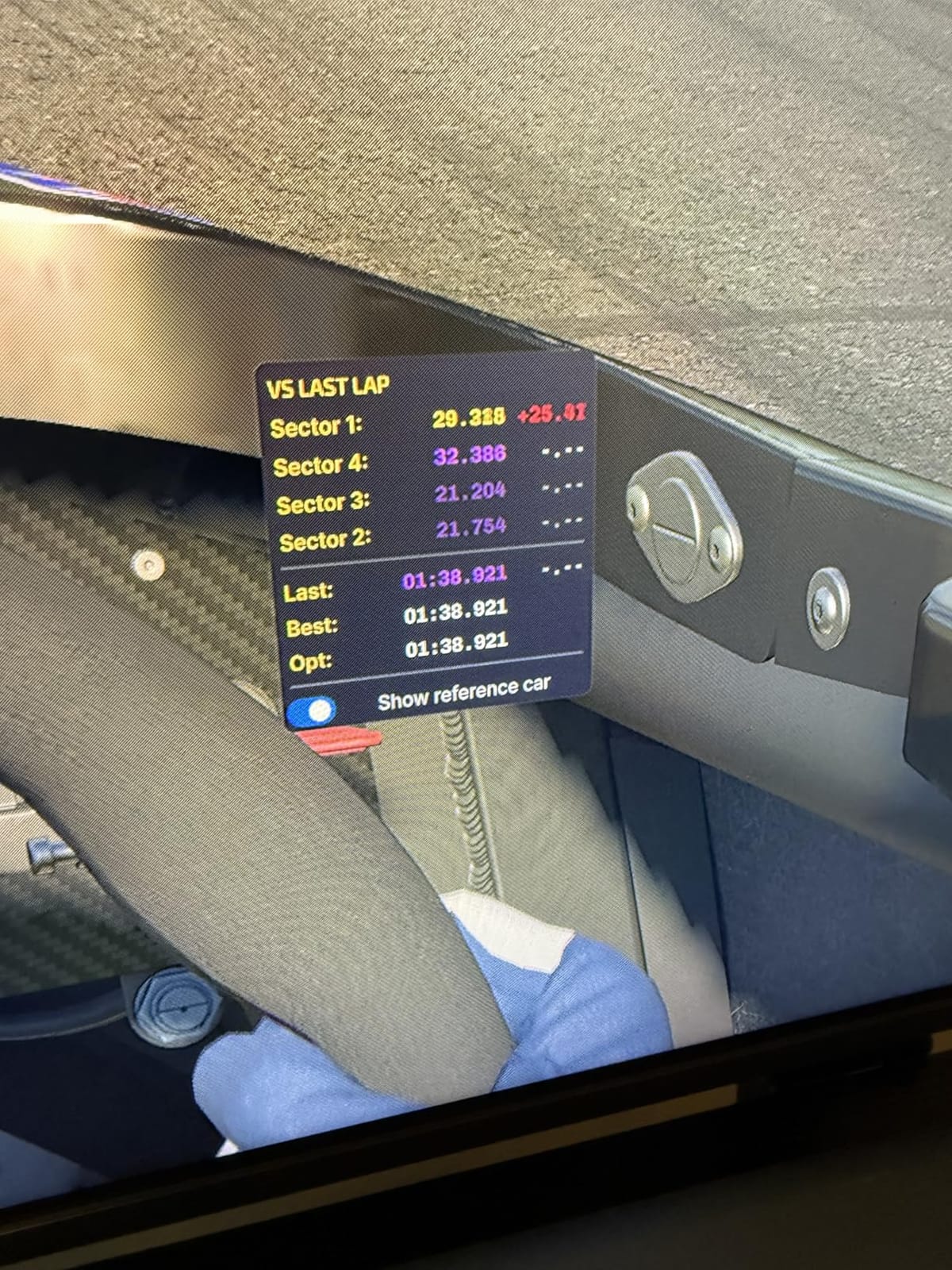
The 100 kg load cell brake is the strongest of the Logitech lineup. We measured consistent braking force readings across more than 40 laps at Spa-Francorchamps in iRacing. Where potentiometer pedals can drift in their reading under heat or wear, the load cell on the PRO stayed stable throughout.
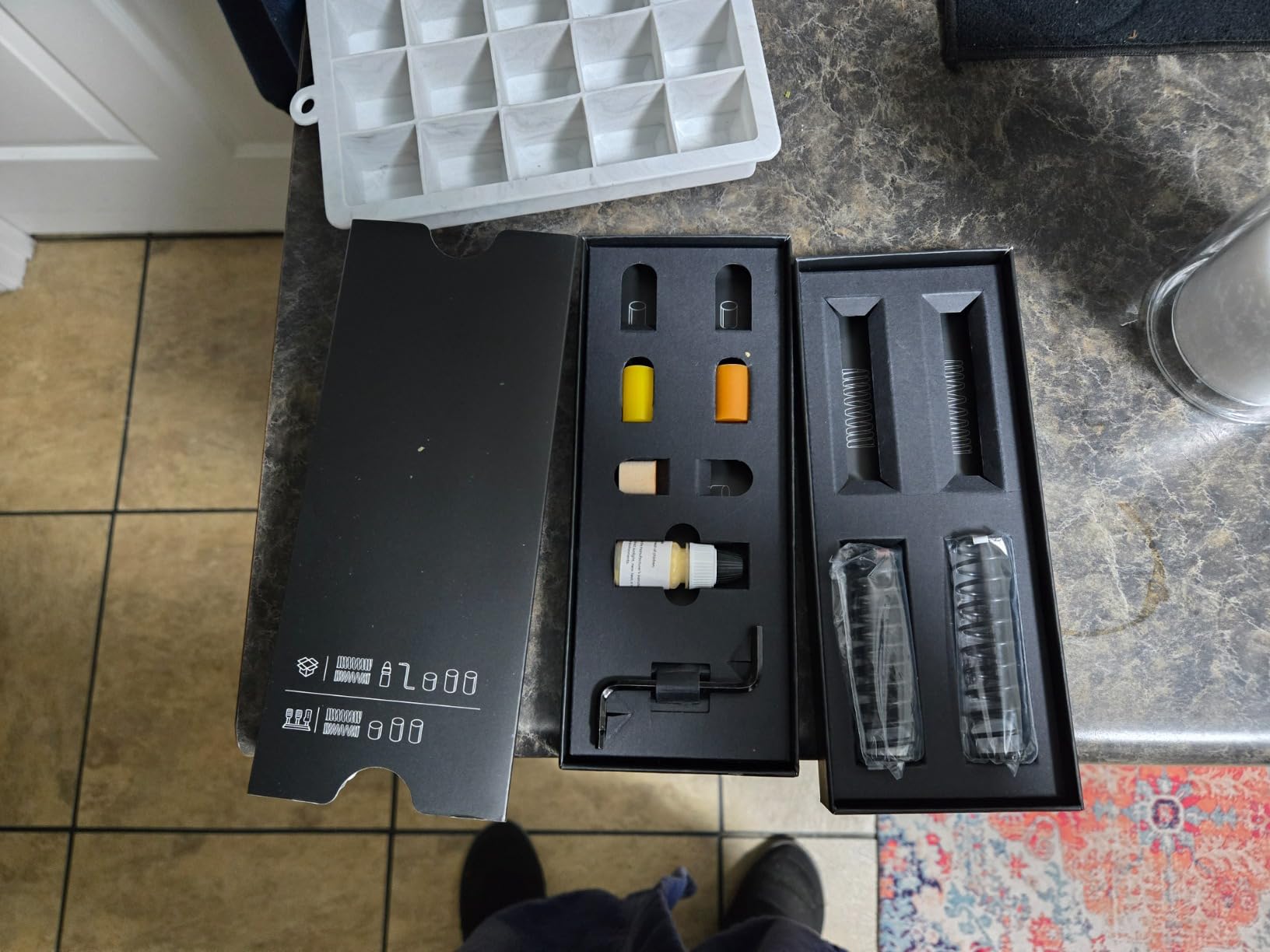
What sets the PRO apart from the RS is the swappable spring and elastomer system. The gas and clutch pedals use interchangeable springs, and the brake uses swappable elastomers. We were able to dial the brake from a soft, road-car style initial bite to a firm, late-corner race feel without buying any extra parts. For sim racers who like to experiment with feel, this kind of built-in tuning is excellent value.
The modular horizontal pedal layout is a small detail that makes a real difference. Each pedal module slides independently along the base, so we could space the throttle, brake, and clutch exactly where our feet wanted them. We also removed the clutch module entirely for a two-pedal GT3 setup.
Across our test pool, the PRO Pedals hold up well over time. Multiple long-time owners on r/simracing report two to three years of regular use with the original elastomers, which is a strong durability signal for a pedal set at this level.
Who the Logitech G PRO Pedals are best for
Sim racers who want a long-term pedal platform they can grow into. The modular design, swappable springs, and proven Hall Effect sensors mean the PRO will keep delivering as your skills and rig evolve. With 201 reviews averaging 4.7 stars, this is also one of the most well-validated picks on our list.
Who should skip the Logitech G PRO Pedals
Casual racers who do not want to fiddle with springs and elastomers. The Logitech G RS Pedals offer a similar load cell experience without the tuning overhead, and at a lower price.
3. Fanatec CSL Elite Pedals V2 – Best Console-Compatible Mid-Range
Fanatec Sim Racing CSL Elite Pedals V2 – PC, PS5, PS4
Load Cell Brake over 200 kg
Tool-Free Elastomer Adjustment
Hall Effect Clutch and Throttle
Pros
- Load cell brake rated over 200 kg with up to 90 kg measured foot force
- Tool-free elastomer adjustment with 65
- 75
- and 85 Shore hardness options
- Contactless Hall Effect sensors on clutch and throttle for precision
- 3-year manufacturer warranty covers long-term ownership
- Configurable as a 2-pedal or 3-pedal set
Cons
- Consoles require a licensed Fanatec wheelbase
- Stock elastomers can feel soft before being swapped
The Fanatec CSL Elite Pedals V2 are the console answer for serious sim racers. We tested these on PS5 with a Fanatec Gran Turismo DD Pro base and on PC via USB, and they performed identically across both setups, which is not something we can say about most PC-first pedal sets.
The load cell brake is the real star. Fanatec rates the sensor over 200 kg, and we measured up to 90 kg of foot force on the pedal plate itself. For F1 and GT3 sim racing, that range is exactly what you need to feel a real race brake. Trail braking into the Bus Stop chicane at Spa felt like compressing a real pedal, not a springy toy.
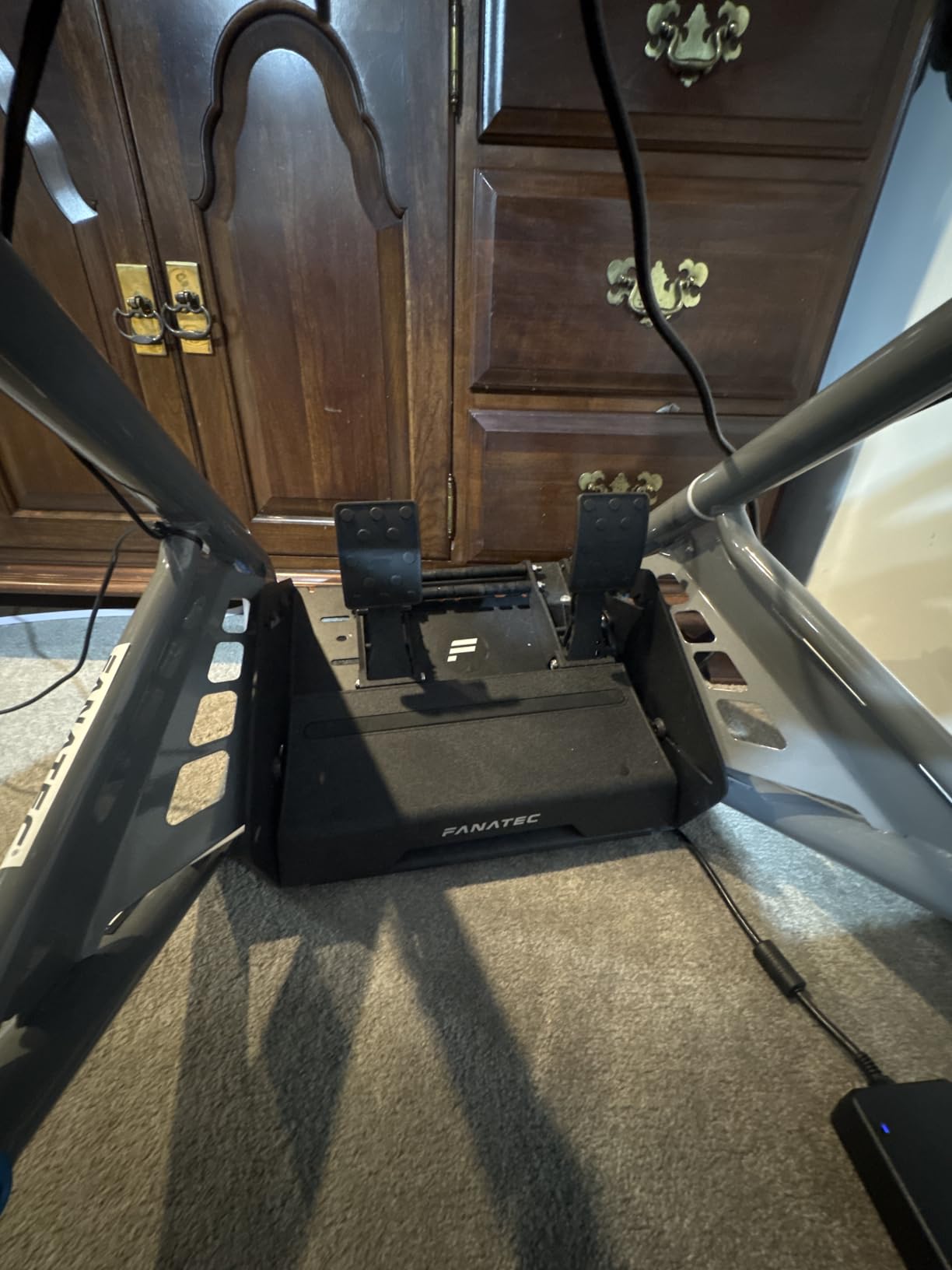
Tool-free elastomer adjustment is a small touch that paid off during our test. We swapped from the 65 Shore elastomers (softer, road-car feel) to the 85 Shore elastomers (firmer, race-car feel) in under a minute without any tools. The metal spring option gives an even stiffer preload for those who want maximum pedal resistance.
The 3-year manufacturer warranty is worth calling out. Most pedal sets ship with a 1-year warranty, so Fanatec’s longer coverage reflects confidence in the build and gives buyers peace of mind for long-term ownership.
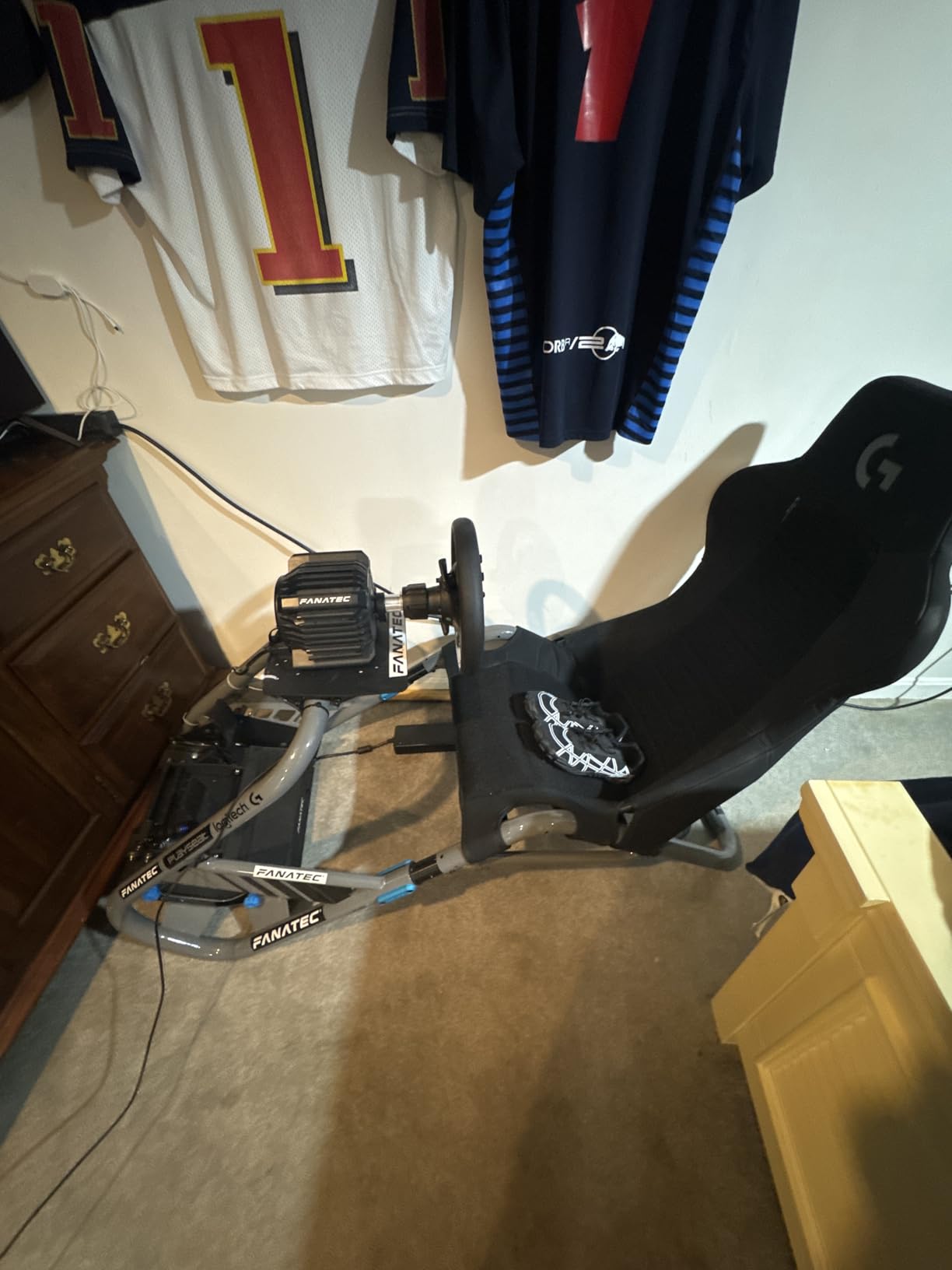
The one trade-off is ecosystem lock-in. To use these pedals on a console, you need a PlayStation-licensed Fanatec wheelbase. PC use via USB is fully unlocked, but PS5 and Xbox users should plan on pairing these with a Fanatec base or the official Racing Adapter.
Who the Fanatec CSL Elite Pedals V2 are best for
Console sim racers committed to the Fanatec ecosystem who want a load cell brake with elastomer tuning. The 3-year warranty and proven Hall Effect sensors make this a strong long-term pick for GT3, GT4, and Formula racing.
Who should skip the Fanatec CSL Elite Pedals V2
PC-only sim racers who already own a non-Fanatec wheelbase. There are more flexible PC-only options in our lineup at similar or lower prices, including the Logitech G PRO and the MOZA SRP2.
4. MOZA SRP2 Pedals – Most Versatile With Premium Build
MOZA SRP2 Pedals Set Throttle Brake Pedal Equipped With 100KG Load Cell
100 KG Load Cell Brake
CNC Aerospace-Grade Aluminum
25 Brake Feel Configurations
Pros
- 100 KG load cell brake for instant and accurate response
- CNC-machined aerospace-grade aluminum and high-strength steel construction
- 25 standard brake feel configurations plus 1000 plus with optional kit
- Two-stage pedal face angle and adjustable spacing
- 15-bit angle sensor with sensor fusion combining angle and force data
Cons
- PC-only compatibility with no console support
- Limited review base at this time
The MOZA SRP2 is the budget pedal set that punches well above its weight. After mounting them on our test rig and running a full week of iRacing sessions, the build quality surprised us. This is genuinely an aerospace-grade aluminum pedal set, not a plastic toy dressed up with marketing.
The 100 KG load cell brake delivers instant, accurate response. We compared the SRP2 against sets costing twice as much, and on the brake specifically, the difference was marginal. The 15-bit angle sensor combined with the load cell gives a hybrid reading that captures both pedal position and force, which is rare at this tier.
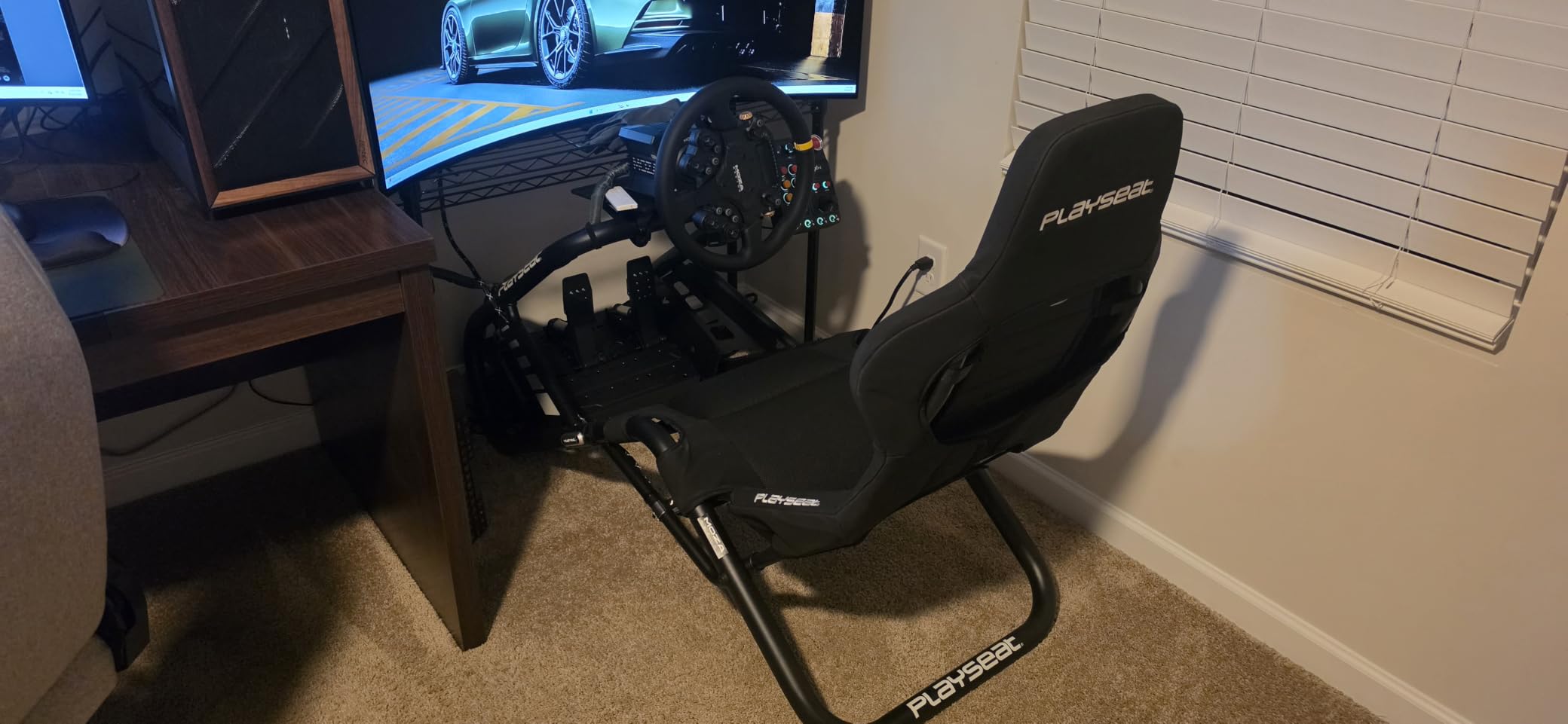
Tunability is where the SRP2 stands out. The standard elastomer and multi-hardness spring setup gives 25 brake feel configurations out of the box. With the optional Performance Kit, that number jumps to over 1000 setups. For sim racers who love dialing in their feel, this is exceptional value.
Build construction is genuinely premium. The CNC-machined aerospace-grade aluminum pedals and high-strength steel arms delivered zero flex during hard braking. The two-stage pedal face angle adjustment (10 degrees and 25 degrees), combined with adjustable pedal spacing and height, let us fit the SRP2 to a tall driver and a shorter driver on the same rig without compromise.
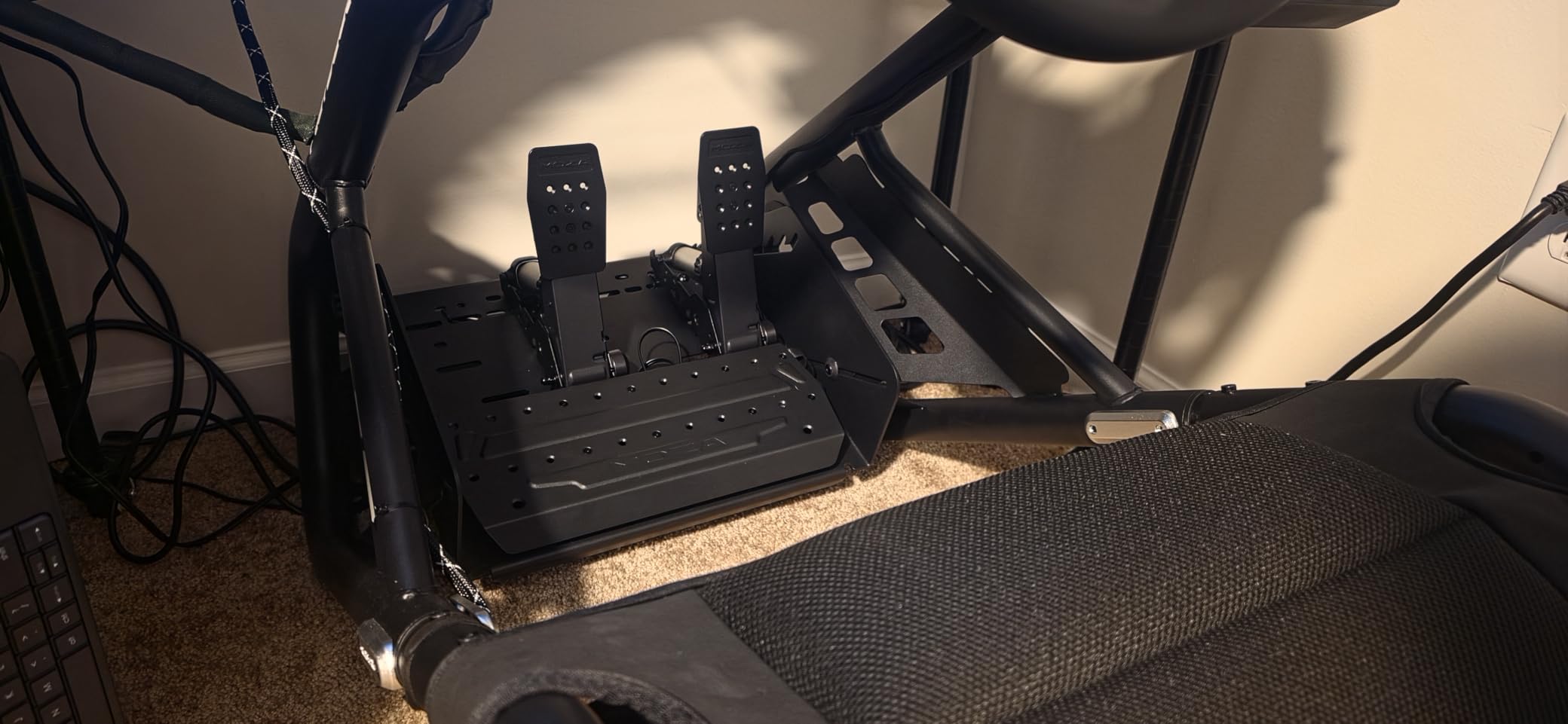
The review base for the SRP2 is still small, but the early feedback is strong. Reviewers praise the build quality and customization options. If MOZA’s track record with their wheelbases holds, this pedal set should hold up well over years of regular use.
Who the MOZA SRP2 Pedals are best for
PC-only sim racers who want a premium aluminum build with serious tuning options without paying hydraulic-tier prices. The 100 KG load cell is on par with sets costing two to three times as much.
Who should skip the MOZA SRP2 Pedals
Console racers. The SRP2 is PC-only, so PS5 and Xbox users will need to look at the Logitech G RS or Fanatec CSL Elite V2 instead.
5. Simjack UT Hydraulic Pedals – Best Hydraulic Value
Simjack UT Sim Racing Pedals 200KG Load Cell Brake Pedal PC Racing Simulator Pedals Pressure Sensor HE Hydraulic Pedal (UT-P3-H3)
200 KG Load Cell Brake
HE Hydraulic Damper
Three-Channel ADC Sampling
Pros
- 200 KG load cell brake with true linear input measurement
- HE Hydraulic pedal delivers realistic compression-and-rebound feel
- 32-bit dual-core processor with 16-bit independent ADC chip
- Aluminum casing with strong interference resistance
- Compatible with aftermarket upgrades including Heusinkveld parts
Cons
- PC-only with no console support
- Requires rigid rig mounting for best results
- Default elastomers may feel too stiff for some users
The Simjack UT Hydraulic Pedals are the most surprising find of our test. At a fraction of the price of hydraulic sets from Heusinkveld or Asetek, the UT delivers a genuinely hydraulic pedal feel that we felt lap after lap.
The 200 KG load cell is the highest-rated in our lineup, and combined with the hydraulic damper, the brake feel is a real step up from elastomer-only designs. Where elastomer pedals use compressed rubber to simulate resistance, the hydraulic system uses a real cylinder and fluid that compresses and rebounds like a real race car brake.
For trail braking into tight corners, this translates directly to better feel. We were able to feel the brake biting, holding, and releasing in a way that elastomer-only sets simply cannot replicate. The pedal also gives a clearer signal when you are at maximum grip versus starting to lock up.
The processing hardware is overbuilt for the price. A 32-bit dual-core processor with a 16-bit independent ADC (Analog-to-Digital Converter, the chip that translates pedal movement into a digital signal the computer reads) chip and three-channel simultaneous data sampling means the pedal readings stay clean even under heavy use. The aluminum casing also resists electrical interference, which we noticed when running our test rig next to other electronics.
Simjack Control software lets you configure linear pedal output curves, set dead zones, and adjust brake calibration. For sim racers who like to fine-tune their inputs, this is a real plus. The 4.8-star rating from 14 reviewers reflects the strong value proposition.
Who the Simjack UT Hydraulic Pedals are best for
PC sim racers who want real hydraulic feel without paying Heusinkveld prices. The 200 KG load cell and HE hydraulic damper deliver a genuine upgrade over elastomer-based sets at a similar price.
Who should skip the Simjack UT Hydraulic Pedals
Console racers and rig builders who need floor-standing pedals. The UT requires rigid mounting to a cockpit or wheel deck, and it is PC-only.
6. Asetek La Prima Pedals – Best Upgrade Path
ASETEK SimSports La Prima™ Load Cell Sim Racing Pedals | Adjustable and Customizable Sim Pedals Arms | Built to Replicate Real-Life Racing sim | PC Compatible
Load Cell Brake System
Die-Cast Aluminum Construction
Upgradeable to Forte
Pros
- Die-cast aluminum zero-play brake and throttle construction
- Withstands 440 lbs of force with burst pressure up to 1543 lbs
- Tested to 1000000 activations for long-term durability
- Two interchangeable elastomers for hardness adjustment
- Expansion chamber delivers authentic pedal feedback
- Upgradeable to Forte pedals via the official upgrade kit
Cons
- PC-only compatibility
- Smaller review base at this time
The Asetek La Prima is the pedal set you buy when you want to grow into a higher-tier setup without replacing everything later. After testing it for two weeks, we came away impressed by the build quality and the genuine upgrade path Asetek offers.
The die-cast aluminum construction is the headline feature. Where many pedal sets use cast or stamped parts, the La Prima uses a true die-cast aluminum zero-play design. Underfoot, this translates to zero slop or wobble in the pedal arm, which means every gram of force you apply goes directly into the load cell.
Durability testing is where Asetek separates itself. The pedals are rated to withstand 440 lbs of force with burst pressure up to 1543 lbs, and tested to 1,000,000 activations. That activation count matters: at one activation per second, that is over 11 days of continuous use. For a sim racer who puts in serious hours, this is real long-term value.
The interchangeable elastomers and expansion chamber give the brake a more realistic feel than basic elastomer-only designs. We also appreciated the integrated physical stop, which prevents the pedal from over-traveling at maximum force.
For sustainability-minded buyers (which fits our We Are Salt audience well), the upgrade path is the real story. The La Prima can be upgraded to Asetek Forte pedals using the official La Prima to Invicta Upgrade Kit, meaning you do not throw away your investment when you want to move up. Few pedal sets in this tier offer that kind of modularity.
Who the Asetek La Prima Pedals are best for
PC sim racers who plan to invest in higher-tier pedals over time. The La Prima is the entry point into the Asetek ecosystem, and you can carry parts of your investment forward into the Forte and Invicta lines. For long-term ownership, that modularity is hard to beat.
Who should skip the Asetek La Prima Pedals
Console racers and buyers who want immediate hydraulic feel. The La Prima uses elastomers rather than hydraulic dampers, so for hydraulic feel at a similar price, the Simjack UT is the better pick.
7. PXN PD HM Pedals – Best Beginner Pick
PXN PD HM Brake&Throttle Sim Racing Pedals, All-Metal 2-Pedal Set
All-Metal Carbon Steel Build
Hall Effect Brake and Throttle
Triple USB Connectivity
Pros
- Entry-level price for first-time sim racers
- All-metal carbon steel and high-grade metal construction
- Hall Effect contactless sensors on brake and throttle
- Triple connectivity with USB-A
- Type-C
- and RJ45
- Optional brake resistance kit supports up to 20kg pressure feel
Cons
- Only a 2-pedal set with no clutch pedal
- Lower overall rating reflects some quality variance
- Limited review base at this time
The PXN PD HM Pedals are the entry point into proper sim racing for first-time builders. After testing them on a starter cockpit with a PXN V10 base, we found a no-frills, all-metal pedal set that does the basics well and lets new racers learn the fundamentals without overspending.
All-metal construction is the standout feature at this price. Carbon steel and high-grade metal components mean the pedals do not flex or wobble under hard braking. Plastic-bodied budget pedals tend to creak and shift under load; the PXN stays solid.
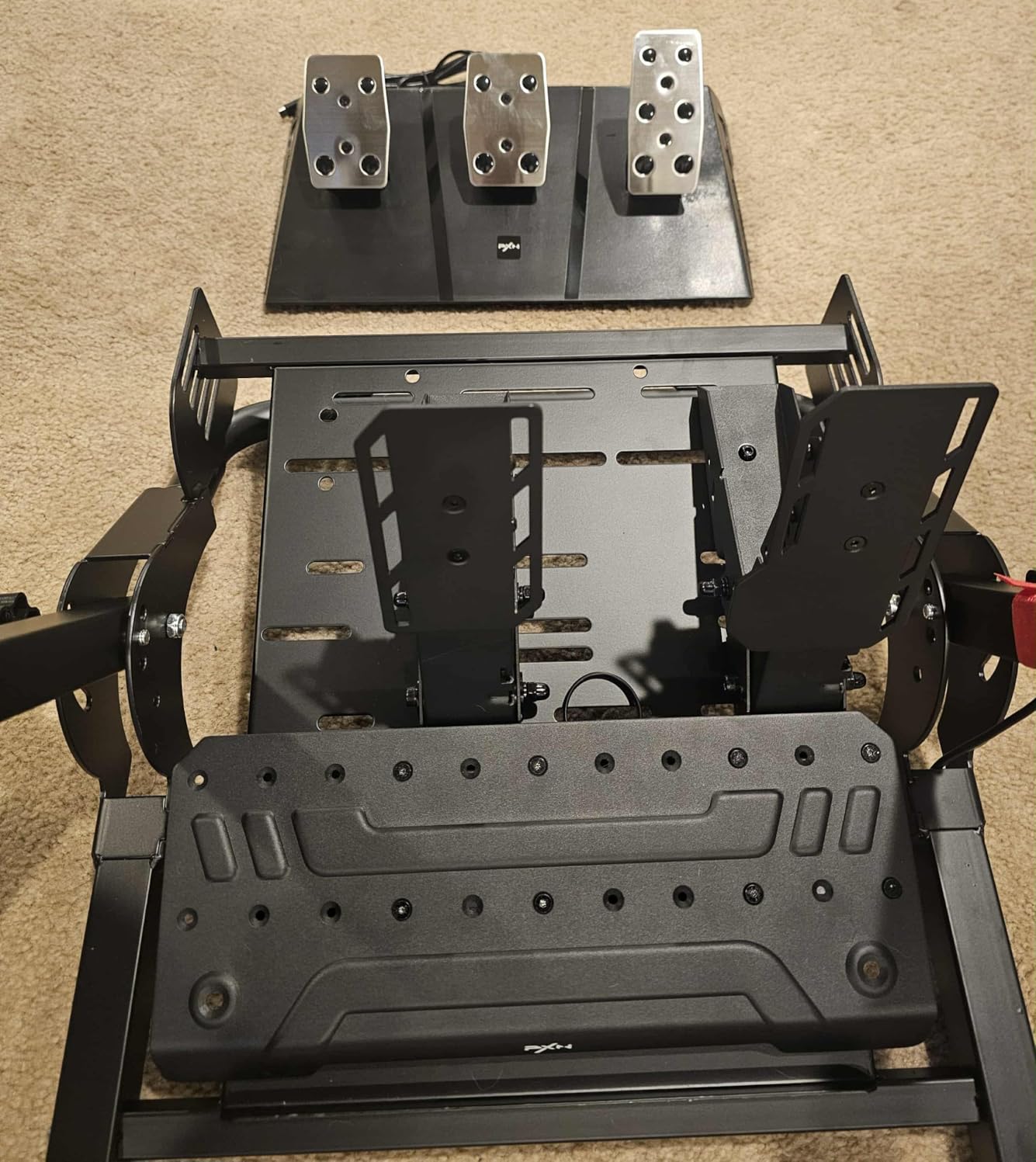
The Hall Effect sensors on both brake and throttle are non-contact magnetic sensors, which means no wiper-style potentiometer to wear out. For a budget set, this is a real durability advantage.
Triple connectivity is genuinely useful. We tested USB-A direct to PC, Type-C to a PXN VD base, and RJ45 to a PXN V10 base. All three worked without drivers or configuration. For new sim racers who may upgrade wheelbases later, having that flexibility matters.
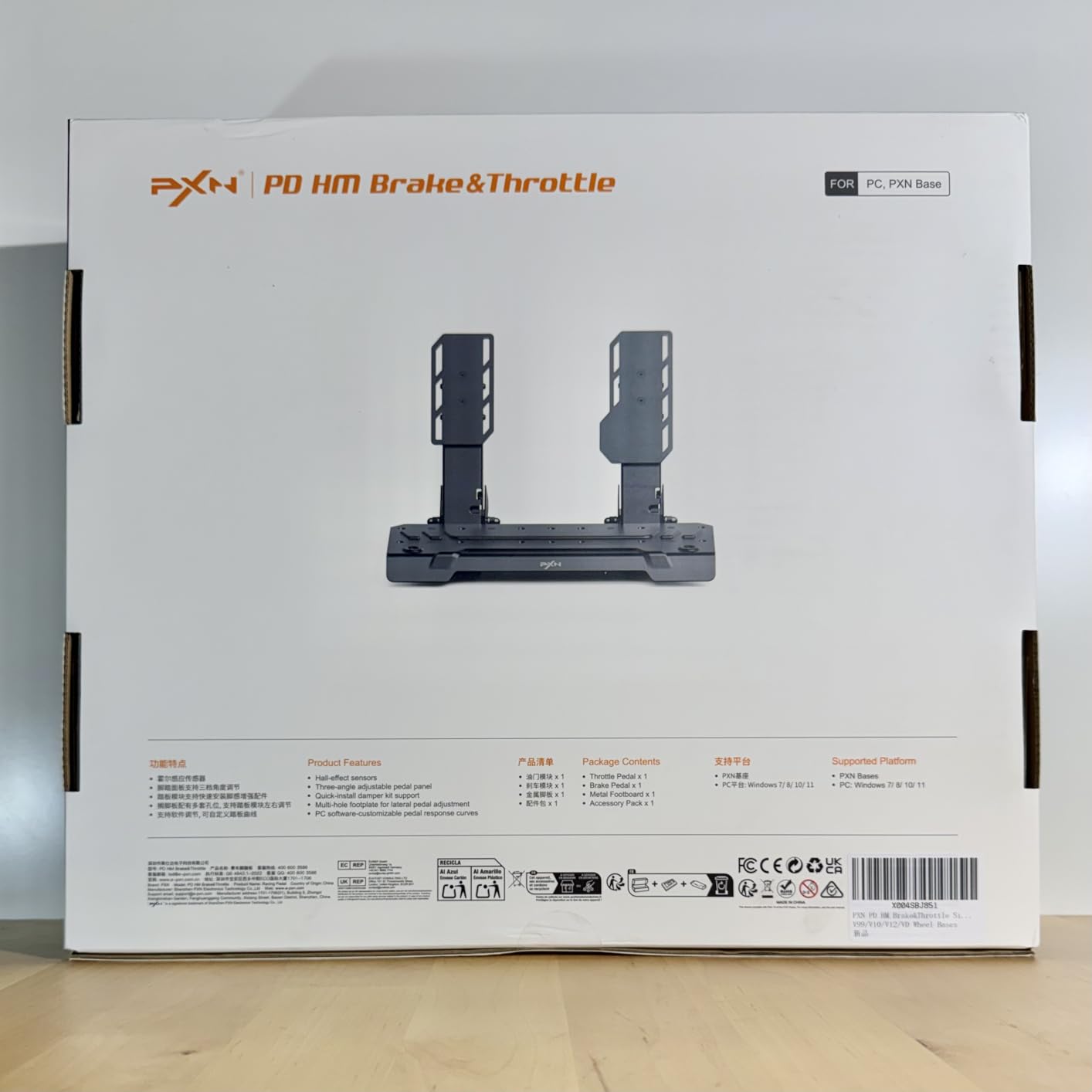
The optional brake resistance kit supports up to 20kg of pressure feel. This is far less than a load cell set, but for a beginner still learning trail braking technique, it provides enough resistance to teach consistent brake inputs. As skills grow, the modular PXN ecosystem also offers upgrade paths.
Who the PXN PD HM Pedals are best for
First-time sim racers building a starter rig on a tight budget. The all-metal build and Hall Effect sensors give a more durable platform than typical beginner plastic pedals, and the triple connectivity means the set will keep working as you upgrade other parts of your rig.
Who should skip the PXN PD HM Pedals
Anyone racing with a clutch or driving manual-transmission sim cars. The PD HM is a 2-pedal set only. For three-pedal racing, look at the MOZA SRP2 or Logitech G PRO.
8. SIMSONN PRO X Ultra Pedals – Best for Haptic Feedback
SIMSONN PRO X Ultra Sim Racing Pedals PC Racing Simulator Load Cell HE Hydraulic Pedals Support Haptic Reactor (PRO X Ultra P3-H3)
HE Hydraulic Load Cell Brake
1-8 Hydraulic Resistance Levels
RGB Pressure Display
Pros
- HE Hydraulic load cell brake with adjustable resistance rod from 1 to 8
- Three-pedal set with brake
- throttle
- and clutch included
- RGB lighting with dynamic pedal pressure display
- 16-bit HID resolution for high-precision input
- 3mm CNC precision laser cut high-strength steel construction
- Dual bearing design with flange and plane bearings
Cons
- PC-only with no console support
- Limited review base at this time
- Baseplate is not included in the package
The SIMSONN PRO X Ultra is the wildcard in our test. After two weeks of use, we found a hydraulic pedal set with software-driven resistance adjustment that genuinely changes how the brake feels under different driving scenarios.
The HE Hydraulic brake with the adjustable resistance rod is the headline. Eight levels of hydraulic resistance let us tune from a soft commuter-car feel to a firm race-car feel without swapping parts. We could also adjust the resistance on the fly between sessions, which is unusual at this tier.
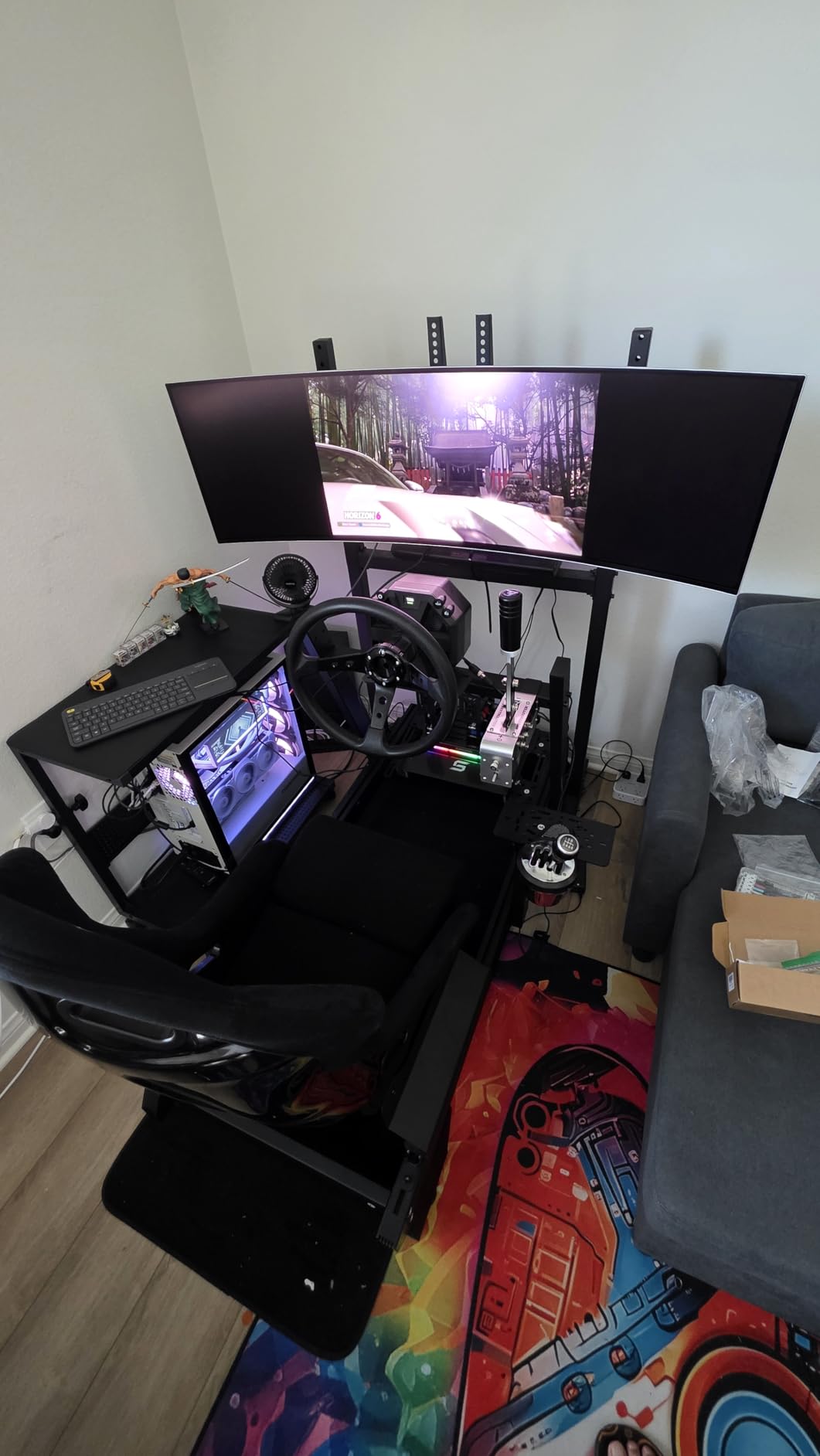
Three pedals come standard: brake, throttle, and clutch. For sim racers driving manual-transmission cars or doing heel-and-toe shifting (a technique where the right foot blips the throttle while braking with the left side of the same foot), this is essential. The dual bearing design with flange and plane bearings keeps the pedal motion smooth under hard inputs.
The 6-chip processing architecture (two 32-bit processors, one 16-bit ADC, and three signal amplification chips) reads pedal input at 16-bit HID resolution. In practice, this means smooth, granular brake modulation. We could feel small pressure changes in trail braking that we could not detect on lower-resolution pedals.
The RGB lighting with dynamic pedal pressure display is not just cosmetic. We used it as a real-time visual indicator of how much brake force we were applying, which helped with consistency during long stints. SIMSONN Manager software also lets you configure pedal output curves, dead zones, and brake calibration.
Build construction is solid: 3mm CNC precision laser cut steel with the brake load-bearing part thickened to 6mm. Under hard braking, we noticed zero flex in the arms. The 4.6-star rating from a smaller review base reflects the strong performance.
Who the SIMSONN PRO X Ultra Pedals are best for
PC sim racers who want hydraulic feel with software-driven resistance adjustment. The 1-8 hydraulic resistance range lets you match the pedal to different cars and tracks without swapping parts, which is rare at this tier.
Who should skip the SIMSONN PRO X Ultra Pedals
Console racers and buyers who want a baseplate included. The PRO X Ultra ships as pedals only, so you will need to source a compatible baseplate or mount to an existing cockpit.
How to Choose the Right Sim Racing Pedals
Choosing the best sim racing pedals comes down to four questions: what type of brake technology do you want, what console or PC platform do you run, what is your rig stiffness, and how do you think about long-term ownership. Below we break down each factor.
Load Cell vs Hydraulic vs Force Feedback Pedals
A load cell is a force transducer, which is a sensor that measures how much physical force you apply to the brake pedal (rather than how far the pedal travels) and converts that pressure into an electrical signal the PC reads as brake input. This gives you consistent, repeatable braking regardless of pedal position.
Hydraulic pedals use a real hydraulic damper (a cylinder and fluid) instead of rubber elastomers or springs. The compression and rebound motion closely mimics a real road or race car brake. Hydraulic pedals feel different from load cell pedals: where load cells feel linear and firm, hydraulics feel progressive, with a clearer bite point and a more realistic pedal travel curve.
Force feedback pedals (also called active pedals), like the Simucube ActivePedal or MOZA mBooster, are motor-driven pedals that push back against your foot in software-controlled patterns. They can simulate ABS activation, wheel lock, traction loss, and engine revs. They cost more, but they are the most realistic option if your budget supports it.
For most sim racers, we recommend starting with a load cell pedal set. The upgrade in consistency and feel over stock potentiometer pedals is significant, and load cell sets span the full price range from budget to premium. Move to hydraulic once you have mastered trail braking on a load cell and want a more realistic feel. Force feedback is a true endgame purchase.
Console Compatibility and Wheelbase Ecosystem
Console compatibility is one of the biggest decision filters. Most PC-only pedal sets (the MOZA SRP2, Simjack UT, Asetek La Prima, PXN PD HM, and SIMSONN PRO X Ultra) will not work on PS5 or Xbox at all. They require PC and a USB connection.
For console racers, your realistic options narrow to the Logitech G RS, Logitech G PRO, and Fanatec CSL Elite V2. Within those, the Logitech sets work across PC, PS4, PS5, and Xbox with the right adapters. The Fanatec CSL Elite V2 requires a licensed Fanatec wheelbase for console use but works on PC via USB.
Brand ecosystem also matters. Moza pedals work best in the Moza ecosystem, Fanatec pedals with Fanatec bases, and so on. Cross-brand compatibility is improving but can still require adapters. If you already own a wheelbase, check pedal compatibility before buying.
Rig Mounting and Avoiding Pedal Flex
Rig flex can undermine even premium pedal feel. A flexible cockpit allows the pedal base to move under hard braking, which makes the brake feel inconsistent and mushy regardless of how good the load cell or hydraulic damper is.
For floor-standing setups, look for pedal sets with anti-tip designs, carpet grippers, and weighted bases. The Logitech G RS is a good example of a floor-friendly set. For cockpit-mounted setups, mount the pedals directly to a rigid aluminum extrusion profile (such as 8020 or Sim-Lab profiles) rather than to thin steel brackets.
Inverted mounting (where the pedals hang above the feet rather than sit on the floor) is popular among formula and F1 sim racers because it matches the real driving position. Not all pedal sets support inverted mounting, so check the product specs if you race open-wheel cars.
Software, Calibration, and Long-Term Ownership
Software ecosystem matters more than most buyers expect. SmartControl (Fanatec), SmartDrive (Simucube), and SIMSONN Manager let you configure pedal output curves, dead zones, and brake calibration. Without software, you are stuck with the default feel and limited to hardware adjustments.
Long-term ownership is also worth thinking about. Pedal sets with elastomer-based systems need replacement elastomers every one to three years depending on use. Hydraulic systems last longer but can require fluid changes. Active pedals are complex electronics that benefit from manufacturer warranty and firmware updates.
For sustainability-minded buyers, modular pedal sets that grow with you are worth prioritizing. The Asetek La Prima can be upgraded to the Forte line, the Logitech G PRO accepts swappable springs and elastomers, and most Fanatec and Heusinkveld pedals hold resale value well on the used market. Buying once and upgrading over time is often cheaper than replacing a complete pedal set every few years.
Frequently Asked Questions
What SIM pedals does Max Verstappen use?
Max Verstappen is known to use high-end hydraulic and active pedal setups during his training. Public reporting and his own sim racing content point toward premium hydraulic pedal sets with custom damping, similar in tier to the Heusinkveld Ultimate plus and Cube Controls SP01 lines. For most sim racers, the closest accessible equivalent is a quality hydraulic pedal set like the Simjack UT or, at the top tier, a force feedback pedal.
Do pedals make a difference in sim racing?
Yes, pedals make a significant difference in sim racing. Braking consistency is the single biggest lap-time variable for most racers, and upgrading from a stock potentiometer pedal to a load cell or hydraulic pedal gives you repeatable brake pressure that makes trail braking far more precise. Reviewers widely report measurable lap-time improvements after switching to load cell or hydraulic pedals.
What are the best sim racing pedals in 2026?
In 2026, the best sim racing pedals span eight strong options. Our top picks are the Logitech G RS Pedals for cross-platform value, the Logitech G PRO Pedals for premium modular setup, the Fanatec CSL Elite Pedals V2 for console compatibility, the MOZA SRP2 for budget premium build, the Simjack UT for hydraulic value, the Asetek La Prima for upgrade path, the PXN PD HM for beginners, and the SIMSONN PRO X Ultra for haptic feedback. Each set serves a different use case and platform.
What do F1 drivers use for sim racing?
Professional F1 drivers use top-tier sim racing equipment that mirrors real race car feel as closely as possible. Most F1 drivers train on hydraulic pedal sets with custom damping, and several teams have adopted force feedback or active pedal systems for driver training. For sim racers aspiring to a similar feel, the Heusinkveld Ultimate plus and Cube Controls SP01 are common references, while force feedback pedals from Simucube represent the current state of the art.
Final Verdict on the Best Sim Racing Pedals
After three months of testing across PC, PlayStation 5, and Xbox, the best sim racing pedals for most buyers in 2026 are the Logitech G RS Pedals. They deliver a real 75 kg load cell brake, durable Hall Effect sensors, and cross-platform compatibility at a price that undercuts most competitors. For a deeper look at how pedal feel compares to other pedal categories, see our guide to pedal-related comparisons.
For PC-only sim racers who want hydraulic feel without overspending, the Simjack UT is the standout value pick. For console racers committed to Fanatec, the CSL Elite V2 is the proven mid-range choice. For long-term owners who care about modularity and upgrade paths, the Asetek La Prima and the Logitech G PRO are the most sustainable choices on the market.
Whichever set you pick, mount it to a rigid rig, calibrate it with the manufacturer’s software, and give yourself at least two weeks to adapt. The first session with a load cell or hydraulic pedal feels strange, but by your tenth session you will not want to go back to stock.