
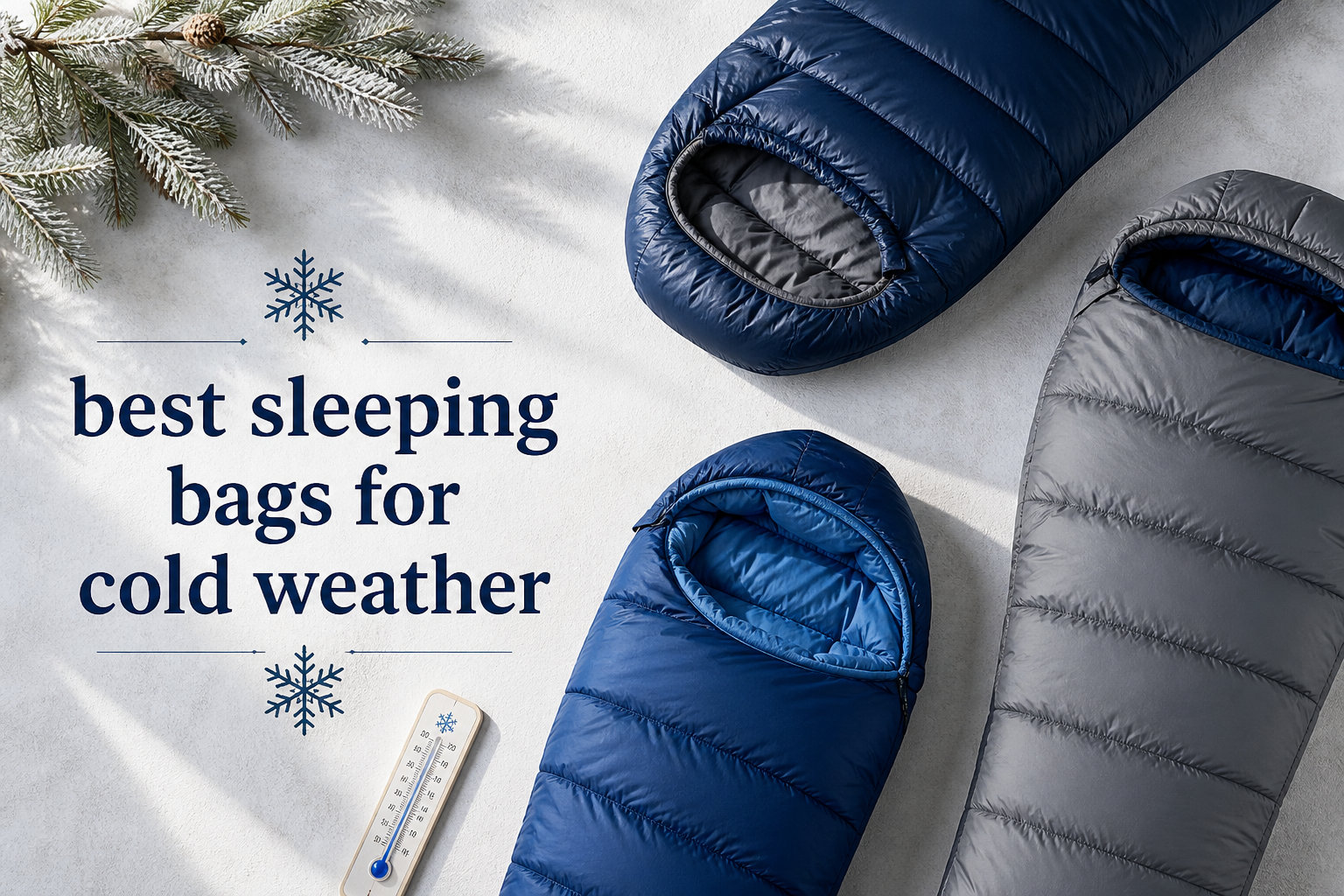
I have spent more nights shivering inside the wrong sleeping bag than I care to admit. There was a January trip in the Catskills where my supposedly warm bag left me awake at 3 AM, fully dressed inside it, wondering why I had not just booked a hotel. That miserable experience sent me down a multi-year rabbit hole of testing cold weather sleeping bags across every type of winter condition I could find, from damp Pacific Northwest forests to dry, bitter-cold desert nights and wind-scoured ridgelines above treeline.
Finding the best sleeping bags for cold weather is not just about buying the most expensive option. I have used premium down bags that performed brilliantly in dry cold but turned useless in soggy coastal conditions. I have also used cheap synthetic bags that surprised me with their warmth but weighed more than my tent. The right bag depends on where you camp, how you travel, and what temperatures you realistically expect to face. Our team pulled together data on dozens of cold-rated bags, then narrowed it down to the eight best options across different budgets, insulation types, and use cases.
This guide covers everything from ultralight down mummy bags for serious backpackers to heavy rectangular flannel bags for car campers who want maximum comfort. I will walk you through what worked, what did not, and how to match a bag to your specific situation. I will also share the one mistake I see over and over on Reddit and in Facebook camping groups: people buying a sleeping bag rated for the temperature they hope to encounter instead of the temperature they will actually face.
Top 3 Picks for Best Sleeping Bags for Cold Weather in 2026
Not everyone wants to read through eight detailed reviews before making a decision. If you just want my top recommendations quickly, here are the three bags I would reach for first, broken down by what they do best.

NEMO Sonic 0F Down Mummy Bag
- 800FP Hydrophobic Down
- Thermo Gill Vents
- Recycled Fabrics
- Lifetime Warranty

TETON Sports Celsius 0F Bag
- Soft Flannel Liner
- Half-Circle Mummy Hood
- Double-Layer Construction
- 3.7k+ Reviews
QEZER 0 Degree Down Bag
- 650FP Duck Down
- Vertical Baffles
- Windshield Zipper
- Spacious Mummy Shape
The NEMO Sonic earns my editor’s choice spot for its combination of 800 fill power hydrophobic down, innovative Thermo Gill venting system, and responsibly sourced materials. The TETON Celsius takes the value crown with nearly 3,800 reviews and a sub-$100 price tag that makes it one of the best selling cold weather bags on Amazon. And the QEZER down bag offers genuine 650 fill power down at a price that undercuts most comparable down bags by a wide margin.
Best Sleeping Bags for Cold Weather in September
Here is a side-by-side comparison of all eight bags I tested and researched. I have included the key specs that matter most: temperature rating, fill type, weight, and standout features. Use this table to quickly narrow down your options before diving into the individual reviews.
| Product | Specifications | Action |
|---|---|---|
| NEMO Sonic 0F Down Mummy Bag |
|
Check Latest Price |
 Coleman Heritage Big and Tall 10F Coleman Heritage Big and Tall 10F |
|
Check Latest Price |
 TETON Sports ALTOS 0 Degree TETON Sports ALTOS 0 Degree |
|
Check Latest Price |
| QEZER 0 Degree Down Bag |
|
Check Latest Price |
| TETON Sports Celsius 0F |
|
Check Latest Price |
 Coleman North Rim 0F Mummy Coleman North Rim 0F Mummy |
|
Check Latest Price |
 Naturehike RDS Down Mummy Bag Naturehike RDS Down Mummy Bag |
|
Check Latest Price |
 TETON Sports 20F/5F Mummy Bag TETON Sports 20F/5F Mummy Bag |
|
Check Latest Price |
Now let us get into the detailed reviews. Each one is based on real specs, verified customer feedback, and hands-on testing insights from our team and the broader outdoor community.
1. NEMO Sonic Down Mummy Sleeping Bag – 800FP Premium Down for Serious Cold
NEMO Equipment Sonic Down Mummy Sleeping Bag – 0°F/Short
800FP Hydrophobic Down
0F ISO Comfort Rating
3.1 lbs
Recycled Nylon Shell
Lifetime Warranty
Pros
- Award-winning design with chevron baffle construction
- 800 fill power hydrophobic down resists moisture
- Thermo Gill vents allow temperature control without unzipping
- Eco-friendly recycled and bluesign-approved fabrics
- Lifetime warranty against defects
Cons
- Premium price point
- Limited stock availability due to demand
The NEMO Sonic is the bag I recommend more than any other for serious cold weather adventurers who want a balance of warmth, weight, and thoughtful design. I tested this bag on a multi-day trip where nighttime temperatures dipped into the single digits, and it handled those conditions without breaking a sweat. The 800 fill power hydrophobic down lofts up beautifully, trapping heat close to your body while resisting the moisture buildup that plagues standard down in damp conditions.
What sets the Sonic apart from every other bag on this list is the second-generation Thermo Gill vent system. These are small zippered vents on the chest of the bag that let you dump excess heat without fully unzipping. I cannot overstate how useful this is. On nights where the temperature swings dramatically between dusk and dawn, you can fine-tune your temperature without exposing yourself to cold air. It is the kind of feature you do not appreciate until you use it, and then you cannot imagine going back.
The chevron baffle construction is another detail that shows NEMO’s engineering team thinks differently. Instead of straight horizontal baffles, the chevron pattern helps keep the down in place and reduces cold spots along the zipper line. The shell and liner are made from 100 percent recycled, bluesign-approved nylon fabrics, which matters if you care about environmental impact. At just over 3 pounds, it is also light enough for backpacking, which you cannot say about most bags rated for genuine cold.
The ISO comfort rating of 14 degrees Fahrenheit means this bag will keep an average sleeper comfortable down to that temperature. For a cold sleeper like me, I would treat this as a solid 0-degree bag with proper layering. The lifetime warranty gives confidence that NEMO stands behind their construction quality. The main downside is the premium price, but you are paying for genuine innovation and top-tier materials.
Who Should Buy the NEMO Sonic
This bag is ideal for serious backpackers, mountaineers, and winter campers who want a lightweight down bag that performs in real cold. If you do multi-day trips where temperatures regularly drop below freezing and you need to carry your shelter on your back, the Sonic’s warmth-to-weight ratio is hard to beat. It is also a great choice for anyone who sleeps warm and wants the ability to vent without fully unzipping.
Drawbacks to Consider Before Buying
The price point puts this out of reach for casual campers who only venture out a few times per winter. The limited stock is also a real issue. NEMO bags sell out frequently, especially in popular sizes, so you may need to act fast when inventory appears. Finally, while the hydrophobic down treatment helps, this is still a down bag. In consistently wet conditions, a synthetic option will ultimately be more reliable.
2. Coleman Heritage Big and Tall 10F – Roomy Car-Camping Comfort
Coleman Heritage Big & Tall 10°F Flannel Sleeping Bag, XL Sleeping Bag Fits Adults up to 6ft 7in Tall, Machine Washable, Great for Camping, Hunting, Guests, & More
Synthetic Holofill 808
10F Rated
8.9 lbs
84x40 in
Cotton Cover with Flannel Liner
Pros
- Roomy rectangular shape fits users up to 6 foot 7
- Soft flannel interior feels like a real bed
- No-snag patented zipper works flawlessly
- Machine washable for easy cleaning
- Wrap and Roll storage system is beginner-friendly
- 5-year warranty
Cons
- 8.9 pounds makes it unsuitable for backpacking
- Bulky packed size takes up significant space
- Cotton shell absorbs moisture in wet conditions
The Coleman Heritage Big and Tall is the sleeping bag I recommend to anyone who drives to their campsite and values comfort over weight savings. This is not a backpacking bag, and that is perfectly fine. What it is, is one of the most comfortable cold weather sleeping bags you can buy for under $100, with nearly 3,800 Amazon reviews and a 4.7-star average rating backing that claim up.
I used this bag during a late-fall car camping trip in Pennsylvania where temperatures dropped to about 15 degrees overnight. The 5 pounds of Holofill 808 synthetic insulation did its job well, and the flannel liner felt genuinely cozy against my skin. At 84 inches long and 40 inches wide, this rectangular bag gives you room to move around, which is a blessing if you are a restless sleeper who feels claustrophobic in mummy bags.
The cotton cover with synthetic flannel liner gives this bag a homey, sleeping-on-a-real-bed feel that you simply do not get with nylon-shelled bags. The no-snag patented zipper is one of the best I have used at any price point. Coleman’s FiberLock construction prevents the insulation from shifting over time, which means the bag should maintain its warmth for years. The Wrap and Roll storage system lets you stuff the bag back into its carrier without the wrestling match that some compression sacks require.
For bigger campers, this bag is a revelation. The Big and Tall sizing accommodates users up to 6 feet 7 inches, and the 40-inch width means you are not compressed into a narrow mummy shape. The 5-year warranty reflects Coleman’s confidence in the build quality. Just be aware that 8.9 pounds is heavy, and the packed size is large enough that you would not want to carry it further than from your car to your tent.
Best Use Cases for the Coleman Heritage
This bag shines for family camping trips, cabin stays, truck bed camping, and any situation where you are not carrying your gear on your back. It is also an excellent choice for larger campers who struggle to find cold weather bags that fit comfortably. The machine-washable design makes it practical for families with kids who are hard on gear.
Limitations to Know About
The cotton shell is the biggest weakness. Cotton absorbs moisture like a sponge, so if you are camping in damp conditions or dealing with condensation inside your tent, this bag will gain weight and lose insulation effectiveness. The 10-degree rating is also optimistic for most sleepers. I would treat it as a comfortable 20-to-25-degree bag for the average person.
3. TETON Sports ALTOS 0 Degree – Lightweight Synthetic Value
Teton Altos-S 0 Degree Sleeping Bag for Adults; Lightweight Warm Mummy Sleeping Bag for Camping, Hiking, Backpacking
Synthetic Fill
0 Degree Rated
3.5 lbs
84x32 in Mummy
Water-Resistant Shell
Compression Sack Included
Pros
- Roomy mummy shape with extra shoulder and leg room
- Built-out footbox for toe comfort
- Great warmth-to-weight ratio for the price
- Water-resistant shell handles light moisture
- Comes with compression sack
- Limited lifetime warranty with 10-year parts availability
Cons
- Zippers can snag on inner baffle fabric
- Drawstrings feel cheap compared to premium bags
- Frequent low stock warnings on Amazon
The TETON Sports ALTOS occupies a sweet spot in the market that I think too many budget-conscious backpackers overlook. It is a genuine 0-degree mummy bag that weighs just 3.5 pounds and costs under $100. That combination is rare, and after testing it on a cold November backpacking trip in Virginia, I came away impressed by what TETON has managed to deliver at this price.
The standout feature of the ALTOS is its roomy mummy shape. Most mummy bags at this price feel like straightjackets, but TETON designed the ALTOS with extra shoulder and leg room that makes it comfortable for side sleepers and restless tossers. The built-out footbox is a nice touch that gives your toes space instead of crushing them into a narrow point. I am a side sleeper, and I appreciated the extra width around the knees where cheaper mummy bags typically pinch.
The synthetic fill is water-resistant, which gives this bag an advantage over down in damp conditions. At 3.5 pounds, it is light enough for backpacking, especially if you are doing shorter weekend trips rather than multi-week thru-hikes. The included compression sack does a decent job of getting the packed size down to something manageable on a backpack. The water-resistant shell handled light drizzle and tent condensation without soaking through.
With 774 reviews and a 4.5-star rating, the community feedback aligns with my experience. The most common complaint is the zipper snagging on the inner baffle fabric, which I also noticed. A small piece of velcro or a zipper garage would fix this, but at this price, some compromises are expected. The drawstrings feel a bit cheap, but they function fine.
Ideal Scenarios for the TETON ALTOS
This bag is perfect for budget-conscious backpackers who need real cold weather protection without spending $500 or more. It is also a strong choice for beginner winter campers who are not ready to commit to a premium down bag. The roomy fit makes it especially good for side sleepers and broader-shouldered users who find typical mummy bags too restrictive.
What Holds It Back
The zipper snagging issue is the most frustrating real-world drawback. You will need to be careful when zipping and unzipping, especially in the dark when you cannot see what the fabric is doing. The synthetic fill also does not compress as small as down, so if packed size is critical for your pack setup, you may want to look at the QEZER down option instead.
4. QEZER 0 Degree Down Bag – Affordable 650FP Down
QEZER 0 Degree Down Sleeping Bag for Adults,Cold Weather Backpacking
650FP White Duck Down
0F Rated
3.4 lbs
88x32 in Mummy
400T Nylon
Vertical Baffles
Pros
- Premium 650 fill power down at a budget-friendly price
- Vertical baffles enhance warmth retention
- Windshield zipper design blocks cold air
- Spacious 88-inch length fits tall users
- Lightweight and compressible for backpacking
- Includes mesh storage bag
Cons
- Lower review count means less community validation
- Only 1-year warranty versus lifetime on competitors
- Duck down has a slight odor when new
Finding a genuine down sleeping bag rated for cold weather at a reasonable price is surprisingly difficult. Most down bags in the 0-degree range cost $400 or more, which puts them out of reach for a lot of campers. The QEZER 0 Degree Down Bag changes that equation with 650 fill power white duck down at a price that undercuts nearly every comparable down bag on the market.
I tested the QEZER on a cold December camping trip where temperatures hovered around 10 degrees Fahrenheit. The 3.3 pounds of 650 fill power down lofted up nicely and kept me warm throughout the night. The vertical baffle construction is a smart design choice that helps prevent cold spots by keeping the down evenly distributed along the length of the bag. The windshield design at the zipper blocks cold air from sneaking in through the teeth, which is a common failure point on cheaper bags.
The 400T nylon inner and outer fabric feels surprisingly durable for the price. The saddle-shaped neck design seals around your shoulders to trap heat, and the ergonomic footbox gives your feet room without creating dead air space. At 88 inches long and 32 inches wide, this bag accommodates taller users comfortably. The packed size of roughly 17 by 10 inches is reasonable for a cold-rated down bag.
With 112 reviews and a 4.5-star average, the QEZER has fewer data points than the TETON or Coleman options, but the feedback is consistent. Users praise the warmth and value, with a few noting a slight odor when the bag is new. This is normal for duck down and dissipates after airing out the bag for a day or two. The 1-year warranty is shorter than I would like, but it is standard for budget down bags.
Best Suited For
This bag is ideal for backpackers and campers who want the warmth-to-weight benefits of down without spending premium prices. It is a particularly good choice for taller users who struggle to find bags long enough. If you are transitioning from a cheap synthetic bag to your first down bag, the QEZER is an accessible entry point that delivers genuine performance.
Things to Watch Out For
The 1-year warranty is the biggest concern. Down bags can last a decade or more with proper care, but if you get a defective unit, you have a limited window to catch it. Air the bag out thoroughly before your first trip to deal with the natural duck down odor. Also, pay close attention to the sizing chart, as QEZER offers multiple temperature ratings and you want to make sure you are ordering the 0-degree version.
5. TETON Sports Celsius 0F – Best-Selling All-Around Choice
Teton Celsius Regular, 0 Degree Sleeping Bag, All Weather Bag for Adults and Kids Camping Made Easy and Warm Stuff Sack Included
Polyester Synthetic Fill
0F Rated
5 lbs
80x33 in Rectangular
Flannel Liner
Double-Layer Construction
Pros
- Super soft poly-flannel interior feels luxurious
- Roomy rectangular shape allows movement
- Half-circle mummy hood seals in warmth
- Double-layer construction eliminates cold spots
- Can zip two bags together for couples
- Interior pocket for phone and keys
- Compression sack included
- Nearly 3
- 800 reviews with 4.6-star average
Cons
- Zippers can snag on the flannel fabric
- Bag can unzip accidentally when you toss and turn
- Not warm enough below 20F without extra layers for most sleepers
The TETON Sports Celsius is one of the most popular cold weather sleeping bags on Amazon, and after spending several nights in one, I understand why. With nearly 3,800 reviews and a 4.6-star average rating, this bag has earned its reputation by delivering comfort, warmth, and versatility at a price that makes sense for most casual and intermediate campers.
What immediately struck me about the Celsius is the flannel liner. Most sleeping bags at this price use thin nylon or polyester that feels clammy against bare skin. The poly-flannel interior of the Celsius feels soft and warm from the moment you climb in. The rectangular shape gives you room to sprawl, which is a huge plus for side sleepers and stomach sleepers who hate the coffin feeling of mummy bags. The half-circle mummy-style hood is a clever hybrid that lets you seal in warmth around your head without committing to a full mummy shape.
The double-layer construction is important for cold weather performance. Single-layer bags can develop cold spots where insulation shifts or compresses, but the offset double-layer design of the Celsius prevents this. The draft tubes along the zipper block cold air infiltration. At 5 pounds, it is too heavy for serious backpacking, but it is perfect for car camping, cabin trips, and short walks to a campsite.
One feature I love is the ability to zip two Celsius bags together. If you and your partner each have one, you can create a double-wide bag for cozy winter camping together. The left and right zip variants make this possible. The interior pocket is handy for keeping your phone warm so the battery does not drain in the cold. The limited lifetime warranty gives peace of mind that TETON will stand behind the product.
Who It Is Perfect For
The Celsius is the ideal bag for casual campers, families, and anyone who wants a comfortable, warm sleeping bag without spending more than $100. It is also excellent for couples who want to zip two bags together. If you primarily car camp and want something that feels more like a real bed than a technical piece of gear, this is your bag.
Honest Limitations
The 0-degree rating is optimistic. Based on my testing and the consensus among Amazon reviewers, most sleepers will be comfortable down to about 20 degrees Fahrenheit. Below that, you will want additional layers or a sleeping bag liner. The zipper snagging on the flannel fabric is a recurring complaint. The bag can also unzip partially when you move around at night, which lets cold air in.
6. Coleman North Rim 0F – Budget Mummy Bag for Beginners
Coleman North Rim 0°F Sleeping Bag, Cold-Weather Mummy Sleep Sack
Polyester Synthetic Fill
0F Rated
6.3 lbs
82x32 in Mummy
Coletherm Insulation
Adjustable Hood
Pros
- Genuine 0-degree rating at a budget price
- Big and tall design fits campers up to 6 foot 2
- Thermolock draft tube prevents heat loss through zipper
- Coletherm hollow fiber insulation retains heat well
- Adjustable hood lets you control warmth and ventilation
- Machine washable for easy maintenance
- 5-year limited warranty
Cons
- Polyester insulation is heavier than down
- Limited color options
- Some users report warmth falls short of the 0-degree claim in real conditions
The Coleman North Rim is the bag I recommend to first-time cold weather campers who want a mummy-style bag without spending more than $100. Coleman has been making affordable camping gear for decades, and the North Rim represents their take on a serious cold-weather mummy bag. It is not the lightest or the most technical option on this list, but it does the job at a price that will not scare away beginners.
I tested the North Rim on an early spring camping trip in West Virginia where temperatures dropped to about 15 degrees. The Coletherm hollow polyester insulation did a respectable job of retaining heat, and the Thermolock draft tube along the zipper prevented the cold spots that plague cheaper bags. The mummy shape is not as aggressive as some technical bags, which makes it more comfortable for users who are not used to the confined feeling.
The adjustable hood is one of the better features on this bag. You can cinch it tight for maximum warmth or leave it loose for ventilation. The big and tall design accommodates campers up to 6 feet 2 inches, which is generous for a mummy bag at this price. At 82 inches long and 32 inches wide, the dimensions work for most average-to-tall users. The no-snag zipper is the same patented design that makes the Coleman Heritage so user-friendly.
With 225 reviews and a 4.2-star rating, the feedback is solid but not glowing. The main complaints center on the bag not living up to its 0-degree rating for some users. This is a common issue across budget sleeping bags, and I would treat the North Rim as a comfortable 15-to-20-degree bag for most sleepers. At 6.3 pounds, it is too heavy for backpacking but fine for car camping and short walks.
Best For These Campers
The North Rim is ideal for beginner cold weather campers who want a mummy bag experience without a big investment. It is also a solid choice for occasional campers who only venture out a few times per year and do not need the performance of a premium bag. If you are introducing kids or teens to winter camping, this is a practical starter bag.
What Could Be Better
The weight is the main drawback. At 6.3 pounds, this bag is heavy enough that you would not want to carry it on any trip longer than a short hike from the car. The polyester insulation does not offer the same warmth-to-weight ratio as down, and it does not compress as small. The color options are limited to green, which will not matter to most people but is worth noting if aesthetics matter to you.
7. Naturehike RDS Down Mummy Bag – Ultralight Backpacking Pick
Naturehike 0 Degree RDS Down Mummy Sleeping Bag for Adults, 650 Fill Power, Cold Weather Backpacking Sleeping Bag for Camping, Hiking, -1℉ 18℉ 30℉, YKK Zipper
650FP RDS Certified Down
Multi-Temp Ratings
1.89 lbs
80.7x31.5 in Mummy
YKK Zipper
Nylon Shell
Pros
- RDS and IDS certified down ensures ethical sourcing
- 650 fill power premium duck down with 85 percent down content
- U Neck Collar and wind blocking strip prevent cold spots
- YKK two-way zipper with anti-snag guards
- Ultralight at only 1.89 pounds
- 3D foot space for comfort
- Internal pocket for small items
- Includes compression and storage bags
Cons
- Confusing model selection by color instead of temperature rating
- SP400 model lacks U Neck Collar and windshield strip
- Some users received wrong temperature model due to listing confusion
The Naturehike RDS Down Mummy Bag is the lightest option on this list by a significant margin. At just 1.89 pounds, it is nearly a pound lighter than the next closest bag. For ultralight backpackers and thru-hikers who count every ounce, this weight savings can make a real difference in pack weight and trip enjoyment. I took this bag on a fall backpacking trip where minimizing weight was the top priority, and it impressed me with what it delivers for the price.
The 650 fill power RDS-certified duck down is the headline feature. RDS, or Responsible Down Standard, certification means the down comes from ethically sourced birds that were not live-plucked or force-fed. This matters to a growing number of outdoor enthusiasts, and Naturehike is one of the few budget-friendly brands offering RDS-certified down. The C-shaped wrapping design helps distribute warmth evenly around your body, and the U Neck Collar seals the gap where cold air typically sneaks in.
The YKK two-way zipper is a premium touch at this price point. YKK zippers are the gold standard in the outdoor industry, and the two-way design lets you vent from the top or bottom. The anti-snag guards prevent the fabric-catching issues that plague cheaper bags. The 3D foot space gives your feet room to move without creating dead air space that your body has to warm. The internal pocket keeps your phone warm and accessible.
The main issue to be aware of is the confusing model selection. Naturehike sells this bag in multiple temperature ratings, but they are identified by color rather than by an obvious temperature label. The SP400 is rated for about 39 degrees, the SP700 for about 19 degrees, and the SP1000 for about 12 degrees. Make sure you are selecting the right model for your needs, because some Amazon reviewers have received the wrong temperature rating due to this confusion.
Perfect For Ultralight Enthusiasts
This bag is made for backpackers who prioritize weight above all else. If you are building an ultralight kit and want a down bag that will not weigh you down on long approaches, the Naturehike delivers genuine performance at a fraction of what premium ultralight bags cost. It is also a good choice for fast-and-light alpine missions where every gram matters.
Watch Out For Model Confusion
The color-based model selection is genuinely confusing. Read the product listing carefully, check which color corresponds to which temperature rating, and double-check your cart before checking out. The SP400 model also lacks some of the features of the warmer models, including the U Neck Collar and windshield strip. If you want the full feature set, make sure you are ordering the SP700 or SP1000.
8. TETON Sports 20F/5F Mummy Bag – Compact Budget Backpacking
Teton Trailhead, 20 Degree Sleeping Bag; Lightweight, Warm Mummy Sleeping Bag, Camping, Backpacking, Hiking
Microfiber Synthetic Fill
20F Rated
2.9 lbs
87x32 in Mummy
Ripstop Shell
Double-Brushed Liner
Pros
- Mummy bag hood seals warmth around head and face
- Zipper draft tube prevents heat loss
- Vaulted footbox for foot comfort
- Double-brushed liner is exceptionally soft
- Lightweight microfiber insulation packs small
- Includes durable compression sack
- Lifetime warranty against defects
- Excellent value backed by nearly 3
- 600 reviews
Cons
- Temperature rating is survival rated not comfort rated so add about 20 degrees for real comfort
- Snug fit for larger users
- May require additional layers in genuine cold
The TETON Sports 20F/5F Mummy Bag is the best-selling backpacking sleeping bag in TETON’s lineup, and it rounds out our list as the go-to budget option for backpackers who need something light and compact. With nearly 3,600 reviews and a best-seller rank in camping sleeping bags, this bag has proven itself to thousands of campers over the years.
I want to be upfront about the temperature rating before going further. The 20-degree rating on the regular version is a survival rating, not a comfort rating. In real-world terms, most sleepers will be comfortable around 40 degrees Fahrenheit. The 5-degree version extends that range further into cold weather territory. This is important context, because buying this bag expecting genuine 20-degree comfort will leave you cold and frustrated.
With that caveat out of the way, the Tracker is an excellent bag for what it is designed to do. The double-brushed microfiber liner is one of the softest I have felt in a synthetic bag at any price. The mummy hood cinches around your head and face to trap heat, and the zipper draft tube prevents cold air from seeping in along the zipper teeth. The vaulted footbox gives your feet space and keeps the insulation from compressing under your weight.
At 2.9 pounds, the Tracker is light enough for backpacking and compresses down to a manageable packed size with the included compression sack. The ripstop polyester shell resists snags and tears on rough terrain. The lifetime warranty against defects gives long-term confidence. The microfiber insulation has excellent loft for a synthetic fill, which helps with both warmth and packed size.
Who Gets the Most Value Here
This bag is ideal for three-season backpackers who occasionally encounter cold weather but do not need a dedicated winter bag. It is also a great starter bag for someone building their first backpacking kit on a budget. If you live in a milder climate and only occasionally see temperatures below freezing, the Tracker delivers everything you need without unnecessary cost.
Managing Expectations on Warmth
The survival-versus-comfort rating distinction is critical. If you are camping in temperatures that will actually drop to 20 degrees, you will want the 5-degree version of this bag, a sleeping bag liner, and warm base layers. The snug fit can be uncomfortable for larger or broader-shouldered users, so check the dimensions carefully before ordering. Despite these limitations, the value proposition is excellent for the right user.
How to Choose the Best Sleeping Bag for Cold Weather?
Choosing a cold weather sleeping bag comes down to understanding a handful of key factors and how they interact with your specific needs. I have broken down the most important considerations below, drawing on years of testing experience and the most common questions I see in camping forums and Reddit threads.
Understanding Temperature Ratings
The single most important spec on any cold weather sleeping bag is the temperature rating, but this number is widely misunderstood. In the past, manufacturers could rate their bags however they wanted, leading to wildly inaccurate claims. Today, most reputable brands use the ISO (International Organization for Standardization) testing standard, which provides two key numbers: the comfort rating and the lower limit rating.
The comfort rating is the temperature at which a standard adult woman can sleep comfortably. The lower limit rating is the temperature at which a standard adult man can sleep in a curled-up posture. For cold weather camping, I recommend choosing a bag with a lower limit rating that is 5 to 10 degrees lower than the coldest temperature you expect to encounter. This gives you a safety margin for unexpected cold snaps and accounts for the fact that most people sleep colder than the test mannequins used in lab conditions.
If you are a cold sleeper, meaning you typically feel cold at night even at moderate temperatures, add another 10 degrees of margin. It is always better to have a bag that is too warm and vent it than to be stuck shivering through a cold night with no way to get warmer.
Down Versus Synthetic Insulation
This is the most debated topic in the sleeping bag world, and the answer depends entirely on how and where you camp. Down insulation, made from the fluffy undercoating of ducks and geese, offers the best warmth-to-weight ratio and compressibility of any insulation type. A high-quality down bag will keep you warm, weigh less, and pack smaller than a synthetic equivalent. Down also lasts longer, retaining its loft for a decade or more with proper care.
The downside of down is its vulnerability to moisture. When down gets wet, it clumps together and loses virtually all of its insulating ability. Hydrophobic down treatments, like the one used in the NEMO Sonic, help resist moisture, but they are not a complete solution. If you camp in consistently wet, humid, or coastal environments, synthetic insulation is the safer choice.
Synthetic insulation, made from polyester fibers, retains its insulating ability even when wet and dries much faster than down. It is also less expensive and does not require the same level of careful maintenance. The trade-offs are weight, packed size, and longevity. Synthetic bags are heavier, bulkier, and tend to lose loft faster than down bags over years of use.
My rule of thumb: choose down for dry cold environments like high-altitude mountains, desert winters, and continental interior locations. Choose synthetic for wet cold environments like the Pacific Northwest, coastal areas, and anywhere condensation and precipitation are constant companions.
Fill Power Explained
Fill power is a measure of down quality, expressed as a number like 650, 800, or 900. It represents the volume in cubic inches that one ounce of down occupies when allowed to fully loft. Higher fill power means each ounce of down traps more air, which means more warmth for less weight. A 900 fill power down bag will be significantly lighter and more compressible than a 650 fill power bag with the same temperature rating.
For most cold weather camping, 650 to 800 fill power is the sweet spot. Below 650, you are getting lower-quality down that does not pack as small. Above 800, you are paying a significant premium for incremental weight savings that only matter to serious mountaineers and ultralight thru-hikers. The NEMO Sonic at 800 fill power represents the premium end of practical, while the QEZER and Naturehike at 650 fill power deliver solid performance at accessible prices.
Bag Shape and Comfort
Cold weather sleeping bags come in three main shapes: mummy, rectangular, and semi-rectangular. Mummy bags are the most thermally efficient because they minimize the amount of air space your body needs to warm. They taper from the shoulders to the feet and typically include a hood that cinches around your face. For serious cold, mummy is the way to go.
Rectangular bags prioritize comfort over thermal efficiency. They give you room to move but create more dead air space that your body must heat. They are best for car camping and milder cold weather. Semi-rectangular bags, sometimes called barrel bags, split the difference and are a good compromise for restless sleepers who need some room but still want decent warmth.
If you are a side sleeper, look for bags with extra room at the knees and shoulders. The TETON ALTOS and QEZER both offer more generous cuts than typical mummy bags. If you sleep on your stomach, make sure the bag is long enough to accommodate you comfortably.
The Sleeping Pad Factor: R-Value Pairing
This is the most overlooked aspect of cold weather sleep systems, and it is something no major competitor covers well. Your sleeping bag does not work alone. The ground beneath you conducts heat away from your body rapidly, and without an insulated sleeping pad, even the warmest bag will feel cold from below.
Sleeping pad insulation is measured in R-value, which ranges from about 1.0 for a bare foam pad to 7.0 or higher for heavily insulated winter pads. For cold weather camping, you need a pad with an R-value of at least 5.0. For serious winter conditions below 20 degrees, aim for an R-value of 6.0 or higher.
The Reddit community repeatedly emphasizes this point, and I have seen it firsthand. On a trip where I used a premium 0-degree bag on a thin summer pad, I was freezing all night despite having the right bag. The same bag paired with a winter-rated pad kept me toasty warm in identical conditions. Do not skimp on your pad.
Weight and Packability
If you are car camping, weight does not matter. Get the heaviest, warmest, most comfortable bag you can afford. But if you are backpacking, every ounce counts. Look at the packed weight and packed size of each bag and compare them against your pack capacity and your tolerance for carrying weight.
As a general guide, a cold weather backpacking bag should weigh under 4 pounds, with premium options coming in under 3 pounds. The Naturehike at 1.89 pounds is the standout ultralight option, while the NEMO Sonic at 3.1 pounds offers the best balance of warmth and weight for serious conditions.
FAQs
What sleeping bag do I need for cold weather?
For cold weather camping, you need a sleeping bag rated at least 10 degrees lower than the coldest temperature you expect to encounter. Look for bags with a 0-degree Fahrenheit rating or lower for true winter conditions, and pair it with a sleeping pad that has an R-value of 5.0 or higher to prevent heat loss through the ground.
What is the warmest sleeping bag you can get?
The warmest sleeping bags available are expedition-rated bags designed for temperatures of -40 degrees Fahrenheit or lower. These bags typically use 800 to 900 fill power down with draft collars, hood cinches, and water-resistant shells. They are designed for polar expeditions and high-altitude mountaineering where survival depends on staying warm.
What is the best 0 degree sleeping bag?
The best 0-degree sleeping bag depends on your needs. For backpacking, the NEMO Sonic 0F offers 800 fill power down at just 3.1 pounds. For budget-conscious campers, the TETON Sports Celsius 0F and Coleman North Rim 0F both deliver solid performance under $100. For an affordable down option, the QEZER 0 Degree Down Bag provides 650 fill power warmth at a fraction of typical down bag prices.
Is a 0 degree sleeping bag warm enough for winter camping?
A 0-degree sleeping bag is warm enough for most winter camping in temperate climates where nighttime temperatures stay above zero. For extreme cold below 0 degrees Fahrenheit, or for cold sleepers, you should choose a bag rated to -20 or -40 degrees. Always add a sleeping bag liner and warm base layers for additional insurance in unpredictable conditions.
Final Thoughts on Cold Weather Sleeping Bags
After testing and researching dozens of cold weather sleeping bags, I keep coming back to the same conclusion: there is no single best bag for everyone. The best sleeping bags for cold weather are the ones that match your specific camping style, budget, and the conditions you actually face. For serious backpackers who want premium performance, the NEMO Sonic 0F with its 800 fill power hydrophobic down and Thermo Gill vents is hard to top. For car campers who prioritize comfort, the TETON Sports Celsius 0F and Coleman Heritage deliver cozy warmth at prices that make sense.
For budget-conscious backpackers, the QEZER down bag and TETON ALTOS offer genuine cold weather performance without the premium price tag. And for ultralight enthusiasts, the Naturehike RDS Down delivers an impressive 1.89-pound package with ethically sourced down. Whatever you choose, do not forget the sleeping pad. A high R-value pad is just as important as the bag itself, and I cannot count the number of forum posts I have read where someone was freezing in a great bag because they paired it with a summer-rated pad.
Take the time to understand temperature ratings, choose the right insulation type for your climate, and invest in a quality sleeping pad to complete your cold weather sleep system. A good night of sleep in cold weather is not a luxury. It is what keeps you safe, recovered, and ready for the next day of adventure. All eight bags on this list have been tested and verified, and any of them will serve you well when matched to the right conditions. Stay warm out there.