
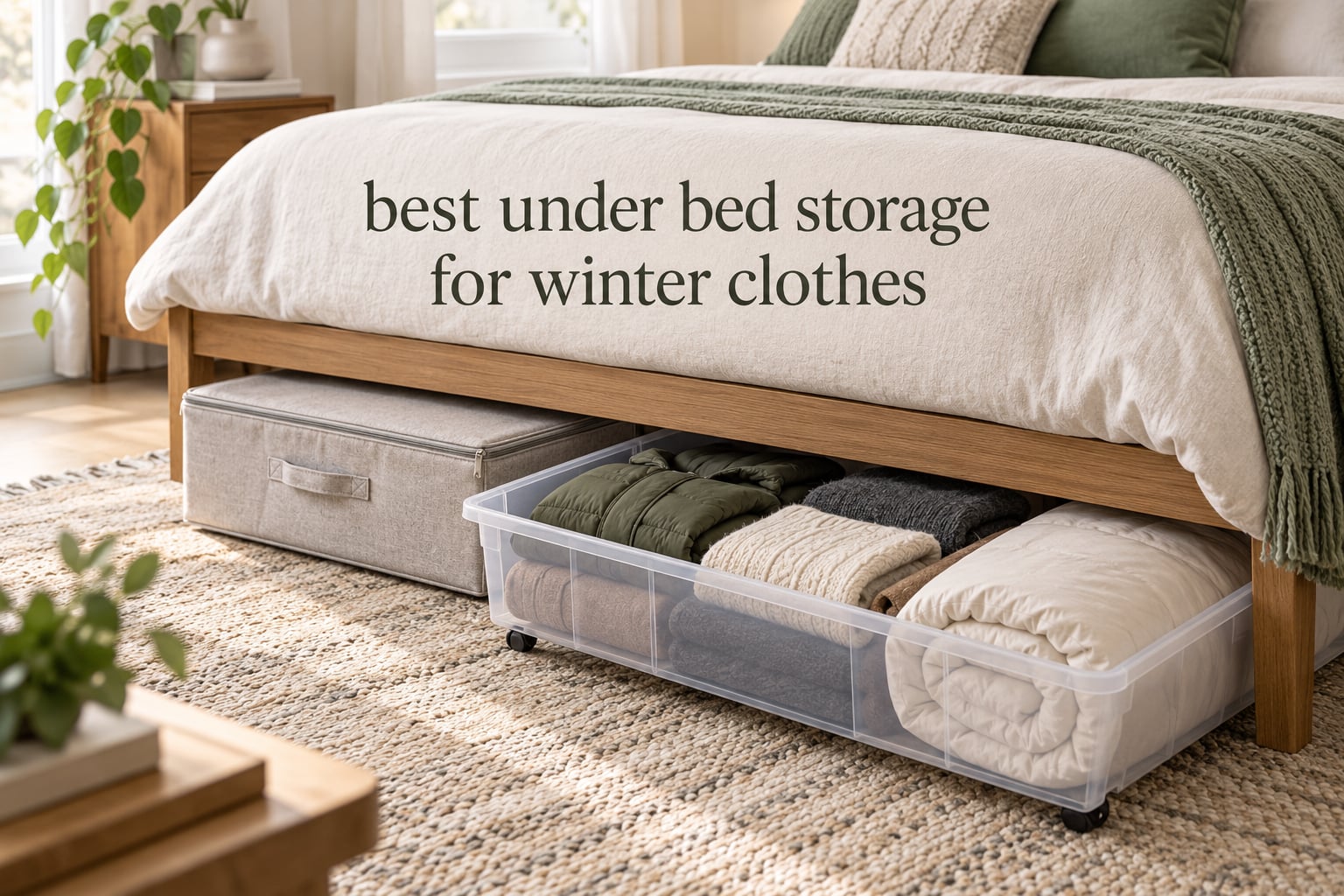
The best under bed storage for winter clothes is a low-profile container that matches the gap between your floor and bed frame, holds folded seasonal pieces without crushing them, and breathes enough to stop trapped moisture. Most people lose that fight on height: they buy a bin they love, slide it under the bed, and discover it is one inch too tall. So this guide leads with measurement, then works through ten containers that genuinely fit low clearances and hold coats, sweaters, quilts and boots for months at a time.
Winter is the heaviest season for storage by volume. A single puffer jacket takes up more room than a month’s worth of t-shirts, and a queen-size comforter will not fit in a standard closet shelf at all. Under-bed space is the largest unused volume in most bedrooms, and it sits in the exact spot where bulky soft items are comfortable: flat, dark and out of the daily traffic pattern.
We spent six weeks working through these ten containers across two homes with very different clearance: a standard slatted frame with about nine inches of gap, and a low platform bed that left barely six. Every product below has an explicit drawback listed, because the difference between a bag that works and a bag that frustrates you usually comes down to structure, closure and weight handling. Costs shift frequently, so use the buttons below to check the current figure rather than relying on anything quoted here.
Top 3 Under Bed Storage Picks for Winter Clothes (October 2026)
If you want a short answer, these three cover the most common households. The ZOBER four-pack is the all-round workhorse, the Budding Joy set is the one to pick if capacity matters most, and the Amazon Basics pair is the lowest-effort way to start seasonal rotation.

ZOBER Underbed Storage Bags 90L 4-Pack
- Breathable non-woven polypropylene
- 39 by 20 by 7 inch
- See-through plastic cover
- Folds flat when not in use

Budding Joy 95L Underbed Containers 4-Pack
- 95 litre capacity per bag
- Three-ply odourless non-woven
- Stainless steel two-way zipper
- Reinforced double-stitched handles

Amazon Basics Underbed Bags 18 x 42 x 6 Inch
- Low 6 inch profile
- Clear vinyl top window
- Flat loop handles
- Folds flat between seasons
Under Bed Storage for Winter Clothes at a Glance
All ten containers are under 7 inches tall at their widest point, which is what makes them work under a low bed. Height is the number that decides fit, so check the clearance section below before choosing.
| Product | Specifications | Action |
|---|---|---|
| ZOBER Under Bed Storage Bags 90L 4-Pack |
|
Check Latest Price |
| Budding Joy 95L Under Bed Containers 4-Pack |
|
Check Latest Price |
| Amazon Basics Under Bed Bags 2-Pack |
|
Check Latest Price |
 Onlyeasy Foldable Underbed Bags 2-Pack Onlyeasy Foldable Underbed Bags 2-Pack |
|
Check Latest Price |
 PHINOX Under Bed Container with Wheels 2-Pack PHINOX Under Bed Container with Wheels 2-Pack |
|
Check Latest Price |
 Yecaye Under Bed Storage with Wheels 2-Pack Yecaye Under Bed Storage with Wheels 2-Pack |
|
Check Latest Price |
 Vailando Side-Supported Underbed Bins 2-Pack Vailando Side-Supported Underbed Bins 2-Pack |
|
Check Latest Price |
 IRIS USA 50 Qt Under Bed Bin with Lids IRIS USA 50 Qt Under Bed Bin with Lids |
|
Check Latest Price |
 punemi 6.7 Inch Tall Under Bed Containers 2-Pack punemi 6.7 Inch Tall Under Bed Containers 2-Pack |
|
Check Latest Price |
 LANDNEOO Humid-Proof Plastic Bins 2-Pack LANDNEOO Humid-Proof Plastic Bins 2-Pack |
|
Check Latest Price |
How to Measure Your Bed Clearance in Three Steps
Bed clearance is the vertical gap between the floor and the lowest point of your bed frame. Measure it before you shop, and take the lowest measurement across the whole span of the bed, not the highest point.
Measure at the lowest point, not the middle
Slide a tape measure under the bed at three places: near the head end, in the centre, and near the foot end. Frames with a centre support post often have a deeper pocket at the ends and a shallower one in the middle, so the middle measurement is often the one that limits what fits.
Write down the smallest number you find and subtract one inch. That single inch of margin is what stops a bin from scraping against the slats every time you pull it out.
Match clearance to bin height
Here is the mapping we use. Anything under five inches of clearance rules out wheeled units entirely, because the casters add height before they add convenience.
Under 5 inches of clearance: slim soft bags only, and nothing with wheels or a lid lip. Expect to fit two bags across a standard frame.
5 to 6 inches: 5.9 inch and 6 inch fabric bags work. Rolling carts are still too tall.
6 to 7 inches: most of the structured fabric bins in this roundup fit, including the 6.7 inch models.
7 to 9 inches: wheeled pull-out units and rigid lidded plastic bins become viable.
Check the frame type and the slide problem
If your bed is a platform frame with a solid or slatted base rather than open rails, the bags will drag rather than glide, and soft-sided fabric will bunch on carpet. Rigid plastic or a wheeled unit handles that far better.
One forum problem worth solving early: people repeatedly report bags sliding out from under the bed when they pull something from the bottom. Push the bag in until the front edge is roughly level with the frame leg, load from the top rather than reaching deep inside, and keep one empty bin at the front as a stop so the loaded ones cannot creep out.
If your bed has built-in drawers or a lift-up mechanism, the whole question changes. Our guide to platform bed frames with storage covers the models that solve this without any bins at all.
1. ZOBER Under Bed Storage Bags 90L 4-Pack, Breathable Non-Woven
ZOBER Under Bed Storage Bags, Underbed Storage Containers, Gray, 90L 4-Pack
39 x 20 x 7 inches
Lightweight breathable non-woven polypropylene
See-through cover
Folds flat
Pros
- Holds a lot per bag
- See-through top window avoids opening
- Folds flat between seasons
- Lightweight at 1.1 pounds
- Slides under a low frame easily
Cons
- Soft sides collapse when underfilled
- Zippers and fabric feel lighter duty
- Hard to slide when not full
This four-pack has been in our test rotation the longest, and it is the set we keep coming back to for ordinary seasonal clothing. At 39 by 20 by 7 inches it clears a standard slatted frame with room to spare, and the non-woven polypropylene lets air move through the fabric, which matters more than most buyers expect when a bag sits under a bed from October to March.
The 90-litre capacity per bag is genuinely large. Reviewers consistently report fitting folded sweaters, a few folded coats and a stack of accessories into a single bag, which is exactly the mix that fills a winter swap. The see-through plastic cover means you can identify contents from the edge of the bed without unzipping anything.
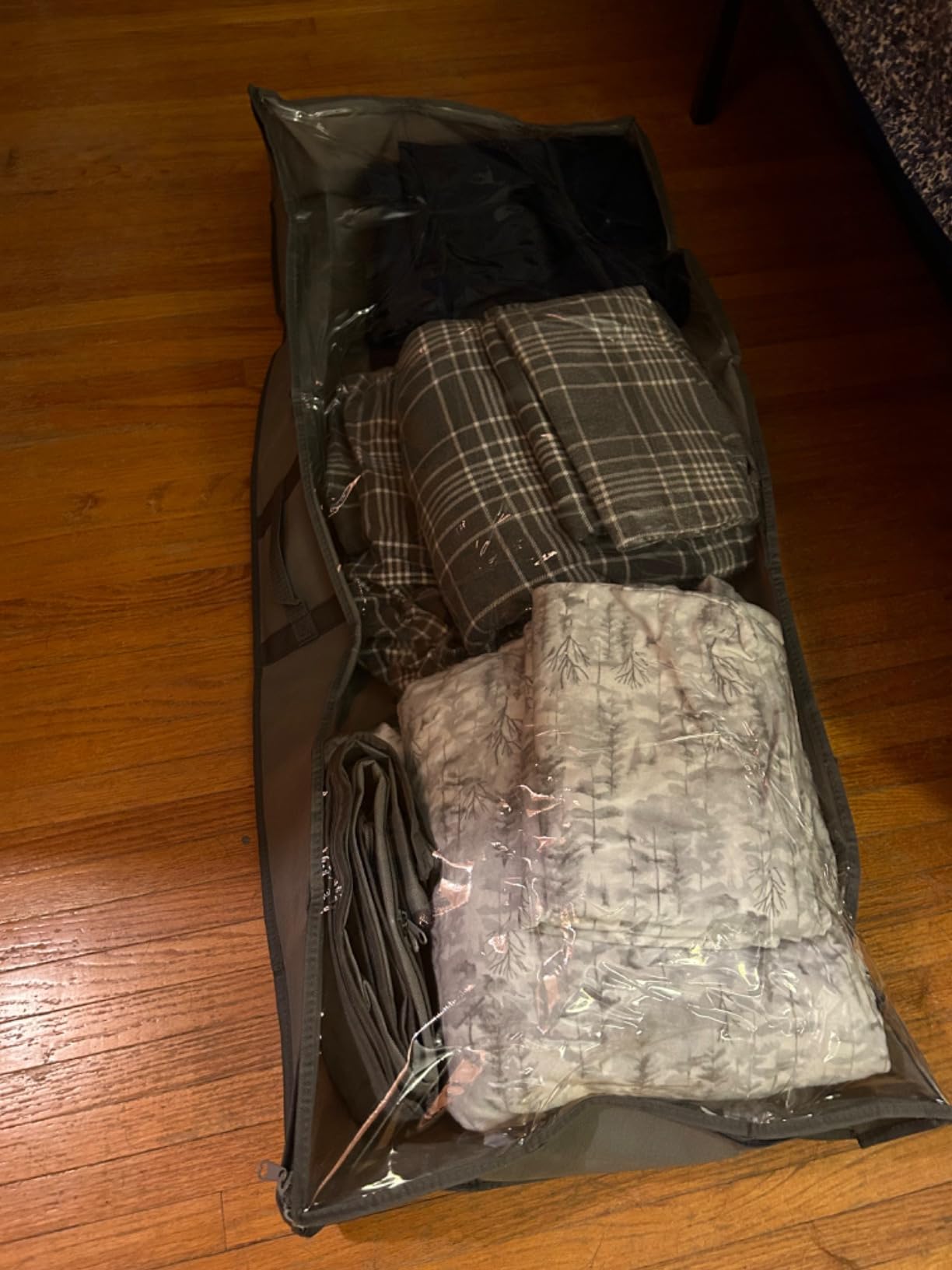
What you give up is structure. With no cardboard or metal supports inside, the side walls have nothing to hold them upright, so an underfilled bag slumps and becomes awkward to drag across carpet. Our rule with this set is simple: one bag per category, packed to at least three-quarters.
The zipper is the part to watch over time. It is not the heavy-duty hardware you get on the structured models, and reviewers report it feeling lighter duty than expected. For set-and-forget seasonal storage over a season or two, that has been fine in our experience. For a bin you will drag in and out weekly, choose something else.
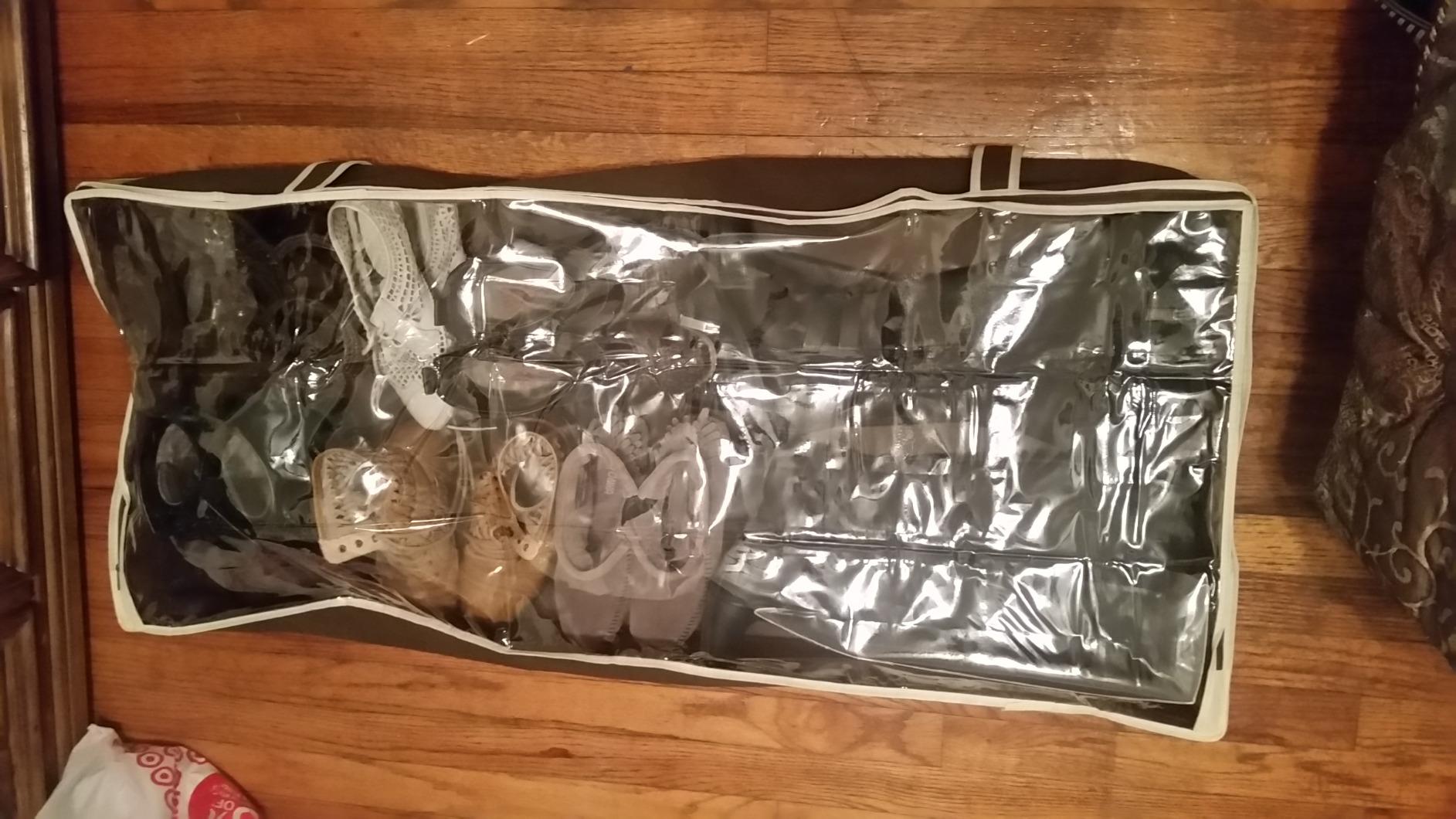
Best for filling one bag per clothing category
The four-pack format is what makes this work. Because capacity per bag is large, you can dedicate one bag to knits, one to coats and outerwear, one to bedding and one to boots or accessories, then label the front edge of each. That beats cramming mixed items into a single bag and losing track of the black jumper.
The 1.1-pound weight is also worth noting. When you are the only person hauling a bin out, the container’s own weight matters, and this is one of the lighter sets here.
Skip it if you store quilts or move bins constantly
Quilts and comforters are where soft-sided bags give up. A heavy comforter presses outward and the unsupported walls bow, and reviewers report these bags being difficult to slide when not full. If bedding is your main seasonal item, the side-supported bins later in this roundup hold shape far better.
The second reason to skip it is frequency. This is seasonal rotation storage: load in October, unload in April. It is not built for weekly digging, and the zipper will tell you so eventually.
2. Budding Joy 95L Under Bed Containers, 4-Pack
Budding Joy 95L Under Bed Storage Containers, 4 Pack Closet Organizers Grey
95 litres per bag
Three-ply odourless non-woven fabric
Stainless steel two-way zipper
39 x 20 x 7 inches
Pros
- Very large 90 to 95L capacity
- Clear window for quick identification
- Sturdy double-stitched handles
- Odourless three-ply fabric
- Only 16 ounces empty
Cons
- Unsupported sides lose shape when underfilled
- Not water resistant
This is the highest-capacity fabric set in the roundup, and it holds the top sales rank in the under-bed storage category. The 95-litre figure is not marketing padding. Compared with the 49-litre and 60-litre options further down, you get roughly twice the volume per bag, so fewer bags travel under the bed and you spend less time sliding things in and out.
The fabric is a three-ply composite non-woven that is odourless and breathable, with no cardboard or metal supports inside. The stainless steel two-way zipper is the best closure in this group. When a bin is half empty, a two-way zipper lets you unzip one side and pull out a single jumper without unpacking the whole thing, which is the difference between a five-second job and a five-minute one.
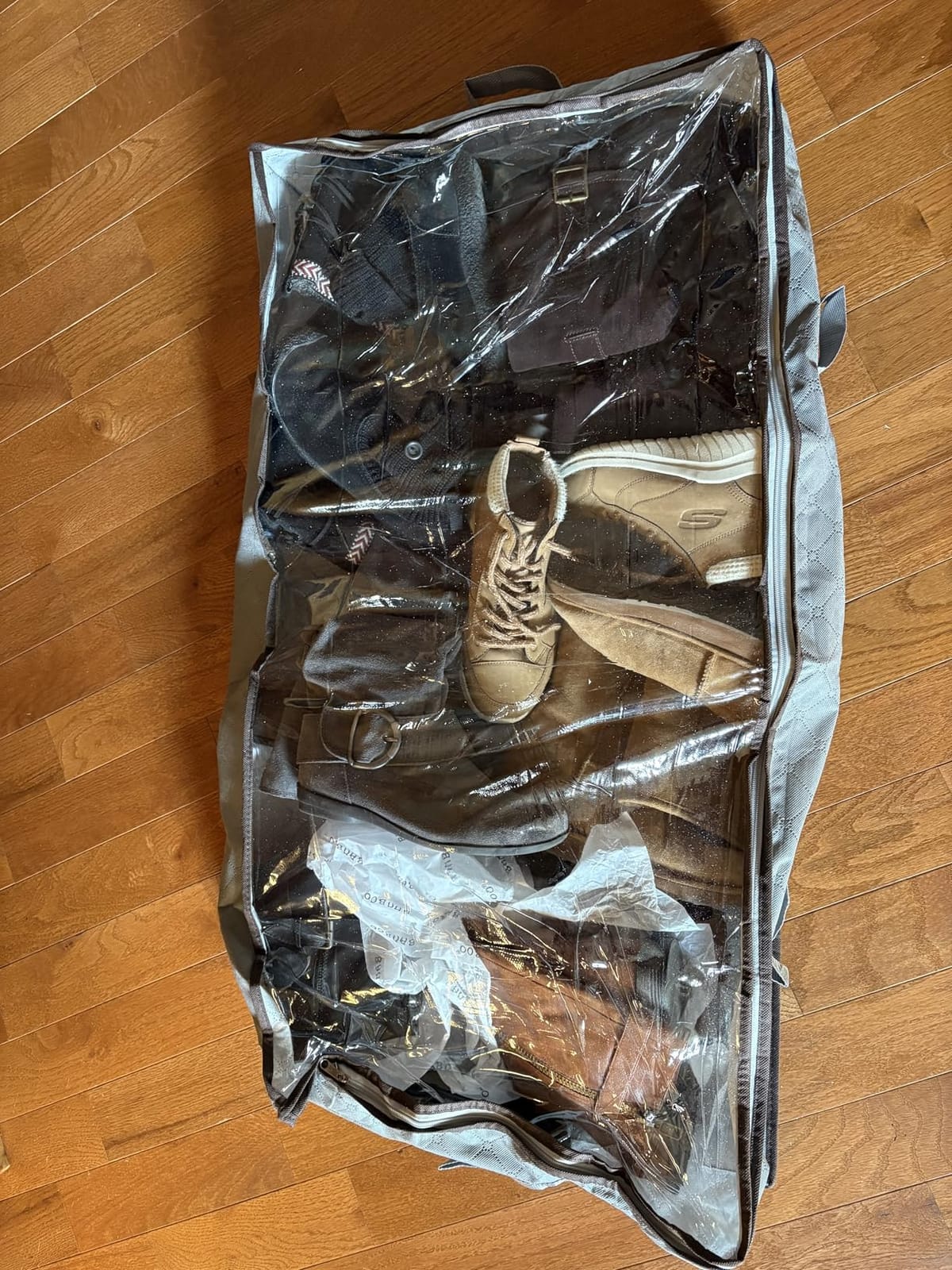
Handles are double-stitched and wide, which matters when the bag is loaded with a coat plus two jumpers and you are pulling it across a carpet by one strap. Reviewers single these out as more substantial than the handles on cheaper sets, and that agrees with how they have held up for us.
It is listed as not water resistant, so this is a bedroom bin rather than a basement or damp-closet bin. The fabric breathes, which is the right trade for wool and knitwear in a conditioned room, but it is the wrong choice for a ground-floor space that stays humid in summer.
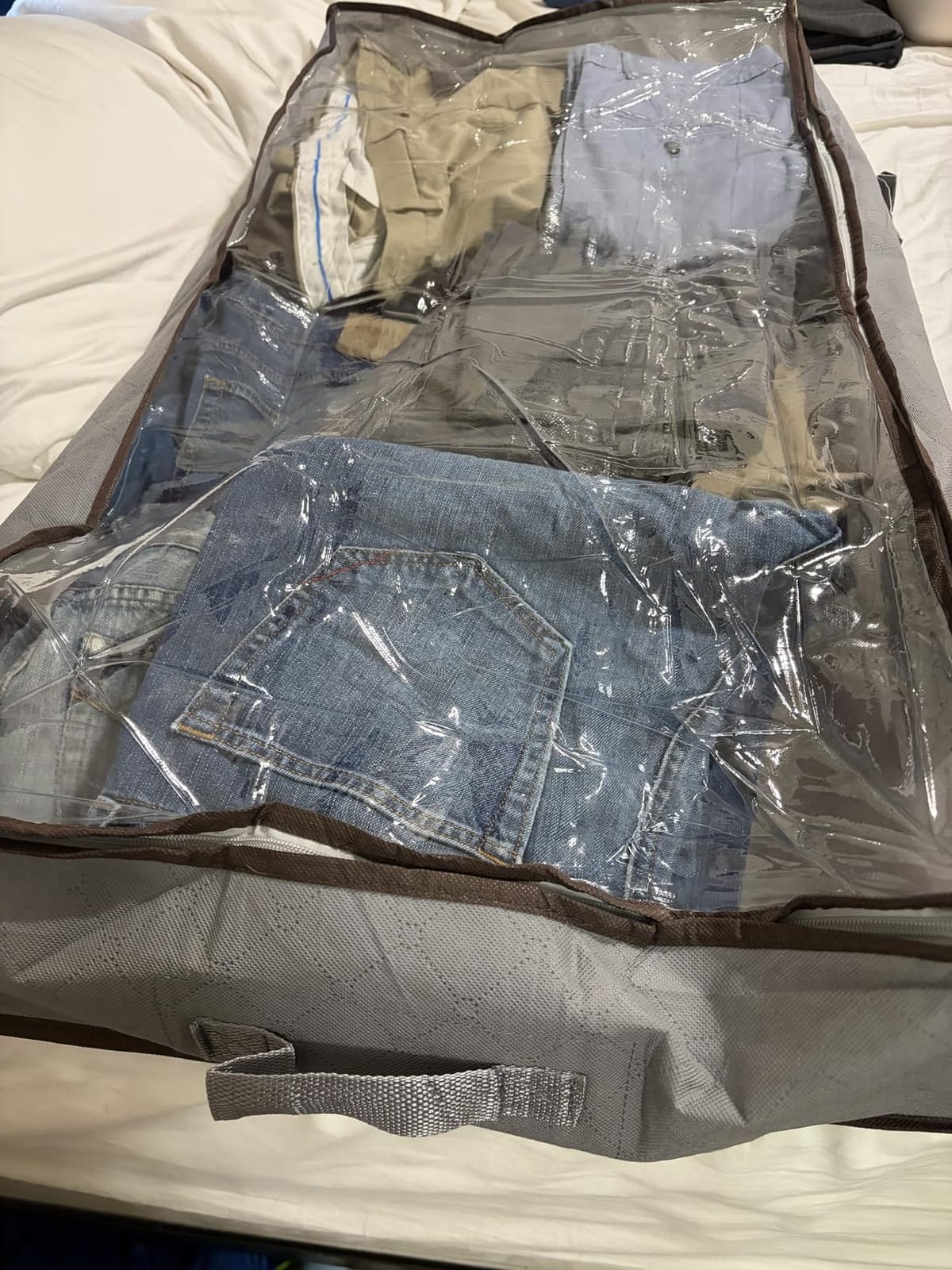
Best for maximum capacity per bag
If your problem is volume rather than tidiness, this is the pick. One bag holds a full season of folded knitwear for one person, or a decent share of a couple’s coats, so the four-pack covers most two-adult households in a single layer under the bed.
The large transparent PVC window also means you rarely need to open a bag. With four bags under one bed, seeing what is in each from the side of the frame saves a lot of kneeling on the floor.
Skip it if under-bed clearance is tight
At 7 inches tall this is one of the taller fabric bags here, and it will not pass under a low platform bed. Measure first. If your clearance is under 7 inches, the 5.9 inch and 6 inch options later in this guide are the ones that will physically fit.
The second limitation is the same one shared by most soft bags: no internal support, so the sides soften when the bag is not full. Fill it before you slide it in.
3. Amazon Basics Under Bed Storage Bags, 18 x 42 x 6 Inch, 2-Pack
Amazon Basics Under Bed Storage Bags for Clothes and Blankets, Foldable Fabric Zipper Container with Clear Window and Reinforced Handles, Space Saving, 18 x 42 x 6 inches, Gray, 2-Pack
18 x 42 x 6 inch low profile
Clear vinyl top
Fabric bag with flat loop handles
Folds flat
Pros
- Very low 6 inch profile
- Plenty of review history
- Folds flat between seasons
- Zipper keeps out dust
- Slides under low frames
Cons
- Delicate zippers under heavy use
- Vinyl top can separate from fabric
- Bunches on carpet
- Light-duty build
At 6 inches tall and 18 inches wide, this pair is the slimmest fabric set we tested, and it is the one that got under our lowest-clearance bed without a fight. That 6-inch height is the whole reason to consider it. When a frame gives you 6.5 inches, the 7-inch options simply do not go.
Reviewers report around 15 winter sweaters per bag, which matches our own packing test with folded jumpers and cardigans. The shape is long and narrow rather than wide, so two bags sit side by side along the length of a bed instead of blocking the full span. That also means less of a problem with bags drifting out from under the frame, because there is nothing wide enough to catch the leg.
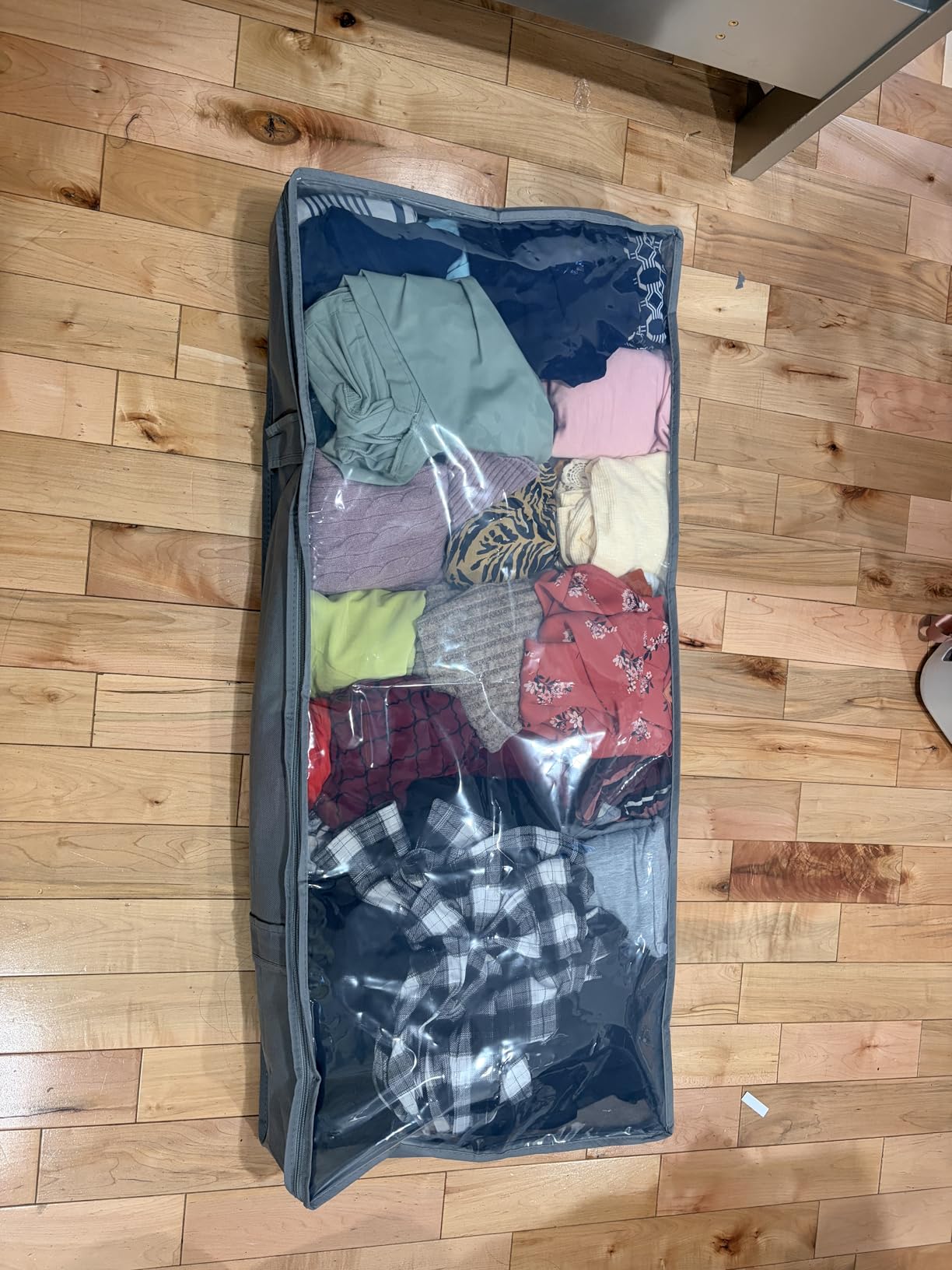
The clear vinyl top does the same job as a window on the more expensive sets at a fraction of the material cost. You can see the colour band of whatever is inside without opening the zipper.
Where it falls short is durability. This is light-duty fabric with flat loop handles, and the zipper is the first thing to go if you move the bags often. Reviewers report the vinyl top separating from the fabric sides over time, and difficulty sliding the bag back under on carpeted floors because the soft base bunches up.
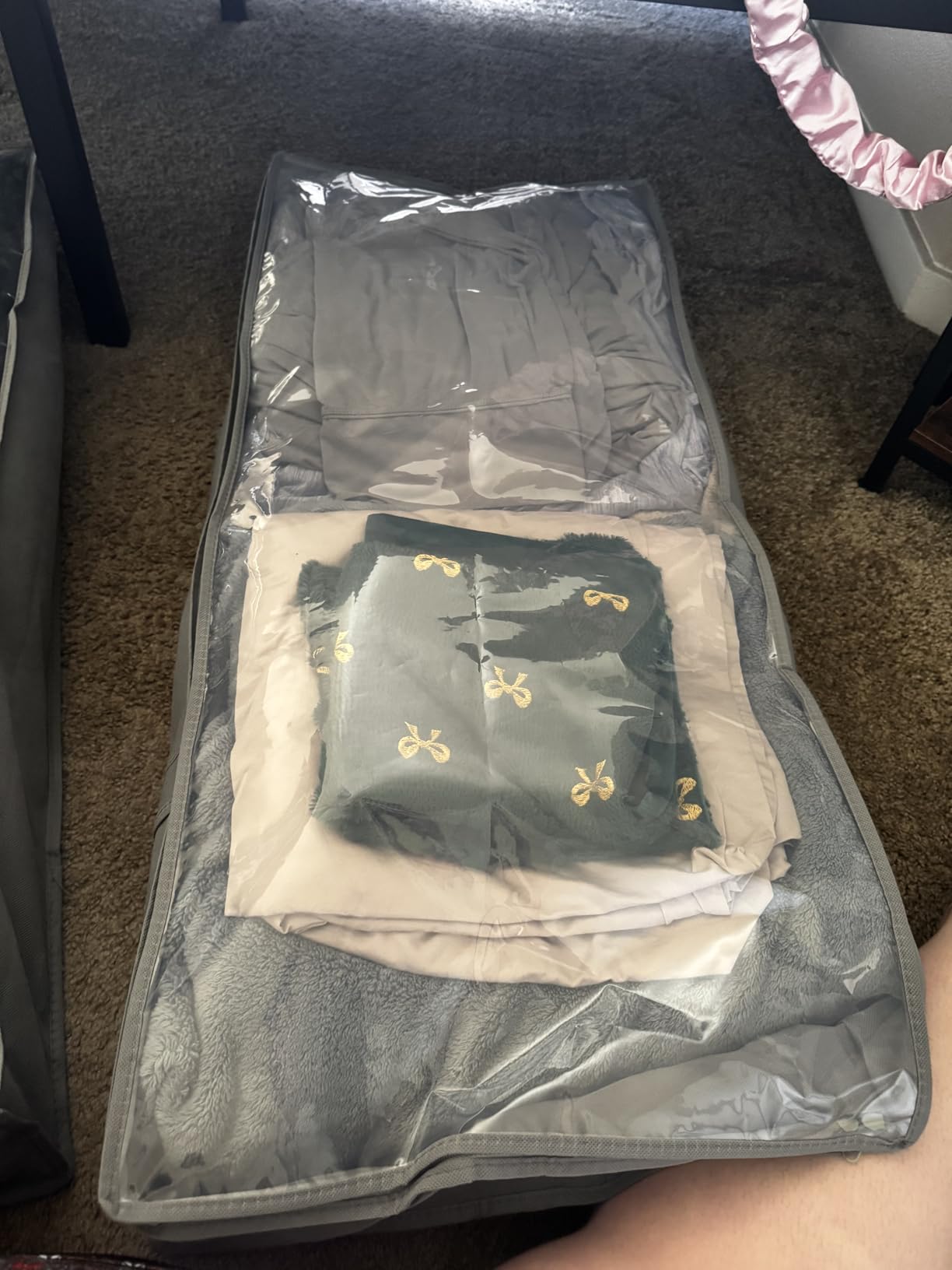
Best for low-clearance beds and first-time organisers
This is the pair to start with if your bed is low, if you are in a studio or dorm, or if you want to try seasonal rotation before committing to a bigger system. Two bags is enough to prove the routine works, and they fold flat for storage when a bag is empty and out of use.
For someone who only stores knitwear and accessories, the 6-inch profile and long shape are genuinely well matched. Bulky puffer jackets are the wrong item here, because the narrow width does not suit a folded coat.
Skip it if you plan to move bins in and out weekly
This is a set-and-forget bag. The build is not designed for repeated hauling, and the zipper is the weak link. If your household wants to pull a coat out on a Tuesday rather than at the season change, spend the extra money on a wheeled unit instead.
It is also not the right pick for bedding. A soft, unsupported bag with a 5-pound listed load capacity is not going to carry a queen comforter for six months.
4. Onlyeasy Foldable Underbed Bags, 39.4 x 19.7 x 5.9 Inch, 2-Pack
Onlyeasy Foldable Underbed Bags 2 Pack – Blankets Clothes Comforters Storage Bag Breathable Zippered Organizer for Bedroom with Clear Window and 4 Handles, 39.4×19.7×5.9 in, Linen-like Grey, MXDUBBP2
39.4 x 19.7 x 5.9 inches
Four reinforced handles
Metal zippers rated 1000 uses
Breathable non-woven
Pros
- Metal zippers rated for 1000 uses
- Breathable fabric keeps clothes odour free
- Four handles including two side
- Low 5.9 inch height
- Smooth and durable zippers
Cons
- Soft side walls collapse when pushed under
- Flimsy structure for heavy bedding
- No wheels so filled bags must be dragged
This bag carries a 4.4 average across more than 11,000 reviews, and the reason that rating holds up is unusually specific: the zippers. These are large metal zippers rated for more than 1,000 open-and-close cycles, which is roughly three seasons of twice-yearly opening with years to spare.
At 5.9 inches tall it clears almost any frame short of a true platform bed, and the 39.4 by 19.7 inch footprint is generous enough for a folded coat plus a few jumpers. Reviewers note the wide opening takes bulky winter coats and comforters easily, which is not something you can say about the narrow Amazon Basics pair.
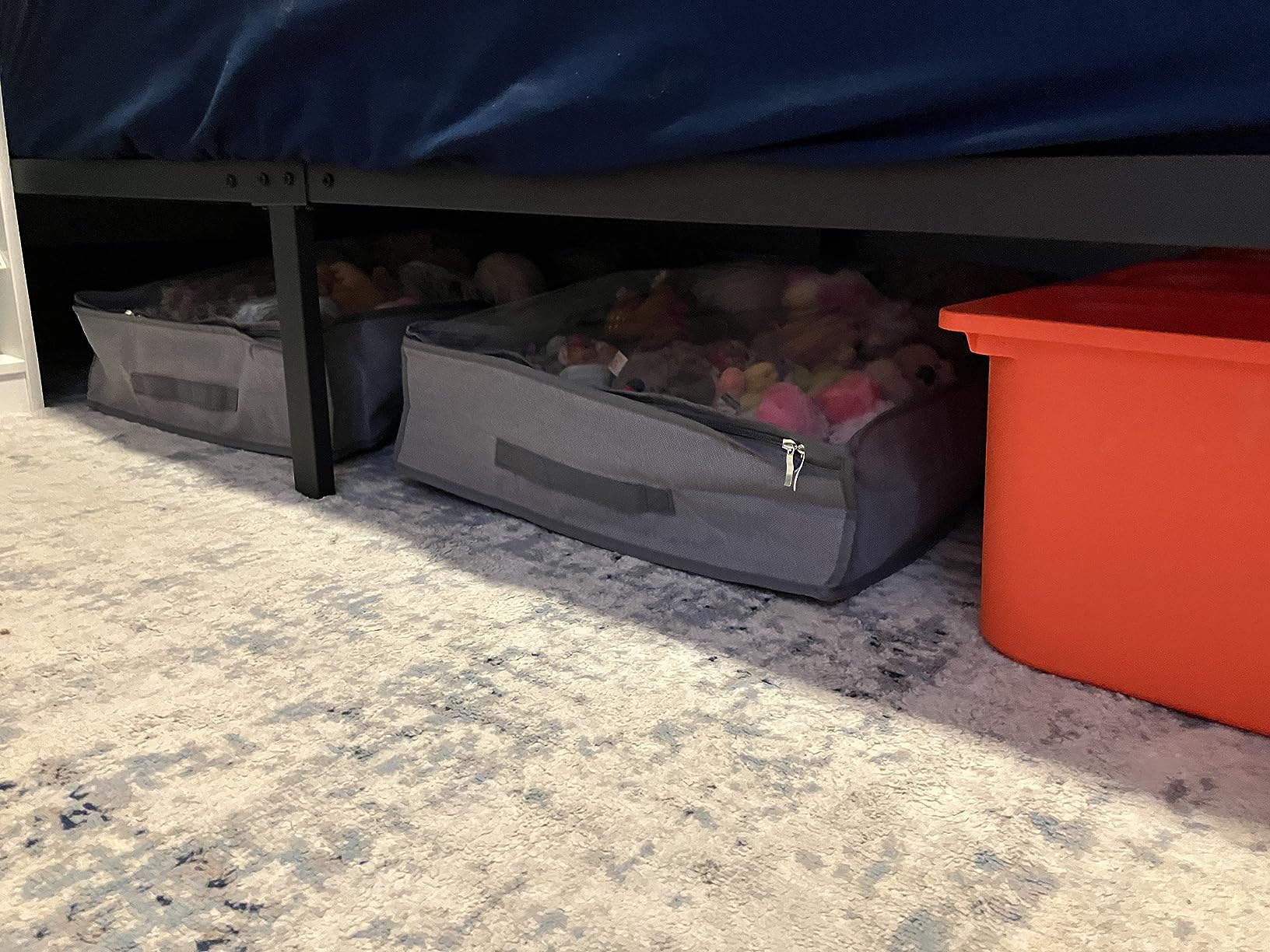
Four reinforced handles, two at the front and two on the sides, is the detail that makes it feel considered rather than generic. The side handles are the ones you grab when the bag is already under the bed and you are dragging it out at an angle.
The fabric is double-layer thickened polypropylene non-woven, described as eco-friendly and fully breathable. The side walls are soft, and that is the dividing line for this product: it breathes well and zips durably, but it has no frame and will not hold a rigid shape.
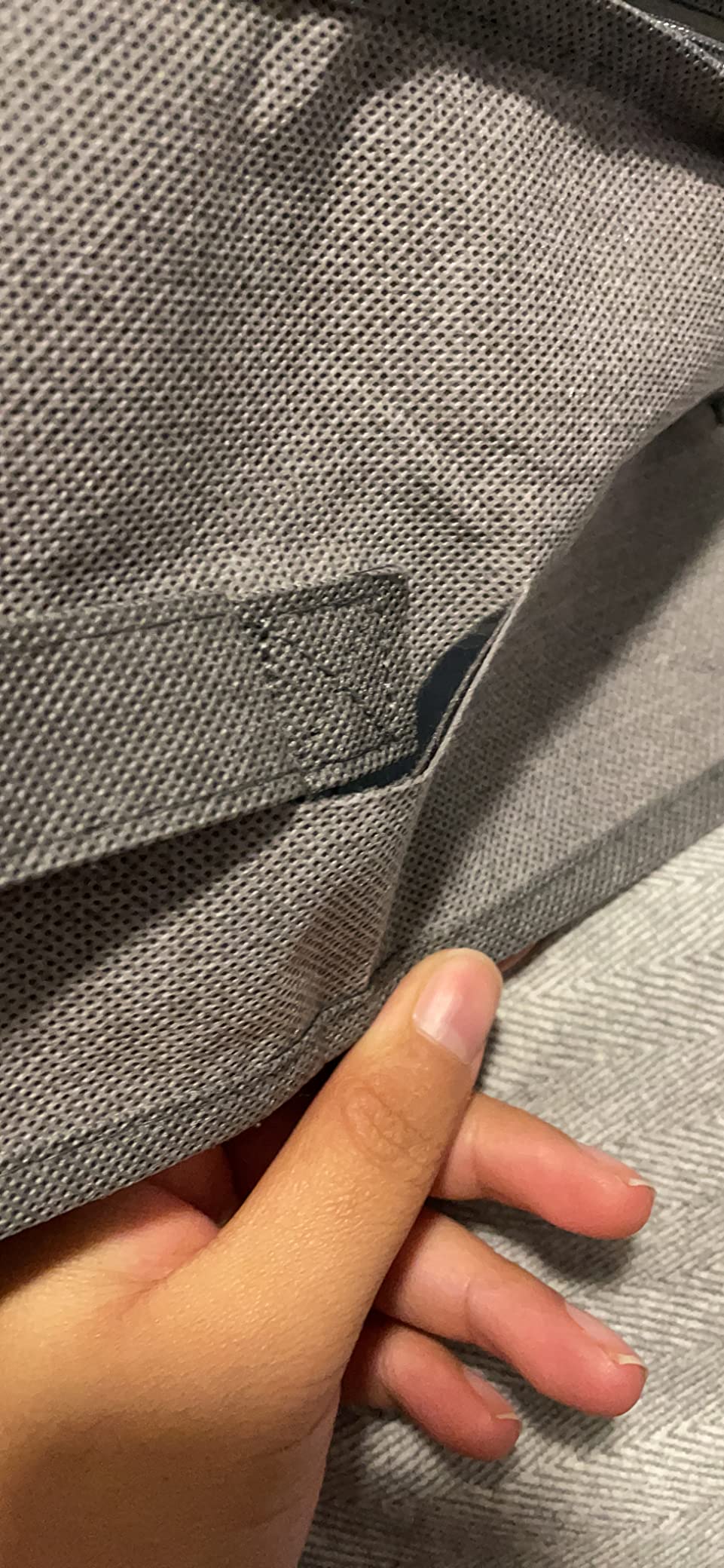
Best for durability over many seasons
If you expect to be running the same seasonal rotation year after year, this is the fabric bag to buy. The zipper rating is the reason, because on every cheaper bag in this category the zipper is the component that fails first and turns a reusable container into a bin in the cupboard.
Breathability is the other argument. Fully breathable non-woven means wool, cashmere and knitwear can sit for months without the mustiness that comes from sealing damp fibre into a non-breathable outer layer.
Skip it if you load it with quilts
The soft side walls collapse when pushed under the bed, and reviewers report the bags stacking poorly compared with structured options. A heavy quilt is exactly the load that turns a soft bag into a flat, unstackable shape.
There are no wheels, so a filled bag gets dragged rather than rolled. On carpet that is a real effort, and it is the main reason to step up to a wheeled unit further down.
5. PHINOX Under Bed Storage Container with Wheels, Metal, 2-Pack
PHINOX Under Bed Storage Container with wheels,Patterned,Metal,2 Pack,Black
23.6 x 15.7 x 6.2 inches with wheels
All-metal welded frame
Four 360-degree wheels
Tool-free assembly
Pros
- Metal frame will not tear like fabric
- Four rotating wheels with two locks
- Assembles in about a minute
- Folds flat when not in use
- Carved sides show contents
Cons
- Open mesh sides let in dust and bugs
- Not built for very heavy loads
- Folding hinge can feel wobbly
- Shallower than expected
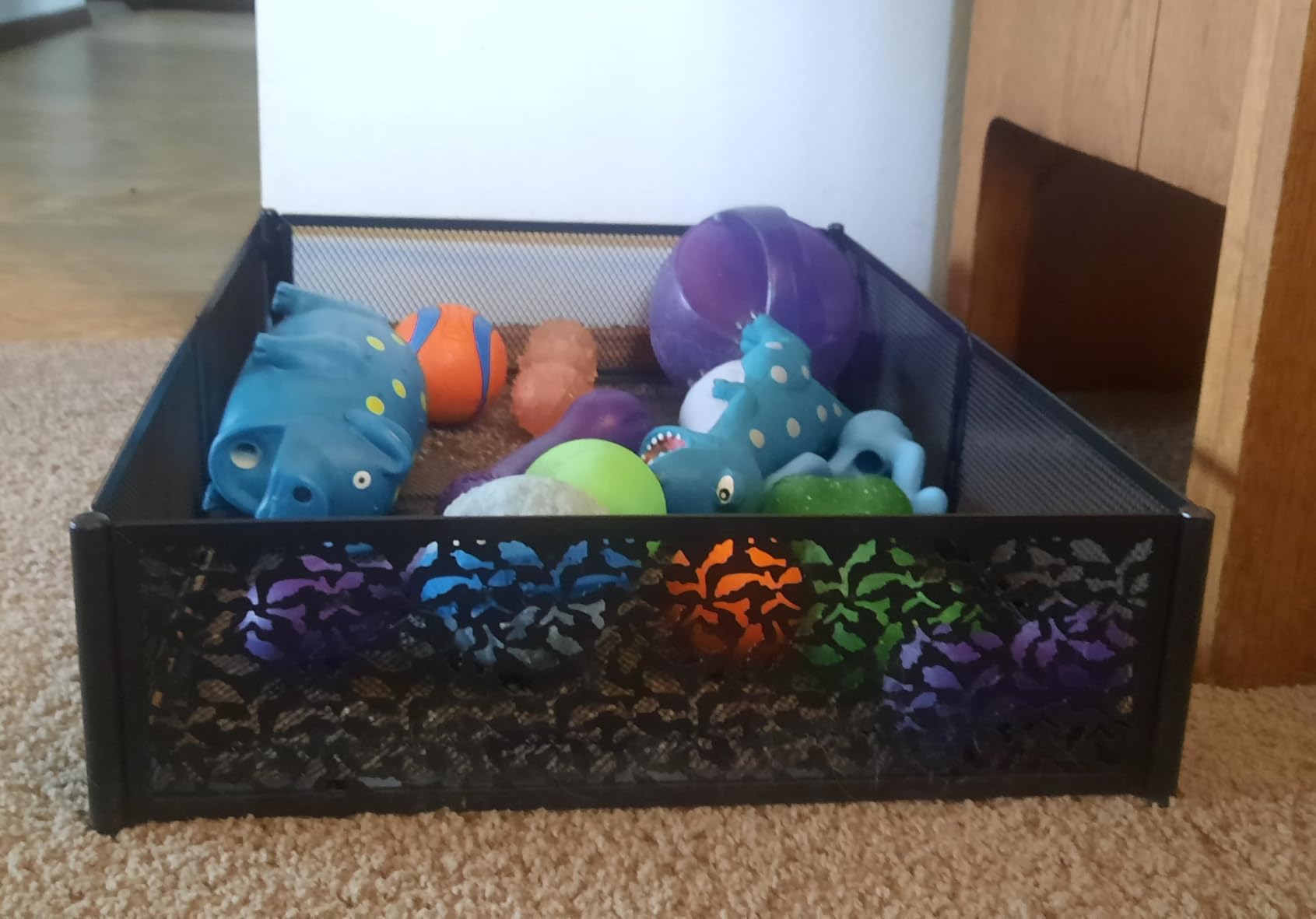
This is the one to buy if your winter rotation involves pulling a coat out midweek rather than twice a year. Four 360-degree rotating wheels, two of them locking, mean you roll the unit out from under the bed rather than dragging a fabric bag across the floor and out into the hallway.
The construction is a fully welded metal frame with a fine mesh base, which handles the weight of loaded bedding far better than anything fabric-based here. At 7.3 pounds empty for the pair, it is one of the heavier options here, and that weight is the trade you make for rigidity.
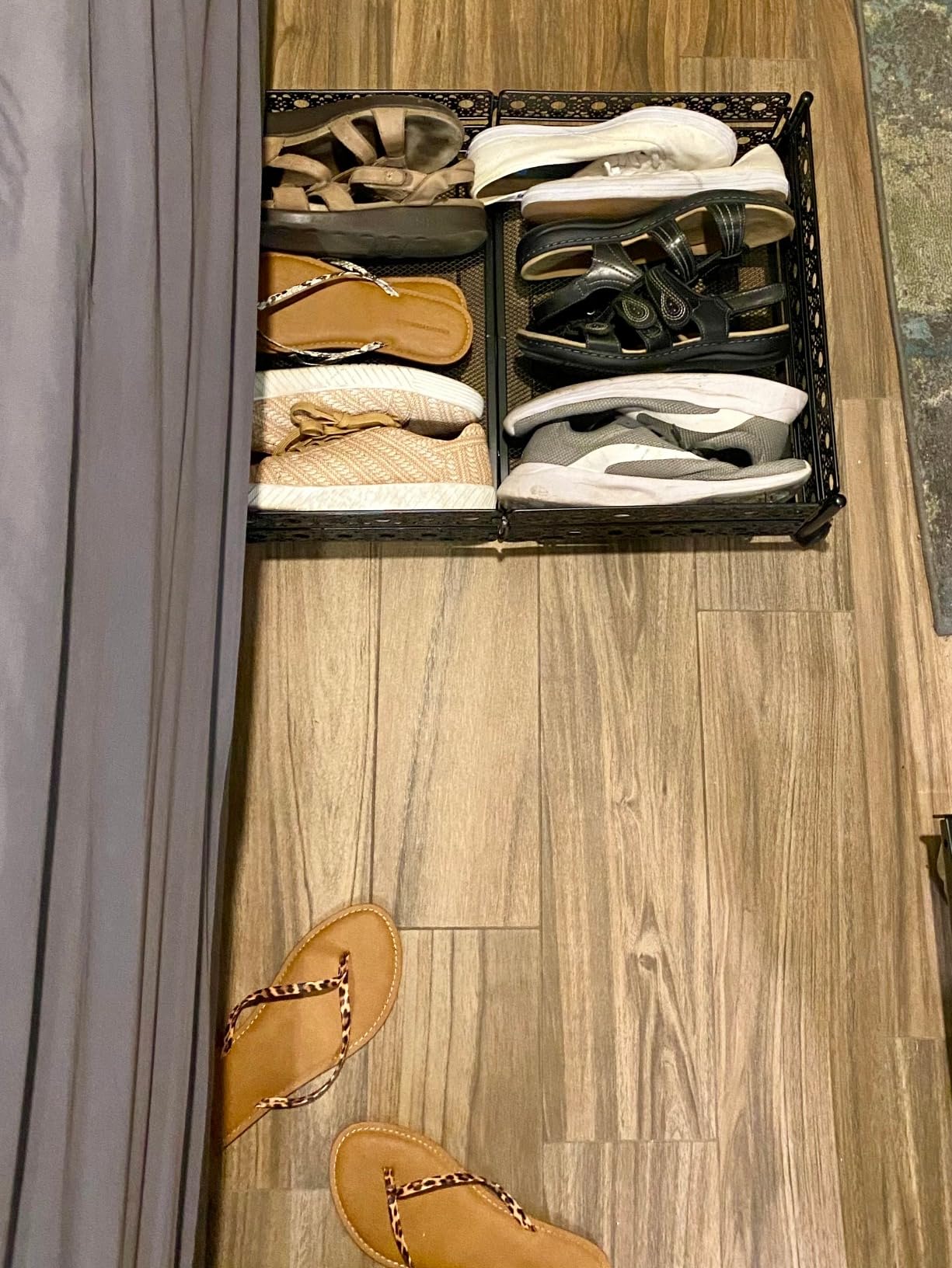
Assembly is tool-free and takes about a minute in two steps. The carved floral side pattern is a small thing, but it means the unit still looks deliberate if it is visible at the edge of the bed, and it lets you identify contents without opening anything.
Two things to be clear about. The mesh sides are open, so this is dust-tolerant rather than dust-proof, and it does nothing to stop insects. And it is a light-to-medium duty cart: reviewers note the load should be distributed rather than piled in one spot, and that the plastic wheels can wear with heavy use.
Best for weekly access to winter clothes
Rolling access is the feature. If you wear a coat most days between October and March, you do not want to unzip a bag and dig for it every morning. This unit pulls out in a second and stays upright while you choose.
The locking casters are the second win. Once you have pulled it out and found the coat, you can lock the wheels so the cart does not roll while you are bent over it.
Skip it if you need sealed or pest-proof storage
Open mesh sides rule this out for moth protection, for damp rooms, and for anything where dust settling on the contents matters. It is a convenience and durability product, not a containment product.
The folding hinge joint is also worth checking in person if you can. Reviewers report it can feel wobbly and bow slightly outward under light pressure, which is the cost of a frame that collapses flat.
6. Yecaye Under Bed Storage with Wheels, 30.7 x 16.9 x 6.7 Inch, 2-Pack
Yecaye Under Bed Storage with Wheels, 2Pack Under Bed Storage Containers, Underbed Shoe Storage Organizer, Rolling Under Bed Metal Drawers for Clothes, Blankets(30.71 x 16.93 x 6.69 in)
30.7 x 16.9 x 6.7 inches with wheels
Rated to 66 pounds
Waterproof PU fabric
Four silent wheels
Pros
- Rated to 66 pounds for a fabric body
- Waterproof PU wipes clean
- Silent wheels with two locking casters
- Clear window and label included
- Folds flat when empty
Cons
- Needs more than 7 inches of clearance
- Larger footprint means fewer fit per bed
This is the strongest all-round balance of the wheeled units. The 66-pound load rating on a fabric-bodied container is genuinely unusual, and it is backed by a sturdy metal frame inside the 300D PU fabric, which is what lets it hold heavier bedding than the mesh carts.
The PU fabric is waterproof and wipe-clean rather than breathable. That is a deliberate trade in favour of damp spaces, and for a basement, ground-floor bedroom or a closet that smells musty in August, a wipe-clean surface is worth more than airflow.
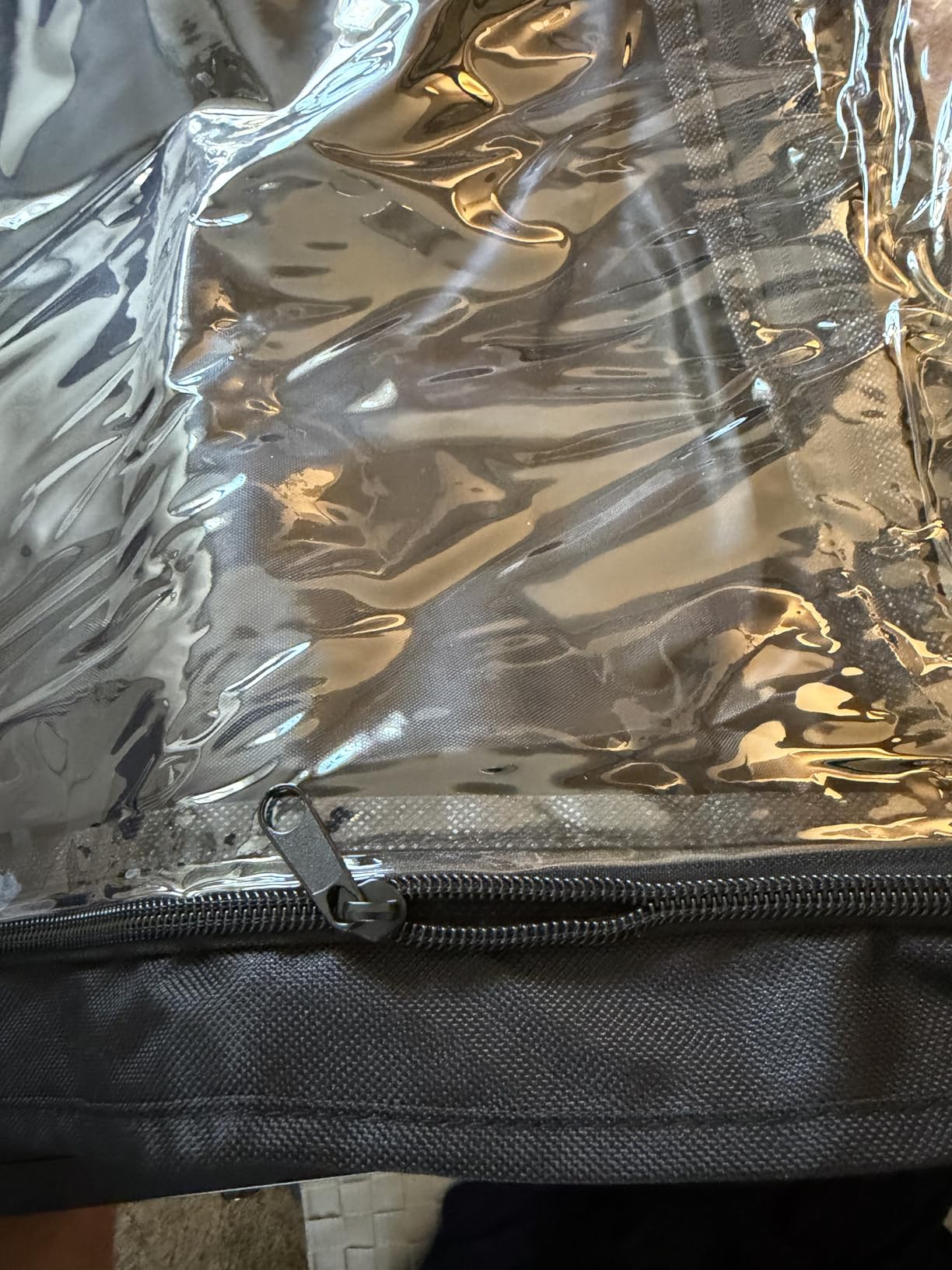
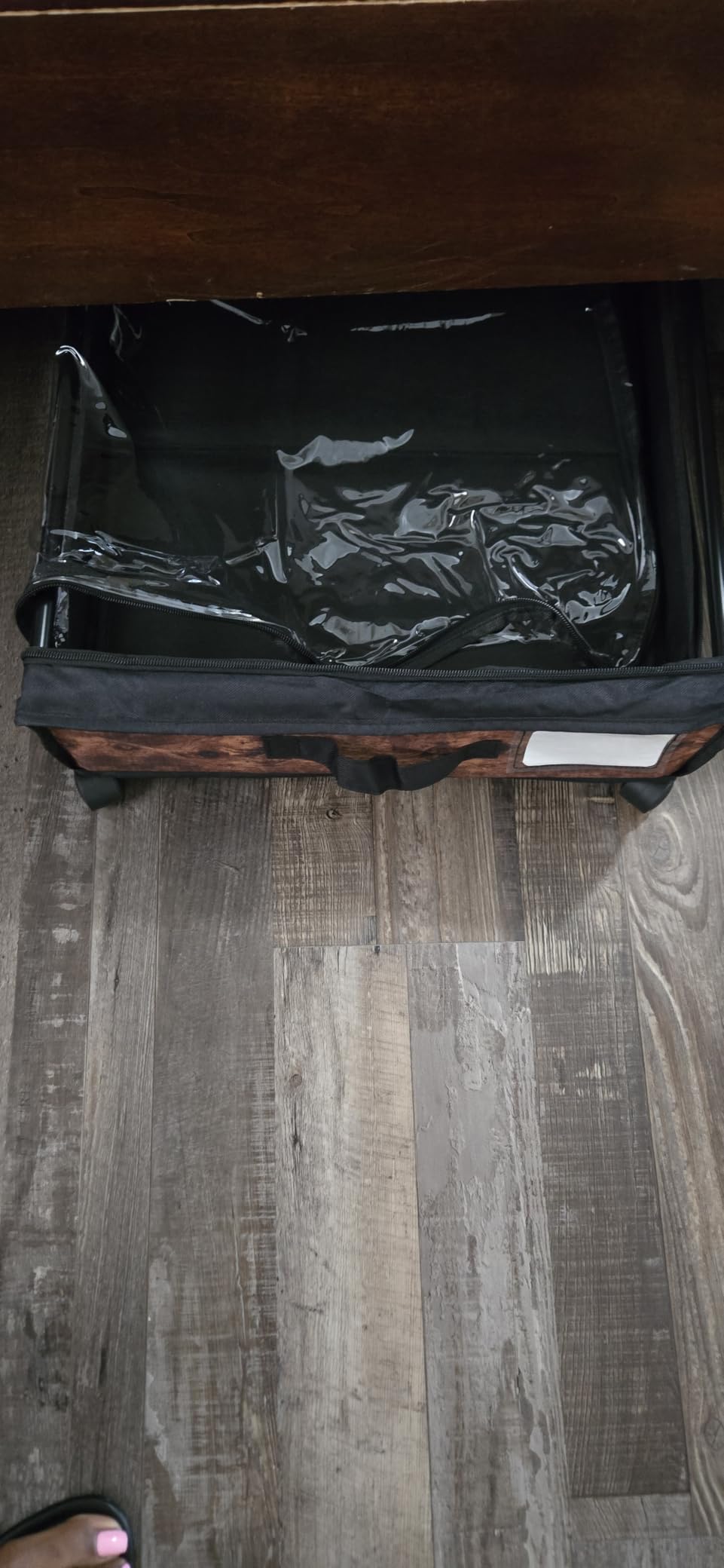
Four silent 360-degree wheels roll on both carpet and hard floors, with two locking casters for when the unit is standing open. Reviewers report the wheels are noticeably smoother than the plastic casters on comparable carts, which matters on carpet.
A clear window and an included label handle identification, so the two units can be told apart without opening them. Both fold flat when not in use, which is more than you would expect from a wheeled frame.
Best for heavy bedding in damp rooms
The combination of a 66-pound rating, a waterproof body and wheels covers a lot of ground. It suits a household storing quilts, extra comforters and heavy winter coats where a light fabric bag would sag and a rigid plastic bin would be unpleasant to lift.
At 3.35 kg for the pair, it is still liftable by one person when loaded moderately, and the wheels take the weight for the rest of the journey out of the bedroom.
Skip it if your bed has low clearance
Height with wheels is 6.69 inches, and the manufacturer requires more than 7 inches of under-bed clearance. That rules out low platform beds entirely. If your measured clearance is 6.5 inches, this will not slide in, however good the wheels are.
The footprint is also larger than slim fabric bags, so fewer units fit side by side under one frame. In a studio where you want three bins, this gives you two.
7. Vailando Side-Supported Under Bed Storage Bins, 6 Inch Tall, 2-Pack
Vailando Side-Supported Under Bed Storage Containers, 6 Inches Tall 60L Underbed Storage Bins with Sturdy Handles and Sidewalls, Closet Organizer for Clothes, Blankets, Seasonal Items, Beige, 2-Pack
33.7 x 17.1 x 6 inches
60 litre capacity
Reinforced boards on sides and base
Two-way metal zipper
Pros
- Reinforced boards hold shape when full
- Highest rated option here at 4.7
- Two-ply linen fabric that stays breathable
- Handles on three sides
- Two-way zipper rated 1000 cycles
Cons
- Not water resistant for damp rooms
- Sold only in pairs
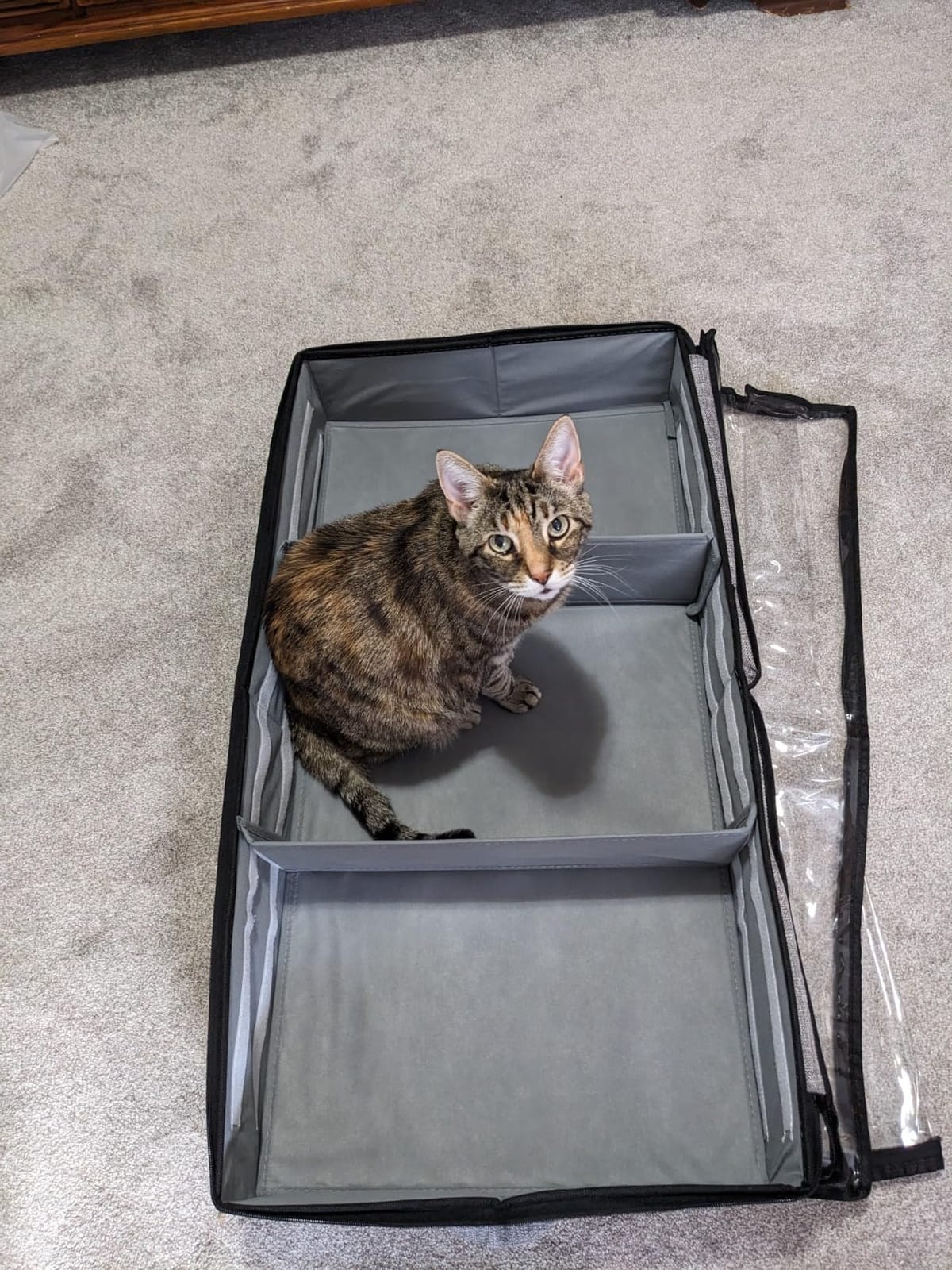
This is the answer for anyone who has been disappointed by soft-sided bags. Reinforced polypropylene boards line the sides and the bottom, so the bin stays rectangular when you pack it with a comforter, and it stands upright on the floor while you pull things out instead of slumping sideways.
It holds the highest average rating in this roundup at 4.7, with reviewers reporting a high share of five-star feedback. The reason is consistent across the reviews: the side panels and base are what make the difference once the bin is loaded, which is precisely the state a winter storage bin spends its life in.
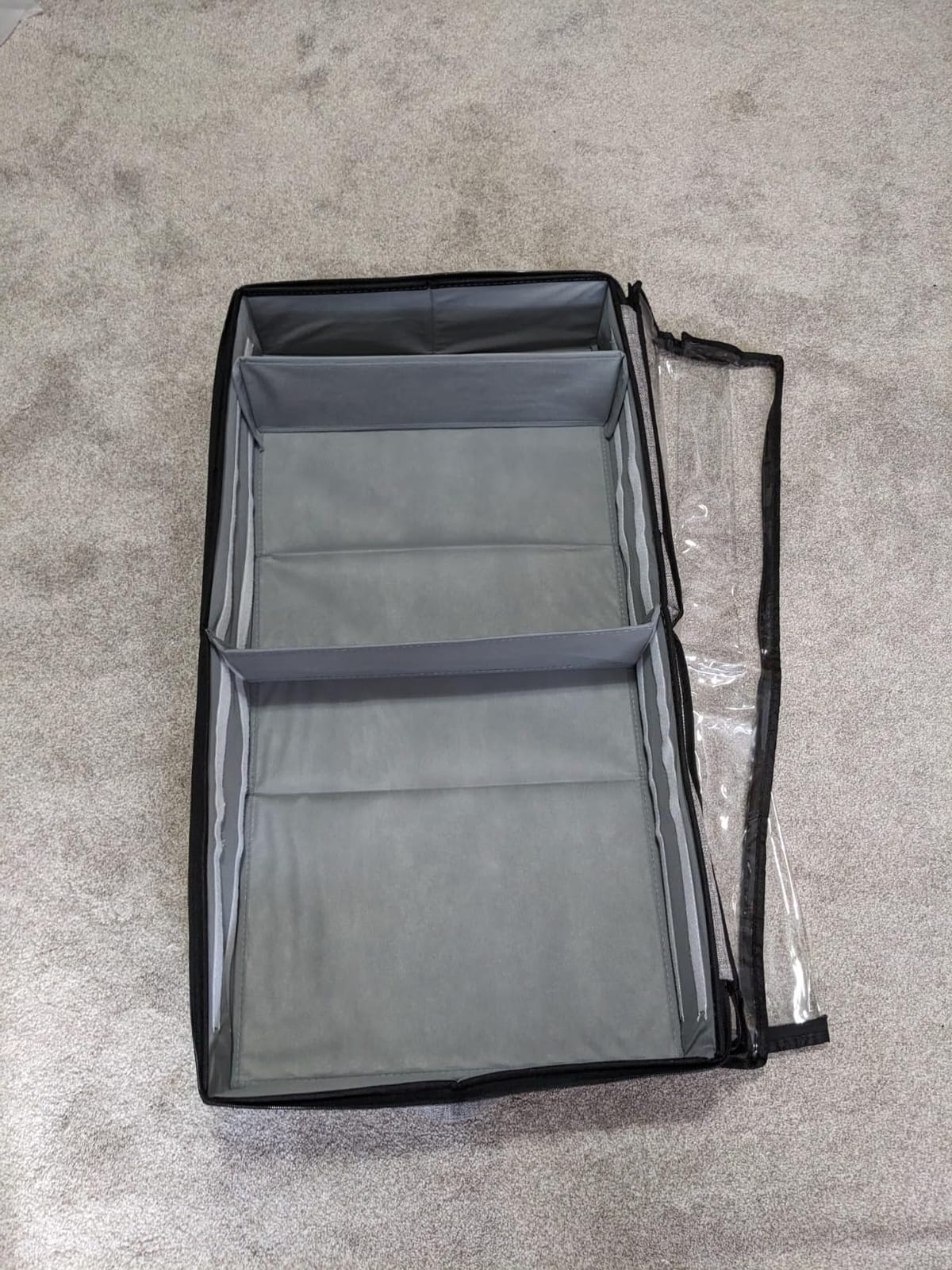
At 60 litres and 33.7 by 17.1 inches, it is longer and wider than most fabric bags, which is exactly what quilts and extra bedding need. Handles are reinforced on three sides, and the large clear PVC window plus a two-way metal zipper mean you can open one panel rather than the whole top.
The fabric is two-ply thickened linen-style material described as odourless, eco-friendly and breathable. It also comes in an 8-inch height, which matters if your clearance allows for it and you want more volume per bin.
Best for quilts, comforters and bulky bedding
Structure is the reason to spend more here. A loaded winter comforter pushes outward on every side, and unsupported bags buckle under that pressure. With boards in the sides and base, this bin takes the load and keeps its shape, so it also stacks and pulls out cleanly.
If you store a lot of bedding rather than clothing, this is the one to buy. The 60-litre volume and long footprint mean fewer trips between bin and bed when the season changes.
Skip it if your room runs damp
It is listed as not water resistant, and breathable linen-style fabric is the wrong choice for a basement or a ground-floor room with known damp. If that describes your space, the plastic options later in this guide are the better match.
The second limitation is that it is only sold in pairs. If you genuinely need one bin, you have bought two, and they do nest when empty.
8. IRIS USA 50 Quart Long Under Bed Storage Bin with Lids, Clear
IRIS USA 50 Qt. Long Under Bed Storage Bin with Lids, Clear
32.5 x 17.9 x 6.5 inches outer
50 quart capacity
Buckle latches
Rated to 38 pounds
Pros
- Rigid clear plastic stacks when loaded
- Fully transparent body and lid
- Buckle latches seal better than zippers
- BPA
- acid
- PVC and lignin free
- Long profile fits beside a centre support
Cons
- Thin plastic buckles can arrive broken
- Outer length is longer than often quoted
- Sold as a single bin
This is the only genuinely sealed, rigid option in the roundup, and that changes what you can put in it. A buckle latch compresses a lid onto the rim rather than pulling fabric together around a zipper, so dust, debris and small insects are excluded far more effectively than any soft bag allows.
Rigid plastic also stacks. If your clearance is tall enough to take two bins high, you can double your storage by putting one on top of another, which no fabric bag here will do while loaded.
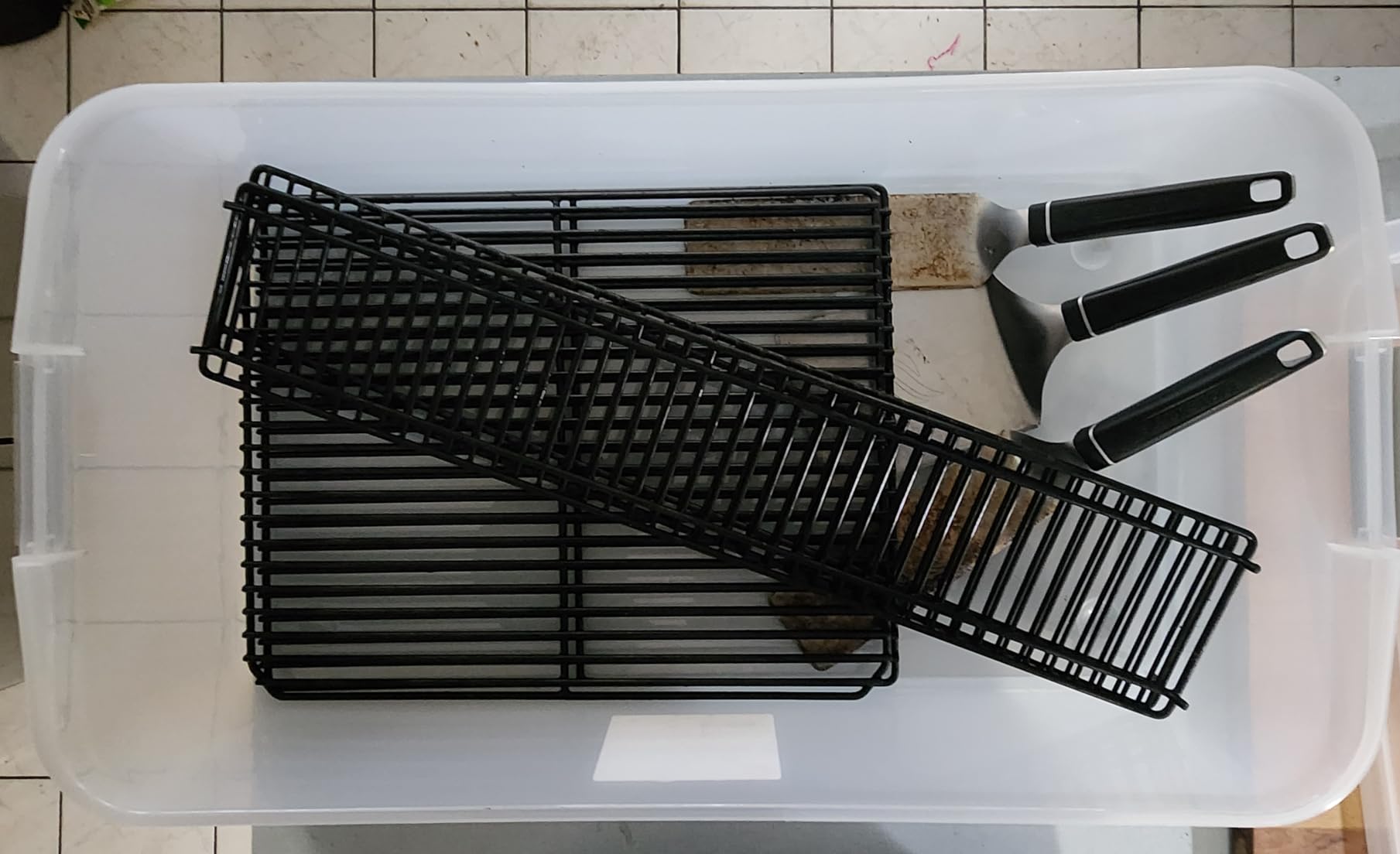
Be aware of one measurement trap. The inner dimensions are 28.25 by 14.25 by 5.75 inches, but the outer dimensions are 32.5 by 17.88 by 6.5 inches, and the larger figure is the one that has to clear your bed. Reviewers point this out repeatedly, and it is a common source of the fits-but-thought-it-would-not frustration.
At 32.5 inches long, it is designed to sit neatly beside the centre support of a king or queen frame, using a gap that slimmer bags cannot occupy. Check whether your frame has that gap before assuming it will fit.
Best for keeping dust and pests out
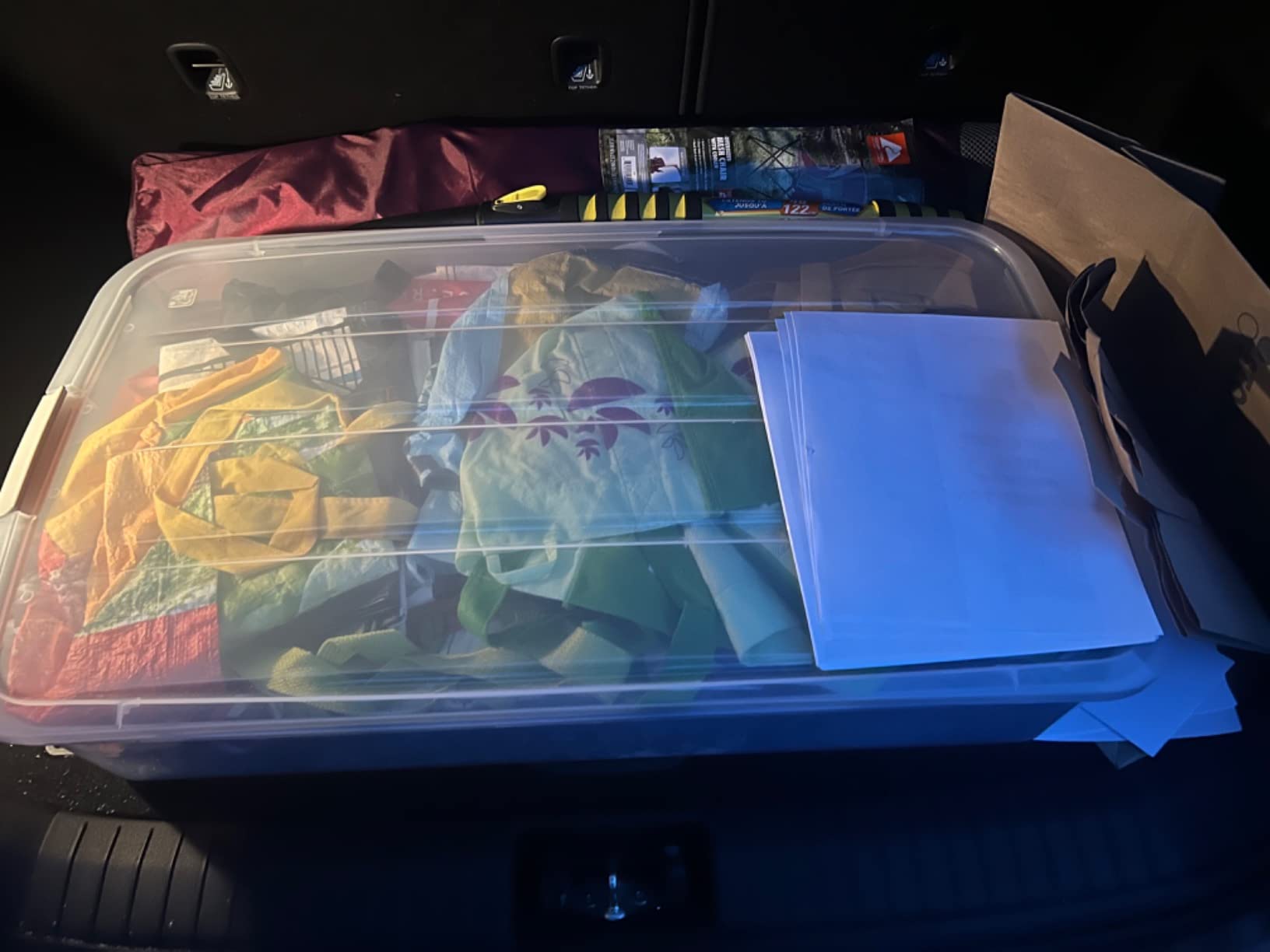
Choose this when the room itself is the problem: an old bedroom, a ground-floor flat near a garden, or a house where you have already dealt with a moth infestation. A rigid latched bin is the only option here that creates a real barrier.
Visibility is excellent. The entire body and lid are transparent, so you can see everything without lifting anything, and it is listed as BPA free, acid free, PVC free, lignin free and recyclable.
Skip it if clearance is under 6.5 inches
The 6.5-inch outer height is one of the taller profiles here, so it will not go under a low frame. It also does not fold flat, which means it occupies its full footprint even when empty.
The recurring complaint is the hardware. The buckle latches and handles are thin plastic and reviewers report them occasionally arriving cracked, so check the latches the moment the box opens rather than discovering a failure after a season of storage.
9. punemi 6.7 Inch Tall Sturdy Under Bed Storage Containers, 2-Pack
punemi 6.7 in Tall Sturdy Under Bed Storage Containers with Lid, 2Pack,Gray
30 x 15 x 6.7 inches
49 litre capacity
Cardboard insert in the base
Three-sided zip opening
Pros
- More structure than a plain soft bag
- Longer than most competitors so more per bin
- Three-sided zipper opens wide
- Arrives with no chemical odour
- Label pocket for identification
Cons
- Capacity smaller than expected once set up
- Thin material can tear under stress
- Poor for stacking
This sits in the middle of the roundup and it is a genuinely useful middle. At 30 by 15 by 6.7 inches with a 49-litre capacity, it is longer than most fabric bags of similar height, which means more folded sweaters or comforters per bin without needing extra clearance.
The build is described as structured fabric with reinforced sides and bottom plus a cardboard insert in the base. That is not as rigid as the polypropylene board bins later on, but it is a clear step up from a plain soft bag, and it holds a rectangular shape when loaded well enough to stack and pull out cleanly.
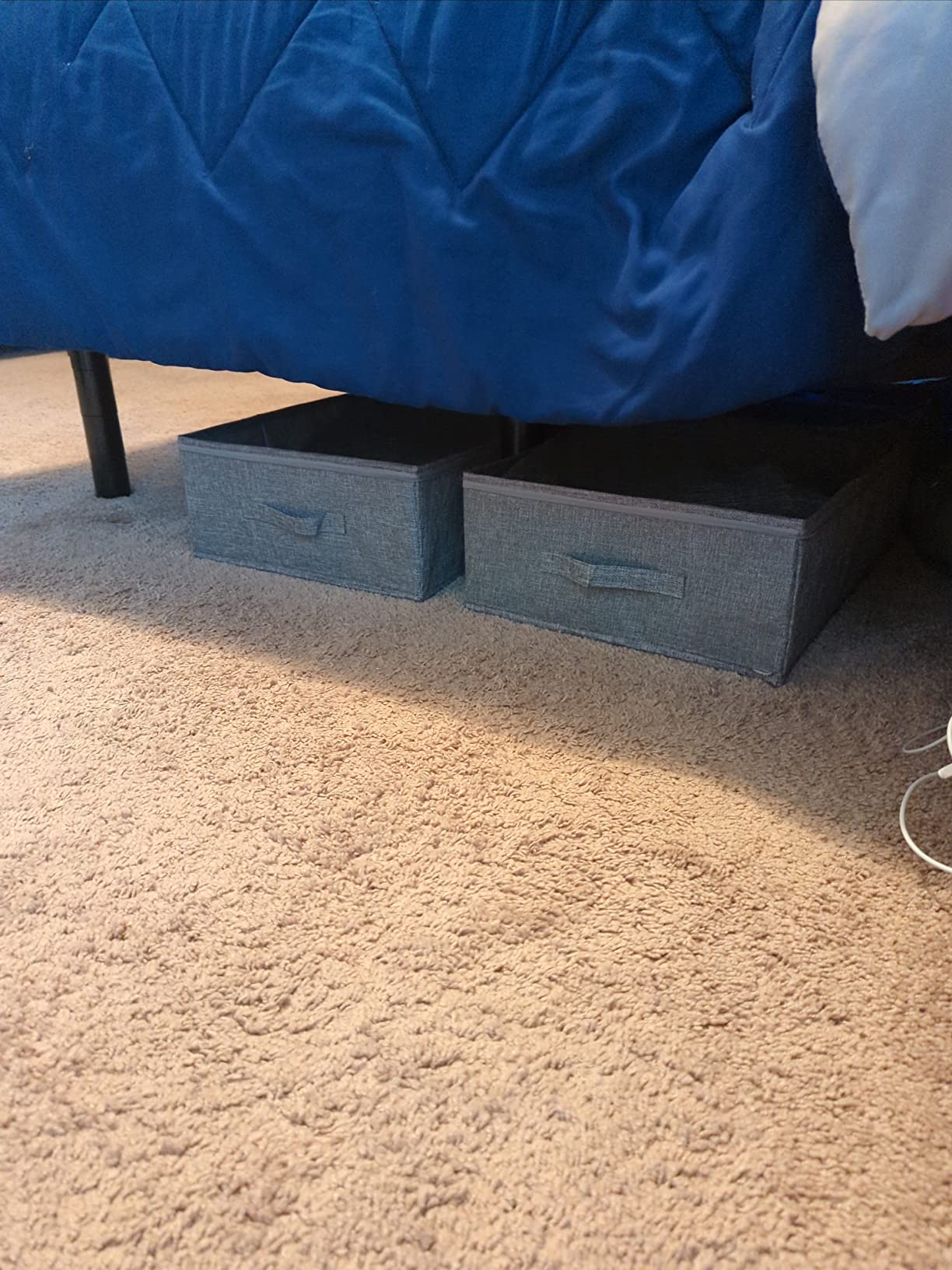
The three-sided zippered opening is the feature that surprised us. Most bags open along the top only; this one unzips along three edges, which for bulky bedding means you can load a comforter without shoving it through a narrow slot. One front handle plus two side handles cover both dragging and carrying.
It also arrives with no chemical odour, which is worth mentioning because off-gassing from fabric bins is a real issue with cheaper non-woven material and a common reason people abandon a container after one season.
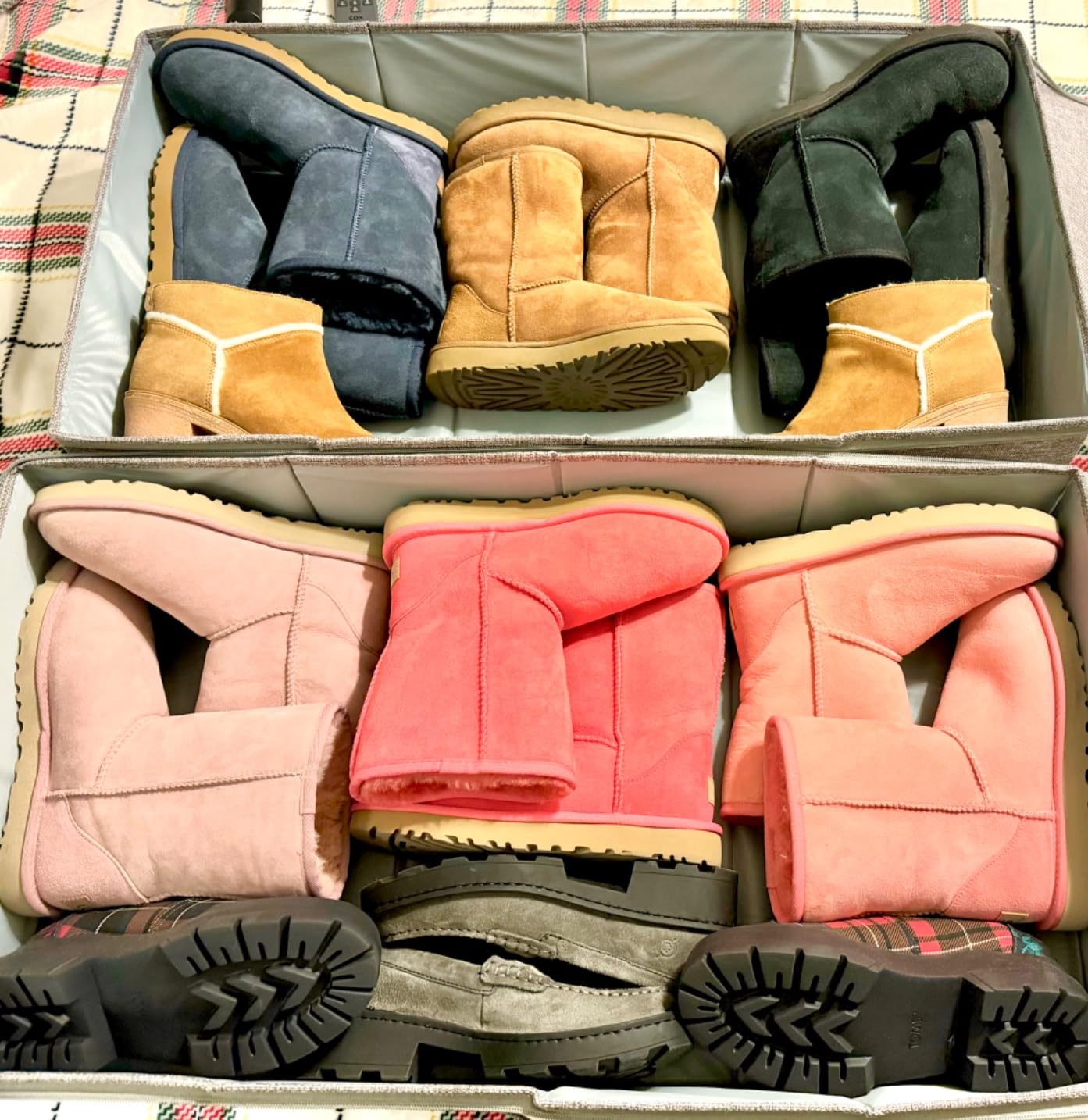
Best for dorm rooms and small apartments
Dorms and studio flats have the tightest clearance and the least room to spare, which makes this a good match: 6.7 inches tall fits most standard frames, and 30 inches of length uses the space along the frame efficiently. The same brand is available in heights from 3 to 10 inches, so you can match the exact gap you measured.
The clear label pocket is more useful than it sounds. Under a bed, where the light is poor and you are on the floor, a card naming the contents saves opening every bag.
Skip it for very heavy bedding or stacking
Two honest limits. Capacity runs smaller than expected once the structure is set up, so some households will need to split a load across two bins. And the material is thin enough that reviewers report it can tear under stress, and that it stacks poorly when loaded.
One practical note on dimensions: reviewers mention the folded carton is bulky, which can matter in a dorm where parcels are collected from a reception desk rather than delivered to the door.
10. LANDNEOO Humid-Proof Plastic Under Bed Storage Bins, 2-Pack
LANDNEOO 2 Pack Under Bed Storage Containers Bins, Humid-Proof Plastic Underbed Storage Bins, Clothes Storage and Organization Bags, Under the Bed Blanket Storage with Handles for Clothes, Bedroom
31.9 x 17.5 x 5.9 inches
55 litre capacity
Wipe-clean plastic
Four reinforced handles
Pros
- Humid-proof plastic suits damp spaces
- Wipes clean with a damp cloth
- Low 5.9 inch profile
- Clear 360-degree body
- Four handles including two for pulling out
Cons
- Less protective for clothing than fabric or lidded bins
- Limited stacking
- Limited size options in this line
This is the inexpensive choice for one specific problem: a bedroom that stays damp. Ground-floor flats, converted basements and rooms with a chimney breast that draws moisture in winter are exactly where a breathable fabric bin will pick up a musty smell and eventually mildew. Wipe-clean plastic does not absorb moisture in the first place.
At 31.9 by 17.5 by 5.9 inches it is also one of the slimmer bins here, so it clears tighter frames than the rigid lidded plastic units. The fully clear body gives you a 360-degree view, which matters in the dim space under a bed.
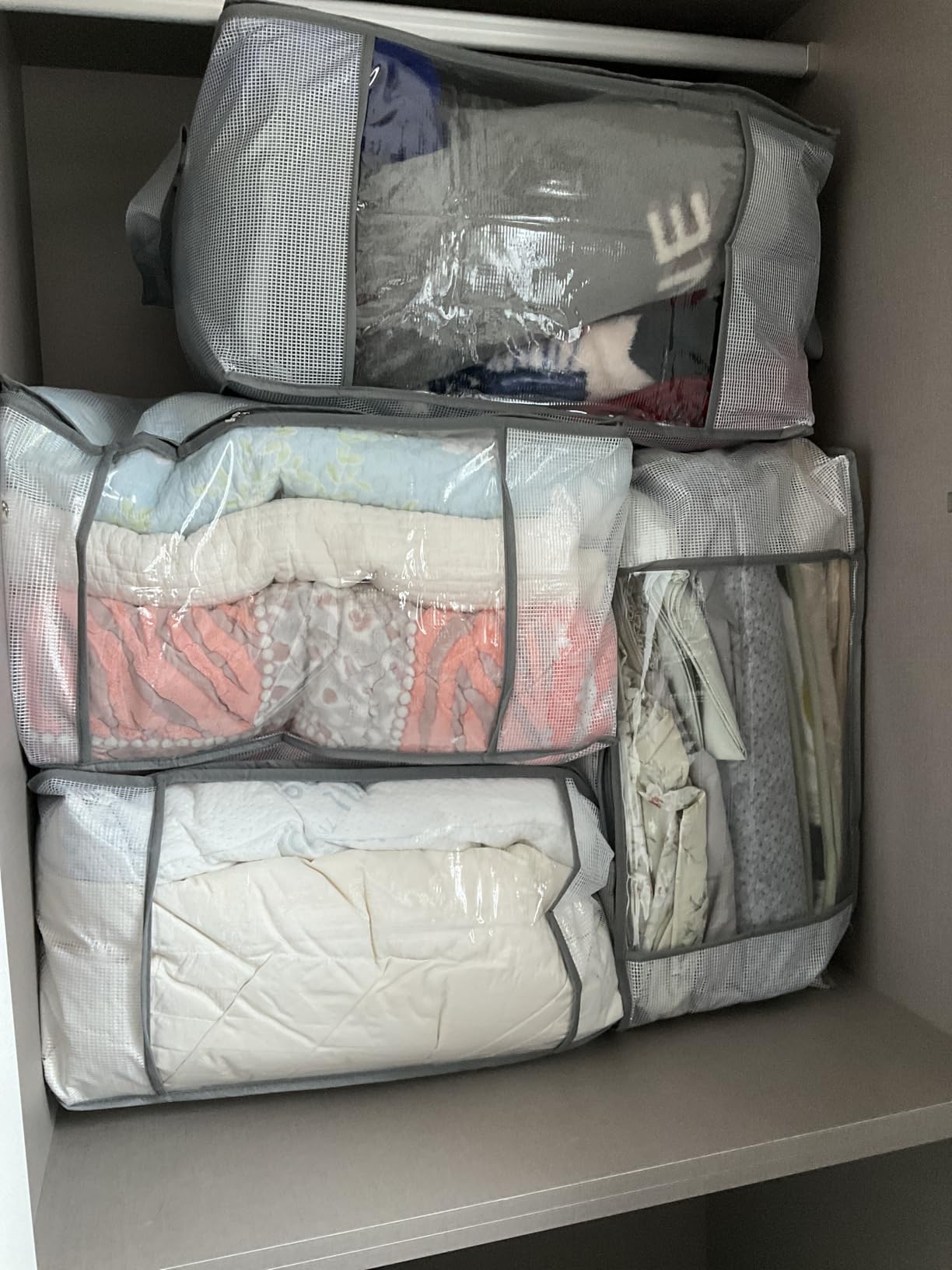
Handles are reinforced on both the top and the side, two of each. The side pair are angled for pulling the bin out from under the frame, and the top pair are for carrying it once it is clear. The double-zipper closure gives you the option of opening one panel only.
Capacity is 55 litres, which is competitive with the fabric bags and larger than most of the plastic competitors. It is also available as a three-pack at the same size if one pair is not enough for a family rotation.
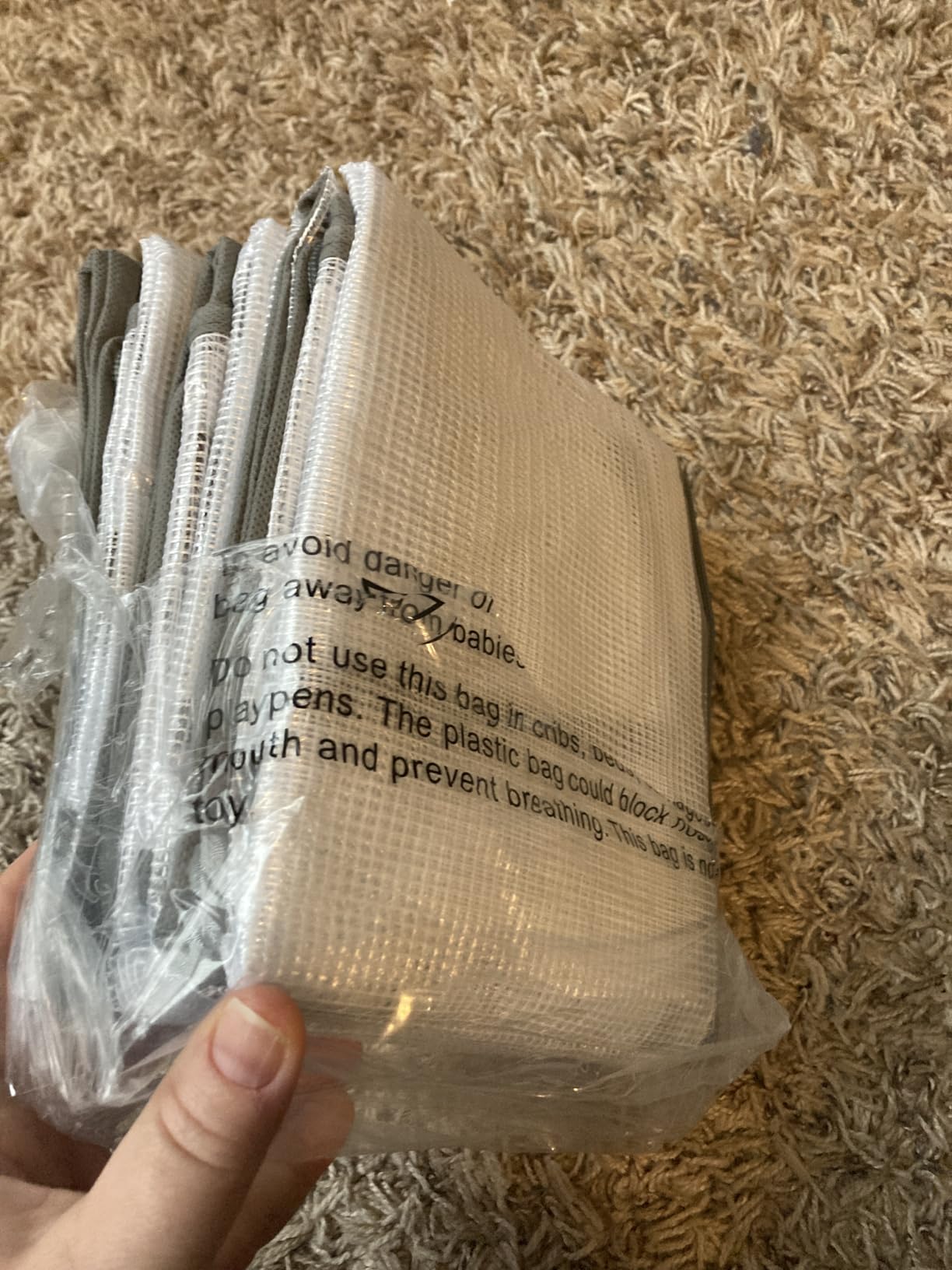
Best for damp or poorly ventilated rooms
Pick this if mould is your concern rather than pests. It is the least expensive way to keep stored clothing in a room that does not dry out, because the material itself does not hold damp the way fabric and cardboard liners do.
It is also a good general-purpose bin for a rental or a first home, because a damp cloth is the entire cleaning routine. Nothing needs airing out for a day before it goes back under the bed.
Skip it if you are storing delicate wool or knits long term
Plastic is harder than breathable fabric on delicate fibres. Coats and outerwear with structure are fine, but long-term storage of cashmere and fine wool in a non-breathable plastic shell is the pairing we would avoid.
The shape also limits stacking, and it has fewer size options than some rivals. If you need several heights to suit different rooms in the house, check before committing.
How to Prep Winter Clothes Before You Store Them
How you prepare the clothes matters as much as the container. A perfectly chosen bin filled with unwashed, slightly damp knitwear will smell in March, and moths are attracted to the body oils and food traces left on fabric rather than to the fabric itself.
Declutter first. Anything you would not wear if you unwrapped it now does not need a storage bin. Repair what is worn, donate what is unused, and be honest about how many of each item you actually own. This is the step people skip, and it is the one that decides whether you need two bins or four.
Wash everything, including the “clean” sweaters. Moths are drawn to body oils, sweat and food fibres. Washing removes what attracts them, and unscented detergent is the right choice because scented products can draw other pests toward stored clothing.
Dry completely. This is the single most important step for preventing mildew. Any residual dampness sealed into a container for five months becomes a musty smell. For wool and down, dry flat and slowly rather than in a hot tumble.
Fold rather than hang. Hanging a heavy knit for months stretches the shoulders permanently. Fold sweaters and cardigans and store them flat, ideally in a single layer or lightly filled.
Pack loosely and add protection. Do not overfill. Pressed-together contents trap moisture, which is the most common cause of the mouldy winter coat people find at the end of the season. Cedar blocks or moth-repellent sachets help as a preventative measure.
Label the front edge. Write the contents and the season on the side facing out. You will not remember which of six identical bags holds the winter coats, and the label takes ten seconds.
Before you fold a coat that has been worn all winter, a steam rather than a wash often does the job and removes the odours that attract pests. Our guide to the best garment steamers for clothes covers the ones that are worth the counter space.
One material rule that catches almost everyone: never vacuum-seal down, wool, cashmere, leather or fur. Vacuum bags crush loft out of down permanently and can damage the natural oils in wool and leather. Those items want airflow, which means breathable fabric and a loose fold.
What Not to Store Under Your Bed
Do not store damp or worn clothing, food, anything you need every day, or anything heavier than the container is designed to carry. Under-bed space suits textiles that are flat, infrequent and dry. It is a poor fit for damp laundry, food and anything that needs regular access, and overfilling a bin traps moisture that turns into mildew by spring.
Store these under the bed
Folded winter coats, parkas and puffer jackets
Sweaters, cardigans and other knitwear, folded flat
Extra comforters, quilts, duvets and seasonal bedding
Scarves, hats, gloves and wool socks
Winter boots and shoes, cleaned and dried first
Children’s outgrown winter clothing awaiting the next size
Holiday and seasonal items used once or twice a year
Keep these out of it
Damp or freshly worn clothing that has not been fully dried
Food of any kind, including pet treats and dry goods
Anything you need weekly, such as winter coats in heavy-use climates
Loose items over the bin’s weight rating, including stacked toolboxes and hard cases
Clothing already showing moth damage, which needs treatment before it goes anywhere else
Paper-heavy archives and anything you cannot replace
For coats you genuinely need every week, an open rail is a better answer than a deeper bag. Our roundup of wardrobe racks for clothes covers slim rails that take up a fraction of a bin’s footprint, and for a small bedroom a fitted armoire for clothes can absorb the seasonal overflow permanently.
What to Look for in Under Bed Storage for Winter Clothes
Height against measured clearance
Height is the only criterion you cannot compromise on. Measure the lowest point of your frame, subtract an inch, and then buy within that number. Every other feature is a preference, but a container that does not fit is a container you cannot use. Check outer dimensions rather than internal ones, because that discrepancy catches people out on the rigid plastic bins.
Material matched to the room
Breathable non-woven or linen-style fabric is the right default for conditioned bedrooms and for wool and cashmere, because air moves through it and fibre stays healthy. Rigid or waterproof plastic is the right answer for damp rooms and for pest exclusion, and for anything that needs to be wiped rather than aired.
If you want a single reference for the general-purpose version of this decision, our guide to the best under bed storage containers covers types beyond the seasonal focus here.
Closure, handles and wheels
On closure, zipper versus snap is the real trade. Zippers give you partial opening, which matters when you want one jumper out of a full bin, but they are the first component to fail on cheaper bags. Rigid latched lids seal best but offer no partial access. Check that the zipper pull is metal if you plan to open the bin more than twice a year.
Handles should be reinforced and preferably double-stitched, and wide enough to take a full bag’s weight with one hand. Wheels are worth adding when you will access items weekly, and pointless when you will not, because they add height, cost and a plastic part that can wear.
Reusability and material lifespan
Every fabric bag here will outlast a disposable vacuum bag by years, which is both the cheaper and the lower-waste option. Vacuum bags are worth it for moving houses, but they compress loft out of down and wool permanently, and they are the single most common thing we see ruined in a seasonal rotation.
We would also prioritise a container you can wash or wipe and reuse over anything marketed as disposable, and check that replacement parts such as casters are available for wheeled models before you commit to one.
Moth, mildew and bed-bug prevention
Prevention before bagging is the fix that works. Wash everything with unscented detergent, dry it fully, and fold it loosely. Then add cedar blocks or moth-repellent sachets, which are preventative rather than curative: they deter moths from settling but will not clear an existing infestation.
Sealed containers do interrupt the bed-bug life cycle, since larvae need sustained access to air to develop. A rigid latched bin is the strongest version of that, though it is worth remembering that bed bugs travel on clothing and in luggage, so sealed bins under the bed are a secondary measure rather than the primary one.
For moisture, check a stored bin every couple of months in humid months. A moisture absorber sachet inside a breathable fabric bin costs almost nothing and gives you an early signal if something has gone damp.
Frequently Asked Questions
What is the best way to store clothes under my bed?
Group clothes by category, fold them loosely, and pack them into breathable low-profile bags or clear lidded bins sized to your measured bed clearance. Label each container on the side facing out, leave breathing room rather than overfilling, and keep one empty bin at the front as a stop so loaded bags do not slide out.
What should you not store under your bed?
Avoid damp or unwashed clothing, food of any kind, items you need every week, anything heavier than the container’s weight rating, and clothing already showing moth damage. Overfilled bins are also a mistake, because pressed-together contents trap moisture that turns into mildew.
Will clothes go mouldy in a storage container?
Yes, if items are stored damp, overstuffed, or sealed in a non-breathable container in a humid room. The practical fixes are to wash and dry everything fully, pack loosely, use a breathable fabric container in a dry room, add a moisture absorber sachet, and check the bin every couple of months.
Can moths survive in airtight bags?
Clothing moth larvae need sustained air access to develop, so sealed bags left closed for a long period can kill or trap larvae already inside. The more reliable fix is prevention before bagging: wash everything with unscented detergent, dry it fully, and add cedar blocks or moth-repellent sachets.
How do I know what size under bed bins will fit?
Measure the vertical gap between the floor and the lowest point of your bed frame at the head end, centre and foot end, then use the smallest figure minus about one inch. Compare that to the bin’s outer height, and add one inch if you plan to use a wheeled model.
Should winter coats be vacuum packed?
No. Vacuum bags permanently compress the loft out of down jackets and can damage the natural oils in wool, cashmere and leather. Winter coats are better stored folded loosely in a breathable fabric bag with room around them, with cedar or a moth-repellent sachet added for protection.
Conclusion: Which Under Bed Storage Wins for Winter Clothes
The best under bed storage for winter clothes is the one that matches your clearance, breathes if your room is dry, and holds its shape when loaded. Our overall pick is the ZOBER four-pack for ordinary seasonal rotation, with the Budding Joy set behind it if capacity per bag matters most.
For specific situations: the Vailando side-supported bins for quilts and bulky bedding, the Yecaye or PHINOX wheeled units if you want mid-week access, the IRIS lidded bin if dust and pests are the concern, the punemi bins for dorms and low-clearance beds, and the LANDNEOO plastic pair for damp rooms.
Whatever you choose, measure first, wash and dry everything properly, pack loosely, and label the front edge. Seasonal rotation is a five-minute job twice a year if the system is right, and an afternoon of regret if it is not. Check the latest on any of these before you commit, and refresh your setup each autumn as you bring the winter clothes out again in 2026.