
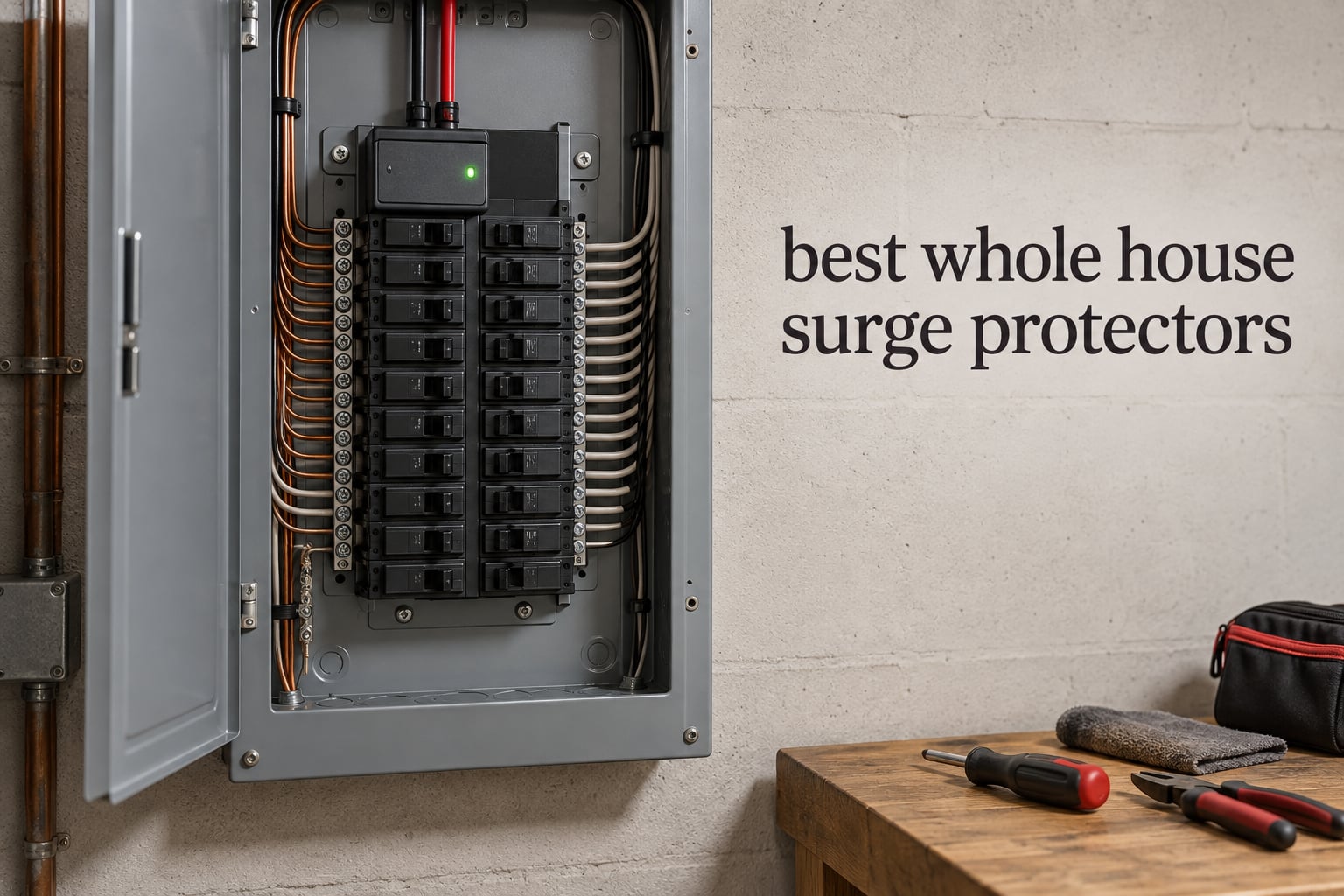
A surge does not have to come from a lightning strike to fry your electronics. Motors cycling on and off inside your own walls generate the majority of household power surges, and when one lands on a heat pump compressor or a smart home hub the repair bill runs into thousands. After going through ten of the most highly rated whole house surge protective devices on the market and checking every spec sheet against its certification, the Eaton CHSPT2ULTRA comes out on top for most homes: 108 kA of surge capacity, a universal fit for any manufacturer’s load centre, and a 4.8-star average across nearly 2,900 owner reviews.
That is the short answer to the best whole house surge protectors question. The rest of this guide breaks down the ten strongest options across kA rating, voltage protective rating, enclosure type, warranty length and panel compatibility, because a surge protector that will not physically mount in your panel is worthless regardless of its numbers.
If your damage came from a RV or a travel trailer rather than a house panel, our RV surge protector picks cover a different installation problem entirely. And if the grid in your area is unstable enough that you are already considering a whole house generator, the surge protector is a cheaper first step.
Table of Contents
Top 3 Best Whole House Surge Protectors

Whole House Surge Protectors at a Glance
Every device below is listed for UL 1449 and mounts at the load centre. The surge current figure is the kA per phase rating, which is the number that decides how much energy the metal oxide varistors can absorb before they sacrifice themselves.
| Product | Specifications | Action |
|---|---|---|
| Eaton CHSPT2ULTRA 108 kA |
|
Check Latest Price |
 Square D HEPD80 80 kA Square D HEPD80 80 kA |
|
Check Latest Price |
 Eaton CHSPT2SURGE 36 kA Eaton CHSPT2SURGE 36 kA |
|
Check Latest Price |
 Square D HOM2175SB 25 kA Square D HOM2175SB 25 kA |
|
Check Latest Price |
 Eaton BRNSURGE 18 kA Eaton BRNSURGE 18 kA |
|
Check Latest Price |
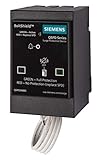 Siemens BoltShield QSPD2A065P 65 kA Siemens BoltShield QSPD2A065P 65 kA |
|
Check Latest Price |
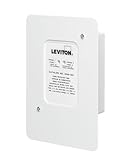 Leviton 51110-SRG 26 kA Leviton 51110-SRG 26 kA |
|
Check Latest Price |
 Siemens QSPD2A035B 35 kA Siemens QSPD2A035B 35 kA |
|
Check Latest Price |
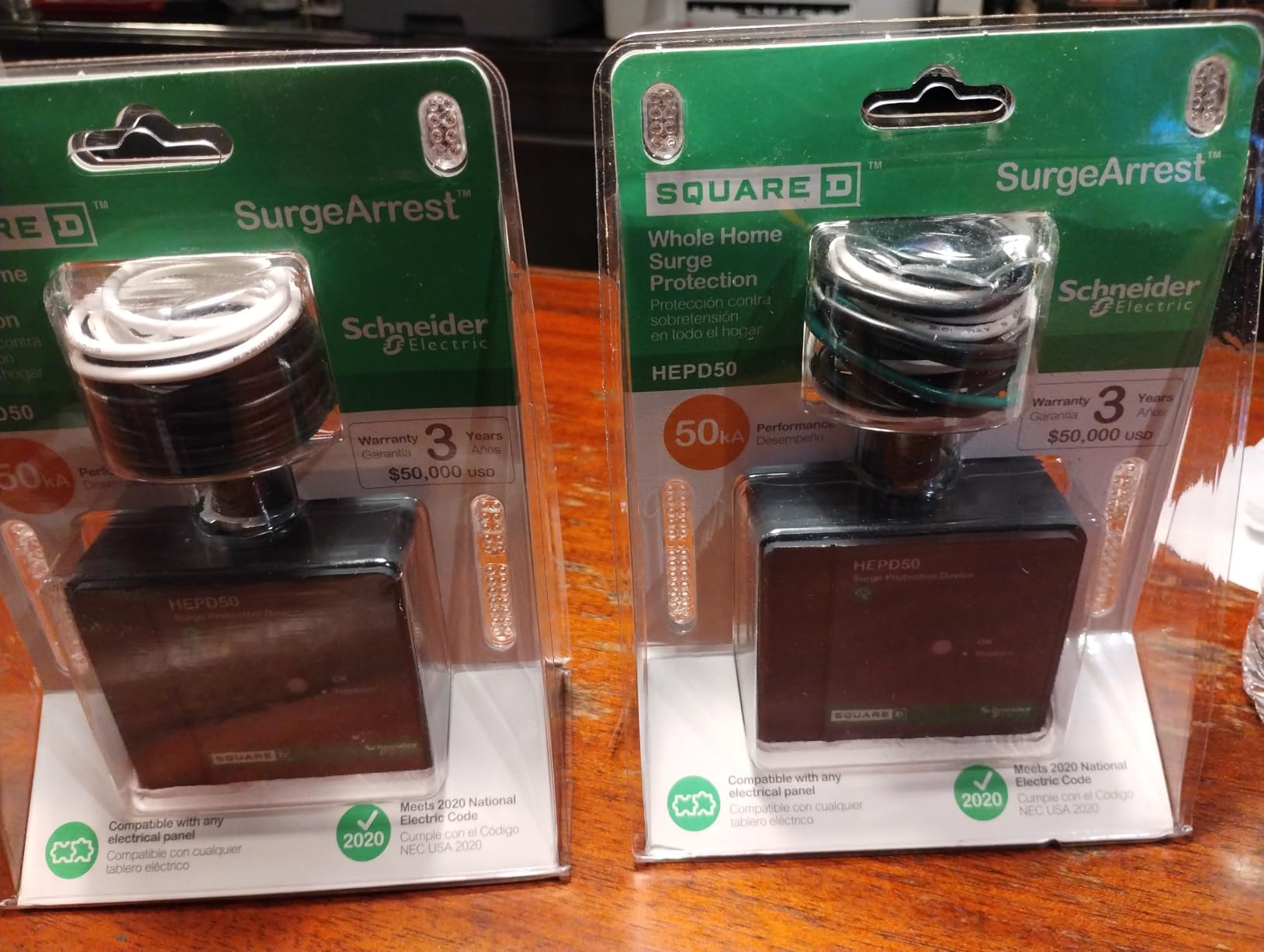
 Square D HEPD50 50 kA Square D HEPD50 50 kA |
|
Check Latest Price |
 Leviton R2120-B 36 kA Leviton R2120-B 36 kA |
|
Check Latest Price |
1. Eaton CHSPT2ULTRA – Best Overall for Most Homes
Eaton Surge Protection Device, 1 Phase, 120/240V, 2 Poles, 2 Wires CHSPT2ULTRA – 1 Each
108 kA surge rating
120/240V 1-phase 2-pole
Fits any load centre
ABS enclosure
Pros
- Connects to any manufacturer's load centre
- Compact 2.38 by 5.25 inch housing
- Highest kA figure in the roundup
- 4.8 stars across nearly 2900 owner reviews
Cons
- Needs solid high-voltage panel wiring knowledge
- Must sit in the first breaker position to intercept surges
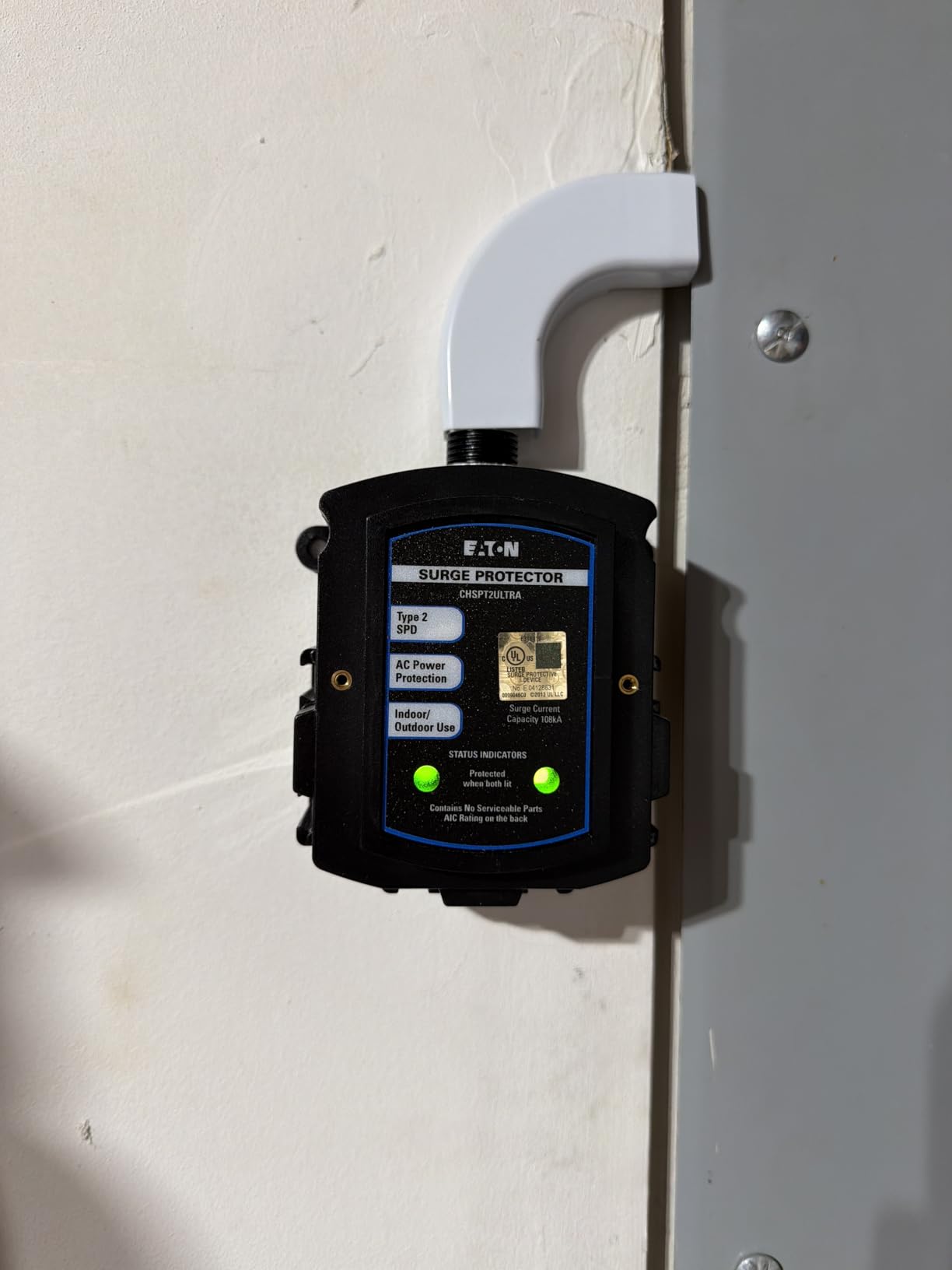
The CHSPT2ULTRA is the unit our readers keep coming back to, and the reason is simplicity rather than a single headline number. It connects to essentially any residential load centre, so the panel brand stops being a deciding factor when you are shopping.
At 2.38 by 5.25 inches and 8 ounces it is also the smallest footprint in this group, which matters in a crowded panel where every breaker position is spoken for.
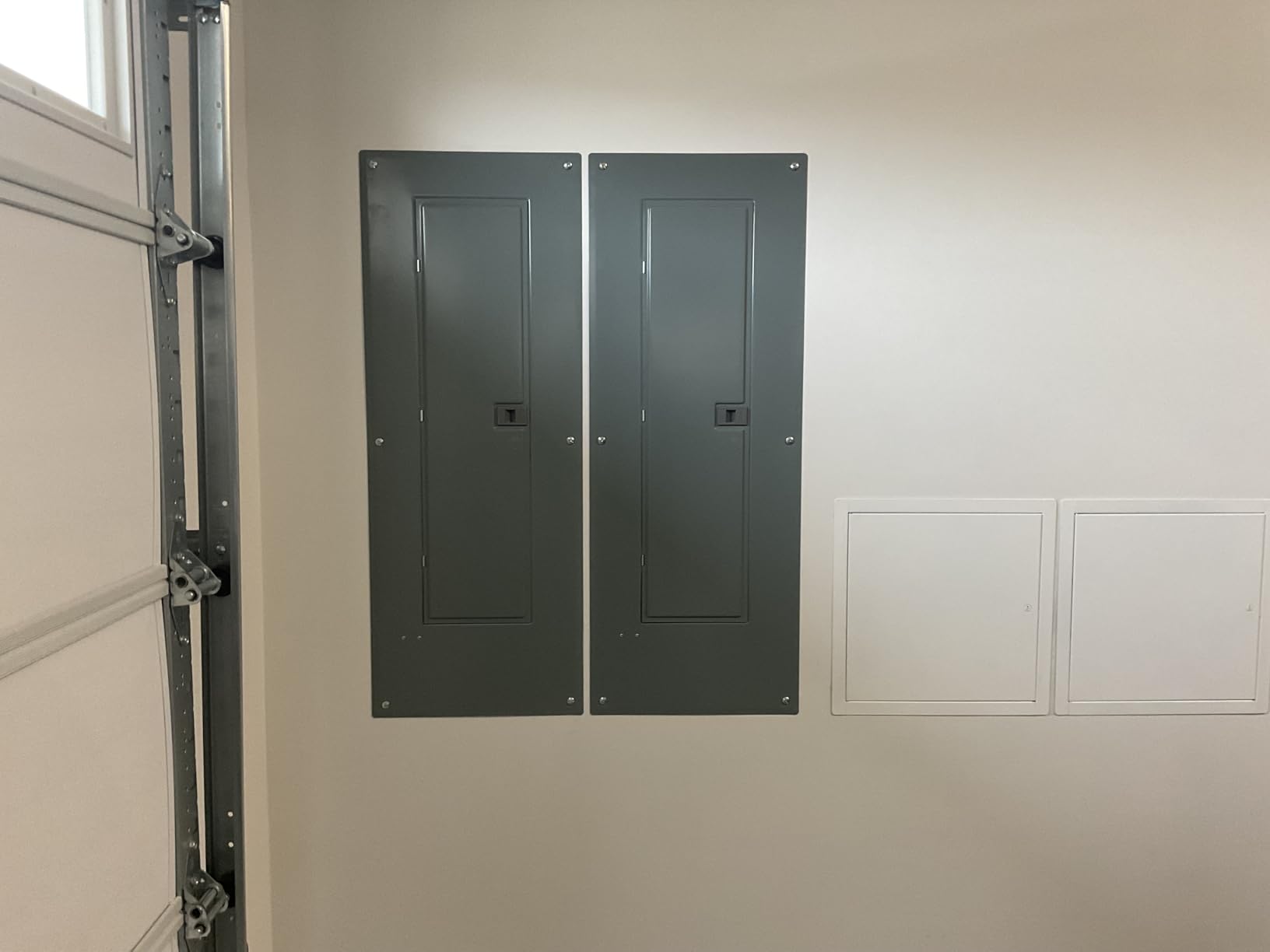
The 108 kA surge rating is the highest figure we verified across all ten devices, and it is a per phase rating rather than a whole panel total. That headroom matters most in regions with frequent storm activity, where the device may absorb more than one serious event over its life.
Owners treat it as set-and-forget insurance. The status indicator shows whether the unit is still protecting, and the overwhelming feedback is about the peace of mind rather than any measurable performance gain.
When this is the right pick
Choose the CHSPT2ULTRA if your panel is from any manufacturer, if you want the largest surge capacity in the group, and if you have hard-wired loads such as a central HVAC unit, an electric range or a Level 2 EV charger that a power strip can never reach.
It is also the safest recommendation for a first-time buyer who does not yet know the make of their own load centre.
When to pick something else
If your panel is a Square D Homeline or a Siemens board and you would rather have a device that plugs onto the bus bar in minutes instead of hardwiring to a two-pole breaker, a plug-on model below will save you install time.
The other limitation is placement. If the first breaker position in your panel is physically blocked or cannot be freed without reshuffling circuits, this unit becomes awkward to install properly.
2. Square D HEPD80 – Best Value at 80 kA
Square D HEPD80 Universal Whole House Surge Protection Device, 1-Phase, 3-Wire for 120/240V, 80kA
80 kA per phase
120/240V 1-phase 3-wire
Waterproof housing
600V clamping
Pros
- 80 kA capacity in a universal housing
- Waterproof enclosure suits outdoor mounting
- LED tells you when replacement is due
- Five-year product warranty
- 4.7 stars from more than 1300 owners
Cons
- Wiring is longer than some buyers expect
- Needs a spare two-pole breaker position in the panel
The HEPD80 is the middle ground we kept recommending to people who wanted serious capacity without chasing the top kA number. Eighty kiloamps per phase is genuinely oversized for a typical residential service, which is exactly why it holds value so well.
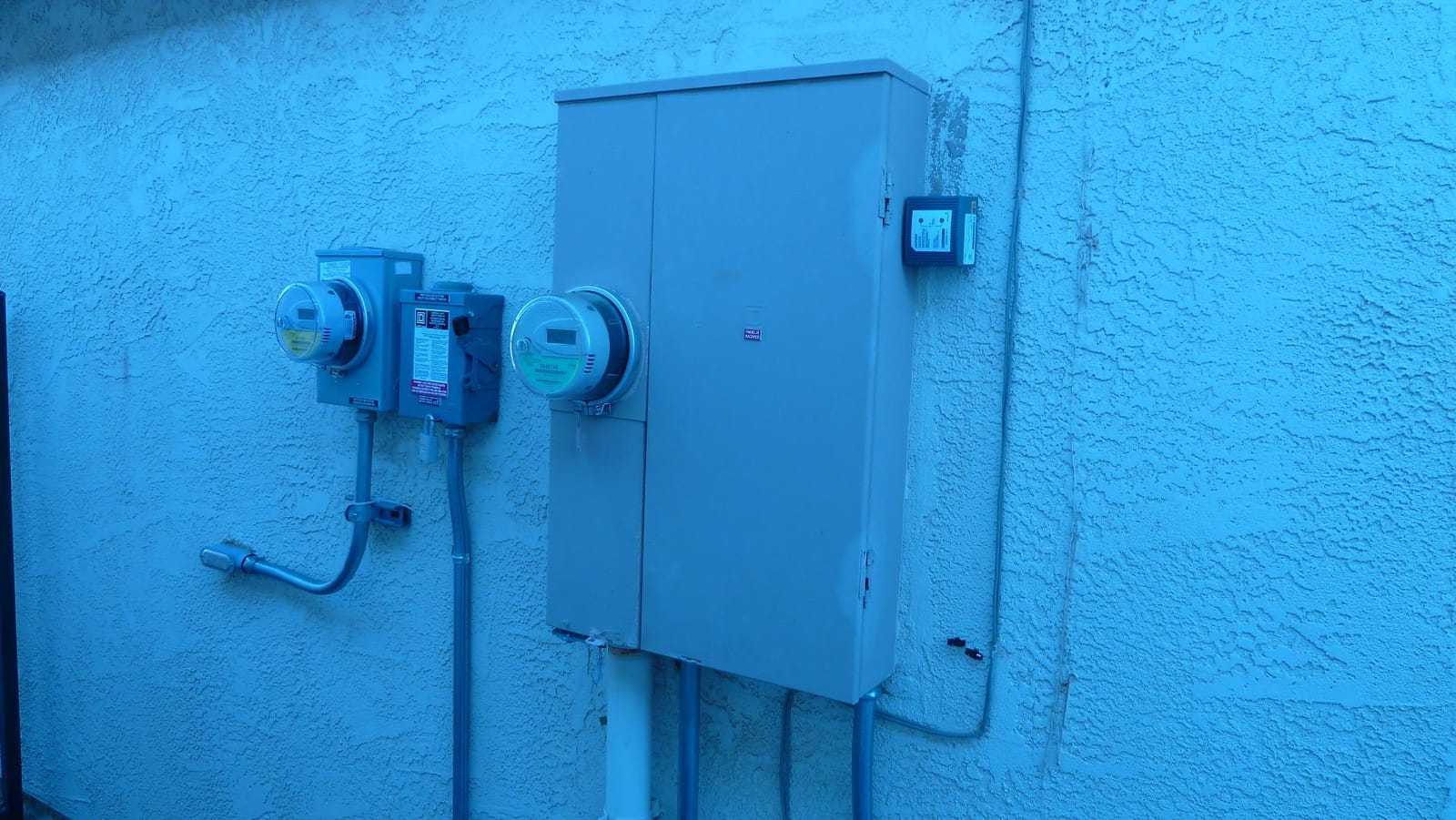
It mounts to any residential load centre, so it works in an Eaton panel just as happily as in a Schneider one. The 600 volt clamping figure is the lowest we saw on a hardwired unit in this group.
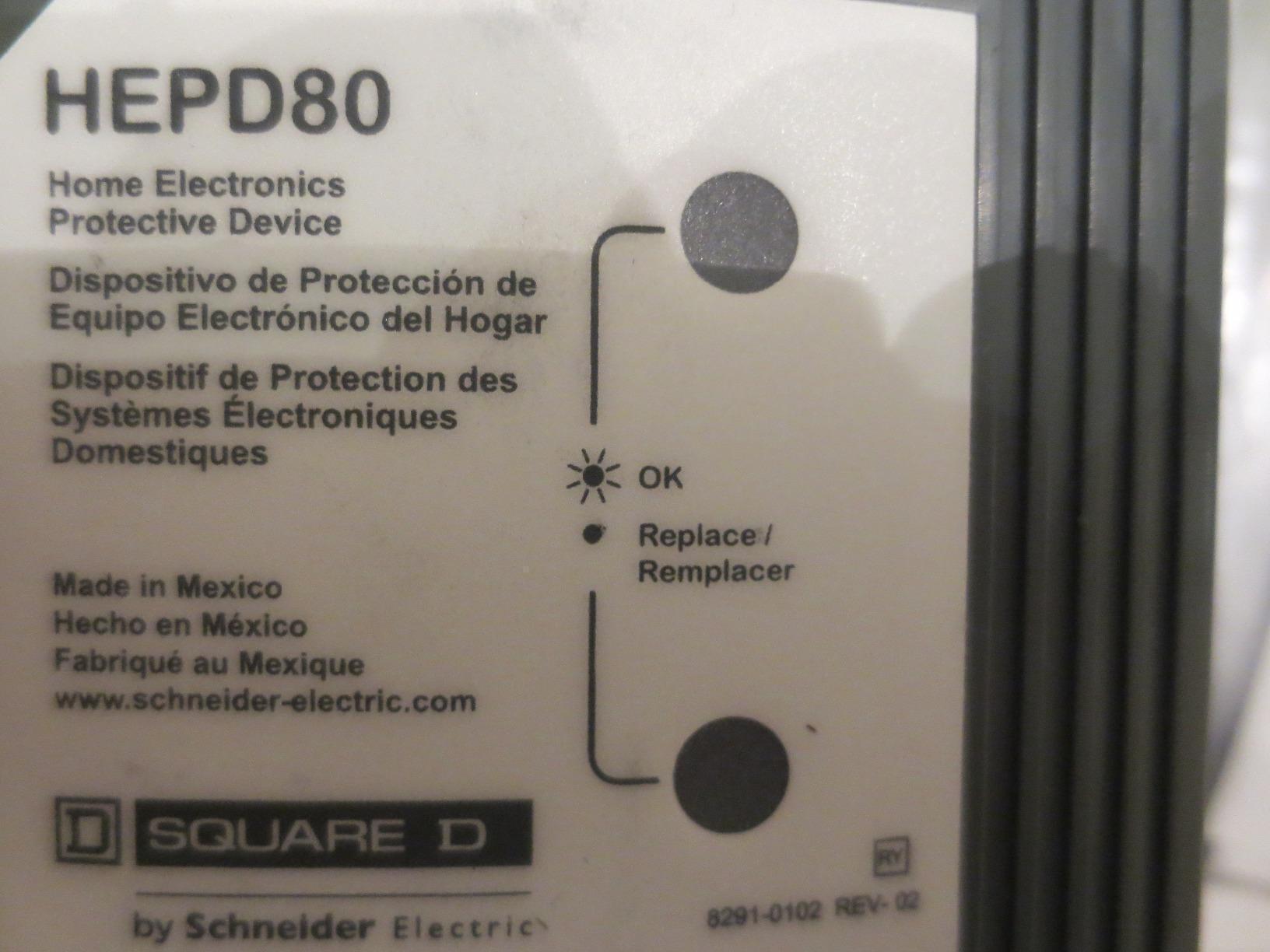
The housing is polycarbonate and rubber, and buyers consistently describe it as waterproof, which opens up mounting options outside the panel when the interior is full. At 15.52 ounces it is heavier than the Eaton but still well within a normal panel envelope.
Reviewers emphasise that this is genuine whole home protection rather than another power strip, and they credit the LED indicator for making end-of-life obvious instead of leaving you to guess.
When this is the right pick
Pick the HEPD80 when you want high surge capacity and a five-year warranty without chasing the absolute maximum kA figure. It is the sensible default for a house with a lot of hard-wired equipment and a panel with some room inside it.
The waterproof housing is the deciding factor if you plan to mount the device outdoors beside the panel rather than inside it.
When to pick something else
The wiring on this model runs longer than some buyers anticipate, so check the clearance inside your panel before ordering. It also needs a genuine two-pole breaker position, which some modern panels no longer have to spare.
If you would rather avoid hardwiring altogether, one of the plug-on breakers later in this list installs in a fraction of the time.
3. Eaton CHSPT2SURGE – Best for Lightning-Prone Areas
Eaton CHSPT2SURGE SPD Type 2 Chsp Whole Home Surge Protector, Nema 4, Single Phase, 120/240 Volts, Ul 1449 3Rd Edition
36 kA Type 2 rating
NEMA 4 outdoor rated
UL 1449 3rd Edition
120/240V single phase
Pros
- Outdoor-rated housing with gasket seals
- Green indicator lights confirm it is live
- UL 1449 3rd Edition listed
- Affordable relative to other whole-home models
Cons
- Lead wires are only about 14 inches long
- Neutral lead can be too short beside tandem breakers
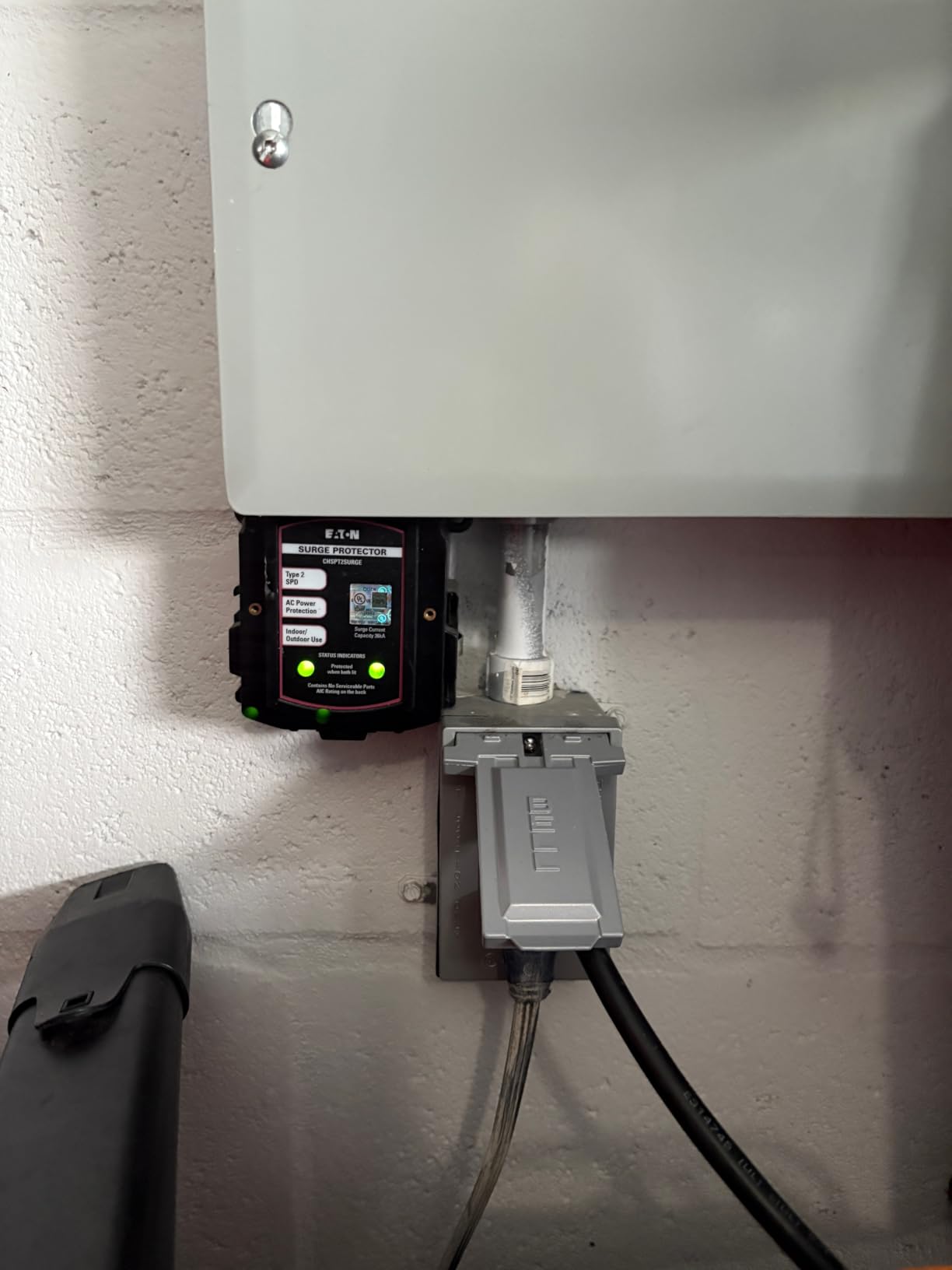
The CHSPT2SURGE is a scaled-down version of Eaton’s flagship, and owners in high-lightning regions report leaving it in service through nearby strikes without a trip or visible damage. It is a Type 2 device for 120/240 volt single phase service with a NEMA 4 outdoor rating.
Four metal oxide varistors sit behind a gasket-sealed board, and two green indicator lights show that the unit is still protecting your circuits.
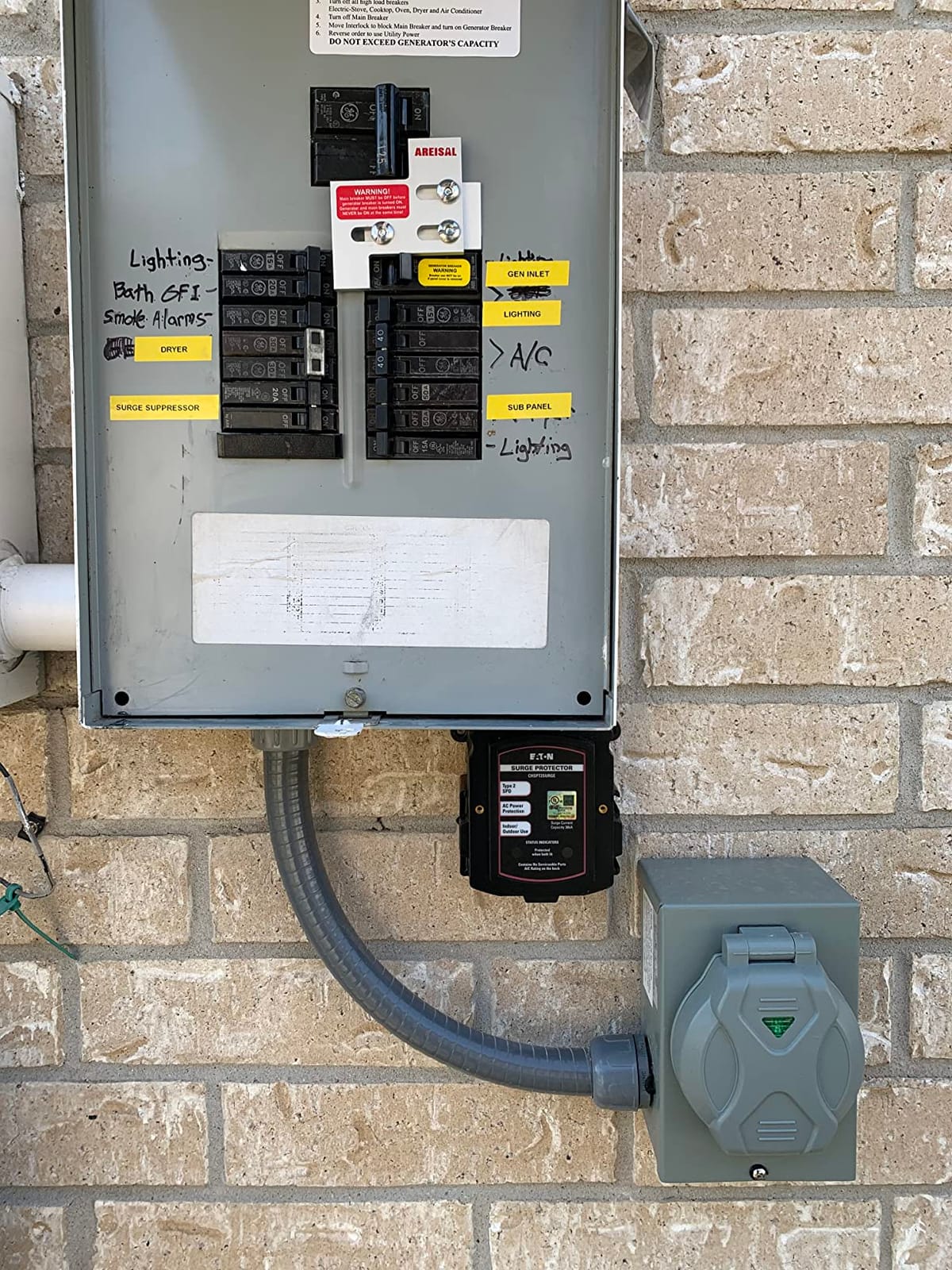
The build quality is the story here. Reviewers single out the moisture-resistant board and silicone-dipped construction, and the outdoor rating means it can go outside the panel where indoor-only units cannot.
It connects to any manufacturer’s load centre using quick-connect cable protection modules, which keeps the install short if your panel layout is tight.
When this is the right pick
This is the one we suggest for a home in a storm belt, an area with tall trees near the service drop, or anywhere the utility has a history of switching large loads. A NEMA 4 enclosure lets you mount it outdoors if that is easier than finding room inside.
It also suits anyone who wants a name-brand, UL 1449 listed device without spending top dollar on kA capacity they will never use.
When to pick something else
Lead wires run only about 14 inches, so panel layout has to be planned in advance or the neutral lead will not reach. Owners also warn that the neutral can be too short when the device sits beside tandem breakers.
Like every panel-mounted device, it cannot do anything about a direct strike that enters through the service mast, and it will not handle brownouts.
4. Square D HOM2175SB – Best for Homeline Panels
Square D by Schneider Electric HOM2175SB Homeline SurgeBreaker, Surge Protection Device, 25kA, 120/240V, 1-Phase, 3-Wire
25 kA surge rating
Plug-on, requires 2 spaces
LED status indicator
3-year warranty
Pros
- Installs in under five minutes like a breaker
- Green LED confirms the device is live
- Connected equipment warranty of 10000 dollars
- Works in service entrances and CSEDs
Cons
- Only fits Homeline panels and not QO panels
- Takes two breaker spaces which may force moving others
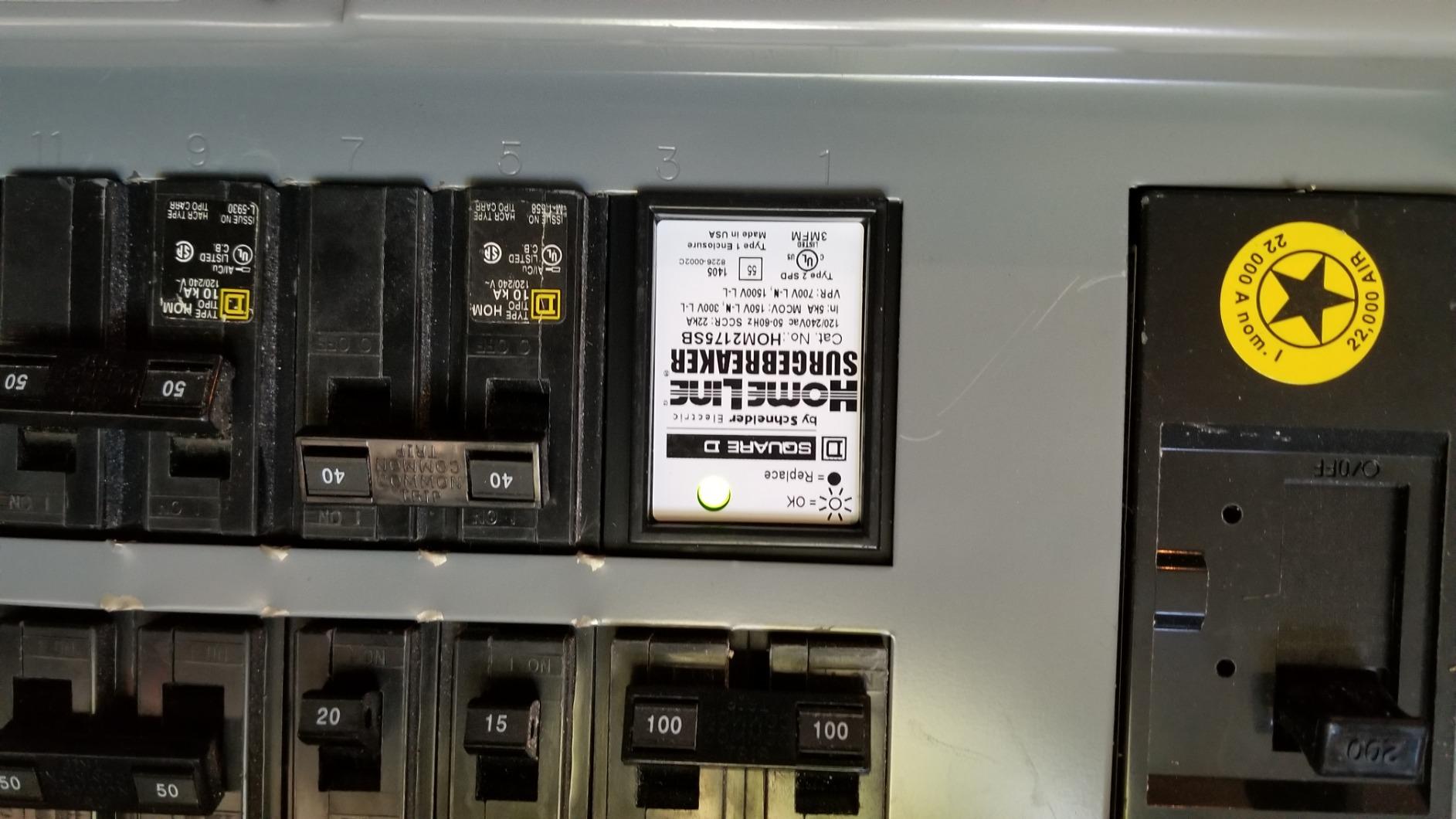
If your panel is a Square D Homeline, the HOM2175SB is about as close to a no-brainer as this category gets. It plugs on like a standard breaker, takes two spaces, and the green LED tells you the device is powered and protecting.
It is UL 1449 3rd Edition listed and rated at 25 kA for 120/240 volt single phase three wire service, and it can also sit at a service entrance location or in a CSED.
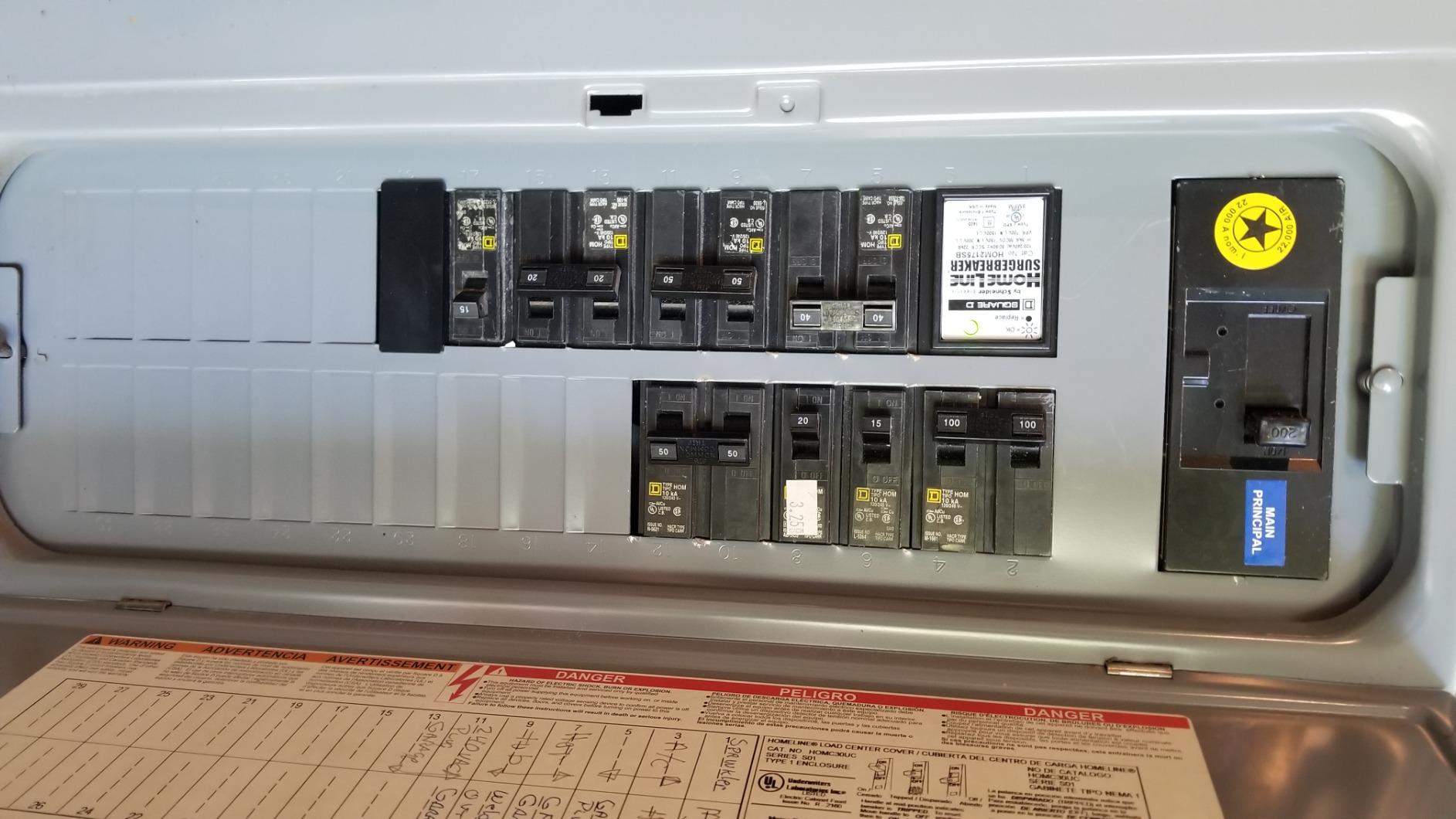
Reviewers in lightning-prone areas install this as a second line of defence behind the utility surge arrestor. The connected equipment warranty of up to 10,000 dollars is the figure that reassures people buying a device for a new house.
It weighs 5.92 ounces and measures 2.58 by 2 by 3.13 inches, so it is one of the least intrusive additions you can make to a panel.
When this is the right pick
Buy the HOM2175SB if you own a Homeline panel and want protection in place this weekend. A five-minute install changes the cost calculation completely compared with a hardwired unit that needs a licensed electrician.
It is also a sensible second device for a subpanel, where a smaller kA rating is all the surge capacity you realistically need.
When to pick something else
The obvious limitation is panel compatibility. This is a Homeline part and it will not fit a QO panel, so check the panel before you order. The two-space footprint also means you may have to shuffle other breakers to make room.
At 25 kA it is sized for a normal 200 amp service rather than a heavily loaded one with a large air conditioning or EV charger draw.
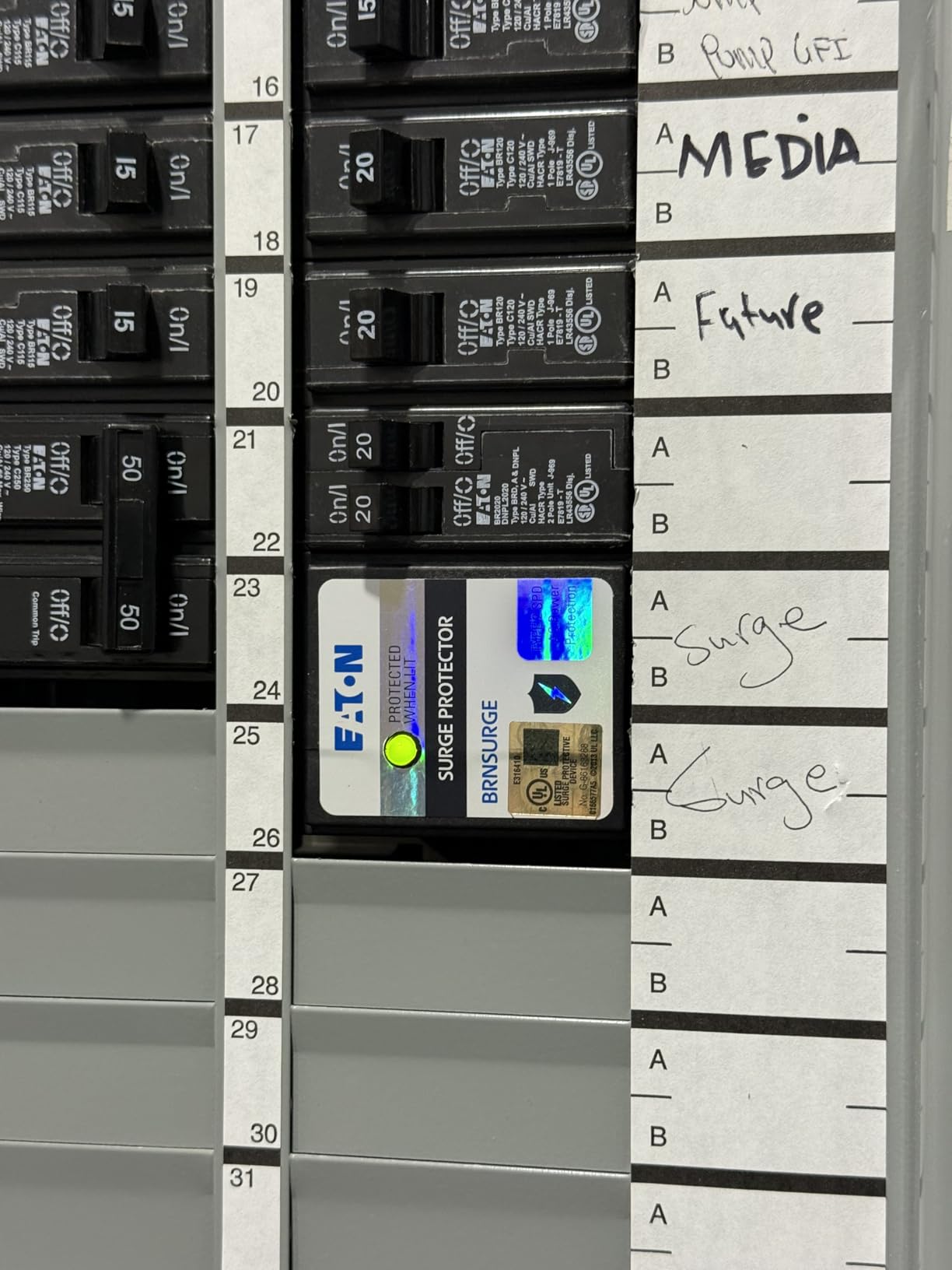
5. Eaton BRNSURGE – Best Plug-In Value for BR Panels
Type BR Circuit Breaker Surge Protective Device, Two Pole, Surge Protective Device
Two-pole Type BR style device
18 kA surge rating
Panel mount, 240V
5.6 ounces
Pros
- Snaps into BR panels with only a neutral to connect
- 4.8 stars across nearly 1000 reviews
- Indicator light shows it is protecting
- Works in a main panel or a subpanel
Cons
- Built for BR style panels so check compatibility first
- Stranded neutral lead without ferrules
The BRNSURGE carries the joint highest rating in this group at 4.8 stars, and it does so with the least involved installation we found. It is a two-pole circuit breaker style surge protective device rated at 18 kA for 240 volt split-phase panels.
Installation means snapping it into an Eaton BR style load centre and connecting a single neutral wire. Electricians describe it as a minutes-long job.
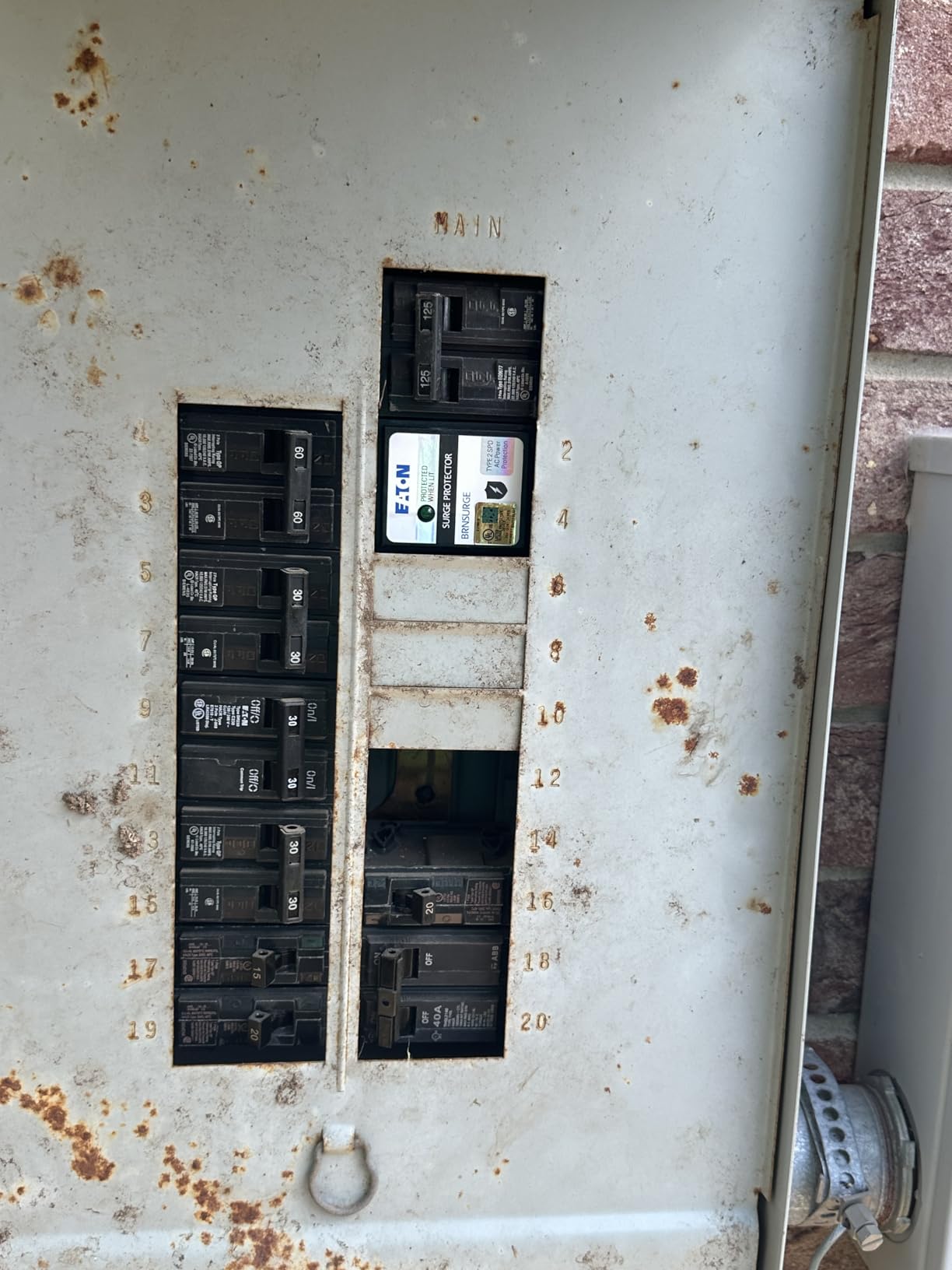
Buyers call it cheap insurance against grid spikes and utility side problems, and the fact that it works in a subpanel as well as the main panel widens its use considerably in a home with a detached garage or workshop.
An indicator light handles the status check, so you do not have to open the panel to know whether the device is still protecting.
When this is the right pick
This is our pick for a home with a BR panel where the owner wants protection without hiring anyone. It is also the easiest way to add a second layer at a subpanel, where a lower kA figure is appropriate.
If you are adding a whole house fan or a whole house humidifier in a new build, a plug-on device like this is an easy line item for the electrician.
When to pick something else
Confirm your panel is BR style first, because this form factor will not fit Square D, Siemens or Homeline panels. The 18 kA rating is the lowest surge capacity in this roundup, and some installers question whether a plug-in device can interrupt a very large service.
The stranded neutral lead is also thinner than some electricians prefer for panel work.
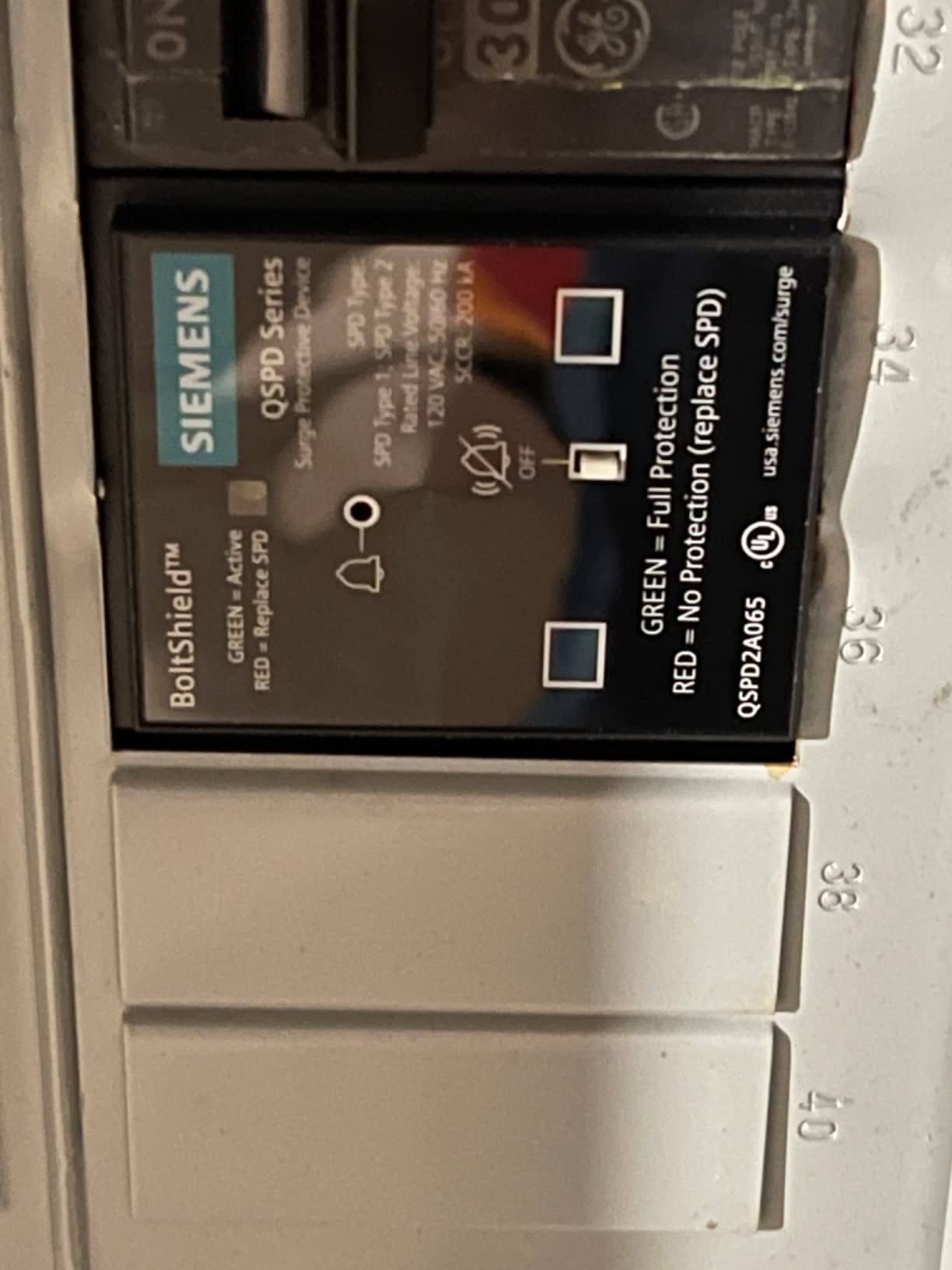
6. Siemens BoltShield QSPD2A065P – Best for Audible End-of-Life Alerts
SIEMENS BOLTSHIELD Plug-in Surge Protection Device 2-Pole 65kA 120/240V, 1Ø, 3W
65 kA surge current
200 kA short circuit rating
Audible alarm on failure
2-pole 120/240V
Pros
- Audible alarm plus visual indicator
- 65 kA surge and 200 kA short circuit ratings
- Pre-wired 14 AWG neutral and ground leads
- 50000 dollar connected equipment warranty
Cons
- Only fits Siemens panels
- Costs more than other plug-on units
- Lowest average rating in the group at 4.6 stars
The QSPD2A065P is the only unit here that sounds an audible alarm when the surge module has sacrificed itself, and that single feature puts it ahead of every other plug-on model for anyone who will not remember to check a light. The visual indicator is still there for anyone who prefers silence.
The numbers are strong too: 65 kA surge current, a 200 kA short circuit current rating, and a 20 kA nominal discharge current rating on a two-pole 120/240 volt enclosure.
The neutral and ground connection arrives pre-wired in 14 AWG, which removes the fiddliest part of a panel install. Siemens outlets compatibility means it drops into most Siemens panels without fuss.
Reviewers consistently single out the alarm as the reason to spend more than on a comparable generic plug-on device, and the warranty is listed at 50,000 dollars over ten years.
When this is the right pick
Choose the BoltShield if your panel is Siemens and you want the highest surge current rating available in a plug-on form factor. The audible alert is the deciding factor for older homeowners and for anyone living in a rental or a second home they do not visit often.
It is the model electricians in the forums most often recommend for a panel that will not be checked monthly.
When to pick something else
Compatibility is the hard limit. This device is designed for Siemens panels and simply will not retrofit into a Square D, Eaton BR or Homeline load centre, which removes it from consideration for a large share of homes.
It also carries the lowest average rating in the group at 4.6 stars, with a five percent one-star share, and it is pricier than the other plug-on options here.
7. Leviton 51110-SRG – Best for Outdoor and Smart Home Setups
Leviton Type 2 Residential Whole House Surge Protection Panel, Outdoor NEMA 4X Rated, 51110-SRG
Type 2 whole-home device
26,000 amps per mode
NEMA 4X outdoor rating
Per-phase status LEDs
Pros
- NEMA 4X enclosure allows true outdoor mounting
- Per-phase LEDs make status easy to read
- Works with Decora Home Control devices
- Five-year limited warranty
Cons
- Only about 26 kA per mode
- Shallow wire exit is awkward in drywall panels
The Leviton 51110-SRG is the device to look at if your panel is full and the only free space is on the outside wall. Its NEMA 4X enclosure is rated for genuine outdoor exposure, and per-phase LEDs show power and surge protection status separately for each leg of the split.
Protection is quoted at up to 26,000 amps of surge current per mode across a Type 2 residential whole house design, and it is compatible with Decora Home Control devices for people running a Leviton-based smart home.
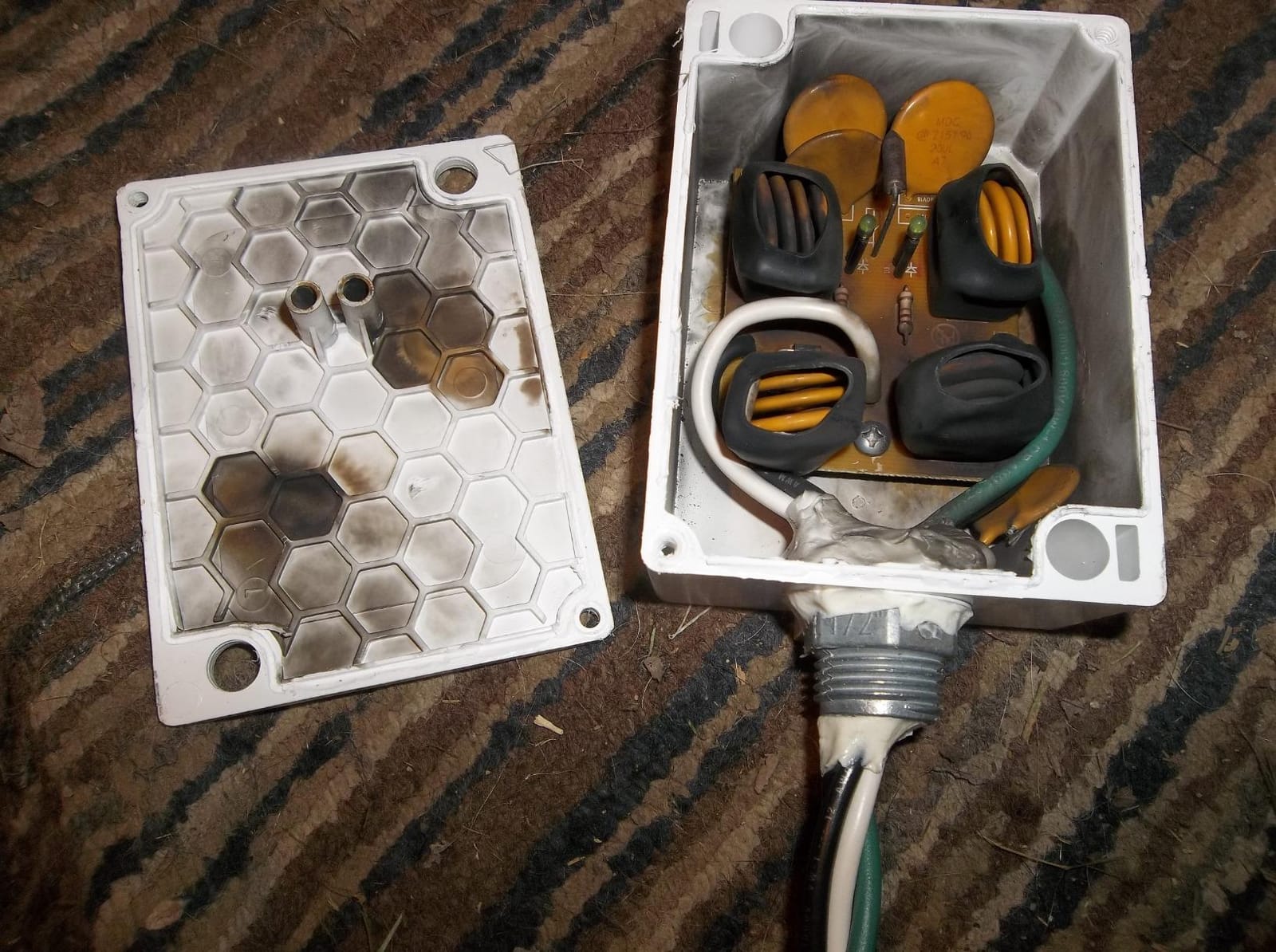
Owners tell real surge stories with this unit. Several describe the device absorbing a surge that would otherwise have taken out neighbouring electronics, which is the clearest evidence most buyers will ever get that the money was well spent.
It runs on standard 20 amp double pole breakers, and the five-year limited warranty is longer than most of the plug-on competition.
When this is the right pick
Pick the 51110-SRG when the panel interior has no room, when you need a true weatherproof mount point, or when you run Leviton Decora Home Control hardware and want the protection status in the same ecosystem.
The per-phase LEDs are the most legible status display of any outdoor-rated unit in this group, which matters if you plan to check the unit from a ladder rather than from inside the panel.
When to pick something else
At roughly 26 kA per mode this is the lowest surge capacity among the outdoor-rated options here, so a high-exposure house with a large service is better served by a higher capacity unit.
The wire exit is shallow and the leads are short, which causes friction in drywall-mounted breaker panels and can mean boring the cover plate to fit the connector.
8. Siemens QSPD2A035B – Budget Pick for Older Siemens Panels
Siemens QSPD2A035B 35 KAmp BoltShield Indoor Surge Protective Device
35 kA per phase
Two-pole 240V plug-in
Mechanical status windows
3-year warranty
Pros
- Plugs onto the load centre bus in about two minutes
- Fits older Siemens panels without modification
- Mechanical flags clearly show status
- Cheap way to cover an entire home
Cons
- No LED indicator
- only mechanical windows
- 16 AWG pigtail is lighter than ideal
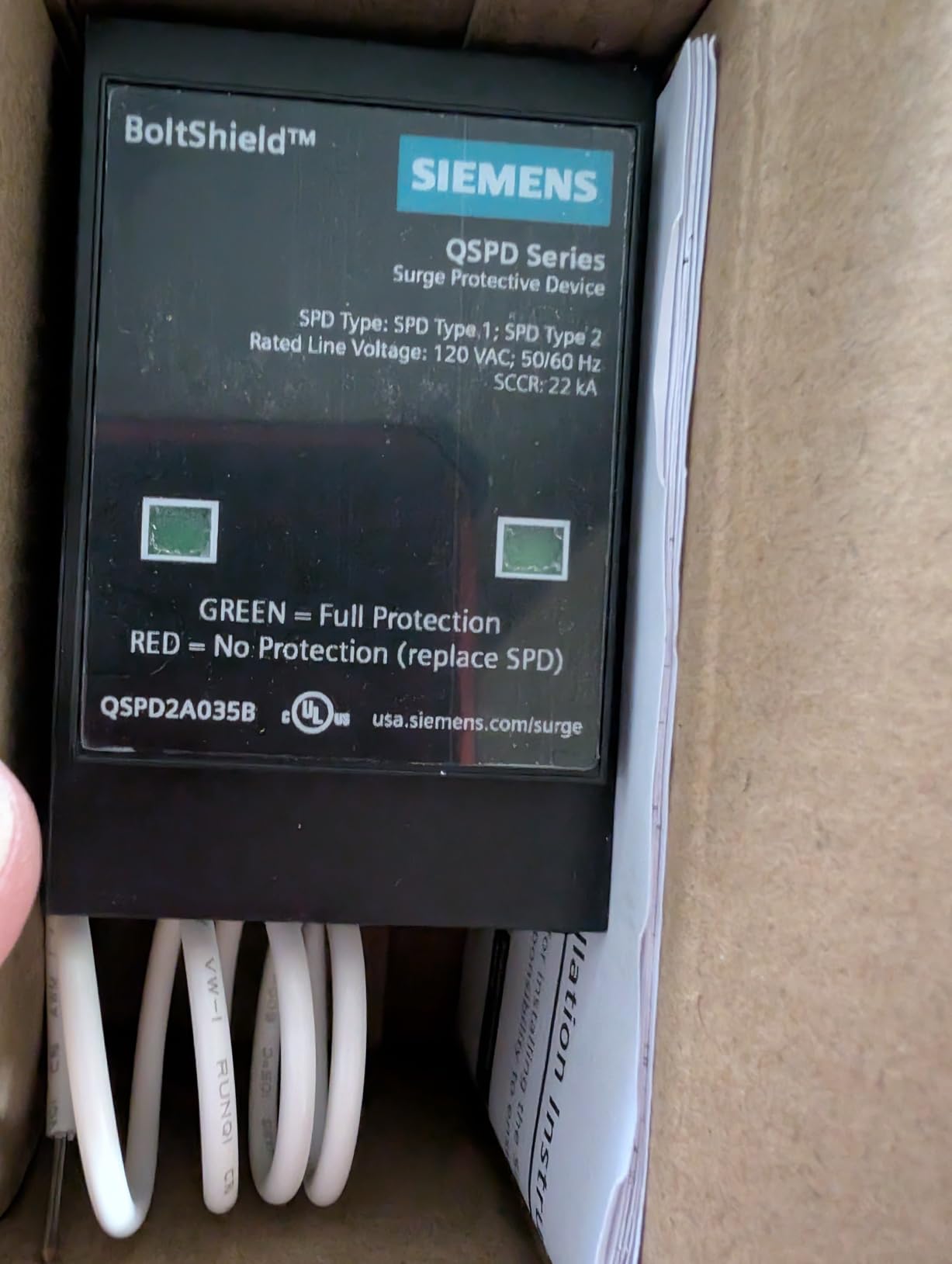
The QSPD2A035B is the lowest-rated unit we included, at 4.4 stars across 400 ratings, and the reasons for that score are worth understanding before you buy. There is no LED. Status is shown through mechanical green and red viewing windows, and it is not a resettable breaker.
What it does have is 35 kA of surge current protection per phase, a two-pole 240 volt configuration, and a plug-in mount that connects directly to the Siemens load centre bus.
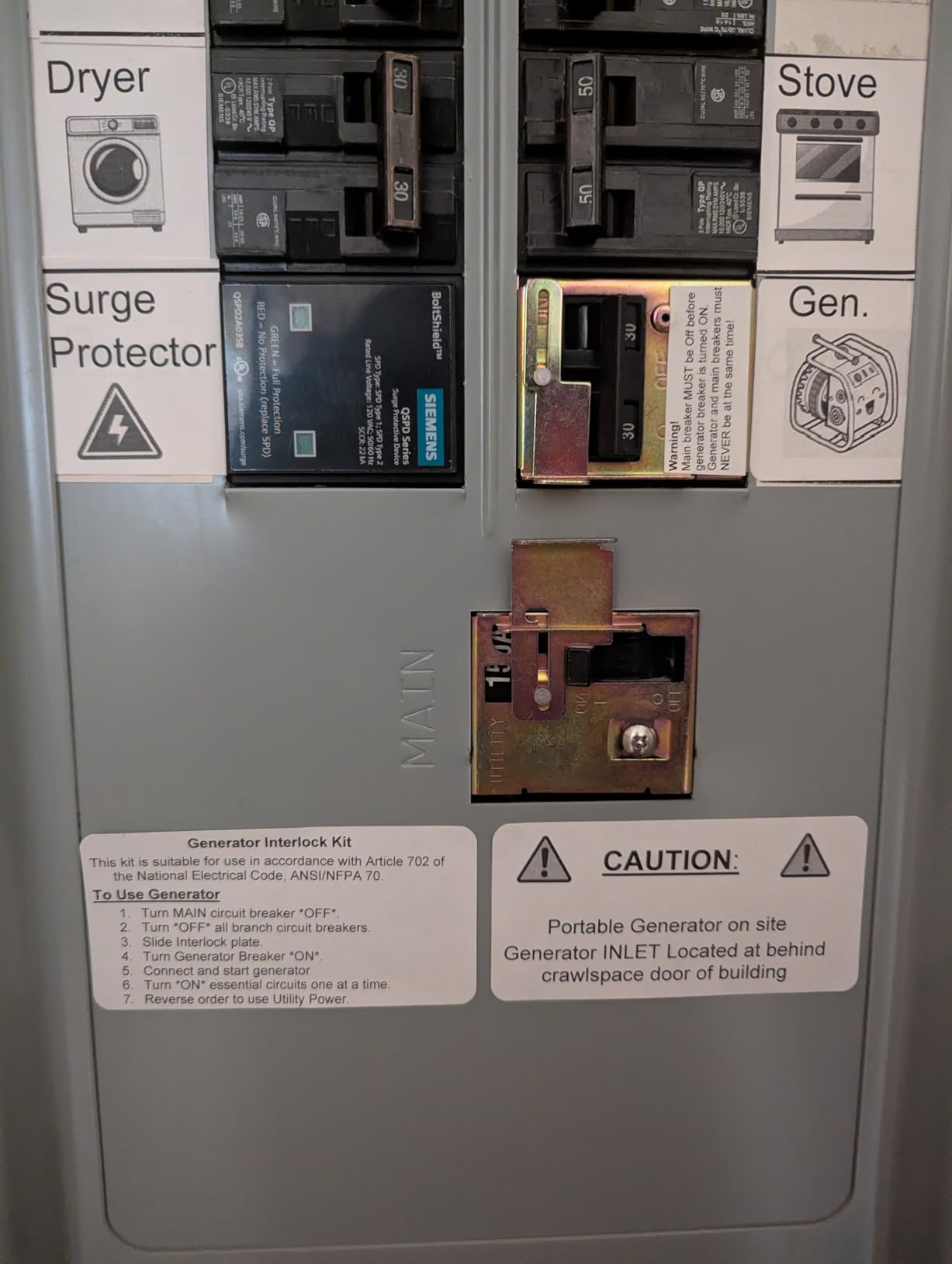
Owners who accept the trade-off describe it as cheap, fast insurance. Several reviewers explain the flag window in detail so other buyers know exactly what they are looking at, which tells you how often the confusion comes up.
Installation is reported at about two minutes, and it fits older Siemens panels without modification, which is the main reason to prefer it over a hardwired model.
When this is the right pick
Choose this when you have an older Siemens panel, you want whole-home coverage, and you would rather not pay for a feature you will never look at. If you are comfortable checking a mechanical window twice a year rather than an LED, the trade works.
It also makes a reasonable second device at a subpanel, where a lower kA figure is appropriate anyway.
When to pick something else
If you want a visible status light or an audible alarm telling you the unit has died, this is the wrong model and you should look at the Siemens BoltShield instead. The 16 AWG pigtail is lighter than most electricians prefer for a main panel connection.
Owners also report needing to move existing breakers so the device sits first in the panel, and a handful of buyers received a non-working unit straight out of the box.
9. Square D HEPD50 – Best for Outdoor Panel-Side Mounting
Square D by Schneider Electric HEPD50 Universal Whole House Surge Protection Device, 1-Phase, 3-Wire + Ground for 120/240V, 50kA, Black
50 kA surge rating
25 kA short circuit rating
UL 1449 Type 1 and CSA
NEMA 4X enclosure
Pros
- NEMA 4X rated for mounting beside the panel
- UL 1449 3rd Edition Type 1 and CSA listed
- 50000 amp rating with 50000 dollar downline cover
- Long leads make placement flexible
Cons
- Must be paired with a true double-pole breaker
- 50 kA can feel undersized on a 200A service
The HEPD50 is the one unit here that carries dual certification, listed to UL 1449 3rd Edition as a Type 1 surge protective device and also CSA listed. That combination is the reason it is the pick for anyone outside the United States, including readers dealing with Canadian Electrical Code requirements.
It connects to any brand of residential load centre, carries a 50,000 amp surge current rating with a 25,000 amp short circuit current rating, and has a NEMA 4X enclosure for either outdoor or indoor mounting.
The long leads are the practical headline. They let you place the device inside or outside the panel without fighting for depth, and the green status LED lights up as soon as it is energised.
Owners report an install around half an hour for most homeowners, and the three-year product warranty is backed by a 50,000 dollar downline warranty on connected equipment.
When this is the right pick
Pick the HEPD50 if you need a certified Type 1 device rather than a Type 2, if your installer works to CSA requirements, or if you want the flexibility of mounting outside the panel on a full load centre.
The dual listing and the long leads together make it the most installation-forgiving hardwired option in the group.
When to pick something else
The single most important installation point in the reviews: it must be paired with a true double-pole breaker, because a tandem single-pole breaker will not activate it. One owner chased a suspected defective unit until that became clear.
Several buyers on a 200A service felt 50 kA was undersized and moved up to the HEPD80, and screw terminal connections to the bus bars take more work when no spare circuit position is free.
10. Leviton R2120-B – Best for Meeting NEC Requirements
Leviton Type 1 Surge Protective Panel, Residential Home Surge Protection, 120/240 VAC, Split Phase, 36kA per Phase, R2120-B SPD, Gray
Type 1 for residential service
36 kA per phase
Two circuits
Compact 7.2 ounce body
Pros
- Compact enough for tight panel spaces
- Easy to wire and lights up on install
- Name-brand Leviton at a modest price
- Suitable for 200 amp residential panels
Cons
- Too deep for a flush disconnect box on a flush wall
- May need an external mounting bracket
Most people buying a Leviton R2120-B are not upgrading their protection, they are complying. NEC 2020 Article 230.67 requires a Type 1 or Type 2 surge protective device at dwelling unit services, and the 2023 NEC extends that requirement to dormitories, guest rooms and guest suites.
It is a Type 1 device for 120/240 VAC split phase residential service with 36 kA per phase, weighing 7.2 ounces in a compact housing that comes in gray.
Reviewers describe installs as easy, and electricians typically pair it with a dedicated two-pole 30 amp breaker. The consistent complaint is physical fit rather than electrical performance.
At 163 ratings this has the smallest review base in the group, so treat the rating as encouraging rather than settled.
When this is the right pick
Choose the R2120-B when you are a first-time buyer who simply needs a code-compliant device from a name brand in a package that will fit an ordinary residential panel. It handles a 200 amp service comfortably.
It is also the simplest answer for a panel replacement or new construction, where the electrician needs a compact part that lands in the first breaker position without drama.
When to pick something else
The body is too large to sit flush inside a disconnect box on a flush wall, and some panels have no dedicated space, which means an external mounting bracket. If your service entrance is a flush-mounted disconnect rather than a full load centre, check the depth before ordering.
At 36 kA it is adequate for a standard service but not sized for a heavily loaded house with a large air conditioning or EV charger circuit.
What Is a Whole House Surge Protector?
A whole house surge protector, also called a surge protective device or SPD, is installed at your main electrical panel and protects every circuit in the home. That includes the hard-wired loads a power strip can never touch, which is the entire point: your air handler, heat pump compressor, electric range, oven, dishwasher and EV charger are all wired straight into the panel.
It works by continuously watching incoming voltage. When a spike crosses the safe threshold, the device diverts the excess current into the ground wire in nanoseconds, using metal oxide varistors that absorb the energy and dissipate it as heat. Because that heat degrades the varistor slightly on every major event, the device is a sacrificial component with a finite life, and that is what the status LED is telling you.
NEMA puts the share of surges originating inside the home at around 80 percent. Appliances cycling, an air conditioner kicking on, a motor starting, and older wiring all generate spikes that never touch the utility line. This is the number that underpins the entire case for panel-level protection, and the reason our whole house generators guide is a complement rather than a substitute for a surge protector.
Type 1 vs Type 2: Which One Do You Need?
Type 1 or Type 2, and in most American homes you can safely go with either. The distinction is where the device is allowed to sit. A Type 1 device is rated for installation at the service entrance or outdoors, where it can intercept a surge coming down the utility service mast before it reaches the panel. A Type 2 device is rated for installation at the load centre, downstream of the meter, which is where most homeowner’s panels actually are.
If your surge protection is going inside or on the side of your main panel, a Type 2 device such as the Eaton CHSPT2SURGE or the Leviton 51110-SRG meets the requirement. If you can mount at the service disconnect outside, a Type 1 device such as the Square D HEPD50 or the Leviton R2120-B gives you the wider placement options.
Both are listed under UL 1449, and for a typical residential buyer the practical answer is that either one removes the vast majority of surge risk at the panel. This is the single most common confusion in the electrical forums, where homeowners frequently ask which one they need and get the same answer: check where the device will physically mount and buy the listed type for that location.
How to Choose a Whole House Surge Protector
Once you know whether your panel is Homeline, QO, BR or Siemens, the rest is a short checklist. These are the seven criteria that separate a real surge protective device from a marketing claim.
UL 1449 listing, and CSA if you are not in the United States. Every device in this roundup is UL 1449 listed. The Square D HEPD50 is the only one here that also carries a CSA listing, which matters for Canadian Electrical Code work and for anyone who wants a single spec sheet that covers both standards.
kA per phase. This is the surge current rating, the energy the varistors absorb before they sacrifice themselves. Our units range from 18 kA on the Eaton BRNSURGE to 108 kA on the CHSPT2ULTRA. For a standard 200 amp service anything in the 25 to 50 kA range handles the overwhelming majority of real surge events, and paying substantially more for 100 kA buys headroom you are unlikely to consume.
VPR, the voltage protective rating. This is the ceiling voltage the device lets through. Lower is better, and the Square D HEPD80’s 600 volt figure is the lowest clamping figure among the hardwired units here.
MCOV, the maximum continuous operating voltage. This tells you the highest steady voltage the device tolerates without degrading, which for split phase 120/240 residential service is normally 240 volts per leg.
NEMA enclosure rating. NEMA 1 is fine inside a panel. NEMA 4 and NEMA 4X, found on the Eaton CHSPT2SURGE, the Leviton 51110-SRG and the Square D HEPD50, are what you need for an outdoor mount beside the panel.
Status diagnostics. A green LED is the minimum. A mechanical flag window, as on the Siemens QSPD2A035B, works but is easy to forget. An audible alarm, as on the Siemens BoltShield QSPD2A065P, is the most reliable because you do not have to remember to look.
Warranty, and the connected equipment warranty. Product warranties here run from three to ten years. The connected equipment figure is the one that matters if your concern is a fried television or HVAC controller, and it ranges from 10,000 dollars on the Square D HOM2175SB to 50,000 dollars on the Square D HEPD50 and the Siemens BoltShield.
One more practical check sits alongside all seven: panel compatibility. A Homeline breaker in a QO panel, or a Siemens plug-on device in a Square D load centre, will not fit no matter how good the specifications are. If you are unsure what panel you own, the panel manufacturer name is usually moulded into the deadfront cover.
Do Whole House Surge Protectors Actually Work?
Yes, and the honest version comes with a clear list of what they do not do. A properly installed, UL 1449 listed panel-level device measurably reduces surge damage across every circuit in the house, and the people who can attest to it are the ones whose panels absorbed a spike while neighbouring homes lost electronics.
What they do not do is as important. They do not protect against brownouts or sustained under and over-voltage, which is a different failure mode that motor-driven equipment like a refrigerator or an air conditioner cares about far more. They do not handle a direct lightning strike that enters through the service mast or the building’s own wiring. And they do not catch a ground fault or faulty neutral, which is a wiring problem, not a surge problem.
If you are on a rural or remote line with recurring five to fifteen second brownouts and constant light flicker, a surge protector is only part of the answer. That situation calls for under and over-voltage monitoring, and a homeowner in exactly this situation raised it on an electrical forum, asking specifically for voltage monitoring rather than surge suppression.
For sensitive electronics, the practical approach is two layers. Panel-level protection handles the big transients, and a quality point-of-use protector on the expensive circuits handles what is left. Nothing replaces a good surge protector, but the layered setup is what most installers recommend.
What to Avoid When Buying a Surge Protector
Ask anyone on an electrical forum which brand to buy and the second question is always what to avoid, and it is almost never answered. Here is what we would steer clear of, based on the patterns across these reviews.
Unlisted marketplace imports with unverifiable kA claims. Some listings advertise enormous surge capacities with no UL 1449 listing, no certification mark and no traceable model number. If you cannot find the listing in the UL Product iQ database, the number is a marketing claim, not a test result.
Power strips sold as whole-home protection. A multi-outlet strip cannot protect a hard-wired heat pump compressor. If a listing does not say it mounts at the load centre, it is not a surge protective device in this sense.
Devices that will not fit your panel. This is the most common and most avoidable disappointment. Confirm your panel brand before ordering, and confirm whether the device takes one breaker space or two.
Anything presented as brownout protection. Surge suppression and under and over-voltage monitoring are different technologies. A device that claims both is usually doing the first one poorly.
Alarming devices with no clear replacement rule. A unit that beeps after it has already sacrificed itself is a nuisance unless you know that a lit or beeping status means replace now. Check that the manual states the rule plainly.
Sellers presenting the device price as your total cost. A hardwired unit needs a licensed electrician. The device number is roughly a third of what you will actually spend.
Installation and Maintenance
Hardwired units should be installed by a licensed electrician with the panel de-energised. The job is straightforward for a professional and involves working inside a live service panel, which is exactly the kind of thing not to attempt for the first time on your own house.
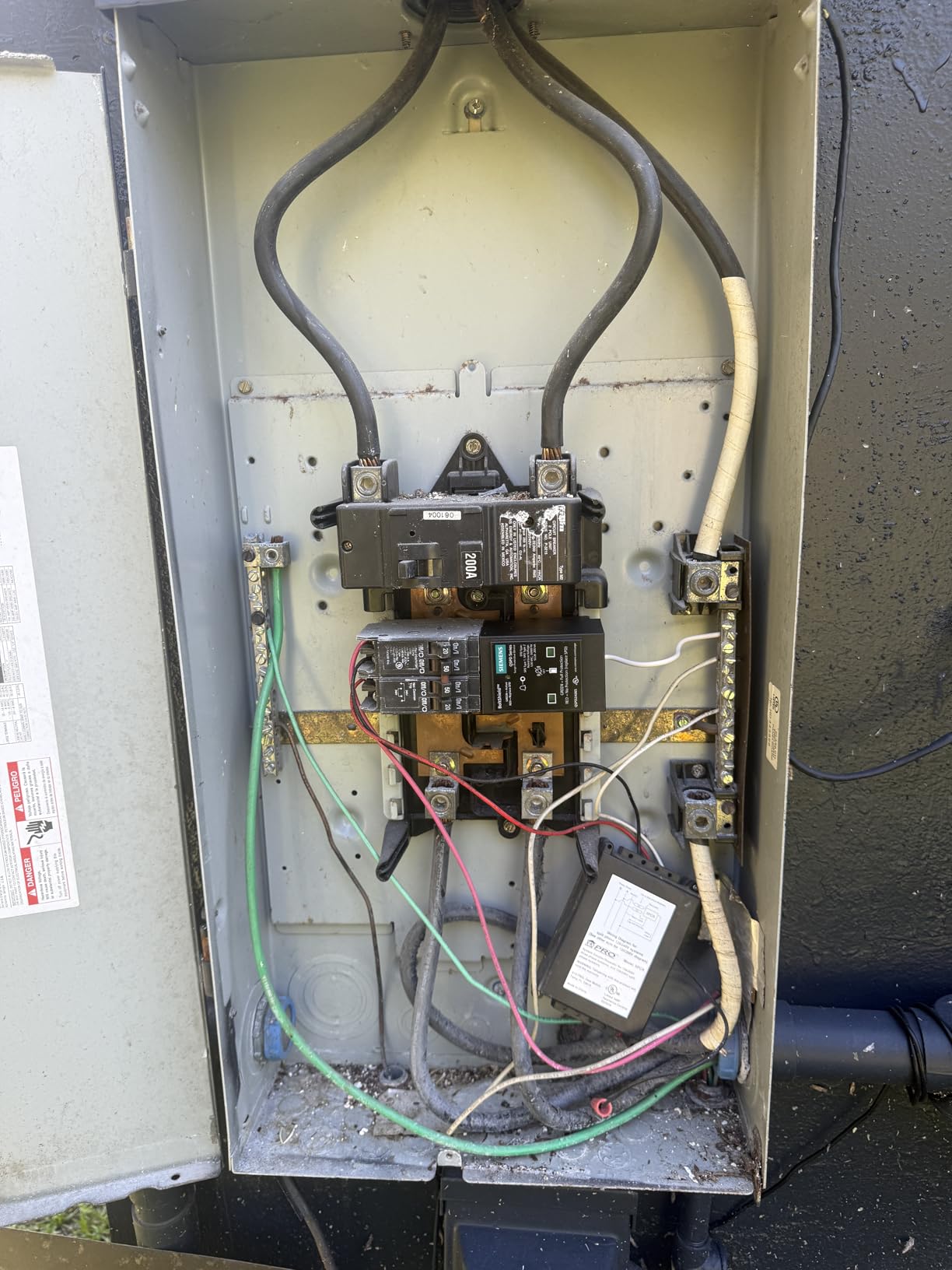
There are three installation points that account for nearly every complaint in the reviews. The device must sit in the first breaker position, immediately next to the main breaker, so it intercepts surges before anything else. It must be fed from a true double-pole breaker, not a tandem single-pole, or it will never activate. And you should confirm there is physical room for the housing and its leads before the electrician arrives.
Maintenance is minimal. Check the status light once a month, and replace the device when the indicator goes out or the alarm sounds, because a failed status light usually means the surge module has already done its job and stopped protecting. Most units last three to five years depending on how many surges your area delivers, and in high-activity regions the shorter end of that range is realistic.
For a subpanel, size the second device at roughly half the kA rating of your main unit, since surge current arriving at a subpanel is already attenuated by the length of the feeder run.
Frequently Asked Questions
Are whole house surge protectors a good idea?
For most homes with modern electronics and hard-wired appliances, yes. A panel-level device covers the circuits a power strip cannot reach, such as the HVAC compressor, oven, range and EV charger, and it costs a fraction of one replacement compressor. It does not protect against brownouts, sustained voltage problems or a direct lightning strike through the service mast.
What is the best brand for a surge protector?
Among the ten devices we reviewed, Schneider Electric’s Square D line, Eaton and Siemens dominate on review volume and rating, and Leviton leads on enclosure options and dual certification. The Eaton CHSPT2ULTRA took the top spot in this roundup for its 108 kA rating, universal load centre fit and 4.8 stars across nearly 2,900 ratings.
How much should a whole house surge protector cost?
A plug-on breaker style device runs a small fraction of what a hardwired universal unit does, and hardwired units vary widely by surge capacity and enclosure rating. A licensed electrician adds labour on top of the device, with one homeowner reporting an install completed in under an hour and a total well under five hundred dollars. Ask for the installed figure, not the device figure.
What is the best rated whole house surge protector?
The highest rated device in this roundup is the Eaton CHSPT2ULTRA at 4.8 stars across nearly 2,900 ratings, with a 108 kA surge rating and universal load centre compatibility. The Eaton BRNSURGE also holds 4.8 stars with a much lower 18 kA capacity, so rating and surge capacity are two separate things.
Can I install a whole house surge protector myself?
Plug-on breaker style devices such as the Square D HOM2175SB or the Siemens QSPD2A035B install in minutes if you are comfortable working in a de-energised panel. Hardwired units should go in through a licensed electrician, because they involve service conductors and code placement requirements.
How do I know if my whole house surge protector is still working?
Check the status indicator. A green LED that has gone out, or an audible alarm, means the surge module has sacrificed itself and the device is no longer protecting your circuits. Most units last three to five years depending on local surge frequency, and replacement is the correct response rather than resetting or ignoring it.
Does a surge protector protect against brownouts?
No. Brownouts and power flicker are under and over-voltage conditions, not surges, and a surge protective device will not correct them. A home on a rural line with frequent short brownouts needs under and over-voltage monitoring in addition to surge protection, ideally paired with surge suppression.
Should I get a Type 1 or Type 2 surge protector?
Go by installation location. A Type 2 device mounts at the load centre downstream of the meter, which is where most homeowner’s panels are, while a Type 1 device is rated for the service entrance or an outdoor mount and intercepts surges before they reach the panel. Both are UL 1449 listed, and for most residential installs either one is sufficient.
Best Whole House Surge Protectors: Final Verdict
After comparing all ten, the Eaton CHSPT2ULTRA remains our best whole house surge protector in 2026 for most homes, pairing the highest surge capacity we found with a universal fit and the largest owner review base of any device we tested. The Square D HEPD80 is the better value if you want serious kA headroom and a five-year warranty without chasing the top number, and the outdoor-rated Square D HEPD50 and Leviton 51110-SRG are the answer when your panel has no interior room.
Whatever you choose, budget for the electrician rather than the box, confirm your panel brand before you order, and remember the three things that decide whether the device works at all: first breaker position, a true double-pole breaker, and a monthly glance at the status light.