
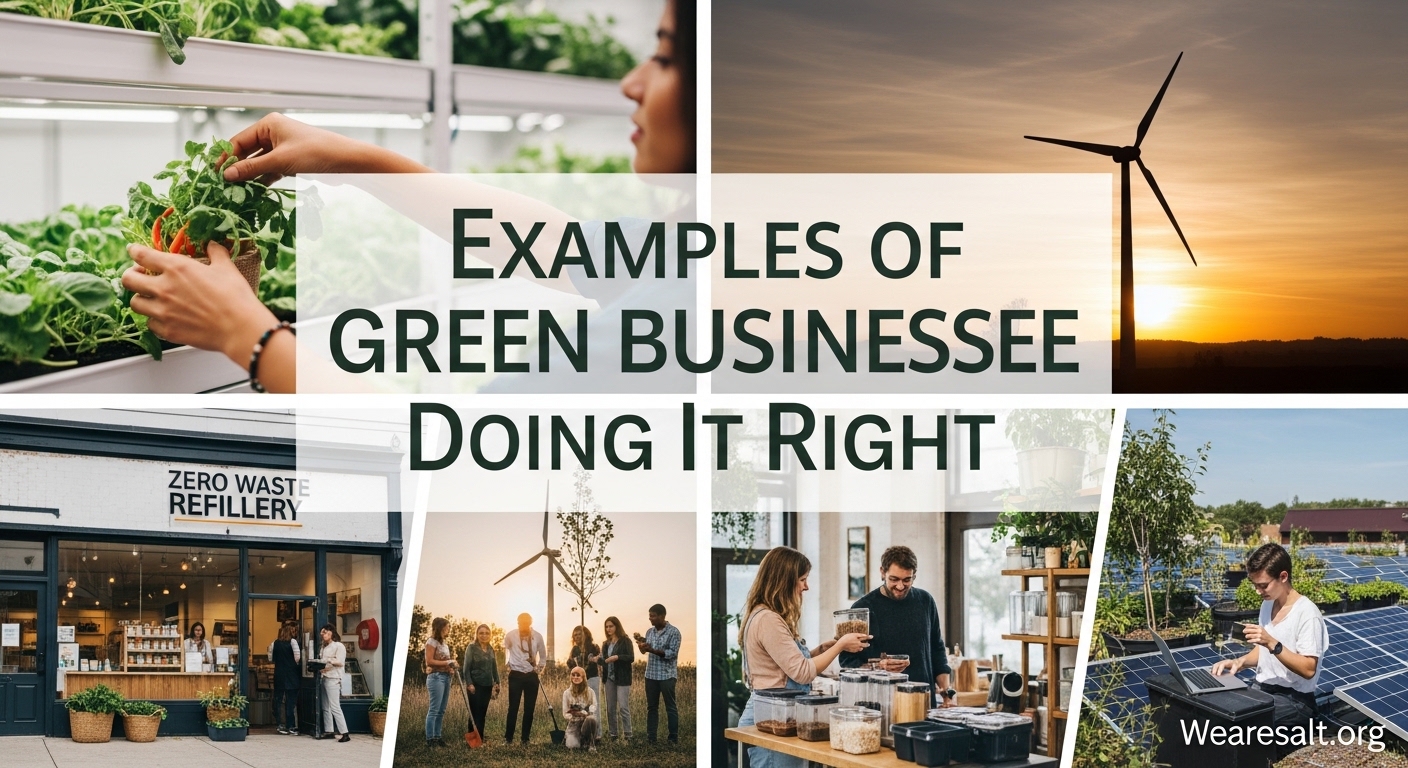
Every time I walk through my local grocery store or browse online shops, I see more companies claiming to be “green” or “eco-friendly.” But which businesses are actually walking the talk? I spent weeks researching companies that have built sustainability into their DNA, not just their marketing materials.
The examples of green businesses doing it right share something important in common. They measure their impact, set public goals, and continuously improve their environmental practices. These are not companies that simply switched to LED bulbs and called it a day.
In this guide, I will introduce you to 12 companies across five industries that demonstrate what authentic sustainability looks like in 2026. You will find established brands alongside innovative startups, all proving that profitability and environmental responsibility can go hand in hand.
Table of Contents
What Makes a Business Truly Green
Before diving into specific companies, let us establish what separates genuine green businesses from those engaging in greenwashing. A truly sustainable company integrates environmental responsibility into its core operations, not just its advertising.
I look for three key indicators when evaluating whether a business deserves recognition as authentically green. First, they measure and report their environmental impact with specific data. Second, they hold credible third-party certifications like B Corp, Fair Trade, or LEED. Third, they have a long-term track record of improvement rather than jumping on recent trends.
Greenwashing has become increasingly sophisticated. Some companies now use vague terms like “natural” or “eco-conscious” without backing them up with evidence. Others highlight one small green initiative while ignoring larger environmental harm elsewhere in their operations.
Transparency stands as the best defense against greenwashing. The businesses featured in this article publish sustainability reports, share their supply chain details, and acknowledge areas where they still need to improve. They do not pretend to be perfect, but they demonstrate genuine commitment.
When researching for this article, I prioritized companies that combine environmental stewardship with fair treatment of workers throughout their supply chains. True sustainability includes both planetary and social responsibility.
Examples of Green Businesses Doing It Right
Now let me introduce you to the companies that earned their place on this list. I organized them by industry to help you see how sustainability manifests across different sectors. Each example includes specific practices and measurable impact data.
Fashion and Apparel Leaders
The fashion industry generates significant environmental impact, making the companies that transform this space particularly noteworthy. These three brands prove that style and sustainability can coexist.
Patagonia
Patagonia has spent over four decades proving that outdoor apparel can be produced responsibly. The company uses recycled materials in 87% of its product lines and aims to reach 100% by 2025.
Their Worn Wear program repairs and resells used gear, extending product lifespans dramatically. In 2026, Patagonia diverted approximately 100,000 garments from landfills through this initiative alone.
Patagonia operates as a certified B Corp and donates 1% of sales to environmental causes through their “1% for the Planet” program. Founder Yvon Chouinard transferred ownership of the company to a trust dedicated to fighting climate change, ensuring the mission continues permanently.
Eileen Fisher
This women’s clothing brand has pioneered circular fashion through their Renew program. They take back worn garments from customers, repair them, and resell them at a lower price point.
Since launching Renew in 2009, Eileen Fisher has collected over 1.5 million garments. Their goal is to make 100% of their products from sustainable fibers by 2026.
The company also prioritizes ethical manufacturing, working with suppliers who pay fair wages and maintain safe working conditions. They publish detailed information about their supply chain, including factory names and locations.
Allbirds
Allbirds burst onto the scene with shoes made from merino wool and eucalyptus tree fiber. These materials produce significantly less carbon than traditional synthetic alternatives.
The company measures and publishes the carbon footprint of every product they sell. In 2026, their average product carbon footprint sits at 7.6 kg CO2e, compared to the industry average of 14 kg CO2e for comparable footwear.
Allbirds achieved carbon neutrality through a combination of reducing emissions and investing in verified carbon offset projects. They also eliminated 95% of plastic from their packaging.
Food and Agriculture Innovators
What we eat and how it is produced matters enormously for environmental health. These companies are revolutionizing food systems through plant-based alternatives, regenerative farming, and organic supply chains.
Beyond Meat
Beyond Meat has demonstrated that plant-based protein can satisfy meat lovers while dramatically reducing environmental impact. Their flagship product, the Beyond Burger, uses 99% less water, 93% less land, and generates 90% fewer greenhouse gas emissions than traditional beef production.
The company publishes peer-reviewed life cycle assessments for their products, providing transparent data about their environmental claims. They have partnered with major fast-food chains and grocery retailers to make plant-based options widely accessible.
Beyond Meat continues investing in research to improve their products’ taste, texture, and nutritional profile. They recently announced plans to achieve “net zero” carbon emissions across their entire supply chain by 2035.
Dr. Bronner’s
This family-owned soap company has operated as a force for good since 1948. They source over 90% of their ingredients from certified fair trade and organic sources.
Dr. Bronner’s caps executive compensation at five times the lowest paid position, ensuring fair distribution of company success. They also fund numerous environmental and social justice initiatives through their philanthropic programs.
The company has implemented regenerative organic agriculture practices with their coconut oil suppliers in Sri Lanka and Samoa. These methods improve soil health, sequester carbon, and increase farmer incomes simultaneously.
Nature’s Path
As North America’s largest certified organic breakfast and snack food company, Nature’s Path has stayed true to its mission for over three decades. They remain family-owned and independent, allowing them to prioritize values over short-term profits.
The company operates a zero-waste manufacturing facility in Sussex, Wisconsin, diverting over 99% of waste from landfills. They have also eliminated high-fructose corn syrup, artificial preservatives, and synthetic pesticides from all products.
Nature’s Path supports organic farming research and advocacy through their EnviroKidz Giving Back program. They have donated over $25 million to environmental causes since the program began.
Technology and Energy Pioneers
The tech and energy sectors hold enormous potential for environmental transformation. These companies leverage innovation to accelerate the transition toward renewable energy and sustainable operations.
Tesla
Tesla has fundamentally disrupted the automotive industry by proving electric vehicles can outperform gasoline counterparts. Their Model 3 became the best-selling electric vehicle globally in 2026, demonstrating mass-market viability.
The company extends beyond vehicles into energy storage and solar generation. Their Megapack batteries help utilities store renewable energy, smoothing out supply fluctuations that previously limited wind and solar adoption.
Tesla operates some of the world’s largest manufacturing facilities powered entirely by renewable energy. Their Gigafactory in Nevada runs on solar and geothermal power, avoiding millions of tons of carbon emissions annually.
Salesforce
This cloud computing giant has achieved carbon neutral operations across its entire value chain. They reached net zero residual emissions in 2026, matching 100% of their electricity use with renewable energy purchases.
Salesforce developed the Sustainability Cloud, a platform helping other companies track and reduce their own environmental impact. This tool enables businesses to measure emissions, set reduction targets, and report progress.
The company has also invested over $100 million in reforestation and conservation projects. Their 1-1-1 model dedicates 1% of equity, 1% of employee time, and 1% of product to charitable causes.
Vestas
Vestas stands as one of the world’s largest wind turbine manufacturers, with over 145 gigawatts of wind power installed across 85 countries. Their turbines have prevented more than 1.5 billion tons of carbon dioxide from entering the atmosphere.
The company has committed to producing zero-waste wind turbines by 2040. They are developing recyclable turbine blades and circular economy solutions for decommissioned equipment.
Vestas powers its own manufacturing facilities with 100% renewable electricity. They have also pledged to become carbon neutral in their operations by 2030, without relying on carbon offsets.
Home and Personal Care Champions
Everyday household products often contain harmful chemicals and excessive packaging. These companies prove that effective cleaning and personal care products can be safe for both people and planet.
Seventh Generation
Named after an Iroquois philosophy considering the impact of decisions seven generations into the future, this company has led the non-toxic cleaning product movement for 35 years.
Seventh Generation discloses all ingredients on their labels, including fragrance components that most companies hide as trade secrets. Their products use plant-based ingredients rather than petroleum derivatives.
The company has eliminated plastic from some product lines entirely, using concentrated formulas that reduce packaging waste. Their zero-plastic laundry detergent tablets come in steel containers that can be refilled or recycled infinitely.
Method Products
Method disrupted the cleaning industry by proving that eco-friendly products could be beautifully designed and delightful to use. Their non-toxic, biodegradable formulas come in packaging made from recycled ocean plastic.
The company opened the first LEED-platinum certified manufacturing facility in their industry. Their “South Side Soapbox” factory in Chicago features rooftop greenhouses, renewable energy systems, and zero-waste operations.
Method joined forces with Ecover in 2012, creating a combined entity that has expanded sustainable cleaning options globally. They continue pushing industry standards through transparency and innovation.
Grove Collaborative
Grove Collaborative operates as a certified B Corp focused on making natural household products accessible and affordable. They curate products from vetted sustainable brands while also developing their own private label lines.
The company has committed to becoming plastic-free by 2025. In 2026, over 50% of their products used plastic-free packaging, with many utilizing glass, aluminum, or compostable materials.
Grove plants trees for every order placed through their platform, having funded the planting of over 1.5 million trees to date. They also provide carbon-neutral shipping on all orders.
Innovative Small Businesses Making Big Impact
Small companies often pioneer the most creative sustainability solutions. These three businesses prove that startups can drive significant environmental change with innovative business models.
Too Good To Go
This app-based platform connects consumers with restaurants and grocery stores that have surplus food at the end of each day. Users purchase “Magic Bags” of unsold food at a discount, preventing perfectly good meals from entering landfills.
Since launching in 2016, Too Good To Go has saved over 250 million meals from waste across 17 countries. Each meal saved prevents approximately 2.5 kg of carbon dioxide equivalent from entering the atmosphere.
The company has expanded beyond food rescue into educational campaigns about food waste. They partner with businesses to help them measure and reduce waste at the source, not just manage excess.
Who Gives A Crap
This Australian company produces toilet paper, paper towels, and tissues from 100% recycled fibers or bamboo. Their products avoid the tree pulp that drives deforestation in traditional paper manufacturing.
Who Gives A Crap donates 50% of their profits to water and sanitation projects in developing countries. To date, they have contributed over $10 million to organizations building toilets and improving hygiene access.
Their packaging features playful designs and witty messaging that makes sustainable choices feel fun rather than preachy. They have built a loyal following through transparency about their supply chain and impact.
Pela Case
Pela Case manufactures phone cases and accessories from biodegradable materials rather than conventional petroleum-based plastics. Their signature Flaxstic material breaks down in industrial composting facilities.
The company has prevented over 350,000 pounds of plastic from being produced since their founding. They recently expanded into sunglasses and other accessories using similar sustainable materials.
Pela operates as a Climate Neutral certified company, measuring and offsetting their entire carbon footprint annually. They also run a recycling program taking back old cases from any manufacturer.
Lessons from Successful Green Businesses
After studying these 12 examples of green businesses doing it right, several patterns emerge that any company can apply. These lessons offer valuable guidance whether you run a business or simply want to support genuinely sustainable companies.
Transparency builds trust. Every company featured here publishes detailed information about their practices, suppliers, and impact. They do not hide behind vague claims or proprietary secrets. When companies share specific data, third-party verification, and admit areas needing improvement, customers respond with loyalty.
Measurable goals drive progress. These businesses set public targets with specific timelines and report their progress openly. Patagonia aims for 100% recycled materials. Vestas targets zero-waste turbines by 2040. These concrete commitments hold companies accountable.
Certifications provide credibility. B Corp certification, Fair Trade, Organic, and Climate Neutral labels signal that independent organizations have verified claims. While not perfect, these certifications establish baseline standards that separate authentic sustainability from marketing fluff.
Circular thinking creates value. The most innovative companies think beyond reducing harm to actively regenerating resources. Eileen Fisher resells used clothing. Too Good To Go rescues surplus food. Method uses ocean plastic in packaging. These circular approaches often create new revenue streams.
Community engagement amplifies impact. Green businesses do not operate in isolation. They support suppliers, educate customers, and advocate for policy changes. Dr. Bronner’s funds regenerative agriculture research. Salesforce helps other companies track emissions. This collaborative approach multiplies positive effects.
How to Verify Authentic Green Business Claims
Now that you know what genuine sustainability looks like, how can you evaluate companies you encounter? Here are practical steps I use to separate authentic green businesses from greenwashing.
Start by checking for third-party certifications. Look for B Corp, Fair Trade Certified, USDA Organic, LEED, or Climate Neutral labels. These indicate independent verification of claims.
Read beyond marketing materials. Search for the company’s sustainability report and see if it includes specific metrics, timelines, and third-party audits. Vague language like “eco-friendly” or “natural” without supporting data raises red flags.
Investigate their supply chain. Truly sustainable companies know where their materials come from and share that information. If a company cannot or will not disclose supplier names and locations, their environmental claims deserve scrutiny.
Look for long-term commitment. Companies that have maintained sustainability programs for decades, like Patagonia and Dr. Bronner’s, demonstrate genuine priority. Be skeptical of brands that suddenly discovered environmental concern after decades of harmful practices.
Consider the full picture. A company promoting organic cotton while exploiting workers fails true sustainability tests. Environmental and social responsibility must go together.
Frequently Asked Questions
What are examples of successful green businesses?
Examples of successful green businesses include Patagonia (sustainable outdoor apparel), Beyond Meat (plant-based protein), Tesla (electric vehicles and renewable energy), Dr. Bronner’s (organic soap with fair trade sourcing), Seventh Generation (non-toxic cleaning products), and Too Good To Go (food waste reduction app). These companies combine profitability with measurable environmental impact, third-party certifications, and transparent reporting of their sustainability practices.
What is an example of a green business idea?
A green business idea addresses environmental problems while generating revenue. Examples include companies that rescue surplus food and sell it at a discount (like Too Good To Go), manufacture biodegradable alternatives to plastic products (like Pela Case), create plant-based alternatives to resource-intensive foods (like Beyond Meat), or produce household goods using only recycled and renewable materials (like Who Gives A Crap). The best green business ideas solve specific environmental problems through innovative products or services.
Is IKEA green or greenwashing?
IKEA has made substantial investments in sustainability including renewable energy, circular business models, and sustainable sourcing of wood and cotton. The company has committed to becoming climate positive by 2030 and has made progress on reducing emissions and waste. However, critics point to the company’s massive consumption of resources, fast furniture model that encourages frequent replacement, and past labor issues in their supply chain. IKEA represents a complex case where significant environmental efforts coexist with inherent business model challenges. They demonstrate more authentic commitment than pure greenwashing, but consumers should evaluate their claims critically.
What makes a business truly green versus greenwashing?
A truly green business measures and reports specific environmental impact data, holds credible third-party certifications like B Corp or Fair Trade, maintains long-term commitments to improvement, operates transparently about supply chains, and balances environmental concerns with fair treatment of workers. Greenwashing involves vague claims without evidence, highlighting minor green initiatives while ignoring larger harms, using misleading imagery or terminology, and lacking third-party verification. Authentic green businesses admit imperfections and show continuous progress rather than claiming to be perfect.
What certifications should I look for when evaluating green businesses?
Key certifications indicating authentic sustainability include B Corp certification (comprehensive social and environmental standards), Fair Trade Certified (ethical sourcing and fair wages), USDA Organic (agricultural products without synthetic chemicals), Climate Neutral (verified carbon offsetting and reduction), LEED (sustainable building design), and Fair Trade USA. These certifications require third-party auditing and ongoing compliance. While no certification is perfect, they provide baseline verification that separates genuine commitment from marketing claims.
Conclusion
The examples of green businesses doing it right featured in this article prove that sustainability and profitability can coexist. From Patagonia’s decades-long commitment to environmental activism to Too Good To Go’s innovative approach to food waste, these companies demonstrate multiple paths to authentic sustainability.
What stands out most is their willingness to lead rather than follow. These businesses did not wait for regulations or consumer pressure. They identified environmental problems within their industries and developed solutions that often became competitive advantages.
As consumers, we hold significant power. Every purchase from a genuinely sustainable company sends a market signal that environmental responsibility matters. By supporting the businesses featured here and applying the verification principles I have outlined, you can help accelerate the shift toward a more sustainable economy.
If you are considering starting a green business yourself, take inspiration from these examples. Start with transparency, set measurable goals, seek third-party certification, and never stop improving. The planet and your bottom line can both benefit.