
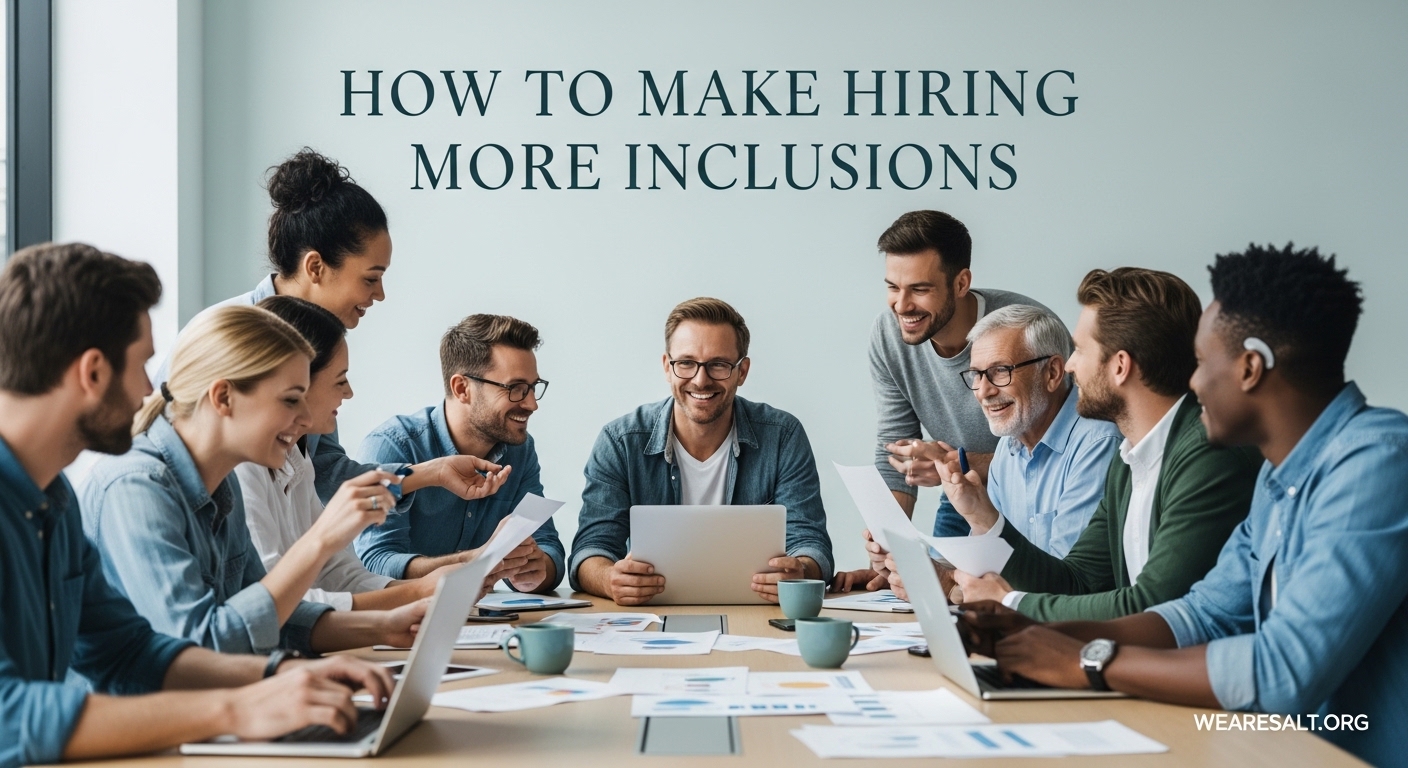
After spending over a decade helping companies build better teams, I have seen hiring practices that work and many that actively harm diversity efforts. Inclusive hiring is not just about checking boxes or meeting quotas. It is about creating a process where every candidate has a genuine opportunity to demonstrate their skills and potential.
Learning how to make hiring more inclusive changed how I approach recruitment entirely. The strategies I will share here come from real experience, research, and feedback from candidates who have been on both sides of the table. Whether you are a hiring manager, recruiter, or business leader, this guide will give you actionable steps to build a fairer, more effective hiring process.
By the end of this article, you will understand exactly how to make hiring more inclusive in your organization. We will cover everything from writing job descriptions to structuring interviews, reducing bias, and measuring your progress with concrete metrics.
Table of Contents
What Is Inclusive Hiring?
Inclusive hiring is the practice of minimizing bias and creating an equitable application, interview, selection, and offer process for candidates from diverse backgrounds. It goes beyond simply trying to hire diverse candidates. It ensures that the process itself does not disadvantage anyone based on gender, race, age, disability, socioeconomic background, or other factors.
Many people confuse diversity hiring with inclusive hiring. Diversity hiring focuses on attracting candidates from underrepresented groups. Inclusive hiring ensures that once those candidates apply, they experience a fair evaluation process that judges them on their actual abilities rather than assumptions or stereotypes.
From my experience working with HR teams, the organizations that succeed at inclusive hiring treat it as a structural issue, not a training issue. They redesign their processes to remove opportunities for bias rather than hoping individual people will simply behave better.
Why Inclusive Hiring Matters
Companies with inclusive hiring practices generate 2.3 times more cash flow per employee than those without them. That is not a feel-good statistic. It is hard business data that shows fairness and profitability go hand in hand.
When you build inclusive hiring practices, you access a broader talent pool. You reduce turnover because employees feel they were hired for their skills, not demographic boxes. You build teams that reflect your customers, leading to better products and services.
I have spoken with candidates who walked away from job offers because they sensed performative diversity commitments rather than genuine inclusion. Candidates notice when companies have real inclusive hiring practices versus when they are just talking about diversity. Your reputation in the talent market depends on getting this right.
Beyond business metrics, inclusive hiring is simply the right thing to do. Everyone deserves a fair shot at opportunities based on what they can do, not who they are or where they come from.
How to Make Hiring More Inclusive
Here is the core of what you came for. These eight strategies form a comprehensive approach to making your hiring process more inclusive. I have implemented these across organizations ranging from startups to Fortune 500 companies, and they work when applied consistently.
Step 1: Audit Your Current Hiring Process
Before you fix anything, you need to understand where bias currently enters your process. I recommend conducting a full audit of every touchpoint a candidate experiences.
Map out your entire hiring workflow from job posting to offer acceptance. At each stage, ask where bias could influence decisions. Job descriptions might use gendered language. Resume screening might favor certain schools or previous employers. Interviews might rely on gut feelings rather than structured criteria.
Collect data on your current pipeline. What percentage of applicants from different backgrounds make it to each stage? Where do you see drop-offs? This baseline will help you measure improvement later.
Step 2: Write Inclusive Job Descriptions
Your job description is often a candidate’s first impression of your company. Make it count by being genuinely welcoming to diverse applicants.
Remove gendered language. Words like “rockstar,” “ninja,” or “dominant” tend to attract male candidates and deter female applicants. Tools like Textio or Gender Decoder can scan your postings for biased language and suggest neutral alternatives.
Only list essential requirements. Research shows men apply when they meet 60% of requirements, while women typically wait until they meet 100%. Long requirement lists disproportionately filter out qualified female and minority candidates. Focus on what someone truly needs to succeed in the role.
Include salary ranges in every job posting. Salary transparency is one of the most effective inclusive hiring practices. It demonstrates fairness, reduces negotiation gaps, and shows candidates you value equity from the start.
State your commitment to diversity and inclusion explicitly. Mention that you welcome candidates with disabilities and offer accommodations. This simple statement signals that you have thought about accessibility.
Step 3: Implement Structured Interviews
Unstructured interviews are breeding grounds for bias. When different candidates get different questions, comparison becomes impossible and gut feelings take over.
Structured interviews use the same questions in the same order for every candidate. They include scoring rubrics that define what good, acceptable, and poor answers look like. This approach has been shown to reduce bias and improve prediction of job performance.
Create your question bank with input from diverse team members. Ensure questions focus on skills and behaviors relevant to the job, not personal background or cultural preferences. Avoid questions about hobbies, personal interests, or “where do you see yourself in five years” that invite subjective judgments.
Train your interviewers to stick to the structure. It can feel rigid at first, but the consistency produces fairer outcomes and better hiring decisions.
Step 4: Build Diverse Interview Panels
No single interviewer is free from bias. We all carry unconscious assumptions based on our backgrounds and experiences. Diverse interview panels help counteract individual blind spots.
When candidates see people who look like them on the interview panel, they feel more comfortable and perform better. Representation signals that your organization values diversity at all levels, not just in entry positions.
I recommend panels of at least three people with different backgrounds, genders, and perspectives. Ensure your panelists have received bias training and understand their role is to evaluate specific competencies, not just provide a thumbs up or down.
Be careful not to burden your existing diverse employees with all the interviewing work. Spread the responsibility across your organization while ensuring diverse voices are present.
Step 5: Offer Accessible Application Processes
Inclusive hiring must include candidates with disabilities and neurodiverse individuals. This requires intentional design of your application and assessment processes.
Review your career site for accessibility. Can screen readers navigate it? Are images properly tagged? Is the application form compatible with assistive technologies? These technical basics matter enormously.
Offer accommodations clearly and proactively. State on every job posting that accommodations are available and provide a simple way to request them. Train your recruiting team to respond to accommodation requests promptly and respectfully.
Consider neurodiverse candidates in your process. Some candidates perform better with written questions rather than phone screens. Others may need extra time for assessments. Flexibility in format does not lower standards. It removes barriers that prevent qualified people from demonstrating their abilities.
One company I worked with started offering interview questions in advance to all candidates. They found that anxious candidates and those with autism performed significantly better, and overall hire quality improved because everyone could prepare thoughtful responses.
Step 6: Focus on Culture Add, Not Culture Fit
“Culture fit” is one of the most damaging concepts in hiring. It sounds innocent but often becomes code for “people like us.” It reinforces homogeneity and excludes anyone different from the existing team.
Replace culture fit with culture add. Ask what unique perspectives, experiences, and skills a candidate brings that your team currently lacks. This shift changes the entire framing of cultural evaluation from exclusion to contribution.
When assessing cultural alignment, focus on values and work styles rather than personal similarities. Does this person share your company’s core values around collaboration, customer focus, or innovation? Can they work effectively in your environment?
Avoid evaluating candidates based on whether you would enjoy having a beer with them. That is not a job qualification. It is a recipe for hiring people who look and think exactly like you do.
Step 7: Train Hiring Managers on Bias
Training alone does not fix bias, but it is a necessary component of inclusive hiring. The key is making training practical and tied to structural changes.
Teach hiring managers about different types of bias. Affinity bias leads us to favor people similar to ourselves. Confirmation bias causes us to seek evidence supporting our initial impressions. The halo effect lets one positive trait overshadow everything else. Awareness helps managers catch themselves falling into these traps.
Pair training with tools and processes that make bias harder. Structured interviews, scoring rubrics, and diverse panels work together with training to produce better outcomes. Without structural support, training fades and old habits return.
Refresh training regularly. Bias is not a problem you solve once. It requires ongoing attention and reinforcement. Include inclusive hiring practices in manager performance evaluations to maintain accountability.
Step 8: Measure Your Progress
What gets measured gets managed. Without data, you cannot know if your inclusive hiring efforts are working.
Track metrics at every stage of your hiring funnel. What percentage of applicants come from underrepresented groups? What percentage advance to phone screens, interviews, and offers? Where do you see drop-offs that might indicate bias?
Measure time-to-hire and acceptance rates by demographic group. If certain groups consistently take longer to hire or decline offers at higher rates, investigate why.
Survey candidates about their experience. Anonymous feedback from rejected candidates can reveal bias issues you would never see otherwise. Ask specifically about whether candidates felt treated fairly and respectfully.
Set specific, time-bound goals for improvement. Share progress transparently with your organization. Accountability drives action.
Common Hiring Rules Explained
You may have heard references to various hiring rules and frameworks. Understanding these concepts helps you implement inclusive hiring practices with proper context.
What Is the 80% Rule in Hiring?
The 80% rule, also known as the four-fifths rule, comes from the Equal Employment Opportunity Commission. It states that a selection rate for any racial, ethnic, or gender group that is less than four-fifths (80%) of the rate for the group with the highest selection rate may indicate adverse impact.
This rule provides a simple benchmark for flagging potential discrimination. If you hire 50% of male applicants but only 30% of female applicants, that disparity warrants investigation. It does not automatically mean discrimination occurred, but it suggests you should review your process.
What Is the 70 30 Rule in Hiring?
The 70-30 rule in hiring suggests that 70% of your evaluation should focus on skills and competencies, while 30% considers potential and cultural contribution. This framework prevents over-reliance on past experience alone, which can disadvantage candidates from nontraditional backgrounds.
In inclusive hiring, this rule helps ensure you are not just hiring people who have done exactly the same job before. You are looking for capability, adaptability, and what candidates can grow into.
What Are the 5 C’s of Hiring?
The 5 C’s framework evaluates candidates on: Competence, Capability, Capacity, Commitment, and Culture. This approach provides a balanced way to assess candidates beyond just current skills.
Competence covers current skills and knowledge. Capability looks at potential to grow. Capacity evaluates bandwidth and resources to take on the role. Commitment assesses motivation and alignment. Culture examines values fit and contribution. Using all five C’s prevents over-reliance on any single factor.
What Are the 4 P’s of Recruitment?
The 4 P’s of recruitment are: Performance, Potential, Perception, and Personality. This framework helps structure evaluation across different dimensions of candidate quality.
Performance examines past results and track record. Potential considers future growth and adaptability. Perception looks at how candidates present themselves and communicate. Personality assesses work style and team dynamics. Balancing these four factors leads to more holistic and less biased evaluations.
Frequently Asked Questions
How to make hiring process more inclusive?
Start by auditing your current process for bias points. Write inclusive job descriptions with gender-neutral language and salary transparency. Implement structured interviews with the same questions for all candidates. Build diverse interview panels to counter individual bias. Offer accommodations for candidates with disabilities. Focus on culture add rather than culture fit. Train hiring managers on recognizing unconscious bias. Measure your progress with concrete metrics at every hiring stage.
What are examples of inclusive hiring practices?
Examples include using blind resume screening to remove identifying information, offering flexible interview formats for neurodiverse candidates, providing interview questions in advance, creating diverse interview panels, listing salary ranges in job postings, using skills-based assessments instead of degree requirements, providing accessibility accommodations, and implementing structured interviews with scoring rubrics.
What is inclusive recruitment?
Inclusive recruitment is the practice of creating an equitable and accessible hiring process that minimizes bias and gives all candidates a fair opportunity to demonstrate their qualifications. It encompasses everything from job description language and application accessibility to interview structure and evaluation criteria. The goal is ensuring that diversity in your applicant pool translates to diversity in your hires through fair evaluation.
How to reduce unconscious bias in interviews?
Use structured interviews with predetermined questions and scoring rubrics. Build diverse interview panels to balance individual perspectives. Focus questions on job-related skills and behaviors rather than personal background. Train interviewers to recognize common bias patterns like affinity bias and confirmation bias. Take notes during interviews to reduce reliance on memory. Evaluate candidates against objective criteria rather than gut feelings.
Why is inclusive hiring important?
Inclusive hiring leads to better business results, with inclusive companies generating 2.3 times more cash flow per employee. It expands your talent pool, reduces turnover, and builds teams that better reflect and serve diverse customers. Candidates increasingly choose employers based on demonstrated commitment to fairness and inclusion. Beyond business metrics, inclusive hiring ensures equal opportunity and creates more equitable workplaces.
What is the difference between diversity hiring and inclusive hiring?
Diversity hiring focuses on attracting candidates from underrepresented groups to apply for positions. Inclusive hiring ensures that once diverse candidates enter the pipeline, they experience a fair evaluation process free from bias. Diversity is about who applies. Inclusion is about how they are evaluated. Both are necessary. Diversity without inclusion means diverse candidates get filtered out unfairly.
Conclusion
Learning how to make hiring more inclusive is a journey, not a destination. The strategies in this guide give you a solid foundation, but real change comes from consistent application and continuous improvement.
Start with one or two changes that fit your current situation. Audit your job descriptions and remove biased language. Implement structured interviews for your next open role. Add salary ranges to your postings. Small steps compound into significant transformation over time.
Remember that inclusive hiring benefits everyone. It leads to better hiring decisions, stronger teams, and fairer outcomes. Your candidates will notice the difference. Your employees will feel it. And your organization will be stronger for it.
Take what you have learned here and put it into practice. The tools and strategies work when you use them. Your future team is counting on you to get this right.