
You pick up a product at the store labeled “eco-friendly” and feel good about your choice. But what if that label means nothing at all? Greenwashing has become so widespread that the United Nations warns it poses a significant obstacle to tackling climate change. Companies spend billions on marketing that sounds sustainable while their actual environmental impact remains unchanged or even worsens.
Understanding types of greenwashing tactics to avoid has become essential for anyone who wants to make genuinely sustainable choices. This guide breaks down the specific deception techniques companies use, provides real examples you will recognize, and gives you practical tools to verify claims before you buy. By the end, you will have a clear framework for identifying misleading environmental claims and spotting authentic sustainability efforts.
Table of Contents
What Is Greenwashing?
Greenwashing is the practice of making misleading environmental claims to create a false impression that a company or product is more sustainable than it actually is. The term was coined by environmentalist Jay Westerveld in 1986 when he noticed hotels placing cards encouraging guests to reuse towels to “save the environment” while they made no other sustainability efforts.
At its core, greenwashing exploits consumer desire to make environmentally responsible choices. It undermines genuine sustainability efforts by making it harder for consumers to distinguish between authentic environmental action and clever marketing. When every product claims to be “green,” the term loses meaning and public trust erodes. This confusion delays real climate action because resources flow toward marketing rather than meaningful change.
The practice affects everyone. Consumers waste money on products that do not deliver on their environmental promises. Investors channel funds into companies with poor environmental records disguised as sustainable. Policymakers struggle to address climate change when corporate reporting obscures true emissions and impact.
The Seven Sins of Greenwashing
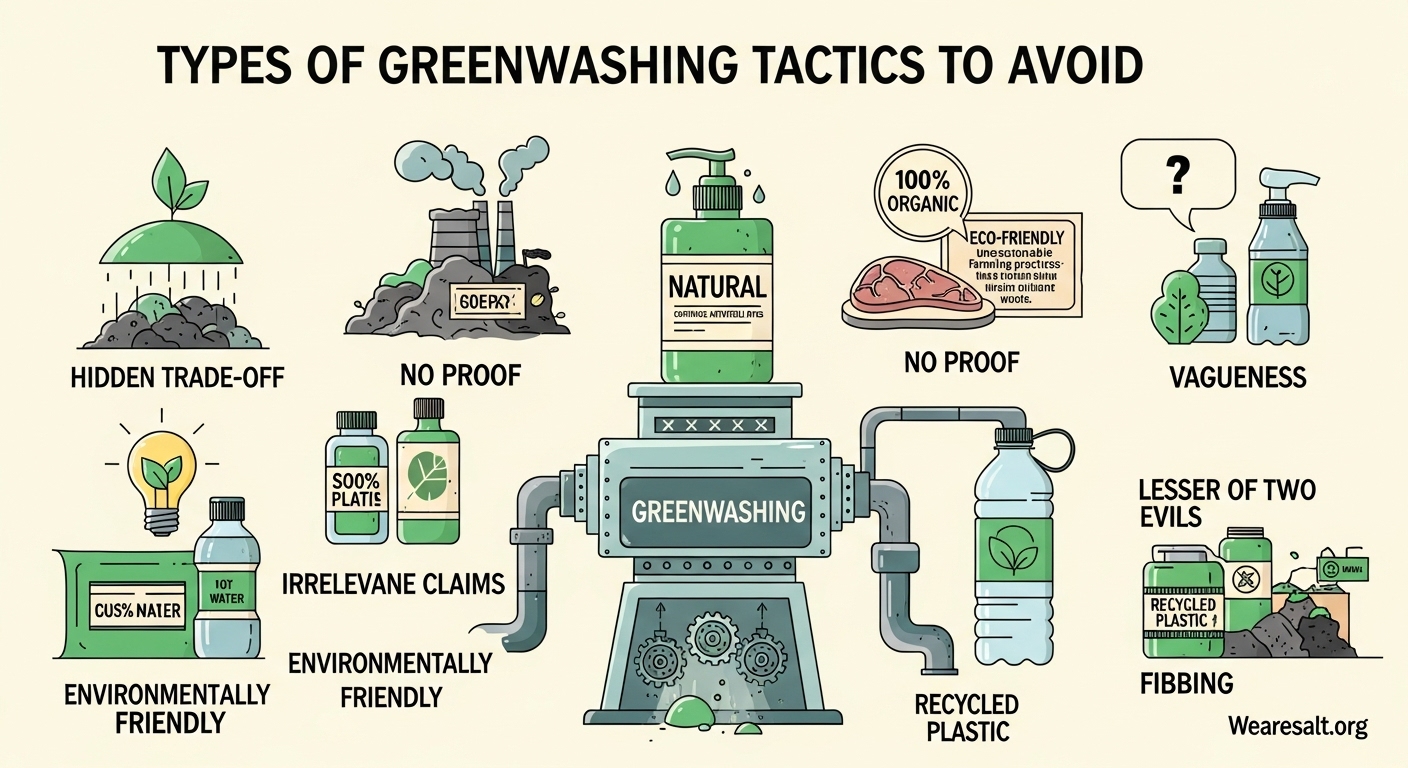
The most widely recognized framework for understanding greenwashing comes from a study by TerraChoice Environmental Marketing, which identified seven specific tactics companies use to mislead consumers. These “Seven Sins of Greenwashing” provide a practical lens for evaluating environmental claims.
1. The Sin of the Hidden Trade-Off
This sin occurs when a company highlights one environmental attribute while ignoring other, often more significant, impacts. A product might advertise itself as made from recycled materials while failing to mention the toxic chemicals used in its production or the massive carbon footprint from overseas shipping.
Paper products often fall into this trap. A notebook might claim “made from recycled paper” prominently on the front while the manufacturing process consumes enormous amounts of water and energy. The single green attribute distracts from the full environmental picture.
2. The Sin of No Proof
This sin involves making environmental claims that cannot be verified through easily accessible supporting information. When a company states its product is “30% more sustainable” but provides no methodology, data source, or certification to back up that number, they commit the sin of no proof.
Many cleaning products claim to be “biodegradable” or “non-toxic” without explaining what testing supports these assertions or defining the terms. Without standards or third-party verification, such claims remain empty marketing language designed to appeal to environmentally conscious consumers.
3. The Sin of Vagueness
Vague language represents one of the most common greenwashing tactics. Terms like “eco-friendly,” “natural,” “green,” or “environmentally safe” sound positive but lack specific meaning. These words create warm feelings without making any concrete commitments that could be measured or verified.
The word “natural” illustrates this problem perfectly. Arsenic is natural. So is crude oil. Simply calling something natural says nothing about its environmental impact or safety. Yet products ranging from cosmetics to packaged foods plaster this vague term across their packaging, knowing consumers associate it with environmental responsibility.
4. The Sin of Irrelevance
This sin occurs when companies make claims that are technically true but unimportant or unhelpful for consumers seeking environmentally responsible options. A product might advertise “CFC-free” even though chlorofluorocarbons have been banned for decades and no competing products contain them.
Another common example involves products claiming to be “free of” chemicals that were never present in those products to begin with. A “non-GMO” label on orange juice sounds impressive until you realize no genetically modified oranges exist. The claim creates an impression of careful selection without requiring any actual effort or change.
5. The Sin of Lesser of Two Evils
This sin distracts consumers from the larger environmental impact of a product category by highlighting small improvements within that category. An SUV marketed as “more fuel-efficient than ever” remains a gas-guzzling vehicle that produces significantly more emissions than smaller cars or public transportation alternatives.
Tobacco companies claiming their paper packaging is recyclable commit this sin. While technically true, it distracts from the fact that tobacco farming causes extensive deforestation and the product itself causes massive public health and environmental damage. The small green attribute cannot offset the category’s fundamental problems.
6. The Sin of Fibbing
This sin involves outright falsehoods. Companies simply lie about their environmental practices, certifications, or product contents. Unlike other sins that involve misleading framing or selective disclosure, this represents conscious fabrication of environmental credentials.
The Volkswagen emissions scandal stands as the most infamous example. The company installed software in diesel vehicles designed to cheat emissions tests, making cars appear cleaner than they actually were. When driven normally, these vehicles emitted up to 40 times the legal limit of nitrogen oxide pollutants. The deception lasted years and affected millions of vehicles worldwide.
7. The Sin of Worshipping False Labels
Fake certifications and meaningless labels designed to look like third-party endorsements constitute this sin. Companies create official-sounding seals and badges that imply rigorous environmental standards when no such verification exists. These visual cues bypass critical thinking by triggering trust responses.
Fake eco-labels often use green color schemes, leaf imagery, and terms like “certified,” “approved,” or “verified” without identifying the certifying body. A label reading “environmentally certified” with no organization named means nothing, yet it appears alongside legitimate certifications like USDA Organic or Fair Trade, borrowing their credibility.
The Five Types of Greenwashing You Should Know
Beyond the Seven Sins framework, researchers have identified five distinct types of greenwashing that describe different strategic approaches companies take. Understanding these patterns helps you recognize greenwashing across various contexts and industries.
Green-Labelling
Green-labelling involves the deceptive use of labels, certifications, or environmental claims on products. This extends beyond the “false labels” sin to include misleading presentations of legitimate certifications or carefully worded environmental statements that create false impressions.
Fashion brands frequently use this tactic. A garment might carry a tag highlighting that it contains “organic cotton” in the trim while the main fabric is conventional polyester. The label creates an impression of sustainable sourcing while the product remains essentially unchanged. Similarly, products featuring vague symbols that look like certifications but represent nothing specific.
Green-Crowding
Green-crowding occurs when entire industries adopt similar vague sustainability commitments, making it difficult for consumers to distinguish genuine leadership from compliance with basic standards. When every airline claims to be “committed to sustainability” and every oil company promises “net zero by 2050,” the language becomes meaningless noise.
This tactic benefits laggards by allowing them to hide among industry peers. If every fast fashion brand makes identical promises about reducing emissions, individual accountability disappears. The crowd effect makes it harder for consumers to identify which companies actually perform better than industry averages.
Green-Lighting
Green-lighting happens when companies heavily publicize one small environmentally friendly action while downplaying or hiding larger harmful practices. This selective spotlighting creates a distorted perception of a company’s overall environmental impact.
A major oil company might launch a high-profile campaign about a small solar investment while continuing to expand fossil fuel extraction. A food corporation could promote a minor packaging reduction while ignoring the massive environmental cost of its industrial agriculture supply chain. The highlighted good deed distracts from systemic problems.
Green-Hushing
Green-hushing represents the deliberate underreporting or selective disclosure of environmental information. Rather than outright lying, companies simply stay silent about their negative impacts while emphasizing positive stories. This asymmetry of information prevents consumers from making fully informed choices.
Many companies now publish impressive sustainability reports while omitting crucial data about supply chain emissions, water usage in manufacturing, or waste generation. By controlling which metrics they disclose, they craft narratives of progress without full transparency. This tactic has grown as reporting requirements remain voluntary in most jurisdictions.
Green-Shifting
Green-shifting transfers responsibility for environmental problems from companies to consumers. Rather than addressing systemic issues in production or supply chains, companies launch campaigns suggesting individual consumer choices can solve climate change. This deflection protects profitable but harmful business models.
The classic example involves plastic pollution. For decades, petroleum companies promoted recycling programs while knowing most plastic cannot be economically recycled. They shifted responsibility to consumers with “reduce, reuse, recycle” messaging while continuing to produce billions of tons of virgin plastic. The consumer feels guilty for using plastic while the producer faces no pressure to change.
Industry-Specific Greenwashing Examples
Greenwashing tactics vary across industries, with each sector developing its own playbook for misleading environmental claims. Understanding industry-specific patterns helps you spot deception in the products and services you use most.
Fashion Industry
The fashion industry generates approximately 10% of global carbon emissions and produces massive pollution, yet it markets itself as increasingly sustainable. Fast fashion brands like H&M and Zara have launched “conscious” or “sustainable” clothing lines that represent tiny fractions of their total production while their core business models depend on rapid consumption and disposal.
Shein, the ultra-fast fashion retailer, routinely promotes small collections made with recycled materials while producing thousands of new styles daily. The sustainability messaging distracts from the fundamental unsustainability of producing disposable clothing at massive scale. Green collections serve as marketing tools that encourage continued consumption rather than genuine alternatives.
Another common fashion tactic involves highlighting single sustainable attributes while ignoring supply chain issues. A brand might emphasize organic cotton while remaining silent about textile dye pollution, worker exploitation, or shipping emissions. The selective disclosure makes conventional products appear transformed.
Energy Sector
Fossil fuel companies have mastered green-lighting and green-crowding. Major oil corporations run advertising campaigns featuring renewable energy imagery and net zero commitments while continuing to explore for new oil reserves. BP’s “Beyond Petroleum” rebranding exemplifies this approach, maintaining the fossil fuel core business while marketing a green transformation that never materialized.
The Volkswagen emissions scandal revealed how automotive companies used technology to actively deceive rather than simply mislead. The software detected when vehicles underwent emissions testing and temporarily reduced pollution output. Real-world driving produced dramatically different results. This deliberate fraud went beyond marketing into engineered deception.
Natural gas marketing provides another example of the hidden trade-off sin. Promoted as a “bridge fuel” to renewable energy, natural gas production releases significant methane, a greenhouse gas far more potent than carbon dioxide. The “cleaner than coal” messaging ignores methane leakage and continued fossil fuel dependency.
Food and Beverage
Food companies exploit consumer desire for natural, healthy products through vague sustainability claims. “All-natural” and “farm-fresh” labels appear on highly processed products shipped thousands of miles. Packaging might feature pastoral imagery of farms that have no connection to industrial supply chains actually used.
Dairy and meat industries increasingly promote “sustainable” farming practices while avoiding discussion of the sector’s massive contribution to greenhouse gas emissions. A yogurt might advertise that it comes from cows fed “sustainable grain” while ignoring the fundamental environmental cost of cattle farming including land use, water consumption, and methane production.
Single-use packaging presents another greenwashing hotspot. Companies highlight recyclable packaging while knowing most recycling systems cannot process those materials. Biodegradable claims often require industrial composting facilities that do not exist in most communities. The claim creates consumer confidence without environmental benefit.
How to Spot and Avoid Greenwashing
Protecting yourself from greenwashing requires developing a critical eye and knowing what questions to ask. These practical steps help you evaluate environmental claims before making purchasing decisions.
Step 1: Look for Specifics
Vague claims like “eco-friendly” or “green” mean nothing without supporting details. Look for specific information about what makes the product environmentally superior. What percentage is recycled? What emissions were reduced? How was this measured? Legitimate environmental claims include numbers, timelines, and methodologies.
Step 2: Verify Certifications
Check whether certifications come from legitimate third-party organizations with transparent standards. Trustworthy certifications include USDA Organic, Fair Trade Certified, B Corp certification, and Forest Stewardship Council (FSC) approval. Research unfamiliar labels to ensure they represent actual verification rather than marketing creations.
Step 3: Consider the Full Lifecycle
Evaluate products across their entire lifecycle from raw material extraction through manufacturing, shipping, use, and disposal. A product made from recycled materials that requires toxic chemicals to produce and cannot be recycled at end-of-life may not represent a genuine improvement. Look for lifecycle assessments or environmental product declarations when available.
Step 4: Check for Evidence
Search for the data behind environmental claims. Legitimate sustainability efforts typically produce reports, studies, or third-party audits that consumers can review. Companies making real progress usually want to document and share their achievements. Silence about methodology often indicates greenwashing.
Step 5: Watch for Distracting Imagery
Be skeptical of nature imagery that creates emotional connections without substance. Products covered in leaves, earth tones, and landscape photography may have no actual environmental benefits. The visual language of sustainability has become detached from actual sustainable practices.
Quick Reference Checklist
When evaluating a product or company, ask these questions:
- Does the claim specify what environmental benefit is provided?
- Is there evidence or certification backing the claim?
- Does the positive attribute outweigh any negative impacts?
- Is the claim relevant and meaningful, or technically true but insignificant?
- Who created any certifications or labels displayed?
- Does the company report its full environmental impact or only highlights?
- Are they shifting responsibility to you as a consumer?
FAQ
What are greenwashing tactics?
Greenwashing tactics are deceptive techniques companies use to appear more environmentally responsible than they actually are. Common tactics include vague language like ‘eco-friendly’ without specifics, hidden trade-offs where one green attribute masks other harms, false or misleading certifications, irrelevant claims that are technically true but meaningless, and selective disclosure highlighting good deeds while hiding negative impacts.
What are the 7 sins of greenwashing?
The Seven Sins of Greenwashing are: 1) Hidden Trade-Off (focusing on one green attribute while ignoring others), 2) No Proof (claims without evidence), 3) Vagueness (undefined terms like ‘natural’), 4) Irrelevance (true but unimportant claims), 5) Lesser of Two Evils (distracting from category problems), 6) Fibbing (outright false claims), and 7) Worshipping False Labels (fake certifications).
What are the three types of greenwashing?
While frameworks vary, three common types of greenwashing are: 1) Green-Lighting – highlighting one small eco-friendly action while hiding larger harms, 2) Green-Labelling – using misleading labels and false certifications, and 3) Green-Shifting – transferring responsibility from companies to consumers. Additional types include Green-Crowding (industry-wide vague commitments) and Green-Hushing (selective disclosure of environmental information).
What are the consequences of greenwashing?
Greenwashing undermines genuine sustainability efforts by diverting consumer spending and investment away from truly sustainable options. It erodes public trust in environmental claims, making consumers cynical about all sustainability marketing. Greenwashing delays real climate action by creating false impressions of progress while emissions and environmental degradation continue. Companies caught greenwashing face legal consequences, fines, and reputational damage. For consumers, it means wasted money on products that do not deliver promised environmental benefits.
How can I verify if a company’s environmental claims are true?
To verify environmental claims, look for specific data and third-party certifications from recognized organizations like USDA Organic, Fair Trade, B Corp, or FSC. Check whether the company publishes comprehensive sustainability reports with measurable targets and progress updates. Research the company’s overall environmental record rather than relying on marketing materials. Look for lifecycle assessments that evaluate impact across production, use, and disposal. Be skeptical of vague terms without definitions and claims that cannot be independently verified.
Conclusion
Understanding types of greenwashing tactics to avoid empowers you to make genuinely sustainable choices in a market flooded with misleading claims. The Seven Sins framework and Five Types classification give you practical tools for evaluating environmental marketing across industries from fashion to energy to food.
The key takeaway: real sustainability comes with specifics. Companies making genuine progress share data, pursue rigorous third-party certifications, and report their full environmental impact including challenges and setbacks. They do not hide behind vague language or distract you with nature imagery while business practices remain unchanged.
As consumers, we hold significant power through our purchasing decisions. By learning to spot greenwashing and supporting companies with authentic environmental commitments, we push markets toward real sustainability. The checklist and frameworks in this article give you the tools to cut through marketing noise and invest your money in products and companies that align with your values.
Start applying these principles today. The next time you see an “eco-friendly” label, ask what specifically makes it eco-friendly, who verified that claim, and whether the full lifecycle supports the marketing message. Your informed choices drive the demand for authentic sustainability that our planet urgently needs.