
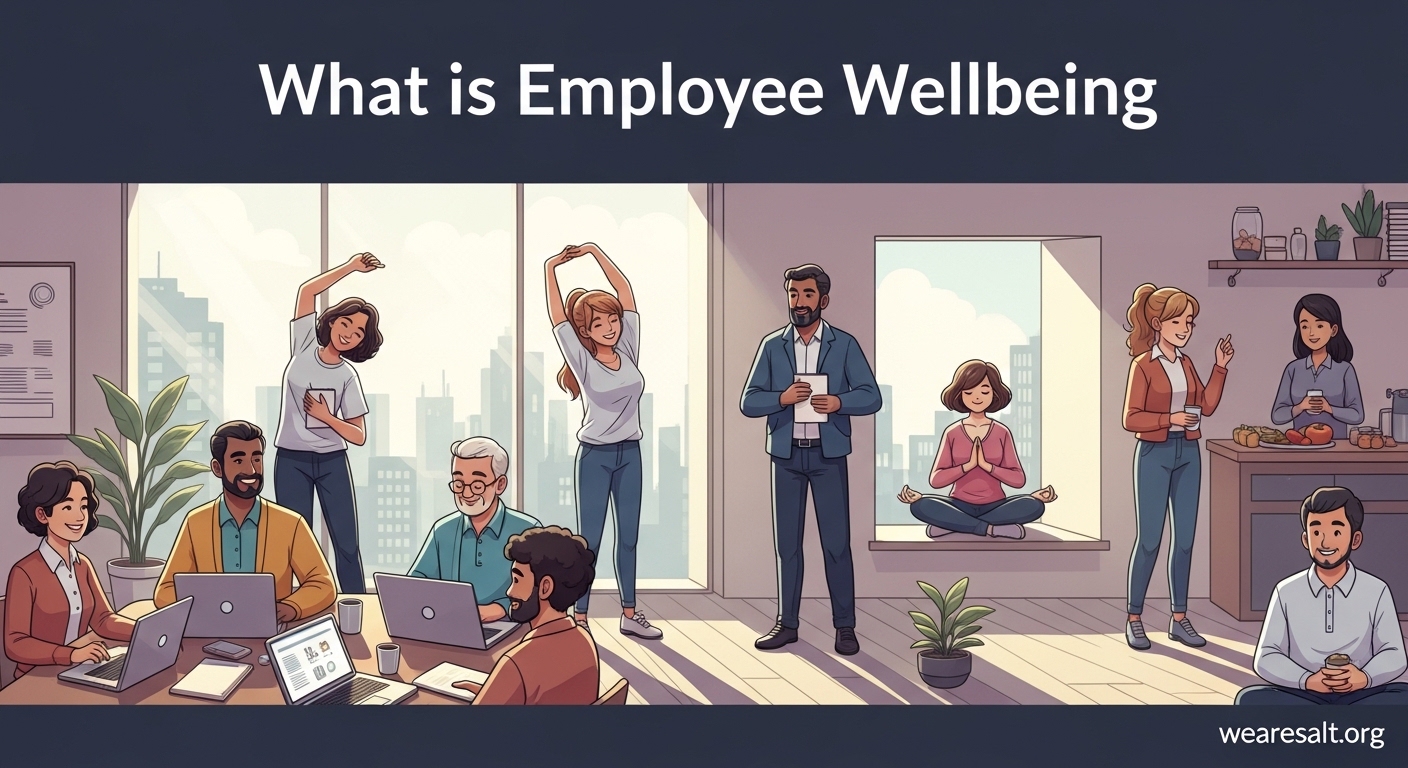
Employee wellbeing costs organizations $20 million in lost opportunity for every 10,000 workers when neglected. This staggering figure from Gallup research represents just the financial impact of failing to address the holistic health of your workforce. Employee wellbeing is the comprehensive measure of how people experience their lives, encompassing their mental, physical, emotional, and economic health as shaped by their work environment and relationships.
In this guide, I will explain exactly what employee wellbeing means in 2026, break down the five essential elements that determine it, and show you practical ways to measure and improve wellbeing in your organization. Whether you are an HR leader, a manager, or an executive, understanding these fundamentals will help you build a more resilient, engaged, and productive team.
Table of Contents
What is employee wellbeing?
Employee wellbeing is the holistic state of an employee’s overall health and life satisfaction as influenced by their work environment. It extends beyond traditional wellness programs that focus primarily on physical health to encompass how people feel about their careers, relationships, finances, and sense of purpose. When employees experience strong wellbeing, they have the energy and resilience to perform at their best both professionally and personally.
The concept recognizes that work significantly impacts overall life experience. Poor workplace conditions, excessive stress, and lack of support do not just affect job performance. They spill over into family life, physical health, and mental wellness. This is why leading organizations now treat employee wellbeing as a strategic business priority rather than a nice-to-have perk.
Employee wellbeing vs employee wellness
Employee wellness refers specifically to programs and initiatives focused on physical health, such as gym memberships, health screenings, and nutrition counseling. Employee wellbeing takes a broader view, addressing the full spectrum of how employees experience their lives including career satisfaction, social connections, financial security, and community engagement.
Wellness programs tend to be prescriptive and standardized, often measuring participation rates in specific activities. Wellbeing strategies are personalized and holistic, measuring overall life satisfaction and the factors that enable employees to thrive. The distinction matters because organizations that focus only on physical wellness often miss the root causes of burnout and disengagement.
The Five Elements of Employee Wellbeing
Research from Gallup identifies five interconnected elements that determine overall employee wellbeing. When organizations strengthen all five areas, they create conditions where employees can truly flourish. Neglecting any single element can undermine the others and lead to declining performance and health.
Career wellbeing
Career wellbeing is the foundation of overall life satisfaction and means employees like what they do every day. When people find their work meaningful and aligned with their strengths, they experience higher engagement and lower burnout risk. Career wellbeing is not about job titles or compensation levels; it is about whether employees feel their daily work matters and utilizes their talents.
Organizations can support career wellbeing by ensuring role clarity, providing growth opportunities, and helping employees understand how their work contributes to larger organizational goals. Regular career conversations between managers and team members help employees see a future with the company that excites them.
Social wellbeing
Social wellbeing means employees have meaningful relationships and feel connected to others at work. Strong social connections provide emotional support during stressful periods and create a sense of belonging that improves retention. Research consistently shows that having a best friend at work is one of the strongest predictors of employee engagement.
Leaders can foster social wellbeing by creating opportunities for authentic connection, not just forced team-building activities. This includes encouraging collaboration, celebrating team wins together, and ensuring new employees are welcomed and integrated into social networks. The shift to remote and hybrid work has made intentional social connection efforts even more critical.
Financial wellbeing
Financial wellbeing means employees can manage their economic lives effectively and feel secure about their future. Financial stress affects 47% of employees according to research, making it one of the most significant yet overlooked components of wellbeing programs. When employees worry about money, their cognitive capacity for work decreases, affecting decision-making and productivity.
Effective financial wellbeing support includes fair compensation, transparent pay practices, retirement planning assistance, emergency savings programs, and financial education. Importantly, employees value financial wellbeing resources that respect their privacy and provide genuine choice rather than mandated financial wellness activities.
Physical wellbeing
Physical wellbeing means employees have the health and energy to perform at their best. This includes adequate sleep, regular physical activity, proper nutrition, and the absence of chronic health conditions that limit functioning. Physical health directly impacts cognitive performance, emotional regulation, and the ability to handle workplace stress.
Organizations support physical wellbeing through health insurance, flexible schedules that allow for exercise, ergonomic workspaces, mental health days, and realistic workloads that do not require sacrificing sleep. However, physical wellbeing initiatives work best when they are optional and respectful of individual differences, not performative programs that track and monitor employee health behaviors.
Community wellbeing
Community wellbeing means employees feel a sense of engagement and belonging where they live and work. This includes pride in their organization, connection to their local community, and a sense of contributing to something larger than themselves. Community wellbeing often determines whether employees feel their work has purpose beyond a paycheck.
Companies can strengthen community wellbeing by connecting work to meaningful impact, supporting volunteer opportunities, and becoming positive corporate citizens. Employees who believe their organization makes a positive difference in the world report significantly higher overall wellbeing and are more likely to stay with their employer long-term.
Why employee wellbeing matters
Employee wellbeing directly affects organizational performance, cost structure, and competitive advantage. Organizations that prioritize wellbeing create resilient workforces that can maintain engagement even during periods of pressure, change, or high workload. The business case for wellbeing investment has never been clearer than in 2026.
The financial impact of poor wellbeing is substantial and measurable. Gallup research demonstrates that low wellbeing costs approximately $20 million in lost opportunity for every 10,000 employees due to absenteeism, turnover, and reduced productivity. Employees with poor wellbeing experience burnout at three times the rate of their colleagues with strong wellbeing, leading to increased healthcare costs and disability claims.
Beyond cost savings, strong employee wellbeing drives positive business outcomes. Organizations with thriving employees report 41% lower absenteeism, 59% lower turnover in high-turnover industries, and 21% higher profitability. These employees are also more creative, better at problem-solving, and more resilient when facing challenges.
The connection between wellbeing and employee engagement is particularly important. While engagement measures commitment to organizational goals, wellbeing measures overall life experience. Employees can be engaged but burned out, or disengaged but personally thriving. The most productive and loyal employees score high on both measures, which is why leading organizations track both metrics.
Signs of poor employee wellbeing
Recognizing early warning signs of declining wellbeing allows managers and HR leaders to intervene before burnout or turnover occurs. Poor wellbeing rarely appears suddenly; instead, it manifests through gradual changes in behavior, performance, and health that attentive leaders can identify.
Behavioral indicators include increased absenteeism, withdrawal from social interactions, missed deadlines, and decreased participation in meetings or optional activities. Employees struggling with wellbeing may appear chronically tired, irritable, or disengaged from work they previously enjoyed. These changes often signal that one or more of the five wellbeing elements needs attention.
Performance-related signs include declining work quality, difficulty concentrating, and reduced creativity or problem-solving ability. Employees may report feeling overwhelmed by workloads that previously felt manageable. Physical health manifestations such as frequent illness, weight changes, or visible stress symptoms may also indicate wellbeing challenges requiring support.
How to measure employee wellbeing
Effective measurement of employee wellbeing requires both quantitative metrics and qualitative insights that capture the full employee experience. Organizations should move beyond simple participation tracking in wellness programs to measure the actual life satisfaction and health outcomes of their workforce.
The Gallup Life Evaluation Index provides a validated framework for measuring wellbeing through two simple questions about present life evaluation and future life optimism. This creates a Thriving, Struggling, or Suffering classification that predicts important outcomes like productivity, retention, and healthcare costs. Organizations can track the percentage of employees in each category over time to measure improvement.
Pulse surveys focused on the five elements of wellbeing help identify specific areas needing attention. Questions should assess career satisfaction, social connection quality, financial security perceptions, physical health, and community engagement. Anonymous responses encourage honesty about sensitive topics like financial stress or mental health challenges.
Operational metrics complement survey data to provide a complete picture. Track absenteeism rates, turnover by wellbeing scores, engagement survey correlations, and healthcare utilization patterns. Exit interviews should include wellbeing questions to understand how work environment factors contribute to departure decisions.
How to improve employee wellbeing
Improving employee wellbeing requires strategic initiatives that address all five elements while respecting employee autonomy and privacy. Programs that feel performative, mandatory, or like surveillance often backfire, creating cynicism rather than improvement. Based on forum discussions and research, employees value genuine choice and real support over checkbox wellness initiatives.
Start by ensuring fair compensation and transparent pay practices that address financial wellbeing fundamentals. Financial stress undermines every other wellbeing element, yet many organizations offer financial wellness programming while failing to pay living wages. Emergency savings programs and retirement planning support can help employees build security regardless of income level.
Implement flexible work arrangements that give employees control over when and where they work. Autonomy is consistently cited as one of the most important factors for wellbeing. This includes flexible hours, remote work options, and predictable scheduling that allows employees to manage personal responsibilities without work conflicts.
Provide mental health resources that include comprehensive insurance coverage, employee assistance programs, and trained mental health first responders. Remove the stigma around mental health by normalizing conversations and ensuring confidentiality. Mental health days should be treated with the same legitimacy as sick days for physical illness.
Create career development pathways that help employees see a future with your organization. Regular career conversations, mentorship programs, and internal mobility opportunities strengthen career wellbeing. Recognition programs that celebrate contributions meaningfully, not just through generic praise, reinforce that employee work matters.
Finally, tie participation in wellbeing programs to tangible benefits like insurance premium discounts or additional time off. Research shows that linking wellness activities to real rewards increases participation from typical levels of 20-30% to over 85%. This demonstrates organizational commitment beyond performative wellness theater.
The role of managers in employee wellbeing
Manager quality is the single most important factor in employee wellbeing, more significant than any wellness program or benefit offering. Managers account for 70% of the variance in employee engagement scores and serve as the primary interface between organizational policies and daily employee experience. How managers lead directly determines whether employees thrive or struggle.
Effective wellbeing support from managers involves regular check-ins that go beyond task updates to understand how employees are actually doing. These conversations should focus on removing obstacles, providing resources, and demonstrating genuine care for the person, not just their output. Managers trained in supportive conversations create psychological safety that encourages employees to seek help when needed.
Managers should advocate for their team members’ needs with senior leadership, whether that means realistic deadlines, adequate resources, or policy changes that support work-life balance. When managers model healthy boundaries by taking vacations, avoiding after-hours emails, and prioritizing their own wellbeing, they give employees permission to do the same.
Importantly, managers must avoid making wellbeing feel like another performance metric or mandate. Forcing participation in wellness activities or using health data punitively destroys trust. The best managers treat employees as adults who deserve respect, offering support and resources while honoring individual choices about how to use them.
FAQ
What is the meaning of employee wellbeing?
Employee wellbeing refers to the holistic state of an employee’s mental, physical, emotional, and economic health as influenced by their work environment, relationships, and organizational support. It encompasses how people experience their lives overall, not just their physical health or job satisfaction.
What are the 5 pillars of employee wellbeing?
The five pillars are: 1) Career wellbeing – liking what you do daily, 2) Social wellbeing – having strong relationships and love in your life, 3) Financial wellbeing – effectively managing your economic life, 4) Physical wellbeing – having good health and enough energy, and 5) Community wellbeing – the sense of engagement and belonging where you live.
What are the 5 dimensions of employee wellbeing?
The five dimensions are the same as the five pillars: career, social, financial, physical, and community wellbeing. These represent the interconnected areas that determine an employee’s overall life experience and satisfaction.
What are the 5 C’s of wellbeing?
The 5 C’s of wellbeing (Competence, Confidence, Connection, Character, and Caring) differ from the workplace wellbeing framework. The 5 C’s are often used in youth development and educational contexts, while the five pillars of employee wellbeing focus specifically on adult workplace wellness.
How does employee wellbeing affect productivity?
Employees with strong wellbeing are more engaged, creative, and resilient during high-pressure periods. They take fewer sick days, stay with organizations longer, and produce higher quality work. Poor wellbeing costs organizations approximately $20 million in lost opportunity for every 10,000 employees.
What causes poor employee wellbeing?
Poor employee wellbeing stems from excessive workload without adequate resources, lack of manager support, unclear expectations, poor work-life balance, financial stress, limited growth opportunities, toxic workplace culture, and insufficient mental health resources. Burnout often occurs when chronic workplace stress goes unaddressed.
Conclusion
Employee wellbeing in 2026 represents one of the most important strategic investments organizations can make. When employees thrive across all five elements, career, social, financial, physical, and community wellbeing, they bring their best selves to work and contribute at higher levels. The cost of neglect is too significant to ignore, with Gallup research showing $20 million in lost opportunity for every 10,000 employees with poor wellbeing.
Building a culture of wellbeing requires more than wellness programs and gym memberships. It demands fair compensation that reduces financial stress, managers trained in supportive leadership, flexible work arrangements that honor autonomy, and genuine commitment to employee health across all life dimensions. Organizations that get this right will attract and retain the best talent while outperforming competitors who view employees as disposable resources.
Start your wellbeing improvement journey by measuring where your organization currently stands across the five elements. Use pulse surveys to identify specific pain points, train managers in supportive conversations, and create programs that offer real value rather than performative wellness theater. Your employees and your bottom line will thank you.