
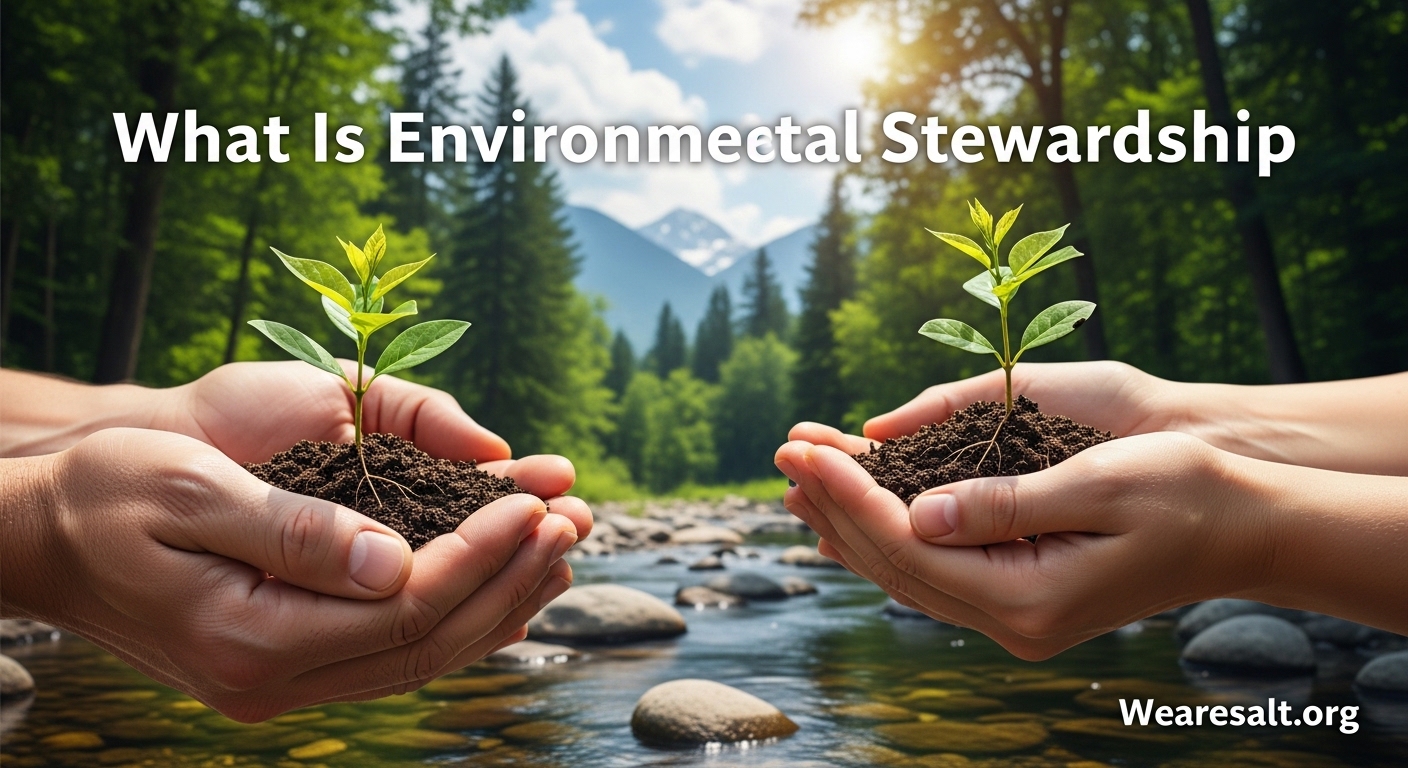
Environmental stewardship is the responsibility for environmental quality shared by all those whose actions affect the environment. This definition from the U.S. Environmental Protection Agency captures the essence of a concept that has become increasingly vital in 2026.
In an era of climate change, biodiversity loss, and growing environmental challenges, understanding what environmental stewardship means and how to practice it has never been more important. Whether you are an individual looking to make a difference, a parent teaching your children about nature, or a community member seeking local action opportunities, this guide will provide you with a comprehensive understanding of environmental stewardship.
We will explore the core principles, the six natural resource systems, the three types of environmental stewards, and practical ways you can contribute to a healthier planet starting today.
Table of Contents
What Is Environmental Stewardship?
Environmental stewardship refers to the responsible use and protection of the natural environment through conservation and sustainable practices. According to NOAA, it encompasses “the responsible use and protection of the natural environment through conservation and sustainable practices to enhance ecosystem resilience and human well-being.”
At its core, environmental stewardship recognizes that everyone shares responsibility for the quality of our environment. Every choice we make as individuals, organizations, and communities affects the air we breathe, the water we drink, and the ecosystems that sustain all life on Earth.
The concept emphasizes active participation rather than passive observation. Stewardship is not merely about appreciating nature from a distance. It involves taking concrete actions to protect, restore, and improve environmental quality for present and future generations.
The Core Principles of Environmental Stewardship
Several fundamental principles define effective environmental stewardship:
Responsible Management: Stewardship requires making thoughtful decisions about how we use natural resources. This means considering the long-term impacts of our actions rather than pursuing short-term gains.
Pollution Prevention: Rather than cleaning up environmental damage after it occurs, stewardship focuses on preventing pollution and degradation in the first place. This proactive approach is more effective and less costly than reactive solutions.
Continuous Improvement: Environmental stewardship is not a one-time achievement but an ongoing commitment. It involves regularly assessing environmental performance and seeking ways to reduce negative impacts while enhancing positive outcomes.
Shared Responsibility: Environmental quality is a shared resource, and its protection requires collective action. Government agencies, businesses, communities, and individuals all have roles to play in stewardship.
The Six Natural Resource Systems
A comprehensive approach to environmental stewardship addresses six interconnected natural resource systems. Understanding these systems helps us recognize how our actions affect different aspects of the environment.
1. Air Quality
Air stewardship involves protecting atmospheric quality by reducing emissions of pollutants and greenhouse gases. This includes transitioning to cleaner energy sources, improving transportation efficiency, and supporting regulations that limit industrial pollution. Clean air is essential for human health, agricultural productivity, and ecosystem functioning.
2. Ecosystems and Biodiversity
Ecosystem stewardship focuses on protecting the diverse communities of plants, animals, and microorganisms that inhabit our planet. This includes preserving natural habitats, restoring degraded ecosystems, and preventing the extinction of species. Healthy ecosystems provide essential services including pollination, water purification, and climate regulation.
3. Energy Resources
Energy stewardship means using energy resources efficiently and transitioning to renewable sources. This involves reducing overall energy consumption through conservation, improving energy efficiency in buildings and transportation, and supporting the development of solar, wind, and other clean energy technologies.
4. Land Use
Land stewardship addresses how we use and manage terrestrial environments. This includes sustainable agriculture, responsible urban development, preservation of open spaces, and restoration of degraded lands. Thoughtful land use planning helps prevent soil erosion, protects watersheds, and maintains wildlife corridors.
5. Materials and Waste
Materials stewardship focuses on reducing waste, promoting recycling and composting, and designing products for circularity. This system challenges the traditional take-make-dispose model and encourages a more circular economy where materials are reused, repurposed, and recycled rather than discarded.
6. Water Resources
Water stewardship encompasses the protection and sustainable use of freshwater and marine resources. This includes preventing water pollution, managing water consumption efficiently, protecting aquatic habitats, and ensuring equitable access to clean water for all communities.
The Three Types of Environmental Stewards
Research and practice have identified three distinct but complementary types of environmental stewards. Each type contributes differently to environmental protection, and understanding these roles helps individuals find their most effective path to engagement.
Doers: Action-Oriented Stewards
Doers are individuals who take direct physical action to improve environmental quality. They plant trees, clean up waterways, restore habitats, and participate in conservation projects. Doers prefer hands-on engagement and find satisfaction in seeing immediate tangible results from their efforts.
Examples of doer activities include volunteering for beach cleanups, participating in tree planting events, maintaining community gardens, and removing invasive species from natural areas.
Donors: Resource-Providing Stewards
Donors support environmental stewardship through financial contributions and resource provision. They may not have time for hands-on activities or may prefer to leverage their resources to amplify the impact of organizations doing environmental work. Donors provide the funding that enables conservation organizations, research institutions, and community groups to carry out their missions.
Donor contributions might include supporting environmental nonprofits, funding research projects, sponsoring conservation initiatives, or providing resources for educational programs about environmental stewardship.
Practitioners: Professional Stewards
Practitioners make environmental stewardship their career or primary professional focus. These include environmental scientists, conservation biologists, sustainability consultants, environmental lawyers, and policy advocates. Practitioners develop expertise in specific areas and apply their knowledge to advance environmental protection at scale.
Practitioners work in government agencies, nonprofit organizations, private companies, and academic institutions. They develop environmental policies, conduct scientific research, design conservation strategies, and educate the public about environmental issues.
Environmental Stewardship vs Sustainability
While often used interchangeably, environmental stewardship and sustainability have distinct meanings that complement each other.
Environmental stewardship focuses specifically on the responsible management and protection of the natural environment. It emphasizes active engagement with environmental systems and emphasizes the ethical dimension of our relationship with nature. Stewardship implies a caretaker role, suggesting that humans have a responsibility to protect and nurture the environment.
Sustainability, by contrast, is a broader concept that encompasses environmental, social, and economic dimensions. It refers to meeting present needs without compromising the ability of future generations to meet their own needs. Sustainability considers not only environmental protection but also social equity and economic viability.
The two concepts work together. Environmental stewardship is one essential component of achieving sustainability. Without active stewardship of natural resources, long-term sustainability is impossible. Conversely, sustainability provides the framework within which stewardship efforts can be directed toward systemic change rather than isolated interventions.
Environmental Stewardship from a Faith Perspective
For many people, environmental stewardship is not merely a practical or scientific concern but a spiritual one. Religious and faith traditions around the world have long recognized humanity’s connection to and responsibility for the natural world.
The concept of stewardship appears prominently in many religious texts and teachings. In the Abrahamic traditions, the idea that humans are called to care for creation reflects a sacred responsibility. The Earth is viewed not as property to be exploited but as a gift to be cherished and protected. This perspective shifts environmental protection from an optional activity to a moral obligation.
Indigenous spiritual traditions often embody particularly deep connections to land and environment. Many Indigenous cultures view humans as part of nature rather than separate from it, emphasizing reciprocal relationships with the land, water, and other living beings. These traditions have practiced stewardship for generations, maintaining sustainable relationships with their environments through ceremonies, stories, and practical knowledge passed down through centuries.
Faith-based environmental stewardship brings several unique contributions. It provides motivation rooted in love and reverence rather than fear or obligation. It connects environmental protection to broader values of justice, compassion, and community. It creates communities of practice where people support each other in living more sustainably. And it offers hope and resilience in the face of environmental challenges that might otherwise feel overwhelming.
Environmental Stewardship Examples
Understanding environmental stewardship becomes clearer when we look at concrete examples across different scales of action.
Individual Stewardship Actions
At the individual level, environmental stewardship includes everyday choices that reduce environmental impact. These actions might seem small but collectively create significant change.
Common individual stewardship actions include reducing energy consumption by using efficient appliances and LED lighting, minimizing single-use plastics, composting food waste, choosing sustainable transportation options, supporting local and organic food producers, conserving water through efficient fixtures and mindful usage, and educating oneself about environmental issues.
Community Stewardship Initiatives
Community-level stewardship brings people together to achieve environmental goals that individuals cannot accomplish alone. These initiatives build social connections while improving local environmental quality.
Examples include community gardens that provide fresh food while greening urban spaces, neighborhood composting programs that divert waste from landfills, local conservation groups that restore parks and natural areas, community solar projects that make renewable energy accessible, and watershed protection coalitions that safeguard local water resources.
Organizational and Corporate Stewardship
Businesses and institutions have significant environmental footprints and corresponding opportunities for stewardship. Organizational stewardship involves integrating environmental considerations into operations, products, and culture.
Corporate stewardship examples include companies adopting renewable energy for their operations, implementing zero-waste manufacturing processes, designing products for durability and recyclability, supporting environmental restoration projects, and transparently reporting environmental performance.
Teaching Environmental Stewardship to Children and Families
One of the most powerful ways to advance environmental stewardship is by teaching children to value and protect nature. Families can nurture environmental awareness and responsibility from an early age through age-appropriate activities and shared experiences.
Age-Appropriate Stewardship Activities
For young children, stewardship can start with simple nature exploration and caring for living things. Preschoolers can help plant seeds, water plants, feed birds, and sort recyclables. These activities build positive associations with environmental care while developing motor skills and scientific curiosity.
School-age children can take on more responsibility. They can participate in community cleanups, start composting systems, track household energy use, research local wildlife, and create art from recycled materials. At this age, connecting stewardship to concrete outcomes helps children understand their impact.
Teenagers can engage with more complex environmental issues. They can advocate for environmental policies at school, organize environmental clubs, conduct citizen science projects, volunteer with conservation organizations, and explore environmental careers.
Setting Family Green Goals
Families can practice environmental stewardship together by setting shared green goals. These might include reducing household waste by a certain percentage, lowering energy bills through conservation, eating more plant-based meals, or spending regular time in nature together.
Tracking progress and celebrating achievements helps maintain motivation. Creating friendly challenges or games around environmental goals can make stewardship fun rather than burdensome for children.
Making Stewardship a Family Value
The most lasting impact comes from making environmental stewardship a core family value. This means discussing environmental issues at the dinner table, modeling sustainable behaviors for children to emulate, expressing gratitude for nature’s gifts, and supporting children when they want to take environmental action.
Family traditions that connect to nature, such as regular hikes, camping trips, or gardening together, create positive memories and associations that last a lifetime.
How to Find Local Environmental Stewardship Opportunities
Many people want to engage in environmental stewardship but do not know where to start in their own communities. Finding local opportunities requires knowing where to look and whom to connect with.
Types of Local Environmental Organizations
Several types of organizations typically offer environmental stewardship opportunities in communities. Conservation nonprofits focus on protecting local natural areas, wildlife, and ecosystems. Environmental education centers provide programs for learning about local ecology. Community gardens and urban agriculture groups transform unused spaces into productive green areas. Watershed associations work to protect local rivers, lakes, and streams.
Additionally, sustainability coalitions bring together businesses, government, and residents to advance community-wide environmental goals. Religious organizations often have environmental committees or creation care teams. Scout troops, youth groups, and service clubs regularly engage in environmental projects.
Getting Started with Local Action
To find opportunities in your area, start with a simple online search for environmental organizations in your city or region. Visit local nature centers and parks, which often maintain lists of volunteer opportunities. Check with your municipal government, as many cities have environmental commissions or sustainability offices that coordinate local initiatives.
Attend community meetings or environmental events to meet like-minded people and learn about ongoing projects. Social media platforms often have local environmental groups where opportunities are shared. Libraries frequently host environmental programs and can connect you with local resources.
Starting Your Own Initiative
If existing opportunities do not match your interests, consider starting your own stewardship initiative. Identify a specific environmental need in your community, such as a neglected park, polluted waterway, or lack of recycling options. Research who might be affected and who could help address the issue. Reach out to potential partners including local government, businesses, schools, and other organizations.
Start small with achievable goals that build momentum. Document and share your progress to inspire others and attract additional support.
Everyday Choices for Environmental Stewardship
Environmental stewardship does not require dramatic lifestyle changes or expert knowledge. Meaningful action begins with simple everyday choices that anyone can make.
Start with your home by reducing energy consumption through efficient appliances, proper insulation, and mindful habits. Choose renewable energy options if available in your area. Reduce water waste with low-flow fixtures and attentive usage.
Consider your transportation choices. Walking, cycling, public transit, and carpooling reduce emissions compared to driving alone. When purchasing a vehicle, consider fuel efficiency or electric options. Combine errands to reduce trips.
Think about what you buy and consume. Choose products with minimal packaging, buy secondhand when possible, and prioritize quality and durability over disposability. Support companies with strong environmental commitments. Reduce food waste by planning meals and composting scraps.
Engage with your community. Attend local government meetings when environmental issues are discussed. Support environmental candidates and policies. Share what you learn with friends and family. Vote with your wallet by choosing sustainable products and services.
Connect with nature regularly. Time spent in natural settings reduces stress, improves health, and deepens appreciation for the environment we are called to protect. This connection provides motivation for ongoing stewardship efforts.
Frequently Asked Questions
What is the meaning of environmental stewardship?
Environmental stewardship is the responsibility for environmental quality shared by all whose actions affect the environment. It involves the responsible use and protection of natural resources through conservation and sustainable practices to ensure healthy ecosystems for current and future generations.
What are the three types of environmental stewards?
The three types of environmental stewards are: Doers, who take direct physical action like planting trees and cleaning waterways; Donors, who provide financial resources and support to environmental causes; and Practitioners, who make environmental stewardship their profession through careers in conservation, science, policy, or advocacy.
What is the meaning of ecological stewardship?
Ecological stewardship is essentially synonymous with environmental stewardship but emphasizes the ecological dimensions of responsible environmental management. It specifically focuses on protecting biodiversity, maintaining ecosystem services, and ensuring the resilience of natural systems through sustainable practices.
What are examples of environmental stewardship?
Examples of environmental stewardship include individual actions like reducing energy use, composting, and choosing sustainable products; community initiatives such as community gardens, local cleanups, and conservation groups; and organizational efforts including corporate renewable energy adoption, zero-waste manufacturing, and environmental restoration projects.
Conclusion
Environmental stewardship is the responsibility we all share for maintaining the quality of our environment. It encompasses responsible management, pollution prevention, continuous improvement, and active participation in protecting our natural world.
Whether you identify as a doer, donor, or practitioner, there is a meaningful role for you in environmental stewardship. From individual daily choices to community initiatives to professional careers, countless pathways exist for contributing to a healthier planet.
The challenges facing our environment can feel overwhelming, but stewardship offers a framework for meaningful action. By understanding the six natural resource systems, recognizing the three types of stewards, and applying practical strategies in our daily lives, we can each play a part in preserving the environment for future generations.
Your stewardship journey can start today with a single action. Choose one area from the six resource systems where you can make an improvement. Connect with a local environmental organization. Have a conversation with your family about green goals. Every step matters, and together, our collective stewardship can create the sustainable future we all hope for.