
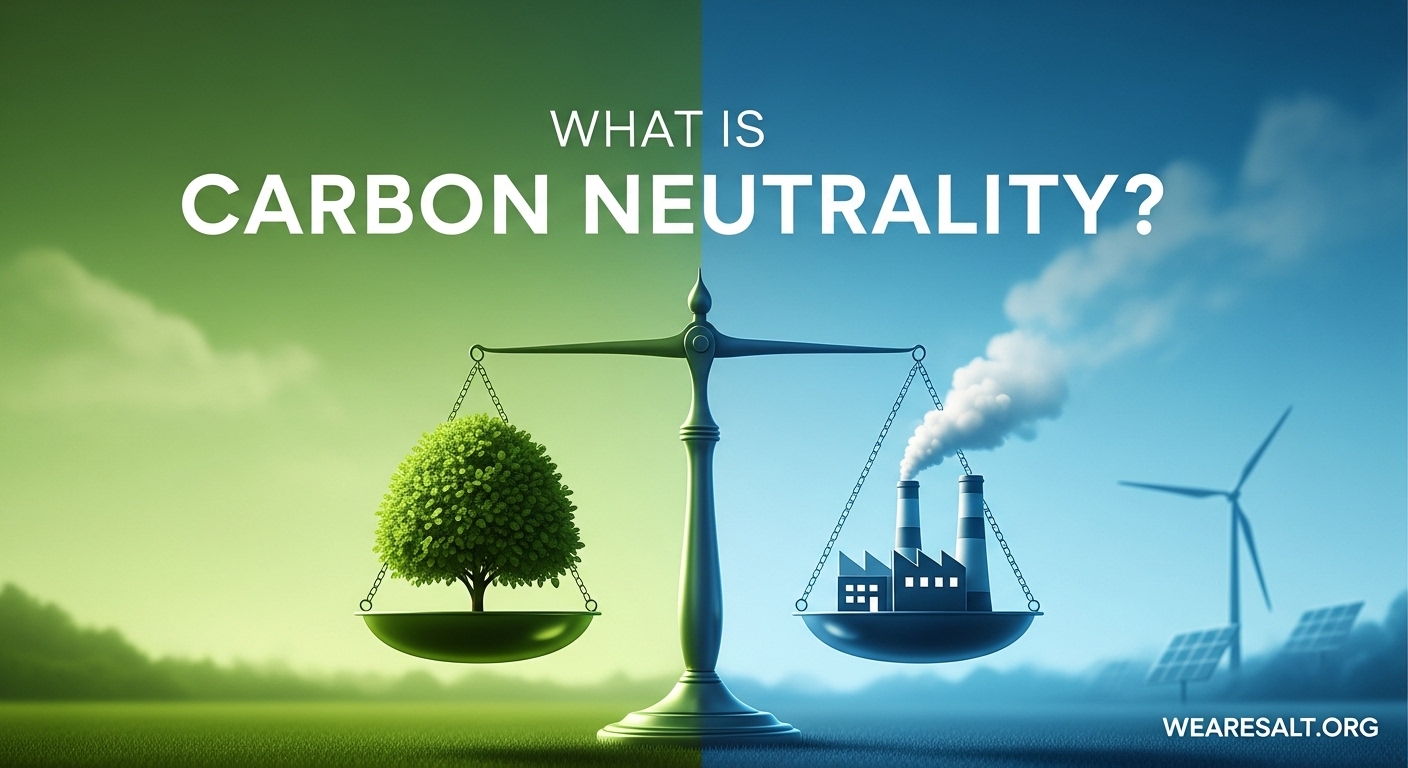
Carbon neutrality means achieving a balance between the carbon dioxide released into the atmosphere and the carbon removed from it. When an individual, company, or country becomes carbon neutral, they ensure that every ton of greenhouse gas emissions they produce is matched by an equivalent ton removed through carbon sinks or offset projects.
This concept has become one of the most important goals in our fight against climate change. With global temperatures rising and extreme weather events becoming more frequent, understanding what is carbon neutrality and how it works has never been more relevant for 2026.
In this guide, I will break down exactly what carbon neutrality means, how it differs from similar terms like net zero, and practical steps you can take to reduce your own carbon footprint.
Table of Contents
What Is Carbon Neutrality
Carbon neutrality occurs when the amount of carbon dioxide emitted equals the amount absorbed or offset, resulting in net-zero emissions. Think of it like balancing a scale: every emission you put out gets matched by an equivalent removal.
Carbon sinks play a crucial role in this balance. These are natural or artificial reservoirs that absorb and store carbon dioxide from the atmosphere. Forests, oceans, and soil are the largest natural carbon sinks, capturing billions of tons of CO2 each year through processes like photosynthesis and carbon sequestration.
When organizations or individuals cannot eliminate all emissions directly, they purchase carbon offsets. These offsets fund projects that reduce or remove greenhouse gases elsewhere, such as reforestation efforts, renewable energy installations, or methane capture programs. The key is verification: legitimate offsets must be certified by recognized standards to ensure they actually deliver the claimed emissions reductions.
How Carbon Neutrality Works
Achieving carbon neutrality follows a straightforward process, though implementing it requires commitment and planning. Here is how it typically works:
Step 1: Measure Your Carbon Footprint
First, you need to understand exactly how much carbon you are producing. For individuals, this means calculating emissions from transportation, home energy use, food consumption, and purchasing habits. Companies use more complex methodologies following protocols like the GHG Protocol to measure Scope 1, 2, and 3 emissions covering direct operations, purchased energy, and supply chain impacts.
Step 2: Reduce Emissions
The most effective approach starts with reduction. Switch to renewable energy sources, improve energy efficiency, reduce waste, and choose lower-carbon transportation options. Every ton you do not emit is better than a ton you offset later.
Step 3: Offset Remaining Emissions
After reducing everything possible, purchase verified carbon credits to offset the rest. Each credit typically represents one ton of CO2 equivalent either removed from the atmosphere or prevented from being emitted.
Step 4: Verify and Report
Third-party verification ensures your claims are credible. Many organizations seek certification through programs like Climate Neutral, PAS 2060, or Science Based Targets initiative to demonstrate genuine commitment.
Carbon Neutral vs Net Zero: What’s the Difference
These terms often get used interchangeably, but they have important distinctions. Understanding the difference helps you evaluate corporate claims and set appropriate goals.
Carbon Neutral focuses specifically on carbon dioxide emissions. An entity reaches carbon neutrality when CO2 emissions equal CO2 removals. This can include using carbon offsets to balance continued emissions. A company could maintain current emission levels while purchasing offsets to achieve carbon neutrality.
Net Zero encompasses all greenhouse gases, not just CO2. This includes methane, nitrous oxide, and fluorinated gases. Net zero also emphasizes deep emissions reductions first, typically requiring 90-95% reduction before using offsets for the final hard-to-eliminate emissions. The Paris Agreement and most national climate commitments target net zero by 2050.
Carbon Negative (Climate Positive) goes a step further. These entities remove more carbon from the atmosphere than they emit. Bhutan is currently the only carbon negative country, thanks to its vast forests absorbing more CO2 than the nation produces.
When you see companies claiming carbon neutrality in 2026, check whether they are offsetting significant ongoing emissions or genuinely reducing their carbon footprint first. The most credible approaches prioritize reduction over offsetting.
How to Achieve Carbon Neutrality
Whether you are an individual, business, or government, the path to carbon neutrality follows similar principles scaled appropriately.
For Individuals:
Start by calculating your personal carbon footprint using free online calculators. The average American produces about 16 tons of CO2 annually, significantly higher than the global average of 4.8 tons. Focus first on high-impact changes: switching to renewable electricity, reducing air travel, eating less meat, and improving home insulation.
For offsets you cannot eliminate, research verified offset providers. Look for certifications from Gold Standard, Verified Carbon Standard (Verra), or Climate Action Reserve. Costs typically range from $10-50 per ton of CO2 offset.
For Organizations:
Businesses should conduct comprehensive carbon accounting covering all three scopes of emissions. Set science-based targets aligned with limiting warming to 1.5 degrees Celsius. Invest in operational efficiency, renewable energy procurement, and supply chain engagement. Transparently report progress through frameworks like CDP or GRI.
Many companies now commit to carbon neutrality for operations first, then extend to products and supply chains. Microsoft, for example, has been carbon neutral since 2012 and aims to be carbon negative by 2030.
Benefits of Carbon Neutrality
Pursuing carbon neutrality delivers advantages beyond environmental protection. Understanding these benefits helps justify the investment required.
Environmental Benefits:
Carbon neutrality directly reduces greenhouse gas concentrations in the atmosphere, slowing global warming and limiting extreme weather events. It protects ecosystems, preserves biodiversity, and reduces ocean acidification. Every ton of CO2 prevented or removed matters.
Economic Benefits:
Energy efficiency measures often pay for themselves through reduced utility costs. Carbon pricing mechanisms and regulations increasingly reward low-carbon operations. Early adopters gain competitive advantages as markets shift toward sustainability requirements.
Reputational Benefits:
Consumers increasingly prefer sustainable brands. Employees want to work for responsible companies. Investors prioritize environmental, social, and governance (ESG) criteria. Carbon neutrality demonstrates leadership and builds trust with stakeholders.
Regulatory Alignment:
With the European Union, United States, and other major economies implementing carbon regulations, early action positions organizations ahead of compliance requirements. The EU aims for climate neutrality by 2050 under the European Climate Law, with intermediate targets for 2030.
Frequently Asked Questions
What is carbon neutral in simple terms?
Carbon neutral means balancing the carbon dioxide you release into the atmosphere with an equal amount removed or offset. Imagine a scale where emissions you create go on one side, and carbon absorption or offset projects go on the other. When both sides equal each other, you have achieved carbon neutrality.
What is an example of carbon neutral?
A company that manufactures products but plants enough trees annually to absorb the equivalent CO2 from its operations is carbon neutral. Another example is an individual who calculates their yearly carbon footprint from driving, electricity, and flying, then purchases verified carbon credits to offset exactly that amount. Some cities and even entire countries have committed to carbon neutrality goals.
What is the only country that is carbon negative?
Bhutan is currently the only carbon negative country in the world. Its extensive forest cover absorbs approximately 9 million tons of CO2 annually, while the country produces only about 2 million tons. This surplus absorption makes Bhutan carbon negative, meaning it removes more carbon than it emits.
Why is carbon neutrality important?
Carbon neutrality is essential for limiting global warming to 1.5 degrees Celsius above pre-industrial levels, the target established by the Paris Agreement. Without achieving carbon neutrality globally by 2050, we risk catastrophic climate impacts including extreme weather, sea level rise, biodiversity loss, and food security threats. It represents a practical framework for reducing humanity’s climate impact.
How does carbon offsetting work?
Carbon offsetting works by funding projects that reduce or remove greenhouse gases to compensate for emissions you cannot eliminate. When you purchase a carbon credit, you are essentially paying someone else to reduce emissions on your behalf. Common offset projects include reforestation, renewable energy development, methane capture from landfills, and improved cookstove distribution. Each verified credit represents one ton of CO2 equivalent reduced or removed.
What is the difference between carbon neutral and net zero?
Carbon neutral focuses specifically on carbon dioxide emissions and allows balancing ongoing emissions with offsets. Net zero encompasses all greenhouse gases including methane and nitrous oxide, and requires deep emissions reductions of 90-95% before using offsets for only the hardest-to-eliminate emissions. Net zero is generally considered more ambitious and aligned with climate science recommendations.
Conclusion
Carbon neutrality represents one of our most important tools for addressing climate change. By balancing the emissions we produce with equivalent removals, we can stabilize atmospheric carbon dioxide levels and limit global warming.
The journey to carbon neutrality starts with understanding your impact, then systematically reducing emissions while offsetting what remains. Whether you are an individual making lifestyle changes or a corporation transforming operations, every step toward carbon neutrality matters.
What is carbon neutrality if not a practical framework for taking responsibility for our environmental impact? As we move through 2026, more organizations and individuals are recognizing that carbon neutrality is not just an environmental imperative but a competitive advantage and moral obligation. Start by calculating your carbon footprint, identify your highest-impact reduction opportunities, and take action today.