
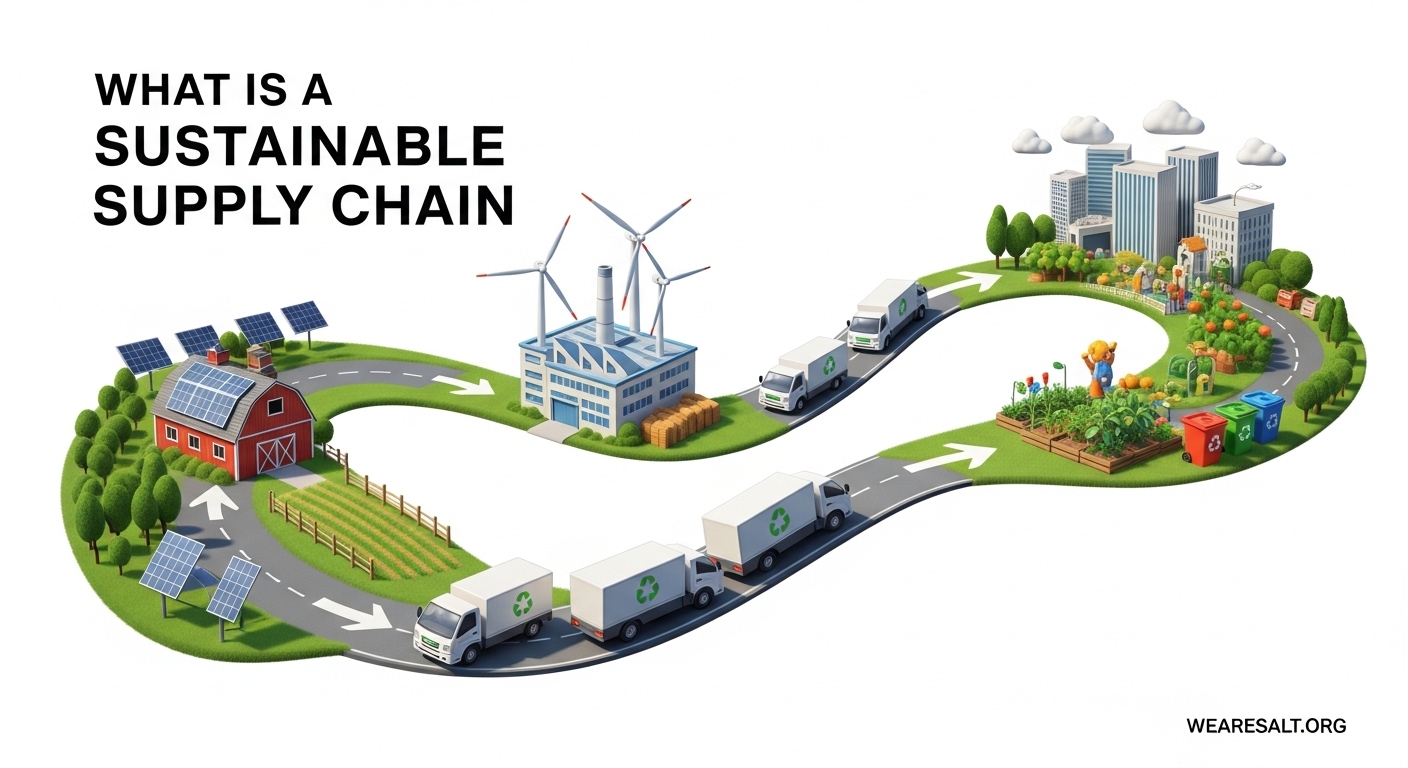
A sustainable supply chain is one that fully integrates ethical and environmentally responsible practices into every stage of production and distribution. It considers the environmental and human impact of products from raw material sourcing to manufacturing, logistics, delivery, and even end-of-life disposal or recycling.
I have spent years studying how businesses transform their operations to meet 2026 sustainability standards. Our team has analyzed hundreds of supply chains across industries from fashion to electronics to food production. What we have learned is that sustainability is not just about being green. It is a complete operational philosophy that balances environmental stewardship, social responsibility, and long-term economic viability.
In this guide, I will explain exactly what makes a supply chain sustainable, the different types you should know about, and how any business can start implementing these practices regardless of size or budget.
Table of Contents
What Is a Sustainable Supply Chain
A sustainable supply chain embeds environmental, social, and governance (ESG) criteria into every decision across the production and distribution network. This means looking beyond cost and speed to consider how each action affects people and the planet.
The concept rests on three interconnected pillars. First, environmental responsibility focuses on reducing carbon emissions, minimizing waste, conserving water, and protecting ecosystems. Second, social responsibility ensures fair labor practices, safe working conditions, and community respect throughout the supply network. Third, economic viability maintains that sustainability must be financially sustainable for the business to continue these practices long-term.
According to CDP research, supply chain emissions are on average 11.4 times greater than a company’s direct operational emissions. This statistic alone shows why focusing on your supply chain is the single most impactful sustainability move most businesses can make.
The Three Main Types of Sustainable Supply Chains
Understanding the different approaches to supply chain sustainability helps you choose the right strategy for your business. Most experts categorize sustainable supply chains into three distinct but complementary types.
Green Supply Chain
A green supply chain prioritizes environmental impact reduction across all operations. This approach focuses on minimizing carbon footprints, reducing energy consumption, eliminating toxic materials, and decreasing waste generation.
Key practices in green supply chains include sourcing renewable energy for manufacturing facilities, optimizing transportation routes to reduce fuel consumption, switching to sustainable packaging materials, and designing products for energy efficiency. Companies like Patagonia have pioneered green supply chain practices by using recycled materials and requiring suppliers to meet strict environmental standards.
The primary challenge with green supply chains is the upfront investment required. Renewable energy systems, efficient machinery, and sustainable materials often cost more initially. However, the long-term savings through reduced energy bills, waste disposal costs, and regulatory compliance typically offset these investments within 3-5 years.
Transparent Supply Chain
Supply chain transparency means having complete visibility into where materials come from, how products are made, and who is involved at every step. This type of sustainability focuses on traceability, ethical sourcing verification, and open communication with stakeholders.
Transparency has become increasingly important following high-profile scandals involving child labor, unsafe working conditions, and environmental violations hidden deep in supply chains. The Fashion Revolution movement emerged specifically to demand transparency from clothing brands after the Rana Plaza factory collapse in 2013.
Technology drives transparency in modern supply chains. Blockchain systems create immutable records of every transaction and handoff. IoT sensors track products in real-time from origin to destination. Digital platforms allow consumers to scan codes and see the complete journey of their purchases. Companies like Everlane have built their entire brand around radical transparency, showing customers exactly how much each product costs to produce and where materials originate.
Circular Supply Chain
Circular supply chains represent the most advanced form of sustainability. Rather than the traditional linear model of take-make-dispose, circular systems design products and processes for reuse, repair, remanufacturing, and recycling.
The circular economy approach requires rethinking product design from the ground up. Products must be designed for disassembly so components can be recovered. Materials must be chosen for their recyclability. Business models shift from selling products to providing product-as-a-service where companies retain ownership and responsibility for end-of-life management.
Unilever has committed to making all of its plastic packaging reusable, recyclable, or compostable by 2025. Apple has built a sophisticated recovery system that extracts valuable materials from returned devices. These circular approaches not only reduce environmental impact but also insulate companies from raw material price volatility and supply disruptions.
How Sustainable Supply Chains Work
Sustainable supply chains operate through a combination of collaboration, technology, standards setting, and continuous improvement. Understanding this operational framework helps businesses implement their own sustainability initiatives.
The foundation is collaboration across all tiers of suppliers. Companies must work with Tier 1, Tier 2, and Tier 3 suppliers to align practices with sustainability goals. This often involves supplier development programs, capacity building, and shared investment in improvements.
Technology enables the visibility and data collection necessary for sustainability management. Enterprise Resource Planning (ERP) systems integrate sustainability metrics alongside traditional business data. Artificial intelligence analyzes patterns to identify efficiency opportunities. Machine learning predicts risks before they materialize. Blockchain creates trust through immutable record-keeping.
Setting and enforcing standards is crucial. Many companies adopt frameworks like the UN Global Compact criteria or the Science Based Targets initiative. Regular audits, both announced and unannounced, verify compliance. Non-compliant suppliers face consequences ranging from corrective action plans to contract termination.
Finally, communication builds trust and accountability. Companies report progress publicly through sustainability reports, respond to rating agencies like CDP, and engage with stakeholders including investors, customers, and communities. This transparency creates accountability and drives continuous improvement.
Benefits of Sustainable Supply Chains
The benefits of supply chain sustainability extend far beyond environmental protection. Companies that invest in sustainable practices see advantages across multiple dimensions.
Environmental Benefits
Reduced greenhouse gas emissions are the most obvious benefit. By optimizing logistics, switching to renewable energy, and eliminating waste, companies significantly lower their carbon footprints. Water conservation protects local communities and reduces operational risks in water-stressed regions. Biodiversity protection preserves ecosystem services that many industries depend upon.
NielsenIQ data shows that 73% of global consumers say they would definitely or probably change their consumption habits to reduce environmental impact. This consumer preference translates directly to market share for companies with credible sustainability credentials.
Financial Benefits
Sustainable supply chains often reduce costs through efficiency gains. Energy efficiency lowers utility bills. Waste reduction decreases disposal costs. Optimized logistics cut transportation expenses. These operational savings frequently exceed the costs of sustainability investments.
Risk mitigation provides another financial benefit. Companies with diversified, sustainable supply chains are less vulnerable to disruptions from climate events, regulatory changes, and social unrest. They also face lower regulatory compliance costs and reduced exposure to carbon pricing mechanisms.
Access to capital increasingly depends on ESG performance. Major investors use sustainability criteria to screen investments. Companies with strong sustainability records can access green bonds and sustainability-linked loans at preferential rates.
Social Benefits
Ethical supply chains improve lives for workers throughout the value chain. Fair wages lift communities out of poverty. Safe working conditions prevent injuries and deaths. Respect for human rights creates dignity and opportunity.
For companies, ethical practices improve employee engagement and retention. Workers increasingly want to work for purpose-driven organizations. Companies with strong sustainability reputations attract top talent and see higher productivity from engaged employees.
Supply Chain Tiers Explained
Understanding supply chain tiers is essential for effective sustainability management. Most businesses have limited visibility beyond their direct suppliers, yet the majority of sustainability risks and impacts occur deeper in the supply chain.
Tier 1 Suppliers
Tier 1 suppliers are companies that provide goods or services directly to your business. These are the vendors you have direct contracts with and regular communication. Most companies have reasonable visibility into Tier 1 operations and can enforce sustainability standards at this level.
Tier 2 Suppliers
Tier 2 suppliers provide materials or services to your Tier 1 suppliers. You typically do not have direct contracts with these companies, which makes visibility and control more challenging. However, Tier 2 is where many critical raw materials originate and where significant environmental and social risks often reside.
Tier 3 Suppliers and Beyond
Tier 3 suppliers are the raw material producers, often including farms, mines, and forestry operations. This is where traceability becomes most difficult but where the greatest sustainability impacts frequently occur. Conflict minerals, deforestation-linked commodities, and agricultural products with labor concerns often enter supply chains at this tier.
Achieving visibility into Tier 2 and Tier 3 requires working through Tier 1 suppliers, using industry-wide initiatives, and deploying technology solutions. Blockchain traceability platforms, supplier questionnaires, and third-party audits all help extend visibility deeper into supply chains.
Challenges and Barriers
Despite the clear benefits, many companies struggle to implement sustainable supply chain practices. Understanding these barriers helps businesses develop strategies to overcome them.
Cost concerns top the list of barriers. Sustainable materials, renewable energy systems, and supplier development programs require upfront investment. Small businesses especially struggle with these costs. However, many sustainability improvements actually reduce costs over time through efficiency gains.
Visibility limitations make it difficult to identify and address problems. Many companies cannot trace materials beyond Tier 1 suppliers. Complex, multi-tier supply chains with thousands of participants make comprehensive monitoring impractical without technology investment.
Data complexity overwhelms organizations trying to measure and manage sustainability. Collecting accurate data from suppliers, standardizing metrics across different systems, and validating claims requires significant resources and expertise.
Cultural resistance can block sustainability initiatives. Procurement teams focused on cost minimization may resist sustainability requirements that increase prices. Suppliers may view audits as intrusions. Leadership may prioritize short-term profits over long-term sustainability investments.
Forum discussions on Reddit’s supply chain communities reveal that professionals struggle most with convincing leadership to invest in sustainability when returns are not immediate. They also report difficulty finding affordable sustainable packaging options and getting customers to pay premiums for sustainable products.
Implementation Strategies for Any Business
Any business can start building a more sustainable supply chain regardless of size or budget. The key is to start with high-impact, achievable steps and build momentum over time.
Step 1: Assess your current state. Map your supply chain to understand where materials come from and where risks may exist. Calculate your carbon footprint to identify the biggest impact areas. Survey suppliers to understand their current sustainability practices.
Step 2: Set clear goals. Define specific, measurable targets for improvement. The Science Based Targets initiative provides frameworks for setting emissions reduction goals aligned with climate science. Start with 1-3 priorities rather than trying to address everything at once.
Step 3: Engage suppliers. Communicate your expectations clearly. Provide resources and support to help suppliers meet standards. Recognize and reward high performers. Consider sustainability criteria in supplier selection and retention decisions.
Step 4: Implement technology solutions. Start with affordable tools appropriate for your size. Cloud-based ERP systems, supply chain visibility platforms, and carbon accounting software have become accessible to small and medium businesses. Many offer pay-as-you-grow pricing models.
Step 5: Measure and report progress. Track key metrics regularly. Share progress internally to maintain momentum. Consider publishing a sustainability report to create external accountability. Even simple annual updates on your website demonstrate commitment.
For small businesses with limited resources, focus on the highest-impact areas first. Transportation emissions often represent the largest portion of small business supply chain footprints. Optimizing shipping, switching to efficient vehicles, and consolidating orders can deliver significant reductions at low cost. Sustainable packaging is another accessible starting point with clear customer-facing benefits.
Frequently Asked Questions
What does a sustainable supply chain mean?
A sustainable supply chain integrates ethical and environmentally responsible practices into every stage of production and distribution. It considers environmental impact, social responsibility including fair labor practices, and economic viability throughout the entire network from raw materials to end-of-life disposal.
What are the 4 types of supply chains?
While frameworks vary, most experts recognize three main types of sustainable supply chains: green supply chains (focused on environmental impact reduction), transparent supply chains (emphasizing visibility and traceability), and circular supply chains (designing for reuse and recycling). Some frameworks add ethical supply chains as a fourth category focused specifically on social responsibility.
What are the 4 pillars of sustainability?
The four pillars of sustainability are environmental responsibility, social equity, economic viability, and cultural preservation. In supply chain contexts, this translates to minimizing environmental impact, ensuring fair labor practices, maintaining profitable operations, and respecting local communities and traditions throughout the value chain.
What are the 4 A’s of sustainable logistics?
The 4 A’s of sustainable logistics are Availability (ensuring products reach customers when needed), Accessibility (making logistics services available to all stakeholders), Affordability (keeping costs reasonable while maintaining sustainability), and Acceptability (ensuring practices meet social and environmental standards). This framework helps balance efficiency with sustainability in transportation and distribution.
Why is supply chain sustainability important?
Supply chain sustainability is important because supply chains account for up to 11.4 times a company’s direct emissions. Sustainable practices reduce environmental impact, improve brand reputation, lower costs through efficiency, build resilience against disruptions, ensure regulatory compliance, and meet growing consumer demand for responsible business practices.
How can small businesses implement sustainable supply chains?
Small businesses can start by focusing on high-impact, affordable changes: optimize shipping and transportation, switch to sustainable packaging, consolidate orders to reduce deliveries, choose suppliers with sustainability credentials, and implement energy efficiency in operations. Many technology solutions now offer pay-as-you-grow pricing that makes advanced tools accessible to smaller companies.
Conclusion
A sustainable supply chain is no longer optional for businesses that want to remain competitive in 2026. Consumer expectations, regulatory requirements, and investor demands all point toward sustainability as a core business imperative.
The three pillars of environmental responsibility, social equity, and economic viability provide a framework for thinking about sustainability holistically. Whether you focus on green practices, transparency, circular design, or all three together, the key is to start taking action now.
Our team has seen companies of every size successfully transform their supply chains. The businesses that succeed approach sustainability as a journey of continuous improvement rather than a destination to reach. They start with manageable steps, build momentum through early wins, and gradually expand their ambitions as capabilities grow.
If you are just beginning your sustainability journey, start by assessing your current supply chain and identifying your highest-impact opportunities. The steps you take today will position your business for success in an increasingly sustainability-focused marketplace.