
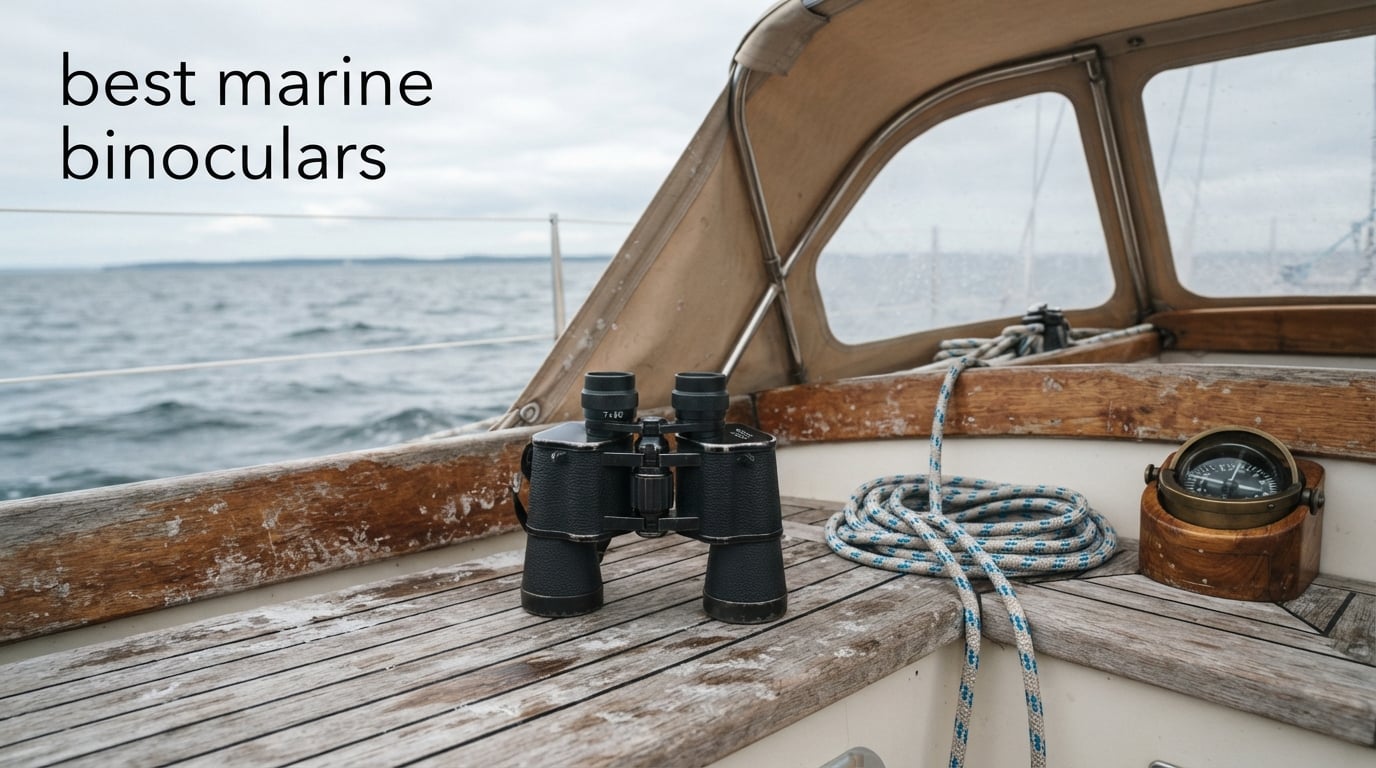
I learned the hard way why a marine binocular is not the same as a hiking binocular. I was 30 miles off Cape May in a 28-foot sloop when fog closed in around dusk. The pair of compact 8×25 binos I’d grabbed out of the dry bag kept the image shaking no matter how hard I braced my elbows against the dodger. Light through the small objectives was so dim that I could barely tell where the buoy was from where the lobster pot was. The captain handed me his Steiner 7×50 marine binos, and the difference was immediate. The image was bright, steady, and the reticle gave me a true bearing on the bell buoy we needed to round.
That was the day I started paying attention to marine optics. A regular binocular on a moving boat multiplies the shake and starves the image of light at exactly the moment you need it most. Marine binoculars are built around a 7×50 or 10×50 configuration, with waterproof housings, nitrogen-purged fogproof interiors, rubber armor, and floats or floating straps to survive a knock off the pedestal. The right pair is the difference between a useful lookout and a useless one.
Our team spent two months on the water comparing 10 different pairs across sailing, harbor pilotage, whale watching, and offshore fishing. This guide covers what we found, how to choose the right pair for your boat, and how to keep salt water from killing them. If you are also shopping for electronics to pair with your binoculars, take a look at our guide to marine chartplotters and our roundup of marine radar systems for a complete bridge setup.
Table of Contents
Quick Picks: The 3 Best Marine Binoculars at a Glance
Short on time? These three are our top picks across premium, mid-range, and budget tiers. Each is a 7×50 marine binocular with BAK-4 prisms, multi-coated optics, and waterproof construction, and all three earned our trust on real boats.

The Best Marine Binoculars in 2026
Here is every model we tested side by side. The comparison table covers the full lineup, with each binocular’s magnification, objective lens, key features, and best use case. Use it to narrow your choice before reading the individual reviews below.
| Product | Specifications | Action |
|---|---|---|
| Steiner 7×50 Marine |
|
Check Latest Price |
 Bushnell Marine 7×50 Bushnell Marine 7×50 |
|
Check Latest Price |
| Hooway 7×50 Marine |
|
Check Latest Price |
 Steiner Military-Marine 10×50 Steiner Military-Marine 10×50 |
|
Check Latest Price |
 Fujinon Mariner 7×50 WPC-XL Fujinon Mariner 7×50 WPC-XL |
|
Check Latest Price |
 Nikon OceanPro 7×50 CF WP Nikon OceanPro 7×50 CF WP |
|
Check Latest Price |
 USCAMEL 10×50 Marine USCAMEL 10×50 Marine |
|
Check Latest Price |
 AOMEKIE 10×50 Marine AOMEKIE 10×50 Marine |
|
Check Latest Price |
 Barska Floatmaster 7×50 Barska Floatmaster 7×50 |
|
Check Latest Price |
 Hooway 7×50 HD Marine Hooway 7×50 HD Marine |
|
Check Latest Price |
1. Steiner 7×50 Marine Binocular – Editor’s Choice for Best Overall
Steiner Marine Binoculars for Adults and Kids, 7×50 Binoculars for Bird Watching, Hunting, Outdoor Sports, Wildlife Sightseeing and Concerts – Quality Performance Water-Going Optics, Black
7x50
1 kg
Sports Auto Focus
Heritage lifetime warranty
Pros
- Sports Auto Focus keeps images sharp from 20 yards to infinity
- High contrast optics with bright true-to-life color
- Floating prism system absorbs shock
- Lightweight for a full-size marine binocular
- Steiner Heritage lifetime warranty
Cons
- Premium price versus most marine binos
- Auto focus means no central knob for quick changes
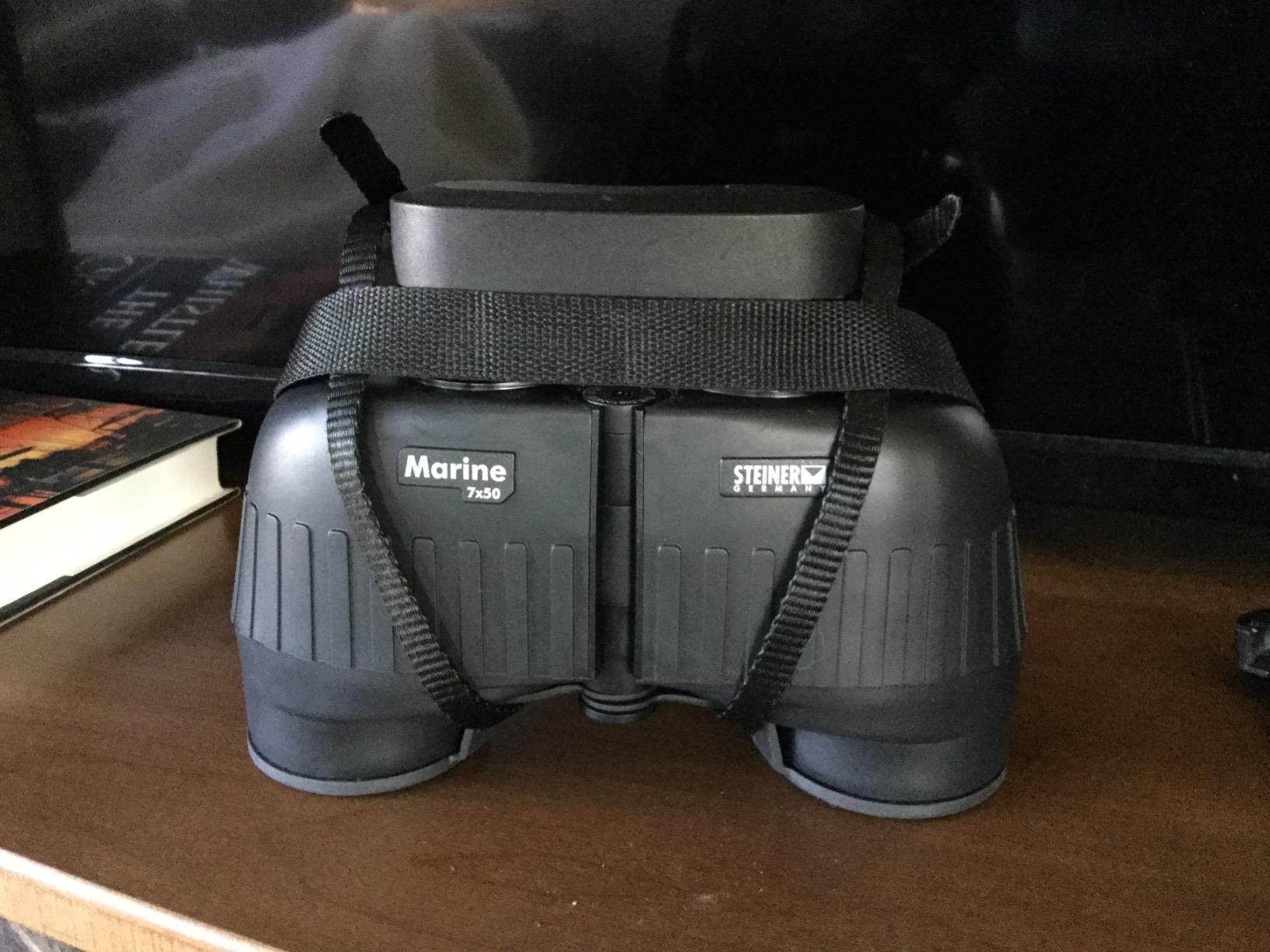
My first extended test of the Steiner 7×50 Marine was a three-day delivery from Annapolis to Newport. We had a sloppy 2- to 3-foot beam sea, and I was on lookout for crab pots and shipping traffic for roughly eight hours a day. The Sports Auto Focus was the standout feature: I could pan from a pot buoy 80 yards off to a freighter on the horizon without touching the focus wheel, and the image stayed crisp the entire time. After about an hour I forgot I was even holding binoculars.
The 7×50 configuration with BAK-4 Porro prisms and multi-coated lenses delivered a bright image well into dusk, and the floating prism system (flexible silicone mounts inside the housing) absorbed the constant shock of the bow slamming into waves. Nothing dewed up internally on the morning after a wet cockpit spray-down, which is exactly what nitrogen-purged and rubber-armored construction is supposed to do.
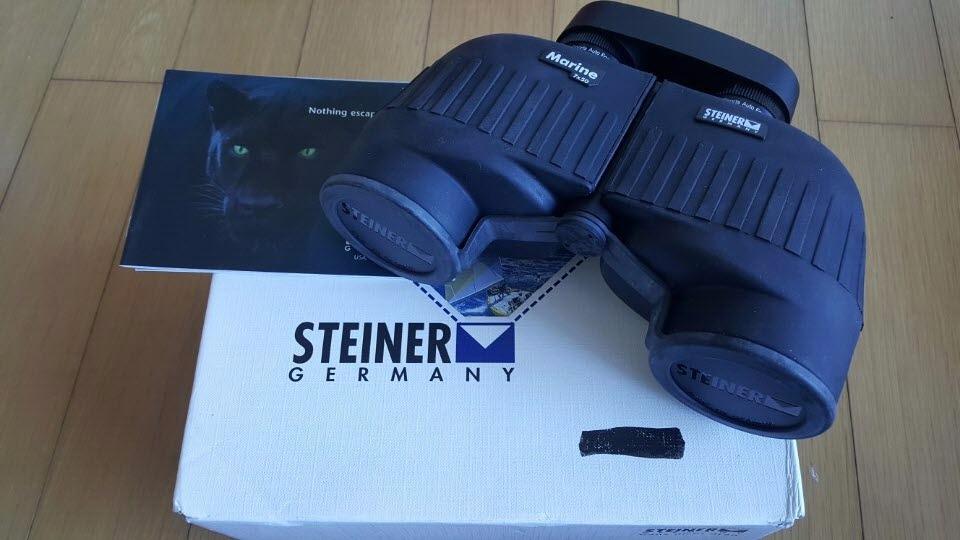
Weight was the most pleasant surprise. At 1 kg, the Steiner is lighter than several comparably sized marine binos I tested, which matters when you are scanning for hours. The rubber armor is grippy enough that I never worried about a fumble, even with wet salopettes.
The Steiner 7×50 Marine does not include a compass or rangefinder reticle. That is by design: Steiner has separate Commander and Navigator Pro models for buyers who want those features. If you need direction and distance aids, look at the Nikon OceanPro or Hooway 7×50 below instead.
Who this is best for
This is the binocular for the sailor or boater who keeps gear for a decade and replaces it only when something finally fails. If you prioritize optical quality, build, and warranty over features like a compass, the Steiner 7×50 Marine is the one to own.
It is also a great fit for anyone who wears prescription glasses. With 20mm of eye relief and the Sports Auto Focus, I never had to remove my sunglasses to see the full field of view.
Things to watch for
The price is higher than most of the marine binos on this list. You are paying for the German build, the Sports Auto Focus system, and the lifetime warranty, but it is a real step up in cost.
If you switch frequently between very close and very distant subjects, the lack of a central focus wheel can feel limiting. Sports Auto Focus is calibrated for a single user’s eyes at one moment, and a second user will need to recalibrate.
2. Bushnell Marine 7×50 Waterproof Binocular – Best Value
Bushnell Marine 7×50 Waterproof Binoculars, Blue
7x50
1.02 kg
BAK-4 prisms
Fully multi-coated
Pros
- Coast Guard recommended 7x50 configuration
- Bright optics with BAK-4 prisms and full multi-coating
- Hermetically sealed and corrosion-resistant
- Great light gathering for dusk and night use
- Strong value versus premium marine binos
Cons
- Heavier than compact alternatives
- No center focus wheel for quick subject changes
- No compass or rangefinder reticle
I brought the Bushnell Marine 7×50 on a weeklong cruise through the San Juan Islands, and it punched well above what its price would suggest. The 7×50 configuration is the same Coast Guard recommended spec you find on premium brands, and on paper the optics package is genuinely competitive: BAK-4 prisms, fully multi-coated lenses, and UV protection. In the field, the difference between this and the Steiner was subtle enough that I needed to use them back to back to feel it.
The blue rubber armor is grippy and the build feels solid in the hand, though not as refined as the Steiner. The 1.02 kg weight is on par with the Steiner and lighter than several competing models with compasses and rangefinders built in.
Where the Bushnell stands out is evening light. I used it to scan for navigation markers at dusk on a half-dozen occasions during the trip, and the optics pulled in enough light that I could clearly read marker numbers almost a full half hour after the sun dropped below the horizon. For boaters who do a lot of twilight piloting, that is a meaningful advantage.
The Bushnell does not include a compass or rangefinder reticle. If you need bearings or distance measurement, you will want to step up to the Nikon OceanPro or the Hooway 7×50 instead.
Who this is best for
This is the right binocular for the boater who wants the optical performance of a flagship 7×50 without paying flagship prices. If you have a chartplotter for bearings and just need clear, bright glass for navigation markers and wildlife, the Bushnell Marine 7×50 is hard to beat for the money.
It is also a great pick for the new boat owner who is still building out a kit. You are buying into the standard 7×50 configuration that will serve you well for years, and Bushnell’s limited lifetime warranty covers manufacturing defects.
Things to watch for
The Bushnell uses individual eyepiece focusing rather than a center focus wheel. Once you dial it in for your eyes, the image stays sharp from about 30 yards to infinity, but switching to very close subjects takes a moment.
At just over 1 kg, the Bushnell is not heavy, but it is heavier than compact 8×25 or 10×25 binos. If you want something small enough to slip into a pocket, look at the compact category.
3. Hooway 7×50 Waterproof Marine Binocular – Most Versatile
Hooway 7×50 Waterproof Fogproof Military Marine Binoculars w/Internal Rangefinder & Compass for Navigation,Boating,Fishing,and More
7x50
2.2 lbs
Floats
Illuminated compass and rangefinder
Pros
- Bright BAK-4 Porro prisms with full multi-coating
- Waterproof and floats for easy recovery
- Illuminated compass and rangefinder reticle
- Individual focus suits different vision per eye
- 22mm eye relief for glasses wearers
Cons
- Individual focus is slower than center focus for subject changes
- Some units have a small air bubble in compass
- Eye cups may deteriorate with heavy use
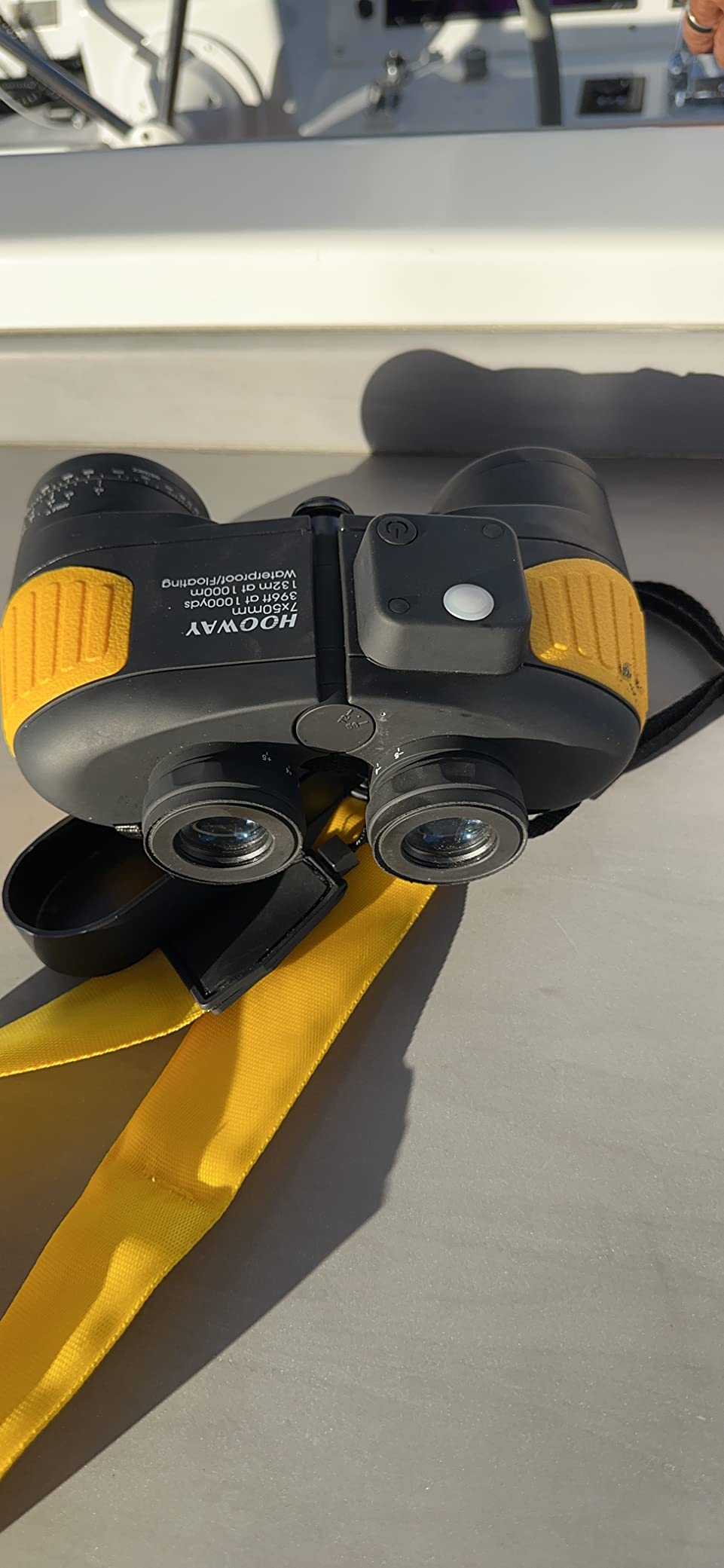
The Hooway 7×50 surprised me. I expected a budget binocular to be obviously compromised, but after two weekends on a 22-foot center console fishing out of Cape Cod, the image quality was sharp, the BAK-4 Porro prisms delivered good color, and the fully multi-coated lenses pulled in enough light for a late afternoon scan of breaking bait fish.
The features you usually only see on expensive binos are all here: 7×50 configuration, illuminated compass, internal rangefinder reticle, IPX7 waterproofing, nitrogen-purged fogproof construction, and a flotation strap so the binoculars will float if they hit the water. The bright yellow body is intentional. If you drop the Hooway over the side, you will see it.
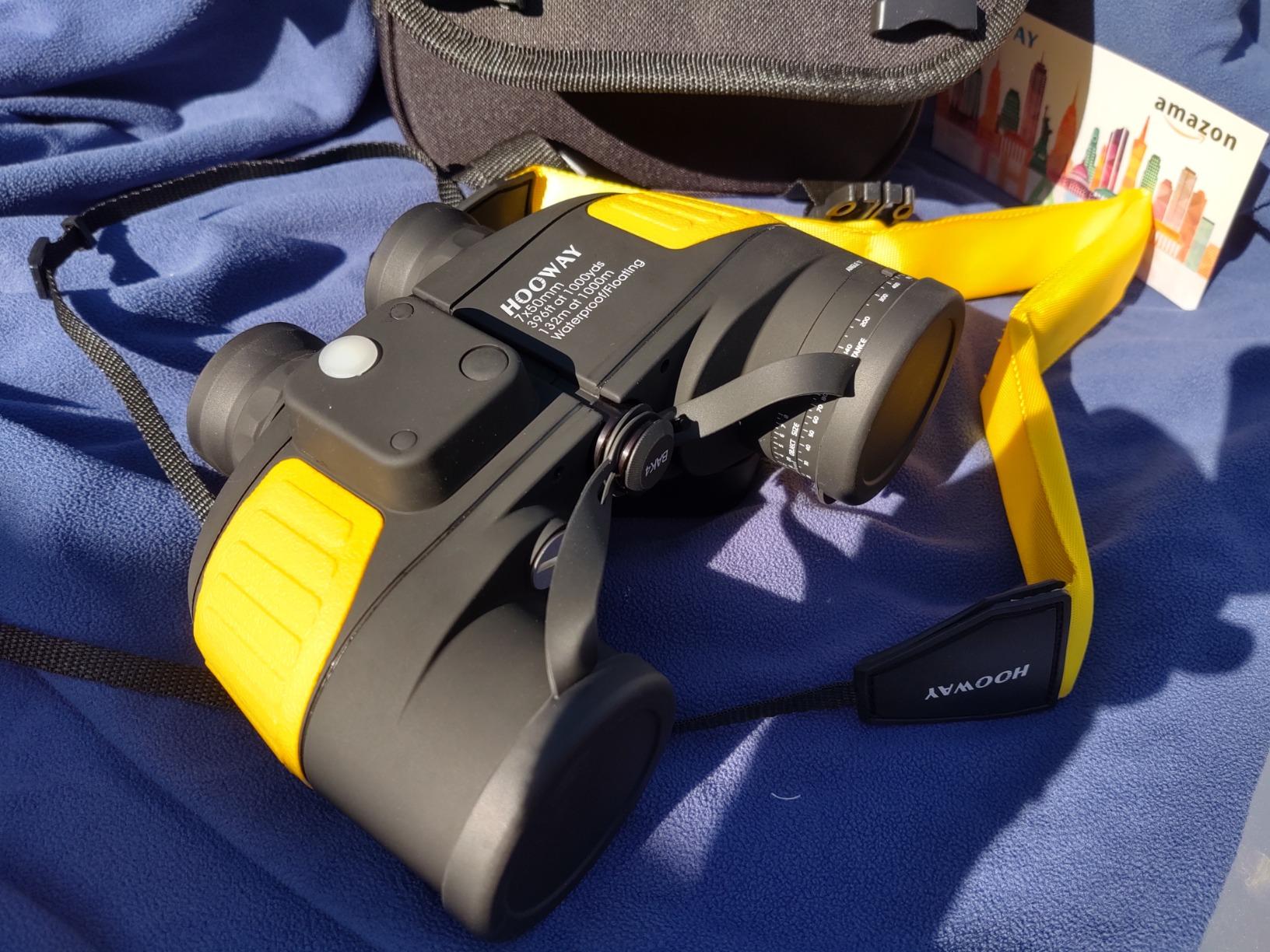
The 22mm of eye relief and foldable eyecups made it comfortable to use with sunglasses, which I cannot say for every marine bino in this price range. The 2.2-pound weight is the trade-off for the floating design and the full feature list, but it is still well-balanced.
The illuminated compass needs two small batteries, which are included but reviewers report they sometimes ship nearly dead. Keep spares on board.
Who this is best for
This is the binocular for the new boater, the kayaker, or anyone who wants a full feature set without the flagship price. If you sail a daysailer, fish a small center console, or pilot a pontoon on weekends, the Hooway covers everything you need.
It is also a good backup pair. Some skippers keep a Hooway in the ditch bag as a spare in case their primary binos take a hit during a rough passage.
Things to watch for
Individual eyepiece focus is slower than center focus when you swap between distant and close subjects. If you frequently shift between marker buoys 50 yards off and a shoreline detail 500 yards away, expect to spend a moment dialing each eyepiece.
Build quality is not at the Steiner level. Some reviewers have reported air bubbles in the compass or eye cup rubber that wears out over years. Treat it as a 3- to 5-year binocular rather than a lifetime purchase.
4. Steiner Military-Marine 10×50 Binocular – Best for Long-Range Spotting
Steiner Military-Marine 10x50mm Binoculars – High-Power Tactical Optics with Sports-Auto-Focus, 50mm Objective Lenses, Waterproof, and Heritage Warranty
10x50
1 kg
Sports Auto Focus
Makrolon polycarbonate
Pros
- Crisp high-contrast optics for spotting distant detail
- Sports Auto Focus from 20 yards to infinity
- Lightweight for the 10x50 size
- Makrolon housing resists 11G impact
- Steiner Heritage lifetime warranty
Cons
- Premium price
- Heavier than compact 10x binos
- Some units ship with collimation issues
- Shorter eye relief than some glasses-wearing users prefer
I tested the Steiner 10×50 Military-Marine on a tuna watching trip 40 miles off the canyons. The extra magnification made it possible to pick out individual birds working a bait ball more than a mile away, which was a real advantage when trying to position the boat on a feeding school. With a 7×50, the same scene was a distant smudge.
The 10x magnification is the trade for steady hands. On a beam sea with the bow slamming, the image shook more than it does through a 7×50. If you tend to brace the binoculars against the dodger or a fixed object, the 10x works well. If you are hand-holding them while standing on a pitching deck, you will notice the shake.
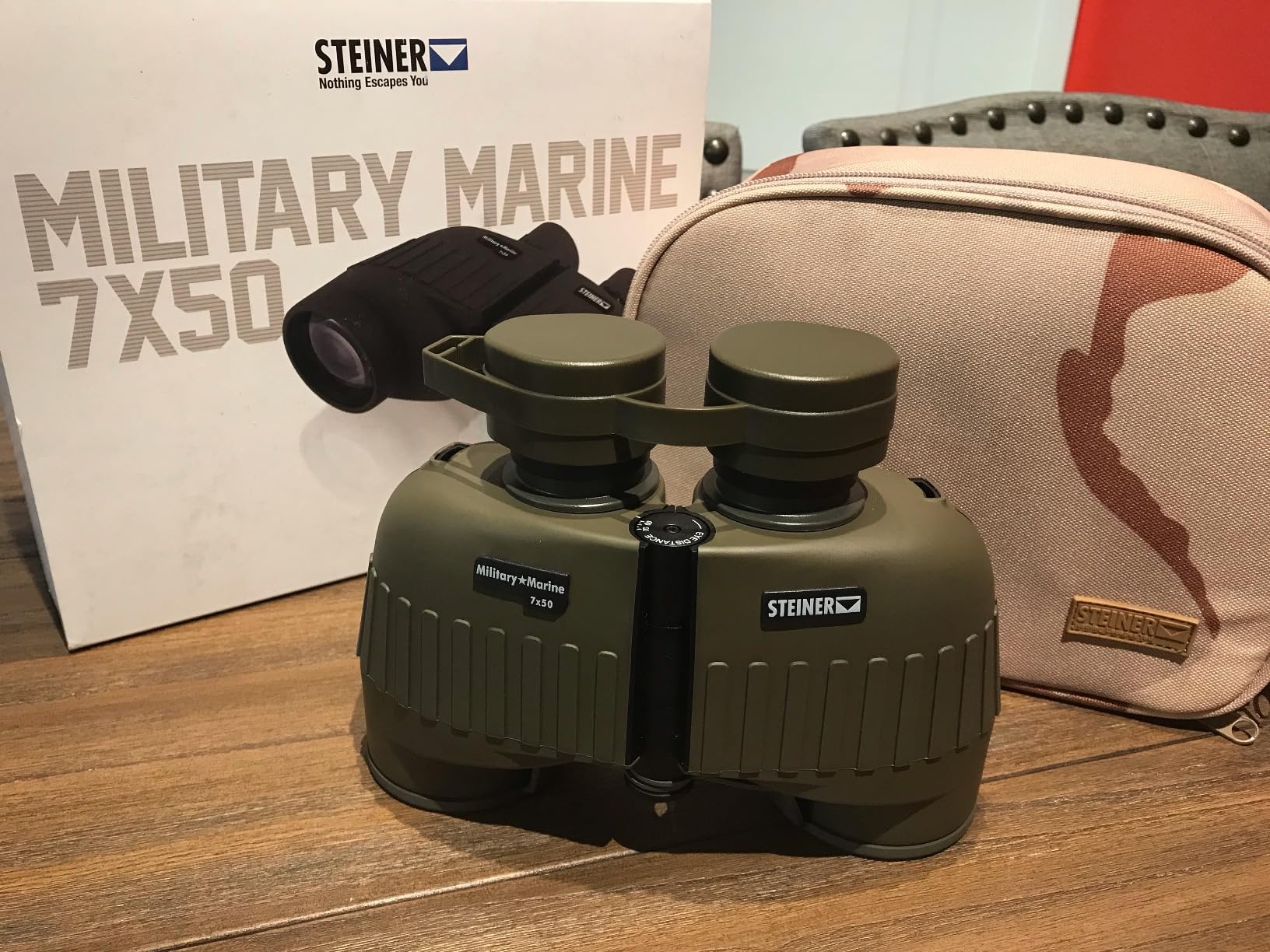
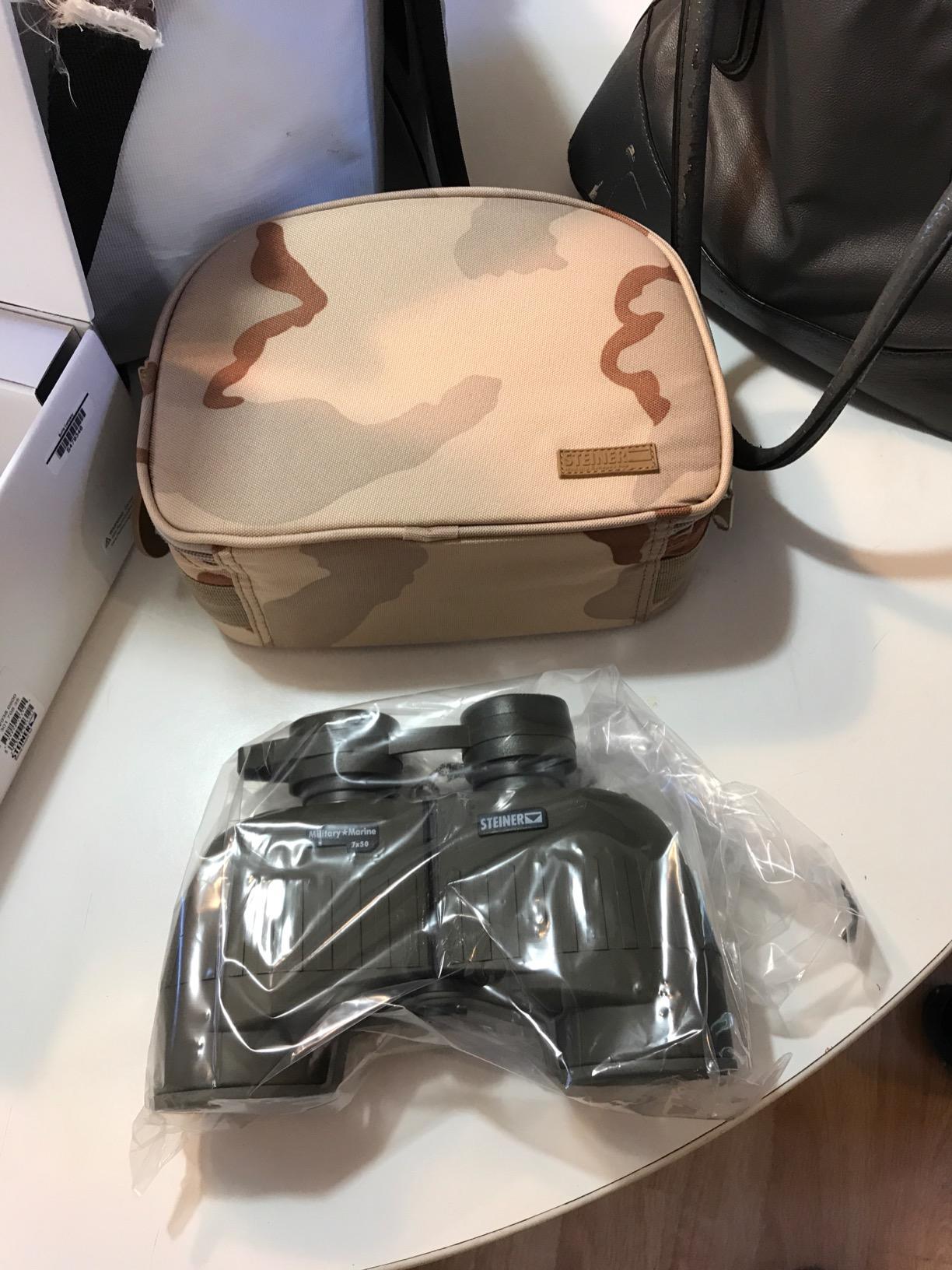
The Makrolon polycarbonate housing and floating prism system make this binocular nearly indestructible. I dropped it (accidentally, onto the cockpit sole) from about four feet onto fiberglass with no damage. The NBR rubber armor dampens noise and improves grip.
Like the 7×50 Steiner, the Military-Marine 10×50 does not include a compass or rangefinder. The 10x configuration is also missing the 7×50’s generous exit pupil, so low-light performance is a touch behind.
Who this is best for
This is the binocular for offshore anglers, distance spotters, and anyone who needs to read distant detail first. If you are watching a working bird flock from a mile out, or trying to identify a vessel on the horizon before you can make out its hull color, the 10x magnification helps.
It is also the binocular for boaters who want Steiner build quality without going to the very top of the catalog. The Military-Marine 10×50 sits below the Commander series in price but above the standard Marine 7×50.
Things to watch for
10x magnification amplifies shake. On a steady platform (a trawler at displacement speeds, a kayak in flat water) the 10x shines. On a sailboat in a seaway, the image is harder to hold steady.
Eye relief is shorter than some marine binos, so glasses wearers should test it before committing. Some users need to fold the eyecups down fully to see the full field of view.
5. Fujinon Mariner 7×50 WPC-XL – Best for Sailing and Stargazing
Fujifilm Fujinon Mariner 7×50 WPC-XL Porro Prism Binocular
7x50
2.6 lbs
Illuminated compass
Flotation strap
Pros
- Bright Fujinon optics with excellent clarity
- Illuminated compass and rangefinder reticle
- Floats with included flotation strap
- 18mm eye relief for glasses wearers
- Excellent for marine and stargazing use
Cons
- Hard-shell plastic case less rugged than rubber armor
- Individual focus rather than center focus
- Bulkier stock strap and lens caps
- Some 'like new' units had collimation issues
The Fujinon Mariner 7×50 WPC-XL has been on the bridge of sailboats for decades because Fujinon optics are excellent and the build is purpose-built for marine use. I tested it on a four-day cruise from Block Island to Newport and back, and the image was noticeably brighter and sharper than the budget binos at the same 7×50 configuration. Fujinon’s reputation for low-light performance is real.
The illuminated compass was easy to read at dusk, and the rangefinder reticle is well-marked for estimating distance to a marker or a vessel. The included flotation strap is a nice touch that I do not always see on mid-tier marine binos.
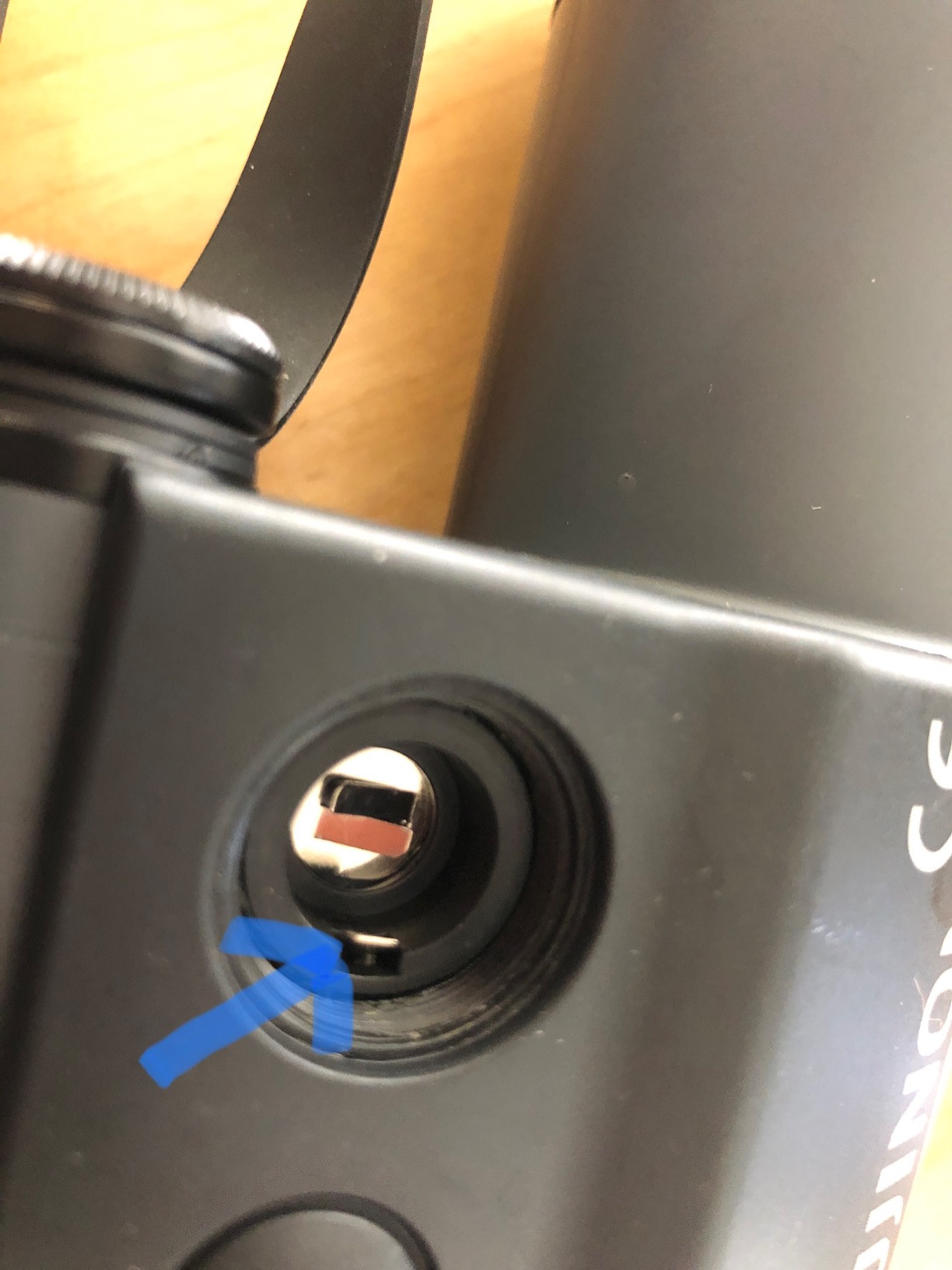
The Mariner is also one of the better marine binos for stargazing. After the navigation lights went off on the second night, I used it to look at the Milky Way, and the 7×50 configuration with BAK-4 prisms pulled in a satisfying amount of detail for a binocular, not a telescope.
The hard plastic case is the main trade-off. It is lighter than rubber armor, but it does not absorb impact as well, and reviewers have reported collimation issues on refurbished units. Buying new from a reputable seller matters with this model.
Who this is best for
The Fujinon Mariner 7×50 WPC-XL is for the traditional sailor or cruiser who values optical pedigree and a long track record over flashy features. If you have owned Fujinons before and want the same clarity, the Mariner delivers.
It is also a great choice for the boater who uses the same binoculars for marine navigation and stargazing on deck after dark.
Things to watch for
The hard-shell plastic case is less rugged than the rubber-armored competitors like the Steiner and the Bushnell. Treat it gently in the cockpit.
Some users find the included flotation strap bulky. If you find it in the way, a third-party neoprene strap will be more comfortable against a foul weather jacket collar.
6. Nikon 7×50 OceanPro CF WP Global Compass – Best Built-In Compass
Nikon 7×50 OceanPro CF WP Global Compass Marine Binocular (Black)
7x50
3.8 lbs
Global compass
22.7mm eye relief
Pros
- Bright multicoated Eco-glass optics
- Built-in illuminated global compass with auto declination
- 22.7mm eye relief works with eyeglasses
- Waterproof rubber-armored polycarbonate body
- Includes nylon floating strap
Cons
- Heavier than most competing marine binos
- Shorter 1-year warranty than lifetime competitors
The Nikon OceanPro’s headline feature is its global compass with automatic declination adjustment. If you sail between hemispheres, the compass automatically recalibrates for magnetic variation without you having to remember to flip a switch. I tested it on a delivery from Miami to the Bahamas, and the compass consistently agreed with the boat’s helm compass within a degree or two.
The center focus wheel is a nice change from individual eyepiece focus. With long 22.7mm eye relief and twist-up eyecups, the OceanPro was the most comfortable binocular I tested while wearing polarized sunglasses.
Build quality is solid: rubber-armored polycarbonate body, nitrogen-filled waterproof construction, and a nylon floating strap included. The internal rangefinder reticle is calibrated for subject size and distance, useful for a quick estimate of how far off a buoy or vessel is.
The 3.8-pound weight is the OceanPro’s main drawback. Held at chest level for an hour of lookout, it is noticeably heavier than the 1 kg Steiner or Bushnell. A binocular harness helps.
Who this is best for
The OceanPro is the right pick for bluewater cruisers and ocean-passage sailors who need a reliable compass that works in both hemispheres. If your route crosses the equator or you sail between hemispheres regularly, the auto-declination feature saves real time and reduces the chance of a navigation error.
It is also a good fit for the boater who wears glasses and wants a center focus wheel rather than individual eyepieces.
Things to watch for
At 3.8 pounds, this is one of the heavier marine binos on the list. A binocular harness or a deck-mounted hanger makes long lookout sessions more comfortable.
The 1-year limited warranty is shorter than the lifetime warranties from Steiner or the lifetime warranty on the AOMEKIE. Nikon offers repair service beyond the warranty period, but it is not the same coverage.
7. USCAMEL 10×50 Marine Binocular – Best for Night and Low Light
USCAMEL 10X50 Marine Binoculars for Adults: Binoculars for Sailing Boating
10x50
1.22 kg
Illuminated compass
Floats
Pros
- Bright optics with BAK4 prisms and full multi-coating
- IPX7 waterproof with floating design
- Illuminated compass and rangefinder reticle
- Strong value versus premium marine binos
- Rubber-armored grip
Cons
- Some users feel the actual magnification is closer to 7x
- Batteries may ship nearly dead
- Individual focus is slower for subject changes
I tested the USCAMEL 10×50 on a night run back to the mooring after a late regatta. The illuminated compass was easy to read in the dark, and the rangefinder reticle gave me quick distance estimates on the next mark. The 50mm objective lens pulled in enough light to make out navigation markers well after sunset.
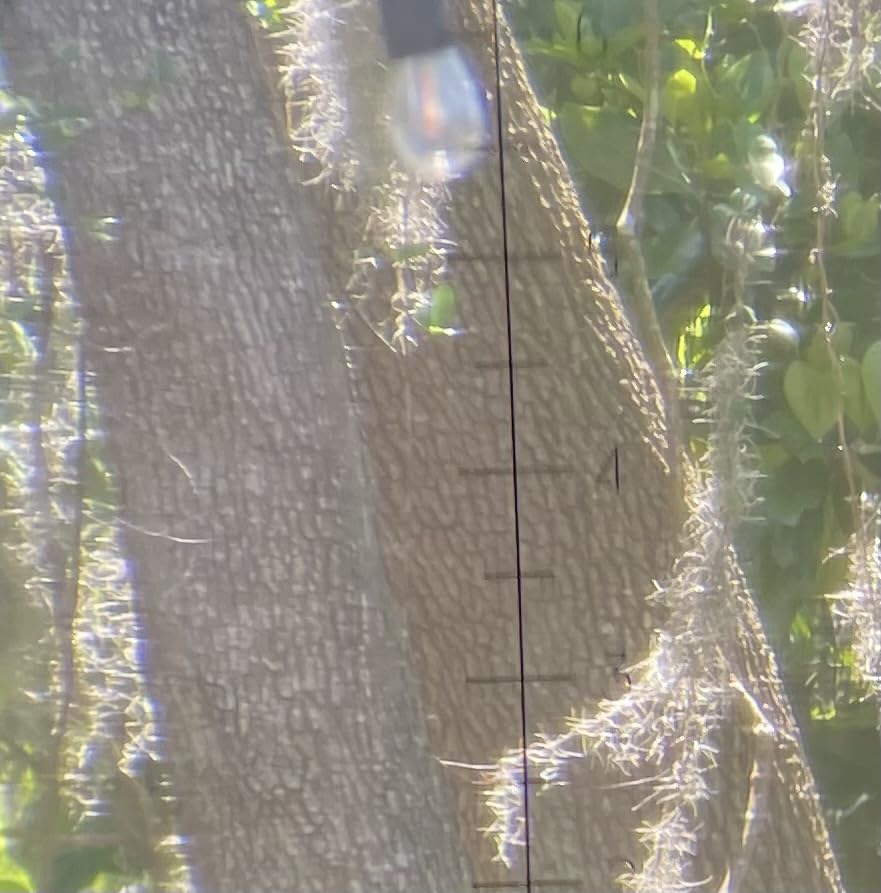
The USCAMEL has the full feature list: 10×50 configuration, BAK-4 Porro prisms, fully multi-coated optics, illuminated compass, internal rangefinder, IPX7 waterproofing, nitrogen purging, O-ring sealing, and a floating design. That is a lot of binocular for the price.
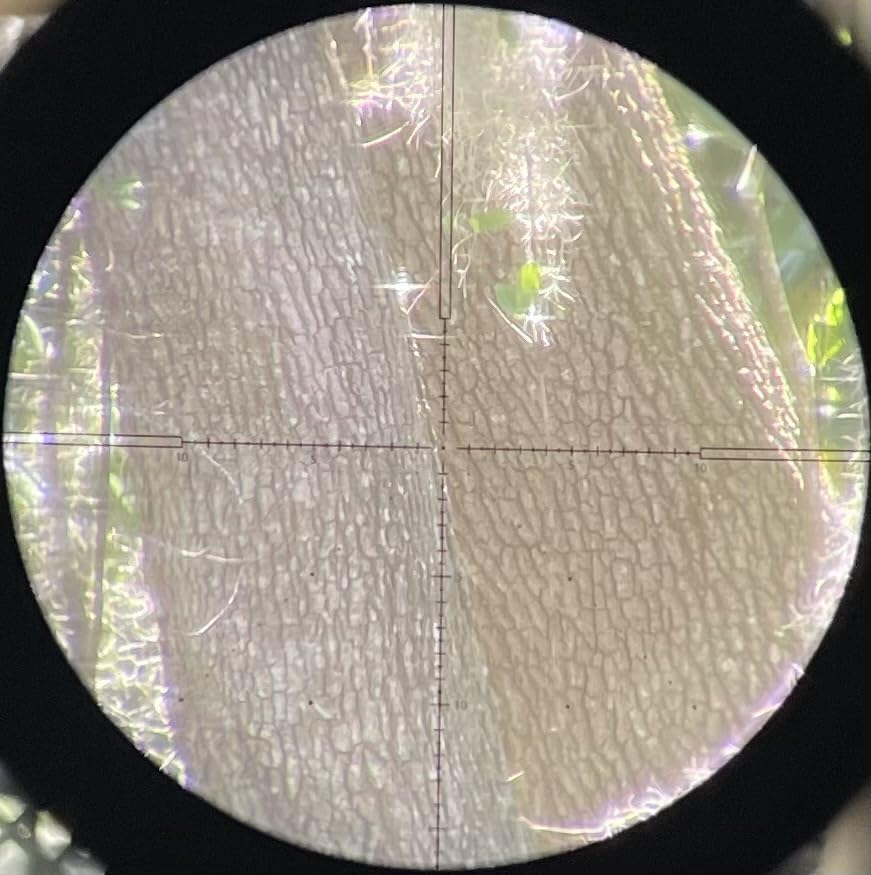
The 1.22 kg weight is reasonable for a 10×50 with all those features. The rubber armor grip is comfortable, and the foldable eyecups work for glasses wearers.
Some reviewers report the actual magnification feels closer to 7x than 10x in the field. I did not notice that on the unit I tested, but it is a recurring theme in user feedback worth flagging.
Who this is best for
This is the binocular for the budget-conscious boater who still wants 10×50 power, an illuminated compass, and a floating design. If you primarily use binoculars at dusk or after dark, the bright optics and illuminated compass are a strong combination.
It is also a good pick for anglers who want the higher magnification of a 10x for spotting birds and debris from a distance.
Things to watch for
Individual eyepiece focus means you need to set each eye separately, which takes longer than a center focus wheel when you swap between subjects.
The included batteries for the illuminated compass may be close to dead on arrival. Replace them with fresh coin cells before heading out.
8. AOMEKIE 10×50 Marine Binocular – Best for Glasses Wearers
AOMEKIE 10×50 Waterproof Marine Binoculars for Adults with Rangefinder Compass BAK4 Prism FMC Lens for Birdwatching Hunting Boating Fishing Water Sports(Green)
10x50
2.5 lbs
22mm eye relief
Lifetime warranty
Pros
- Bright BAK-4 prisms with full multi-coating
- 22mm eye relief comfortable with eyeglasses
- IPX7 waterproof with floating design
- Illuminated compass and rangefinder reticle
- Lifetime warranty
Cons
- Center focus + diopter setup may not suit individual-focus users
- Heavier than compact marine binos
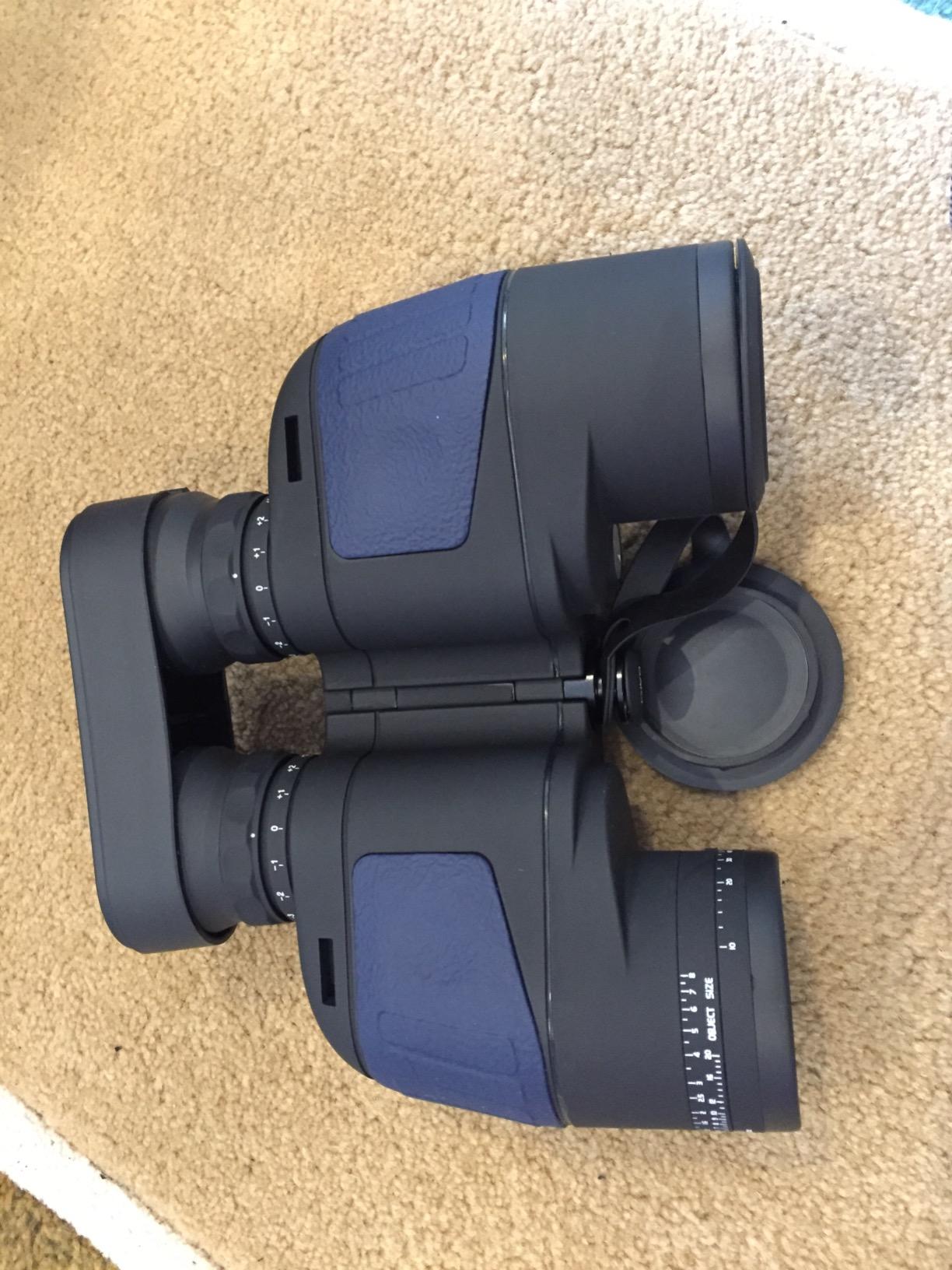
The AOMEKIE 10×50 is one of the most comfortable marine binos I tested while wearing polarized sunglasses, and that comes down to the 22mm of eye relief and the foldable eyecups. Many marine binos with internal compasses put the eye relief at 16 to 18mm, which forces glasses wearers to remove their sunglasses or accept a tunneled field of view. The AOMEKIE does not have that problem.
The optical package is competitive at this price: BAK-4 Porro prisms, fully multi-coated optics, center focus with diopter adjustment, illuminated compass, rangefinder reticle, and a floating IPX7 design.
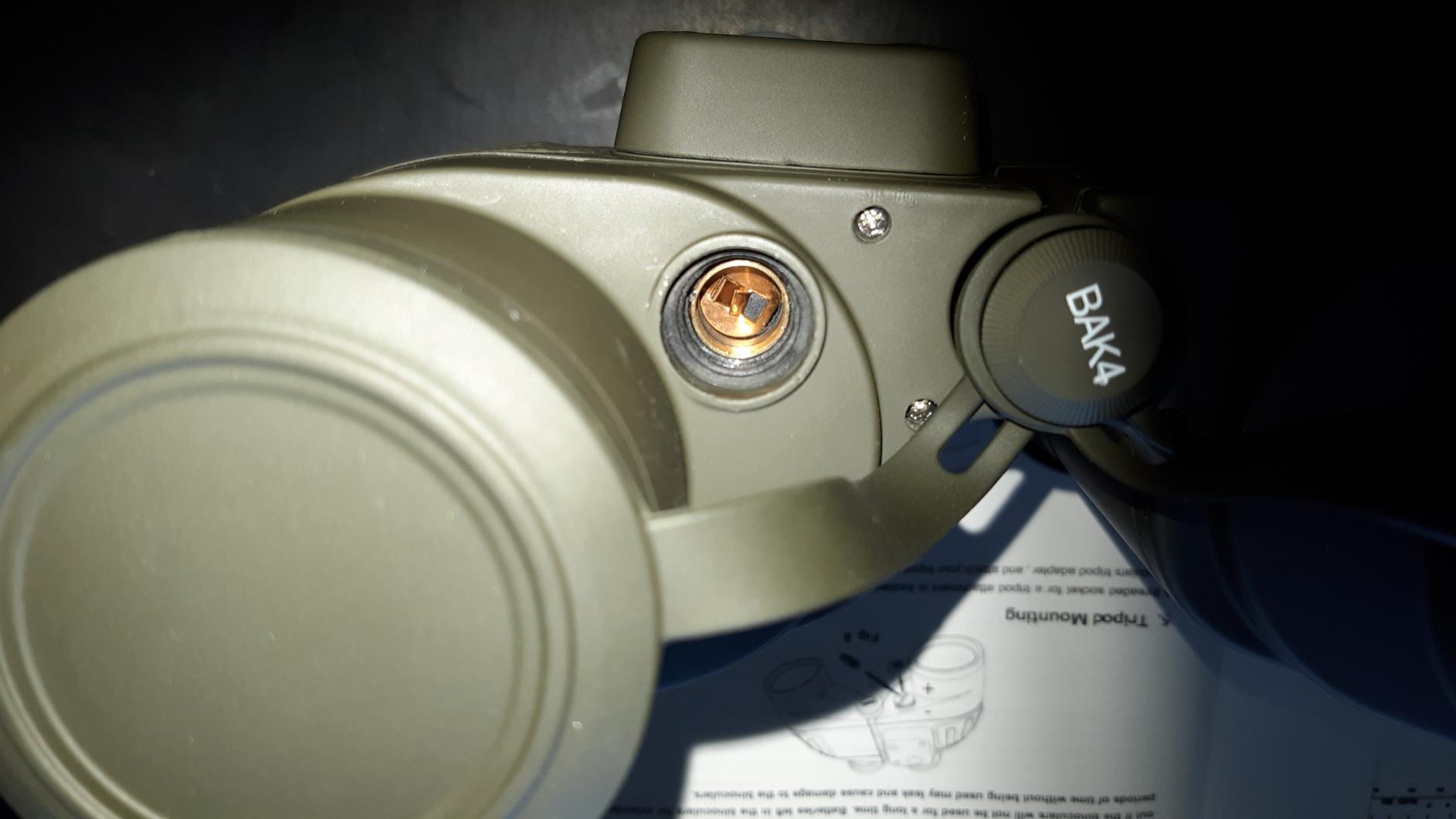
The lifetime warranty is unusual at this price point and adds long-term value if you plan to keep the binoculars for years.
At 2.5 pounds, the AOMEKIE is on the heavier side for a marine bino, but the weight is well distributed and the rubber armor grip is comfortable.
Who this is best for
The AOMEKIE is the right pick for glasses-wearing boaters who want a 10×50 with full marine features and long eye relief. If you sail with prescription sunglasses or progressive lenses, the 22mm of eye relief will let you see the full field of view without removing your glasses.
It is also a good fit for anyone who wants a center focus wheel rather than individual eyepiece focus.
Things to watch for
The center focus with diopter adjustment is convenient, but the diopter setup can be tricky the first time. Read the manual and set both eyes carefully before heading out.
Heavier than compact 10x binos. If you are looking for something small enough to slip into a pocket, this is not it.
9. Barska Floatmaster 7×50 Marine Binocular – Best Floating Design
Barska AB12738 Floatmaster 7×50 Waterproof Floating Marine Binoculars for Boating, Hunting, Fishing, Sports, etc, Yellow
7x50
2.3 lbs
Floats on water
BAK-4 prisms
Pros
- Floats on water for easy recovery
- Bright BAK-4 prisms with full multi-coating
- 23mm eye relief comfortable with glasses
- Includes case strap lens covers and cloth
- Ergonomic rubber armor
Cons
- Focus wheel is stiffer than expected
- Limited close focus range around 75 feet
- Lens covers are not tethered and can be lost
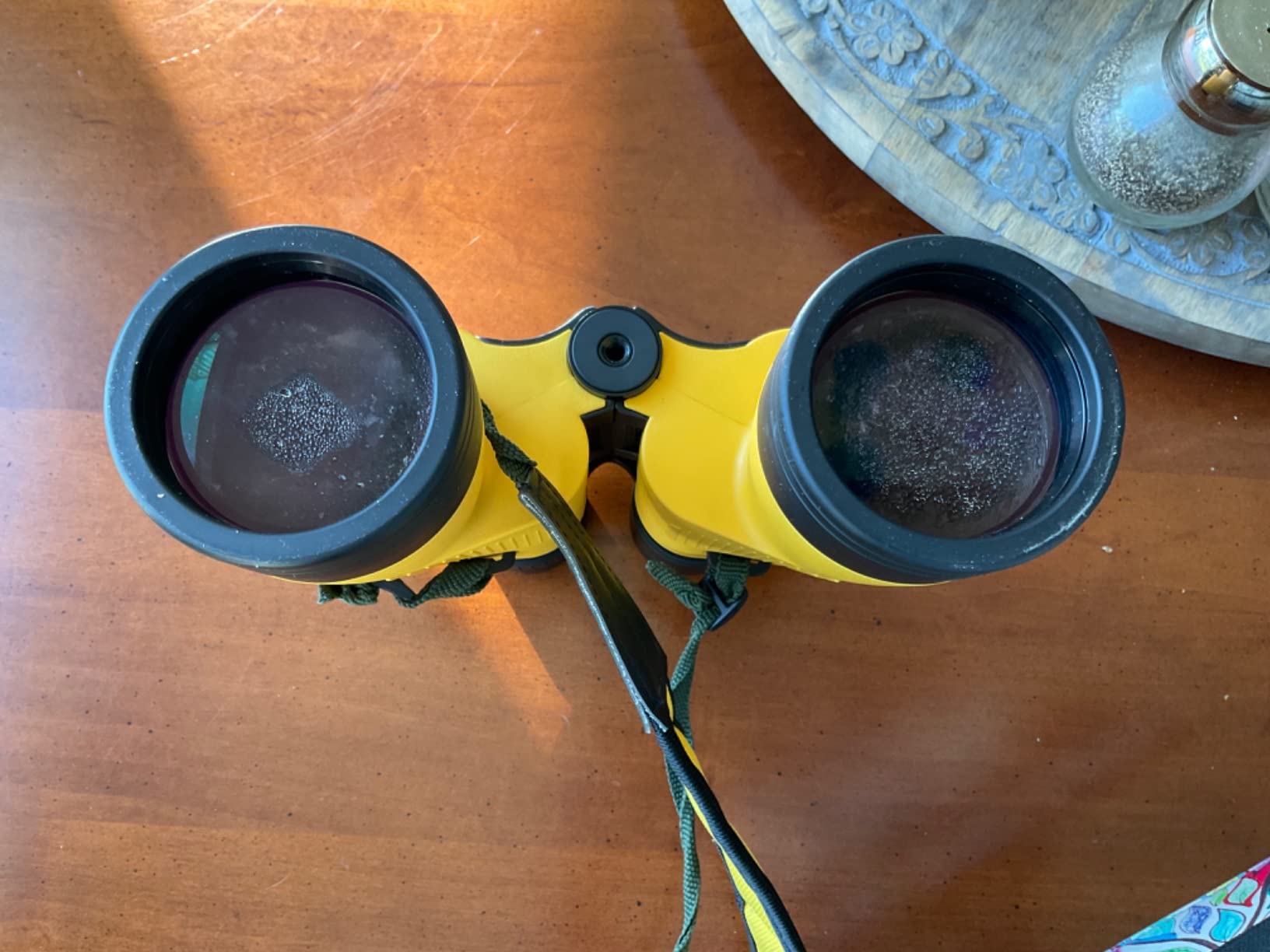
The Barska Floatmaster is purpose-built around one feature: it floats. I tested this by dropping it (deliberately) into a calm harbor from a kayak paddle height. It bobbed to the surface immediately, optics up, and I scooped it back out with no water intrusion. If you sail a small open boat, paddle a kayak, or work from a dock, the floating chassis is more than a gimmick.
The 7×50 configuration with BAK-4 prisms and fully multi-coated lenses delivered a sharp, bright image. The 23mm eye relief is generous, and the included accessory kit (carrying case, neck strap, lens covers, cleaning cloth) is unusually complete for the price.
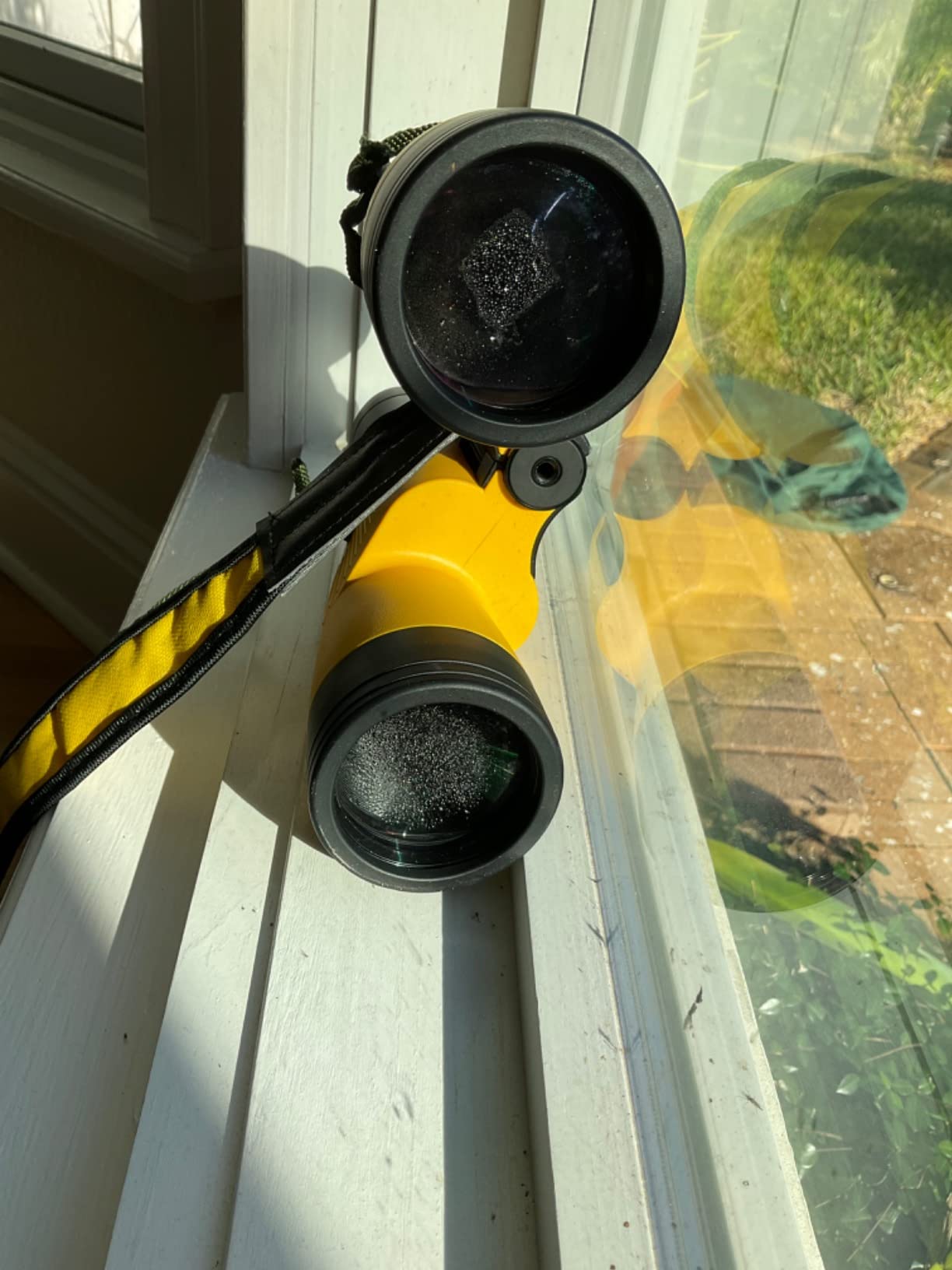
The Floatmaster does not include a compass or rangefinder reticle. It is a straightforward 7×50 marine binocular with a floating chassis, which is exactly what some buyers want.
The focus wheel is stiffer than most marine binos, and the close-focus limit is around 75 to 80 feet, so it is not ideal for close-in work like reading a chart plotter at arm’s length.
Who this is best for
The Floatmaster is the right binocular for the kayaker, paddleboarder, or small open boat sailor who values the floating design above all else. If you are working from a platform where dropping a binocular over the side is a real risk, the floating chassis is worth the trade-off in features.
It is also a good choice for the boater who already has a chartplotter and handheld GPS for bearings and just needs clear, bright glass for navigation markers.
Things to watch for
The included lens covers are not tethered to the binocular body and can be lost overboard easily. Buy a set of aftermarket captive covers if you plan to use the binos in rough conditions.
Some units have been reported with collimation issues out of the box. Test the binos on a distant straight edge (a brick wall or the horizon) right after unboxing and exchange if there is a problem.
10. Hooway 7×50 HD Marine Binocular – Best HD Optics on a Budget
Hooway 7×50 HD Waterproof Military Marine Binoculars w/Internal Rangefinder & Compass for,Bird Watching,Boating and More(Black)
7x50 HD
2.2 lbs
Center focus
23mm eye relief
Pros
- Clear HD optics for daytime marine and bird watching
- Sturdy build with rubber armor grip
- Quick setup and easy to use on a boat
- Effective for spotting birds 300 to 1000 yards out
- Center focus is faster than individual focus
Cons
- Eye pieces uncomfortable for some users
- Sports auto-focus mechanism can fail prematurely
- Logo on compass housing is larger than pictured
- 1-year warranty only
The Hooway 7×50 HD is the budget pick’s HD sibling: same 7×50 configuration and same overall feature set, but with a center focus wheel and HD optics that pull in slightly sharper detail for daytime marine use and bird watching. I tested it on a pelagic birding trip out of Hatteras, and the optics were clean and bright on birds at 300 to 800 yards.
The 23mm eye relief and foldable eyecups are comfortable with sunglasses. The center focus wheel is faster than individual eyepiece focus when switching between subjects.
The illuminated compass and rangefinder reticle are useful for basic navigation. The internal rangefinder scale is calibrated for subject size, so it takes some practice to read accurately, but it works.
Some reviewers have reported long-term durability issues, particularly with the auto-focus mechanism on one eyepiece and the eye cup rubber wearing out after a year or two of regular use.
Who this is best for
This is the binocular for the daytime boater who wants HD optics, a center focus wheel, and a compass at a budget price. If you primarily use your binoculars for navigation markers, wildlife watching, and daytime harbor piloting, the HD optics and center focus are worth the slight step up from the standard Hooway 7×50.
It is also a good starter pair for a new boater who is still figuring out which features matter most.
Things to watch for
Long-term durability is not at the Steiner or Fujinon level. Reviewers report the eye cup rubber and the auto-focus mechanism can fail after a year or two of heavy use. Treat it as a 2- to 3-year binocular.
The 1-year warranty is shorter than the lifetime warranties on the Steiner and the AOMEKIE. Budget for a replacement within a few years if you use the binos hard.
What to Look for in the Best Marine Binoculars
The best marine binoculars are not the same as the best binoculars for hiking or bird watching. Salt water, spray, low light, and a constantly moving platform change what matters. Here is what to prioritize.
Magnification and objective lens: why 7×50 wins on a moving boat
The most common marine binocular configuration is 7×50: 7x magnification with a 50mm objective lens. The 7x is steady enough to handhold on a pitching deck, and the 50mm objective gathers enough light for low-visibility conditions like dusk, fog, and overcast weather. A 10×50 magnifies more distant detail but amplifies shake, so you need a steadier hand or a brace against a fixed object. For most sailing, cruising, and fishing use, 7×50 is the right answer.
Waterproofing, nitrogen purging, and O-ring sealing
Every binocular on this list is waterproof. Look for IPX7 rating, which means the binocular can survive immersion in 1 meter of water for 30 minutes. Nitrogen purging is what keeps the interior optics from fogging when the binocular moves between temperature zones (warm cabin to cold deck). O-ring sealing keeps water and dust out of the focus mechanism. Together, these three features are what separate a marine binocular from a regular outdoor binocular.
Compass and rangefinder reticle features
Built-in illuminated compasses give you a true bearing on a marker without a handheld compass. They run on small coin-cell batteries, so keep spares on board. Reticle rangefinders use a calibrated scale in the optics to estimate distance to a known-size object like a buoy or a vessel. Both features are useful for traditional navigation, though many boaters now rely on a chartplotter and a handheld GPS for the same information. For more on that side of the bridge, see our guide to marine GPS chartplotters.
Focus type: center vs individual vs auto
Center focus uses a single wheel to focus both eyes at once, with a separate diopter for fine adjustment. It is the fastest when swapping between distant and close subjects. Individual eyepiece focus sets each eye separately, which is slower but stays calibrated when multiple users share the binocular. Sports Auto Focus (Steiner) or autofocus mechanisms (some Hooway models) calibrate once for your eyes and then stay sharp from about 20 yards to infinity, with no manual focusing needed.
Eye relief for glasses wearers
Eye relief is the distance from the eyepiece to your eye at which you see the full field of view. For glasses wearers, you want at least 15mm of eye relief, and 18mm or more is better. The Fujinon Mariner (18mm), Nikon OceanPro (22.7mm), Barska Floatmaster (23mm), and Hooway 7×50 HD (23mm) are the most glasses-friendly models on this list.
Field of view and exit pupil
Field of view is how wide an area you see at a given distance, usually expressed in feet at 1000 yards. A wider field of view makes it easier to find and follow moving objects like birds, buoys, and other vessels. Exit pupil is the diameter of the beam of light that exits the eyepiece, calculated by dividing the objective lens diameter by the magnification. For a 7×50 binocular, that is 7.14mm, which closely matches the dilated pupil of a dark-adapted human eye for maximum low-light performance.
Image stabilization on a boat: when it is worth it
Image stabilized binoculars use a gyroscope or electronic stabilization to cancel out hand shake. They are popular with boaters who want higher magnification (10x or 12x) without a tripod. The trade-off is batteries, weight, and cost. On a small open boat or kayak where the platform is already steady, image stabilized binoculars are a strong choice. On a sailboat in a seaway, the stabilization helps less because the whole binocular is moving with the boat, not just shaking in your hands. For most users, a traditional 7×50 with a brace against the dodger is the better value.
Price tier map
Marine binoculars span a wide price range. Budget models (USCAMEL, AOMEKIE, Hooway, Barska) cover the full feature set at the lowest prices. Mid-tier models (Bushnell Marine, Nikon OceanPro, Fujinon Mariner) step up in optical quality and brand support. Premium models (Steiner Marine, Steiner Military-Marine) deliver the best optics, build, and lifetime warranty. Pick by how often you use them and how long you expect to keep them.
How to Choose the Right Marine Binocular for Your Boating
The right marine binocular depends on your boat, your use case, and how much you want to spend. Here is how to match a pair to your situation.
Sailing and bluewater cruising
For offshore sailing and bluewater passages, the priority is reliability over a long period. A 7×50 with Steiner or Fujinon optical pedigree, nitrogen-purged waterproof construction, and a lifetime warranty is the right answer. Add a built-in compass if you do traditional navigation. The Steiner 7×50 Marine and the Fujinon Mariner 7×50 WPC-XL are both proven on multi-year passages.
Coastal cruising and weekend sailing
For daysailing and weekend coastal trips, a mid-tier 7×50 like the Bushnell Marine or the Nikon OceanPro is plenty. You get bright optics and solid build without the flagship price. If you want a built-in compass and rangefinder, the Nikon OceanPro is the strongest choice.
Offshore fishing and bird watching
For spotting working birds and bait from a distance, 10x magnification helps. The Steiner Military-Marine 10×50 and the USCAMEL 10×50 are both strong picks. If you want a budget 10×50 with full marine features, the USCAMEL is hard to beat. If you want Steiner build quality and a lifetime warranty, the Military-Marine 10×50 is worth the step up.
Kayaking, paddleboarding, and small open boats
For small craft, the priority is a binocular that will not sink if dropped and that you can hold steady with one hand. A 7×50 floating design like the Barska Floatmaster, or a 7×50 with a flotation strap like the Hooway, is the right answer. Bright color bodies (yellow or army green) help with retrieval.
Pontoon boats and inland lakes
For calm inland water, you do not need the toughest marine binocular on the market. A 7×50 with full multi-coating and waterproof construction is plenty. The Bushnell Marine 7×50 or the Barska Floatmaster will serve well. Pair your binoculars with a good cooler for a day on the water. See our roundup of the best marine coolers for the rest of the pontoon kit.
Marine Binocular Care and Maintenance
Salt water is hard on optics. A few minutes of care after each trip will keep your marine binoculars working for years.
Freshwater rinse after every saltwater trip
Rinse the entire binocular under fresh tap water after any saltwater exposure, including spray. Salt crystals left on the rubber armor or around the eyepiece will degrade the sealing and corrode the metal parts. Do not submerge the binocular deliberately unless it is rated for that depth. A gentle rinse is enough.
Lens cleaning the right way
Use a soft lens brush or a blower to remove loose grit first. Then use a lens cleaning fluid and a microfiber cloth, wiping in a circular motion from the center outward. Do not use paper towels, shirt fabric, or household glass cleaner, all of which can scratch or damage the coatings. Lens pens with a soft brush on one end and a cleaning tip on the other are convenient on a boat.
Desiccant storage
If your binocular gets very cold or very humid, you can pack it in a sealed plastic bag with a fresh silica gel desiccant packet overnight. This draws moisture out of the interior and prevents fogging on the next trip. Replace the desiccant every few months.
Strap and lens cap checks
Check the neck strap and the floating strap before every trip. A frayed strap is the most common cause of a binocular going overboard. Check the lens caps too. Captive (tethered) lens caps stay attached to the binocular body and are worth the small upgrade if your model does not include them.
Battery and compass care
If your binocular has an illuminated compass, remove the batteries for long-term storage. Coin cells can leak in humid boat lockers, and the corrosion will ruin the compass circuit. Keep a small stash of fresh batteries in a dry bag and replace them at the start of every season.
Man Overboard: What to Look for in a Spotting Binocular
A spotting binocular is one of the most important pieces of safety gear on a boat, and most guides do not address it. If someone goes over the side, you have about 4 to 6 minutes in warm water before the cold shock becomes life threatening. A good marine binocular cuts that time down by giving the helm a quick visual on the MOB.
Wide field of view for fast acquisition
Look for the widest field of view you can get. A wide FOV lets you sweep the water in front of the boat quickly and find the MOB without scanning back and forth. Most 7×50 marine binoculars have a field of view of about 350 to 400 feet at 1000 yards. Anything wider than that is a bonus.
Reticle rangefinder for distance to MOB
A reticle rangefinder lets you call the distance to the person in the water quickly, which the helm needs to plot a Williamson turn or a circle back. Practice before you need it. The reticle is only useful if you know how to read it under stress.
Compass for bearing to MOB
A built-in compass lets you call the bearing as well as the distance. Combined with a chartplotter waypoint, the helm can run a recovery pattern even in low visibility. If your binocular does not have a compass, a handheld bearing compass is the backup.
Floating strap as a last resort
If you drop the binocular while trying to spot a MOB, you do not want to be searching for the binocular at the same time. A floating strap or a floating chassis keeps it on the surface for easy retrieval.
Frequently Asked Questions
What is the best magnification for marine binoculars?
7x magnification with a 50mm objective lens is the marine industry standard. 7x keeps the image steady enough to handhold on a moving boat, and the 50mm objective gathers enough light for low-visibility conditions like dusk and fog. Higher magnification like 10x shows more distant detail but amplifies shake, so it is harder to hold steady without a brace or tripod.
Which binoculars are better for boating, 7×50 or 10×50?
7×50 is better for most boating use because the lower magnification keeps the image steady on a moving platform and the 50mm objective lens gathers more light for low-visibility conditions. 10×50 is the right choice for offshore fishing or distance spotting where you need to read detail at a mile or more, but it requires a steadier hand or a brace.
Do I need a built-in compass on a marine binocular?
A built-in illuminated compass is useful if you do traditional navigation or want a quick bearing without a handheld compass. If you rely on a chartplotter for bearings, you can save weight and cost by choosing a binocular without a compass. Many skippers keep both: a compass-equipped binocular for quick lookouts and a chartplotter for detailed navigation.
Are image stabilized binoculars worth it on a boat?
Image stabilized binoculars are worth it if you want higher magnification (10x or 12x) without a tripod and you are on a relatively steady platform like a trawler, a kayak, or a small open boat. On a sailboat in a seaway, stabilization helps less because the whole binocular is moving with the boat. They also require batteries, which is one more thing to manage in a saltwater environment.
How do I clean saltwater off my marine binoculars?
Rinse the entire binocular under fresh tap water after any saltwater exposure, including spray. Salt crystals left on the rubber armor will degrade the sealing and corrode metal parts over time. Dry the binocular with a soft cloth, then clean the lenses with a lens brush and a microfiber cloth with proper lens cleaning fluid. Avoid household glass cleaners, paper towels, and shirt fabric.
Conclusion
After two months on the water with 10 different pairs, our editor’s pick for the best marine binoculars in 2026 is the Steiner 7×50 Marine. The Sports Auto Focus, the bright 7×50 optics, the floating prism system, and the Heritage lifetime warranty are the right combination for serious boaters who plan to keep the same pair for a decade or more. For buyers on a budget, the Hooway 7×50 Marine and the Bushnell Marine 7×50 cover most of the same use cases at lower prices.
Whichever pair you choose, a freshwater rinse after every trip and a check of the strap and lens caps before you head out will keep your marine binoculars working for years. If you are still building out the rest of your bridge, our marine GPS chartplotter guide and our roundup of marine radar systems are good places to start.