
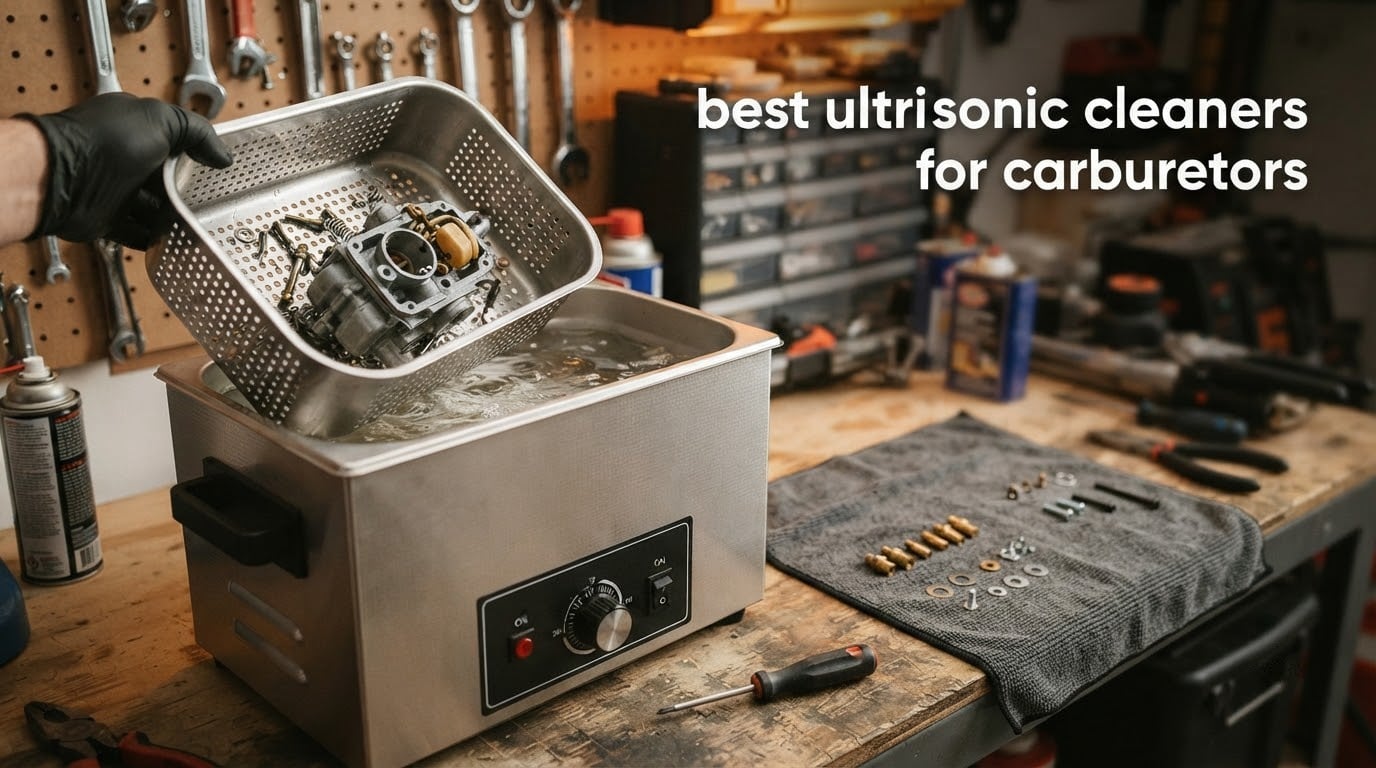
Every carburetor I have ever pulled off a small engine looked the same underneath: brown jelly in the float bowl, black carbon in the idle circuit, and varnish crusting the main jet. Brushing and aerosol cleaner shift the surface. They never reach the passages that actually cause the running poorly. An ultrasonic cleaner does, and that is why the best ultrasonic cleaners for carburetors have become standard bench equipment in small engine shops rather than a curiosity.
My pick for almost everyone is the VEVOR 10L Sonic Cleaner. It pairs 240W of 40 kHz cavitation with a 304 stainless tank, a heater that runs to 110 degrees Celsius, a real drain valve and a roomy tank that swallows a stripped carburetor and its hardware without rearranging the load twice. Owners use it on exactly the jobs this article is about: Kawasaki Mule carbs, a Polaris Sportsman 500, a TPI Corvette throttle body.
Two rules matter more than any spec on the box. Size the tank by its internal dimensions, not its litre count, and leave the carb at least two to three inches of clearance on every side so it sits fully submerged. And never put gasoline, acetone, brake cleaner or lacquer thinner in a heated bath. Ultrasonic energy plus heat turns flammable vapour into a fire risk, and that is not a theoretical warning.
If you already run a machine for watches, brass or small engine hardware, the same physics applies and the machines overlap heavily. Our ultrasonic jewelry cleaner picks cover the small-tank end of the market where carb parts often end up sharing a bath with delicate work.
Top 3 Best Ultrasonic Cleaners for Carburetors in 2026
Three machines carry most of the recommendation. One is the all-round choice, one is the proven four-barrel and motorcycle bank workhorse, and one is the volume machine for batch cleaning.

VEVOR 10L Sonic Cleaner
- 40kHz cavitation
- 240W power
- 0-110C heater
- 304 stainless tank with drain


CREWORKS 30L Digital Cleaner
- 600W ultrasonic
- 600W heater
- 30-minute timer
- 30L tank with drain valve
All 10 Ultrasonic Cleaners for Carburetors at a Glance in 2026
Every tank size, wattage and mode from the picks below, ranked in the order I would buy them. The Key Features column is the short version of what each machine does well.
| Product | Specifications | Action |
|---|---|---|
| VEVOR 10L Sonic Cleaner |
|
Check Latest Price |
| CREWORKS 30L Digital Ultrasonic Cleaning Machine |
|
Check Latest Price |
 VEVOR 6L Digital Ultrasonic Cleaner with Gentle Mode VEVOR 6L Digital Ultrasonic Cleaner with Gentle Mode |
|
Check Latest Price |
 CREWORKS 15L Digital Ultrasonic Cleaner CREWORKS 15L Digital Ultrasonic Cleaner |
|
Check Latest Price |
 CREWORKS 22L Digital Ultrasonic Cleaning Machine CREWORKS 22L Digital Ultrasonic Cleaning Machine |
|
Check Latest Price |
 Dareflow 2L Ultrasonic Carburetor Cleaner Dareflow 2L Ultrasonic Carburetor Cleaner |
|
Check Latest Price |
 VECKYJL 3L Heated Ultrasonic Parts Cleaner VECKYJL 3L Heated Ultrasonic Parts Cleaner |
|
Check Latest Price |
 SupRUCCI 20L Ultrasonic Cleaner with Sweep SupRUCCI 20L Ultrasonic Cleaner with Sweep |
|
Check Latest Price |
 Granbo 3.2L Ultrasonic Cleaner with Degas Granbo 3.2L Ultrasonic Cleaner with Degas |
|
Check Latest Price |
| VEVOR 15L JPS-60A Ultrasonic Cleaner |
|
Check Latest Price |
1. VEVOR 10L Sonic Cleaner with Heater and Timer
VEVOR 10L Sonic Cleaner with Heater Timer & Basket, Professional Digital Sonic Cavitation Machine, 240W Cleaning Machine for Lab Tools, Metal Parts, Carburetor, Brass, Auto Parts, Engine Parts
40kHz
240W
10L tank
0-110C heater
304 stainless
drain
Pros
- Analog knobs are sturdier than earlier push-touch panels
- Heater reaches 110C for stubborn varnish
- Drain with shut-off valve ends carrying the tank
- Proven on Kawasaki Mule and Polaris carburetors
Cons
- Loud enough to notice across a workshop
- Full baths above 80C take over an hour to heat
- Complex carb geometry still needs two or three repositioned cycles
This is the machine I keep coming back to. The 10L tank gives you enough room to lay a stripped carburetor flat with its jets, screws and springs in the basket beside it, which means you are not rotating parts through three separate baths to get even coverage. That single design decision saves more time than any feature on the panel.
The controls are analog rheostat knobs for heat and time, and owners consistently rate that as a durability upgrade over the push-touch buttons on earlier models. The heater runs to 110 degrees Celsius, well above the 80 to 90 degrees typical of comparable machines, and that headroom matters when the bath is full of heavy varnish and the water is fighting you to get there.
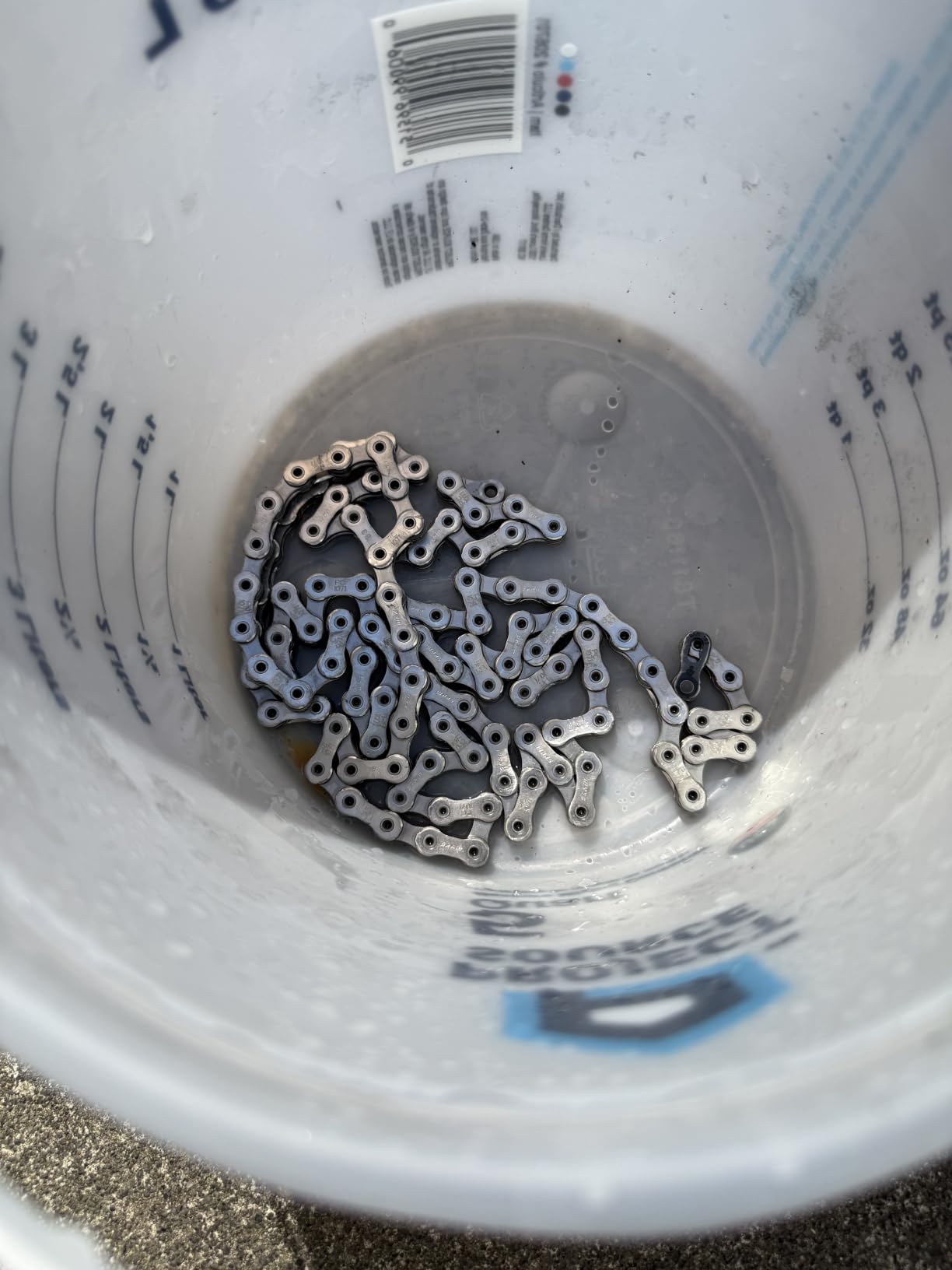
Results reported by owners are consistently good on real carburetors: crystallized and gummed small engine carbs, throttle bodies, greasy engine parts. The 240W of ultrasonic output is enough that most people describe one or two cycles rather than four or five. A drain valve with a shut-off means you are not carrying 10 litres to the sink every time you change solution.
The honest drawback is noise. Owners compare it to a leaking air compressor or a circular saw running, and a full tank above 80 degrees takes the better part of an hour to reach temperature. On a cold morning that is real dead time, so preheat the water on the kettle if you are in a hurry.
Check the tank fits before you commit
Measure your longest carburetor body first. The 10L tank is wide enough that a four-barrel needs the top plate off or the bowl separated, and it is deep enough to submerge a whole single- or twin-choke body comfortably. If you are running a full bank of motorcycle carbs at once, step up to the 15L or 22L instead.
When this is the wrong machine
If your bench is shared with watch repair or jewelry work, you will want a mode that halves power. This machine has full power only, so delicate items share a bath with carb grime or wait their turn. It is also a 12-pound machine with a 10L tank, which is a genuine commitment on a small bench.
2. CREWORKS 30L Digital Ultrasonic Cleaning Machine
CREWORKS 30L Digital Ultrasonic Cleaning Machine with Heater and Timer
600W ultrasonic
600W heater
30L
20-80C
30 min timer
304 stainless
Pros
- Fits a full rack of four carburetors in one bath
- 600W ultrasonic plus 600W integrated heater
- Digital 30-minute timer and temperature panel
- Long review history across automotive and motorcycle work
Cons
- Slow to bring cold water up to temperature
- Heater holds hot water far better than it heats cold
- 31 pounds is a two-person lift when full
- Membrane buttons can crack
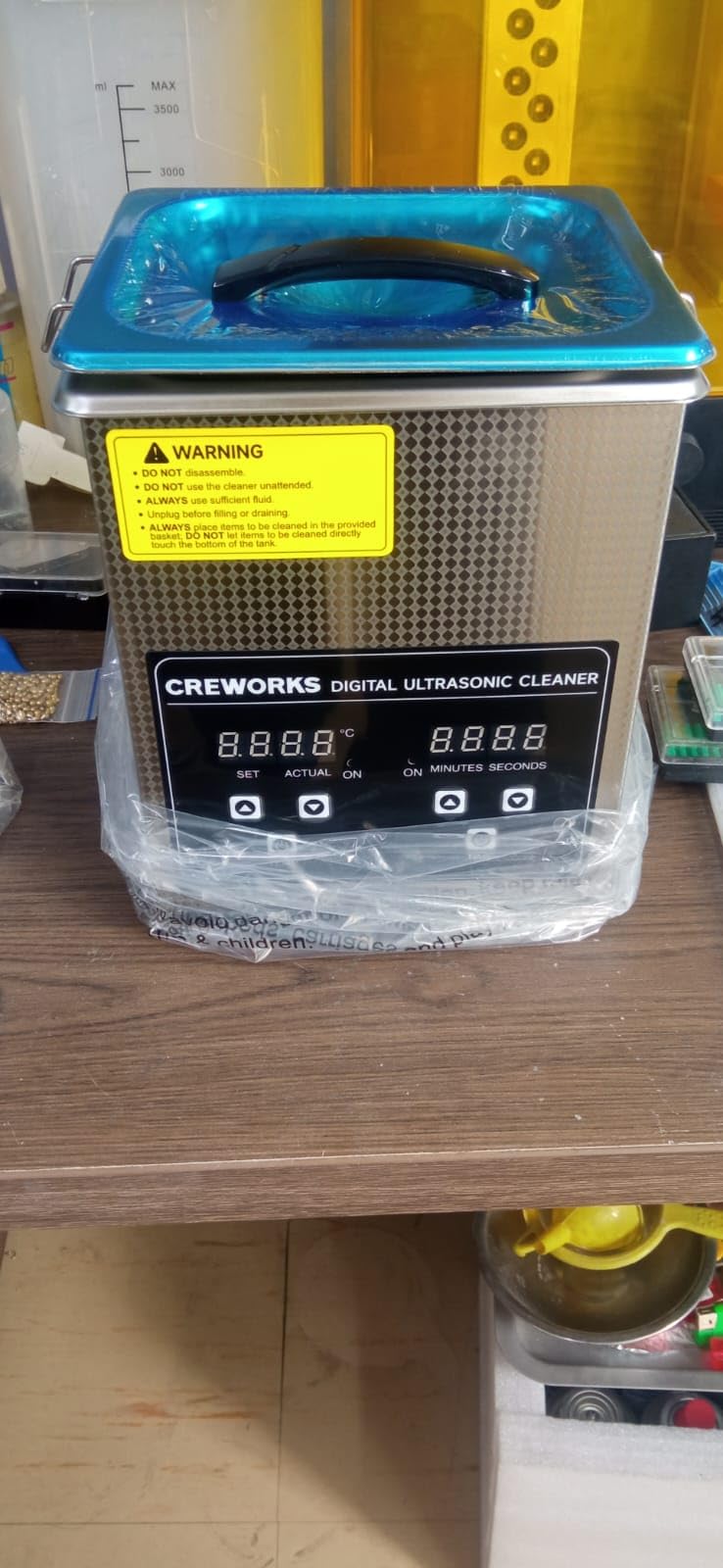
This is the batch machine. Enthusiasts describe pulling an entire rack of carburetors off a multi-cylinder motorcycle, plus injectors, brackets and hardware, into a single bath. For a shop doing a rebuild that is the difference between one afternoon and a weekend of rotating parts through a small tank.
The 600W ultrasonic output with a 600W integrated heater and 20 to 80 degrees Celsius digital control is proper shop-grade capacity, and the 304 stainless tank and basket with inset handles and a built-in drain valve are the details that make a full tank manageable. The 30-minute digital timer is long enough for a proper soak on heavy contamination.
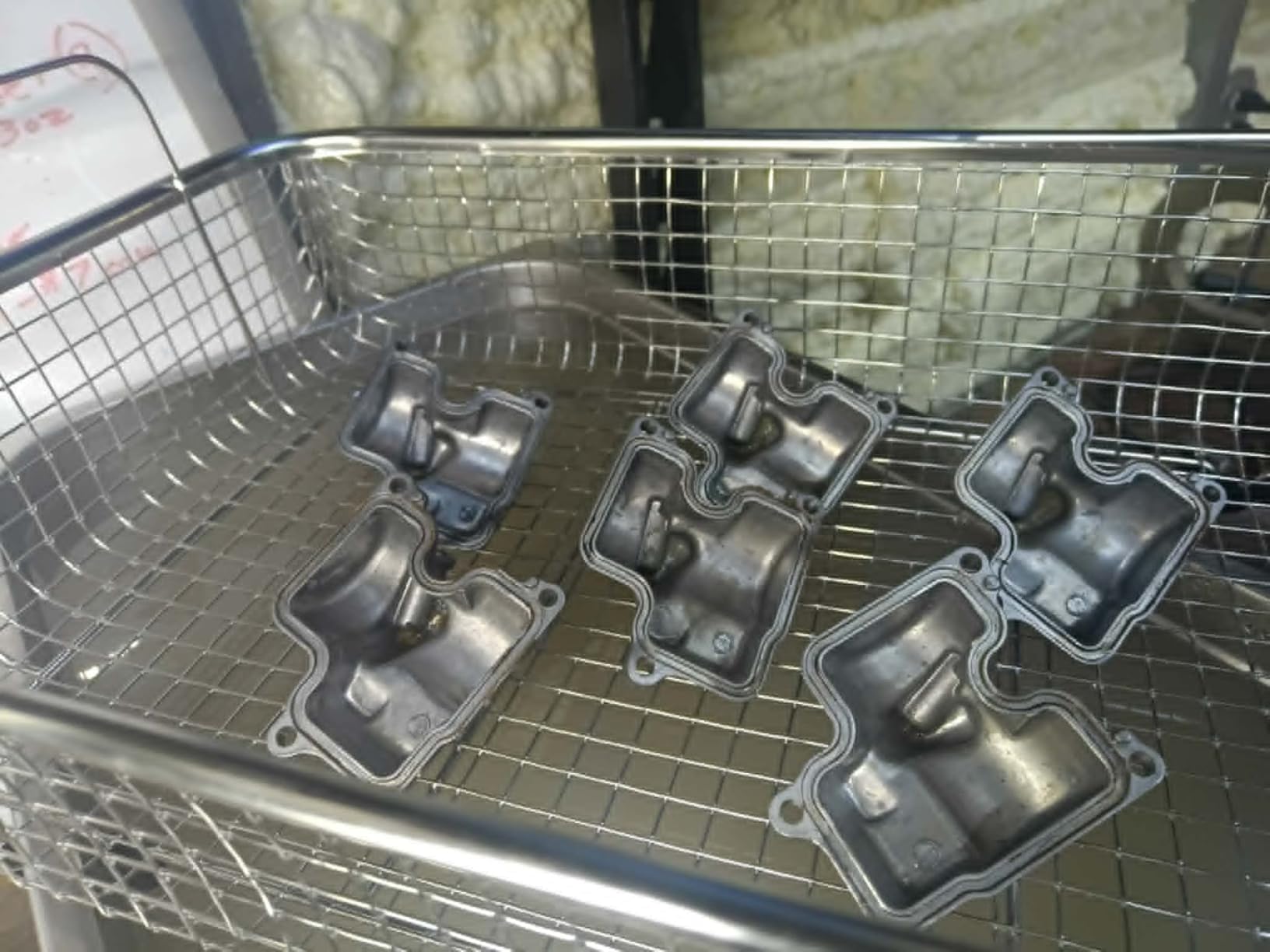
Consensus guidance from owners is useful here: preheat the water on the stove, keep parts off the tank floor so they sit in the cavitation field, and degas fresh water before loading. Nearly every experienced user mentions the first point. A 30L tank of cold water is a long wait even with 600W of heater.
The recurring complaint is exactly that. Reviewers describe the heater as superb at maintaining temperature and mediocre at raising it from cold, which is a small annoyance for a shop cleaning all day and a significant one for a weekend hobbyist. It runs loud enough to notice while you work nearby.
Why volume beats wattage for batch work
When you are cleaning six carbs, what matters is how many you can do without draining and refilling. A 30L tank holds the whole rack plus surrounding hardware in one cycle, so the energy per litre matters less than throughput. At 31 pounds it is a two-person lift when full, so plan where it lives before it arrives.
When you are cleaning one carb this is overkill
Heating 30 litres to working temperature and then dumping a small engine carb into it is a poor use of time and solution. If you are restoring one chainsaw or one motorcycle carb per year, a 6L or 10L tank does the same job in a fraction of the warm-up and with a fraction of the concentrate.
3. VEVOR 6L Digital Ultrasonic Cleaner with Gentle Mode and Degassing
VEVOR 6L Ultra Sonic Cleaner, 180W Digital Ultrasonic Cleaning Machine with Gentle Mode & Upgraded Degassing, 40kHz Industrial Ultrasound Cleaner with Heater & Timer for Retainer, Jewelry, Tools
6L
180W
40kHz
gentle mode
dual-power degas
0-80C
Pros
- Gentle mode halves power for mixed loads
- Dual-power degassing improves cavitation in fresh solution
- 304 stainless tank and basket with handle and drain
- Compact footprint that suits a home bench
Cons
- 80C heater ceiling is modest
- 6L will not take a full-size carb body in one pass
- Digital panel rather than analog knobs
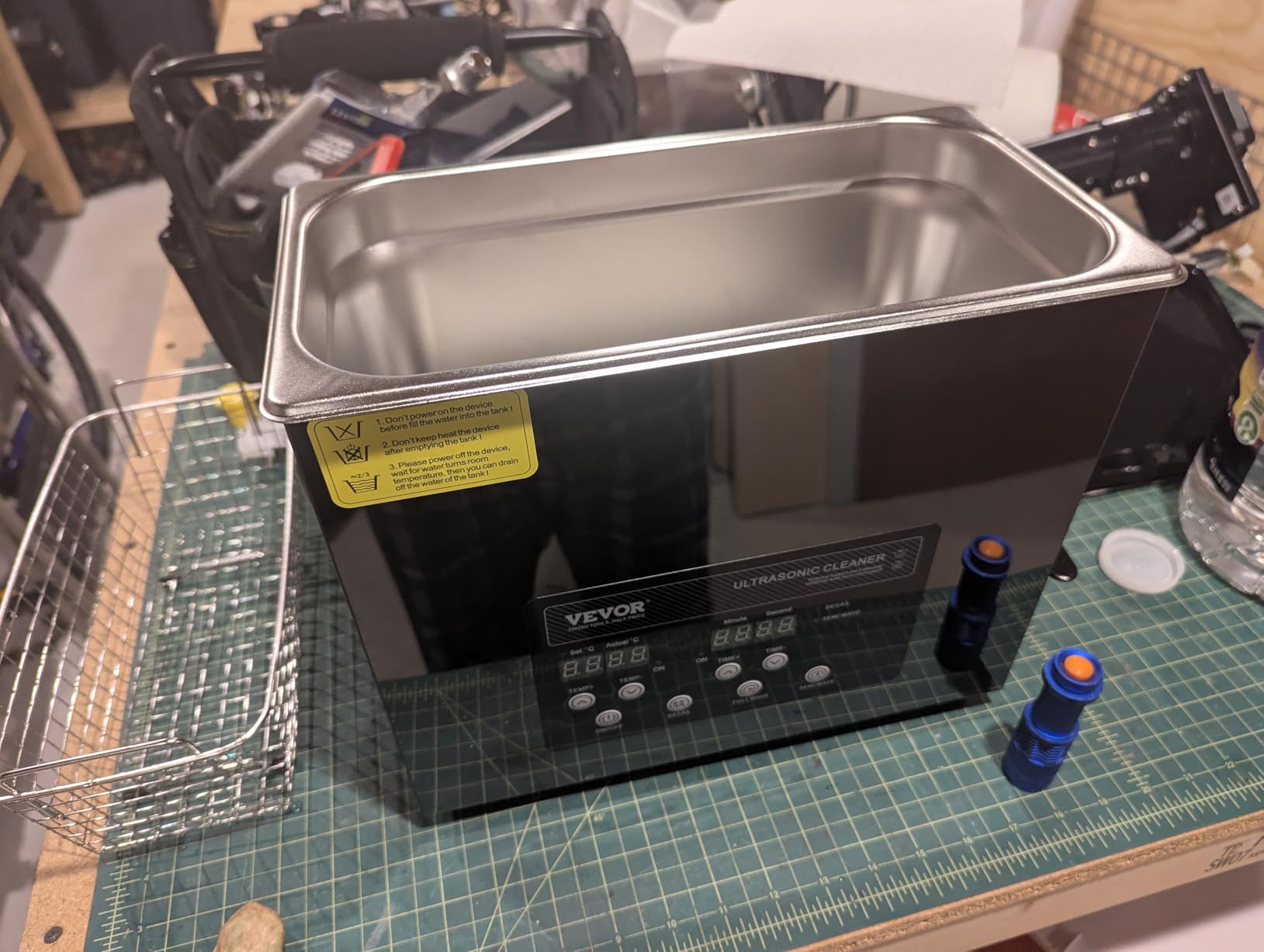
This is the most interesting small tank in the list because of the two-mode design. Full power handles grimy carb internals; gentle mode halves the output so you can put carb parts and delicate items in the same bath. That matters more than raw wattage when a household machine is doing double duty.
The dual-power degassing mode is the other headline. Dissolved gas in fresh water cushions cavitation, so a brand new tank can underperform for the first cycle. Running degas first pulls the gas out and measurably improves the cleaning. The 304 stainless tank, basket, handle and drain in a 6L footprint is a tidy package.
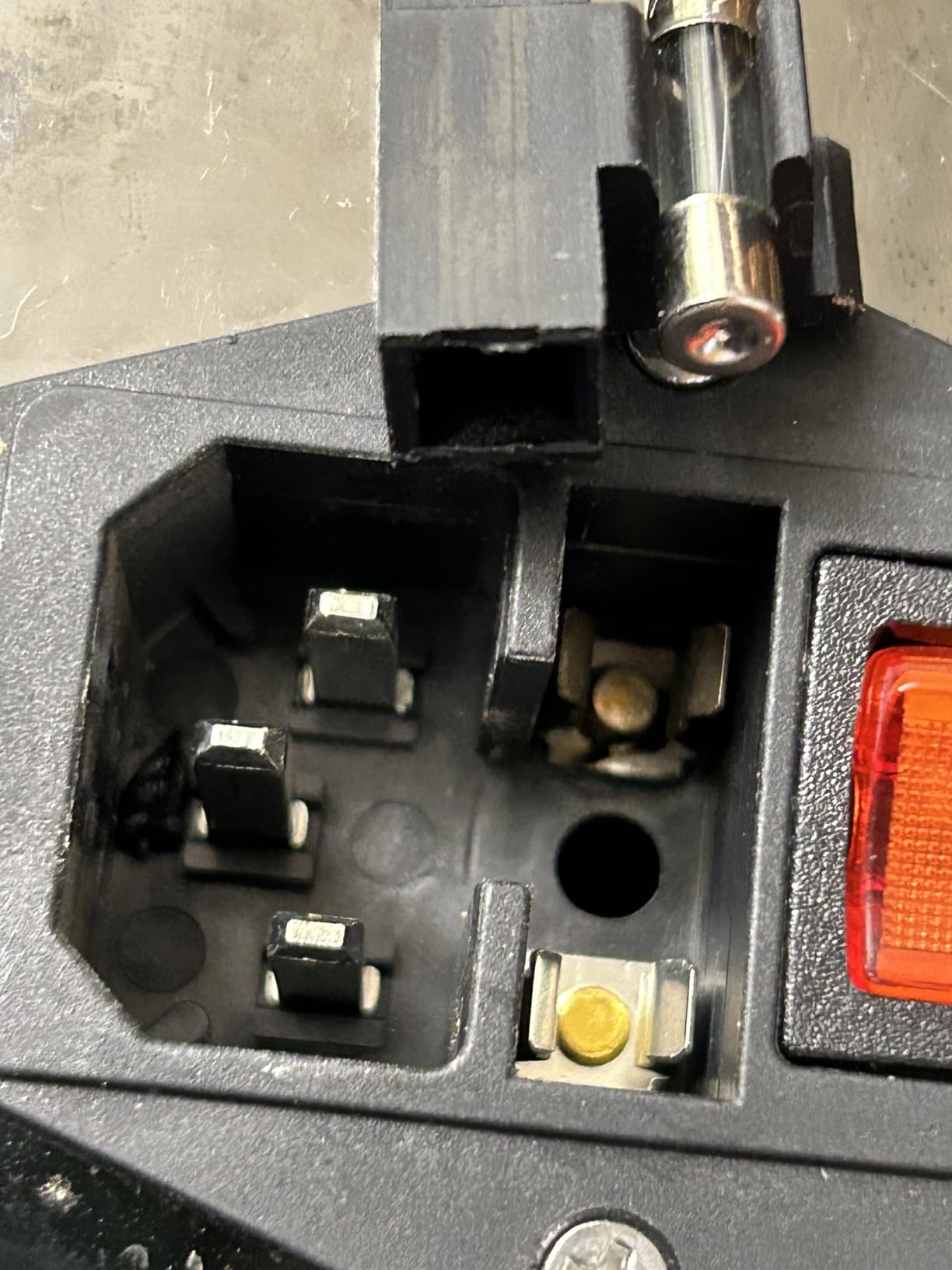
Reviewers consistently position this as a well-balanced mid-size unit that handles automotive work and jewelry jobs without eating bench space, and it holds a 4.5-star average across 470 reviews. The mode pairing and the degas cycle are the most-mentioned features by a wide margin.
The limitation everyone notes is capacity relative to a whole carburetor body, plus an 80 degree ceiling that is lower than some machines in the class. Neither matters for a small engine carb broken down into bowl, body and throttle plate, which is how you should be cleaning it anyway.
Best when you clean mixed loads in one bath
The gentle mode is the reason to pick this over a same-size machine with only one power level. A carb rebuild bench and a household machine often share the same tank: jets and bodies at full power, then rings, glasses or a watch at half. Sharing one bath is cheaper and faster than running two machines. Our home ultrasonic cleaner reviews cover that small-tank end in more detail.
When you should spend up for more tank
If the job is a four-barrel or a twin, the 6L tank forces you into two or three repositioned cycles. That is more solution, more heat-up cycles and more chances for a small part to end up half out of the liquid. The VEVOR 10L in the number one spot is the step up.
4. CREWORKS 15L Digital Ultrasonic Cleaner with Degas and Gentle Modes
CREWORKS 15L Digital Ultrasonic Cleaner with Degas Gentle Modes, 4 gal. Ultrasonic Cleaning Machine, 360W Professional Ultrasound Cleaner with 450W Heater & 30 min Timer for Auto Machine Parts Tools
15L (4 gal)
360W at 40kHz
450W heater
32-176F
30 min timer
Pros
- 15L takes a whole carburetor plus hardware in one cycle
- Degas and gentle modes cover grimy and delicate loads
- 360W ultrasonic with a 450W heater
- Inset handles and a widened top cover for a full tank
Cons
- 30-minute timer cap means repeat cycles for heavy parts
- Just over 22 pounds is a two-person lift when full
- Membrane controls feel less durable than analog dials
This is the middle of the range and the most balanced of the CREWORKS line. 360W of 40 kHz ultrasound with a 450W heater, in a 15L 304 stainless tank, and buyers position it as big enough for a whole small engine carburetor and its hardware while still occupying a single bench.
Degas and gentle modes again cover both ends of the load. Degas strips trapped gas from solution and from porous parts so cavitation starts at full strength, and gentle halves the power for anything that should not be hammered. The 32 to 176 degrees Fahrenheit digital panel and a 30-minute timer give you a repeatable cycle.
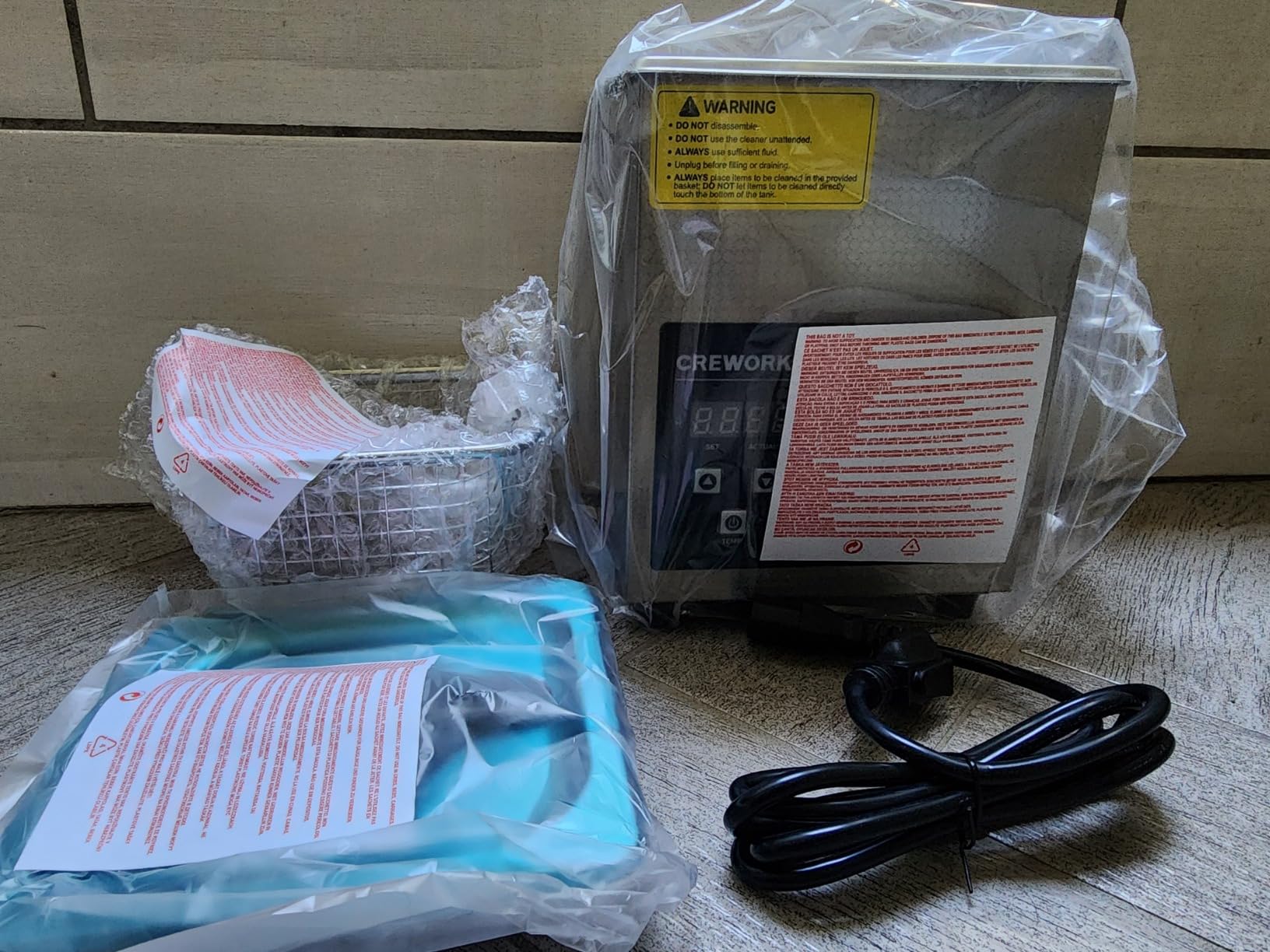
Owners mix carb parts and smaller items in the same bath, which is the intended use, and the wider top cover and inset handles make a full tank easier to manage. At 4.5 stars across 197 reviews the satisfaction rate is high for a machine in this bracket.
The two limitations owners raise most are the fixed 30-minute cycle, which means a heavily contaminated part needs a repeat run in fresh solution rather than a longer soak, and the weight. Just over 22 pounds becomes a two-person job when the tank is full.
When 15L is the right call
Choose this when you are cleaning a stripped motorcycle carburetor plus its hardware in one go, or a small automotive carb with the bowl off, and you want to do it without draining between stages. It is the size at which the 2 to 3 inch clearance rule starts to feel comfortable on all four sides.
When 10L is plenty
If your biggest job is one small engine carburetor per season, a 10L tank reaches working temperature in a fraction of the time and takes a fraction of the concentrate. Heater wattage matters more than tank size for cycle turnaround, and 450W is a lot of power for a smaller bath.
5. CREWORKS 22L Digital Ultrasonic Cleaning Machine
CREWORKS 22L Digital Ultrasonic Cleaning Machine with Degas and Gentle Mode, 480W Ultrasonic Cleaner Machine with Heater and Timer, 5.8 gal Ultrasound Cleaner for Retainer Watch Auto Tool Machine Part
22L (5.8 gal)
480W
1200W heater
20-80C
30 min timer
Pros
- 480W ultrasonic with a 1200W built-in heater
- Takes a stripped carb plus brackets and hardware together
- Degas and gentle modes for mixed loads
- 304 stainless tank and basket with a widened cover
Cons
- 28.6 pounds is heavy to move when full
- 80C ceiling despite the strong heater
- 30-minute timer cap on cycle length
The 1200W heater is the standout number here, and owners single it out as the practical advantage over lower-power machines. It pulls a 22L bath up to working temperature noticeably faster, which matters when you are running several cycles in a row rather than one.
At 22L and 480W of ultrasound, a stripped carburetor, its brackets and the surrounding hardware all go in together. Reviewers describe exactly that use: a shop-sized washer for a full teardown, with degas and gentle modes letting you mix loads. The 304 stainless tank and basket meet food-grade safety standards and come with a widened cover and inset handles.
The digital panel gives you a 30-minute timer and 20 to 80 degrees Celsius control, which is the same working window that matters for carb cleaning. Fuel varnish softens properly in the 50 to 60 degree range without pushing the bath toward the temperature that darkens aluminum finishes.
Two reservations come up repeatedly. At 28.6 pounds it is heavy to reposition when full, and despite the strong heater the ceiling is still 80 degrees. Buyers also report mixed durability experiences when moving between machine families in the CREWORKS line, so check the warranty terms on the specific model.
Why the 1200W heater is the feature to pay for
Every cycle you run costs you heat-up time, and heat-up is dead time. A strong heater in a large tank is what makes batch work practical, because you can run a second and third cycle without waiting an hour for the bath to recover. If you clean more than one carb at a time, this is the spec that pays back.
When it is more machine than you need
Four carburetors and hardware in one bath is a real workflow, and if that is yours, this machine handles it. If you are cleaning one small engine carb a month, you are paying to heat 22 litres of water instead of 10 and carrying a machine that weighs more than most people want on a bench.
6. Dareflow 2L Ultrasonic Carburetor Cleaner with Gloves
Dareflow 2L Ultrasonic Carburetor Cleaner, Heated Parts Washer with Gloves
2L tank
1.5L working volume
5.9 x 5.5 x 3.9 in inner tank
30 min timer
Pros
- Purpose-built and marketed for carburetors specifically
- Separate heater and ultrasonic controls let you warm first
- Stainless tank
- removable basket
- gloves and detachable cord
- Compact footprint for a mobile repair bench
Cons
- 1.5L working volume is tight for a full-size carb body
- Basket space is smaller than the tank
- Separate digital readouts rather than one display
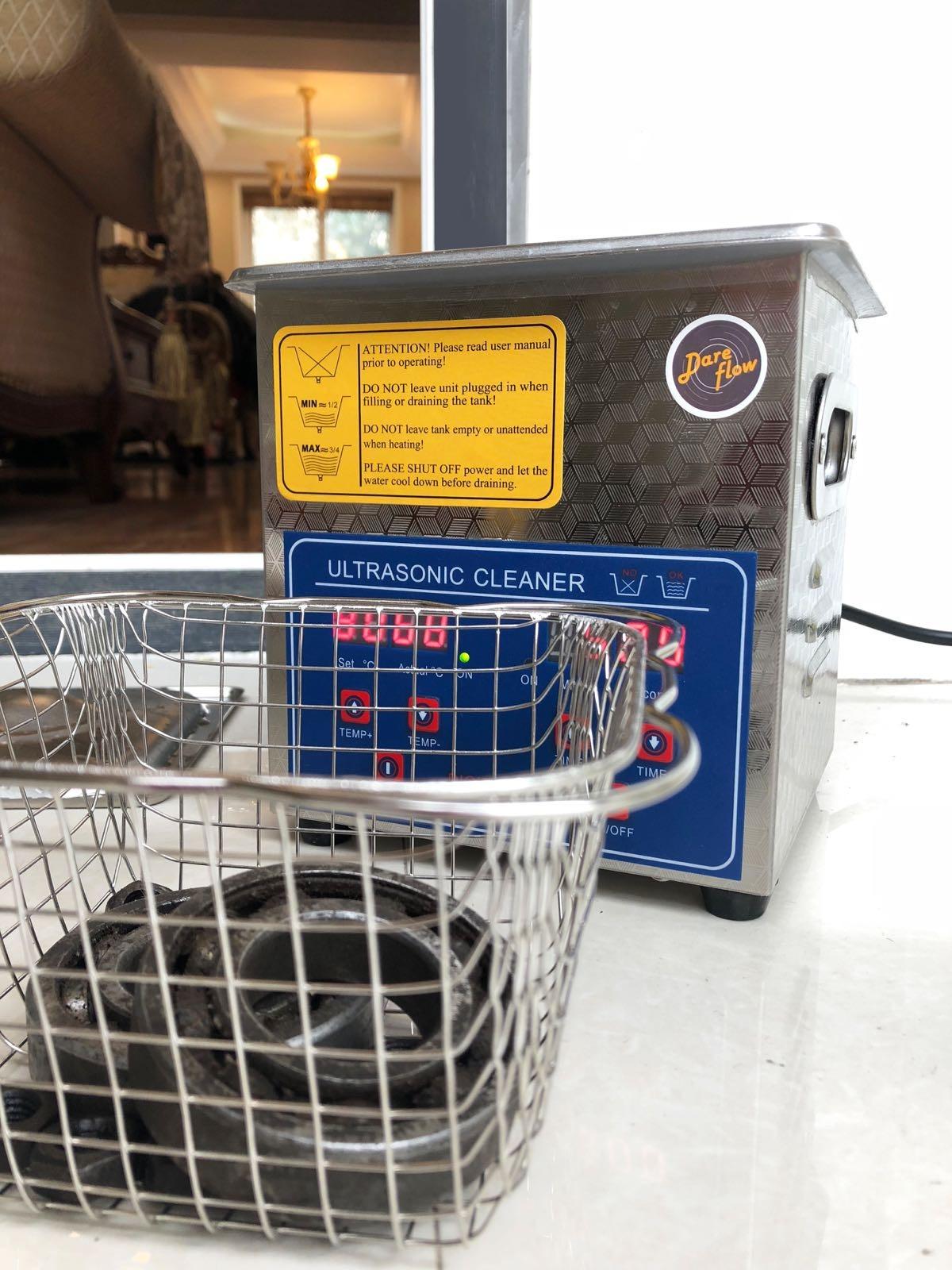
This is the only machine here listed under carburetor and throttle body cleaners rather than lab equipment, and that shapes everything about it. The inner tank measures 5.9 by 5.5 by 3.9 inches with a nominal 2L capacity and about 1.5L of working liquid, so plan on running a carburetor in sections rather than submerging a whole body.
What it does have is genuinely useful for that job. Separate heating and ultrasonic controls let you bring the bath to temperature first and then run the ultrasound, which stops you losing cleaning time to a cold start. It ships with a removable stainless basket, rubber gloves, carrying handles and a detachable power cord.
Reviewers find it does the job it was bought for competently, with adjustable heat and time and an appreciation for the included basket and gloves. The category listing puts it among carburetor and throttle body cleaners rather than lab equipment, which tells you the design brief.
The recurring caveat is capacity. A full-size carburetor body has to be run in sections, and the basket is smaller than the tank itself, so parts that look like they should fit will not sit in the basket. If your work is jets, bowls, throttle plates and injector components, that is not a problem.
When 2L is genuinely the right size
Small engine work is mostly small parts: main jets, emulsion tubes, needles, float valves, throttle plates and the bowl casting. A 2L bath handles a full set of those from one carb in a single cycle, and the machine is small enough to move between benches or take to a customer.
When you need to step up a size
If you want to drop a whole carburetor body in without splitting it, or clean a four-barrel, this tank is too small. The 2 to 3 inch clearance rule cannot be met here, and a part that hangs above the liquid line does not get cavitation at all. Move to a 6L or 10L machine.
7. VECKYJL 3L Heated Ultrasonic Parts Cleaner with Digital Timer
Heated Ultrasonic Parts Cleaner 3L Industrial Ultrasonic Carburetor Cleaner Machine with Digital Timer, Ultrasonic Parts Cleaner Automotive for Coin Dental Watch Cleaning, 110V
3L
120W at 40kHz
1-30 min timer
to 176F
304 stainless
Pros
- Used to restore gelled-fuel generator and mower carburetors
- Digital timer plus adjustable heater
- CE FCC and UKCA certified with a one-year warranty
- Basket
- cleaning ball
- power supply and manual in the box
Cons
- Loud during the ultrasonic cycle
- Some arrive with a drain connector of the wrong size
- Real volume closer to 2L than the stated 3L
- Mesh ball rather than a proper parts tray
Small engine repair shops are the core buyer here, and the reported results are specific: carburetors off generators, lawn mowers and motorcycles that had gone gelled on old fuel coming back to running condition after a short cycle. That is the failure this machine is bought to fix.
The specification is sensible for the job. 120W at 40 kHz, a digital 1 to 30 minute timer, an adjustable heater from room temperature to 176 degrees Fahrenheit, and a corrosion-resistant 304 stainless tank and basket with a leak-proof design and a surge fuse. It is also light, at 6.93 pounds, with four anti-skid feet.
Owners rate ease of use highly, because the digital timer and adjustable heater make the cycle simple to dial in and repeat. It is certified to CE, FCC and UKCA standards and carries a one-year warranty, and the box includes the cleaning basket, a jewelry cleaning ball, the power supply and a manual.
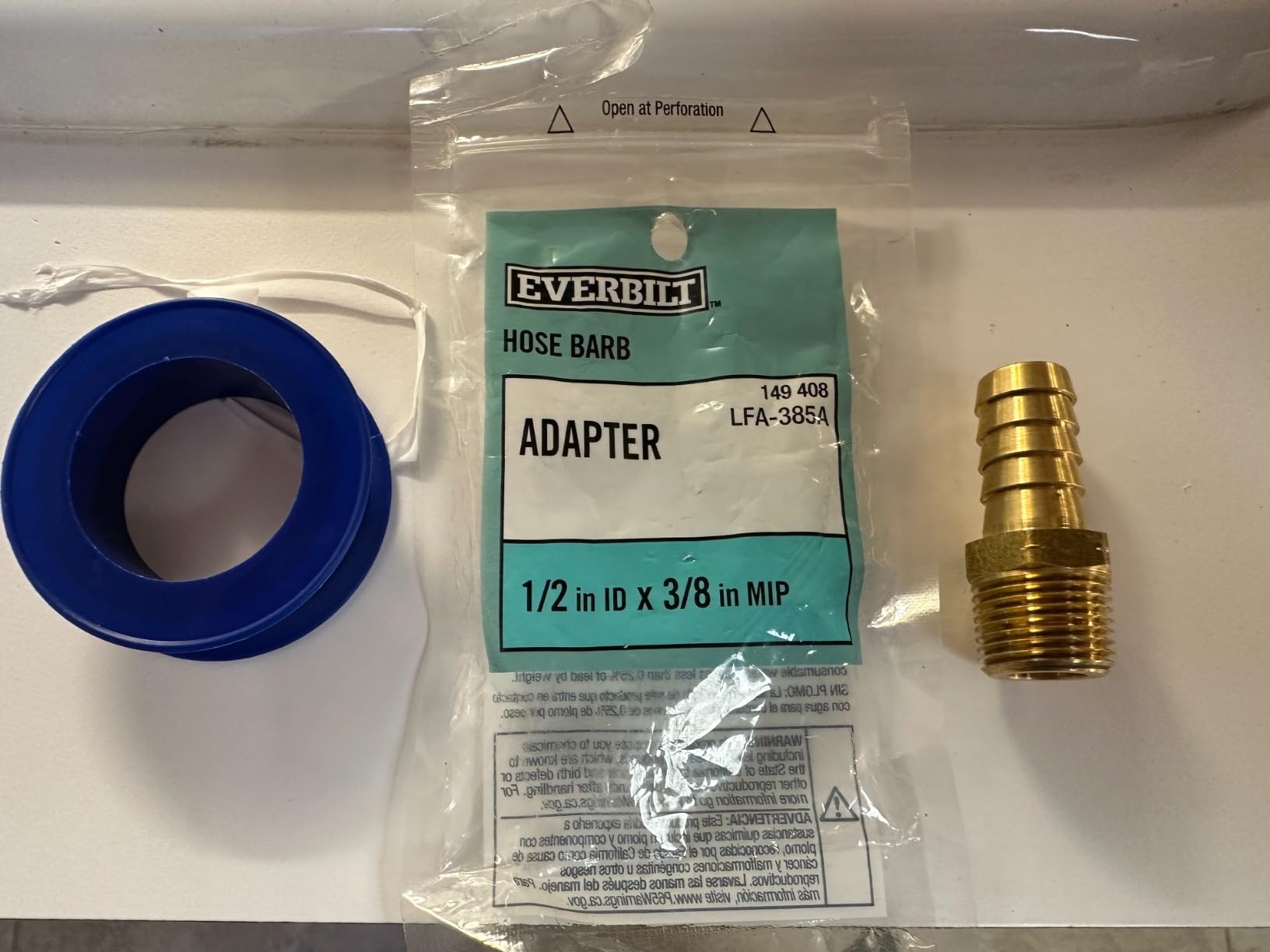
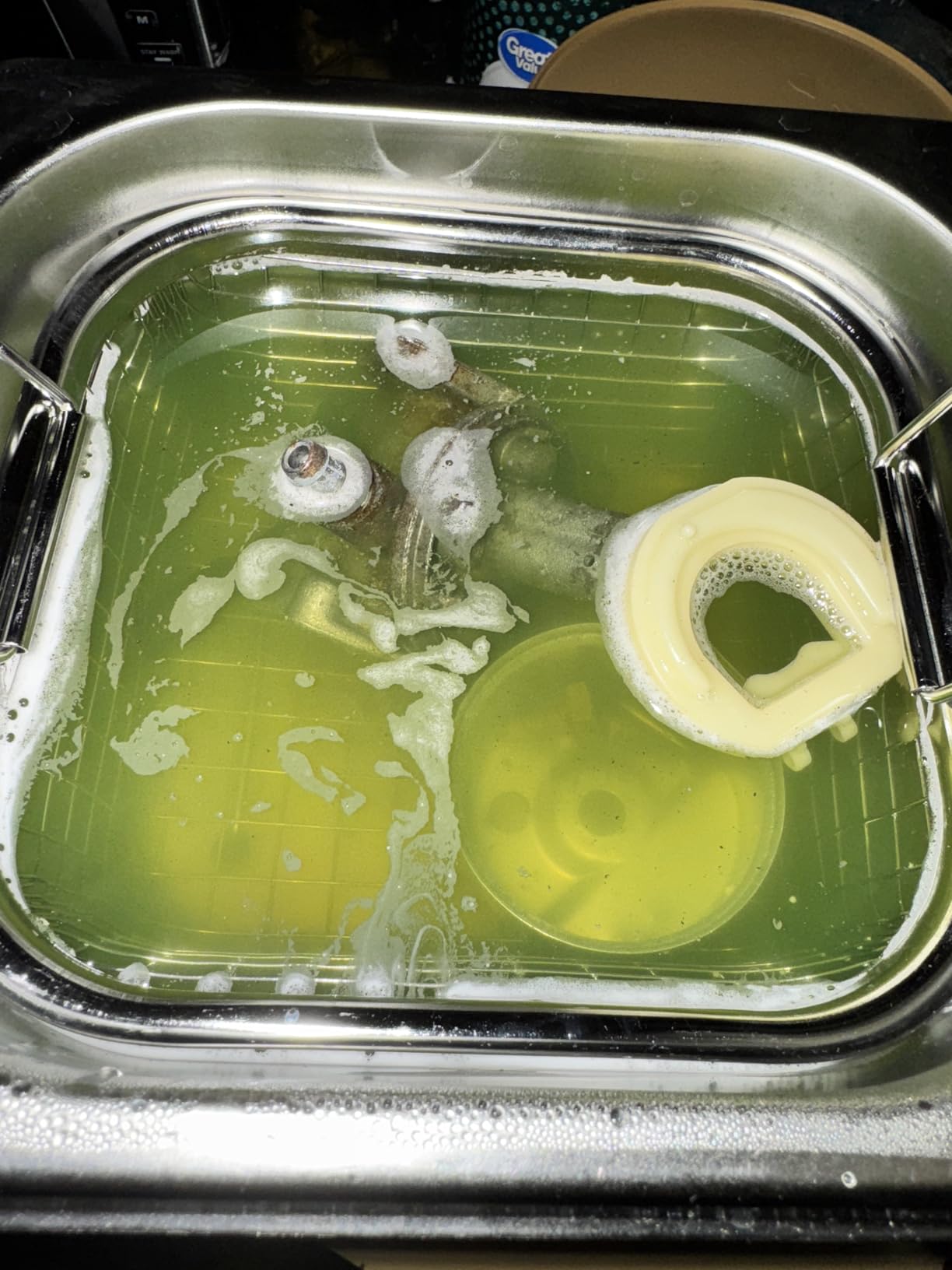
Three practical gripes. It is louder than expected while running. Some machines arrive with a drain hose connector of the wrong size, requiring an adapter to be fitted. And the small parts basket is a loose mesh ball rather than a proper tray, so light parts need wrapping before they go in.
Check the drain fitting before you fill it
Draining matters more than most buyers expect, because the solution has to be replaced as soon as it turns opaque with lifted varnish. Confirm the drain connector size matches your hose or pick up the right adapter before the first fill, and plan where the drain water goes.
When this beats the 2L option
The 120W transducer and the full 304 stainless tank give you more cavitation per litre than a 2L machine, and the 3L bath will take a small carb body where a 2L basket will not. If your work is gelled fuel on a mower or generator, that is exactly the upgrade you want. If real capacity matters, the 6L model above gives you more room again.
8. SupRUCCI 20L Ultrasonic Cleaner with Adjustable Power and Sweep
SupRUCCI Ultrasonic Cleaner 20L with Adjustable Power & Sweep, 480W Ultrasonic Carburetor Cleaner, Digital Timer and Heater, Heavy-Duty Parts Cleaner for Industrial, Motorcycle, and Hardware Tools
20L
480W at 40kHz
sweep function
adjustable power
drain valve
Pros
- Sweep plus adjustable power cleans uniformly through intricate passages
- Reported very clean results on mower and snowblower carburetors
- Basket
- power cord
- drain hose
- clamp and printed manual included
- Large LEDs and labelled buttons read well in a workshop
Cons
- Very loud at full power
- Owner manual provides little operating guidance
- 25.9 pounds and a 20L tank need a permanent bench spot
The sweep function is the reason to look at this machine specifically. Rather than holding a single frequency, sweeping moves the ultrasonic field through the tank, so cleaning is more uniform across the bath and reaches further into the intricate passages inside a carburetor body. Adjustable power lets you back off for delicate items in the same tank.
At 20L and 480W of 40 kHz ultrasound, this is a genuinely heavy-duty washer. Owners report lawnmower and snowblower carburetors coming out very clean, and the package includes a basket, power cord, drain hose, clamp and a printed colour manual. The control panel uses large LEDs and clearly labelled buttons that stay readable in a workshop.
What sweep actually changes
A fixed-frequency tank forms standing waves, which means some areas of the bath see more energy than others. Sweeping spreads that energy so a part sitting off-centre still gets cleaned, which is the difference between a good result and a great one on a carb with tight internal galleries. Combined with adjustable power it is a genuinely useful pairing.
Check the noise and the documentation first
Two things stand out in the reviews. At full power the machine is very loud, compared to a tattoo machine, and owners recommend ear protection or a separate room. And some owner manuals provide little to no operating guidance, with no temperature or time recommendations printed, so expect to spend time watching a tutorial before the first cycle.
9. Granbo 3.2L Ultrasonic Cleaner with Digital Heater, Timer and Degas
Granbo Ultrasonic Cleaner Machine 3.2L with Digital Heater Timer and Degas
3.2L
120W at 40kHz
150W heater
0-30 min
9.4 x 5.3 x 4 in tank
Pros
- 4.6 average across 347 reviews
- among the highest rated here
- Degas and SEMIWAVE modes for fresh solution and delicate parts
- Adhesive-bonded transducer resists the head detaching
- 3.2L 304 stainless tank at 7.5 pounds moves easily between benches
Cons
- 3.2L only takes a small carburetor or its subassemblies
- 150W heater makes heat-up from cold slow
- 120W ultrasound needs longer cycles on heavy carbon
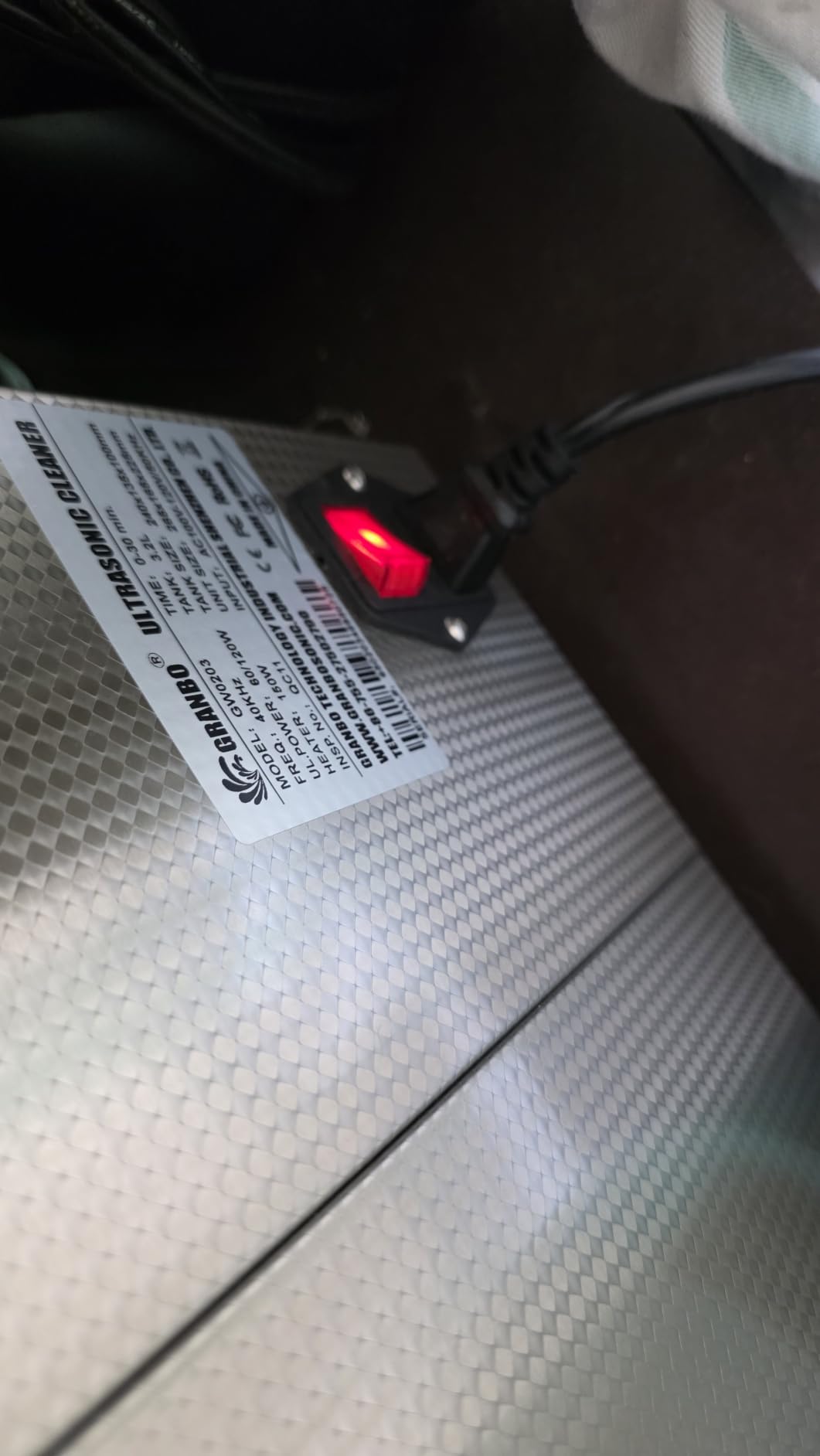
This machine carries a 4.6 average across 347 reviews, and the build detail below explains part of it. The transducer is bonded to the tank wall with a high-strength flexible adhesive specifically to stop the vibrating head detaching, which is a known failure mode on cheaper machines after months of use.
The tank is 9.4 by 5.3 by 4 inches in 304 stainless, and at 7.5 pounds the whole machine is genuinely portable between benches. Degas mode removes dissolved gas to raise cleaning efficiency, and SEMIWAVE mode halves the ultrasonic power for delicate work. The LED digital panel covers a 0 to 30 minute timer and temperature.
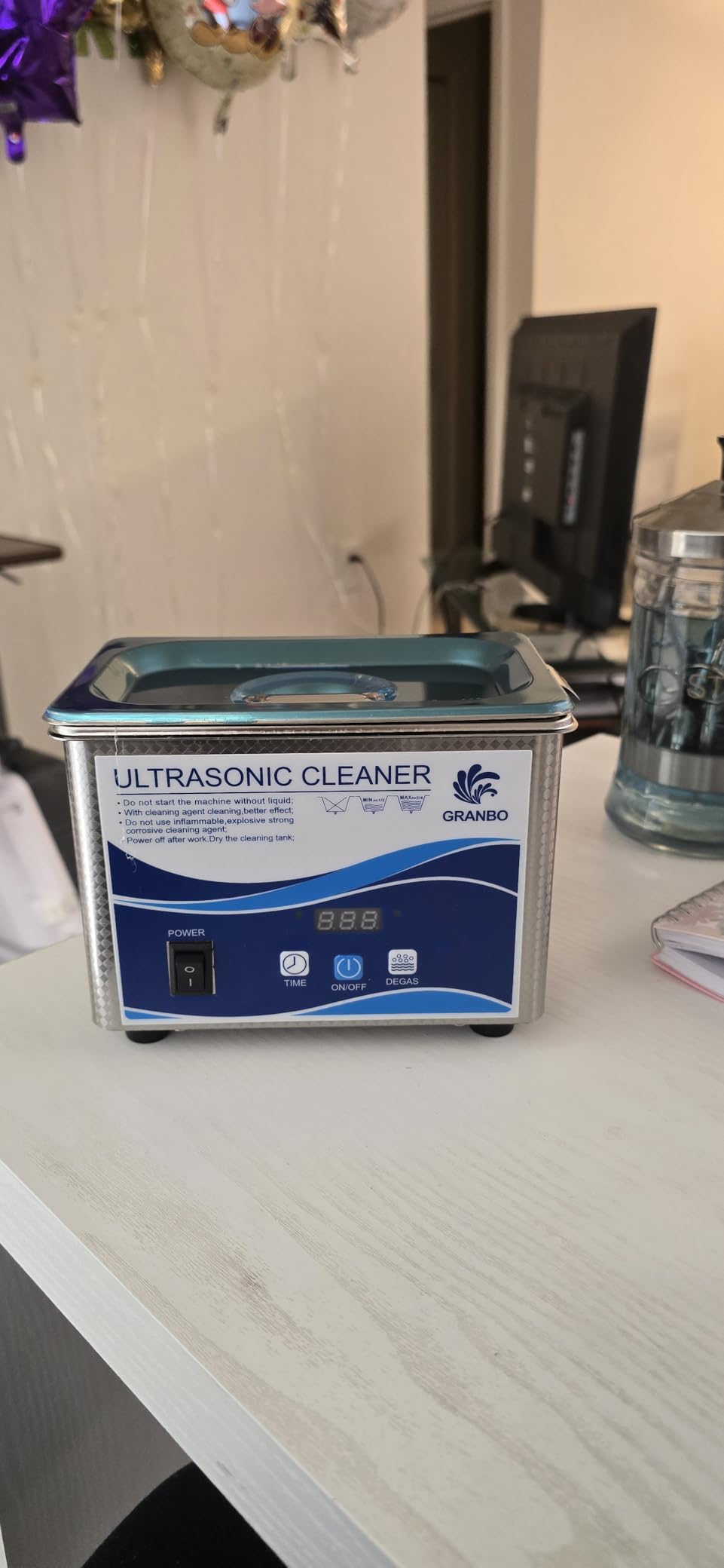
Reviewers emphasize the mode pairing and the compact stainless body. The unit is bought as a bench machine for small parts, watches, eyeglasses and small engine components, and the consensus constraint is size. It is built for a small carburetor or its major sections, not a full rebuild laid out at once.
The trade-offs are capacity and power. A 150W heater makes heat-up from cold slow, and 120W of ultrasound means longer cycles on heavy carbon build-up. Both are acceptable for a portable machine, and neither is a problem for a carb cleaned every few months.
Best for a shared bench and a shared bath
SEMIWAVE mode makes this a good companion to a household machine that also handles delicate work. Run a set of carb jets and a bowl at full power, then drop the power for a watch or a ring in the same solution rather than washing them by hand at the sink. If you want the same idea for a bigger carb, our home ultrasonic cleaner reviews cover the small-tank end in detail.
When you need more than one small carb at a time
A 3.2L tank with a 9.4 by 5.3 inch footprint will not hold a motorcycle carb bank or a four-barrel, and it will not take a whole small engine body. If you clean more than one carb at a time, or work on larger engines, the 6L and 10L machines give you the clearance to submerge properly.
10. VEVOR 15L Ultrasonic Cleaner JPS-60A
VEVOR 15L Ultrasonic Cleaner, Ultra Sonic Parts Cleaning Machine
15L
360W from six 60W transducers
400W heater
0-80C
ball-valve drain
Pros
- Largest review pool here at roughly 3500 reviews
- 360W from six transducers strips carbon and mill scale
- Reported effective on Holley carburetors and a 26-year-old throttle body
- Ball-valve drain with hose and fitting
- lid and removable cord
Cons
- Real volume closer to 11L than the stated 15L
- Slow to heat
- Included drain hose softens and kinks with hot fluid
- About a fifth of reviews are one-star
- some with units that stopped heating
This is the most proven machine in the roundup by sheer volume of use, with roughly 3,500 reviews behind it and a long track record in automotive and machine work. Six 60W sandwich piezoelectric transducers deliver 360W total, which is enough to shift mill scale, rust and decades of carbon from a carburetor body.
Owners report handling Holley carburetors and a 26-year-old Jeep XJ throttle body effectively. The 15L tank swallows a disassembled carburetor and its hardware comfortably, and the 304 stainless tank, matching basket, lid, removable power cord and ball-valve drain with hose and fitting make a long working session manageable.
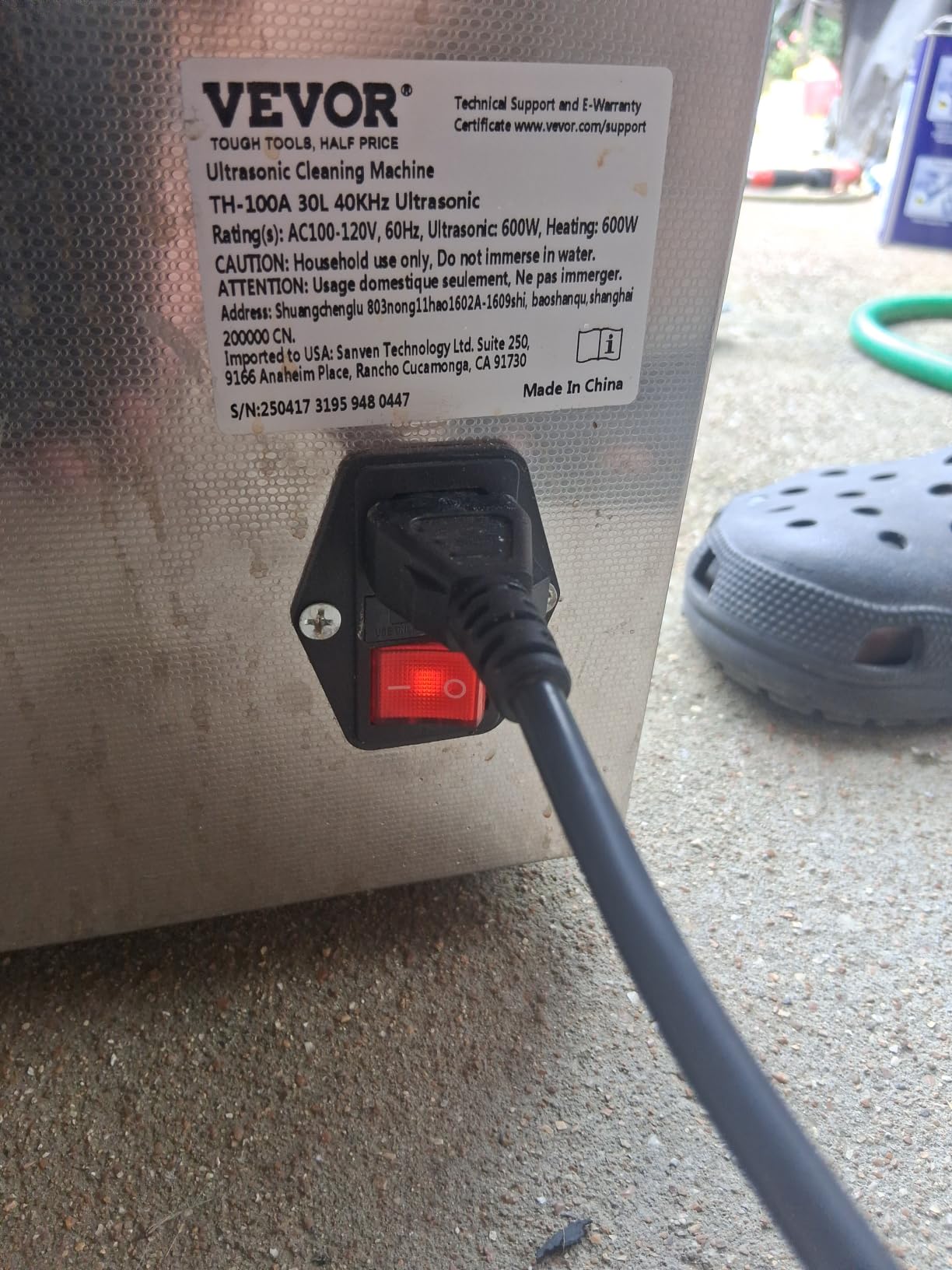
The tank measures 13 by 11.8 by 5.9 inches with a maximum workpiece size of 10.6 by 8.7 by 4.1 inches, which is the number that matters if you want to submerge a body whole. It is FCC, CE, RoHS and UL certified, and the 0 to 30 minute timer with 0 to 80 degrees Celsius control covers the standard carb cleaning window.
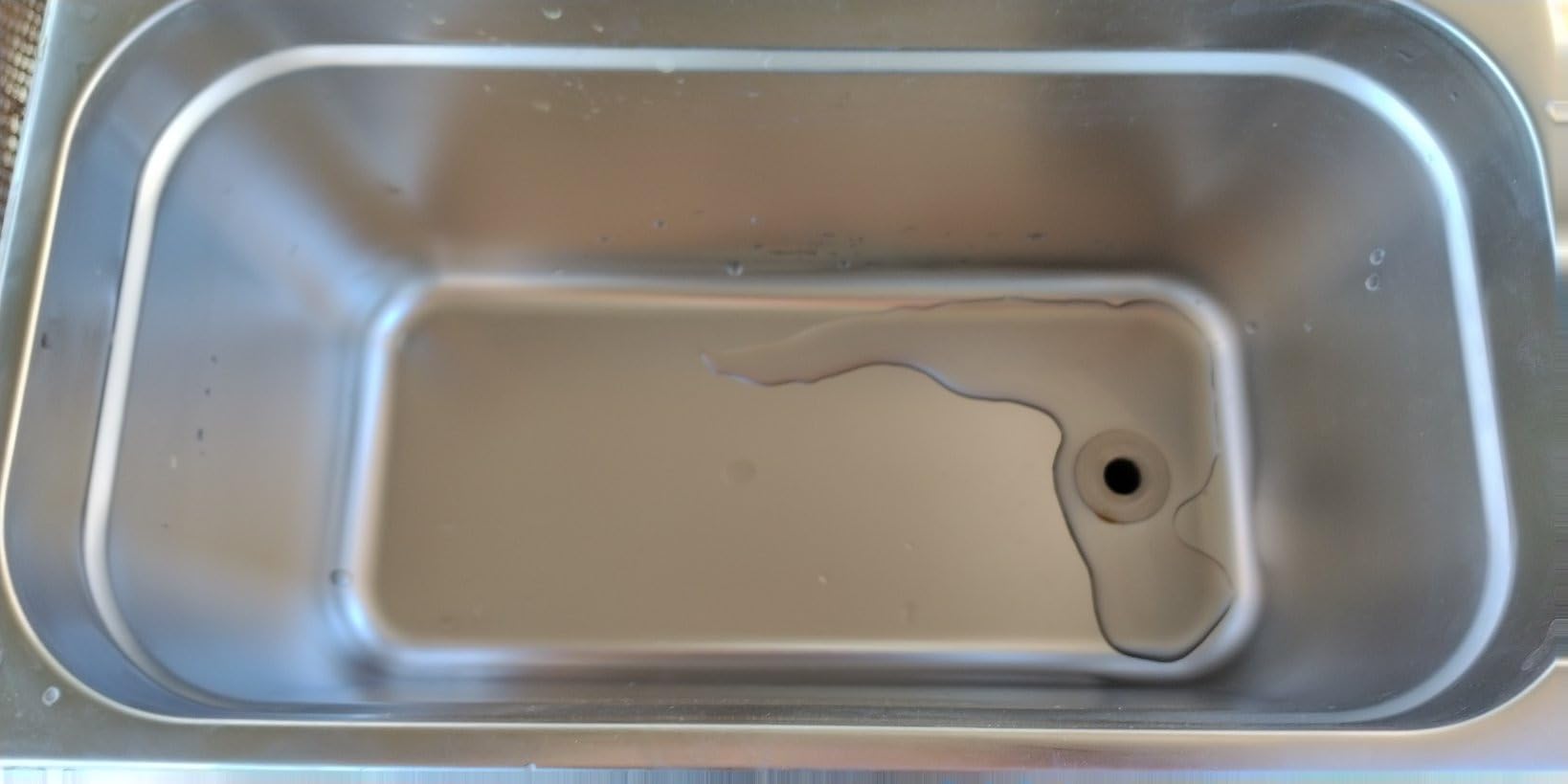
There are real reservations. Stated capacity measures closer to 11L at the fill line and 13L at the brim, heat-up is slow, and the included thin drain hose softens and kinks when hot fluid runs through it. Around a fifth of reviews are one-star, with some reporting machines that stopped heating within weeks. The average holds at 4.3 because the satisfied majority is very large.
Buy it for the evidence, not the label
Thousands of owners cleaning carbs, throttle bodies and machine tooling is the strongest reliability signal available in this category. The 360W from six transducers is a real number you can compare against smaller tanks, and the ball-valve drain with a real fitting is a genuine upgrade over a plastic barb.
Watch two details before you fill it
Measure your longest part against the 10.6 by 8.7 by 4.1 inch workpiece envelope rather than the litre figure, because the usable volume runs under the label. And bring your own drain hose if you will be working hot, since the supplied one is thin. If warranty service matters to you, check the terms, because early heater failures are the main complaint in the one-star reviews.
How Big an Ultrasonic Tank Do You Need for a Carburetor?
For most carburetors, a 6L tank is the sweet spot. Judge by internal tank dimensions rather than litre count, and leave two to three inches of clearance on each side of the carburetor with enough depth to submerge it completely. A part that sits above the solution line gets no cavitation at all, and a part pressed against the tank floor gets less than one in the middle of the bath.
The sizing tiers that work in practice:
2 to 3L: individual jets, needles, emulsion tubes, float bowls and throttle plates. A small carburetor can be run in sections rather than submerged whole.
6L: a single small engine carburetor, or one motorcycle carb with its hardware. The usual home hobbyist starting point.
10 to 15L: a bank of motorcycle carburetors, a four-barrel automotive carburetor, or a stripped body plus all its hardware in one cycle.
20 to 30L and above: batch work and continuous shop duty, where you clean a full rack of carburetors at a time.
Two examples of why the dimension rule matters. The 3.2L machine in this list has a 9.4 by 5.3 inch tank, which is fine for one carb in pieces but not for a body laid out whole. The 15L VEVOR lists a 10.6 by 8.7 by 4.1 inch maximum workpiece size, and that envelope is the number to check against your carburetor, not the 15L label.
The Five Specs That Matter When Buying an Ultrasonic Carb Cleaner
1. Frequency of 40 kHz. Forty kilohertz is the standard for carburetor work. It produces small, dense cavitation bubbles that reach into tight passages and clean gently enough for aluminum. Lower frequencies produce larger, more aggressive bubbles that strip faster but can etch soft alloys over long cycles.
2. A heater that reaches 60 degrees Celsius and beyond. Heat is what softens fuel varnish so the degreaser can carry it away. Every machine here runs to at least 80 degrees Celsius, and the 10L VEVOR goes to 110. Watch the ceiling, not just the wattage: a strong heater with an 80 degree cap will not take you further.
3. Power density, watts per litre. Divide ultrasonic watts by litres. The 10L VEVOR runs 240W, about 24W per litre. The 20L SupRUCCI runs 480W, about 24W per litre. The 3.2L Granbo runs 120W, about 37W per litre. Lower density means more cycles, which is exactly what small-tank owners report when shifting heavy carbon.
4. A 304 stainless steel tank. Every pick in this list uses 304 stainless, and that is the floor, not a bonus. It resists the alkaline degreasers used on carbs and will not corrode the way plated steel does.
5. An adjustable 1 to 30 minute timer with real temperature control. Fixed five-minute cycles force repeat runs that waste solution. A 30-minute timer lets you run a proper soak once and change the fluid. Digital panels also give you the degas and gentle modes that let one tank serve a carb rebuild and a delicate load.
What to Pour In the Tank: Fluids, Chemistry and What Never Goes In
Safety first, because this is the one rule with real consequences. Never put gasoline, acetone, brake cleaner or lacquer thinner into a heated ultrasonic tank. Heated flammable liquid plus ultrasonic energy is a genuine fire risk. The correct bath is a water base with a non-flammable, aluminum-safe degreaser.
Distilled water as the base. Hard water leaves mineral spotting on machined aluminum surfaces after a hot cycle. Distilled water prevents it.
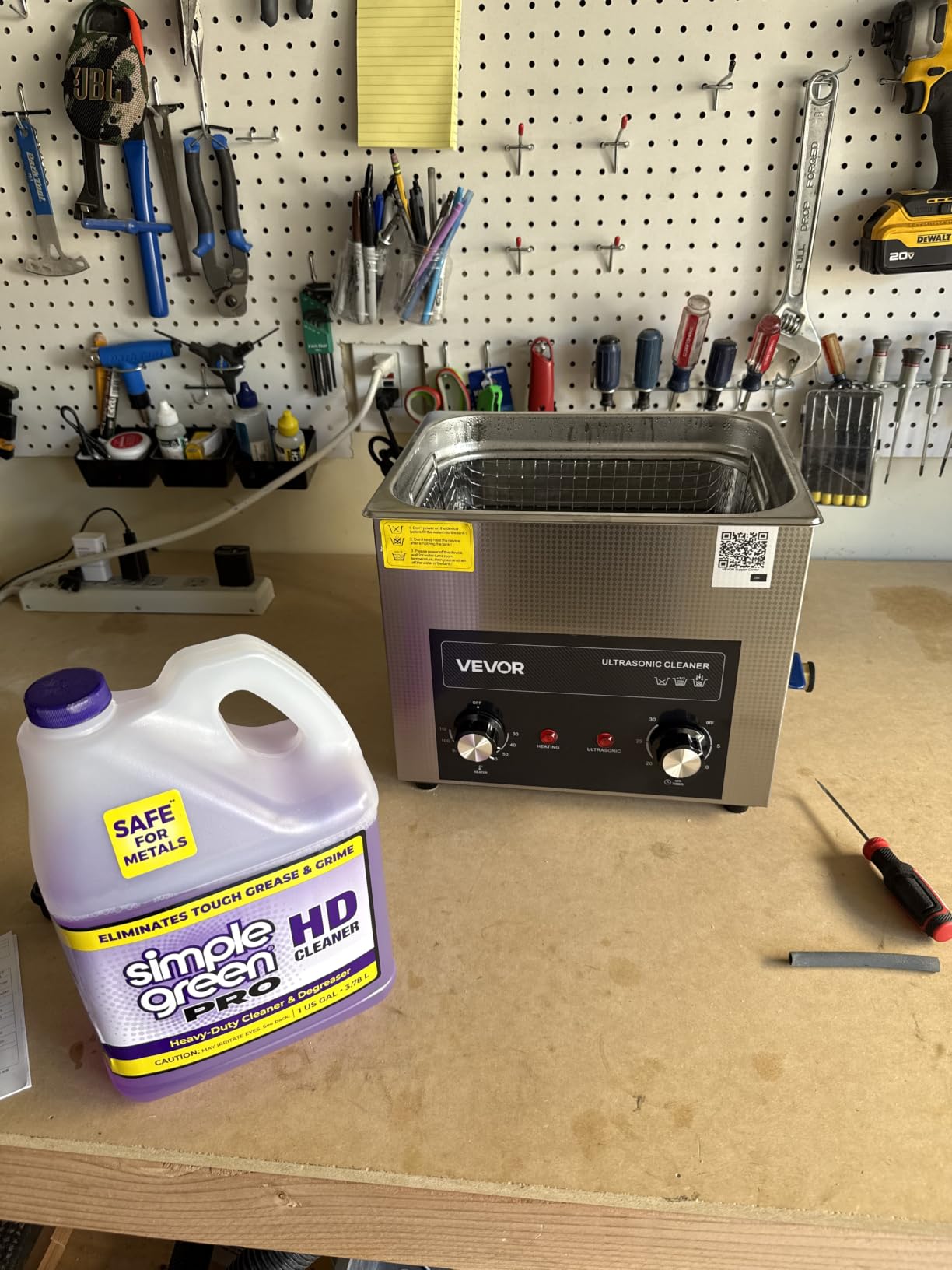
An aluminum-safe degreaser. Simple Green Pro HD is the most commonly cited choice on the forums. Simple Green Extreme Aircraft and Precision Cleaner is endorsed on large Mopar carburetors on the For B-Bodies Only forum. Both are non-flammable and safe for aluminum and zinc-plated brass.
Dilution around 1:3 to 1:10. Arborist Site professionals run roughly 80 parts water to 20 parts Simple Green. Bob Is The Oil Guy forum users run about 30 percent. Both land in the same practical range, and both are stronger than the concentrate label implies you need for a dirty carb.
The bag method for expensive solution. Put your concentrate in a sealed bag inside a plain hot-water bath. Ultrasonic waves pass through the plastic, so the parts get cleaned while the tank stays free of concentrate. This is the single best trick for anyone cleaning two small carbs a year in a 10L machine.
A 50/50 hot water and Pine Sol bath is the DIY baseline. It works, and it is what people reach for first. It is a home option, not a shop one, and it will not hold temperature for a long session.
Aluminum darkening is real and it is preventable. Prolonged cycles at high temperature oxidize aluminum bodies and dull the finish. Bob Is The Oil Guy users warn explicitly against leaving an aluminum carb submerged longer than needed. Keep the working temperature in the 50 to 60 degree Celsius range rather than pushing to 80, degas before the first cycle, and take the part out as soon as the varnish releases.
Small parts can vibrate loose. This is the failure mode almost nobody warns you about. Users on r/HondaCB report Honda CM400 carburetors coming out of the bath with the idle speed knob, its spring and the washers vibrated straight off. Wrap delicate hardware in mesh, use a proper basket rather than a loose mesh ball, keep loads small enough that nothing can rattle against the tank wall, and count your jets before and after every cycle.
Replace the solution, do not extend the cycle. Once the bath turns opaque with lifted varnish it stops working and stops flowing heat properly. Drain it, run fresh solution, and repeat. Wipe the rim and basket after every run so residue does not re-dirty the next bath.
How to Clean a Carburetor in an Ultrasonic Cleaner: 7 Steps
1. Strip it completely. Remove every float, bowl, jet, needle, emulsion tube, accelerator pump diaphragm, gasket, O-ring and any plastic or rubber part. Cavitation destroys soft materials almost immediately, and leaving a single diaphragm in is enough to ruin it.
2. Degas the bath first. Fill with warm distilled water and degreaser at your chosen dilution, then run the degas cycle for several minutes before anything goes in. Trapped gas cushions cavitation, and this is free performance.
3. Load without touching the tank floor. Use the basket and keep parts off the bottom. Anything resting on the floor sits in the dead zone and gets a poor clean. Leave space between parts so nothing can vibrate against its neighbour.
4. Heat to 50 to 60 degrees Celsius. That is the working window for fuel varnish. Push it higher only for heavy carbon, and pull aluminum parts out as soon as the deposit releases.
5. Run the soak time for the contamination level. 10 to 15 minutes for lightly soiled carbs. 20 to 30 minutes for heavy varnish. Neglected carburetors that have sat through months need two or three cycles in fresh solution rather than one long one.
6. Rinse and blow out. Run a clean water cycle to carry away loosened debris, then blow every passage out with compressed air, working from the feed side through the jets and out the idle ports.
7. Clear the passages by hand anyway. Run a torch tip cleaner or a brass wire through every jet and the emulsion tube. This is the step people skip and the reason carbs still run rough after a bath. Reassemble with new gaskets and seals.
Harbor Freight vs VEVOR: Which Ultrasonic Cleaner Should You Buy?
Harbor Freight’s Central Machinery machines and VEVOR occupy the same shelves at the same capacities, and at the same size they are close. The Central Machinery units win on simplicity: basic button controls, straightforward heating, no menu to learn. The VEVOR machines add digital temperature and timer control, a proper drain valve, a better basket and, on the newer models, degas and gentle modes.
Among the machines we tested, the VEVOR 6L with dual-power degassing and gentle mode is the stronger buy at the entry capacity, and the VEVOR 10L is the better all-round machine because its analog knobs are more durable than earlier digital panels and its 110 degree ceiling beats the 80 degree limit most of the field uses. If you clean more than a few carburetors a year, the drain valve and the extra temperature headroom pay for themselves. If you clean one small engine carb a season, a simpler machine is entirely adequate.
Frequently Asked Questions
What is the best cleaner to use in an ultrasonic cleaner for carburetors?
Use a warm distilled water base with a non-flammable, aluminum-safe degreaser such as Simple Green Pro HD or Simple Green Extreme Aircraft and Precision Cleaner, at roughly 1:3 to 1:10 dilution. Distilled water prevents mineral spotting on machined aluminum. Never use gasoline, acetone, brake cleaner or lacquer thinner in a heated ultrasonic tank.
Do ultrasonic cleaners really work on carburetors?
Yes. A 40 kHz heated bath strips fuel varnish and carbon from carburetor bodies, bowls and passages that brushes cannot reach, and one pass replaces several rounds of aerosol cleaner. It is a first pass, not a finished job. You still need to clear every jet and the emulsion tube with a torch tip cleaner, blow out the passages with compressed air, and rebuild with new seals.
How big of an ultrasonic cleaner do I need for a carburetor?
For most carburetors a 6L tank is the sweet spot. Go to 10L or 15L for a bank of motorcycle carburetors or a four-barrel, 20L and above for continuous shop duty, and use 2 to 3L only for individual jets and small bodies. Judge by internal tank dimensions, not litres, and leave 2 to 3 inches of clearance on each side.
How long should you soak a carburetor in an ultrasonic cleaner?
Run 10 to 15 minutes at 50 to 60 degrees Celsius for lightly soiled carburetors and 20 to 30 minutes for heavy varnish. For neglected carburetors that have stored for months, repeat in fresh solution rather than extending one cycle. Always finish with a clean water rinse and a compressed-air blow-out.
What liquid do you put in an ultrasonic cleaner for carburetor?
A water base plus an aluminum-safe degreaser, with distilled water preferred to prevent spotting. Forum users run anywhere from 80/20 water-to-degreaser down to 30 percent concentrate, and a 50/50 hot water and Pine Sol mix is a common home baseline. The cost-saving trick is to seal your concentrate in a sealed bag inside a plain hot-water bath, since ultrasonic waves pass through the plastic.
Can I put a whole carburetor in an ultrasonic cleaner?
Only with the float, bowl, jets, needles, accelerator pump diaphragms, gaskets, O-rings and all plastic or rubber parts fully removed, because cavitation destroys soft materials almost immediately. An assembled body needs a 6L tank at minimum, and a four-barrel usually needs 10L or more. Leave 2 to 3 inches of clearance so every part sits fully submerged.
Which ultrasonic cleaner is better, Harbor Freight or VEVOR?
At the same capacity they are close. Harbor Freight Central Machinery units win on simple button controls, while VEVOR machines add digital temperature and timer control, a drain valve, a better basket and degas and gentle modes on newer models. If you clean more than a few carburetors a year, the VEVOR drain valve and higher temperature ceiling are worth the step up.
Will an ultrasonic cleaner damage an aluminum carburetor?
Not in a normal cycle, but prolonged high-heat soaks will darken and oxidize aluminum finishes. Keep the bath in the 50 to 60 degree Celsius range, take the carburetor out as soon as the varnish releases, and degas the solution before the first cycle. Experienced users on Bob Is The Oil Guy warn explicitly against leaving an aluminum carb submerged longer than needed.
Our Verdict: Best Ultrasonic Cleaners for Carburetors in 2026
The best ultrasonic cleaners for carburetors in 2026 come down to tank size matched to the job. Buy the VEVOR 10L if you want one machine that handles single carbs, small engine rebuilds and the occasional four-barrel, and keep the analog knobs and 110 degree ceiling in mind as the reason it lasts. Buy the CREWORKS 30L if you clean in batches and want a full rack done in one bath. Buy the VEVOR 15L for the deepest well-proven track record in the category.
Whatever you choose, size by internal dimensions rather than litres, degas before the first load, run 10 to 30 minutes at 50 to 60 degrees Celsius in distilled water with an aluminum-safe degreaser, and count your jets before and after. Then follow up with a torch tip cleaner and compressed air, because the bath is the first pass, not the last.