
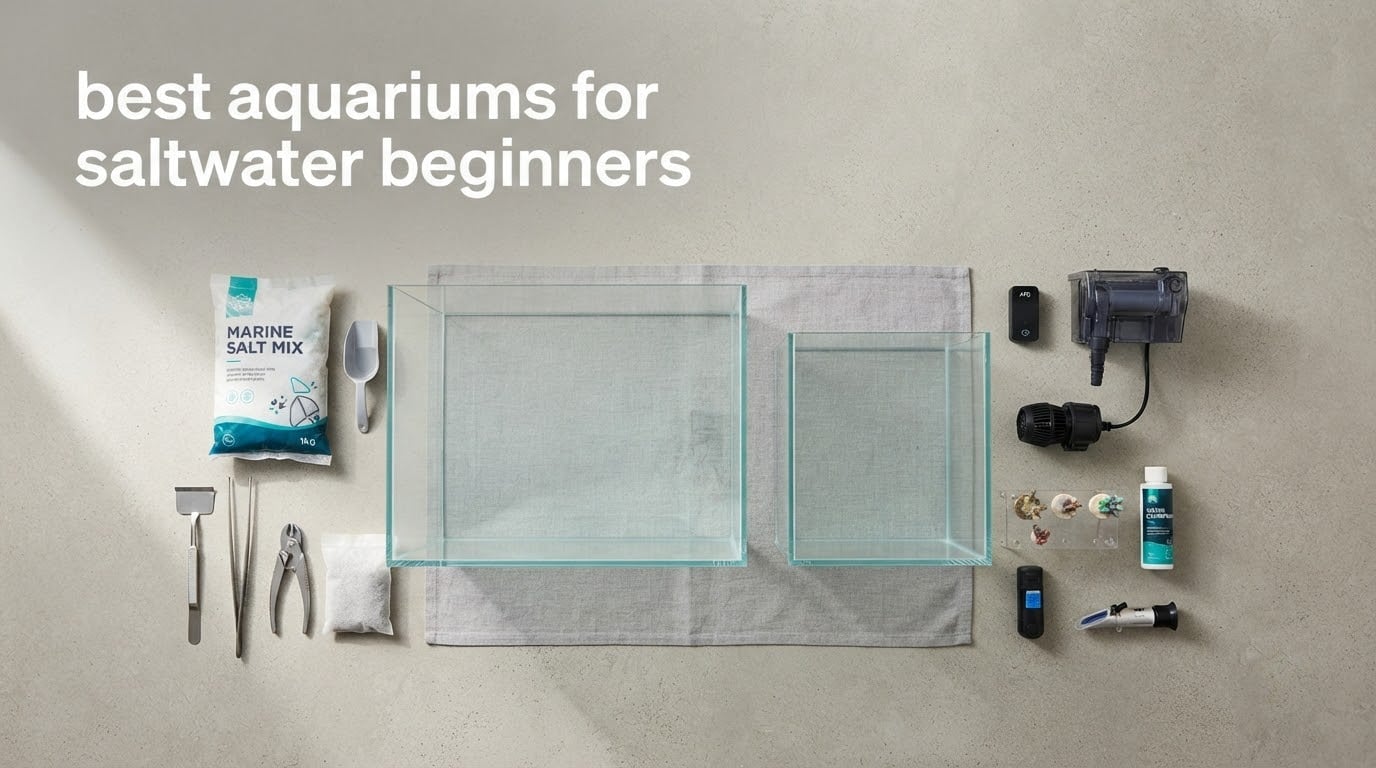
If you have been circling a saltwater tank for months, the honest answer is this: buy the largest all-in-one (AIO) display you can comfortably fit in your room and afford to fill, then spend your remaining money on livestock and water changes rather than on a bigger glass box. Most beginners land somewhere between 20 and 40 gallons, and that range is where a reef is forgiving enough to survive beginner mistakes while still being small enough to heat, filter and afford.
If you are coming from freshwater, our guide to the best aquariums for beginners covers the basics that transfer straight across, and the main saltwater additions, such as a heater and a skimmer, are called out throughout this guide.
What makes a first reef different from a freshwater tank is the equipment math. A marine system wants a heater, salt mix, a real test kit, RO/DI water and usually a protein skimmer, and none of that is optional. The best aquariums for saltwater beginners are therefore the ones that fold as much of that gear as possible into a single box, or that give you enough filtration space to add it later without rebuilding the tank.
We compared 12 tanks over six weeks, weighing what actually ships in the box against the list of things you will still have to buy. Some of our picks are complete kits. Others are rimless glass tanks that look stunning but hand you an empty box. Both types have a place, and by the end of this guide you will know which one your budget and patience can support. Last updated for 2026.
Every tank here is written up with its real footprint, glass spec, filtration layout, rating and review count, plus an honest note on what it leaves out. Where we mention long-running hobby forums, we only attribute a comment to a named source when that exact tank came up there. Everything else comes from the review data on the product itself.
Our Top 3 Saltwater Beginner Tanks in 2026

Coralife BioCube 32
- 32 gallon all-in-one with rear filtration chamber
- Three LED channels with 24-hour timer and sunrise sunset
- Compact rounded footprint for the volume
- Works as a display tank or a light FOWLR system

Aqueon 20 Gallon Kit
- Tank hood filter heater and accessories in one box
- 50W heater preset to 78 degrees
- SmartClean internal filter for quick water changes
- Largest review base on this list
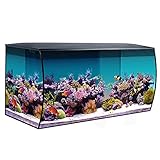
Fluval Flex 32.5 Marine
- Largest volume in this roundup at 32.5 gallons
- 7500K white plus RGB LEDs under FluvalSmart app control
- Three-stage Fluval filtration with oversized media
- Dual filter outputs for directional flow
The BioCube 32 is the pick we recommend to almost everyone. It hides its filter compartment, runs an automatic lighting cycle you do not have to program, and has been built and rebuilt by reef hobbyists for close to a decade, which is why its review base is large and its problems are well known.
The Aqueon 20 wins on value and on completeness. It is the only tank on this list that includes a heater, a filter, a light, a thermometer and a net in the same box, which removes most of the sticker shock that first-time keepers complain about.
The Fluval Flex 32.5 is the one to buy when you have the floor space and the budget for the biggest volume here. If your stand and your water change routine can handle it, more water means more stability and more stocking options later.
All 12 Best Aquariums for Saltwater Beginners
| Product | Specifications | Action |
|---|---|---|
| Coralife BioCube 32 |
|
Check Latest Price |
| Aqueon 20 Gal Starter Kit |
|
Check Latest Price |
| Fluval Flex 32.5 Marine |
|
Check Latest Price |
 UNS Dual AIO 6 Gallon UNS Dual AIO 6 Gallon |
|
Check Latest Price |
 UNS Ultra Clear Rimless 11.8 UNS Ultra Clear Rimless 11.8 |
|
Check Latest Price |
 FZONE 9 Gal Shallow FZONE 9 Gal Shallow |
|
Check Latest Price |
 Coralland 8 Gallon Nano Coralland 8 Gallon Nano |
|
Check Latest Price |
 Fluval Evo XII 13.5 Fluval Evo XII 13.5 |
|
Check Latest Price |
 LANDEN Cube 15.6 LANDEN Cube 15.6 |
|
Check Latest Price |
 LANDEN EzFlux 60 Rimless 26 LANDEN EzFlux 60 Rimless 26 |
|
Check Latest Price |
 Allcolor Rimless 21 Gal Allcolor Rimless 21 Gal |
|
Check Latest Price |
 LYPHARD 15 Gal Rimless LYPHARD 15 Gal Rimless |
|
Check Latest Price |
Read that table twice. Five of these twelve products are display-only tanks, meaning you add a heater, a light, a filter and livestock yourself, and four of the remaining seven include filtration in some form. That distinction matters more than any other spec on this page.
1. Coralife BioCube 32 Gallon – The Best All-in-One Tank for a First Reef
Coralife BioCube, Aquarium Kit, Integrated 24-hour Timer, Customizable LED Lighting, for Saltwater and Freshwater Environments, 32 Gallon
32 gal
27.5 x 25.5 x 27 in
Built-in rear filtration chamber
62 lb
Pros
- Integrated rear chamber means no sump to hang or plumb
- Automatic sunrise sunset and moonrise modes
- Compact rounded design for the volume
- Easy to set up and cycle
Cons
- Rear chambers get cramped once a skimmer or UV is added
- Stock media rack is flimsy and usually swapped
- LED output is not enough for SPS without careful placement
The BioCube 32 is the tank we keep coming back to because it does one thing well: it hides the machinery. Water recirculates through a rear filtration chamber with a quiet submersible pump, dual intakes and an adjustable return nozzle, so there is no sump hanging under a cabinet and no visible plumbing on show.
The lighting is the part that wins people over. Three independent LED channels cover bright white, sparkling blue and colour-enhancing output, and a 24-hour timer runs an automatic 30-minute sunrise and sunset plus a 60-minute moonrise and moonset cycle, so you are not adjusting a dial every morning for your first year of reefing.
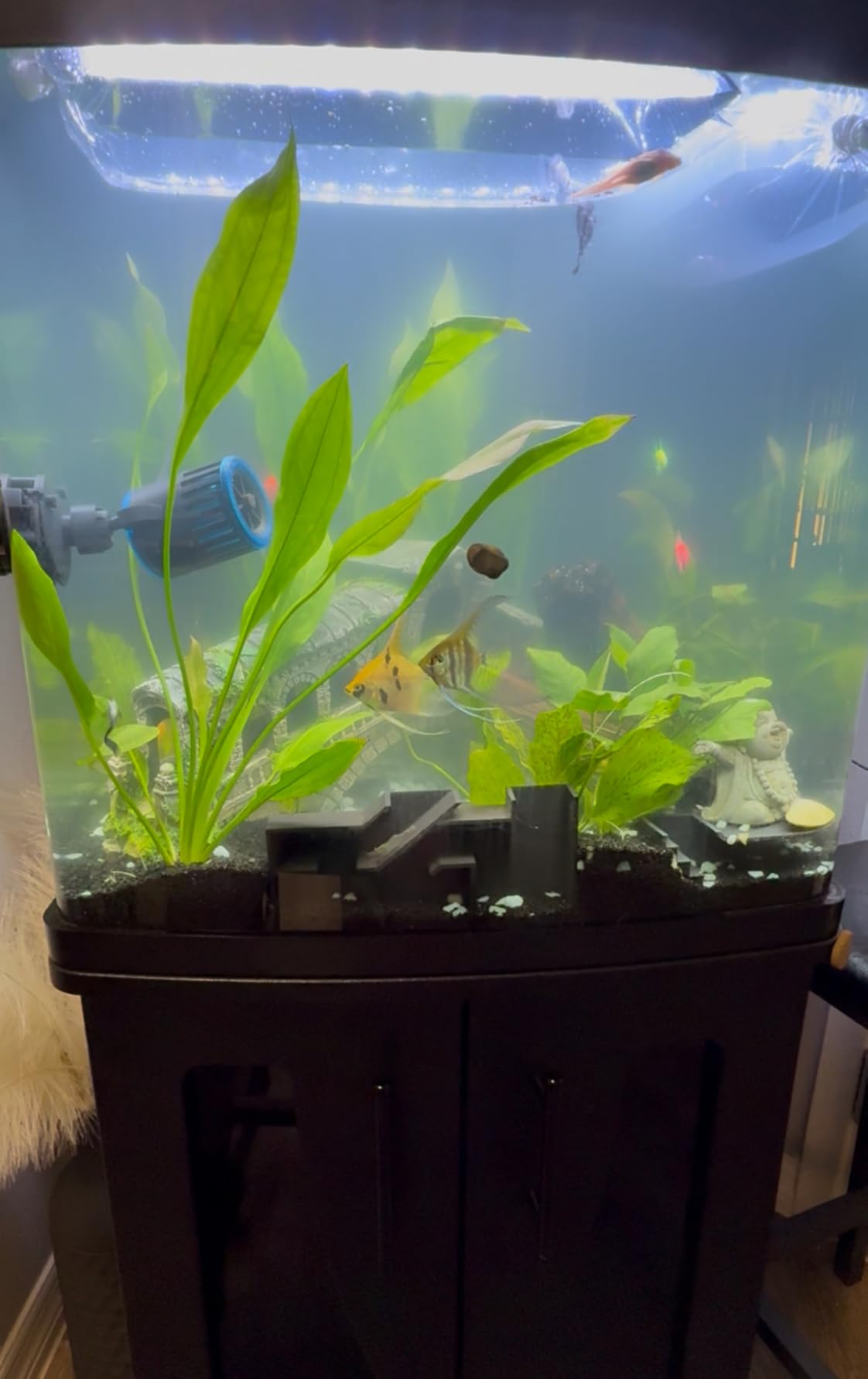
What still need to buy: a heater is the big one, and most reefers add a heater, a salt mix, a refractometer, an aragonite base and a protein skimmer sized for the display volume. The tank is also the heaviest thing on this list at 62 pounds, so plan the stand and the two-person lift before it arrives.
The footprint is worth thinking about carefully because it is deeper than it is wide. At 27.5 by 25.5 by 27 inches, you need a cabinet that fully supports the base, and the rounded body means it reads smaller in a room than the number suggests. Long-term reef keepers consistently describe the 32 BioCube as a good way to learn marine keeping, which is exactly the job we are asking of it.
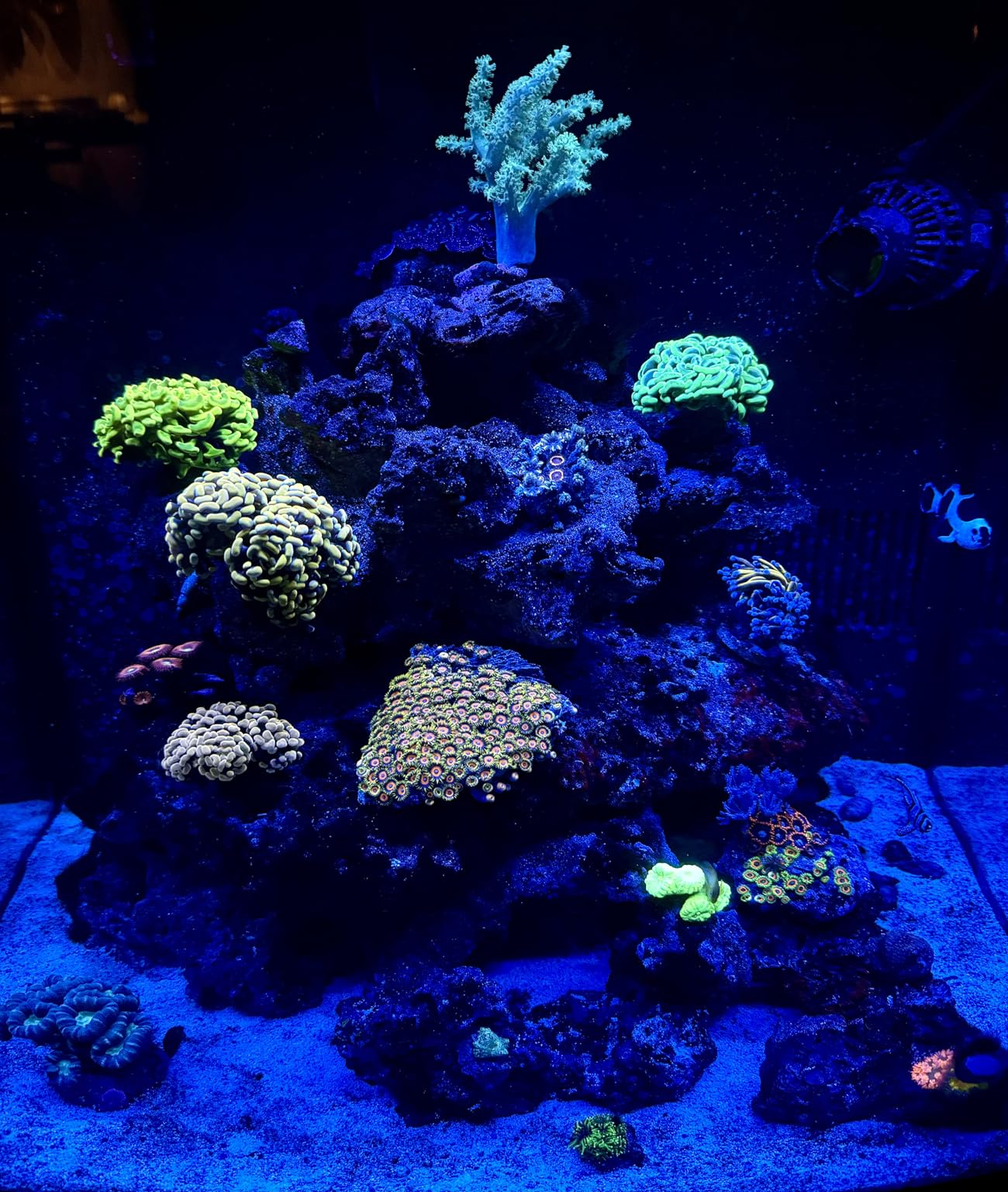
Why the BioCube 32 suits a first reef
The compact all-in-one footprint is the single biggest advantage. You are not hunting for a sump, a return pump, a light bar and a pair of braces, and the tank accepts the existing BioCube accessory range if you want to add a UV steriliser or a chiller later.
At 32 gallons you have enough water that a temperature dip or a missed water change does not spin your salinity, and there is room for a clownfish pair, a goby, some soft coral and a cleanup crew once the tank is cycled. That is a much more forgiving learning curve than a 6-gallon cube.
Where the BioCube 32 falls short
The rear chambers are cramped for routine maintenance once a skimmer or a UV is added, and the media rack that comes in the box is described by many owners as flimsy enough that they replace it with an aftermarket basket early on. Plan your service access before you fill it.
Lighting intensity is the other limit. It will run soft coral, most LPS and an anemone placed carefully near the light, but SPS keepers report it needs supplementation. Our advice is to accept that limitation on a first tank rather than buying a light you will never use.
2. Aqueon 20 Gallon Starter Kit – The Best Value Because the Heater Is Included
Aqueon Aquarium Starter Kit with Smart Clean Filtration and LED Lighting, Freshwater and Saltwater Fish, 20-Gallon
20 gal
27.5 x 16 x 20.25 in
Filter heater and hood in one box
33.5 lb
Pros
- Everything needed to start is in a single box
- 50W heater preset to 78 degrees
- Filter lifts out for routine maintenance
- Solid glass body that is easy to clean
Cons
- Bright cool white LED is harsh for shallow water corals
- Filter intake has no guard so small fish need a sponge
- Some owners report pump failures around five to six months
- Bundled stick-on thermometer is unreliable
This is the only tank in our roundup where you can buy one box and have a functioning aquarium in your living room that evening. The glass rectangle comes with a low-profile hood and LED lighting, a SmartClean internal power filter with an EcoRenew cartridge, and a 50W heater preset to hold 78 degrees.
That heater is the headline. Heater omission is the most common hidden cost in this hobby, and beginners on r/ReefTank and r/saltwateraquariumclub keep pointing it out as the trap that turns a budget tank into an expensive one. Here it is in the box, along with a thermometer, a fish net, food and water conditioner.
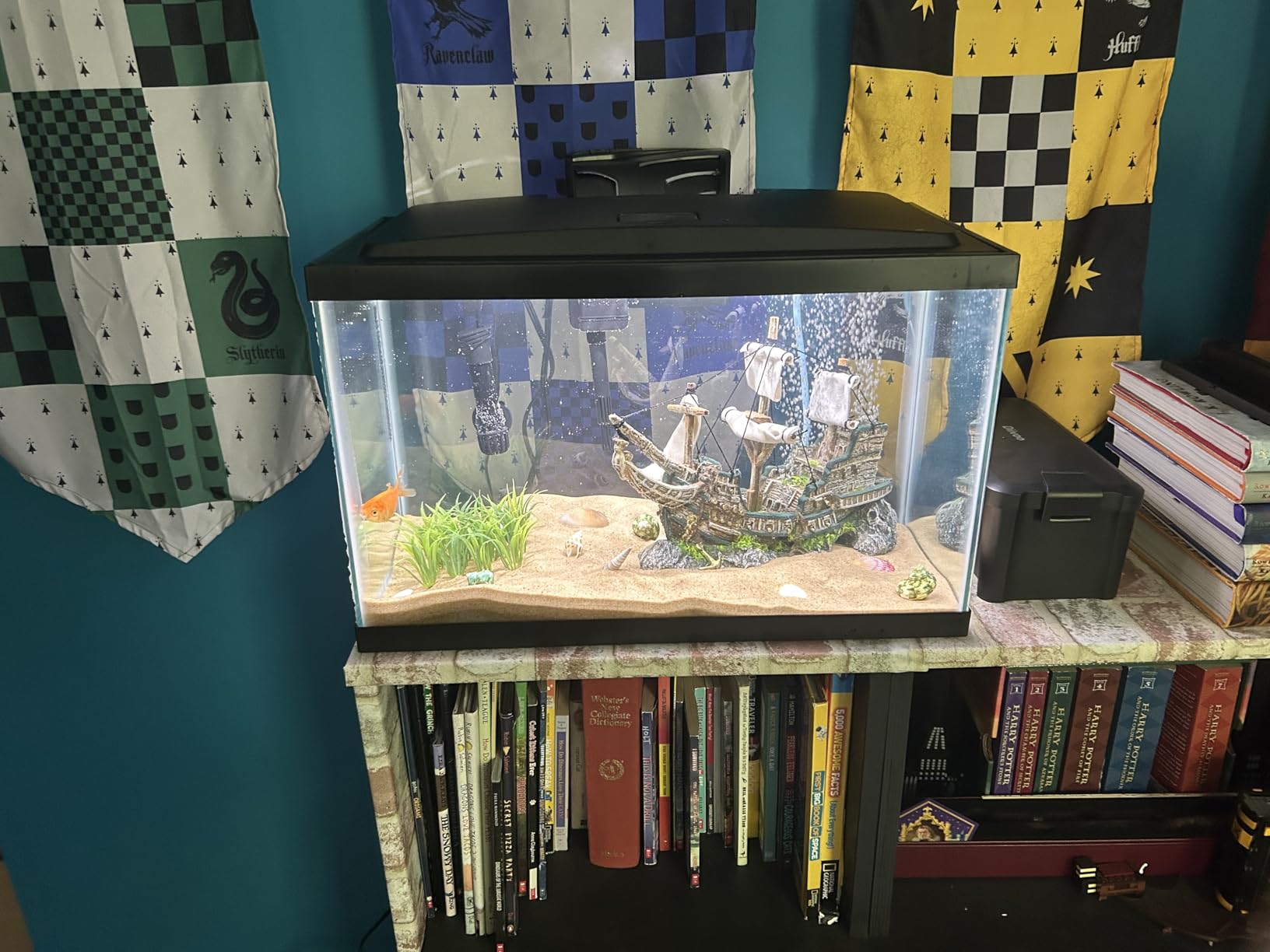
For a marine setup, the SmartClean filter design takes some adaptation. It is a freshwater internal filter, so you will want to add media bags or a small sponge for mechanical filtration before any fish go in, and reef hobbyists generally pair it with a separate skimmer once bioload climbs.
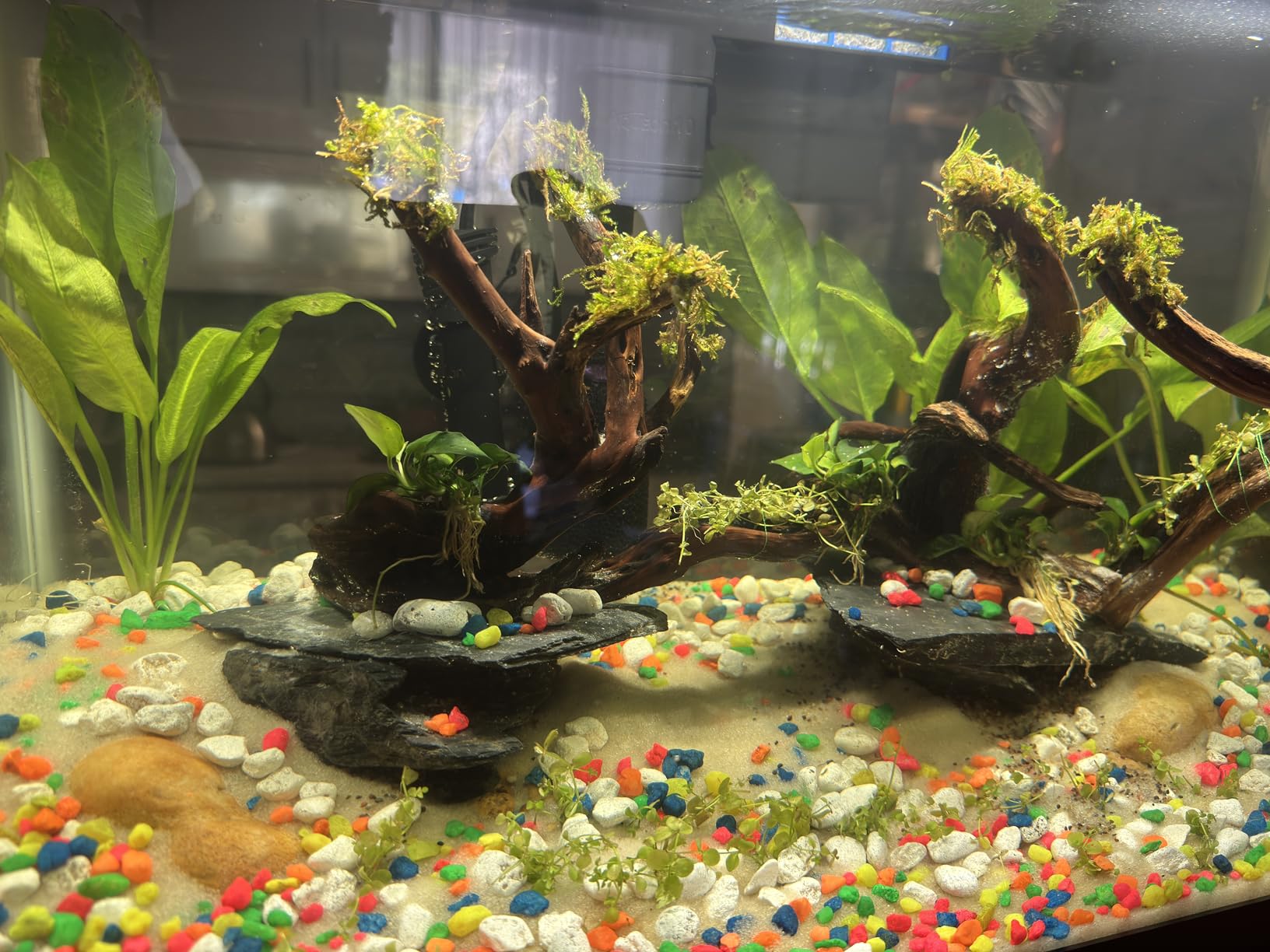
The 20-gallon footprint at 27.5 by 16 by 20.25 inches is friendlier to apartments than the BioCube, and the lighter 33.5-pound body is far easier to move and level. With over 2,500 reviews behind it, this is the most thoroughly tested kit on the list, and the failure reports are consistent enough to plan around.
Why the Aqueon 20 works for a first marine tank
Total cost of ownership is where this kit wins. Because the heater, filter, light and basic accessories are included, the gap between the tank price and a running reef is much smaller than with any display-only tank on this list. That is why we call it the best value here rather than a compromise.
It also scales. A 20-gallon marine system suits a clownfish and an anemone, a goby and a pair of clowns, or a modest soft coral and LPS layout once you add light and a skimmer, and it is the easiest tank here to move to a bigger home if your setup changes.
Where the Aqueon 20 falls short
The included LED is bright, cool white and aimed at general aquarium use. For a marine tank you will want to dial it down, keep it lower in the water column, or plan a lighting upgrade within your first year rather than trying to grow demanding corals under it.
The unguarded filter intake is the second issue. Several owners add a pre-filter sponge immediately so small fish and shrimp cannot be pulled into the impeller, and you should also replace the stick-on thermometer with a real one, since it is the least reliable part of the box.
3. Fluval Flex 32.5 Marine – The Best Tank If You Want the Most Water Volume
Fluval Flex 32.5 Marine Salt Water Aquarium Kit – Fish Tank for Fish, Coral & More – Comes with LED Lights, Filtration System & More – 32.5″ x 15.75″ x 15.35″ – 123 L, 32.5 Gal. – Black
32.5 gal
32.28 x 15.75 x 15.35 in
Three-stage Fluval filtration
48.75 lb
Pros
- Largest volume in this roundup
- App controlled 7500K white plus RGB LEDs
- Turnkey filtration and lighting in one purchase
- Curved front panel looks clean in a room
Cons
- Large footprint and weight are awkward on ordinary furniture
- Built-in media capacity feels limiting at this size
- Filters are hidden behind a wrap that is fiddly to service
The Flex 32.5 gives you more water than anything else on this page, and volume is the single strongest predictor of how forgiving a reef will be. A larger system buffers temperature and salinity swings, and it gives you space for a proper fish load later instead of forcing you to move up within a year.
It ships as a complete marine kit. You get three-stage Fluval filtration with oversized mechanical, chemical and biological media, multi-directional dual filter outputs for customisable flow, and fully adjustable 7500K white plus RGB LEDs controlled through the FluvalSmart app. The curved front and honeycomb wrap conceal the water line and the filter compartment.
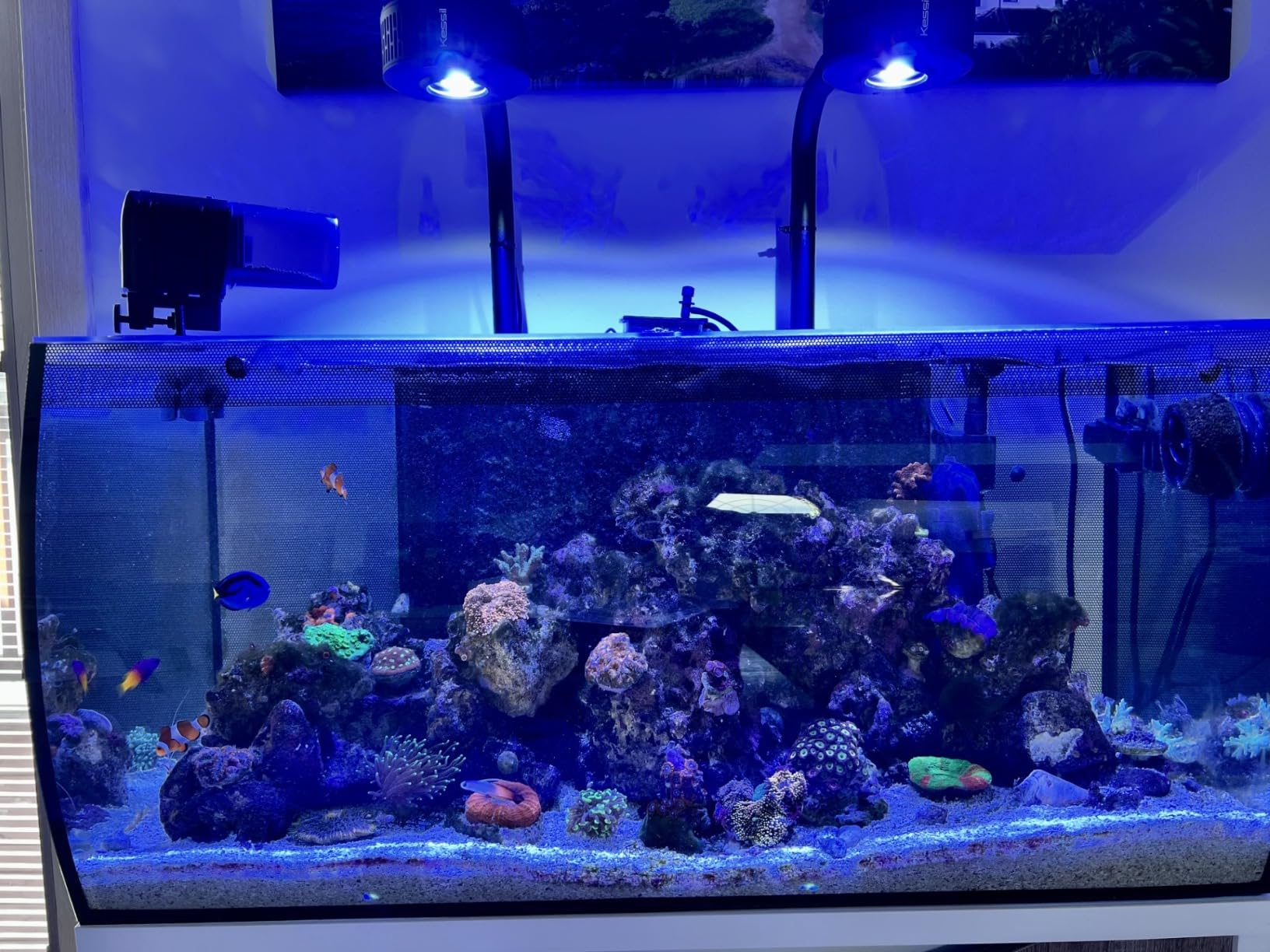
App control is genuinely useful here. You can dial blue spectrum up for evening viewing, drop the intensity when you add coral, and set a schedule without touching the tank, which removes one of the small daily chores that puts beginners off the hobby.
What you still need to buy: a heater, marine salt, aragonite or dry rock, a refractometer and a test kit, and a protein skimmer matched to 32 gallons, because the built-in filtration alone will not handle the nutrient load of a stocked reef. Budget for that list before you commit.
Why the Flex 32.5 is worth the space
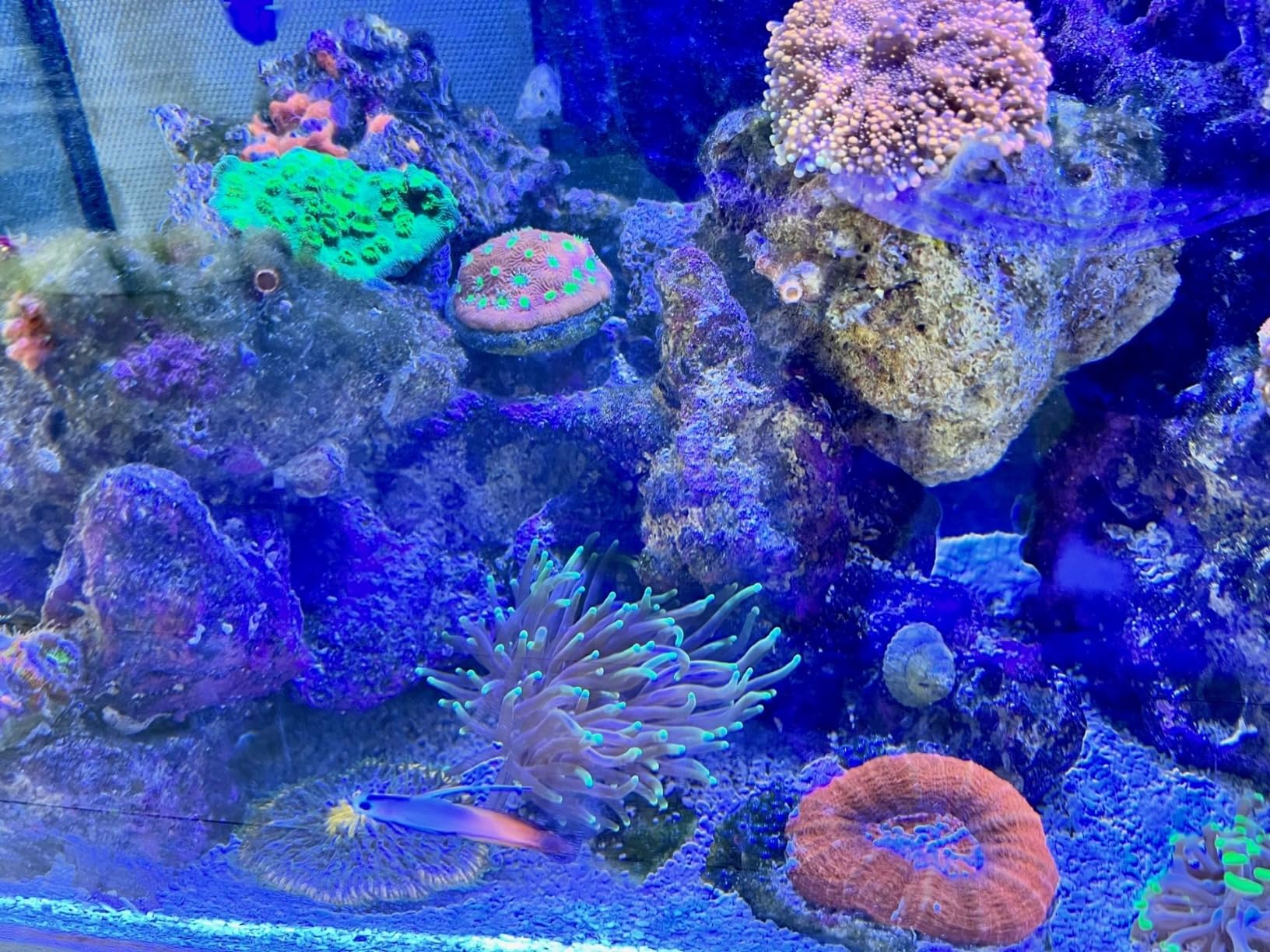
Owners consistently rate the finished look and the app-driven RGB lighting highly, and for a display tank that sits in a living room the curved front is the most attractive glass shape here. It reads as a piece of furniture rather than a box of water.
The long view is where it pays. If you plan to keep fish for years rather than months, this is the tank on the list least likely to feel too small. Long-time reef keepers repeatedly advise starting bigger than you think, and this is the largest option that still fits a normal aquarium footprint.
Where the Flex 32.5 falls short
Reef hobbyists generally find the internal media capacity limiting at this volume. The three-stage system does the basics well, but once you add fish and feeding, the rear compartment runs out of room for the media and skimmer you will eventually need.
It is also the widest tank on this list at 32.28 inches across and weighs 48.75 pounds, so it needs a properly rated stand and a two-person lift. And with 101 reviews, it has the thinnest review history of the three complete kits here, which is worth knowing before you commit to the biggest purchase of your first reef.
4. Ultum Nature Systems Dual AIO 6 Gallon – The Best All-in-One for an Invertebrate Tank
Ultum Nature Systems Dual AIO – Freshwater/Saltwater Compatible, All in One Rimless Tank with Triple Chamber Filtration System, Integrated Filter Aquarium with Leveling Mat – 6 Gallon, 45SA, Black
6 gal AIO
17.71 x 11.02 x 7.08 in
Triple chamber rear filtration
Leveling mat included
Pros
- Rimless low iron glass matches the brand display tanks
- Very quiet pump in a small footprint
- Rear triple chamber layout fits a heater media and small skimmer
- Rated for both reef and freshwater setups
Cons
- Large intake opening has lost small fish and no guard is included
- Water level must stay high or the pump chamber draws air
- No lid so evaporation is rapid
- Some buyers report pump failure after a few months
Beginner invert hobbyists told us the mainstream roundups overserve SPS and LPS coral talk, and this is the tank that answers them. The Dual AIO is a 6-gallon rimless all-in-one with triple-chamber rear filtration: a coarse sponge section, a specialised bio-media section, and a quiet pump chamber, all hidden behind low iron 91 percent clarity glass with 45-degree mitered edges.
That layout is what makes it work for shrimp and hermit crabs or a small goby pair. There is genuine equipment space behind the display, which means a heater, a small skimmer and an ATO reservoir can all live in the rear of the tank instead of beside it, and the same tank can be run as a small marine fish system if you prefer.
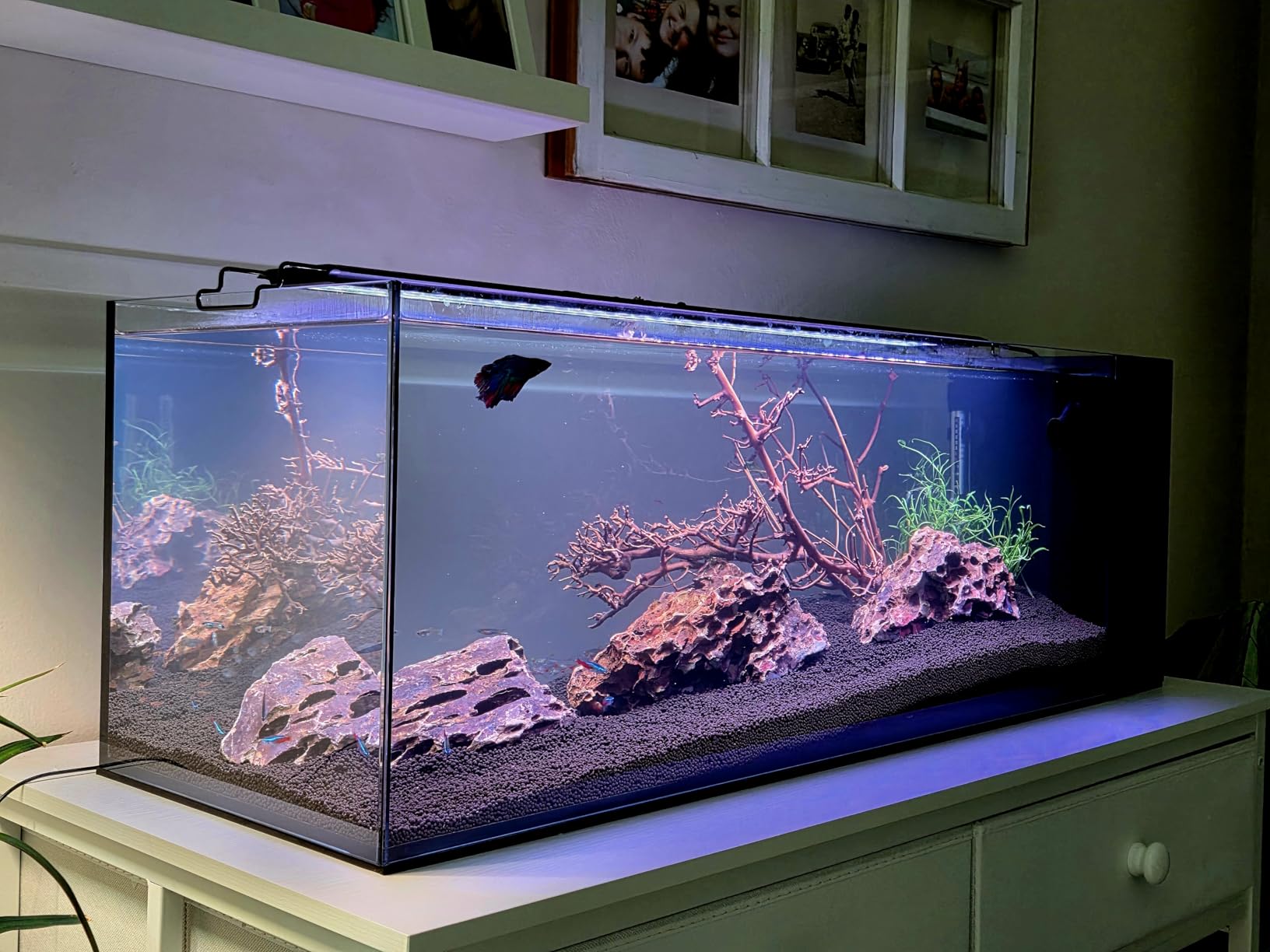
What you still need to buy: a heater sized for 6 gallons, a small clamp light or LED bar, marine salt and a test kit, plus an intake guard. Sizes in the series run from roughly 3 to 12 gallons, so this is a platform rather than a single tank.
The honest caution is that a 6-gallon marine aquarium is the hardest size to keep stable. Volume this small reacts fast to a room temperature swing, an unattended weekend or an overfeeding mistake, so this tank rewards a routine of small, frequent water changes rather than saving you effort.
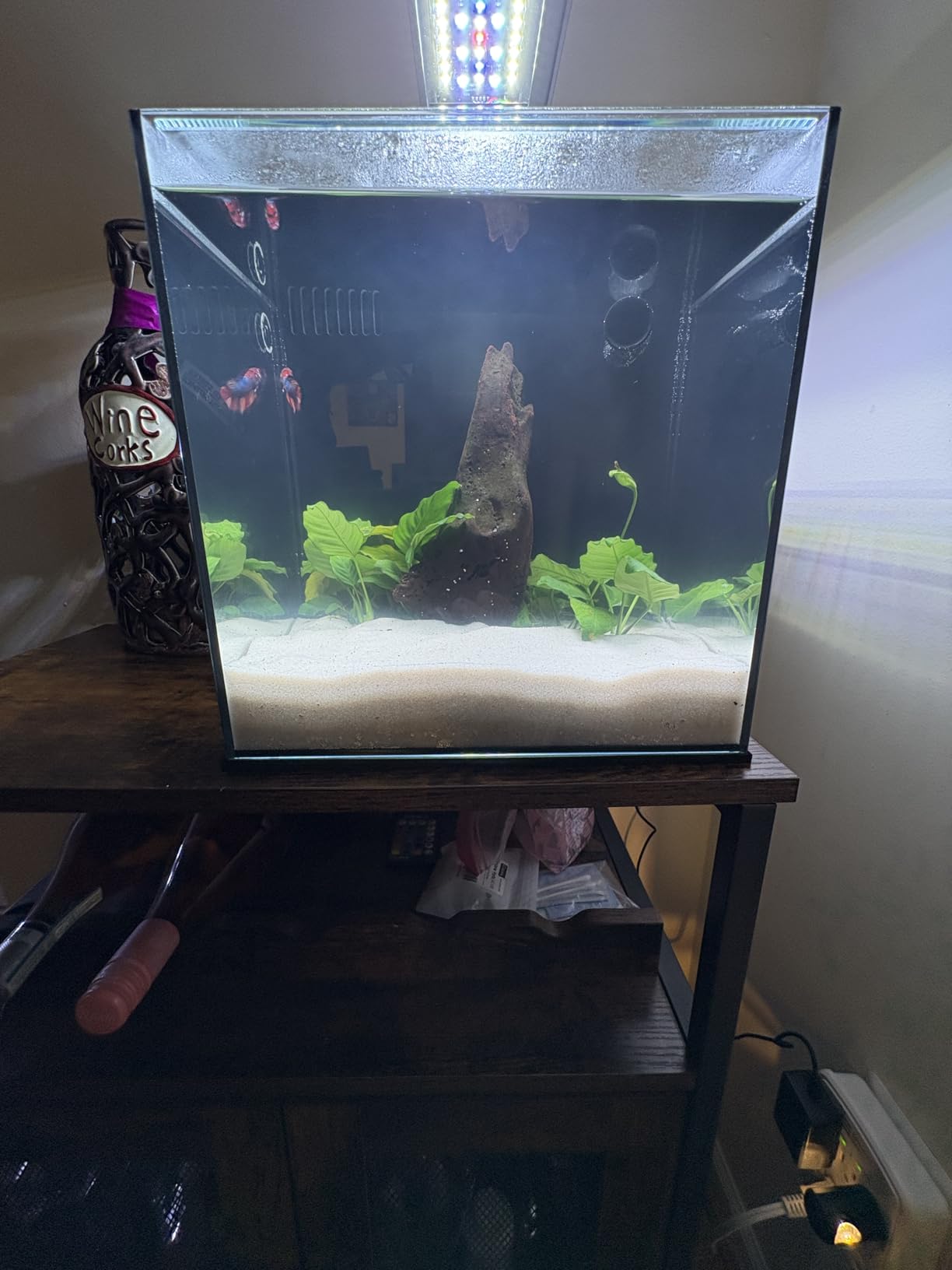
Why the Dual AIO suits an invert setup
Reviewers love the glass and styling and find the pump quiet and easy to set up, and the triple-chamber rear layout is unusually generous for the size. For a shrimp and hermit tank that is the whole argument: clean-looking display, hidden equipment, and a footprint that fits on a desk.
It also suits a beginner who is not ready to build a sump. You are choosing where to put the heater and the media instead of designing plumbing, which removes the most intimidating part of a DIY marine system without giving up the equipment space.
Where the Dual AIO falls short
The filter intake opening is large enough that small fish and shrimp have been lost, and the optional intake guard is not included. That single omission matters more here than on any other tank on this list, so buy the guard before you add livestock.
Water level also has to stay near the top or the pump chamber draws air and becomes noisy, adjusting flow means pulling the pump out of the chamber, and with no lid included evaporation is fast. With 50 reviews behind it, this is a newer design than the established kits here, so treat it as a well-built young product rather than a proven one.
5. Ultum Nature Systems Ultra Clear Rimless 11.8 Gallon – The Highest Rated Glass on This List
UNS Ultra Clear Rimless Tank – 11.8GAL | 45L – 35.43×7.87×9.84 | 90x20x25 CM, 6mm Glass Thickness, Leveling Mat Included – Low Iron, High Clarity Fish Tank w/ 45° Mitered Edge – [90B]
11.8 gal
35.43 x 7.87 x 9.84 in
6 mm low iron display glass
Leveling mat included
Pros
- 4.8 average rating across a large review base
- Low iron 91 percent clarity glass with minimal tint
- 45-degree mitered corners give an uninterrupted view
- Clean polished edges look premium from any angle
Cons
- Display only so filtration and light are separate purchases
- Shallow 7.87 inch depth limits volume for the footprint
This is the best-rated tank in the roundup at 4.8 across 359 reviews, and the reason is the glass. It uses low iron 91 percent clarity glass with 45-degree mitered corners and German-made silicone bonding, so you get an unobstructed view with none of the green tint that standard aquarium glass adds.
The proportions are the draw. At 35.43 by 7.87 by 9.84 inches it is a wide, shallow display in the golden-ratio style that aquascapers use for layouts built around rock and sand rather than swimming volume. A black foam leveling mat is included, and a wide range of other sizes sits in the same series.
![UNS Ultra Clear Rimless Tank - 11.8GAL | 45L - 35.43x7.87x9.84 | 90x20x25 CM, 6mm Glass Thickness, Leveling Mat Included - Low Iron, High Clarity Fish Tank w/ 45° Mitered Edge - [90B] customer photo 1](https://www.wearesalt.org/wp-content/uploads/2026/09/B0C6CGPSB1_customer_1.jpg)
For a reef, you can run this as a fish-only-with-live-rock system or pair it with a rear filtration column and a proper light. What you still need to buy is substantial: a heater, a light, a filter or sump, a return pump and a skimmer. That is five purchases, and it is why this is not our top pick for a first marine tank.
The shallow 7.87 inch depth is the practical constraint. It looks wonderful and it limits how many fish you can keep, because depth is where the usable water and the swimming space actually live. Treat it as a display tank for a FOWLR layout with a handful of fish rather than a stocking plan.
![UNS Ultra Clear Rimless Tank - 11.8GAL | 45L - 35.43x7.87x9.84 | 90x20x25 CM, 6mm Glass Thickness, Leveling Mat Included - Low Iron, High Clarity Fish Tank w/ 45° Mitered Edge - [90B] customer photo 2](https://www.wearesalt.org/wp-content/uploads/2026/09/B0C6CGPSB1_customer_2.jpg)
Why the glass quality is worth the extra setup
Owners emphasise exceptional glass clarity, accurate mitred edges and minimalist styling, and a tank you look at every day should reward that. If you are building a room around a reef rather than squeezing one in a flat, this is where the money goes further visually.
It also scales within the series. Because the same low iron, mitered construction runs across multiple sizes, you can start here and step up in the same design language, which makes a later upgrade feel like a considered move instead of a replacement.
Where the Ultra Clear Rimless falls short
The display-only format is the main issue for a beginner. You supply filtration, lighting and everything else, and a rimless tank also needs a proper level mat and careful placement because the unframed seams carry the structural load.
It is also not a kit in any sense, which means a first-time reef keeper ends up researching skimmer sizing and PAR levels before the tank is even filled. Our honest view is that this is a tank to grow into, and it is a poor first purchase unless you already know exactly what you are assembling around it.
6. FZONE 9 Gallon Shallow – The Best Display Tank for Shallow Aquascapes
FZONE 9 Gal Shallow Aquarium, Low Iron Glass, Rimless Design (L60-W36)
9 gal
23.6 x 14.2 x 6.3 in
6 mm low iron glass
19.45 lb
Pros
- 4.7 rating across nearly 300 reviews
- Shallow profile suits aquascapes and surface viewing
- NovaClear glass at 91.5 percent transmittance
- Every tank is water tested for 72 hours before shipping
Cons
- Very shallow depth rules out swimming fish and restricts livestock
- Tank only so lighting and filtration are extra
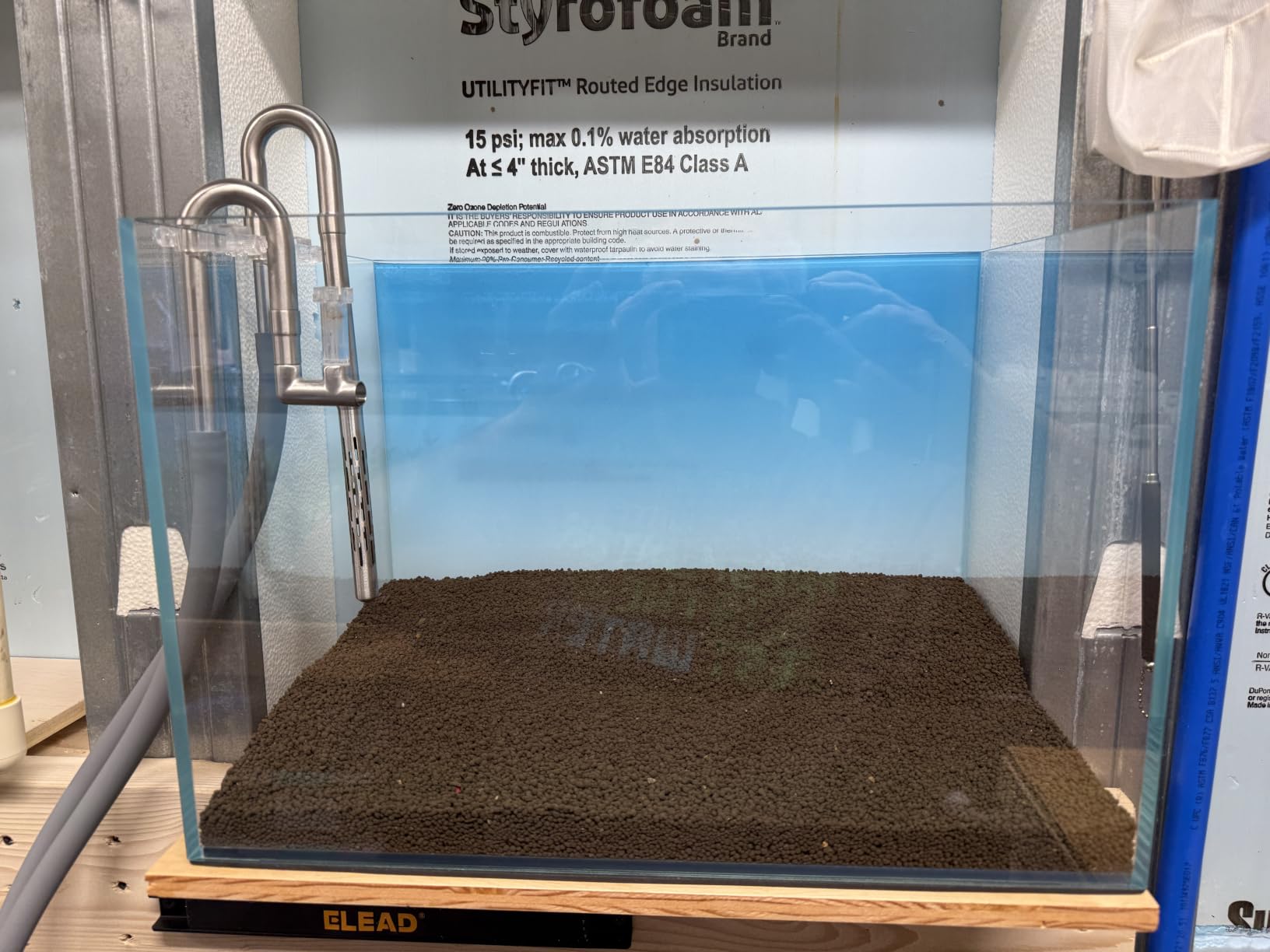
The FZONE 9 is built for a specific job: a wide, shallow display meant to be looked at from above and from the front. At 23.6 by 14.2 by 6.3 inches it is the flattest tank we reviewed, and that shape is exactly what you want if you are building a rock and sand layout you can see into.
Two details set it apart. Every tank is water tested for 72 hours before it leaves the factory, and the NovaClear low iron glass carries 91.5 percent transmittance with 45-degree clear-cut mitered edges. A black foam leveling mat comes pre-installed, and the Fzone logo is laser etched into the glass.
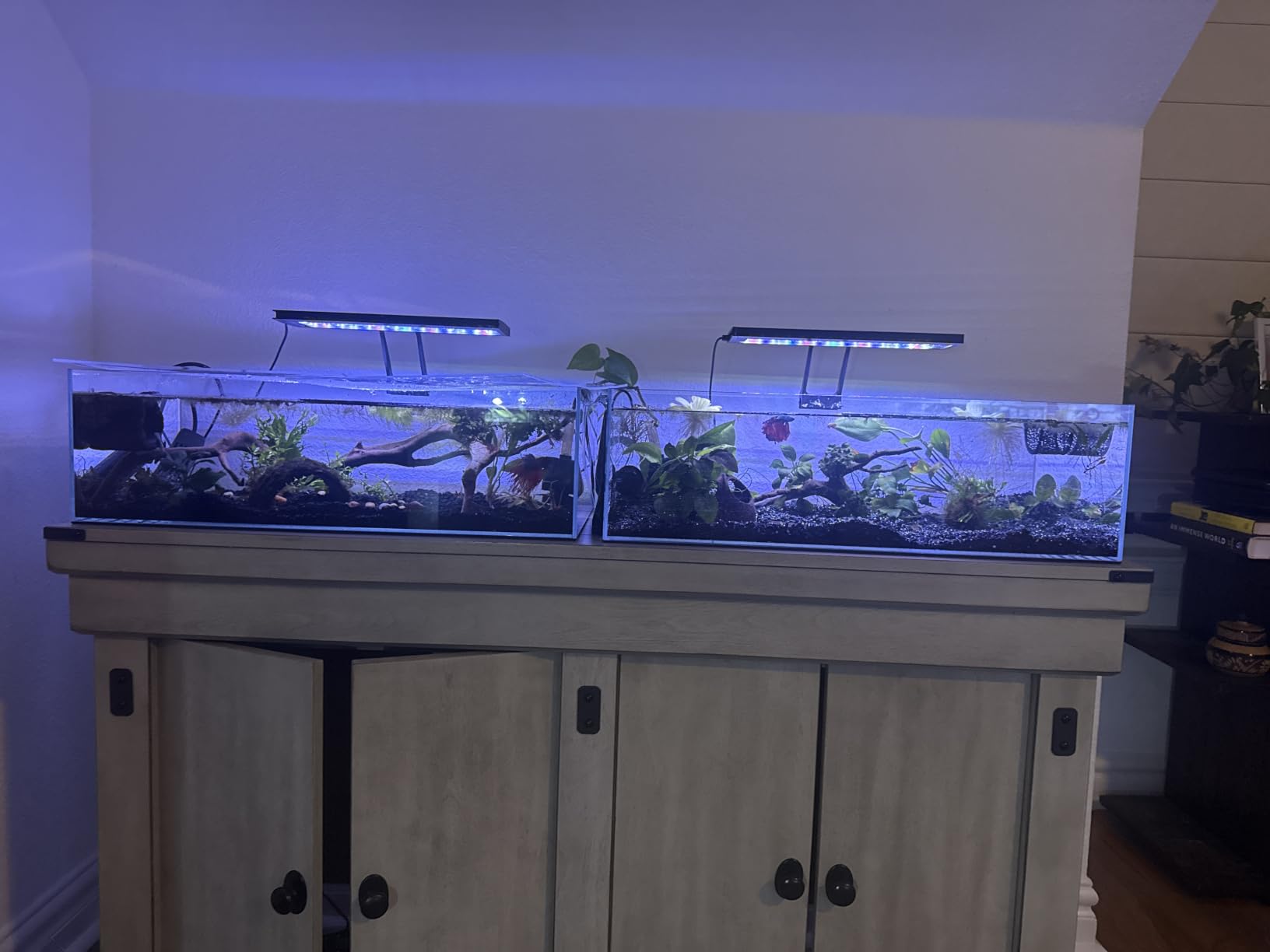
At 19.45 pounds it is also the lightest rimless tank here, which matters because a wide shallow footprint is awkward for one person to carry and level. What you still need to buy is a light, a filter, a heater and salt, and you will need to keep the water level near the top of the shallow profile to avoid stressing the seams.
As a marine tank, think invertebrate display rather than fish. Shrimp, hermit crabs and a very small goby work in this volume, but anything that swims across the front of the tank will have no room to turn. That is not a flaw, it is the design intent, but you should buy it knowing that.
Why the FZONE 9 works for aquascape displays
Crystal clear glass, invisible seams and dependable factory leak testing are the three things owners mention most, and for a shallow tank the leak test genuinely reduces anxiety. Rimless seams are the weak point of this format, and a factory water test is real reassurance.
It is also a low-commitment way into rimless ownership. If you later decide you want a taller tank, nothing you learned about leveling mats, silicone seams and glass care transfers over directly.
Where the FZONE 9 falls short
The 6.3 inch depth is the deal-breaker for anyone hoping to keep a real stocking list. It restricts you to small species and shallow-water invertebrates, and it means the tank volume on paper is not the usable volume for fish.
It is also a tank only, so four separate purchases stand between the box and a living reef. If your goal is a working first marine aquarium rather than a display piece, this belongs several steps down your list.
7. Coralland 8 Gallon Saltwater – The Best Nano Marine Starter With Rear Chambers
Coralland 8-Gallon Saltwater Aquarium – Ultra Clear Low Iron Glass, 45° Angled Joint Design, Crystal Clear Viewing, Perfect for Marine Fish & Reef Tanks & Freshwater
8 gal total
13.8 x 11.8 x 11.8 in
Four rear filtration chambers
21.35 lb
Pros
- Purpose built for nano reef rather than a generic rimless cube
- Four rear chambers fit a heater pump and ATO reservoir
- Exceptionally well packed in nested foam
- Low iron glass with 45-degree angled joints
Cons
- Not a kit so pump heater light and livestock are all extra
- Filter sock holder is permanently silicone mounted
- A central rear divider blocks some fixed mount light fixtures
- Rear baffle sits level with the rim
The Coralland 8 is one of the few tanks on this list designed for a nano marine aquarium rather than adapted from a freshwater shape. Total capacity is 8 gallons, split between a 5.5 gallon display and a 2.5 gallon rear sump, and the low iron ultra-clear glass uses a 45-degree angled joint design with crystal clear viewing.
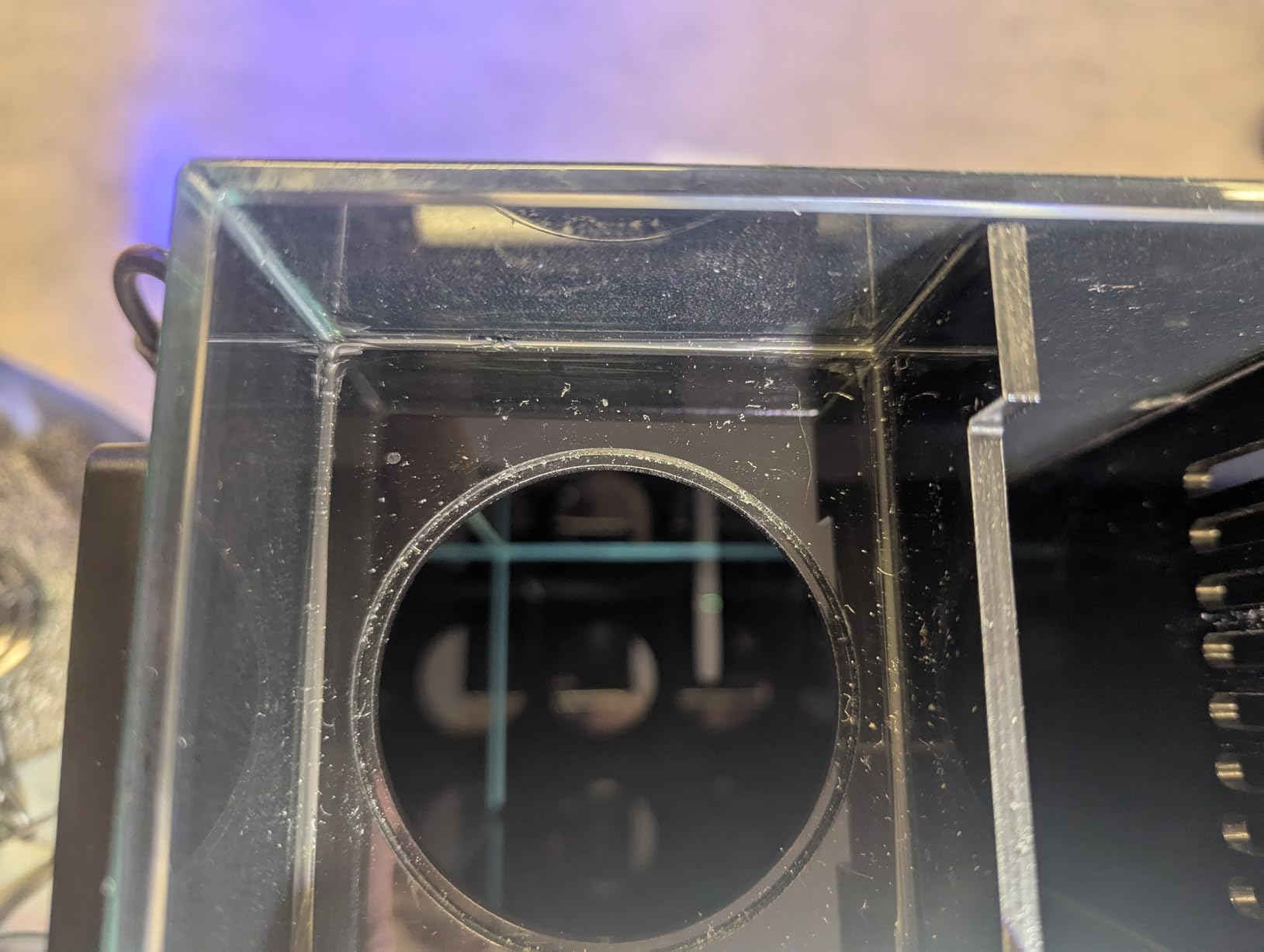
Four rear filtration chambers is generous for the size. Each is sized to hold a heater, a pump and an auto top-off reservoir, and a filter sock holder plus a rotatable outlet diffuser are included. The return nozzle accepts 5/8 inch tubing, which is a standard size for small marine pumps.
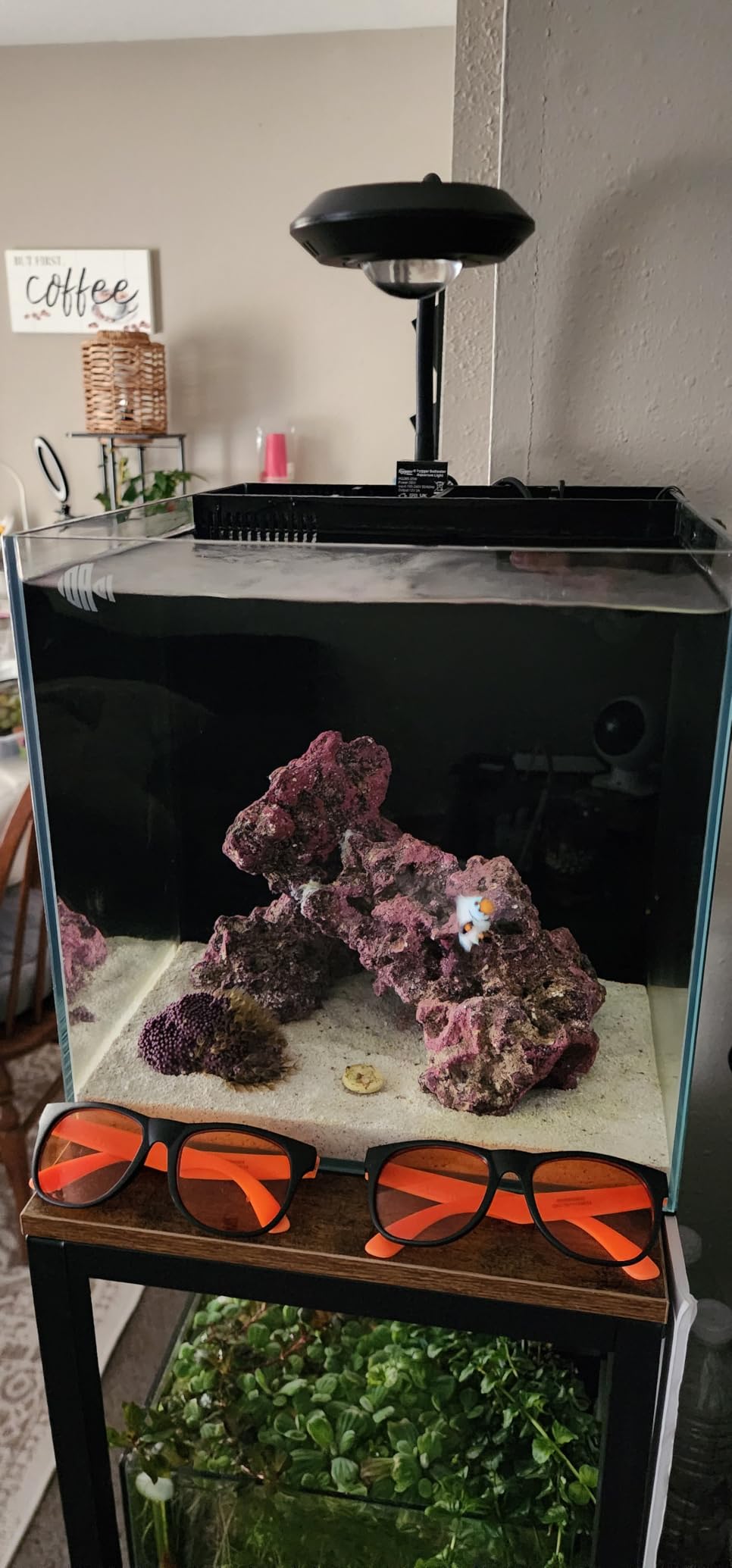
Packaging is the quiet hero here. This tank arrives in nested foam inside triple-wall boxes with a felt base pad underneath, which matters because transit damage is the most common complaint about rimless glass at this price level. What you still need to buy: a pump, a heater, a light, an ATO and all of the water chemistry supplies.
Reviewers consistently note it is a bare tank with no accessories and no guidance, so it suits beginners less than a bundled kit. We still include it because the rear chamber design solves the equipment problem that trips up nano keepers, and the sump volume genuinely helps with stability.
Why the Coralland 8 works for a nano reef
The four rear chambers mean a beginner can build a competent little filtration layout without cutting glass or buying a sump. A heater, media, a skimmer and an ATO reservoir each get their own space, which is normally impossible at this size in a rear-filtered cube.
The angled joints and low iron glass are described as very clear and cleanly sealed, and the rotatable diffuser lets you aim flow around a rock layout rather than blasting it from one corner, which is exactly what soft coral and LPS want.
Where the Coralland 8 falls short
The permanently silicone-mounted filter sock holder is a real design compromise: you cannot substitute a removable media basket, which is the single easiest maintenance job in a small reef. The central divider in the rear chamber also blocks many fixed-mount light fixtures, so plan your light position first.
Also note the rear baffle sits level with the rim, so an unplugged overflow can dump water on your floor. With 48 reviews it is a newer product with a short history, and it needs more equipment purchases than any other kit or near-kit in this roundup.
8. Fluval Evo XII 13.5 Gallon – The Best Long-Running All-in-One Marine Kit
Fluval Evo XII Saltwater Aquarium Kit, 13.5 Gal.
13.5 gal
23.4 x 13.5 x 15.6 in
Three-stage filtration
22.05 lb
Pros
- Over 1000 reviews give a well established reliability record
- Compact footprint for a fully filtered lit system
- Filter compartment is completely hidden
- Integrated canopy LED removes a separate purchase
Cons
- 13.5 gallon volume is easy to outgrow
- Modest LED output for many corals without careful placement
- Older casing design next to current rimless options
The Evo XII has been in production since 2016 and carries more than 1,000 reviews, which makes it one of the most thoroughly tested saltwater kits here. It is a 13.5 gallon glass aquarium designed for saltwater fish, shipped with three-stage Fluval filtration using oversized mechanical, chemical and biological media.
The honeycomb back design conceals the filter compartment and the water line, and an aluminium waterproof casing with a multifunctional canopy and feed door wraps the top. Lighting is a 16W touch-start canopy LED at 1,383 lumens with separate day and night settings, so you get a light without a separate purchase.
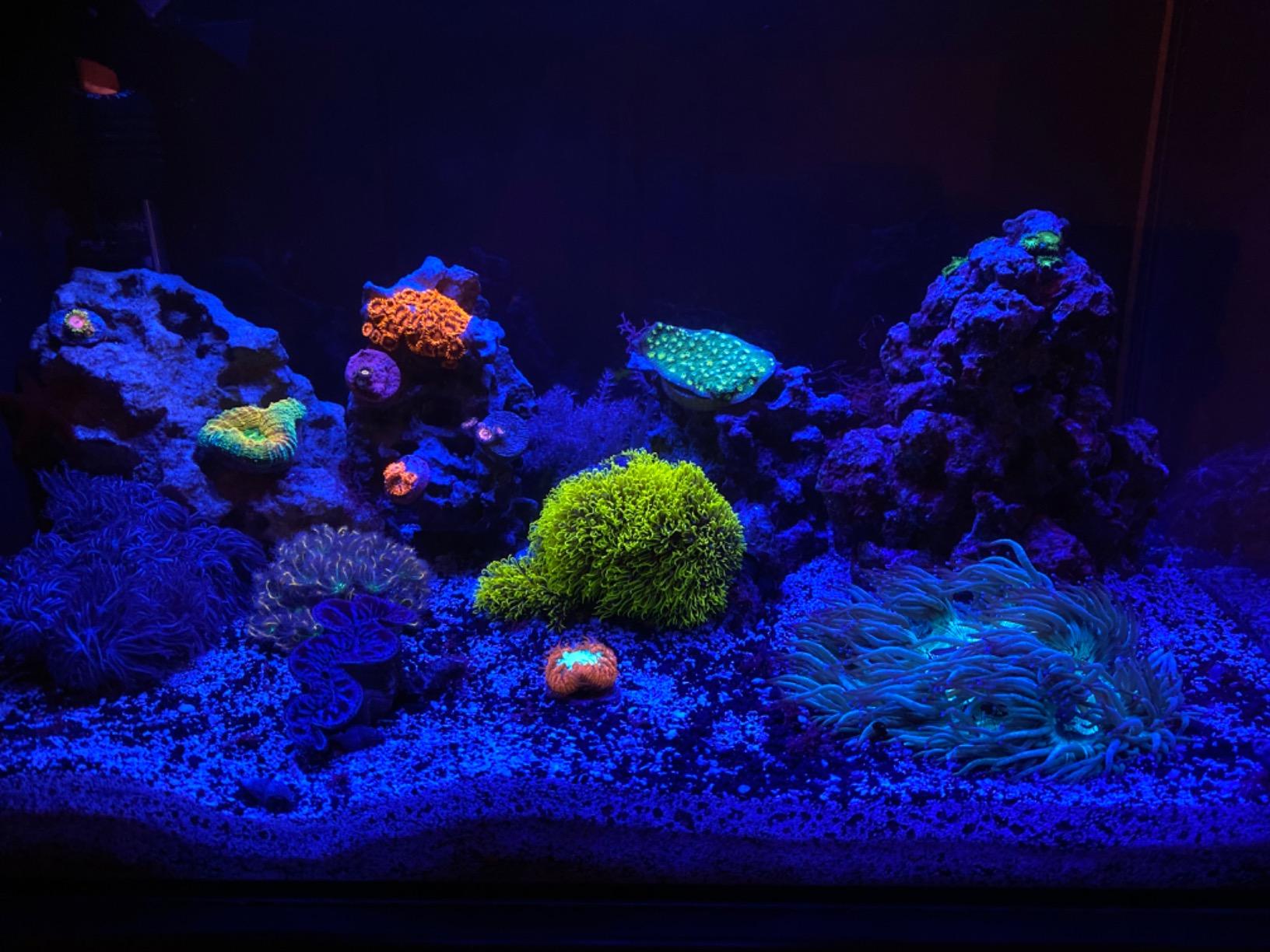
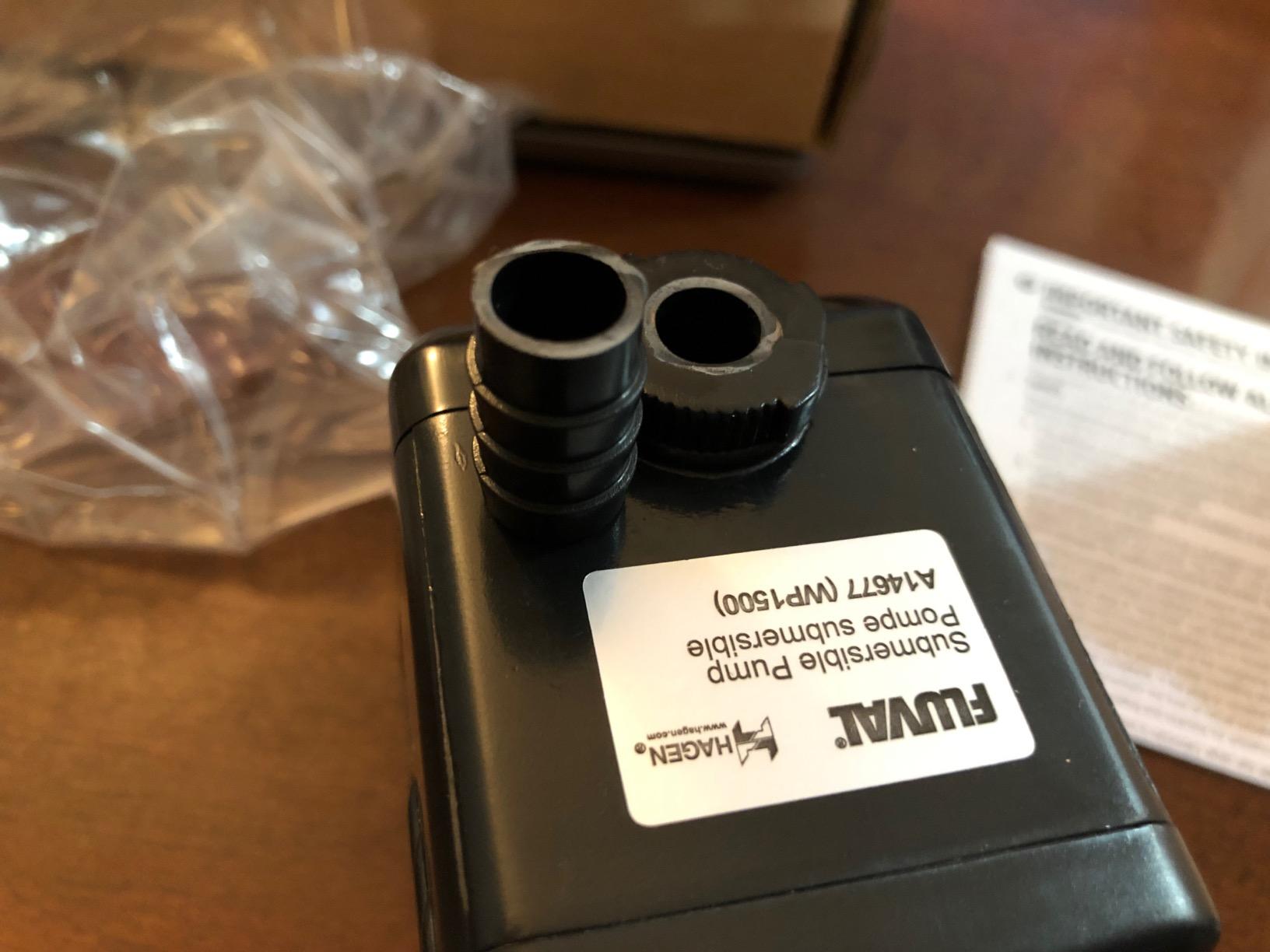
What you still need to buy: a heater, marine salt, aragonite sand or dry rock, a test kit, RO/DI water and a small skimmer. The 22.05-pound body and a 22 by 11.5 by 15 inch tank dimension mean it is easy to place on a desk or a small cabinet, which is where most Evo XII tanks end up.
Its main risk is size rather than quality. Long-running reef keepers value it as a way into marine keeping and many report outgrowing the 13.5 gallon volume within a year or two, at which point the only upgrade is a new tank.
Why the Evo XII is still worth buying
Reliability is the headline. With over 1,000 reviews, the failure patterns of this tank are well documented, and none of them are structural. A filter pad, a light bulb or a heater is a cheap replacement, and the glass and casing have proven durable over close to a decade.
It is also the most compact complete marine system here, and for a bedroom, a home office or a small flat that footprint matters more than gallons. Everything hides inside the casing, so it reads as an object rather than an installation.
Where the Evo XII falls short
Small volume is the obvious limit. At 13.5 gallons, a single overfeeding mistake or a weekend away can swing salinity and temperature fast, and this is precisely the size where beginners struggle most.
The 16W LED is modest for many corals without careful placement near the surface, and the casing is an older design next to the rimless and app-controlled options on this list. Buy it for a fish-only-with-live-rock plan or a very light coral layout, not for an SPS goal.
9. LANDEN Aquarium Cube 15.6 Gallon – The Best Display Cube for a Small Room
Landen Aquarium Cube 15.6 Gallon Ultra Clear Glass Rimless Fish Tank 40C
15.75 in cube
5 mm low iron glass
25.99 lb
Display tank only
Pros
- Cube shape gives real depth from every viewing angle
- 4.6 rating with a large review base
- Low iron glass shows truer colour than standard glass
- Seams described as even and free of algae traps
Cons
- Tank only so filtration and lighting must be added
- Some buyers find the price steep for this size
- Transit damage reported despite sturdy packaging
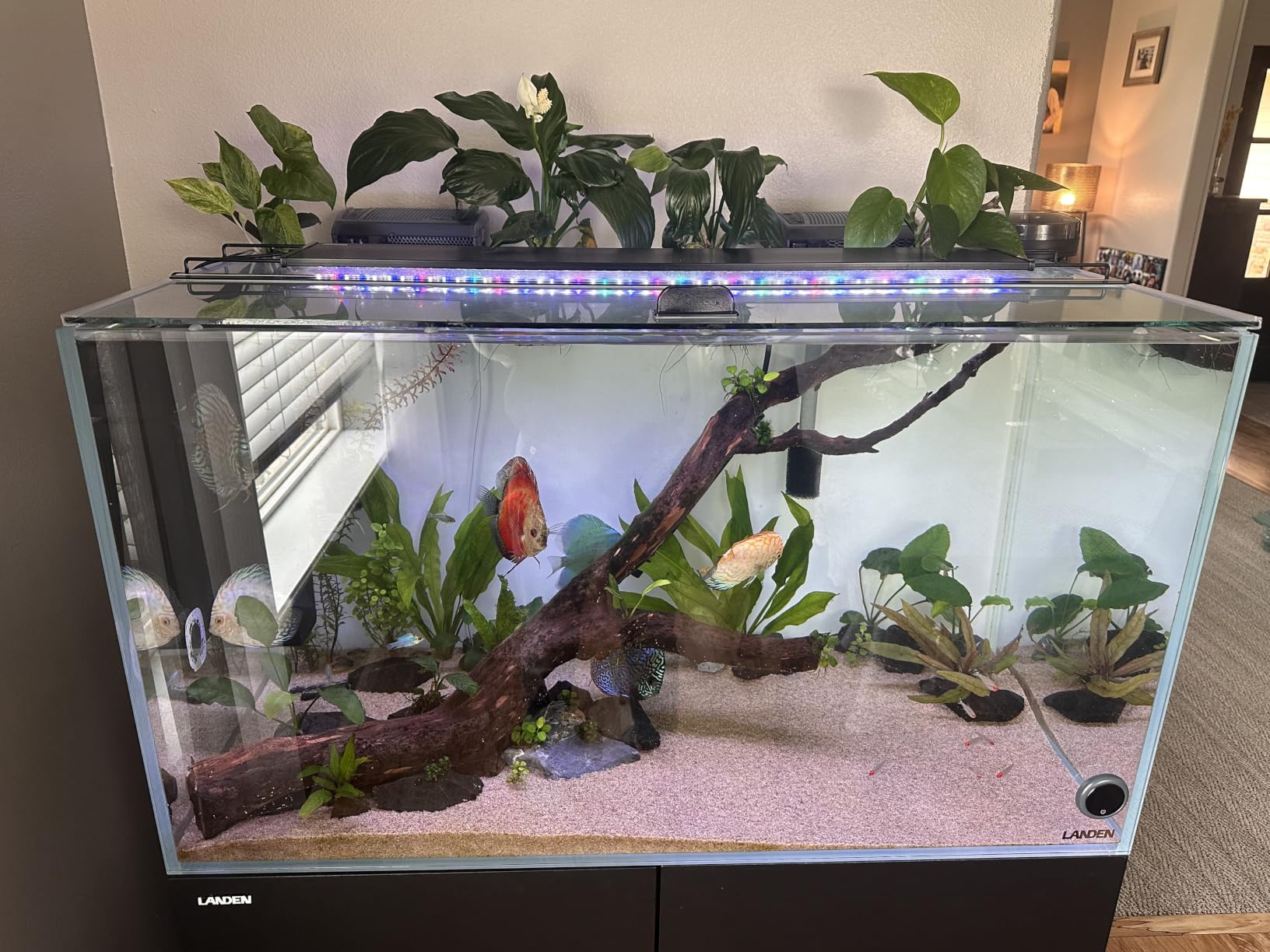
A cube is the most forgiving display shape there is, because you get equal viewing surface on every side. This 15.75 inch cube from LANDEN uses low iron glass with 91 percent light transmittance, 5 mm glass thickness and mirror-polished chamfered edges, joined with a German silicone process for smooth, borderless joints.
Owners consistently describe the cube format as attractive from every angle with exceptional clarity and clean seams, and many say the tank has stayed leak-free for a year or more. A 4.6 rating across 309 reviews is one of the strongest records in this roundup.
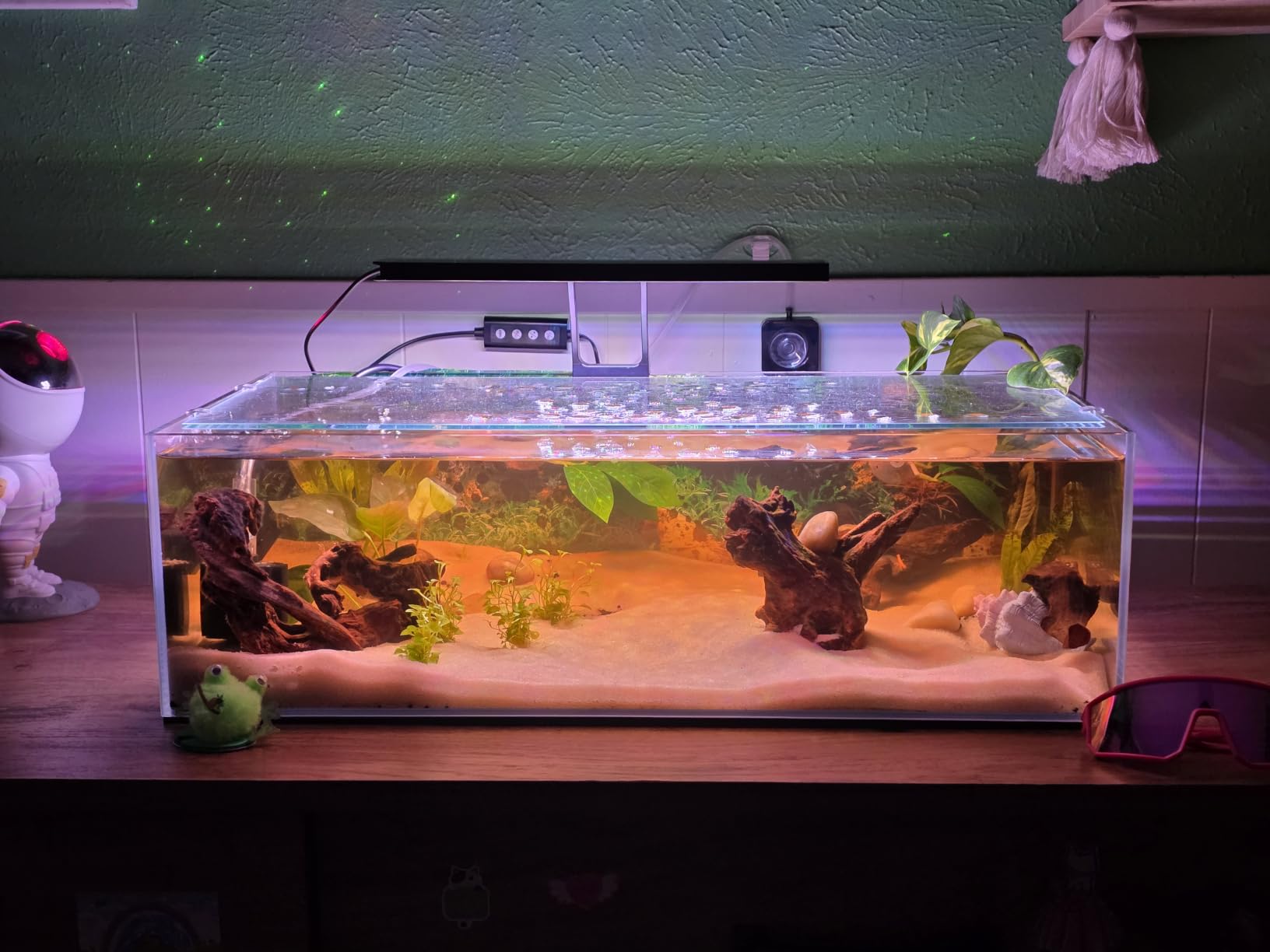
What you still need to buy is a filter, a heater, a light and your rock or sand, plus a skimmer once the tank is stocked. That is a real build, and at 25.99 pounds the cube is light enough to reposition alone but still needs a level mat and a properly rated stand.
As a first marine tank, a cube suits a goby and shrimp setup, a clownfish and anemone pair, or a small FOWLR arrangement with live rock. What it does not offer is hidden equipment space, so you will be looking at your filter and skimmer.
Why the cube shape suits a small marine display
The square footprint uses floor space efficiently, which matters more in an apartment than gallons do. You get 15.75 inches of viewing surface on four sides from a base that is just over a foot and a half square.
Even seams with no algae traps make maintenance easier in the long run. Irregular silicone joints are where detritus collects and where you end up scrubbing, and owners of this cube specifically report clean, consistent joints.
Where the LANDEN Cube falls short
It is a standalone display tank, not a kit. For a first-time reef keeper that means four or five additional purchases before you can even start cycling, and you will be selecting a skimmer and a light yourself.
Some buyers find the price steep for a tank of this size once they add those purchases, and a few report transit damage despite sturdy packaging. Rimless cubes are always a packaging gamble, so inspect the seams the moment it arrives.
10. LANDEN EzFlux 60 Rimless 26 Gallon – The Best Tank for Rear Filtration Space
LANDEN EzFlux 60 Rimless 26 Gallon Rear Filtration Tank, Pump Included
26 gal
23.62 x 15.75 x 17.72 in
Three glass rear chambers
8 mm glass
61.7 lb
Pros
- About 8 gallons of rear filter space for a 26 gallon display
- Glass chamber dividers will not bow
- Included BIOSMO 700 pump is powerful and quiet
- Ultra low iron glass keeps the view tint free
Cons
- No lid included
- Glass rear chambers are narrow and awkward to hand clean
- See-through back panel reveals equipment lighting
- Some report oversized intake grates that catch small fish
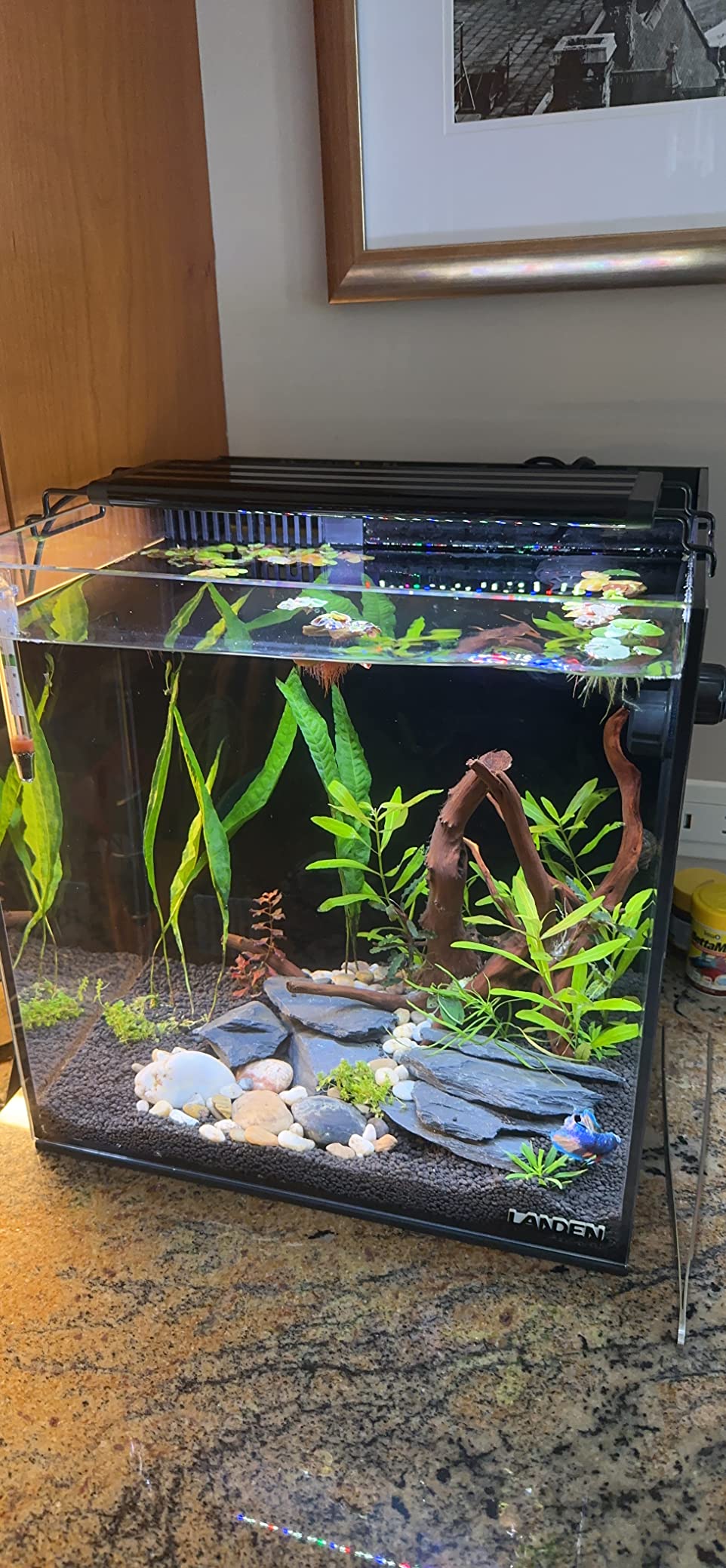
This is the tank to look at if your concern is that a small display simply does not have room for the equipment you will accumulate. Three rear glass filter chambers can host media, a heater and a protein skimmer, and roughly 8 gallons of the 26 gallon total volume sits behind the display rather than in front of your face.
The included LANDEN BIOSMO 700 return pump delivers 700 litres per hour, which is 185 GPH, at 2.5 metre maximum head and 9 watts. It comes with a remote and a feeding mode, so you can cut flow while you feed and dial it back up afterwards. The glass is low iron ultra-clear at 8 mm thickness with beveled edges and German silica gel seams.
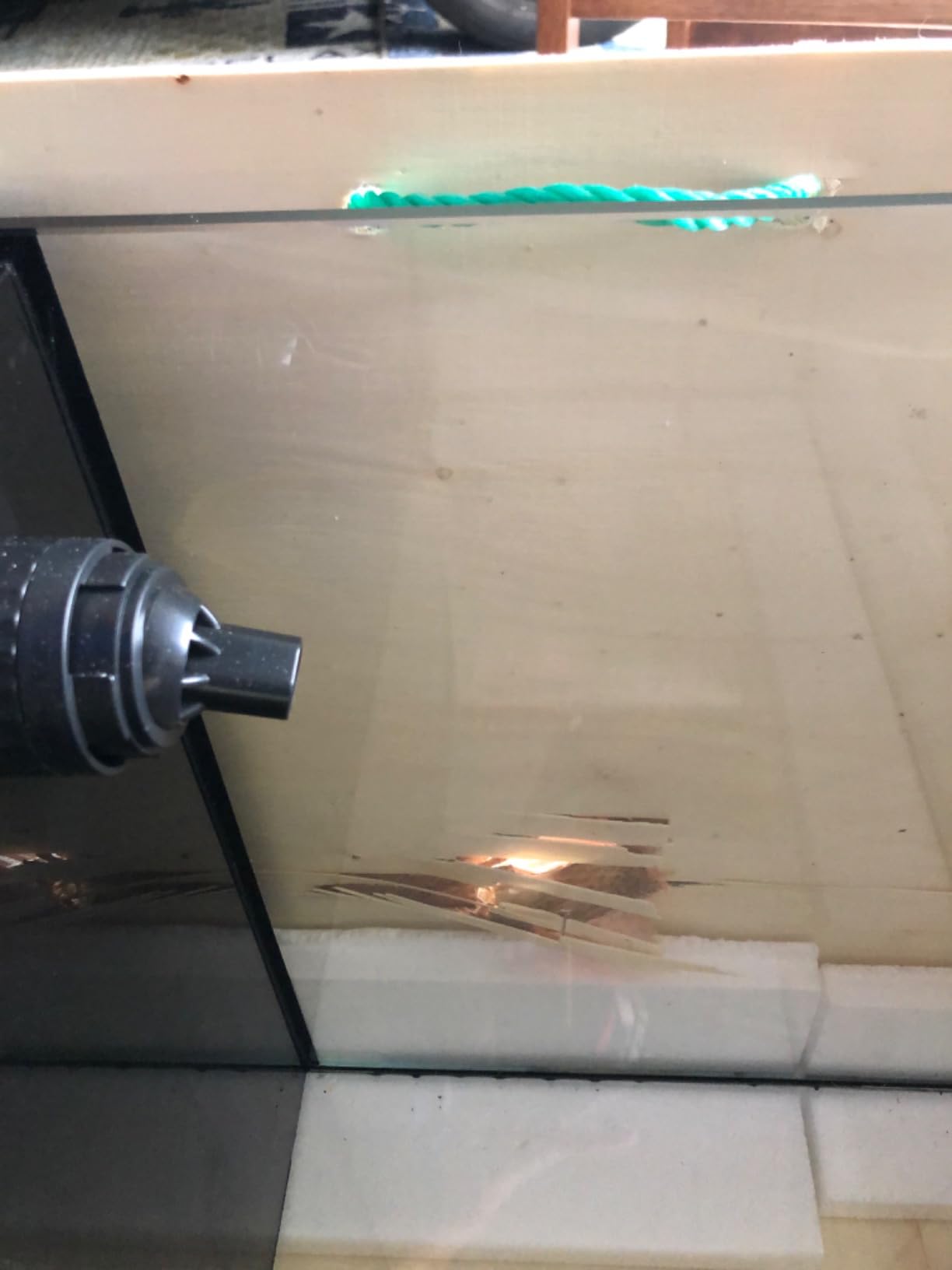
Construction details matter here more than the spec sheet suggests. The chamber dividers are glass rather than plastic, so they will not bow under the load of a full filter stack, and there is a detachable filtration inlet, an adjustable directional nozzle and an EVA foam leveling pad in the box. The tank arrives in a steel-framed wooden crate.
What you still need to buy: a heater, a light, a protein skimmer sized for the display volume, rock and sand. The skimmer is the one to size carefully, because a chamber is not the same as an open sump and you need clearance for the unit and its neck.
Why the EzFlux 60 gives you room to grow
Eight gallons of filter volume in a 26 gallon display is the best ratio in this roundup, and it means you can add a second media chamber, a UV or a larger skimmer later without rebuilding anything. That is the single reason we would pick a rimless tank as a first reef.
LANDEN support is also repeatedly described as excellent, which matters for a product sold largely to beginners who will have questions in month two that the manual does not answer.
Where the EzFlux 60 falls short
No lid is included. For a rimless tank with high evaporation that means faster salinity drift, and most keepers add a lid soon after setting the tank up. The narrow rear chambers are also awkward to hand clean, which turns routine maintenance into a longer job.
The see-through black back panel reveals equipment lighting inside the chamber, so a skimmer with a lit collar will glow behind your rock. Some buyers also report oversized intake and skimmer grates that can catch small fish, so add mesh guards if you plan to keep inverts or small species.
11. Allcolor Rimless 21 Gallon – The Best Rimless Tank That Includes a Glass Canopy
Allcolor Low Iron Glass Ultra Clear Rimless Aquarium Tank (21Gal)
21 gal
23.62 x 13.78 x 14.96 in
6 mm low iron glass
49.7 lb
Pros
- Low iron glass gives a true to life unobstructed view
- Hand finished seams are thin and consistent
- Matching glass canopy with clips is included
- Leveling mat and reinforced packaging included
Cons
- Display tank only so sump light and filtration are extra
- Some buyers report corner chips or cracks on arrival
- Rimless tanks need a level mat and careful placement
Almost every rimless tank in this price range is an open display. This 21 gallon Allcolor is the exception that matters for a marine beginner, because a matching top glass canopy with clips is included, which cuts evaporation and gives you somewhere to mount a light without inventing a bracket.
The glass itself is low iron ultra-clear at 6 mm thickness, hand bonded with German silicone for thin, uniform seams, with multi-step polished beveled edges. Buyers like the clarity and near-invisible seams, and multiple sizes are available from 4.6 to 40 gallons so you can step up without changing the design.
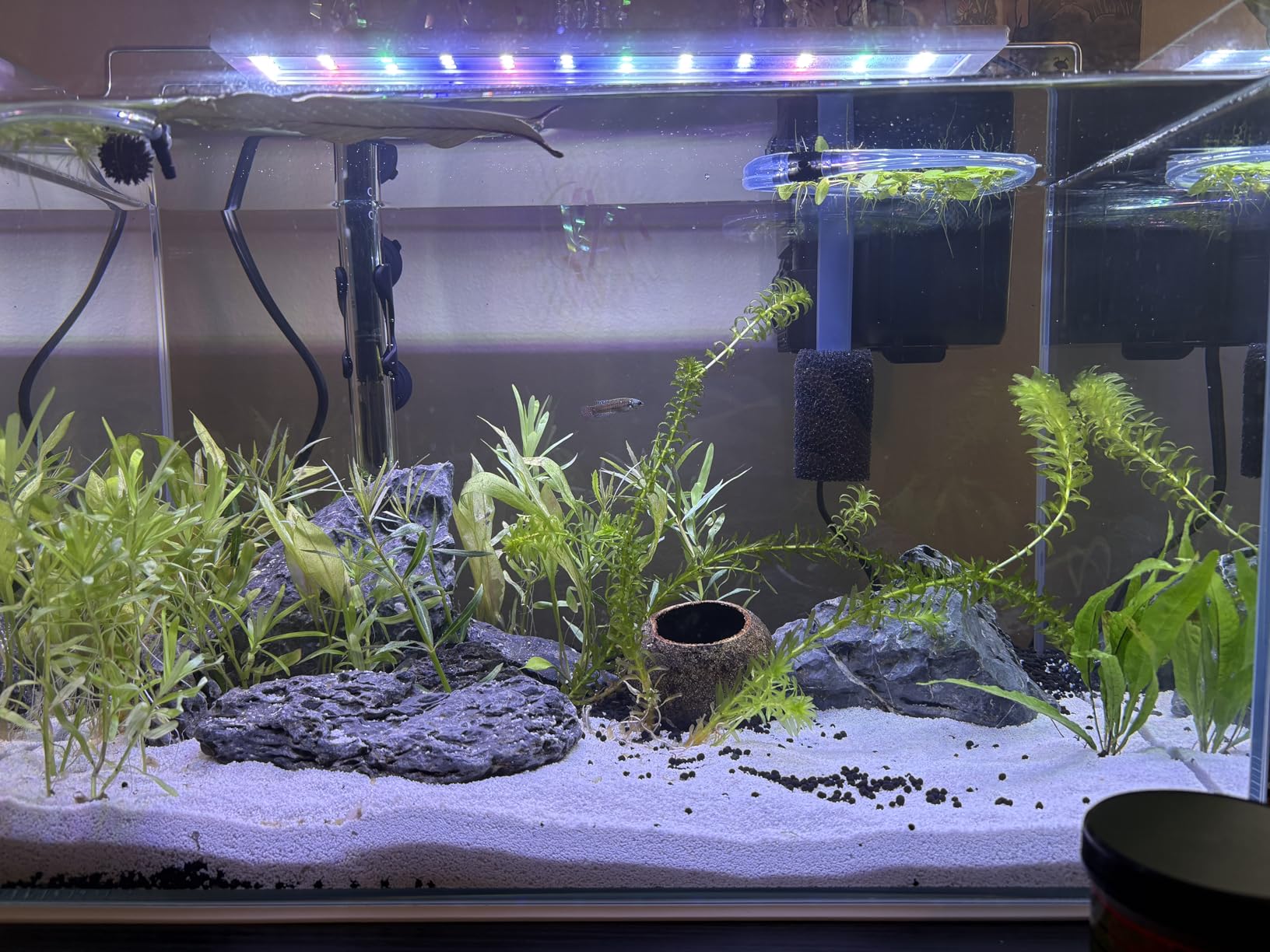
What you still need to buy: a sump or rear filtration, a return pump, a light, a heater and a skimmer. With no filter at all, this is one of the higher build counts in the roundup, and 49.7 pounds of glass means the stand needs to be level and fully supportive before anything else.
The canopy is the quiet benefit. Evaporation in a marine tank drives salinity upward, so reducing evaporation is one of the cheapest stability improvements you can make, and you get it here without buying a separate accessory.
Why the canopy makes this easier to run
Lower evaporation means less salt to add back and fewer top-off cycles, which on a tank you are still learning to service is a genuine relief. The clips hold the canopy in place without hardware on the display glass, so the rimless look survives.
It also gives you a mounting point. A 21 gallon display at 6 mm glass needs a light resting on the canopy rather than hanging from a stand, and having the canopy already designed for it removes a step that many first builds get wrong.
Where the Allcolor Rimless falls short
It is standalone glass only. Lighting, filtration and a sump are all additional purchases, so this is a tank for someone who already knows what a sump is, which is not where most beginners are on day one.
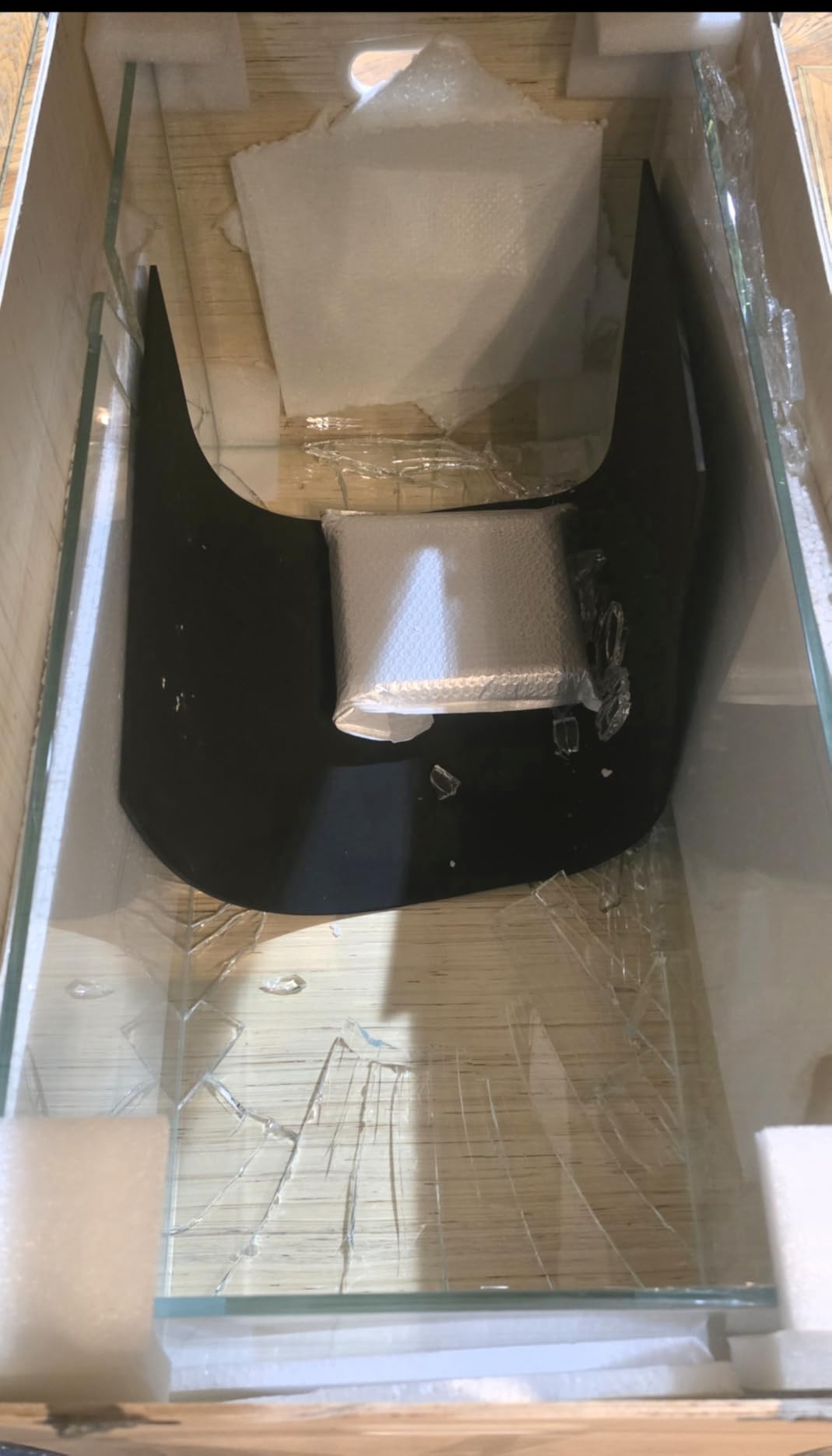
Shipping damage is the most common complaint, with some buyers reporting corner chips or cracks on arrival. Rimless tanks also need a level mat and careful placement, because the unbramed seams carry the load. Inspect the corners and seams before you fill it.
12. LYPHARD 15 Gallon Rimless – The Most Versatile for a Build-It-Yourself First Tank
LYPHARD AQUARIUMS 15 Gallon Rimless Aquarium, Ultra Clear Glass Low Iron Rectangular Fish Tank L19.6×W13×H13.8 Inches Thickness 6mm with EVA Foam Mat Included
15 gal
19.6 x 13 x 13.7 in
6 mm low iron glass
26.7 lb
Pros
- Low iron glass at 91.5 percent transmittance keeps colour true
- Seams described as smooth crack free and leak free
- EVA leveling mat included in the box
- Light 26.7 pound body is easy to handle and level
Cons
- Display tank only so light and filtration are extra purchases
- Smaller brand with a shorter review history than the established names
The LYPHARD 15 is our budget pick, and the reason is the ratio of glass quality to money. It uses low iron ultra clear glass at 91.5 percent transmittance with 6 mm thickness, joined with Wacker adhesive seam technology and a polished glass surface that is easy to clean.
At 19.6 by 13 by 13.7 inches and 26.7 pounds, it is one of the easiest rimless tanks here to get onto a stand, and the EVA foam leveling mat is already in the box. Buyers highlight clear glass, tidy adhesive seams and a low total entry cost for a genuine rimless footprint.
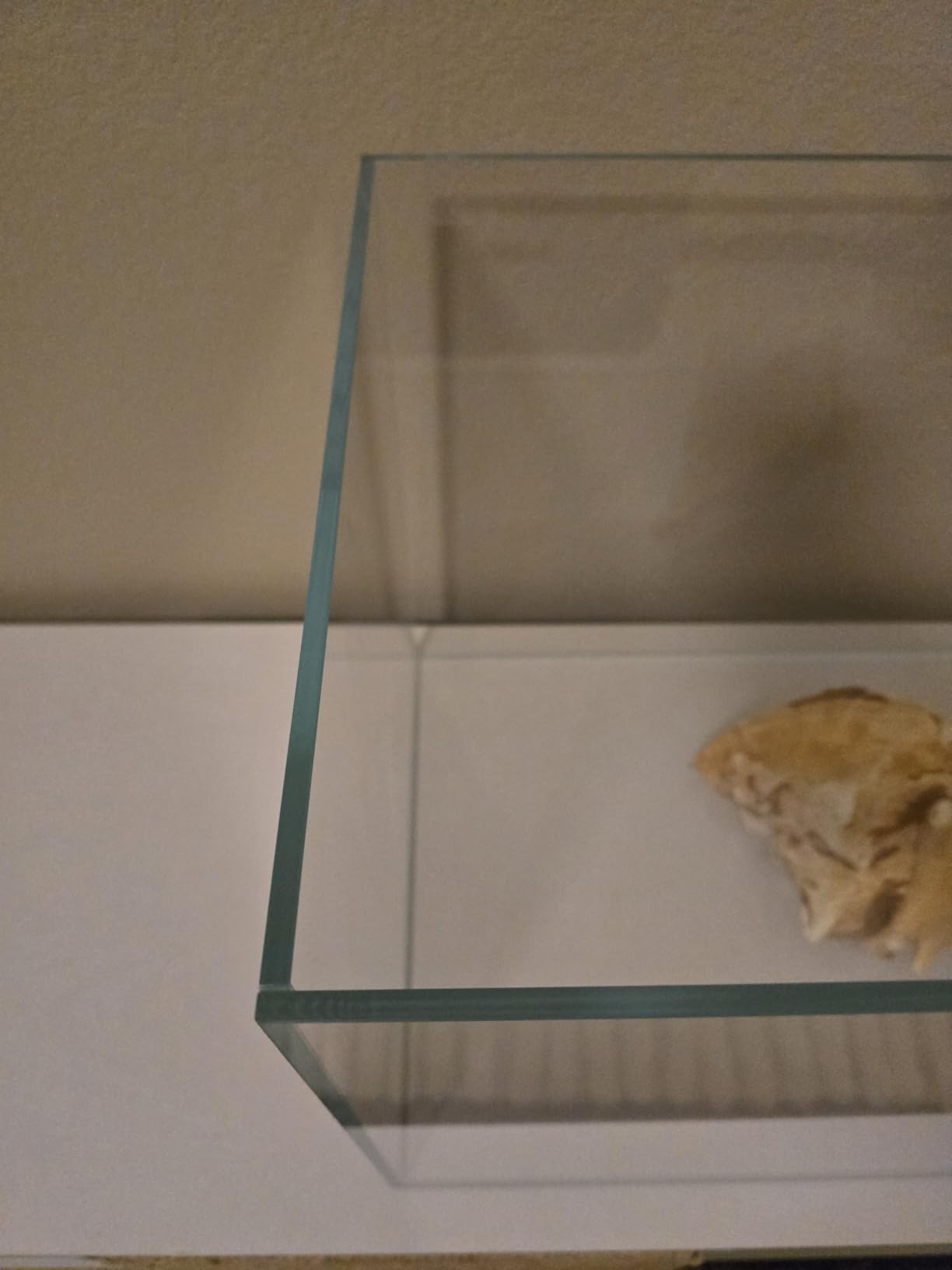
The tank is listed as suited to freshwater, marine, reef, vivarium and terrarium use, so nothing about the glass work stops you running it as a marine system. What you still need to buy is a light, a filter or sump, a heater, a return pump and a skimmer, so budget the build before buying the glass.
At 15 gallons it sits in the awkward middle of the hobby. It has more water than a nano cube, which helps stability, but it is still small enough that a missed water change shows up quickly, and your stocking options will be limited for the first year.
Why the LYPHARD 15 is good value
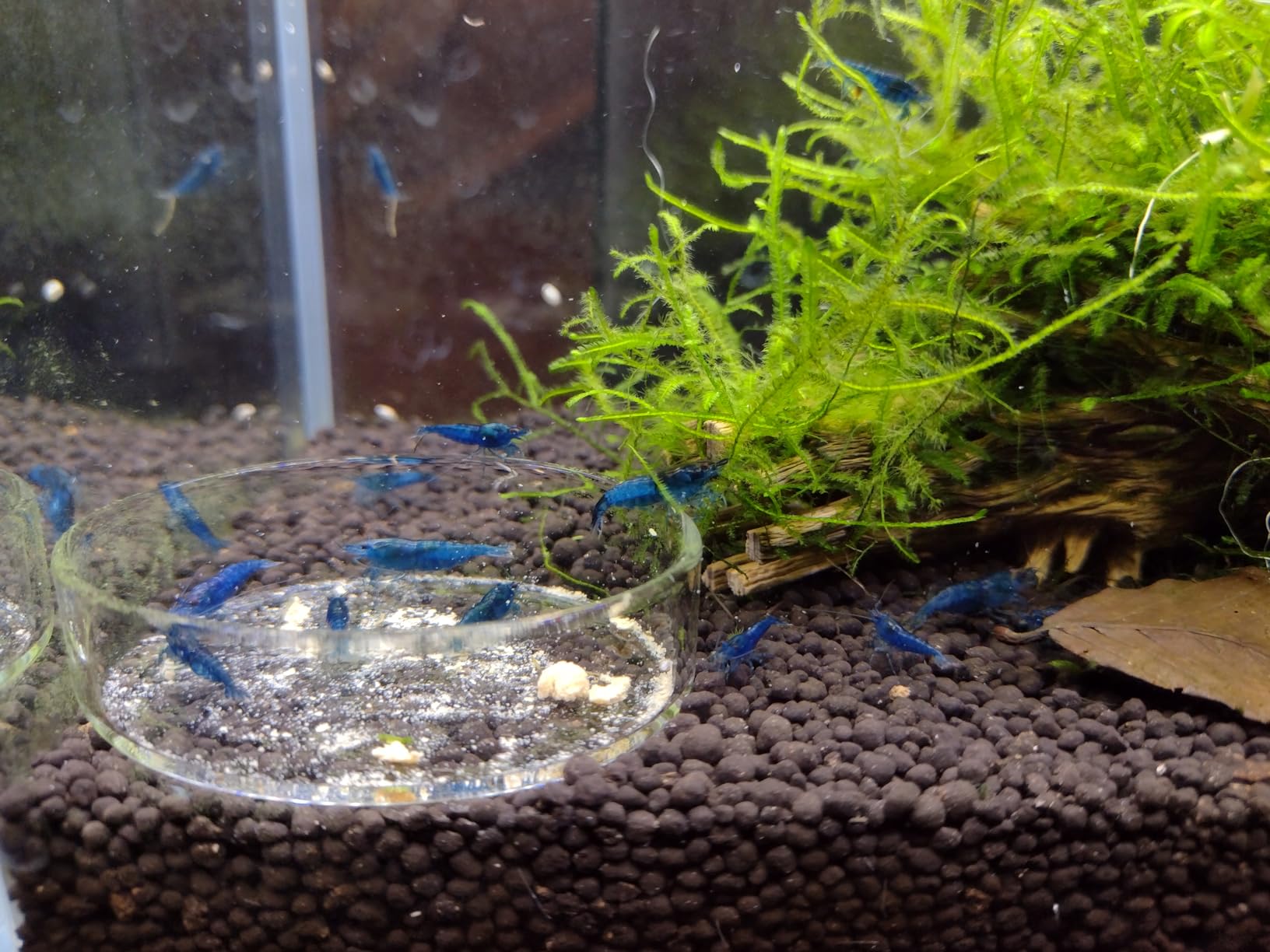
A 4.6 rating across 156 reviews on a tank this size is a strong result, and owners specifically call out the seams staying smooth and leak free. Seam quality is the leading cause of rimless tank failure, so that is the right thing to be buying on a budget.
The low weight is a genuine practical benefit. You can level it, move it and clean under it alone, which makes a first build less intimidating than wrestling a 60-pound tank onto a cabinet.
Where the LYPHARD 15 falls short
There is no filtration, no light and no pump in the box, so the real cost sits in a second shopping list. We include it as a budget pick for the glass, not as a cheap complete system, and readers who want a low total cost should start with the Aqueon kit instead.
It also comes from a smaller brand with a shorter review history than the established rimless makers here. That is not a deal breaker at this price, but it is a reason to check the seams carefully on arrival.
What Size Saltwater Tank Should a Beginner Get?
Most beginners should buy between 20 and 40 gallons, and 20 to 30 gallons is the sweet spot. Below 10 gallons, temperature and salinity swing fast enough that a missed water change becomes a crash. Above 40 gallons, equipment and livestock costs climb faster than your experience. Aim for a footprint your stand supports and your water change routine can handle, because a 30 gallon tank you maintain weekly will outperform a 60 gallon tank you neglect.
Second principle: buy the filter space, not just the glass. A tank with 30 percent of its volume in rear chambers or a sump, like the LANDEN EzFlux 60 here, gives you somewhere to put a skimmer and media as the system grows. A display-only rimless tank looks better on day one and costs you more on day ninety.
AIO vs. Sumpless vs. FOWLR: Which System Do You Want?
An all-in-one tank is the easiest saltwater aquarium kit for beginners because it consolidates equipment into one footprint. A sumpless system is a bare display tank with a sump and plumbing you build yourself, which costs more up front and gives you far more control later. A fish-only-with-live-rock system skips coral entirely, so it needs less light and less equipment than a reef.
Decide this before you buy anything, because it determines your lighting, your filtration and your livestock list. If you are unsure, the middle path is common and sensible: a modest AIO running fish plus soft coral, with a light and skimmer added in your first six months.
Beginner invert hobbyists get the same advice from the other direction. If you want shrimp, hermit crabs and a small goby, you need almost no light and a modest skimmer, which makes a small all-in-one like the UNS Dual AIO a better fit than any display-only cube.
Nano vs. Larger Tank: The Honest Stability Trade-Off
Nano tanks are cheaper and they are harder to keep stable. Total water volume of a few gallons means a single change in room temperature, one overfeeding mistake or a weekend away moves salinity and temperature faster than the tank can absorb, and recovery takes days rather than hours.
A larger tank is the opposite. More water dampens every swing, gives a larger biological population to process waste, and lets you add fish without immediately doubling your maintenance. The trade-off is cost, floor space and a heavier lift when it arrives.
Our honest recommendation: if your intent is a display tank with shrimp, a goby and an aquascape, a nano is fine and the lower cost is real. If your intent is fish that live for years, buy the bigger tank. Beginning with more water is the one upgrade you cannot make later without starting again.
What the Box Includes vs. What You Still Need to Buy
Only two of the twelve tanks in this roundup include a heater. That single fact drives most of the price anxiety beginners feel after their first purchase, so here is the short version: the tank is the small part of the cost, and the equipment list is where the money goes.
Whatever you choose, you still need a heater, a reef salt mix, a heater-rated thermometer, a salt refractometer, a test kit, aragonite sand or dry rock, and water changes made with mixed RO/DI water. Most systems also need a protein skimmer once they are stocked, and all reef tanks need a consistent top-off routine.
A reasonable budget tiering looks like this. On a nano build, expect the tank plus a light, a heater, a skimmer and initial livestock to be several times the tank cost. On a 20 to 30 gallon all-in-one, the tank plus stand, heater, salt, tests and first livestock lands in the mid range. On a premium AIO with a stand and a proper light, the first year of ownership can run several times the tank price.
Two optional extras are worth adding early if you can. A refugium or a simple algae scrubber reduces how often you touch the system, and an automatic top-off unit is the cheapest way to stop evaporation-driven salinity drift, especially in a tank without a lid.
The Real Cost of a First Saltwater System
The total cost of a first reef is the question behind most of the beginner threads you will read on r/saltwateraquariums and reef2reef, and the tank is a minority of it. Count the tank, a stand, a heater, salt, a test kit, RO/DI and first livestock, and the picture becomes honest.
At the nano end, the tank may be a small fraction of a first-year total because the light, filter and skimmer still have to be bought. At the all-in-one end, the bundled gear absorbs most of that cost, which is why the Aqueon 20 is our value pick despite being nowhere near the biggest tank here.
There is one upgrade path that costs nothing to plan for: the bundled LED is usually the first thing you replace. Aquarium hobbyists repeatedly say to buy a good tank and add the rest deliberately rather than buying a kit loaded with gear you will swap anyway, especially the light.
How Many Saltwater Fish Fit in a 20 or 30 Gallon Tank?
As a rule, allow about one inch of adult fish per gallon of actual water, and subtract your filtration and rock volume from the rated capacity before counting. That makes a 20 gallon display roughly a three or four fish system and a 30 gallon display roughly a four or six fish system, depending on species.
The number matters less than the species. A single large clownfish and an anemone, a goby and a shrimp pair, or a pair of small clownfish with a cleanup crew all fit comfortably into 20 gallons. Two full-size tangs or anything aggressive does not, and those species are why 30 gallons or more is the better starting point for a fish-only plan.
Do not use the one-inch rule to decide how many fish to buy on day one. Add fish slowly, cycle the tank first, and remember that your rated gallon figure includes the rear chambers or sump volume, so usable display water is always less than the number on the box.
Filtration, Lighting and Skimmers: What Actually Matters
Filtration is about volume and media, not brand. Choosing the right canister or internal pump for the job matters, and our roundup of the best canister filters for aquariums covers the flow rates to look for if you decide to build your own filtration.
The AIOs here use sponge, chemical and biological media in rear chambers, the rimless tanks expect you to build a sump or rear filtration, and any of them will work if you keep the media clean and replace it on a schedule.
Lighting is the most common disappointment. Bundled LEDs run marine fish fine and soft coral adequately, but SPS and demanding LPS will need a dedicated reef light, so factor a lighting upgrade into your year-one budget instead of being surprised by it.
Skimmers are where AIOs disappoint at small sizes. The consensus across hobby forums is that the included skimmer is marginal below about 20 gallons of display volume, so on a nano tank plan on adding a properly sized skimmer, and on a 20 to 32 gallon AIO buy one that suits the display volume rather than assuming the bundled unit will do.
Noise, Stands and Where the Tank Lives in Your Home
Pump noise decides whether a tank lives in a bedroom or a closet. The quiet pumps in this roundup are the Fluval Evo XII canopy unit and the UNS Dual AIO, while the Aqueon kit reports pump failures around the five to six month mark, so the quiet option and the reliable option are not always the same product.
Weight decides everything else. Tanks here run from 19.45 pounds at the shallowest to 62 pounds at the BioCube 32, and that number has to be carried by a stand rated for it, sitting on a floor that can take it. A rimless tank is more sensitive than a braced one because the seams carry the structural load, so a level mat and a fully supportive base are not optional.
Footprint is the final filter. A 35-inch-wide display looks modest in a room and impossible in a small flat, so measure the stand, not the tank, and check the door you will carry it through before you order anything.
Your First 90 Days: A Sequence That Works
Day one to day three is rinse, level and leak test. Add RODI water and saltwater mix to your target specific gravity of 1.023 to 1.025, run the pump with the tank empty of livestock, and check the seams daily before you trust the glass.
Week two is cycling. Add your rock and sand, keep temperature between 76 and 82 degrees, and target pH between 8.1 and 8.4 while ammonia and nitrite read zero and nitrate stays under 10 ppm. Test daily, and only add livestock once ammonia and nitrite are both at zero for a week.
Weeks three to eight are the slow build. Add one or two fish at a time, feed lightly, do small frequent water changes, and let your biological filtration catch up. Coral waits, because corals are what will punish an early ammonia spike far harder than fish will.
Months three and beyond is when the tank becomes yours. Add a skimmer if you do not have a suitable one, upgrade the light if your coral demands it, and settle into a weekly water change routine you can actually keep. The beginner who survives month three is the one with a routine, not the one with the best equipment.
Many first-timers also end up wanting to take the hobby outdoors, and the same water chemistry knowledge carries over to the best spearguns for beginners and the best dive computers for beginners guides on our site. Only when the tank runs itself, though.
Frequently Asked Questions
What size saltwater tank should a beginner get?
Most beginners should start between 20 and 40 gallons, with 20 to 30 gallons the sweet spot. Below 10 gallons, temperature and salinity swing fast enough that one missed water change becomes a crash. Above 40 gallons, equipment and livestock costs climb faster than your experience does. Buy the footprint your stand supports and your weekly routine can handle.
What is the best all-in-one saltwater aquarium kit for beginners?
The best all-in-one saltwater aquarium kit for beginners is the Coralife BioCube 32, because it hides its filter compartment and runs an automatic lighting cycle without programming. The best value is the Aqueon 20 gallon starter kit, which is the only kit here that includes a heater, filter, light and accessories in one box. Both handle a beginner’s first year well.
Do AIO tanks come with a heater?
Usually not. Only the Aqueon 20 gallon starter kit in this roundup includes a heater, preset to 78 degrees. Every other all-in-one and every display-only rimless tank ships without one, so budget for a heater sized to your tank volume, a heater-rated thermometer and a salt refractometer before the tank arrives.
Is a nano tank a mistake for a first reef?
Not a mistake, but harder. A few gallons of water react quickly to room temperature changes, overfeeding and a weekend away, and recovery takes days rather than hours. A nano suits a shrimp, hermit crab and goby display where low stocking levels are the goal. If you want fish that live for years, buy the larger tank and start there.
Which nano reef tank is best for an all-in-one setup?
The Ultum Nature Systems Dual AIO 6 gallon is the best nano option here for all-in-one use, because its triple-chamber rear filtration fits a heater, media and a small skimmer behind the display. Buy an intake guard, since the opening is large and the guard is not included. The Coralland 8 gallon is the alternative if you want more rear chamber space and are willing to add a pump and light yourself.
How many saltwater fish can fit in a 20 gallon tank?
Allow roughly one inch of adult fish per gallon of actual water, and subtract your rock and filtration volume from the rated capacity first. That makes a 20 gallon display a three or four fish system. A clownfish and anemone, a goby with a shrimp pair, or two small clownfish with a cleanup crew all work comfortably.
How many saltwater fish can fit in a 30 gallon tank?
A 30 gallon display supports roughly four to six adult fish by the one inch per gallon rule, after subtracting rock and rear chamber volume. Larger species like tangs still need more room than that rule suggests. Add fish slowly, cycle first, and remember the rated gallon figure always includes filtration volume.
What is the best saltwater testing kit for beginners?
Start with a salt refractometer for specific gravity and a kit that covers ammonia, nitrite, nitrate, pH, temperature and alkalinity. Target 1.023 to 1.025 specific gravity, pH 8.1 to 8.4, ammonia and nitrite at zero ppm and nitrate under 10 ppm. Test daily while cycling and weekly once the tank is established.
Conclusion: Which Saltwater Tank Should You Buy?
If you are starting from scratch and want the least friction, the Coralife BioCube 32 remains our pick as the best aquarium for saltwater beginners because it hides its equipment, runs its own light cycle and has been proven by hundreds of reef keepers over close to a decade of production. If your priority is the lowest total cost, the Aqueon 20 gallon kit is hard to argue with, because the heater alone would otherwise be a separate line on your list.
If your space and budget stretch further, the Fluval Flex 32.5 gives you the most water and the least chance of outgrowing the tank. For an invertebrate display, the UNS Dual AIO 6 gallon plus an intake guard is the cleanest entry point. And if you already understand sumps and PAR, the display-only rimless tanks on this list, the UNS, FZONE, LANDEN, Allcolor and LYPHARD, are where the glass quality per unit of money actually lives.
Whichever you choose, buy the tank and the stand together, add a heater and a skimmer to your budget on day one rather than month three, and keep your target parameters at 1.023 to 1.025 specific gravity, pH 8.1 to 8.4 and 76 to 82 degrees. That combination of a sensible tank and a boring routine is what separates a reef that is still running years later from one that is not. It is 2026, models change, so check the current specification before you buy.