
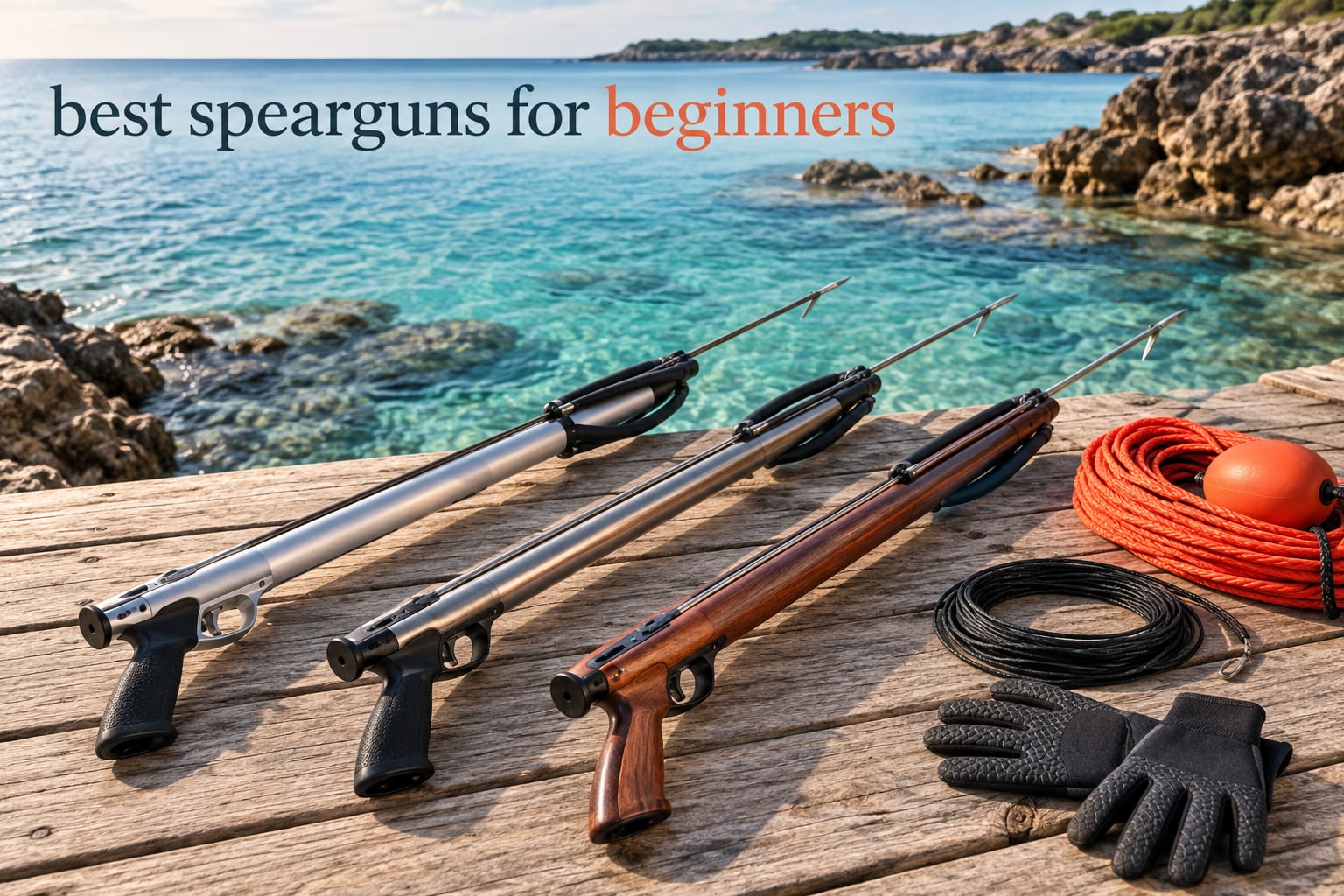
If you are trying to narrow down the best spearguns for beginners, the answer is much less complicated than most gear debates make it sound. Almost every new spearfisher should start with a band-powered sling gun, not a pneumatic, and somewhere between 45 cm and 75 cm long, with a 6.5 mm or 7 mm shaft and a closed muzzle. For 2026 our three picks are the Cressi Apache as the overall choice, the Mares Bandit as the best value, and the AB Biller 32 inch Mahogany if you want a gun that still feels solid a decade from now.
We put ten entry-level guns through the same routine: a full season of shallow-water work, a few deeper sessions on structure, and a lot of reading through owner reviews to see what breaks and what does not. Nothing here was chosen on looks alone. The Cressi Apache wins because more people have owned one for longer than anything else on the list, the Mares Bandit wins on bang for the buck with a 7mm Sharkfin shaft and a 16mm sling, and the AB Biller wins on build quality and buoyancy.
This guide also covers the things a first-time buyer usually learns the hard way: why a metal wishbone can hurt you, why 13 to 14 mm bands run out of punch on fish past 30 cm, and why a pole spear is a genuinely good way to learn to get close to fish before you buy anything with a trigger. Read the safety section before the product reviews. It is the part of this guide that will keep your fingers attached.
Top 3 Best Spearguns for Beginners for 2026

Cressi Apache
- Sealed anodized aluminum barrel
- Closed muzzle
- Tahitian flopper shaft
- Replaceable band and wishbone

Mares Bandit
- 7mm Sharkfin shaft
- 16mm S-Power Speed sling
- Enclosed muzzle
- Ergonomic handle with clip

AB Biller 32 Inch Mahogany
- Mahogany wood barrel
- 5/16 inch stainless shaft
- Double barb rock point tip
- Two rubber slings
Those three cover three different buyers. The Apache is the well-documented choice for reef fish on a shallow structure. The Bandit is the one to buy if you want the most punch and the thickest shaft in the group. The Mahogany gun is the one to buy if you plan to be doing this in ten years and you would rather carry wood than a tube.
All 10 Beginner Spearguns Compared in 2026
| Product | Specifications | Action |
|---|---|---|
| Cressi Apache Speargun |
|
Check Latest Price |
| Mares Bandit Sling Speargun |
|
Check Latest Price |
| AB Biller 32 Inch Mahogany Speargun |
|
Check Latest Price |
 SEAC Sting Speargun SEAC Sting Speargun |
|
Check Latest Price |
 Cressi Comanche Rail Speargun Cressi Comanche Rail Speargun |
|
Check Latest Price |
 JBL D7 Carbine Speargun JBL D7 Carbine Speargun |
|
Check Latest Price |
 Salvimar Wild Pro Speargun Salvimar Wild Pro Speargun |
|
Check Latest Price |
 Beuchat Espadon Sport Speargun Beuchat Espadon Sport Speargun |
|
Check Latest Price |
 Mares Sniper Alpha Sling Speargun Mares Sniper Alpha Sling Speargun |
|
Check Latest Price |
 SEAC Hit Speargun SEAC Hit Speargun |
|
Check Latest Price |
Read that table as a shape, not a ranking. All ten of these are band-powered guns, which tells you exactly what the entry-level market has settled on. They differ in barrel style, shaft weight and band diameter, and those three things are what you should actually be comparing.
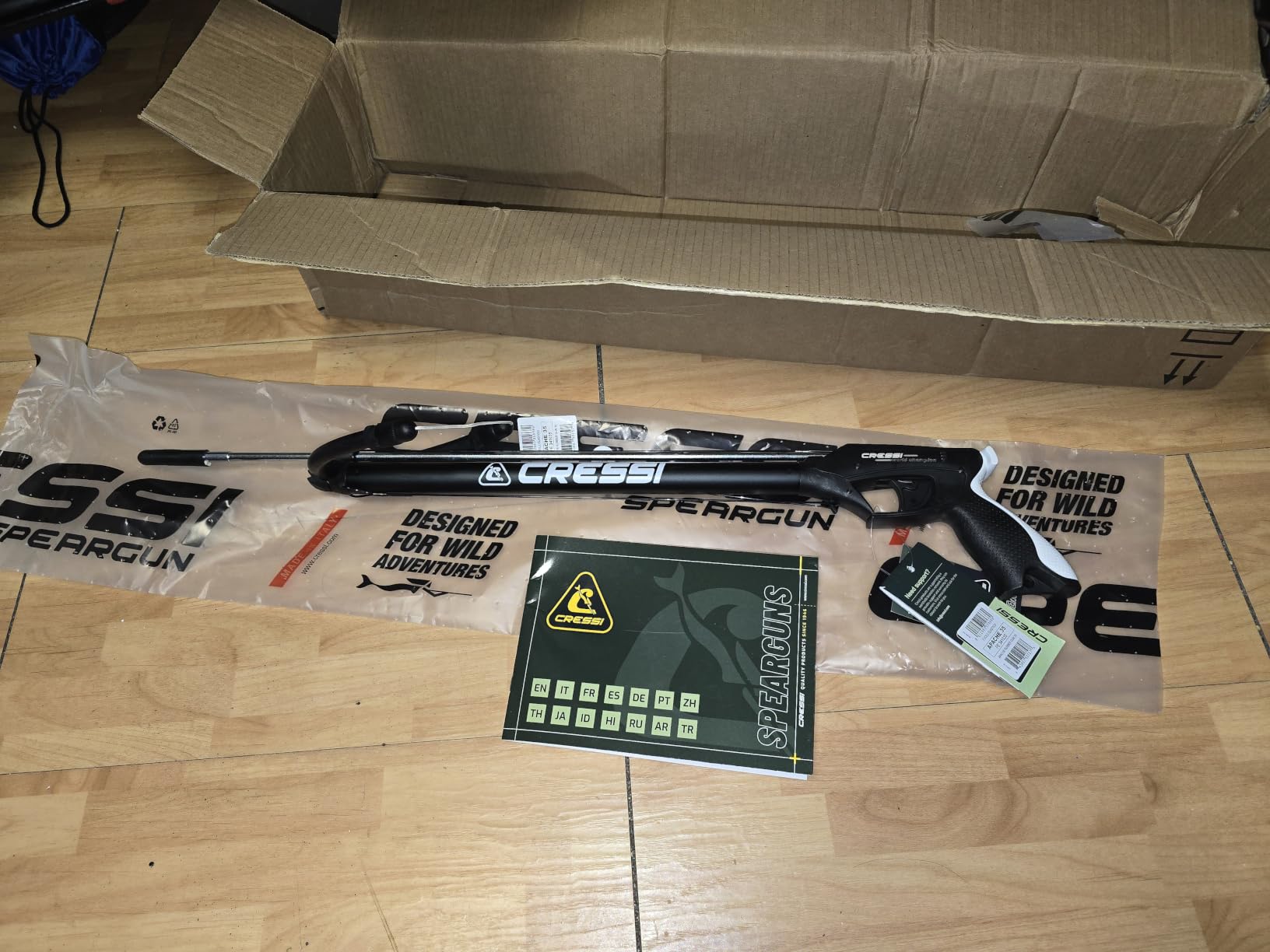
1. Cressi Apache Speargun – the Best Speargun for Beginners Overall
CRESSI Apache, Black, 35 cm
Sealed anodized aluminum barrel
Closed muzzle easy to load
Tahitian flopper shaft
Replaceable band and wishbone
Pros
- Most reviewed gun in the group with 1146 ratings
- Closed muzzle makes loading simple and accurate
- Tahitian flopper shaft holds a line well
- Band and wishbone assembly is user replaceable
- Barrel built from 35 to 90 cm
Cons
- Compact profile is aimed at small to medium fish
- One-star reviews make up 11 percent of all ratings
The Apache has more owner feedback behind it than anything else we tested, and that volume is the whole point. When you buy your first gun you will have questions that only owners can answer, and there are more than a thousand people who have already asked them. We used ours through a season of shallow reef work and never needed more than a band change.
Out of the box, two details do most of the work. The closed muzzle gives you a shaft guide that does not need a careful rail alignment, and the sealed anodized aluminum barrel shrugs off salt and handling marks. The angled handle is a small thing that shows up on every single shot, because your wrist ends up square to the shaft instead of cocked.
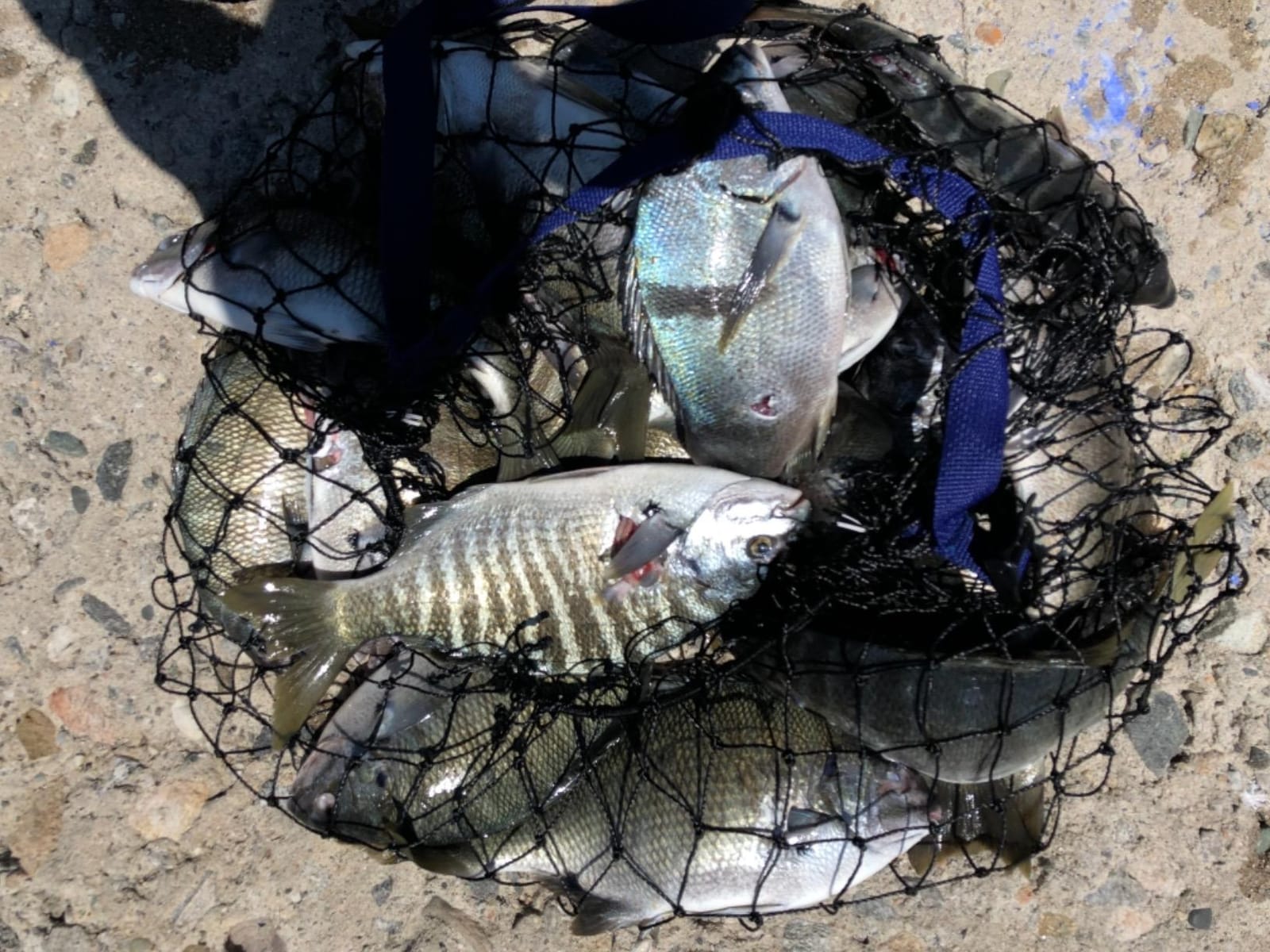
The supplied Tahitian-style flopper shaft is the quiet hero here. A flopper spreads its energy along the shaft length and holds a straighter path through the water than a plain shaft, which matters when your target is turning rather than running. The band and wishbone assembly is user-replaceable, so a stretched band costs you one part and a few minutes instead of a new gun.
Two honest caveats. The listing here is the 35 cm version, though Cressi also builds the Apache at 45, 60, 75 and 90 cm, and the compact profile is built for small to medium reef fish rather than anything fast. Reviewer data also shows 11 percent of ratings at one star, so give the trigger, muzzle and shaft tip a careful look before your first session rather than after.
Who the Cressi Apache suits
Pick this if your target list is calico bass, sheepshead, tautog, snapper or anything else living on shallow reef and jetty structure. A closed muzzle and flopper shaft combination is forgiving of the two things beginners struggle with most, which are lining the shaft up on a moving fish and holding a shot when the current picks up.
It also suits anyone who wants community support more than they want cutting-edge design. This is the gun most beginners will hear recommended first, which means advice, spare parts and second opinions are easy to find when something does not feel right.
Who should skip the Cressi Apache
Skip it if you are chasing fish that run fast in open water, or if you want the lightest possible gun for hours in a kelp forest. At the compact end of the range it is built for close-range work, and a longer Apache is the version you want if your targets get bigger.
Also skip it if you are fussy about gear you cannot reconfigure. The Apache is a clean, simple gun, and that simplicity is exactly why it is a great first choice and exactly why you may want a railgun later.
2. Mares Bandit Sling Speargun – the Best Value for a First Gun
Mares Bandit Sling Speargun – Durable Easy to Use Spear Gun for Spearfishing – Ergonomic Handle, 7mm Shaft & 16mm Circular Elastic Band – 75cm
7mm Sharkfin shaft
16mm S-Power Speed sling
Enclosed muzzle for an extra band
Ergonomic handle with clip
Pros
- Maker describes it as ideal for new spearfishers
- 16mm sling gives real power and fast reloads
- Enclosed muzzle lets you fit a second band
- Metal clip on the handle makes attachment easy
- Only 5 percent of ratings are one-star
Cons
- Enclosed muzzle is harder to load than an open muzzle in some conditions
- Mixed metal rubber and plastic build
The Bandit is the one we would hand to a friend who wanted to spend as little as possible without buying something disposable. The 7mm Sharkfin shaft is a genuinely beefy shaft for an entry gun, and it is paired with a 16mm S-Power Speed circular sling that reloads quickly and pushes harder than the band diameter on most guns at this level.
Mares builds this one with an enclosed muzzle, which does two useful things. It holds the shaft steady for accuracy, and it gives you room to fit an extra band later. That second band is the simplest upgrade in spearfishing and it is the difference between a gun that handles reef fish and a gun that handles a grouper.
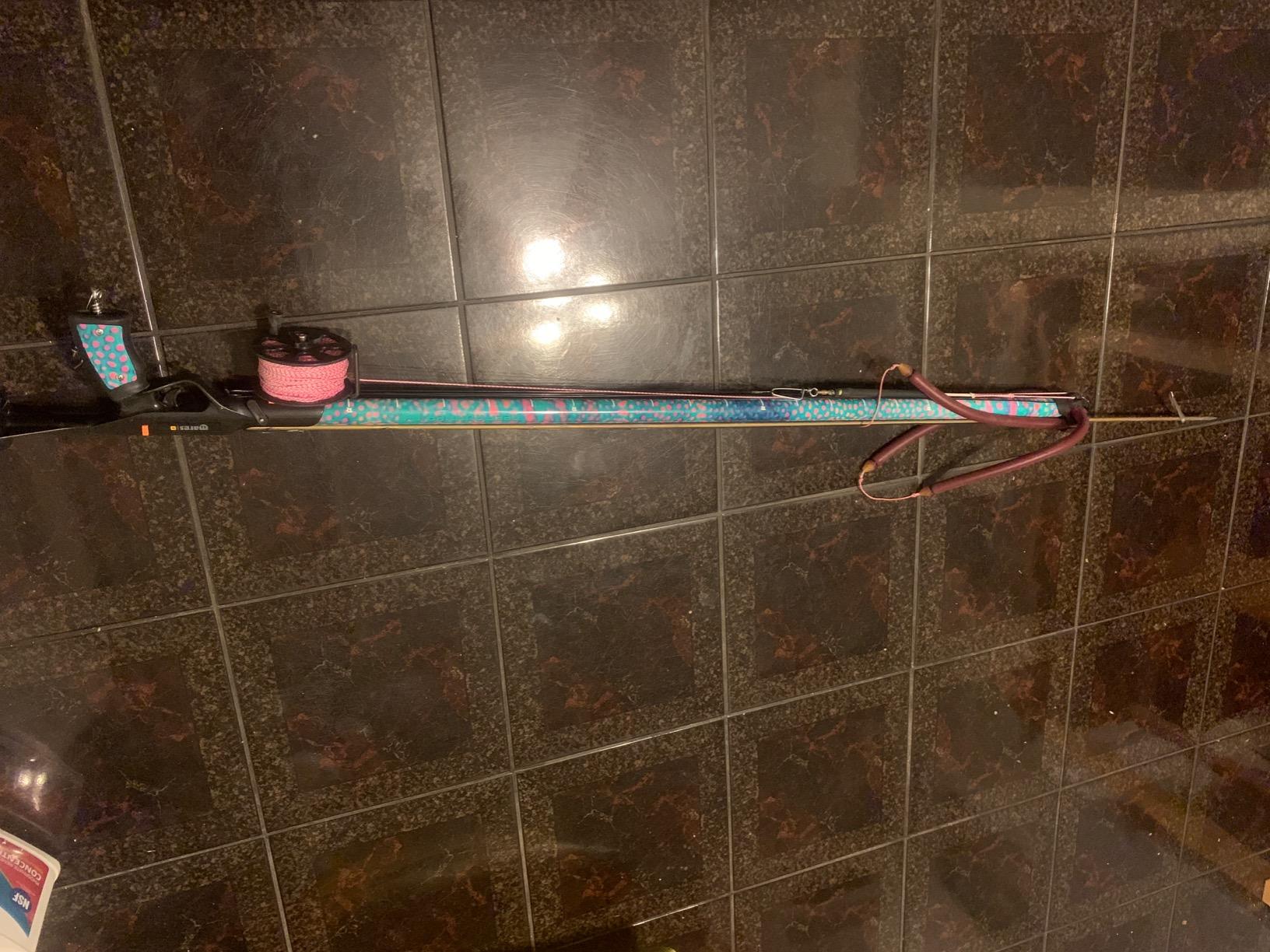
The handle is shaped for gloved hands and comes with a metal clip, so you can hang the gun off a belt loop, a float line or a reel strap without juggling it one-handed. Mares also makes the Bandit in 45, 55, 75 and 120 cm, so this is not a one-environment gun even though the listing shows the 35 cm version.
The trade-off is the muzzle. An enclosed muzzle is trickier to load in rough conditions than a simple open one, because the shaft has to line up inside a guide. And the build mixes metal, rubber and plastic rather than being all-metal, so it will not feel as solid under a heavy hit as a tube from a heavier brand.
Who the Mares Bandit suits
Pick this one if you are diving reefs and ledges for fish in the 1 to 4 kg range and you want power without moving up into railgun territory. A 7mm shaft with a 16mm sling is a combination that punches well above what most beginners think a first gun needs.
It also suits anyone who will add a reel later. The enclosed muzzle gives you the space to work with more than one band once you have the loading motion down, and a second band is the first modification most divers make.
Who should skip the Mares Bandit
Skip it if you are new to loading underwater in current, because the enclosed muzzle asks for more precision than an open muzzle during your first season. Practice on a pool deck or in shallow flat water before you rely on it in a swell.
Also skip it if you want a gun you can hang from a weight belt and forget about for years. The mixed material build is fine for regular use but it is not the same as an all-metal or wood gun that shrugs off knocks.
3. AB Biller 32 Inch Mahogany Speargun – the Top Rated Wood Gun
AB Biller 32″ Special Spear Gun, Mahogany, Mahogany
Mahogany wood barrel
5/16 inch stainless shaft
Double barb rock point tip
Two 9/16 inch rubber slings
Pros
- Highest average rating in the group at 4.4
- Owners describe it as nearly indestructible
- Rock point tip and nylon trigger housing can be replaced
- Wood barrel is easy to move in tight water
- Compact 32 inch size doubles as a backup gun
Cons
- Heavy shaft loses momentum at longer range
- Release mechanism is not especially quick
- Butt end and screw-on tips can loosen over time
This is the only wooden gun in the group, and it is the highest rated at 4.4 across 139 ratings with 75 percent of owners handing over five stars. That consistency is what a workhorse looks like. Owners describe modifying theirs with a reel, a new spearhead and a camera mount, which is the best compliment a speargun can get.
Wood changes how a gun behaves underwater in ways a beginner will notice immediately. A mahogany barrel carries a little buoyancy of its own rather than sinking dead, and it is gentle on rocks and ledges where an aluminum tube rings and bounces. On a rocky bottom, that noise and that impact are real safety considerations, not style points.
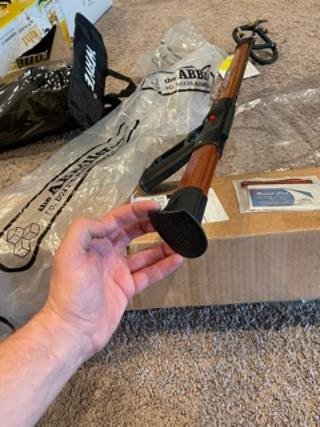
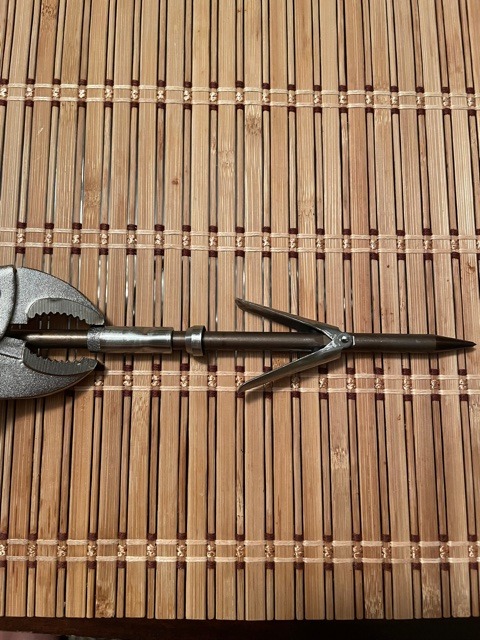
Under the barrel it is a serious tool. A 5/16 inch stainless steel shaft is heavy, a hardened stainless double barb rock point tip holds fish that a single barb might shake loose, and two 9/16 inch natural rubber slings give consistent power. The stainless spring steel trigger mechanism and nylon trigger housing are both serviceable parts, which matters on a gun you keep for years.
The honest weakness is weight. That shaft is built for penetration and that penetration comes at the cost of momentum, so the gun feels slow on shots past close range. The release mechanism is also deliberate rather than fast, and owners do report that the butt end and screw-on tips loosen or arrive damaged, so check the screws before each session.
Who the AB Biller Mahogany suits
Pick this one if you work over rock, on ledges, or anywhere a heavy shaft knocking against stone is a realistic scenario. It is also a strong second gun, because the 32 inch size is compact enough to carry as a backup and still capable on reef fish.
Pick it if you like maintaining your own gear. A nylon trigger housing, replaceable spearhead and screw-on tips mean you can keep this thing running indefinitely with a small parts kit, and plenty of owners do exactly that.
Who should skip the AB Biller Mahogany
Skip it if your dives are all open water and you want a light, fast gun. That heavy shaft is a short-range advantage and a long-range compromise, and no amount of band power will fix a shaft that arrives late.
Skip it if you want to fine-tune your rig repeatedly. A wood gun is dependable rather than configurable, and if your plan is to experiment with band layouts, a railgun or a Euro-style gun is a better platform.
4. SEAC Sting Speargun – the Best on a Dedicated Beginner List
Seac Sting, Rubber Spearfishing Sling Speargun, Made in Italy, 55 cm
Anticorodal aluminum rod
Balanced handle with sternum support
Arrives rigged with shaft and line
One size for many fish
Pros
- Maker positions it specifically for beginners
- Balance and sternum support make loading easier
- Anticorodal rod is built to resist bending
- Arrives with bands shaft harpoon and line
- Line hooks straight onto the rod
Cons
- Longer versions need a real stretch to load
- One-star reviews make up 10 percent of all ratings
SEAC markets the Sting as a beginner gun, and unlike a lot of marketing claims this one holds up when you read the reviews. The balance is the point. A perfectly balanced rod with an anatomical handle and sternum support takes a surprising amount of the difficulty out of loading one-handed, which is the single biggest reason beginners give up.
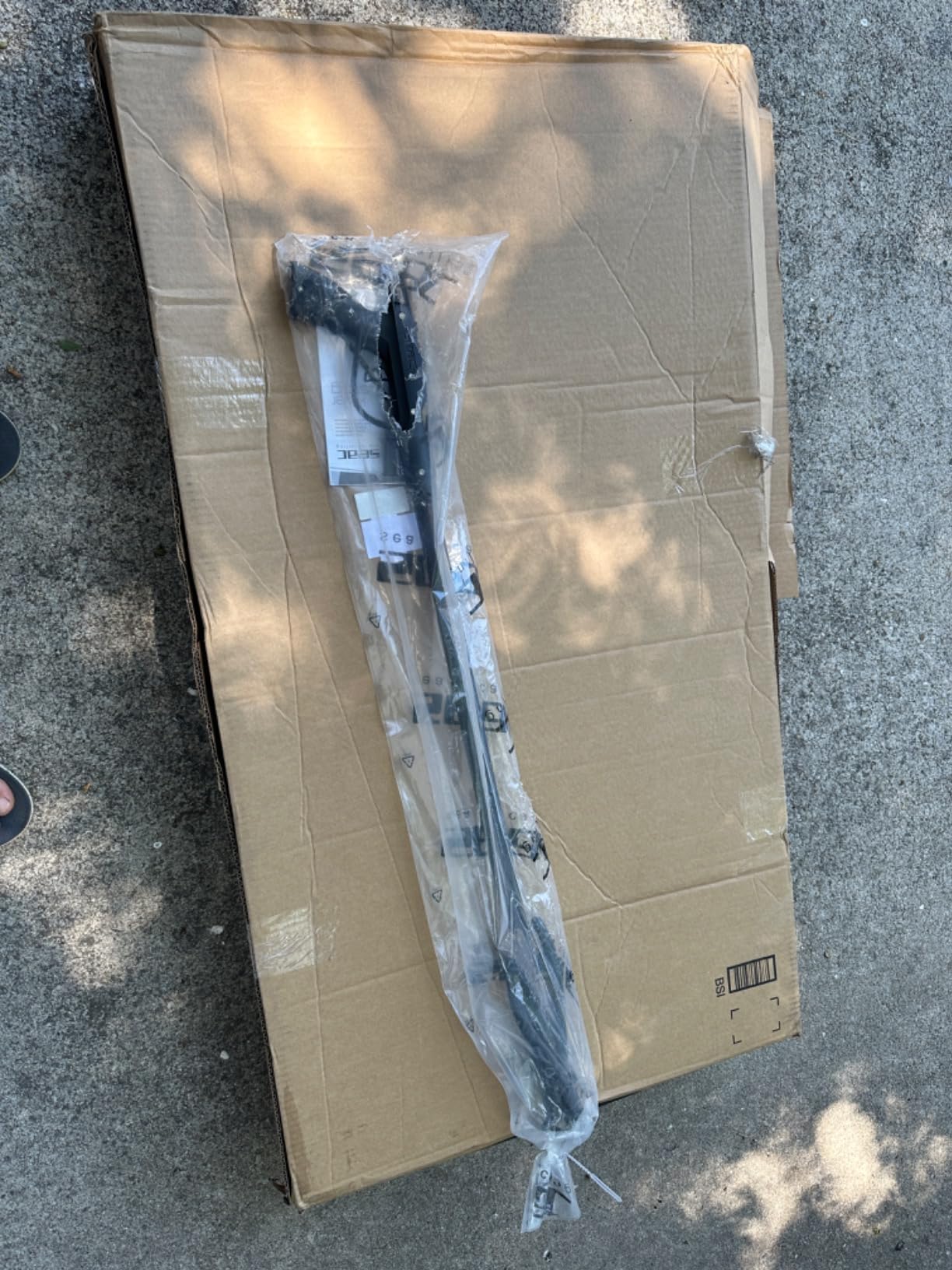
It also arrives complete. You get Seac Progressive Power parallel bands, a PR80 treated steel shaft, a single barb harpoon and a nylon line, and the line hooks directly onto the rod the same way it does on a professional gun. Nothing to buy on day one beyond a knife and a float.
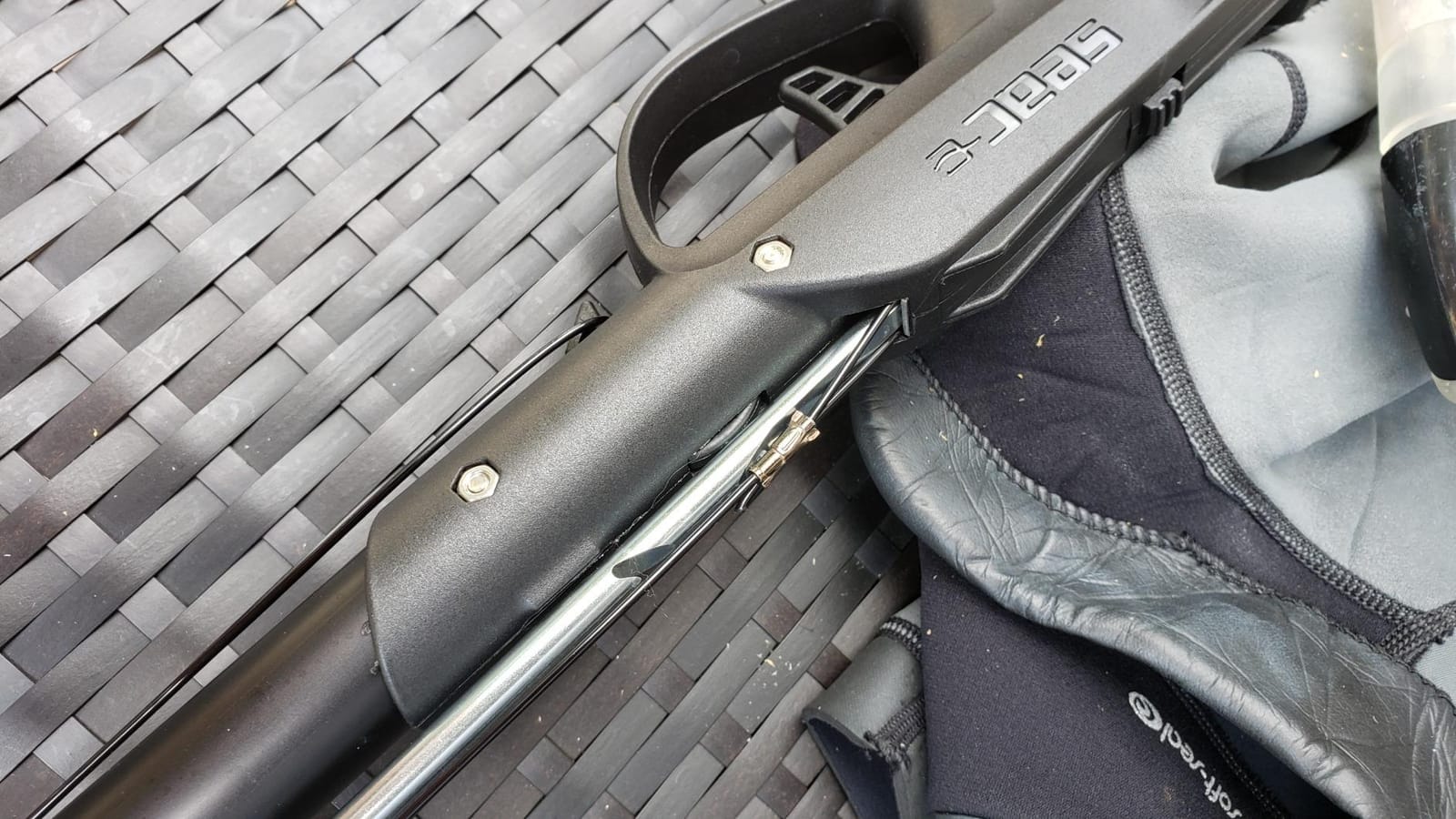
Technically it is a solid, unfussy build. Anticorodal aluminum is the rod material for a reason: it takes a beating and springs back rather than taking a permanent set, which is what you want in a gun you will drag over ledges. The fiberglass-reinforced components and the steel shaft keep the whole thing feeling like gear rather than a toy.
Two things to know. The longer versions in this range ask for a meaningful stretch to load, so the shorter lengths are more forgiving while you are learning the motion. And about 10 percent of ratings sit at one star, which points at occasional finish or tolerance complaints rather than a design fault.
Who the SEAC Sting suits
Pick this if your biggest worry is not power or range, it is whether you will actually enjoy the sport. A balanced gun with sternum support reduces the number of times you drop a loaded band, and dropping a loaded band underwater is the fastest way to end a first season early.
It also suits anyone starting in temperate reefs, estuaries or jetty structure where the targets are modest and consistency matters more than punch. SEAC builds the Sting in six lengths from 35 cm to 85 cm, so you can move up without changing brands.
Who should skip the SEAC Sting
Skip it if you are already comfortable loading a strong band with one hand. At that point the balance that makes it beginner-friendly is neutral, and the parallel bands give you slightly less power per unit of effort than a good circular sling setup.
Skip it if you want to attach a reel from day one. The straight rod line attachment is simple and dependable, but a spiro or vertical reel is a step up that is easier on a gun with a purpose-built rail or trigger.
5. Cressi Comanche Rail Speargun – the Best for Straight Shooting Accuracy
CRESSI Comanche Rail Sling Spearguns, Black/White, 75 cm
28 mm anti-corrosion aluminum tube
16 mm quick bands
Articulated wishbone
Sternum support for reloading
Pros
- Owners report it out-shooting a wooden gun costing several times more
- Single 16 mm band delivers real power on the first notch
- Rail layout makes reloading quick and clean
- Balanced and neutral in the water when loaded
- Dovetail triggering supports a reel later
Cons
- Bands are hard to load without upper body strength
- Supplied safety button is sticky to re-engage
- Shooting line crimps failed within about a dozen shots
The Comanche Rail is the gun that proves a rail barrel is not just for people who already own three spearguns. Multiple owners report it out-shooting a wooden gun that cost several times more, and the reason is mechanical: 28 mm anti-corrosion aluminum tubes resist bending even at length, and the shaft rides the rail instead of bouncing inside a guide.
The 16 mm quick bands on a single band setup give more power than most beginners expect on notch one. That matters because beginners under-load their guns out of caution. You will not need to as much here, and an under-loaded shot is the most common reason first-time spearfishers watch a fish walk away.
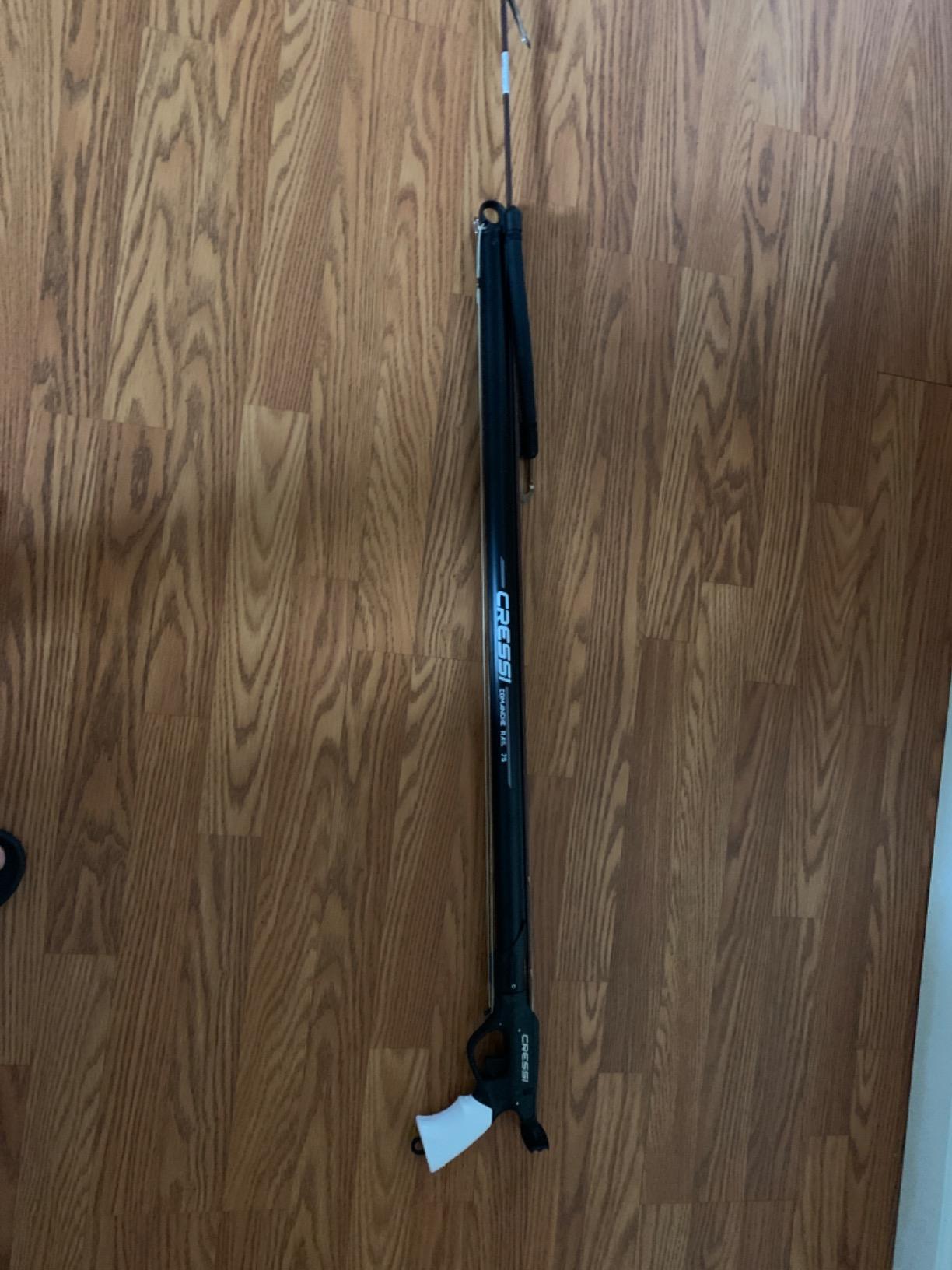
There is a long list of thoughtful details. A very gentle shaft release system, a line ring, sternal support for reloading, dovetail triggering for a reel and a special handle angle that squares the shot up. The articulated wishbone is rated for 16 mm bands and the dovetail means the reel path is already there when you are ready for one.
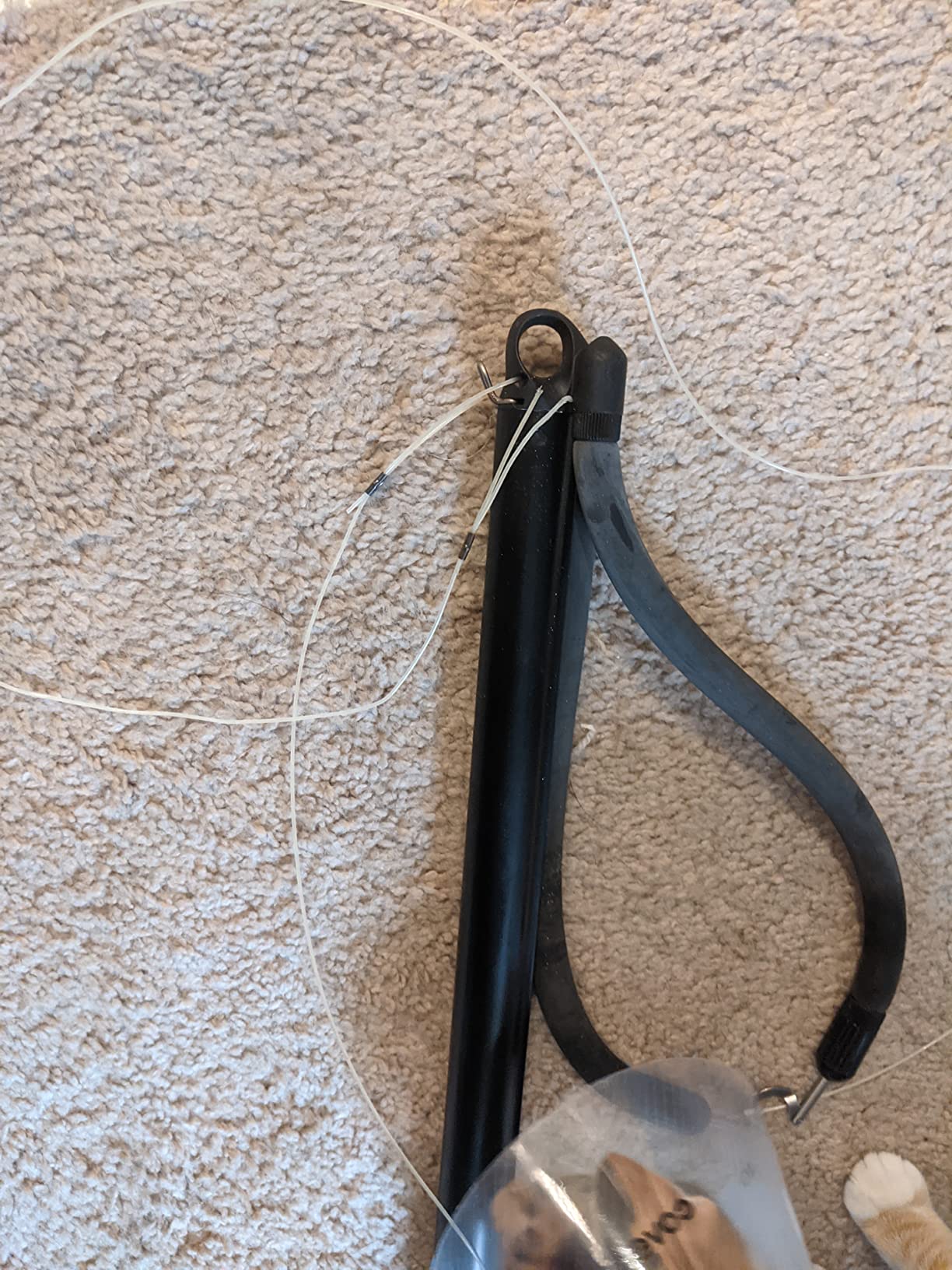
Be honest about the difficulty, because reviews are clear on it. The bands are genuinely hard to load for anyone without upper body strength, the supplied safety button is sticky to re-engage, and several owners had their line crimps fail within roughly a dozen shots. Most of them treat loading as a skill to build rather than a flaw, and most of them added shock cord to make line wrapping less awkward.
Who the Cressi Comanche Rail suits
Pick this if you are a strong beginner with good upper body strength, or if you have a training partner and a pool or flat shallow bay to practise in. The reward for earning the loading motion is a gun that tracks straight and punches hard, and that combination is rare at entry level.
Pick it if you already know you will want a reel. The dovetail trigger and sternum support are the parts a reel needs, so the rail hardware is already there when you are ready.
Who should skip the Cressi Comanche Rail
Skip it if you are small, new, or working from a kayak or a platform where you cannot use a sternum brace. A gun you struggle to load underwater is a gun you stop carrying, and a sticky safety you cannot re-engage is a real problem, not an inconvenience.
Also skip it if you want a simple first purchase with no maintenance learning curve. The rail, the wishbone and the line crimps all need a little care, and that care is worth it only if you plan to keep the gun for years.
6. JBL D7 Carbine Speargun – the Best for Short Trips and Packable Gear
JBL Spearguns Carbine Speargun for Spearfishing, Speargun for Freediving, Scuba Diving, Fishing, Diving, Aluminum Barrel, Stainless Steel Shaft, Easy Stretch Bands
33 inch aerospace aluminum barrel
Nitro Bands stretch easier
Closed muzzle and slide ring
Thumb lock-out safety
Pros
- Ready to use out of the box
- Nitro Bands stretch 20 percent easier to load
- Winged band slots keep bands parallel to the shaft
- Pistol grip with thumb safety feels natural
- Over 50 years of brand experience behind the build
Cons
- Bands need two strong hands in the smaller frame
- Supplied bands may need replacing after about ten loads
- Supplied shaft is unthreaded with a blunt tip
The D7 Carbine is built for a specific situation: short sessions, boat dives, and divers who do not want to carry a metre of aluminium into the water. At 33 inches it is short enough to control in a current or under a ledge, and it still has the mass to put a shaft into a decent reef fish.
Two features make it easier than it should be for a pistol grip. The Nitro Bands with COMPOUND X stretch 20 percent easier without giving up power, and the winged band slots keep the bands running parallel to the shaft instead of splaying out sideways, which is a real accuracy difference on a short gun.
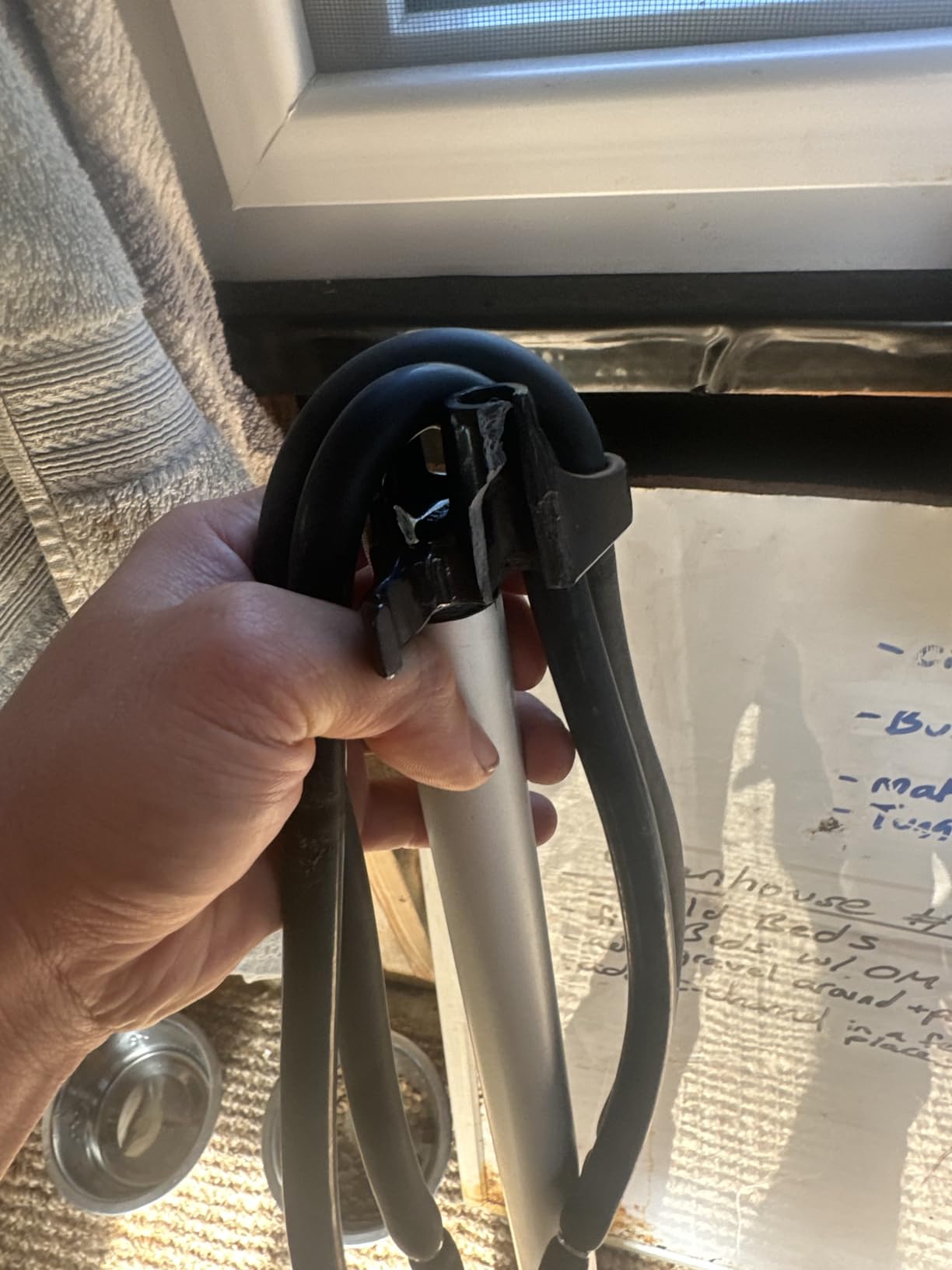
The loading system is the best part of the design. A closed muzzle plus a shaft slide-ring means the shaft drops into position and stays there, rather than being threaded through a rail by feel in the dark. The low profile pistol grip with an integrated thumb-operated lock-out safety is comfortable and unambiguous.
It also has the widest rating spread in the group. At a 4.0 average with 286 ratings, 60 percent of owners are at five stars but 13 percent are at one star, and the complaints cluster around band durability and the supplied shaft. Owners of the larger Super Carbine report more durability problems than owners of this one, and several people fix the gun by adding a threaded shaft and a three-prong tip.
Who the JBL D7 Carbine suits
Pick this if you are diving from a small boat, working close to a jetty or a wreck interior, or simply want a gun that is not in the way. The 33 inch length manoeuvres well and the pistol grip keeps the barrel out of your vision when you are looking at a fish rather than at your gear.
Pick it if band strength on a small frame is a concern. Bands that stretch 20 percent easier are a genuine help if you are new, and the two-handed load on a carbine this size is normal rather than a warning sign.
Who should skip the JBL D7 Carbine
Skip it if your targets are big. A short carbine with a compact shaft and a blunt supplied tip is built for reef species, and reviewers regularly upgrade the shaft and tip because the supplied combination runs out of penetration first.
Skip it if you want the very lowest maintenance approach. These bands are strong, and several owners report replacing them after roughly ten loads or watching a band and then a gun fail within a few shots.
7. Salvimar Wild Pro Speargun – the Best Base for Adding a Reel
SALVIMAR Wild Pro Speargun for Spearfishing – Underwater Hunting Spear Gun with 28mm Aluminum Barrel, 6.5 mm Tahitian Shaft, 14 mm Screw in Elastics, Stainless Steel Release System, 60
28 mm aluminum barrel
6.5 mm Tahitian shaft
Pair of 14 mm screw-in elastics
Reel ready muzzle bridge
Pros
- Light barrel tracks easily underwater
- Screw-in elastics give repeatable tension
- Stainless steel release system is dependable
- Fiberglass reinforced handle gives a secure grip
- Removable muzzle bridge allows flexible band setups
Cons
- Screw-in elastics take more setup than plug-in rubbers
- Smallest five-star share among the higher reviewed guns at 60 percent
The Wild Pro is the Euro-style option on this list, and that means it is built around screw-in elastics and a reel-ready muzzle rather than plug-in rubbers and a bare barrel. For a beginner who is fairly sure they will add a reel in a season or two, that architecture is worth choosing on purpose.
The 28 mm cylindrical aeronautical aluminium barrel is light and easy to track underwater, and the 6.5 mm Tahitian shaft is tuned for speed and penetration rather than raw weight. Pair that with a dual 14 mm screw-in elastic setup and you have more than enough for reef fish and most coastal species.
Who the Salvimar Wild Pro suits
Pick this if you plan to fish deeper or further from shore than a short gun allows. A reel plus a float line is how you cover real ground, and this gun is compatible with Salvimar reel setups and has a reinforced muzzle with a removable bridge to make the rig work.
Pick it if you like repeatable power. Screw-in elastics hold their tension far more consistently than plug-in rubbers, and owners call the stainless steel release system dependable, which is what you want on a rig you cannot easily reach underwater.
Who should skip the Salvimar Wild Pro
Skip it if you want the least fussy first gun on the shelf. Screw-in elastics take more time to fit than plug-in rubbers, and that setup time is exactly what makes band changes annoying when you are standing on a beach in the dark.
Skip it if you want the strongest owner consensus here. At 60 percent five-star and 11 percent three-star, this is the least glowing rating distribution among the more-reviewed guns in the group. The recurring question in reviews is simply how much punch 14 mm elastics give on larger fish.
8. Beuchat Espadon Sport Speargun – the Budget Pick
BEUCHAT Espadon Speargun (750 (75cm))
25 mm aluminum tube handle
13 mm circular powerbands
6 mm threaded shaft
Arrives rigged with 2 mm line
Pros
- Built specifically for beginners and improvers
- Comes fully rigged and ready to spearfish
- Reviewers call it very easy to set up for a first timer
- Solid build quality
- Standard 6 mm threads make shaft upgrades easy
Cons
- Supplied 13 mm bands are the weakest link
- 75 cm version is large for small fish and tight quarters
- 35 cm version has a single band and limited power
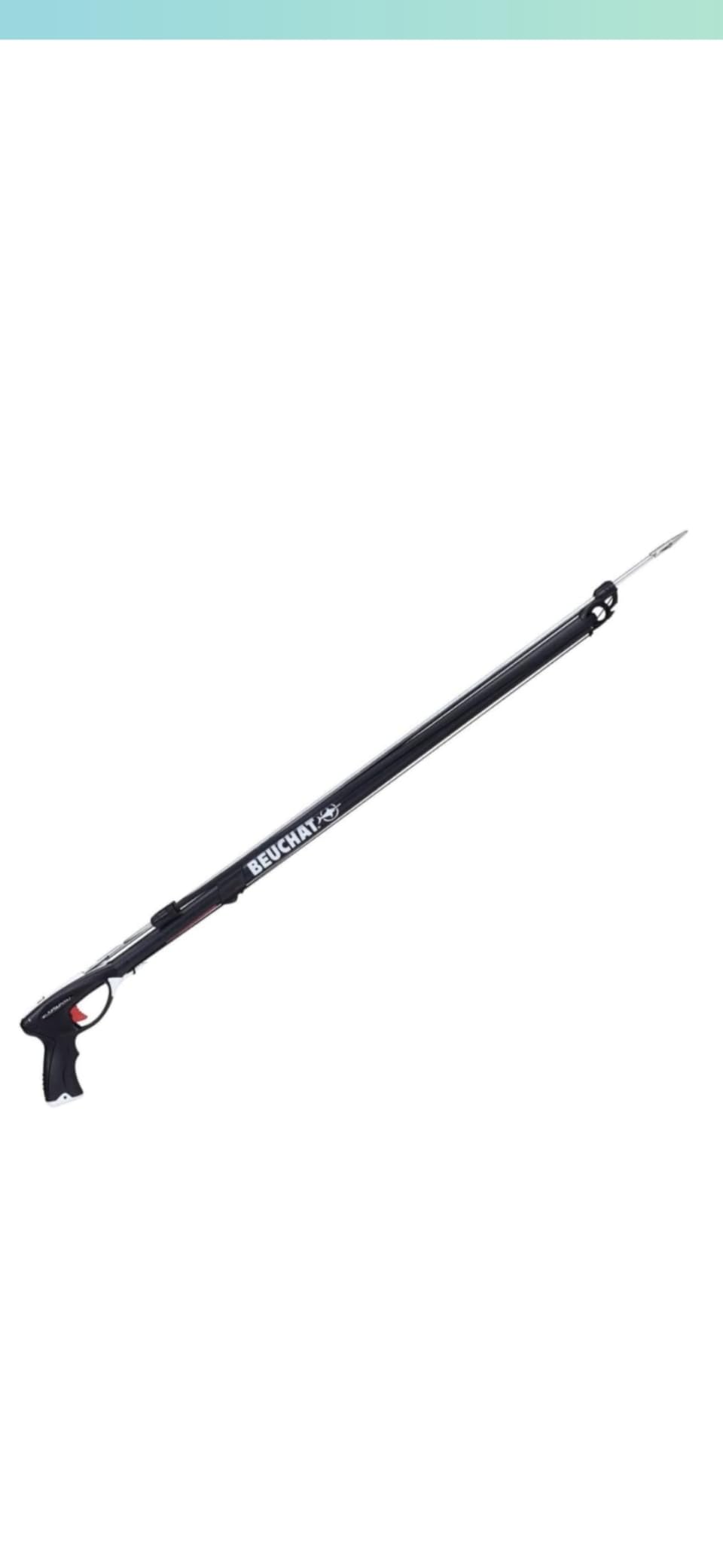
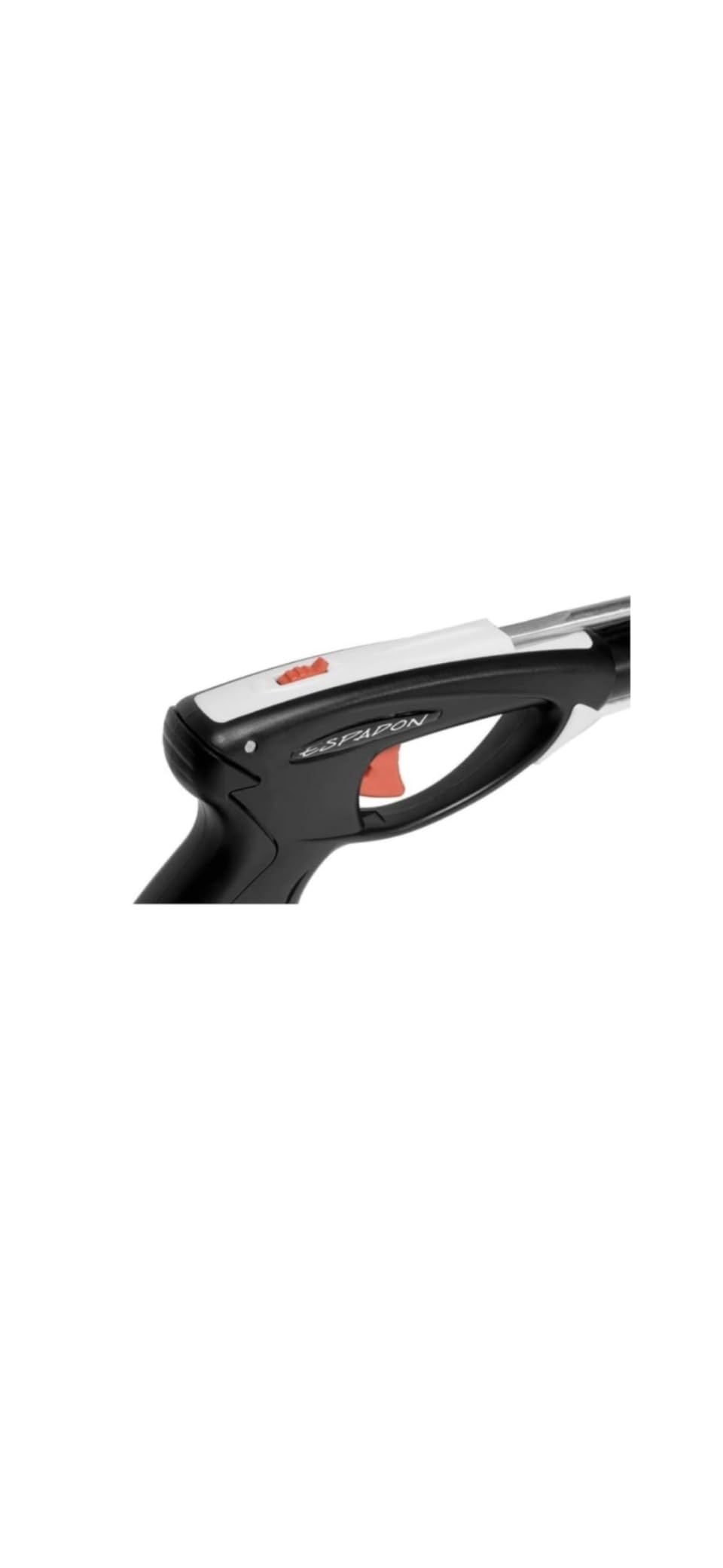
The Espadon Sport is the most affordable gun we tested and the one with the clearest beginner positioning, and the two facts are related. Beuchat builds this gun for people on their second or third season, and it shows in the simple, friendly spec sheet and the very easy setup that reviewers keep mentioning.
It arrives complete as well. You get the band, shaft, single barb speartip and 2 mm nylon shooting line in the box, and the handle is mounted on a 25 mm diameter aluminium tube, which is a comfortable diameter for a small gun that you will be holding in one hand for an hour.
Who the Beuchat Espadon Sport suits
Pick this if you have one purchase to make and you want it to be a complete, working gun. Nothing is missing, the threading is standard, and the setup takes an afternoon rather than a weekend.
Pick it if your targets are small. Reviewers call it deadly within its range, and a compact gun with a 6 mm threaded shaft is a great tool for shallow reef species and structure fishing in places where a long gun is a liability.
Who should skip the Beuchat Espadon Sport
Skip it if you want strong bands out of the box. The 13 mm circular powerbands are the weakest link in this package, one reviewer reported a band failure, and upgrading to stronger bands is the first thing you will do. Bands on a gun like this are consumables anyway, so count on replacing them.
Also skip it if you are between sizes and unsure which to take. The 75 cm version is large for small fish and tight quarters, while the 35 cm version has a single band and limited power, so pick your length by target fish rather than by which listing looks most appealing.
9. Mares Sniper Alpha Sling Speargun – the Best for Close Range and Gloved Hands
Mares Sniper Alpha Speargun for Spearfishing – Pneumatic Spear Gun with Aluminum Barrel & Circular Elastic – 35cm
25 mm anodized aluminum barrel
14 mm circular latex sling
7 mm Tahitian shaft
Sensitive reversed firing mechanism
Pros
- Compact and light for small fish and short shots
- Ergonomic concave handle works with gloves and either hand
- Stainless steel rod and line releases resist corrosion
- Surprisingly hearty band for such a small gun
- Configures easily to a vertical spiro reel
Cons
- Instructions are poor and many buyers could not rig it
- Range is roughly 10 to 12 feet
- Supplied elastic and shaft can feel underpowered
The Sniper Alpha is the smallest useful gun in this group and it is a genuinely good answer to the question of what size a beginner gun should be. At 35 cm in this listing, with versions at 45, 55 and 75 cm, it is a tool for getting close to fish rather than sniping at them from range.
The handle deserves a specific mention. The concave thumb surface is moulded into the grip rather than sitting on top of it, and it is designed to be used with gloves and with either hand. For anyone who dives in cold water, that is not a small detail. The reversed firing mechanism is also sensitive, which helps you place a shot instead of blasting one.
Who the Mares Sniper Alpha suits
Pick this if you are learning in water you can see through, where you can get within a few metres of your target. At roughly 10 to 12 feet of useful range, this gun rewards the habit veterans keep recommending, which is learning to get close instead of learning to shoot harder.
Pick it if you are cold-water diving and you care about gloved handling. The ergonomic handle, the stainless steel rod and line releases and the anodized 25 mm barrel all hold up well when your hands are not working properly.
Who should skip the Mares Sniper Alpha
Skip it if instructions matter to you, because the rigging documentation is the single biggest complaint in the reviews. Low resolution black and white images left several buyers unable to work out how to string it, and that is a bad first impression for anyone who has never assembled a gun before.
Skip it if you want more range or more power. The supplied elastic and shaft are the parts owners most often replace, so plan for a band and a shaft upgrade early rather than relying on the supplied combination.
10. SEAC Hit Speargun – the Best for Tight Spots and Small Hands
SEAC HIT, Speargun with Circular Elastic Head, Made in Italy
Anticorodal aluminum barrel
Technopolymer handle
Closed head with 4 mm bushings
14.5 mm elastic and PR-80 shaft
Pros
- Year-round owners call it durable and easy to use
- Technopolymer handle is very maneuverable
- Anticorodal barrel resists flex and handles rough use
- 45 cm version gets into holes and tight spots with zero recoil
- Supplied complete with elastic and PR-80 steel Tahitian rod
Cons
- Supplied 14.5 mm elastic is weak past small reef fish
- Plastic trigger and line release are flimsy
- One buyer received a package with no shaft
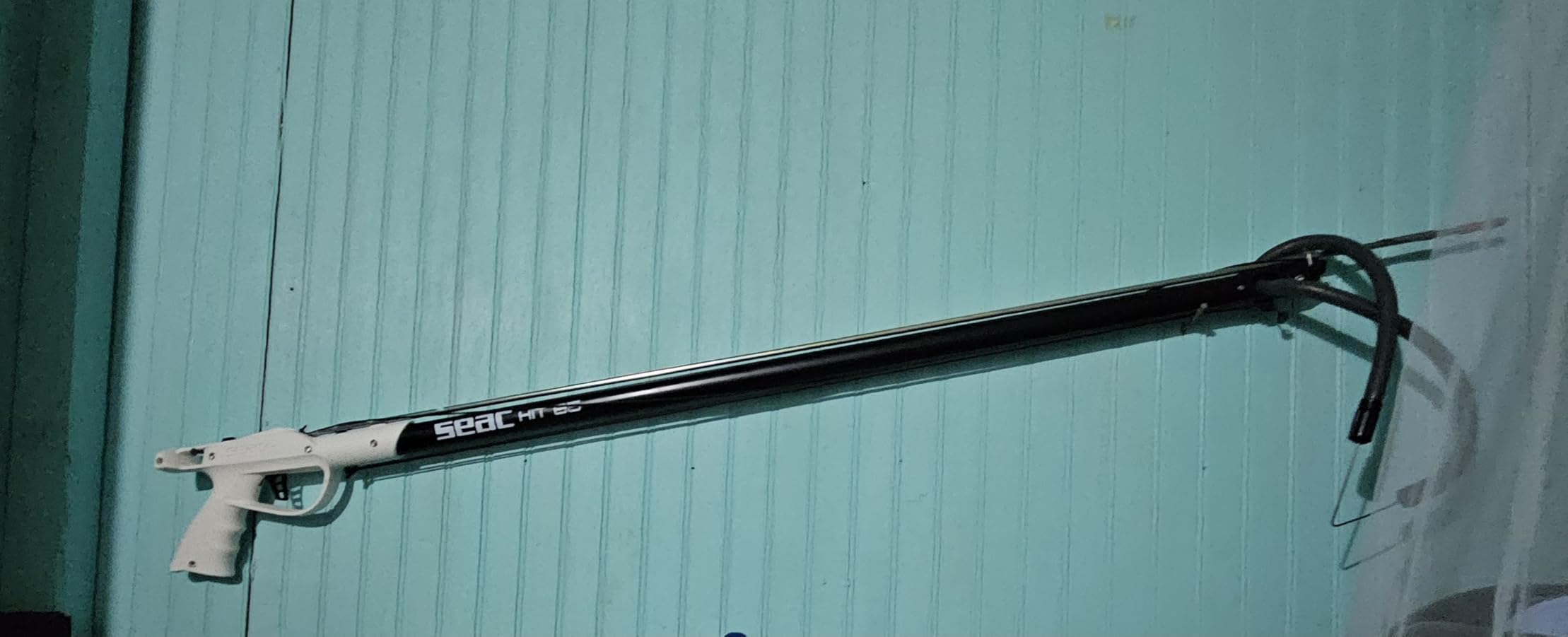
The SEAC Hit is the newest gun in this group, with the fewest reviews, and that means your owner data is thinner than anywhere else here. What the reviews do agree on is handling. The technopolymer handle is repeatedly described as very maneuverable and ergonomic, and a good grip matters more than people expect when you are holding a loaded gun one-handed.
It is built around a closed head with a circular rubber band and standard 4 mm nosepiece bushings, supplied with a 14.5 mm Anthracite Flex circular elastic and a PR-80 steel Tahitian rod. SEAC builds it in six lengths from 35 cm to 85 cm, and the 45 cm version is the one owners single out for getting into holes and tight spots with almost no recoil.
Who the SEAC Hit suits
Pick this if small hands and tight water are your reality. A 45 cm closed-head gun with a technopolymer handle is easy to control in a swim-through, under a ledge or in a shallow mangrove edge, and the package weight is light enough to carry all day without thinking about it.
Pick it if you shoot small fish a lot. With a modest 14.5 mm elastic and a compact barrel, this is a precision tool for reef species rather than a power tool, and used that way the reviews are very positive.
Who should skip the SEAC Hit
Skip it if you want one gun that covers everything. The supplied 14.5 mm elastic underpowers anything past small reef fish, and many owners add a second band, which is fine if you planned for it and annoying if you did not.
Skip it if you are hard on hardware. The plastic trigger and plastic line release are the weak point according to several owners, and the line can slip off. The one-star reviews also include a shipment with no shaft inside, so check the contents on arrival.
How to Choose Your First Speargun: 7 Questions to Ask
Ask these seven questions in order and the right gun picks itself. The order matters because the first two narrow the list more than everything else combined, and most shoppers get them backwards by choosing a brand first.
1. What fish are you actually going to shoot?
Reef fish like calico bass, sheepshead and tautog need a 6.5 mm or 7 mm shaft and a single good band. Coastal runners need a longer gun, a heavier shaft and often a reel. Deciding this first saves you from buying a beautiful gun that cannot reach your quarry.
2. What does the water look like and what is the bottom like?
Clear water punishes a long gun and rewards accuracy. Murky water lets you get closer and lets you carry a shorter gun. Rocky bottoms and ledges are where a wood barrel and a gentle release start to matter more than raw power.
3. How long should a beginner gun be?
Most beginners should land between 45 cm and 75 cm. Under 45 cm you are committed to very close range. Over 75 cm you are carrying a long object through current, under ledges and into places you would rather not be. Bigger guns reward technique you do not have yet, so start in the middle and move up once you are loading consistently.
4. How many bands should a beginner speargun have?
One band, loaded to a notch you can manage. Most beginners load far too weakly because they are afraid of the recoil, and an under-loaded shot is the most common reason a fish gets away. Move to two bands only after the single-band motion is automatic, and move to the second notch before you move to more bands.
5. What shaft diameter and shaft type?
6.5 mm and 7 mm are the beginner sweet spot. Below 6 mm you will bend shafts and lose fish; above 7 mm the gun gets heavy and hard to load. Tahitian flopper shafts spread energy and hold a line, Sharkfin shafts add strength and fins for tracking, and both are reasonable first choices.
6. What is a wishbone and why does the material matter?
The wishbone is the metal or synthetic part that holds your band hooks under tension behind the trigger. It is the single most under-considered safety item on any speargun, and the next section covers why.
7. What do the local rules actually allow?
Spearfishing regulations vary enormously by region, and some areas restrict specific gear types, restrict certain species, or only permit pole spears in sensitive habitat. Check the local rules for where you plan to hunt before you buy anything, because the rules are the part of the decision that is genuinely hard to change later.
One more practical note on total cost. A gun is never the whole budget. Add a reel or a float line, a float line for a float gun, a knife, gloves and a stringer, and you will be planning for a second purchase within a month. Our other beginner gear guides, from the best guitar brands for beginners to the best mandolins for beginners, follow the same principle: budget for the first complete setup rather than the headline item.
Speargun Types Explained: Band-Powered vs Pneumatic vs Pole Spear
There are three real categories and one myth, and choosing between them for a beginner is much simpler than gear forums make it sound.
Band-powered guns use a stretched rubber sling to fire the shaft. They are quiet, cheap to maintain, simple to reload and available everywhere, and eight of the ten guns on this list fall into this category. For a beginner it is the only type worth serious consideration.
Pneumatic guns use compressed air and they hit harder off a smaller package, but they need a pressure source, more care, more parts and a refill. Owners report they are harder to maintain and harder to reload underwater, which is a poor trade for someone still learning the basic motion.
Pole spears are held in the hand and pushed rather than fired. They are the most affordable way to start, they force you to swim close to fish, and the close-range habit you build is exactly what every veteran recommends. The Spearfishing subreddit and the DeeperBlue beginner threads both repeat the same advice: learn to get close first, and buy a gun second.
Railgun is not a separate type. It is a barrel design where the shaft rides on an external rail instead of inside a tube, which makes loading faster and more accurate but adds a bushing that can wear. For a beginner, a closed-muzzle tube gun is simpler; a rail gun is the natural upgrade once you are loading without thinking about it.
Spearfishing Safety: Why Metal Wishbones Break Fingers
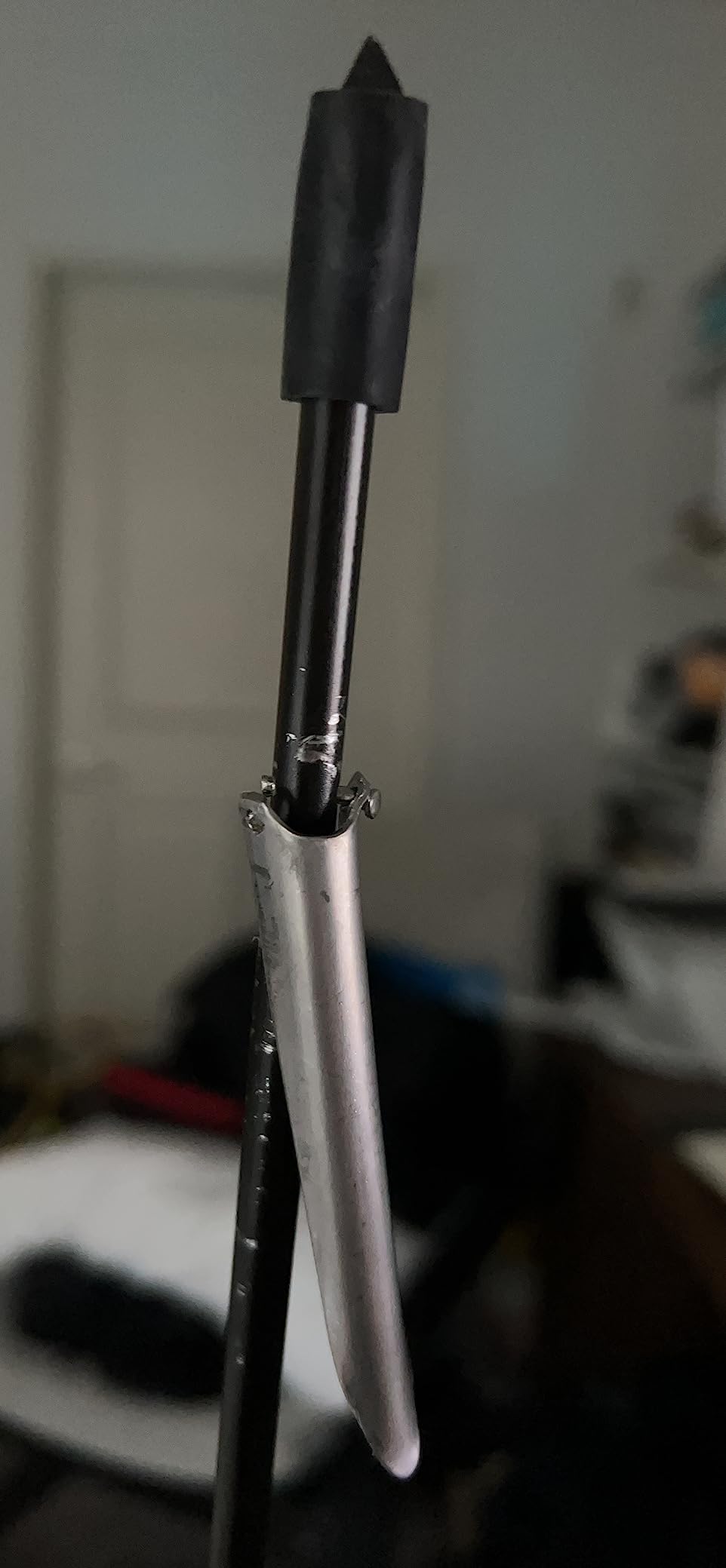
A wishbone holds the band hooks under tension directly behind the trigger. On many entry-level guns it is a piece of bare metal, including the Salvimar Wild Pro in this roundup, which arrives with a metal wishbone.
When a wishbone fails, it releases a stretched band with the full stored energy of the weapon, and it usually fails at the least convenient moment, which is during loading when the band is at maximum draw. Experienced divers warn about this in every beginner thread we read, and it is the one warning we would put at the top of this guide.
Swapping a metal wishbone for a synthetic one such as dyneema takes a few minutes and very little money. A synthetic wishbone gives slightly before it lets go, which turns a catastrophic failure into an inconvenience. Do it before the first session, not after.
Two more safety rules worth repeating. Never spearfish alone without a buddy system and a surface buoy, because a freediver with a loaded gun underwater is in a genuinely difficult position if something goes wrong. And check your local regulations, since some areas restrict gear types and species and the penalties are serious.
Our other beginner gear guides
Same testing approach, different equipment. If you are putting together a wider starter kit, our beginner wakeboard guide covers the same balance-of-control-versus-forgiveness thinking that applies to gun length and band power.
Which Gun for Reef, Kelp, Wreck and Blue Water
Competitor guides almost never match the gun to the environment, which is why so many beginners end up with a gun that is wrong for their actual water. Here is the honest breakdown.
Shallow reef and estuaries: a 45 to 60 cm closed-muzzle gun with a 6.5 mm or 7 mm flopper shaft. The SEAC Sting and the Cressi Apache at shorter lengths fit this exactly, and accuracy matters far more than power in clear shallow water.
Jetty, pier and structure fishing: a 60 to 75 cm gun with more shaft than you think you need, because the fish are usually in cover and you want a shaft that goes through the first metre rather than stopping in the mud. The Mares Bandit and the Cressi Comanche Rail suit this work.
Kelp forest: a compact, light gun with a handle you can control one-handed and a length you can pivot in a current. The JBL D7 Carbine and the SEAC Hit at 45 cm are the right shape here, and control beats power every time between the fronds.
Wreck and deeper structure: longer guns come into their own, and this is where the rail barrel earns its keep. The Comanche Rail stays straight at length, and the Salvimar Wild Pro makes sense if you are adding a reel to cover the ground.
Blue water: most beginners should not be here yet. When they are ready, the criteria are shaft weight, accuracy and a reel, and the AB Biller Mahogany gun is built for the durability side of that equation. Rock point tips and heavy shafts are the right call for large fish and the wrong call for everything else.
Speargun Maintenance: What to Do After Every Session
None of the competitor guides we read included a care section, and it is the easiest way to extend the life of a first gun. Five minutes after every session is enough.
Rinse the barrel and shaft in fresh water, especially the muzzle and the shaft threads, where salt crystallises and quietly wears metal. Check the band and wishbone for cuts, nicks and chalkiness, and treat any fraying as end of life rather than something to watch. Run the shaft and tip on a flat surface to check for bends, and store shafts tip down so they do not develop a kink.
Replace your line when it goes stiff or fuzzy, and re-crimp rather than just re-tying, because a crimp that has failed once will fail again. Keep bands in a drawer away from sunlight and heat, because rubber ages faster warm than cold. That is the whole routine.
Frequently Asked Questions
What size speargun is best for beginners?
For most first-time spearfishers the answer is a 45 cm to 75 cm band-powered gun. Under 45 cm commits you to very close range, and over 75 cm you are carrying a long object through current and under ledges. Pick a length that matches your target fish: small reef species suit 45 to 60 cm, while coastal runners and structure fishing suit 60 to 75 cm.
What is the best affordable speargun for beginners?
The best affordable option in our roundup is the Beuchat Espadon Sport, which arrives fully rigged with band, threaded 6 mm shaft, speartip and shooting line, so there is nothing else to buy to make it work. The Mares Bandit is the stronger value if you want a 7mm shaft and 16mm sling, which is a noticeably better foundation for reef fish.
What is the best beginner gun?
The Cressi Apache is our best beginner gun because it has the largest owner base of anything we tested, with 1146 ratings, a closed muzzle that is forgiving to load, and a replaceable band and wishbone assembly. The Mares Bandit is the better value pick and the AB Biller 32 inch Mahogany is the best built if you plan to keep the gun for years.
What is the best pole spear for a beginner?
A pole spear is the least expensive and often smartest way to start, because it forces you to swim close to fish instead of shooting from range, and that habit transfers directly to gun hunting. Beginners on the Spearfishing subreddit and DeeperBlue forums consistently recommend months with a pole spear before buying a gun with a trigger. Pick one that is roughly as long as your arm plus your reach.
Band-powered or pneumatic for a beginner?
Band-powered. Rubber slings are quiet, cheap to maintain, easy to reload and available everywhere, while pneumatic guns need a pressure source, more parts, regular servicing and are harder to reload underwater. Owners report the maintenance and reloading difficulty of pneumatics clearly, and it is a poor trade while you are still learning the loading motion.
Why are metal wishbones dangerous?
The wishbone holds your band hooks under tension directly behind the trigger, and on many entry-level guns it is bare metal. When it fails it releases a fully stretched band at the moment of maximum draw, usually while you are loading. Experienced divers warn about this constantly, and fitting a synthetic dyneema wishbone takes minutes and lets the band give slightly before it lets go.
Final Verdict: Which Beginner Speargun Should You Buy?
Buy the Cressi Apache if you want the best spearguns for beginners decision to be an easy one, because more owners have already made the same choice and documented the results. Buy the Mares Bandit if you want the most power and the thickest shaft in the group, or the Beuchat Espadon Sport if you want one complete package and nothing else on the first day. If you already know you will be doing this for years, the AB Biller Mahogany is the gun that stays in the roof rack while everything else gets replaced.
Whichever you pick, fit a synthetic wishbone before the first session, keep the buddy system rule, and check your local regulations. Those three things ask nothing of your gear budget and they matter far more than the last few millimetres of barrel length.