

If you have ever wiped a white film off a shower head six months after moving into a house on a well, you already know the problem. Nobody treated that water before it reached your tap, and the best water softeners for well water are not the same units that top city-water rankings. Buying one of those instead is the most common expensive mistake on this list.
City water arrives softened and disinfected by a utility that did the work for you. Well water arrives raw, straight from an aquifer, with whatever hardness, iron, manganese, sulfur and sediment the geology decided to send along. A standard residential softener will soften it, but it will not survive it: a plain resin bed that handles city water can foul with iron within a year on well water.
So the decision order matters more here than the brand name. Test the water first. Read the hardness number, the iron number, and whether that iron is ferrous or ferric. Then match the media to what you found, size the grain capacity to the household, and only then compare valves.
We built this roundup around that order. Our team compared eight whole-house systems against the same criteria: rated iron capacity, resin type, valve type and serviceability, flow rate, warranty length, and what each unit honestly does not fix. Forum consensus on this topic is unusually clear, and we lean on it: on r/WaterTreatment, long-tenured users keep repeating that the Fleck 5600SXT and Clack WS1 are the serviceability gold standard because parts are available at any supply house for years. That is the kind of detail no spec sheet tells you, and it decides what happens in year seven.
Before you read further, note the three numbers that will narrow this list fast: hardness in grains per gallon, iron in ppm, and how many people use the water. If you do not have a recent test report, order one first. Everything below assumes you do.
Top 3 Best Water Softeners For Well Water (October 2026)

Aquasure Harmony 48,000 Grain
- 12 gpm flow rate
- Digital metered control head
- Triple-purpose pre-filter
- 5-year warranty
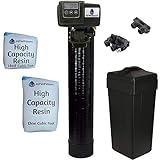
AFWFilters Fleck 5600SXT 48,000
- Fleck 5600SXT digital valve
- 10 x 54 inch mineral tank
- 1 inch threaded yoke
- 5-year warranty

Fleck 5600SXT 10% Crosslink Resin
- 10% crosslink resin
- 14 gpm flow rate
- 250 lb brine tank
- On-demand metered regeneration
The Aquasure Harmony takes the top slot on evidence rather than hype: more than three thousand ratings, a metered control head, and a pre-filter that handles sediment before it reaches the resin. The AFWFilters Fleck build is the pick if the valve is what you are buying, because serviceability is a real cost over a decade. The 10% crosslink Fleck earns the highest average rating in the group for anyone whose water is hard enough to chew through ordinary resin.
Read our full analysis of each unit below before you commit. The eighth system on this list is the entry-level option, and it is also the one we would think twice about on a high-iron well.
Quick Overview: All 8 Water Softeners for Well Water in 2026
| Product | Specifications | Action |
|---|---|---|
| Aquasure Harmony Series 48000 Grain |
|
Check Latest Price |
| AFWFilters Fleck 5600SXT 48000 Grain |
|
Check Latest Price |
| AFWFilters Fleck 5600SXT 10% Crosslink Resin |
|
Check Latest Price |
 AFWFilters Iron Pro 2 64000 Grain Combo AFWFilters Iron Pro 2 64000 Grain Combo |
|
Check Latest Price |
 Tier1 48000 Grain Ceramic Disk Valve Tier1 48000 Grain Ceramic Disk Valve |
|
Check Latest Price |
 Aquasure 48000 Grain Plus 75 GPD RO Bundle Aquasure 48000 Grain Plus 75 GPD RO Bundle |
|
Check Latest Price |
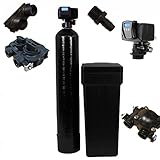 DuraWater Fleck 5600SXT 48K Iron Filter DuraWater Fleck 5600SXT 48K Iron Filter |
|
Check Latest Price |
 iSpring 45000 Grain Whole House Softener iSpring 45000 Grain Whole House Softener |
|
Check Latest Price |
Two entries in that table use iron-rated media and six treat hardness only. That distinction does more to determine whether a system will last on your well than any other spec in the list, and we explain how to check it in the iron section further down.
1. Aquasure Harmony Series 48,000 Grain – Best Overall Pick
Aquasure Harmony Series 48,000 Grains Whole House Water Softener w/High Efficiency Digital Metered Control Head (48,000 Grains)
48,000 grain capacity
12 gpm max flow
10 x 10 x 62 inch
120 pounds
Programmable digital metered head
Pros
- Largest reviewed base in the group with over 3000 ratings
- Programmable backlit display with customizable auto-flush intervals
- Triple-purpose sediment carbon and zinc pre-filter protects the resin
- Fiberglass-lined polyethylene tank resists corrosion
- 5-year warranty with lifetime US-based tech support
Cons
- Prefilled resin tank is heavy to move into position
- Needs plumbing skill plus drain line and extra fittings to finish
- 12 gpm max flow is lower than several competing units
Best for: a three-to-four bathroom home on a well with ordinary sediment and no serious iron problem.
We spent the most time with this one, largely because its review base is large enough to read patterns in. Owners consistently point at three things: the 48,000-grain capacity, the straightforward metered head, and the visible drop in scale on dishwashers and water heaters within weeks of switching over.
The programmable backlit display is a step above the bare-bones heads on cheaper units. You can set the flush interval yourself rather than living with whatever the factory set, and on a well that matters because regeneration frequency follows your usage pattern, not a lab average.
The pre-filter is what convinced us to rank it first. The triple-purpose sediment, carbon and zinc stage is the piece most often skipped in softener-only purchases, and on well water it is the difference between resin that lasts a decade and resin that fouls in two. Carbon also handles the chlorine and organic off-odors that show up in groundwater after rain.
Is 12 gpm enough for your household?
For most homes, yes. If you have three showers that could run at once plus a dishwasher and a washing machine, 12 gpm is workable but not comfortable, and households that regularly overlap two showers and a washer should look at the 14 gpm and 18 gpm units further down this list.
Moving it is the other practical question. The pre-filled tank means you are maneuvering 120 pounds through a doorway and around a floor drain, not pouring bags into a tank in the yard, and two people with a dolly is the realistic plan.
What it will not fix on a well?
This is a hardness unit with no iron rating. On a well with more than trace iron you need separate filtration ahead of it, and getting that pre-filter order wrong is the most common install mistake we see, which is why the installation section covers it in detail.
2. AFWFilters Fleck 5600SXT 48,000 Grain – Best Value
AFWFilters Built Fleck 48,000 Water Softener System with 5600sxt Digital metered Valve 1″ Yoke
48,000 grain capacity
Fleck 5600SXT on-demand valve
10 x 10 x 62 inch
62 inch installed height
Supports up to 2000 ppm TDS
Pros
- Fleck 5600SXT measures real usage and regenerates only when needed
- Salt-saving operation cuts ongoing softener costs
- Large capacity handles multi-bathroom homes
- Made in the USA with setup and programming support
- Long-term owners report roughly a decade of service
Cons
- Paper instructions are poorly written so most owners rely on videos
- 1 inch female-threaded inlet needs adapters for 3/4 inch lines
- Metal bypass can drip if assembled with tape instead of pipe dope
- Larger footprint than big-box-store softeners
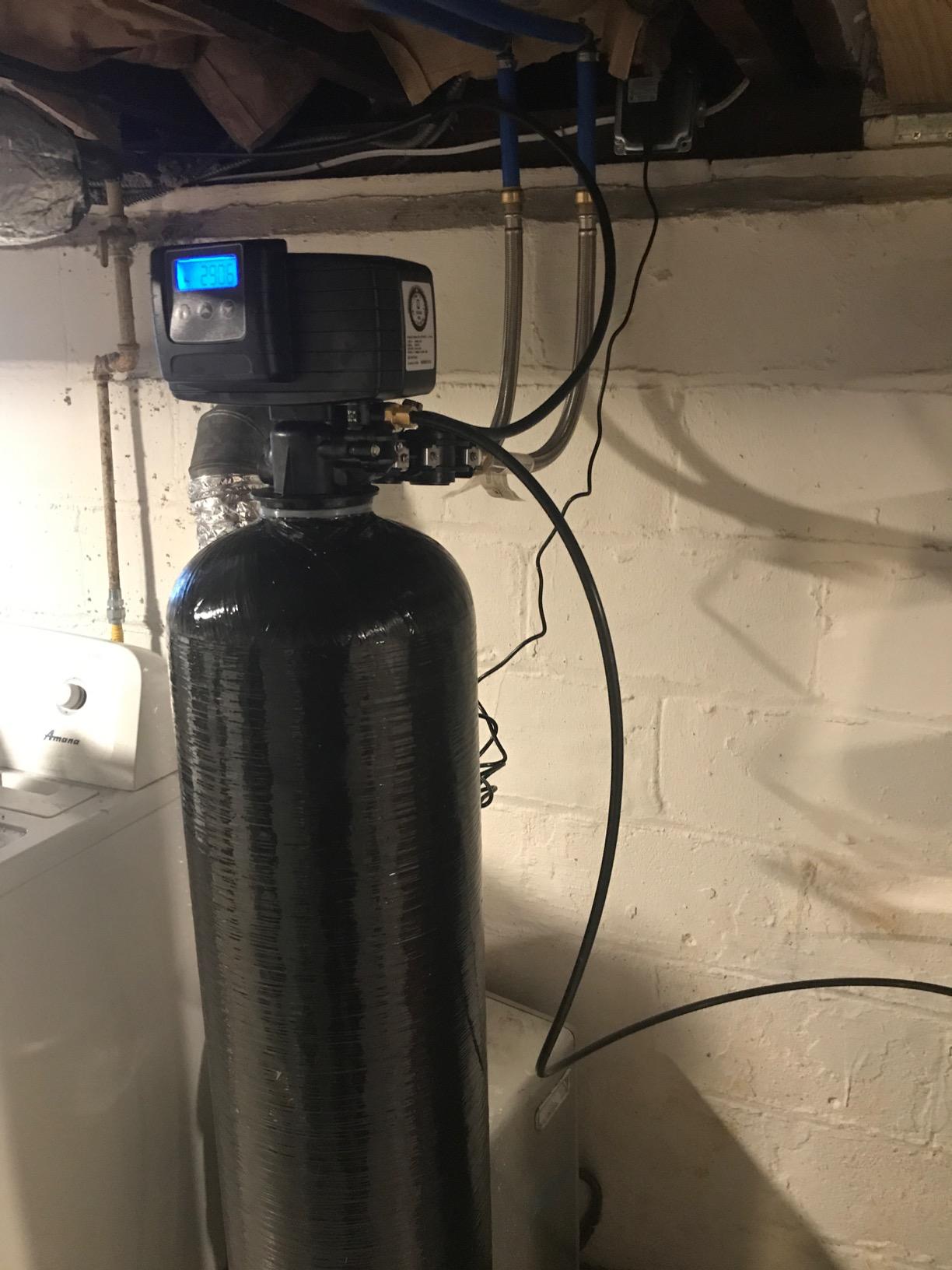
Best for: a confident DIYer who wants a valve they can still repair in ten years.
The Fleck 5600SXT is the control that shows up more than any other in well water discussions, and for a straightforward reason: parts exist. Multiple long-tenured forum users describe the Fleck 5600SXT and the Clack WS1 as the serviceability gold standard, with components available at any supply house for years rather than only through the original manufacturer.
That matters on a well more than on city water, because a softener connected to a well sees more sediment, more iron, and more unplanned downtime. When the injector sticks or the piston assembly fails, being able to walk into a supply house and buy the part turns a two-day outage into a two-hour fix.
The on-demand metering is the reason this valve replaced timed heads almost everywhere. Instead of regenerating on a calendar, it measures actual gallons through the meter and regenerates when the resin bed is genuinely exhausted. Long-tenured DoItYourself.com users still hold the same view: all softeners should be metered.
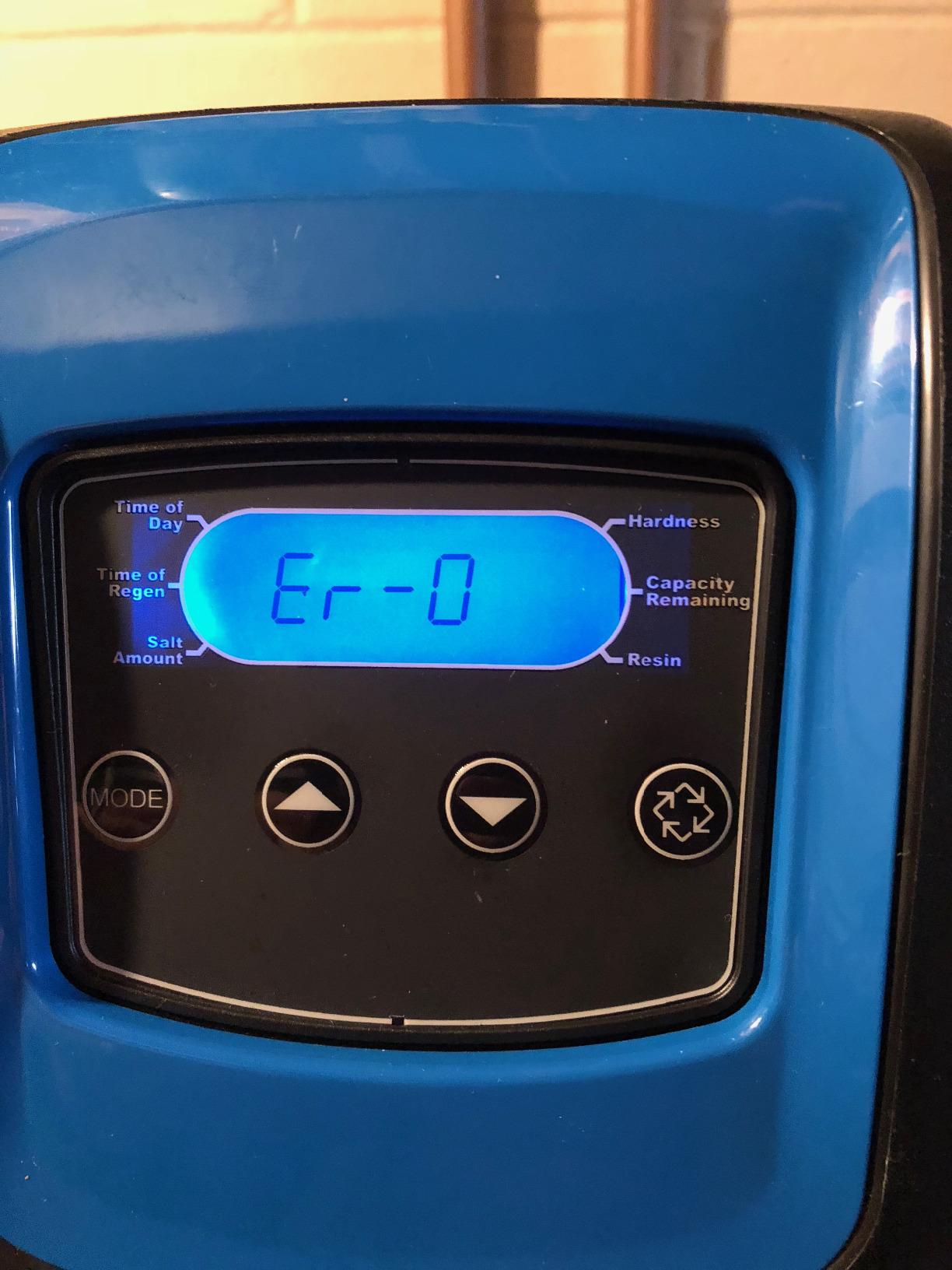
Owners describe it as a professional-grade Fleck unit at a fraction of what an installer quotes, with set-and-forget operation once the programming is right. Several long-term owners report roughly a decade of reliable service, which lines up with what the community expects from this valve family.
Is a serviceable valve worth paying more for?
Yes, on well water. The valve is the only part of a softener that routinely wears out, and the Fleck 5600SXT is the model whose parts every supply house stocks, which is why forum consensus keeps landing on it and the Clack WS1 as the pair to buy if you want to fix things yourself.
Budget for the fittings either way. The 1 inch female-threaded inlet and outlet is not standard residential plumbing, most homes have 3/4 inch lines, and a plumber will add the adapter work to the labor if you hire one.
What it will not fix on a well?
This is a hardness unit with no iron rating. On a well with more than trace iron, pair it with an iron filter ahead of the softener or accept a fouled bed.
Two smaller setup issues to know about. The documentation is poor enough that most owners set the unit up from online videos, and the metal bypass configuration will drip if it is assembled with PTFE tape instead of pipe dope on the threads.
3. AFWFilters Fleck 5600SXT 10% Crosslink Resin – Top Rated
AFWFilters Fleck 5600 SXT Digital Water Softener with 10% Crosslink Resin
1.5 cu ft 10% crosslink resin
14 gpm max flow
130 pounds
250 lb salt capacity brine tank
1 inch NPT connections
Pros
- 10% crosslink resin resists chlorine attack and extends softening life
- Highest average rating in this roundup with very consistent satisfaction
- Metered Fleck valve regenerates on measured usage
- 250 lb brine tank means longer fill intervals
- USA-assembled build with bypass and drain fittings included
Cons
- Prefilled resin tank is heavy and awkward to position
- 1 inch NPT connections need adapters for 3/4 inch plumbing
- Softens hardness only so well water still needs separate filtration
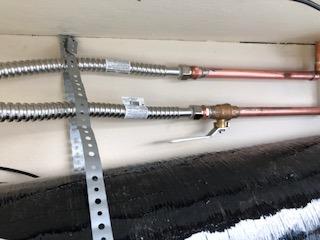
Best for: very hard water where resin longevity is the deciding factor.
At a 4.6 average across more than five hundred ratings, this is the highest-rated unit in the group, and the rating gap is consistent rather than driven by a handful of enthusiastic reviews. Buyers single out two things: the chlorine-resistant 10% crosslink resin and the reliable metered Fleck valve.
Crosslink percentage is the quiet specification that matters on well water. Higher crosslink bonds make the resin beads structurally stronger and more resistant to osmotic shock and chemical attack. On water with iron, manganese, and organics, that extra durability is the difference between a bed that performs for years and one that degrades early.
The 14 gpm maximum flow rate also edges out the Aquasure Harmony, which makes this the better pick for a household where two showers and a laundry cycle can overlap. At 130 pounds the resin tank is the heaviest single component you will lift in this whole roundup, so plan the move accordingly.
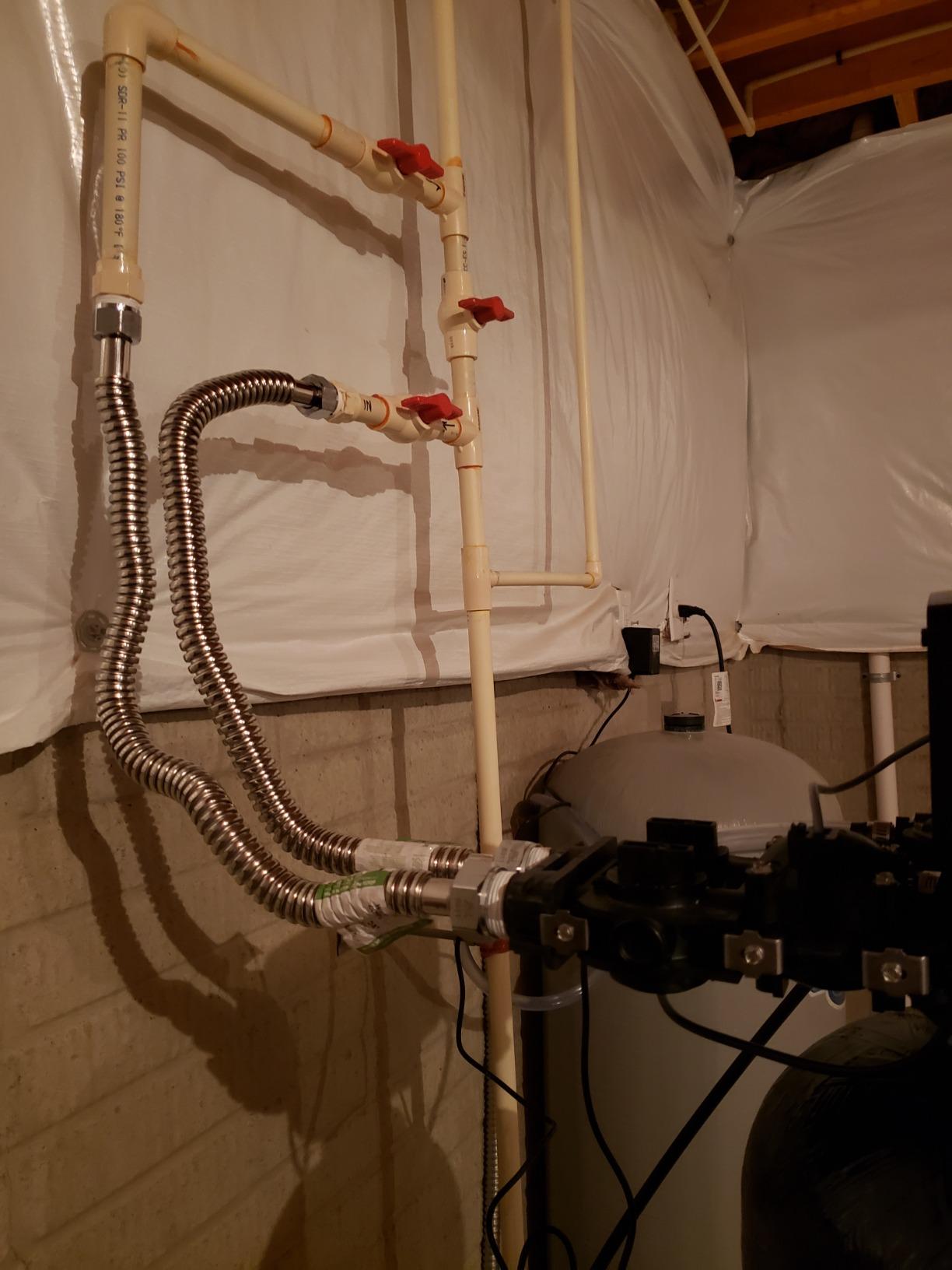
Why resin type matters more on a well?
Crosslink percentage is the quiet specification that decides resin life. Higher crosslink bonds make the beads structurally stronger and more resistant to osmotic shock and chemical attack, which matters when your water carries iron, manganese and organics at the same time.
The 14 gpm maximum flow rate also edges out the Aquasure Harmony, making this the better pick for a household where two showers and a laundry cycle overlap. At 130 pounds the resin tank is the heaviest single component in this roundup, so plan the move accordingly.
The 250 lb salt capacity brine tank is a second practical upgrade: fewer trips carrying 40 lb bags up stairs or down a basement walkway, and on a rural property that walk is longer than you think on the day you need it.
What it will not fix on a well?
This unit softens hardness and nothing else. If your test report shows iron, manganese or heavy sediment, you still need upstream filtration, and skipping that is the most common reason a good softener ends up performing badly on a well. The 1 inch NPT connections also need adapters for standard 3/4 inch residential plumbing, exactly as with the Fleck build above it.
4. AFWFilters Iron Pro 2 64,000 Grain Combo – Best for High Iron
AFWFilters Iron Pro 2 Combination Water Softener Iron Filter Fleck 5600SXT Digital Metered Valve 64,000 Grain – High Flow for Whole House Use – Removes Hardness, Iron, Manganese, Sediment, Rust
64,000 grain capacity
Iron removal to 6 ppm
Manganese removal to 6 ppm
119.2 pounds
High-flow whole-house design
Pros
- Softener and iron filter combined in one tank cutting equipment footprint
- Handles iron and manganese up to 6 ppm which is common on well water
- Well owners on high-iron wells report dramatic water clarity changes
- Metered Fleck 5600SXT valve can also be set for timed well-water regeneration
- Resin arrives preloaded so no media filling required
Cons
- Arrives in multiple heavy boxes and needs a dolly to move
- Written instructions are thin so DIY installers rely on outside guides
- Resin can be disturbed in transit and needs cleaning out of the distributor tube
- Iron levels far above 6 ppm need a dedicated pre-filter
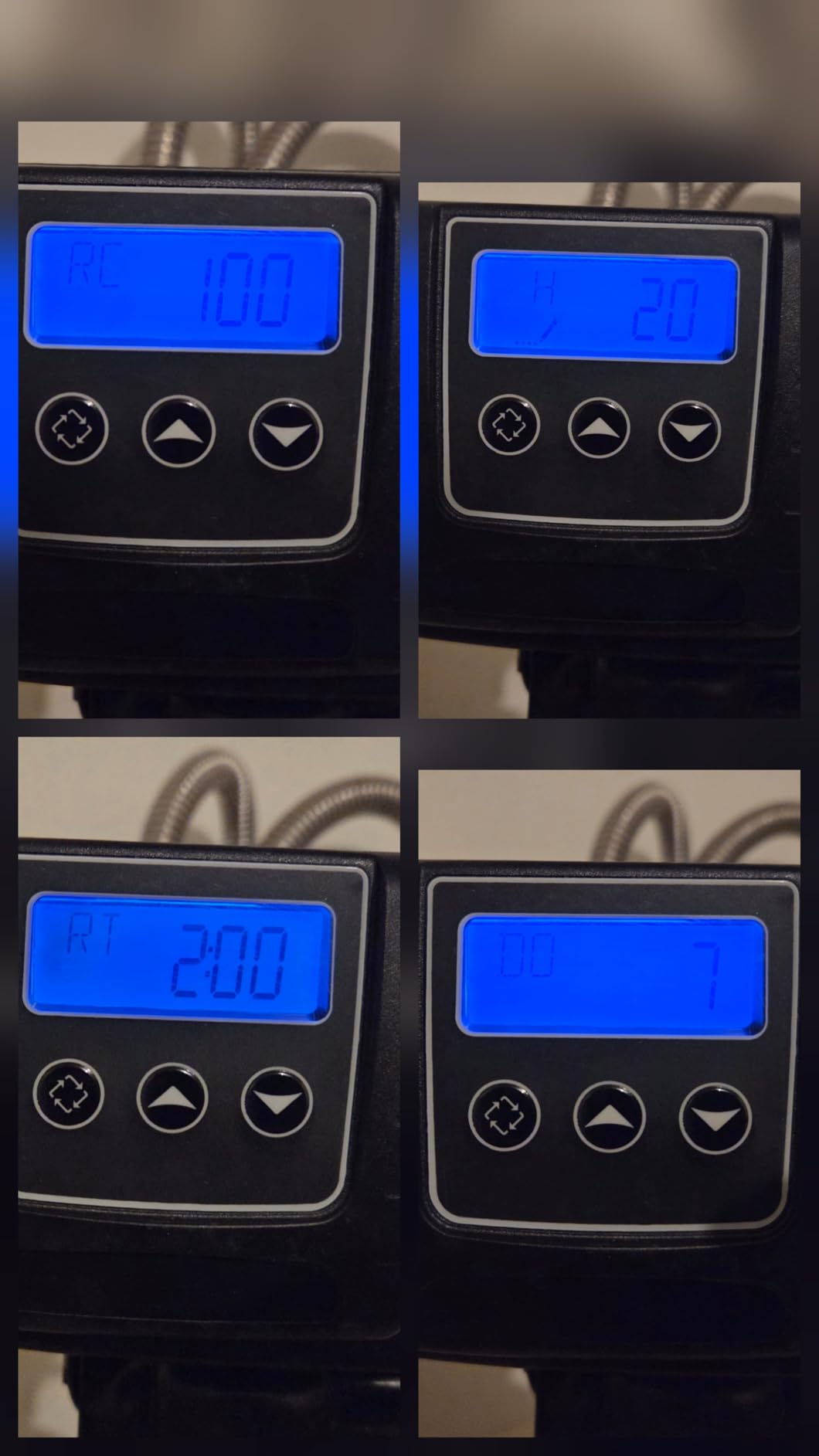
Best for: a well with measurable iron and manganese, where a separate iron filter would double the footprint.
This is the unit we would put in front of a well owner who said the words red staining. Reviews on this combination system center on its ability to clear rust-colored fixtures, rotten-egg odors, and cloudy water, with several owners reporting noticeable results within days of installation.
Combining the two functions in a single tank is the practical argument. A separate iron filter ahead of a softener means two tall vessels, two brine or media tanks, two sets of connections, and twice the floor space in a mechanical room that probably already felt tight when you built the well pump.
At 64,000 grains this is the largest capacity in the roundup, which gives you headroom when hardness and household use are both on the higher side. The Fleck 5600SXT metered valve tracks real usage, and on well water it can also be set to regenerate on a timed cycle, which some owners prefer as a scheduled flush against bacteria growth.
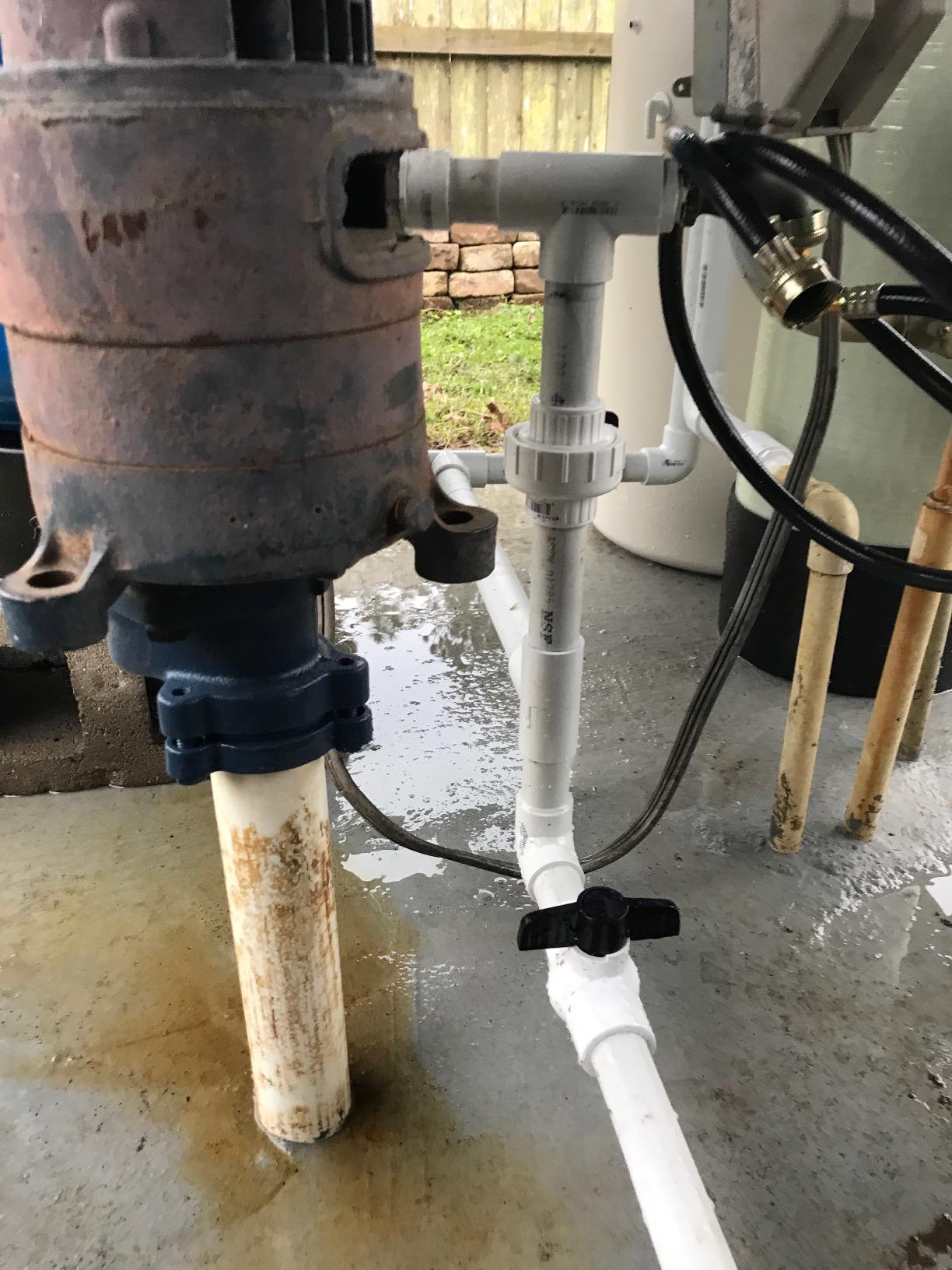
Is 6 ppm of iron enough for your well?
That is the number to check first, because it is a hard rating and not a guideline. Below it, the combined tank does the work of two systems in one footprint; above it, you need a dedicated pre-filter and this unit becomes the wrong purchase rather than a compromise.
What it will not fix on a well?
It does nothing for iron bacteria. If your well has bacteria, no single-tank media solves that problem, and you need oxidation and filtration as a separate stage rather than a bigger softener.
Handling is the practical annoyance too. The resin arrives preloaded, which means a dolly and a second person, and it can shift in transit so the distributor tube needs cleaning out before first use.
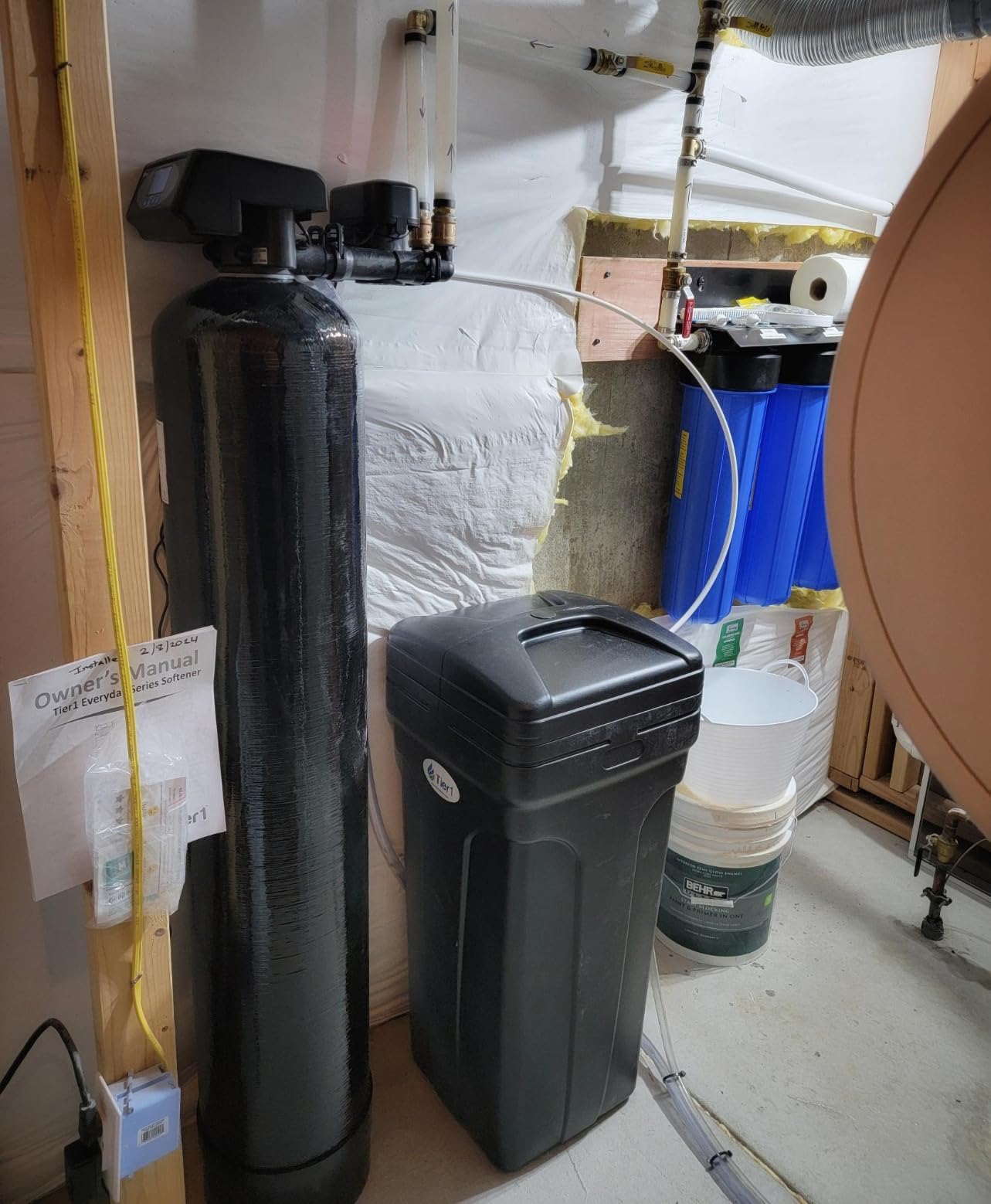
5. Tier1 48,000 Grain Ceramic Disk Valve – Best for High Flow
Tier1 48,000 Grain Water Softener System for 4-5 Bathroom Homes
1.5 cu ft NSF ANSI 44 resin
18 gpm max flow
10 x 10 x 59 inch
120 pounds
20-87 psi operating range
Pros
- Ceramic disk valve has no seals and no rebuild kits
- 10-year limited warranty on the fiberglass resin and brine tanks
- Preloaded with 1.5 cu ft of NSF ANSI 44 certified cation resin
- 18 gpm maximum flow is the highest in this roundup
- Quiet operation with a slim footprint
- Customer support troubleshoots by phone
Cons
- Regeneration runs on a fixed 30-day schedule that cannot be bypassed
- Some buyers report a prefilter leak soon after installation
- Not rated for outdoor installation which is not clearly disclosed
- Lowest average rating in the group with a scattering of one-star reviews
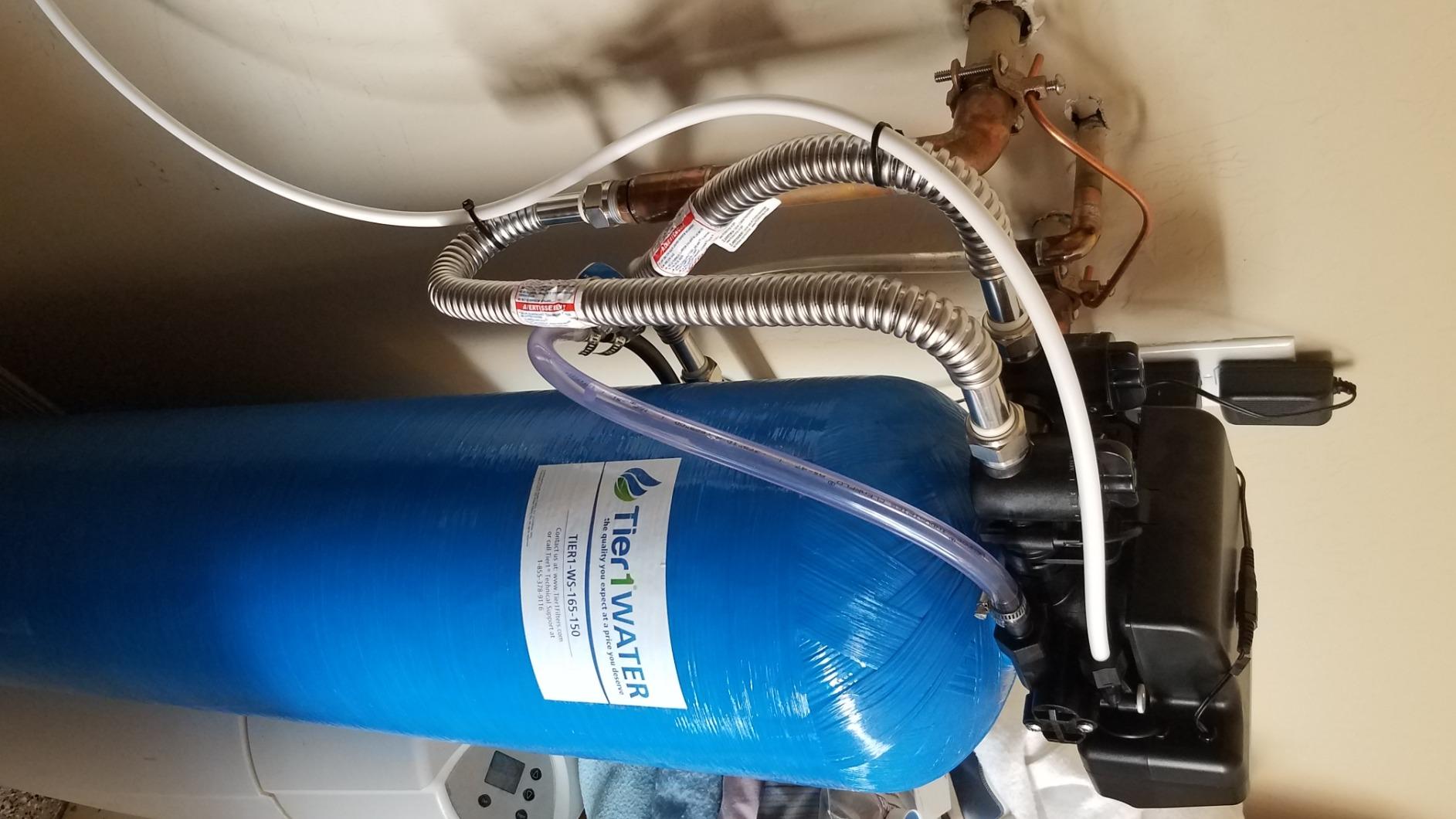
Best for: large households and households where several high-flow fixtures run at once.
Eighteen gallons per minute is the highest maximum flow rate in this roundup by a wide margin, and for a family of five or six that showers together it is the spec that removes the pressure drop complaint entirely. The 10 x 59 inch footprint is also the shortest of the tall units here, which helps in a low-ceiling mechanical room.
The ceramic disk valve is the interesting engineering choice. Instead of a rubber-seated piston that wears and needs a rebuild kit every few years, it uses a ceramic disk with no seals, which is why the manufacturer backs the tanks for a limited ten years and the control valve for five with registration. That is the longest tank warranty among the units we evaluated.
Owners generally find the unit performs well for the money and highlight the warranty, the valve, and the phone support, which is the combination you want when something stalls at 6 p.m. on a Saturday.
Can you live with a fixed 30-day schedule?
On well water, that is the question that decides this purchase. Regeneration runs on a fixed 30-day cycle that cannot be bypassed, using roughly 92 gallons per cycle, so you waste treated water when the bed is not exhausted and burn salt on resin that is already clean.
Some owners treat that same cycle as a useful scheduled flush, but make that decision deliberately rather than discovering it as a side effect. Documenting the product was thin, so a model-specific video is the faster setup path, and a few buyers also report a prefilter leak soon after installation, so check those connections in the first week.
What it will not fix on a well?
It is an indoor unit that the listing does not clearly flag as such, and it carries no iron rating, so a well with measurable iron still needs media ahead of it.
6. Aquasure 48,000 Grain Plus 75 GPD Reverse Osmosis Bundle – Best for Drinking Water
Aquasure 48,000 Grains Whole House Water Filter Bundle with Automatic Digital Metered Control Softener and 75 GPD RO Reverse Osmosis Drinking System | Removes Hardness | Ideal for 3-4 bathrooms
48,000 grain softener
75 GPD reverse osmosis system
15 gpm max flow
15 x 15 x 36 inch
Handles up to 2000 ppm TDS
Pros
- Bundles whole-house softening with a 75 GPD drinking water system in one purchase
- Aquatrol digital metered head reduces water and salt waste during regeneration
- 48000 grain capacity fits 3-4 bathroom homes with up to four family members
- RO membrane produces purified drinking water alongside the softened supply
- 5-year warranty with lifetime technical support
Cons
- Multi-component install is more complex than a standalone softener
- Two separate housings take more floor space than a single-tank unit
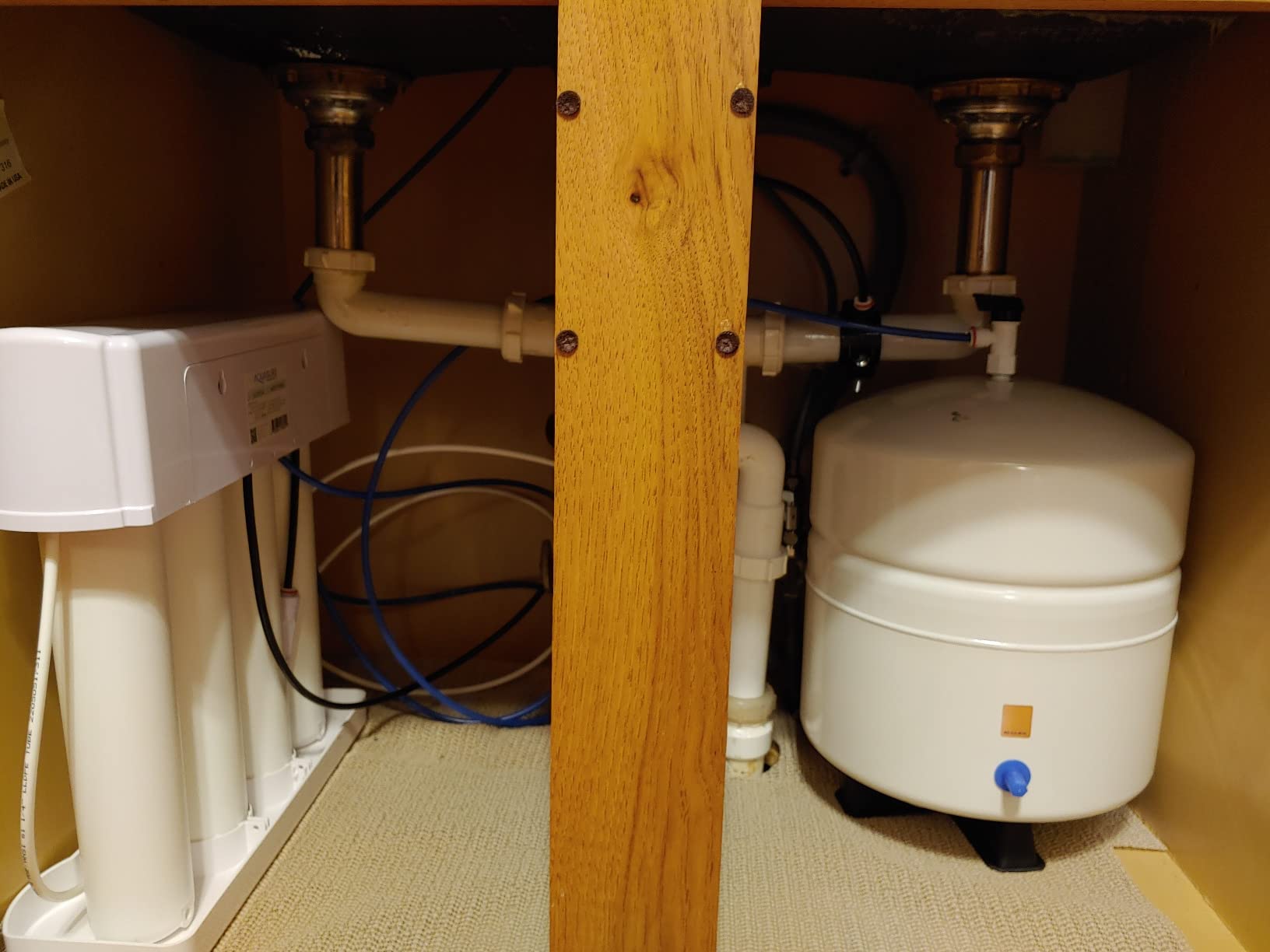
- Supplied with storage tank and tubing so you need under-sink space available
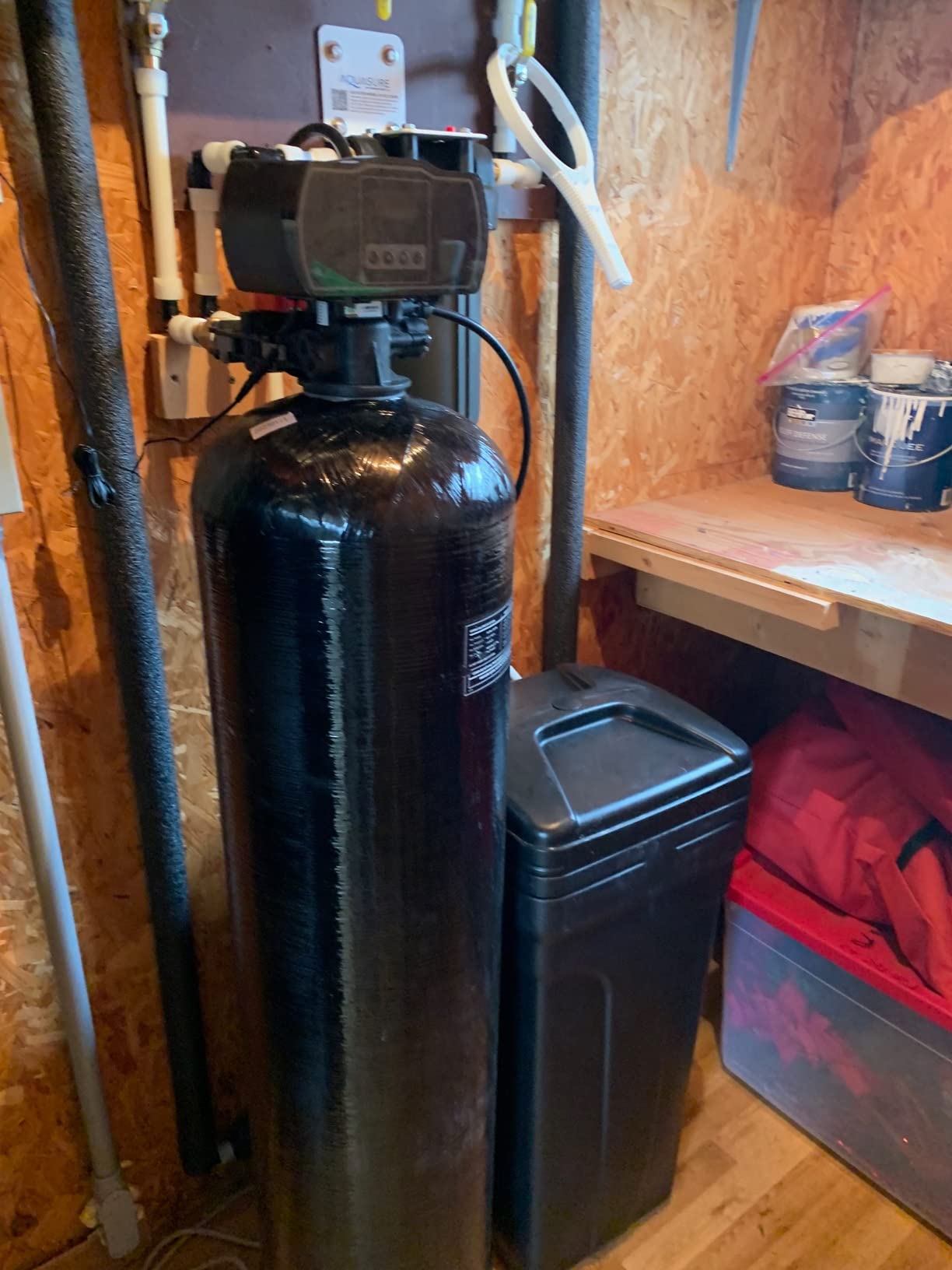
Best for: households that want treated drinking water at the kitchen sink without a second supplier or a plastic jug habit.
Well water has a reputation for tasting metallic or flat, and that is usually iron, manganese, or sulfur rather than anything a softener can fix. This bundle answers that by pairing a 48,000 grain whole-house softener with a 75 GPD reverse osmosis drinking system running on the softened supply, which is the correct plumbing order: softener first, membrane second, so the membrane is not scaling itself to death.
Buyers like getting both functions in a single purchase and rate the Aquatrol metered head favorably for efficiency. The 4.4 average across 323 reviews says the bundle performs as advertised rather than compromising on both halves.
The TDS ceiling of up to 2000 ppm matters on well water, because groundwater can exceed what a household softener is designed to handle, so a unit rated for 2000 ppm gives you headroom that most residential models do not claim.
Should the softener feed the drinking water system?
Yes, and that is why the bundle is assembled the way it is. The reverse osmosis membrane runs on softened supply, so the plumbing order is softener first and membrane second, which keeps the membrane from scaling itself to death within a few years.
There is a brief design tension worth knowing about. When the softener regenerates, there is a window where the supply feeding the membrane is not actually soft, which is minor and short-lived for drinking water but is why some owners add a separate bypass or post-treatment stage.
What it will not fix on a well?
It does not solve iron above what the softener media can hold, so a multi-ppm iron reading still calls for the dedicated iron media at position four. The install is also more involved than a standalone softener: you are plumbing two systems, running tubing to the sink and mounting a storage tank under the counter, so confirm under-sink space and an outlet near the sink first.
7. DuraWater Fleck 5600SXT 48K Iron Filter – Best for Rust Stains on 3/4 Inch Plumbing
DuraWater Fleck 5600 SXT 48K Water Softener/Iron Filter, 3/4″ Bypass, Black
48,000 grain capacity
Fine mesh iron-removal resin
14 gpm max flow
25 x 15 x 62 inch
Sized for 2-5 people and 2-3 bathrooms
Pros
- Single-tank softener and iron filter clears well-water rust staining quickly
- Fleck 5600SXT metered valve conserves water and salt by measuring usage
- Available in 3/4 inch and 1 inch bypass to match existing plumbing
- Owners replacing much costlier systems report comparable results
- Metering allows leak detection and usage-based regeneration
Cons
- Discharge hose and clamp are not included despite the complete system description
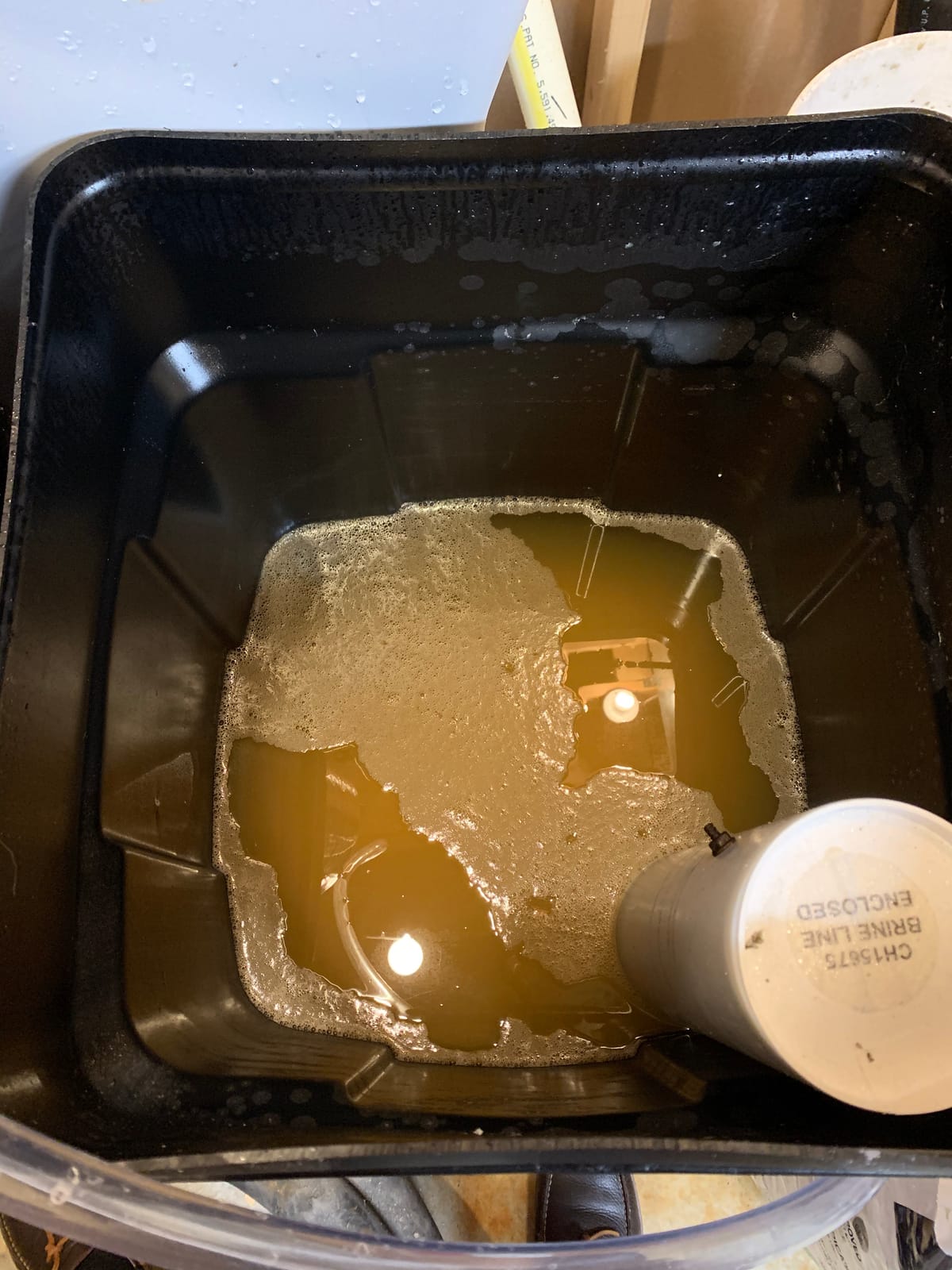
- Some models discharge orange iron-laden water after regeneration until the brine tank drains
- No paper manual included which makes setup harder for first-time installers
- Instructions are low-quality photocopies with hard-to-see detail
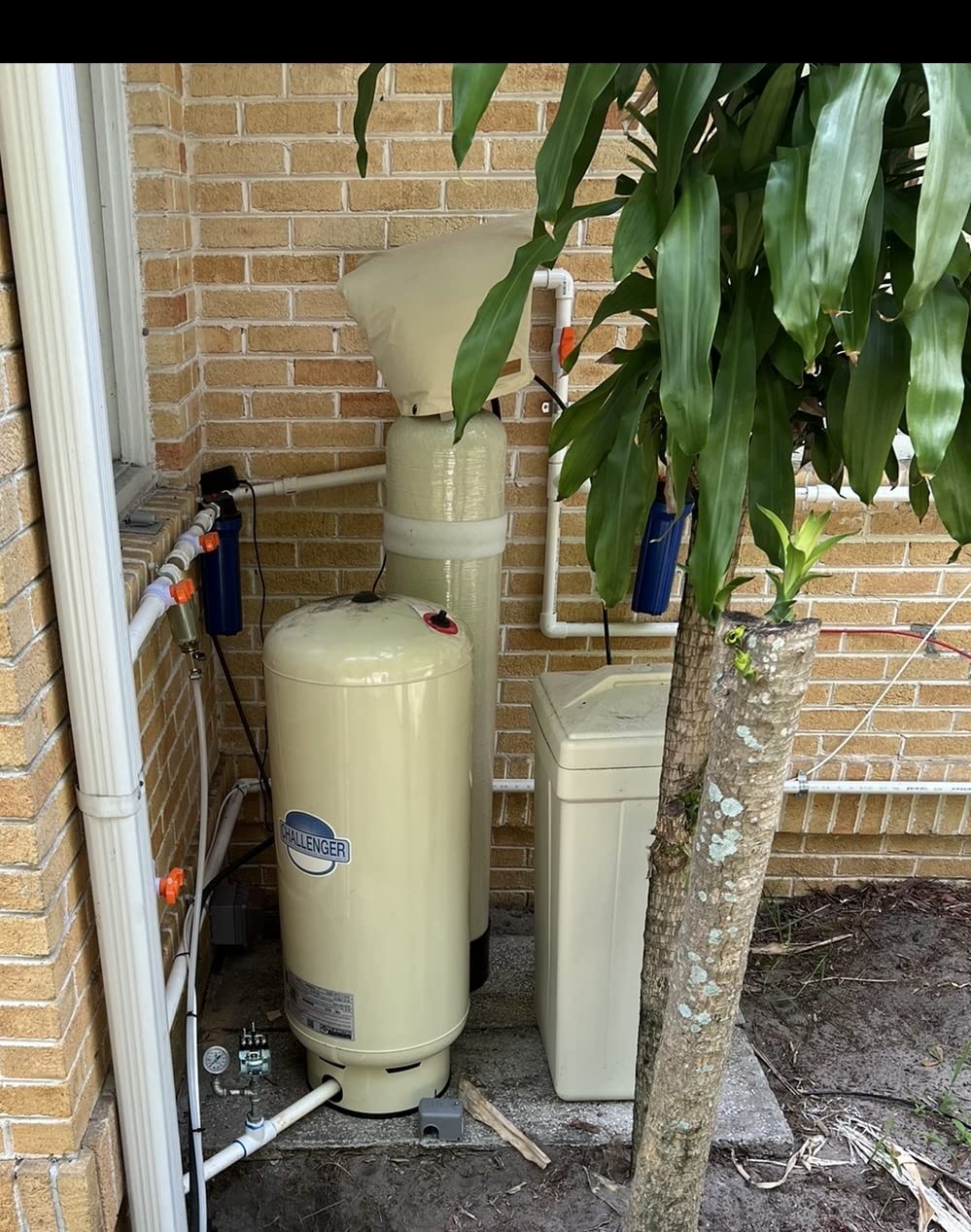
Best for: an iron-stained well in a home that has never been re-plumbed above 3/4 inch.
Well owners on this unit report dramatic reductions in rust stains, odor, and water clarity within days of installation, and several mention replacing systems quoted at several times the cost for comparable results. That is the pattern we keep seeing on well water: the expensive answer is not always the effective one.
The practical reason we like it is the bypass. Most units in this roundup come with a 1 inch threaded inlet and outlet, which means adapters and possible resizing if your household plumbing is 3/4 inch. This one is offered in 3/4 inch and 1 inch, and the 3/4 inch version matches a standard residential line directly, saving both parts and labor.
It uses fine mesh resin designed for iron removal alongside scale reduction, which is the right media choice for a well with moderate dissolved iron. At 14 gpm it handles more simultaneous demand than the 12 gpm Aquasure, and it is sized for two to five people in a home with two to three bathrooms.
Why the bypass size matters before you buy?
Most units in this roundup come with a 1 inch threaded inlet and outlet, which means adapters and possible resizing if your household plumbing is 3/4 inch. This one is offered in 3/4 inch and 1 inch, and the 3/4 inch version matches a standard residential line directly, saving parts and labor at install.
The metered Fleck valve regenerates on measured usage, which conserves both water and salt, and the same metering data doubles as leak detection on a property nobody is watching every day.
What it will not fix on a well?
Three practical gaps recur in the reviews. The discharge hose and clamp are not included even though the listing describes a complete system, no paper manual comes with it, and a minority of owners report orange iron-laden water discharging after regeneration until the brine tank has fully drained, which looks alarming the first time and usually resolves as the bed settles.
At 139 ratings the review base is smaller than the Fleck units at position two and three, so the long-term picture is less settled; the valve family is the same, which is where our durability confidence comes from.
8. iSpring 45,000 Grain Whole House Softener – Budget Pick
iSpring WCSTB45KG 45,000 Grains Whole House Water Softener with Brine Tank
45,000 grain capacity
75.6 pounds
Programmable digital monitoring display
Supports up to 300 ppm TDS
1-year manufacturer warranty
Pros
- Lightest and most compact unit here so it is far easier to move into place
- Third-party tested to reduce 99.71% of water hardness
- Programmable control valve with digital display for live usage monitoring
- Compatible with both city and well water supplies
Cons
- Only a 1-year manufacturer warranty versus 5-10 years on Fleck-based units
- Softens hardness only with no iron manganese or sediment filtration
- Lowest review count in the group so long-term field data is limited
- Maximum supported TDS of 300 ppm is low compared with competing models
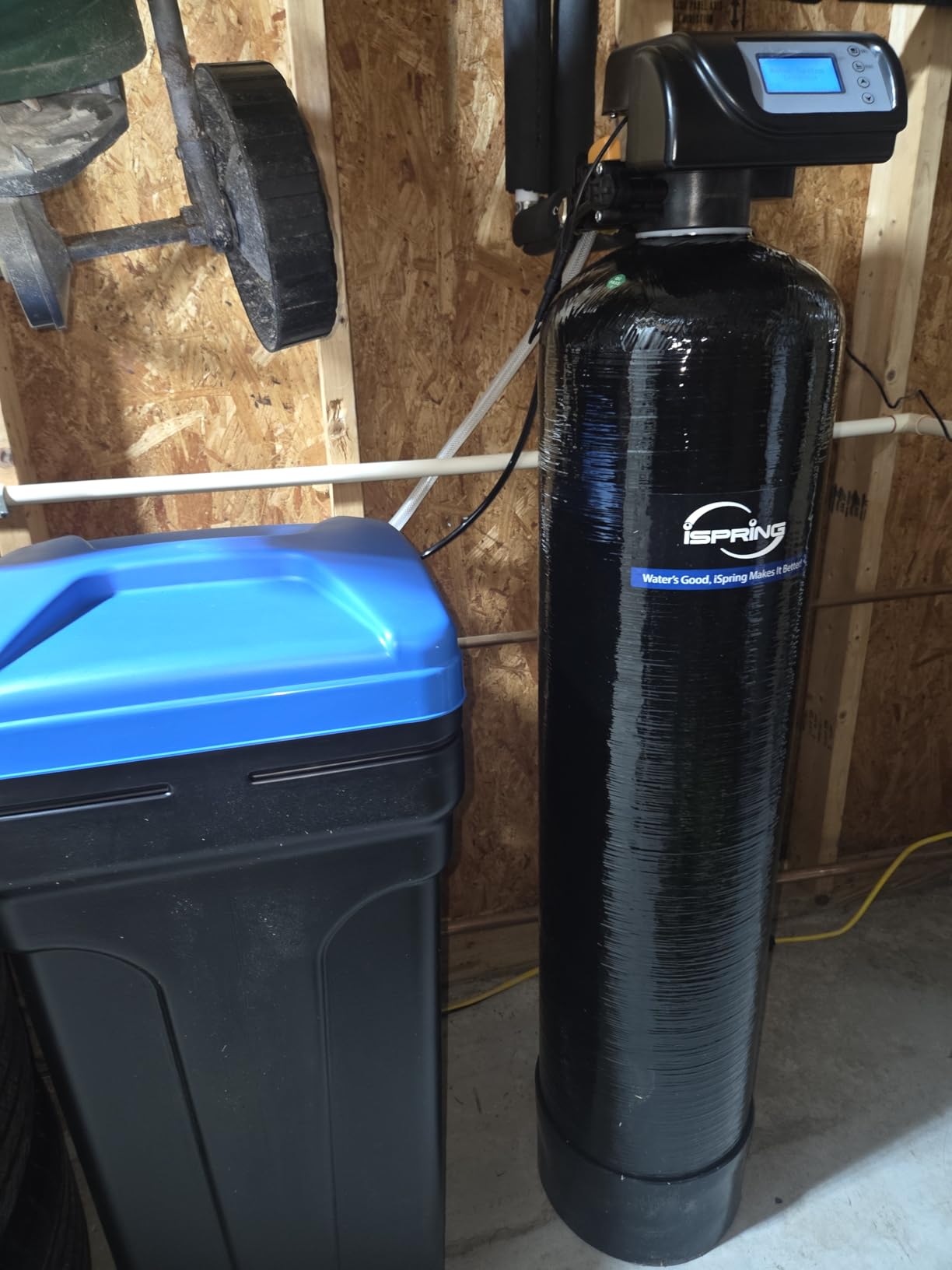
Best for: a first softener on a budget, on a well with low TDS and no measurable iron.
Two things put this unit ahead of its class here. The first is weight: at 75.6 pounds it is roughly half the weight of a prefilled 48,000 grain unit, so a single person can move it, position it, and stage the install without a second helper. The second is the 300 ppm TDS ceiling, which is a number you can verify against a lab report in ten seconds.
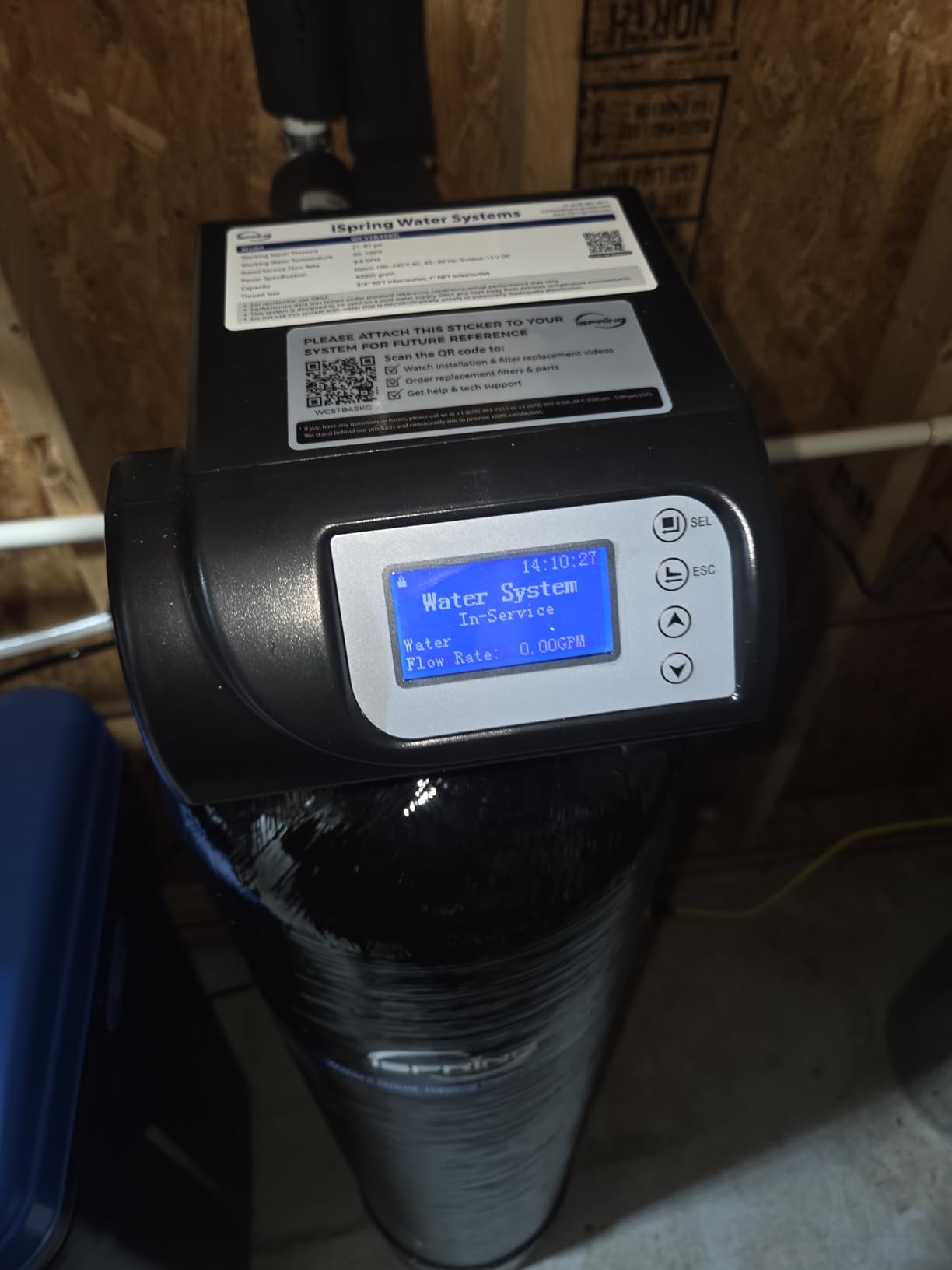
Owners highlight the value, the handling, and the programmable valve with a digital display for real-time monitoring. The manufacturer also states the resin is third-party tested to reduce 99.71% of water hardness, and the automatic backwash and regeneration cycles are there to extend resin life.
The valve is programmable with a digital display, so you are not stuck with a fixed schedule. That matters for the same reason it matters on the Fleck units: on a well, regeneration frequency follows your usage, not a factory default.
Can one person actually install this?
Yes, and that is the practical argument. At 75.6 pounds it is roughly half the weight of a prefilled 48,000 grain unit, so a single person can move it, position it and stage the install without a second helper, which in a basement mechanical room matters more than any spec on the page.
Owners also highlight the programmable valve with a digital display for real-time monitoring, and the manufacturer states the resin is third-party tested to reduce 99.71% of water hardness with automatic backwash cycles to extend resin life.
What it will not fix on a well?
Three hard limits. It softens hardness and nothing else, with no iron, manganese or sediment filtration; the 300 ppm TDS maximum is a real ceiling for a well; and the warranty is one year, extendable to three, against five years on the Fleck-based units and ten on the Tier1 tanks.
If your test report shows iron or reads above 300 ppm, move up the list rather than adding a second system later.
Why City-Water Softener Rankings Do Not Apply to Well Water?
A city-water softener ranking is answering a different question than a well-water softener ranking, and the two lists overlap far less than the marketing suggests.
A municipal utility treats water before it reaches your service line. Corrosion control, disinfection, and often softening or pH stabilization happen at the plant. What arrives at your house is already conditioned, so a residential softener only has to handle hardness that survived treatment, and iron is usually near zero.
Well water has had none of that. It arrives with the geology intact, and the same geology that gives you a good well often gives you hard water, dissolved iron, manganese, hydrogen sulfide, and sediment. Nothing about that profile is unusual for a private well, which is why almost every model in this roundup is described as suitable for well water at all.
The practical consequence is media failure, not loud failure. A standard resin bed captures hardness ions beautifully, then gradually fouls as iron precipitates on the beads. The softener still reduces hardness in the short term, so the problem does not show up in a test taken right after install; it surfaces a year later as rising hardness, falling flow, and a bed that regenerates harder every cycle.
One term worth clarifying before you compare anything: grain capacity versus grain removal per cycle. Grain capacity is the total amount of hardness the resin can hold before it needs regenerating, and grain removal per cycle is how much a single regeneration can actually restore. Manufacturers quote the impressive number, and households that misunderstand the pair routinely buy a unit that cannot keep up on their hardness.
The second thing city rankings get wrong for well owners is the salt-to-service math. On city water, a softener runs on municipal supply that is already at reasonable pressure and moderate hardness. On a well, your pump, your pressure tank, your iron content, and your household usage all change how often regeneration happens and how much salt each cycle consumes.
That is why we size and iron-match every system in this list rather than ranking by brand recognition, and why the same model can be a good buy on one well and a mistake on the next. If you want the broader picture of whole-house options, our guide to the best whole house water softeners covers the city-water side in more depth.
How to Size a Softener for Well Water: A Worked Example?
Here is the arithmetic that no competitor on this search shows you, because they all link out to a calculator instead. Four people, 22 grains per gallon hardness, 3 ppm iron. We will run it end to end.
Step one: estimate daily water use. A well household of four typically uses 70 to 80 gallons per person per day, so 4 people multiplied by 75 gallons equals about 300 gallons of softened water per day. Check your own numbers rather than assuming: 300 gallons is roughly eight minutes of showering per person plus a laundry load or two.
Step two: compute the daily grain load. Daily usage multiplied by hardness gives the grains the resin must capture each day. 300 gallons multiplied by 22 gpg equals 6,600 grains per day.
Step three: compute the weekly load. Multiply the daily figure by seven. 6,600 grains per day multiplied by 7 days equals 46,200 grains per week of hardness entering the house.
Step four: add an iron compensation factor. Iron does not register as hardness on your test, but it consumes resin capacity and fouls the bed. A common rule is to add roughly 20 percent capacity for water with iron under 3 ppm and 30 to 50 percent above that. At 3 ppm we are at the boundary, so we add 20 percent: 46,200 multiplied by 1.2 equals about 55,000 grains.
Step five: apply the reserve factor and pick a tank. Real regeneration does not restore resin to 100 percent, so standard practice is to select capacity at roughly 1.5 times the weekly load. 55,000 multiplied by 1.5 gives about 82,000 grains of nominal capacity, which points to the largest tanks on the market.
That result surprises most people, and it is worth pausing on. A 48,000 grain unit is extremely common, and for a four-person household on moderately hard city water it is correct. On this well, with 22 gpg and 3 ppm iron, a 48,000 grain unit is undersized.
Which means you have two realistic answers. Buy a larger tank and accept the footprint and the capital outlay, or lower the hardness before it reaches the softener. A whole house filtration stage ahead of the unit is a legitimate second option, and our guide to the best whole house water filters for well water covers that side of the plumbing.
One more piece of arithmetic matters more than capacity: flow rate. Household peak demand, not average demand, sets this, and three showers at roughly 2.5 gpm each plus a dishwasher and a washing machine can call for 10 to 12 gpm simultaneously. This is why we put an 18 gpm unit at position five and a 12 gpm unit at position one.
Sizing guidance by household: one to three people on modest hardness usually fits 30,000 to 40,000 grain, and three to four people at typical hardness fit 40,000 to 48,000 grain. Four to six people fit 48,000 to 60,000 grain, and hardness above 25 grains per gallon usually pushes any household into 60,000 grain territory or higher. On well water, treat all of these as a starting point and add the iron factor from step four.
And answering the question we get most often: buying too big is far less costly than buying too small. An oversized unit wastes salt and water through unnecessary regenerations, which is a recurring annoyance, while an undersized unit regenerates constantly, wears the resin out early, and leaves you with hard water at the worst times. Choose the larger tank.
Your Iron Level Decides Which Media and Which Model
Iron is the variable that decides whether a well softener works or fails, and almost every ranking page skips it. Two questions determine your path: how much iron, and what form is it in.
Ferrous iron is dissolved. It is clear water with a metallic taste, and it stays dissolved until something oxidizes it. Softener resin rated for iron can capture it directly, which is exactly what the fine mesh resin in positions four and seven is built for.
Ferric iron is already a solid particle suspended in the water. That is what produces orange staining in toilets and tubs, and it is usually visible. Because it is a particle rather than a dissolved ion, it can blind resin and plug distribution tubes, and a well with more than a couple of ppm of ferric iron needs a pre-filter ahead of the softener.
Iron bacteria are the case that breaks most softeners. They oxidize dissolved iron as a growth that coats media, plumbing, and fixtures in slime, and no softener media will fix them. The treatment is oxidation and filtration as a separate stage, and a chemist needs to confirm bacteria are present before you buy anything.
Hydrogen sulfide is the rotten-egg smell. It is not iron, and softening does nothing for it, so it requires oxidation media or aeration. If your complaint is smell rather than staining, a softener is the wrong purchase entirely, whatever the hardness number says.
Our guidance maps directly onto the roundup. At or below about 2 ppm with clear water and no staining, any of the hardness units works, so pick on capacity, flow, and valve. Between roughly 2 and 6 ppm, choose fine mesh iron-rated resin, which puts the DuraWater build in position seven and the Iron Pro 2 in position four at the top of the list; above 6 ppm, go to a dedicated iron filter or an oxidation-based system ahead of the softener.
Manganese follows the same logic with its own threshold, and the Iron Pro 2 rates up to 6 ppm on both. Ask your lab specifically for iron bacteria and hydrogen sulfide, not just iron, because the standard panel often omits them and the answer changes the entire purchase.
Single Tank, Twin Tank, and Non-Electric Systems
Every softener on this list is a single-tank unit, which means one behavior you should expect rather than discover.
During regeneration, a single-tank softener is in backwash and is not producing soft water. The duration is typically a couple of hours, and during that window your cold water at the shower and the tap is hard. Many households never notice; households with someone showering at the wrong moment absolutely do, and it comes up repeatedly in homeowner discussions as a genuine annoyance.
A twin-tank softener fixes it by running two tanks in parallel, so one regenerates while the other serves the house and you get soft water continuously. You pay for the second tank, the extra footprint, and often the extra plumbing to connect it. For a well house with a large family it is a reasonable expense; for a two-person household on a low-traffic plumbing run it usually is not.
There is one fix nobody mentions, and it is not a second tank. Put a whole house iron and sediment filter or a bypass ahead of the softener, or better, run a dedicated softened-water line to the drinking tap and the dishwasher. Households that have done this report the only time they notice regeneration is when they are deliberately checking for it.
Non-electric systems deserve their own paragraph because Reddit keeps recommending them. The Google AI Overview cites forum discussion of Kinetico as a top-tier choice for continuous soft water, precisely because the valve is driven by water pressure rather than electricity.
No power means no transformer, no failed circuit board, and no clock to lose its settings, which is a real reliability argument on a remote property.
The catch is equally clear. Those systems cost substantially more and require dealer servicing for anything beyond basic maintenance, and forum users trust the performance while distrusting the cost and the service access. For a cabin or a seasonal property with nobody nearby that premium can be defensible; for a home with a plumber you can call, you are paying a recurring premium for parts you could otherwise buy at a supply house.
Which brings us back to the consensus we kept seeing in the forums. Users treat the valve as the product, and the Fleck 5600SXT and the Clack WS1 are named more than any brand, not because the brands are famous but because a control valve you can service yourself is worth more than a badge you cannot. We agree, and it is why four of our eight picks carry a Fleck 5600SXT.
What Installation Actually Involves on Well Water?
Nobody in the forums describes a softener install as a weekend project, and that is worth repeating before you buy. Homeowners who treat it as a two-hour job are the ones calling a plumber on day two.
The physical work is a matter of order. Shut off the well or the main, drain the line, cut in the bypass, plumb the mineral tank and brine tank, run the drain line to an approved discharge, and connect the bypass in the right orientation. Then sanitize, fill the brine tank, and program the valve with your hardness, capacity, and iron settings from the test report.
Order of components matters more on a well. Sediment and iron filtration goes first, the softener second, and a whole house filter ahead of the softener is the standard recommendation from DIY forums. Put the softener ahead of the iron filter instead and the downstream media gets softened water, which puts you back where you started.
Do not skip the drain line. Every regeneration sends several gallons down the drain, so the line needs a secure air gap above the drain, an approved discharge point, and a clamp. Several units on this list arrive without a discharge hose despite being described as complete systems, so buy one.
Watch the first week. Prefilled resin can be disturbed in transit and needs cleaning out of the distributor tube, and bypasses assembled with the wrong sealant will drip. Check the connections weekly for the first month, because each of those is a fifteen-minute fix on day three and a flooded mechanical room on day thirty.
Set the valve from your test report, not from the defaults. Homeowner forums carry warnings specifically about well water installs where the unit arrived with a hardness setting that does not match the actual water, so it under- or over-regenerates forever. Entering the correct numbers takes two minutes and is the highest-return two minutes in the whole project.
The price gap is the single largest cost lever in this purchase, and it exists because installers are selling the same hardware you can buy and fit yourself.
Hire a plumber when the job involves cutting into a main line you cannot isolate, when your plumbing is older and brittle, when you need a new air gap or electrical outlet near the unit, or when you are installing a twin-tank or a reverse osmosis bundle. Do it yourself when you have a compression or soldered joint confidence, a drain you can reach, and a weekend.
Valve programming is free help from the manufacturer, and several sellers on this list troubleshoot by phone, so that step is never the reason to hire out. One last item belongs on the plumbing checklist for a well house: a pressure tank, because a softener can expose pressure swings in an older well system that you had not noticed before. Our guide to the best well pressure tanks covers that decision.
Frequently Asked Questions
Do you need a special water softener for well water?
Yes, and three requirements separate the two. You need iron-rated resin or a separate iron filter upstream, a metered control valve that regenerates on measured usage rather than a timer, and enough flow rate to cover your household’s peak demand. A standard city-water softener can soften well water, but it will foul as iron precipitates on the resin bed, usually within a year or two.
What is the best water softener for really hard well water?
Match grain capacity to hardness and household use before anything else. Above about 25 grains per gallon, you want 60,000 grain or more, ideally with 10% crosslink resin for longer life under iron and chemical load. The AFWFilters Fleck build with 10% crosslink resin at position three is our pick for very hard water, sized for 48,000 grains and a 250 lb brine tank.
What is the most reliable brand of water softener?
Owners treat the valve as the product, and the Fleck 5600SXT and Clack WS1 are named most often because parts stay available at supply houses for years rather than only through the original maker. On well water, where sediment and iron cause more failures, that serviceability is worth more than any brand name or feature list.
How much should a whole house water softener cost?
Complete whole-house systems for well water span a wide range, from entry DIY units up to premium dealer systems, with mainstream DIY-valve models concentrated in the middle tier. Installation is the bigger variable: the gap between doing it yourself and hiring a local installer is typically larger than the gap between two comparable softeners, and local quotes vary wildly for the same water.
Is it bad to buy too big of a water softener?
It is far less costly than buying too small. An oversized unit regenerates on a schedule it does not need, wasting salt and water, which is an ongoing annoyance. An undersized unit runs out of capacity early, regenerates constantly, consumes more salt than a large one, wears resin out faster, and delivers hard water at exactly the wrong times.
How do I calculate how many grains I need in a water softener?
Multiply household size by roughly 75 gallons of daily use, then multiply that by your hardness in grains per gallon. Multiply the daily result by seven for a weekly grain load. Add 20 to 50 percent for iron, then select a nominal capacity about 1.5 times that figure. A worked example at 4 people, 22 gpg, and 3 ppm iron lands near 82,000 grains of nominal capacity.
Do well water softeners remove iron?
Only if the resin is iron-rated or the unit is a combined softener and iron filter. Standard resin softens hardness and does nothing for iron, so ferrous iron above roughly 2 ppm and ferric iron above that will foul the bed. Iron bacteria and hydrogen sulfide are not solved by a softener at all and need dedicated oxidation and filtration stages.
Are salt-free water softeners worth it?
A salt-free conditioner uses template assisted crystallization to change the structure of scale so it will not adhere, and it can reduce scale. It does not remove hardness, so soap will not lather better and the water will not feel different. Forum users flag this distinction as the main source of confusion on well water. Treat it as scale prevention, not as a softener.
Which Water Softener Should You Buy?
Start from the test report, not the model. Everything we recommend in 2026 follows from three numbers, and if you take nothing else from this roundup, take the sequence: test the water, identify the iron type, size to grains plus flow, then compare valves.
For most well households with moderate hardness and low iron, the Aquasure Harmony 48,000 grain is the default recommendation. It has the largest reviewed base on this list, a programmable metered head, and a pre-filter that protects the resin from sediment that would otherwise end your system early.
Two conditions change that answer. If your iron sits between roughly 2 and 6 ppm, skip the hardness-only units and go with fine mesh iron-rated resin, which is what the DuraWater Fleck build in position seven and the Iron Pro 2 in position four are built for. If your household is large or your hardness runs above 25 gpg, size up before you buy, because a 48,000 grain unit that is too small is the expensive mistake.
And one last piece of advice that costs nothing. Whatever you choose, buy a metered valve. Long-tenured DIY forum users have converged on the same view for years, and on well water it is the single change with the biggest effect on both reliability and salt use over ten years.
If you are still comparing options for the rest of your treatment train, our roundups on the best water softeners for home and the best whole house water filters for well water cover the other half of the plumbing, and our picks for well pressure tanks and window well covers round out the rest of a private water system.