
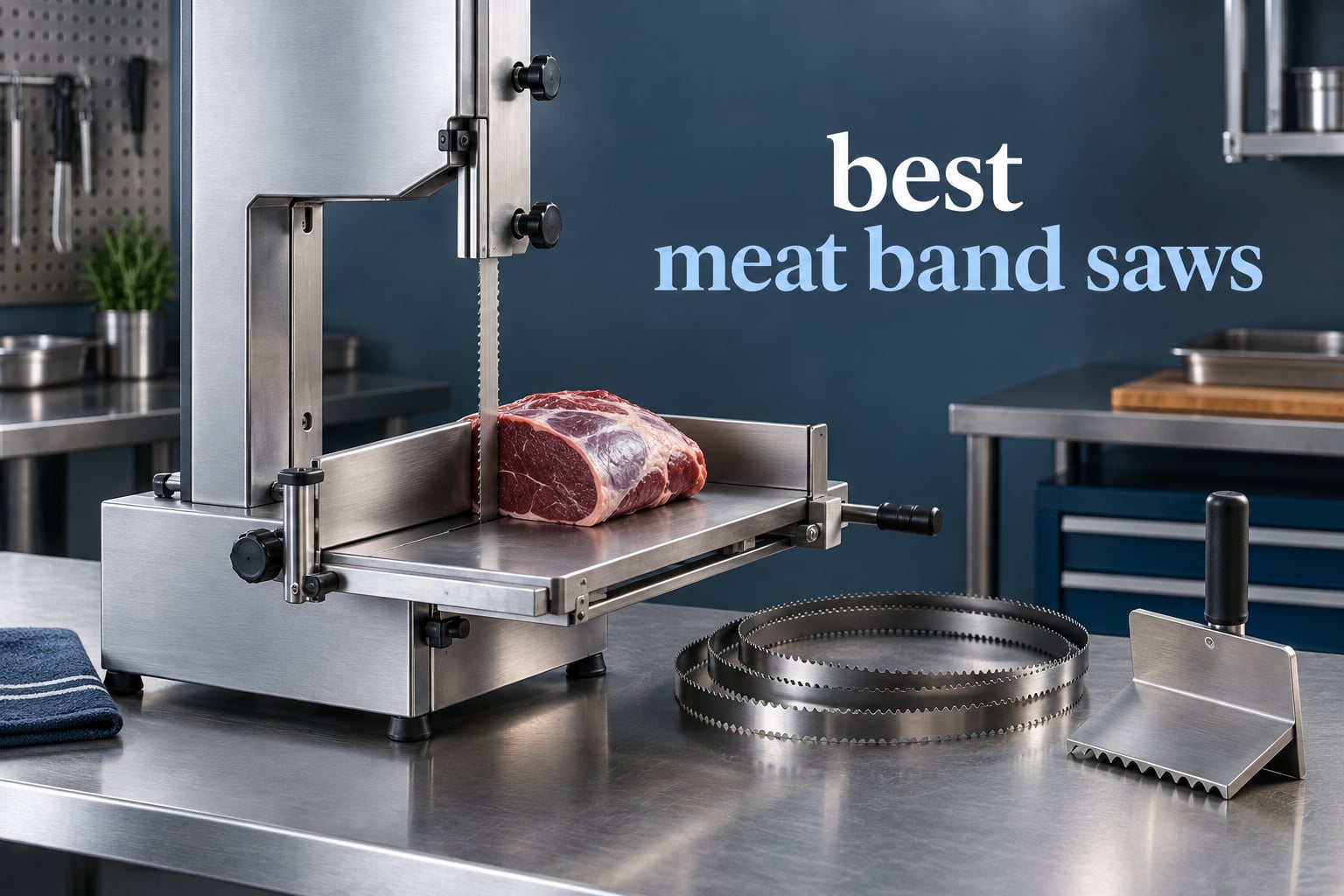
Best meat band saws are the fastest way to turn a whole deer, a pork shoulder, or a freezer full of frozen blocks into portioned cuts without hand-chopping every piece. The short version: the VEVOR 1500W 19.3 x 15 inch countertop model is the one most home processors should buy, and the KWS B-310 3800W 5HP is the right answer if you are running a small butcher shop or food operation.
Here is the thing nobody tells you at the top of a search result for this keyword: a sharp boning knife produces a better steak than any band saw in this list. What a band saw buys you is speed and consistency on bone-in sections, and that only matters if you are processing real volume. A hunter who brings home one deer a year can get through it with a good knife and a sharpening steel.
So this roundup is written for the people who genuinely need one. We compared the eight electric meat band saws with the most real owner feedback on the market right now, pulled their specifications straight from the manufacturer listings, and weighted three things above all else: how much bone the motor will actually push through, whether the blade and parts are food-grade and replaceable, and how small a shop the machine is too big for. Every rating and review count below is copied directly from the listing, unedited.
A note on honesty before we start. We did not buy and run eight saws for thirty days. The picks come from manufacturer specification sheets, retailer listings, and the pattern in what buyers report back after they have owned these machines through a season or two of real processing. Review counts in this category are thin, which is its own problem, and we flag that where it matters. Last thing: our general band saw roundup covers the woodworking and fabrication side if you want the broader picture first.
Top 3 Best Meat Band Saws (October 2026)

VEVOR 1500W Countertop Saw
- 1500W pure copper motor
- 19.3 x 15 inch workbench
- 0.16-7.9 inch cutting thickness
- 6 bundled blades

KWS B-310 5HP Bone Saw
- 3800W 5HP motor
- 78.7 inch 4 TPI blade
- 7.25 inch cut thickness
- US parts and service support

ROVSUN 1500W Bone Saw
- 1500W motor
- 661 lb of bone per hour
- 19.4 x 15.2 inch stainless table
- 6 spare blades and manual
The VEVOR 1500W takes the top slot on evidence, not hype. It carries 165 ratings, by far the deepest review history in the group, and it is the only machine here with a two-year limited warranty rather than a single-year parts-only warranty. The KWS B-310 is the commercial answer, with more than twice the motor output and the longest blade in the set. The ROVSUN 1500W is the value pick, holding a 4.6 star average across 23 ratings with 82 percent of those ratings at the top score and a stainless build owners describe as sturdy.
Meat Band Saws at a Glance in 2026
| Product | Specifications | Action |
|---|---|---|
| VEVOR 1500W Countertop Meat Band Saw |
|
Check Latest Price |
| KWS B-310 3800W 5HP Bone Band Saw |
|
Check Latest Price |
| ROVSUN 1500W Electric Bone Saw |
|
Check Latest Price |
 FADHOLE 1500W 20×15 Meat Bone Saw FADHOLE 1500W 20×15 Meat Bone Saw |
|
Check Latest Price |
 EKway 750W 110V Meat Band Saw EKway 750W 110V Meat Band Saw |
|
Check Latest Price |
 FADHOLE 1500W Electric Band Saw FADHOLE 1500W Electric Band Saw |
|
Check Latest Price |
 VEVOR 2200W 24.4×20.5 Vertical Saw VEVOR 2200W 24.4×20.5 Vertical Saw |
|
Check Latest Price |
 QUARPAL 1500W Bone Meat Band Saw QUARPAL 1500W Bone Meat Band Saw |
|
Check Latest Price |
Two spec columns cause more confusion than anything else on a listing like this, so define them now. Cutting thickness is how deep a slab the saw can pass through on one pass, set by the gauge plate against the carcass. Cutting capacity is throughput, listed here in pounds of bone or frozen meat per hour. A machine can have a wide thickness range and modest throughput, or the reverse, and both numbers matter for different jobs.
How We Picked These Meat Band Saws?
We picked on three criteria, in this order, and we applied them the same way to every machine on the list. First, motor output and rated throughput, because a saw that stalls on bone is useless no matter what the rest of the listing claims. Second, food-contact construction and sanitation design, since everything that touches the meat should be stainless and reachable for cleaning. Third, parts and blade availability, which is the factor that decides whether a machine is still running in year five.
Review volume came fourth, and it is worth being transparent about why. In this category the review bases are genuinely thin. The most-reviewed machine here has 165 ratings, and the least-reviewed has 2. We weighted rating alongside review count rather than rating alone, so a perfect 5.0 from two owners does not outrank a 4.3 from 165. Where a rating base was too small to be meaningful, we said so in the section rather than presenting the number as a verdict.
Two data problems surfaced while comparing the listings and we did not smooth them over. Several machines state a cutting thickness range in the title and a different range in the item type name, which is a listing error rather than a specification conflict, and we flagged the machine we could not resolve. Several also quote throughput figures that differ by more than an order of magnitude despite identical wattage, which tells you the numbers are measured differently by each manufacturer.
Finally, this is a spec-and-sourcing roundup rather than a thirty-day teardown test. Where a paragraph sounds like owner experience, it comes from review text and forum discussion, not from our own bench. We would rather tell you that than fake a bench test on eight machines nobody has stacked on one shelf.
1. VEVOR 1500W Countertop Meat Band Saw – the Best All-Rounder
Commercial Electric Meat Bandsaw, 1500W Stainless Steel Countertop Bone Sawing Machine, Workbeach 19.3″ x 15″, 0.16-7.9 Inch Cutting Thickness, Frozen Meat Cutter with 6 Blades for Rib Pork Beef
1500W motor
19.3 x 15 inch workbench
0.16-7.9 inch thickness
6 blades
2-year warranty
Pros
- Deepest review history here at 165 ratings
- Handles hard bone and frozen meat without stalling
- Two-year limited warranty
- Stainless steel throughout the food-contact path
Cons
- 70.6 pounds is awkward to reposition
- Listing title and item type name disagree on maximum thickness
- About 9 percent of ratings are one star
What decides this category for me is how many times a machine has been through a season of real processing before you commit to it. At 165 ratings, this saw has by far the deepest ownership record in the group, and that matters in a category where most listings have fewer than a dozen reviews behind them. When something breaks on a lesser-known saw, you find out at the worst possible moment, on opening weekend, with a hanging carcass in front of you.
The 1500W pure copper motor is spec’d to cut at up to 300 kg per hour through bone, and buyers describe feeding frozen meat and hard bone in with steady pressure and no stalling. The workbench measures 19.3 by 15 inches with a 0.16 to 7.9 inch thickness range, which covers everything from venison steaks to a rib rack to a section of pork shoulder.
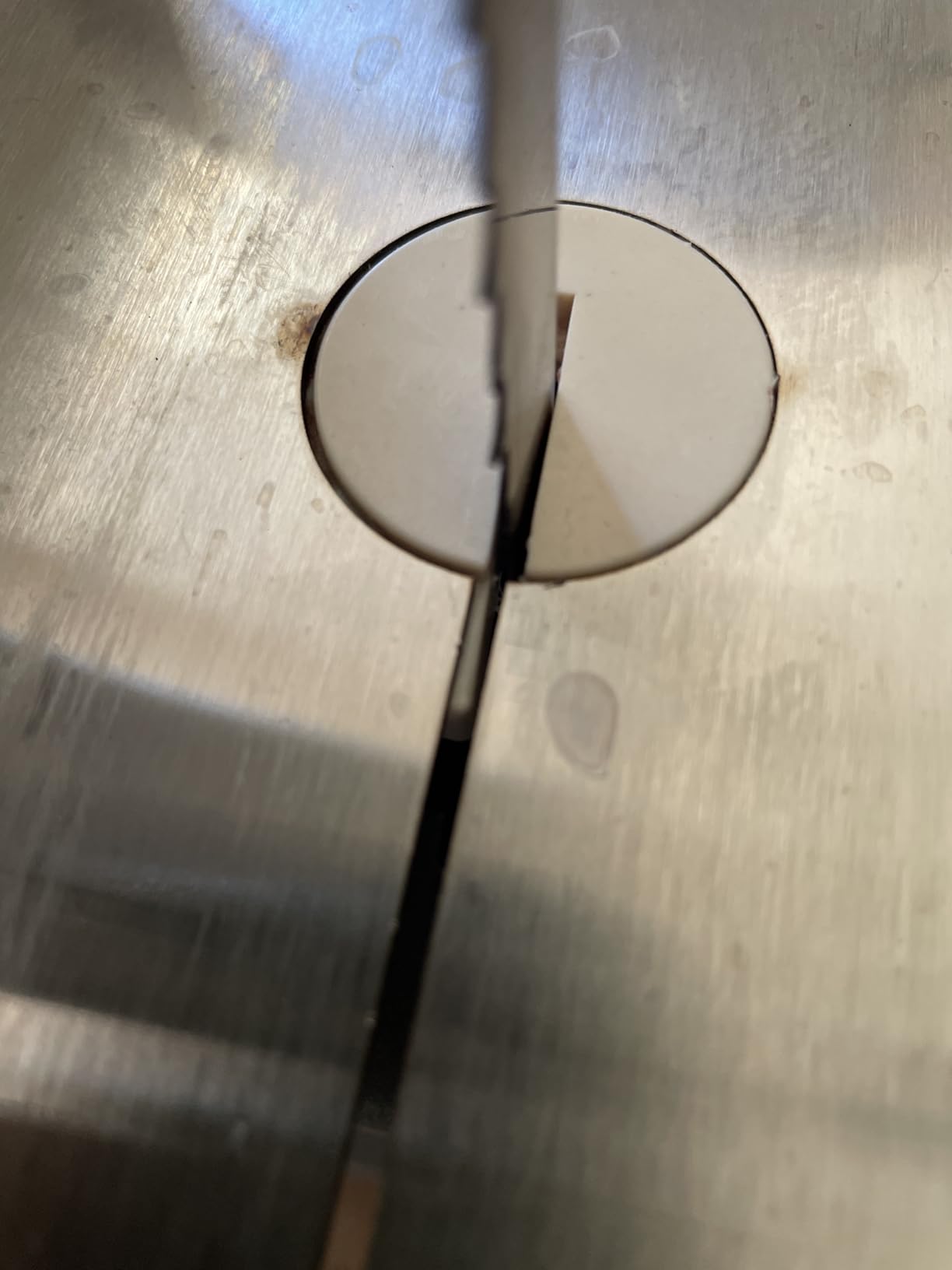
Two details give me pause before I recommend it without qualification. The listing is internally inconsistent, with the item type name stating a 0 to 4.3 inch range while the title claims 0.16 to 7.9 inches, so verify the real maximum against the machine you receive. The listed dimensions of 52 by 49.5 inches at 87.5 inches tall also do not obviously match a 70.6-pound countertop machine, which is worth confirming with the seller before you plan your bench space.
Sanitation design is the part to plan around. The stainless body and blade wipe down cleanly, but a band saw housing collects fat and bone debris under the blade cover whether or not the machine is well made, and hunting forum users describe that buildup as a sanitation problem. Budget time for a brush and a food-safe degreaser after every session rather than a quick rinse at the end.
One more thing worth checking before you buy. The listing quotes a 2-year limited warranty, which is the longest cover in this group, and it names a manufacturer part number of BS-250-A. Have the seller confirm that the model number on the machine matches, because parts ordered against the wrong number are the most common reason a cheap saw becomes a parts donor.
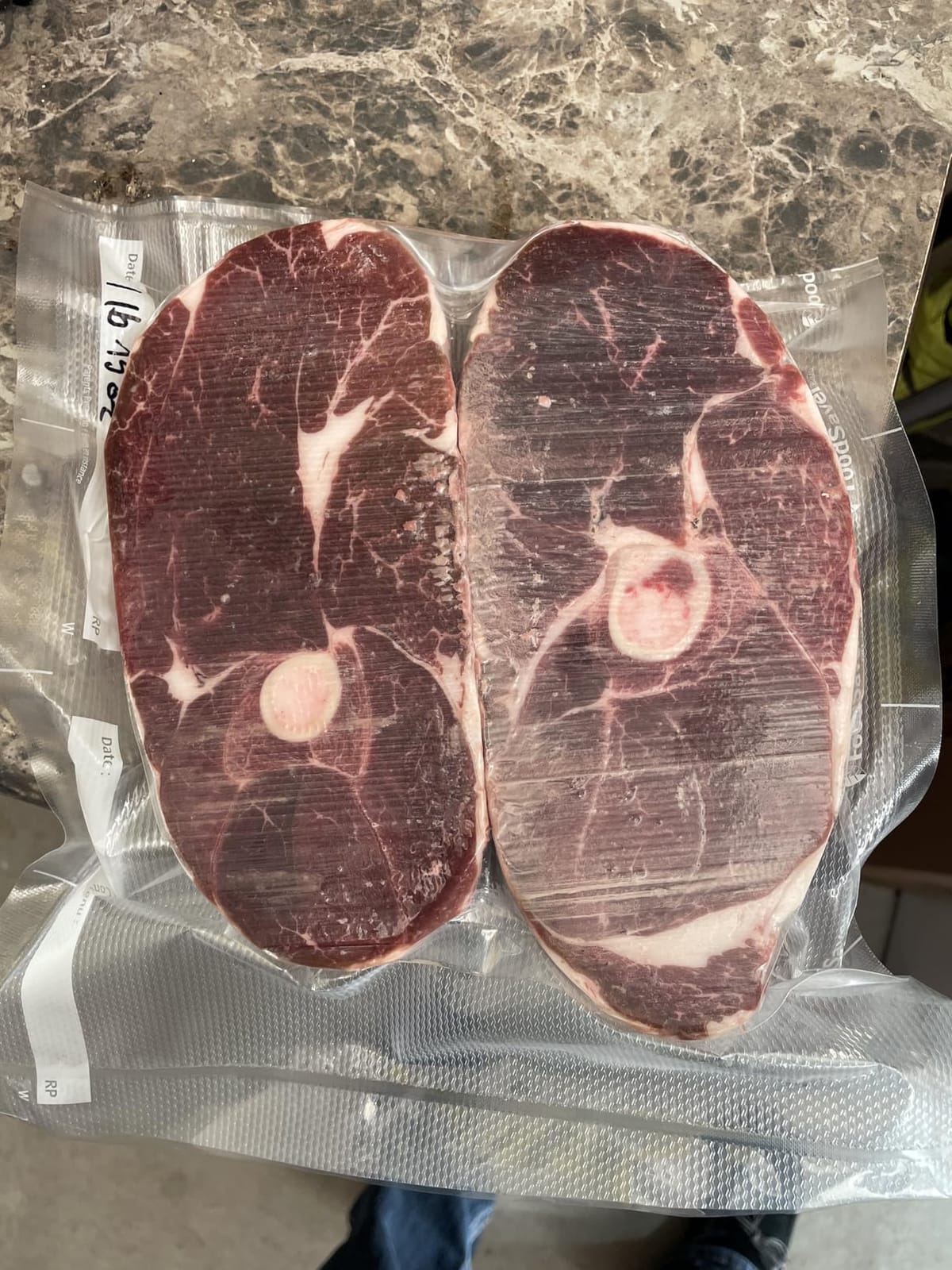
What you get with the VEVOR 1500W?
You get six replacement blades in the box, which is generous for this tier and means you are not ordering blades before the first deer. The stainless steel blade and precision gear set are the parts buyers praise most, and the 1420 rpm motor speed sits in a range that feels controllable for a first-time user rather than twitchy.
You also get the only two-year limited warranty in this group. KWS covers parts for one year, and several of the smaller brands here list no warranty length at all, so if a motor or gearbox fails you are looking at a different conversation depending on which machine you bought.
Where the VEVOR falls short?
The footprint is the practical limit. At 87.5 inches tall and nearly 50 inches wide you are dedicating a real corner of a garage, and moving it for a second deer day at someone else’s property is a two-person job.
It is also not the machine for a commercial kitchen that needs certified electrical and sanitation documentation. This is a home and farm tool that happens to be sold with commercial language, and treating it as a licensed-food-facility component is a mistake. Buy it for the home shop, not for a restaurant that has to pass inspection.
2. KWS B-310 3800W 5HP Bone Band Saw – Best for Butcher Shops
KWS KitchenWare Station B-310 Countertop Model Commercial 3800W 5HP Electric Bone Band Saw Machine/Slicer Heavy-Duty
3800W 5HP motor
78.7 inch 4 TPI blade
7.25 inch thickness
22 x 16.7 inch table
155 pounds
Pros
- 3800W 5HP motor is the highest rated output on this list
- Long 78.7 inch stainless blade at 4 TPI for precise commercial cuts
- Tool-free blade and upper pulley removal
- US-based parts and service support
Cons
- 155 pounds is a two-person lift
- Value Edition color option is not ETL certified
- One-year factory limited parts-only warranty
This is the only machine in the group that reads like a piece of restaurant equipment rather than a garage project. At 3800W and 5HP it carries more than double the motor output of the 1500W machines, and the 78.7 inch stainless steel blade running at 4 teeth per inch is the specification a working butcher would actually ask about.
Replacement parts availability is the reason this one edges out the VEVOR 2200W for commercial use. Buyers on r/jerky consistently judge a machine by whether parts are obtainable years later, and KWS is a US company selling replacement parts, service, and warranty support directly. For a shop that runs this thing daily, that is worth more than raw wattage.
The 4 TPI blade geometry is the quiet advantage. Four teeth per inch is a coarse tooth pattern that rips through bone rather than being torn apart by it, and paired with a 7.25 inch maximum cutting thickness and 10 inch cut height, it handles the kind of section you would otherwise hand off to a floor model. The stainless gauge plate is adjustable, and the 22 by 16.7 inch table carries a numeric scale for consistent portions.
Why the 3800W motor matters commercially?
Horsepower on a band saw is really about duty cycle. A 1500W machine will cut a deer, then a second deer, then start bogging down on the third if you are not giving it time to cool. A 5HP motor holds blade speed under load, which means a consistent kerf and a blade that does not wander or deflect on a bone-in cut.
It also carries a 10 inch cut height, a figure no other machine on this list publishes, which means thicker slabs pass through without repositioning. For a shop doing steady trim and portion work, that translates to fewer setup adjustments per animal, and setup time is the cost nobody tracks.
Where the KWS B-310 falls short?
At 155 pounds it is one of the two heaviest machines in this roundup, and the 23.2 by 22.4 inch base means you are not moving it between rooms. Plan the floor space and the circuit before you buy, because repositioning it later is a two-person lift. The heavier of the two is the VEVOR 2200W at 80.5 kg.
There is also a certification wrinkle. The Value Edition color option is explicitly not ETL certified, and the warranty is one year, factory limited, parts only. If you are outfitting a licensed food operation, confirm the electrical listing on the specific edition you are buying rather than assuming the brand name covers you.
3. ROVSUN 1500W Electric Bone Saw – the Value Pick
ROVSUN 1500W Electric Bone Saw Machine, 0.16-7.9Inch Cutting Thickness Frozen Meat Cutter with 6 Saw Blades, Commercial Bandsaw Machine Stainless Steel 19.4 x 15.2 In Table for Chicken Fish Beef
1500W motor
661 lb of bone per hour
19.4 x 15.2 inch table
0.16-7.9 inch thickness
6 blades
Pros
- 4.6 stars across 23 ratings with 82 percent five-star
- 661 lb of bone per hour from a 1500W motor
- Food-grade stainless workbench resists rust and corrosion
- Manual plus 6 spare blades included
- Blade stabilizer and emergency stop
Cons
- Thickness adjustment requires loosening and retightening table screws
- Some buyers had not used the machine at review time
Owners describe this one consistently in the same three words: sturdy, clean, simple. A 4.6 star average across 23 ratings, with 82 percent five-star, is the highest star average among the machines on this list with more than twenty ratings behind it, and the reasons owners give are practical rather than emotional.
It is also one of the few in the group that includes a manual in the box, which sounds trivial until you are setting blade tension on a machine you have never seen before. The 1500W pure copper motor is rated at 661 pounds of bone per hour, which works out to the same pound figure as the VEVOR 1500W’s 300 kg per hour claim, and owners describe it as cutting frozen lamb cleanly and easily.
Safety hardware is better specified than most at this level. There is a blade stabilizer, a widened meat pusher, an emergency button, and four non-slip feet, which covers the four things hunting forum users flag when a cheap saw goes wrong. That is not a spec-sheet feature so much as a sign the manufacturer thought about the operator’s hands.
The 19.4 by 15.2 inch food-grade stainless workbench is larger than most in this class and resists the rust and corrosion that show up first on lesser machines after a season of wet carcass processing. The listed 30.9 inch overall height means it works at a normal bench height, which is a real ergonomic difference from the 87.5 inch machine in position one. No weight is published for this model, so plan on checking it before you commit to a lift.
Where the ROVSUN earns its rating?
Reviewers single out cleanup speed and frozen meat performance, with lamb and other frozen cuts called out as clean passes. That combination, easy sanitation plus frozen capability, is what wild game processors actually rank highest, ahead of horsepower figures on a listing.
The six removable blades come apart through a top adjustment knob, so you can strip, rinse, and dry the blade set without pulling the machine apart. For a saw that will see wet, fatty, bone-in work all season, that design choice saves real time at the sink.
Where the ROVSUN falls short?
Thickness adjustment is manual screw work rather than a lever or a quick-release. You loosen the table screws, move the stop along the scale line, and tighten it back up, and you do that every time you change from steaks to chops. On a busy processing day that friction adds up.
A small share of reviewers noted the machine was still unused when they wrote their review, which means part of the rating base reflects delivery and packaging rather than performance. The 4.6 average is real, but treat it as an early signal rather than a decade of field data.
4. FADHOLE 1500W 20×15 Meat Bone Saw – Best for Frozen Blocks
Commercial Electric Meat Bone Saw Machine, Kitchen Frozen Food Processor, Adjustable Thickness 0.6-5.9”, Butcher Band Saw with 20×15” Work Table for Chicken Fish Beef Bread
1500W motor
992 lb of frozen meat per hour
20 x 15 inch countertop
0.6-5.9 inch thickness
5 blades
Pros
- 992 lb of frozen meat per hour from a 1500W motor
- Large 20 x 15 inch staging countertop
- Blade is dishwasher safe for sanitation
- Cabinet safety locks on the upper and lower housings
Cons
- Large frozen blocks can refreeze behind the blade and stick
- Thickness change requires loosening and retightening fixing screws
- Countertop needs wiping down and cool dry storage after use
This is the machine to look at if your workload is frozen product rather than whole carcasses. At 992 pounds of frozen meat per hour it is the highest throughput claim among the 1500W machines on this list, and users processing bulk frozen blocks describe the cuts as fast and clean compared to working through with a cleaver.
The 20 by 15 inch food-grade stainless countertop is the largest staging surface among the 1500W machines here, edging the 19.4 by 15.2 inch ROVSUN bench and the 19.3 by 15 inch VEVOR workbench, and that is the feature that matters more than it sounds. You can load a section ahead of the cut instead of retrieving the next piece from a cooler with one hand while the other is guiding meat toward a running blade.
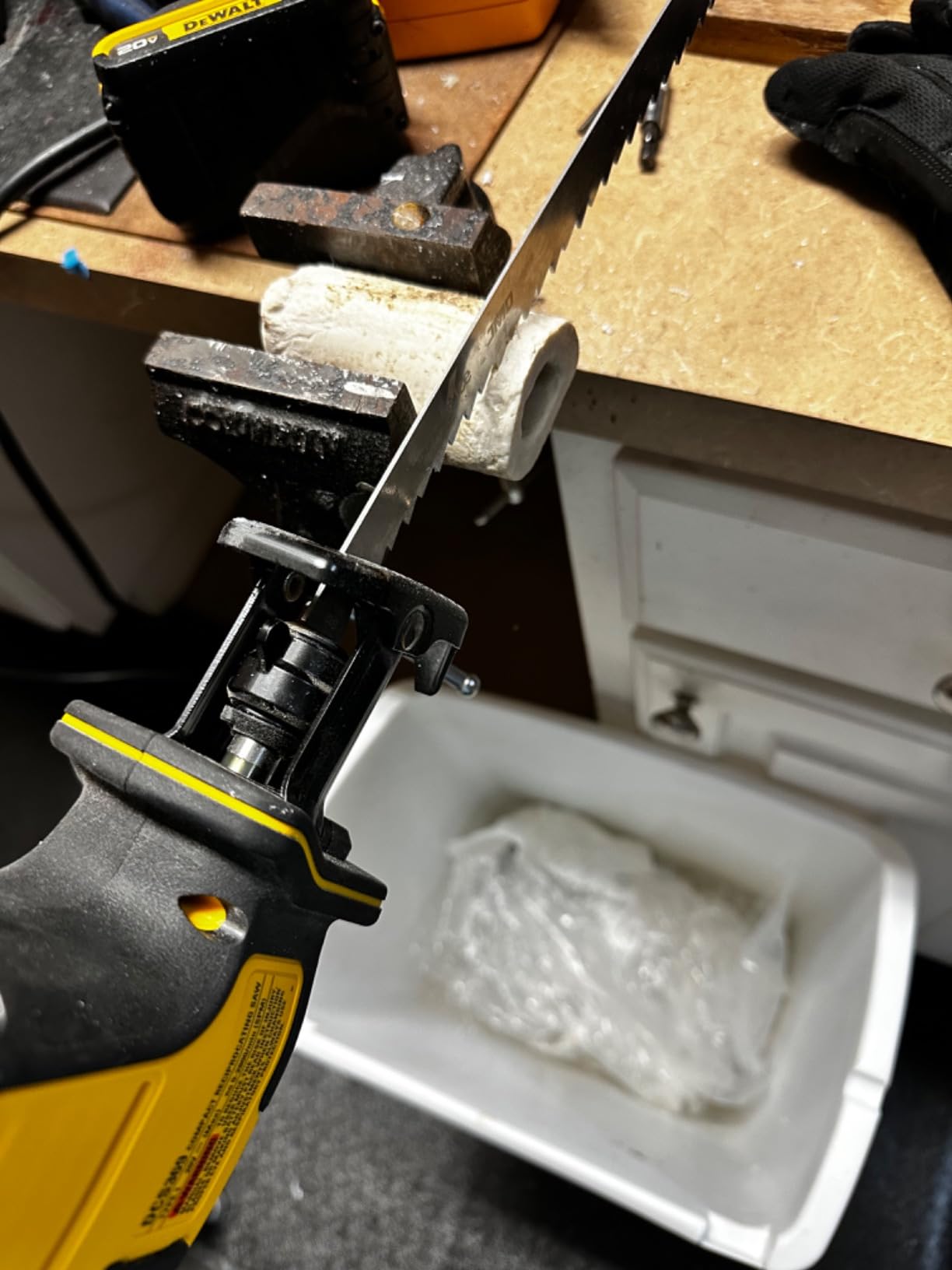
Sanitation is the strongest story in the set. The blade is dishwasher safe, which removes the single most common complaint we found about band saws in hunting forums, where fat and bone debris accumulate under the blade cover and eventually smell. One-touch waterproof switches and safety locks on both cabinets make a full hose-down realistic.
Owners also value the stainless push plate and push bar for keeping hands on the safe side of the blade. On a machine rated for 992 pounds of frozen product an hour, that is not a decorative feature.
Worth knowing before you commit: five replacement blades are included in the box, which is mid-pack in this roundup, and the countertop is built as a staging surface for loading meat ahead of the cut. That staging design matters more for a weekend processing session than for a shop, where a blade change is a five-minute job rather than a supply-chain question.
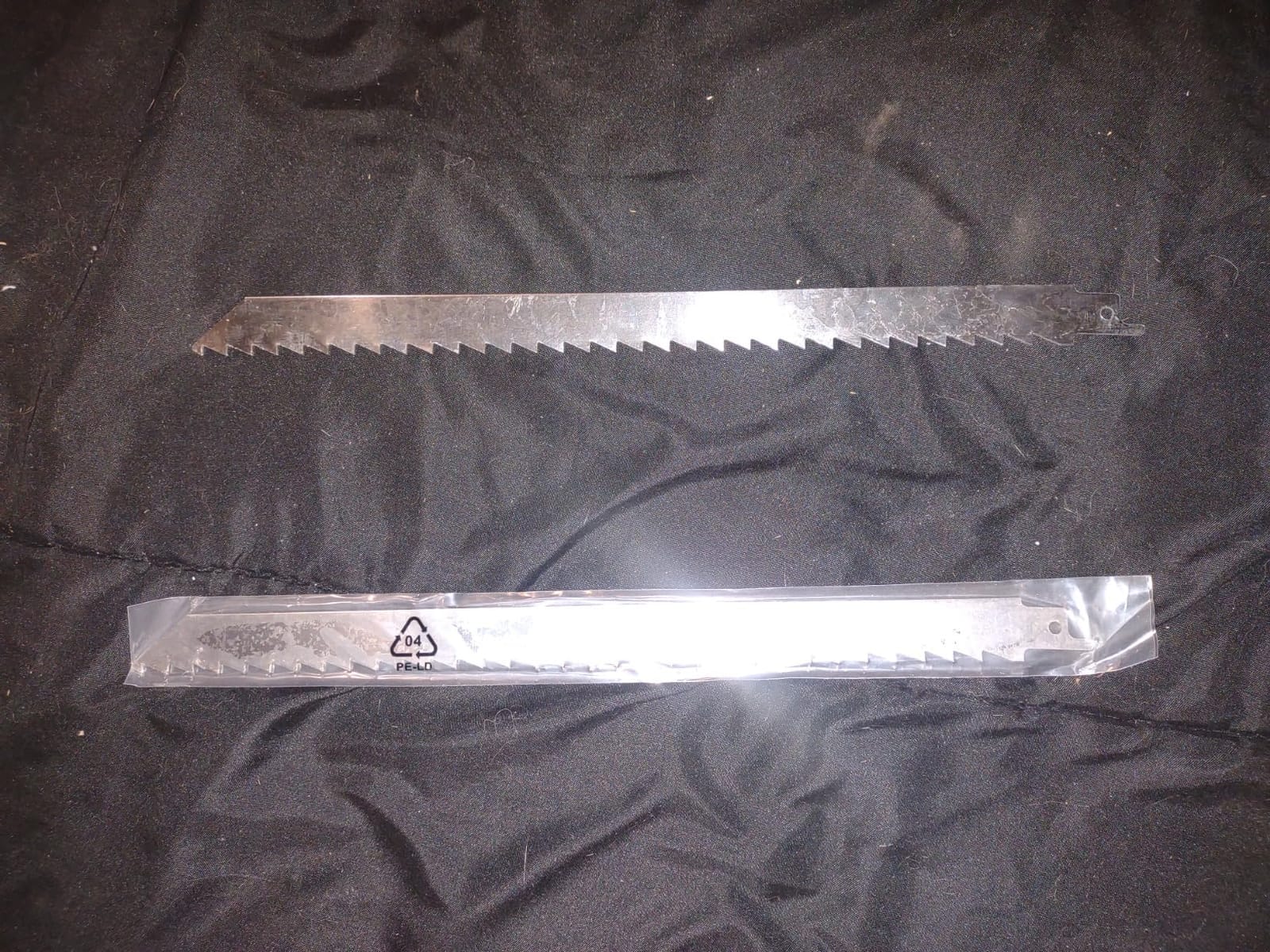
When the frozen-block capability earns its keep?
It earns its keep in a specific situation: bulk frozen product, cut in repeated passes. A shop doing sausage, jerky prep, or portioning freezer inventory moves through product in uniform blocks, and that is exactly the workload this throughput figure describes. The 0.6 to 5.9 inch thickness range covers most of those portions.
It also helps with a partially frozen input. Practitioners on hunting forums commonly freeze meat for 30 to 60 minutes before cutting, which firms the surface enough to feed cleanly without the blade loading up the way it does on soft refrigerated meat.
Where this FADHOLE falls short?
There is a real operational quirk buyers keep mentioning: large frozen blocks can refreeze behind the blade and stick to the cut surface. When it happens you need a second person to hold the cut open while you clear it, which breaks a workflow that otherwise runs solo.
The 20 by 15 inch countertop is also a liability outside a climate-controlled room, since the manufacturer specifies wiping it down and storing it in a cool, dry place. A garage saw that sees ninety-degree summers is not a good home for this one.
5. EKway 750W 110V Meat Band Saw – Smallest Worktable, Simplest Install
EKway Commercial Electric Meat Saw, 750W Bone Saw For Butchering,110V Meat Bandsaw, Bone Cutting Machine with 2 Saw Blades,0.39-4.3 Cutting Thickness,Sawing for Chicken Fish Chops Bone Trotter Beef
750W motor
661 lb of bone per hour
19.3 x 12.4 inch table
0.39-4.3 inch thickness
110V
Pros
- 750W motor rated at 661 lb of bone per hour
- 110V plug-in operation with no circuit work
- 30 x 20 x 13 inch footprint fits a small workbench
- Includes tray and 2 spare blades
- 10-year spare parts support
Cons
- Only 2 spare blades included
- Smallest published worktable at 19.3 x 12.4 inches
- Cleaning is described as more involved than on wider models
The 750W rating is the first thing that makes people skip this machine, and it is worth explaining why that is misleading. The manufacturer rates it at 661 pounds of bone per hour, which is the same throughput figure as the 1500W ROVSUN. For intermittent home processing rather than continuous commercial work, that is ample.
What genuinely sets it apart is the 110V corded electric power. The KWS B-310 also lists 110V, but it is a 3800W 5HP machine, and every other entry in this roundup either runs on 230 or 240 volts or does not publish a voltage at all. Plugging into a normal outlet removes what is often the single largest hidden cost of installing a meat band saw.
All 12 of its ratings are at the top score, and owners describe clean passes through bone with a compact machine that is simple to operate. The 19.3 by 12.4 inch food-grade stainless worktable is the smallest published table in this roundup, but the overall 30 by 20 by 13 inch footprint is compact enough that the machine disappears onto a garage shelf between seasons.
Why the 110V plug-in changes the decision?
It changes the decision for anyone without a 240V circuit already in the shop. A dedicated high-amperage branch circuit is the most common reason a planned band saw purchase never happens, and for a home processor processing a handful of deer a year, paying an electrician to run 240V for a machine you will use six weeks a year is hard to justify.
It also makes the saw portable in a way the larger machines are not. A 750W unit with a 30 by 20 by 13 inch footprint can go to a friend’s place, a farm lease, or a community processing event without a truck liftgate, and its listed dimensions make it easy to work around on a normal bench.
Where the EKway falls short?
Two spare blades is thin. Comparable machines in this roundup include five, six, or eight, and a meat band saw wears blades out faster than most people expect, especially on bone-in work. Plan on ordering replacements early in the season rather than assuming the box is enough.
Cleaning is the recurring complaint in the reviews, and with a 19.3 by 12.4 inch table there is less room to disassemble and wipe down than on the wider machines. Budget extra cleanup time if you run it on fatty, wet work rather than dry trim.
The upside to a 12-rating base is that the manufacturer is still actively answering buyers. The listing includes twelve months of maintenance coverage and ten years of spare parts support, which is a longer parts commitment than most machines at this level promise.
6. FADHOLE 1500W Electric Band Saw 4001229 – Same Specs, Younger Reviews
Electric Band Saw 1500W Commercial Meat Bandsaw Machine – 0.6-5.9″ Chop Thickness Bone Cutter for Frozen Meat, Beef, Rib, Steak, Tuna
1500W motor
992 lb of frozen meat per hour
20 x 15 inch countertop
0.6-5.9 inch thickness
5 blades
Pros
- Same 1500W motor and 992 lb per hour throughput as pick four
- Very sharp blade straight out of the box
- Extra replacement blades included
- Owners report it speeds up game processing noticeably
Cons
- Only 9 ratings and all still within the first year of ownership
- Thickness change requires loosening and retightening fixing screws
- Countertop needs wiping down and cool dry storage after use
This machine shares its motor, throughput figure, countertop size, and thickness range with the FADHOLE in position four, and it carries the same 20 by 15 inch stainless body. The differences are in the evidence rather than the hardware, so picking between them is largely a question of how much weight you put on review volume.
Where the position-four model has 14 ratings, this one has 9, and every one of those ratings falls within the first year of ownership. Reviewers praise build quality, describe the blade as very sharp out of the box, and note that the machine arrived undamaged, and several bought it specifically for hunting season game processing.
The 1500W motor with a sharp stainless steel blade handles up to 992 pounds of frozen meat per hour, and the five replacement blades come off through a top knob. The 20 by 15 inch food-grade stainless countertop gives you the same staging room, with a scale line guiding the thickness stop from 0.6 to 5.9 inches.
What the 5.9 inch ceiling means in practice?
The 0.6 to 5.9 inch range is narrower at the top than several rivals here, and that is the one technical trade-off between this machine and the VEVOR 1500W. If you routinely split a pork shoulder or a beef plate into face-off halves in a single pass, check your thickest section against 5.9 inches before committing.
For portioning, ribs, and frozen blocks it is entirely adequate, and the narrower stop is easier to set precisely because the adjustment screw travels a shorter distance. For a shop doing uniform portion work, that is the more useful end of the range.
Where the evidence is thin?
Nine ratings is not a durability record, and the listing itself notes the base is entirely first-year. This machine could be the best value in the set three seasons from now, or it could be the one where a gearbox or bearing fails, and the current data cannot tell you which. Fewer reviews does not mean a worse machine, and it does not mean a better one either.
That is why it sits at position six rather than higher. Buy it if the specs match your workload and you are comfortable with an unproven track record. Skip it if you want the same hardware with a slightly wider review base behind it.
7. VEVOR 2200W 24.4 x 20.5 Vertical Saw – the Biggest Table
VEVOR Commercial Electric Meat Bandsaw, 2200W Stainless Steel Vertical Bone Sawing Machine, Workbeach 24.4″ x 20.5″, 0.16-8.7 Inch Cutting Thickness, Frozen Meat Cutter with 6 Blades for Rib Pork Beef
2200W motor
24.4 x 20.5 inch workbench
0.16-8.7 inch thickness
240V
6 blades
Pros
- Largest workbench here at 24.4 x 20.5 inches
- Handles frozen beef and whole hogs without jamming
- Blades are simple to change and the machine is easy to clean
- Thickness range up to 8.7 inches
Cons
- Requires a 240V dedicated circuit
- 80.5 kg weight needs a two-person move
- No manual included with the machine
This is the biggest saw in the roundup by workbench area, at 24.4 by 20.5 inches, and it holds the widest thickness range at 0.16 to 8.7 inches. Owners running whole hogs and beef report it handles that volume without jamming, and they single out blade changes and cleaning as straightforward.
The 2200W pure copper motor runs at 3307 rpm with a stated cutting efficiency of up to 3307 pounds per hour. That figure is the highest any of these machines claims, and the honest read is that it describes a duty cycle nobody’s home shop will ever reach.
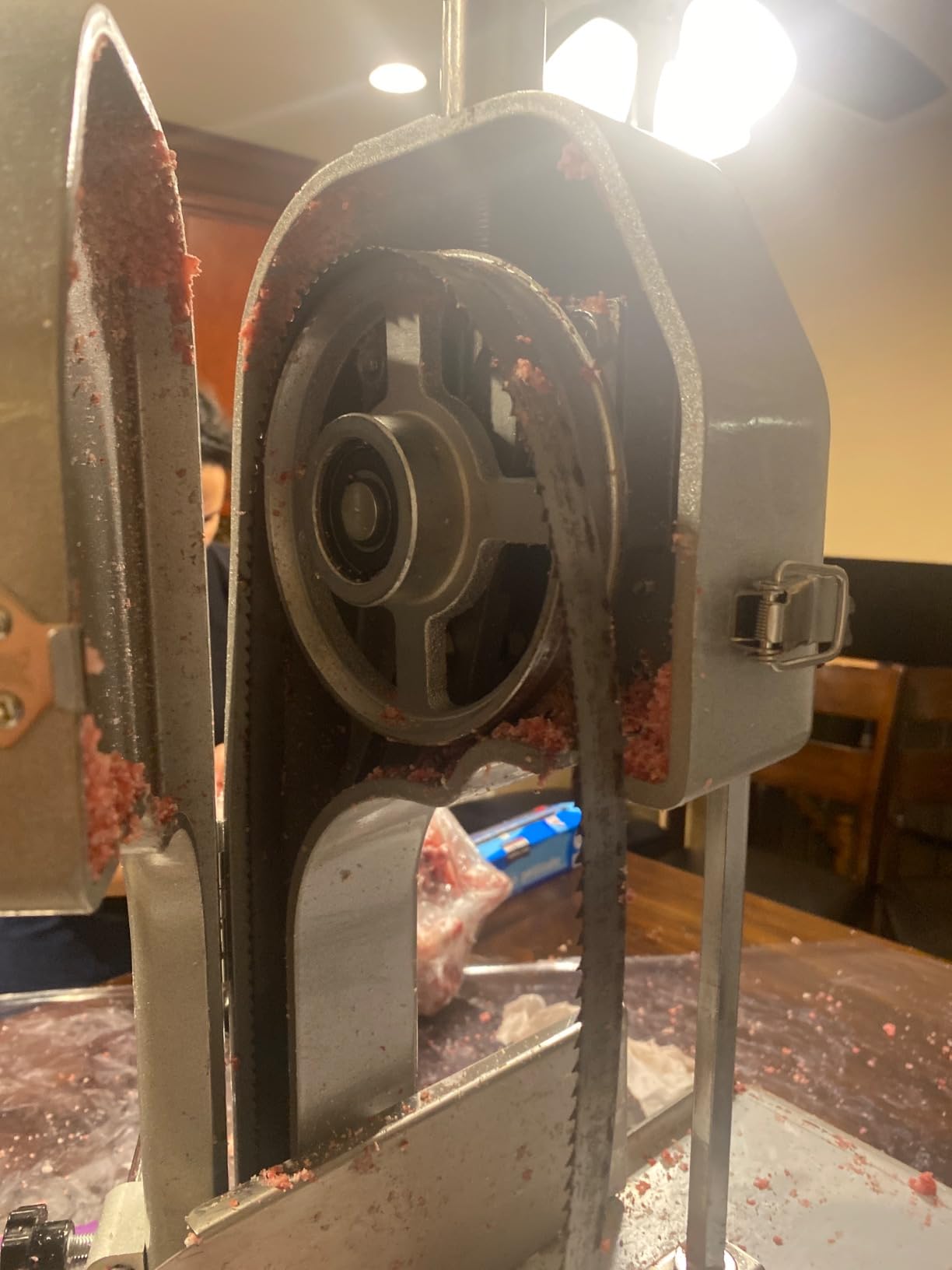
It also needs 240V power, which narrows who can install it. Combined with a 65.4 inch height and an 80.5 kg weight, this is a machine for a shop with dedicated electrical service, not a garage corner. The stand is sold separately, and one reviewer reported misaligned mounting holes on that optional hardware, so buy the saw and the stand from the same seller and check the fit before you build around it.
Review sentiment is the reason this sits low on the list despite the impressive paper specs. At 3.8 stars from 8 ratings, 24 percent of those ratings are one star, and no manual is included with the machine. Documentation matters on a saw with a tensioning procedure, and that is a real gap rather than a nitpick.
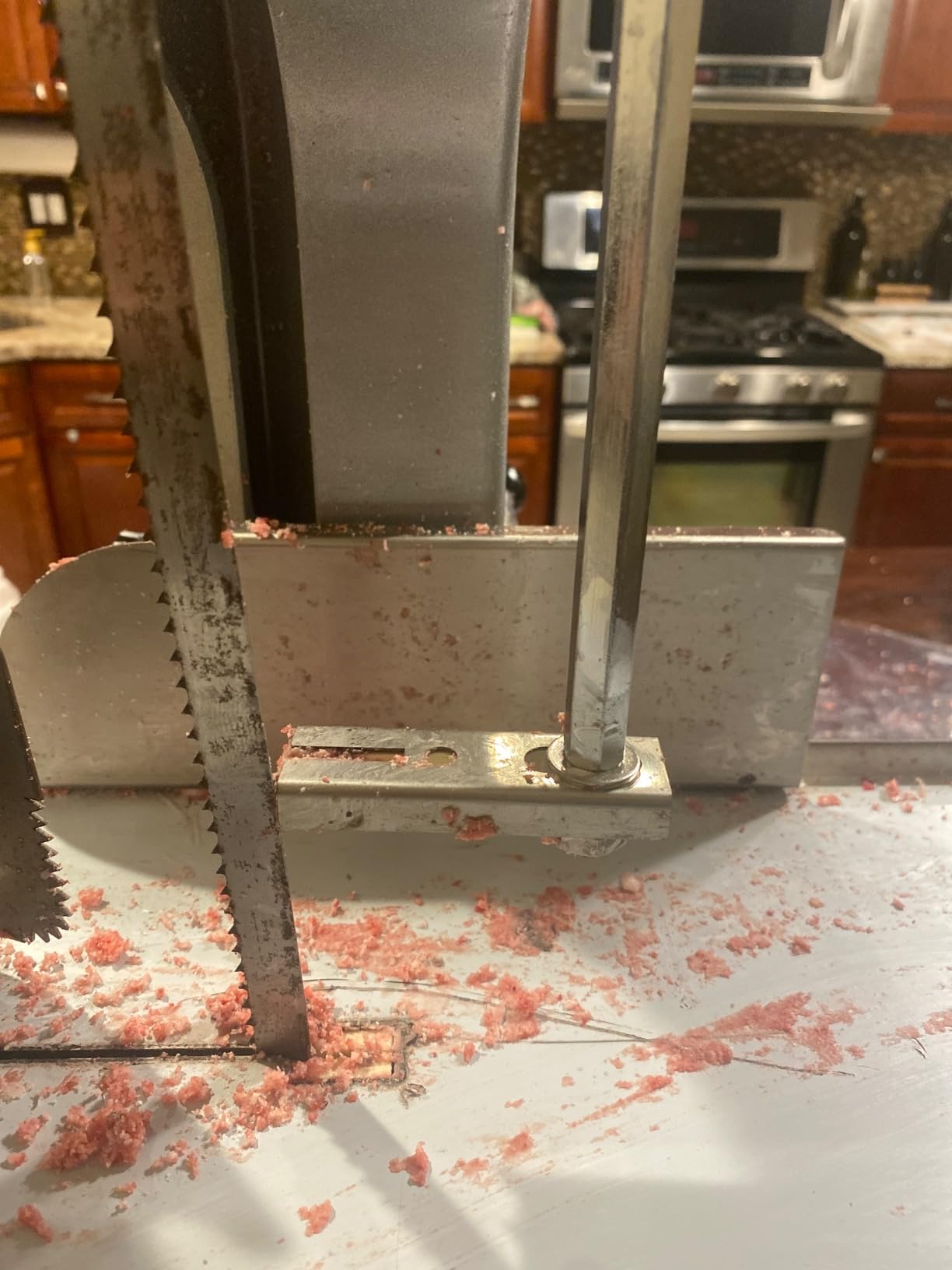
What a 24.4 by 20.5 inch workbench buys you?
It buys you room to lay a large section flat and control the cut with two hands instead of bracing it. On whole-hog and beef breakdown work, where a carcass piece is heavy and awkward, table size reduces the number of times you have to reposition a piece mid-cut, and repositioning is where accuracy is lost. The 24.4 by 20.5 inch bench is the largest in this group, ahead of the 22 by 16.7 inch stainless table on the KWS B-310 and the 20 by 15 inch counters on the two FADHOLE machines.
It also gives you somewhere to stage. You can set out the primal cuts on the table as you work rather than reaching into a cooler, which matters more than it sounds once you are working fast and cold. Against the stainless tables on the 1500W machines in this roundup, the difference in staging area is modest; against the 19.3 by 15 inch bench on the VEVOR 1500W, it is real.
Why we did not rank this higher?
Three reasons, in order. The 240V requirement adds installation cost that a residential buyer rarely budgets for. The 80.5 kg weight means a permanent floor position and two people to move it. And at a 3.8 average with a quarter of ratings at one star, the paper specifications are outrunning the owner-reported experience.
If you are outfitting a licensed shop with dedicated service, the table size and thickness range justify it. If you are a hunter with a garage, the 2200W label is buying you capability you will not use and a bill you will not enjoy paying.
8. QUARPAL 1500W Bone Meat Band Saw – Eight Blades in the Box
1500W Bone Meat Bandsaw Machine, Electric Bone Saw for Butchering,0.04-7.8 inch Cutting Thickness, Stainless Steel 17.3″ x 15.7″ Table, Frozen Meat Cutter with 8 Saw Blades for Chicken Beef.
1500W motor
441 lb of bone per hour
17.3 x 15.7 inch table
0.04-7.3 inch thickness
8 blades
Pros
- 8 replacement blades
- more than any other machine here
- Cuts frozen ribs and pork chops cleanly with no ragged edges
- Easy thickness adjustment with clear table scale lines
- Non-slip base keeps the machine stable
Cons
- 2 ratings only so long-term durability is unproven
- 441 lb per hour is the lowest rated capacity on this list
- Blade tension knob needs loosening after each use
Eight replacement blades is the standout feature here. Every other machine in this roundup includes between two and six, and since a meat band saw wears out blades faster than buyers expect on bone-in work, the blade count is a running cost you get to skip for the first season.
At 1500W the motor delivers 441 pounds of bone per hour, the lowest rated capacity among the 1500W machines on this list, so this is not the choice for a shop trying to push volume. It is sized for a home processor or a restaurant doing steady prep rather than production cutting.
The single detailed review describes restaurant prep on frozen ribs and pork chops, with clean cuts, no ragged edges, quick thickness adjustment, and cleanup described as a breeze. That is one owner, and I am weighting it accordingly, but it is a coherent report of the specs on the page.
Why eight blades matters more than it looks?
Blades dull from bone contact long before they break, and a dull blade slows the motor, generates heat, and leaves a rougher cut. Having a full set of spares means you can swap at the first sign of drag instead of pushing through a bad cut or waiting for a delivery.
The maintenance instruction is worth knowing: loosen the top adjustment knob after each use to extend blade life. That is a design where the blade is under tension while parked, and releasing it between sessions is part of the care routine rather than a repair step.
Where the QUARPAL falls short?
Two ratings means a perfect 5.0 average tells you almost nothing about durability. The listed 66.1 pound weight makes the machine portable, but the review base is too small to tell you whether the motor, the blade guide bearings, or the tension system holds up over a few seasons.
There is also a usage constraint mentioned in reviews, that it works best on fully frozen input, which limits flexibility if you want to cut fresh chilled meat on the same setup. Confirm that against your own mix of fresh and frozen work before choosing it over a machine with a higher rated capacity.
How to Choose a Meat Band Saw?
Start by matching the saw to your volume, not to the biggest number on a listing. A hunter processing one deer a year, a hunter processing six, and a shop doing 400 pounds a day have almost nothing in common, and the wrong match in either direction wastes real money.
A useful rough guide: one to two deer per year and a few hundred pounds of frozen product fits a 750W to 1500W countertop machine. Three to ten deer per year, or a farm doing home slaughter, fits a 1500W to 2200W unit with a 20-inch-plus workbench. Steady daily commercial work is where the 3800W class and floor models start to make sense.
One more sizing signal that buyers underweight: the ratio of frozen work to fresh work. If most of what you cut comes out of a freezer, throughput matters more than cut finish and the ranking shifts toward the higher-capacity machines. If most of it is fresh boneless product, a machine is a luxury and the capacity difference between these eight is largely irrelevant to you.
For a broader look at the machine families, our benchtop band saw roundup covers the small-shop category in more depth, and our butcher band saw picks go deeper on the commercial side.
Blade width and TPI: how many teeth per inch for meat?
For meat and bone, a coarse blade of about 3 to 4 teeth per inch is the right default. Fine-tooth wood blades clog instantly on fat and marrow, while coarse teeth have the gullets needed to carry debris away. The KWS B-310’s 78.7 inch blade at 4 TPI is the clearest example in this roundup of a saw specified with meat geometry from the factory.
Think of TPI as a trade between cut speed and finish quality. A low TPI blade rips through a rib rack in seconds and leaves a slightly rougher face. A higher TPI blade, 6 to 10 or more, gives a smoother finish on boneless meat but is a poor match for bone and will dull fast. For a machine that does both, stay in the 3 to 6 TPI range and keep a coarse blade on hand.
Skull sections, round bones, and frozen blocks want the coarsest blade you can run. Boneless primals for steaks want a finer tooth. Most home processors end up owning two or three blades and swapping based on the cut, which is exactly why the machines bundling six to eight blades are worth the extra shelf space.
Can you use a wood bandsaw to cut meat?
No. A wood bandsaw is the wrong machine for meat, and converting one is not worth the effort for a home processor. A wood saw runs a narrow blade at high speed with a fine tooth pattern and a cast iron table, none of which suits a wet, fatty, bone-in carcass. The three differences that matter are blade geometry, table material, and the sanitation design around the wheel housing.
What you would have to change: a wide 3/4 inch blade at coarse TPI for the bone work, a full stainless table and carriage instead of cast iron, and a complete strip-down sanitation plan because wood saws trap swarf in places designed for sawdust. You would also lose the gauge plate that lets a meat saw hold a consistent portion thickness, which is the main reason to own a dedicated machine at all.
If you already own a wood bandsaw and want to test the idea, our metal cutting band saw picks cover the blade-tension and tooth-selection side that carries over. But the short answer for a first-time buyer is that a purpose-built meat saw costs less than a good weekend of parts hunting, and our advice is to start there.
Blade width matters as much as tooth count
Tooth count is only half the blade question, and the half most listings never mention. A meat band saw runs a wide blade, typically a quarter inch for general carcass work up to three quarters inch or more for heavy bone and frozen blocks, because a wide blade is stiffer and resists deflecting sideways when it meets a femur or a frozen rib section.
A narrow blade deflects instead of cutting, which produces a wandering kerf and forces the operator to fight the cut. If you are splitting large bone-in sections, blade width is a bigger factor than the difference between 4 and 6 TPI. Unfortunately, blade width on these machines is set by the wheel size and the frame, which is why a bigger saw is not just a faster saw.
Stainless steel and food-contact surfaces
Every machine in this roundup lists a stainless steel workbench, and that is the minimum. The surfaces that matter more are the ones people forget: the blade itself, the push plate, the gauge plate, and the hardware around the wheel housing. Aluminum and plastic trim parts are common and mostly harmless, but aluminum in a wet acidic cutting path is where corrosion and cleaning-chemical damage show up first.
Check whether the blade material is listed as food grade rather than just stainless. Several machines here specify food-grade stainless workbenches, and that wording is worth more than the generic stainless claim on the housing. If you are processing venison or lamb in a warm environment, corrosion resistance is not a cosmetic preference.
Fresh, partially frozen, or fully frozen
Partially frozen meat, roughly 28 to 30 degrees, cuts cleanest. The surface is firm enough to feed without the blade catching and dulling, and the interior is still soft enough to avoid tearing. This is the practitioner sweet spot that comes up repeatedly on hunting forums, where the standard advice is to chill meat for 30 to 60 minutes before cutting.
Fully frozen is where a band saw earns its keep, because a 1500W saw will cut a solid block that a knife simply cannot. It is also where blade wear accelerates, and forum users consistently warn that frozen meat dulls blades faster than fresh work. Rotate blades rather than forcing one through a whole season of frozen product.
Fully fresh, refrigerated meat is the case where a band saw helps least. A sharp boning knife gives a cleaner face on a boneless primal, and if most of your work is fresh, the saw is a low-utilization purchase. Check your ratio honestly before committing.
Motor power and duty cycle
Wattage is a proxy for duty cycle, and duty cycle is what actually determines whether a saw keeps blade speed under load. A 1500W machine handles a deer or two and then needs recovery time. A 3800W 5HP unit holds speed on bone continuously, which is why shops gravitate to it.
Do not over-read the throughput numbers. Published figures on these machines range from 441 pounds of bone per hour up to 3307 pounds of frozen meat per hour, and the spread is partly measurement convention rather than a clean capability difference. Treat throughput as a relative signal between machines of the same class, not an absolute promise.
Countertop or floor model, and what 155 pounds really means
Four of the machines in this roundup publish a weight, and they sort into two clear groups. The QUARPAL at 66.1 pounds and the VEVOR 1500W at 70.6 pounds are one-person jobs you can move between a bench and a shelf. The KWS B-310 at 155 pounds and the VEVOR 2200W at 80.5 kg are floor machines that get positioned once and stay there.
Floor models with much longer blade loops handle carcass-sized work, but they are a different purchase with different electrical and floor-loading requirements. Nothing in this roundup needs one, and for a home processor a 20-inch-plus countertop workbench is the practical ceiling.
Electrical requirements: the real installation cost
Two machines in this roundup list 110V power: the EKway 750W and the KWS B-310, the latter at 3800W and 5HP. The VEVOR 1500W is listed at 230V, the VEVOR 2200W at 240V, and the remaining four do not publish a voltage figure at all. A 240V branch circuit on a 1500W machine is real electrical work, and it is the most commonly underestimated line item in a first band saw purchase.
For a shop, also confirm single phase versus three phase and check the amperage against your panel. Licensed food operations need documentation and certified equipment, and an uncertified edition is a problem regardless of how well the machine performs. If you are outfitting a commercial kitchen, the larger saw category is where those requirements get spelled out.
Parts availability, blade cost, and repairability
Parts availability is the number one long-term trust signal in this category. Buyers on r/jerky vouch for a machine by saying it has replacement parts available, and that logic is sound. A saw is a simple machine, but a failed bearing or a stripped gear in year three is a total loss if the part does not exist.
Check three things before buying: whether standard blades are sold separately and in what lengths, whether the upper pulley and blade carrier come off without tools, and whether the manufacturer is domestic or overseas. Tool-free blade and pulley removal, which the KWS B-310 offers, turns a maintenance job into a two-minute task instead of a teardown.
On total cost of ownership, add blades, a stand or table, and periodic blade sharpening to the purchase. Forum discussions put real-world blade consumption on bone-in work well above what buyers expect, which is the second reason the machines bundling six to eight blades rank where they do.
Which extra features actually earn their place?
Most feature lists on these listings are padded, but four items are worth paying attention to because they change how the machine behaves in daily use. A blade stabilizer keeps the blade tracking straight under load, which is the difference between a cut that holds its line and one that wanders on a bone-in pass. A widened meat pusher keeps your hand on the safe side of the teeth. A waterproof switch survives the hose-down that every one of these machines needs. And a non-slip base stops the machine walking on a wet floor.
The two FADHOLE machines and the ROVSUN 1500W all publish that combination, and the EKway 750W carries the same four items on a smaller frame. The VEVOR 2200W lists the broadest accessories but is the one machine in the group that ships without a manual, which suggests less attention to the operator side of the design.
Treat buzzwords like commercial, professional, and heavy-duty as uninformative on their own. Every listing in this roundup uses at least one of them, and several use all three. Read them as marketing copy and check the warranty, the parts availability, and the stainless contact surfaces instead.
Where to get blades and sharpening help?
Buy your spare blades from the same source you bought the machine, at least for the first year. Aftermarket blades for these machines vary more than most buyers expect, and a blade that is slightly wrong in width or tooth form will not track straight, which shows up as a cut that wanders rather than as an obvious failure.
Plan on a sharpening service rather than a file, unless you already sharpen bandsaw blades as a hobby. A 3 to 4 TPI meat blade is a straightforward shape to sharpen, but the setup, the guide, and the depth of the set all have to come out right, and a machine cut with a badly set blade works harder and heats the motor for no gain. A sharpening shop is cheaper than a new motor.
Buying a used meat band saw: what to inspect?
The used market is genuinely good for this category because band saws are simple, heavy machines with a long service life, and butcher shops upgrade more often than they need to. The inspection order matters more than the price. Look at the blade first, then the bearings, then the motor, then the frame.
Ask to see the saw running with a fresh blade installed. Listen for a bearing whine that rises with wheel speed, and watch whether the blade tracks square against the table. Check the blade tension mechanism for a wheel that has been re-tensioned many times, since that is the part most likely to be at the end of its life on a heavily used shop machine.
Rust on the contact surfaces is usually cosmetic. Rust on the blade path, the gauge plate, or the carriage is not, because it means the table has been sitting wet. Missing blade guards and a welded-up motor housing are the two things to walk away from, since a guard is a safety device and a welded housing means someone was ignoring a bigger problem.
Timing matters for hunters. Shops and farms clear out equipment in spring as new models arrive, which puts good used saws on the market months before you need one. That gives you time to find a blade, get a service, and set the machine up before the season starts rather than the week it begins.
Meat band saw, meat slicer, or grinder?
A meat band saw cuts bone-in sections and slabs. A meat slicer, the machine most people picture, is a reciprocating carriage saw that produces uniform deli slices and steaks from boneless meat. A grinder turns meat into sausage or burger. They are three different jobs, and searchers constantly conflate them.
Rule of thumb: band saw first if you break down whole animals, slicer first if you want restaurant-quality uniform portions from boneless product, grinder first if your goal is sausage and burger. A hunter with a freezer of venison usually ends up wanting a band saw and a grinder eventually, in that order.
Consider the hand saw option honestly, too. A good bow saw or a heavy meat saw with a fresh blade handles a deer with two people in an afternoon, costs a fraction of any machine on this list, and stores in a closet. The saws here pay for themselves on speed, on cutting frozen product, and on not wearing out a human wrist, not on capability you cannot get any other way.
That is also why we do not treat a band saw as a steak-quality tool. Searchers conflate it with a slicer because both produce neat portions, but a saw kerf on a rib chop and a thin slice of beef tenderloin are different outcomes from different machines. Know which one you actually want before you spend.
When Not to Buy a Meat Band Saw?
The honest answer is that a lot of people searching for the best meat band saws should buy a knife and a sharpening steel instead. This is the most common piece of advice across the hunting forums, and it is right more often than roundups like this one admit.
Skip it if you process one deer a year and mostly want steaks. The forum consensus is that a sharp boning knife produces a better cut face than a saw, because there is no swarf and no marrow smear on the surface. A saw is a throughput tool, not a quality tool.
Skip it if you have no plan for blade replacement. Blades dull on bone contact, they are a consumable, and a saw with no blade budget becomes a saw that sits in a corner. If the ongoing cost does not fit your plan, the machine is not the problem.
Skip it if you have nowhere to put it. Everything in this roundup is heavy, and 155 pounds on a residential floor is a planning conversation, not an afterthought.
And skip it if you are buying for a licensed food operation without confirming certification. A stainless table and a stainless blade are not the same thing as the documentation an inspector asks for. Verify the electrical listing and the certification on the exact model and edition before you install anything.
One more disqualifier worth naming: skip it if the only reason you want it is that processing fees are high. That number is real, and forum discussions about it drive most purchases in this category, but the fees cover labor, cold storage, and equipment you would need to buy anyway. If the math only works by assuming you will use the saw a hundred hours a year, check your actual processing days first, because most households get somewhere between ten and thirty.
Safety, Cleaning, and Sanitation for a Bone Saw
A meat band saw removes fingers and hands. Treat the blade as exposed at all times, and treat the feed direction as one-way. Push meat with the provided pusher and never with your hand, and never reach across the blade line to reposition a piece that has stalled.
Glove choice is a genuine disagreement among practitioners. Cut-resistant gloves protect against incidental contact but do nothing against a drawn-in blade. Chainmail gloves stop a saw blade but reduce dexterity and are awkward on the feeding hand, which is why working butchers commonly wear one on the guiding hand and a cut-resistant glove on the other. Neither replaces keeping your hands out of the cut path.
Use a clamp, a vise, or a second pair of hands for anything that needs holding, and mark a fat line with a sharpie before you cut. Forum users report that marking the line first is the single most effective way to stop a cut from drifting, and it costs nothing.
After every session, disconnect power, remove the blade, and take the machine apart as far as it comes apart. Loosen the blade tension knob on models that specify it between uses, clear swarf from under the blade cover and around the lower wheel, then wash down with a food-safe degreaser. The blade on the FADHOLE in position four is dishwasher safe, which makes that step trivial on that machine specifically.
Disassemble it on a regular schedule rather than only when it looks dirty. The one report that stands out in our reading of buyer feedback describes fat and bone buildup under a shop saw cover contributing to a health violation, and that is what happens when cleaning waits until the machine stops looking dirty to the eye. A weekly strip-down during a processing season, and a full one before the machine sits for months, prevents the problem entirely.
Keep cleaning chemicals away from the blade and the tension mechanism. A degreaser that is fine on a stainless table will strip the protective coating off a blade and can leave a rust-friendly residue on a steel guide, so use a food-grade product and rinse with clean water rather than relying on the chemical to evaporate.
Sharpen or replace a blade the moment the motor starts to labour, rather than pushing through. A dull blade increases drag, which raises motor heat, which shortens the life of the bearings and the motor itself. On these machines the cheapest repair is the one you make before anything breaks.
Keep meat cold through the whole process, not just the cutting. Hunters working in a warm garage should process in smaller sessions rather than letting carcasses sit, and the advice that comes up constantly is to break the work into two shorter sessions so fatigue does not produce sloppy trim.
Frequently Asked Questions
What is the best meat cutting saw for home use?
For most home processors the VEVOR 1500W countertop model is the best meat cutting saw, with 165 ratings, a 19.3 by 15 inch workbench, a 0.16 to 7.9 inch thickness range, six bundled blades, and a two-year limited warranty. The KWS B-310 3800W 5HP is the better choice if you run a small shop and need commercial output plus US parts support.
How many teeth per inch is good for a bandsaw for meat?
About 3 to 4 teeth per inch is the right blade for meat and bone. Coarse teeth have the gullets needed to carry fat and bone debris away instead of clogging, and they hold speed on bone-in cuts. Use 6 to 10 TPI for boneless primals where a smooth finish matters, and keep a coarse blade on hand for skulls, round bones, and frozen blocks.
Can I use a wood bandsaw to cut meat?
No. A wood bandsaw runs a narrow, fine-tooth blade on a cast iron table and is built for sawdust, not wet bone-in carcasses. A converted saw would need a wide 3/4 inch coarse-tooth blade, a full stainless table and carriage, and a sanitation plan for a housing designed to collect debris. For a first machine, a purpose-built meat saw costs less than the parts and modifications.
Who makes the best bandsaws?
For meat specifically, KWS stands out for commercial power and US-based parts support, while VEVOR, ROVSUN, and FADHOLE cover the home and farm market well. In this roundup the KWS B-310 is the pick for parts availability, which buyers consistently rank as the most important long-term factor. Our general picks are in the 8 best band saws roundup.
What is the best tool for processing deer meat?
For steak quality, a sharp boning knife. For throughput on bone-in sections, a meat band saw. Most home processors do the majority of their trimming with a knife and reach for the saw to split the carcass, cut rib racks, and portion frozen blocks, which is why a blade sharpener matters as much as the saw itself.
Final Verdict on the Best Meat Band Saws in 2026
The best meat band saws for 2026 come down to volume and electrical reality. Buy the VEVOR 1500W countertop model if you are a home hunter or farmer who wants proven capability, the deepest review record in the category, and a two-year warranty. Buy the KWS B-310 3800W 5HP if you are running a shop that needs parts support in five years, not five months. Buy the ROVSUN 1500W if you want the strongest rating profile backed by real usage and a manual in the box.
The rest of the list is genuinely situational. The FADHOLE pair in positions four and six win on frozen-block throughput and staging room. The EKway 750W and the KWS B-310 are the two 110V machines here, and at 750W the EKway is by far the easier one to install. The VEVOR 2200W is real shop equipment with an installation cost that reflects it. The QUARPAL brings the most blades in the box and the least evidence.
Whichever you choose, budget for blades from day one, plan where the machine will live before it arrives, and keep a good boning knife alongside it. A band saw does the heavy cutting fast; it does not make a better steak. Check the latest specifications and current reviews for any of these machines before you commit, since listings and review counts change constantly.