
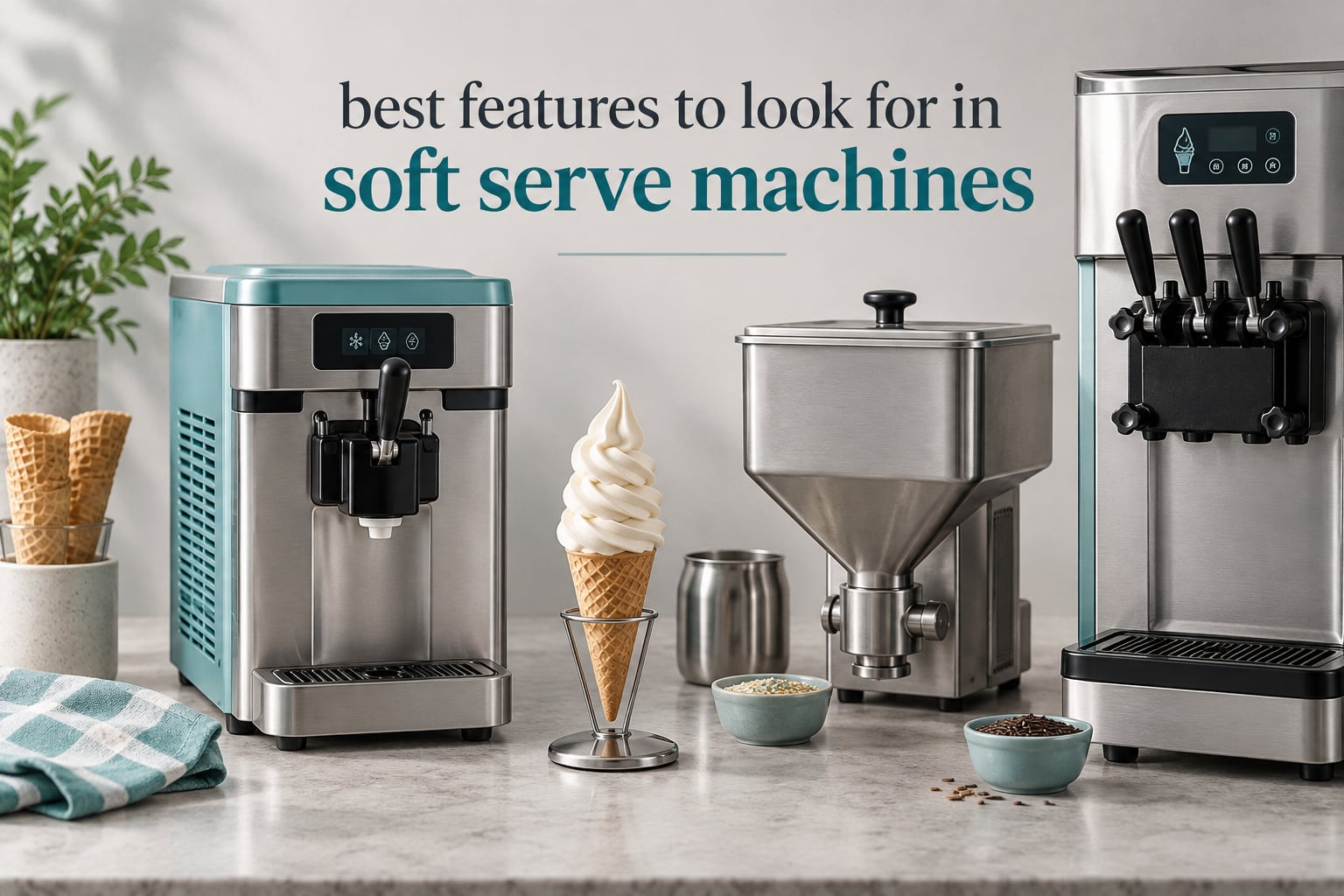
A soft serve machine is a refrigerated appliance that continuously chills and aerates a liquid ice cream mix inside a freezing cylinder, whipping in air so the mix dispenses as soft, swirled ice cream straight from the handle. Knowing which soft serve machine features matter most is what separates a machine that survives a service rush from one that stalls at the third hour of a weekend shift.
That is the question this guide answers. We looked at ten machines, from compact home units to countertop commercial models, and worked through the specification sheets, feature lists and aggregated owner reviews for each one. What follows is the soft serve machine buying guide we wanted when we started shopping: a ten-point feature framework, then a product-by-product breakdown of how each machine answers it.
One note before we start. The head term pulls two very different buyers. Cafes, food trucks, frozen yogurt shops and restaurants need NSF-style commercial construction, high output and a cleaning routine they can survive twice a day. Home cooks want a machine that makes a swirled serving without pre-freezing. We cover both paths here, and we flag clearly which side of the counter each machine belongs to. If you want the short list of commercial units first, our soft serve machine roundup covers the shop floor in more depth.
Table of Contents
Soft Serve Machine Features at a Glance
Before the individual machines, here is the short version of what to look for. These ten points are the ones that change the day-to-day reality of owning the machine.
Output per hour, measured in gallons or liters, matched to your peak-hour demand
Freezing cylinder size, which determines how fast a single batch sets
Overrun control, meaning how much air the machine can add and how precisely you can set it
Hopper capacity, and whether the hopper has an agitator to stop the mix freezing and separating
Flavor configuration, from a single flavor up to two singles plus one mixed
Compressor-based cooling versus a freeze-before-you-start design
Cooling method and electrical phase, which decide where the machine can be installed
Cleaning system, including an automatic wash cycle and how much still has to be taken apart by hand
Controls, including hardness settings, pre-cooling, shortage alarms and sleep modes
Brand support, parts availability and warranty coverage in your region
How we researched this: every specification below comes from the manufacturer listing and the product data for that machine, and every owner comment we reference comes from aggregated customer reviews. We have not run these machines through a year of commercial service, so treat our first-person voice as a framework for your own evaluation rather than a lab report.
Top 3 Soft Serve Machine Features (October 2026)
All 10 Soft Serve Machines at a Glance in 2026
This table is the fastest way to see how the ten machines stack up on the features that actually differ between them.
| Product | Specifications | Action |
|---|---|---|
 Ninja Creami NC701 Ninja Creami NC701 |
|
Check Latest Price |
 FOHERE 9200 FOHERE 9200 |
|
Check Latest Price |
 Yonanas Classic Yonanas Classic |
|
Check Latest Price |
 FOHERE 818B FOHERE 818B |
|
Check Latest Price |
 GSEICE ST-13BAW GSEICE ST-13BAW |
|
Check Latest Price |
 VEVOR BJH288SR2JB-Y VEVOR BJH288SR2JB-Y |
|
Check Latest Price |
 VEVOR YKF-8218T VEVOR YKF-8218T |
|
Check Latest Price |
 EKway ABQL-8218 EKway ABQL-8218 |
|
Check Latest Price |
 Aeitto 1593WM1 Aeitto 1593WM1 |
|
Check Latest Price |
 oplace Win5 Pro oplace Win5 Pro |
|
Check Latest Price |
Features to Look For in a Soft Serve Machine
These are the ten features we would rank first when shopping, in the order they matter once a machine is behind a counter. Every one of them changes something you will notice in the first week of ownership.
Freezing system and cylinder size. The cylinder is where the mix actually freezes, and its size drives batch time. A 1.6L cylinder produces a batch in roughly 6 minutes once the first one is down, while a 2L cylinder on a three-flavor machine is built for a longer service window.
Overrun control. Overrun is the percentage of air whipped into the mix. It decides whether the product feels dense and creamy or light and airy, and it decides how much mix you sell per serving. An adjustable overrun setting is worth paying for on any machine you plan to run daily.
Hopper capacity and the hopper agitator. Hoppers are your buffer between a mix delivery and a rush. An agitator is the part people overlook: it keeps the mix from freezing and sedimenting in the hopper, which is what causes ice crystals in the finished product.
Flavor configuration. Single flavor is the simplest to run and the cheapest to stock. Two single flavors plus one mixed flavor is the configuration most shops actually want, because it lets you offer a twist without buying a third machine or a third hopper.
Compressor versus freeze-before-you-start. Home machines with a built-in compressor need no pre-chilling and no ice. Commercial machines and larger home units generally expect you to freeze the cylinder ahead of service. Ask which one you are buying before anything else.
Cooling method and electrical phase. Air-cooled machines need nothing but clearance around the vents and work in almost any room. Water-cooled machines need a glycol loop or chiller but run cooler and quieter in a hot shop. Single-phase plugs are convenient; three-phase power suits high-output machines.
Cleaning system. A one-touch wash cycle saves labor, but every machine on this list still needs disassembling, washing and sanitizing by hand. Treat the automatic cycle as a time saver, not as a replacement for the manual step.
Controls and operator features. Look for a panel you can read standing up, an adjustable hardness setting, pre-cooling, a hopper shortage alarm, and a sleep or keep-fresh mode for overnight holding. These are the features an operator will thank you for at 8pm on a Friday.
Build quality, support and parts. Stainless food-contact surfaces, a compressor from a named maker, and a service network that answers the phone in your country matter more than any extra program on the panel.
Total cost of ownership. Purchase price is only line one. Mix, power, sanitizing solution, spare parts and the labor cost of cleaning cycles all belong in the same calculation before you commit.
1. Ninja Creami Scoop and Swirl NC701 – The Most Programmable Soft Serve Machine for Home
Ninja Creami Scoop & Swirl 13-in-1 Ice Cream and Soft Serve Maker, NC701
13 programs, 6 soft serve modes
16 oz pint, 2-2.5 cones
Dishwasher safe parts
Pros
- Six dedicated soft serve modes plus seven other programs
- Full dietary control for dairy-free and vegan bases
- Dishwasher safe pints lids paddle and swirl press
- 20.8 lb with a pull-out drip tray
Cons
- Loud during the chopping and spinning cycle
- Bases that freeze harder can need a second spin cycle
- Will not fit under most standard upper cabinets
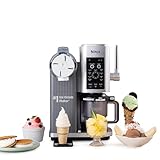
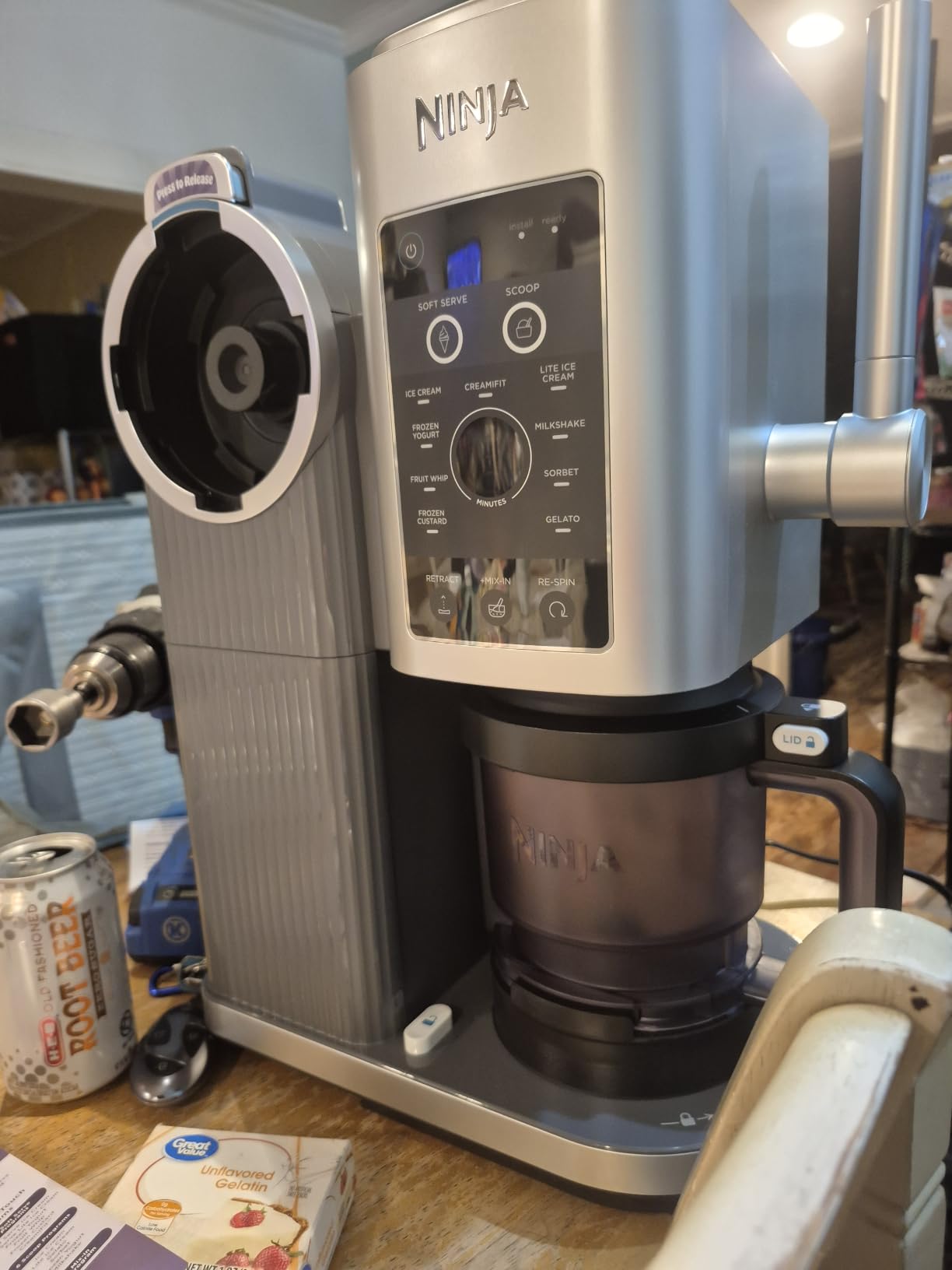
This is the machine we keep coming back to for anyone who wants a real swirled serving at home rather than a tub scooped into a bowl. The NC701 runs 13 one-touch programs, and six of them are soft serve specific, including Soft Serve, Fruit Whip, Frozen Custard, CreamiFit, Swirled Frozen Yogurt and Lite Ice Cream. That program count is the feature that separates it from every other home unit here.
A 16 oz pint yields roughly 2 to 2.5 cones of soft serve, which is the honest way to think about capacity. It is not a machine for a party of fifteen; it is a machine for a household that wants two or three servings without planning around a canister freeze.
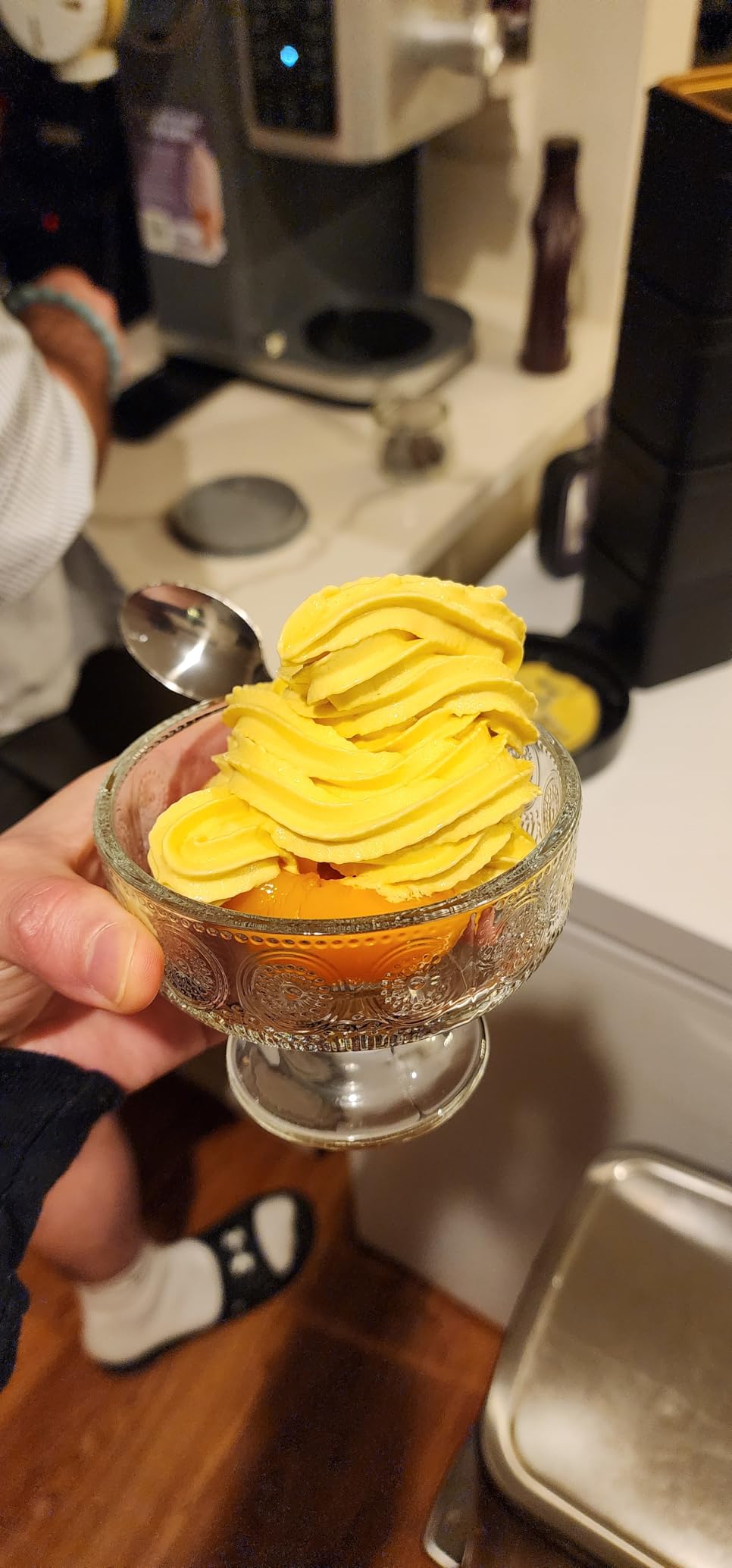
The Creamify process is what makes the texture work. Rather than whipping air in under pressure, the machine processes a frozen block into a smooth, creamy base, and the automatic soft serve handle dispenses it at three speed settings. Every removable piece, including the pints, lids, paddle and swirl press, goes in the dishwasher.
Owners consistently praise the texture, the program count and the dietary flexibility, and the recurring complaints are all workflow complaints rather than quality complaints. The noise during the cycle is the one most often mentioned, followed by the need for a perfectly level freeze plate and the fact that a hard plant-based base can need a second pass.
How It Handles Real Kitchen Constraints?
The 20.8 lb weight and the 15.15 by 10.03 by 17.51 inch footprint mean this is a counter appliance, not a tucked-away one. Owners report it does not fit under most standard upper cabinets, so measure before you buy. Counter height also matters if you want to dispense without bending.
The workflow is freeze first, process second. That means plan for a frozen block sitting in the outer bowl while you do something else, and keep a spare pint in the freezer if you use it often. A soft serve pass that leaves residue in the cup is normal, and it is the reason people buy extra pints.
Where It Falls Short?
If you need dairy-free, low sugar, nut-free, high-protein or vegan output, this machine handles it better than anything else on this list. If you want volume for a group, it will not keep up, and a single 16 oz pint is the hard ceiling on a single serving cycle.
It also does not do what a commercial machine does. There is no continuous output rate to quote, no multi-flavor dispensing and no hopper that holds mix through a service. For a home kitchen or a small office, that trade is fine. For a counter selling 200 servings an hour, it is the wrong category of tool entirely.
2. FOHERE 9200 – The Best-Rated Commercial Machine in This Group
Commercial Ice Cream Machine, 10.4-20 QT/H Yield Soft Serve Ice Cream Machine with 4L Hopper & 1.6L Cylinder, Pre-Cooling & Auto Clean, Touch LCD for Snack Restaurants Bars (white, 4L)
10.4-20 QT/H yield
4L hopper with 1.6L cylinder
Touch LCD and auto clean
Pros
- Highest rated commercial unit in this group at 4.4
- First batch in about 12 minutes then 6 minutes or less
- Touch LCD sets serving size hardness and temperature
- Pre-cooling and overnight freshness mode
Cons
- Single flavor only
- Parts still need hand washing after the auto cycle
- 134 lb means a two-person move
Among the commercial machines in this roundup, the FOHERE 9200 carries the highest average rating at 4.4 from 105 reviews, with 79 percent of those reviews at five stars. For a unit in this class that is a meaningful signal, because the commercial category is thin on owner feedback compared with home appliances.
Output is quoted at 10.4 to 20 quarts per hour, or 10 to 20 liters, from a 4L hopper feeding a 1.6L freezing cylinder. The first batch takes about 12 minutes and each batch after that takes 6 minutes or less, which is fast enough to serve a continuous stream without stopping production.
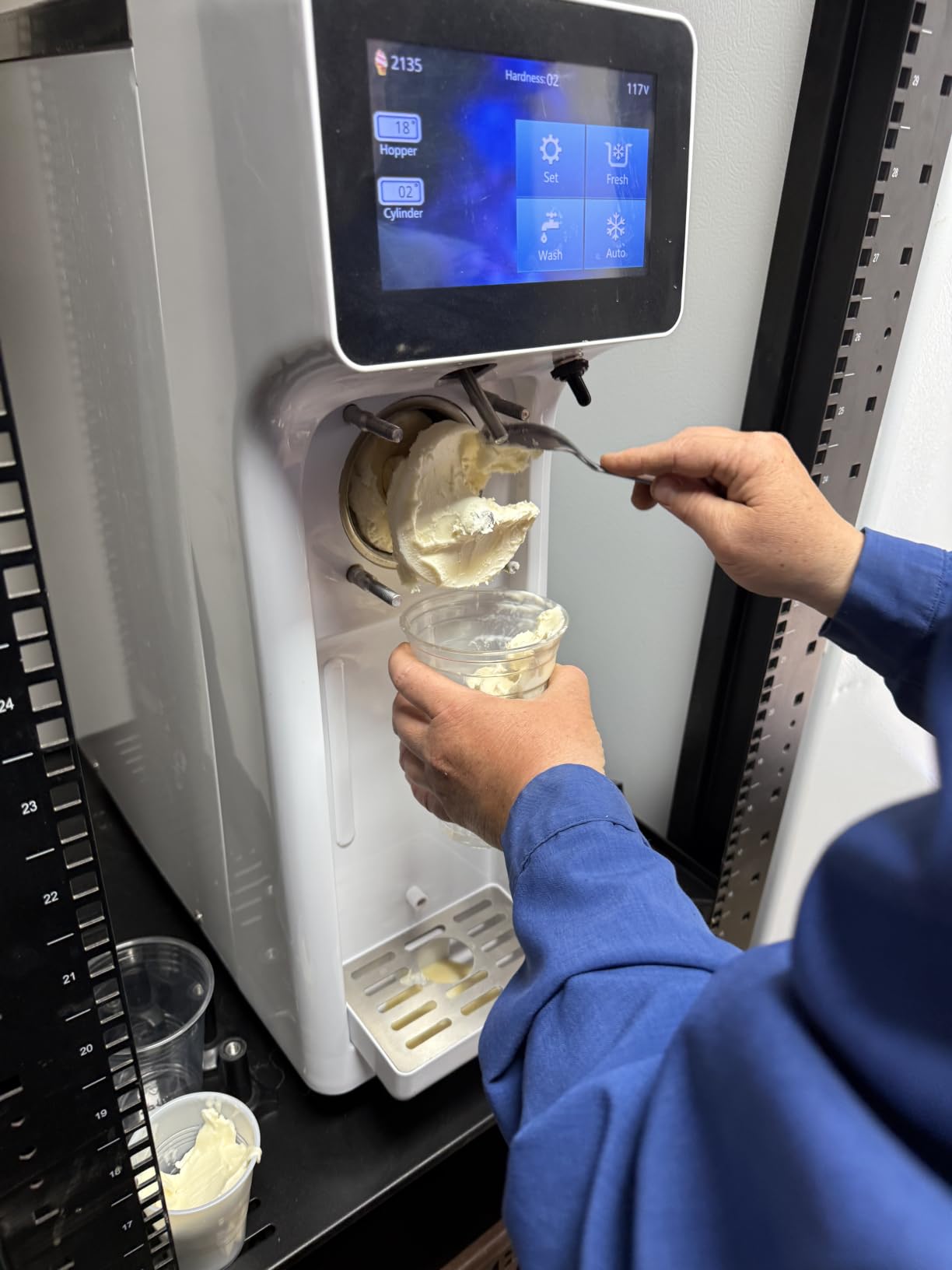
The touch LCD is the feature that changes the operator experience. Serving size, hardness and temperature are all set from the panel rather than from a dial behind the machine, and a timer sits alongside them so output stays consistent between staff. Pre-cooling pulls the hopper down fast, and the freshness system holds mix overnight.
Reviewers call it comparable to higher-end machines on features and value, and they are honest about the learning curve. Disassembling and hand-washing parts is still required after the automatic cycle, and cheap heavy cream in a mix can turn into butter chips, which is a mix formulation problem rather than a machine problem.
Output and Layout in a Real Service Window
At 134 lb and 35 by 28 by 13 inches, this is a floor-standing or low-counter machine that needs a planned location rather than a spare corner. The published ambient operating range of 41 to 95F means it holds up in a hot shop as long as air can move around the vents.
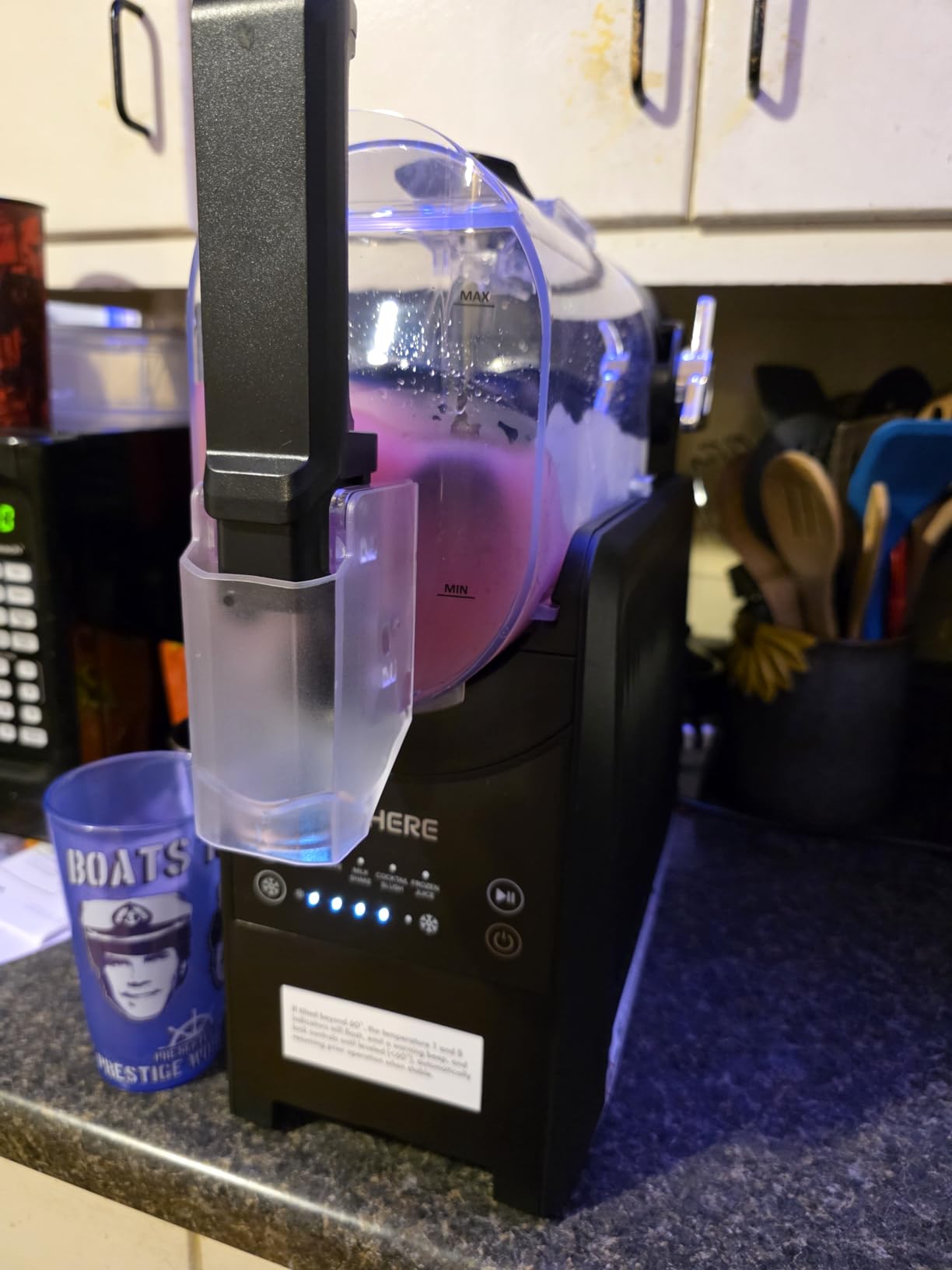
It also works beyond plain soft serve. Owners use it for slush, frozen cocktails and single-flavor swirls when two batches are run back to back, which makes it a reasonable second machine for a bar program that does not want a dedicated slush unit.
Where It Falls Short?
Single flavor is the real limitation here. If your menu plan involves a twist or a seasonal second flavor, you are looking at a different machine, and this one will not get there later.
The other consideration is the 105-review base. It is a good sample for a commercial machine, but it is not the 20k-review history you get from a home appliance, so long-term durability is less well documented. Ask the dealer directly about compressor service and parts in your region before committing.
3. Yonanas Classic – The Simple Frozen Fruit Machine With the Largest Review Base
Yonanas Classic Frozen Fruit Soft Serve Maker for Healthy Vegan and Dairy-Free Treats, 200W Silver Machine with 36 Recipes, BPA Free, Easy to Clean, Quick and Simple to Use
0.5 liter capacity,200W motor
1.4 lb body
Top-rack dishwasher safe
Pros
- More than 22k owner reviews to learn from
- Serves in minutes with no added fats or preservatives
- Every removable part is top-rack dishwasher safe
- 36 included recipes across vegan and keto
Cons
- Cannot make dairy-based or protein ice cream
- 0.5 liter means one or two servings per run
- Texture is sorbet-like rather than true soft serve
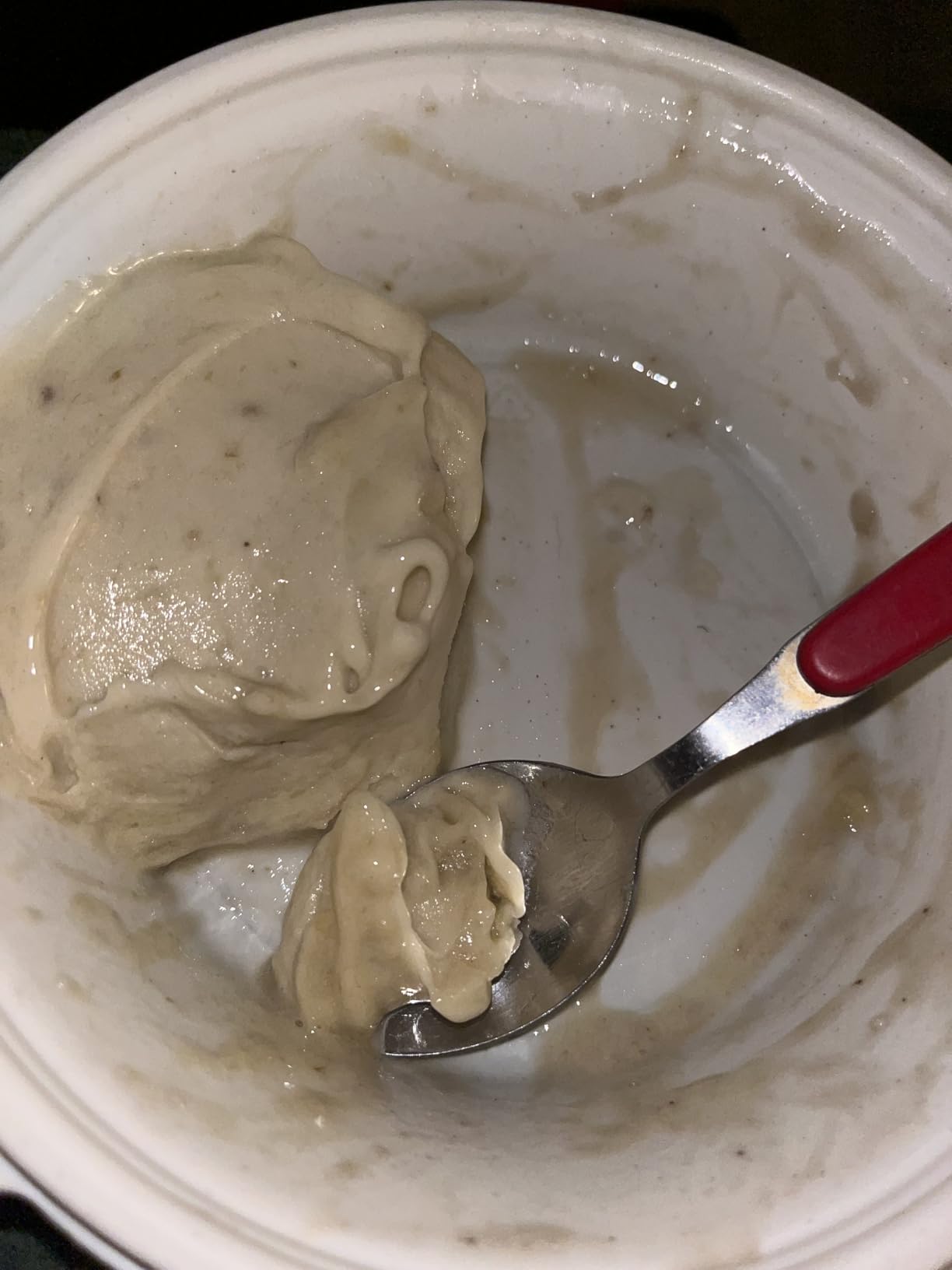
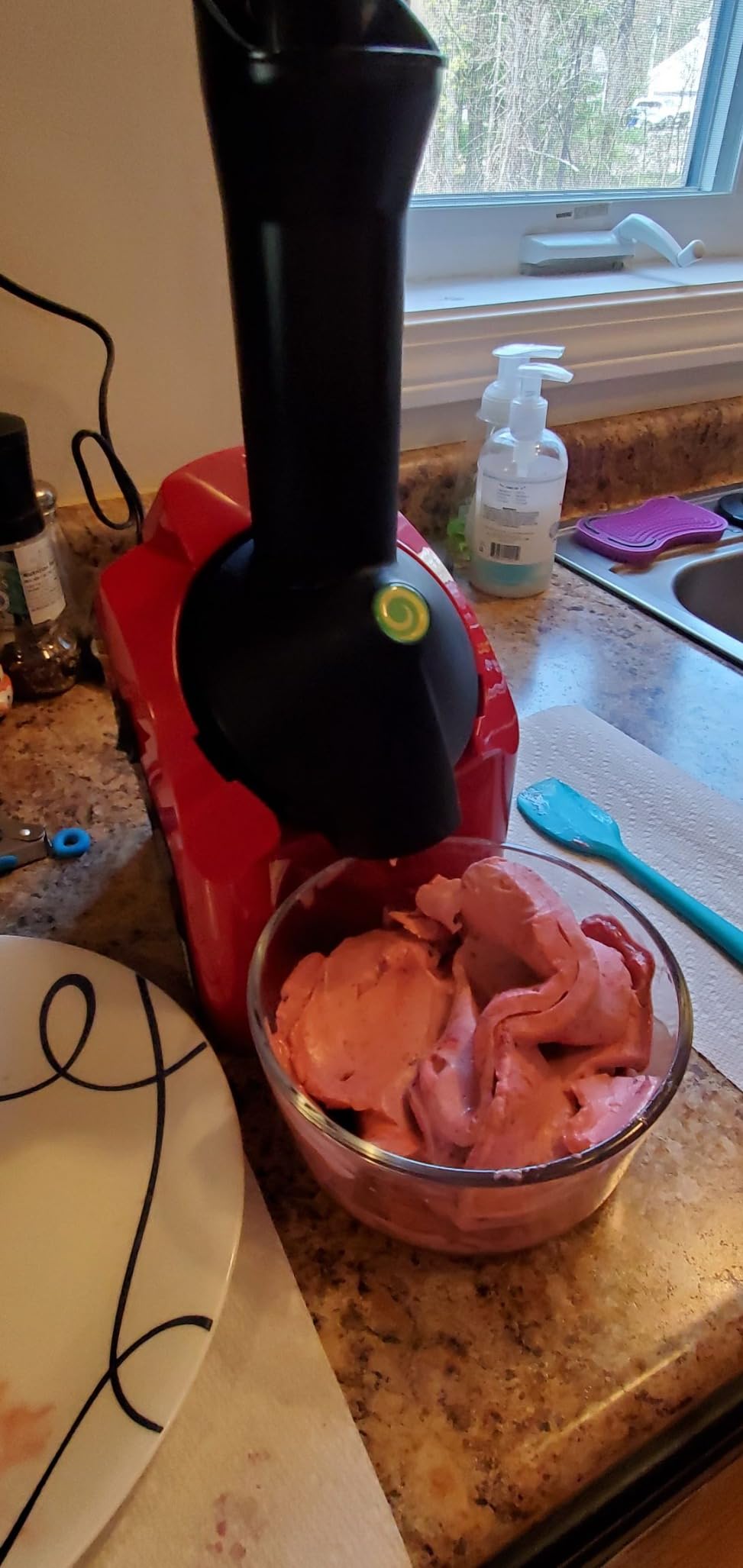
The Yonanas Classic is not a soft serve machine in the commercial sense, and we want to be clear about that before anyone buys it for the wrong reason. It takes frozen fruit, spins it against a cold surface and serves a fruit-based soft treat. That is a different product from a machine that freezes dairy mix in a cylinder.
What it does have is the largest owner base in this entire roundup, with more than 22,000 reviews averaging 4.3. That volume of feedback is worth something on its own, because it means the failure modes are well documented. The 200W motor, 0.5 liter capacity and 1.4 lb body make it the smallest and simplest machine here.
Cleaning is the standout feature for anyone with a tight kitchen. Every removable part goes on the top rack of a dishwasher and the base wipes clean, with no disassembly, no wash cycle and no sanitizing step for a health inspector to ask about.
The 36 included recipes cover vegan, keto and dairy-free desserts, and the machine runs without added fats, sugars or preservatives. Construction is BPA free, and the brand carries a one-year limited warranty plus a decade of operating history. A 13.75 inch tall body fits under a standard cabinet.
What It Handles and What It Cannot?
It handles frozen fruit, and it handles it in minutes. The 0.5 liter capacity gives you one or two servings per run, which is right for a personal treat and wrong for a dinner party. The 1.4 lb weight means you can move it between counters in one hand.
It cannot handle dairy-based or protein ice cream. That single limitation is worth repeating, because the listing photos and the word soft serve can suggest otherwise. The result is also closer to sorbet than to a swirled soft serve cone.
Where It Falls Short?
Texture consistency is the honest limitation. The texture is described as sorbet-like, so if your goal is a dense, creamy swirl you will be disappointed. Anyone who wants the classic soft serve experience at home should look at the Ninja instead.
Batch size is the other one. One or two servings per run means this is a personal machine, and there is no version of it that scales into a small-event or office setting without running it many times in a row.
4. FOHERE 818B – Three Flavors and a Stainless Body for a Full Counter
Commercial Ice Cream Machine 5.3-7.4 Gal/H, 3 Flavors Countertop Soft Serve Ice Cream Machine with 8L Hopper, Auto Clean Ice Cream Maker With Pre-Cooling for Snack Restaurants Bars, 1800W
5.3-7.4 gal/H output
Two 4L hoppers, 2L cylinder
304 stainless body
Pros
- Three dispensers for two singles plus one mixed flavor
- Deep-puffing expansion improves texture and cuts mix use
- Pre-cooling holds mix cold between batches and overnight
- One-touch auto clean cuts labor and downtime
Cons
- 236 lb stainless body needs a two-person lift
- Large footprint for a countertop unit
- Some owners report units stopping within the first year
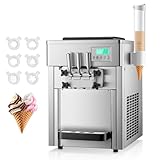
The 818B is the flavor configuration answer in this group. Two 4L hoppers feed a 2L cylinder and drive three dispensers, which is the 2+1 layout: two single flavors plus one mixed flavor. If you want a twist on the menu, this is how you do it without a second machine.
Output is listed at 5.3 to 7.4 gallons per hour, or 20 to 28 liters, at 1800W. The first batch takes about 25 minutes and each batch after that takes 6 minutes or less, so you plan the pre-freeze around your opening time rather than during service.
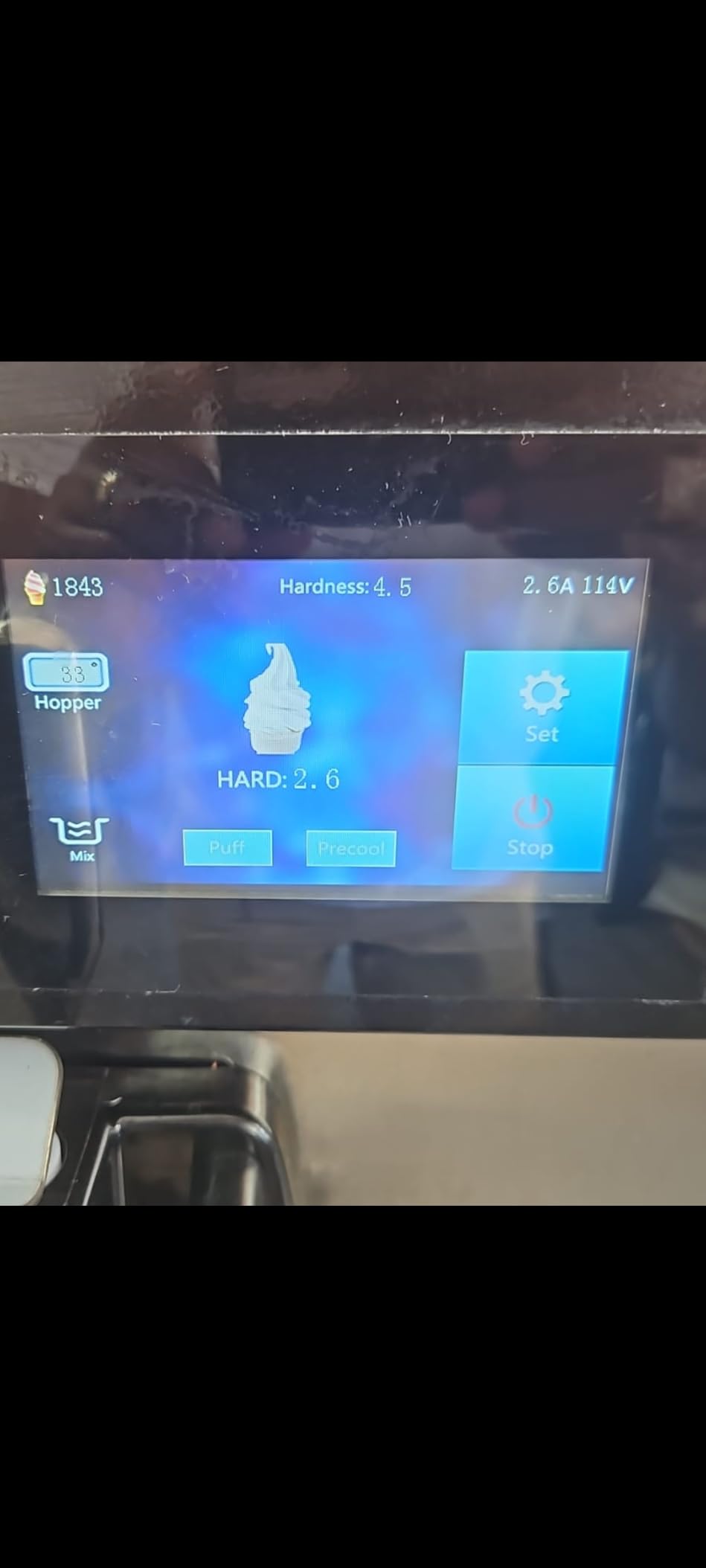
Deep-puffing technology is the yield feature. It is an expansion method that improves texture and cuts raw material use, which means more volume per liter of mix poured into the hopper. Buyers consistently single out the three-flavor output, the pre-cooling and the ease of cleaning as the reasons they are happy.
The body is 304 stainless steel, which resists rust and sanitizes easily, and the machine is rated for an ambient range of 41 to 95F. A removable drip tray, an ergonomic handle, cooling vents and an external cone holder round out the practical details.
How the Extra Flavor Changes Daily Operations?
Two singles plus a mixed flavor means a queue can choose rather than comply. It also means more mix inventory, more flavor changeovers and three dispensing handles to keep clean, so the throughput benefit only shows up once you are actually selling all three.
Pre-cooling matters more here than on a single-flavor machine, because the overnight hold applies to a bigger volume of mix. Set it before you close, and the first batch in the morning is a pull-down rather than a freeze.
Where It Falls Short?
At 236 lb with a 30.71 by 20.28 by 29.72 inch footprint, this is a two-person lift and a dedicated floor or counter space. That footprint is large for something marketed as a countertop unit, and it is the first thing to check against your available real estate.
The 4.0 average from 126 reviews includes a portion of owners reporting units that stopped within the first year, along with slow support response. A 65 percent five-star share is a useful warning to plan for parts access before you buy rather than after.
5. GSEICE ST-13BAW – Compact Footprint and 120V Simplicity
GSEICE Soft Serve Ice Cream Machine ETL
Up to 3.5 gal/H at 120V
1.58 gal hopper, 0.42 gal tank
5 inch tilted screen
Pros
- Plugs into standard 120V power with no install
- A4-paper footprint for tight commercial kitchens
- One-touch automatic wash plus a defrost function
- Factory settings work out of the box
Cons
- Single flavor only
- Still needs full disassembly and hand washing
- Product in the mixing chamber is wasted when the hopper runs dry
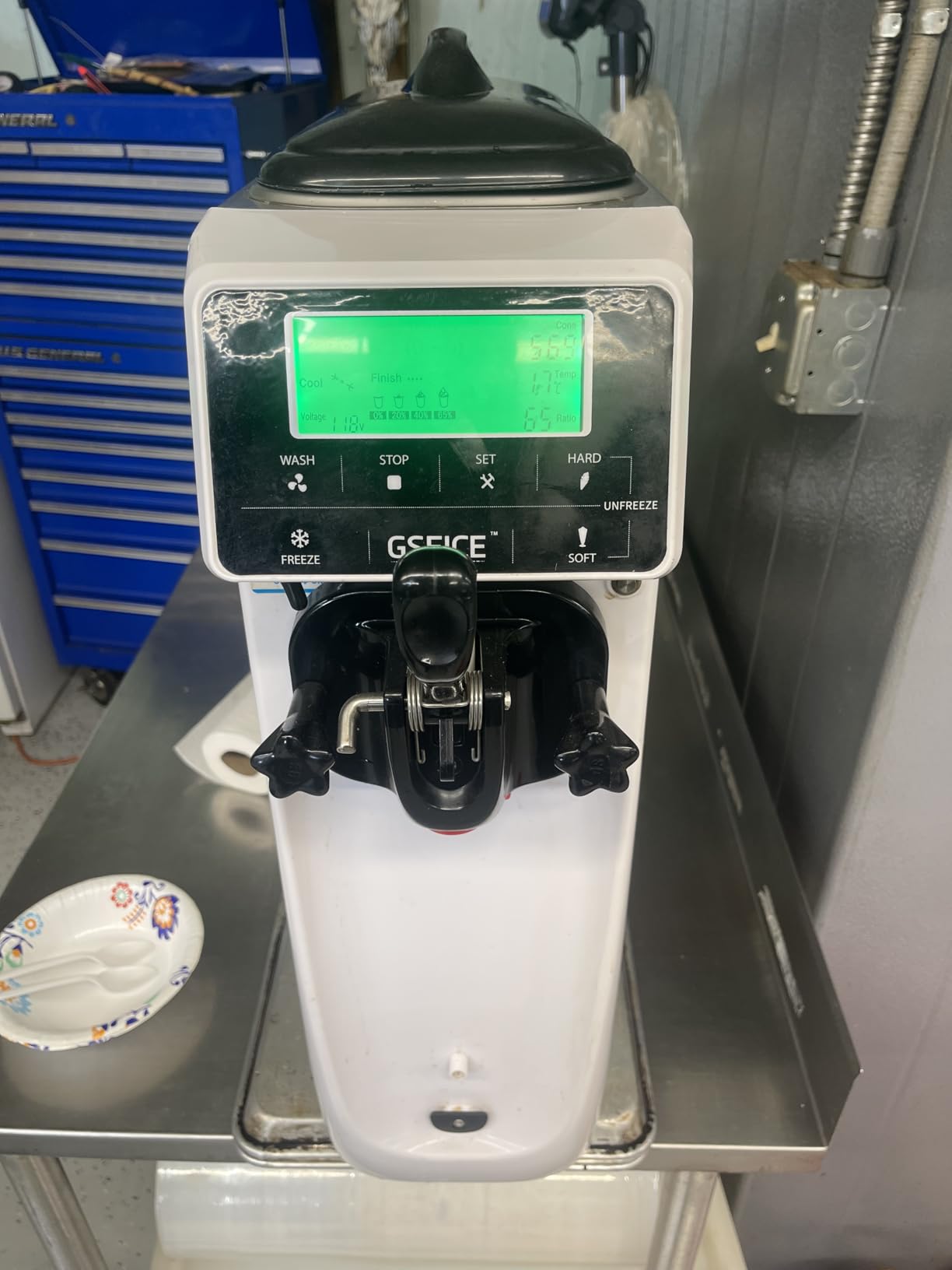
The GSEICE ST-13BAW solves a specific problem: how do you put soft serve in a kitchen with no dedicated circuit, no floor space and no technician. It runs on 120V at 60Hz, occupies roughly an A4 sheet of counter, and weighs 86 lb. Output is listed at up to 3.5 gallons per hour.
Inside, a 1.58 gallon hopper feeds a 0.42 gallon freezing tank. The first mold takes about 10 minutes and each one after that takes 4 to 6 minutes, with a working temperature range from 41F to 91.4F. That combination is a genuinely small footprint for a commercial-rated machine.
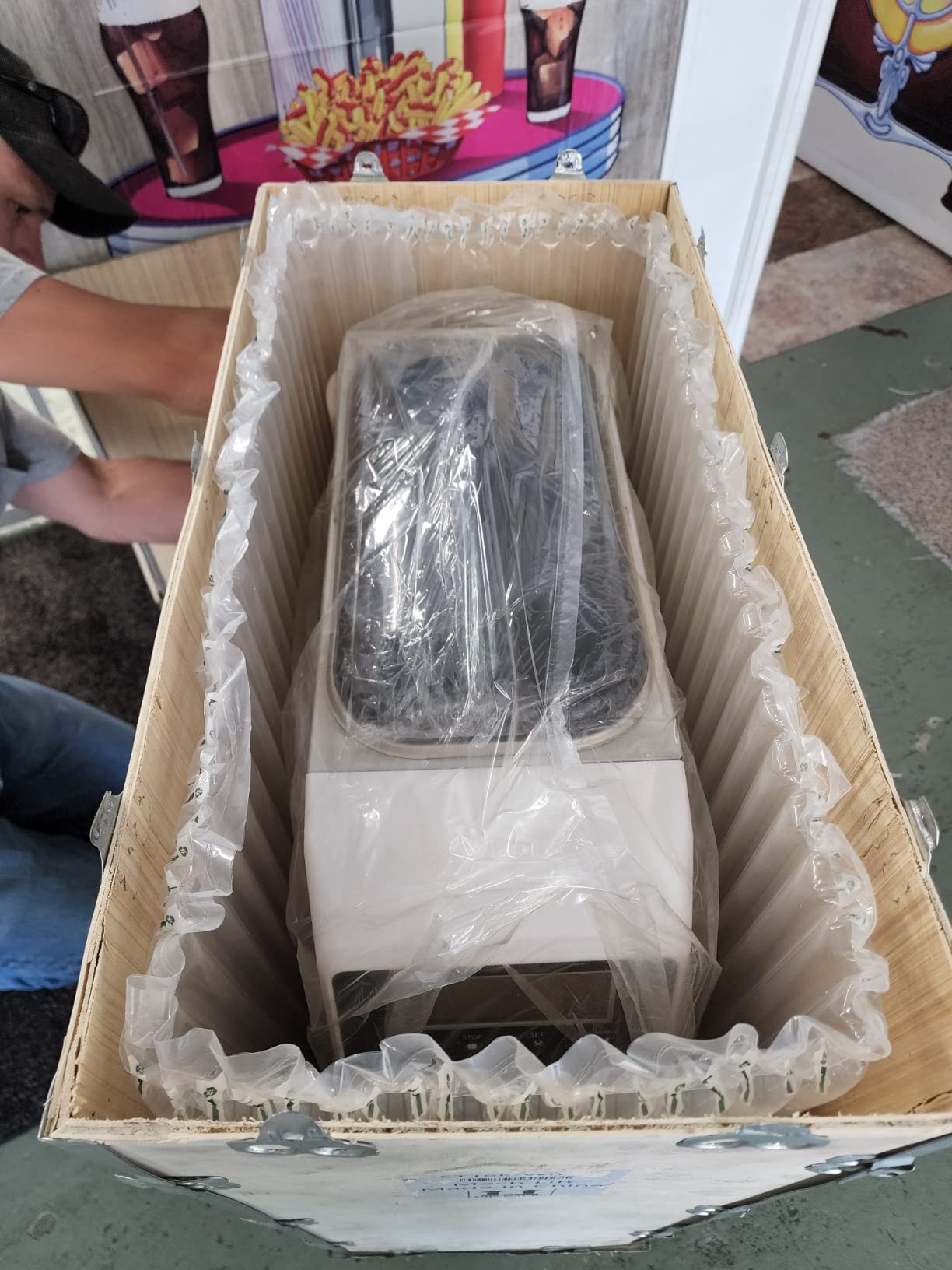
The tilted 42-degree screen is a small design decision that owners clearly appreciate. You can read and change hardness, quantity and temperature without bending over the machine, and the factory settings are tuned well enough that most people never adjust them at all.
Patented double-puffing technology raises the puffing rate by about 30 percent, which reduces mix used per serving. A one-touch automatic wash cycle and a defrost function to recover a frozen cylinder are both included, and owners report dispensing 48 consecutive servings at a large event without lag.
Where the Compact Design Pays Off?
If your counter space is measured in inches rather than feet, this is the machine to look at first. The 21.8 by 8.3 by 29.1 inch body and standard household power mean you can test a soft serve program without calling an electrician.
There is also a support story worth noting. The factory shipped free spare O-rings with the machine, which tells you something about parts access that a review count alone does not.
Where It Falls Short?
Single flavor only, so no twists. The product in the mixing chamber is stranded and wasted when the hopper empties, which is a real cost at a busy service where you run the hopper close to empty on purpose.
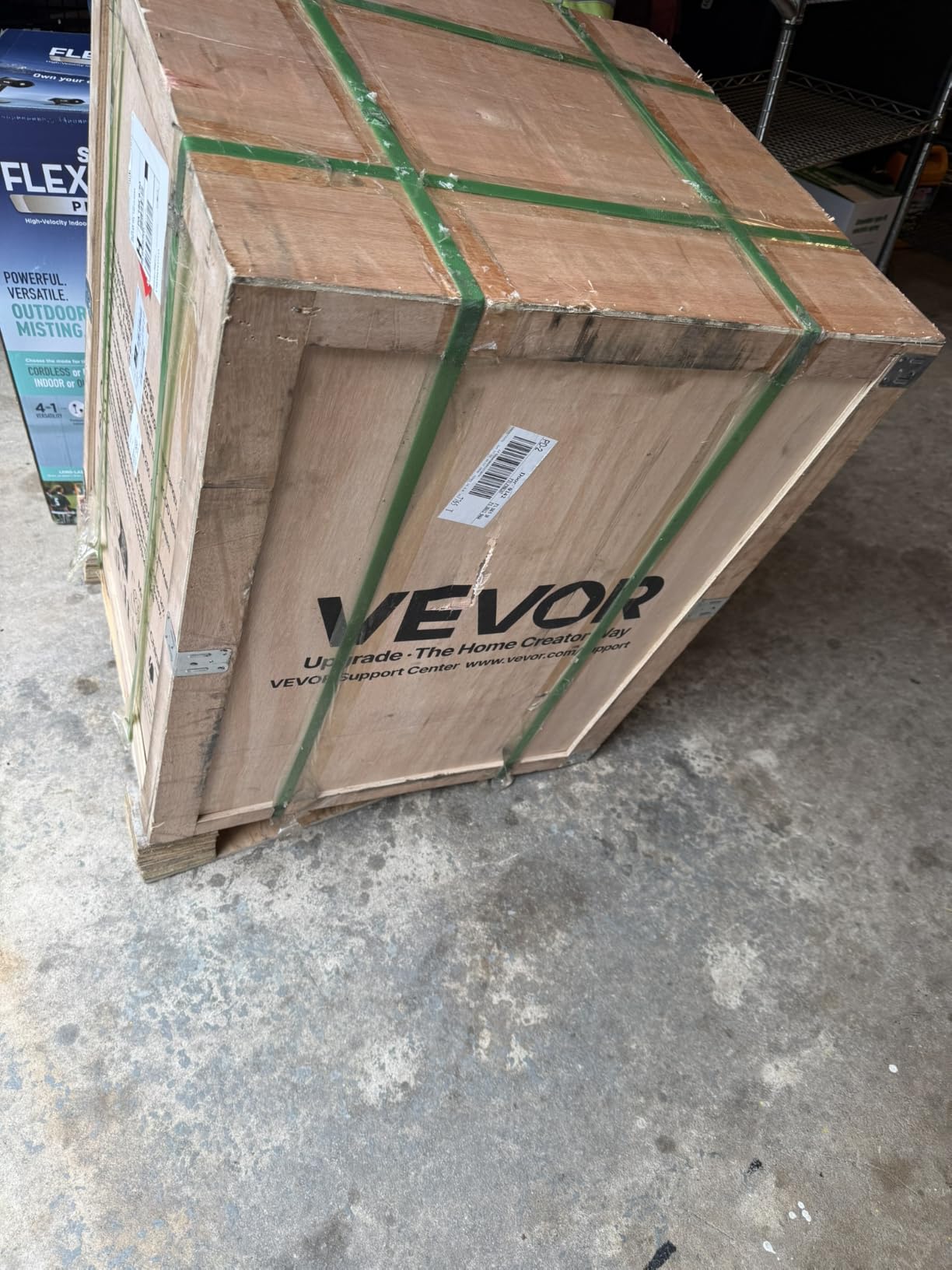
It still needs to be fully disassembled and washed by hand after each use, and the automatic wash cycle needs a large container to catch the flush water. A few owners also report plastic feet and the drip tray breaking with regular use, and the unit ships in a wooden mini-pallet crate that needs tools to open.
6. VEVOR BJH288SR2JB-Y – The Highest Servings-Per-Hour Figure Here
VEVOR Commercial Ice Cream Maker, 22-30L/H Yield, Countertop Soft Serve Machine with 2x6L Hopper 2L Cylinder LCD Panel Puffing Shortage Alarm, Frozen Yogurt Maker for Restaurant Snack Bar
22-30 L/H yield
Two 6L hoppers, 2L cylinders
2 singles plus 1 mixed flavor
Pros
- Quoted at 150-200 servings per hour at 100g each
- Hopper shortage alert prompts a refill before mix runs out
- Keep-fresh pre-cooling holds mix overnight
- One-click thawing frees a frozen cylinder in seconds
Cons
- Printed manual is thin and pushes owners to video guides
- Some units arrive with a misaligned mixing paddle assembly
- Failures within months and an unreachable support line
The BJH288SR2JB-Y is the volume pick in this roundup. Manufacturer output is 22 to 30 liters per hour, or 5.8 to 7.9 gallons per hour, and the servings figure is quoted at 150 to 200 per hour at 100g each. That is the highest servings-per-hour claim in this group.
Configuration is two 6L hoppers feeding 2L SUS304 cylinders, delivering two single flavors plus one mixed flavor. Expansion tubes are cited as boosting yield by 25 to 30 percent, which is the overrun story expressed as a mix-saving feature.
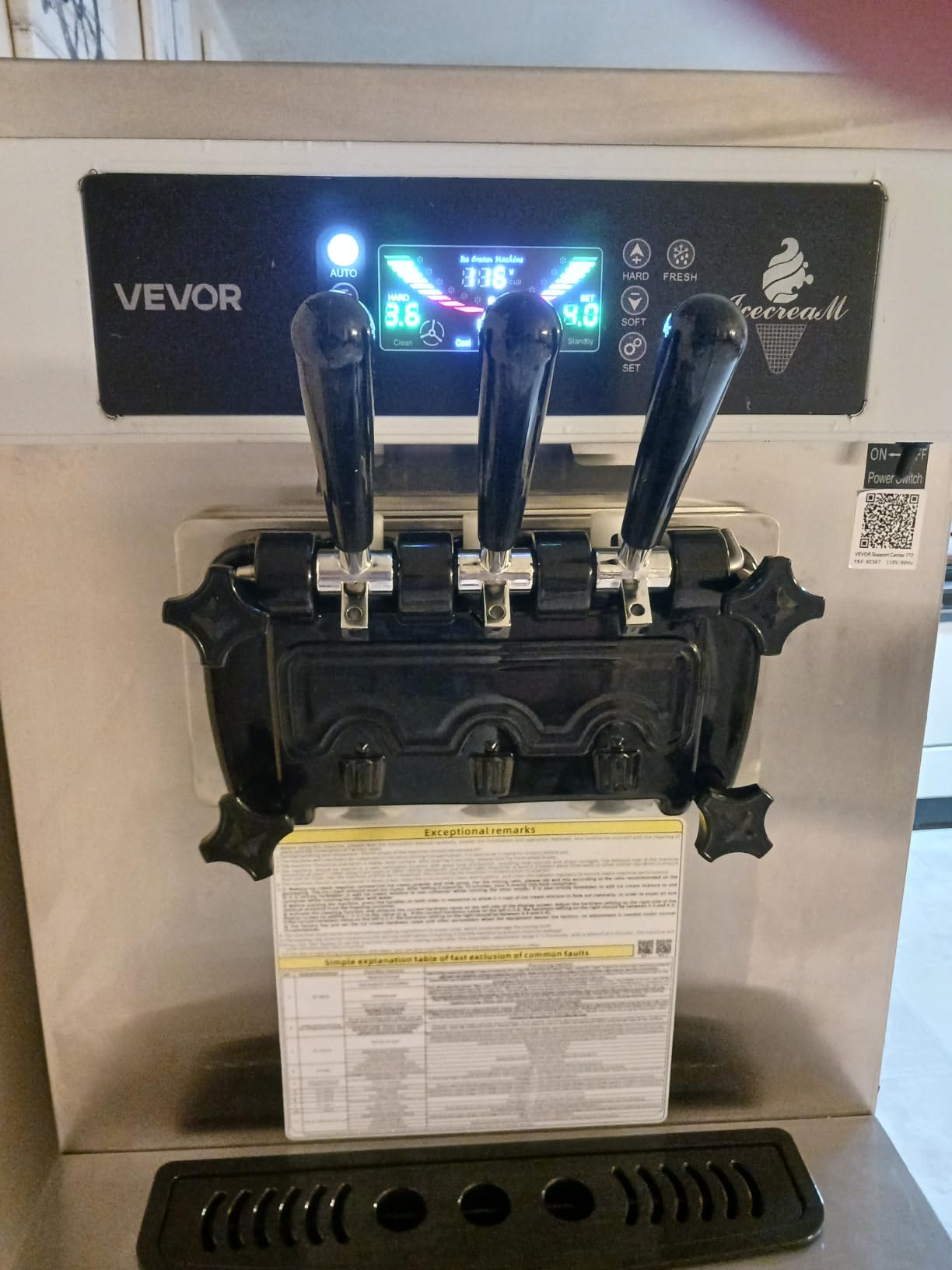
The control set is where the operator features pile up. A smart LCD panel shows remaining ice cream quantity and lets you adjust firmness, the keep-fresh function holds the hopper cold overnight, one-click thawing recovers a frozen cylinder, and a hopper shortage alert prompts a refill before the mix runs out mid-service.
Owners also report that a high-efficiency branded compressor runs quietly, and that the machine handles water-based formulas and turns them creamy, which matters if you serve something like a lighter or fruit-forward mix.
How It Behaves During a Rush?
The shortage alert and the quantity read-out on the LCD are the features that matter at peak. Instead of discovering an empty hopper during a queue, the machine tells the operator to refill, and the keep-fresh mode means the second hopper survives overnight instead of being discarded.
With 150 to 200 servings per hour quoted, this is sized for a snack bar, a cafe with a serious dessert line or a food truck doing continuous service rather than a single machine that idles between rushes.
Where It Falls Short?
The 4.1 average from 30 reviews is the second thinnest sample here, and the complaints cluster in the same place. Owners report a printed manual that is thin on detail and often pushes them to video guides, units arriving with a misaligned or unlocked mixing paddle assembly, and failures within months alongside a support line they could not reach.
Documentation quality is not a small issue in a shop. If your staff will run this machine across shifts, ask for a written cleaning and settings procedure in advance, and confirm who services the compressor locally.
7. VEVOR YKF-8218T – Hopper Agitation Solves the Ice Crystal Problem
VEVOR Commercial Ice Cream Machine, 20-28L/H Yield, 2200W 3-Flavor Countertop Soft Serve Ice Cream Maker with 2 x 6L Hoppers & Hopper Agitation, Pre-Cooling Self-Cleaning for Snack Dessert Shops
20-28 L/H output
2 x 6L hoppers with agitators
2200W compressor
Pros
- Built-in hopper agitators prevent freezing and sediment
- Pre-cooling to 53.6F or below for overnight holding
- Three dispensers for 2+1 flavors
- Users report performance in a 95F setting after about 20 minutes
Cons
- At 183 lb it needs a two-person lift and floor space
- Raised heat output warms the room it runs in
- Some units stop freezing after several weeks
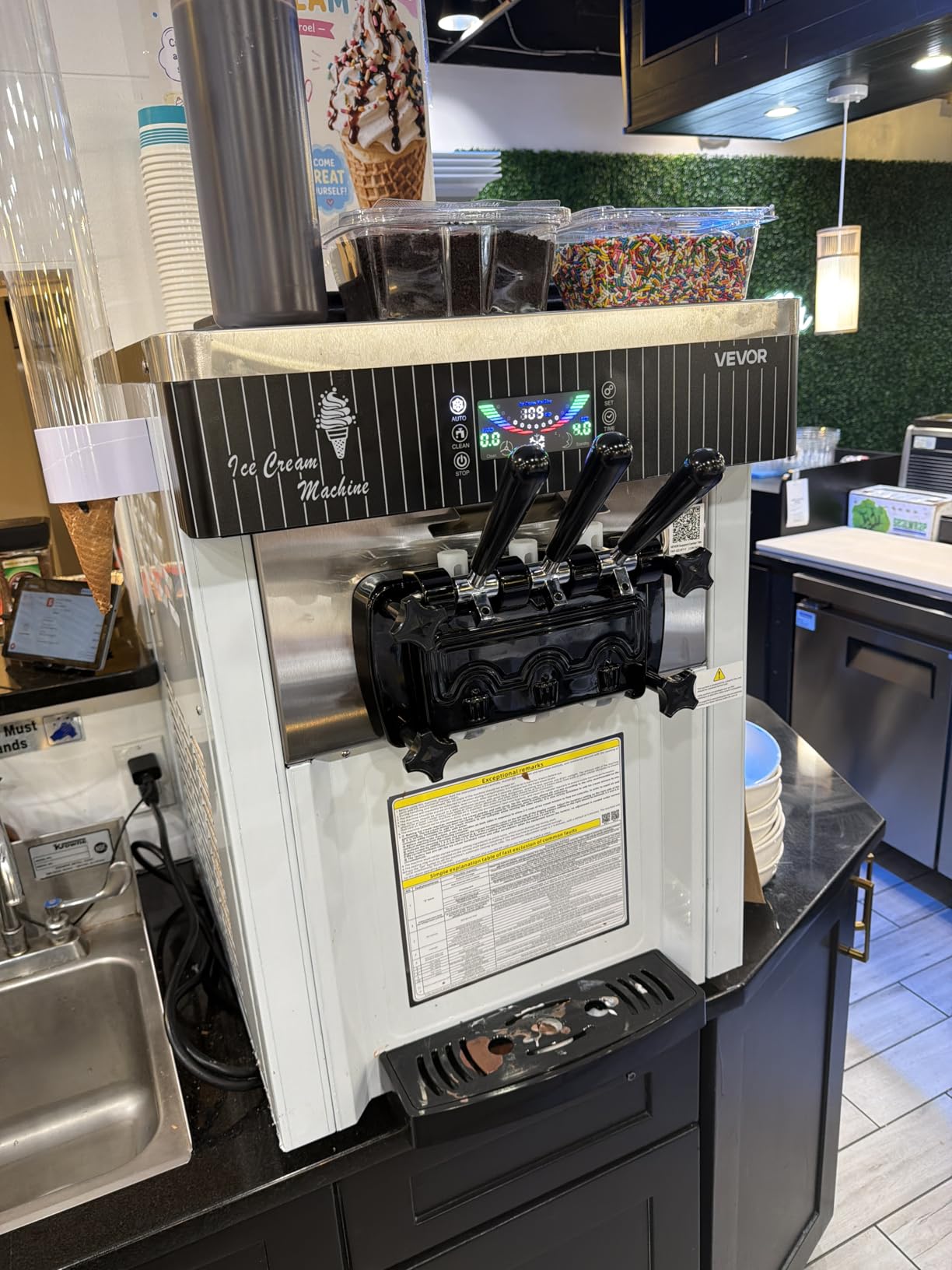
The agitator is the reason this machine is on the list. Both 6L hoppers have a built-in agitator that keeps the mix moving, which prevents it freezing and sedimenting in the hopper. That is the difference between a smooth, ice-crystal-free serving and a gritty one after a long afternoon.
Output is 20 to 28 liters per hour, or roughly 8 to 12 servings continuously, from a 2200W compressor. The first batch takes 13 to 17 minutes and batches after that take 3 to 5 minutes, so a short menu of three flavors still turns quickly.
Pre-cooling pulls the mix to 53.6F or below, and the spec sheet states it explicitly. In a hot shop or for overnight holding, that number is the difference between fresh mix in the morning and discarded mix. Owners report the machine performing in a 95F outdoor setting after about 20 minutes.
The LED display combines hardness adjustment, fresh-keeping, a timer, an auto mode and one-touch self-clean in one panel. Three dispensers deliver the 2+1 layout, and the stainless steel body resists rust and is easy to sanitize.
Why Hopper Agitation Is Worth Prioritizing?
Ice crystals in soft serve are almost always a hopper problem before they are a freezing problem. Mix that sits still in a warm hopper forms its own frozen layer, and that layer eventually goes into a serving. An agitator removes that failure mode entirely.
If you are running an outdoor cart, a summer kiosk or a shop with a long idle period between rushes, this is the feature that keeps the product quality consistent without you hovering over the machine.
Where It Falls Short?
At 183 lb and 32.7 by 21.06 by 29.3 inches, it needs floor space and a two-person lift. It also raises the ambient temperature of the room it runs in, which matters in a small enclosed counter area.
The 4.0 average from 46 reviews with a 68 percent five-star share includes owners reporting units that stopped freezing after several weeks, plus slow replacement handling. Sanitizing solution is not included, and the instructions are thin with some inconsistent translations. Confirm parts access before you commit to a three-flavor setup.
8. EKway ABQL-8218 – Floor Model With Staggered Dual Compressors
EKway Soft Serve Ice Cream Machine,28 QT/H Yield 2450W Vertical Commercial Ice Cream Machine With 2x6L Hopper 3 Dispensers,LCD Panel Auto Clean Pre-cooling,Frozen Yogurt Maker for Restaurant Snack Bar
28 QT/H yield
2450W dual compressor circuits
2 x 6L hoppers, 2L cylinders
Pros
- Staggered dual-compressor startup reduces peak demand charges
- Copper condenser for rapid cooling and low noise
- Three dispensers serving 2 singles plus 1 mixed
- Food-grade 304 stainless cylinders and detachable drip tray
Cons
- Floor-style 234 lb body needs a dedicated footprint
- Low review volume means less long-term field history
- Sanitizing solution must be ordered separately
The ABQL-8218 is the floor model here, and its defining feature is electrical rather than culinary. It runs two independent compressor circuits with staggered startup, which the manufacturer says reduces peak demand charges by 15 to 20 percent. On a machine that pulls 2450W, that is a real line item on an electricity bill.
Yield is rated at 28 quarts per hour, with 150 to 200 servings per hour at 100g. Two 6L hoppers feed 2L food-grade 304 stainless steel cylinders, and three dispensers give you two single flavors plus one mixed flavor. Expansion tubes increase yield by 25 to 30 percent.
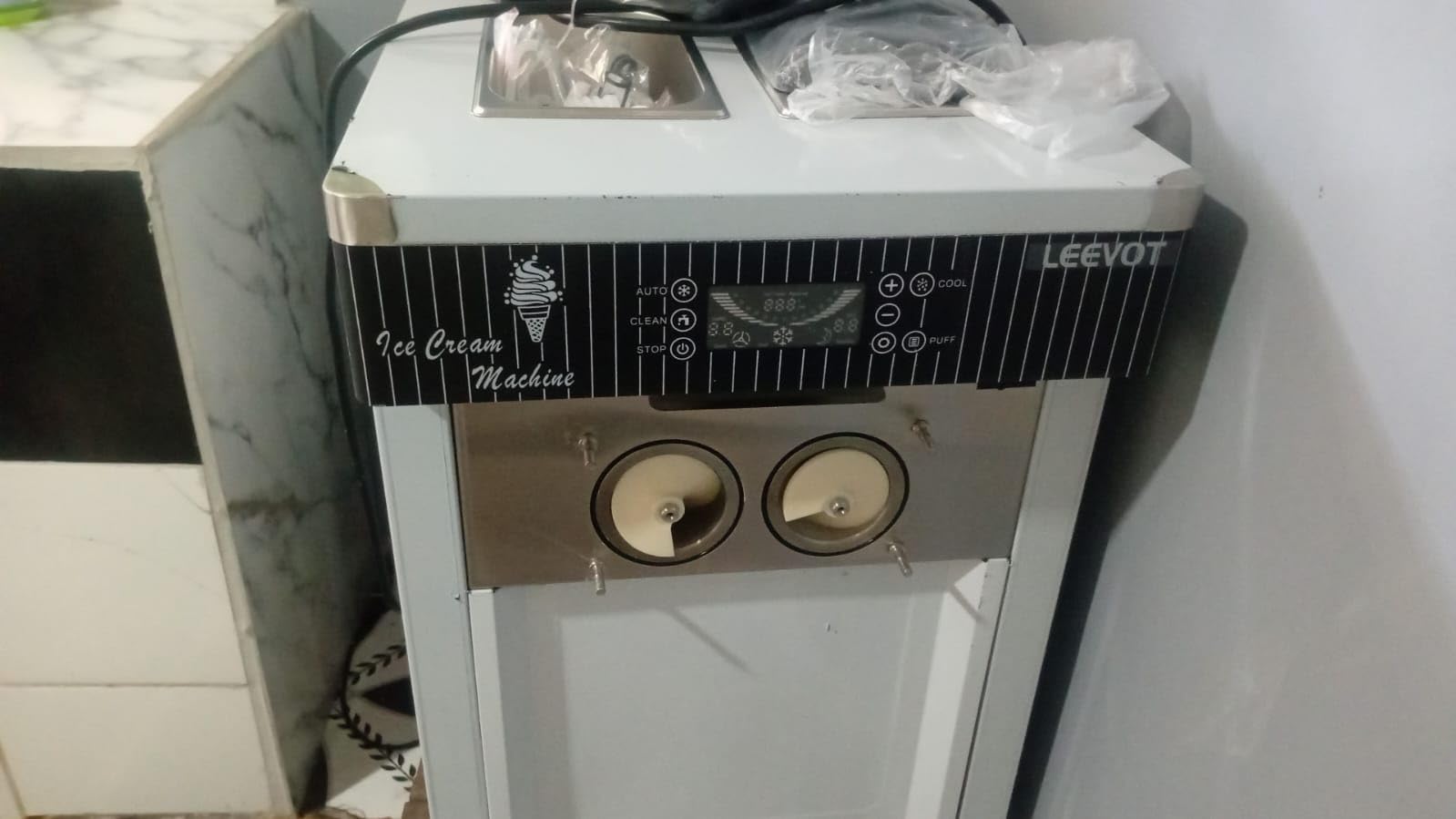
The smart LCD panel handles hardness, temperature, quantity and timer settings, and pre-cooling pairs with one-click self-cleaning so the overnight hold and the morning wash are both one button. A material shortage alert sits alongside it, and fixed casters plus a detachable drip tray make it movable and cleanable.
Support terms are unusually specific for this category: 12 months of maintenance and 10 years of after-sales service with spare parts availability stated. That is a claim worth putting in writing, because parts access is exactly what the thinner-reviewed machines in this roundup struggle with.
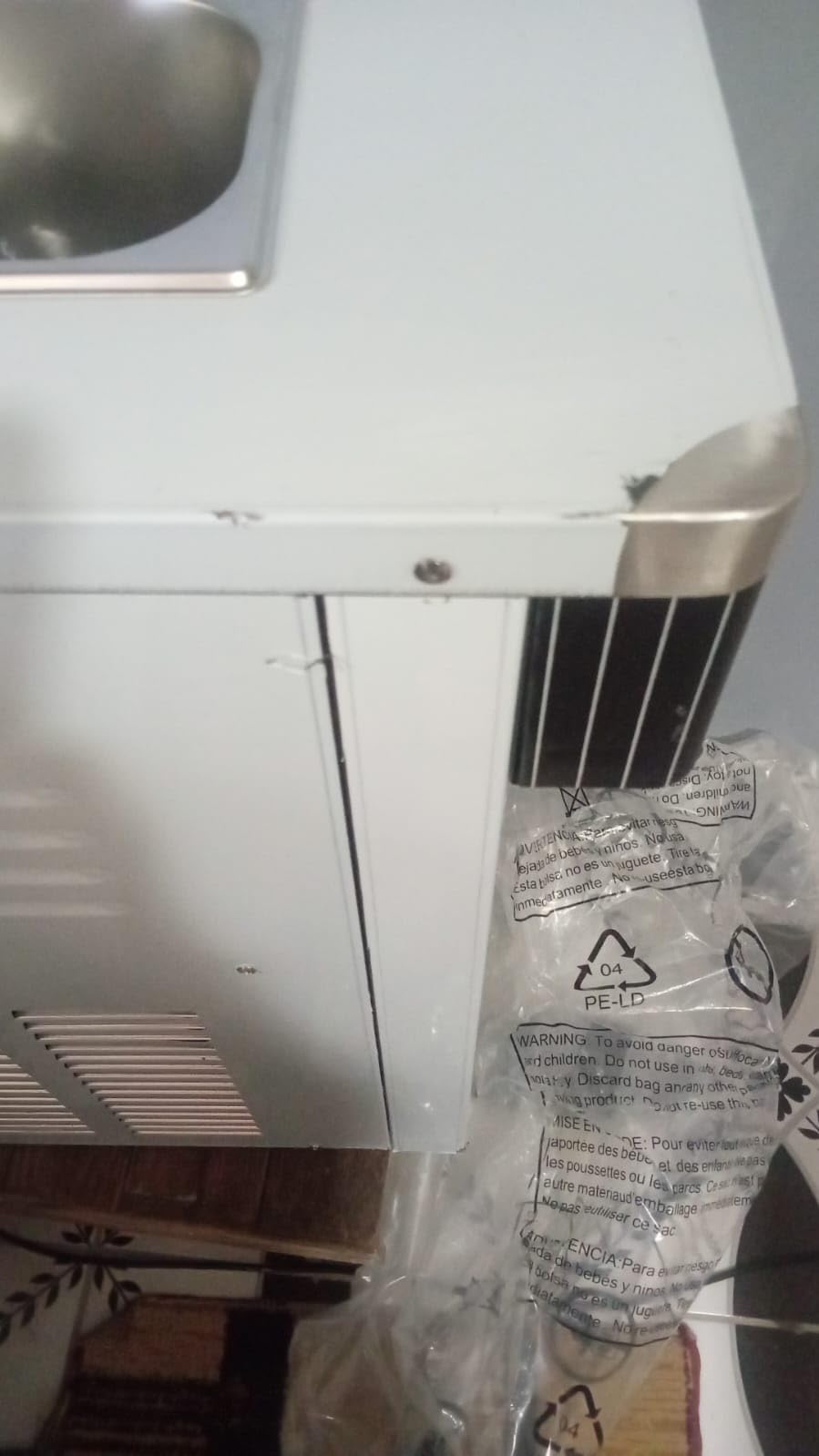
Why Power Setup Is the Feature to Judge It On?
Dual circuits with staggered startup matter if you are on a commercial tariff or if your electrical service is already close to its limit. One compressor starting while the other is still cycling changes the peak your panel has to absorb.
The floor-standing vertical body also means you are not losing counter space. If your counter is the most valuable real estate you have, a machine on casters that can be rolled out for cleaning is a reasonable trade.
Where It Falls Short?
At 234 lb and a 55.9 by 24.8 by 22.6 inch packaged footprint, this is a dedicated footprint and a two-person move. It is the largest machine here and the least forgiving about where you put it.
Honesty about the sample: a 3.9 average from 22 reviews with a 57 percent five-star share is the lowest average in this group, and the review base is small enough that durability is not well documented. Feature coverage is broad for the machine class, but you are buying some of that on faith. Get the warranty terms confirmed before you sign.
9. Aeitto 1593WM1 – Compressor Soft Serve With No Pre-Freezing
Ice Cream Maker & Slushie Machine Soft Serve Ice Cream Machine 7 Presets
7 presets, no pre-freezing
1.1 liter capacity
5 adjustable texture levels
Pros
- Built-in compressor means no pre-chilling and no ice cubes
- One-touch self-clean with dishwasher-safe parts
- Five adjustable texture levels keep output thick
- Compact footprint that fits a standard counter
Cons
- Each batch takes roughly 30 minutes
- 1.1 liter capacity limits batch size
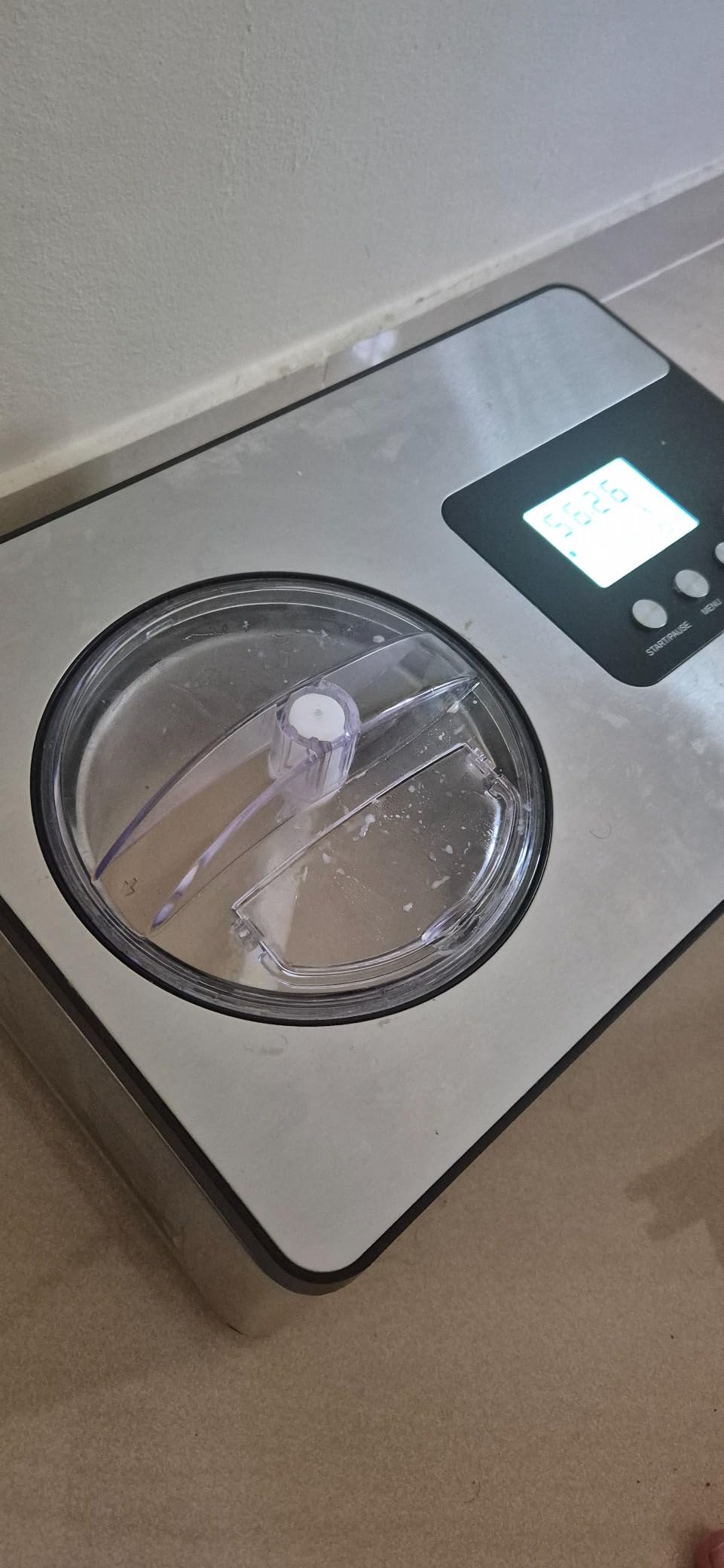
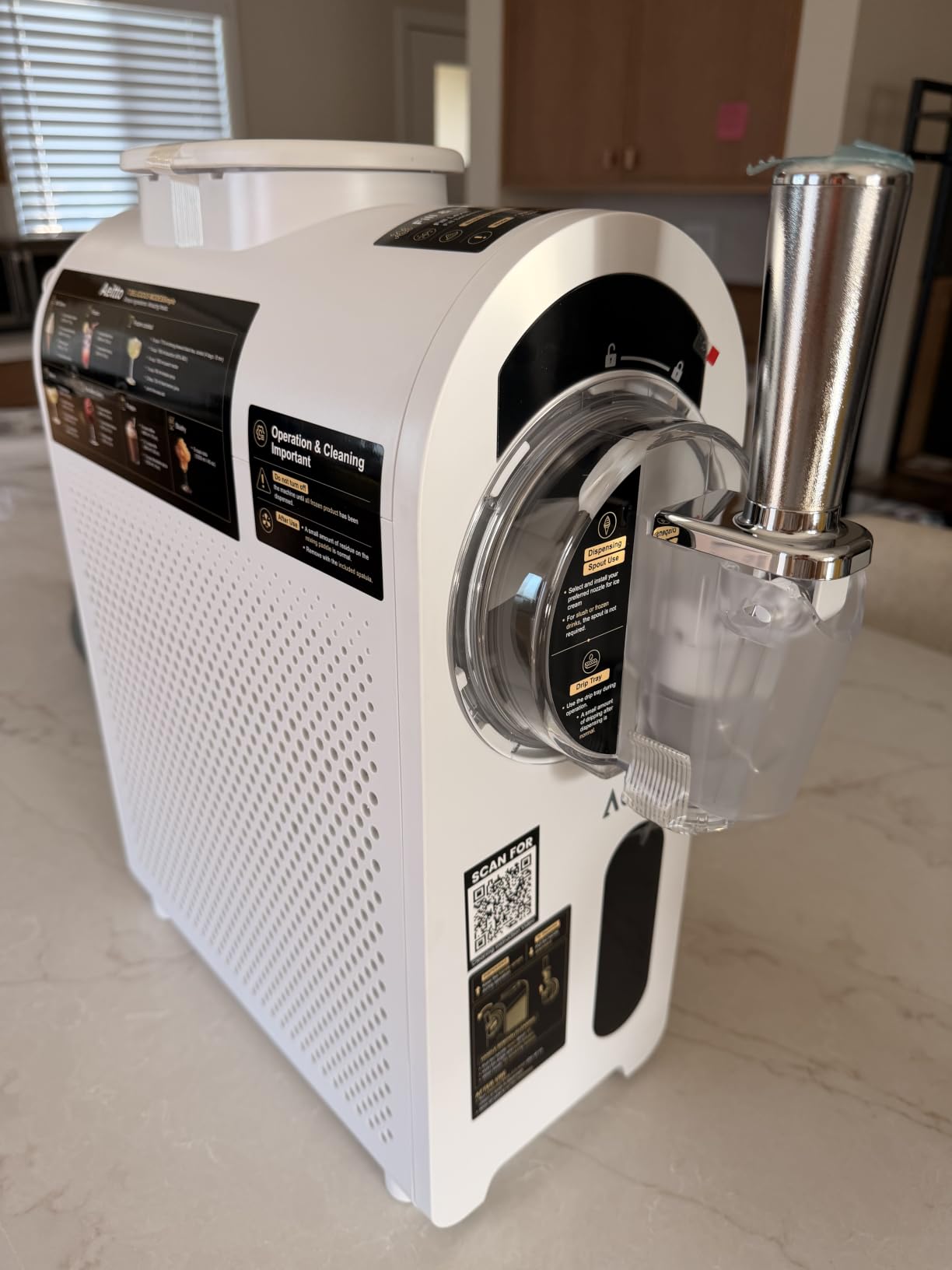
The Aeitto 1593WM1 is the cleanest answer to the freeze-before-you-start problem. A built-in compressor with 360 degree surround cooling and dual-layer thermal insulation means no pre-chilling, no ice cubes and no overnight freeze of a bowl. You load the mix and press go.
Seven presets cover soft serve, frappés, frozen margaritas, spiked slush and frozen drinks, so it works as a two-in-1 machine rather than a single-purpose one. The 1.1 liter capacity is the trade for that convenience, and a batch takes roughly 30 minutes.
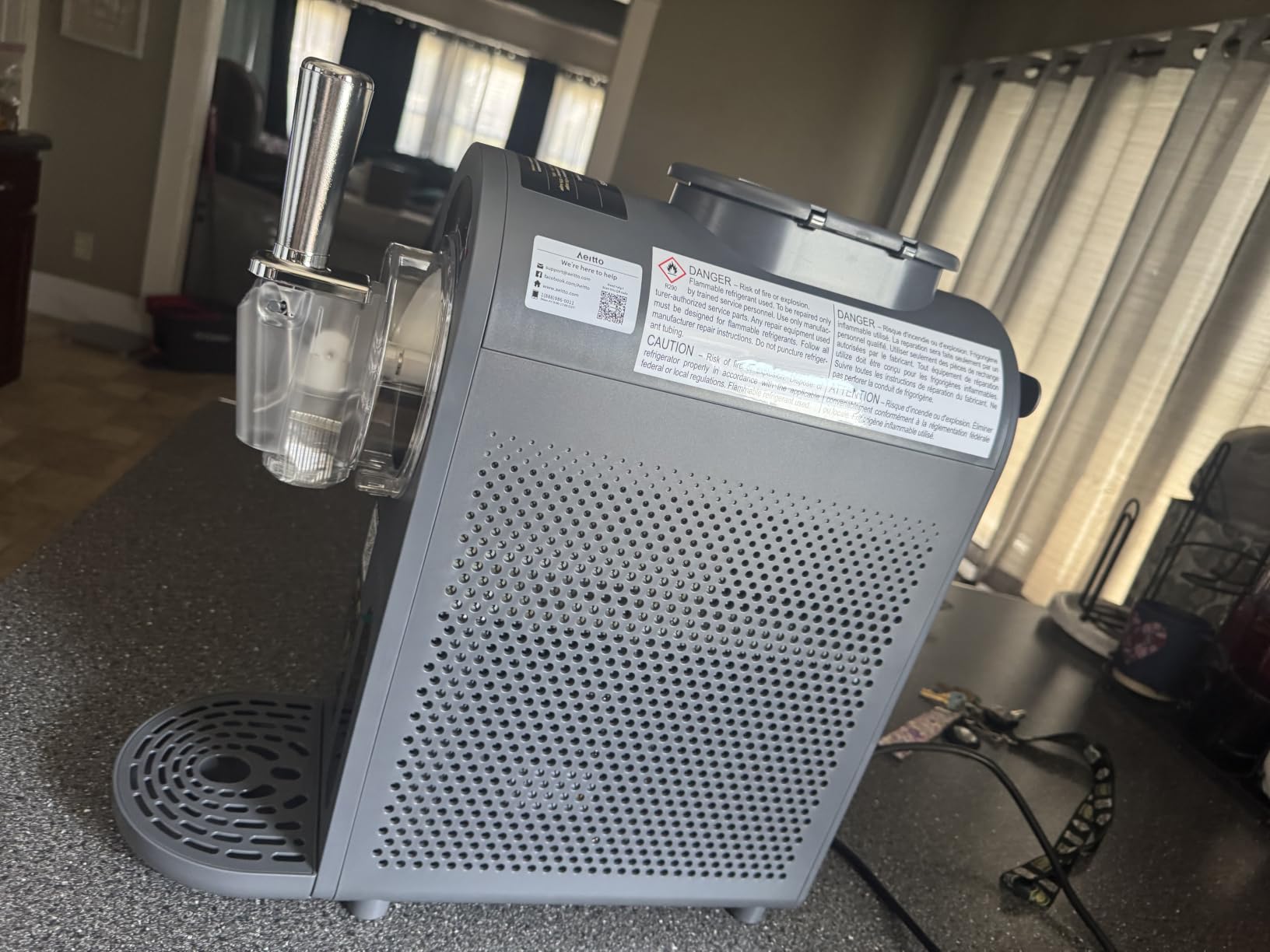
Five adjustable texture levels are the feature that keeps output from turning watery, and a 24-hour timer lets you set it going before an event instead of watching it. One-touch self-clean plus a dishwasher-safe paddle, funnel and drip tray means cleanup is genuinely quick.
It carries a perfect 5.0 average from 40 reviews, and every one of those reviews praises the smooth creamy output, the simple controls, the self-clean cycle and the compact design. At 18.19 by 6.69 by 17.8 inches, it fits a standard counter, and it works with both milk-based recipes and powdered mixes.
How the Compressor Changes the Planning?
With no pre-freeze step, you can make a serving on demand instead of planning ahead. That is a real difference for an office, a small gathering or a kitchen where counter space for a pre-frozen bowl is not available.
The 30-minute cycle is the counterweight. Two servings take an hour, and a large group needs multiple runs, so this is a machine for a household or a small team rather than a catered event.
Where It Falls Short?
Batch size is the honest limit. At 1.1 liter, you are making a pitcher, not a party-sized quantity, and the 30-minute cycle means planning a serving schedule rather than serving on demand.
It is also a home machine, not a shop machine. There is no NSF-style certification here, no continuous output rate and no multi-flavor dispensing, so it should not go behind a public counter without checking your local health code first.
10. oplace Win5 Pro – The Widest Drink Program With No Ice Needed
7-in-1 Slushie Machine & Soft Serve Ice Cream Maker,88oz with No Ice Needed,Slushy Machie for Home,Frozen Drink,Margarita,Cocktail,Daiquiri,Frappe,Milkshake,and More Smoothie
7-in-1 with 68oz liquid capacity
15-45 minute freeze time
12 thickness settings
Pros
- 360 degree spin and instant-freeze tech needs no ice cubes
- 68oz liquid capacity serves a gathering without refilling
- Self-cleaning mode with dishwasher-safe removable parts
- Ultra-low-noise compressor keeps it quiet in a social setting
Cons
- Ice cream output can be soupy versus the recipe book photos
- Results depend on at least 4 percent sugar and 2.8-16 percent alcohol
- 20 lb body and modest capacity for large parties
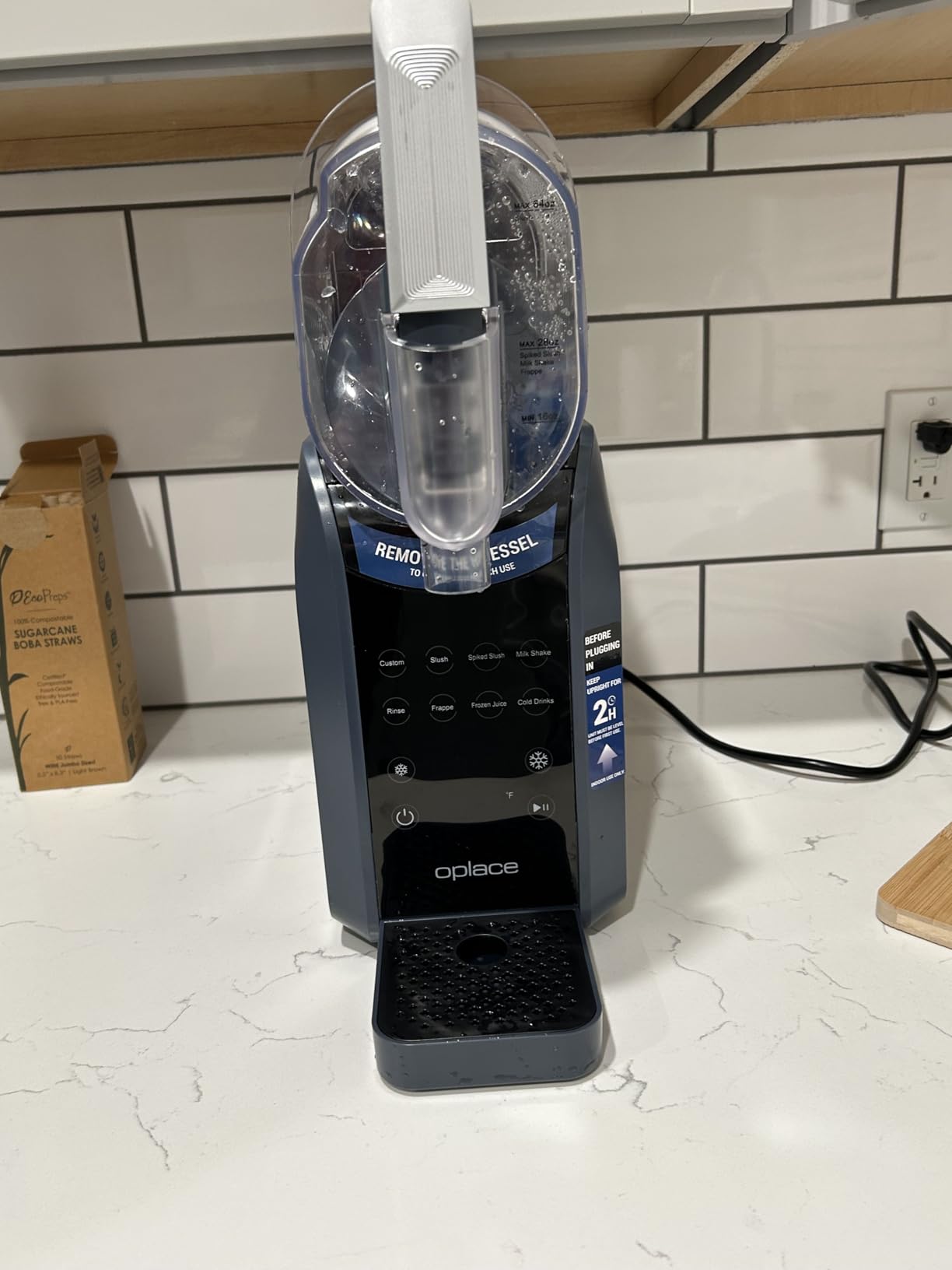
The Win5 Pro is really a frozen drink machine that also does soft serve, and it earns its place here because the drink side is where it performs. Seven modes cover slushies, milkshakes, margaritas, cocktails, daiquiris, frappes and smoothies, and the 360 degree spin with instant-freeze technology means no ice cubes at all.
Liquid capacity is 68 oz within an 88 oz total machine volume, and freeze time runs 15 to 45 minutes depending on what you are making. At 20 lb and 17 by 7 by 18 inches it moves easily between counters, and the ultra-low-noise compressor suits a social setting where a loud appliance would be a problem.
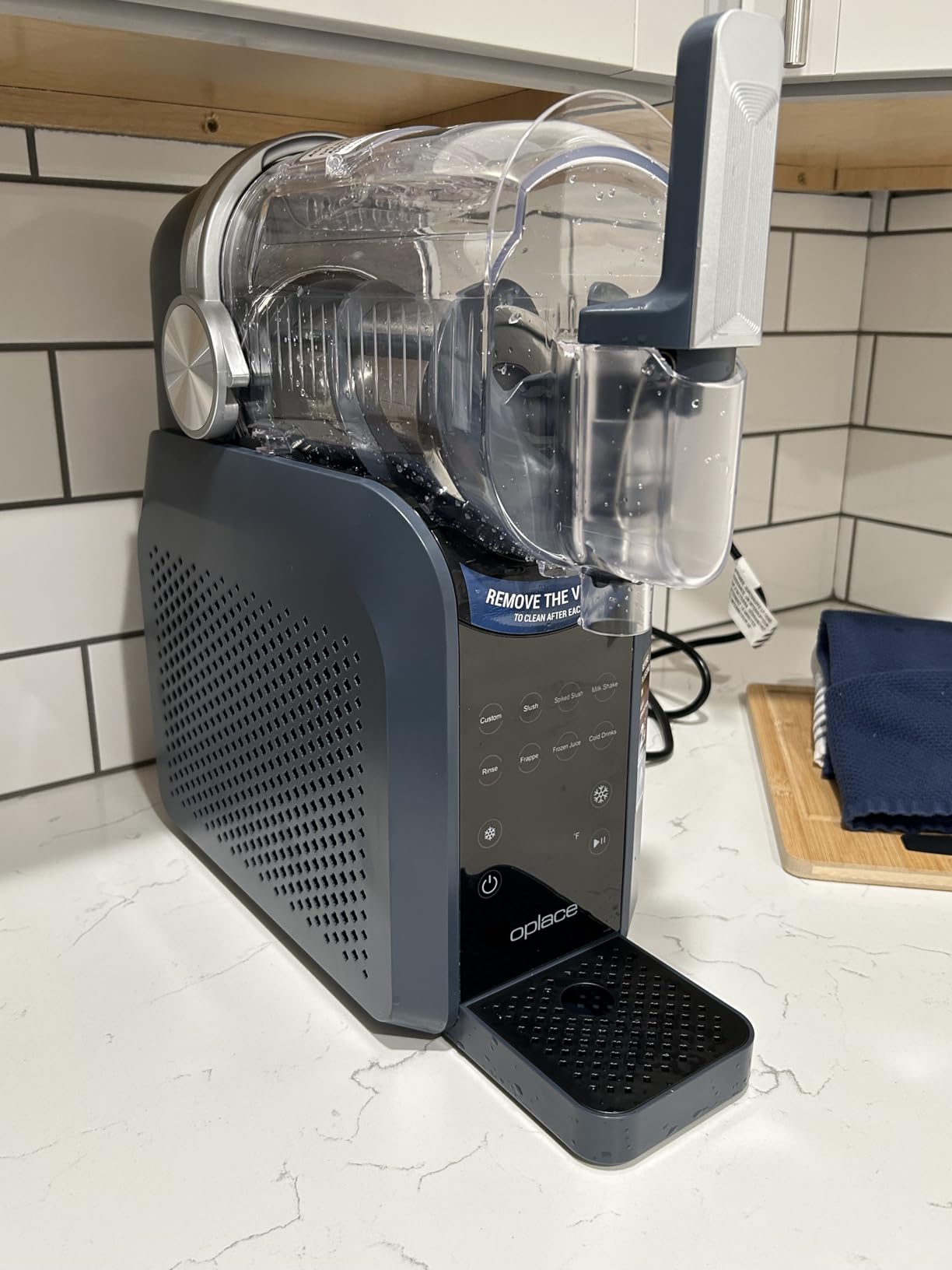
The control panel carries a high-brightness LED display with 7 preset modes and 12 adjustable thickness settings, which is finer control than most home machines offer. Self-cleaning mode plus dishwasher-safe removable parts keeps cleanup simple, and owners report it slushes faster and cheaper than competing machines.
The 4.6 average from 25 reviews comes with 75 percent five-star share, and the repeated praise is for slush and frozen drink performance, speed and value. The single consistent criticism is the soft serve side, where output can be thinner than the recipe book photos suggest.
Where the Drink Program Shines?
For a poolside, a patio, a bar cart or a party, this is the machine in the roundup that will not ask you to buy ice. The 68 oz liquid capacity covers a gathering without constant refilling, and the self-cleaning mode means you are not scrubbing a machine at the end of the night.
Twelve thickness settings also let you serve a genuinely slushy drink alongside a thicker shake from the same machine, which is more useful than a single-purpose slush unit if your guests order different things.
Where It Falls Short?
Formula discipline is the constraint. The recipe guidance calls for a minimum of 4 percent sugar and an alcohol concentration between 2.8 and 16 percent, and results depend on staying inside those ranges. Get that wrong and the texture suffers.
And the soft serve mode itself is the weak point. Ice cream output can be soupy, so if soft serve is your main reason for buying, choose a dedicated machine. This is a drink program with a soft serve setting attached.
Countertop vs. Floor Model: Which One Fits Your Counter?
Countertop and floor model machines differ less in capability than in the constraints they impose. A countertop unit sits where your customers can see it, which is good for merchandising and bad for the weight. A floor model rolls out for cleaning and hides the mechanics, but it needs a dedicated footprint.
Use weight as the first filter, because it is the number that surprises people. The machines in this roundup run from 1.4 lb on the Yonanas up to 236 lb on the FOHERE 818B, and anything above about 130 lb is a two-person move with a fixed location.
Next, measure the counter height and the space above it. The Ninja NC701 will not fit under most standard upper cabinets at 17.51 inches tall, and the commercial units need vent clearance around their cooling vents. A machine that fits the floor plan but not the electrical plan is a problem you discover on delivery day.
If you are still narrowing the field, the full soft serve machine roundup goes deeper on layout, and the home-side picks are broken out in our home soft serve guide.
Overrun and Feed Type: The Features That Decide Texture and Margin
Overrun is the percentage of air added to the mix, and it is the single most important number on a soft serve machine that is not already on the label. The formula is straightforward: divide the finished volume of one serving by the volume of mix that went into it, subtract one, and multiply by 100. Mix that expands to 1.4 times its original volume is running 40 percent overrun.
Most service operations land somewhere in a 30 to 45 percent band. Below that band the product tastes icy because there is not enough air to lighten the mix. Above it the product tastes airy, the flavor drops, and you sell more volume for the same amount of mix, which erodes the margin on every serving.
This is why adjustable overrun and puffing or expansion technology matter as purchase criteria rather than as marketing lines. The GSEICE double-puffing system is cited at roughly 30 percent better puffing, and the VEVOR and EKway expansion tubes are cited at 25 to 30 percent higher yield. Those figures are claims about mix efficiency, and mix efficiency is your cost per serving.
On feed type, gravity-fed machines let the hopper pressure do the work while pump or pressure-fed machines force the mix through the freezing cylinder. Pumps give tighter control over flow and overrun, at the cost of a wear component to maintain. A machine you will run every day for years deserves a pump; a machine for occasional weekend use does not necessarily.
Cleaning, Sanitizing and the Maintenance Schedule You Are Signing Up For
Every soft serve machine on this list needs daily manual work, and the automatic wash cycle does not change that. The sequence is the same everywhere: drain the hopper, disassemble the freezing cylinder and beater, wash every food-contact part, reassemble, then run a sanitize flush before reassembling fully.
Owners of the FOHERE 9200 and the GSEICE both describe full disassembly and hand washing after the automatic cycle as the main learning curve. Milkstone, the protein film that forms when mix is heated above about 150F, is the failure that ends a machine’s life, and it is a cleaning discipline problem more than a machine problem.
Two practical notes. The GSEICE automatic wash cycle needs a large container to catch the flush water, and sanitizing solution is not included with the VEVOR YKF-8218T or the EKway, so order it before you open the box rather than after your first health inspection.
Always follow the manufacturer’s cleaning instructions and your local health code, which will have its own rules about temperature, contact time and documentation. Our general guidance does not replace either.
Home or Commercial: How to Choose the Right Buyer Path?
The clearest way to split this roundup is by certification and output, not by appearance. A home machine makes one to a few servings in a batch, plugs into household power, and has dishwasher-safe parts. A commercial machine makes continuous servings per hour, is built in stainless food-contact surfaces, and is expected to sit behind a counter serving customers.
For home use, the two machines worth a close look are the Ninja Creami NC701 for texture and program control, and the Aeitto 1593WM1 if you want no pre-freezing at all. Both are residential units and neither is appropriate behind a public counter. The Yonanas is a third option if your interest is frozen fruit treats rather than dairy soft serve.
For commercial use, start with your peak-hour servings rather than your daily total. A machine quoted at 150 to 200 servings per hour is sized for a genuinely busy counter, while a 3.5 gallon per hour unit is sized for a slow afternoon and a weekend queue. Oversizing wastes counter space, power and money with no benefit, and it is the single most common buying mistake in this category.
Then confirm three things before you pay: the electrical requirement at your site, the availability of a technician and parts in your region, and who honors the warranty. Those three answers matter more to a machine’s first five years than any feature on the control panel.
Frequently Asked Questions
How much overrun should soft serve have?
Most service operations land in a 30 to 45 percent overrun band. Below that range the product tastes icy because there is not enough air to lighten the mix. Above it, the product tastes airy, the flavor drops and you sell more volume for the same mix, which erodes margin on every serving. This is why adjustable overrun control is worth paying for on any machine you will run daily.
How do you calculate the overrun in ice cream?
Divide the finished volume of one serving by the volume of mix that went into it, subtract one, then multiply by 100. If 100 ml of mix becomes 140 ml of soft serve, the overrun is 40 percent. Measure by dispensing a known mix volume into a marked container, then compare. Keep the ratio consistent across the week, because inconsistent overrun is what makes a machine look inconsistent.
What is the best soft serve machine with a compressor?
Among the home units here, the Ninja Creami NC701 offers the widest program set with 13 one-touch programs including six soft serve modes. For a machine where you pour the mix in and start with no pre-chilling, the Aeitto 1593WM1 has a built-in compressor with 360 degree surround cooling. The oplace Win5 Pro also needs no ice, but its soft serve mode is its weakest feature.
What are the common problems with soft serve ice cream machines?
The most common complaints are ice buildup inside the freezing cylinder that eventually stops freezing, mix freezing and sedimenting in an unagitated hopper, product stranded in the mixing chamber when the hopper runs dry, and milkstone buildup from incomplete cleaning. Owners also report units that fail within the first year, thin documentation, and support lines they could not reach.
What is the best commercial soft serve machine?
It depends on volume and flavor count. The FOHERE 9200 has the highest rating among the commercial units here at 4.4 from 105 reviews with a touch LCD and 10.4 to 20 quarts per hour, but it is single flavor. The VEVOR BJH288SR2JB-Y quotes the highest servings per hour at 150 to 200, and the EKway ABQL-8218 adds dual compressor circuits with staggered startup. Confirm parts support in your region first.
Which Soft Serve Machine Features Matter Most in 2026?
Ten machines later, the answer to the question we set out to answer is simpler than the spec sheets suggest. Output per hour, overrun control, hopper agitation, flavor configuration and a cleaning routine you can actually sustain decide almost everything, and those five features separate every machine in this roundup from every machine outside it.
Our pick is the Ninja Creami Scoop and Swirl NC701 for anyone buying for a home kitchen, because thirteen programs including six soft serve modes and dishwasher-safe parts deliver more usable soft serve than any other home unit here. For a commercial counter, the FOHERE 9200 leads on rating and control, the VEVOR BJH288SR2JB-Y leads on quoted throughput, and the EKway ABQL-8218 leads on electrical efficiency for a floor installation.
Whichever path you take, size the machine to your peak hour rather than your day, confirm parts and technician coverage before you pay, and budget for the cleaning labor rather than treating it as a rounding error. Use the buttons above to check the current details on each machine, and read more of our buying coverage in the 2026 roundups linked throughout this guide.