
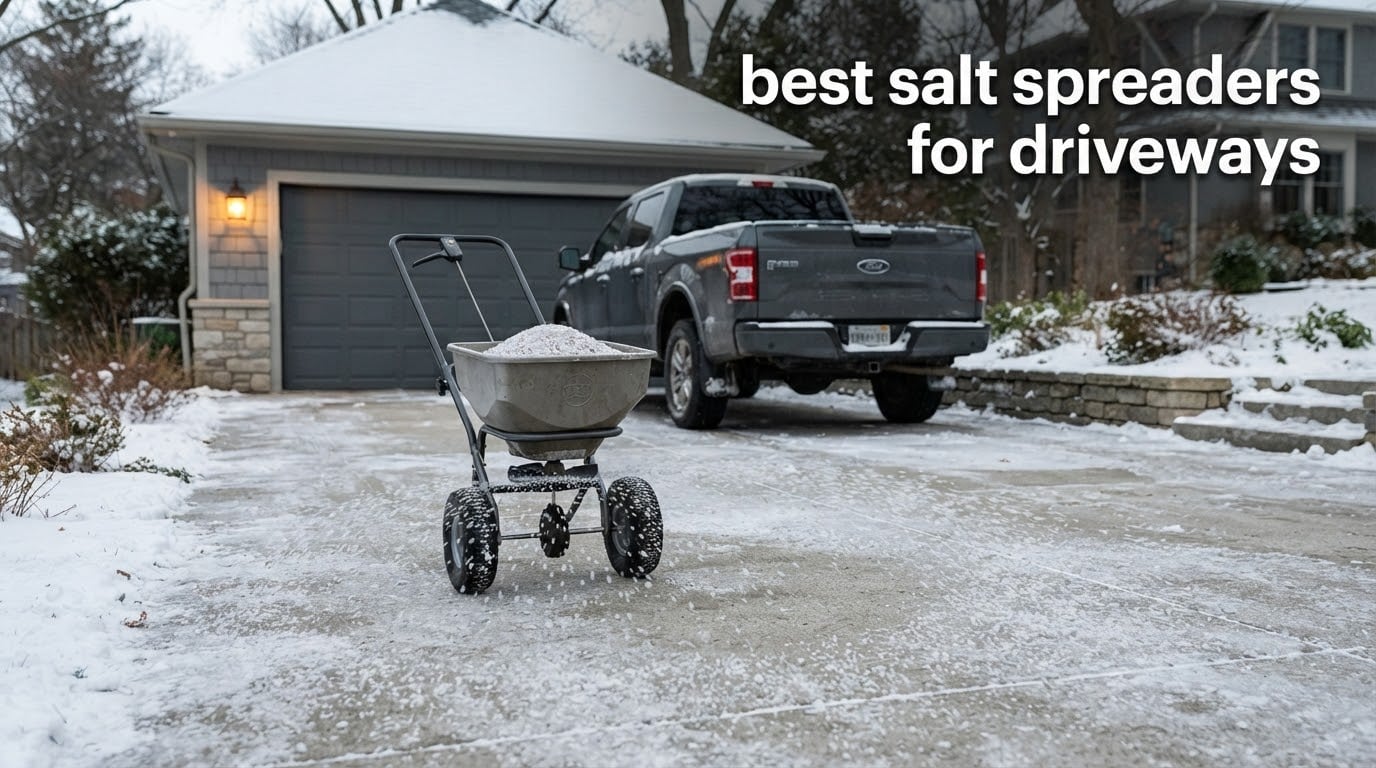
The best salt spreaders for driveways are the ones with a corrosion-resistant hopper, an adjustable gate, and enough capacity to finish a driveway in a single load. For most suburban homes, that means a walk-behind broadcast spreader in the 20 to 100 lb class, or a chest-mounted unit if you want to keep both hands free. Salt is coarse, damp, and hungry for metal, so the machine has to be built for it rather than adapted from a lawn spreader.
That last point is where a lot of winter prep goes wrong. A fertilizer spreader has small ports and a narrow gate sized for dry granules, and rock salt jams it in a season or two while the exposed steel frame pits and rusts. Purpose-built de-icer spreaders solve both problems with a poly or stainless body, a coarse-accepting feed system, and a gate you can actually dial in.
We compared 10 of the most-reviewed spreaders rated for salt and ice melt, reading the owner reviews for clogging, corrosion, gate drift, and tire grip on packed snow. This guide covers all 10, plus the sizing math that tells you which class of spreader your driveway actually needs, how to calibrate a gate, and how to salt without etching your concrete or loading your storm drains with chloride.
Top 3 Best Salt Spreaders for Driveways (October 2026)


All 10 Salt Spreader Picks at a Glance
Every spreader below handles ice melt and rock salt. The differences come down to how you move it, how much it holds, and how much of your driveway you can treat before refilling.
| Product | Specifications | Action |
|---|---|---|
| SOLO 421S Chest-Mount Spreader |
|
Check Latest Price |
| Scotts EdgeGuard DLX Broadcast |
|
Check Latest Price |
 Agri-Fab 45-0462 Push Spreader Agri-Fab 45-0462 Push Spreader |
|
Check Latest Price |
 VEVOR TC2034B 100 lb Push Spreader VEVOR TC2034B 100 lb Push Spreader |
|
Check Latest Price |
| VEVOR TC2136 80 lb Push Spreader |
|
Check Latest Price |
 Agri-Fab 45-0463 Tow-Behind Agri-Fab 45-0463 Tow-Behind |
|
Check Latest Price |
 Buyers ATVS100 ATV Spreader Buyers ATVS100 ATV Spreader |
|
Check Latest Price |
 Buyers UTVS16 150 lb UTV Spreader Buyers UTVS16 150 lb UTV Spreader |
|
Check Latest Price |
 CHAPIN 8740A Hand Shaker CHAPIN 8740A Hand Shaker |
|
Check Latest Price |
 Snow Joe SJSPD1 Handheld Spreader Snow Joe SJSPD1 Handheld Spreader |
|
Check Latest Price |
1. SOLO 421S Chest-Mount Spreader – The Best All-Round Pick
SOLO Inc 421 20-Pound Capacity Portable Chest-Mount Spreader with Comfortable Cross-Shoulder Strap – 421S, White, 20lb
20 lb hopper
Chest-mount strap
Adjustable flow and directional fan
Pros
- Highest average rating in the group
- Cross-shoulder strap leaves both hands free
- Directional fan gives real edge control
- Clear hopper shows remaining material
- Serviceable components owners rate as commercial-grade
Cons
- Flow lever sits against the chest and is found by feel
- Full hopper of ice melt gets tiring on the shoulder
- Flow adjustment is sensitive to small turns
The SOLO 421S mounts to your chest rather than your back, and that single design choice makes it the most usable spreader in this roundup for a typical suburban driveway. You crank it with one hand, steer with the other, and the 20 lb hopper carries you down a two-car drive and partway back before you refill.
It also carries the highest average rating of the ten, and the reviews explain why. Owners repeatedly call it the best-made hand-operated spreader they have owned, and they single out the clear hopper and the directional fan as the reasons they can work close to a curb or a planting bed without flinging salt off the pavement.
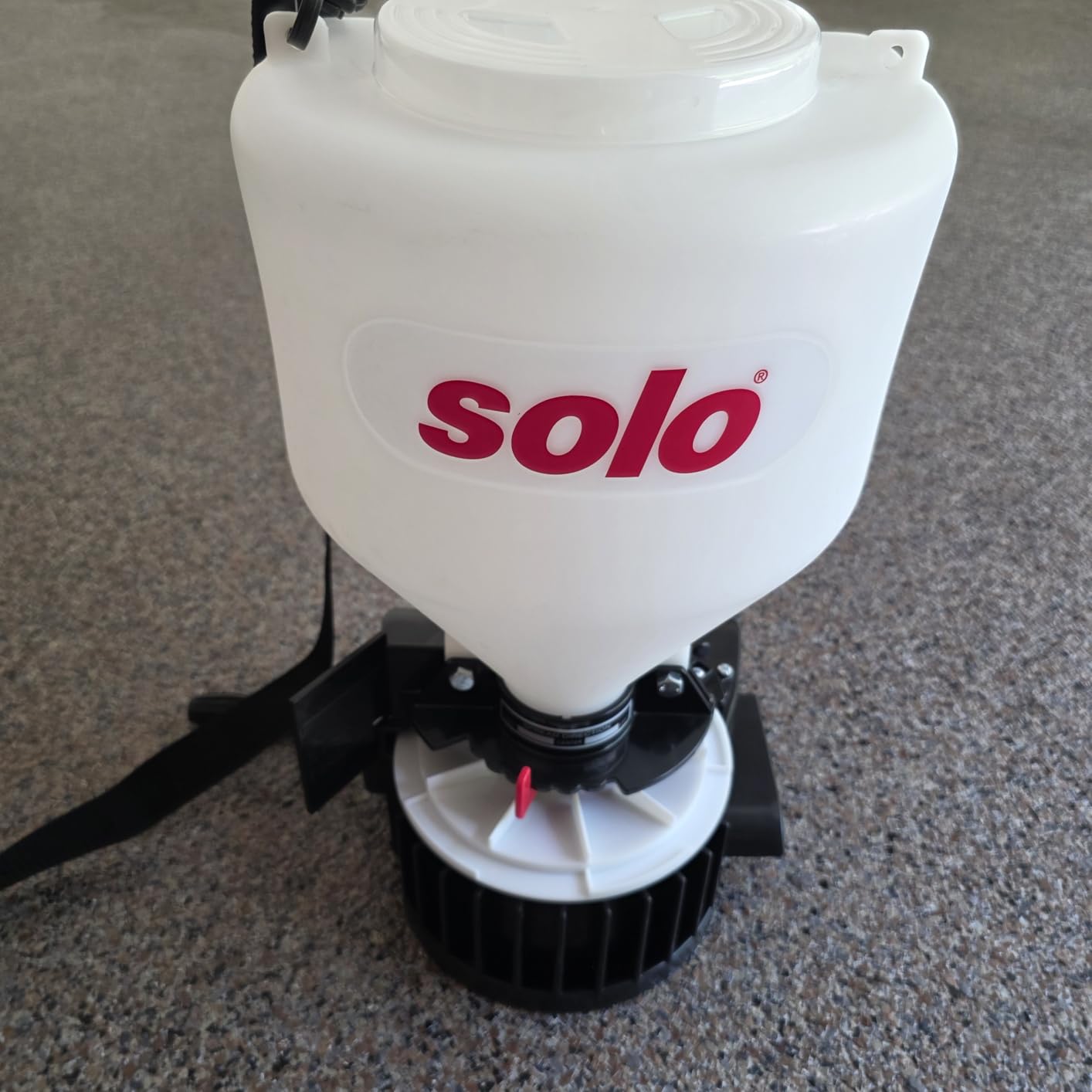
The adjustable flow control is the other half of the value. Most handheld spreaders give you one hole and you shake harder or softer. This one lets you regulate output, which is the difference between a thin even coat that melts ice and a heavy stripe that etches concrete and washes into a storm drain.
What you give up is raw capacity. A full 20 lb of ice melt hanging from a shoulder strap is genuinely tiring over a long drive, and the flow lever sits flat against your chest where you find it by feel rather than sight. A lot of owners work around both by filling it a third to half for driveway passes, which is also better practice for the environment.
How It Handles on a Real Driveway
The 20 lb hopper covers a standard two-car driveway of roughly 600 to 900 sq ft in a single fill at a normal application rate, so one load usually does the whole job. The strap spreads the load across both shoulders, which makes it far more comfortable than a single-shoulder design, but the weight still lands on your upper back over a long pass.
Because the fan is directional, you can throw material to one side rather than in a full circle. That is what makes it good for a driveway that butts up against a lawn, a walkway, or a neighbour’s concrete pad, where a wide broadcast would overspray onto ground you were not trying to treat.
Where It Falls Short
The crank is right-hand only, so left-handed users adapt awkwardly, and the lever is genuinely hard to find without looking down. For a driveway under about 400 sq ft, a full chest-mounted unit is more machine than the job needs, and the handheld options later in this list handle that size more comfortably.
Owners also mention occasional units arriving with a loose part and unclear assembly instructions. Budget ten minutes with the manual before your first storm rather than after, because the flow calibration matters more here than on a walk-behind model.
2. Scotts EdgeGuard DLX Broadcast Spreader – Best Value for Paved Driveways
Scotts Turf Builder EdgeGuard DLX Broadcast Spreader for Seed, Fertilizer, Salt, Ice Melt, Holds up to 15,000 sq.ft. Product, Green
Pre-calibrated
Holds up to 15,000 sq ft
EdgeGuard side shield
10.9 lb
Pros
- Arrives pre-calibrated with no assembly
- Most-reviewed spreader in the group
- EdgeGuard shield keeps granules off landscaping and sidewalks
- Hopper and agitator funnel product for consistent coverage
- Light enough to lift easily
Cons
- Side shield narrows the effective spread width
- Settings are tuned toward Scotts-branded products
- Plastic body is lighter duty than steel-frame commercial units
With 6541 reviews and a 4.4 average, the Scotts EdgeGuard DLX is the most validated spreader on this list by a wide margin. It arrives pre-calibrated and ready to roll, which removes the single most common complaint we saw across walk-behind models, the hour or two of assembly before the first pass of the season.
The EdgeGuard side shield is the reason it earns its place in a driveway guide specifically. It keeps thrown material off landscaping, sidewalks, and neighbouring pavement, so the pattern stays on your concrete where it melts ice instead of bleaching the grass along the edge.
Owners praise the hopper and agitator design for funneling product smoothly and laying consistent coverage, which is the part that actually determines whether a driveway gets an even coat or a series of stripes. It is a 10.9 lb spreader, which makes it one of the easiest in this roundup to load, lift into a vehicle, and store in a heated garage.
The trade-off is that the shield reduces your effective spread width, so you overlap passes more than you would on an open spreader. Reviewers also note that the settings on the dial are tuned toward Scotts-branded lawn products, so if you are spreading a bagged ice melt from another brand, expect to test and adjust rather than trust the printed number.
Why It Works So Well on Paved Surfaces
The hopper holds enough product to cover up to 15,000 sq ft, which is far more than any residential driveway needs, so you are filling it once per storm rather than three times. The agitator keeps coarse rock salt moving toward the gate instead of sitting in a dead cone in the middle of the hopper, and that is the difference between an even coat and a thin stripe down the centre of the drive.
Because it is a broadcast unit, the pattern is wide and fast. On a driveway with a lawn strip on one side, the EdgeGuard shield means you can run right up to the edge without broadcasting onto the grass, which matters both for your lawn and for the chloride load that ends up in the soil there.
Where It Falls Short
This is a lawn spreader that handles salt well, not a dedicated de-icer. The plastic body is lighter duty than the steel-frame commercial units in this roundup, and the small gate opening is not built for the wettest, claggiest bagged ice melt. Owners applying very damp material report the same clogging pattern we see on other plastic-bodied spreaders.
If your route includes a long rural drive or a commercial-size lot, the capacity is not the issue but the narrow pattern is. In that case a walk-behind with a wider throw and a grate over the hopper handles the volume better.
3. Agri-Fab 45-0462 Push Spreader – Best for Long Driveways
Agri-Fab 45-0462 Push Broadcast Spreader,Orange & Black,130-lb Capacity
130 lb hopper
10-12 ft spread
13 in pneumatic tires
Rod flow control
Pros
- 130 lb hopper covers 25000 sq ft
- Pneumatic tires grip packed snow and slopes
- Rod control gives repeatable calibratable flow
- Enclosed metal gearbox is greasable and serviceable
- Stops cleanly with no leaking
Cons
- Assembly takes roughly 1.5 to 2 hours
- Agitator is only a cotter pin so damp material may need shaking
- No side deflector so salt flies back at the operator
- 35 lb empty and bulky in a small garage
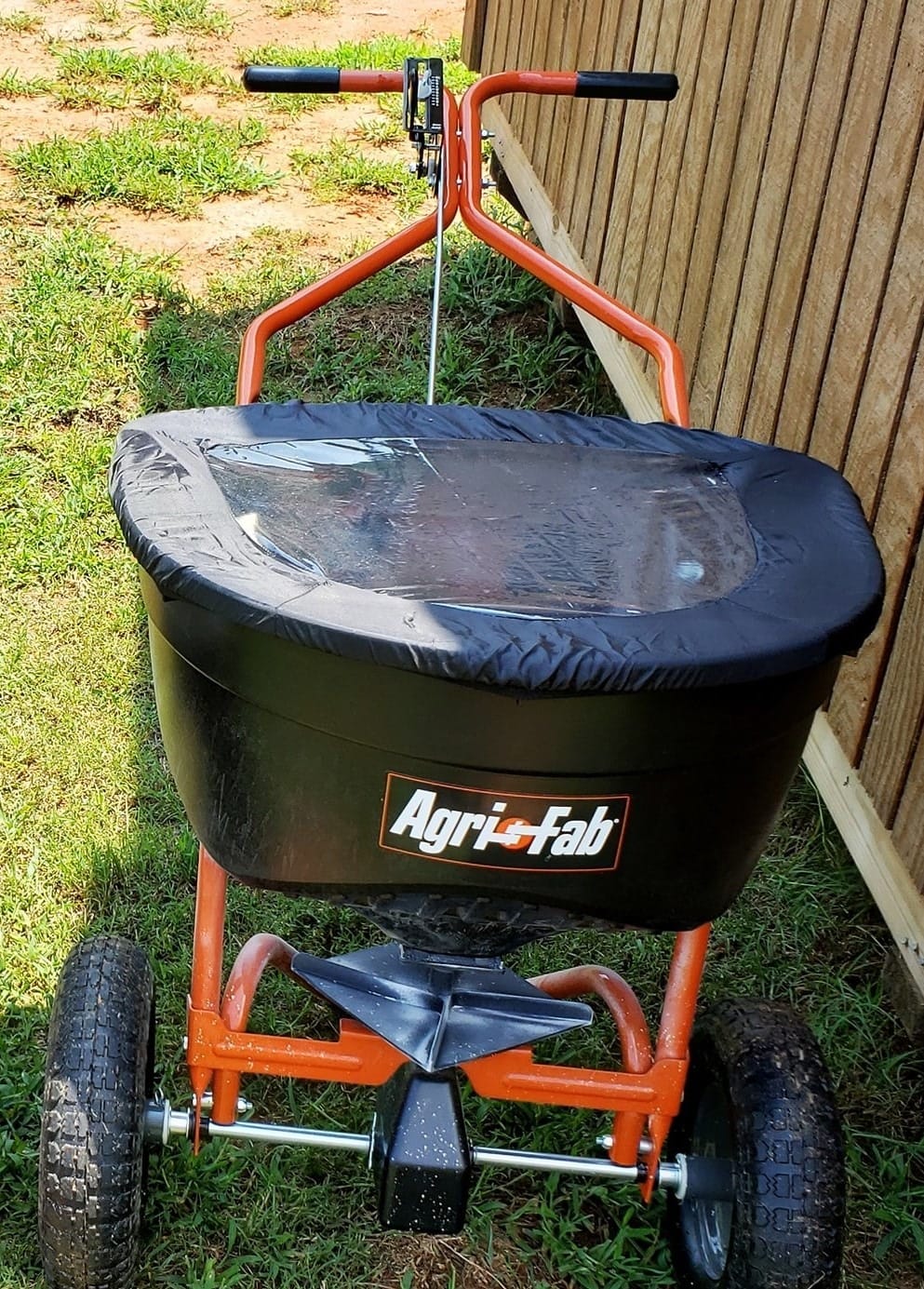
When a driveway is long enough that you would rather push than carry, the Agri-Fab 45-0462 is the machine that makes the work feel reasonable. The 130 lb hopper covers up to 25,000 sq ft, and the 10 to 12 ft spread width means a typical long residential drive takes two or three passes instead of six.
The 13 in pneumatic tires are the reason it works in winter at all. Small hard-plastic wheels bog down and skid on packed snow, and a spreader that will not roll forward cannot spread. Owners single these out, along with the tall handle that makes it easy to keep pushing upright on a slope.
The direct rod control is a simple, honest mechanism and it is what makes calibration repeatable. You set a rod position, you get the same output every time, and after a couple of storms you know exactly which notch suits rock salt and which suits lighter ice melt.
The enclosed metal gear box is another point in its favour for a salt machine. It can be opened, greased, and serviced instead of being a sealed plastic assembly that fails quietly in its third season, which is a common complaint about lighter-duty walk-behinds.
Driveway Size and Load Count
A 1,600 sq ft two-car driveway at a normal winter application rate takes roughly two bags of 40 lb salt per pass, so the 130 lb hopper handles the whole driveway in one fill. That is the single biggest practical advantage over a handheld unit, where you would be making six or more refills in wet gloves.
Owners who use it on gravel report that the tires handle the uneven surface well enough to keep a consistent pattern. On a smooth concrete drive the pattern is very predictable, and the wide throw means you can cover the full width of a double drive in one pass with a small overlap at the seam.
Where It Falls Short
Assembly is the most repeated complaint in the reviews, with first-time builders estimating one to two hours. It is a real cost in setup time, though it happens once. Agri-Fab also notes that this model number has been replaced by model 45-0614, so check which version you are actually receiving before you rely on fit parts.
The agitator is only a cotter pin, so damp or clumpy ice melt may not feed smoothly without rocking the machine. There is no side deflector either, which means salt flies back at your legs on a narrow drive. A long-term owner also reported hopper cracking after about seven years of shed storage, so dry indoor storage matters more than it does for some of the other units here.
4. VEVOR TC2034B 100 lb Push Spreader – Best for Heavy Loads
VEVOR Broadcast Spreader 100 lbs Capacity Walk-Behind Push Spreader Black | For Lawn Garden, 0-9.8 ft Spreading Width, 13 in All Terrain Pneumatic Tires, Hopper Grate for Seed Fertilizer Salt Ice Melt
100 lb / 56 L hopper
30-scale output control
13 in all-terrain tires
Sealed gearbox
Pros
- 100 lb hopper cuts refills on large driveways
- 13 in all-terrain pneumatic tires handle uneven ground
- 30-scale infinite adjustment gives fine flow control
- Powder-coated carbon steel frame resists rust
- Hopper grate helps prevent bridging
Cons
- Spread width changes with pushing speed
- Pattern takes practice to keep consistent on edges
- 32.2 lb before you load any material
- Grate can slow flow with fine damp granules
The VEVOR TC2034B answers a narrower question than most of the picks here: how do you move 100 lb of rock salt without stopping. The 56 L hopper is large for a walk-behind, and it means a long driveway or a small multi-property route can be treated in a single fill.
The 13 in all-terrain pneumatic tires are noticeably larger than the 10 in wheels on most competitors in this price and weight class, and owners mention the difference on uneven ground. They roll over gravel edges and rutted snow without the skipping you get from small hard wheels.
The 30-scale control system gives finer adjustment than a simple numbered gate, and the trapezoidal hopper shape is designed to keep material moving toward the outlet rather than sitting in the corners. There is also a grate over the top, which helps break up the bridging that coarse rock salt is prone to forming after it sits damp in the bag.
On the corrosion question, this one has a good answer: a powder-coated carbon steel frame, a rust-resistant hopper, and a sealed gearbox. Owners report the gearbox running without corrosion, which is the component that usually fails first on an exposed steel spreader.
Getting a Consistent Pattern on Concrete
Owners are clear about the trade-off: the spread pattern widens the faster you push. That sounds obvious, but on a driveway it means a rushed first pass leaves a wide band and a careful second pass leaves a narrow one, and the difference shows up as uneven melting.
The fix is a steady pace, which takes practice. Most owners settle into a walking rhythm that holds the pattern consistent, and the 30-scale control makes it easy to trim the output down for the last pass along an edge.
Where It Falls Short
At 32.2 lb before you add anything, this is a heavy lift for a walk-behind, and that matters for anyone with a back or mobility issue. The control rod placement also needs adjusting to operator height, and zeroing the pattern at a driveway edge takes practice that smaller spreaders simply do not require.
The top grate helps with coarse material but can restrict flow with fine or damp ice melt, so if you are using bagged magnesium chloride rather than rock salt, test the setting before a storm rather than during one.
5. VEVOR TC2136 80 lb Walk-Behind Spreader – Best Budget Walk-Behind
VEVOR Push Lawn Spreader 80 lbs Capacity Walk-Behind Broadcast Spreader | for Garden Care, 12 ft Spreading Width & 15 Adjustable Settings, 10 in All-Terrain Tires for Seed Fertilizer, Salt Ice Melt
80 lb hopper
12 ft spread,15 settings
10 in pneumatic tires
Split storage
Pros
- Lowest cost among the walk-behind models here
- 12 ft spread with 15 adjustable settings
- Side and rear baffles control edge throwing
- Detachable handle and hopper for compact storage
- Stainless bolts and nylon lock nuts resist rust
Cons
- 80 lb hopper means more refills than the 100 lb model
- Several owners report clumping with slightly damp material
- Assembly manual could be more detailed
- 10 in tires are among the smallest pneumatic sizes made
The VEVOR TC2136 is the one we would put in front of someone whose driveway sits under 1,000 sq ft and who wants a real walk-behind rather than a handheld. The 80 lb hopper is a sensible middle ground, and the 12 ft spread width covers most of a double driveway in a single pass.
Its standout feature is the side and rear baffles. On a driveway bordered by grass or a neighbour’s pavement, baffles let you spread closer to the edge without scattering material off your concrete, and that is exactly what the unbaffled Agri-Fab models in this roundup cannot do.
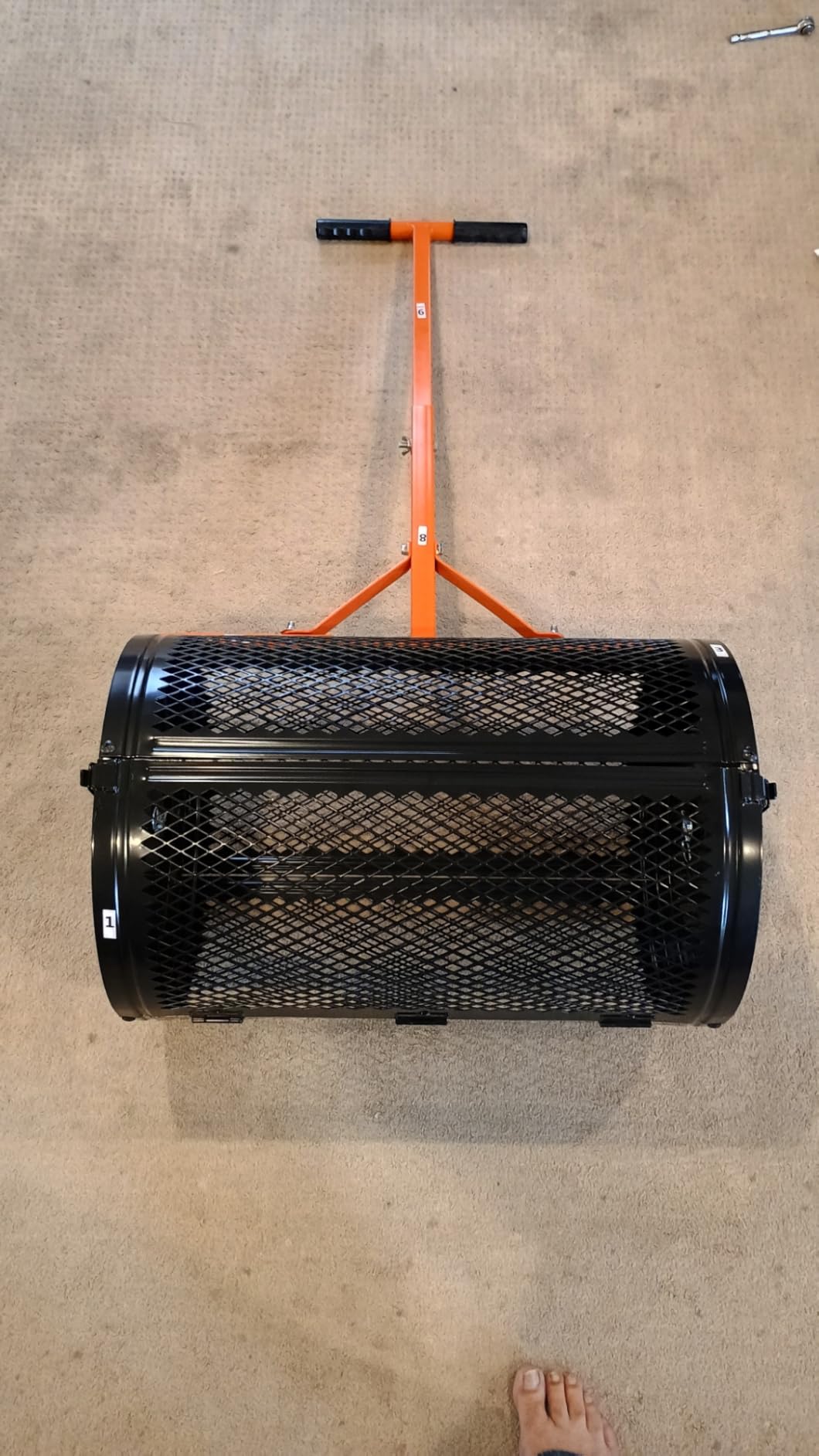
Owners highlight the price-to-capability ratio and quick assembly, with many reporting roughly 15 minutes from box to driveway. The powder-coated steel frame, UV-resistant hopper, and stainless hardware are the right material choices for a machine that will sit in road salt for years.
The detachable handle and hopper are more than a storage gimmick. A split design means the spreader takes up a fraction of the wall space of a fixed-frame unit, which matters a lot in a single-car garage where a snow blower already lives.
Where It Earns Its Place
For a medium suburban driveway, the 80 lb hopper covers the whole surface in one fill at a normal application rate. The 15 adjustable settings are more granularity than a basic lawn spreader offers, and combined with the baffles they let you treat a paved drive and a walkway in the same session without over-throwing.
Owners also note the 10 in pneumatic tires are among the smallest pneumatic sizes on the market, so this is a machine for smooth concrete and packed surfaces rather than deeply rutted gravel. If your driveway is gravel with deep ruts, spend up on the 13 in tire model instead.
Where It Falls Short
Clogging is the dominant complaint. Slightly damp material bridges at the gate and needs clearing, and this unit has no agitator beyond what the gate itself provides. Keep bagged ice melt sealed and dry between storms, and clear the gate before you start rather than mid-pass.
A small number of owners also report structural failures such as a tow-bar hitch breaking within 15 minutes of first use, so check the hitch hardware before relying on it. The 80 lb capacity is the other limitation, requiring more refills than the 100 lb version on longer drives.
6. Agri-Fab 45-0463 Tow-Behind Spreader – Best for Tractor Owners
Agri-Fab Pull Behind Broadcast Spreader for Seed, Fertilizer, Salt and Ice Melt, 130 lb Hopper Capacity with Universal Hitch and 12 Ft Spread Width
130 lb hopper
Universal hitch
10-12 ft spread
1 in steel tubing frame
Pros
- 130 lb hopper covers up to 25000 sq ft
- Universal hitch fits most riding mowers and tractors
- 10-12 ft width means fewer passes on long drives
- 1 in steel tubing and enclosed gear house
- Pneumatic tires roll over uneven ground
Cons
- Requires a riding mower or tractor to tow
- No side deflectors so granules throw back at the operator
- Wide footprint takes real garage space
- Not self-propelled so it is useless without a tow vehicle
If you already own a riding mower or a compact tractor, the Agri-Fab 45-0463 turns that machine into a de-icing unit for very little money. The 130 lb hopper is the same size as the push model, but the 10 to 12 ft spread width and the fact that you are not walking changes the job from effort to a slow drive down the driveway.
With 3437 reviews, this is one of the most validated options here, and the owner base skews toward large properties. Reviewers highlight the hopper size, the wide spread pattern, and the steel tubing construction as the main reasons they keep buying the same spreader.
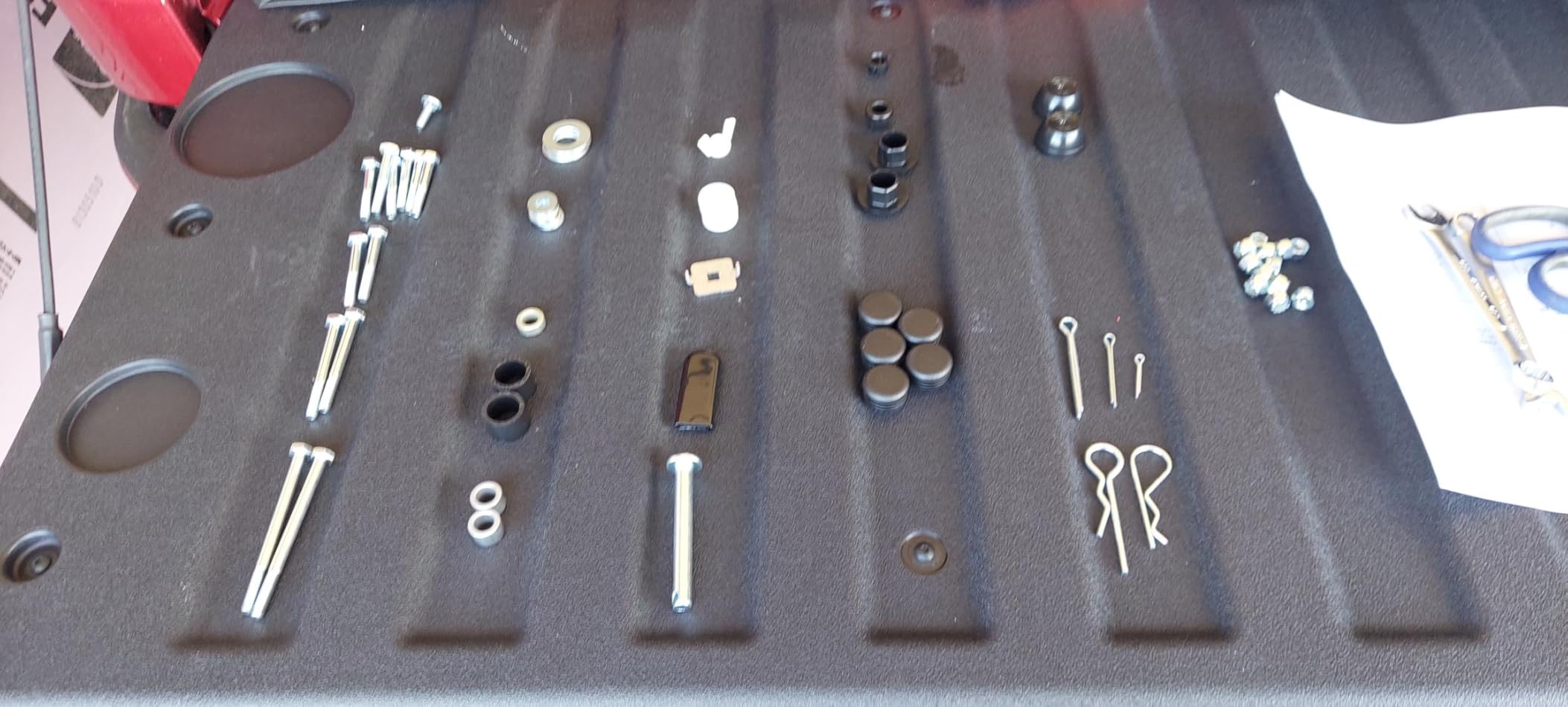
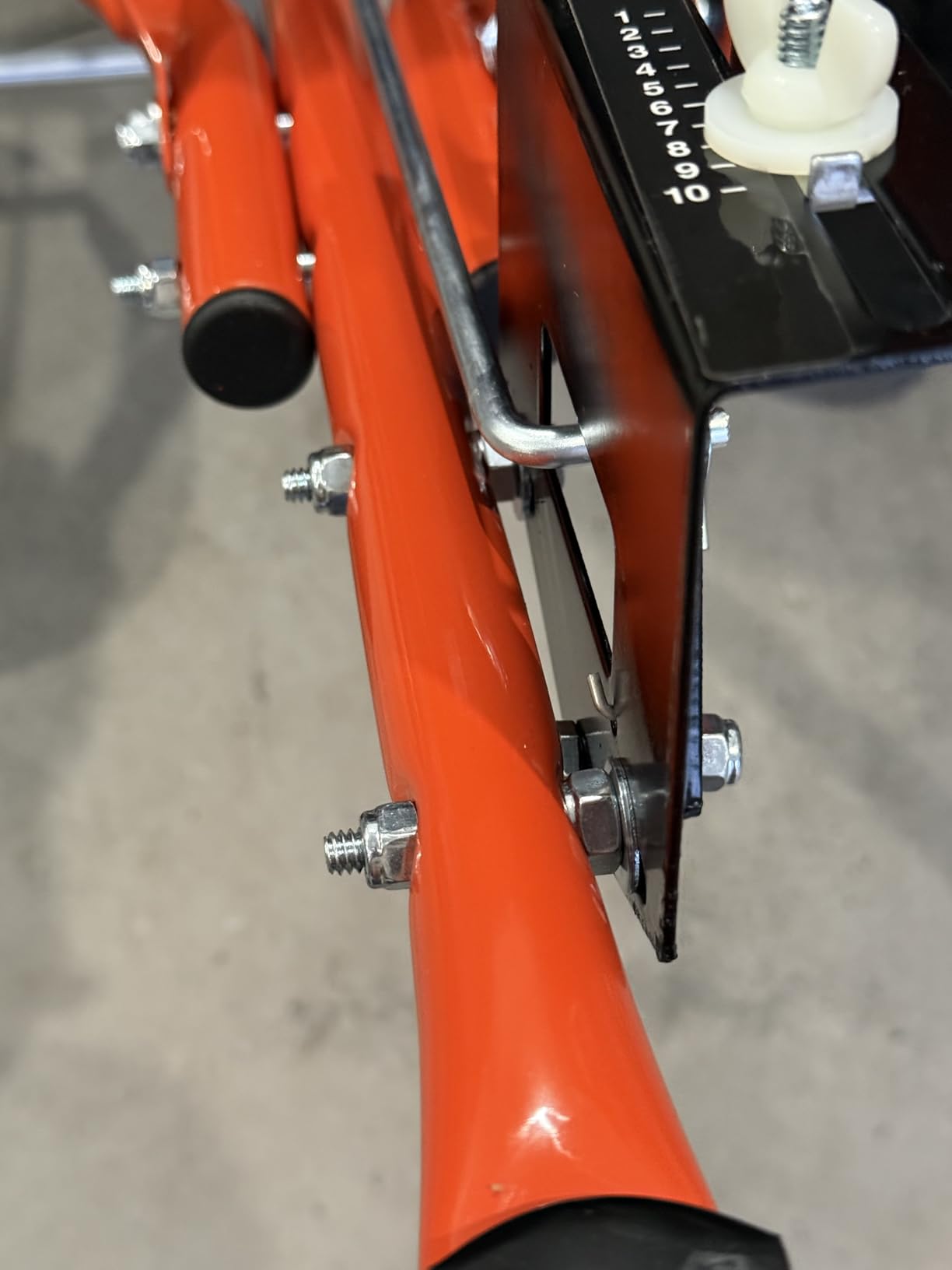
The build is the most robust in this roundup: 1 in steel tubing, an enclosed gear house, a poly hopper, a spreader plate, and 13 in by 4 in pneumatic tires. The enclosed gear house is a real advantage in salt, because it keeps the chain and bearings away from the brine that forms when moisture mixes with road salt residue.
It carries a 3 year limited warranty from the manufacturer, and the universal hitch design connects to most riding mowers and lawn tractors, including the common Craftsman and Husqvarna platforms.
Who This Is For
This is the pick for a rural drive, a long property entrance, or a small commercial lot where you are already spending time on a tractor each week. The 130 lb hopper covers up to 25,000 sq ft, and the wide pattern means a long gravel or asphalt drive is a handful of passes rather than a chore.
Owners report the pneumatic tires handle uneven ground well, which is the deciding factor on gravel driveways where small hard wheels would dig in and lift the spreader off level.
Where It Falls Short
The universal hitch requires a riding mower or a tractor. If you do not own one, this spreader is not an option, and the walk-behind models earlier in this list cover the same driveway work without a tow vehicle.
There are no side deflectors, so thrown material can come back at the operator, and the wide footprint takes real garage space to store. At 29.4 lb empty it also needs two hands to lift onto a hitch.
7. Buyers ATVS100 ATV Spreader – Best for ATV Riders
Buyers Products ATVS100 100 lb ATV Rear Rack Mount Broadcast Spreader
100 lb poly hopper
30 ft 12V broadcast
Manual feed-gate
Rain cover included
Pros
- Mounts to a standard ATV rear utility rack
- 100 lb rustproof polyethylene hopper
- 12V motor broadcasts up to 30 ft wide
- Manual feed-gate lets you tune flow for salt or seed
- Limited lifetime manufacturer warranty
Cons
- Needs an ATV with a rear rack and adequate load capacity
- Broadcast width is fixed so edge control is coarse
- Flow gate is adjusted at the hopper rather than from the seat
- No agitator so damp material can bridge
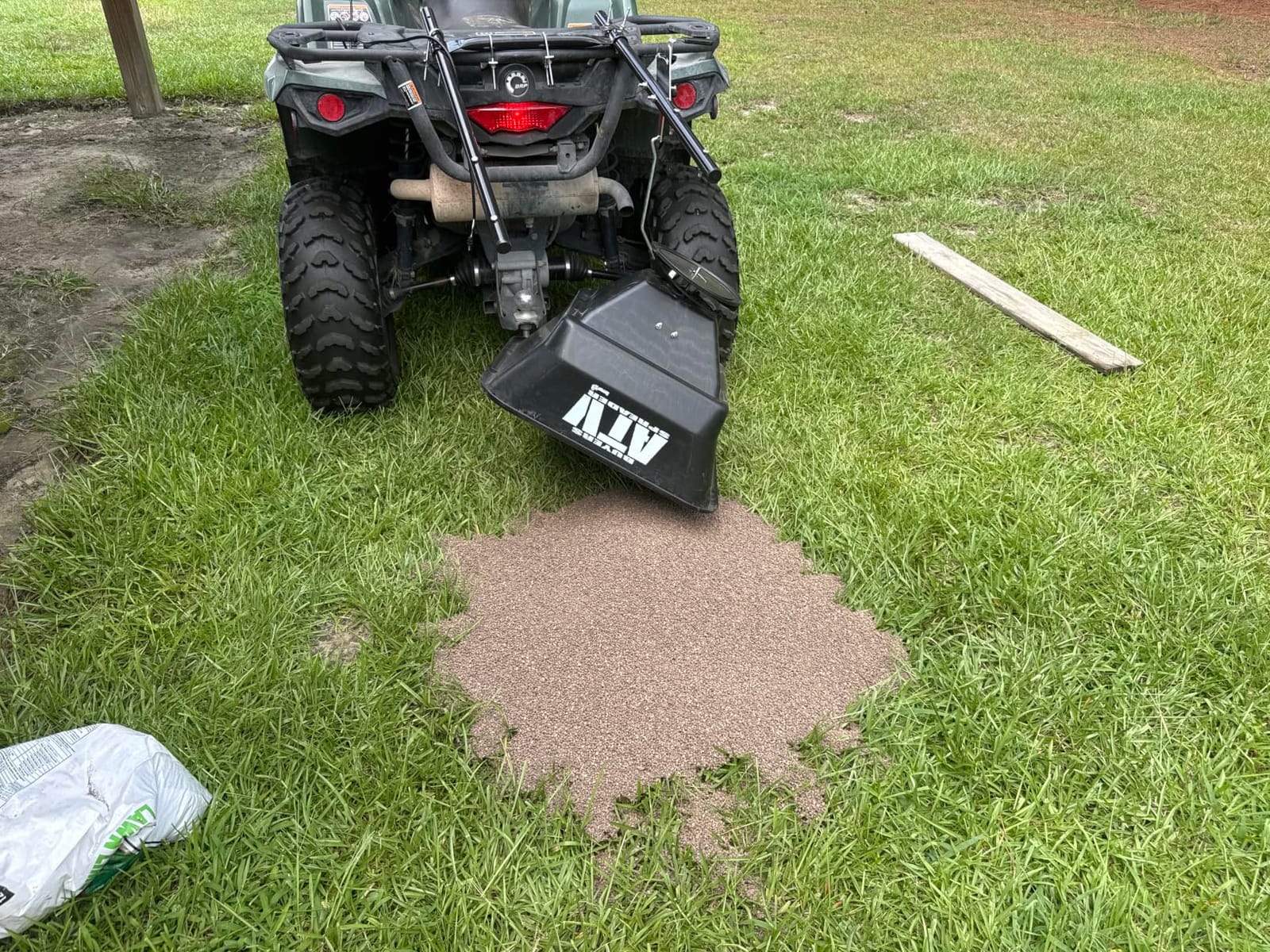
The Buyers ATVS100 is a seasonal workhorse for anyone who already rides an ATV with a rear utility rack. The 100 lb rustproof polyethylene hopper carries bagged rock salt, ice melt, seed, or animal feed, and the included rain cover keeps a load from getting wet if you are salting in a passing shower.
The 12V motor drives the broadcast out to 30 ft wide, which is by far the widest pattern of any walk-behind or hand-operated unit in this roundup. On a long drive that means a slow pass rather than a series of ones, and it is the main reason to choose a rack-mounted unit at all.
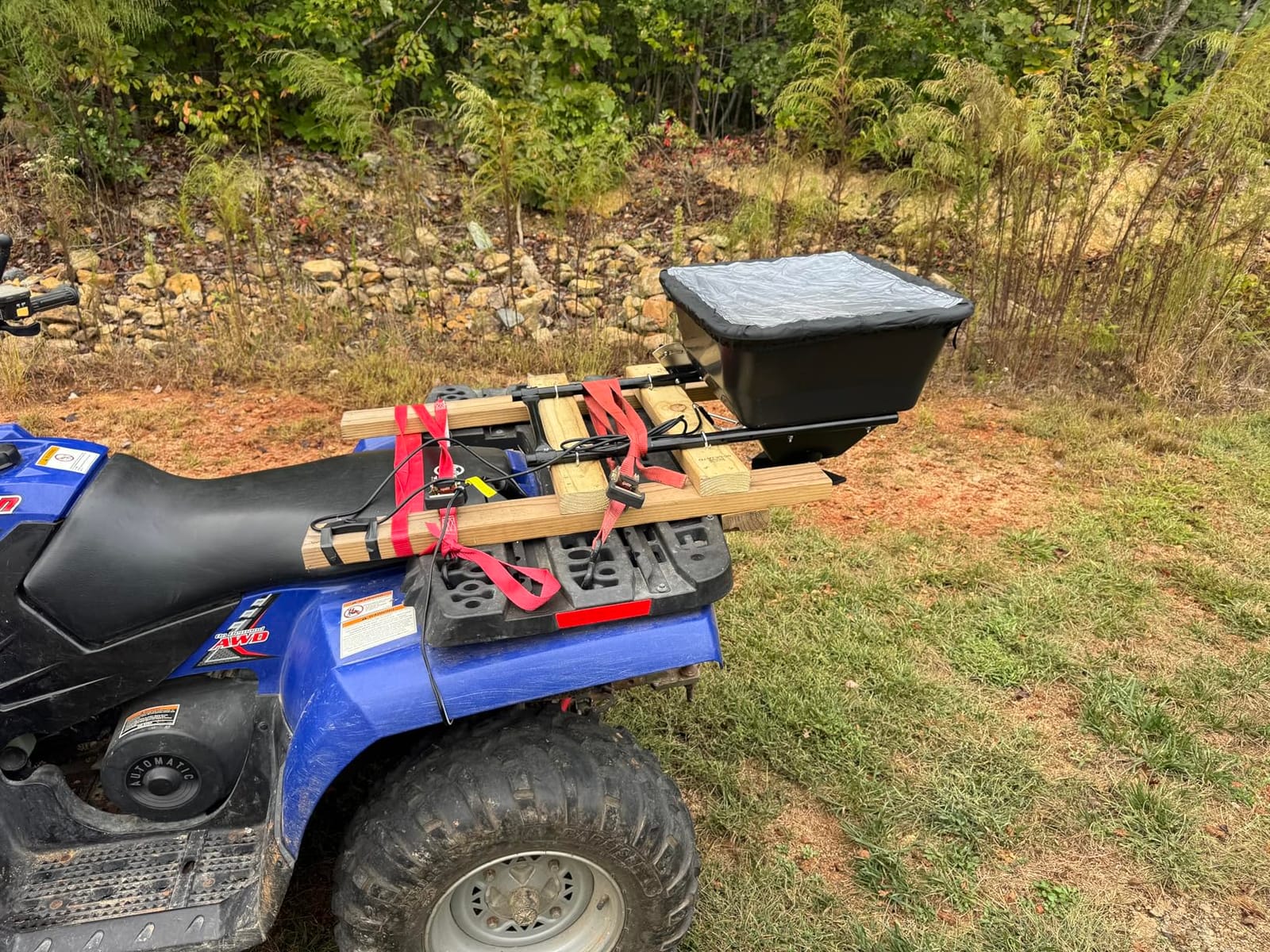
Buyers positions it as a do-everything seasonal attachment rather than a dedicated de-icer, and the owner reviews match that framing. People are pleased by the capacity, the rustproof hopper, the rain cover, and the speed of the powered broadcast across lawns, driveways, and small fields.
The limited lifetime warranty is the strongest warranty in this roundup, which matters more than usual given how the machine is treated. Salt residue is hard on gearboxes, and a manufacturer that stands behind the hopper and frame for the life of the product changes the ownership calculation.
Riding a Driveway at Speed
A 30 ft broadcast pattern is the right width for a straight driveway. You ride at a steady pace, the fixed pattern covers the full surface, and the ride height of an ATV keeps the spinner clear of any snow buildup that would stop a walk-behind.
The manual feed-gate regulator is the part you will adjust most. It sits at the hopper, so plan to stop, turn the regulator, and check the result before you commit to a full pass, especially when switching between seed and ice melt.
Where It Falls Short
There is no agitator in the hopper, and that is the main de-icing weakness. Damp or clumped material bridges over the outlet and stops flow, so store bags sealed and dry, and expect to break up a clog yourself if a bag has been open through a wet week.
Flow is set at the hopper rather than from the saddle, and the broadcast width is fixed, so edge control along a lawn or a walkway is coarse. Confirm your ATV has a rear utility rack and that its load rating supports 100 lb of salt before you order.
8. Buyers UTVS16 150 lb UTV Spreader – Best for Maximum Capacity
Buyers Products UTVS16 150 lb UTV ATV Receiver Mount Broadcast Spreader
150 lb / 15 gal hopper
2-inch receiver hitch
30 ft 12V spread
Salt shield
Pros
- Largest capacity in the group at 150 lb
- Salt shield keeps material out of the vehicle undercarriage
- Hopper lifts off the hitch frame for storage
- 8-1/2 ft wiring harness reaches the cab socket
- 12V motor covers up to 30 ft wide
Cons
- No agitator so damp salt stops flow
- Gate lever is hard to reach from a UTV cab
- Hopper can sag at full load and touch the spread plate
- 57.6 lb empty so it may need strapping
The UTVS16 holds 150 lb in a 15 gallon rust-proof poly hopper, which makes it the largest capacity spreader in this roundup. For a long rural drive, a small commercial lot, or a multi-property route, that is the difference between one load and four.
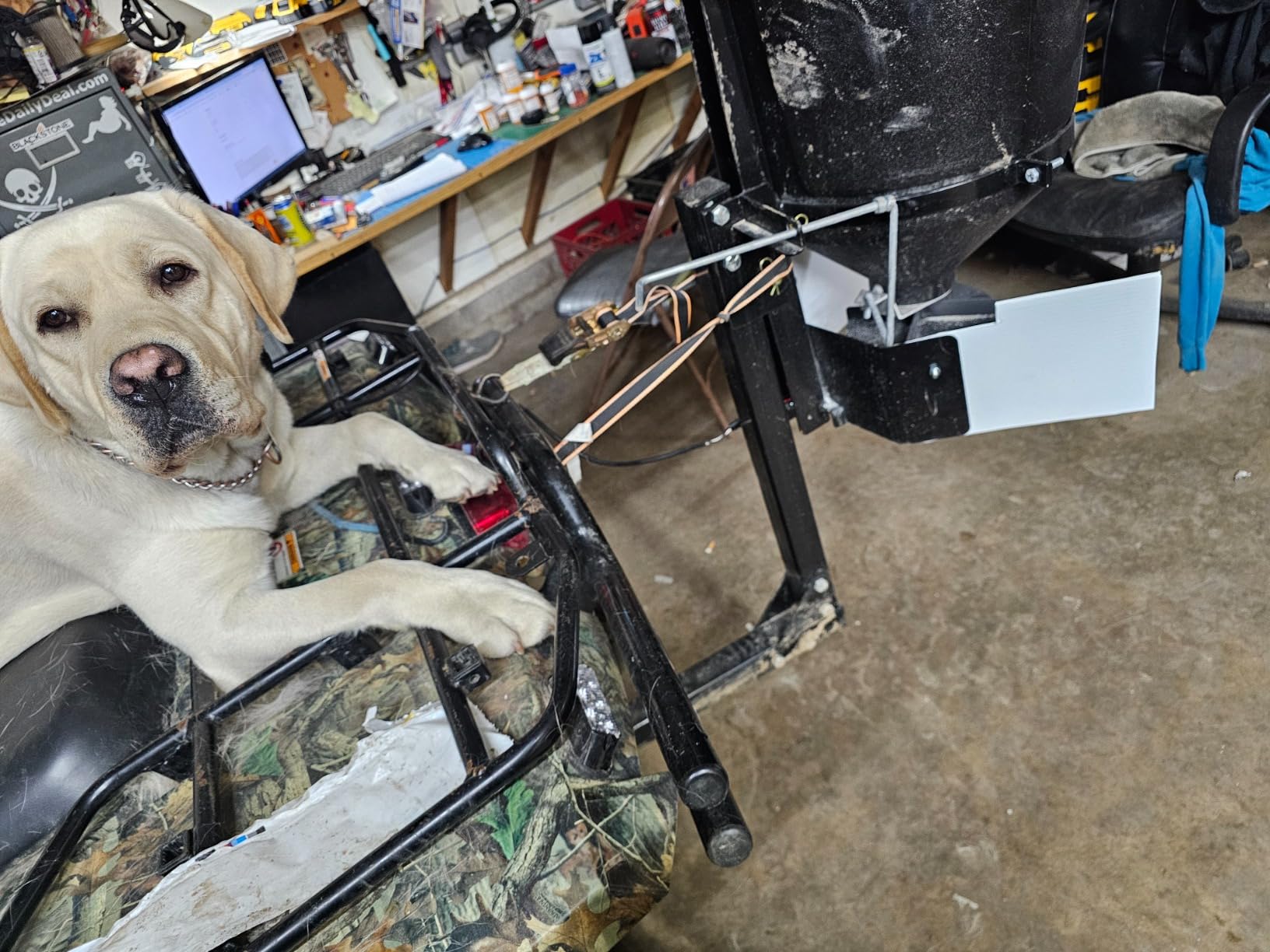
It mounts to a standard 2 in receiver hitch, and adjustable mounting holes make the fit straightforward on UTVs, ATVs, and some tractors. The 8-1/2 ft wiring harness with an on/off switch is long enough to run through a UTV cab door to a socket, which owners appreciate over short harnesses that force a trip to the vehicle.
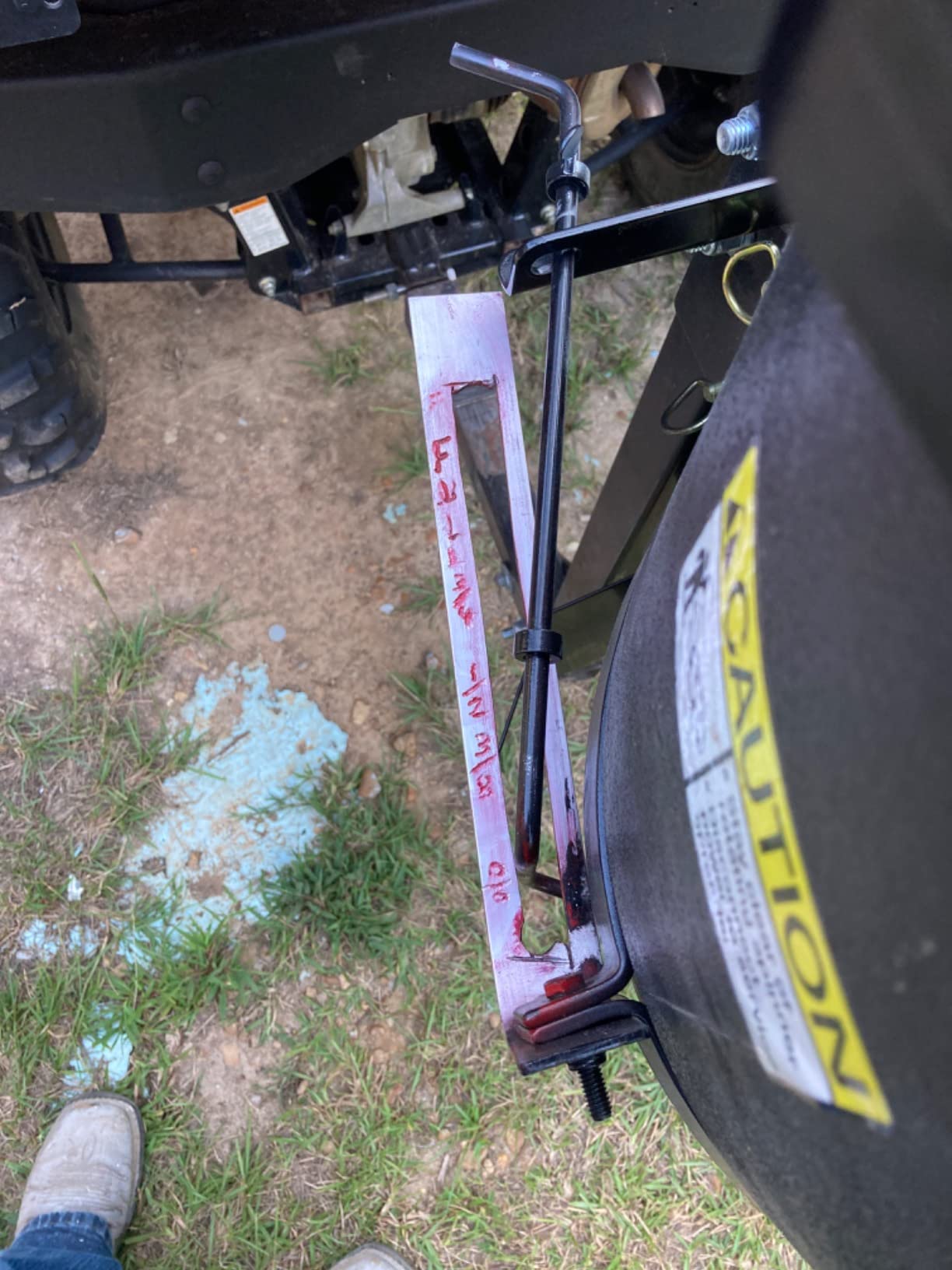
The salt shield keeps material from sifting down into the vehicle undercarriage, a real problem with gravity-fed tailgate units on the road. The hopper also lifts off the hitch frame for storage, so off-season it takes shelf space rather than floor space.
At 3.9 stars from 519 reviews, this is the lowest-rated pick here, and the complaints are about design rather than durability. Owners report large loads going down fast, with one describing spreading 250 lb of seed and 500 lb of fertilizer in an hour, which tells you the drive system works.
When the Extra Capacity Pays Off
Run the numbers on a 300 ft gravel drive of about 4,500 sq ft. At a normal application rate you are looking at several hundred pounds of material per pass, and a 100 lb hopper means repeated refills at the bagged salt pile. The 150 lb hopper roughly halves that.
Owners who use it this way also report the sealed 12V motor handles the sustained load without the flow dropping off, and the adjustable shut-off gate with a manual control rod gives output from fully closed to fully open for different materials and conditions.
Where It Falls Short
Three design issues come up repeatedly. There is no agitator, so clumped salt stops flow. The gate lever is difficult to reach from a UTV cab, and many owners extend or relocate it themselves. The hopper can also sag when fully loaded and contact the spinning plate, which is worth watching on the first few passes.
At 57.6 lb empty it is a genuinely heavy item that may need strapping to the vehicle, and the flow collars carry no markings, so settings are trial and error. It also carries a one year no-labor warranty, the shortest of the warranty terms in this roundup.
9. CHAPIN 8740A Hand Shaker – Best for Steps and Walkways
CHAPIN 8740A 64 oz All-Season Hand Shaker Spreader, Seed, Fertilizer & Salt
64 oz / 1.8 L poly bottle
Three lid openings
Large handle
11.2 oz
Pros
- Cheapest way to treat steps and small paths
- Three lid openings handle coarse salt through fine ice melt
- Stores with product inside and takes almost no space
- Works with gloves on
- Light at 11.2 oz with no assembly
Cons
- Hand shaking tires quickly on anything larger than steps
- No flow regulation between fully open and the largest hole
- Coarse clunky salt can stick in the largest opening
- Screw top is hard to twist off in winter gloves
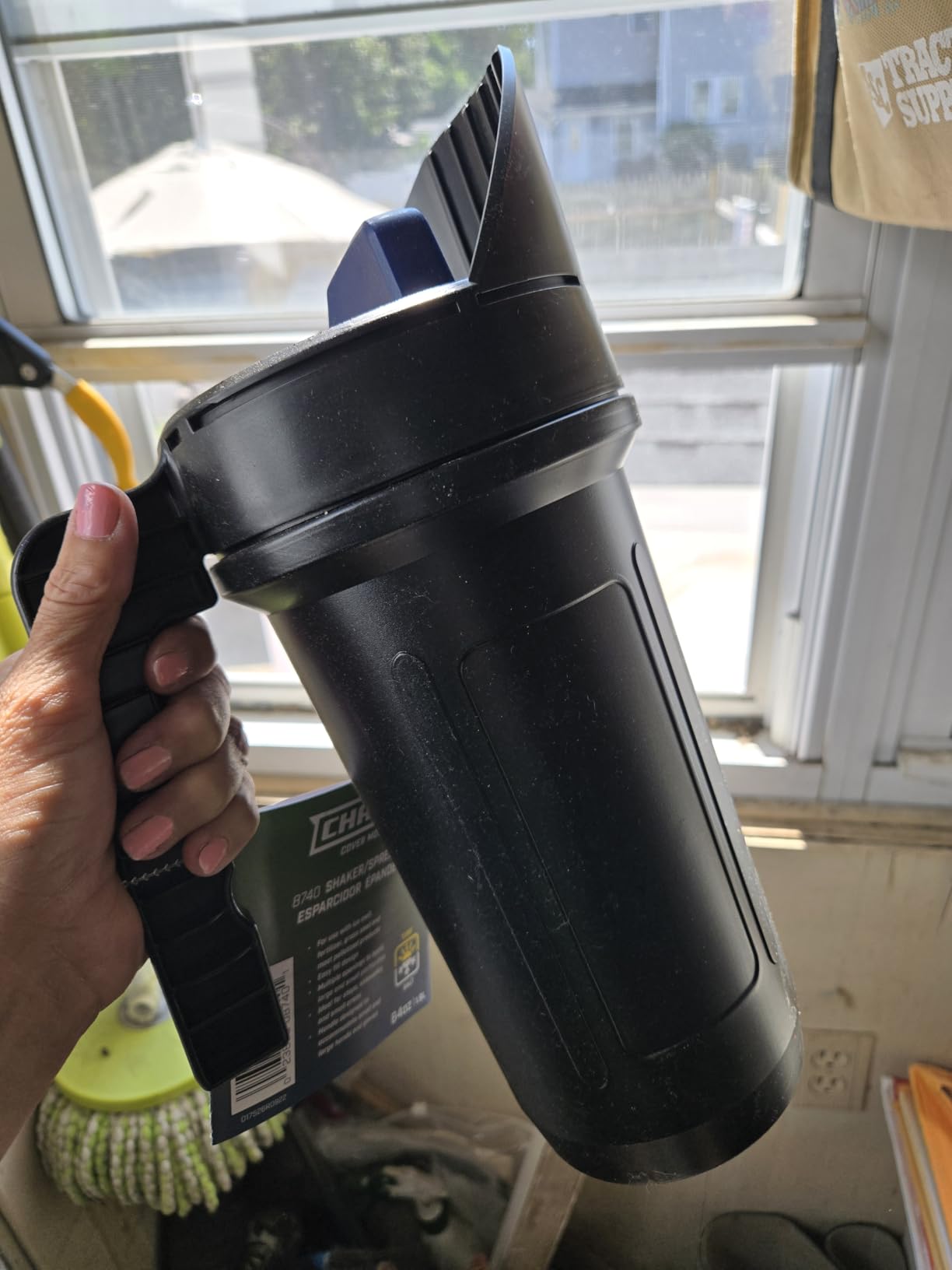
The CHAPIN 8740A is not a driveway spreader, and we would not recommend it as one. It is a 64 oz poly shaker bottle that sits in a closet and handles the front steps, the walkway to the door, and the last few feet of path where a full machine is silly to pull out.
What makes it work is the three openings in the lid. Twist the lid and you get a small hole, a large hole, or a wide opening, and each one is sized for a different particle type, from coarse rock salt through bagged ice melt to seed and sand.

Owners treat it as a supplement rather than a replacement for a broadcast spreader, and they rate it 4.5 stars from 1907 reviews for doing that job cleanly. The 1.8 L capacity is enough for a full treatment of a short path, and at 11.2 oz it is nothing to carry down a set of steps.
It also works year-round for grass seed and fertilizer in shaded corners and small garden areas, which makes it one of the few tools here that earns its space in the shed outside winter.
Why Hand Shakers Still Matter
There is a real gap between the driveway and the front door, and a walk-behind spreader is an awkward tool for it. A 64 oz shaker lets you treat a walkway, a landing, and a step edge in a couple of minutes without hauling a 35 lb machine out of the garage.
It also stores with product inside, which sounds unhygienic and is exactly why owners like it. The bottle is sitting there ready to go, rather than on a shelf needing a fill and a cleanup before every storm.
Where It Falls Short
Hand shaking is tiring and the flow is binary. There is nothing between fully closed and the largest opening, so you control output by how hard and how fast you shake, which is not a repeatable method on a windy day.
Coarse, clunky salt tends to stick in the largest opening, and several owners mention the screw top is difficult to twist off with winter gloves on. For a driveway under about 300 sq ft the Snow Joe below is a better fit, since it has a dial rather than fixed holes.
10. Snow Joe SJSPD1 Handheld Spreader – Best for Small Driveways
Snow Joe Salt Spreader Handheld – Ice Melt Spreader with 5 lb Capacity, Adjustable Dial Flow Control for Grass Seed, Fertilizer & More, SJSPD1
5 lb / 2.5 L hopper
Dial flow control
Lid doubles as a scoop
Ridged grip
Pros
- Dial flow control switches between coarse and fine openings
- Twist-and-lock lid doubles as a refill scoop
- 5 lb capacity covers a good stretch of driveway
- Compact at 1.48 lb and easy to store indoors
- Year-round for ice melt
- seed and fertilizer
Cons
- Shaking gets tiring and awkward over a long drive
- Flow is set by tilting the bottle more than by the dial
- Twist lid is hard on small or arthritic hands
- Needs more than one fill on a full driveway
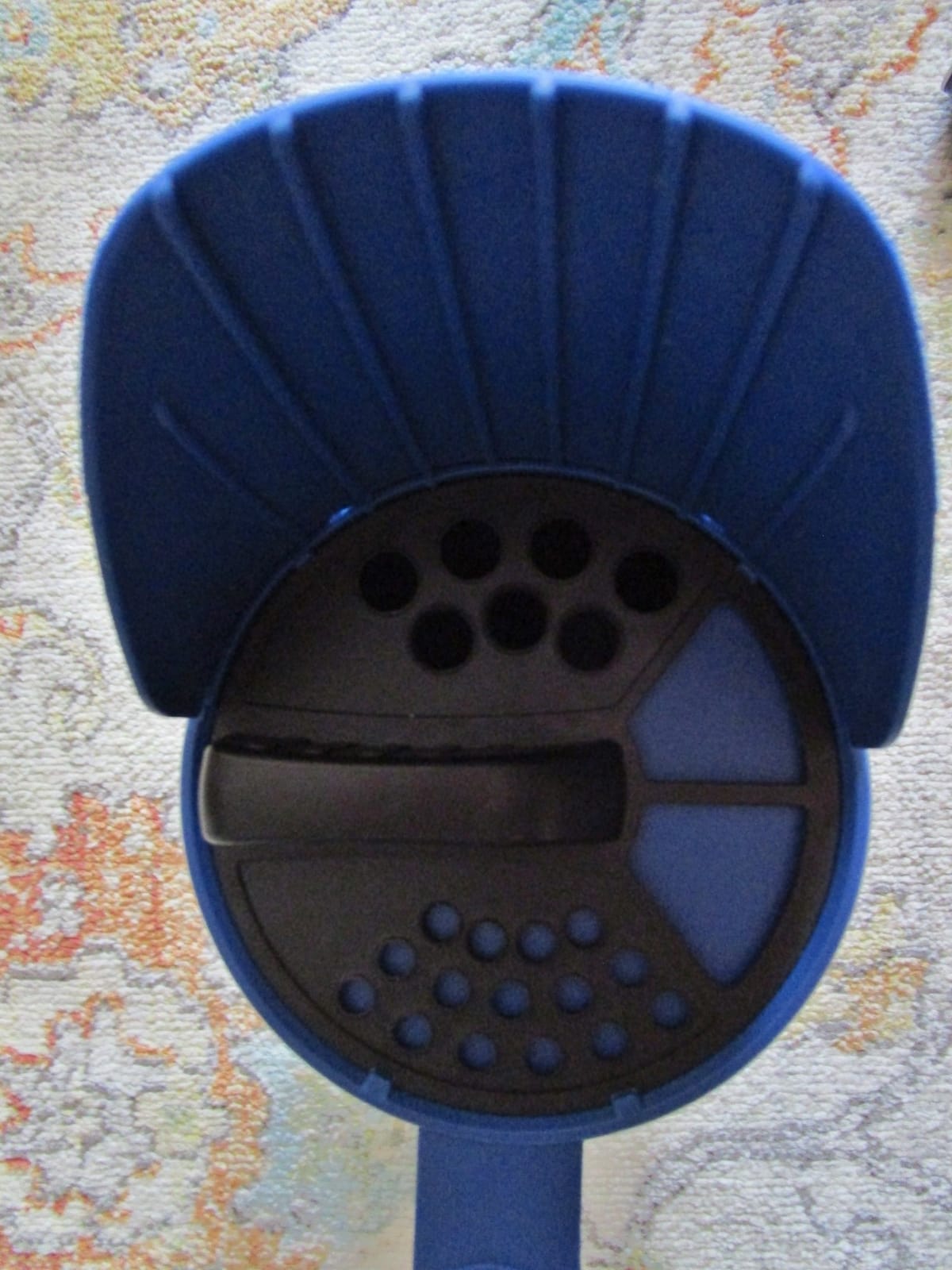
The Snow Joe SJSPD1 is the handheld we would rather own of the two, and the difference comes down to the dial. Instead of three fixed holes, the adjustable dial switches between coarse and fine openings, so you can set an output for rock salt and a different one for fine ice melt without swapping parts.
The 5 lb hopper holds 84.5 oz of material, which is a real upgrade on a small shaker bottle. On a short driveway or a parking pad, that is often the whole job in one fill, and you are not making trips back to the bag.
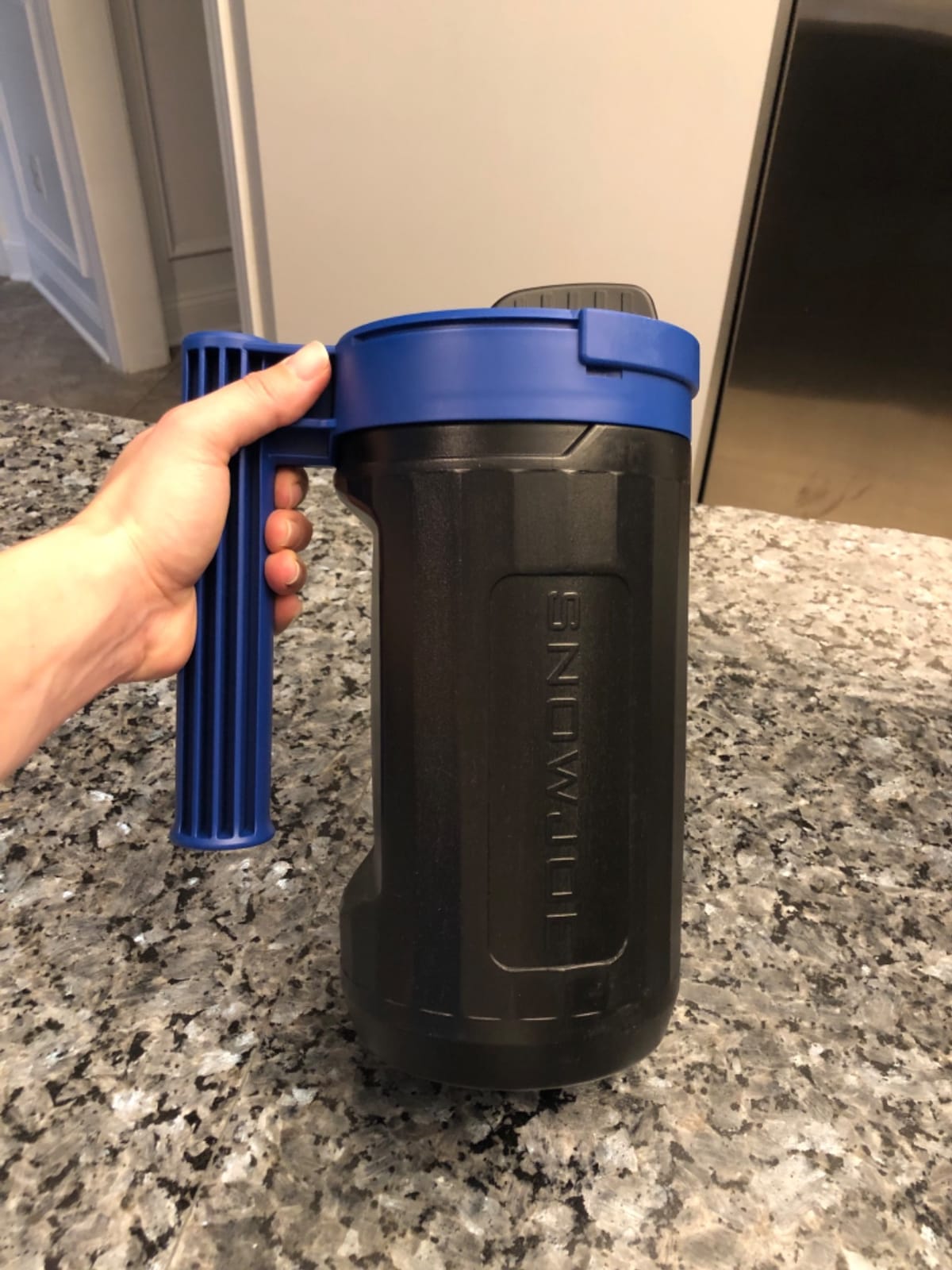
The twist-and-lock lid doubles as a filling scoop, and that is a genuinely good design decision in winter. Owners praise that it works with gloves on, which sounds trivial until you have tried to pour ice melt into a narrow opening at minus ten degrees.
At 1.48 lb and 7.6 by 5.3 by 13.75 in, it lives on a shelf between seasons rather than taking up garage floor. The ridged handle is sized for gloved hands, and owners rate it 4.5 stars from 1057 reviews as a compact, sturdy hand spreader.
Where a Handheld Actually Wins
If your paved area is a small driveway, a two-car parking pad, or a walkway, a handheld is the right tool and everything larger is overkill. There is nothing to store between seasons, nothing to assemble, and no gate to calibrate. You twist the lid, you shake, you are done.
It is also the answer for a homeowner with a back or mobility issue. A 5 lb bottle is manageable, and the SOLO 421S chest-mount unit is the natural step up when 5 lb stops being enough.
Where It Falls Short
The shaking motion is tiring and awkward over a long drive, and owners report needing two units to cover a 50 ft driveway. The flow is also governed as much by how you tilt the bottle as by the dial, so consistency takes some practice.
The single most repeated complaint is the twist-off top, which several reviewers with small hands or arthritis struggle to open, though opinions split on whether it loosens with use. The CHAPIN above has the same style of lid and a wider opening, so it is worth handling both in person if hand strength is a concern.
What Size Salt Spreader Do I Need for My Driveway
Measure first, buy second. Multiply the width of your driveway in feet by its length in feet, and you have the square footage that drives every other decision. A two-car driveway is typically 600 to 900 sq ft, a three-car driveway runs 1,000 to 1,500 sq ft, and a long rural drive can pass 4,000 sq ft before you reach a gate.
Next, pick an application rate. Most homeowners spread between 10 and 20 lb of material per 1,000 sq ft per pass, depending on how severe the storm is and what you are using. Rock salt melts quickly and can be applied lighter, while calcium chloride and magnesium chloride are more expensive and usually go on at the lower end of that range.
Then divide. A 900 sq ft driveway at 15 lb per 1,000 sq ft takes about 14 lb per pass, so a 20 lb hopper finishes in one load. The same driveway in a heavy storm at 20 lb per 1,000 sq ft takes 18 lb, which is still one load but leaves no margin. A 1,500 sq ft drive at that rate needs 30 lb, so a 20 lb chest-mount model means a mid-pass refill.
This is the math no competitor publishes, and it is the question homeowners ask on every winter forum. Match the hopper to the driveway plus one storm of margin, and you will never walk back to the bag mid-pass.
Driveway size sets the hopper. Anything under 400 sq ft, such as a parking pad or a short drive, takes about 6 lb per pass, so a 5 lb handheld with a top-up works. Between 400 and 900 sq ft, a standard two-car drive, you are looking at 6 to 14 lb per pass, which is the sweet spot for a 20 lb chest-mount unit or a 50 to 80 lb walk-behind.
Past 900 sq ft, capacity starts to decide your day. A three-car drive of 900 to 1,500 sq ft needs 14 to 23 lb per pass, so a 50 lb walk-behind covers it in one load, though an 80 to 100 lb hopper gives you margin for a heavier storm. A long drive or small lot from 1,500 to 2,500 sq ft needs 23 to 38 lb per pass, and that is where a 100 lb walk-behind or a 130 lb tow-behind starts to pay for itself in saved trips.
Once you clear 2,500 sq ft, which is rural drive territory or more than one property, you are loading 38 lb and up per pass. At that point the tow-behind, ATV rack, and 150 lb UTV-mounted spreaders in this roundup are the only realistic options, because hand-carrying enough material to a drive that size stops being practical well before it stops being annoying.
Add roughly 20 percent to any of these figures if your driveway is shaded, sits under trees, or takes a lot of shade through the day, because those surfaces freeze last and need the heavier rate. Wide, high-volume routes and small commercial lots usually work out cheaper per foot with a tow-behind or UTV-mounted hopper, which is why the tow-behind models in this roundup are worth a look even for a single driveway.
Broadcast vs Drop Spreaders for Driveway Salt
A broadcast spreader throws material in a wide arc, which covers a lot of ground fast. A drop spreader releases it in a narrow line directly in front of the machine, which is slower but puts the material exactly where you point it with almost no overspray.
For driveway salt, broadcast wins on speed and capacity. A 10 to 12 ft throw means two or three passes down a two-car drive, and the wide pattern makes the difference between treating ice in ten minutes and treating it in forty. Drop spreaders are built for seed and fertilizer precision near turf, and that precision is not worth the extra passes on a job where you are throwing rock salt at a paved surface.
The one place a drop spreader earns its place is the edge. If your driveway has a planting bed, a lawn strip, or a concrete walkway you must keep clear, a drop spreader will not put salt where you do not want it. If that is your situation, look for a broadcast unit with side and rear baffles, such as the VEVOR TC2136 in this roundup, and you get the speed without the overspray.
Our broadcast spreader reviews and drop spreader reviews go deeper on the mechanics of each pattern if you want to compare them outside of a de-icing context.
Rock Salt, Calcium Chloride or Magnesium Chloride: What Your Spreader Can Take
Most spreaders in this roundup handle all of it, but the material changes how you run the machine. Rock salt, also called halite or sodium chloride, is coarse and free-flowing when dry. It is the cheapest option, it works fast on plain ice, and it is the material most likely to bridge if the bag has been open and damp.
Calcium chloride pellets are denser and slower to dissolve, which makes them useful on a mild day and on surfaces where you want less runoff. Magnesium chloride is the least damaging to concrete and the most comfortable underfoot, but it is hygroscopic, so it pulls moisture out of the air and clumps faster than the others. Both need a sealed, dry hopper between storms.
Sand-salt blends are the hardest case. The sand fraction carries moisture with it, and a sand-salt mix will bridge inside a hopper that handles dry rock salt without complaint. Owners report this as the single most common clogging cause, and it is why the grate-equipped models in this roundup exist.
The practical rule is simple. Keep bags sealed and off a damp floor, empty the hopper after every use, and if a blend will not flow, widen the gate before you reach for a screwdriver. More on material handling and the equipment side in our manure spreader guide, which covers the same hopper and agitator engineering in a different application.
How to Calibrate a Salt Spreader Before a Storm
Gate calibration is the step most owners skip and most regret, because an uncalibrated spreader either lays a stripe that does not melt ice or a layer heavy enough to etch concrete and load your storm drain with chloride.
1. Sweep the driveway. Removing existing salt and grit gives you a clean read on output and stops debris from masking a clog.
2. Set the gate to the lowest number on the manufacturer’s chart for your material, then open it fully and close it fully to make sure the lever travels freely.
3. Run a 10 by 10 ft test patch on a dry driveway. Push at the same speed you use for the rest of the job, because several models throw wider the faster you go.
4. Weigh the material collected. Divide the weight by 100 to get pounds per 1,000 sq ft, and adjust the gate up or down until you hit the rate you want.
5. Mark the setting. Write it on tape and stick it on the handle, along with a second setting for a heavier storm, so you are not guessing in the dark at 6 in the morning.
6. Re-test after switching materials. Rock salt and magnesium chloride flow at different rates, and a setting that is right for one is wrong for the other.
Common Salt Spreader Problems and How to Fix Them
Bridging and clogging come first, because they are the complaint that appears most often across owner reviews. Damp material forms a crust across the hopper outlet and stops flow entirely. Break it up with a wooden stick rather than metal, check that the gate is fully open before you diagnose a clog, and fix the cause by storing bags sealed and elevated off concrete.
Material bridging in an open hopper is a different problem from a clogged gate. Models with an agitator, a grate, or a rotating bar keep the top of the pile moving, which is why the VEVOR TC2034B and the walk-behind Agri-Fab units behave better on coarse salt than a plain funnel-shaped hopper.
Gate drift is the second most common issue. Owners on several brands report re-tuning the control before every storm because the rod creeps as the machine vibrates. Tighten the rod clamp, and if it keeps moving, a rubber band or a hose clamp at the pivot is a repair most people can do in a garage with basic tools.
Rust at the foot or on exposed frame tubing is the third. A long-term Agri-Fab owner reported hopper cracking after years of shed storage, and other owners mention paint scratching off and rust forming at the base. Wipe the machine down after every use, touch up chips with exterior paint, and store it dry rather than out in the weather.
Winterizing is a short job. Wash the machine down, let it dry completely, grease the gear housings where the manufacturer allows it, clear the gate, and store the hopper open. Owners of truck and tailgate-mounted units who wash down after each use report many seasons of service with only minor bearing and spinner maintenance, and that habit is the difference between a ten-season machine and a three-season one.
Finally, salt tracked indoors is a problem owners raise repeatedly. It scratches flooring, corrodes vehicle interiors, and damages the underside of a garage door. Sweep the apron before you bring vehicles in, and put a mat down at the threshold for the first few days after a salting pass.
Chloride Runoff, Concrete and Pets: Salting Without the Damage
Salt does not disappear when ice melts. The chloride load runs off your driveway into the storm drain, and eventually into local waterways, which is a growing environmental concern and one of the main reasons to calibrate carefully rather than spread generously.
Over-application is what causes the damage people notice. A heavy layer of salt on concrete etches the surface, and the same layer tracked indoors damages flooring and vehicle interiors. Using the lightest rate that still melts the ice, rather than the heaviest rate, is the single most effective thing you can do. Pre-treating a driveway before a storm with a light coat is also more efficient than repeated heavy passes afterward.
Surface type matters too. Concrete is the most vulnerable to etching, asphalt tolerates salt better, and pavers can develop efflorescence as moisture moves through the joints. Calcium chloride is harder on concrete than magnesium chloride, and magnesium chloride is the gentlest of the three if you have a surface that has been damaged before.
Pets and plants are the reason many homeowners ask about alternative products. Magnesium chloride is far less toxic to paw pads than rock salt, though no deicer is entirely safe if a dog eats it off a sidewalk. Keeping the broadcast narrow with baffles, avoiding the grass strip along your driveway, and rinsing paws after a walk are all cheaper than replacing a dog or a planting bed.
For long driveways where you already own a tractor, a tow-behind machine is worth a look for the same reason. Fewer passes with a wide, even pattern means less material per square foot, and our tow-behind broadcast spreader reviews cover the fitment details.
Frequently Asked Questions
What is the best salt spreader for a driveway?
For most suburban driveways between 400 and 1,500 square feet, the best salt spreaders are a walk-behind broadcast model with an 80 to 100 lb hopper, a poly or stainless body, and an adjustable gate. The SOLO 421S chest-mount unit wins for driveways under about 900 sq ft because it leaves both hands free, while an 80 to 100 lb walk-behind covers a three-car drive in a single load.
What size salt spreader do I need?
Size it by driveway square footage and application rate. Measure width by length, then use roughly 15 lb of material per 1,000 sq ft per pass. A 900 sq ft two-car drive needs about 14 lb, a 1,500 sq ft three-car drive needs about 23 lb, and a 2,500 sq ft rural drive needs about 38 lb. Choose a hopper that covers the whole driveway in one load with 20 percent left over.
Which is better, a broadcast or drop spreader?
For driveway salt, a broadcast spreader is better. It throws material in a wide arc and covers a two-car drive in two or three passes instead of six. A drop spreader is more precise and keeps salt off adjacent turf, but that precision is not worth the extra time on a de-icing job. If overspray is a concern, choose a broadcast model with side and rear baffles instead of switching to a drop spreader.
Are salt spreaders worth it?
For most homeowners, yes. Salt spreaders are worth it if you salt more than a couple of times a winter, because a calibrated machine lays a thin even coat that melts ice where a bucket and scoop leaves a heavy patch that etches concrete. The value comes mostly from control of the application rate, and it grows with driveway size, since a bigger machine cuts both the bags you buy and the time you spend spreading.
What are common salt spreader problems?
The most common salt spreader problems are bridging and clogging from damp material, gate settings that drift out of calibration, rust on exposed frame tubing, and material flying back at the operator when there is no side deflector. Fix clogging by keeping bags sealed and dry and breaking crusts with a wooden stick, fix gate drift by tightening the rod clamp, and prevent rust by washing and drying the machine after every use.
Final Verdict: Which Salt Spreader Fits Your Driveway
For most people reading this, the SOLO 421S chest-mount spreader is the right starting point. It carries the highest rating in the group, it treats a two-car driveway in one load, and it leaves both hands free. If your driveway is smaller than about 500 sq ft, the Snow Joe SJSPD1 does the same job with less weight and a flow dial.
For a three-car drive or anything past 1,000 sq ft, the VEVOR TC2136 with its side baffles is the most balanced walk-behind, and the Agri-Fab 45-0462 is the better answer when the drive is long enough that pushing is the main complaint. If you own a tractor, the tow-behind Agri-Fab 45-0463 does the same work without the walking.
The rest of the roundup covers specific situations: the Buyers ATVS100 and UTVS16 for riders who want to cover a big property from a seat, the CHAPIN 8740A for steps and walkways, and the Scotts EdgeGuard DLX for anyone who wants a pre-calibrated spreader that keeps granules off the landscaping and works year-round for seed and fertilizer.
Whichever one you choose, calibrate the gate before the first storm, keep bags sealed and dry, wash the machine down after every pass, and use the lightest rate that still melts the ice. That last habit does more for your concrete, your pets, and your storm drain than any single feature on any of these ten. Check the current details for any of them below, and get set up before the first freeze arrives in 2026.