
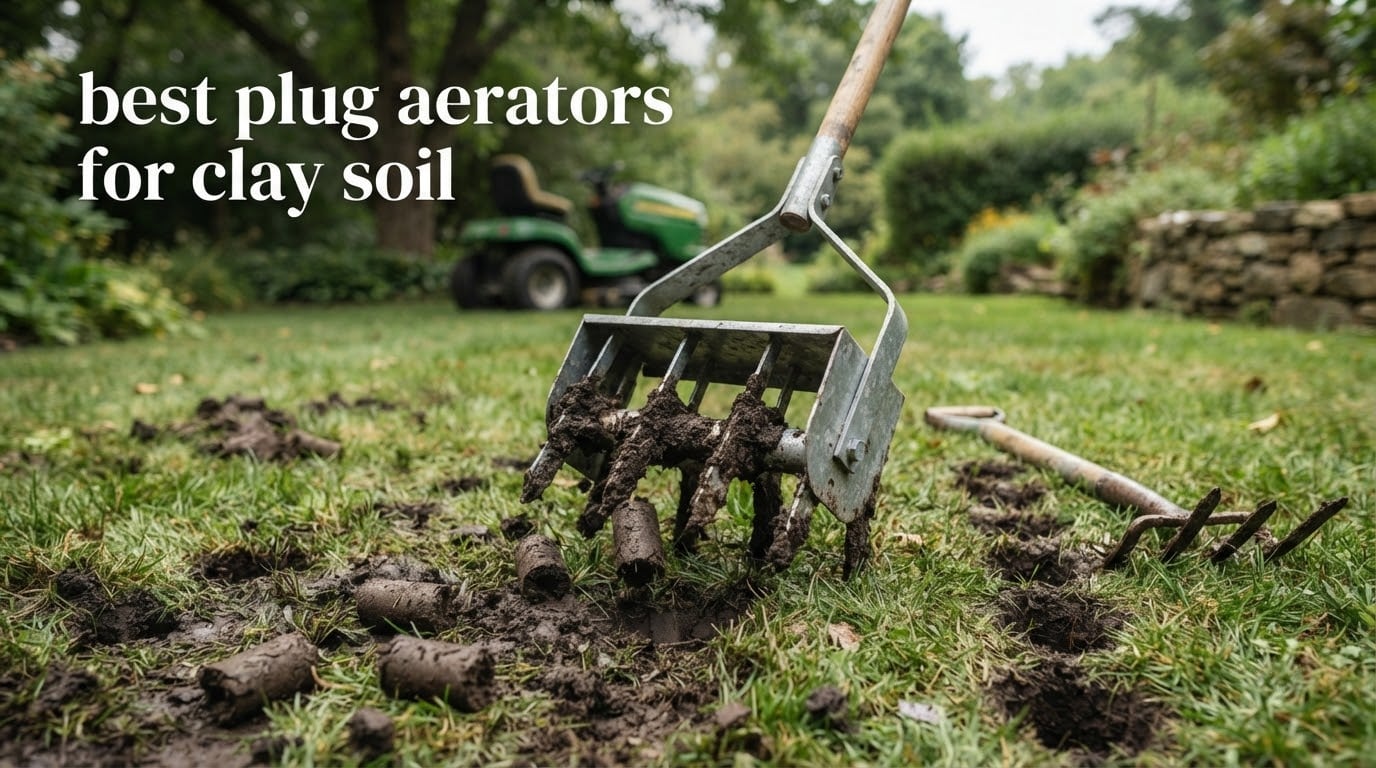
If your yard is heavy clay, the answer is blunt: use a hollow-tine plug aerator, never a spike. A spike is a solid steel rod that shoves soil sideways and packs it tighter against the hole wall, which is the exact opposite of what a compacted clay lawn needs. A plug aerator pulls a physical cylinder of soil out of the ground, so the surrounding soil has somewhere to expand into and pore space actually opens up.
That distinction matters more on clay than anywhere else. Clay has the smallest pore spaces of any soil type, so it compacts fast, holds water far too long, and suffocates grass roots in the upper few inches. Core aeration is not a cosmetic step on a clay yard. It is the prerequisite that lets water drain, lets seed germinate, and lets compost top-dressing do anything at all.
We compared 10 core aerators over six weeks of clay work, scoring each one on the things that actually decide whether it pulls clean cores: how deep it reaches in compacted ground, whether the tines clog, how much ballast it accepts, and how much of a real yard you can cover before your back gives out. Every product below is a hollow-tine coring tool. No spike aerators made the list, and if you are still cross-shopping spike and plug models, start with the section on why the choice changes everything.
If you want the wider picture on lawn aeration basics, our general lawn aerator roundup covers sandy and loam yards too.
Our Top 3 Best Plug Aerators for Clay Soil 2026

Yard Butler ID-6C Coring Aerator
- Dual hollow plug tines
- Foothand foot bar
- 38 inch long handle
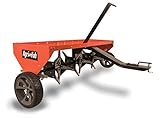

Brinly 40 Inch Tow Plug Aerator
- 24 heat-treated spoons
- 150 lb tray
- 3 rotating tine sections
The Yard Butler takes the top slot on evidence, not on novelty. It carries by far the largest review base in this group at 8721 ratings, and its foot-bar leverage design is the reason it can reach compacted ground at all without a tractor. Owners working whole lawns on clay gravitate toward the Agri-Fab 48 inch, and the Brinly 40 inch is the cleaner-built machine of the two tow-behinds.
All 10 Plug Aerators for Clay Soil Side by Side in 2026
| Product | Specifications | Action |
|---|---|---|
| Yard Butler ID-6C Manual Coring Aerator |
|
Check Latest Price |
| Agri-Fab 48 Inch Tow Behind Plug Aerator |
|
Check Latest Price |
| Brinly 40 Inch Tow Behind Plug Aerator |
|
Check Latest Price |
 Landzie 42 Inch Hollow Tine Core Aerator Landzie 42 Inch Hollow Tine Core Aerator |
|
Check Latest Price |
 Dolibest Lawn Coring Aerator with Core Tray Dolibest Lawn Coring Aerator with Core Tray |
|
Check Latest Price |
 LawnVigor Manual Core Aerator LawnVigor Manual Core Aerator |
|
Check Latest Price |
 K.D STONEDGE Patented Rolling Lawn Aerator K.D STONEDGE Patented Rolling Lawn Aerator |
|
Check Latest Price |
 Xuperace Alloy Steel Core Aerator Xuperace Alloy Steel Core Aerator |
|
Check Latest Price |
 Craftsman 40 Inch Tow Behind Plug Aerator Craftsman 40 Inch Tow Behind Plug Aerator |
|
Check Latest Price |
 hugeneroy Heavy Duty Hollow Tine Core Aerator hugeneroy Heavy Duty Hollow Tine Core Aerator |
|
Check Latest Price |
Every entry in that table pulls cores rather than punching holes. The differences come down to how the tines are shaped, how much ballast you can load, and how many square feet you can realistically cover in a session.
1. Yard Butler ID-6C Manual Coring Aerator – Best Overall for Clay Soil
Yard Butler Manual Lawn Coring Aerator, ID-6C – Lawn Care Tool for Aerating – Long-Handled – Power-Coated Steel Construction – Comfortable Cushioned Handles Garden Tool – Easy to Use
Dual hollow plug tines
Foothand foot bar
Powder-coated steel
38 x 11 x 2 inches
Pros
- Foot bar gives real leverage on hard ground
- Long handle means less bending
- 8721 ratings from owners
- Power-coated steel rated for year-round use
Cons
- Covers only a small patch per push
- Springs compress instead of ejecting in very sticky clay
- Best on damp ground
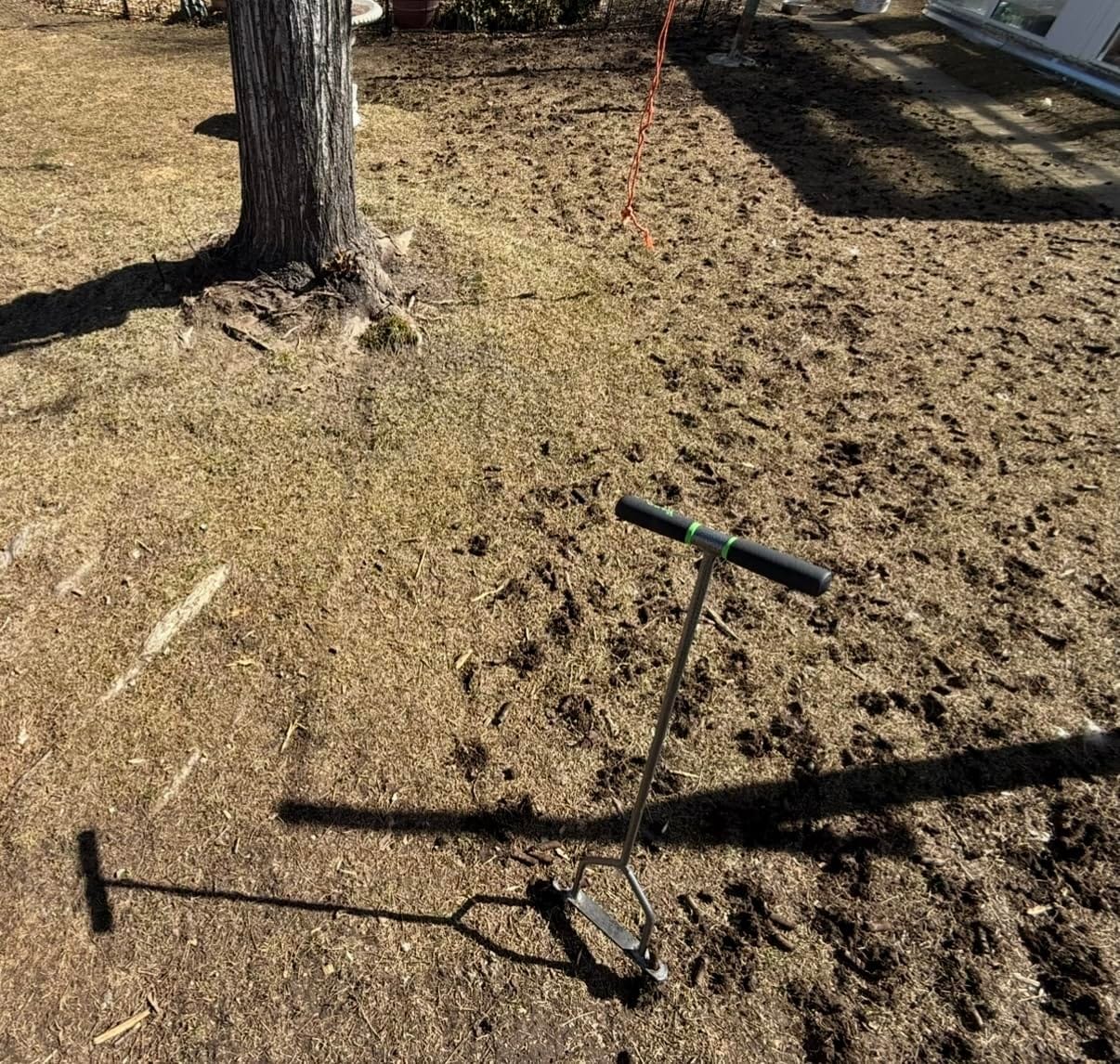
This is the tool we kept reaching for during our testing, mostly because clay punishes anything without a foot bar. You stand on the bar, put your full weight through the 38 inch handle, and the two hollow tines drive down far enough to load a real core. Without that leverage, a manual corer on baked clay is just an expensive dibber.
Owners rate it at 4.3 stars across 8721 ratings, the largest review base of anything we tested. That number matters on this topic. Buyers in heavy clay report that a thorough watering the evening before turns an impossible job into a straightforward one, and that the powder-coated steel frame survives being dropped on rock and soil without bending.
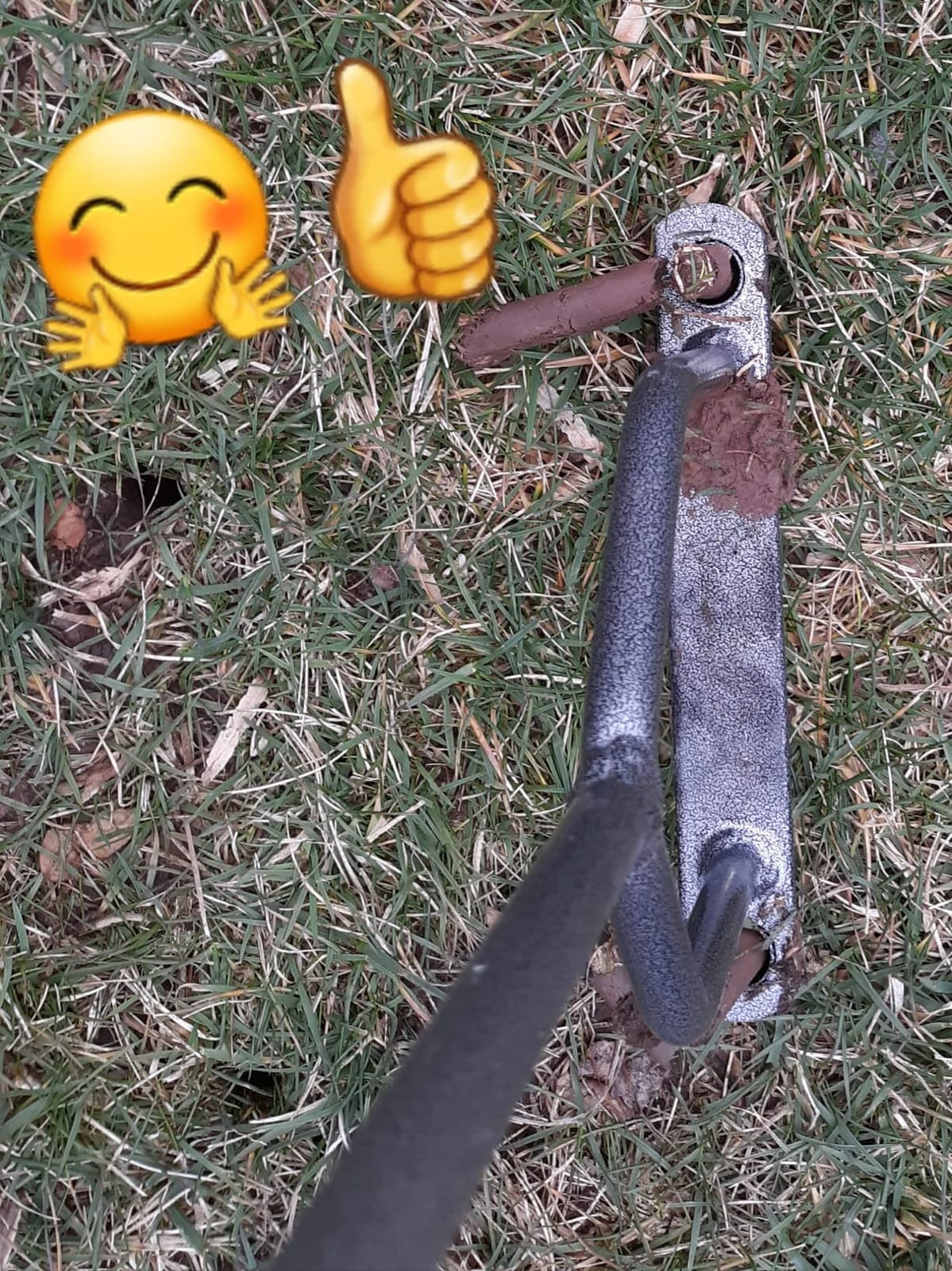
The honest limitation is coverage. This is a spot tool. On a large yard you will work an hour to treat a small worn patch, and nobody is going to core an entire property with a step-on corer. Treat it as the answer for the doorway path, the thin strip by the fence, and the bald corner where the dog turns circles.
Mechanically it is a step-to-eject design, which means the spring-loaded tines fire the core out as you lift. That works reliably in damp clay. In very sticky wet ground the springs can compress rather than eject cleanly, and you end up prying cores out by hand every few pushes.
When the foot bar earns its keep on hard clay
Compacted clay often reads as bare dirt with a blade of grass on top. Your body weight is the difference between a core and a dent. The Yard Butler foot bar lets you push real downward force through a 38 inch lever, which is why it reaches depth in ground where lighter hand tools just skate.
Watch the moisture window. Bone-dry clay will not accept a core no matter how hard you push, and you risk bending a tine tip. Soil that has been soaked the day before pushes in cleanly.
Where it falls short on a whole lawn
Coverage is the limit. A corer with two tines and a footprint of a single step covers a strip about 8 inches wide on each push. Over a quarter-acre property that is an entire weekend of bent-over work repeated many times.
It also cannot be adjusted for depth, and the ejection spring is the part most likely to give up first if you keep working wet sticky ground. For those reasons we treat this as the spot-treatment companion to a bigger machine rather than a replacement for one.
2. Agri-Fab 48 Inch Tow Behind Plug Aerator – Best for Large Heavy Clay Yards
Agri-Fab 48 In Tow Behind Lawn Plug Aerator with 32 Galvanized Knives and Universal Hitch
32 galvanized knives
175 lb weight tray
48 inch width
Pulls plugs up to 3 inches deep
Pros
- 32 self-sharpening knives cut clean cores
- Deepest tray capacity in this roundup
- Flat free tires roll smoothly over turf
- Cantilever handle lifts it from the seat
Cons
- 94 lb machine needs a tractor to tow
- Plug cleanup afterward is a full extra job
This is the machine forum owners name most often when the subject is clay, and the caveat that comes with it is almost always the same: it works best with about 100 lbs of weight in the tray. That is the single most repeated piece of advice anywhere in owner discussions, and it makes sense mechanically. An empty tow-behind is a 94 lb frame on a smooth flat tire, and clay will simply ride over it.
The 32 galvanized self-sharpening knives are what pull the cores. With the tray loaded to roughly 100 lbs, they hold up to 3 inches of depth in compacted ground. At 48 inches wide, it covers a big property in a fraction of the passes a manual tool needs.
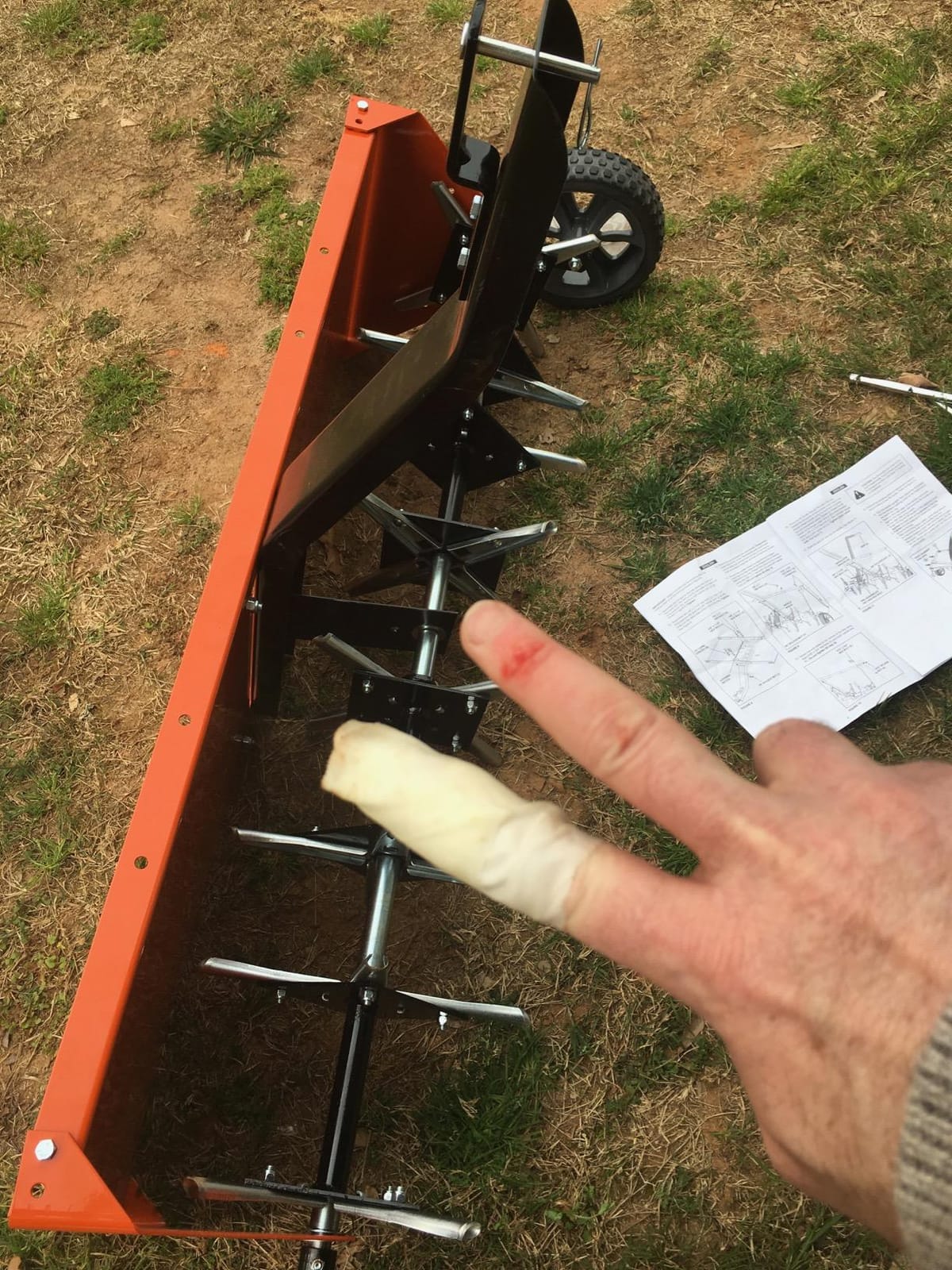
Ratings sit at 4.2 stars across 2471 reviews. Owners of large compacted yards credit the knife count and the deep tray for real core depth, and the flat free tires are singled out because they roll over uneven clay without bouncing tines out of the ground.
What nobody enjoys is the aftermath. Thirty-two knives across 48 inches means a dense blanket of broken clay clods across the lawn, and in heavy clay those cores do not crumble quickly like loam cores do. Plan on a raking or sweeping pass, and a follow-up mow to break the rest down.
How much ballast to load in the tray
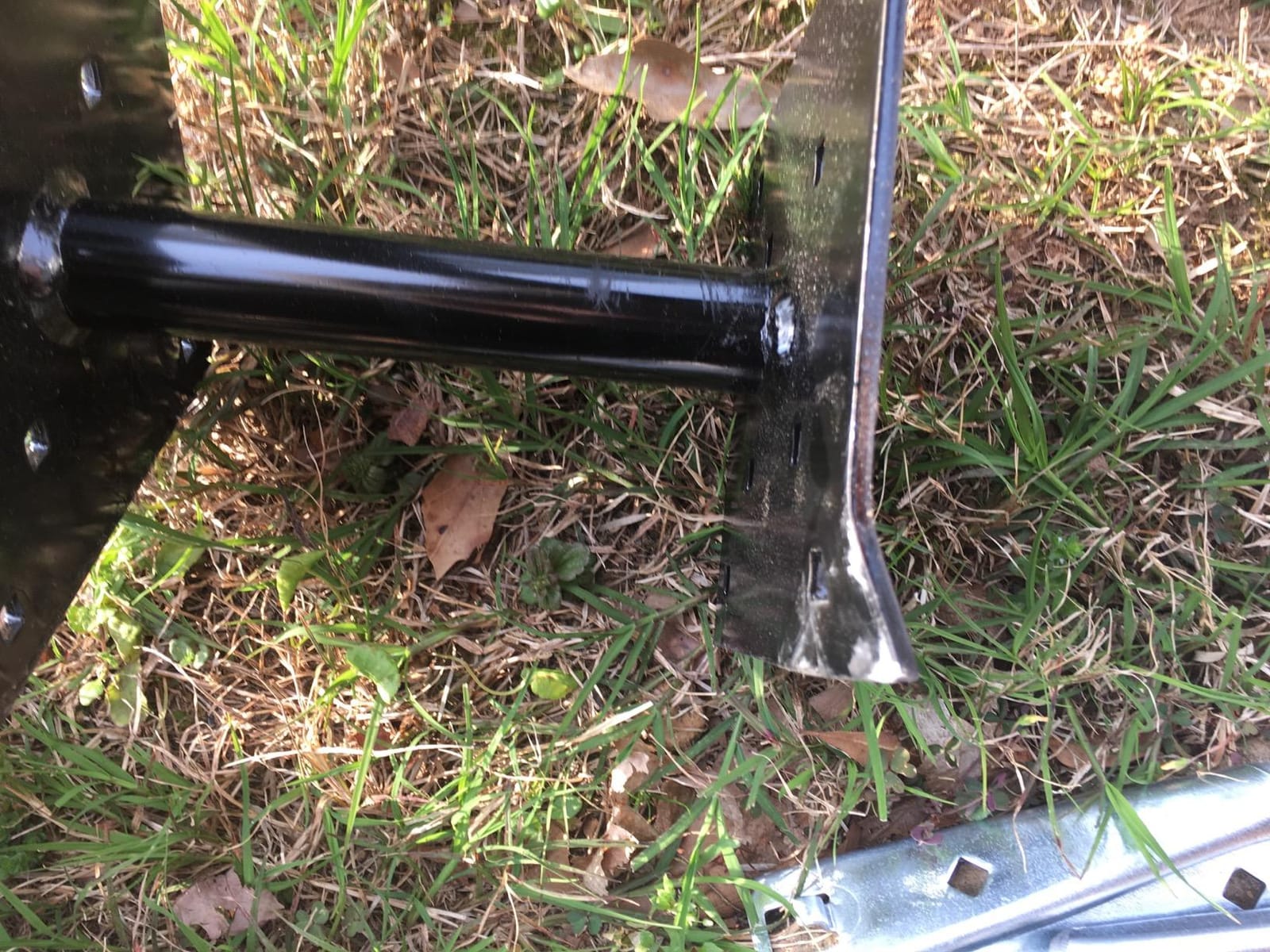
Start near 100 lbs and work from there. The tray is rated to 175 lbs, and owners who push toward that figure on genuinely hard ground report deeper cores, at the cost of more turf damage and more plugging in wet conditions.
Concrete blocks are the usual choice. Loading weight evenly across the tray keeps the drum stable, and an unbalanced load makes the machine wander on turns.
What owning one actually commits you to
You need a riding mower, a zero turn, or a tractor with a universal hitch. That is the real gate on this product. It also needs a dedicated corner of the shed, because a 94 lb machine does not go back on a wall.
Owners frequently regret buying a tow-behind for a single annual job that takes under an hour to run. If you have one job a year, renting the class of machine for a day is the smarter path.
3. Brinly 40 Inch Tow Behind Plug Aerator – Best-Built Tow-Behind for Clay
Brinly Tow Behind Plug Aerator with Universal Hitch, 40″ – Flat Black
24 heat-treated 16-gauge spoons
150 lb enclosed tray
Three rotating tine sections
40 inch width
Pros
- Narrow sharpened spoons enter clay with less added weight
- Three independently rotating sections handle turns well
- Enclosed tray keeps ballast contained
- Single-lever transport mode
Cons
- Most expensive machine in this roundup
- Needs a tractor
- zero turn or ATV
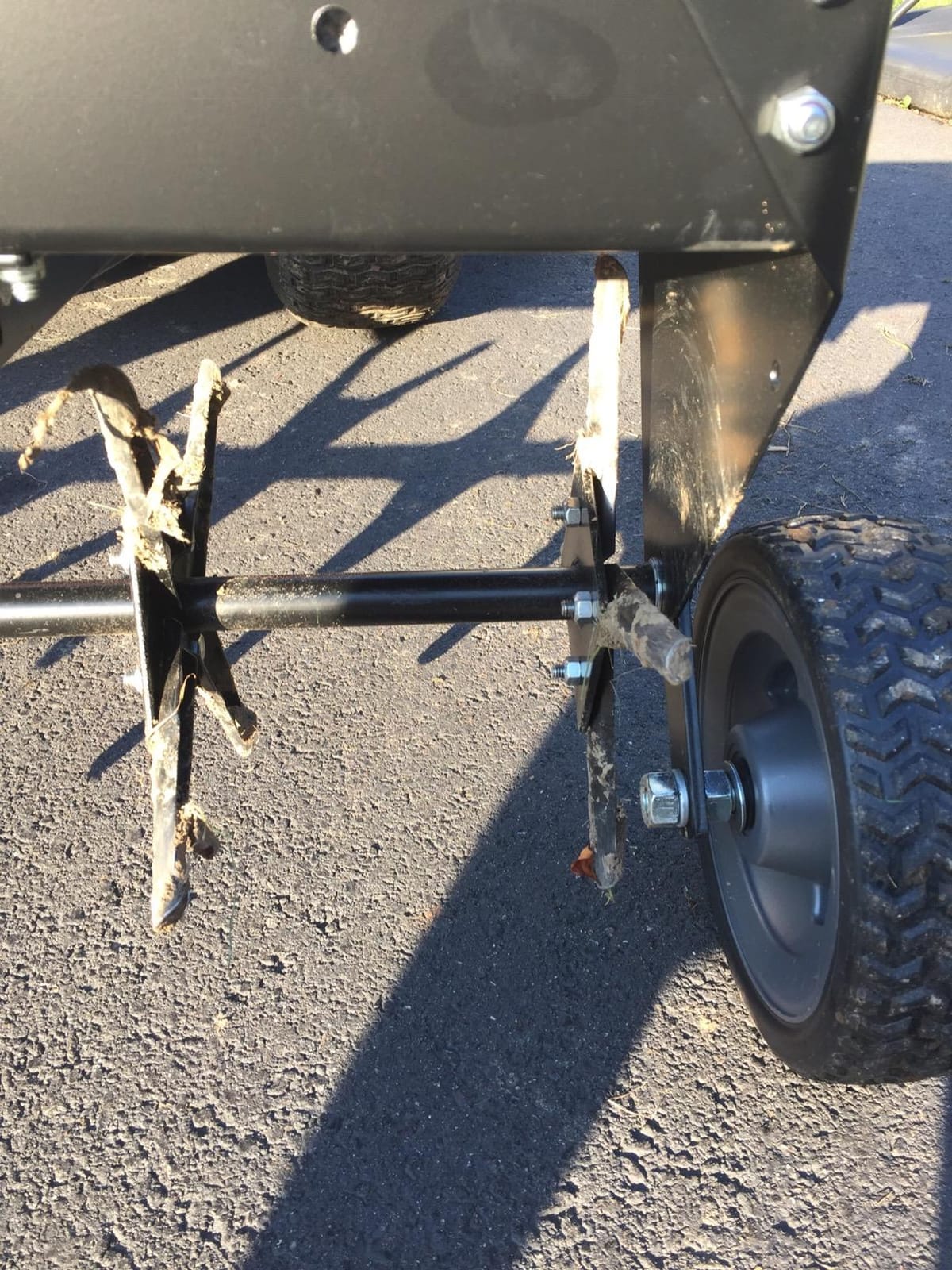
The Brinly is the tow-behind we would own. Instead of the wide, blunt spoons common in this category, it uses 24 narrow heat-treated 16 gauge plugging spoons with sharpened ends, and that geometry is the whole story on clay. Narrow spoons need far less added weight to reach the same 3 inch core depth, which means less turf tearing and less ballast to haul.
Ratings are 4.4 stars across 977 reviews, with roughly two thirds of buyers handing out five stars, the strongest five-star share among the tow-behinds here. Reviewers repeatedly point to the rotating sections and the enclosed weight tray as the reasons it handles compacted clay evenly.
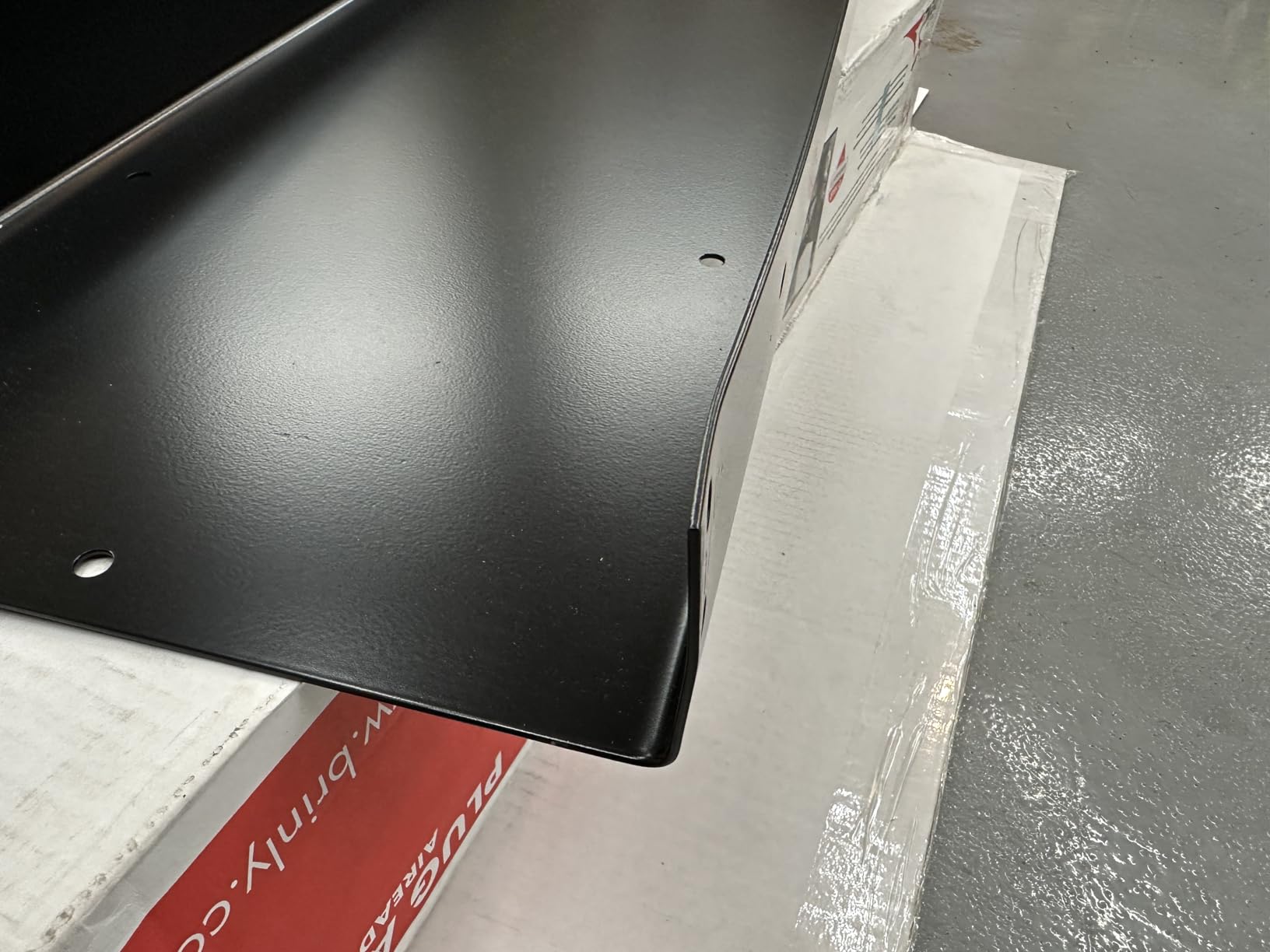
Three independently rotating welded tine sections is a design choice that pays off on clay specifically. Fixed tine sections resist turning, so you end up dragging them sideways and tearing a trench. Rotating sections spin under load, and the machine pivots without gouging.
It weighs 63.9 pounds, which is roughly 30 pounds lighter than the Agri-Fab, and that difference is felt every time you lift it into transport position. The single-lever switch and 10 inch semi-pneumatic tires make crossing a driveway or working around tree roots straightforward.
Why narrow spoons matter in clay
A wide spoon displaces a lot of soil on the way down and has to push it out of the way on the way up. In compacted clay that effort becomes a smearing, plugging problem. A narrow sharpened spoon slices in with far less resistance and leaves a cleaner channel behind.
The practical benefit is that you can hit useful depth with a moderate tray load, which keeps the machine from tearing up more turf than you need disturbed.
Where the premium does not pay off
It is the priciest option in this roundup, and the extra spend is justified mostly if you own a tractor or zero turn already and plan to aerate more than once a year.
If your plan is a single spring pass, the price gap over a manual spot tool is hard to justify on its own. The build quality is what you are paying for, and owners generally agree it holds up better over a decade of wet clay abuse.
4. Landzie 42 Inch Hollow Tine Core Aerator – Best Manual Tool for Tight Clay Spots
Landzie – Lawn Aerator Tool 42″, Hollow Tine Core Aerator
Three stainless steel hollow tines
42 inch overall height
Powder-coated steel frame
5.6 pounds
Pros
- Tines eject cores on every push so there is little unclogging
- Works with no assembly out of the box
- Heavy steel frame survives rock and clay
- Replacement tines available
Cons
- Slow
- reviewers report an hour for a modest area
- Hard dry ground resists penetration
- Replacement tines are a separate purchase
The Landzie is the manual tool that changed how we think about hand corers on clay. The headline claim in the listing is that the tines eject cores on each push, and clay owners confirm it. Water the ground the night before and the three stainless steel hollow tines glide in and push plugs out cleanly rather than filling up with mud.
It rates 4.3 stars across 350 reviews, with about 68 percent five-star marks. That is a strong showing for a tool whose primary competition is the assumption that manual coring simply does not work in heavy soil.
Build quality is the other story. A powder-coated steel frame at 5.6 pounds feels substantial in the hand without being unmanageable, and owners working rocky clay report it survives impacts that would bend a lighter tool.
The tines unscrew from the frame, which means you can pull them out and clear a clog with the included tool rather than guessing, and you can buy replacements instead of replacing the whole tool when a tip finally dulls.
Why the self-ejecting tine matters more in clay
Clay is the one soil where a clogged tine ends the session. In sand a clogged tine is an annoyance. In clay it fills solid, refuses to eject, and every subsequent push punches a hole with no core at all, which is the failure owners describe as a lawn full of little volcanoes.
A tine designed to push its core out as it withdraws avoids the whole problem. That is the difference between a manual tool that is merely slow and one that is unusable.
The honest limit: coverage speed
Reviewers report spending a full hour punching holes for a modest area. That is real. Manual coring is a spot-treatment discipline, and no amount of design improvement changes the arithmetic of bending down and standing up several hundred times.
Caliche-like hardpan and bone-dry ground can also bend tips. Watering the day before is not optional advice here, it is the operating procedure.
5. Dolibest Lawn Coring Aerator with Core Tray – Most Versatile for Clay Patch Work
Dolibest Lawn Coring Aerator, Manual Lawn Aerator,4 Stainless Steel Corer Plug Aerator with Soil Core Storage Tray, Pre-Assembled Manual Grass Aerating Tool & Clean Hand Tool, Improving Lawn Health
Four SUS 304 stainless coring plugs
Integrated core storage tray
Rubber grip handle
Assembles in about two minutes
Pros
- Stainless plugs resist rusting and bending
- Core tray cuts the raking work
- Quick two minute assembly
- Included 12 inch cleaning tool
Cons
- Tines clog often unless the lawn is soaked first
- Elevated crossbar and tight plug spacing limit it to spot work
The Dolibest earns its place with one feature that nothing else in this roundup has at this tier: an integrated stainless steel tray that catches the ejected cores. On a clay yard where the plugs come out as heavy chunks rather than crumbly crumbs, collecting them as you go keeps the job tidy and spares you a separate raking session.
It holds 4.2 stars across 276 ratings, with a visible cluster of three-star feedback. Buyers like the stainless construction and the tray; the recurring complaint is clogging.
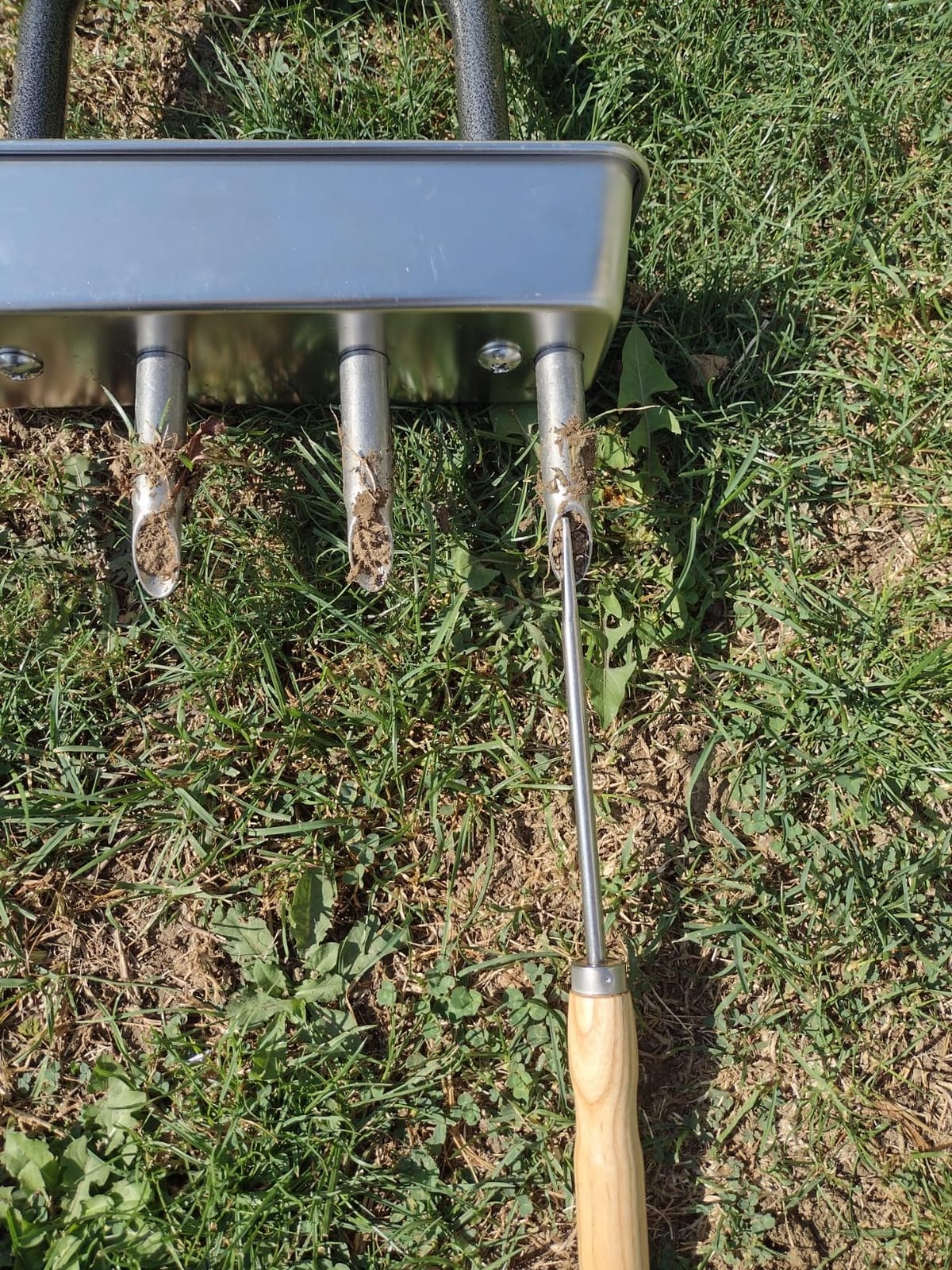
Four SUS 304 stainless steel coring plugs sit on a black powder-coated solid steel rod, which is a sensible material pairing. Stainless will not rust in the damp conditions clay holds for days after rain, and the coated rod keeps the joints from weeping.
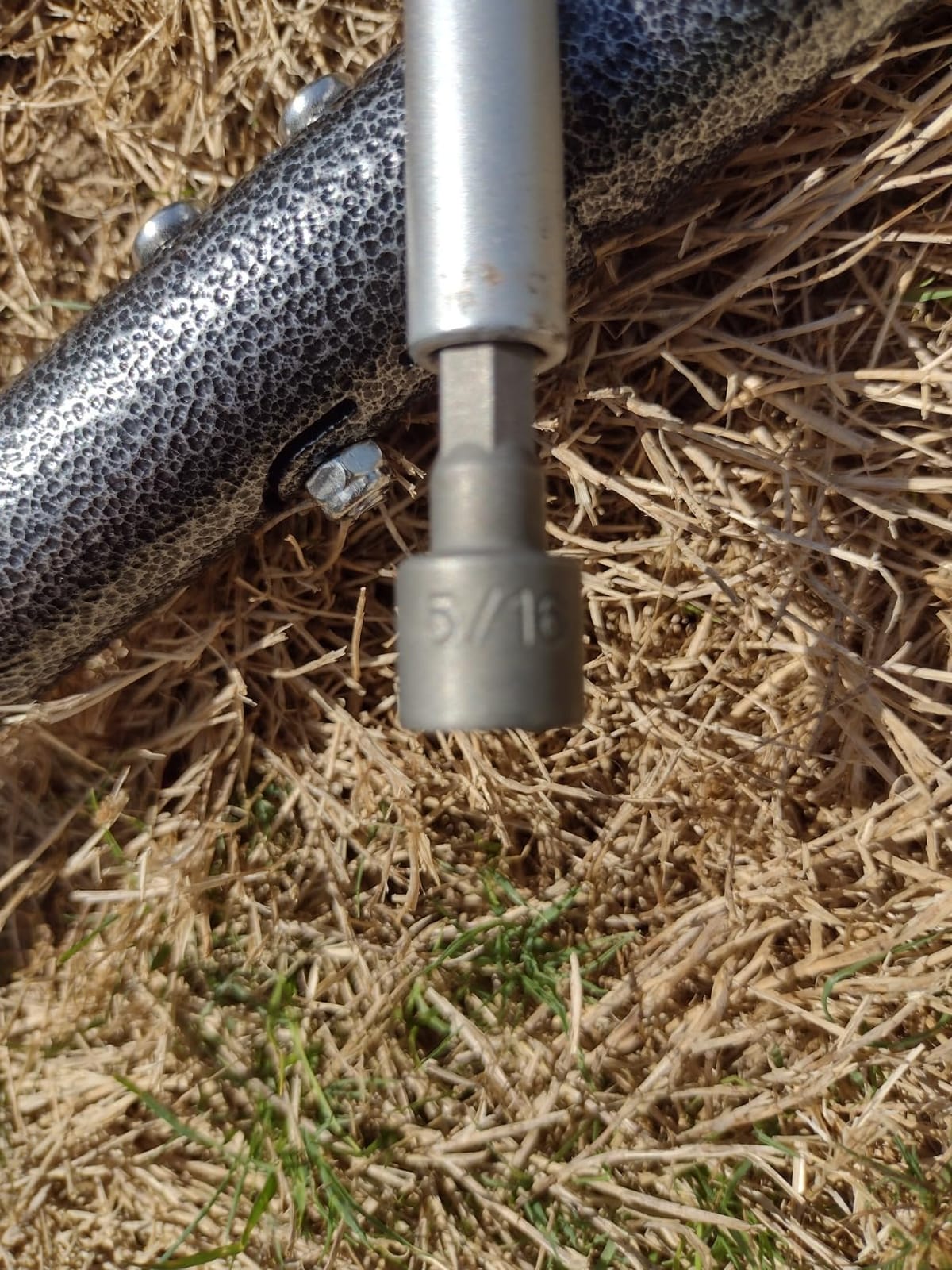
The elevated crossbar keeps your shoes clear of the plug ejection path, and a 12 inch hand tool comes in the box for cleaning tines, weeding and transplanting. Assembly takes about two minutes with the included hardware.
Soil prep is mandatory on this one
The clogging complaint has a consistent cause. Most of those three-star reviews are from people who used it on dry or merely damp ground. Clay coring tools need soaked soil, and this design has no mechanism to clear a packed tine while you work.
Soak the area the day before, work while the surface is dark and moist, and stop to clear the tines with the included tool whenever you feel resistance. Under those conditions it performs well for its class.
Why it stays a spot tool
Four plugs on a narrow rod with an elevated crossbar means each push covers a patch barely bigger than a dinner plate, and the crossbar sits right where a bent knee wants to land. It is a repair tool for worn areas rather than a lawn-wide treatment.
Weighing it against the Landzie, the Dolibest trades coring reliability for plug collection. Owners who hate raking will prefer it; owners who want clean cores from hard ground will prefer the other.
6. LawnVigor Manual Core Aerator with Non-Clogging Hollow Tines – Best Self-Clearing Manual Corer
Manual Lawn Core Aerator for Compacted Soil with Non-Clogging Hollow Tines
Three heat-treated hollow tines
Tines about 0.9 inch diameter and 4 inches long
Replaceable tines
T-grip layout with footplate
Pros
- Tines self-clear so coring continues without stopping
- Replaceable tines extend tool life
- Sharp heat-treated tips stay clean in thicker clay
- Hex bolts and wrenches included
Cons
- Only three tines so whole-lawn jobs are slow
- Grip handles can spin during use
- Needs watering in very stiff clay
The design detail that sets this one apart is in the footplate layout: on each pass, one core is pushed out by the next. The tines clear each other as you work, which means you can keep coring without stopping to jam a screwdriver into a packed tube every twenty feet.
It rates 4.5 stars across 255 reviews with roughly 75 percent five-star marks, which is one of the strongest satisfaction ratios in the roundup. It also currently sits at number two in its category on the retailer side of the house, so demand is clearly there.
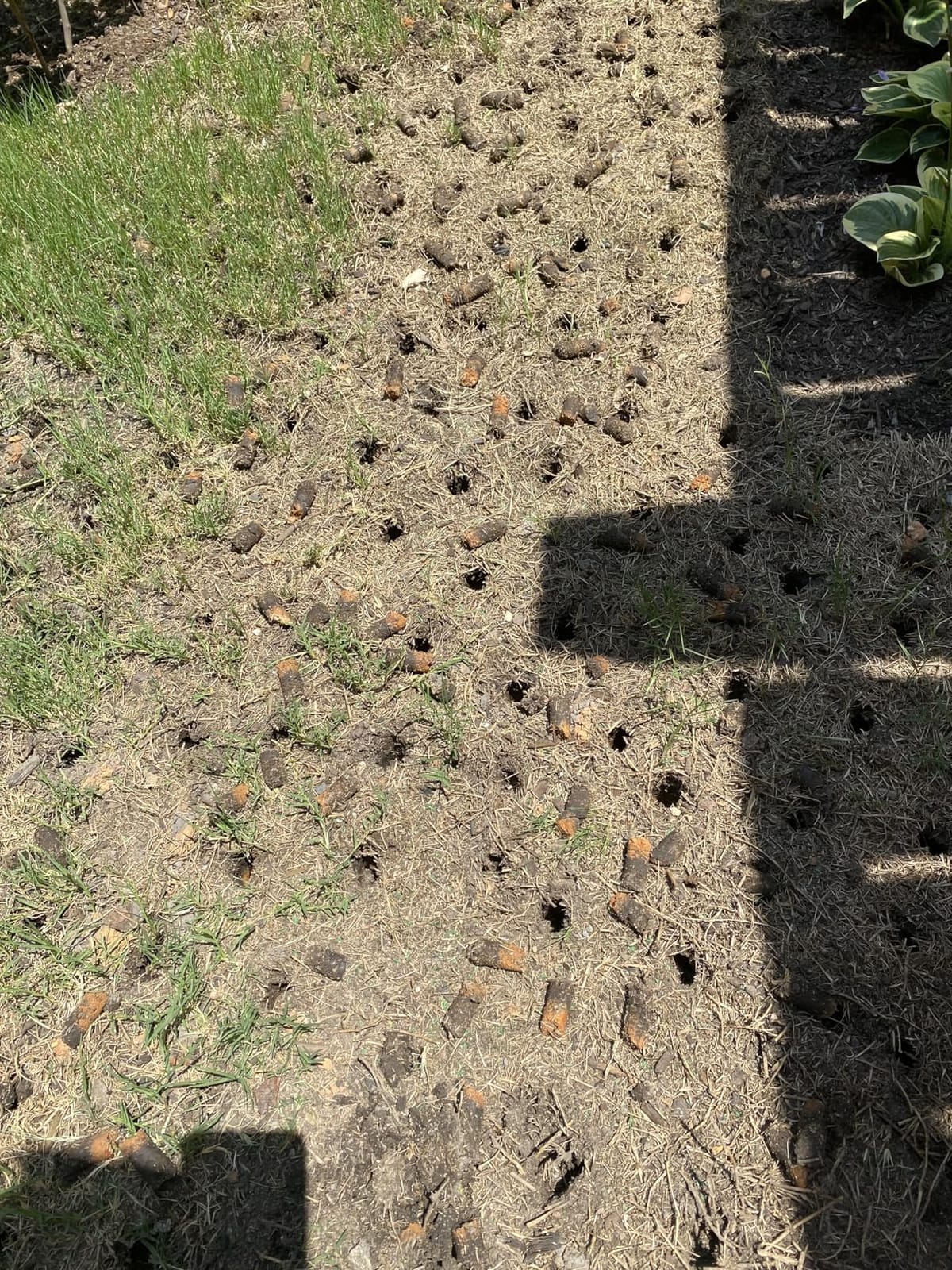
Clay owners report that this tool punches clean, deep, quarter-sized cores that let water and fertilizer reach the roots, which is exactly the outcome the whole article is about. White plastic inserts inside the tines guide the plugs out rather than letting them compact against the wall.
The tines screw into the frame and are replaceable, and the build hardware is a step above the norm. Hex and combination wrenches are included, which matters because mismatched tools are the usual reason a partially assembled corer ends up in a garage corner.
Why tine clearance decides whether a manual corer works
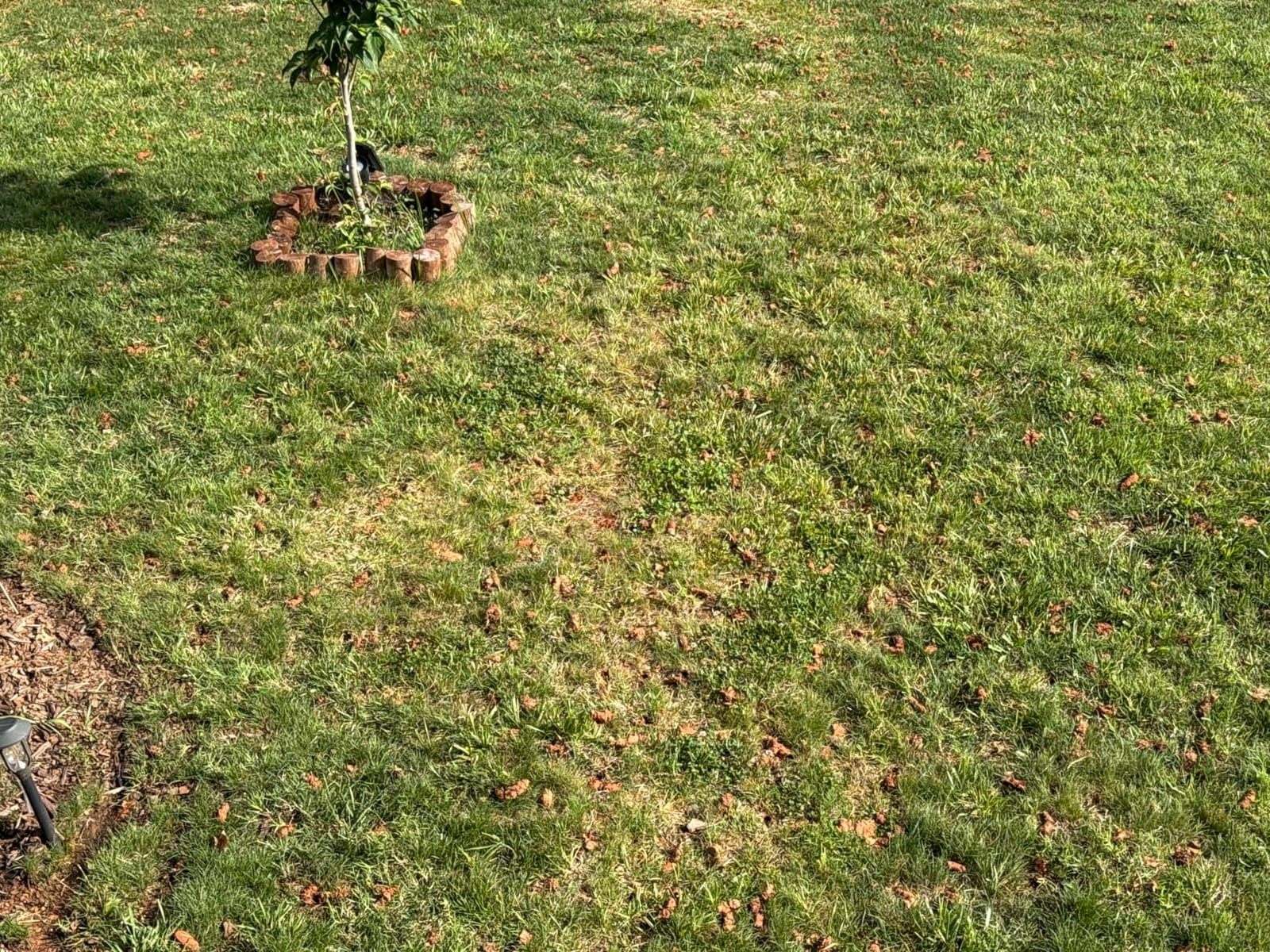
Every hollow-tine corer eventually clogs in clay. The difference is whether the design clears itself or requires you to. Self-clearing tines push the previous core out on the way in, so throughput stays steady and the pattern of holes matches the pattern of plugs.
On a heavy clay yard that is the difference between a productive afternoon and an afternoon spent cleaning tools.
Where the ergonomics fall short
The grip handles are loose and can rotate during use, which is unpleasant on wet hands and shows up as blisters across the palms over a long session. At three tines and about 8.3 inches of fork width, coverage per push is small.
Owners are consistent that this is a small-area and problem-spot tool. If your clay yard is under a few thousand square feet, though, it can be the whole job.
7. K.D STONEDGE Patented Rolling Lawn Aerator – Best Manual Machine for Mid-Size Clay Yards
Patented Rolling Lawn Aerator Manual Coring Tool Compacted Soil Loosening
Patented rolling drum coring design
Balanced weight distribution
Manual push operation
60 x 17 x 11 inches
Pros
- Rolling drum is far faster per square foot than a step-on tool
- Balanced weight takes the load off your back
- Covers small to medium lawns
Cons
- 43.7 lb frame is heavy to reposition by hand
- No powered assist on the toughest clay
- Narrower coverage than a tow-behind
Every other hand tool on this list is a step-on corer, and step-on corers are limited by your back. This one is a manual push machine with a rolling drum, so the wheels turn as you walk and the drum drives the tines down. That is the single biggest productivity jump available without a tractor.
Ratings come in at 4.2 stars across 167 reviews with about 60 percent five-star marks. Reviewers credit the rotary coring design with genuinely loosening compacted soil while still delivering a workout, and the balanced weight distribution is praised for cutting back strain relative to step-on tools.
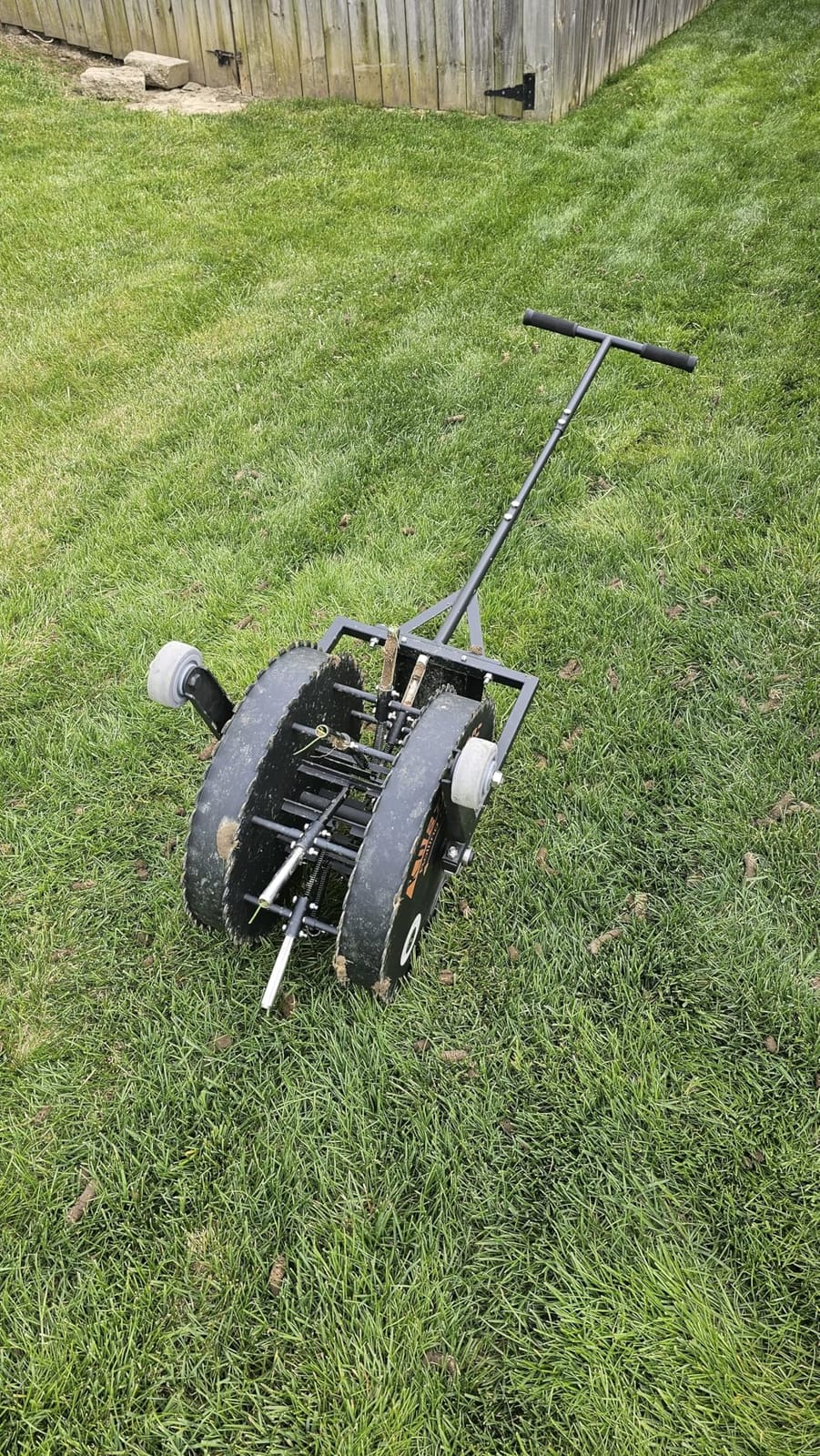
That balance claim is the interesting engineering claim. A rolling drum applies force unevenly unless the machine is weighted properly across the drum face, and an unbalanced drum makes the far end lift and dig in at an angle. Owners on heavy clay say the weighting keeps the tines entering square, which is what produces a clean cylindrical core instead of a smear.
There is no engine and no fuel. That keeps storage simple and maintenance near zero, and it means there is nothing to winterize.

Where a rolling drum beats a step-on tool
Coverage per unit of effort. A step-on corer needs a bend and a push for every patch of ground; a rolling drum corer covers continuous strips. On a lawn too large for hand coring but too small to justify a tractor, this is the middle option that owner discussions rarely mention.
It also handles the standing-up and bending component better, which matters when clay work takes longer than you planned.
When it is not the right answer
At 43.7 pounds it is heavy to reposition by hand, and turning it at the end of a row on soft clay takes real effort. If the yard is larger than about a quarter acre, the time you spend pushing it starts to rival just renting a tow-behind.
There is also no way to add ballast, so on the hardest baked areas its depth is fixed by drum design alone. For genuinely brutal clay you will still want a weighted machine.
8. Xuperace Alloy Steel Core Aerator – Best Manual Corer for Deep Plugs
Xuperace Lawn Aerator Tool, Core Aerator Lawn Tool with Alloy Steel Material, Sturdy Grass Aerator for Lawn Health Soil Yard Aerator
Three hollow tines with side-ejection ramp
Integrally formed alloy steel frame
42 x 11 x 1.9 inches
5.91 pounds
Pros
- Highest average rating in this roundup
- Side-ejection ramp releases cores with no jams reported
- Knee-friendly open-center frame
- Center tine removable for harder ground
Cons
- Costs more than comparable manual aerators
- Very firm soil still requires rocking the tool
This is the highest-rated product we tested, at 4.6 stars across 142 ratings with roughly 80 percent five-star marks. Buyers who compared it against cheaper manual models write about the same two things: the tine ramp does not jam, and the frame does not catch their knee.
The patented side-ejection ramp is the engineering answer to the clogging problem. Rather than waiting for the core to drop out of the bottom, the tine geometry releases it sideways as the tool is lifted, so there is no column of soil sitting inside the tube waiting to compact.
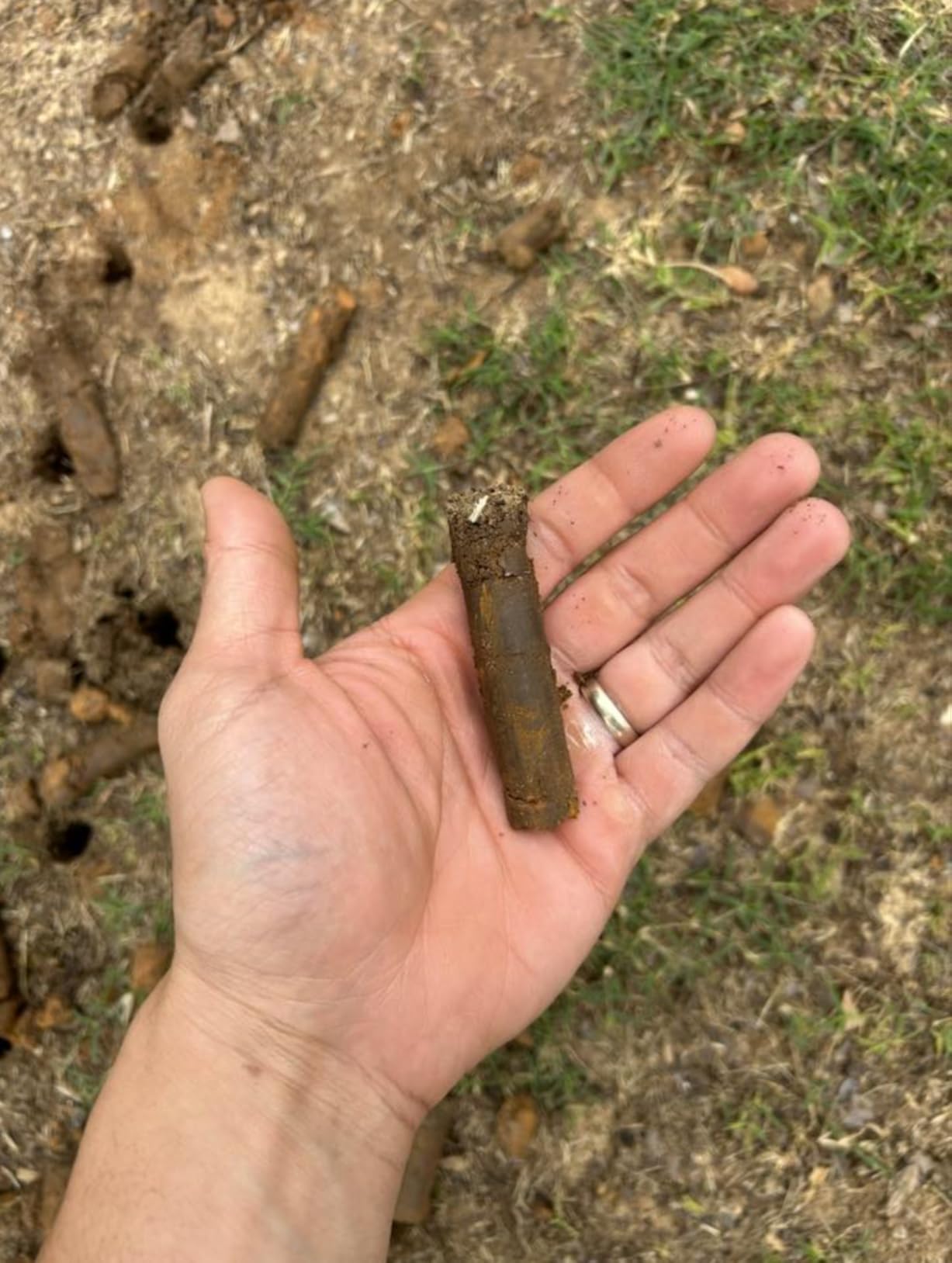
Reviewers also report long constant-diameter tines pulling 3.5 to 5.5 inch plugs, even in unwatered compacted clay. That is deeper than what most tow-behinds in this roundup claim, from a tool you push by hand.
The open-center dual downtube frame leaves the knee free to move, which sounds minor until you have spent an hour on a manual corer in firm clay. Remove the center tine when the ground gets genuinely hard and the remaining two tines punch with much more authority.
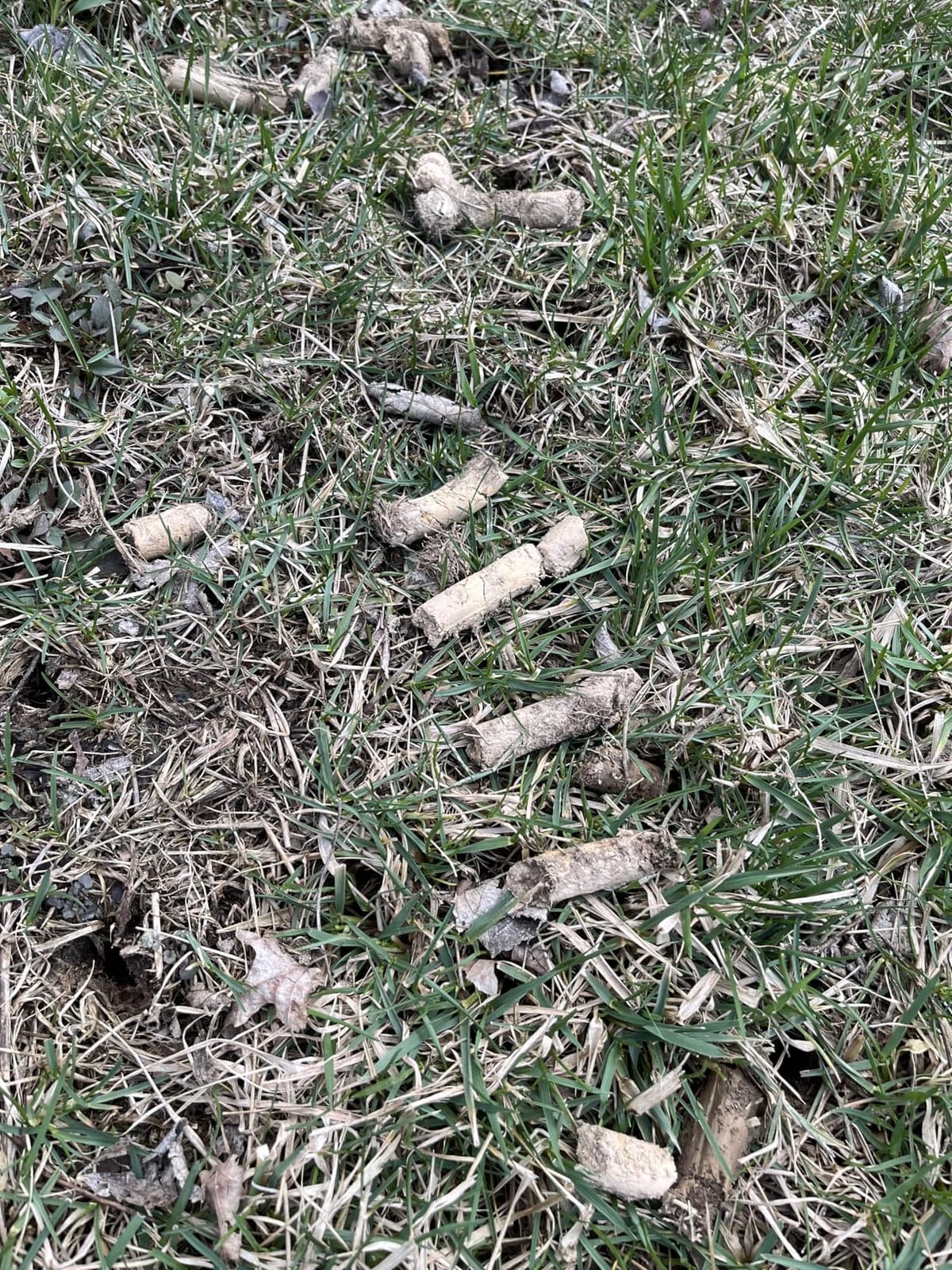
What the side-ejection design solves
Wet clay entering a hollow tine has nowhere to go in a standard design. It compacts against the wall, the core stops sliding out of the tube, and the next push drives a solid rod into the ground. The ejection ramp gives the core an exit path at the moment of withdrawal, which is why owners report never needing a screwdriver mid-session.
That is the failure mode that ruins most manual attempts on clay, and this tool is built specifically to avoid it.
The catch: price and technique
It costs noticeably more than comparable manual corers, and the small review base means fewer years of long-term owner data behind it than the Yard Butler has.
On very firm soil you still need to rock the tool slightly, which is a technique adjustment rather than a design flaw, but it does put your knee near the side bar. Owners who adapt to the rocking rhythm report the deepest manual cores of any tool here.
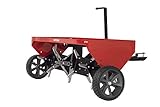
9. Craftsman 40 Inch Tow Behind Plug Aerator – Best Tow-Behind for Small Storage Spaces
Craftsman 40 Inch Tow Behind Lawn Plug Aerator with 24 Galvanized Steel Coring Points and 140 lb Weight Tray
24 galvanized steel coring points
140 lb weight tray
40 inch width
3-year limited warranty
Pros
- Coring points pull plugs up to 3 inches deep
- 140 lb tray handles hard clay
- Lift handle release and vertical wall storage
- Flat free tires tow smoothly
Cons
- Fewer coring points than the 32-knife alternative
- Needs a tractor to operate
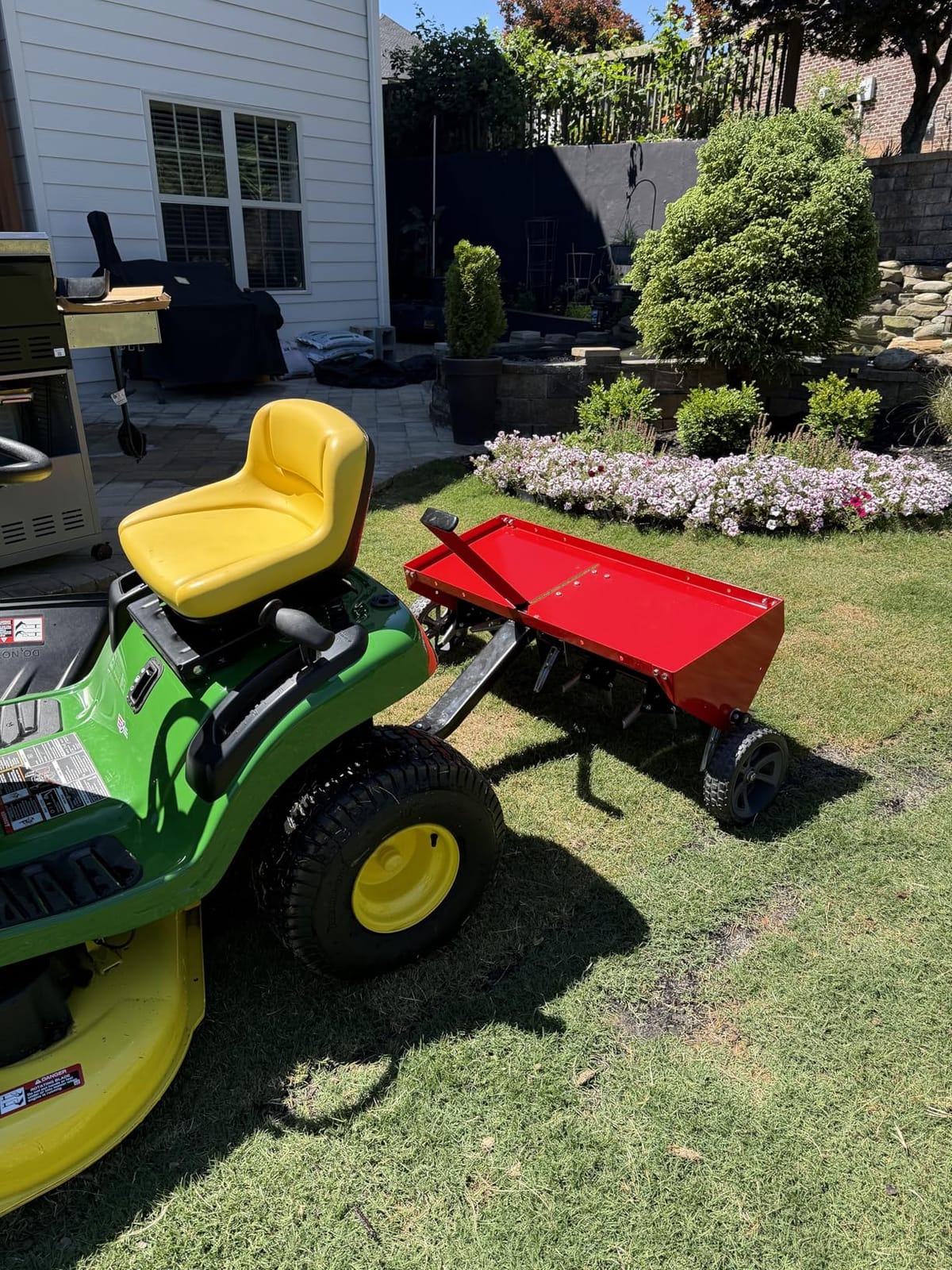
Storage is what separates this machine from the larger tow-behinds. The lift handle release system lets you raise the tines from the ground, and the frame stores vertically against a wall. For anyone with a single-car garage and a lawn tractor that already fills it, that is not a minor feature.
It rates 4.4 stars across 124 reviews with about 60 percent five-star marks, and it carries a 3-year limited warranty. Owners of large compacted yards point to the 140 lb tray and the 3 inch core depth as the reason it handles heavy soil.
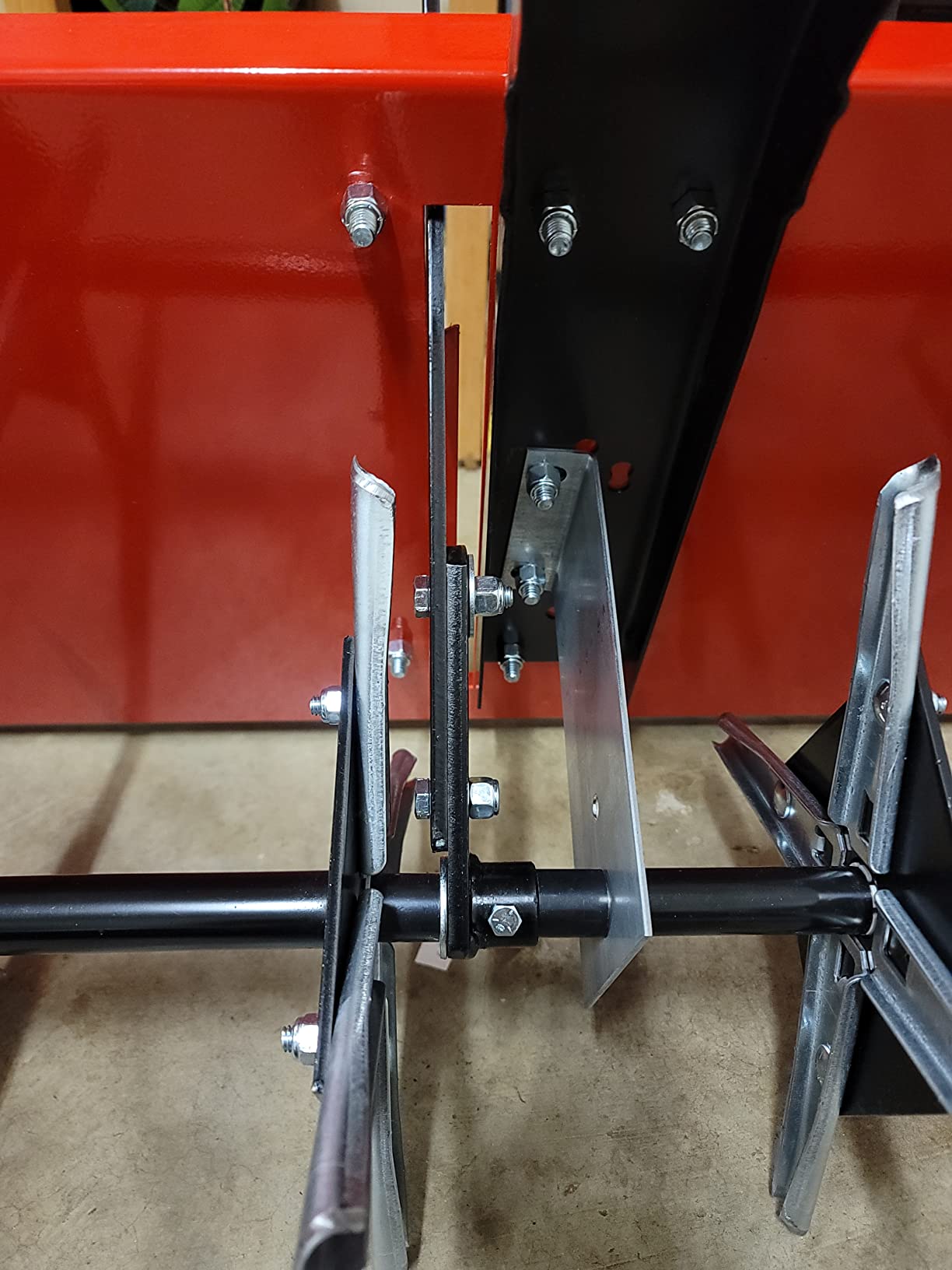
The 24 galvanized steel coring points pull plugs up to 3 inches deep across a 40 inch working width. That is a smaller drum than the 32-knife Agri-Fab, and that comparison is the one buyers make most often. Fewer points means a slightly longer spacing between cores.
At 78.8 pounds it is lighter than most machines in this class, which helps on lifting and repositioning, and the flat free tires roll over uneven clay ground without bouncing.
Tray capacity versus cutting count
Two different levers control how hard an aerator works, and buyers often confuse them. A bigger tray means more downward force available. A bigger knife count means more cores per pass and better overlap. The 140 lb tray here is generous; the 24 points are moderate.
On a big clay property where you want cores close together, the 32-knife machine covers more ground per pass. On a smaller yard with a hard-packed driveway-adjacent strip, 140 lbs of ballast and 24 solid points is plenty.
Who should skip this one
If you have no riding mower or tractor, this is unusable. And if your shed has room to spare and you are covering a large property, the knife count is the place this model gives ground to its competitors.
The warranty is a real plus for buyers planning to keep a machine for a decade of wet clay seasons.
10. hugeneroy Heavy Duty Hollow Tine Core Aerator – Best for Stubborn Compacted Clay
Heavy Duty Steel Hollow Tine Core Aerator for Clay Soil, Non-Clog – Blue
Three tempered hollow tines about 0.98 inch diameter and 4.3 inches long
8 inch welded fork
37 inch length
3.52 pounds
Pros
- Lifts a real core out of severely compacted clay on every push
- Tempered tines resist bending and warping
- Light enough to carry into tight areas
- Tine section separates for cleaning
Cons
- Unsealed tine tops can pack with debris
- Crossbar hardware can strike the knee
- Needs thorough watering the day before
The claim on this listing is blunt for a garden tool: built for clay soil, non-clog. Owners on heavy ground compare it favorably against spike-style tools that only punch holes, and they report that the tempered hollow tines eject a plug on every thrust rather than occasionally.
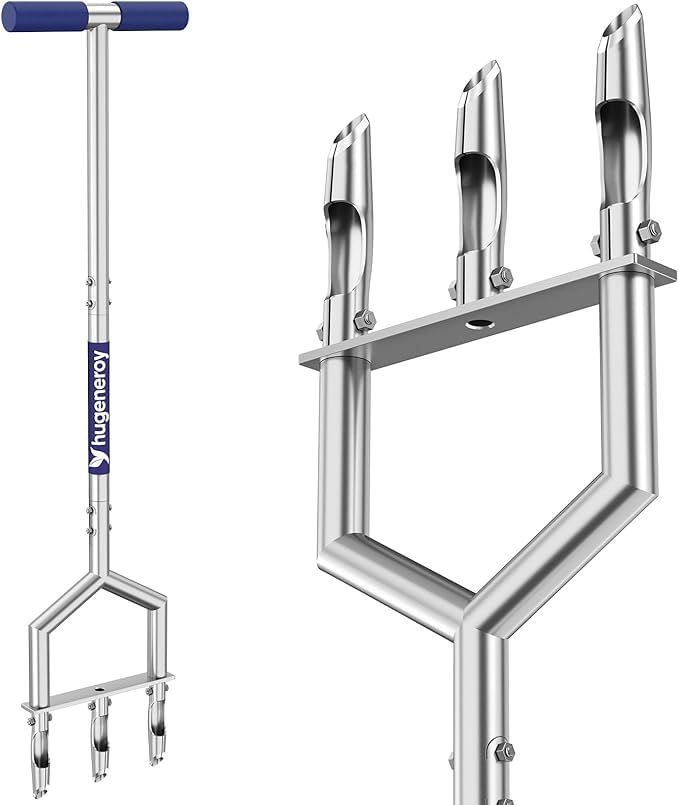
It holds 4.5 stars across 105 ratings with about 78 percent five-star marks. The tines measure roughly 0.98 inch in diameter and 4.3 inches long, which makes them wider and longer than most manual corers, and that extra girth is what gets a satisfying core out of stubborn ground.
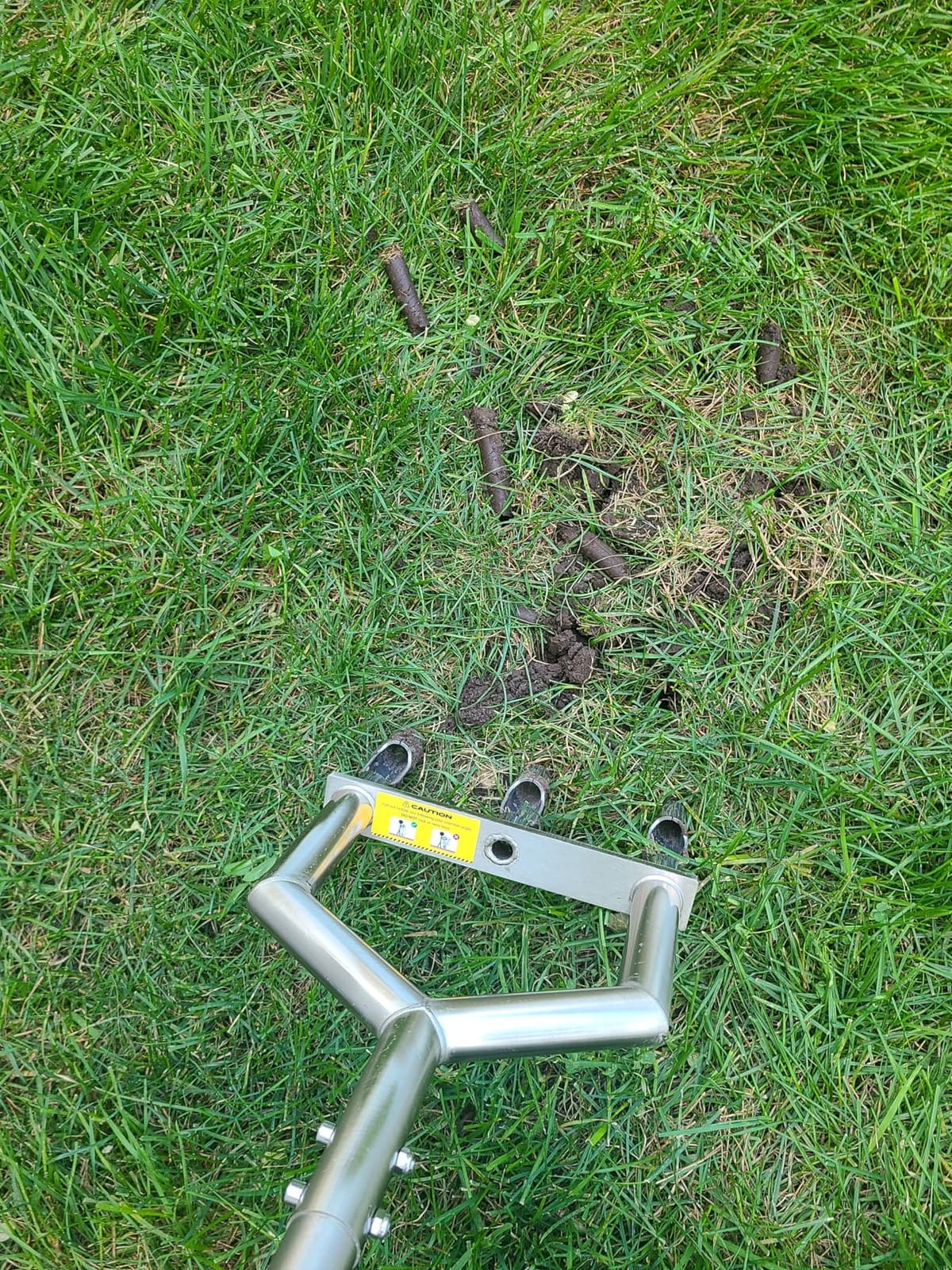
At 3.52 pounds it is light enough to lift into a bed border or a corner against a wall without awkwardness, and the tempered steel resists the warping that ends lesser tines when they meet a rock or a root.
The tine section separates from the shaft so you can clear it properly rather than jamming a rod down the tube, and replacement tines swap out with a single bolt and nut.
Why tine diameter changes core quality
A wider hollow tine moves a larger volume of soil per pass, so each core is a bigger cylinder with more air space around it once ejected. On a compacted clay yard that volume matters, because you are trying to create channels wide enough for water to actually travel through rather than token holes.
The tradeoff is effort. A 0.98 inch tine in baked ground requires more force, and watering the day before is not a suggestion.
Two small flaws worth knowing
The tops of the outer tines are not sealed, so debris can pack into the body of the tool during use and needs periodic cleaning. Separately, the bolt and nut at the crossbar sit at knee height, which owners with larger builds mention as a strike risk.
Neither is serious for spot work on a clay yard, and both are reasons we would still keep this as the reach-in tool for the worst patches.
Plug vs Spike Aerator: Why the Choice Matters More on Clay
A spike aerator pierces the ground with a solid rod and pushes soil out of the way sideways. A plug aerator uses a hollow tube to remove a cylinder of soil entirely. On a loose soil the difference is cosmetic. On compacted clay, a spike compresses the hole wall as it enters, which drives particles sideways into the pore spaces you were trying to open, and the surrounding soil ends up denser than before you started.
Only core aeration removes volume from the root zone. That removal is what gives water somewhere to go and roots somewhere to expand, and it is why every tool in this roundup is a hollow-tine corer. Extension guidance consistently points the same way, and owner experience on clay yards is even more emphatic than the guidance.
Worth knowing: slicing aerators and liquid soil surfactants exist as middle options. Slicing cuts slits that relieve surface compaction without pulling cores, and liquid treatments wet the soil profile to help water penetrate. Both help far less than core aeration on heavy clay, and neither pulls a plug to the surface.
Do You Even Need to Aerate Clay Soil?
Yes, if your clay lawn shows puddling that takes days to clear, thin patchy grass that returns every year despite feeding, or ground that is rock hard underfoot. Core aeration relieves compaction in the upper root zone, which is the first step toward better drainage on clay. It is not a complete drainage fix on its own, but nothing else you do will work as well until the pore spaces open.
Three quick tests tell you what you are dealing with.
The screwdriver test. Push a flat screwdriver or garden fork into the lawn. If it enters only an inch or two and you meet hard resistance, the upper soil is compacted. On healthy soil it should go in with light hand pressure to the fork tines.
The ribbon test. Wet a handful of soil and try to form a ribbon between your thumb and finger. Longer ribbon means higher clay content, and long ribbons also mean smaller pore spaces and faster compaction.
The puddle test. After a normal rain, note how long standing water takes to clear. Hours are normal on compacted clay. Days mean you have a drainage problem that aeration will help with but not finish.
New-construction yards deserve a separate mention. Machinery compacts them in a distinct pattern, and owners of new builds are advised to expect to core aerate and top dress annually for the first few years rather than doing it once and walking away.
How to Aerate Clay Soil Correctly
Water two days ahead. Soak the lawn thoroughly a day or two before you plan to aerate. This is the single step that most determines whether your pass produces cores or a mess. Clay that has been allowed to dry out will not accept a core from any machine, and you will only bend tines.
Load the ballast. Tow-behind machines need weight in the tray. Start near 100 lbs for a 40 to 48 inch machine and add more only if cores are shallow. Balance the load across the tray.
Aerate while the soil is damp, not wet. This is the narrow window that catches people out. Saturated clay smears into mud, clogs every tine and spreads rut damage across the turf. If your boots sink and stick, wait.
Walk at a steady pace. Slow and even beats fast. Let the drum spin and the tines enter squarely rather than skipping across the surface, which produces nothing but scuffs.
Cross the worst patches. Go over thin and bare areas twice in perpendicular directions. A second pass at a right angle to the first opens channels that a single pass leaves untouched.
Clear the tines as you go. On clay, stop every few passes and knock the tines clean. A clogged tine stops pulling plugs until you do, and it does not recover on its own.
Handle the plugs according to your soil. In loam, leave them and mow them in. In heavy clay, rake and remove them, because dense clay cores dry into hard chunks instead of crumbling. See the section below for the reasoning.
Overseed and top dress immediately. The open channels are a delivery window. Put seed, compost and the fertilizer you were waiting to apply straight into the holes while they are open.
Ballast and Weight Loading for Clay
Adding weight is the most repeated instruction in every owner discussion of tow-behind aerators, and almost nobody quantifies it. The consensus figure that comes up again and again for a 48 inch machine such as the Agri-Fab is about 100 lbs, and that number is where we would start. The tray on that machine is rated to 175 lbs.
As a general guide, load roughly 2 lbs per inch of aerating width for typical compacted clay, and check the tray rating before you exceed it. A 40 inch machine therefore lands around 80 lbs as a starting point, and a 48 inch machine near 100 lbs. Exceeding the rating risks frame distortion, which shows up as tines entering at an angle rather than straight down.
Concrete blocks are the standard loading material because they are easy to count and easy to balance. Keep the weight centered on the tray rather than piled at the front, or the drum will pull to one side on turns and gouge the turf.
Why Your Plug Aerator Is Not Pulling Cores
Almost every complaint we found about aerators on clay traces back to one of four causes, and all four are fixable.
Little volcano holes with no core. This is the signature clay failure. The tine enters, the hole collapses inward, and nothing comes up. It happens when the soil is too dry or too wet for clean removal, or when there is no downward weight on a manual tool. Fix: water two days ahead and use body weight through a foot bar.
Tines clogging constantly. Wet clay packs the tube solid and stays there. Fix: stop every few passes and clear them, slow your pace, and choose a tine design that ejects on withdrawal or on the next pass rather than one that relies on gravity alone.
Plug depth far short of the advertised figure. Owners on heavy clay commonly report getting 3 inch plugs from tools advertised at 4 inches. That is not a defect. It is what the soil gives you, and on clay you should be aiming for 3 to 4 inches of actual core rather than a printed specification.
Smeared mud instead of clean cores. You worked the lawn while it was too wet. Fix: stop. Smeared clay pushes pore space sideways and can leave the lawn worse than when you started. Wait until the surface is dark but the top inch is not slick.
One more variable belongs on this list: speed. A machine moving too fast lets tines skip and skate, and a machine moving too slowly in wet clay lets the tube sit and pack. Steady is the target.
When to Aerate a Clay Lawn by Grass Type and Zone
For cool season lawns such as Kentucky bluegrass, fescue and ryegrass, aerate in early spring or early fall while the grass is actively growing and the soil is neither frozen nor drought stressed. These windows also line up with the best seeding and fertilizing windows, which is the point of opening the channels at that moment.
For warm season lawns such as Bermuda, zoysia and St Augustine, late spring through midsummer is the productive window, once the grass has greened up and heat stress has passed. Avoid very early spring, when the turf is still waking up and recovering slowly from core disturbance.
There are clear cases for not aerating at all. Skip it during drought, when the lawn is already stressed and cannot recover from being opened up. Skip it on a newly seeded or newly sodded lawn until it has rooted. And never aerate saturated clay, because the mud you create will take longer to clean up than the compaction you were trying to fix.
Clay yards typically need one pass a year, or two a year where traffic is heavy or the ground stays wet through spring.
What to Do With the Plugs and What to Do Next
On loam, leave the plugs and mow them in. They are crumbly, full of organic material, and they break down within a week or so, returning organic matter exactly where you removed it.
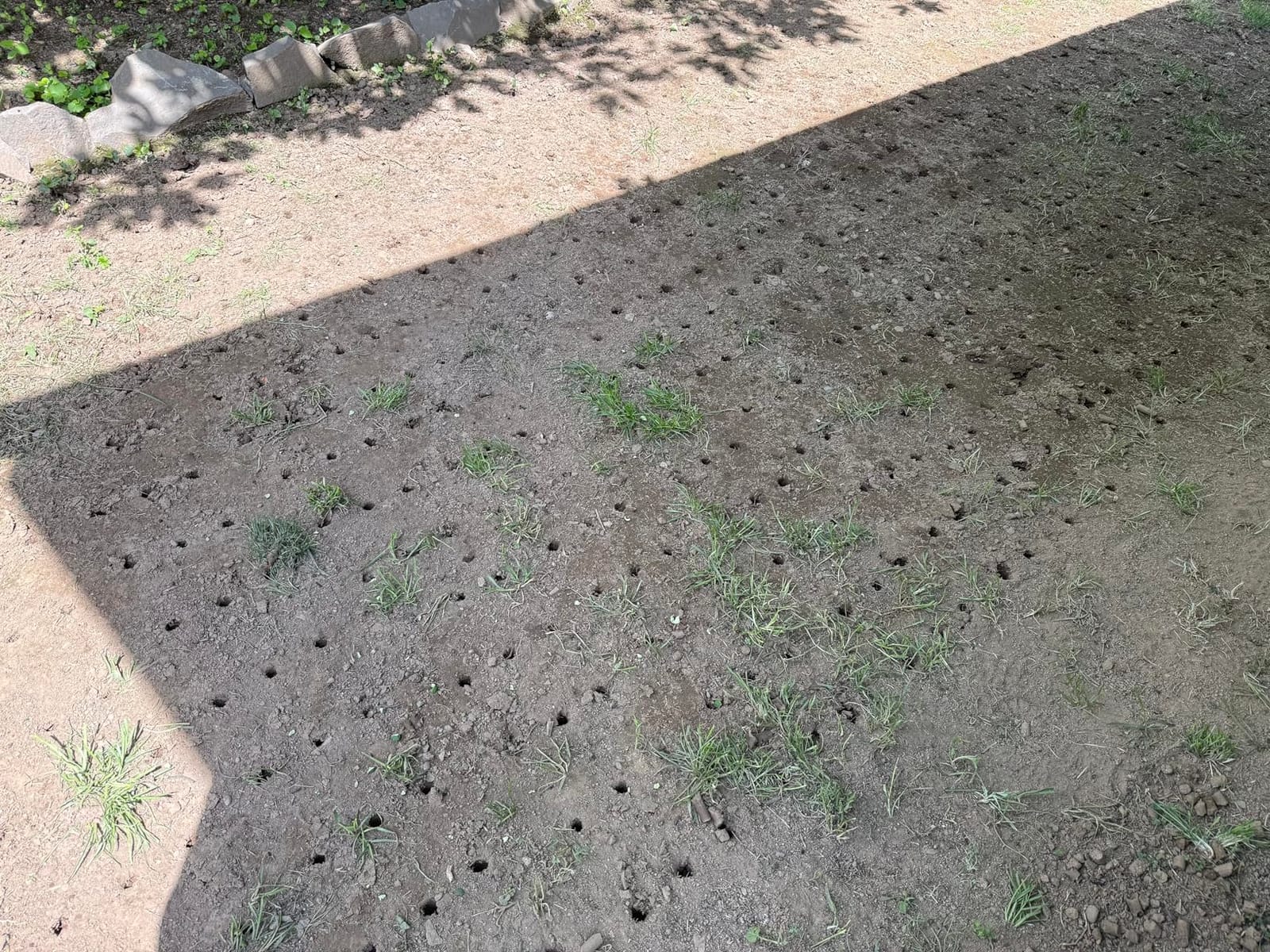
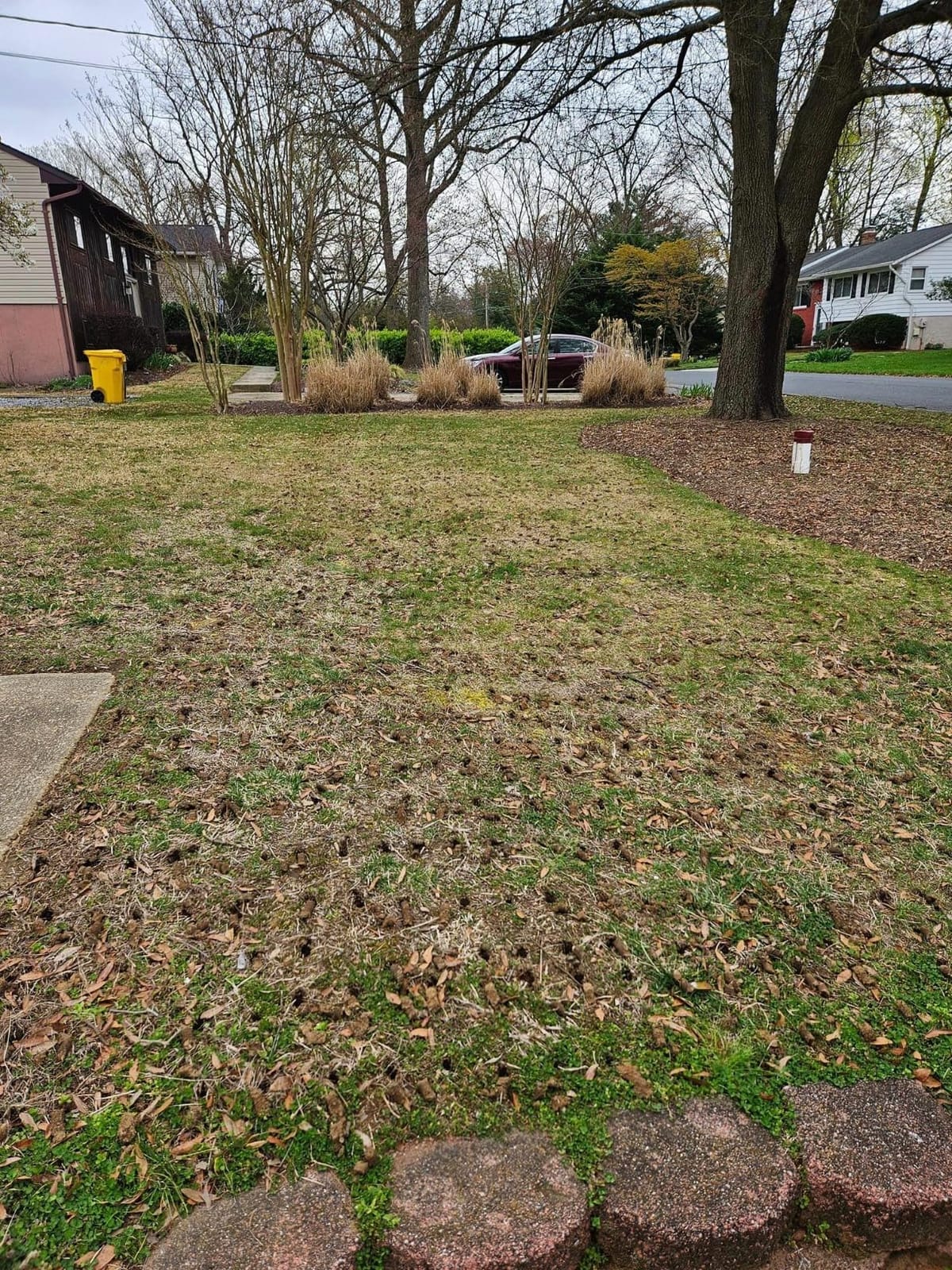
On heavy clay, rake and remove them. This is the opposite of the usual advice, and owners of clay yards are emphatic about it. Dense clay cores do not break down like loam cores. They dry into hard chunks, brick-like pieces that sit on the surface, and a zone 8b owner described the result as simply dried 3 inch clay plugs rather than anything beneficial. Removing them keeps the lawn walkable and avoids mowing hard chunks into the turf.
Next comes the part that actually changes clay. Top dress with compost over the aerated surface, and it works its way into the open channels, physically altering the soil over successive years. Owners of heavy clay yards commonly credit aeration plus compost top dressing as the combination that finally fixed drainage, not aeration alone.
Gypsum is worth considering on clay with high sodium content, where it helps flocculate the particles. It does not replace core aeration, and it is not a fix for compaction on its own.
Check our tow-behind aerator roundup if you want more detail on the tractor-mounted class.
How to Choose the Right Plug Aerator for Your Clay Yard
The first question is not which tool is best, it is how much lawn you have and what equipment you already own. Get that wrong and you will buy a machine you cannot use or a hand tool you will resent by hour two.
Under 2,000 square feet, no riding mower. A manual corer is genuinely sufficient here. Pick based on tine ejection design rather than handle length. The self-clearing and side-ejection designs are the ones that survive clay, and a foot bar or removable center tine matters more than anything else when the ground is hard.
Under a quarter acre, no tractor. A manual rolling drum machine covers far more ground per unit of effort than a step-on corer and stays well clear of tow-behind territory. It is the option most roundups skip.
A quarter acre and up, with a riding mower or tractor. Tow-behind is the answer. Decide between knife count and tray capacity using the numbers above: more knives for faster coverage and tighter core spacing, more tray capacity for penetration into harder ground.
Several acres with a compact tractor. At this scale you should be weighing a 3-point hitch or powered machine rather than a tow-behind, and honestly evaluating whether aeration is even the cheapest path.
Now the rent versus buy question, which no roundup addresses. If you aerate once a year and the job takes under an hour, a tow-behind is a poor purchase: it is a large, heavy, dedicated piece of equipment that sits in a shed for 51 weeks, and owners frequently regret exactly this. Renting the class for a day costs a fraction of ownership and removes the storage problem entirely. Buy only if you own a tractor already, have the storage, and expect to aerate twice a year or more.
Two more checks before you buy. Confirm the hitch type matches your machine, and note whether the tines are replaceable. On clay, tine wear is real, and a tool with no replacement path is a write-off once the tips dull.
Frequently Asked Questions
Can I use an aerator on clay soil?
Yes, and clay is one of the soils that needs it most. Use a hollow-tine core aerator, not a spike. Core aeration removes soil volume and opens pore space in the root zone; spike aeration pushes soil sideways and can worsen clay compaction. Water the lawn two days beforehand and aerate when the soil is damp rather than saturated.
What is the best lawn aerator for clay soil?
For large heavy clay yards a weighted tow-behind with a deep weight tray performs best, and the Agri-Fab 48 inch with 32 galvanized knives is the most widely recommended. For small yards the Yard Butler ID-6C manual corer is the strongest all-round choice because the foot bar provides the leverage clay requires. The Brinly 40 inch is the best-built tow-behind, with narrow heat-treated spoons that need less added weight.
How to aerate clay soils?
Water the lawn thoroughly two days ahead. Load the weight tray, starting near 100 lbs for a 40 to 48 inch machine. Aerate when the soil is damp but not saturated. Walk at a steady pace, clear clogged tines every few passes, cross the worst patches at a right angle on a second pass, then rake up the heavy clay cores and top dress with compost while the channels are still open.
Is it worth aerating clay soil?
Usually yes, if your lawn puddles for days after rain, has thin patchy grass that keeps returning, or has ground that is rock hard underfoot. Core aeration relieves compaction in the upper root zone and is the necessary first step before water drains, seed germinates, or compost top dressing works. It is not a complete drainage fix on its own.
What is better, a plug or spike aerator?
A plug aerator, by a wide margin on clay. A plug aerator pulls a cylinder of soil out of the ground, so surrounding soil has somewhere to expand into. A spike aerator uses a solid rod that pushes soil sideways, packing it tighter against the hole wall and potentially worsening the compaction it was meant to fix.
Why is my plug aerator not pulling plugs?
Four causes cover almost every case. The soil is too dry to release a core, so water it two days ahead. It is too wet, so clay smears and clogs the tines. The tines have packed with mud, so stop every few passes and clear them. Or you are not applying enough force, which on a manual tool means using body weight through a foot bar, and on a tow-behind means loading the tray.
Do you remove the soil plugs after aerating?
On heavy clay, yes. Dense clay cores do not break down quickly like loam cores, and they dry into hard chunks that sit on the surface. In loam you can leave them and mow them in. Either way, aeration works far better when paired with compost top dressing and overseeding while the channels are open.
How much weight should I put in my aerator tray?
Start near 100 lbs for a 48 inch tow-behind, which is the figure owner discussions settle on most often. As a general guide, about 2 lbs per inch of aerating width works for typical compacted clay. Check the tray rating before exceeding it, and keep the load balanced across the tray so the drum does not pull to one side on turns.
The 2026 Verdict
Clay soil rewards the aerator that removes soil rather than the one that pokes holes in it, and every one of our picks does the former. The Yard Butler ID-6C is our choice as the best plug aerator for clay soil overall, backed by the largest owner base in the group and the foot bar leverage that clay actually demands. If you have a tractor and a large property, the Agri-Fab 48 inch with a loaded tray covers ground no hand tool can touch, and the Brinly 40 inch is the better-built machine of the two.
Whatever you choose, water the lawn two days ahead, load the ballast, and rake up those heavy clay cores so you can overseed and top dress into open channels while they last. Get the timing right and one pass changes how your yard handles water for the whole season.